
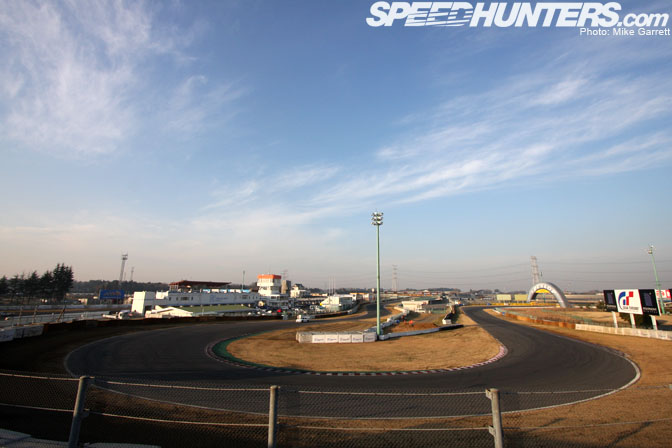
Tsukuba Circuit, a place that every fan of Japanese car tuning should be familiar with. Tsukuba may not host large events like Formula 1 or even Super GT, but it's still one of the most recognized racing circuits in Japan, if not the world. It's been featured in countless videos, games, and magazines, and it's the birthplace of time attack competition. I guess I sort of lucked out marrying a girl that happens to come from the Tsukuba area. I have been to this track so much over the past year that it sort of feels like a second home to me. You have seen tons of Tsukuba event photos from me here on Speedhunters, but this time I want to present a photo tour that provides a closer look at the iconic track.
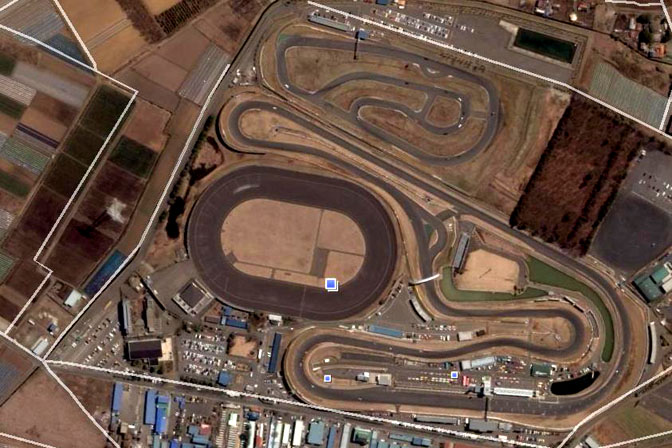
Before we start the tour, let's have a little background on the track. First off, despite the name, Tsukuba Circuit isn't actually in Tsukuba city. Nope, it's nestled among farmland and industrial areas in nearby Shimotsuma City, about 35 miles outside of central Tokyo. This (relative) proximity to Tokyo makes the track a very popular place among racers from all over the area. I say "relative" proximity because like most race tracks in Japan, Tsukuba Circuit is pretty hard to access without a car. You can get there by train, but it will require changing trains several times, and then a taxi ride. Compared to Tokyo, this is the boonies.
The track opened in 1970 and it quickly became a proving ground for car magazines and tuners. Although in the past the track has hosted large events like Group A racing, in modern times it's primarily used for club events, time trials, car testing, and of course soukoukai events for both cars and motorcycles. Basically, there is something going on at the track every day of the week. Tsukuba Circuit also sees drifting, but less often than other area tracks like Honjo or Nikko Circuit.
Besides the main Tsukuba 2000 course, there's also the smaller Tsukuba 1000 course next door. This course is popular among drivers of lighter, low-powered cars like Hondas, Mazda Roadsters, and the like. There is also a gymkhana course located on the far side of the back straight. The oval course is used only for motorcycles. Japan is known for its efficient use of space and Tsukuba Circuit definitely packs a lot of facilities into a small area.
OK then, let's start the tour-
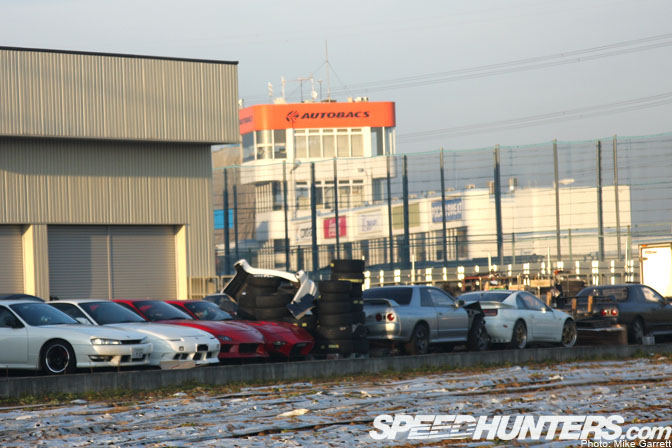
The "Tsukuba Experience" actually starts before you even get to the track itself. The streets outside the circuit are full of small race shops like the one you see here. There are wrecked cars and stacks of parts everywhere, such as that poor R32 Skyline GT-R there in the middle.Tsukuba Circuit's control tower is visible in the background.
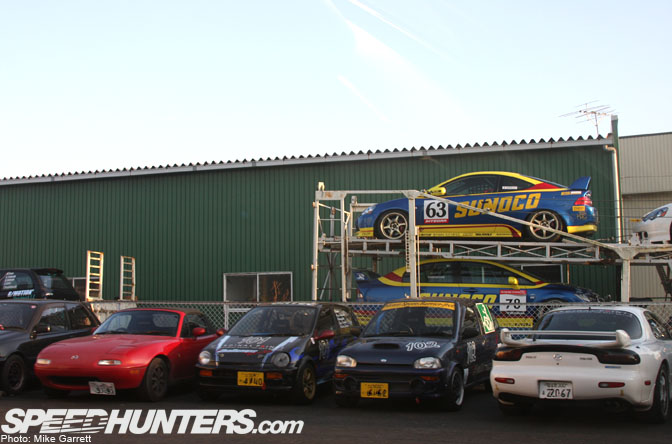
Here's another shop with more race cars parked outside, including what looks like some Super Taikyu machines. Also found adjacent to the track are garages where people can store and work on their race cars. Since a lot of Japanese houses don't have room for big garages or extra parking, storing your race car across the street from the track definitely makes sense.
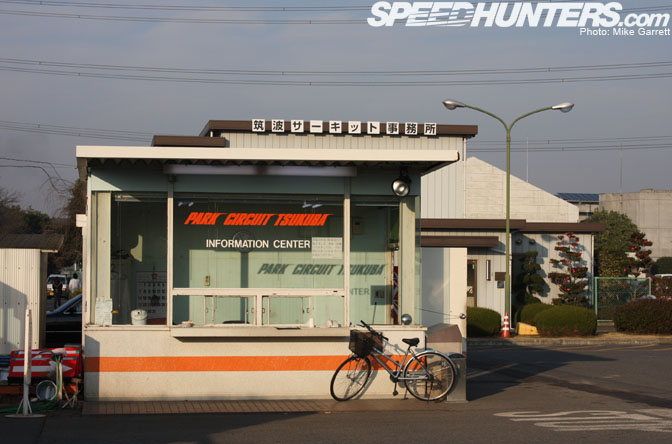
Here's the main gate at the entrance to the track itself. This brings me to one of my favorite parts about Tsukuba Circuit (or most other small tracks in Japan) – it's totally free to get in. For certain big weekend events there's an admission fee for spectators, but 90% of the time there's no charge at all. You don't even have to sign any safety waivers or anything like that.
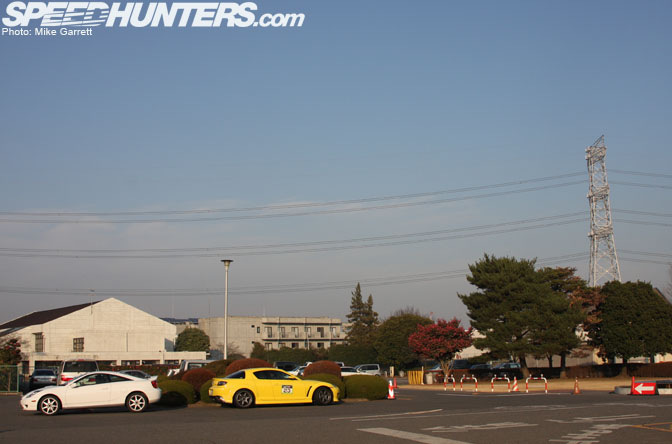
Outside the track are offices and a lot of parking spaces. On big event days these spots will be filled with race cars that couldn't fit into the main paddock. As you would expect, everything is well-kept and looks pretty nice considering the age of the facilities.
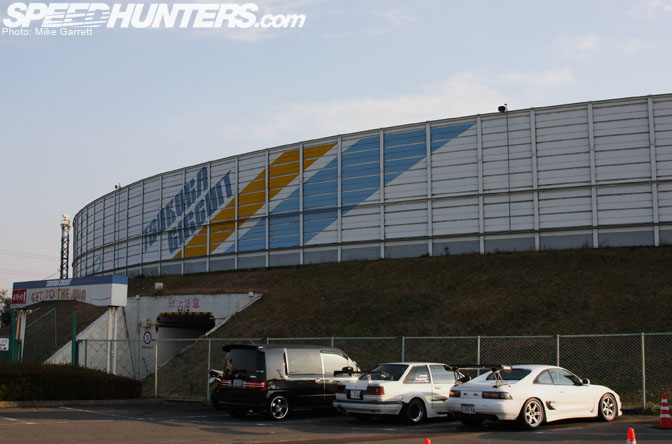
Here's a look at the outside of the turn 1 wall. The minor elevation changes at Tsukuba Circuit are a lot more noticable in person than in videos or photos. It's no Laguna Seca, but's it certainly not as flat as it looks.
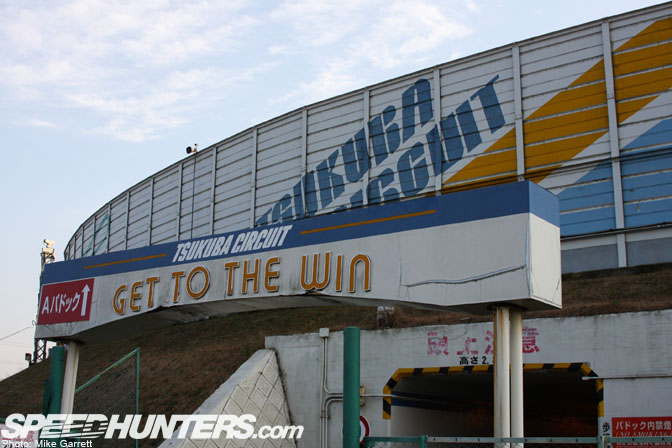
This sign welcomes you enter the tunnel that passes under the course and into the main paddock. Get to the win…
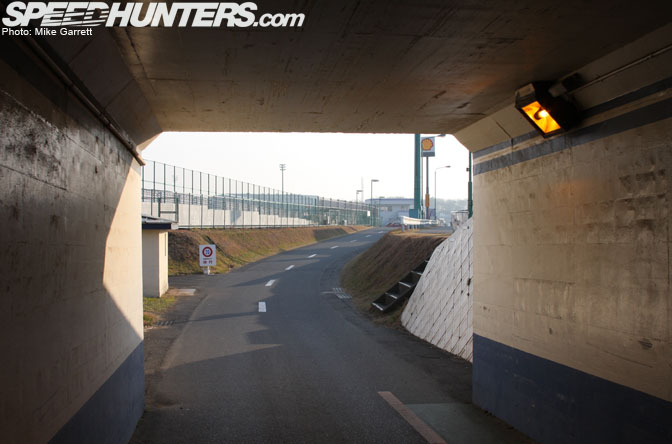
Almost there…
Even though I've been to this track countless times, I still get all giddy when I walk through the tunnel and hear the sound of cars screaming around the track. I don't think a picture can really convey the feeling, but I absolutely love it.
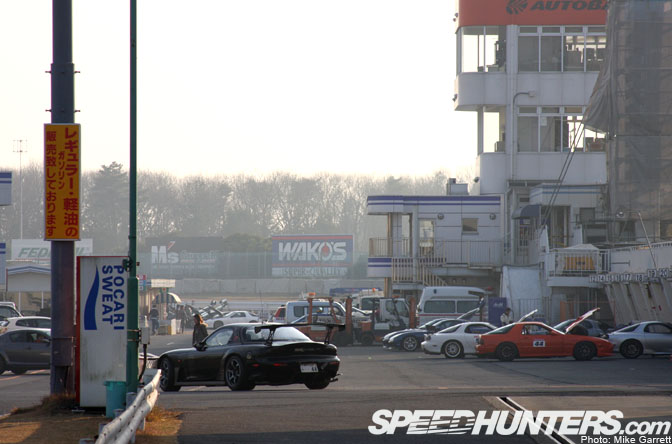
As you come out of the tunnel and walk up to the paddock, this is the sight that greets you. This can be sensory overload on the day's when the paddock is jammed full of race cars. On this day, an all-RX7 track day was about to wrap up.
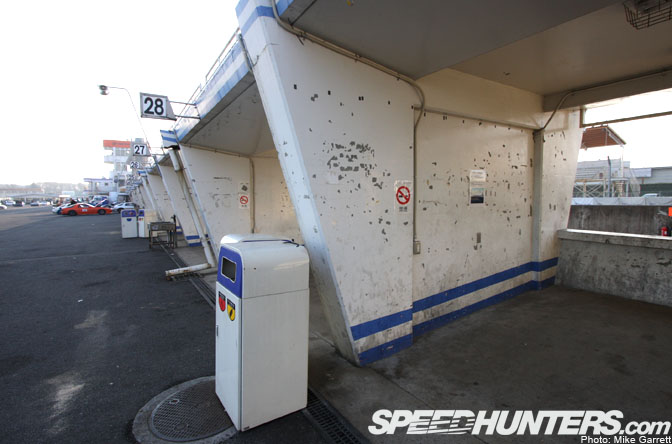
Here's a look at the pit boxes. Nothing special, but they get the job done. From inside the pit boxes you can get an up close look at pit road and the front straight, and a dry place to watch the action on rainy days.
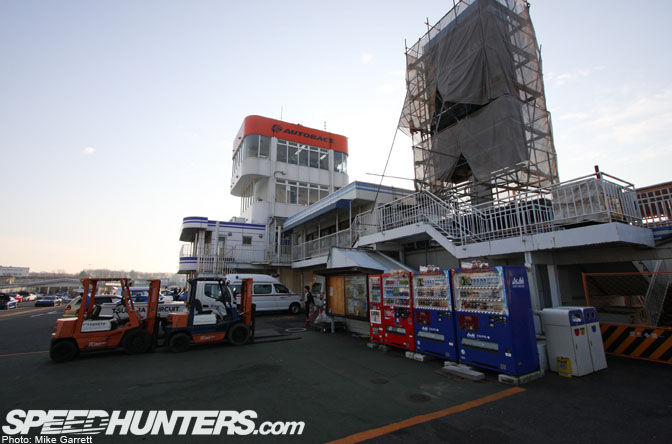
Here's the main control tower area with the required vending machines. I don't even know how many coins I've thrown into these machines buying Cokes or my personal favorite, Georgia MAX Coffee.
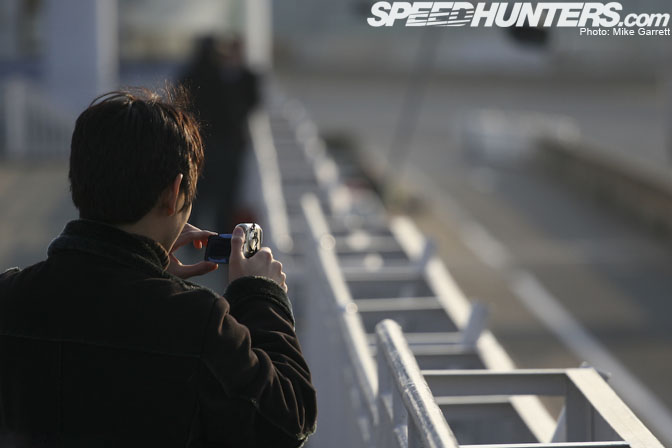
The viewing area above the pit boxes is a popular spot among crews and spectators. It's also a great place to watch the cars as they fly past the main grandstand and across the start/finish line.
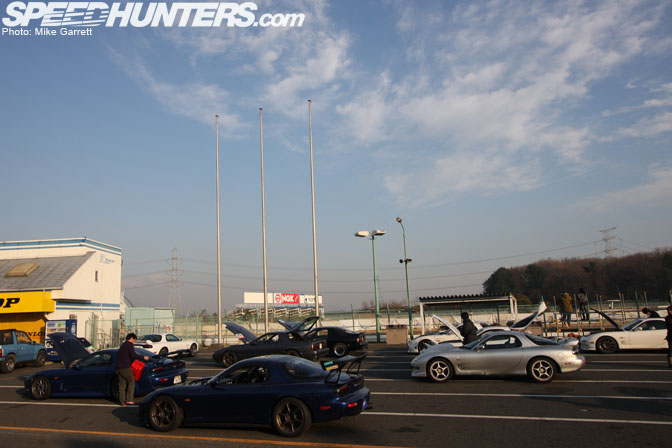
Here's another view of the paddock as cars rest following their track session. On some days there will be 2-3 different events held on the track, and properly facilitating car movements parking in pits looks like quite a challenge. In typical Japanese form things always seem to be smooth and orderly though.
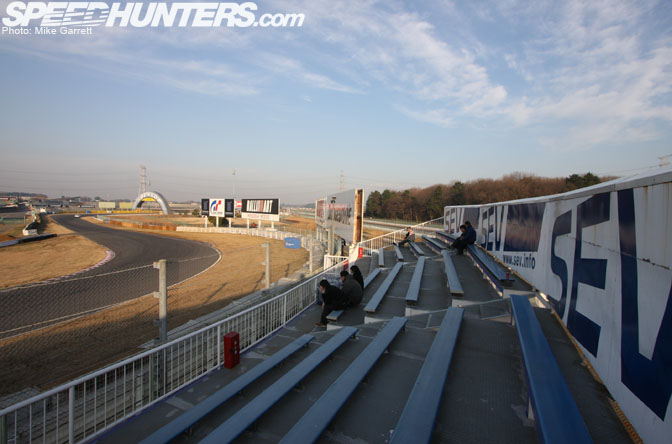
Here's the grandstand at the first hairpin. This is usually the best place to see the action. From here you can see almost the entire infield section of the track. Again, the facilities are nothing fancy or new, but they are sufficient.
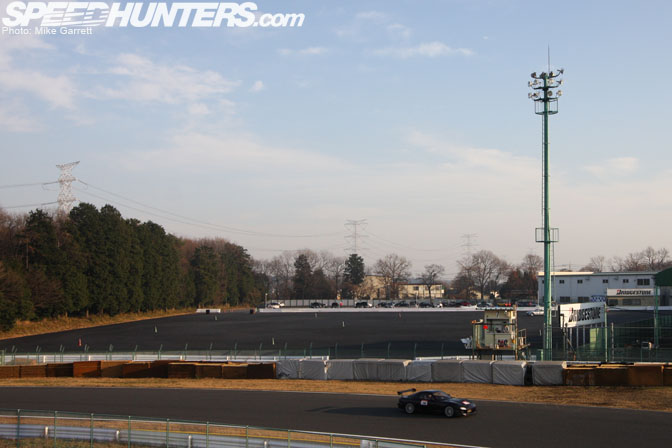
Looking over the back of the grandstand, you have this view of the final corner. In the background you can see the gymkhana course which is also hosting an event, On many days there will be something happening at all four of the Tsukuba courses.
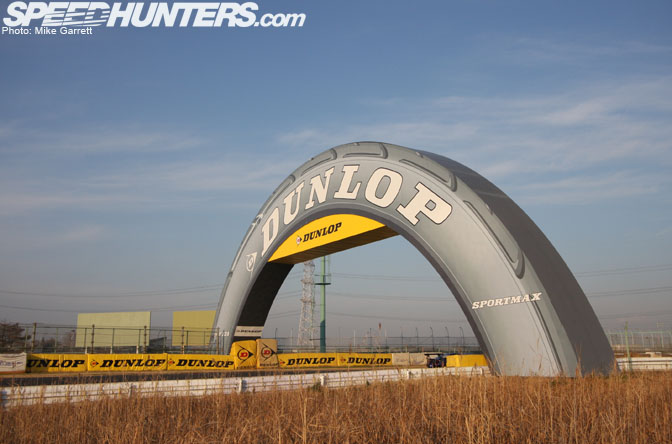
If you take a little walk there's a big grassy field that has a nice view of the famous "Dunlop Corner". Like most areas of Japan, the scenery at Tsukuba changes dramatically with the seasons. During the sumertime everything is green and overflowing with vegetation, and in the winter everything is brown and dry like this.
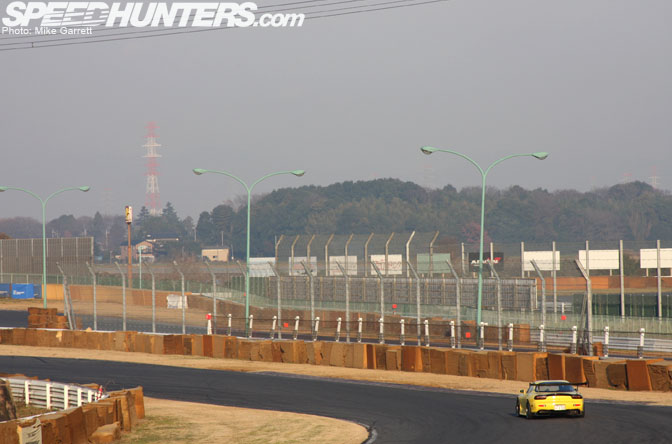
There's another grandstand near the Dunlop corner where you can watch the cars head for the final hairpin before turning around and flying by you again on the back straight. The good thing about these condensed tracks is that there's always action within view.
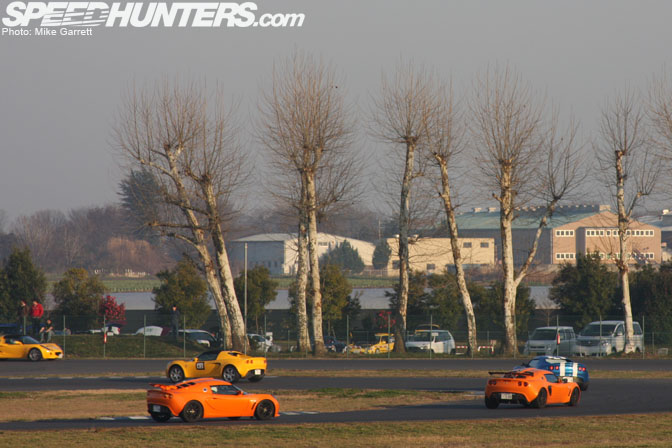
From these grandstands you can also look over and see the the Tsukuba 1000 course across the way. Looks like there's an all-Lotus soukoukai going on here.
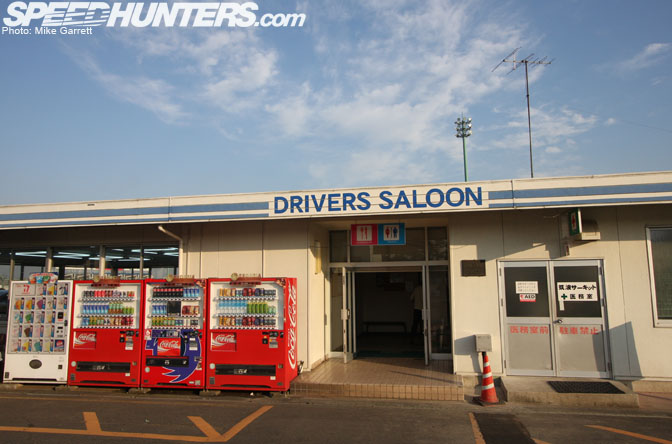
After a long day at the track, you can head to the "Drivers Saloon" and order some curry rice, katsu, udon noodles, or other standard Japanese cafe food. There's also more vending machines…
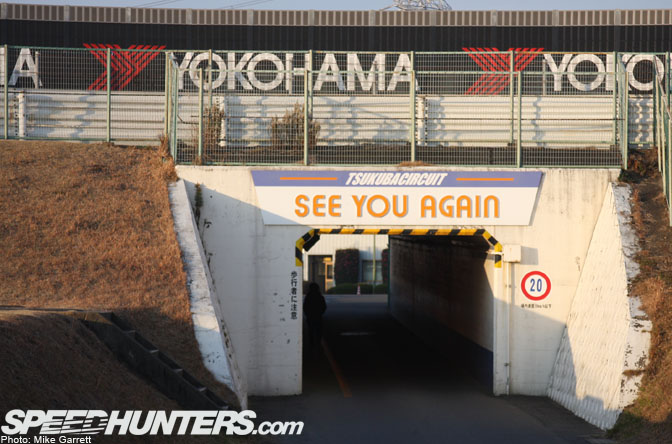
And finally, the sign says it all as you leave the track to go home…
Man, I'm going to miss going to this place regularly after I move to back to the states…
-Mike Garrett