
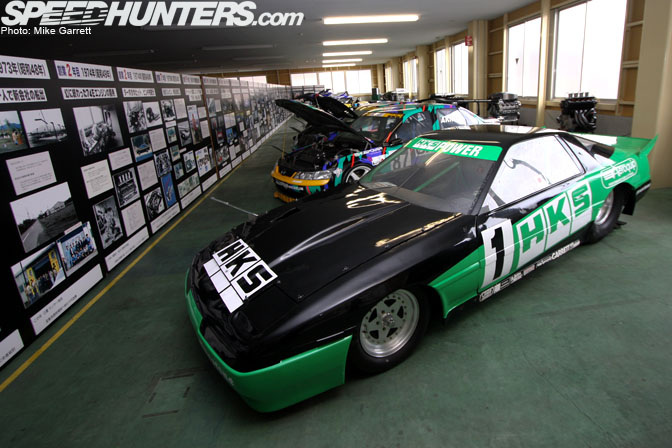
Do you ever find yourself wondering what happens to a company's race cars and tuner cars after their services are no longer needed? Sometimes they will wind up in the hands of private buyers (often overseas), in other cases they will be destroyed or dismantled, and every once in a while they'll be preserved or displayed as part of the company's heritage. In it's 35+ years of existence, HKS has built dozens of these historic competition and street vehicles, and a number of them are kept on display in a special room at the sprawling HKS factory in Fujinomiya City, Japan.
This room is not really a "museum" in the normal sense. It's not open to the general public outside of the once-a-year HKS open house, but they keep it open for special appointments and for members of the media who visit the HKS factory. When Saitou-san was showing us around the factory last month, he was happy to let me have a look at this impressive collection of cars, parts, and photographs that span HKS's entire history.
I was familiar with a lot of these cars from years of playing video games, reading magazines, and watching videos, but it was really great to be able to finally see them in the flesh.
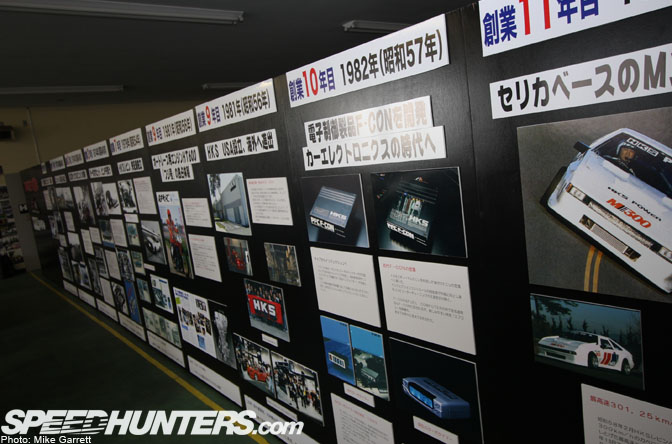
Besides all the cars lined up, the room is dominated by this huge wall of photographs and stories that follow the history of HKS from the company's beginning in 1973 ,all the way to the present day. Most enthusiasts already know about the long history of HKS and their contributions to the tuning industry, but seeing everything summed up on this display makes one have even more respect for what HKS has done over the years. You could spend a lot of time examining everything on this wall…
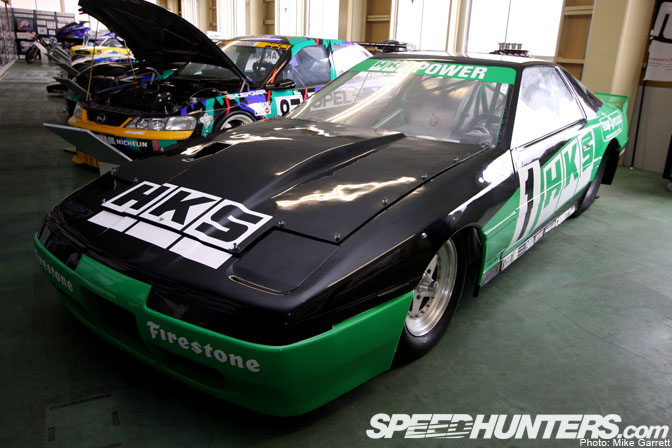
The first car you see is the MA70-based HKS Zero Drag Supra. In both 1990 and 1991, this car was the series champion in the RRC Drag Race Series. The pro stock chassis was actually developed and built in the United States and then imported to Japan in 1990 when HKS began to put the car together.
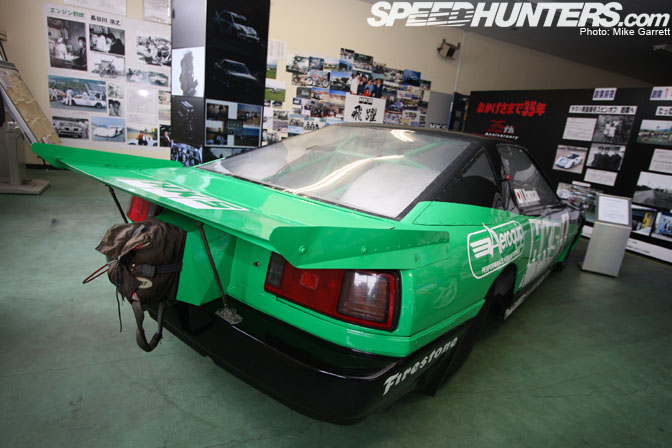
It's powered a twin turbocharged 7MGTE that makes 850ps and revs to an impressive 8,750 RPM. The Zero Drag Supra's best time in the 0-400 was a blazing 7.97 seconds, which recorded all the way back in 1991.
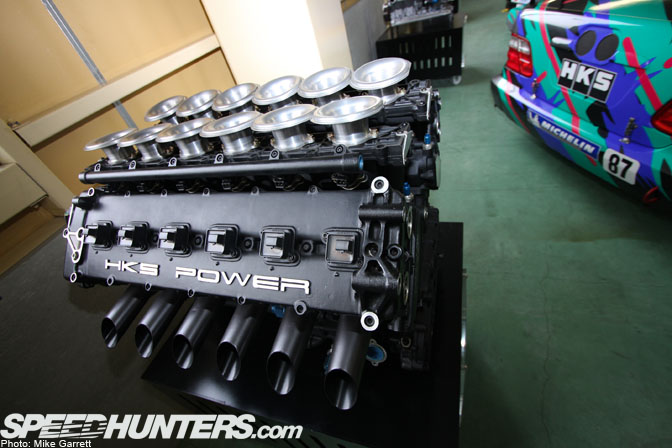
There are also a number of HKS-built race engines on display. This one is the F1-spec V12 known as the 300E, which was built in the early '90s. The vitals – 3.5 liters, 650hp, and a redline of 13,500 RPM.
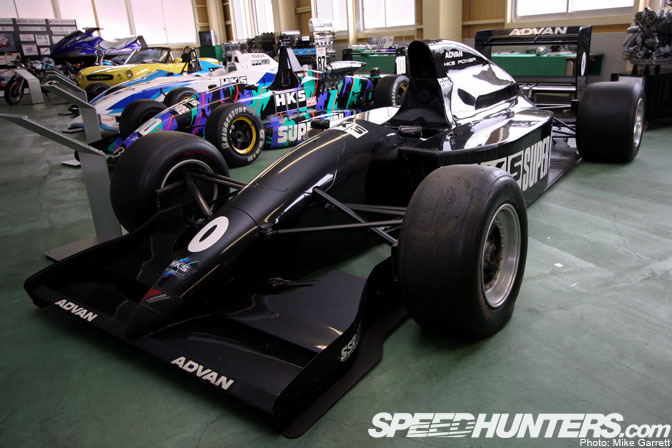
This is the Lola F3000 T92 chassis that served as a testbed for the 300E. Unfortunatley, the 300E's on-track action was limited only to testing – it never reached competition use.
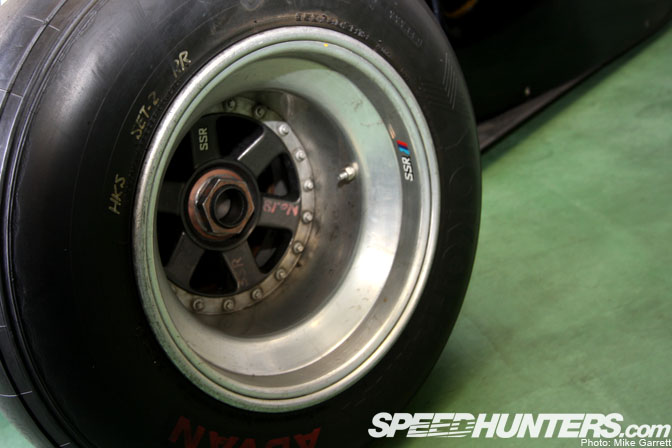
I couldn't resist taking a photo of the T92's racing-spec SSR wheels and Advan slicks.
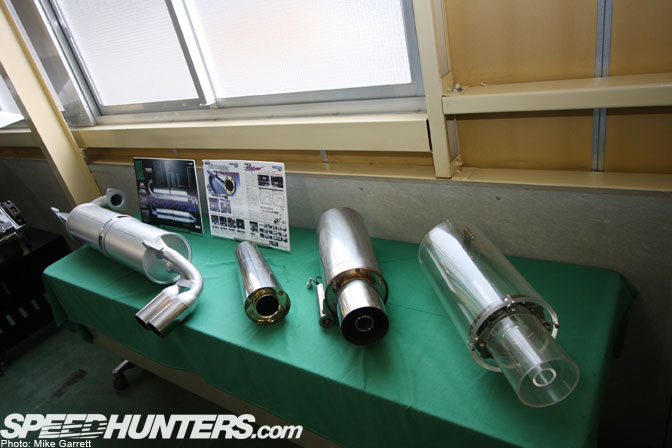
There are also a few displays that showcase some of the consumer parts that HKS has developed over the years. Were you ever curious what the inside of an HKS muffler looks like?
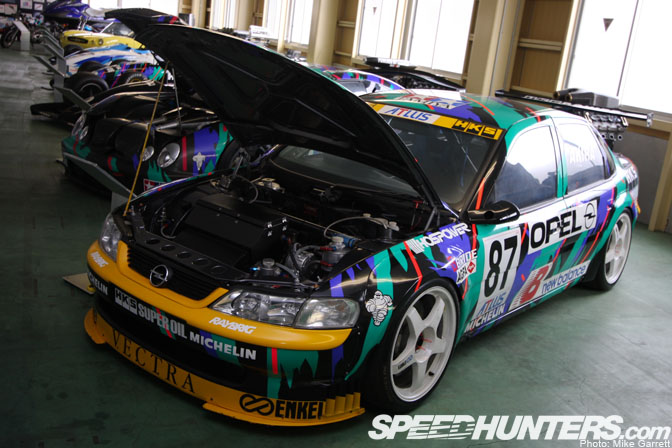
This is the Opel Vectra that HKS campaigned in the Japan Touring Car Championship (JTCC) during the late 1990's. I love how the famous black,green, and purple HKS racing livery from this time period.
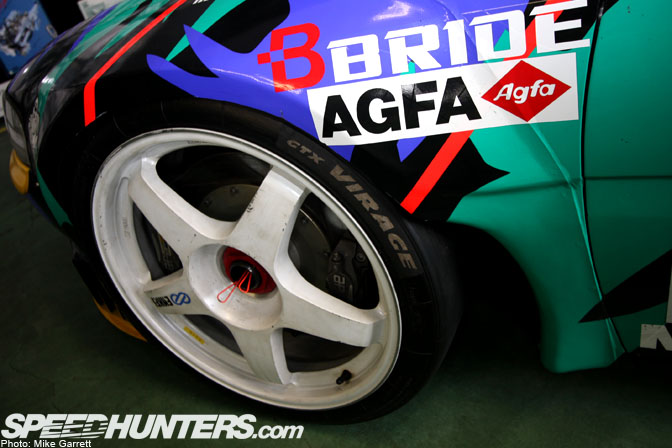
The center-locking five spoke Enkei wheels on the HKS Vectra still look good, even 10+ years later.
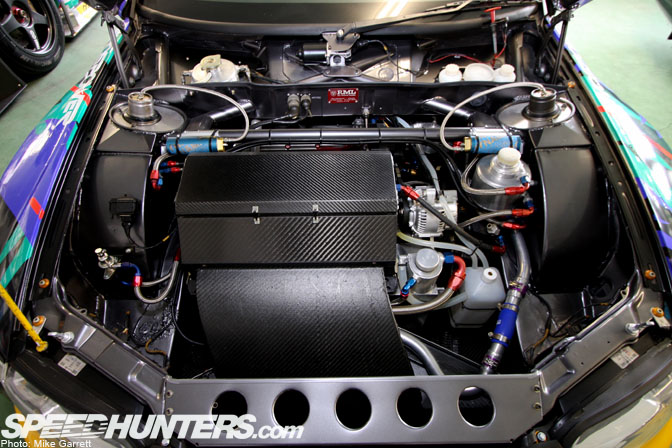
Somewhere underneath all that carbon fiber is the Vectra's 300hp two liter C20 race engine. I was amazed at how much extra space there is under the hood of this car.
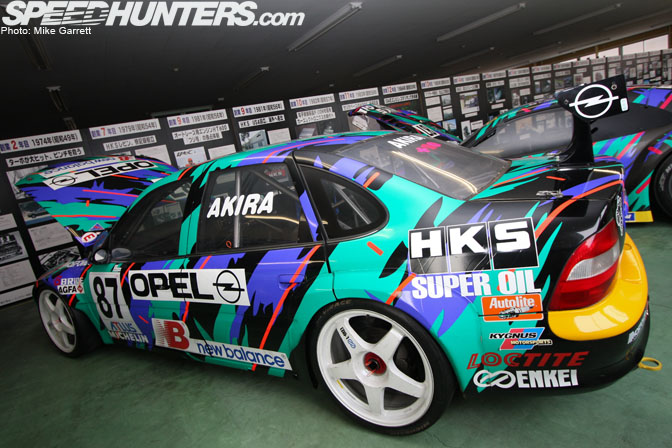
Long live the '90s….
I'll be back tomorrow with more nostalgic artifacts from the HKS collection.
-Mike Garrett