
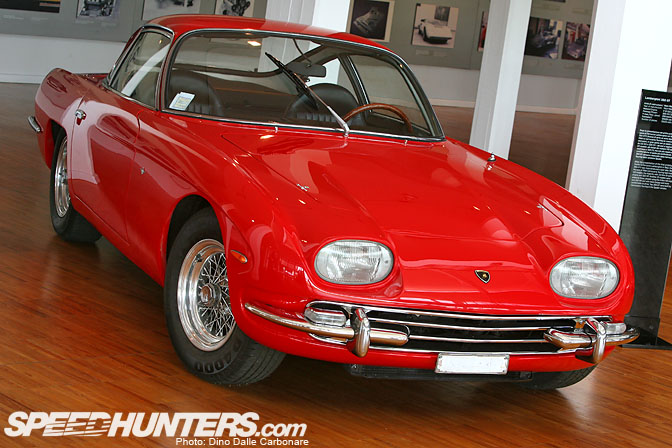
What better way to open this "Exotics & Luxury" themed month with a detailed view at one of Italy's most evocative manufacturers. I am of course referring to Lamborghini, a latecomer into the world of supercars with its founder Ferruccio Lamborghini producing his very first car, the 350GT above, in 1964. Lamborghini was a successful businessman who made his wealth building tractors. He quickly began enjoying sports cars of the era, including some Ferraris, one of which was a 250GT. After a recurring clutch problem with his 250GT he took his complaints directly to Enzo Ferrari, who was only twenty minutes down the road in Maranello. Enzo refused to take his complaints seriously, dismissing him as a simple tractor builder. It was at this point that Mr. Lamborghini decided to take matters into his own hands and show the world (especially Enzo himself) that he could build a superior car. He assembled a team of great engineers including Gianpaolo Dallara, designed and built a V12 engine and created his first car. The rest, as the cliché goes, is history.
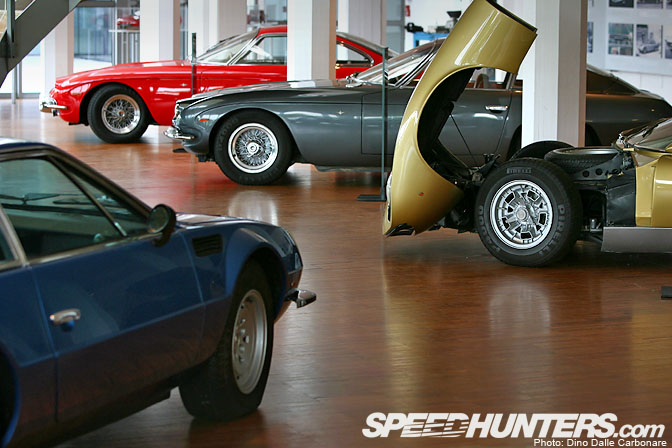
As Rod and I entered the beautifully constructed museum we were confronted with an impressive line up of cars we have probably both dreamed about at one point in our childhood. I mean what car-crazy kid didn't have a poster of a Lamborghini on their bedroom wall!
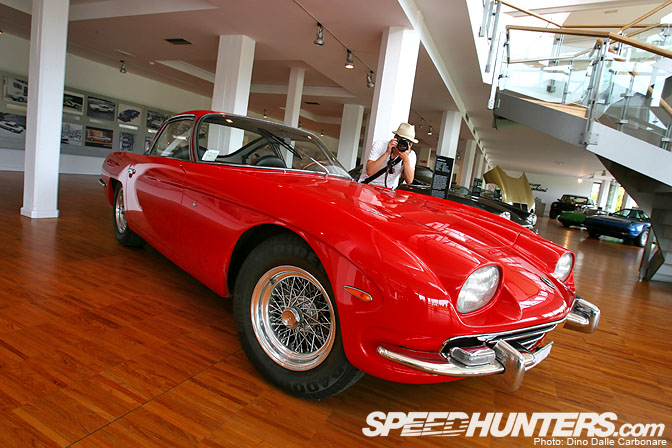
I was being followed around by some kind of paparazzi in the museum, wearing an easy to recognizable hat.
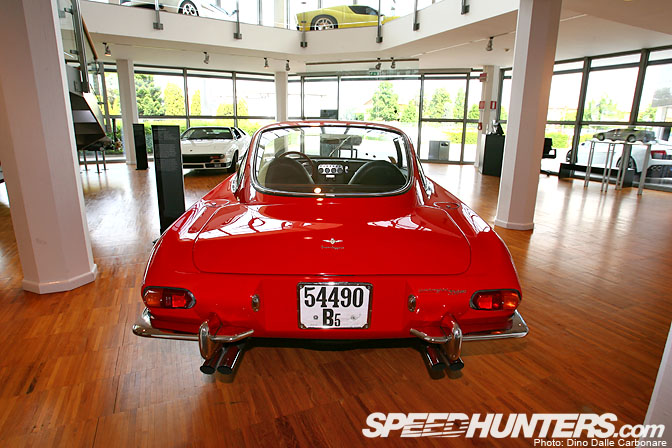
The body of the 350GT is work of Carrozzeria Touring, one of the most renowned coach-builders of the time. By 1966 they had built 120 cars, a pretty impressive success for a newborn manufacturer.
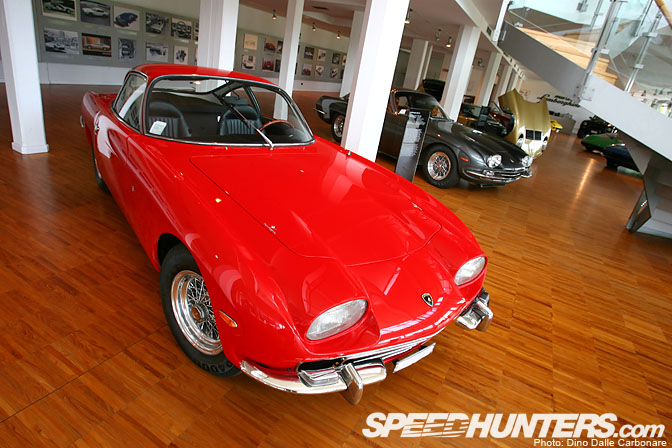
Up front is a 3.5L V12, 4-valves per cylinder, capable of developing 320HP. 23 more cars were then built using an upgraded 4L version of the engine with the same amount of power but with a beefier torque curve.
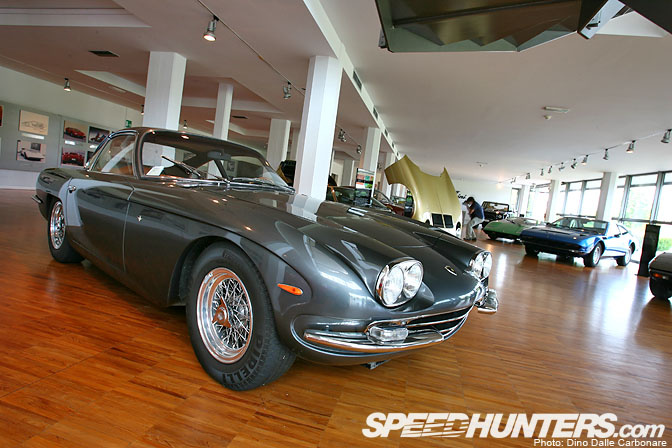
In 1966 the 400GT took over from the 350GT sporting a similar body, but with redesigned roofline which freed up more space in the interior, making it a 2+2.
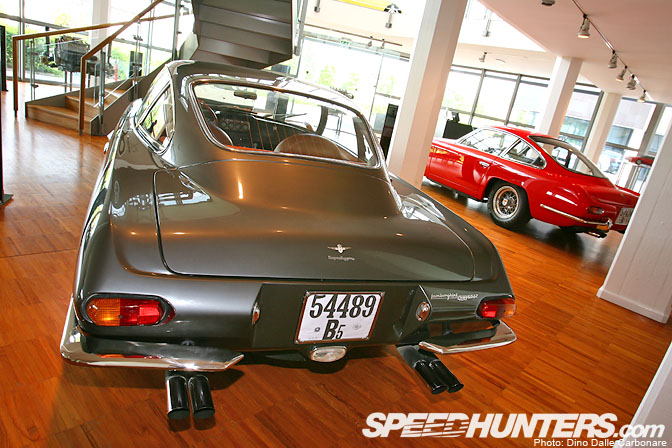
Check out those 60's style quad exhausts, truly menacing!
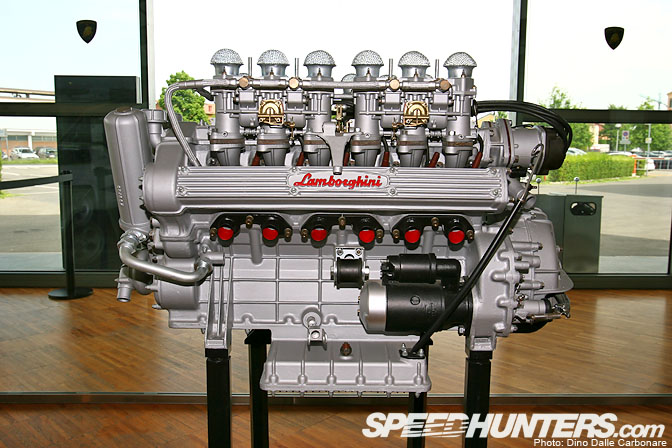
The original design for the Lamborghini V12 was used for many years to come, becoming smoother and more powerful with each subsequent version, making it as much as part of the brand as the unique design of its cars.
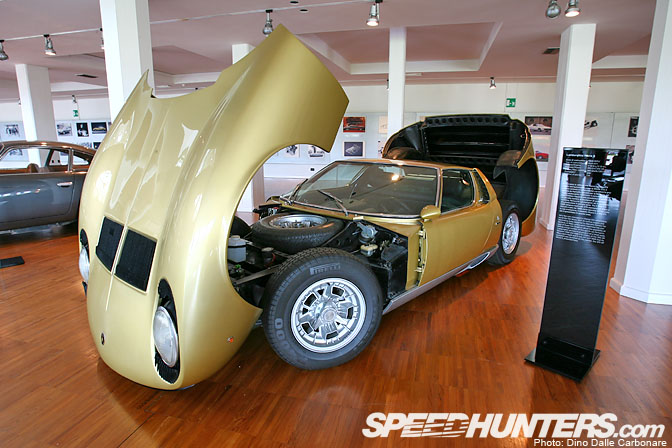
How can one talk about Lamborghini without mentioning the stunning Miura. With it's front and rear cowls opened I thought it looked extremely dramatic.
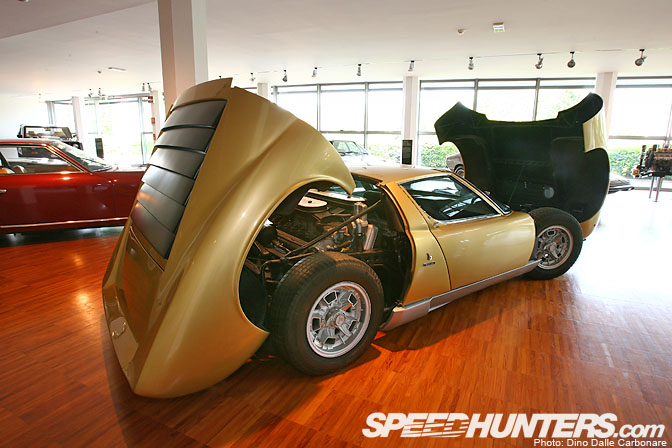
I am a great fan of the Miura, its is in my opinion one of the most beautifully designed cars in existence. It has stood up the test of time and looks as impressive now as it did back in 1966.
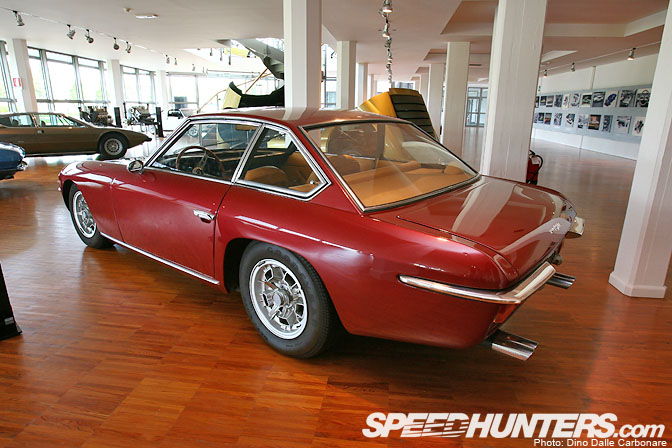
This is probably one of the least known models to wear the Lamborghini badge, the 1968 Islero. As with most models, the Islero was named after a famous fighting bull, and was the replacement for the front engined 400GT. It featured a far more angular and simple design and was built by Mario Marazzi, who used to work for Carrozzeria Touring which by then had gone bankrupt.
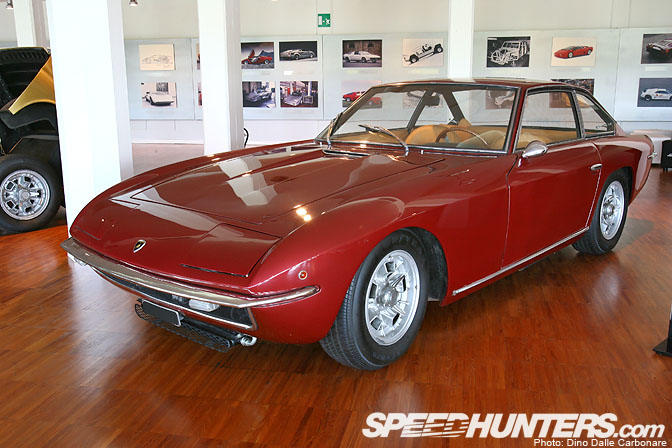
The Islero didn't do so well, especially with the Miura taking all the limelight. Only 225 cars were built, and production ceased after only one year of production.
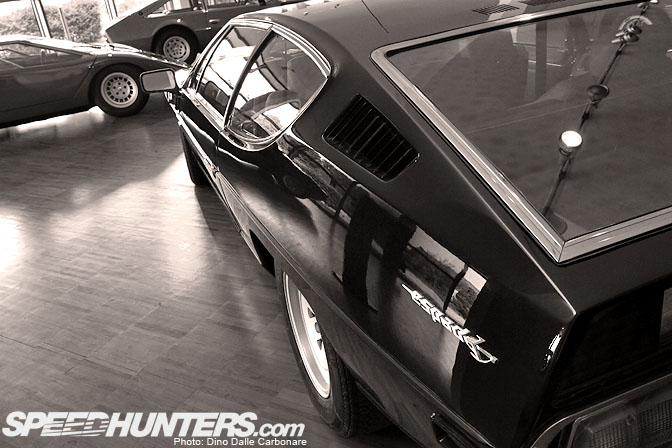
I really don't know why, but during our visit of the Lamborghini museum, it was this car that I strangely felt the most attracted to. I think it might have been the combination of its sheer size, the cool seventies looks and the impressively roomy four seater layout. The '68 Espada really did it for me.
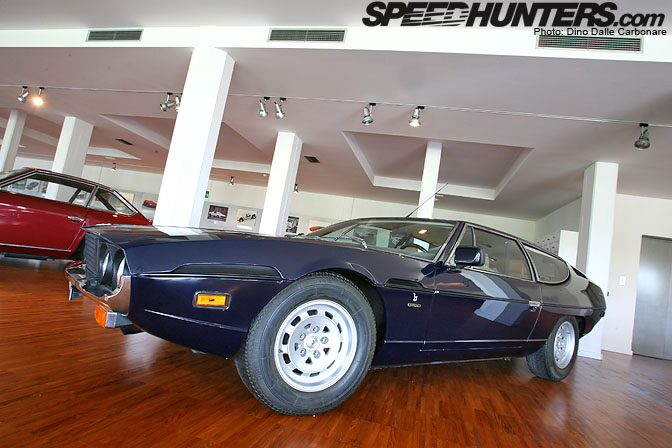
Check out this angle! Bertone penned the Espada, something that is pretty obvious by its angular and unique design. Up front the 4L V12 makes another appearance, which due to the cars more luxurious intentions, was even offered with a Chrysler 3-speed automatic transmission.
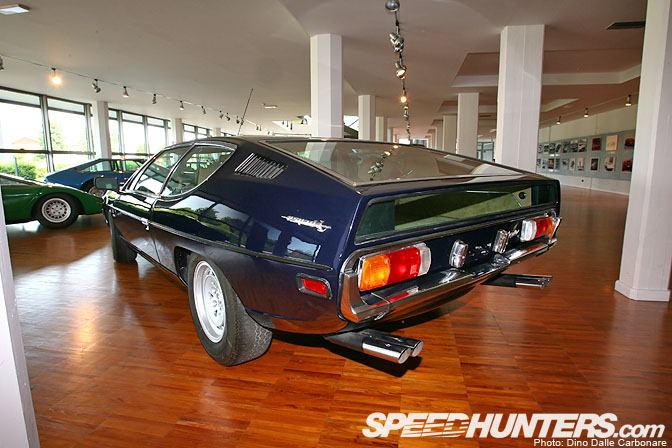
Now is that different or what? The rear glass section above the lights reminds me of the '74 Maserati Khamsin, again another Bertone design. The Espada was Lamborghini's most successful model, selling a total of 1227 cars during its ten year production run. I guess people back then were attracted by the prospect of shuttling the whole family in comfort at 250 km/h!
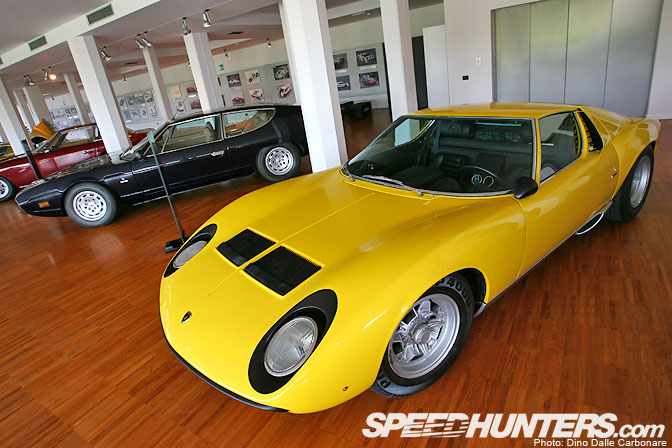
Ah, the Miura again. What a machine. It sits so low, looking up at you with those oval headlights. The Miura was of course powered by the same 4L V12 used in all previous Lamborghinis, only this time it was mounted transversally behind the front seats. In fact this was the first ever mid-engined road going supercar, a recipe that would be copied by all other exotic car manufactures, Ferrari included.
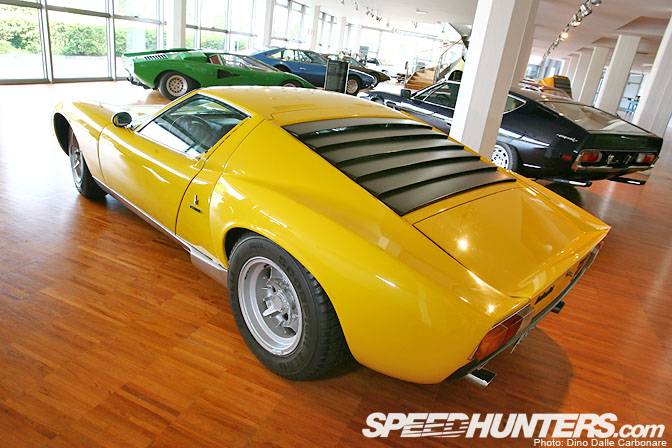
The yellow Miura here is actually the SV, the last model produced before the Countach went into production in 1973. The SV was made as a kind of "stop-gap" model as the factory began tooling up for the production of the Countach. The SV's engine was highly modified to produce 385 HP pushing it to 300 km/h. 150 were built.
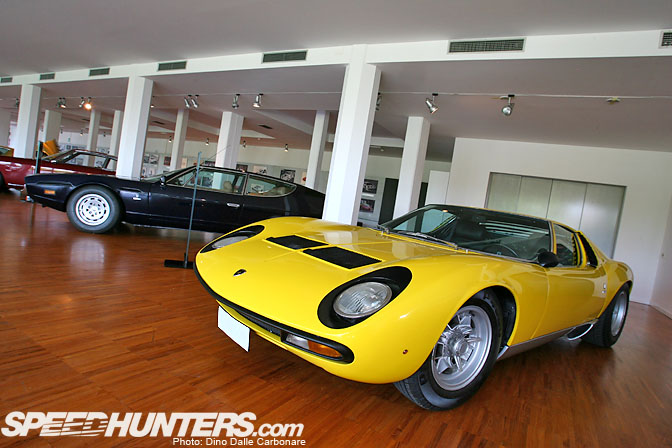
One final look at the 60's cars and their wonderfully different designs.
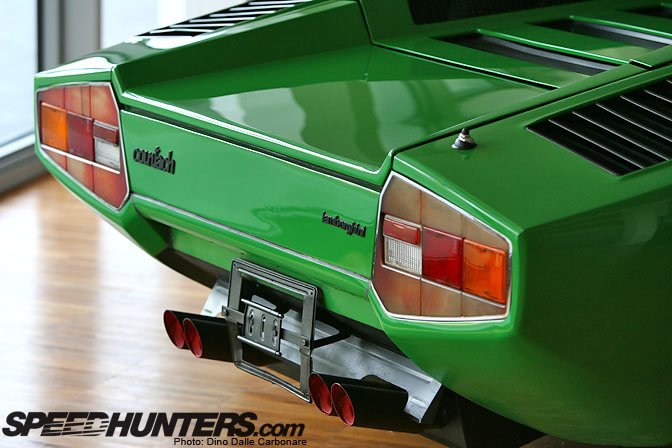
Lamborghini really got it right with the Countach. Bertone pushed car design to the limits with a shape that had never been seen before.
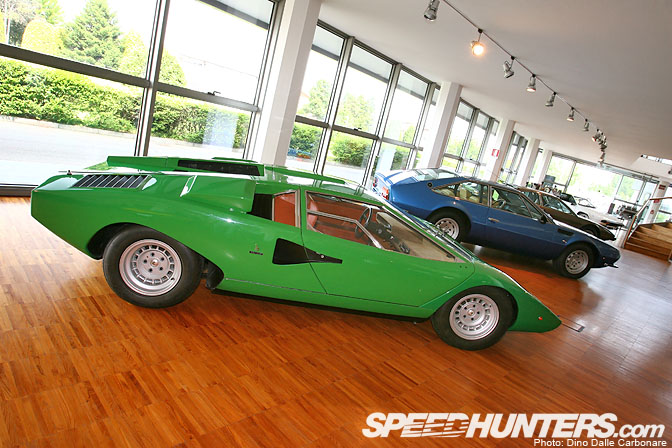
The Countach LP 400 stands only 1 m tall, and features impossibly angular lines topped off by scissor opening doors, a detail that would instantly become a Lamborghini trademark.
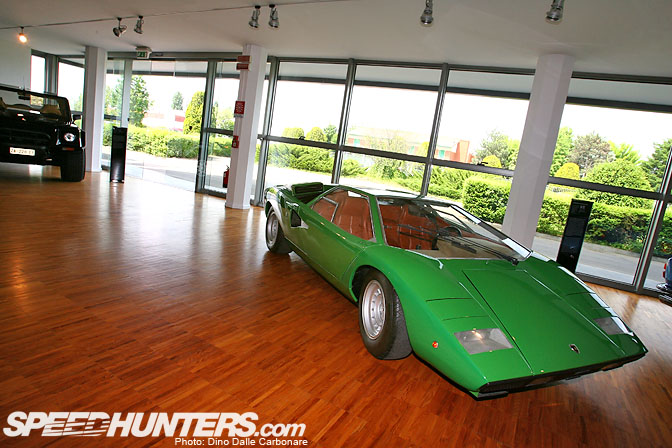
Every time I see the original spoiler-less Countach I just can't help but think how crazy it would have been to drive this thing around in 1973! The Countach will always remain the car that really identified Lamborghini as a maker of the most unique supercars in the world! The Coutach was of course powered by the 4L V12, in this guise cranking out 375 HP.
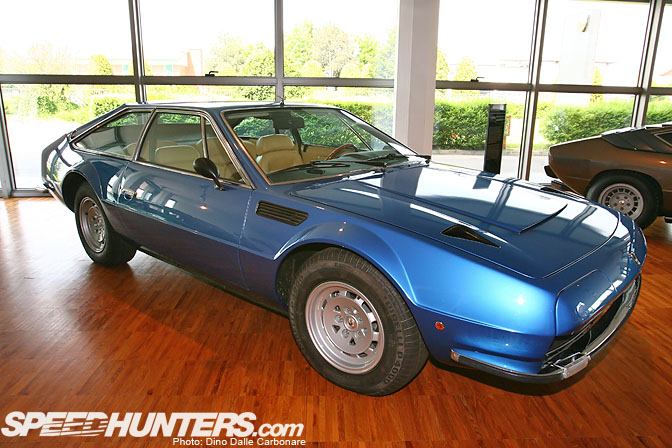
Continuing the line-up of front-engined Lamborghinis is the Jarama, the replacement for the Islero which went into production in 1970. Ferruccio himself really liked the Jarma as it provided a good balance of power (365 HP) and comfort all wrapped up in a very seventies-looking package designed by Nuccio Bertone.
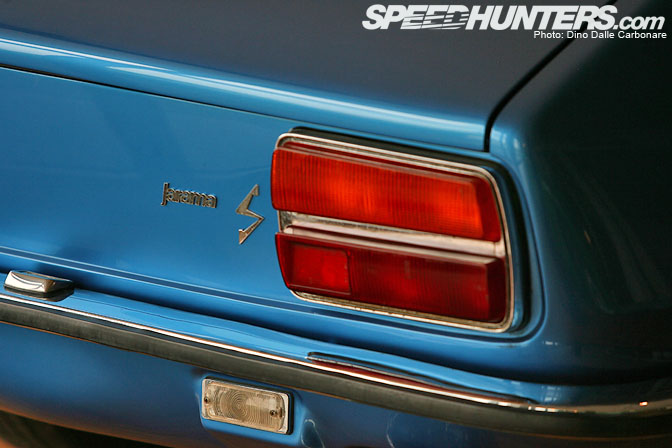
328 were made, the Jarama S being the more powerful with 15 HP over the regualr 350 HP base model.
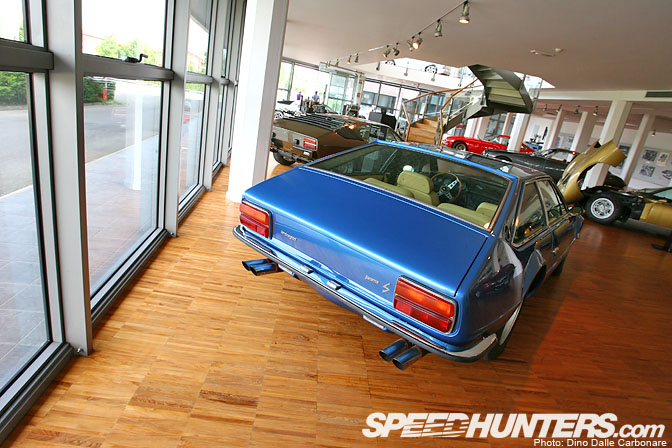
How unequivocally Lamborghini is that rear end! I love how the stainless steel exhausts reflects the blue body color making them look like a modern titanium system! There is a lot more to come from our Lamborghini visit so make sure you don't miss the next installment from Sant'Agata Bolognese, as we make our way down the Lamborghini timeline.
– Dino Dalle Carbonare