
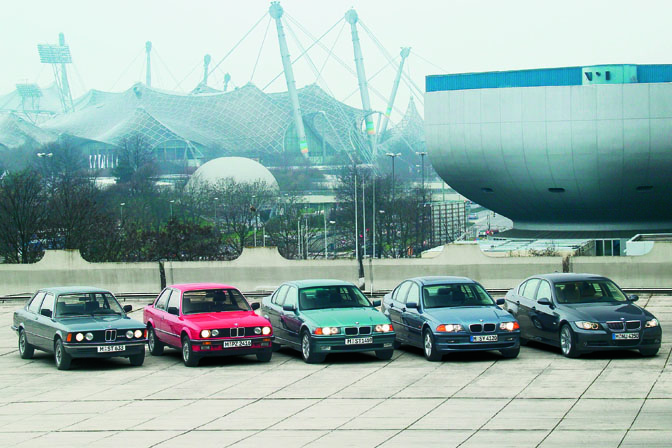
The long history of BMW is filled with iconic models, but none of them are as influential as the 3-series. For over 30-years the 3-series has been a favorite of everyone from executives to weekend racers to housewives, and has long stood atop the sport sedan market on all corners of the globe. As part of our special BMW features this month, a look back at history this iconic model is in order.
Whenever you deal with a model as influential as the 3-series, it's difficult to "sum up" its history in a short blog post. I would guess that a lot of the info presented here is likely to be common knowledge even to those that aren't BMW enthusiasts…
With that, let's travel back to the '70s where the 3-series legend was born.
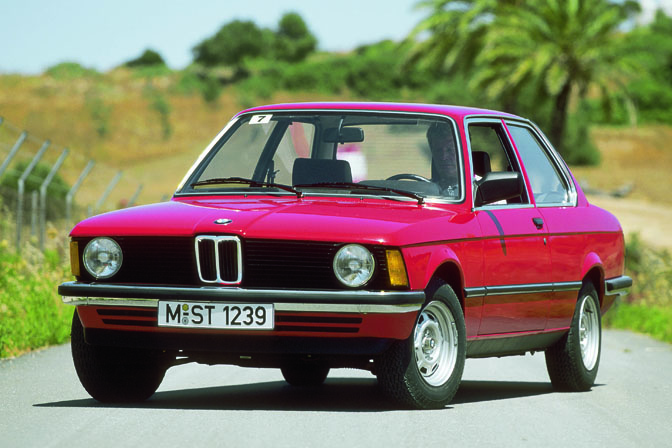
The first 3-series was the E21 model, introduced in 1975 for the European market. The E21 served as the replacement for the much-loved BMW 2002 and was only avialable in two-door body styles. There were several different trim models available from bare bones four cylinder cars, to fully loaded sixes. In parts of Europe the a lot 3-series models were considered simple transportation, while in the US the car carried more of a luxury image. This would continue over the life of the 3-Series.
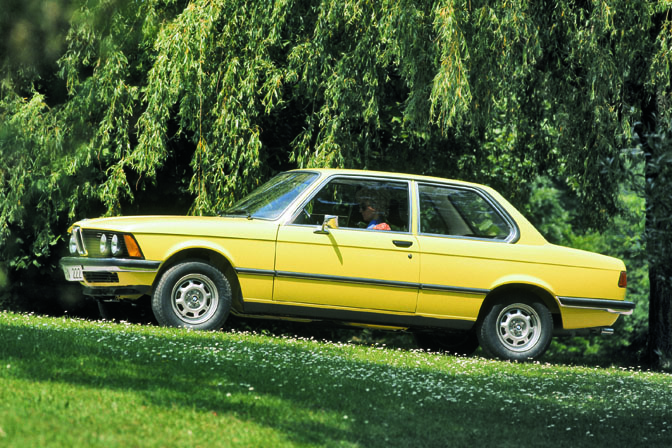
Of all the E21 models, the 323i was the top of the line. It was available with a 143hp inline six engine, 5-speed transmission and even a limited slip differential. With the E21 model, the 3-series had begun on its path to becoming a global phenomenon.
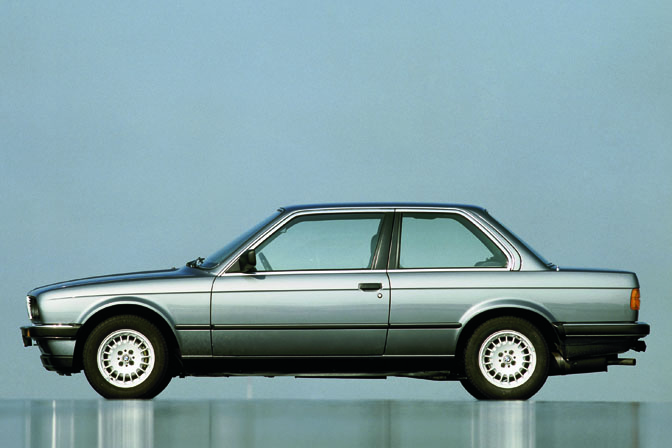
The next model in the 3-series line was the E30, introduced in 1982. Like the E31, it was available with both four and six cylinder engines. The E30 lineup was also expanded to include a four door sedan, a convertible, and the wagon model, which was known as the touring. The M3 model was also introduced on the E30 chassis, but we'll save that for a separate retrospective on the M models.
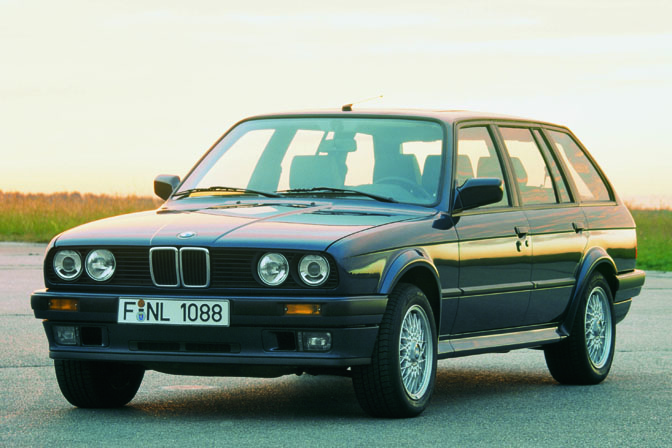
Here's a view of the 325 touring which was available in Europe. The E30 also marked the first instance of AWD being available on the 3-series . The variety of body styles helped skyrocket the E30's sales figures all over the planet. In later years the E30 chassis would become one of the most popular cars for grassroots racers of all time. This is especially true in Europe where we've seen countless examples of E30s being used as budget race cars and drift cars.
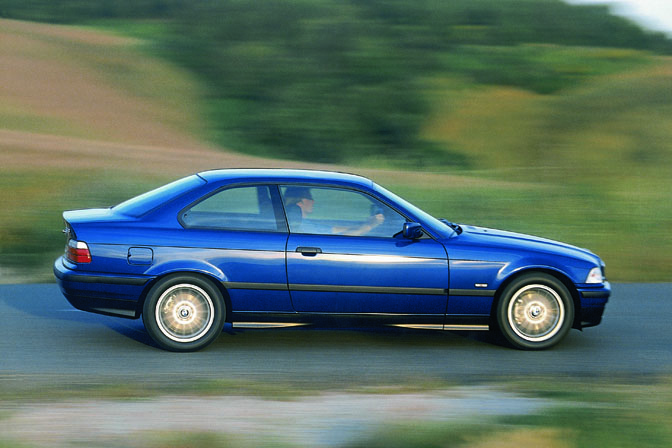
The E36 model was launched in 1991 with updated styling for the '90s. The E36 was a slightly larger and more complex replacement for the E30 and continued to bring the 3-series global fame. More powerful engines were available in this chassis, including a 2.8 liter inline six that made 190 horsepower.
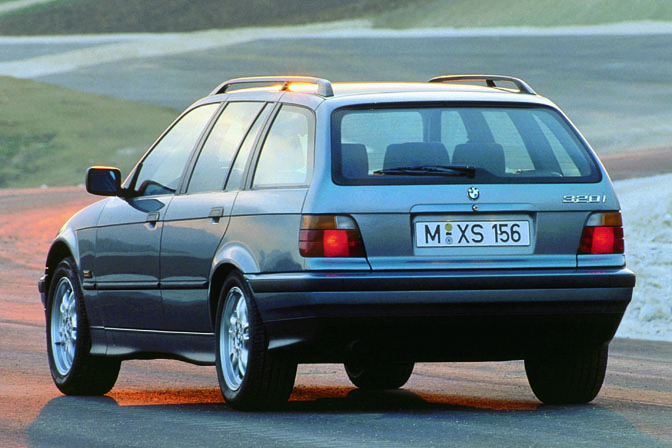
The E36 was again available as coupe, sedan, convertible, or touring wagon (markets outside of the United States).
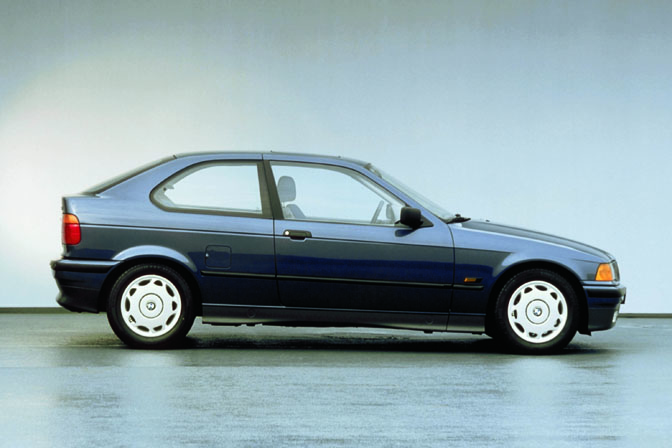
There was also a new compact car based on the E36 with a simplified rear suspension and a shortened hatchback rear end treatment. The compact version continued though the E46 model before being replaced with the new BMW 1-series.
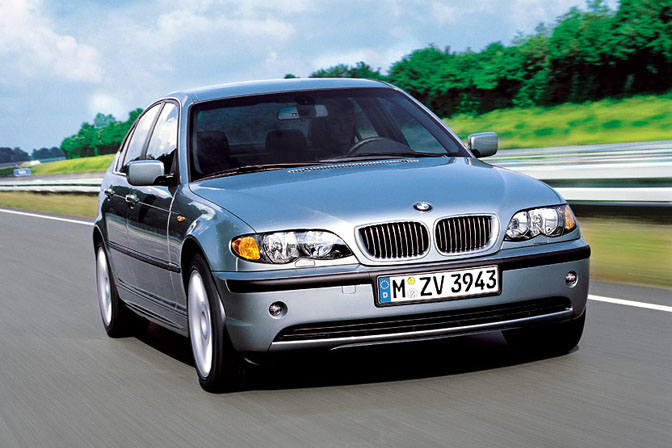
Replacing was the E36 was the E46 model, which hit the market in 1998. Again the car had advanced, but retained the balanced driving character that BMW's and the 3-Series in particular are known for. Power was up in the pricier models, with outputs reaching 235hp in cars like the 330i.
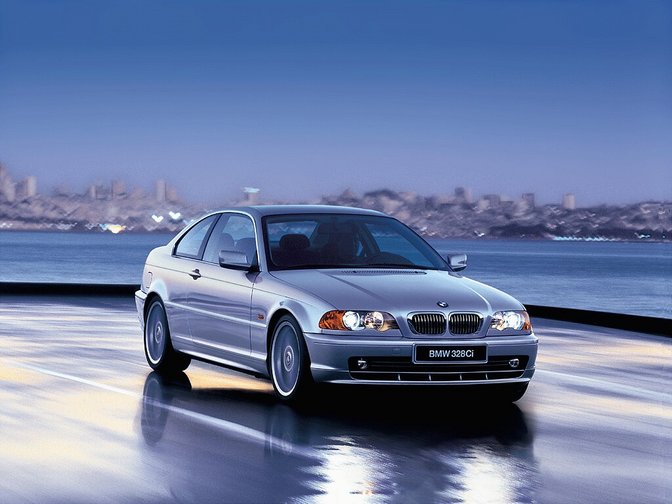
By 2005, the E46 3-Series had become one of the best-selling BMW's of all time. Like it had in the past, BMW had to confront the "don't mess with success" problem while designing the next 3-series.
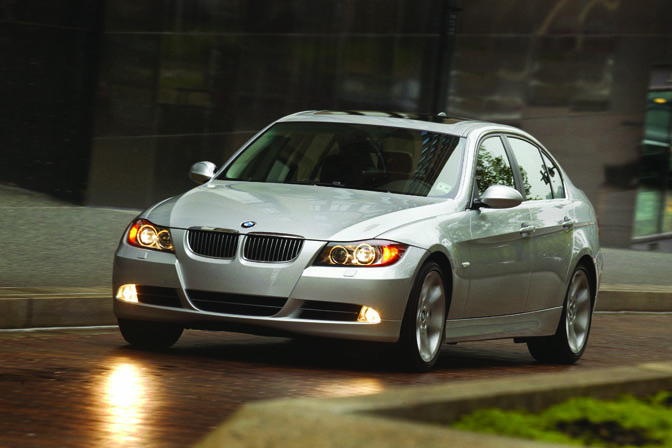
In '05 the E46 was replaced by the all new E90 model, which is available in numerous body styles. Like most model replacements, the E90 was larger, heavier, and more powerful than past models.
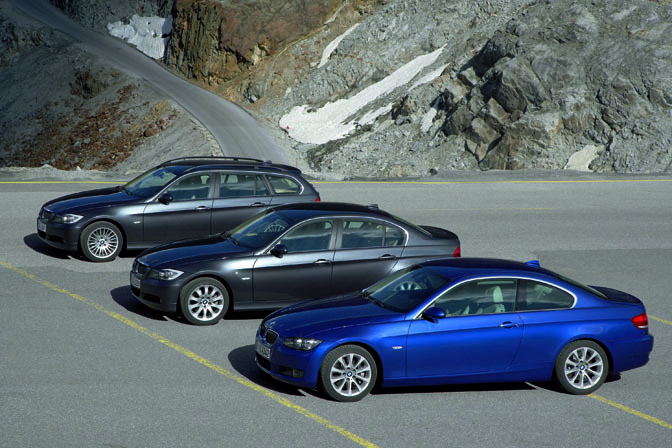
For enthusiasts, the big news with the E90 was the debut of the 335i and it's twin turbocharged inline six that made over 300hp – enough to rival the M3's of the past.
Now that the E90 has been on sale for several years, BMW engineers are hard at work at designing the next 3-series. Again, trying to figure out how to improve on one of the world's most loved cars.
Well, there's a quick look back at an automotive icon. Next time we'll take a look back at the history of the M badge.
-Mike Garrett
Photos from the BMW Archive