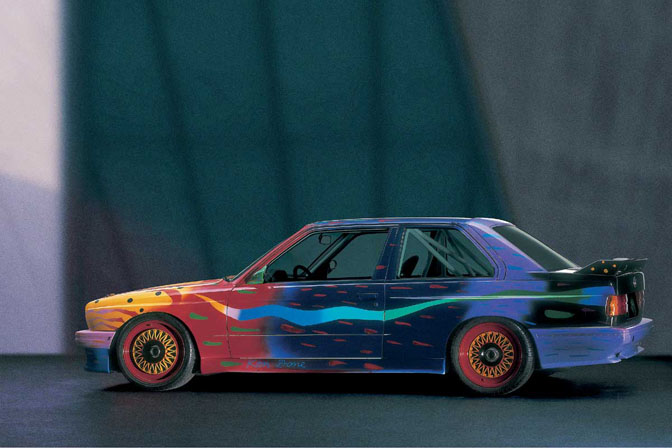
One of the things that we've looked at it often on Speedhunters is the artistic aspect of car building and modification. When it comes to the relationship of artistry and the automobile, there's no better example than the BMW Art Cars. For over 30 years, famous artists from around the world have turned BMW's into their personal canvases – something that's one of the most creative examples of auto marketing ever.
Let's go back to 1975 and take a look at the history of the BMW Art Car program…
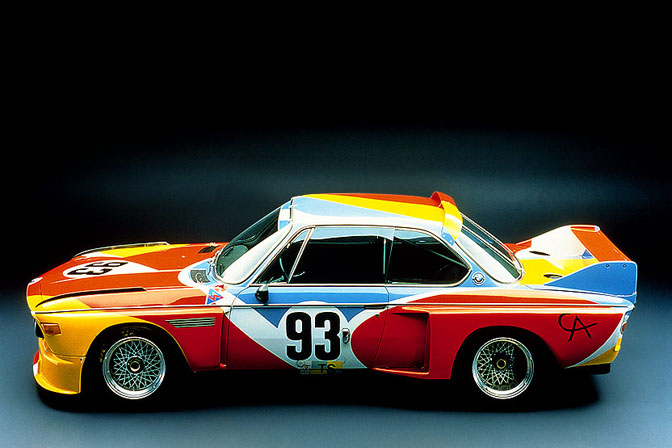
In 1975 French race car driver Herve Poulain wanted a unique livery for his BMW 3.0 CSL race car at LeMans. Instead of going with a traditional racing livery, Herve had his friend and sculptor Alexander Calder create a one-off design for the BMW. With it's bold coloring, the car became a hit at LeMans and the legend of the BMW Art Car was born.
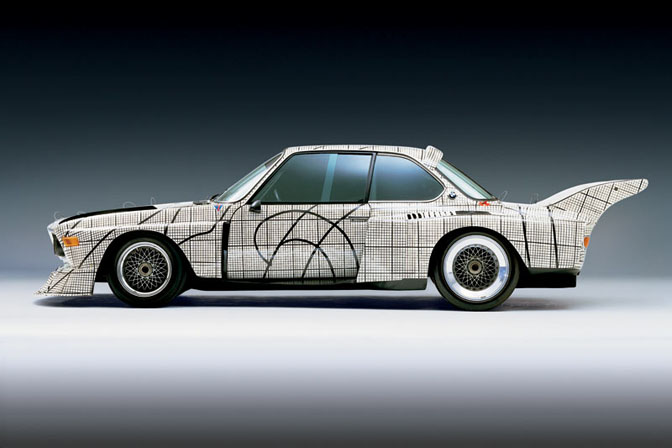
The following year the next BMW Art Car debuted, again a 3.0 CSL. This time the artist chosen was American Frank Stella. Besides being a talented artist, Frank was racing fan – and this shows in his work. The grid pattern Stella chose complements the raw mechanical shape of the 3.0 CSL's body. Again, the uniquely designed BMW appeared at the 24 Hours of LeMans.
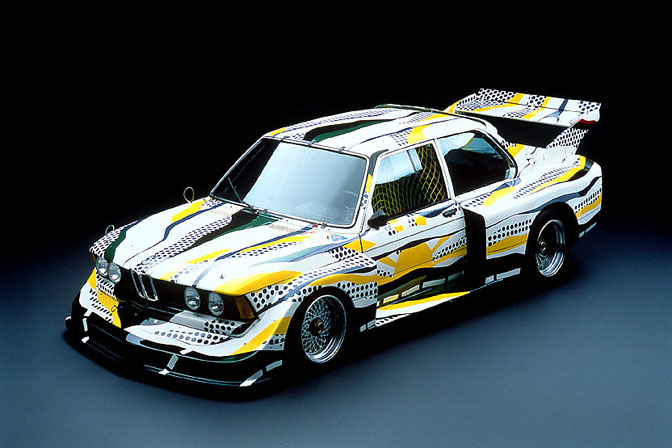
The 1977 Art Car was a 320i Group 5 racer done by American Roy Lichenstein, who is most famous for his comic work. Lichenstein's design emphasized the motion of a racing car and it's features included blurred scenery and a streaking sun. At the '77 LeMans race, this car finished first in it's class with Poulain and Mignot behind the wheel.
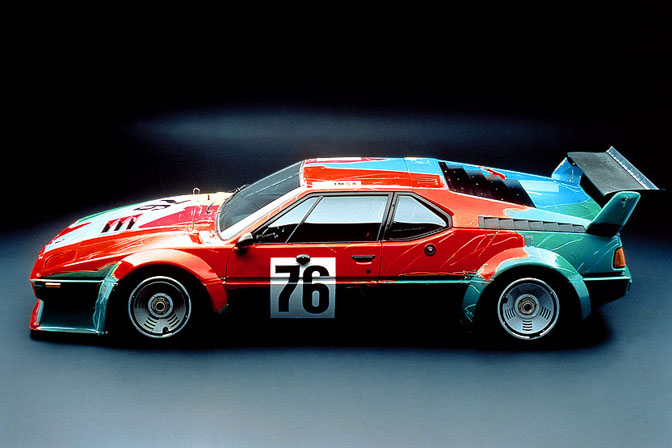
The next Art Car is arguably the most famous of all them. For 1979 the canvas would be the Group 4 BMW M1, and the artist the legendary Andy Warhol. Unlike the previous designs which were designed on scale models before being professionally applied to the real car, Warhol painted his work directly on to the actual M1. Apparently the entire job only took him around 23 minutes to finish. Warhol's use of color on the M1 is said to take on a very unique look when the car is moving at speed. The car placed second in class at LeMans in 1979.
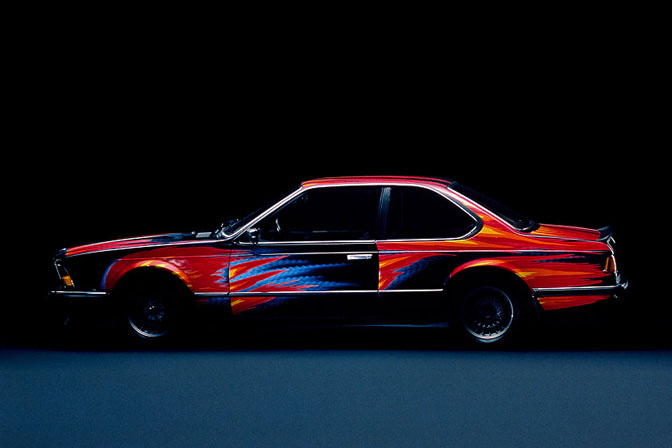
For 1982, the Art Car Program had been expanded to include production BMW's. This 635 CSi was designed by Austrian artist Ernst Fuchs. The design is said to represent a hare jumping over a burning car on a nighttime highway – something which Fuchs observed during a dream when he was five years old.
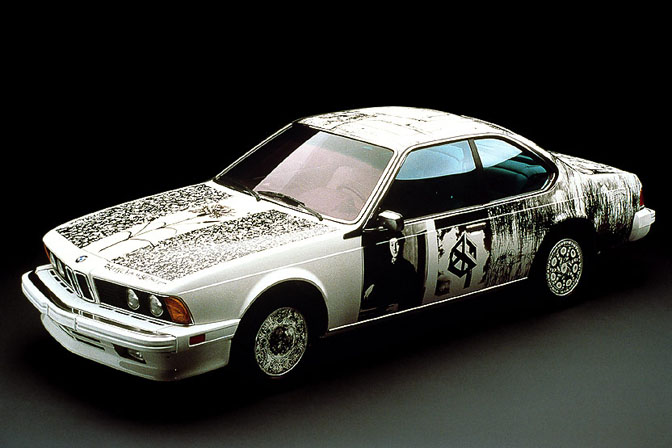
In 1986 another 635 CSi was given the Art Car Treatment. This time the artist was Robert Rauschenberg, who used a unique method to project photographs and classic artwork onto the car. The car has since been exhibited at art museums across Europe and the United States.
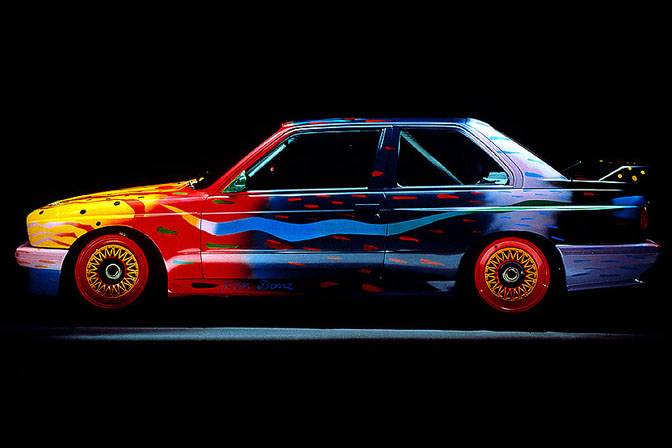
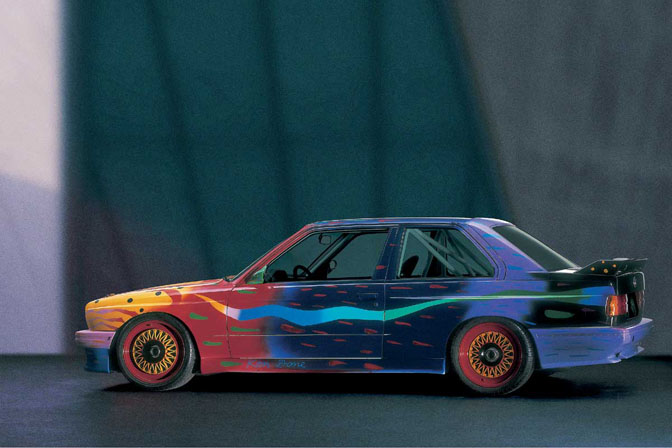
In 1989 artist Ken Done used a Group A M3 for his Art Car project. Done chose the brightly colored parrots and parrot fish of his native Australia for his design inspiration. According to Ken, both the parrots and the M3 represent something that is both beautiful and fast.
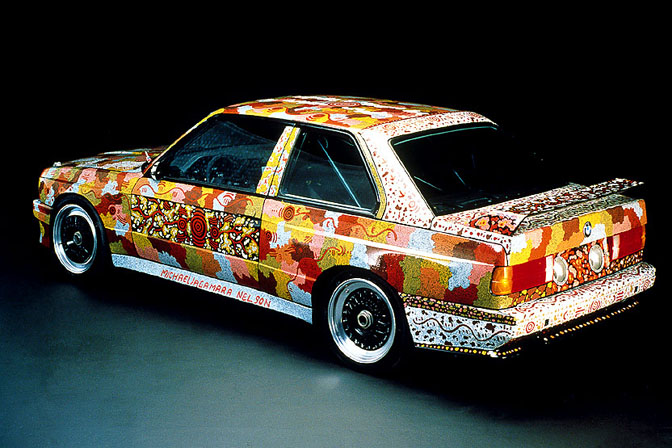
Also done in 1989 was another E30 M3 by Australian artist Michael Jagamara Nelson. Nelson used mythical Australia as his inspiration for an intricate design that took seven days of non-stop work to complete.
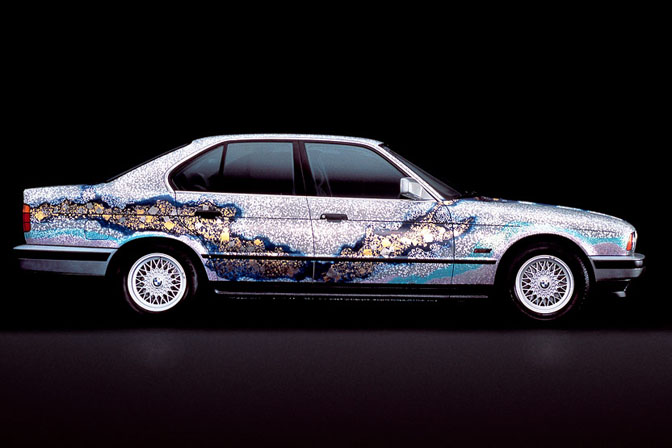
For 1990, Japanese painter Matazo Kayama used the BMW 535i as his canvas. Using both an airbrush and individual bits of gold, silver, and foil, Kayama complimented the German design with a modern Japanese touch.
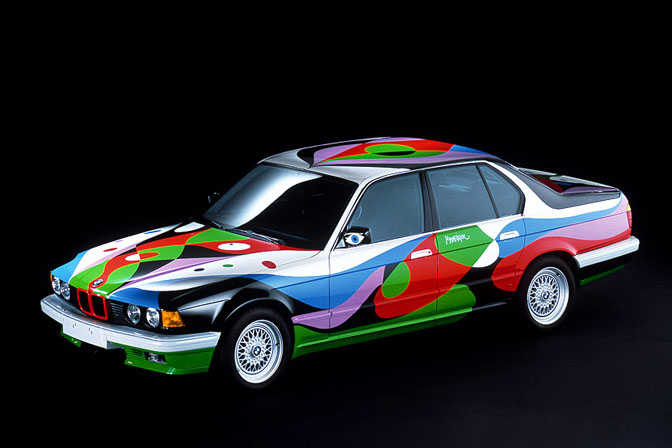
Also done in 1990 was this 730i designed by Cesar Manrique of Spain. Using bright colors and flowing designs, Manrique chose to emphasize the simple lines and aerodynamics of the flagship BMW sedan.
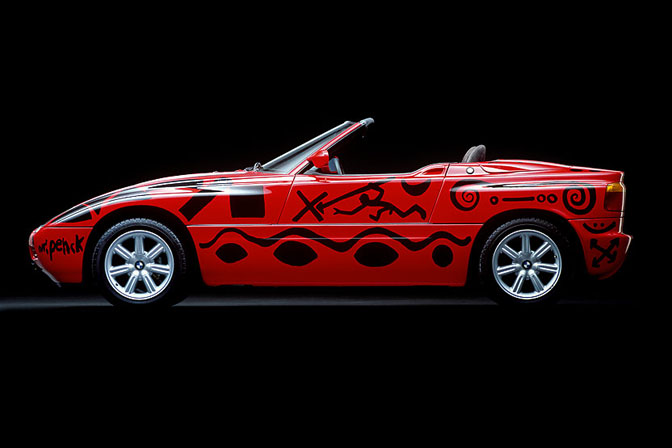
German artist A.R. Penck created this BMW Z1 Art Car in 1991. Penck chose to match the high tech design of the Z1 with basic symbols reminiscent of cave paintings and sign language.
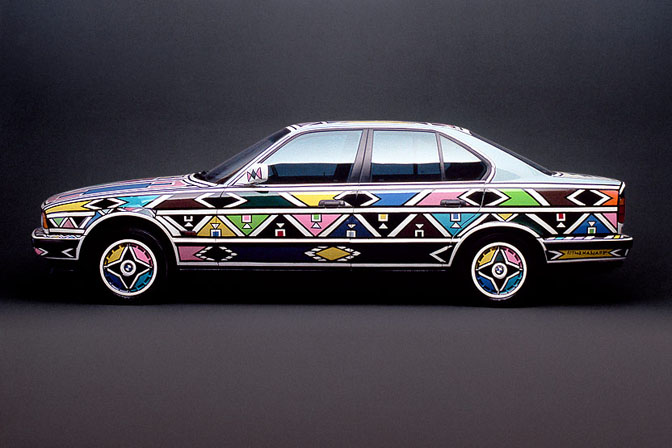
Also completed in 1991 was this 525i done by South African artist Esther Mahlangu – the first woman to work on the Art Car project. Mahlangu used traditional African art to contrast with the modern design of the 5-series.
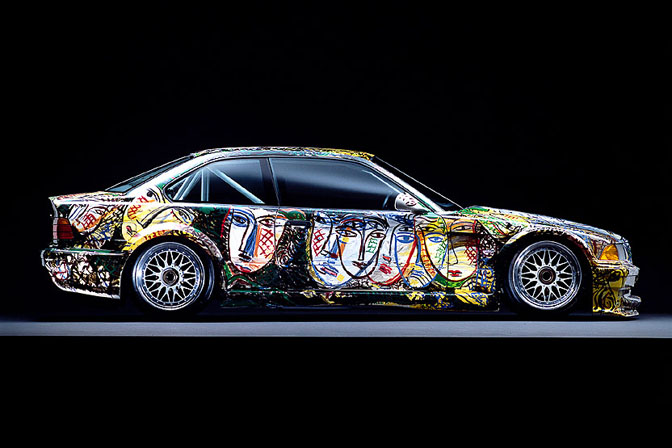
The 1992 project again took the form of a race car, this time an E36 3-series done by Italian painter Sandro Chia. Sandro says the faces he painted on the side of the car represent the gazes on people's faces as they watch a car go by.
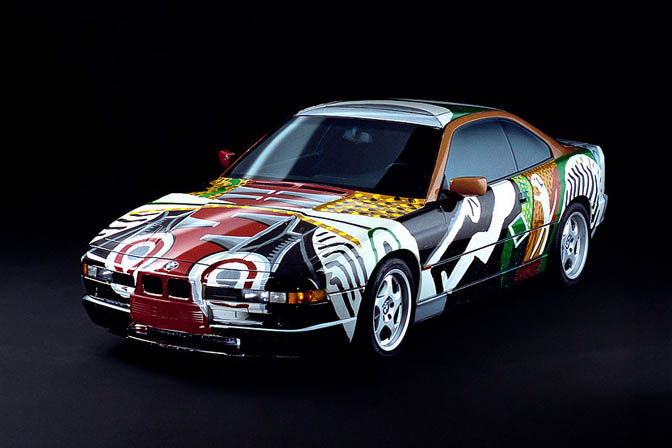
The next Art Car was this 1995 850 CSI, done by English artist David Hockney. David took a unique approach to the 8-series, allowing one to "see inside" the car. Note the exposed intake runners on the hood and the view of the driver through the door.
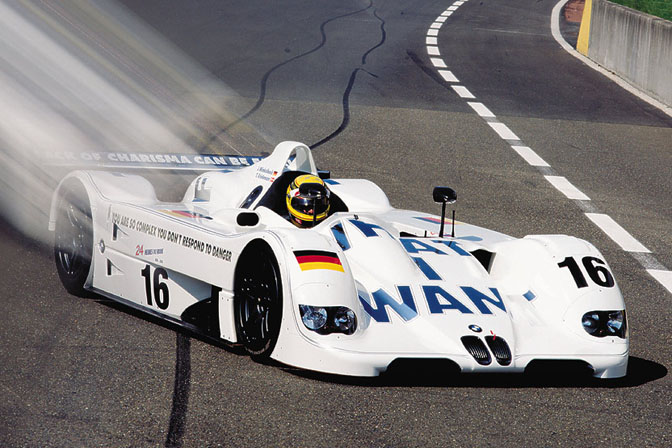
For 1999 the Art Car program returned to LeMans with this V12 LMR designed by Jenny Holzer. Jenny used simple word art with phrases like "Protect me from what I want" and "You are so complex you don't respond to danger" to decorate the prototype racer.
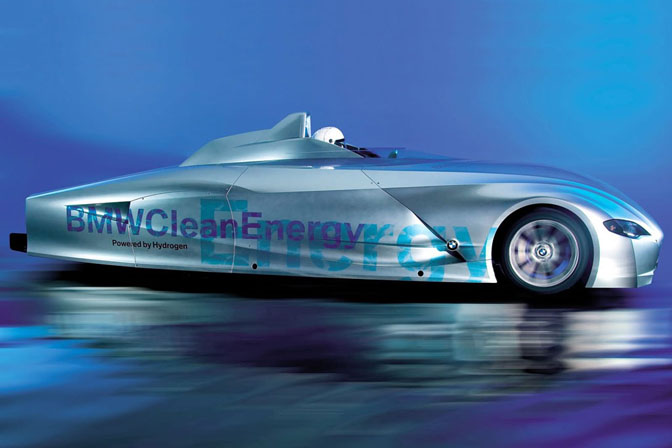
The next Art Car was a drastic change from those of the past. The BMW H2R concept debuted in 2007 and was worked on by artist Olafur Eliasson. The hydrogen-powered H2R represents the combination of both auto design and the new wave of environmental consciousness.
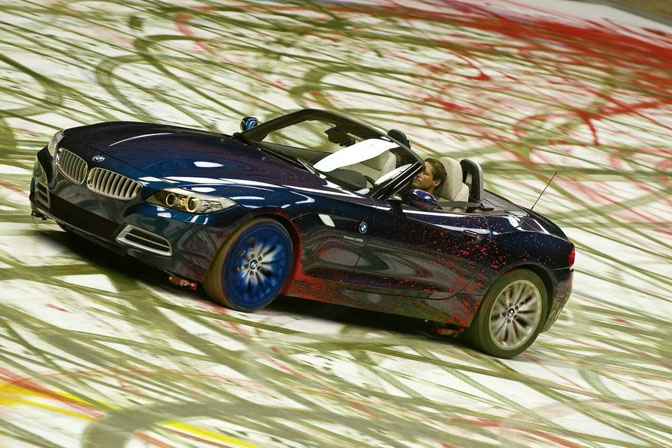
In the most recent Art Car project, the BMW was not so much the canvas as it was the tool. Robin Rhode used the new Z4 roadster for a groundbreaking art performance known as "An Expression of Joy". The Z4's tire tracks were used to create what might be the most unique display of automotive art ever.
Now we will wait and see what BMW has in store for the next Art Car Project.
Ideas anyone?
-Mike Garrett