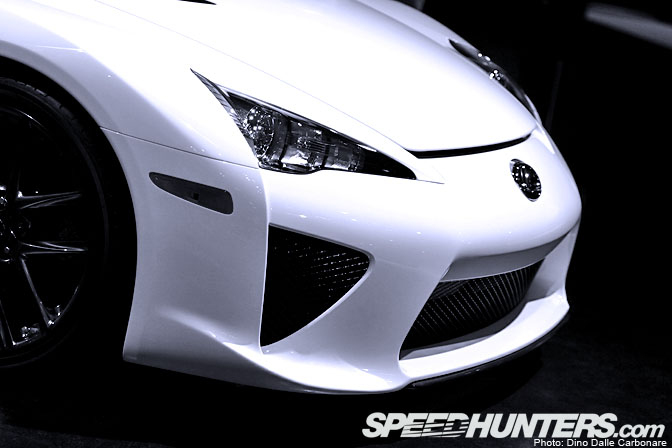
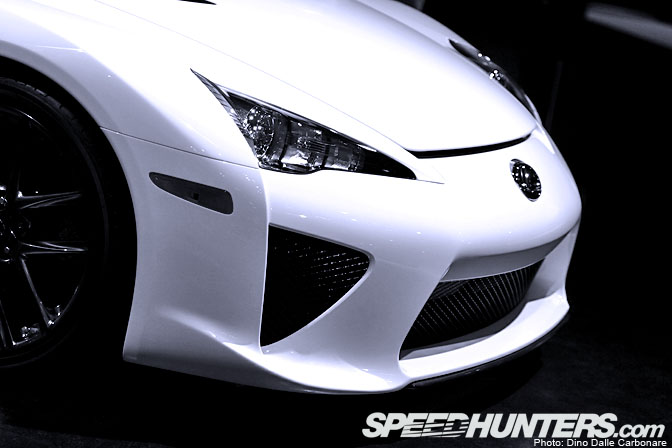
Toyota was on a roll at this 41st Tokyo Motorshow and right after presenting the FT-86, Akio Toyoda moved to the Lexus corner of the massive Toyota stand to take the wraps off an equally awaited sports car, the Lexus LFA. Lexus took its time developing its ultimate supercar, teasing us with three different concepts, a roadster concept and even a race car version that raced at the Nurburgring 24h race last year. But the production version is finally here and there is no doubting that Toyota has created a very impressive car indeed, one that has every intention of challenging the most established names in the supercar business.
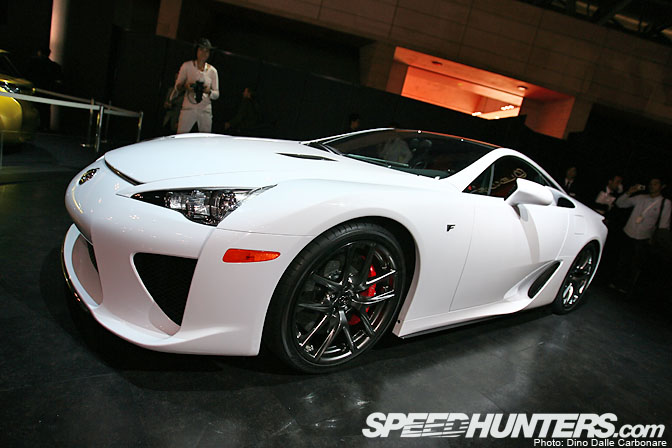
Much like the Toyota 2000GT of 1965 (only 337 examples made) the Lexus LFA will be built in very limited numbers, as a halo model showcasing state-of-the-art tech gleaned from Toyota's exploits in F1. Orders of the LFA will be taken from April next year and the limited production run of 500 cars will start in December 2010 and end in December 2012. About 20 cars a month will be built. The price in Japan has been fixed at ¥37,500,000 (the equivalent of $408,000) while the price for the US market is said to be of $375,000.
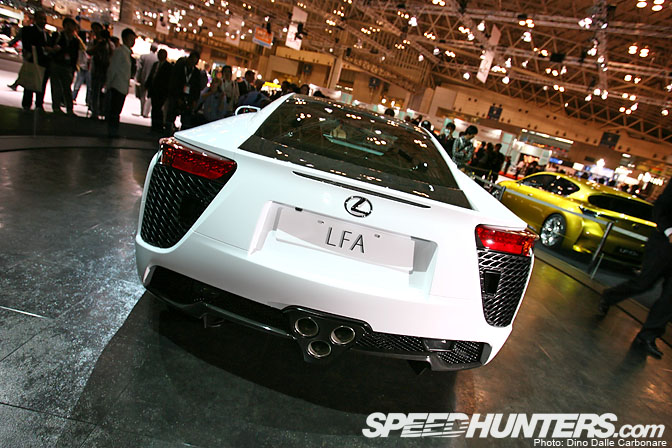
Up close the LFA is quite an remarkable piece of work, starting with those unmistakable rear grilles under the tail lights, behind which lie the rear-mounted radiators.
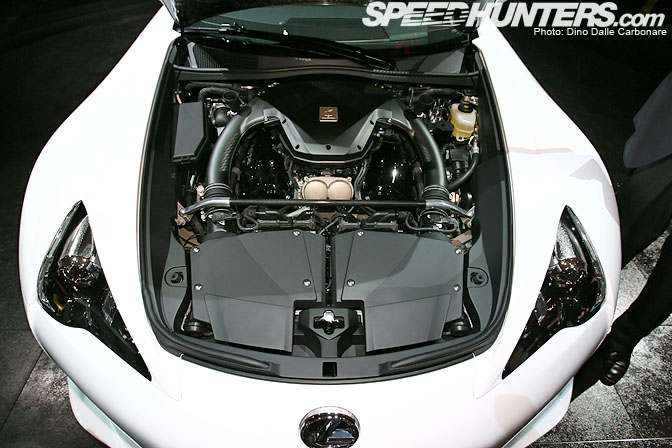
This has allowed for some very impressive packaging up front, with the 1LR-GUE 4.8L V10 engine sitting way back in the engine bay to give that much sought after front-midship layout. The space in front of the engine is taken up by the two air-boxes, which are fed by a pair of guides that scoop up air from the bumper.
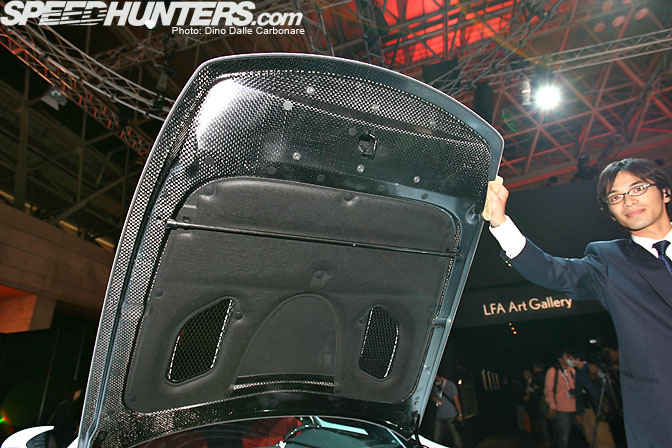
The feather-light hood has been created using some very thick carbon weave, beautifully and flawlessly shaped.
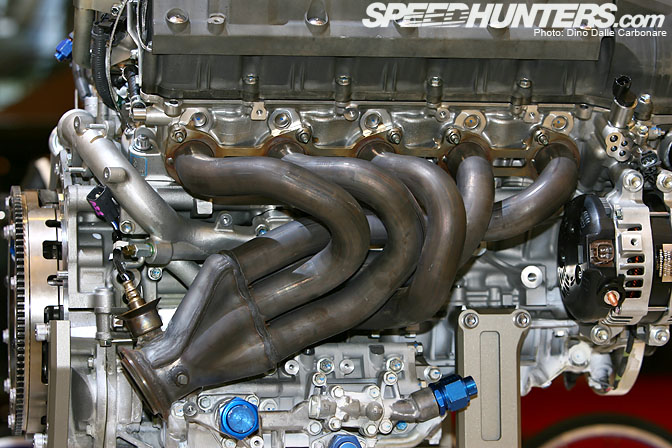
The Yamaha-developed V10 was on display next to the LFA race car that Toyoda-san, along with other drivers, raced at the Nurbugring 24h race last year.
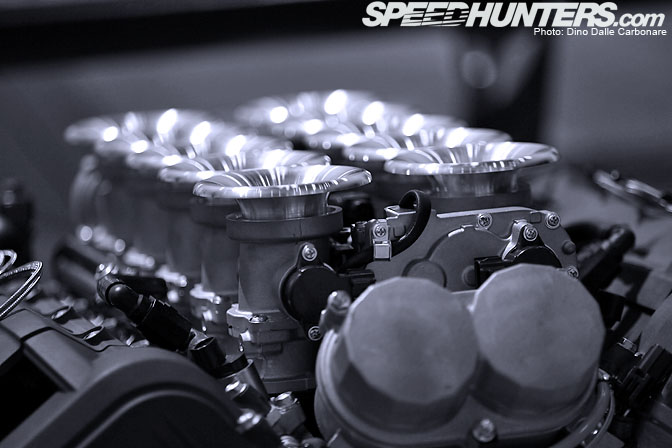
The billet aluminum funnels feed the 1LR via ten electronically controlled throttles.
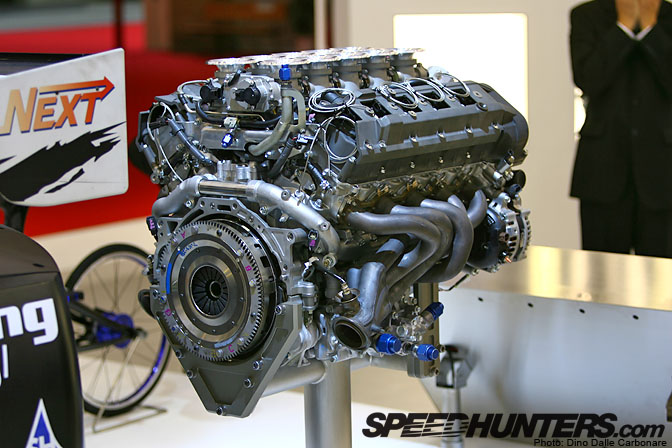
It's quite a compact and light engine (according to Toyota it weights less than their 3.5L 2GR-FE V6 engine!) and thanks to its dry-sump lubrication system can sit very low, helping keep the center of gravity of the LFA as low as possible.
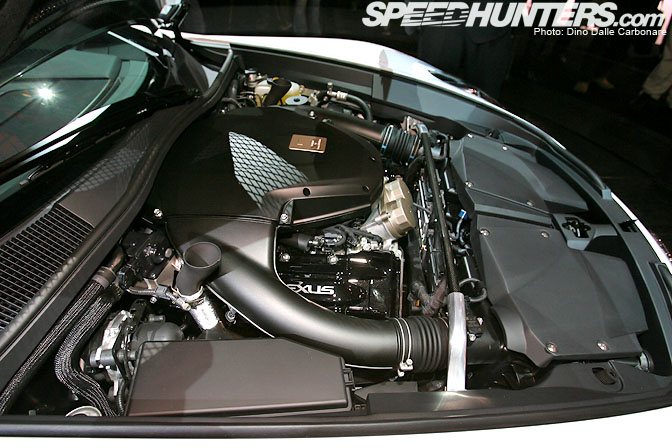
From this angle you can see just how far back and low the V10 sits, allowing the designers to come up with that low-slung hood-line.
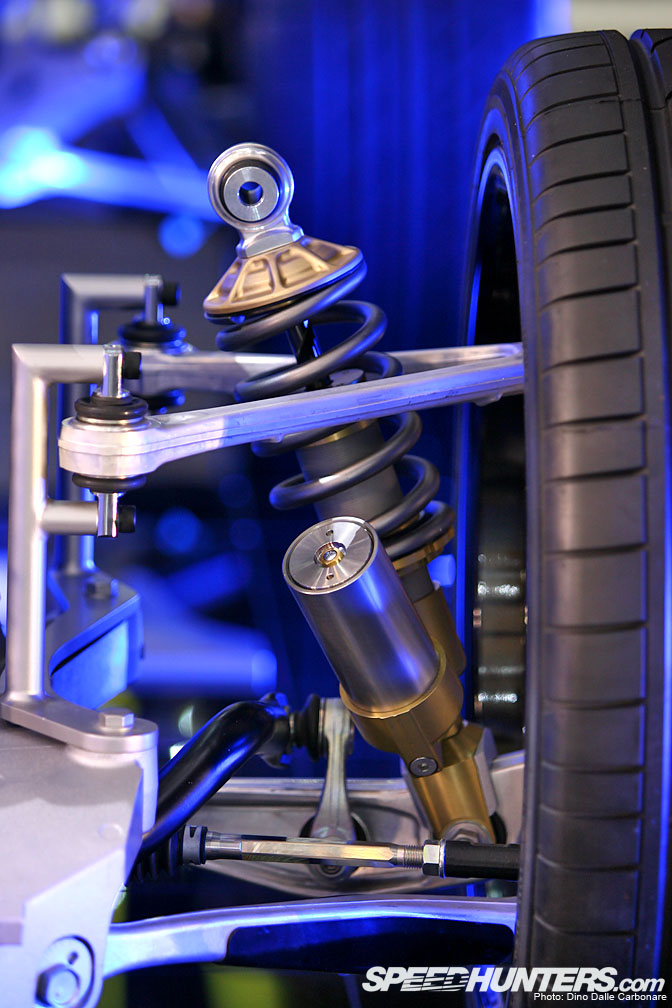
Up front the double wishbone suspension layout is coupled to what looks like some serious race inspired dampers. All arms and subframes are of course aluminum…
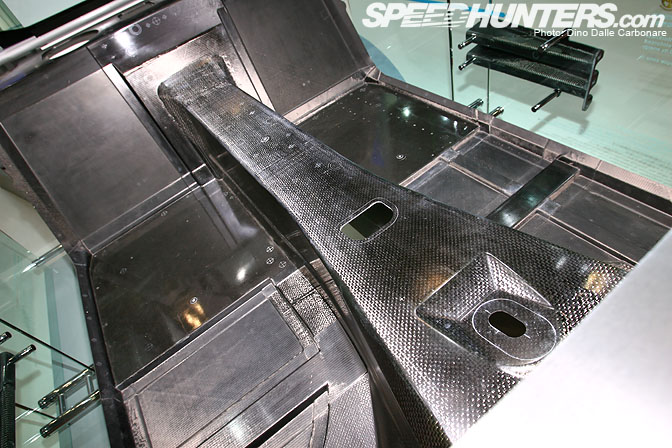
…while the chassis is a CFRP monocoque, built by a special section of the Toyota company, which specializes only in composite materials.
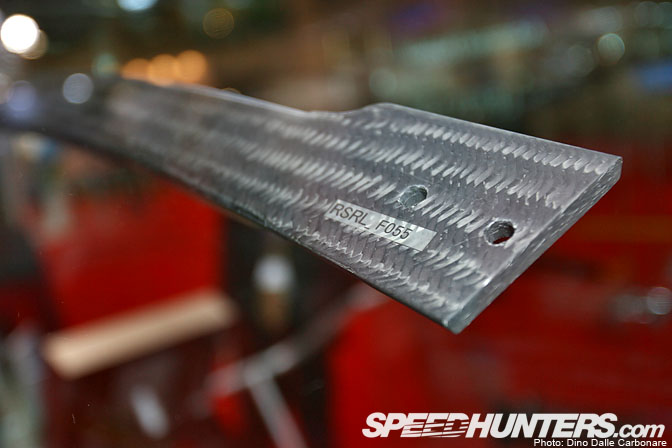
The roof beams, which create the main arch of the roofline, feature a different type of weave developed to withstand the torsional stresses this particular area is subjected to. Thanks to its exotic construction Lexus has managed to keep weight down to 1480 kg, which is very respectable considering just how well equipped the interior is.
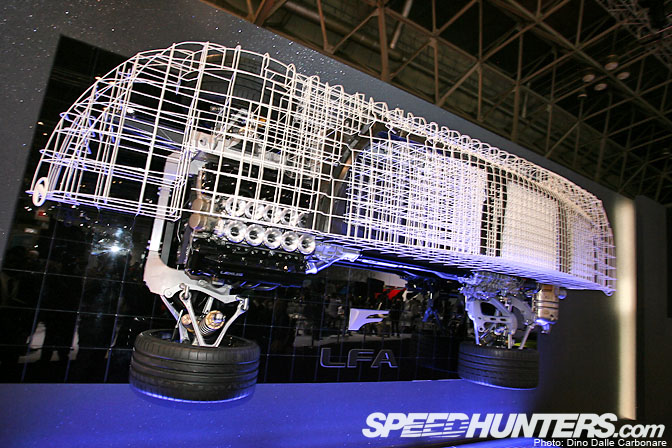
The "half-cut" model of the LFA was breathtaking to behold. I must have spent a good 15 minutes going over every minute detail. You can see the engine position with respect to other components, as well as the 6-speed transaxle Automated Sequential Gearbox (ASG), which shares its housing with the differential. The rear suspension has a multi-link layout and is coupled with the same competition-type dampers found up front. You can just about see the titanium back-box too.
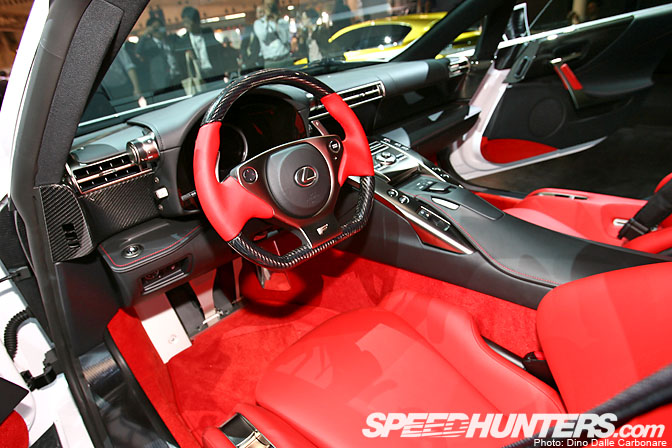
As you would expect in any high-end Lexus the interior is put together with the uttermost quality and attention to detail. Looking at the Lexus LFA configurator potential customers can really let their imagination fly by picking from a wide variety of different color combinations, far more adventurous than the red on black of the display car. A Mark Levinson 12-speaker surround sound system is also available together with a 6-disc DVD changer.
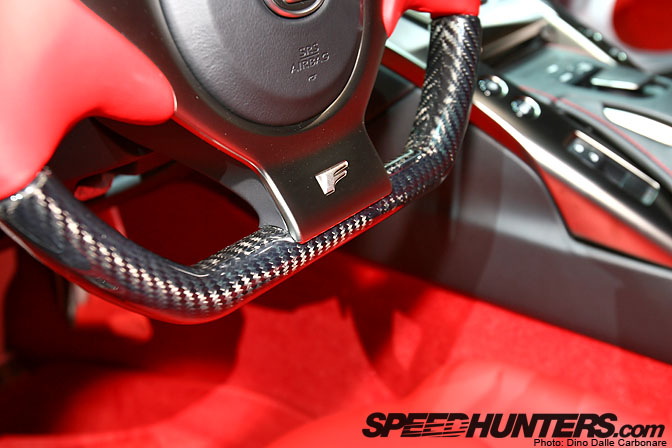
According to the LFA press release the bottom of the carbon fiber steering wheel has been "chopped" to shave weight off and to create a higher rotational center, however additional weight has been put back in order not to not unbalance the way in which the steering wheel turns. Can't help but wonder why they didn't just stick to a plain old round one!
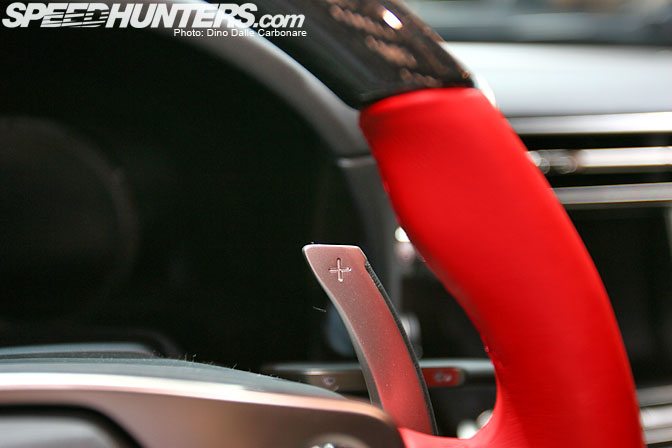
The 6-speed ASG is controlled by a pair of paddles mounted on the steering column, which like on the dual-clutch equipped Nissan GT-R do not rotate with the steering wheel.
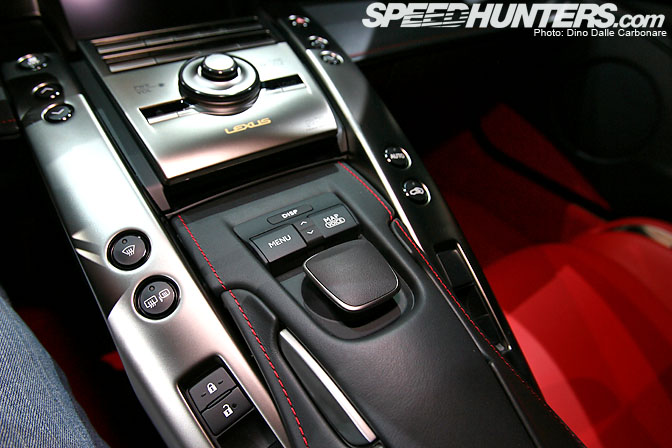
The center console and transmission tunnel seamlessly blend together and is just high enough to rest your right arm on and fiddle with that curious little joy stick that is making an appearance on newer Lexii. I personally wasn't impressed with the switchgear design, far too obvious and bland for a car this bespoke.
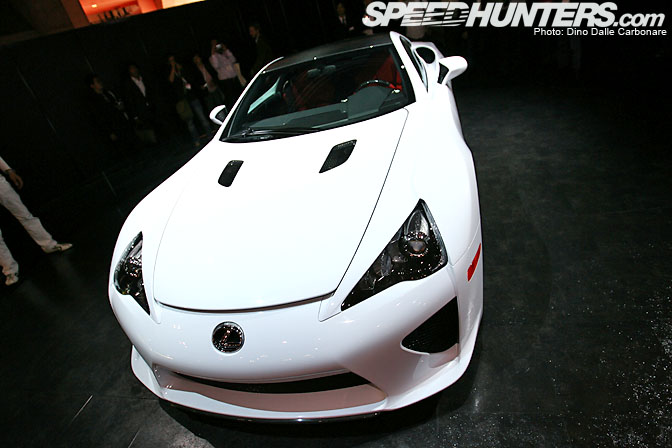
The LFA is a very special ride and Lexus should not have too much trouble finding 500 people willing to fork out Ferrari F599 money for such a unique machine.
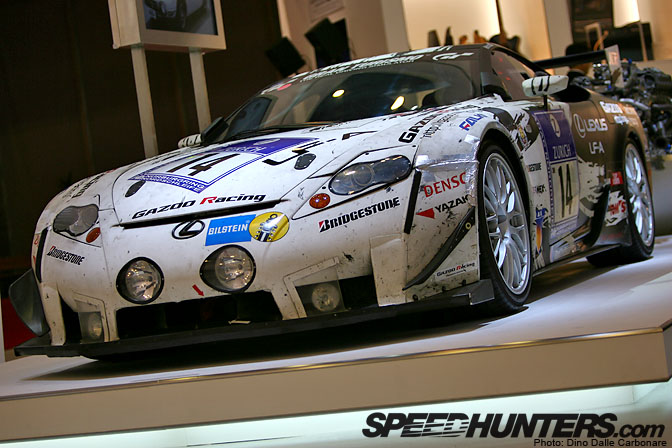
I thought it would be interesting to compare the production car with the race car. A lot has changed design-wise, especially the area around the radiator intake on the shoulder-line.
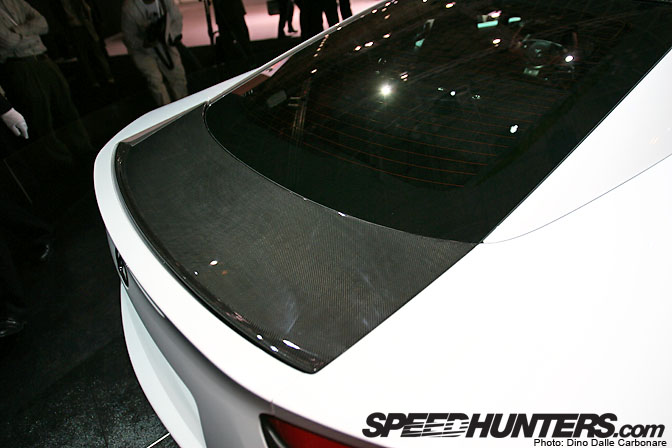
I asked one of the Lexus representatives to kindly lift the carbon rear wing…
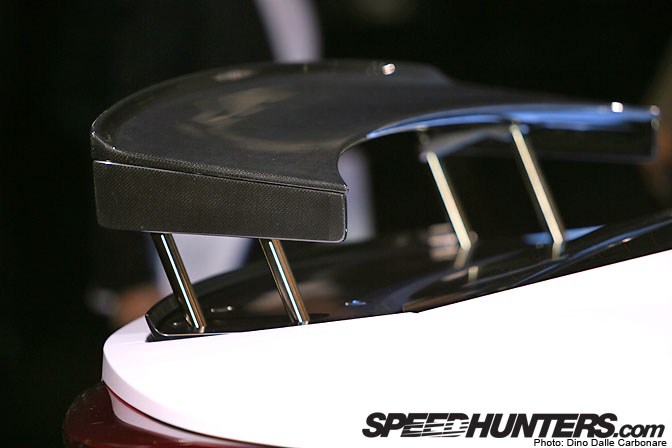
…just so I could see how it would look like with it up. Notice how there is a secondary Gurney flap that rises slightly over the trunk line once the wing is raised. Considerable effort has gone into finely tuning the LFA's aerodynamics, particularly into achieving the venerable 200+ mph top speed while at the same time providing an adequate amount of downforce.
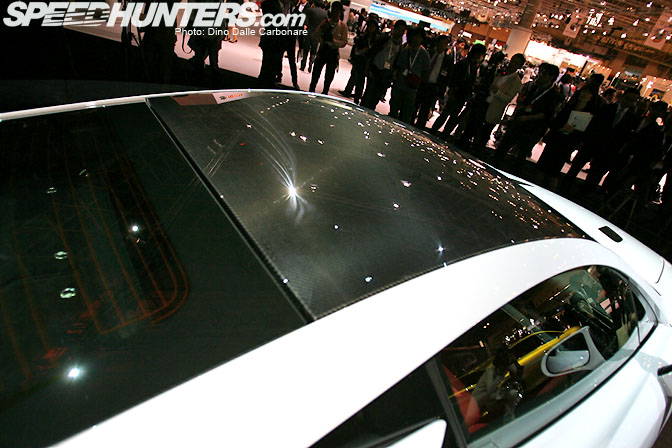
The carbon roof, like the spoiler, is left unpainted so its composite weave can be admired.
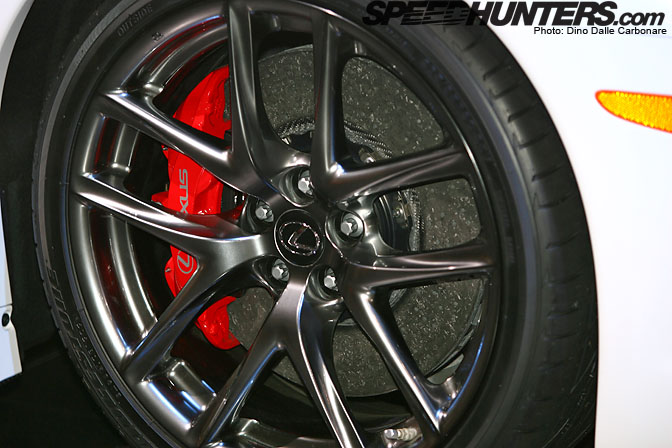
More carbon can be found in the Brembo developed carbon-ceramic braking system. Up front 6-pot monoblock calipers are mated to ø 390 mm 2-piece floating carbon discs while the rear features smaller 4-pot calipers along with ø 360 mm rotors. The 20-inch wheels, 9.5J wide up front and 11J wide at the rear, are shod with specially developed Bridgestone tires, 265/35/ZR20 front and a rather chunky 305/30/ZR20 at the rear. The sticky Bridgestone rubber has no problem coping with the 552 HP allowing the LFA to put down 3.7 sec 0-62 mph times via the launch function. With the LFA, Lexus set out to prove to the world that it too could build a supercar if it set its mind to it, and on this first encounter it appears to have achieved that goal. However before it can truly earn the title of “supercar” it must first take on those established cars it’s clearly aimed at (not least of which the GT-R) and prove its worth on the Nordschleife. Now, how to convince Lexus to let me have a go in one?!
Dino Dalle Carbonare