
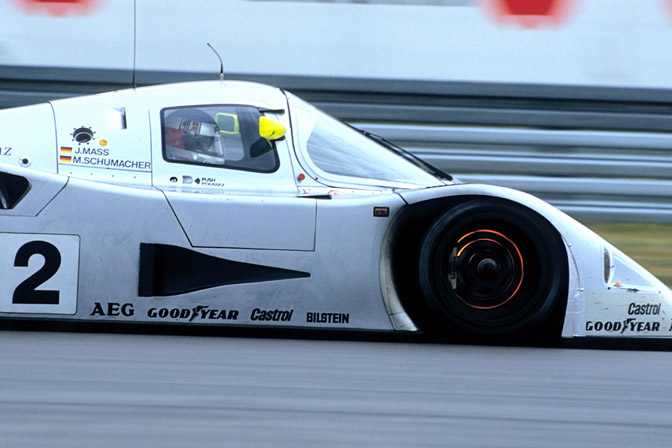
Do we have any Schumacher fans in here? Schumacher haters? Personally speaking, I've had an on-off opinion of "Schumi" over the seasons. He was rather good at playing the villian racing driver for many years, although after a few seasons this became "the saviour of Ferrari" and then later on the centerpoint of total domination.
I'm not going to attempt to write a full length Retrospective on Schumacher though. We just don't have access to a complete enough Formula 1 photo archive to do so, and don't tend to focus too much on open wheel racing here on Speedhunters. But Drivers Month would be incomplete without some more attention in Herr Schumacher's direction, so I thought I'd quickly look at a very short and often overlooked chapter in Schumacher's racing career: his time as part of the Mercedes Junior Sports car team during the '90/'91 racing seasons.
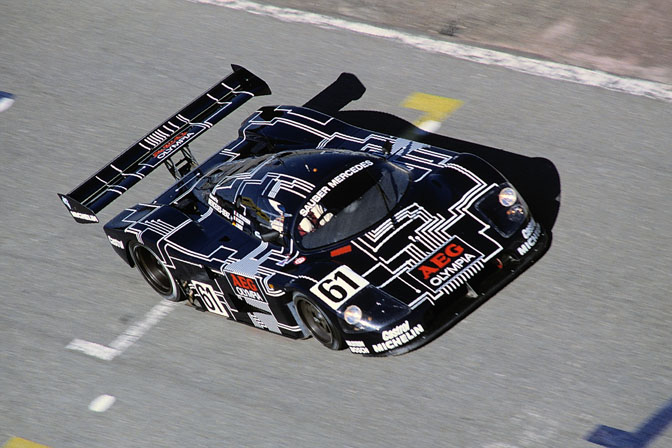
But first a few words about the Sauber Mercedes sports car programs…
The Sauber-Mercedes partnership hit full swing for the 1988 World Championship for Sports Prototypes. Although Sauber had been using privately prepared Mercedes engines since 1985, this was the first factory backed Mercedes racing program in thirty three years.
For 1988 the cars were driven by Jean-Louis Schlesser, Jochen Mass, and Mauro Baldi with a variety of 4th drivers supporting them. Although relatively unsorted, the car was still considered to be miles more advanced than the outgoing dominant car: the Porsche 962. There were four wins for Sauber Mercedes that year, but it was Martin Brundle and the TWR Jaguar team who took the 1988 championship.
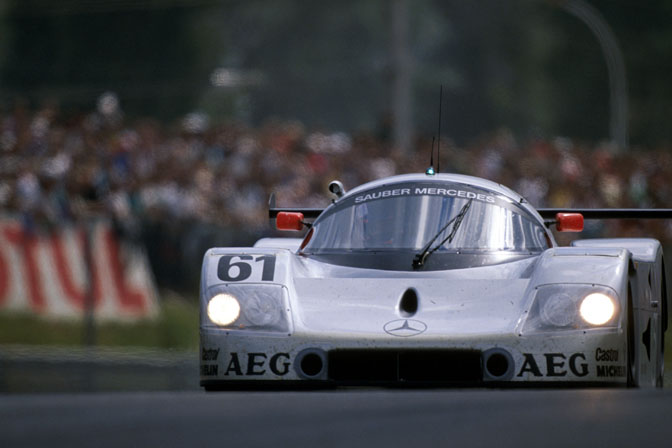
For 1989 the Mercedes link up became far more overt, with an updated 4 valve per cylinder M119 Twin Turbo V8 engine added to the package, wrapped in a new Silver Arrows style paint job. Schlesser, Mass, and Baldi were joined by Ulsterman Kenny Acheson to pilots the two cars.
The program proved to be bulletproof and the team won 7 of the 8 events including three 1-2s.
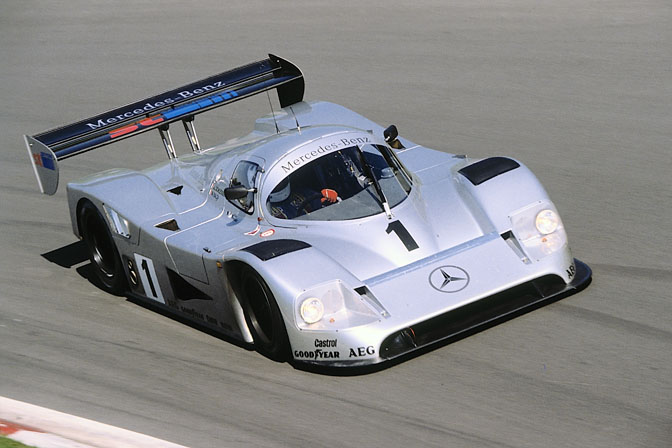
Even though the new F1-like 3.5 liters regulations were coming for the 1991 season, Mercedes and Sauber chose to produce a new car for 1990: the Leo Ress designed C11.
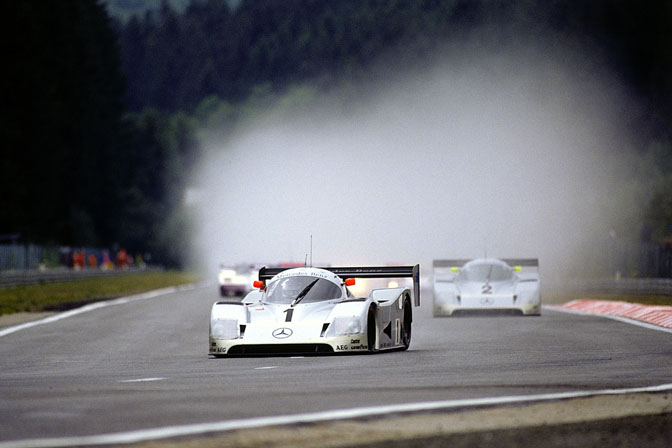
Kenny Acheson was replaced by a trio of young drivers who would rotate their tutelage as partners to veteran driving ace Jochen Mass: Heinz-Harald Frenzten, current German F3 Champion Karl Wendlinger and a certain Michael Schumacher.
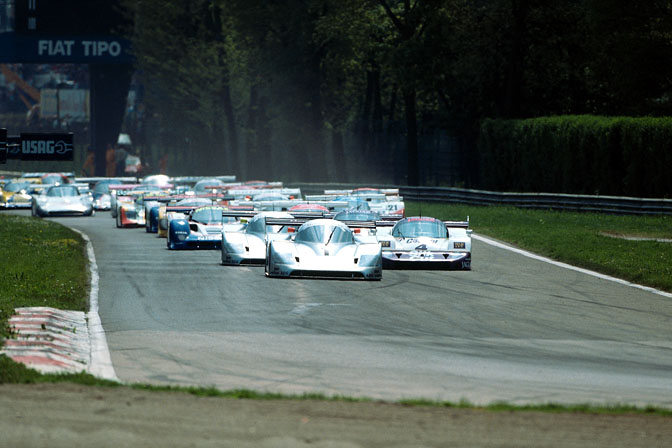
Michael ended up racing four times in 1990 as Mass' driving partner: at Silverstone, Dijon, Nurburgring and Mexico.
Silverstone didn't go well as Schumacher and Mass were disqualified when their mechanics illegally worked on the car, while it was stranded out on track during a practice session. Dijon netted second place to their more experienced team mates, after the race had to be restarted following a big startline crash. The Nurburgring result was the same too, with the Mercedes showing such domination, they lapped the entire field up to third place. And in Mexico, Schumacher and Mass were awarded first place, but only after the other Mercedes was disqualified for a refueling infringement.
It didn't matter though, as Mercedes and the Jean-Louis Schlesser-Mauro Baldi driving duo were World Champions for 1990. Michael also picked up the German Formula 3 championshp in 1990, so it was a pretty good year for him too.
For 1991, Bernie Eccelstone and Max Mosley had taken control of the World Sports Car Championship and ushered in a new set of technical regulations which essentially transformed Group C into closed-wheel Formula 1 racing. The lightweight (750kg), high tech and high expense cars ran the same 3.5L engines as F1 cars and now raced in a sprint format.
This new direction led to the demise of the World Sports Car championship, but this is a subject for another time. What was cool about this new set of regs was that some pretty wild race cars were built; machines which were every bit as fast as that era's Formula 1 cars.
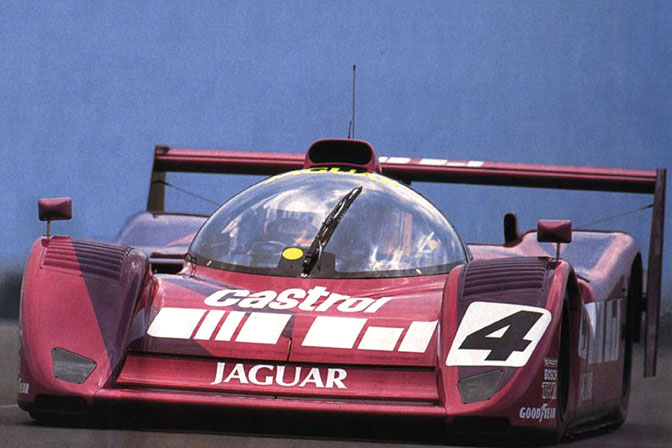
The class of the field at the beginning of the season was the Ross Brawn designed Jaguar XJR-14. It was unashamedly a two seater F1 car in concept, with a bubble top design that moved the concept of Sports Car forward by several years. It used a radical double rear wing — something which the competition had failed to think of. Powered by a Cosworth Ford HB F1 engine, the car was some 4 seconds a lap faster than its rivals at the season's opening Suzuka round!
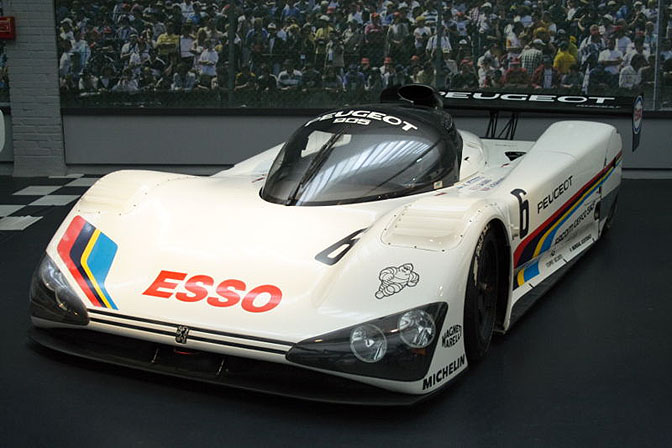
Peugeot entered the last few rounds of the 1990 season with their new 905 3.5L car. Like the Jaguar, it also ran with a bubble top concept, which completely dispensed with the need for doors.
Although the 905s lucked into a 1991 opening round win with the V10 powered car, it required an almost complete, mid-season rework to be competitive against the Jaguars.
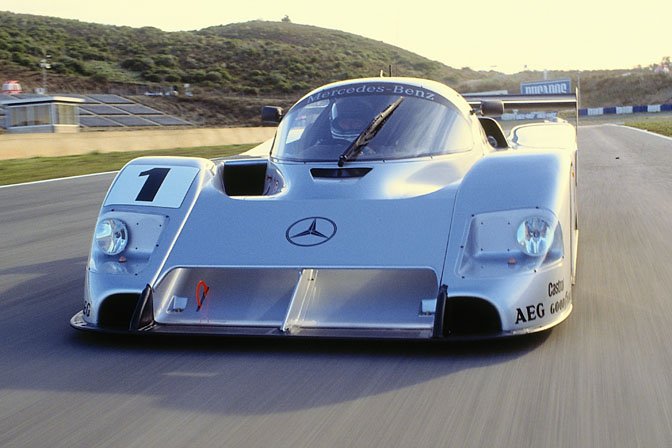
Unfortunately for Sauber, while their competitors were designing closed wheel F1 cars, they ended up producing a machine which was closer in spirit to its sport car lineage.
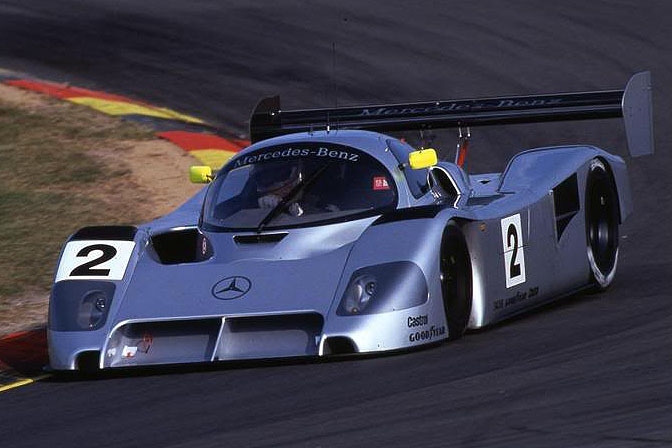
Dubbed the C291, it lacked a double rear wing, and just didn't have the downforce capabillities of its competitors… But still I'm sure you'll agree the C291 was quite a pretty looking race car.
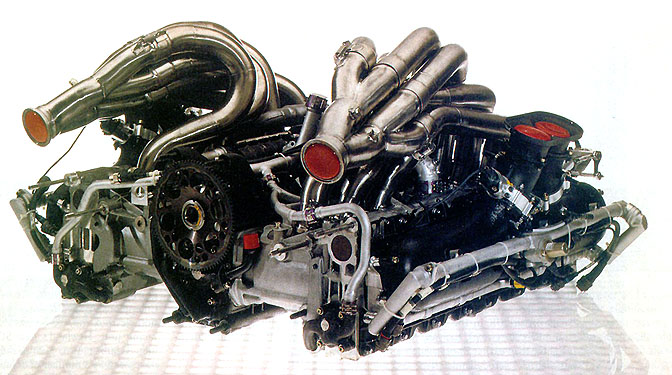
After looking at many different 3.5L V12 and V10 configurations, a flat V12 layout was decided on in order to lower the center of gravity as much as possible. This was Mercedes' first full race engine since the 1950s and unfortunately the design of the powerplant showed a little bit of a lack of experience, as the production was overly complex. Unfortunately, engine turned out to be the Achilles heel of the car and really hampered the team's efforts in1991.
At the start of 1991, the engine would rev to 12,000 rpm, but by season end 14,000 rpm redlines were being achieved. Power was said to be in the 600 -640 bhp range.
To make matters worse, the car was overweight. It was only by season end that it was lightened down from 780kg to the 750kg weight limit.
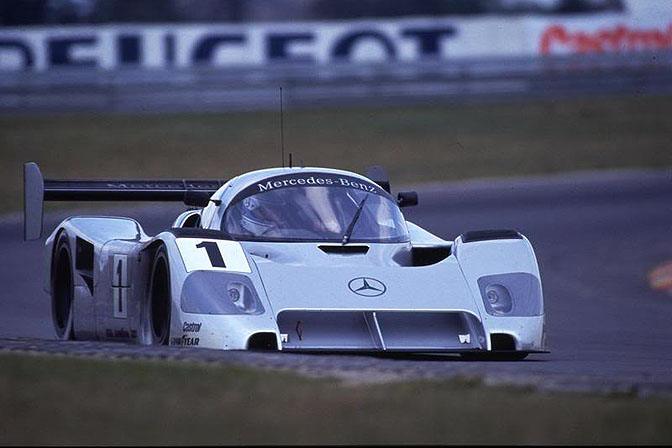
The Sauber Mercedes team started the 1991 season by entrusting the new C291 to Michael Schumacher and Karl Wendlinger, with Schlesser and Mass doing chores in the old C11, now ballasted up to 1000 kg.
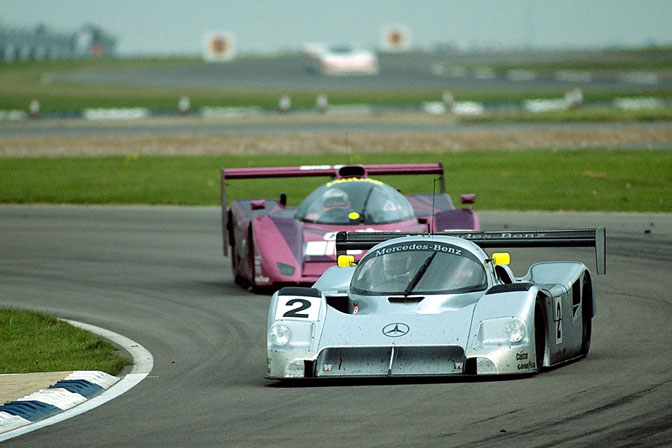
This photo from the Mercedes archive, shows the C291 at the Castrol BRDC Empire Trophy, held at Silverstone on May 19, 1991. After thoroughly being outshown for pace in qualifying: (the pole sitting Jag recorded a time of 1:27,478 compared to the Mercedes' fifth place grid slot time of 1:31,476) the Schumacher/Wendlinger Mercedes took advantage of the Martin Brundle Jaguar breaking a broken throttle cable and the Peugeot's problems to take second overall. This was the first time the C291 managed to finish a race and its first real result.
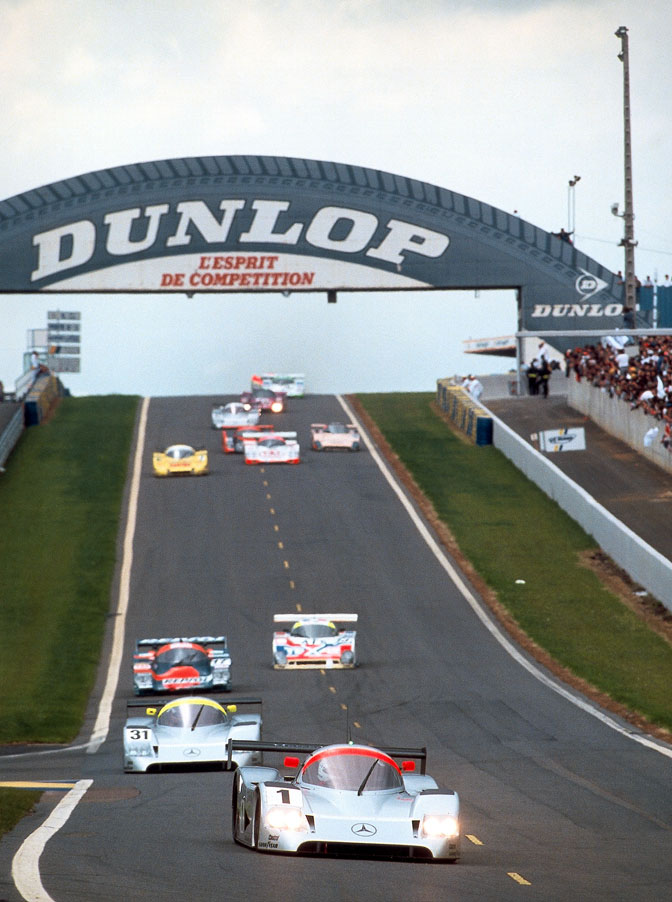
It was decided not to enter the C291 at Le Mans in June 1991. The ballasted C11s were still a pretty handy tool and entered the event as the favourite for the overall win. Schumacher and Wendlinger were joined, in C11 number 31, by Fritz Kreuzpointner, who was one of AMG Mercedes' Junior DTM drivers at the time.
After running near the front for the first few hours of racing, Wendlinger spun the car into the wall at the Dunlop Chicane after existing the pits on old tires and the car dropped down the order to 6th. This left Michael to set a blistering pace as the young team sought to make up the time lost. As the sun went down, he set a new out right track record; 5 seconds a lap faster than the year before.
Unfortunately it was all in vain, as the car lost yet time in the middle of the night having its transmission repaired and ended up coming home in 5th place, seven laps behind the winning Mazda 787B.
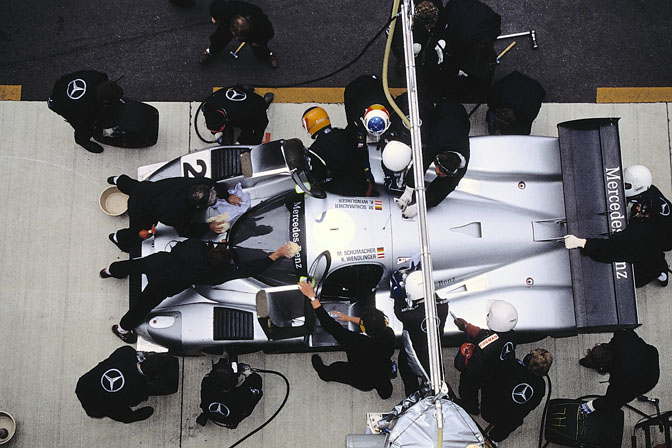
The rest of the year, was an experience of pure frustration for Schumacher… well at least in the direction of his Mercedes racing role. A string of defective engines meant the C291 DNFed for the next three races: Nurburgring, Magny Cours and Mexico… Mind you by this time, he had already made his F1 racing debut on that historic day on August 25, 1991 at Spa Francorchamp in Belgium.
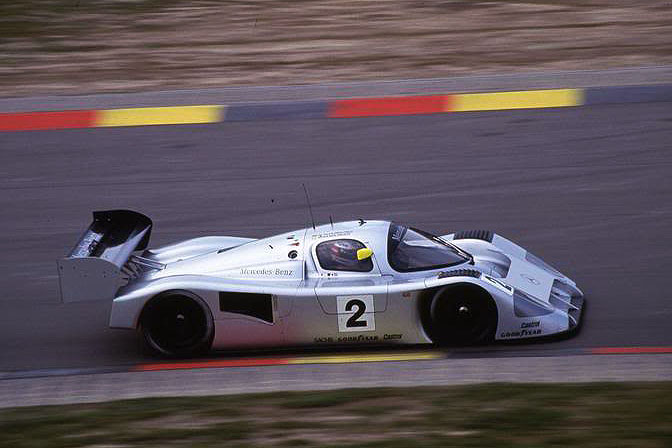
This particular photo was taken at Autopolis Circuit in Japan, on the 27th of October, 1991, just 1 week after Michael had driven in his first Japanese Grand Prix at Suzuka Circuit in a Benetton F1 car. This was Michael's last ever drive in the the Sauber Mercedes C291 which incidentally was also the last ever appearance of the Sauber team in sports cars race.
They did go out in style though, Michael and Karl won the race, thus recording the C291's only race victory. But both he and the Sauber team were off to new and better things… but that is a very different story!
Rod Chong
Photos: Mercedes, Mercefreaken, Gurneyflap, Jaguarsportweb