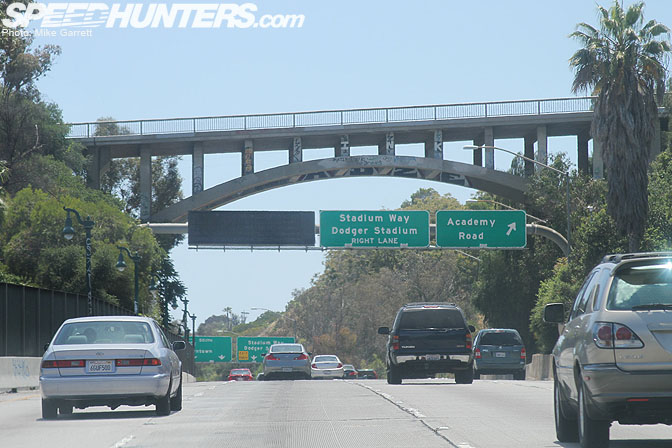
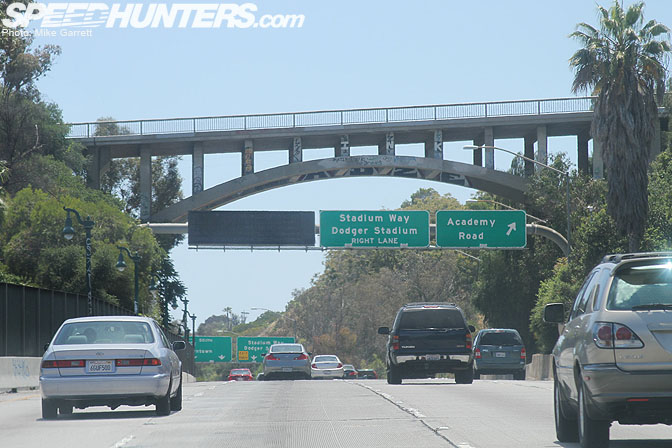
Living in the Los Angeles area, it was pretty obvious that one of my drives stories should feature a freeway. After all, people in LA spend a lot of their lives on the freeways, and like it or not – they are the backbone of the entire region.
But which freeway to use? I decided to travel California’s first freeway, the Pasadena Freeway, also known as SR110 or the Arroyo Seco Parkway.
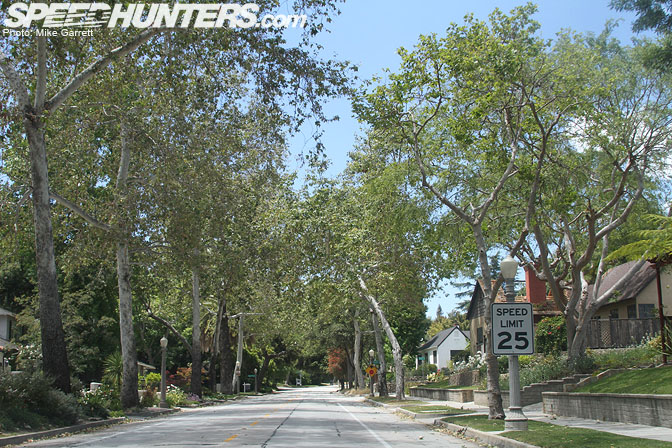
Originally opened in 1940, the road connects downtown Los Angeles with the city of Pasadena. I wasn’t sure which side of the route to start from, but we decided to start on the north end in Pasadena.
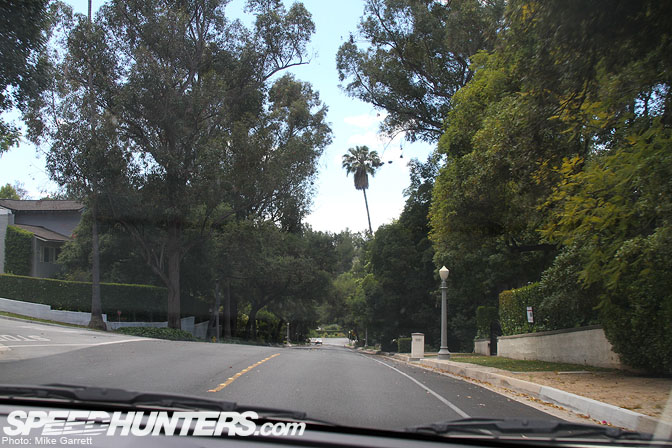
Now Pasadena itself is a pretty historic town, full of beautiful homes on winding tree-lined streets. It’s no wonder why it’s such a popular shooting spot for movies and television shows.
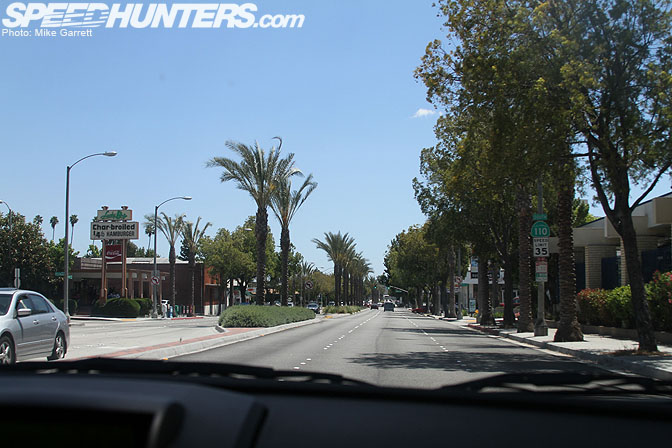
The road starts off as Arroyo Parkway in Pasadena, which runs north-south through the heart of the city. In classic SoCal fashion, it’s lined with palm trees and roadside businesses.
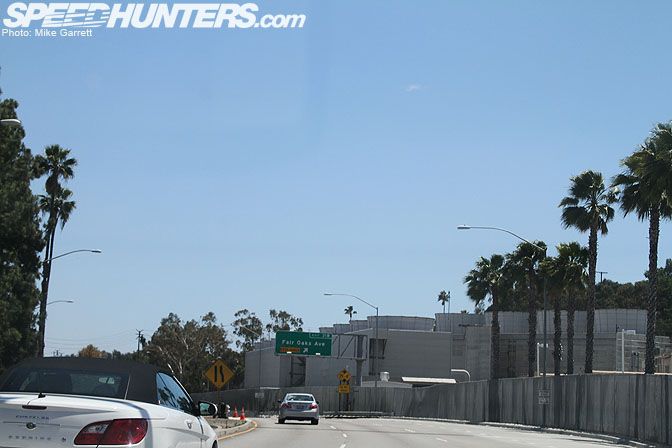
Near South Pasadena, the road becomes a six-lane “freeway”. When it was opened 70 years ago, it was an engineering marvel that allowed motorists to travel between Pasadena and LA in record time.
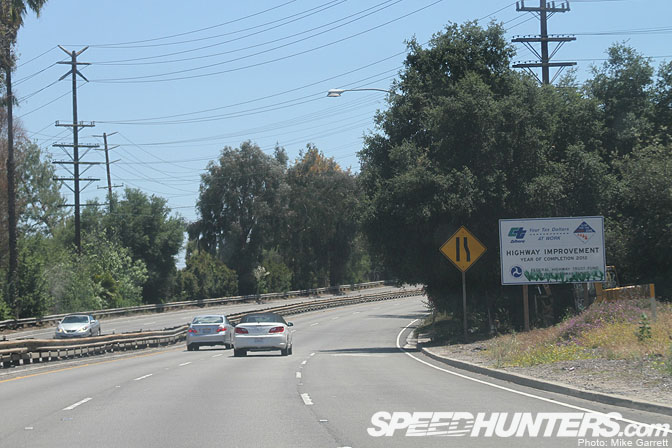
Now, compared to the rest of the LA freeway system, it’s an outdated,
windy old path – and that’s what makes it fun to drive.
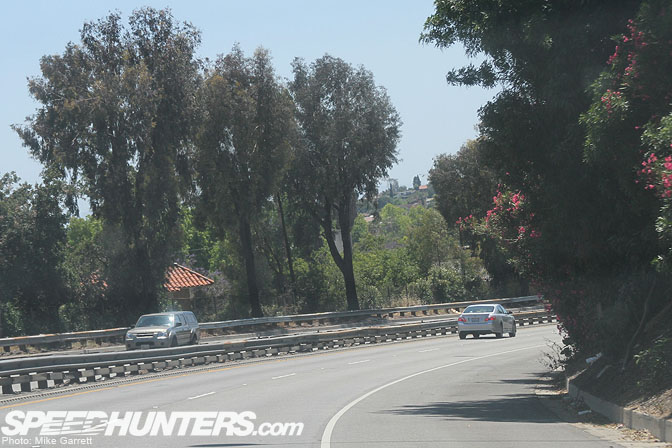
I mean, there’s actual curves. This isn’t one of those autopilot, “fix your hair and shave on the way to work” kind of freeways…
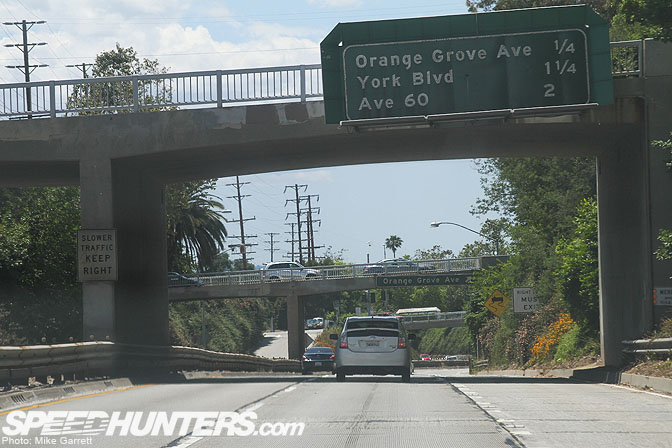
Surely there aren’t too many freeways in LA that look like this…
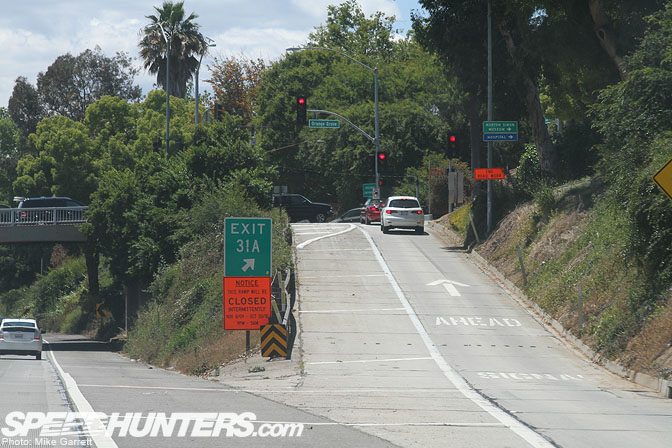
The on-ramps and off-ramps are also very short.
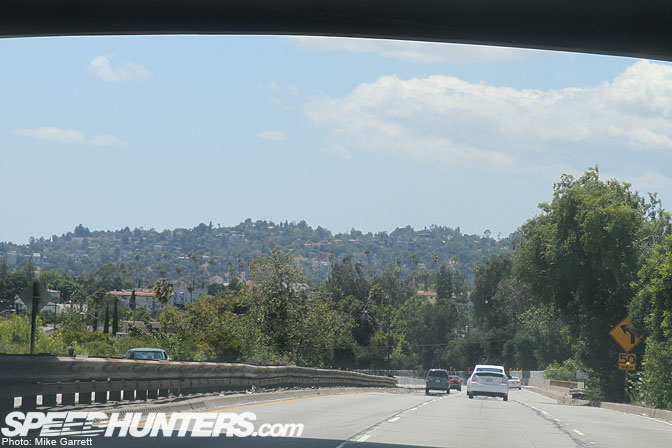
At the time the road was being planned, there was a debate as to whether it should be a scenic parkway, or an express route. For the most part the backers of the express route won, but effort was still taken to make the road interesting to drive.
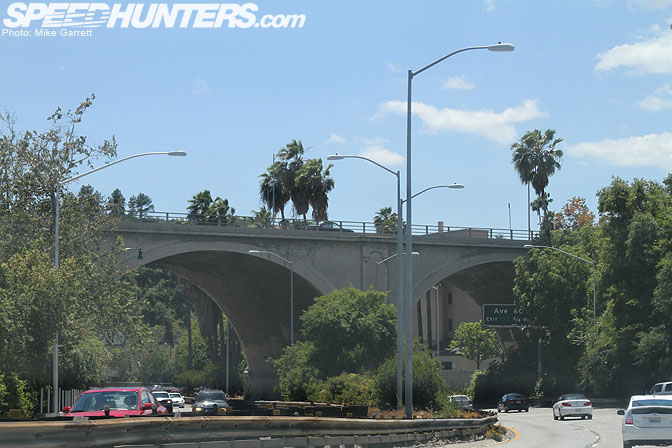
There are quite a few scenic bridges that cross the freeway as it winds along the path of the Arroyo Seco stream bed.
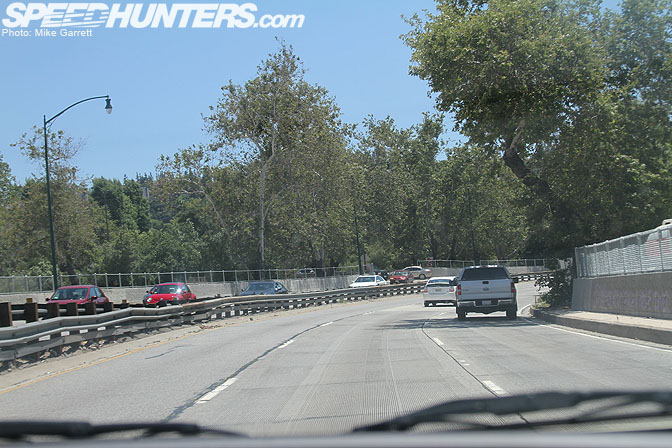
At one time a there were bushes in the center of the road, but now the space is occupied by a battered guard rail.
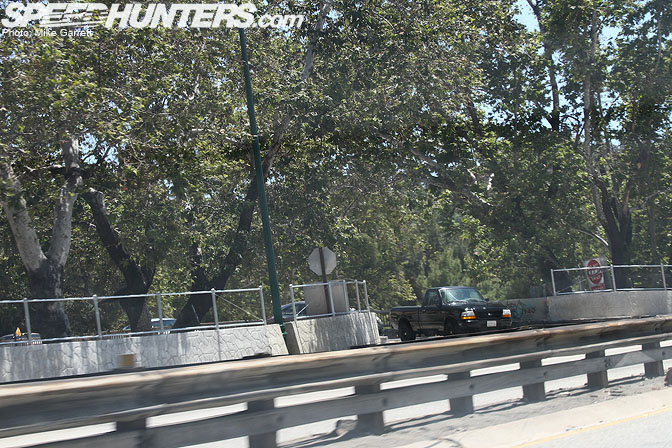
Yes, that pickup truck is actually getting ready to enter the freeway. Who would have thought? A freeway that requires a shred of motoring skill?
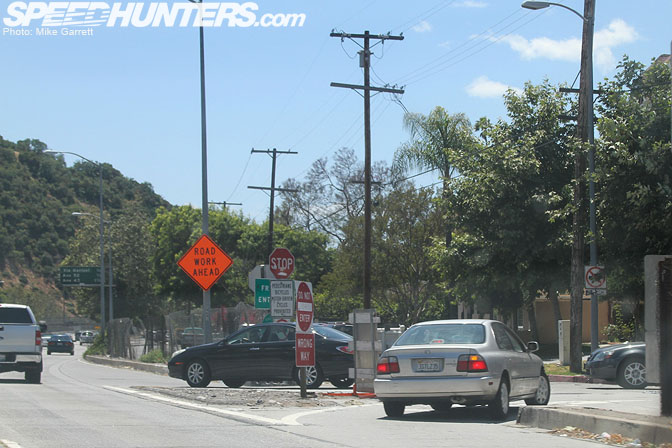
Hmm, I don’t even think you can even call this one an off-ramp.
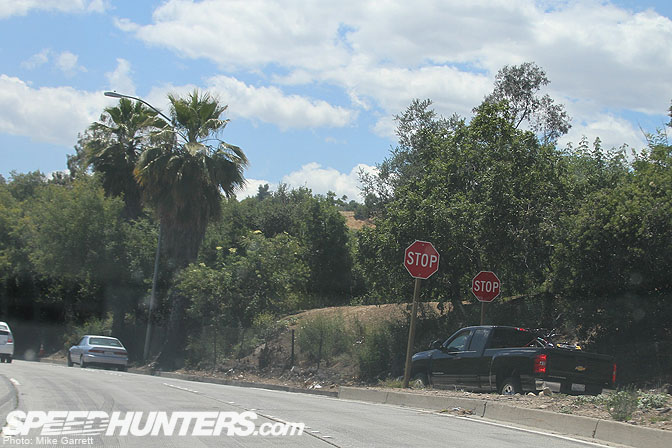
Meanwhile this freeway entrance has a stop sign. How often do you see that?
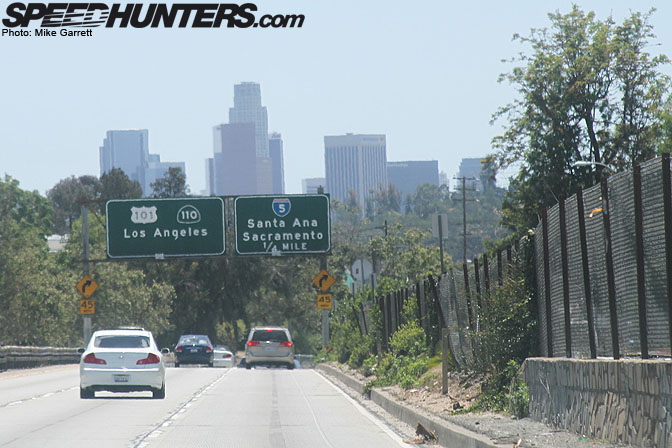
Eventually, Downtown Los Angeles comes into view above the trees.
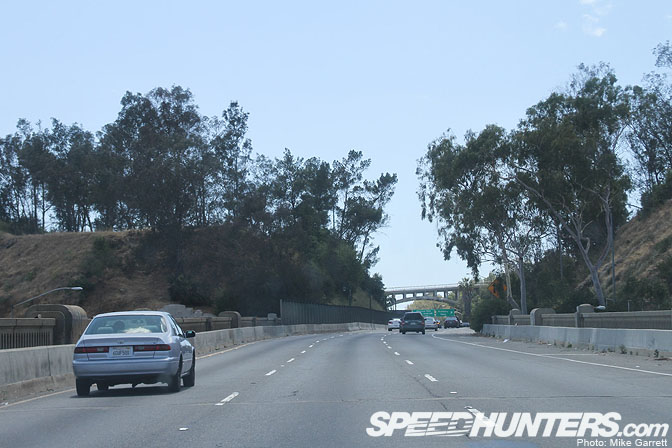
On its way towards Downtown LA, the freeway passes right next to Chavez Ravine and the home of the Los Angeles Dodgers.
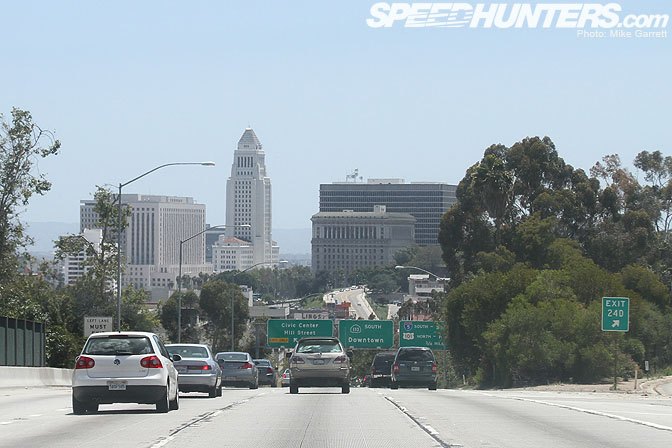
Dipping into downtown, with LA’s historic city hall building is visible.
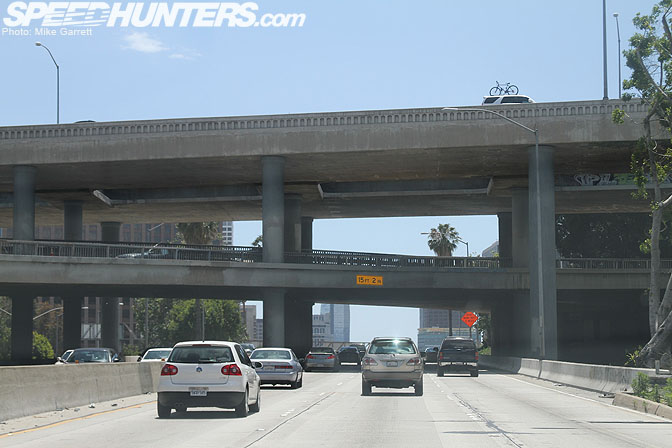
The freeway then proceeds through the four-level interchange with the Hollywood Freeway, the first stacked freeway interchange in the world.
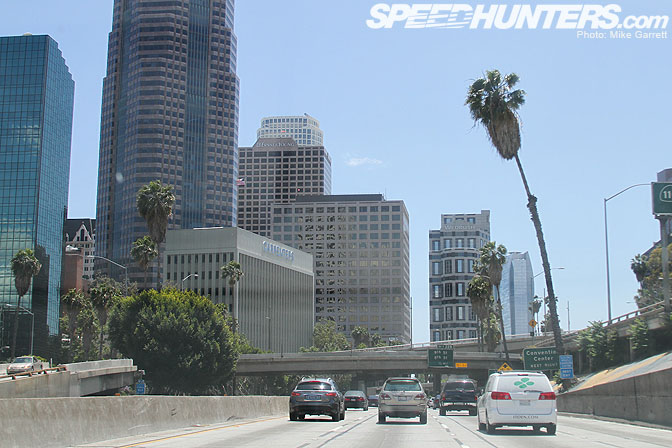
From here the route is widened, modernized and known as the Harbor Freeway or the Interstate 110, which continues south to its terminus in San Pedro.
The automobile is embedded in the history of Los Angeles, and while the “golden age” of LA motoring is long gone, a bit of that history always back comes to life with a trip down State Route 110.
-Mike Garrett