
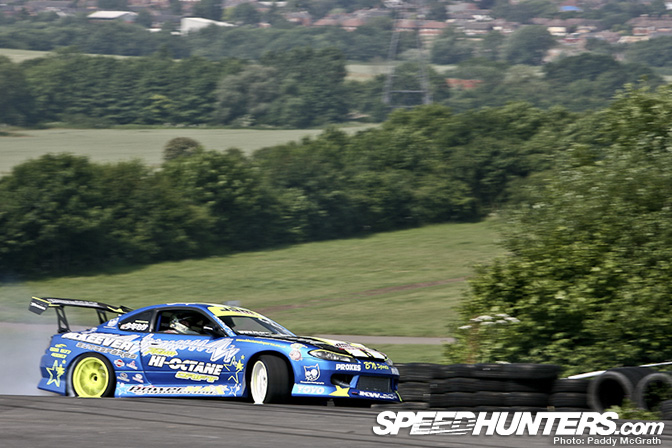
I was scouring my brain to try and come up with ideas for Photography Month when Rod suggested that maybe I could try and talk you guys through shooting specific events. I'm by no means an expert. I am only an amateur in this business but I hope to make something of myself someday. The first event I'm going to walkthrough with you guys is the second round of the JDM Allstars series which took place last weekend at Donington Park.
The opening shot in this story is of Alan 'Chubby' McCord in the V8 S15 Silvia. What I wanted from this shot was to show the inclination of the first the corner whilst capturing the countryside in the background. I also wanted to convey the movement of the car. I used a relatively slow shutter of around 1/100th of a second and let the camera figure out the aperture for me. Generally at low shutter speeds, the depth of field won't matter a whole bunch as the low shutter will blur the foreground and background, providing you pan with the car. I also got low with the camera so I could capture the haze of the car rising over the crest, where it appears the wheels have melted into the ground.
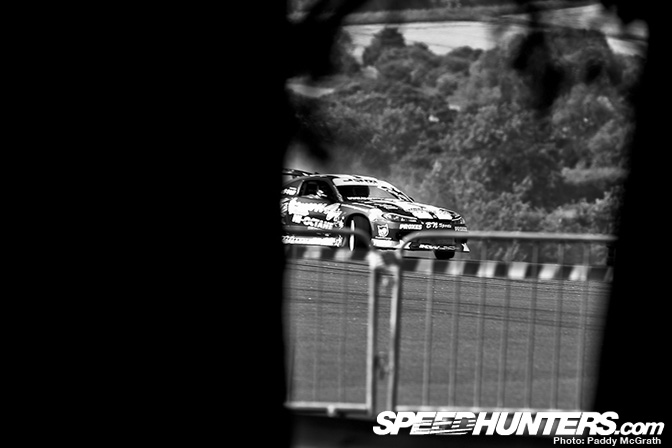
Moving around a little, I always try and find interesting angles to shoot at. This shot is of the same corner but shot through the trees, which kind of frames the car. It would probably of looked better without the fence but sometimes there are somethings you just have to live with.
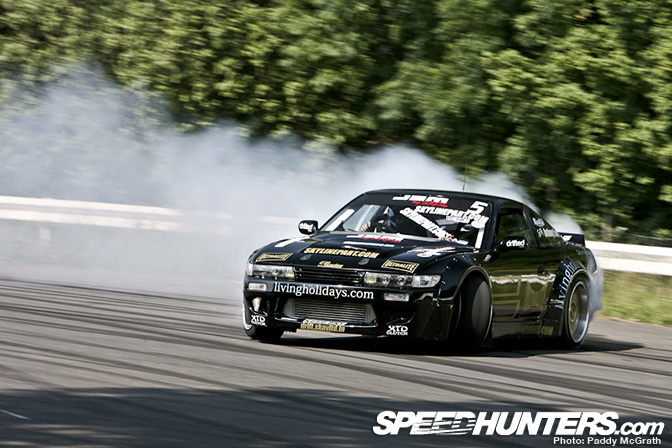
This is pretty much the standard drift shot I set out to capture at each event. You get a good sense of movement with the low shutter, clean background, good smoke and angle too help the image.
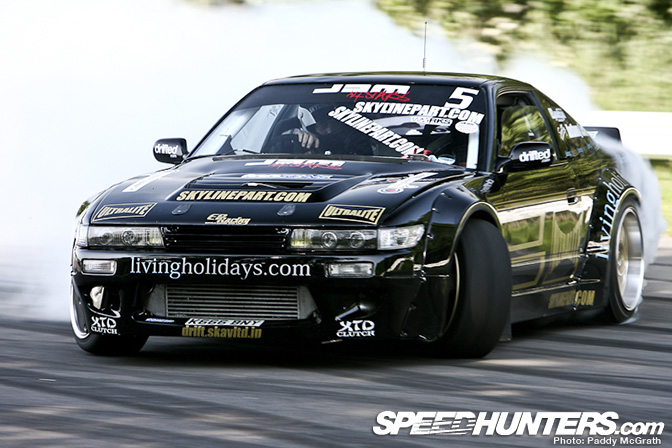
Same spot, same car but this time with more zoom. The difference a tighter capture can make is quite amazing. It literally focuses your attention entirely on the car and sponsors (The latter of which is a good thing if you plan on selling prints afterwards)
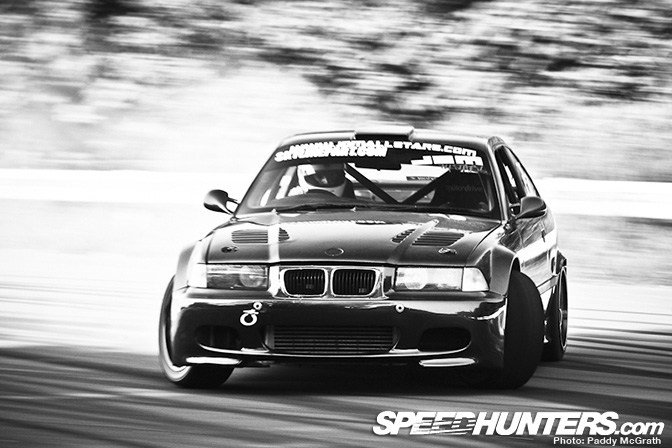
Again I'm still in the same spot with a tight field of view. This time I've dropped the shutter from circa 1/125 to around 1/60 and converted the image to black and white as I felt the shadows and light on the car worked better with the higher contrast black and white finish.
Before I continue, I just need to point out that there is no point in worrying about the numbers when shooting. What I mean by this is don't lose focus on what you're shooting just because you can't decide between 1/100th and 1/125th or between F/8 and F/16. By all means be aware of the outcomes of using a faster / slower shutter speed or a wider / narrower depth of field and use this knowledge to adjust to each situation. Very rarely will the same settings work in two different situations.
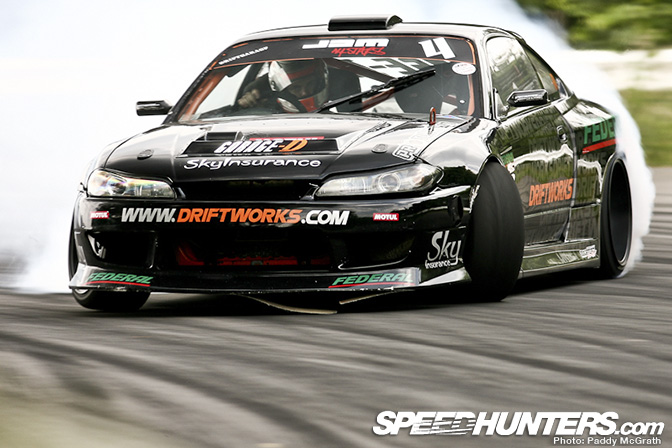
You might of noticed that the windscreens in a lot of my shots are pretty much refection free, allowing you a clear view of the driver. This is achieved with a wonderful piece of glass called a circular polarizer which through some sort of witchcraft can remove reflections from certain places when rotated to the correct angle. The downside is it increases the relfections elsewhere and you lose a considerable amount of light. The latter is acceptable during the day but at night slow lenses will suffer. By slow I mean lenses with a maximum aperture of f/4 or higher.
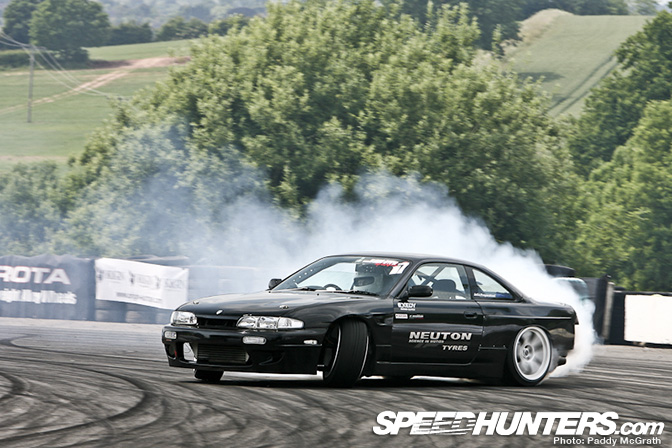
Even if you've found an absolute killer location to shoot from, it will always be to your benefit to move around and vary up your shots. No editor or client wants 100 photographs of them from the same corner.
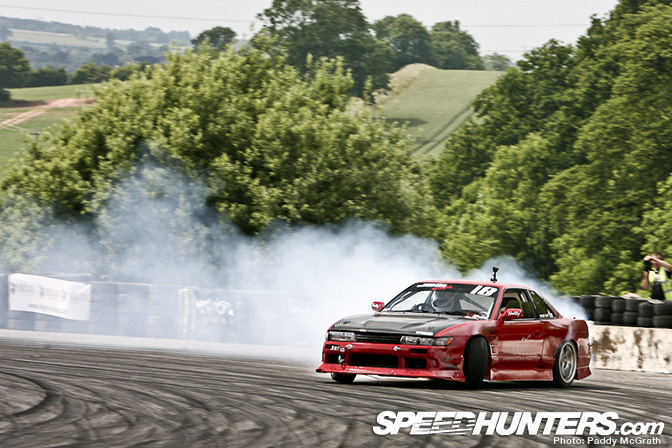
Even if you are limited to the one location, try mixing it up by adjusting your framing, maybe shooting a little bit wider and placnig the subject elsewhere rather than the centre of the frame.
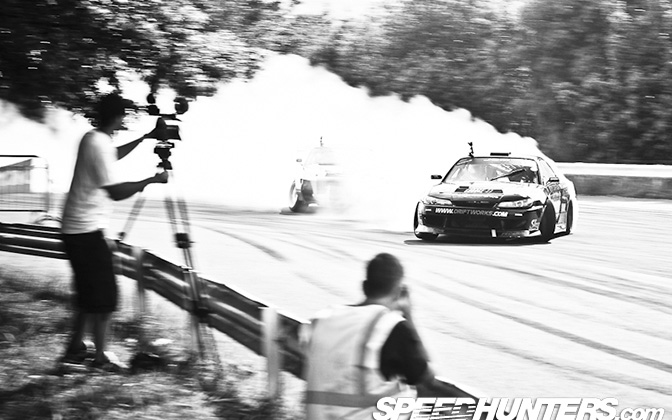
Don't be afraid to include subjects in the foreground. Sometimes they may intrude in an image, but in cases like this they do kind of add to the story in the photograph by providing a human element to the picture.
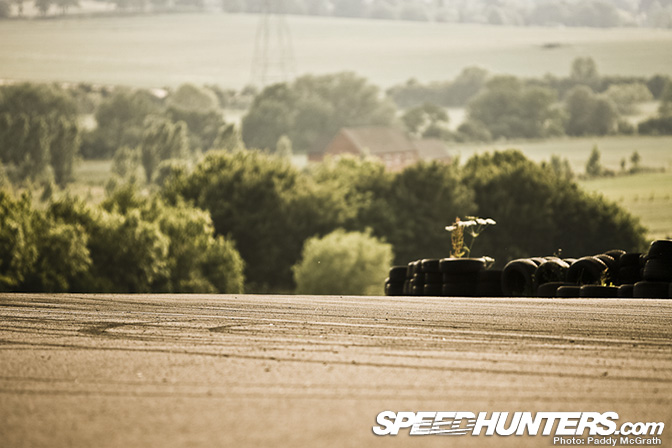
Even when the action takes a break, run off a few frames of the empty track. Again your providing more than just images of cars at an event, your trying to capture the atmosphere and to tell the story.
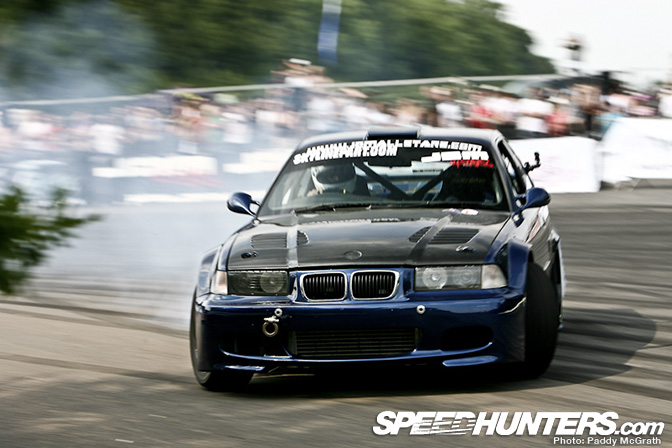
Know your subject and choose your spot wisely. It may look like I'm dangerously close here but the fact is the car is always travelling away from me. However if this was a grip event, there is no way in hell I'd stand in the same position. You have to know and understand how certain discipines can act and react. I've seen very, very experienced photographers, one in particular was ex-WRC, nearly get mowed down by a drift car because they don't understand how the cars react on the limit.If you're unsure of where you're standing ask a marshall or just move somewhere else.
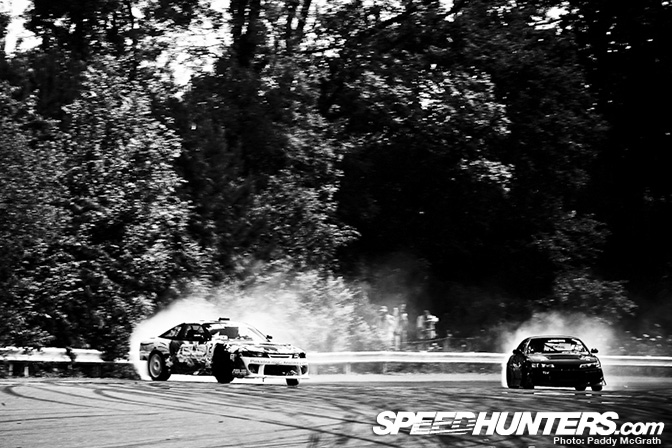
This was a bit of an experiment that almost worked. A wide framed shot with a super low shutter can often result in a great photograph. The trick though is to try and get the bloody thing sharp !
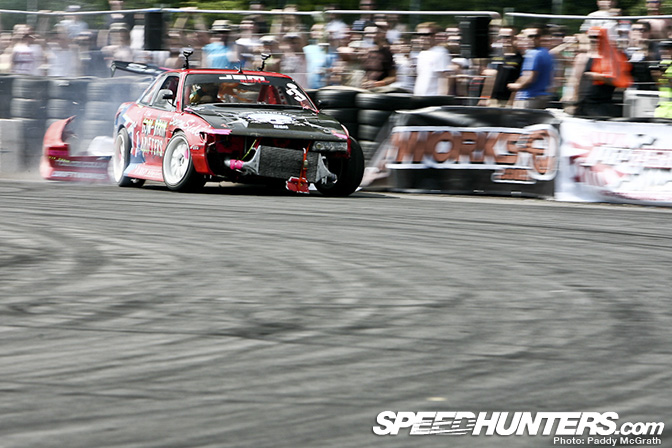
If you have a burst mode, use it. Often when things go wrong for a driver it'll happen quicker than most of us can react. This is where a fast burst mode is worth it's weight in gold. Sure, you'll hear people describing it as 'spray and pray' but there's a difference between a 'spray and pray' shooter and one who knows how to use the tools he / she has in front of them.
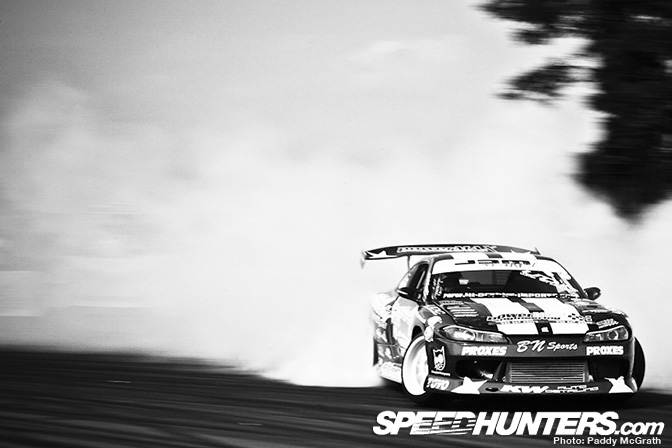
You have to know when to convert an image to black and white. Nine times out of ten I'll see black and white photographs that aren't black and white at all, they are just desaturated greyscale images. When converting an image properly always ask yourself is this conversion adding to or taking away from the image ?
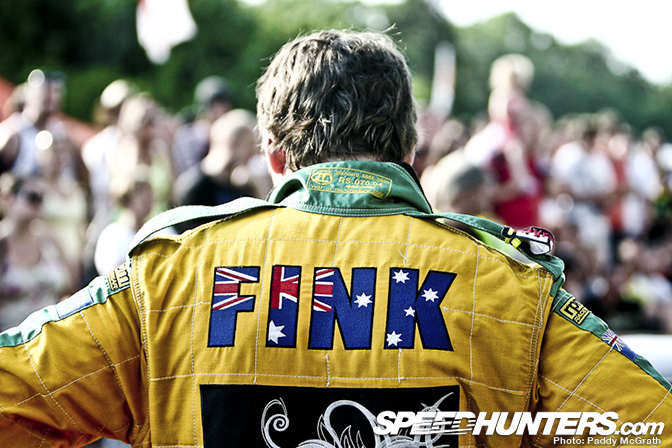
Don't forget the drivers. Motorsport is more than just about the car. Too often people forget about the fleshy bit behind the wheel.
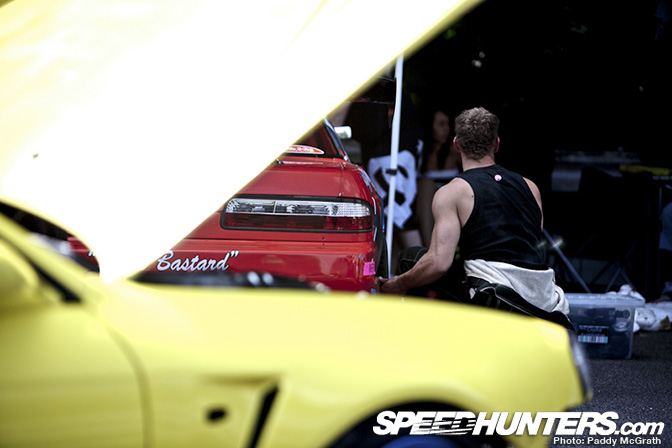
Always be on the prowl for a story. At every motorsport event there are always several miniature dramas taking place. It's up to you to hunt them out and convey the story with an image. Here Luke Fink broke a front mount intercooler and was kindly loaned one by one of the guys who had his car on static display.
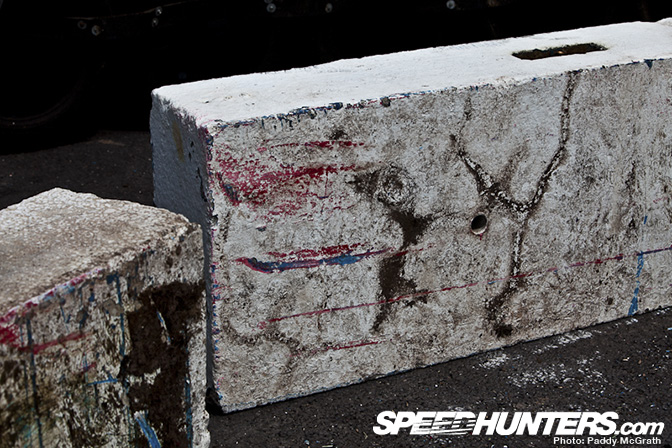
Sometimes even the more obscure images can tell a story.
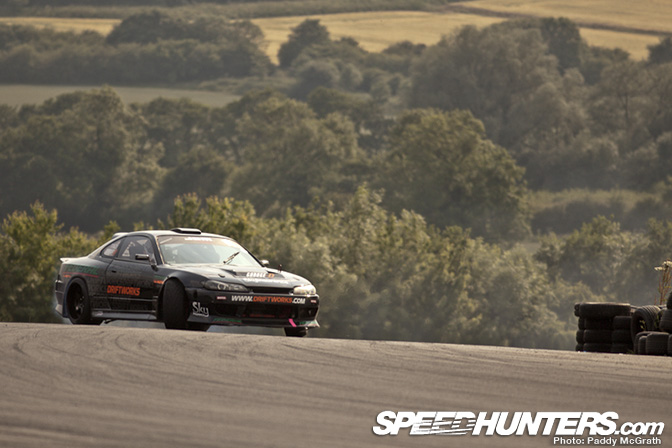
You have to be prepared to trade things off. Using a wide aperture will usually result in a wheel stopping, fast shutter speed. Before I would of discounted an image where the wheels aren't moving and thus looking parked on track but there is always a time and a place for everything. Don't close your mind to certain approaches !
I hope some of you might take something from this post. I don't know a whole lot but what I do know I've put before you. The most important thing about motorsport photography, more important than the image taking process is safety. You can't take a good photograph if there is an S15 parked on top of you. Upside down. And on fire. Always, always, ALWAYS listen to the safety marshalls. It might seem like they're out to stop you getting that awesome shot but sometimes that awesome shot is not worth your life.
Paddy
If you have any questions on anything (especially if I've been too technical) fire up a question in the comments and I'll do my best to reply.