
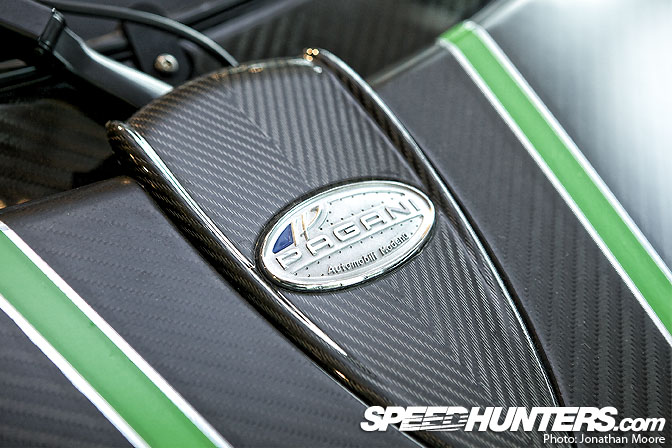
"Chi non ama la vita non la merit" are the words written in a nondescript picture frame hanging on the wall in the lobby of the Pagani building in a suburb of Modena, Italy. "Those who don't love life don't deserve it". These words, quoted from Leonardo Da Vinci, perfectly sum up company owner Horacio Pagani's approach to life – and therefore to making cars. From looking around his factory, the two things are quite obviously synonymous to him. Everything else is superfluous.
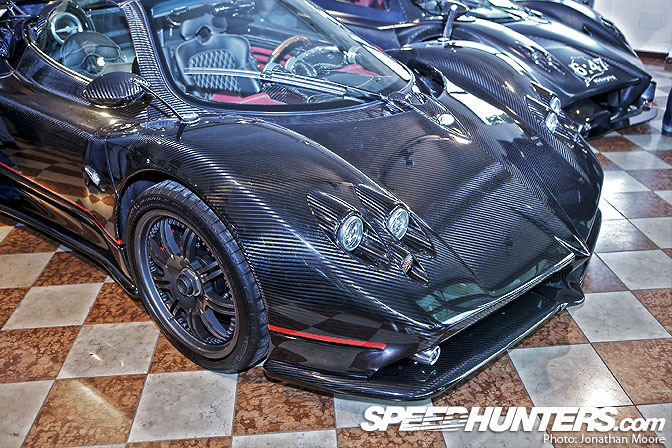
Things are a little more packed-in than the last time Speedhunters visited back in 2009, when Rod and Dino saw the first Zonda Fs rolling off the Pagani line. I'm just joking about the last bit of course: Pagani is anything but a busy, modern factory mass producing mere motor cars. Another understated sign, this time on the door leading through to the final assembly area, simply says 'Atelier' – French for artist's studio. This is a more accurate description of what goes on here: artisans at work, hand-crafting automotive works of art. Three Zondas were lined up: two about to go out to customers, along with an R variant just back from a track-test.
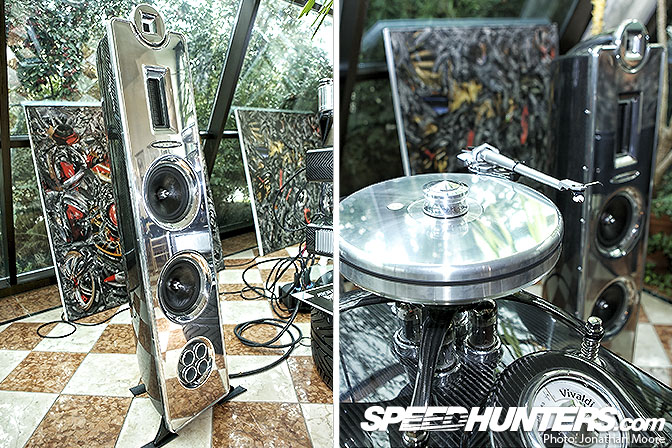
The rest of the lobby – seemingly so spacious two years ago when just two Zondas were lined up and there was less paraphernalia on display – is now packed with Pagani ephemera. It really is like a boyhood dream – except that here most things are real, full-size and likely made of carbon or forged from aluminium. This Pagani stereo system was released a couple of years ago: 350w of speaker power combined with an undisclosed but, of course, enormous price tag and specially-designed bass-port so you can complement the signature four-pipe exhaust of the Pagani you have parked in the garage.
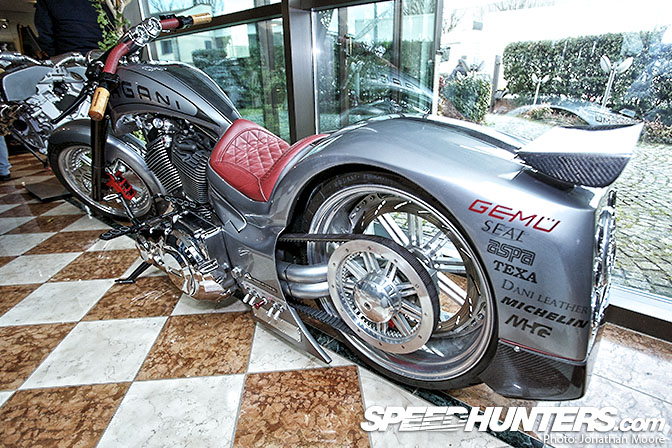
Along with a miniature (but still a metre long) Zonda sculpture carved out of marble, a massive 7.3L, 650bhp V12 AMG block and a grand piano is another Pagani special. Just check out this Zonda F Chopper.
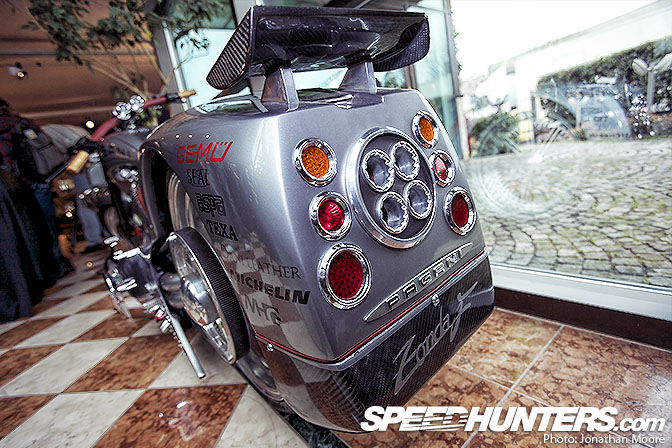
Again, of course the rear is pure Pagani. This bike was custom-built especially for Mr Pagani.
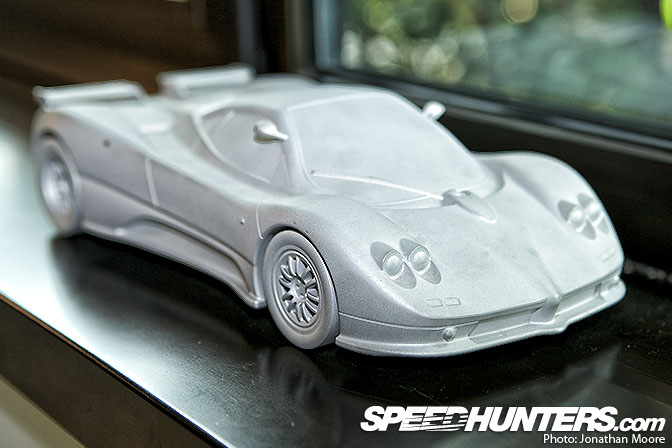
The same model cars that he hand-built as a boy and inspired him to build the Zonda as an adult still sit in the display cabinets dotted around the foyer. More models have been added over time, and even more luxurious small-size recreations added, such as this tenth-scale moulding. So, basically it *is* a dream room – Horacio Pagani's. I can just imagine that every morning he walks into the building and can't help but smile. 'That's my crazy stereo there. That insane chopper? Mine. That car? I designed it'. Less an office, more a playroom?
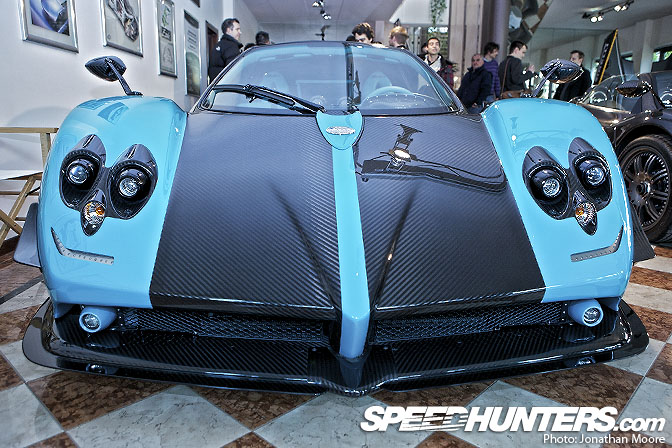
Zondas are of course end-of-line, and production will soon stop – unless (to repeat a Top Gear joke), you count the Cinque models, further Rs, the Tricolore and Uno, and so on.
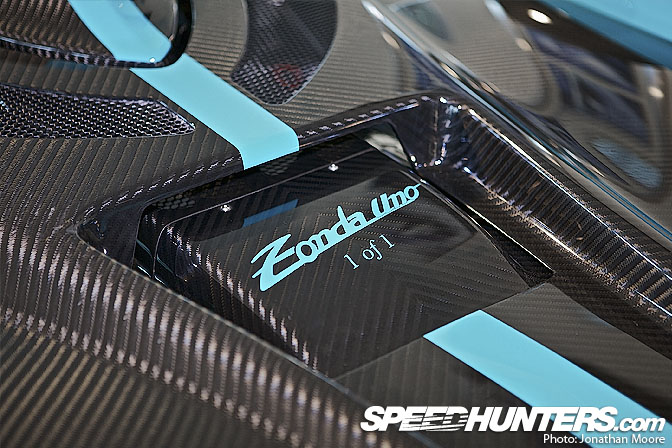
The single Uno was parked up awaiting collection by its new owner. In general I do like the bare carbon look on a Zonda: I think it makes them look more aggressive.
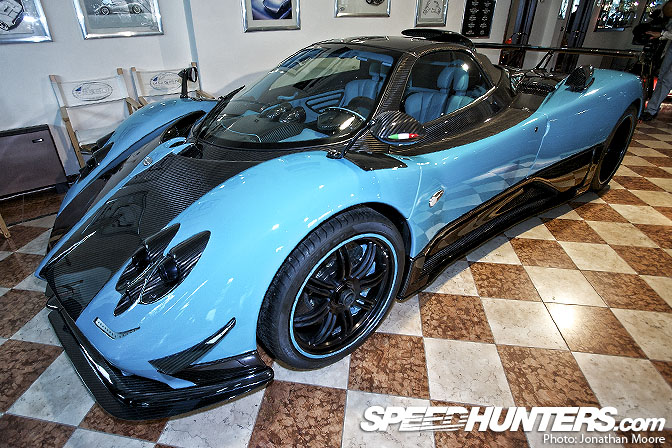
But the turquoise/carbon two-tone livery? In this colour scheme, it's too garish for my taste.
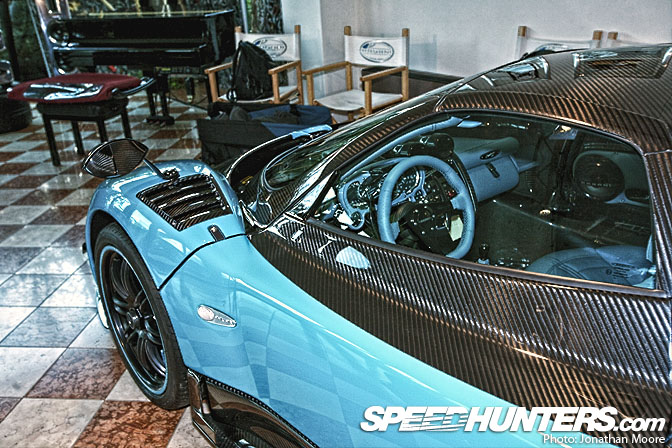
To me it feels to much like a crazy shirt that you put on to shock other people – and where everyone's reaction isn't shock, more disappointment: 'Ah, that would have looked amazing if it wasn't for the colour'…
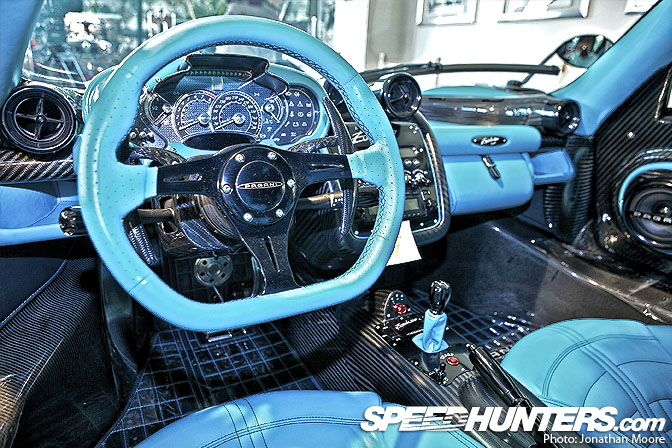
The interior of every Pagani car is a riot of dials and curves – but with the bright turquoise carried over to every inch of the leather interior I think I'd have trouble driving this without wearing some very dark sunglasses. Especially in the morning.
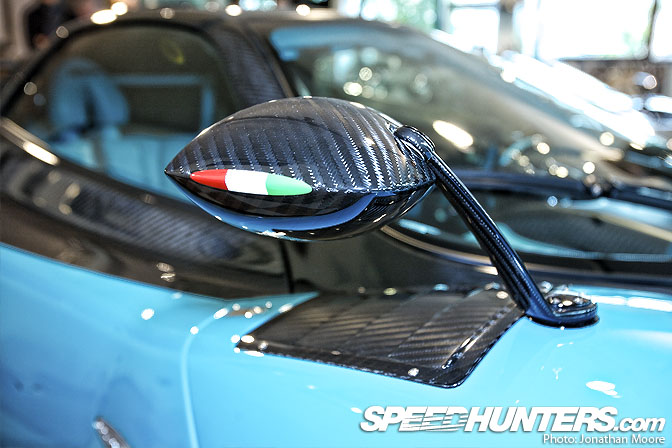
But it is still a Zonda, and therefore still covered in all those lovely swoops and shapes that every Zonda shows off.
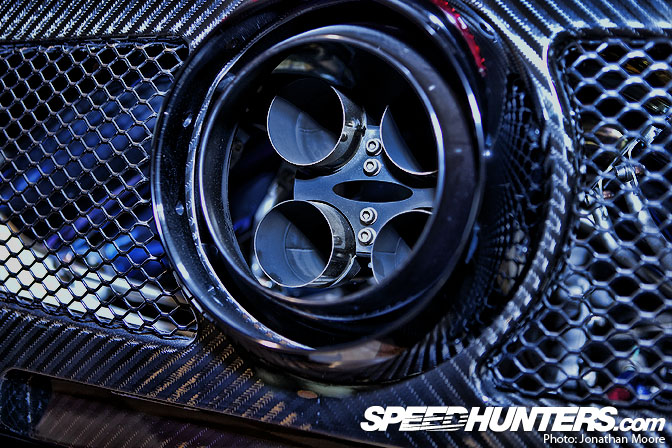
One thing that did concern me was the positioning of the rear four-port exhaust – it seemed rather too recessed than the normal positioning. Maybe the cowl wasn't in its proper, final position? It looks like it's going to be burned to a crisp pretty quickly!
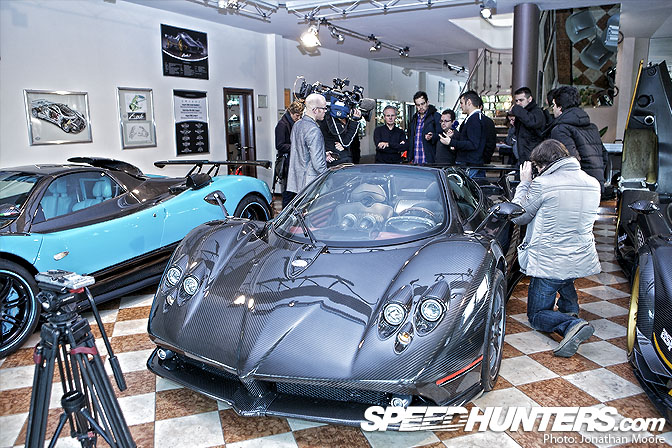
In the middle of the Zonda trio was an F roadster.
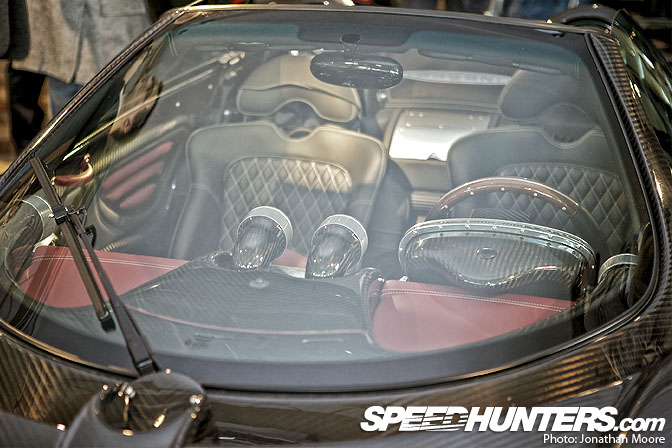
This particular F was carbon all the way, and the more muted tone of the leather meant I thought the red interior actually worked.
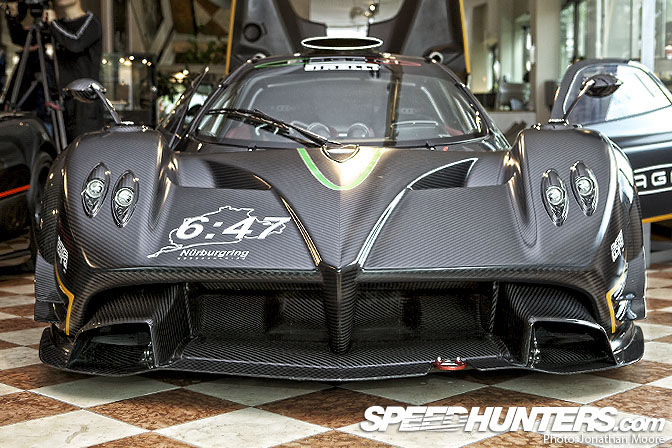
But next to it is the car that truly stops my heart. The Zonda R. The most pointless, fastest, most extreme track day car to ever be made. Amazing. Built to no rules, it's too carbon-y for any race series. It's too fast for, well, everywhere really. It's too loud for any licenced track. Effectively, even if you do own one you can't drive it anywhere unless you happen to own your own racetrack.
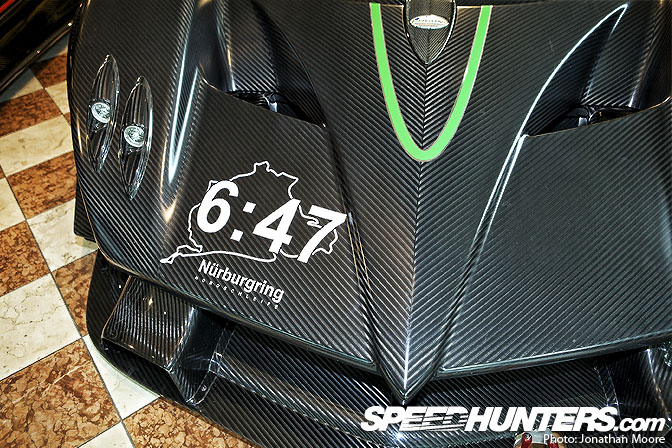
On the R's nose was a simple decal: 6:47 Nurburgring. It does seem like Mr Pagani wakes up with an idea in the morning, goes to work and makes it happen. Build a million-pound supercar? Check. Break the lap-record at the Nordschliefe with it? It'll be done by dinnertime.
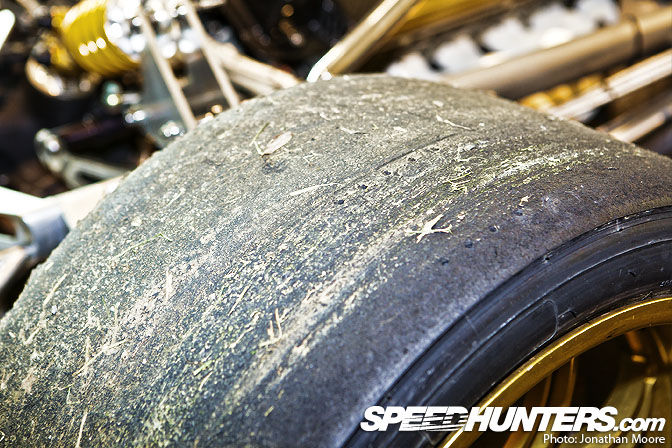
The R's tyres were still bearing the scars of its last record-beating run-out. At the time I thought that the dirt and grass had the Nurburgring written all over it, but I was wrong. It was somewhere a lot closer to home, I found out later…
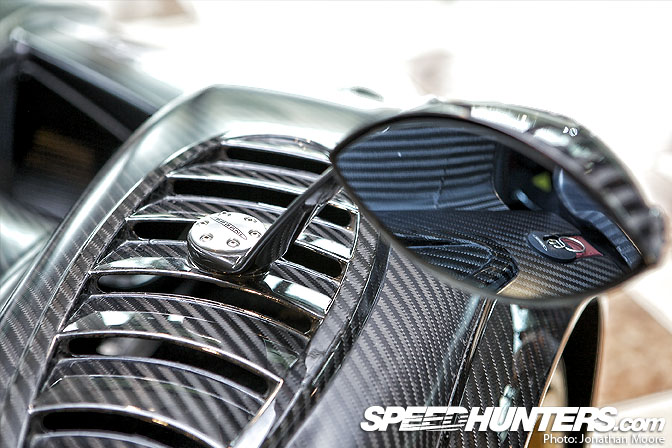
As usual, the beautifully-sculpted wing-mirrors hang at the end of the tapered uprights in all their aero-efficient glory. This is one of the many details I love on a Zonda.
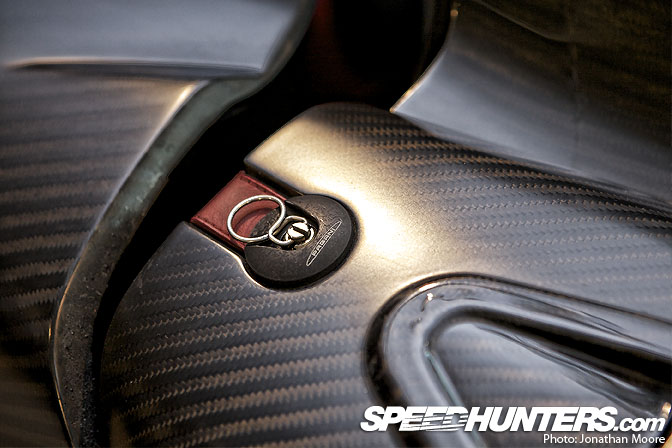
What gets me with the R is how you look at it from outside and it seems to be a simplistic, purposeful racing weapon. But then up close you see all the trademark Pagani over-the-top detailing. Even on this racing thoroughbred all the carbon body-panels are secured with hand-stitched leather straps. The door pull is in the same stitched maroon leather. Everything that in a 'normal' racing car would be tank-tape and plastic, with a Pagani it will only ever be hand-made and of the highest quality, no matter the part. It's all about the details.
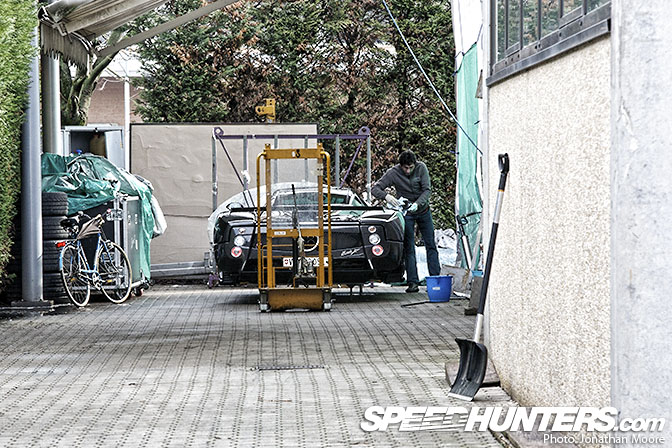
You can't help but smile when you go outside. Looking down the side of the building, like it was just someone's paved-driveway next to their house, a million pound supercar undergoes its final prep before going out on a road test. Under a plastic awning. With a bike propped up next to it. And a snow shovel leaning against the wall.
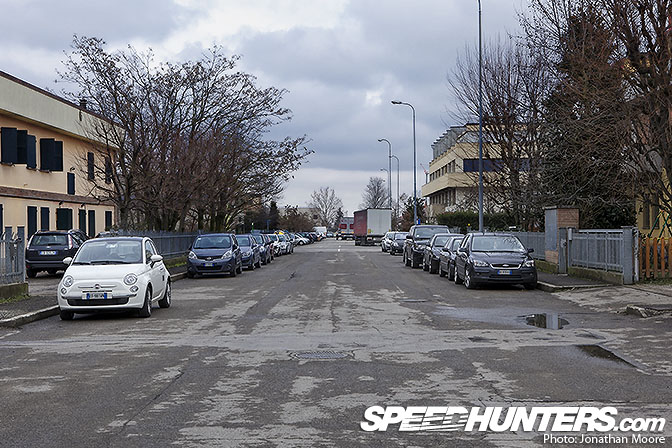
I love how incongruous the whole thing is: a regular industrial estate in the middle of a regular town suburb. But location? How people perceive your offices? Superfluous. After all, it's all about loving life: and for Horacio Pagani, life means the cars that drive out of his atelier and onto this road.
Jonathan Moore