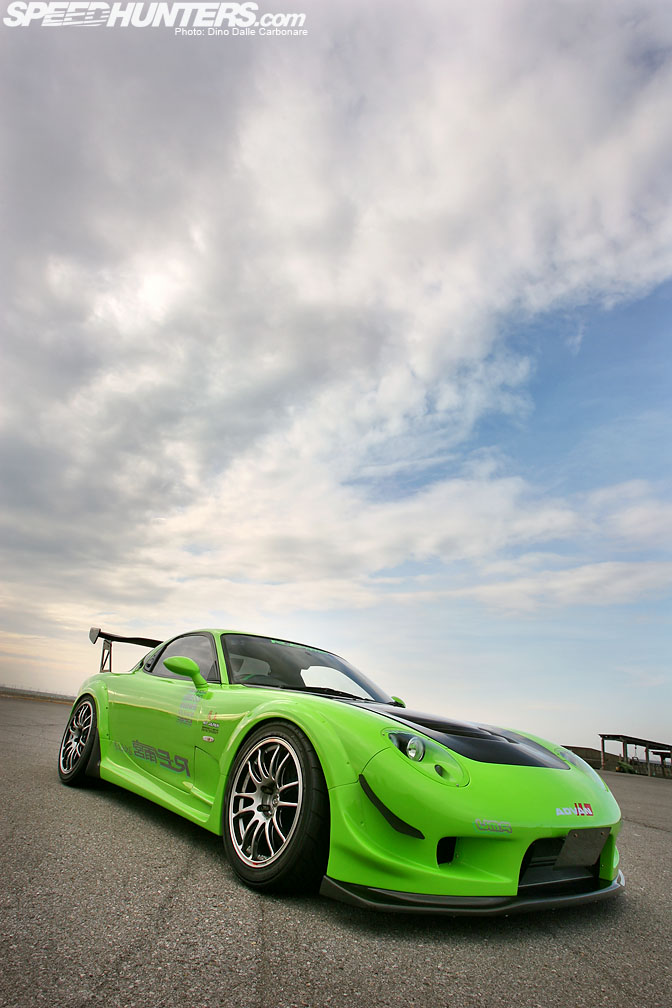
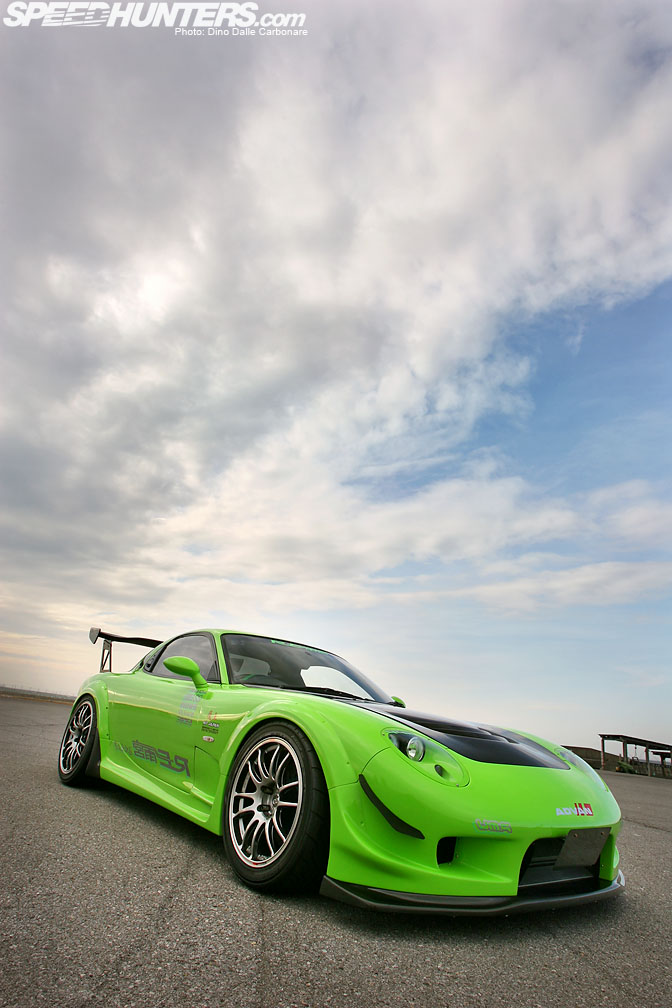
Balance is key. There is no point in having power if there is no control. It might sound obvious, but you will be surprised how easily people can forget this. Outright grunt will get you from point A to point B very quickly, but if corners are thrown into the equation, excessive power will probably slow you down. Every aspect of a car plays a critical role in determining its pace through a certain section of demanding tarmac; chassis, suspension, brakes and of course engine performance, not to mention characteristics, all have to be addressed in the quest for ultimate speed. This is precisely what Hot Version’s touge course at Gunsai demands from cars and when it comes to building the most successful vehicle to compete on it, RE-Amemiya certainly know a thing or two about it.
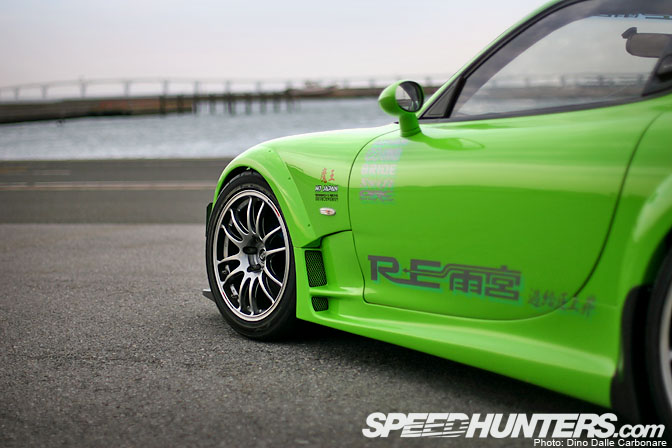
I met up with Ken Amemiya at one of the most picturesque spots along the Chiba bay to take a closer look at what makes the ultimate “Touge Monster.”
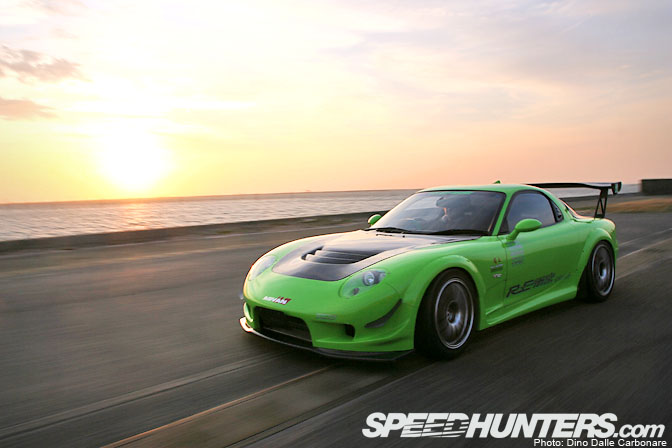
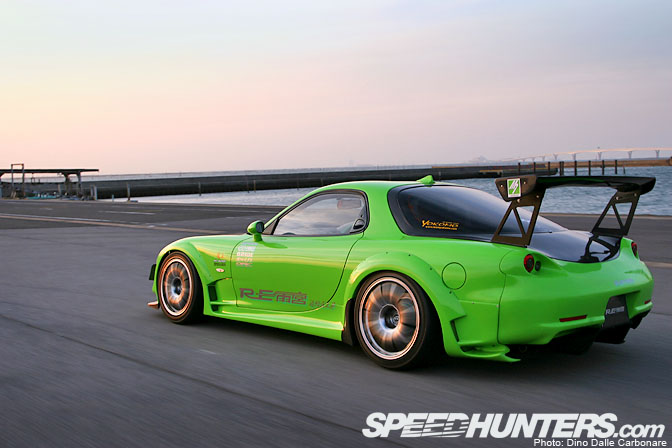
Ken, son of the legendary “Ama-san,” showed up with the company’s transporter, from which he unloaded the lime-green Super GReddy III kitted Maoh, or “Devil King.” A very suitable name for what has become one of the most successful cars to take on the 6 km course at the Gunsai Cycle Sports Center, a tight and demanding track that is usually used for bicycle races. This is where famous tuner cars from across the nation have been battling it out for years on the impossibly close bouts organized by the Hot Version crew. We have all seen Tsuchiya, Taniguchi, Orido and others driving at ten-tenths, millimeters from each other in battles that are determined on how much of a gap one can open up against his opponent. This is where a car’s set-up counts for everything, where everything comes together to allow the driver to carry a little more speed through corners, or get on the power that little bit sooner on the exit. This Maoh FD3S took the last Touge Max Championship back in 2009, following in the footsteps of the company’s light-blue demo car, which won the title in 2006 and 2007.
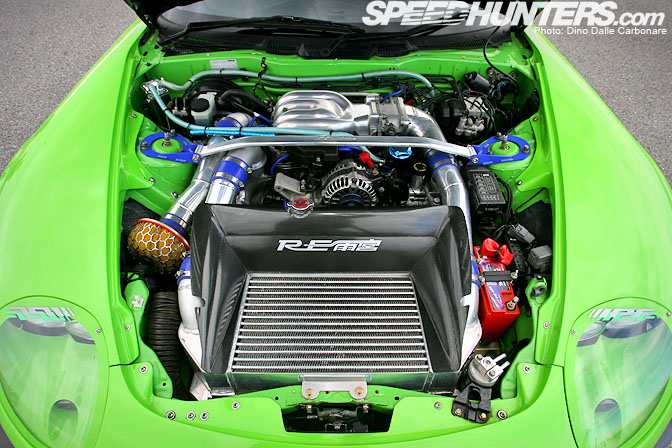
So what makes this RX-7 so fast through the twisties? This is a car that has beaten brutes like Kobayashi’s 650 + HP MCR R35 GT-R and tons of other well known tuner demo cars. Under the lightweight carbon hood Amemiya-san concentrated on getting the best possible response out of the engine. Turbo lag is something touge cars just can’t afford to deal with so the stock twin turbo set up remained. Boost was slightly increased and to boost cooling efficiency, the space in front of the engine was taken up…
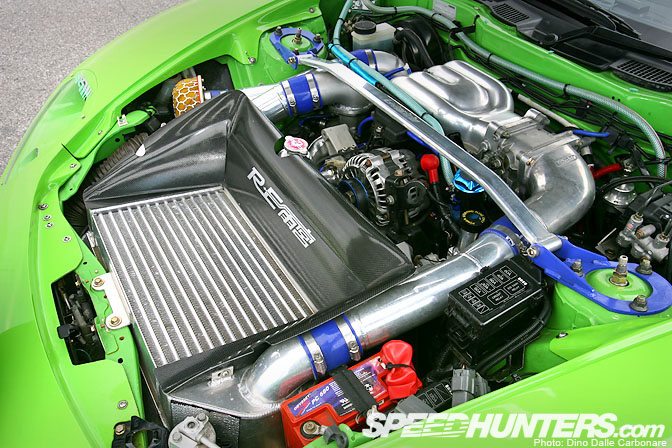
…by the V-mount set up, where the massive intecooler sits horizontally and the radiator underneath it at a 45º angle. Carbon fiber shrouding helps direct air through the core and out via the openings on the hood. The V-mount allows piping to be kept short compared to a front-mounted layout, always a good way to boost throttle response. Exhaust gasses are dumped through the RE-Amemiya titanium exhaust, featuring the company’s signature downward pointing “Dolphin Tail.” With an Apex Power FC handling engine management this 13B develops 400 HP and 340 lb/ft with almost no lag in the way the power comes. An RE-Amemiya LSD helps juggle drive between the rear wheels and the single plate clutch, again from Amemiya, is enough to handle the engine’s performance.
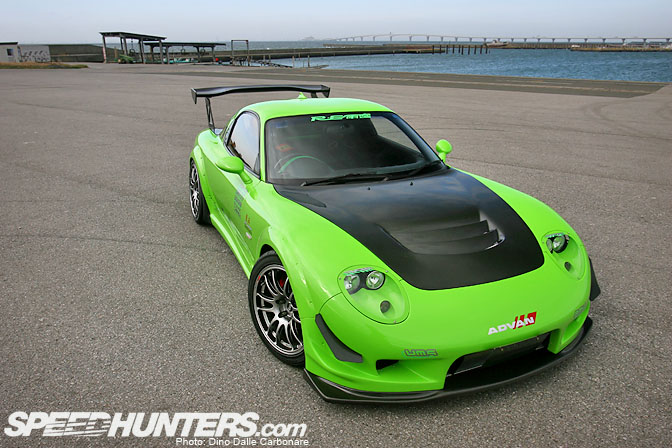
RE-Amemiya was originally set up as a body shop so it’s obvious the looks of the car have been transoformed! The car wears the aggressive Super GReddy III widebody conversion, replacing most of the body panels with custom shaped FRP items. The pop-up headlights are replaced with fixed powerful IPF HID projectors and sit recessed in the all new front bumper. Canards and a functional front lip spoiler help keep the front end of the car glued to the road at speed.
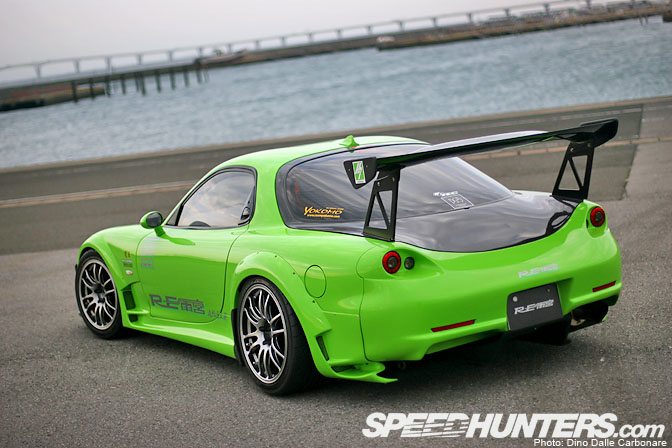
The integrated overfenders help pump the stance of the car and that side skirt treatment is what ties the whole conversion together. The rear end is drastically altered with a short overhang, custom LED lights and a carbon fiber rear hatch, which like the hood up front helps shave off considerable weight.
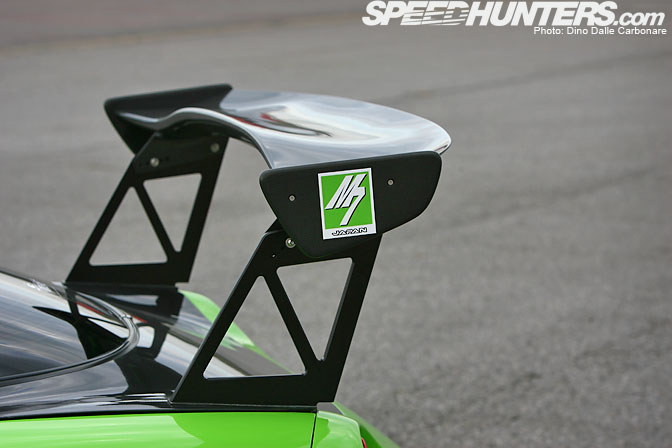
The width of the high set rear spoiler has been kept within the dimensions of the car so it can remain street legal.
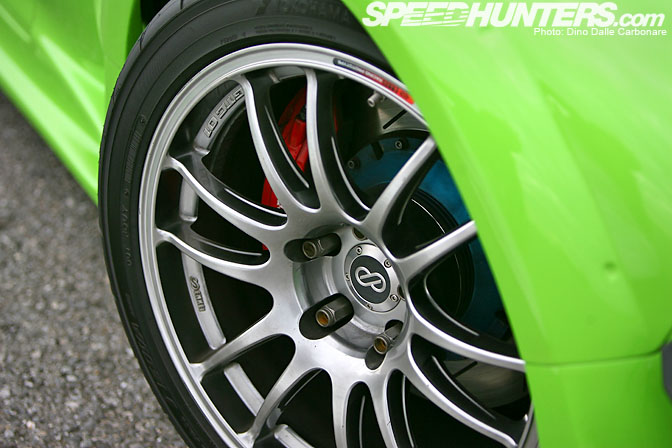
Like on all RE-Amemiya cars the wheels are courtesy of Enkei, 17-inch by 9.5J GTC01s, shod in 255/40R17 Advan Neova AD08 tires. Suspension is handled by specially set up and valved DG5 dampers, built for RE-Amemya at the DG5 HQ in Nagano. The FD is a considerably light car and thanks to the optimal engine position it has very neutral handling characteristics, a great thing to have when trying to blast through Gunsai at the speed those pro Japanese drivers drive at! Brembo F50 calipers join Project µ 2-piece discs to boost braking power at the front while the stock calipers remain at the rear but are mated to Project µ discs. RE-Amemiya covered up the ugly rear factory cast 2-pots with Brembo caliper-like plastic covers, a purely aesthetic detail.
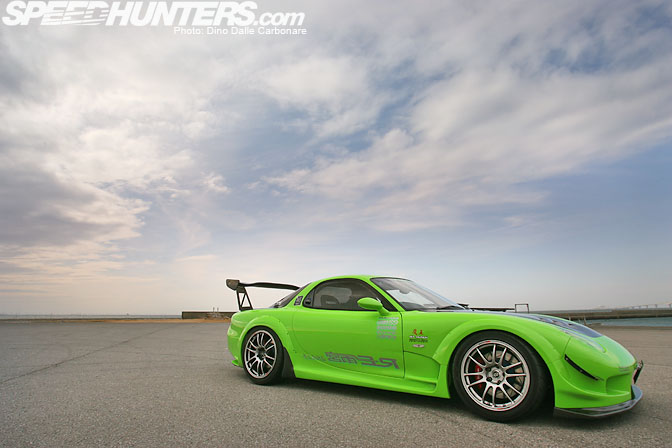
The Maoh certainly means business!
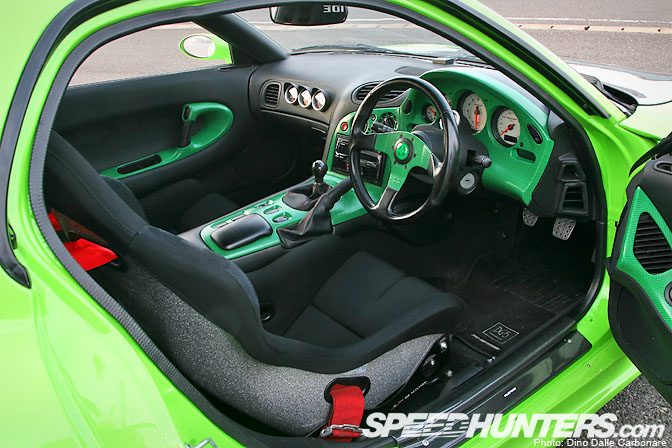
Along with Bride Low Max bucket seats the interior has been spiced up with a green carbon-look treatment.
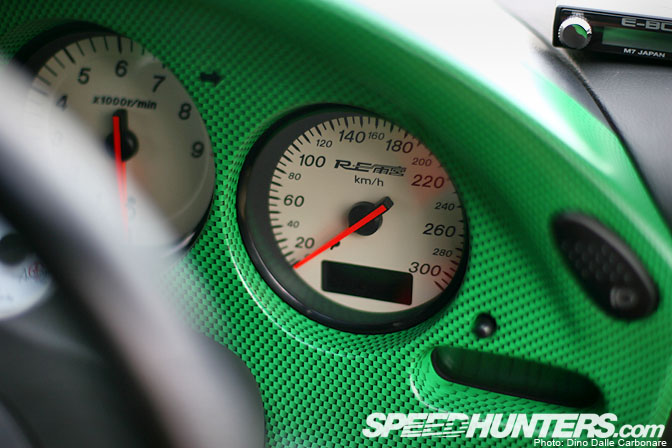
Along with the M7 Japan boost controller the instrumentation has been up upgraded with an RE-Amemiya 310 km/h speedometer…
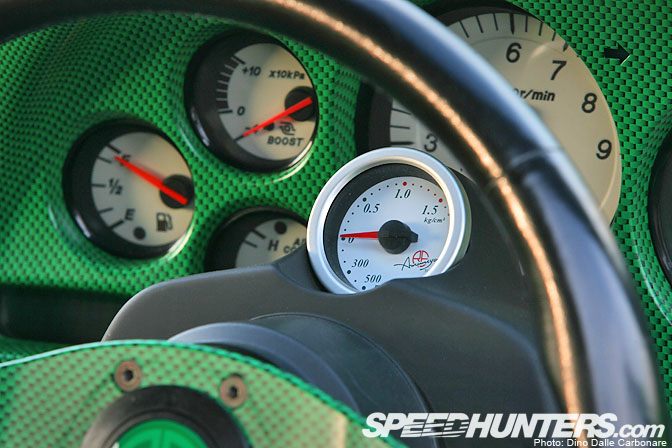
…and a steering column mounted boost gauge.
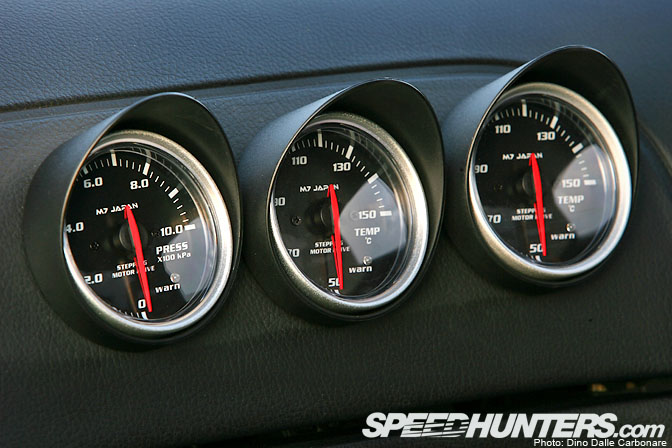
More dials courtesy of M7 Japan are found on the passenger side of the dashboard.
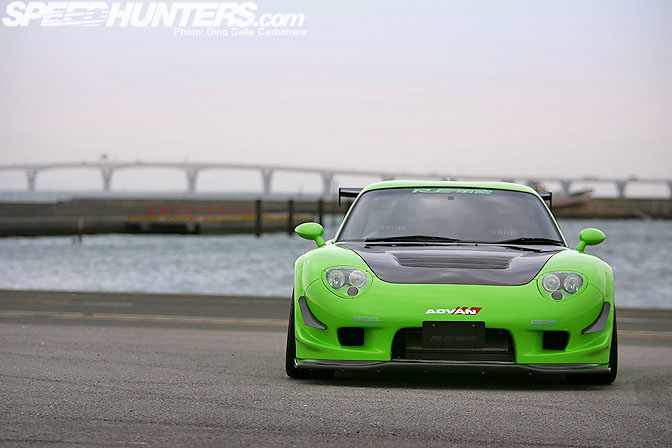
This car continues to do the rounds at events and has recently posted an impressive 1’01″149 lap time at Tsukuba with Taniguchi behind the wheel during the recent 7’s Day track event. That’s an impressive time on radial tires. Russ from RE-Xtrme was there to check out the car in action.
Despite the plug having been pulled on Hot Version, there is talk of the series living on under another production company. I certainly hope it doesn’t die all together as the Touge Max competition alone has helped push tuners to concentrate on building well balanced cars, gaining invaluable knowledge that trickles down to their products and of course customer cars.
This Amemiya FD proves the point that you don’t need to get lost in the details, concentrate on selecting the best parts for your application and spend time setting up the car as a whole. The satisfaction of having a balanced all-rounder will be far more rewarding than a car that can go fast in a straight line but be unable to steer or stop effectively. Balance is indeed the key!
-Dino Dalle Carbonare