
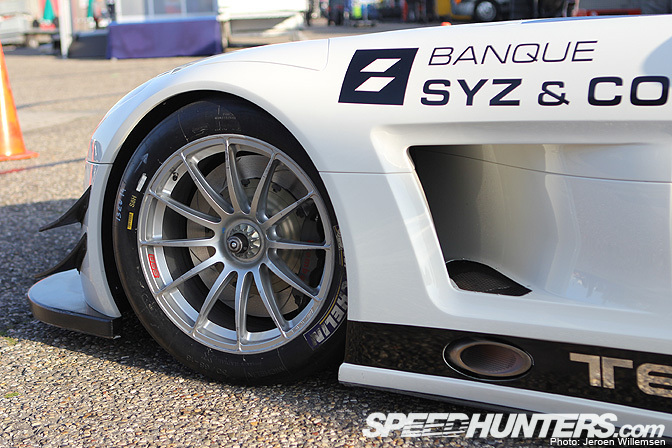
When you
are around the GT3 cars for a while you start to notice a lot of different
approaches that teams have taken to build their car. I have seen our own BMW Z4 taken apart and rebuilt again several times. But the other cars on the
grid are still some sort of a mystery to me. So I went to check them out in
greater detail while they were waiting to go on track.
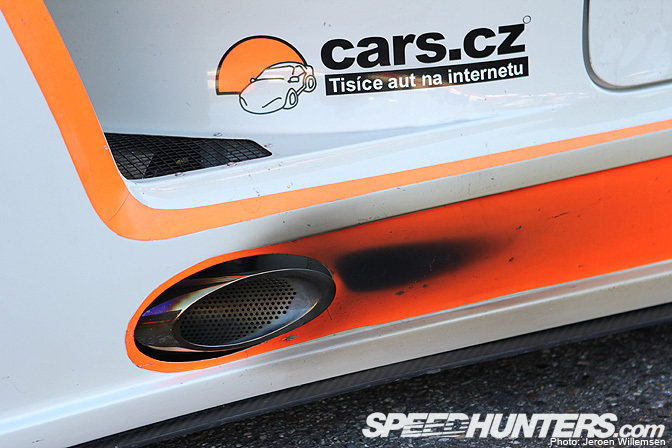
One of the
cars that I was most interested in was the SLS AMG. It is such an impressive
car to see on and off track. Maybe even more impressive is the sound it
generates through the side exit exhausts.
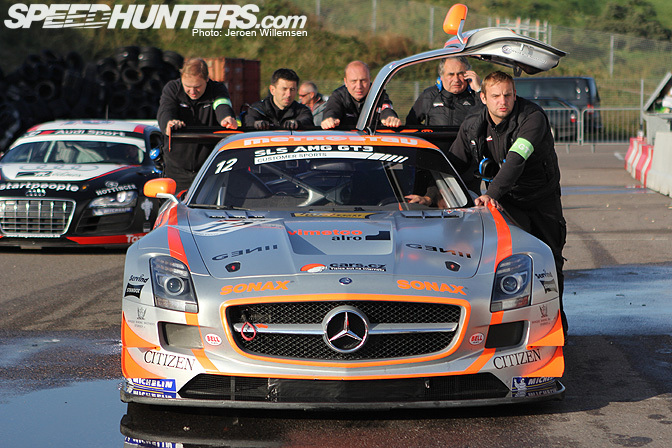
The front
of the car is dominated by the large airdam that provides enough air to keep
the engine cool. I noticed that some of the cars had the middle air inlet just
underneath the original bumper taped up. Probably to reduce the airflow and
make it more aerodynamic.
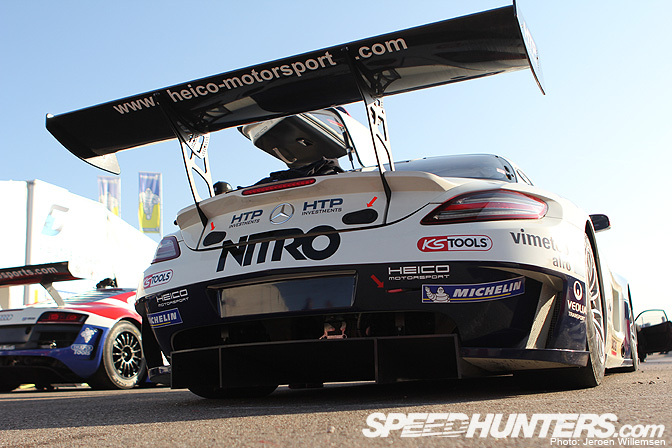
In the rear
Mercedes has this enormous spoiler that is adjustable in several ways for the
perfect setup at any track.
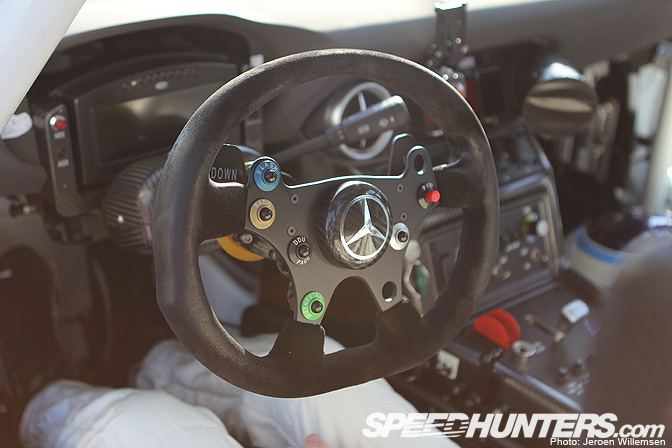
Inside the
interior there is a lot going on. The steering wheel for example hosts a number
of buttons for the driver to use. Mercedes made cool anodized rings around them
to differentiate them and to tell the driver what they are for. The blue ringed
button is to use the flash headlights so you can tell the driver in front of
you to get out of the way and the green button is to put the car in neutral.
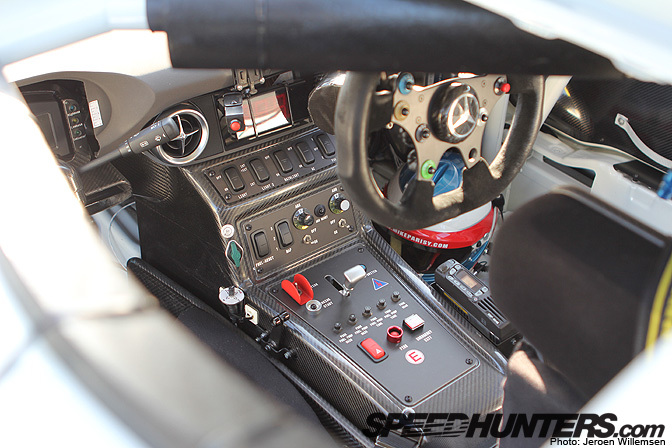
The carbon
center console of the car is filled with even more buttons and emergency
switches.
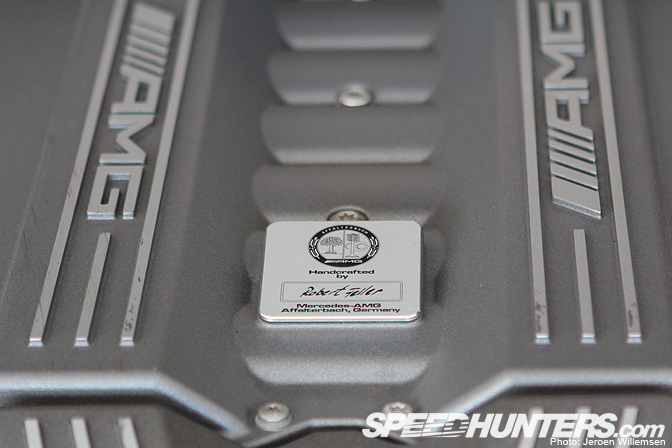
One cool
detail I found under the hood of the SLS is that every single engine has a
signature of the engine builder. This one for instance says the engine is hand
crafted by Robert Feiler at the AMG plant in Affalterbach, Germany.
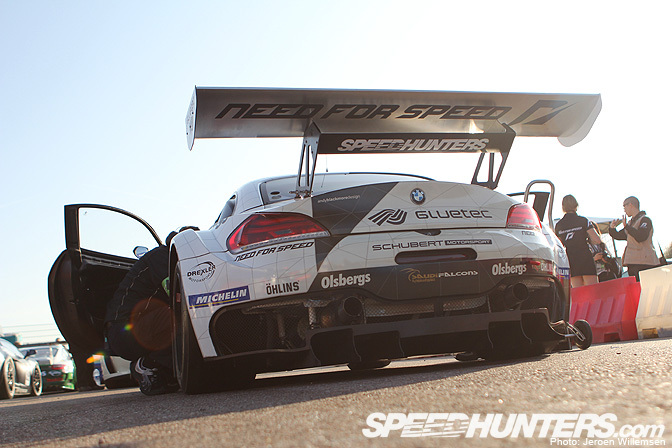
When we
take a closer look at our own Schubert Motorsport NFS BMW Z4 we can clearly see
there is big difference with the spoiler when we compare it to the SLS AMG
version. We use a double wing design where the wing below is adjustable in only
four ways but the top one has almost 90 different settings.
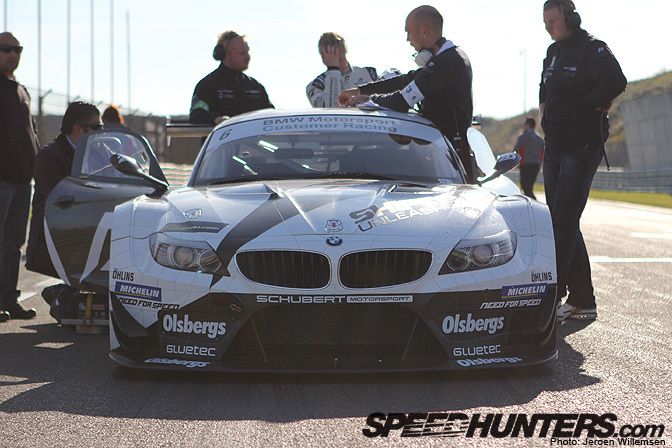
To me this
is one of the meanest looking front ends in the GT3 grid. I’m not just saying this
because I’m biased, honest.
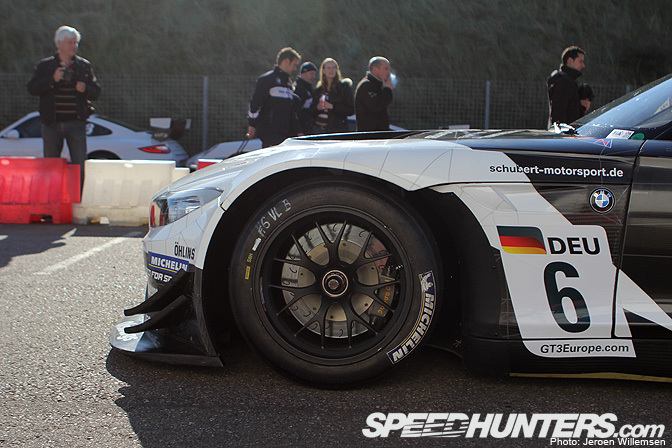
Behind
this 18″x12 center lock BBS rim we see a 6 piston AP Racing caliper and a 378mm
rotor
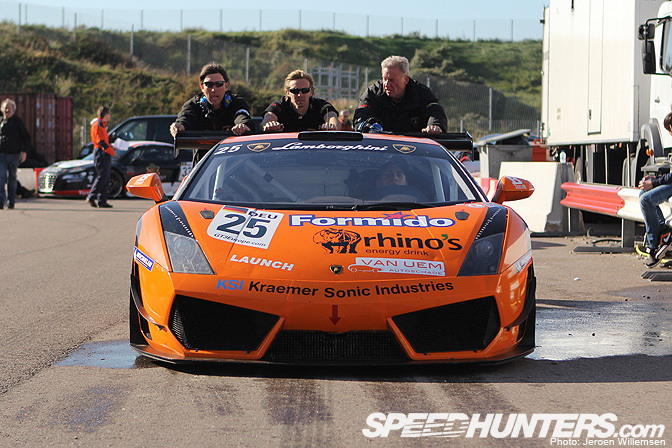
The Lamborghinis
are a real crowd favourite and rightly so. Their presence is undeniable. The
exterior of the car resembles the road going version except for the
carbon front splitter and canards on the side.
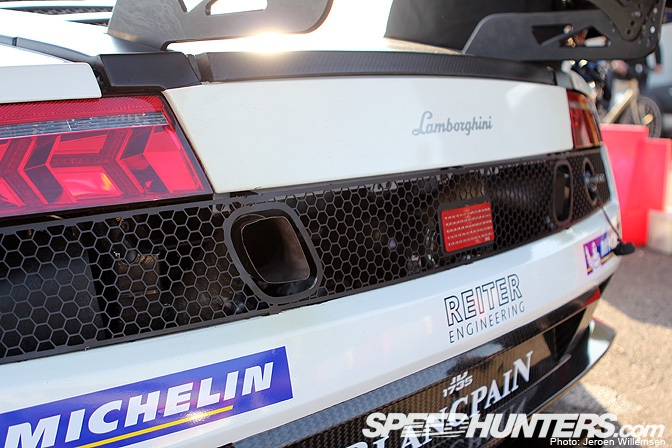
The exhausts
are mounted high and emit a very growly sound from the V10. Last time
when I visited the 24hrs race at Spa Francorchamps these cars were really
spitting flames but I didn’t see them do it at Zandvoort.
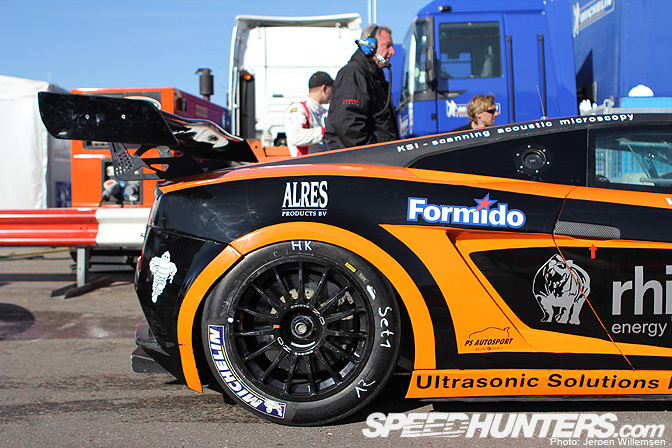
Is this
enough tuck for you? I was amazed to see how low these cars are at the rear. The
rear fender does a very good job at hiding the massive 305mm rear tire. The
tire is mounted on a OZ Racing monoblock wheel that are 18″ in diameter. Behind them are special Reiter Engineering
brakes made by AP Racing.
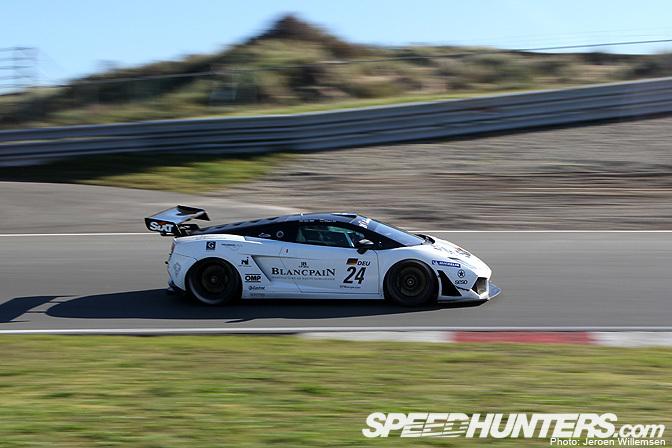
The spoiler
on the Lamborghini has been placed as far back as possible to generate as much
downforce on the rear of the car as possible.
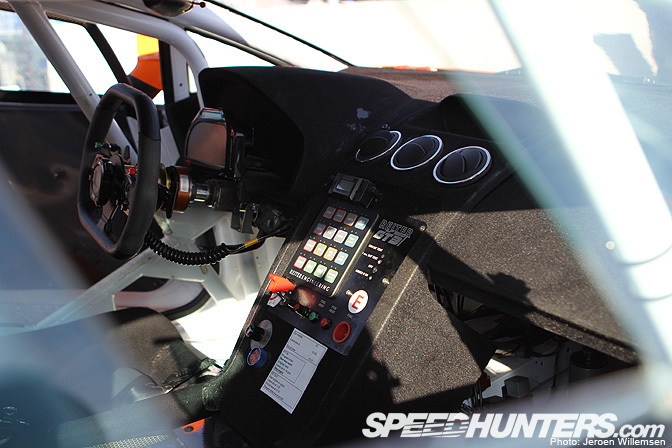
The
interior looks fairly basic with a flocked dash to reduce sun glare. All the buttons are nicely integrated in a square control panel.
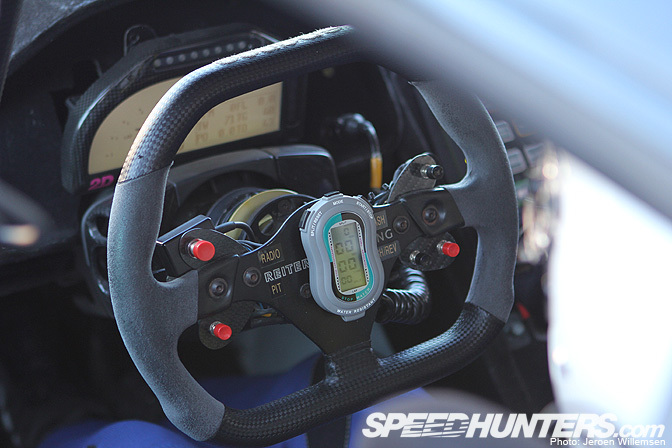
The
steering wheel features several buttons to control the radio and a button to
flash your lights. The device in the middle is a chronograph to help the driver
oversee his laptimes.
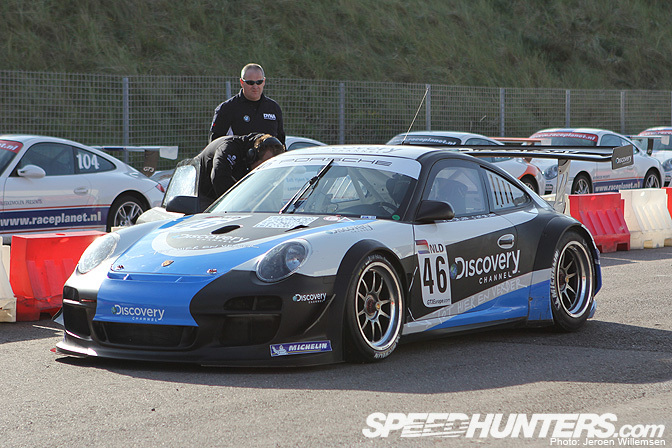
This is the Porsche 911 GT3-R and it is based on the street legal 911 GT3 RS. This is already the latest 2012 version with an extra 20hp resulting in a 500hp engine. The weight of the car has been kept extremely low with the scale stopping at 1200kg.
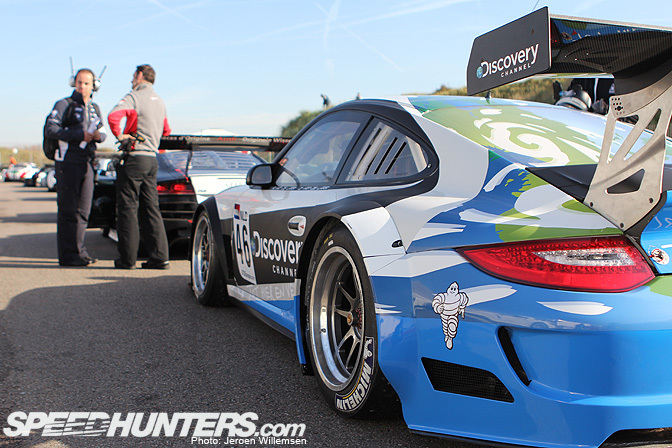
Porsche has
made new wing stays for this application just to save that little extra
weight. The end wing plates are fixed but the wing itself can be adjusted to
suit the various circuits.
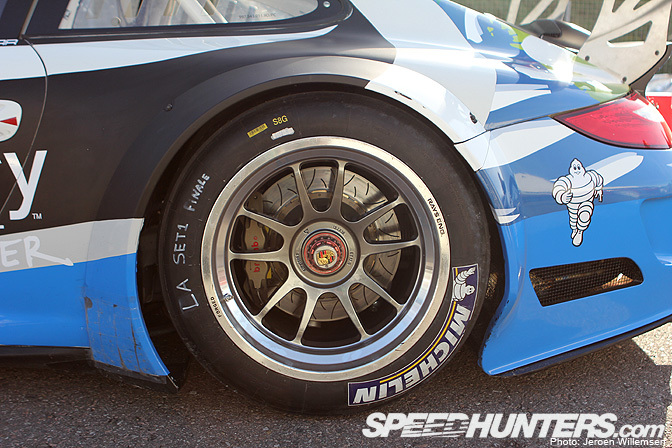
I really
liked the design of the Rays Engineering wheels on the Porsches. The Porsche
logo on the wheel nut is a very cool touch.
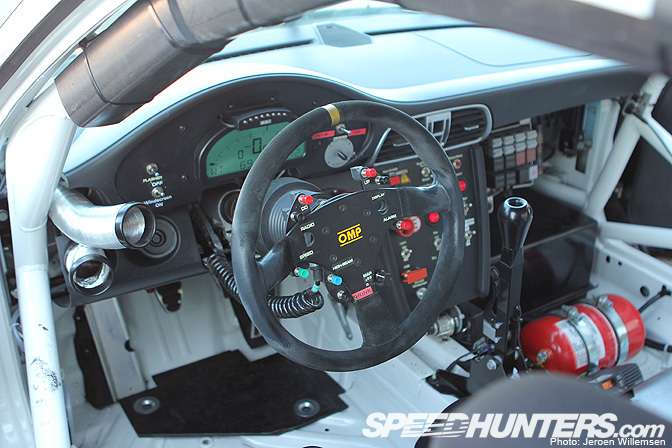
The
interior doesn’t look as good as the ones in the other cars. To me it looked a
bit messy and not laid out very well. The driver steers with an OMP steering
wheel with a few buttons that are labeled with stickers.
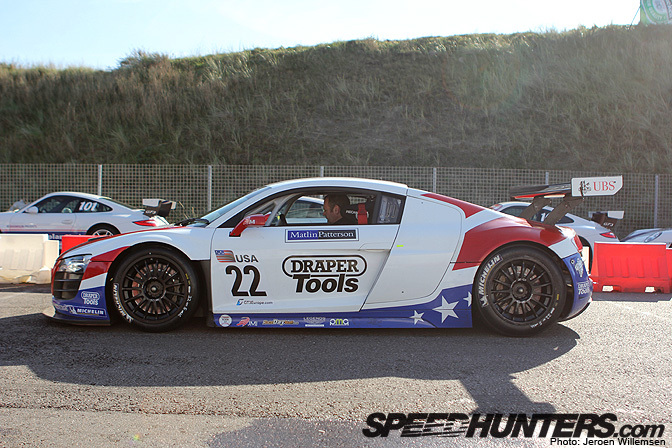
To me the
Audi is the least exciting car on the grid. It just doesn’t look as menacing as
the BMW or have the same presence as the Lamborghini.
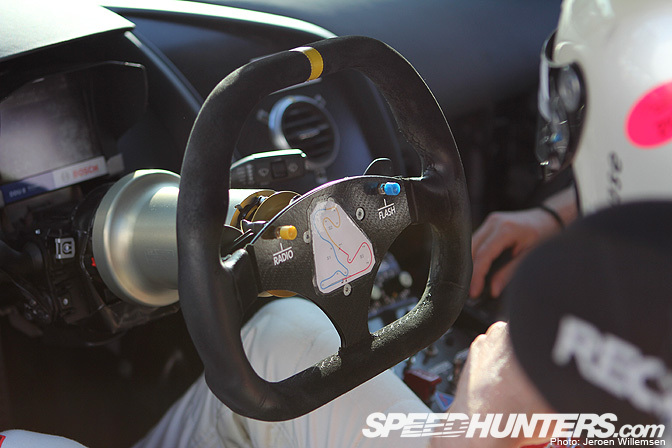
What I did
find interesting was that the steering wheel only featured two buttons. One
for the radio and one for the flash. All the other buttons are placed on the center
console.
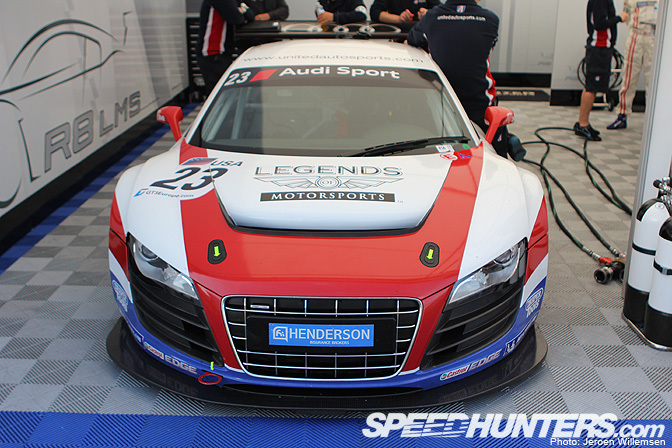
The R8 GT3
race car very much resembles its road going partner except for the carbon
splitter. It even has the original number plate holder still in place.
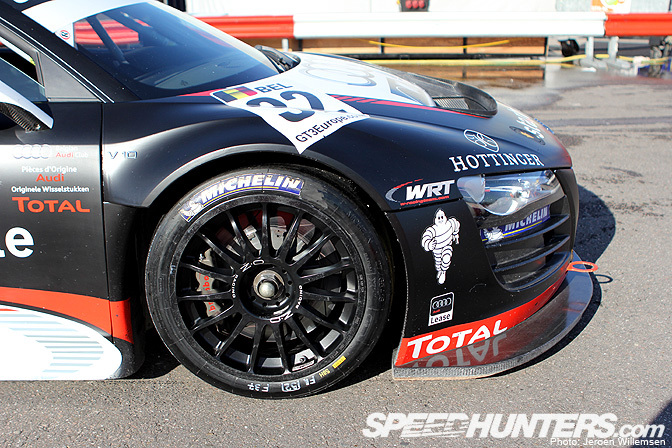
Audi also
uses OZ Racing wheels just like Lamborghini, they even have the same design.
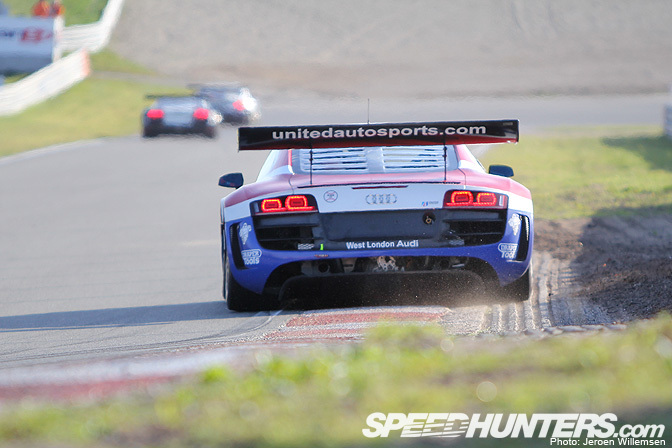
The wing
design on the Audi is fairly straight forward with only a few different settings
available.
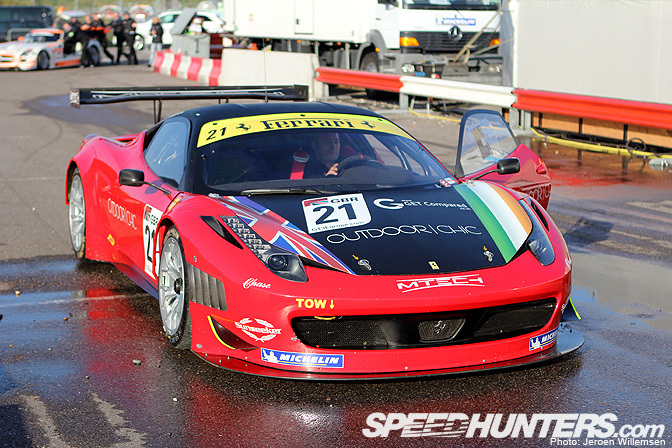
The front
of the Ferrari looks very composed with only a few add-ons like the small
canards on the side and the huge splitter.
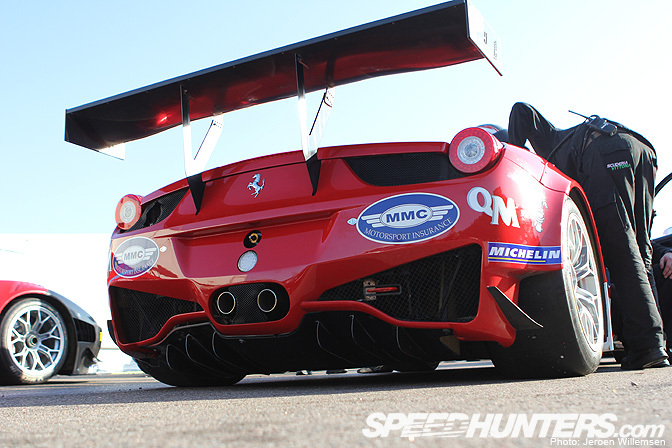
Ferrari had
the worst sounding cars. They just lack a lot of grunt and just don’t pack as
much punch as the SLS or Z4. They do however have a very interesting rear with lots of carbon touches and big
openings to let air out.
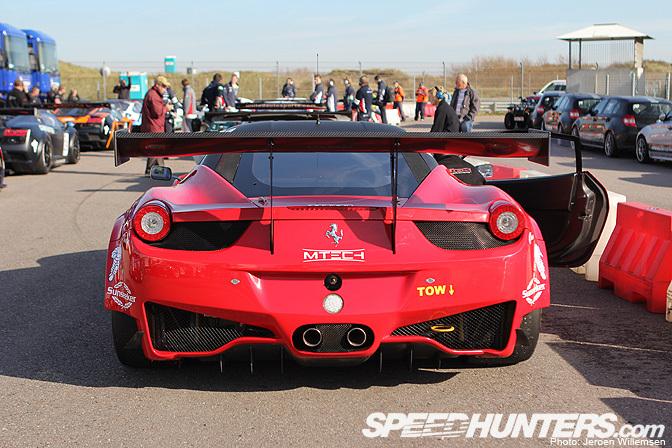
The rear
wing is not mounted on the engine cover but goes straight through the rear
bumper and is attached onto the chassis for maximum result. They
can adjust the wing itself in several ways but they can also adjust the wing
end plates.
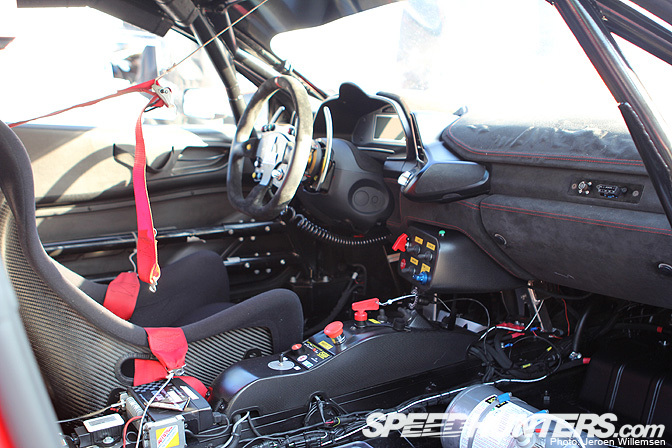
The interior
of the Ferrari looks pretty messy with all the exposed cables and wiring. For
an extra fast driver change they fixed the harness to a small cable so that you
don’t have to look for it when the driver jumps out of the car.
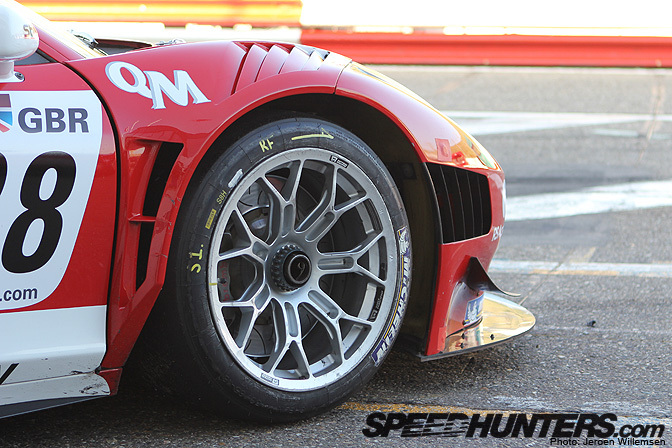
I thought
that the choice of wheels was pretty interesting. Because Ferrari uses Motegi
Racing wheels. They are called the MR Techno Mesh and are specifically designed
for this application together with Kessel Racing, the company responsible for
building the GT3 Ferrari 458. The wheels weigh a mere 9.9kg in the front and
12kg in the back.
-Jeroen Willemsen