
And so the quest continues. It’s been 13 years now that I’ve had the pleasure of enjoying what is without a doubt one of the most special cars to have ever come out of Japan, and like for most enthusiasts out there the need for more performance is always hard to resist. You will probably be seeing quite a lot of my san-yon in the next few months as it embarks on a little tune up, but before the real work begins it was necessary to address the brains of the car, the ECU. For the last few years I’ve been enjoying the responsive tune that Mine’s had done on the stock Hitachi computer, a great map that boosted the car’s performance in so many ways, conservatively tuned to also guarantee reliability, a very important factor obviously. But now it’s time to take things onto a whole new level, which is why a few weeks ago I headed to Do-Luck down in Yokohama to give the GT-R a little “brain surgery.”
I am extremely picky when it comes to my car. I’m probably a tuner’s worst nightmare as I tend to have very strong opinions and I am far from easily convinced on things. So it’s not surprising that when it came time to choosing an ECU, I turned down a lot of options that are usually very popular in Japan. I’m not saying anything out there is bad or better than any other particular product, but the need to keep things simple and clean pretty much dictated my choices. Piggyback units were straight out wiped off the list, I just don’t like them. I needed something that would replace the stock ECU, plug straight in and offer top of the line features. There is only one product out there that ticked all the right boxes and it comes from Australia, a country that has established itself as a leader in engine management computers. The Haltech Platinum Pro plug-in ECU seemed almost too good to be true and with a few top tuners in Japan starting to use them it quickly became the perfect choice. So when I heard that the guys from Haltech would be over in Japan it seemed like the perfect opportunity to meet up with them and have their top programmer install and write, with Ito-san from Do-Luck, a simple base map.
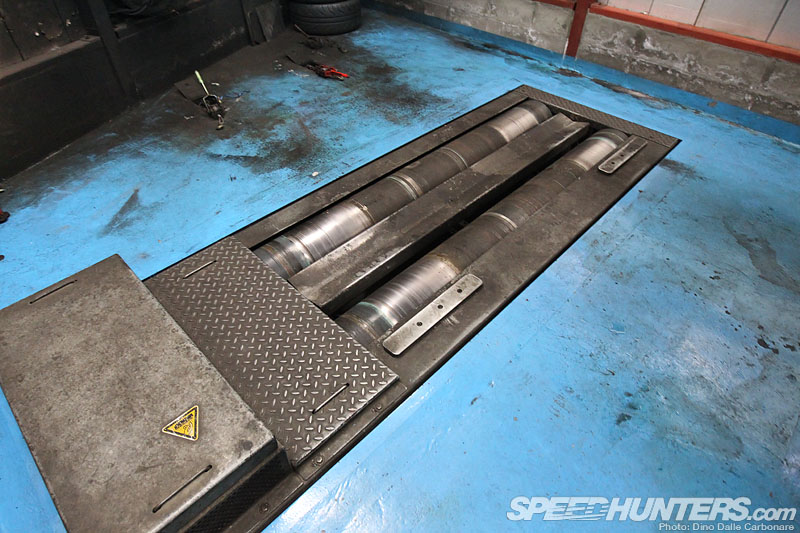
Since the GT-R was going to be run on Do-Luck’s 2WD Bosch dynamometer, it was necessary to do some prep work, taking out the ATTESA fuse and removing the propeller shaft that sends drive to the front wheels. It’s a bit of a pain but it’s necessary so you don’t burn out the clutch packs in the transfer box.
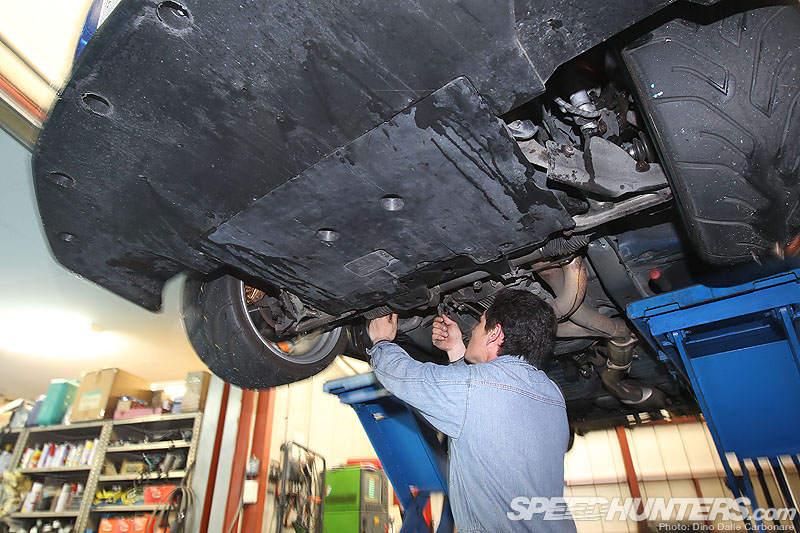
Since my car sits pretty low, and the rear wheels have to “drop down” onto the rollers, the rear diffuser was also something that needed to be taken off.
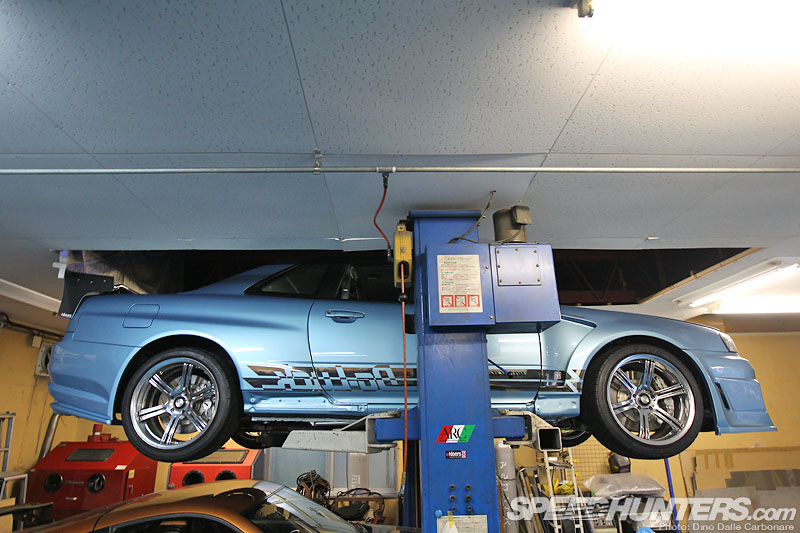
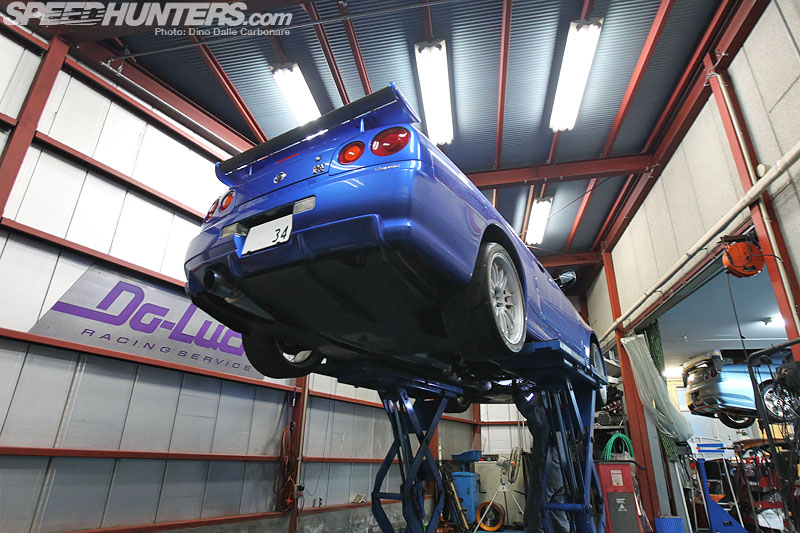
While this was being done there was plenty of cool cars around the shop to take a look at, like Ito-san’s immaculate R34…
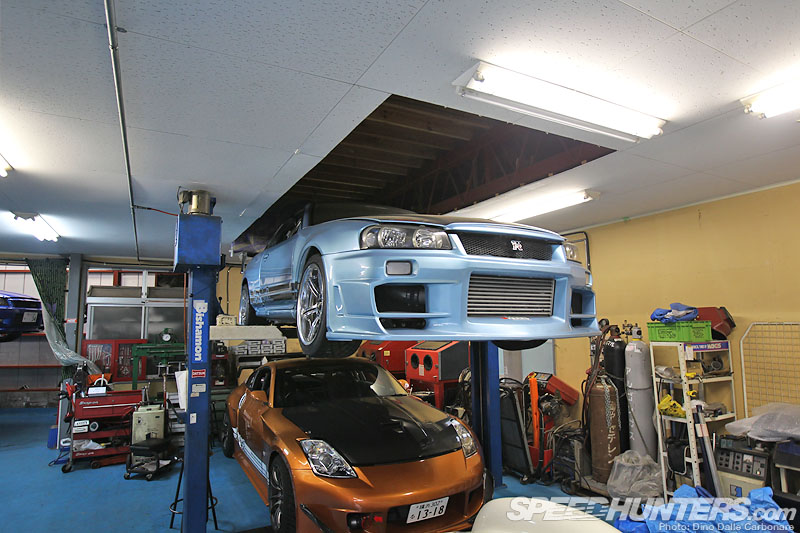
…and the shop’s Z33 time attack car which had just been fitted with the Haltech Platinum Pro plug-in ECU the previous week. Ito-san was already very impressed with the capabilities of the ECU, which made me even more excited to have it fitted!
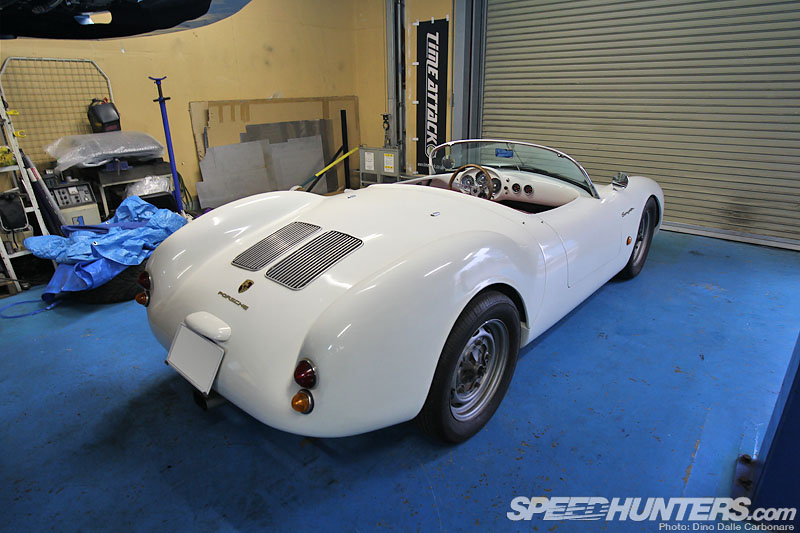
In for some maintenance was this Porsche 550 Spyder replica, a tiny little homage to the rare and original racer of the fifties.
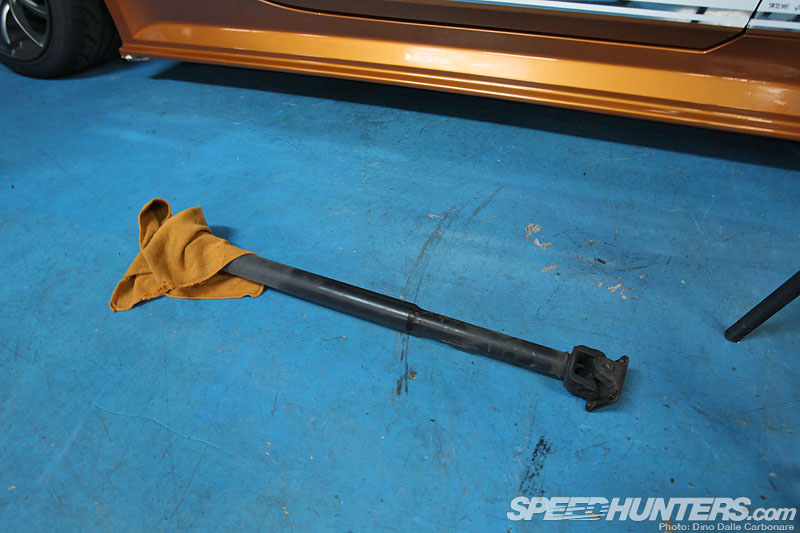
In no time the little prop-shaft had been removed…
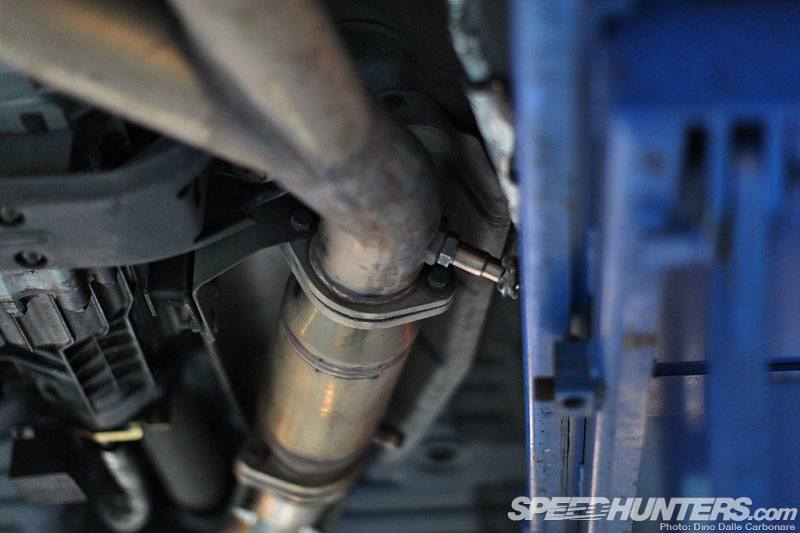
…and a wideband lambda sensor bolted into the front pipes, a necessary instrument needed for feedback during fuel and ignition mapping.
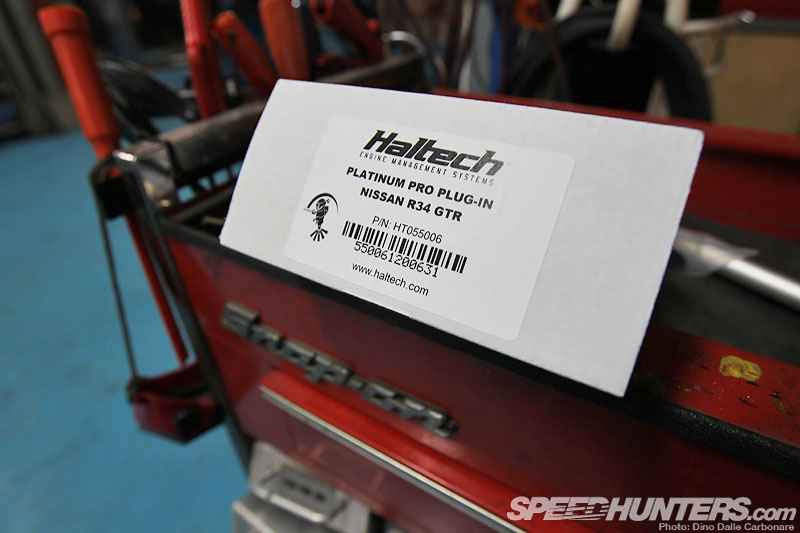
With the car ready to go, it was time to open up the box…
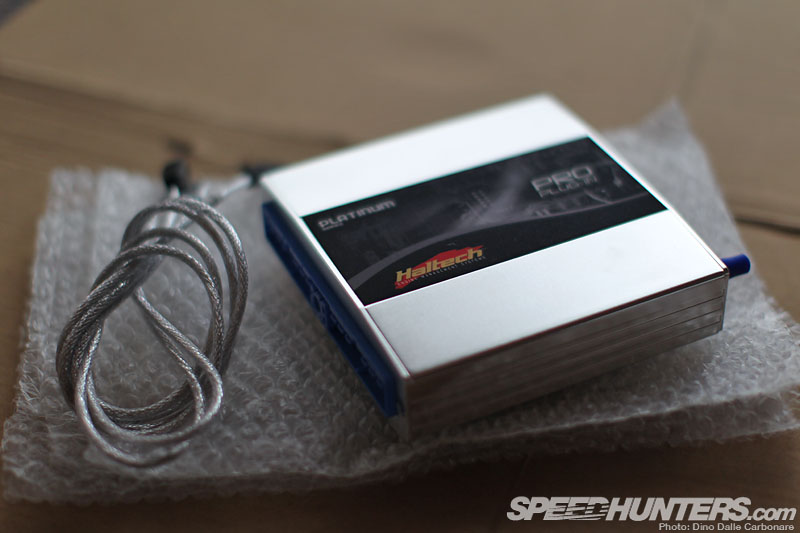
…and take out the Haltech unit. I was pretty impressed how compact and light it is compared to the stock computer. A long USB cable was also included, plug one end into the ECU and the other to your laptop and you are ready to go!
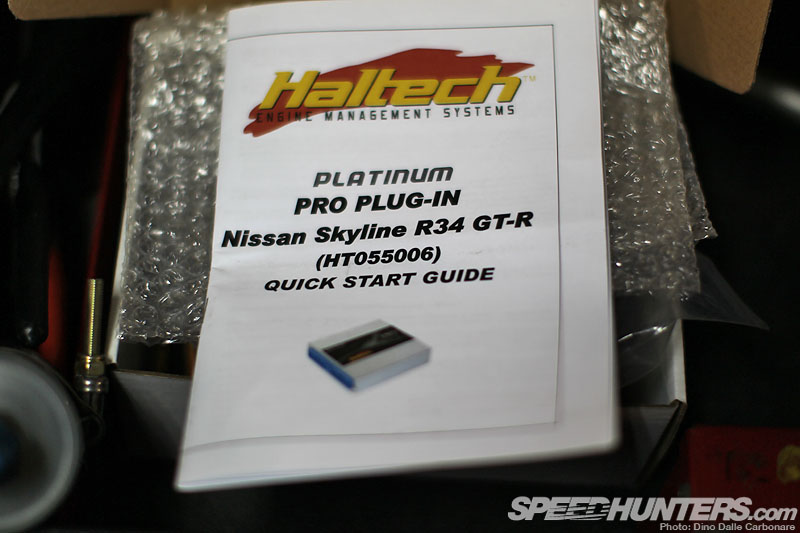
There were also some basic instructions, but there isn’t much that needs to be done as…
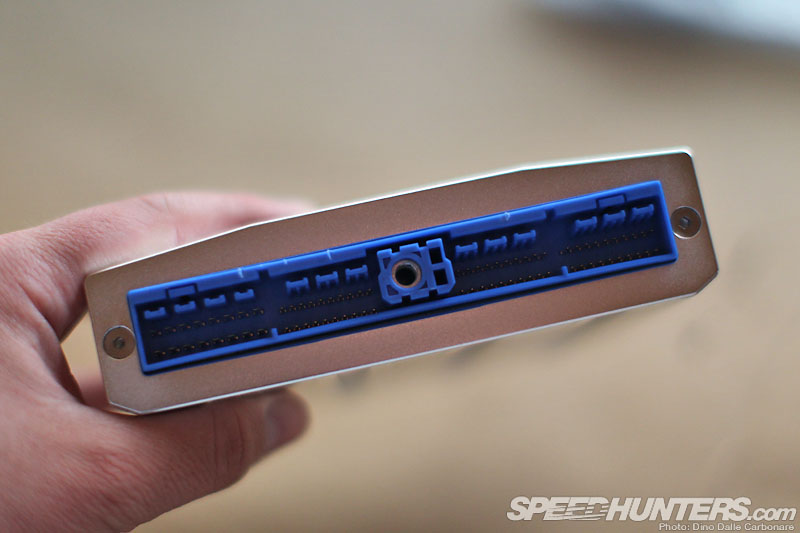
…it plugs straight on to the factory harness, with only the single center bolt needed to be tightened down to make sure the computer doesn’t unplug while driving.
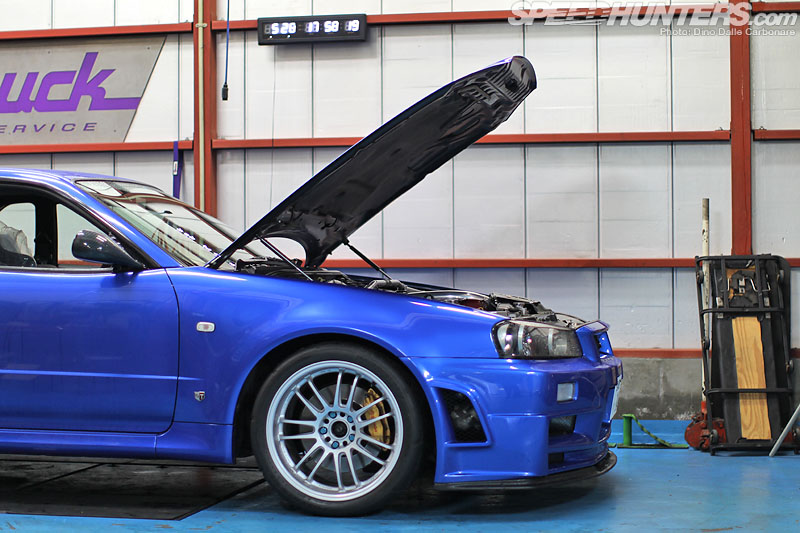
So with the GT-R in 2WD “drift-mode”…

…it was on to a few more details like plugging in a small silicon vacuum hose onto the fuel pressure regulator, which will then go to the Haltech’s built-in MAP sensor. This would just be plugged in during mapping as a more reliable way to map boost. My car is still running the stock air-flow meters so the ECU will continue to use the MAF sensors for the time being. Once more things get upgraded I will be getting rid of the AFMs and using only the MAP sensor. Since the Haltech can also act as a boost controller, I will be also getting rid of my HKS boost controller, which is the only auxiliary module I have had to add in the past.
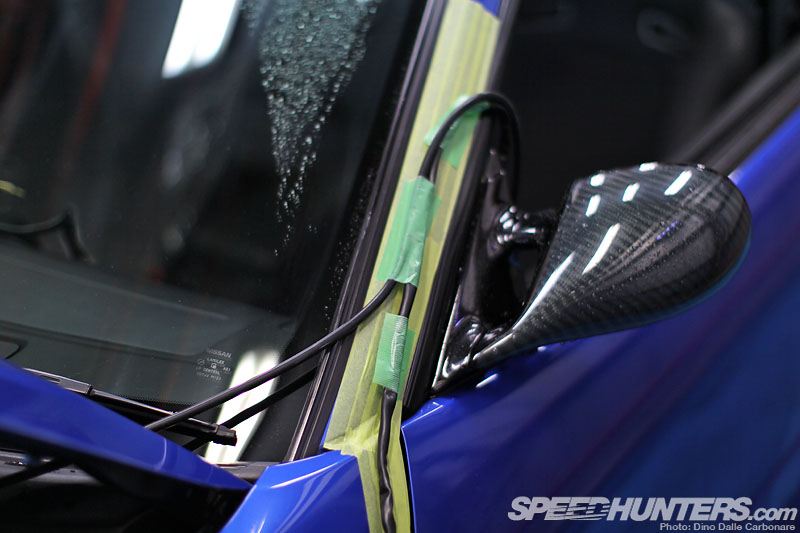
Japanese attention to detail here. Masking tape was applied onto the body first before the O2 sensor cable and silicone hose were taped down on the A-pillar.
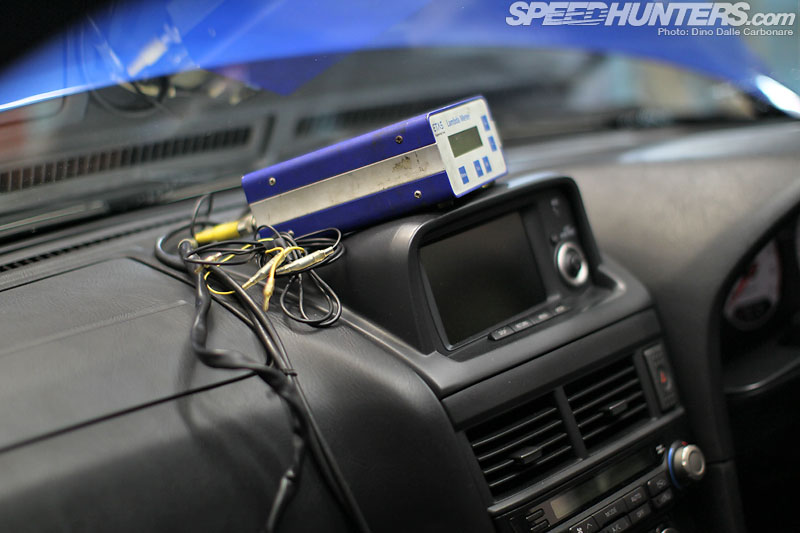
The display for the O2 sensor was placed onto the dash, on top of the MFD screen…

…and with the Platinum Pro plugged in place…
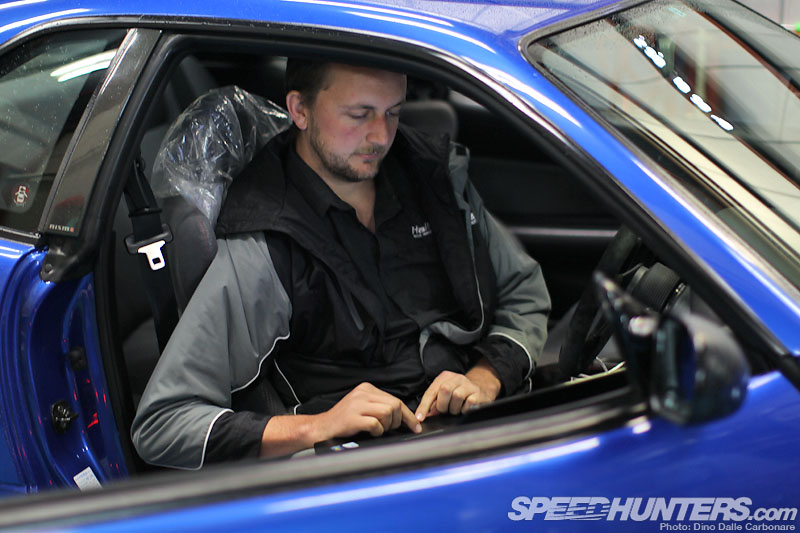
…Scott Hilzinger from Haltech got busy doing his thing.
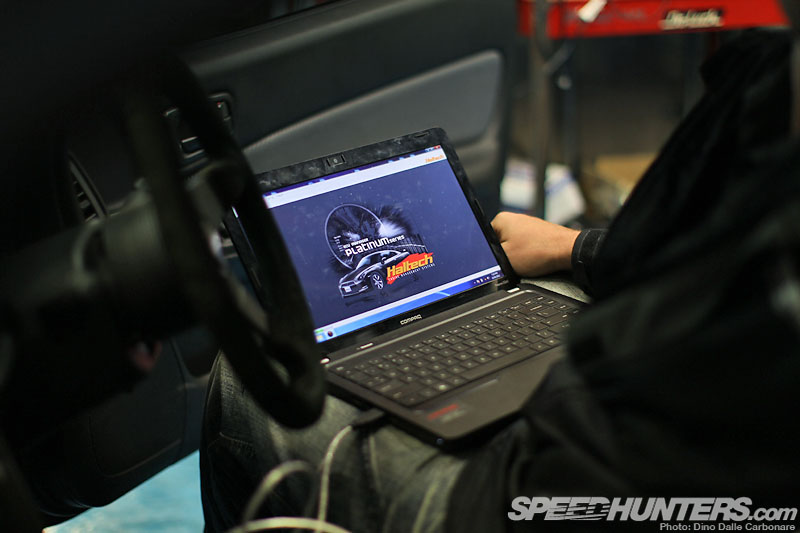
This is the nice welcome message you get when launching the Haltech software on the PC.
Doesn’t the Haltech samurai-sword-armed injector mascot look pretty cool?
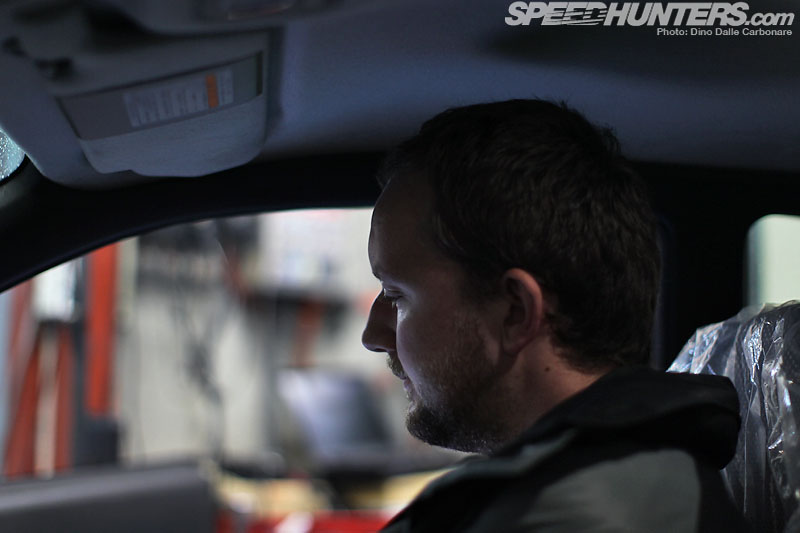
Scott had just spent a whole day mapping the Cyber Evo, which is now running a Haltech ECU ready to defend its record at this year’s WTAC! He’s mapped the computers on a ton of top level race and drag cars so I felt my R34 couldn’t possibly have been in safer hands.
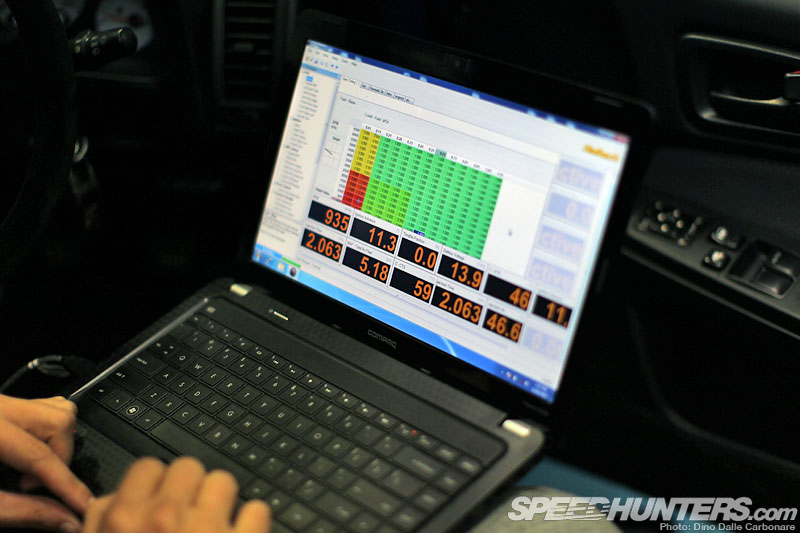
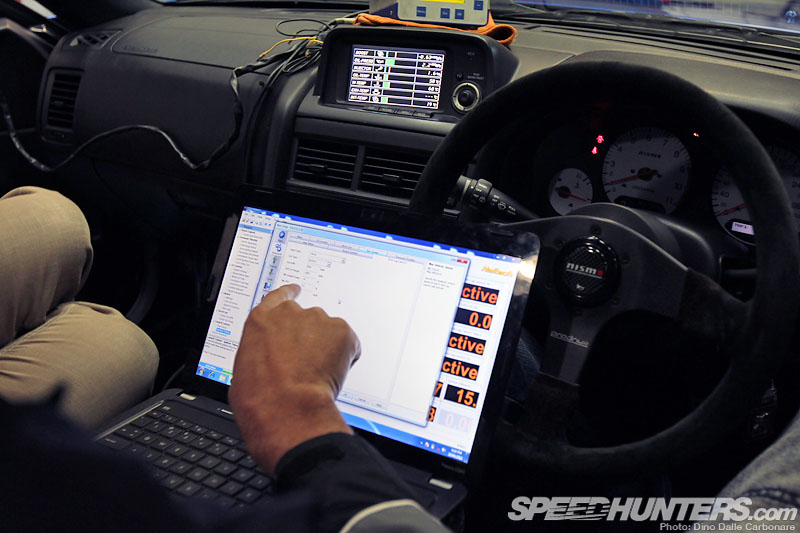
One twist of the key and the base-map in the ECU sparked the engine into life instantly. This is the display that Scott had set up on his laptop…it’s pretty incredible the level of customization that you have, on both the unit itself as well as the software. I was in nerd heaven as Scott talked me through some of the features. I asked him to keep his explanations as basic as possible, as it can all get a bit too complicated!
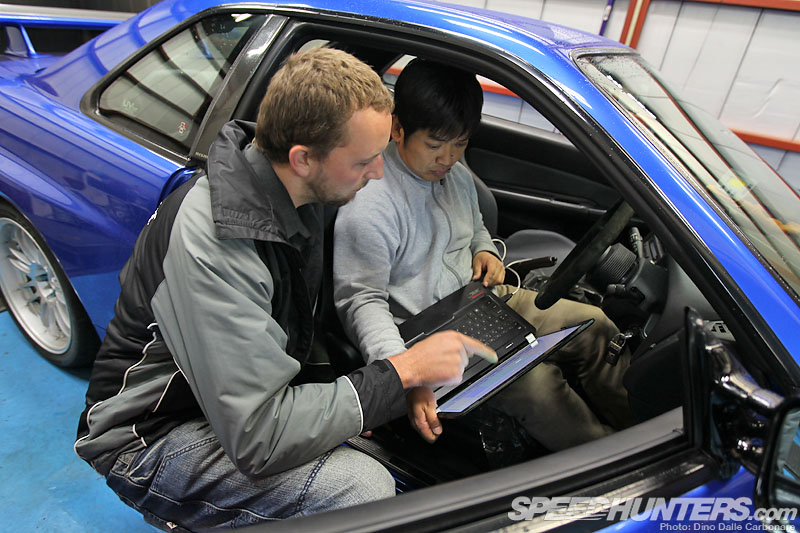
It was Ito-san’s turn next as he and Scott got busy programming the computer. The whole exercise here was to get everything working properly and come up with a safe and basic map that would allow me to drive around until the next round of modifications are fitted. After that is done, the proper tuning will begin.
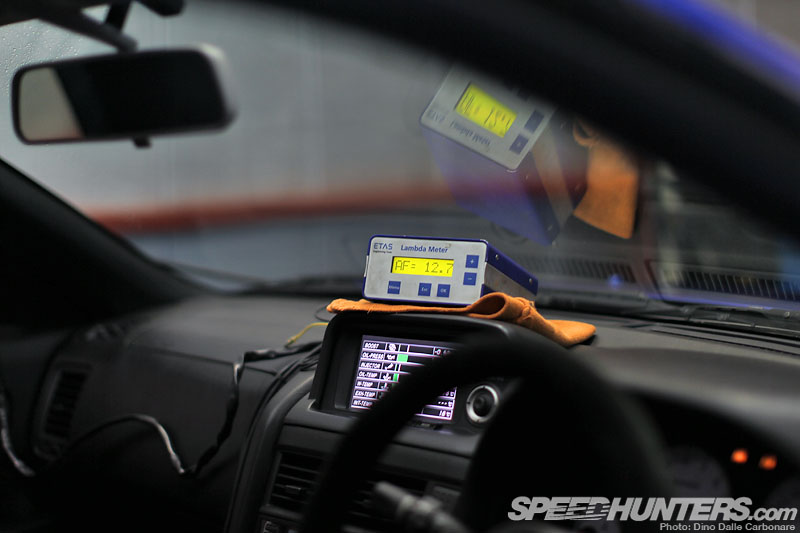
It was also a good opportunity for Ito-san to get a good explanation of the multitude of possibilities that the Haltech open up.
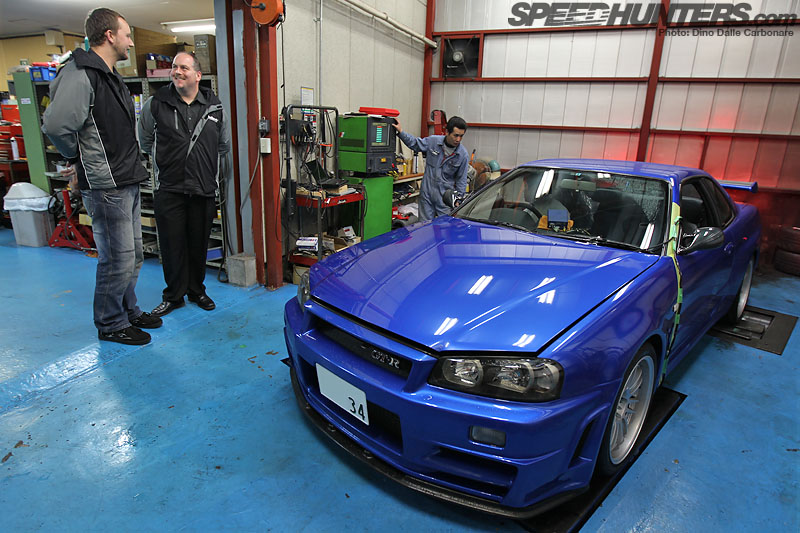
David Marriott, who is in charge of sales at Haltech, was also there to check out the R34 on the dyno.
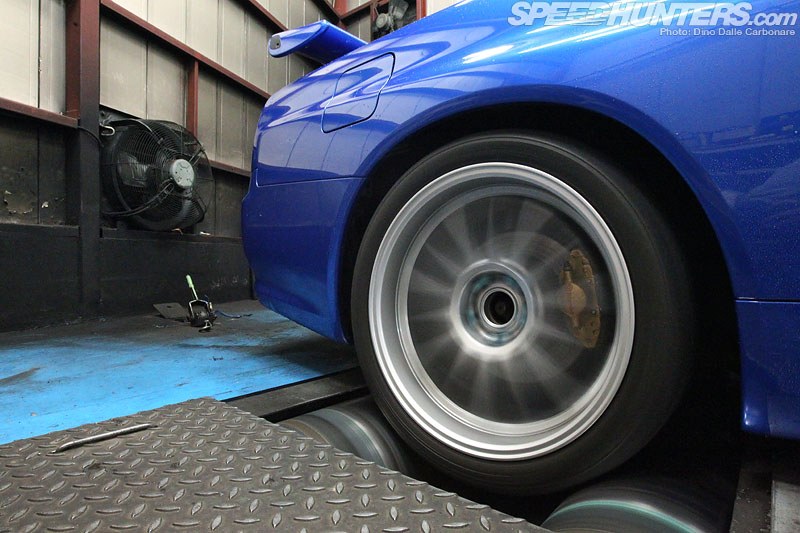
It was a bit strange seeing my car run in 2WD! And boy did it sound loud at full rpm in that small dyno room! It’s about to get a lot louder too as the Mine’s exhaust gets swapped out for a brand new Tomei one this week.
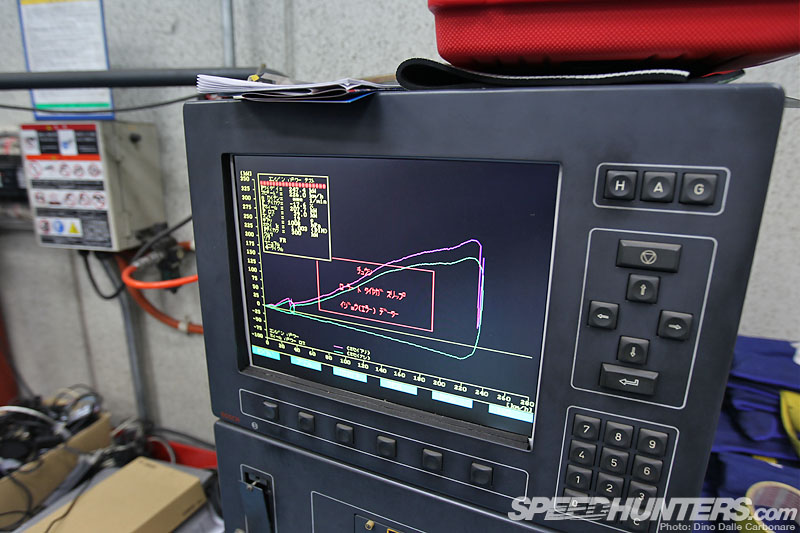
There was a decent improvement compared to the standard map, more than enough for the time being. In a few months that curve should be looking quite different!

With everything pretty much looking good…
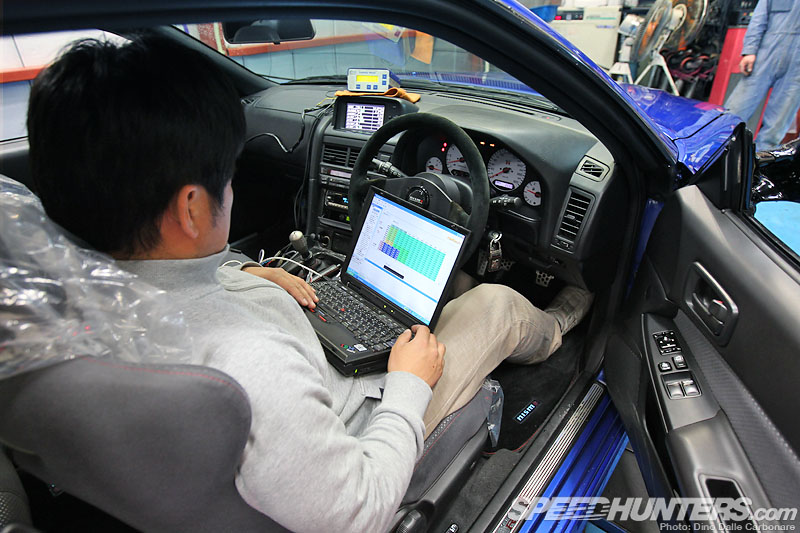
…Ito-san decided to wrap things up…

…but not before the spark plugs were removed and carefully looked over, an old-school way of checking if the engine is running well, not too rich nor too lean, just right.
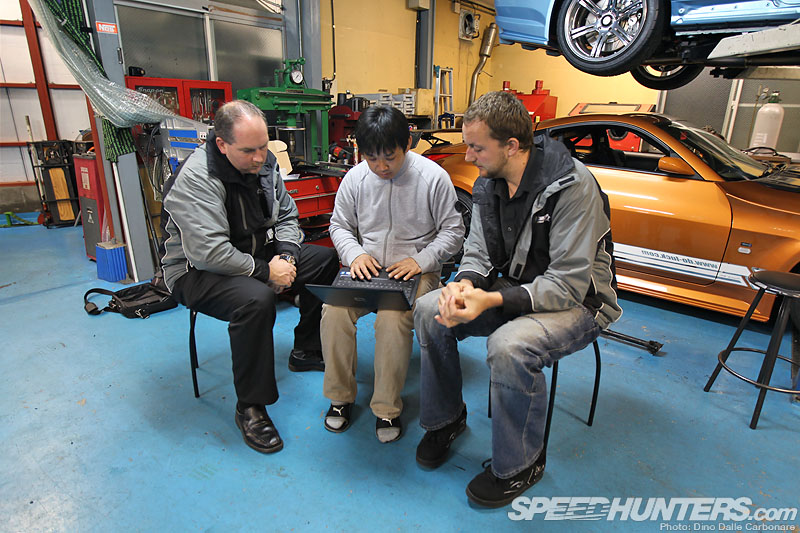
There is a ton of potential that the ECU can unleash for both turbocharged and naturally aspirated cars alike…
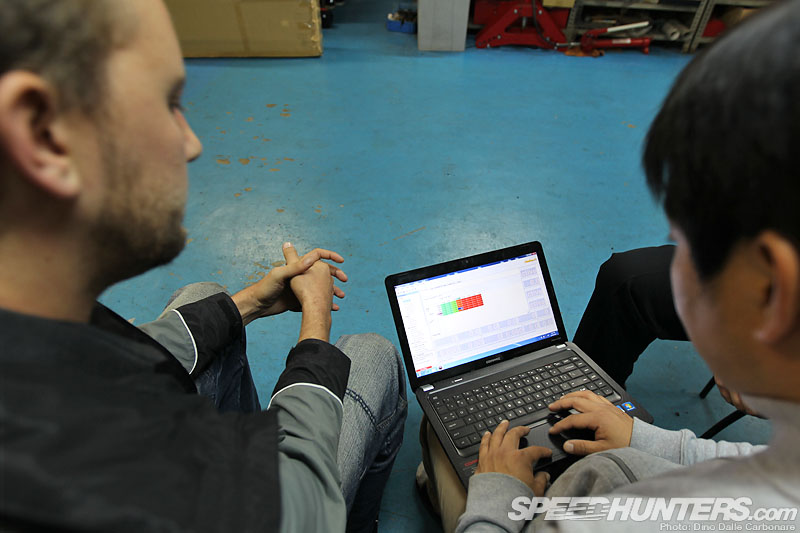
…and Scott and David made sure Ito-san was shown all the capabilities of the software. My translation skills were really put to the test, as I had to try and explain rather complex terms and concepts in Japanese. Brain overload!
Before the car was taken off the rollers Scott set-up a little bonus feature, a soft “anti-lag” setting, a similar but more conservative version of what rally cars use. So now if I floor the throttle, anywhere above 60%, with the clutch-pedal depressed and the car stationary, the ECU automatically kicks into anti-lag mode. Boost builds up to 0.7 bar with the exhaust machine-gunning away, giving a nice little extra burst of acceleration off the line. Sidestepping the clutch off the line has never been more fun!
Next up for the GT-R will be sorting out the fueling as I bring the car into the 21st century with a set of R35 GT-R multi-hole injectors. Then it will be ready for the ever-growing stack of boxes that have been accumulating in the office for the best part of 6-months! Stay tuned for more!
-Dino Dalle Carbonare