
I cannot think of a motorsport event more fascinating than a twenty four hour race stuffed to the brim with GT cars. While spec racing can be entertaining, particularly for the drivers, I find it far more fun to see your favorite marques battling it out for hours. At the Total 24 hours of Spa there was an unprecedented sixty six cars, all of which were GTs, entered in the race. Let’s have a closer look, shall we?
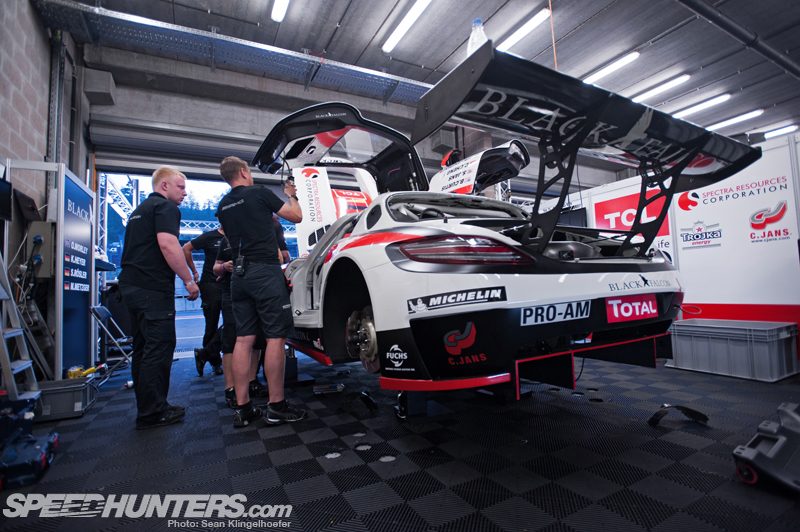
The cars are finely tuned instruments designed for all-out track domination but they do, more often than not, bear a striking resemblance to the base model car. These are of course primarily flagship sports cars from the world’s greatest manufacturers which have been made into even more extreme racing versions. What’s not to like?
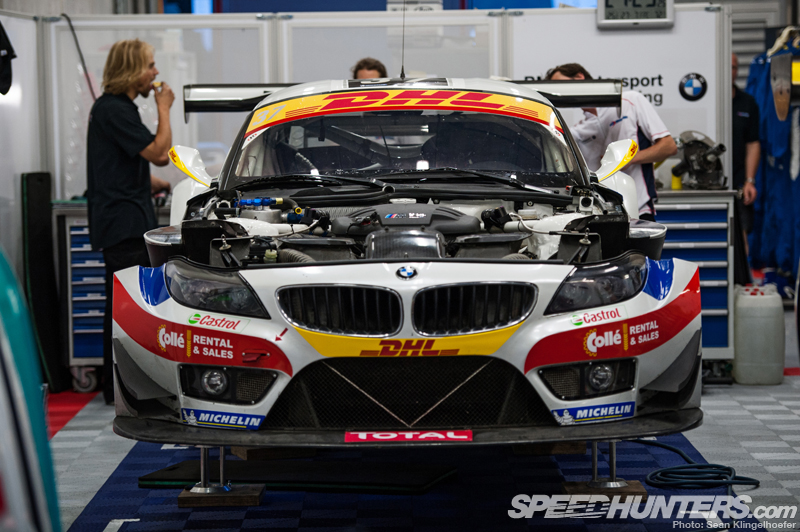
The thing that always astonishes me about GT cars is that they come from such wildly varying backgrounds, yet they are restricted by the governing bodies to perform nearly identically. In racing terms we call this “the balance of performance” which is essentially a very detailed handicapping system put in place to make all the cars more or less even. Items like weight, tire size, brake rotors, throttle restrictors, fuel capacity and much more are analyzed prior to the start of the season.
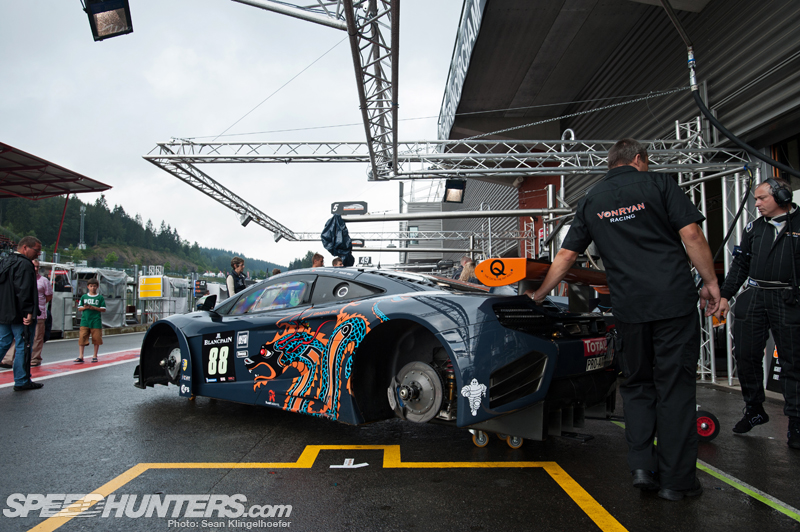
Based upon the findings, teams are then mandated to make certain changes to their vehicles in order to level the playing field. While there is some occasional sand-bagging, this typically results in shockingly close racing, often with the leaders closer on the final lap of a 24h race than after the first lap of a spec series. So without further ado, let’s take a look at many different solutions to the same problem: building a fast and reliable GT car.
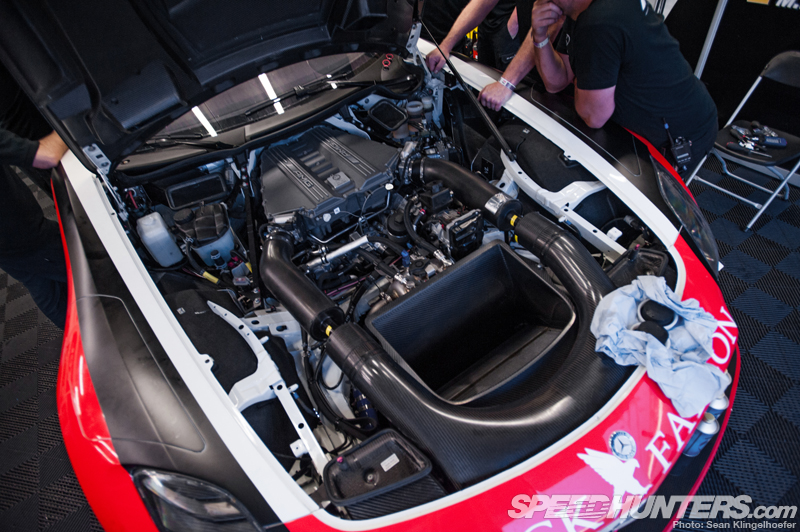
While the Mercedes SLS is a stunning machine on the street, I find it quite the oddball as a GT3 car. Not only does it have an FR layout, in itself a little less common in this world, but it also has an extremely long front end which is rumored to be difficult to get used to driving. Just look at how much carbon ducting is required to get air from the air boxes at the front of the engine bay to the throttle bodies of the 6.3L V8 at the back!
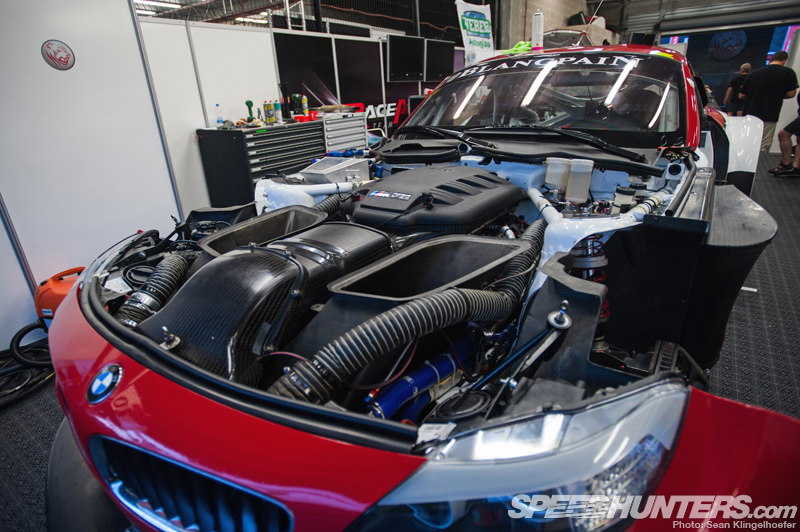
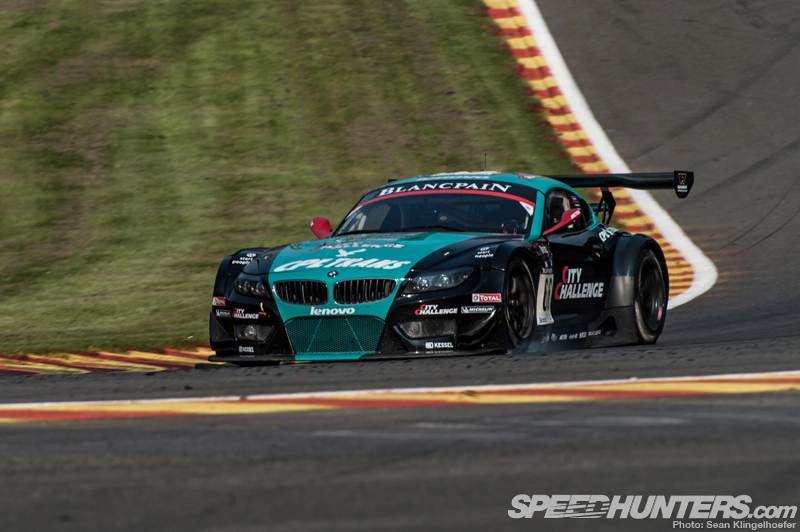
The BMW Z4 is another FR machine which has been homologated for FIA GT3 with an engine swap derived from an E92 M3. This engine has of course been modified and is now a 4.3L up .3L in displacement and stuffed with racing internals providing a compression bump to 13:1.
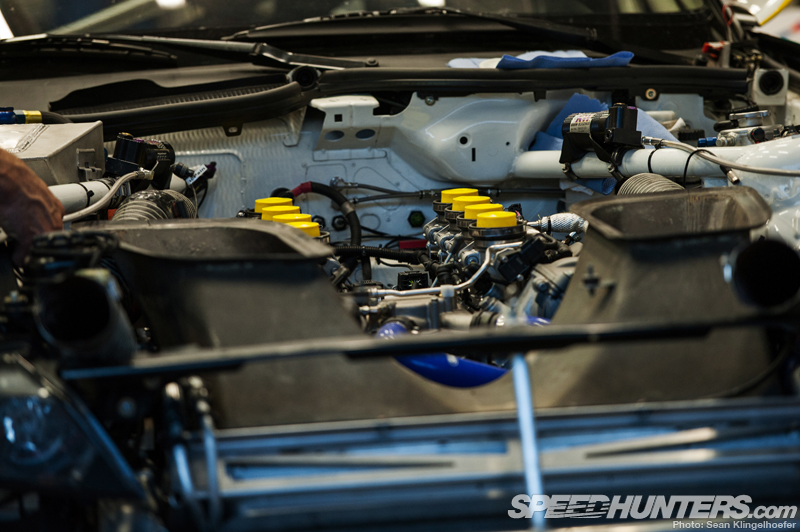
Here we see the beast that lies beneath all that carbon shrouding with the eight individual throttles finely tuned for ultimate response. BMW say the car is good for 515bhp from the factory, certainly not a bad place from which to start.
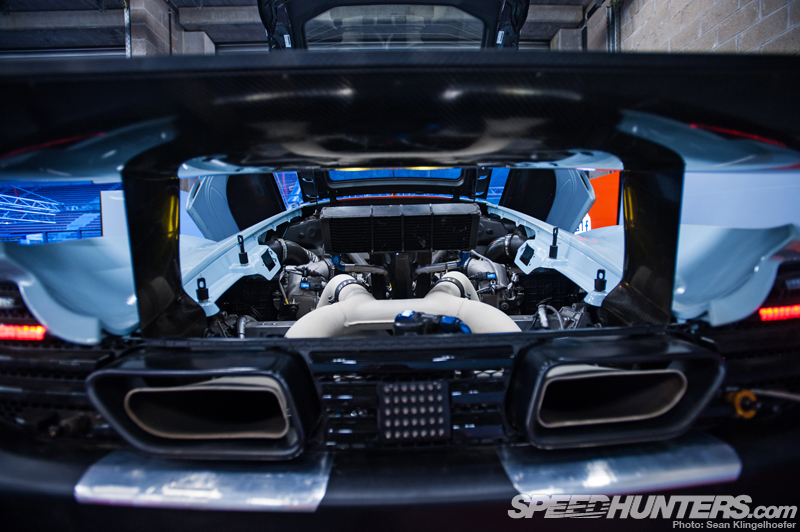
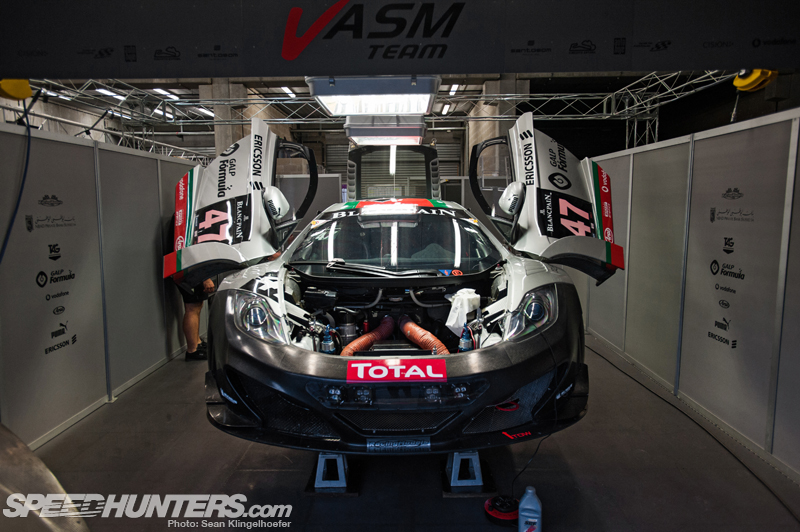
This year McLaren have really increased their presence with what is arguably the hottest new customer racing car with nine examples entered in the race. The MP4-12C GT3 uses a more traditional MR layout with it’s howling twin-turbo charged 3.8L V8 exhausting straight through the center-line of the car, often resulting in some pretty epic fireballs.

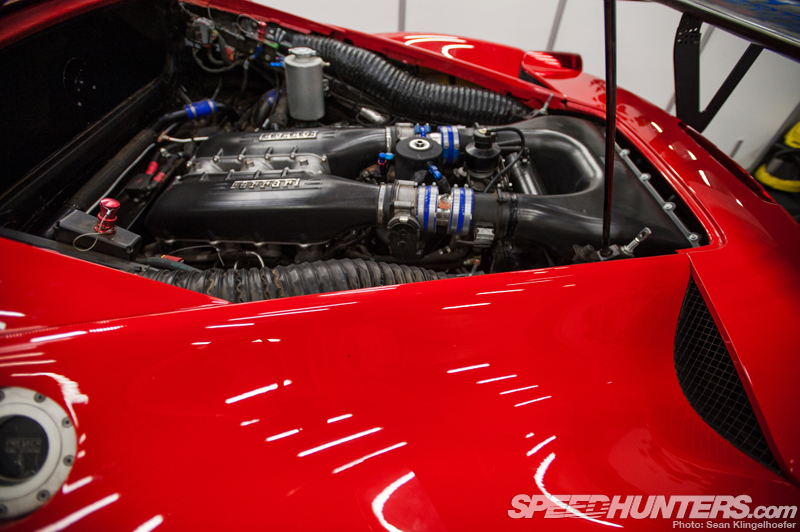
Ferrari have also stuck to their MR roots with their latest GT3 incarnation, the 458 Italia. Like the McLaren, Ferrari have also chosen a V8 engine but their 4.5L design is free of any forced induction. Despite lackluster engine appearance, Ferraris are usually one of the faster cars on track. With fourteen participating at this year’s race it was by far and away the most popular choice and it was not at all unusual to see them out in packs.

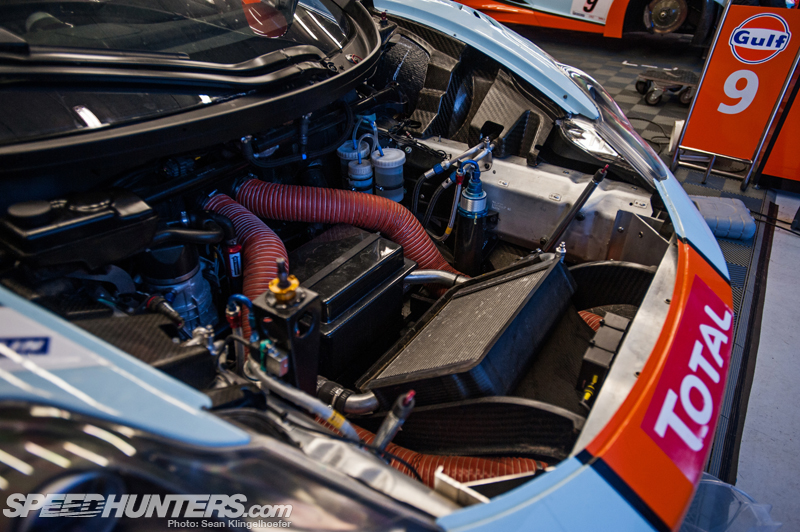
Regardless of layout, at the opposite side of the car from the engine compartment typically lies the rest of “the stuff”. Here we see the front of a McLaren containing coolers for oil and water, along with ducting for the brakes and cockpit, a pair of air jacks and some hydraulic tanks.
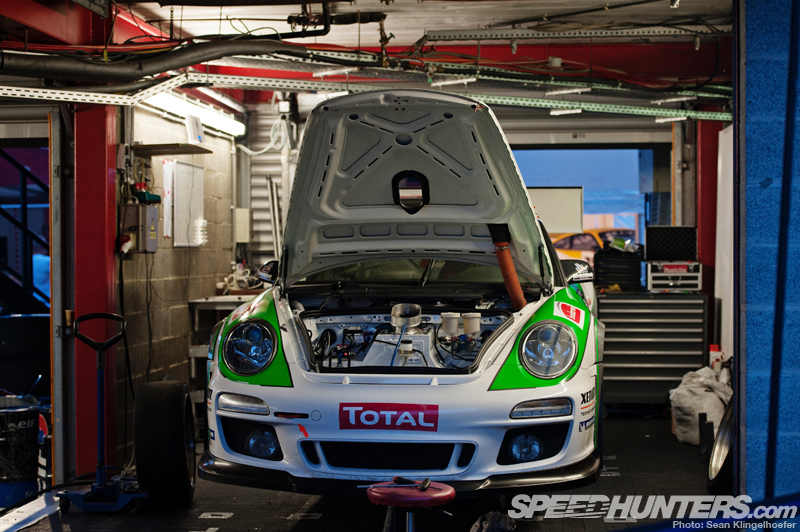
The front of a Porsche 911 is a common site regardless of what GT race you attend anywhere in the world. Space underneath the GT3 Cup’s hood is primarily occupied by the trademark front mounted fuel cell.
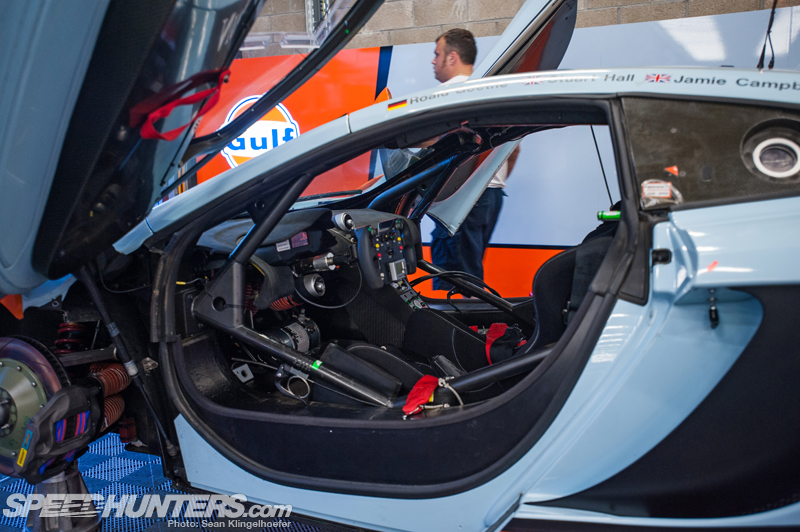
Cockpits in the GT3 field are also quite varied since there is no spec tub like you have in DTM for example. This means the inside of the car is simply a reworked factory design and many times certain panels and pieces remain from the standard vehicle to remind onlookers of the car’s street pedigree. None, in my opinion, do this better than the McLaren which has a shockingly accurate dashboard left inside.
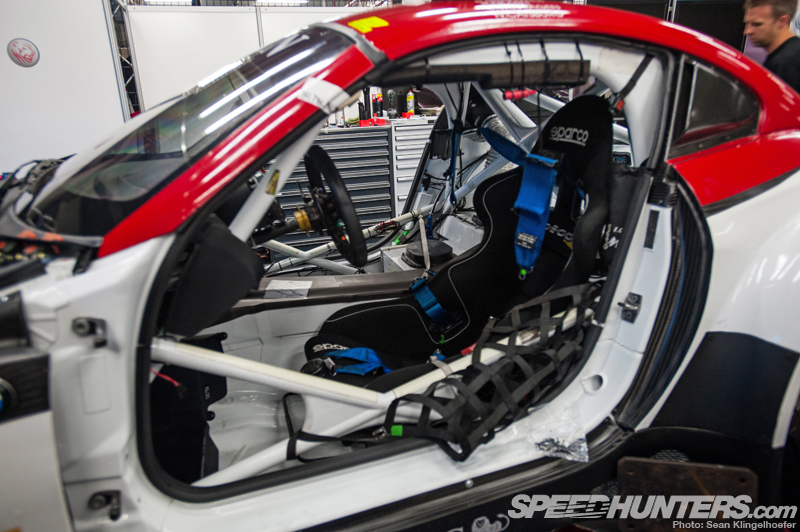
By comparison the Z4 seems like a super raw track day special, but I can assure you everything here is top notch. All of the safety equipment is inspected prior to the race and certification decals are then applied to certain components like the drivers helmet or the car’s roll cage, as seen here.
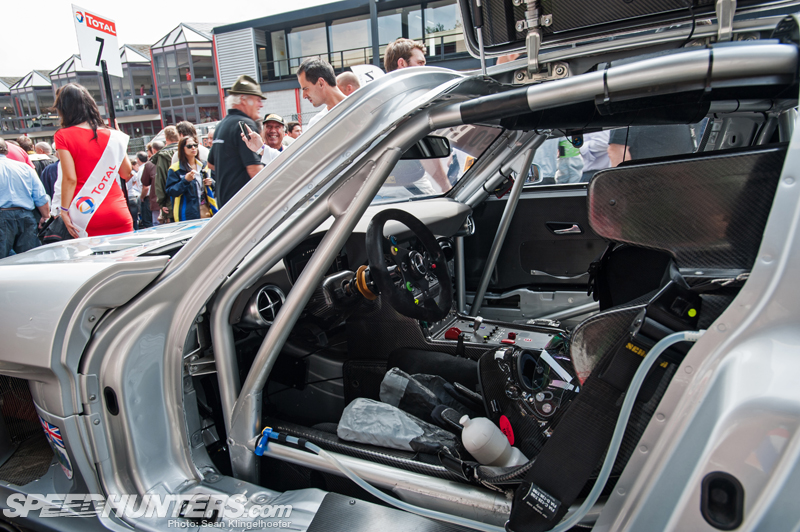
In terms of interior I again think the oddball of the bunch has to be the Merc with it’s unconventional gullwing doors I can only imagine the joy of prepping this cabin. In fact, in the event of a roll over, there is a switch in the cockpit that upon use causes the door hinges to literally explode off the car allowing the driver to make a clean getaway.
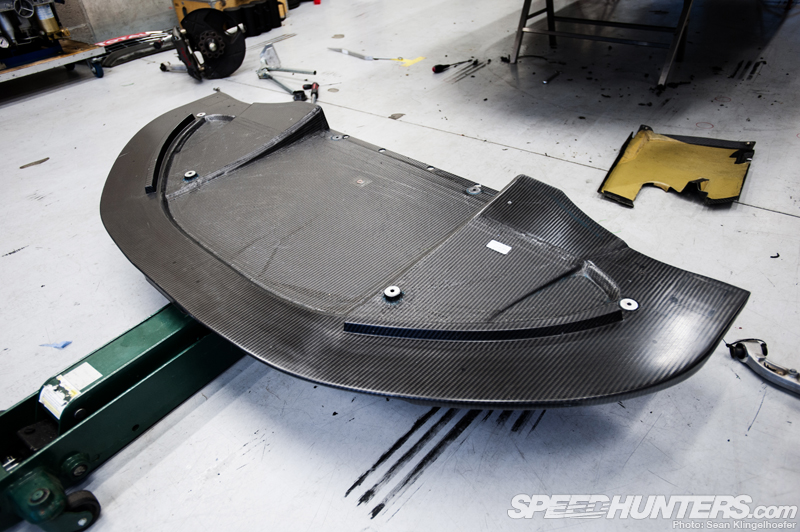
Of course aerodynamics also play a large roll in the performance of these cars, particularly on a high speed circuit like Spa. Here we see a dry carbon honeycomb front splitter from an Audi R8 LMS Ultra… I can’t even fathom how much this piece costs to replace, certainly more than my entire Civic.
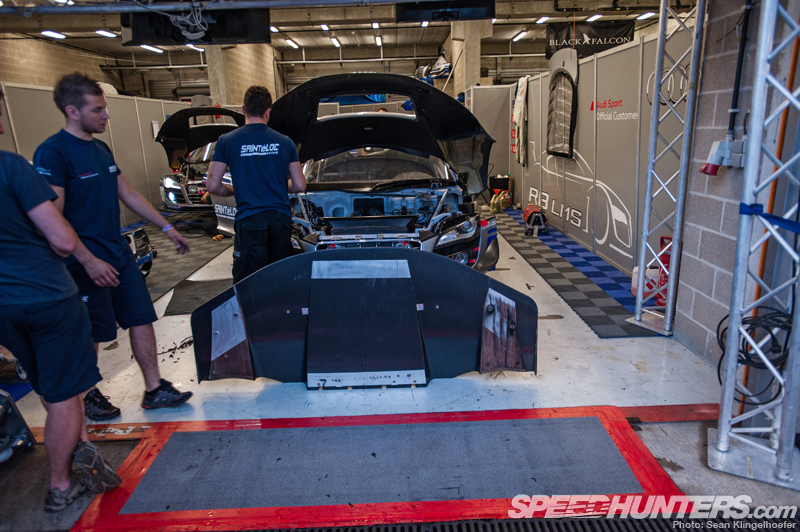
Here’s a look at the underside of the same splitter. Now we can begin to see where the magic really happens as the grooves and recessions are all expertly formed to allow the car to suck down towards the pavement. On the right side you can see some of the wooden plank being worn down, likely at Eau Rouge…
Where the splitters were visibly set on fire for a brief moment under maximum compression from the g-load of the entry. These pieces of wood do serve a purpose other than a smoke show, they are actually measured in scruteneering after the race and must meet a certain thickness requirement. Drive too hard, over too many curbs for too long and you won’t pass inspection.
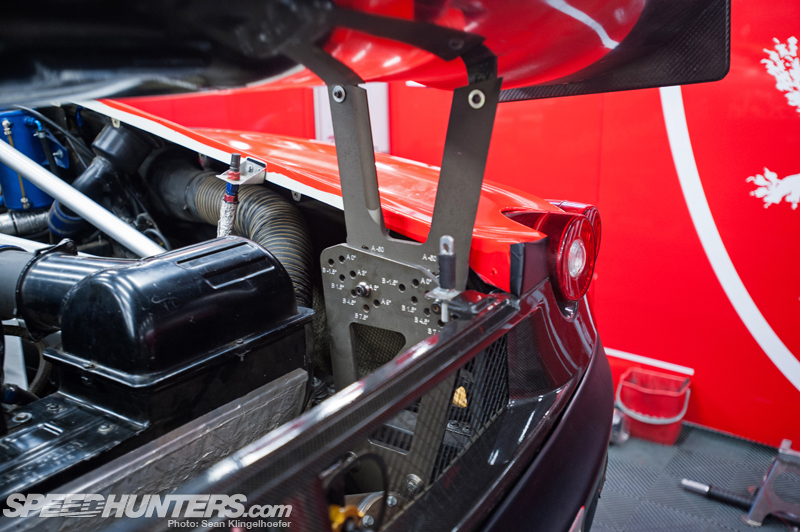
Another obvious piece of the aerodynamic puzzle is the rear wing, often imitated on street cars but virtually never fully duplicated. While the airfoil shape of the wing usually gets all the glory, the real unsung hero are the mounts; without which the forces created by the spoiler would go to waste. Here we see the adjustment range on a Pro-Am Ferrari 430.
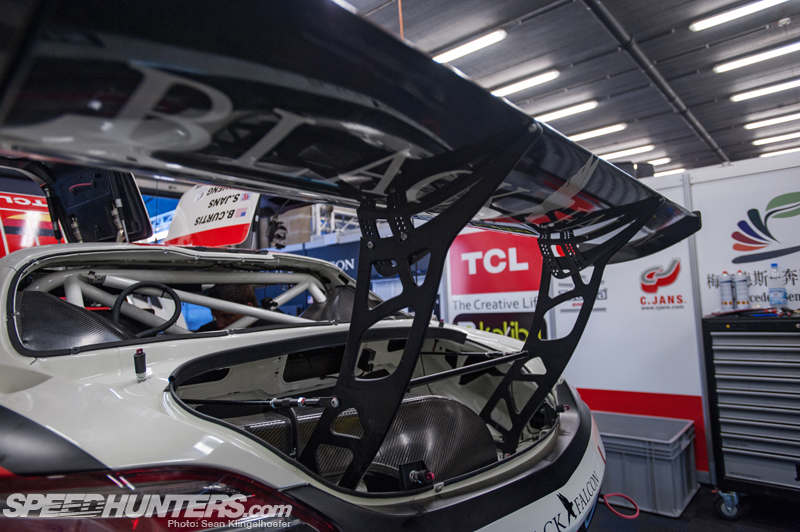
On the Mercedes adjustments are done via the top portion of the mounts in a more traditional manner. Not the additional adjustments fore/aft from the triangulated tension rod setup. Pretty trick stuff indeed.
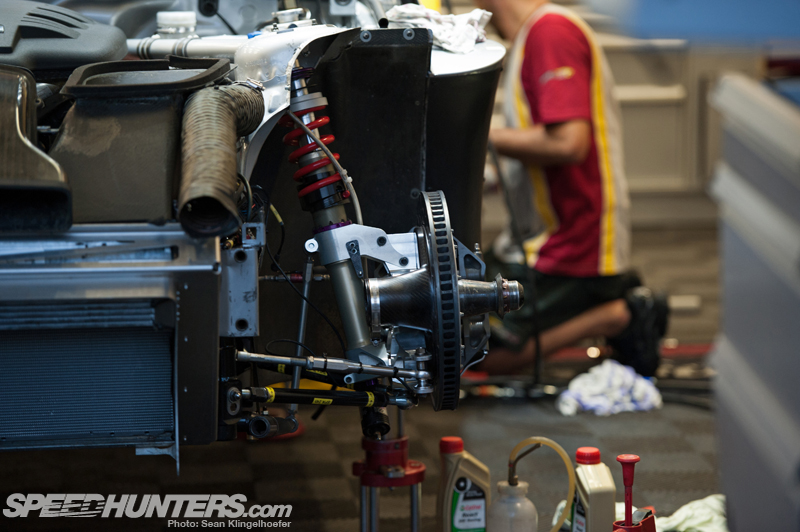
Ironically the most incredible force these cars will endure is the one least talked about – braking. These cars are certainly capable of some impressive acceleration and lateral g-loads, but the braking trumps these by a substantial margin. In order to keep things running smoothly over the course of a 24h race, high tech components must be used.
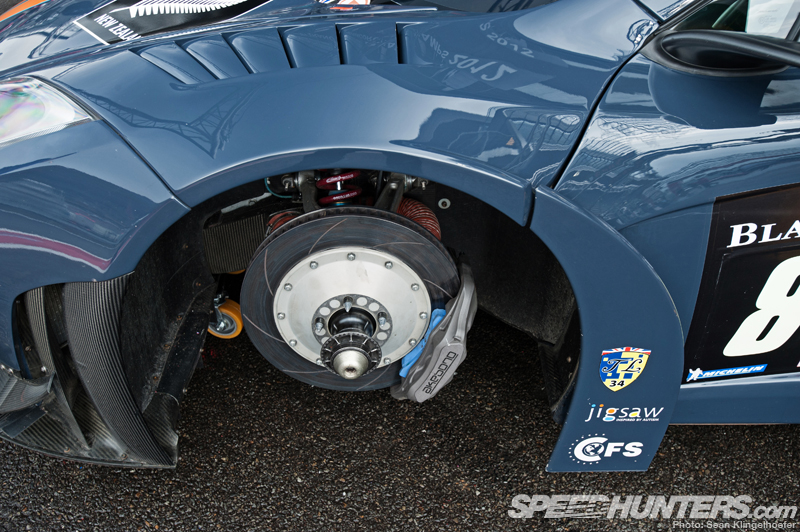
Rotor thickness and diameter is the largest contributing factor in how hard and how long you can brake for. Since the rotor alone is responsible for absorbing and dissipating the heat generated under the energy transfer, there is a lot riding on this seemingly simple component. The floating iron discs seen here on the McLaren is 378mm in diameter and 36mm in width.
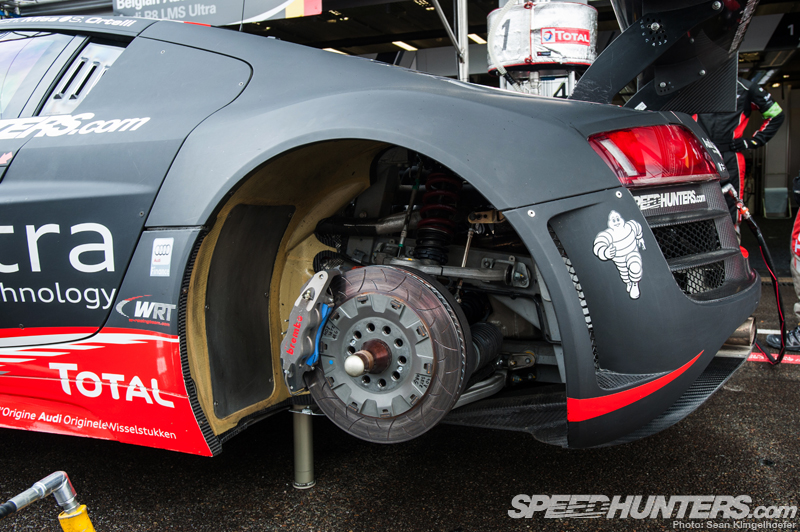
While it is true that the front brakes do a majority of the work, the rear brakes on GT3 cars are no slouches either. Here we see massive rotors combined with Brembo 4-pot calipers and custom Endless pads on an Audi R8 LMS Ultra. In the last few years Endless have become one of the premier pads in endurance racing and have found the top step of the podium at both Nürburgring and Spa in 2011 and 2012!
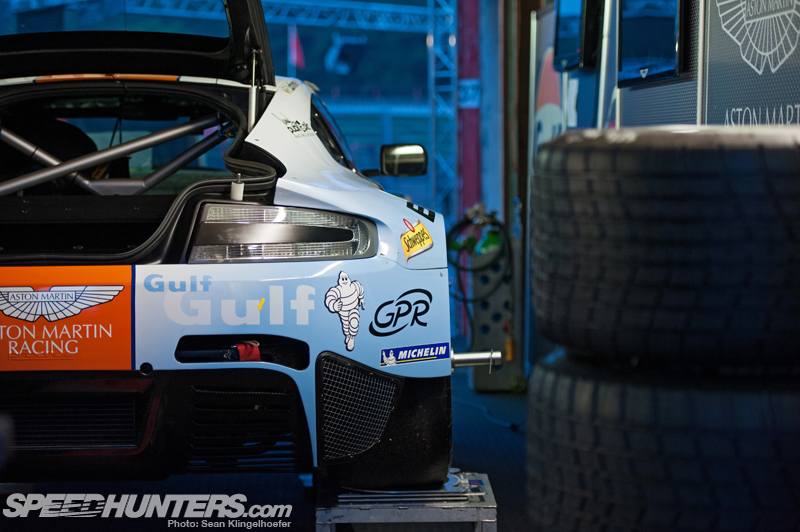
With technology advancing in every direction it’s easy to overlook the basics, but at the end of the day it’s still some of the simplest components that have the greatest effect on a cars performance. Case in point, alignment.
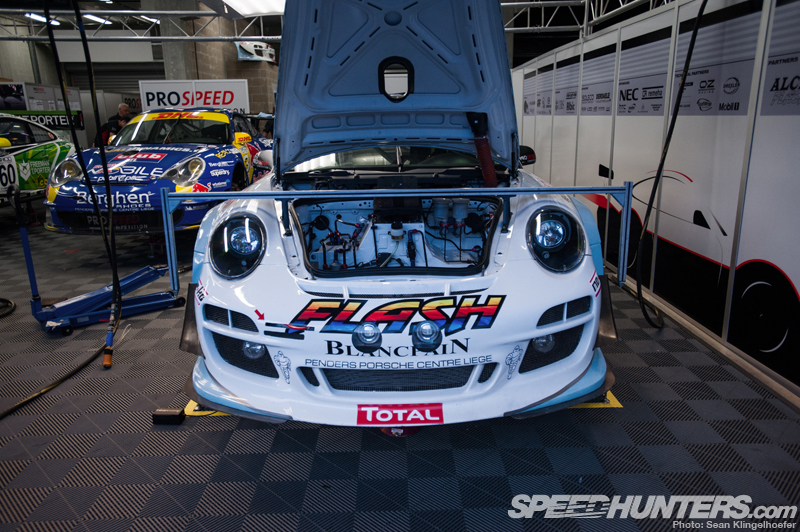
Toe is unquestionably the largest factor in the handling of any vehicle, which is precisely why it’s adjustable on both your mom’s minivan and every racing car on the planet. Other factors like camber, caster, scrub radius and ackerman also come into play and in the racing world keeping a car aligned properly is key.
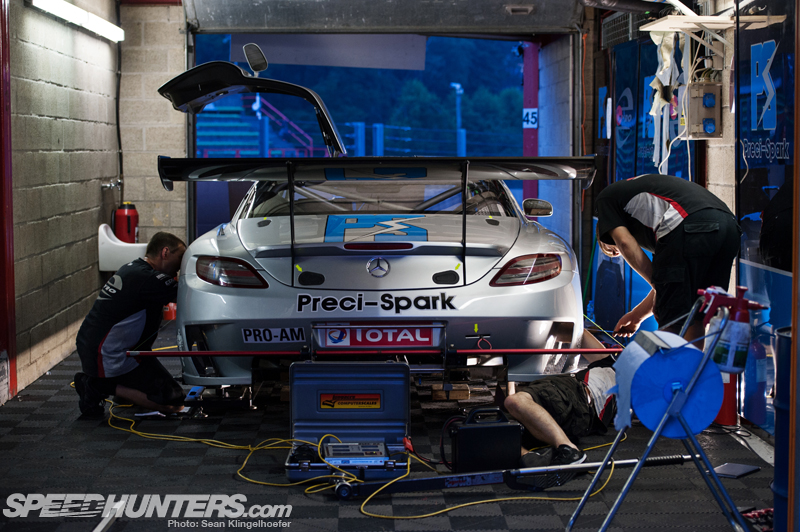
This is why over the course of a weekend you will see times aligning and corner balancing cars time and time again. But they won’t be using laser alignment machines, they’ll be using strings and pendulums. This is because, unlike computers and lasers, gravity never lies. Sometimes the most simple solution is the best – if it ain’t broke, don’t fix it.
This pretty well concludes my findings, or at least the end of my still-jet-lagged-from-Spa-brainpower. I hope this has given you guys some more insight into what’s really going on beneath the skin of these monsters and hopefully the next time you see them racing you’ll consider a few of the things I’ve discussed. As always I encourage questions and comments and will do my best to further explain any areas that spark interest. Now I’m off to Mid-O!
More stories from Sean Klingelhoefer on Speedhunters
More from 24 hours of Spa on Speedhunters
– Sean

photo by Sean Klingelhoefer

photo by Sean Klingelhoefer

photo by Sean Klingelhoefer

photo by Sean Klingelhoefer

photo by Sean Klingelhoefer