
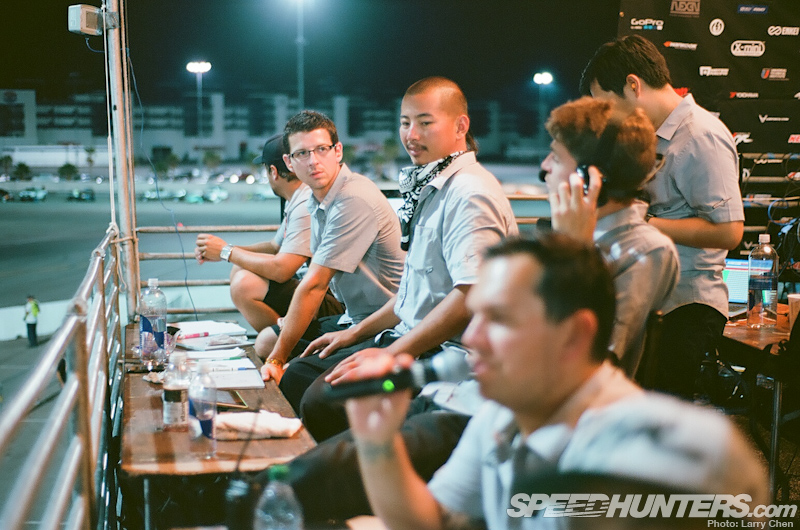
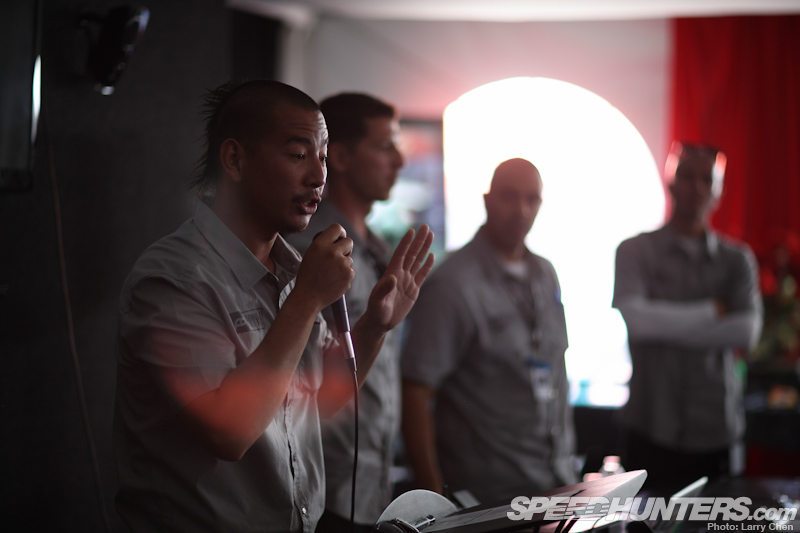
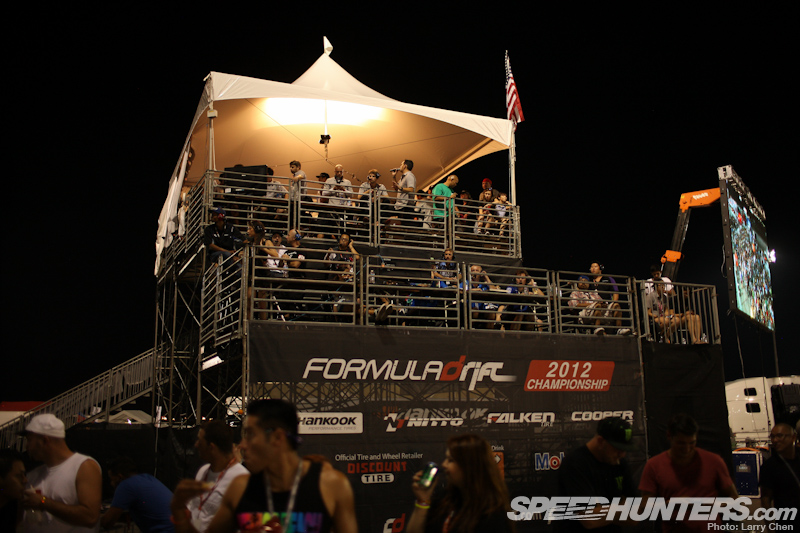
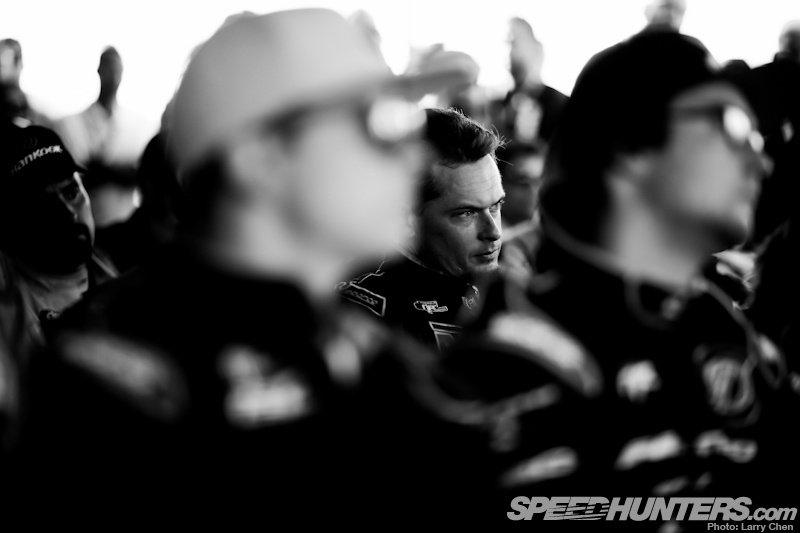
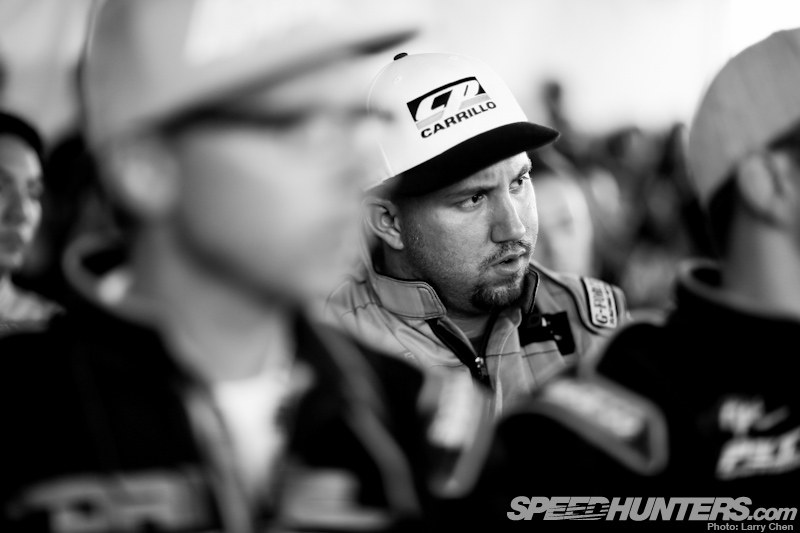
Just like being the referee in soccer or ice hockey, being a professional drift judge is not easy. They always take the brunt of blame when a driver loses or scores low points in qualifying. Someone has to do it – and these three brave souls have stepped up to the plate. They are the Formula Drift Judges: Andy Yen, Ryan Lanteigne and Brian Eggert. It is different than any other judged sport. Unlike a sport like professional figure skating, in drifting you actually know the judges: they are the face of the sport of drifting in the US. I find that they are more like the celebrity judges on those popular talent shots that you see on television. The contestants (drivers) either love them to death or hate their very existence. It probably changes from call to call.
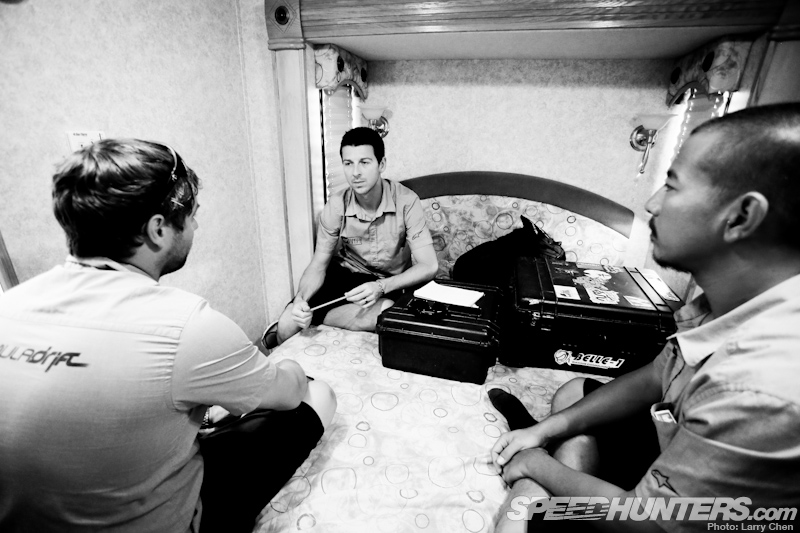
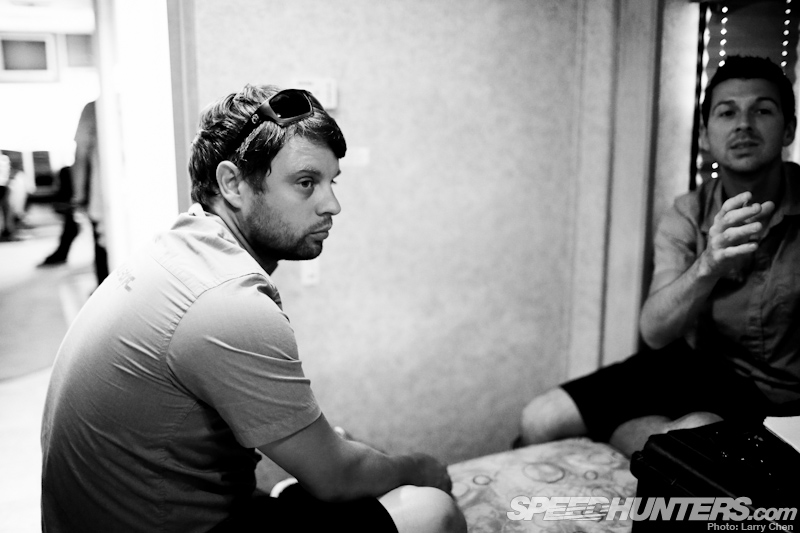
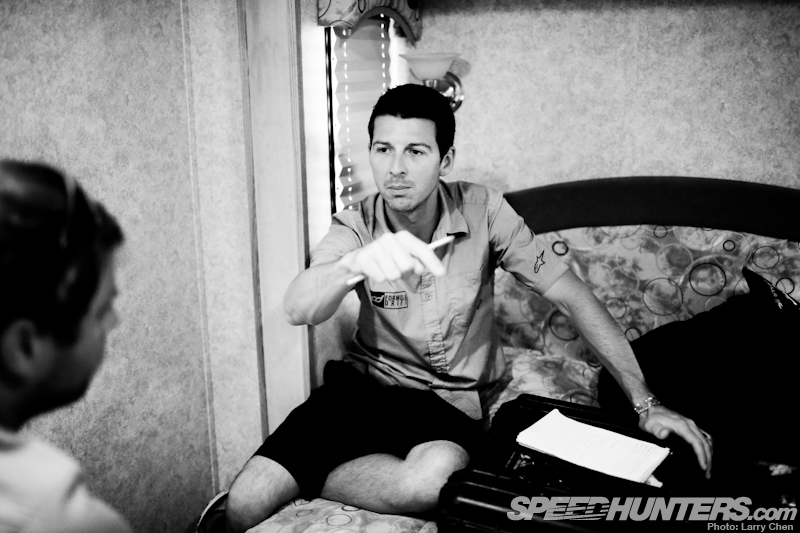
I sat down with all three of the judges to get a little insight on judging professional drifting.
Larry: I know you three are very busy so I am going to make this quick. Tell the Speedhunters out there a little bit about yourselves.
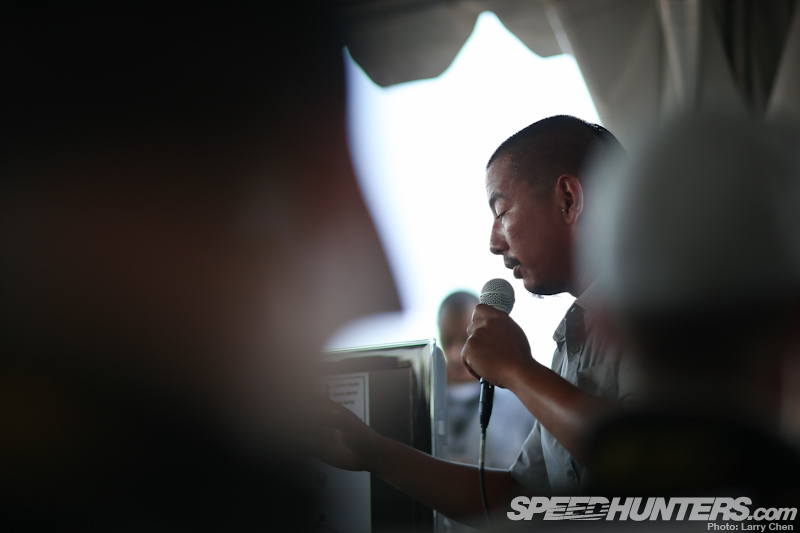
Andy Yen: I’ve been judging for roughly about seven years now. I used to compete in Formula Drift: I started off in the Autolink car, then jumped into the JIC car. I didn’t like the pressure associated with competition – it isn’t really my thing – but I really wanted to stay around the crowds, stay around the boys, and advance this form of motorsport.
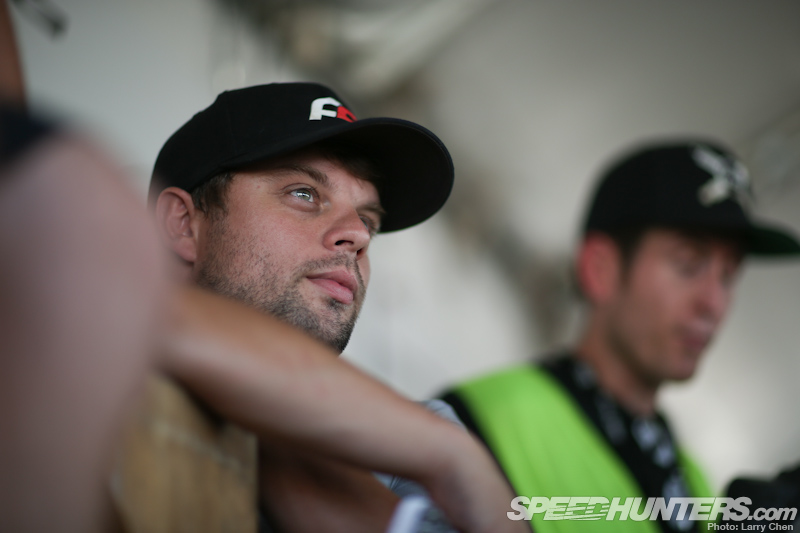
Brian Eggert: I got introduced to drifting in the late ’90s. We started out just doing street drifting, then we created an event called Hyperfest back in 2002 so that we could have more on-track events and to keep people off the streets. I still help out with their event, which is the longest-running drift competition in the US. I was judging many of our events the first couple years. Then we started having other people come along: we helped do Pro-am with their team drift association. After all that I am judging for Formula Drift.
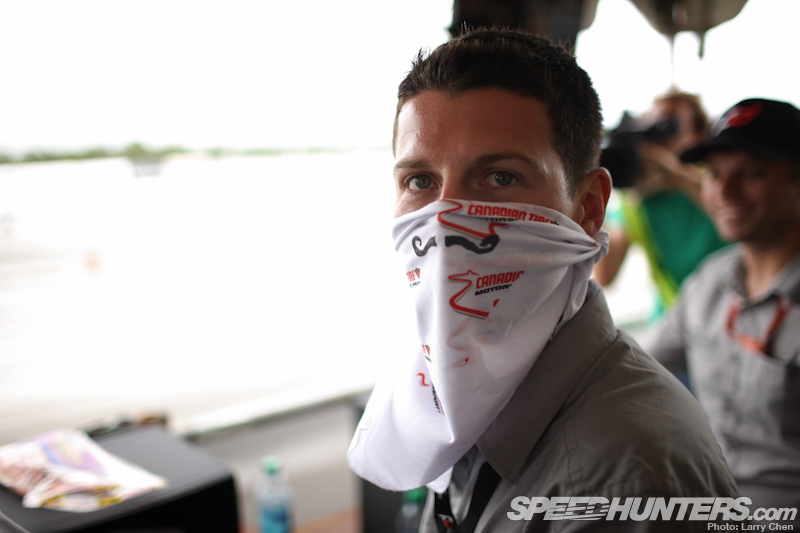
Ryan Lanteigne: I’m from Canada, ‘the great white North’. I got into drifting in 2004 with DMCC in Canada. I helped organize and run the events for a few years, then in 2007 I got my first Skyline and started doing demos for Yokohama at the events. Then I got picked up by BF Goodrich, got the GTO and we started drifting in 2008. I did 2008 and 2009 in the GTO for BFG and DMCC, but I lost all my sponsorships, everything fell through, I fell into a deep depression… I’m just kidding! I got asked to do judging for DMCC in 2010. I did that for one year for the East and the West of that series and then met Tony Angelo because they brought him up to do judging there. They were looking for a new judge for FD so I started in 2011. So this is my second year as a judge with FD.
Larry: Do you guys feel any nervousness when you’re about to judge a big competition or pressure to make sure you make the right calls?
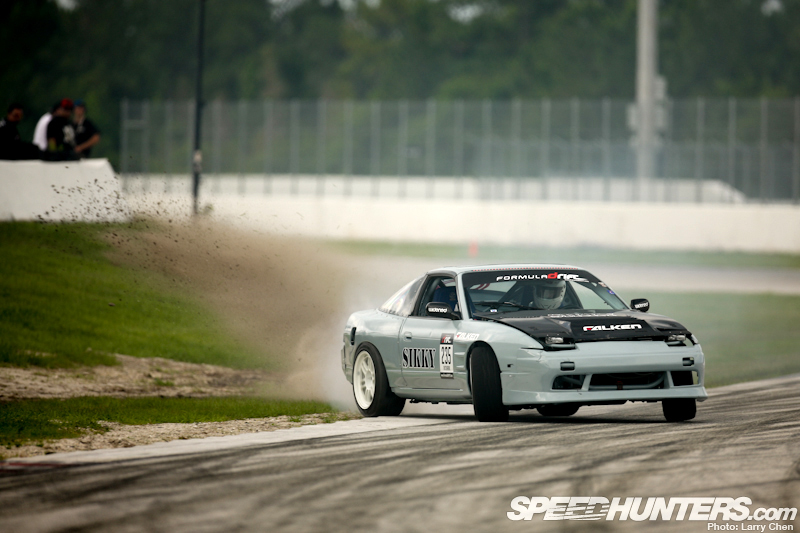
Ryan: Absolutely, there’s a lot of pressure. You gotta make sure you’re watching everything that’s going on at the track. You have to make sure that any possible biases are not there. You can’t look at the car and say, ‘Oh, I know that guy and I want him to do well’. You have to take yourself out of that equation. It’s not you and it’s not your friends and there’s no ego involved with that kind of stuff. I know a lot of the people think that that’s bullshit, but it’s true, though it’s hard to do that. You gotta look at everything out there that’s happening. Two cars sometimes aren’t as close together as you want them to be, but you gotta watch everything that’s happening, especially in a tandem situation.
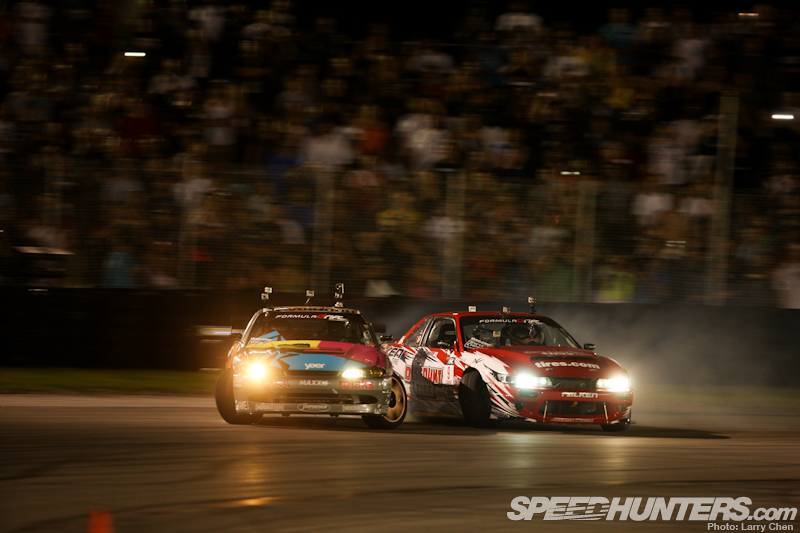
Of course in qualifying there’s pressure to make sure they get every point that they deserve, because these guys have so much on the line. They are fighting really hard. It costs a lot of money and takes a lot of time, plus there’s the pressure on them as well. So you want to make sure they are treated fairly.
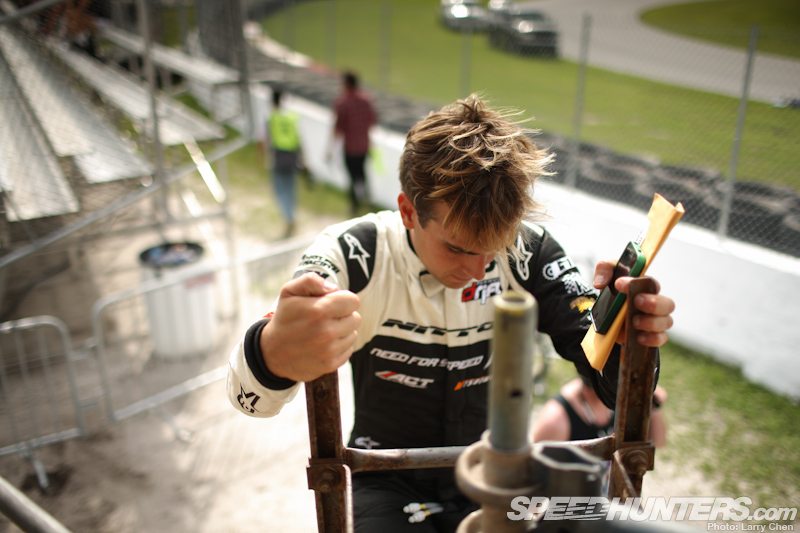
Obviously we have people that talk to us all the time about our calls. We have to justify them, so it’s not like we’re throwing numbers in the air and walking away. We have people coming up wanting to review tapes and see our scores on paper and make sure that we’re being honest and fair all the time. So we’re constantly being scrutinized for what we do while we’re scrutinizing what they’re doing out on the tracks. It definitely goes both ways.
Andy: If it was only based off of one judge then there would definitely be too much pressure, you know? But that’s why we have three judges. It definitely takes a little bit of pressure off as it’s not depending on a single judge’s call.
We have our own categories that we have specifically cover, and for tandem we each are our own individual judge that picks a winner or makes a decision. Often times people think that it’s all premeditated, but it’s really not that. More so we’re asking each other questions, like ‘how severe do you think that wheel is off’, or ‘How bad is that correction? Do you weight it?’. We’re aiding each other to make sure we’re clear and precise on our call. At the end of the day we can ask one another questions, but its still up to me to judge and weight on if it’s a bad tire off or not. And it’s my own decision to choose car A or B, or a One More Time.
It needs to be communicated to the teams and the fans on how a result comes or how a One More Time got there. It’s not just us collectively picking a result: we each act as individually and the majority decision rules.
Larry: Do you guys ever look back on a run, like on a replay, and think, ‘dang, I made a mistake’. Or ever beat yourself up on a call? Are you haunted by any bad calls?
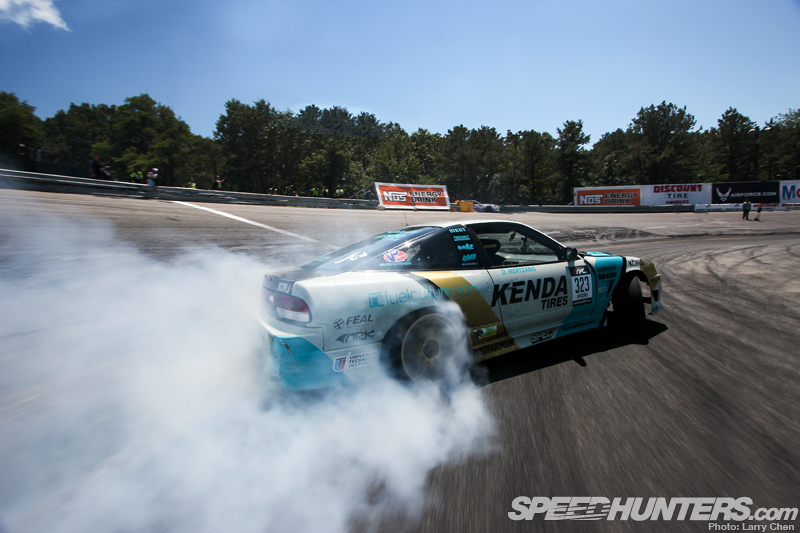
Andy: That’s definitely a good question. There are two runs that I do think about. I don’t mind saying it out loud, but at least I learned from it and it’s cemented in my head. One of the runs was in Vegas with Kyle Mohan and Dennis Mertzanis.
Definitely going back to it, thinking about it, and reprocessing it, I could say that the call could have gone the other way. So that’s noted in my head.
The other run was in Florida against Daijiro and Jeff Jones. Again I’m not ashamed to talk about it: it’s not like I failed or I didn’t do a good job, but I’m learning from what could have been a better call. They don’t haunt me, but I learned greatly from them both.
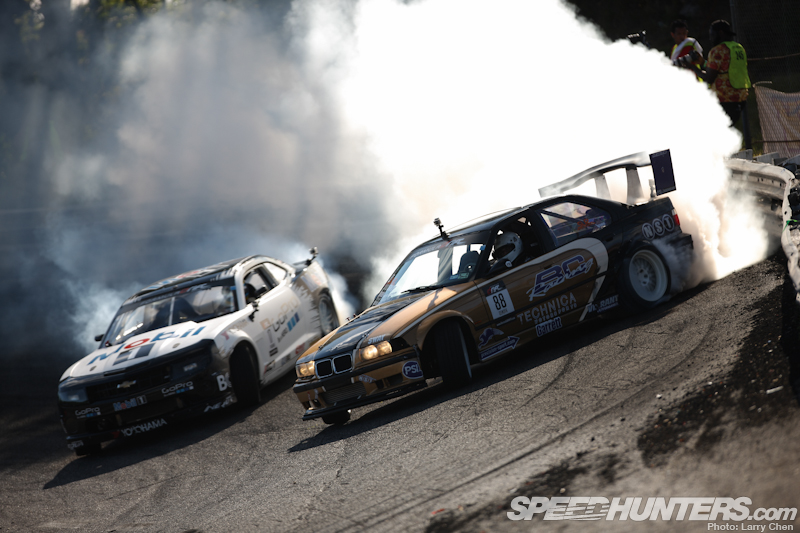
Larry: That also brings me to the next question. You guys remember the big runs then, the big battles, like every single one? Like for example McQuarrie and Denofa?
Brian: Ha, yeah I was thinking you were going to bring that one up.
Larry: So, every run that you have seen is ingrained in your head pretty much?
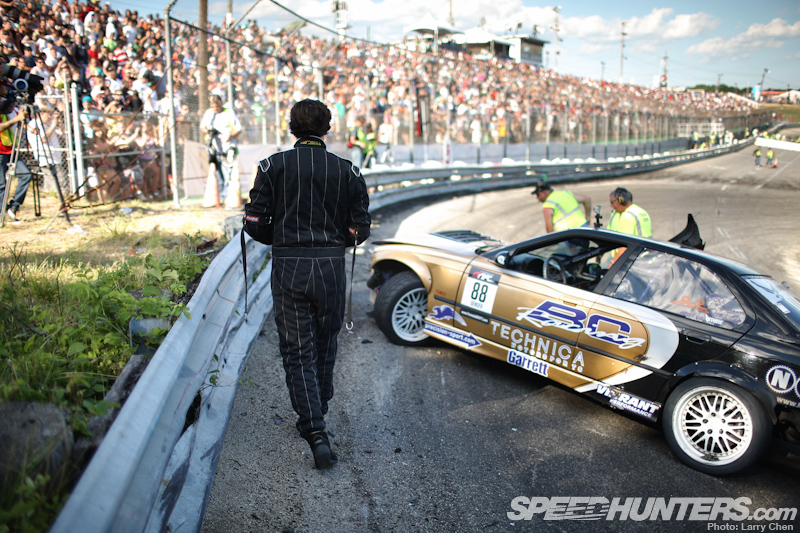
Brian: Watching that one when it happened, we made the call based on what we thought at the time was the right call. And then you gotta remember that we’ve only one angle that we get to see from the judges’ stand.
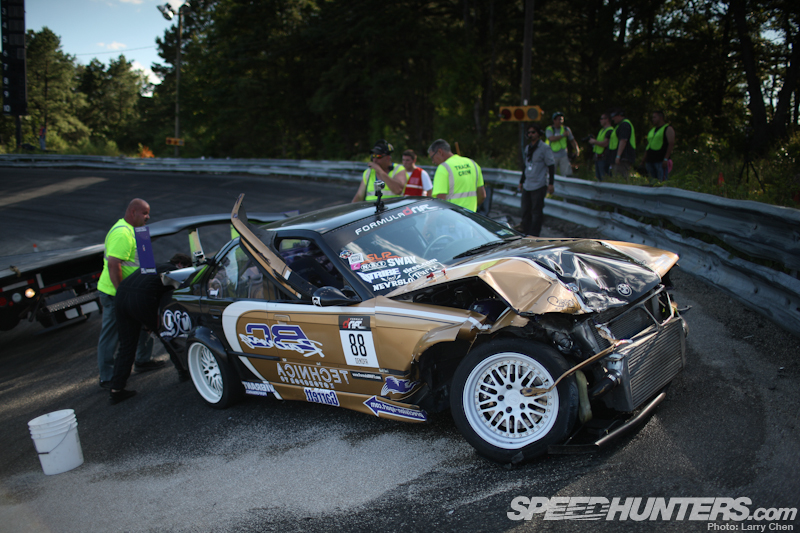
Then afterwards everyone throws out all these videos tapes from different angles, they throw out stills images. I mean to compare it isn’t the same from what we had in that instant moment. We’re not a huge production where we can sit there and do 20 different angles and review everything, so we make the call based on what we see at the point in time and what we feel happened.
Going back after the event, I did watch tons of footage and everything. I was curious: I did trace back to it to see if it was a bad call. These people’s livelihoods depend on it. They put lots of money, blood, sweat and time. I mean, look how long it took Denofa to build another car and get it done in time. He spent a lot of time, effort and resources to do that.
Making the right call affects these people. We want to make sure we always do the right thing. So we do go back and watch these things. I do it after most of these events to see if there’s a call that I think was iffy or if I hear feedback from people. I want to make sure I didn’t miss anything. So I’ll go back after the event and watch the tapes again or sometimes Drift Stream and see if there might have been something that slipped by or been overlooked so that it doesn’t happen again to someone else.
Larry: Does it help to keep up the consistency of calls?
Ryan: Well that’s the major thing: that goes back to talking through decisions to remain consistent. With the way the series has progressed, the rules and things that happened a season or two ago might not apply any more.
Calls that were made then were right for that period of time, but might not be right now. But it’s still interesting to watch older videos and previous events just to prep yourself for situations that could arise as you’re going into the next event. Because these situations repeat themselves sometimes. You want to make sure that we’re not up there for 20 minutes trying to deliberate.
If you have a memory of an event that happened previously, you can go back to that memory and say, ‘Okay, we went this way in that event…’. I’m not saying it’s going to color your judgement, but it’s going to give you a basis to go forward and remain consistent from event to event. And it’s something we’re trying to do. I know it’s hard when we’re trying to make the rules go forward, but consistency is something we’re trying to achieve in this series.
Larry: So why the emphasis on proximity this year?
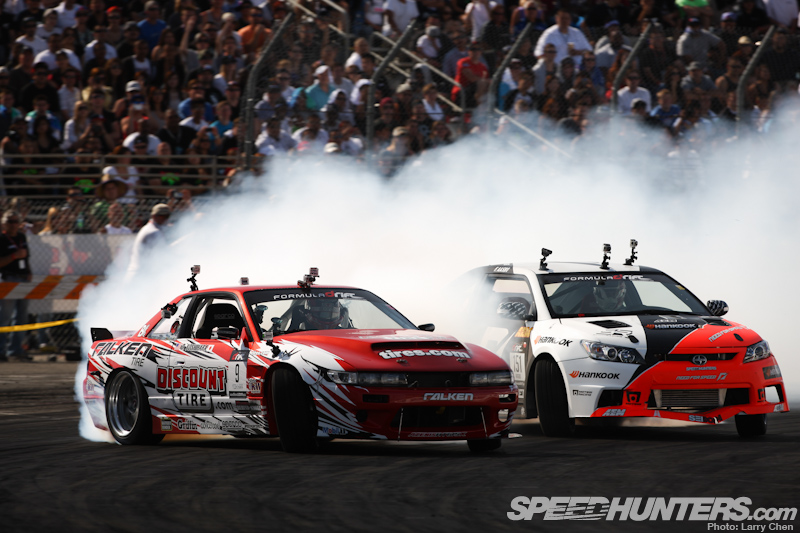
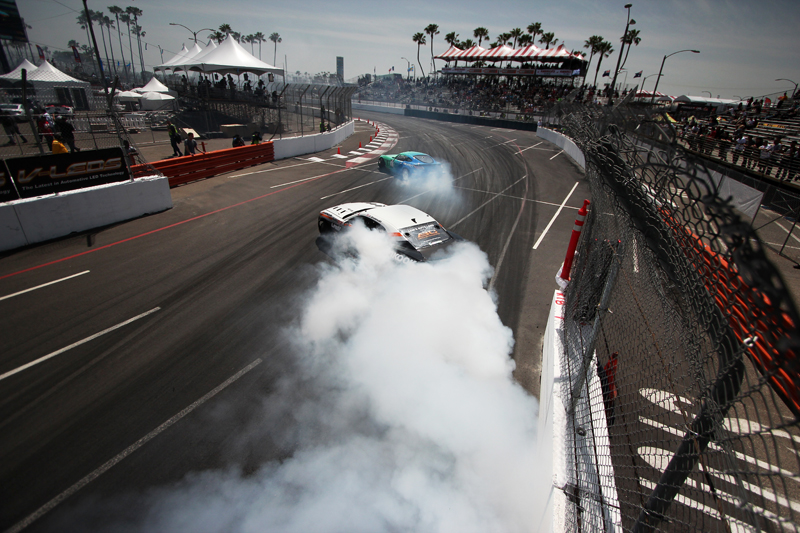
Andy: I don’t want to say we weren’t going in the right direction, but it just got to a point that watching videos from Japan, from Europe, from Ireland, the exciting part is when they’re going door to door. As much as that word is being thrown out there, and it’s probably the most hated word, I guarantee that everybody is loving the competition this year.
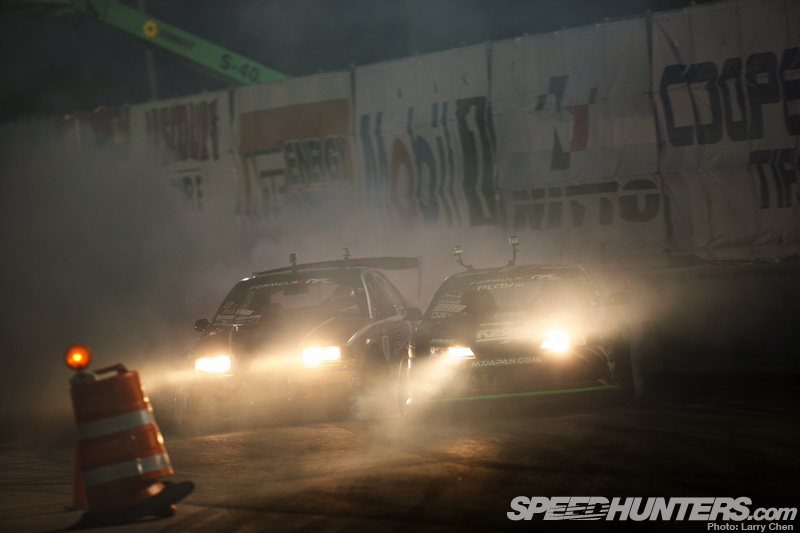
The tandem has been the closest ever since we started. That’s been my main focus this year. We loosened up the rules as we want the drivers, chase drivers especially, to have confidence on going into that first corner and initiating. Keep in mind that the drivers are the ones that are asking if they can give them room and eventually reel them in. Our answer is always no. We want to see that big dramatic double-entry, double-initiation, and to stick with them off the line. We want to see cars getting as close as possible under any type of circumstances and staying on it. Because that’s what makes drifting unique.
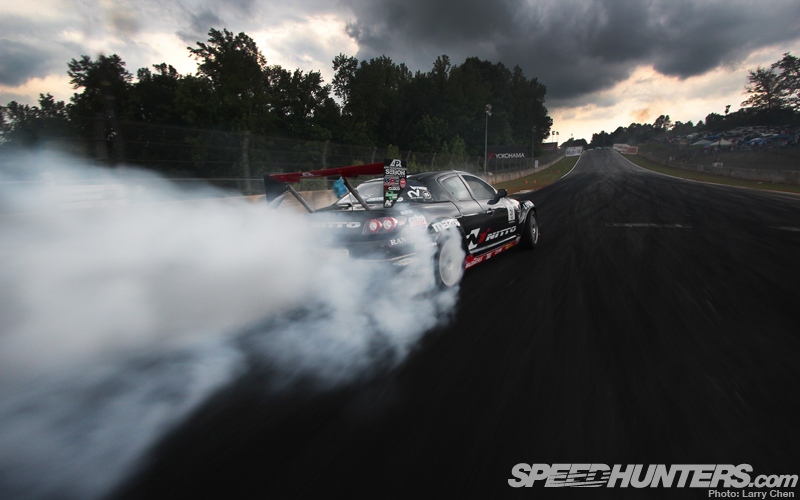
When cars are anything more than five feet apart, you’re pretty much just running your own run. And there’s no excitement in that. It doesn’t show how good a chase driver you are just because you are mimicking where the lead driver goes. We really took a step forward and I’m pretty satisfied how this year came out. Yes, we did have some stumbles because we opened up a lot of stuff for the drivers to do. But we found out that we have to start tightening up the loose ends, and that’s what we have been doing. Second to that, a good tandem comes from a good track layout.
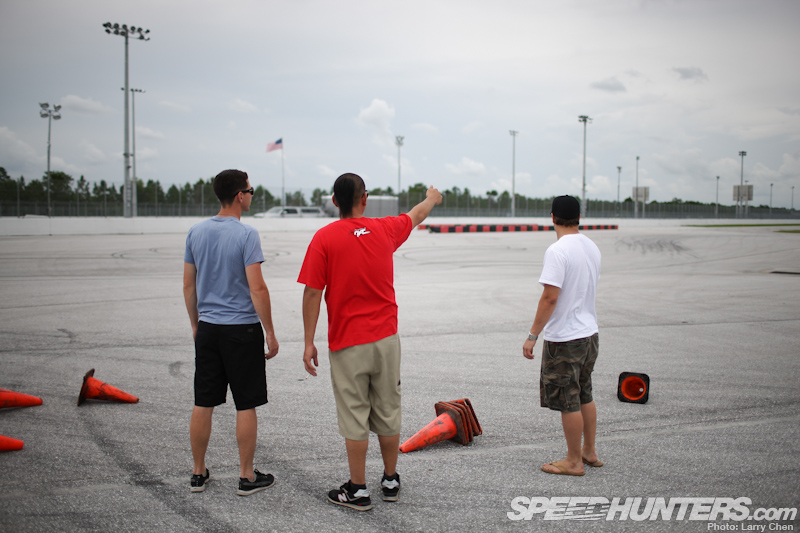
The judges all get together and we’ve been really focused on setting up a track that is suitable for tandem. You look at drifting in Japan, they only have one or two turns which is easy to judge and it’s easy to tandem. The tracks we had in previous years, we go from fast to slow to fast again, and that really hurts the guys trying to stay close because the lead car can easily take a lower line and shallow up his angle and just pull away. But nowadays you notice in all the courses that there’s a flow, there’s room for tandem, there’s a braking zone. After you slow down, you don’t speed back up again and that’s what is really making tandem possible this year. It’s starting from the foundation of a good track layout.
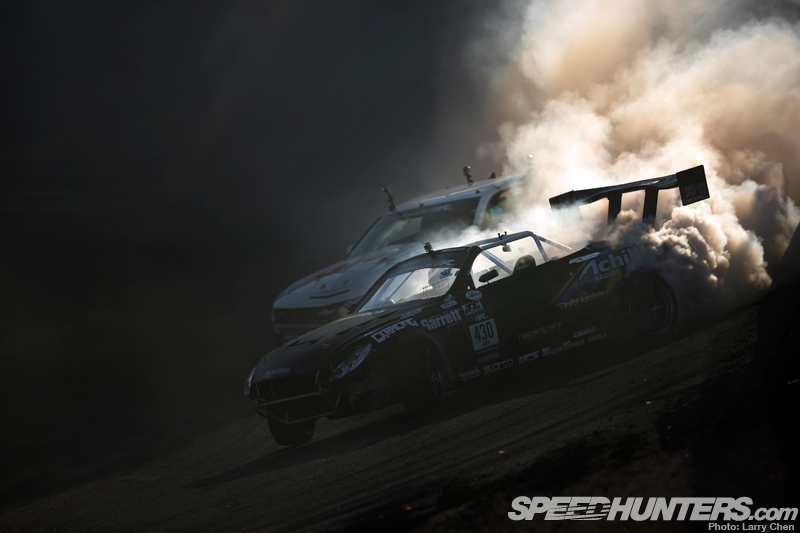
Larry: I see. Do you think Daigo Saito entering competition changed the game, maybe changed the rules a little bit? Or pushed it at least?
Ryan: Well, what we saw when he came in was a difference in driving style, something that is totally foreign to what a lot of what the guys here are used to. And I think that he is a great driver, no doubt: he’s an amazing chase driver. He can do things that you don’t see normally in terms of proximity and remaining there, just getting up on other cars. I think a lot of the drivers over here maybe weren’t used to his style or used to that type of ‘aggressive behavior’ I guess you could say.
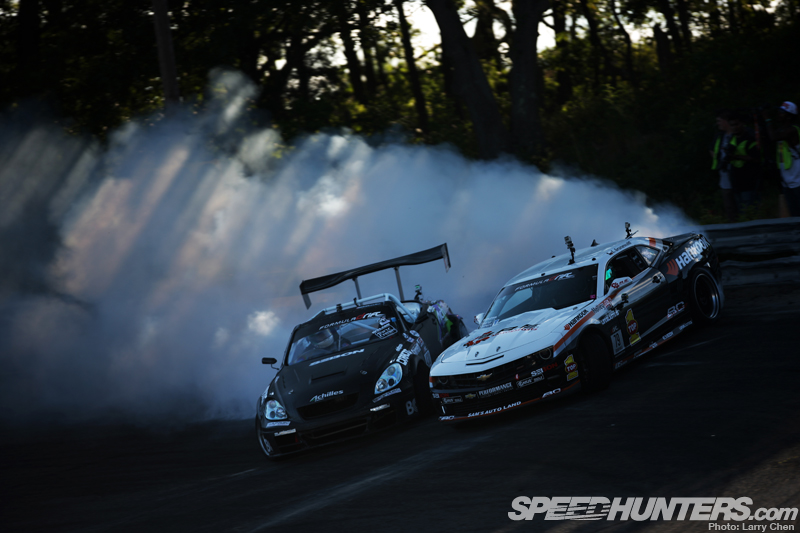
I don’t think we’ve had to change any rules specifically because he has arrived, but I think the drivers have had to adjust their driving styles and their level of aggressiveness as well to match his driving. It’s great, because it’s bringing up the level of driving in FD. I mean, we’re talking about proximity all the time now and drifting is not really drifting without proximity
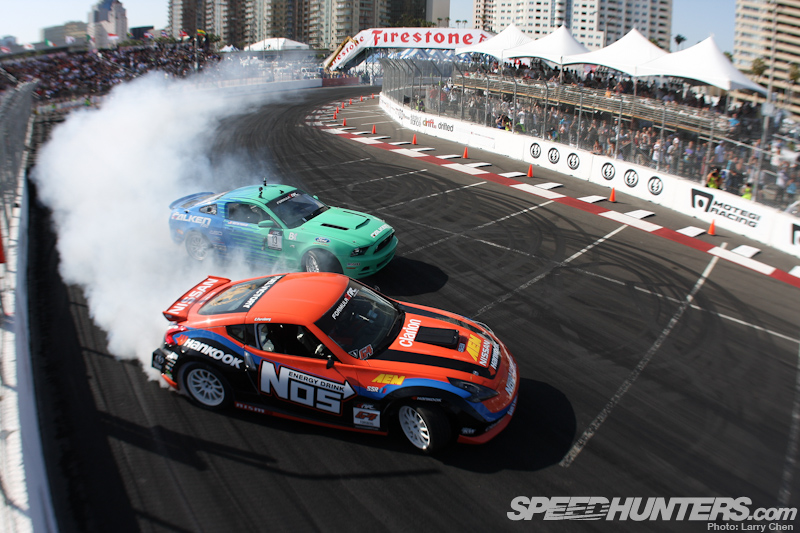
Andy: Tandem isn’t tandem without proximity.
Brian: I think it’s a neat way to describe it when you describe drifting. There are two ways people do it, either describing a single car running the course, or people running two cars together. When you describe drifting with two cars, the way most people will probably describe it is with two cars right next to each other going around the course. But you have to be next to each other’s car. It’s just what pops in people’s head when you describe it, especially with tandem.
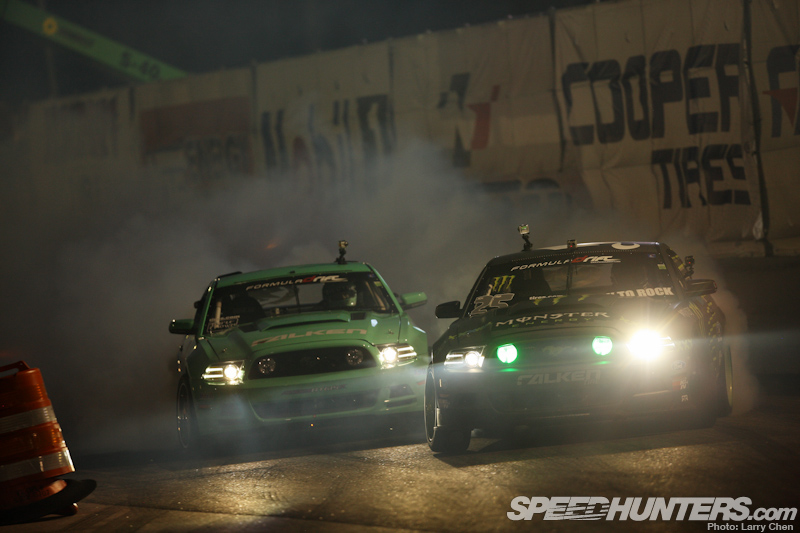
When I describe it to people who don’t know what it is, I’m saying that these cars are going this fast, this many inches or feet away from each other. It’s so much more exciting than saying it’s two cars going around the course three car-lengths away from each other. It’s just the excitement isn’t there like in wheel-to-wheel racing.
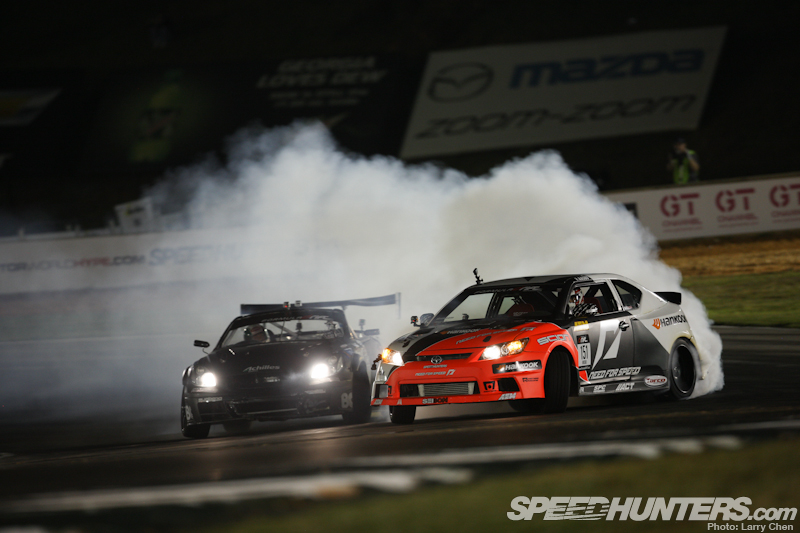
Andy: Don’t forget that although Daigo was a great addition to this series he also has to earn his place here and learn the ropes on how FD US runs their events and their layouts and stuff. Yeah, I give it up to all the US drivers here that have adapted to his driving, and at the same time he has to work really hard to adapt to all the drivers here. You have 50 drivers learning one driver, but you have one driver here coming from Japan learning 50 drivers. So it goes both ways.
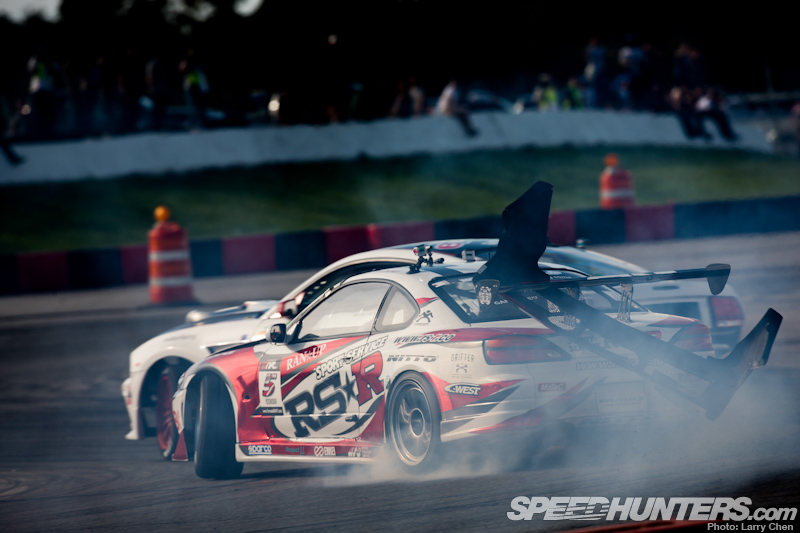
Going back to proximity, Brian mentioned that everything comes back to excitement and what’s exciting to watch, like when tires are touching each other. I still keep up with whatever happens in J-land, and I mean throwing names out there like the guy from Team Burst, Naoki Nakamura. That guy is one of the best tandem drivers I’ve ever seen. It doesn’t matter if it’s a 50hp or a 1,000hp car in front of him, he doesn’t give them an inch of breathing room once he leaves the line. And that’s what we hope to bring to the level of competition, that level of excitement and impact out here to the States.
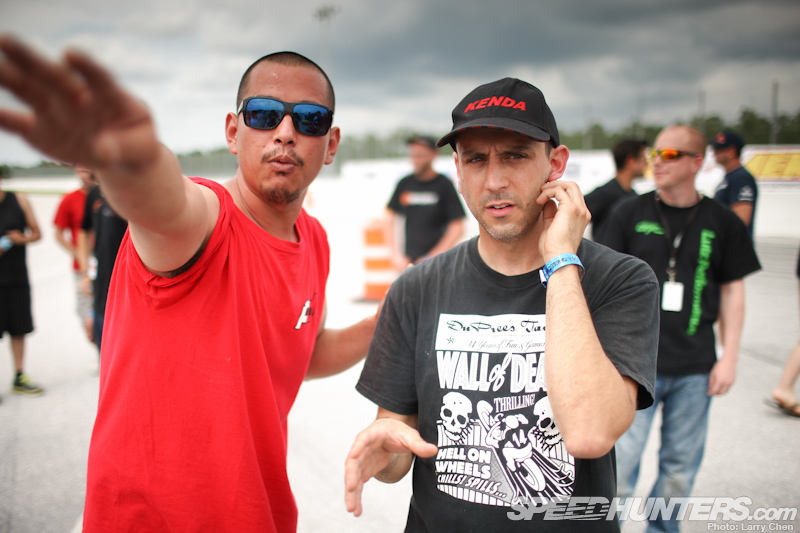
Larry: Thanks for your time guys I think people will understand a little more about what you guys have to deal with.
Brian, Ryan, Andy and Larry
larry@dev.speedhunters.com