
You may have noticed that I sort of skipped over one very important car on the Super GT set up posts. The STI BRZ of Team R&D Sport represents all that is right about the Super GT series. From an enthusiasts’ perspective, to see a much anticipated model get converted into a mean looking racer months before the car in question actually goes on sale is a rather good marketing move. That is precisely what STI did, showing the car at the for the first time at last year’s Tokyo Motorshow, generating an incredible amount of interest.
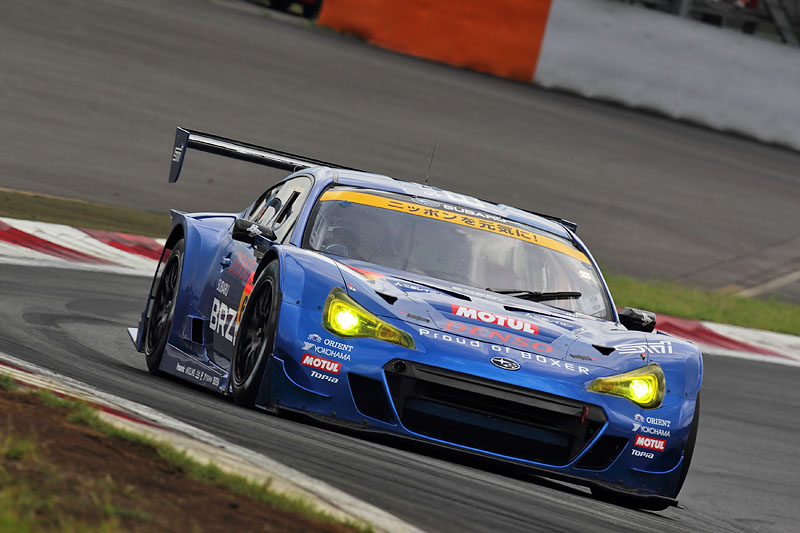
Ever since that first initial encounter I have been craving to shoot and feature the car. And thanks to the cool people at STI I was lucky enough to get my chance last week in Fuji. With most teams busy unloading the trucks and setting up their pit for the weekend, I would have the chance to get a few quiet minutes with the car and immortalize it in its smallest detail.
For some time now I have been thinking of how to approach the whole Super GT thing from a slightly different angle. The set up posts proved that there is an incredible amount of interest in the series, and unlike your usual race-day coverage, it’s a good way to get nice and close to the cars. And it’s precisely the cars that I’d like to concentrate on for the time being, starting off with the BRZ.
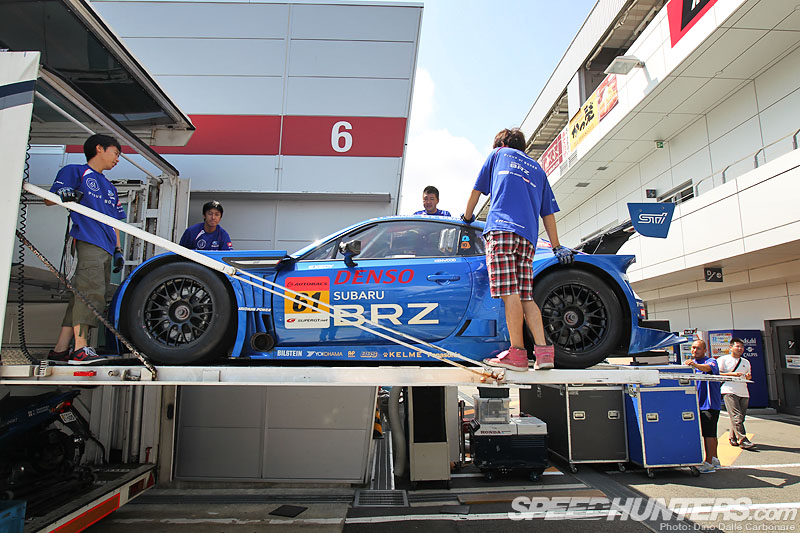
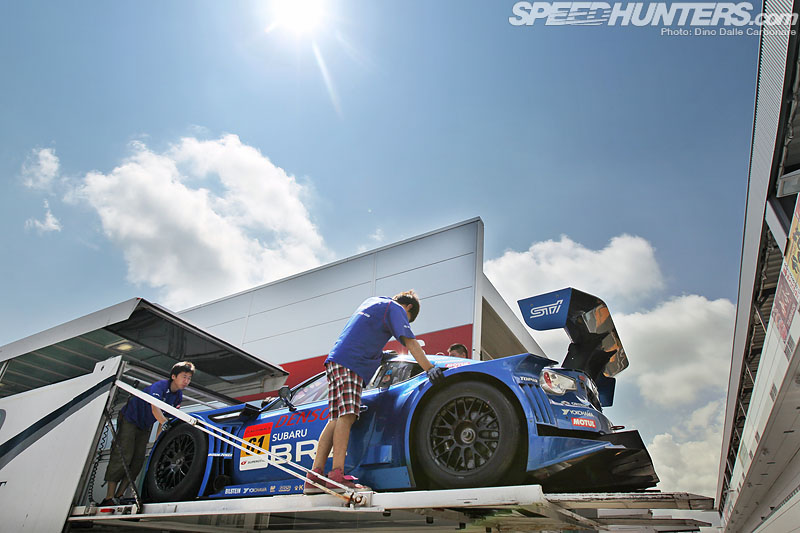
Race teams like these do not waste any time, so as soon as the transporter arrived, the car was moved onto the lift, lowered down.
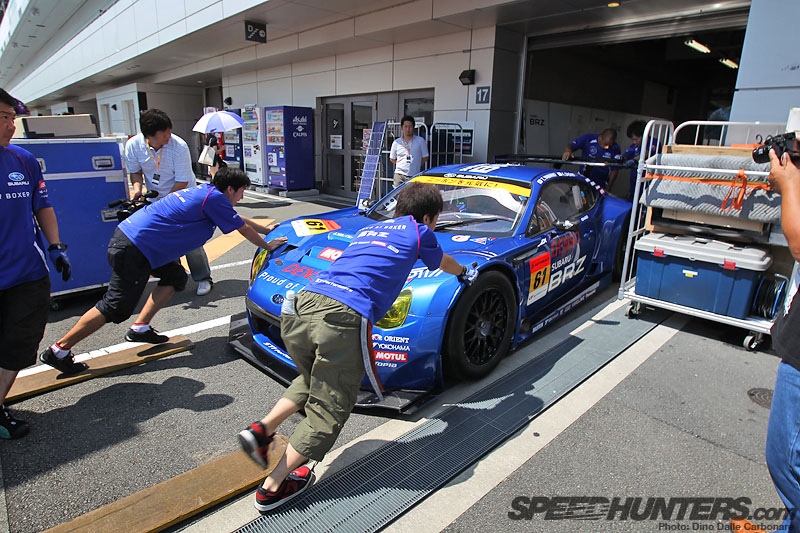
…and pushed into the pit.

A quick human-powered U-turn out on the pit lane allowed the BRZ…
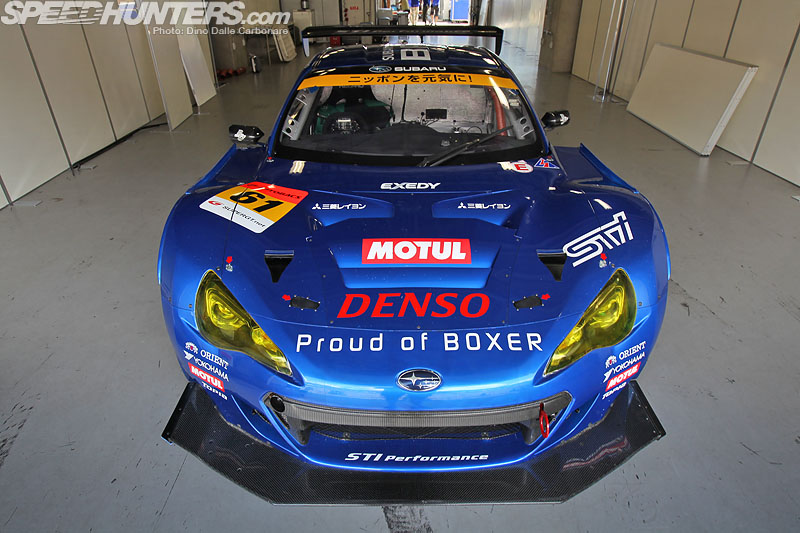
…to be reversed in and positioned perfectly in the still-empty pit. This is when my time with the car started…
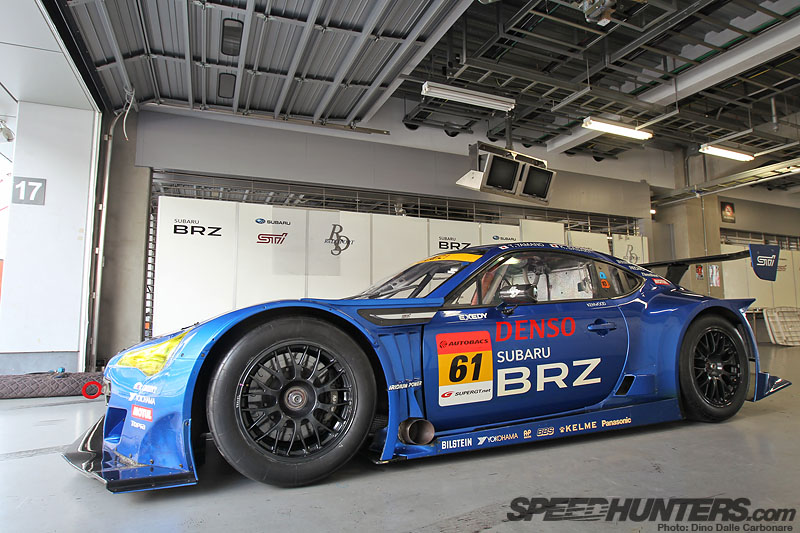
…so I got busy with some initial external shots. First thing you notice is that like every purpose-built and developed Super GT car, aerodynamics have paid a huge part in dictating the overall shape, with that usual high wheel arch line rising up well above the bonnet line. This particular trait isn’t as exaggerated as in a lot of other cars, resulting in a very aggressive yet pleasant silhouette.
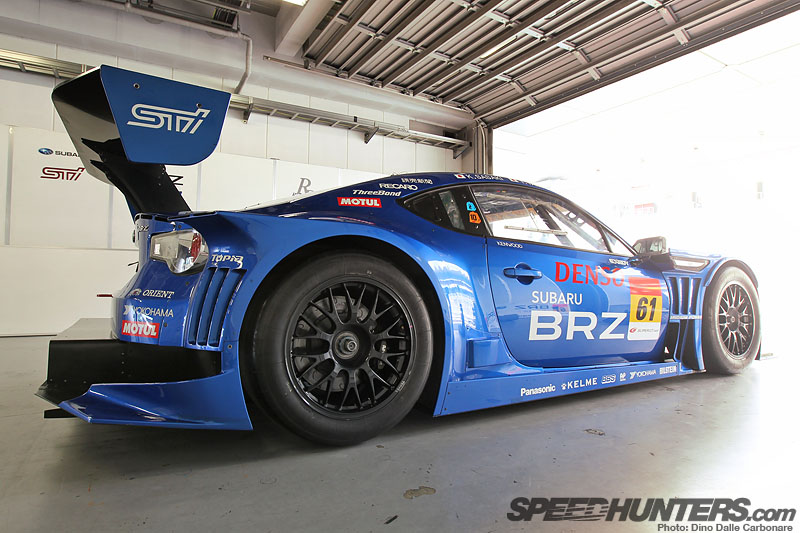
With engine-power capped at 300 PS the BRZ, like most other cars in GT300, is actually massively underpowered if you think about it. That’s why engineers and aerodynamicists work on making it stick to the tarmac, its performance centered around extremely high cornering speeds and transitions rather than outright power and acceleration. That’s why top speed isn’t that impressive, but seeing them defy physics around the twisty sections is where your mind will be blown. So that massive wing…
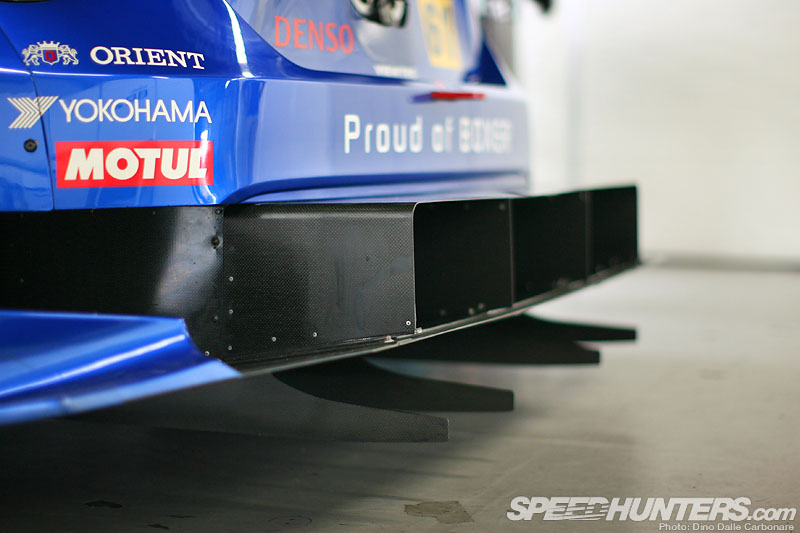
…and rear extractor help the two drivers, Kouta Sasaki and Tetsuya Yamano, bring as much speed as they dare into and around corners.

And this is their office. There isn’t much left from the donor ZC6 chassis, just the center part of the shell, which has been reinforced with a complex roll-cage, gusseted around the A-pillar and roof.
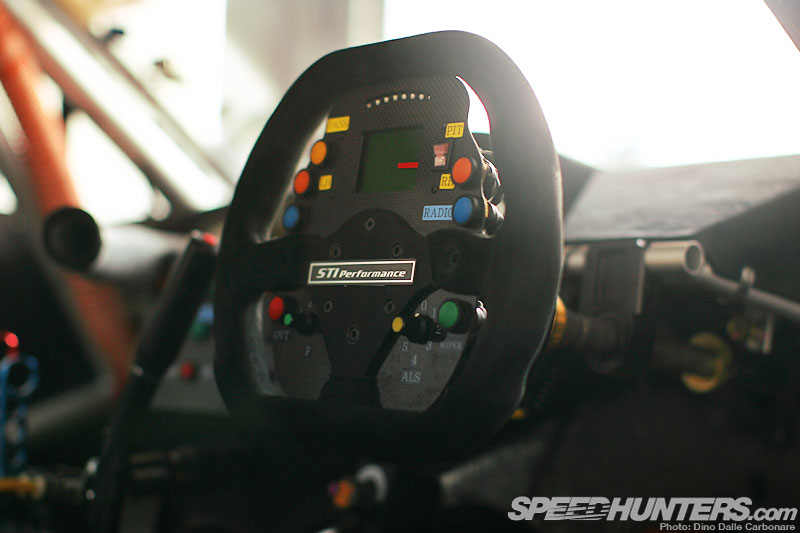
Super GT cars aren’t allowed to have electronically shifted gearboxes so cog selection in the BRZ’s Hewland sequential is done by hand via a conventional shift lever, which is why you don’t see paddles behind the steering wheel. The steering wheel is equipped with your usual switchgear as well as a small Motec digital display to relay important engine parameters to the drivers.
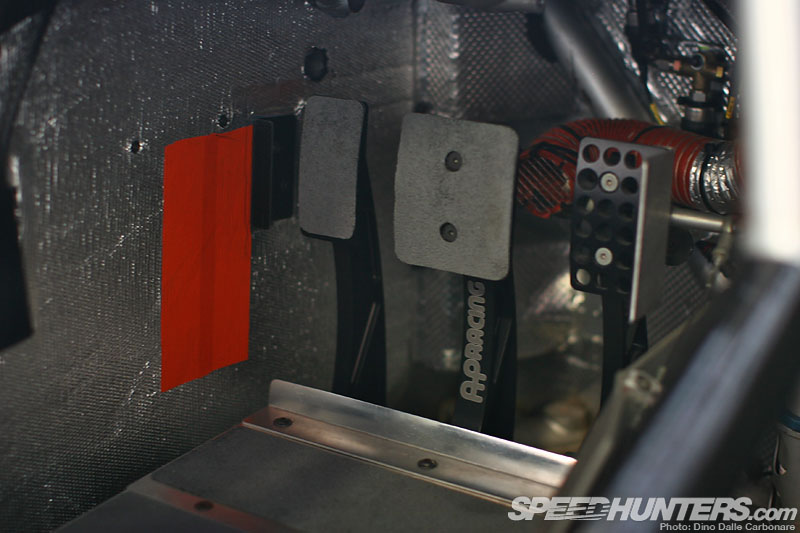
Footwork is done on this AP Racing adjustable pedal box.
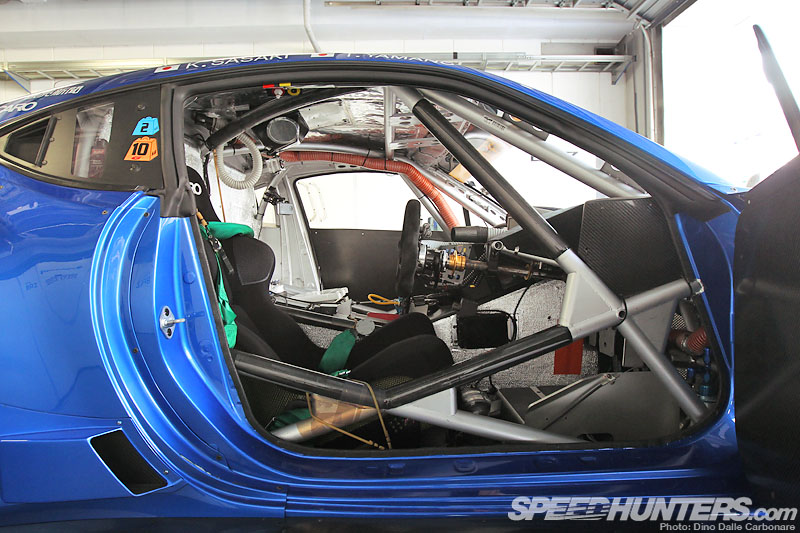
A side view into the cabin gives a better idea of the general layout which, like all race cars, features a recessed driving position that puts the seat in line with the B-pillar, something done for both safety and weight balance.
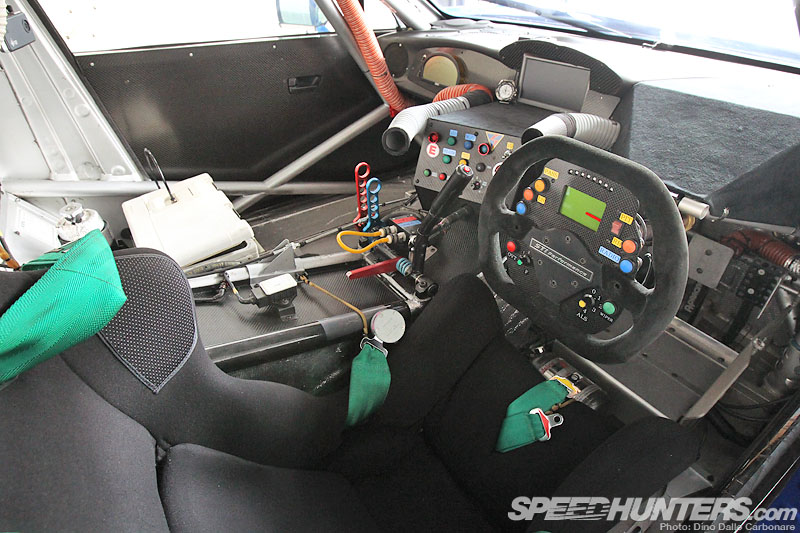
Other things we can observe is the switch panel and LCD screen, which acts as a rearview mirror, seeing there is no rear window to speak of.
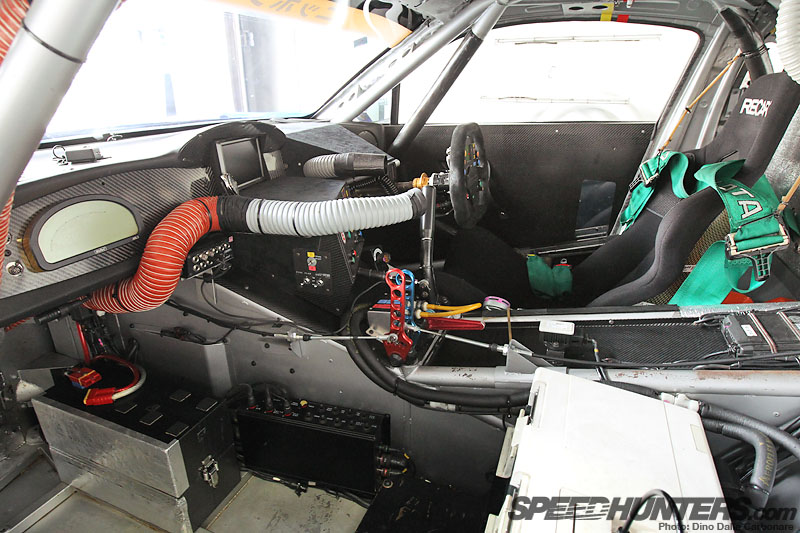
The “passenger” side footwell is where a lot of the electrical systems is laid out, like the battery, radio and engine sensor control box.

The drivers can adjust the front and rear anti-roll bars on the fly by pulling or pushing on these two anodized levers.

The main Motec ADL3 display and data logger is something the drivers don’t need to worry about too much, so may probably glance over at it only a few times during a race. It’s more for the race engineers.
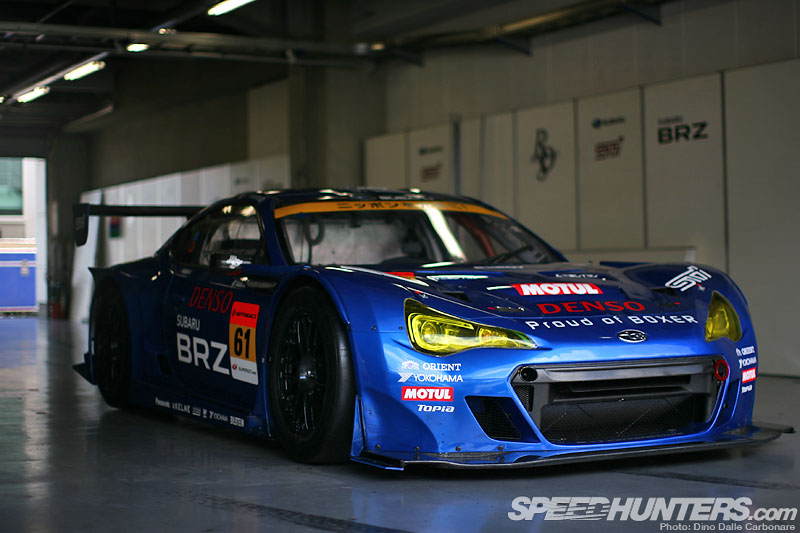
What a stunning looking beast! I like how the front section…

…has sort of maintained the stock center grille outline, something that BRZ owners will no doubt appreciate.

Like most bespoke Super GT designs the BRZ sports complex louvers on the side of the front fenders, there to channel air out of the engine bay, wheel wells and from under the car and use it in some cunning aerodynamic way to help the car move through the air more efficiently and with more downforce. You won’t be finding low profile tires on this BRZ! Forget your stretch, flush fit, poke or whatever people do out on the street to stand out…this is pure race car stance and like everything there is a very good reason for it.
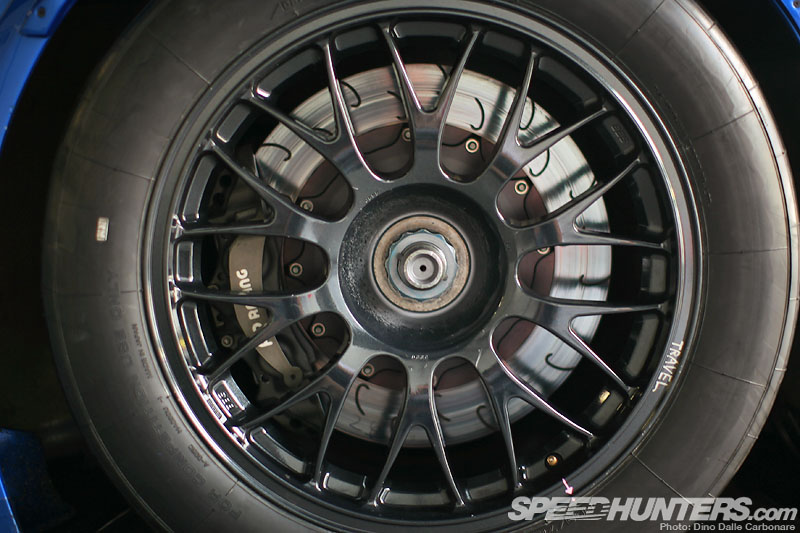
The BBS rims measure 11.5Jx18″ front and are fitted with 300-710R18 Yokohama Advan slick tires. The massive side wall is there to act as a part of the suspension set up, like in an F1 car it flexes and moves around, taking a beating and allowing the chassis and dampers to do the rest of the work. The rear BBS are wider at 13Jx18″ and wear 330-710R18 rubber. With only 300 PS on tap you can kind of guess that all the tire’s girth is there for lateral grip rather than putting power down to the ground efficiency.
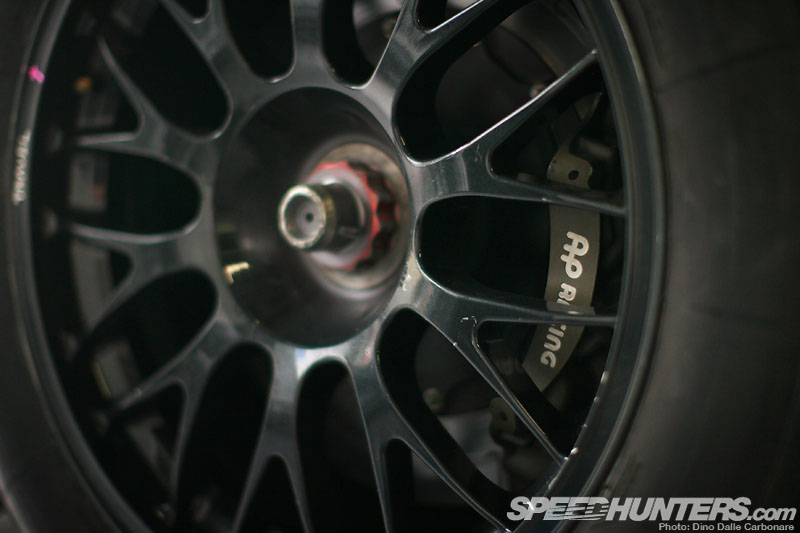
Braking is handled by AP Racing competition calipers, 6-pots at the front and 4-pots at the rear mated to “J-hook” slotted floating rotors. Super GT does not allow carbon rotors.

But enough with the exterior of the car…let’s get down to the nitty gritty…
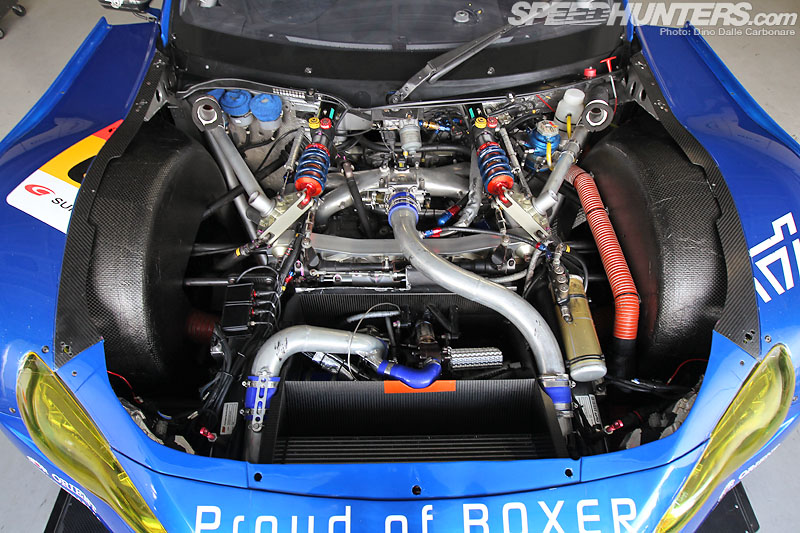
…and take a closer look at the EJ20 that powers the 1,150 kg BRZ. There isn’t anything groundbreaking about the motor itself, it’s slightly more refined and modern take on the powerplant that has been equipping STI’s GT300 cars for years now, starting with the Impreza, then the Legacy and now this BRZ.
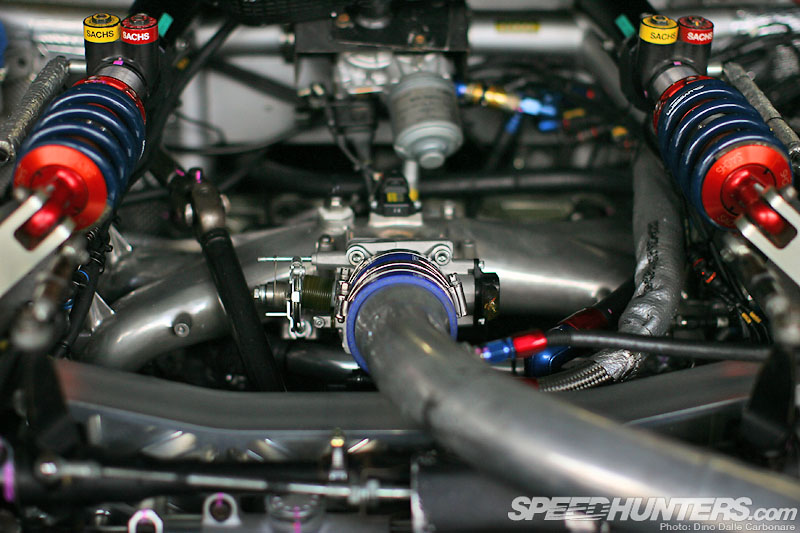
The dry-sumped 1,994 cc EJ is a little hard to see, it sits very low and receded into the engine bay with most of the push-rod suspension layout set over it, not to mention the actual steering rack!
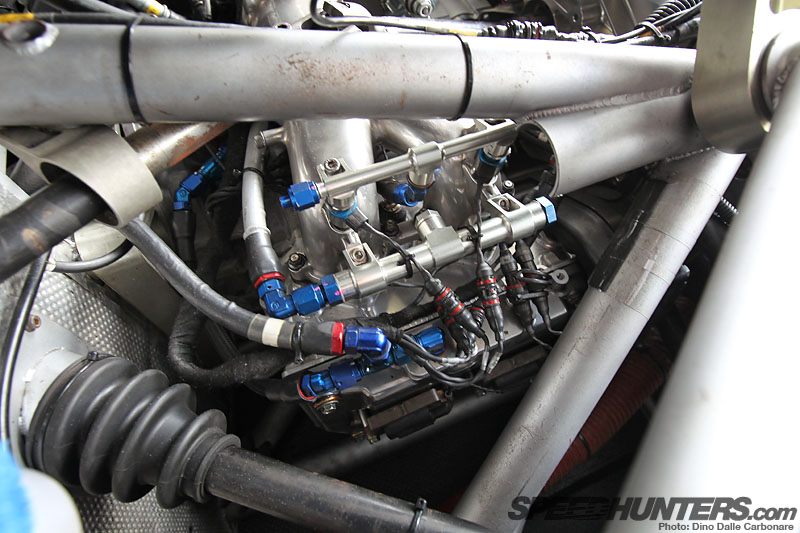
You just have to love the layout of these sort of race cars, it may look complex from a distance but once you get close everything has it’s place and you can really tell that everything has been finely engineered. Here is a look down at one of the heads, where you can see the fuel rail and injectors.
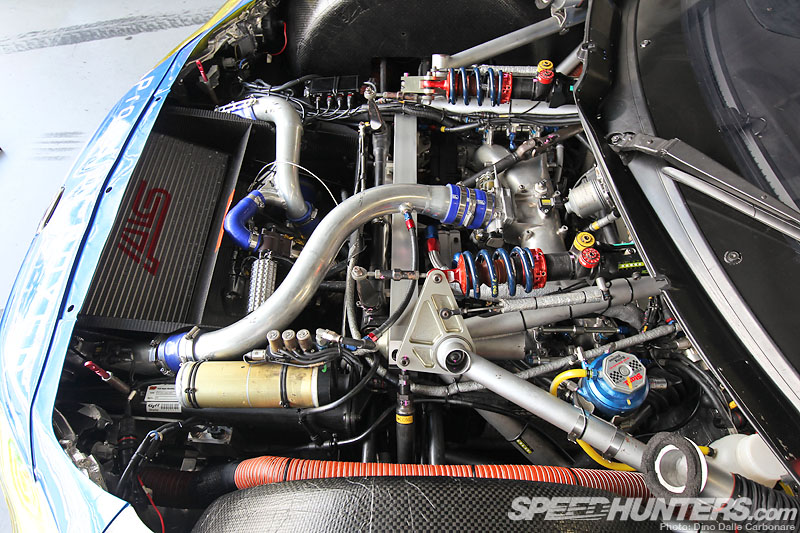
If you are familiar with the EJ20 layout in the Impreza and Legacy then you will notice a few differences, like the positioning of the intercooler, which sits almost horizontally inside the front bumper and of course the tubocharger. The internally gated IHI blower…
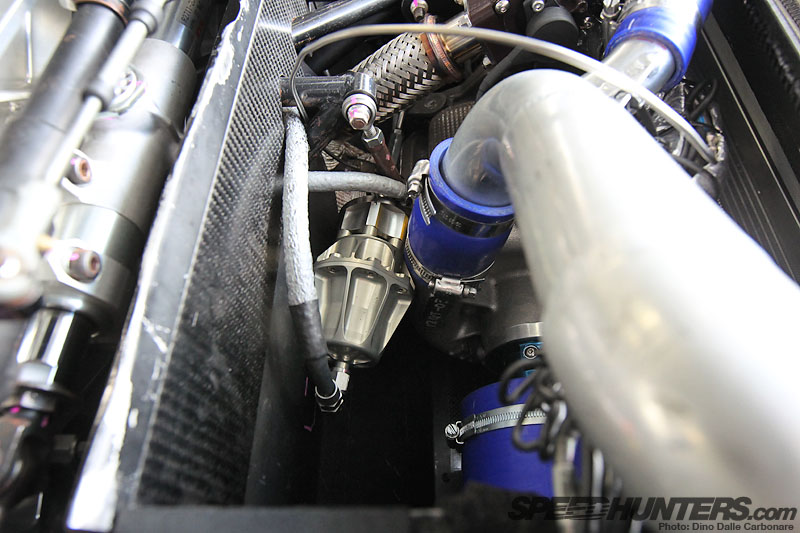
…literally sits in front of the engine, fed by almost equal-length exhaust manifolds. This position allows the intake piping to be kept pretty short to help give a nice and immediate throttle response. Above you can see the billet actuator and the carbon fiber heat shielding that keeps a constant flow of air travelling over the turbocharger and out from the openings in the hood. The EJ20 boasts a very high 10.0:1 compression ratio and much like a WRC rally engine is built for torque rather than power, with a max of 450 Nm being developed at 4,000 rpm. 2,000 rpm above that is where peak power is made, 221 kW to be precise which equates to 296 HP or exactly 300 PS (the GT300 power limit). The turbine is made to breathe through a 39.9 mm restrictor to cap power.
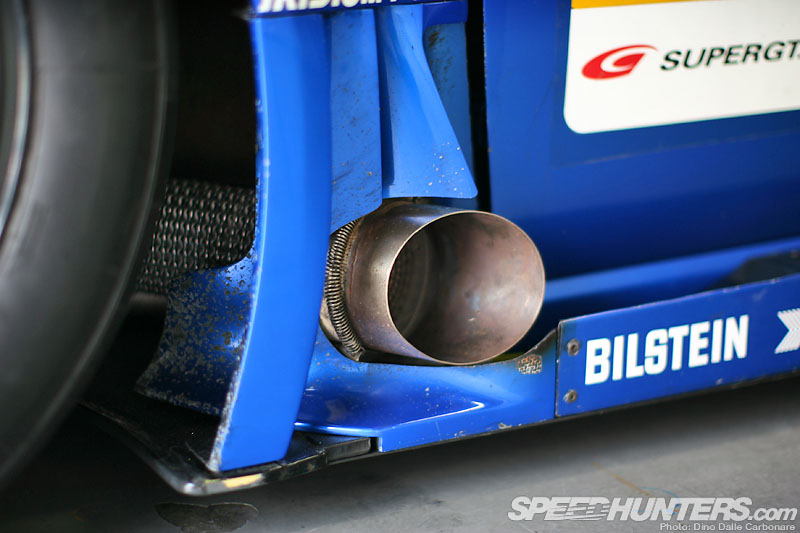
Spent gasses are dumped out the very short side exit exhaust. Power is sent via and Exedy carbon fiber triple-plate carbon clutch to the Hewland sequential transaxle transmission.
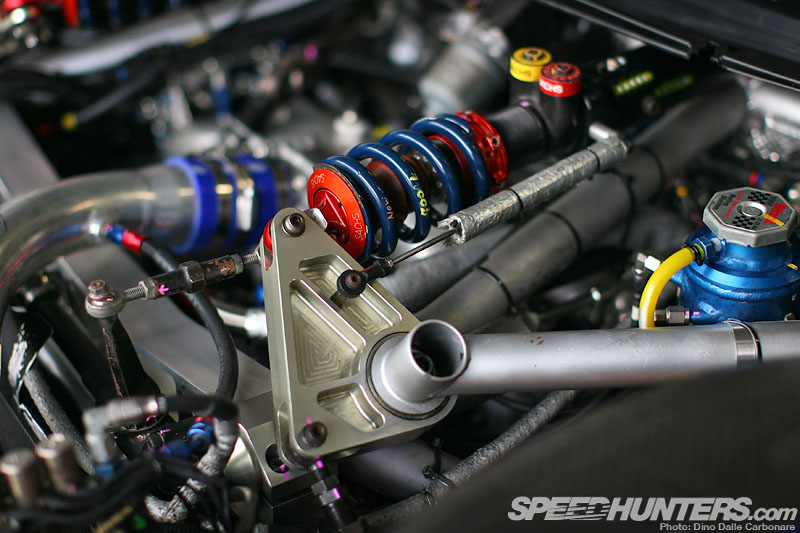
Here is a closer look at the push-rod suspension layout. Basically the movement of the front double wishbone set up is transferred over to the Sachs dampers via the billet pivot which in turn is also connected up to the small, adjustable anti-roll bars. Everything is supported by a complex tubular frame and billet subframe.
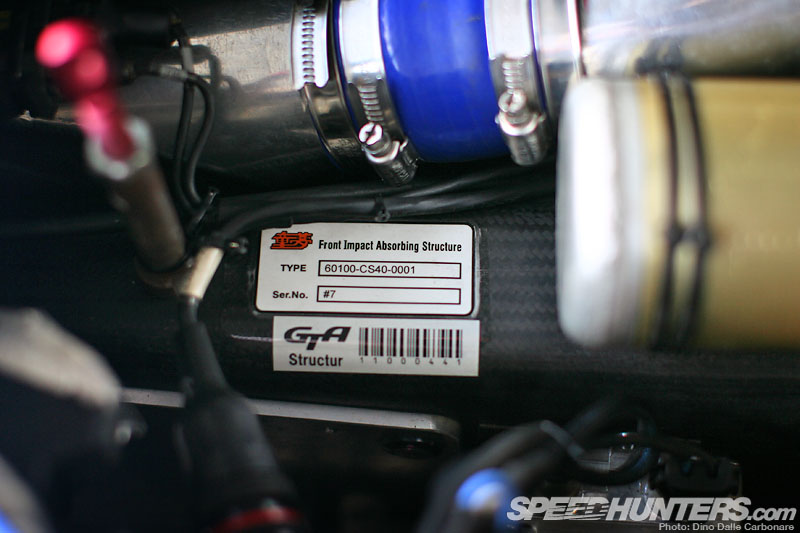
Dome took care of creating the carbon fiber front structure of the BRZ.
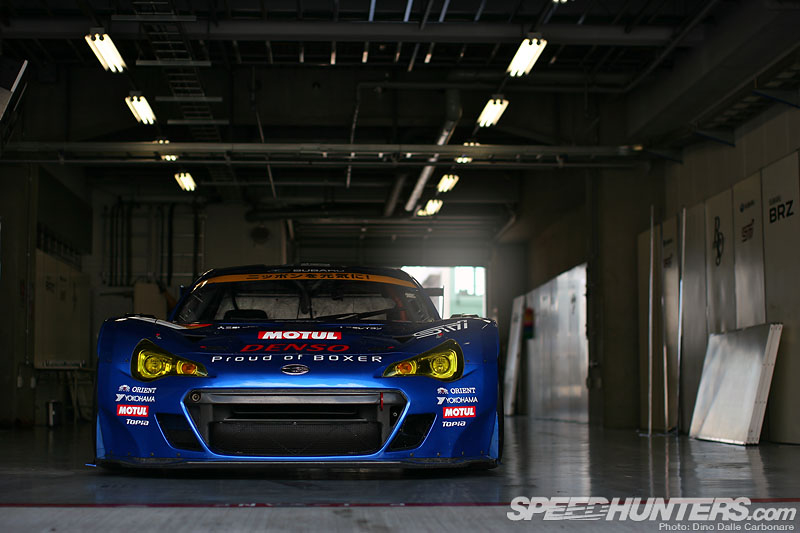
Everything within the BRZ has been built and engineered to sit as low as possible to help keep its center of gravity as low as possible.
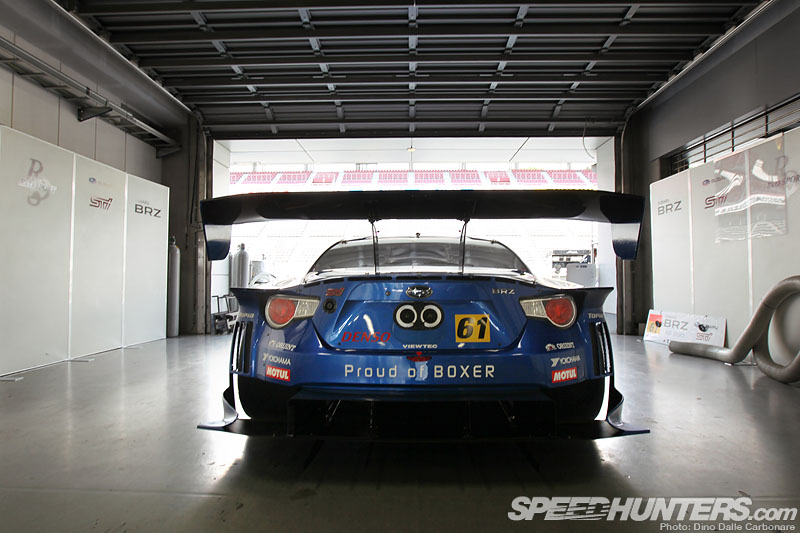
Let’s swing around to the rear now…
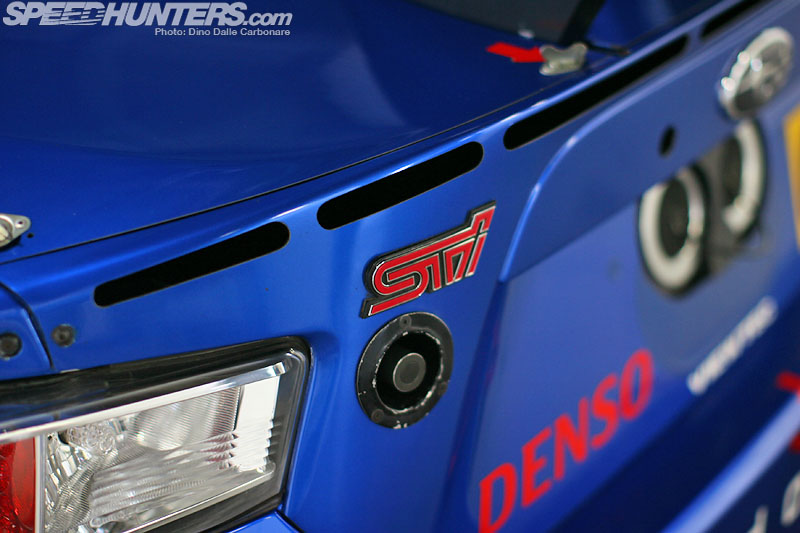
…and take a look at what is going on back there.
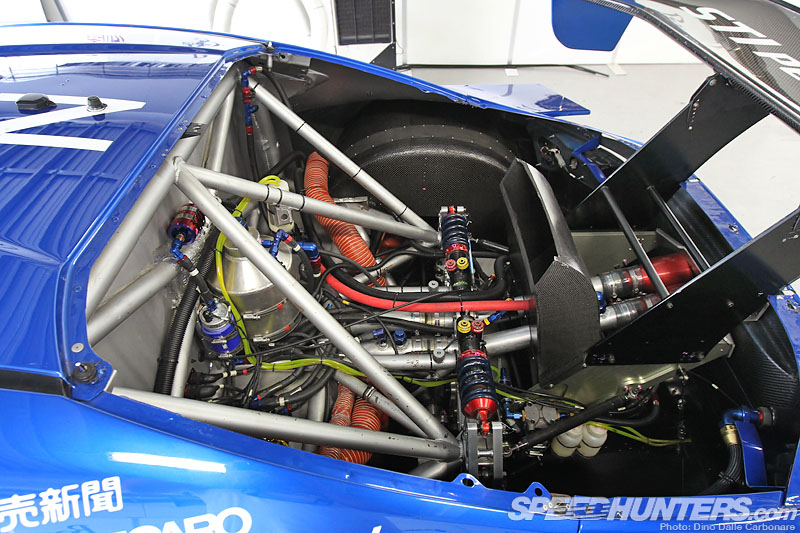
So much for rear seats! This angle is great at showing how only the center part of the ZC6 chassis still remains, everything from the driver’s seat back….

…is cut away and replaced by a tubular frame.
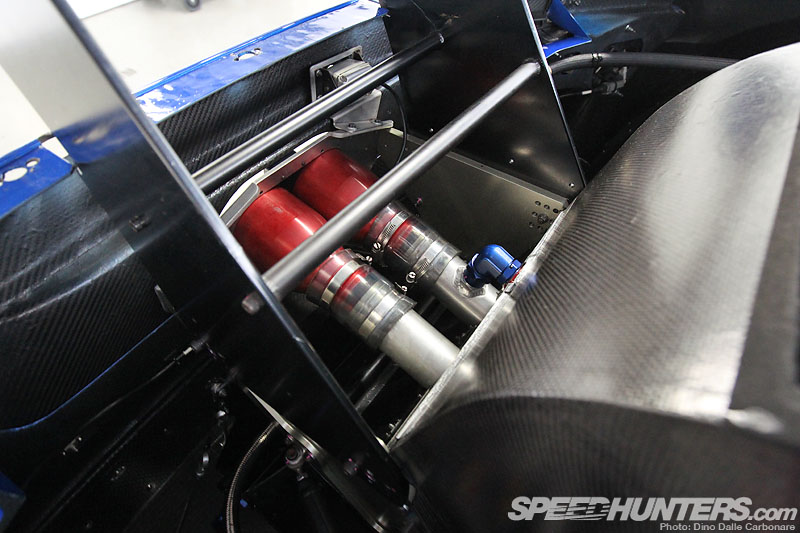
Here you can see the pipes that channel fuel from the race filler to the fuel cell.
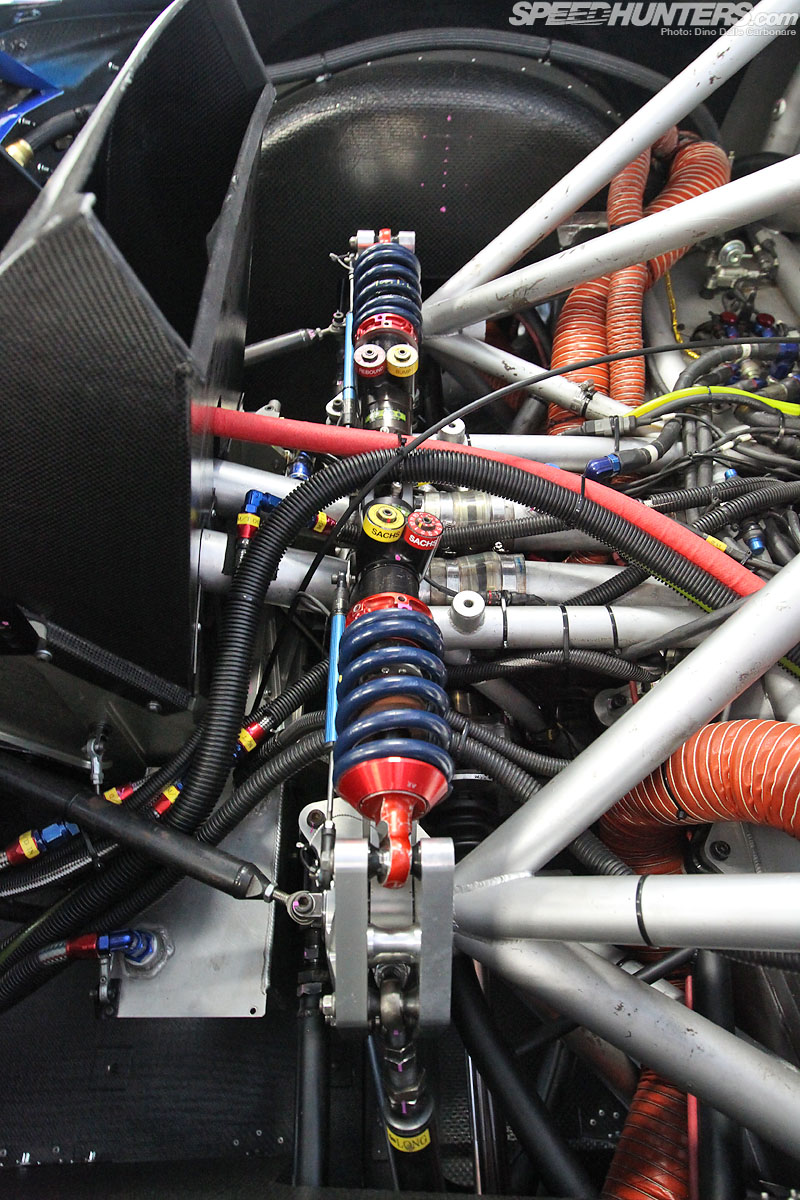
And again like at the front the suspension layout is double wishbone with push-rod actuated dampers and adjustable anti-roll bars.
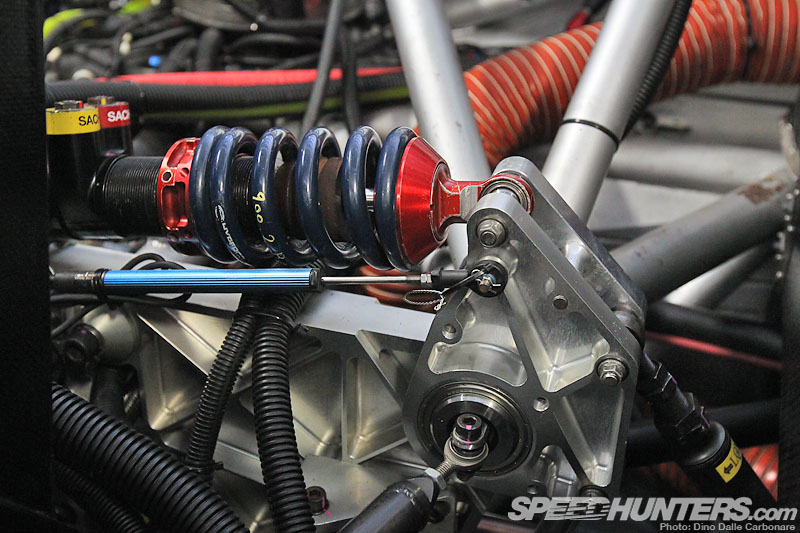
Here is a side view of the driver’s side pivot…
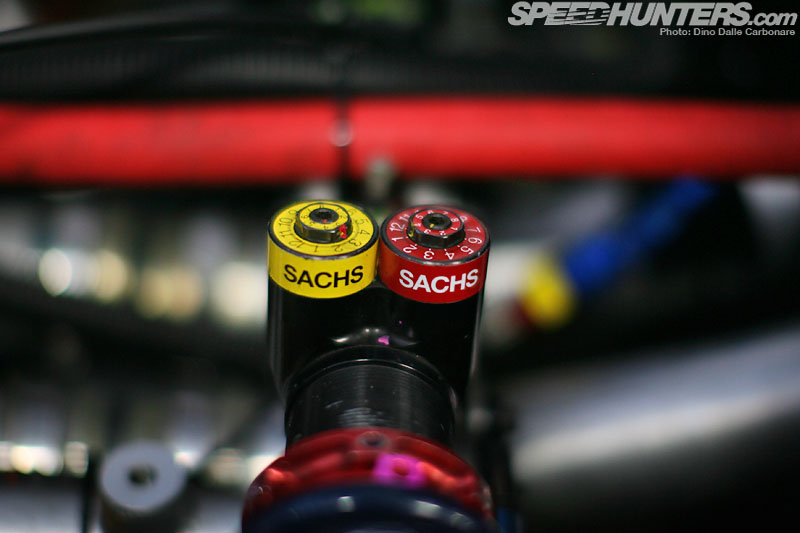
…and the copious amount of adjustments that the compact Sachs dampers offer…

…to help the drivers and engineers fine tune the handling for each track or surface condition they encounter.
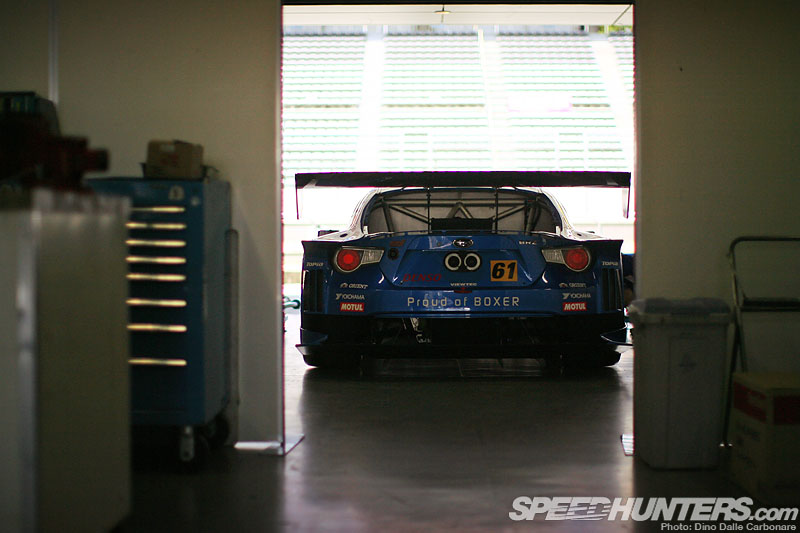
So there you have it, a look into one of the newest Super GT racecars to hit the GT300 class this year and a small glimpse at the amazing work and level of engineering that goes into creating one of these stunning machines.
Action shots courtesy of Subaru Tecnica International
-Dino Dalle Carbonare
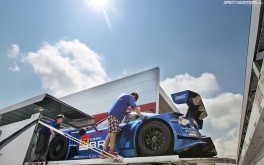
Photo By Dino Dalle Carbonare
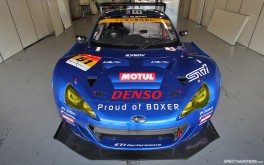
Photo By Dino Dalle Carbonare
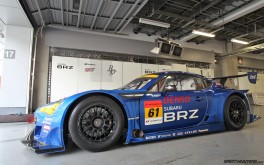
Photo By Dino Dalle Carbonare
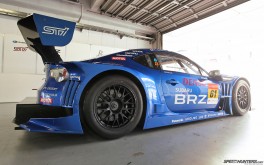
Photo By Dino Dalle Carbonare
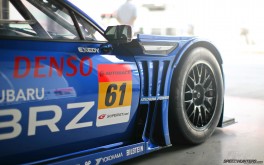
Photo By Dino Dalle Carbonare
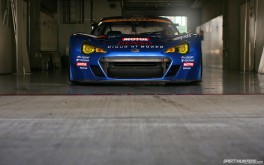
Photo By Dino Dalle Carbonare
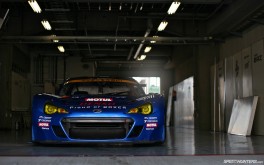
Photo By Dino Dalle Carbonare
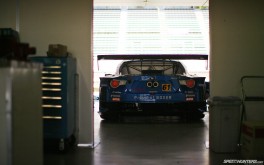
Photo By Dino Dalle Carbonare