
Crystal Palace, less than four miles from the West End of London, is one of the oldest venues used for racing in the world, and the first place from which live televised motor-racing was ever broadcast. Ad hoc motor races were first held on ‘London’s Own Circuit’ in 1899, and a permanent circuit constructed in 1927 – it was then the venue for the London Grand Prix prior to WWII and had a glory period between 1953 and 1972 as the venue for legendary sportscar, touring car, single-seater and motorbike showdowns.
Most of the great drivers took a turn around the London parkland at some time during their careers, including Stirling Moss, Jim Clark, Graham Hill, Jackie Ickx, James Hunt, Jochen Rindt – and even a certain Bernard Charles Ecclestone. My father was lucky enough to live in a house backing right on to the track in his late teens and saw many races there – and luckily had his camera with him! Here’s Graham Hill waving to the crowd after another F2 win.
There are very few places around the world where you can get on a train from the centre of a capital city and be at a permanent, world-class racing circuit within 15 minutes. Nowadays it’s virtually unheard of, temporary street tracks aside, but there was a time when the racing tracks came to town rather than the other way round. Barcelona’s Circuit De Catalunya in Spain might be one of the only nearest modern equivalents, and it has even more parallels with Crystal Palace in the shape of its old hill-top Montjüic circuit in the town itself.
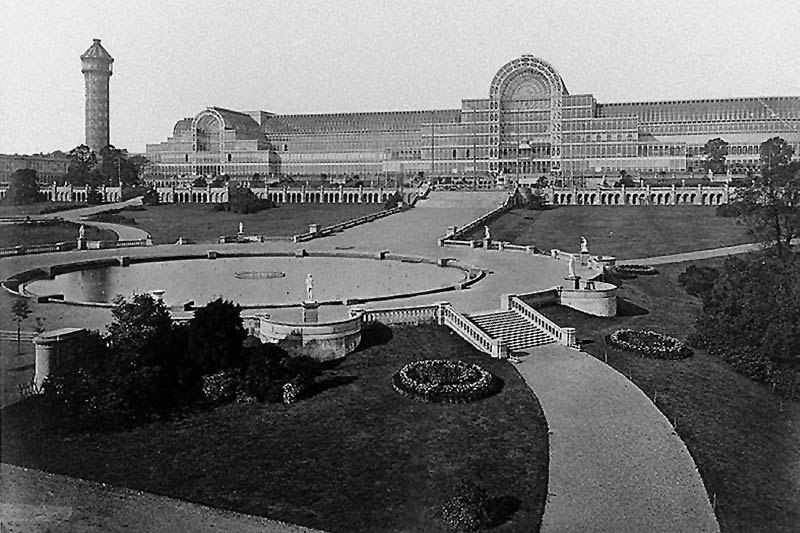
The Crystal Palace building which gave this area of Sydenham in South London its name was a masterpiece of Victorian engineering: a breath-taking edifice, 2,000-foot long with 990,000 square-foot of floor-space, a cast-iron and plate-glass exhibition hall built in 1851 for the Great Exhibition.
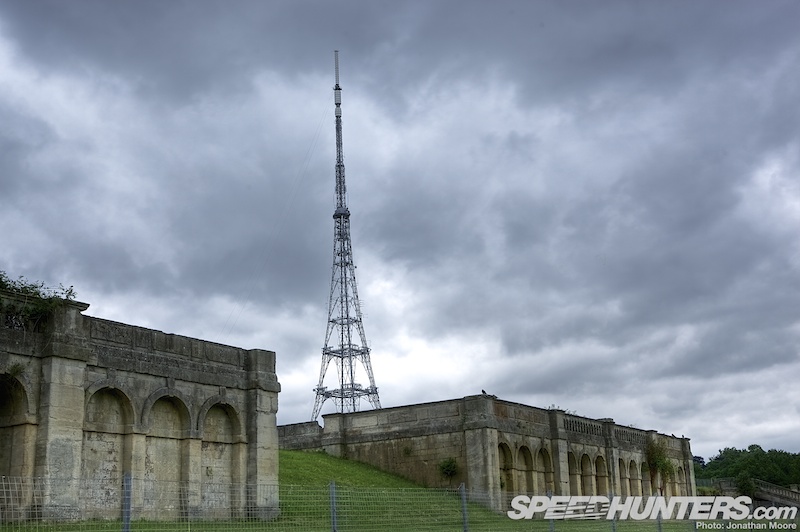
It was originally in Hyde Park, but then moved to Sydenham in 1854 when the exhibition was over – and rebuilt even larger! The terracing that overlooks the track is the what the enormous structure sat on. The whole area sits on a ridge overlooking central London, and is now home to a pair of huge transmission towers.

For its first decade of use from 1927 the track was typical for the time: tarmac on the bends, but just hard-packed gravel on the straights. A popular motorcycle speedway on the layout’s interior attracted crowds of up to 70,000 in the 1920s and also hosted car races – the modern athletics stadium sits on top of where the speedway was.
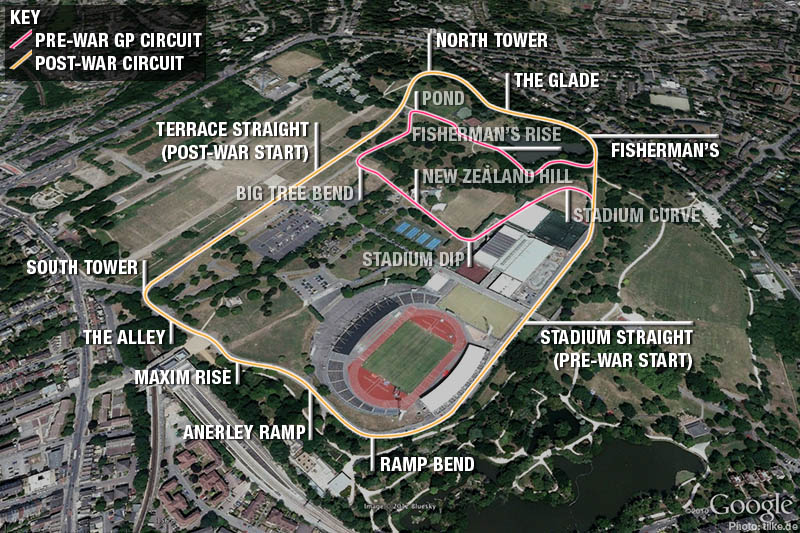
In 1935, plans were laid down for a fully-tarred course of two miles in length, using the original twisting layout around the park’s pathways, and two years later work began – just three days after a huge fire that destroyed the Palace itself. It was described as a miniature Nürburgring at the time, and even the Silver Arrows drove the track: a 645bhp Mercedes Benz W125 was demonstrated in 1937. This period was short-lived though: with war breaking out in 1939 racing around the country ended and the area was requisitioned by the military.
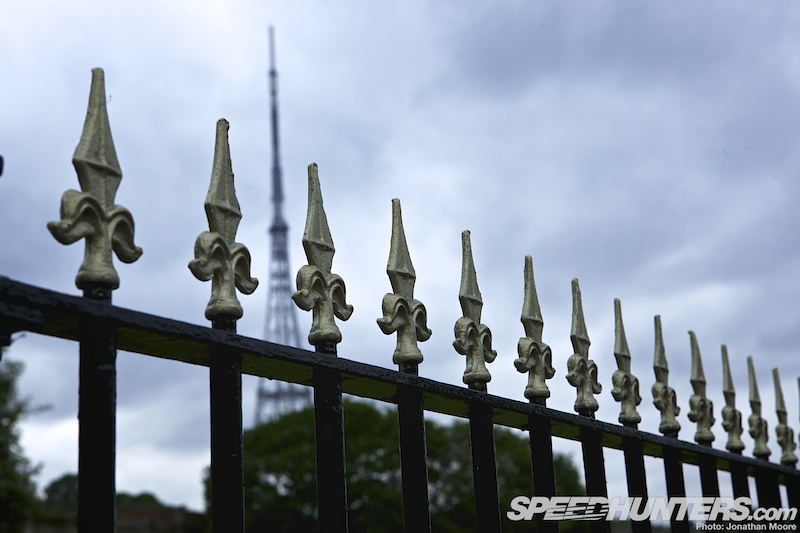
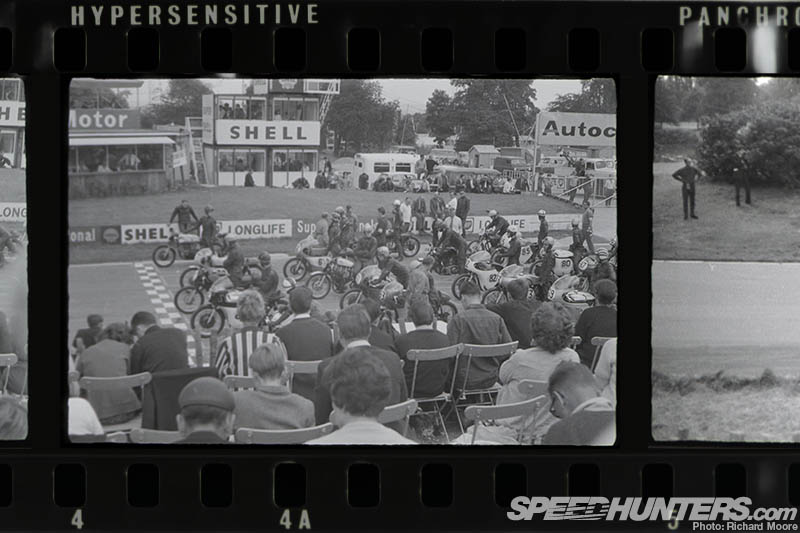
When racing in the UK coughed back into life in the 1950s, Crystal Palace once again reverberated to the sound of engines. However, a much-shortened, 1.39 mile layout was chosen, utilising just the outer perimeter of the original circuit. The first race in 1953 attracted 40,000 spectators – and so racing was back on the menu for another twenty years.
The only major change happened in 1960, when the new national athletics complex and stadium were built: the start-line was moved to the top Terrace Straight, and the writing was on the wall that motor-racing at Crystal Palace was being challenged. Meetings continued to attract huge crowds: one year 100,000 fans turned out to watch a non-championship F1 race!
The final international meeting took place in 1972, a Formula 2 race with Surtees, Lauda, Watson and Hill all on the grid. Small club events continued to take place every so often, but cars were becoming too fast for the track’s rudimentary safety provisions and the Greater London Council announced the closure of the track at the end of the year.
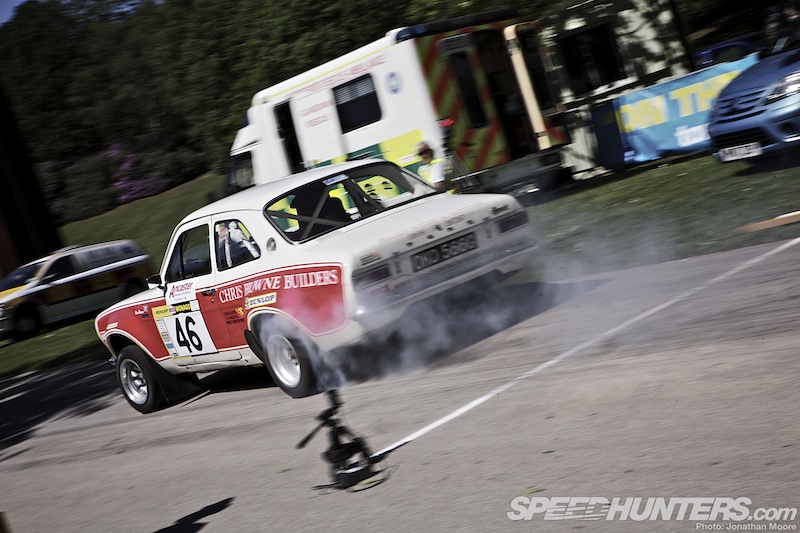
So, that seemed to be it for this historic venue, until in 1997 the Sevenoaks And District Motor Club somehow managed to persuade the council to allow them to hold a sprint around the sections of the track around North Tower – for four glorious years the event was held, until without warning the council decided to cancel the event and repave the majority of the track, halving their width and turning them back into pathways. It’s sickening to think of the pointless destruction of the original roads. The SADMC didn’t give up though, and since 2010 they have once again managed to bring racing back to the Palace.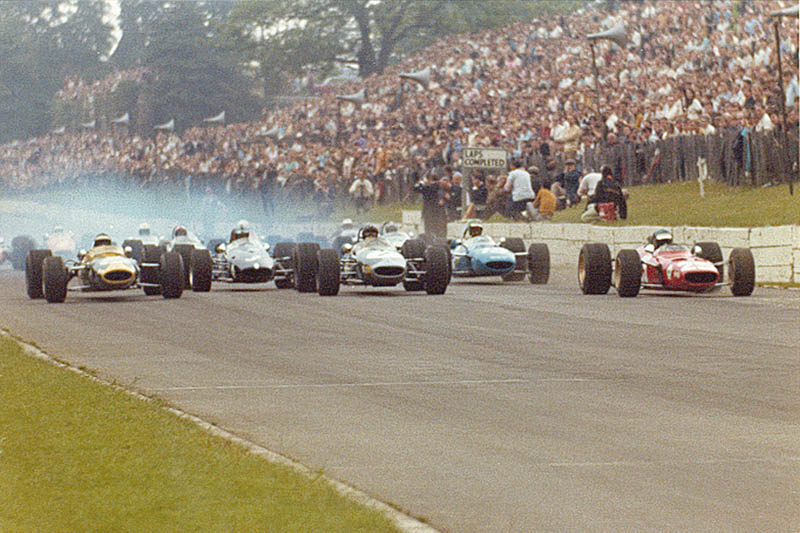
So, apart from its location why was this track so popular? As soon as you start walking round it the answer becomes clear: it must have been furiously fast, despite the narrow and sinuous nature of the layout.
All the walls and buildings are long gone, but despite the council’s efforts, the great thing is that the trace of both of the track’s layouts are still both there. A combination of new access roads, repaved paths and original tarmac still keep the spirit of Crystal Palace alive.
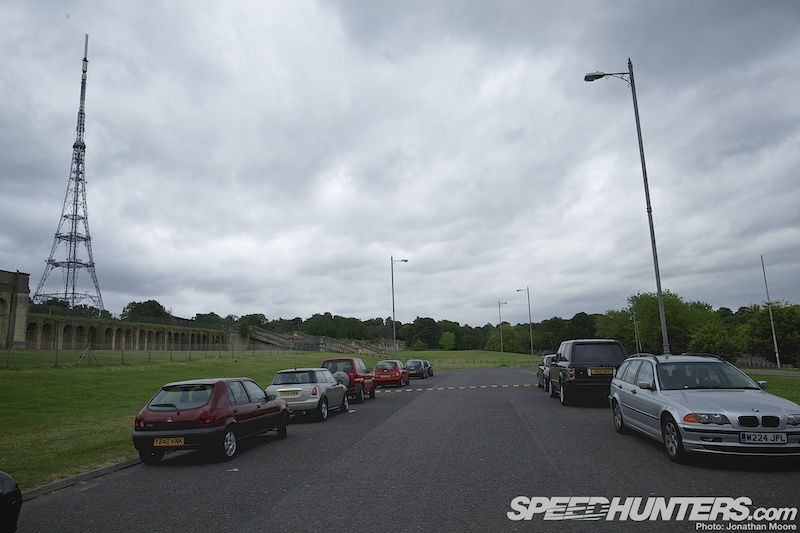
We’ll start at the 1960-onwards start-line, right under the magnificent Crystal Palace terracing. Work in the park around the millennium led to a large deposit of spoil being dumped on the Terrace Straight right after where the original starting line was.
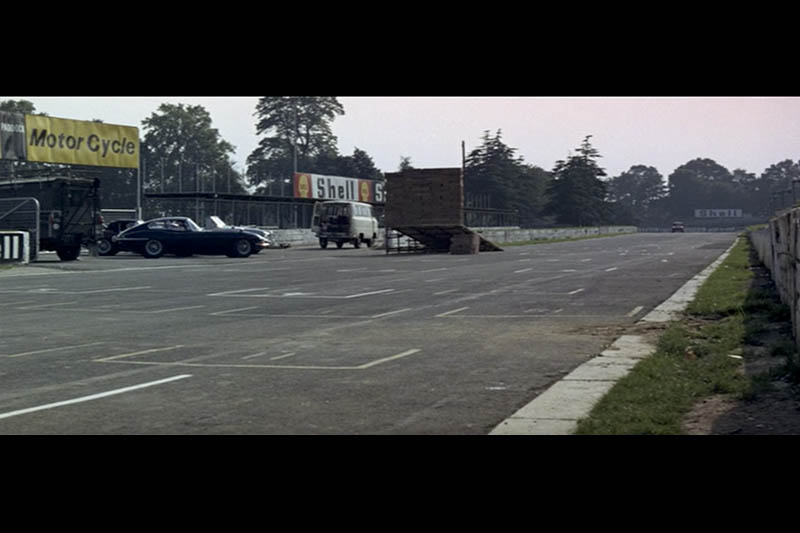
Being close to London and the big film studios, it was a popular filming location. It was even used for the Mini Cooper testing scene in the original Italian Job film!
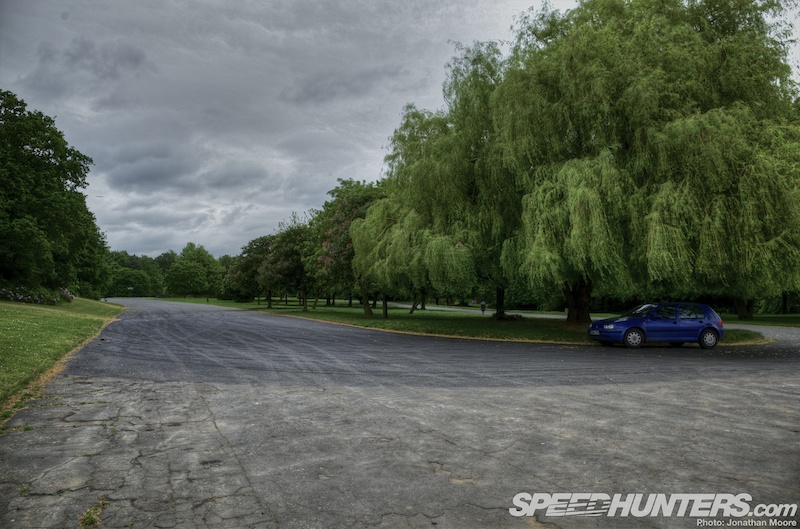
On the other side of the grass, the full-width of the original track is laid out before you. It’s even been resurfaced, part of the concession for Motorsport At The Palace; to the right of this shot is the new hairpin link used for the sprint that connects the 1930s and 1950s track sections.
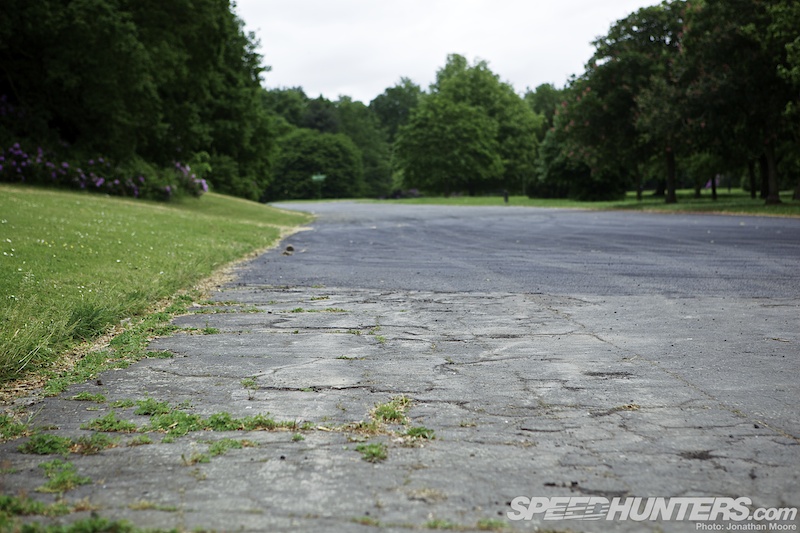
Just before the resurfaced section is a small patch of beautiful, crumbling, original old tarmac.

Cars would have been charging through this shallow left kink two and three abreast before braking for the North Tower right-hander.
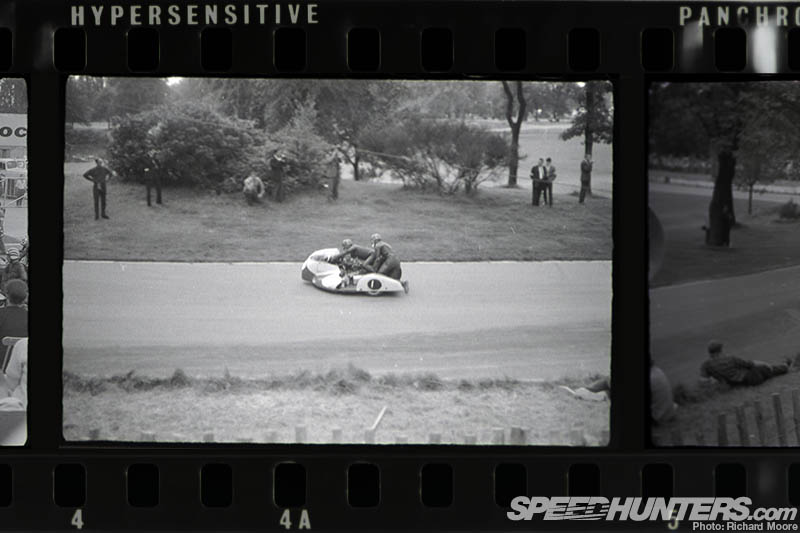
The track is on a slightly elevated crest, with the large pond behind. This period shot illustrates the rather different safety attitudes of the ’60s!
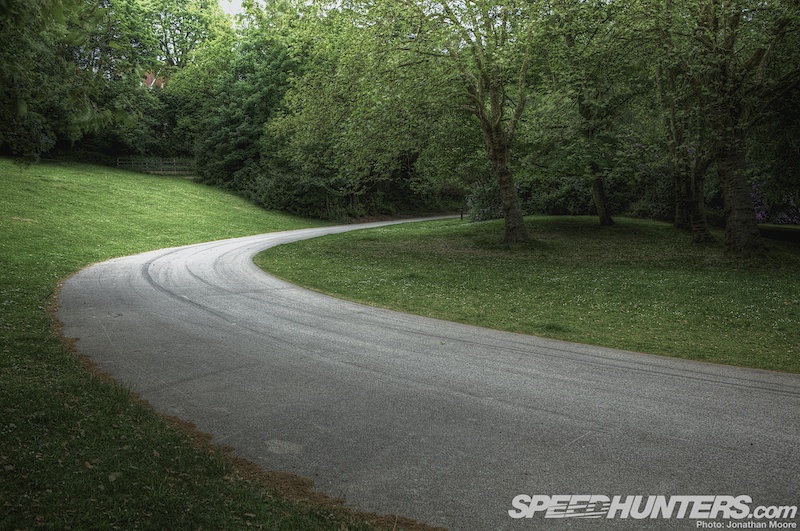
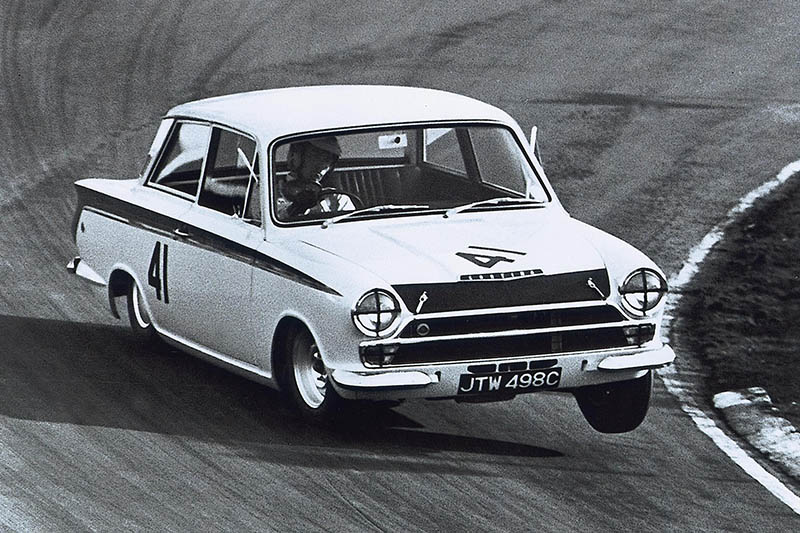
North Tower was a tricky, tightening uphill: perfect three-wheeling territory for saloons.
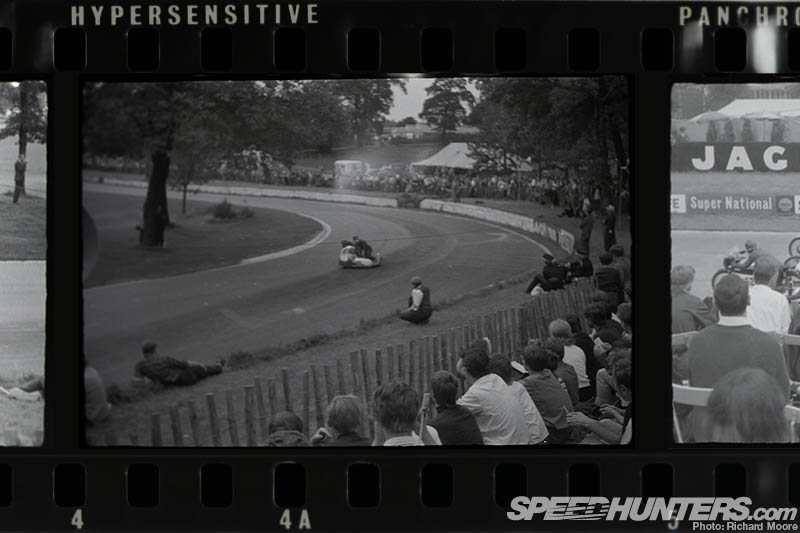
There are now trees and bushes right up to the edge of the path-that-was-track, but from this shot you can see how it originally looked, and how accurate the Goodwood Revival is! Saplings are now fully grown, but still in the same positions.

Even when the track was active this section of track plunged through a tunnel of trees: a right-left kink through The Glade…
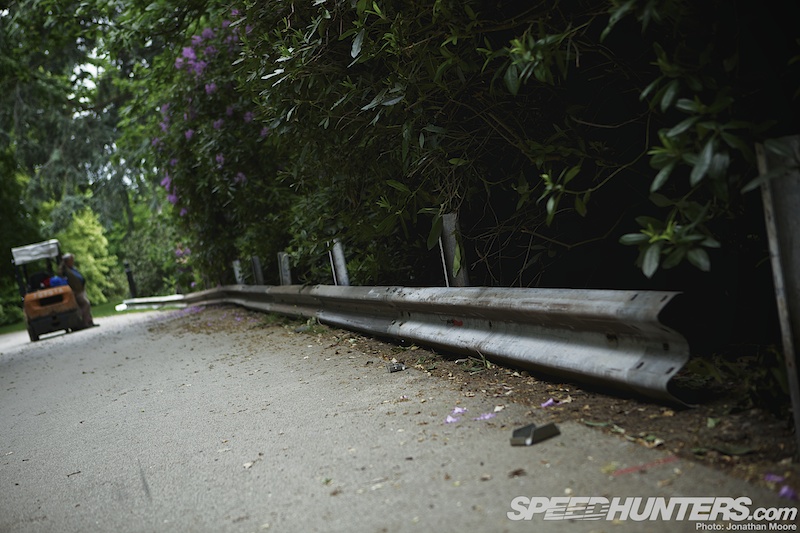
…which on my visit still had the remnants of armco being dismantled – though from the recent sprint, not original pieces. In any case, stopping cars in the old days was either down to trees or a concrete wall, as you can see in the videos above.
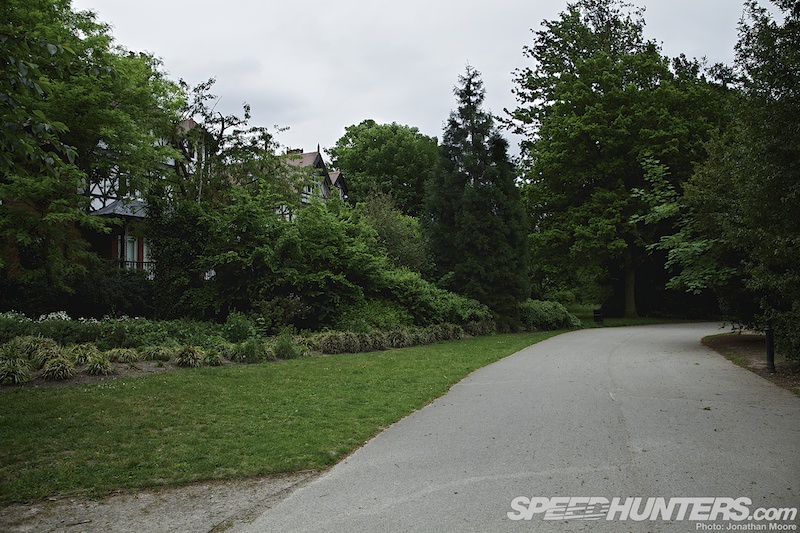
In this image you can see just how urban a setting Crystal Palace was in: houses backed directly onto the track down through this section. It makes it easy to understand why there were so many complaints when racing restarted in the ’50s!
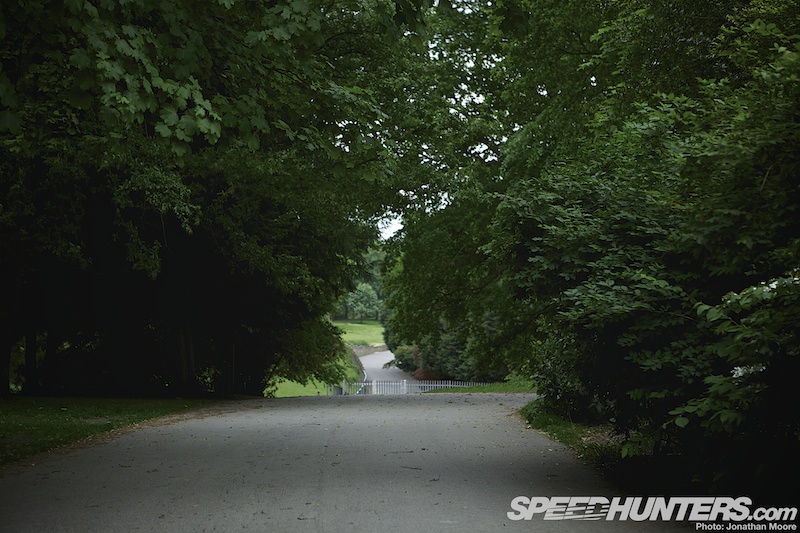
On the exit of Fisherman’s Bend the track splits; ahead is the New Link, but we’ll follow the old Grand Prix track around to the right.

This was a tricky combination of uphill, off-camber kinks of Fisherman’s Rise taking drivers back up towards the top of the circuit.
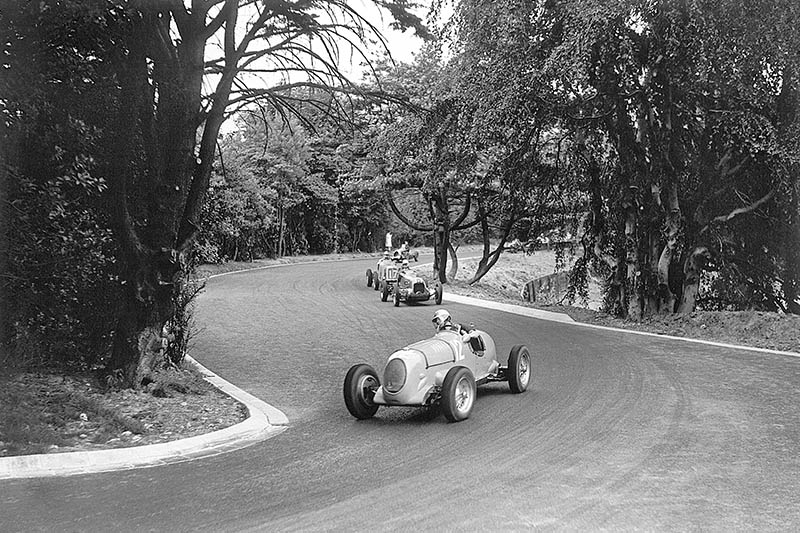
Pre-war, there weren’t even concrete barriers. Trees or a drop, either guaranteed to be more efficient than the brakes of the time.
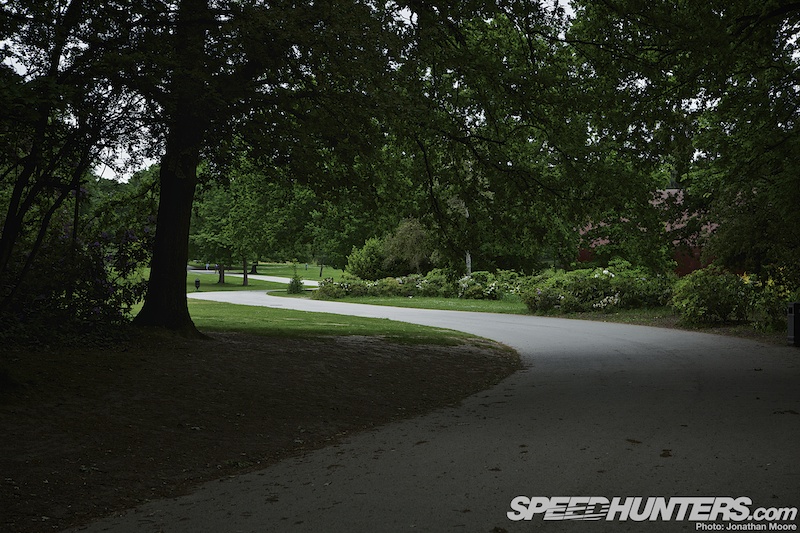
The exit of the first right-left led directly into another similar wiggle…
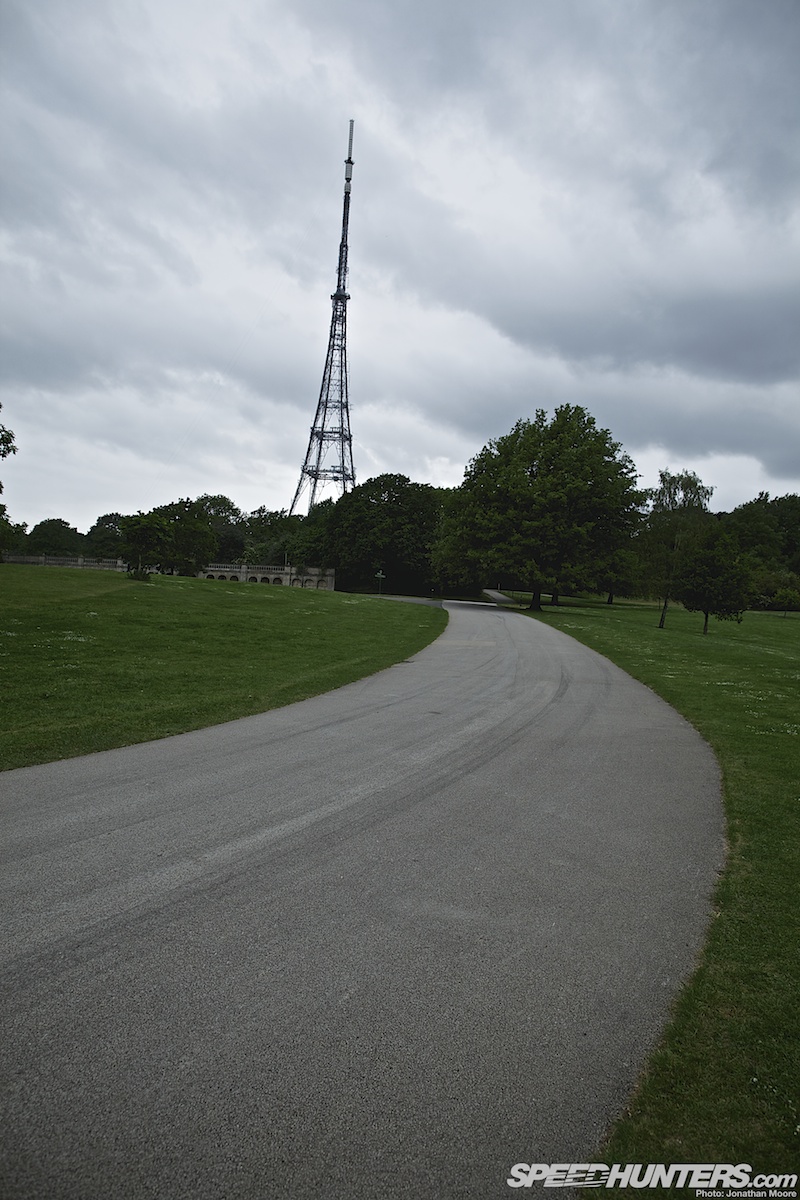
…and then there was a short blast up to the Pond Corner: a sharp left-hander with a blind apex.
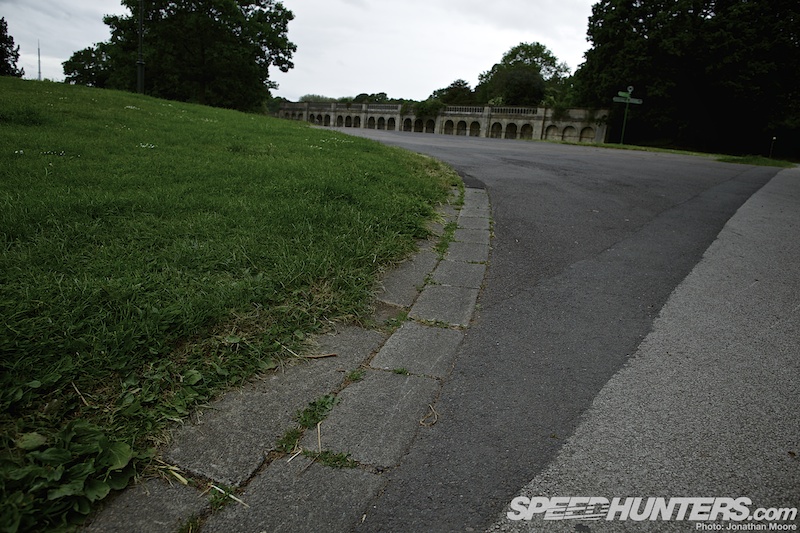
This is the first corner on the modern sprint course, and now as then is slow and tricky with the need for a very fast exit.
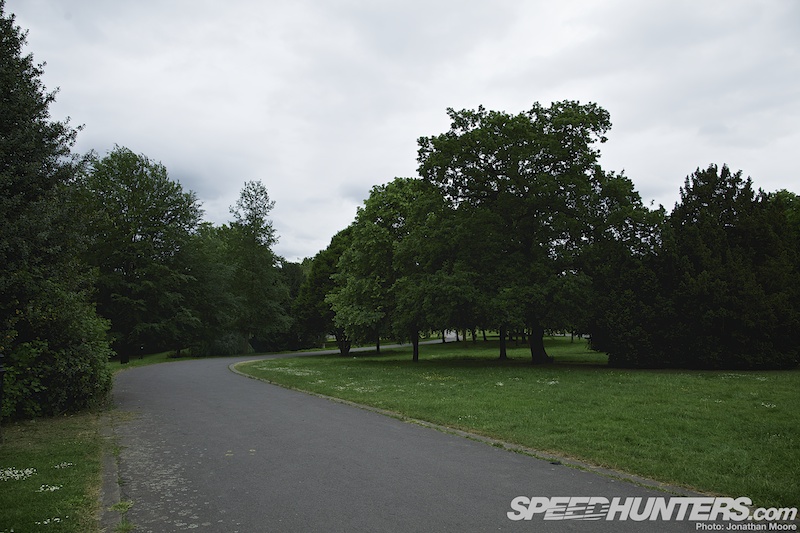
That’s because it leads down a chute to Big Tree Bend, what was a hard left that returned the track to the lower part of the park.
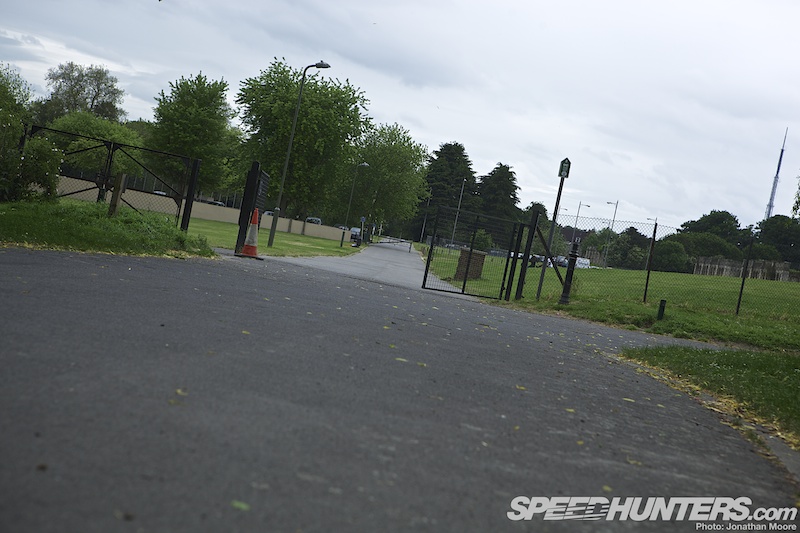
The left-turn that would have been here wound down New Zealand Hill – a modern link road now continues straight ahead, and all of this part of the track has been erased.
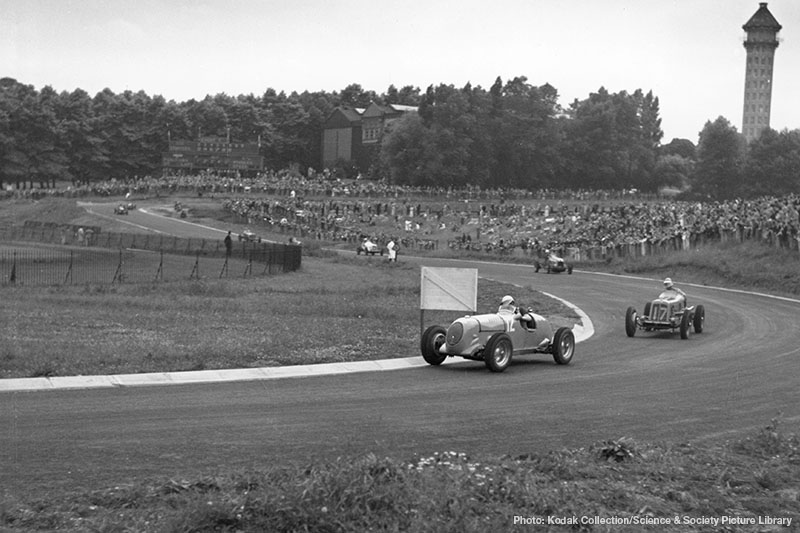
Where cars once hammered downhill is now sports fields and annex buildings, inaccessible to the public.
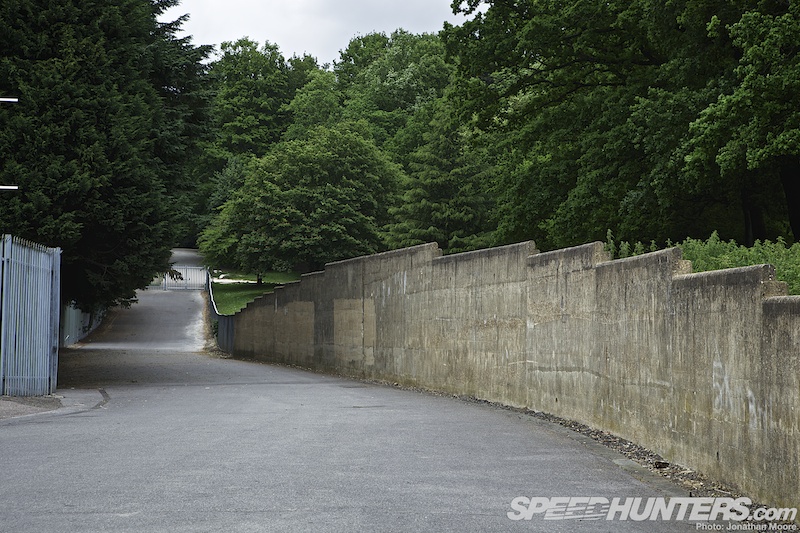
So, we return to Fisherman’s Bend and the 1953 layout. The Grand Prix track would have come in on the left at Stadium Curve, by the end of the fence, but New Link cut out the inner loop and provided for a spectacular downhill section.
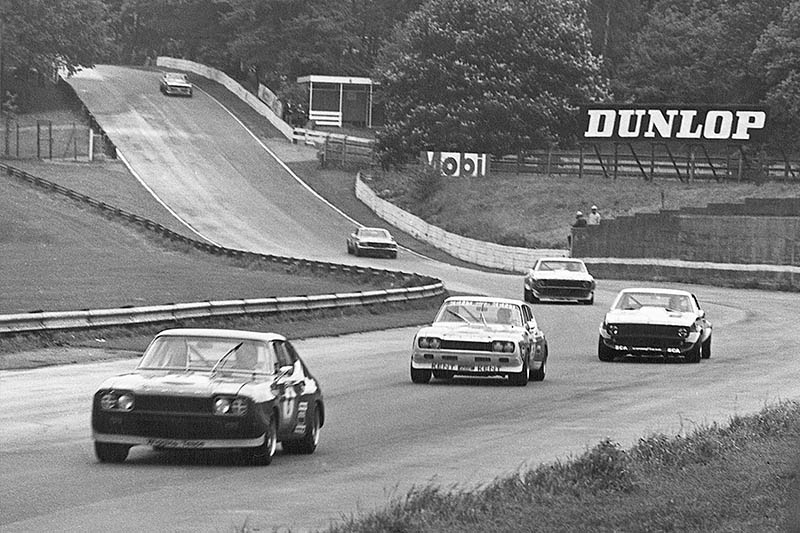
It must have felt like you were dropping off the edge of the world: it’s a 1-in-8 incline…
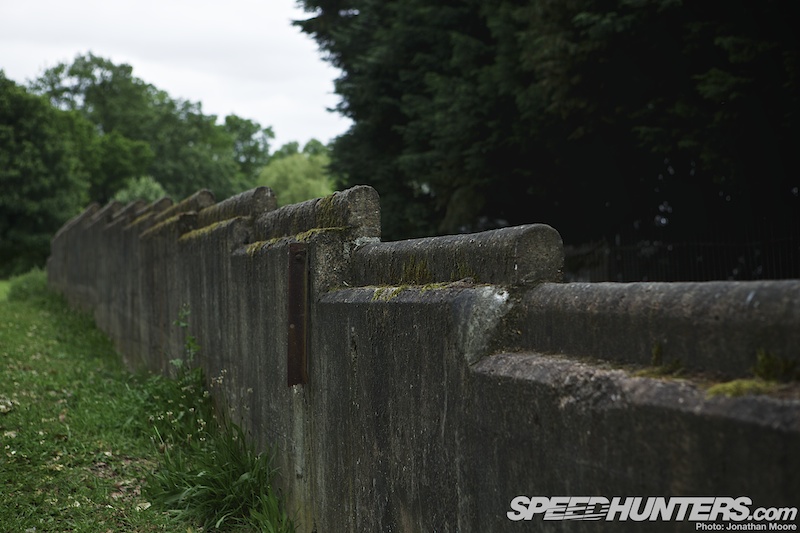
…with a big concrete wall on the exit. Run off? Who needs run-off?

There’s admittedly very little left in the way of extraneous evidence for the Crystal Palace track: apart from the roads, there’s really just this wall and the odd pieces of block kerbing. Even the advertising that was painted on this wall has now faded. Scrubbed graffiti has further covered it. For me this was like a Magic Eye poster: I was desperate to see an old Dunlop logo or something… Anything!

What was the original start-line on the Stadium Straight is now a parking area for the athletics stadium – Stadium here referring to the speedway oval.
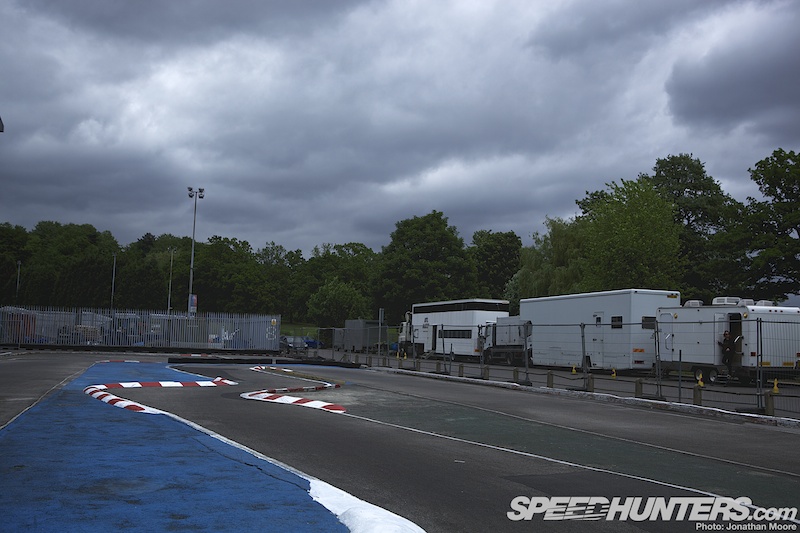
One way that racing has always continued to take place at the Palace is with remote control car clubs: there’s been a layout here for decades.
In the background of the image above are film production trucks – they’d been at the track to film scenes for the upcoming Ron Howard F1 film, Rush.
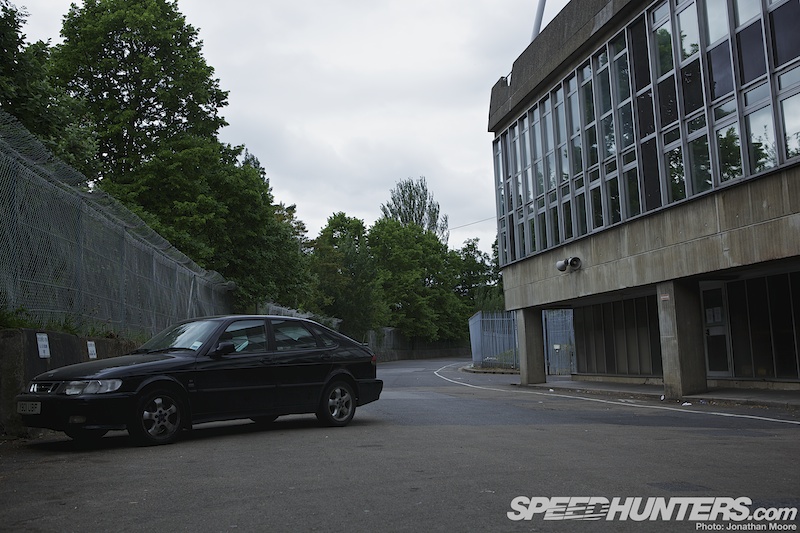
After the long straight, Ramp Bend loomed up with its predictably zero-run-off.
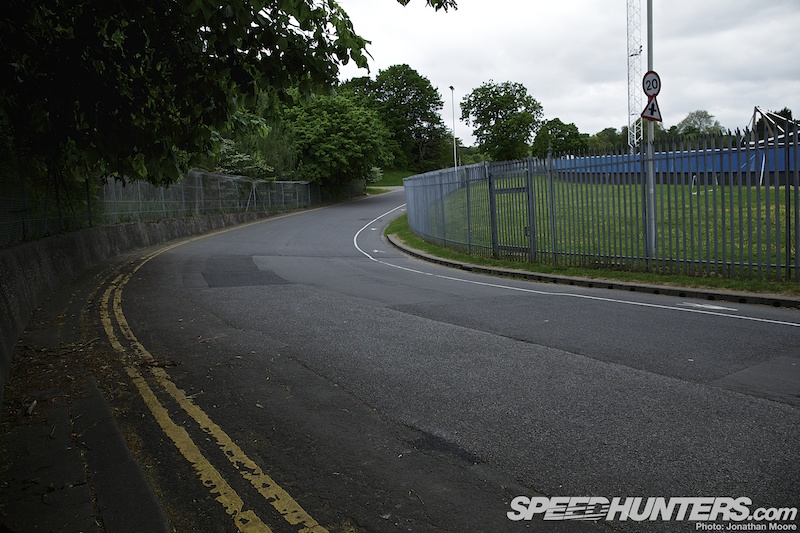
This was another unforgiving corner, and plenty of cars would understeer off only to smack into the concrete retaining wall with a sickening thud.
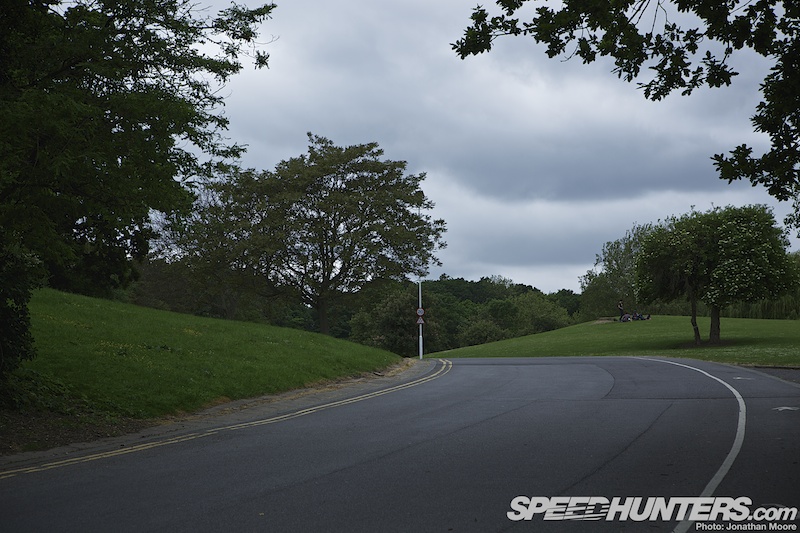
Like an elongated and even more challenging mirror of the Fisherman’s Rise sequence of corners, Anerley Ramp led into the blind, off-camber Maxim Rise.
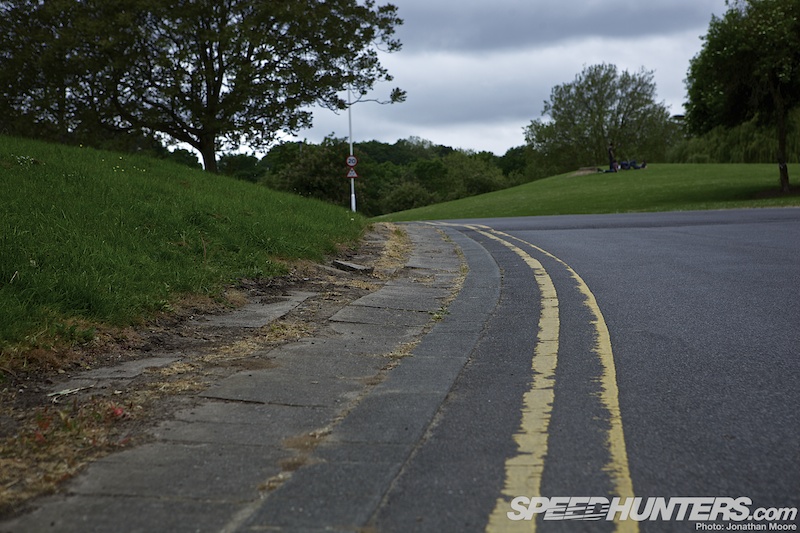
More original kerb perhaps? It’s nice to think so…
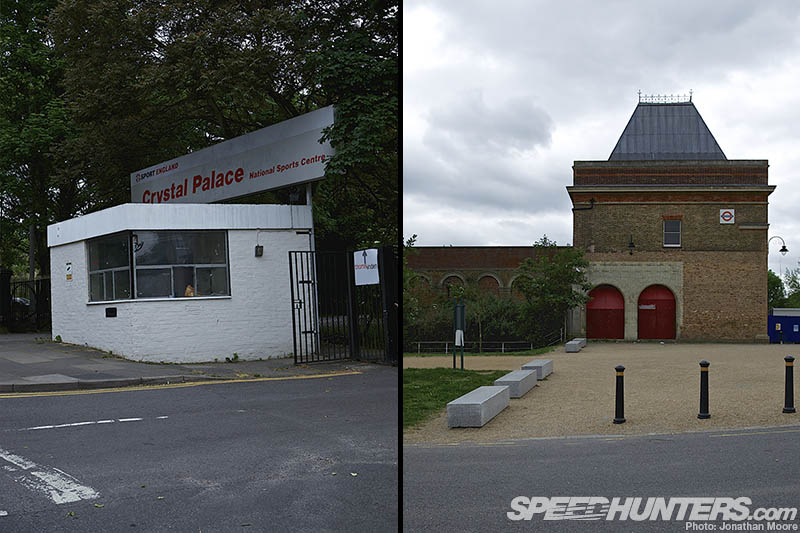
This is where the main entrance to the sports complex is; on the left side of the track is the low-level railway station entrance – now long-closed. A second high-level station for Crystal Palace was located at the top of the hill.

A low bridge originally crossed the track at this point, bringing the hordes of Londoners to the circuit’s infield.
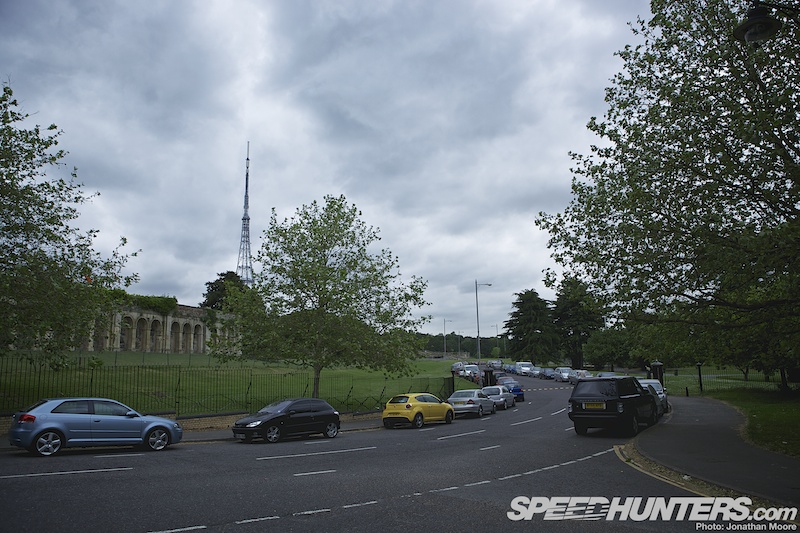
Finally, South Tower Corner, so-called because of the two enormous water towers that flanked the original Crystal Palace. The South Tower is visible in the photograph of the Palace at the beginning of this article.
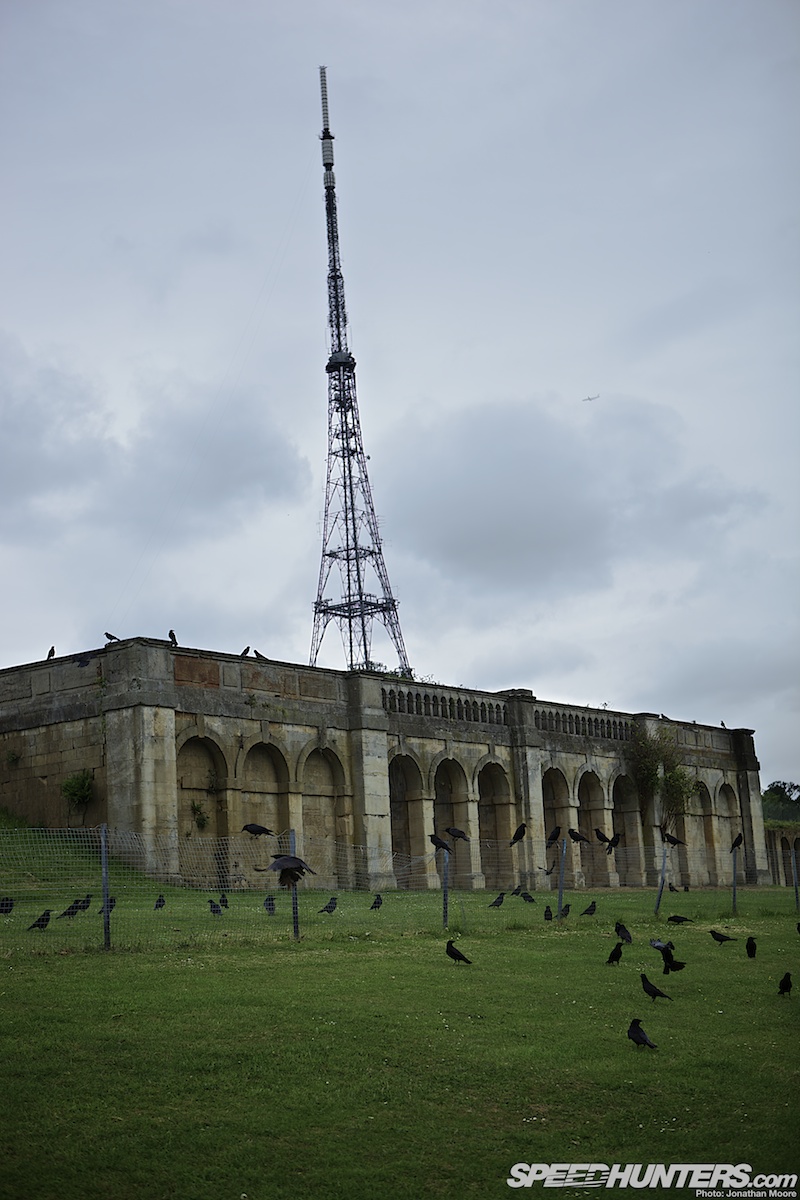
All that was left was to hit the throttle hard for the run to the line, past the spectators packing the terracing, and to start another lap. Motor-racing at its finest, all within a bus-ride of the centre of London.
It will never be allowed to happen of course, in an area so urban and with current rules and regulations, but the track seems so ripe for reinvention. Walking the 85-year-old course, it’s easy to imagine the sights, noises and smells of all those decades of racing – they hang in the air like ghosts. Luckily, thanks to organisations like the Sevenoaks And District Motor Club and their supporters, Crystal Palace isn’t dead yet…
Jonathan Moore