
Next up in the Speedhunters Awards for 2012 is the opportunity to vote for your favourite competition car of the year. We have a selection of old and new to choose from which are competing around the globe, though all are pushing the boundaries of their respective series. The fastest, the meanest, the most revolutionary or just the plain winningest? It’s up to you to choose who deserves the award. Here are the nominees:
With Peugeot pulling out on the eve of the World Endurance Championship, it fell to Toyota to put together a full factory assault in double-quick time, both to save the nascent championship and to provide some opposition to the expected Audi dominance. Toyota did all that and more: after a Herculean effort they delivered at the highest level at the Le Mans 24 Hours before going on to win races on outright pace following the big day in France. It was a phenomenal effort by the Cologne-based TMG team; 2013 promises to be even more impressive. Audi have some serious work to do over the winter.
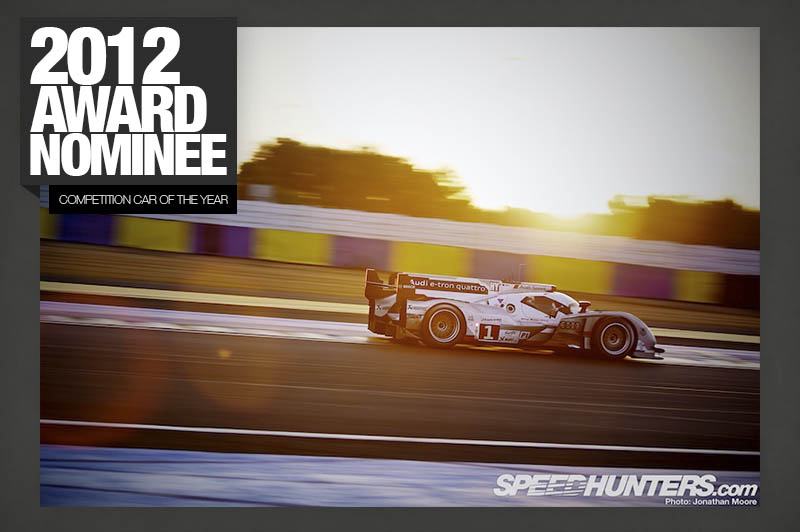
Racing has always been the perfect platform to develop new technologies and to showcase manufacturer R&D muscle, and in recent years it’s been sportscar racing that has forged ahead at the cutting edge of alternative power. Audi’s futuristic R18 from last year was reintroduced in new, hybridised form for 2012 as the e-tron quattro: its hybrid energy recovery system powers the front wheels, providing all-wheel drive performance that was virtually unbeatable in changeable conditions – until that blue and white machine from Cologne appeared.
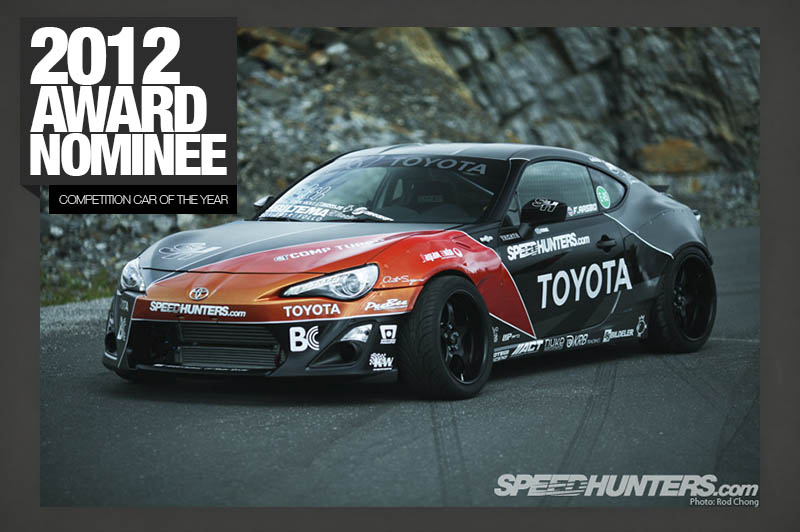
Fredric Aasbø heads up our first nomination for a competition variant of the ZN6 with his 86-X drifter. Initial renders had everyone gasping: surely the finished product couldn’t live up to the promise? But the 86-X has more than done that, not only winning with looks but also with performance – and this a project that was completed in just four weeks. The car is fearsomely wide, with its Rocket Bunny kit muscling-up the already lithe shape of the 86. Slot in Aasbø behind the wheel, put it sideways, add smoke: stand back and admire.
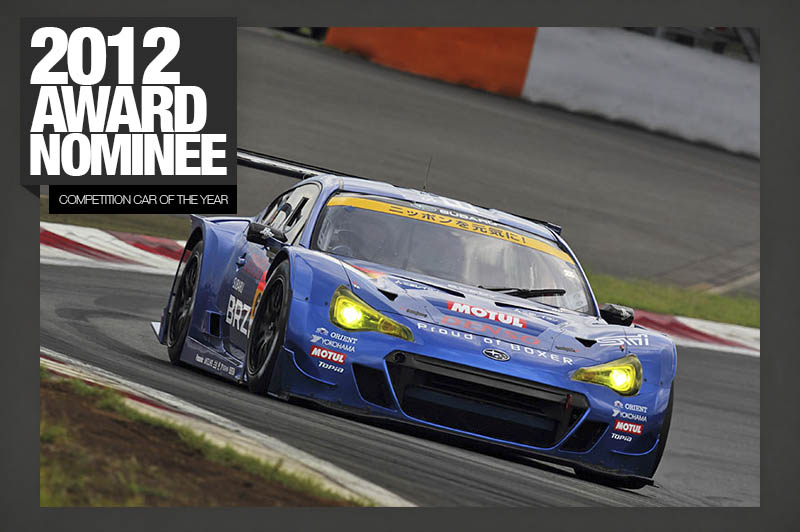
The GT300 category of the Japanese GT Championship features a dizzying number of different makes: there are few series with such an eclectic mix of racers. The BRZ/GT86 has already been introduced into drifting, touring cars and GT racing, and in Japan the ZC6 has been further muscled up for GT300 – with this the impressive result. Laden with downforce and sitting on huge BBS rims, the BRZ oozes aggression: the perfect GT racer?
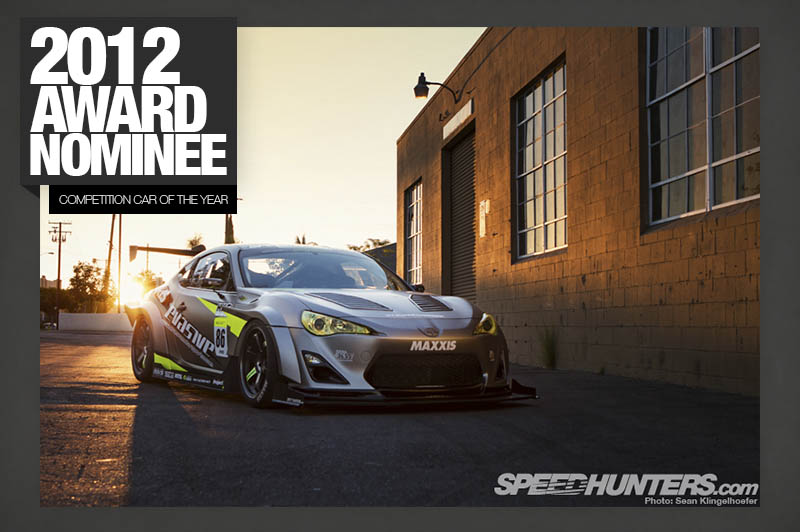
For a third take on the ZC6/ZN6, there’s the awesome Evasive FR-S. Its bespoke aero kit features all kind of details that you’d otherwise only see on DTM or LMP machinery, but it still retains all the spirit of the base FR-S. Time Attack and Pikes Peak are on the agenda for the FR-S next year; if the rule that a fast car is beautiful is true, then the Evasive FR-S could be in for a lot of silverware in 2013.
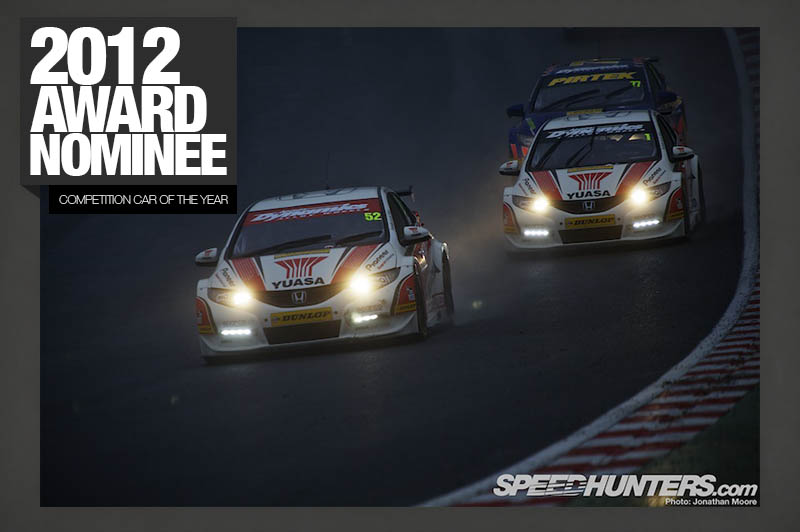
Honda’s new-generation Civic tourer was developed by the British Team Dynamics outfit, and was a winner from the opening round of the season. After a hard-fought year, the new-for-2012 NGTC-specification, wide-body Civic came out on top, with the Team Honda pairing of Gordon Shedden and Matt Neal taking first and second in the standings and Pirtek’s Andrew Jordan winning the Independent’s trophy. Next year a JAS-developed version will also compete in the WTCC, representing Honda at the global level.
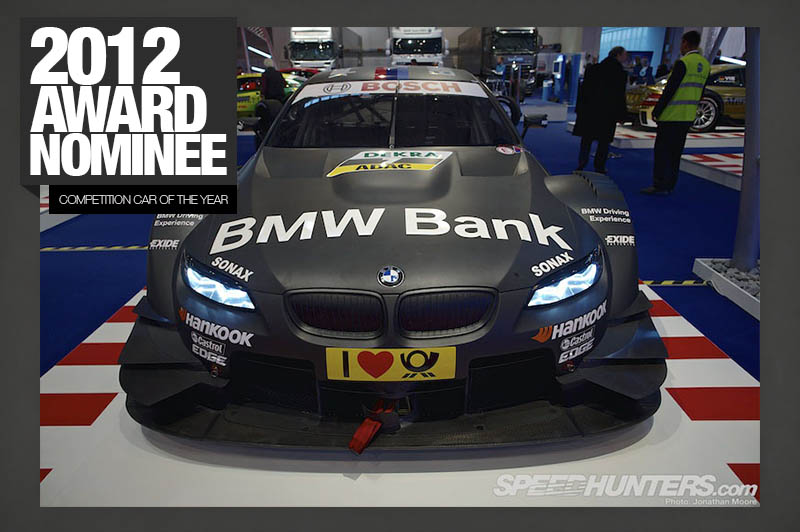
DTM racers are brutal looking cars, and none more so than Bruno Spengler’s flat-black BMW M3, in which he took the 2012 title. After a break of almost 20 years, this was BMW’s first season back in the premier German touring car series, taking on the established might of Mercedes-Benz and Audi, but it was like they’d never been away. The M3 was immediately on the pace, but the battle for the championship went down to the wire before BMW took a clean sweep of all the available trophies. Notice has been served.

There was little competition to Citroën’s DS3 rally car in 2012 – at least when it was pedalled by Sébastien Loeb. The DS3 has been hoovering up wins for the past couple of years: the 1.6-litre turbo packs a surprising punch, and seeing one crackle through a forest or hurtling over a blind crest is not something you’ll forget in a hurry.
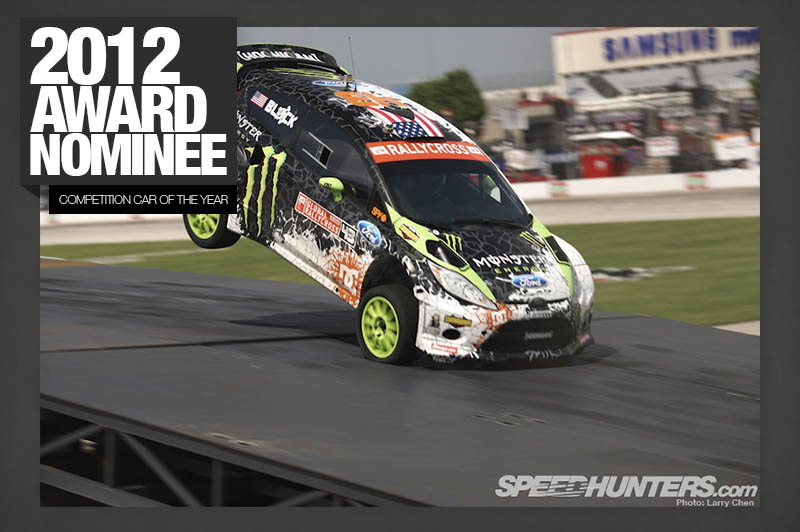
The only thing that could get near the DS3 WRC was Ford’s M-Sport-developed Fiesta. But the Fiesta was in its element when unleashed in rallycross spec (where it was also often up against the DS3). Rallycross also showed just how strong they make them, as Fiestas were bashed and smashed around the rallycross world. On both sides of the Atlantic, fearsomely fast Fiestas thrashed around tracks in the hands of hooning drivers like Ken Block and Tanner Foust.
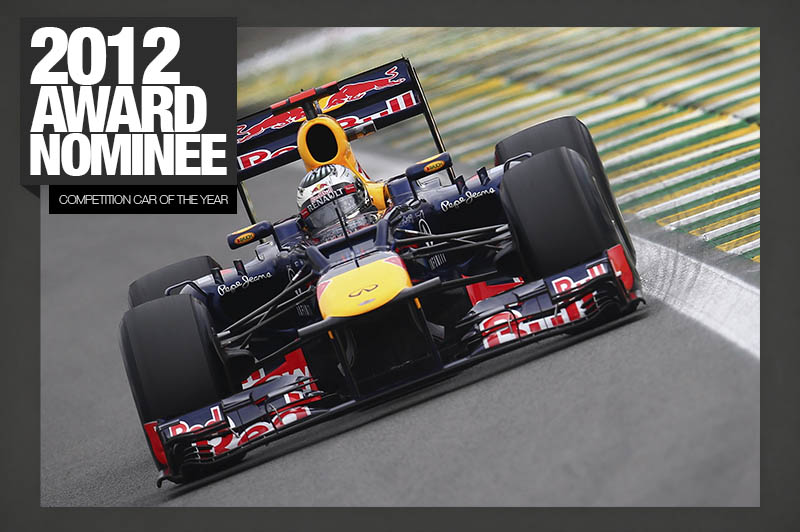
Lock Adrian Newey and his team in a room and ask them to come up with a racing car, and in all likelihood a championship winner will be the result. The RB8 wasn’t always the fastest, but it had the special edge that Newey magically instills in cars: speed for sure, but also unbelievable packaging and aero efficiency plus an ability to survive battle damage – at least when Vettel was at the wheel.
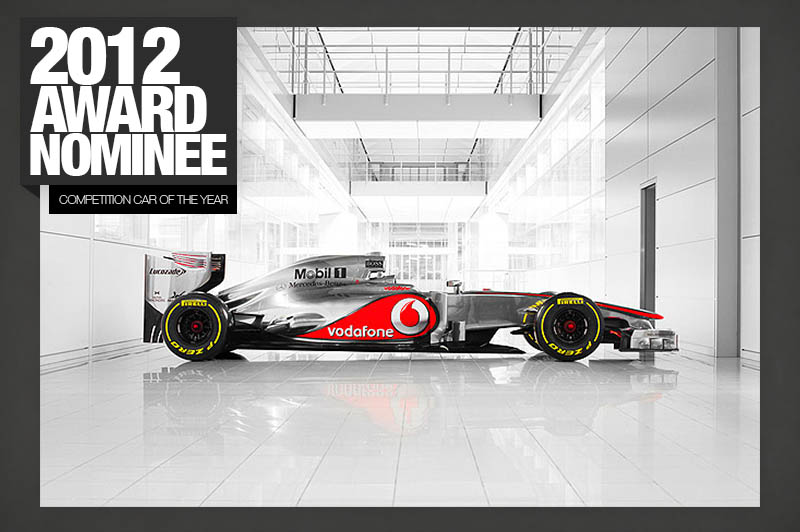
McLaren’s 2012 challenger was arguably the fastest car of the year, but a series of failures – for both the team and the car – set their challenge back. Lewis Hamilton and Jenson Button still won seven times out, and the MP4-27 was easily the most attractive of the 2012-generation cars, having taken a different aesthetic route and eschewed the stepped nose that the majority of the grid utilised.
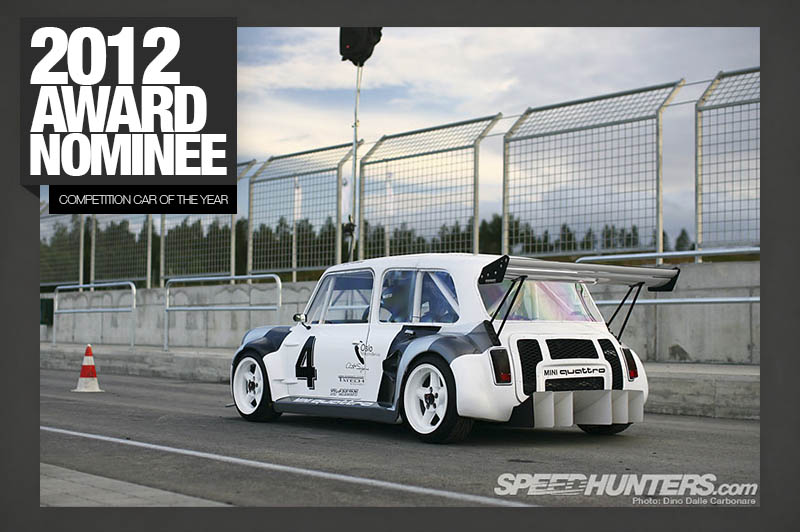
There are many things that seemingly don’t go together. Long shorts. Airline food. Military intelligence. And Mini Quattro. On the outside, it still looks like a Mini despite being draped in a Z-Cars wide-body kit. Underneath, it’s a Tardis of power and drive-train: the 1.8-litre turbo from an A3 cranked up to 450hp plus all-wheel drive, in a car weighing less than a sneaker. The wing and diffuser are not for show: it drives like a slot car: blink and it’s gone, disappearing into the distance.
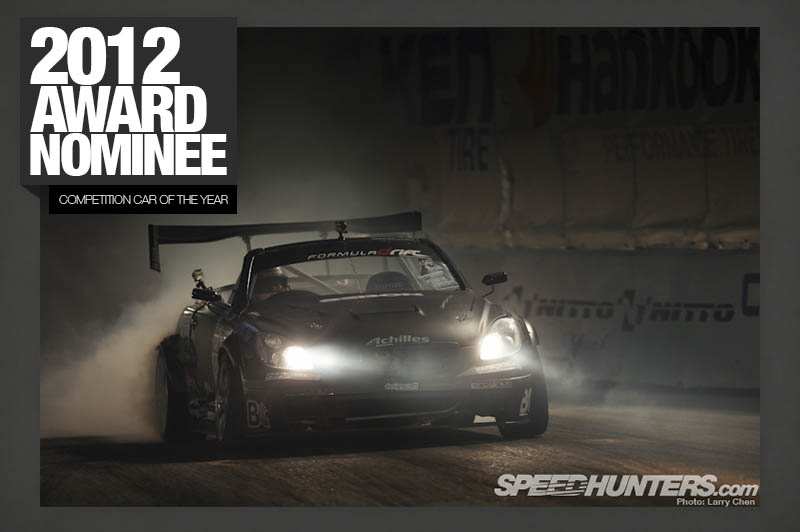
How many horses does a man need? If you’re Daigo Saito, it’s not about need – it’s about want. And 1,200 is the answer. The turbocharged 2JZ-powered SC430 Formula D car carried Daigo to the 2012 title in the US, adding to his already impressive roster of championship wins. Taking an open-topped luxury roadster and crossing it with a very angry dragon, the SC430 was an individual work of smoking art.
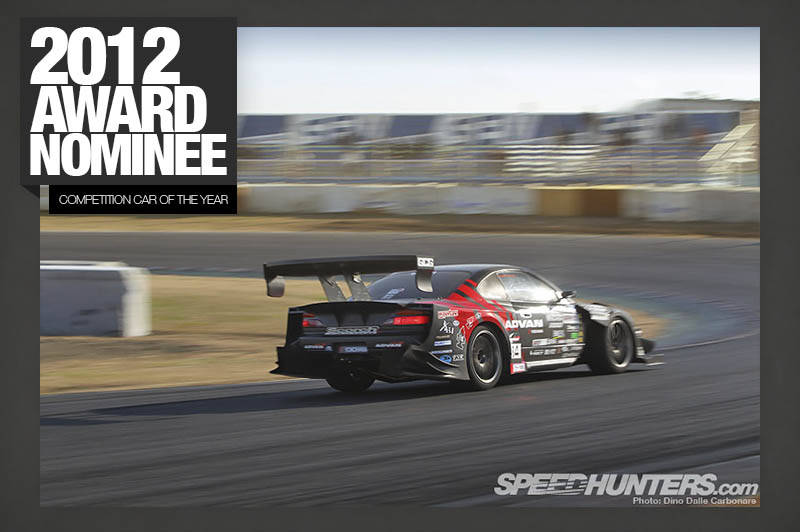
Under Suzuki’s Scorch Racing S15
The unofficial representative of the world’s privateers, ‘Under’ Suzuki’s every-evolving S15 project continues to find tenths of a second every time it takes to the track, chasing records in Revspeed Super Battle. The alchemist of Japanese Time Attack, by day Suzuki-san works in a pharmacy before heading off to his lab in the evening to concoct more insane mods in his decade-long love affair with the Nissan. The Silvia’s power is now edging towards 800hp, with the weight dipping to 1,000kg. Pro teams beware: this S15 is gunning for you…
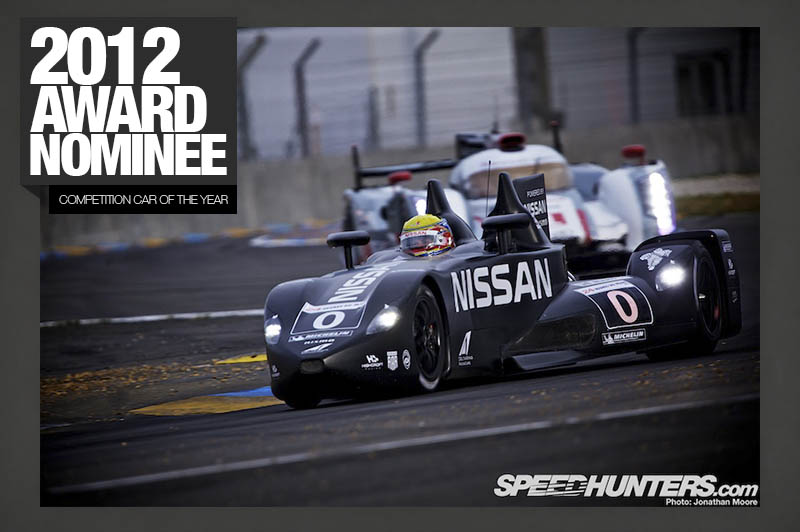
The technology under a racing car’s skin is exciting, but what about a radical reinvention of the entire racing car concept? The Nissan Deltawing was exactly that. Originally planned as a replacement for the ageing Indycar single-seater, the Deltawing was converted to sportscar spec and ran in the ’56th Garage’ spot at the Le Mans 24 Hours, reserved for entries that are pushing the boundaries. The Deltawing is lightweight and fast, and a more than capable racer. An unfortunate accident put the car out at Le Mans, but it put in a strong run at the Petit Le Mans race at Road Atlanta and more races are planned for 2013. A brave, revolutionary project that deserves nothing but praise and support.
Jonathan Moore
[polldaddy poll="6759373"]