
Each year over the Fathers Day weekend, Sydney Motorsport Park hosts a celebration of historic touring cars and open wheelers. Muscle Car Masters brings together not only some amazing cars from the past 60 years but also many of the motorsport greats who drove them. Like the Monterey Motorsport Reunion in California, the Muscle Car Masters (MCM) allows people to get up close to the wide variety of cars that form part of the static display as well as see and hear these classic cars in the heat of door to door competition.
Formerly known as Eastern Creek, Sydney Motorsport Park was once the home of the Australian Motorcycle Grand Prix. These days it’s better known as Australia’s home of World Time Attack, but for this weekend it was the home of thunderous Formula 5000s, large fields of Group Ncs and Nbs, fire-breathing Group A and C touring cars and the outrageous Touring Car Masters.
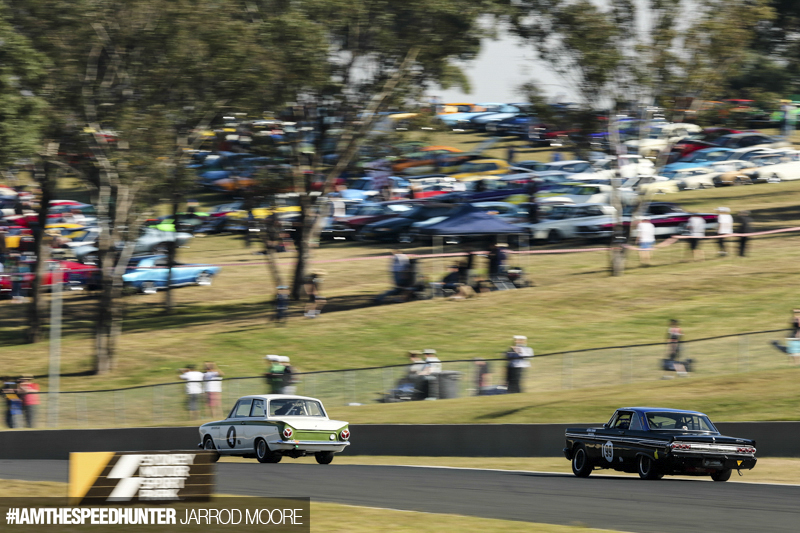
The sunshine and the promise of cars from a lot of the fathers’ younger years brought in huge crowds in over the weekend, many of whom would no doubt be trying to teach their kids how it was ‘back in their day’.
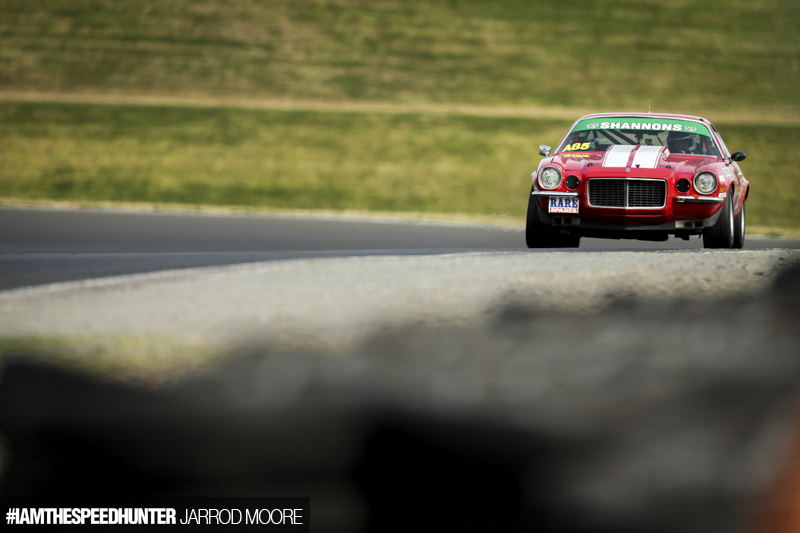
The heavy hitters of the weekend were the Touring Car Masters. This category evolved from the traditional Group N class. The technical regulations of this class allow more freedom with engine, suspension and braking developments, ensuring the class is popular with engineers, drivers and the fans.
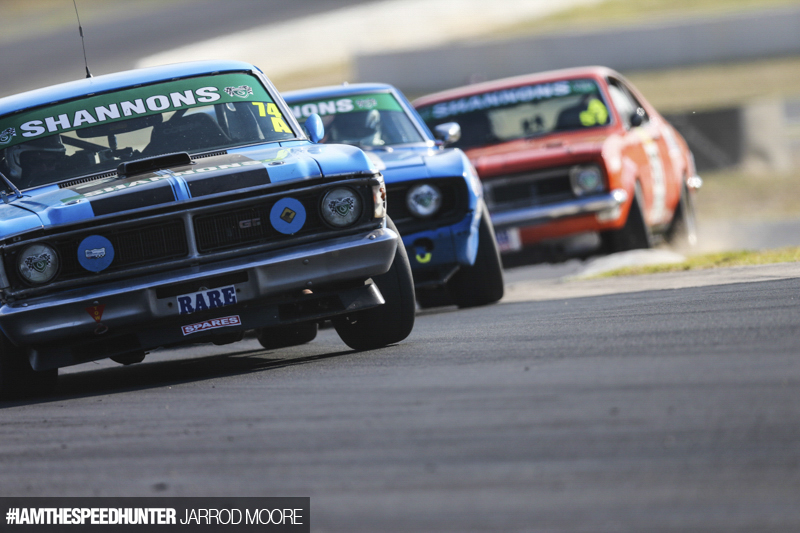
Mixing it up with classic Americana were some of Australia’s most iconic cars, like the Ford GTHO and the Holden Monaro from the 1960s and ’70s.
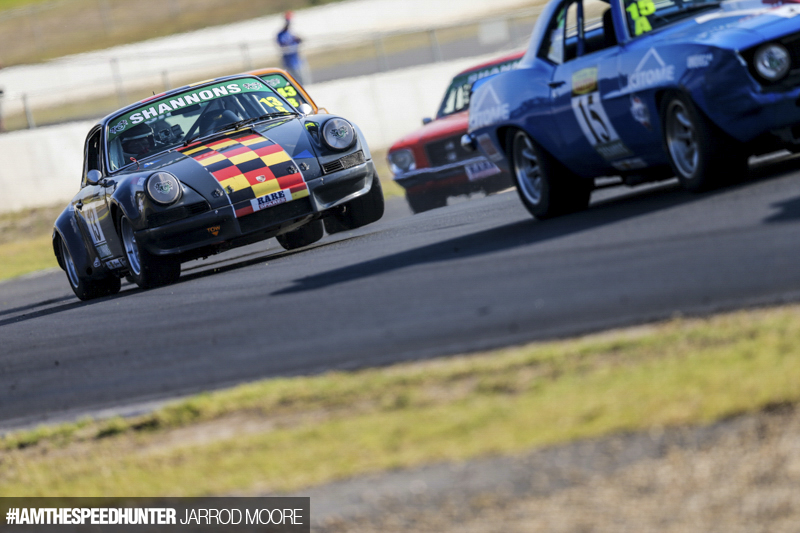
To complete the international mix of cars in TCM were a couple of Porsche 911s, this one doing its best trike impression in the new section of the track, which is a lot more technical.
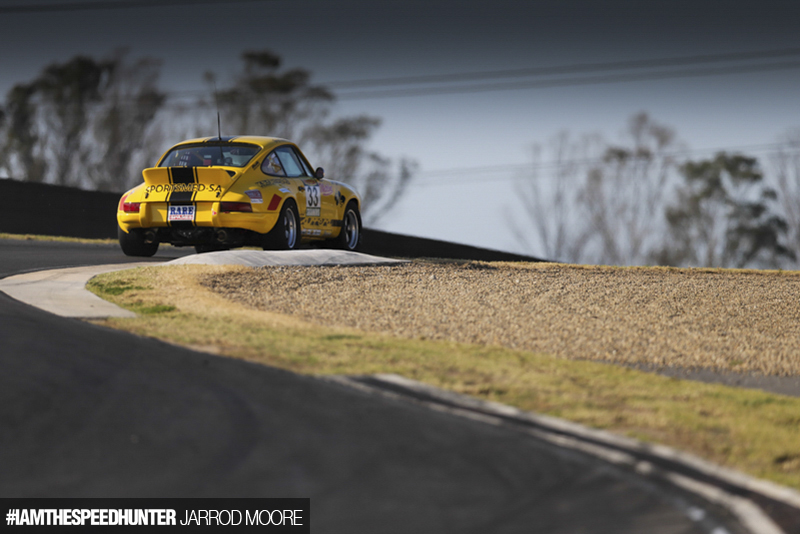
50 years on and the Porsche 911 is still preaching the merits of lightweight, great-handling cars by competing against heavier, more powerful cars. Whilst Greg Keene battled all weekend with Camaros, Mustangs and GT Falcons, Bill Pye was able to pip John Bowe in Race 2, taking the win on the last lap in a sprint to the flag.
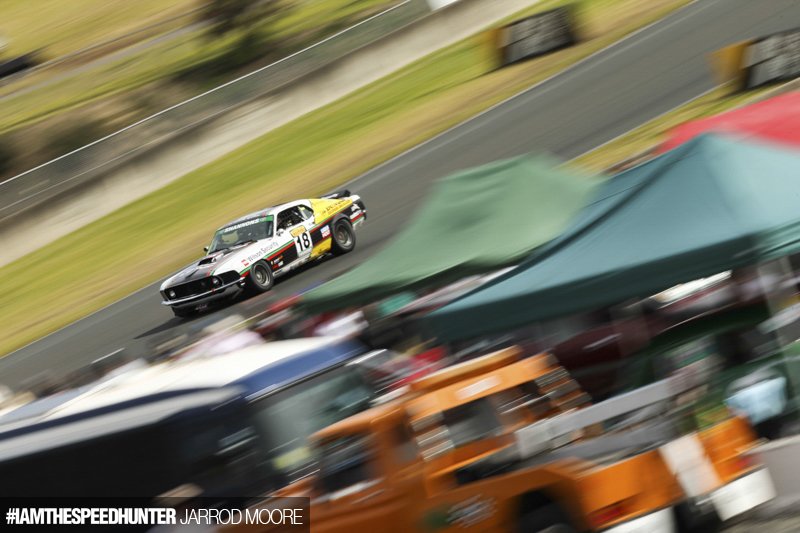
Setting his 80th career pole during the event was racing legend John Bowe in his 1969 Ford Mustang Trans Am. Long, wide and with a sound that makes grown men quiver with excitement.
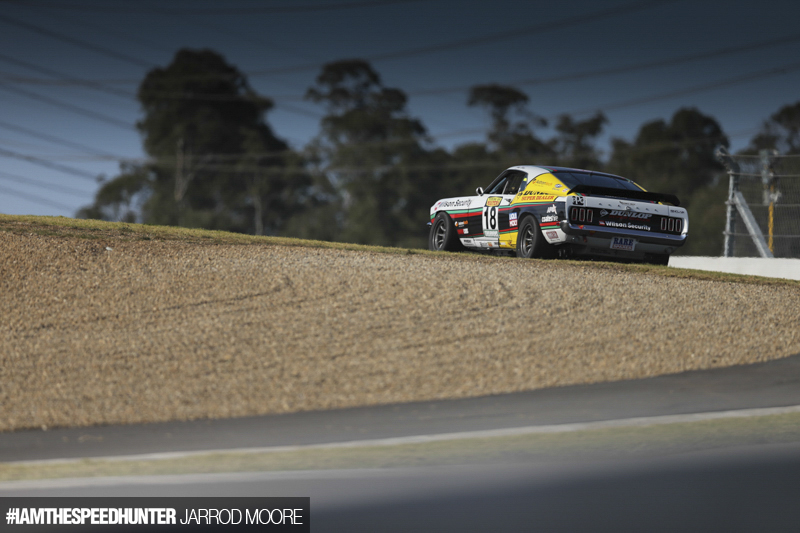
The ’69 Mustang ran strongly all weekend with John behind the wheel, taking the round win. The weight penalty and RPM limit imposed on the Mustang’s 351 Windsor meant it wasn’t plain sailing for the series leader. After a win in the first race, John followed Bill Pye home in Race 2 and Andrew Miedecke home in Race 3.
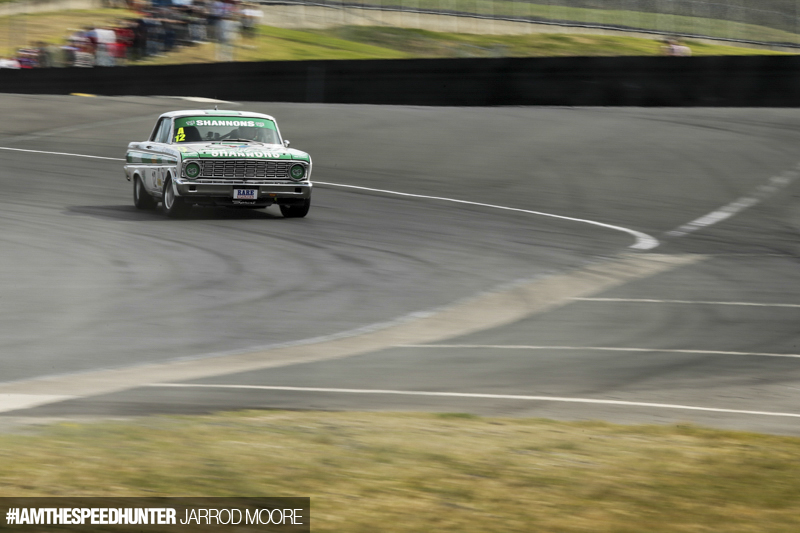
Here’s Australian motorsport legend Jim Richards demonstrating that its not always easy to get his Falcon Sprint out of a corner. The 550hp 289ci V8 requiring a generous serving of ‘oppo’ on exit

A legend of the sport, Jim’s silverware collection includes four Australian Touring Car Championships, eight Targa Tasmania tarmac rally wins, four Nations Cups championships, a Nascar Championship and a total of seven Bathurst 1000 wins. It doesn’t hurt that Jim is a consummate gentleman and very approachable in the pits.
Make it big; make it fast; make it V8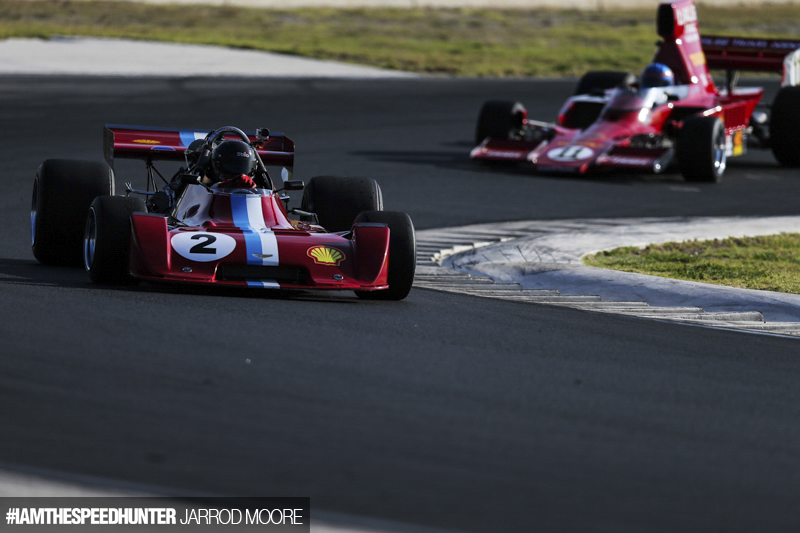
Add a five litre V8 to an open wheeler chassis, bolt on massive slicks and some wings and you get a Formula 5000. Starting in America back in the late ’60s this series quickly spread around the globe, proving popular with drivers like James Hunt and Mario Andretti. The cars continue to enjoy a huge following, with names like McLaren, Chevron, Lola, Matich and March all competing over the weekend.
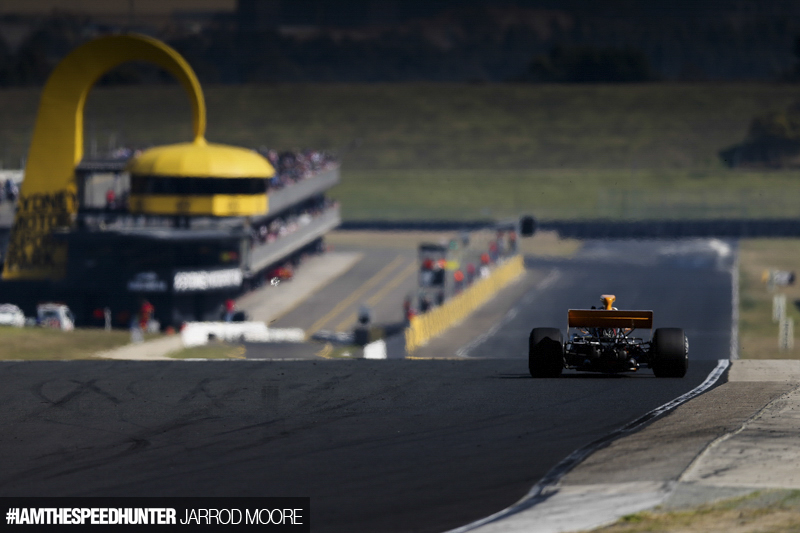
The noise of five litre V8s on song, with only a few feet of exhaust pipe to muffle the thunderous noise, echoed off the packed grandstands. The normally challenging Turn 1 provided a brief reprieve from wide open throttle, only requiring a brief lift until the slicks and aero took hold and cars blasted through at full noise.
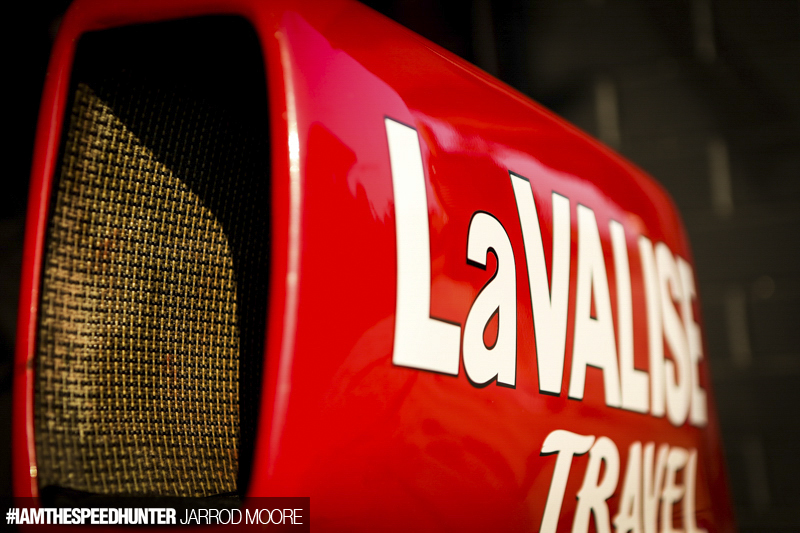
High mount scoops and kevlar weave.
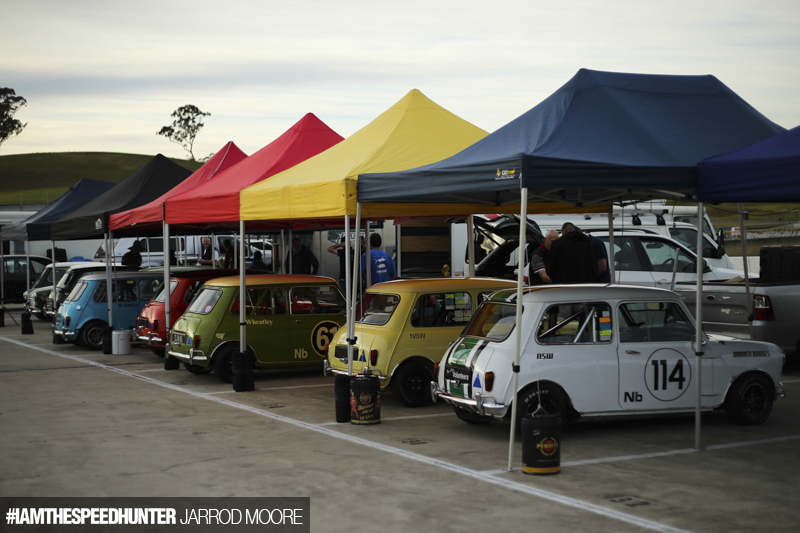
Stepping away from the track and looking around the pits, it’s weekends like this where you have the opportunity to get up close to some of the marques that made their mark on motor racing. Like the Mini Cooper. Small and compact, it is more like a go kart on the track and this weekend had Minis in spades.
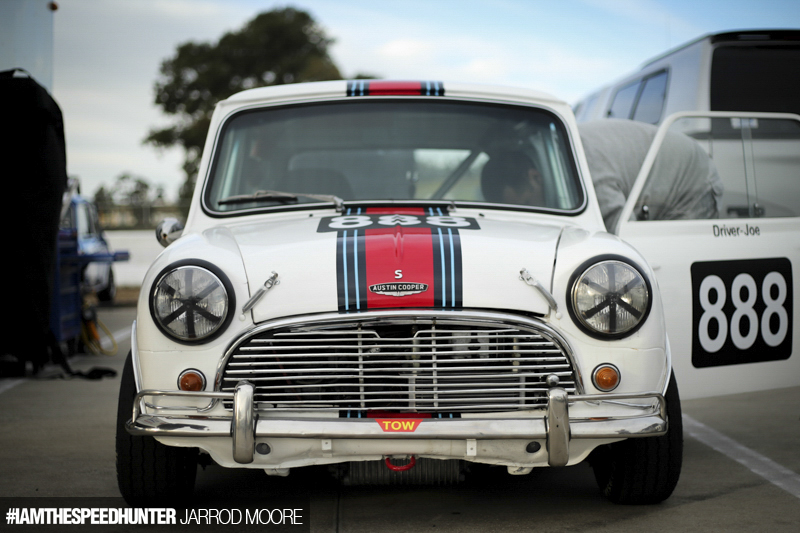
Martini colours on period cars are a winning combination for me.
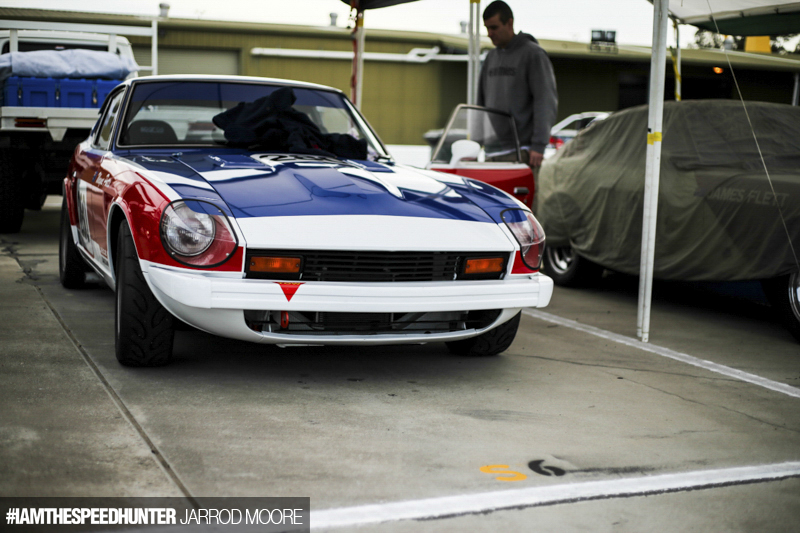
Classic Nissan motorsport colours on a 240Z also can’t be beat. This one was competing in Group S, only allowing limited modifications to period sports cars.
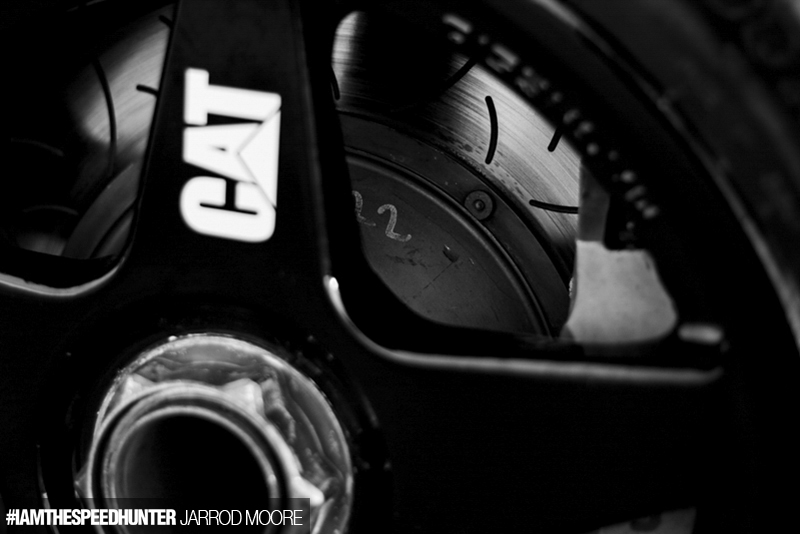
The AU Falcon V8 Supercar that was driven by John Bowe back in the late ’90s was one of several V8 Supercars that were about in the pit area.

Another V8 Supercar that was a part of the Bathurst display was Larry Perkins’ 1997 VS Commodore: the last time he won the Great Race at Mount Panorama was in this very car.
Skylines, Cossies and more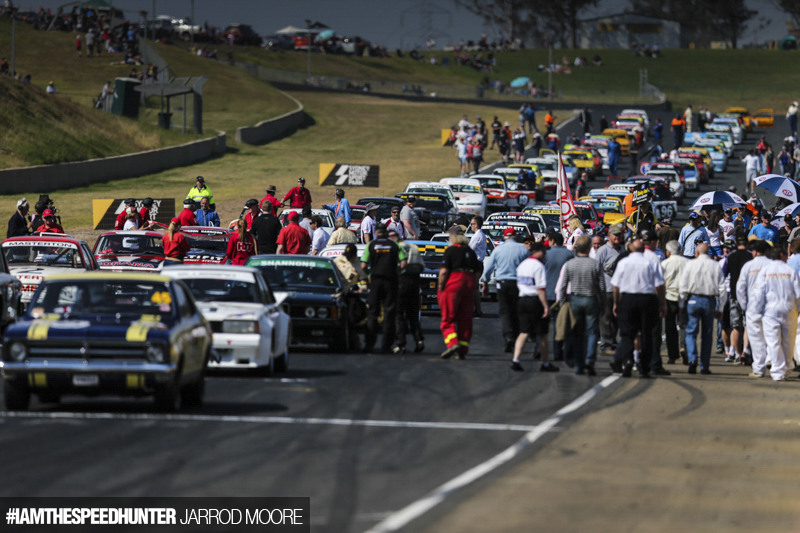
The Bathurst Grid Spectacular brought together a vast array of cars that have raced in Australia’s iconic endurance race. Motor racing in Australia really owes a lot to the country town of Bathurst and its iconic 6.213km public road. I heard an interesting quote on the weekend by one of the commentators: “American muscle cars were built for drag racing, Australian muscle cars were built for Bathurst”. While it’s a bit of a generalisation, it does speak volumes about how manufactures and racing teams would focus their efforts on that particular race.
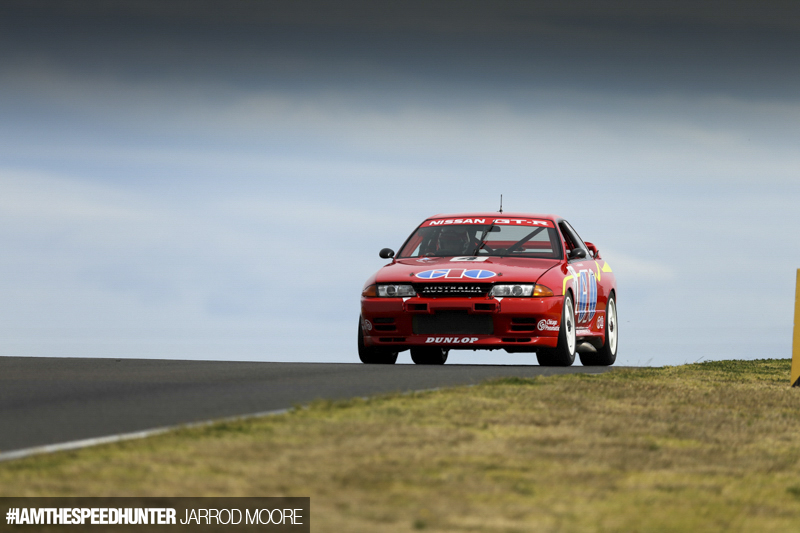
The Bathurst Grid Spectacular released many of the makes and models that have taken part in the Great Race for a number of parade laps. From the very first, near production cars that were driven to and from the race to to recent V8 Supercars and everything in between. Above is the 1991 Sandown 500 winner, the GIO Nissan GTR which finished third at Bathurst the same year.
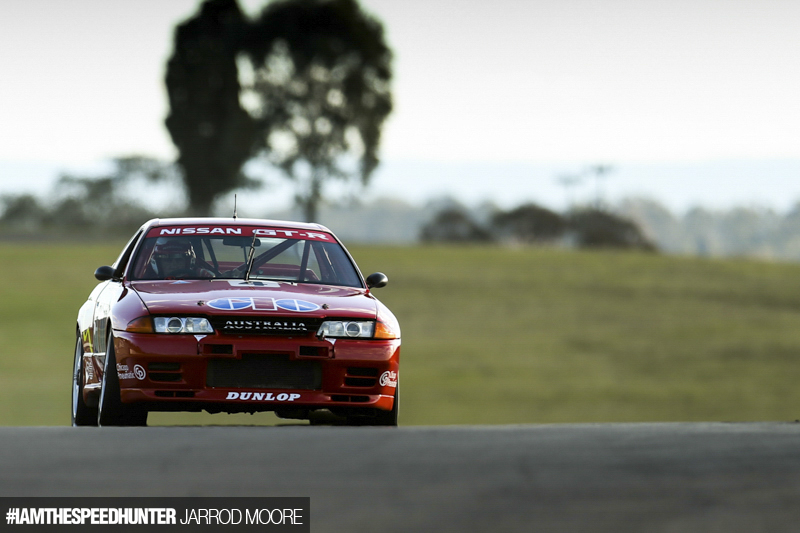
The GIO GTR was rarely stationary, competing in the Group A-C races and taking part in various demonstration laps.
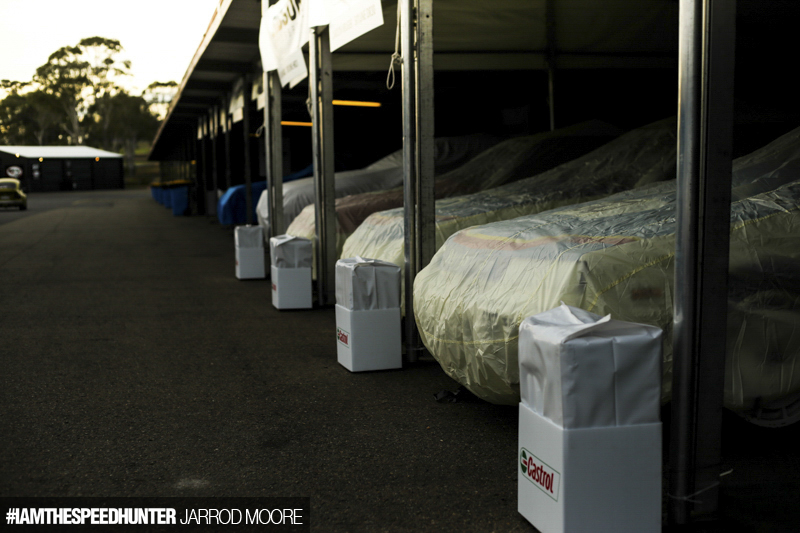
Group A R31s and DR30s as well as a Group C Bluebird and EXA.

Fred Gibson has “Got the band back together”. Along with Alan Heaphy, GMS are back working hard to provide the current owners of their competition cars the support that will allow the cars to be raced reliably and competitively. Jim Richards recently purchased his old HR31 GTS-R and was competing in the Group A-C races, along with the Touring Car Masters races in his Falcon Sprint.
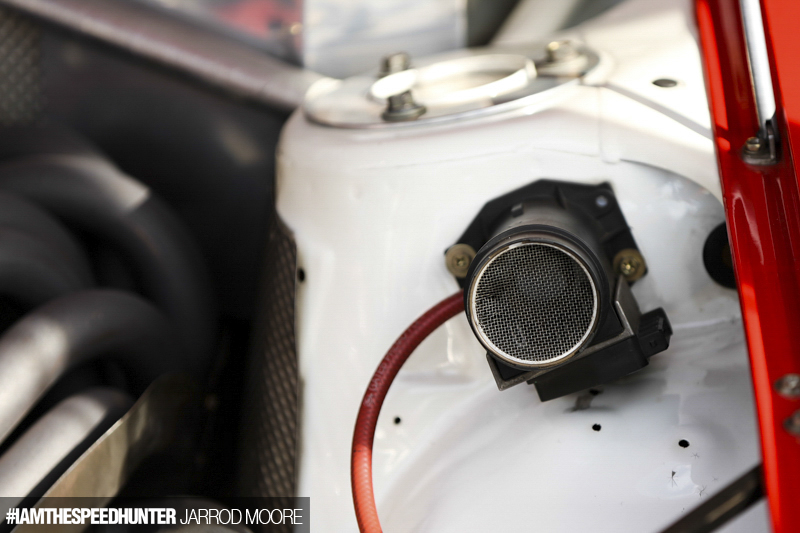
During the Group A era of Touring Car Racing in the ’80s and ’90s, many of the teams were renowned for pushing the boundaries with their interpretations of the rule book. When the regulations stated that the factory airflow meter must be attached, the team obliged and attached it to the strut tower of the HR31, whilst the map sensor did all the hard work.
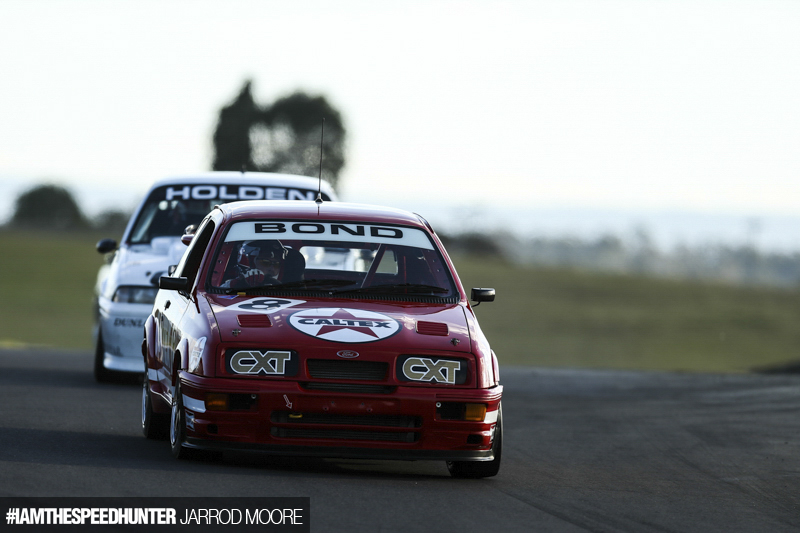
Another icon of the turbo era of Group A Touring Cars was the Sierra Cosworth RS500s. The Caltex Cossie from ’92 was one of the the last of the wild bunch, with its two-litre Cosworth YB punching out more than 680hp in quali spec.
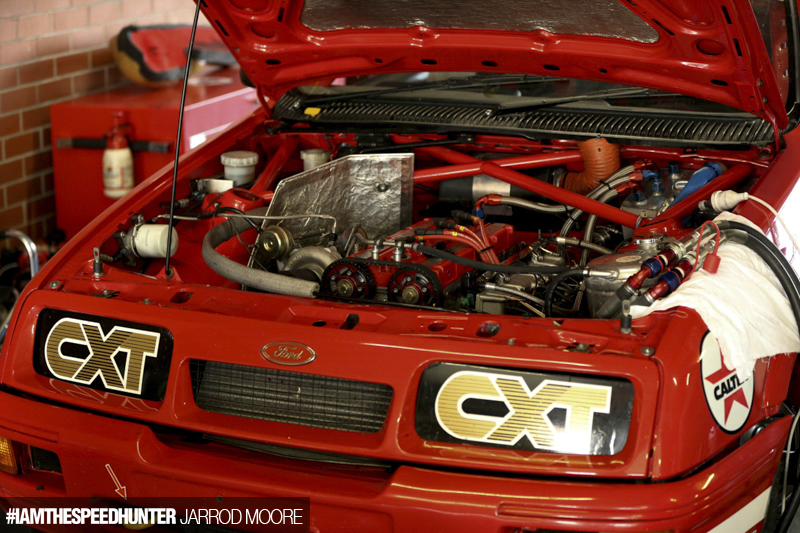
600-plus hp out of a two-litre motor meant that drivers would be waiting for that hit of boost – when it came on, they would double their power in the space of 1,000rpm. Throttle control was key to getting the exit right so as not to unleash the fury too early.
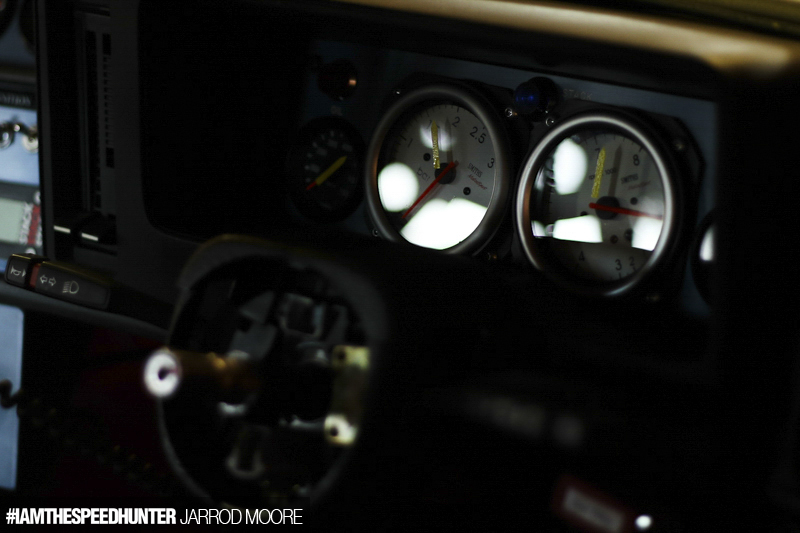
1.7bar of boost on the gauge. Recently overhauled by Mick Mitchell, when the Caltex Cossie got a full head of steam coming onto the straight nothing was close to catching it.
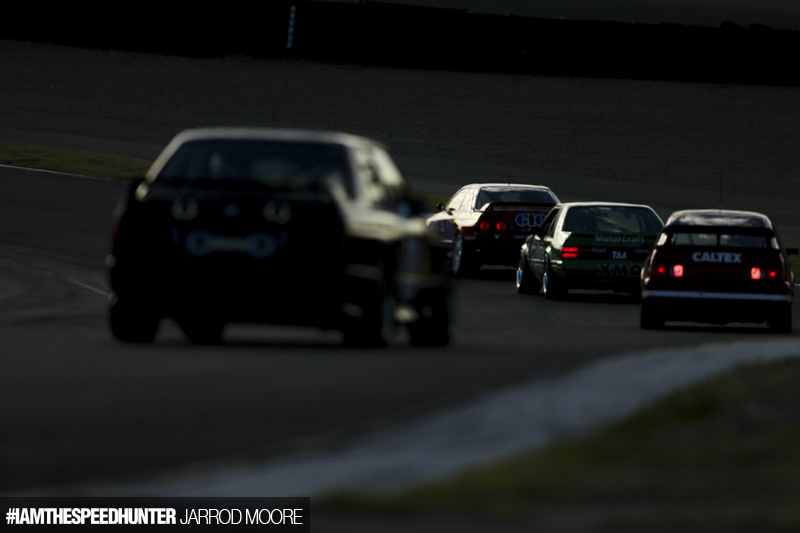
1992 was the last time Group A was seen racing in Australia. By 1992 Sierra RS500s were allowed a few more homologation parts over their earlier counterparts and include stronger diff, Hollinger six-speeds and larger wheels to try and curb the domination of the Gibson Nissan GTR in the 1991 season.
The family festival
The biggest fields over the weekend were the Group Ncs and Nbs.
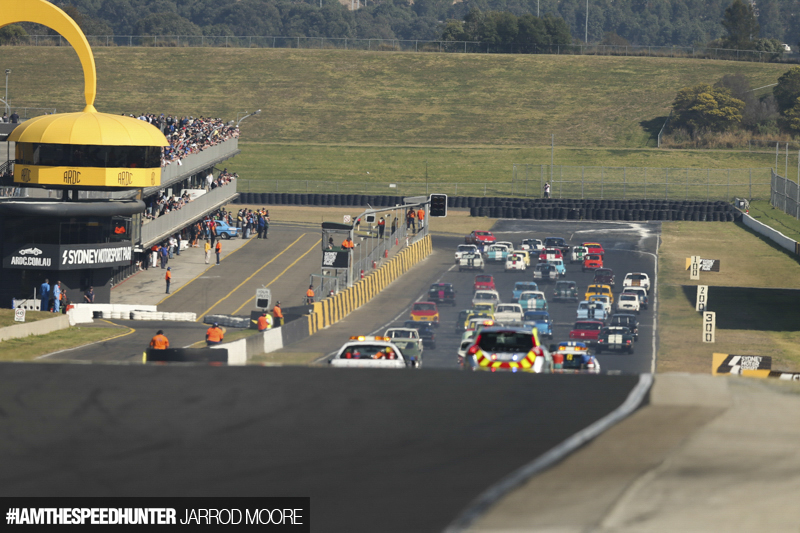
Nb cars were ranging from Mustangs from America, Lotus Cortina and Mini Cooper Ss from the UK and EH Holdens from Australia. The racing was close with cars enjoying an advantage through one section of the track then losing out to someone else through a different section.
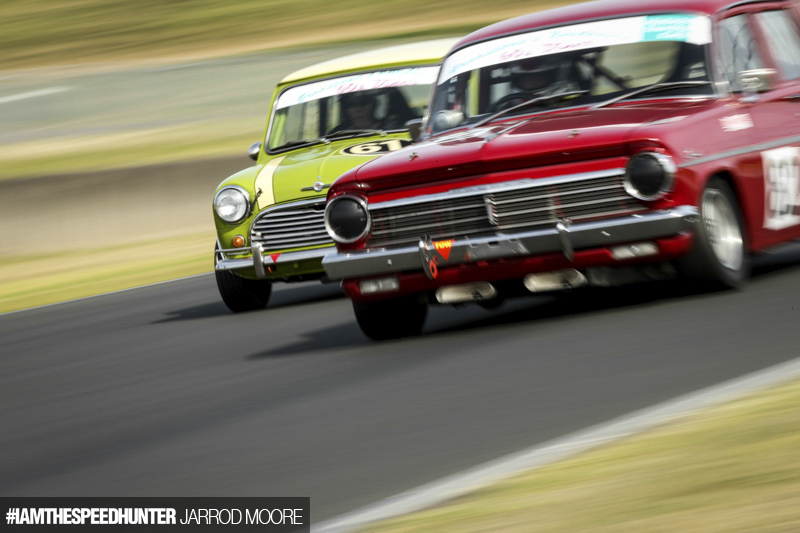
WIth Go-Kart like handling the Minis are a competitive little package that punch well above their weight.
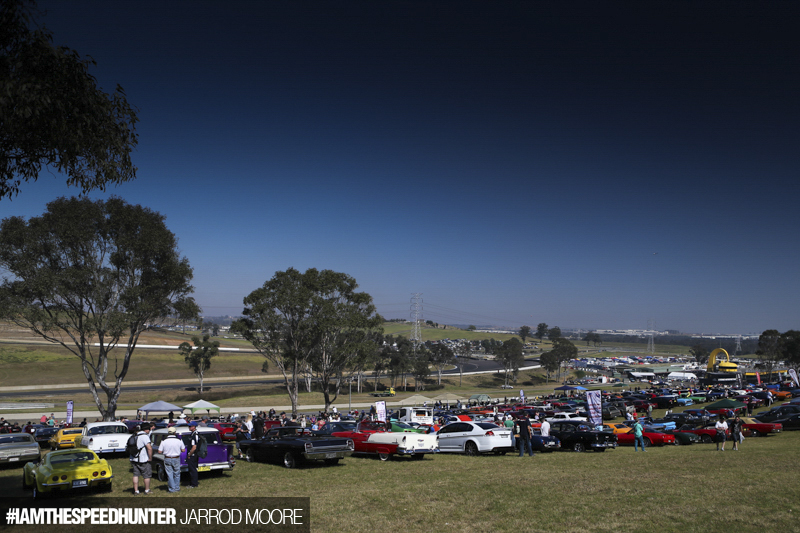
There was a great atmosphere on the main straight for families, all celebrating Australian motorsport. The number of hours that have been invested into nearly all of the cars sitting on the hill reflected how much people enjoy events like the Muscle Car Masters, where they can display their hard work.
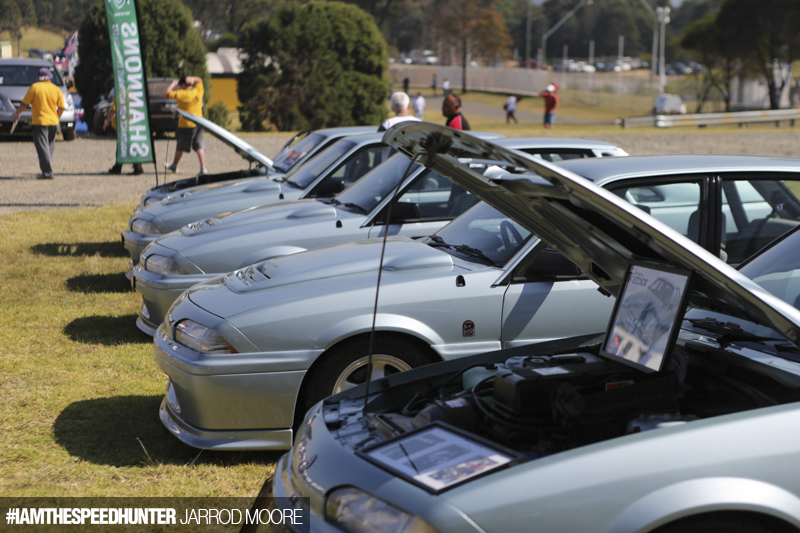
Homologation specials like the VL Walkinshaw, with their ties to Group A touring cars of the past, were out in force. They command top dollar these days.
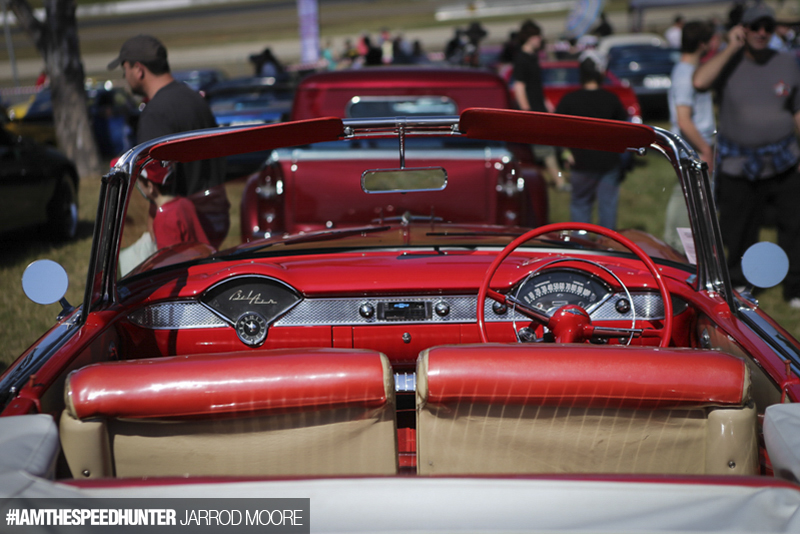
Amongst some of the classic muscle cars on the hill were a few cruisers; a big, beautiful red Bel Air grabbed my attention with its attention to detail.

With a bit of everything from statics to some rare cars out on the track, the Muscle Car Masters was a great weekend and an opportunity to relive some of the great moments in Australia’s motor racing history.
Words and images Jarrod Moore
#IAMTHESPEEDHUNTERAbout #IAMTHESPEEDHUNTERWe created #IAMTHESPEEDHUNTER to allow you the opportunity to share your skills and car culture experiences from around the globe with the rest of the Speedhunters audience.How do you get involved? It’s simple…Flickr - Join our #IAMTHESPEEDHUNTER Flickr Group and share your favourite photos with us and others.Instagram – Follow us on Instagram at @TheSpeedhunters and tag your own car culture images with #IAMTHESPEEDHUNTER
Twitter – Follow us on Twitter at @SPEEDHUNTERS and share your tweets with the #IAMTHESPEEDHUNTER hashtag.
Tumblr – Visit our Tumblr page to view the latest #IAMTHESPEEDHUNTER tagged images.
E-Mail – If you’ve been to a cool event and captured some amazing images, be sure to e-mail them to us on iamthespeedhunter@speedhunters.com and tell us a little bit about the event. The images need to be a minimum of 800×533 pixels.Have you submitted already but yet been featured? Here are some tips to help you…DO – Tell us your name!
DO – Submit your best work, regardless of when it was taken
DO – Take your time shooting and consider each detail
DO – Try to submit each image no larger than 1000PX wide
DON’T – Put a huge watermark on it. We’ll make sure you’re credited
DON’T – Send us huge image files that kill our e-mail system
DON’T – Send us scary ZIP or RAR files