I’ve said many times that the greatest thing about Speedhunters is the variety of automotive material that we cover. We work tirelessly to bring you guys the coolest cars, events and more from across the world and from just about every subculture there is. This also means we give equal appreciation to cars from the lowliest compacts all the way to the latest hypercars. It’s what makes Speedhunters, Speedhunters.
Whether it’s touring the McLaren or Pagani factories to see the latest in supercar technology or a working class garage tucked away somewhere – we are there. While I can dig the supercars and exotics as much as anyone, for me it’s always the more accessible machines and builders that I find the most inspiring.
Take the Ford Fiesta for example. From its inception in the mid 1970s right through to today, the Fiesta has served as an affordable and practical gateway to automobile ownership. This front-wheel drive compact is about as un-supercar as it gets, yet when put in the right hands a car like the Fiesta can be built into something just as interesting as the latest mid-engined exotic.
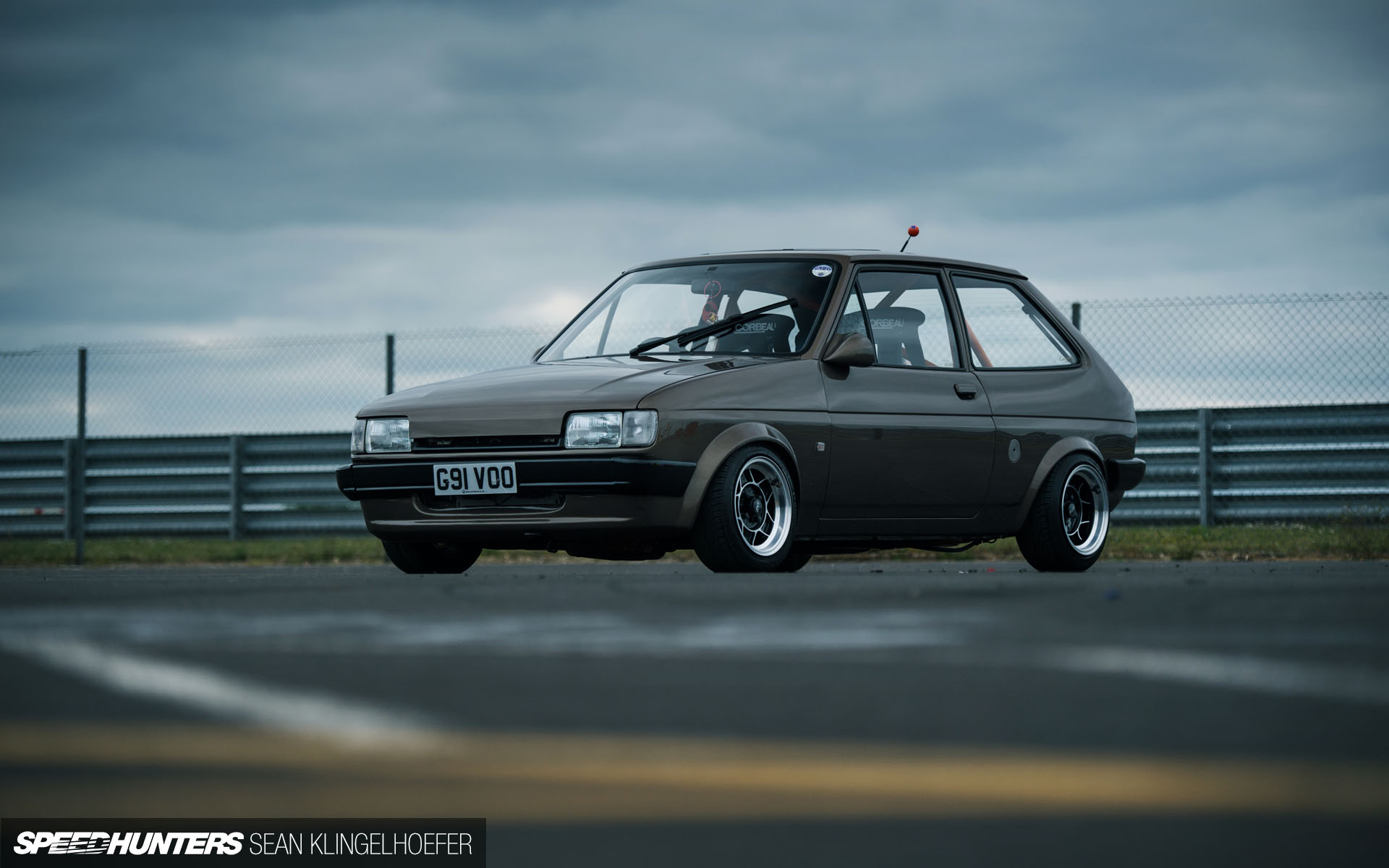
That brings us to a Mk2 Fiesta owned and built by Scott Matthews of the UK. We came across the car at Snetterton Circuit at the same time we found the Ford Escort featured last week.
Scott has owned the Fiesta for nine years now, originally acquiring it as a stock project car and working year by year to build the machine you see here. As with the Escort, Scott’s Fiesta has become a well known car in the UK Ford scene with its keen style and attention to detail.
And like the Escort, this Fiesta has received attention in all areas with no single part of the car being overbuilt in relation to the others.
Show and go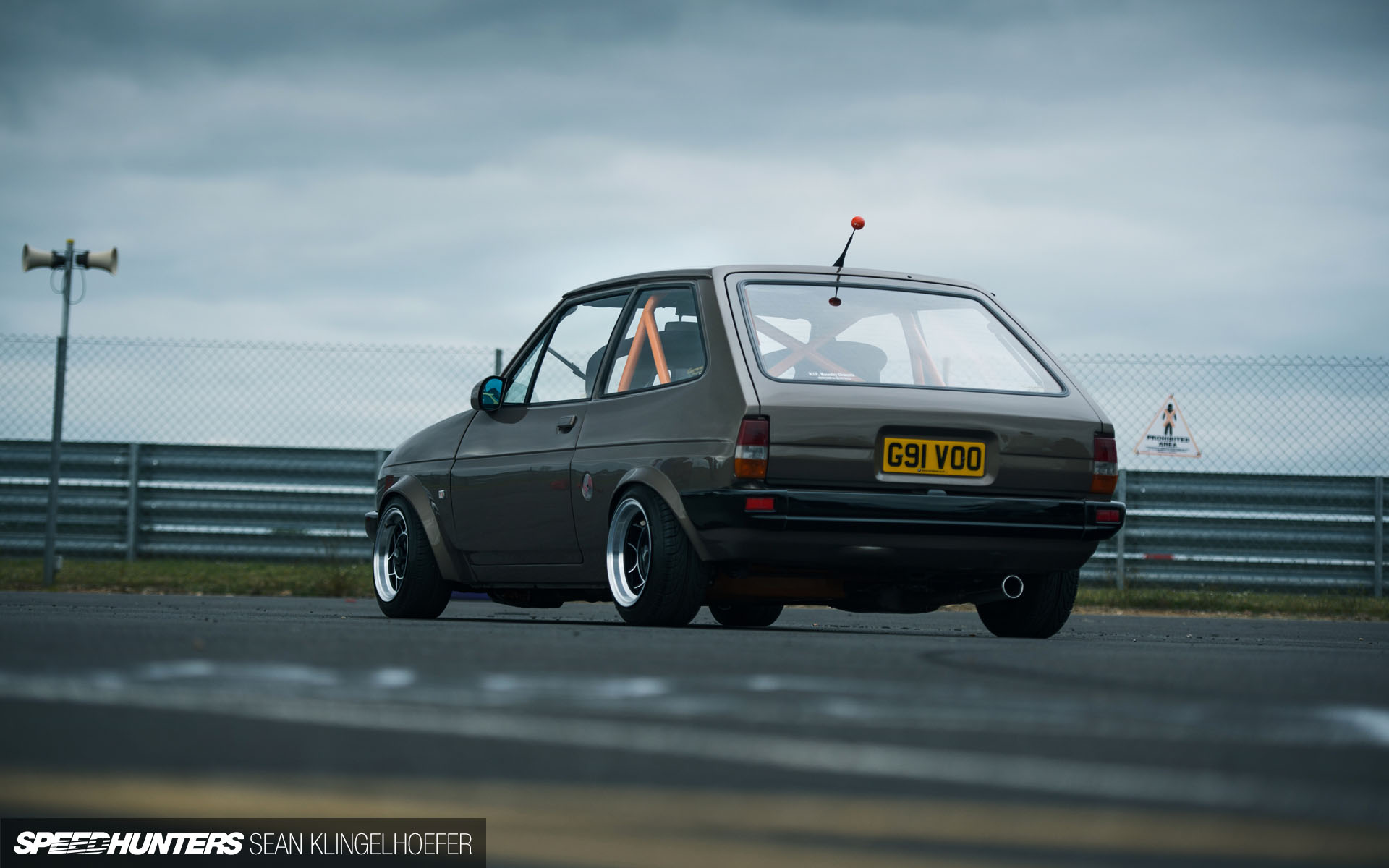
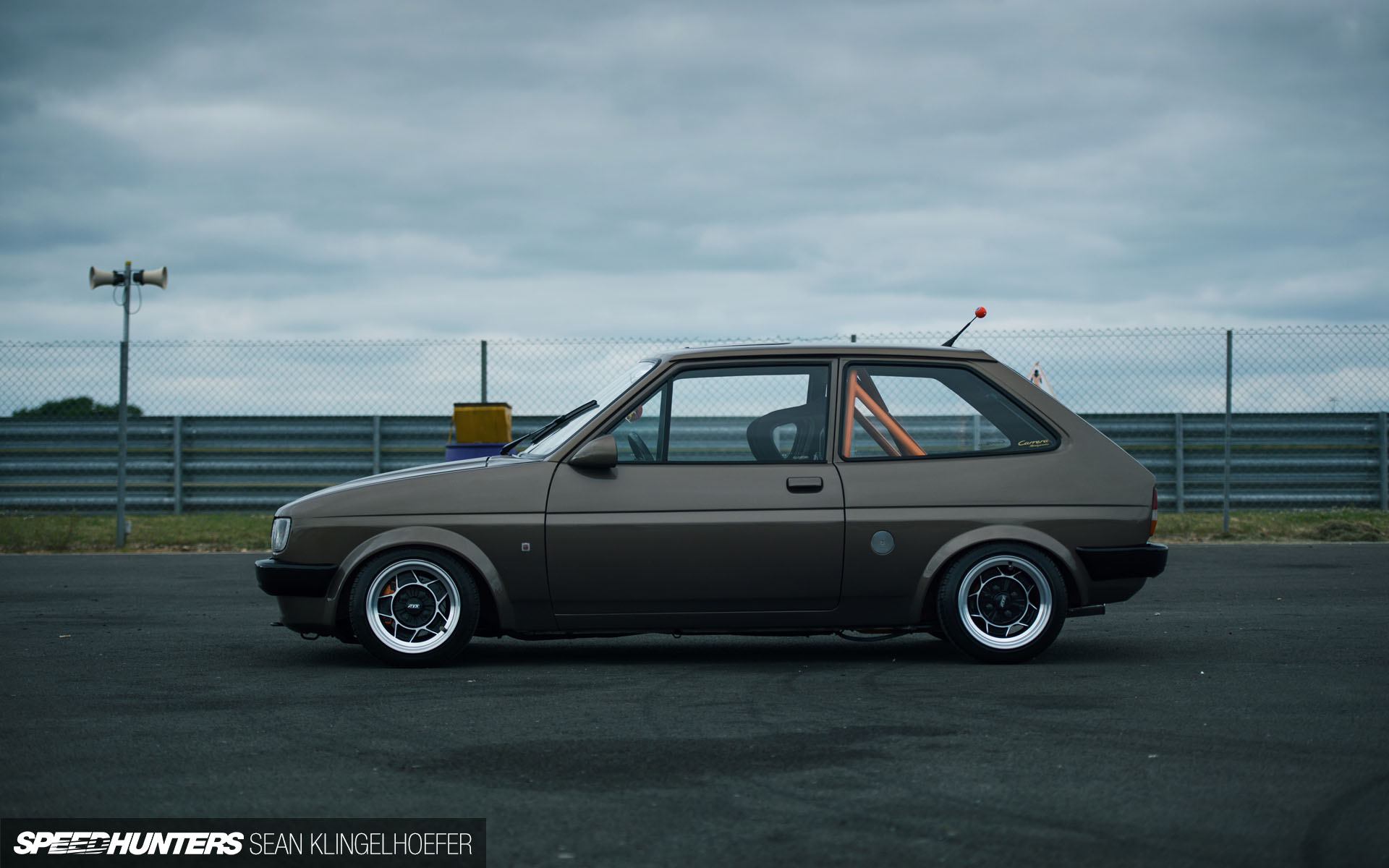
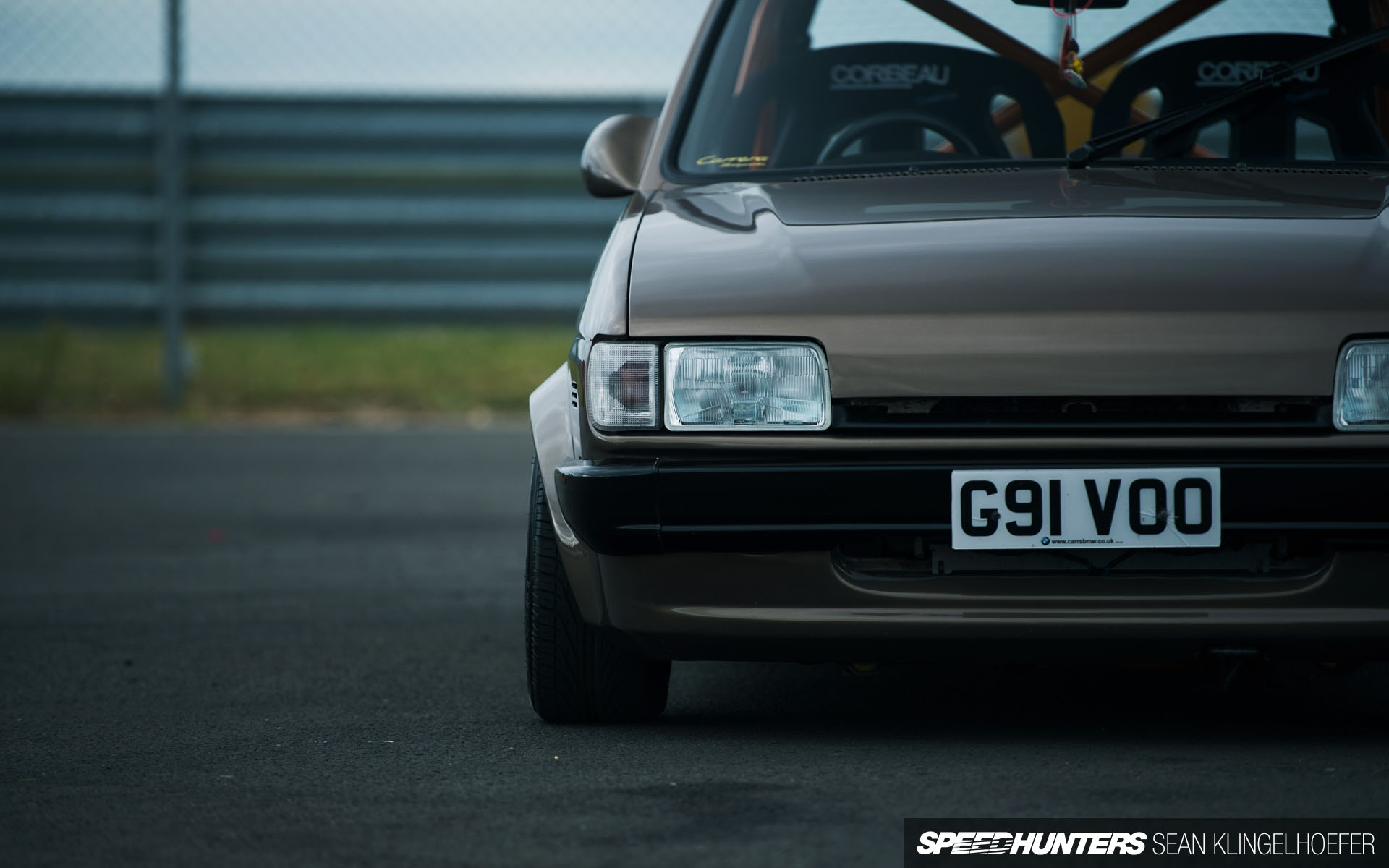
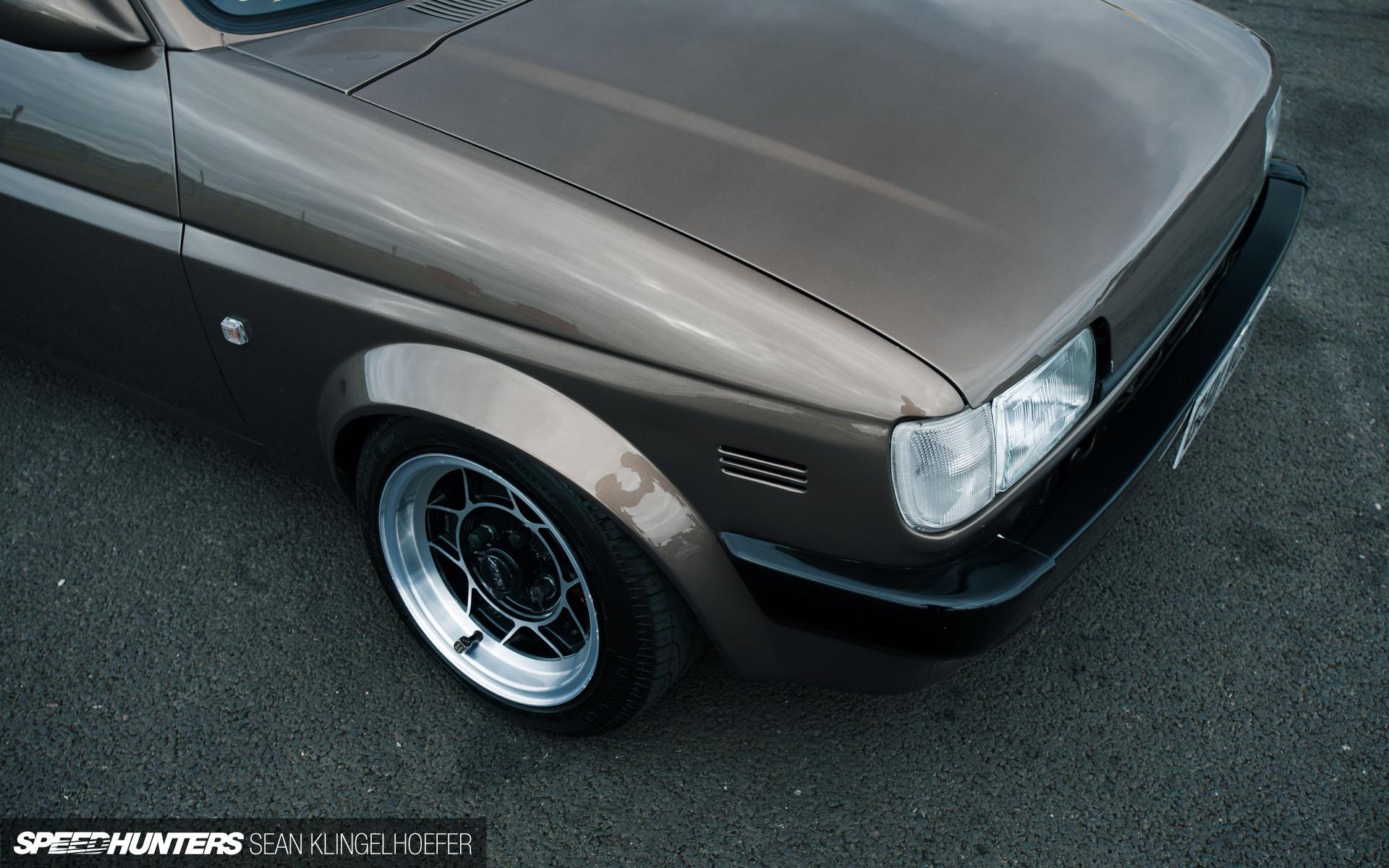
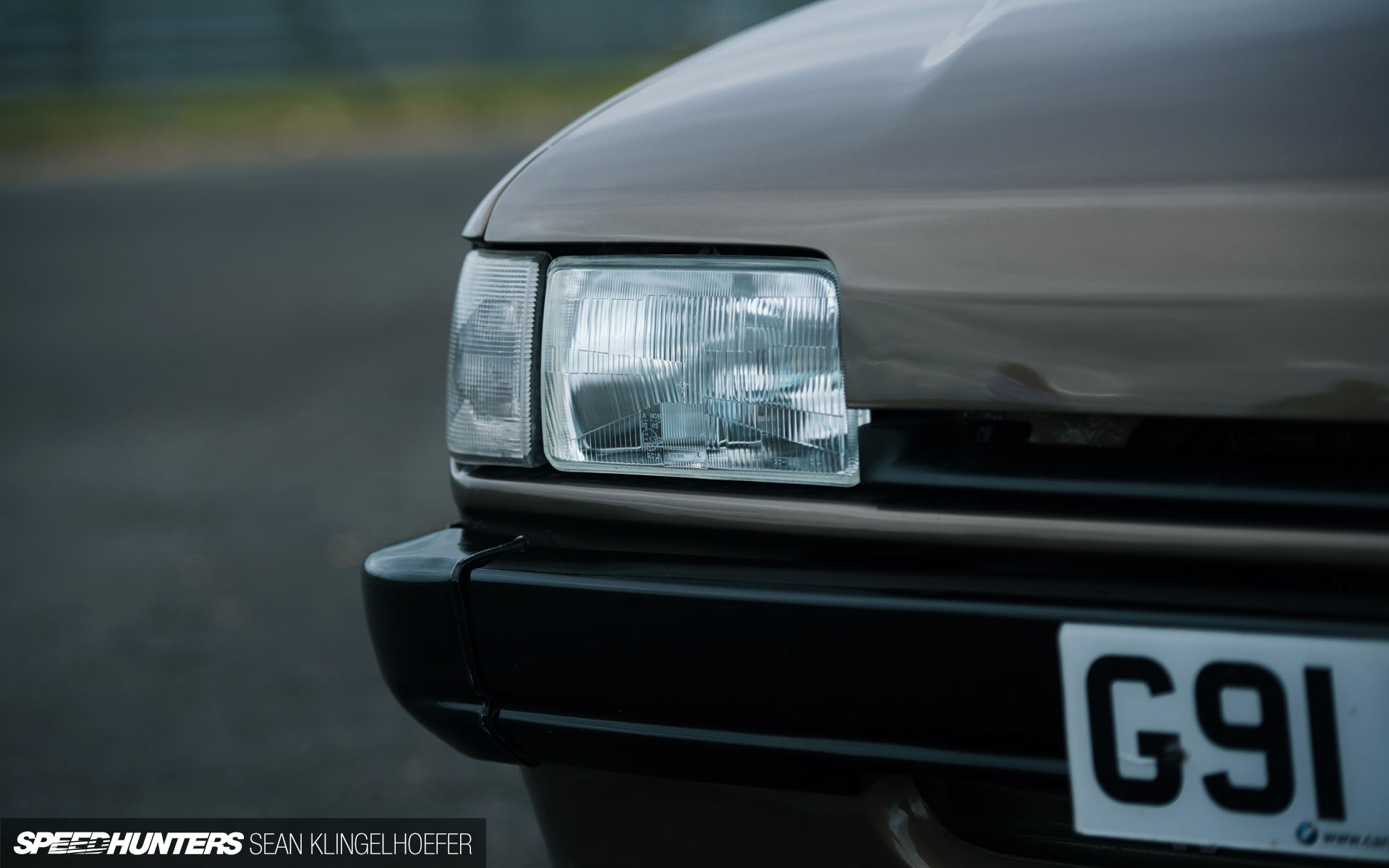
To those that aren’t familiar with Fiestas, that exterior of Scott’s car might look stock – but Ford fans should easily be able to pick up the minor changes. The original steel fender arches have been widened and the locks and badges have been shaved off. The number plate recess has also been shortened and the bumpers have been replaced with those from a 1.1 liter model Fiesta.
All of the bodywork on the car was handled by Carrera Bodyworks, which is owned by Jeremy Bonner – the owner of the Escort featured last week. Along with the subtle body modifications, Jeremy’s shop also coated the Fiesta in an understated hue called Woodland Brown.
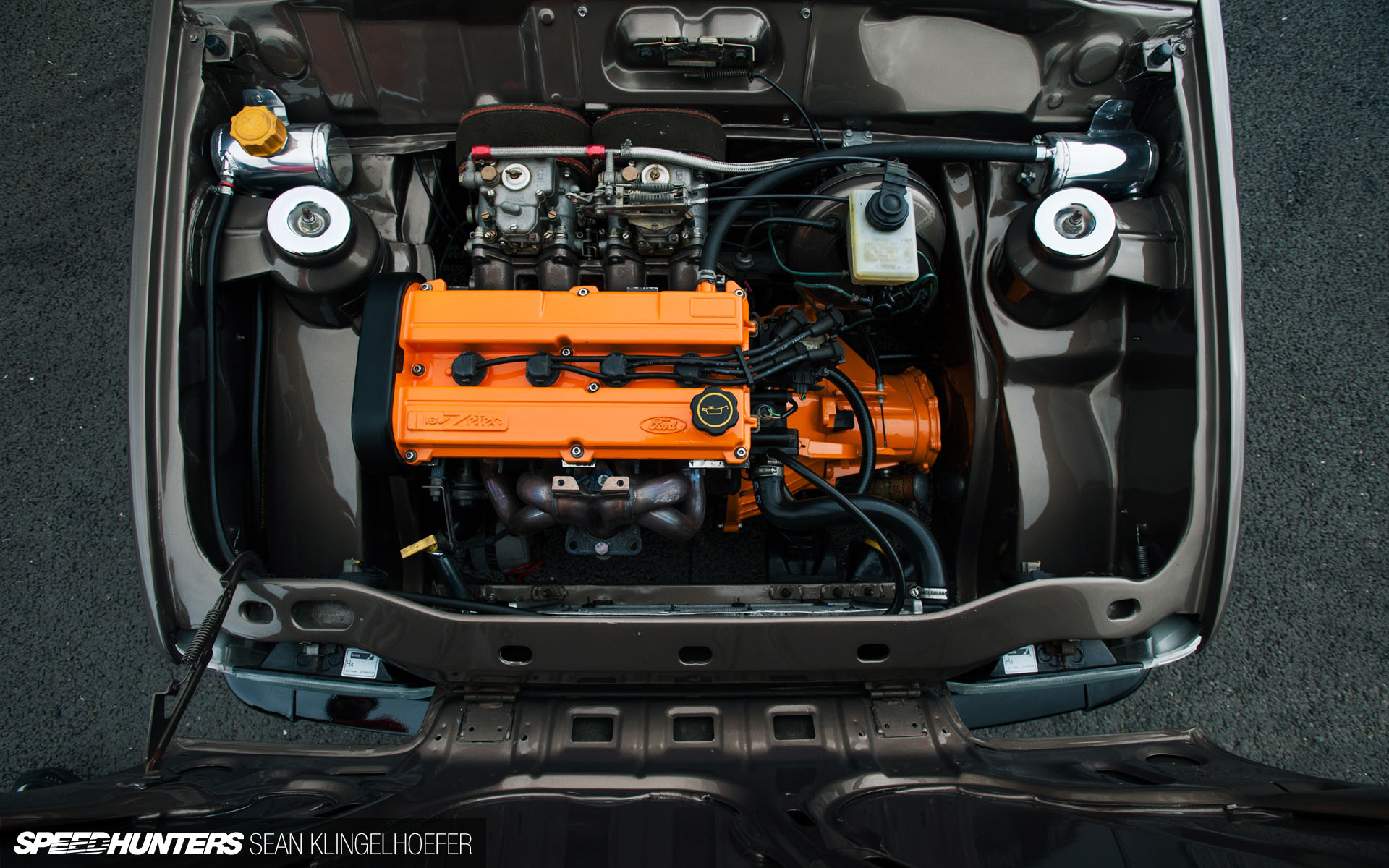
The paint and bodywork are just the beginning though. Once you pop the Fiesta’s hood, you really begin to see just how much time and thought Scott has put into the car.

The engine is a 1.8 liter 16-valve Zetec with a MkI Focus exhaust manifold and a custom-made stainless steel exhaust system going all the way back.
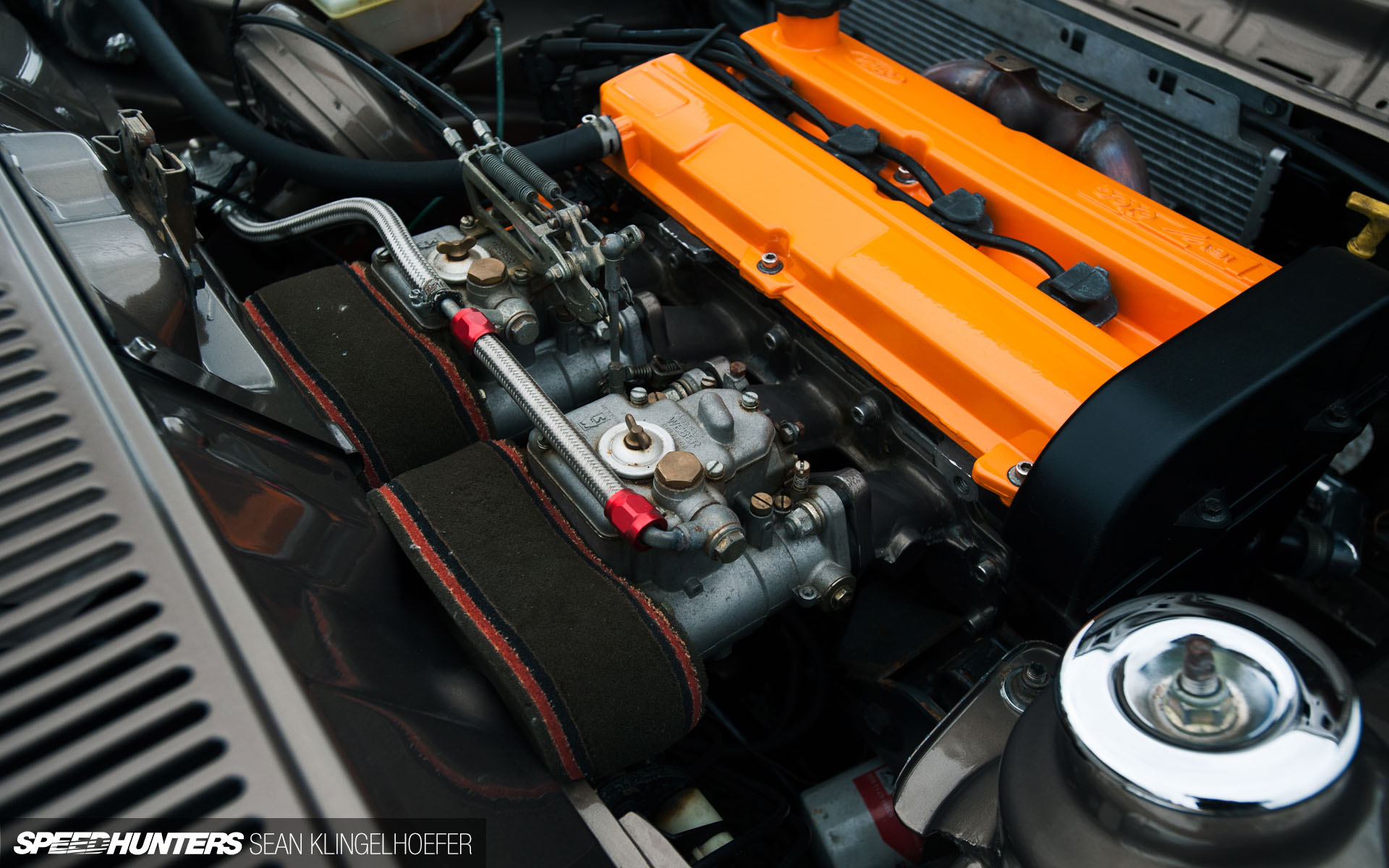
Induction comes from a pair of Weber 40 carburetors on a Weber manifold. There’s just something great about carbs on modern twin cam engines, isn’t there?
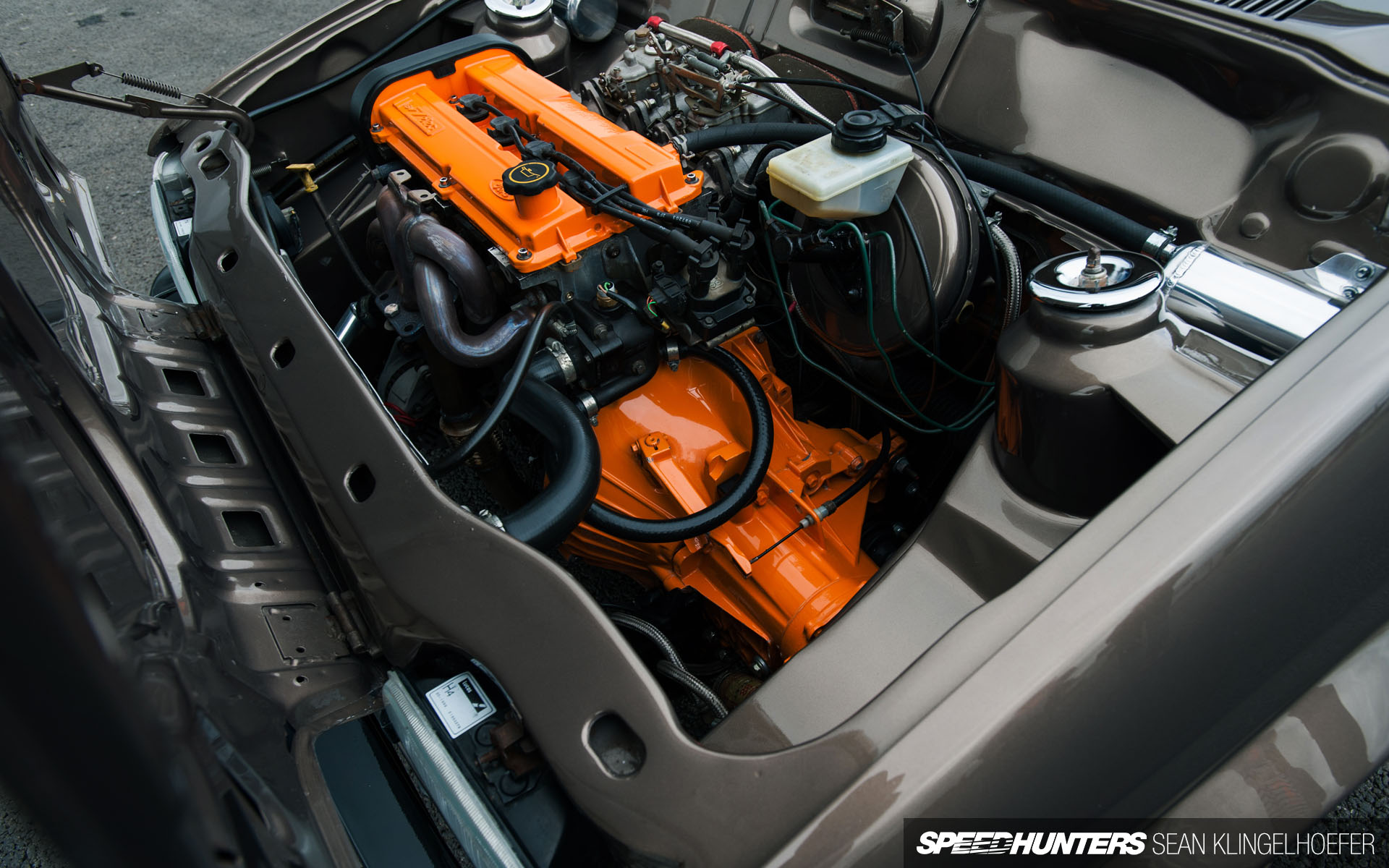
To handle the extra power, the Zetec motor is mated to a Mk6 Escort GTI gearbox. The engine bay has also been smoothed for a cleaner and simpler look.
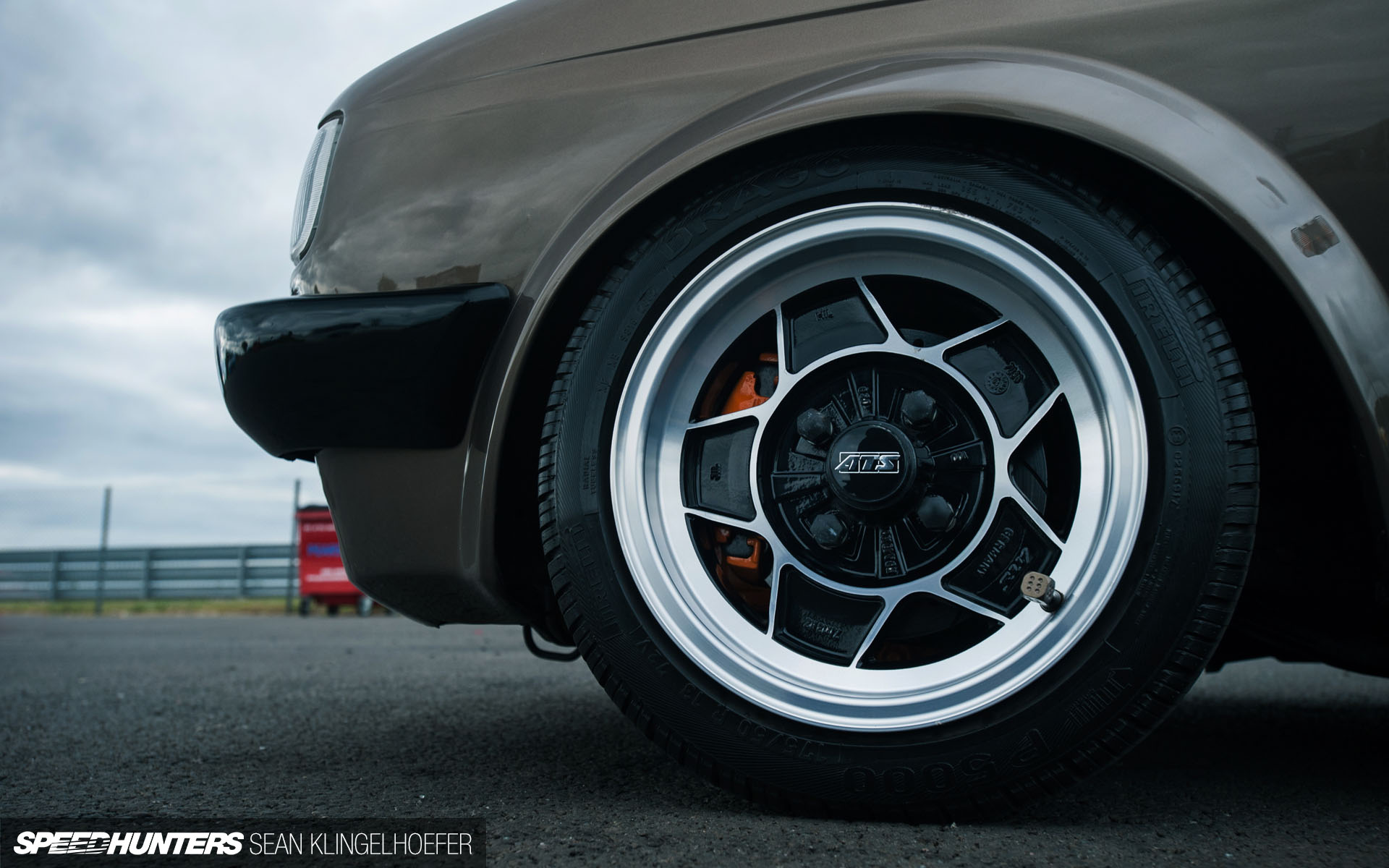
As for footwork, the Fiesta is riding on a set of adjustable Gaz coilovers with polyurethane bushings and an adjustable panrod. Braking is handled by Black Diamond vented and grooved discs with matching Black Diamond pads.
Small touches
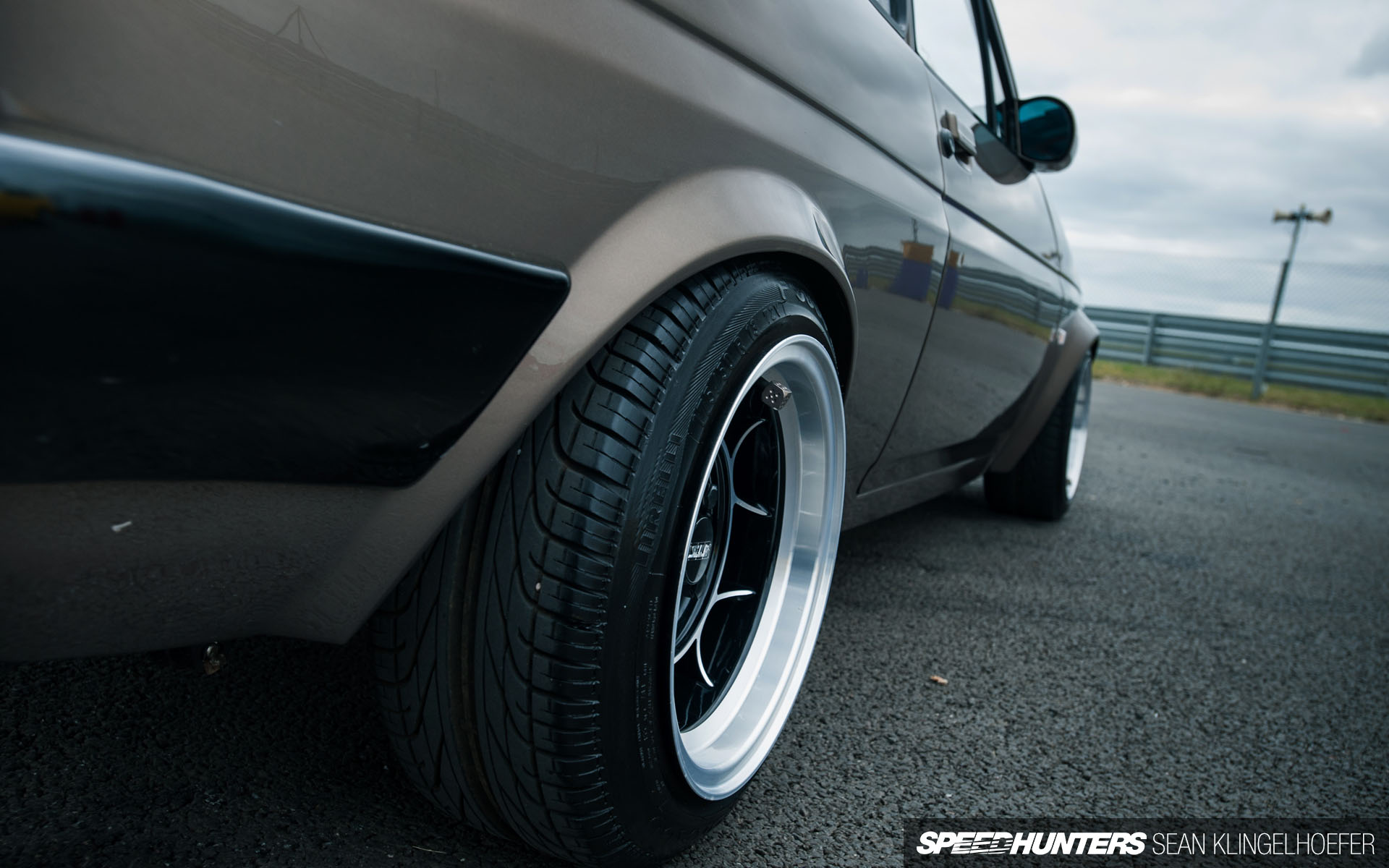
Having the right set of wheels is crucial on a car like this, and there’s really no arguing with Scott’s choice of ATS Classics. The wheels measure 13″x7 in the front and 13″x8 in the rear, with 175/50/13 Pirelli P6000 tires all around.
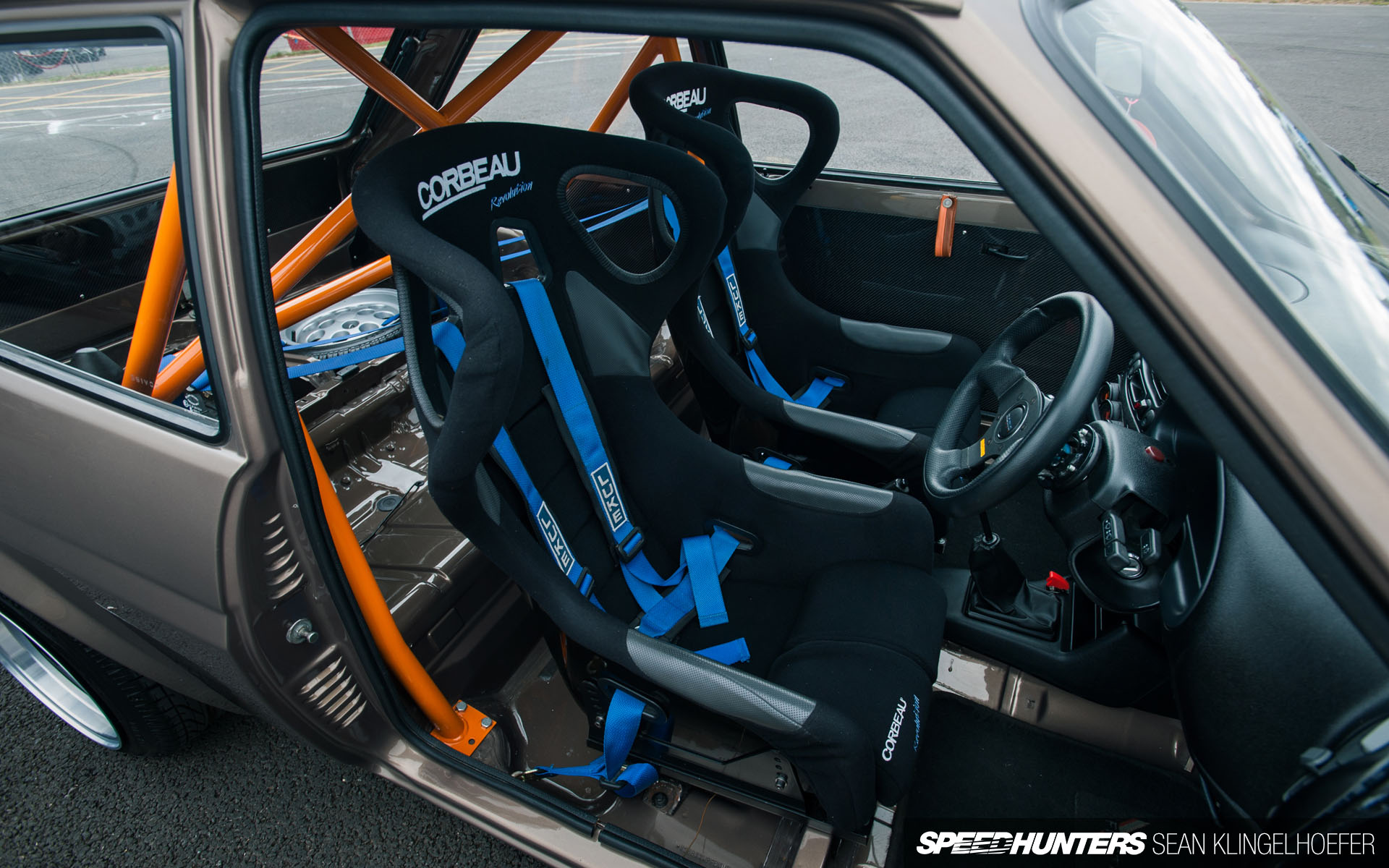
No surprise here, but Scott has also approached the Fiesta’s cockpit with the same enthusiasm as he did the rest of the car.
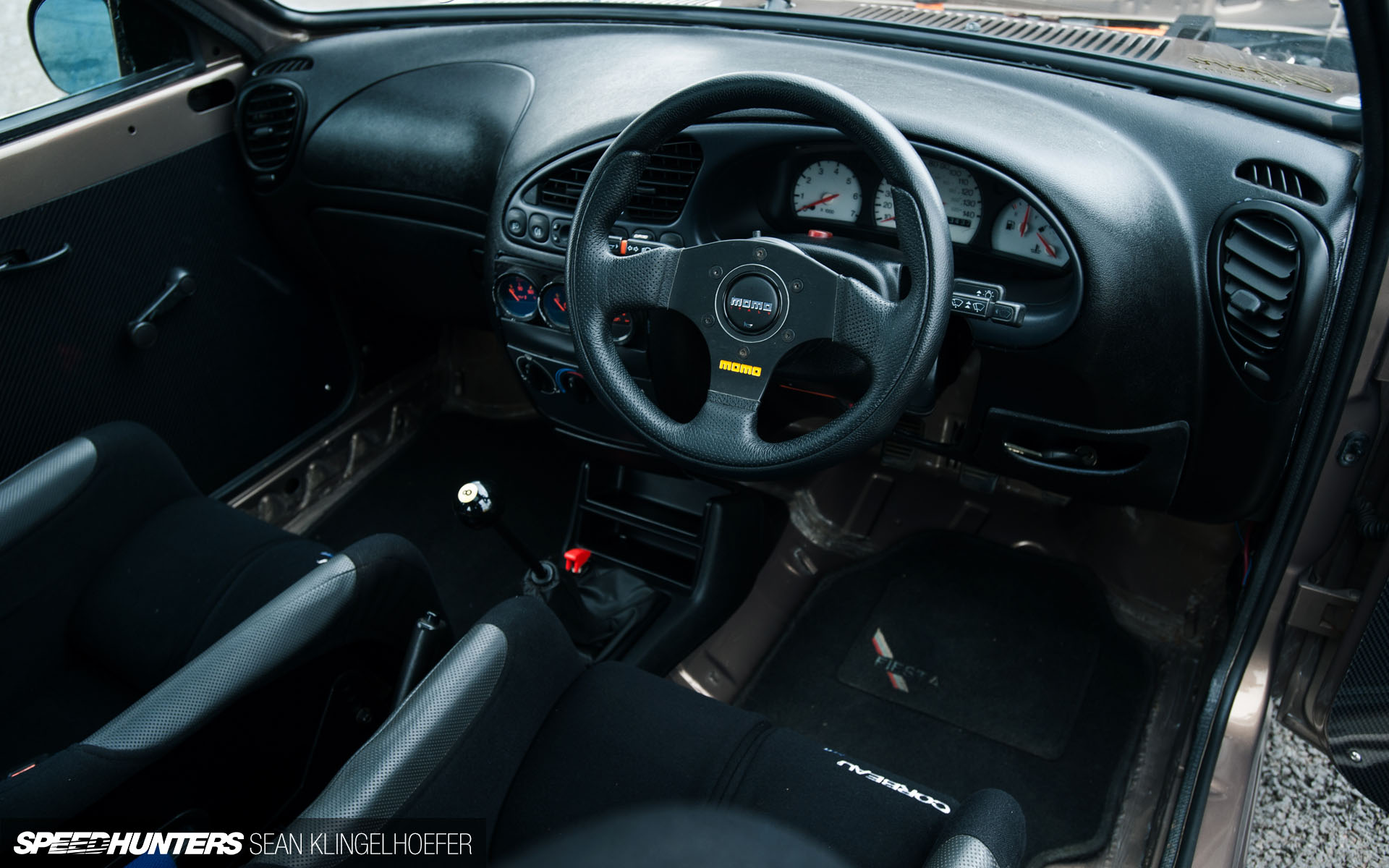
One of the key changes inside is the dashboard, which was sourced from a Mk4 model Fiesta…
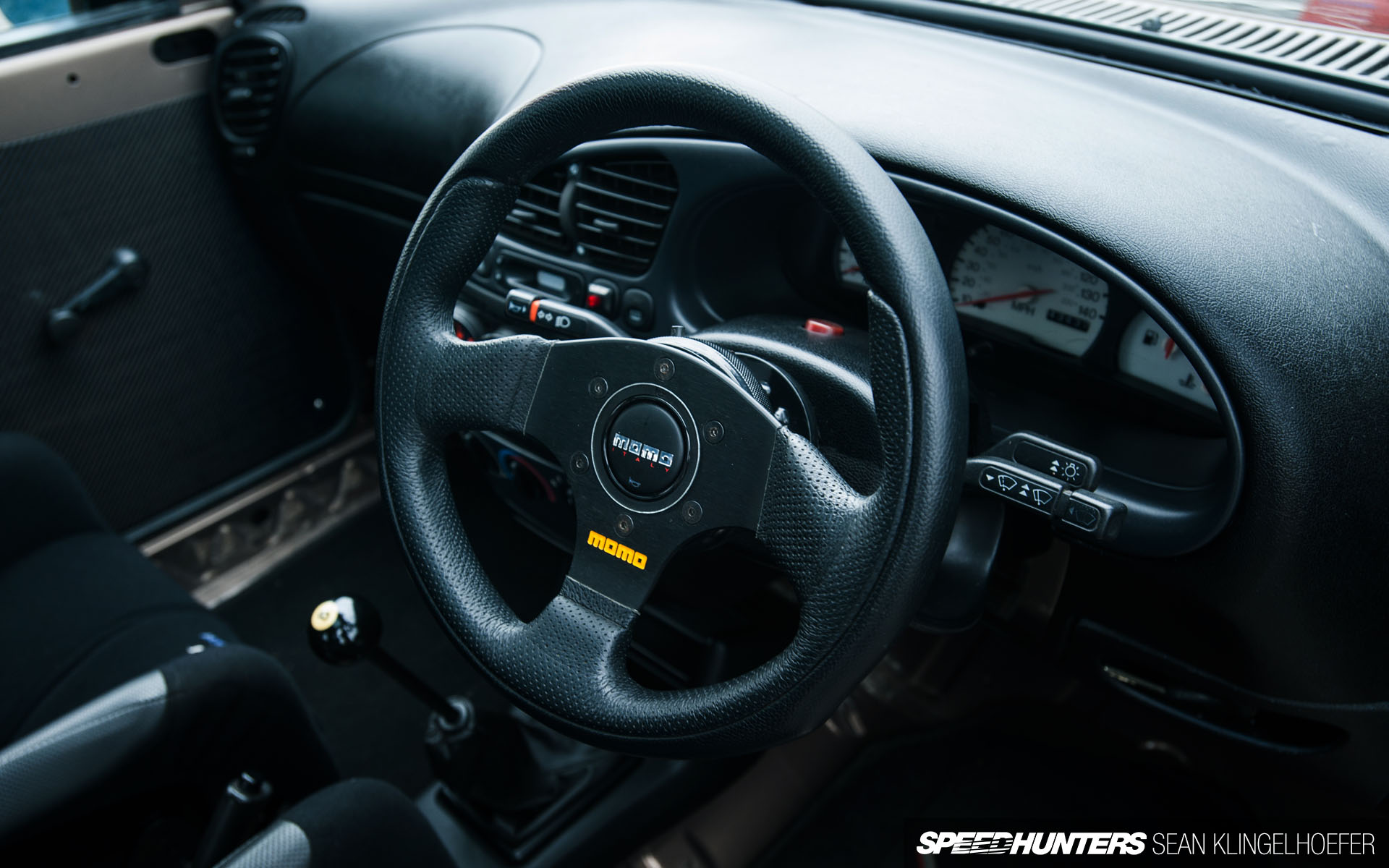
… along with a Momo Corse steering wheel.
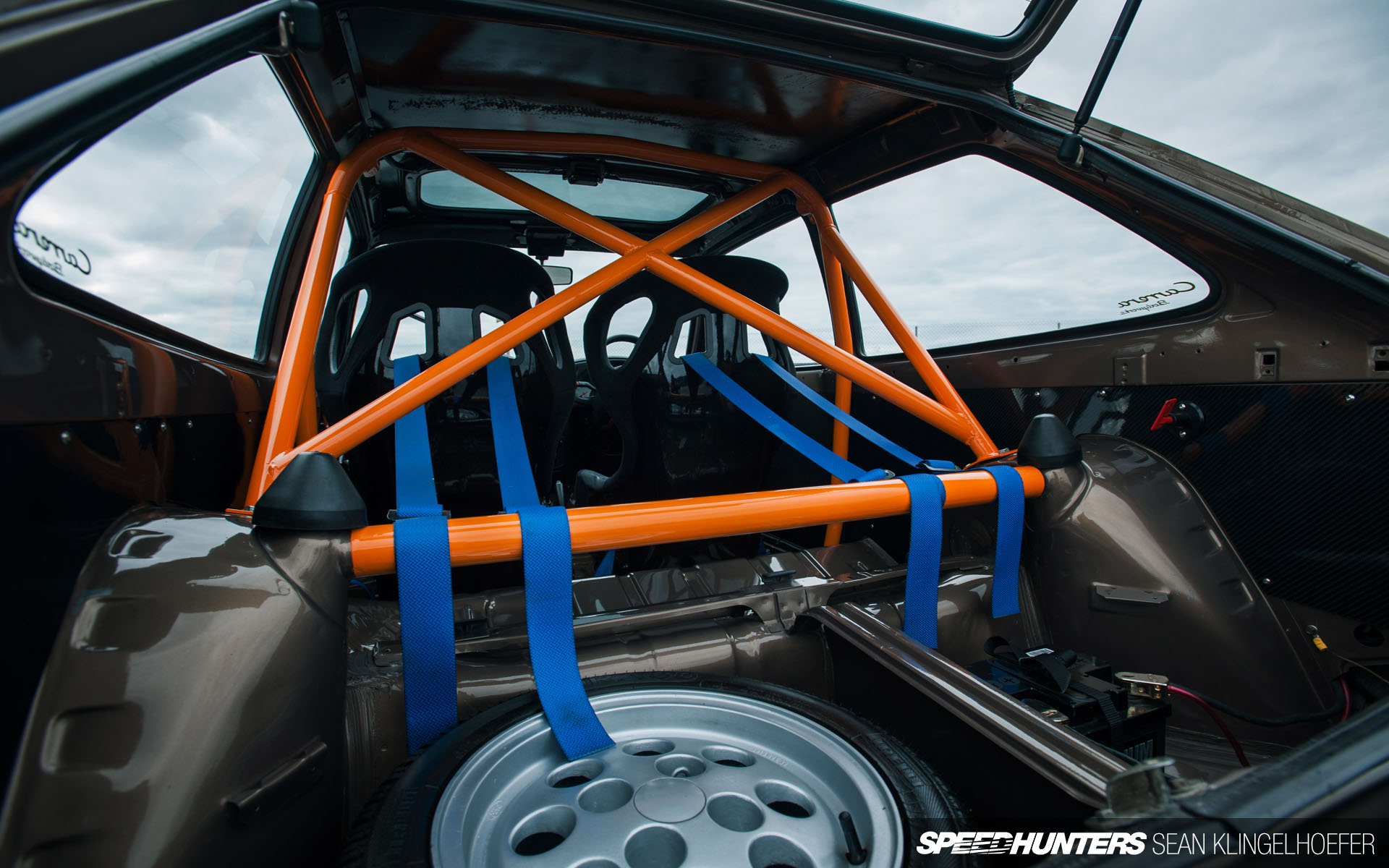
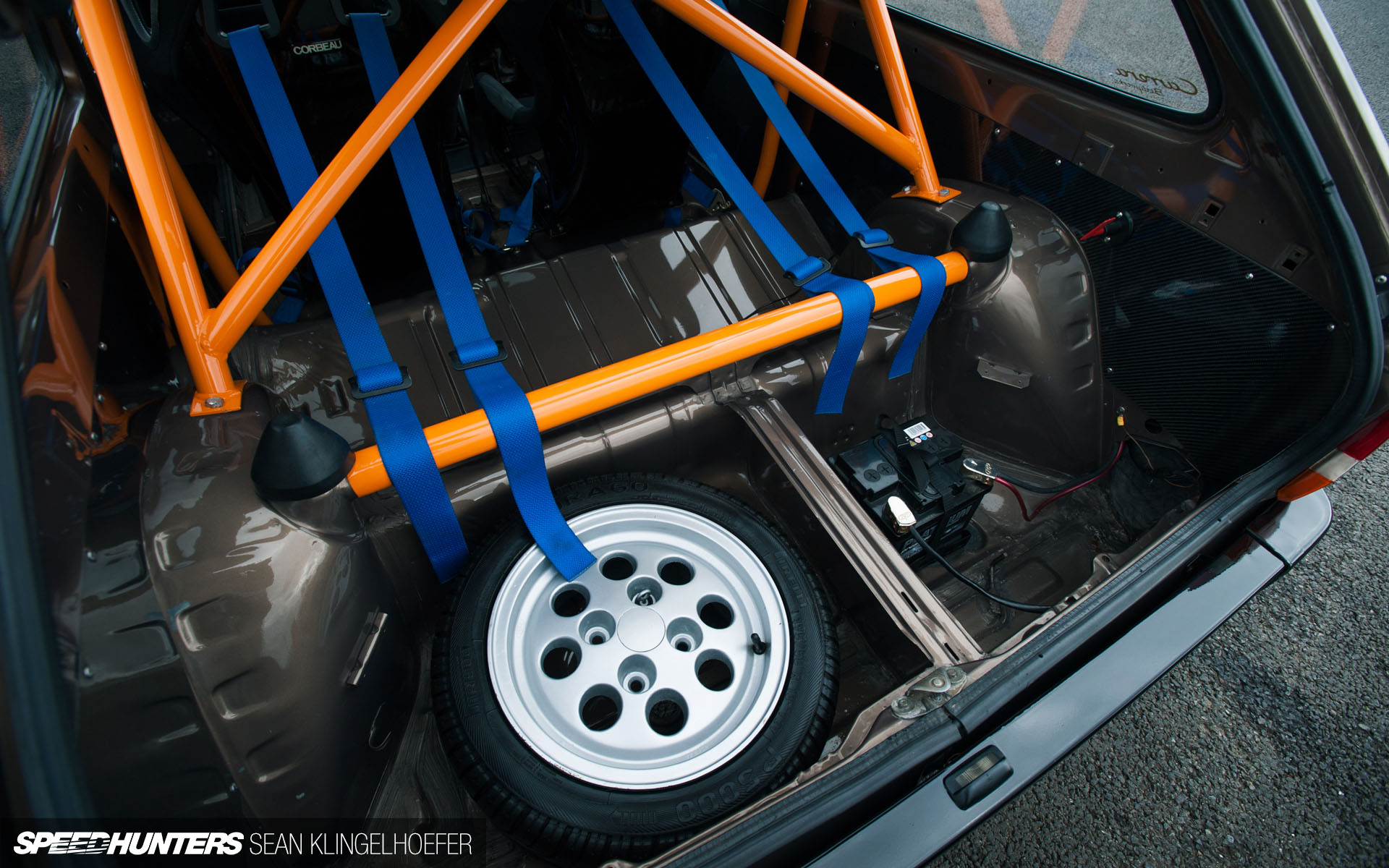
There’s also a six-point roll cage in the car, which has been painted Tango Orange to match the coloring in the engine bay.
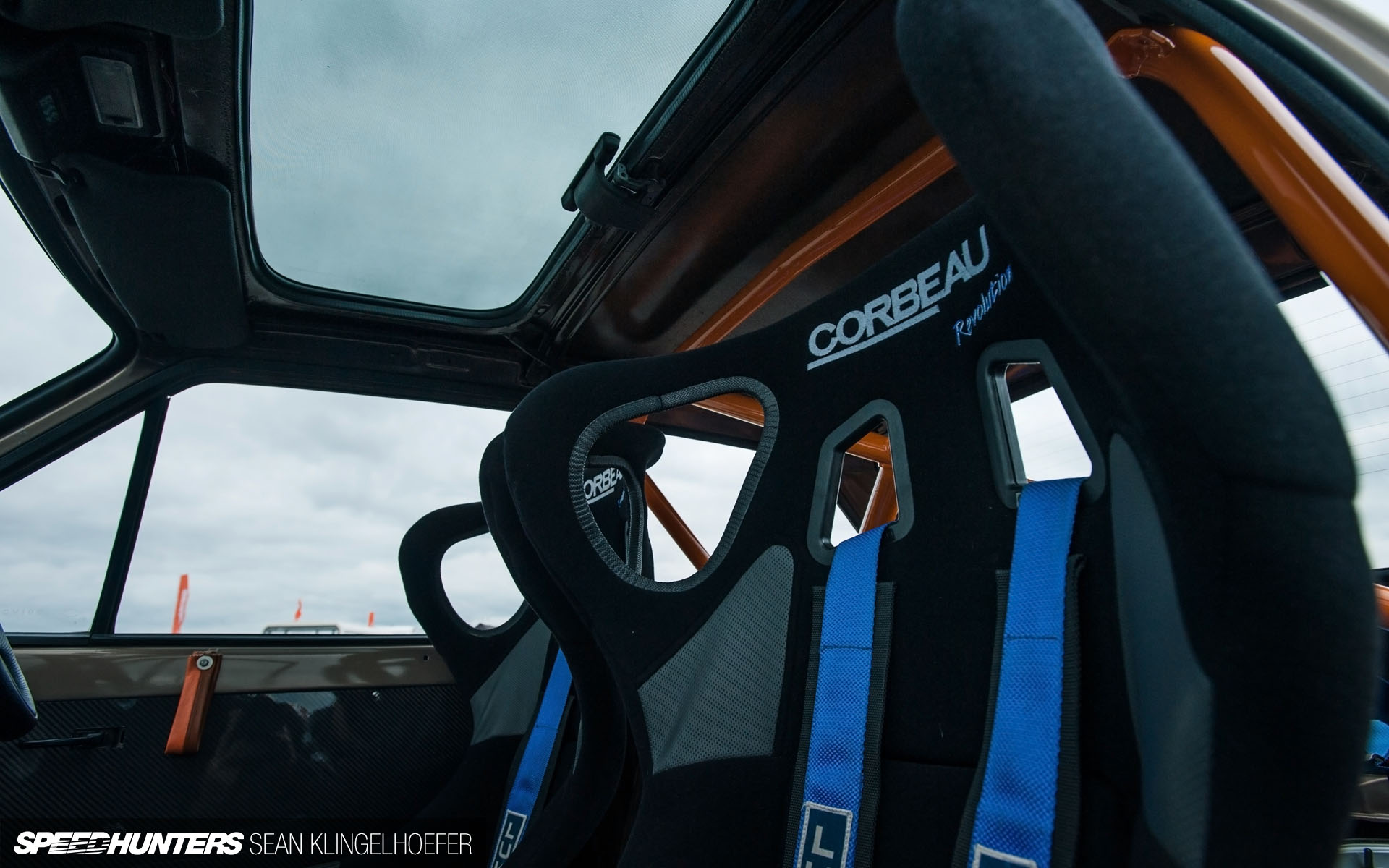
The seats are Corbeau Revolution buckets with four-point Luke harnesses – which should be more than enough for any spirited driving that Scott decides to do.
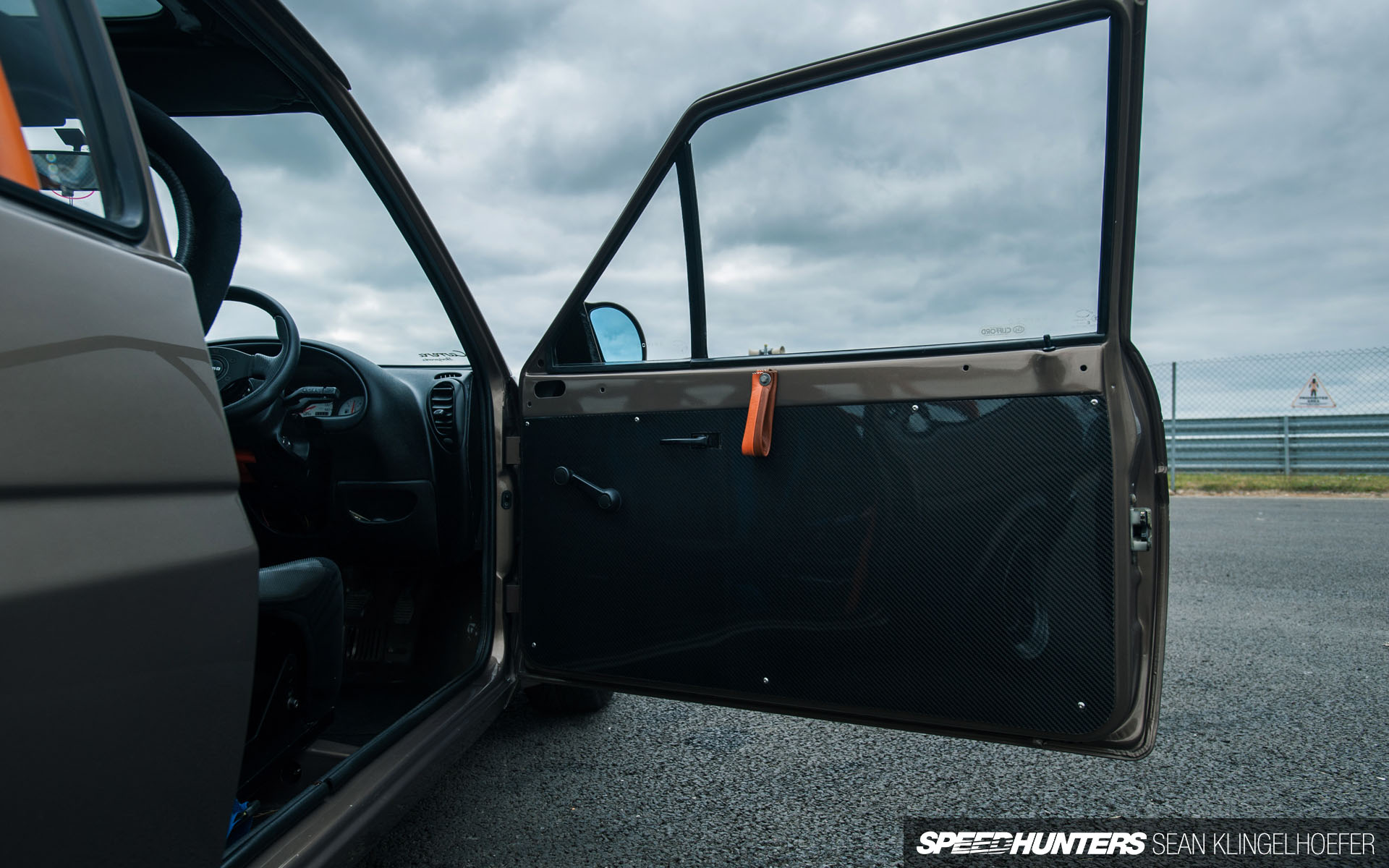
Other details in the cockpit include custom carbon fiber panels for the doors, rear quarters and boot cover. What about audio equipment? In that department Scott says the sound of the twin cam motor and the Webers is all he needs.
A family affair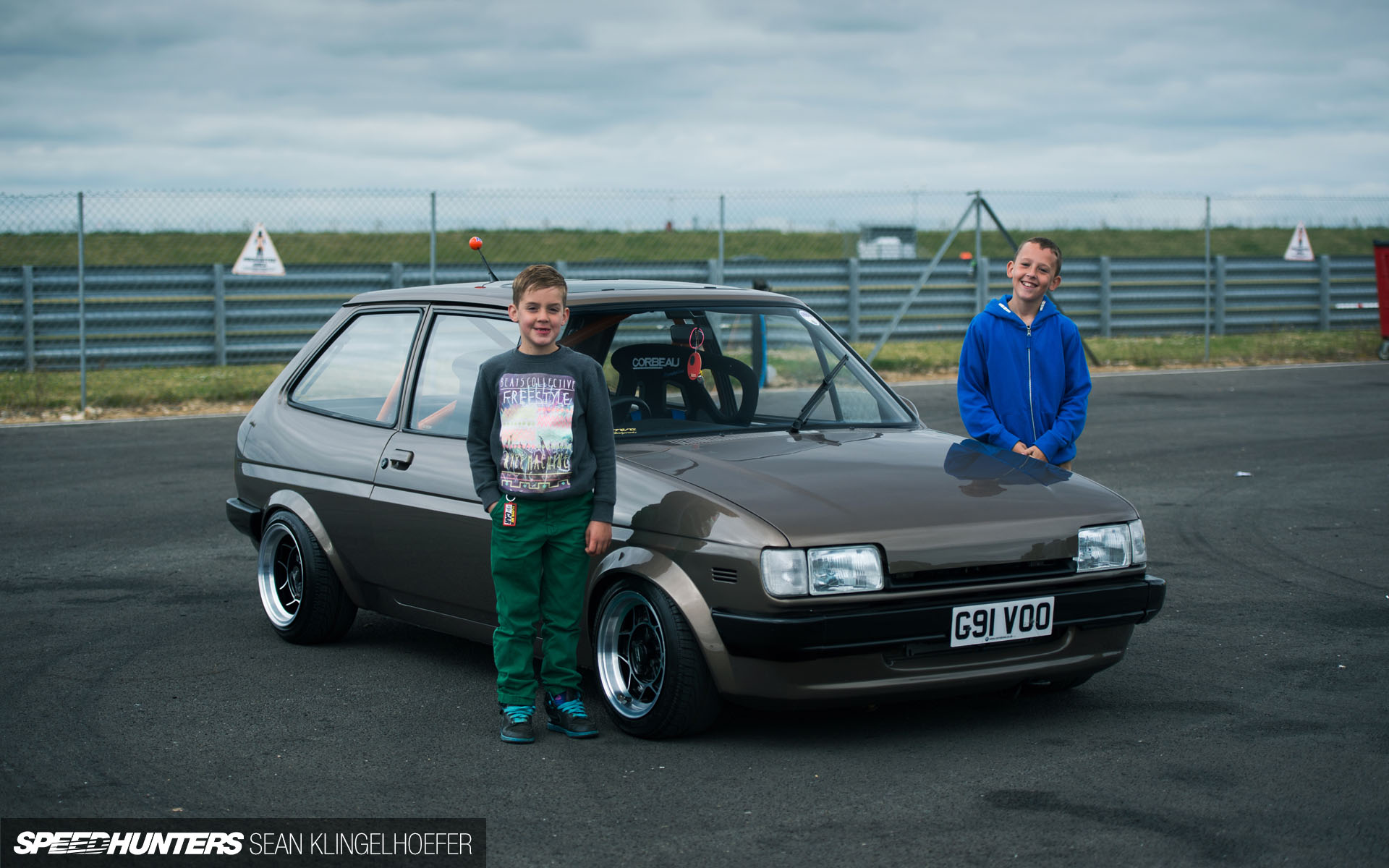
As you can see, over the nearly 10 years that he’s been building the Fiesta, Scott has been able to share his automotive hobby with his family. There’s no doubt these kids are well on their way to becoming the next generation of Matthews Family car enthusiasts.
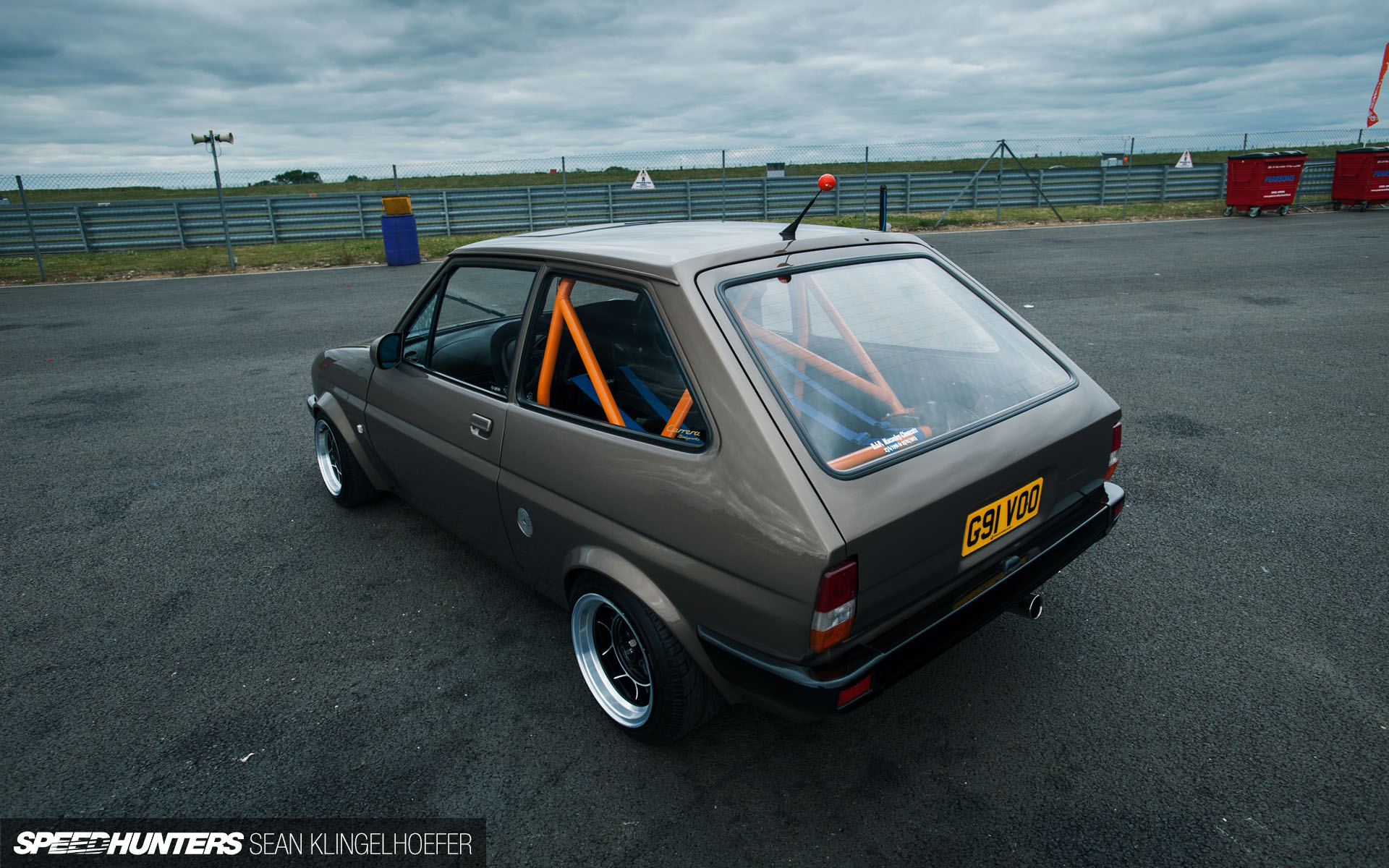
Besides being one of the coolest and most complete Ford Fiestas we’ve ever seen, Scott’s project is a perfect example of a car being whatever you make it.
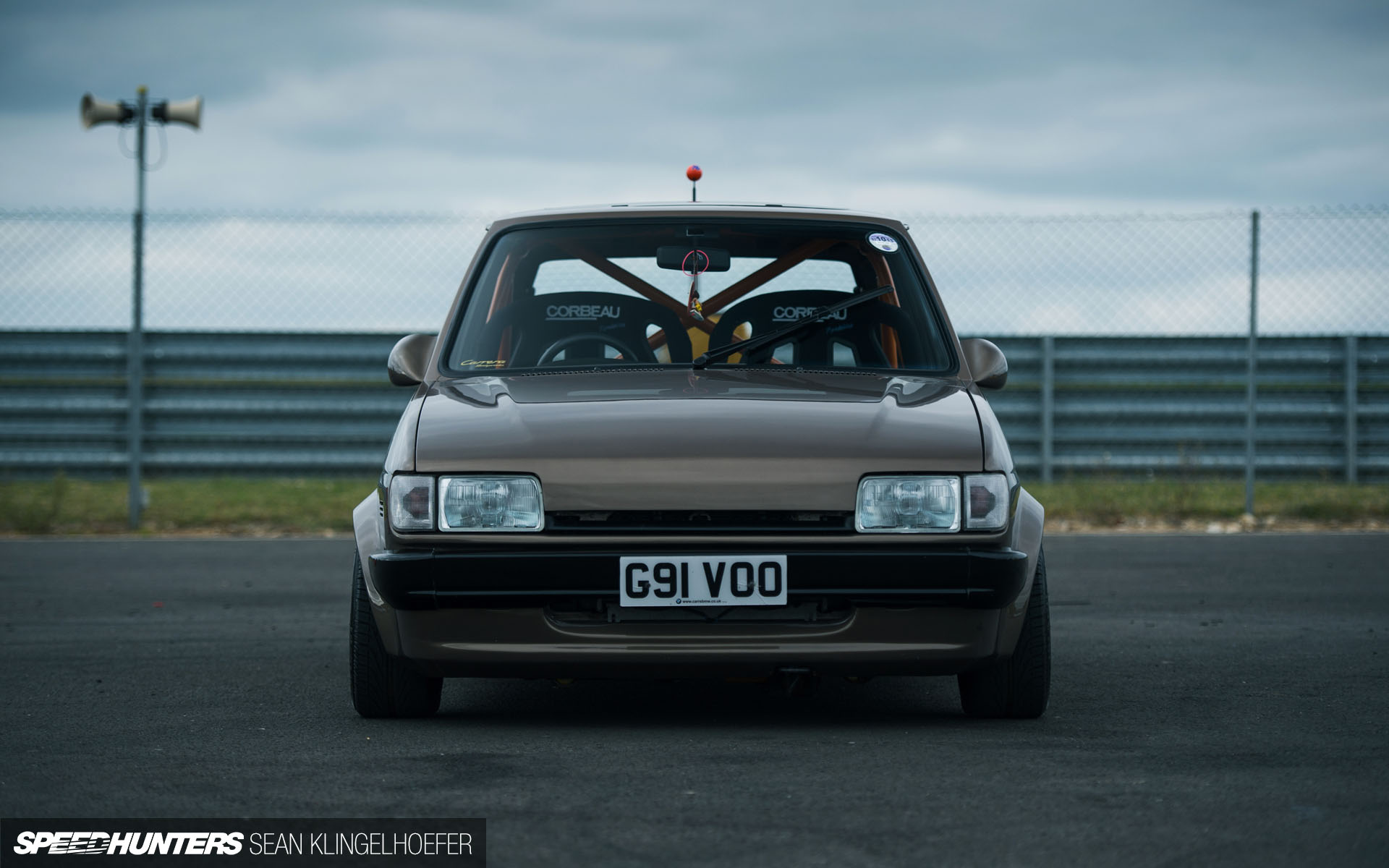
It may have started out as a simple and cheap commuter car, but through nine years of patience and hard work Scott has made his Fiesta into so much more than that.
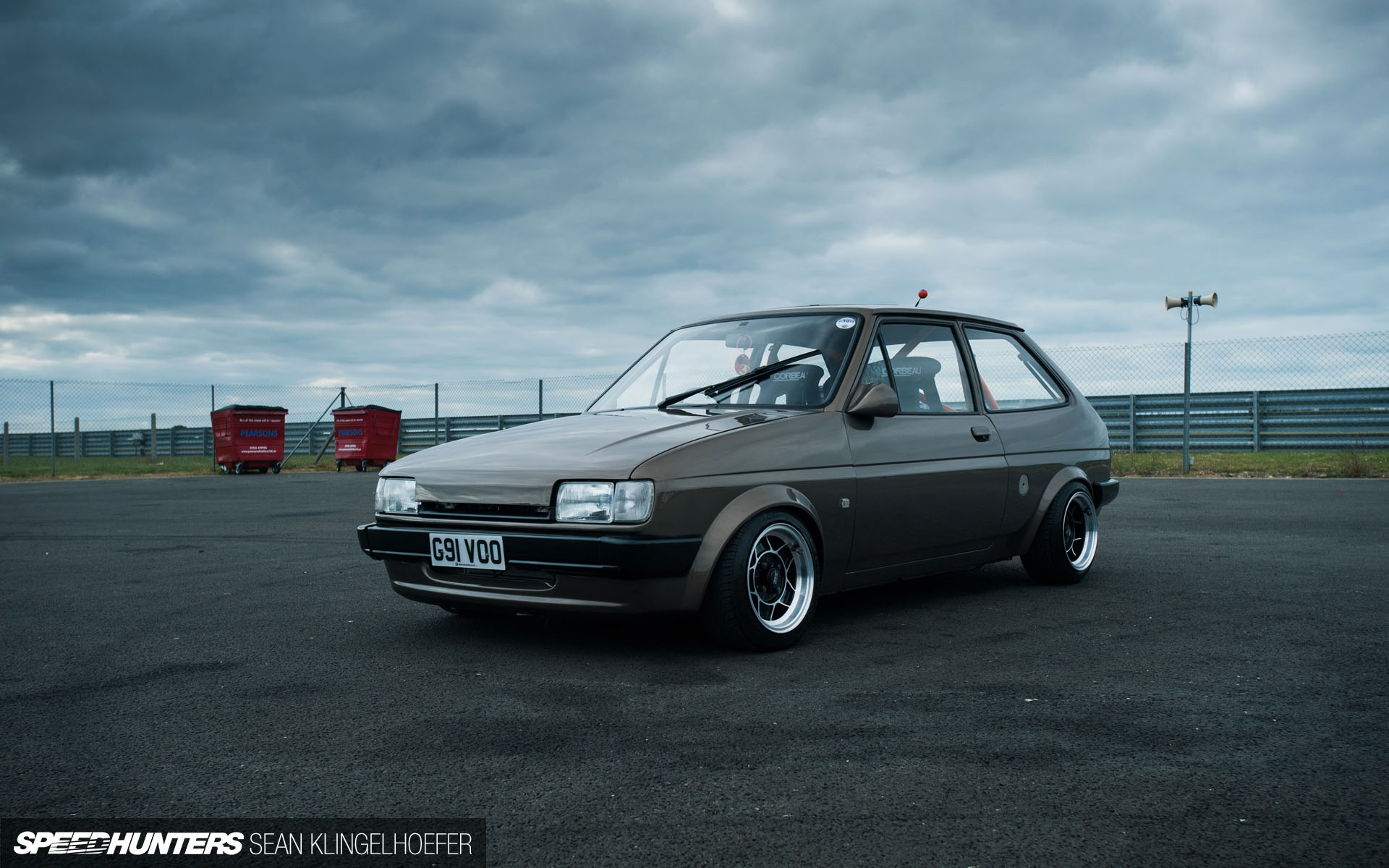
There may not be many teenagers out there dreaming about having a Ford Fiesta in their garage, but in my eye Scott’s humble creation is every bit as exciting as the latest exotics from the world’s most prestigious manufacturers.
If I thought otherwise, this probably wouldn’t be the job for me.
Mike Garrett
Instagram: speedhunters_mike
mike@speedhunters.com
Photos by Sean Klingelhoefer
Instagram: seanklingelhoefer
sean@speedhunters.com
Scott Matthews Ford Fiesta MkII
Engine
1.8L 16V Zetec, MkI Focus exhaust manifold, twin Weber 40 carburetors, custom exhaust system, twin 9″ fans, smoothed engine bay
Driveline
Mk6 Escort GTI gearbox
Suspension/Brakes
Gaz coilovers, polyurethane bushings, adjustable panrod Black Diamond vented and grooved brakes discs, Black Diamond brake pads, Black Diamond brake lines
Wheels/Tires
ATS Classic 13″x7 (front), 13″x8 (rear), 175/50/13 Pirelli P6000 tires
Exterior
Modified steel fender arches, shortened number plate recess, 1.1 liter bumpers, shaved locks and emblems, single wiper conversion, clear side and front repeaters
Interior
Six-point Tango Orange roll cage, Corbeau Revolution seats, Luke four-point harnesses, Mk4 Fiesta dash swap, Momo steering wheel, carbon fiber door panels and boot cover