
I was recently listening to a history podcast about current society in relation to our grandparents and great-grandparents. It was about toughness. Resilience. Not in the ‘who’s stronger, fitter, faster’ sense, but in the context of how much different generations can endure before reaching breaking point. Looking at these two stunning machines side-by-side brought that podcast back to mind. Two Mercedes-Benz cars, joined by a strand of DNA running through both, separated by the best part of 60 years. The 300SL and SLS AMG Black. Different definitions of toughness.

Let me make something clear before we get started: I’m not suggesting that I’m basing my thoughts on these cars on which one would come out on top in a fight. This isn’t about top speed, which one would win a race – or even which one is ‘better’ – whatever that might mean.
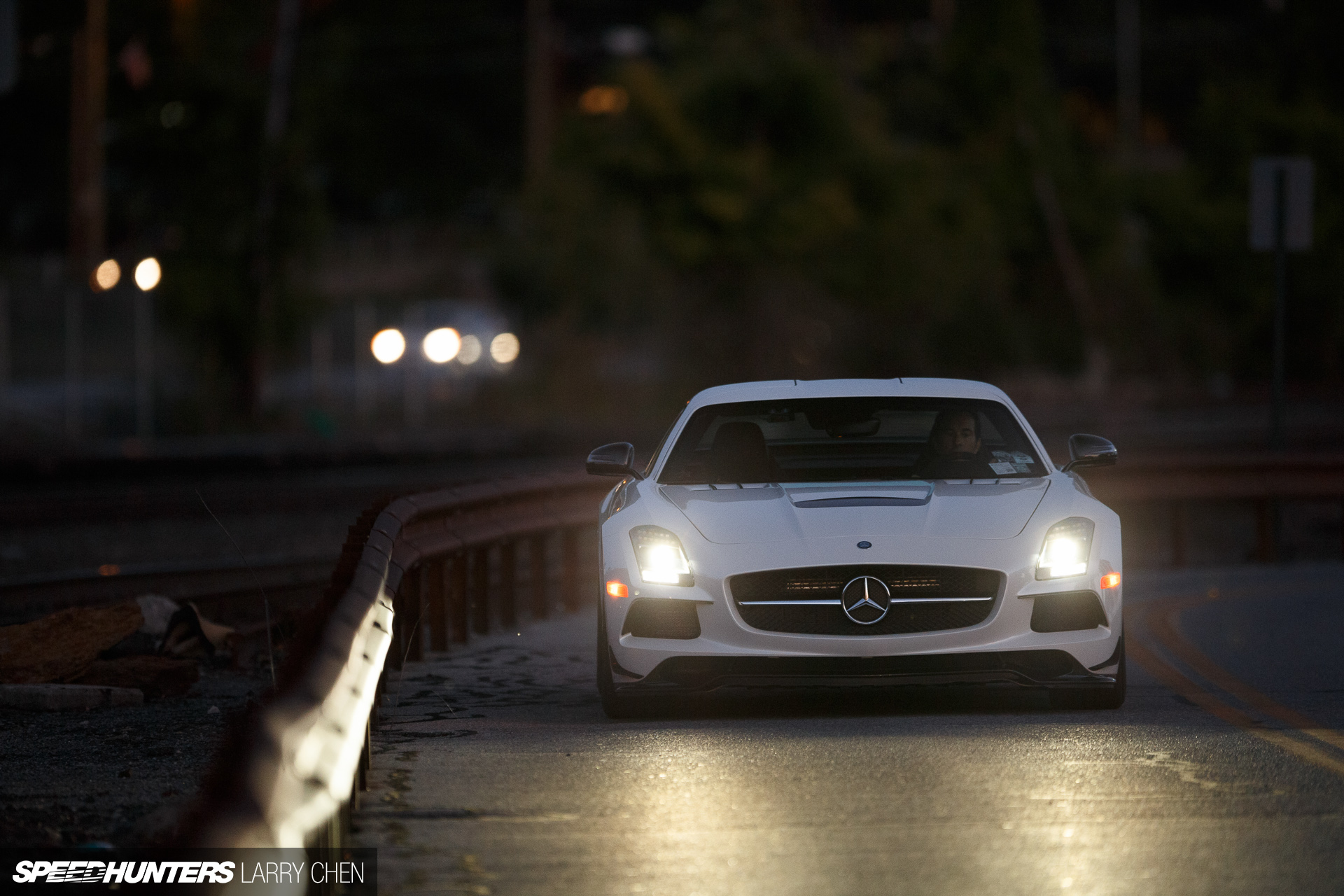
It’s a celebration of effort. Of application. Of rediscovery. It’s more about what each car means and represents in the context of the respective societies that spawned them. Old, raw emotion meets new, targeted technology.
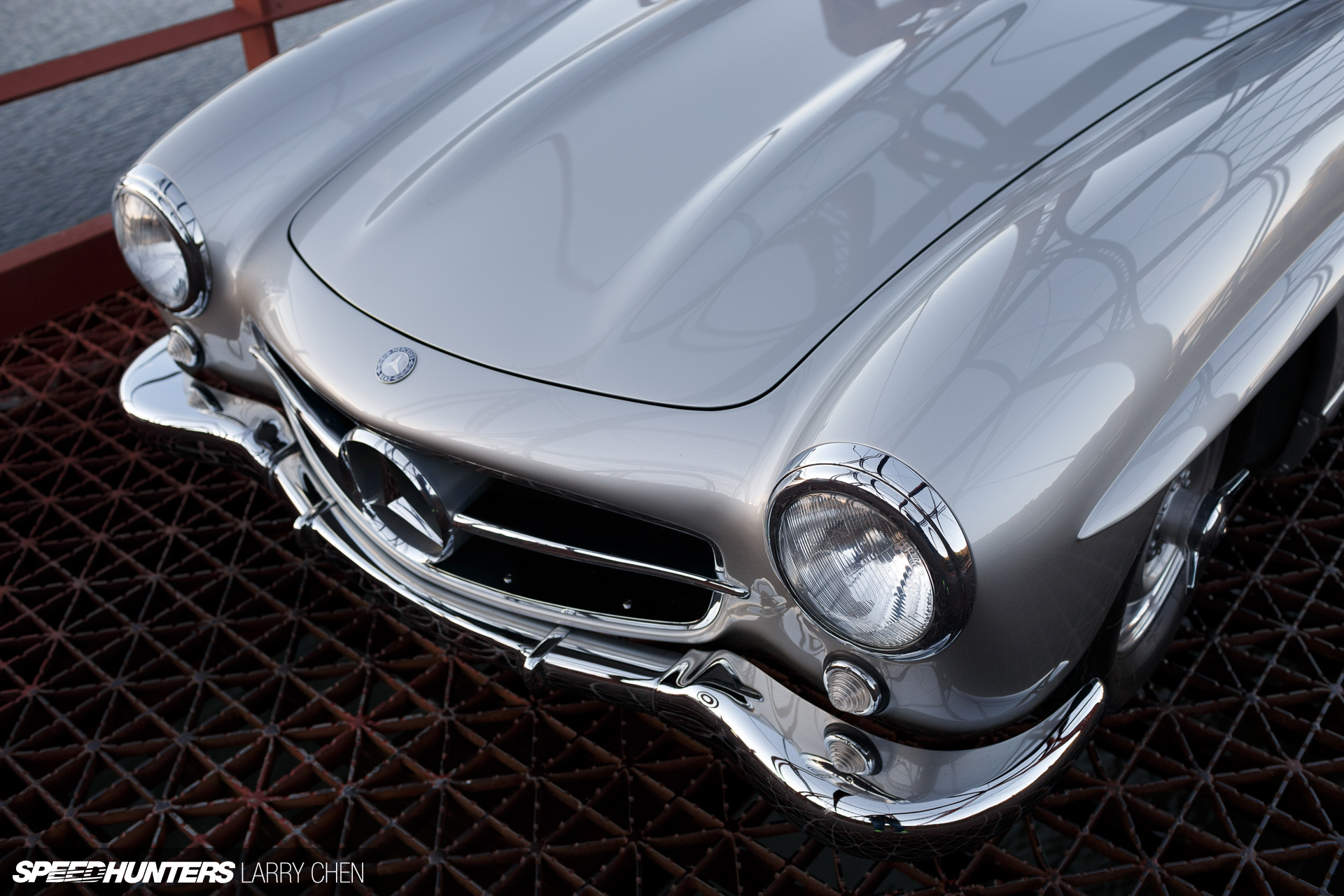
Both are staggering machines in their own right; pinnacles of their respective time periods. Seeing the pair together, I’m immediately struck by different, but equally strong positive emotional responses. Even with the engines off and the only sound of the wind blowing across them, both ooze presence. Stories fall off them like leaves from a tree, in stark black and white for the former, in high speed Technicolor for the latter.
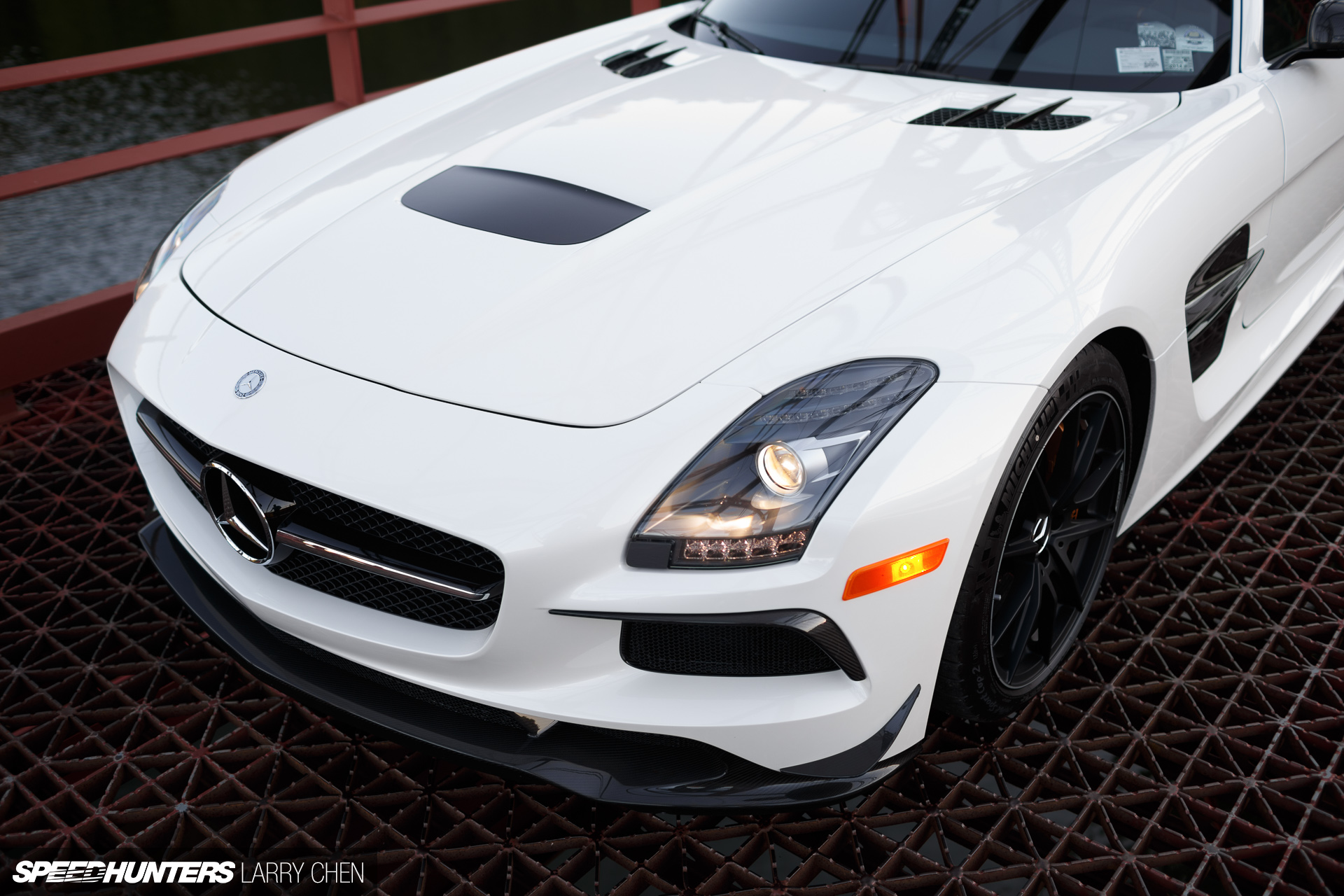
Here we have two legends from different times fulfilling the same mission: the creation of a racecar for the road. It makes for a fascinating comparison. Both are Olympian. To me this is Hermes and Ares in person. One a lightweight, fleet-footed endurance machine. The second, a brutal, muscular warrior. They belong together.

The 1954-1957 300SL (this one’s a 1955) is rightly considered one of the most beautiful machines on the planet. The origin of species for Mercedes-Benz’ Sport Leicht class of sportscars, the gullwing-doored W198 quickly became a legend. Based on the iconic W194 300SL racer which had won at Le Mans, the Nürburgring and at Mexico’s Carrera Panamerica in 1952, as well as finishing second and fourth in the Mille Miglia, it’s an accolade that wasn’t difficult to achieve.
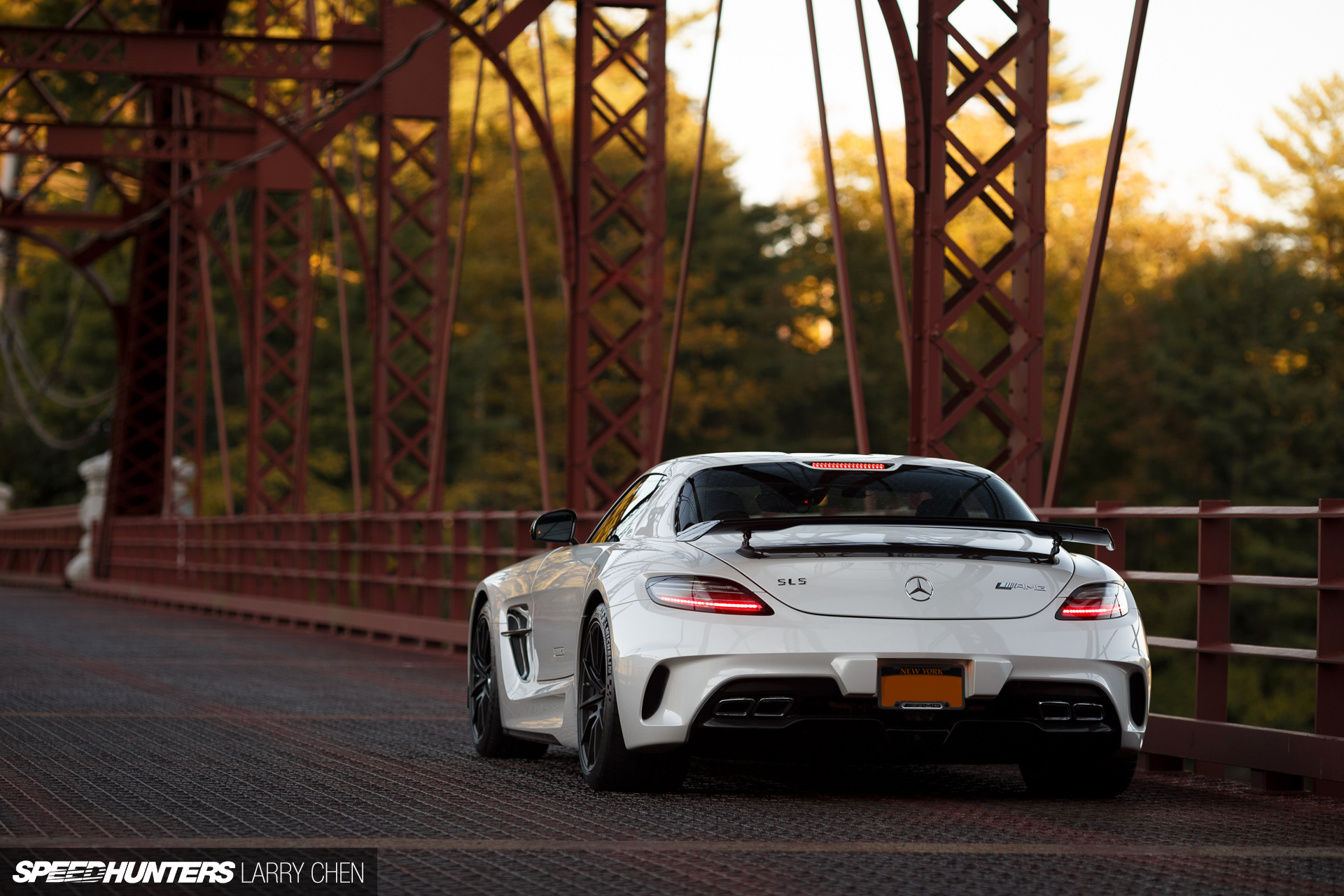
The 2014 SLS AMG Black is the ultimate evolution of its breed. It’s a laboratory-tested road weapon that like the 300SL has also come down from a racing programme – in this case Mercedes’ bewinged FIA GT3 brute.

These two cars help bookend and resolve a very different emotional reaction that I used to have to cars carrying the three-pointed star. Mercedes-Benz automobiles have, in my opinion, completely changed their ethos over the last decade. It seemed like the graceful lines of their ’60s and ’70s boulevard cruisers and sportscars, like so many other auto manufacturers, were lost in the rush of angular enthusiasm brought on in the ’80s and ’90s; the misguided application of a very specific kind of modernity.
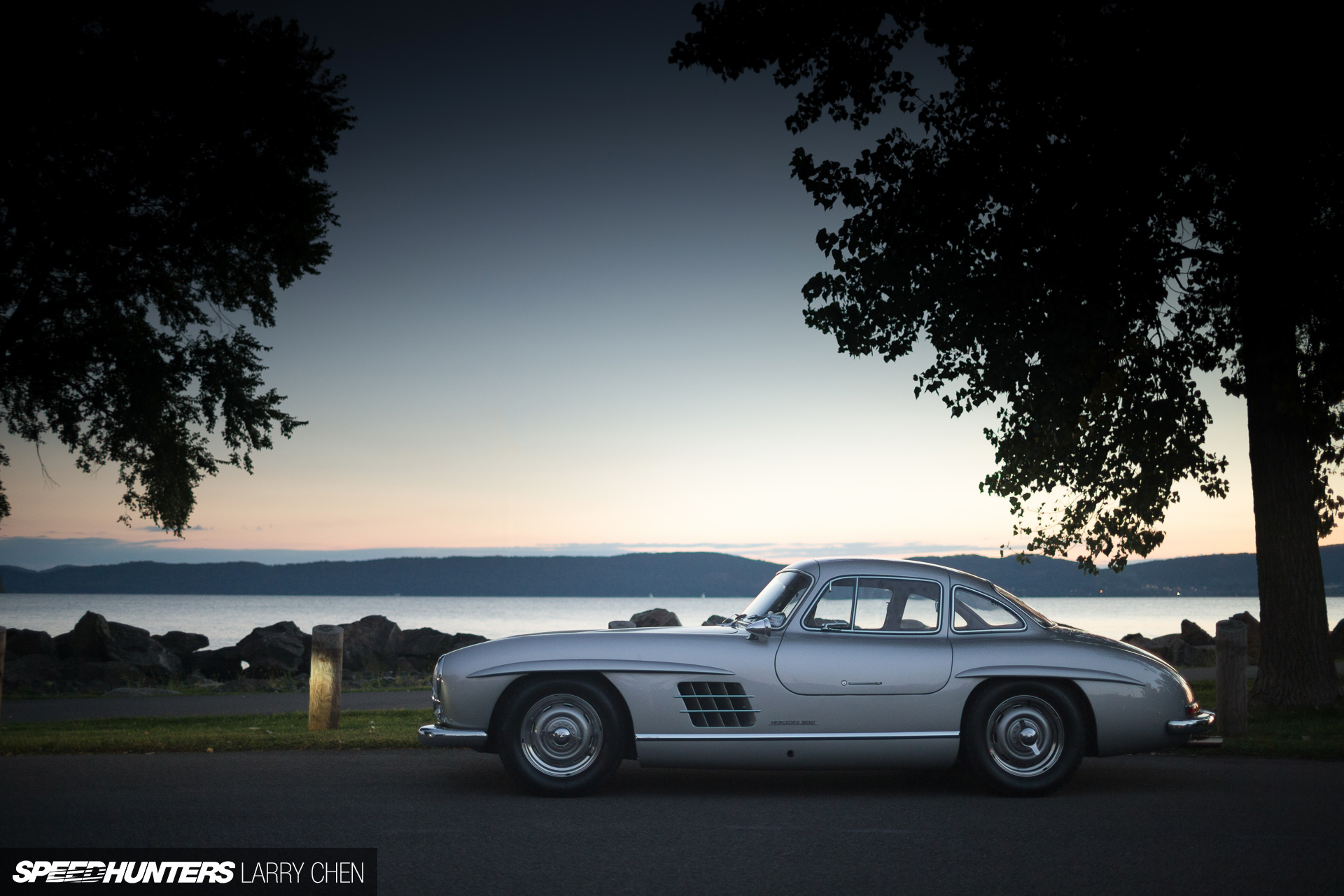
The oldest car manufacturer in the world seemed just that to me for quite some time. Old, out-dated, with its best years behind it. What more to do than hold up a car like the 300SL and sigh… ah, those were the days.

Brutal motorsport variants aside, I admit I’d sort of dismissed street Mercs from then on (oh, and BMWs, to make sure I’m offending the maximum possible number of people); they just weren’t figuring on my road-user Spidey-sense that tingles when something special purrs by.
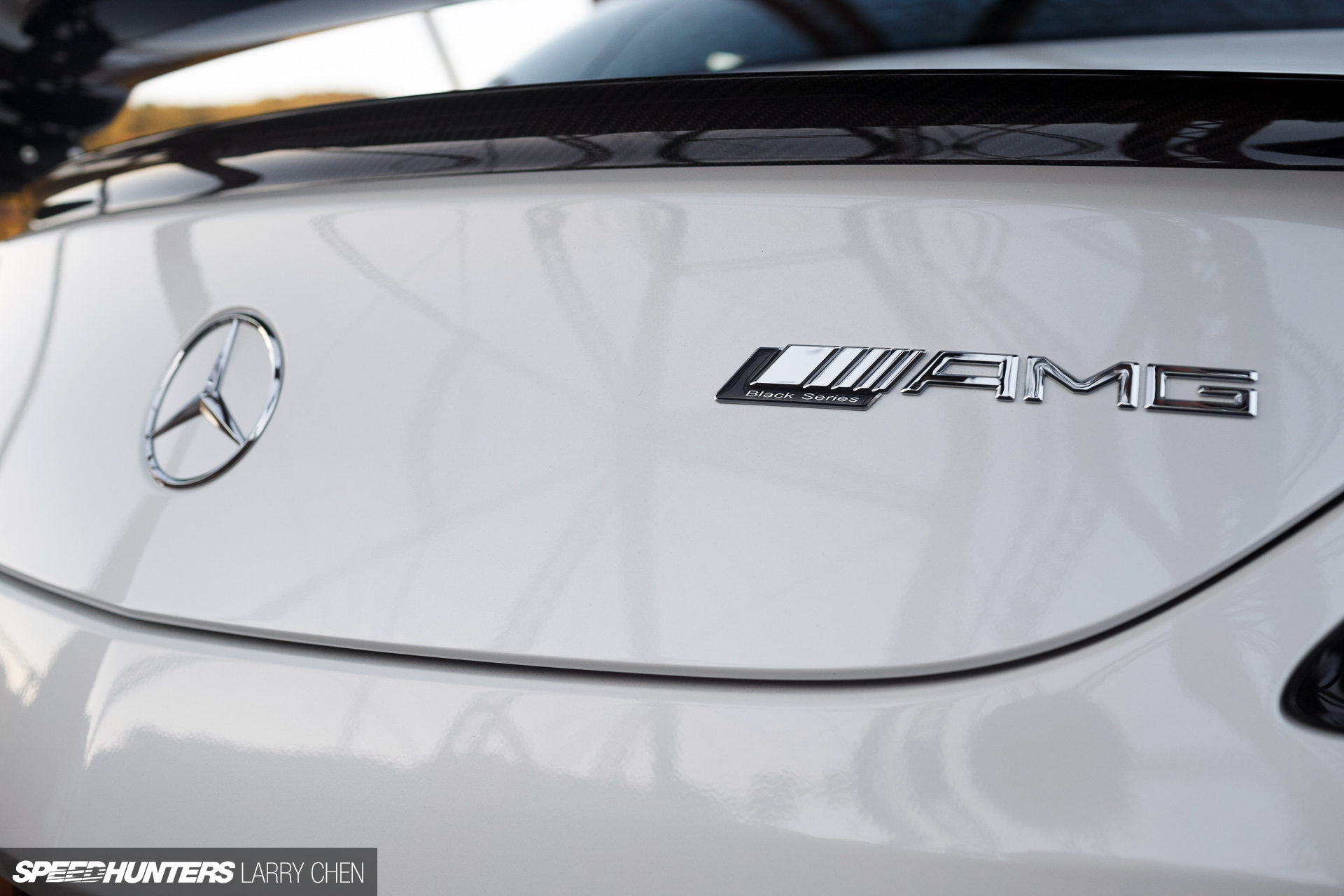
But then, watching a Formula 1 race a decade ago or so, I remember being forced to sit up and take notice. Riding in the AMG safety car, my opinion of Mercedes changed overnight. It was like going on board with the apocalypse. Mercedes’ were not supposed to sound like that – that deep, that guttural, that powerful.
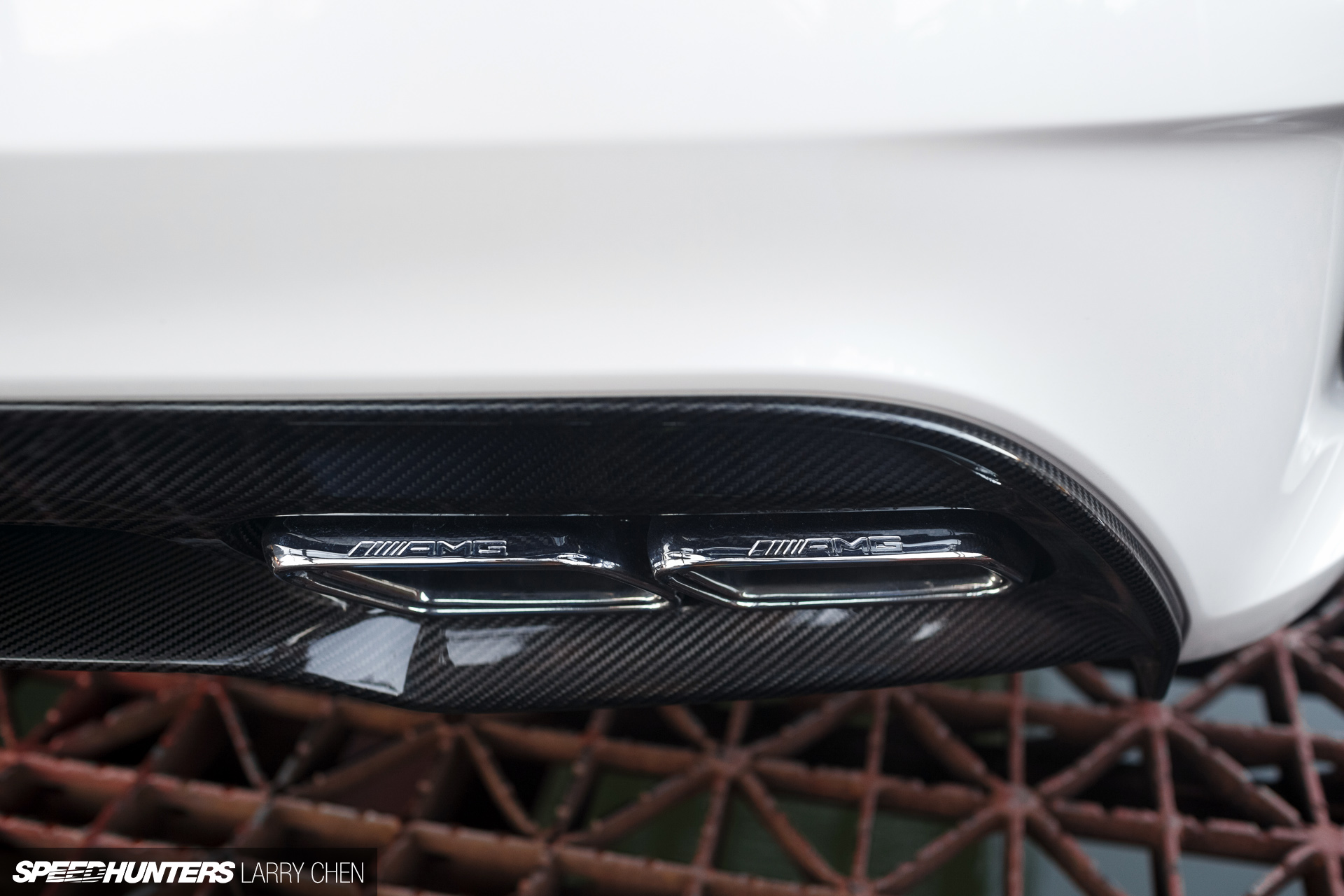
It’s not like M-B had only just taken on the role – it’d been providing safety cars since ’96 – but that I just hadn’t been paying attention. But from then on I was.
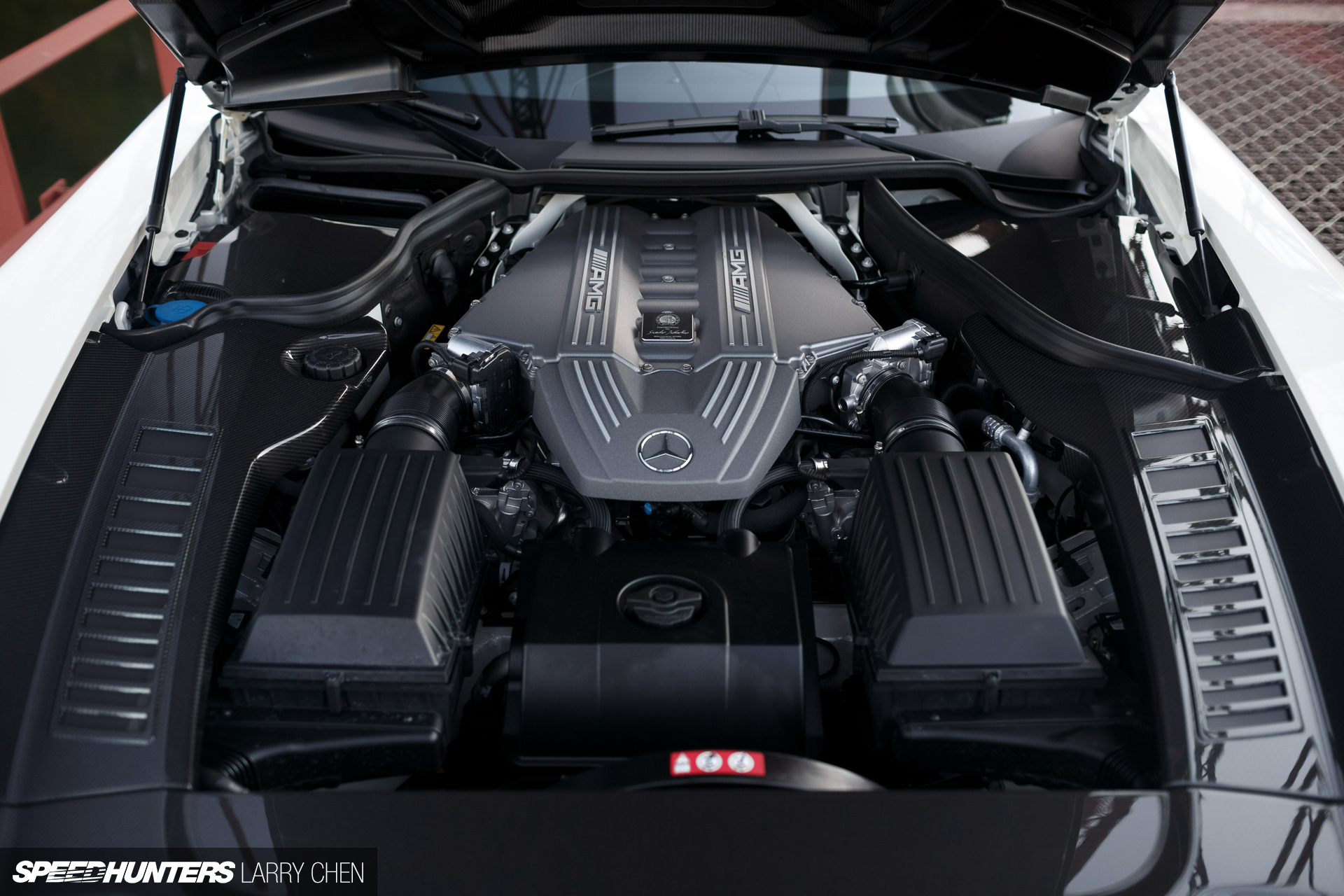
Since 2010 it’s been the gullwing SLS that’s prowled round the world’s racetracks, heading the F1 circus in times of on-track trouble. I almost pray for a safety car, just so I can hear its glorious sound. Not because the racing is predictable, of course…
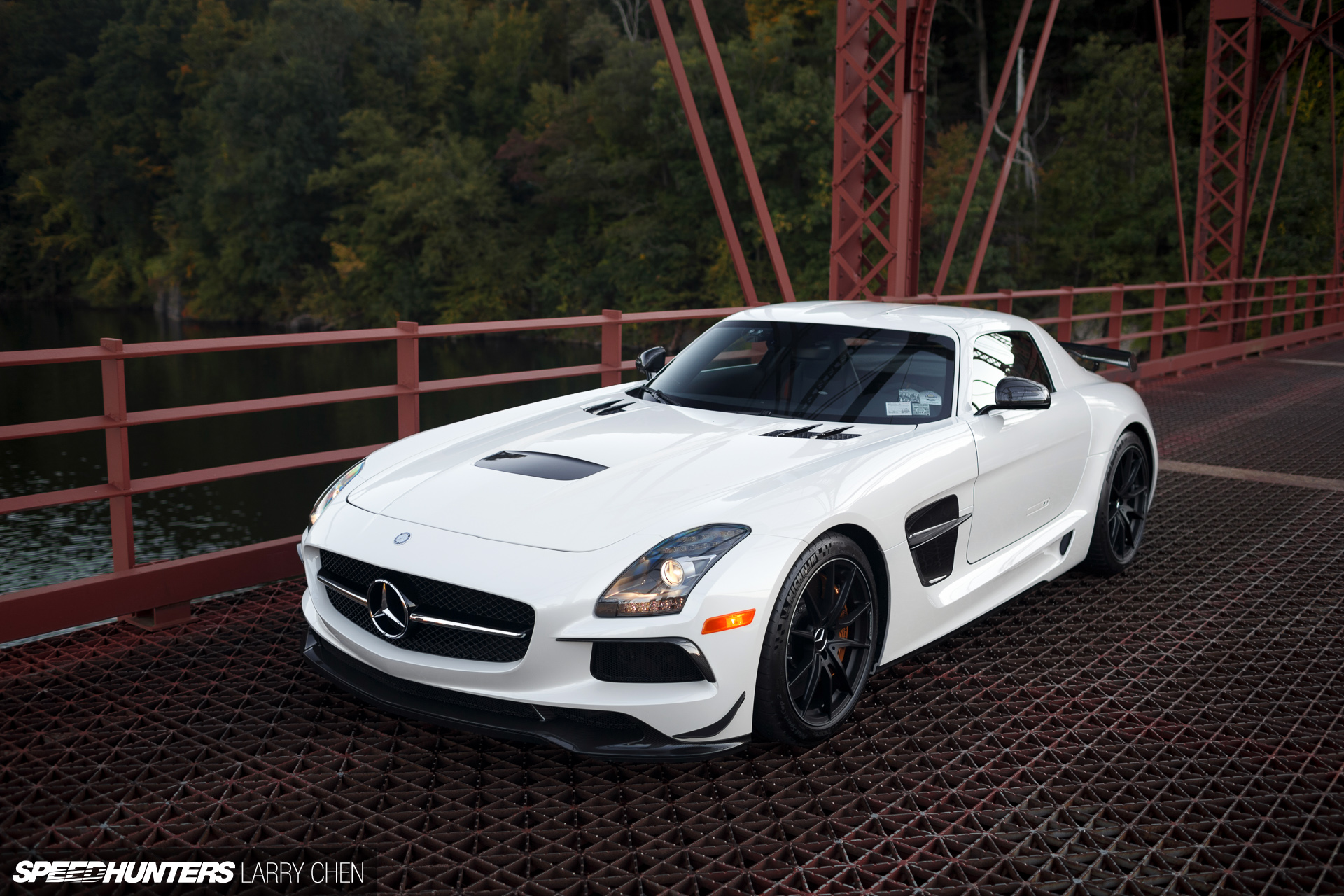
Now the class and style of design seems to be back. The old roundel badge is proudly affixed to the noses of cars. Perhaps Mercedes-Benz revisited its heritage, and realised that it could afford to look back and still move forwards.
Family ties
In the official Mercedes-Benz family tree, these two cars don’t actually share direct model lineage. The 300SL’s descendants are listed as the less ferocious 190SL/W121 of 1955, the 230SL/W113 of ’63, the 350SL/R107 of ’71, 300SL namesake of ’89 and then the SL-500/R230s of the previous decade.

The SLS AMG Black adds in a dose of Super to the Sport Leicht mix and is counted as part of the more recent supercar genre, following on from such beasts as the CLK-GTR and SLR McLaren. It’s pitching up against a whole host of competition in the same price range: Ferraris, Porsches, Aston Martins and more.

Ironically, bearing in mind my antipathy to Mercs of the ’90s, it can be said that the 300SL had the same effect then as the SLS Black now: revolutionising the public’s reaction to the brand.
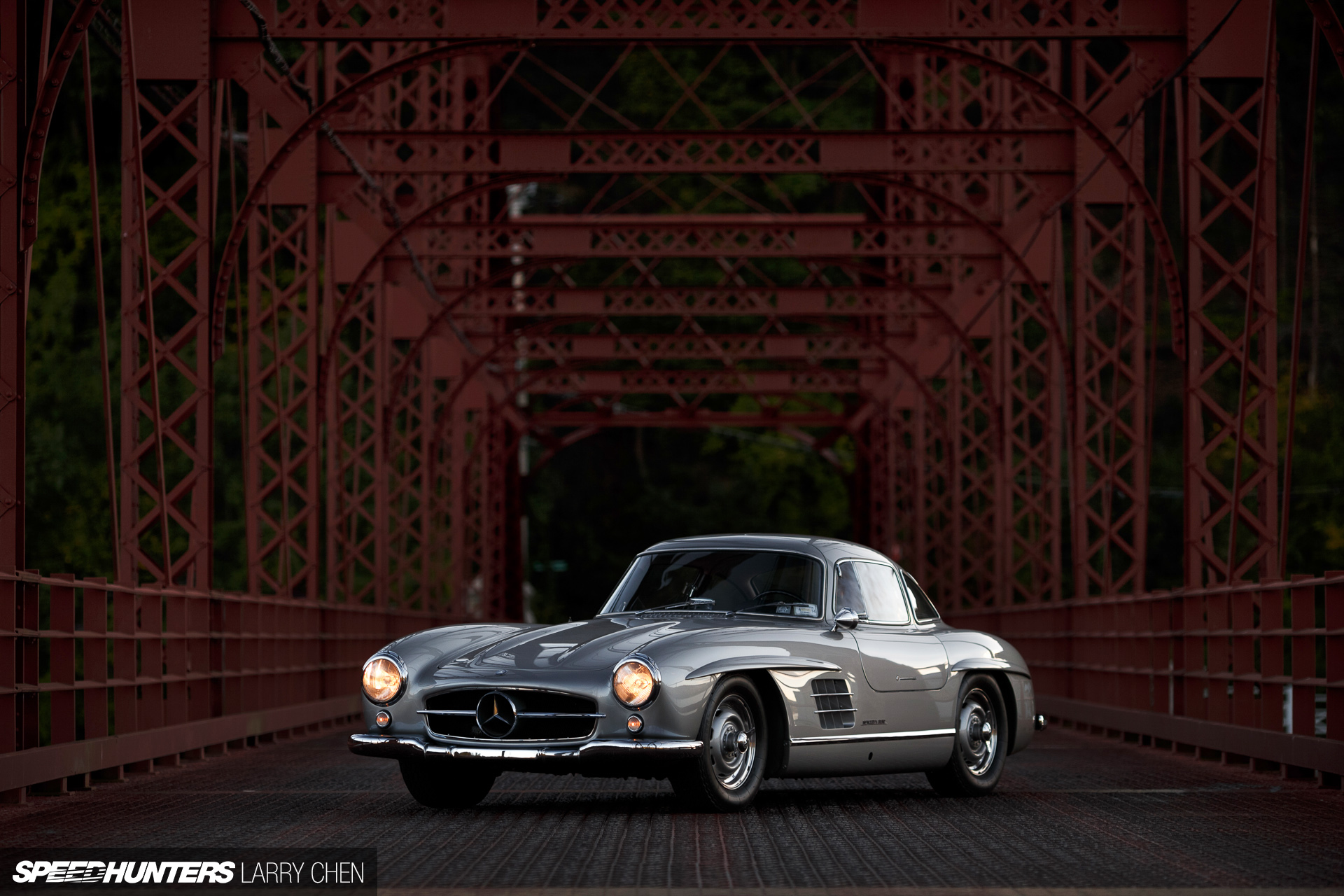
The 300SL can really be counted as a precursor to that modern supercar phenomenon. After all, the technology underneath that gorgeous coachwork was as cutting edge for the time as the SLS AMG Black’s is for now. Straight away it became the fastest production car in the world, and the first to use fuel injection.
The difference was, at the time there wasn’t really any competition. Racing drivers occasionally drove racecars on the road for ‘testing’ purposes, but few seriously thought about putting that kind of performance on the showroom forecourt.
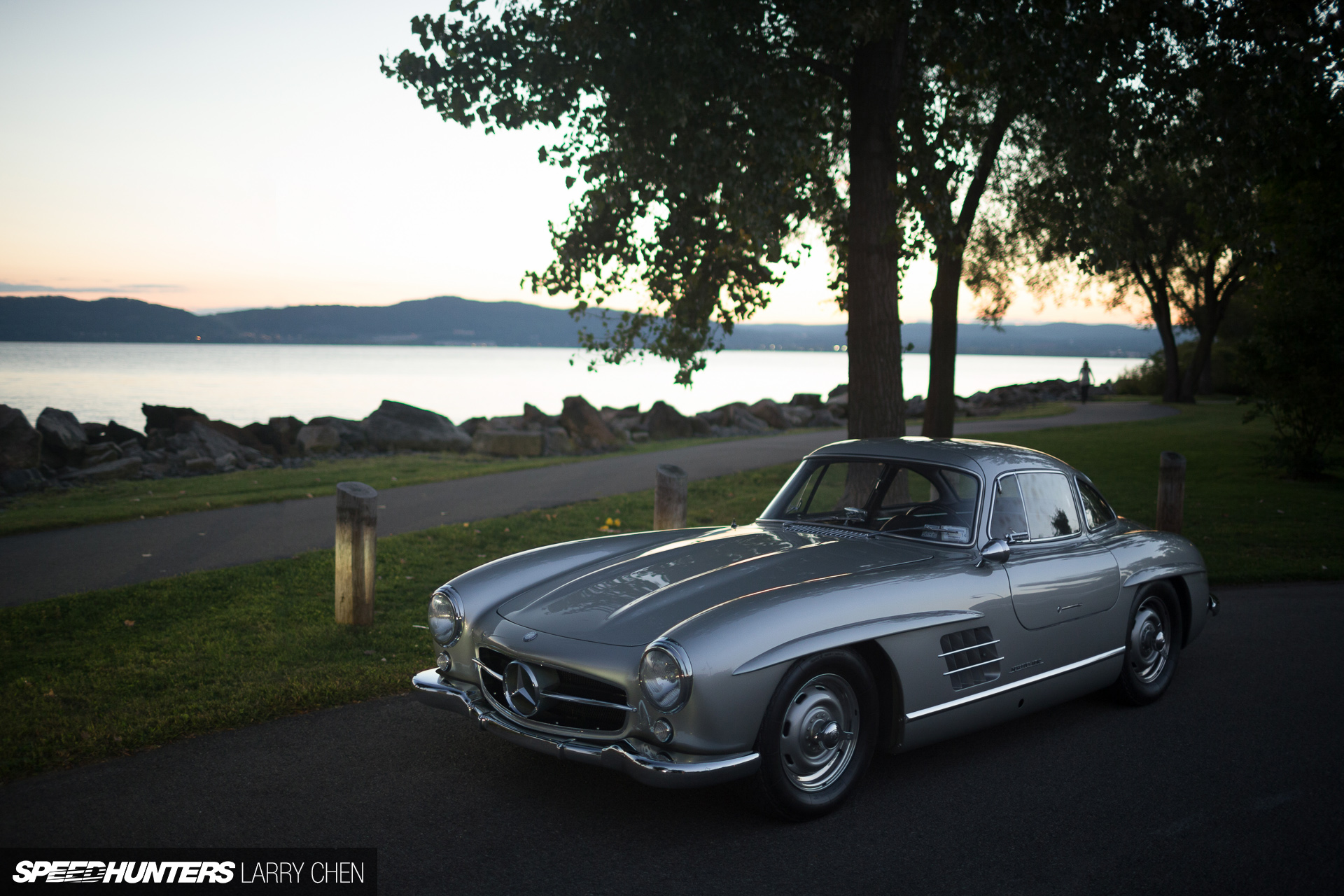
Then there are the looks. Despite its beauty and grace, the 300SL has a poise that screams speed. Rather than being raked back and looking like it’s reacting to velocity, the 300SL is reaching forward, pushing itself on and daring the air to challenge it. The truism of great cars looking fast even when standing still rings out.
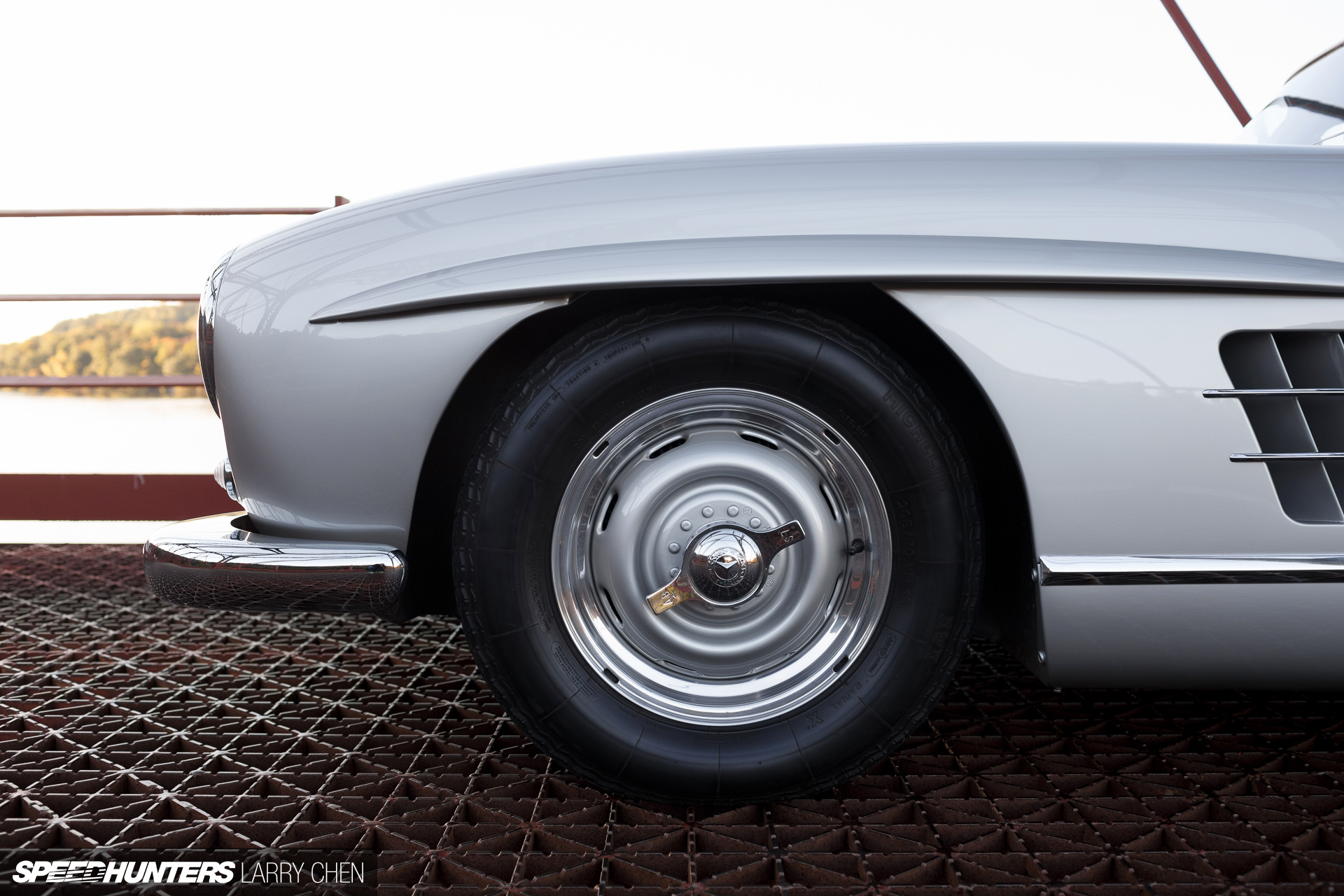
Emerging aerodynamic principles were heavily applied to the car. The strakes over the wheels helping reduce drag and improve stability, whilst the tapering lines of the car quite obviously show the efforts at chasing aero efficiency.
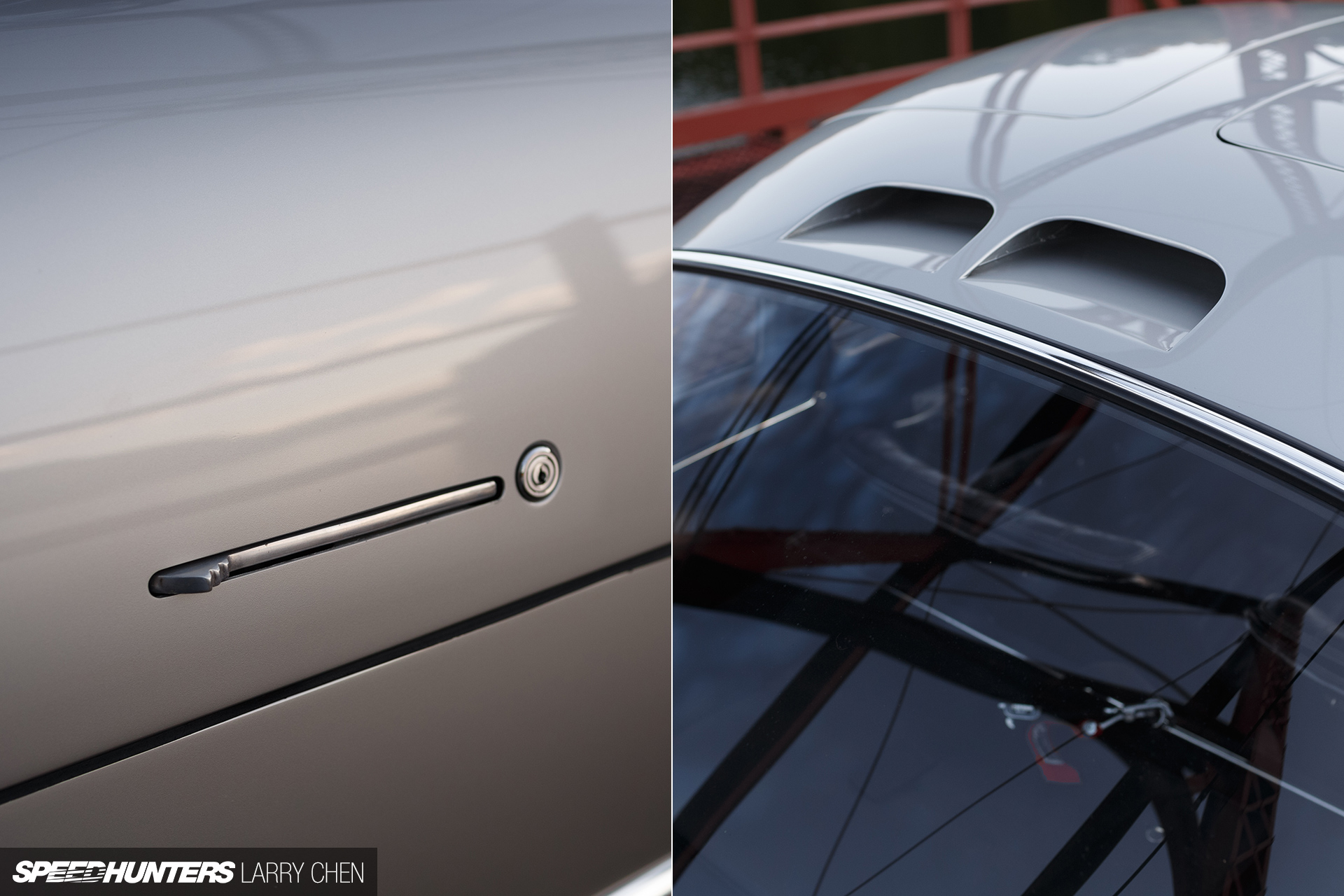
The side gills and general curvaceousness are the obvious signs, but then there are the subtleties that become apparent: the flush door handle push; the ducts on the rear of the roof.
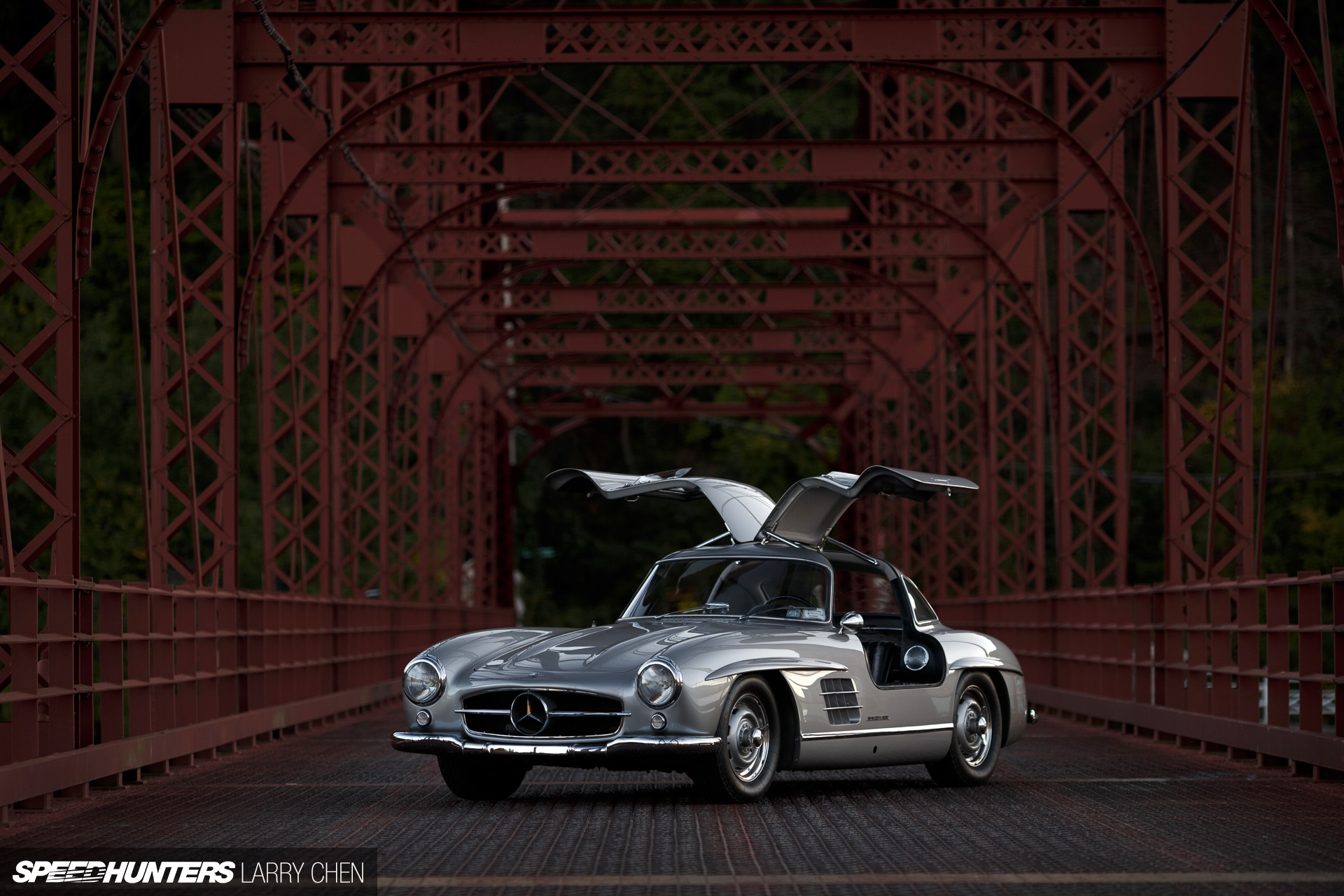
Those iconic gullwing doors are an interesting diversion – the answer to an engineering challenge rather than an aesthetic choice that many later cars would use. I’m absolutely not in doubt over their merit!

The tubeframe architecture used to give the 300SL its rigidity and strength whilst keeping the weight down led to the high and wide sills (and I mean wide!), which in turn dictated the gullwing design as the only practical solution.

Seeing one in person, it’s not so much a ‘leg over and hop in’ as ‘sit on the bench of a sill and slide yourself across the plateau’. A car for ferrying around glamorous ladies this was not. Or at least, not glamorous ladies in long skirts.
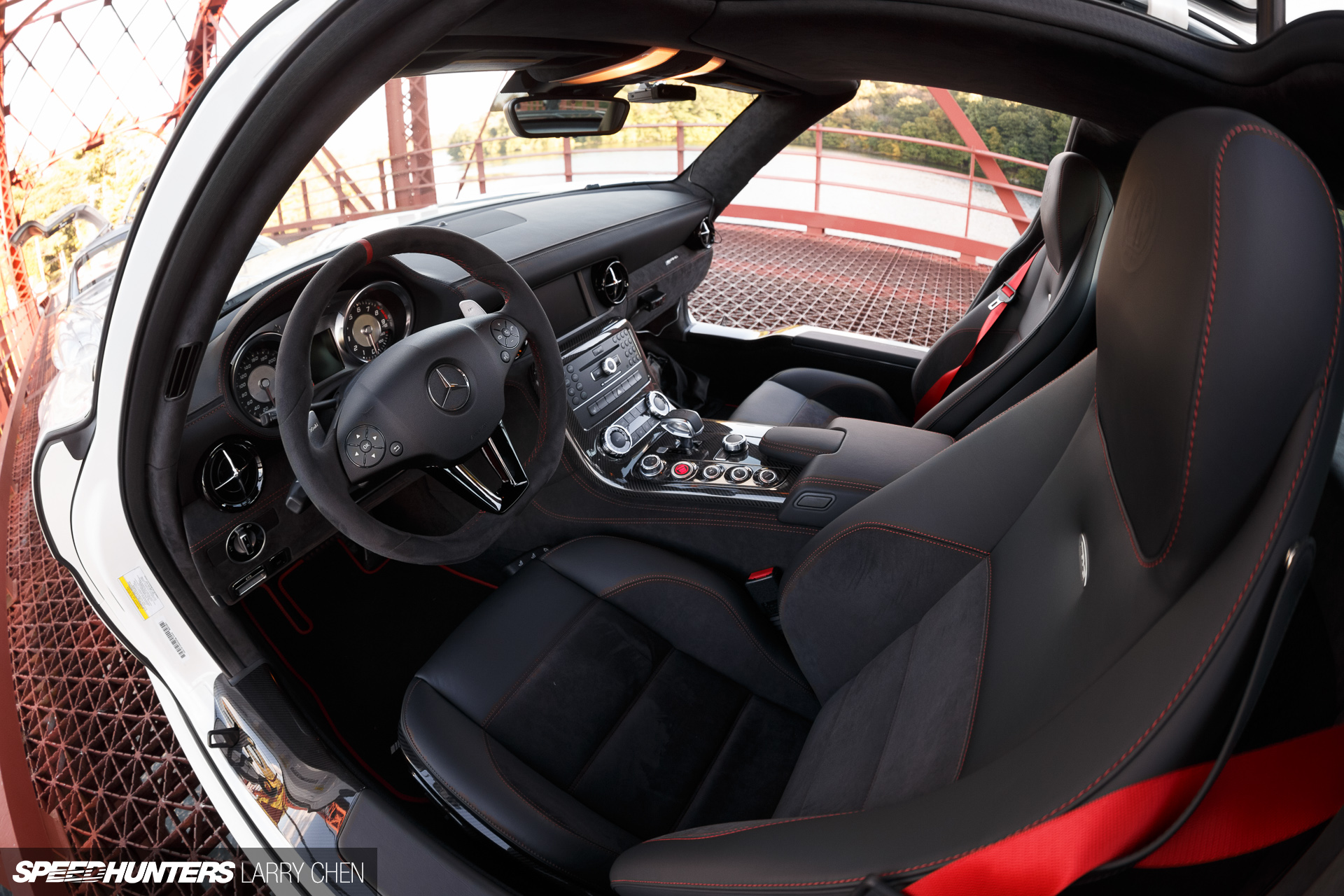
In comparison, the SLS monocoque doesn’t require the swing-up doors, but like pop-up lights, seriously, gullwing doors are almost never a bad option.

They were also a very deliberate tick applied by AMG – the general layout and style all point to the SLS being presented as the true successor to the 300SL. I wonder if they regret using the name for the R129?
Power from the soul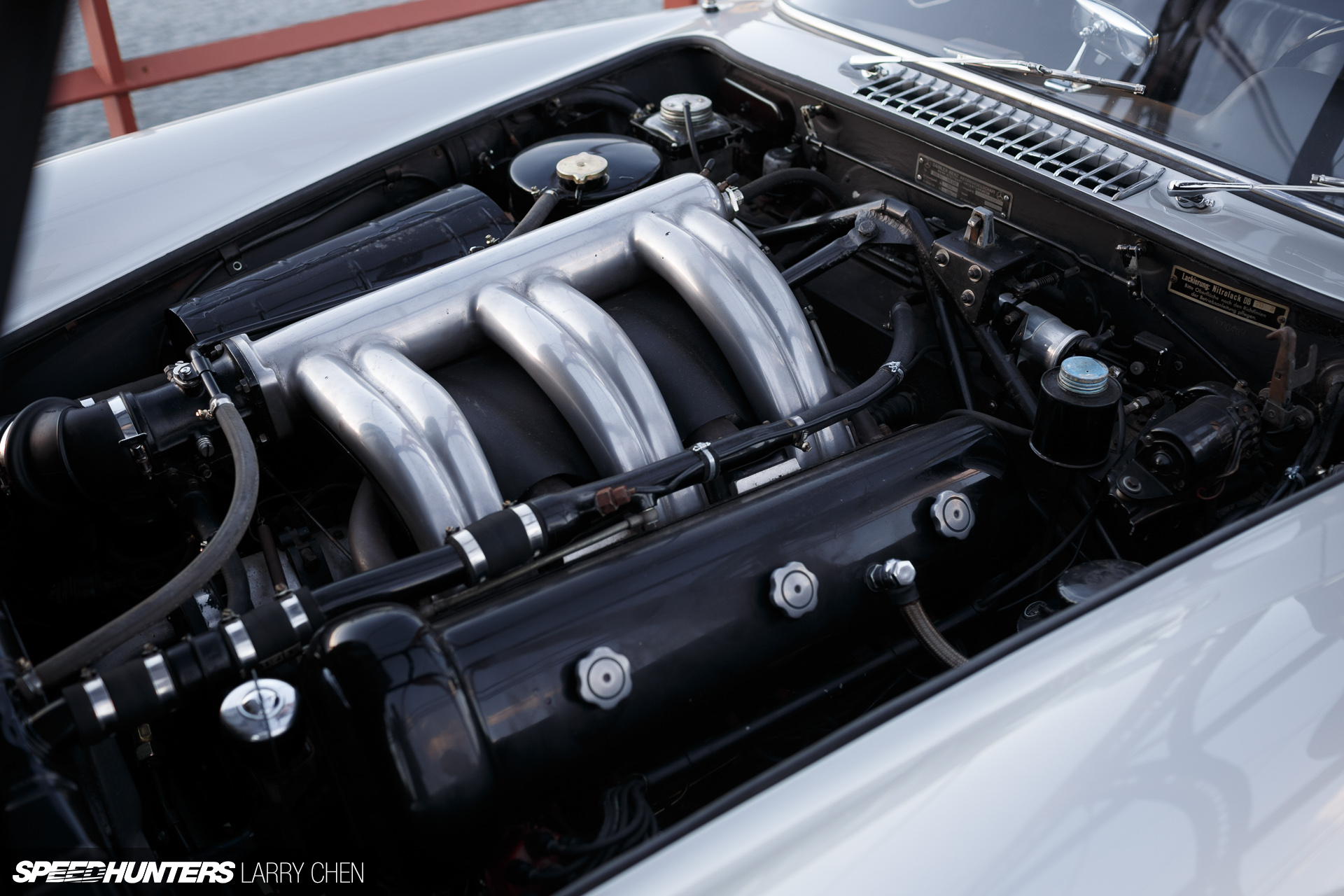
Fourteen hundred 300SL coupés were built in the four years of production from ’54-’57 – a healthy number. The 300 in the model’s name referred to the three-litre inline-six that inhabited the long nose: canted over at 45 degrees to one side to help lower the bonnet-line and improve airflow.

The dry weight of 1,300kg meant that the 210hp on tap was a healthy figure – and far more than most drivers would have been used to at the time. You’d feel something special when you got behind the wheel, that was for sure.
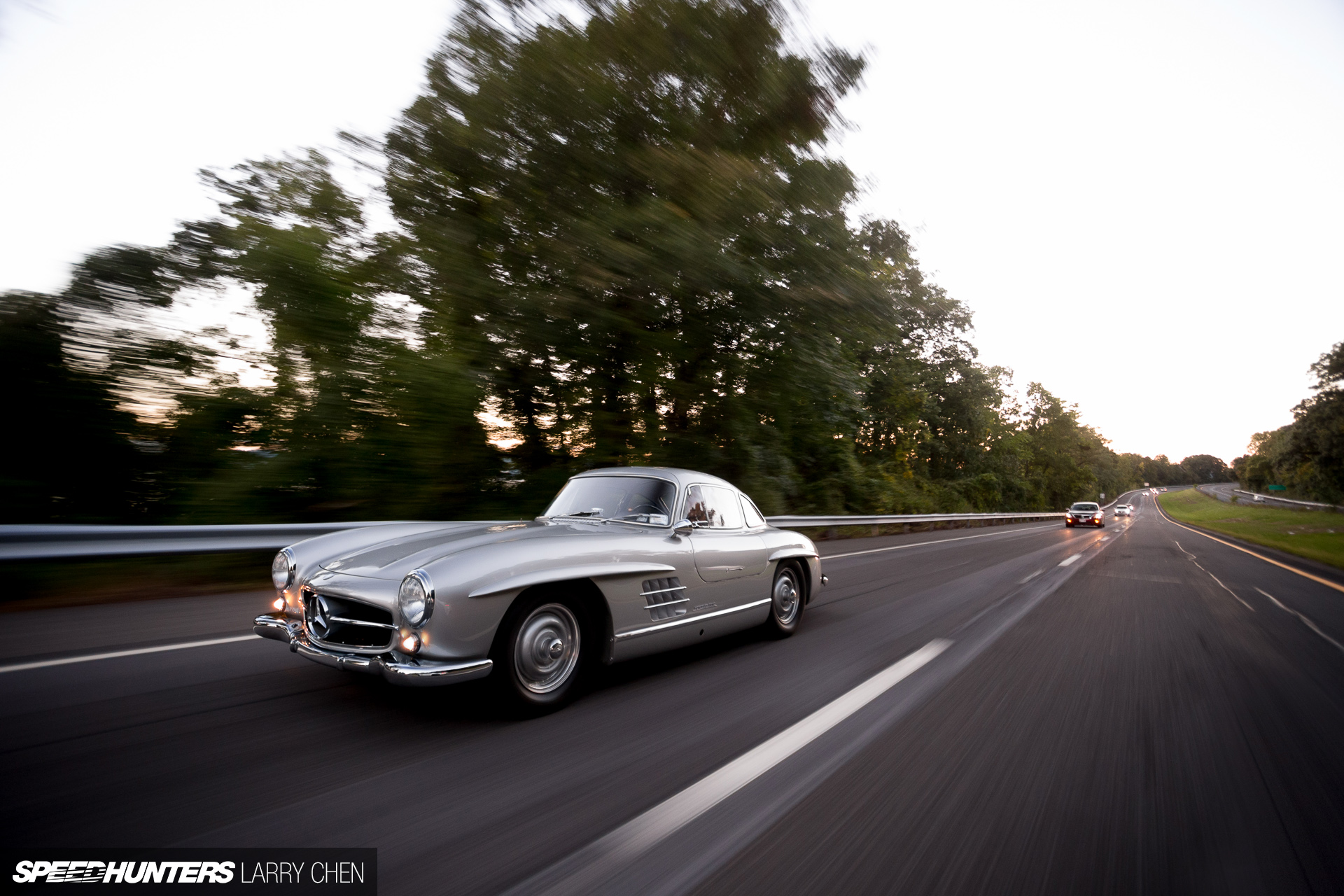
Driving a 300SL is apparently close to driving the racing car that preceded it: the straight-six required being pushed to extract the maximum out of it; though independent suspension and a good steering rack made the handling less pressurised.

Variants of the SLS have come thick and fast since the car was unveiled in 2009, with one-offs popping up alongside the mainstream models. But the Black series is a different beast altogether. A regular SLS, with its big V8 and 570-odd horsepower would be something, but the lighter, faster, bigger Black is the dark father of them all.
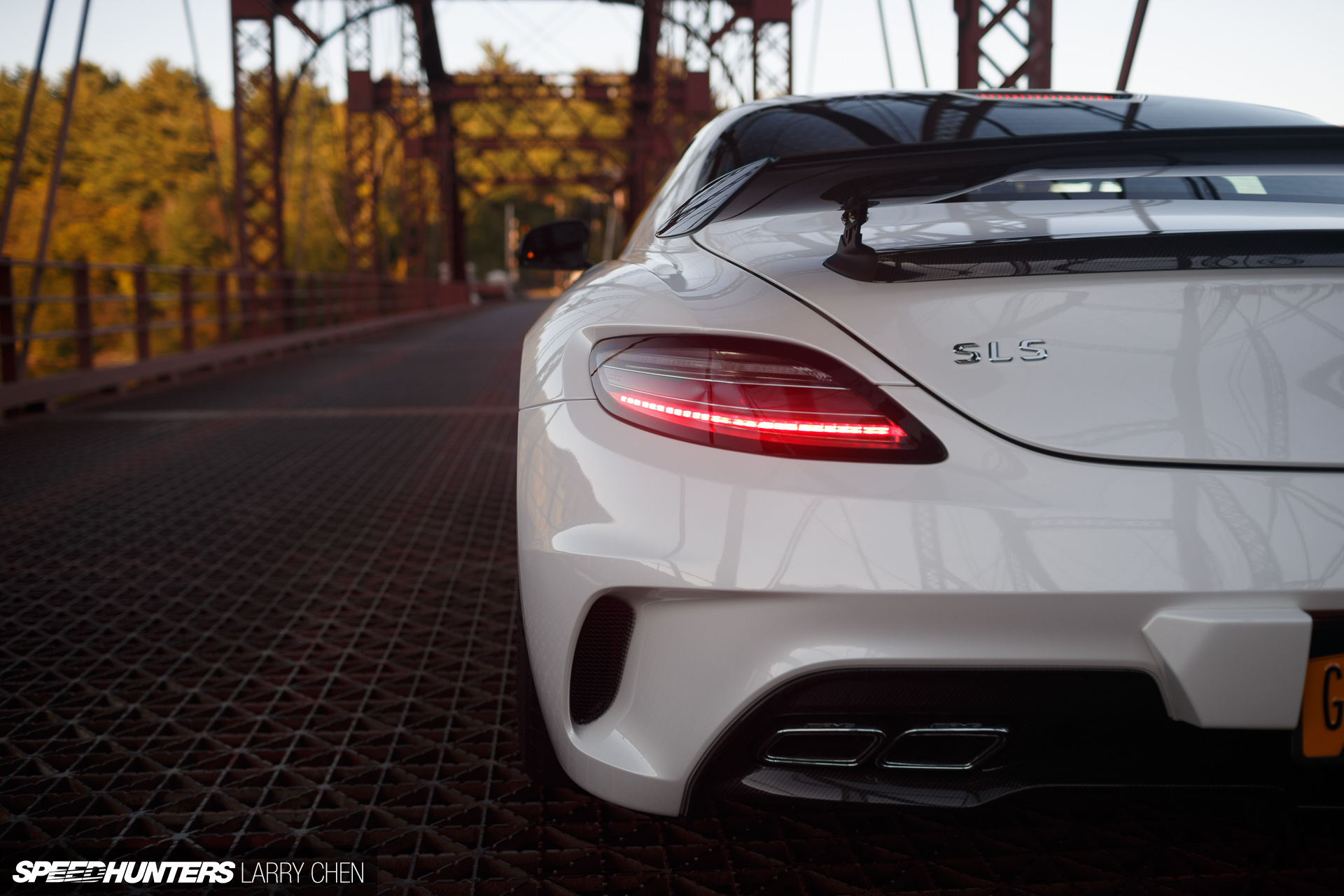
Unlike the 300SL, the Black of today is faced with an army of potential opposition. And yet the fact that the mere mention of the Black sends a shiver down my spine says something about the complete reversal of my esteem for Mercedes-Benz in general. Like the 300SL, I don’t think you can get in this car and think calm, rational thoughts.
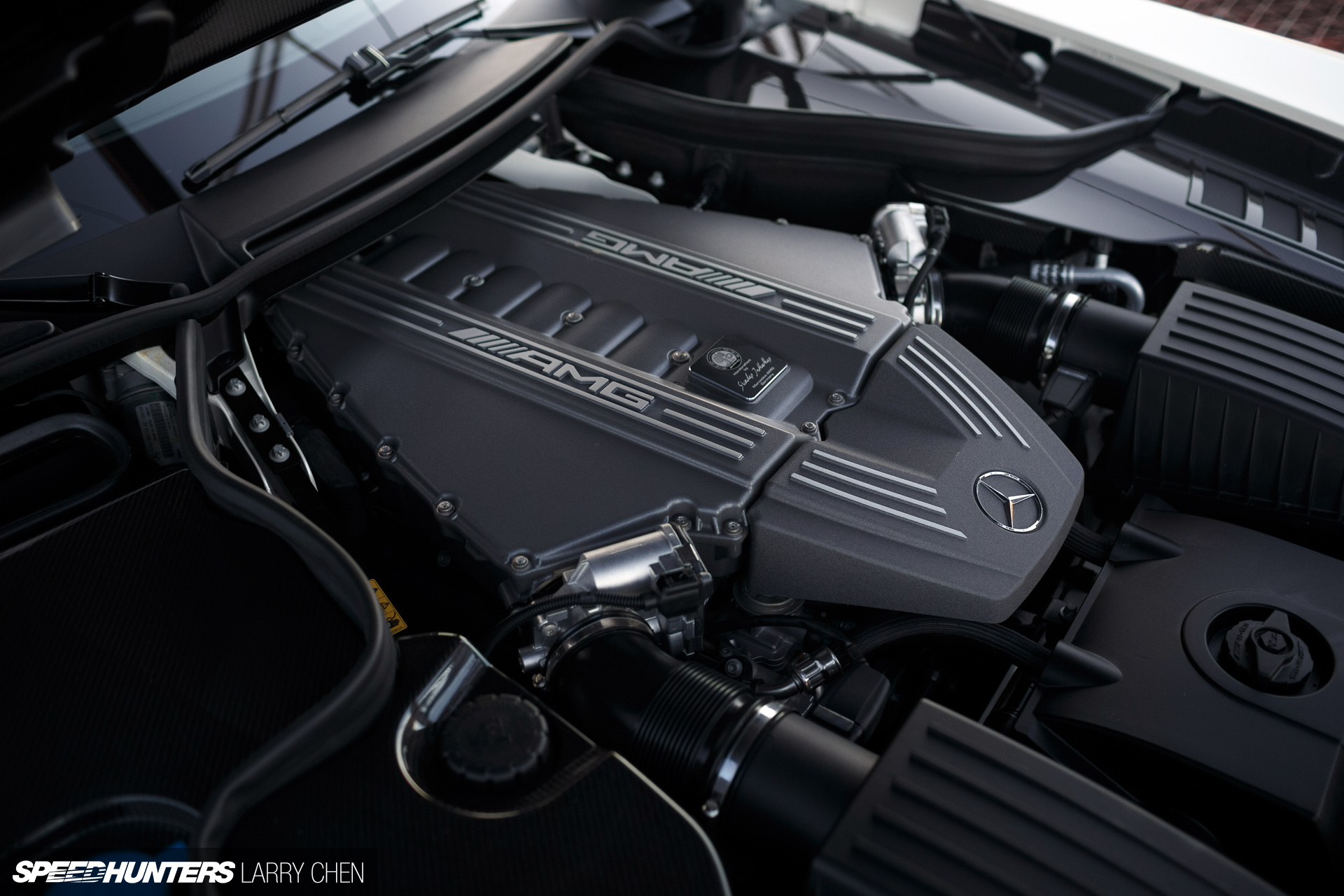
Especially not when the big 6.2-litre V8 turns over. Six hundred and twenty dark horses strain at the leash. Darkness descends, ravens fly from the trees, the time of reckoning is upon the world. If my reaction to the 300SL is more visual, the SLS Black is definitely aural.

Individually hand-built in the AMG tradition, the engine bay may not be as industrial looking as the 300SL, but as we know modern engine bays are less for mechanics and more for technicians. Compared to the laid-bare mechanicals of the 300SL, it’s what the engine does in the SLS rather than how that keeps my interest.
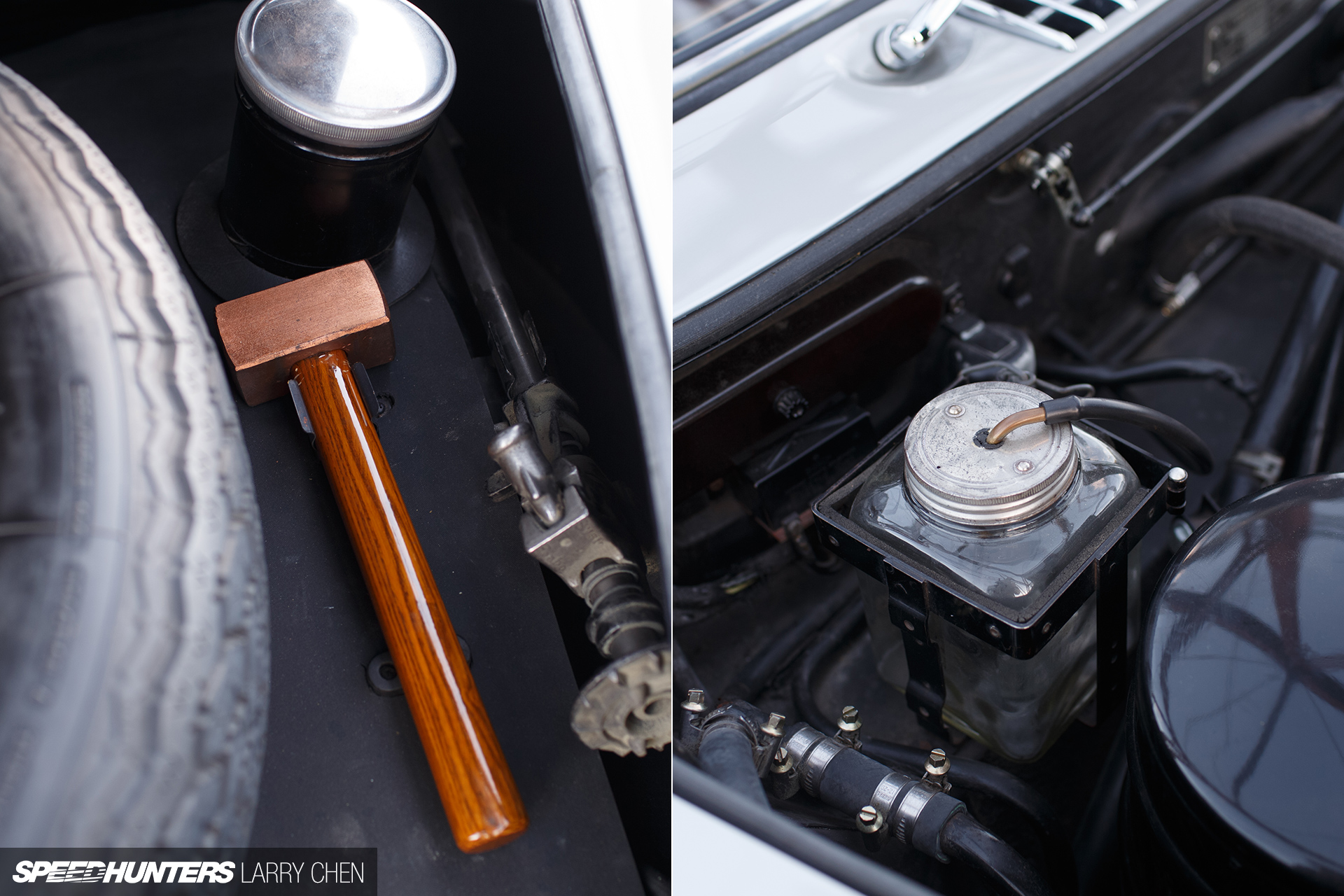
It also doesn’t have a hammer in its tool kit, unlike the 300SL. It depends on your frame of mind as to whether this is a pro or con.

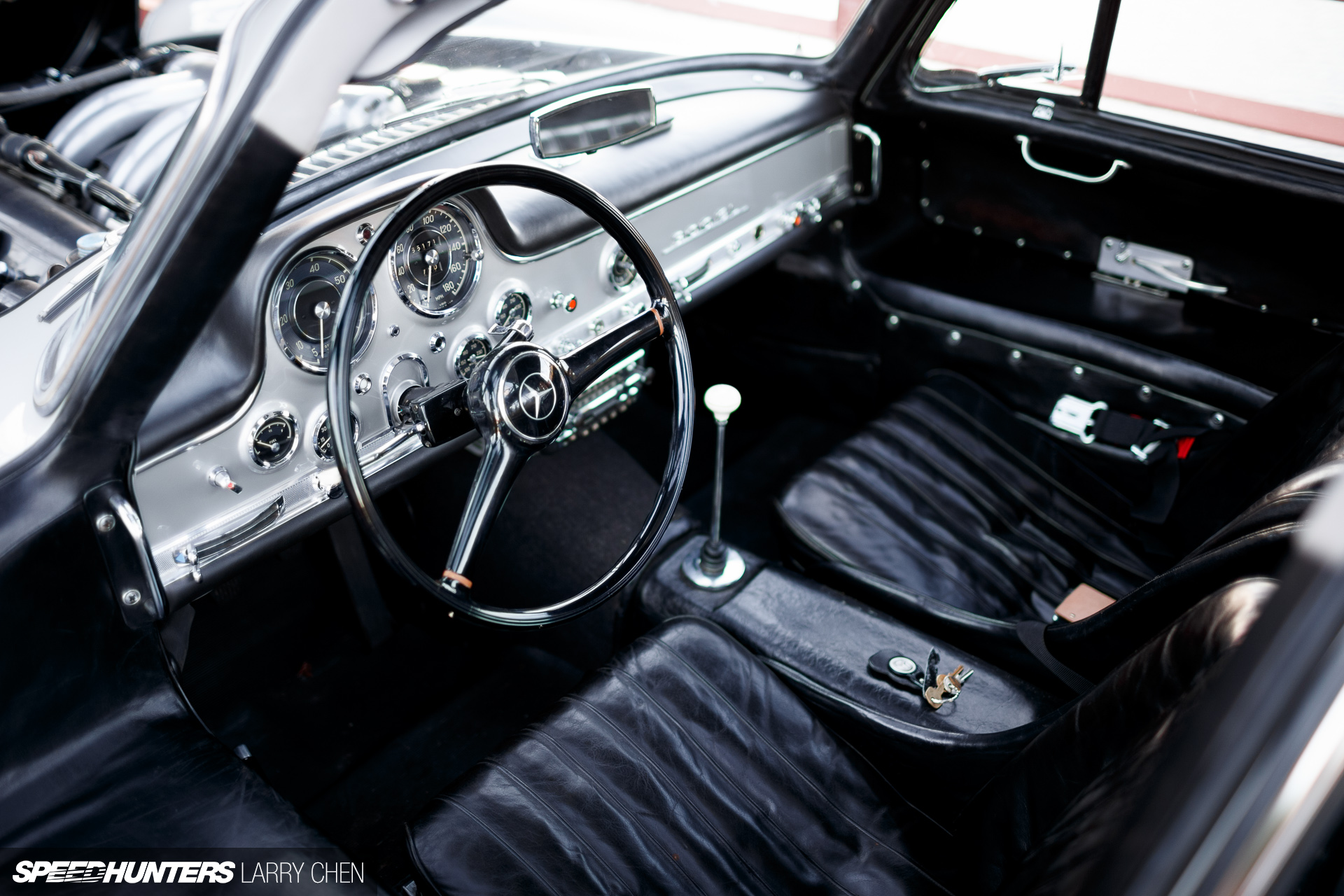
With all the talk of power and performance, it’s easy to think that both cars would be challenging places to be. But despite the 60 years difference, the concessions to utility are present in both of these tame racers. Strangely, it’s actually the 300SL that has the most complex arrangement of dials and switchgear.

In comparison, the SLS has a simple two-dial setup, with an LCD central display and rev counter.
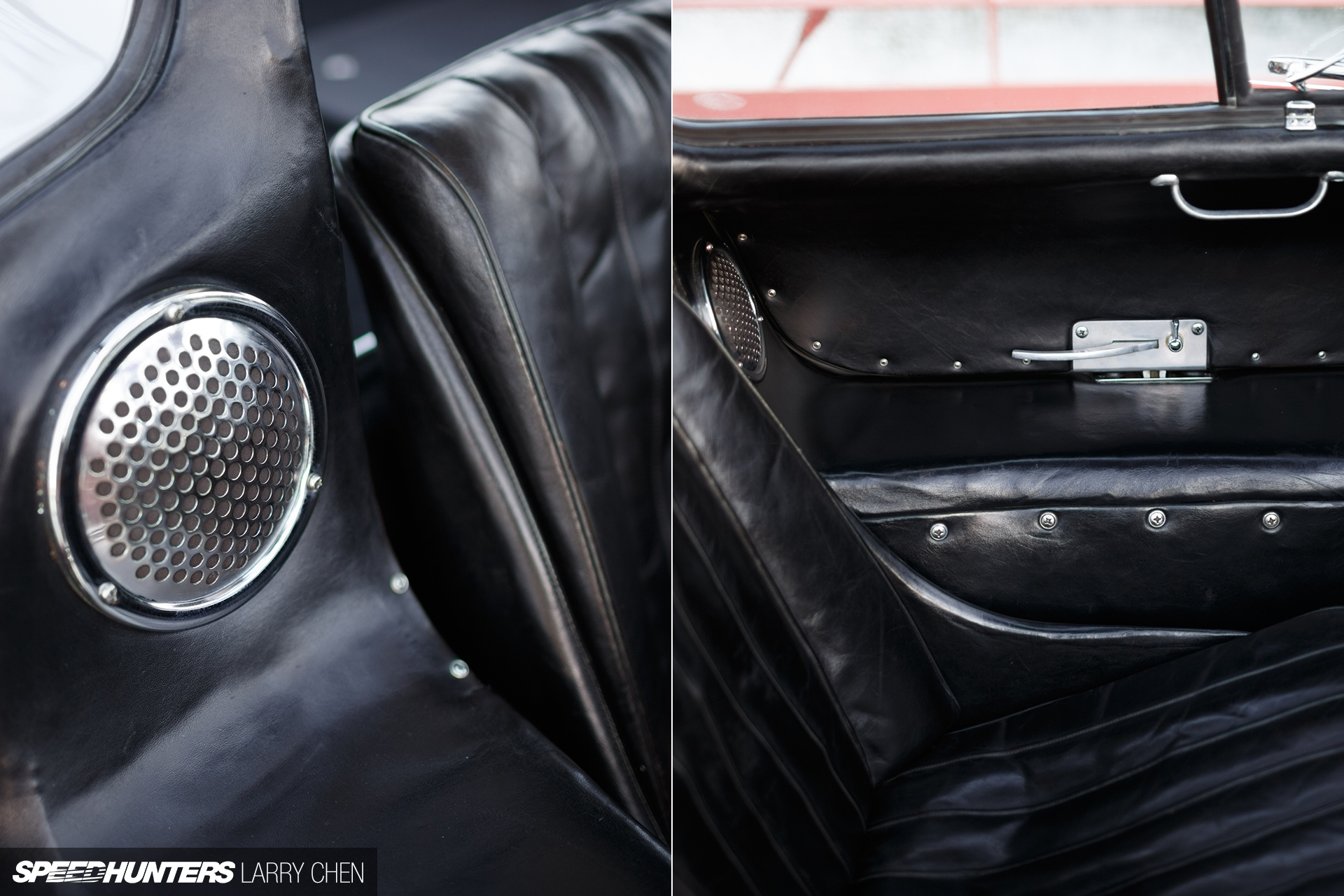
The 300SL’s interior has a lustrous leather interior that sumptuously covers the entire cockpit; it stretches and settles organically, burnished with age, giving an even more tactile and attractive look. And look! It even has speakers for the radio!
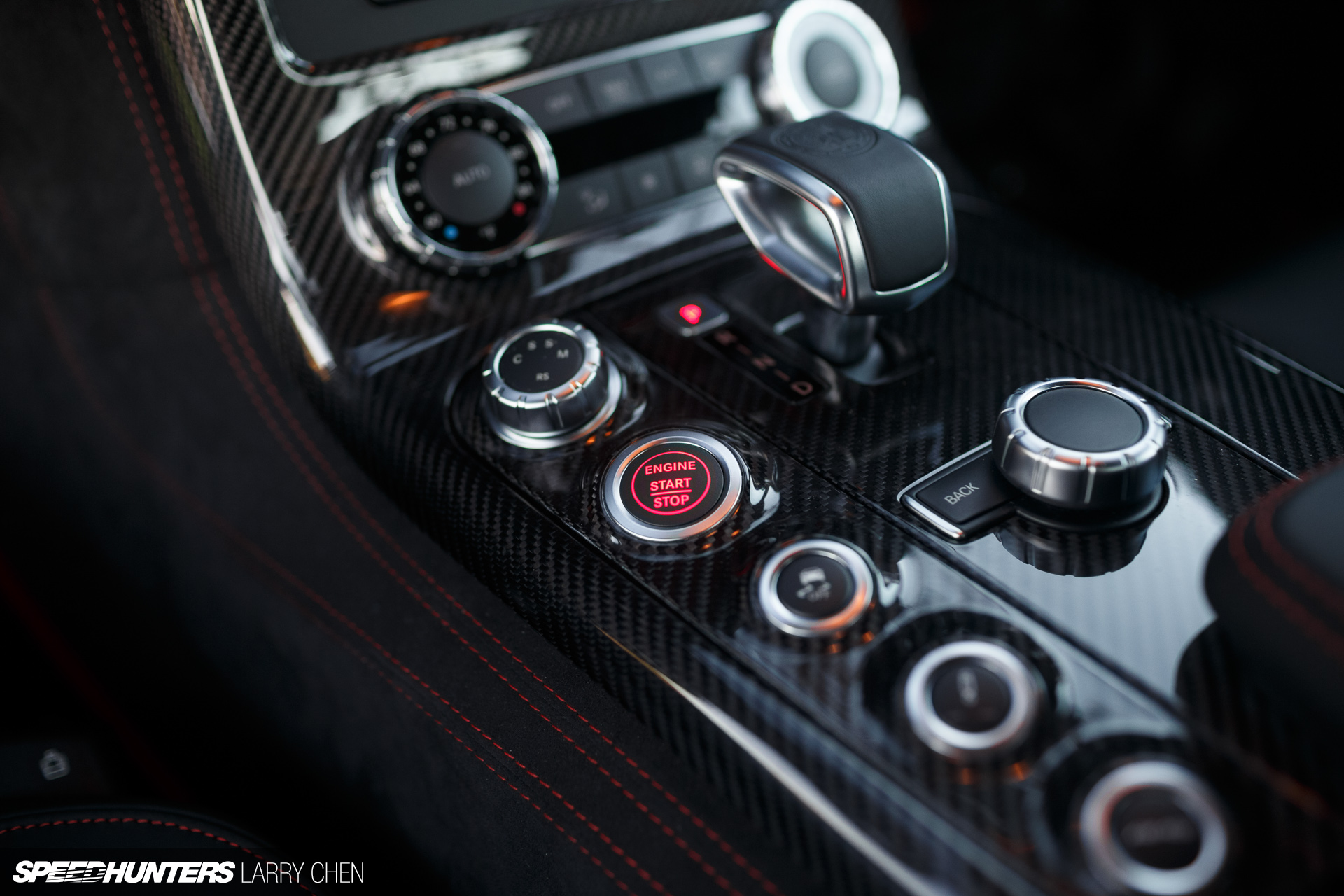
Of course there’s no stick-shift for the SLS: just a fighter-jet style lever for the semi-auto ‘box on the central console, nestling in a sea of carbon fibre and stitched Alcantara. Must. Press. The. Red. Button.
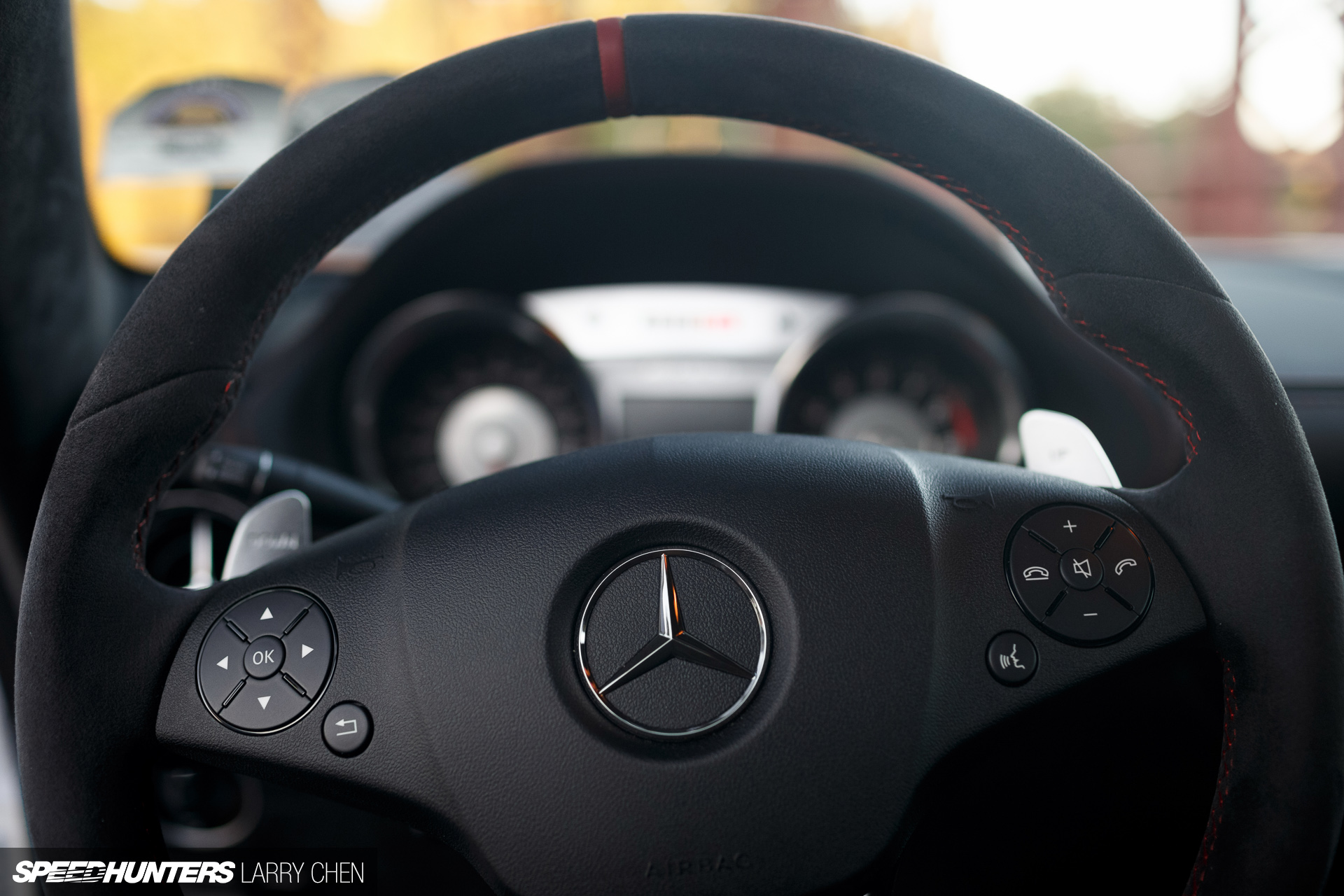
If there’s one thing I’d change, it’s the steering wheel. Yes, that’s pretty much as negative as I can get about the Black. The stitched wheel and vertical indicator might have racing pedigree, but the plain and plasticky central face reduces the impact for me.
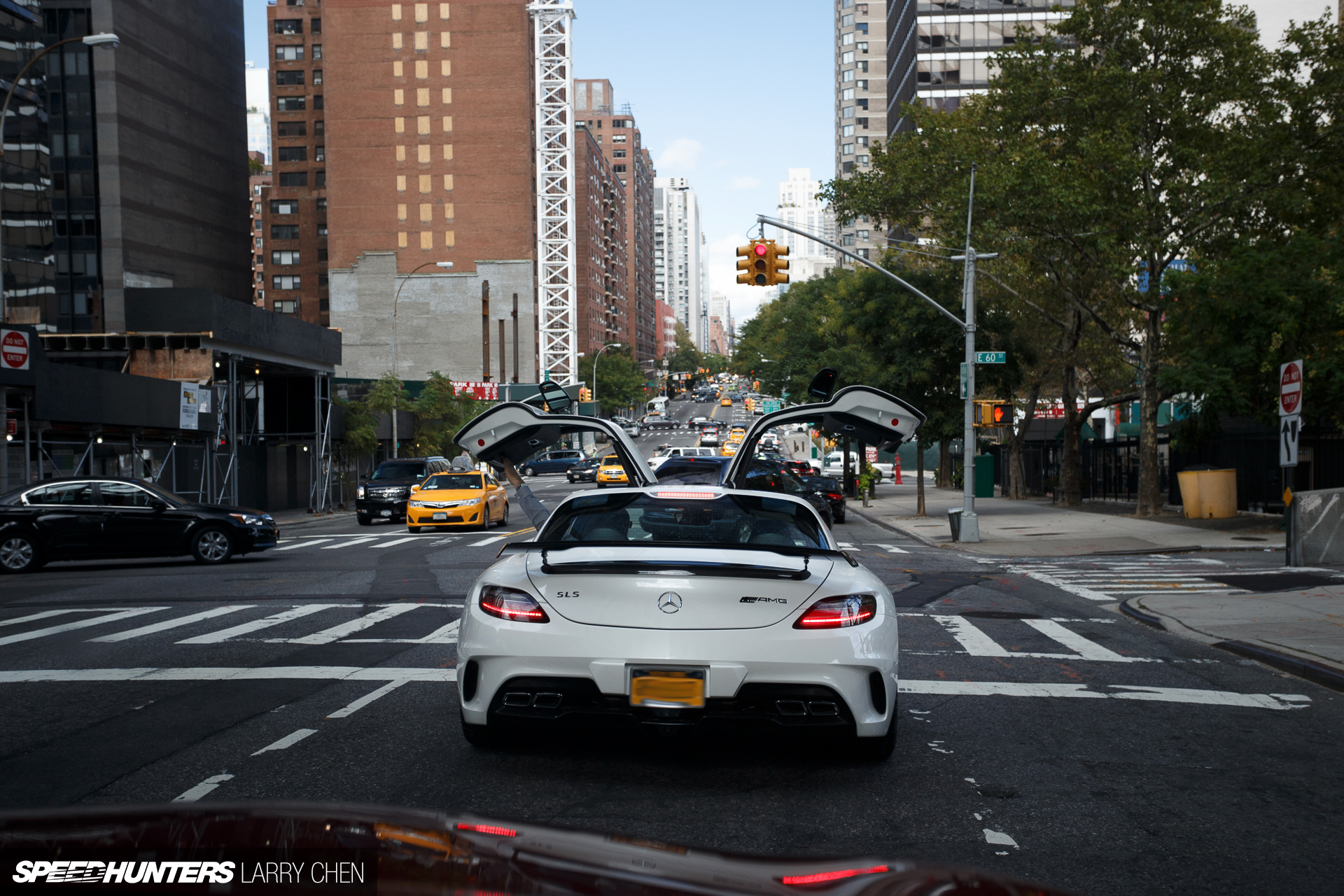
Sixty years. It’s a long time. The top speed has gone up 40mph. The weight by 300kg. The engine capacity has doubled. You can drive one in a town without it overheating. But does any of that really matter?
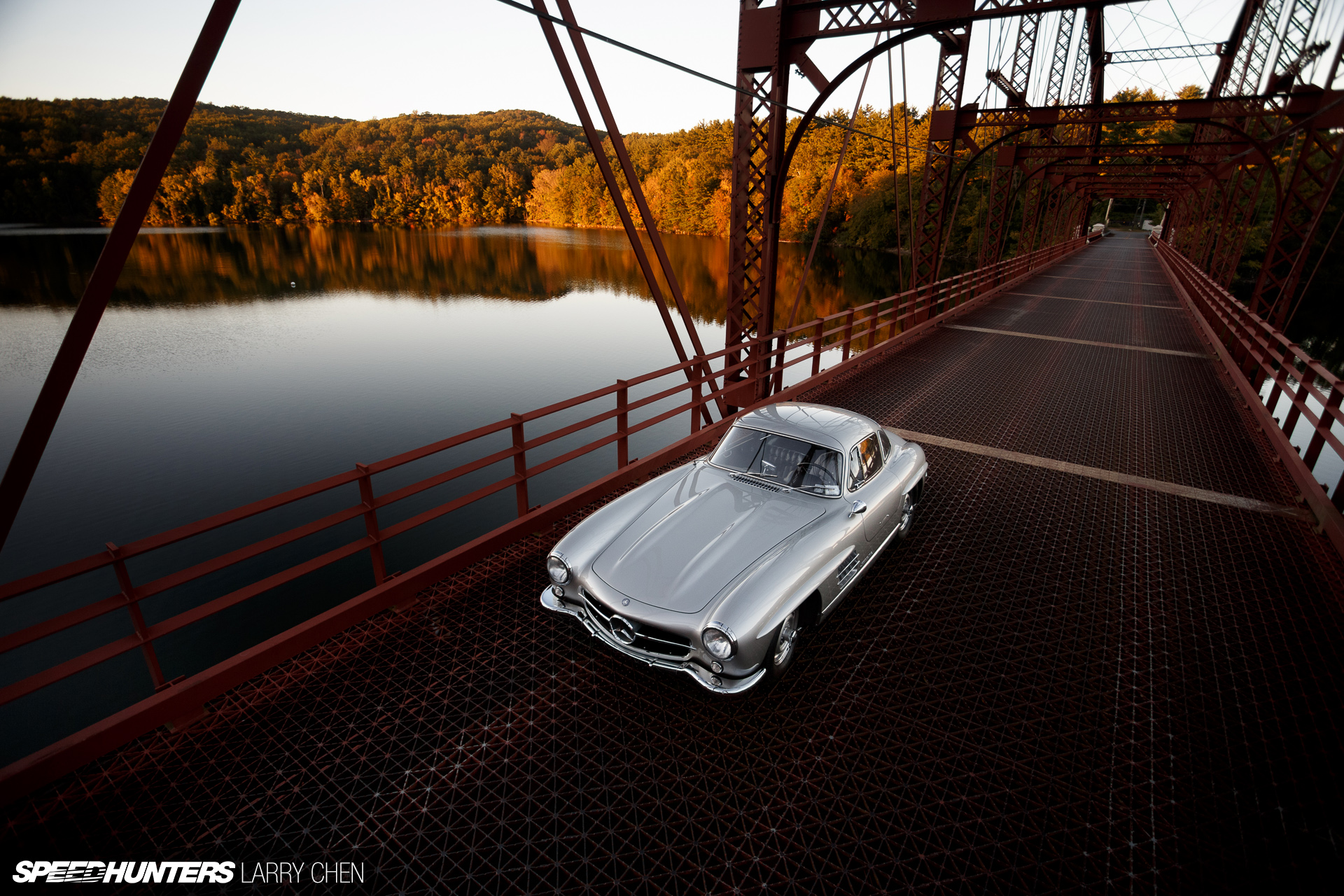
What we have here are two cars that represent the raw emotion of the automobile. When I look at the SLS Black and the 300SL, I see two sides of the same coin. There’s beauty, there’s power and there’s toughness. Let’s hope it’s not another 60 years for the next spiritual successor to the original legend.
Words by Jonathan Moore
Instagram: speedhunters_jonathan
jonathan@speedhunters.com
Pictures by Larry Chen
Instagram: larry_chen_foto
larry@speedhunters.com