
With the Rev Speed Super Battle event coming up next week I began reflecting on just how far Time Attack has come in the last ten or so years. We all remember when cracking the 1-minute barrier at Tsukuba was a mighty accomplishment, then slowly but surely aerodynamics began playing an ever bigger role, as builders and drivers began to understand what is really possible. We’ve seen this both at a pro level as well as at grassroots events like Battle Evome but nowhere has the aero revolution been more evident than at the World Time Attack Championship in Sydney. When we first covered the event back in 2010, the Japanese and Americans still had the upper hand but then the Aussies truly fought back, and no car can serve as a better example of this than Project Nemo.
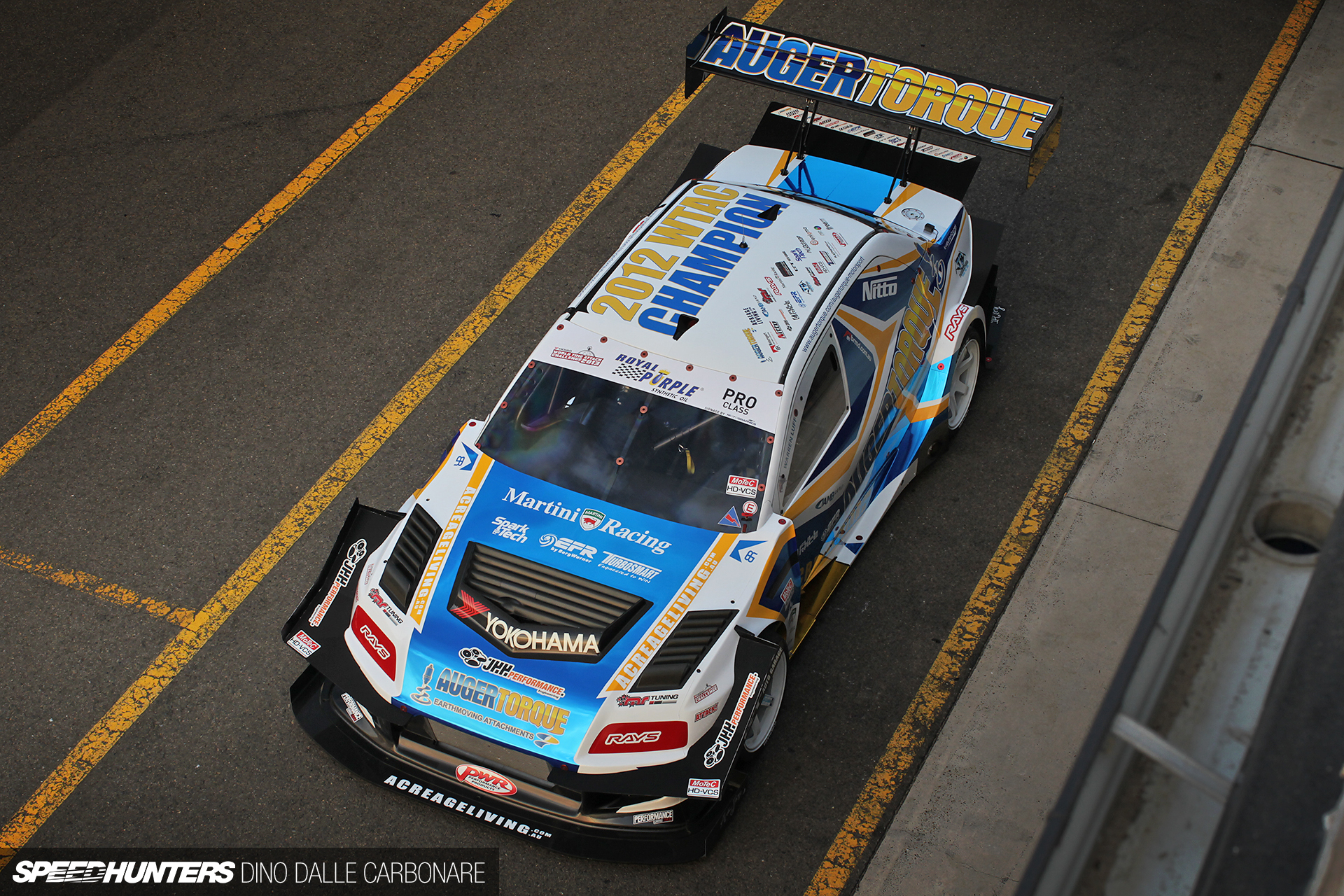
With very basic rules defining what can and can’t be done in the Pro Class the guys behind Nemo decided to embark on a project that would not only blow away the competition, but redefine what Time Attack is all about. Last year this Evo 7 set the fastest lap time at Sydney Motorsport Park with a 1.25.0200, well over two whole seconds in front of the second fastest car, and while the potential for an even faster time was very much there this year, unexpected mechanical problems quickly evaporated the team’s hopes at defending their title. But results aside, it’s the car itself I want to concentrate on…
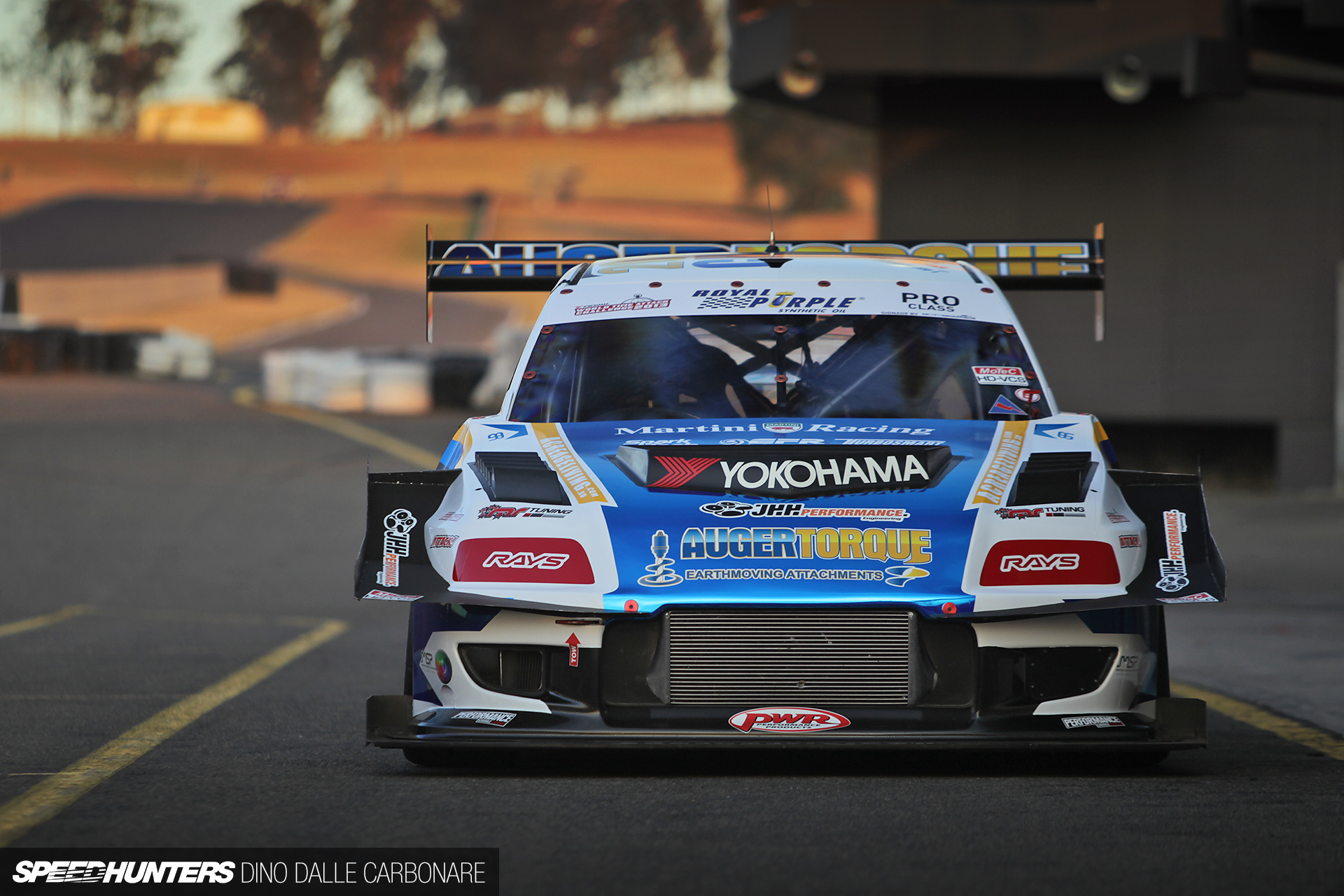
… which thanks to Team manager Mark Rayner and the team’s PR guy Stefan Knoeckel I was able to shoot the day before WTAC 2013 kicked off. Not having gone to the 2012 event, I had only seen the much talked about Evo 9-based Nemo in pictures and video. This is one car that really has to be seen up close to be appreciated, and of course it’s the impressive aero package that hits you first. Andrew Brilliant was called in to take care of this side of the car and thankfully I’ve had him come onboard on this feature and explain things directly to you rather than me attempting to pass myself off as an aerodynamicist. Plus it all makes so much more sense when Andrew explains stuff!
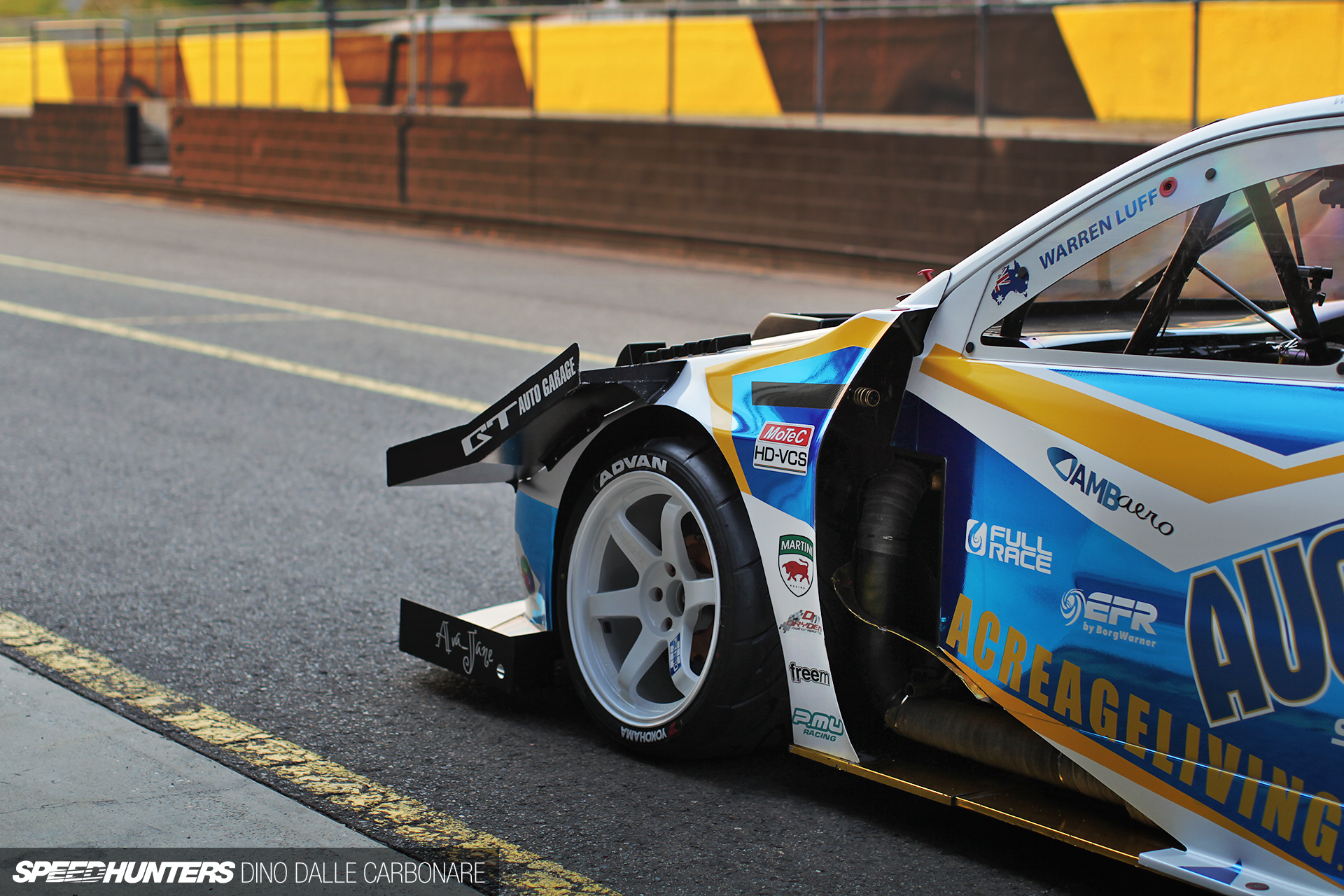
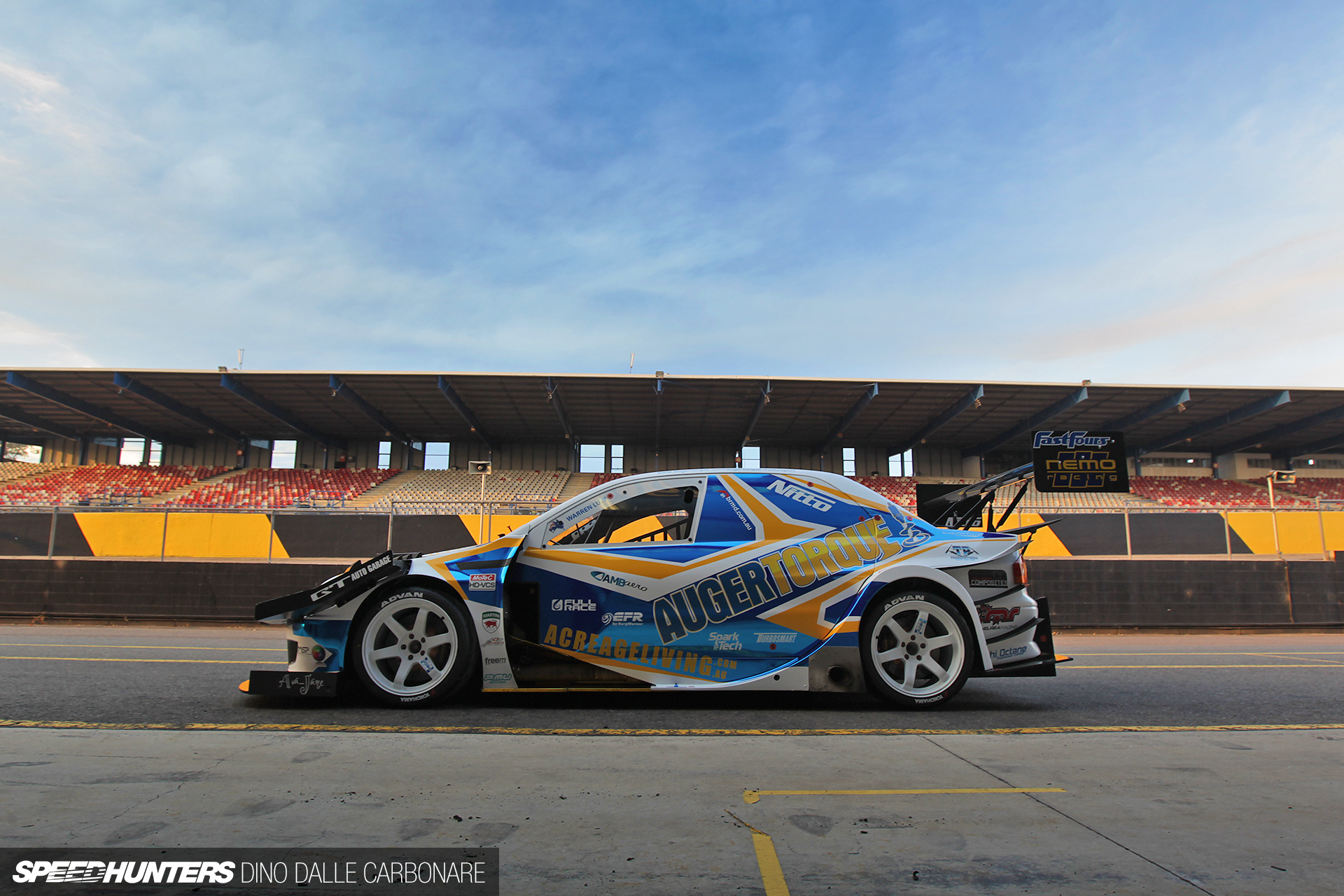
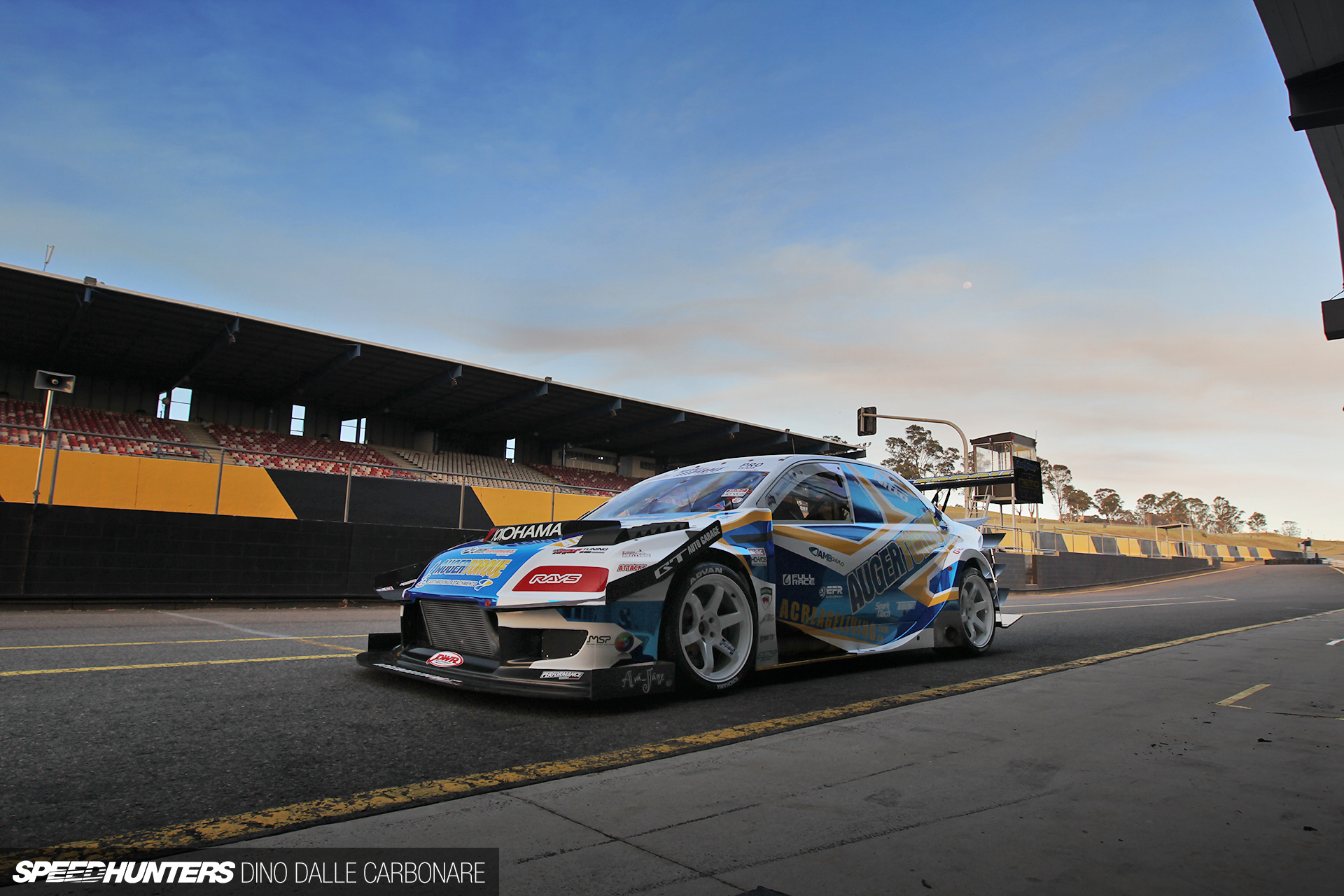
It’s obvious every single surface and addition on the car’s body is there for a reason. The car sits quite a lot wider than stock, pushing the Advan-shod TE37RTs (shown here in 2014 white color) out as much as possible at each corner. Andrew says, “This is one of my favorite angles. The exit ducting on the front wheelhouses is probably my favorite piece on the car. I have to say thank you to Chris for making my dream happen with that one.”
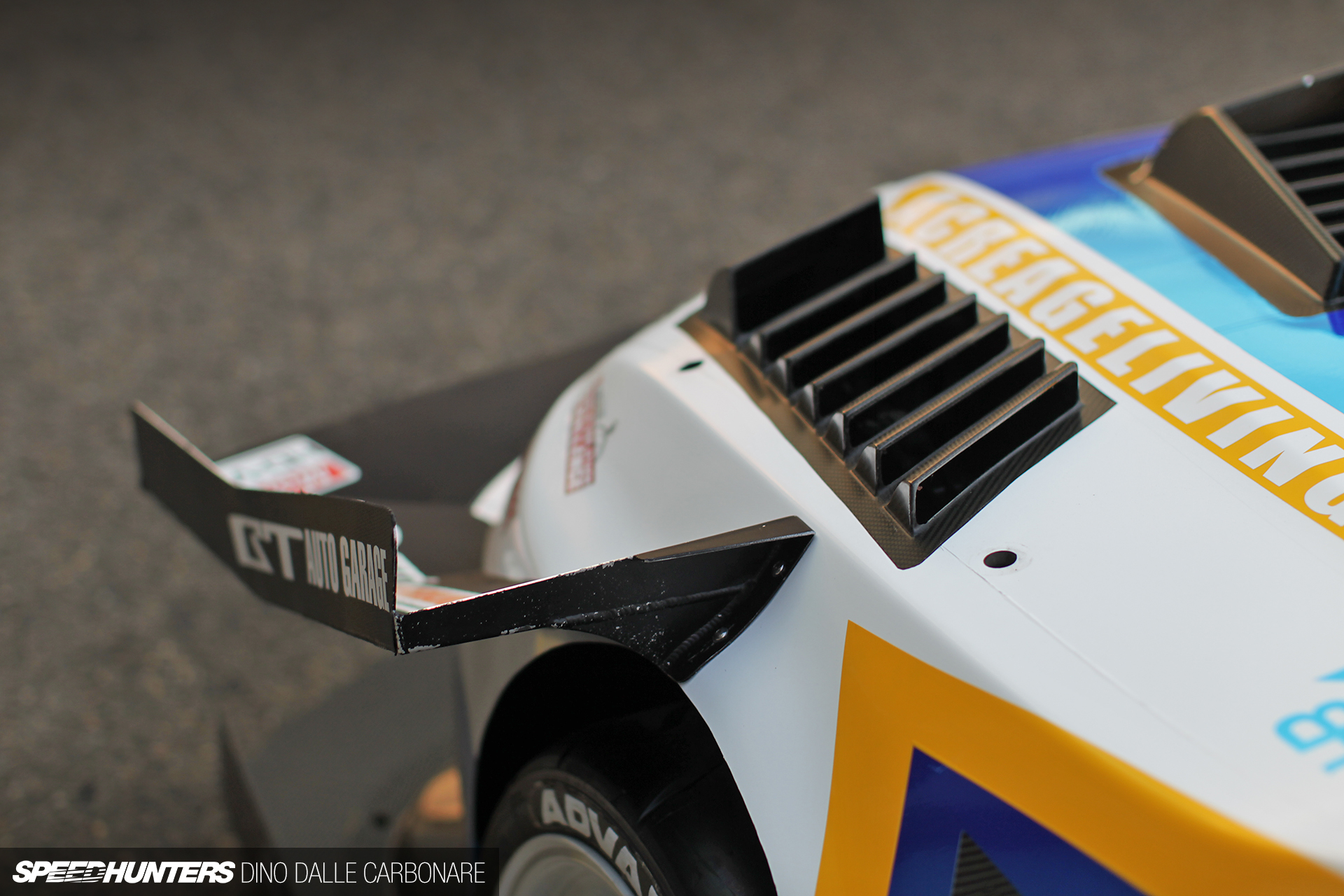
The downforce numbers this car generates are almost unbelievable: at 150mph, the total downforce measures 5,400 lbf which as Andrew says “is almost double even the 2013 Voltex/Tilton’s quoted numbers. Nemo was designed in 2010.” So it’s not surprising to see the sheer size and length…
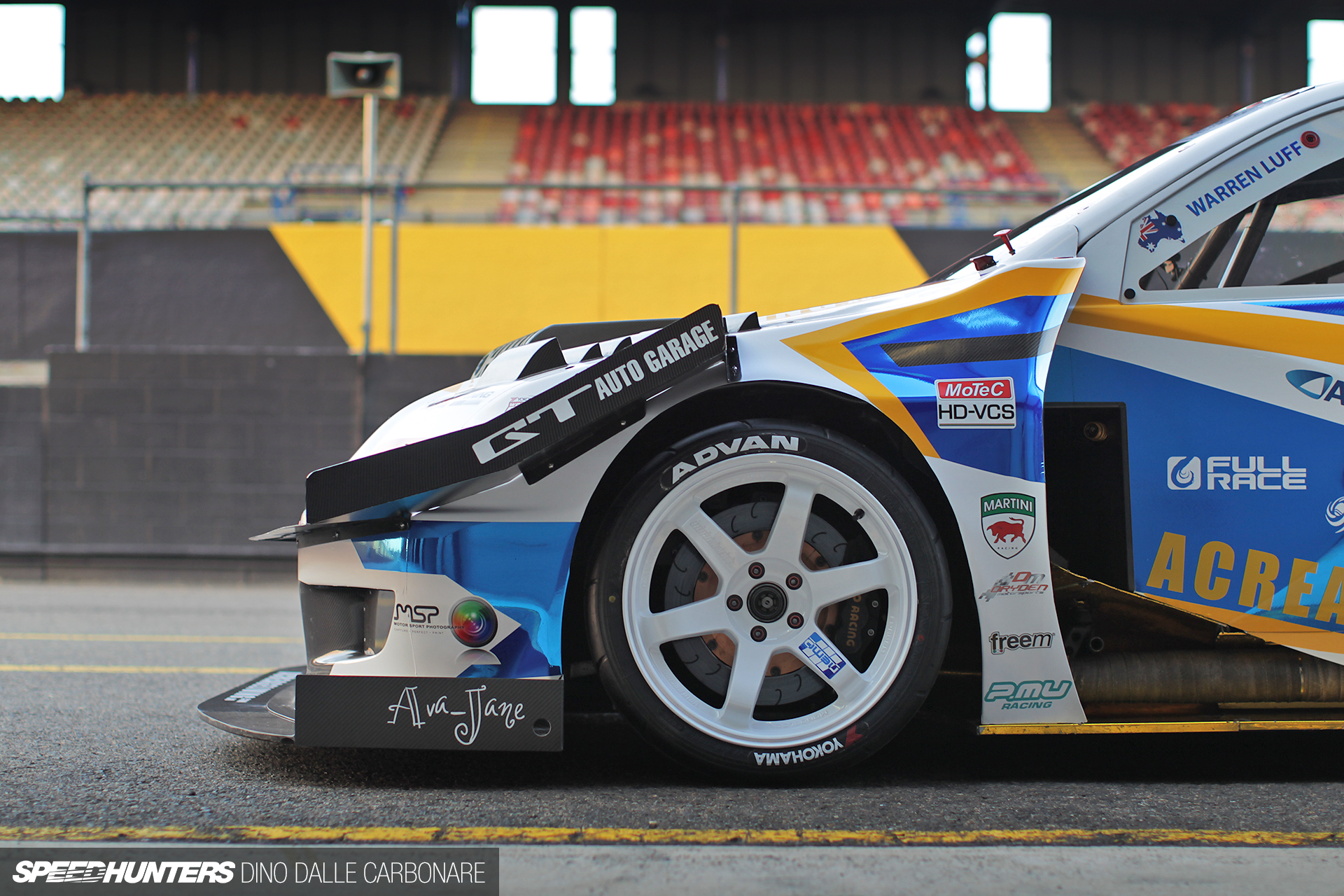
… and even position of the front canards, as well as the carbon front diffuser/under-tray section which protrudes extensively in front of the bumper line and all the way underneath the engine, mating up to the underfloor.
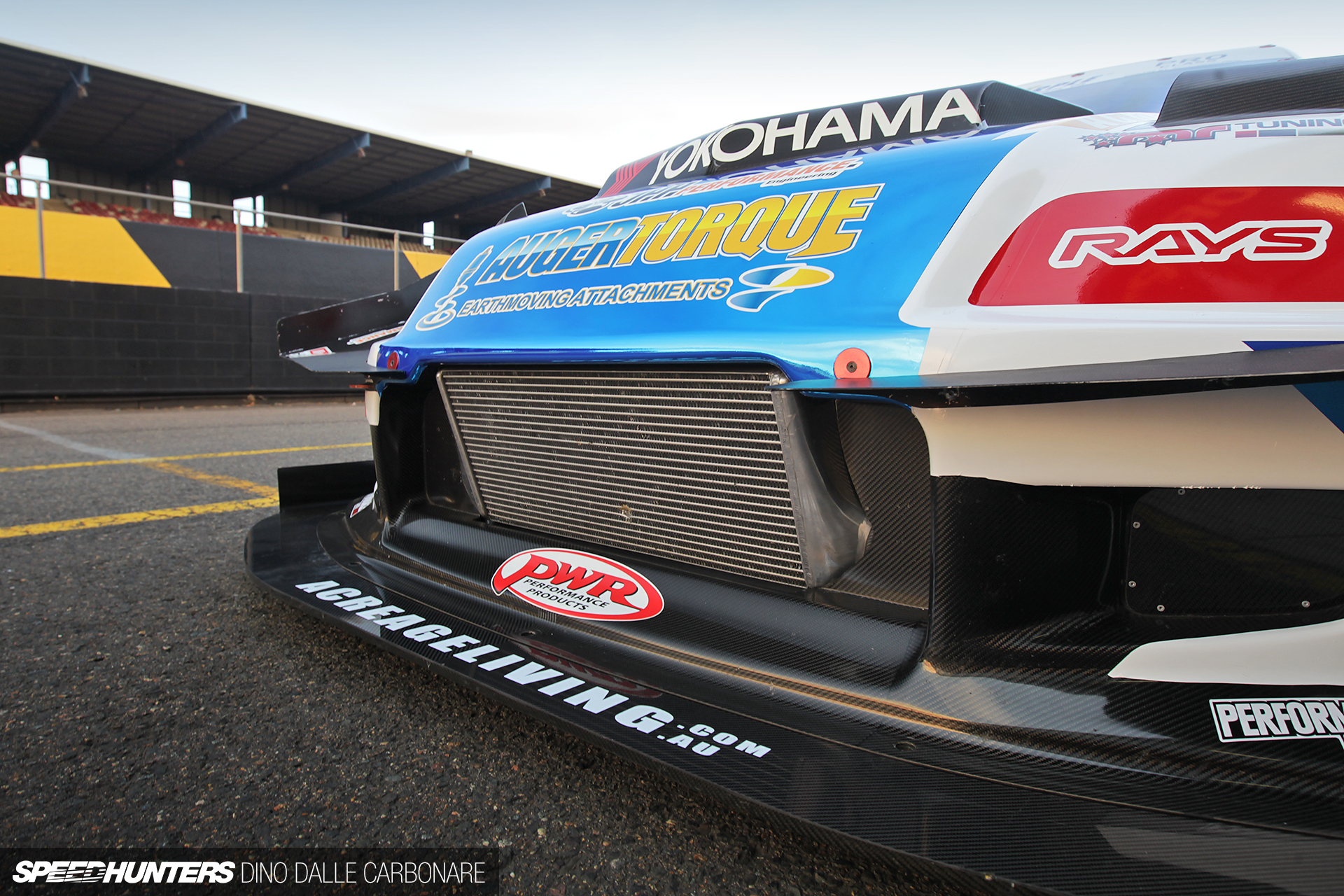
Here’s a better look at the front end; you can see how the bumper, redesigned and made in carbon, attaches onto the splitter section. “I can’t remember what bumper this started as; it’s some JDM part actually, but heavily modified. Quite obvious here is that it had a reduced overhang from the original and that forced the cooling system, very compact with the intercooler, to protrude forward to get the air flow how we wanted it in the cooling system. That bumper actually made life a bit difficult on the aero stuff! But by the time they hired me, the front clip mold had already begun and my changes were add-ons.”
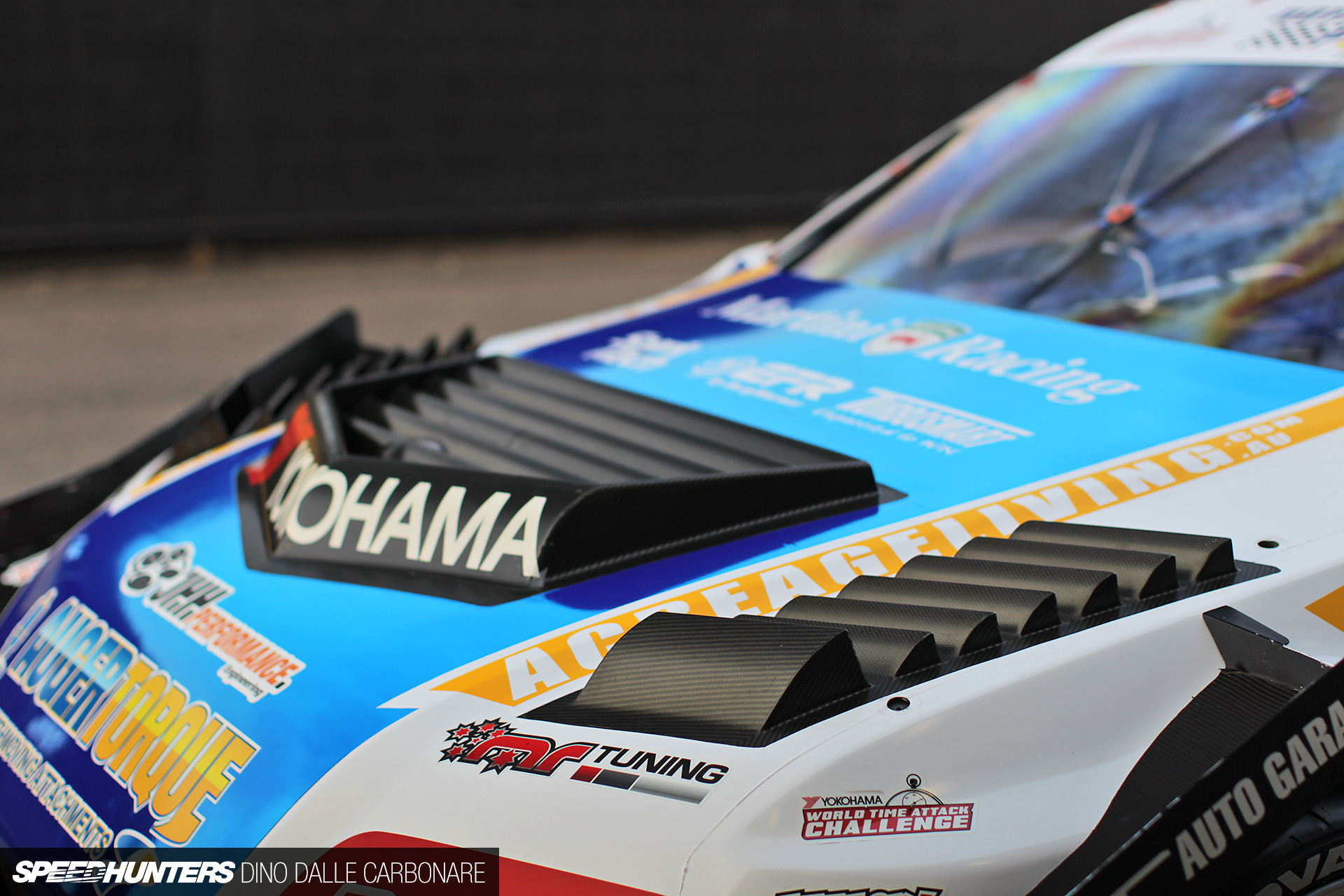
“This is a good angle to see the outlet ducting work; cooling was a big deal for this car and before it had the head gasket problem it actually was running too cold, but you always overkill the cooling system…
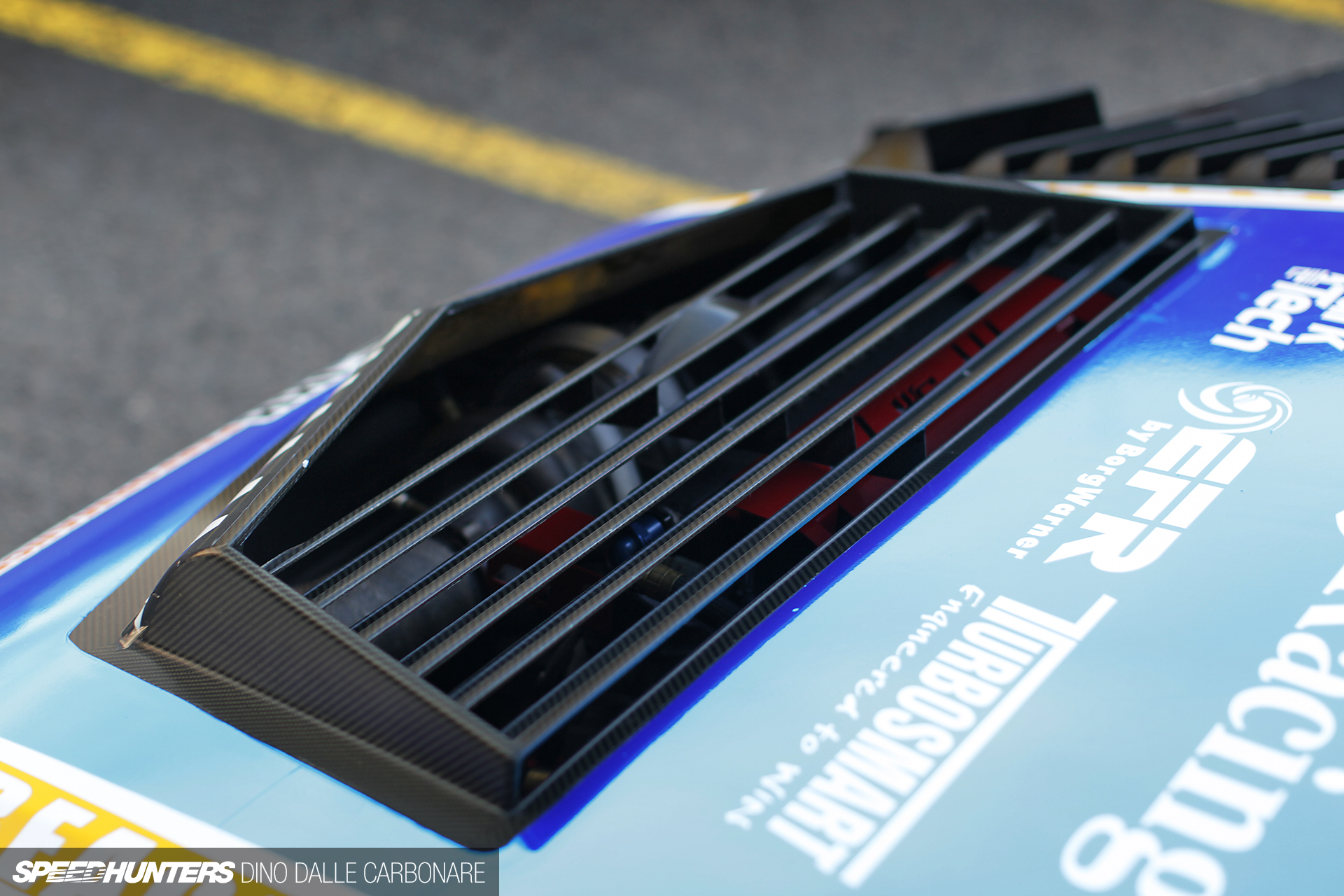
… as you have to be able to take desert heat and cold winter on the same car.”
Wings, winglets and tunnels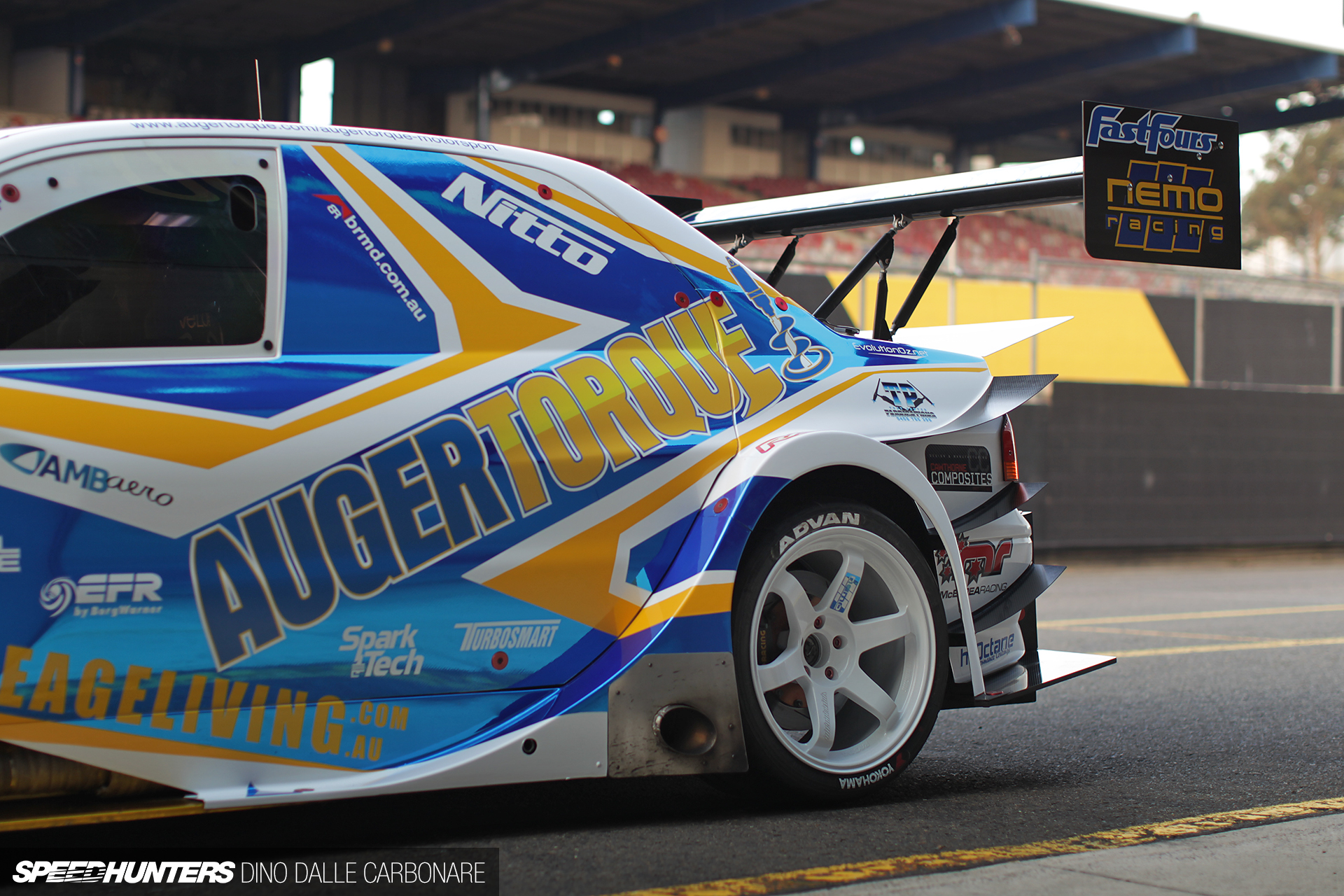
Moving on to the rear of the Evo you see how Andrew’s design has a sort of progression as the side skirts which helped diffuse the air expelled from the front arches, merge and rake upwards to form the widened and very angular contour of the rear fender.

One thing that’s obvious is how high the car seems to sit when static. There’s a very big space between the top of the tires and the fender itself, and while not particularly nice to see, it’s there for a reason. At speed, as the aerodynamic loads start to do their thing, the Evo is pushed down onto its MCA dampers and those stiff Eibach springs start to get compressed.
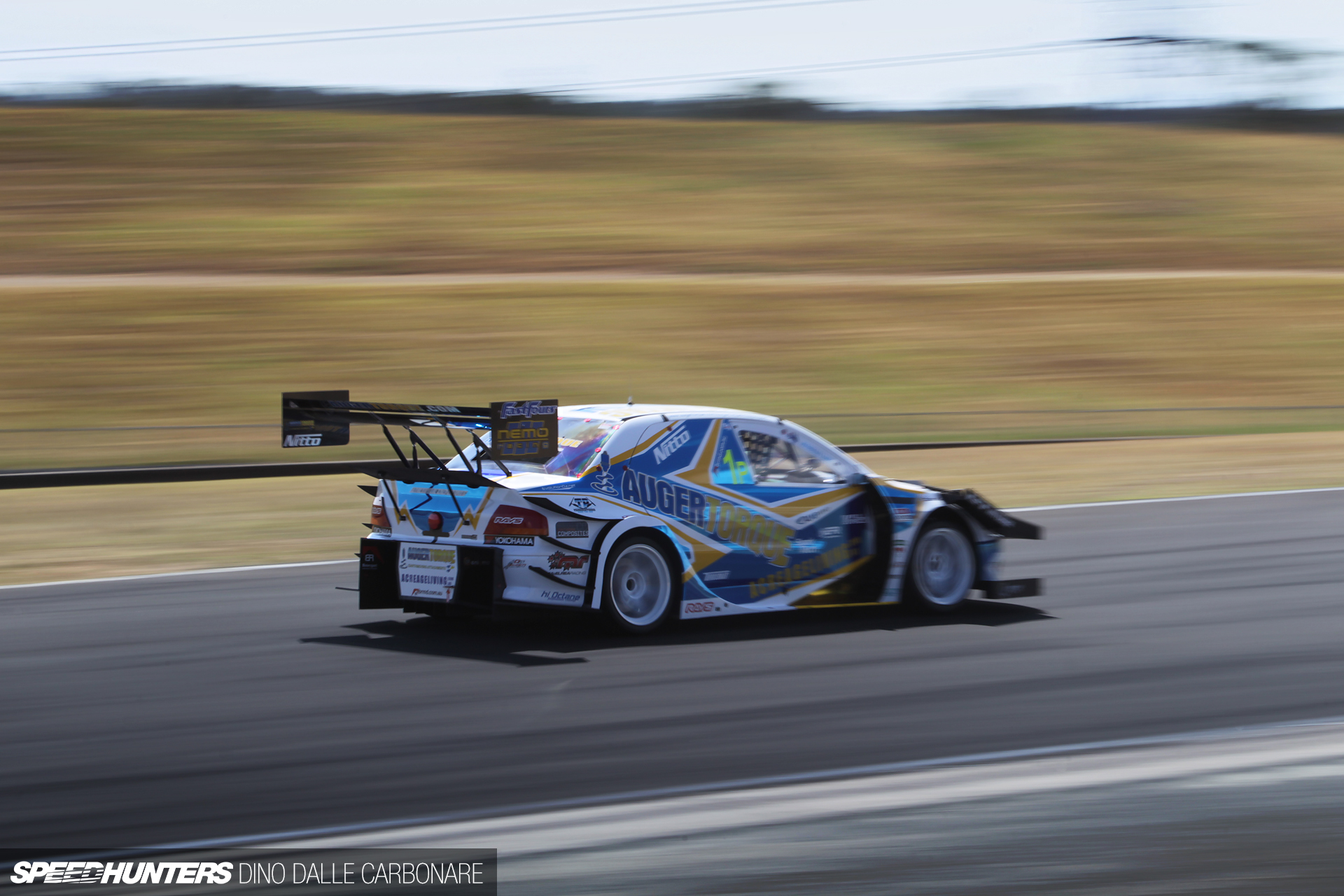
Down the main straight you could easily see the car sitting visibly lower and as Andrew mentioned, actually sitting on its bumpstops, which is why the front splitter scraped on the ground when Warren Luff, the driver, applied the brakes.

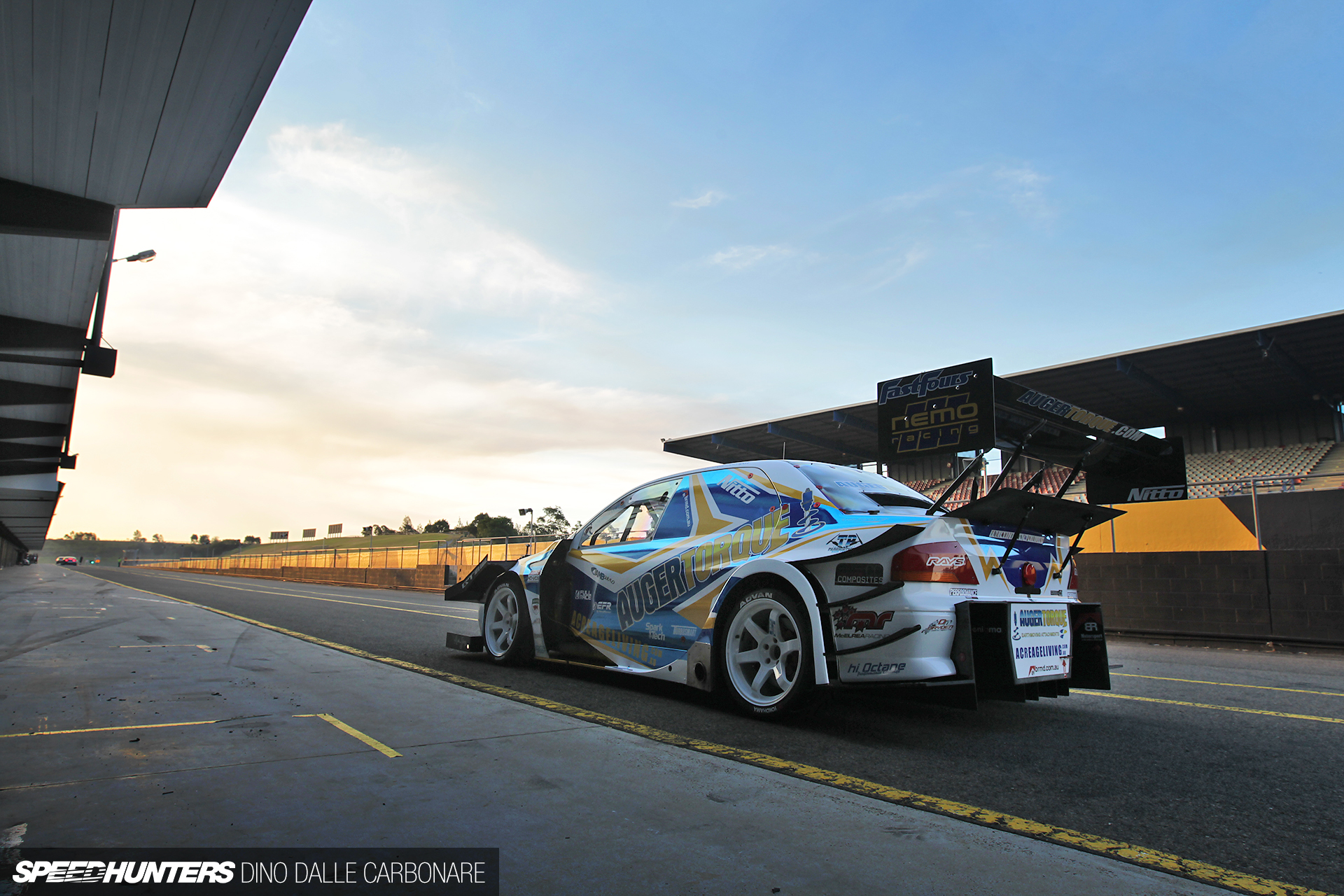
“This is a nice shot to see the rear winglets. They make a bit of rear downforce but they also generate vortices that help the aero at the back of the car.”
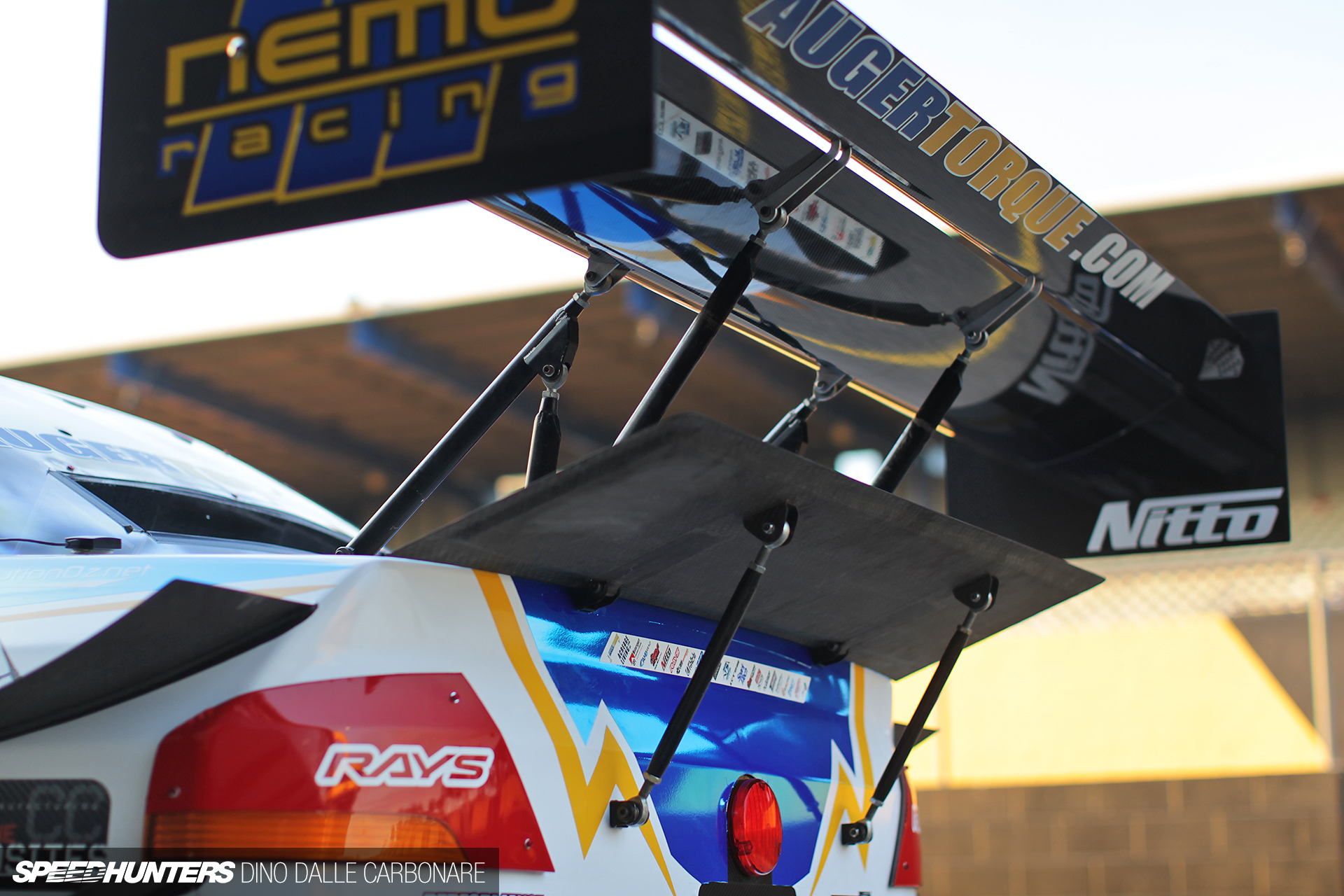
The addition of the trunk spoiler was a curious one and something that had a lot of people scratching their heads. As Andrew says, “This may not make much sense but the wing on the top is for rear downforce and the spoiler below is for front downforce. Yeah, that one kind of mystifies people. It has to do with how the air coming out of the tunnels interacts with the wing and the spoiler.”
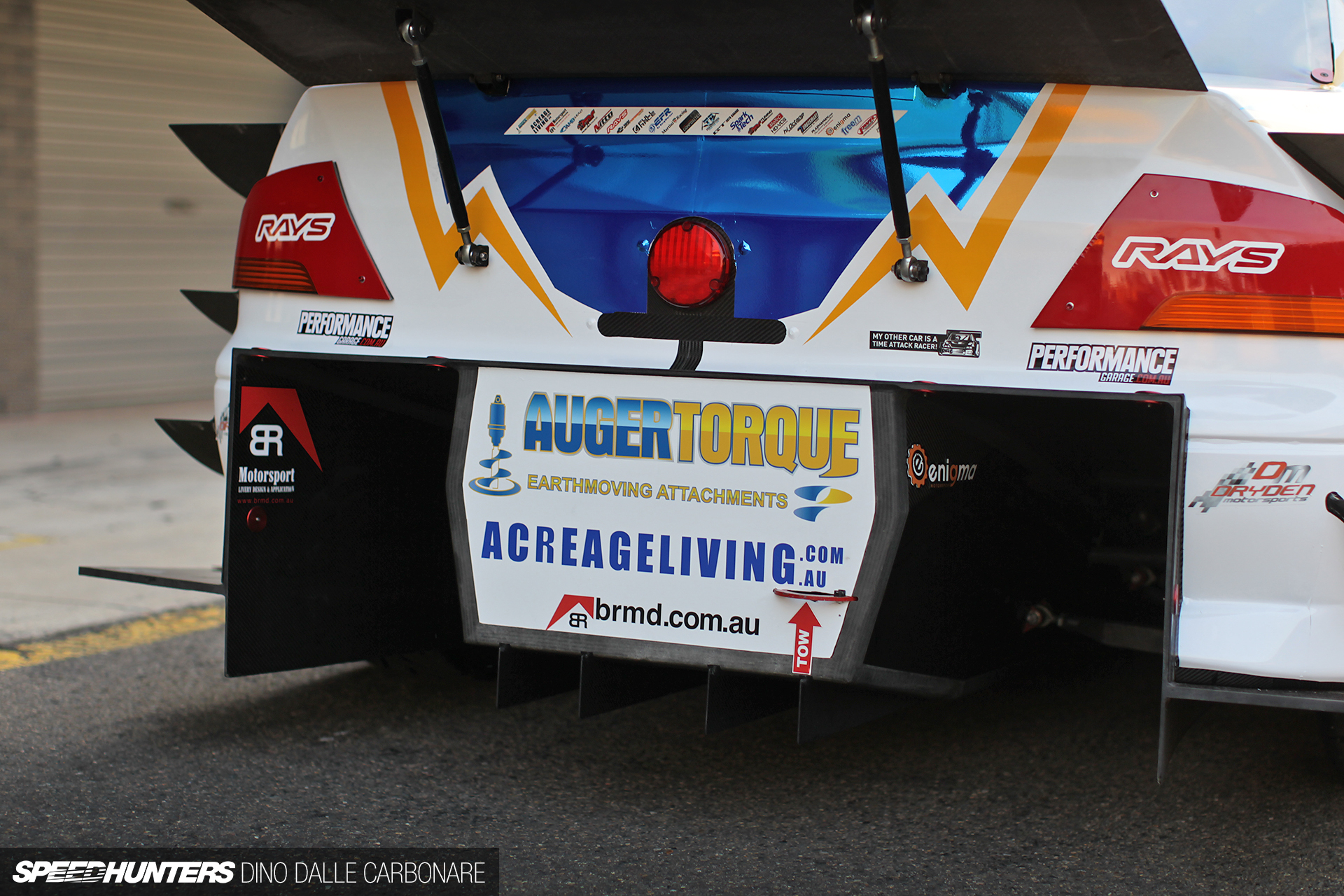
“The tunnels are really a centerpiece of the car. They are a quite different shape than has ever been used for tunnels before and this is because they are tailored to a Lancer Evo, not a Le Mans prototype as all tunnels before had been. The resulting optimum shape was interesting. It was also compromised slightly for ease of construction and reduced design time/cost.”

Seen dead on from the back end, Nemo couldn’t possibly look more functional…
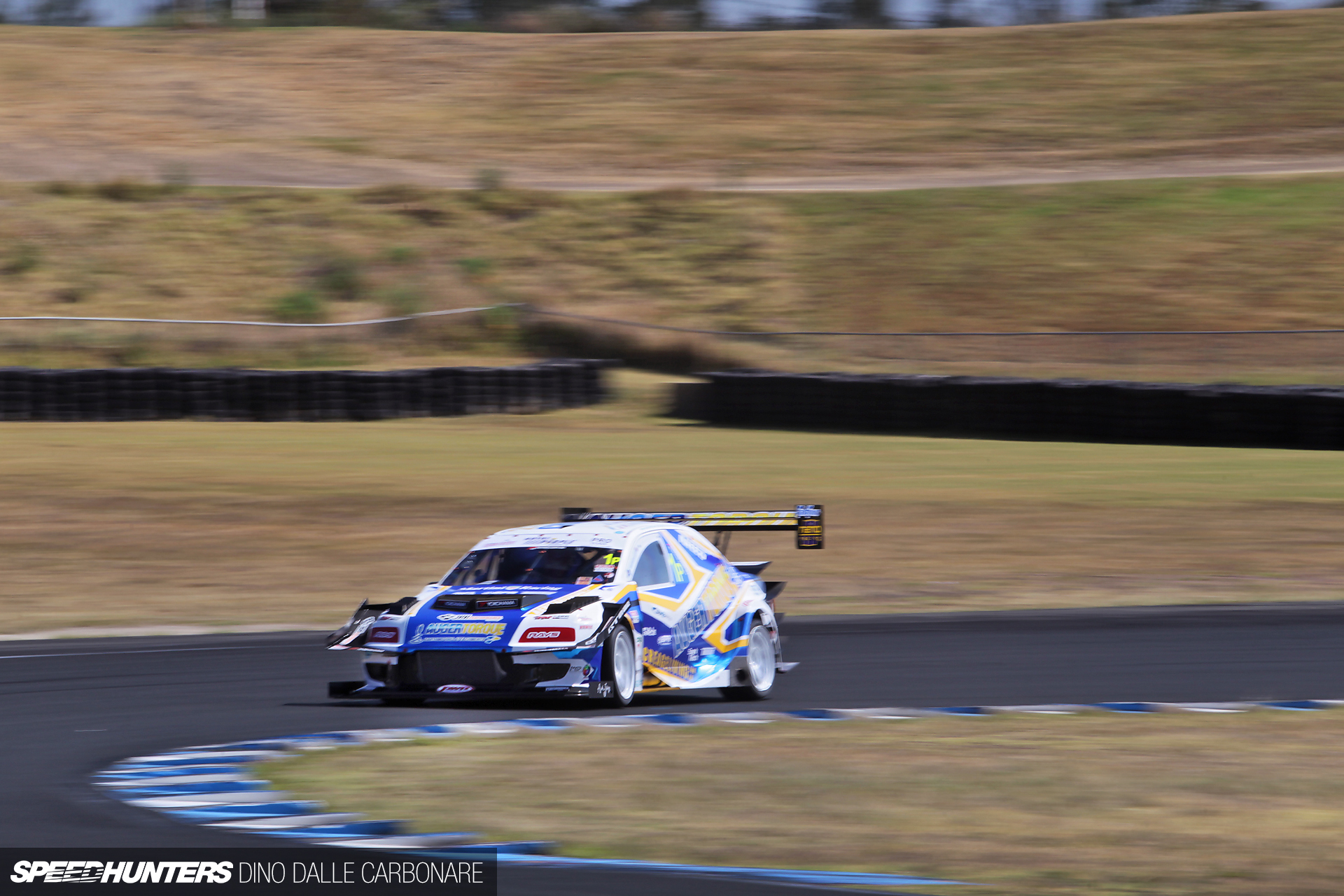
… but not as much as it did ripping through the corners at this year’s WTAC. Warren Luff managed a fastest lap of 1.27.7080 before the cooling issues began. The team changed the water pump but the problem continued at every single outing until the 4G63 blew its head gasket. After working overnight to fix the issue, it turned out that both the head and block had warped, and without a spare engine this was an obvious end to their 2013 challenge.
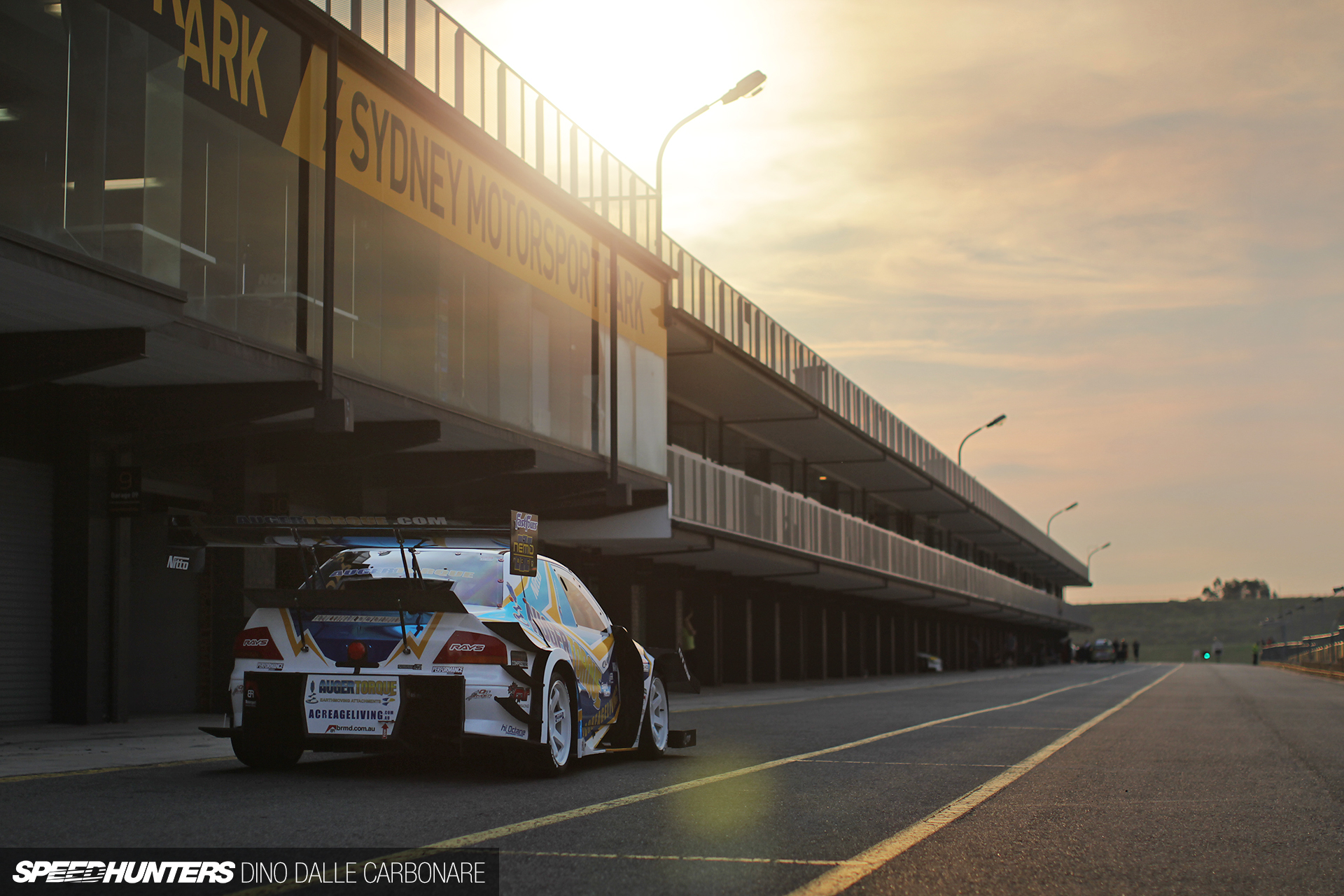
Not wanting to disappoint the fans that came out to see Project Nemo in action, the car was taken out during Saturday’s last Pro Class session, driven by Chris Eaton, its owner.
After last year’s victory, some people were surprised that Nemo was in fact running considerably less power than all of its rivals. With a somewhat low boost setting of 23 psi it was developing around 450whp, which makes its achievement even more impressive. For 2013 lots of changes were made on the engine side of things, as well as other structural differences that were necessary due to the rules being changed somewhat to allow other teams to keep up.
An engine to match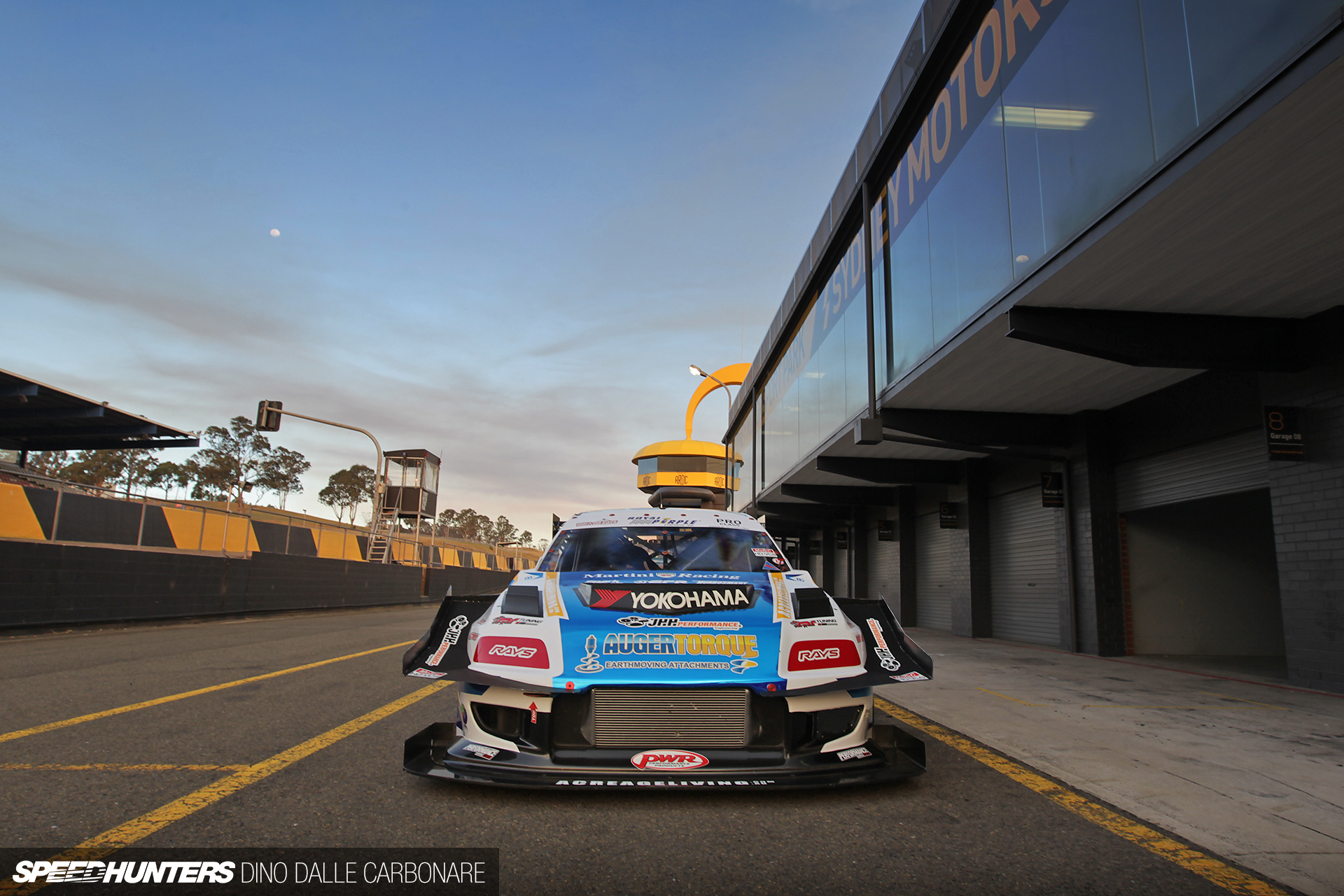
So while the car has had to increase in weight by 110kg, there was a need to make sure there was enough performance to keep it at the top of its game.
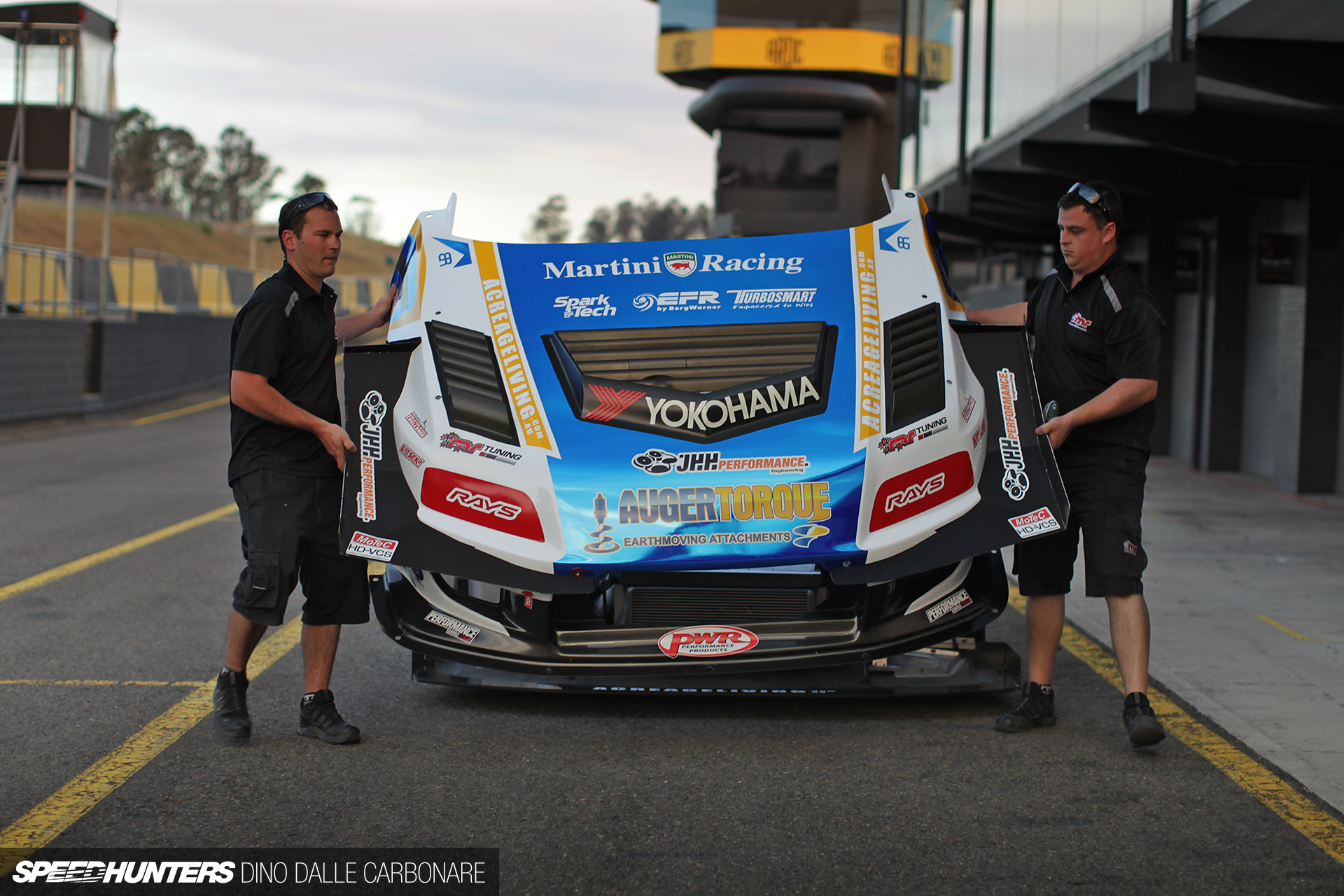
While out on the pit lane at Sydney Motorsport Park I had some of the mechanics remove the front cowl…
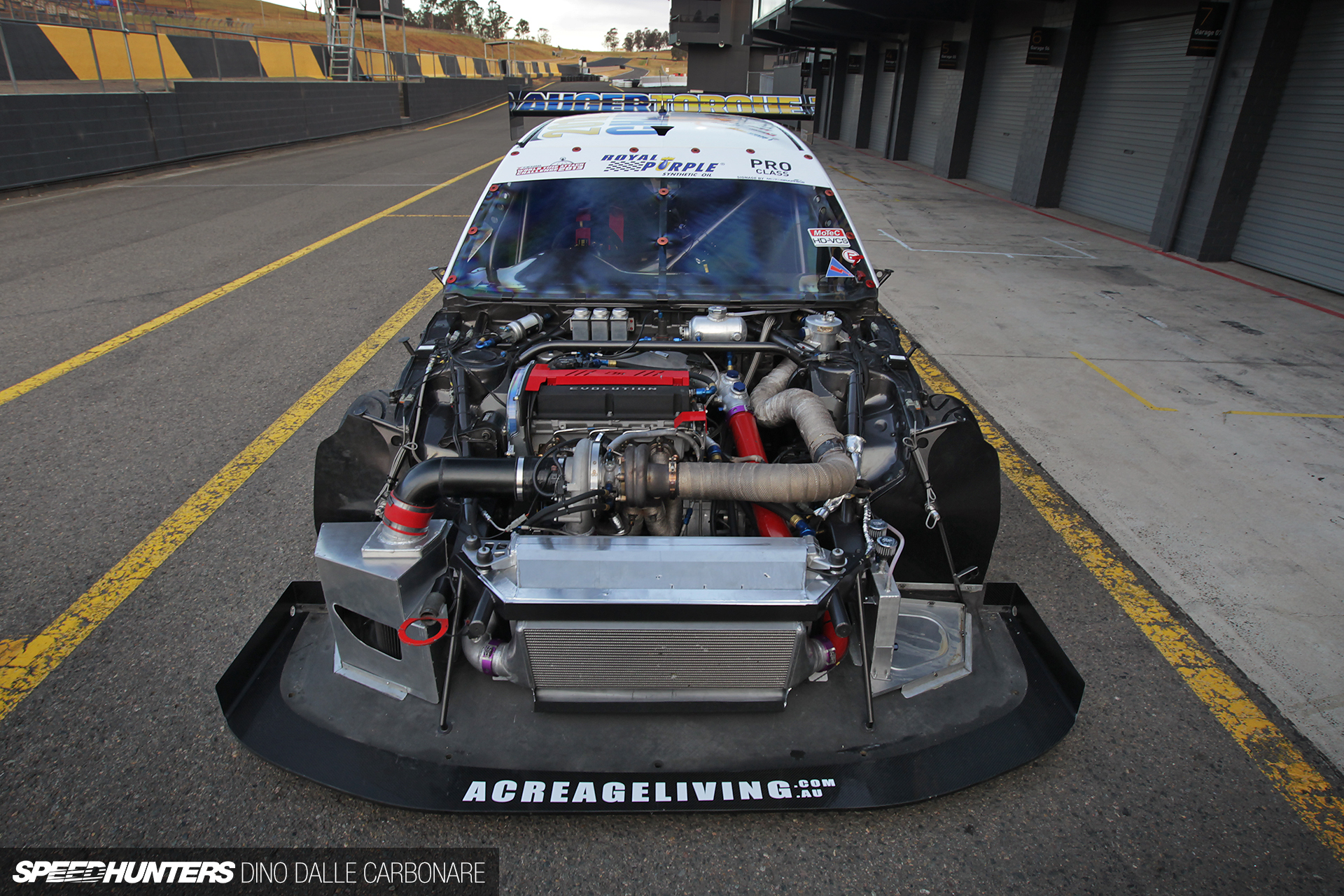
… in order to expose the interesting bits underneath.

Some of the best parts on the market have been thrown into the 4G63 that powers Nemo, starting off with a Nitto 2.2L stroker kit and a lot of custom head work to guarantee optimal flow. To help guarantee a constant supply of oil even through the highest G corners, a Norris Designs dry sump kit featuring a Barnes four-stage scavenging pump set-up has been fitted…
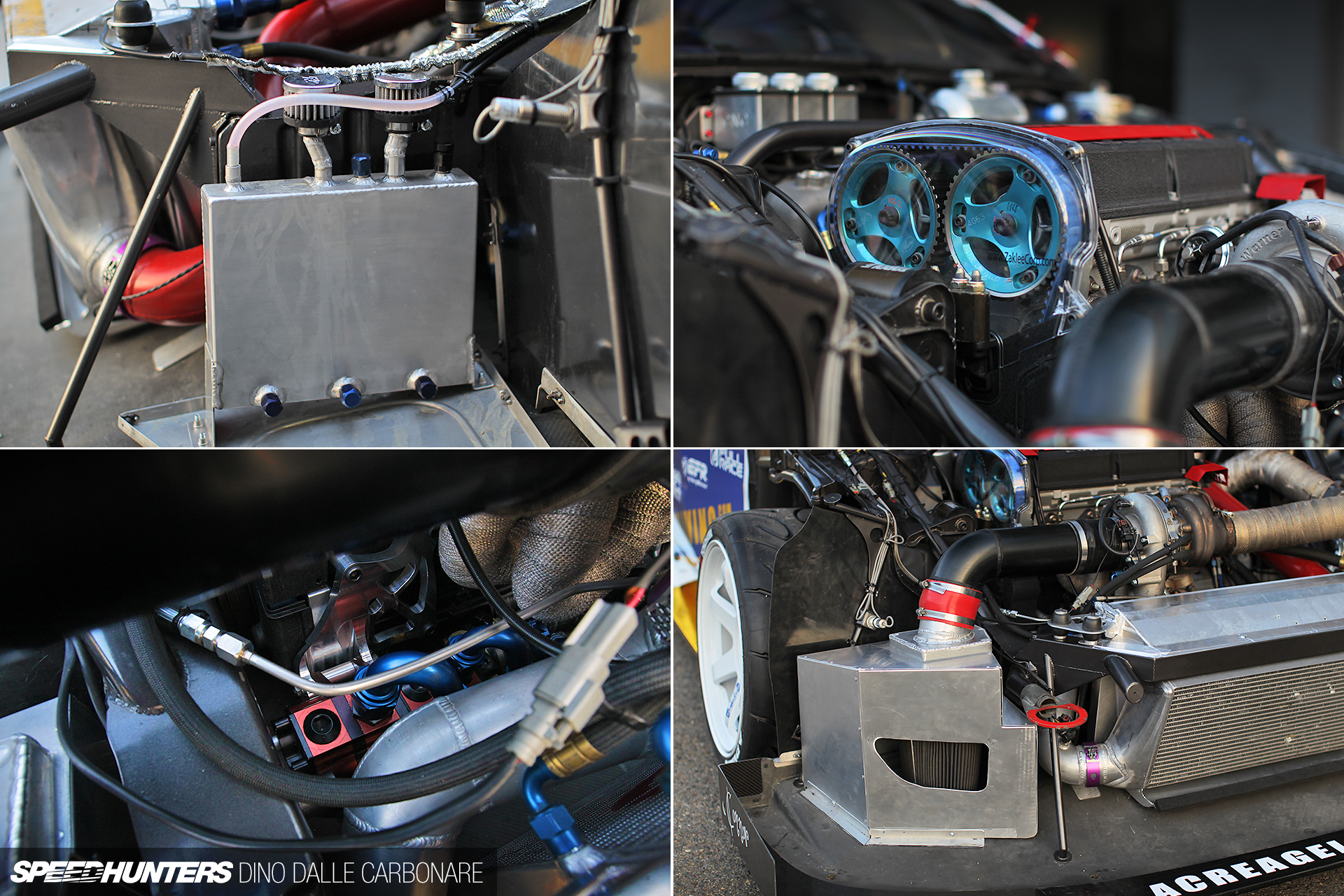
… which you can just about see in the bottom left corner nestled deep inside some of the engine’s ancillaries.
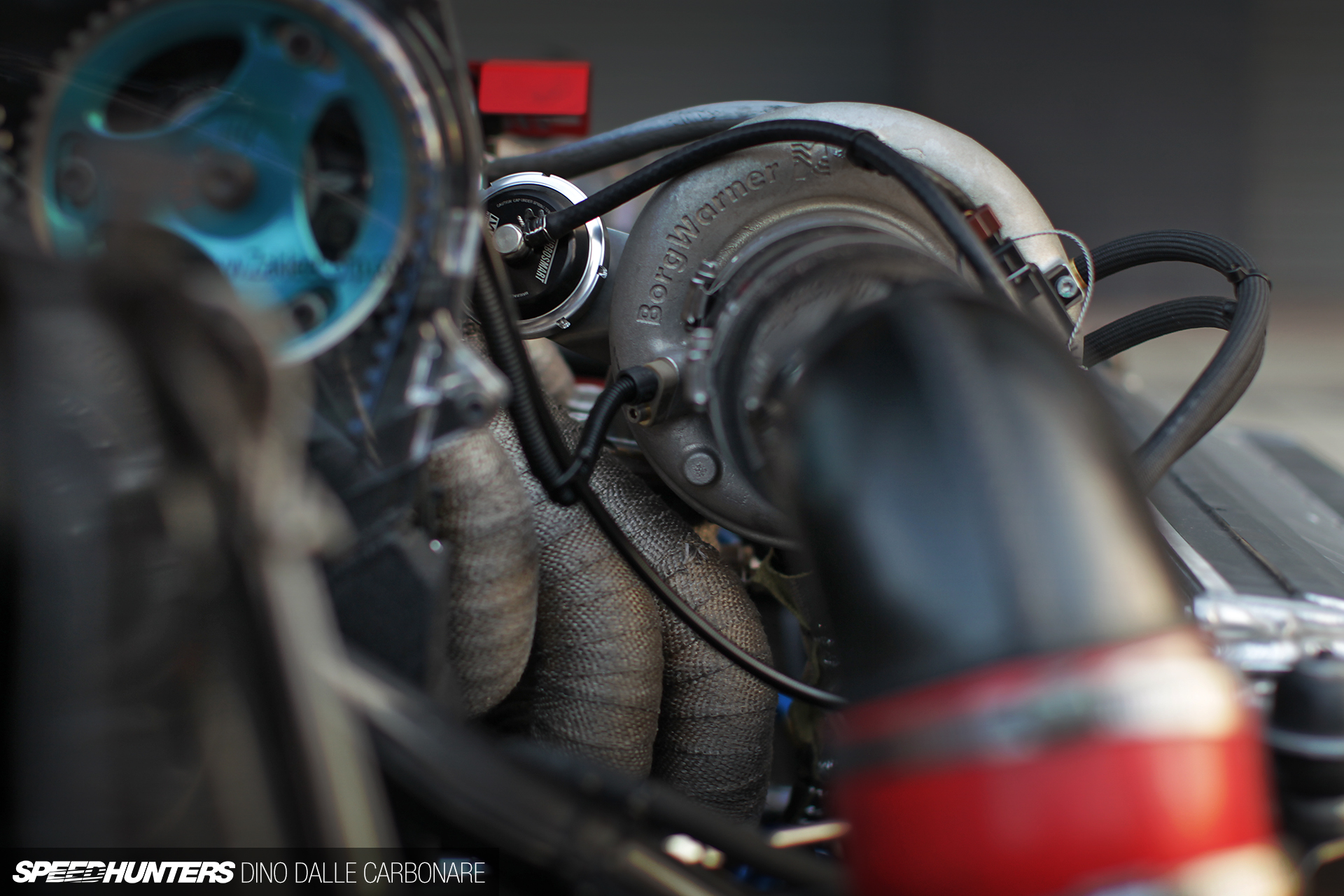
One of the biggest changes is the adoption of a custom-built Borg Warner EFR turbocharger, one of the most technically advanced line-up of blowers currently available on the market. Aside from the turbo being matched to the specifications of the engine and having custom designed headers flowing exhaust gas pulses into it…
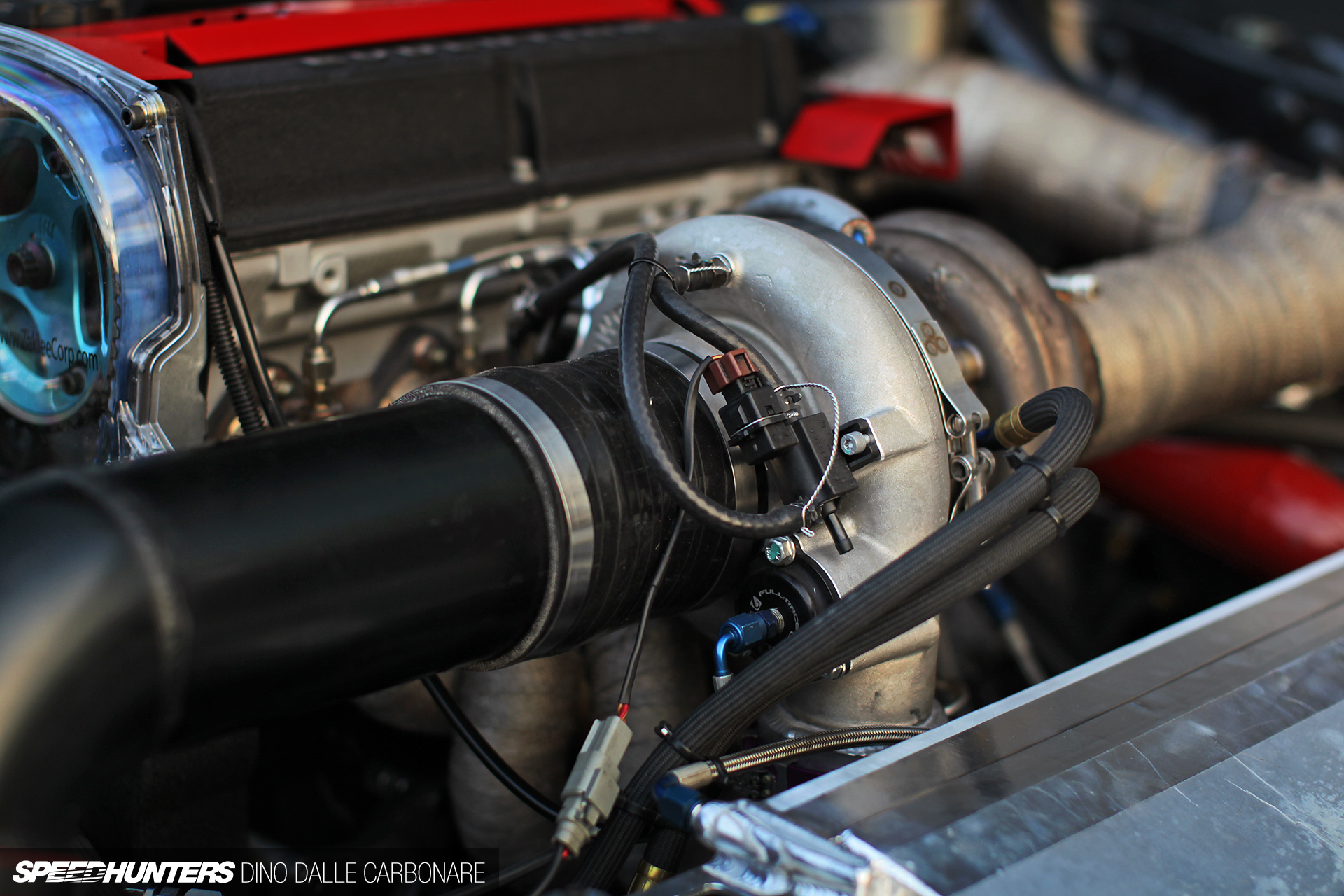
… the internally gated turbine has a built-in blow off valve which helps keep the turbo spooled in between gear changes or when feathering the throttle on and off. This, along with the use of exotic materials like the Gamma-Ti turbine wheel, helps get excellent response as well as high top end power. The compressed intake charge is cooled by the Plazmaman Pro-Series intercooler and then sent to the engine via an HKS intake plenum where it’s met with the atomized fuel sprayed by the Injector Dynamics injectors. Engine management is handled by the Motec ECU but Team Nemo aren’t announcing how much power the engine is capable of developing. Maybe 200~300hp more than last year’s set-up? Definitely possible.
Taking care of directing all of the 4G63’s might to the four wheels is a Maktrak six-speed sequential, actuated pneumatically by a Geartronics paddle shifter to get almost instant upshifts and downshifts. A host of LSDs then send drive to the carbon propshaft and custom half shafts…
… getting those 11-inch wide RAYS TE37RT and 295-section Advan A050 spinning.
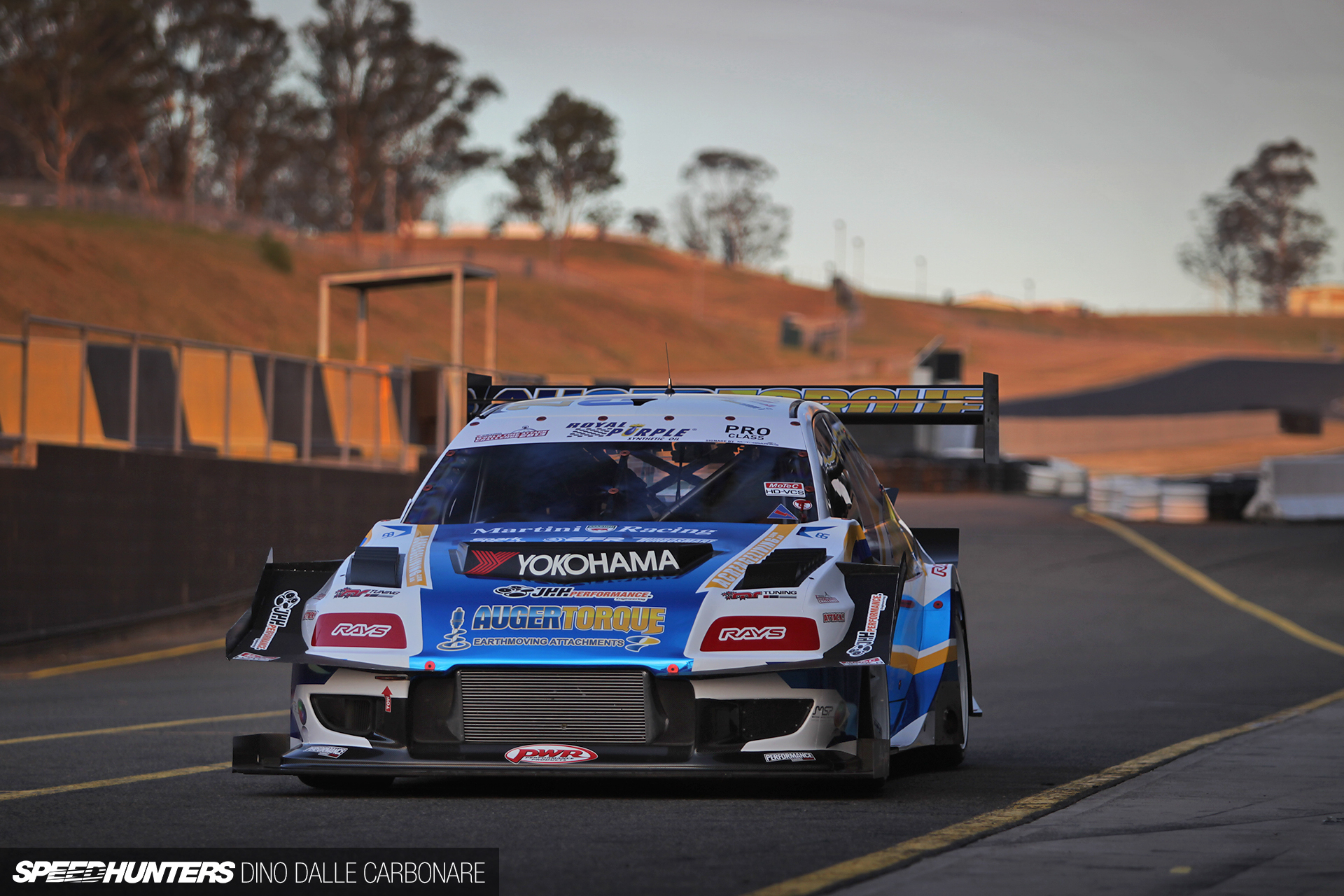
With the front cover back on, it was irresistible to get a few more angles of this beast: a car that is rumored to never again participate in any more time attack events, something that we hope is not going to be the case. I think I’m not the only one that would like to see Nemo show its real might.
Lifting the gullwing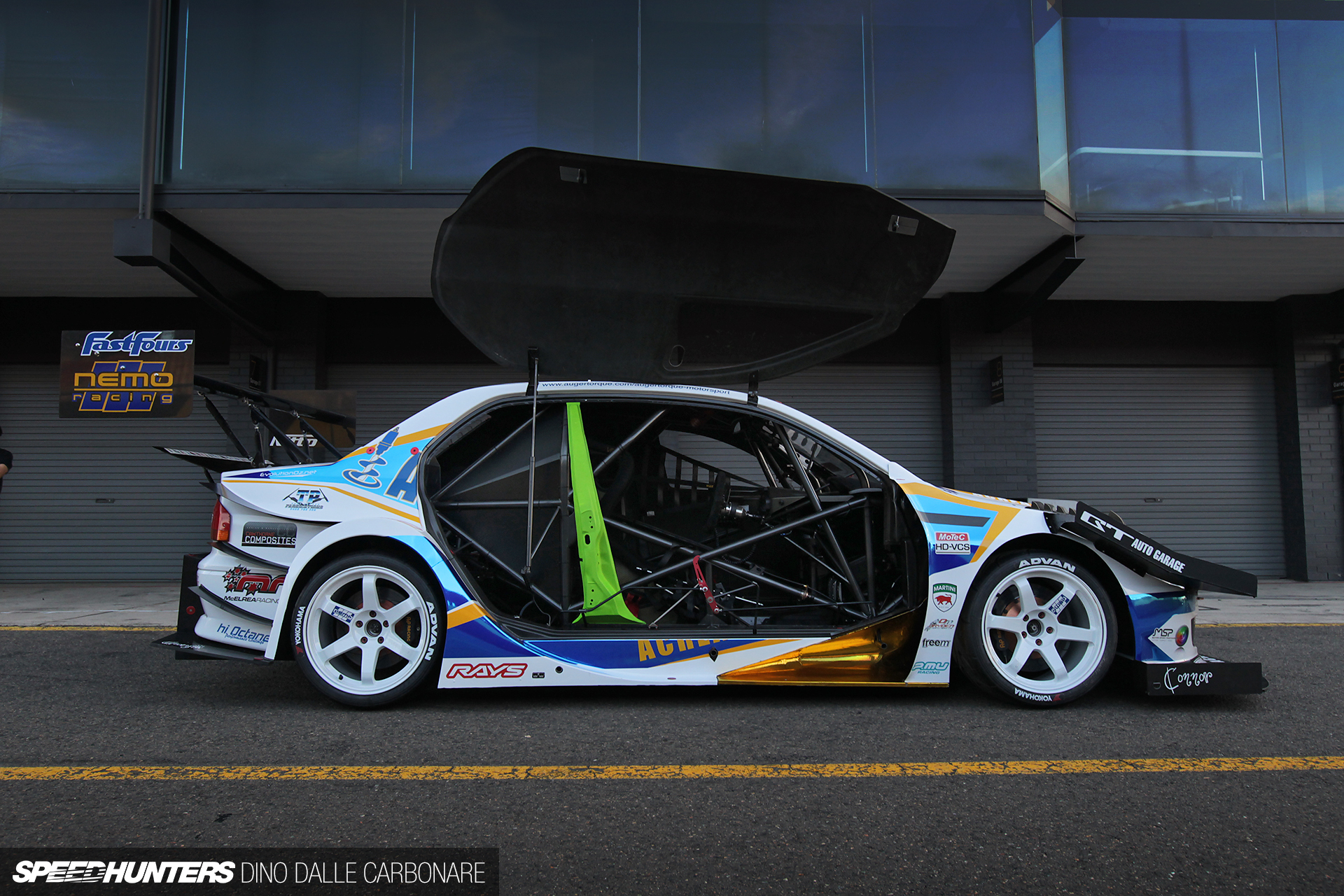
One of the criticisms the car received last year was the lack of B-pillars. The reason they were removed in the first place was that, like a true race car, the driver’s position was shifted back considerably, to a point where he was well behind the B-pillar. With a complex roll cage and pipe frame keeping the center section of the chassis rigid, the pillar was unneeded and obviously in the way. Here is what Andrew had to say: “The B-pillar painted green – I think that was a bit of a laugh because people really focused on the B-pillar/door thing as the reason for the car’s performance, like somehow if we put it and 50lbs back in, the car would suddenly be two seconds slower.”
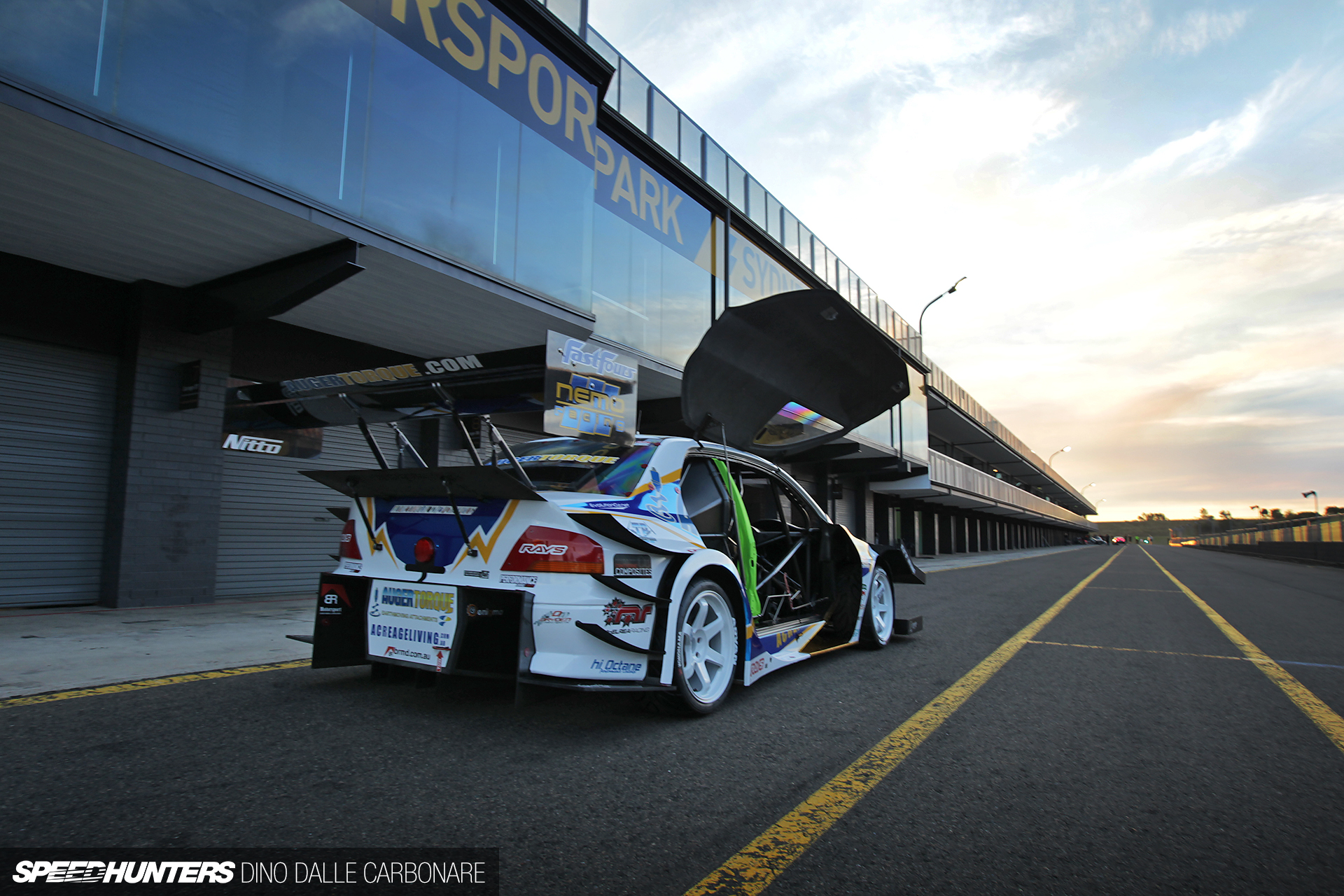
“The gullwing door was basically just to cut costs. We could have sculpted a standard door into the same shape like what Tilton did this year, but by making it a single mold, it was much cheaper to build and we had the driver sitting so far back, he was between the two doors to get out.”
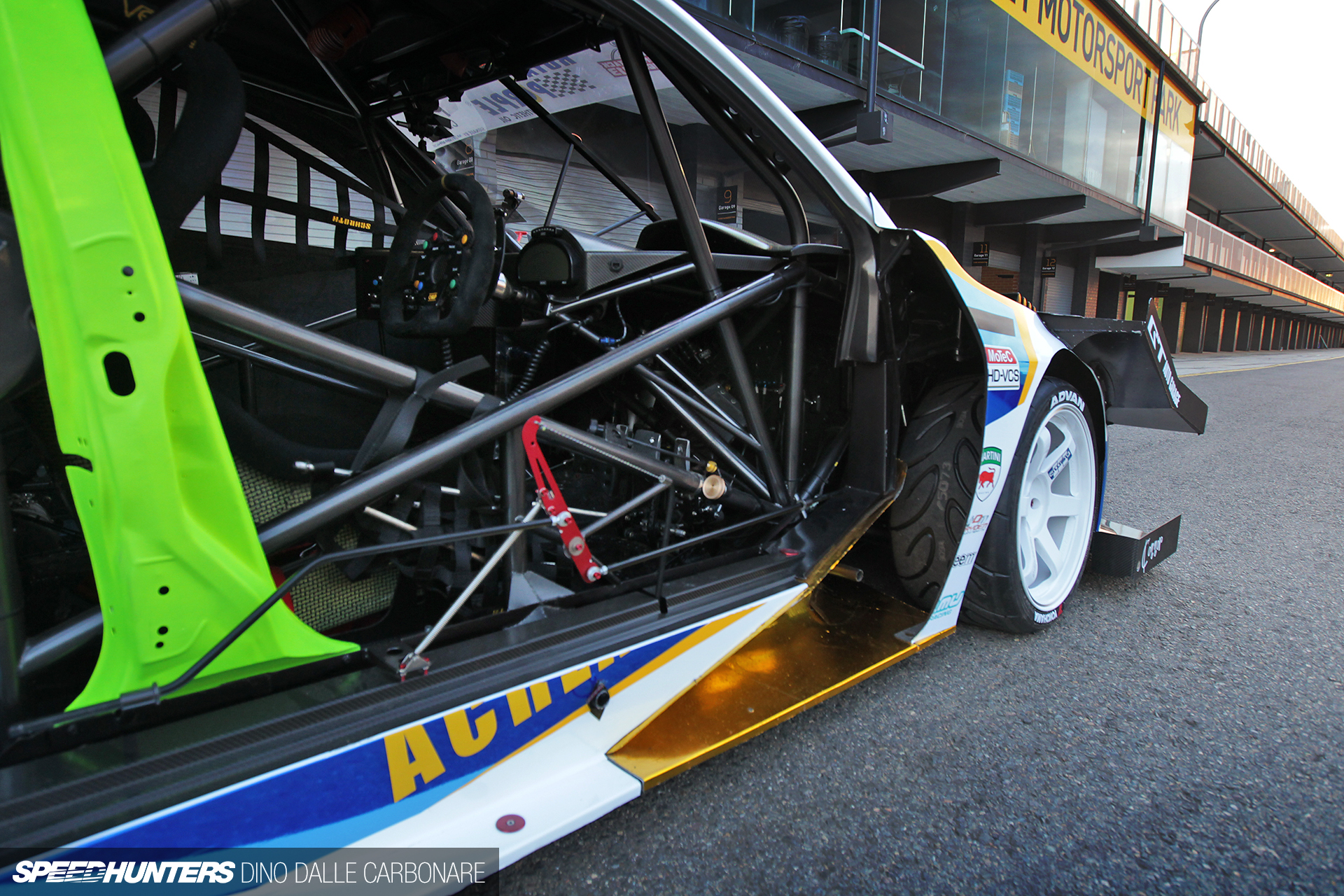
It’s a bit of a tight squeeze to get into the driver’s seat…
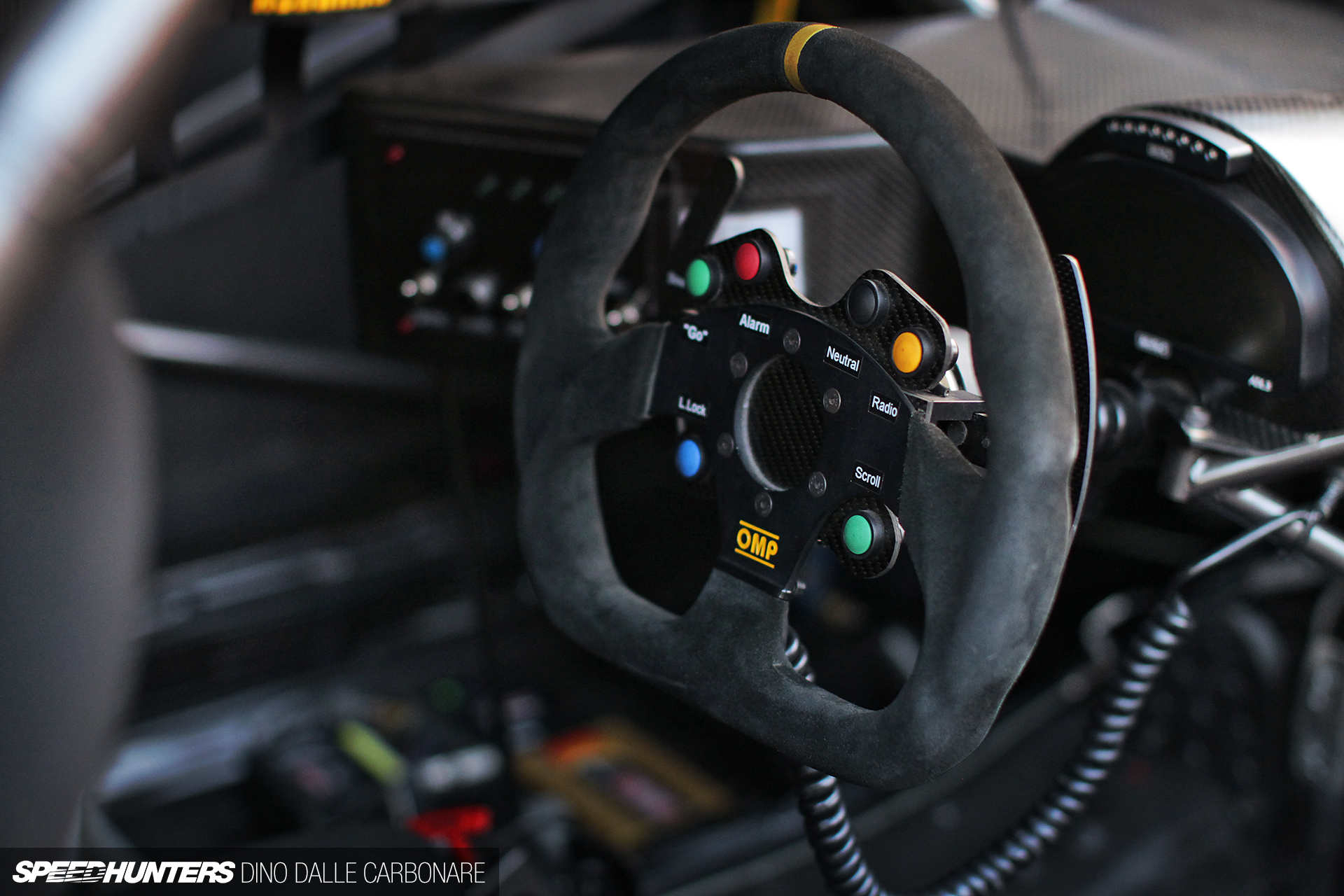
… but once in there, the ambience is very much full-on race car. Along with easy to reach, multi-function buttons on the OMP steering wheel and the carbon paddles to actuate the gearbox…
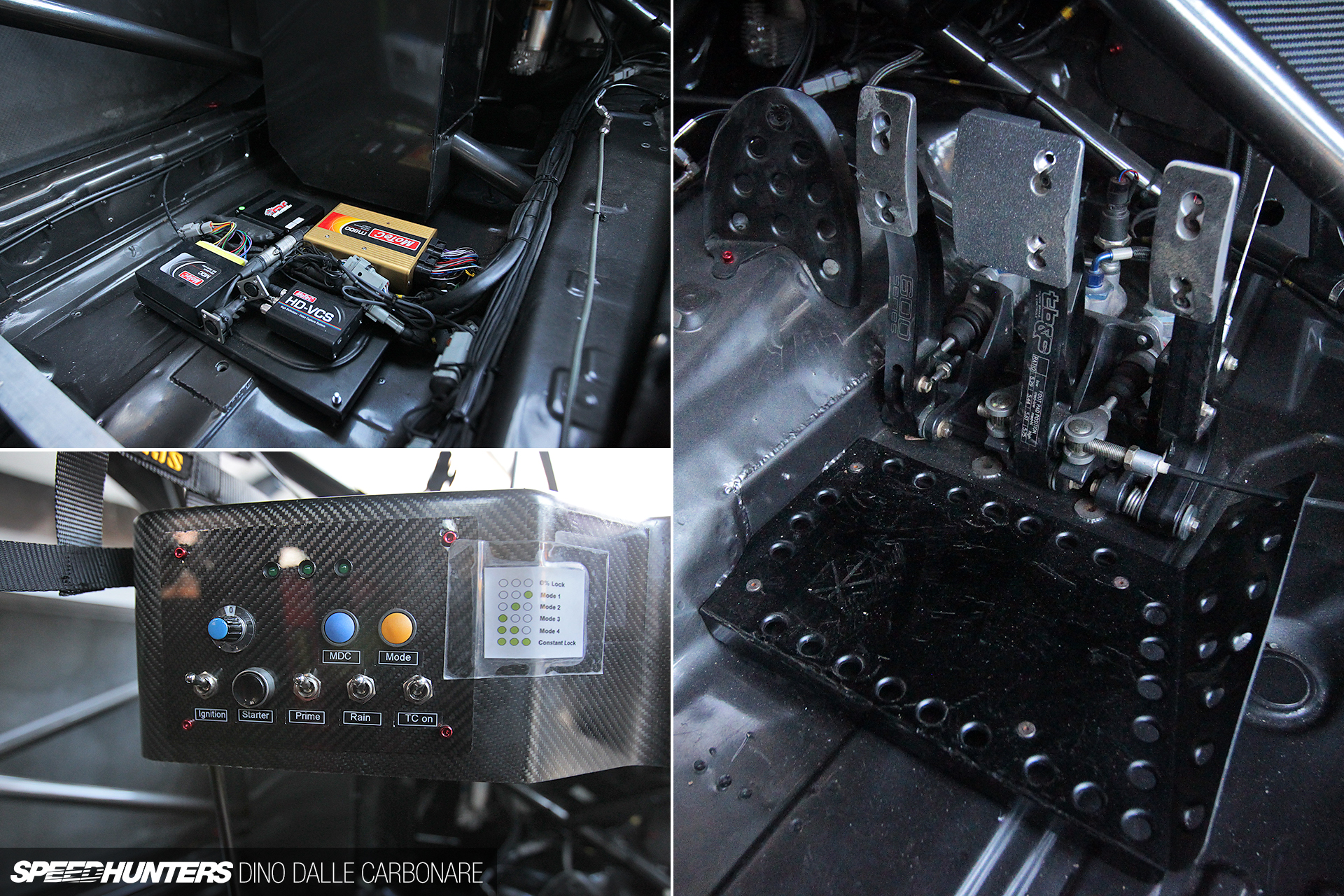
… there isn’t much else to focus on. The driver has the Motec data logger display unit and a center switch panel to access various functions on the screen. The pedal box is fully adjustable and set up perfectly to Warren’s tastes.
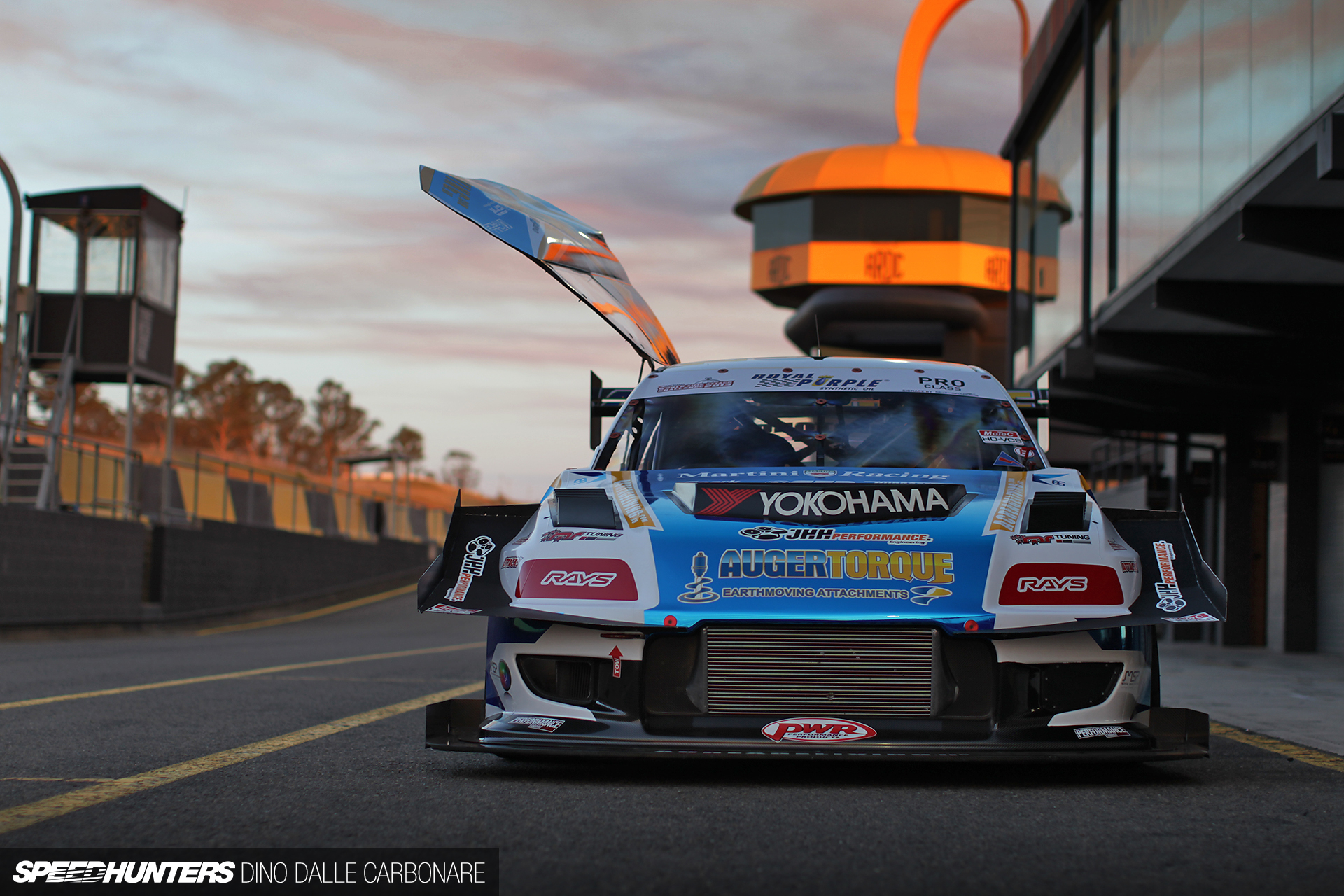
Nemo is about as dramatic as a time attack car, or even a race car, could ever get.
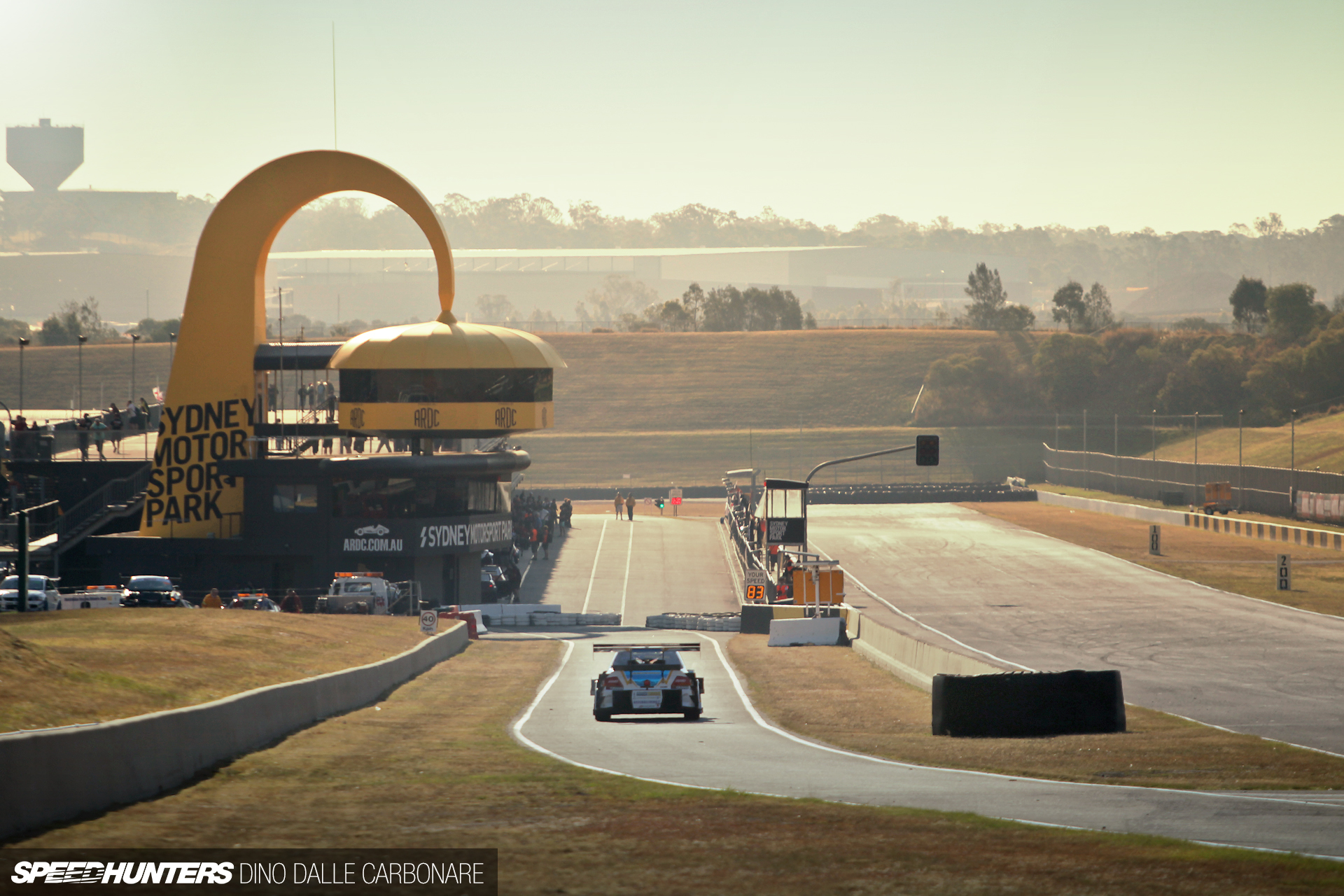
I felt almost sad seeing the car head in for the last time on Saturday after Chris went out for a few slow laps. Everything can go wrong in racing, and most of the time it does, but to not see this crazy project show what it’s truly capable of, that high-downforce aero now mated to a more powerful engine…
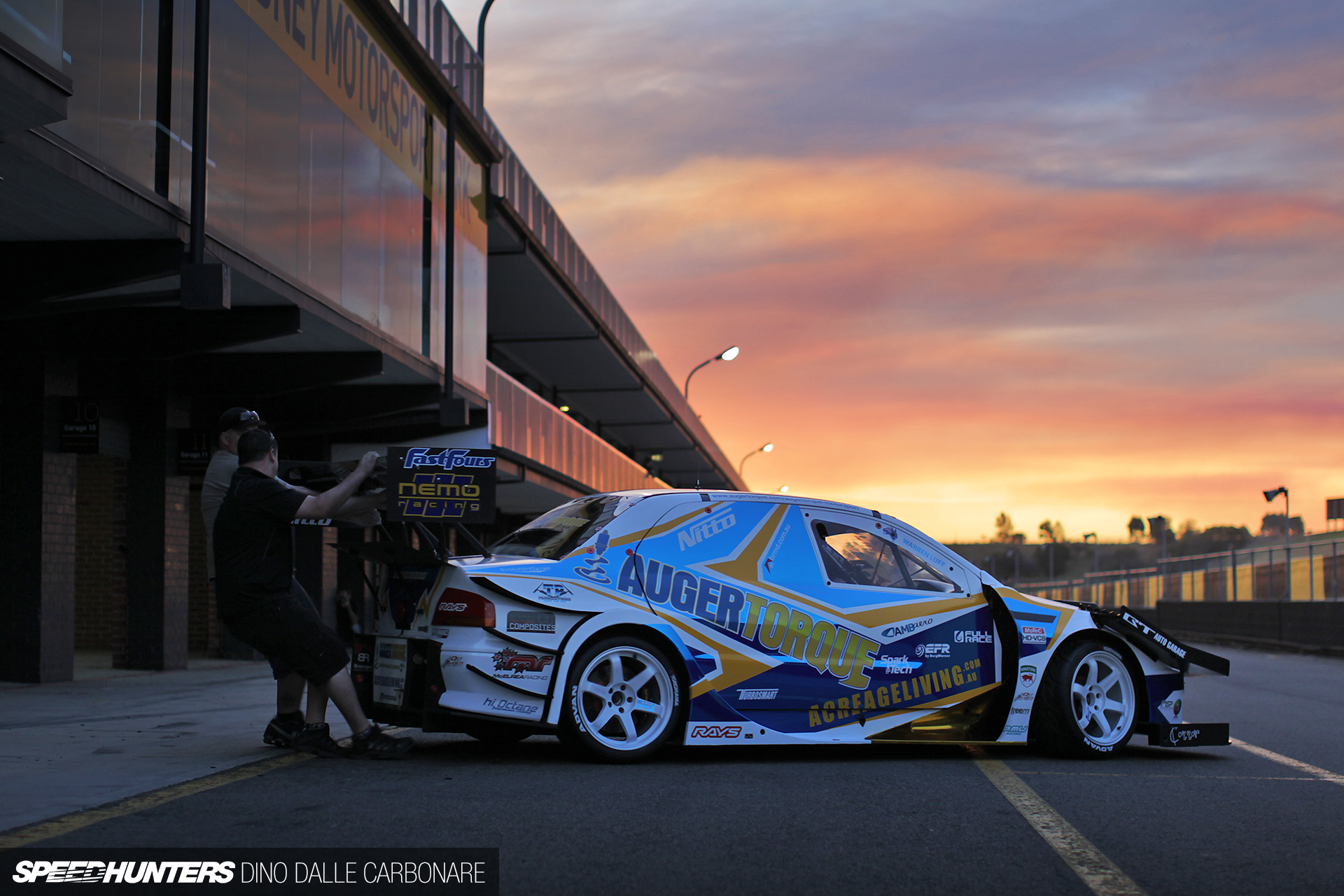
… well I guess we can only wonder what Warren could have done on a clean and clear lap. I certainly hope this is not the end of Nemo; there are too many rumors floating around right now to know what its future will be, but I’m sure time attack fans the world over would love to see its real potential. It would be nice seeing it dip under the 50-sec barrier at Tsukuba too, beating Under Suzuki on his own turf…
Dino Dalle Carbonare
Instagram: speedhunters_dino
dino@speedhunters.com
Nemo
Engine
HH Racing built 2.2l 4G63, Norris Designs dry sump kit, Barnes four-stage dry sump pump, Spark Tech CDI ignition system, Full Race Motorsports top mount manifold, Borg Warner EFR-9180C internally wastegated, Nitto Performance Engineering stroker kit, Turbosmart actuator, tuned at GT Auto Garage, Martini RE85/116 race fuel and fluids, Plazmaman Pro-Series intercooler, HKS intake manifold, Injector Dynamics injectors, PWR custom lightweight radiator, Hi Octane Performance Coatings, Motec M800 ECU, PDM16s x 2, 888 can expander, Motec Knock Module, monitored 4 x EGTs
Driveline
Maktrak six-speed sequential, Geartronics pneumatic paddle shift, front, rear and centre LSD, custom flywheel with 5” clutch pack, carbon tail shaft and custom 1/2 shafts
Suspension/Brakes
MCA dampers and Eibach springs, P.Mu Racing h16-03 brake pads, custom aluminium uprights, subframes and control arms, AP calipers, rotors and custom hats
Wheels/Tires
Rays Wheels 2014 TE37RT 11×18 ET+17.5, Yokohama A050 295/30R18
Exterior
Aerodynamics by AMB Aero, livery designed and applied by Brett Rogers Motorsport, fabrication work by Tony Porter Fabrication, carbon work by Cawthorne Composites
Interior
Motec HD Video Capture System (HD-VCS), Velo carbon kevlar race seat, Schroth harness and safety nets, custom carbon dash, Raceware by freem Racing
Project Nemo related posts on Speedhunters
WTAC 2013 related posts on Speedhunters