I’m just going to come straight out and say it: there has always been a certain ‘way of things’ when it comes to modifying an older rotary in New Zealand. It’s not necessarily a negative either, but simply the manifestation of our nation’s taste for personalising Mazda’s offerings of the 1970s and ’80s. The way the rotary scene has shaped the landscape of the local modified Japanese car community cannot be denied.

The formula has always been pretty simple: a healthy ride height reduction, a set of either small-diameter period wheels or large-diameter Simmons or modern equivalents, stock body lines and of course the requisite clean engine bay housing a detailed 12A, 13B, or 20B in the more extreme builds. While wandering the pits during my recent weekend at the Mothers Chrome Expression Session, I happened across the latest incarnation of Mark Strawbridge’s Mazda 616 Capella. That’s right, this car started life as a piston-engined machine back in 1973.

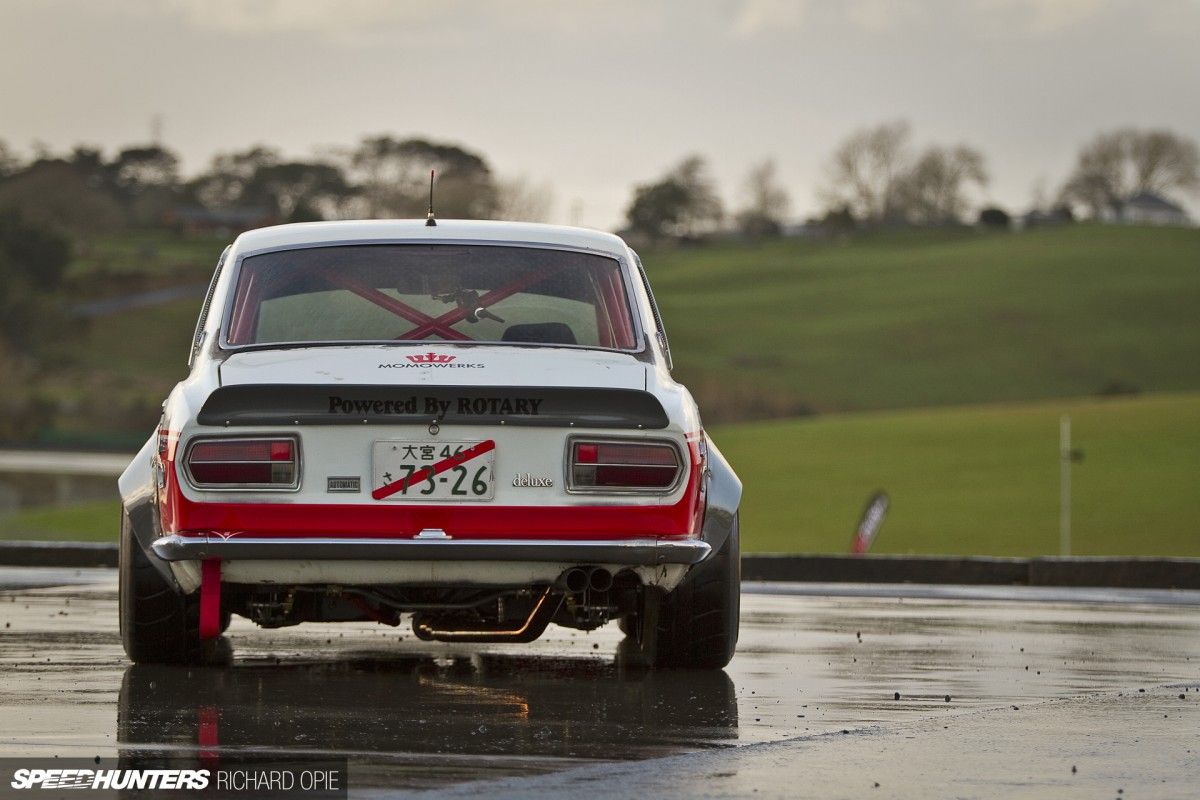
Despite being a departure from the local rotary establishment, the old Mazda is no less attention grabbing. The factory panels still exhibit signs of their decades in the elements and subsequent rust repairs, but it’s the 1970s All-Japan Touring Car Championship inspired livery plastered atop the original paintwork that provides the defining aesthetic.

Channelling Mazda’s works touring car exploits of the period are larger-than-life Katayama-style flared arches. A one-off creation to suit the Capella body style, this method of containing the sizeable wheel and tyre combinations required for competitive touring car racing draws its nickname from the S124 Mazda RX-3/Savanna works racers of the 1970s, indelibly linked to long-time Mazda factory driver Yoshimi Katayama.
The result – an imposing presence for what is a fairly diminutive, lithely-styled little car. Keeping this thing in your rear-view mirror during a race wouldn’t necessarily need to be a by-product of trying to stay ahead, rather than enjoying the view of arguably the best angle displayed by the 616.
The Capella has been a long-term project for Mark, and in the eight or so years he’s owned it the natural progression of car-guy indecision has affected this build in its own way. Originally set up with a boosted 13B, the larger block recently gave way to a naturally aspirated 12A. In a search for power the housings have been peripheral ported – the ultimate in N/A rotary porting – and breath air drawn in by a balanced rotating assembly featuring lightened RX-7 rotors.
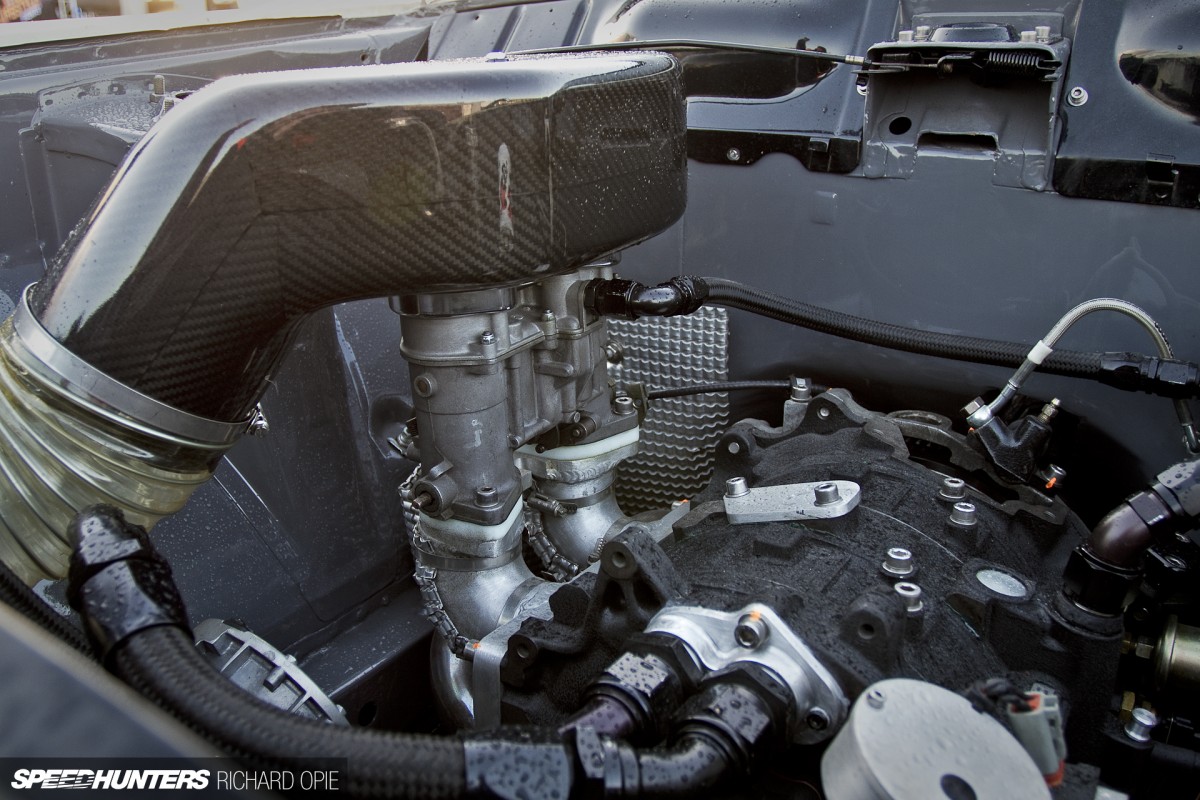
No proper old school ported rotary setup would be complete without some form of Weber IDA carburettor towering above the block, and Mark’s chosen method of fuelling provides the correct air/fuel ratio through twin 48mm throats. The IDA satisfies the demand for 9000rpm pulls, which is precisely where the 12A makes its peak output of 240whp. Custom touches are abound, like the carbon fibre plenum drawing air from the driver’s side inner headlight bucket, and the CNC-machined water outlet plumbed with -16 AN Teflon braided lines that feed the cooling system. Ignition is taken care of with a Link G4 Lightning ECU.

While the exterior and engine bay have seen the winds of change throughout the 616’s many incarnations, the custom-barrelled Simmons FR15 wheels (15×10-inch front and 15×11-inch rear) have remained something of a constant, although the unique colour is a recent addition. The Mazda sits at just the right height from the tarmac; custom platform-adjustable struts at the front end with purpose-built Bilstein shocks keep things in check. The rear remains live axle, in this case a heavily-modified Toyota Hilux LSD-equipped item located via a rose-jointed parallel 4-link arrangement.

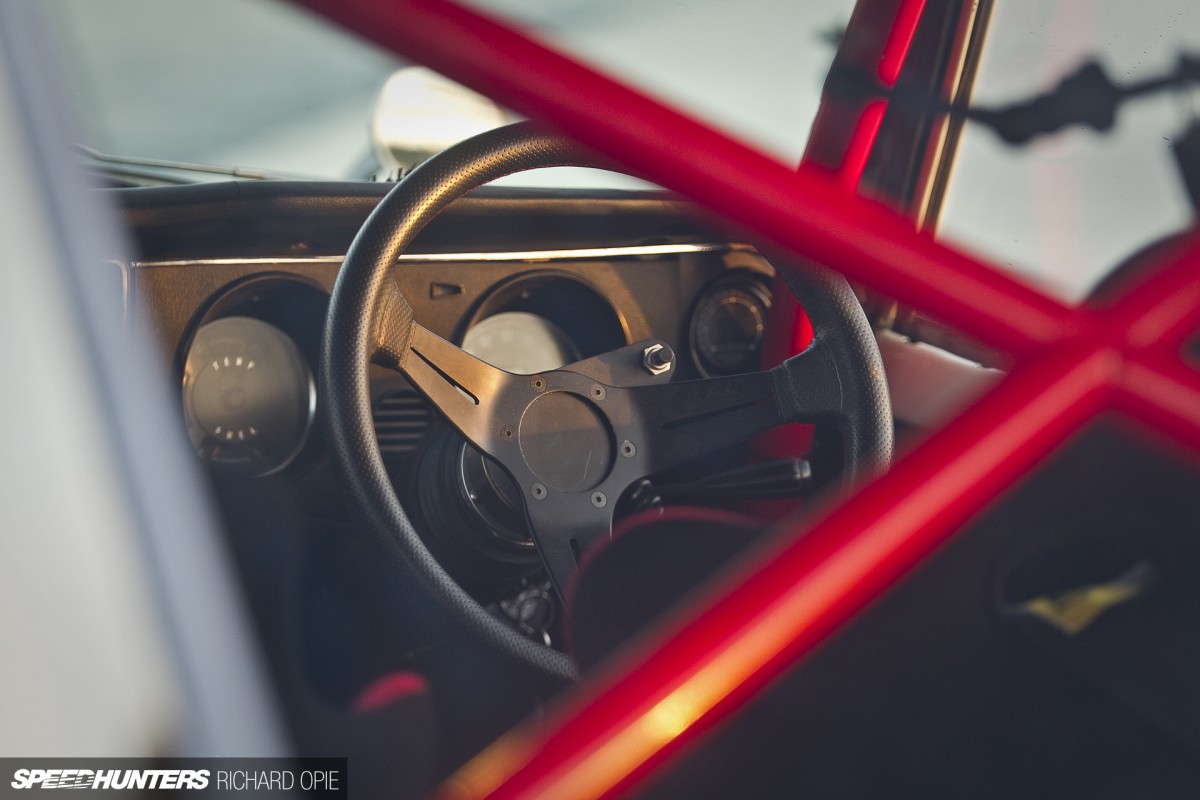
Peering through the glass, the Capella’s racing intentions are clear. Master fabricator Graeme Smyth (whose recently-featured S15 you might remember) knocked up a 6-point rollcage in the interests of safety, while Racepro fixed-back bucket seats provide perhaps one of the only concessions to the traditional rotary nuances, although again are a functional choice.

Inside it’s not difficult to imagine being strapped in amongst the scarlet tubing and attacking KPGC10 GT-Rs under brakes at the old Fuji Speedway. There isn’t a great deal inside that doesn’t serve some sort of purpose; the floor-mounted Tilton pedal box, classic Nardi steering wheel and assortment of Auto Meter gauges all ensuring the job gets done effectively with minimal frills and maximum enjoyment. Factory dashboard and door trims remain as a reminder that the build began as a simple road car refresh.
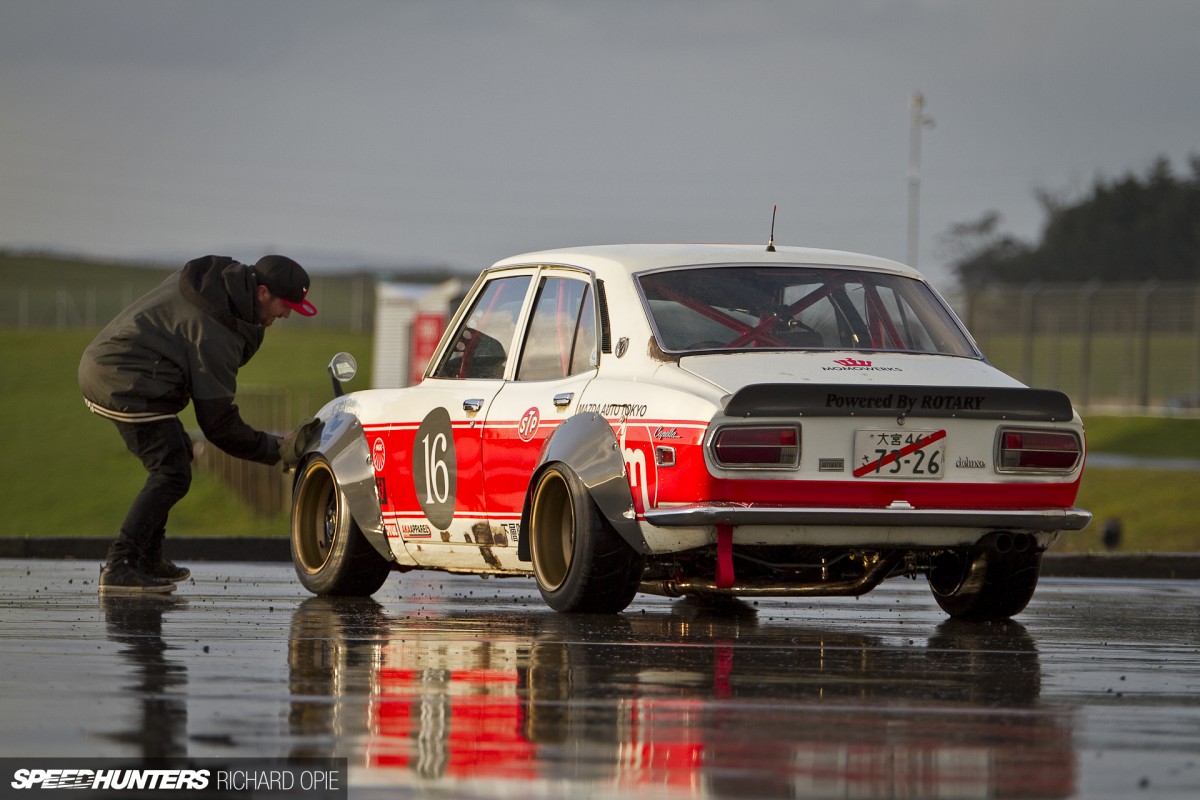
With a best of 1:22 around the Hampton Downs Motorsport Park circuit with minimal seat time, Mark unfortunately never got the chance to improve over the Chrome Expression Session weekend. The 12A decided playing ball wasn’t an option and cried enough with only a lap under its belt on the Saturday. Regardless, the little Mazda spent the weekend parked in the pits showing the assembled crowd there is another angle on the classic Kiwi rotary build. With a retrospective glance, a solid team of passionate friends helping with the build and a resolve to forge his own path, Mark’s car harks back not only to its international rotary ancestors, but also pays homage to New Zealand saloon car racing of yesteryear.
Fancy a crisp 12A soundtrack for the evening? Watch Mark put the car through its paces at the Rotary Racing Enthusiasts series at the Hampton Downs last year.
Richard Opie
richy@speedhunters.com
Instagram: snoozinrichy
More stories from New Zealand on Speedhunters
Cutting Room Floor