
If you could choose anywhere in the world to hold a professional drift competition, where would you pick?
Your mind might dart around all the potential race circuits in the world – there are certainly some incredible venues to choose from. Would it be Yas Marina in Abu Dhabi? Or maybe a choice section of the legendary Nürburgring Nordschleife in Germany? How about the ever-popular Willow Springs Raceway in California? All worthy candidates undoubtedly.

One thing that separates competitive drifting from most other motorsports is the flexibility that the sport gives organisers when it comes to choosing a host venue for an event. In reality, you don’t need a complete race circuit to host a drift event – as long as there’s an area to set up the paddock, a handful of corners to test the drivers’ ability and sufficient space for the spectators to watch from, then the basics are in place.

This frees you from the restraints of needing a start and a finish line linked by a complete loop, and opens up a world of possibilities.

Depending on the location, it also frees you from pre-existing configurations, the vast majority of which were never designed with sliding cars around in mind. You can put the corners where you want, and tailor-make the course to suit the event.

Having photographed professional drifting at circuits big and small all around Europe, I find myself constantly drawn to one type of layout above all others: inner city street circuits. Nothing matches the aggressive, gritty nature of drifting better than having the city serve as your backdrop.
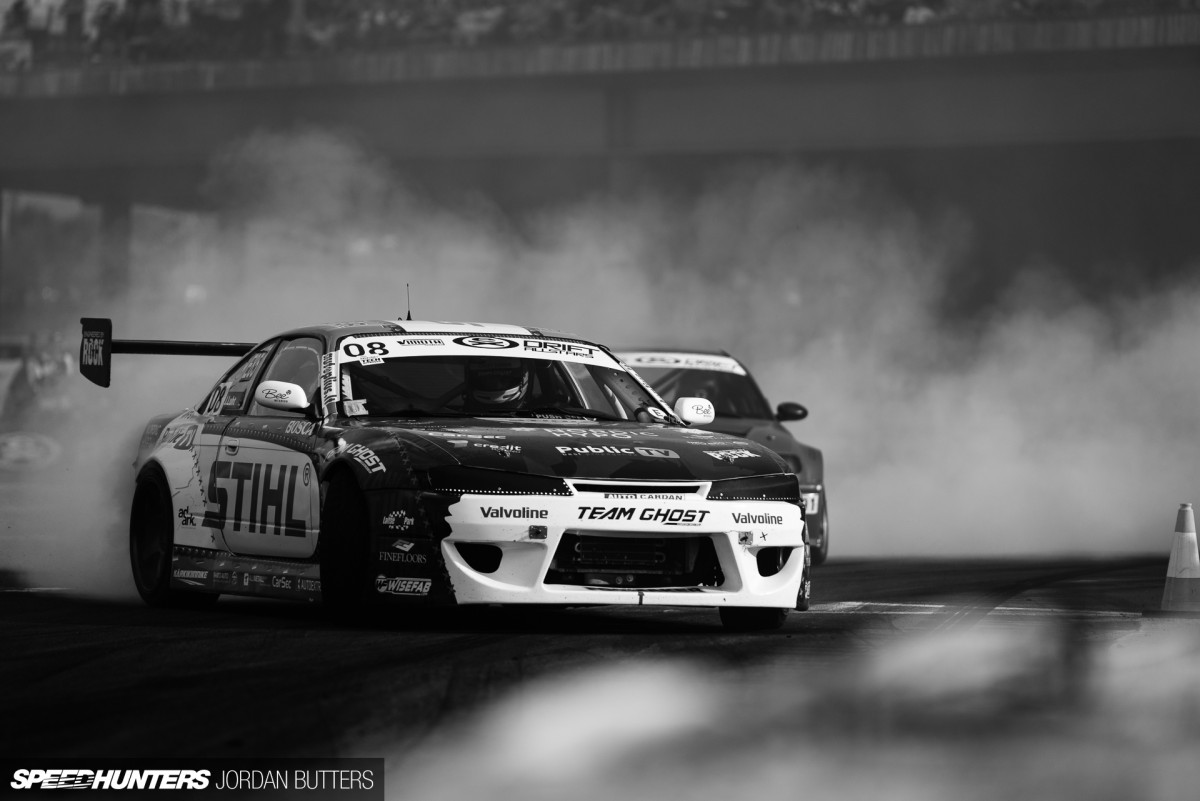
The Extreme Drift Allstars series is no stranger to bringing drifting to the streets. While much of the season plays out on traditional race tracks around Europe, the series is well versed when it comes to hosting top-level drift competitions in the most unexpected of places. The penultimate round of the 2015 championship recently saw the Drift Allstars roadshow commandeer a busy intersection in the centre of Kaunas, Lithuania. This is the third successive professional drift event to be held on the streets of Kaunas, but the first to take on such a daring and unforgiving track design.

Why bring the people to the race track when you can bring the race track to the people? It’s a tried and tested formula that never fails.
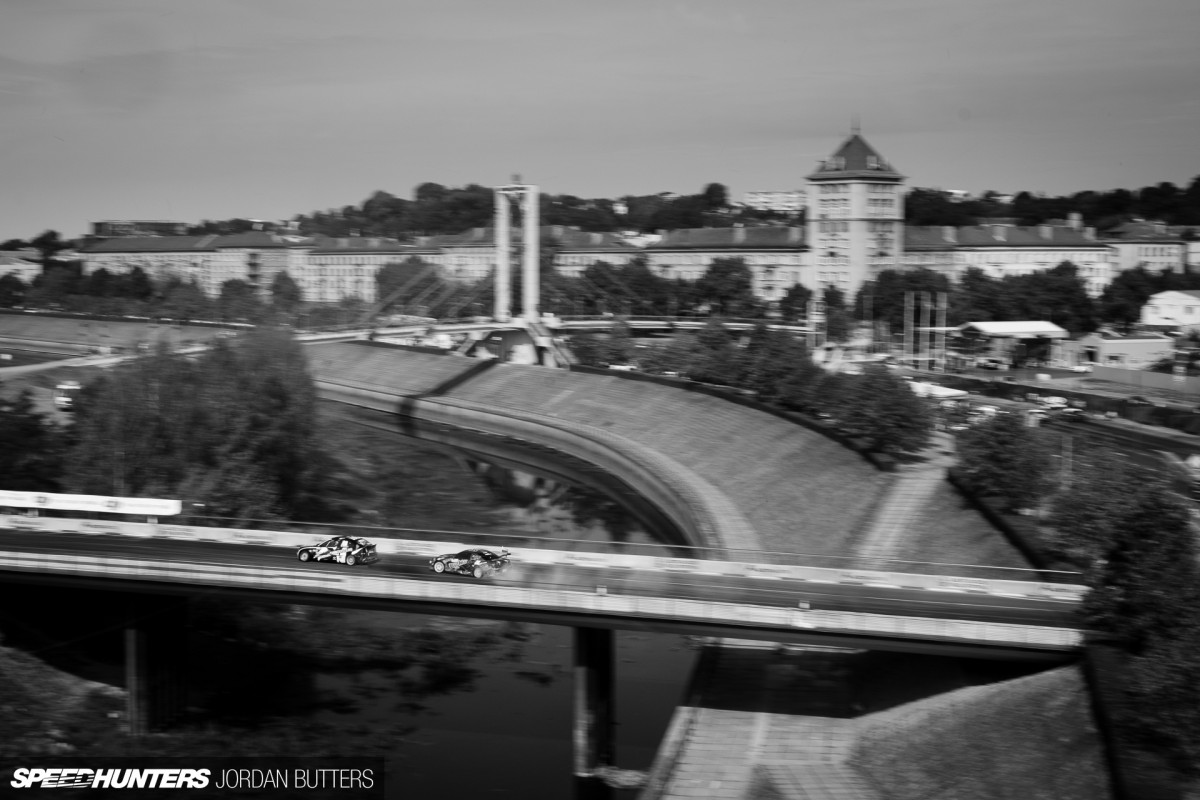
From a photographer’s point of view, the city is an amazing playground full of interesting angles and positions too. Race tracks can be somewhat sterile environments at times, but the city offers up endless creative opportunities.

There’s something about seeing a purpose-built competition drift car sitting on a public highway ready to launch at the first corner in full attack mode. As the drivers accelerate hard towards the first corner they’re already going much faster than the regular commuters going about their business just two lanes over on the other side of the barrier.
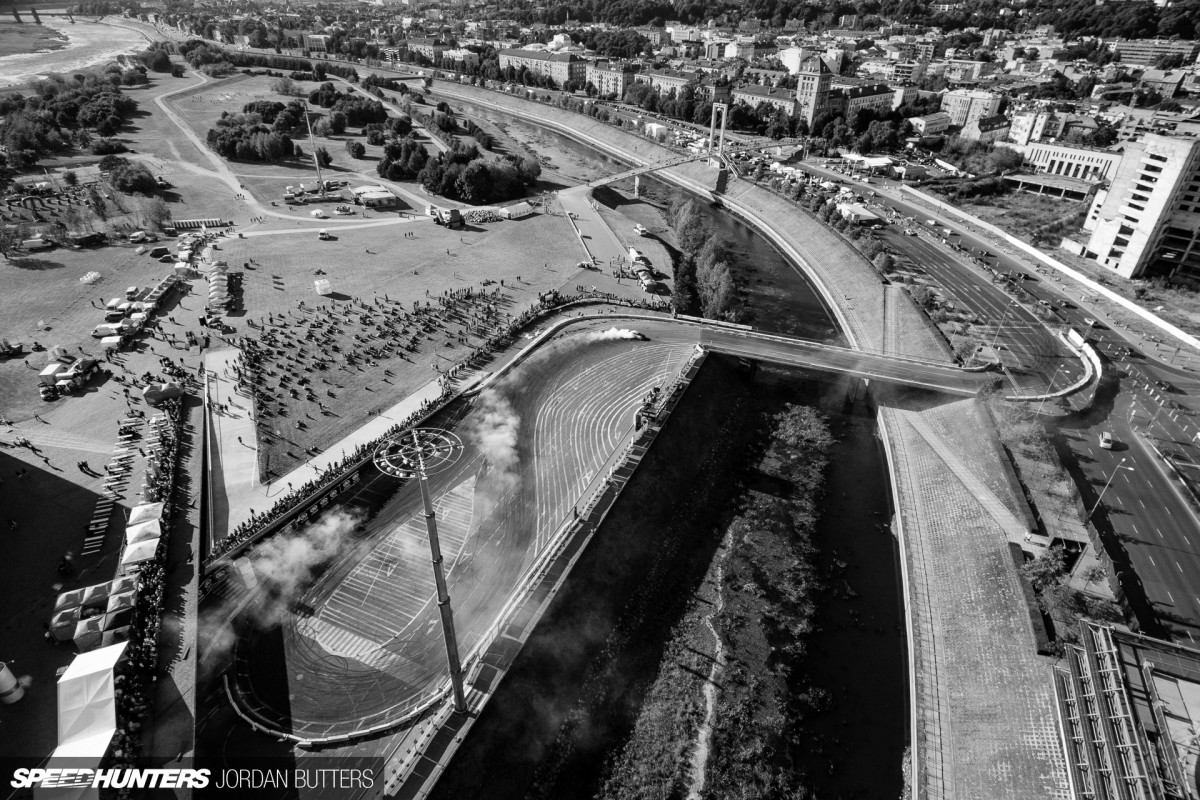
Not standard Kaunas road protocol, the drivers then flick their cars sideways across five lanes of inner-city highway onto a two-lane bridge over the river Nemunas, before spilling out, throttle pinned and smoke billowing, onto an eight-lane road in front of the Žalgirio Arena, looping around under the crowd and finishing the course as they re-enter the bridge from the opposite direction. Imagine seeing a car do this on your regular morning commute!
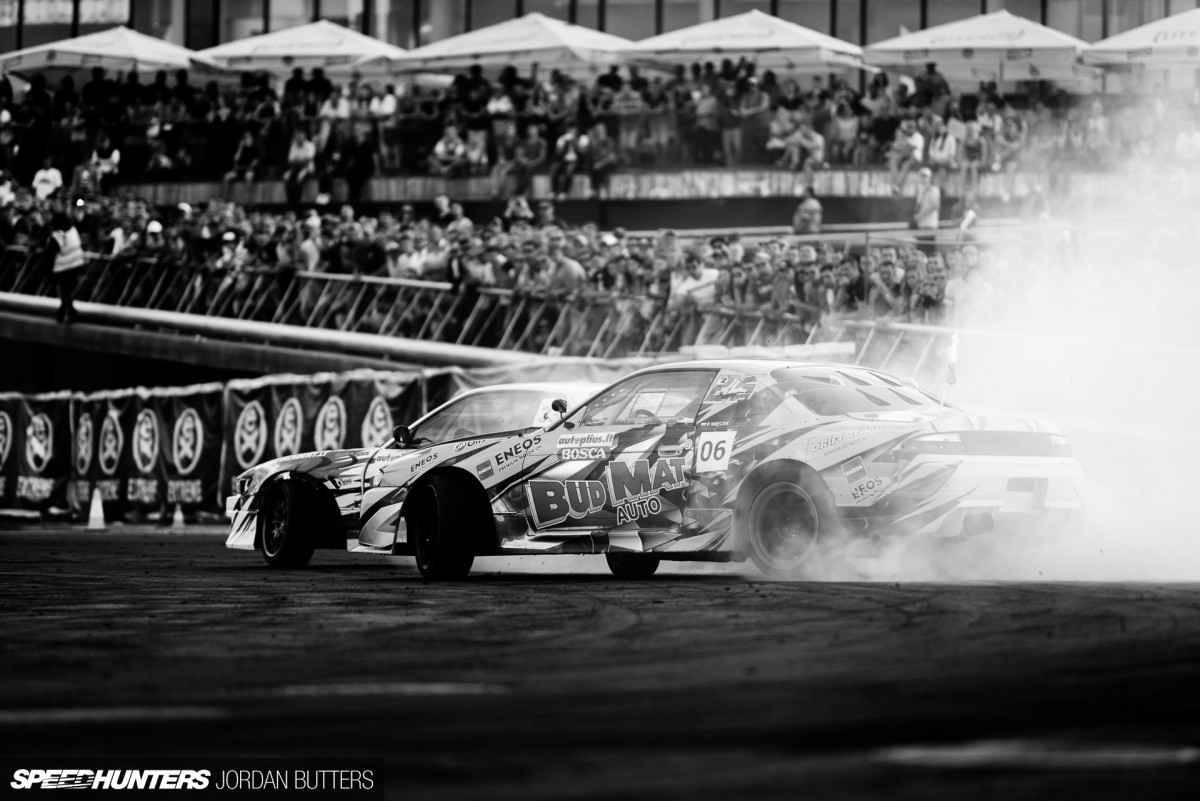
Although these cars were originally built for street use, the demand of their craft has seen them improved, remastered, and reinvented as something completely different. The average power output in the Drift Allstars paddock varies from event to event, but it’s usually in the region of 700hp – impressive stuff.
These Mean Streets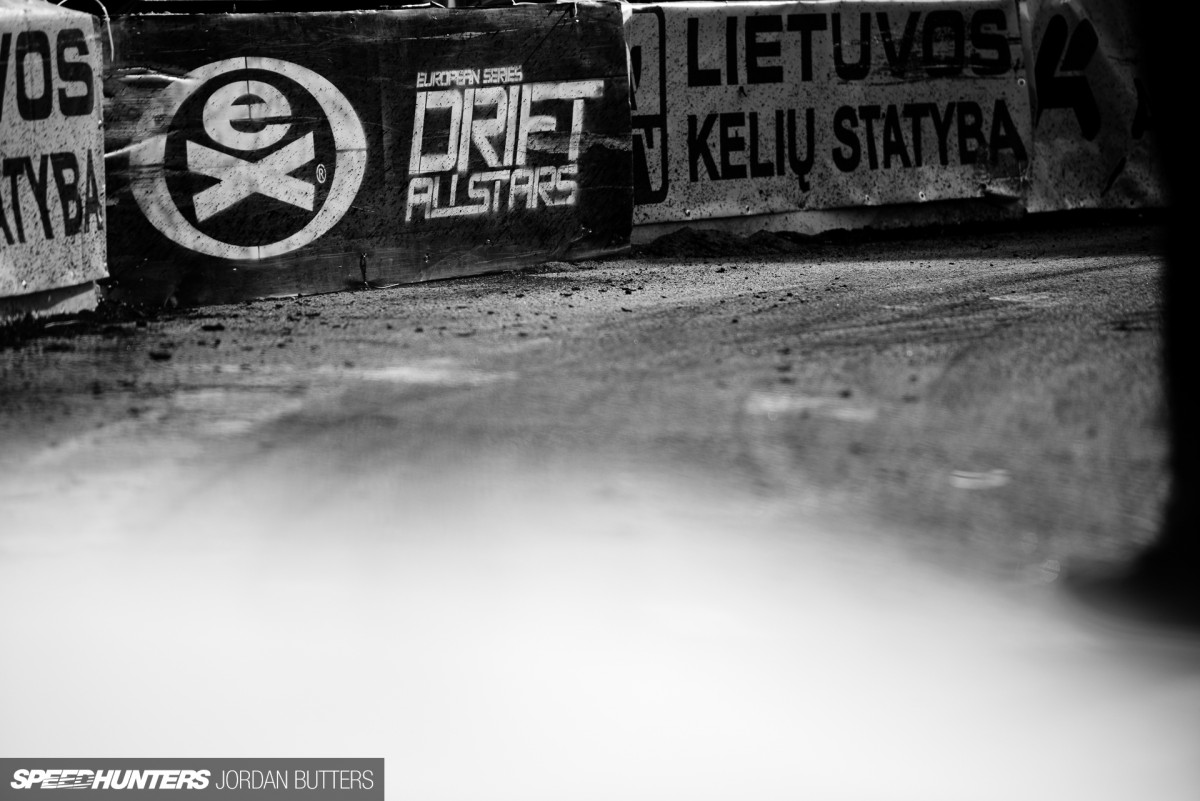
Without the generous run-off, tyre walls and gravel traps that you’ll find on most race tracks, the streets are a ruthless and unforgiving playground. Go off line here and you’re likely to find concrete approaching fast.
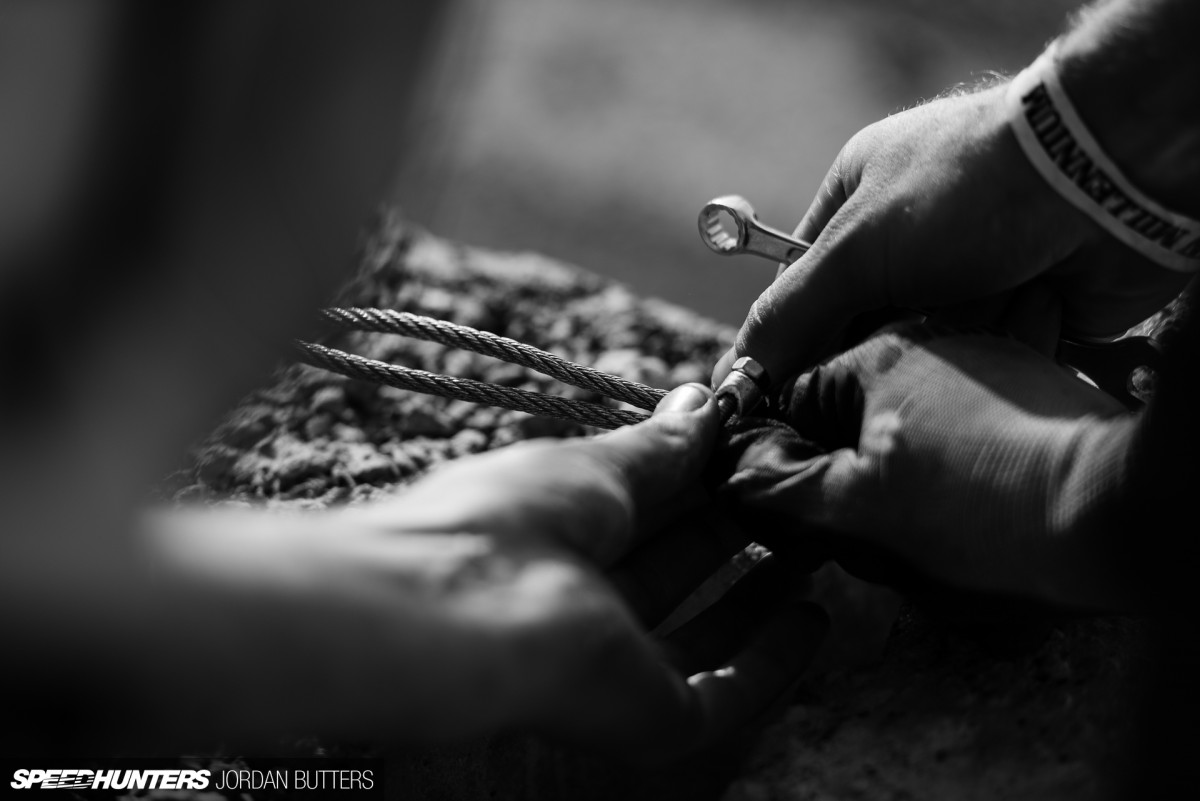
Thick, steadfast concrete blocks anchored together by steel lines mark the circuit boundary in Kaunas. They also line the bridge, doubled up in places to provide at least some reassurance to drivers that they’re not faced with a nasty plunge in the Nemunas if things unexpectedly head south.

Of course, the line taken through the course is dictated by the clipping points, which have been set out by the judges to test the drivers’ nerves, commitment and skill.

There’s a generous hatched clipping box marked on the asphalt near each rear clipping point. This tells the drivers how close they should be as an absolute minimum. Placing the rear wheels within this area at least guarantees that you won’t score a zero for that particular clipping point.
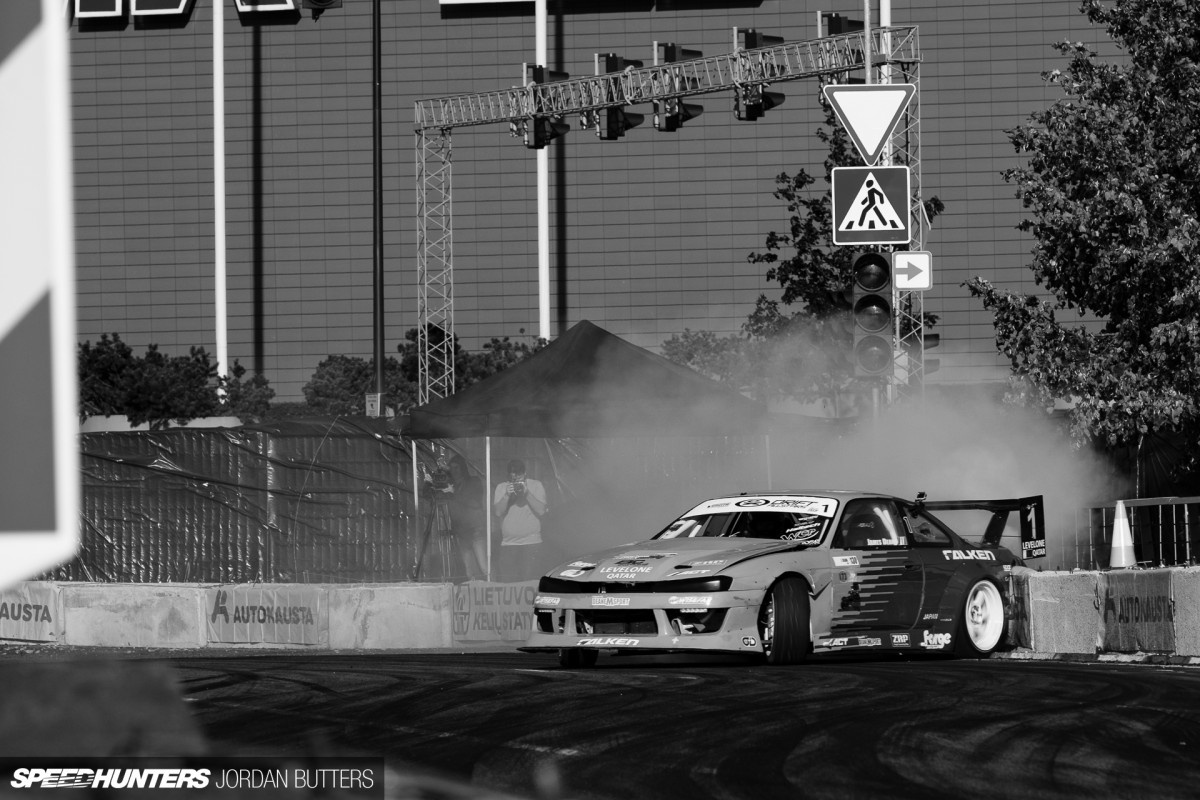
In reality, if you’re doing anything less than masterfully trading clearcoat with the concrete on a regular basis then you’re not really in the running to win.
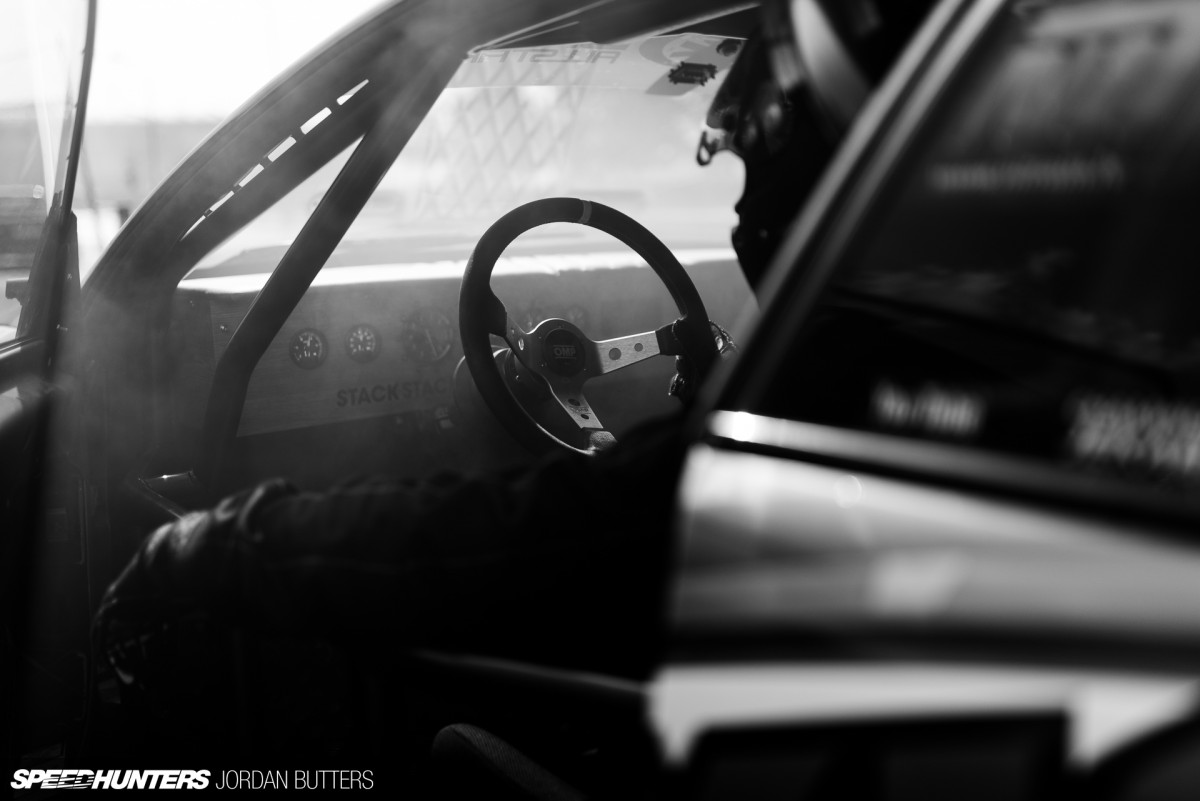
All of the intensity of a competition event is amplified during the tandem battles, especially when it’s your turn to give chase. Sitting on the start line and waiting to be called into the staging area there’s an unbearable tension in the air.
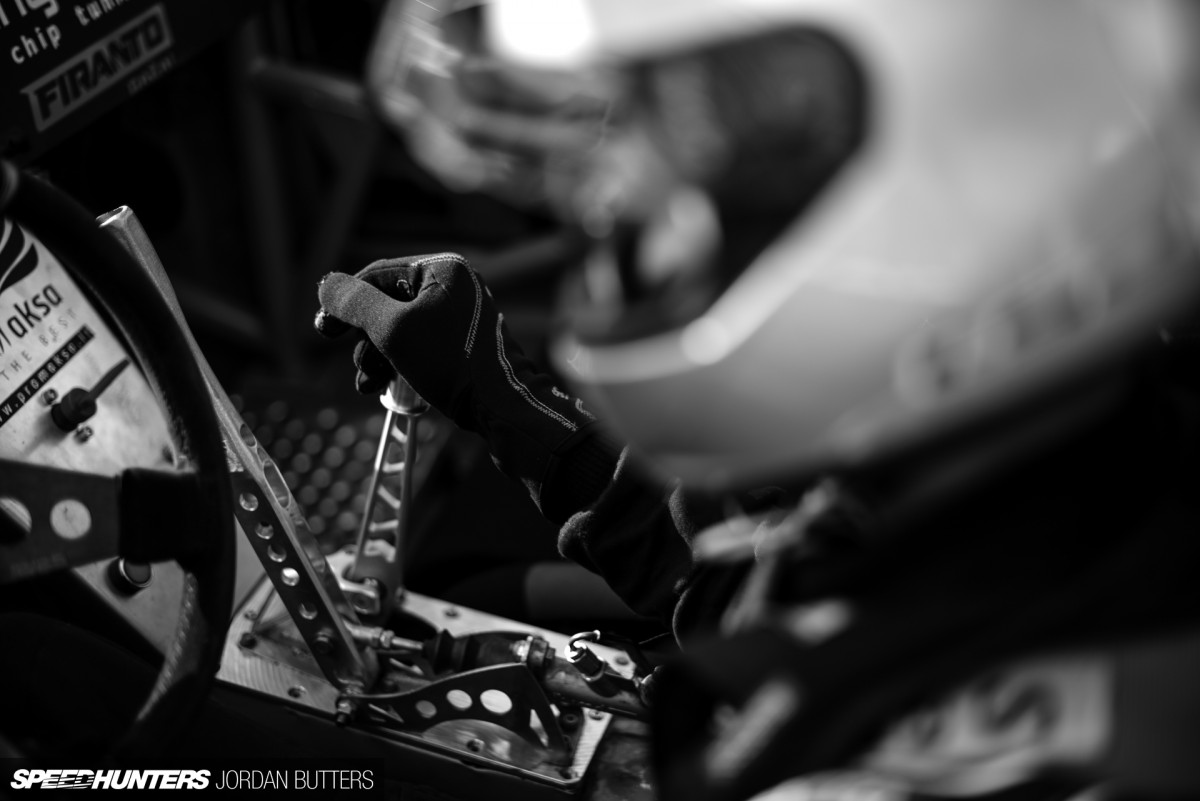
If the course itself wasn’t enough of a challenge, alongside you sits the driver who is going to dictate exactly how your next run plays out.
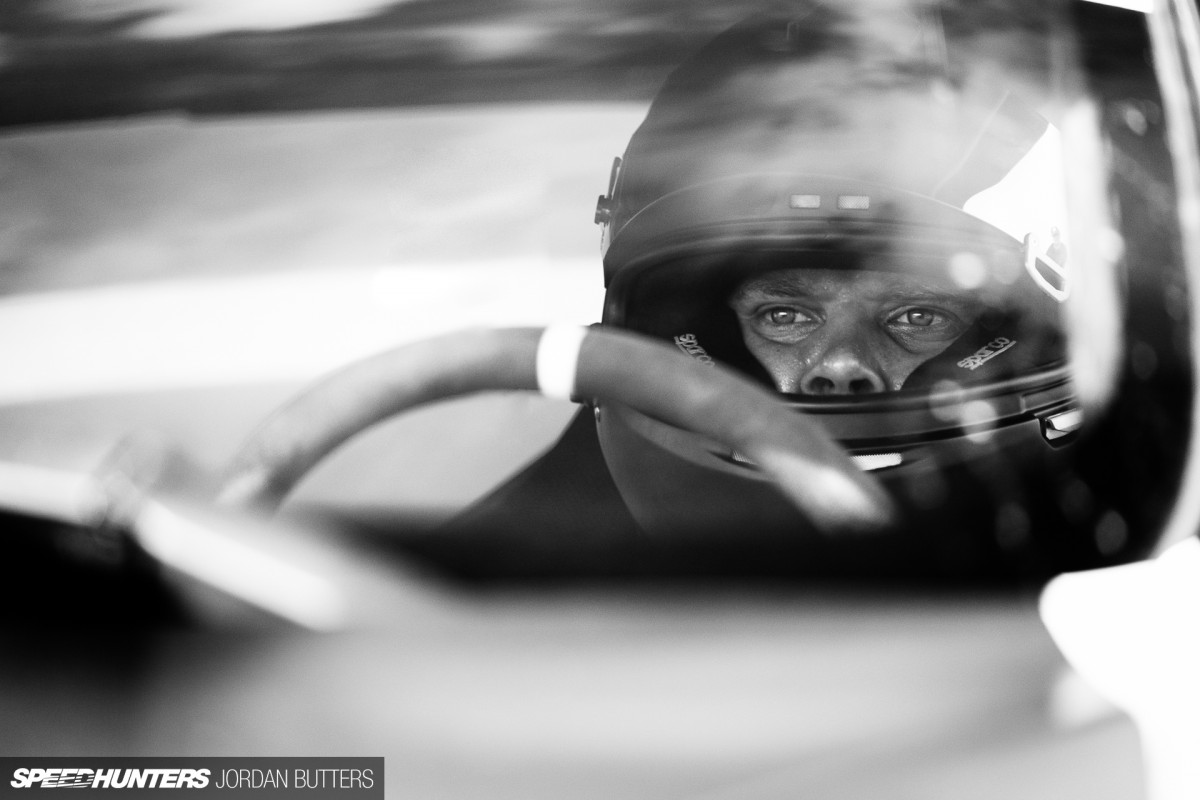
The speed you initiate at, the line you take, how you transition – you want to beat them in battle, but at the same time it’s your job to get on their door and mirror their line. You need to trust their judgement implicitly and without falter.
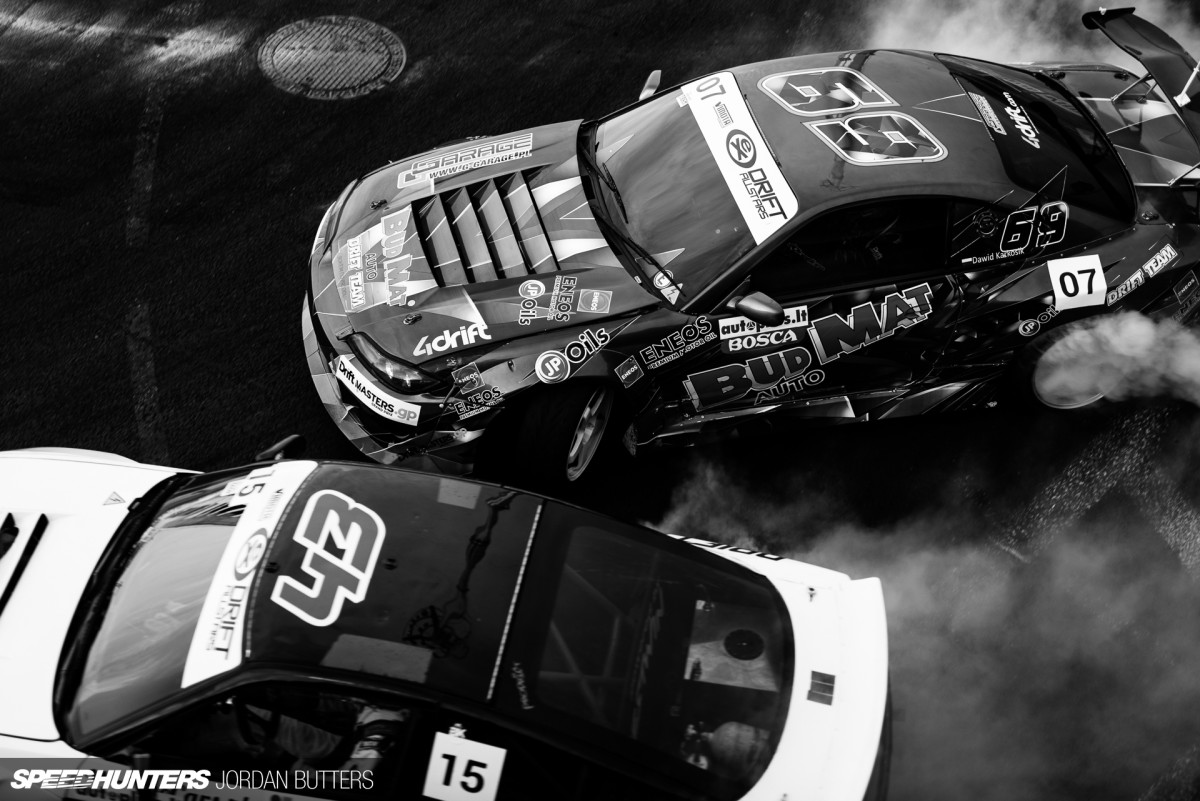
Navigating through the thick clouds of tyre smoke and chucks of delaminated rubber that are flung toward your car as you give chase, you have to keep in the back of your mind that just inches from where the car in front of you changes direction there’s a solid wall waiting to drag you in and spit you back out.
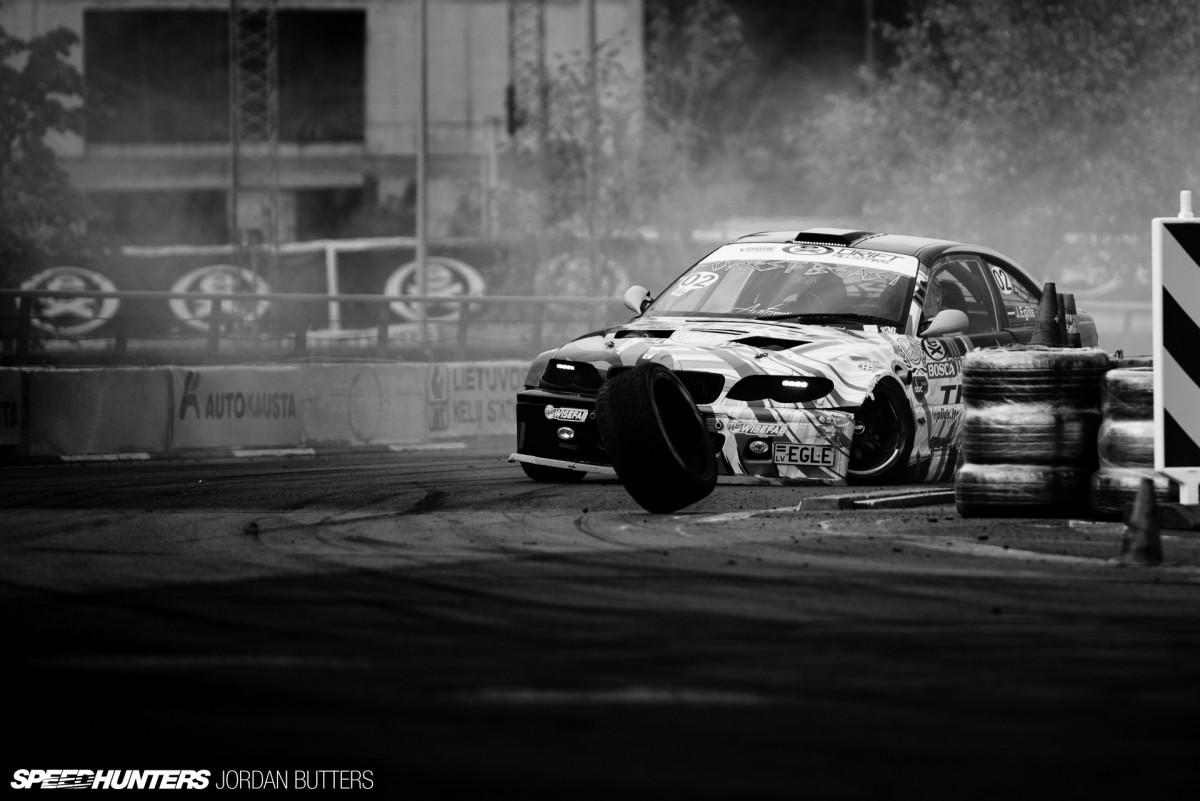
You can’t see it, but it’s there. How well do you know the driver in front? How well do they know their car? How close are they going to get? One minor misjudgement is all it takes. If the guy in front skims the barrier and you’re travelling just a little bit faster, or with a slight variation in angle and unable to scrub off speed, it’s game over. Latvian champion and 2015 series contender Janis Eglite uncharacteristically found out the hard way.
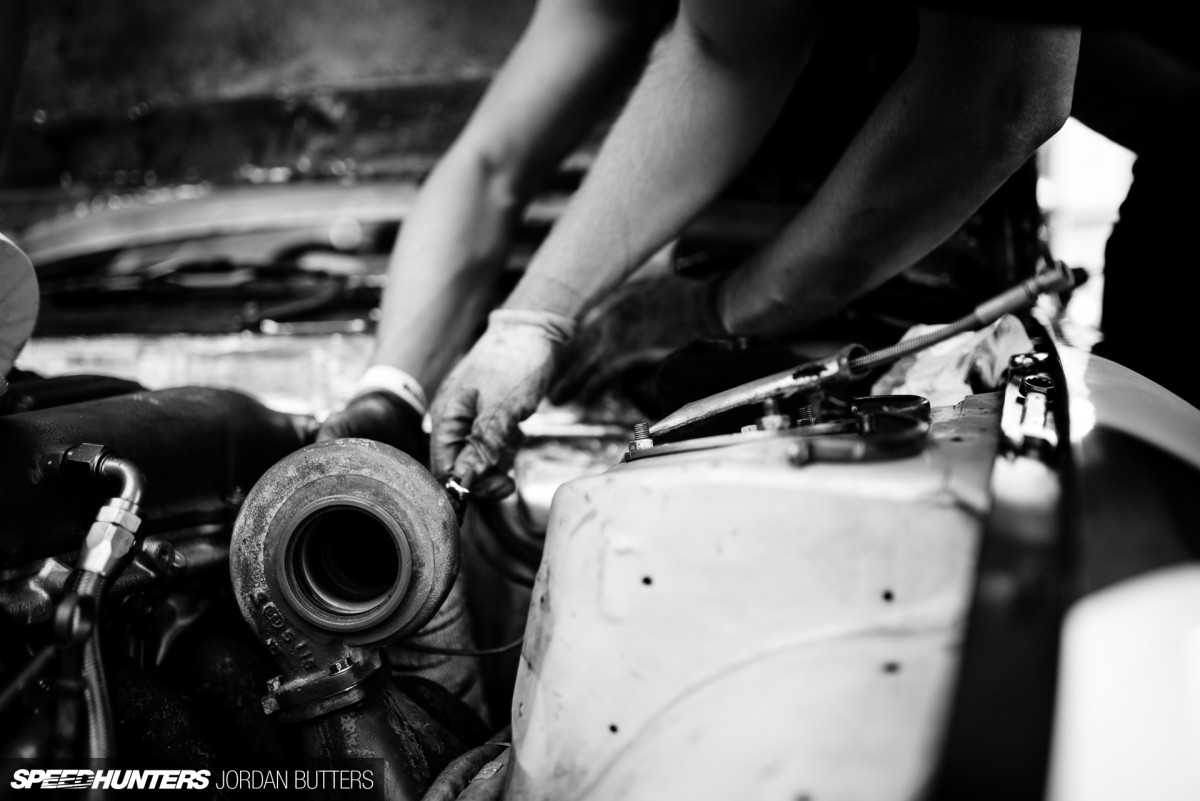
A walk through the paddock drives home the cruel nature of this course. Bumpers lie in pieces, shattered and cracked wheels are abundant. Pit crews work relentlessly to repair damaged machines.

Even opposing teams chip in to try and rejuvenate tired chassis and return their pilots to battle. Camaraderie is second nature in drifting still – something that I nope never changes no matter how big the sport becomes.
No Guts, No Glory
On a normal Saturday in Kaunas, the sport of drifting was inescapable. The symphony of screaming turbocharged six-pots and rumbling V8s reverberated around the city streets while clouds of smoke and the unmistaken aroma of warm rubber filled the air.
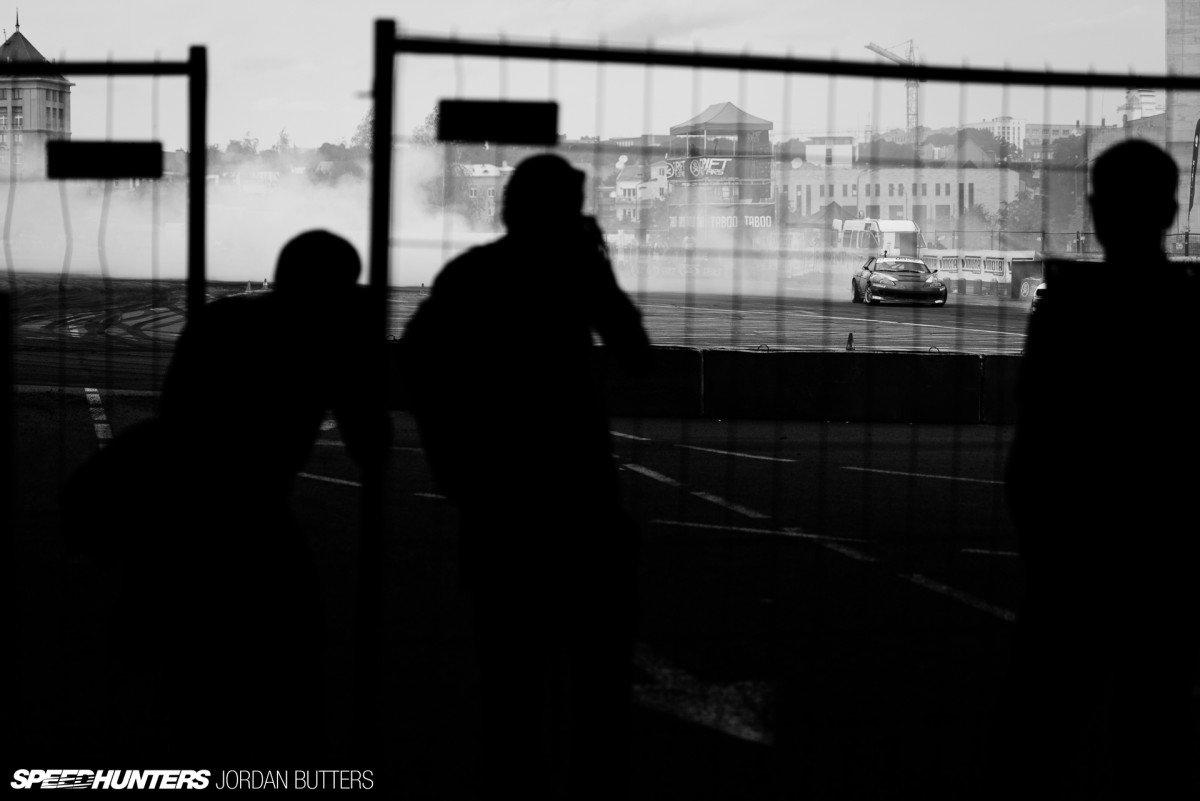
Many of the people in the crowd that day would have purposefully travelled to see the Drift Allstars drivers duke it out in such an unusual setting, but a large number were drawn to the event unplanned, simply out of curiosity, in part due to the convenience of having a world-class drift event brought to your doorstep. Either way, there wasn’t a single person left wanting.
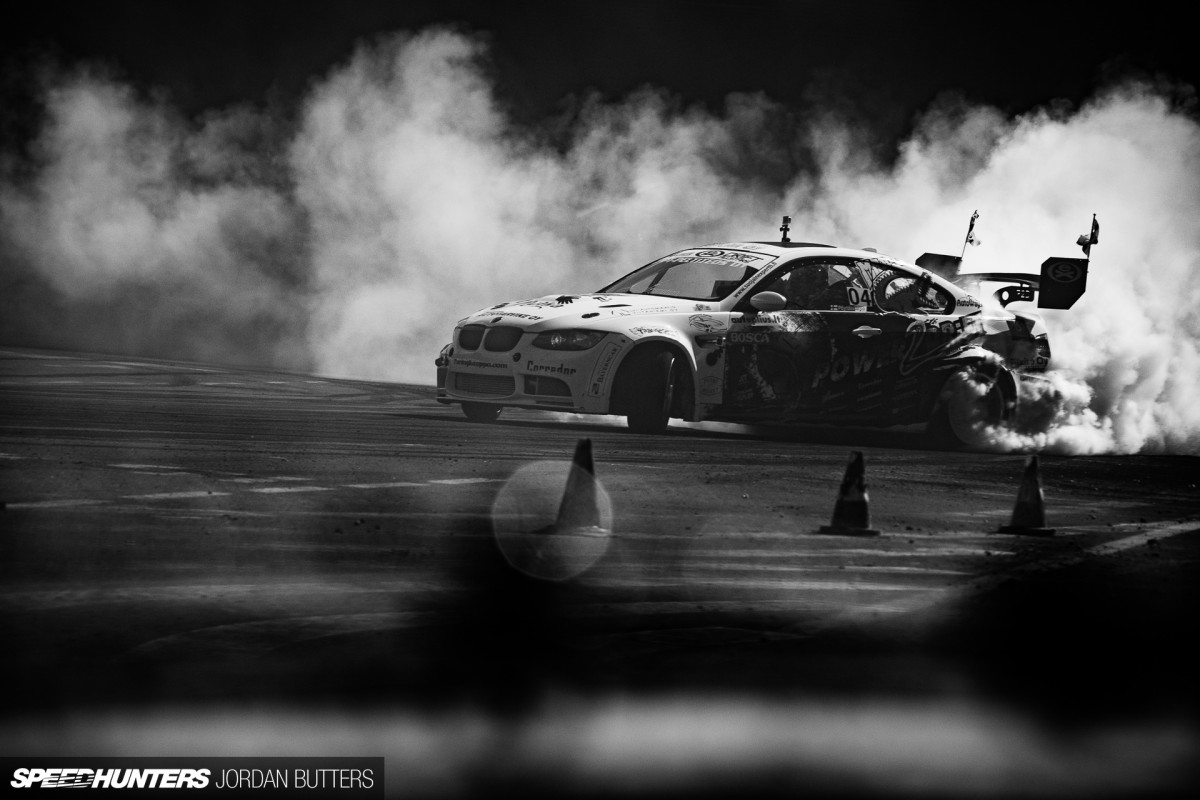
While I’ve seen some unforgiving circuits in my time, this year’s Lithuanian Drift GP on the streets of Kaunas took the cake. A layout like this really makes you appreciate the amount of skill and precision that is required of you if you want to compete at this level of professional drifting.
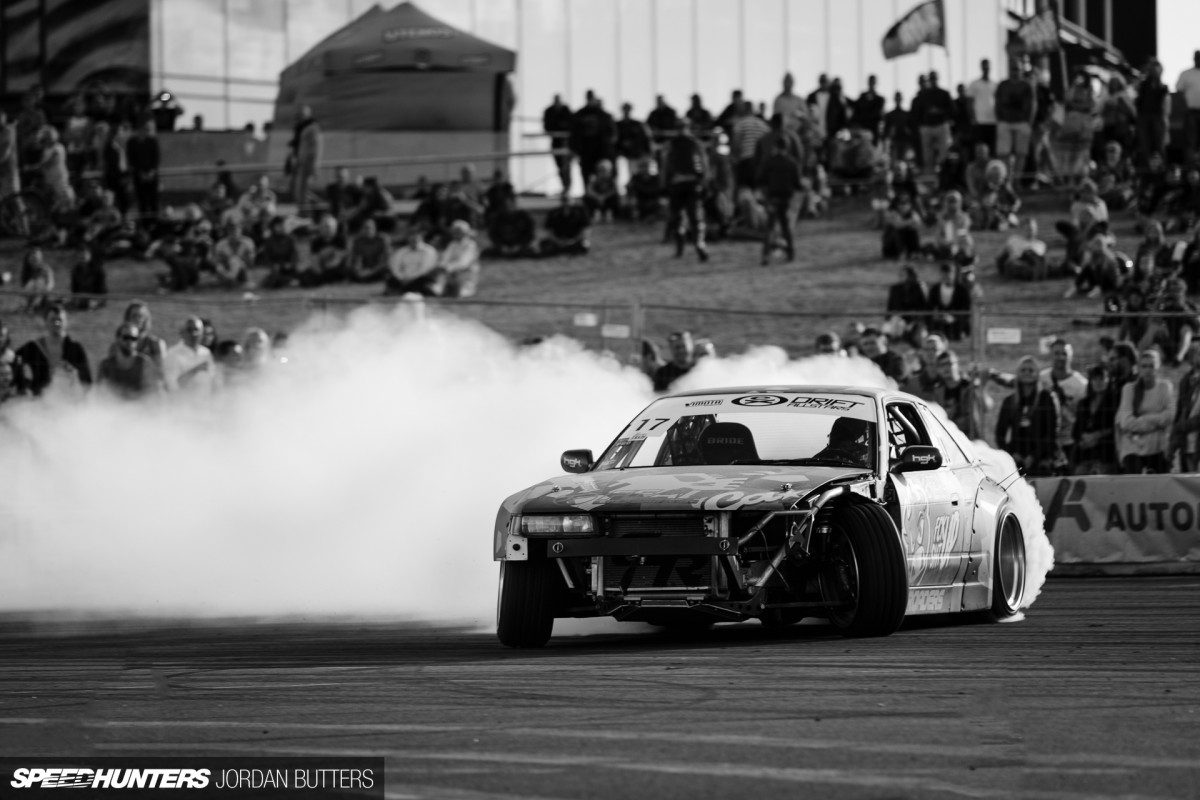
It seems that things are progressing at a blistering pace in Europe. Not only are some of the most talked-about builds coming from this part of the world, but the drivers here have the skills and consistency to back up the credentials of their machines, too.
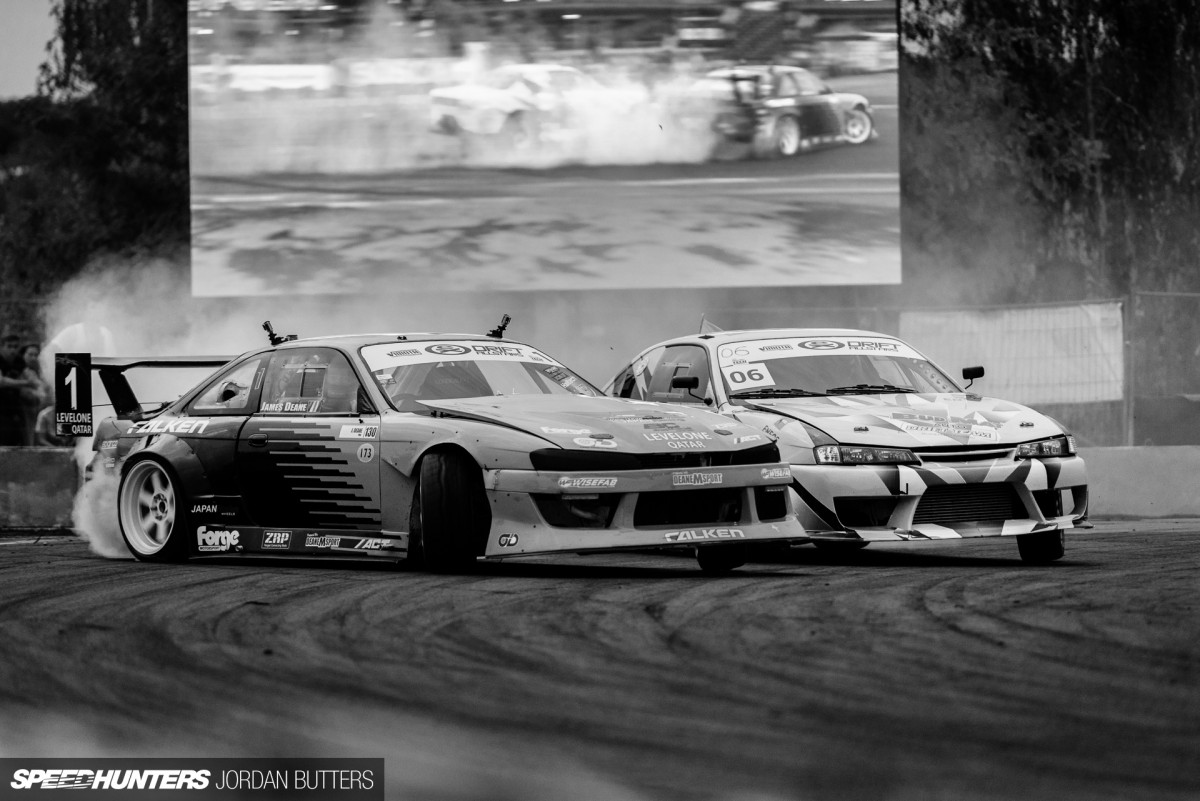
The finals in Lithuania came down to two of the most consistent and aggressive tandem drivers in the sport – Ireland’s James Deane and Poland’s Piotr Wiecek. They last met in battle during the finals in Kaunas last year, just a couple of miles up the road.
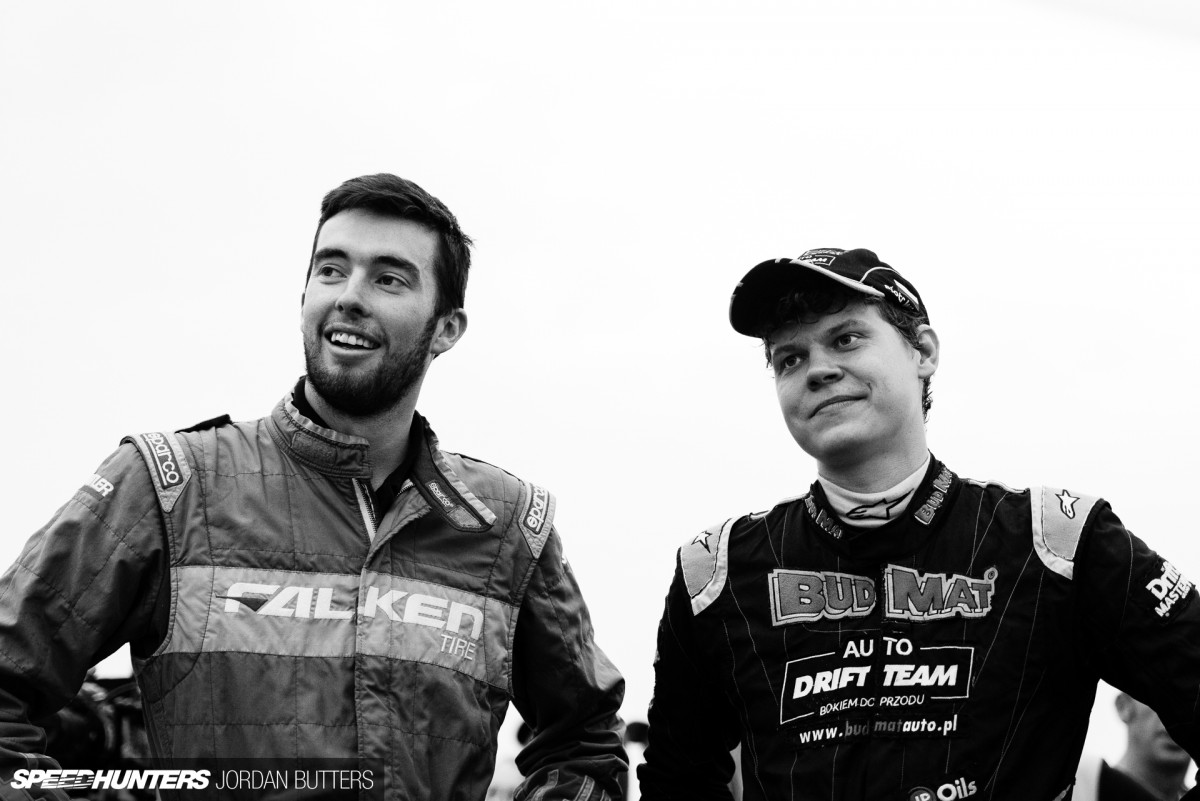
There’s a high level of mutual respect between the two, but that doesn’t dilute their commitment to win. James is chasing down his second successive championship title, and Piotr isn’t far behind him in the standings, having won the previous event in Estonia a few weeks earlier.
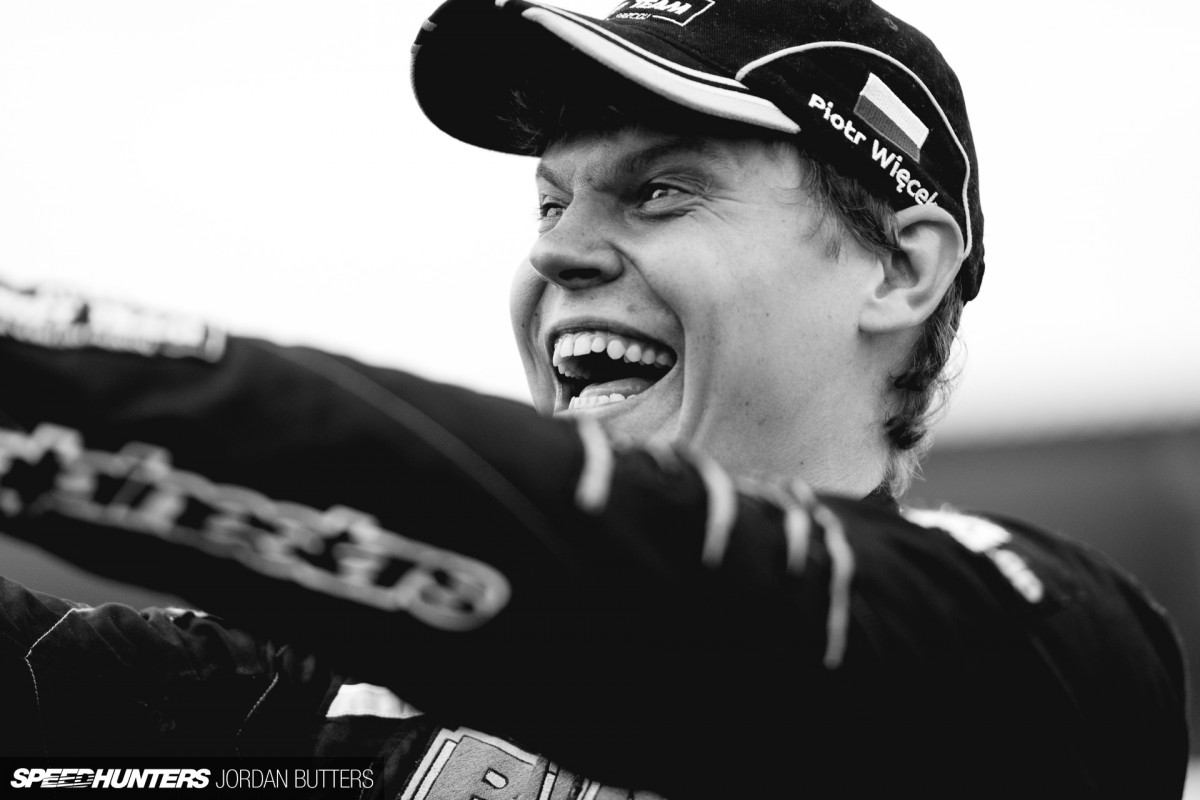
Two runs couldn’t separate them, and it took a duo of One More Time battles before the judges could call it. After James’ victory in their battle last year, it was Wiecek’s time to shine. Poland was on top of the podium again.
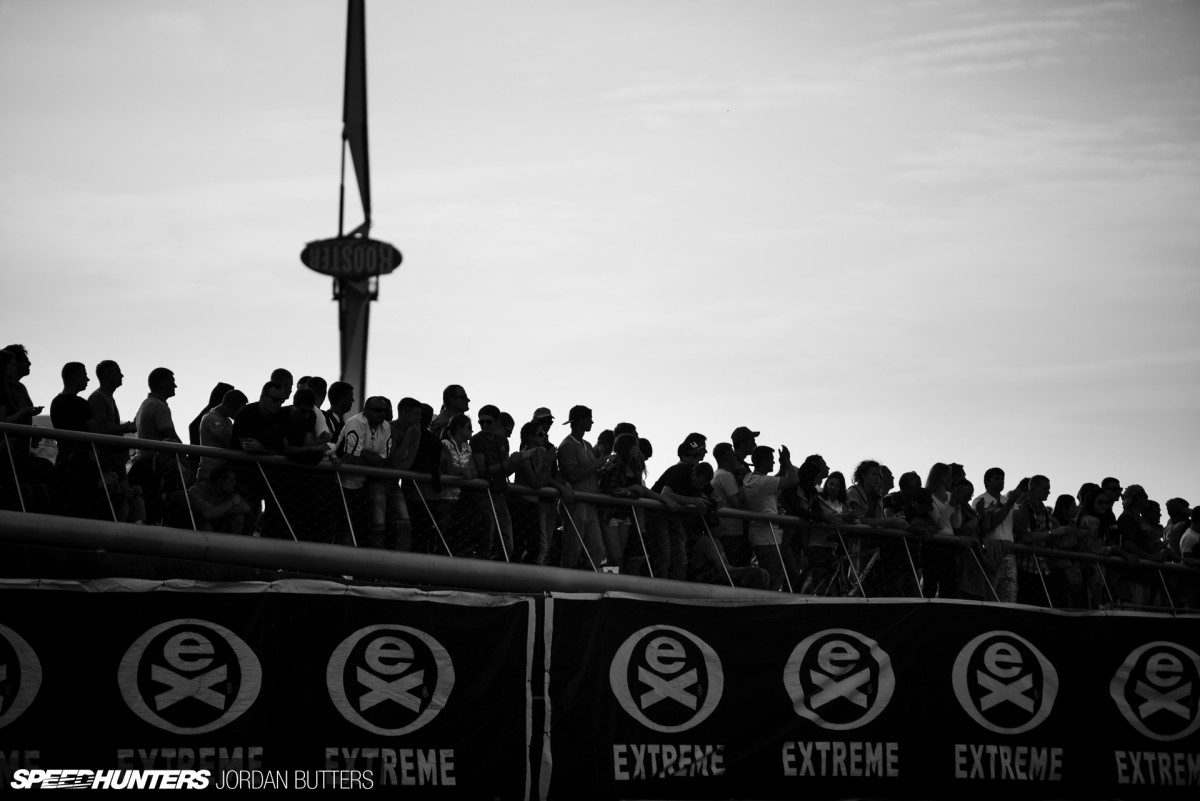
The Lithuanian Drift GP was one of the most high-energy, exciting and relentless drift events that I can remember. Drifting came full circle. For many, it started on the streets in its most raw, grassroots form, so hosting a high-level event in the heart of the city in front of a large crowd makes perfect sense.
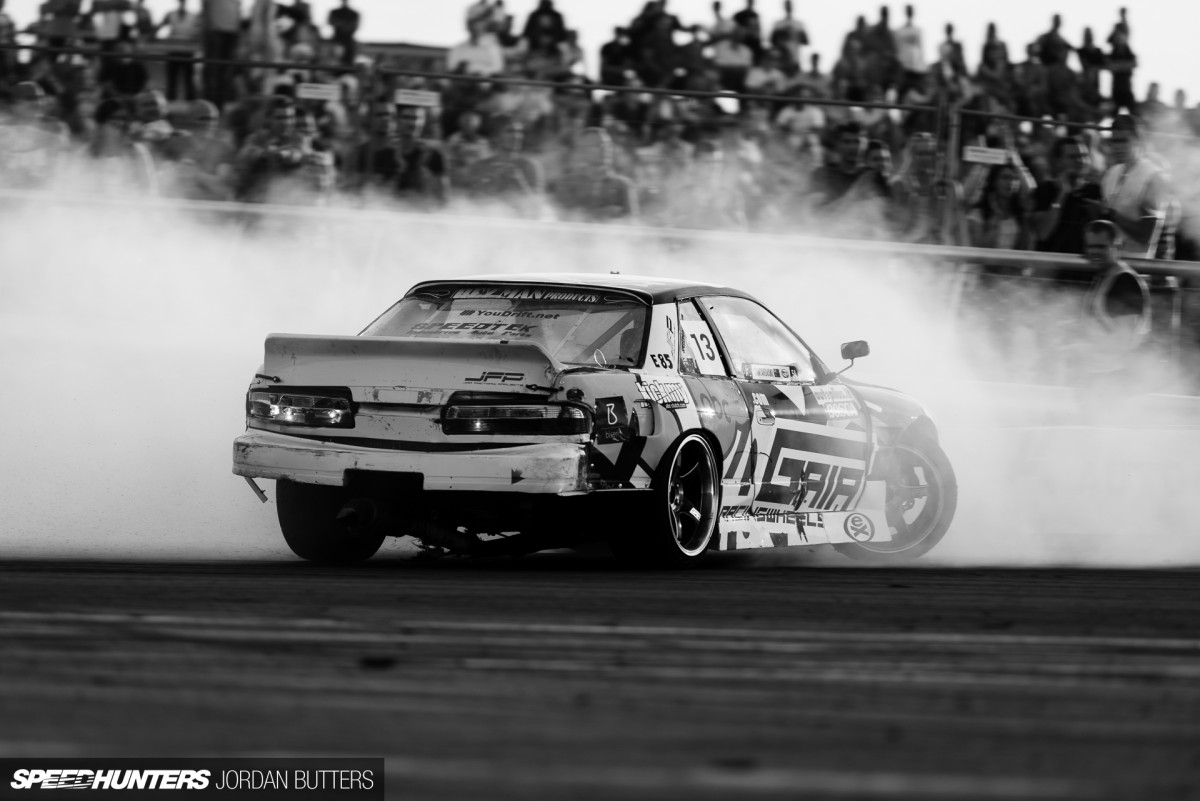
Drift Allstars has gained a reputation for being the series to compete in if you want to prove yourself. With a field made up of some of the best drivers in the sport, you need to possess a ‘go hard or go home’ attitude if you want to do well.
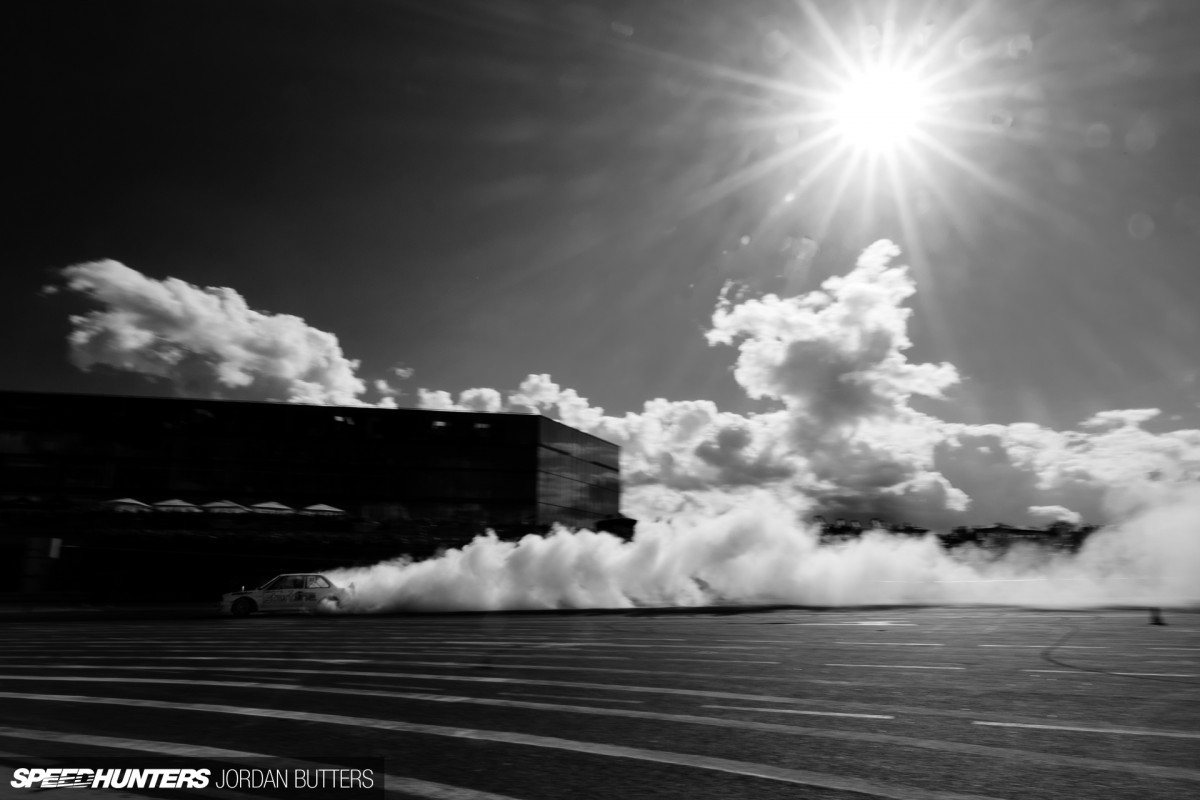
Asking drivers to put it all on the line comes with its own inherent risks, but the rewards, both in terms of entertainment value and driver progression, can’t be disputed. At this level in the sport there are no prizes for playing it safe.
Jordan Butters
Instagram: jordanbutters
Jordan Butters Photography