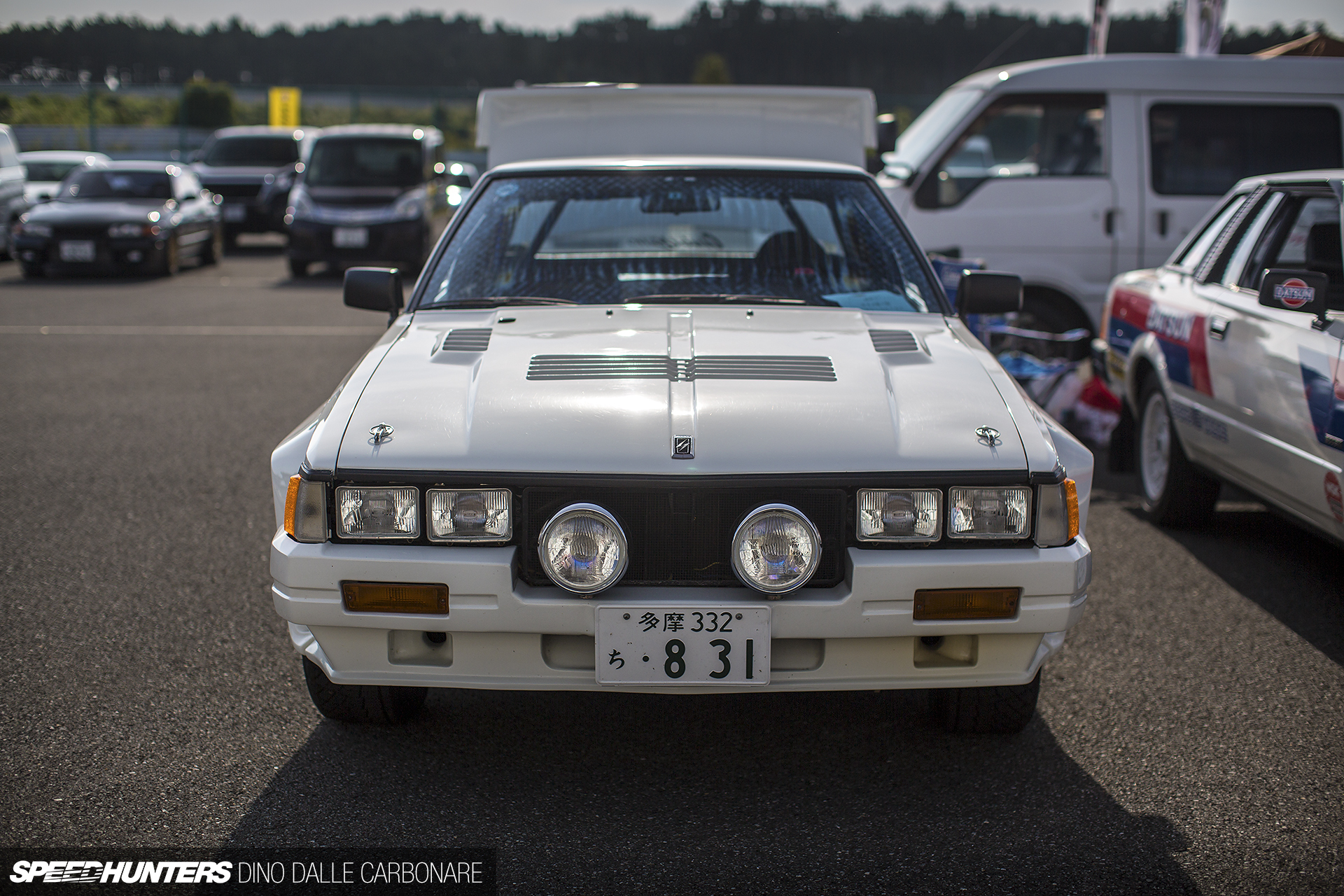
When Nissan went Group B rallying in the early to mid-’80s, this is the car it used as a base for its World Rally Championship campaign.
Aside from the odd rally car that every once in a while shows up at the Nismo Festival, the Silvia 240RS isn’t a car you see often on the streets of Japan. In fact, prior to seeing three examples at the recent Nissan Matsuri, I can’t recall the last time I actually saw one in person.

This angular and over-fender-equipped special version of the Silvia was created to homologate the car for Group B, which is why only 200 cars (the minimum number required) were ever made.

The Group B rally era is best remembered for the wild turbo and four-wheel drive machines that were eventually deemed too fast to race and banned, but some manufacturers decided to take a different route, one of which was Nissan.

It’s not like the Japanese automaker couldn’t have built a flame-spitting gravel monster, it had the engine from the Group 2 Silvia Turbo and was working on the 4WD system that eventually became ATTESA-ETS, but Nissan still opted for a simple, honest rear-wheel drive car based on the S110 Silvia platform; its hopes pinned on success at long-stage rounds of the championship where reliability counted for a lot.

So while you might assume the generously vented and louvered fiberglass bonnet is hiding a big-boosting engine, it’s not actually the case.

What you’ll find is a FJ20-based naturally aspirated 2.4-litre DOHC 16-valve four-cylinder fed by twin Solex 50mm carbs – not even fuel injection, which was already being used in Nissan production cars at the time. That said, the ‘FJ24′ wasn’t short on power and the 265hp it created (275hp in the Evolution version) was a good match for the car’s sub-1,000kg chassis.

The basic nature of the car and its relatively reasonable (by Group B standards) buy price ensured that a large number of the cars built and sold were actually used for rallying, and even in ‘road car’ form it was halfway there in spec. This particular car was sitting on a set of period correct magnesium alloy rally wheels shod in gravel tyres.

Like the front end, the back too received massive fiberglass box flares. A fiberglass boot lid and polycarbonate side and rear windows were other weight-saving measures.

Out of the three 240RSs present at the Nissan Matsuri, this one was in the worst condition by far. So why did I choose to spotlight it over the others? Simple, the owner obviously drives the hell out of it and isn’t afraid to put miles on it. It might be a rarity, but at least it’s still being put to good use more than 30 years on.

The coolest thing about the 240RS has to be the interior. The cars came with barely-accessorised dashboards – essentially four analogue gauges and then an expanse of flat empty plastic where rally instrumentation and equipment could be mounted.

This car had a period correct JX-555 rally meter and a digital timer and distance counter right next to it too. It’s pretty cool.
All in all, this 240RS is one of most unique cars I’ve ever had the pleasure to spotlight in Japan, and a fitting way to wrap up my coverage from the 2015 Nissan Matsuri. Click the link below to see all my content from the event.
Dino Dalle Carbonare
Instagram: speedhunters_dino
dino@speedhunters.com