If you live in Japan, the first week of May is good news. It means a string of holidays, one of the longest in the year for most people. Japanese like it so much they call it the Golden Week. And if you like racing, Golden Week means cladding yourself in your favorite team garb, pack your camping gear and heading to Fuji Speedway with 85,000 other fans for the Fuji Super GT 500km race, traditionally held the 3rd and 4th of May.
This is one of two anchor events on the Super GT calendar with the Suzuka 1000km, and the most attended Japanese motorsport event outside the Japanese Grand Prix.
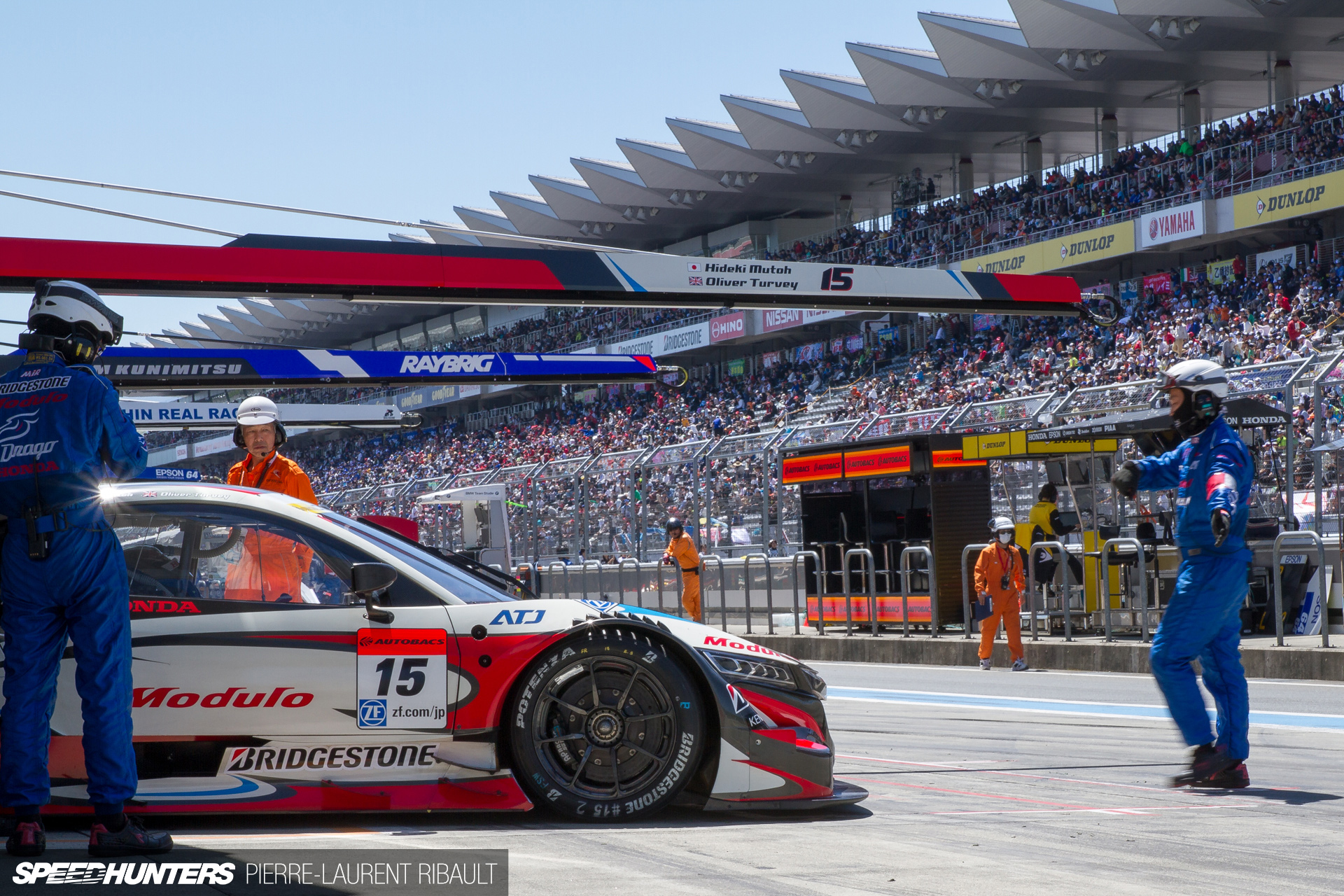
Super GT is in a good place right now. The current generation of GT500 cars is maturing well in its third year with the usual 15 entrants, and the GT300 category is in full bloom with a huge influx of new machinery this year, be them local or imported. No less than 29 cars showed up at Fuji to contest the GT300 class.
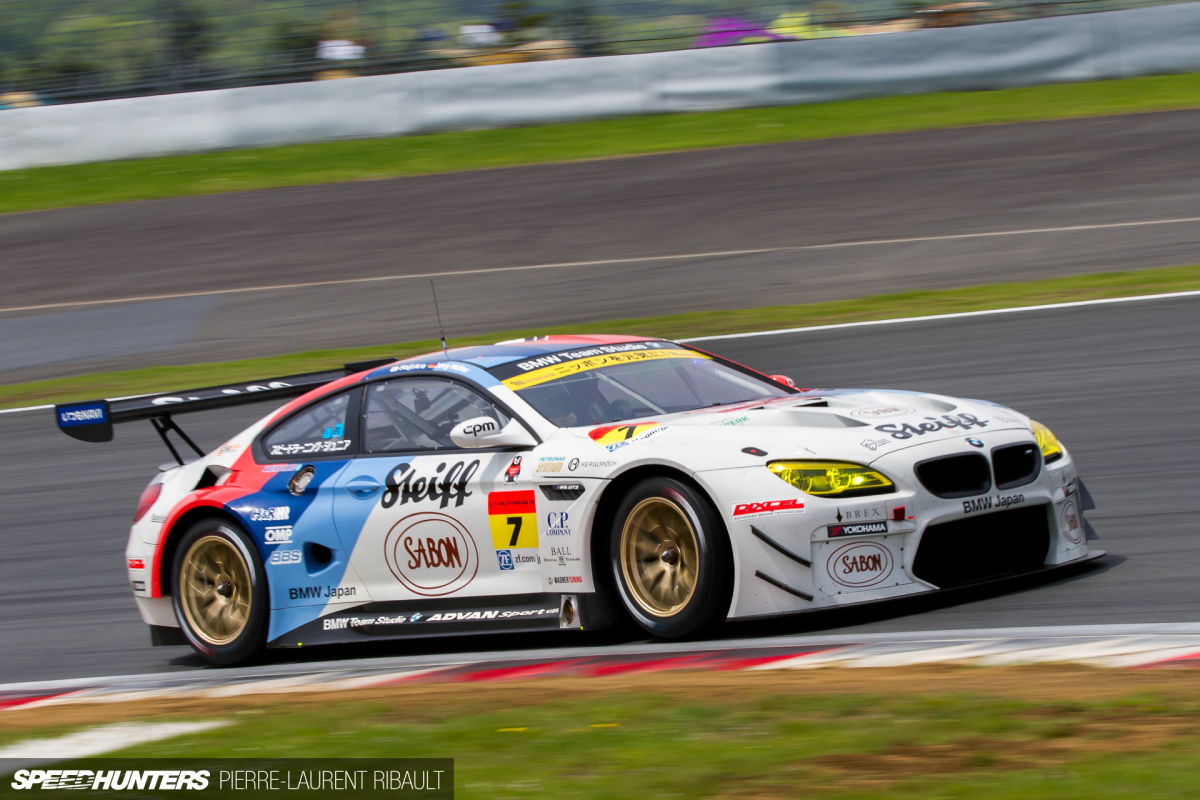
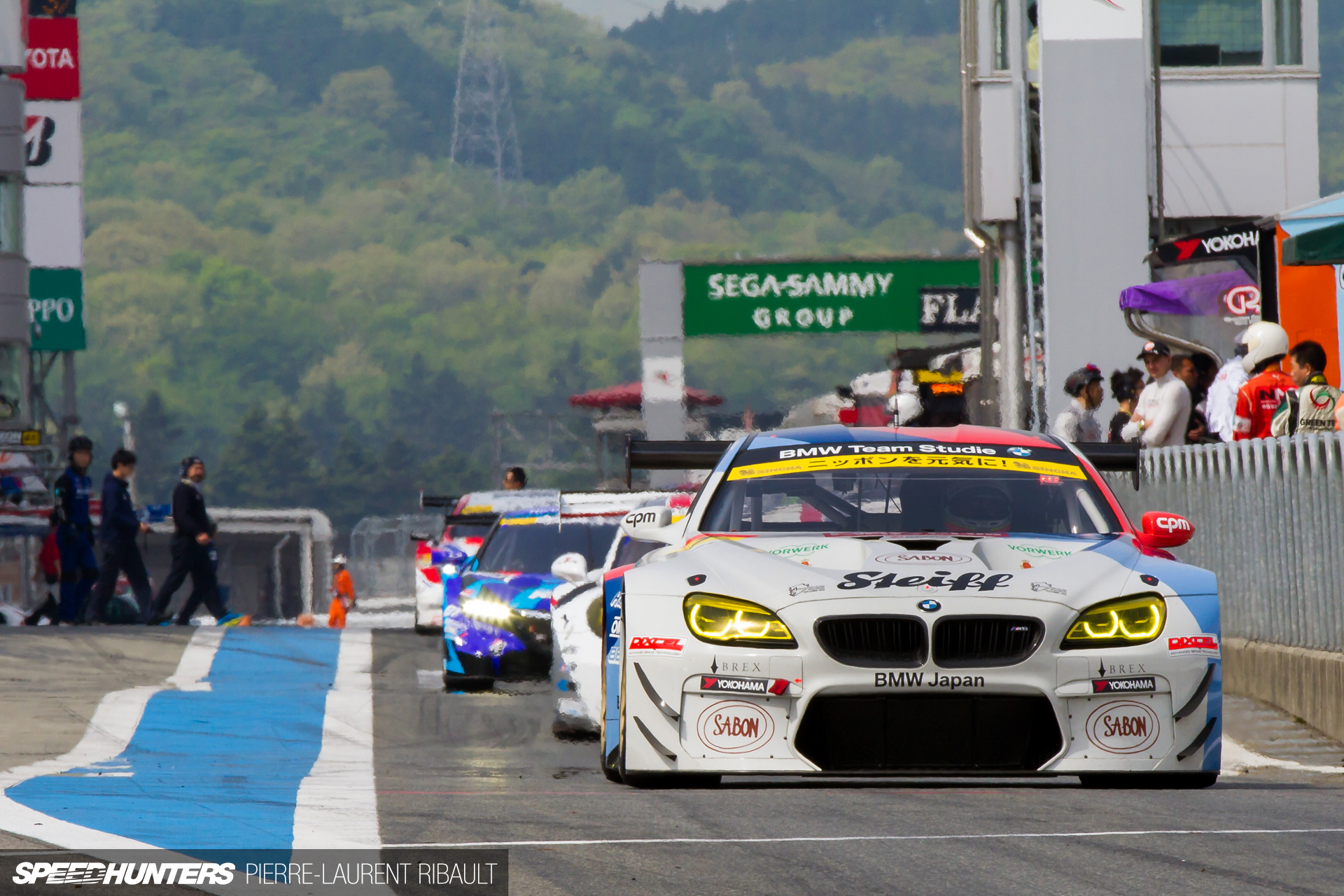
Furthermore, thinly veiled factory involvement is more obvious than ever with a glance at the factory drivers roll call, the German and Italian dialect overheard in the paddock, and the car liveries. Take the Studie BMW M6 GT3 with its very BMW Motorsport-esque stripes and veteran factory top gun Jörg Müller at the wheel for example.
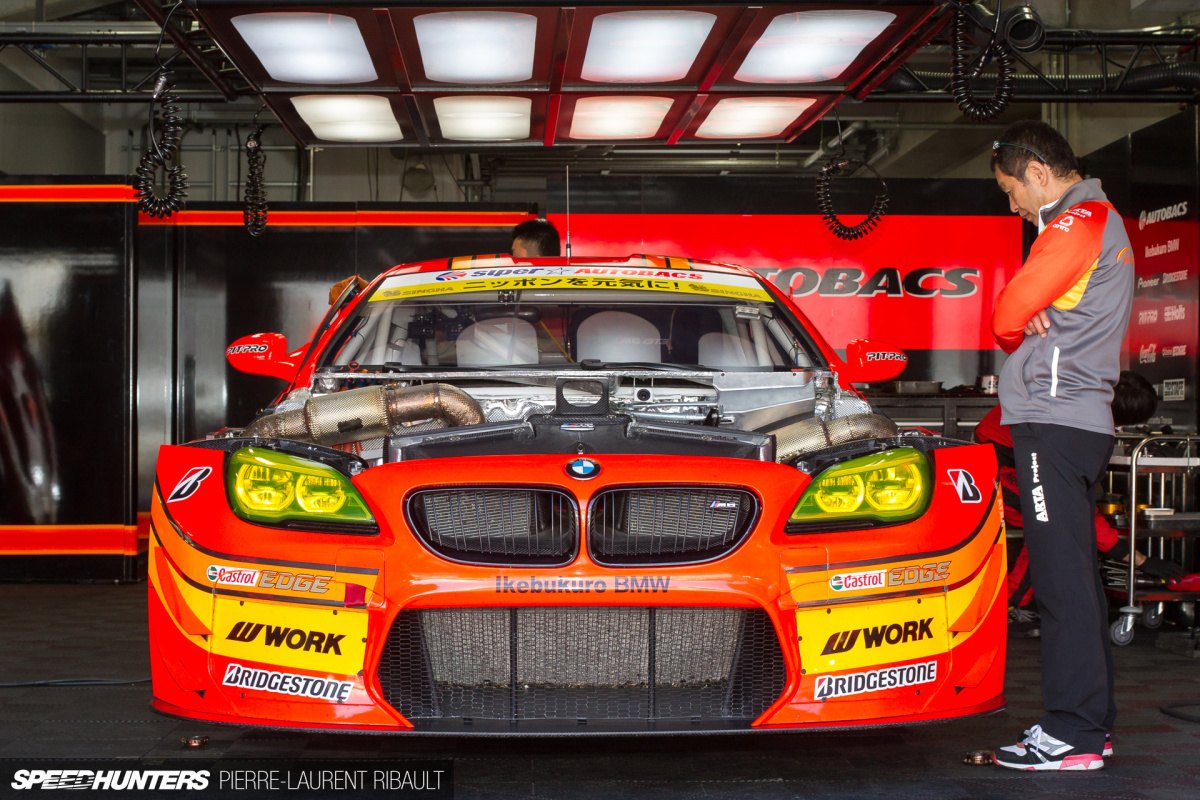
The big bad M6 GT3 is also the choice of ARTA for 2016, of course sporting the signature Autobacs orange livery, giving it an incredible presence. It took the pole position on Saturday and finished second in the race, under the watchful eye of team principal Keiichi ‘Dorikin’ Tsuchiya who knows a thing or two about grip and GT racing as well.
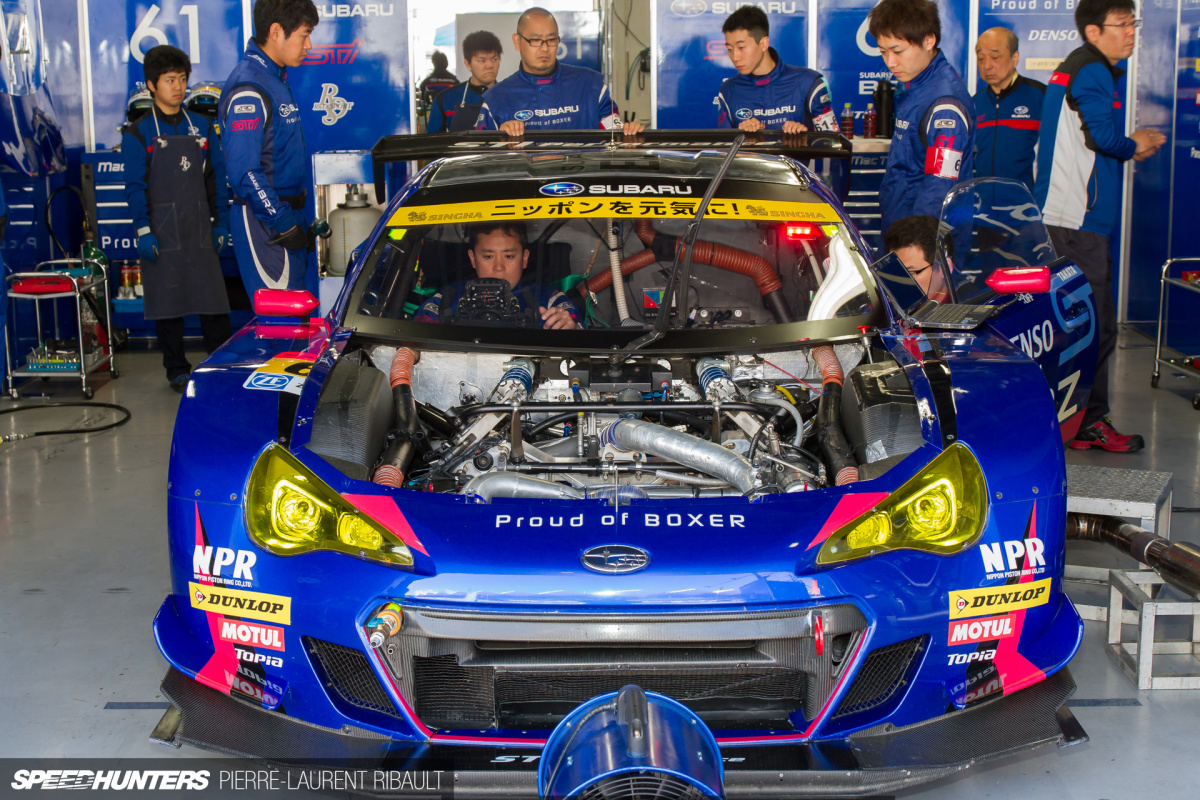
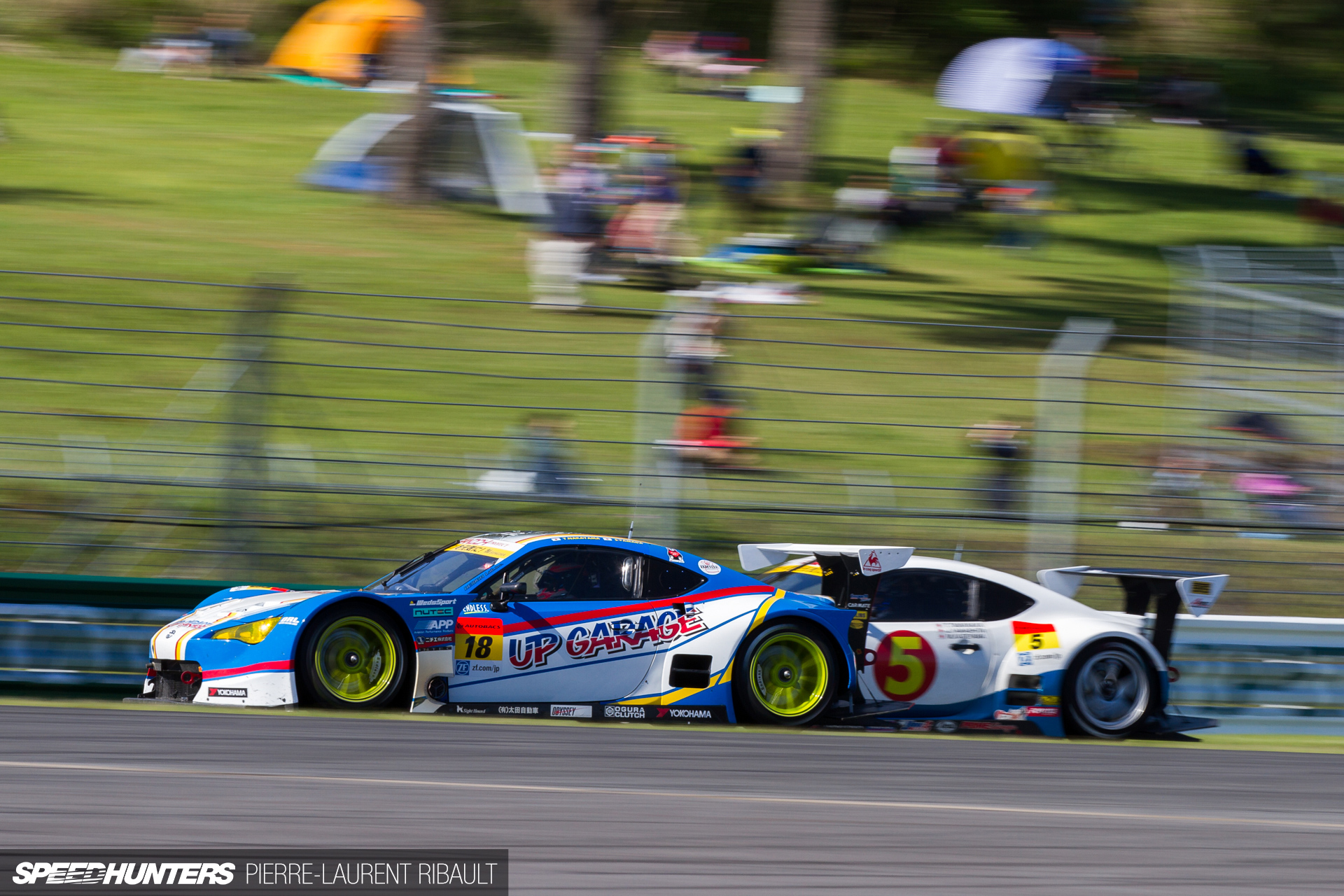
Factory backing is not limited to foreign manufacturers and cannot be more obvious than it is at R&D Sport, the entrant of the Subaru BRZ. An army of Subaru mechanics and engineers look after the car, here seen going through the engine and transmission warm-up sequence before the race morning free practice. Ah, the sweet barks of a race-prepared EJ20 in the early morning… Unfortunately for the hard working STI crew, the BRZ is struggling year in year out since its debut in 2012, with the occasional brilliant performance usually followed by some stroke of bad luck. Its biggest problem since last year is the arrival of the Toyota 86 MC – its seemingly closely related sibling.
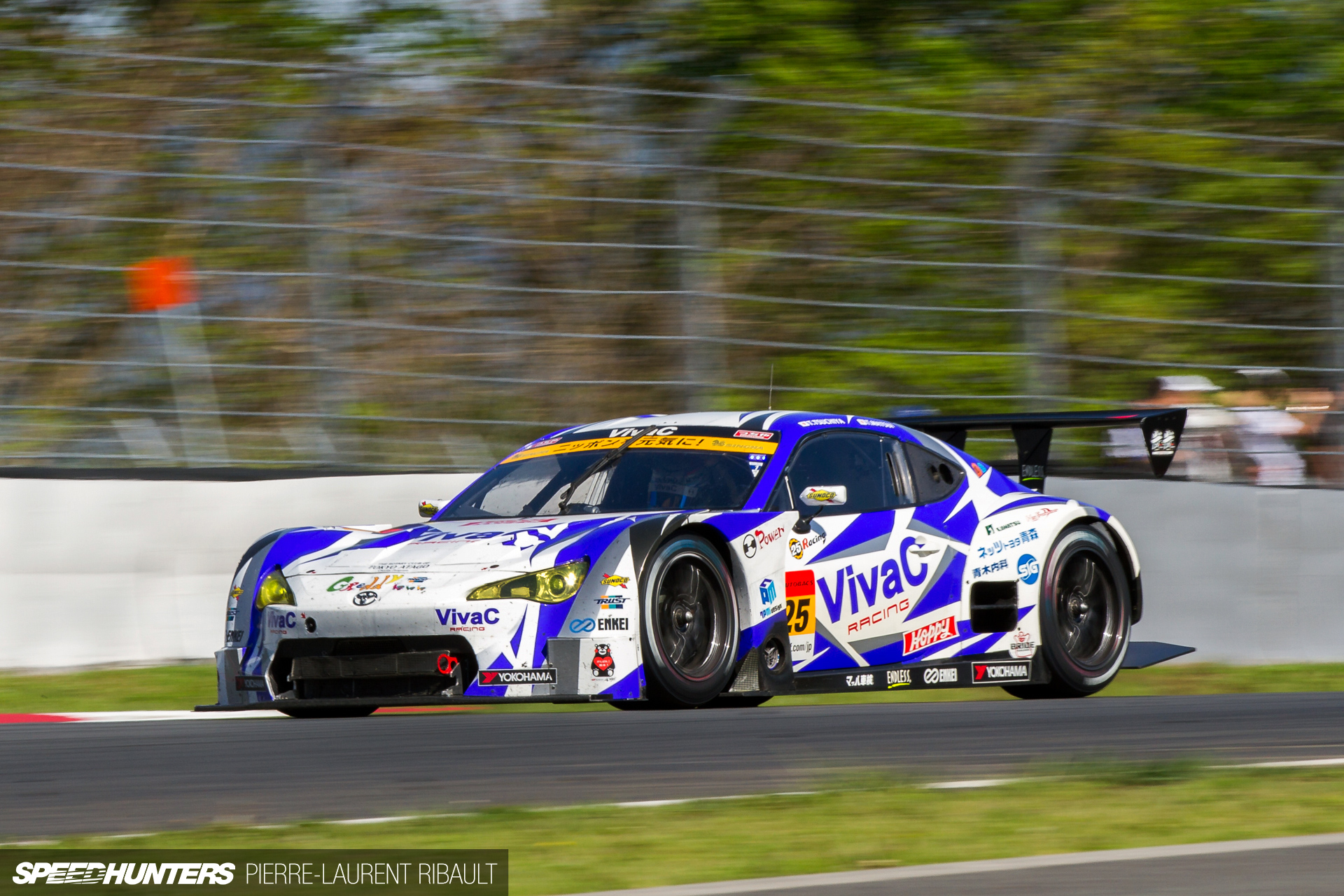
However, this first glance is very misleading. The Toyota 86 MC (as in Mother Chassis) has basically only headlights in common with its Subaru alter ego. It is a silhouette build around a carbon tub and a GTA-branded 4.5L naturally aspirated V8 engine sourced from a Japanese manufacturer which is definitely not Toyota. Three examples have competed in GT300 since last season with increasing success, particularly the one entered by Tsuchiya Engineering, at the forefront of 86 MC development. The VivaC MC 86 won at Sugo last year and started the 2016 season with a pole position at Okayama and a podium on Sunday at Fuji.
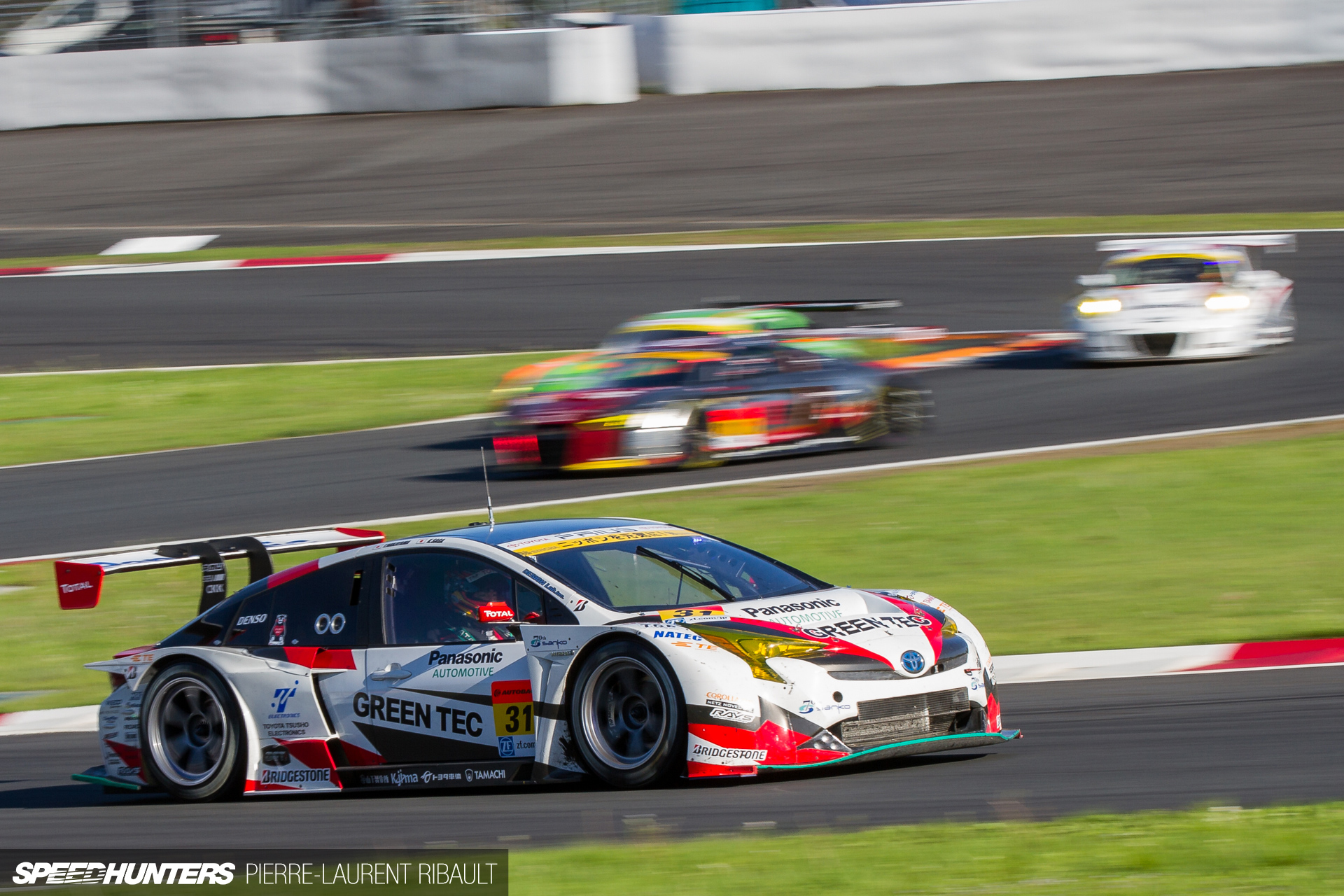
If the 86 MC is Toyota only by the badge, the second iteration of the APR Prius GT is what the Nagoya giant is about today. A full blown prototype racer under the skin of a latest gen Prius that would have hit the gym way too much, the hybrid monster has the proven 3.4L RV8K mounted midship and coupled with an evolution of the Hybrid Synergy Drive system lifted from an actual Prius. Or some of it at least. For 2016, APR has entered two cars finished in official Gazoo Racing colors, the same as the TS050. Although details are sparse and unconfirmed by tight-lipped Toyota R&D engineers, it surfaced that the #30 has batteries while the #31 uses capacitors, just like the LMP1 cars did up until last year. Interestingly, the two cars differ also by their tyres – #30 using Yokohama rubber and #31 on Bridgestones.
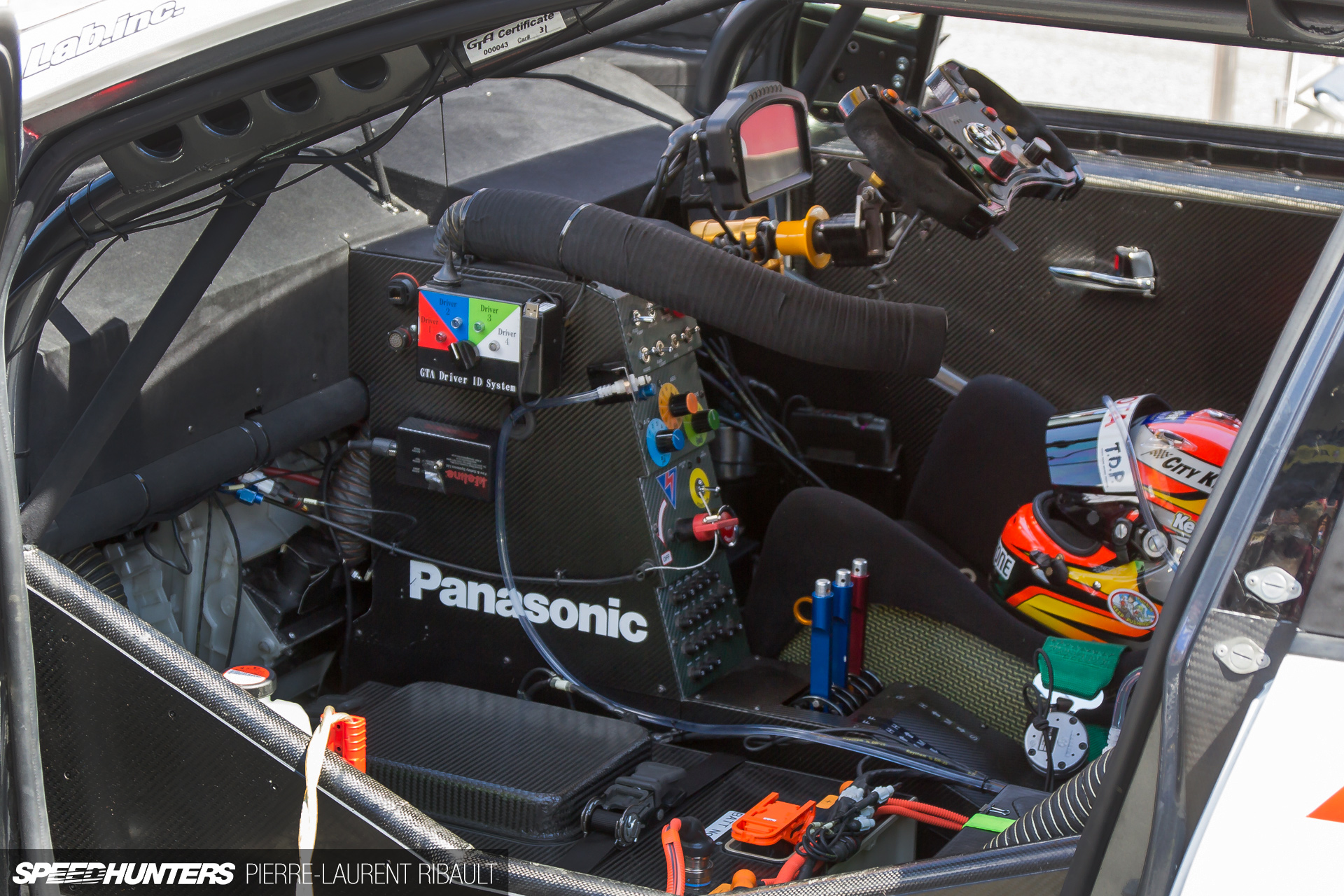
Check the carbon casing in the passenger footwell, this is where the secret sauce for your future hybrid Toyota is brewing. As an aside, the mandatory color-coded switch mounted on the console sets colored LEDs in the windshield to indicate which driver is in the car.

Coming back to the Euro GT3 clan, I have to make mention of the team with the most devoted following of all the GT300 competitors: Goodsmile Racing & TeamUKYO. They’ve returned in 2016 with a new car in the Goodsmile Racing Hatsune Miku AMG-GT for one of the best driver pairings in the series, namely Nobuteru ‘NOB’ Taniguchi and Tatsuya Kataoka.
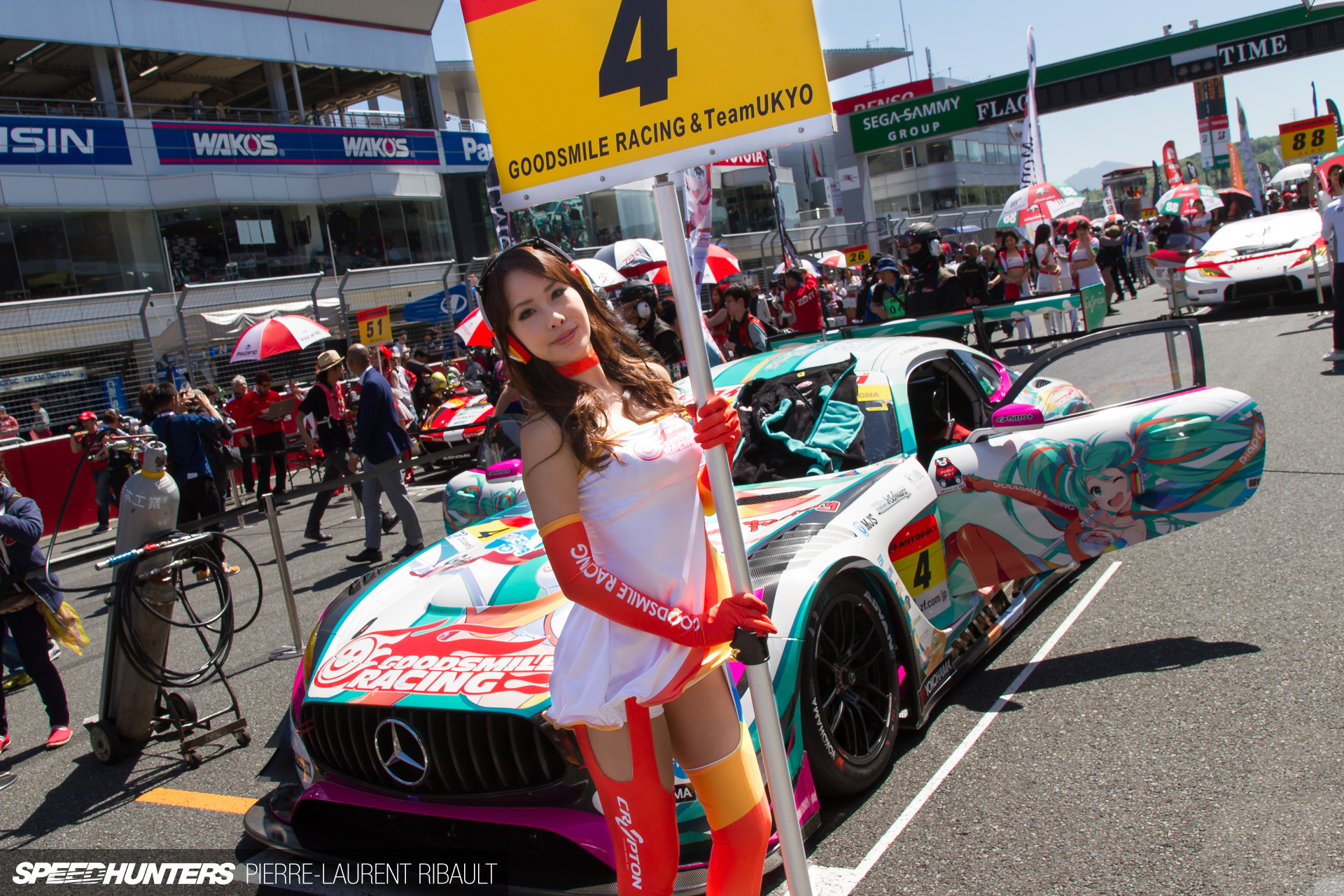
Goodsmile Racing has perfected the art of itasha livery over the years and this version is spot on. The team’s race queens are likewise ‘Miku-fied’ and play an important role in the fan experience for the army of followers, many of which support the team financially.
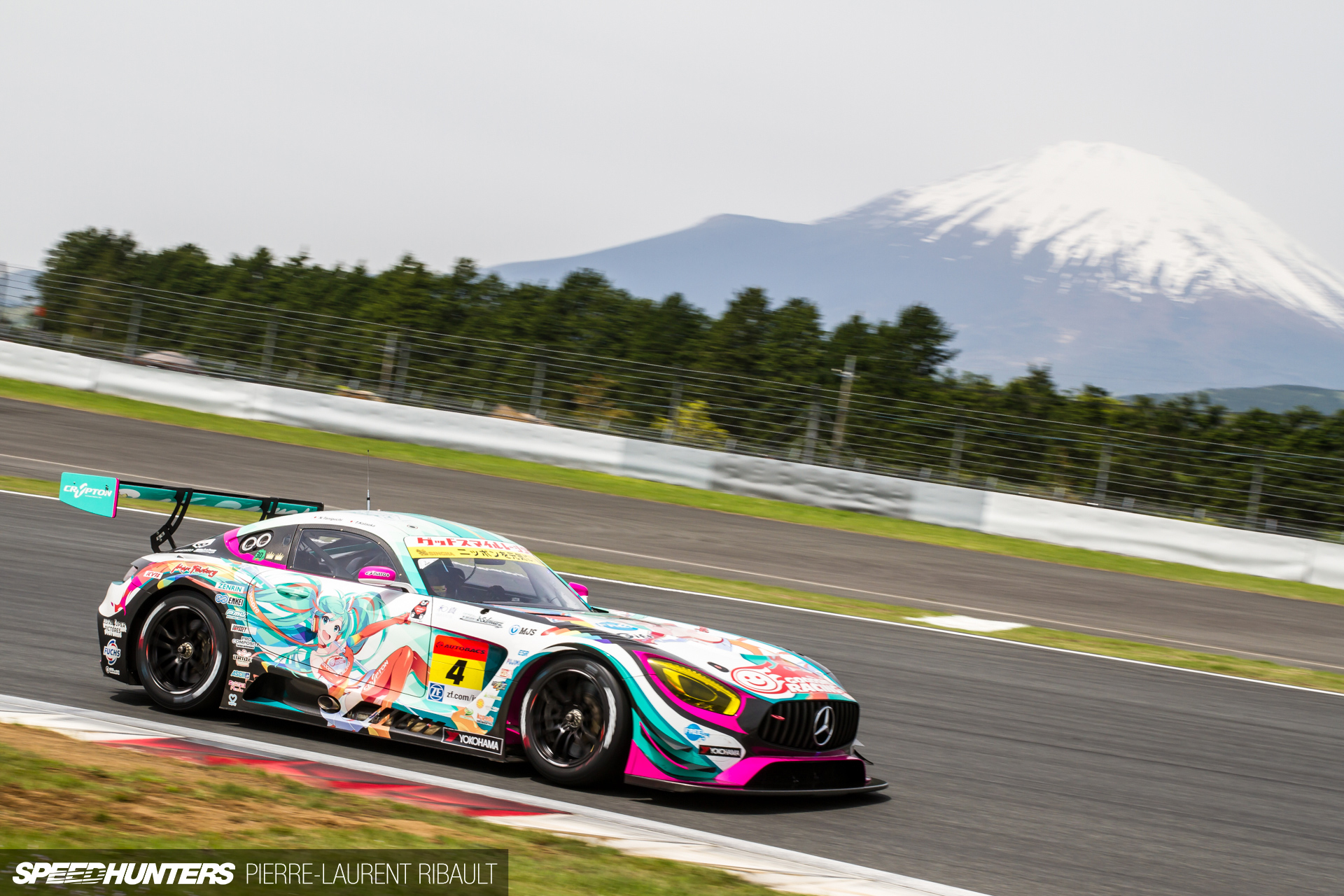
The Hatsune Miku AMG-GT had a good start to the season, climbing on the second step of the podium in Okayama behind an other AMG-GT entry from Leon Cvstos. Both cars did not have a good afternoon at Fuji; the Leon car ended up in the tyre barriers while the Miku Benz suffered a puncture. But the AMG-GT does seem to have a lot of potential.
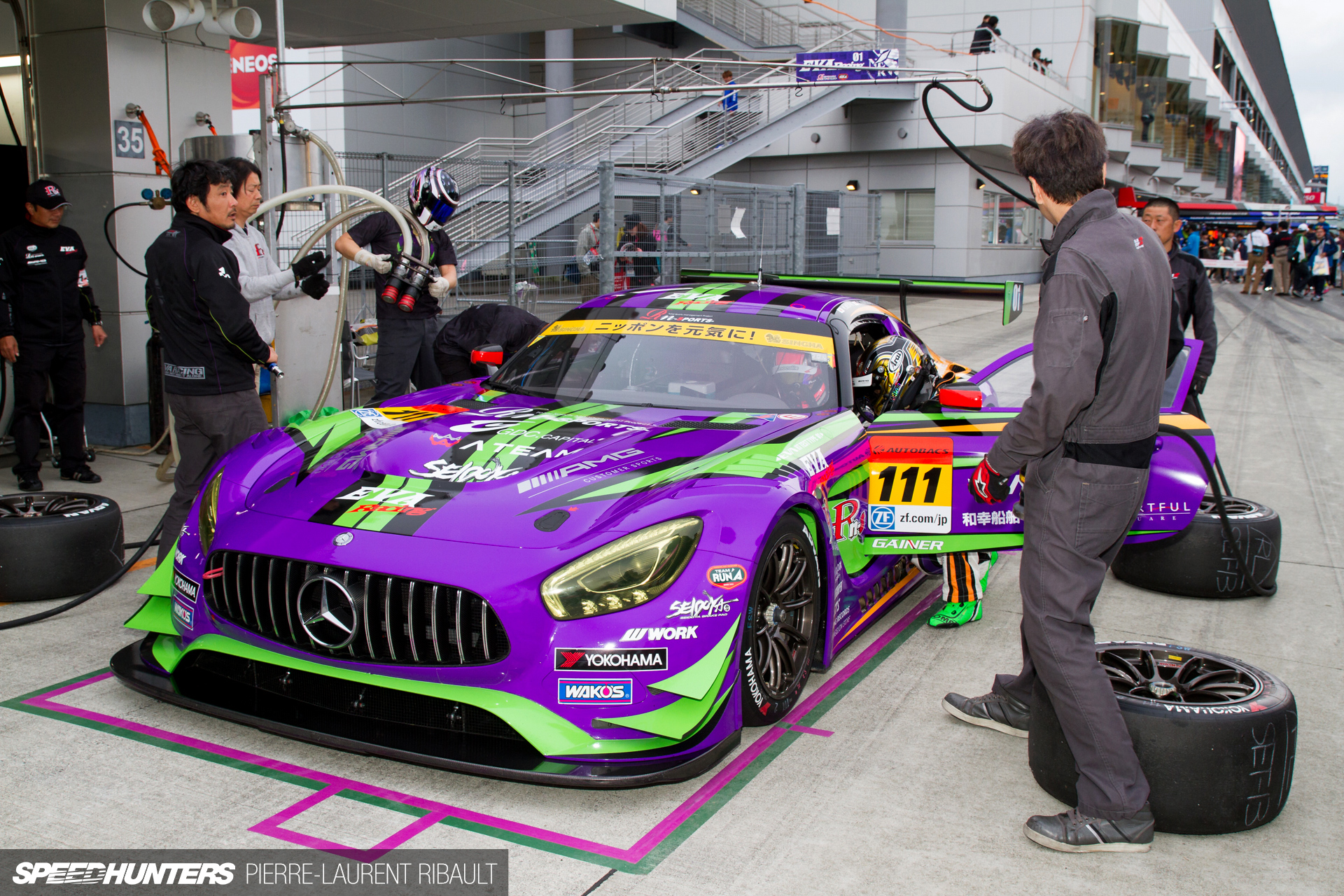
The other anime-sponsored car this year is also an AMG-GT. The Eva RT Test-01 Rn-s AMG GT reprises the well known Evangelion livery seen in the past on a string of different cars. I’ll leave you to determine if this season’s car is the best fit for the ‘creative’ color combination.
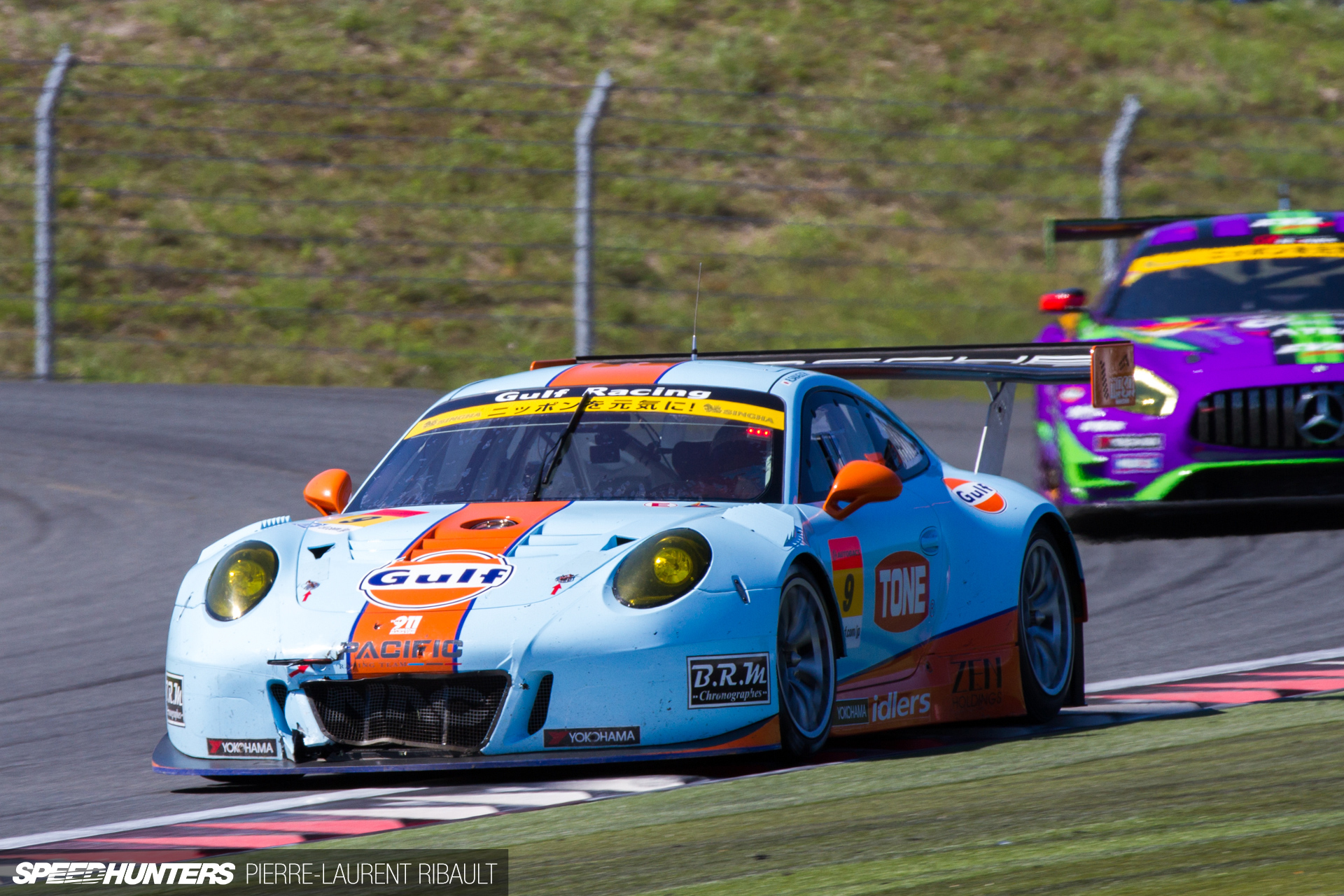
After the 997’s very long stint, the 991 GT3 R is finally here, and two of them are entered in the series. The coolest, but not necessarily the fastest, is the Gulf NAC car. A joint effort between Gulf Japan and the long running NAC team, well known for its itasha entries in the past, it sports the timeless orange and baby blue color combination.
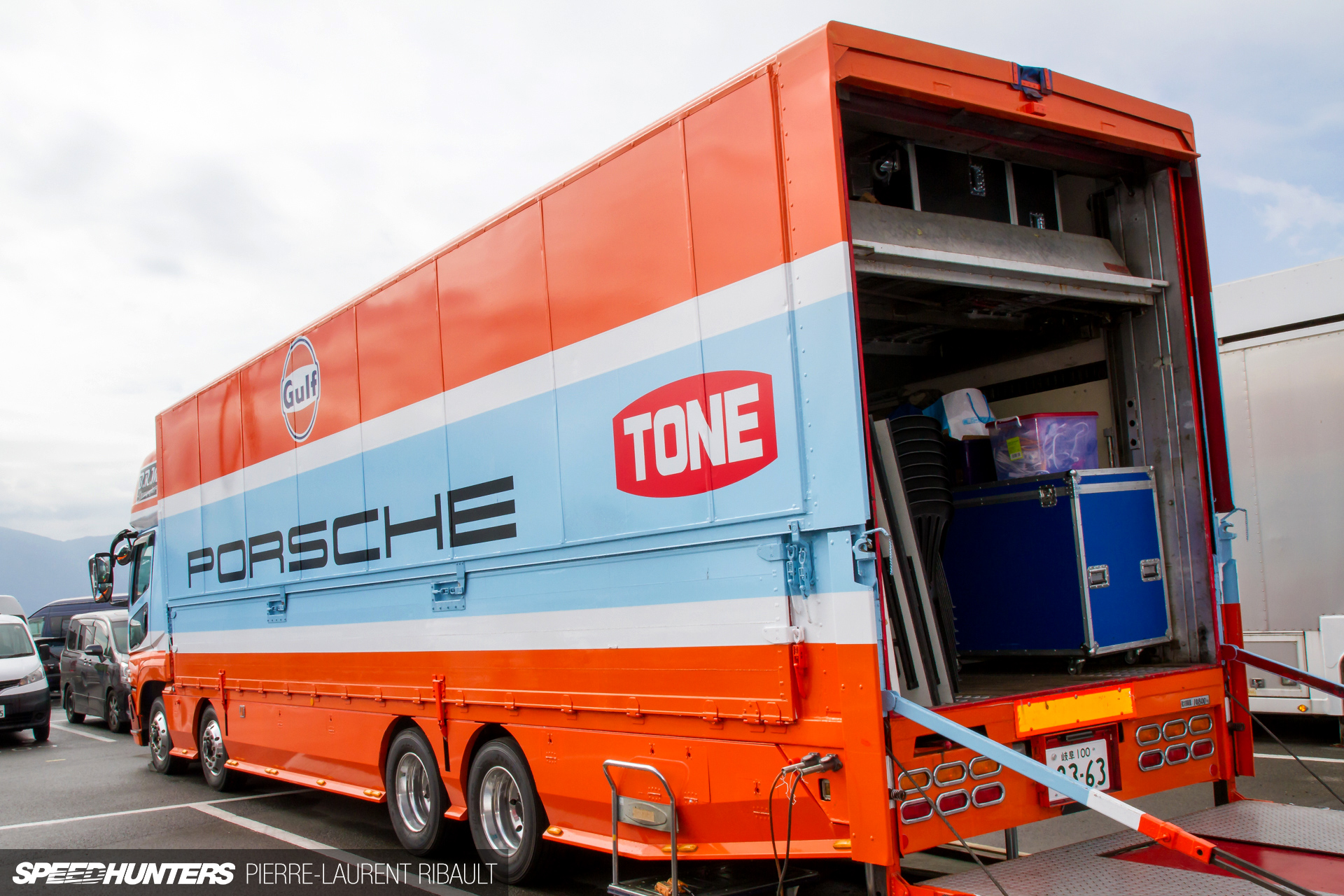
They should be awarded bonus points for the team truck as well. This could have been a scene from Le Mans, circa 1970…

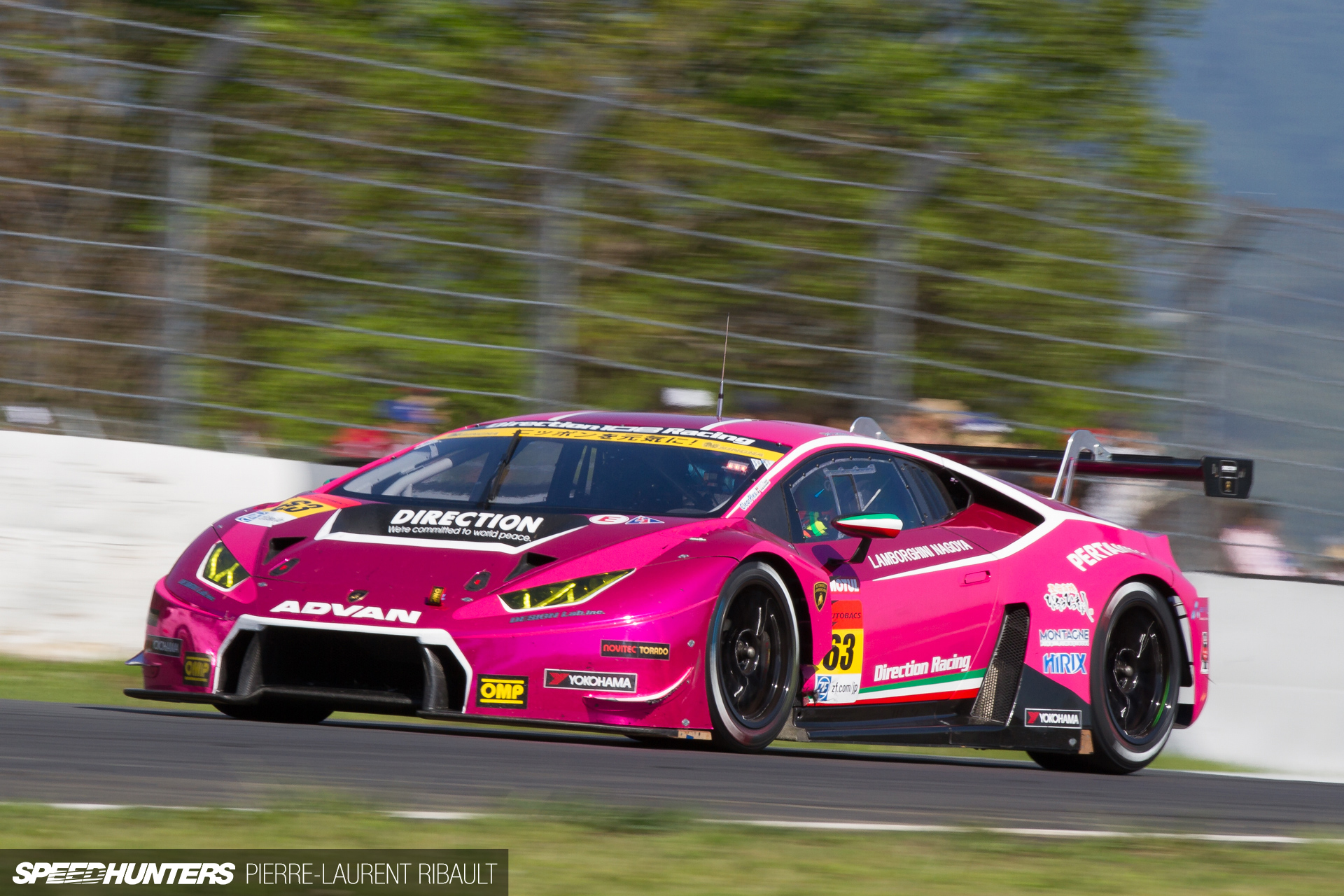
Thanks to the dedication of the JLOC team, Lamborghinis have been raced in the series for a long time. This year they are joined by Direction Racing with both teams entering no less than four brand new Huracan GT3s, with the blessing of Lamborghini Squadra Corse.

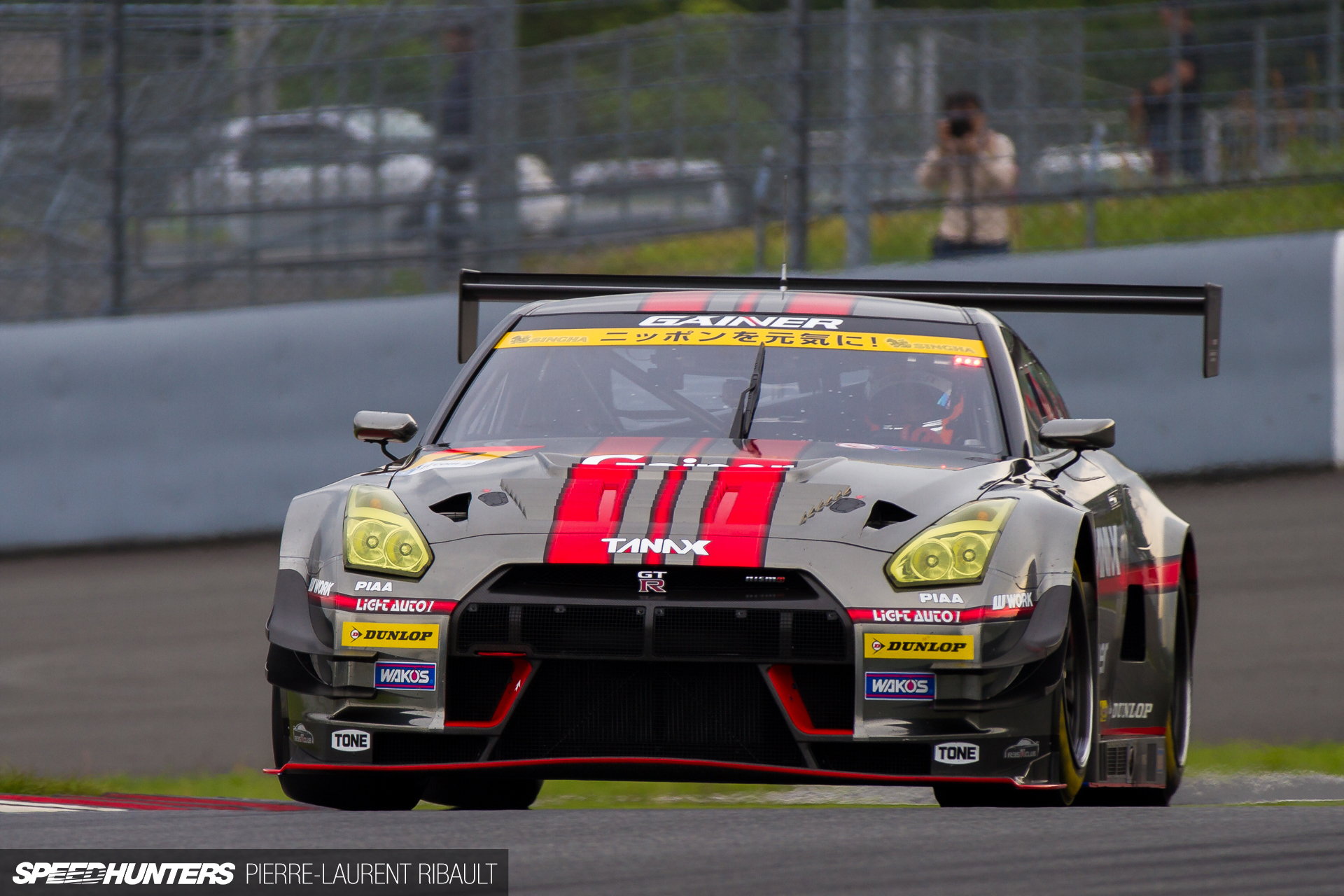
After the initial success of the Taisan F40 in the early days of the JGTC, Ferrari has kept a relatively low profile in Super GT, with local teams – predominantly Gainer – racing Japan-modified Maranello machines with mixed results. As the 458 GT3 started to become ubiquitous in the GT racing world, it did not have the same success in Japan, and strangely Ferrari did nothing to push the car in what is one of its key markets. So, it is encouraging to see that for once Japan is getting the new 488 GT3 at the same time as other countries. There are two of them in Japan now – one in Super Taikyu and the other in GT300. Although AF Corse has no involvement, the car is somehow reminiscent of the 488s racing in other series. It is doing quite well for its debut, with two top 10 finishes in two races.
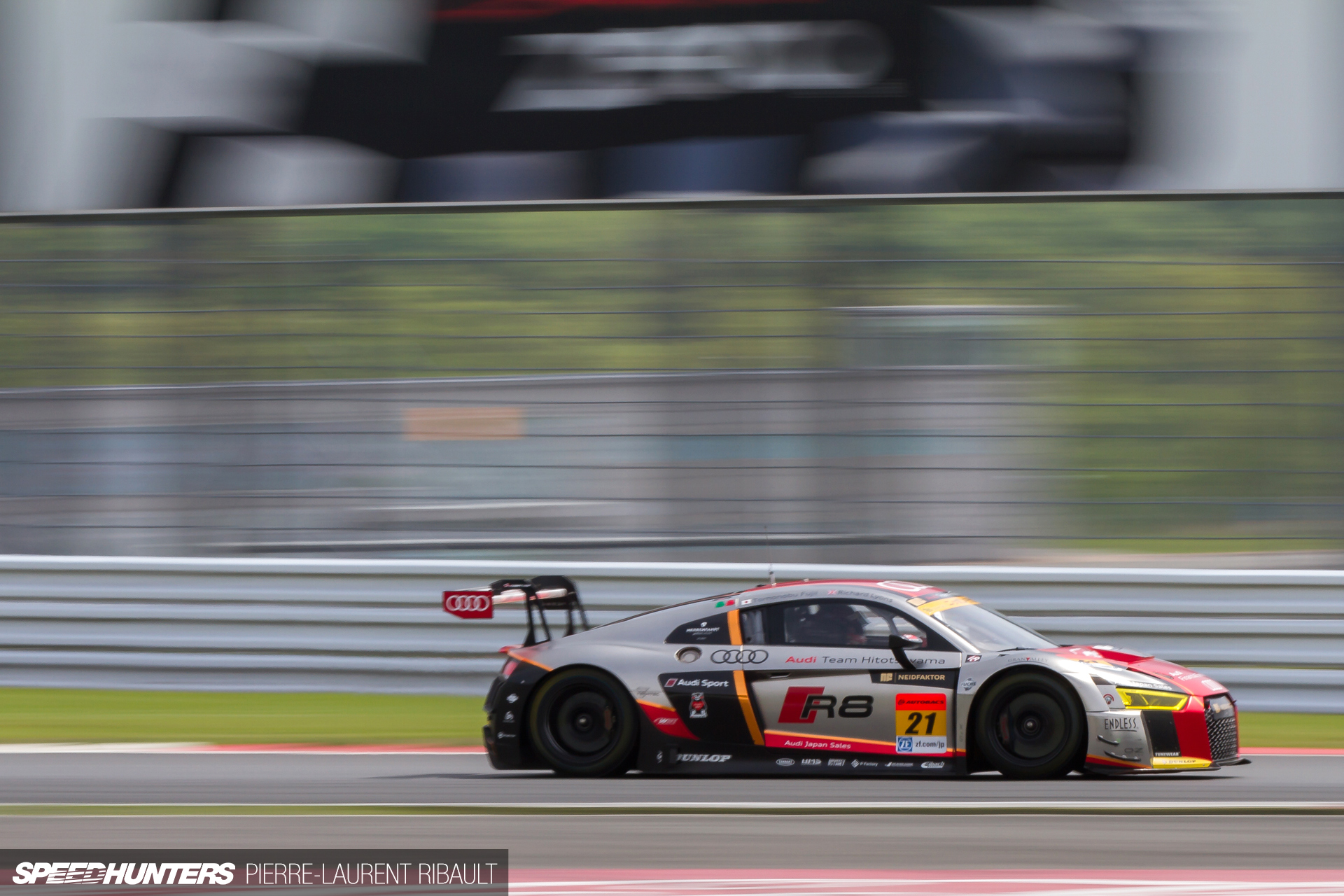
Another dominating machine in Europe with little success in Japan is the Audi R8 LMS. The new car, of which there are two running in GT300 (with a third on the way), may change that though. The former GT500 champion Richard Lyons and Tomonobu Fuji in the very works-like Audi Team Hitotsuyama car are Ingolstadt’s best hope.
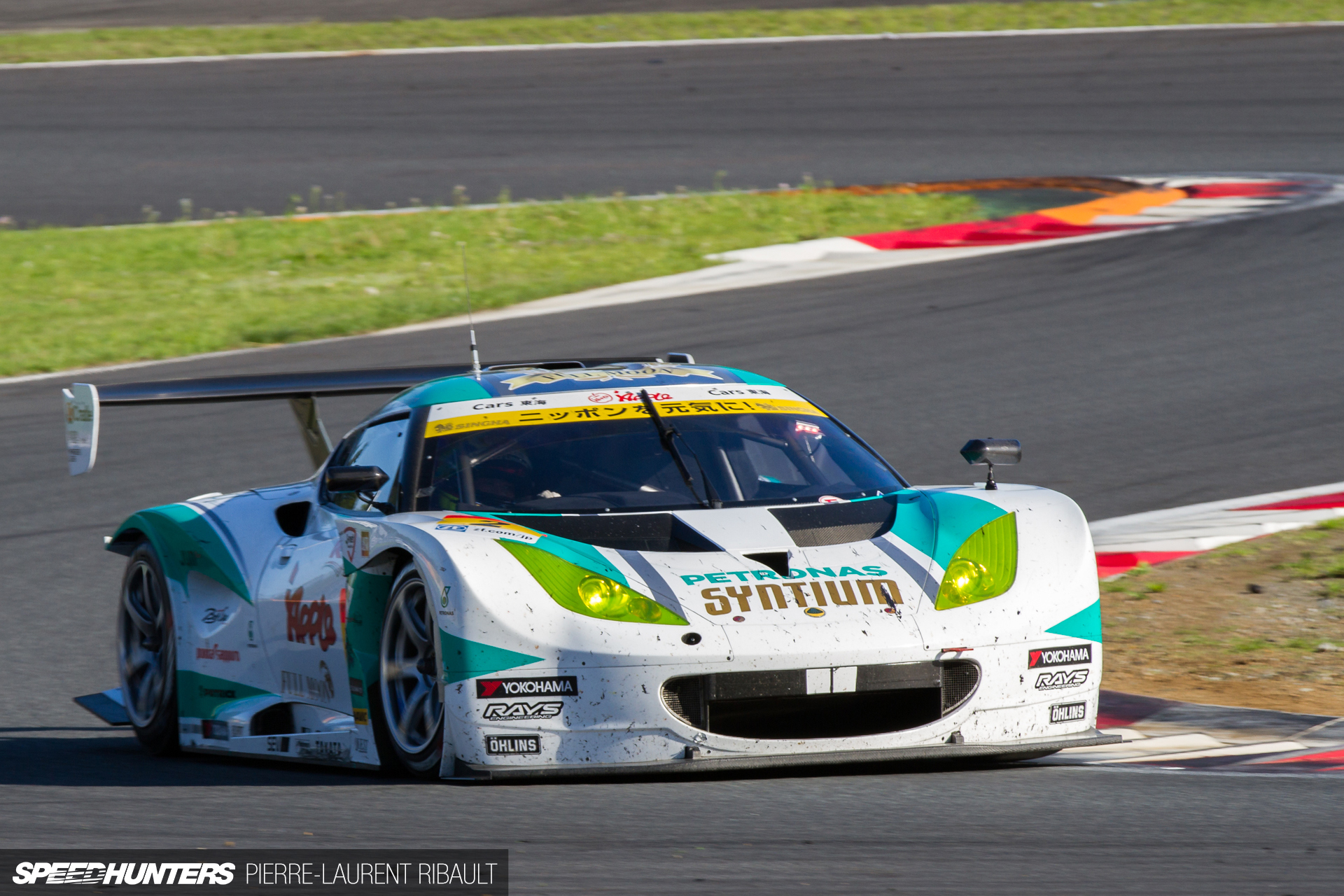
Everyone’s favorite Lotus is at it again. After a first season marred by technical issues and pure bad luck, the little Evora MC has shown that it has the speed; it now just needs to finish a race without incident. That was not the case at Fuji where it tangled with the Leon AMG-GT.
Maximum Attack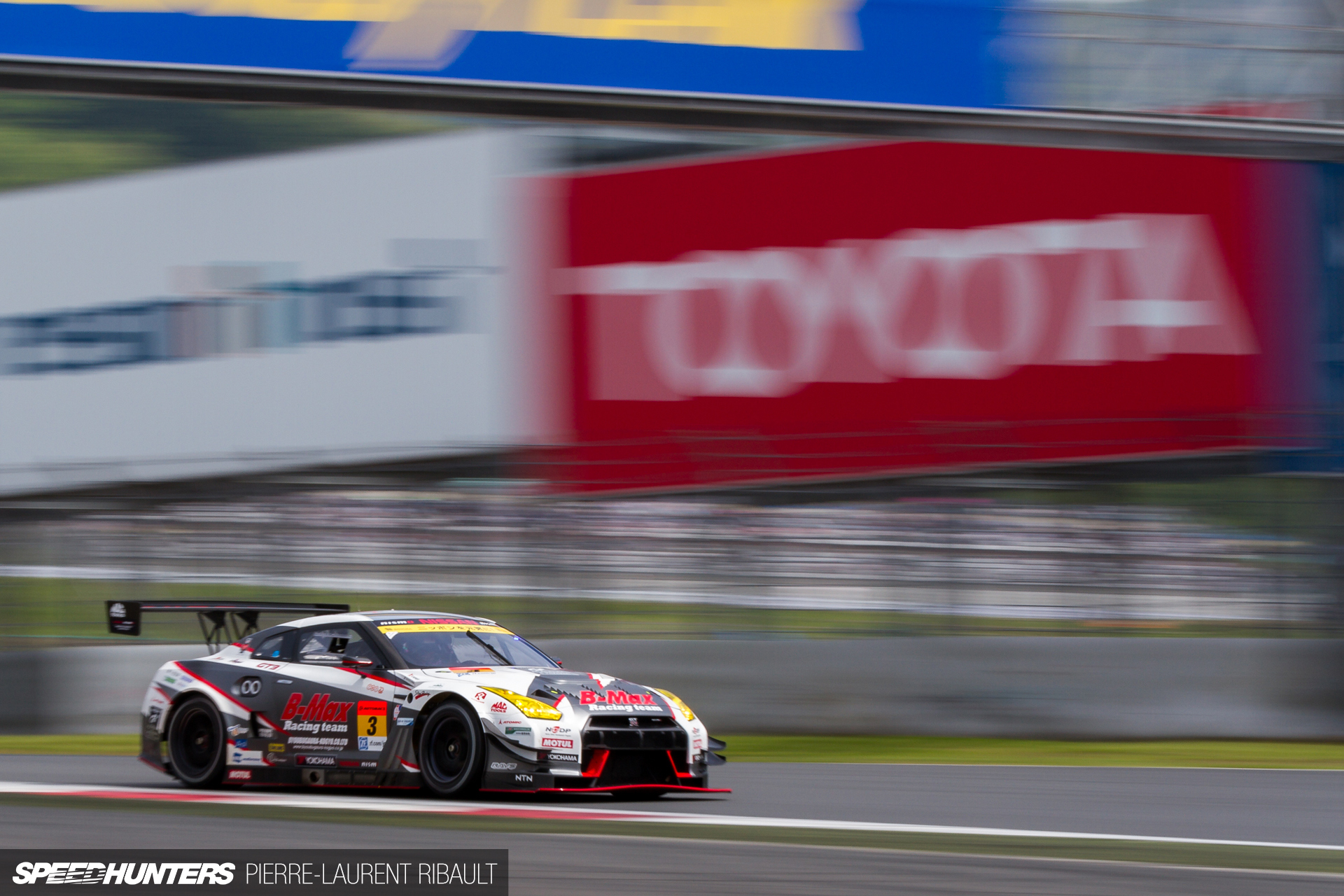
The star of the Fuji race in GT300 was the Nismo works B-MAX NDDP GT-R. Matching the pace of the pole-sitting ARTA M6 GT3, it jumped the orange BMW thanks to an ultra-efficient crew during the pitstops and a great drive from Kazuki Hoshino and newcomer Jann Mardenborough to take the coveted win.
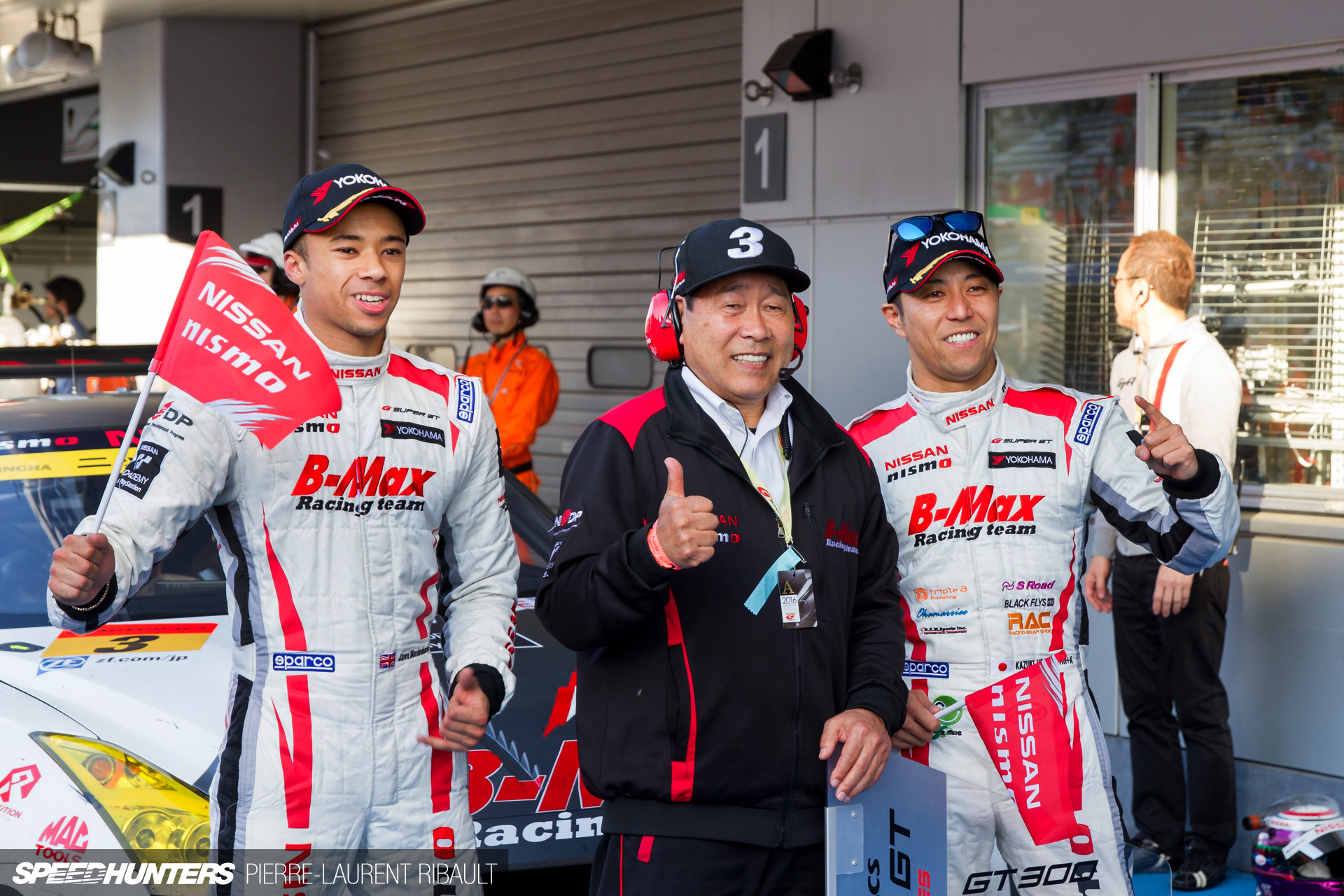
The young Englishman has wasted no time making his mark in the championship. After putting out impressive lap times during winter testing, he produced a commanding performance to win the second race he entered in Super GT. For the GT Academy graduate who spent countless hours in the JGTC universe of his PlayStation, it must have been a very special feeling to celebrate the Fuji win alongside Japanese racing royalty – team boss Masahiro Hasemi and teammate Kazuki, son of Nissan legend Kazuyoshi Hoshino. ‘Living the dream’ has rarely been such an accurate expression.
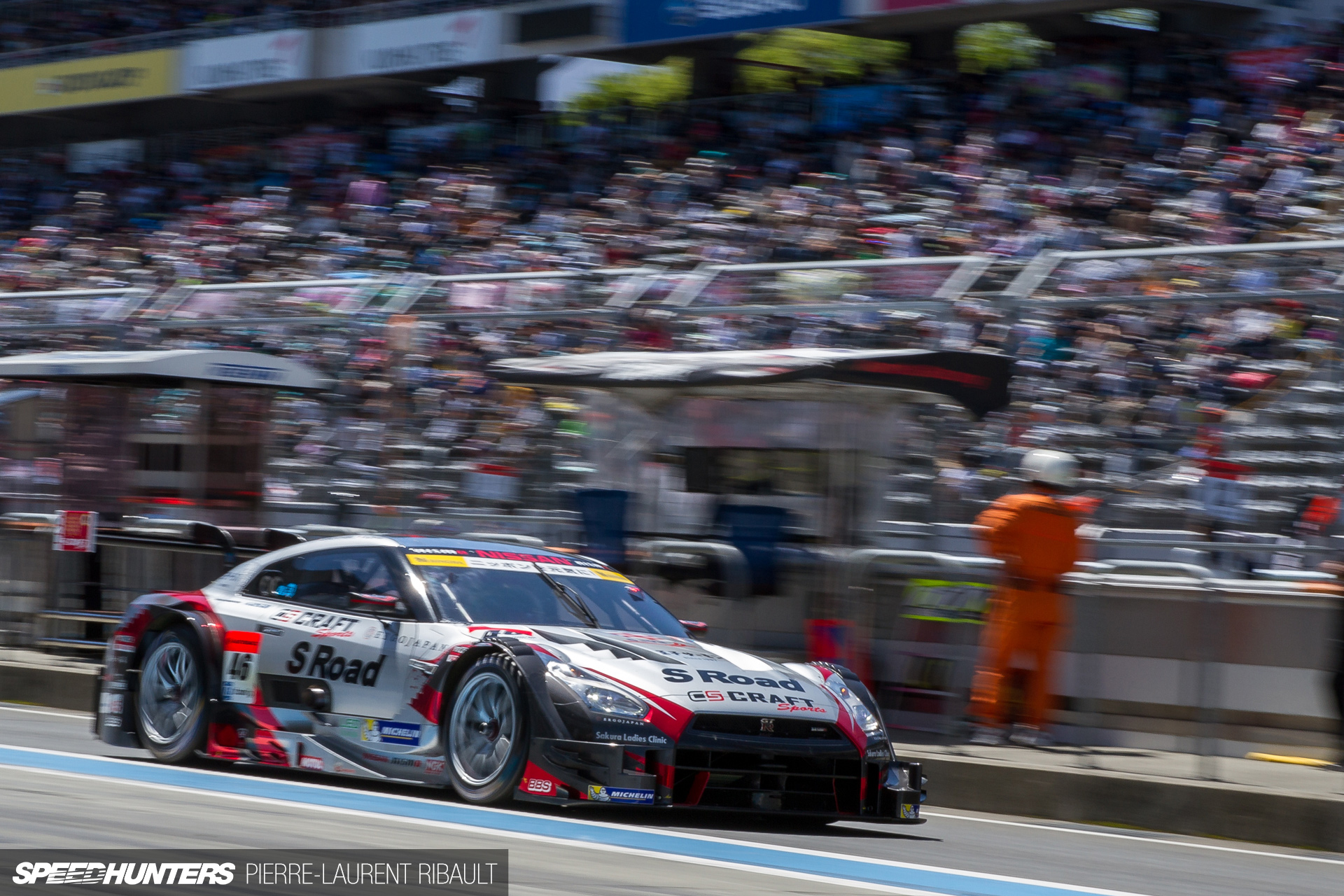
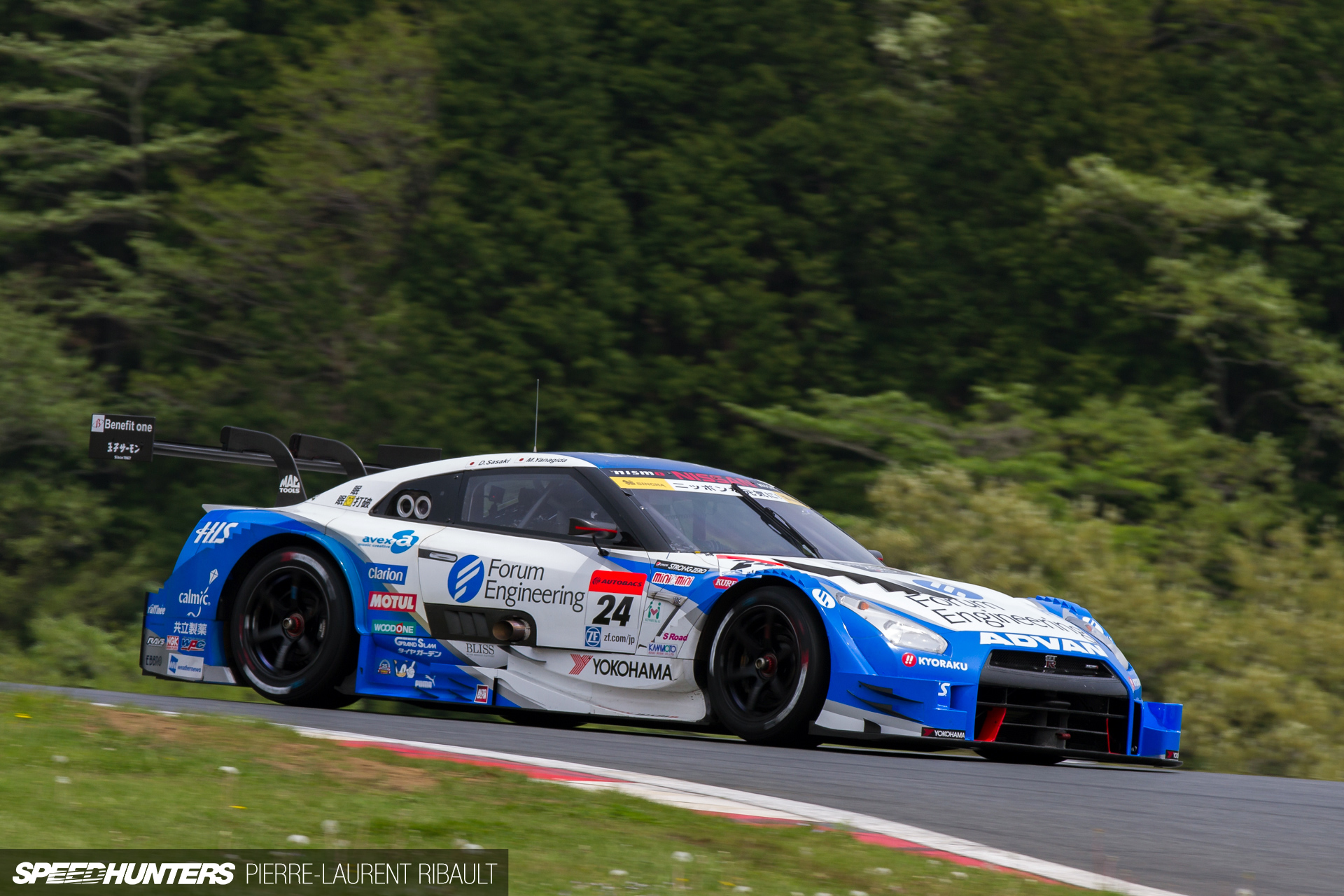
The fast track to success of Mardenborough mirrors one of another Nissan rising star, Katsumasa Chiyo. Revealed by his stunning drive to victory in the 2015 Bathurst 12 Hour and subsequent title in Blancpain Endurance Championship, Chiyo has transitioned to GT500 this season with no signs of slowing down. Breaking the GT500 course record with a blazingly fast 1’27.366 in qualifying, Chiyo was on his way to a second podium finish in a row with teammate Satoshi Motoyama when an unfortunate timing forced him to pit under safety car and collect a 90-second penalty. But we will see more of the S Road GT-R this season – that’s a given.
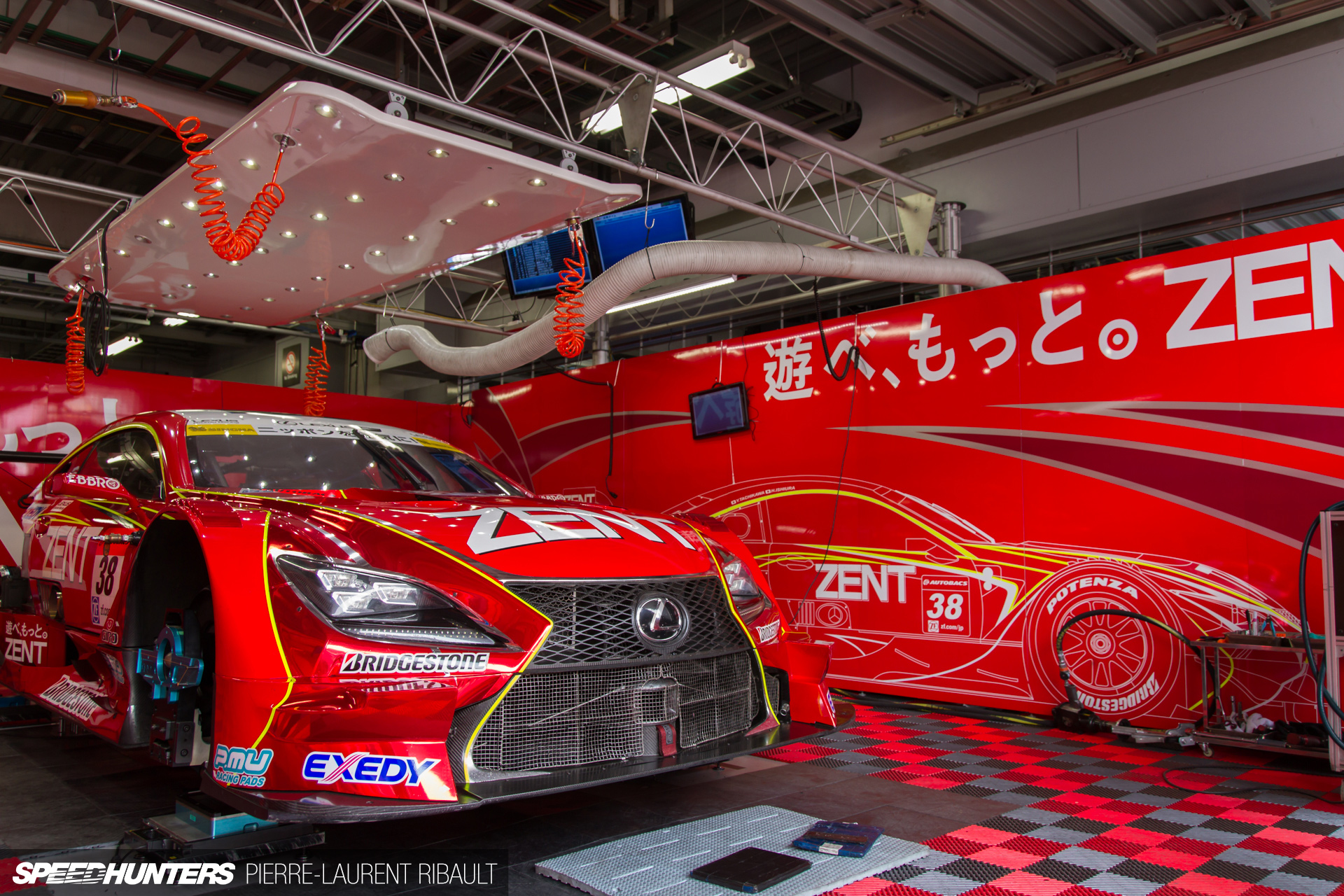
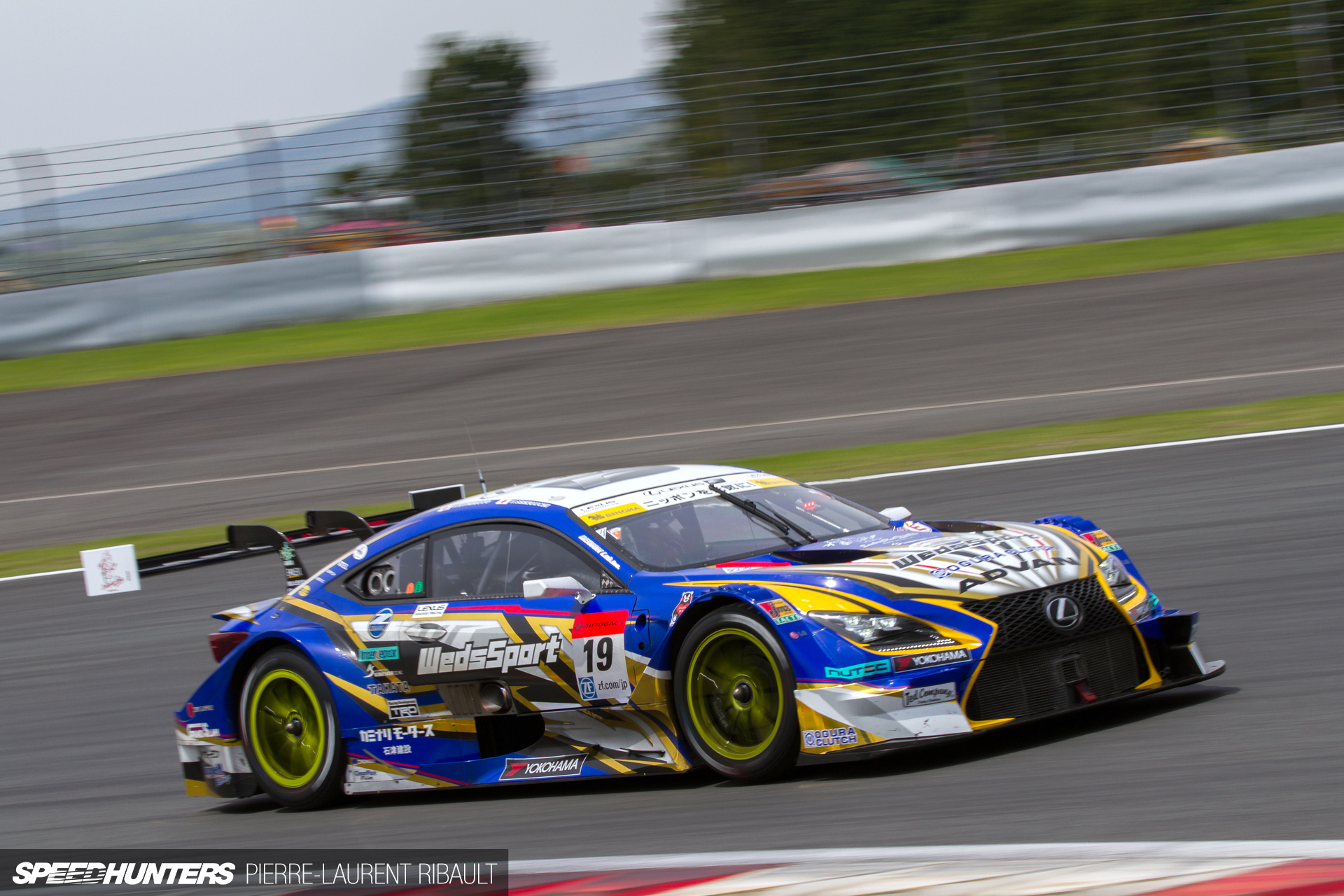
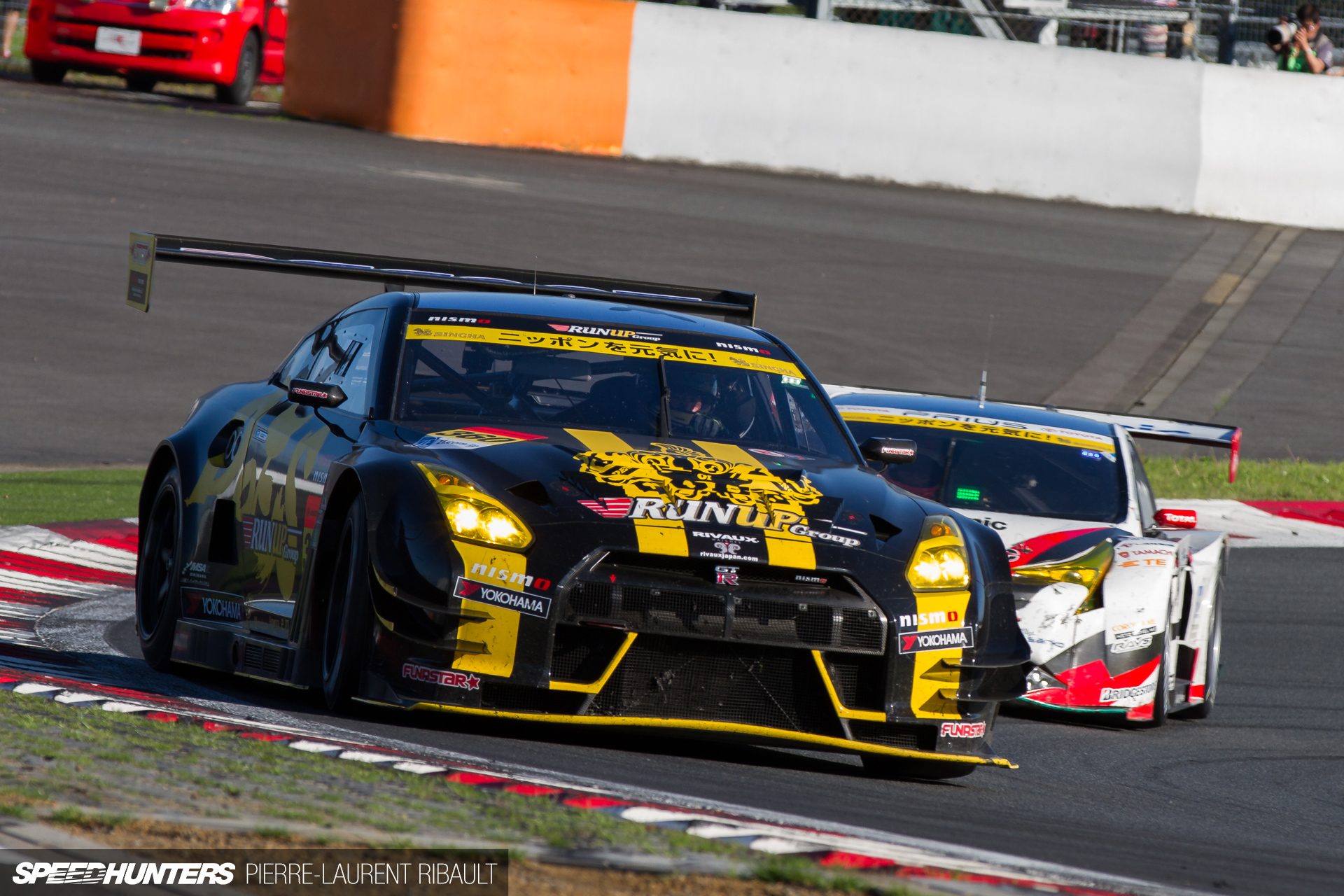
Chiyo-san’s lap would have put him just behind the LMP1-H cars on the grid of the WEC 6 Hours of Fuji race, in front of all the other prototypes including the privateer LMP1 cars. Such is the sheer speed of the GT500 machines. Regulations allow the three manufacturers to prepare a low downforce package for Fuji, mostly visible with the streamlined front bumper and the almost-flat rear wing plane.
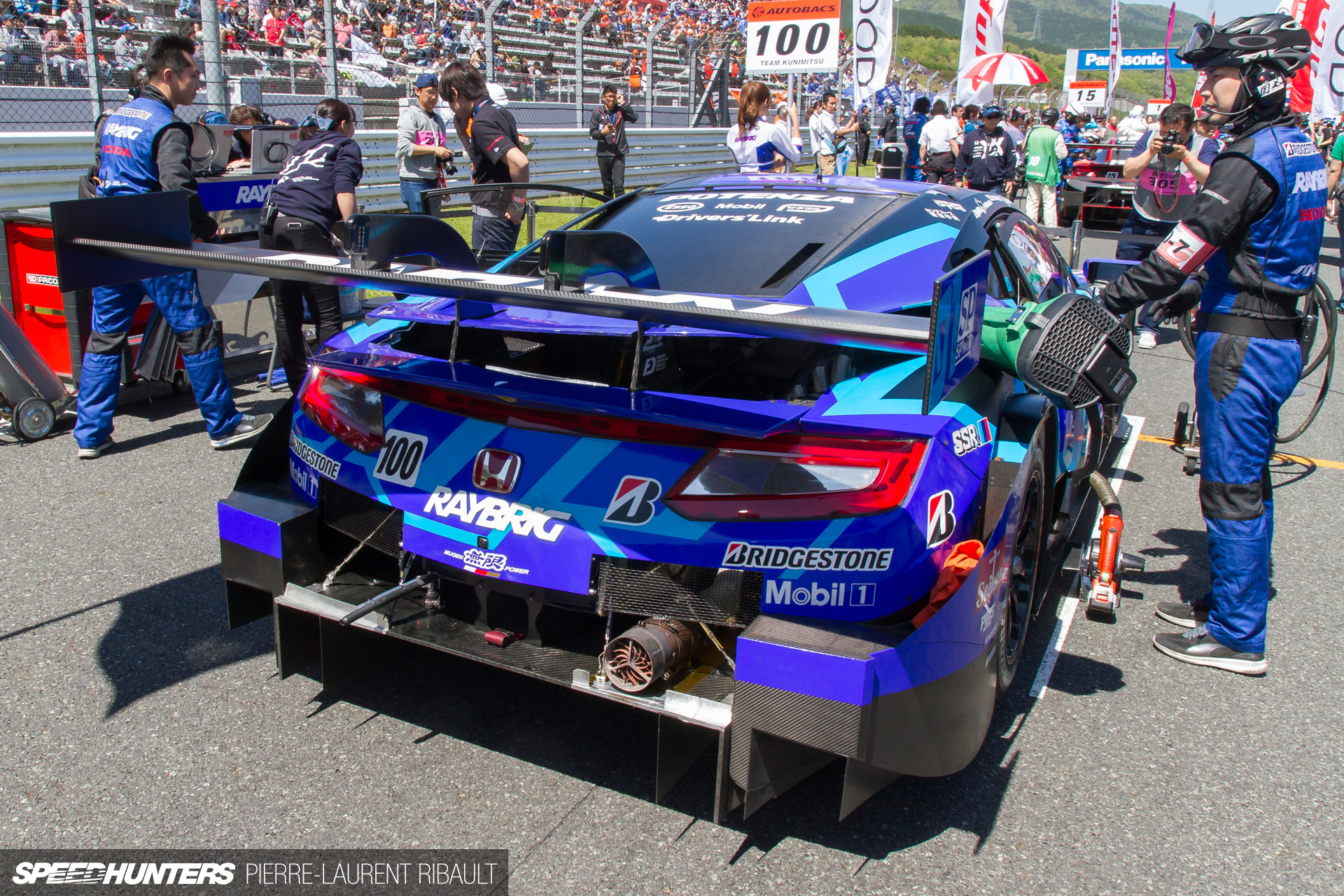
Shaped by years of unadulterated race-by-race research and evolution, the hyper competitive engineering teams of the three manufacturers have adapted to the 2014 technical regulations.
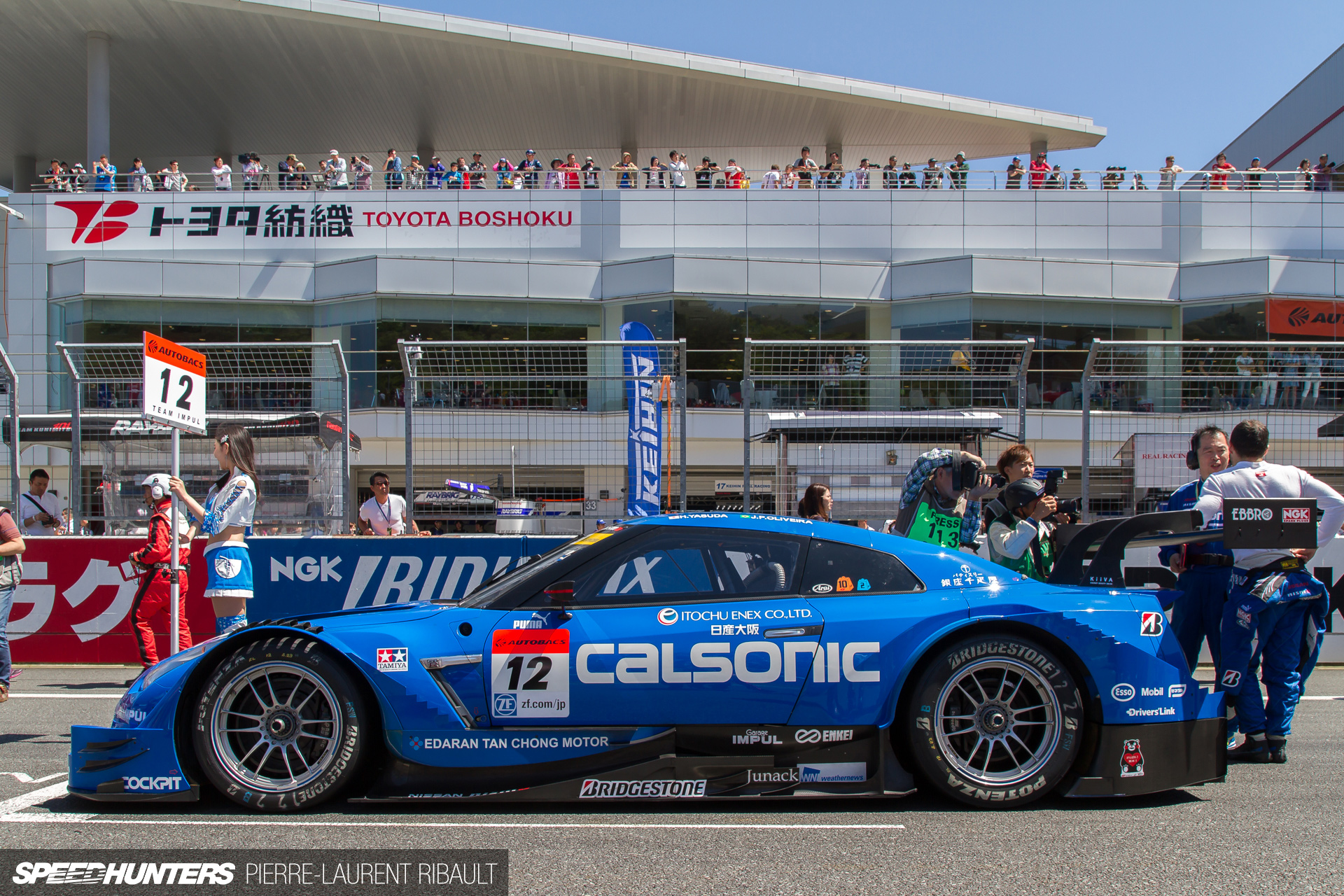
This relentless search for ultimate performance exudes from every detail of the cars.
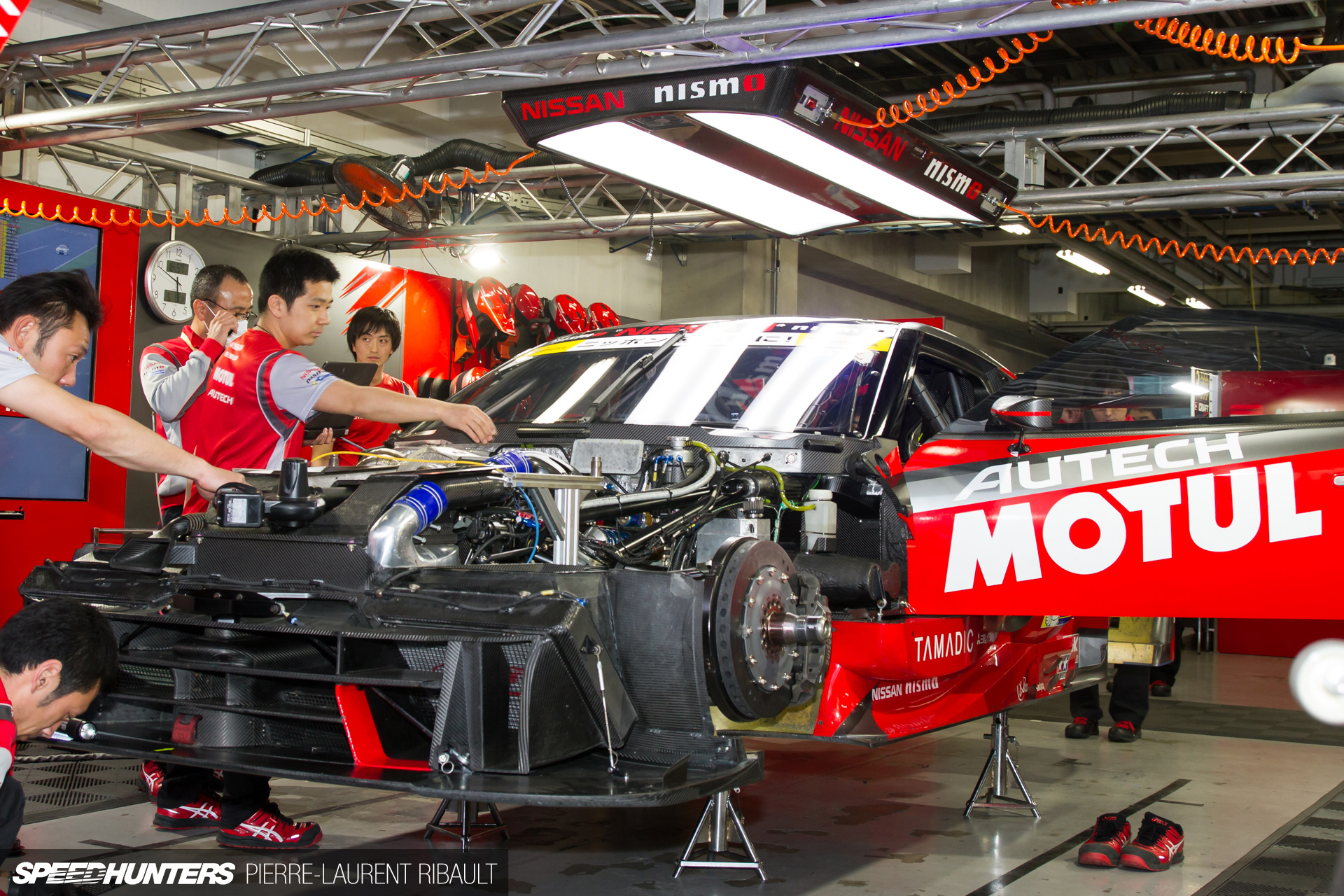
Once the huge carbon front piece is off, the ‘GT’ part of Super GT becomes moot. This is pure purpose-built race car: a four-cylinder 2.0L turbo RI4AG nested deep and low into the firewall, inboard suspension, huge encased carbon brakes, and plenty of heat shielding.
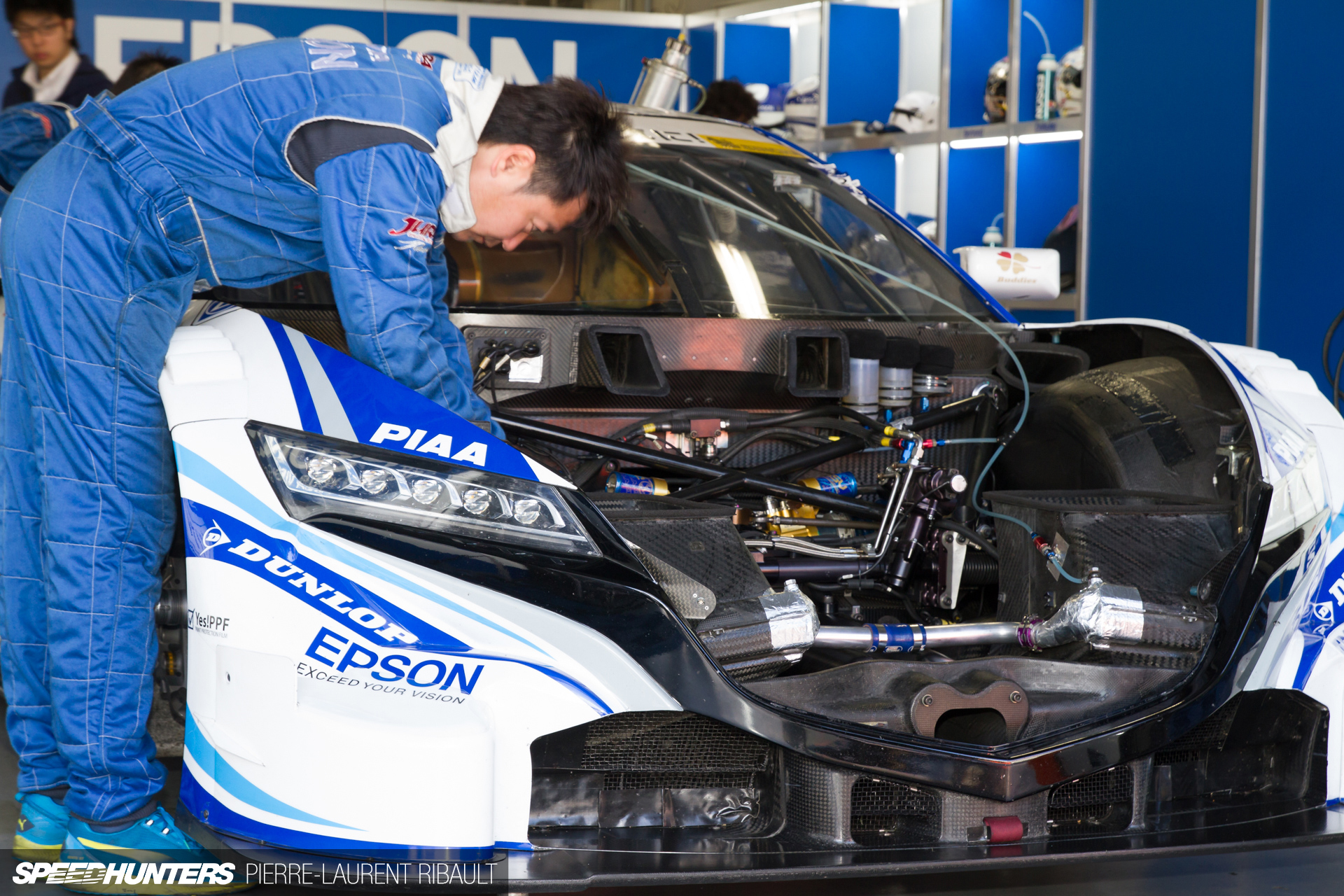
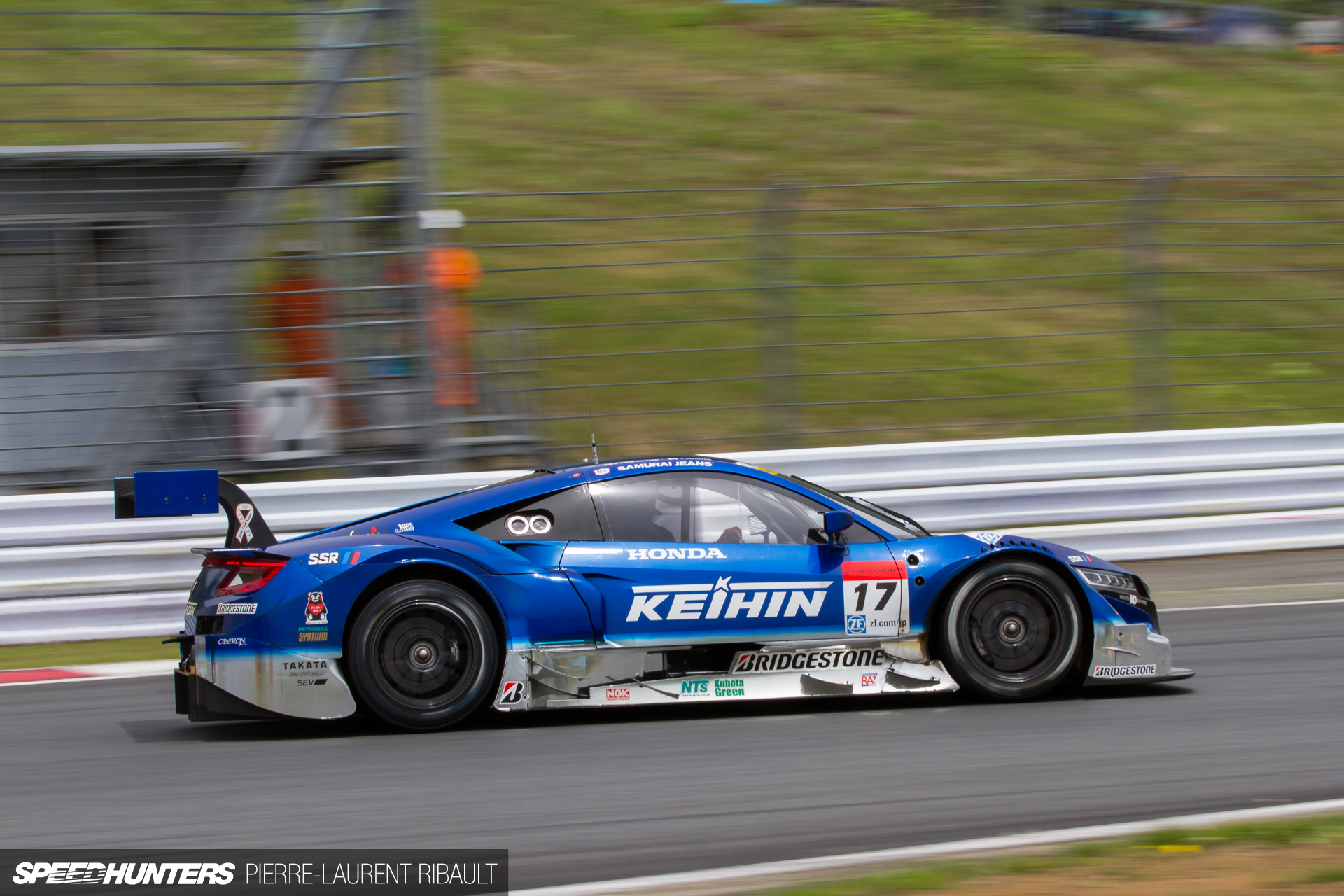
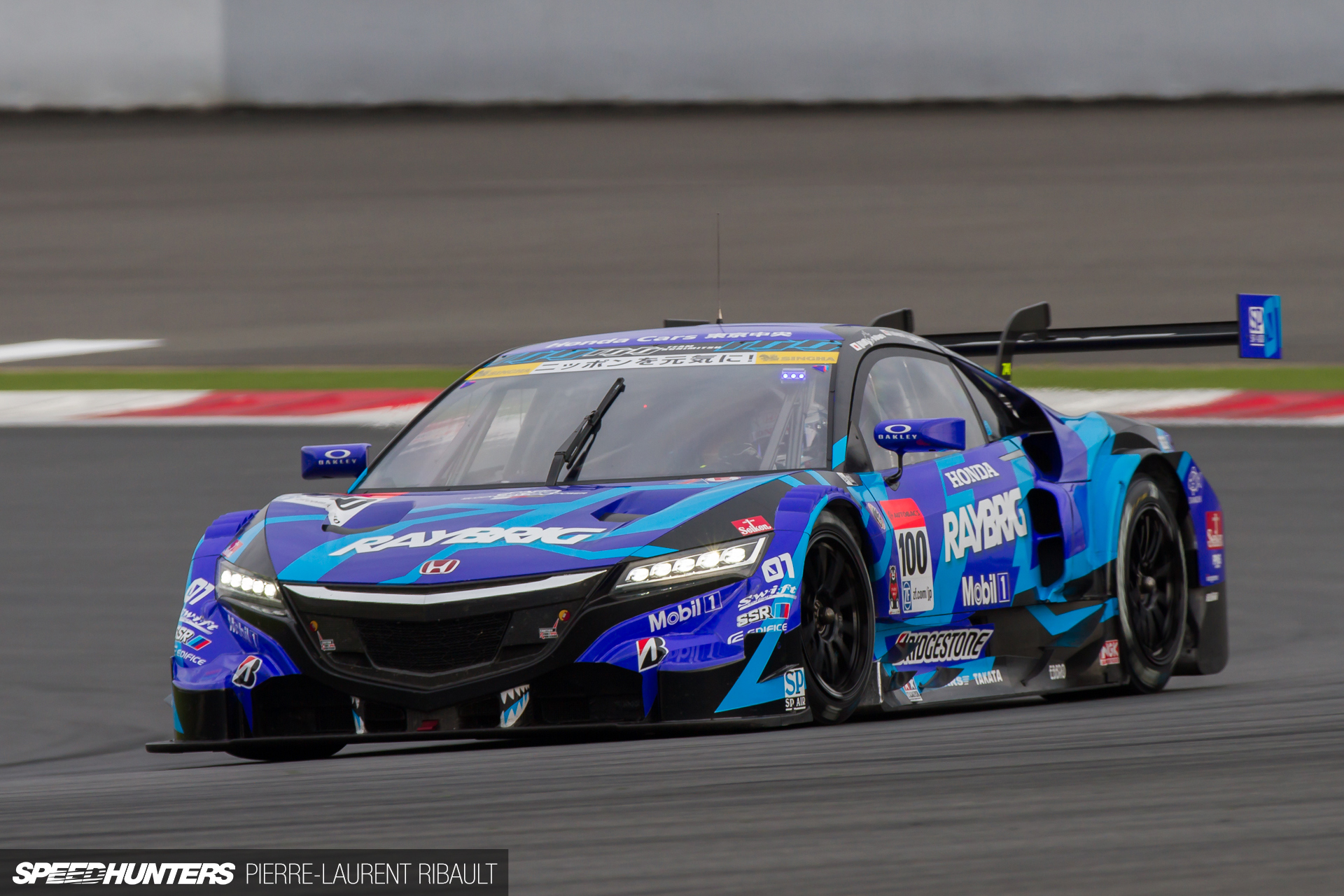
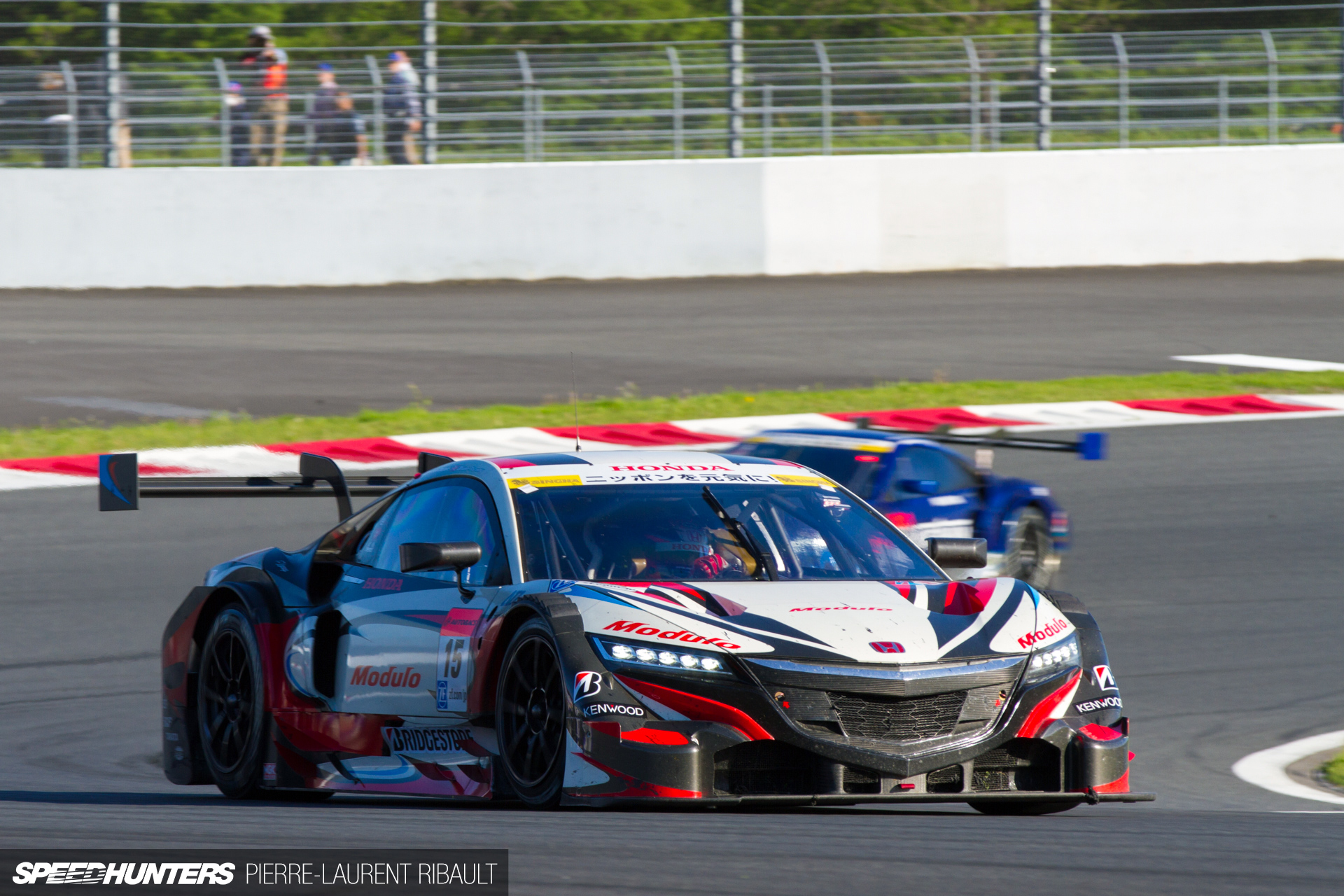
On the other hand, the NSX GT Concept is showing only suspension scaffolding, while the engine is uniquely mounted in a rear midship configuration. This year Honda decided to forgo the problematic and heavy hybrid system, although this did not help much as the NSXs are struggling to match the pace of the Nissan and Lexus entries at the moment.

Outside of the cars themselves, the battle is raging between the four tyre manufacturers taking part in the series: Bridgestone, Dunlop, Michelin and Yokohama. There’s no control rubber here, everything is bleeding edge and this is one of the major factors making the series so interesting. Tyres and wheels are everywhere in the paddock, from slicks to heavy wets, mounted on the cream of the crop from the big Japanese wheel makers.
History Repeats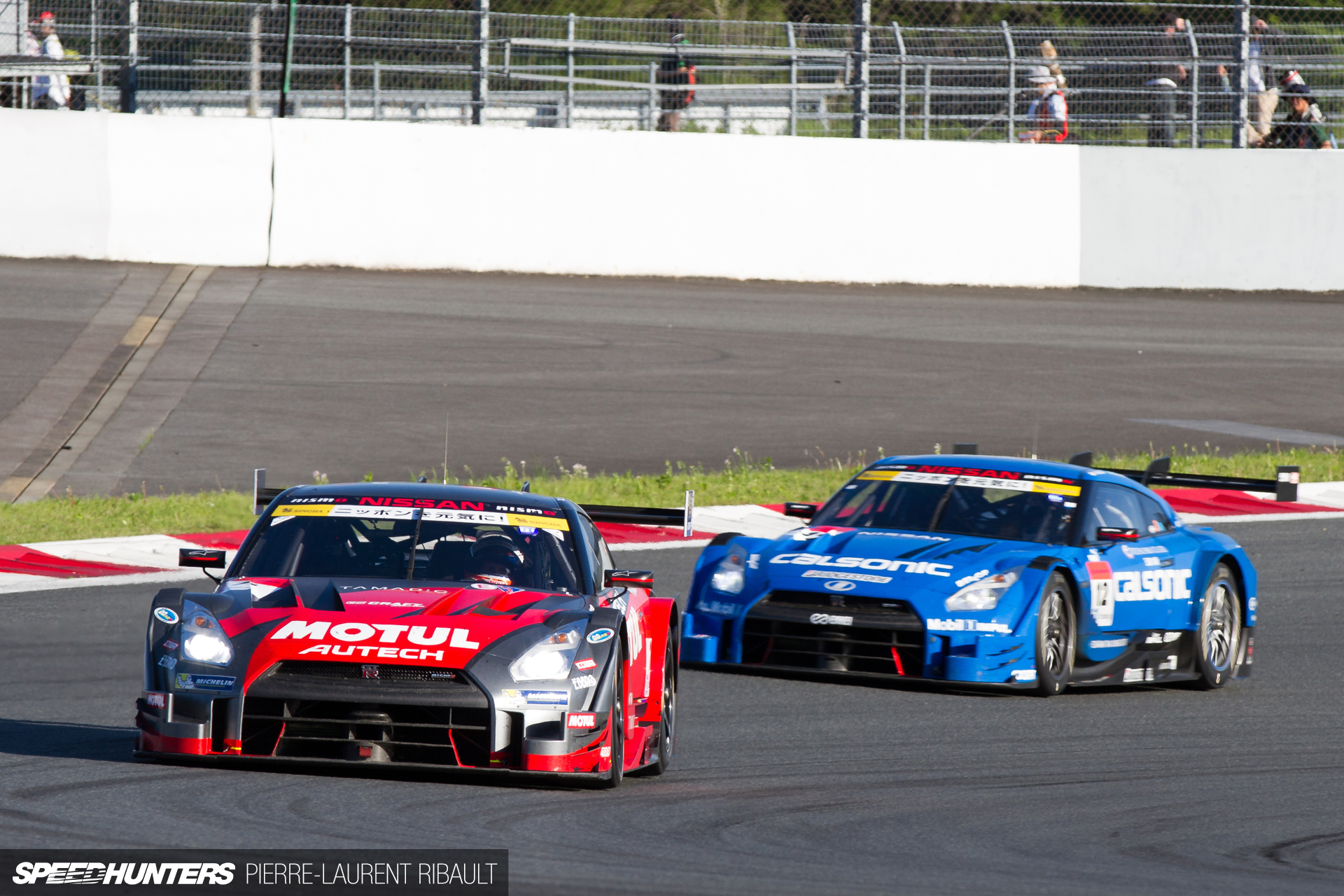
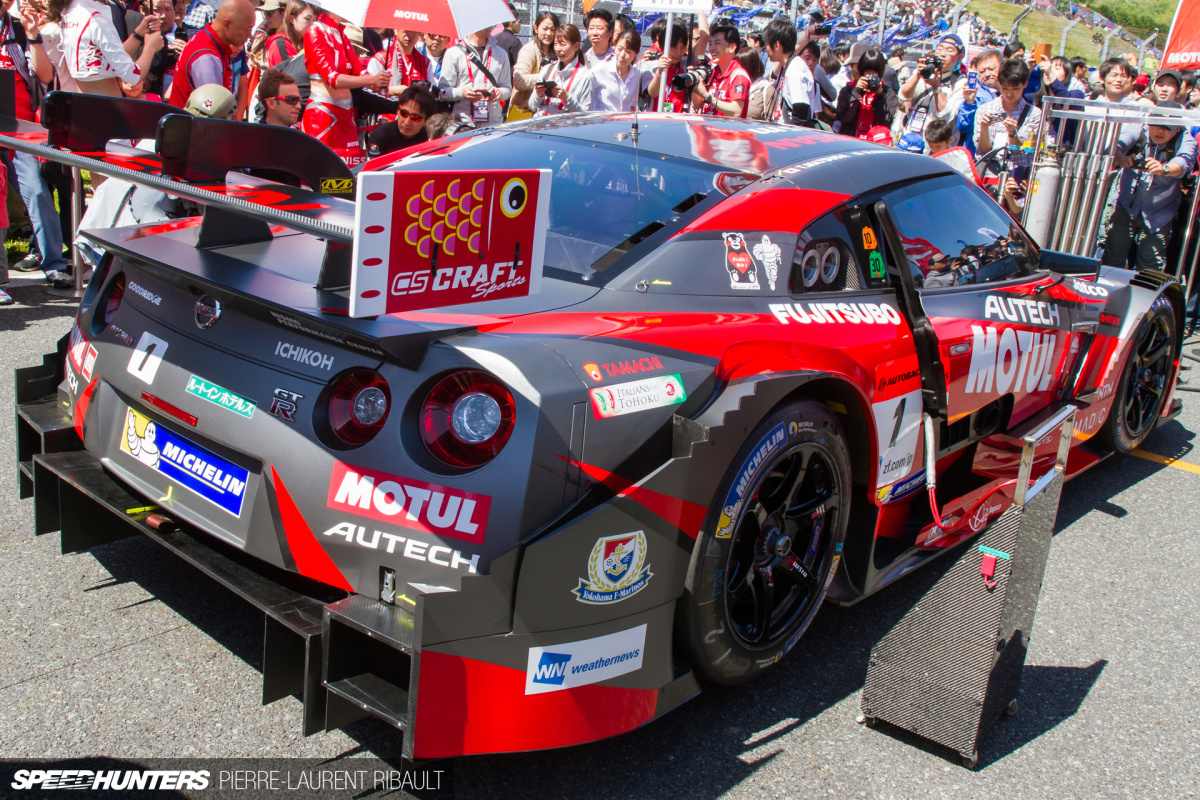
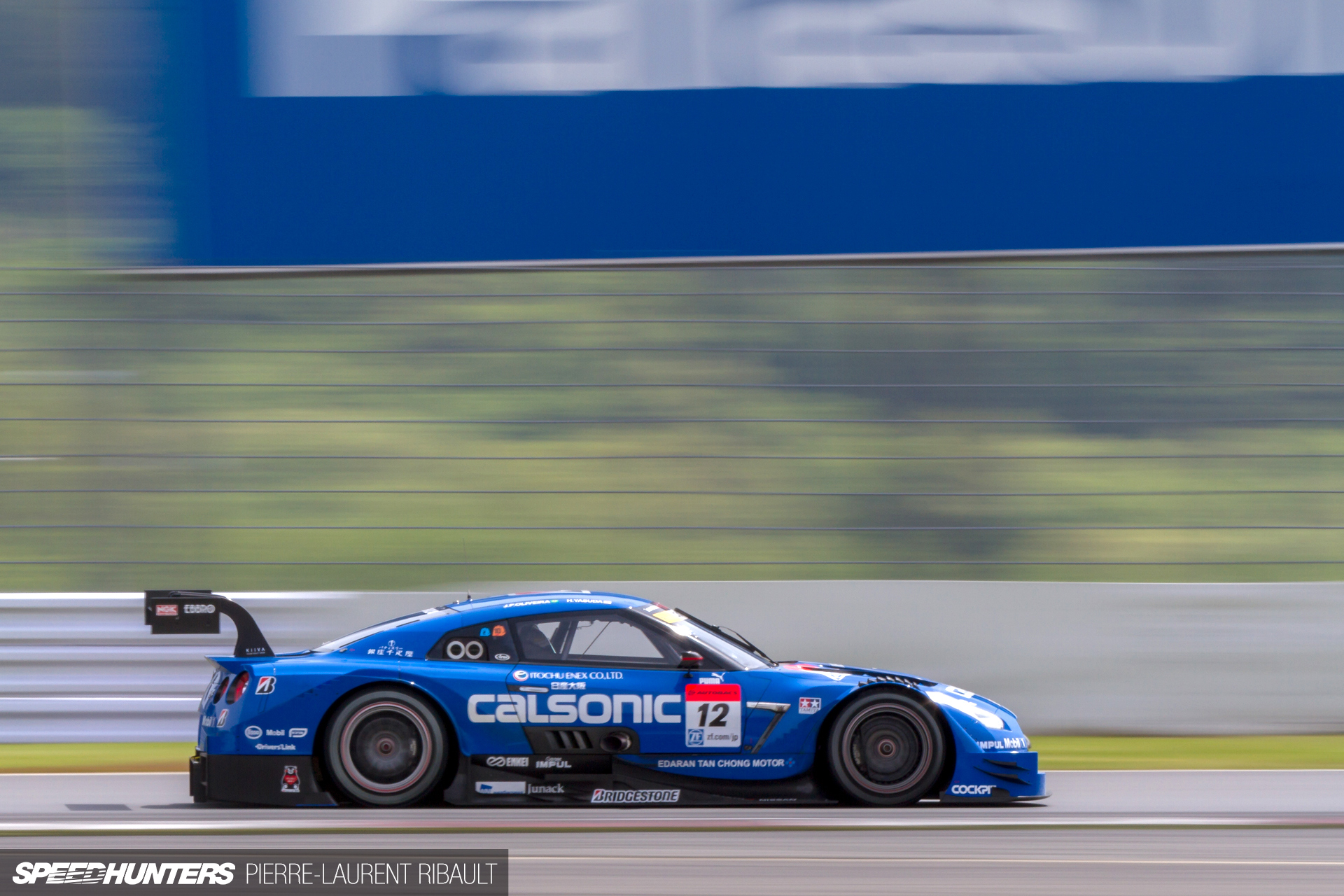
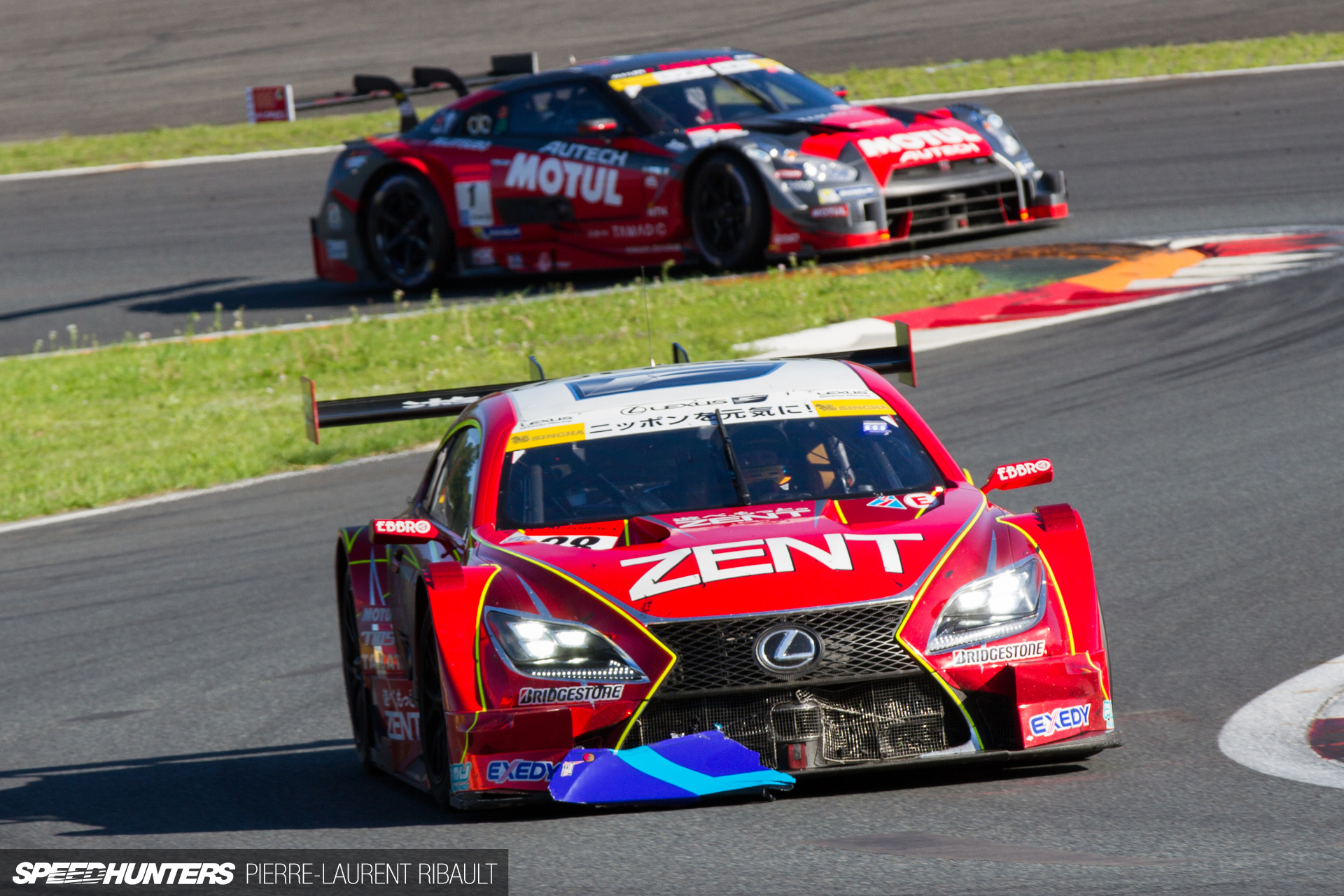
After a string of incidents for the front runners, the story of the GT500 race boiled down to an increasingly familiar scenario: the red car versus the blue car; the Motul Autech GT-R of back-to-back series champions Ronnie Quintarelli and Tsugio Matsuda battling the Calsonic Impul GT-R of Joao Paolo de Oliveira and Hironobu Yasuda.

Joao Paolo ‘JP’ de Oliveira was the hero of the race; he put the Impul GT-R on pole position, drove away at the start and was firmly in the lead before leaving the car to Yasuda. But the safety car period, brought by a tyre blow on the Raybrig NSX, set back the gap to zero, and Quintarelli in the Motul Autech GT-R took the lead after the last pit stop. JP, taking back the wheel for the last stint, fought back and overtook the red GT-R again, only to have a rear tyre blow at speed in the 100R curve just three laps from the end, disintegrating the rear cowling and forcing a retirement. A infuriating conclusion to a great drive from the Brazilian.
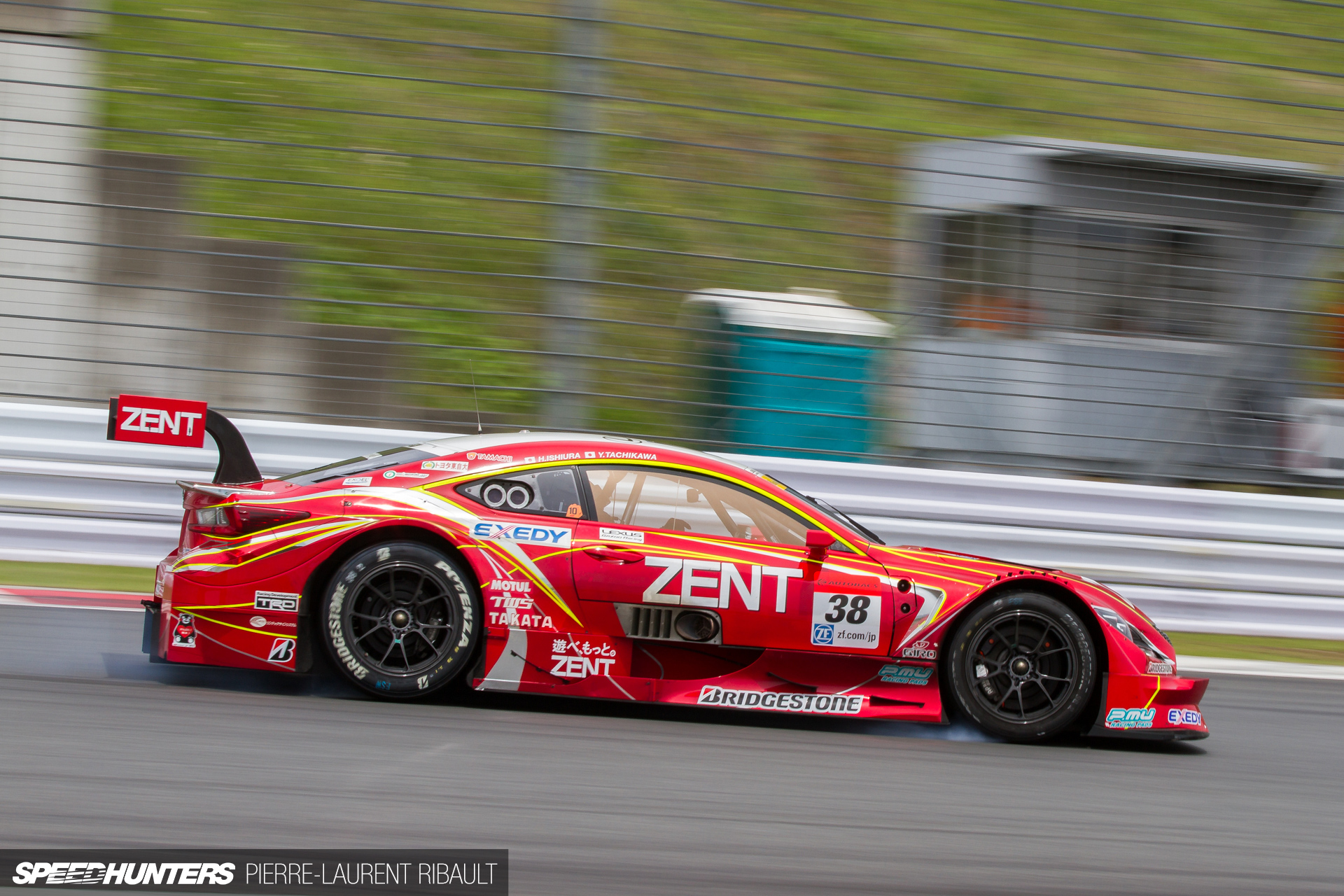
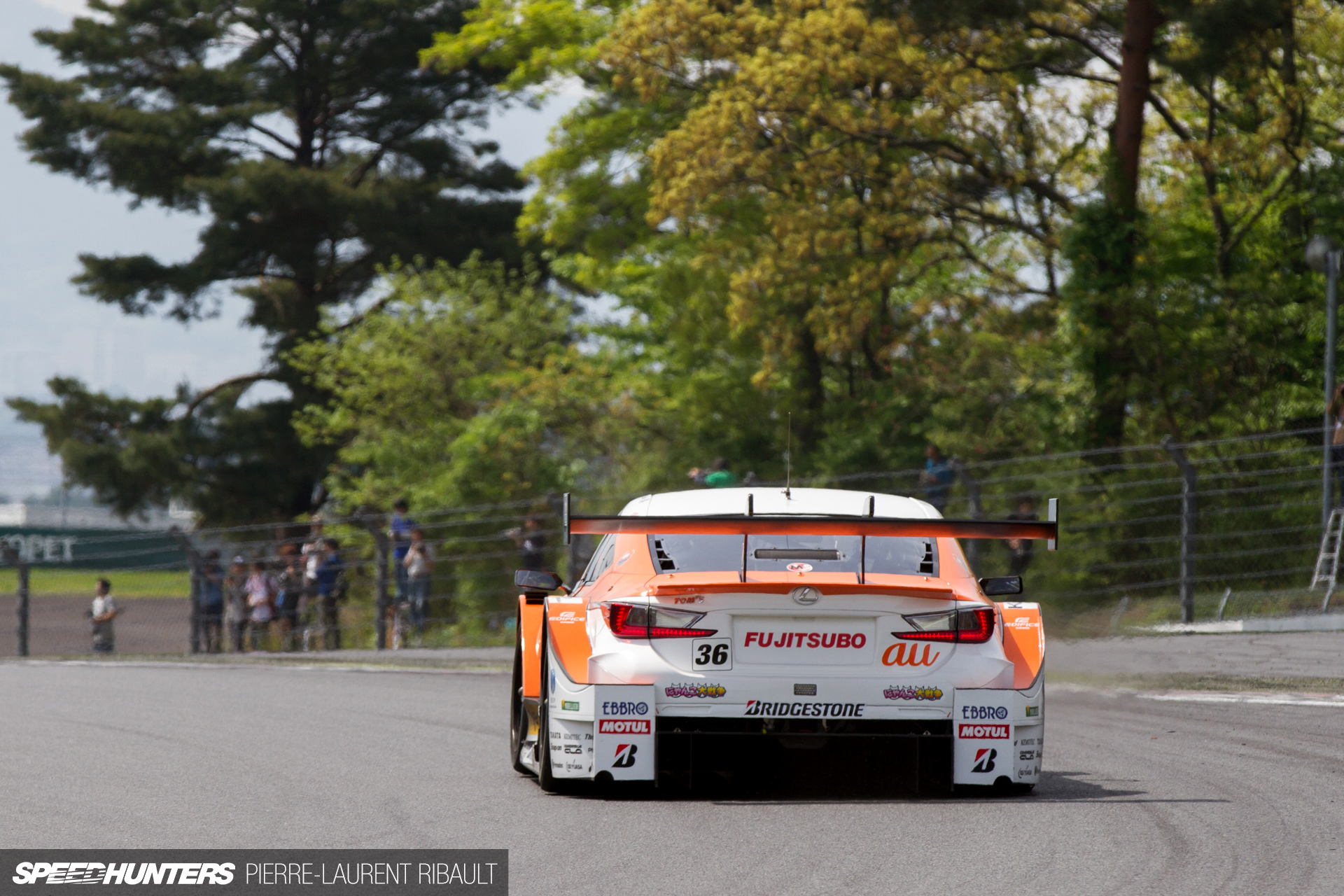
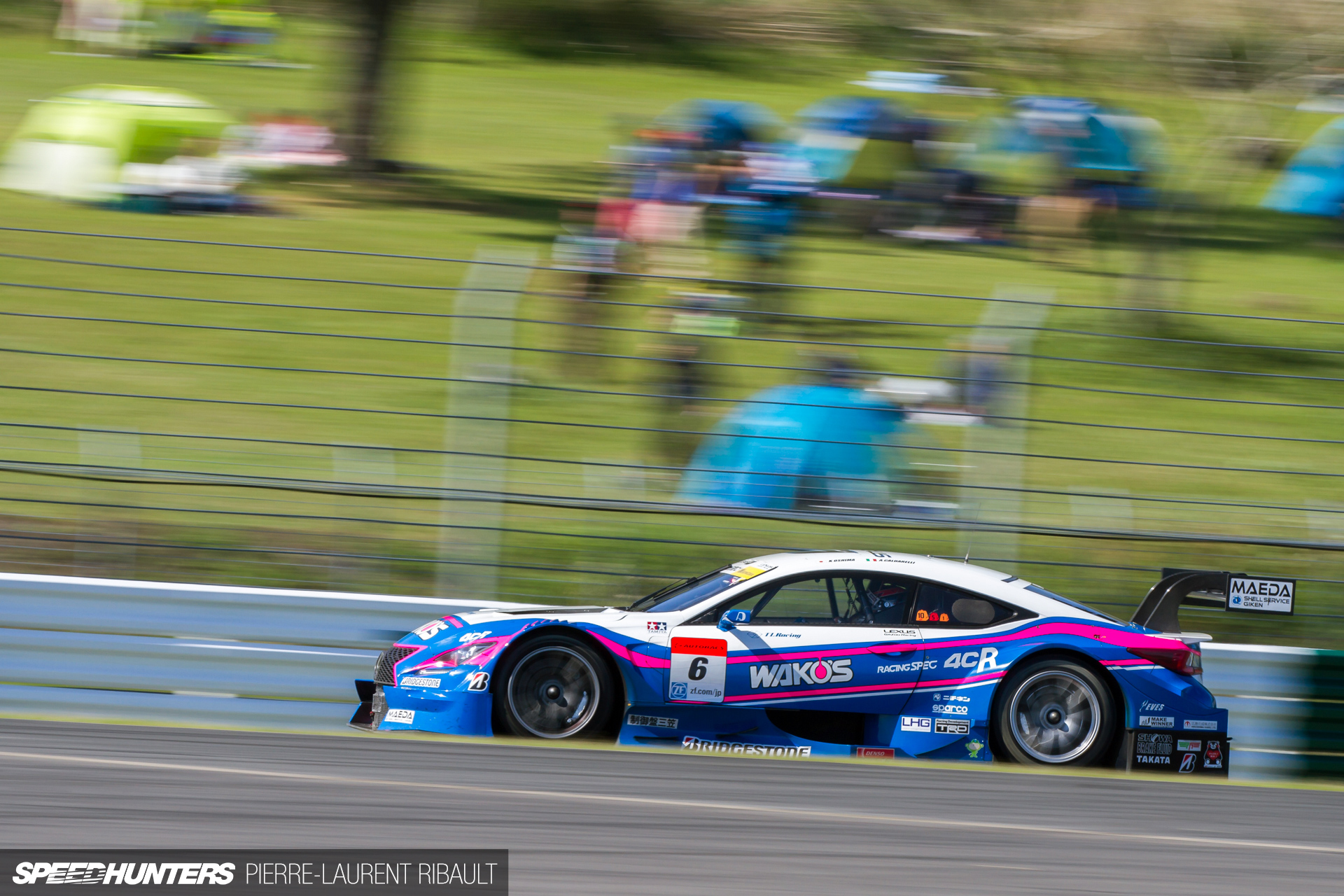
The ‘Fuji Meister’ Yuji Tachikawa in the ZENT-sponsored RC F was the fastest of the Lexus entries; he did his best to fend off the Motul Autech GT-R too, but eventually ran out of gas on a miscalculation.
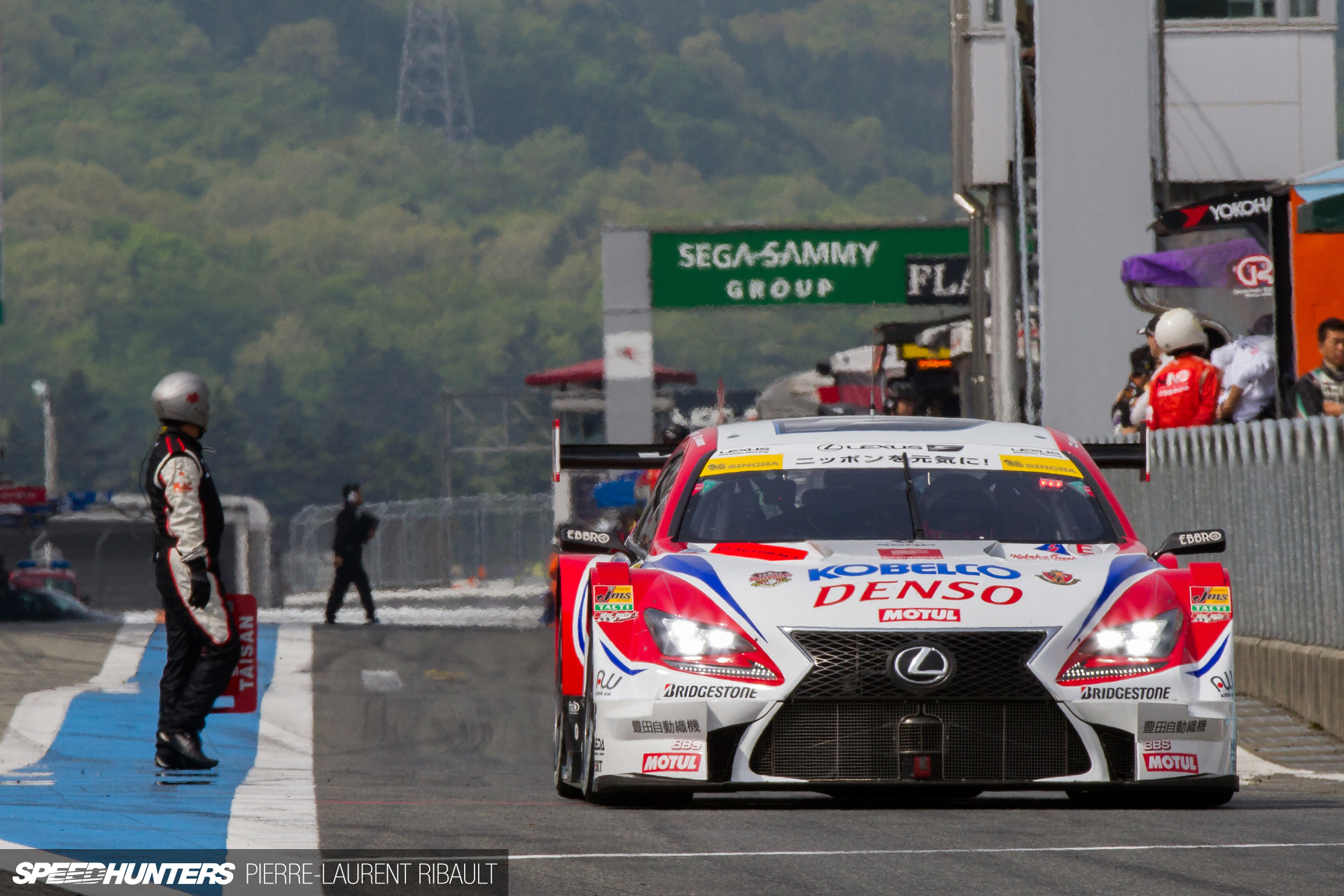
Lexus can take comfort with the second and third steps of the GT500 podium, though. Kohei Hirate and Heikki Kovalainen in the Denso Kobelco SARD RC F had their best result so far with a second place.
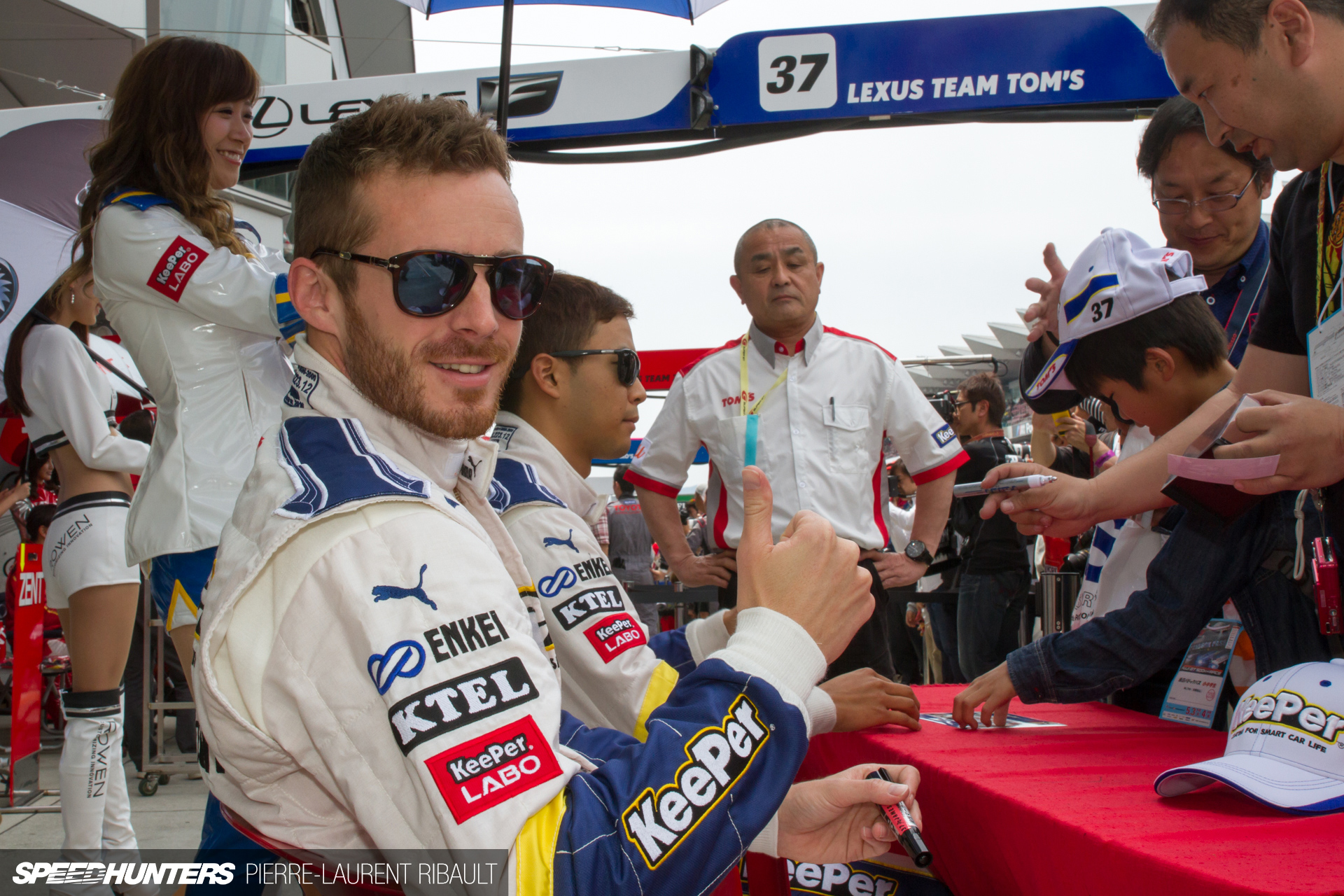
Third place went to the KeePer TOM’S RC F of James Rossiter and Ryo Hirakawa. The British driver jumped in a plane straight after the race to rejoin the ByKolles team in Belgium for the WEC 6 Hours of Spa-Francorchamps, with the first practice 24 hours after the end of the race at Fuji. If there is such a thing as global Speedhunting, this is it.
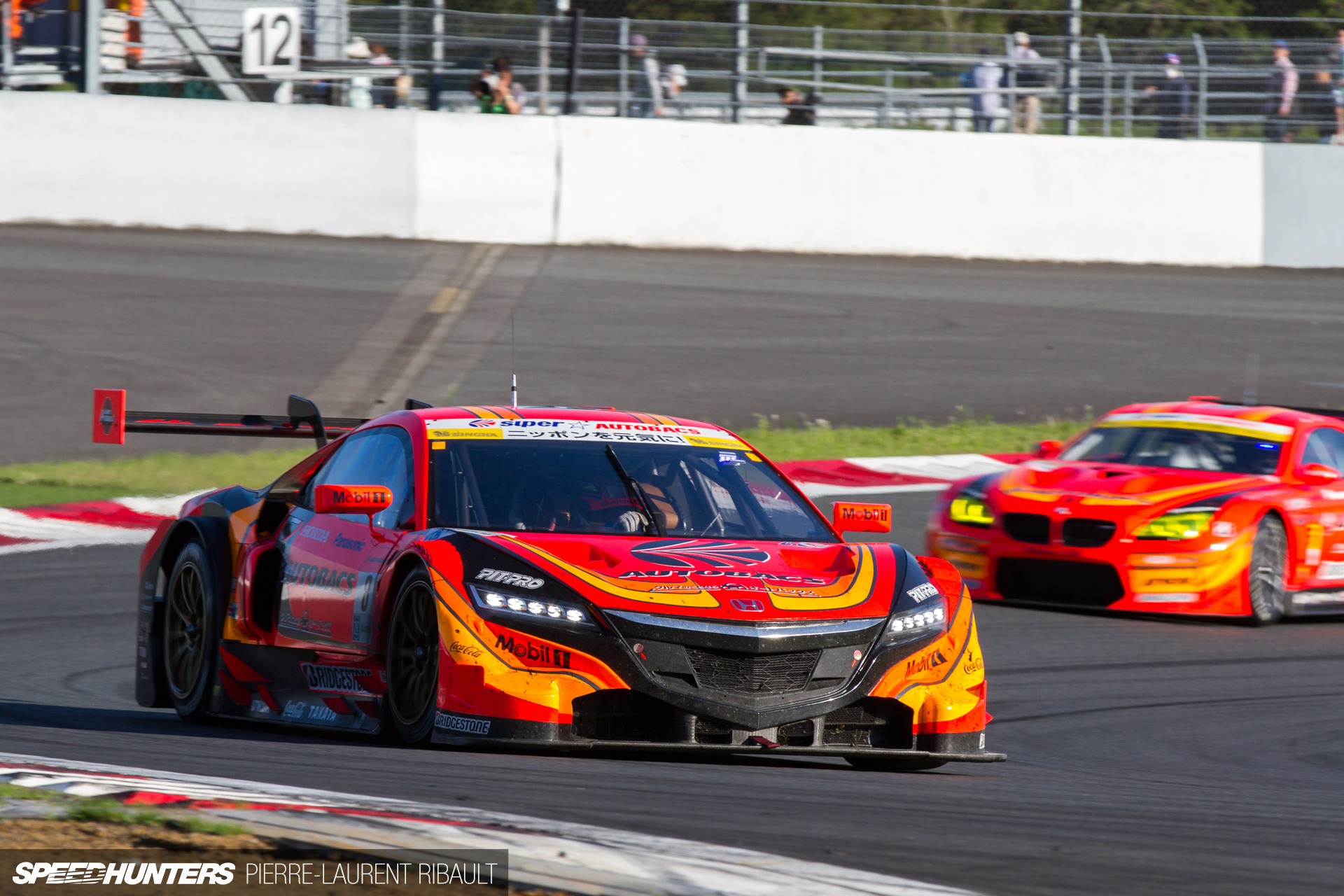
None of the Hondas came near the lead during the race, but the ARTA NSX of Kosuke Matsuura and Tomoki Nojiri managed to finish in 6th. There is work to do at Honda Racing before the next race in Sugo in July.
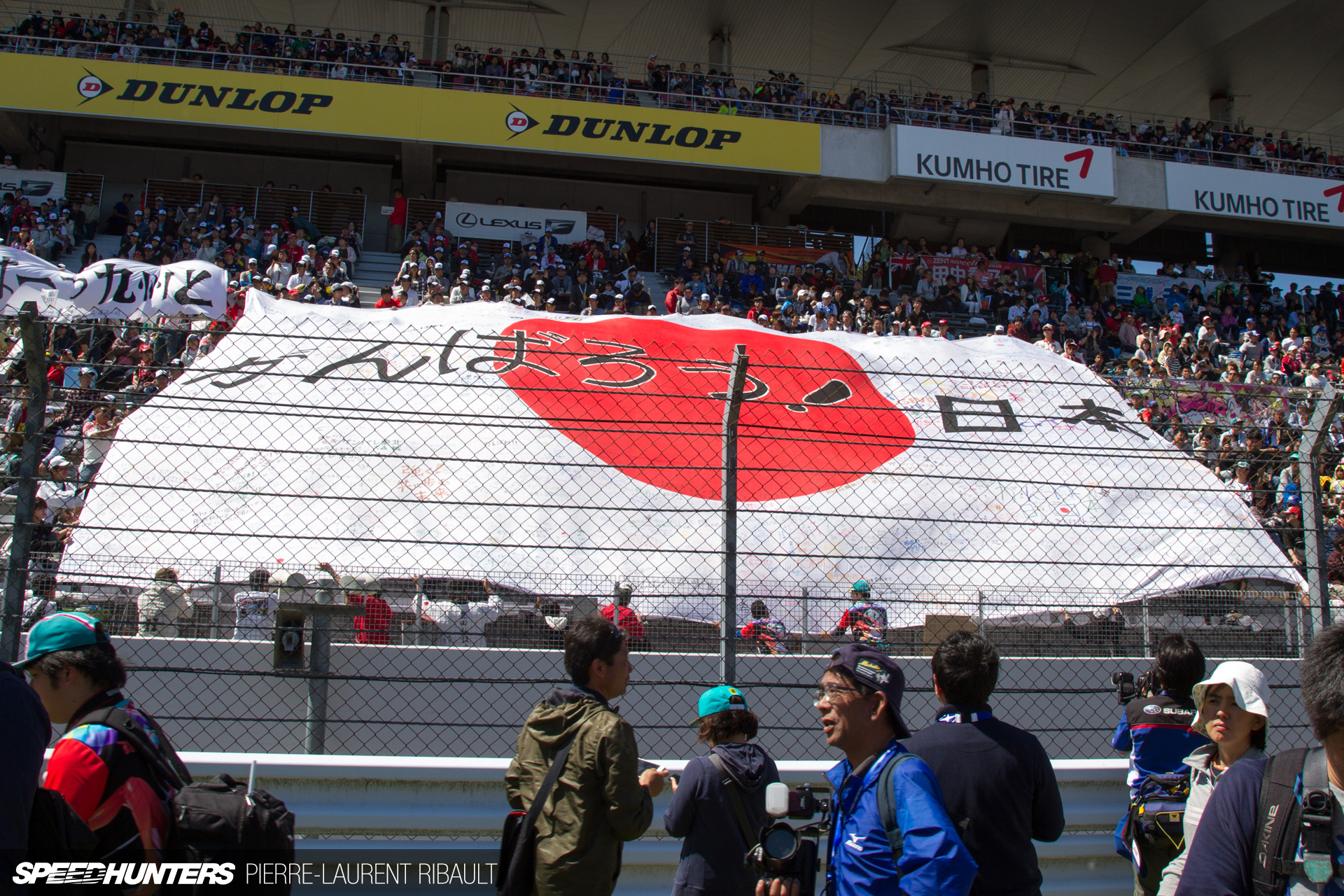
The Autopolis round that was supposed to take place later this month in Kyushu had to unfortunately be cancelled as the track was damaged by the big earthquake in Kumamoto. The racing community and the spectators, as in 2011, showed their solidarity to the people affected before the race start.
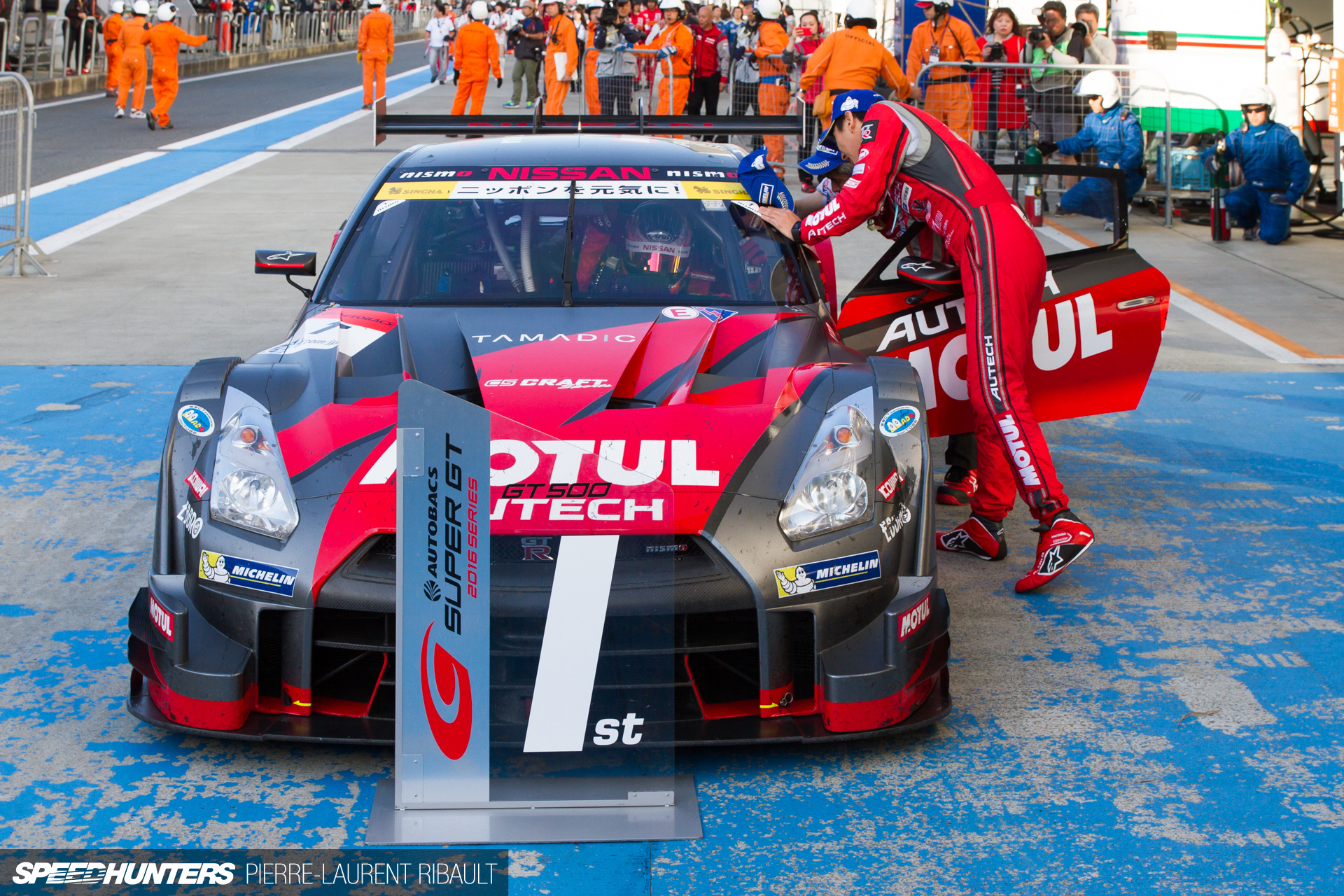
And so after a 500km thriller filled with incidents, battles and a final twist that no one had seen coming, the reigning champions took their second win on the trot – the 18th for Super GT victory record holder Tsugio Matsuda. History shows that the winners of the first two races eventually take the championship, so Quintarelli and Matsuda will have time to think that over until the next race.
Pierre-Laurent Ribault
More Super GT related stories on Speedhunters
Cutting Room Floor