
Before the RX-7, Mazda was dropping its rotary engines into a variety of chassis including the Capella (RX-2), the slightly bigger Savanna (RX-3), and eventually the Luce (RX-4). The ’70s was arguably the Wankel’s defining decade, and Mazda used the unique engine to power everything from compact coupes to four door sedans, wagons, and even a pickup.
In 1975 came the daddy of them all, the CD generation of the Cosmo, combining the performance of the twin-rotor engine with the size and comfort of a large luxury sports coupe.
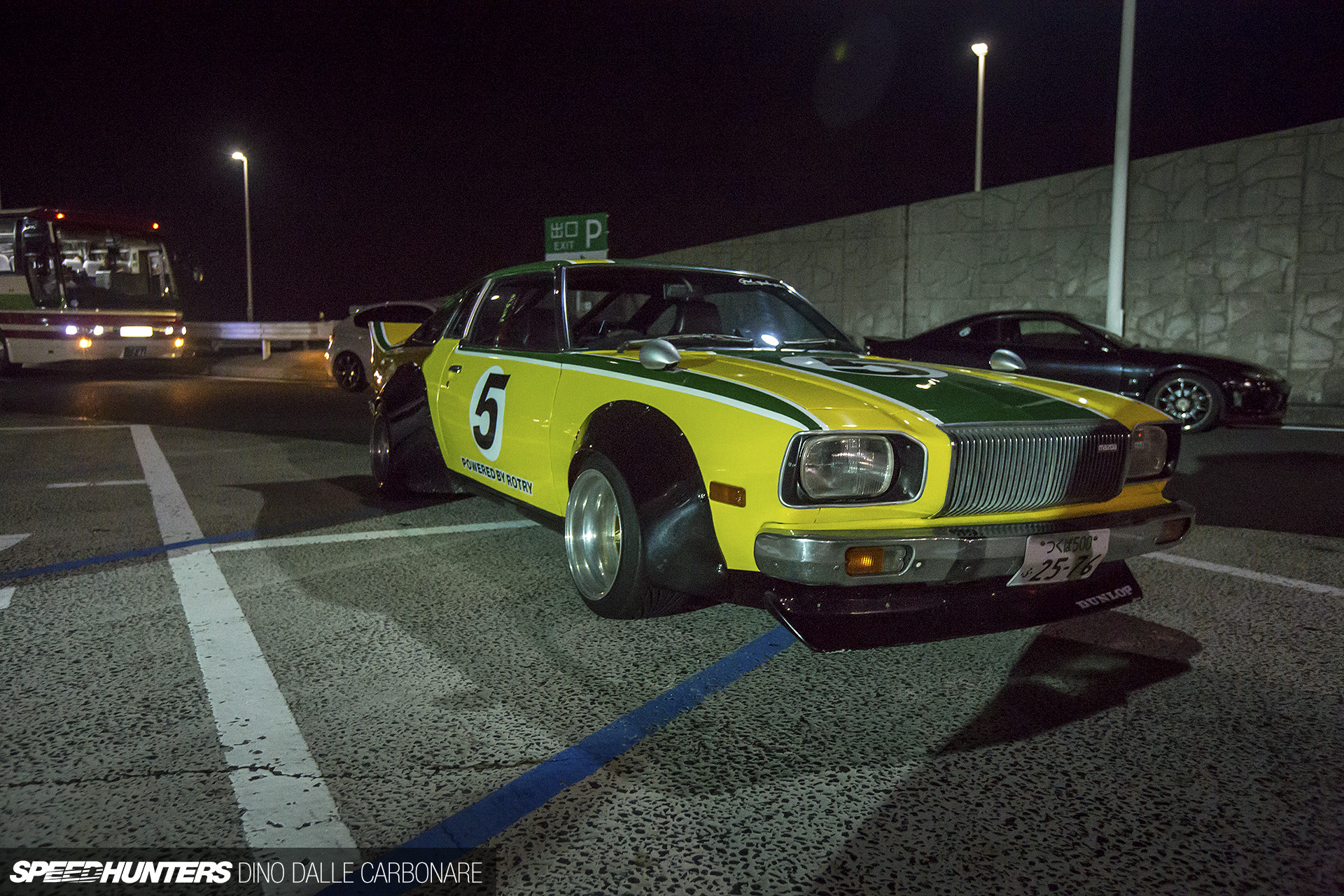
It was a very popular car in Japan as it allowed people to stay under the 1.5-liter classification for road tax, yet packed 130hp (13B version). Needless to say, Mazda sold quite a lot of them, but you don’t see many on the streets these days. When you do though, you can’t help but admire what they represented in their heyday.
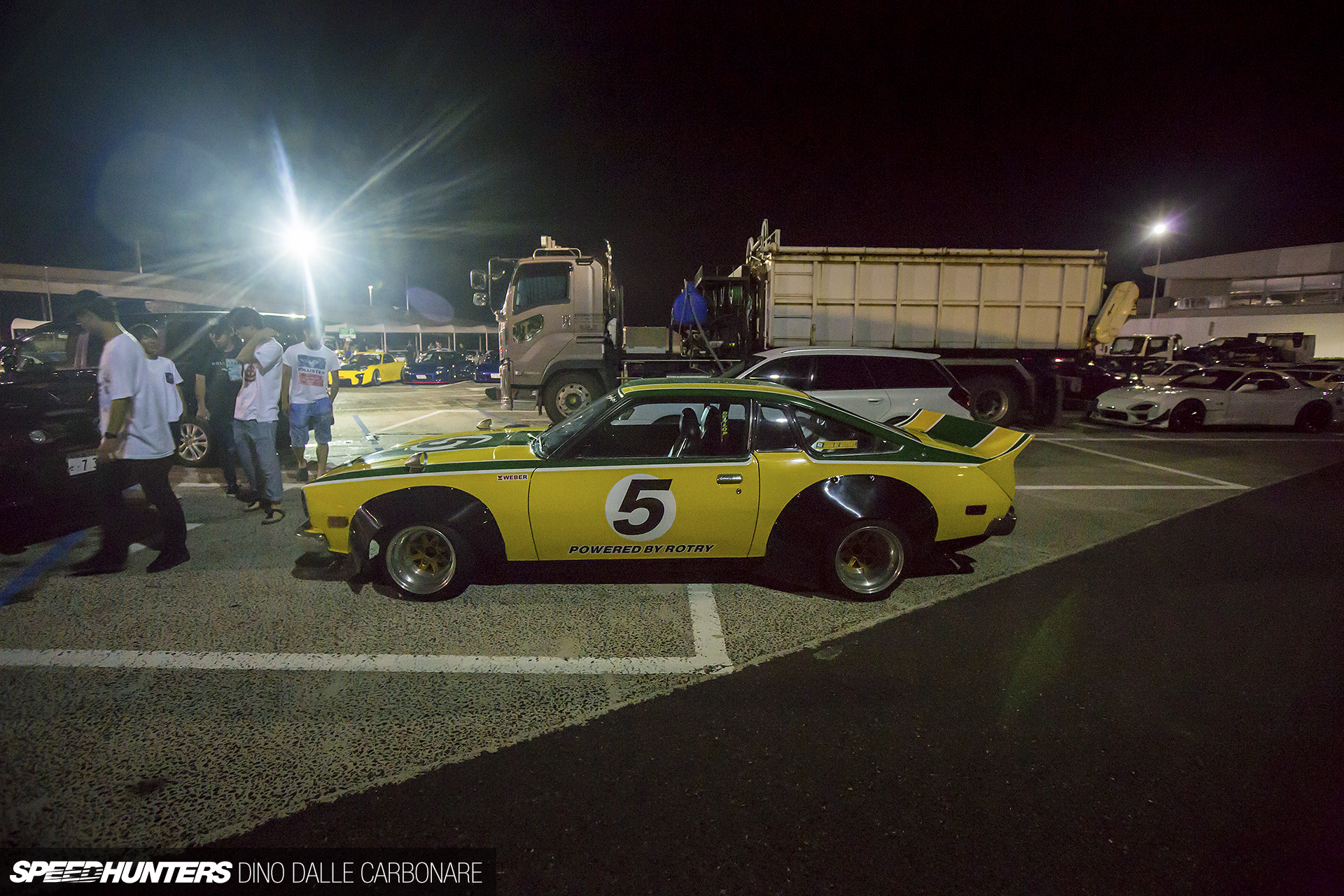
This particular example I found in a dark corner of the outside parking area at Umihotaru PA is about as far as you can possibly get from a stock example. Slammed to the ground on massively wide wheels and proudly showing off a set of works-style overfenders, I couldn’t help but take a closer look.
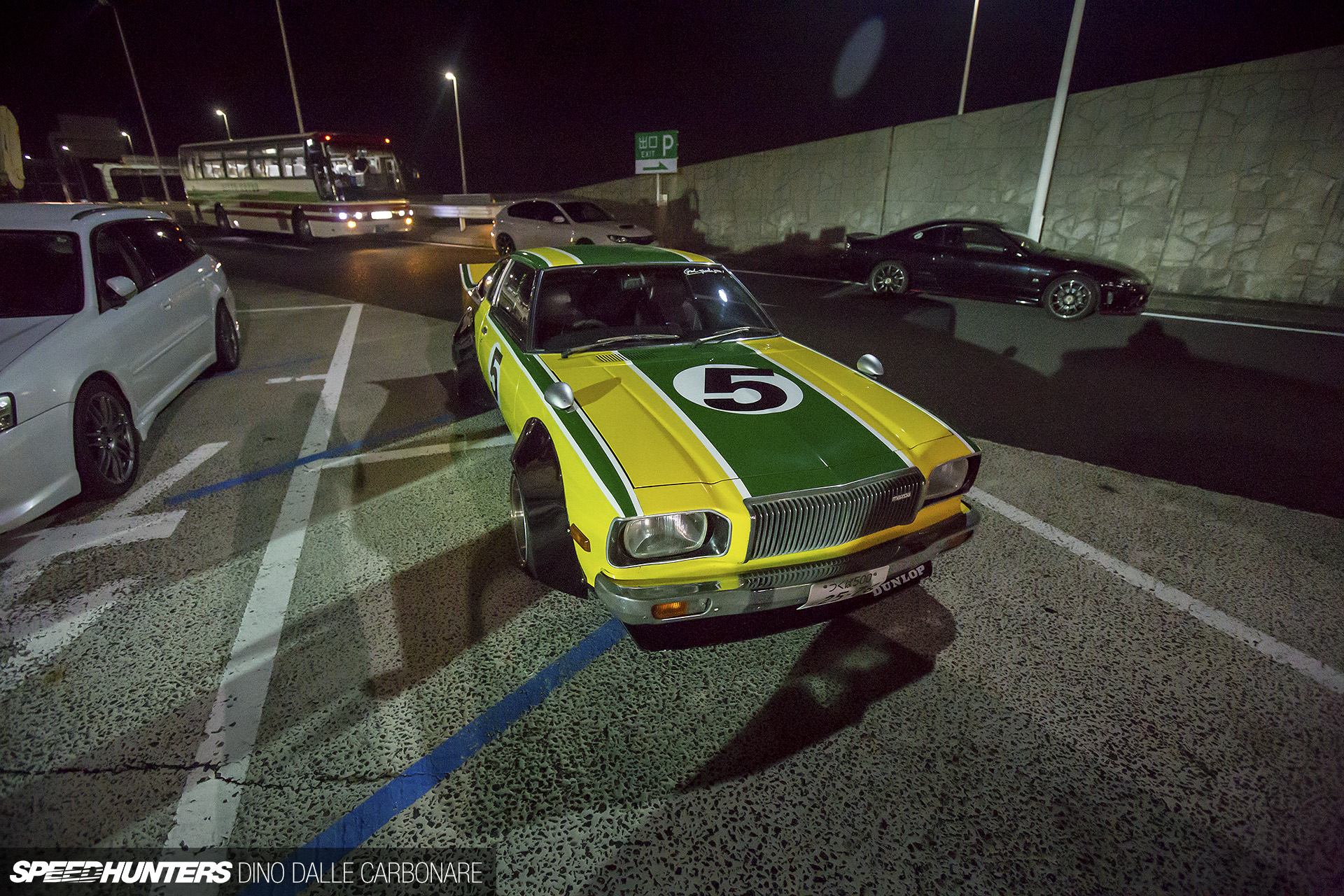
The gurachan style never gets old; it’s probably one of the most ‘Japanese’ things you can do to a vintage car and this Cosmo was a welcome addition to the hundreds of other rotaries that showed up on 7’s Day this year.
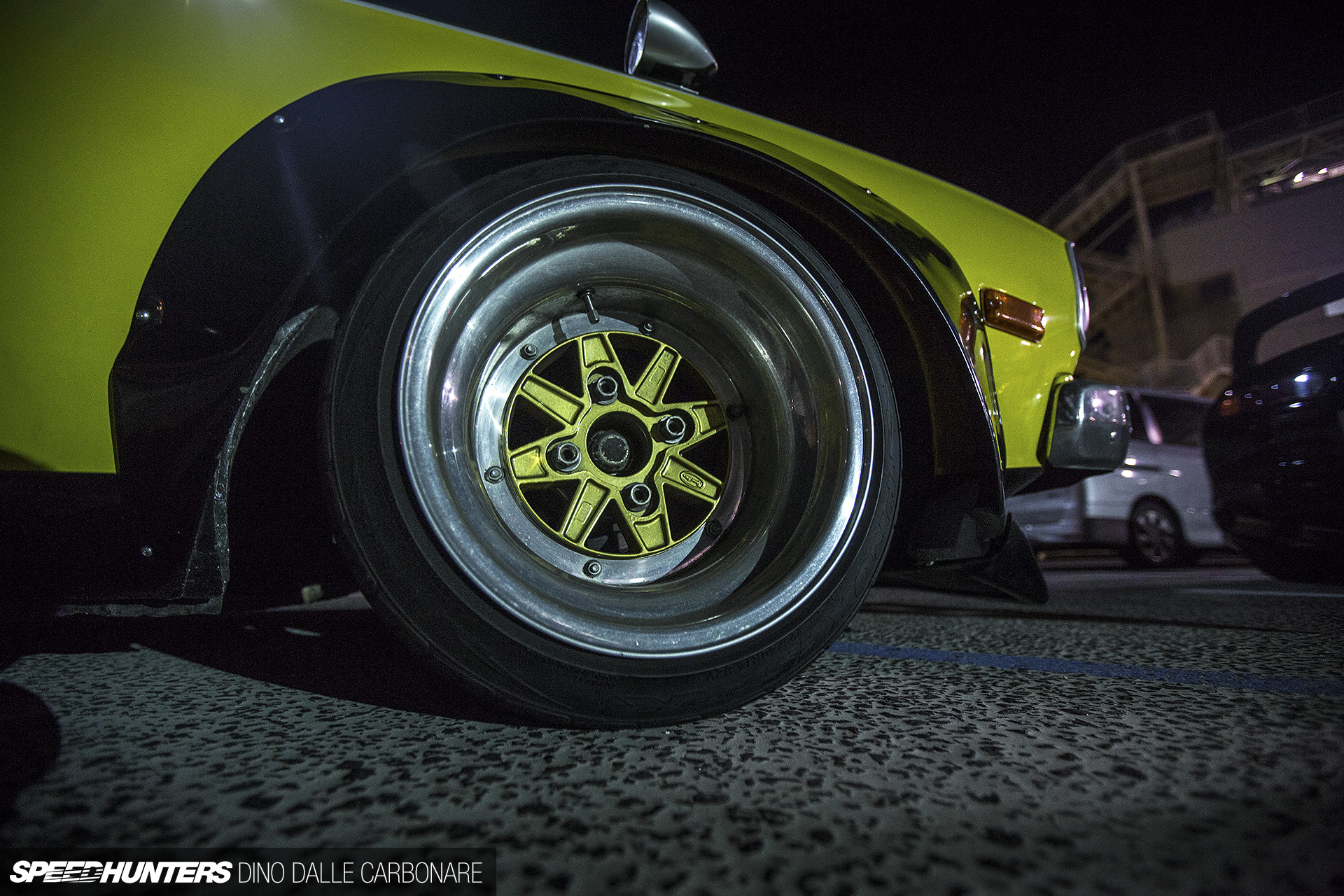
You could probably take a seat inside the lips of the SSR MkIIs it’s running, such is their depth.
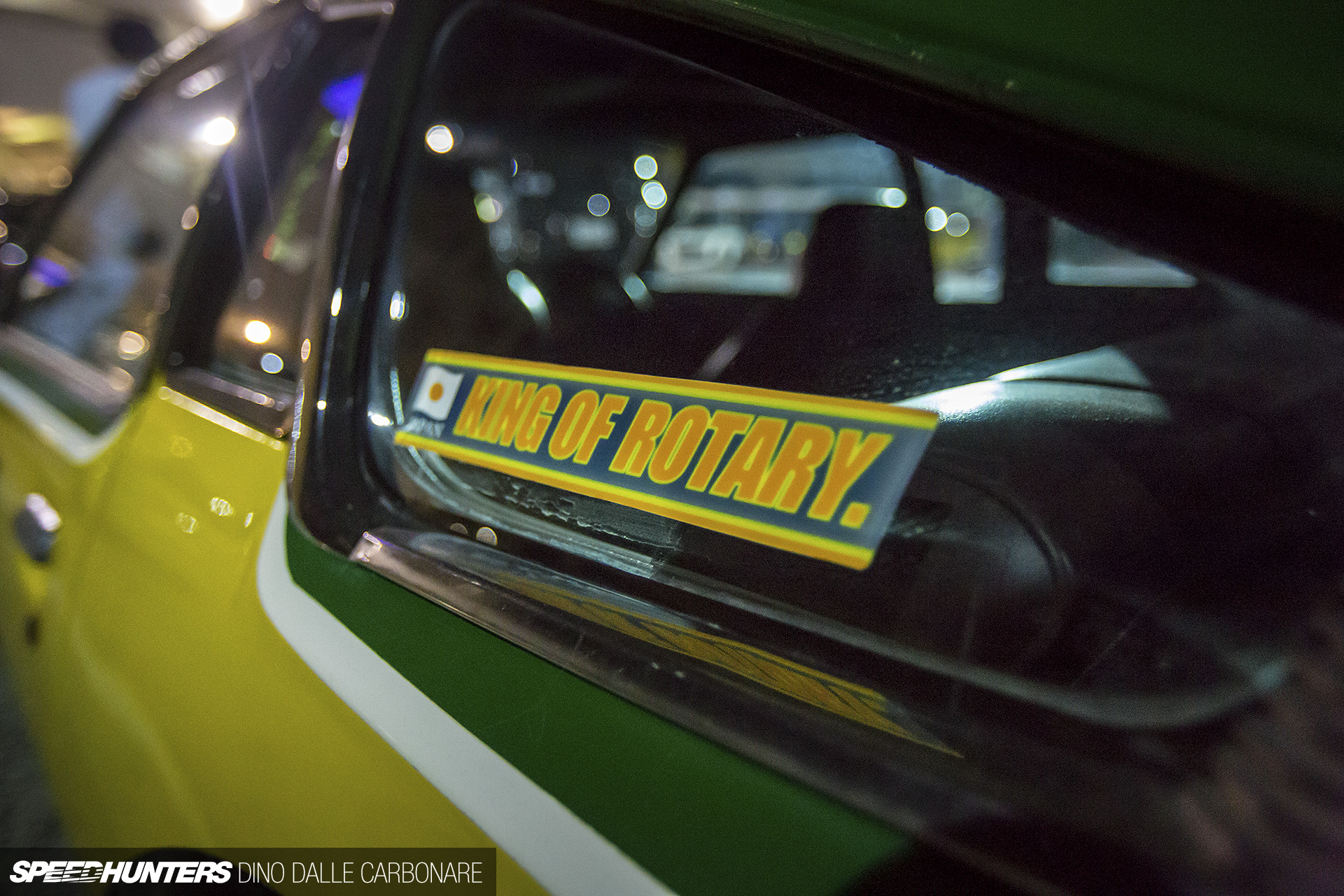
The sticker says it all really.
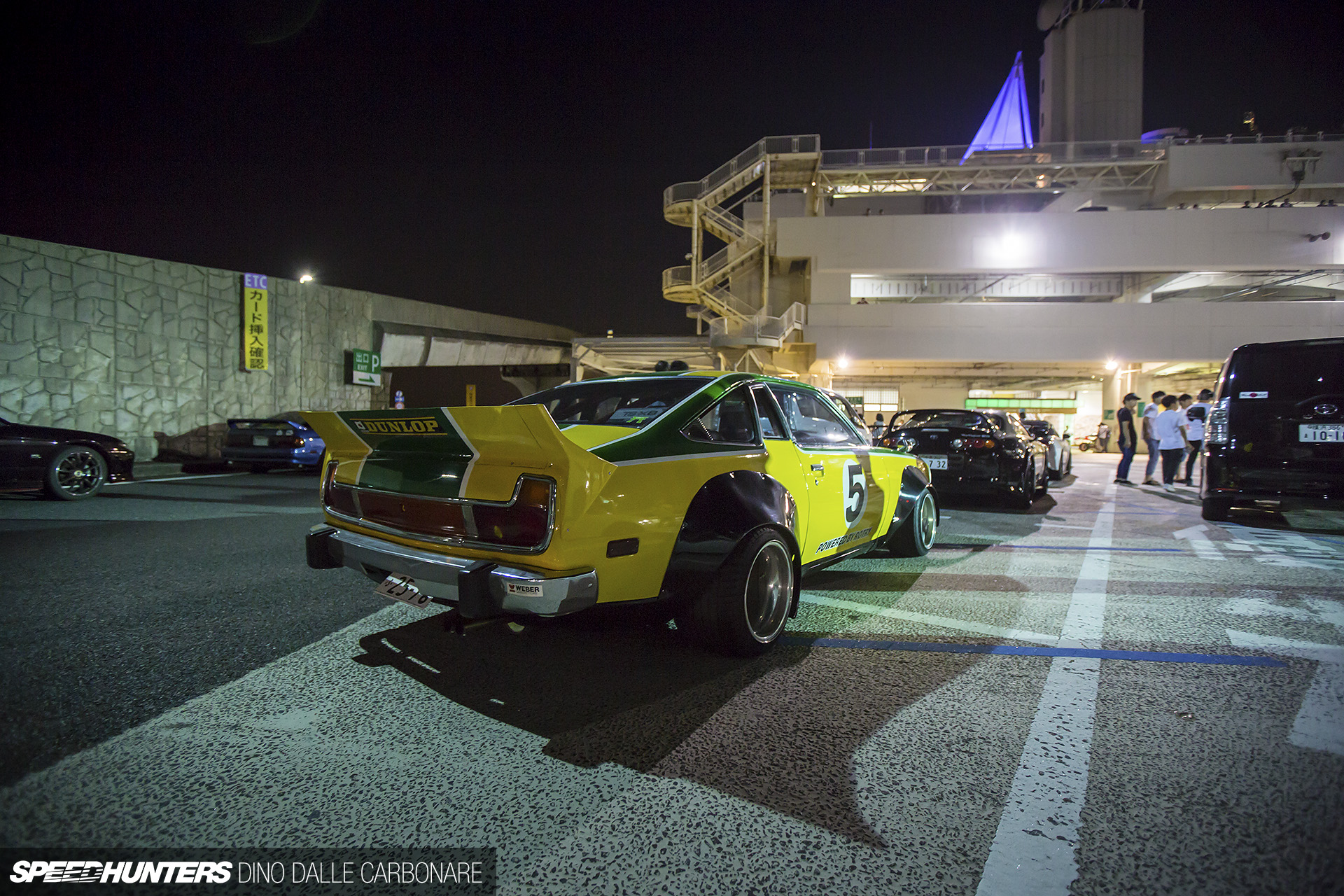
Compared to a lot of the exaggerated race replicas you see in Japan, this Cosmo was more on the restrained side of the scale; it did away with a long front lip but not an extended rear ducktail spoiler. Throw in a vintage Mazda livery and you’re onto a total winner.
You either get this style or you don’t, so which side of the fence are you guys on?
Dino Dalle Carbonare
Instagram: speedhunters_dino
dino@speedhunters.com