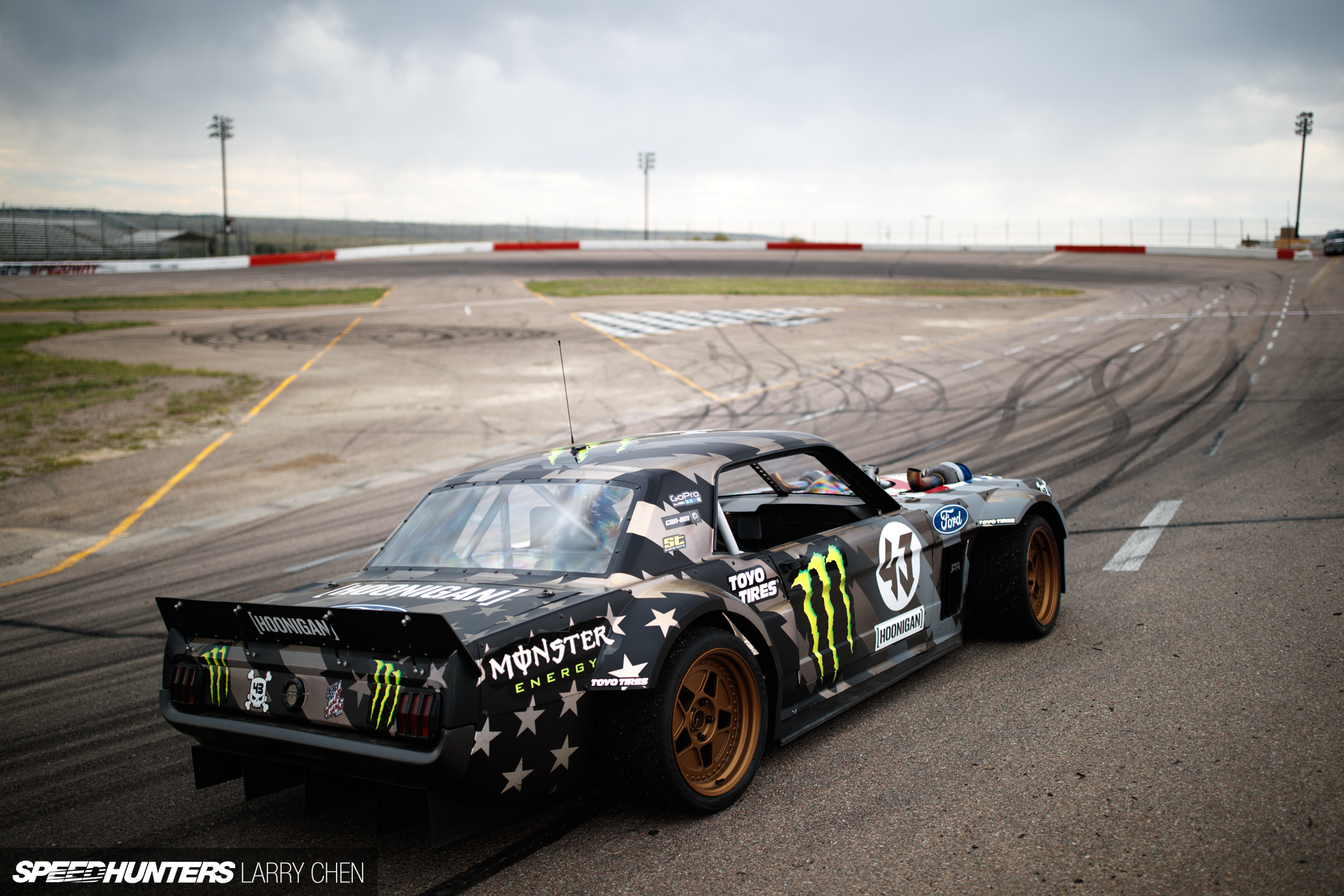
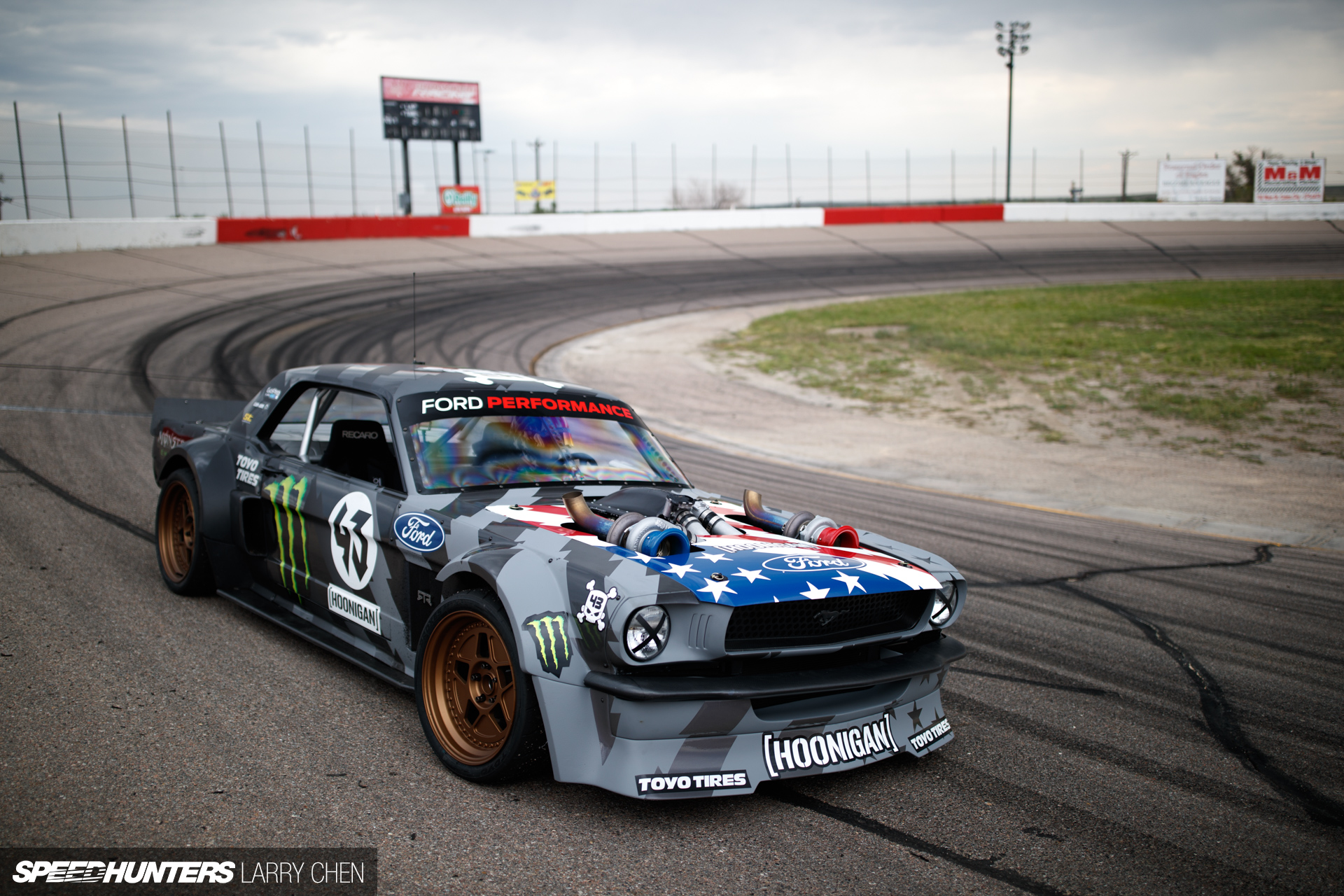
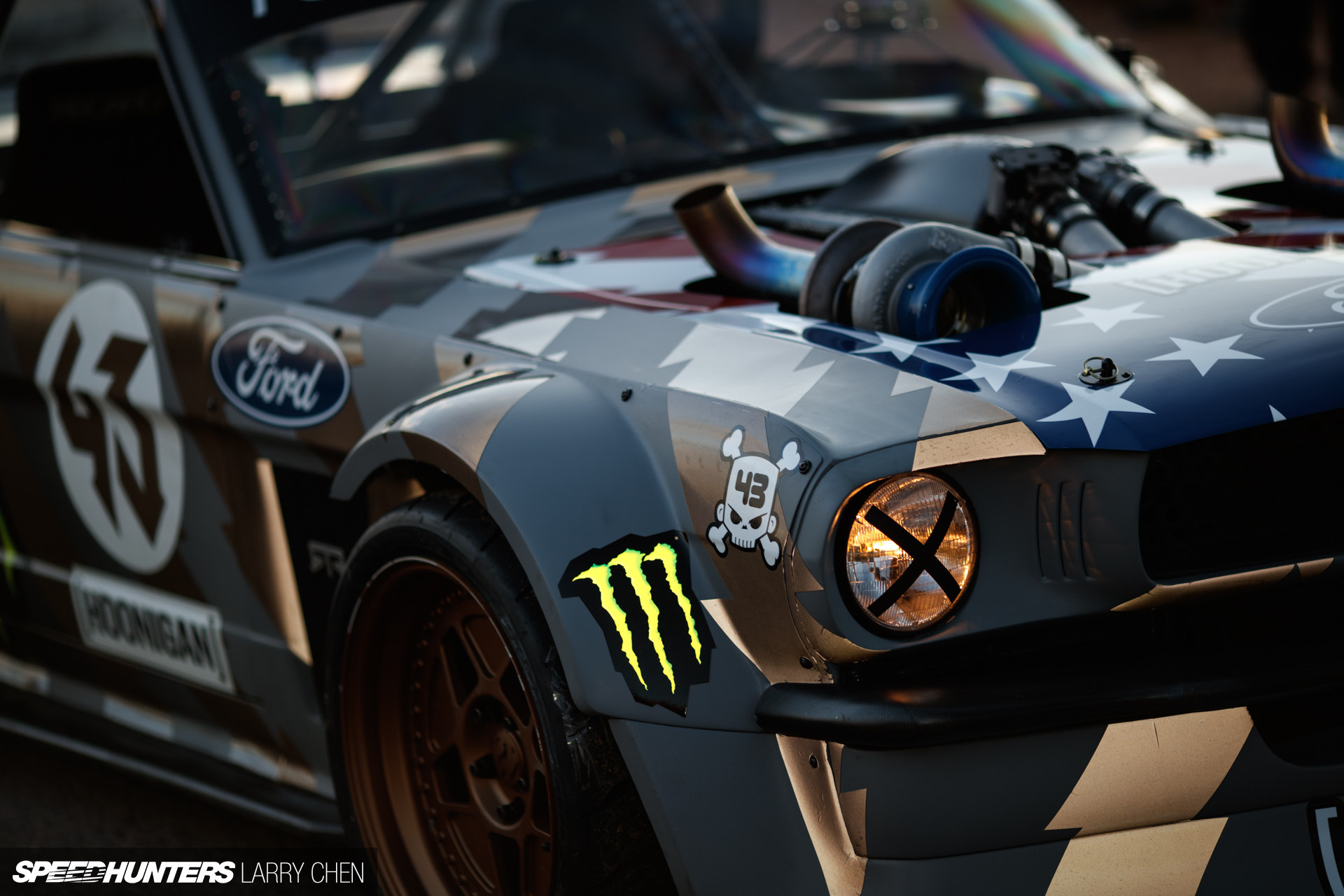
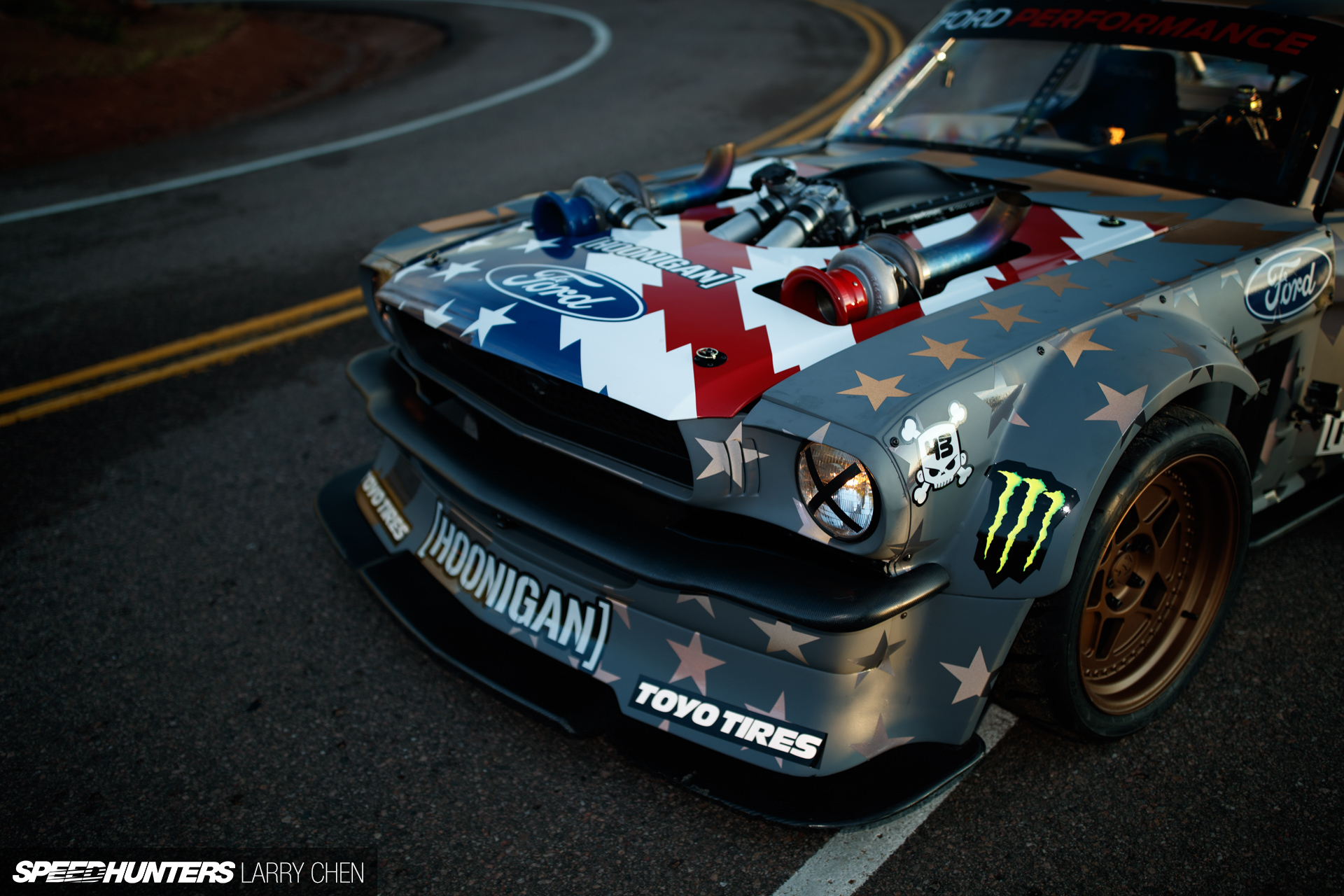
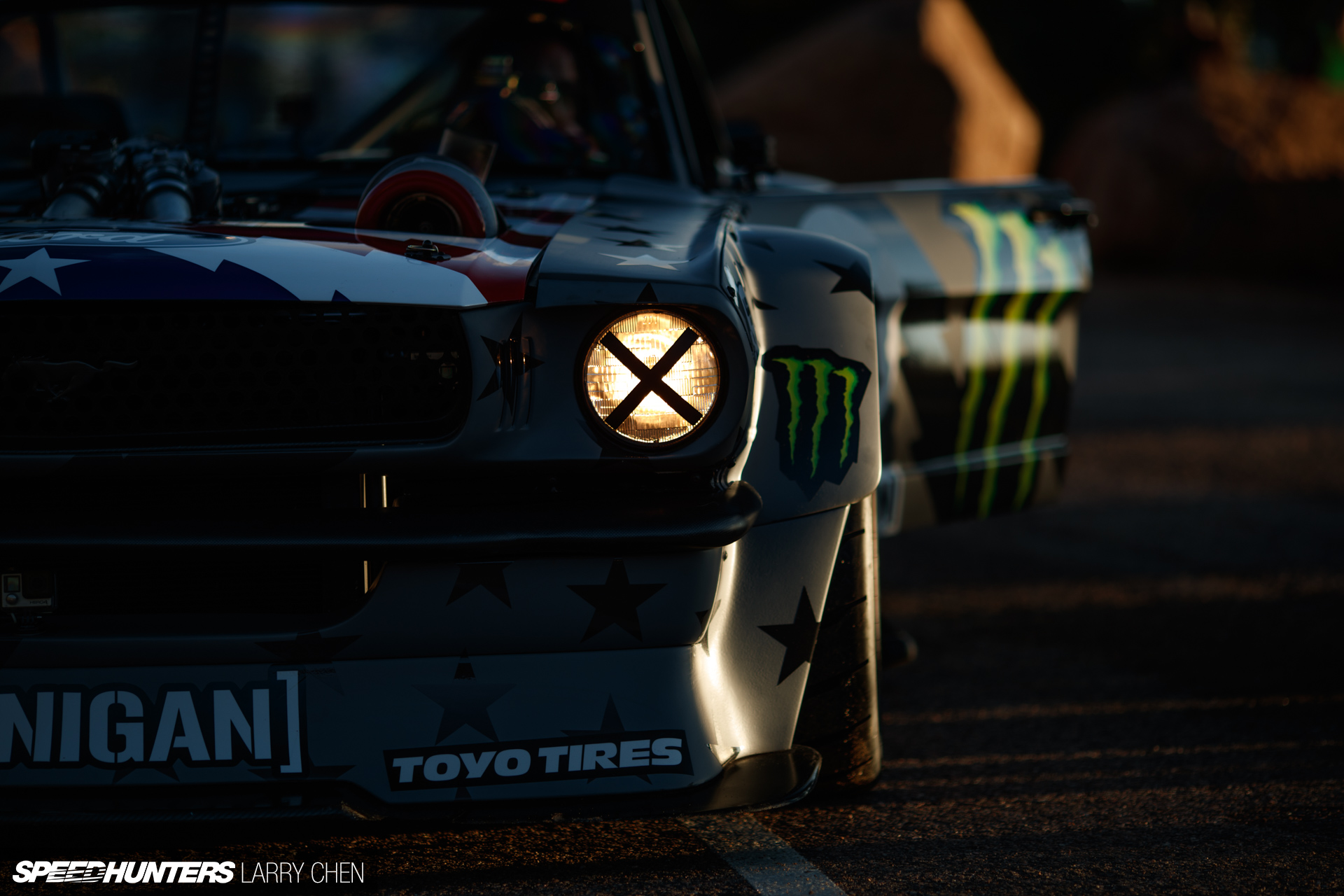
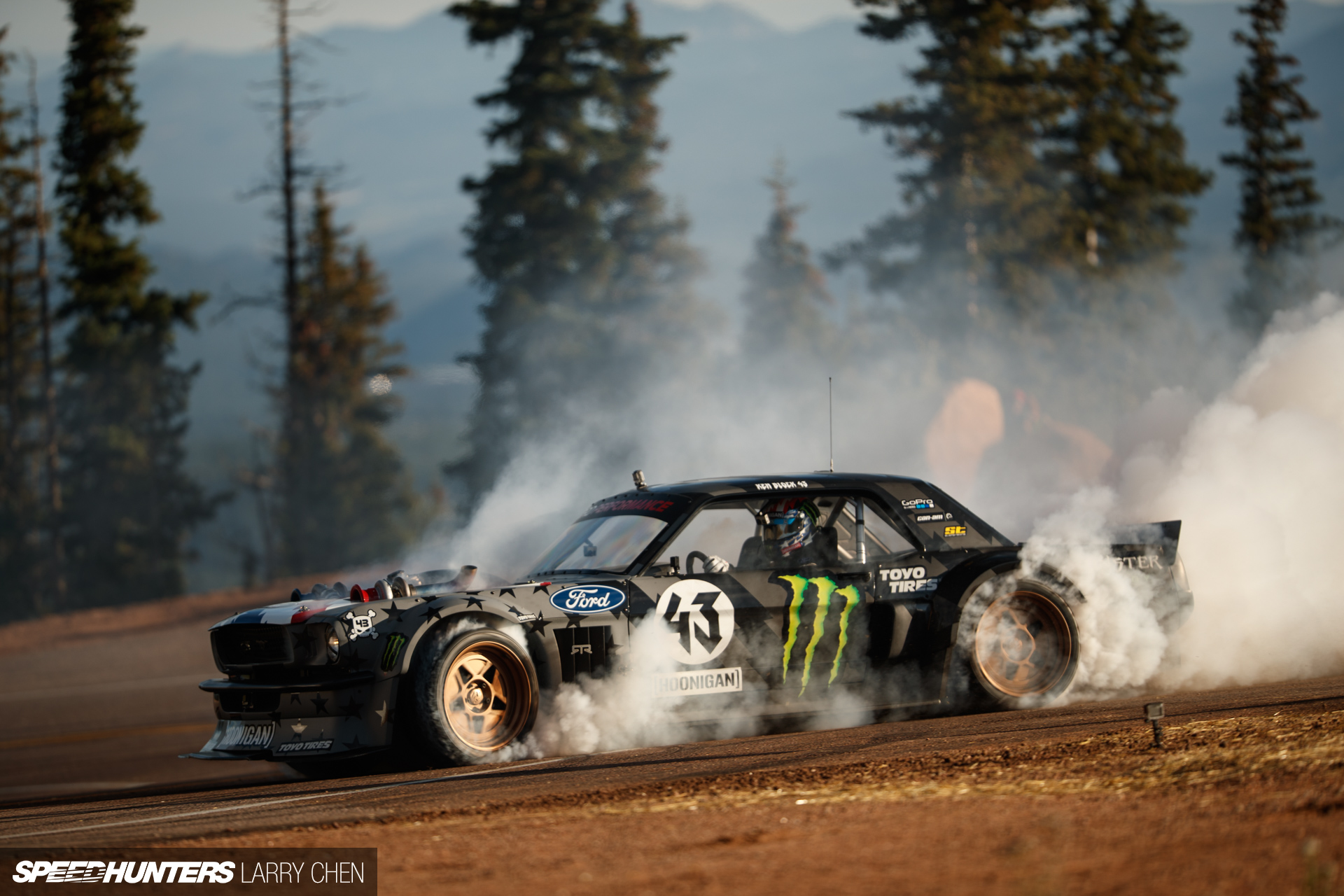
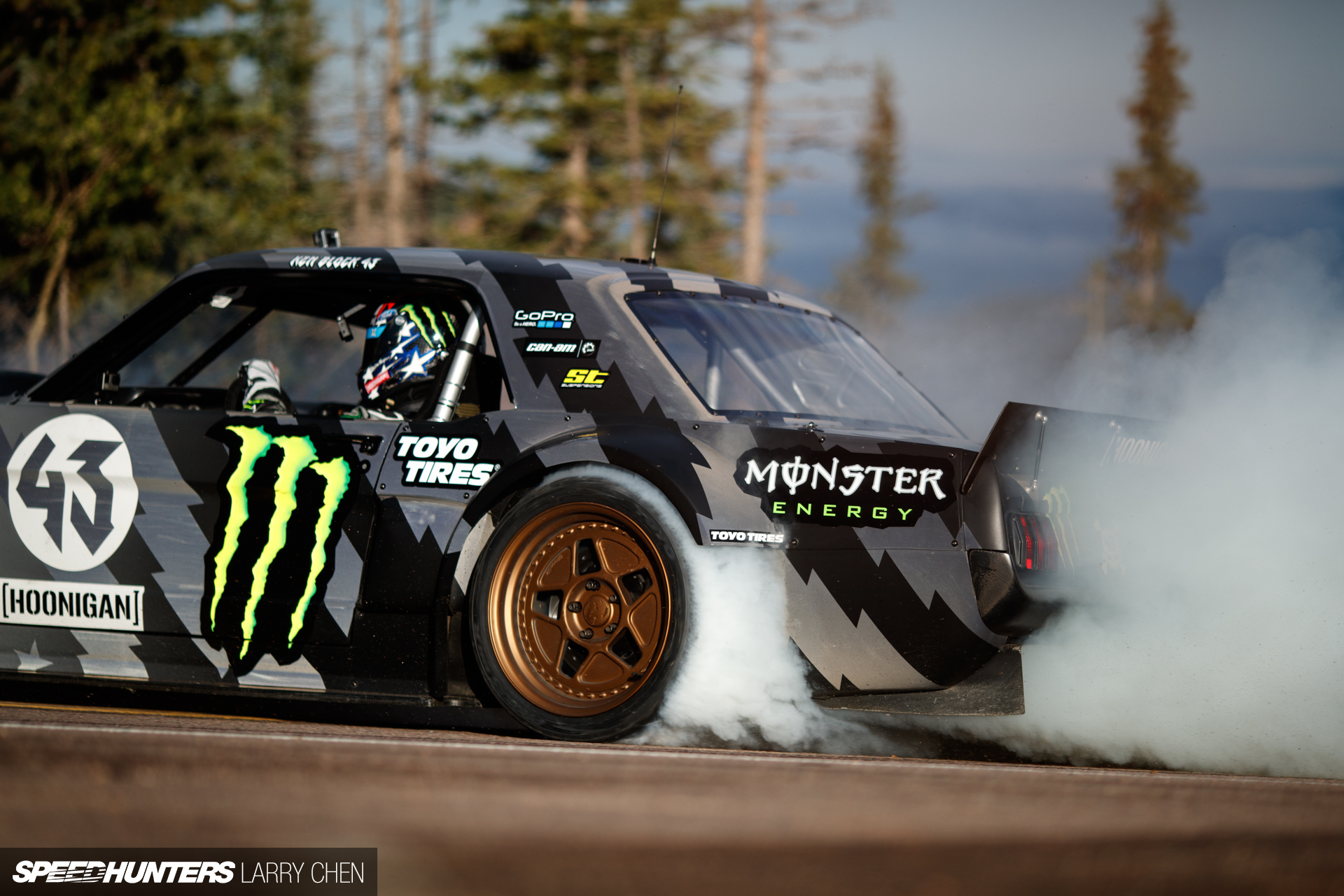
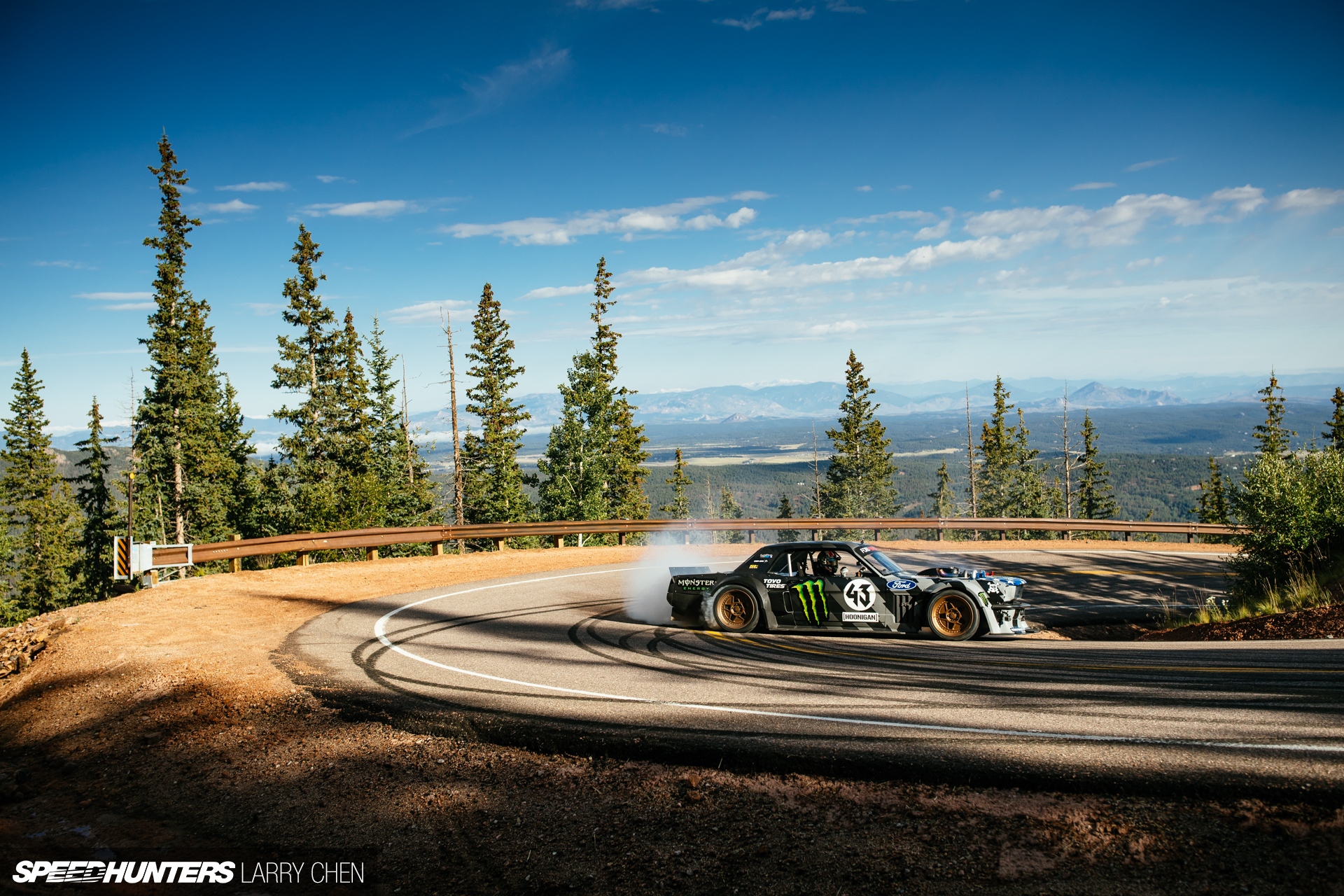
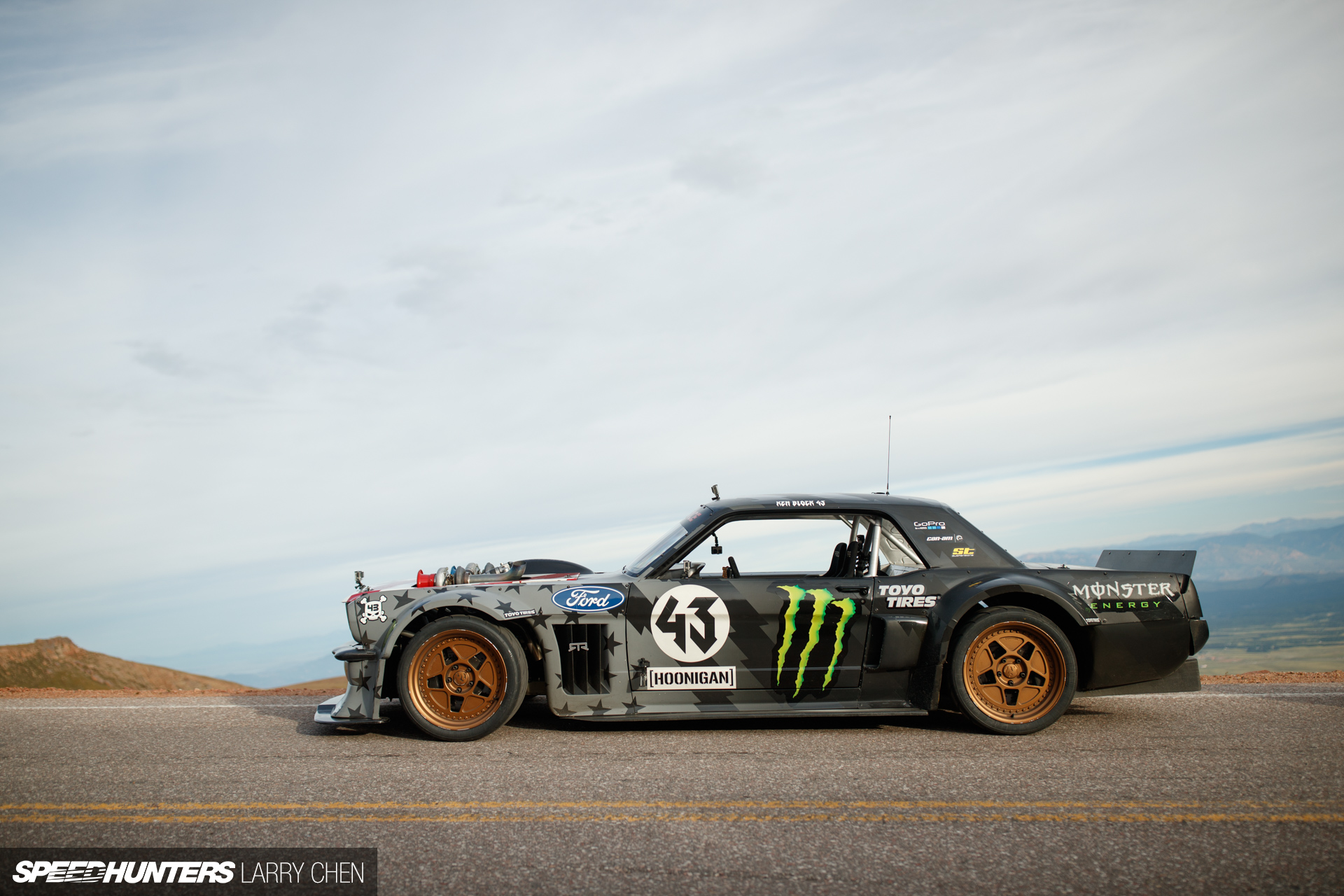
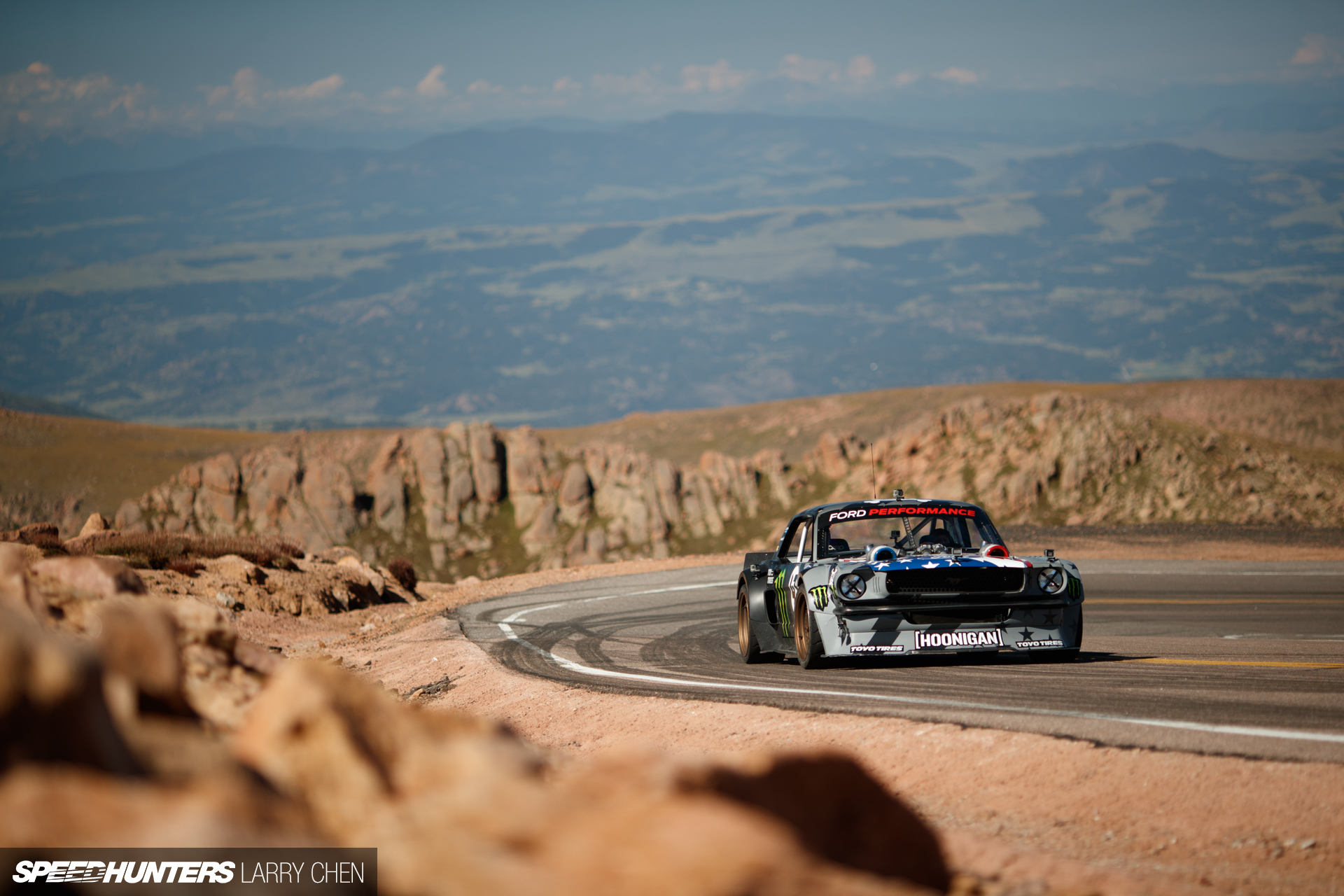
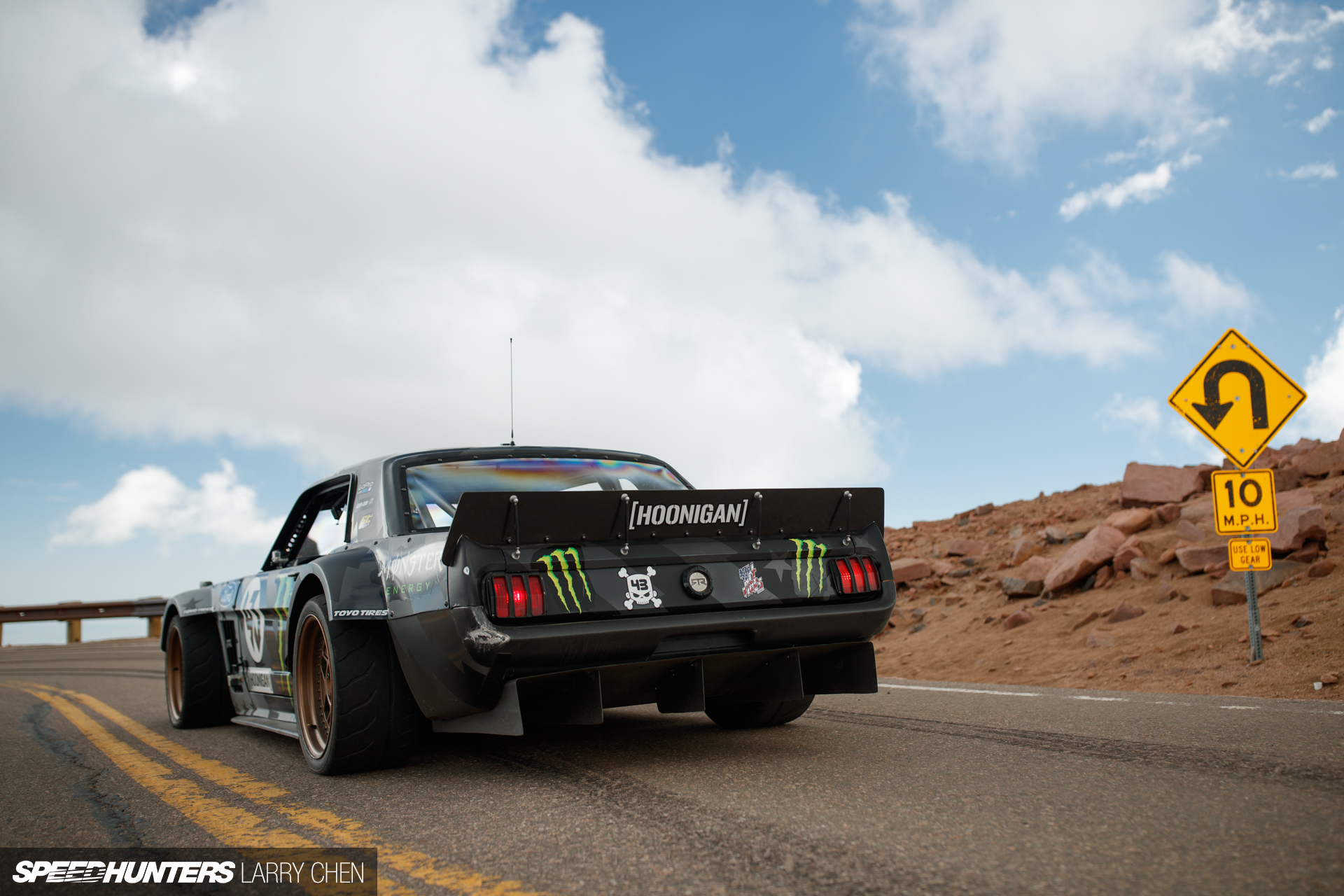
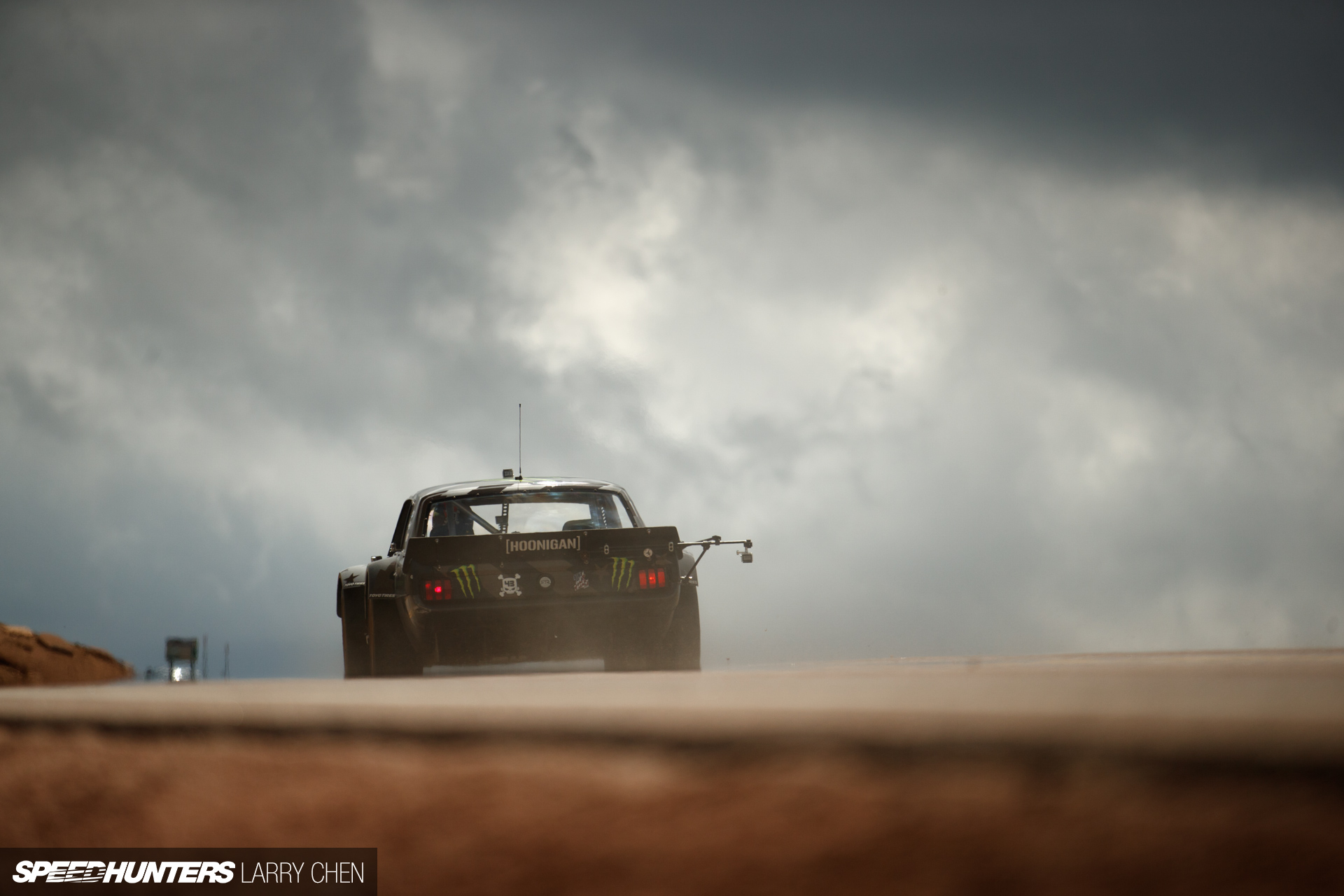
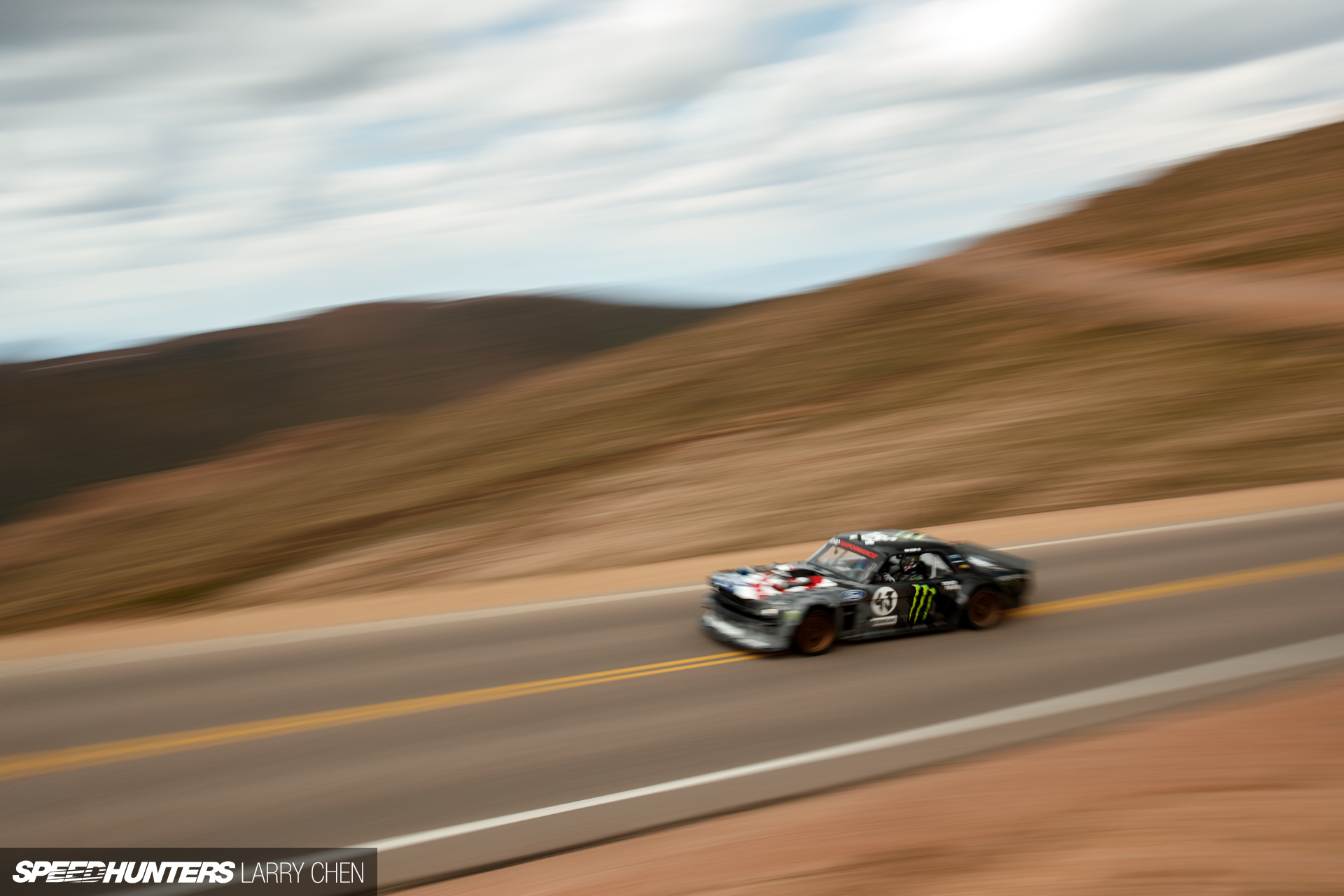
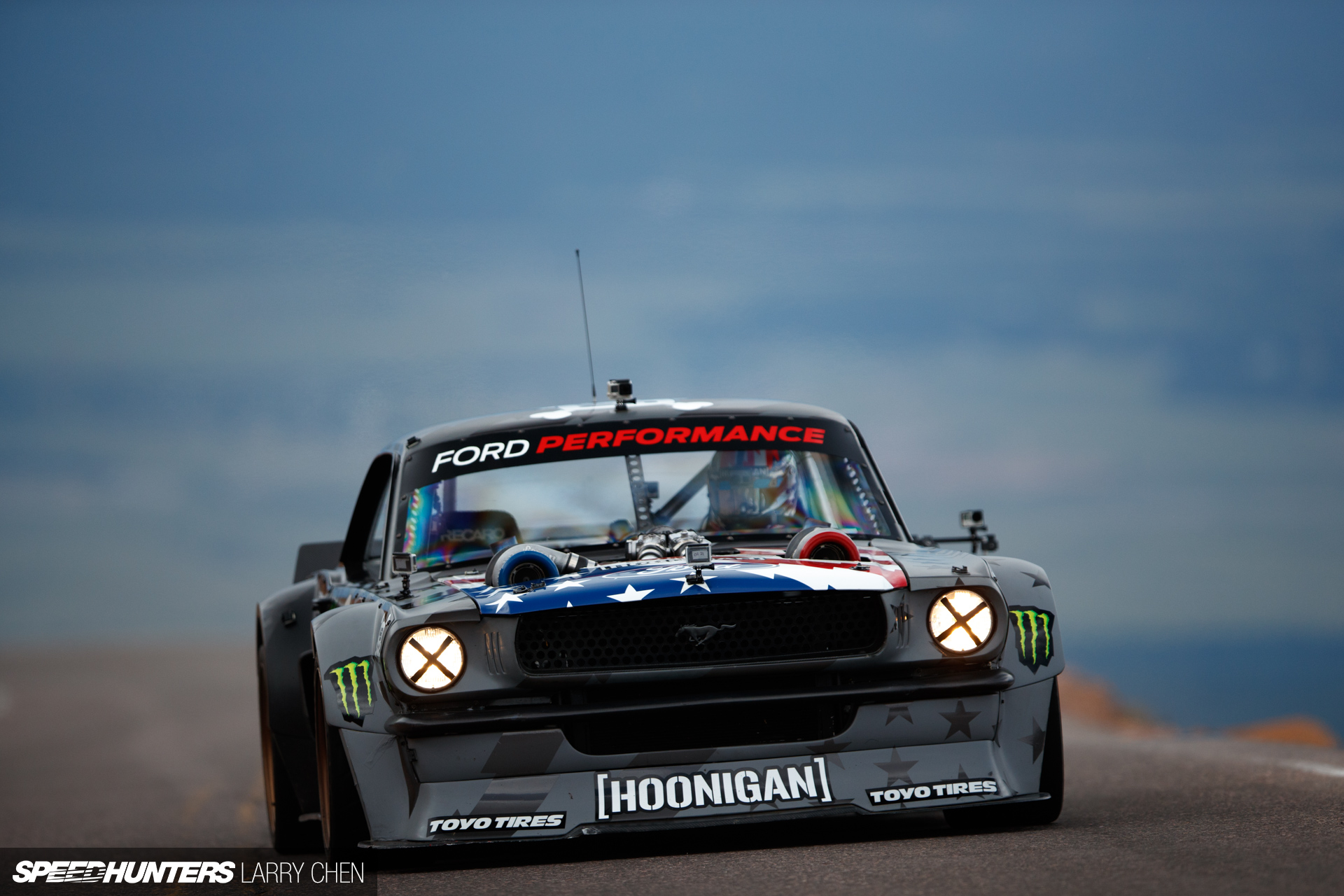
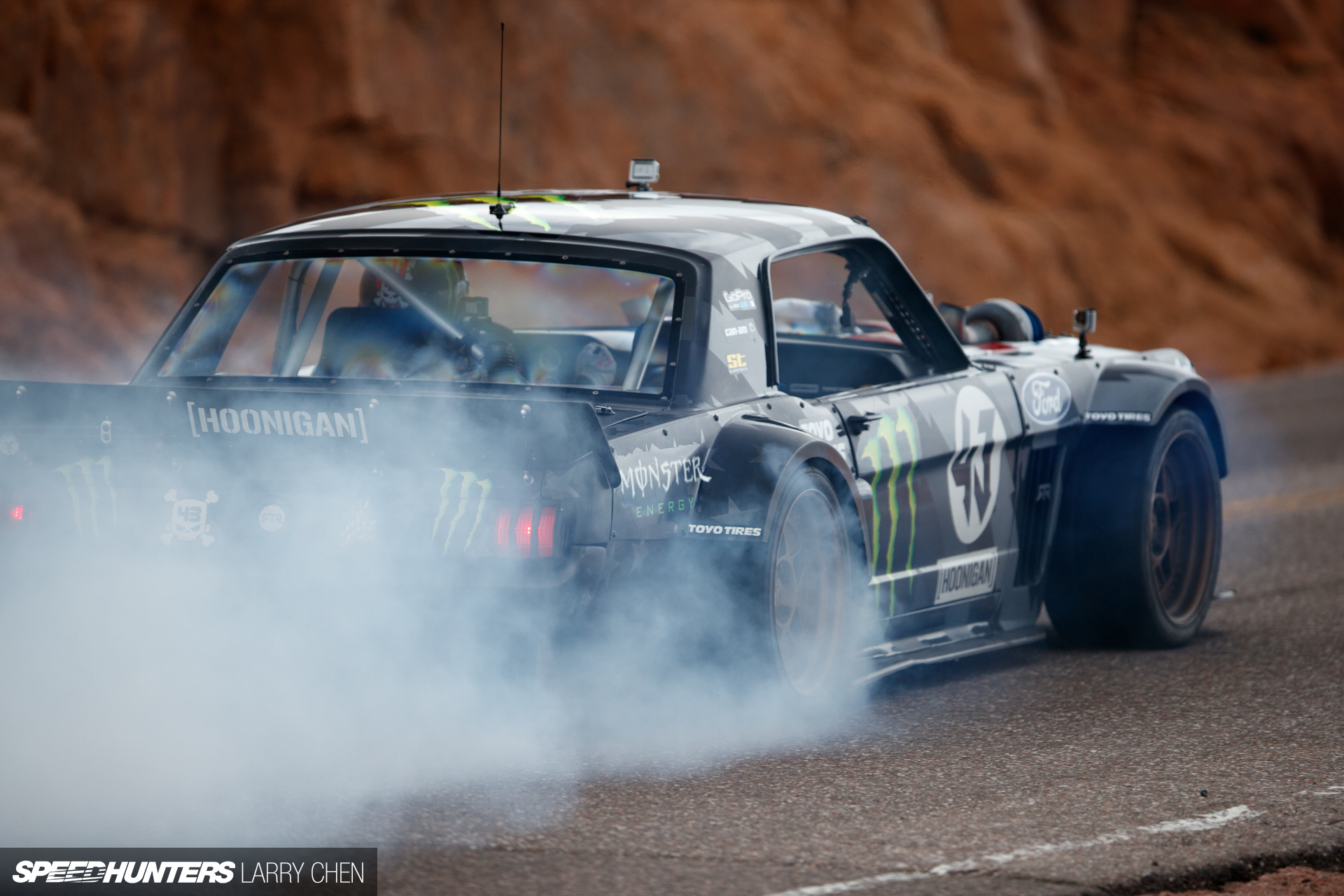
What does it take to make a car worthy of Ken Block’s Climbkhana? We take a closer look at the newest version of the Hoonicorn.
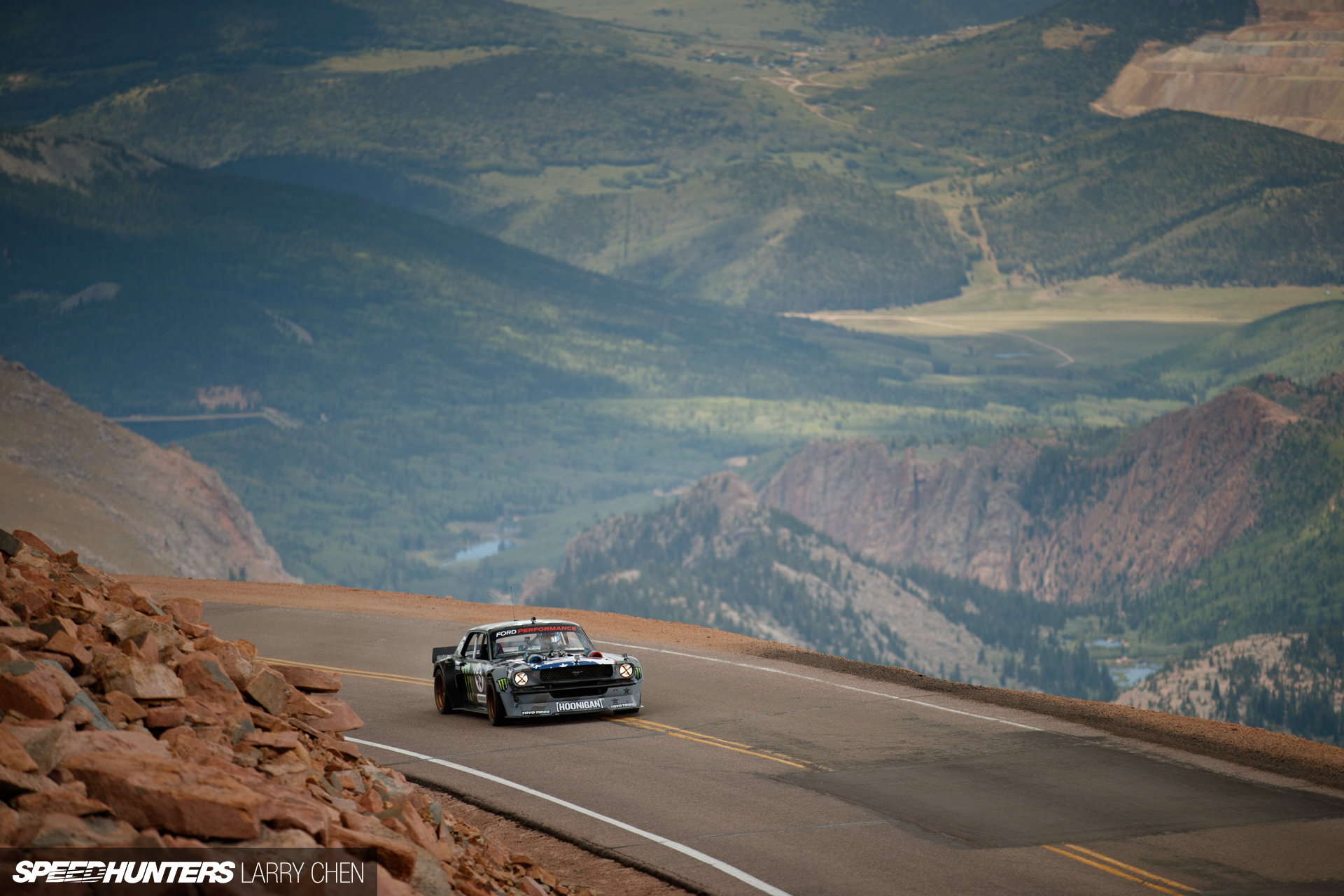
Pikes Peak is a Colorado mountain that was legendary long before the Race to the Clouds. It’s named after the man who was the first American that discovered it, Zebulon Pike, though he failed to reach the summit when he attempted to do so in 1806. In describing the endeavour, Zebulon stated that “no human being could have ascended to its pinnacle.” How astounded we he be now to learn that not only is Pikes Peak the location of one of the old motorsport events in the world, but that it’s now the subject of a Ken Block video.
You can check out Larry’s Climbkhana behind-the-scenes story here.


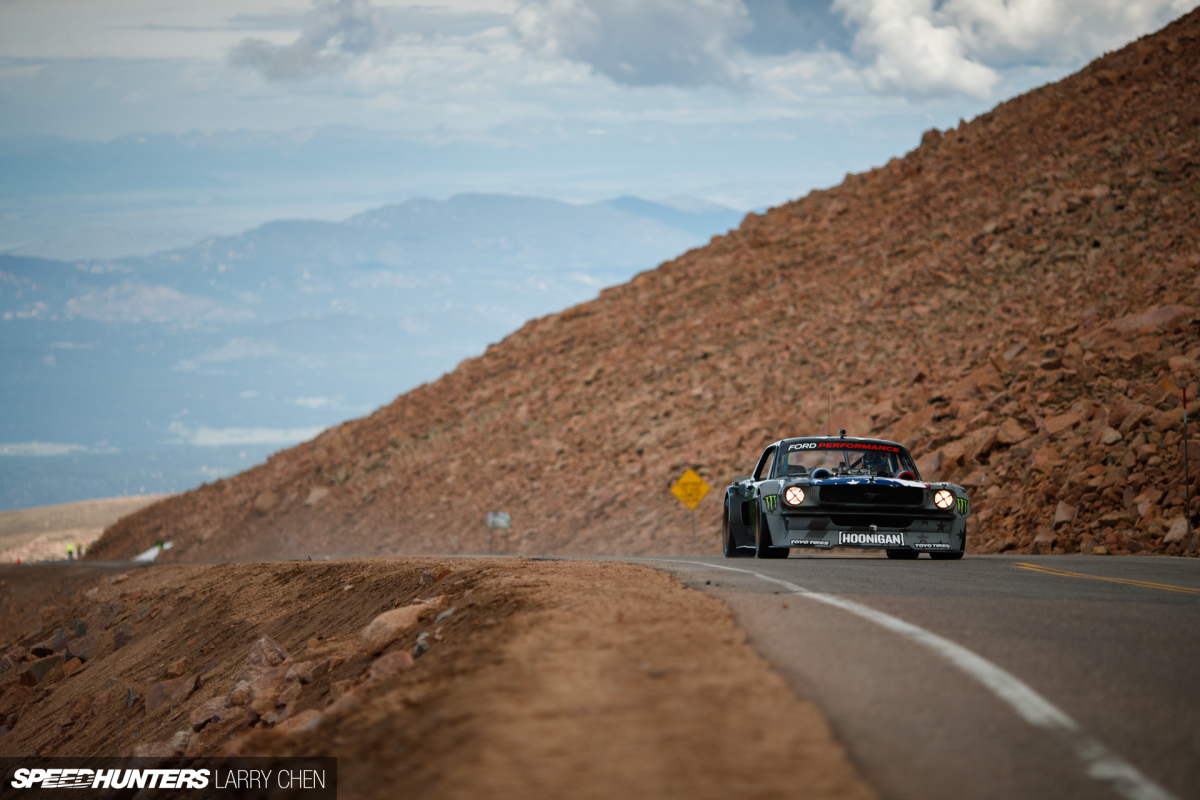
The mountain tests engines and their tuning harder than any other race in the world. While regular vehicles can cope with the climb, pushing a race car to its limit while going from base to 14,115 feet above sea level places and incredible strain on the engine as you progressively lose oxygen the higher you climb. By the time you reach the top, there is less than 13 percent of effective oxygen to use where normally you have about 20 percent. That not only affects you, but your engine as well – it has less air to use to burn fuel.
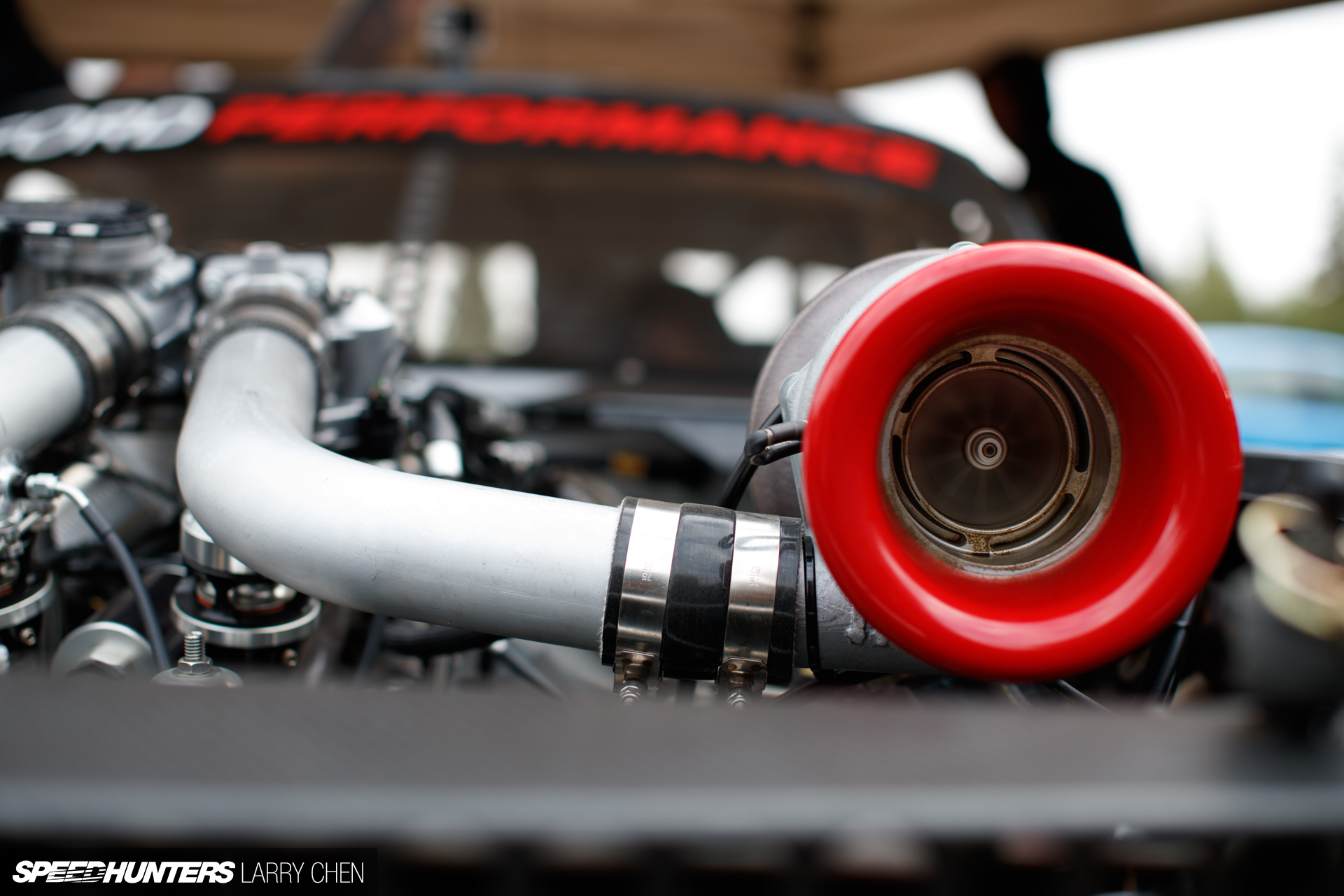

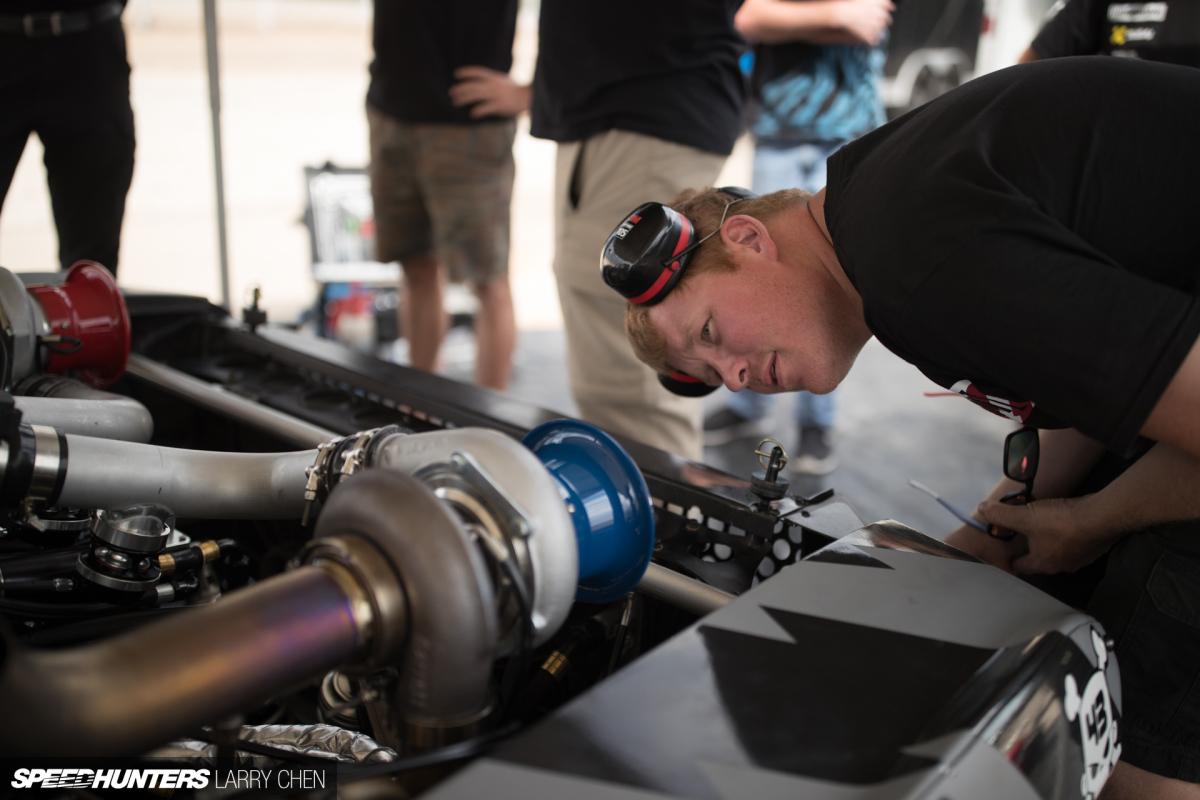
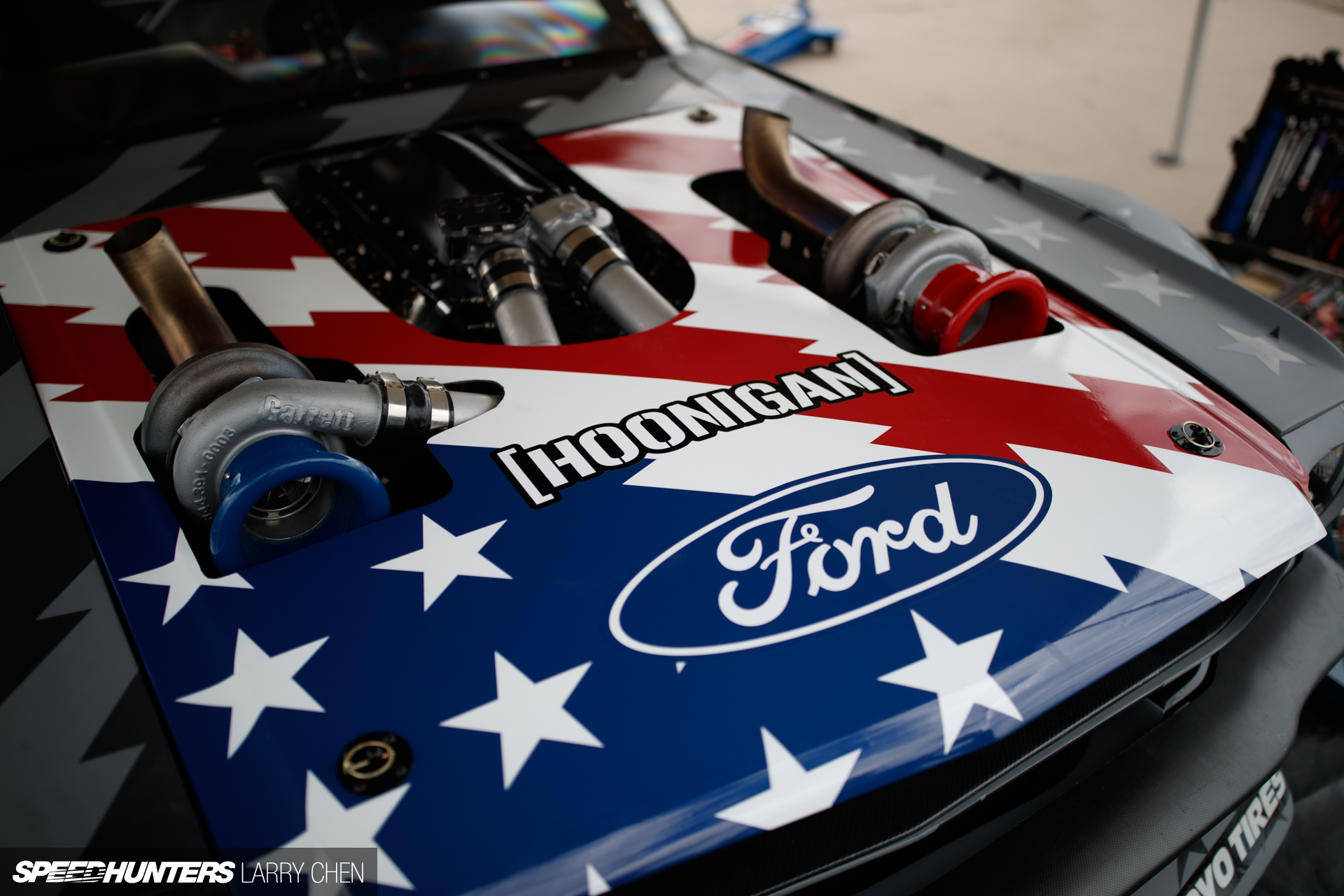
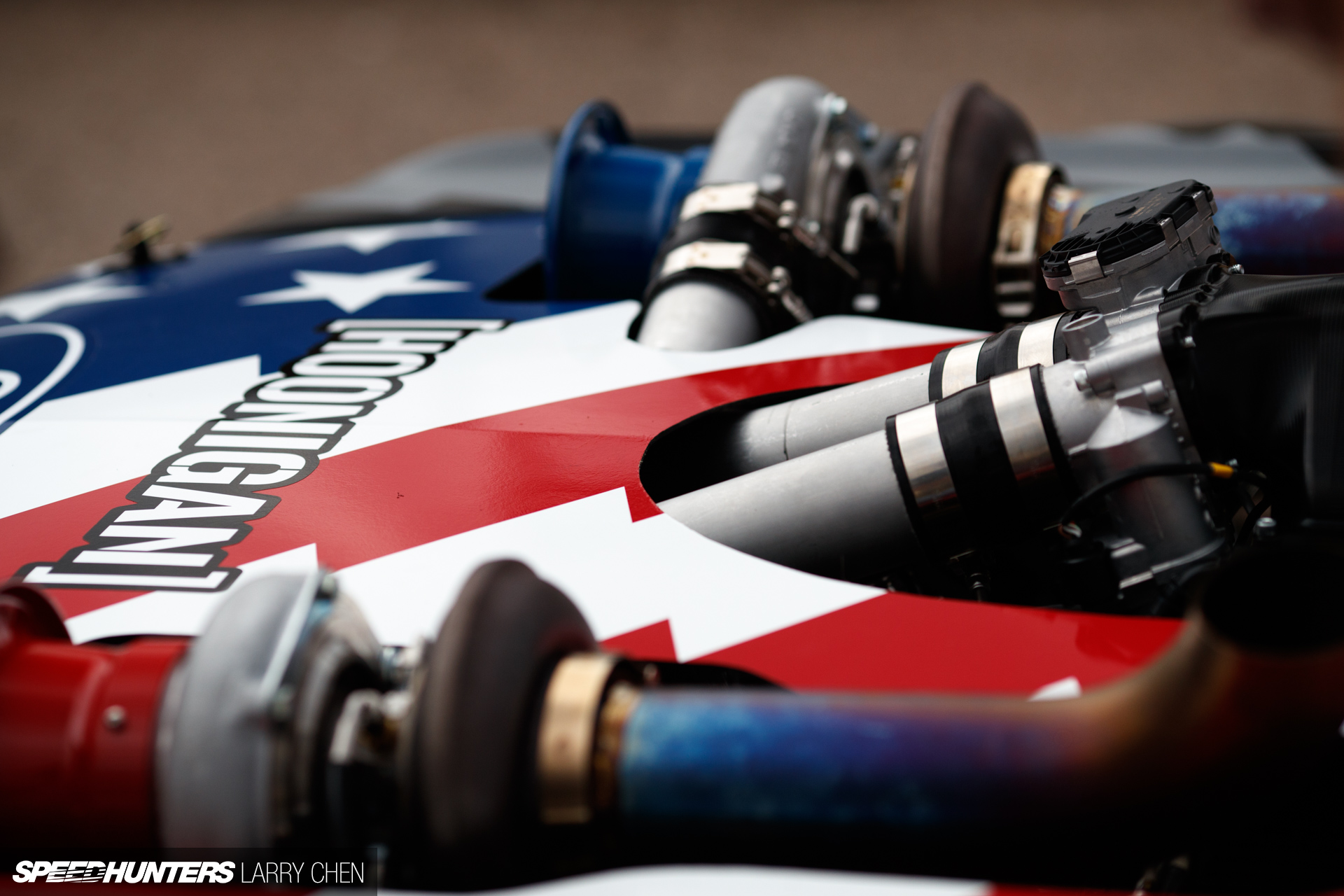
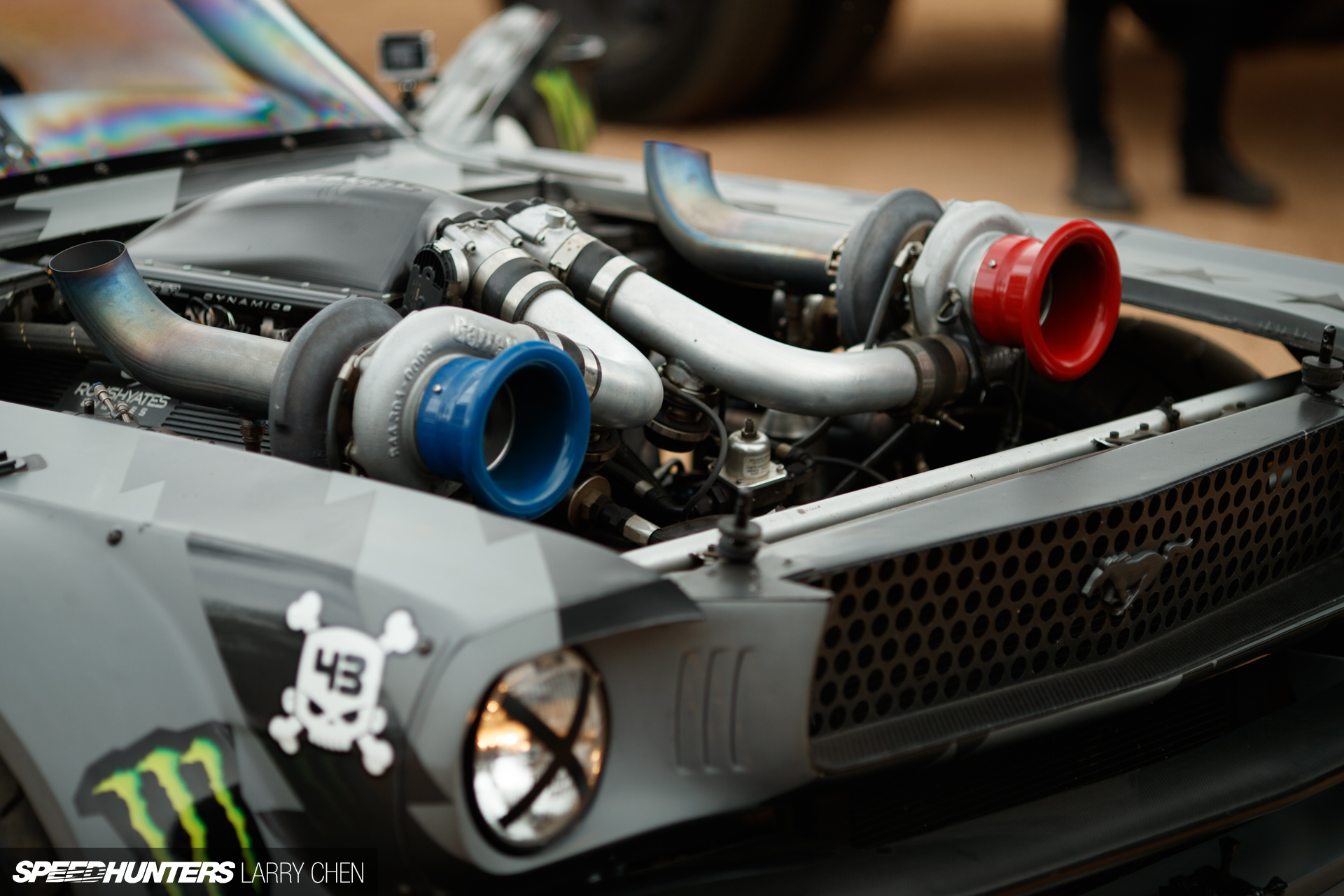
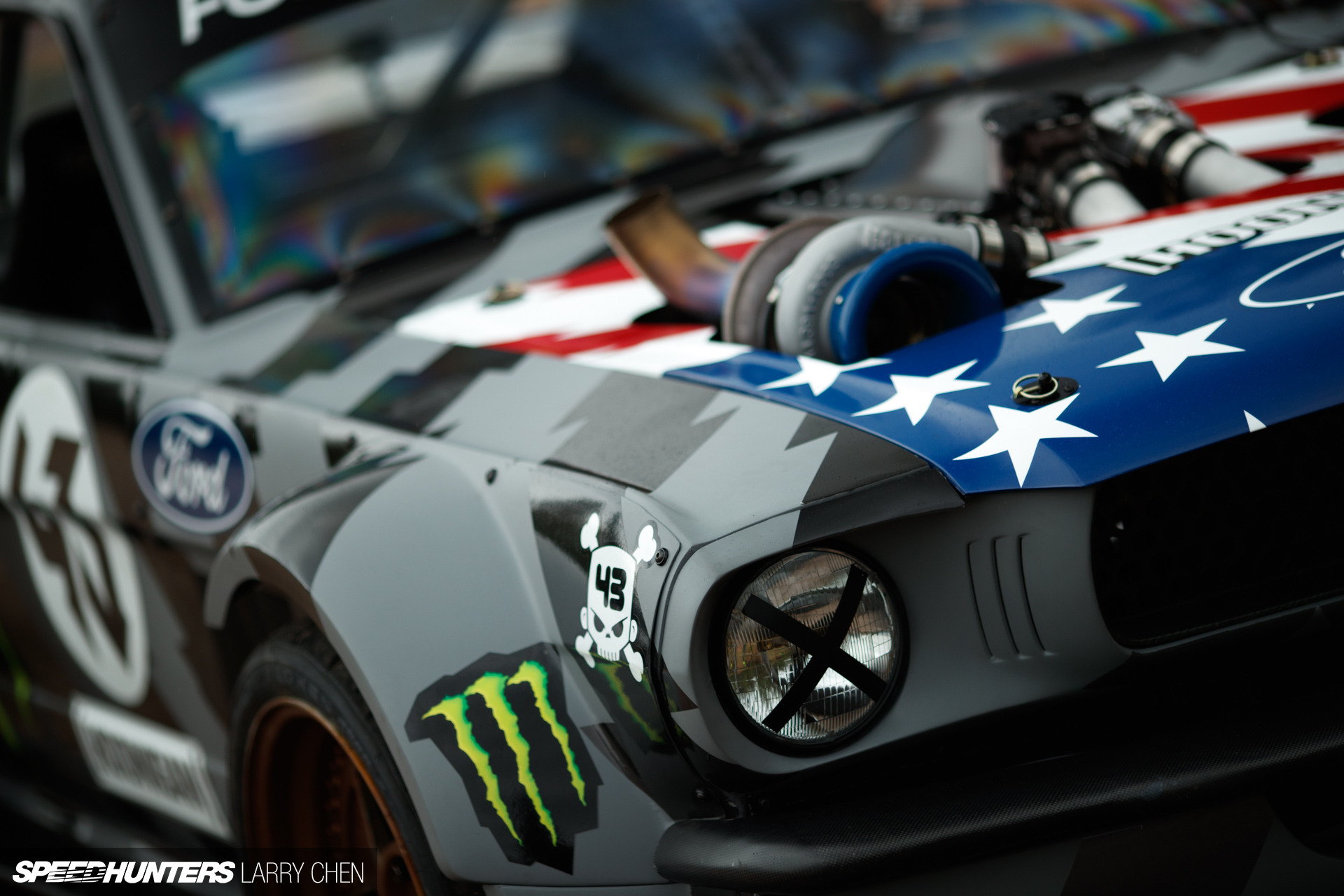
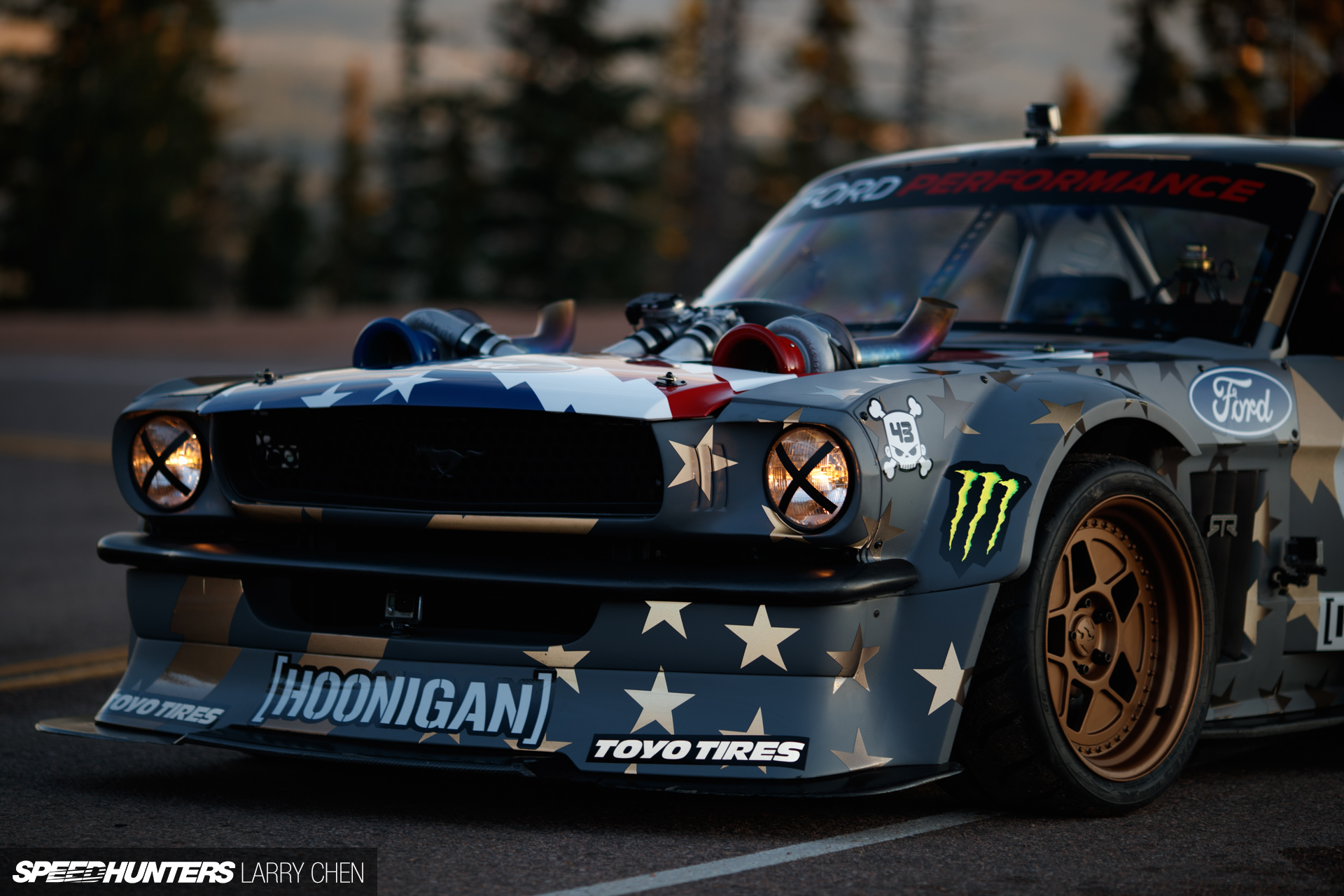
In the Hoonicorn RTR’s original guise it was naturally aspirated, drawing air through eight individual throttle bodies. For Pikes Peak, the NA setup was just not going to cut it, hence the move to a pair of Honeywell Garrett GTX3584RS turbochargers that would shove more air into the intake and effectively increase the oxygen content.
There was a challenge in this though, as you must find a way to cool that charged air or risk running into detonation. You could do it with an intercooler, but an air-to-air can reduce throttle response and an air-to-water can mean packaging a new radiator and adding a weight penalty. For the Hoonicorn RTR V2, the answer was to hook the turbine outlets straight to the Switzer custom billet intake manifold and cool the air charge with fuel. This is where methanol comes into the equation.

Methanol, also known as methyl alcohol, is an alcohol fuel as its name suggests. Where ethanol uses plant sugars to create its alcohol, methanol primarily uses wood, but it can also be made from carbon monoxide, carbon dioxide, and hydrogen. The problem with methanol, environmentally, is that it can be absorbed through the skin in its vapor form and is why it’s not used as a primary source for fuel in cars now. Methanol is toxic to humans in as little as 10-milliliters to cause blindness and 60 to 100-milliliters to be fatal, so when it is used it’s blended with ethanol. The other risk is that it burns with a flame that is nearly unseen by the human eye. Fortunately, it’s also harder to ignite than gasoline is, but that’s also the other issue with using it as a fuel.
Methanol Burns Cooler?
Alcohol-based fuels burn at cooler temperatures than gasoline does, which is why they are popular with supercharged and high-compression engines, like those you see in drag racing. What I mean by ‘burn cooler’ is the energy in heat required for its phase change to become a vapor. For gasoline, you need about 150-BTUs (British Thermal Units or 158258-joules of energy) per pound of fuel to change from its liquid state to its vapor state. Methanol requires 506-BTUs (533858-joules) of energy per pound of fuel.

That is temperature that’s taken out of the cylinder which cools it down. By doing so, you can run more cylinder pressure (by higher compression or boost pressure) and produce more heat in the cylinder because the methanol will cool it down far more than gasoline does. Of course, with such a great advantage there has to be something that makes it not worth using, right? Yeah, it takes more of it to create the usable energy to make your engine run. This is a reference to its energy density and its air/fuel ratio to run at the power it makes.
Twice The Power, Twice The Fuel
The stoichiometric ratio of air to fuel for gasoline is 14.7:1, or 14.7 parts of oxygen to one part gasoline; this is the perfect mixture with no excess air or fuel after being burned. The reality is that, if you want to make power you’re actually going to run more on the rich side with a 12.5 to 14.0:1 ratio. Methanol, on the other hand, has a stoichiometric ratio of about 6.5:1 and ‘power rich’ is about 4.0 to 5.9:1. In other words you’re dumping close to twice the fuel to make power. In the case of the Hoonicorn RTR V2, it’s why the MoTeC M150 ECU is controlling two fuel injectors per cylinder.

The upside of all this is that you make some incredible power out of your engine. Just to be sure that the Mustang would perform as Ken needed it to for Climbkhana, Hoonigan Racing Team, with lead technician Gregg Hamilton, took the car out to a high-altitude airfield in Colorado to do engine tuning and testing.

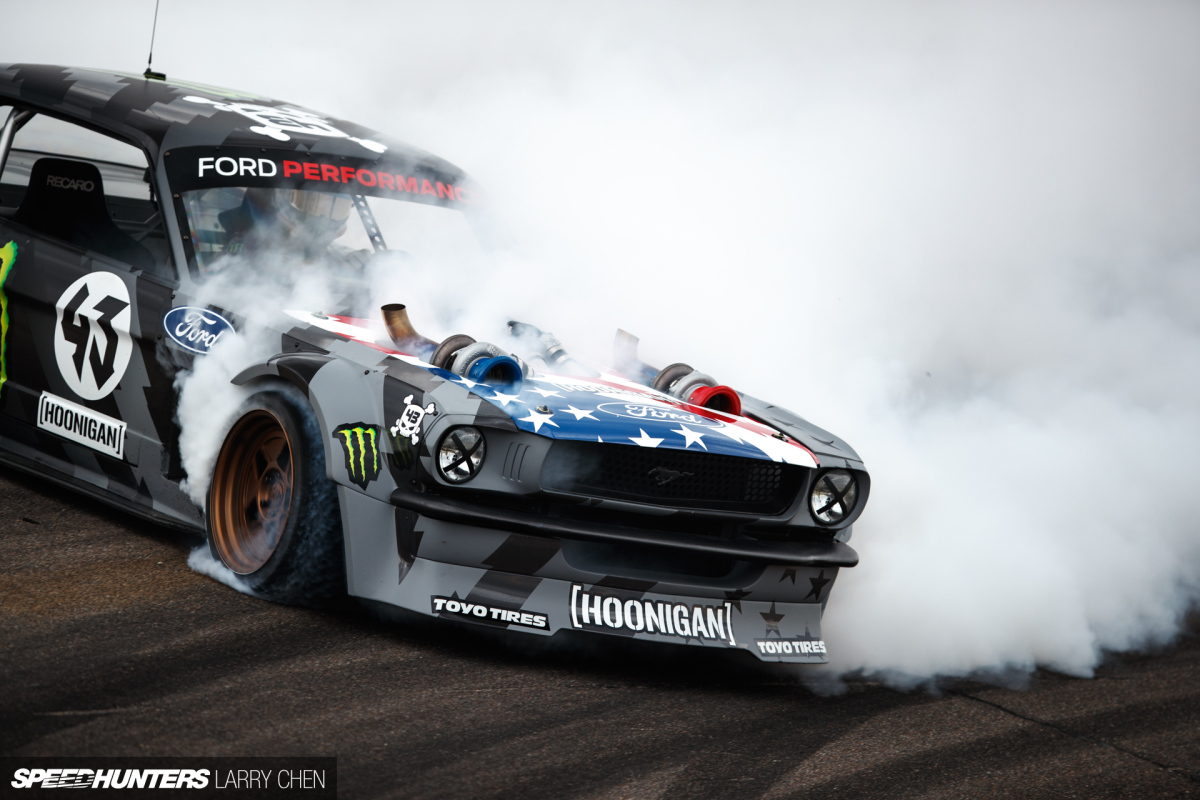
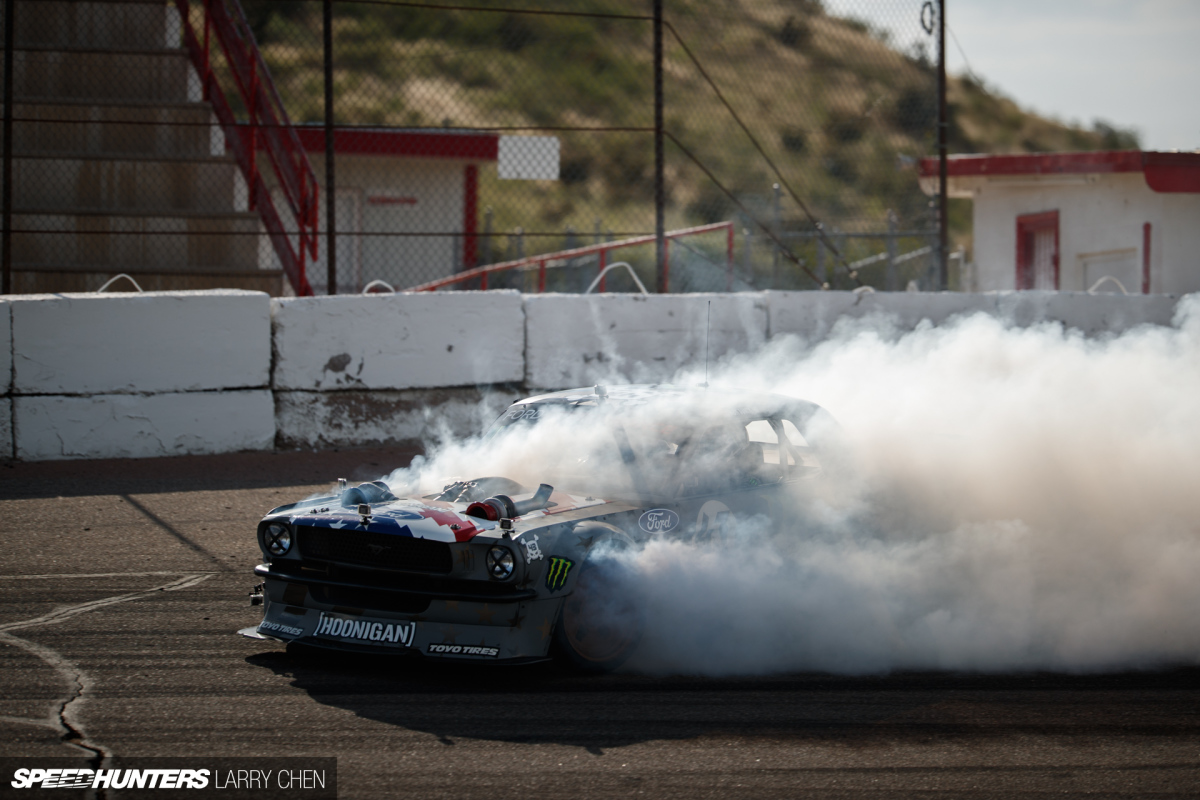
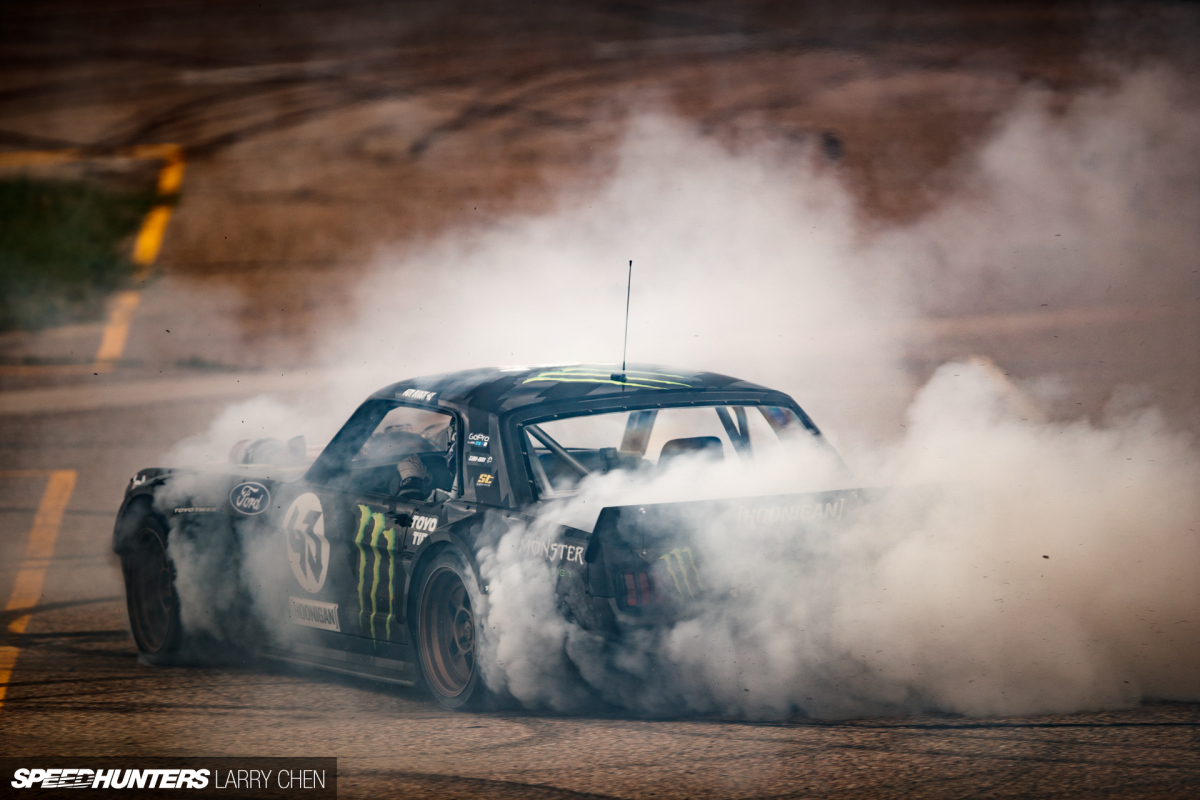
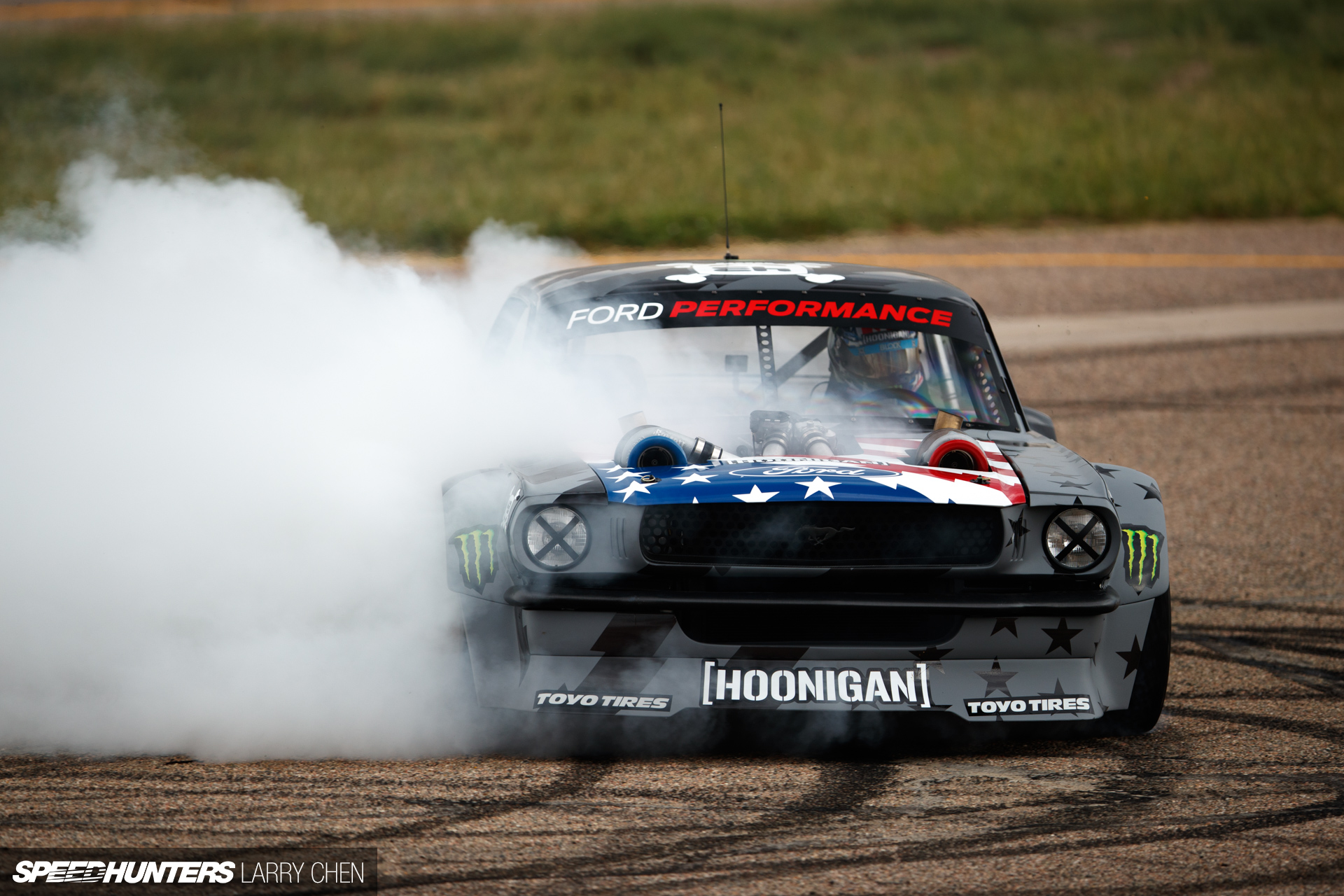
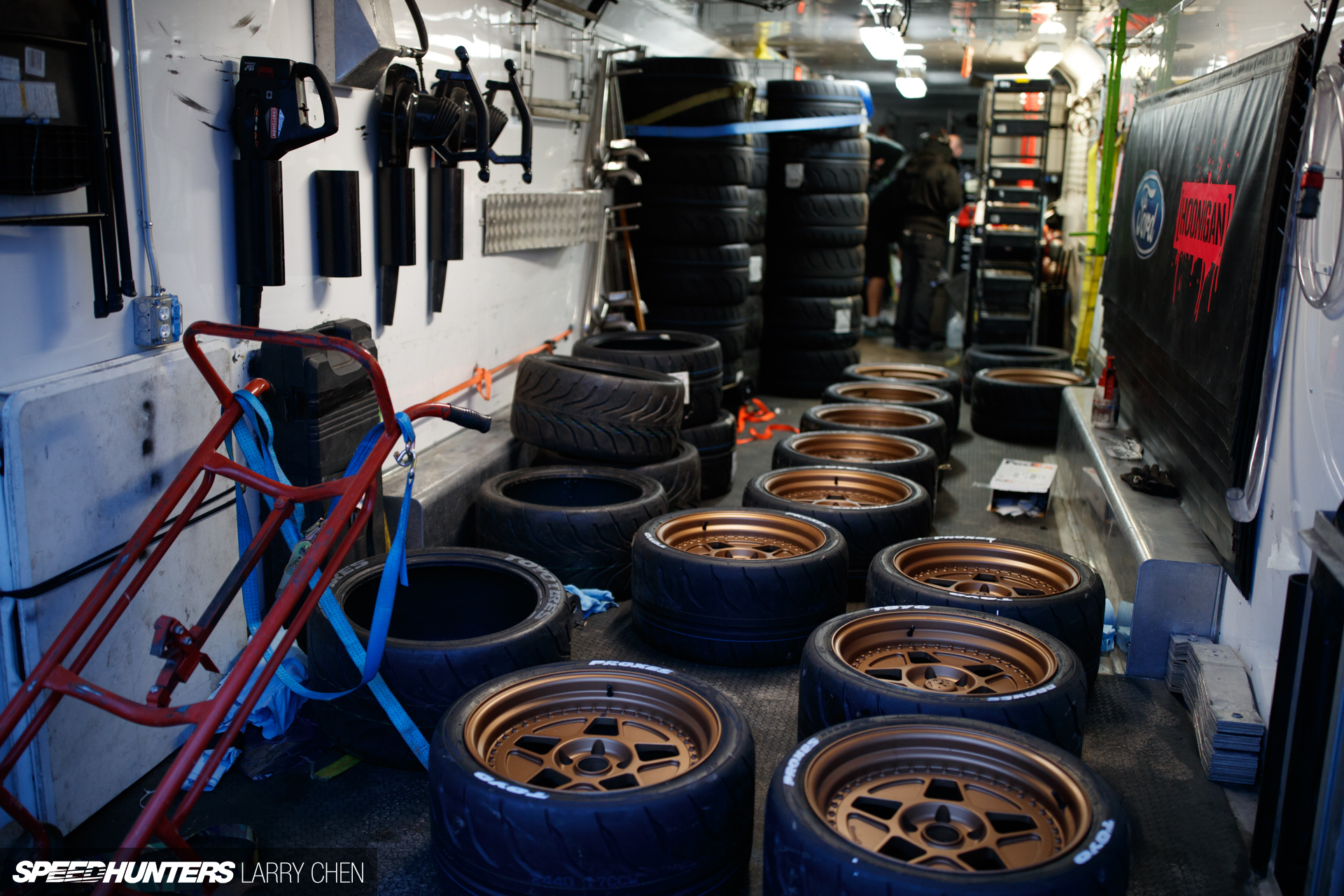
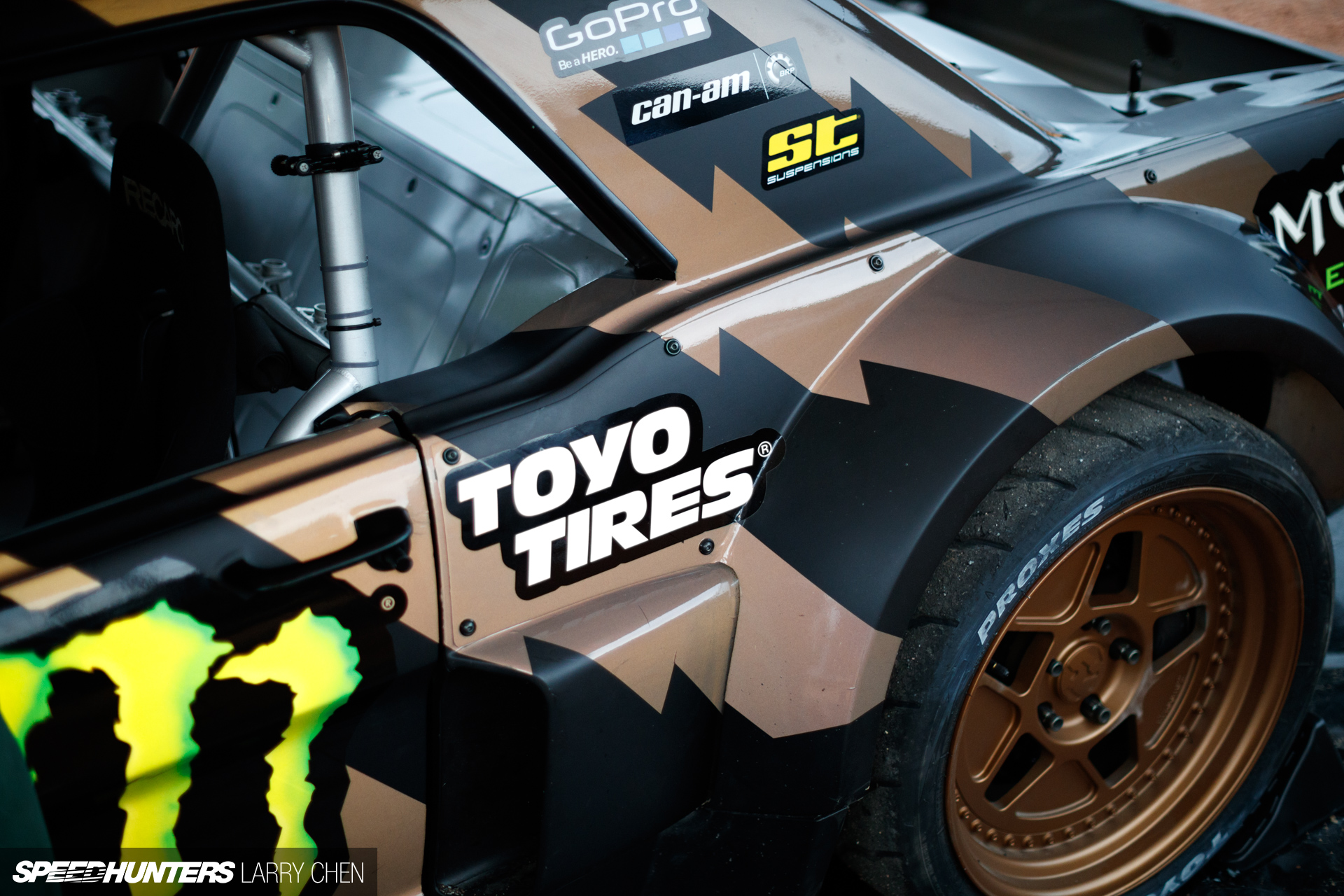
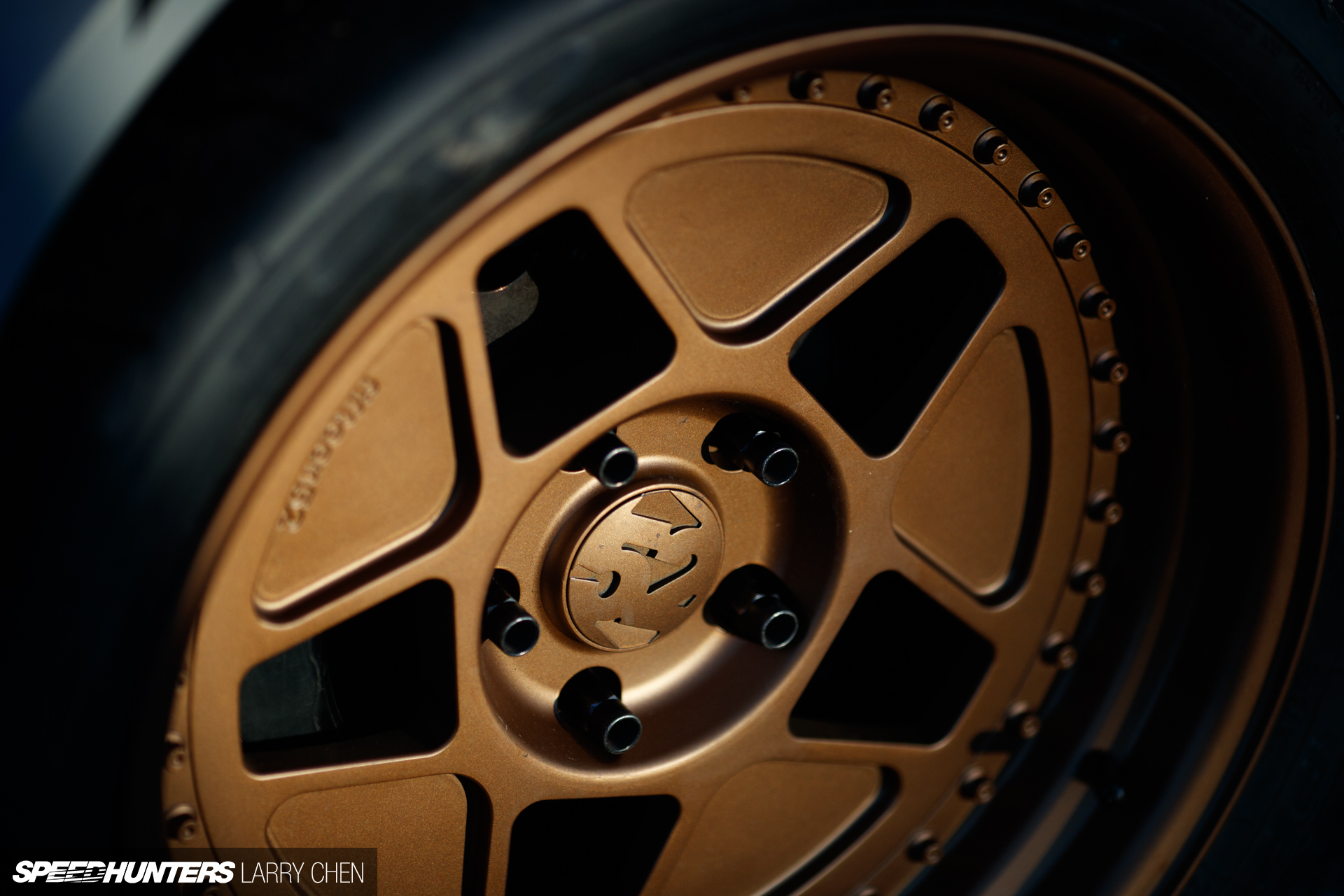
When the Hoonicorn first debuted it made about 845 horsepower to all four wheels from the naturally aspirated, gasoline-burning Roush Yates 410ci V8. Now, burning methanol and with a pair of Honeywell Garrett turbos, it’s making over 1400 horsepower, 1250 foot-pounds of torque to spin all four 295/35R18 Toyo Proxes R888Rs mounted on 18×10.5-inch Fifteen52 forged 3-piece Tarmac R43 wheels in one hit of the throttle. Don’t forget that it’s also doing this at over 14,000 feet above sea level.

Interestingly enough, despite the huge jump in power, the drivetrain remains unchanged. Sadev claims that its SC90-24/170 transmission is only good for up to 590ft-lb (800Nm) of torque, but in this application it’s seeing twice that. To be honest, it was already well above that number with the original Hoonicorn’s 720ft-lbs of torque.
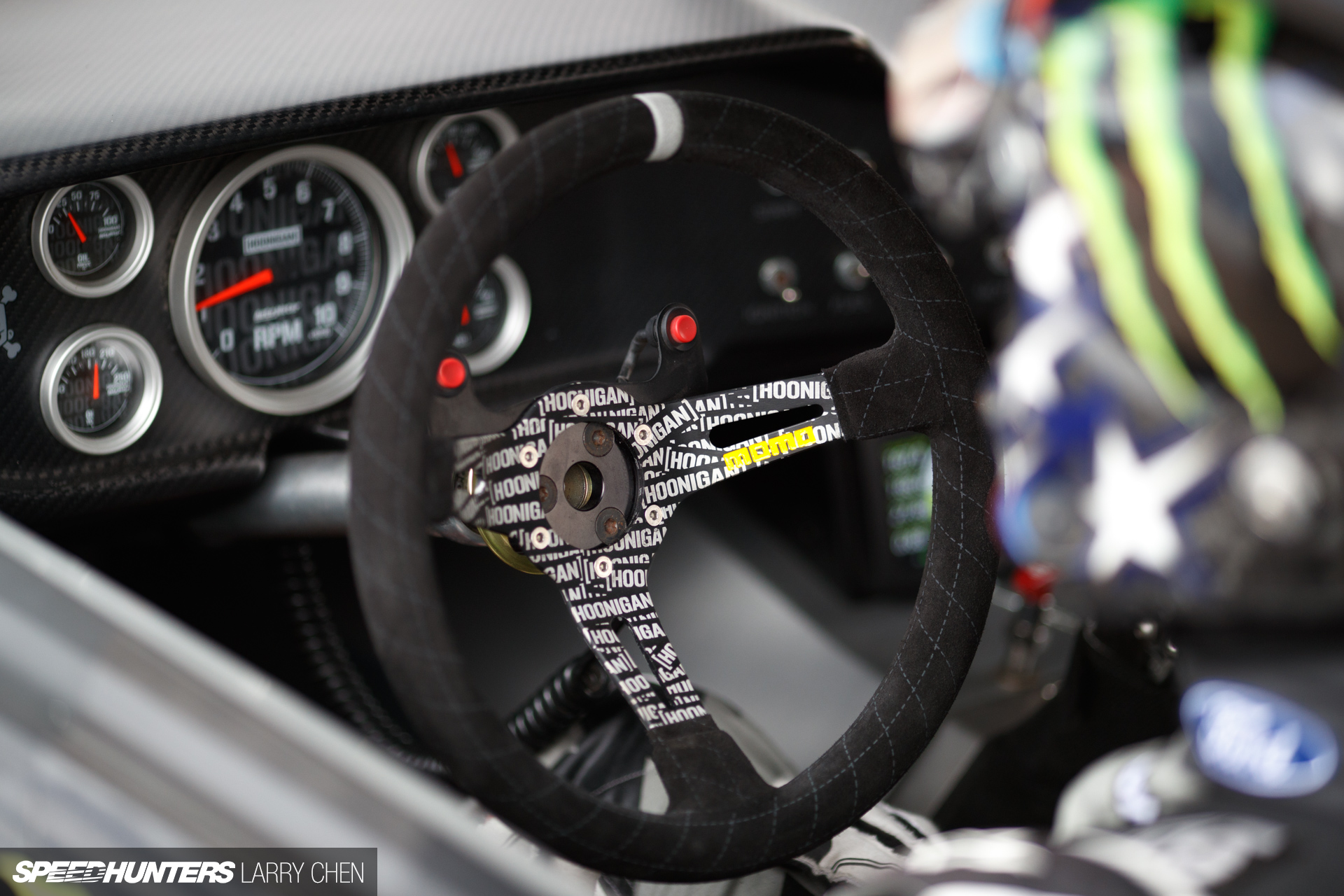
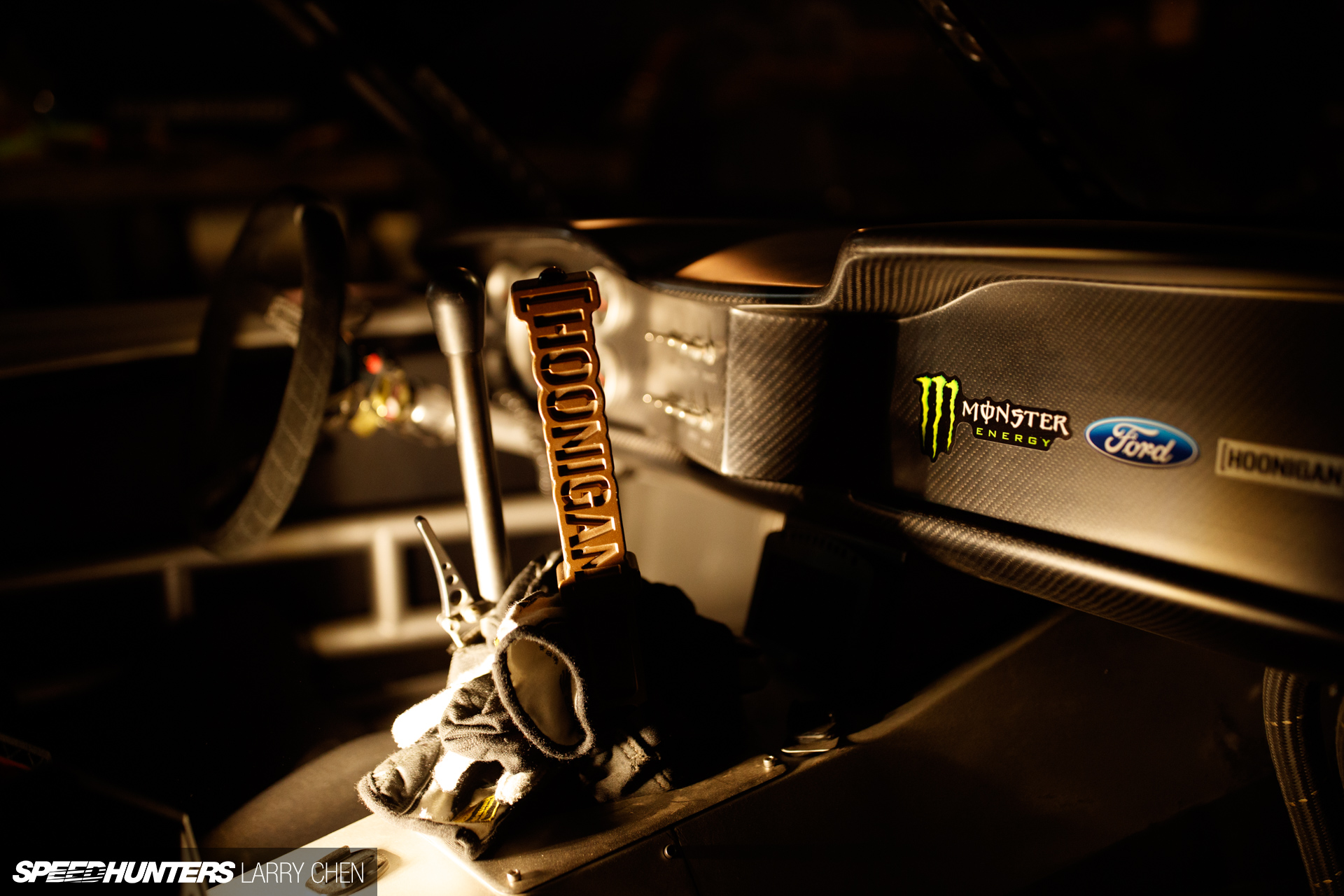
Being a transmission used in rally cars around the world, it does come with the advantage of having the handbrake hydraulics integrated into the clutch, so when Ken yanks on the custom ASD handle, the clutch gets disengaged without needing to move his left foot. The front and rear differentials are also from Sadev and are carryovers from the original build.

However, that’s not to say everything worked right the first time, because when you begin to force air down the throat of a naturally aspirated engine, pressure will find its way to the weakest points. During dyno and short-run testing of the Hoonicorn RTR V2, the engine worked perfectly and had no issues. It was only during the climb up Pikes Peak that things began to head south. What wasn’t noticed right away was one of the issues of running methanol and the need for a lot of it in the cylinder, as the alcohol would wet the cylinders and wash away the oil.
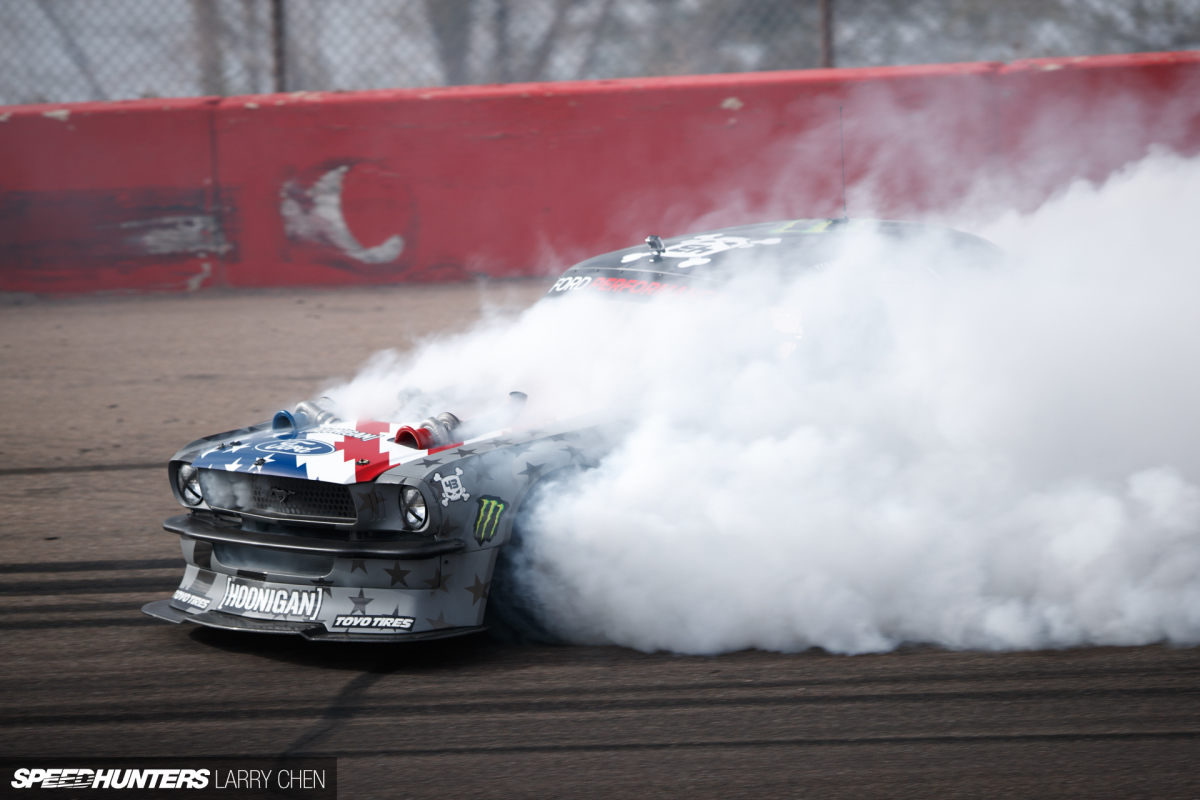
In short bursts, like drag racing or even drifting, this isn’t a concern, but the longer it runs the more oil gets washed away and soon the rings won’t fully seal. In the Hoonicorn engine’s case it allowed the 21psi of boost pressure past the rings and into the crankcase which then blew out the seals on the valley plate. The 3mm-thick plate even lifted.

That allowed oil to blow out of the valley of the block, which is not a good thing with an engine that’s running a dry sump system. Initially, the team thought this was an engine issue so swapped it out entirely, however the second engine would do the same thing and the reason was finally discovered. The initial fix was to add more sealant to make up for the lifting valley plate, but when that didn’t work the team reduced the fuel going into the engine to help prevent the cylinders from washing away too much oil. But only so much can be pulled before things get too lean and cylinder temperatures head towards meltdown.

They then changed out the oil pump that features a larger scavenge pump to remove more crankcase pressure. This worked, but the pressure would now move to the oil tank so a change was required there as well. A larger tank with bigger breathers and blow-by bottles was fitted, and on top of this an even larger scavenge pump was installed.
Finally, success. Or at least in regards to things that could be controlled. As Larry pointed out in the behind-the-scenes post, unseasonal weather on Pikes Peak brought about another set of challenges for the shoot.

Despite your personal take on them, Ken Block’s Gymkhana videos always produce gigantic hits and outright vehicle porn. The other great thing about them is that each one is a leap in vehicle performance by the Hoonigan Racing crew. In that respect, you have to appreciate what the Hoonicorn has become. You also have to wonder what’s going to be next for this unique take on the 1965 Ford Mustang.
Is there a V3 after you’ve created a 1,400hp, all-wheel drive monster from an American classic? Well, we did wonder if there’d be a V2 after the first build…
Words by Justin Banner
Instagram: jb27tt
Facebook: racerbanner
Twitter: RacerBanner
Photos by Larry Chen
Instagram: larry_chen_foto
larry@speedhunters.com
More Ken Block related stories on Speedhunters
Cutting Room Floor