
It’s hard to believe that the original Fast & Furious movie was released almost 17 years ago.
When the original film came screeching onto screens in 2001, it took the niche hobby of modifying cars from a relatively unknown underground pastime and thrust it into the limelight. For good or bad, its effect on modern car culture is unparallelled by anything that came, or has come from Hollywood ever since. The franchise has also been a huge money spinner for Universal Pictures too, grossing over US$9 billion over eight films, with a ninth on the way.
It’s crazy to think that there are people just starting to drive today that were barely taking their first breath as the original storyline played out on cinema screens.

Let’s level out here – the storylines are never great. The acting is, at best, sub-par and the films themselves are never expected to clean up at the Oscars. But what they did, and still offer is fast-paced, and often ridiculous entertainment value for both petrolheads and cinema-goers who just want some good ol’ fashioned brain-out viewing.

Not taking anything away from the colourful characters portrayed in the films, the cars themselves are always the real stars. To outsiders, the vehicles of the original film might have look like hideous colourful monstrosities, but to those of us already immersed in the tuning scene, they were a source of inspiration for an entire generation.
Huge graphic murals and neon underlighting became an instant trend around the world – sometimes it worked, often it really didn’t (Veilside-kitted Citroen Saxos, anyone?). The scene rapidly changed to reflect what Hollywood thought modified cars should look like.
At the time, it opened my eyes to JDM makes and models that hadn’t really captured my attention until that point. I vividly remember desperately wanting an EJ Civic with green neons, too. I had no aspirations to highjack lorries on the freeway, but the opening scene from the first movie left such a huge impression on me at the time. Sadly, Southend seafront on a wet and windy Saturday night never ended up being match for the gorgeous and glamorous street racing meet-ups in LA that I was sold on screen. Was I sold a lie?!
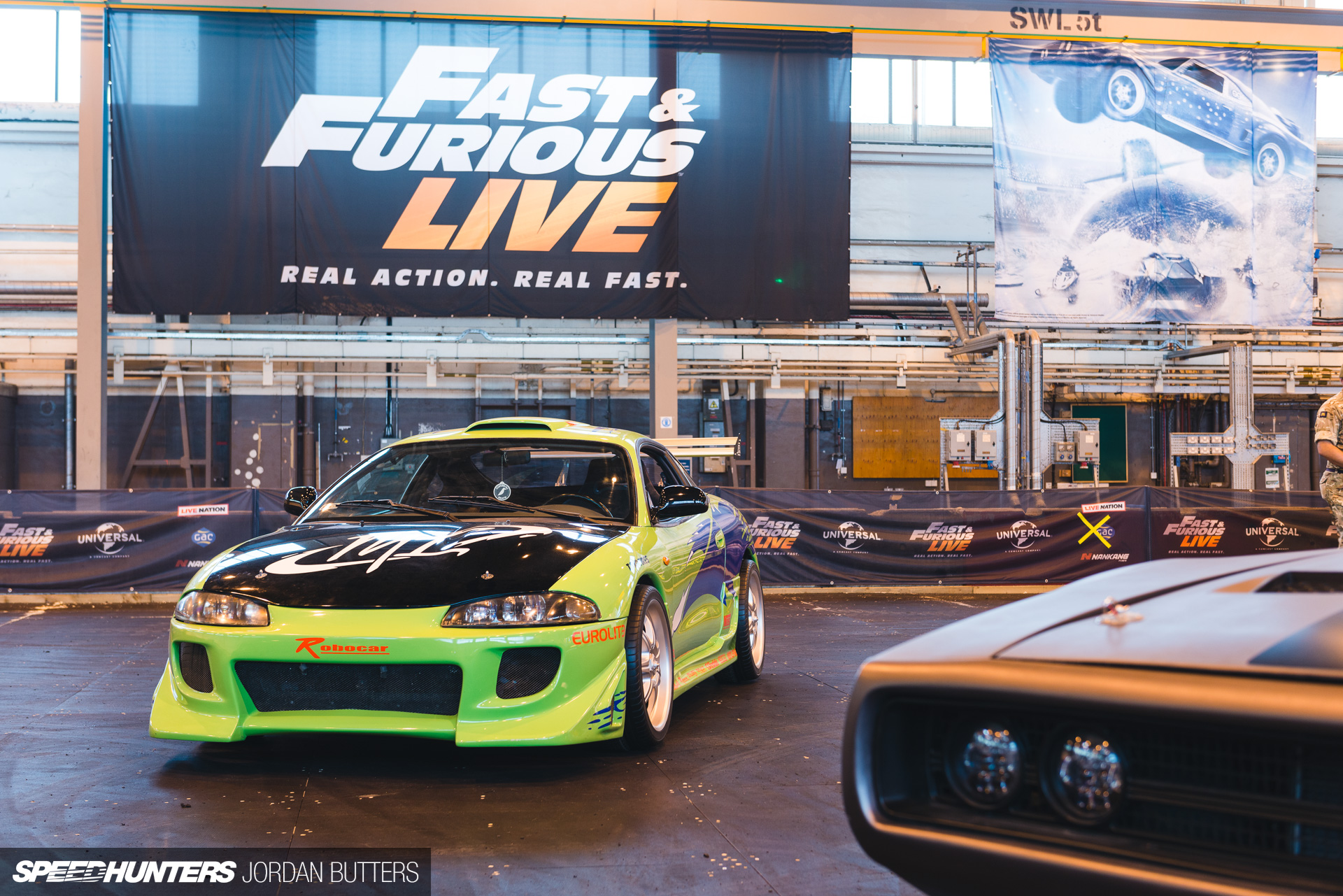
I was also bitterly disappointed that you couldn’t buy the Mitsubishi Eclipse here in the UK.
Regardless, it was our thing. It was polished, and exaggerated out of all proportion, but our thing was out there for everyone to see.
Over the years since the early Fast & Furious movies, tuning tastes have (thankfully) changed; car culture has grown up, and the film’s creations have evolved to reflect this. What was once classic muscle cars and souped-up Japanese imports is now performance models and supercars. Still, in my eyes the later sequels never matched up the first two films in the franchise.
The reason for this retrospective, as you might have guessed from the images above, is the creation of a new arena show that’s set to begin touring the world from next year. Fast & Furious Live is a £25 million production that brings the on-screen action to a live show, touring 23 cities across 14 countries, starting at the O2 Arena in London in January.
Fast Camp
I was lucky enough to be invited along to the show’s training facility ‘Fast Camp’ in Leicestershire, for an early press preview of the show, the cars, the stunts and some of the technology that makes this possible.
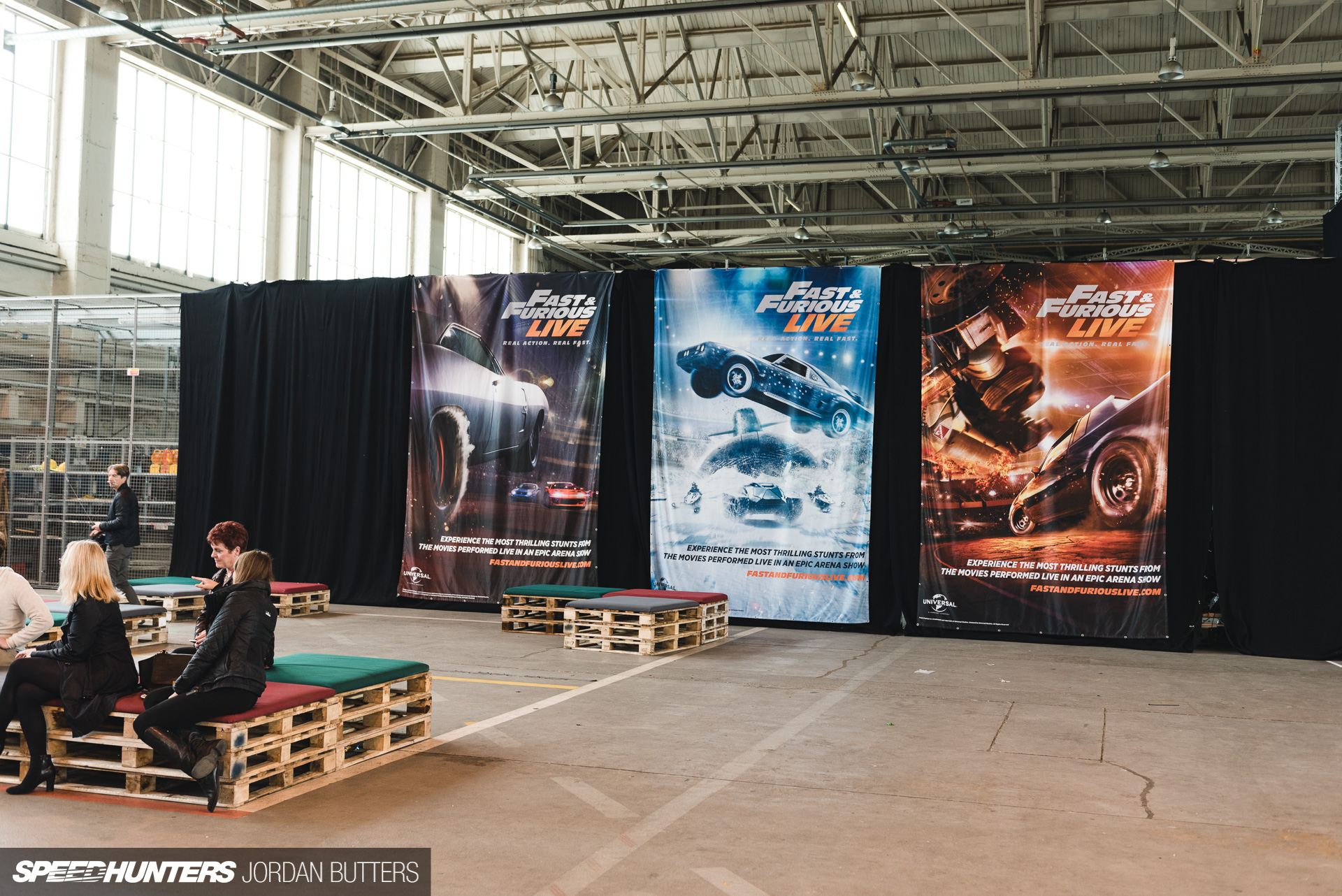
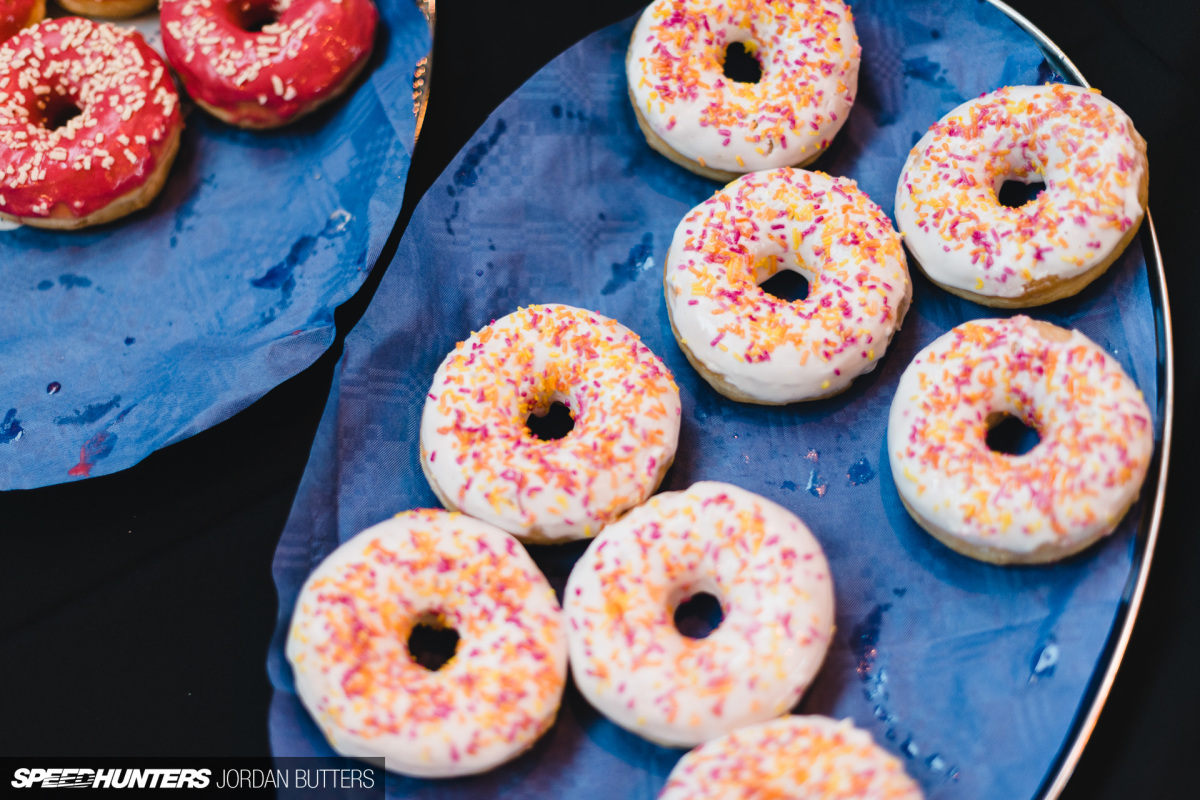
When I think of the Fast & Furious films I tend to associate it with the gritty neon-lit streets of Los Angeles, dramatic icy tundras or highway chases through baking hot deserts. So upon my arrival at Fast Camp in damp rural Leicestershire, England I wasn’t quite sure what to expect. The press were ushered into a large hangar, the only hints as to the day’s proceedings being several large graphic banners promising “Real Action. Real Fast.” It turned out that these weren’t the only donuts we’d be seeing today either.
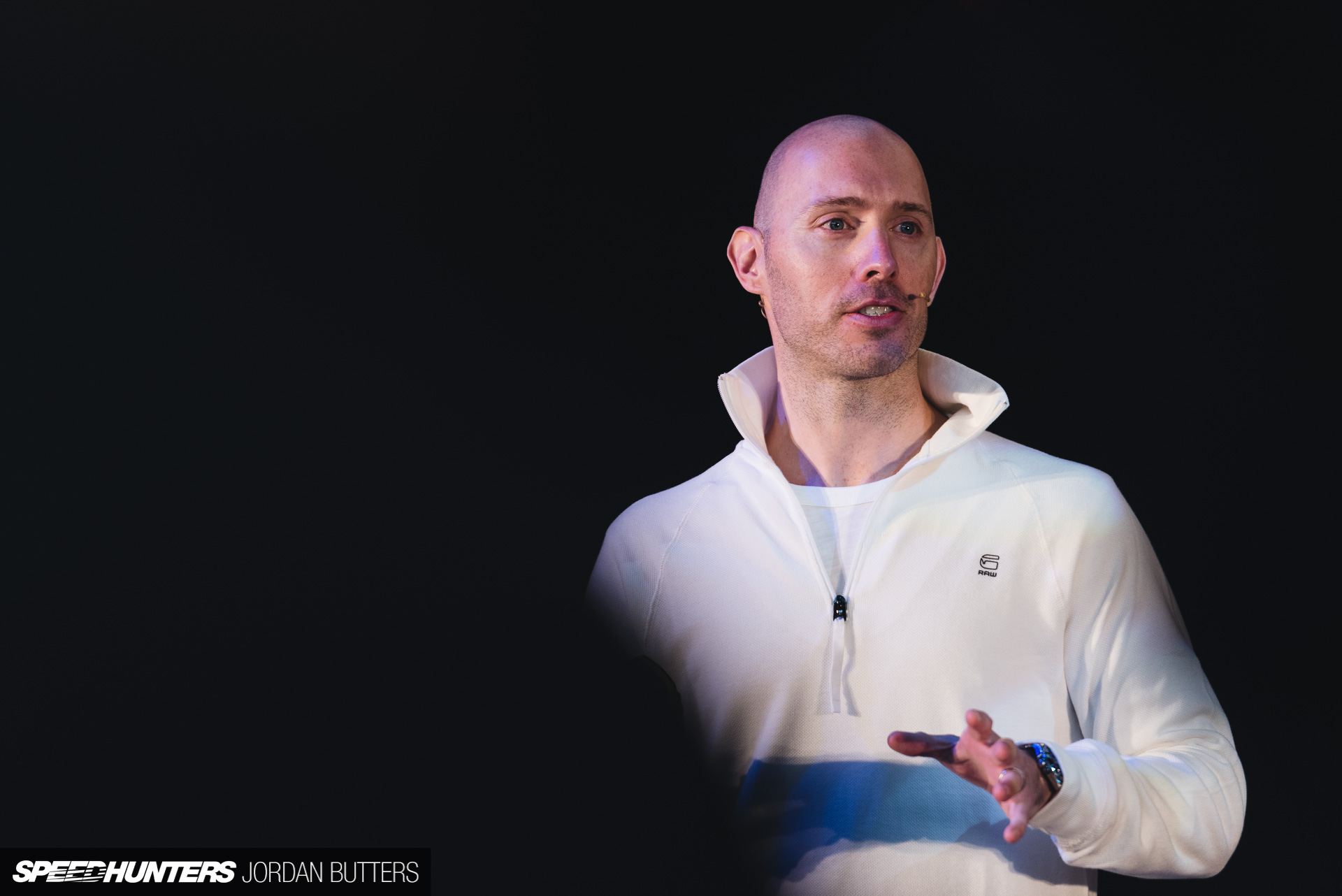
After a short introduction, we met to creative director Rowland French, who excitedly outlined some of the stunts and technology used in the main event. Having seen my fair share of drift demonstrations and stunt shows I like to think I’m pretty hard to impress in this regard, but Fast & Furious Live looks to take everything you’d expect from a live action show to the next level.
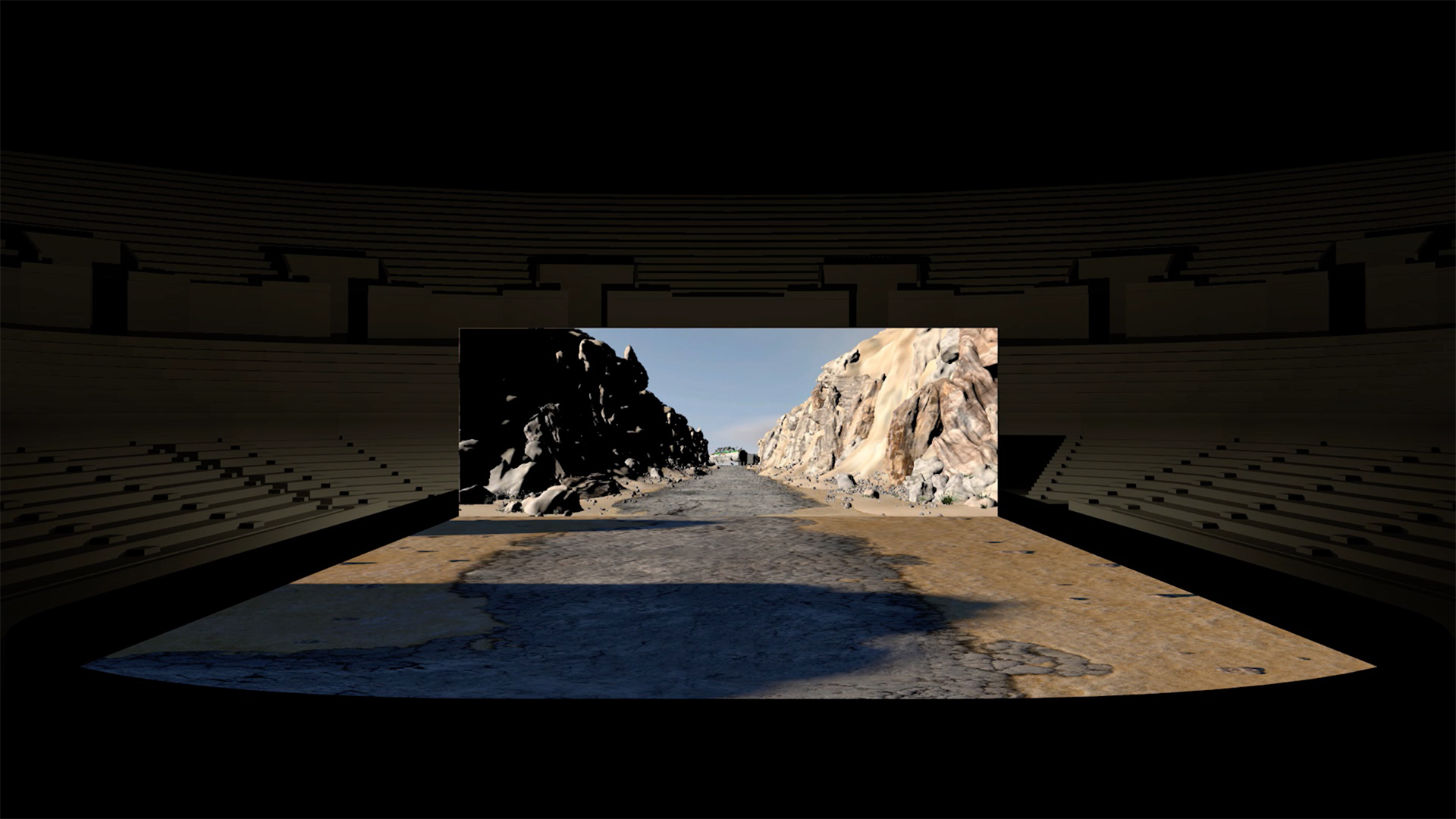
Alongside precision stunt driving, the audience can expect to see rolling and exploding tankers, surface-to-air missiles, jackknifing big rigs, a submarine that apparently surfaces up through the arena floor and a gigantic fireball-engulfed plane crash. This is all helped along by some really quite clever 3D projection mapping. Fifty two state-of-the-art projectors will beam videos onto the custom surface of the arena floor, turning it into a 3D screen, allowing the team to transport the audience from London to Miami to Rio, and into some of the movies’ best-known action sequences.
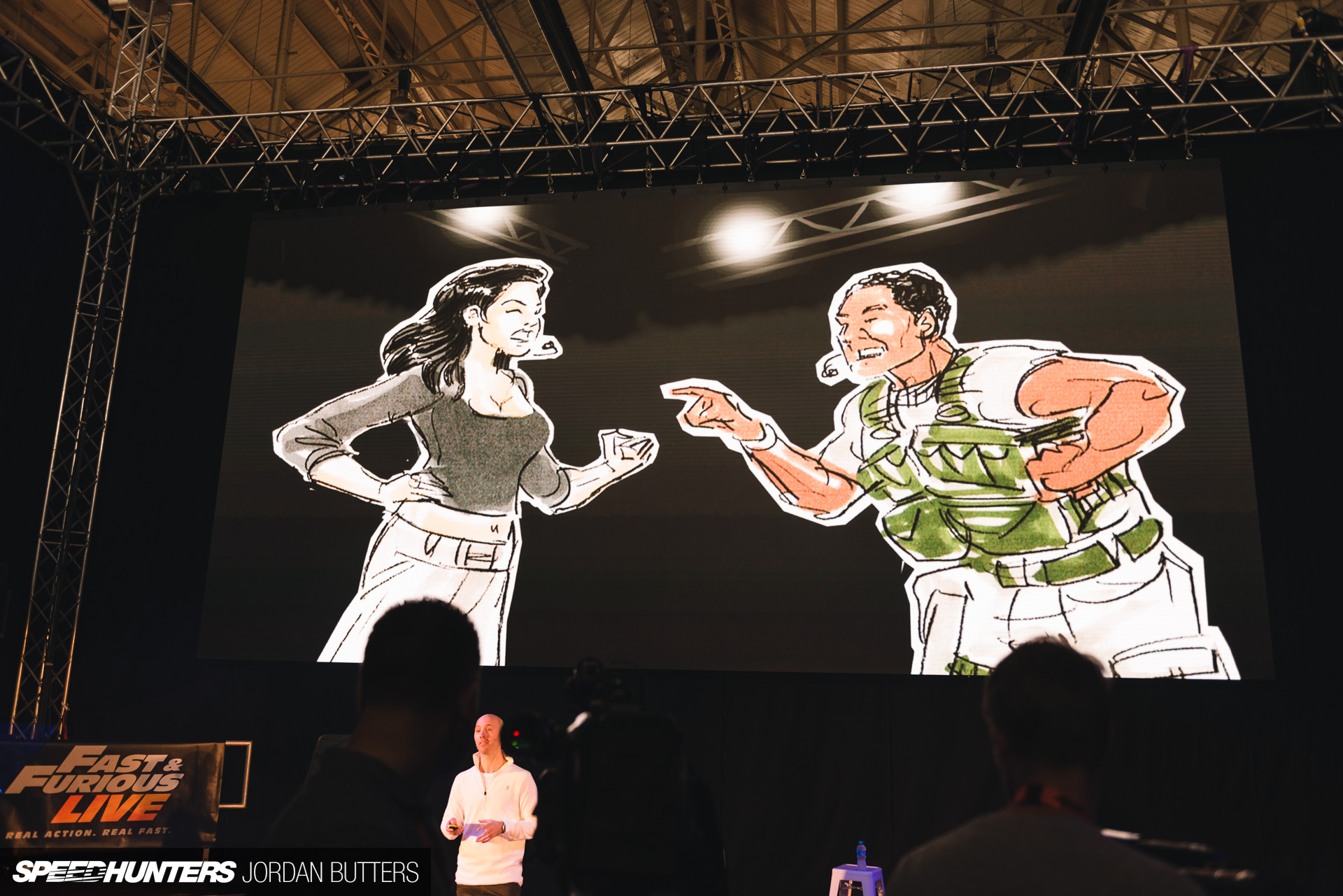
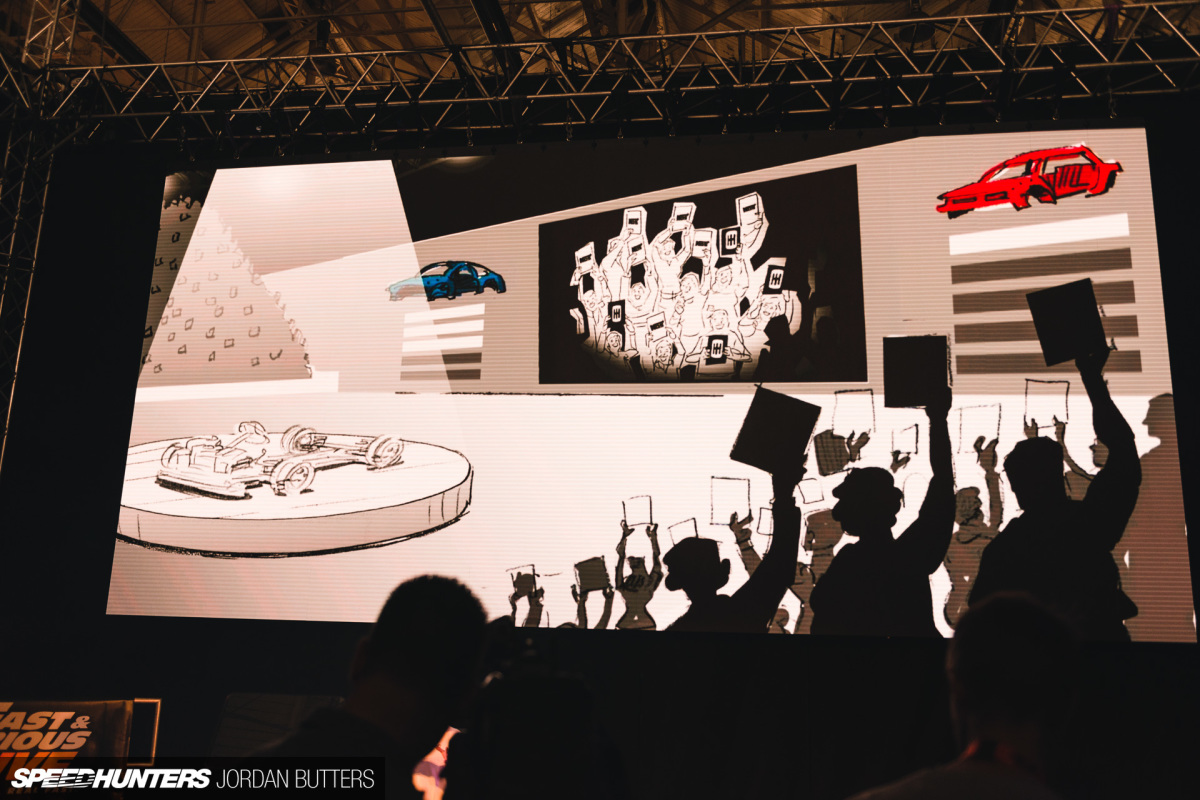
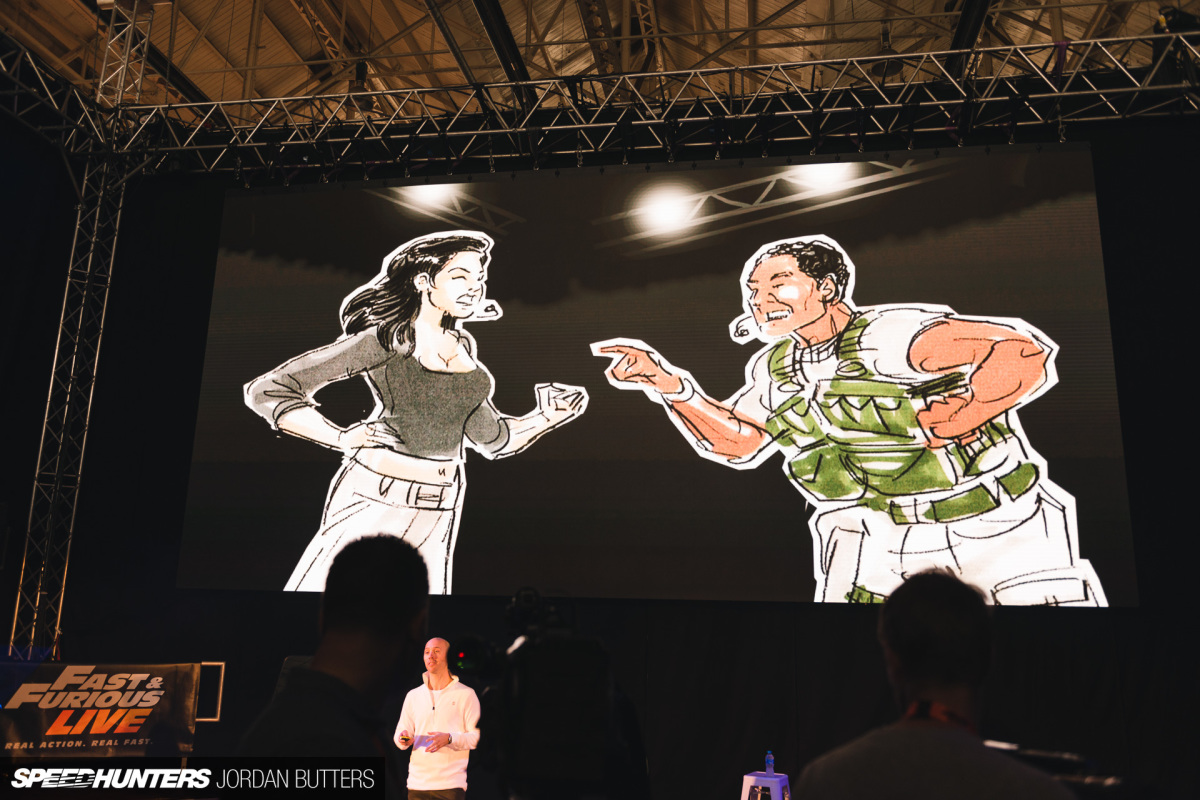
There’s also an interactive element in which the audience vote on how the star car is built, handled by an automated vote-counting camera system. This is all helped along by some cool design visuals by top automotive artist and Speedhunters friend Khyzyl Saleem. We’re told that the car is built to the audience’s choice right there in the arena – impressive if that’s how it works out.
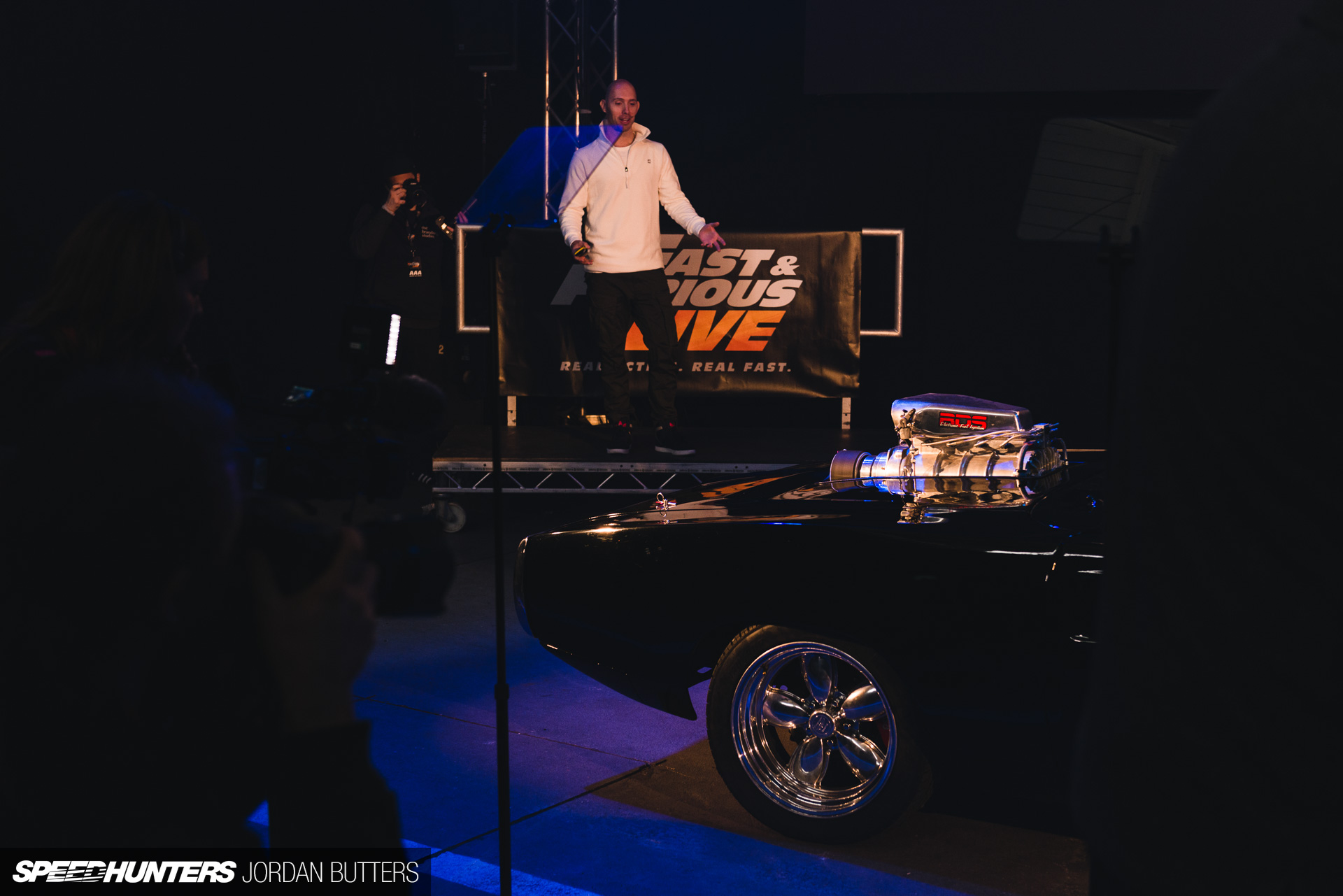
After a brief introduction to two of the stars of the show – Brian O’Conner’s famous orange Supra and Dom’s original Charger – we were ushered into another hangar for a taster of some of the stunt driving from the tour.

The training space is the exact same size as will be laid out in each arena. In fact, this is the exact same floor that the stunt drivers will be driving on during the live show. The custom wood has been specially designed for the 3D projection mapping process whilst giving the drivers sufficient grip levels to be able to perform the stunts at speed. After each location it can simply be dismantled and moved onto the next arena.
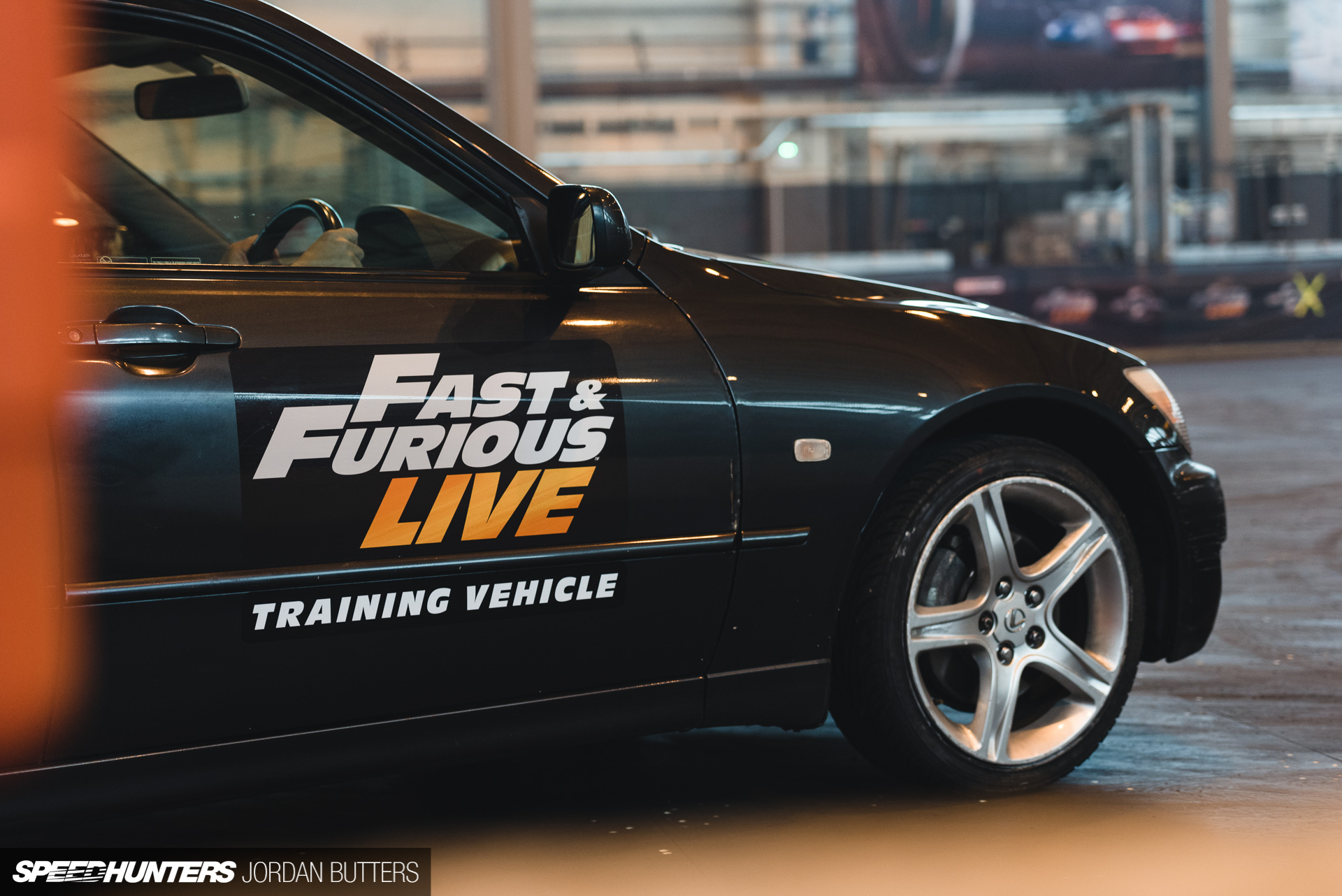
The stunt team were auditioned over four months, whittling the selection down from over 2,000 hopefuls to just 11 drivers. They’ve been in training for six weeks so far, learning the routines and manoeuvres. A fleet of Lexus IS200s fitted with hydraulic handbrakes are used for rear-wheel drive training, with EP3 Honda Civic Type Rs in waiting for front-wheel drive training.

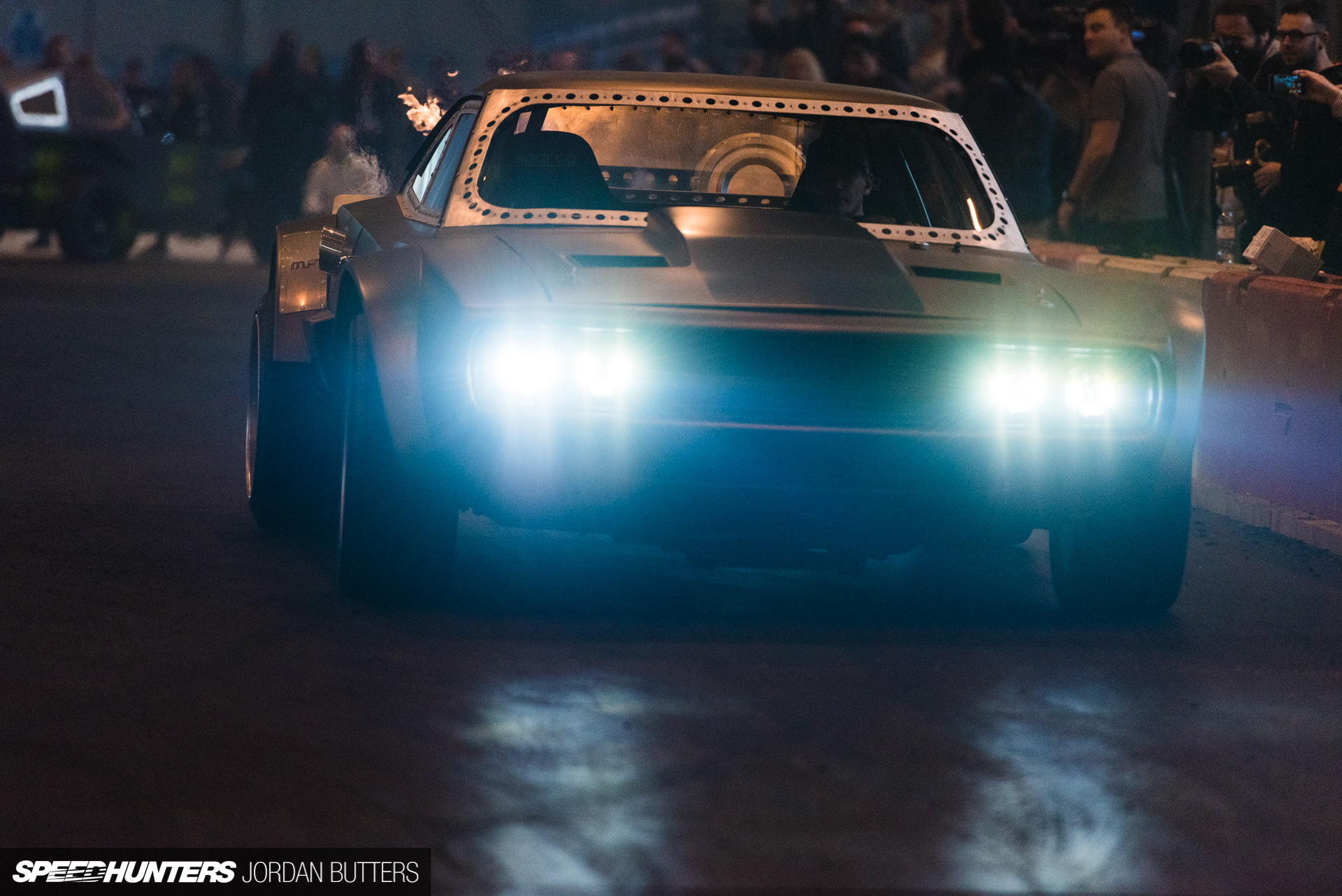
At some point in the near future each driver will progress into the star cars to finalise the show, of which we were treated to a couple of demonstration laps. The heat from the back of the ‘Ice Charger’ from Fast 8 was unreal. This is the original car from the film too, whilst the Orange Supra and Dom’s Original Charger are like-for-like replicas.
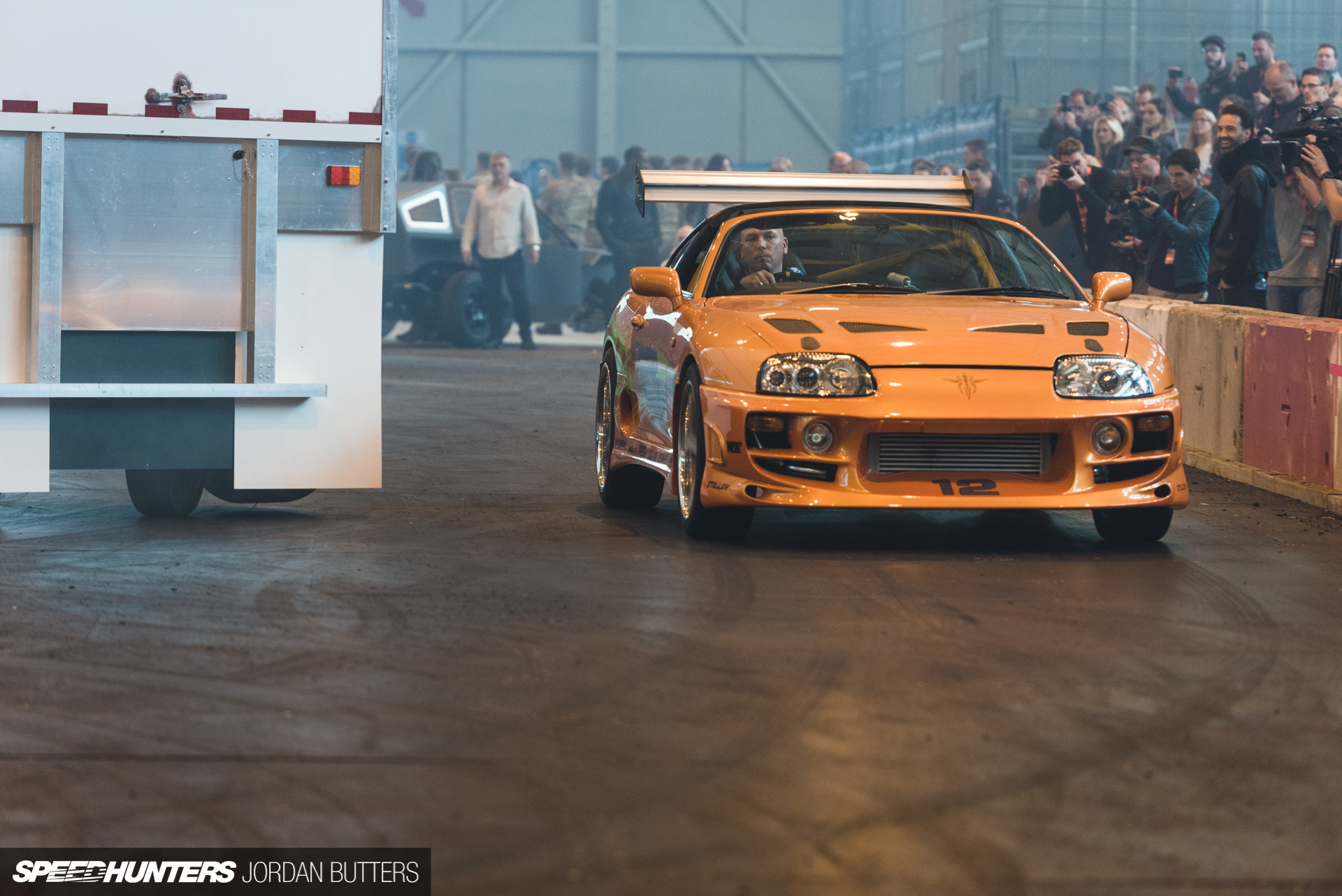
One of the stunt drivers explained to me that there’s a forgiving amount of proximity in the stunts at the minute, but as the first show approaches they’ll dial the routines in so that they’re millimetre-precise.
After a brief introduction to actors Elysia Wren and Mark Ebulué set to play the show’s main protagonists – street racer Sophia Diaz and DSS Agent Dawson – we were whisked off to get hands-on with some of the Fast & Furious technology that makes the show possible.
Where The Magic Happens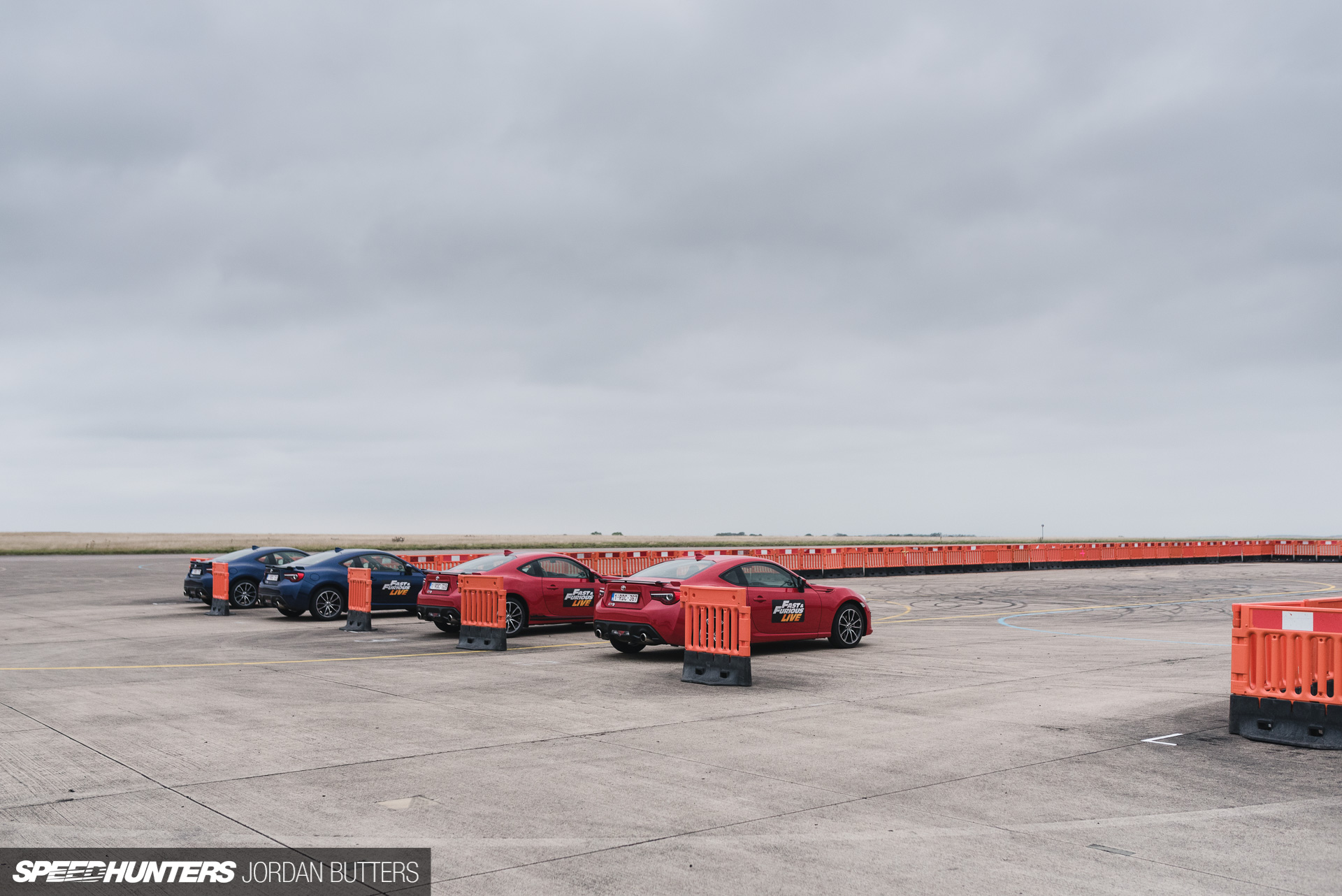
The first stop was ‘Stunt School’, where a fleet of left-hand drive Toyota GT86s awaited. As well as taking passenger laps for one of the show’s routines, we also got to try our hand at manoeuvring a course at speed in reverse as well as learning how to donut. I was actually too busy pretending to be Takashi from Tokyo Drift to take any photos at this point.
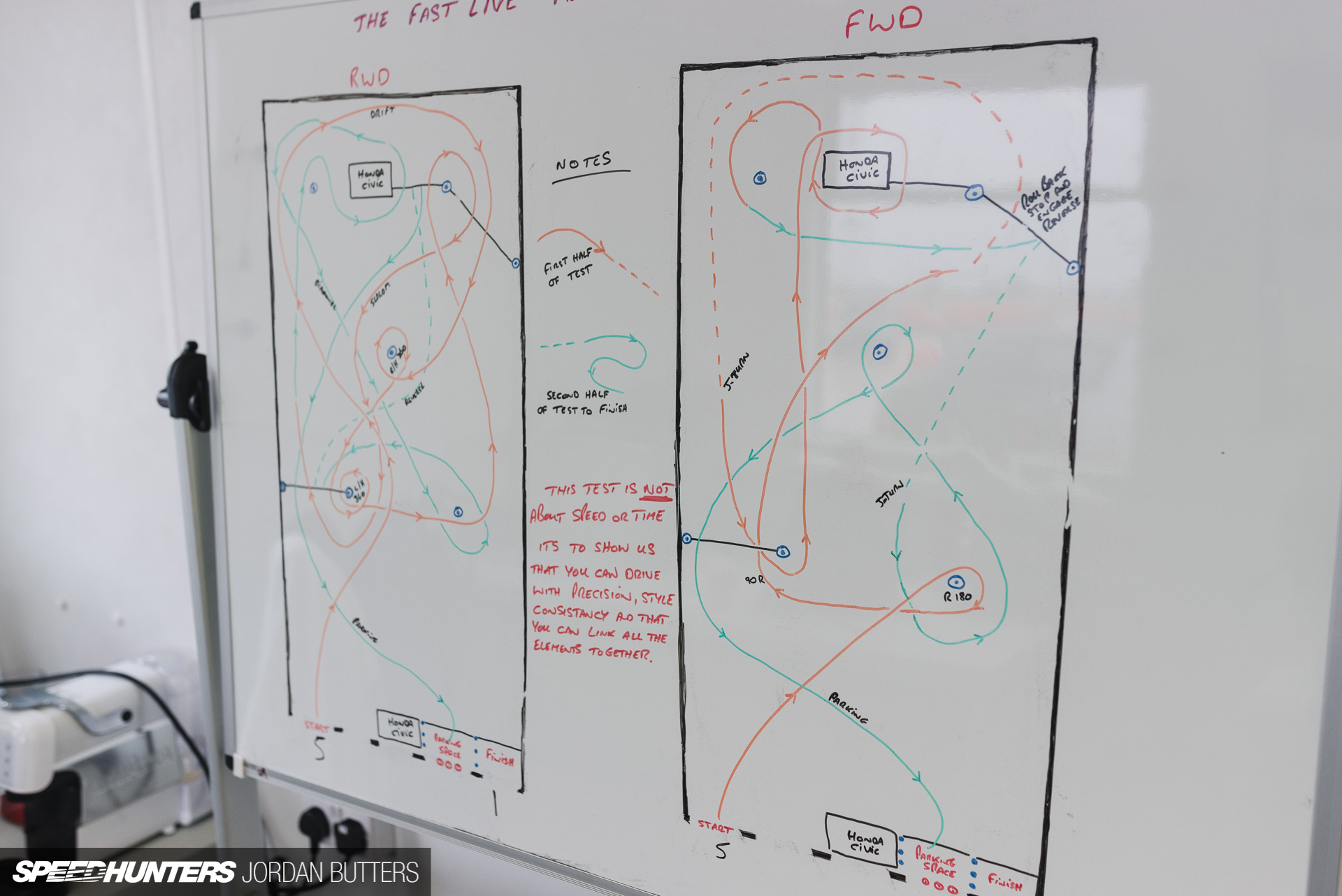
I’d like to think that I can fairly successfully steer a rear-wheel drive car in a showy fashion if called upon, but I’m not so sure I could remember routines like the ones that the drivers were tested on. This is just one routine, but there are 10 scenes in the show for the drivers to memorise in total. They’re all based on the best action sequences from the films; from the original highway truck heist, through to the Tokyo Drift carpark scene, to the flip car from Fast & Furious 6 and the submarine attack from The Fate Of The Furious.
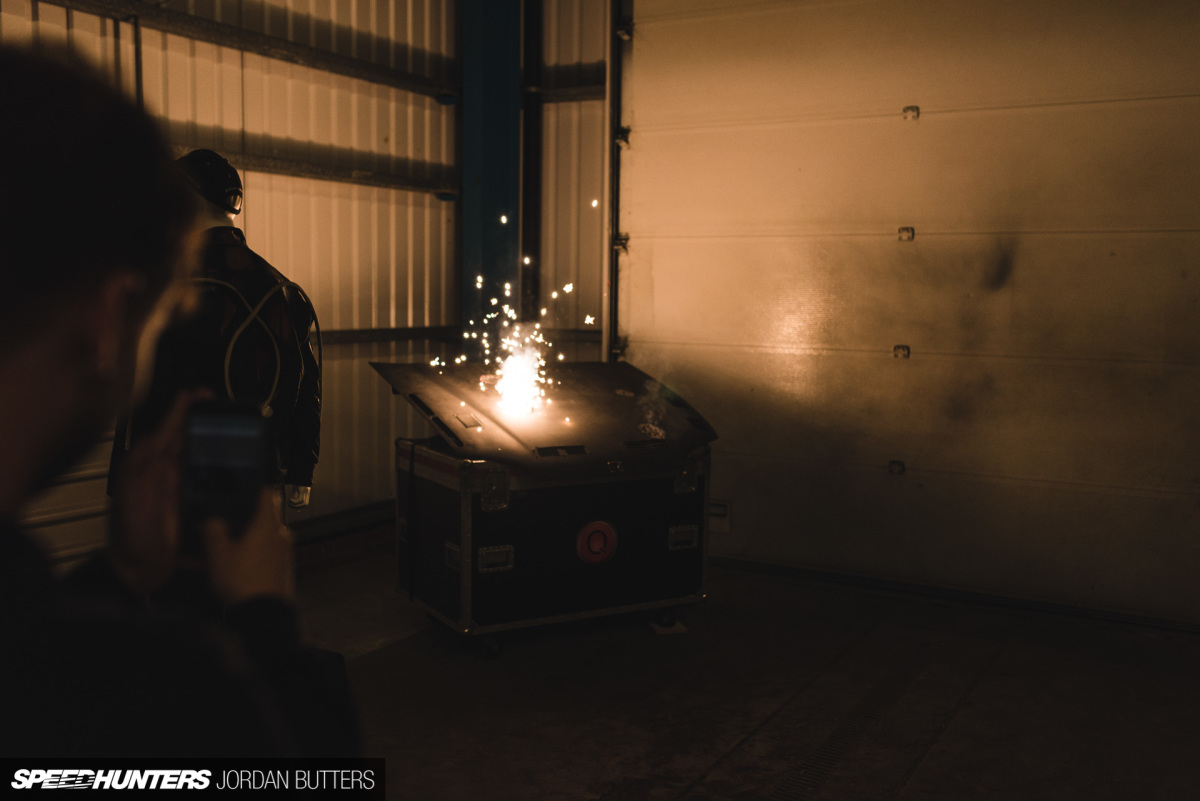
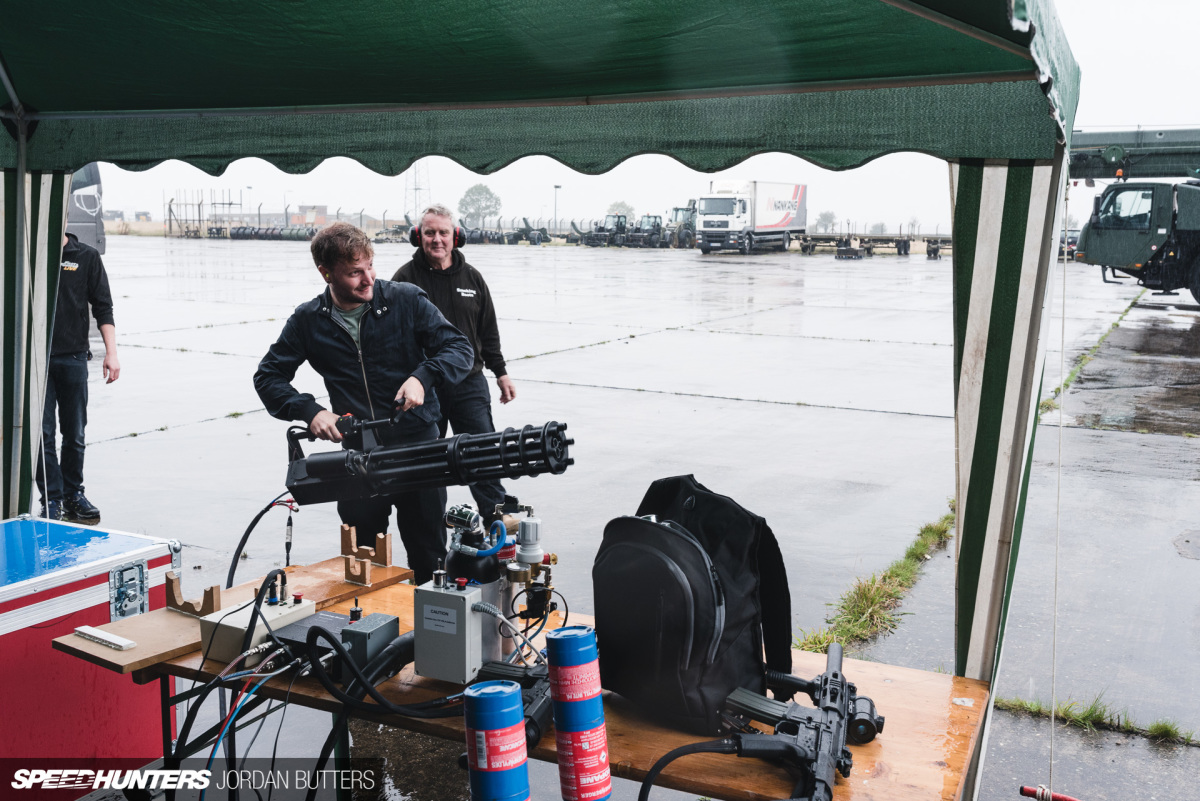
Now obviously when shooting a scene for the movies the directors have the benefit of complex set pieces, CGI and retakes, none of which are available to those producing the live show. This quandary creates its own unique set of challenges, from ensuring that the 3D projection looks right from all angles, to the fake guns and cannons looking and sounding dramatic, right up to how the fake bullet hits look, and cars bursting into flames (safely). I’ve never seen a happier face (and more concerning sight) than an over-worked and sleep-deprived journalist holding a chain gun.
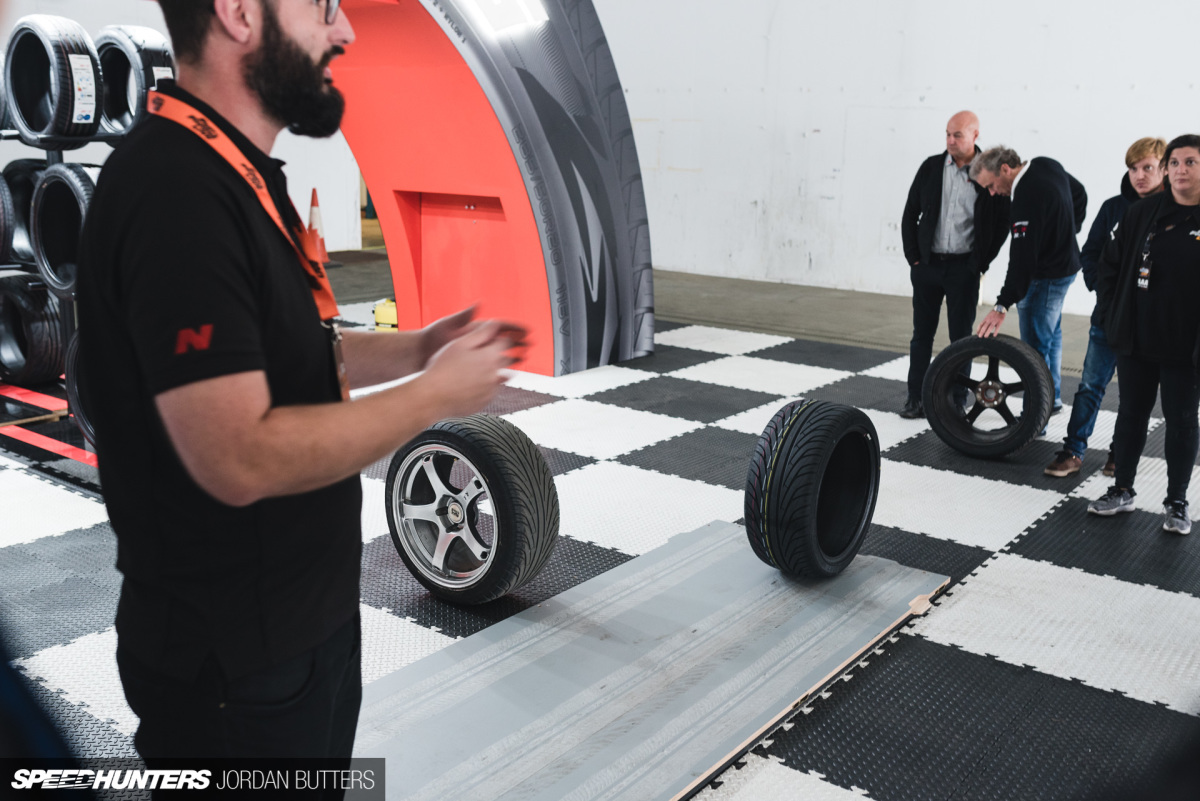
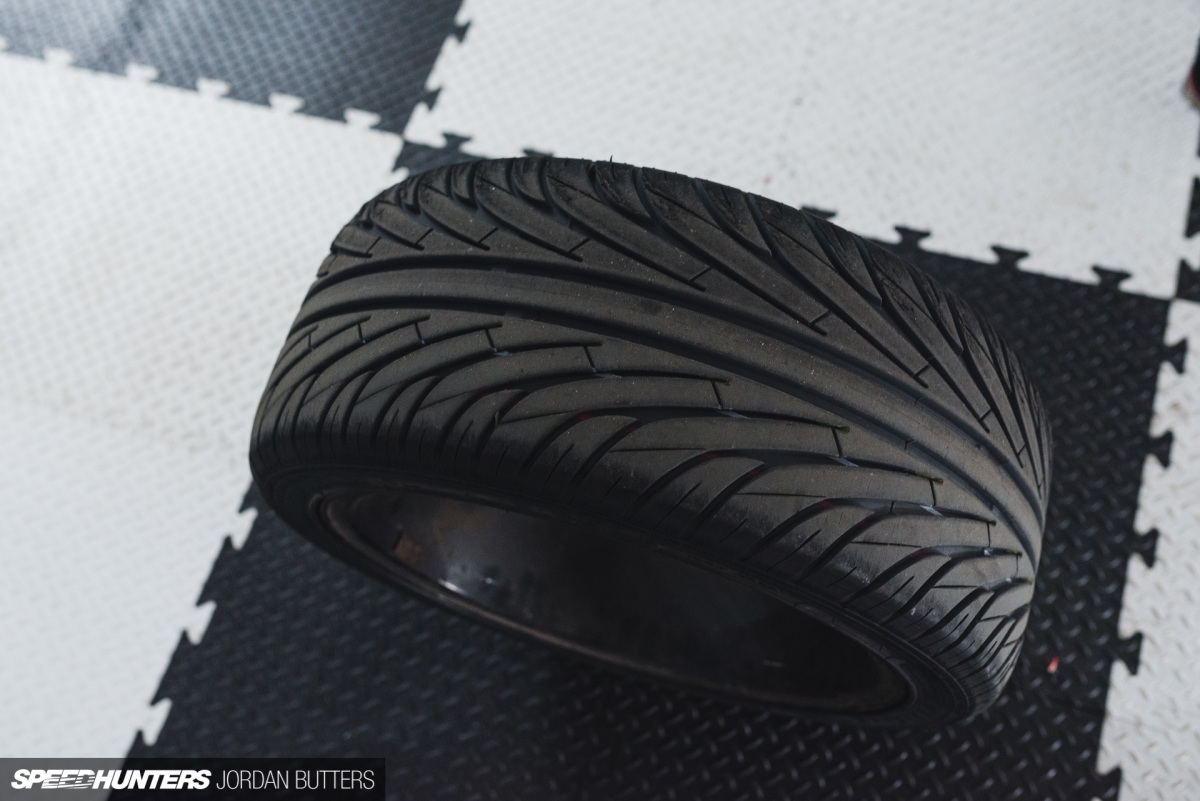
Another consideration was the tyres. Not only does the show need a plentiful supply of rubber for consistency, but they also have the issue of tyre marks to deal with, which could play havoc with the 3D projection. The solution? Nankang were brought in to develop a special tyre which leaves light grey marks rather than black. It’s estimated that the crew will burn through around 6,000 tyres every year!
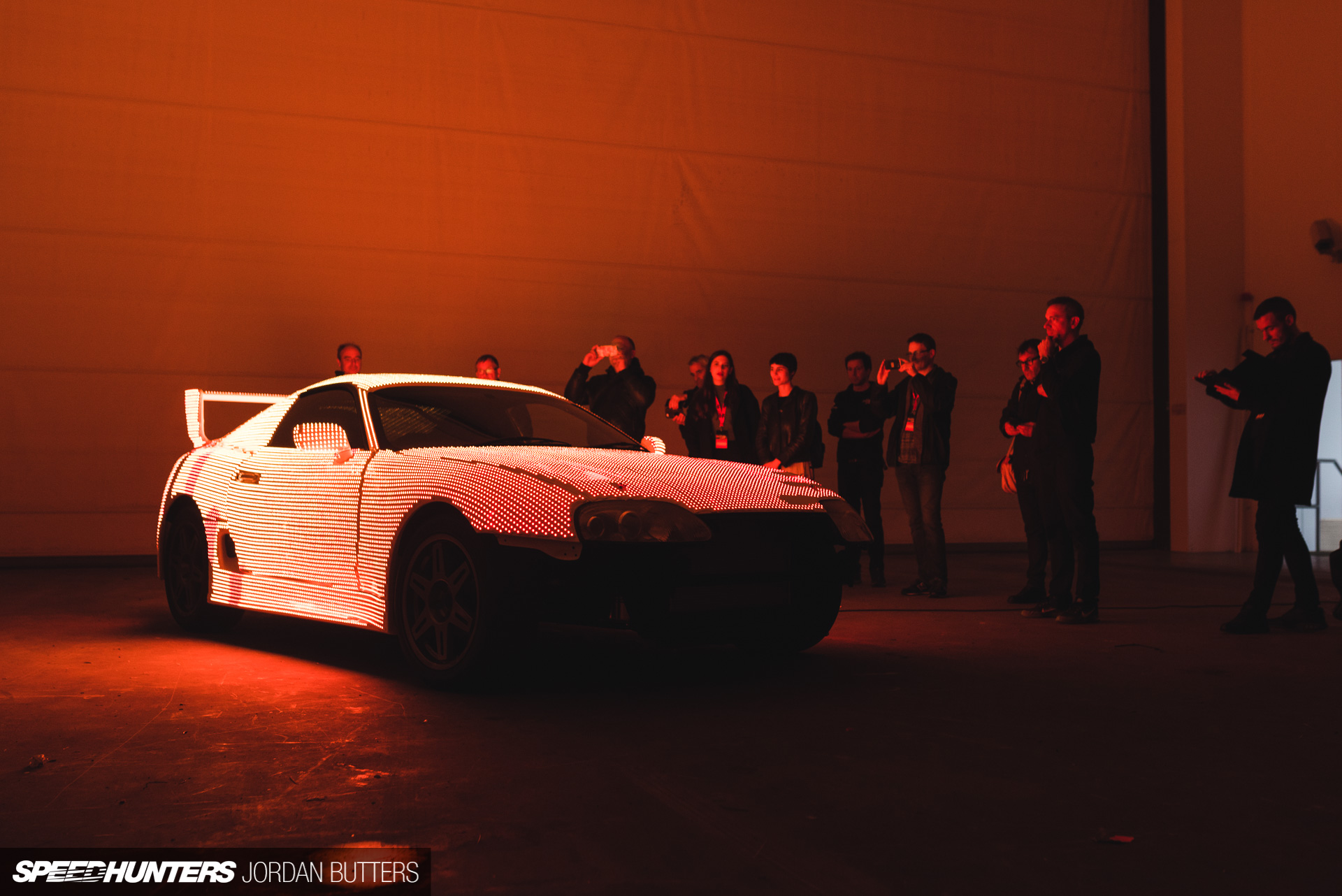
This work-in-progress Supra was kitted out with around 35,000 LEDs for one section of the show, and could be programmed to show different colours, patterns and even moving images across its body.
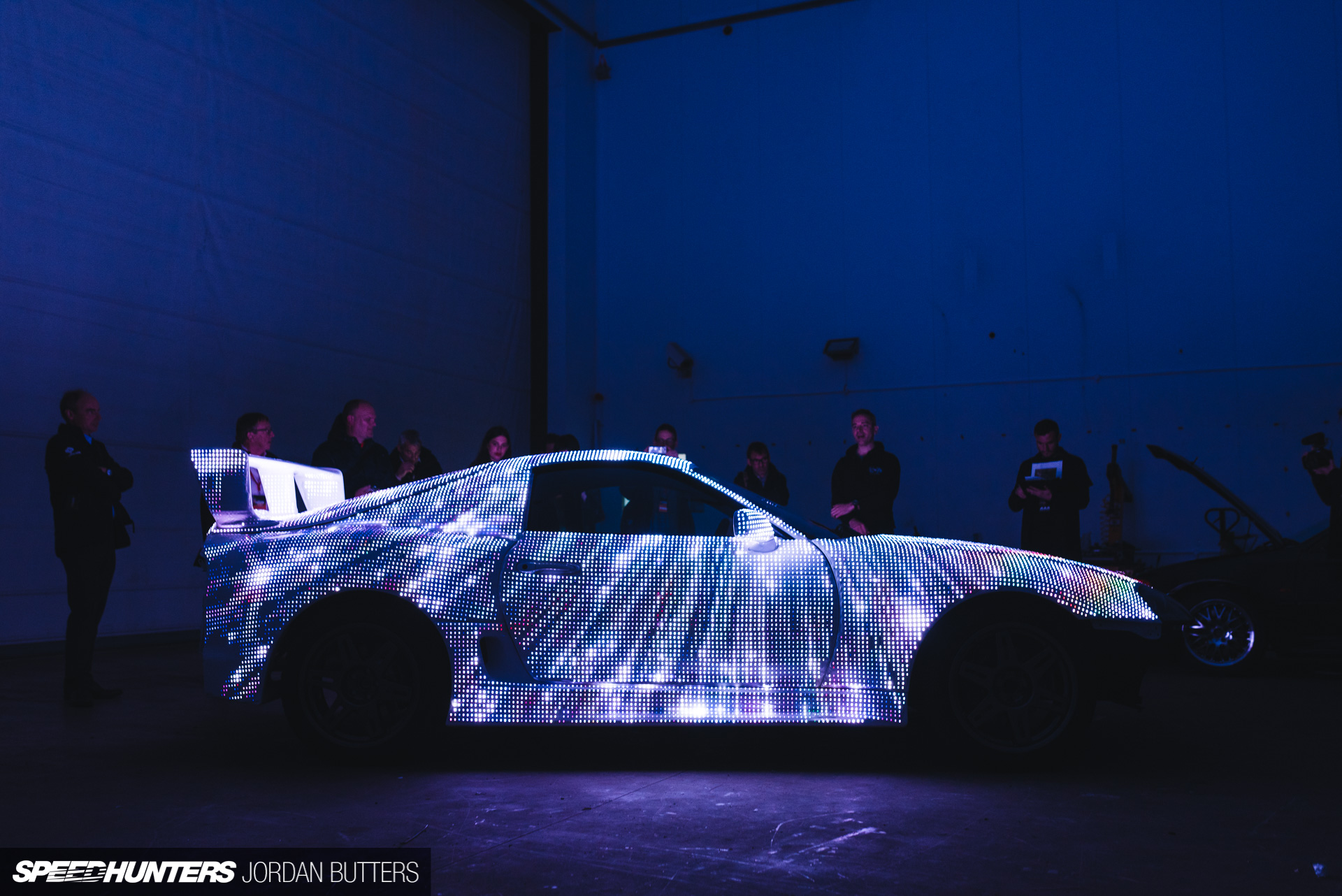
It’s like underbody neons, but the 2017 energy-efficient edition.
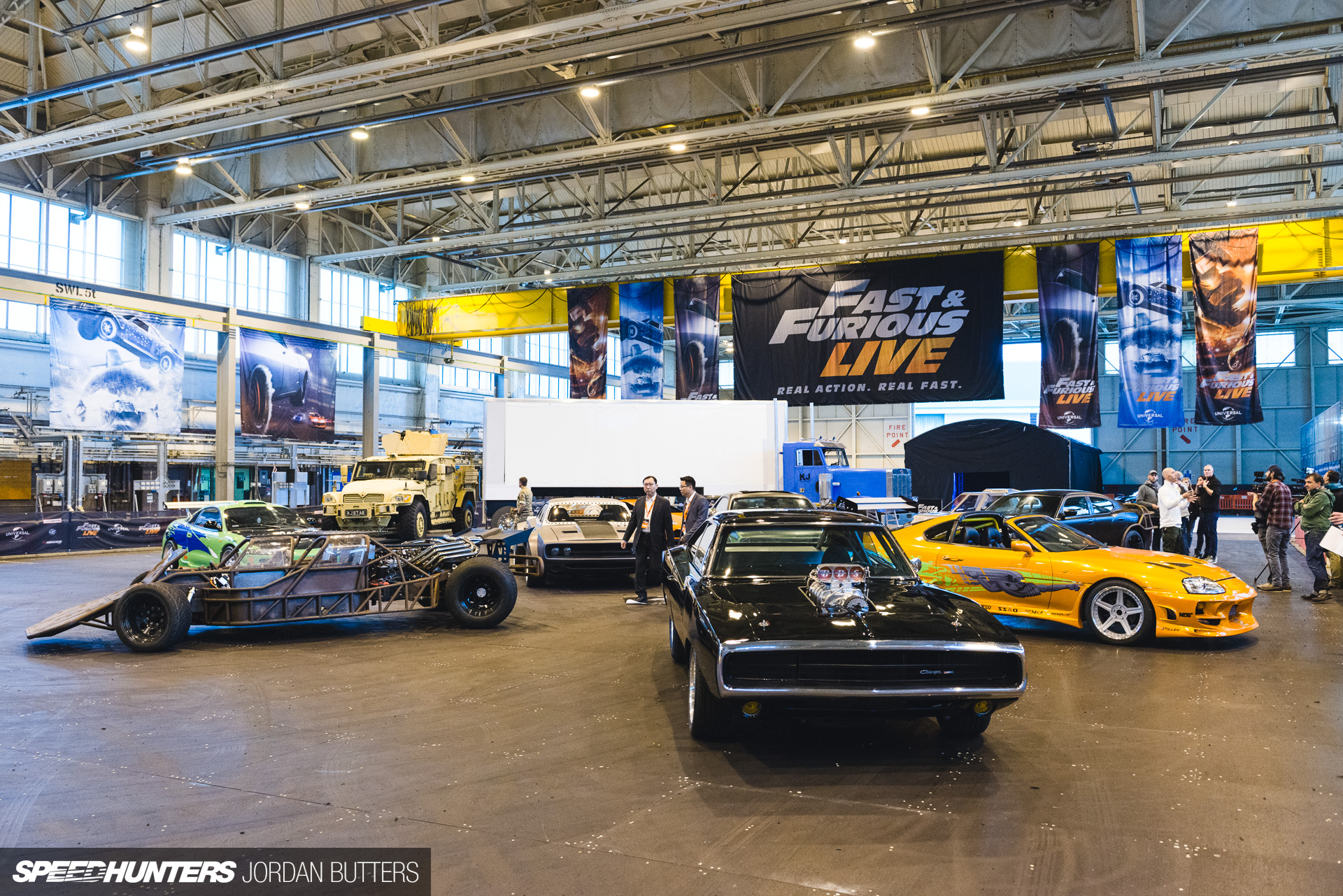
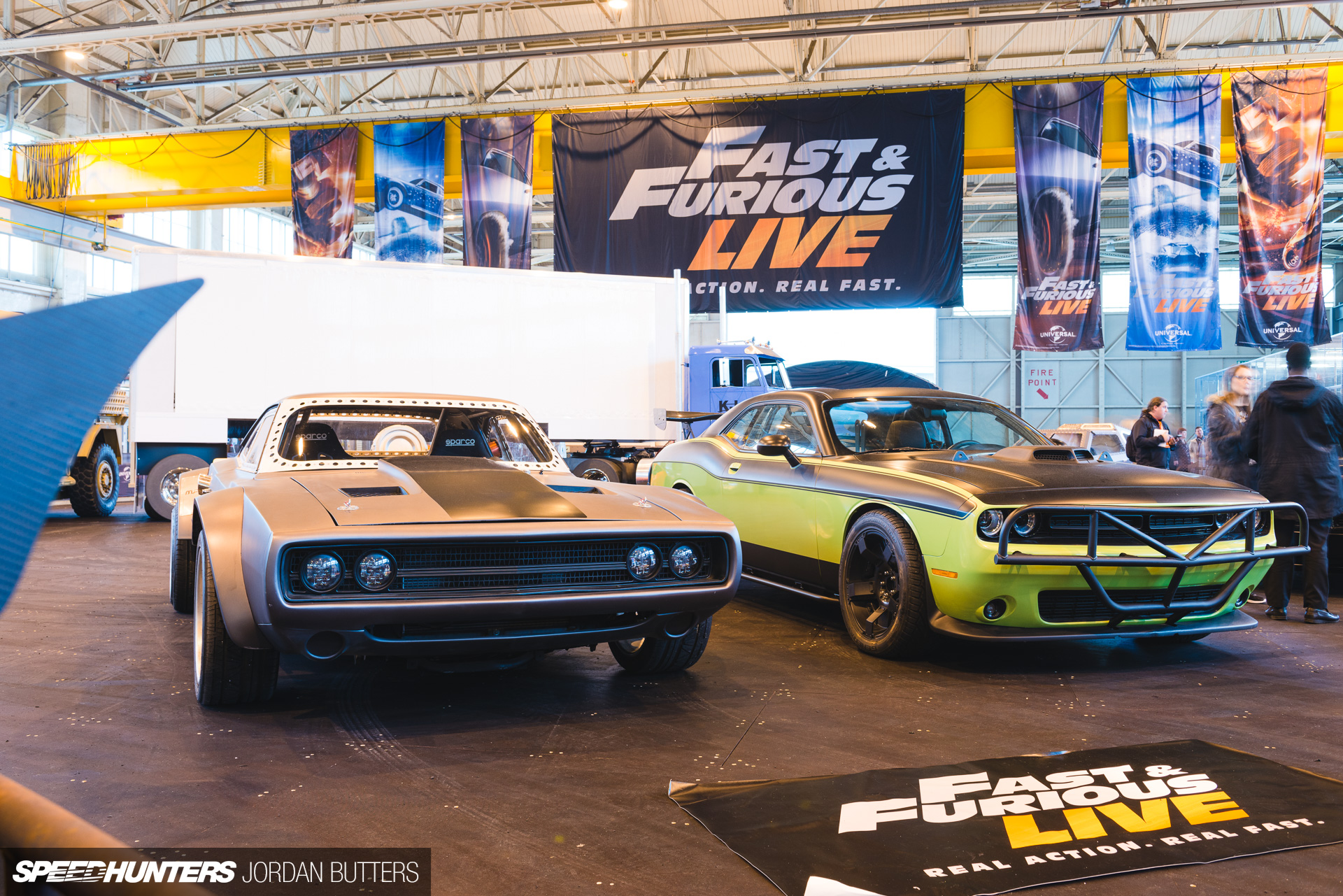
The day finished with a tour around some of the stars of the show – the cars themselves. A mix of original ‘picture cars’ and exact replicas, there were a handful complete and on show in the main hangar.
While we’re here, can we just be done with it and outlaw sodium lighting from now on please? Or at least ban any automotive-related events from taking place under such conditions.
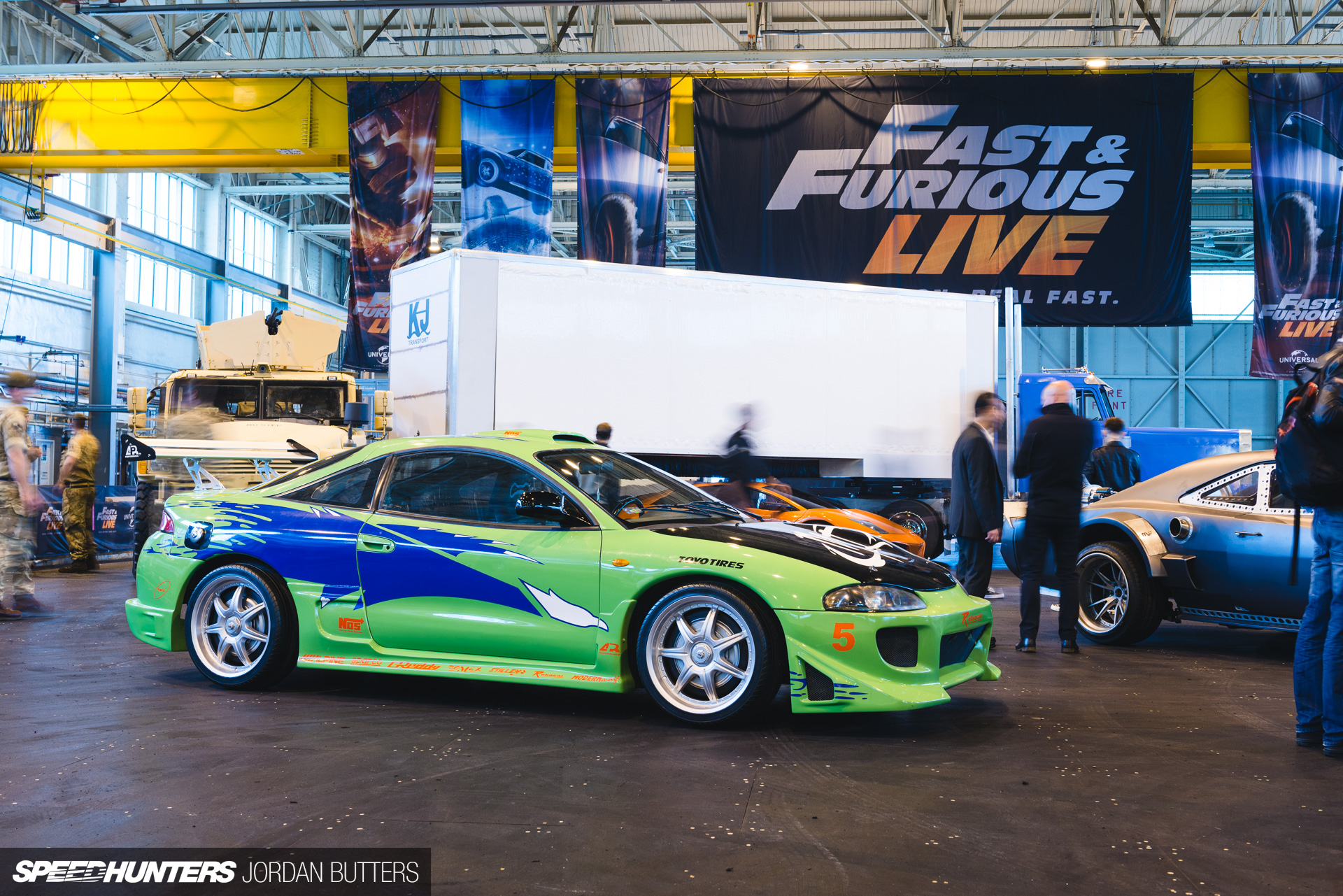
I digress – there will be over 40 vehicles in the final show; from the original Fast & Furious favourites like the ‘10 second’ Supra, Dom’s supercharged Dodge Charger, the three green-neon EJ Civics and the green Eclipse, to the stars of 2 Fast 2 Furious – Brian’s R34 Skyline and Suki’s pink S2000. Some of the rear-wheel drive machines of Tokyo Drift also make an appearing, including the 350Z and ‘Mona Lisa’ S15.
I was a bit disappointed that Jesse’s Jetta wasn’t in the bunch. I’d have loved to get a closer look at his braking setup…
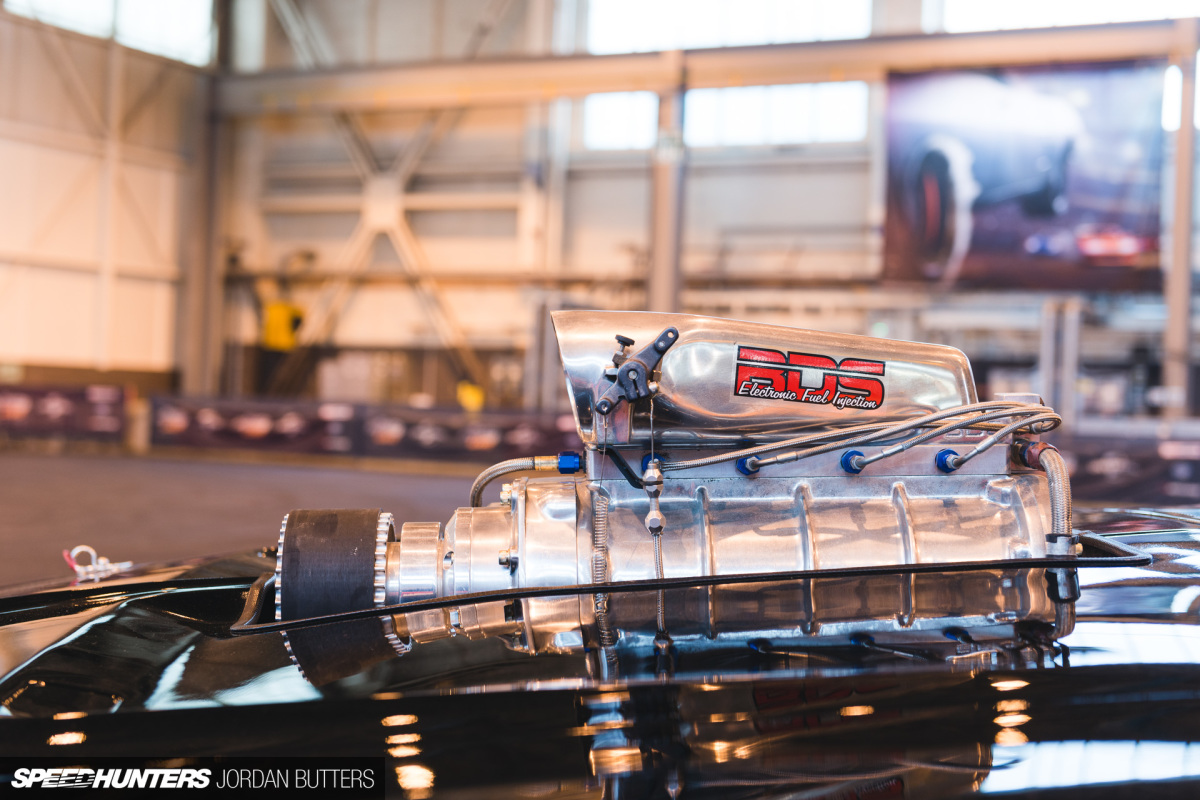
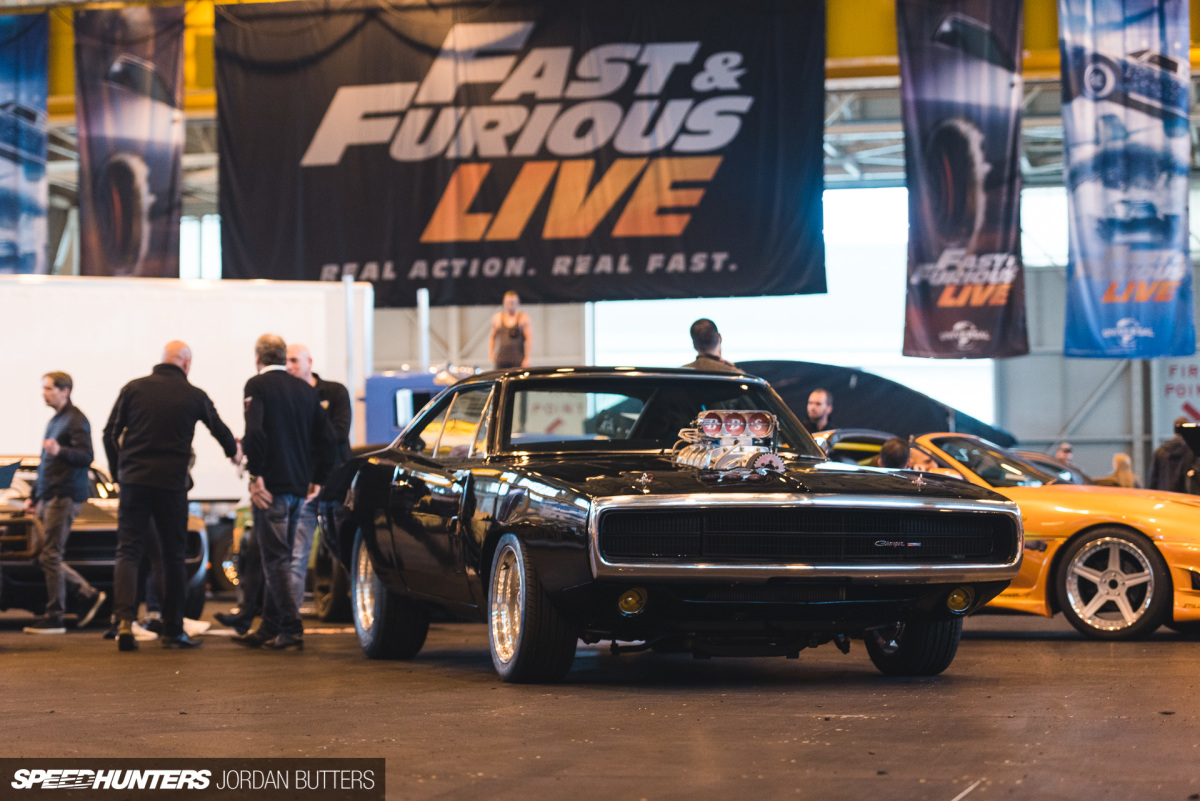
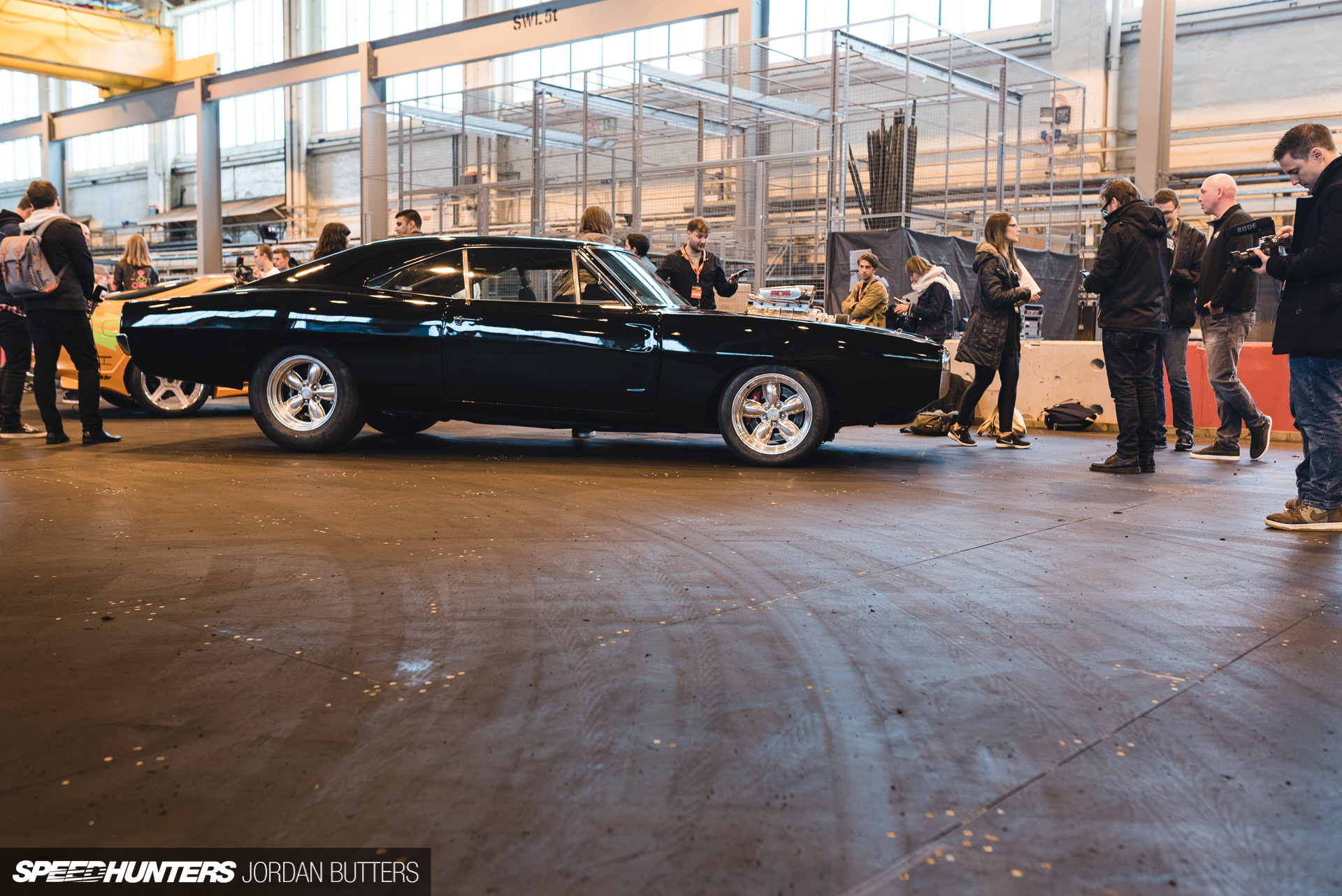
For most people, I’m sure it’s Dom’s Charger that resonates the most. It’s the only one of the original machines that hasn’t really dated today. With the deep black paintwork, wide rear tyres and huge supercharger sticking up out of the hood it looks as cool sitting in a military hangar in 2017 as it did hopping up on its rear wheels in LA in 2001.
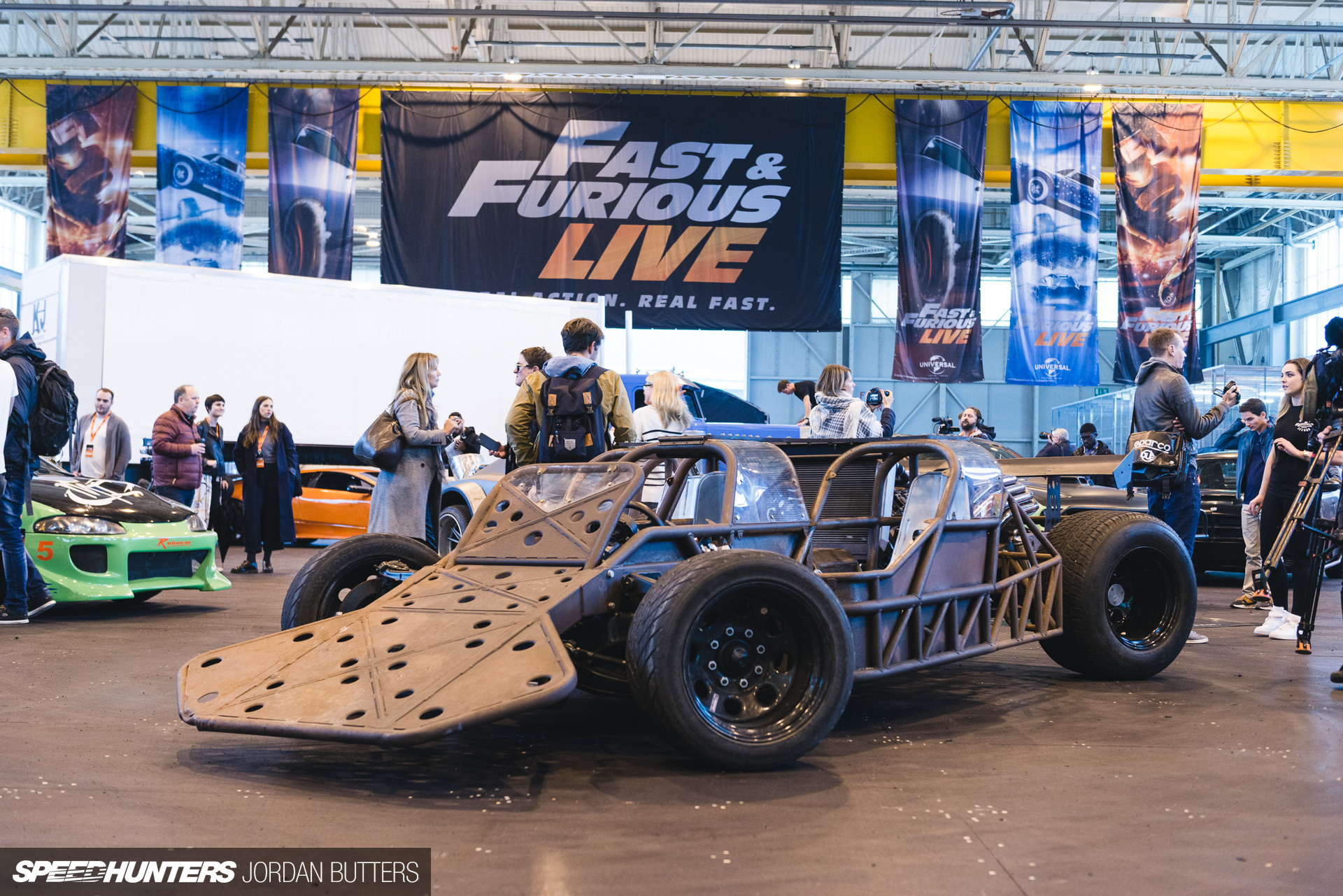
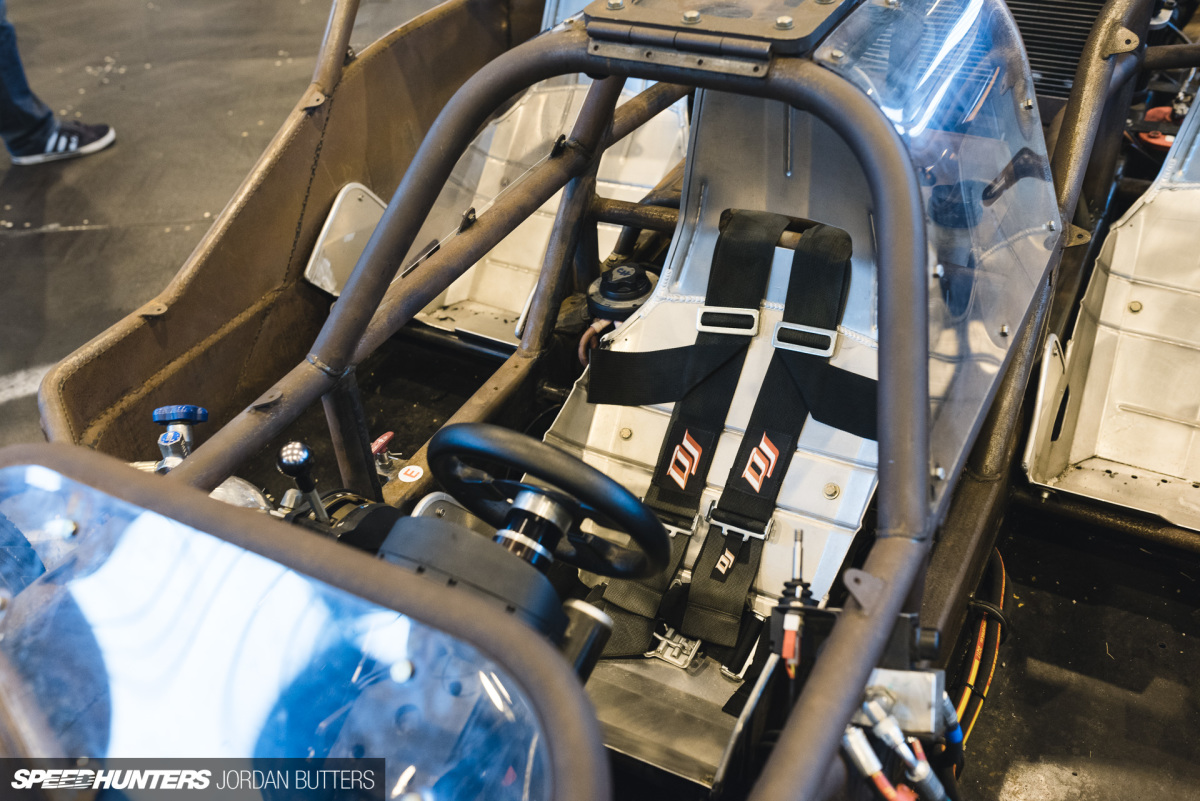
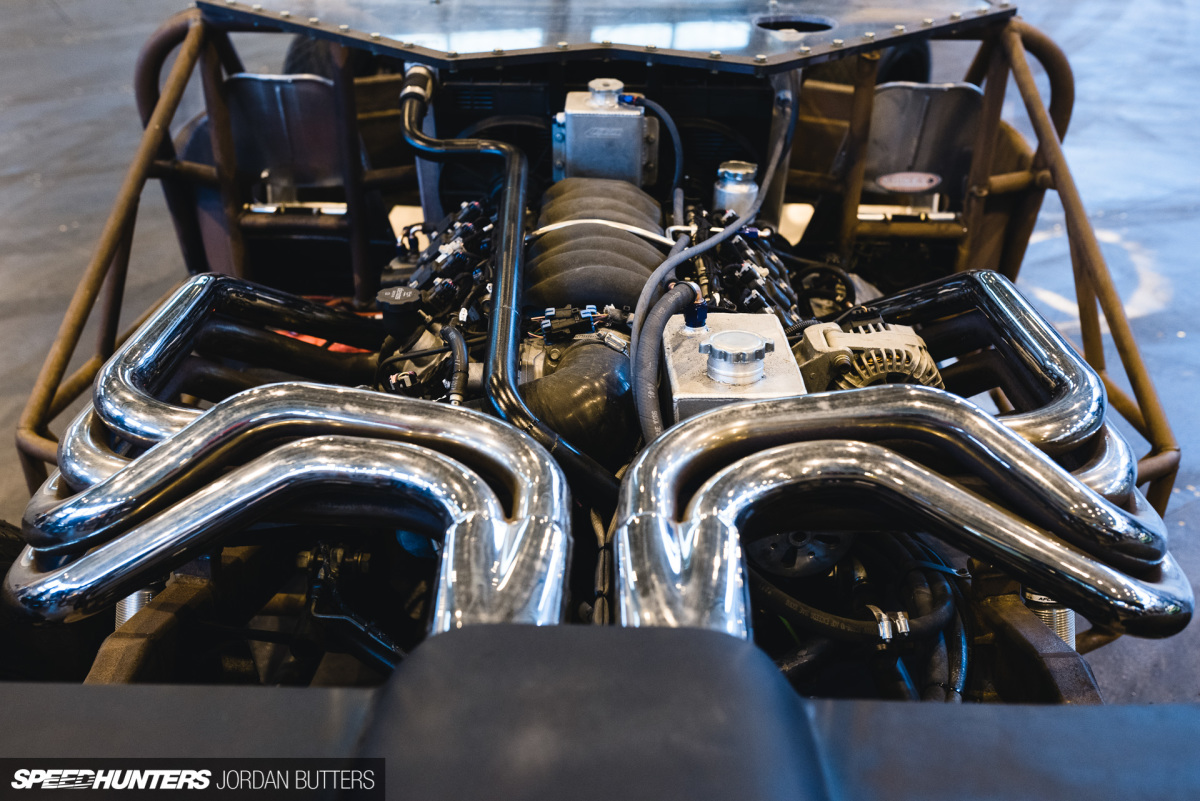
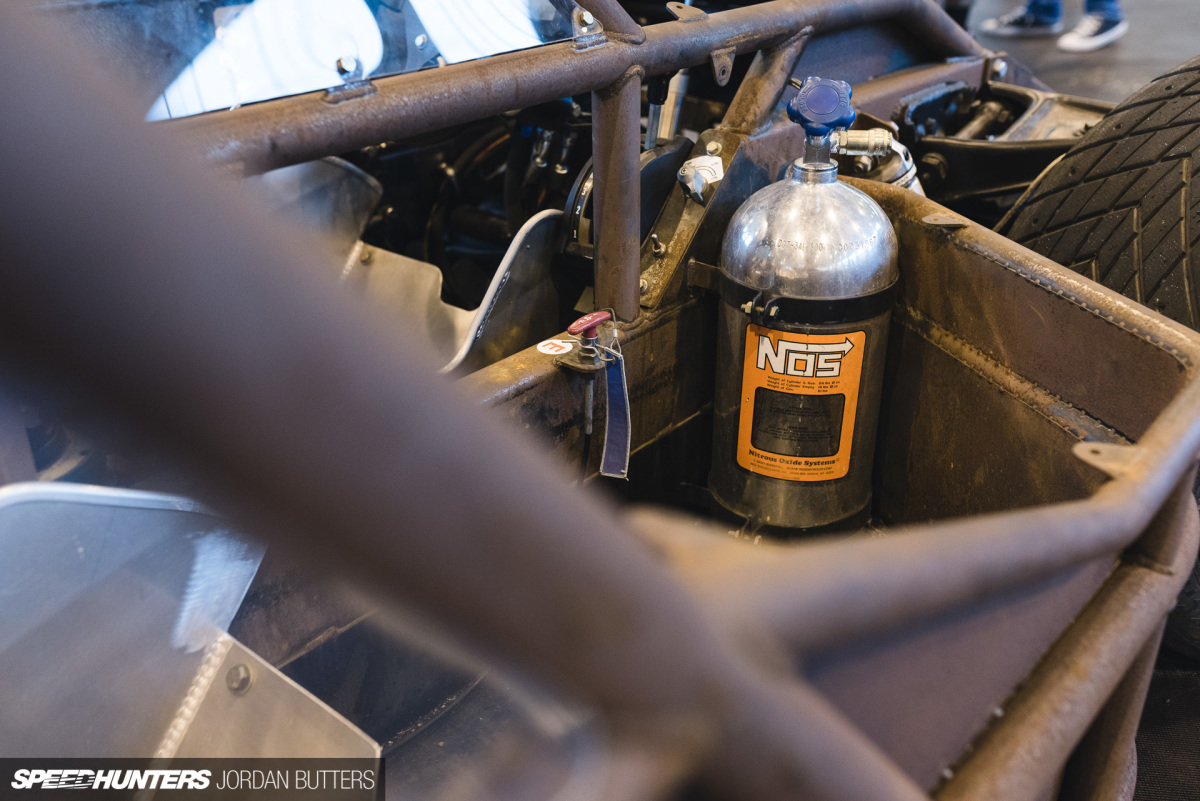
This flip car, from Fast & Furious 6, is one of the original four-wheel steer cars built by Dennis McCarthy and used in the film. In the film they refer to it as a ‘turbo diesel’ motor, but it actually packs a 500bhp LS3 over the monster rear wheels. Surprisingly, it only had one bottle of NOS; wasn’t ‘two of the big ones’ the F&F prerequisite?

This is supposed to be the trickiest of the bunch to drive, thanks to its independent rear steering, allowing it to crab sideways across the arena.
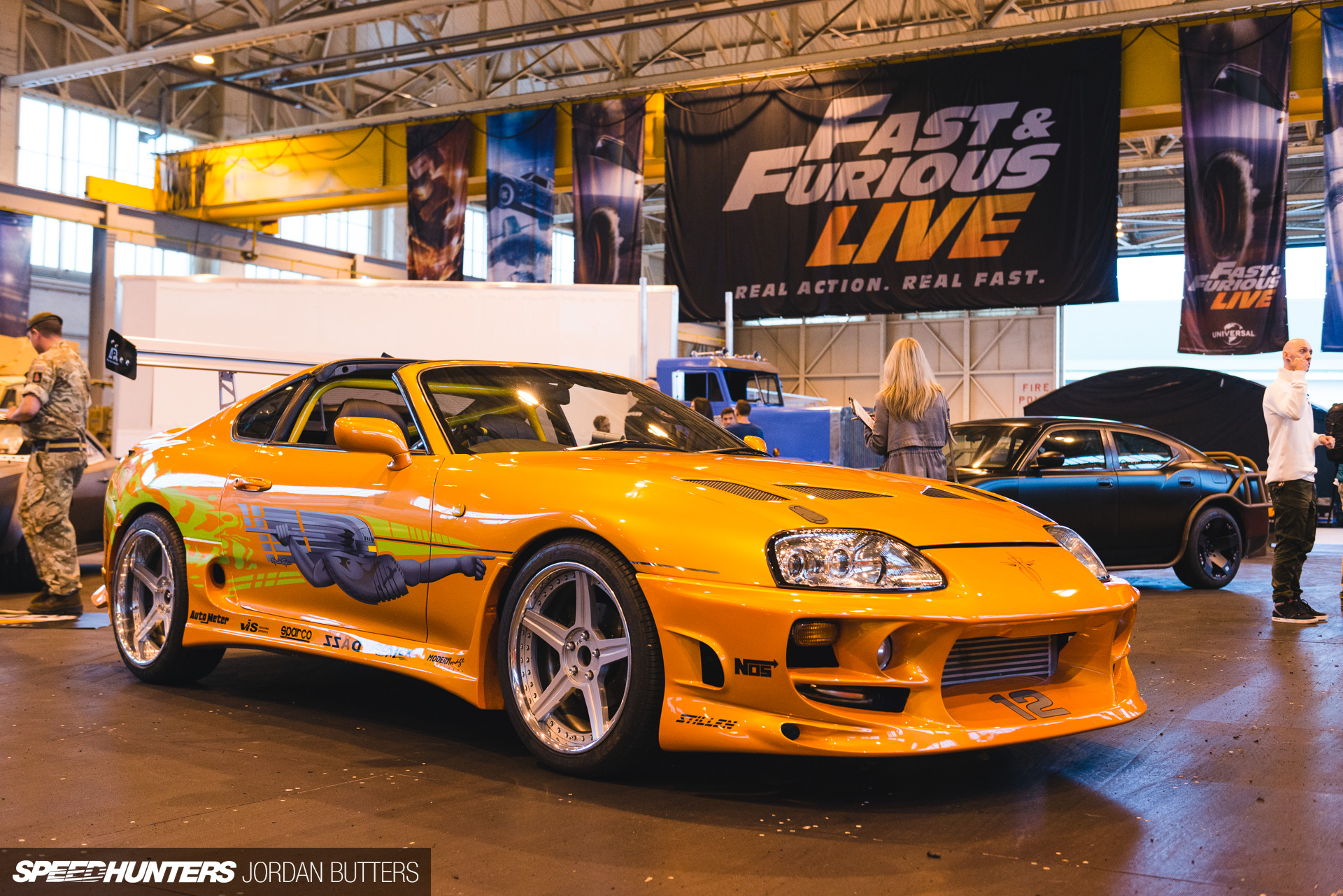
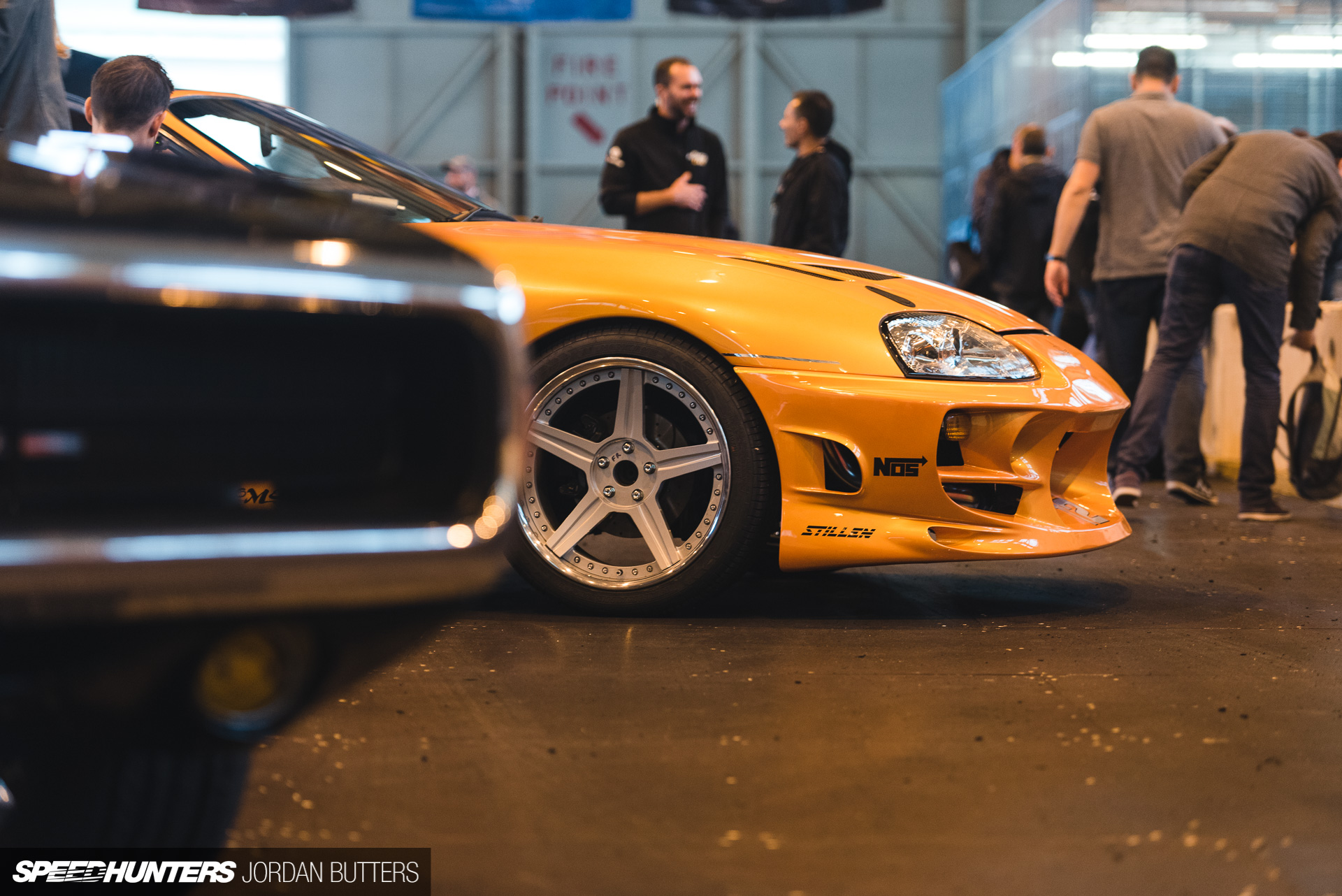
Perhaps the most iconic Fast & Furious machine, for me, is Brian’s famous orange Supra. This 750hp, single-turbo replica built specifically for the show, is supposedly the closest you’ll get to the original car. The team sourced the exact same components for the build, even down to the three coats of Lamborghini Diablo Pearl Orange required to achieve the precise hue, which, thanks to the lighting here, you have no idea if they achieved or not.
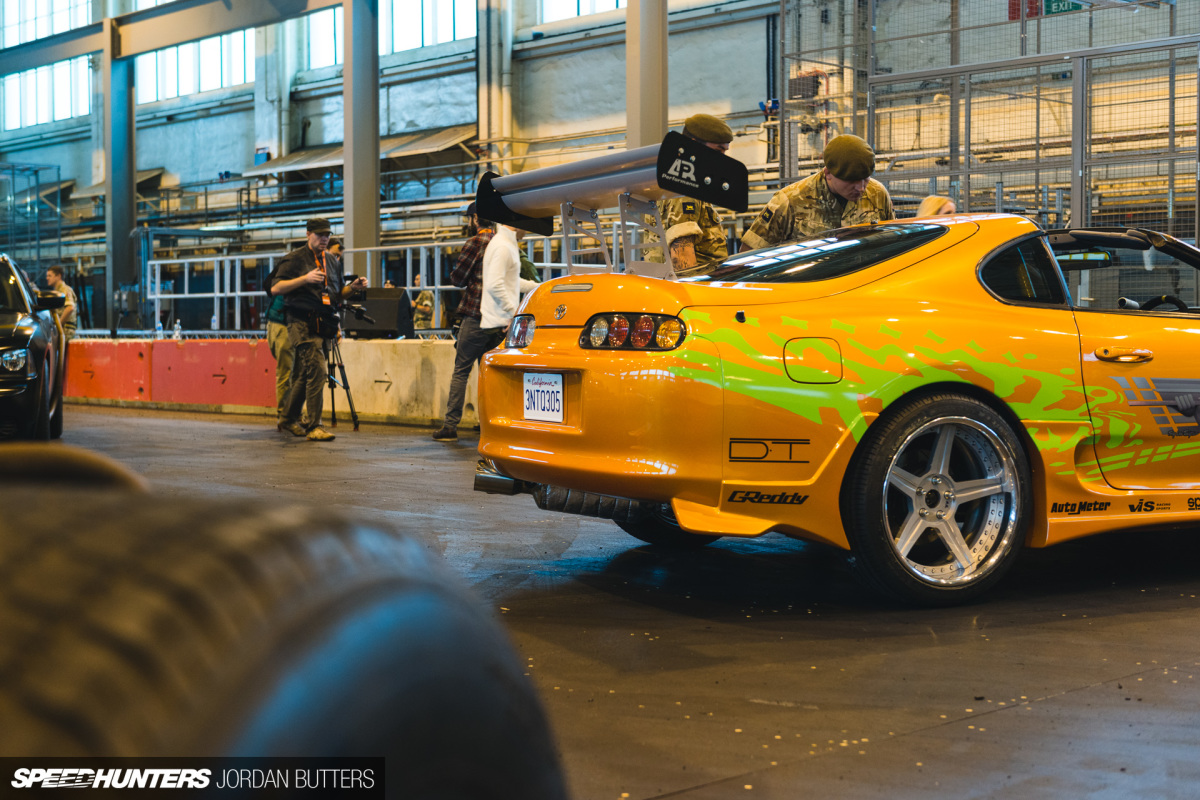
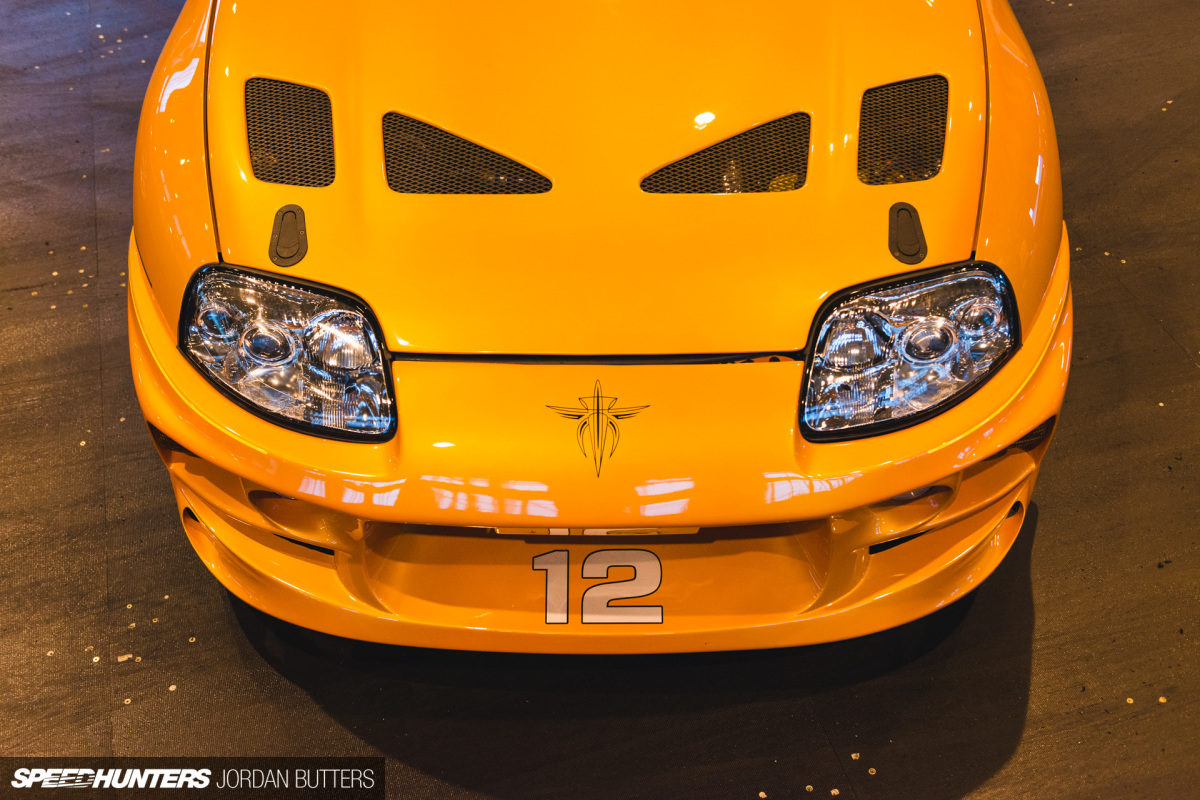
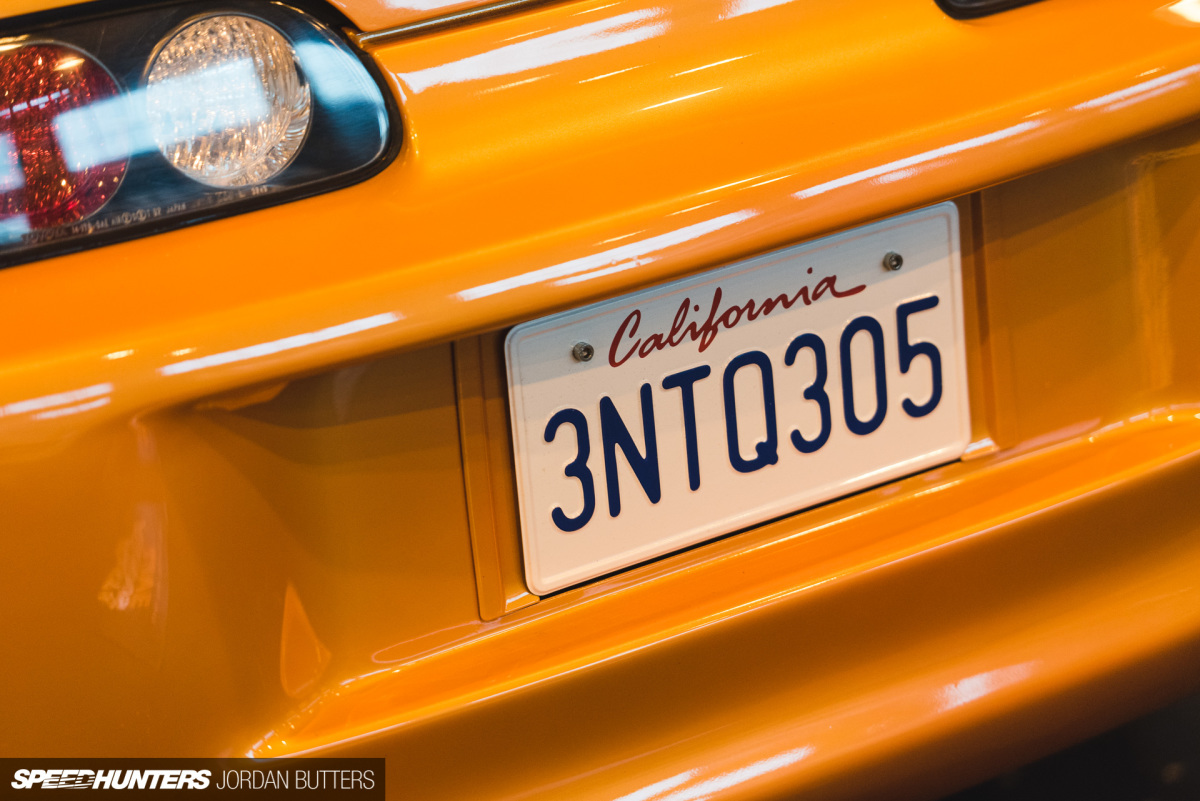
As dated as it looks in this day and age, it’s still a very cool thing to be stood in front of. Nineteen-year-old me (do the maths) would’ve been incredibly excited about this.
I’d have loved to have had more time to take in and shoot the cars in more detail for you, but time nor weather was on our side. As the day wrapped up, what struck me most about the brief look behind the scenes of the Fast & Furious Live was just how ambitious a project it is. With a touring crew of 67 people, over 40 cars, 36 support trucks, over 70 tonnes of rigging and 1,000+ performances planned over the next five years, the team behind the show certainly feel there’s still a strong appetite for the Fast & Furious franchise. But, I guess this reflects a similar risk to the one that was taken 16 years ago when the first movie was made.
What do you think of the idea? Let us know in the comments section below.
Jordan Butters
Instagram: jordanbutters
Facebook: Jordan Butters Photography
jordan@speedhunters.com