
If there’s a single constant throughout the life of a race car, it’s change. Evolution if you will. The automotive embodiment of a ‘survival of the fittest’ ethos.
I’d consider myself something of a regular now at the Yokohama World Time Attack Challenge, with five media swingers to prove it collecting dust in my ‘junk’ room at home. And with five consecutive years of attendance, the concept of race car evolution becomes a glaringly obvious phenomenon during a casual pit lane stroll.
Radical aero revisions sprouting fore, aft and sometimes laterally. Billet blocks lurking stealthily beneath a maze of pipework and wiring. Even wheel and brake combo alterations catch the eye of the seasoned WTAC attendee.
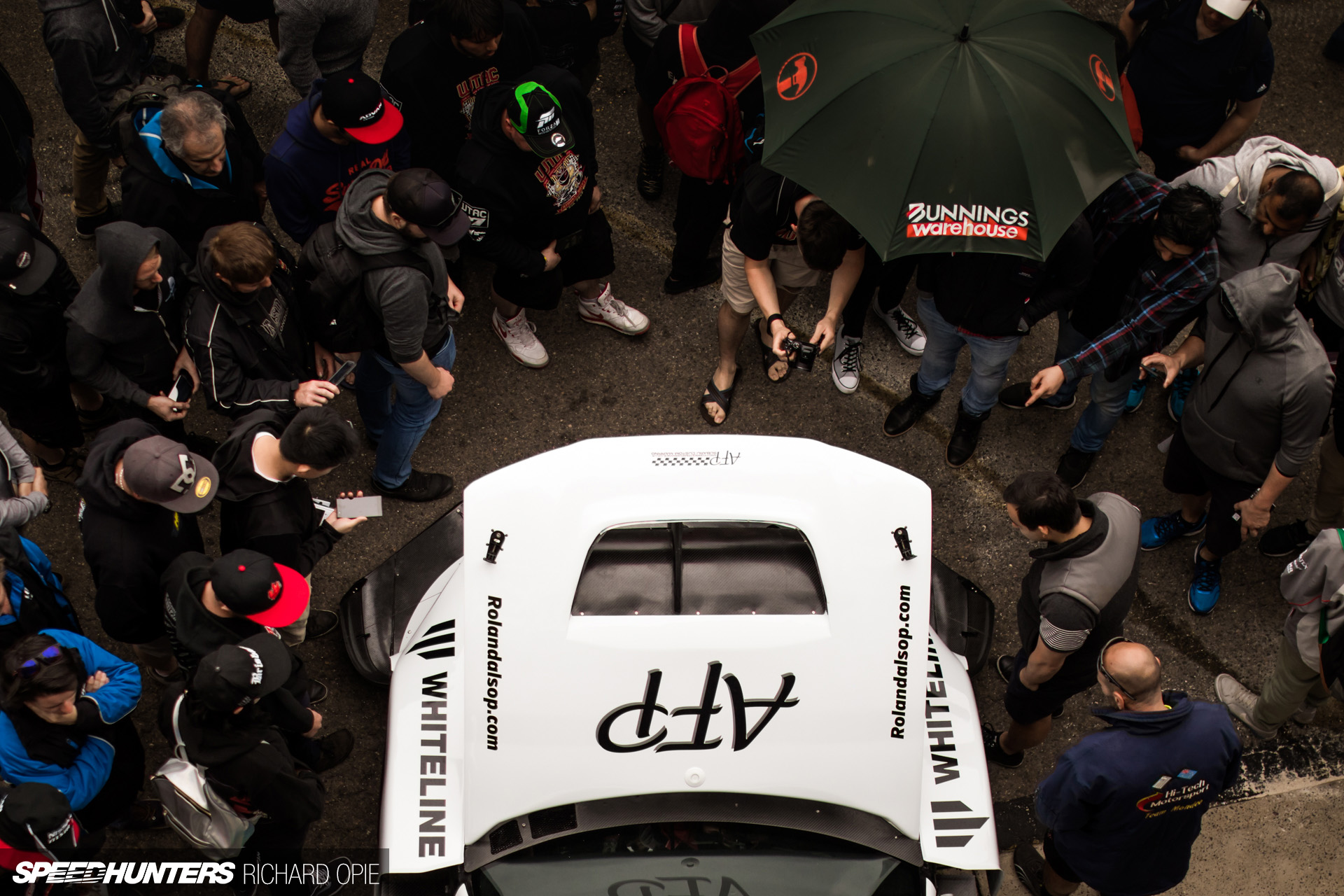
Seeking out these overt and slightly less obvious details makes the World Time Attack Challenge car geek nirvana, inviting expectation from both teams and spectator alike. Will these changes perform? Will they be effective enough to have shaken up the leaderboard as the sun sets over the Saturday night podium?
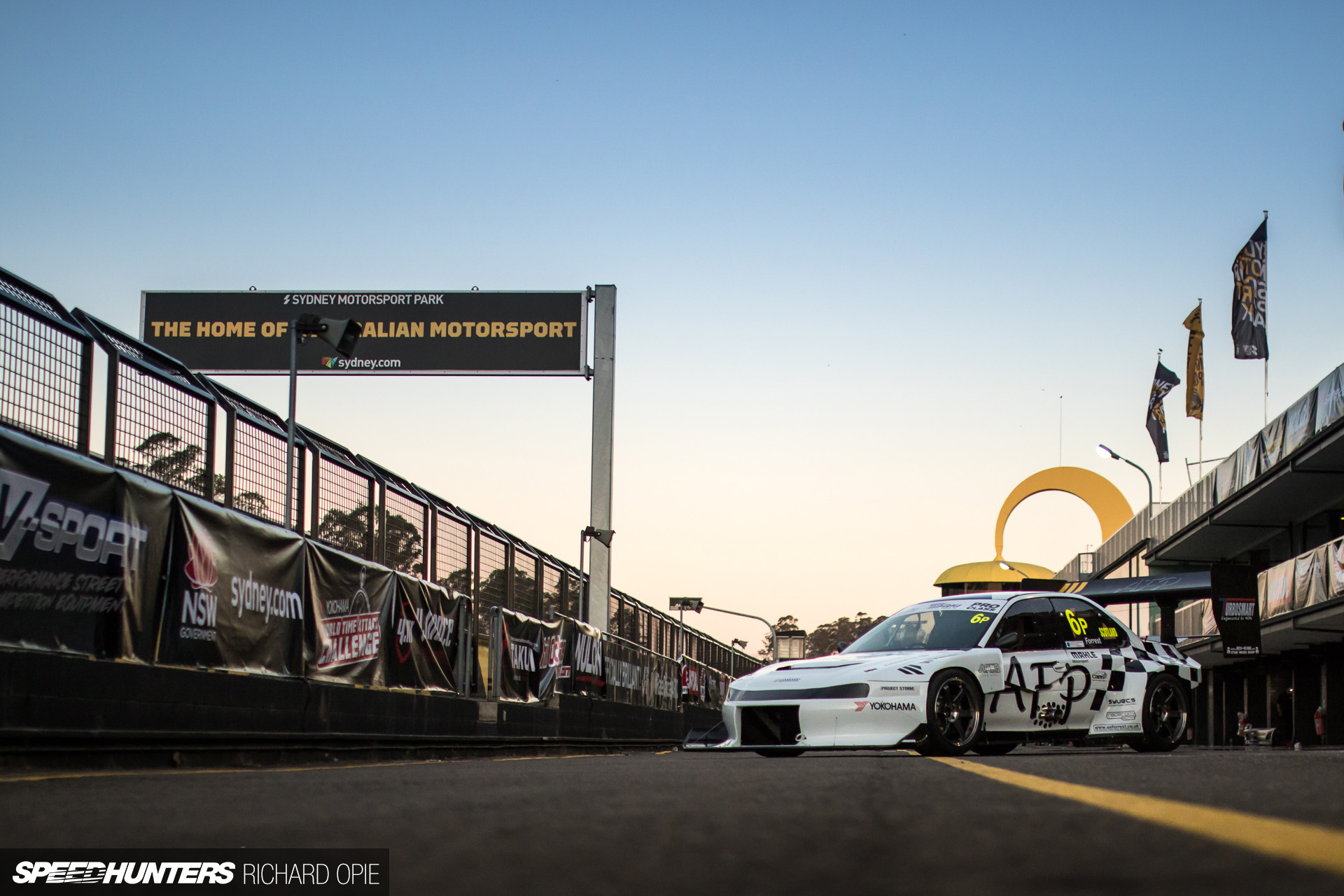
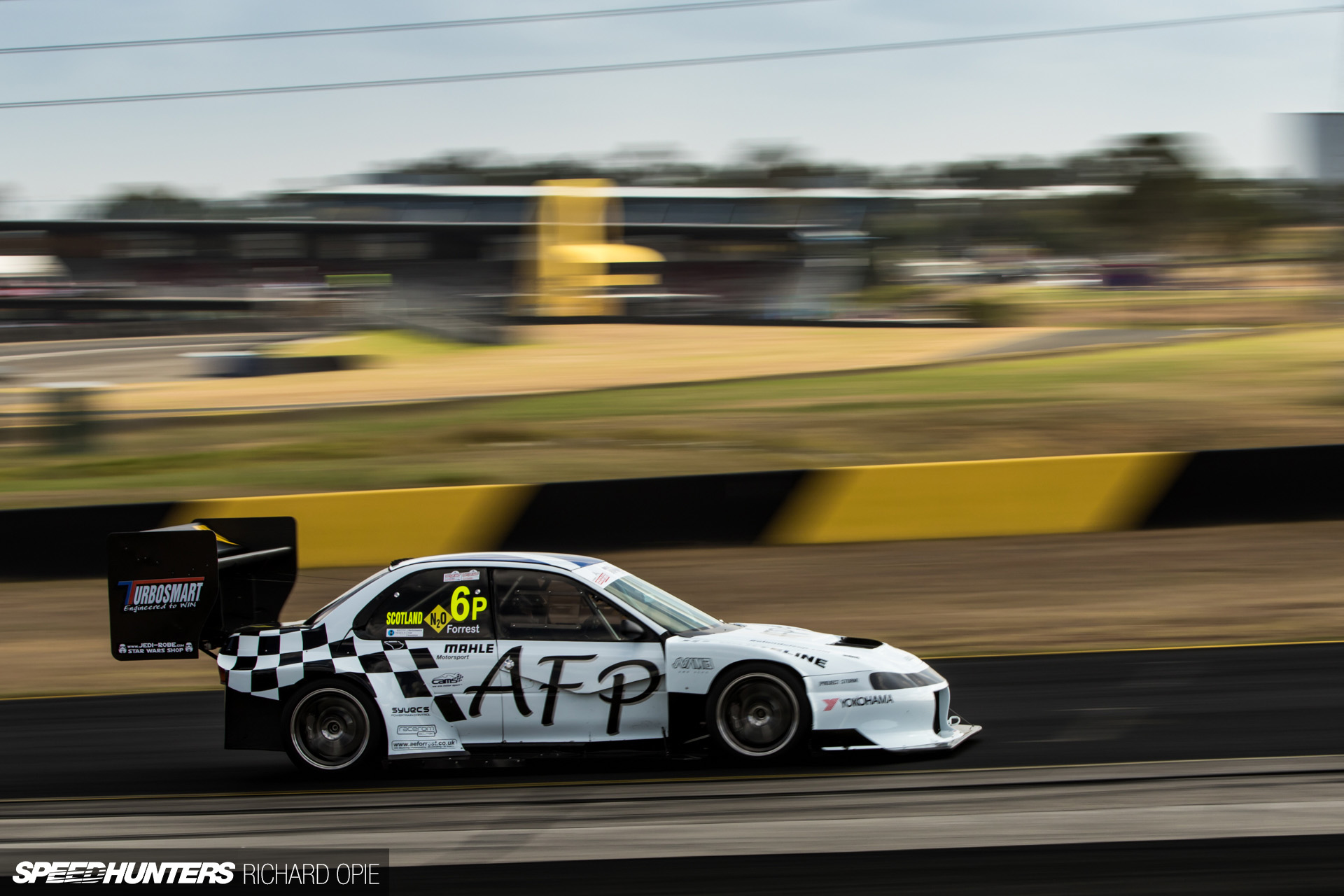
Somewhere towards the middle of the pit garage ranks, sat a stark white Subaru with the weight of expectation rivalling the downforce produced by its giant rear wing. Speaking to Scotsman Andy Forrest and his partner Lisa, you’d have sworn it was all in a day’s work to spirit a car over 15,000 kilometres from home base, to a relative unknown circuit, and have a crack at the biggest and best time attack bash on the planet.
Anyone who was at WTAC a couple of years back should remember the car, although perhaps not how you’d expect. You couldn’t blame Andy if he’d sooner forget, but the wild GC8 Subaru WRX only managed to get through a day and a half of testing before destroying a gearbox. This proved terminal, rendering the WRX an aerodynamic paperweight for the weekend.

Even then, the WRX presented an evolutionary form. Conceived via a bet with Lisa, Andy originally built the EG33-powered WRX within a month, with a goal of cracking a 9-second pass on the drag strip. That goal was achieved with relative aplomb, but as quarter mile ETs dipped into the mid 7-second zone and the costs began escalating, Andy made the call to focus on a new challenge.
As the pursuit of one perfect lap, time attack served up the impetus to evolve to a circuit specification. In Andy’s words, “we made the car handle,” and in that first year the six-cylinder Subaru swept every event in the Scottish Super Lap series.

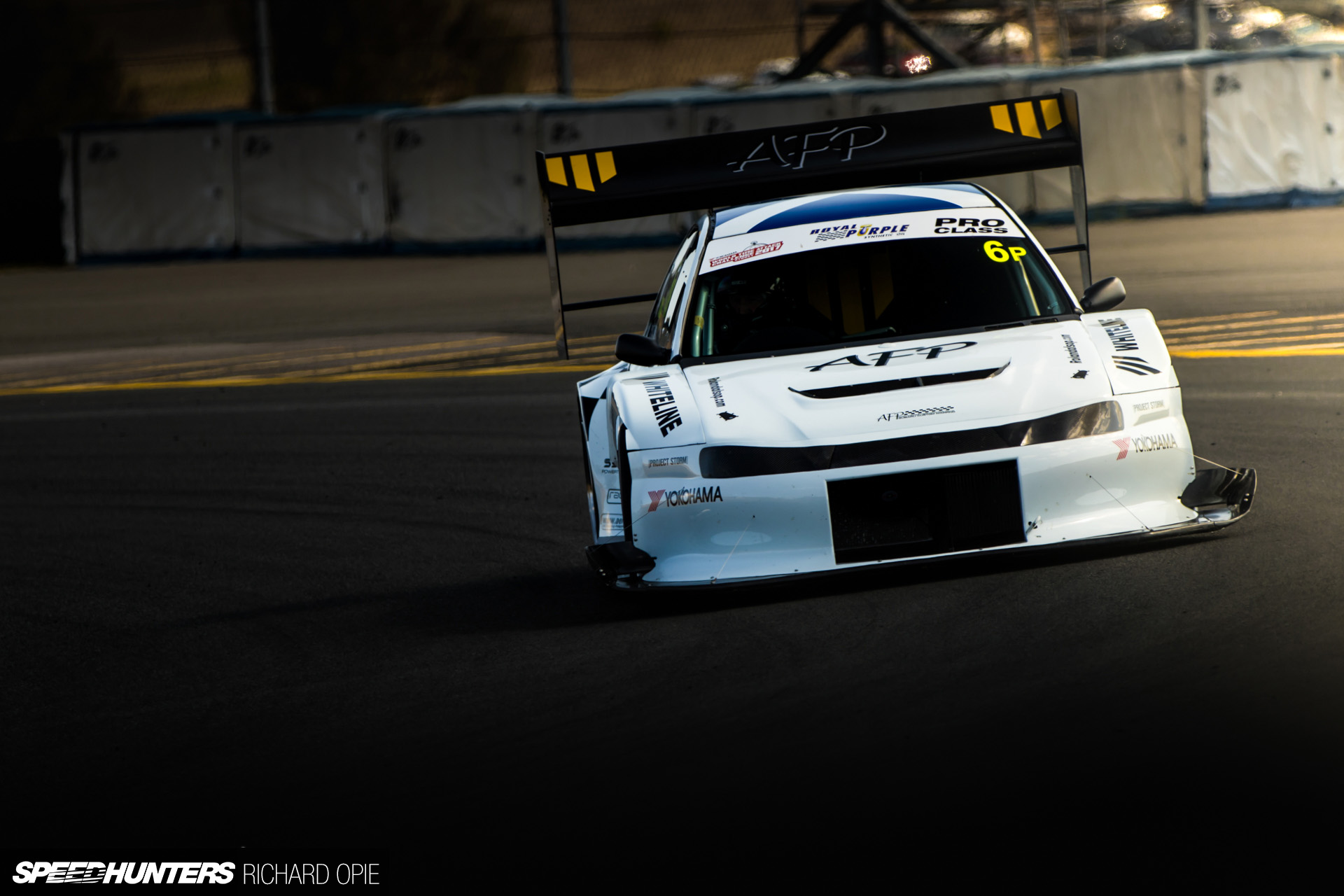
In WTAC 2015 form, the WRX landed at Sydney Motorsport Park a slightly more conventional looking beast – if such an understatement can suffice. Wide arches, the stock-looking front bar featuring bulky winglets pairing with a tall rear wing, was at least a development from the comparatively subdued Scottish time attack guise.
Besides the eventual gearbox breakage – a broken output shaft on the custom 6-speed sequential creating mass carnage and a workload too daunting to consider – Andy also mentions the times weren’t up to par. “I drove that track as hard as I’d driven at home, but we were still 12 seconds off the pace.” Regardless, Andy’s appetite for aerodynamic grip had been whetted.
Andy admits showing up to the track as a spectator was painful, but ultimately it left him determined to develop the car and return.
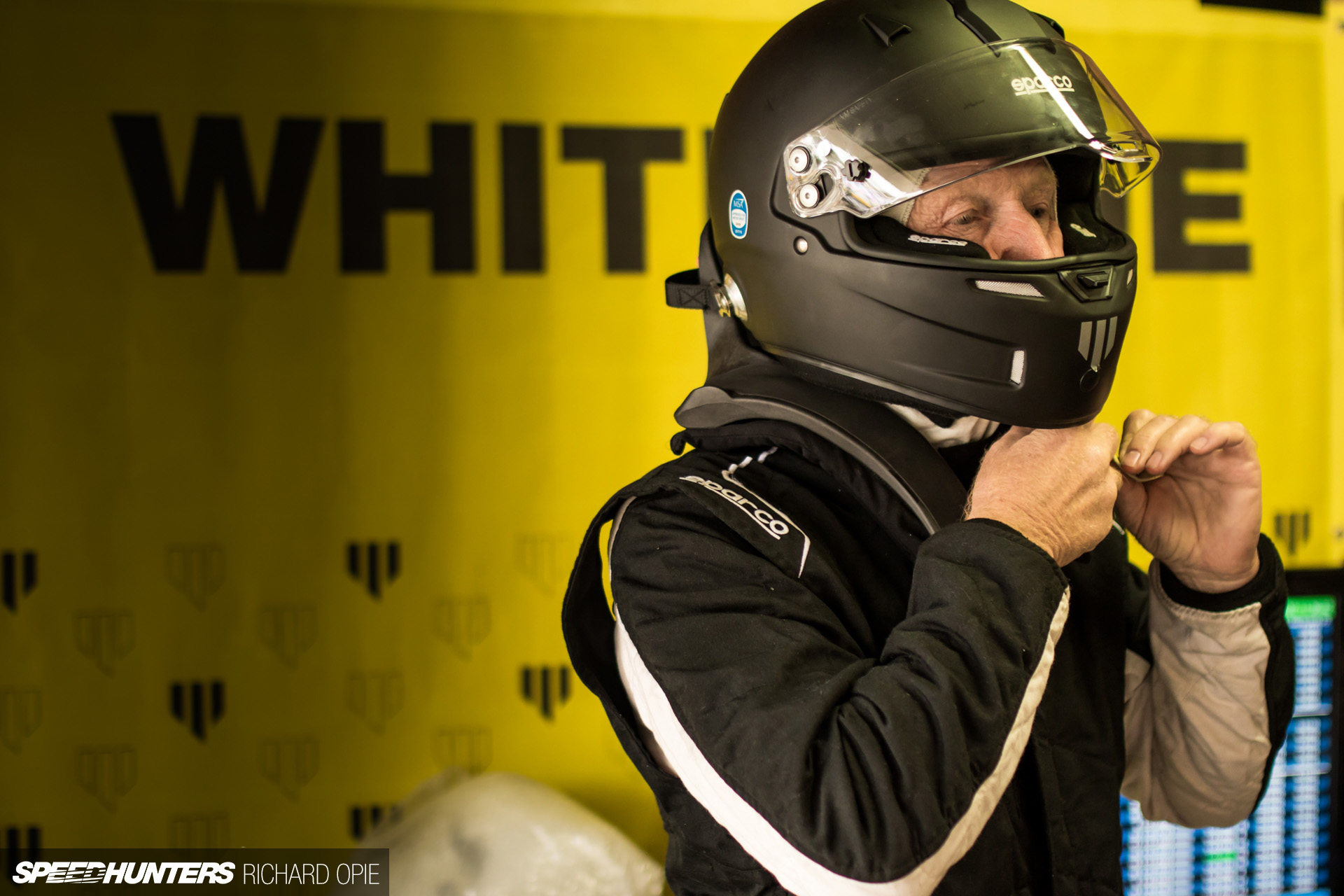
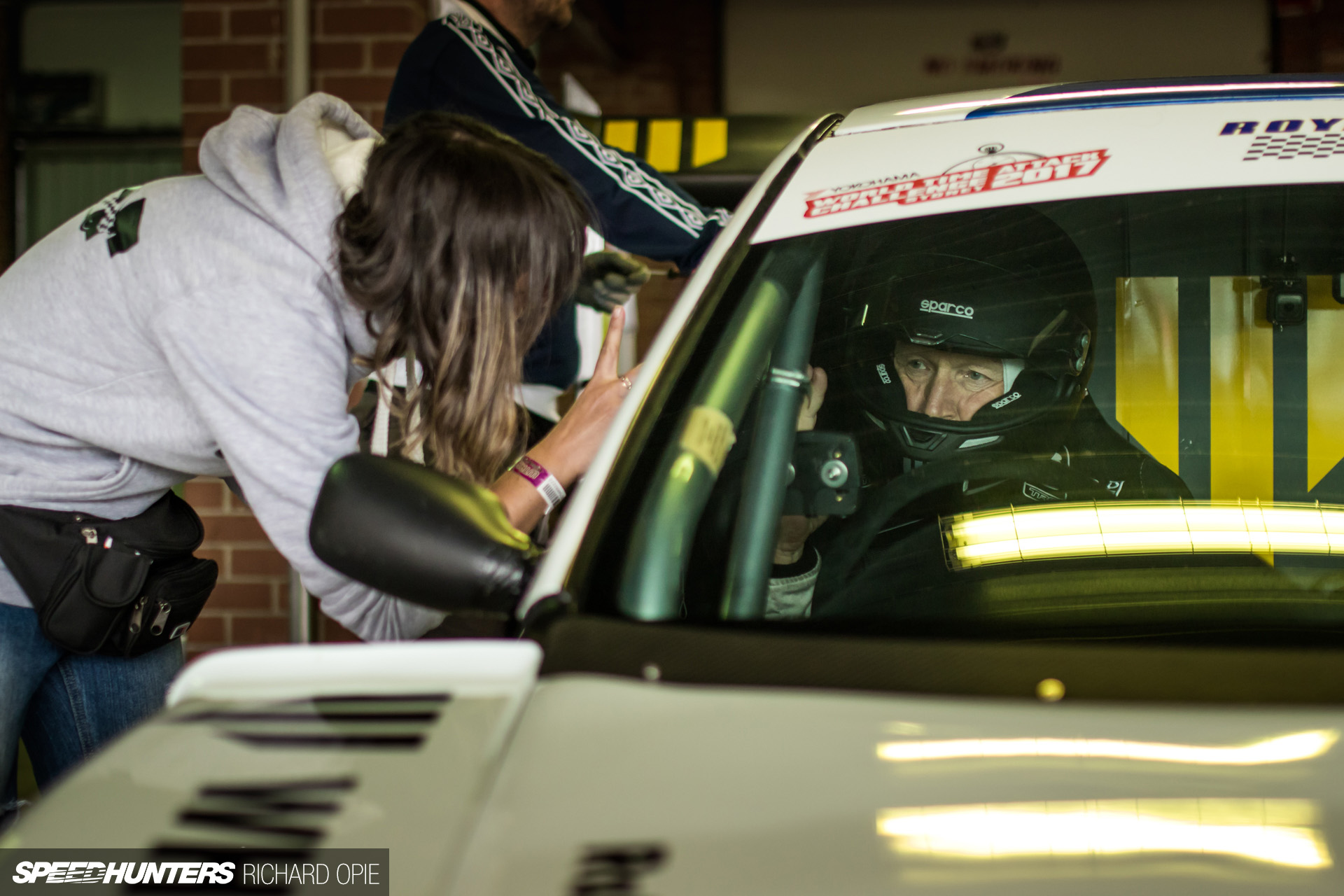
So, that expectation. Andy suited up in Sydney with a bunch of goals in mind. First, to be the fastest Subaru over the course of the weekend. Second, to be the fastest of the European contingent. Thirdly, to make the Top 5 shootout on the Saturday evening. And finally, a stretch goal: to stand on the podium.
Boss Mode
To achieve the goals, the WRX has been significantly levelled up. Versus the previous incarnation it’s difficult to pick a place to begin running through the changes. The obvious, perhaps, is the most polarising aspect of the car: the aesthetic.


Outwardly, the WRX looks quite unlike any other Subaru that’s preceded it. The resulting silhouette is streamlined, courtesy of bespoke carbon fibre bodywork flowing over massive 18×11-inch RAYS Volk Racing TE37SLs.

But it’s all about function. It’s no real surprise that a prominent name among the WTAC pit is responsible for the design of the WRX’s look, and exterior function. Andrew Brilliant of AMB Aero set about concocting a recipe that would work with the WRX’s four-door shell.


The pointy end is also the cleverest. Andy described the AMB ‘Infinity Wing’ second elements on either side of the splitter as presenting an infinite lift to drag ratio. In layman’s terms, the drag created by these elements is pulling sideways; the wing on the left pulls right and vice versa. The net result being an effective zero drag creation, while generating front downforce.
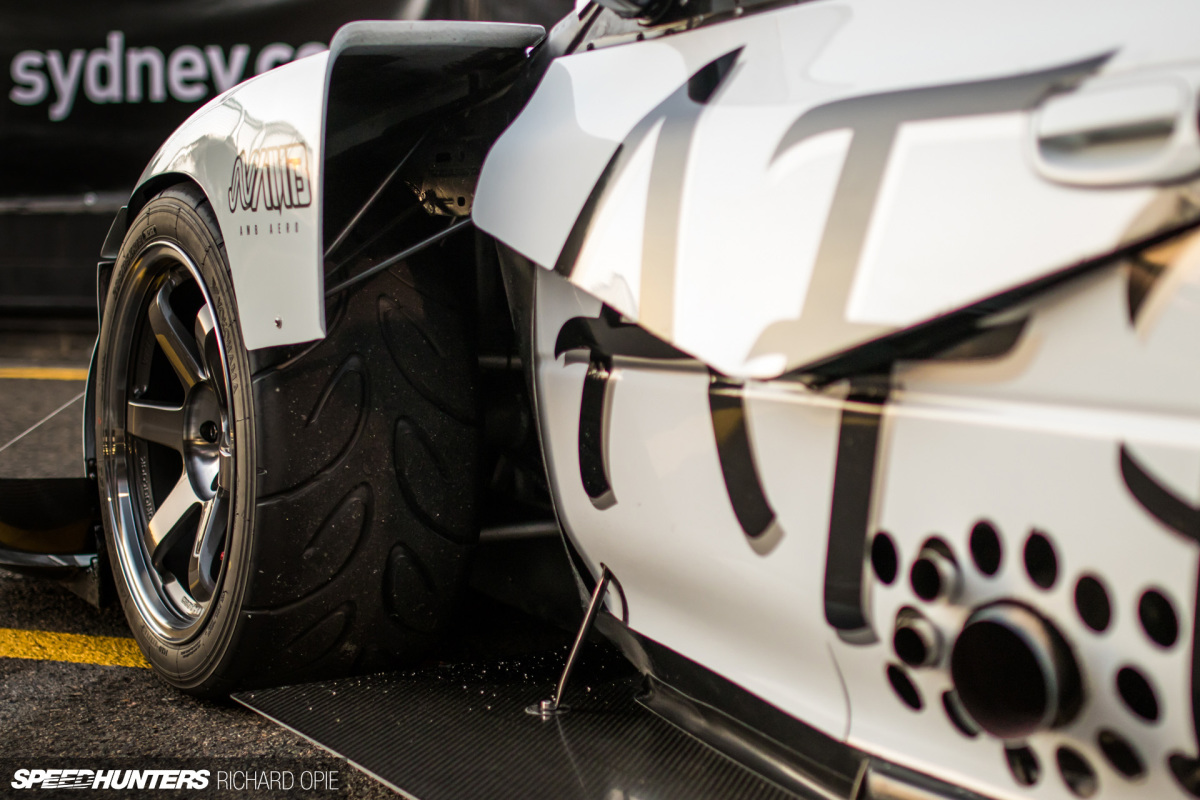
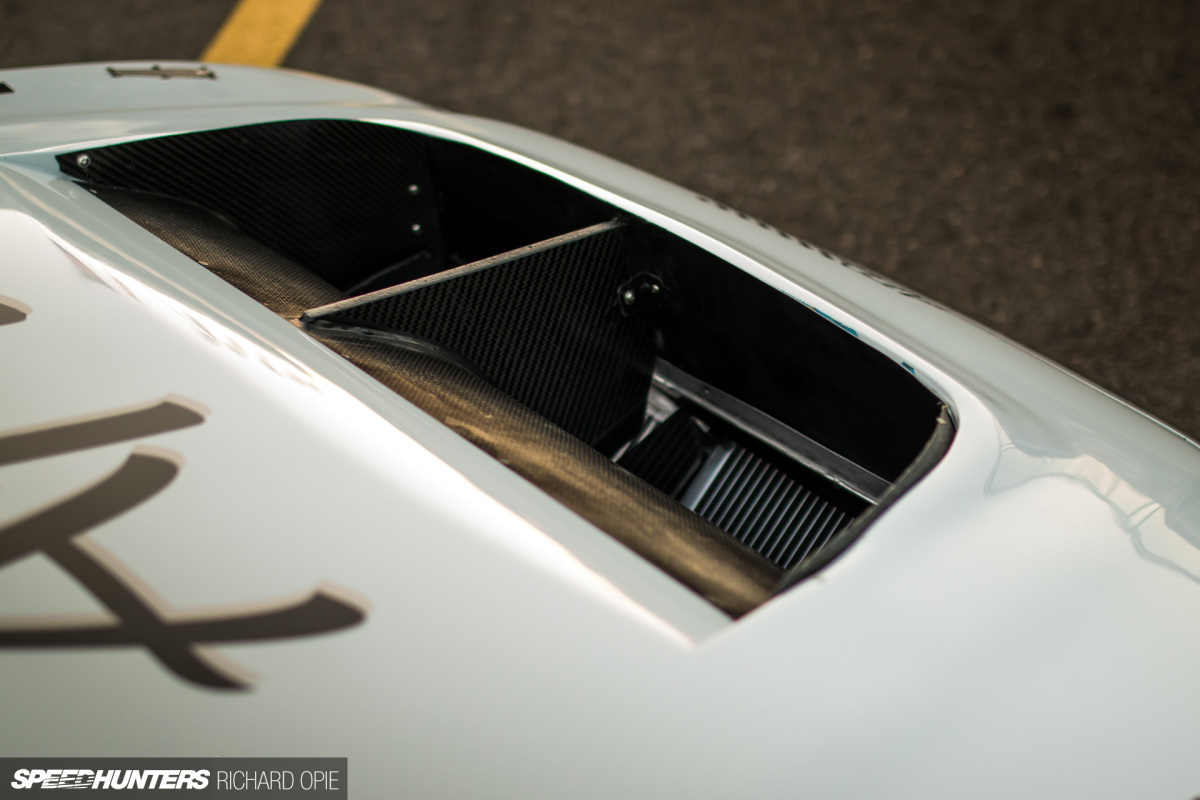
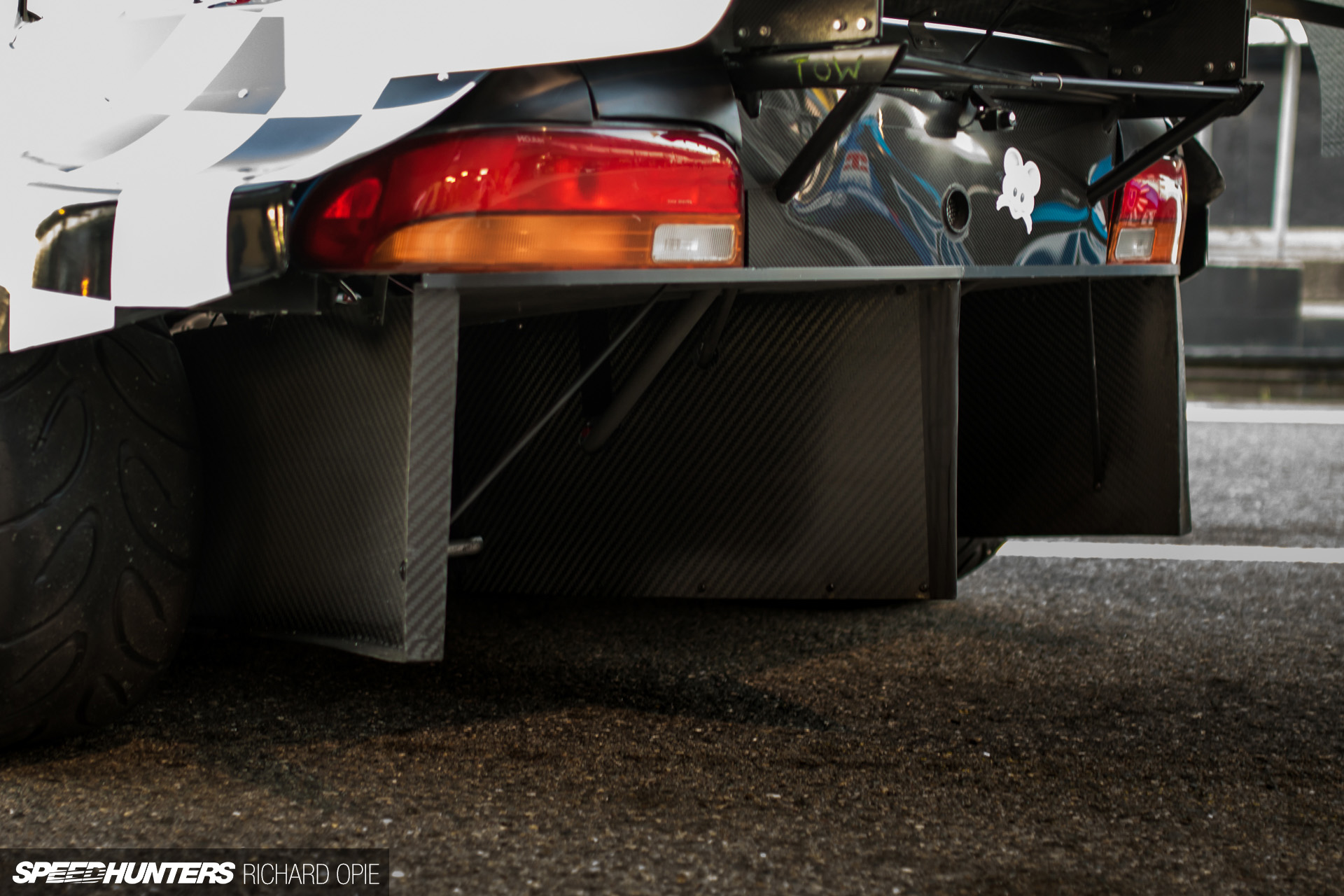
The elongated nose reduces frontal area and flows neatly across the front arches, not before permitting high-pressure air to enter the front and exit through the hood slot, a common trick to create downforce while cooling the radiators. A flat floor covers the entirety of the underside, morphing into two large tunnels at the car’s rear. This works to slow down the air velocity as it exits the underbody, creating a low pressure zone beneath the car and improving aerodynamic grip.

Out the back is a behemoth dual-plane wing. In Andy’s words, “I wanted a big wing, so I got a big wing.” It’s tough to argue with that.

Working in tandem with the aero is a revised suspension setup. The WRX used a conventional MacPherson strut arrangement previously, but Andy himself has engineered a bespoke double-wishbone arrangement at both ends. The only concession to the rules is the retention of original shock towers, hence the pushrod actuation of the remote reservoir front dampers.
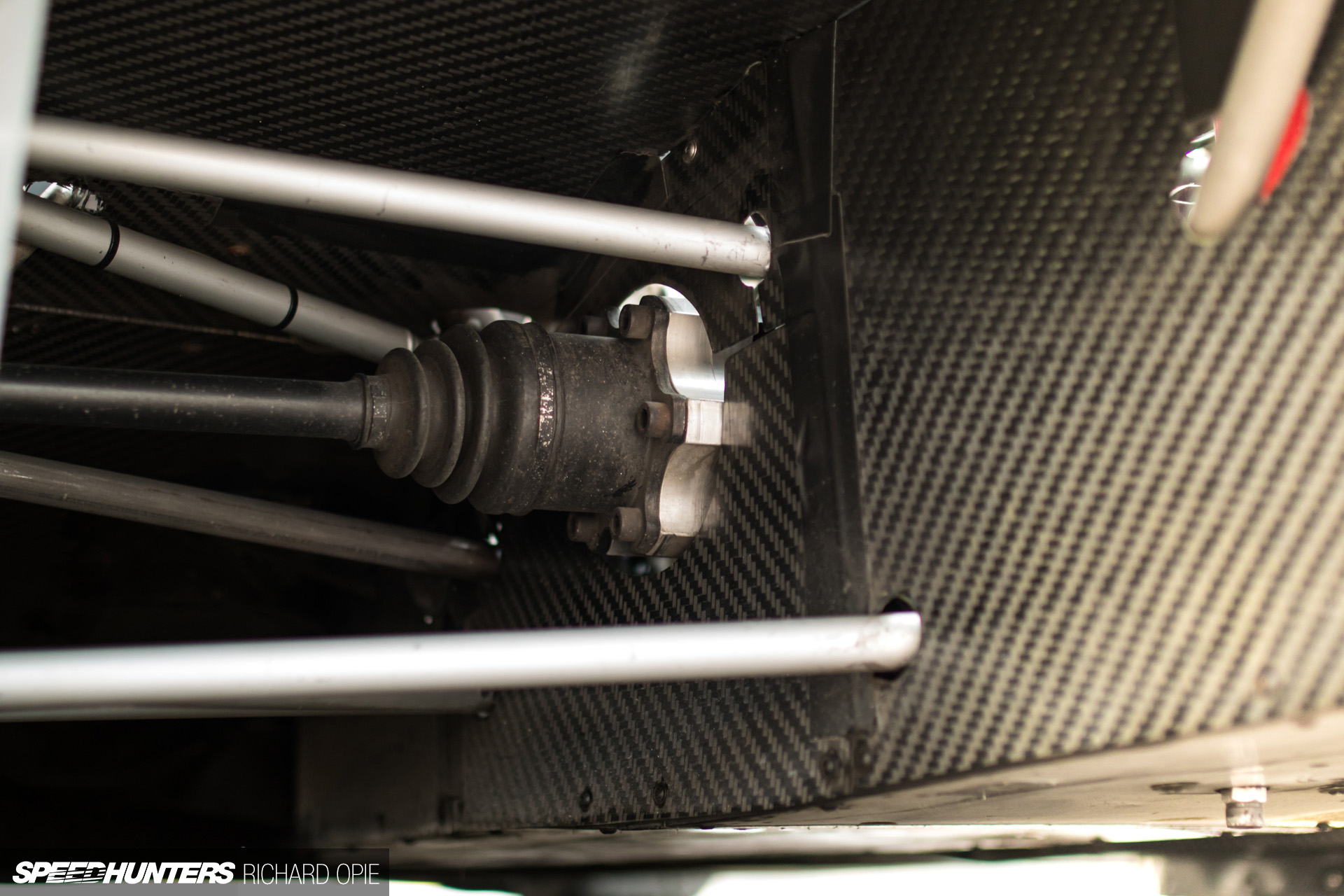
The rear however hangs off a custom tubular structure, meaning Andy’s been able to dispense with the bulky pressed-steel subframe. Like all of the engineering on the car, the fabricated rear arms are Andy’s own work, offering minimal obstruction as they pass through the underfloor tunnels.
Mechanically Speaking
Squashed between the tunnels is the most significant change to the running gear since 2015 – Andy’s installed an R35 Nissan GT-R transaxle at the rear. In his mind, the benefits of lightning fast dual-clutch shifts and the ability to place the mass at the rear of the car justifies the additional heft of the unit.


Just like a GT-R, it’s shifted by paddles. In fact, with the assistance of EcuTek software, Andy’s managed to retain an OEM R35 control unit. It permits traction control and use of the R35 active diff, inclusive of torque split between front and rear wheels. The byproduct is those distinctive GT-R shifts. It’s a trait that draws attention to the car before it’s even in view, familiar yet unusual when paired with the snarl of the H6 engine.


Drive is taken to a repurposed Escort Cosworth front diff via a propshaft, outputting to a very unconventional chain drive to the front axle. Naturally, durability is the question on inquisitive lips. Andy simply shrugs it off, mentioning the chains are capable of handling 600hp Harley-Davidson drag bike duties.
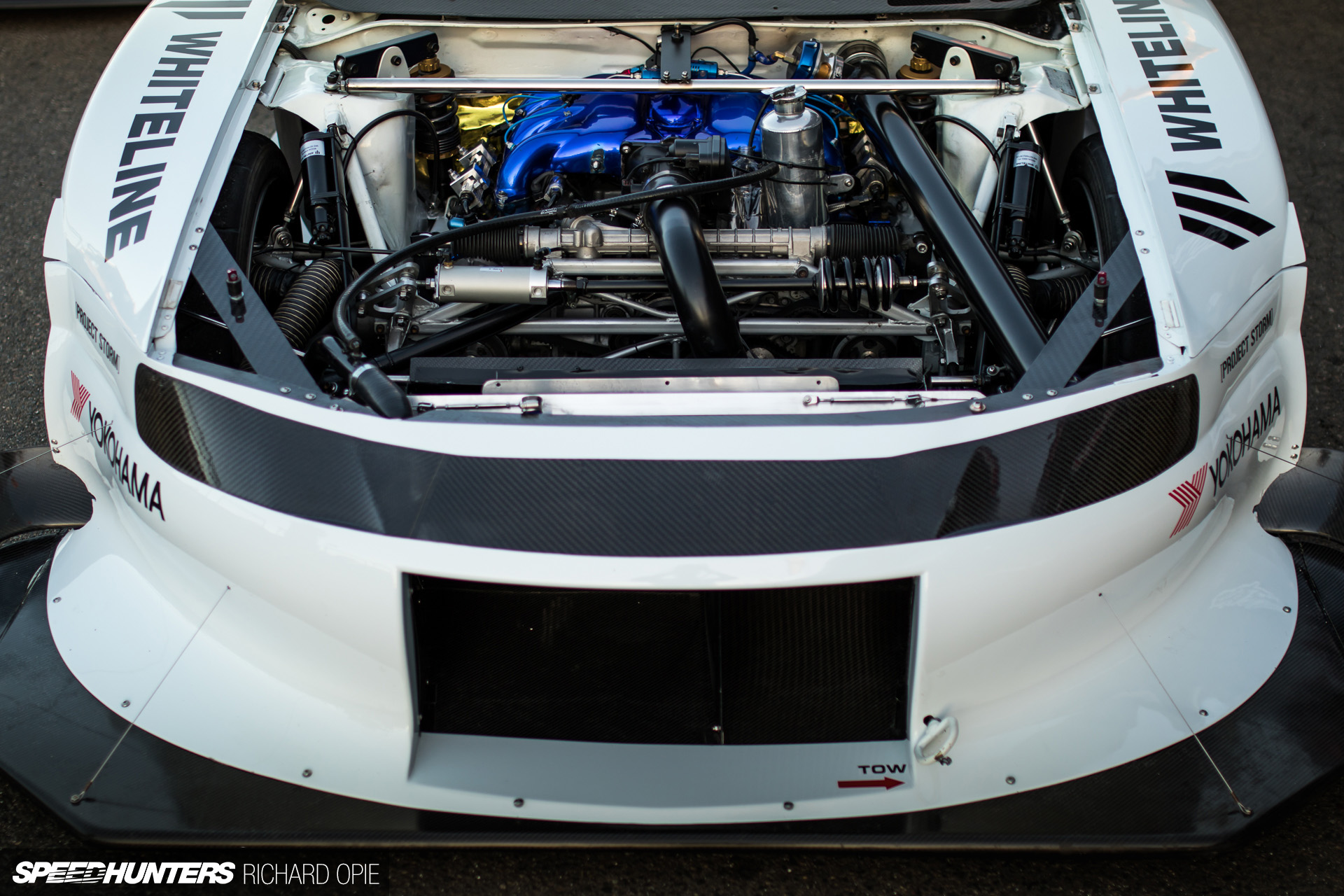
All of this is because the engine now sits further back against the firewall courtesy of the driveshaft relocation. The front diff is normally located in line with the front axle, with the boxer engine slung out in front. Weight distribution is now massively improved, albeit posing some packaging changes.

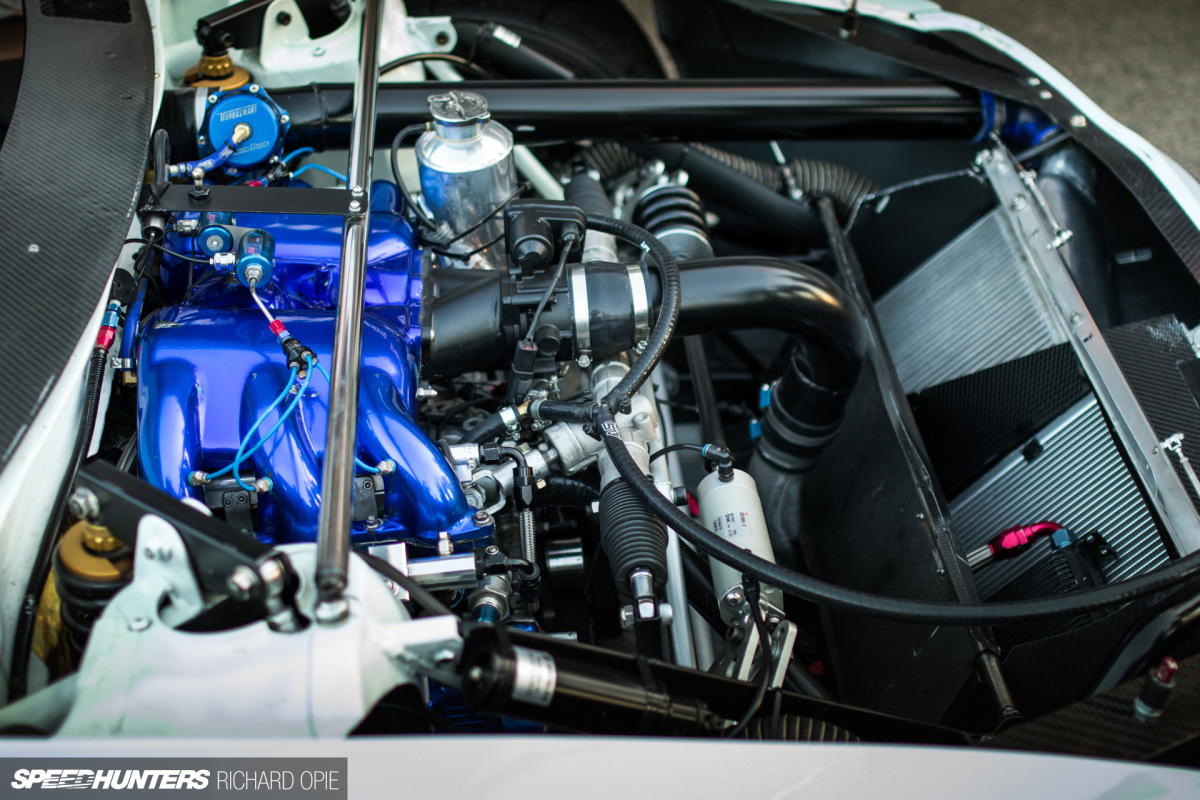
One of those was the turbo install. Previously running a twin-turbo layout, the EG33 now breathes through a Precision PT6870 lurking beneath a cover where there’d ordinarily be a passenger seat. Andy reckons response is much the same, with around 1,200hp on tap with a hit of nitrous oxide. Without nitrous, pushing 2.0bar (29.4psi) of boost the combination is good for numbers in the 1,000hp region.

Internally, the engine retains its 2015 spec. Now displacing 3.6 litres courtesy of a 79mm stroke and a 98mm bore, inside it’s a far cry from its SVX/Alcyone 3.3-litre 220hp spec. There’s an Arrow crank, forged Mahle pistons, custom AFP cams and ported heads. The whole shebang’s topped with a patriotic “St Andrews Cross blue” front-facing inlet manifold with a set of 1,300cc injectors supporting the hefty output, all under the watchful gaze of a Syvecs S88 ECU.
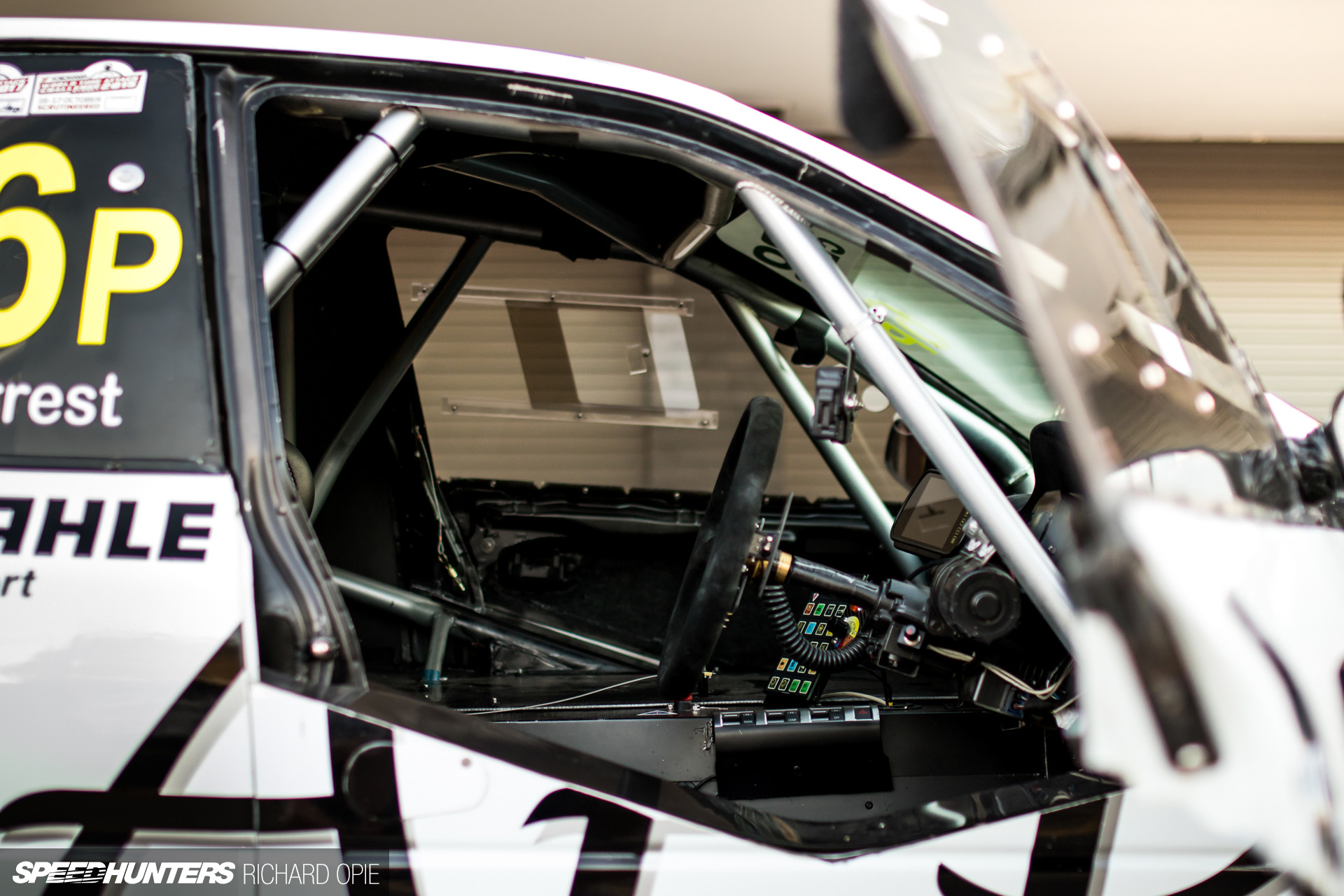

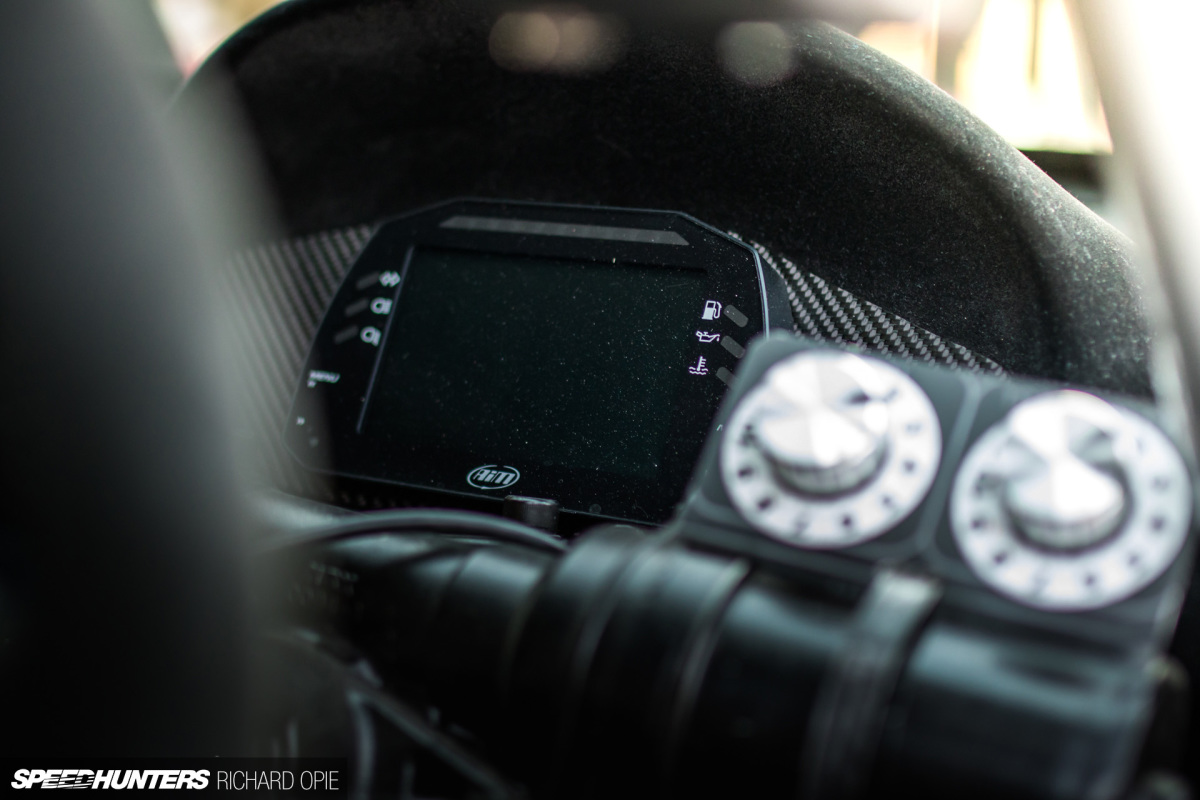

Inside it’s all racecar. The high carbon fibre sills make for an entrance reminiscent of an LMP car, but once inside it’s a businesslike environment. A complement of AiM displays ensure the Subaru’s vitals are kept monitored in the dash binnacle, while hanging from the cage is the requisite GPS lap timer. Sitting on the tunnel is a Life Racing PDU keypad, allowing quick access to a number of controls communicated by a CAN system. Turning up the wick is as simple as selecting a given map via a couple of rotary switches. Andy mentioned they started off on about 600hp for the weekend, before dialling it up incrementally as the car and circuit became increasingly comfortable.
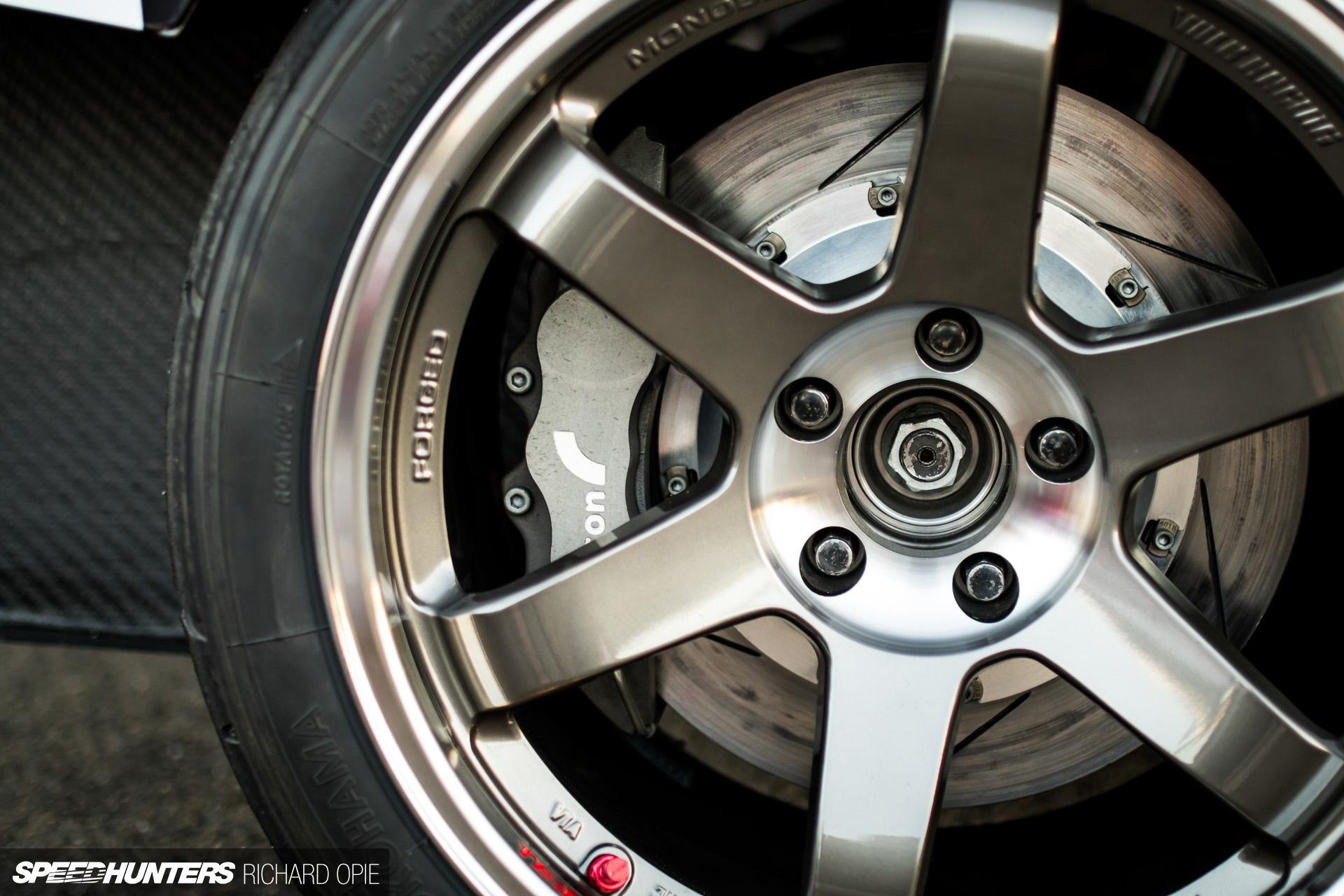
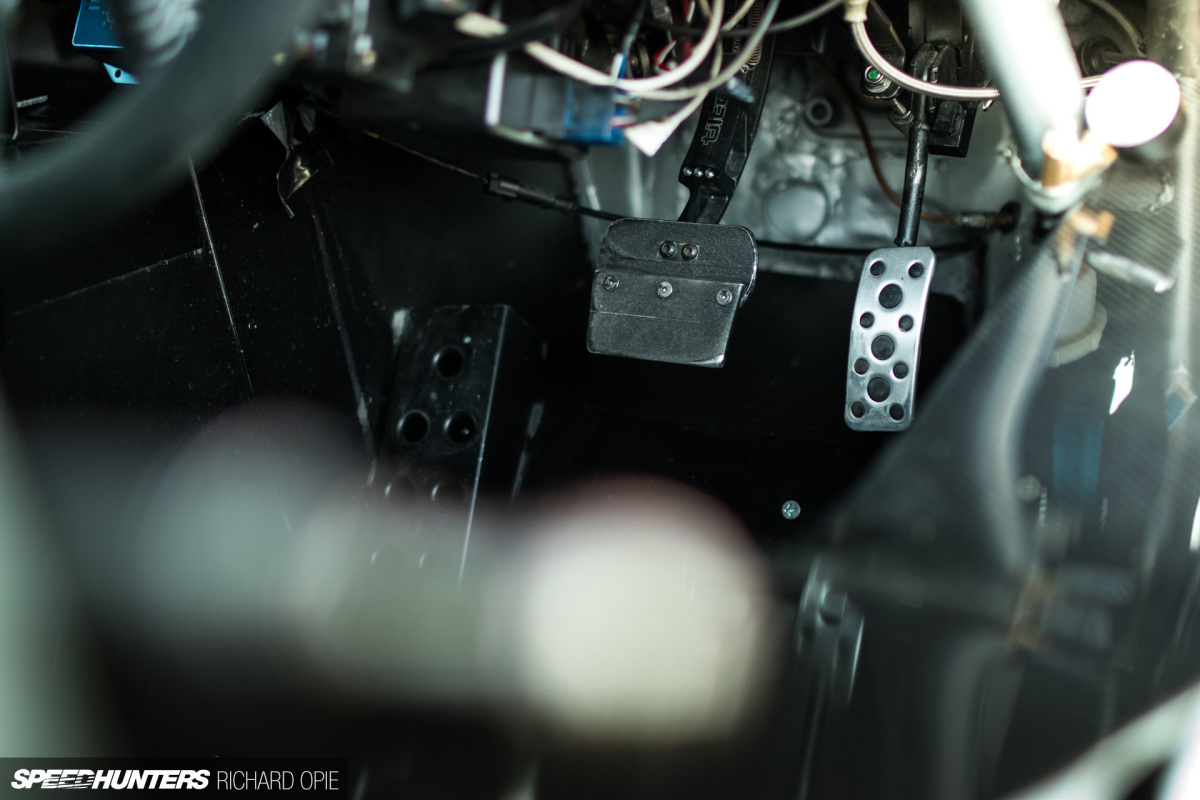
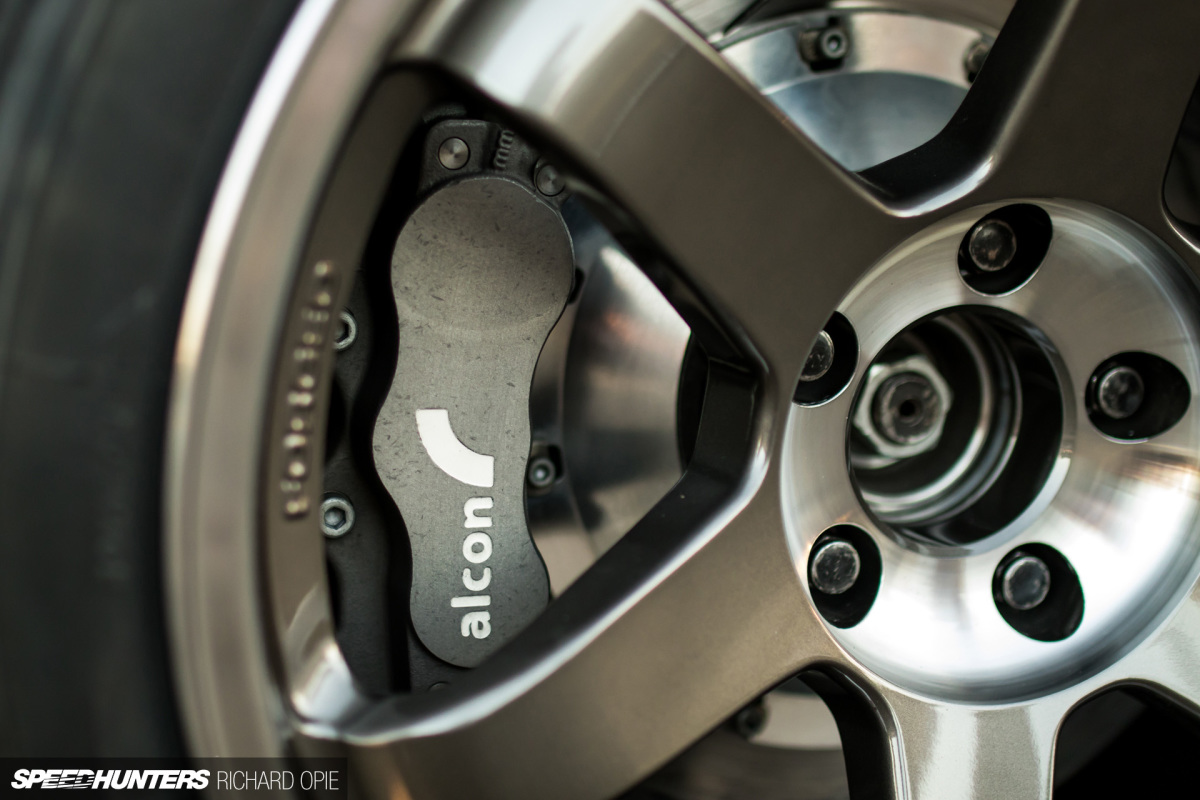
Braking? No problem with giant 2-piece rotors being squeezed by 6-pot Alcon calipers front and rear. But check out that pedal box. Two pedals in a race car is without a doubt unusual, and it’s also interesting to note the use of a fly-by-wire throttle arrangement. Again, it’s an exercise in control; the ability to vary throttle body behaviour electronically is integral to managing 1,200 horsepower beneath the right foot.


For Andy, Lisa and the team, WTAC has undoubtedly been a rollercoaster experience. From hope, to heartbreak, to a dogged determination and rise from the ashes. How did the car dubbed Project Storm by virtue of its stormtrooper-esque aesthetic, respond to the changes and importantly were the AFP team’s goals realised?
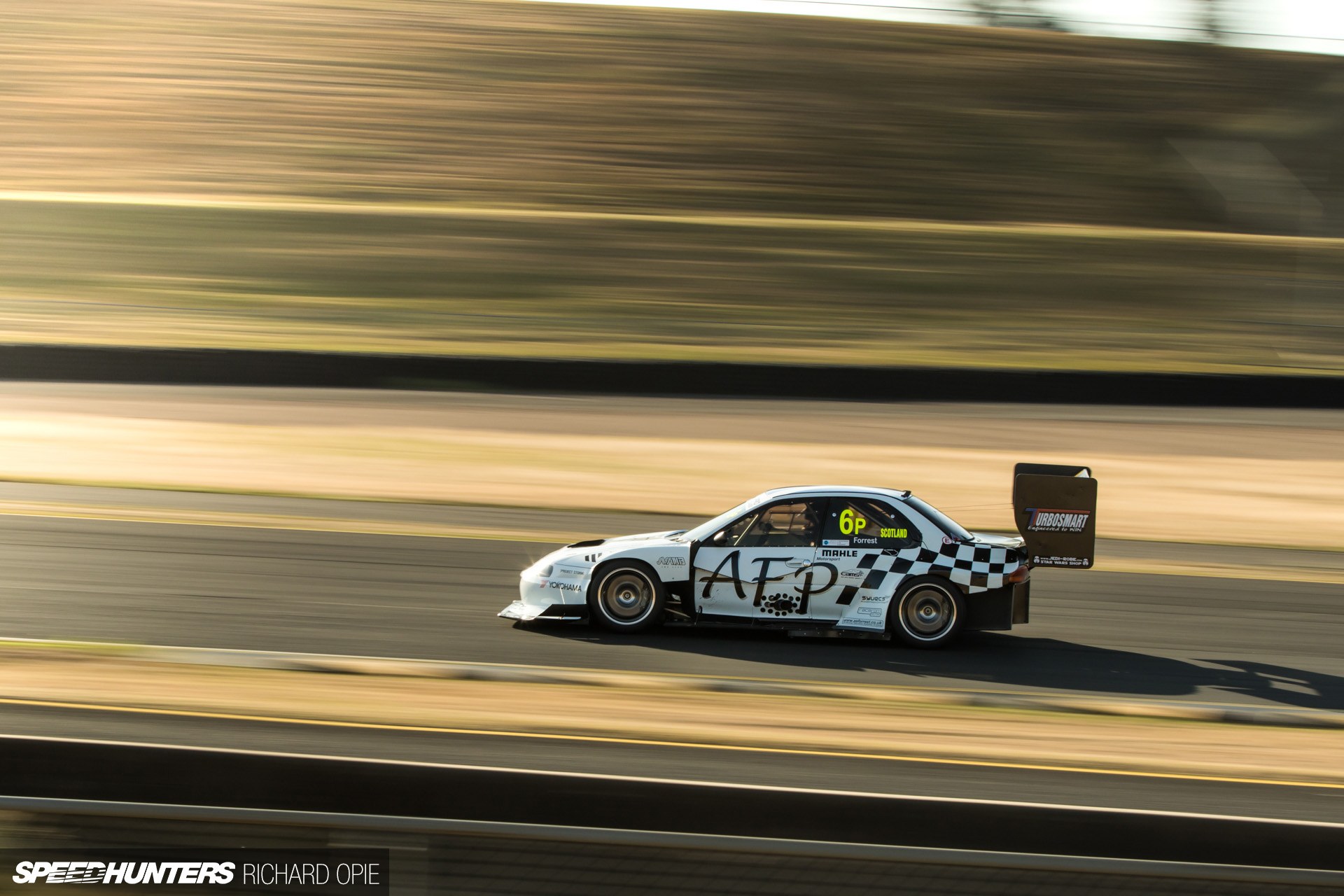
Fastest Subaru? Check. Fastest European entrant? Absolutely, by about 2.2 seconds over the stonking Audi R8 1:1. Top 5 shootout? You bet. Podium? Not quite, but after experiencing Andy’s creation, and hearing the self-assurance in his voice when he says the team has unfinished business with WTAC, don’t be surprised when the growling H6 mounts another attempt for 2018 with sights set firmly on challenging for top honours.
The WRX is the poster child for the evolution of a time attack racer. Survival requires the fittest, and with every change Andy and the Subaru get that little bit closer to the top.
Richard Opie
richy@speedhunters.com
Instagram: snoozinrichy