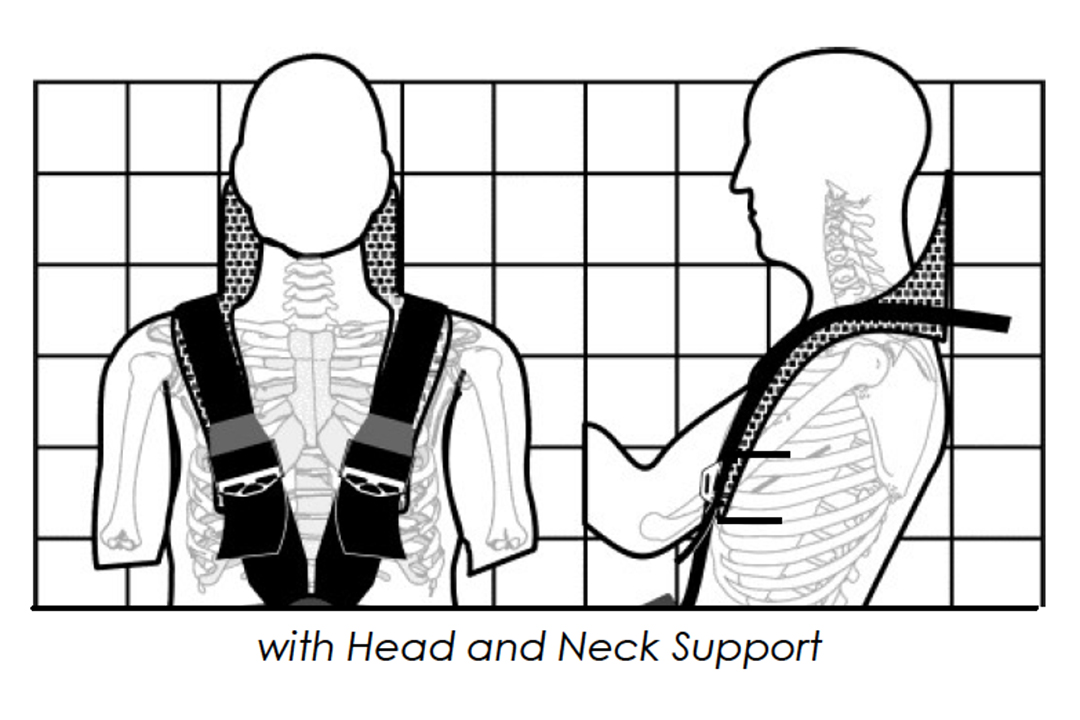
“I’m not a racing driver, I don’t need that.”
It’s true, you can get carried away with ‘safety equipment’. I put that in quotation marks because at track days all around the world you’ll find this one type of guy. He’s dressed head to toe in fire retardant gear. He has the suit, the gloves, and the ever-so-thinly-soled shoes so he can heel and toe to perfection, if only he knew how. The gear is usually in a colour that co-ordinates with his chosen track day steed, and to be honest it’s all in vain. The likelihood of his car exploding into flames is relatively low; it is of course possible but there’s usually a rather more important piece of gear he’s missing: a head restraint.
In crashes at speeds even as low as 30mph you can be generating forces large enough that the mass of your head and helmet literally try and pull your neck apart. It sounds dramatic, but I’m not joking. Check out this video of an altogether unspectacular crash:
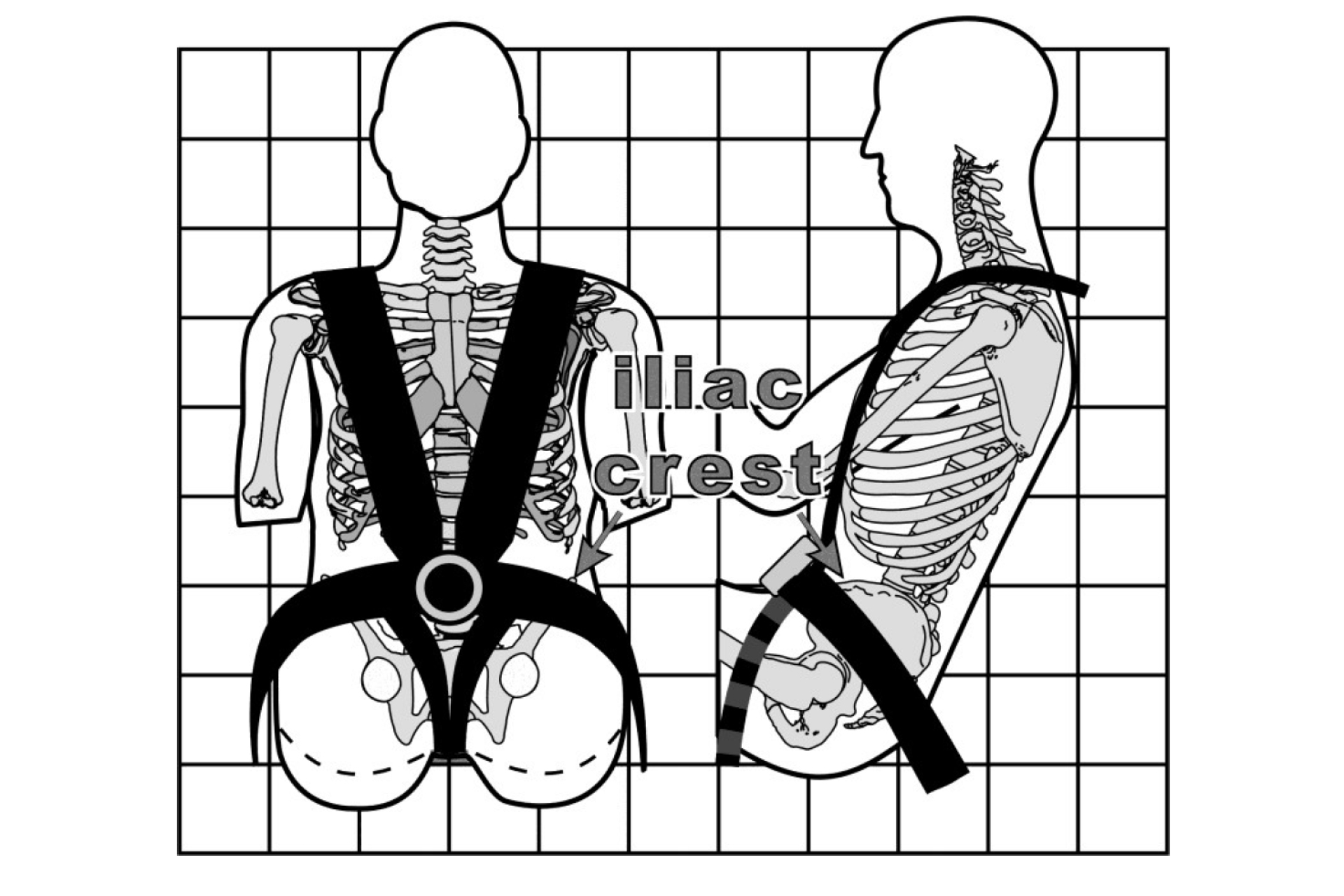
What Happens In A Crash Situation?Whenever you hit something hard there is a very abrupt deceleration, and it’s this element of the crash that is dangerous. Sure, you are fixed in your seat, but your limbs and head are not, it’s just the central mass. Here’s what happens when you crash…
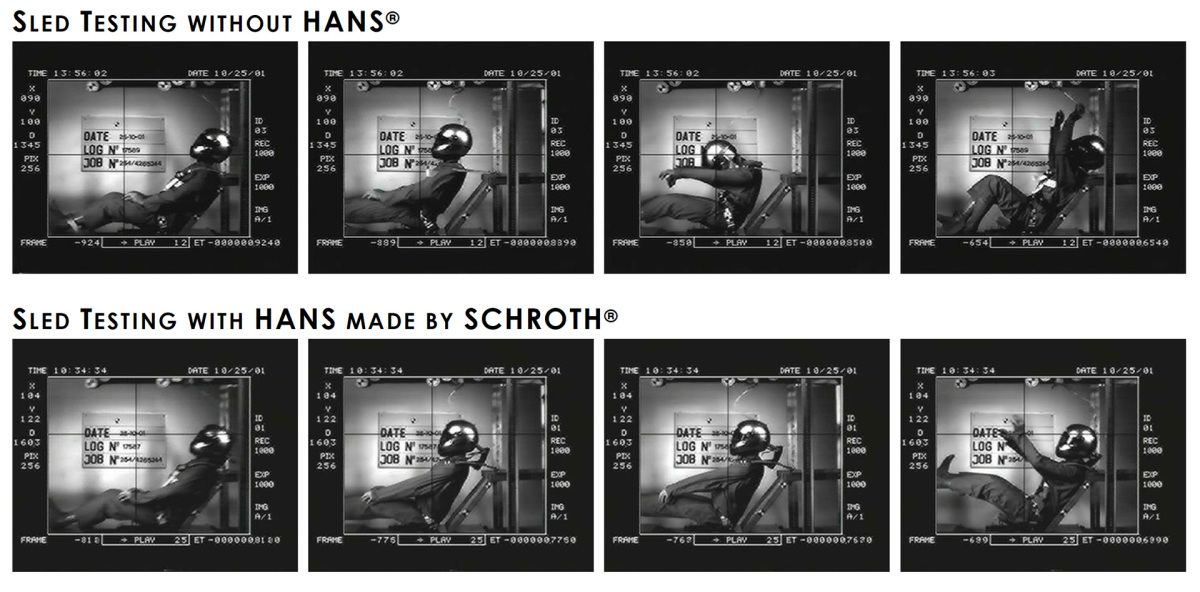
The pelvis moves forward and the shoulder belt angles reduce, which can result in submarining. The lap belt slides into the corner of the bucket seat openings and elongates to take some forces exerted on the body. The harness works to slow the rate of deceleration on the body. Without a frontal head restraint extreme head deceleration loads can cause spine stress and neck tension may occur causing basal skull and spinal fractures, resulting in severe injury or worse. Simply put, without your head tethered to your body it tries to continue its path forward and out the windscreen. It’s only the attachment at the base of the skull to the spine stopping that.
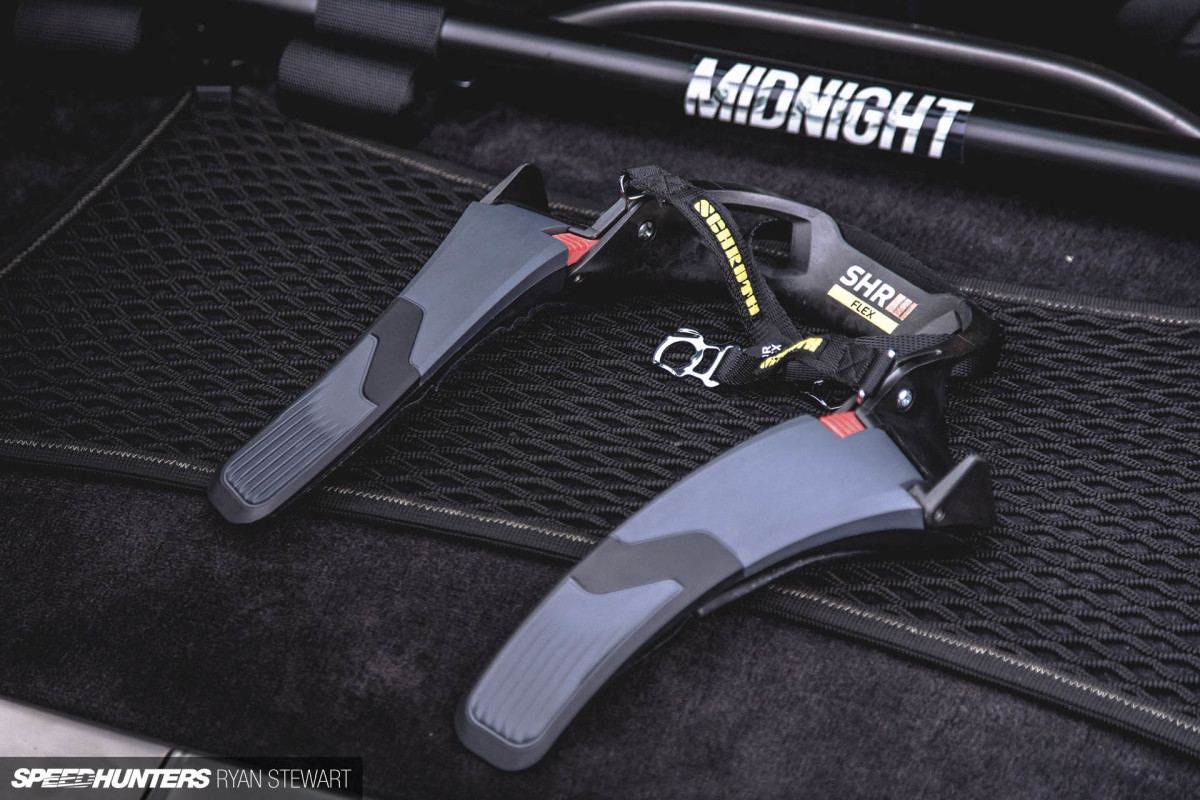
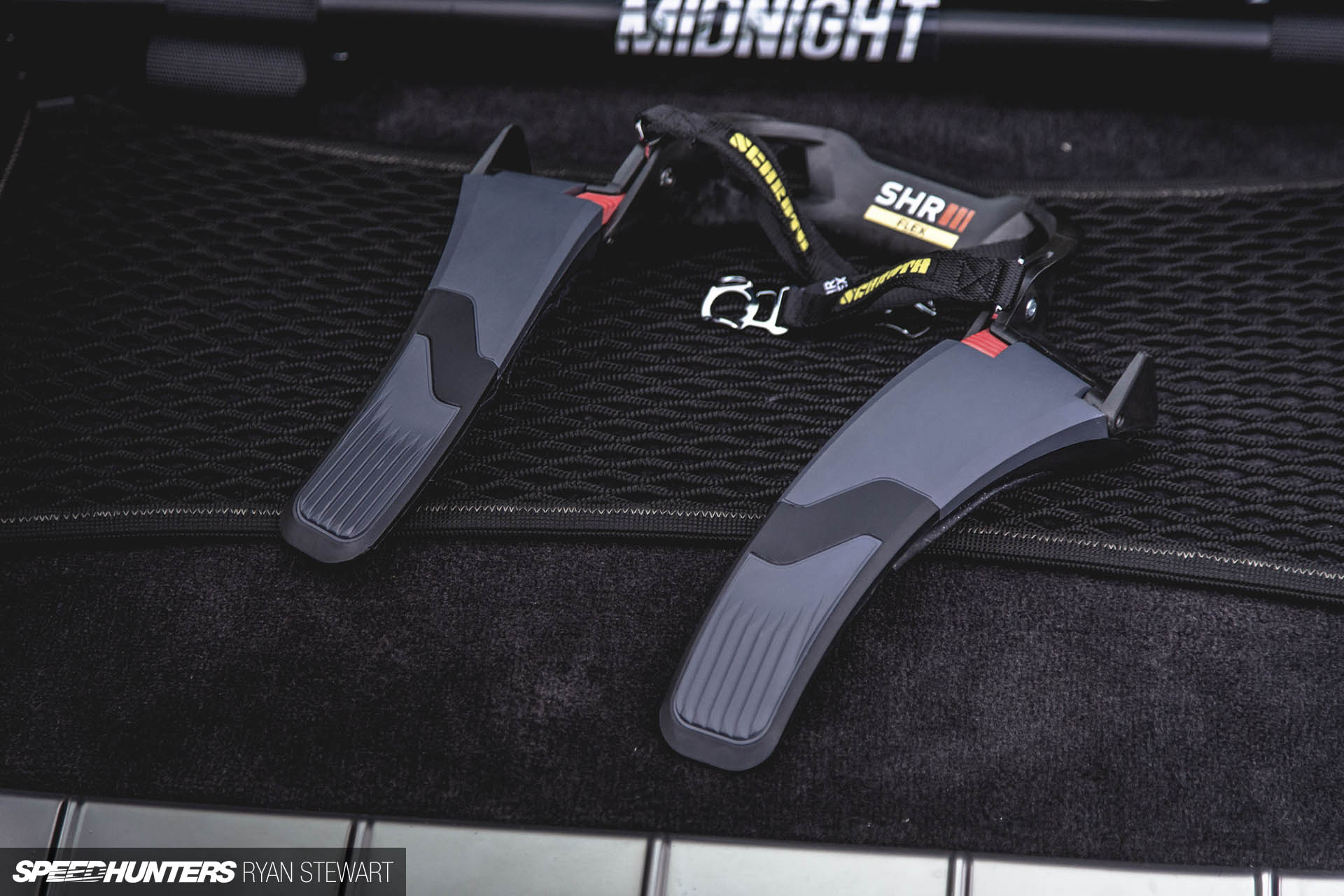
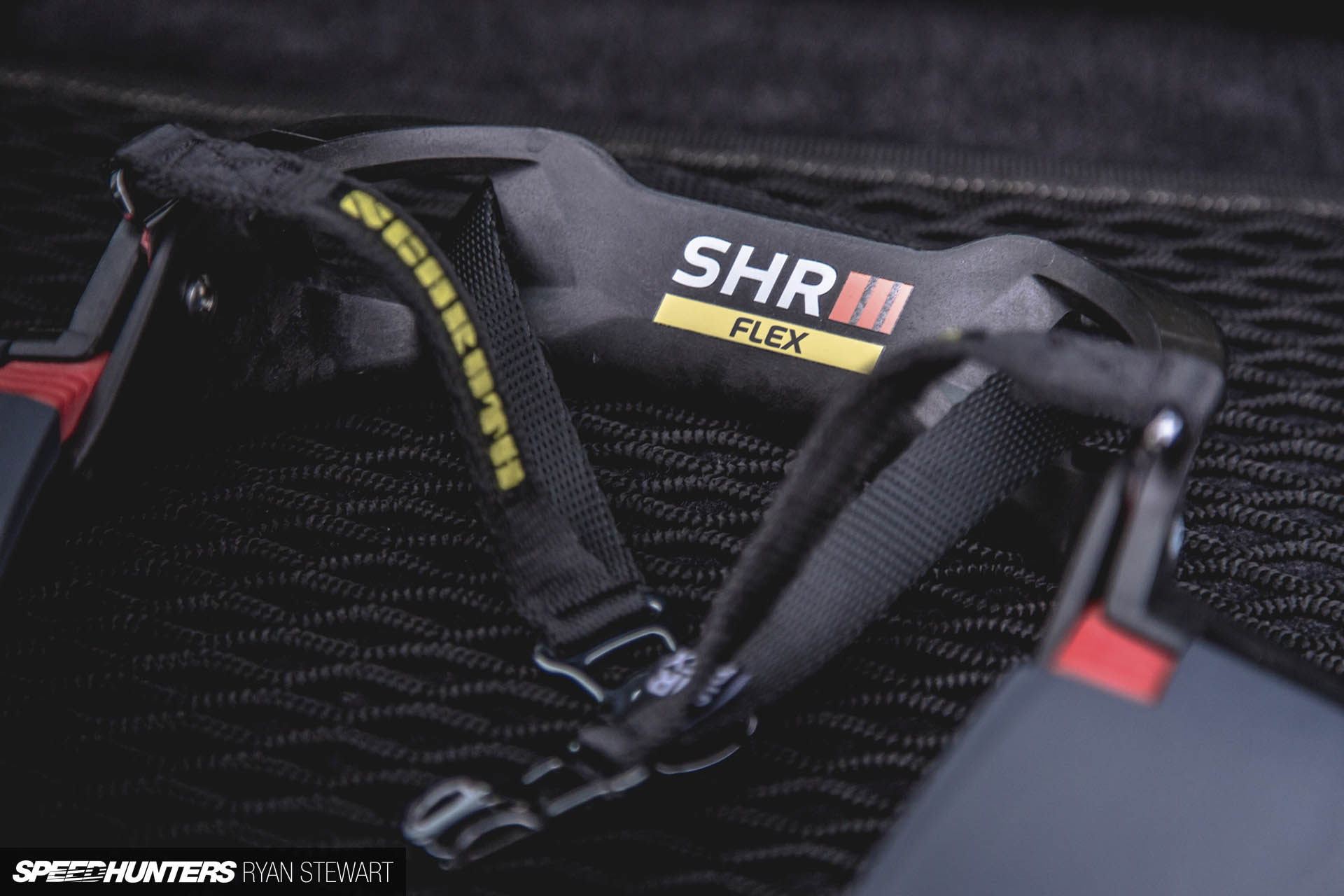
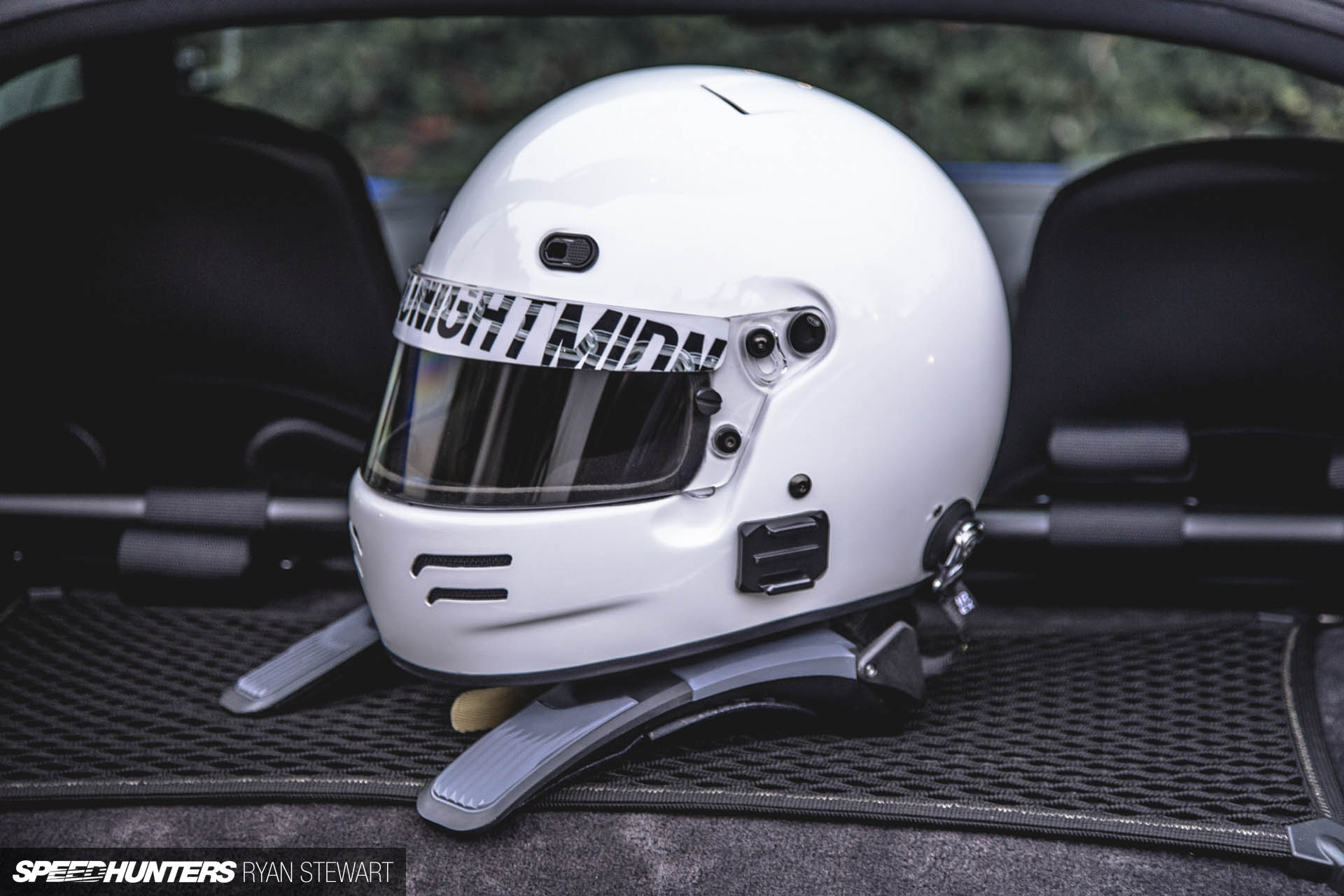
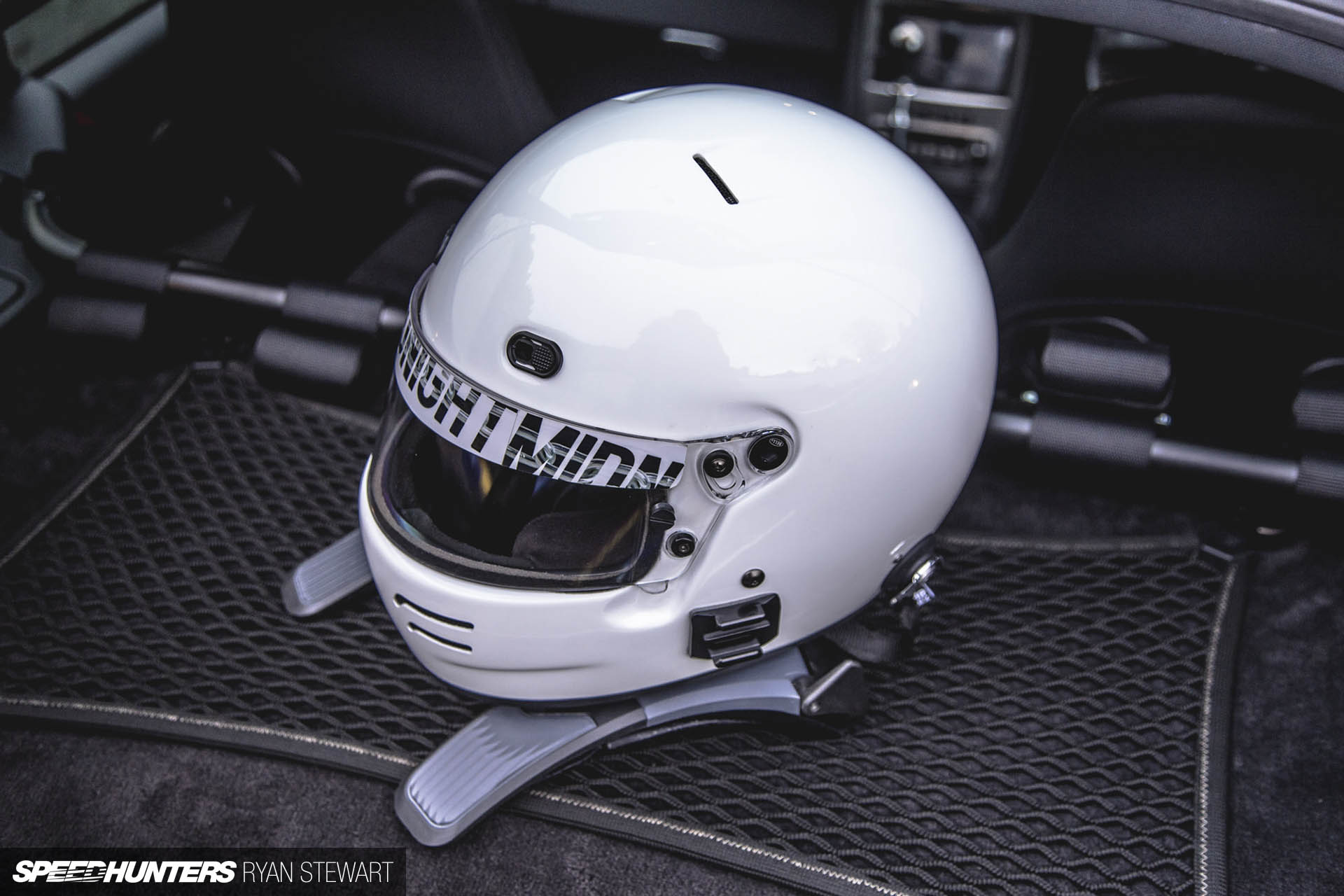
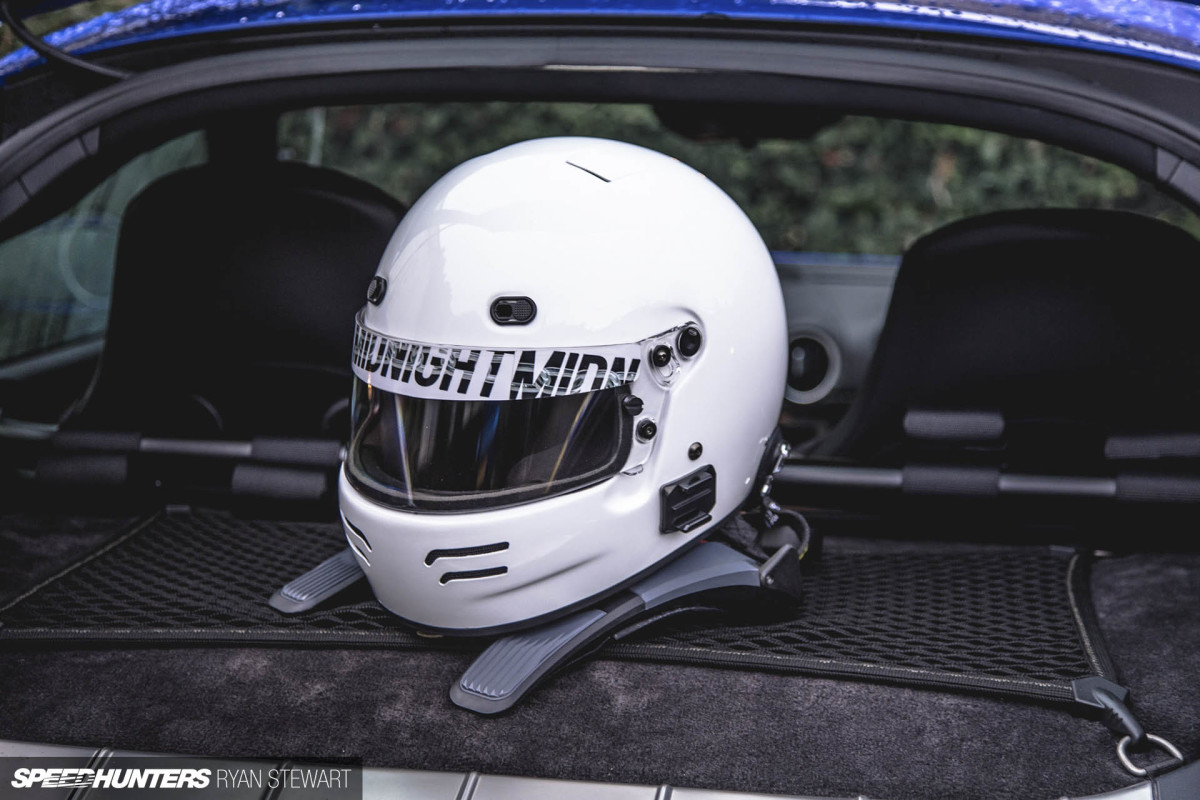
The most effective way to reduce the risk of head and neck injuries is to wear a frontal head and neck restraint (FHR). There’s a number of them out on the market and it can be tricky to decide with one to choose. Schroth has been pioneering head and neck restraint research and that’s why I’ve chosen the Schroth SHR-Flex.
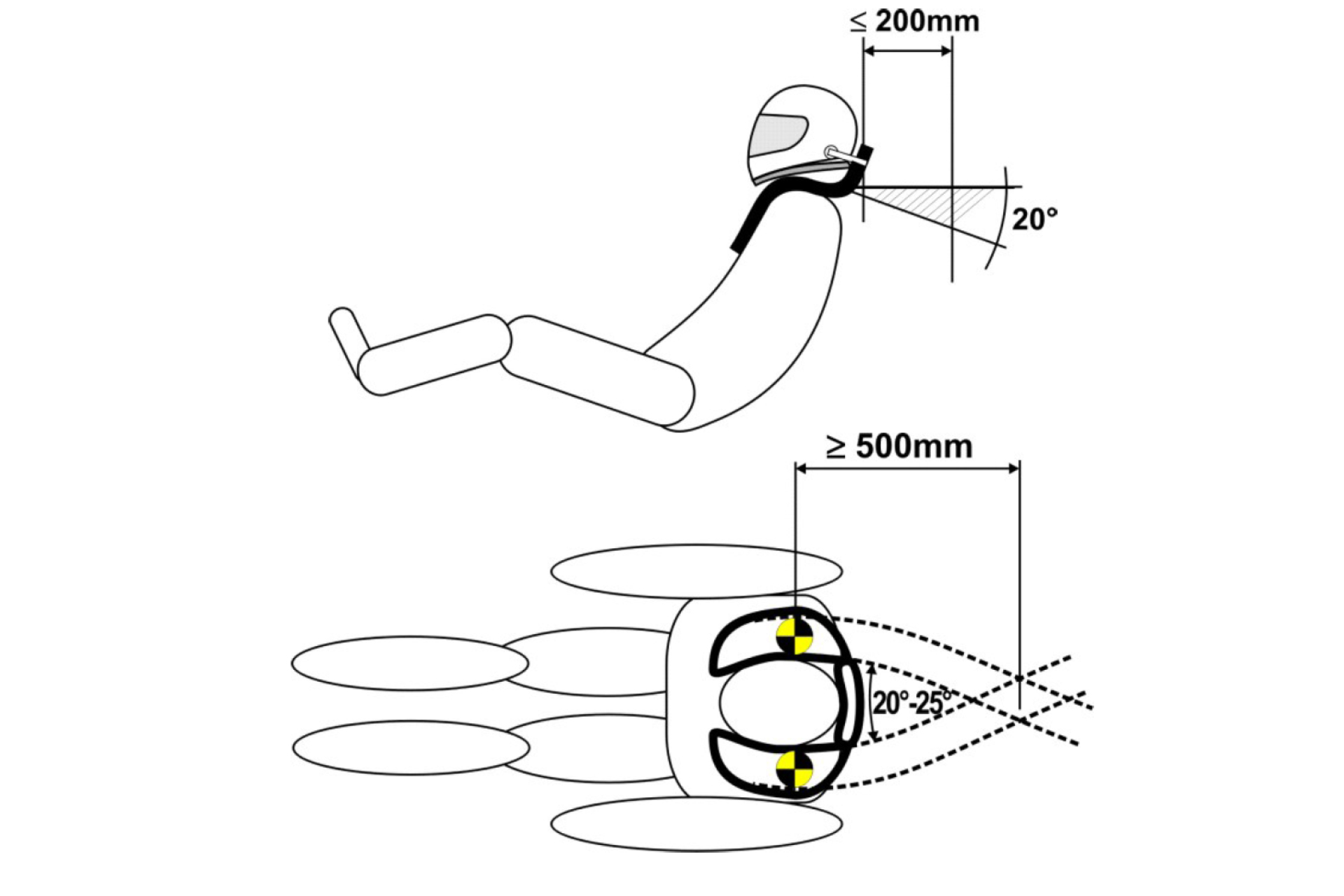
How Head Restraints WorkAny head and neck restraint works in the same way for your head as a harness does for your body. The primary function is to slow the rate of deceleration of the head by anchoring it to the body via webbing or tethers that control the motion and forward loading. Traditional head and neck restraints are fixed collars that wedge between the body and harnesses to provide an anchor point. These have to be correct for the type of seating position (seat back angle) you have; a single seater will require a very different head and neck restraint to a saloon car as the relationship between the neck and body is different. This can be an inconvenience for people with more than one track or race car as often they will have to have more than one device.
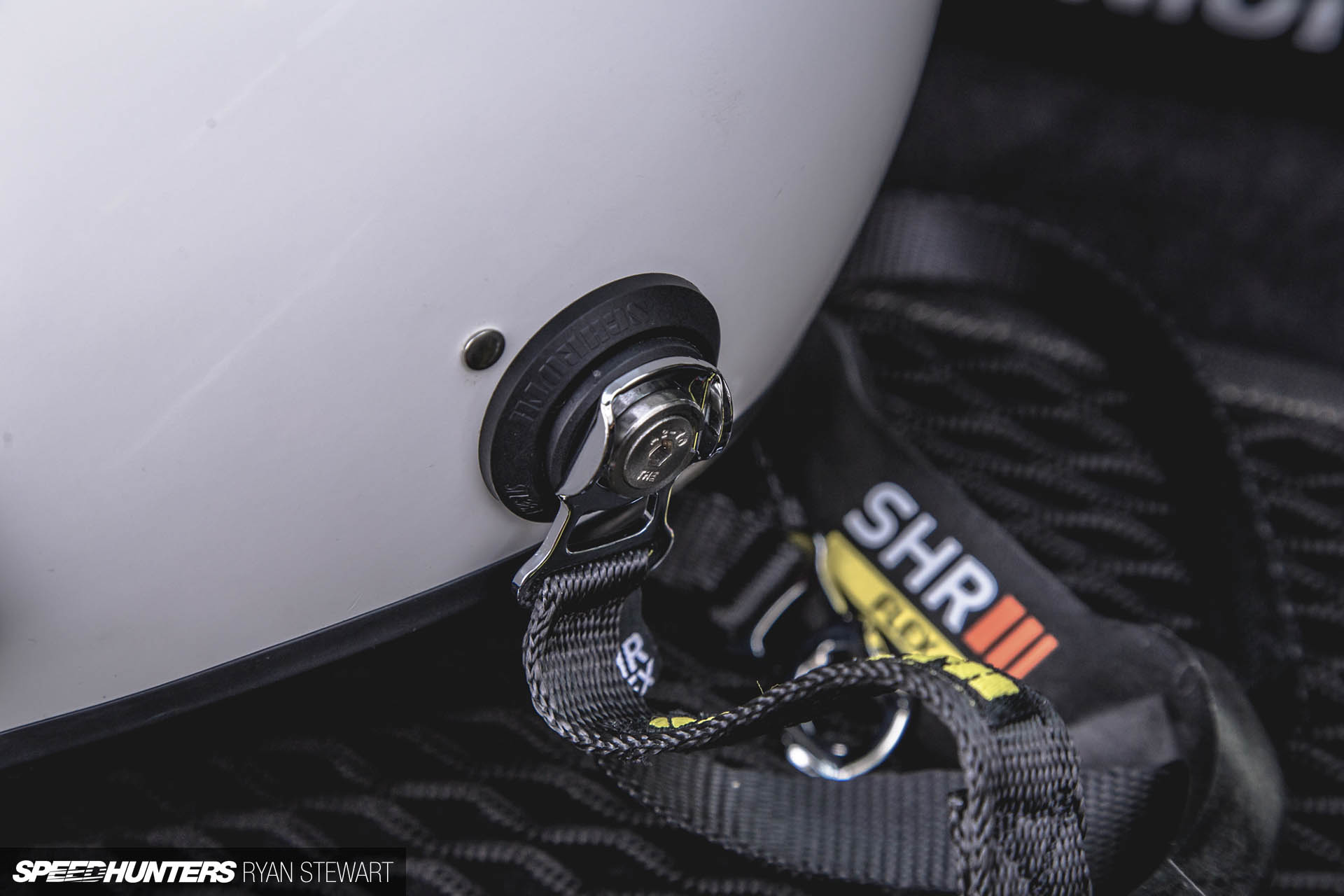
The SHR-Flex gets around this issue by having a flexible legs and an articulating collar that actually acts as a shock absorber too. Because of this, the SHR-Flex provides enhanced comfort, uniquely adapts naturally to different body types and seating positions, and is really really simple to use.
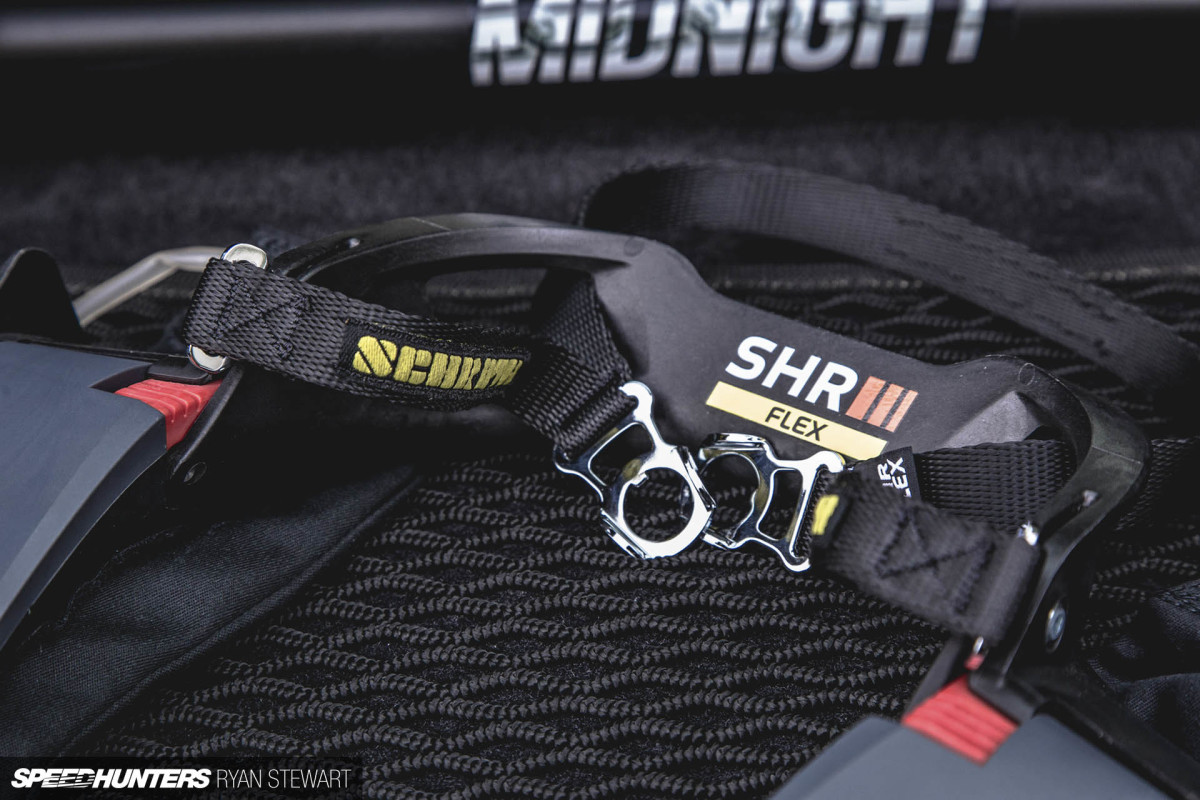
It used to be that driving with a head and neck restraint was an uncomfortable affair and head movement was severely restricted – great in a crash situation but not ideal for visibility on circuit. The low collar and adaptive legs of the SHR-Flex give much more freedom of movement than a normal head and neck restraint, and after a while you forget it’s fitted. The magic element here is that when the harness is loaded in a crash situation the legs lock against the main collar and take up this slack, meaning the SHR-Flex is able to restrict head movement like a conventional HANS. Pretty trick.
A Final ThoughtSchroth give some pretty startling numbers concerning the physics going on in a head-on collision.

During certification of the SHR-Flex product a dummy is seated in a frontal test sled and accelerated at 68G in order to generate the high neck forces typically found in a head-on crash.
If you think that an average human head weighs around 5kg and a helmet is around 1.5kg, when subjected to 68G this 6.5kg acts as 442kg. That’s getting on to almost half a US ton; no wonder basal skull fractures are a true threat to users in motorsport. Think about that next time you’re browsing for those blue boots and gloves…
Ryan Stewart
Instagram: 7.nth
ryan@speedhunters.com
More Tech related stories on Speedhunters
Cutting Room Floor