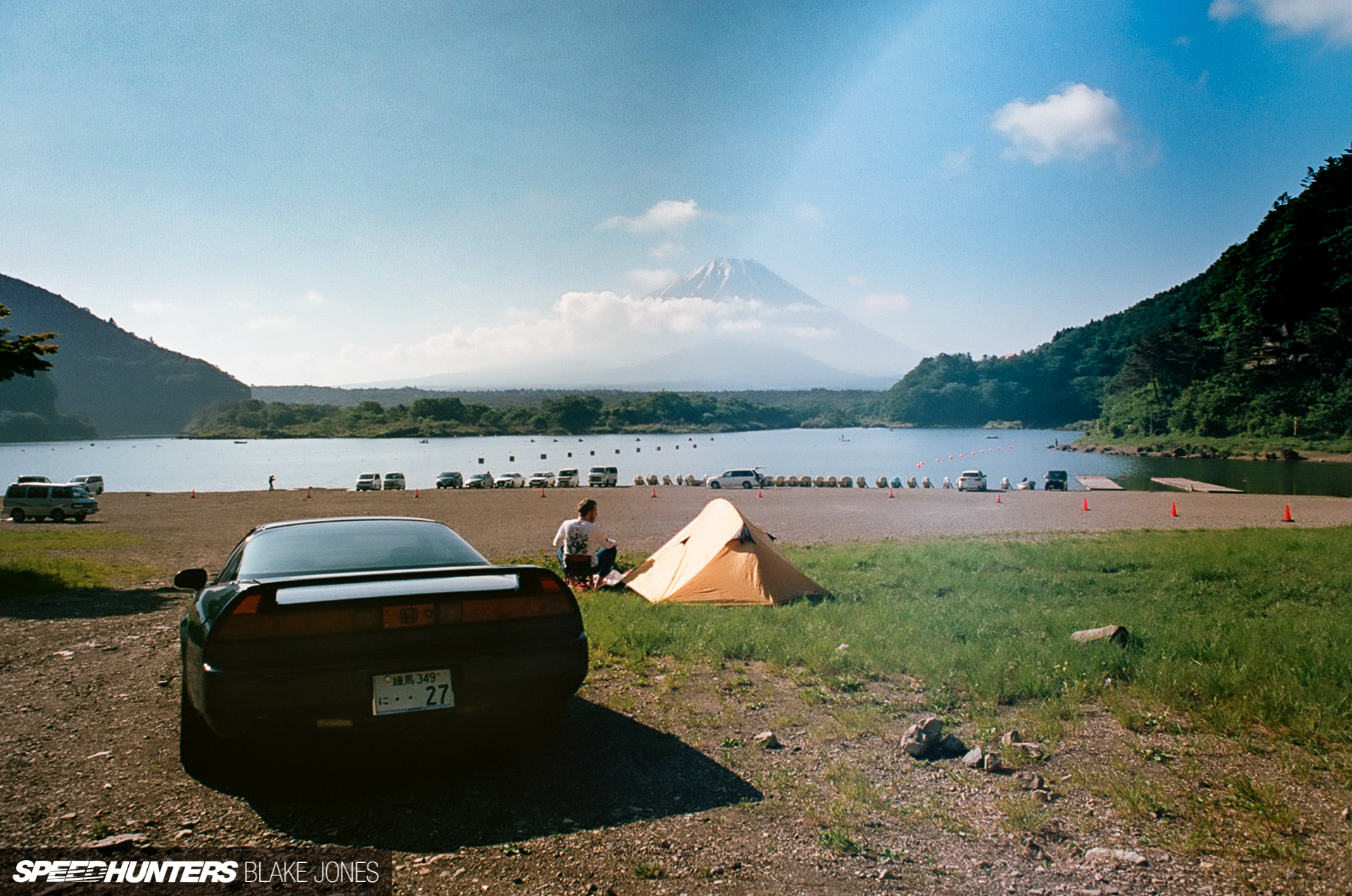
I should’ve just started a drug habit. Or bought Bitcoin at the peak. Both would be probably cheaper and certainly less of an obsession.
There are days (usually in that long week before payday) when it seems that choosing the car life has really been a choice to throw any chance of financial security to the wind; just one bent valve away from financial insolvency and life on the streets. But the satisfaction of this pursuit – something I’m sure you, reader of this website, knows well – is simply impossible to match anywhere else once you’ve experienced it.
So, fellow addicts, I figured there was one thing I should probably share with you now that we’re 12 months into this long-distance relationship: the end goal for Project NSX.
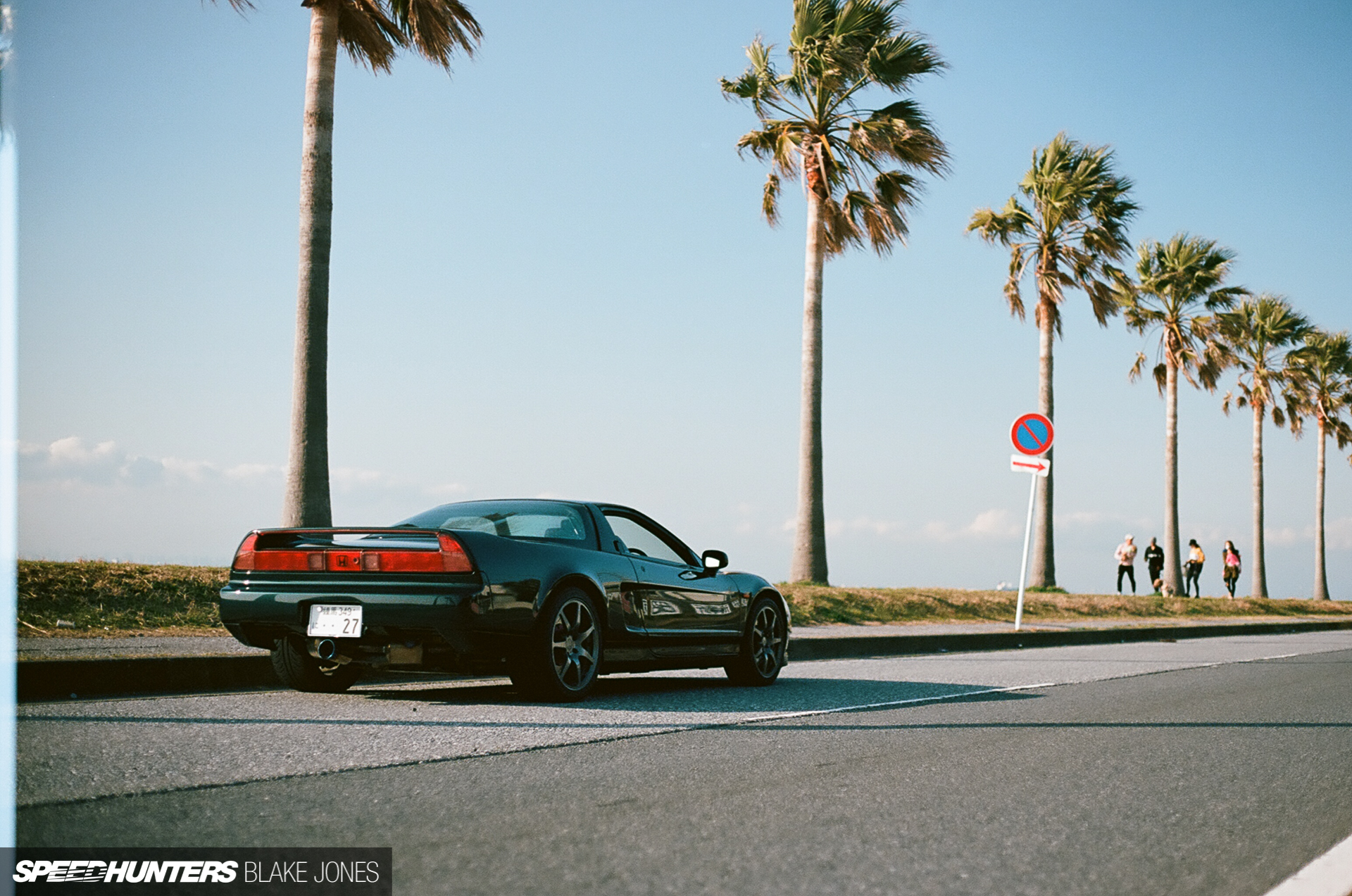
Simply put, the idea is to increase performance to more contemporary levels with minimal interference to the original spirit of the car. In particular it should retain the elements that differentiated the NSX from its period competition: simple styling and ergonomics, daily usability and reliability, and an engaging, responsive driving experience. The car may be over 25 years old now, but some great cars built in the time since provide useful benchmarks for this project.
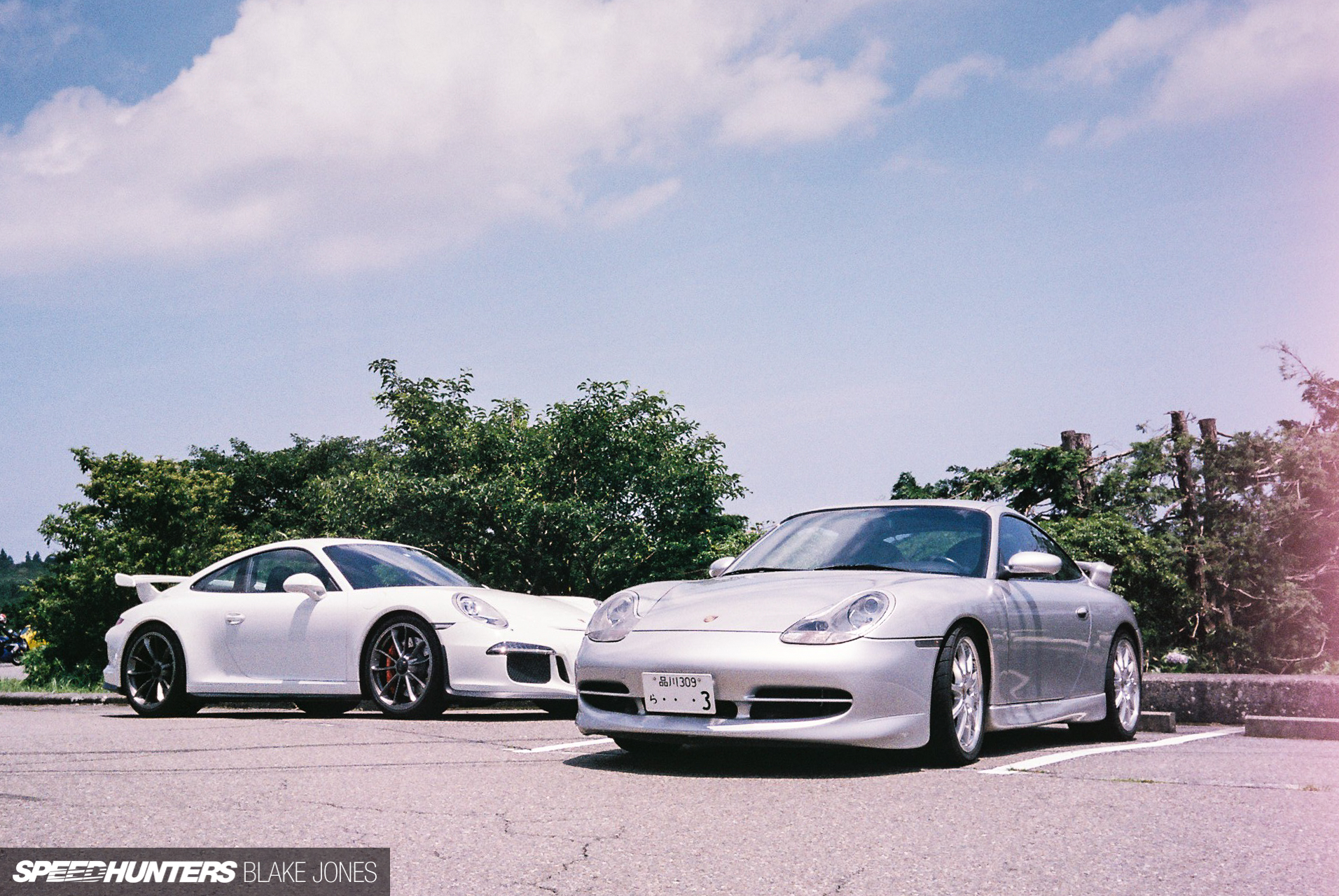
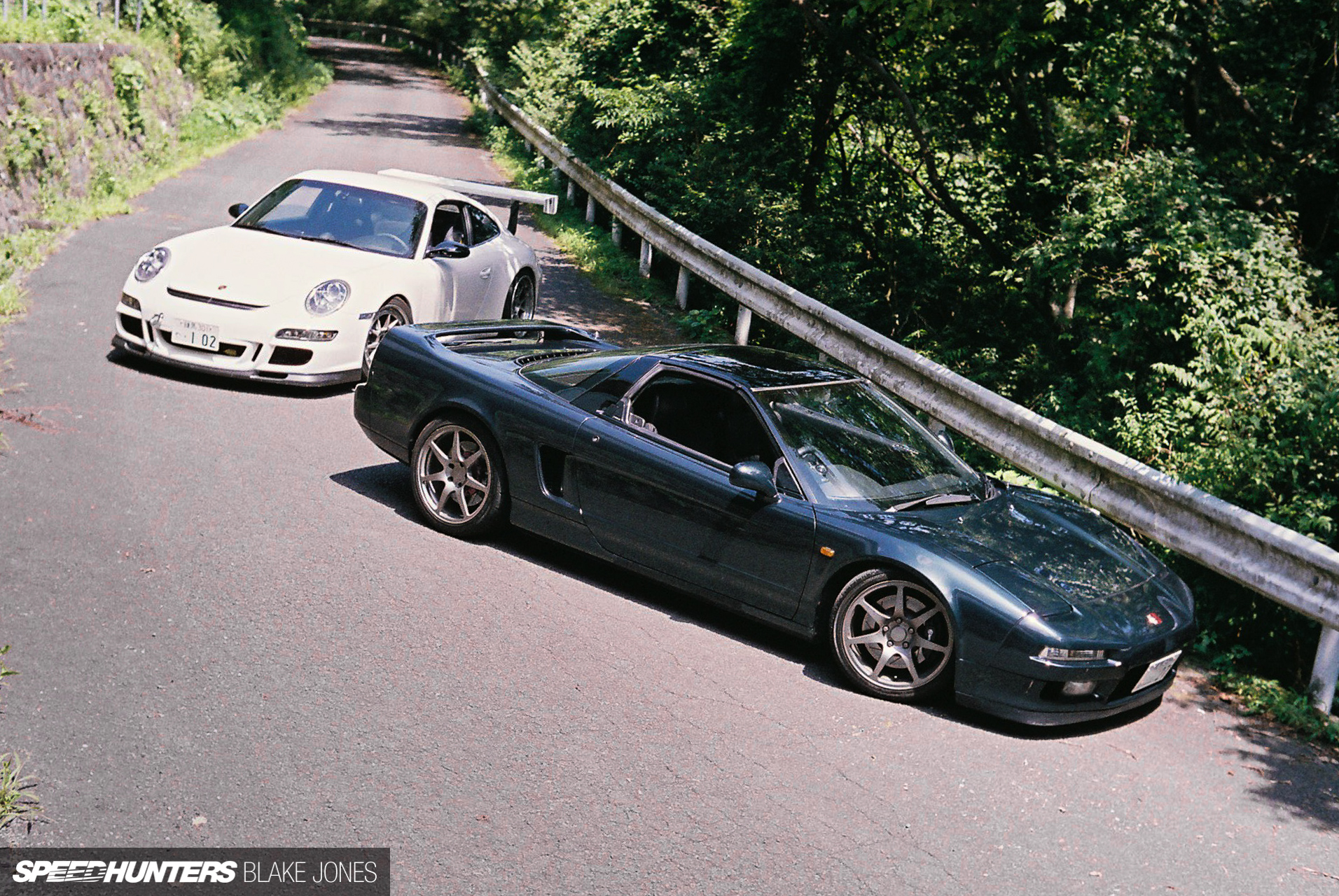
The short time I spent behind the wheel of a Porsche 996 GT3 a few years back convinced me that there is simply no need for more power or speed than that car has on a public road. Of course, modern driver aids have changed the equation and made insane speeds accessible to even the most clueless cashed-up owners, but that’s not really what it’s about.
The GT3 also shares a basic similarity to the NSX, both being naturally aspirated six-cylinder sports cars. As such, the Porsche serves as a kind of benchmark for the performance level I’d like to achieve for Project NSX.
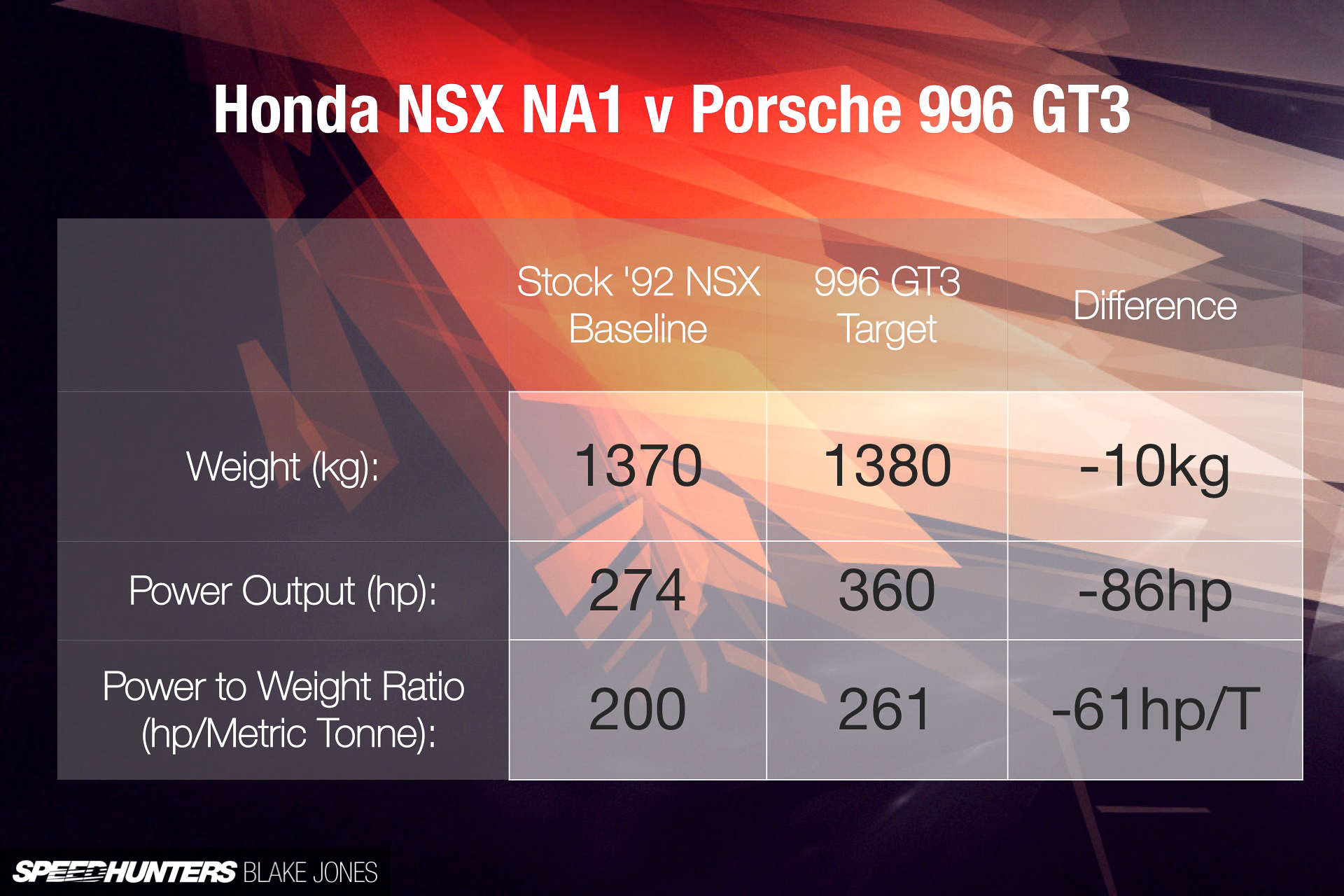
However, the GT3’s Metzger engine has a decade of engineering and a 20% capacity advantage over the NSX’s C30A and puts out 360PS to the Honda’s 274PS. That’s 100hp/l compared to 91hp/l, both impressive figures for their respective times. The NSX does win back a small advantage when it comes to weight thanks to that lovely aluminium chassis: the NSX’s curb weight is 1,370kg (3,020lbs) while the Porsche comes in at 1,380kg (3,042lbs).
Remember the GT3 is already ‘lightened’ from factory, whereas the NSX weight is for the full-fat ‘grand tourer’ spec. The NSX-R could be said to be Honda’s equivalent to the GT3 and weighs 120kg (264lbs) less. That included extreme measures like thinner glass and lightweight crash structures too, but suggests that at least 80kg (176lbs) can be saved while keeping the car relatively street-friendly.
Assuming the 80kg can be shed that leaves us with a deficit of about 60hp to make up, a fairly daunting figure for an already highly-strung NA engine. Supercharging is a popular approach for more power outside Japan, but does seem to go against the spirit of the build. 350hp has been seen from bored-out high compression C30As in the past, but that is a massive undertaking unlikely to happen anytime soon unless my lottery numbers come up.
As a result I’ve set an interim target; call it ‘Stage One’ for Project NSX. And this time there’s another German target, albeit one from Bavaria.
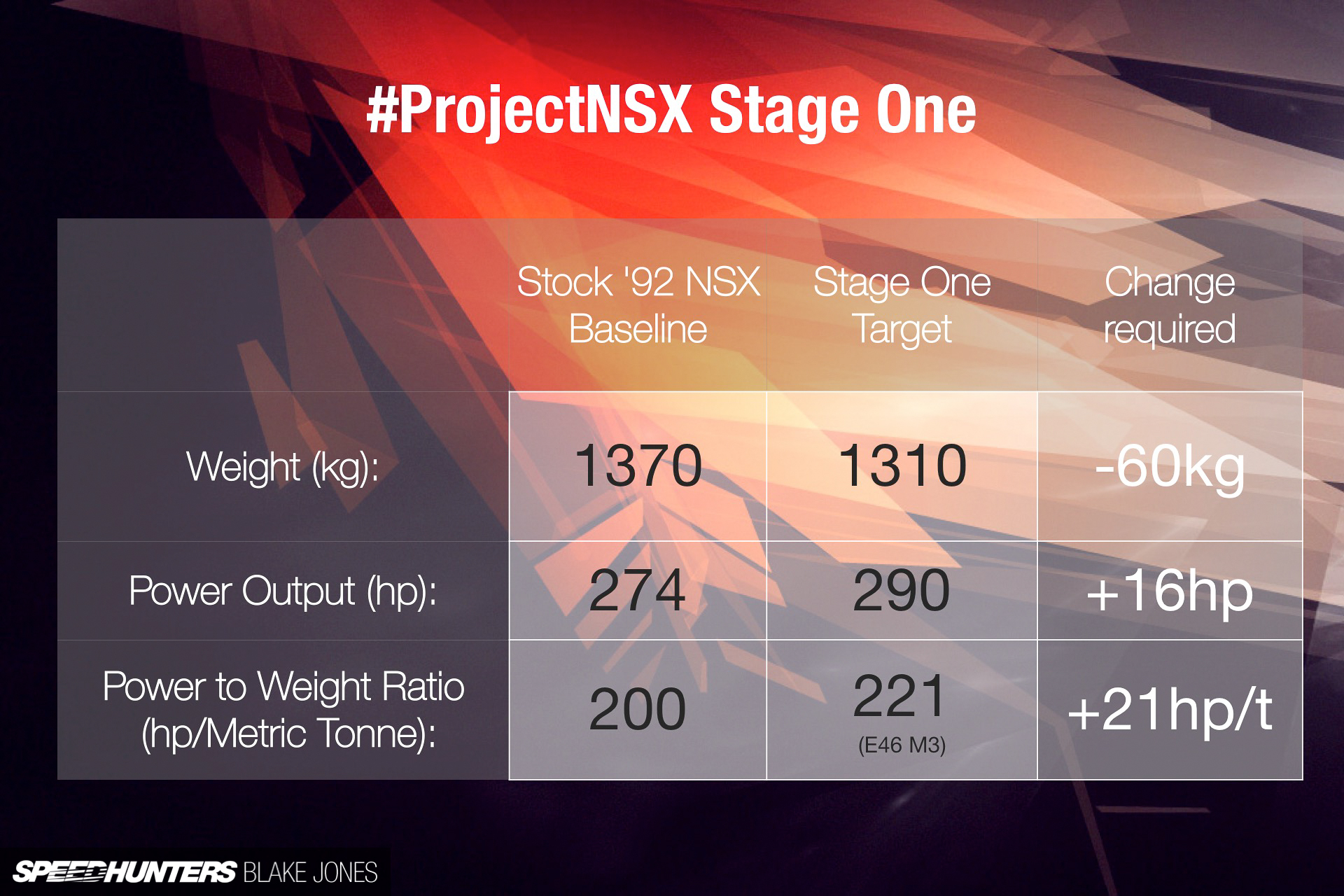
The E46 M3 is not only another awesome naturally aspirated six-cylinder icon, but one I think the NSX absolutely needs to be faster than to justify its status as a ‘modernised’ sports car. Although the M3 weighs in at a portly 1,549kg (3,414lbs), its amazing S54 puts out 343hp giving a power-to-weight of 221hp/t. Obviously power-to-weight ratios are only one element of a car’s performance, but for this benchmarking purpose it’s a useful indicator in my opinion. However, let me know in the comments if you have any alternate ideas for referencing Project NSX’s progress.
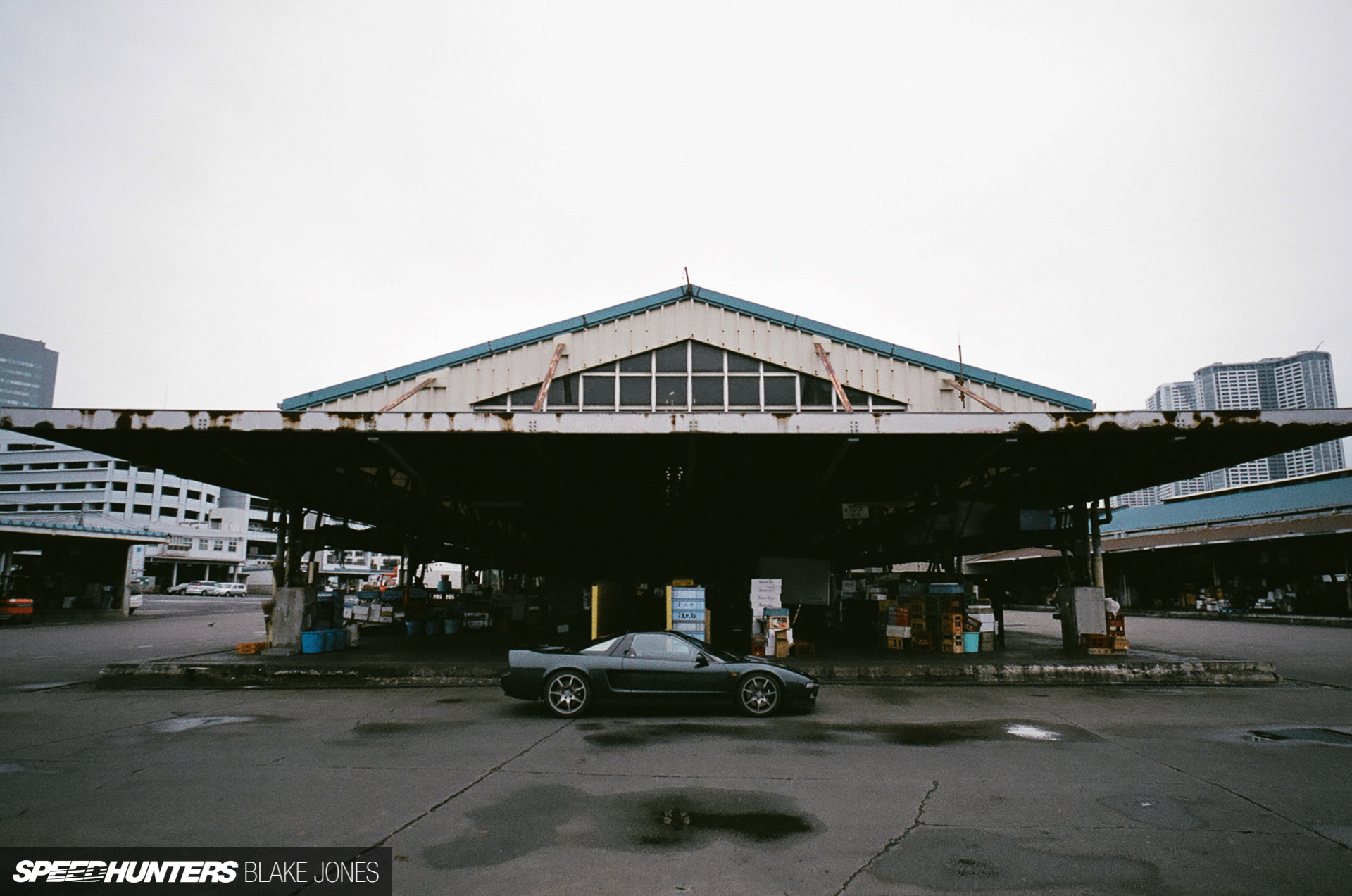
So now you know what it’s all about. Project NSX should be faster on both the road and the odd racetrack, without compromising the grand tourer comforts. It should use modern technology to increase power and reduce weight without fogging the clarity of Honda’s original vision. And no modifications should be so extreme as to make the car a beacon for the wrong kind of attention.
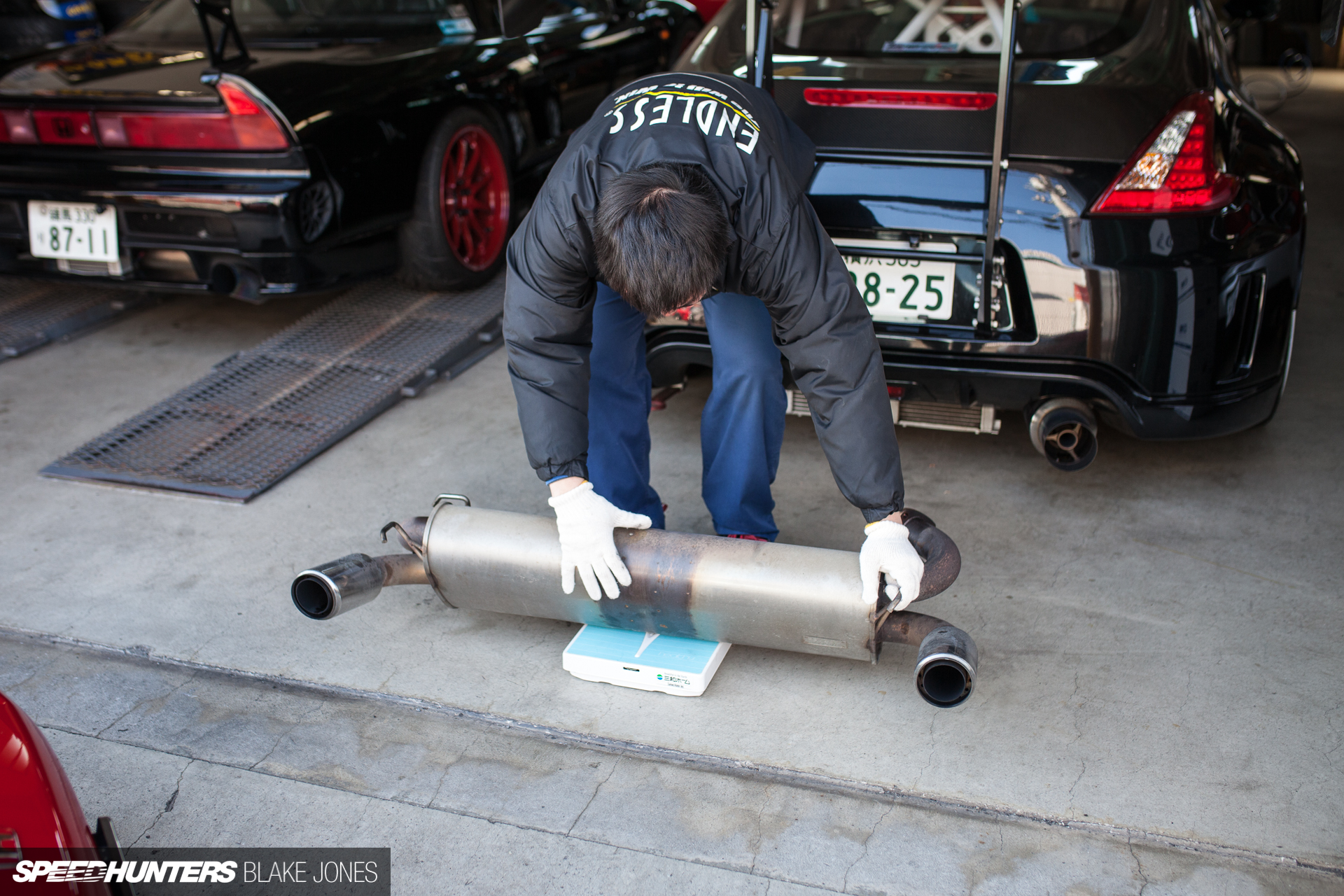
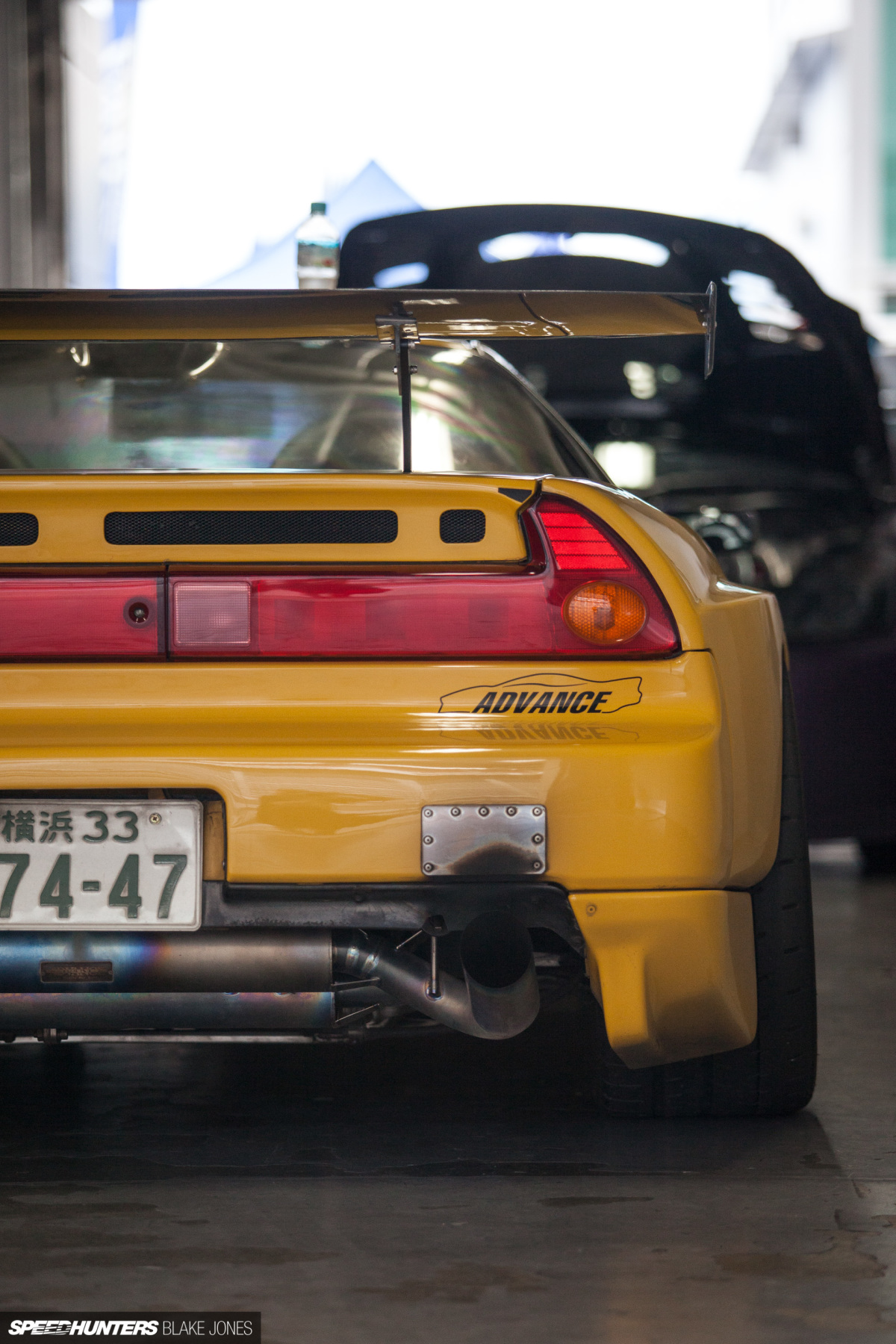
If you’ve read the previous instalments you’d be up to speed on most of the performance modifications to date, but judging from the comments on previous Project NSX updates the new muffler has been the most polarising change I’ve made to the car. I’ve always loved centre-exit exhausts and have toyed with the idea for previous cars, but they never really made sense in an FR format (where exhaust needs to be routed around a rear differential, and hence exits towards one side of the car). The inspiration came from some of my all-time favourite MR and RR cars: the Porsche GT3RS, Lotus Exige and Lamborghini Murciélago. The JGTC NSXs had them fitted too (albeit in a slightly higher position).
For the NSX there were only two aftermarket options I was aware of, short of making a custom exhaust up. One was ruled out instantly when Advance’s Masa – a man who is certainly not afraid of a bit of exhaust noise – stressed to me how loud it would make the car. The remaining option was Racing Factory Yamamoto’s ‘Suzuka Ver.3’ centre-exit unit.

I’d been umm-ing and ahh-ing over buying one for some time as the price was steep for the stainless version, let alone the titanium unit I was lusting after. So when a lightly used one popped up on Yahoo! Auctions I jumped on it.
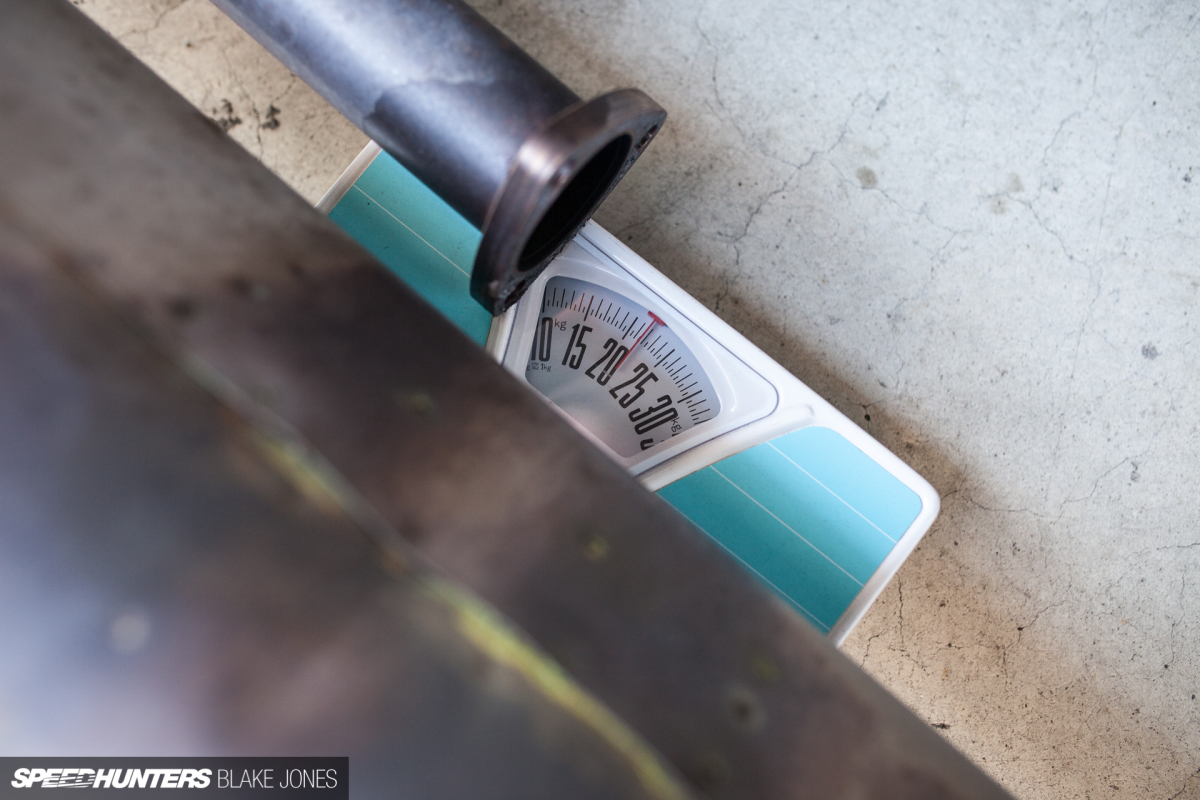
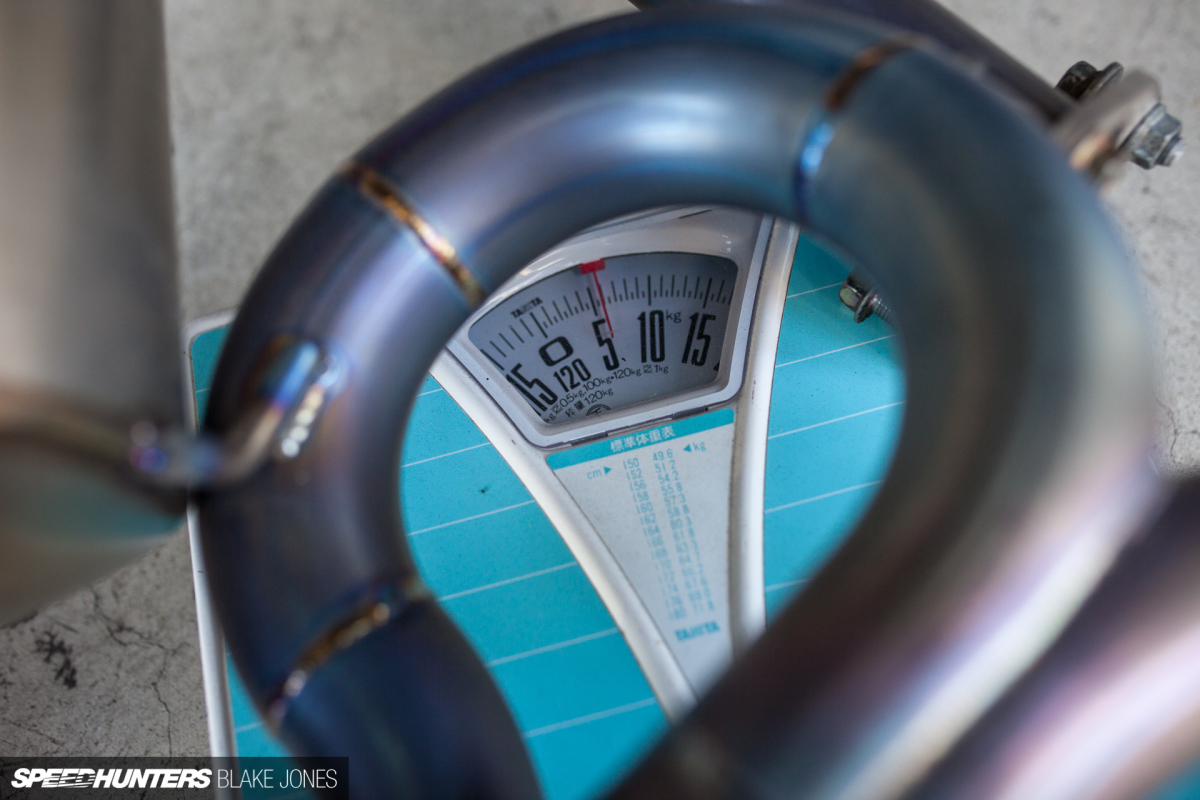
Thanks to that titanium, the RFY muffler is a massive 16kg (35lbs) lighter than the HKS unit it replaced. And it saves that weight behind the rear axle of the car where it is subject to a higher polar mass moment of inertia, hopefully making the car’s handling more responsive.
As a side note, responsiveness was once of the key objectives of the NSX’s designers – hence the mid-engined design and placement of heavy components such as the battery and fuel tank as centrally as possible. The fuel tank is especially important here; as your fuel load decreases so will the weight, and if this weight change is far from the car’s centre of mass it will have an impact on how the car responds to the driver’s inputs, and thus the ability to be consistent.
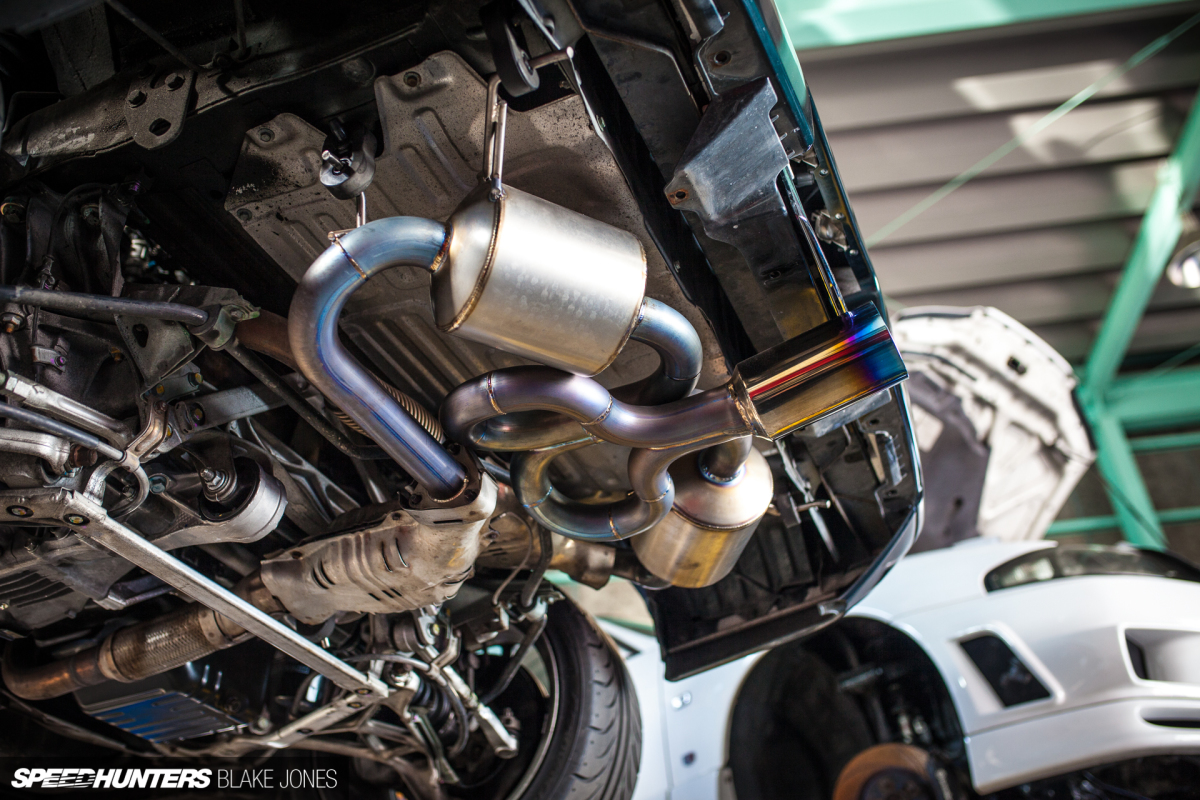
As it happened, the RFY muffler was installed by Advance at the same time as the transmission swap, which meant I was much too distracted by left-hand busyness to notice a change in the car’s handling from the specific weight reduction (although it is nice to know it works in theory).
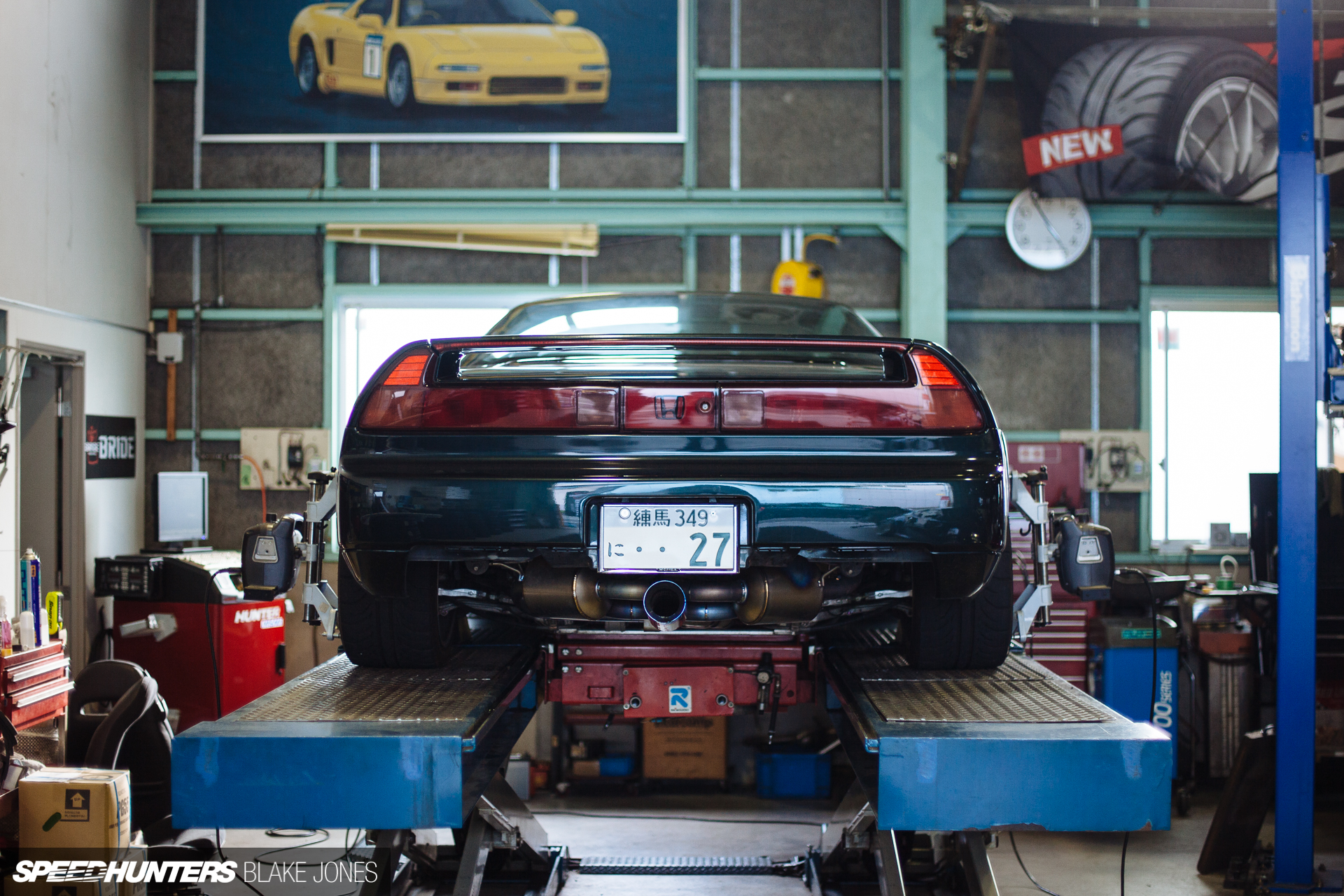
One thing I definitely noticed, however, was the sound. I’d for some time assumed the HKS muffler that was on the car when I bought it was stock, such was the subdued sound it emitted. From the outside it sounded nice enough, but from the driver’s seat it was barely audible above the NSX’s slightly noisy valvetrain with the windows up.
Why waste words describing the new sound when I can let a video do a much better job.
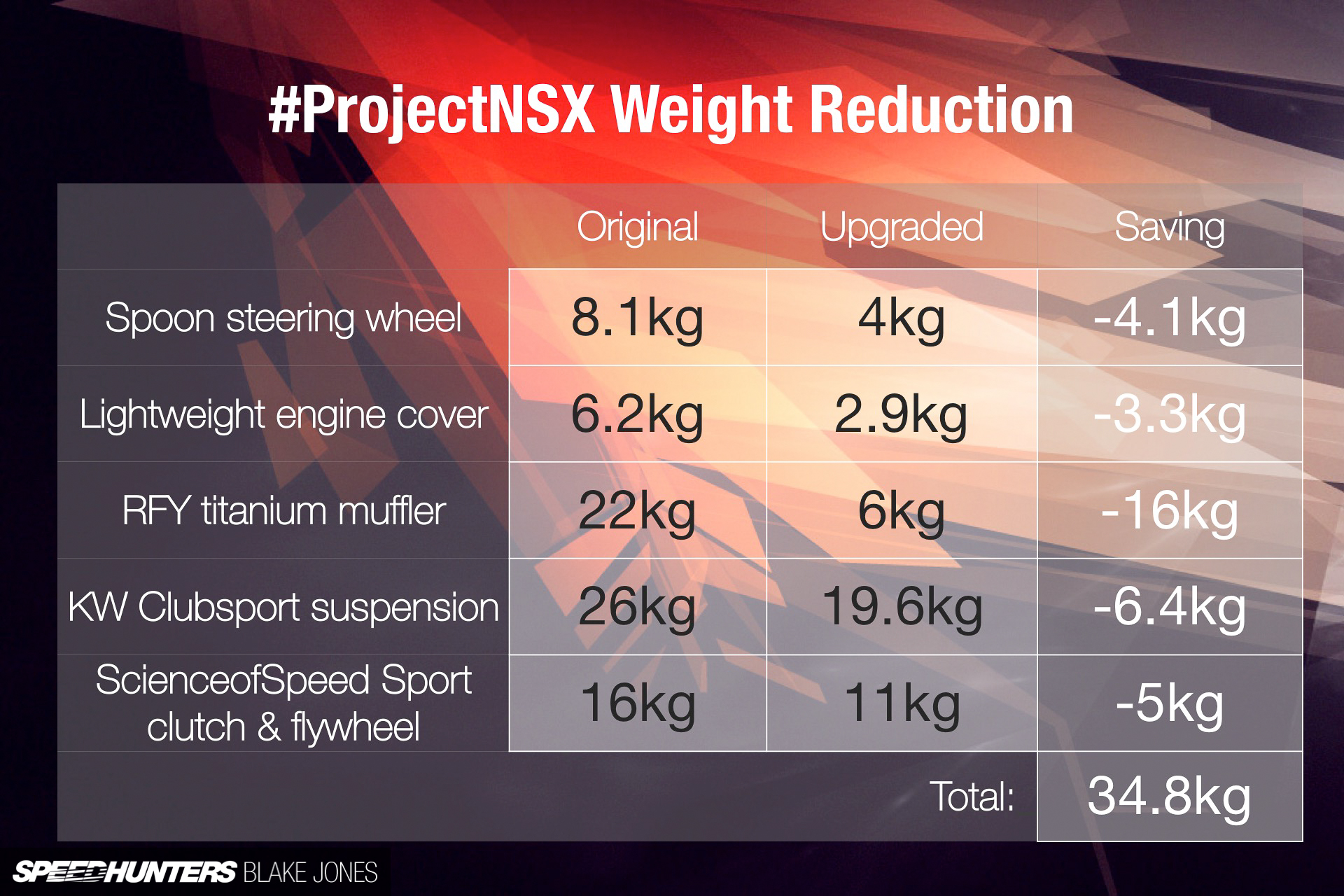
Adding the muffler’s weight savings into the existing list of reductions brings us to a hair under 35kg (77lbs) saved so far, just over half the Stage One target. With the next few changes in the pipeline, I’m fairly confident the 60kg (132lbs) reduction target can be achieved. Unfortunately, none of the mods so far have added any power, but I’ll be sure to address that shortly.
Sundry Items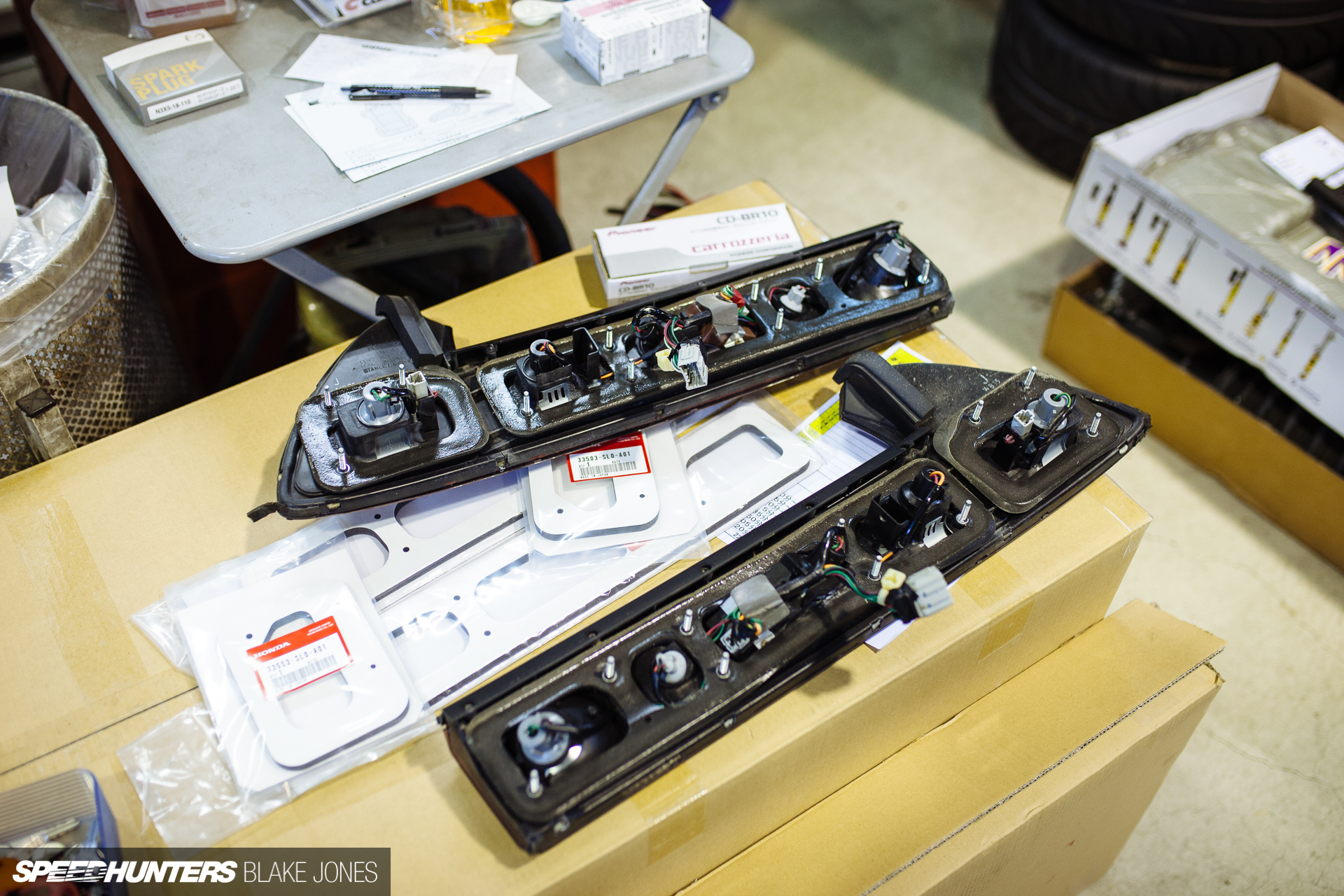
In between the sporadic modifications there’s been many more small restoration-type jobs happening, but I won’t get too deep into the specifics here. Thankfully, plenty of the parts that were showing significant wear (like the driver’s seatbelt, piano black B-pillar panel and other small trim pieces) were able to be replaced with new bits from Honda at a reasonable price. The new taillight seals above will hopefully bring an end to my soggy trunk situation, a common problem on these cars.
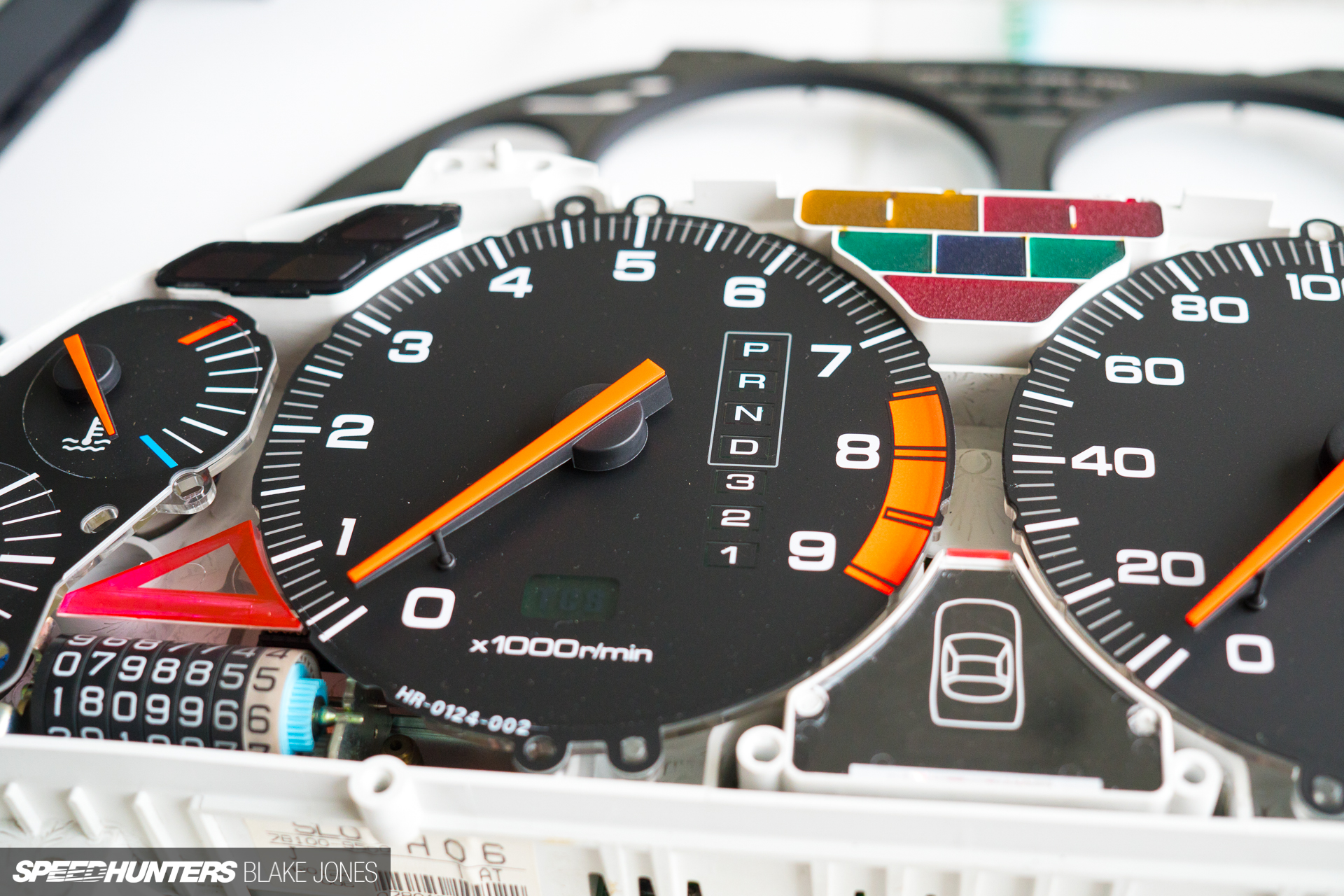
Although I’ve been shifting gears with my left hand since the car left the workshop in February, one key artefact of the car’s automatic origins remained – the transmission position indicator on the tachometer.
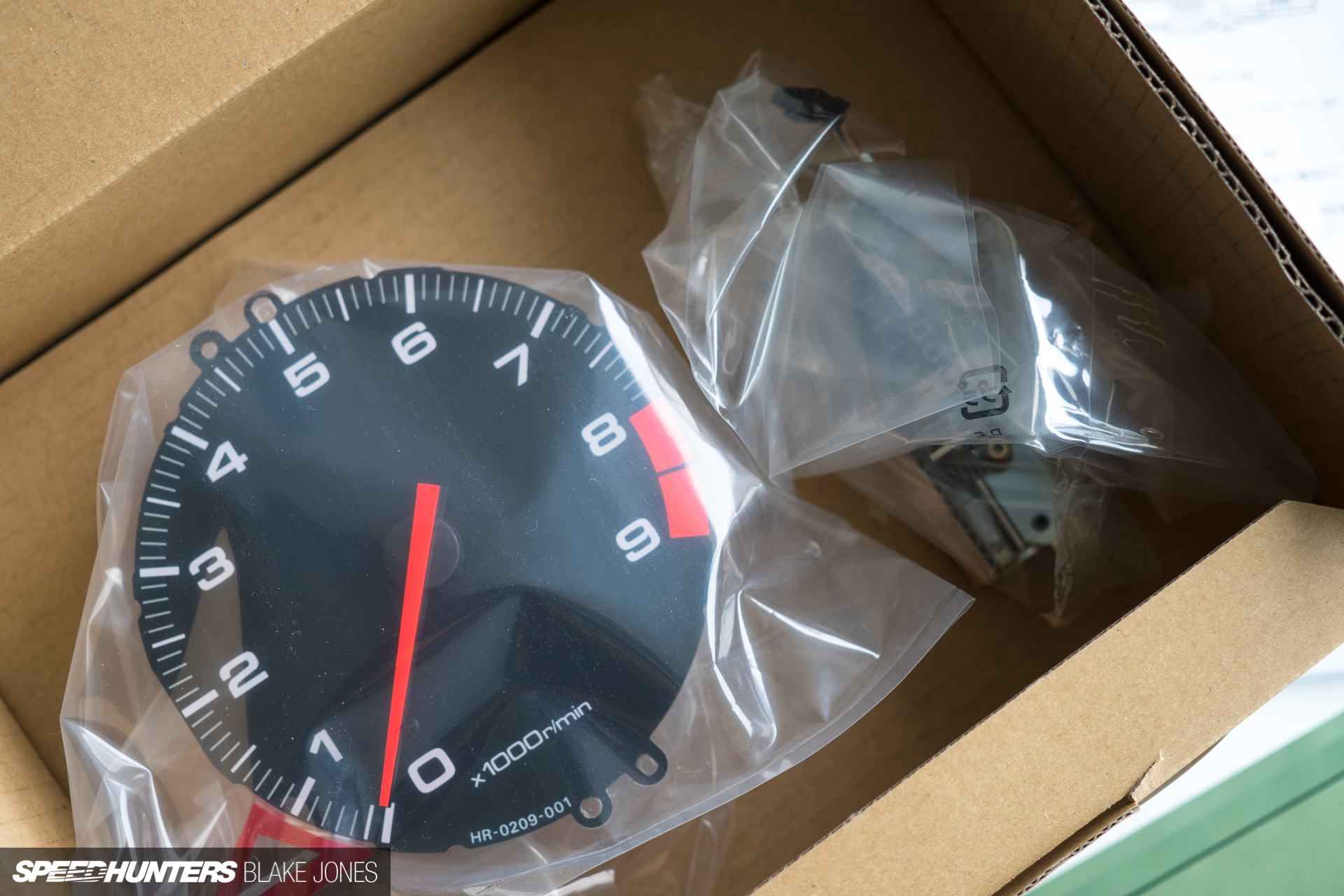
The NSX gauge cluster won’t win any awards for innovative design and original tachometers are all but impossible to find, so for a short time I considered swapping in an AP1 S2000 digital cluster with a plug and play harness that recently became available through the aftermarket. But eventually one of my OEM Honda sources let slip that he would be receiving a few brand new manual tachometers. I relented, paid the admission fee, and before long had a neatly wrapped tachometer in my hands.
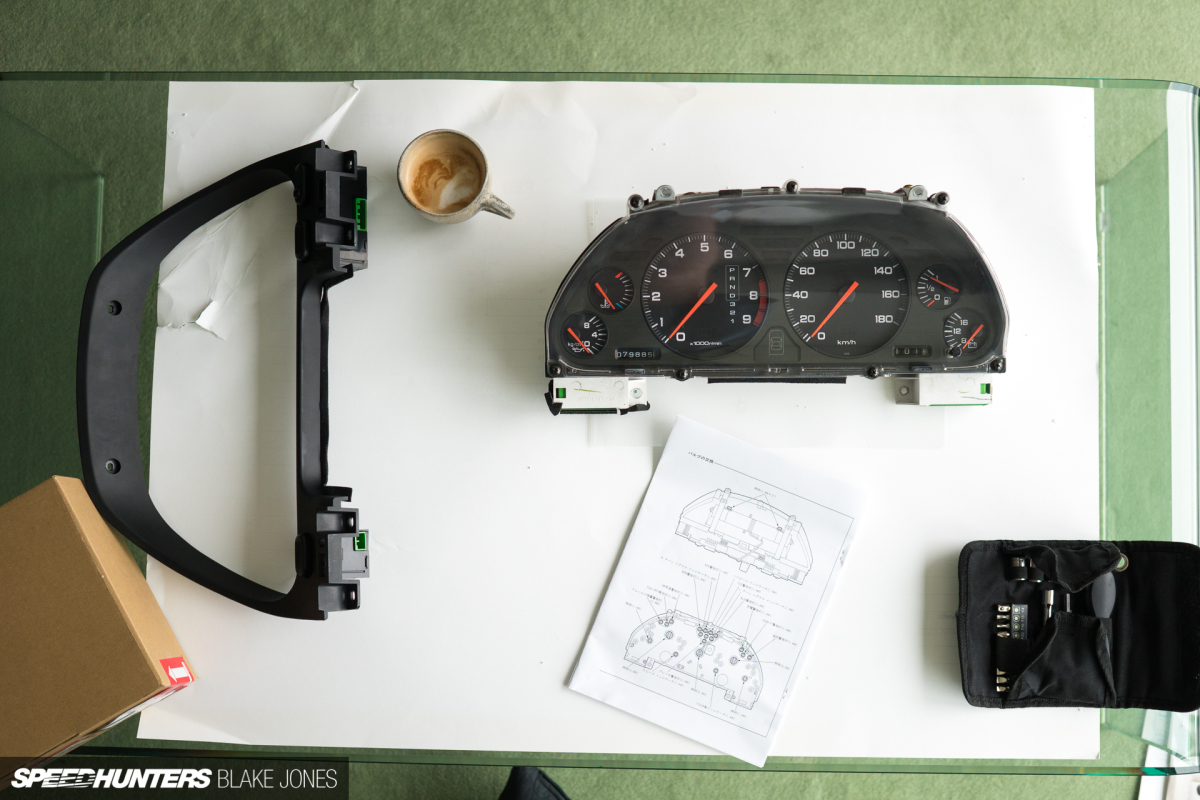
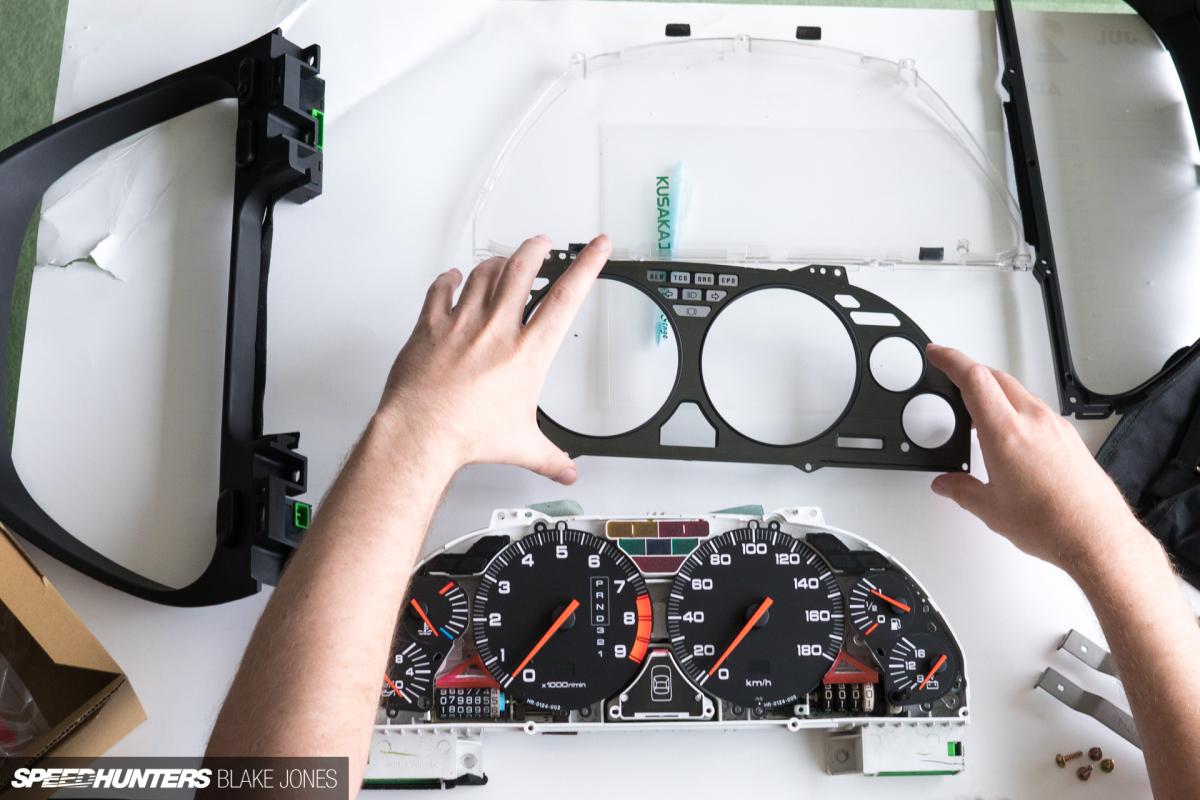
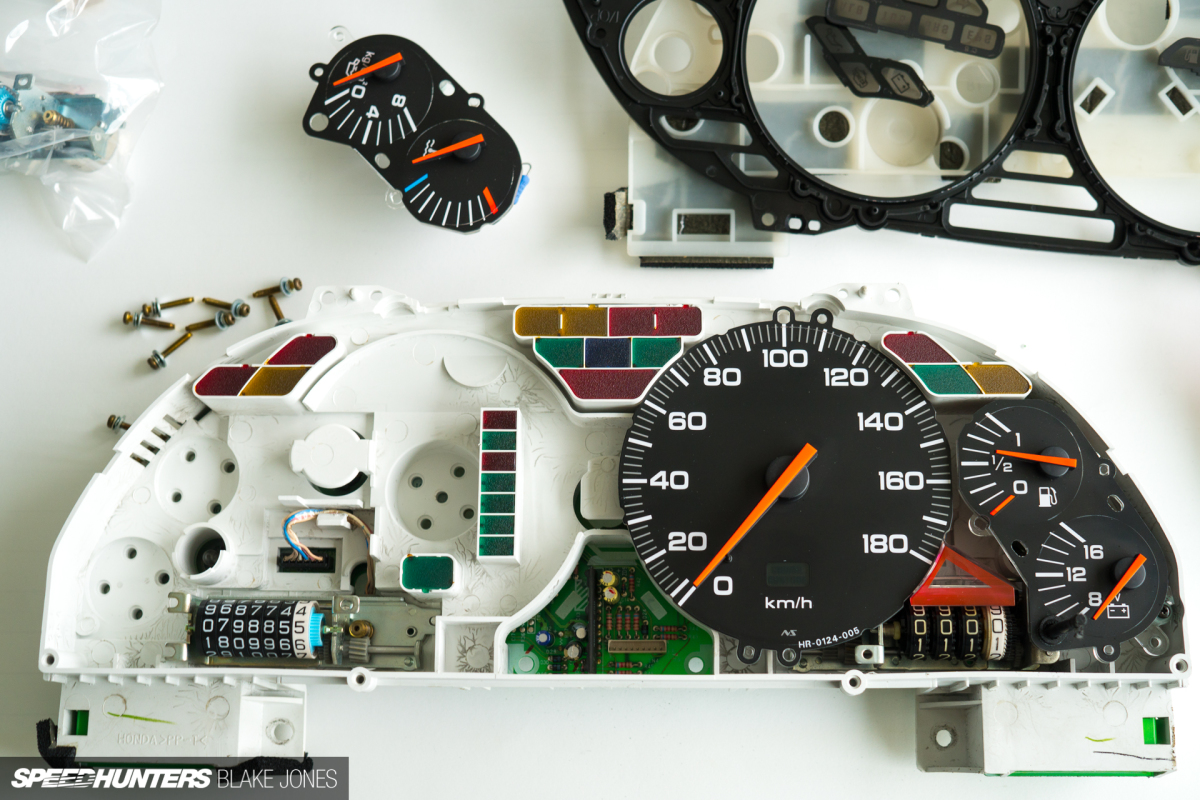
Dismantling the cluster was easy enough. Not shown was removing the cluster from the dashboard, which entailed about 30-minute’s worth of removing awkwardly-positioned screws.
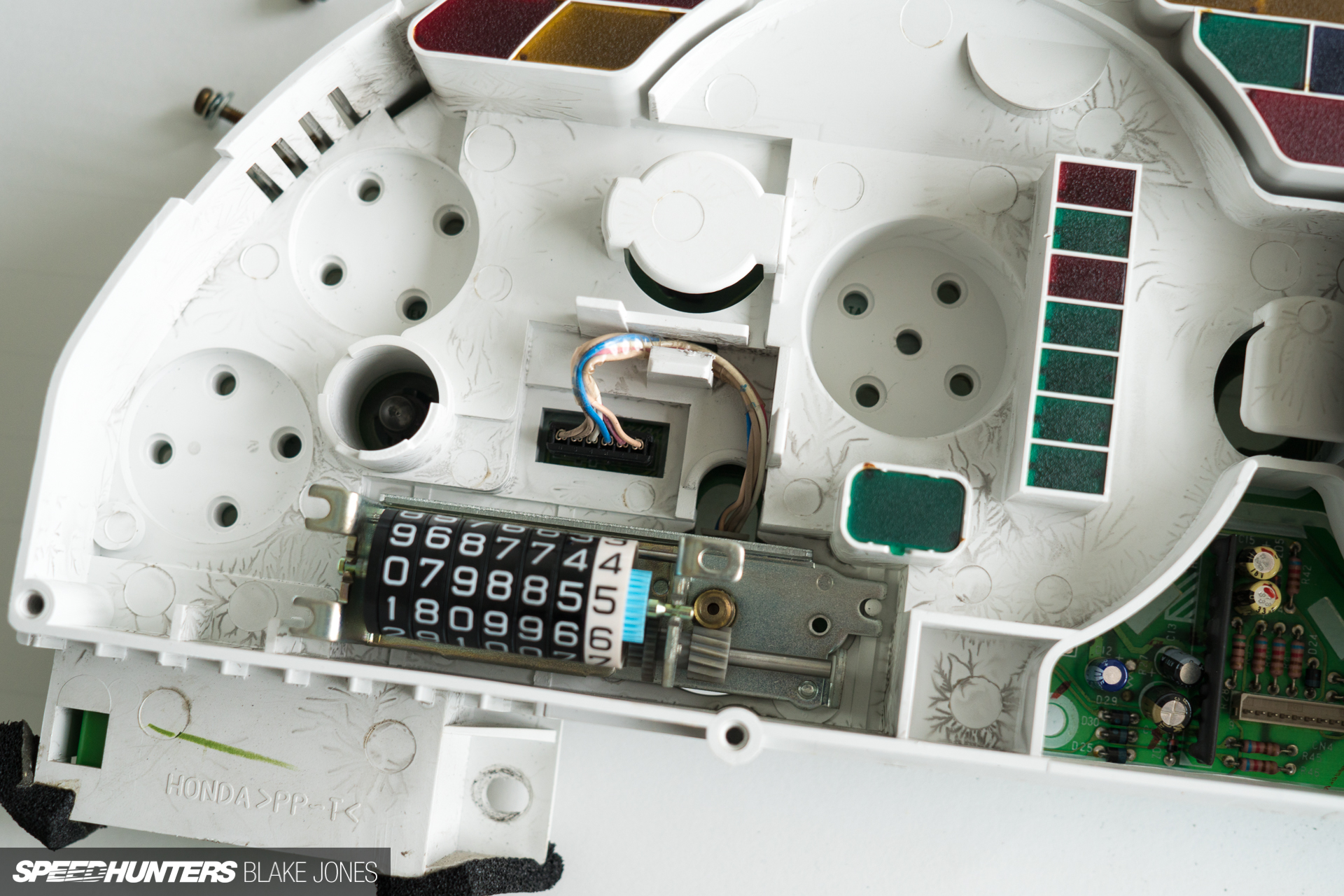
I took the opportunity to clean up the odometer numbers, which had discoloured slightly with time. The circuit board left strange lighting-like marks on the white plastic mount, which for some reason bothered me, so although I’ll never see it again, I gave the plastic mount a quick clean too.
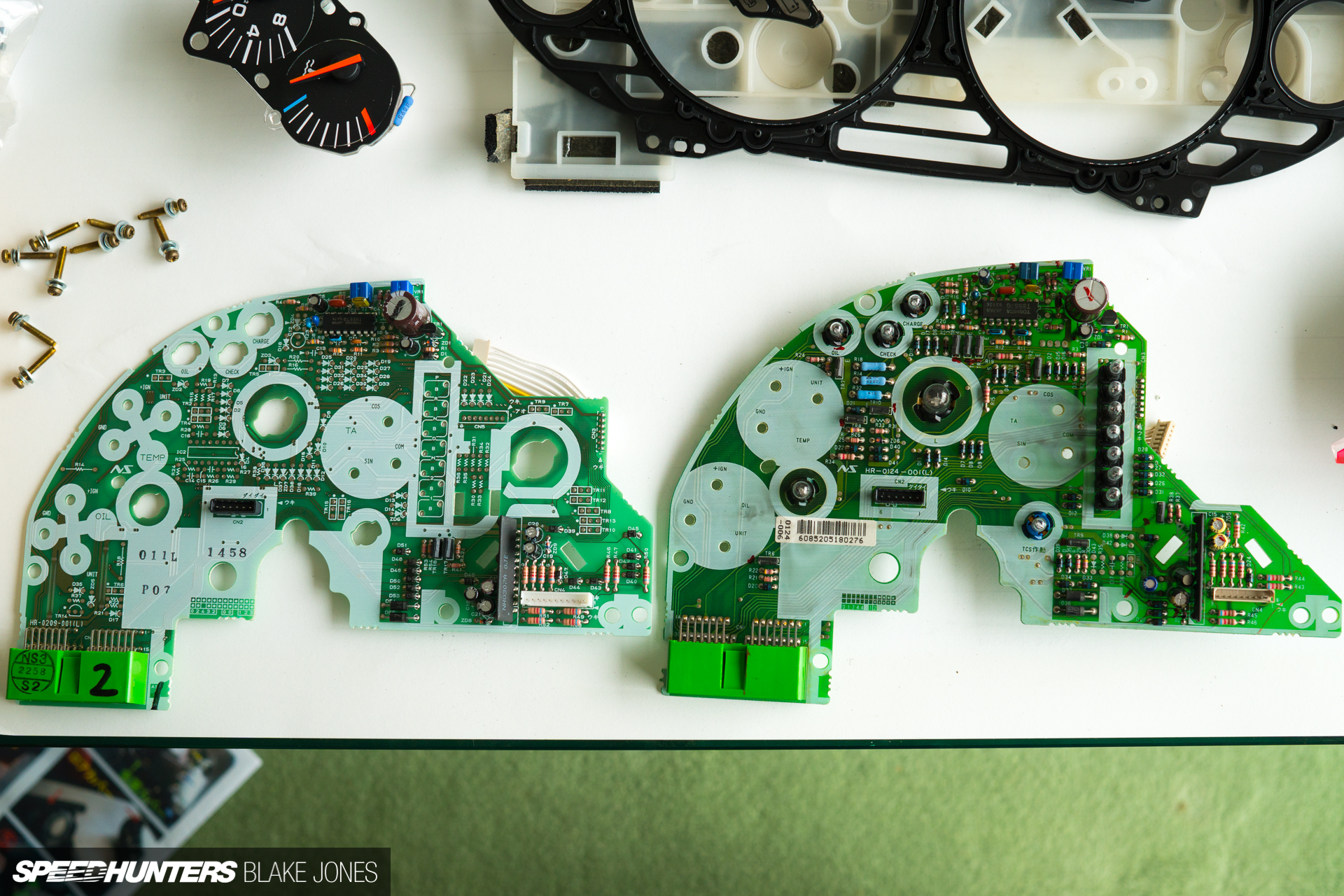
The tachometer came packaged with a new circuit board, but due to a different profile on the right edge it wouldn’t fit with the older speedometer circuit board. Although the NSX looked remarkably unchanged over its 15-year lifespan, once you get under the skin it becomes obvious that small refinements were plentiful.
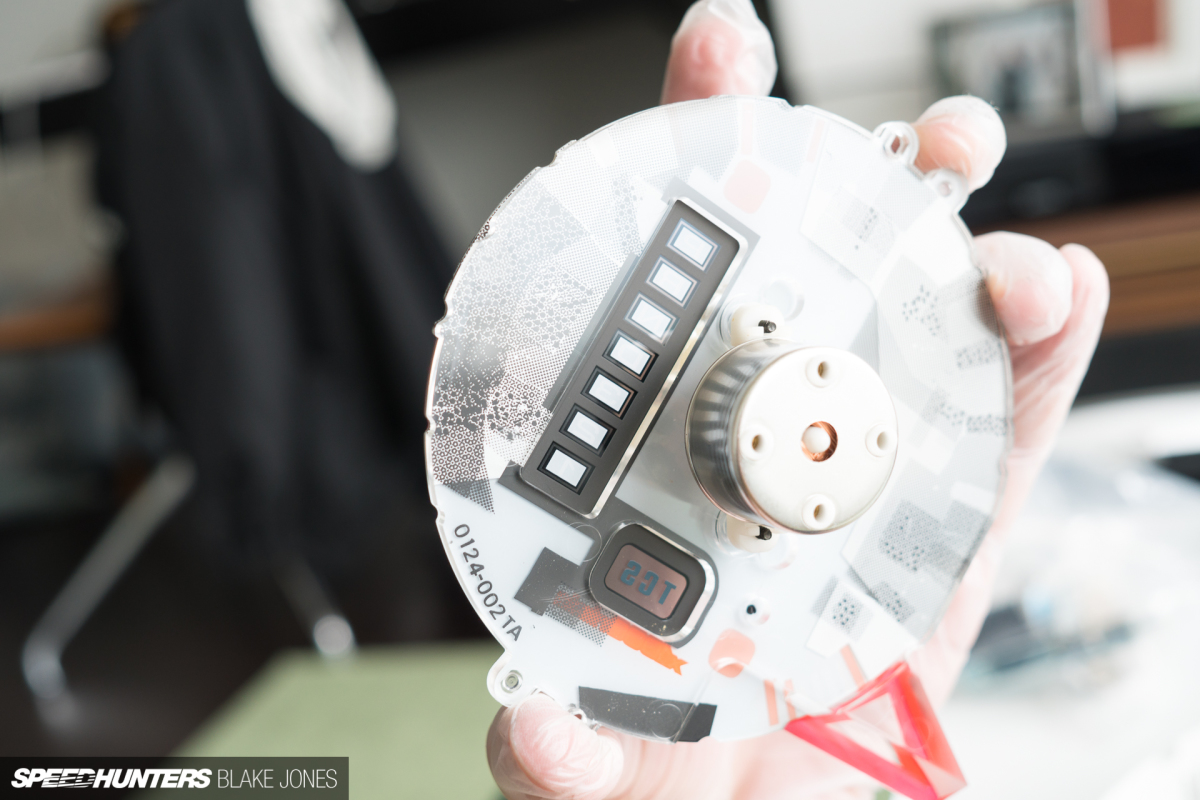
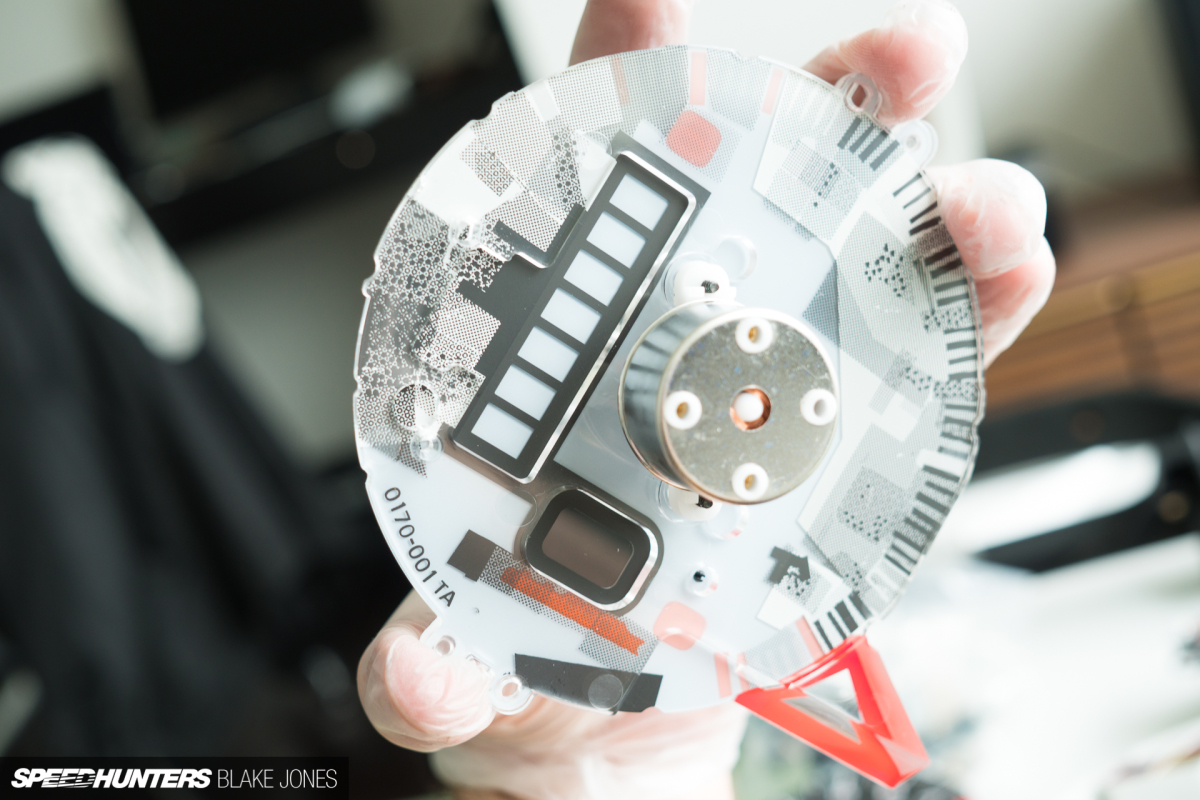
And before you jump to the conclusion that it might be a manual/automatic difference, here’s a look at the rear of both the outgoing AT tachometer and the new MT tachometer – both include the moulding for the automatic gear indicator. I’ll admit to feeling a little short-changed when I realised the only difference between the two units was the fascia overlay.

Job done. You can see that the indicated redline has also moved up from 7,500rpm to 8,000rpm, in line with the higher redline of the manual ECU. Then it was just a matter of reversing the removal steps to refit the cluster back in the dashboard. This work probably isn’t terribly exciting to read about, but it’s super rewarding being able to give a bit of well deserved TLC to this old girl.
It’s Track Time
The last chapter is dedicated to Project NSX’s maiden adventure onto a racetrack in early June for the Endless Circuit Meeting.


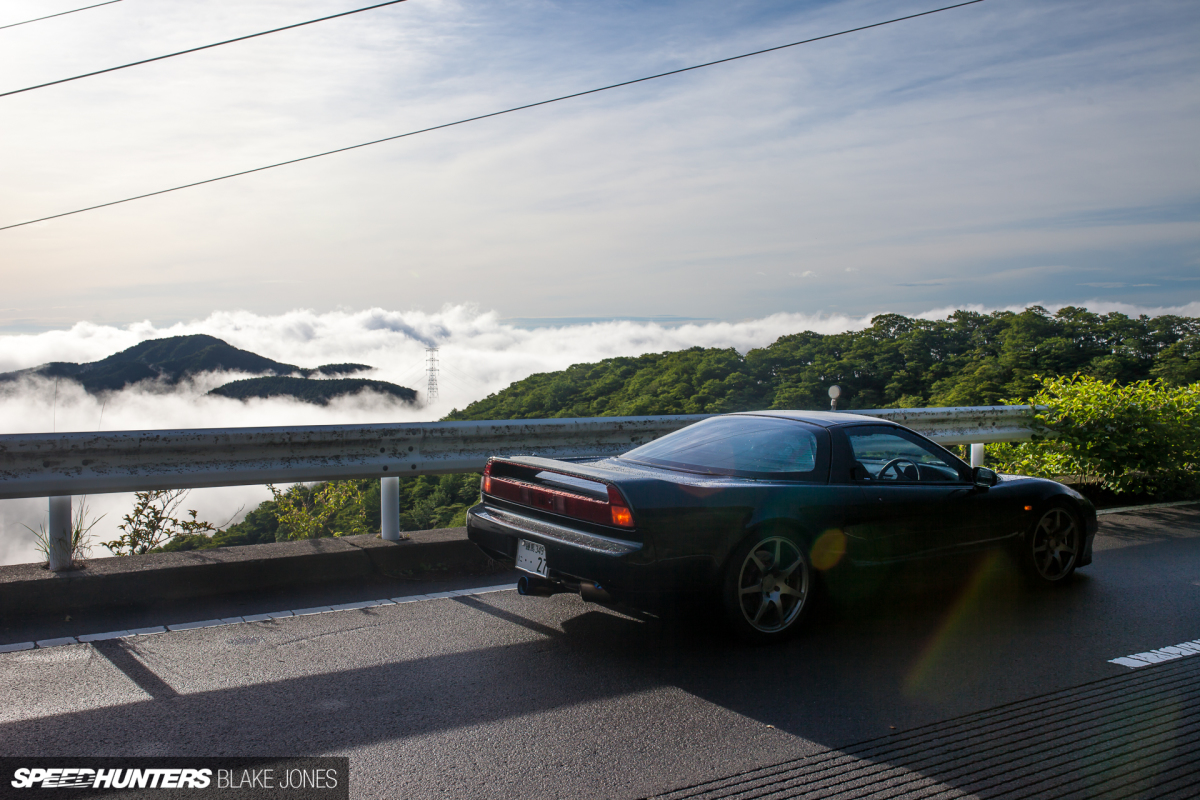
An early rise from the cheap accomodation I booked close to Fuji Speedway had quite the morning view, and the short drive provided a pretty magic backdrop, with the low cloud settled in to the volcanic valleys around the base of Mt Fuji.
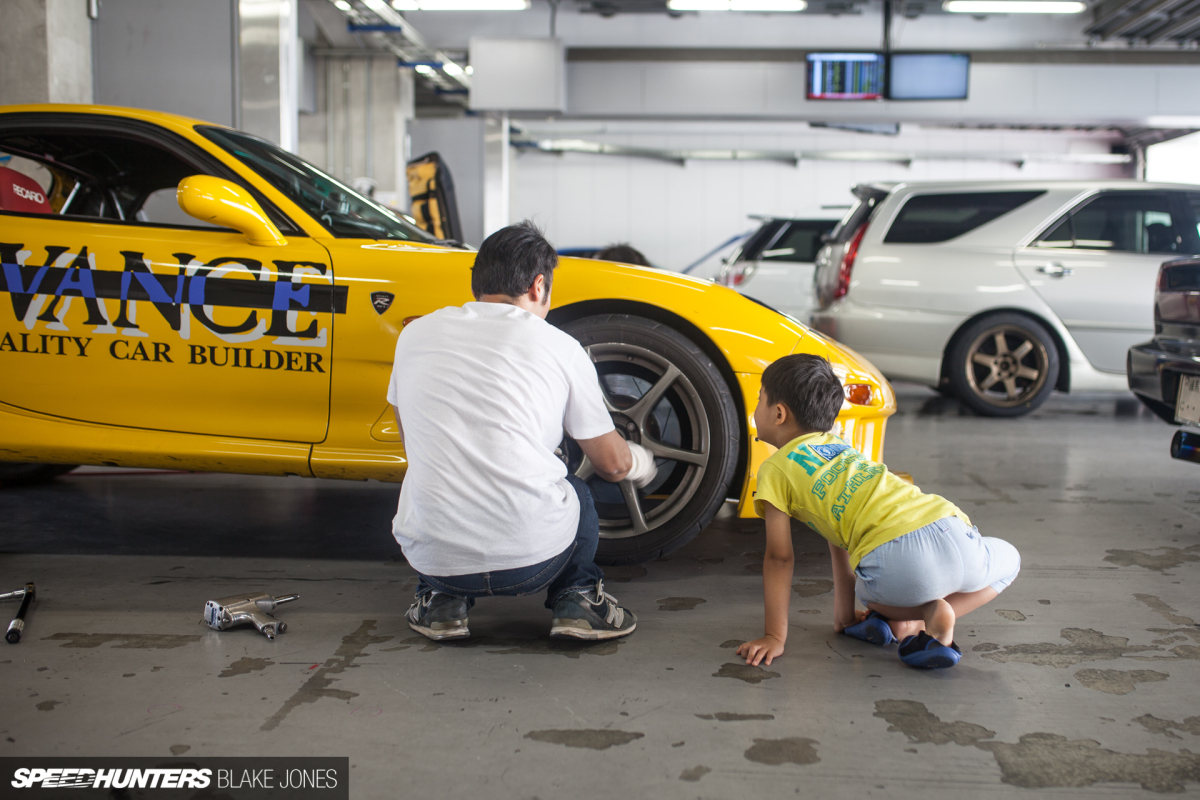
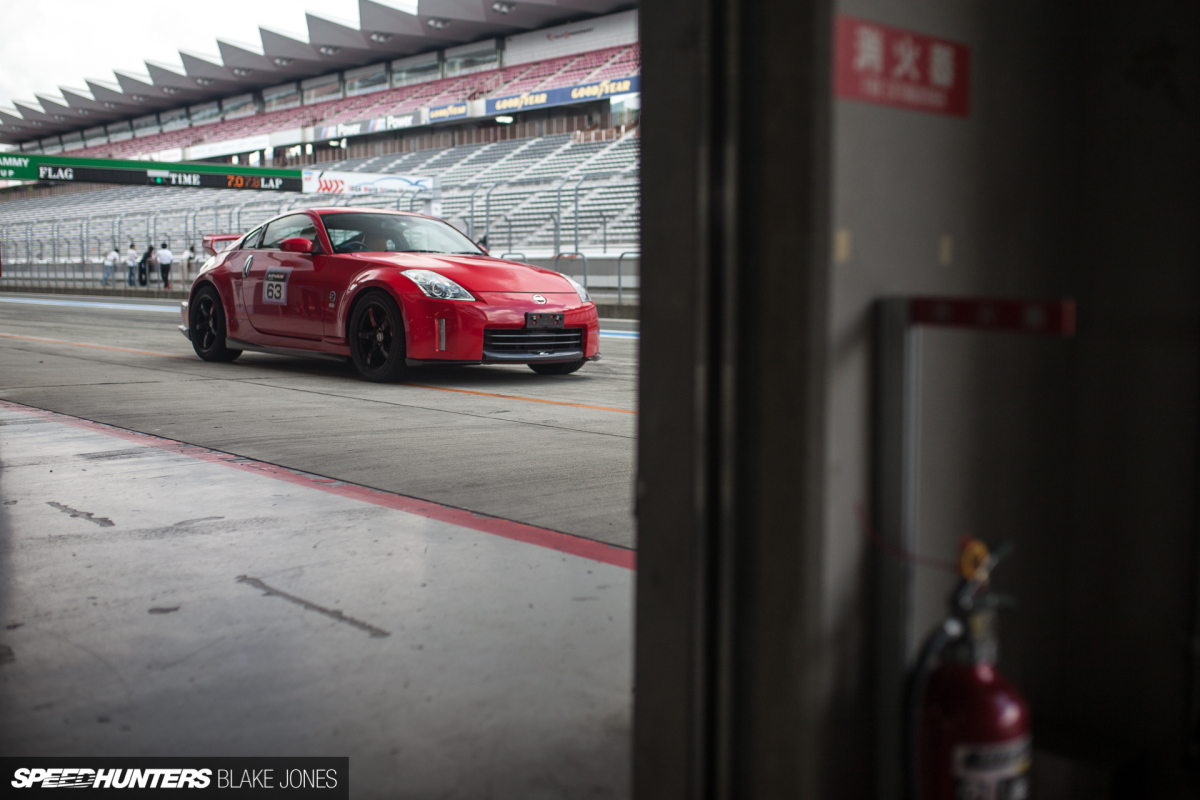
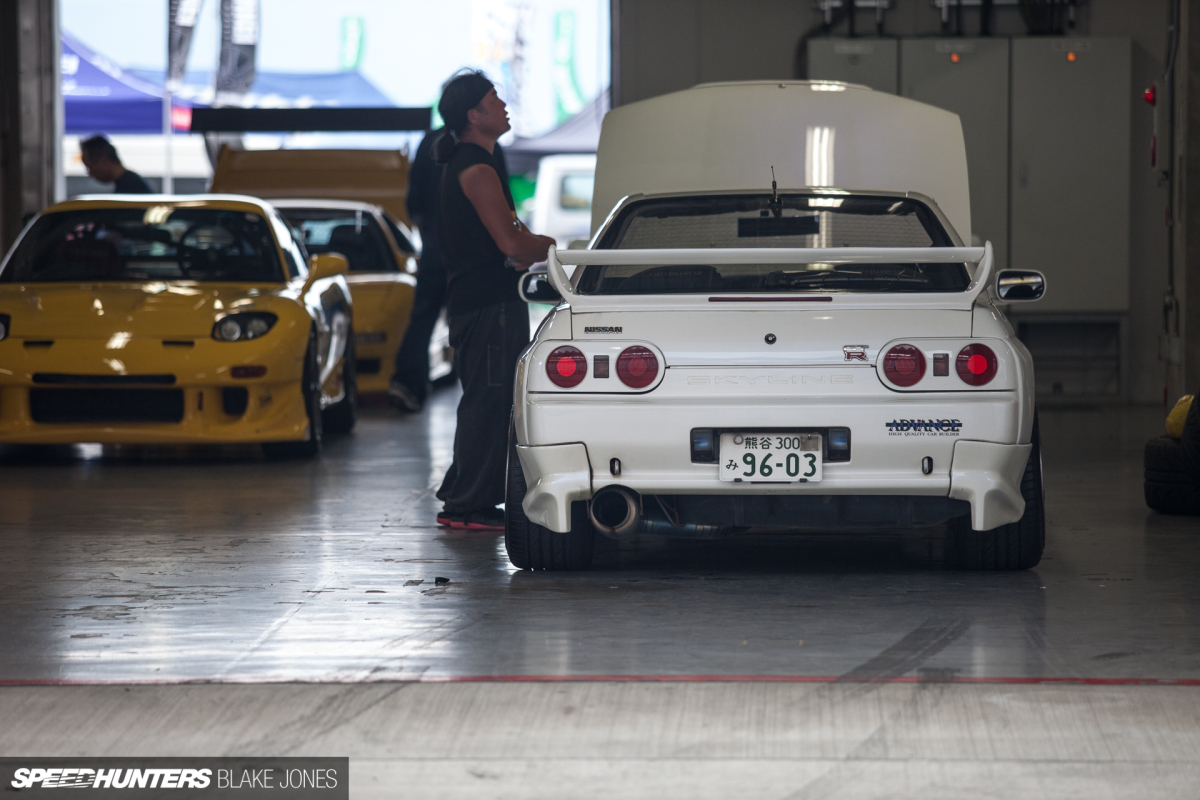
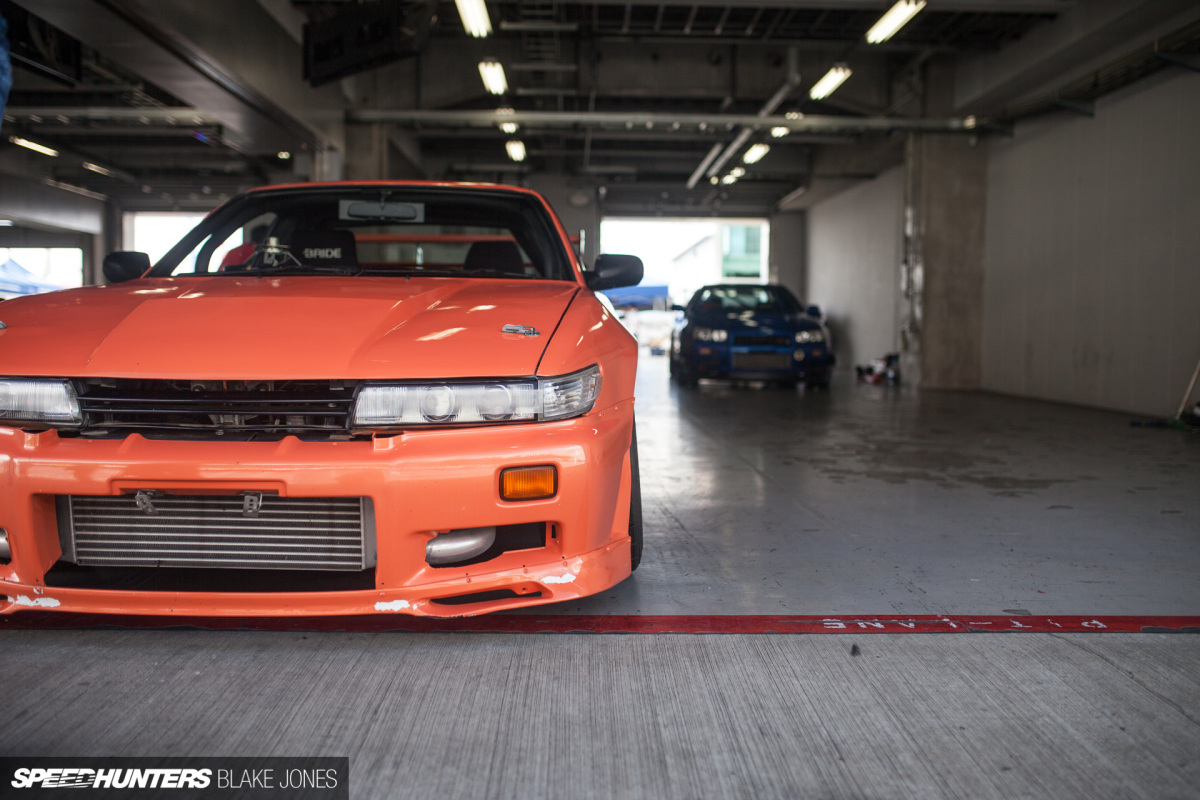
I’ll be returning home to Australia at the end of 2018 with the NSX in tow, but before I leave the idea is to complete the ‘holy trinity’ of racetracks here in Japan: Fuji International Speedway, Suzuka Circuit and Tsukuba Circuit. Masa’s offer to enrol me amongst his squad of Advance customer cars in the Endless event seemed a little premature, but with the clock ticking I figured ‘why not?’
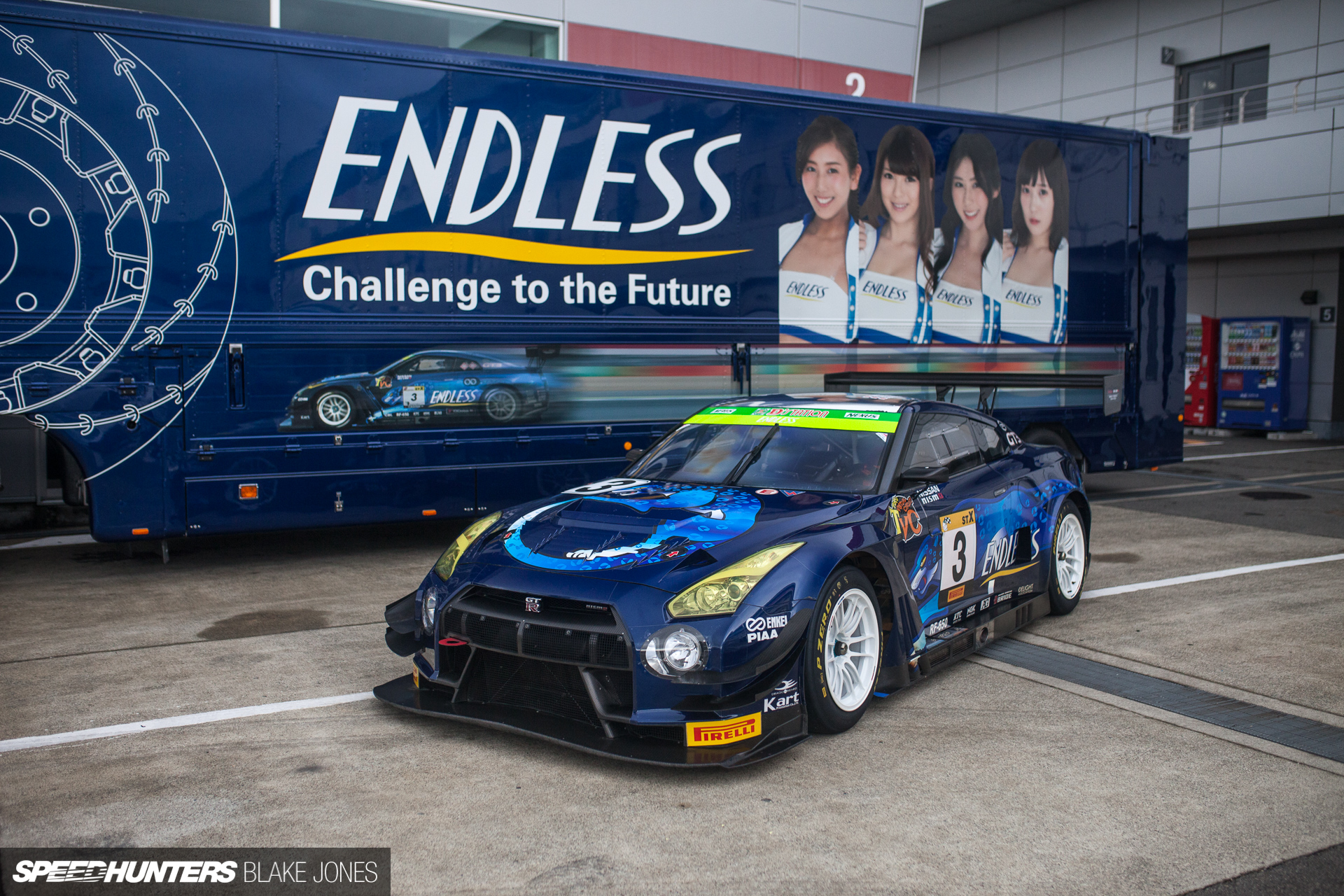
Fuji is an international-level circuit, and thus the opportunity to drive it on a weekend is fairly rare, so Endless books out the whole venue for customers and associates to enjoy. Endless brought along their GT-R GT3 endurance racer and spiffy transporter, but unfortunately it remained in the pits.
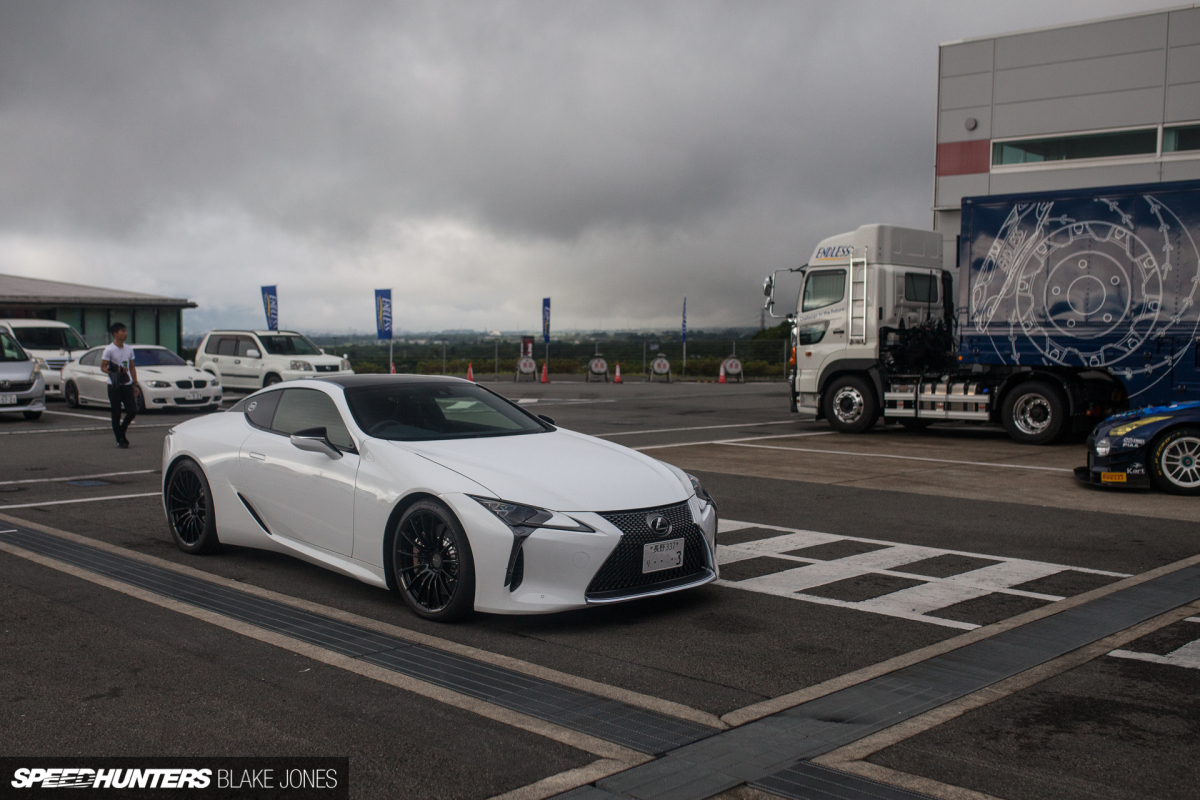
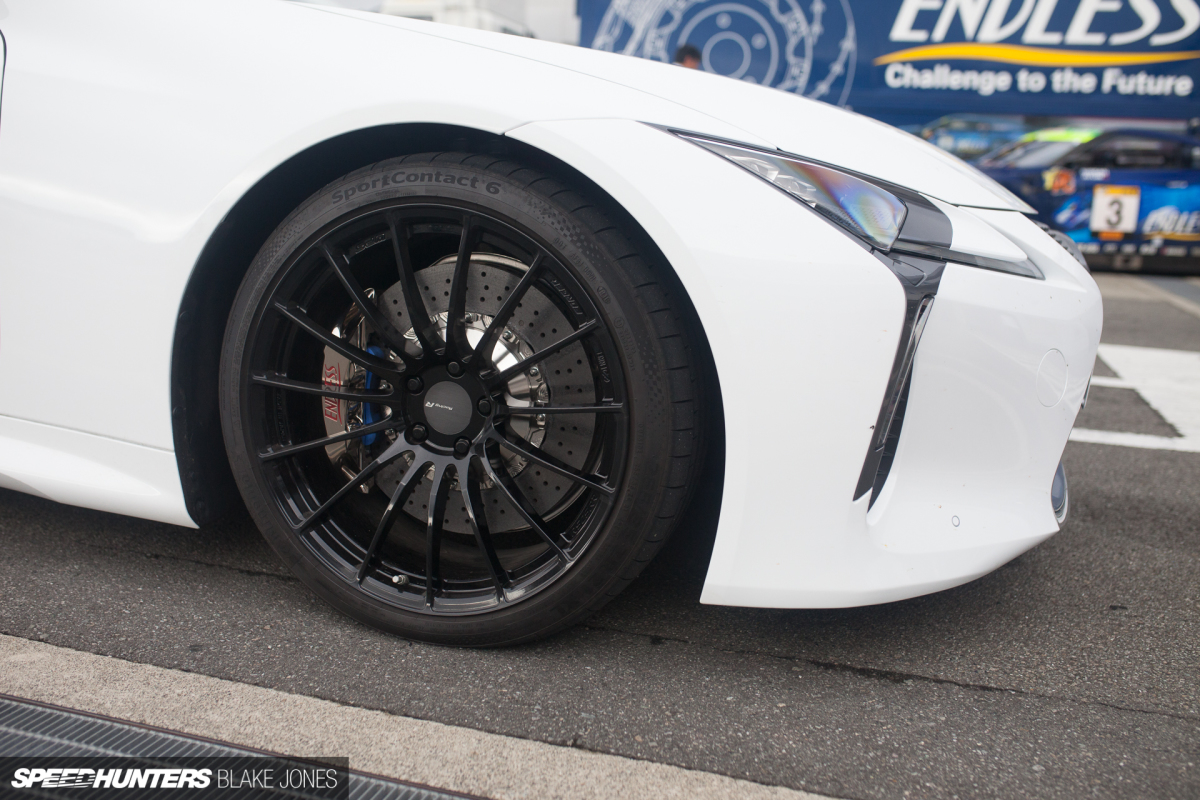
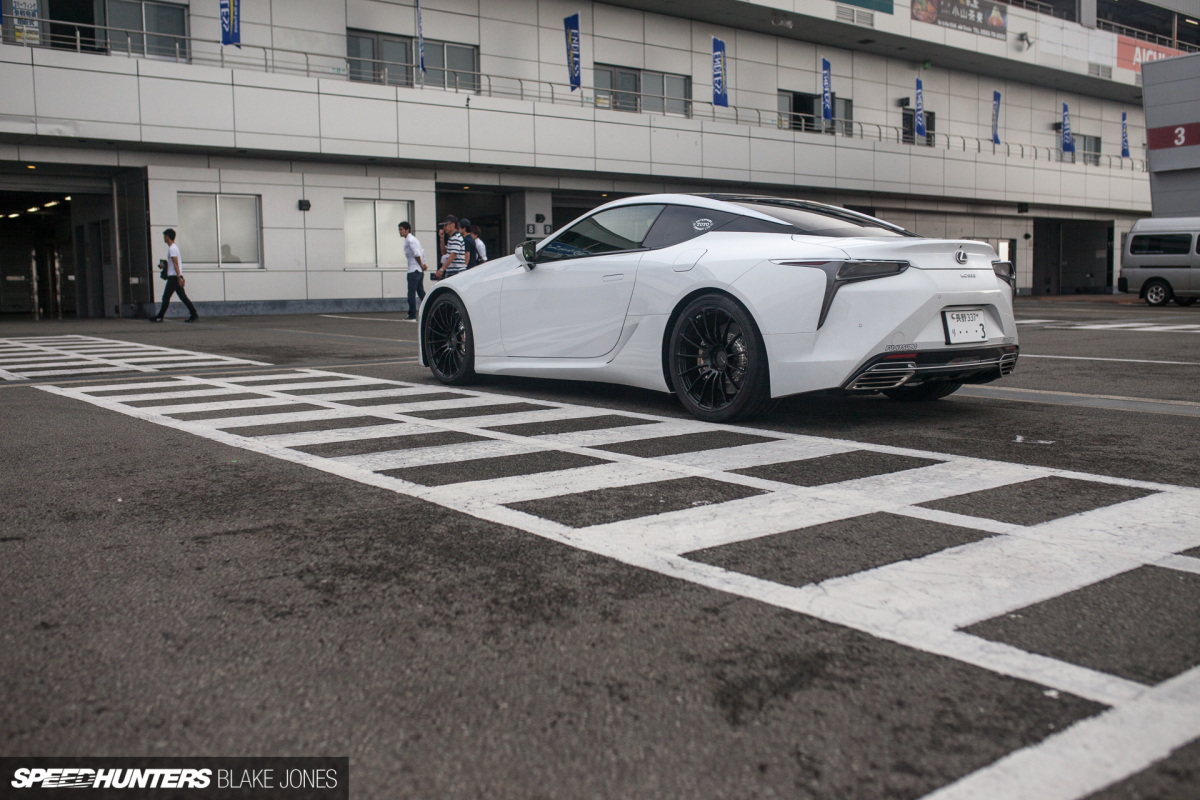
Alongside it was their super-fresh Lexus LC 500 demo car featuring an Endless big brake kit (of course), Enkei wheels, and exhaust bits from Fujitsubo. I wonder how this compares to the stock car that Dino seemed to love?.
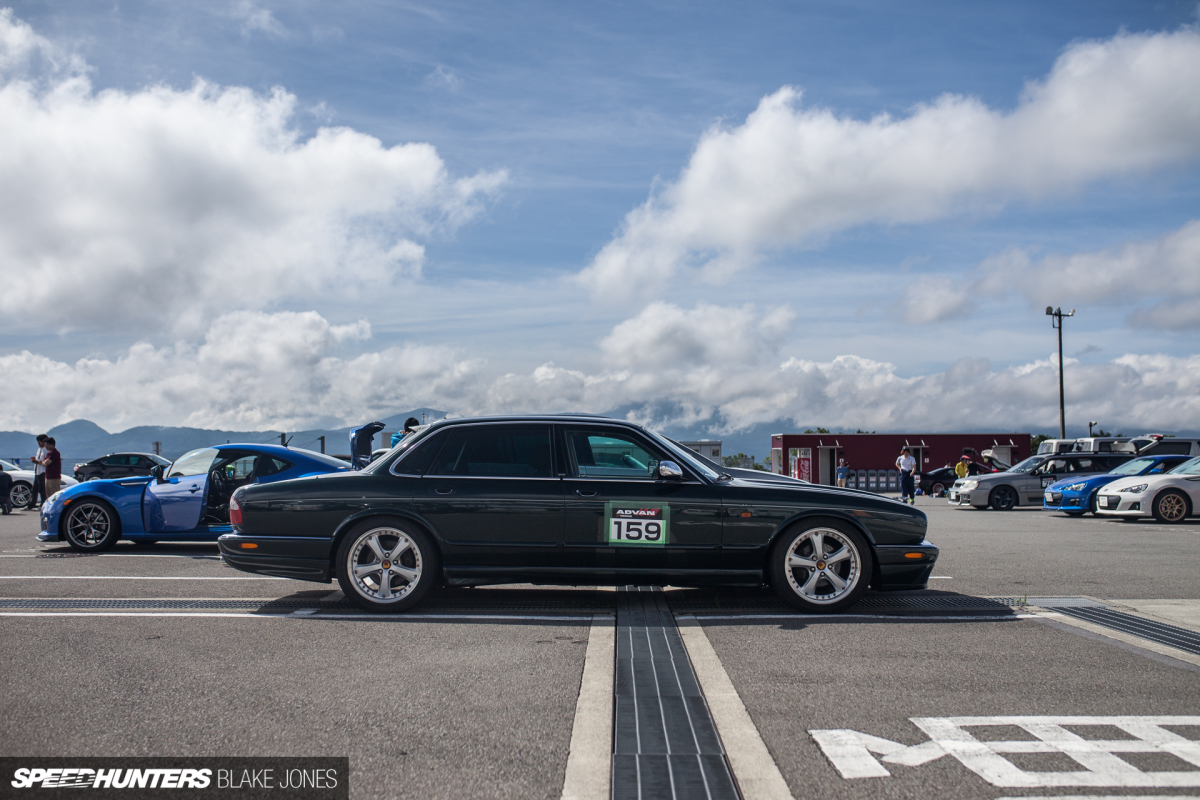
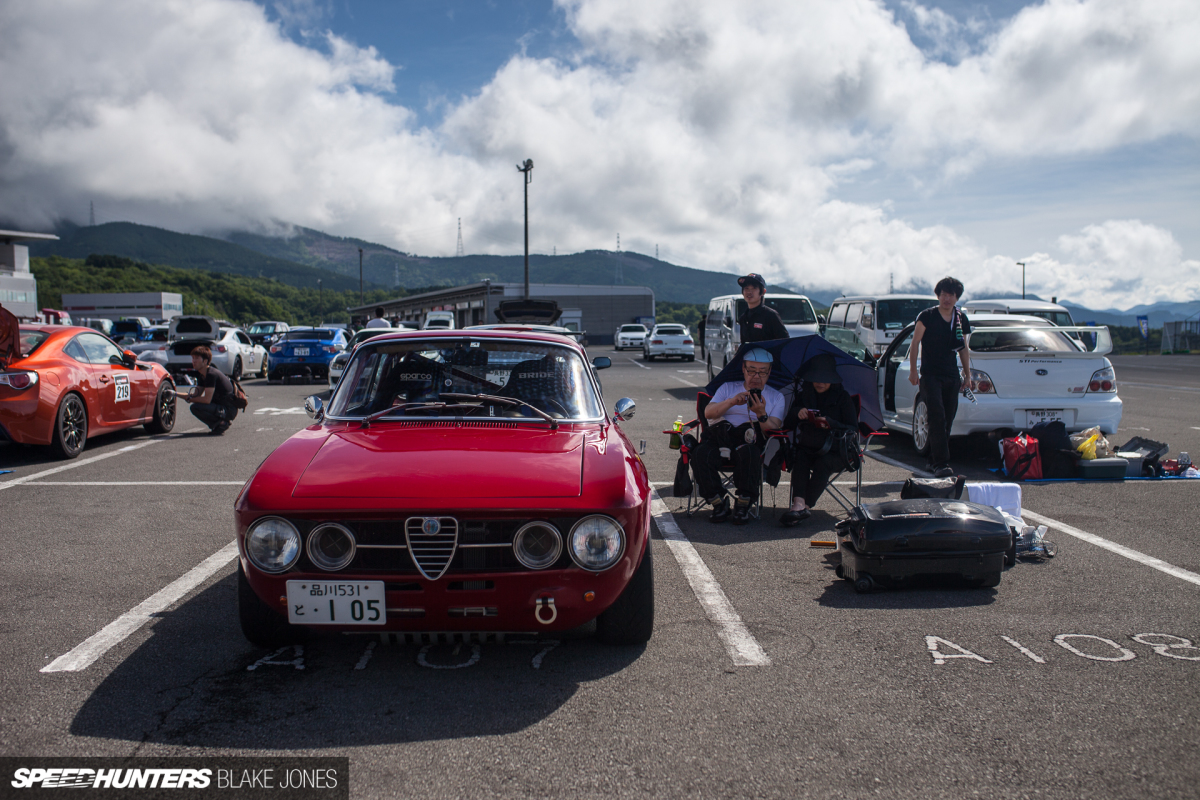
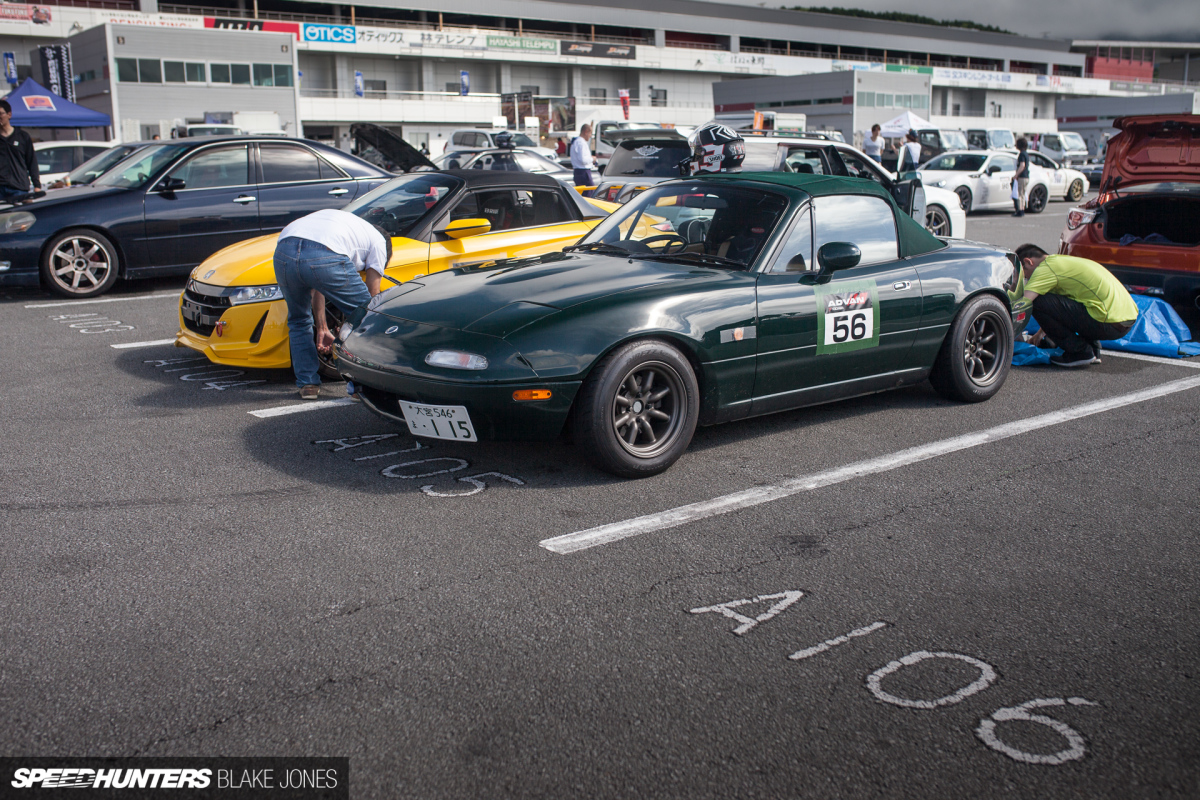
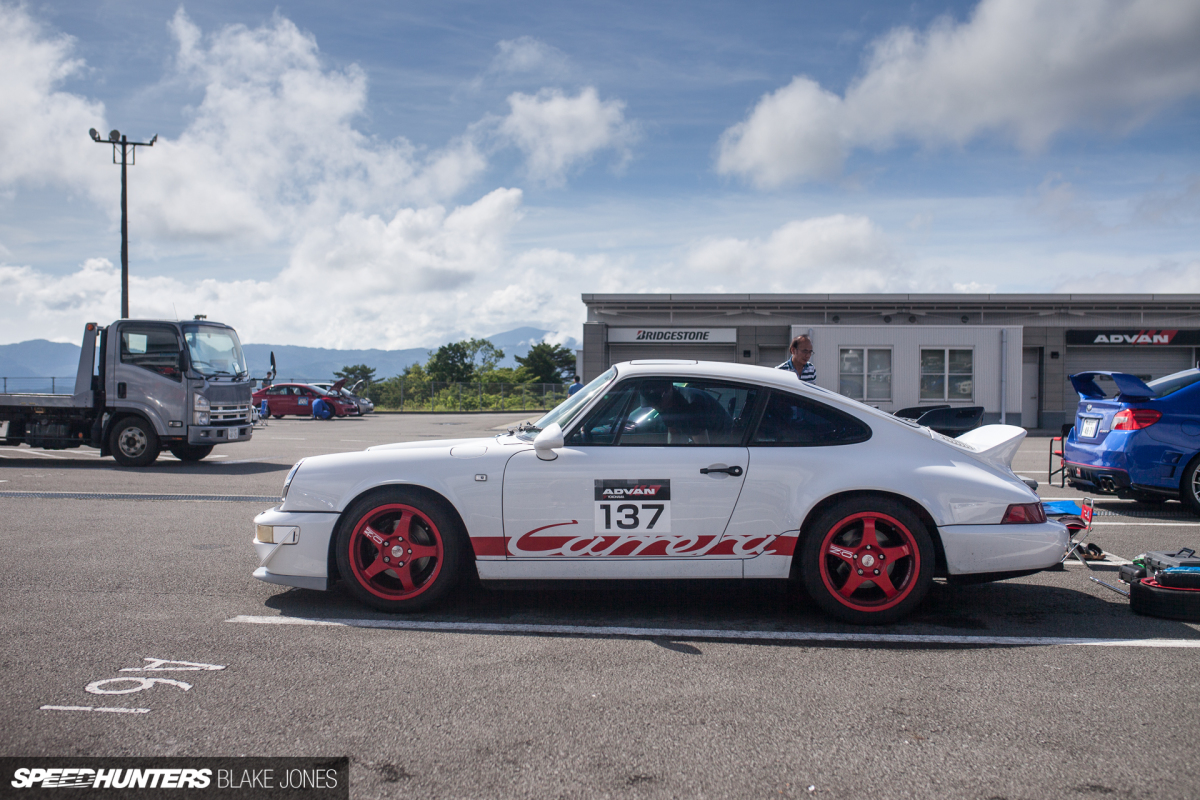
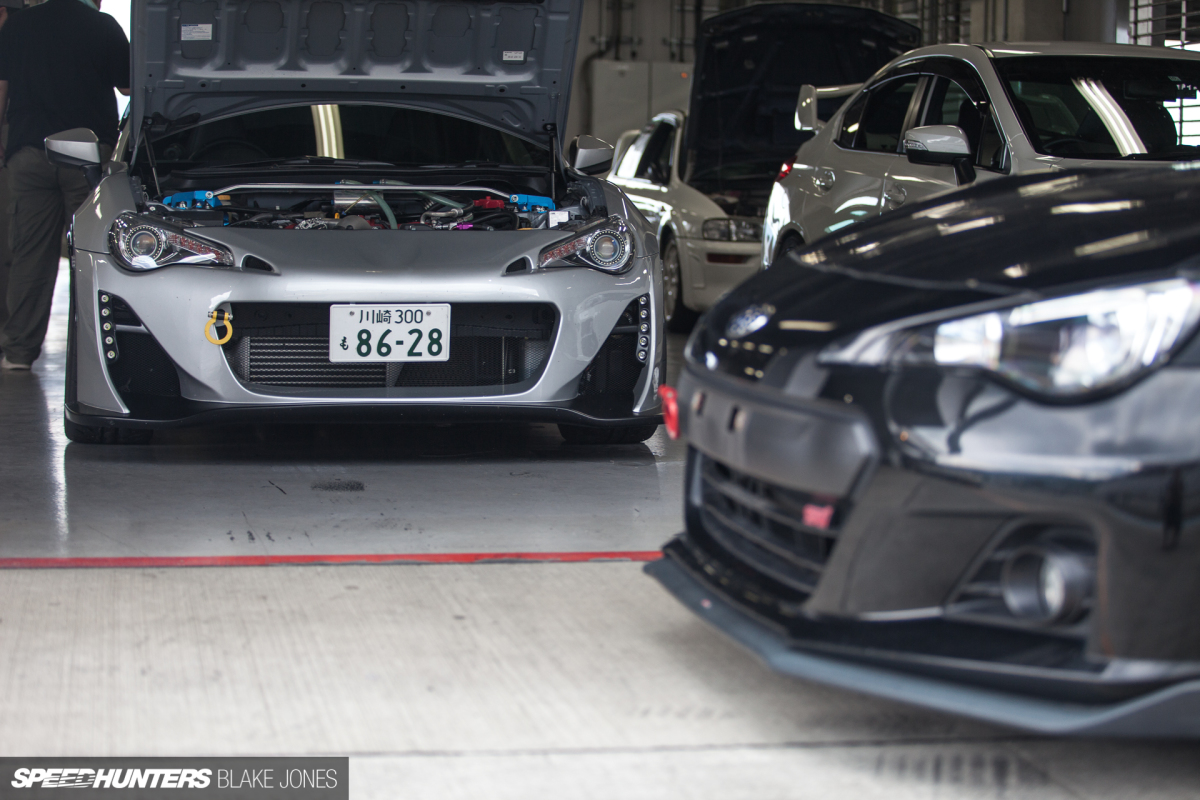
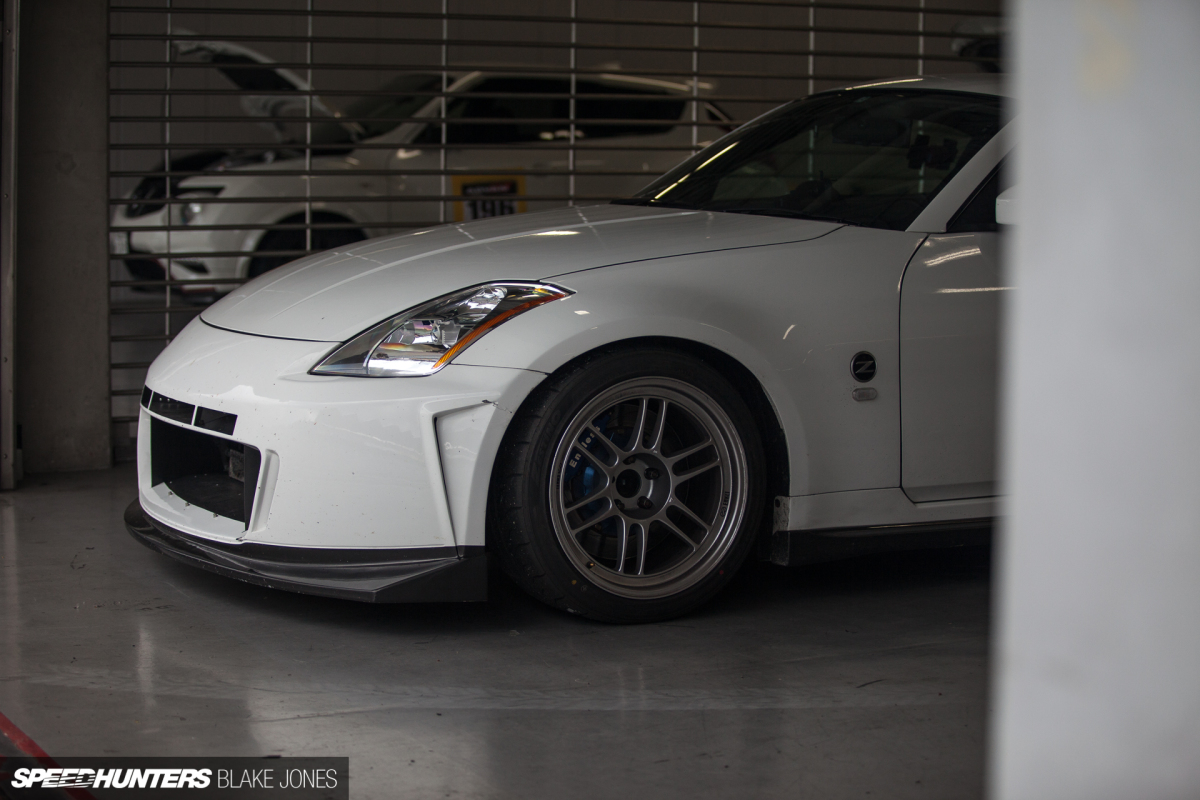
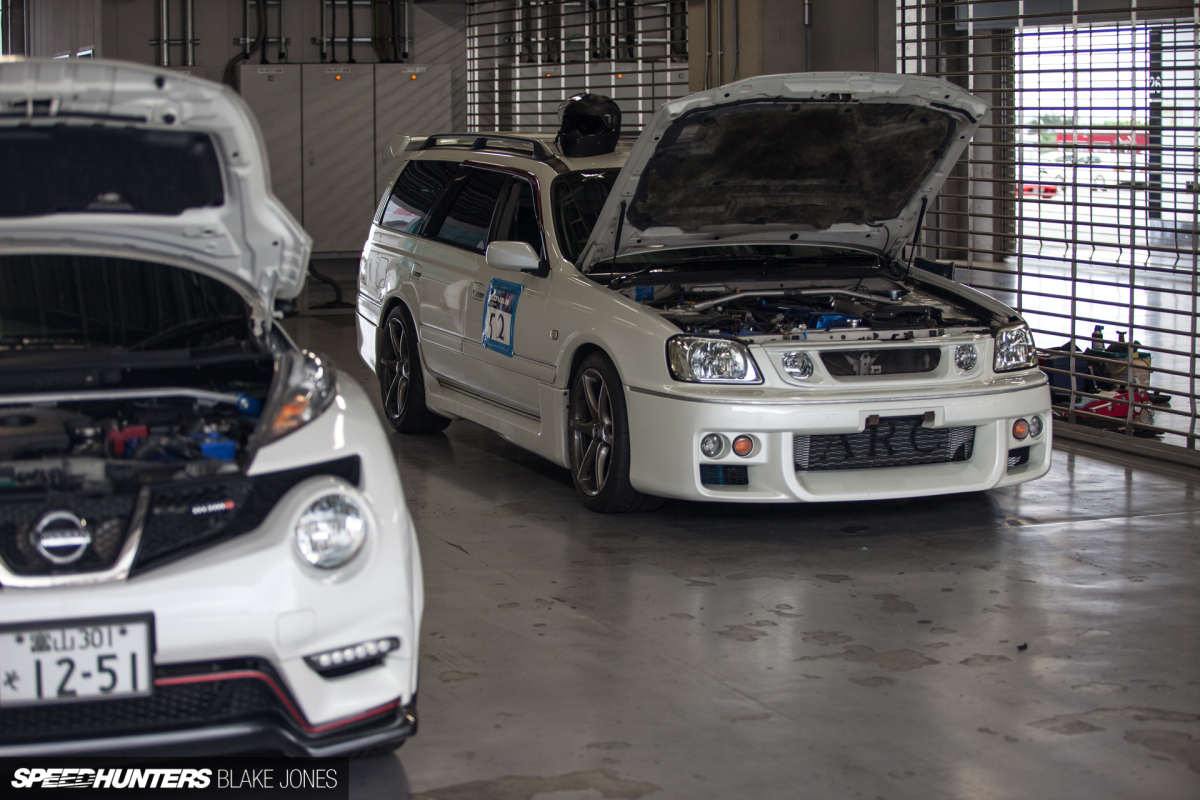
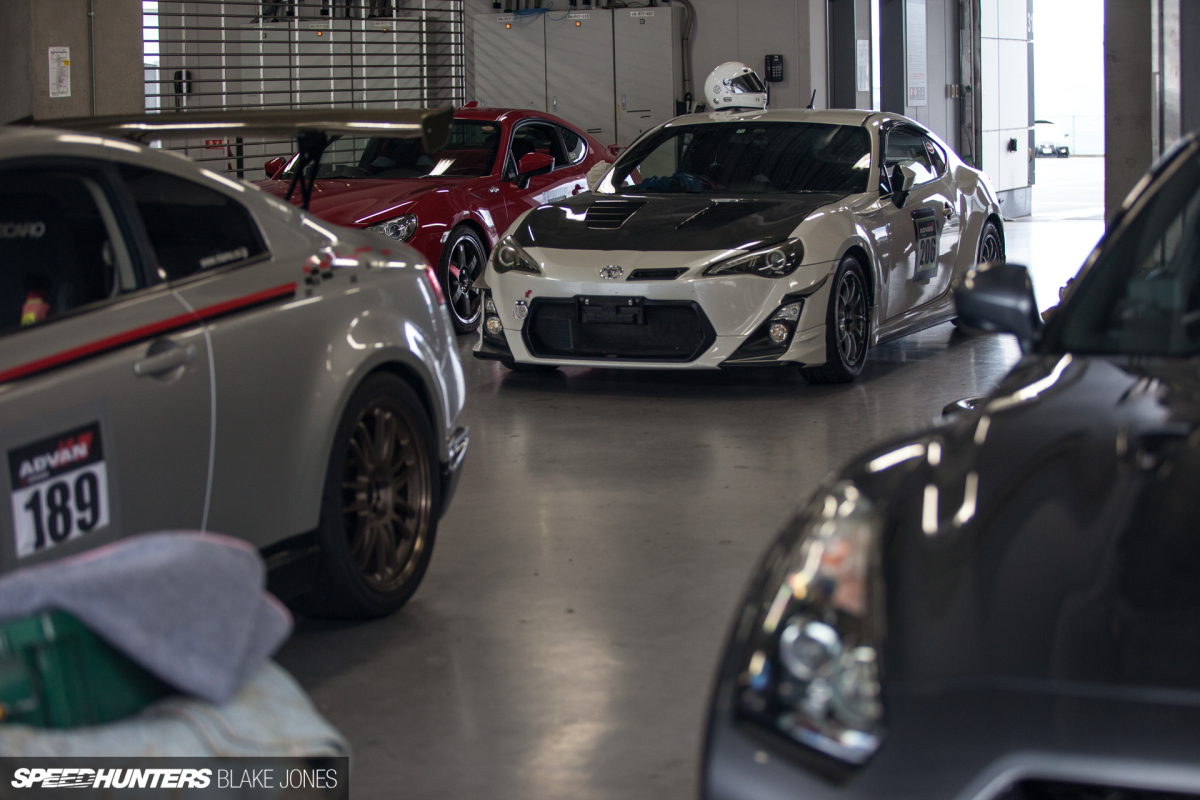
The privately owned cars at a Japanese track day never disappoint, and this day was no exception. Just check out that track-ready Jaguar XJ.
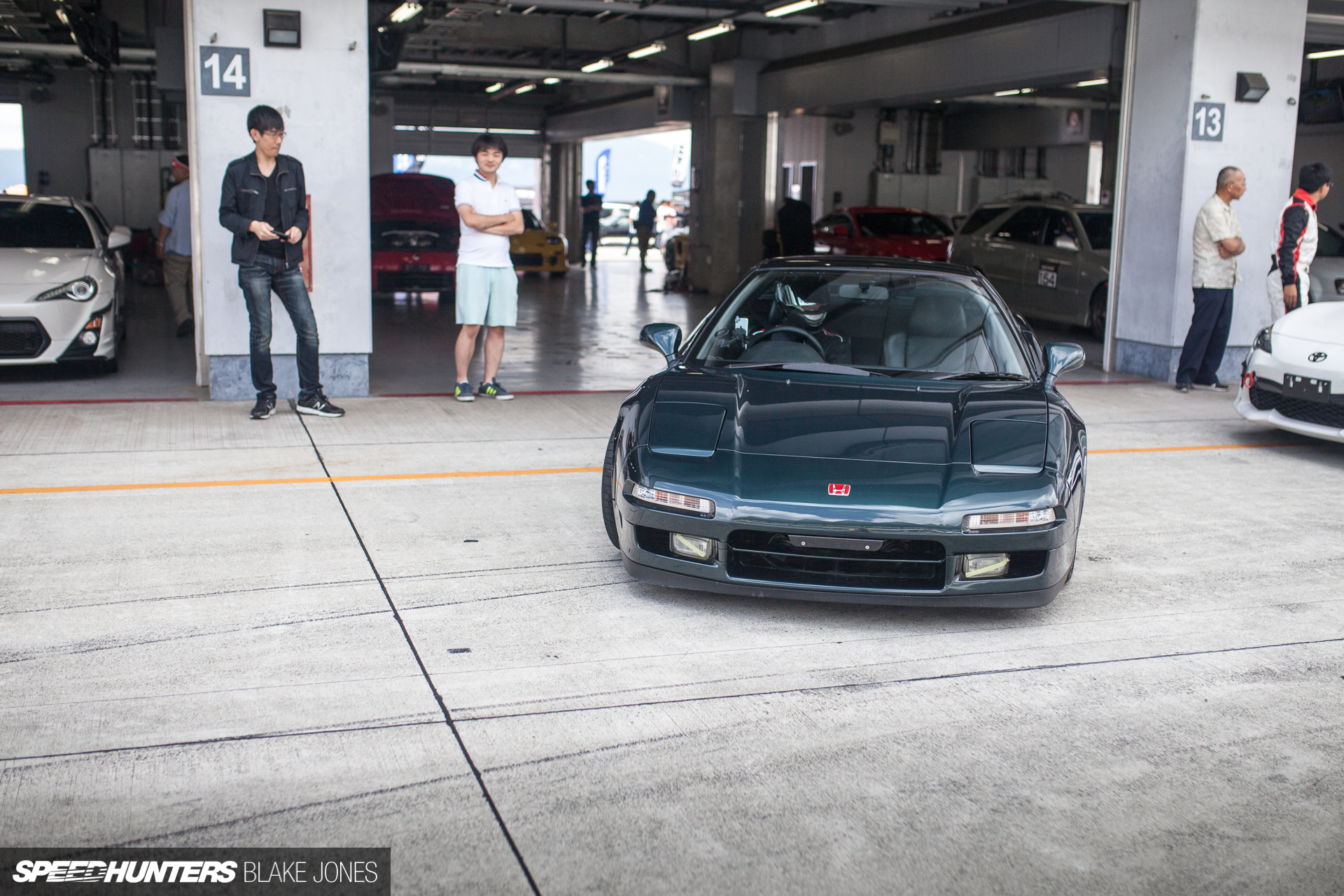
Due to a busy work schedule, a few items I would’ve liked to address prior to the track day (namely a brake refresh and new tyres) were left undone. I’d decided in advance to not push the car too hard, and rather get familiar with the chassis and new KW Clubsport suspension at higher speeds than I’d been able to do on the street. Still, rolling out into pit lane for the first time certainly elevated the heart rate.
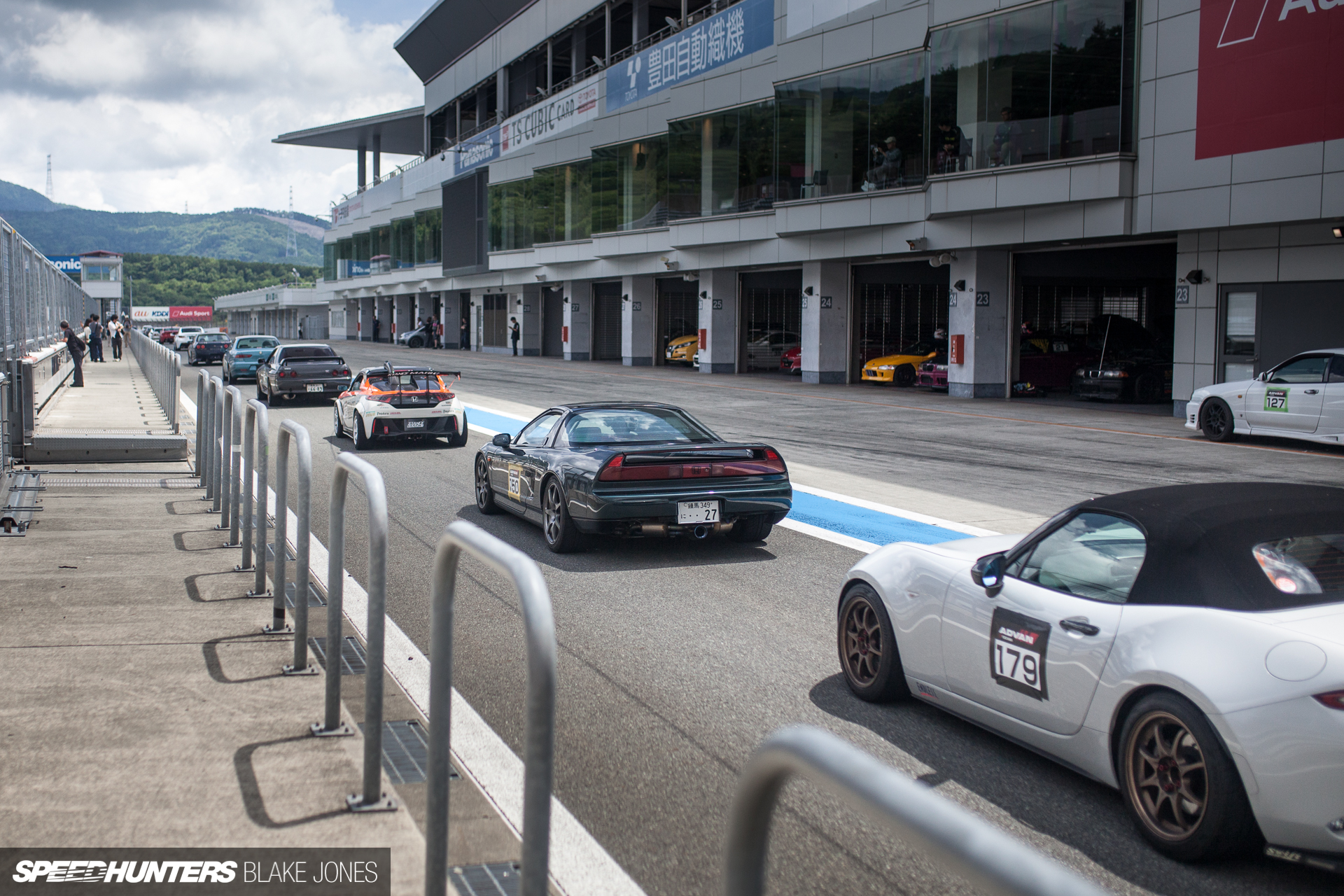
Lining up in the ‘intermediate’ group was an eclectic collection of Japanese and European machinery, including the Stance Magic Honda S660 I first saw at Tokyo Auto Salon last year. Each group had between 30 to 40 cars, but Fuji’s sheer size swallowed them rather comfortably.
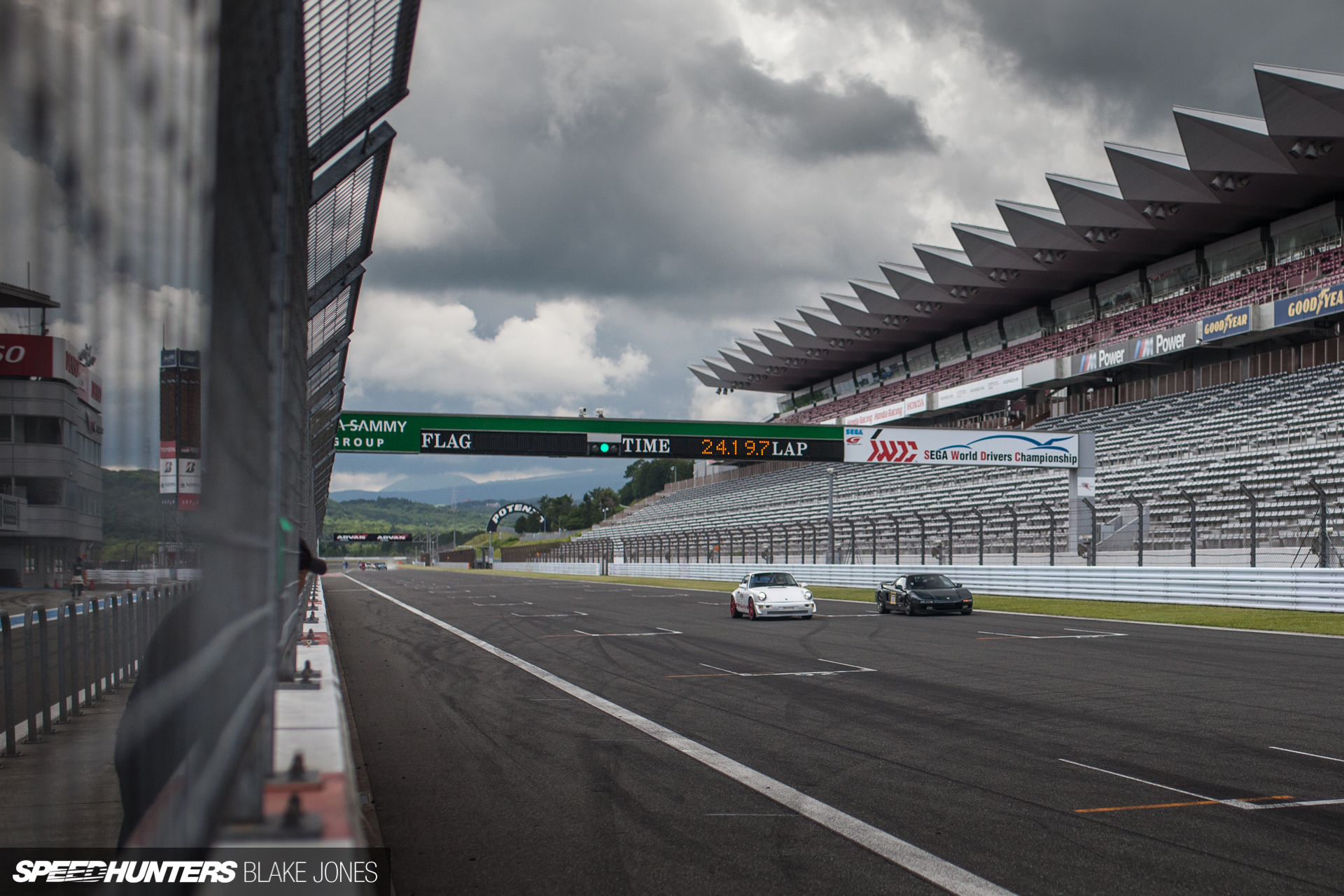
All domestic cars come with a 180km/h speed limiter in Japan, so I was curious to see what would happen down the main straight. In fourth gear the speedometer needle moved steadily towards the final mark, and I was nervously eyeing the rear-view mirror to ensure I wouldn’t have a rear-end remodelling from a close following Porsche once the limiter cut in. But lo-and-behold, the needle continued onwards into the blank space and back towards zero. Maybe the previous owner enjoyed a high-speed blast along the Tokyo Bay Aqua-line?
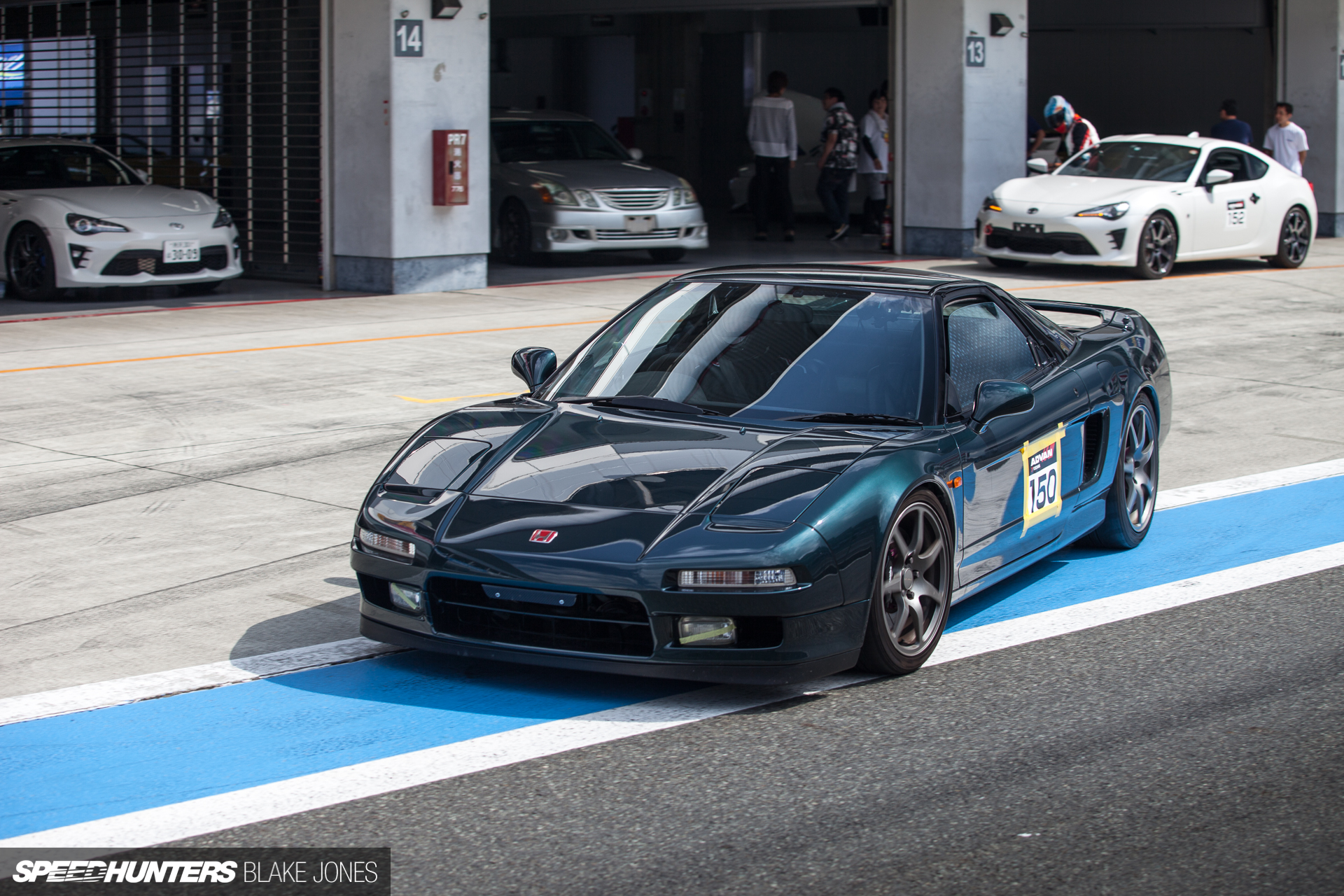
Unfortunately I paid the price for sub-optimal preparation; the front brakes developed a massive shudder almost immediately, and in the second session the check engine light turned on down the main straight. Thankfully neither of these issues are serious, but new rotors and pads will be required at the front, and the O2 sensors will require replacing before I go near a circuit again.
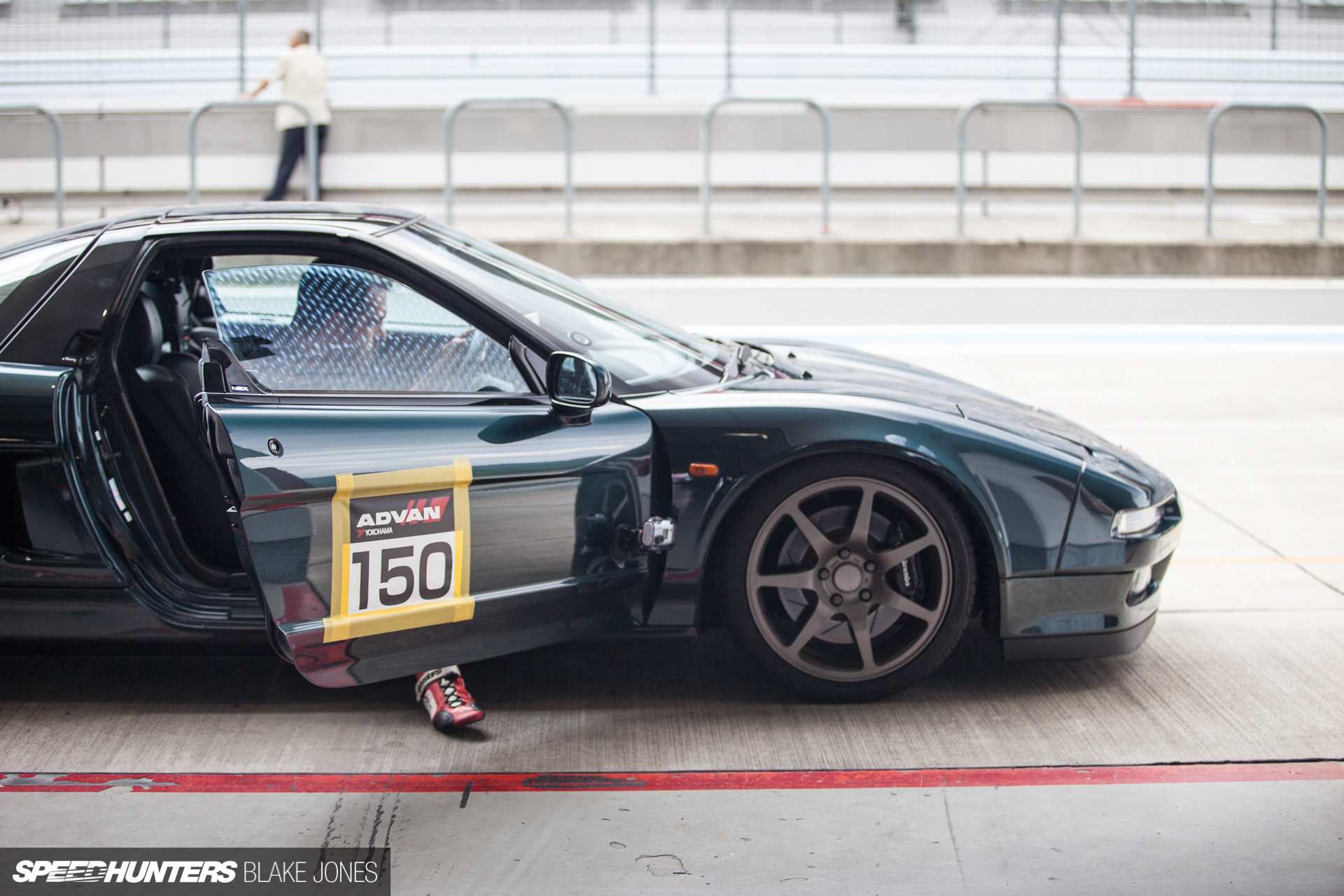
The highlight was absolutely getting a feel for the new KW Clubsports. It’s the first time I’ve run adjustable suspension on one of my cars and the ability to go from cruise to attack mode in about three minutes is a real game changer. Despite the Clubsport being KW’s track-spec coilover, I’ve not once found them uncomfortable on the (admittedly high quality) roads in Japan.
Around Fuji’s sweeping corners the car was completely settled, and could be easily steered with the throttle mid-corner. This is one of my favourite characteristics in a RWD car and not all mid-engined cars can deliver a friendly balance in this regard, so it looks like the combination of KW’s suspension and the Advance setup has the chassis in a good place.
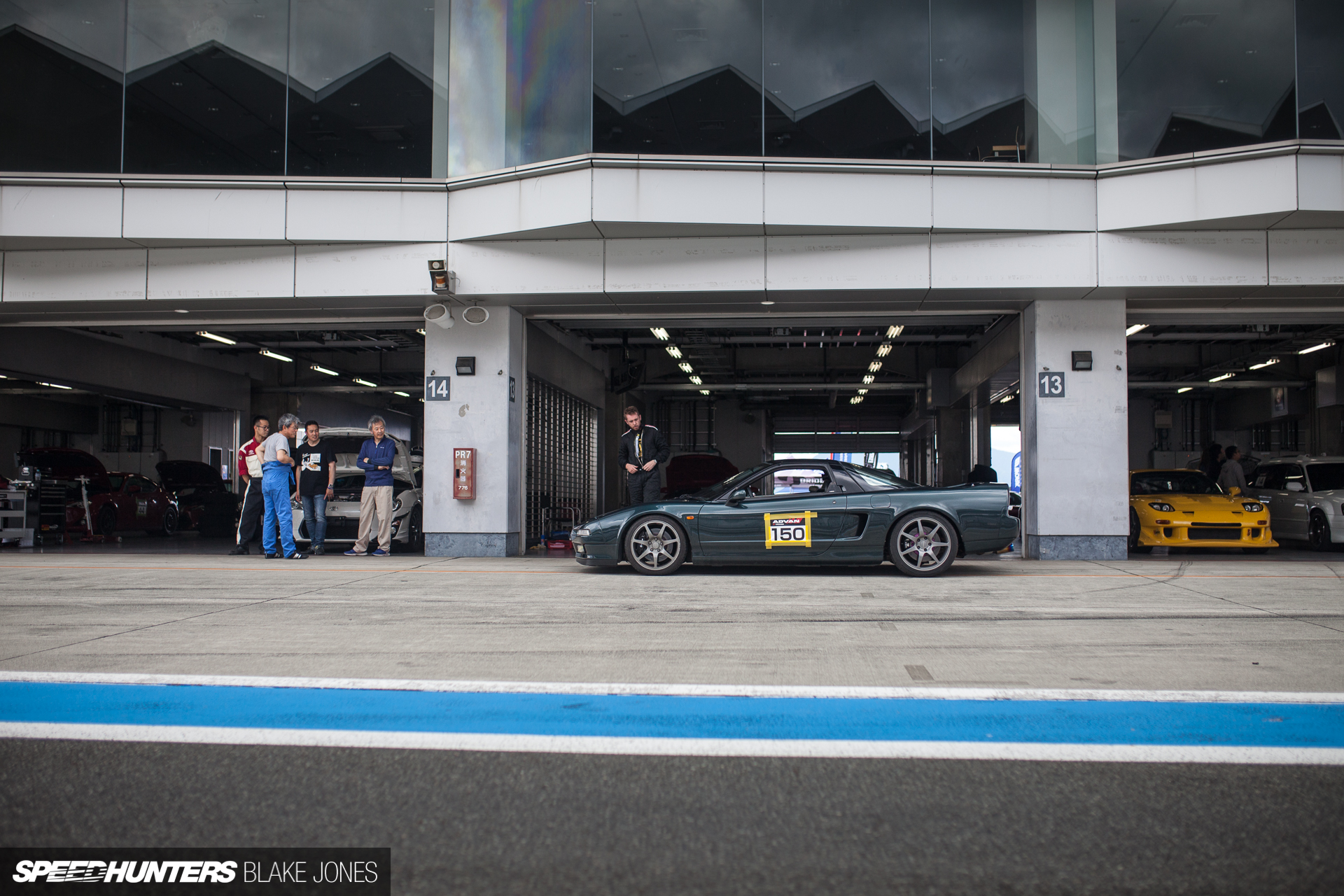
The only slight downside is that the NSX units have the compression adjustment on the bottom of the coilover, which means adjusting that is a little more involved (either removing a wheel or having the car lifted on a jack or lift).
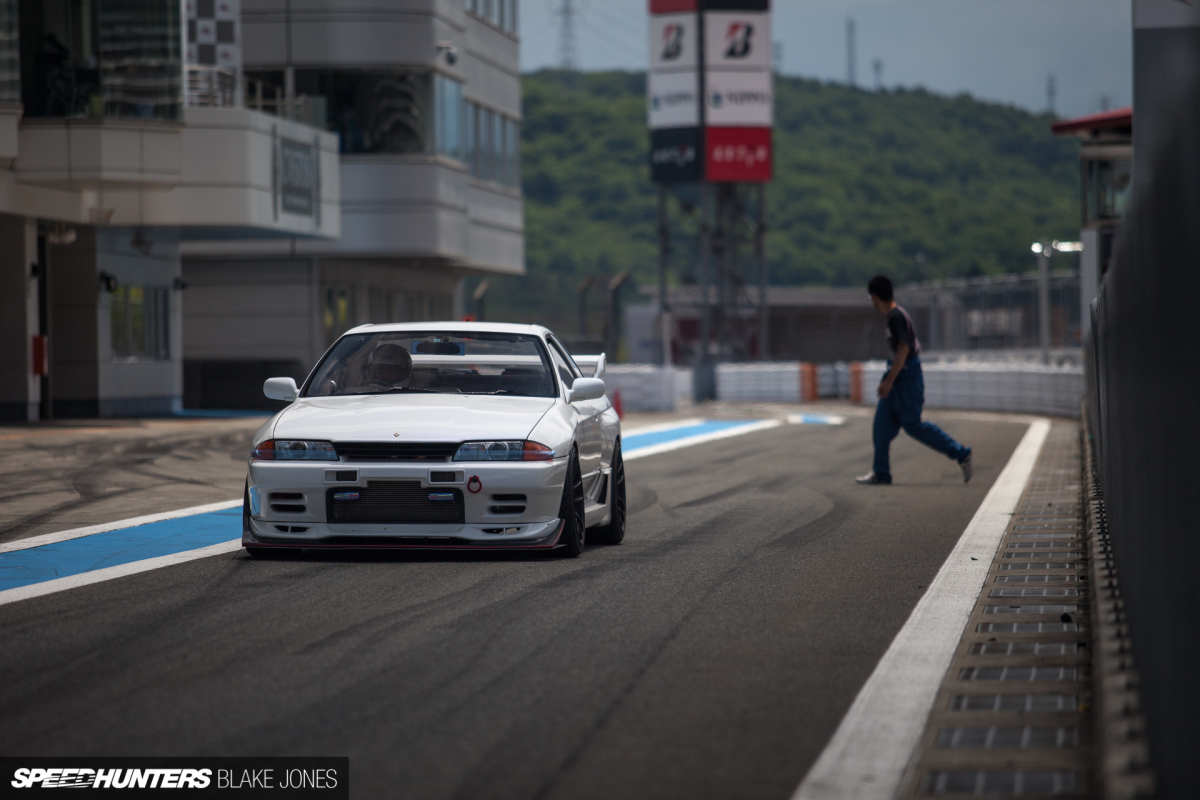
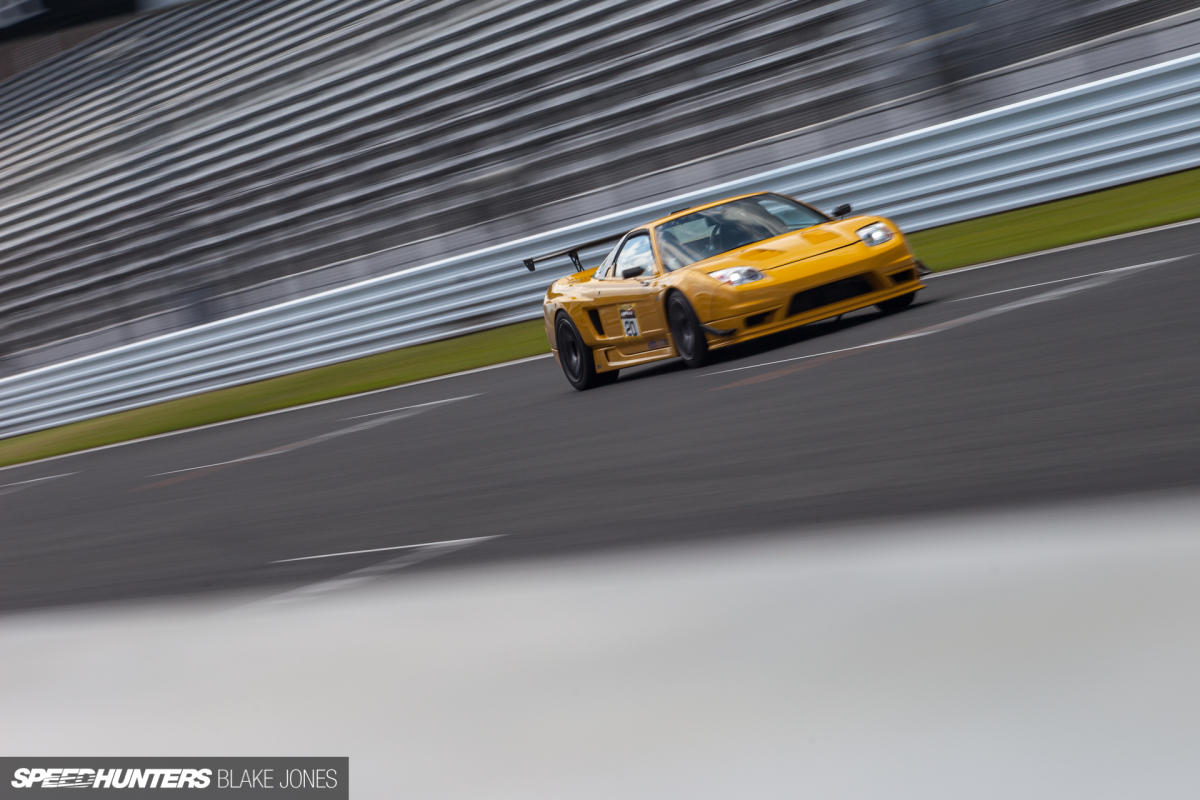
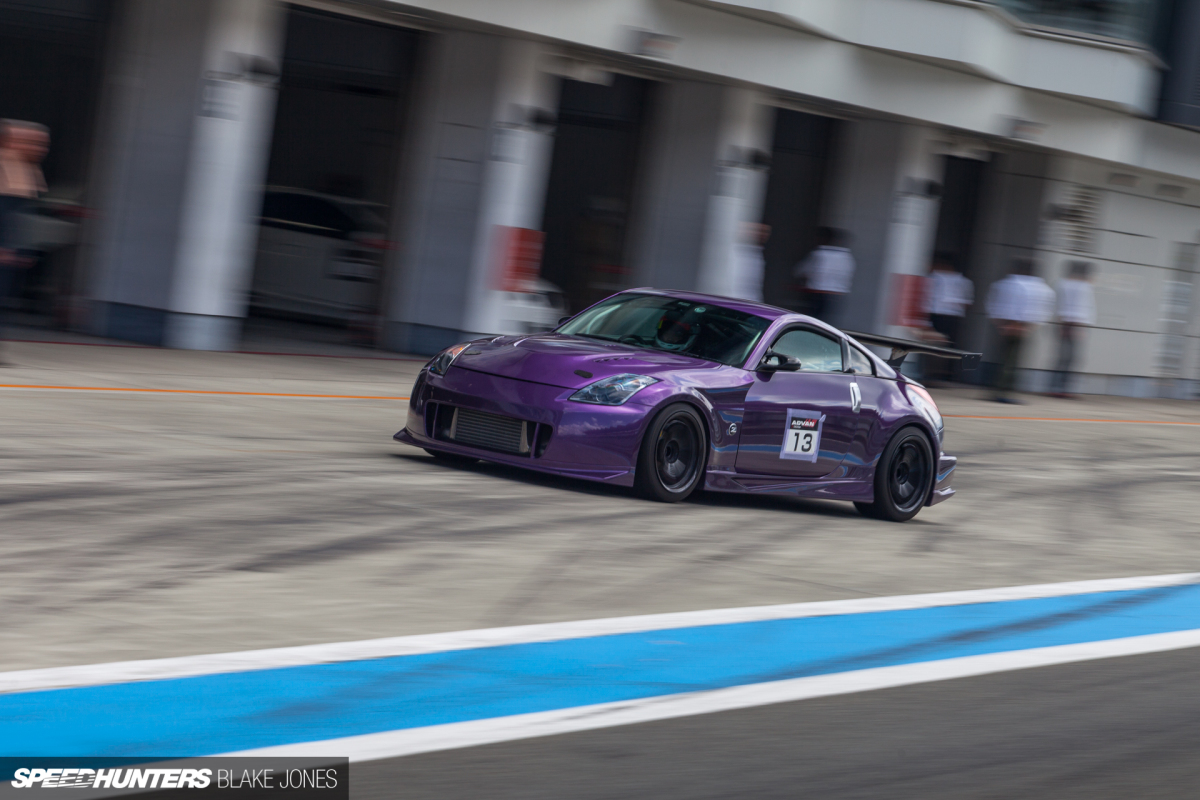
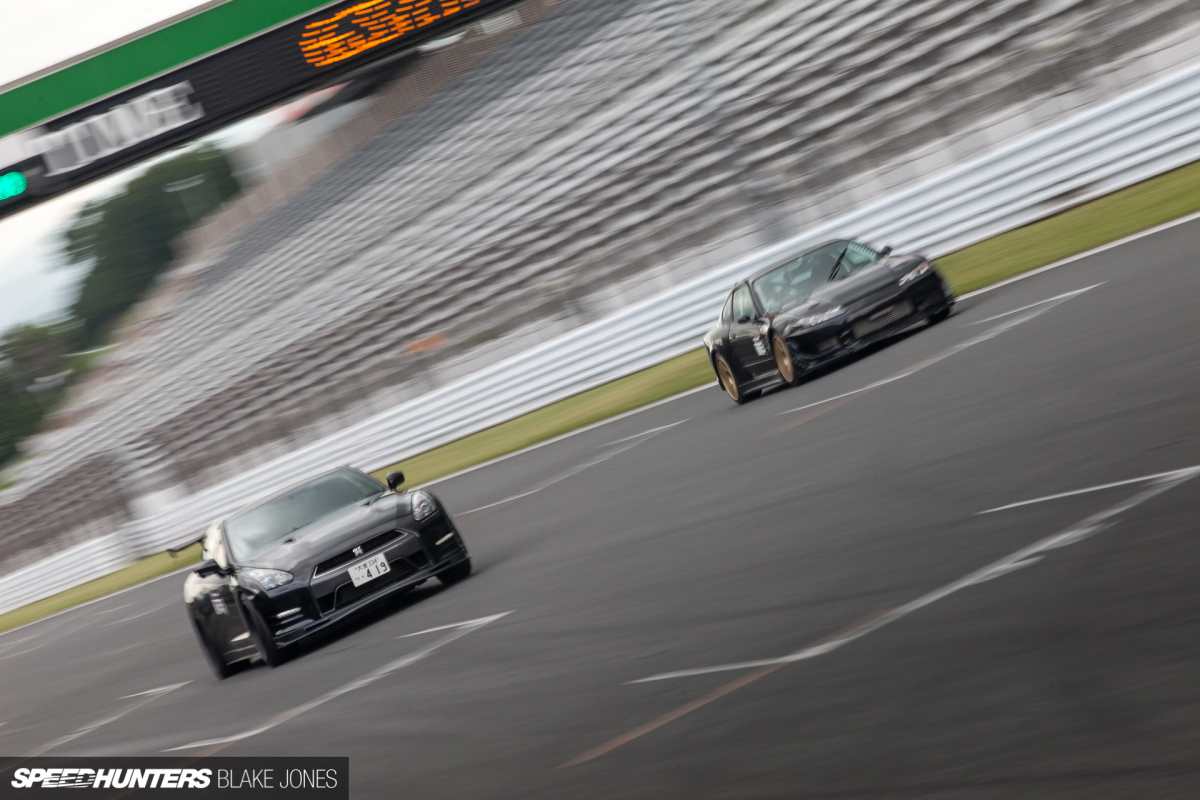
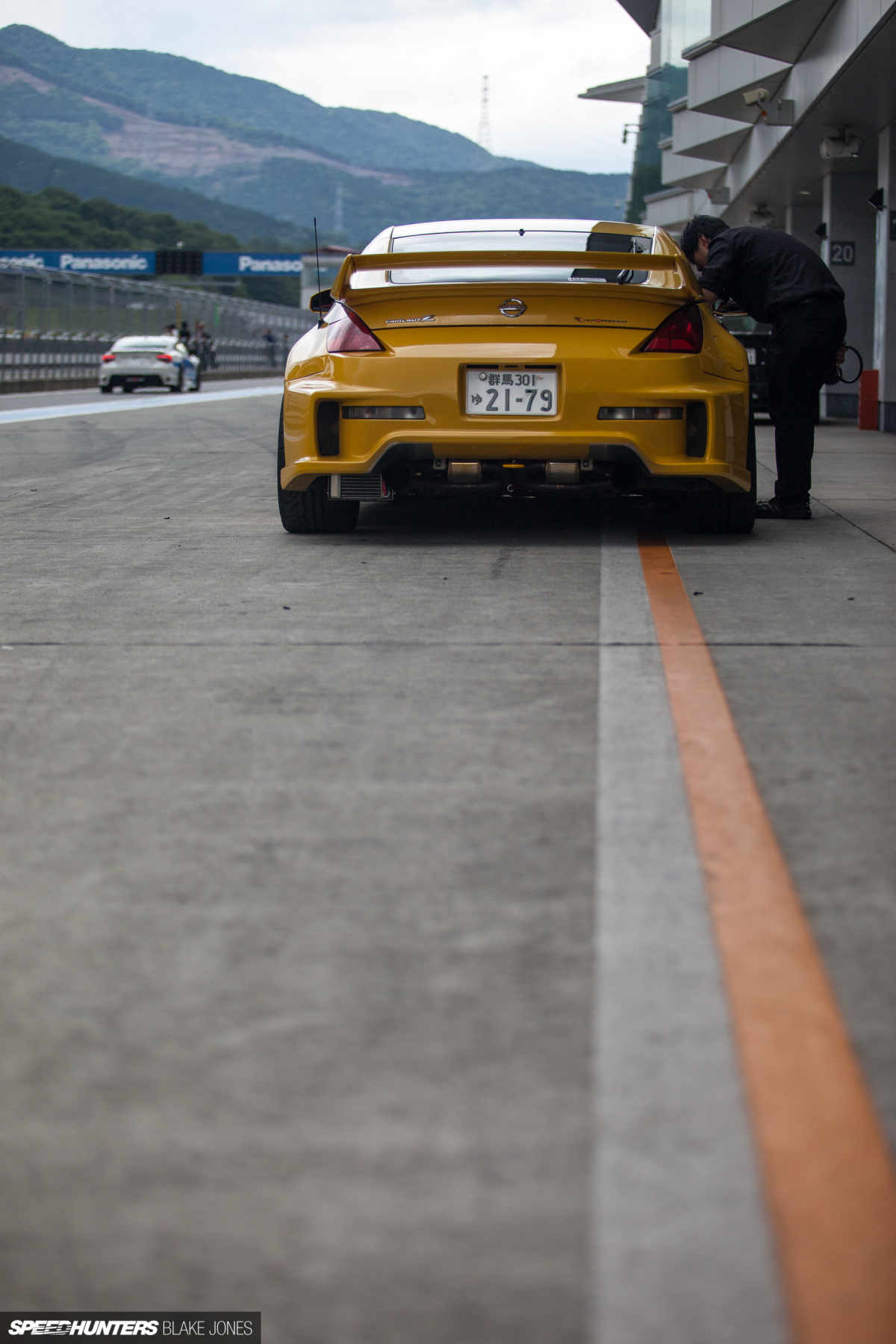
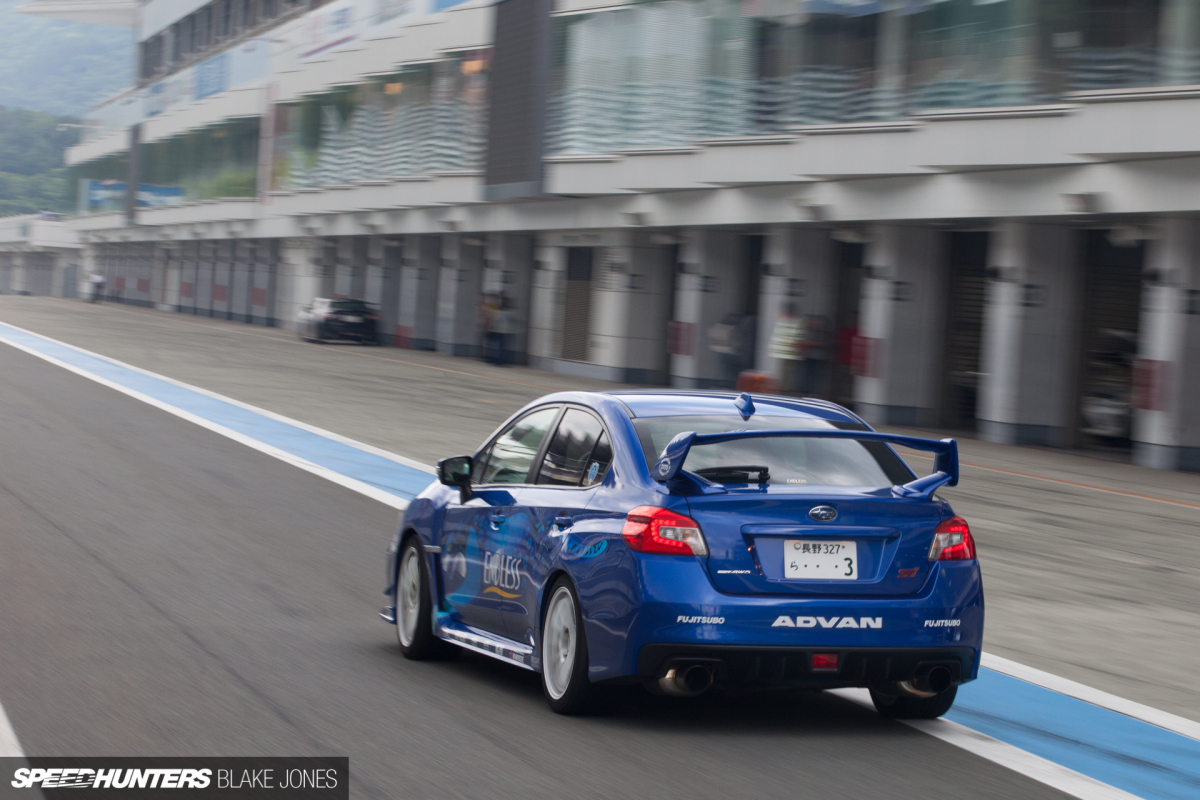
Considering the unresolved brake and O2 sensor issues, the best time Project NSX managed was a 2:15.1. Certainly not a blinding lap, but decent enough to be a useful benchmark for the next visit to Fuji Speedway with Advance in September. And at least the car is still in one piece, right?
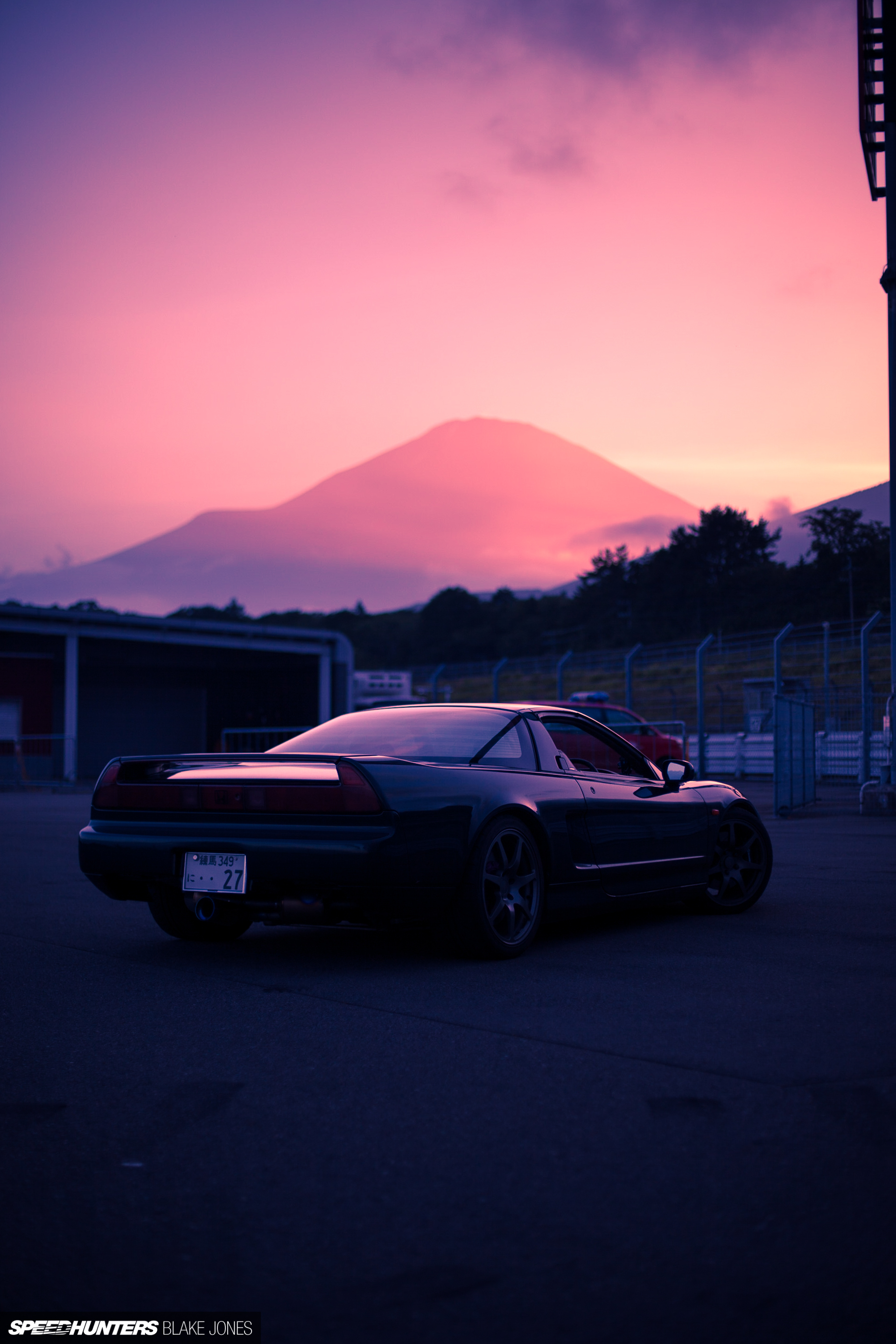
So, as is often the case, there’s more to be done than when I started this part of the build. Slowly but surely the project is coming together, and to think of how different it was when I picked it from the auction lot 12 months ago means I sleep sound at night. But the pile of parts in my living room continues to grow and there’s plenty of work to be done to chase down that 996 GT3.
Stay tuned!
Blake Jones
Instagram: blaketjones
blake@speedhunters.com