
Hydraulics and lowriders go hand and hand. It’s to the point where people tend to assume any American car with wire wheels and thin whites has to have hydraulics. The use of hydraulics in cars dates back to the late ’50s, and their original intent was to trick the cops into thinking the car had a legal ride height.
With the recent crack down on modifications around the globe, the more things change when it comes to flying under the radar of the local police.
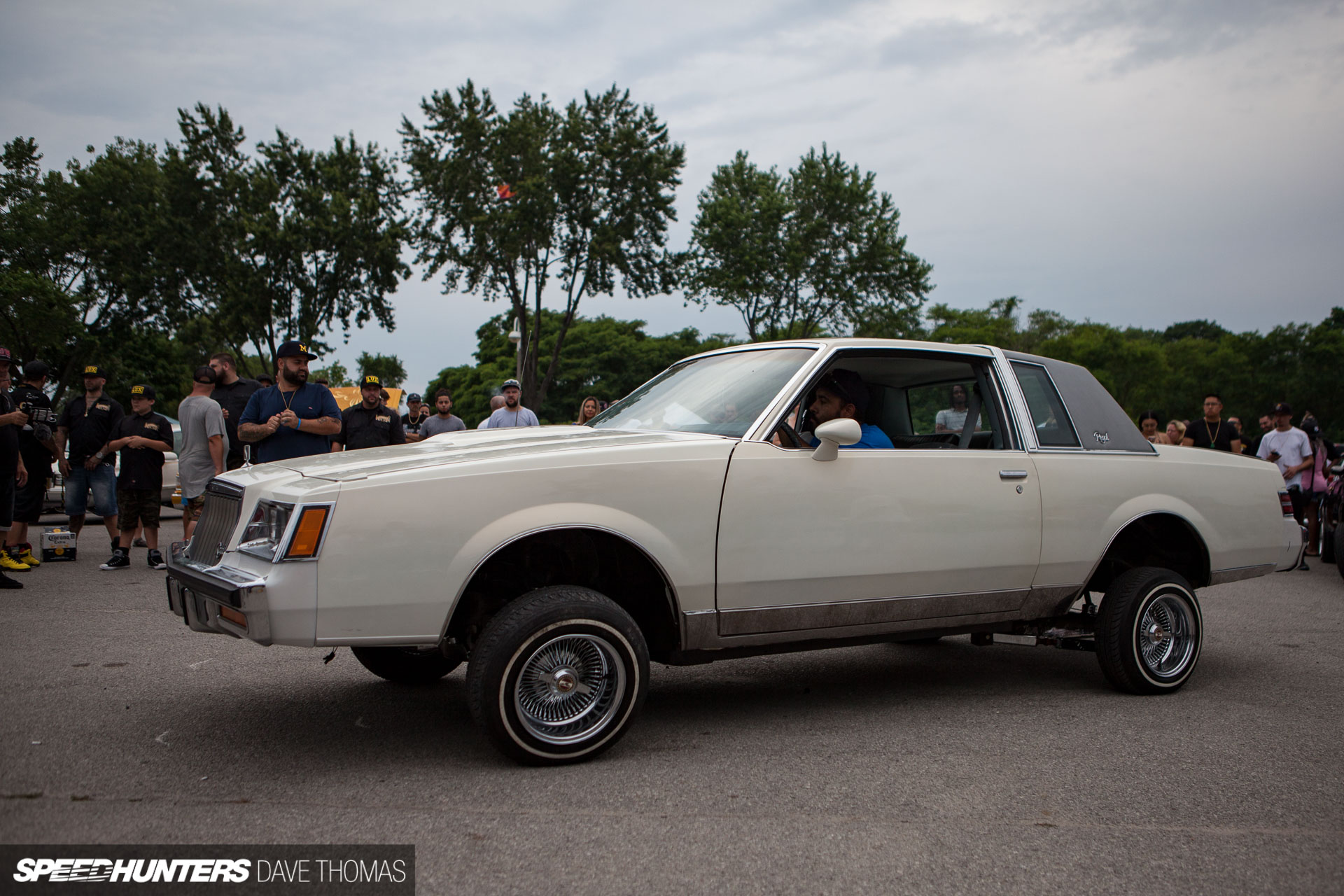
Hydraulics may have started fairly rudimentary, with the first on Ron Agguire’s ‘X-Sonic’ Corvette (yes, one of the first recorded uses of hydraulics was on a Corvette) being a hand operated system.
Eventually, powered units were installed and shortly after someone charged a system up to the point where the wheels came of the ground.
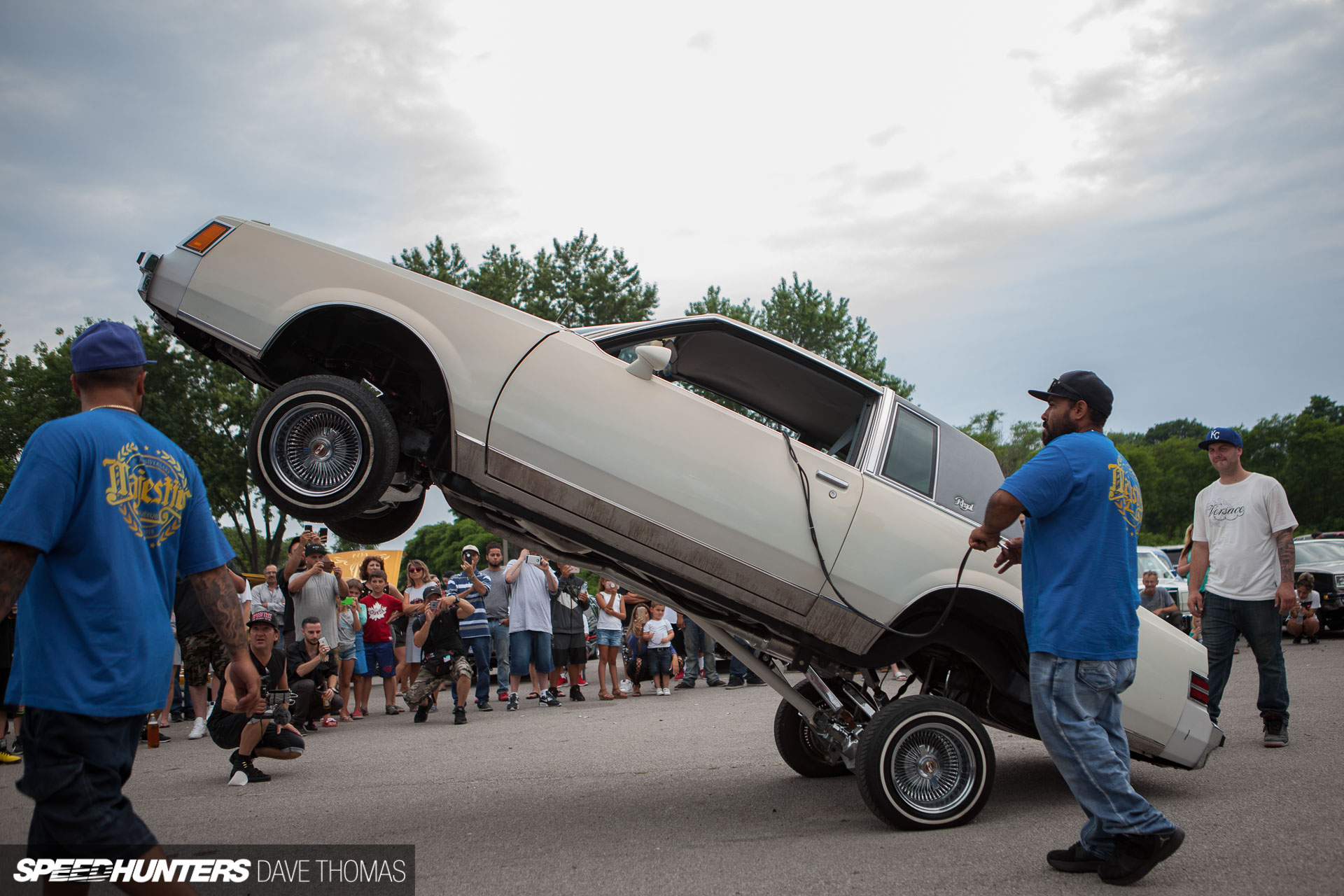
Naturally, as rumor spread that someone had got their wheels off the ground in their driveway, they were asked to prove it in the parking lot. Just like that competition was born and soon everyone was watching.
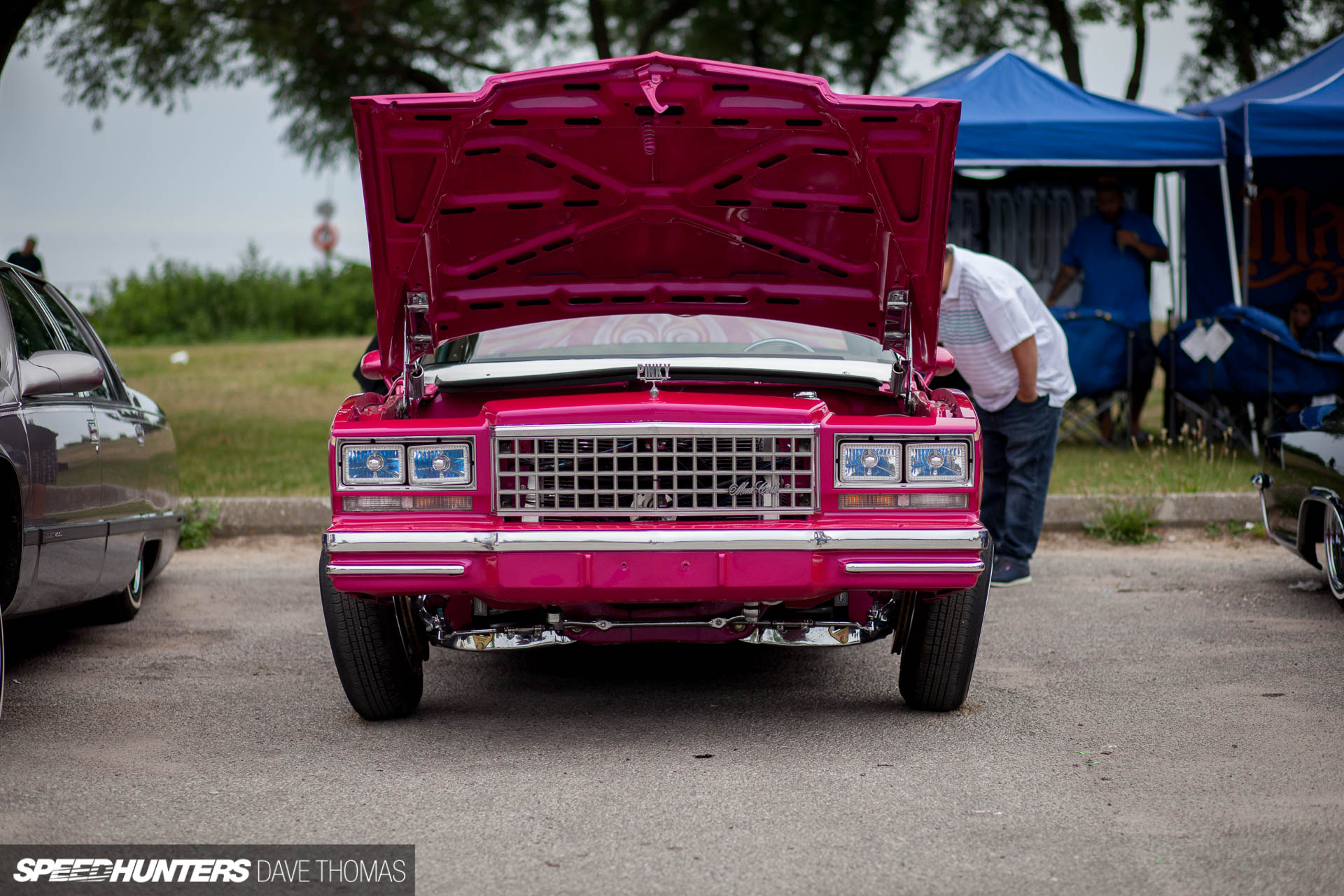
Junk In the Trunk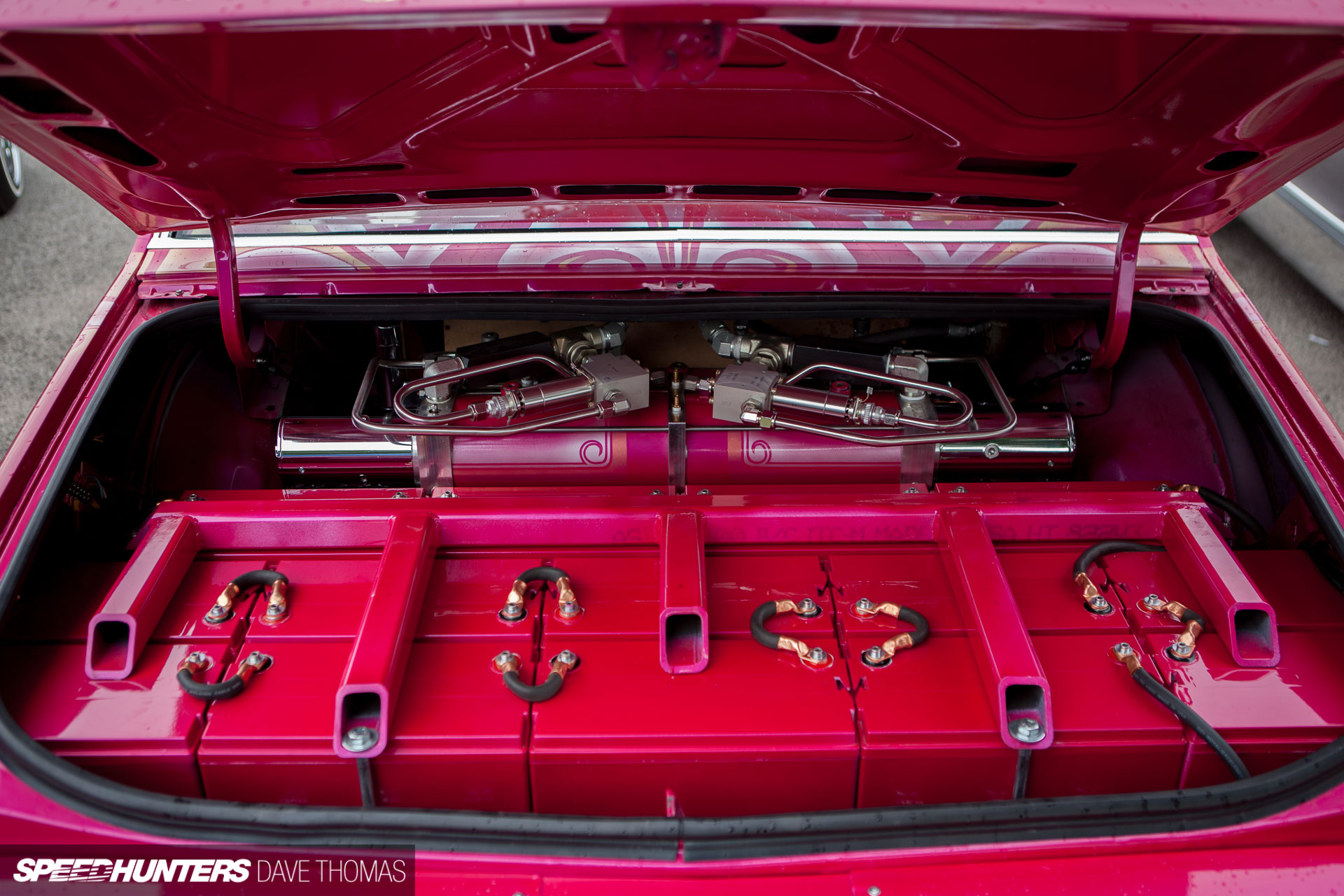
When I saw my first lowrider in person I was immediately interested in learning how it all worked. I imagine a lot of you might be a little curious as well, so while at the recent Toronto Majestics BBQ I took some photos of the interesting bits to share with the class.
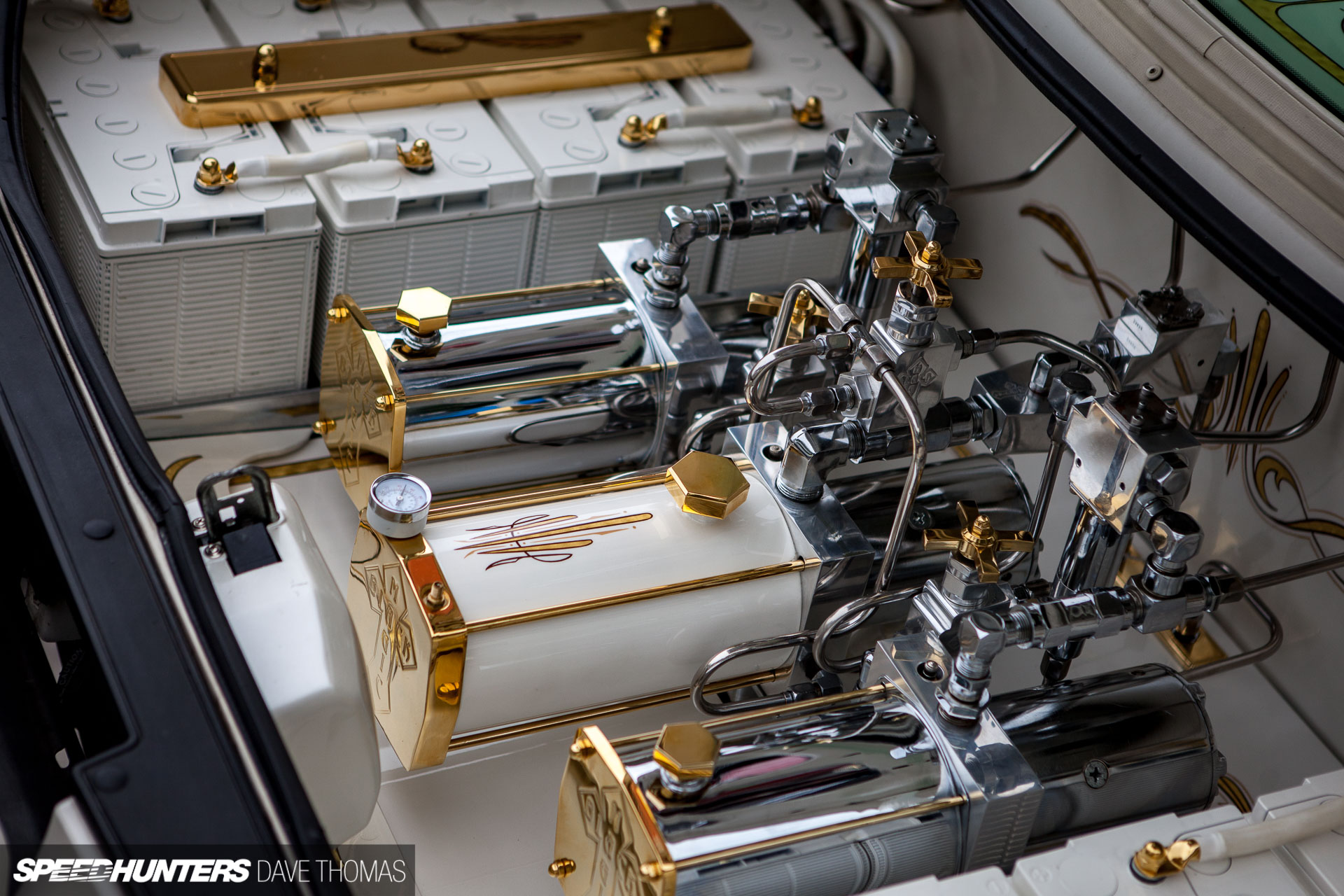
If you’re familiar with air ride it’s not all that dissimilar. Storage and management takes place in the rear and a switch box up front controls what happens.
Hydraulic suspension operates on the principal that hydraulic fluid can’t be compressed, it can just be moved. In the simplest explanation, lowriders move up and down thanks to fluid moving about the vehicle.
Typically, aside from fluid versus air, the largest difference between air and hydraulics is ride quality and speed. While reliability used to be a problem, like air hydraulics have advanced to the point that with a little preventive maintenance they can operate trouble-free for years.

A basic front, back and side-to-side lowrider setup usually consists of two pumps and four batteries. If all you’re after is raising and lowering a vehicle at a reasonable rate of speed, a small setup will do.
If you want something that can lift the car off the ground then you’re going to have to level up.

The batteries are connected to solenoids and a switch box. When a switch is hit it completes a circuit that activates a motor attached to the hydraulic pump, and this in turn sends fluid to one of the four hydraulic cylinders at each corner of the car.
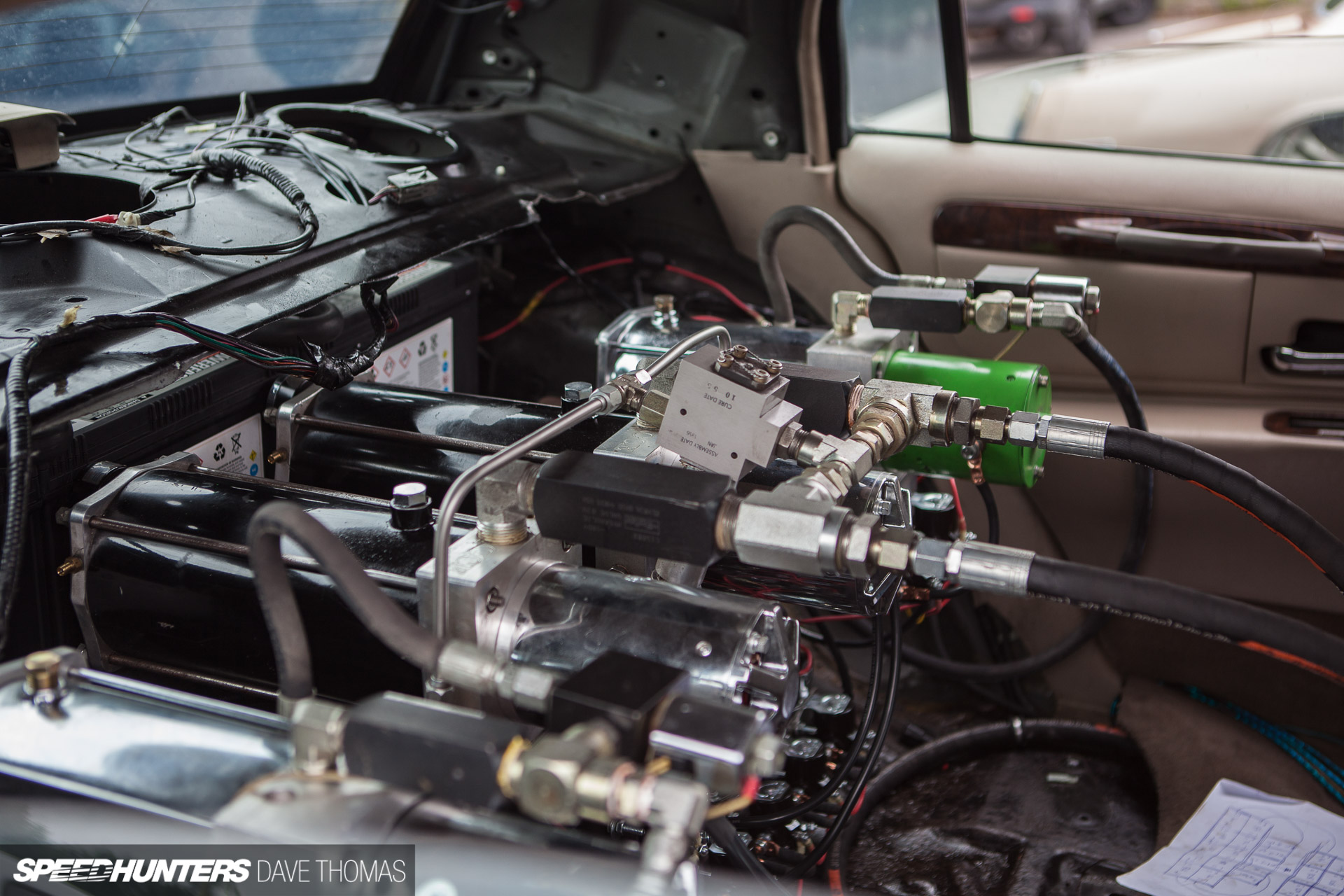
As I mentioned before, hydraulic fluid doesn’t compress so up the car goes. When the switch is thrown the opposite way fluid is drawn from the cylinder through a ‘dump’ that lowers the car back down.


Up front the control arms are typically notched to allow the for adjustments in camber throughout the suspensions travel. In the rear a ball and socket set up called a ‘powerball’ is used to handle suspension geometry changes.
Limiting straps (or chains) are installed front and rear to keep things from articulating too far.
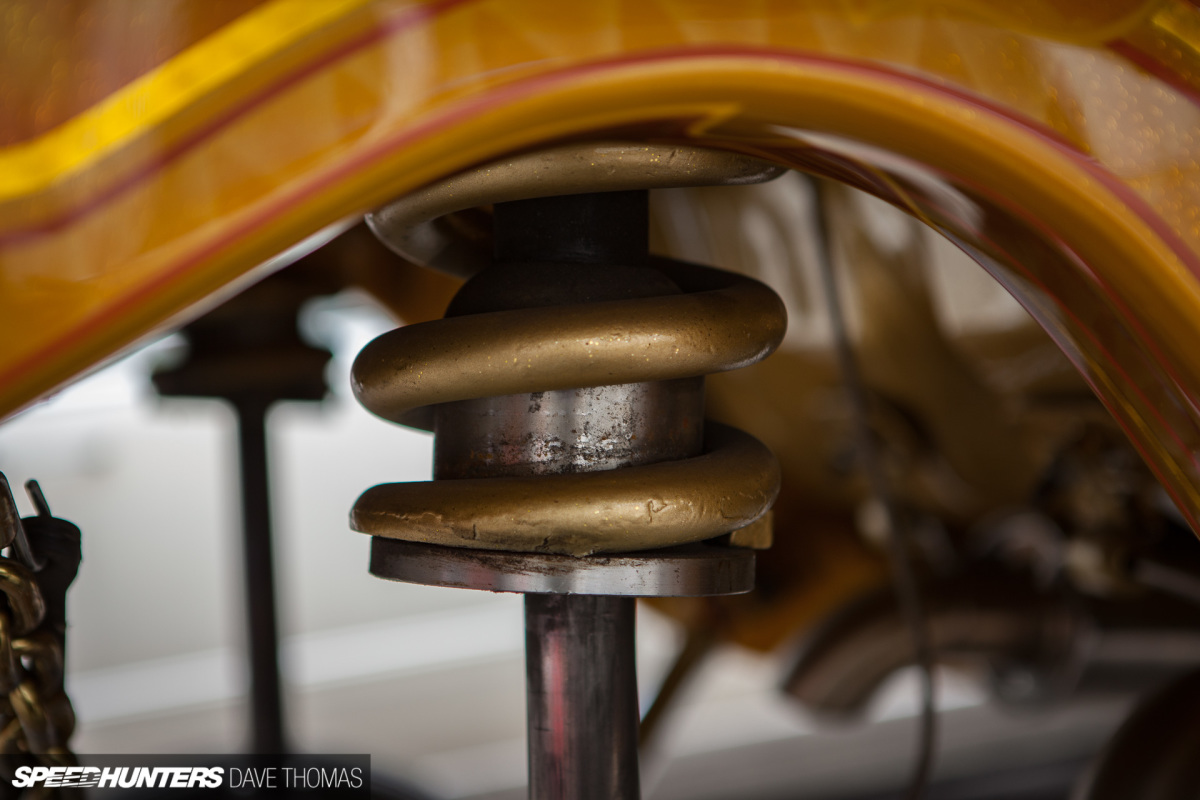

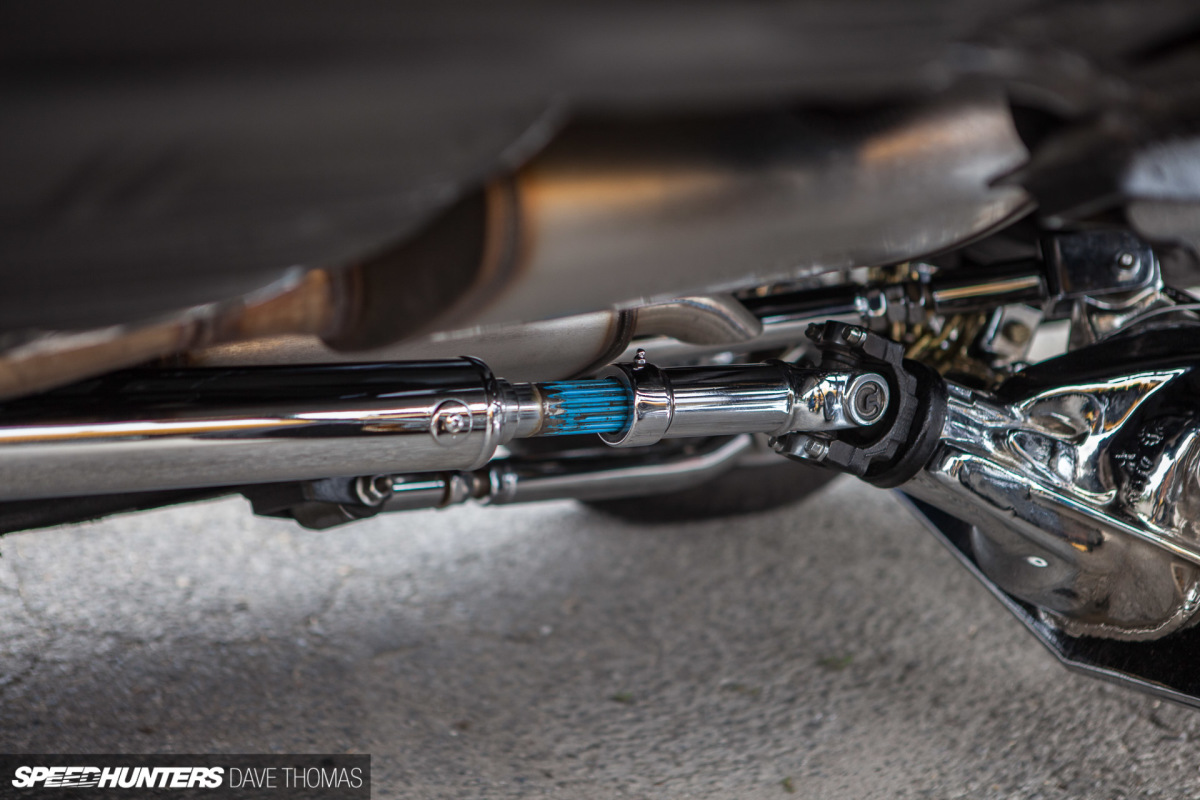
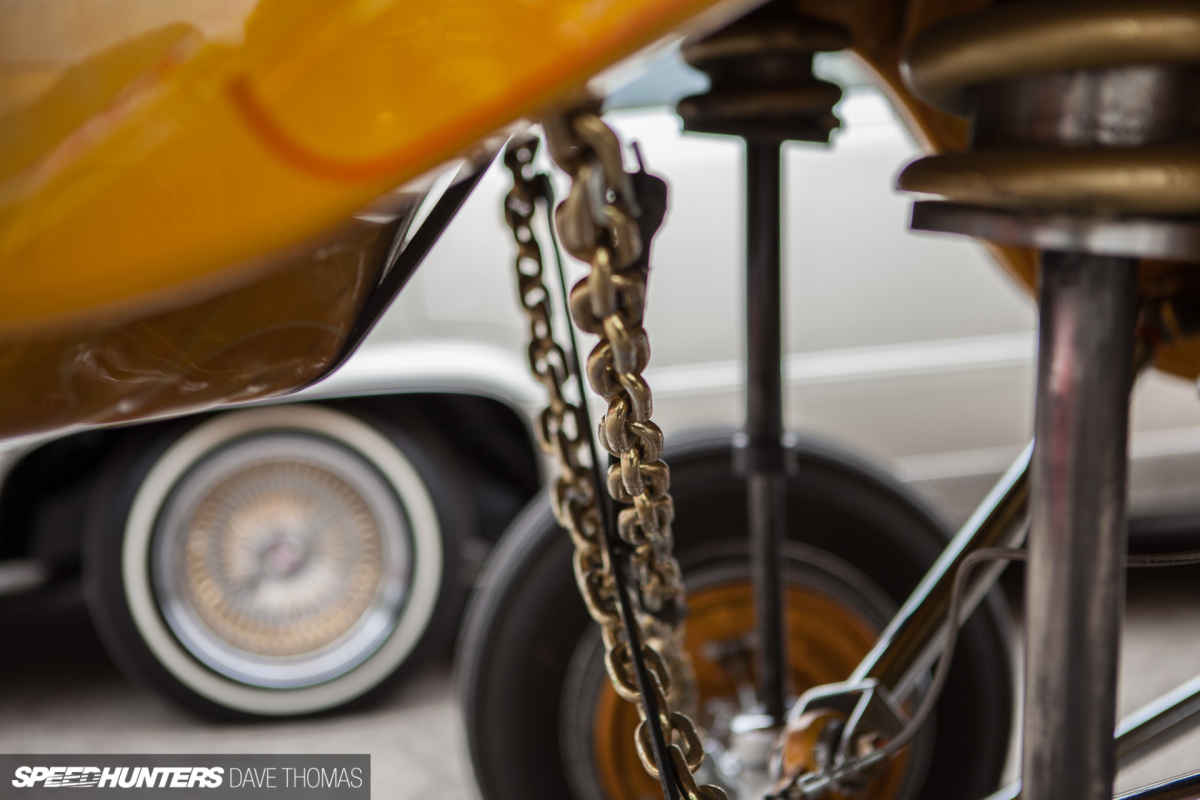
Because a spring isn’t used in the traditional sense, lowriders tend to ride a little on the rough side. Some combat this with accumulators, but most just chalk it up to the game.
But How Do The Hop?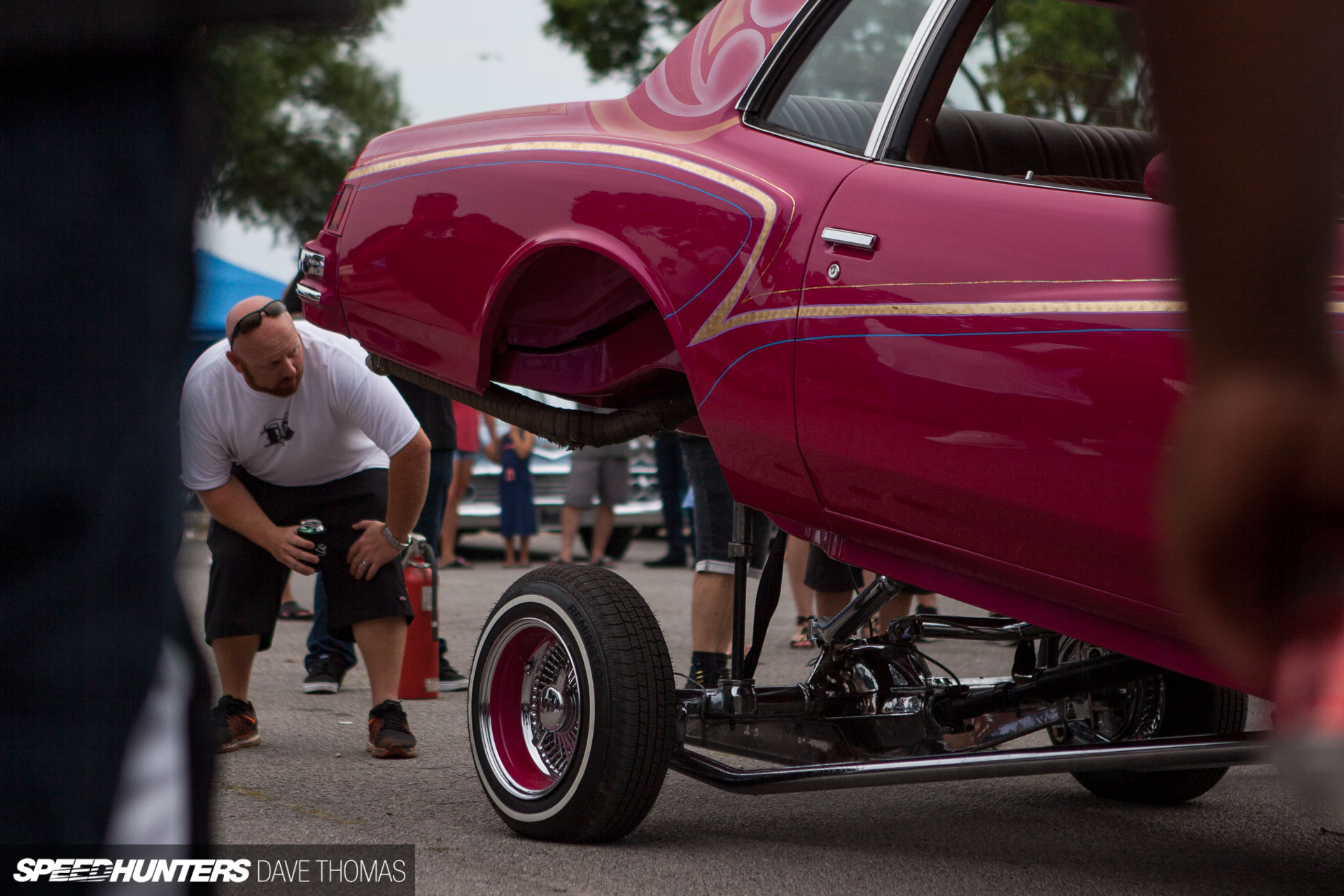
Hopping is essentially the process described above on steroids, with more pumps and more batteries thrown into the mix. Because the batteries are wired in series, each additional battery added increases the voltage by 12.
Hit a 12-volt motor with 24 volts and it will move pretty quick. Hit it with 72 volts and things are going to move really fast. The faster the motor works the quicker the fluid moves, and the faster the car reacts to the person operating the switch.

The solenoids are often simple starter solenoids, and while they can take the extra voltage they don’t exactly love it. When cars are hopped aggressively smoke is common, so usually a fire extinguisher isn’t all that far away.
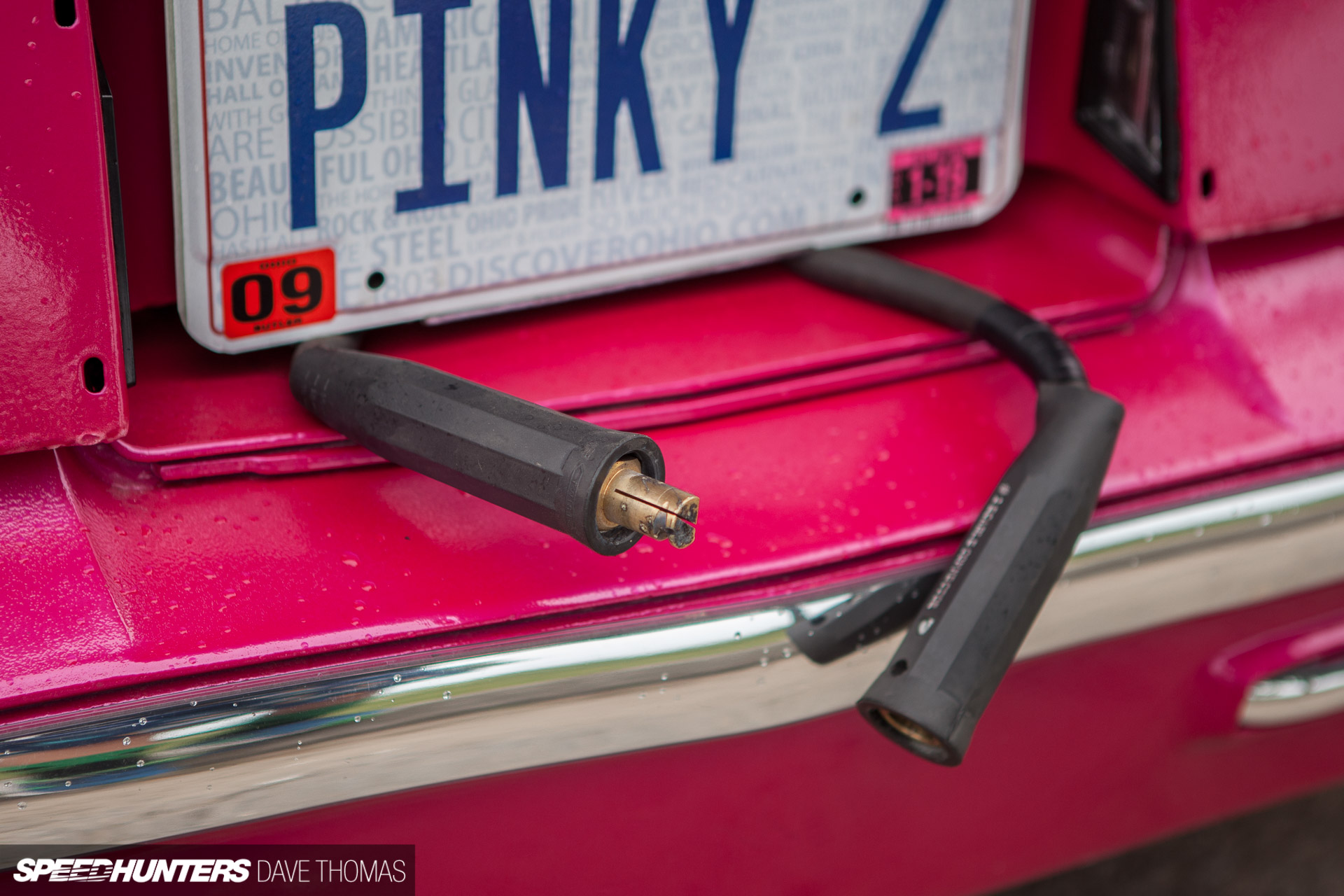
Another safety precaution all lowriders have is a quick ground disconnect. These disconnects essentially function as a panic button, killing all power in the event of an emergency.
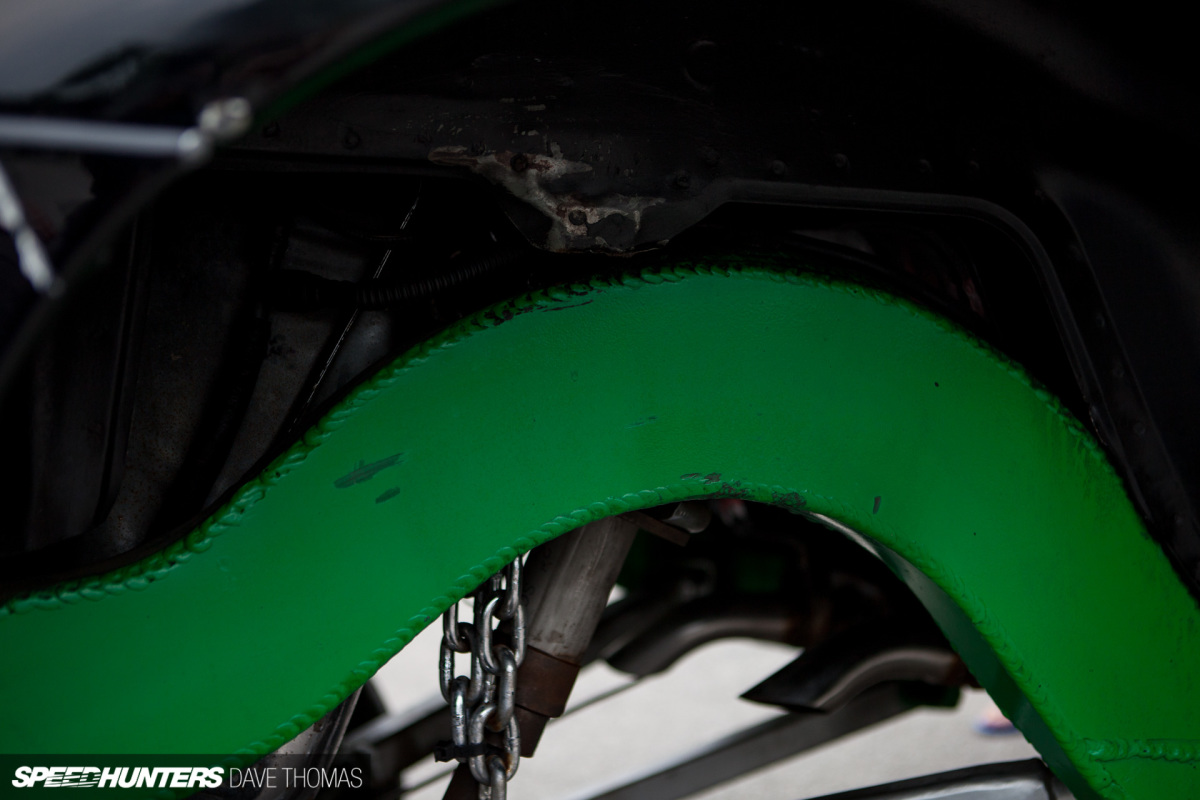

Taking a full-framed car and pointing it skyward is bound to break something, so to handle the impact these cars are beefed up significantly. Frames are wrapped, rear axles are bridged, and control arms are plated.
Additionally, the suspension geometry is often changed to better handle the load put on the front end with the car comes down. This can particularly be seen on the car below.
The extreme positive camber might look a little awkward, but it helps the car hold together when gravity kicks in. With everything reinforced the energy has to go somewhere, and usually it’s straight into the body.

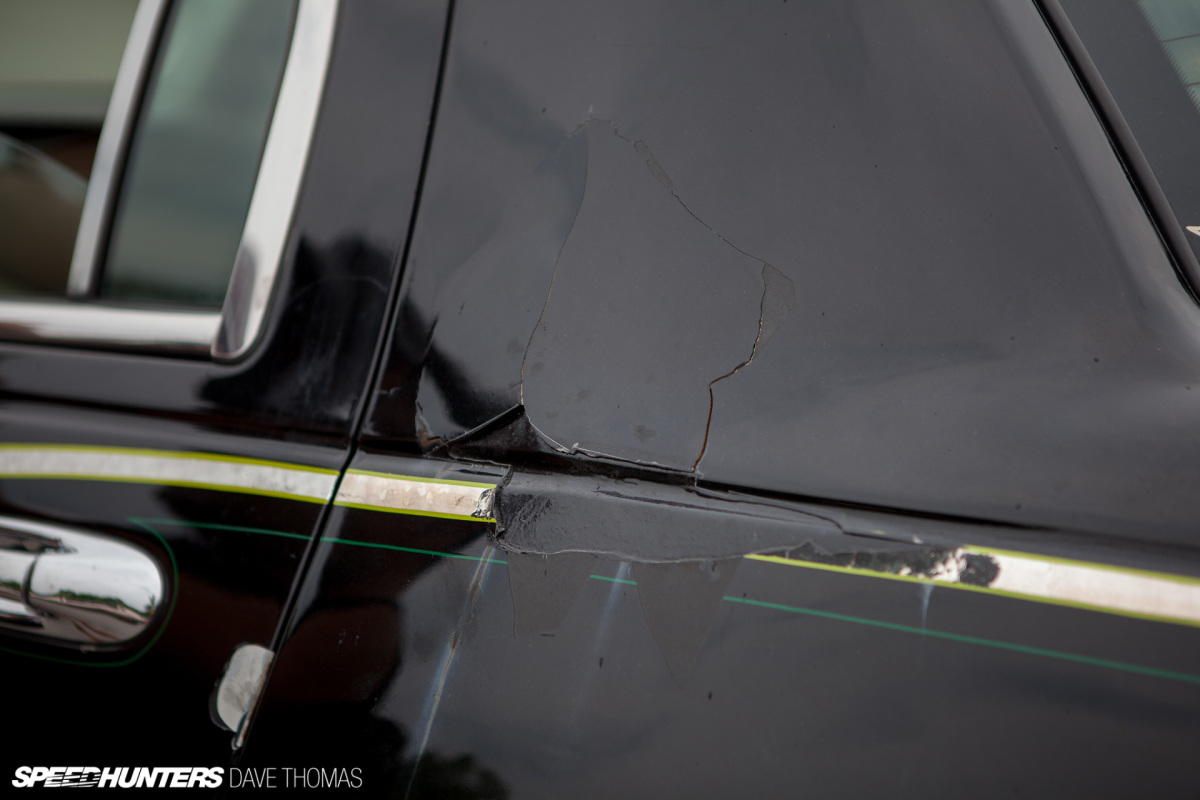
This black and green Lincoln is one of the most well known hoppers from Canada, and as you can see, it’s paid the cost to be a boss.
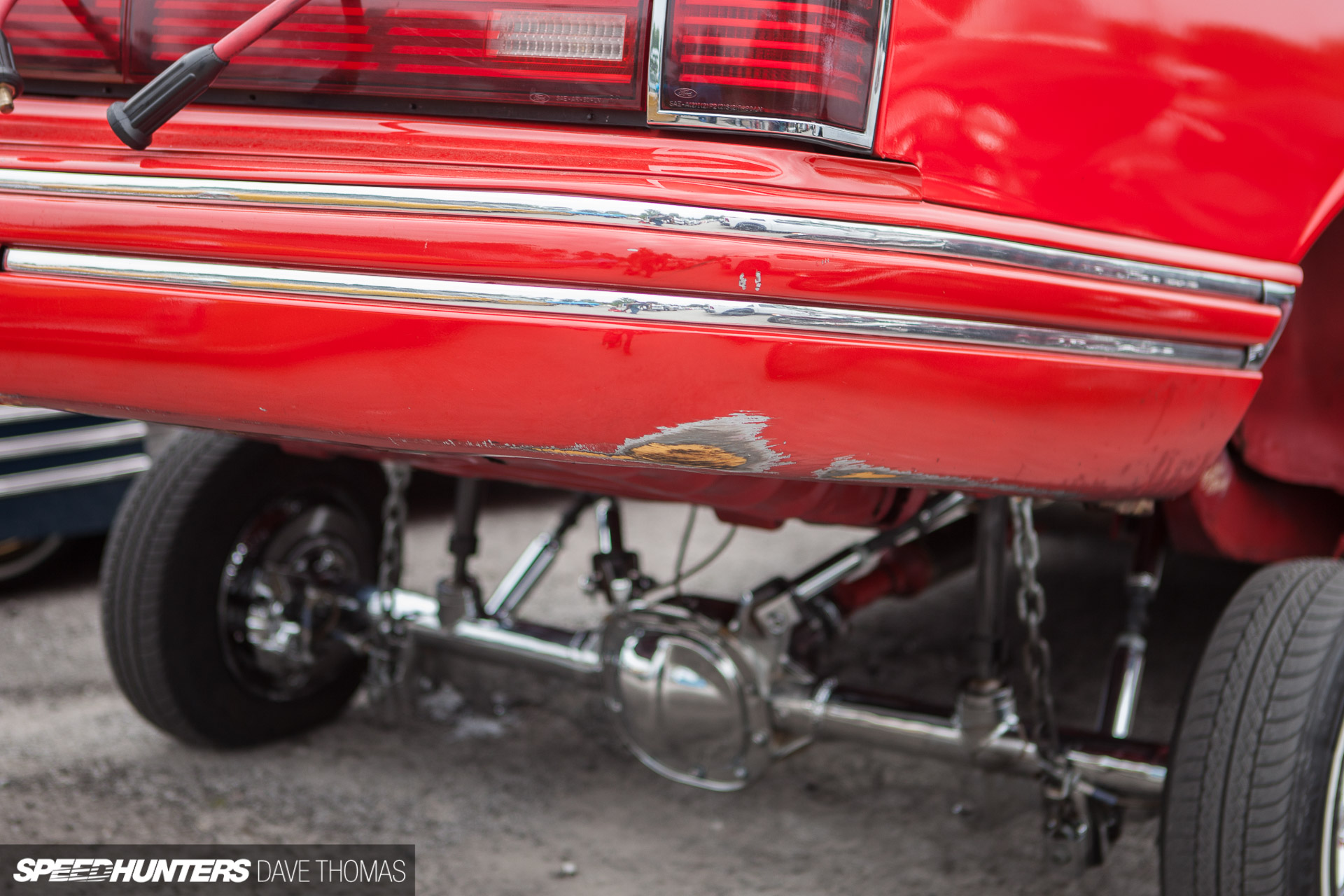
But much like wall taps in drifting, damage from use is a badge of honor in the lowrider community. It shows that the vehicle is being used for what it is built for.
However, pride is also important and usually the cars are repainted before the next season, even though the same damage is bound to happen again.
The Thrill Of Competiton
In terms of competition the rules are generally pretty simple. Sometimes there are height bars, but on the street winners are decided by crowd reaction. If you can get the crowd on your side then half the battle is won.

The owner of this Monte Carlo did a great job getting the crowd on his side after he started it up and gave the healthy LS a few stabs of the throttle. As you can tell from the opening photo he did pretty well hitting the switches too.

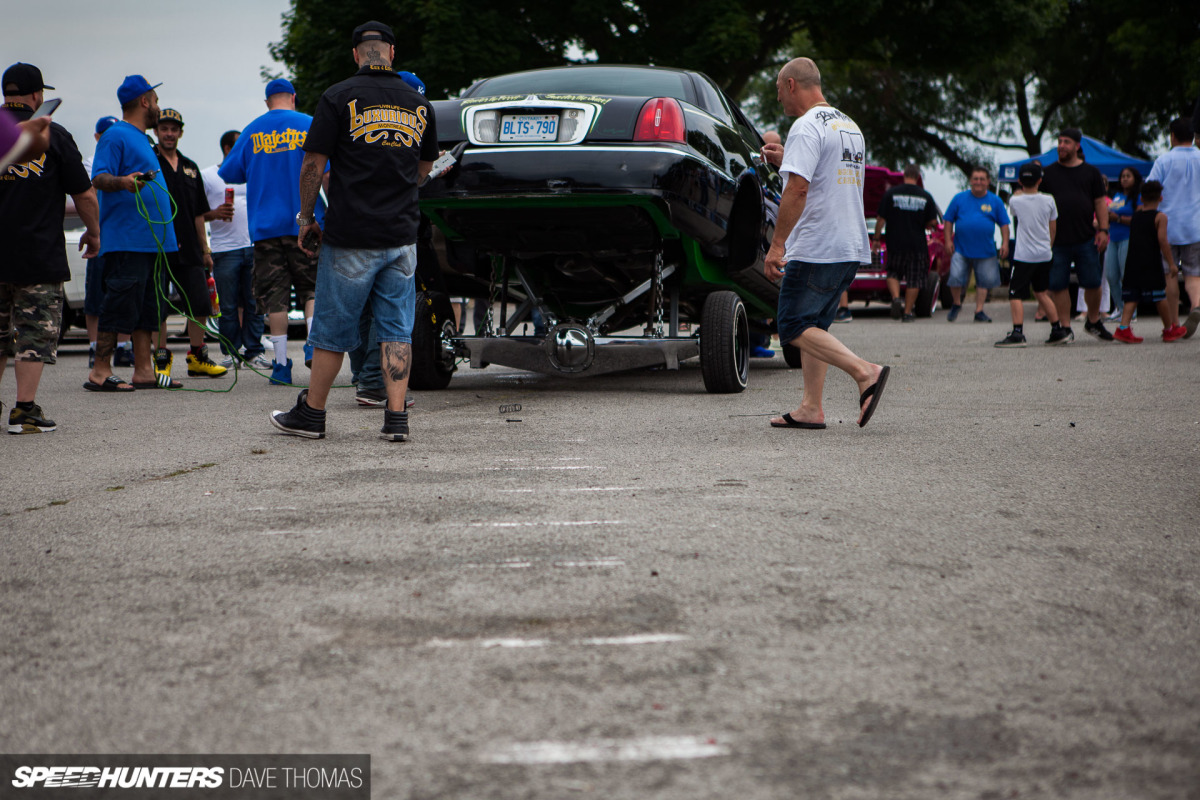
Another way to get the crowd on your side is to put your rear bumper into the ground. Again, this might seem a bit strange, but you know the reaction a wall tap gets on the drift track? Same basic idea.
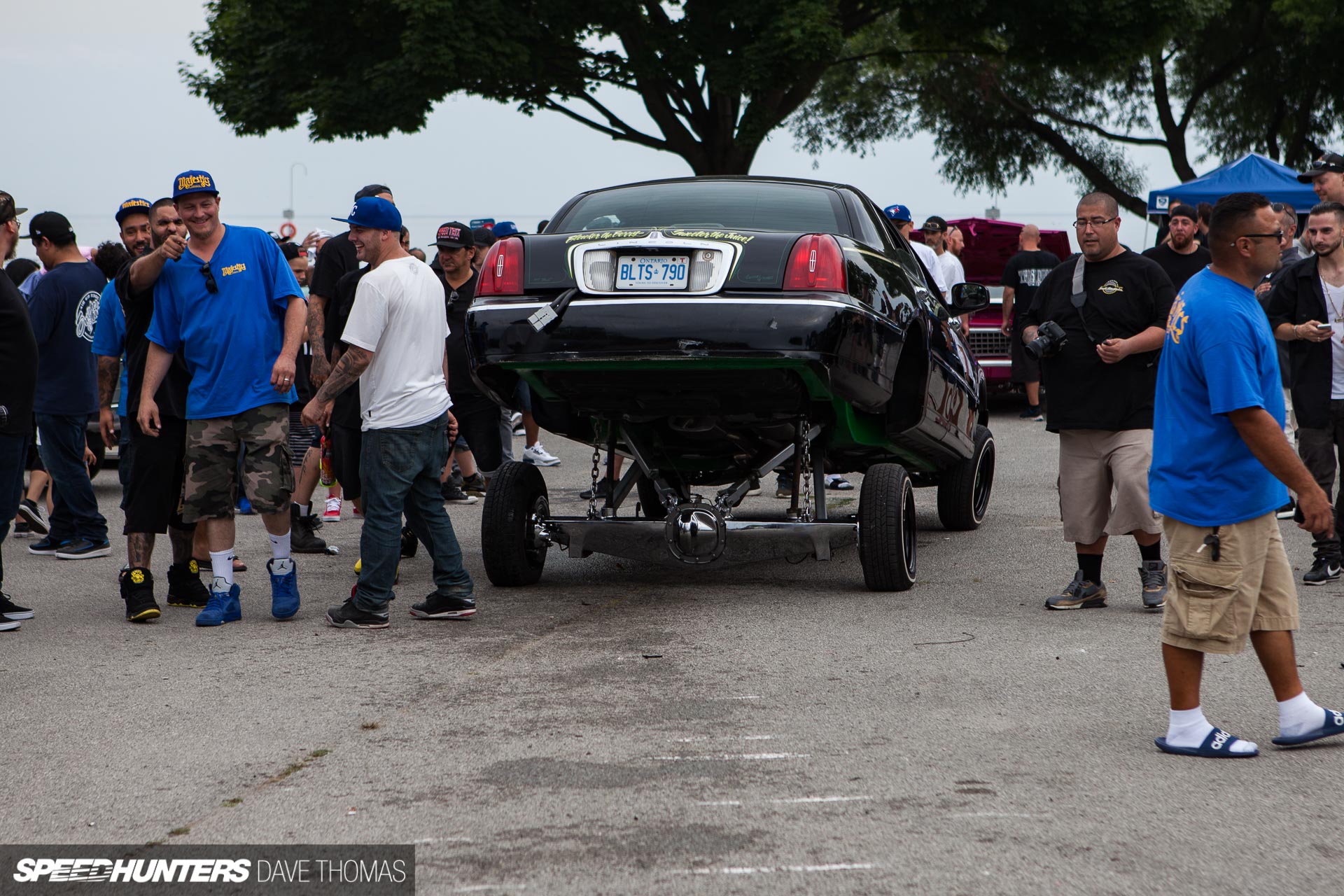
Once the carnage is over it’s time to head back to the garage fix it and do it all over again, because rumor has it that someone’s cousin round the way hopped his car so hard the rear wheels came off the ground too.
Dave Thomas
Instagram: stanceiseverythingcom