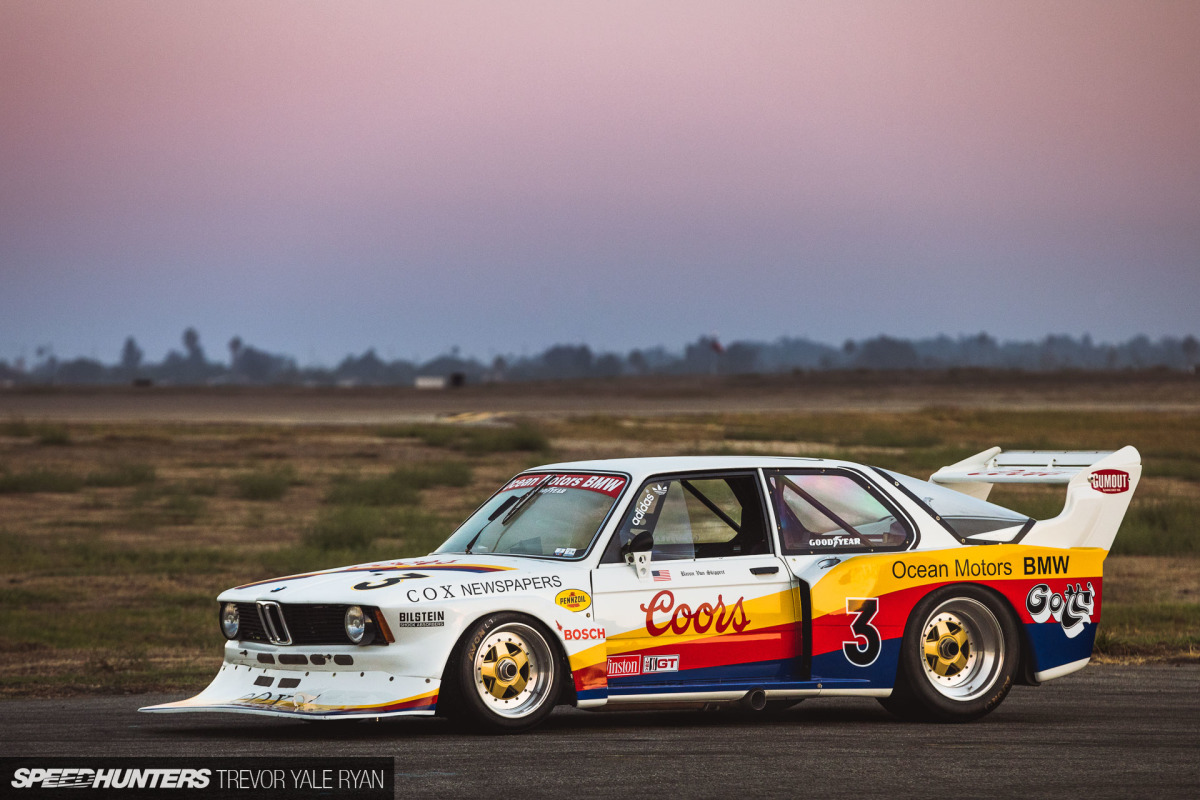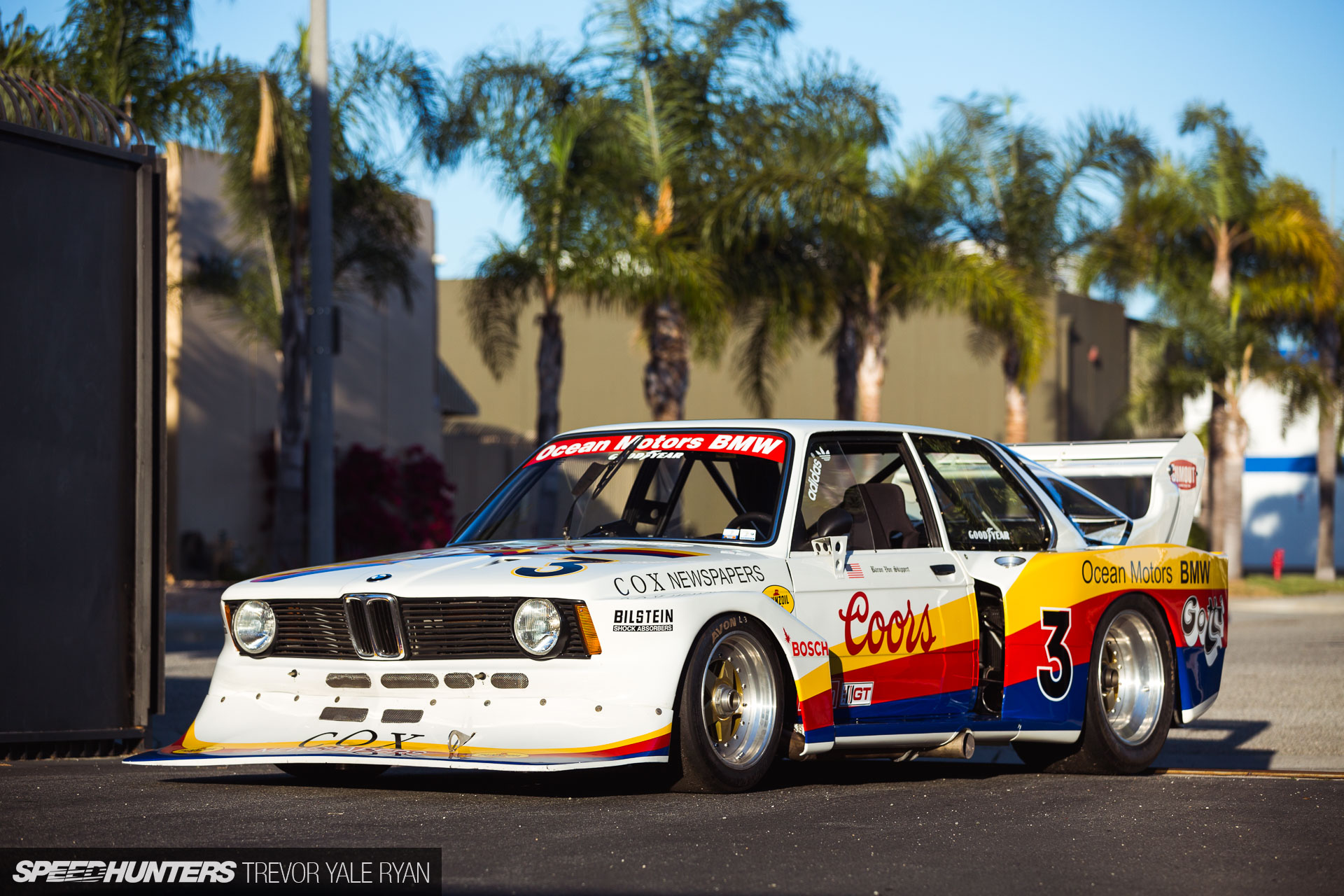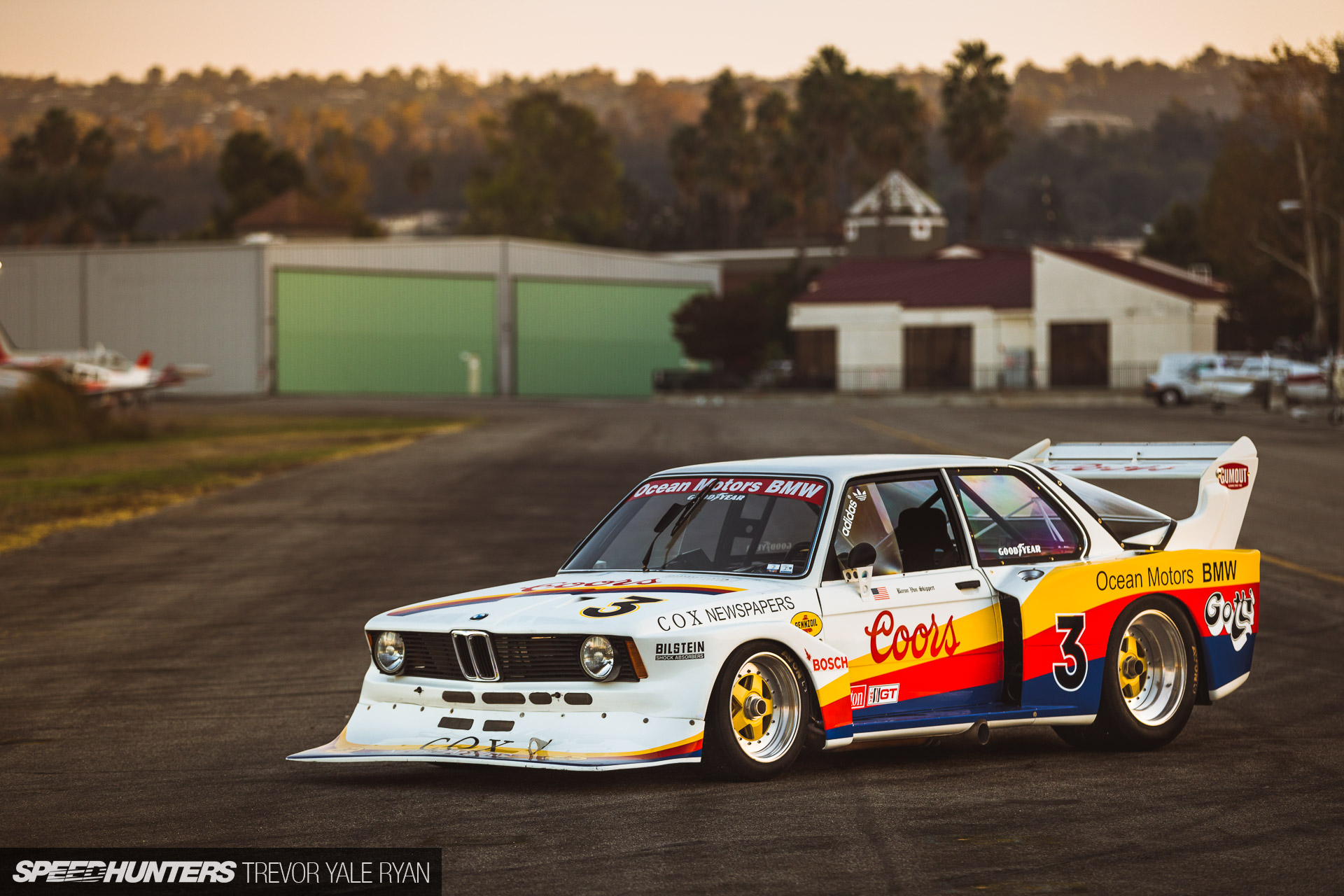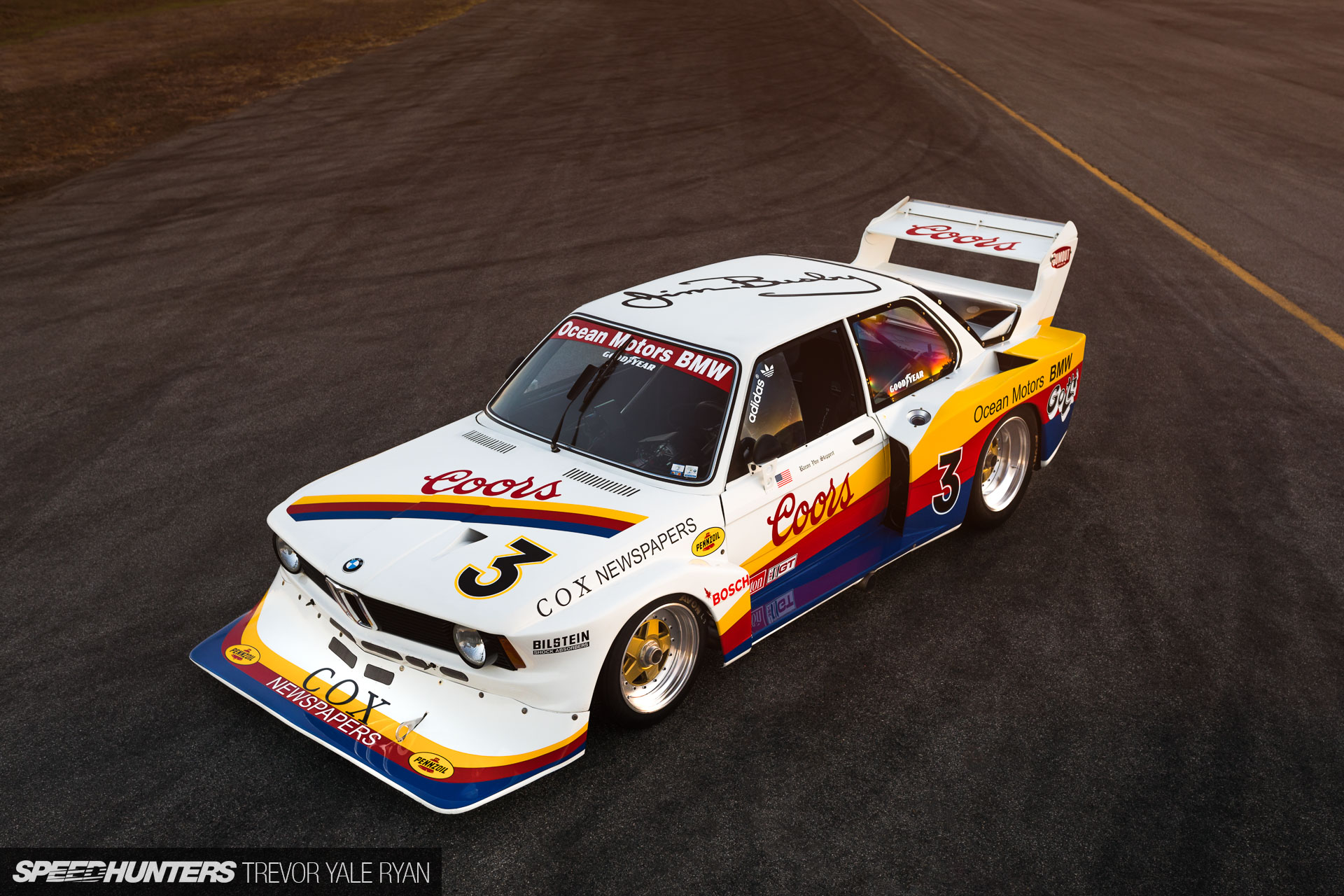
To fully understand how special Cory Muensterman’s BMW 320 Turbo is, we have to take a few steps back. First, we’ll look at the 3 Series as a whole, then how this particular E21 travelled the world. Next, we’ll delve into the details of the car and how it was actually built to be competitive, and finally we’ll learn a bit about Cory’s process restoring it. You might want to grab a cup of coffee.
Today, the BMW 3 Series is six generations strong, a compact executive sports car that year after year continues to significantly contribute to the shaping of the BMW brand. Beyond sales figures, the M versions of this model really matter to brand loyalists and car enthusiasts alike; the perception of BMW’s sports cars trickle through all models. With a seventh generation — the G20 — recently unveiled at the Paris Motor Show, the 3 Series is a car that remains vastly important to BMW.
But, really, it all started in 1975 when Paul Bracq penned the iconic lines that make an E21 an E21. This was BMW’s first foray into the 3 Series, a car that came along to replace the decade-old design of the 2002. With over a million cars built in the eight years this generation lasted, it’s safe to say the E21 was a commercial success, properly setting up the lineage of the 3 Series.
Where the original 3 Series really stands out, though, is in motorsport. Specifically, Group 5.


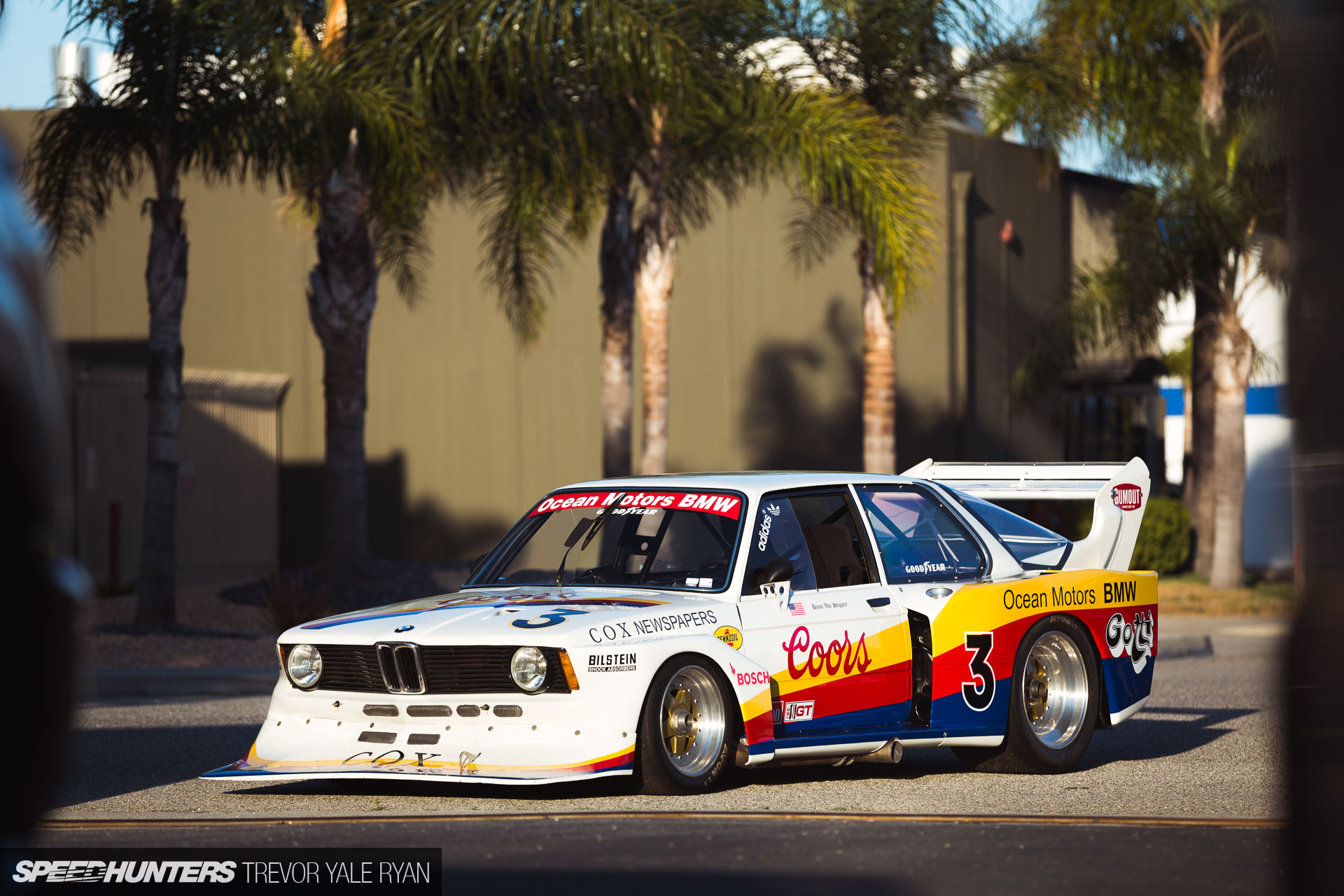
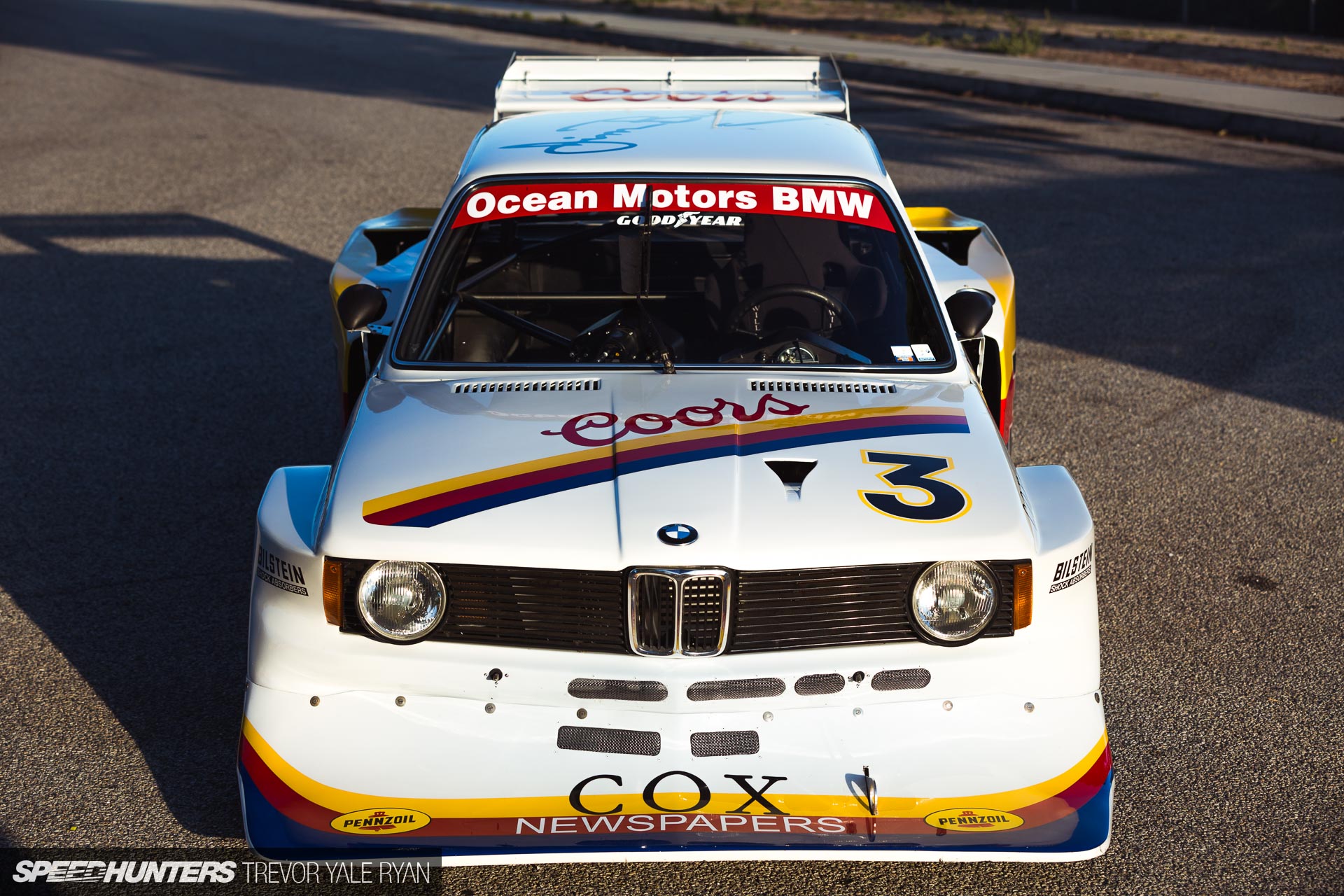
It’s here, in FIA’s fourth generation Group 5 — deemed ‘Special Production Car’ — that the E21 seared itself into our memories as the BMW 320 Turbo. Four small and massively turbocharged cylinders shot flames and powered the ‘flying brick’ to seven victories between 1977 and 1978, with various chassis racing on into the ’80s.
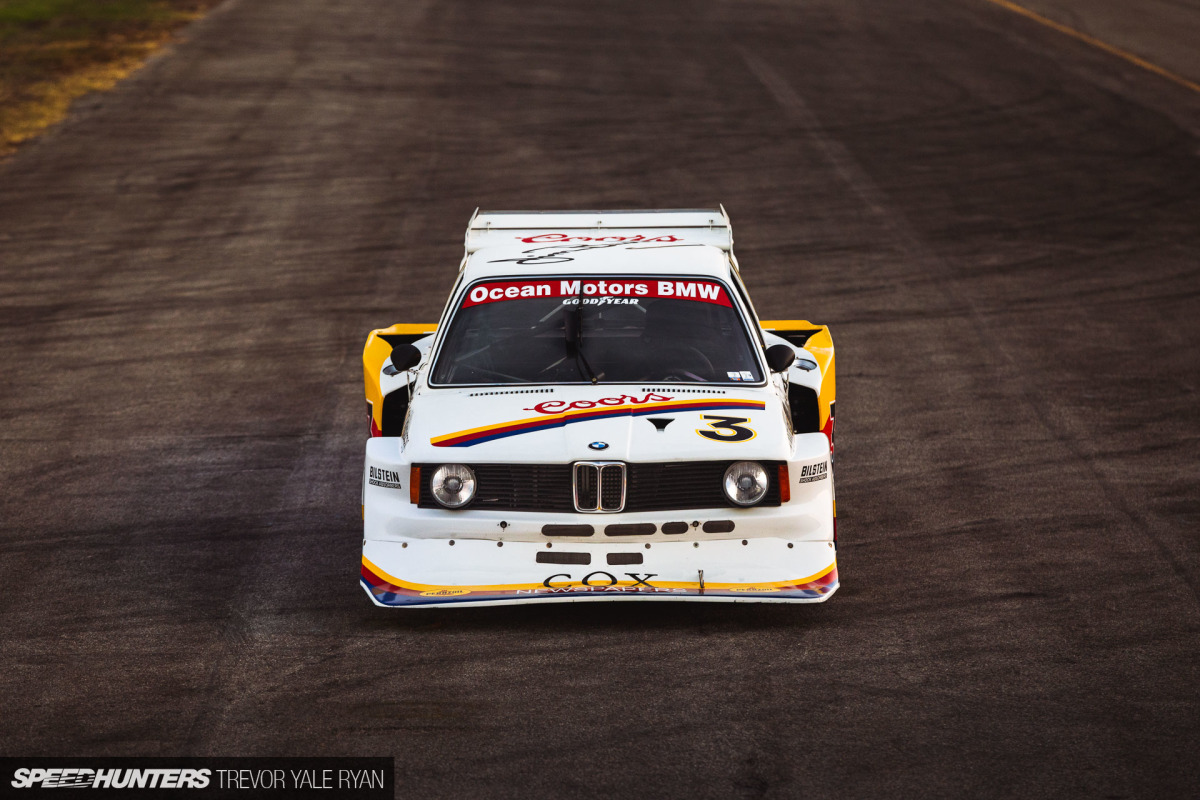
This was no small feat for a brand new platform, and one that BMW converted to race-spec much in the way that you or I might build a car today. Built in just 12 weeks, the engineering team worked without specific technical drawings, instead modifying the car directly.
Although no team was able to secure a championship against the mighty Porsche 935s they faced, the 320 platform saw a number of additional victories and podiums as the seasons went on. Eventually, with Group C changing the racing landscape, the 320s found new homes around the world and continued to race in other series such as IMSA GTX.
The Busby Turbo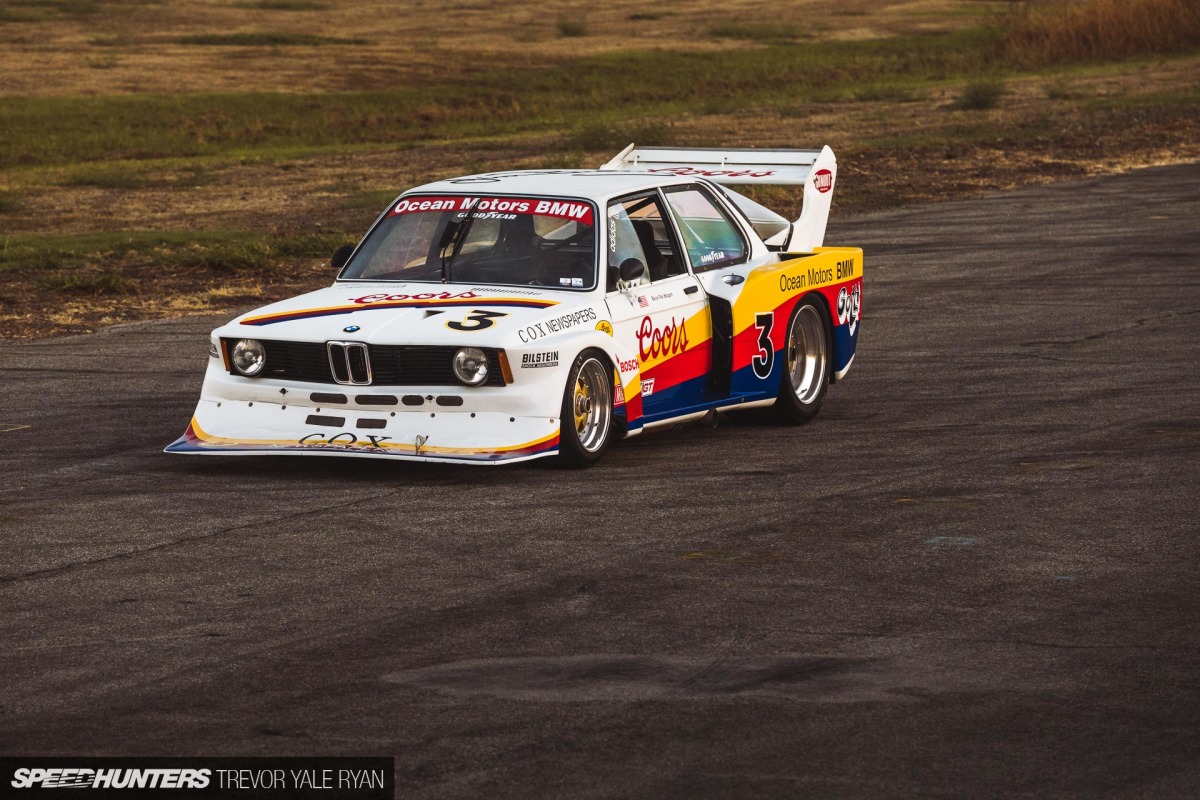
The BMW 320 Turbo I found myself shooting some months back was built in 1978 as one of only two lightweight 320s ever constructed, and the last 320 Turbo built by the factory for Group 5: chassis E21-R4-05. Destined to be driven by Hans Stuck and Ronnie Peterson, the car was only used at two events (Nürburgring and Silverstone) before Peterson tragically died piloting a Lotus 78 Formula 1 Car at the Italian Grand Prix.
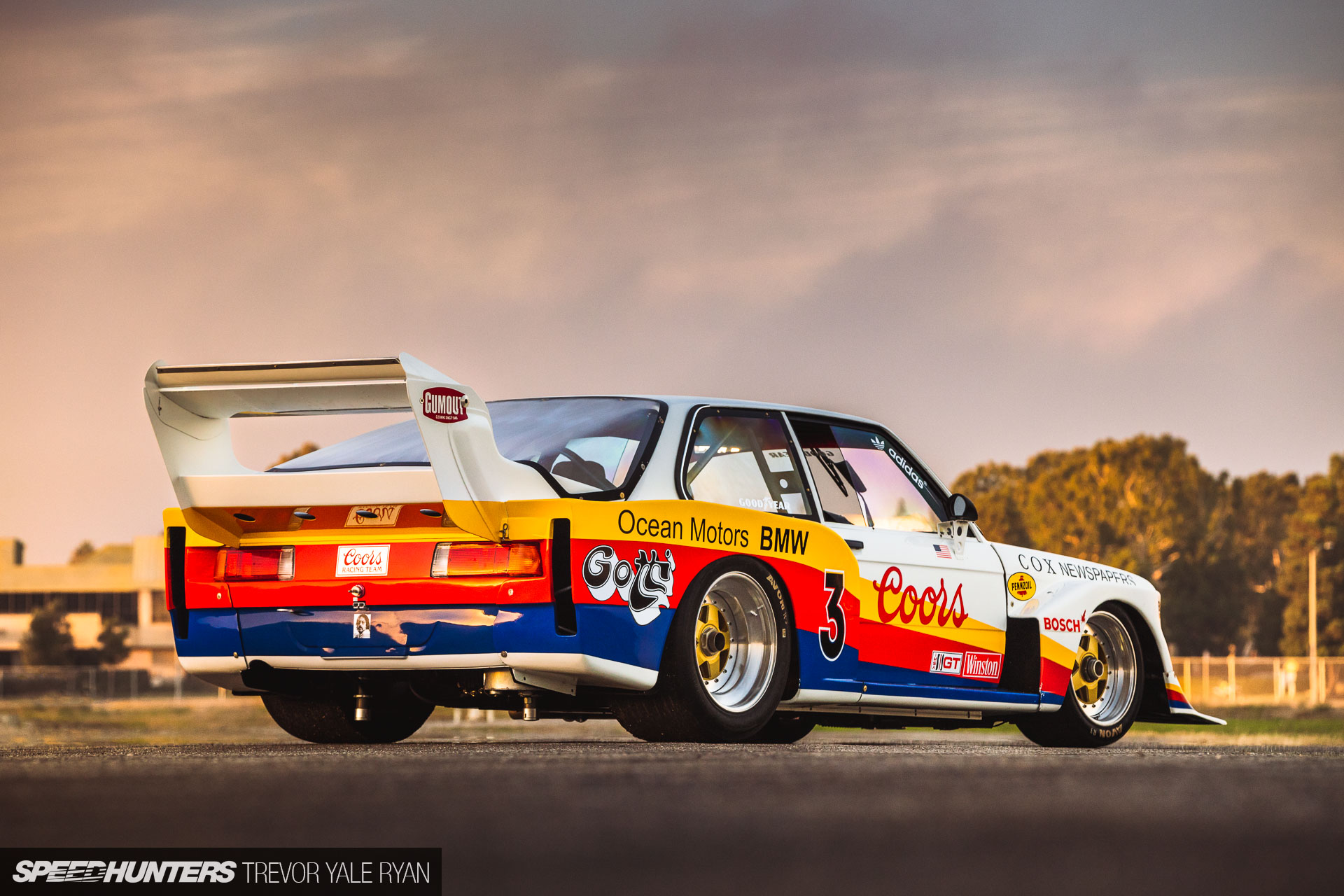
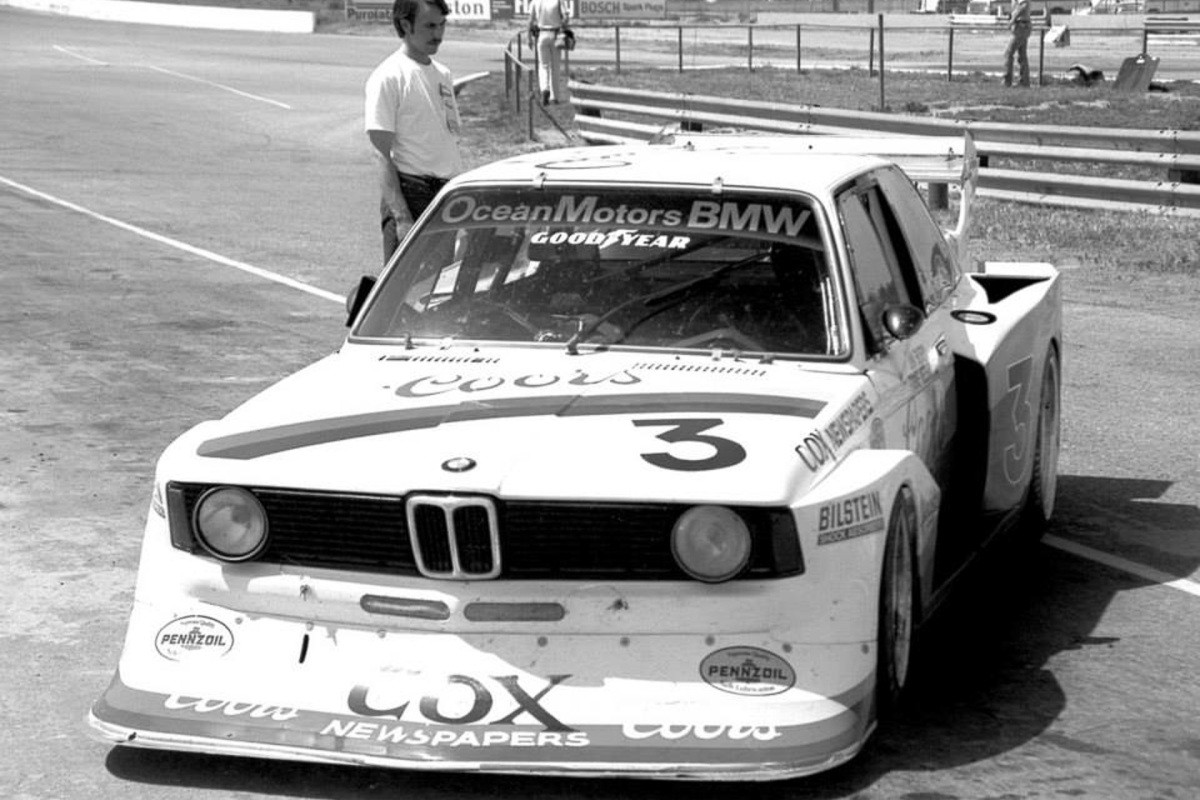
Following Peterson’s death, #05 was shipped to California to Jim Busby Racing for the 1979 IMSA GTX season. Since BMW North America was already sponsoring the McLaren cars in this series, Jim Busby Racing was supported by BMW Motorsport in Munich.

As the GTX class rules allowed it, the car was converted to tube-frame in order to further lighten and stiffen it up. Other tricks were applied, of course, and I’ll get into those details shortly. The setup proved amazingly quick through the twisties but, unfortunately, the extremely powerful M12 power plant proved unreliable. Coupled with the lack of straight-line speed against the twin-turbo boosted six-cylinder engines found in the back of the Porsches, the 320 returned lackluster results over the season.

Eventually, the now extensively modified car was sold to Frank Gardner in Australia. Frank mentioned in a phone call with Cory (the current owner) that the Busby 320 Turbo was the only car he ever acquired that had been built by another team that he didn’t make any changes to.
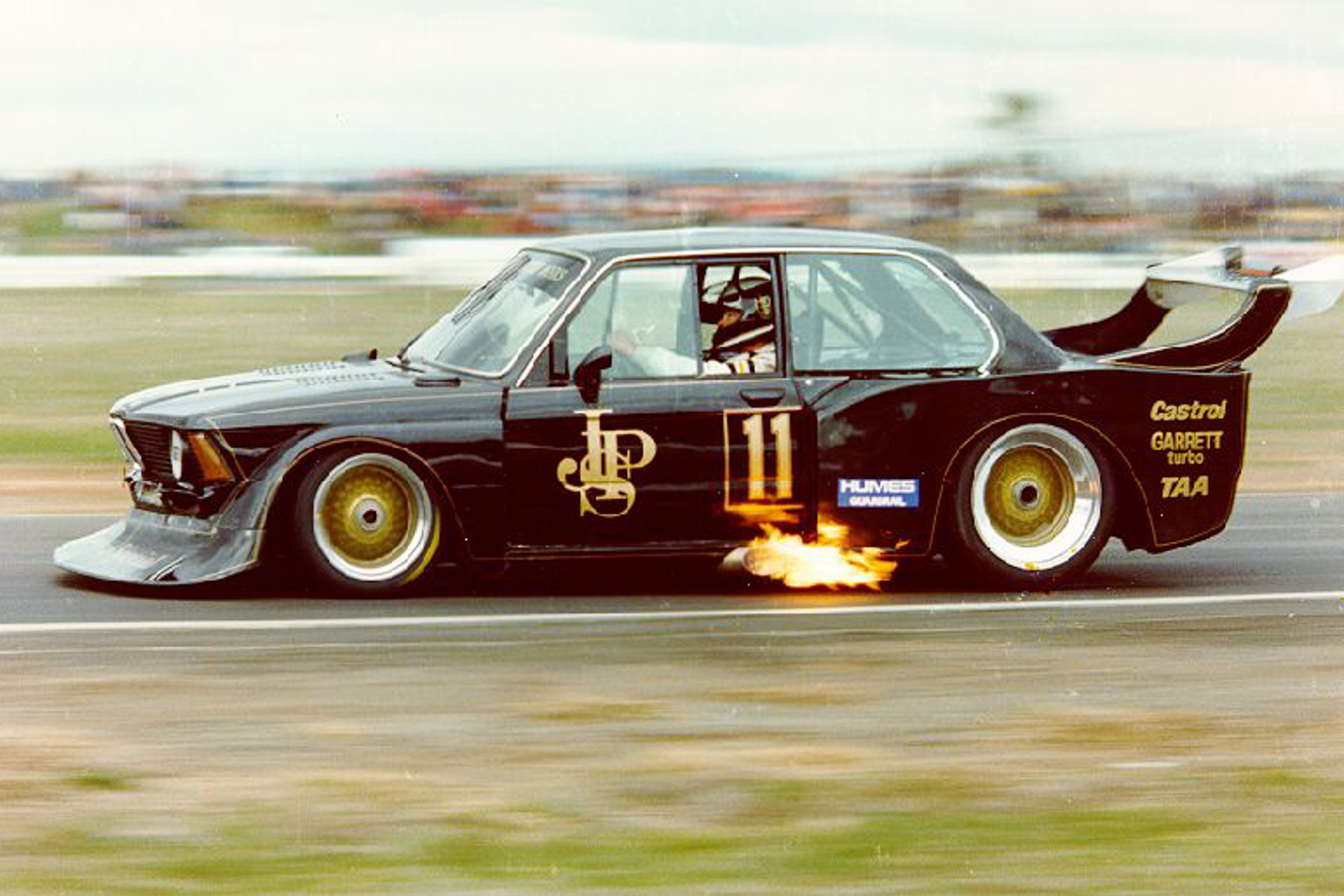
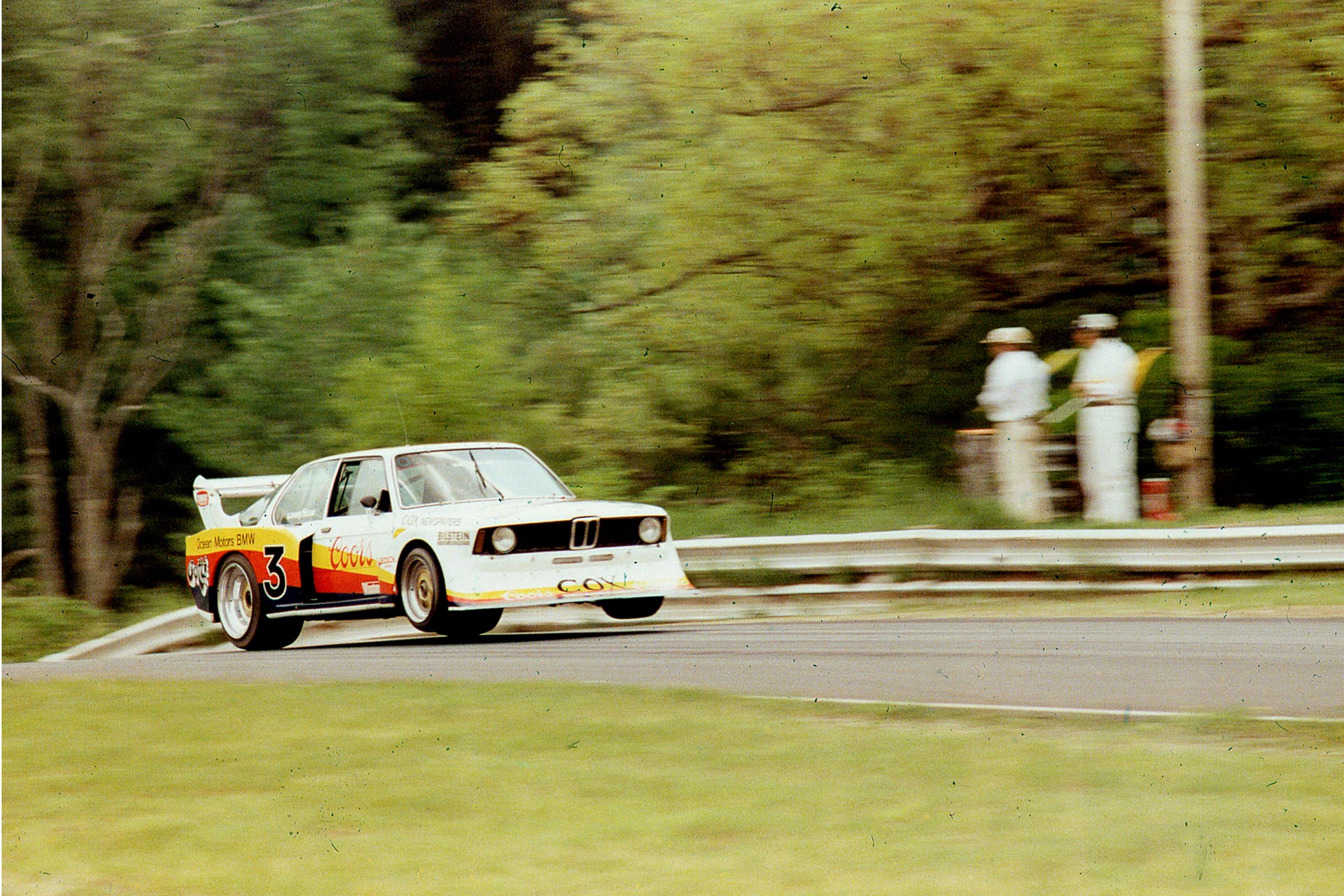
The BMW was successful in a variety of series (with a variety of owners) on into the late ‘80s — all of the vintage photos in this article are shots of this exact chassis — before it was purchased by an enthusiast in the US who began to restore the car around 1990.
After eight years of tinkering around with the 320, the American owner was ready to move on. In fact, he was practically ready to throw the whole car out and sell the drivetrain when Cory decided to step in. At this point it was essentially just box after box of mixed up parts with loads of significantly important pieces missing.


Still, Cory traded an MG Metro 6R4 for the BMW and decided to see the restoration through to completion. However, along the way he realized the only way he would really get everything done right was if he could reunite the car with Jim Busby Racing. So, he did.


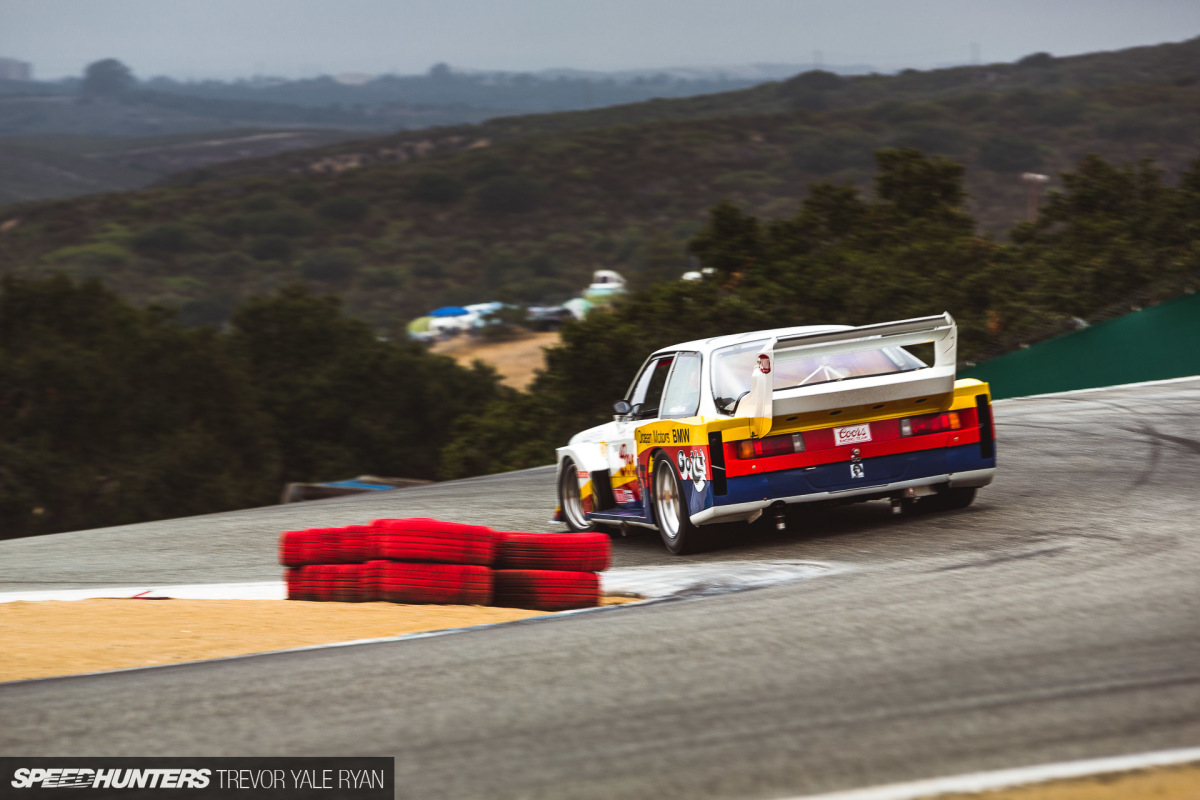
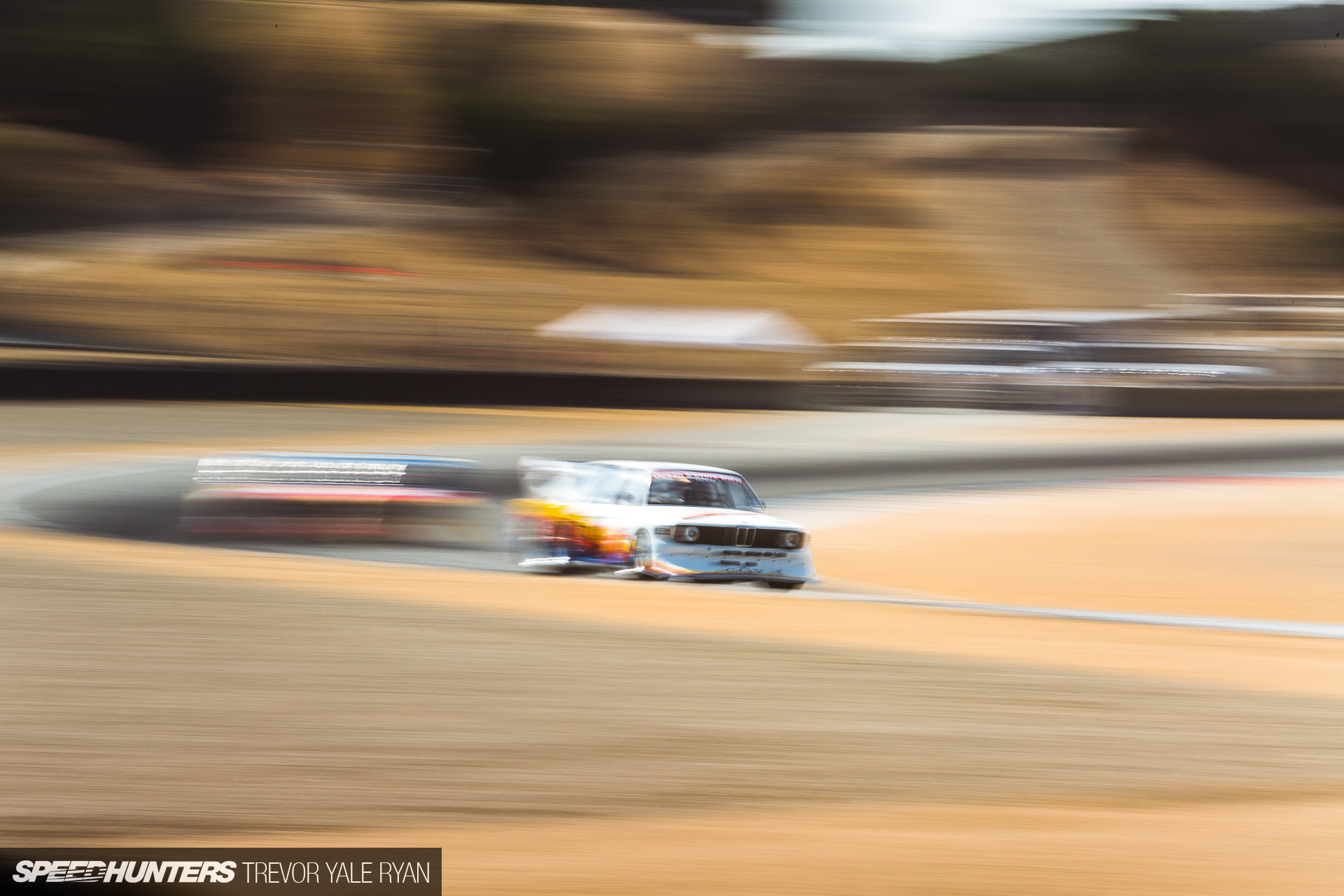
The restoration was finished in time for BMW’s 100-year anniversary, and raced at the 2016 Rolex Monterey Motorsports Reunion where BMW was the featured marque.
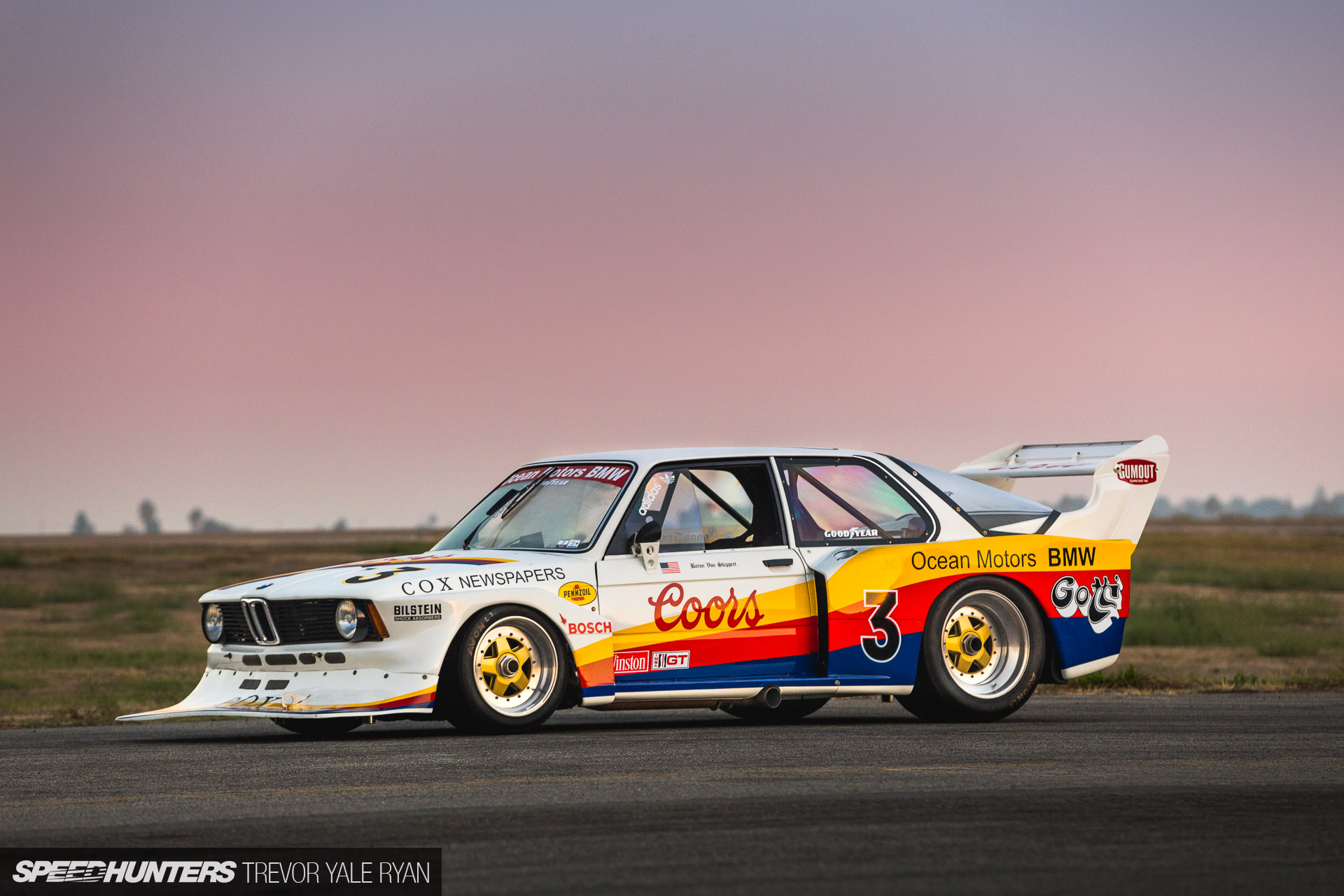
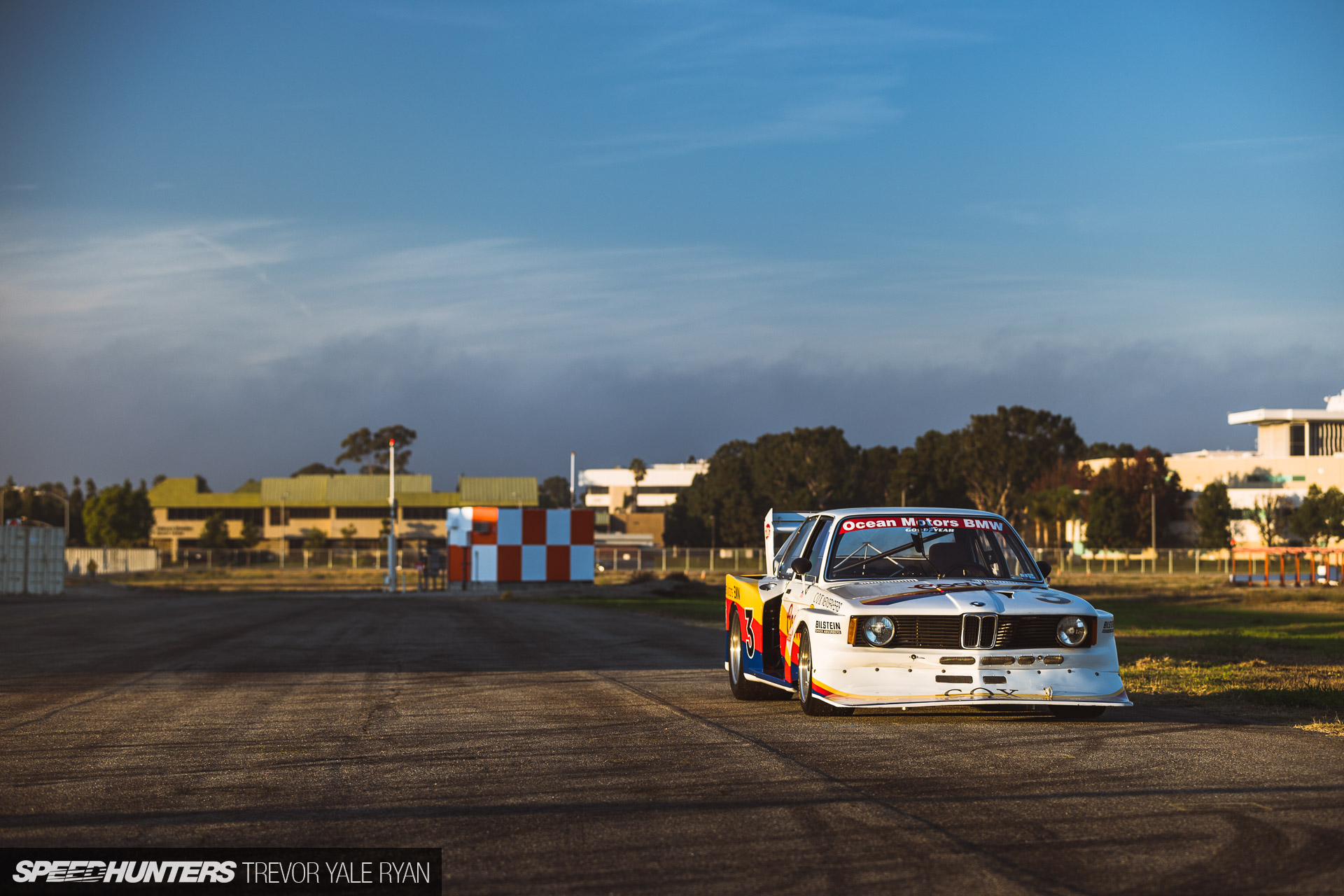
Today, E21-R4-05 sits nearly exactly as she did 30 years ago when Jim Busby and his team first got their hands on the car and set it up for IMSA GTX.
This car is a beautiful time capsule, a living memory of vintage racing, where stunning form lived alongside incredible function.
The DetailsSo, how did Jim Busby Racing modify the 320 Turbo to compete with the monster 935s in IMSA GTX?


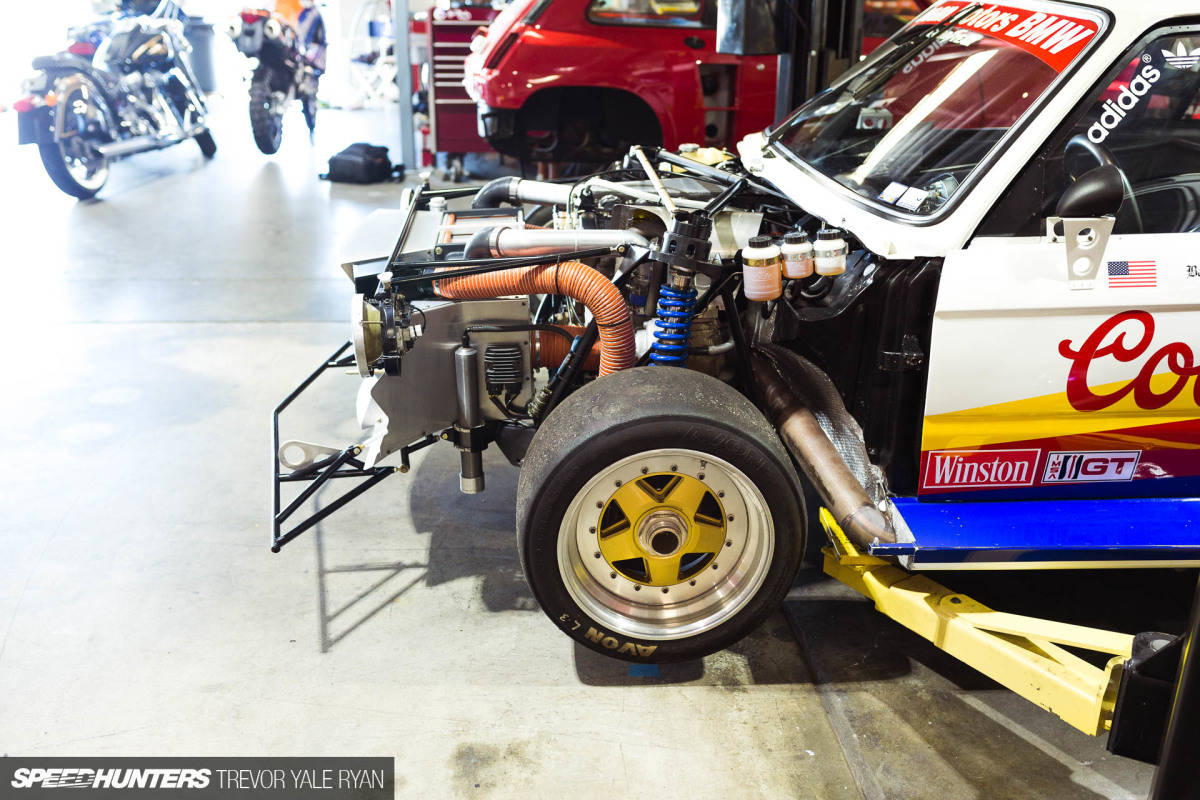
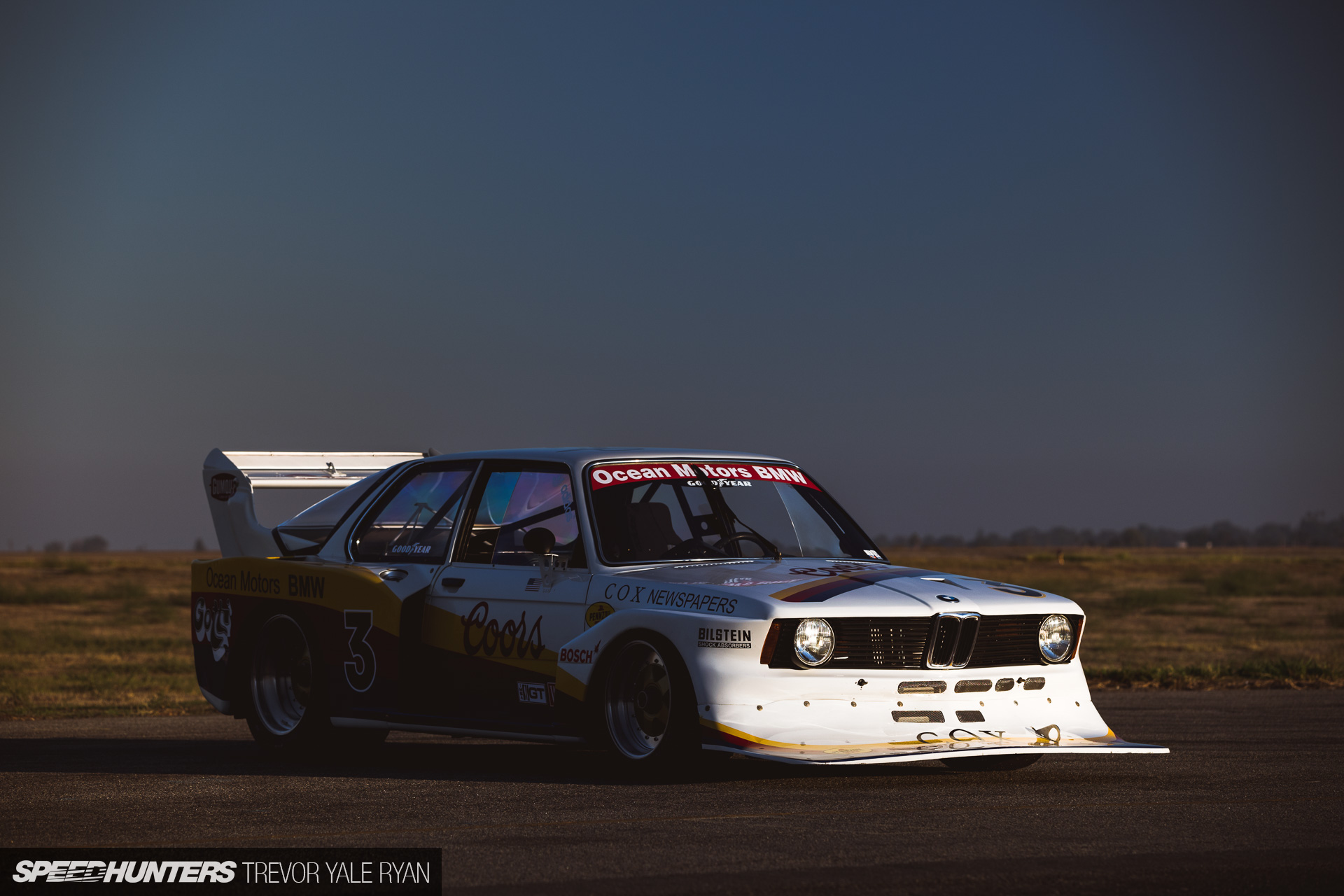
First off, alongside the tube-frame conversion, the engine, transmission, and driver were moved back eight inches towards the center of the car.
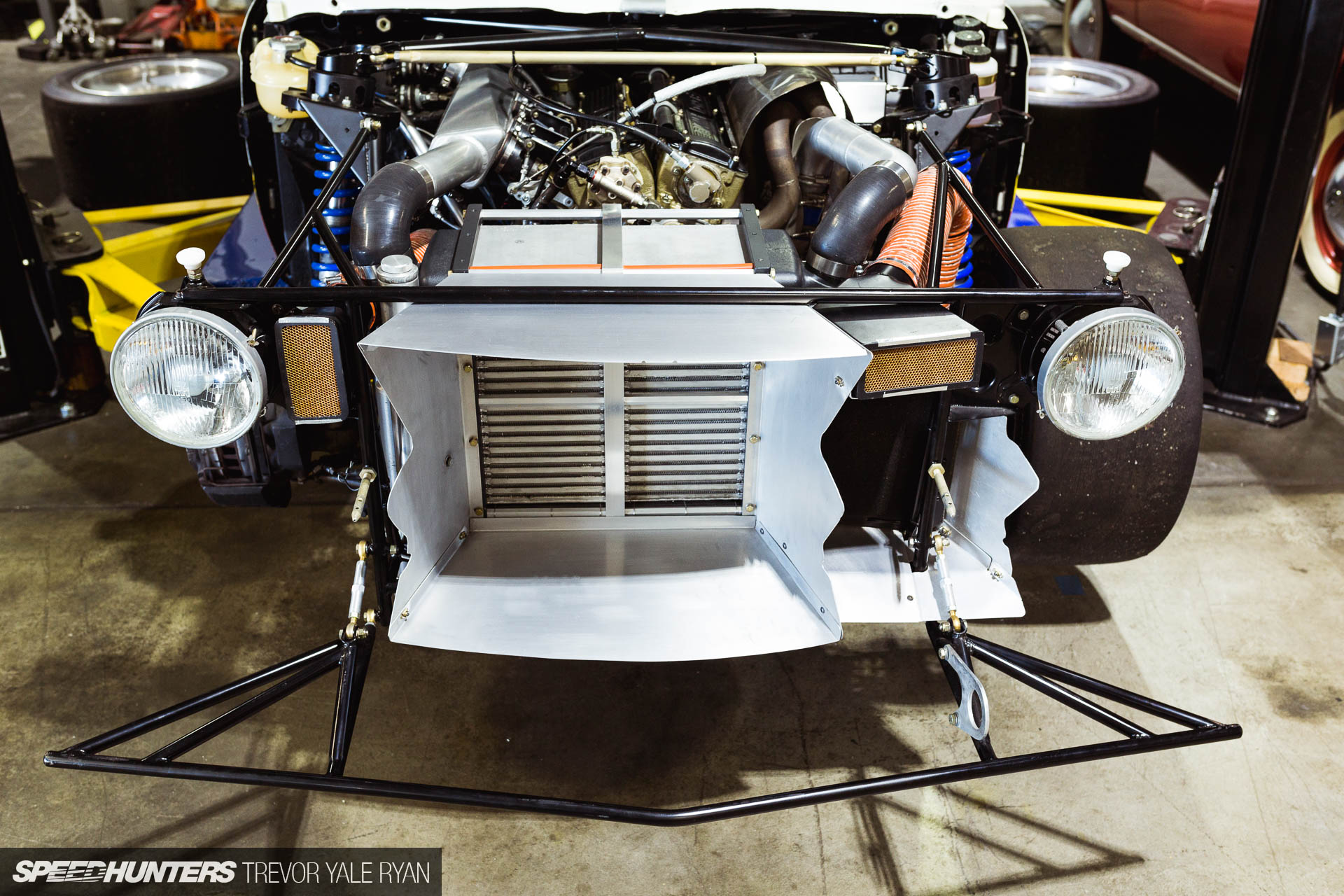
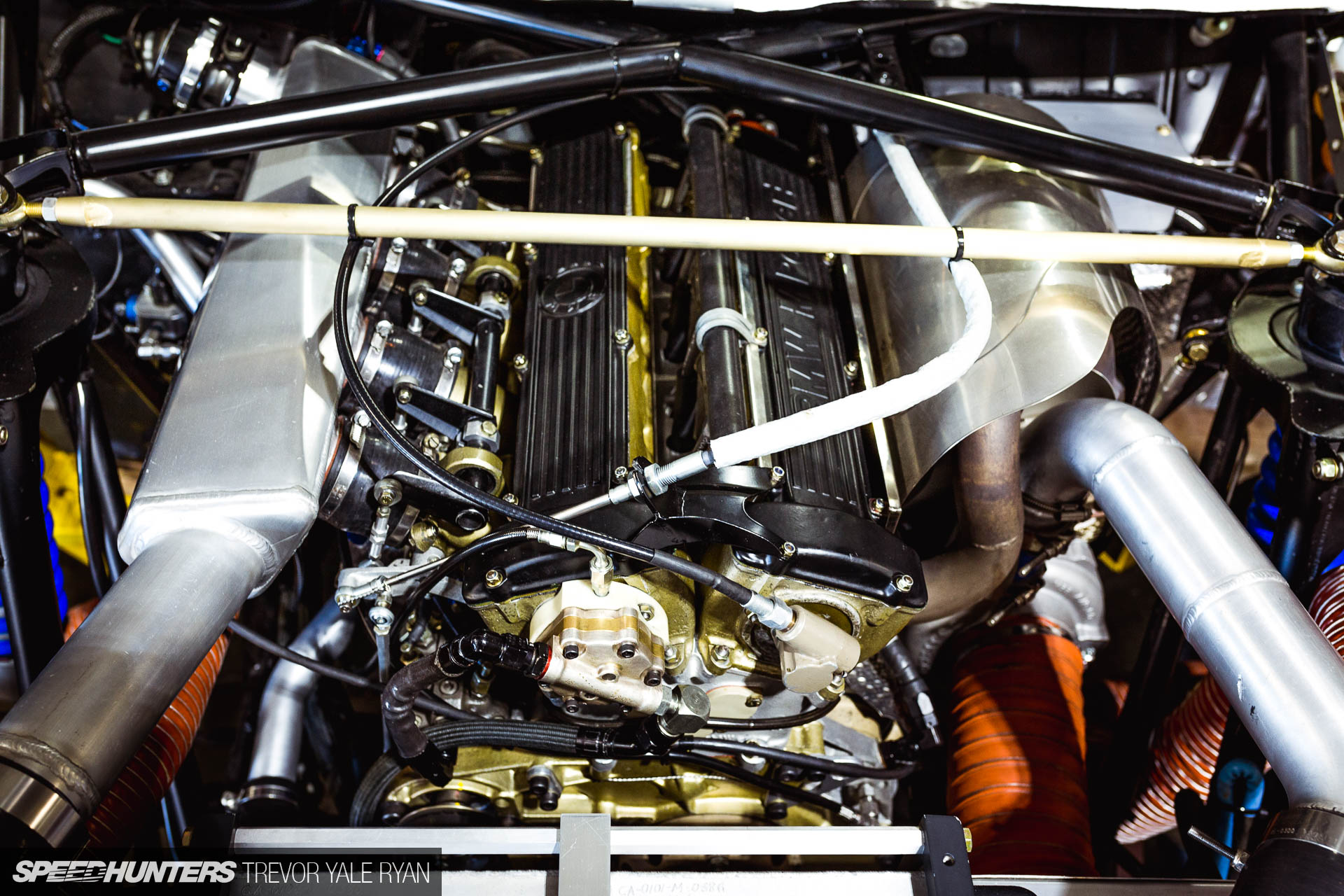
The engine itself is the glorious 2.0-liter M12, capable of over 650 horsepower. That is a big number for any engine in the ’70s, let alone a small four cylinder. In all honesty, the M12 power plant deserves a story on its own; if Cory ever needs to pull it out for some freshening up you can count on me being there.


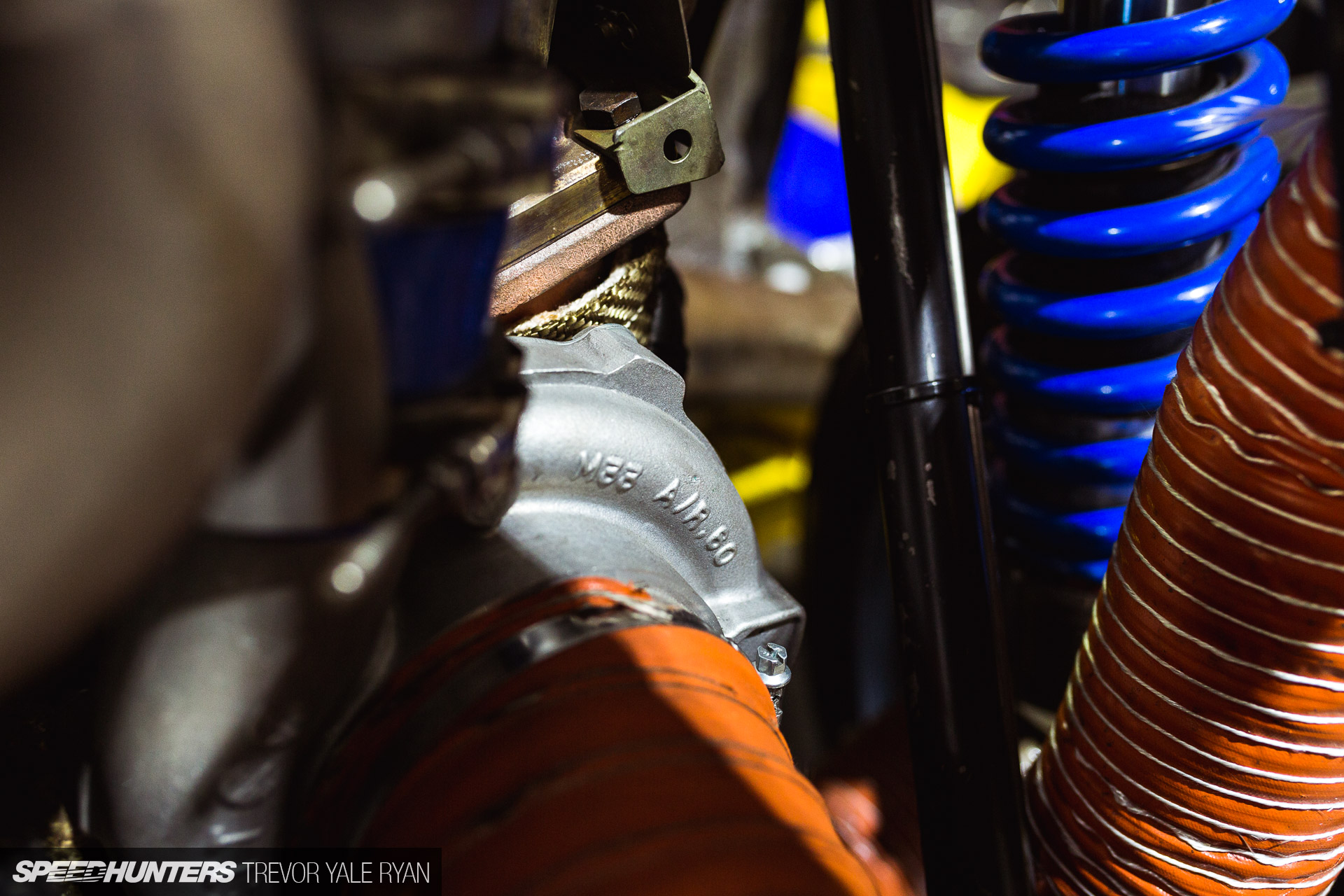
If you aren’t familiar with where this engine was used, I’ll give you a quick run-down. It was first used in Formula 2 as a 2.0L as well as in Deutshe Rennsport Meisterchaft (DRM) as a turbo 1.4. Then, in 1983, a 1.5-liter turbo M12 gave Nelson Piquet the Formula 1 World Drivers’ Championship in the Brabham-BMW BT52. The team also finished third in the Constructors’ Championship (closely behind Ferrari and Renault), and saw victory in the first race of the season as well as the final three.
By 1986, things were getting out of hand as in qualifying guise the turbo four was capable of 1,500 horsepower. Some quick math tells me that’s 1,000 horsepower per liter, a number which was apparently too high. After the 1988 season turbocharging was banned in Formula 1, exiling the mighty M12 turbo from the series.
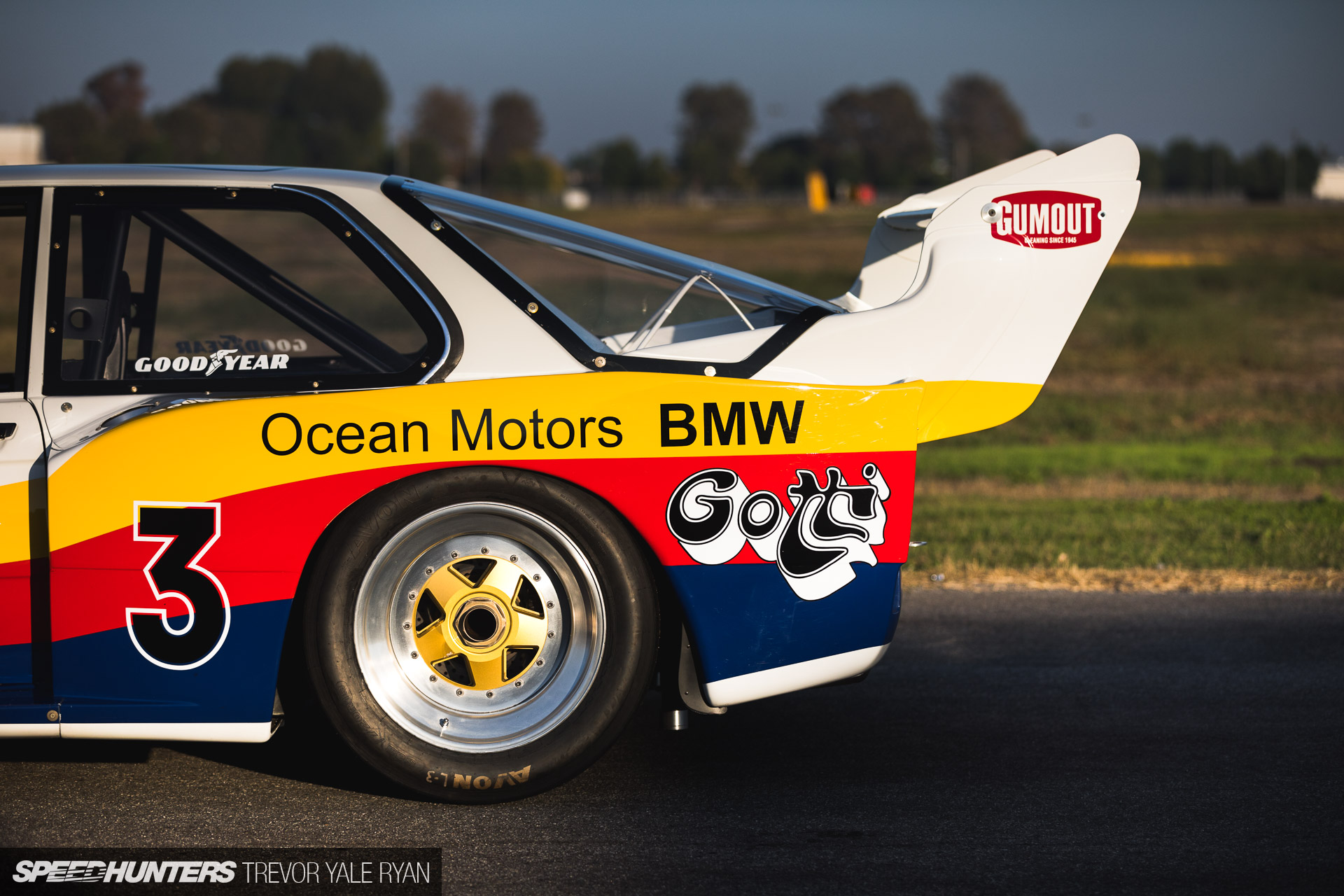


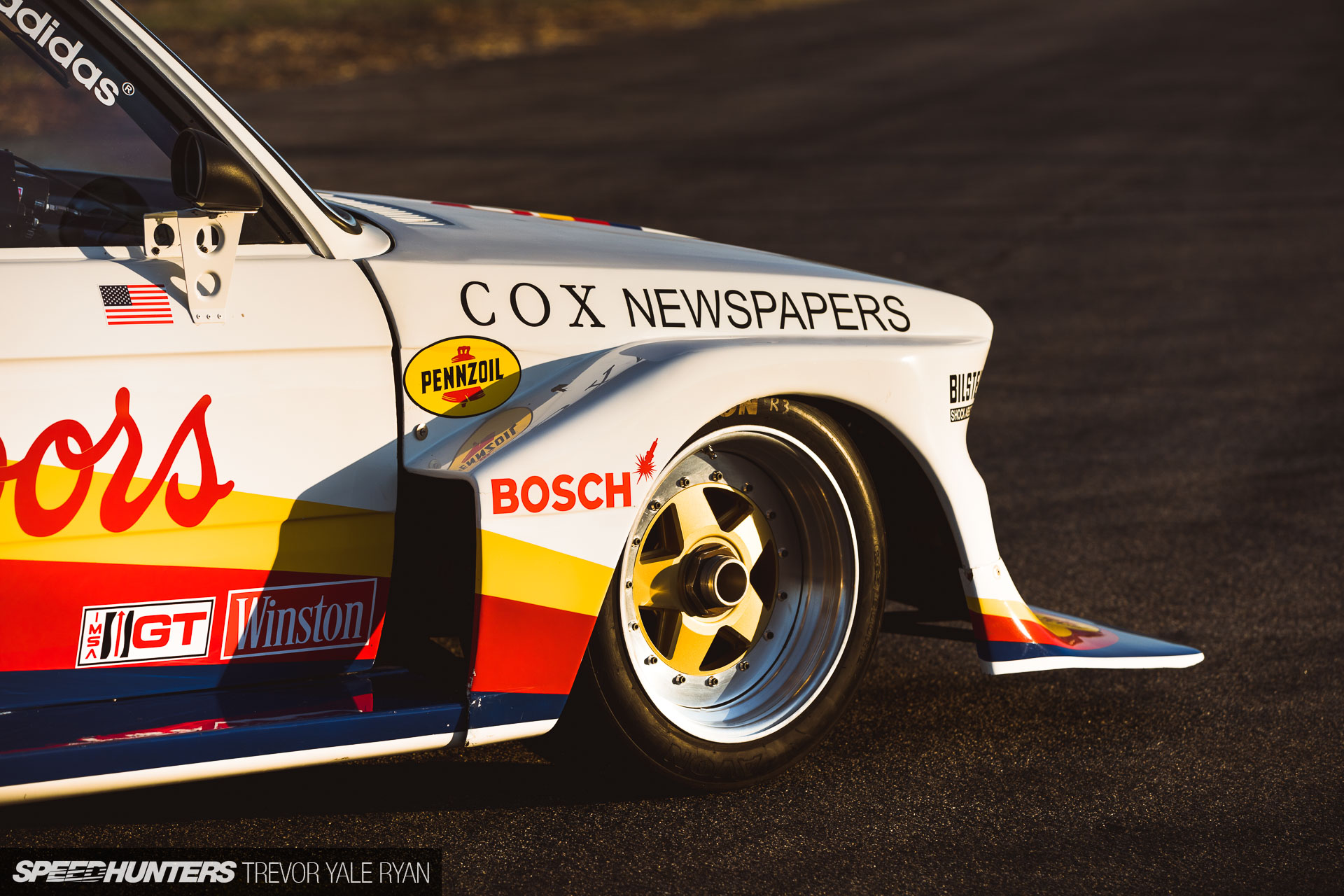
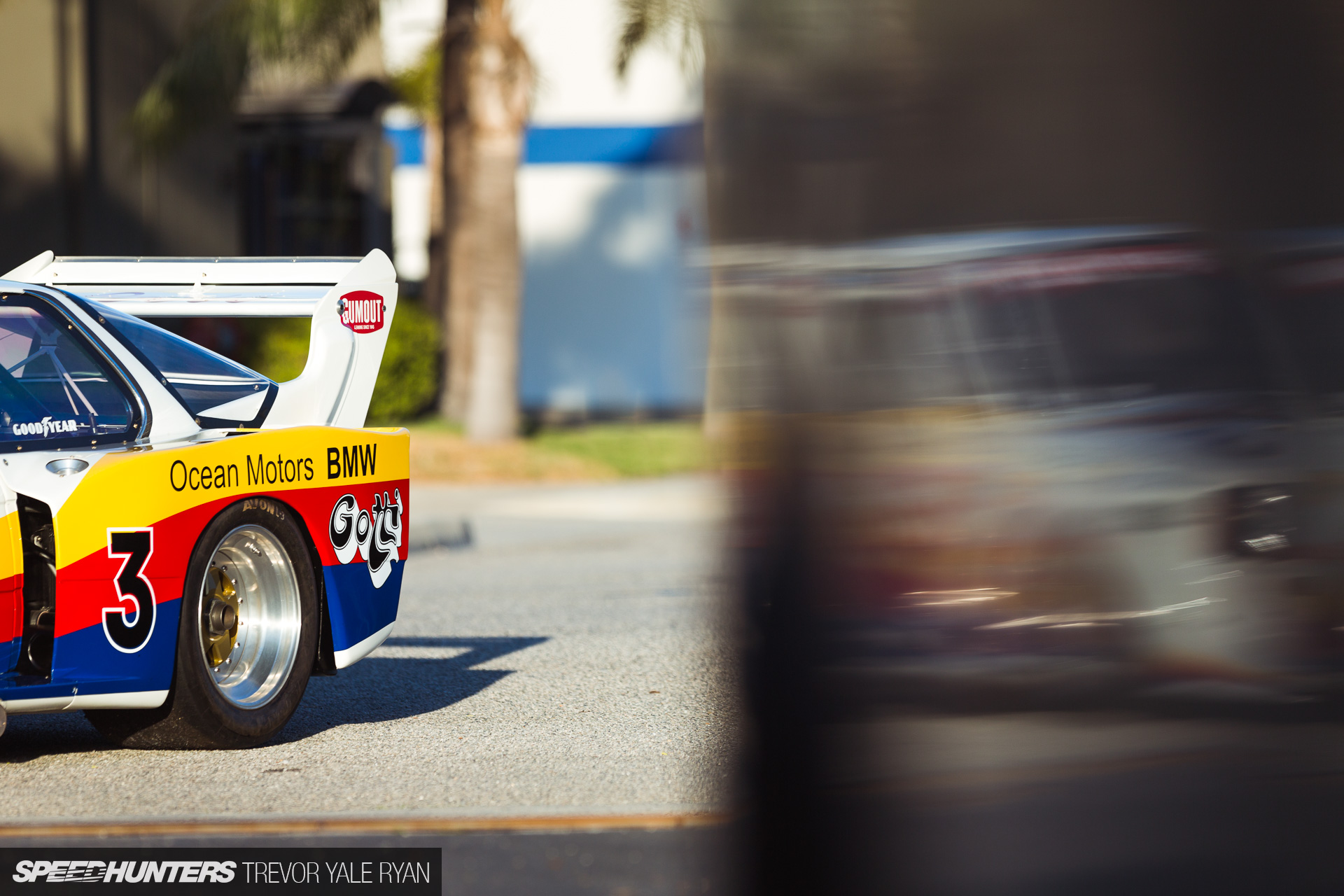
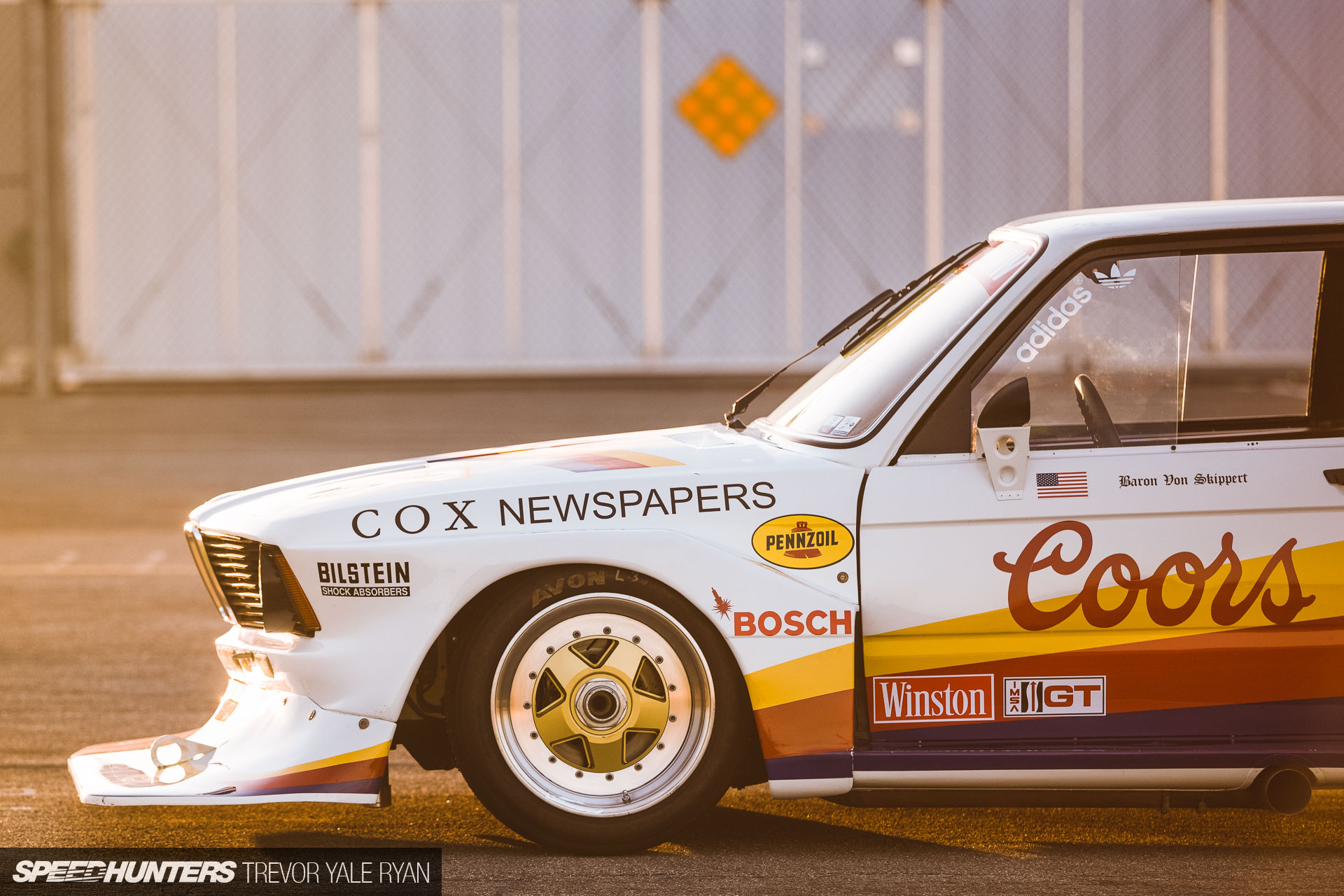
This 2.0L factory-issue powerplant can still be found spinning massive, five-spoke centerlock Gotti wheels (16×11-inch and 18×15-inch front and rear), which are currently wrapped in Avon slicks. Remember, this thing does still get driven in anger from time to time.
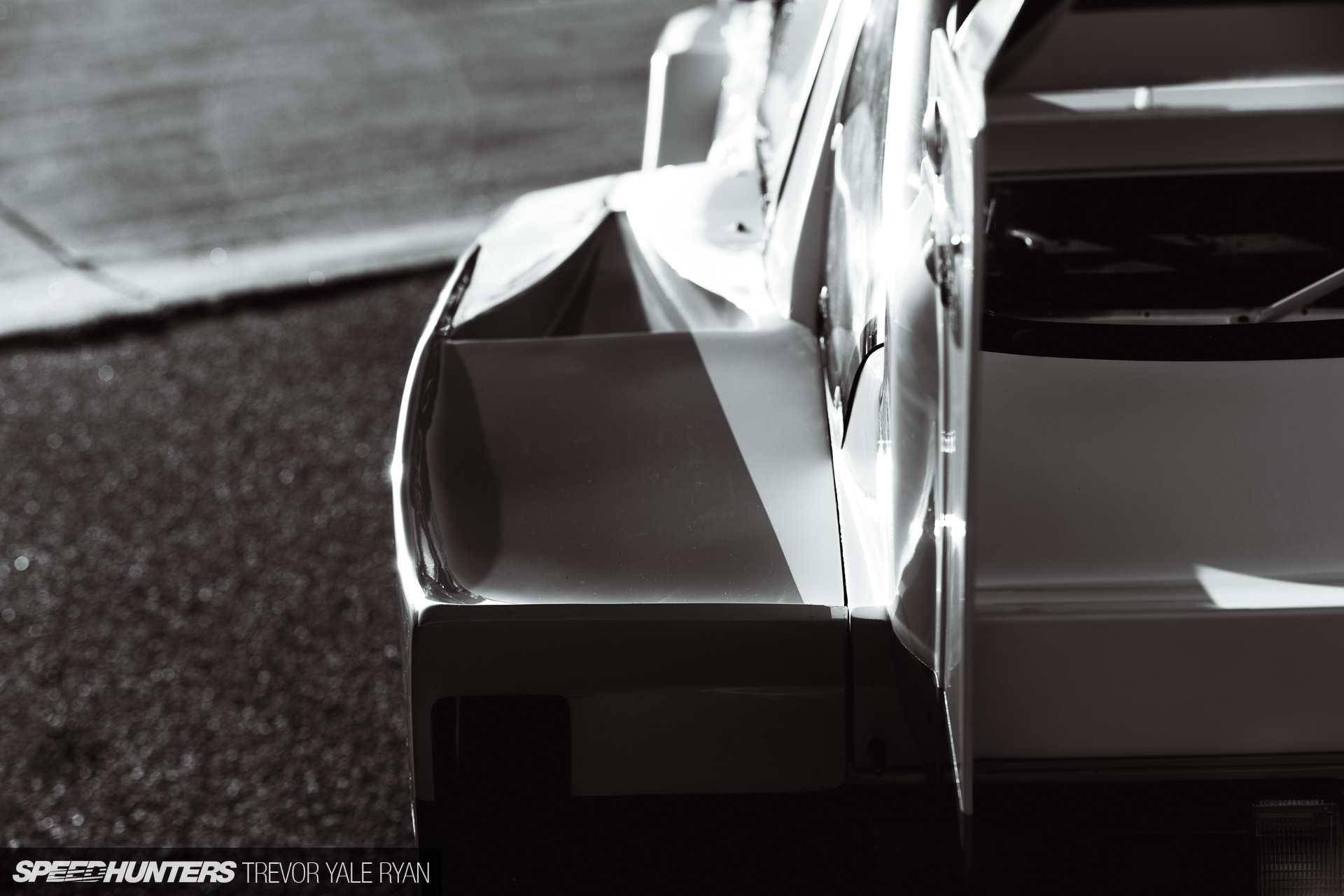
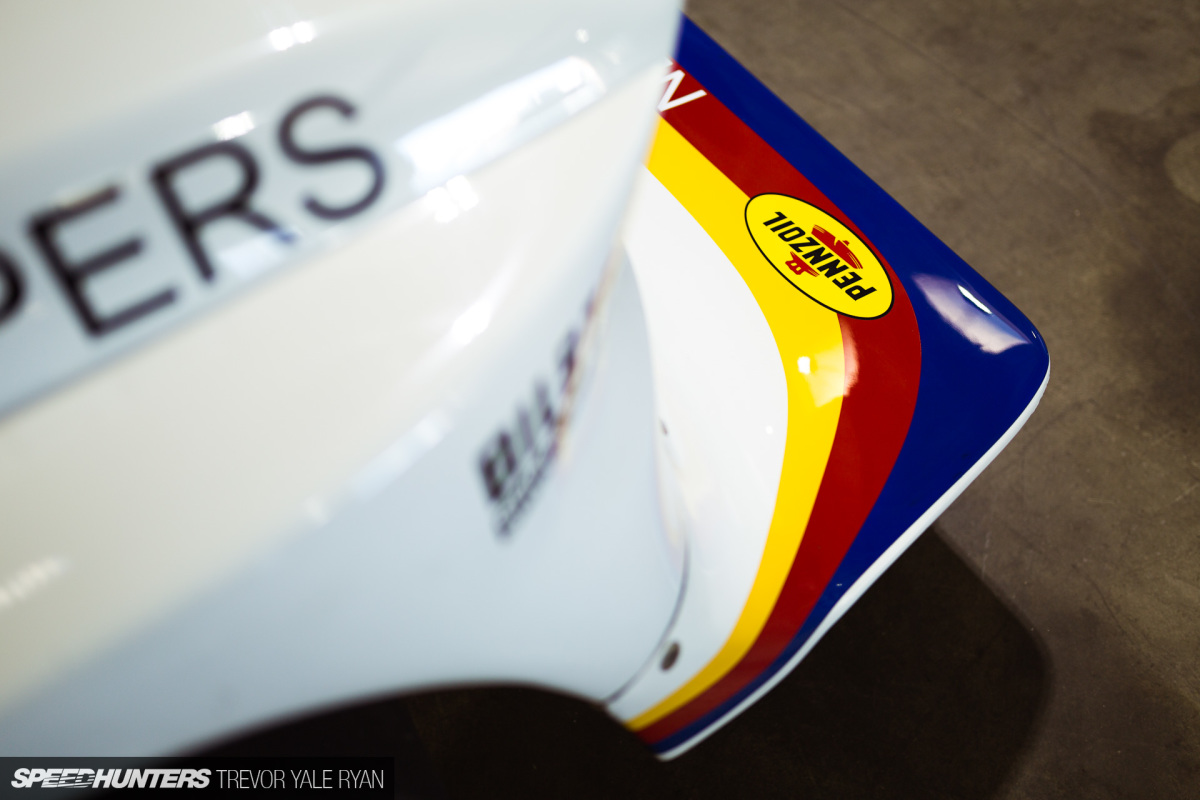
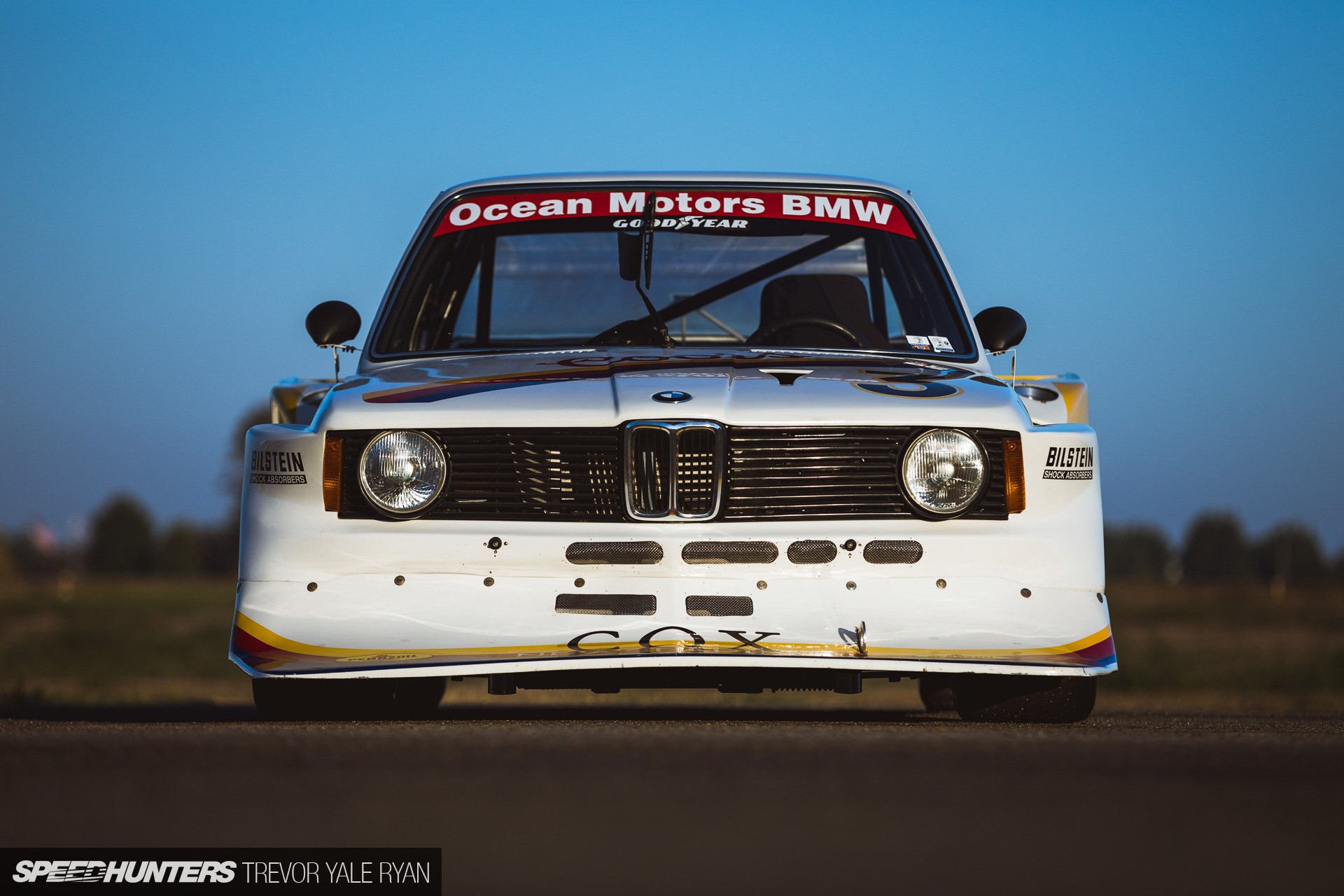
The 265 and 365-section rubber is housed by the massive Group 5 bodywork, bodywork which has been updated since its inception.
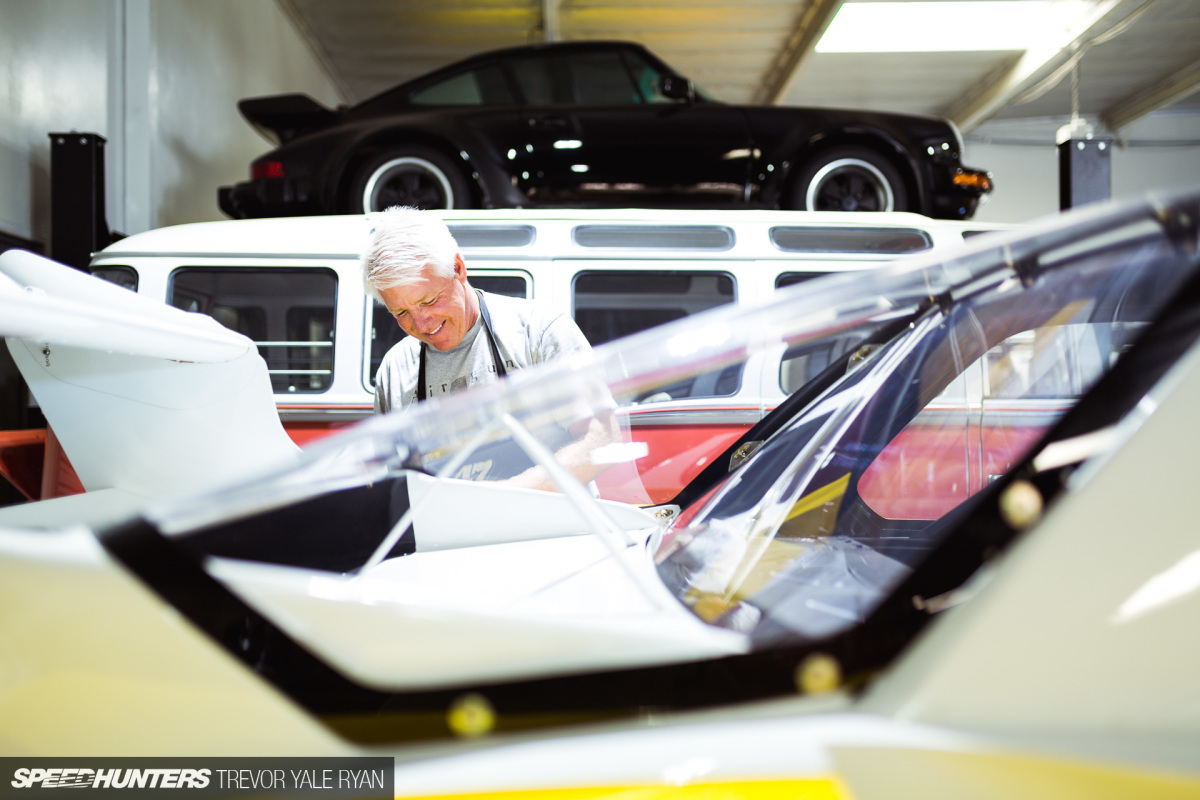
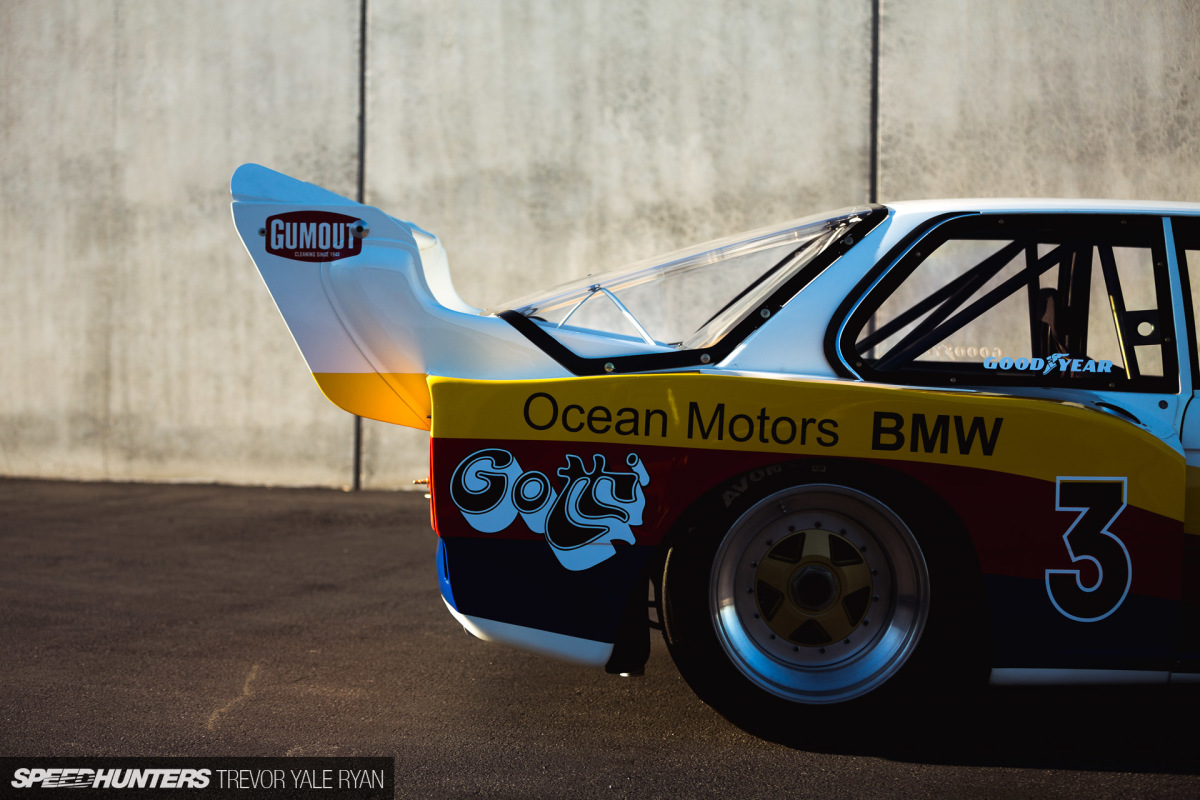
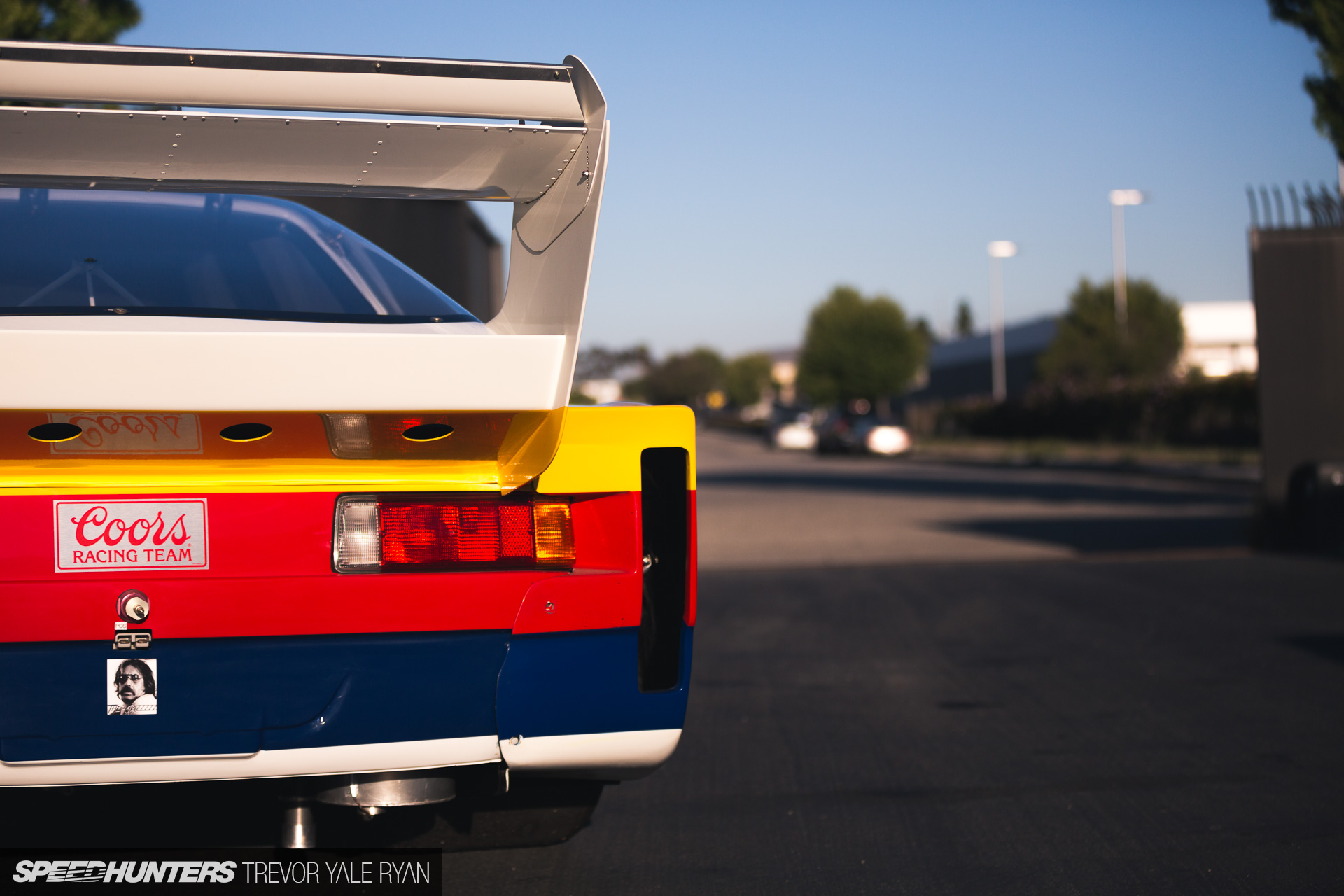
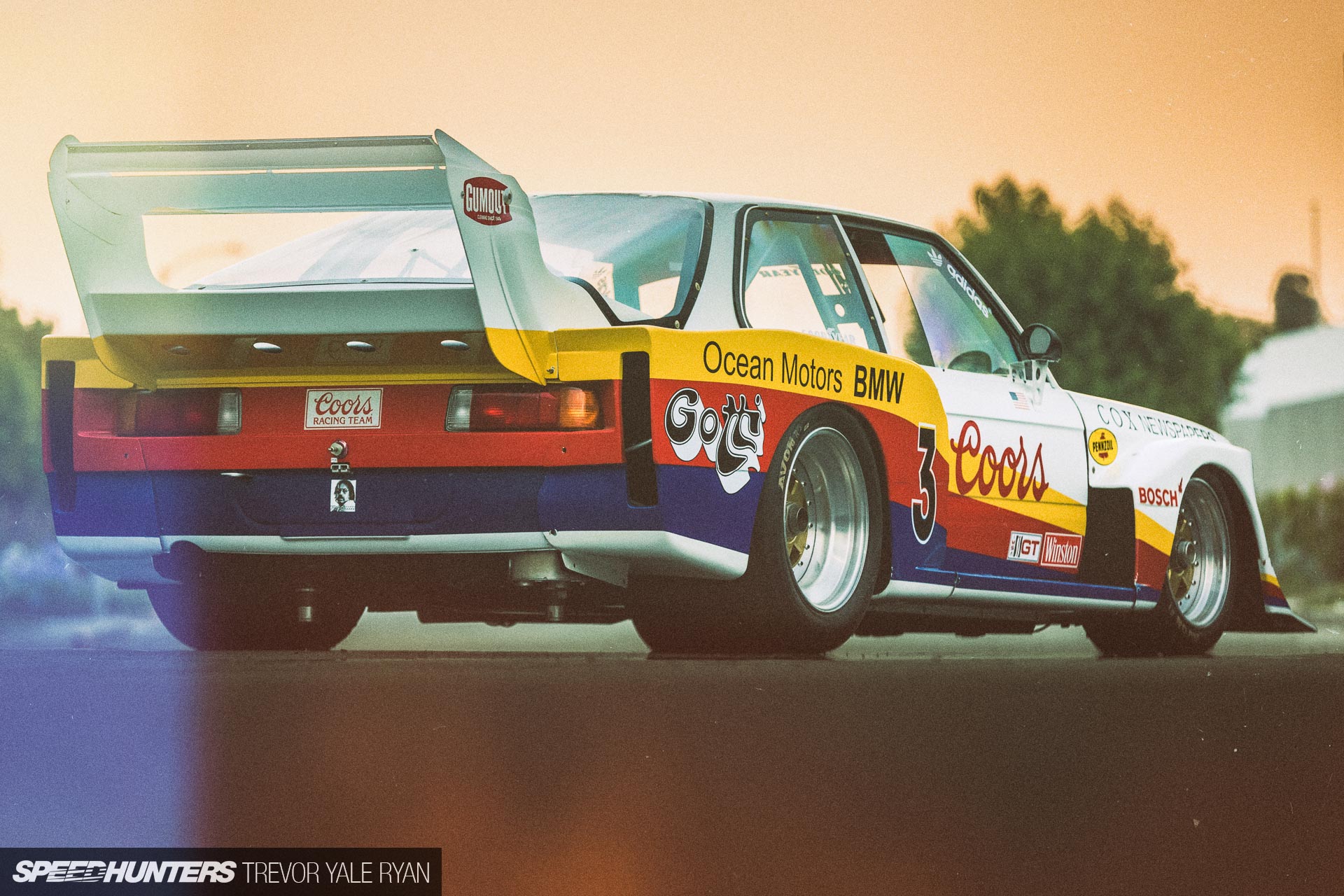
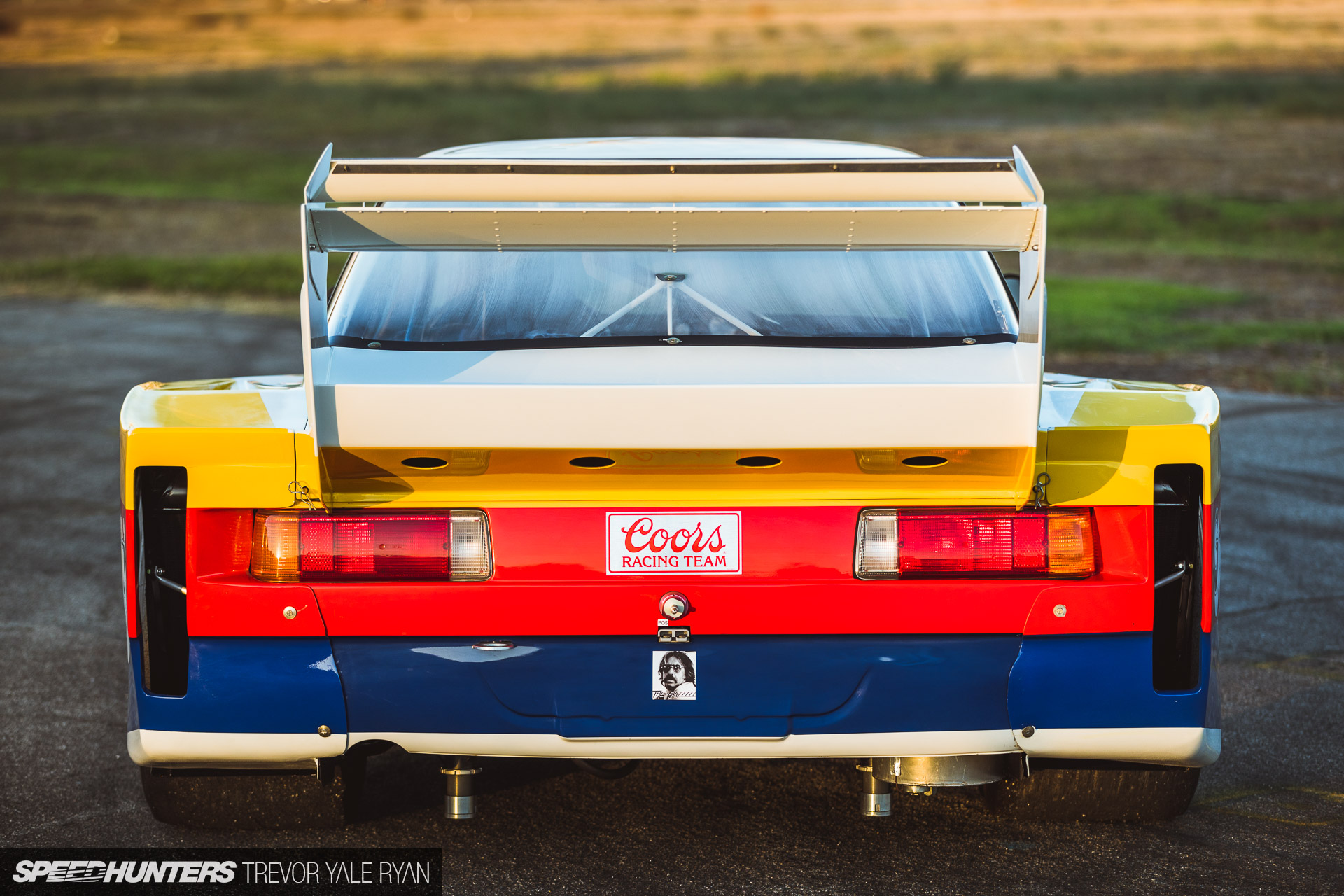
Seeing as how the IMSA rulebook required that the factory rear window had to be retained, Busby set about simply adding another one right over the top for a massive aero advantage.

Cory told me that Busby sold this setup to Schnitzer Motorsport (who won the DRM championship in ’78 with a 320 Turbo) when the car went to Australia as the rules didn’t allow for this trick down under. Eventually, all of the Schnitzer cars in Europe were running the Busby window and others followed suit as well.

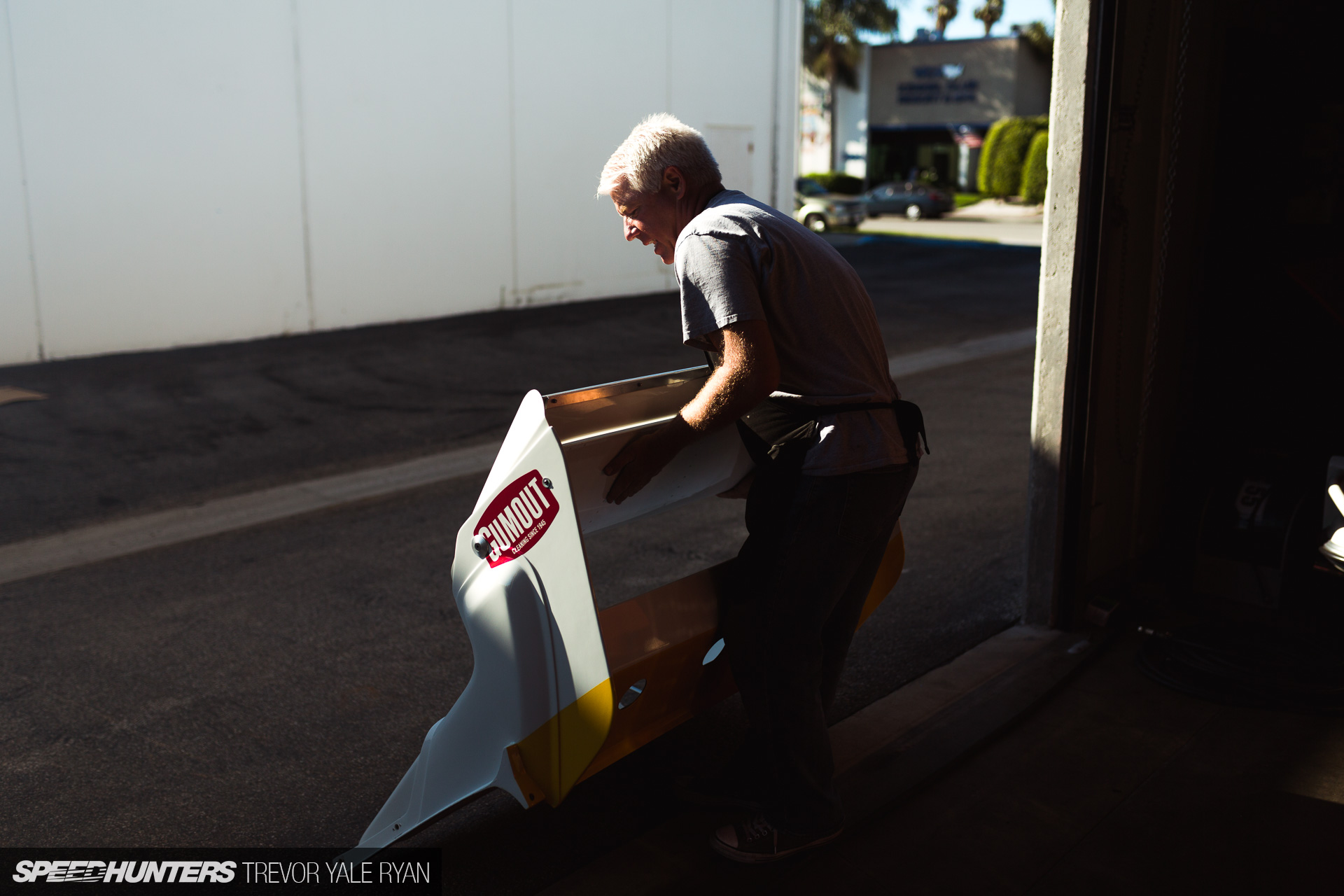
Seeing as how it went missing over the years, Cory had to have this piece remade based only off old photos floating around. A friend put Cory in touch with Wayne Hartman, the same man who worked on the Nissan GTP bodywork, and as you can see the result is nothing short of fantastic.
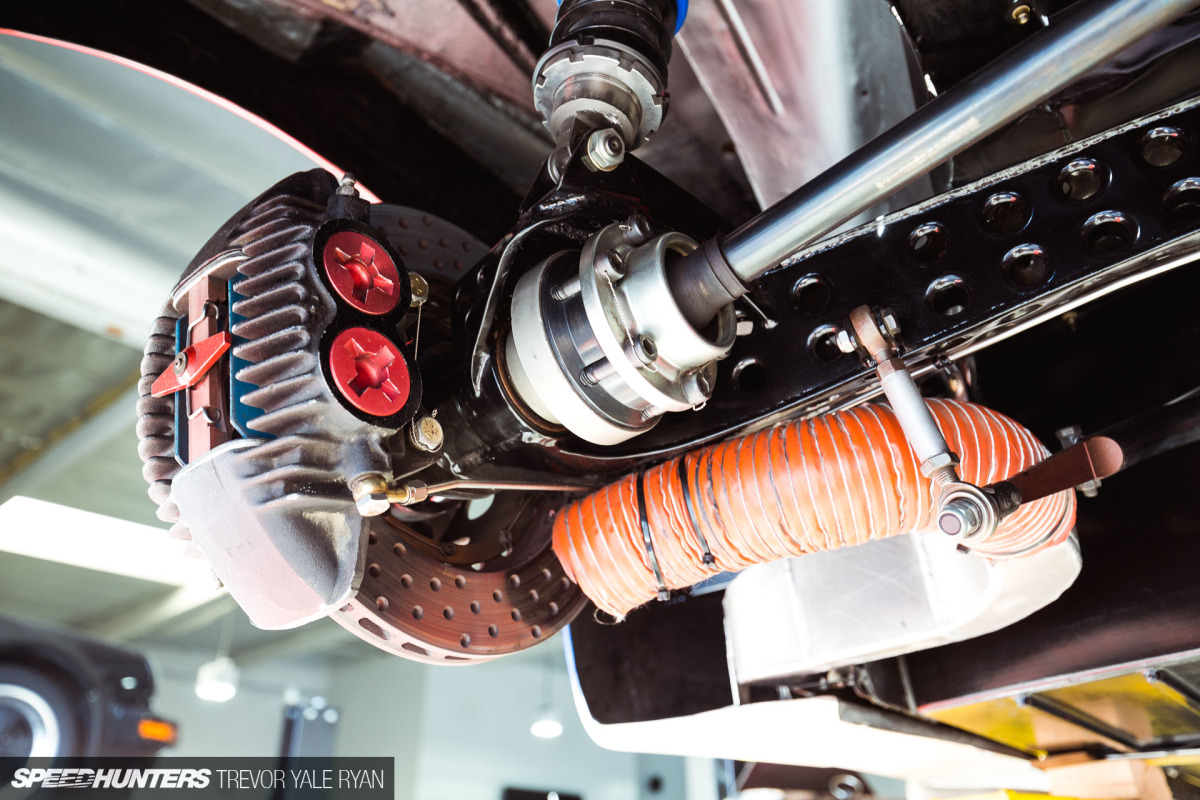


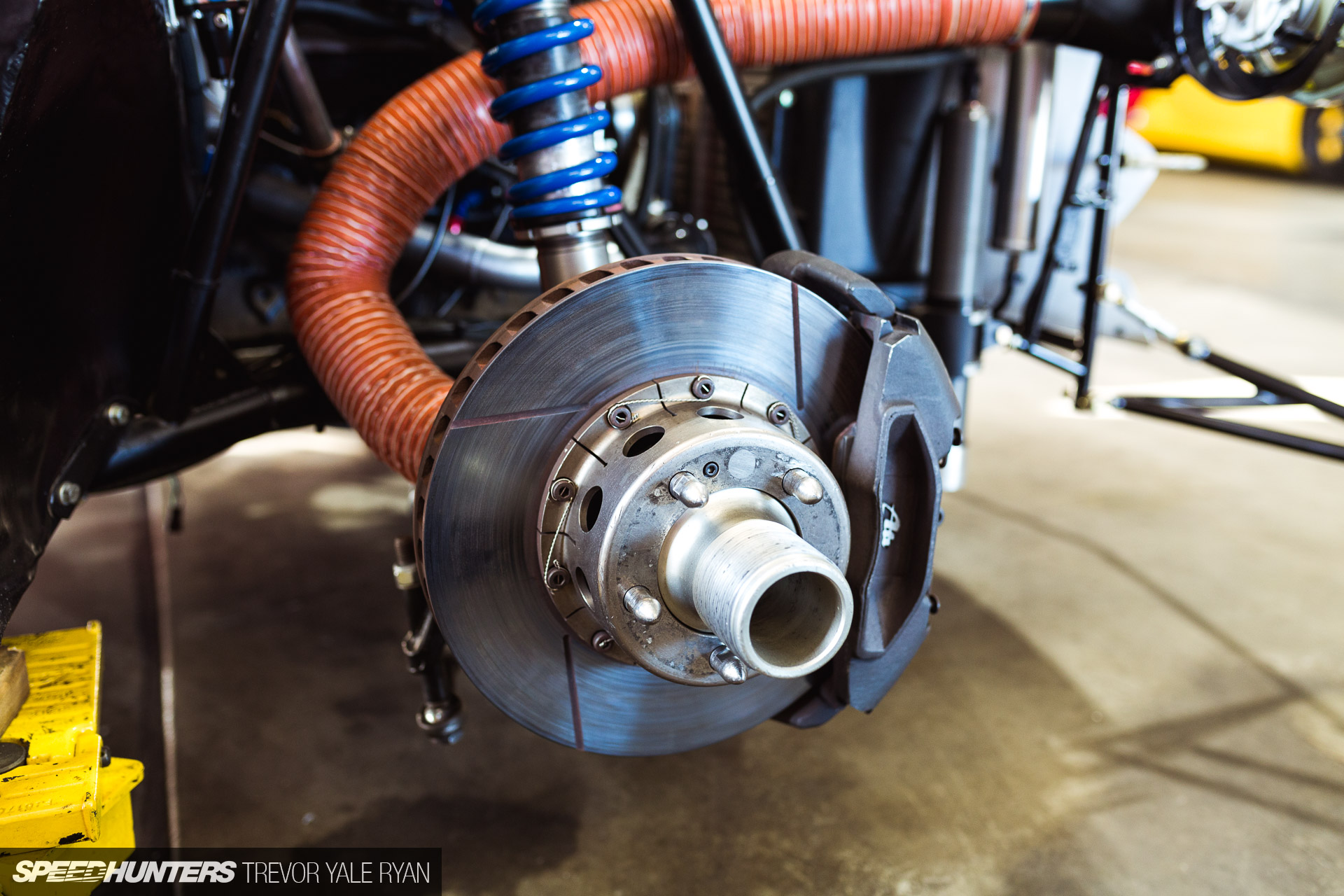
As for the suspension, to make the wheels work the rear setup all remains as-delivered from the factory. With the tube-frame up front the pick-up points were altered, but this is fairly close to the initial setup as well. Of course, the car still makes use of this Busby-influenced factory setup: McPherson struts up front and semi-trailing arms out back, with ATE disc brakes on all four corners.
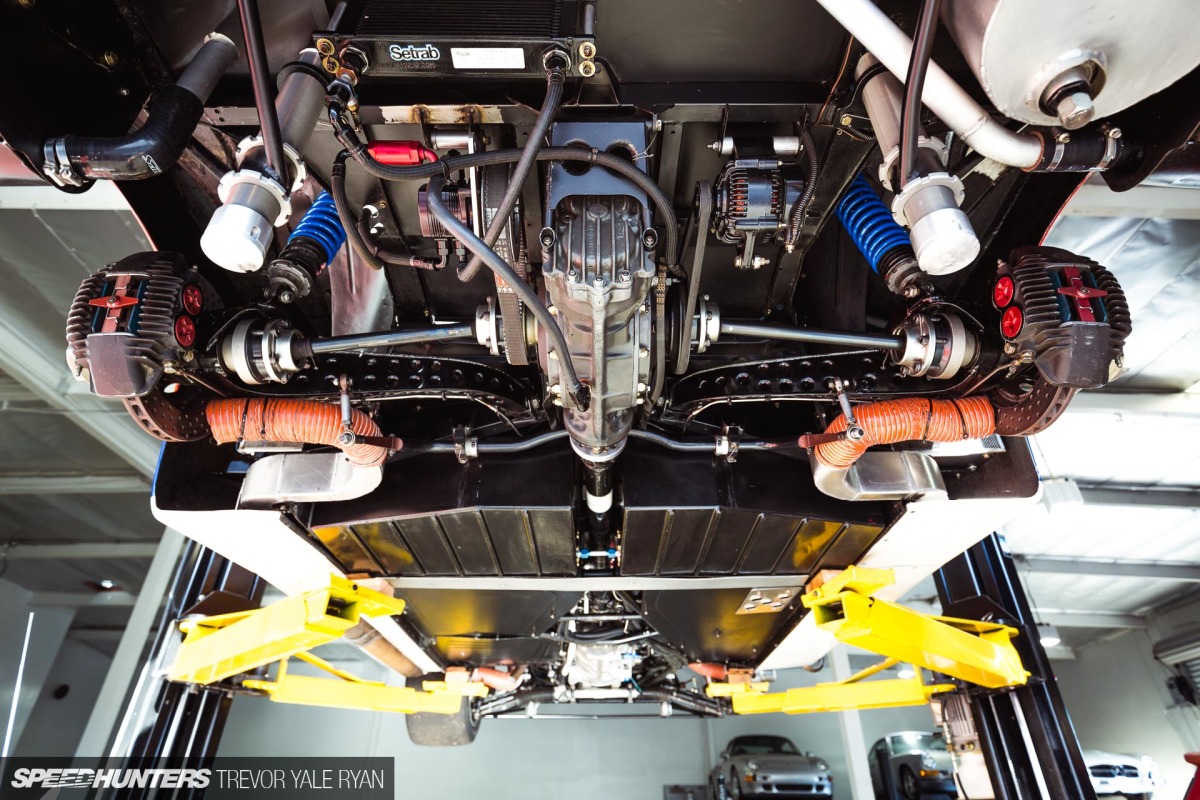

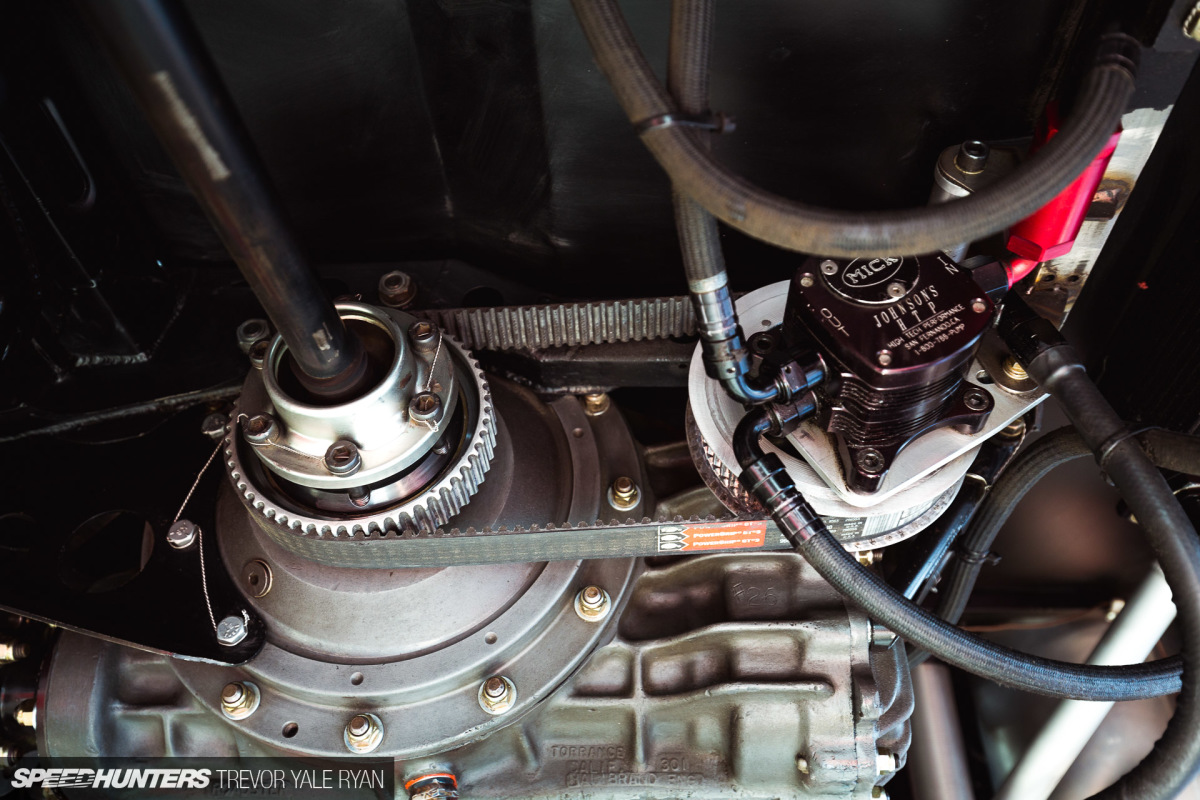
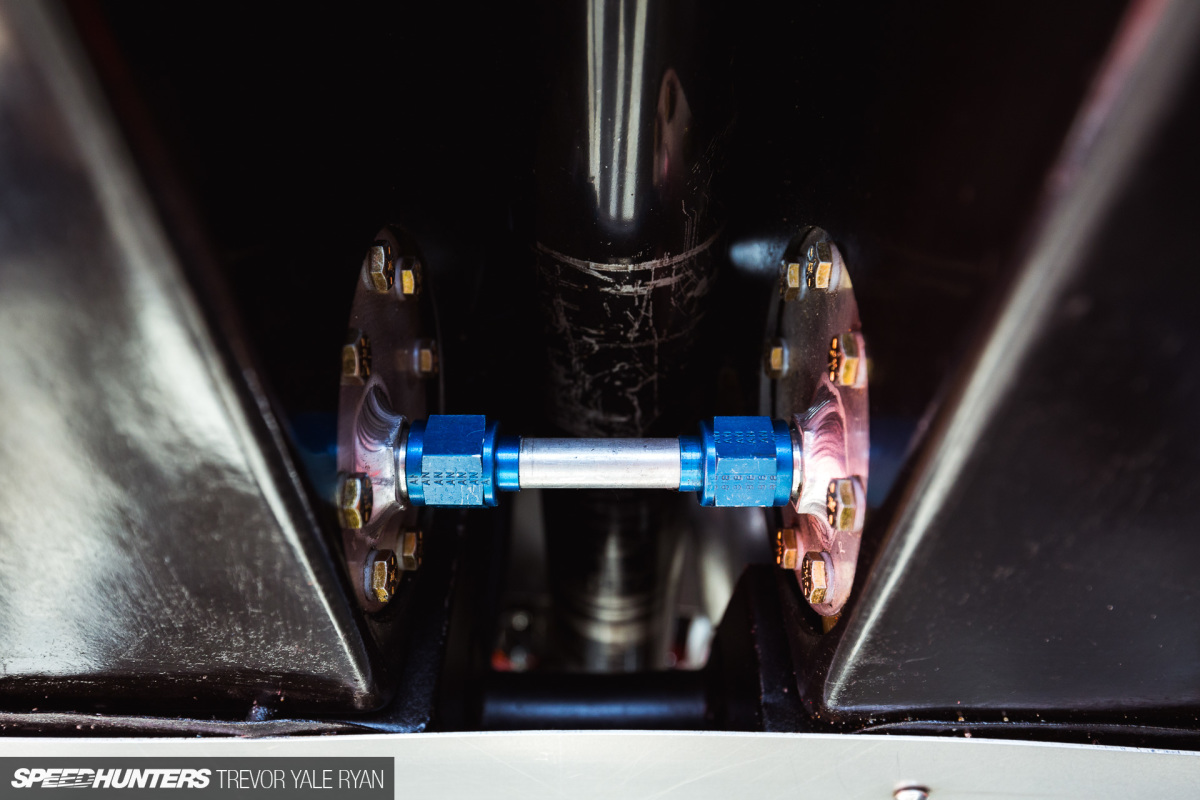
You’ll also notice an alternator and an oil pump for the differential and transmission being driven off of the rear axle; a cool trick if money is no object.
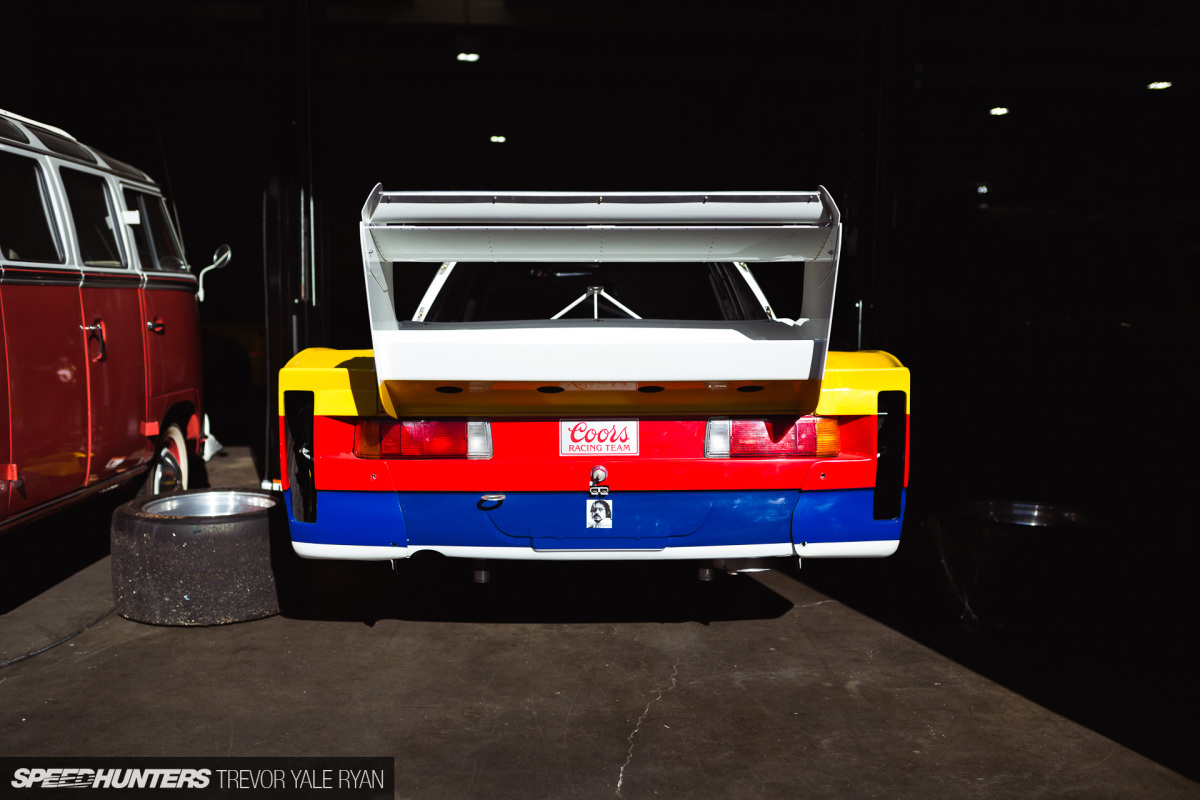
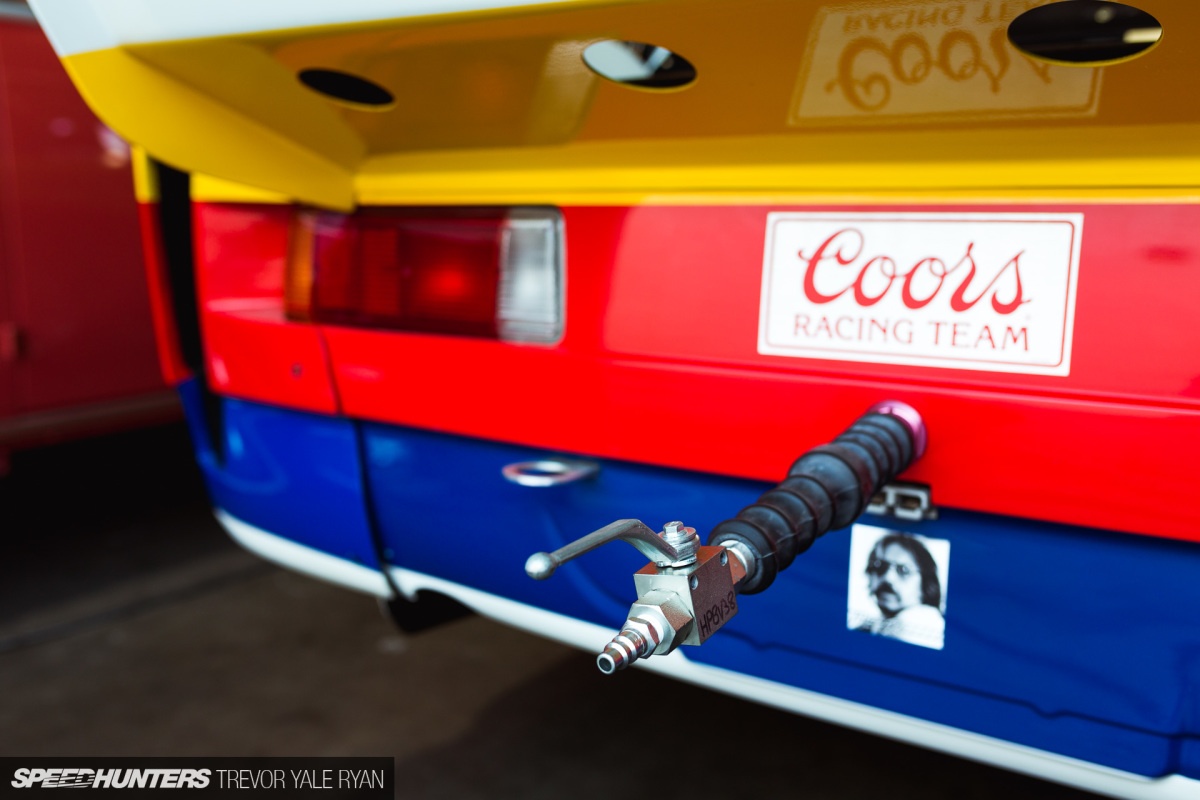
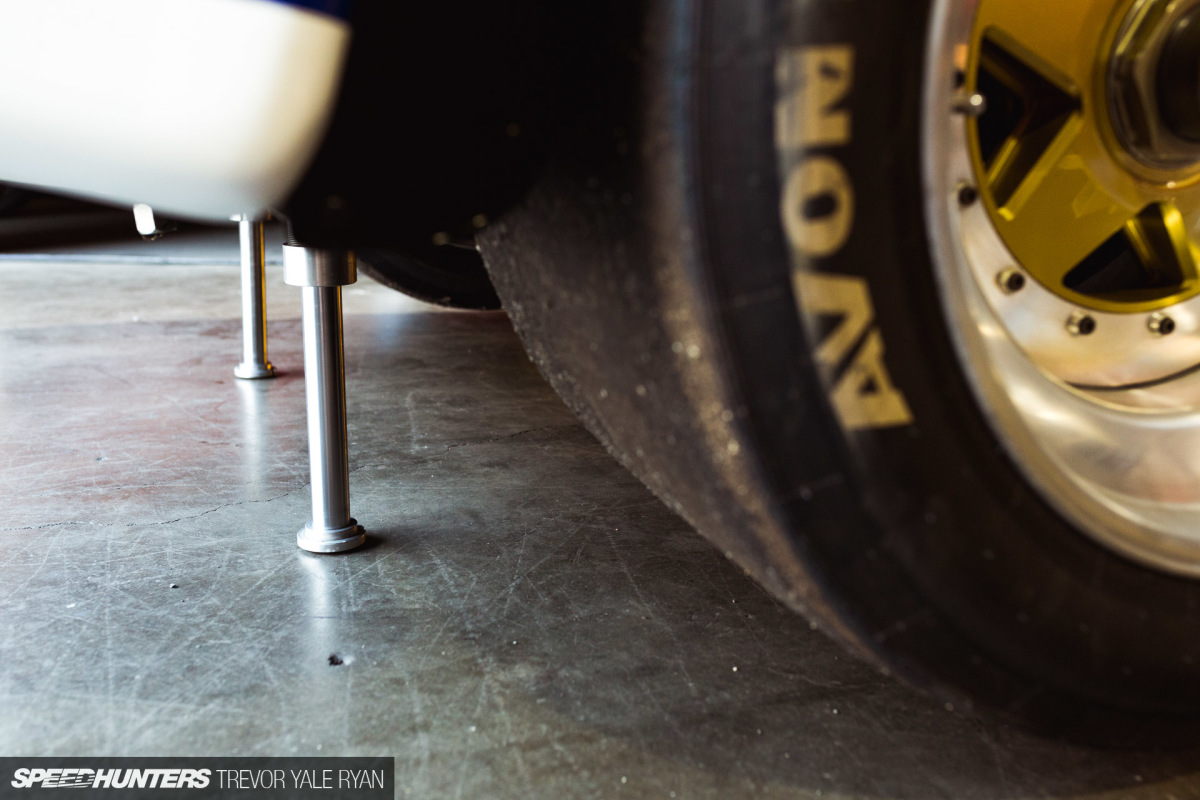

Out back you’ll find a fitting for compressed air which lifts the car with built-in jacks as well as a sticker with a photo of Cory’s father which reads THE GRIZZZZZ.
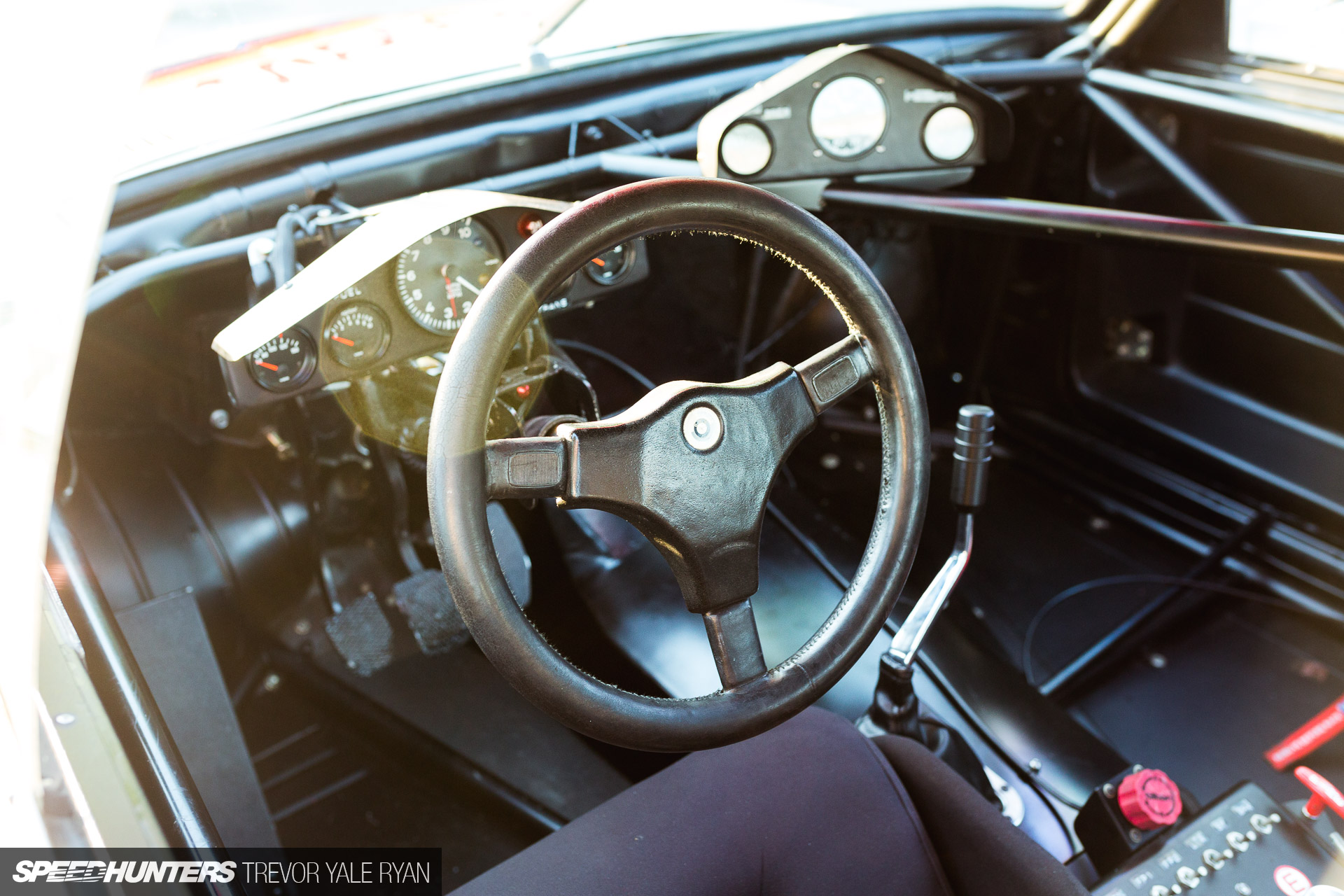


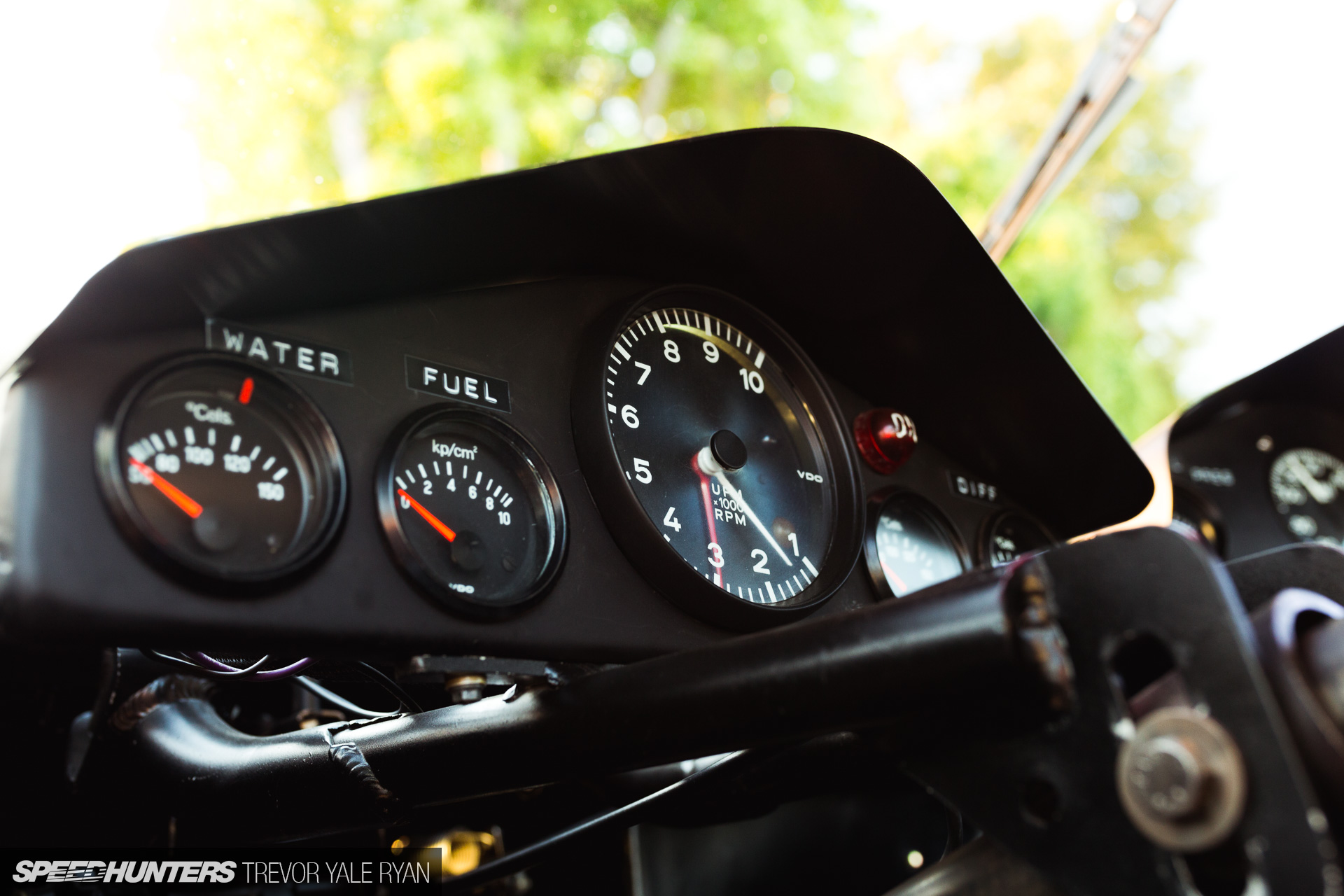
Inside the car, plenty of era-correct details serve as a reminder of the brutal reality of racing in the 1970s. Things were so simple back then.

In the face of this simplicity, this original 3 Series racer still serves as an exercise in how aesthetics can be met with blistering performance; how to make speed look good.
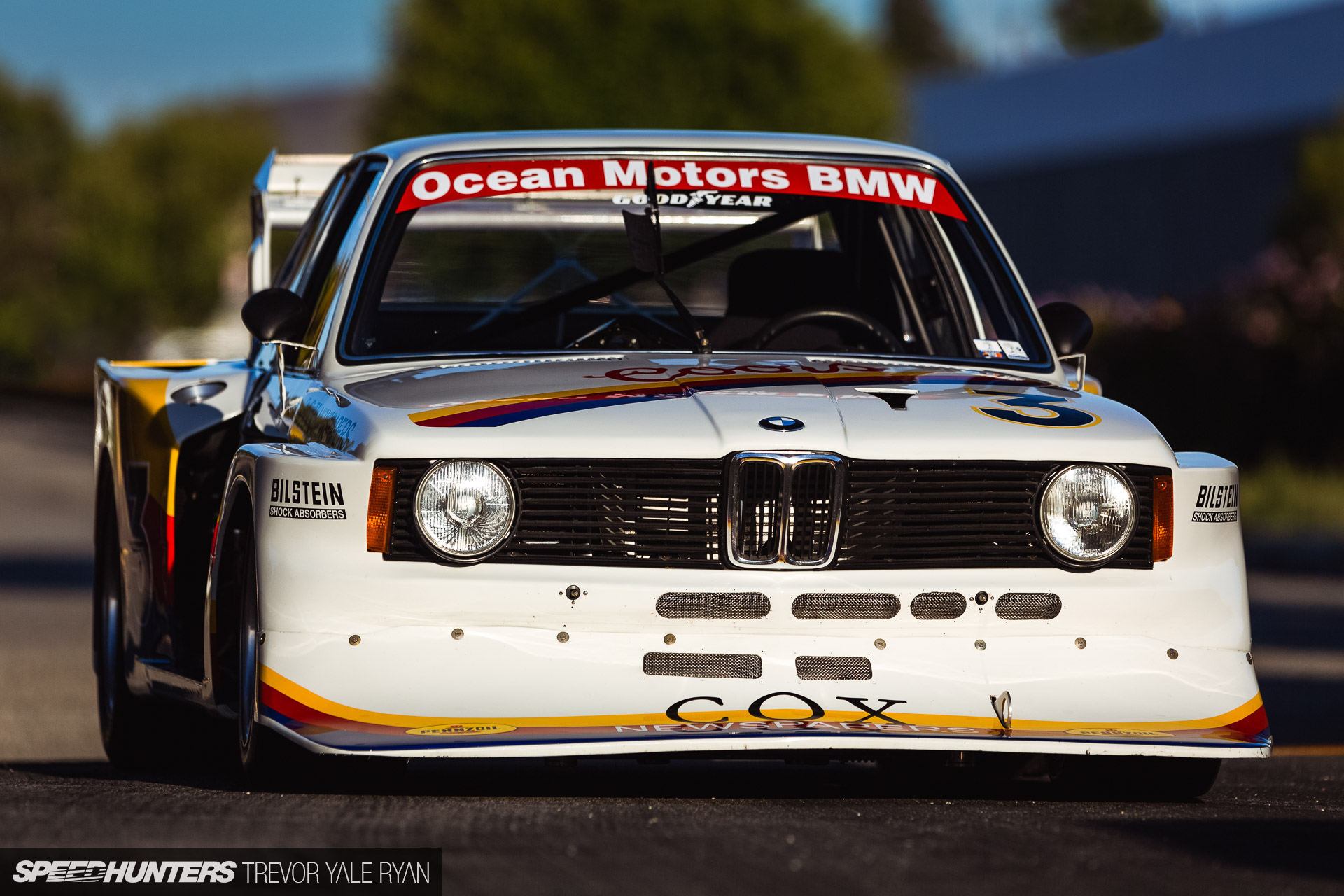
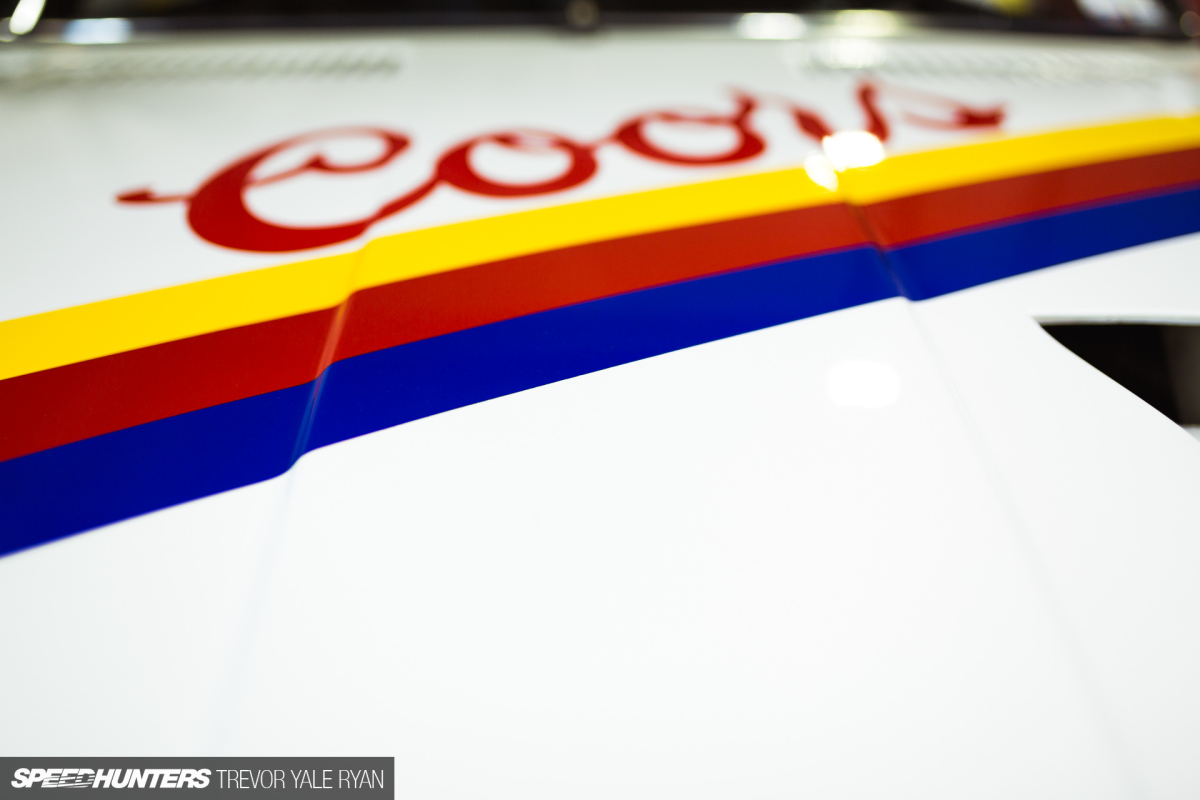


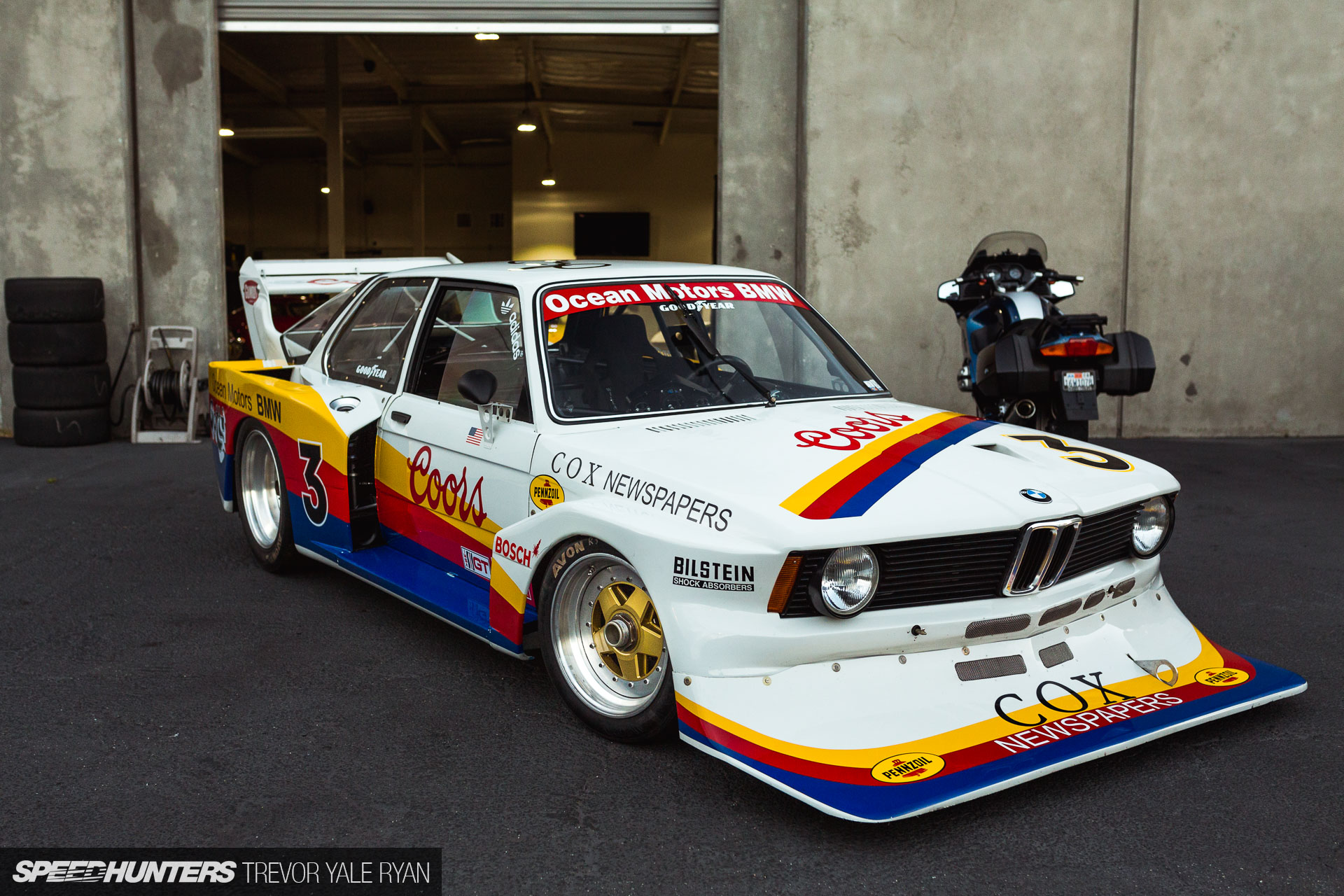
On that note, it’s hard to sum up the honesty and legacy of an icon like this; it’s a car that hides nothing, and yet there is so much to it. Less than 30 examples were ever known to exist, the vast majority of which simply haven’t survived decades of racing.
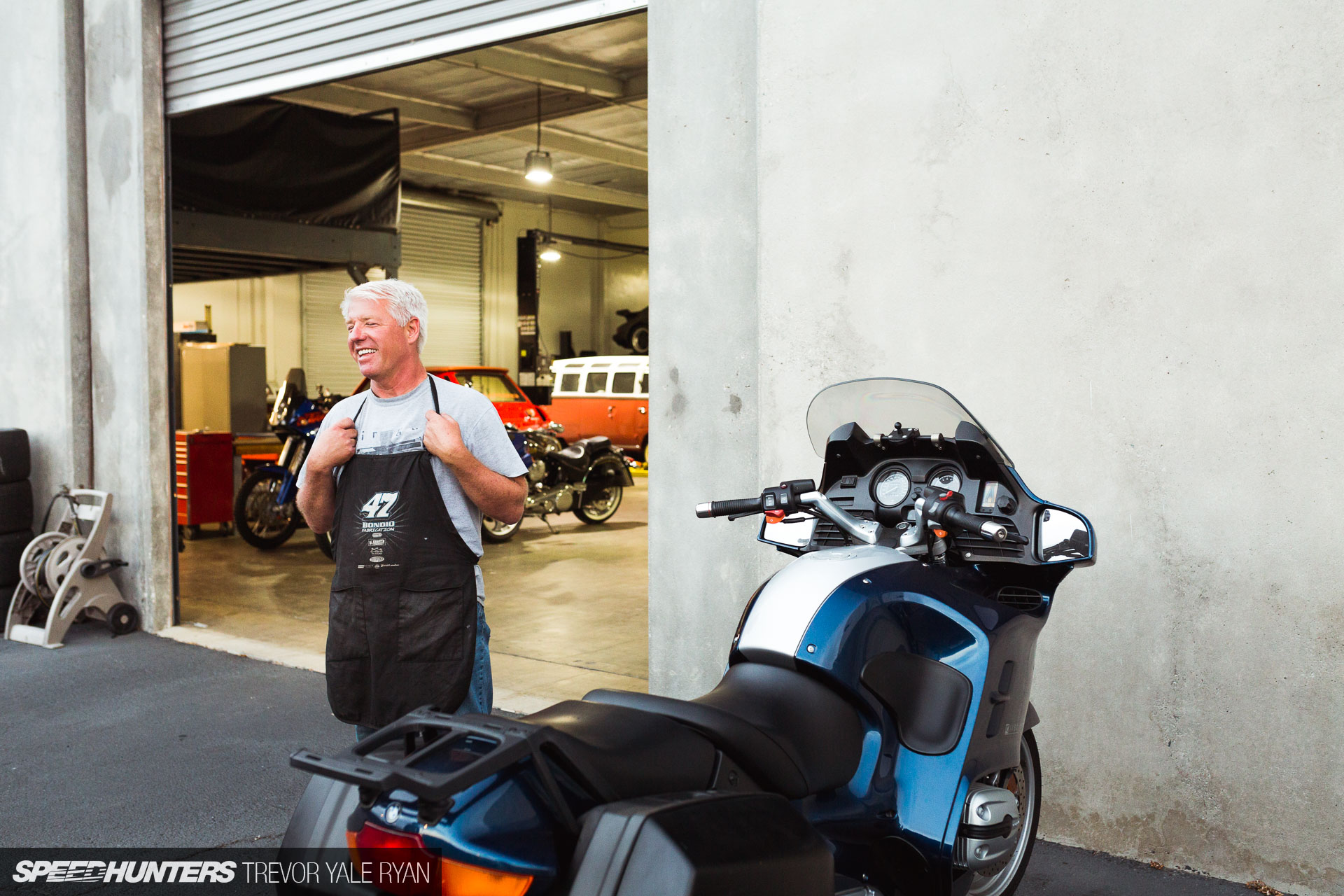
Yet, thanks to Cory, #05 lives on.
New LifeSo, how did Cory end up with a car like this and how did he pull it off?
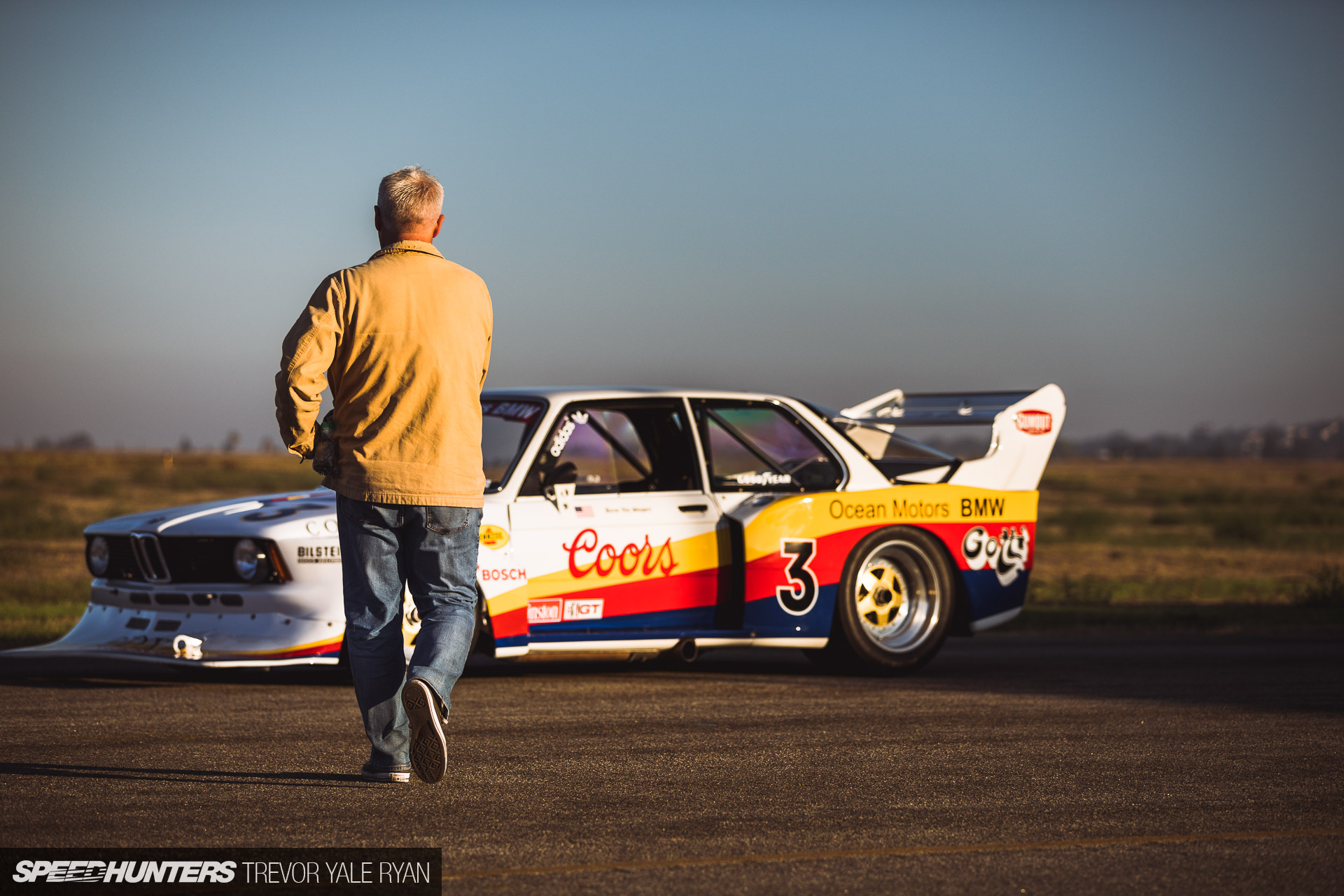
Cory’s first car was a BMW 2002 and throughout the years he always loved the 320 Turbos. Cory had a book called Unbeatable BMW, and in it were four photos of 320 race cars being worked on in the factory. They were “terribly underexposed, I couldn’t see any detail. I wanted to see more,” he says. Well, what better way to see more…


Moving on a few years, the guy who brought the car back from Australia in the first place was a friend of Cory’s, and after the owner was about ready give up entirely Cory stepped in and got to work on it himself in 1998.


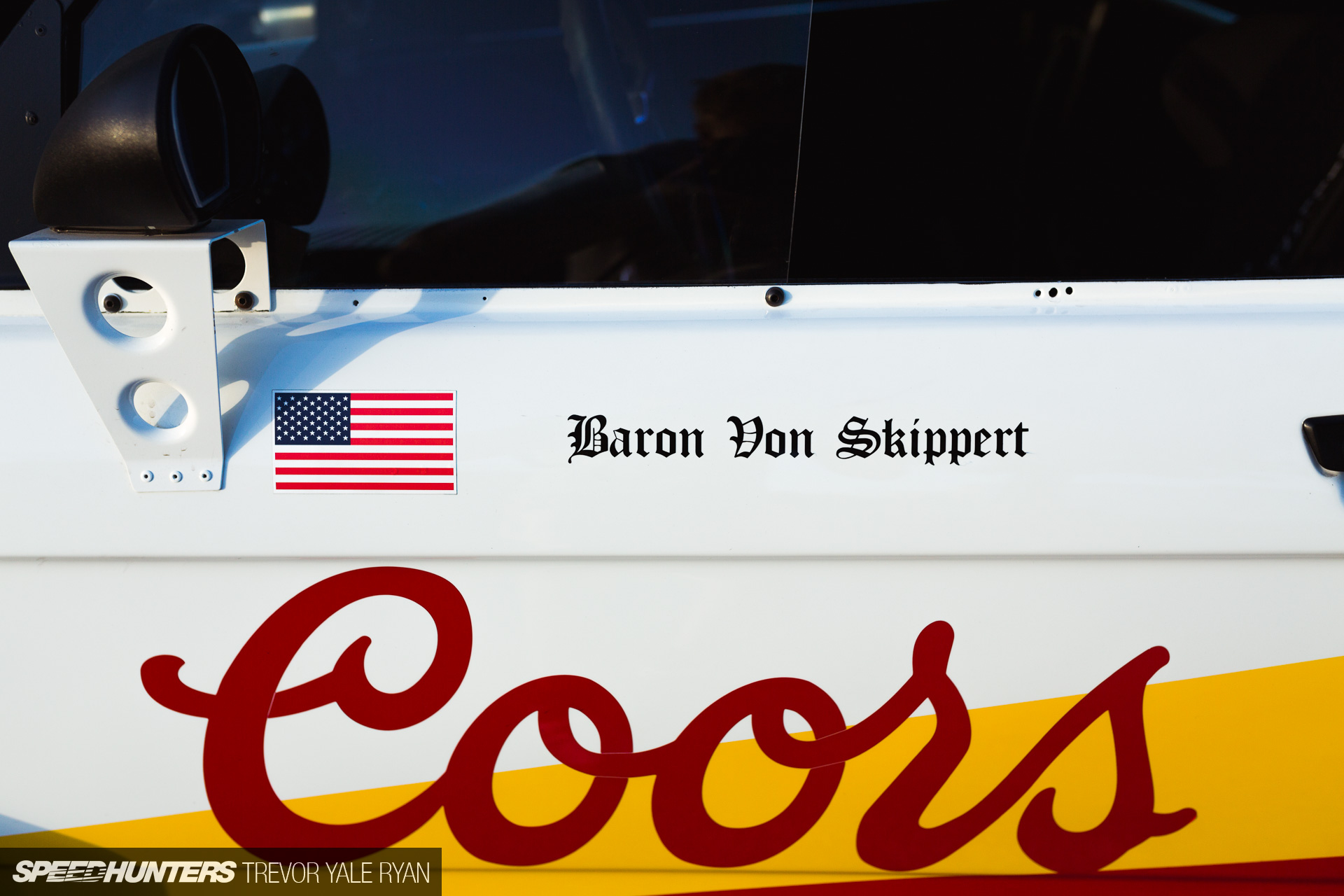
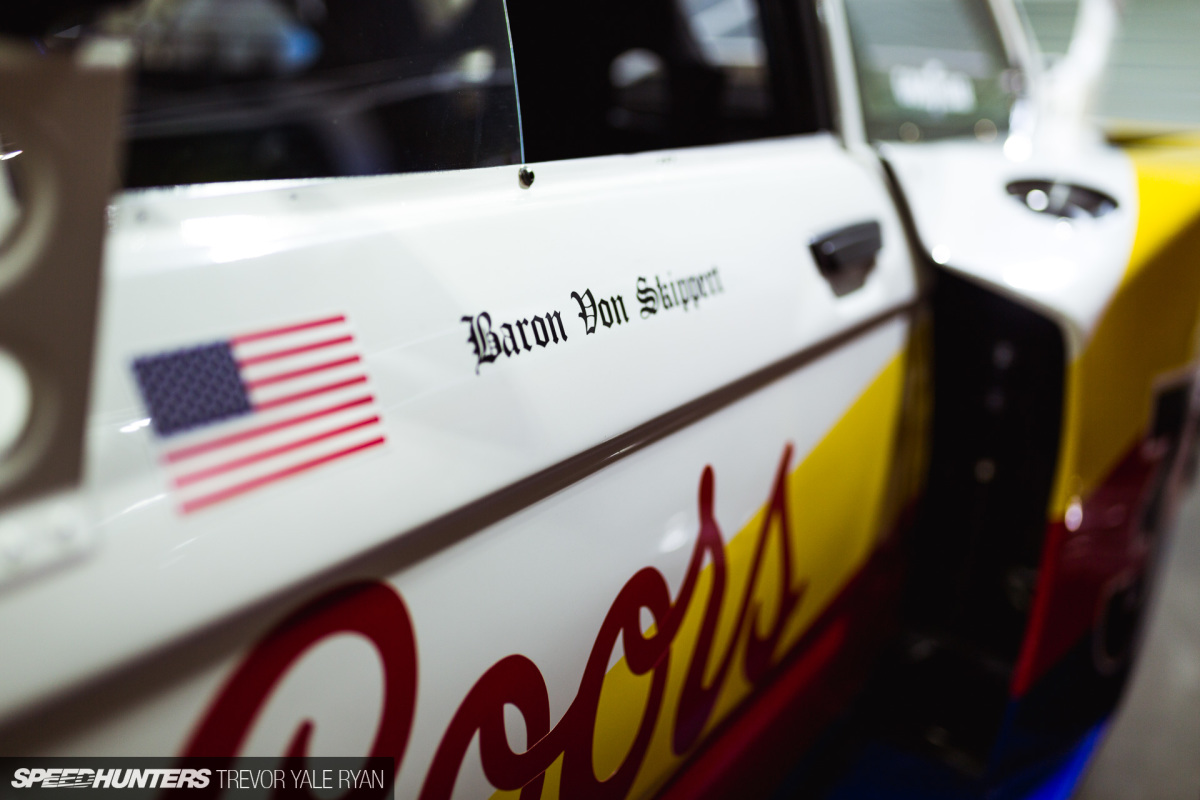
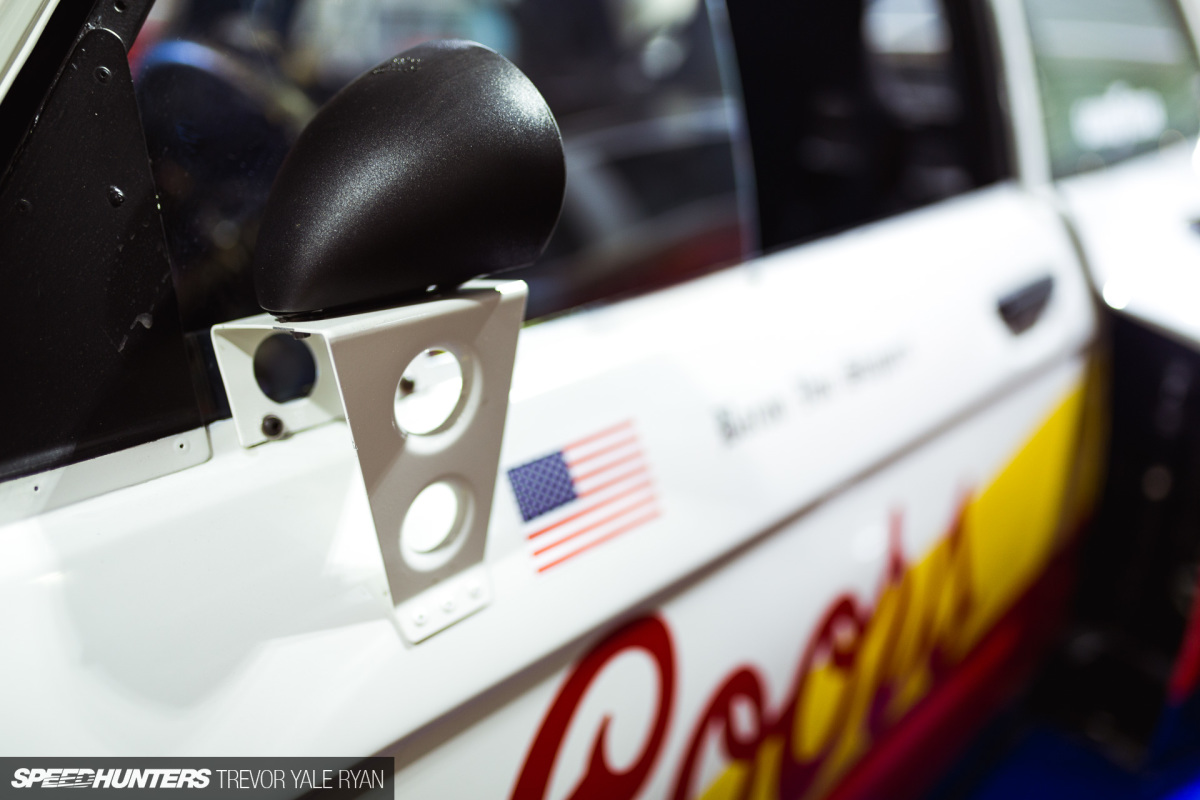
Yes, 1998. Years of parts hunting went into the BMW 320 Turbo that you see here today. He found genuine 320 lightweight doors (if you’re wondering who Baron Von Skippert is, that’s just Cory pulling your chain) in Colorado thanks to an obscure for sale site. Other spare bits, like extra sets of suspension, turned up in as unsuspecting of places as a recycling yard in Michigan (the aluminum and magnesium parts wouldn’t stick to the magnet). The trunk lid, wing uprights, and that rear window were all reconstructed. Cory was introduced to a guy at McLaren, where he bought all of the remaining 320 spares they had.
Ultimately, Cory tells me he was “just really lucky to be working on this with some great people.”
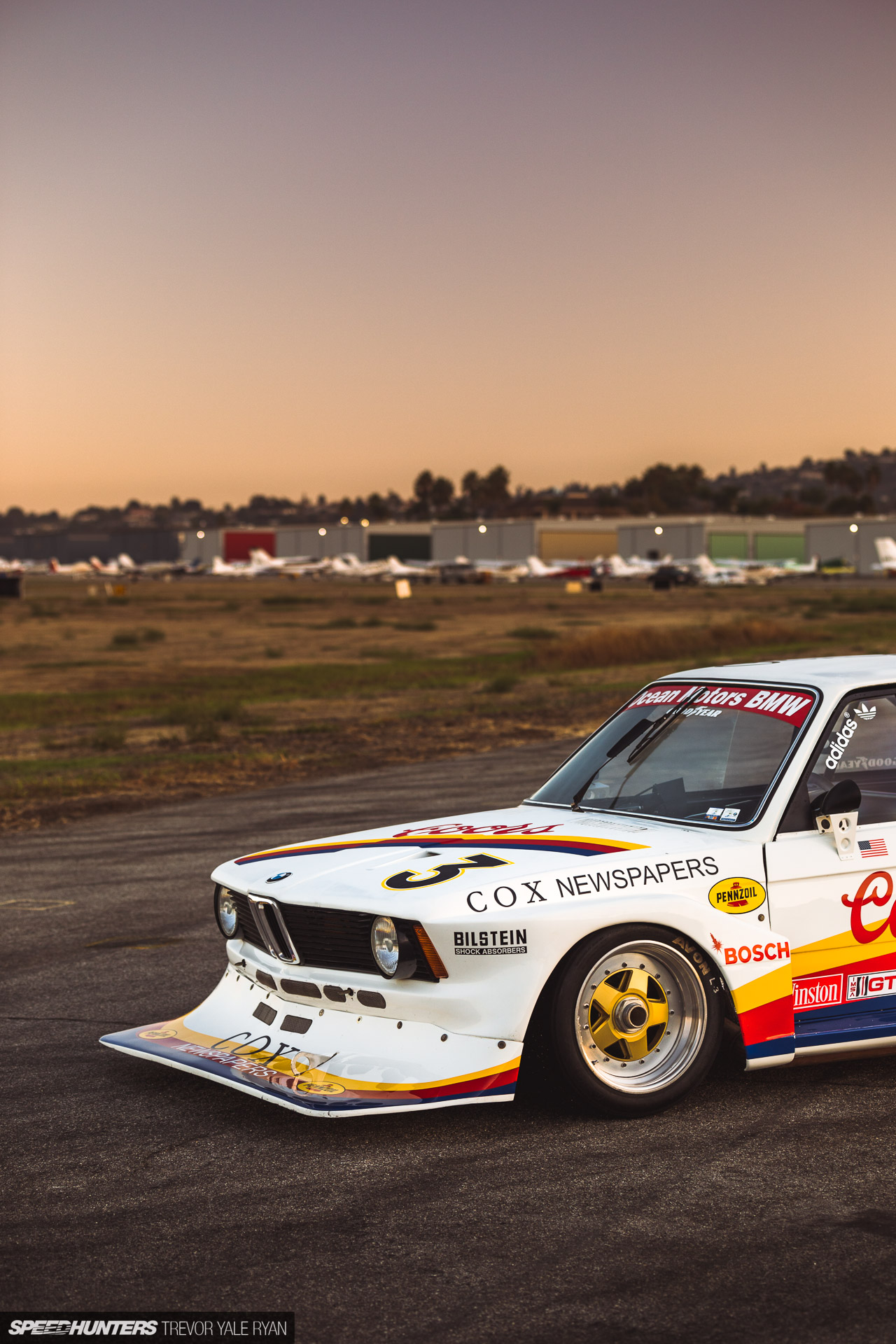
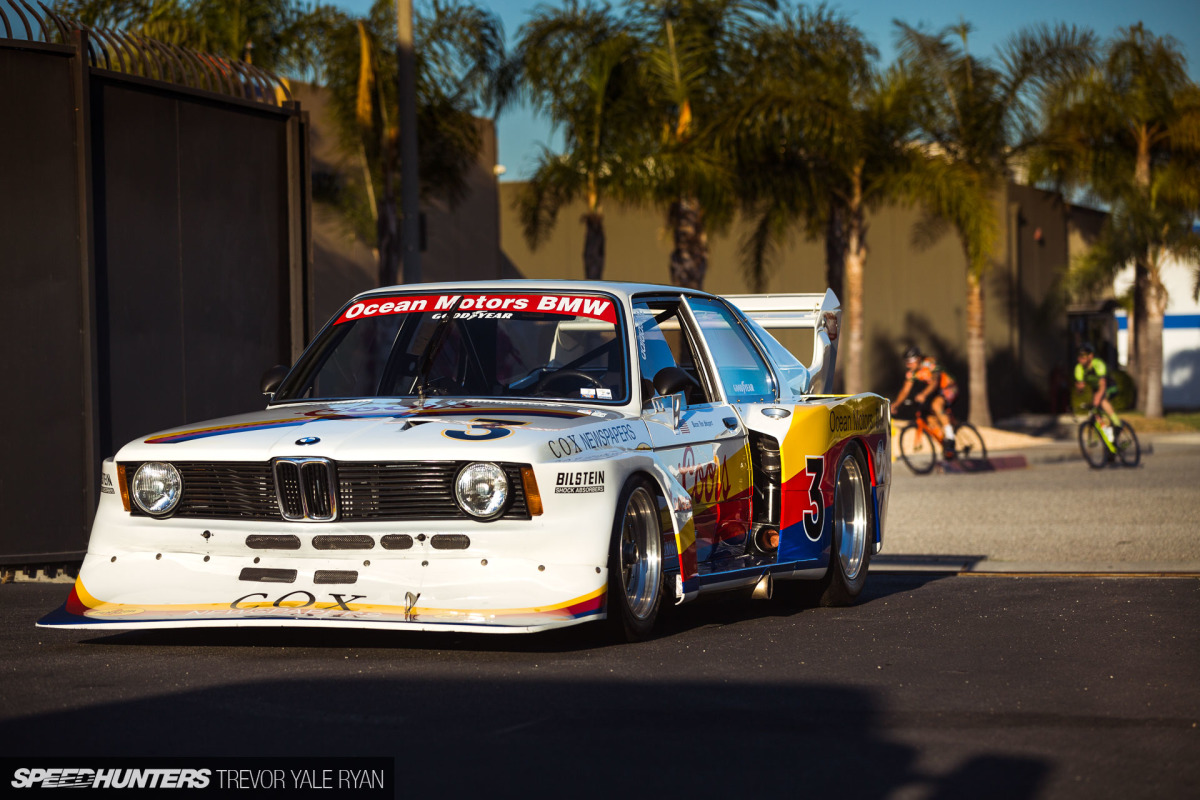
An unimaginable amount of work went into restoring this car to its former glory and, especially as a car enthusiast (and a photographer), it’s an amazing privilege to get up close to cars like this. There’s a certain classic air, something you can’t quite put your finger on.

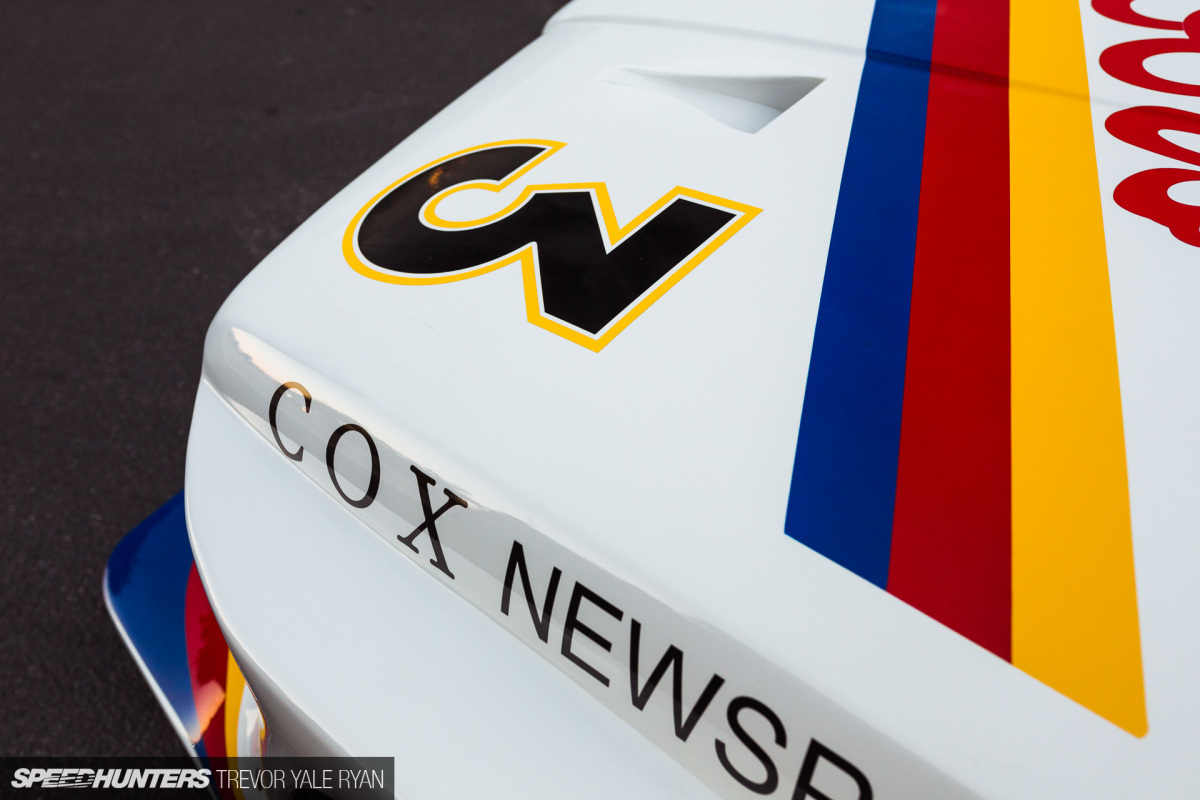

Is it the aesthetics? Is it the history? Is it that M12 four, pumping out over 300 horsepower per liter? Is it the big aero? What is it?
When I asked Cory what he thought he simply said “it’s a cool car. I’m a lucky guy and it just kind of happened. Thankfully, too, because the last guy was getting ready to throw it away.”
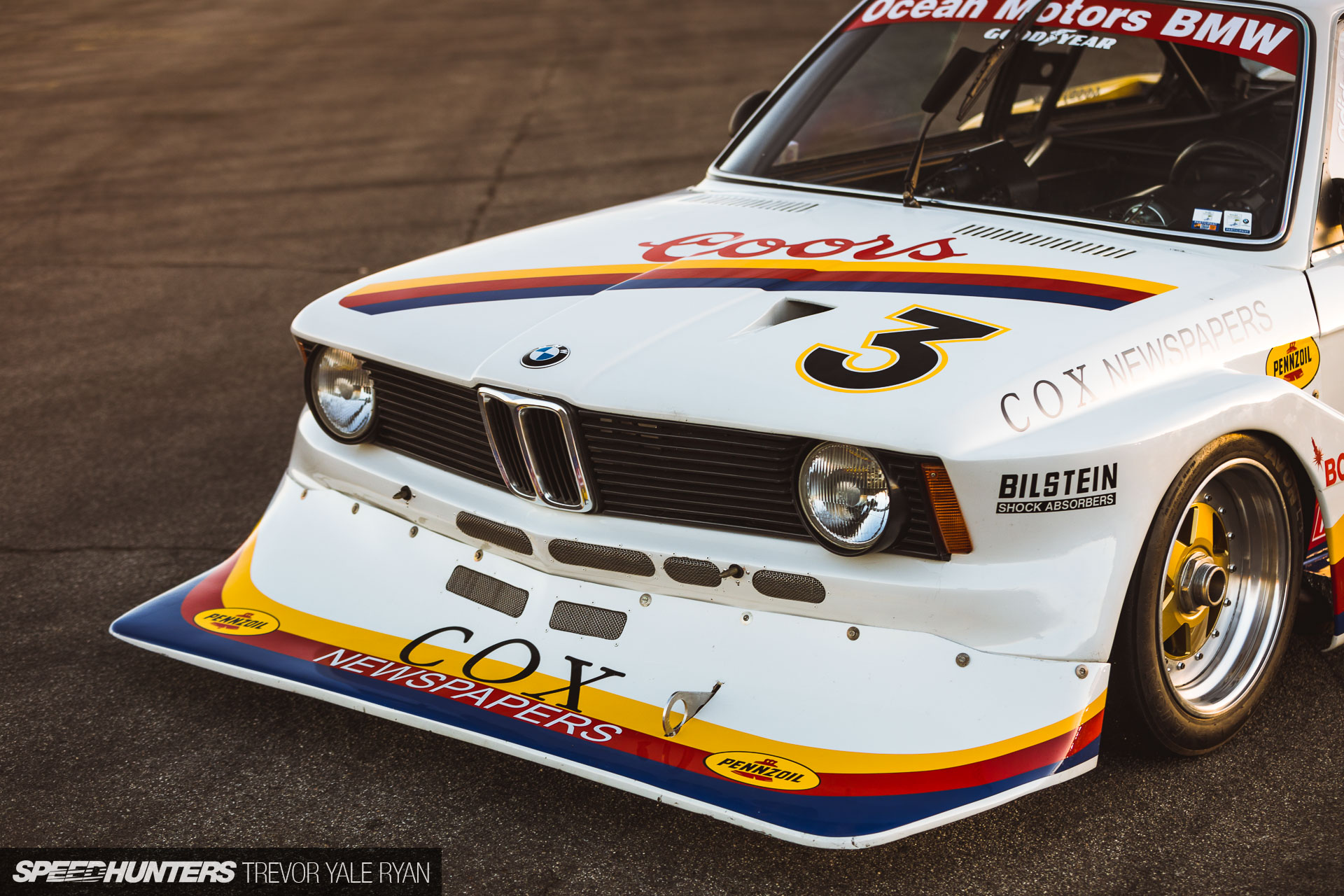
This is a car that was decades in the making after already living a full life racing around the world. A car with so many special components and so much history that it quite clearly belongs in a museum.

Instead, thanks to Cory Muensterman, this car lives in a private garage in Southern California. Even better, you can still hear the incredible song of the M12 engine at historic races. With IMSA as the featured marque at the Monterey Motorsports Reunion in 2019 I suspect we’ll see it there.
No matter the setting, Cory’s 320 Turbo is a car with incredible presence. Based on the first-ever 3 Series and built as one of two lightweights, one of a handful of Turbos, and one of 28 cars to ever receive this bodywork, this BMW serves as a blatant reminder of an old rule: Respect your elders.
Trevor Yale Ryan
trevor@speedhunters.com
Instagram: tyrphoto
TYRphoto.com
BWM related stories on Speedhunters
Extra! Extra!