
A time long ago, before the Subaru Impreza WRX and the Mitsubishi Lancer Evolution, there was the Lancia Delta.
During a long production run that started in the late 1970s, the Delta was produced in a variety of guises. But it was the fire-breathing, all-wheel drive turbo HF Integrale version that the model’s performance legacy was built on. Not to mention the countless successes in the Group A class of the World Rally Championship, at the hands of drivers including Juha Kankkunen and Miki Biasion.
The Delta was the last foray for Lancia as a brand, as its parent company Fiat slowly moved to kill it off and shift resources towards Alfa Romeo. Lancia lives on, but today the brand only produces a city car called the Ypsilon, which is only sold in Italy. The ruthless corporate world hasn’t been kind to what was once one of Italy’s greatest car manufacturers; Lancia always pushed technology far beyond what anyone was doing at the time, with a final goal of making their cars the most fun to drive.
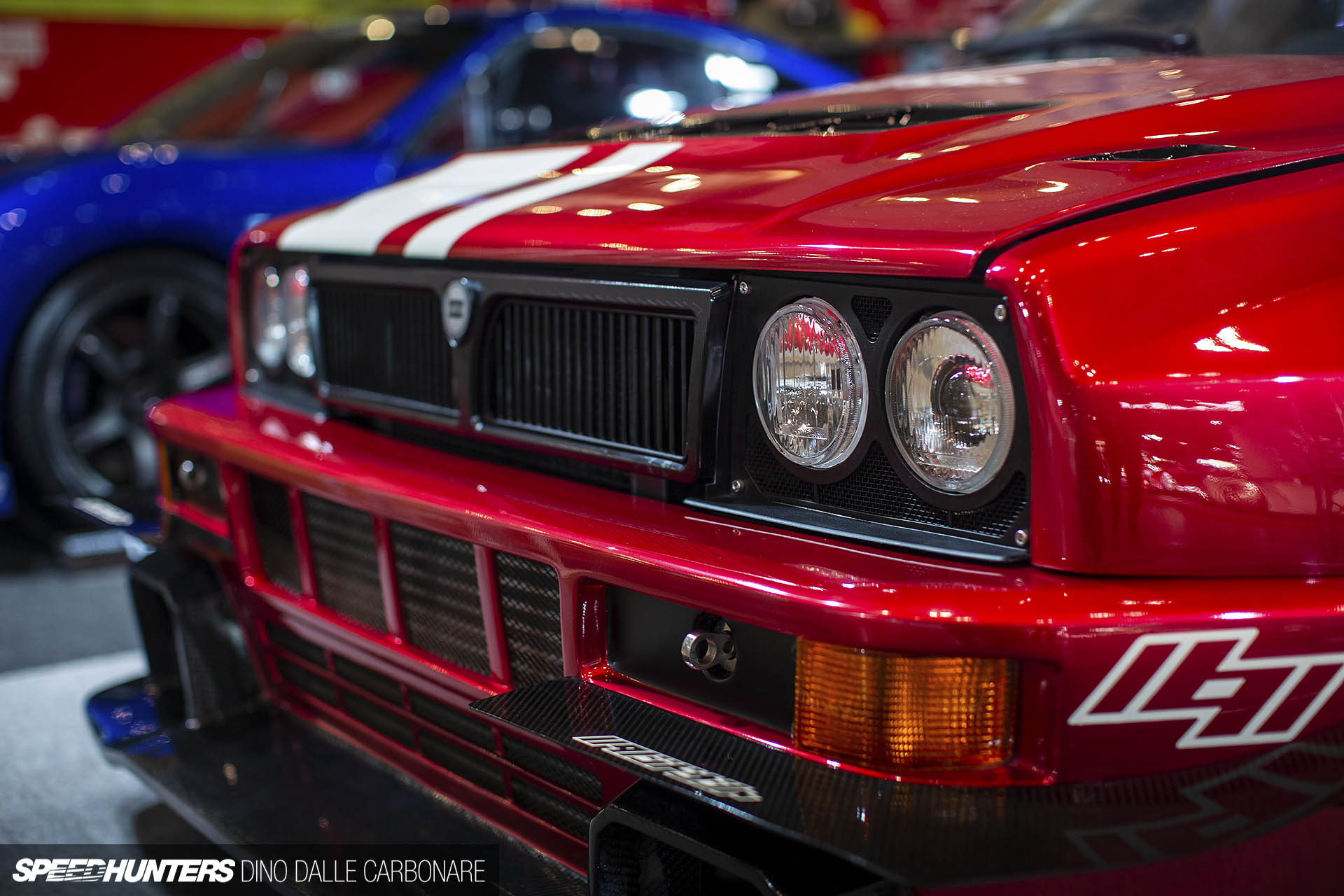
Yes, I’m one of those people that wish the Lancia of old would return to make exciting new cars. But I digress…
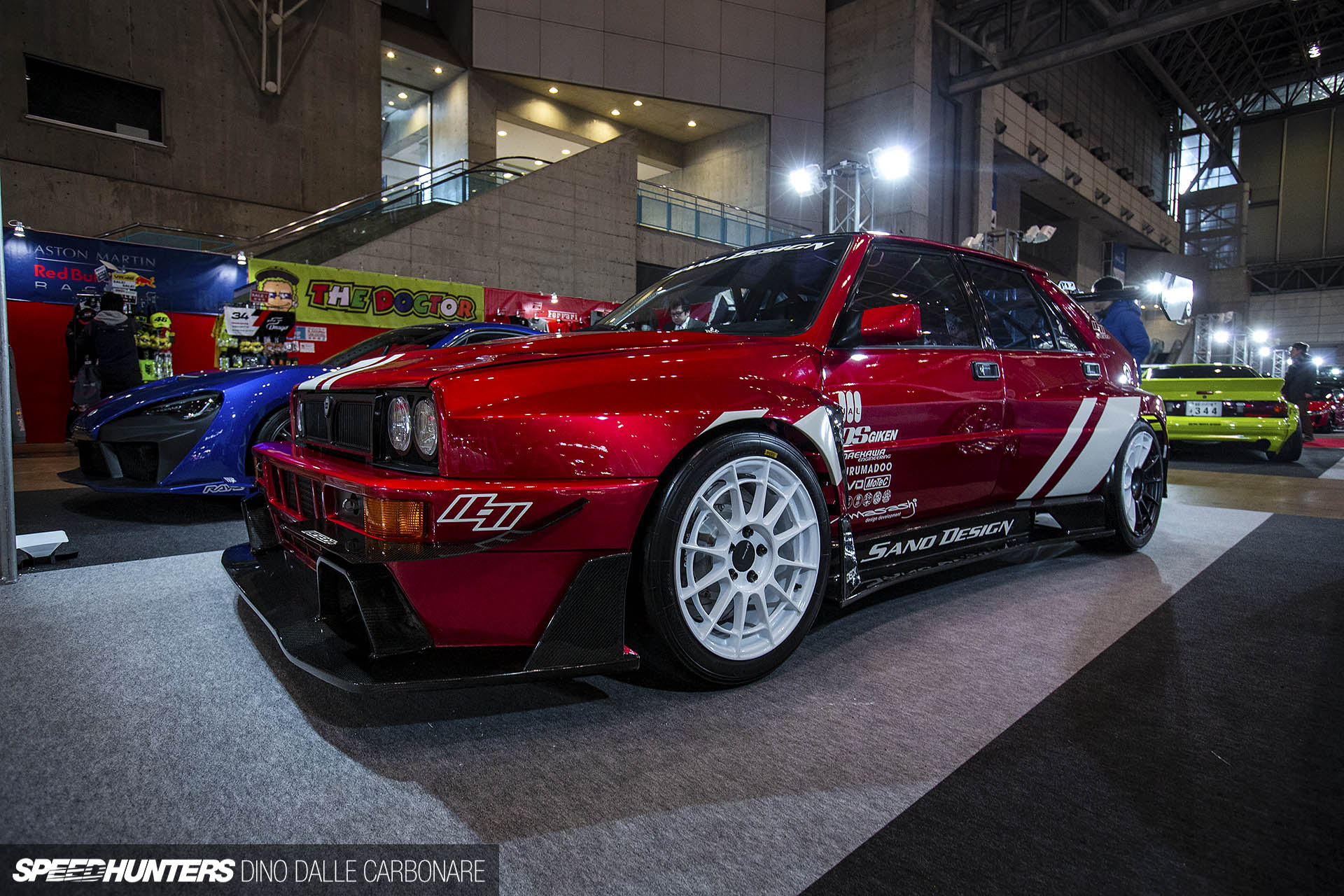
I’m here to talk about what has to be the most extreme interpretation of a Delta Integrale Evo II that we’ve ever come across in Japan, as found at Tokyo Auto Salon over the weekend. And there are a hell of a lot of these cars in Japan; Lancia even made some JDM-only models back in the day to quench the local thirst for the unique.
The funny thing is, this car was created as a personal challenge: The owner was upset by the fact that the record lap time he held at his local track was broken by someone else.
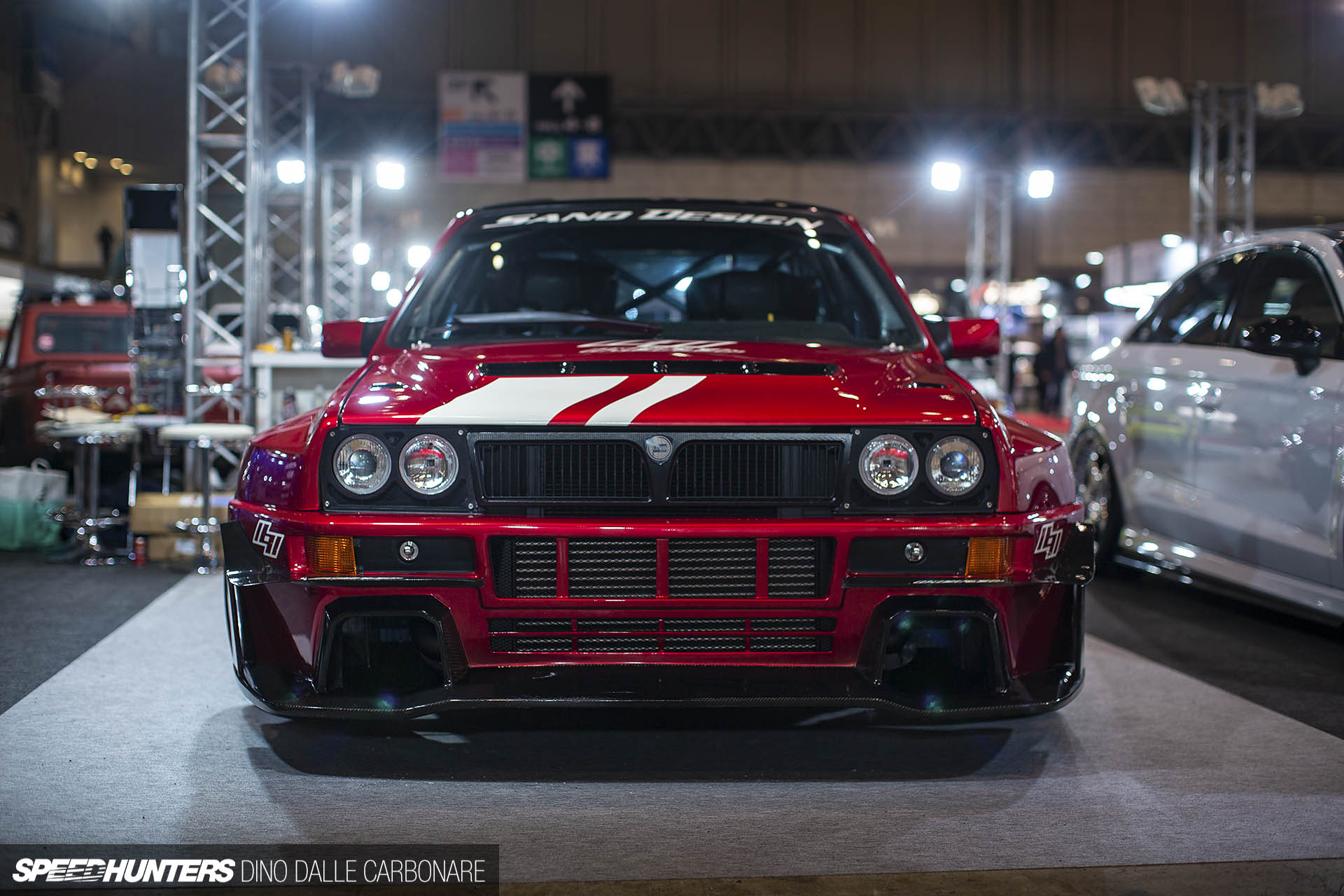
He didn’t just want to better it though, he wanted to raise the bar so high that its new best lap wouldn’t be broken for some time. So he took his 1993 Delta and transformed it into what you see here, the Delta ‘Fenice’ 105 as it’s been named (‘phoenix’ in Italian and 105 hinting at how much it’s been widened on each side).

As you can see, there were certainly no reservations about going wide. It was all done in the pursuit performance, and the car’s final look is just a byproduct of that.
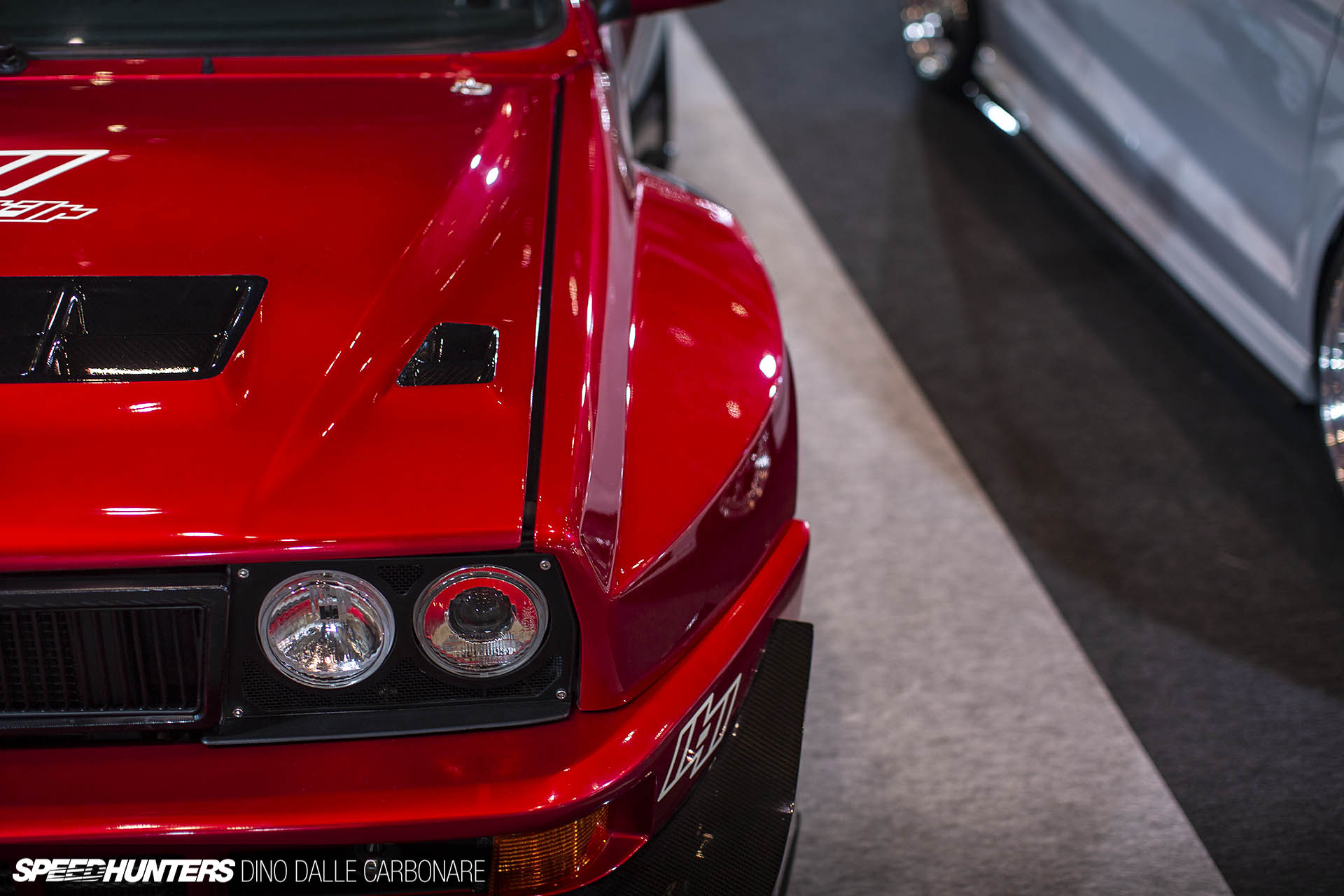
Now that’s some girth. If the wide arches were removed, you’d see the majority of the race slicks mounted on Enkei wheels sitting outside of the original body.
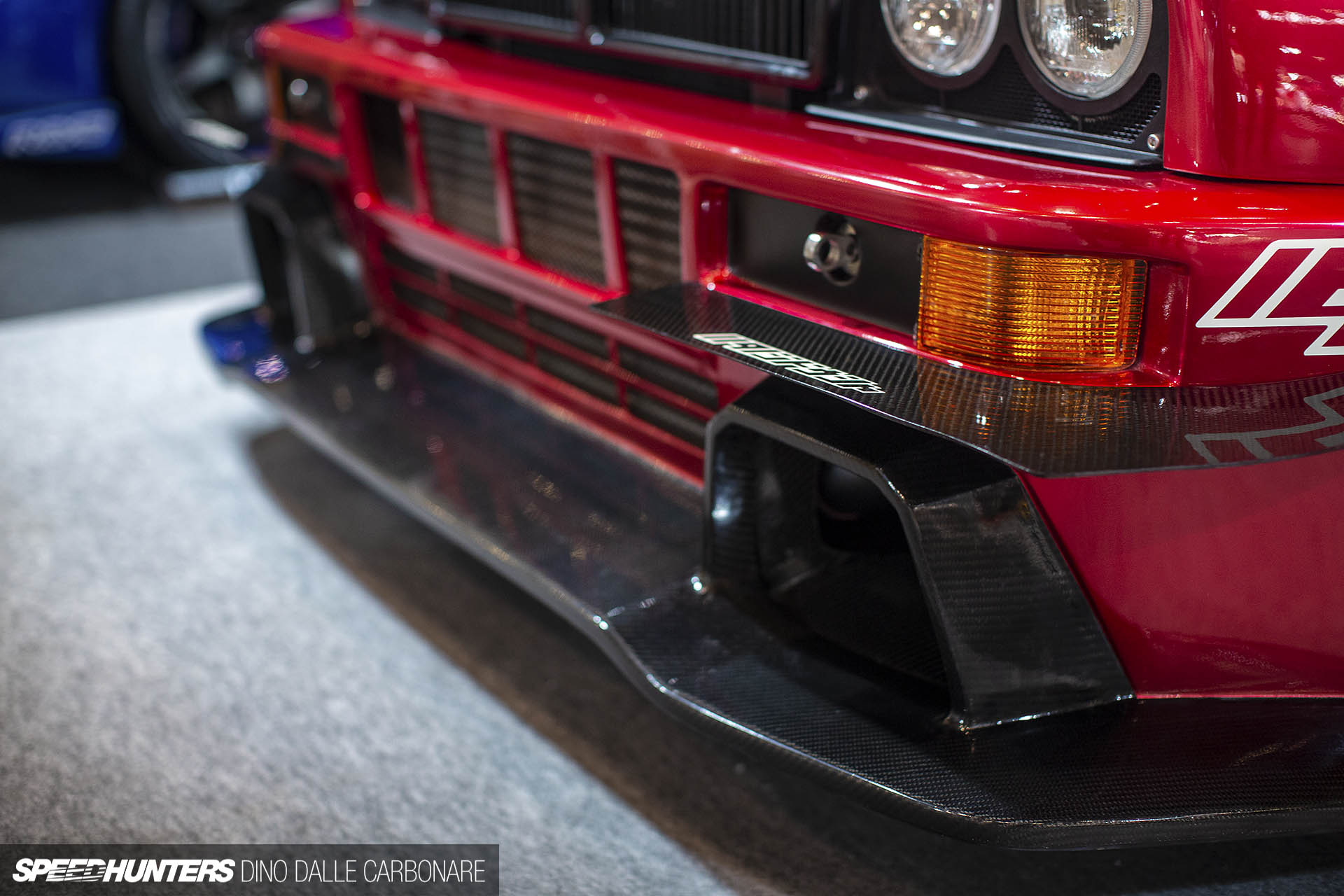
Every custom body piece has been made from carbon fiber, and the first thing that catches your eye (after the massive fender flares) is the front lip spoiler and the integrated intakes.
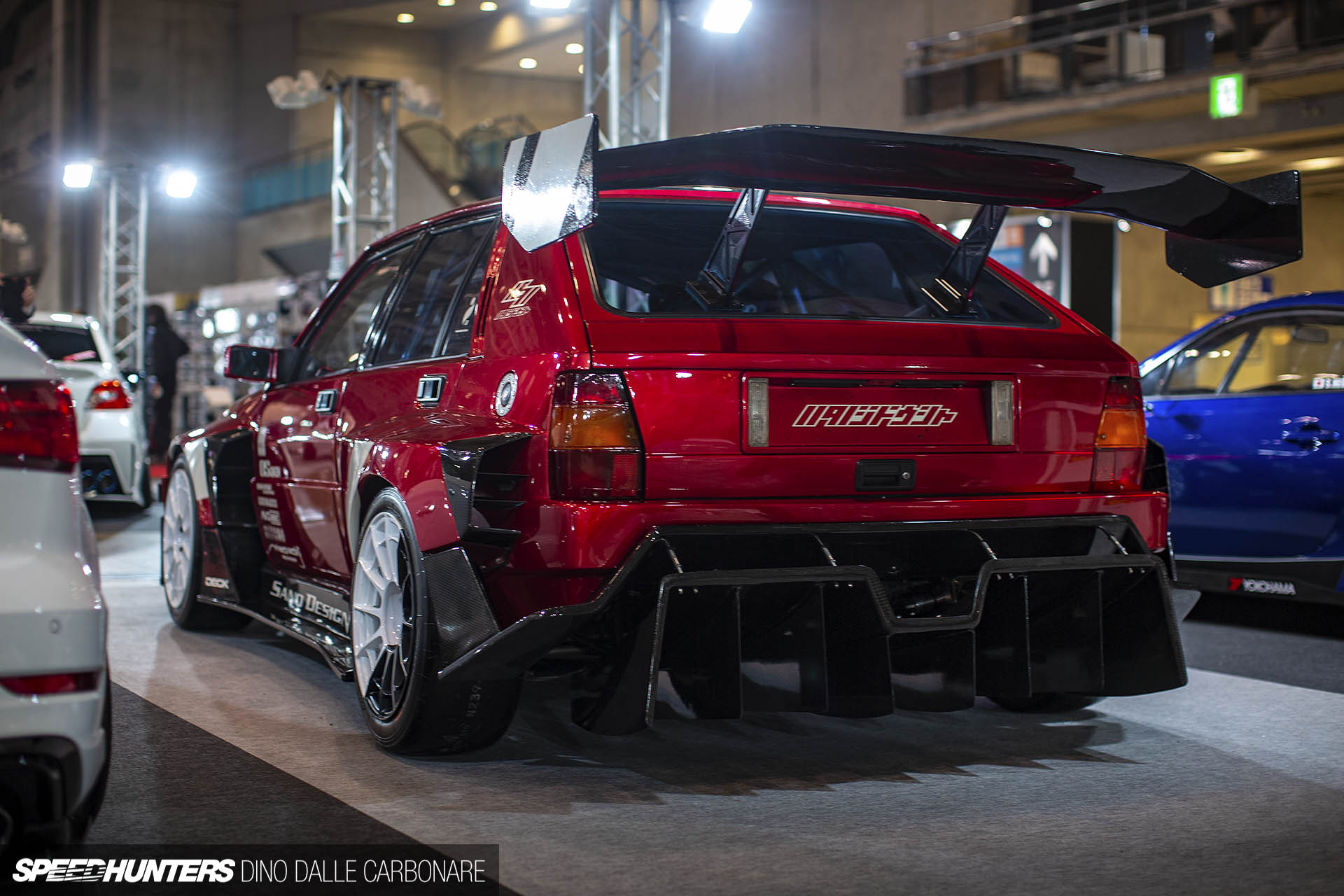
There’s enough aggression here to keep even the most die-hard lovers of time attack aero happy.


I love how the billet swan-neck wing stays are attached through the rear polycarbonate screen onto the roll cage, deploying downforce right where it needs to be.
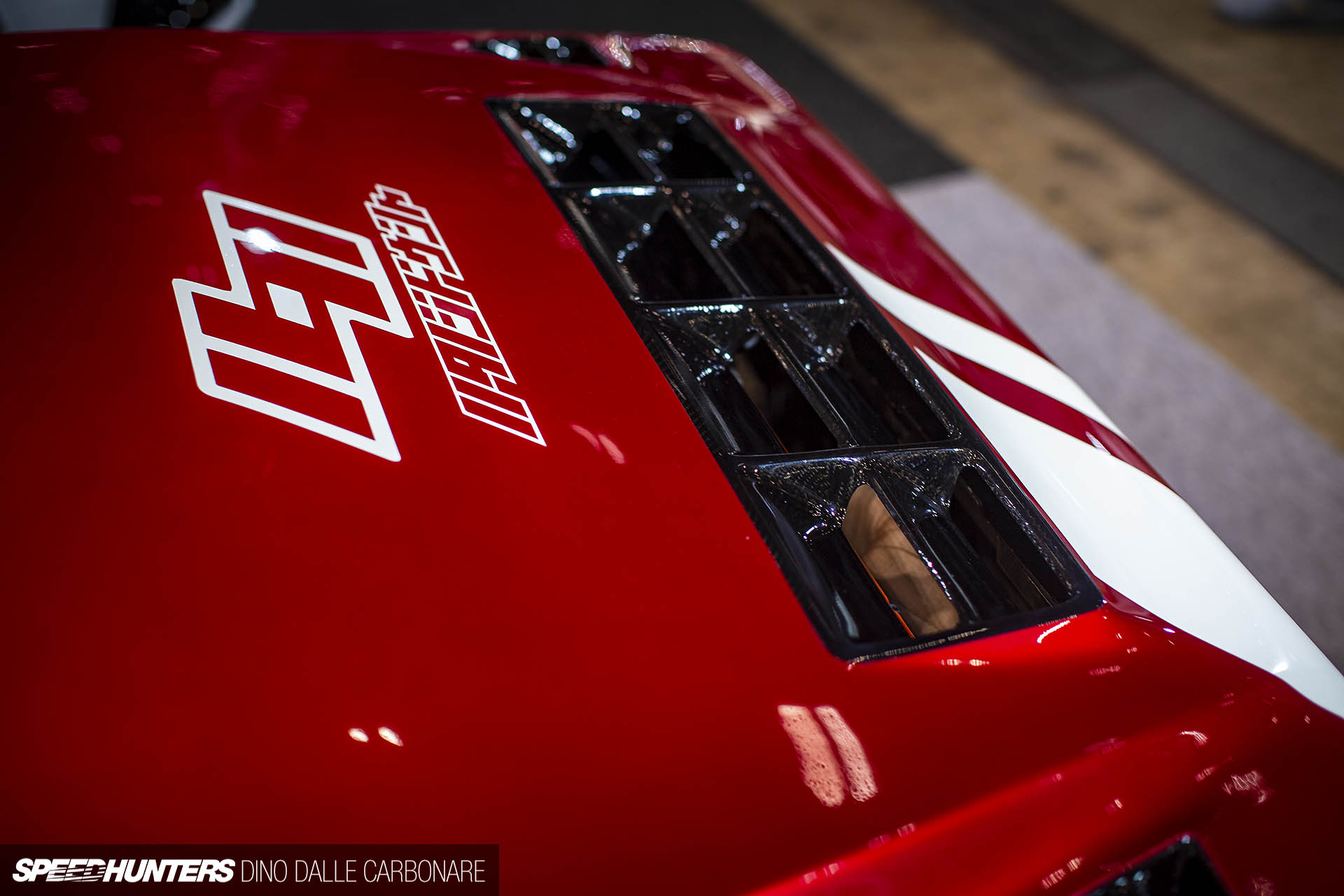
Looks are nothing without an equal amount of substance, though.
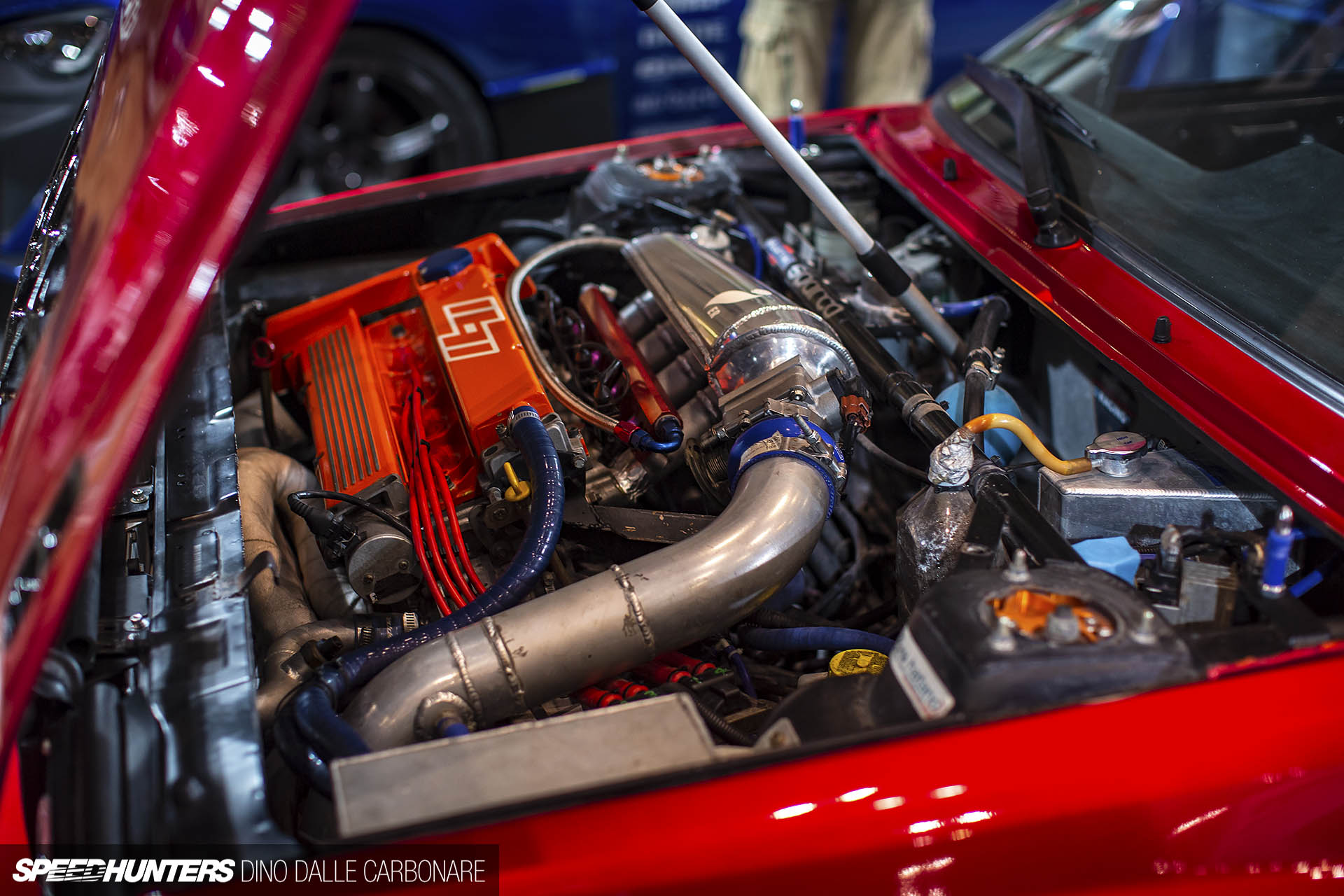
There aren’t many stock parts left in the engine room; it’s a pretty serious build comprising of a custom long-stroke and fully counter-balanced crankshaft mated to OS Giken pistons and connecting rods. These combine to increase capacity from 2.0L to 2.3L, and there’s a host of cylinder head work ready to take the savage shot of boost the custom-milled Garrett GT3037 provides.
The result is just over 600hp, all channelled through a reworked and beefed-up transmission which also contains a larger LSD to cope with the massive hike in performance.
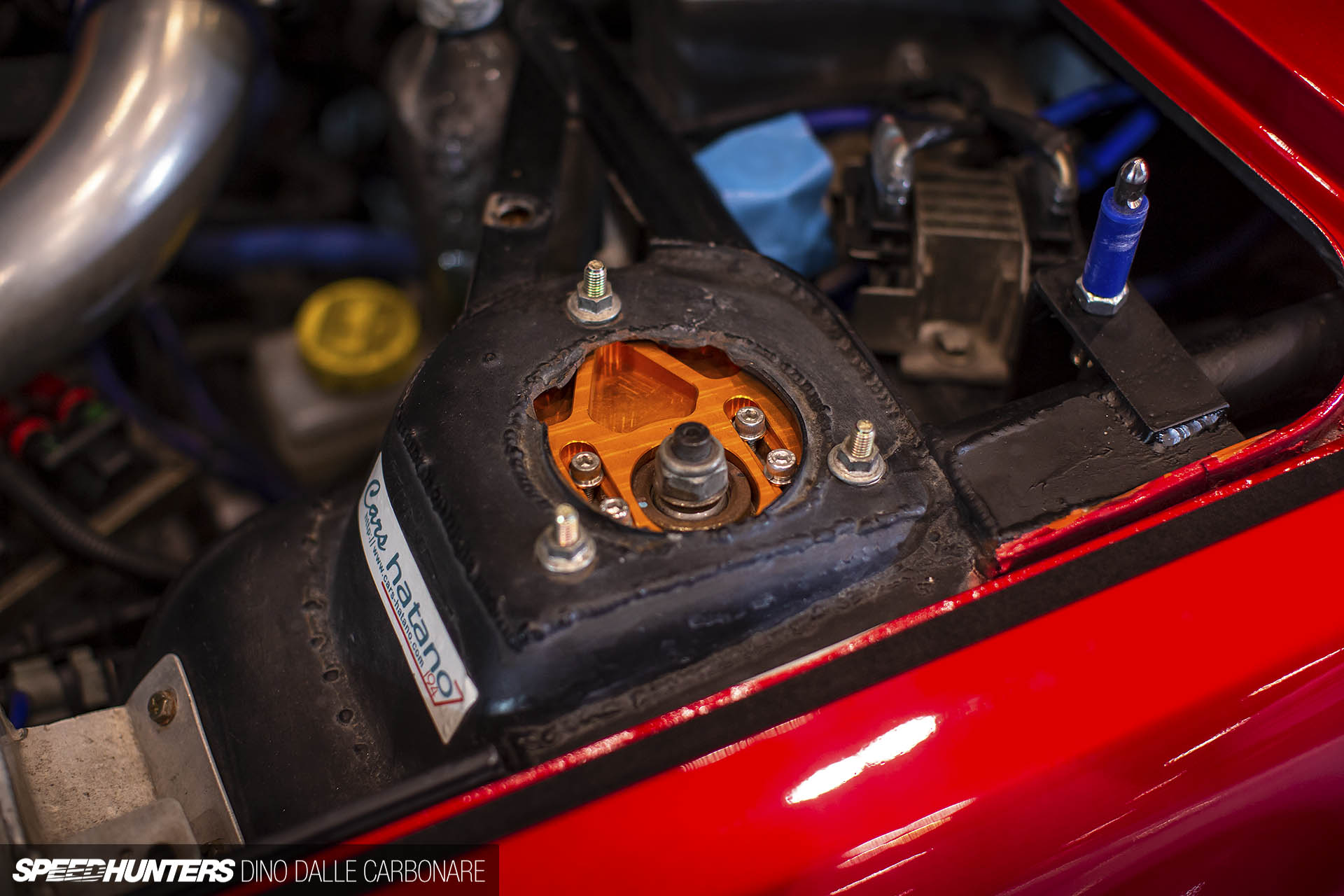
Under the re-welded suspension turrets you get a little clue as to what’s been done in the handling department.
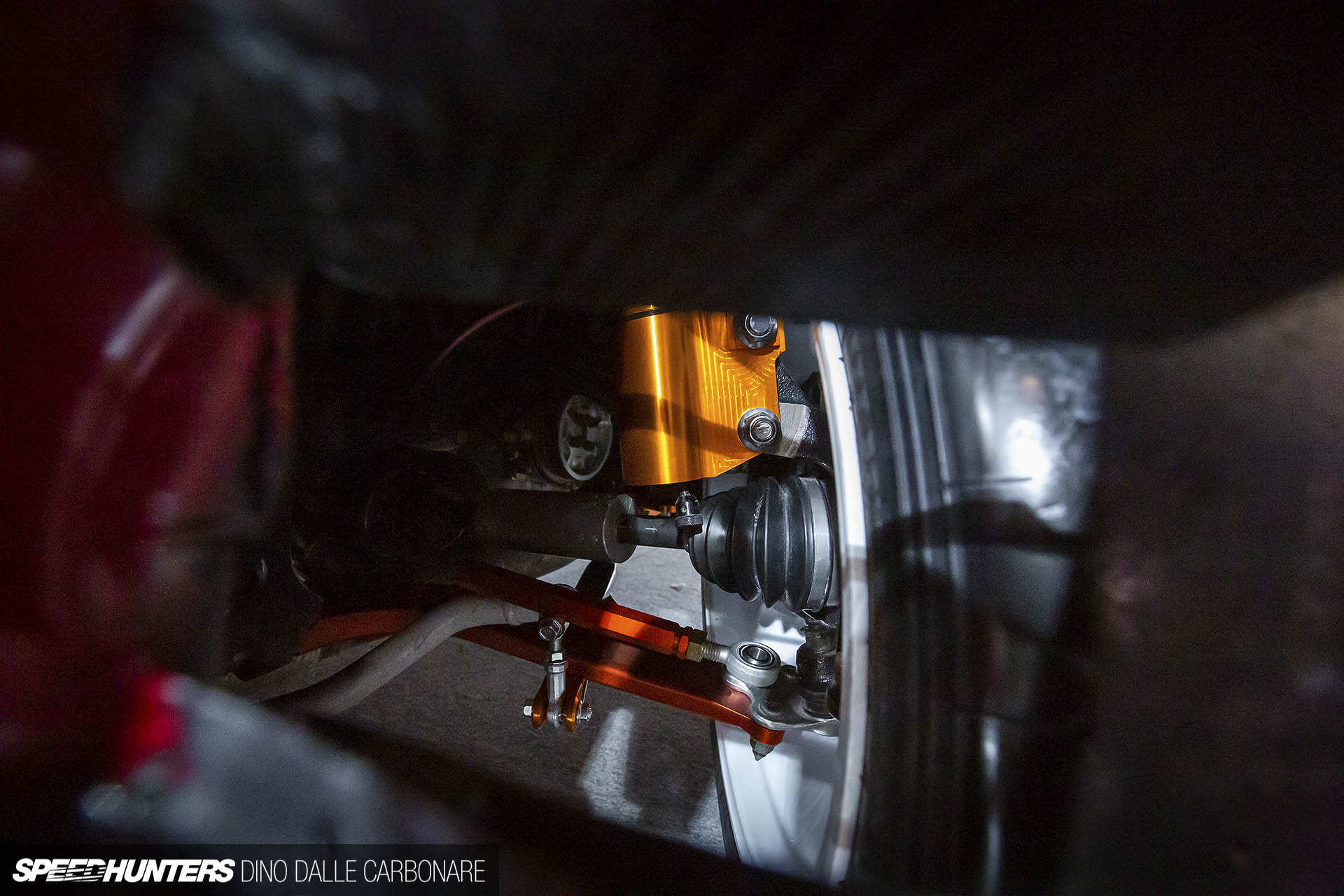
That is, pretty much everything. There’s hardly anything left from the dated Delta layout; it’s all been replaced by billet and anodized arms designed to introduce a fully adjustable geometry.
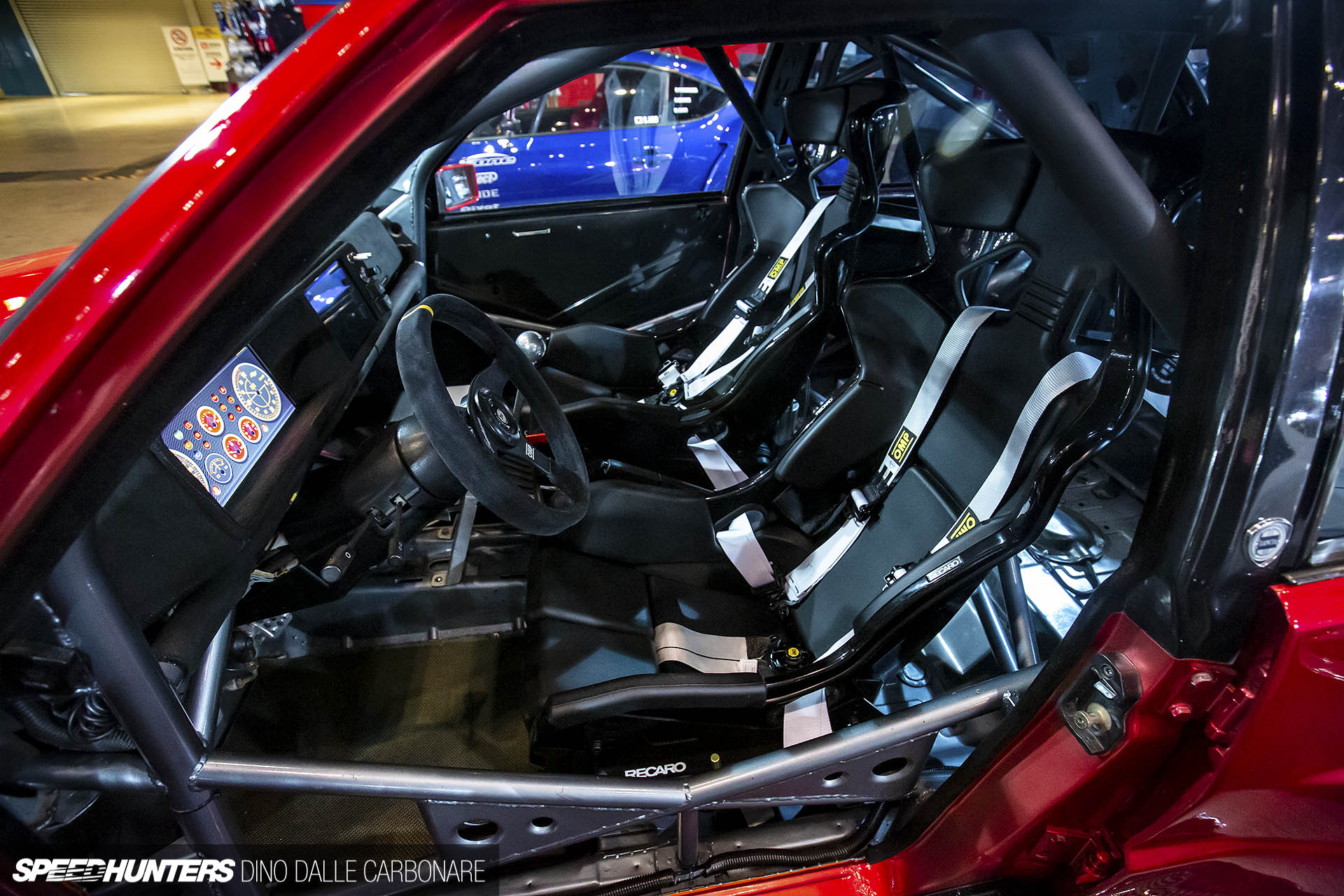
Let’s move inside, shall we?
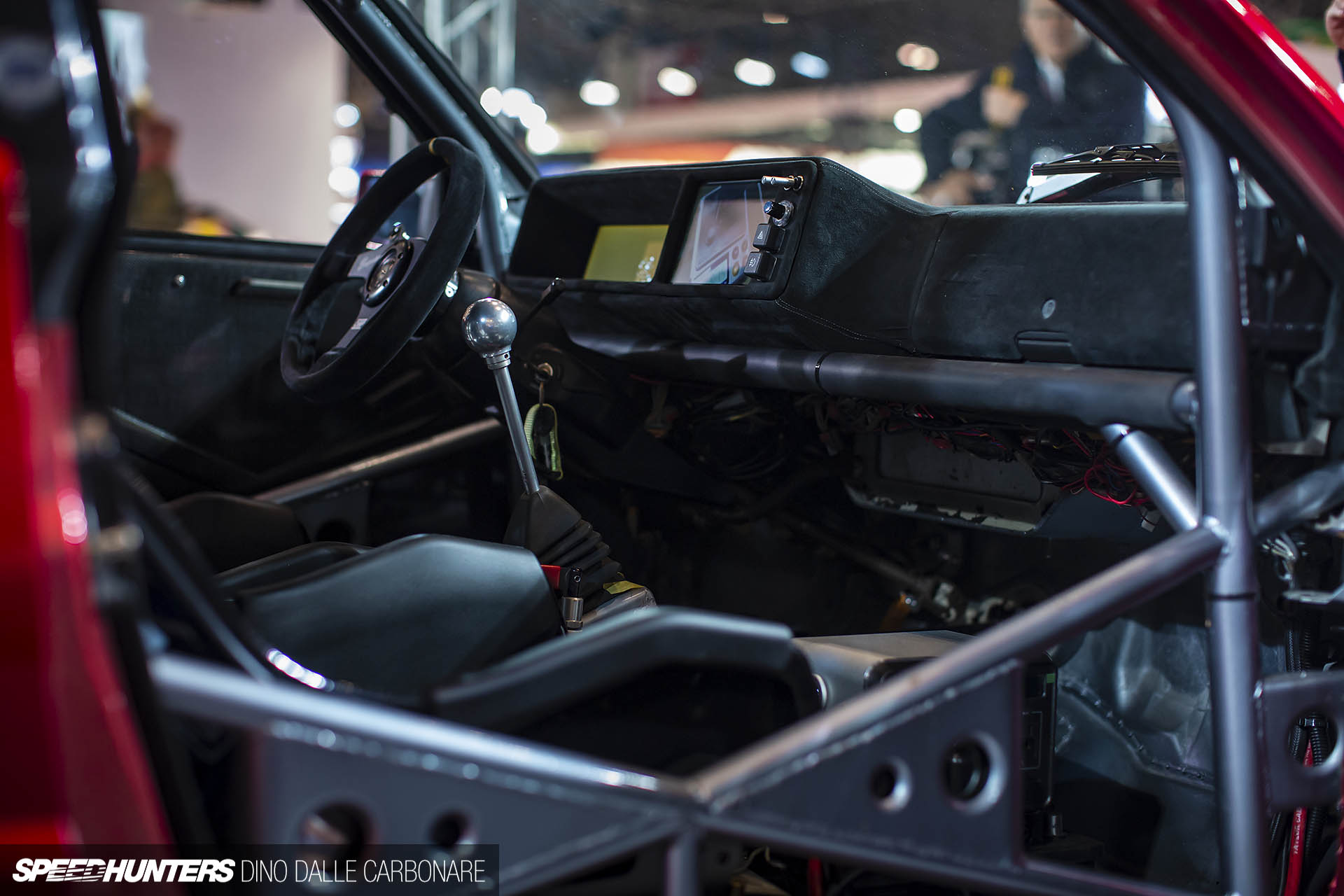
There are absolutely no worries that the 26-year-old shell isn’t stiff enough with the addition of what is one hell of a serious cage.
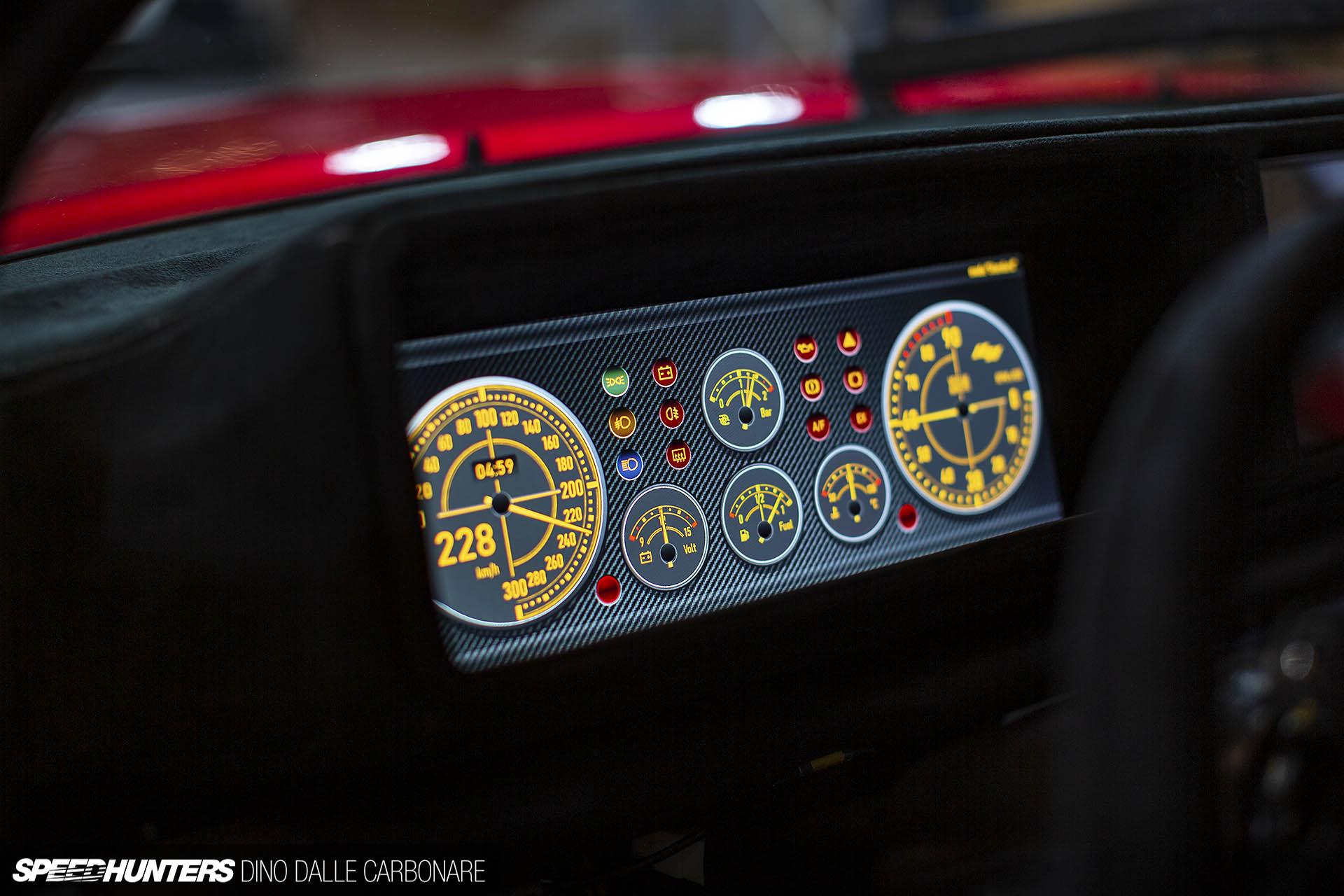
My favorite thing has to be the massive MoTeC display. Not only does it seem to fit perfectly inside the Delta’s instrument binnacle, it’s been uploaded with custom-designed graphics to mimic the old rally car gauges.
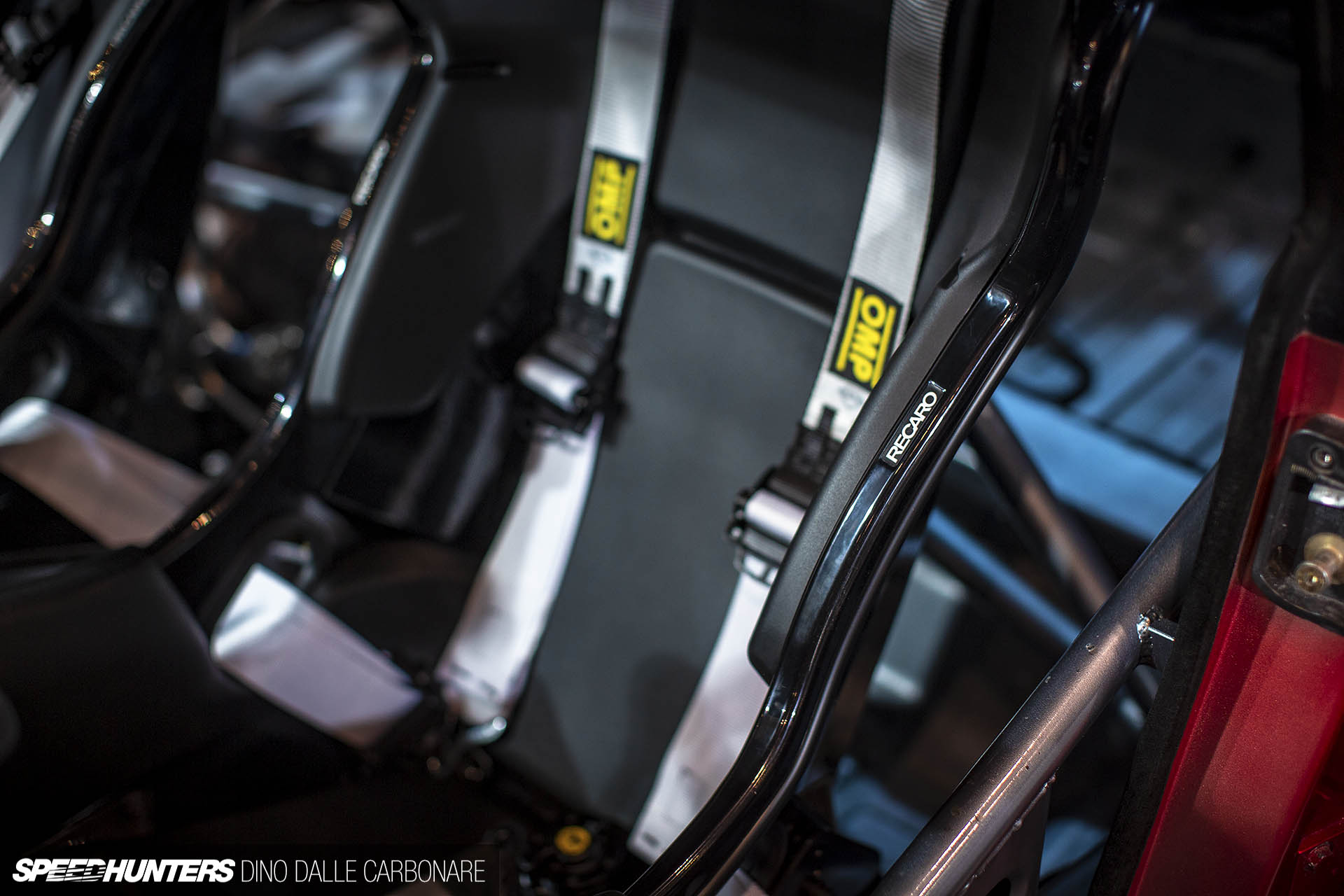
Lightweight Recaro bucket seats and OMP harnesses finish up the passive safety side of things.

Like I said, they certainly didn’t cut any corners with the roll cage design.

That’s how much cutting was needed to accommodate the new suspension layout and the newfound track width.
While the engine’s MoTeC ECU has been mapped and the car is ready to rock, there’s still work that needs to be done to dial the suspension in – but it’s nearly there.
Of course, we would love to see this thing in action and give it the full feature treatment it so obviously deserves.
Dino Dalle Carbonare
Instagram: speedhunters_dino
dino@speedhunters.com