
Crafting a story, that’s all it really boils down to.
For over a decade now, that’s what every Speedhunter has attempted to do; bring the reader in, share the experience, make the audience feel like they are right there alongside us. Most of the time, there are no complex angles that need setting up, you just get into it and tell the story as it happened. That’s what I’m doing here…
Welcome to a warm spring day in late March at Fuji Speedway’s lesser known gymkhana course, nothing more than a big wide open space of tarmac that sits right above the drift course. It’s the perfect venue to hold smaller driving courses, or in this case, shred some serious rubber.
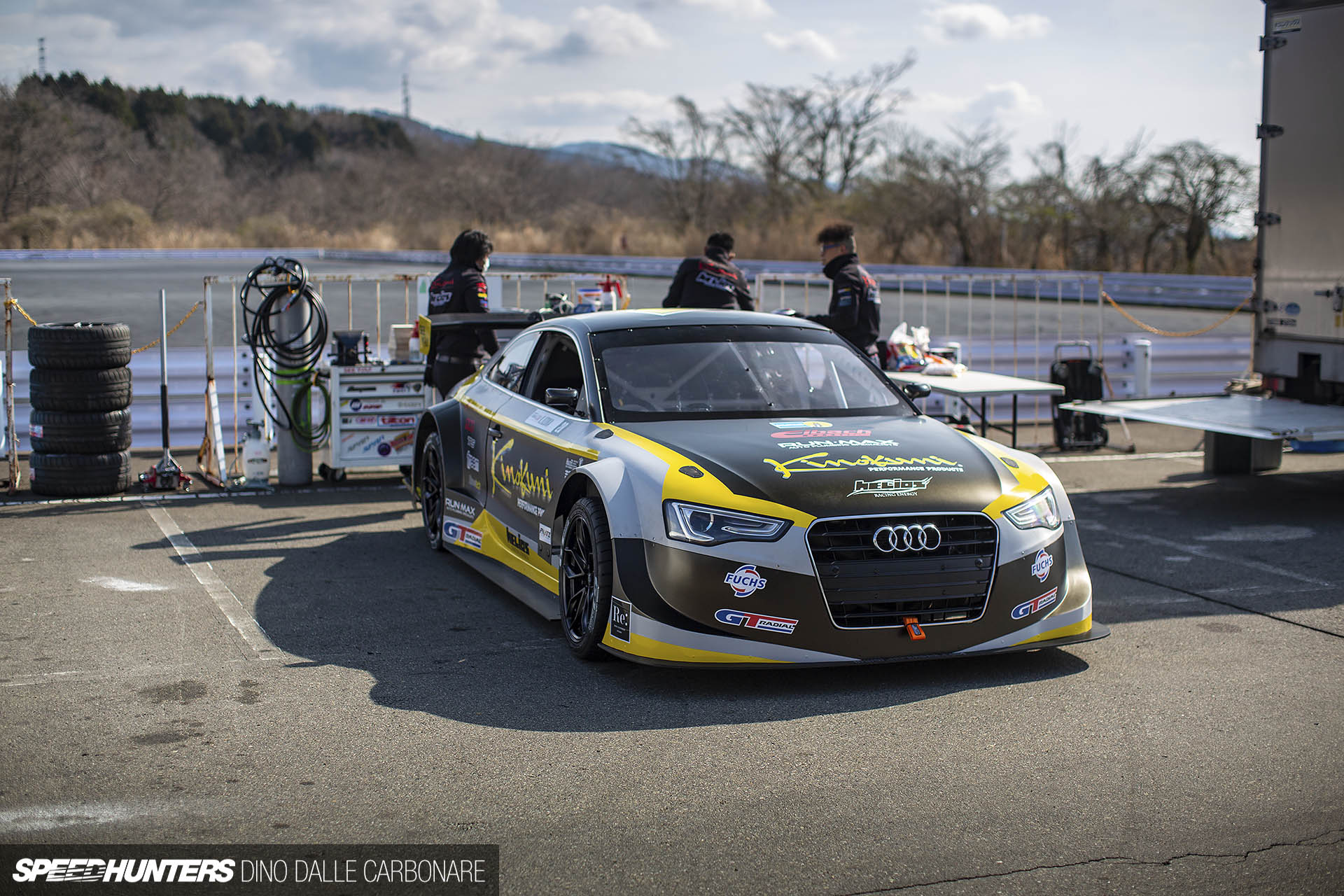
As I pulled in to the carpark, the team I had arranged to meet was already there setting up.
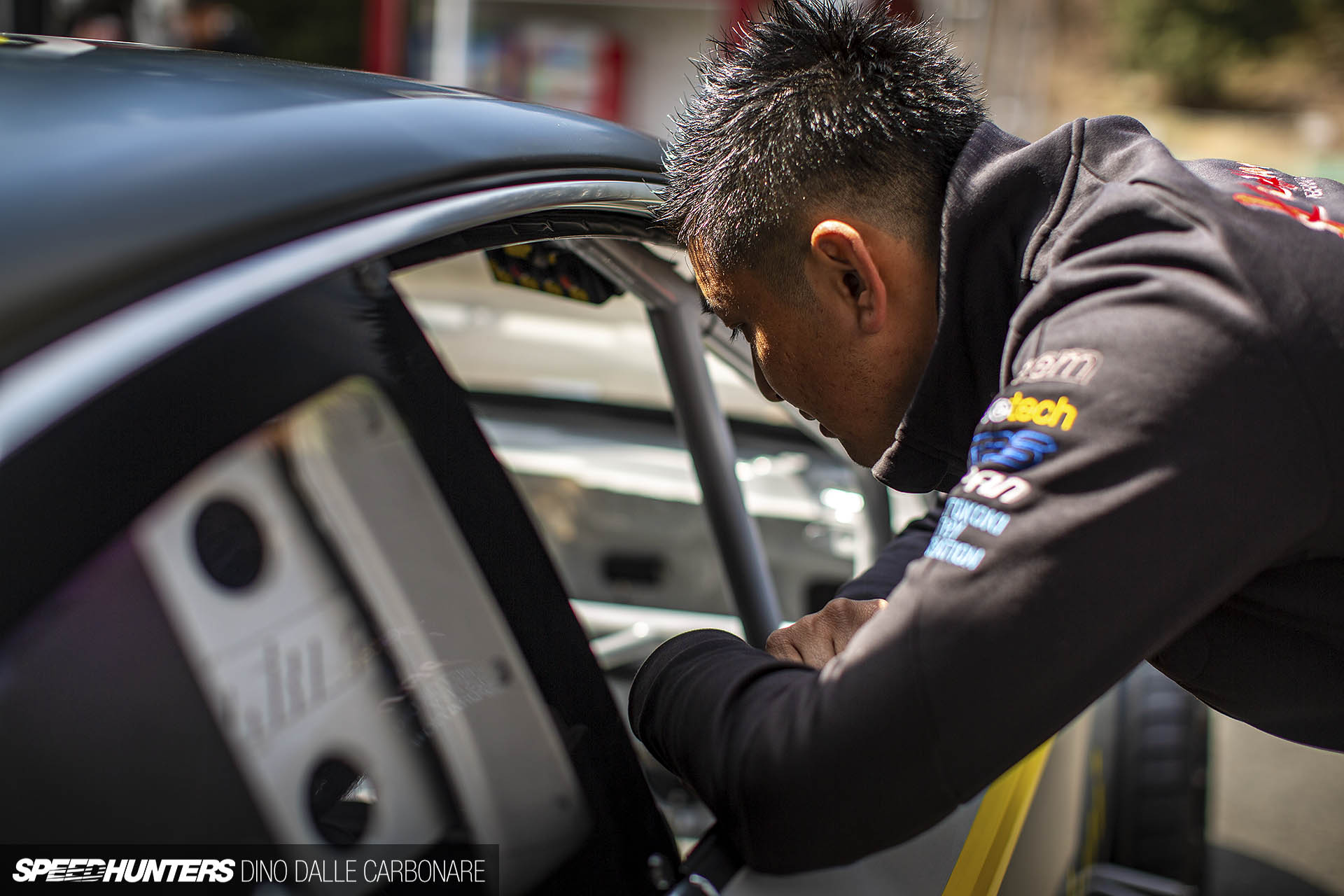
The invitation had come from Iikuta-san, a name you may be familiar with if you follow Japanese professional drifting. After seeing his Audi A5 at the Kinokuni booth at Tokyo Auto Salon in January, I knew I needed to follow the development of the car as it was prepared for its foray into this year’s Formula D Japan championship.
FD Japan is what I now like to refer to as the fun professional drift championship in Japan.
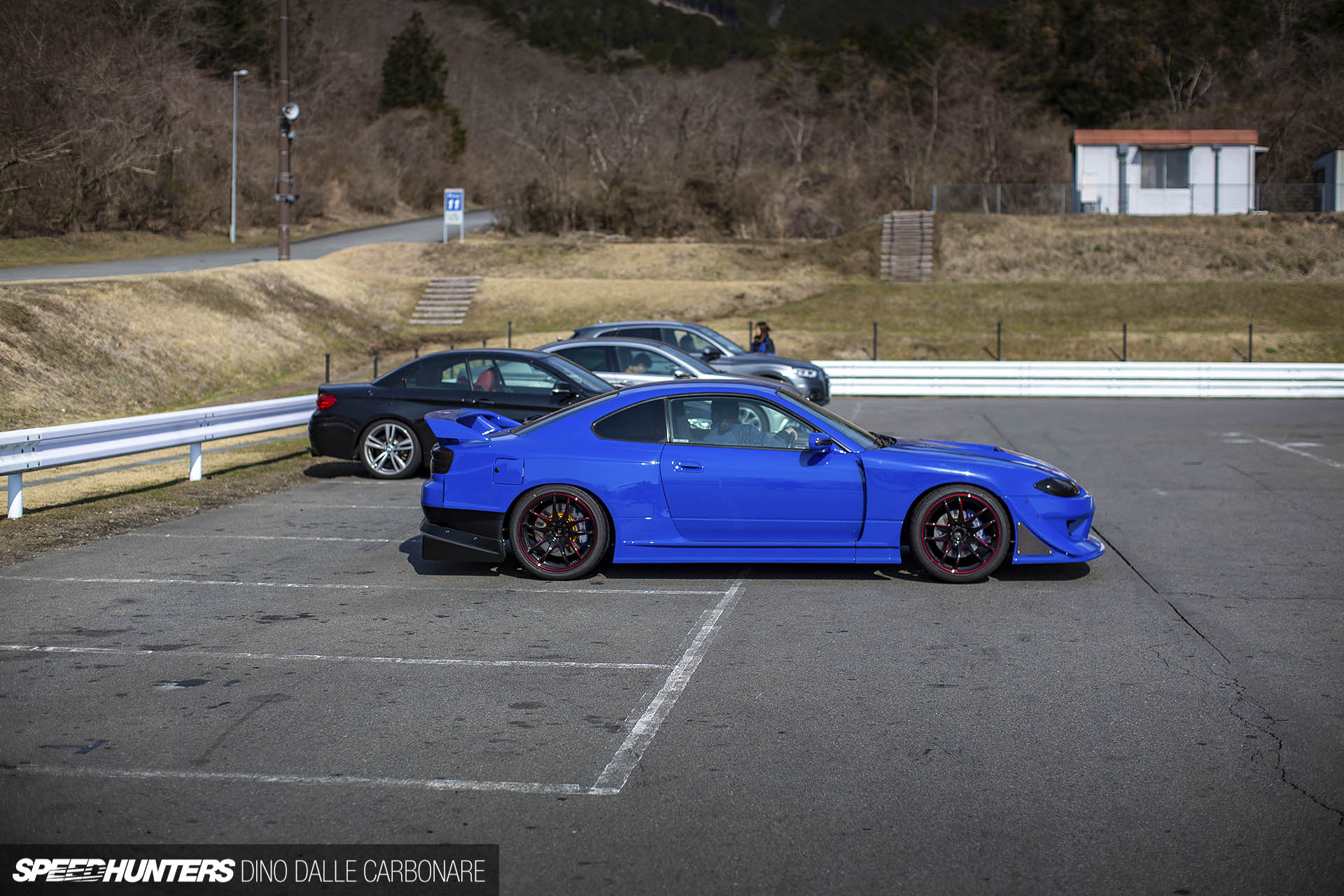
Shortly after my arrival, Mori-san from Auto Service Mori rolled in with his Kazama Auto-kitted S15 street drift car.
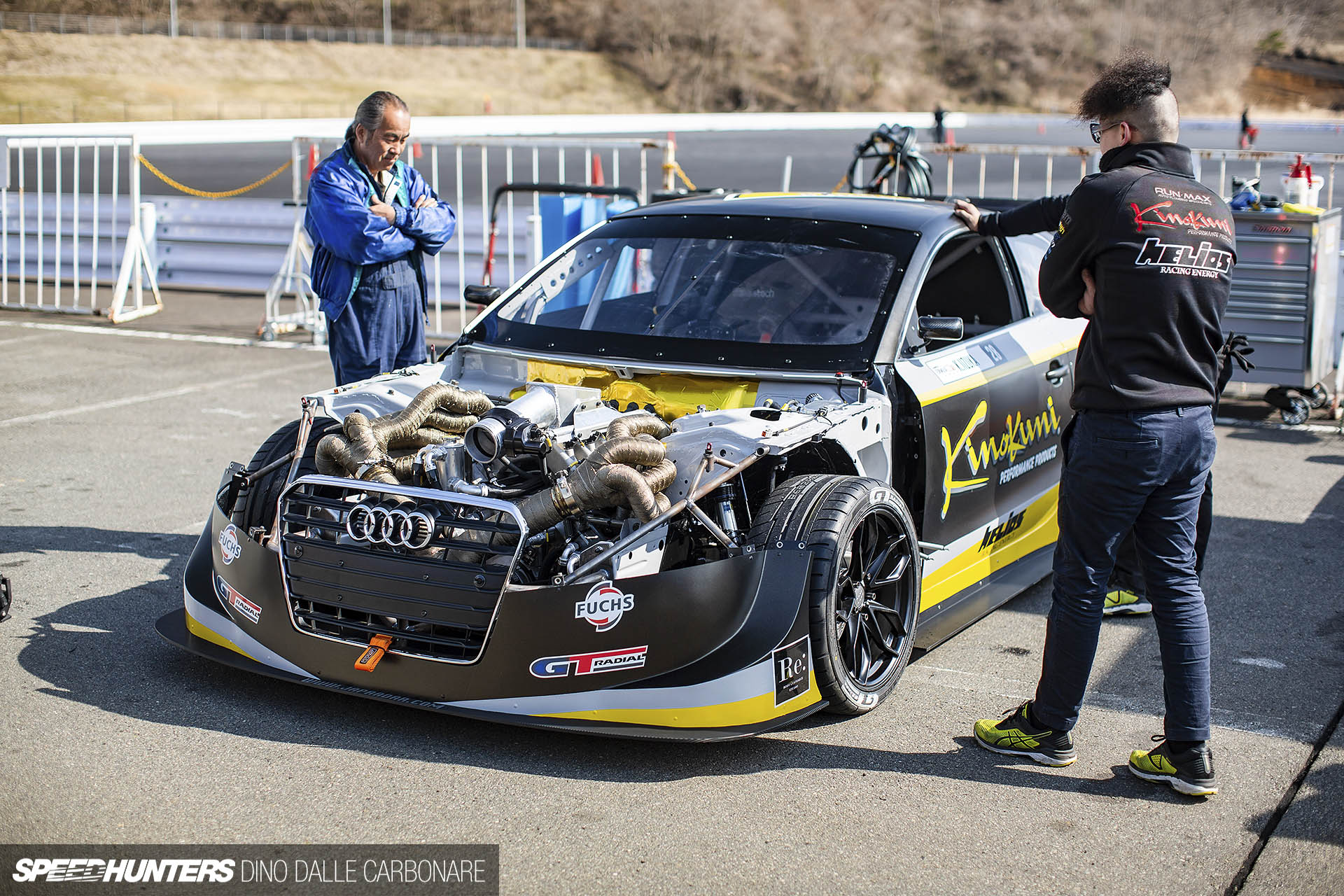
He only stayed for an hour or so, wanting to see and hear what most people were all patiently waiting for that morning; that ridiculous 7.4-liter LSX 454R motor crank into life.
In all my years of covering drifting in Japan, I have never seen a team operate as meticulously and as professionally as the guys from Helios, the racing outfit that built the entire car.
There is nothing ‘drift’ about them – they are a full-on, high-level motorsport outfit. You notice it in everything they do, from the way the car has been built to the way they prepared it prior to its first run.
Every single component of the car was checked and double checked before that first start up to gently warm the engine’s vital fluids. It was educational seeing them track down an issue with the fuelling system, with the pumps not priming when given power. They trouble-shot through every piece of the puzzle before realizing the issue spanned from a connector, and moments later we were all greeted with the reassuring buzz of fuel lines being pressurized.
The LSX was then sparked into life, the savage raw idle of its high compression nature resonating against the mountains that serve as a picturesque backdrop to Fuji Speedway.
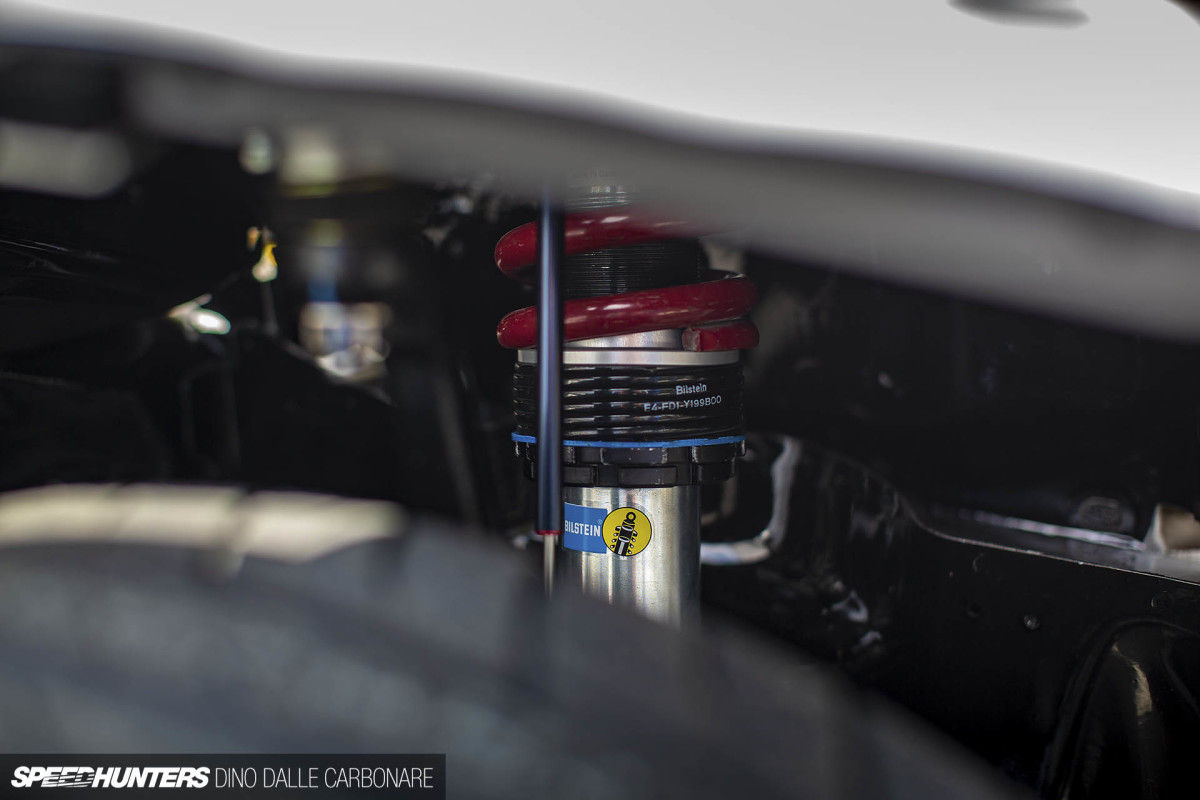

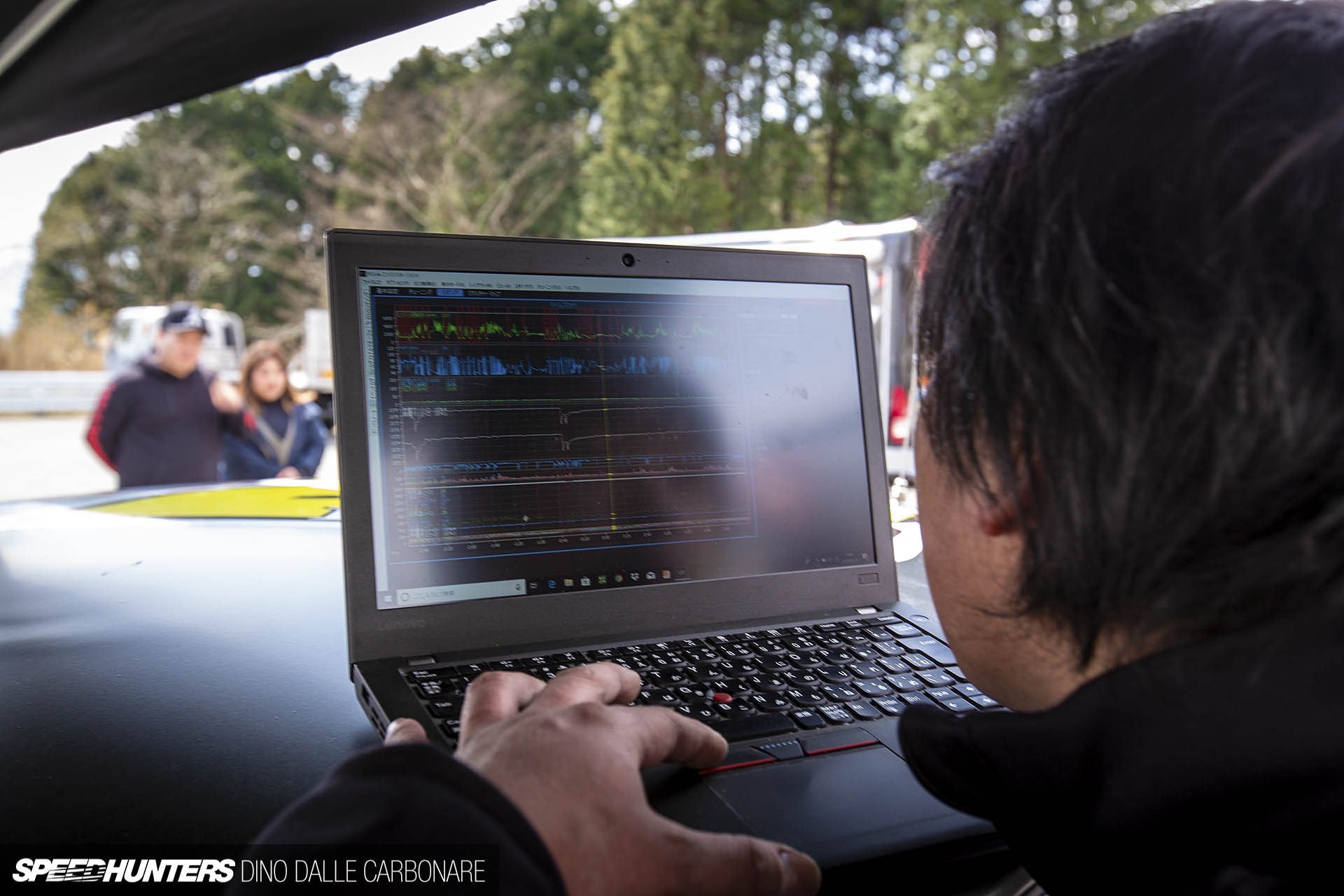
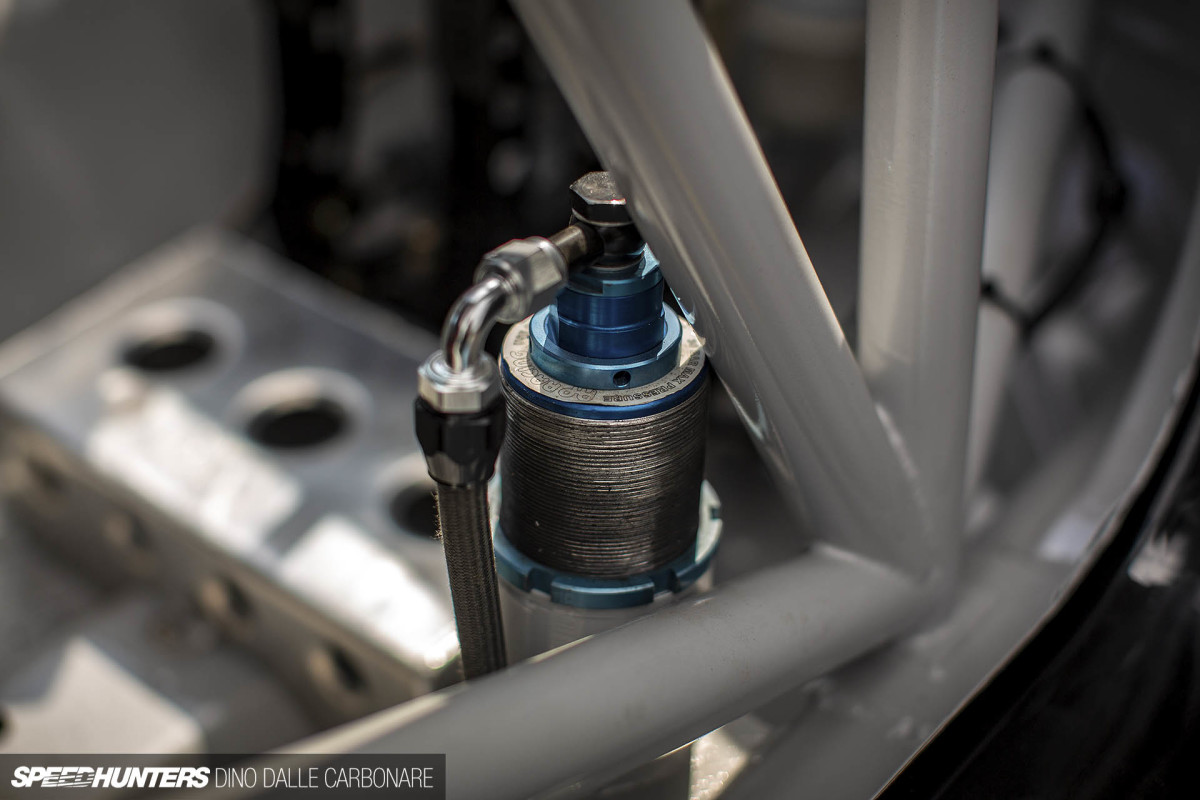
The guys from Abe Shokai, Japan’s official importer of Bilstein, were on hand for support; the A5 runs bespoke race dampers mated to a preliminary spring setup for testing. This shakedown was as much for the car and its engine as it was for data acquisition for Bilstein.
You’ll have probably noticed that there’s a linear potentiometer fitted alongside the coilover above, something replicated at the other three corners of the car too. This recorded a vast amount of telemetry on the day, which will be then later looked at and analyzed to see how much stiffer they will need to go with the spring, and in-turn, figure out damper settings to match.

It was obvious in the first few outings that things were being kept nice and soft to allow the car to move around while Iikuta got used to the potent power delivery of the LSX.
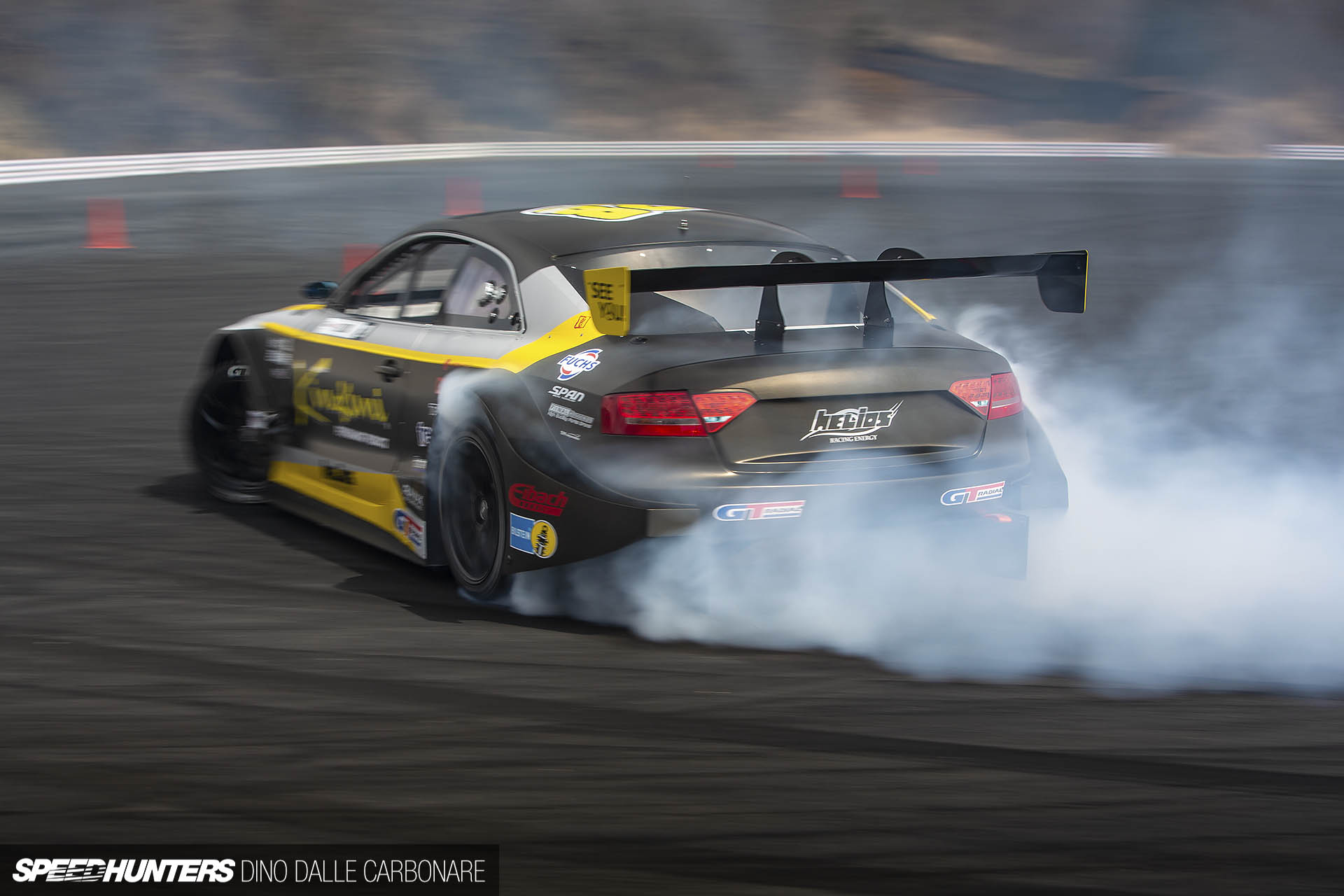
So while there was pronounced body roll, by the time you see this car enter in the first Formula D Japan round next month at Suzuka Twin, it will be running a perfectly suited setup that does exactly what the driver has requested.
But let’s get down to the nitty gritty.
In a world of 2JZ-powered everything, seeing an all-new project that attempts to do pretty much everything differently has to be commended, and this is me commending it right now. Thank you.
This is what the public wants to see. Maybe not so much the US contingency of our audience, as they are as bored with LS V8 swaps as we are of 2JZs in Japan, but for someone to take the route less travelled and come up with something the public hasn’t seen before takes balls.
To do it as well as this takes substantial investment, not just monetary but time, too.
Think about it; this is a whole new platform that we’ve never seen used in Japanese drifting. An Audi A5, a car that if you were to ask me what sort of images it conjures up in my mind I’d start talking about awkward engine positioning, all-wheel drive and massive understeer. As far as you can get from drifting really.
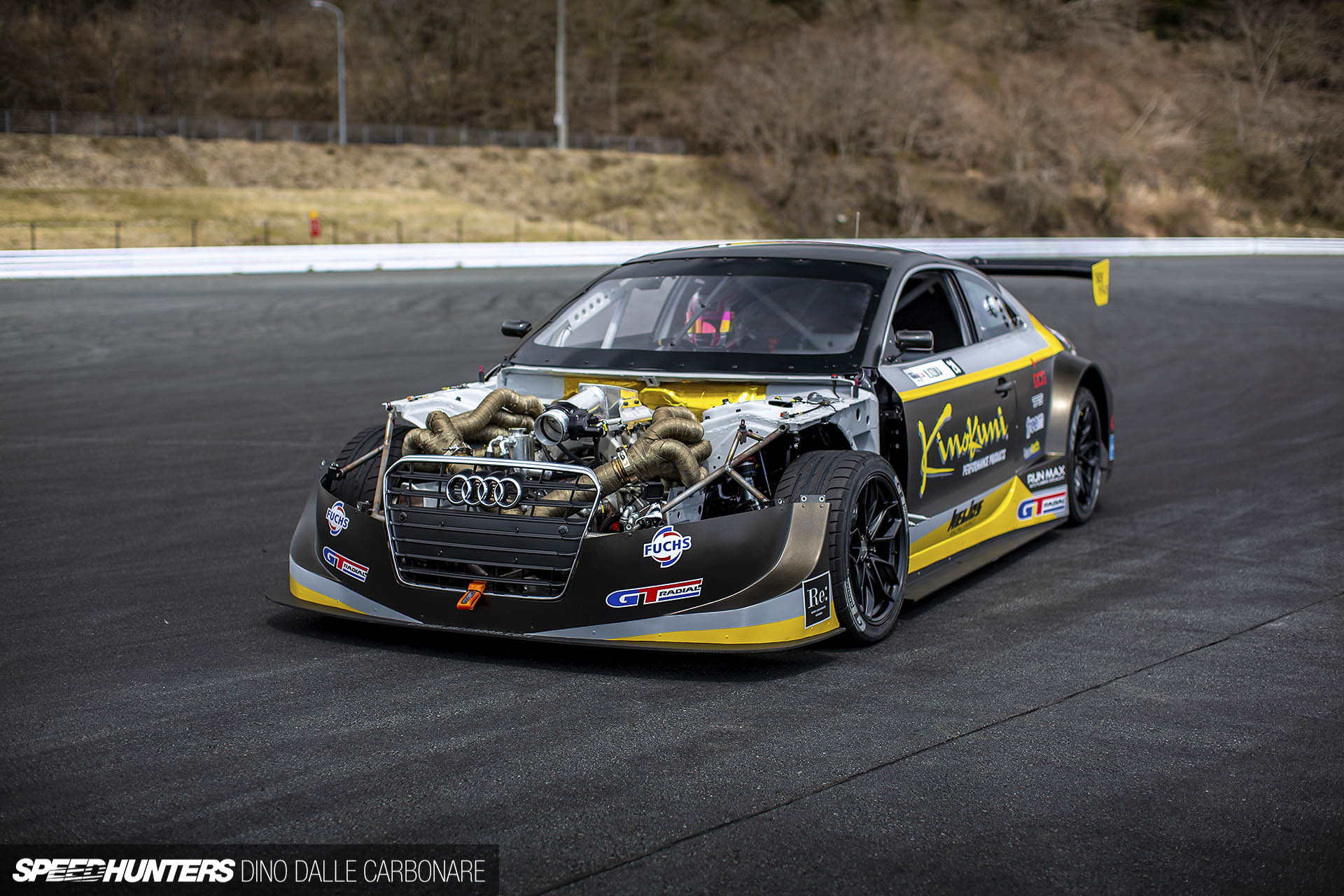
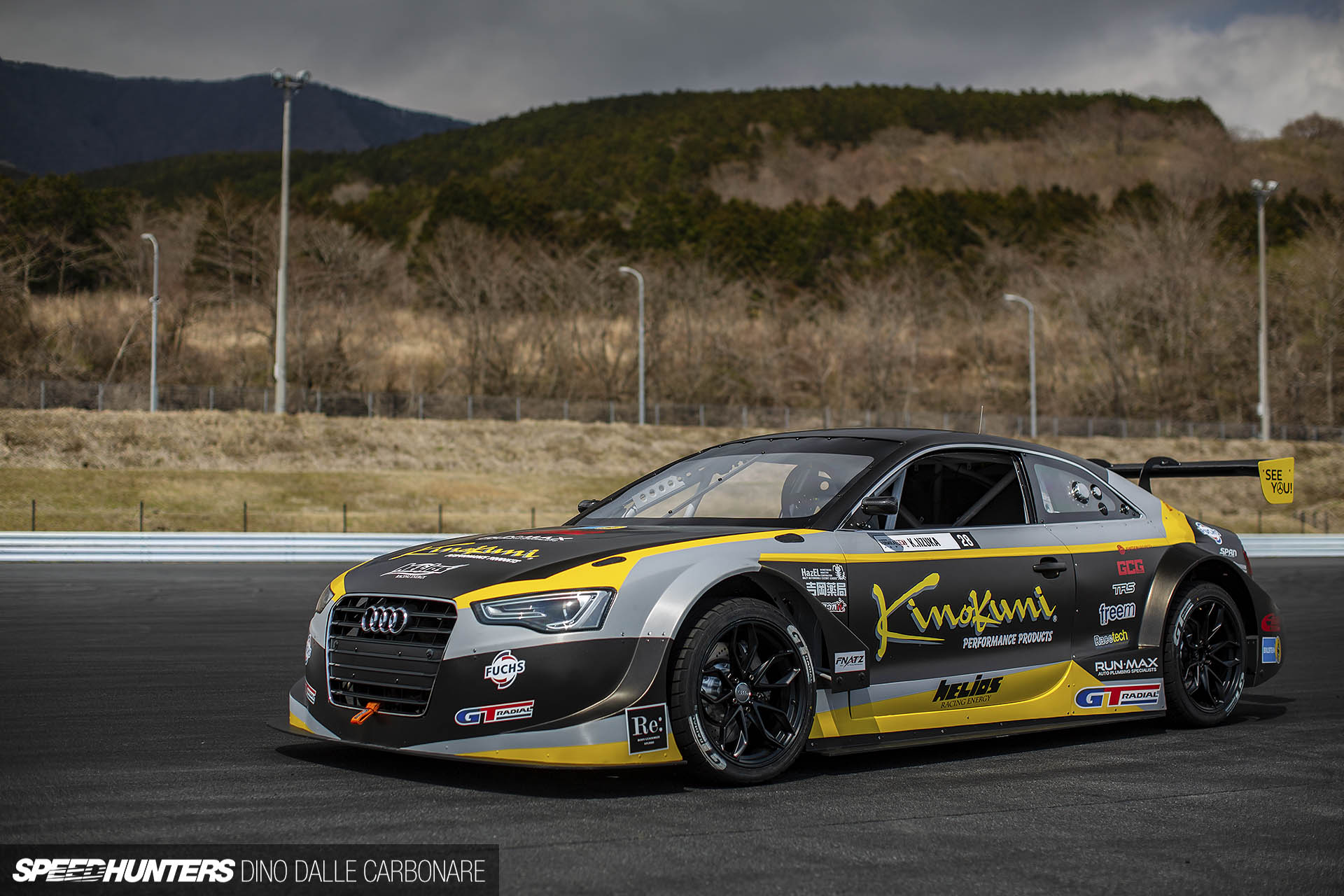
But I like what Iikuta has done here. He’s taken an unusual base, dropped big reliable power into it, and finished it off with a DTM-inspired look. It’s a mishmash of so many things that don’t belong: a German car, American muscle, Japanese drifting, and touring car racing.
How could you not love it?
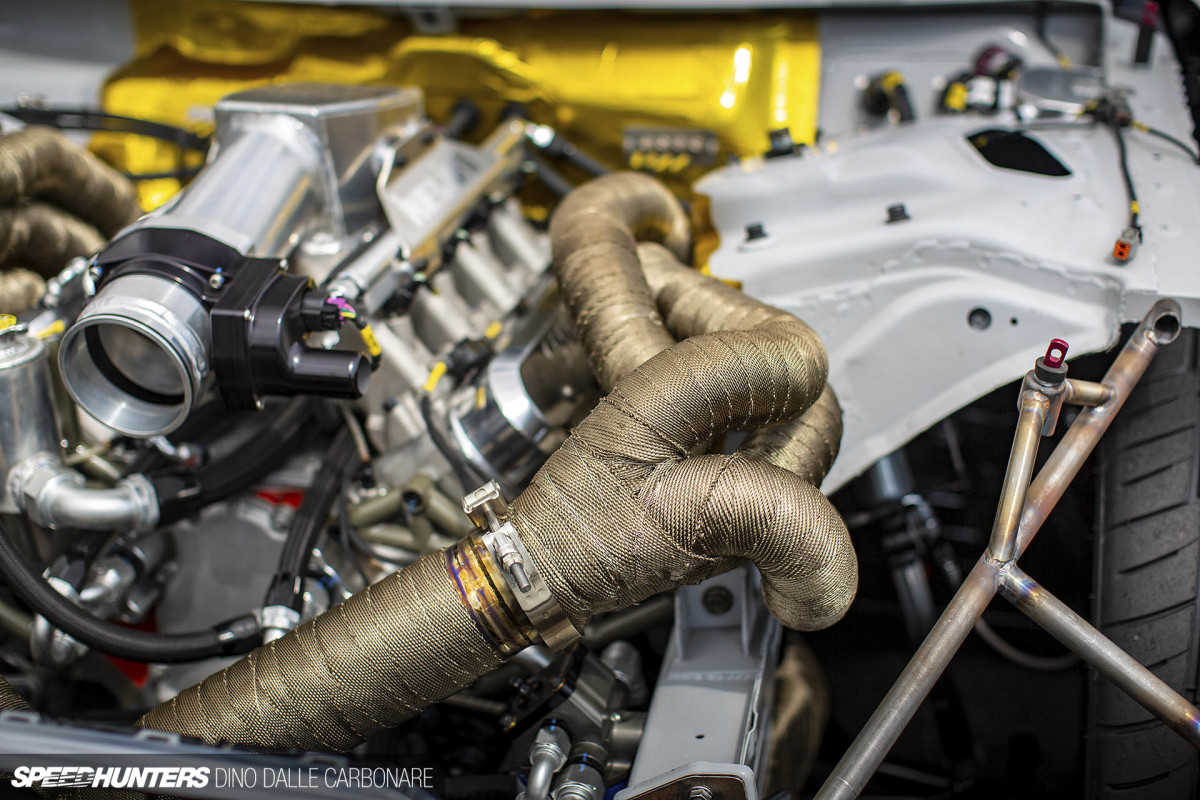
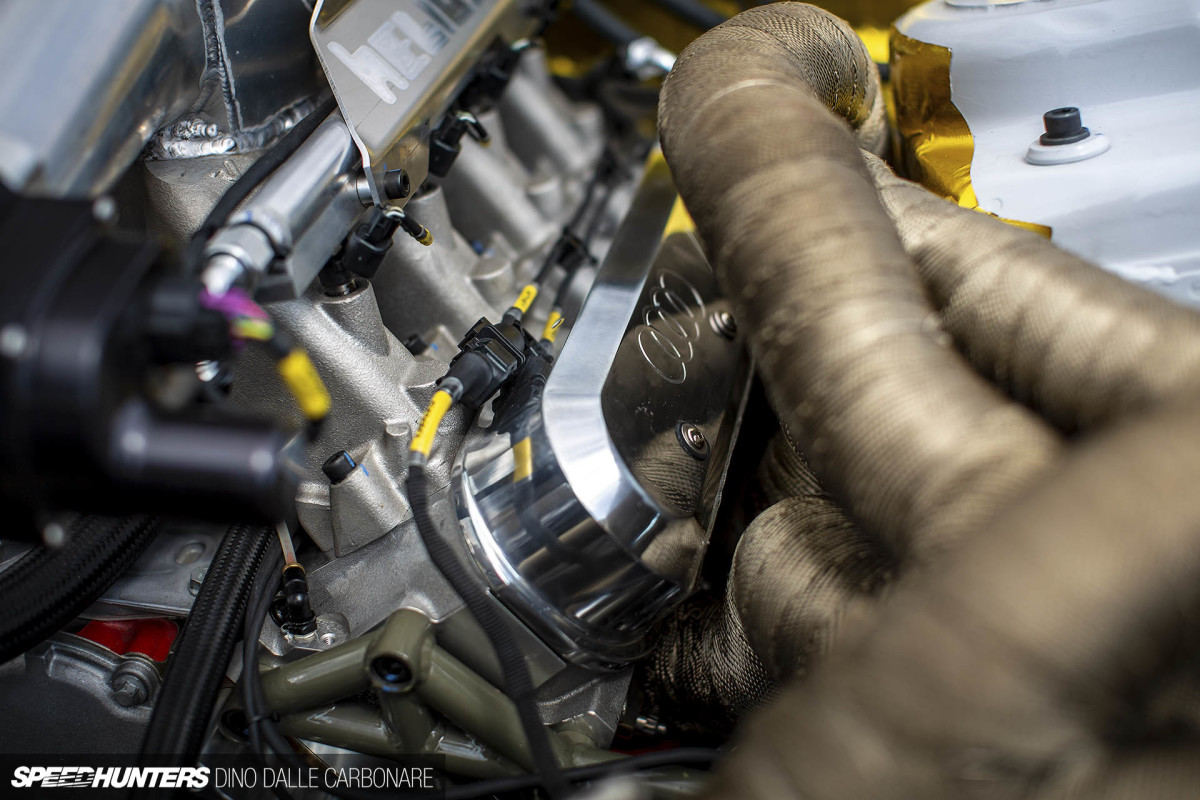
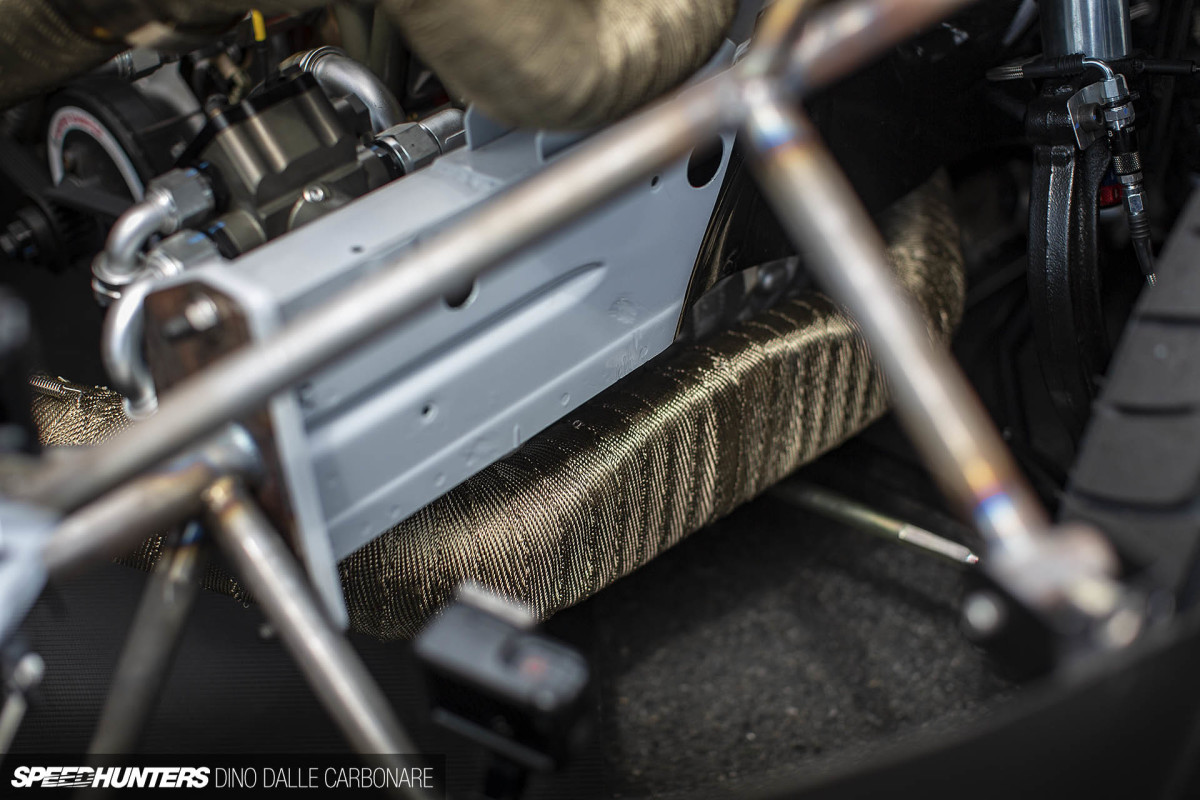
I have to give Iikuta-san and his team a big thank you for letting me interrupt his shakedown test to get a few quick shots of his creation in all its mechanical beauty and complexity.
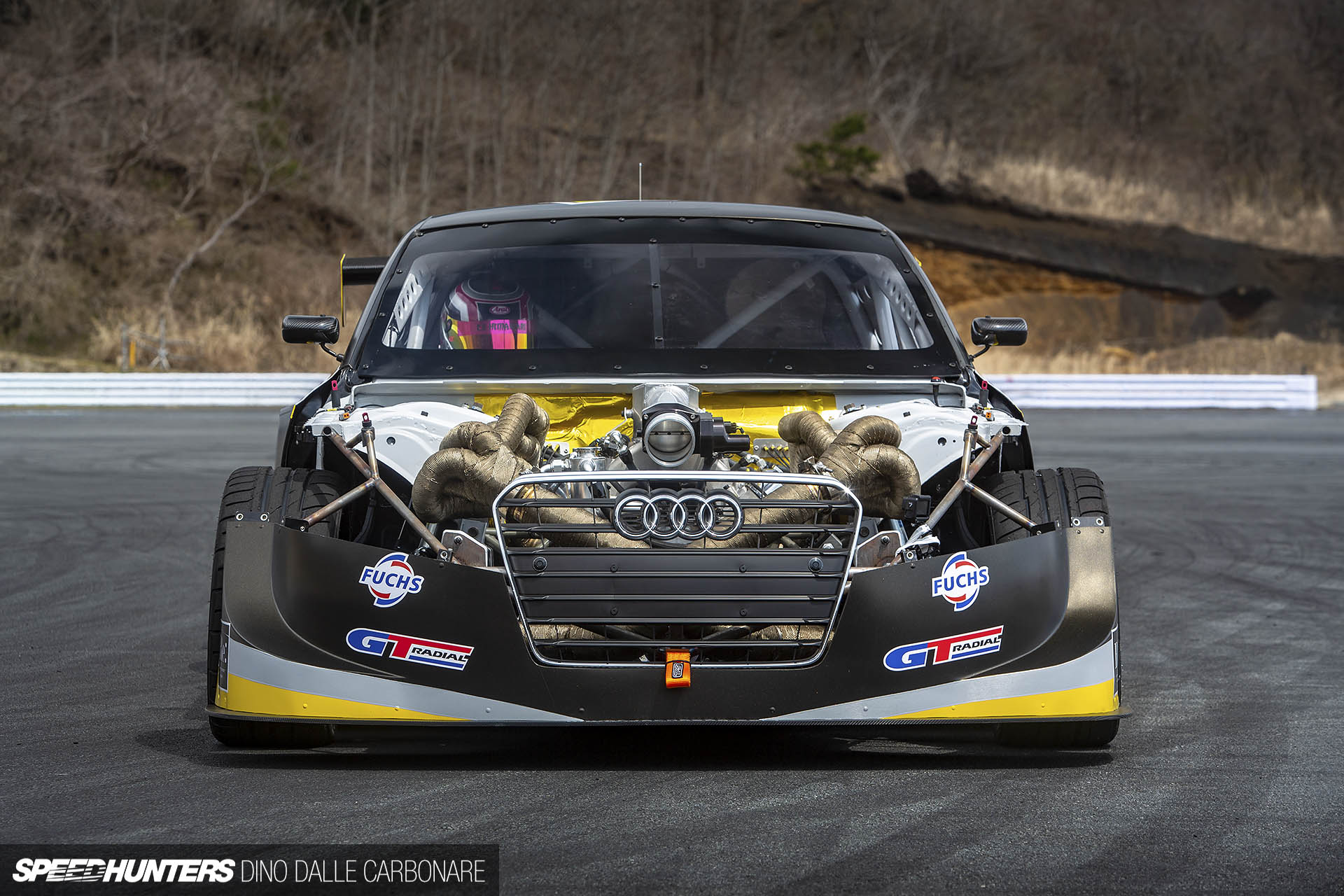
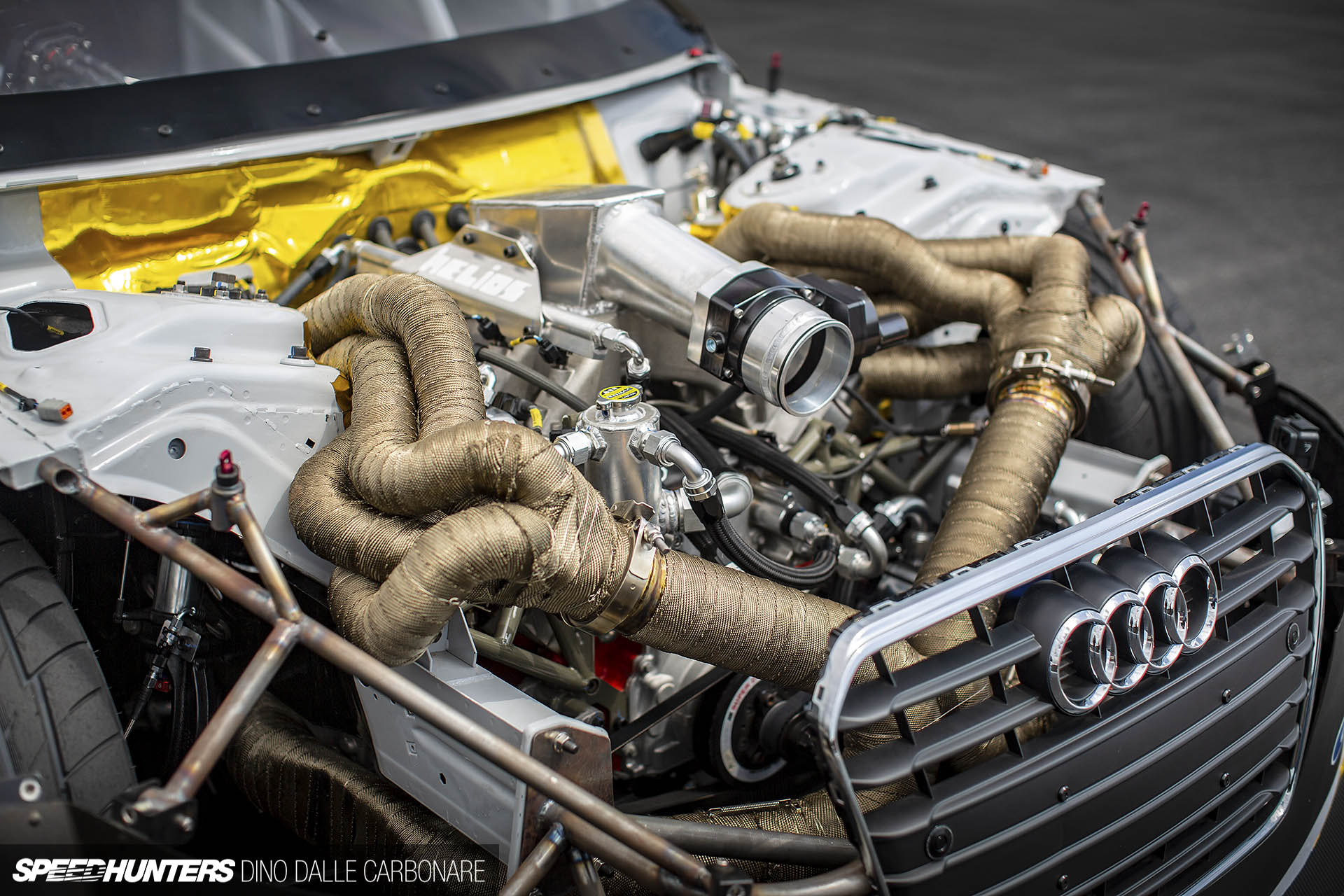
I mean, check out those over-the-top headers that snake away from the exhaust ports on the heads, convene at the center in front of the motor, and then dive under and along the car to dump gasses at the rear.
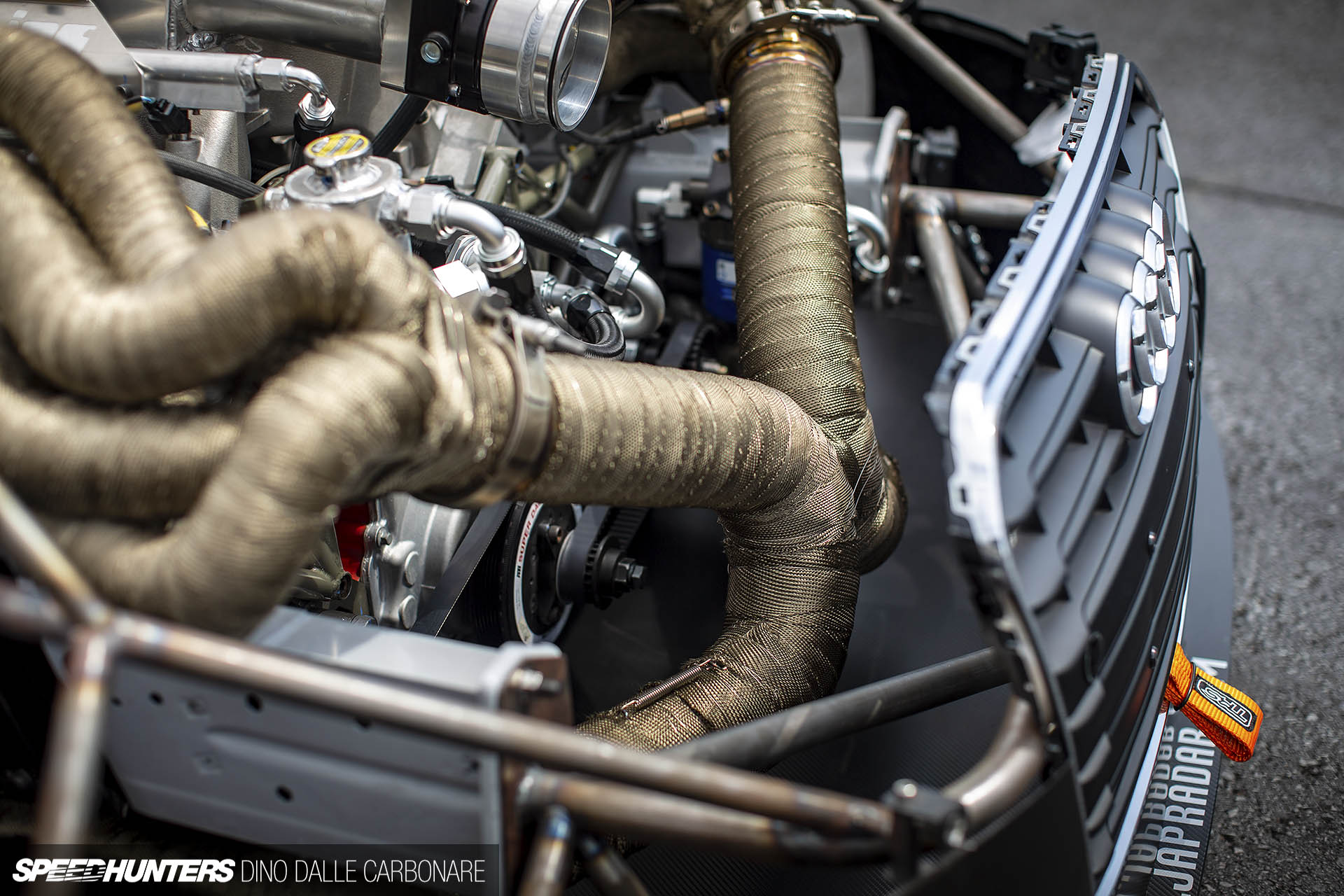
It’s a curious setup indeed, and you wouldn’t be wrong in thinking that a pair of turbos would naturally fit where the pipes form an ‘x’ at the front. See all that space that’s been left? Yes, it’s intentional – for the 2020 FD Japan season, Iikuta plans to run two snails and some form of intercooling to double the 800hp he has now. Sounds like fun, right?
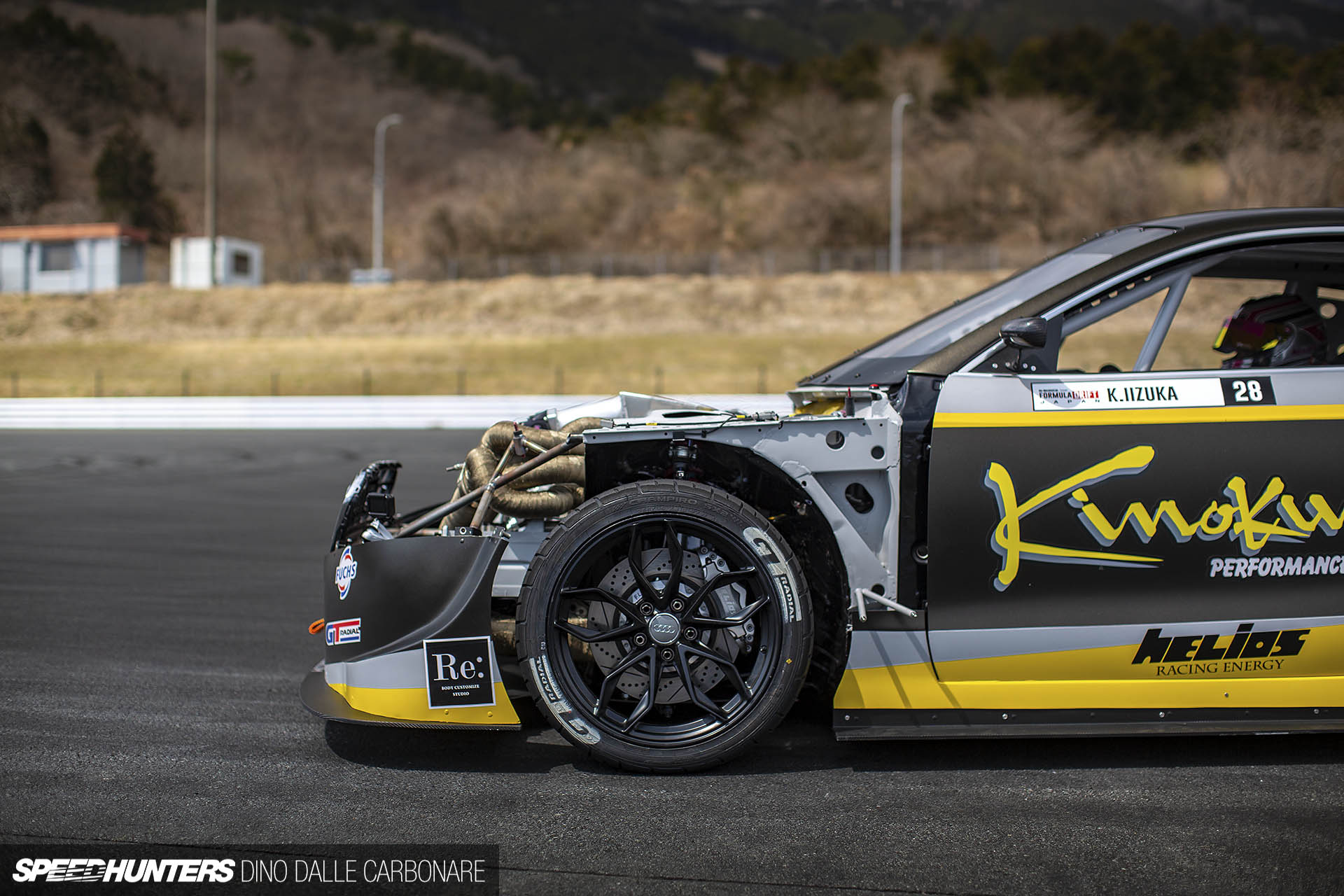
I like fun projects like this, especially the ones that have a ramped planned of evolution right from the get go. He’s already annihilating his GT Radial rubber like it was spinning on ice, and he’s seriously talking of adding another 800hp into the mix.
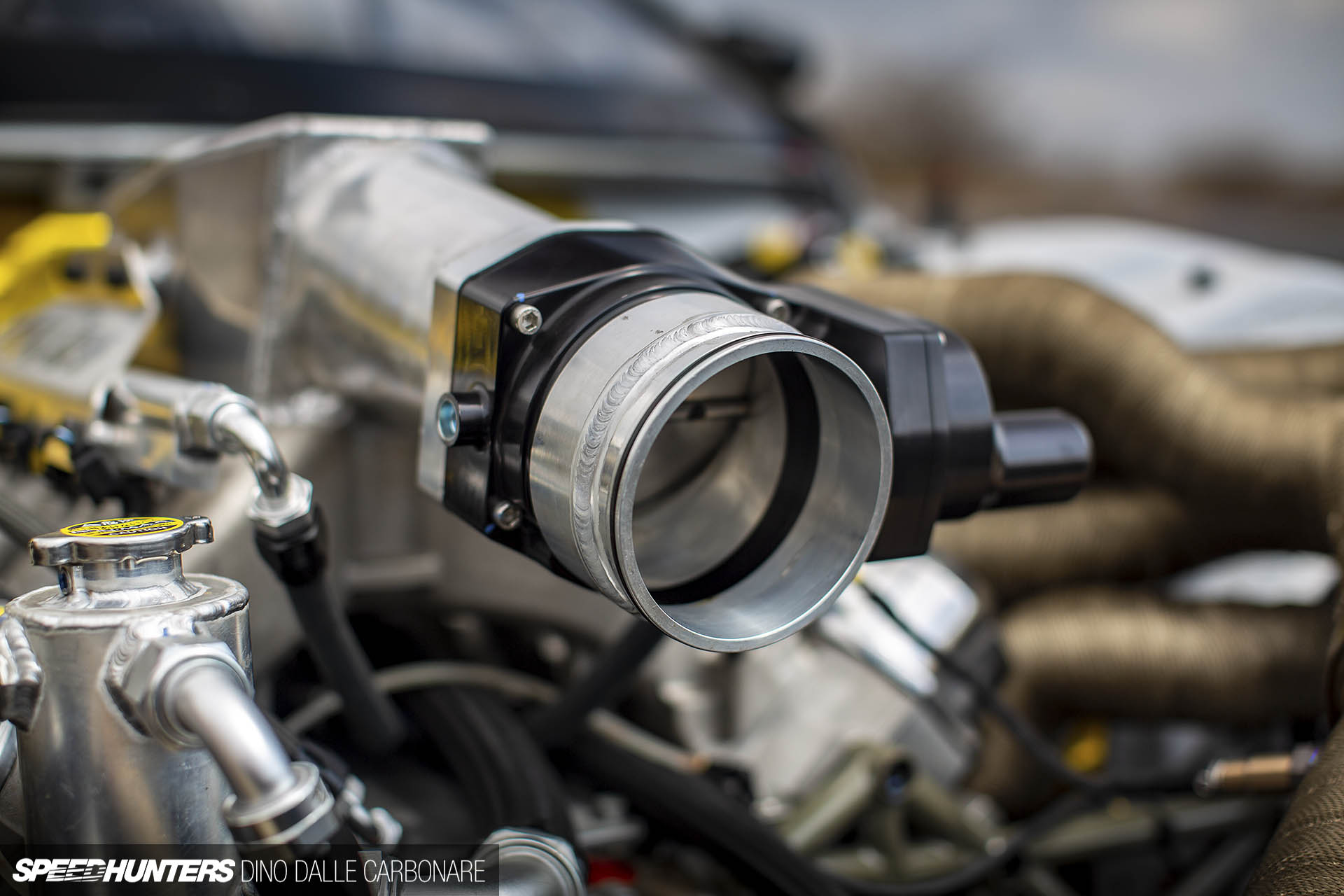
The car has been put together with all of this in mind, meaning it’s well truly future-proofed. For example, they’re using an electric throttle body which opens up so many options when attempting to deal with such a savage setup.
Looking at this piece reminded me of Daigo Saito struggling to get his LS3 powered Corvette started two years ago. The mechanical set up of the Kinsler 8-throttle cross-ram intake was something the mechanics struggled with for hours.
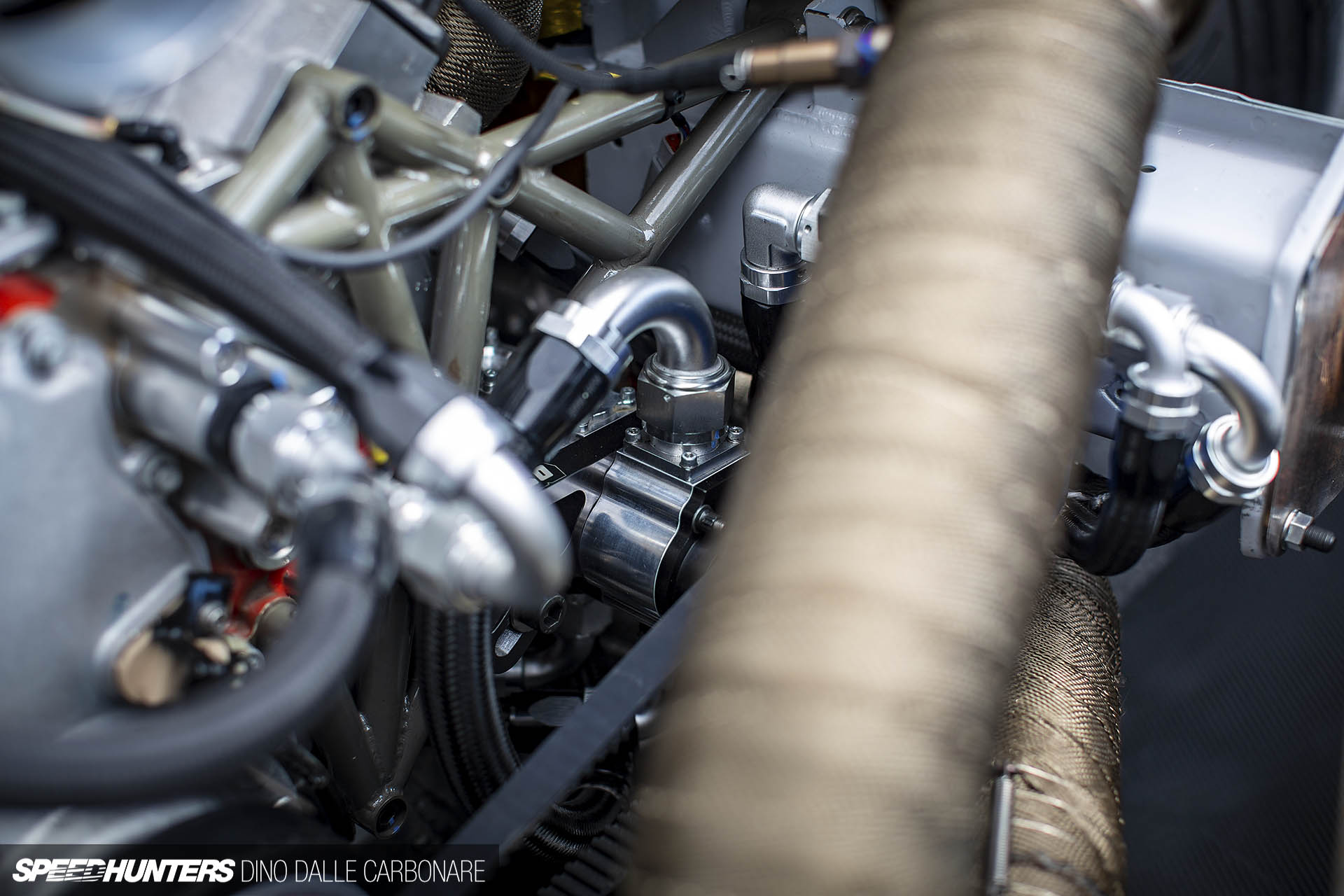
The LSX sits custom mounted as far back as it would go, mated to an Albins sequential transmission and lubricated by a dry sump system.
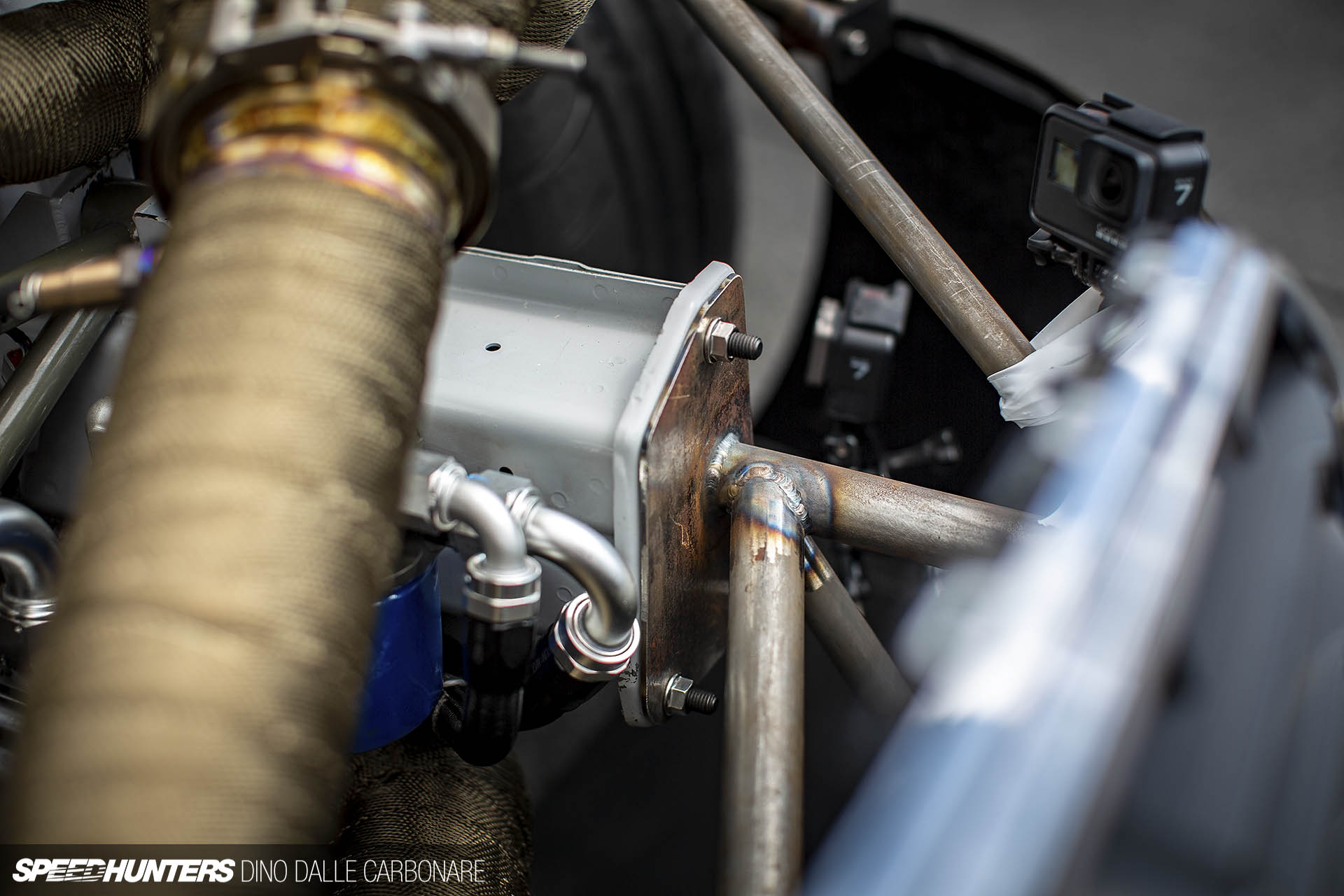
Both the front and the rear cowls are attached to small tubular frames that hold them and other ancillaries in place.
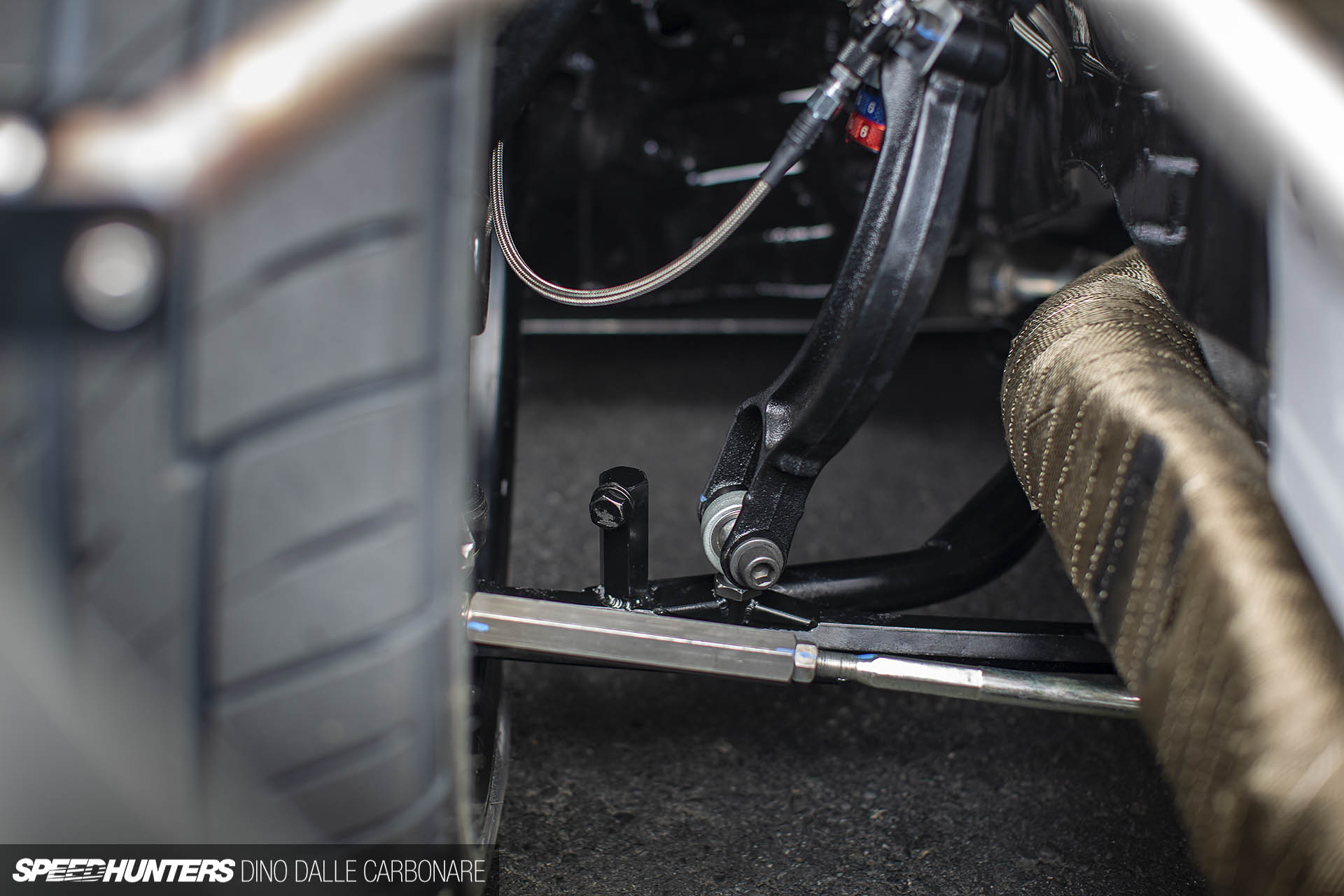
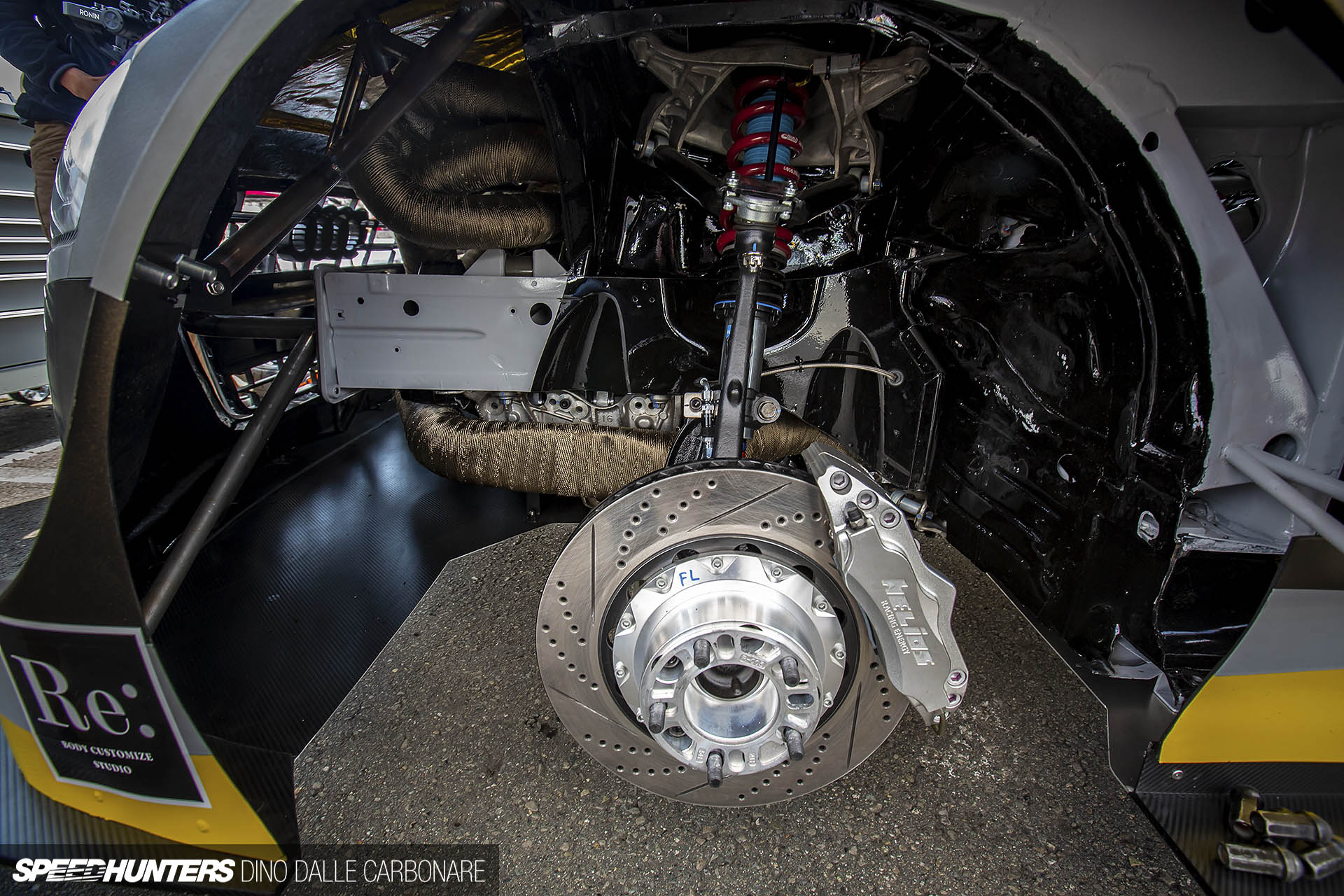
Along with the Bilstein coilovers, custom arms were then fabricated to give the front end the articulation it needs to stay competitive with the sort of wild setups we see these days.

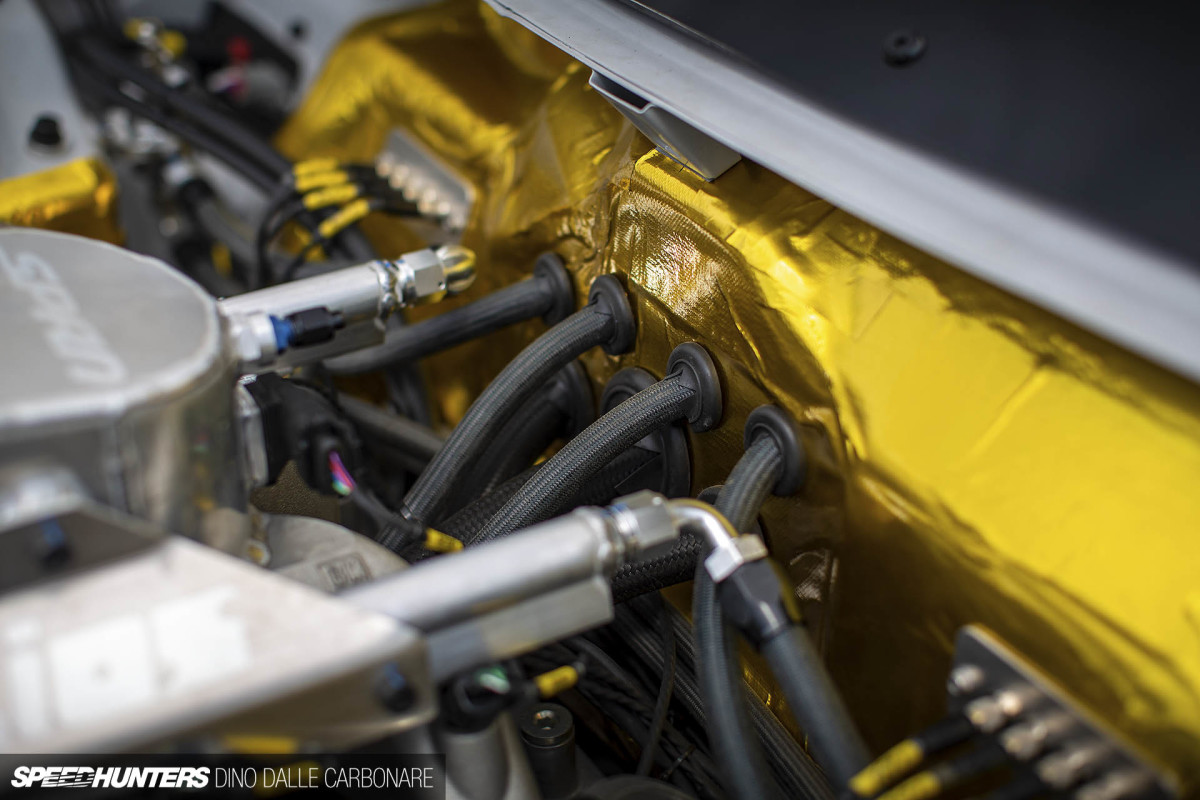

But like I touched on at the beginning, the sheer attention to detail and motorsport-like perfectionism that you see in every area of the build is really what blew me away.
Thanks to the collaboration with Kinokuni, the way the wiring, plumbing and connectors are laid out will make anyone with extreme OCD very happy.
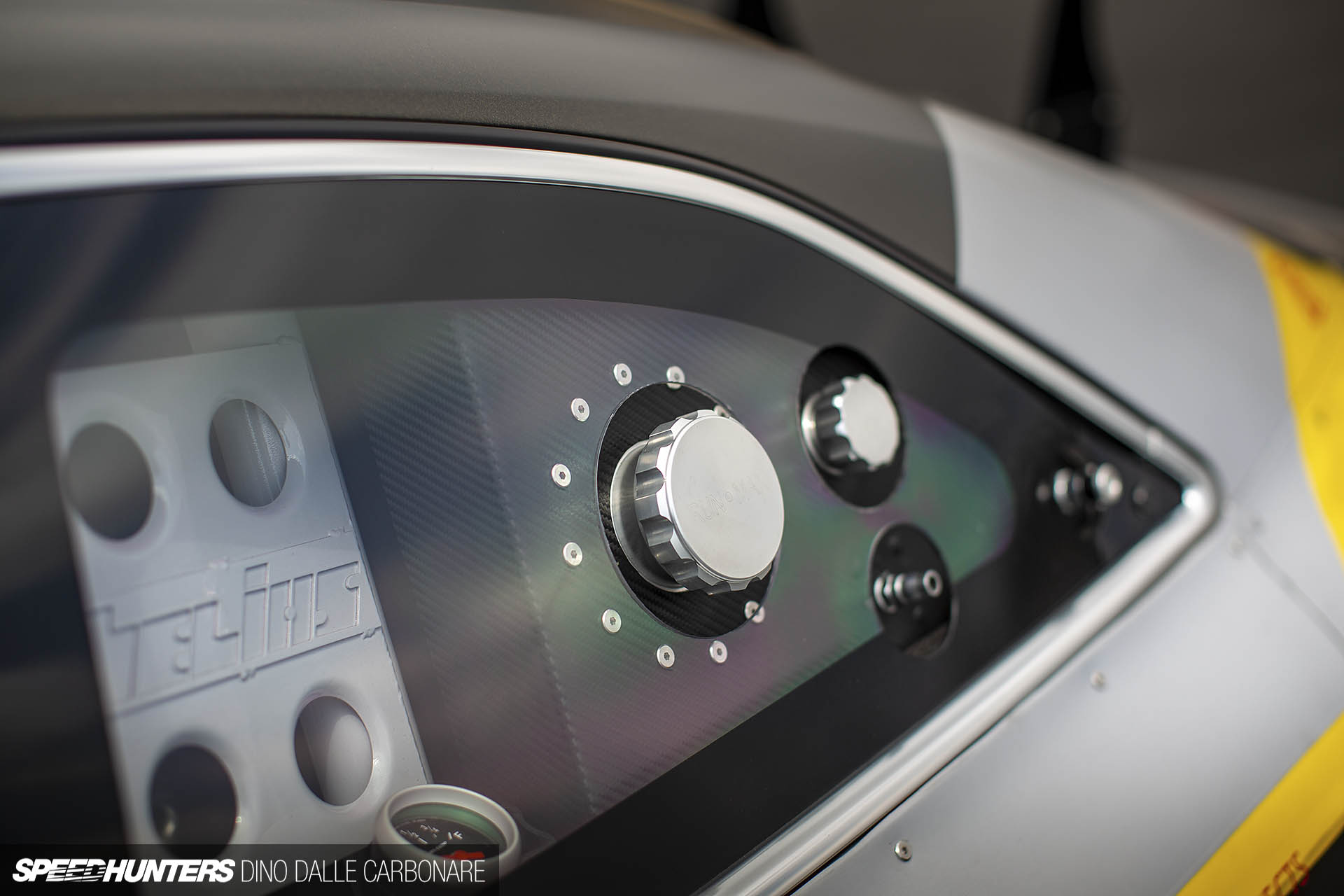
Right down to the service window on the passenger side of the car where you have access to the fuel and oil fillers, and the connection for the air lines to lift the car up on its three onboard jacks.
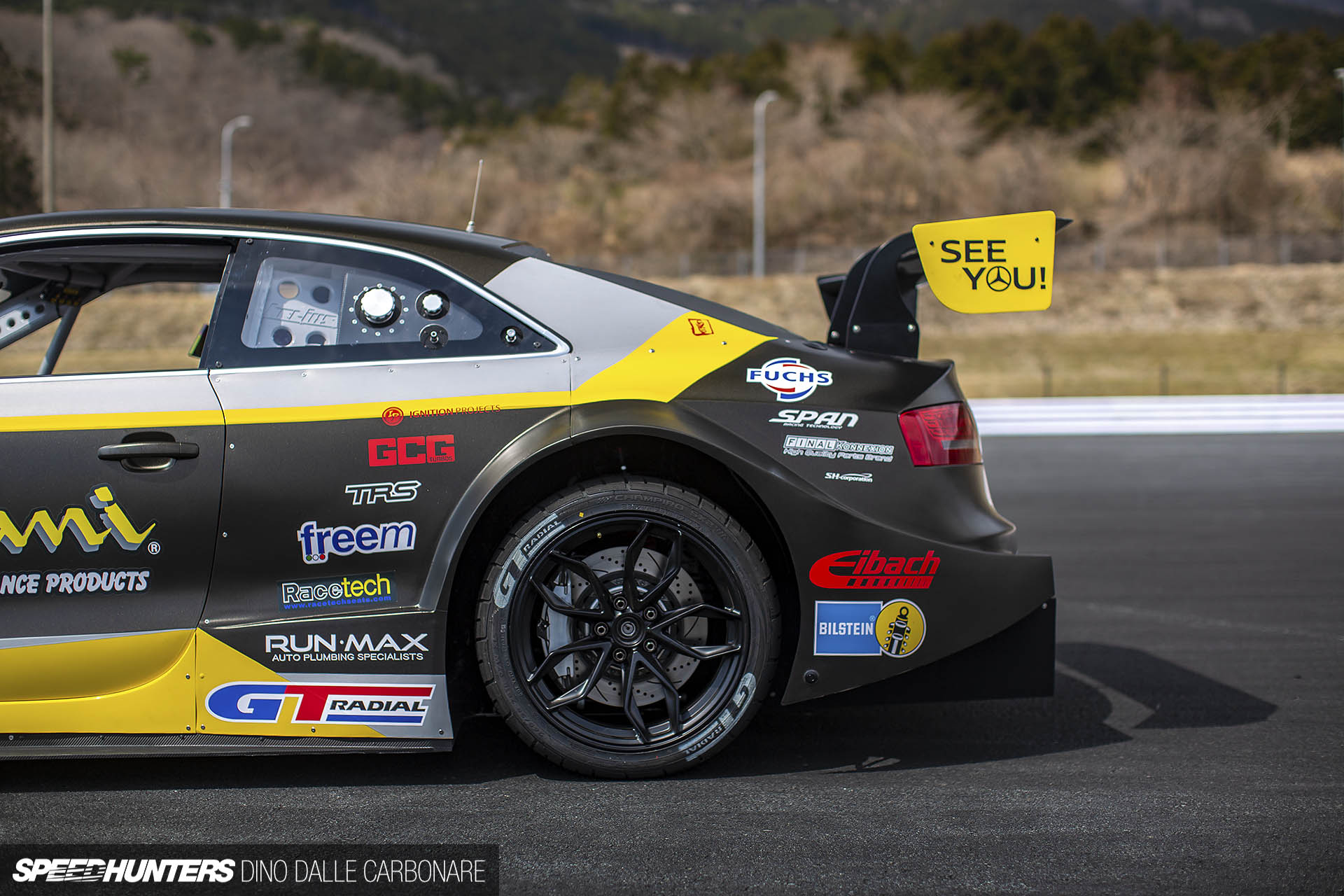
The rear of the car continues with the DTM feel, massive exaggerated flares blending downwards onto the diffuser section of the bumper.
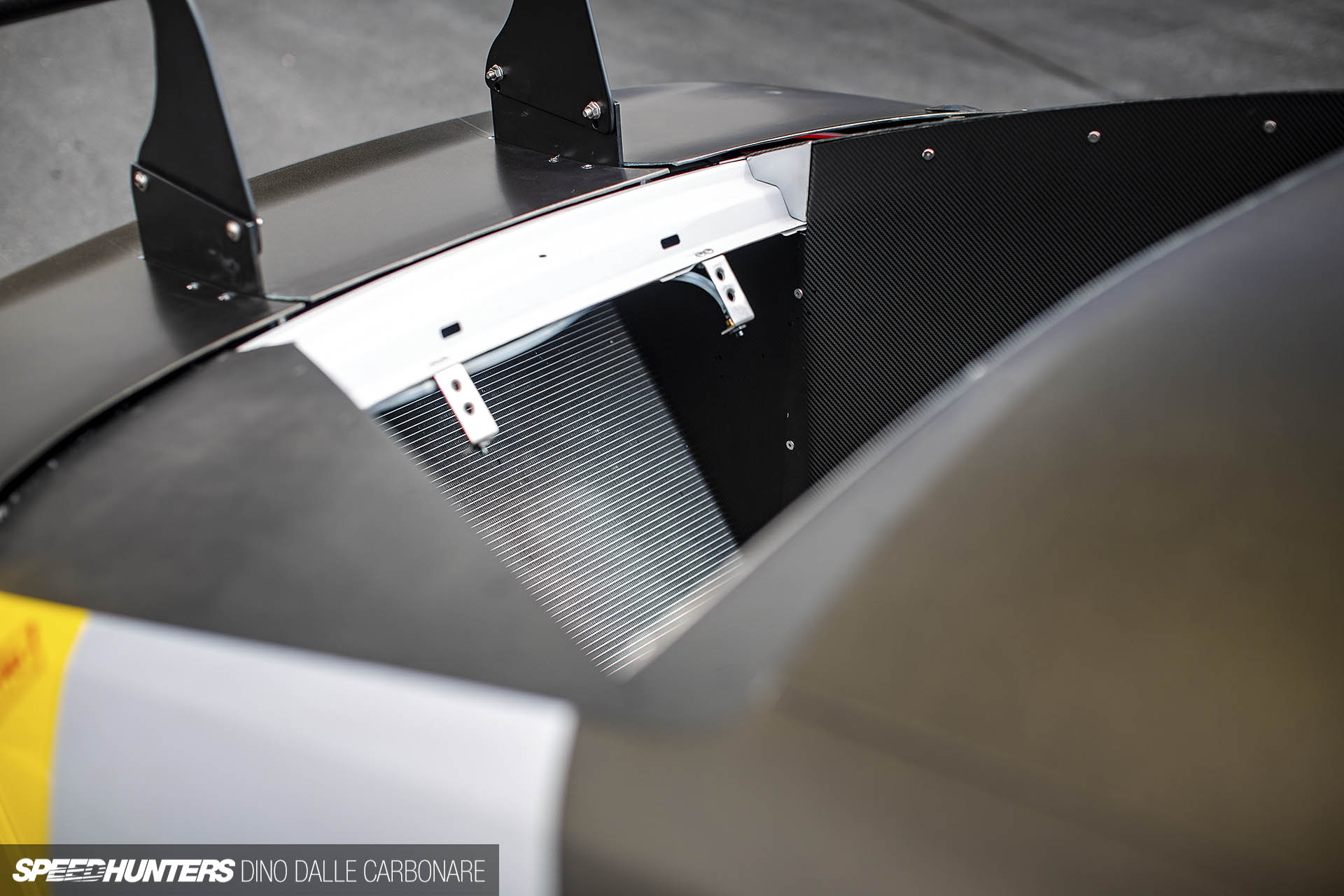
Hidden within the coupe’s profile is the rear-mounted radiator which is fed by a massive intake that lives where the rear glass and trunk once resided. Large fans sit behind this to keep air flowing through the core when the car is staging or cooling off.
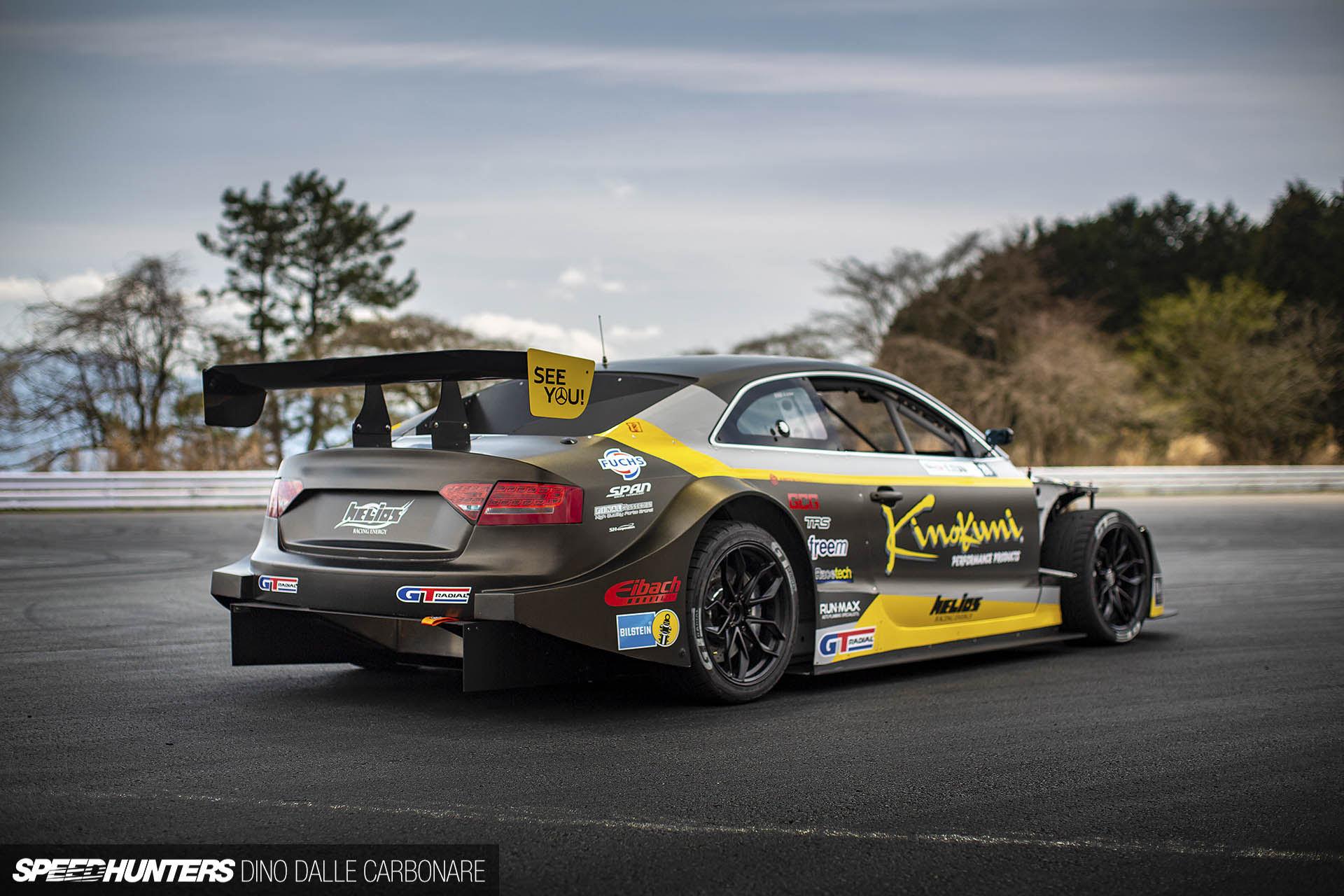
Finished off with the large GT wing held in place by swan-neck stays, the car has a sort of elegance that you get from a well put together race car. Something, I don’t think I’ve ever said about a drift car. [To be fair, Formula Drift US has some proper cars, too - PMcG]
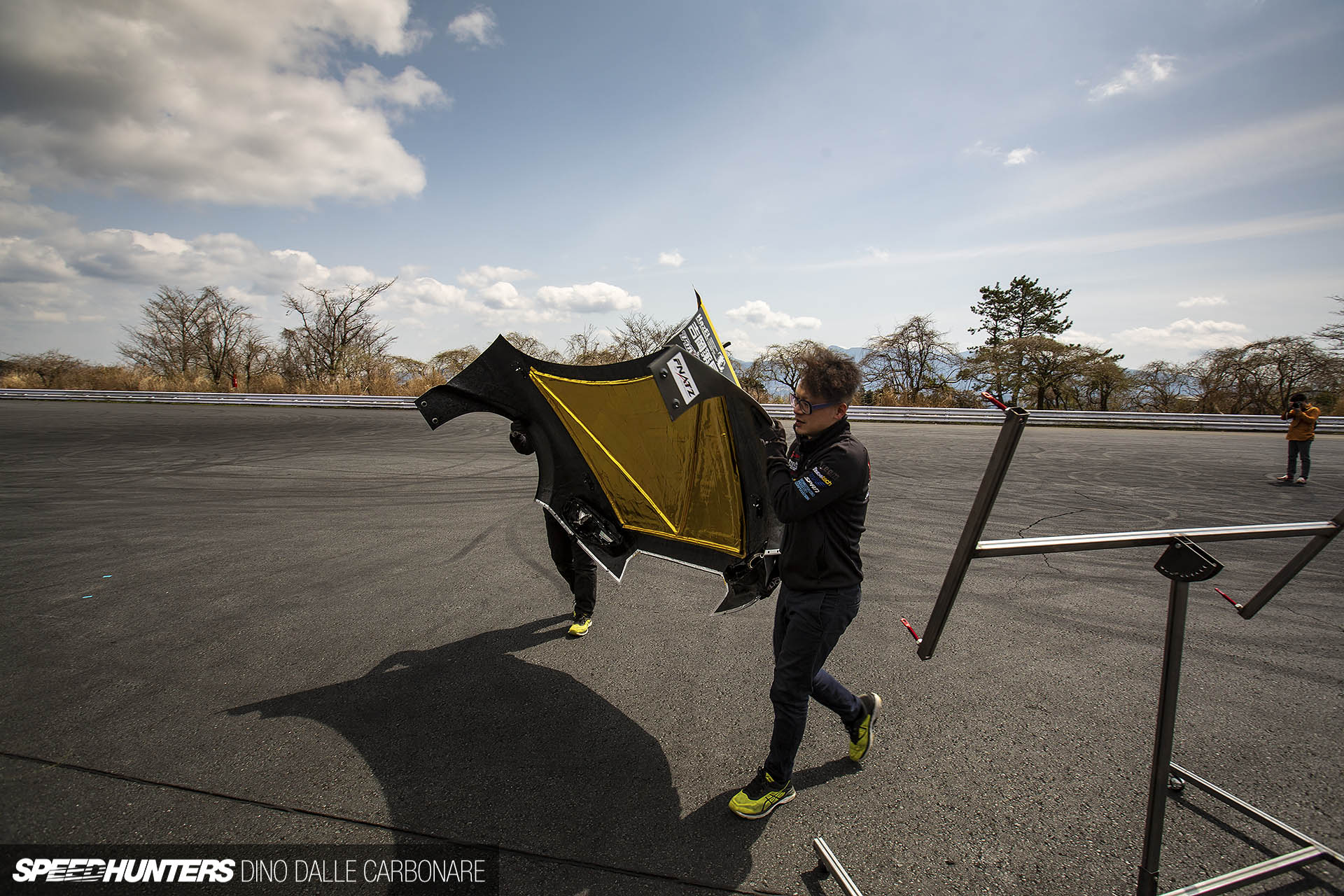
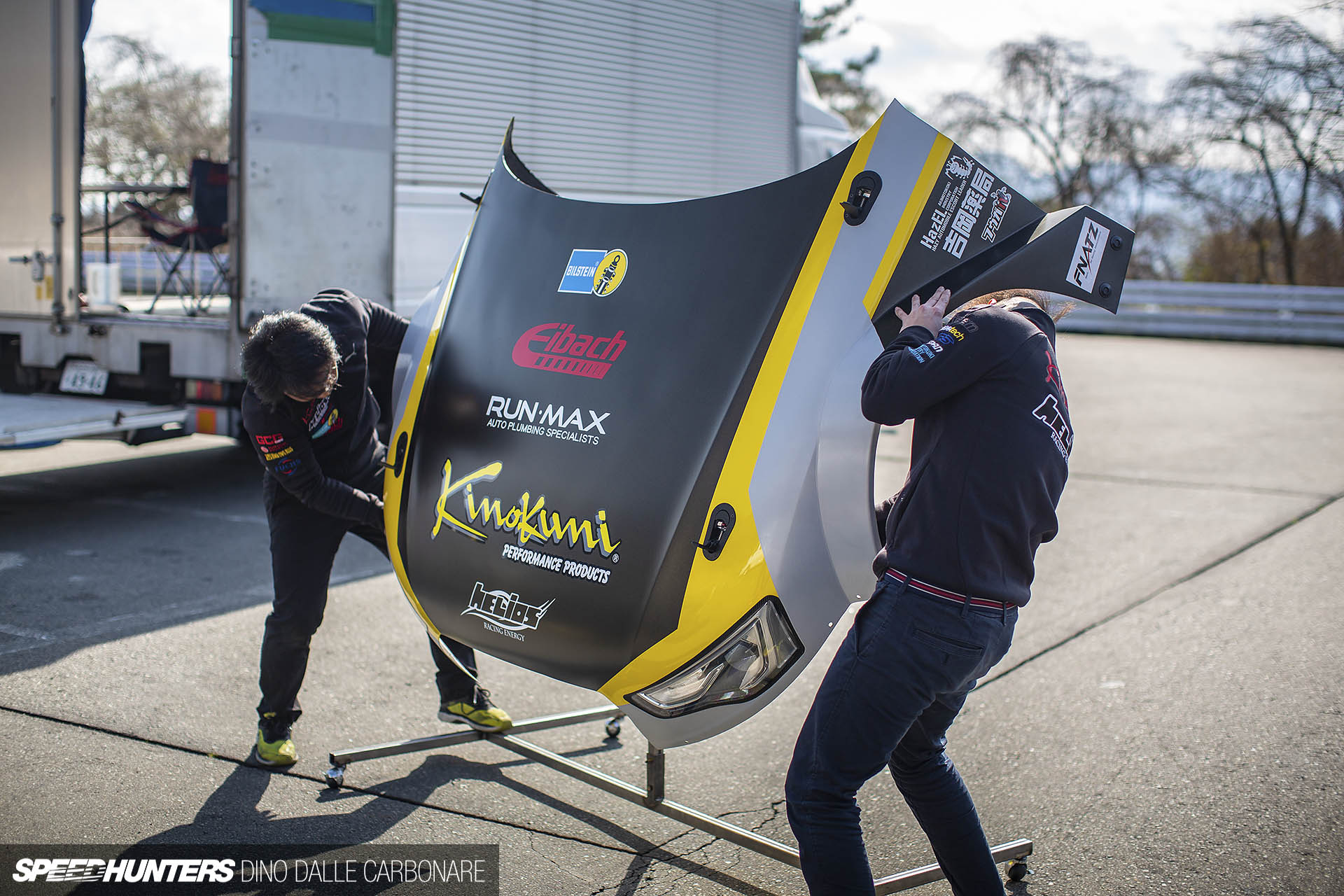
To get some beauty shots while we were in the middle of the skid pad, I asked the mechanics to replace the front cowl, an exercise that took a few seconds as everything clips onto quick-release fasteners.
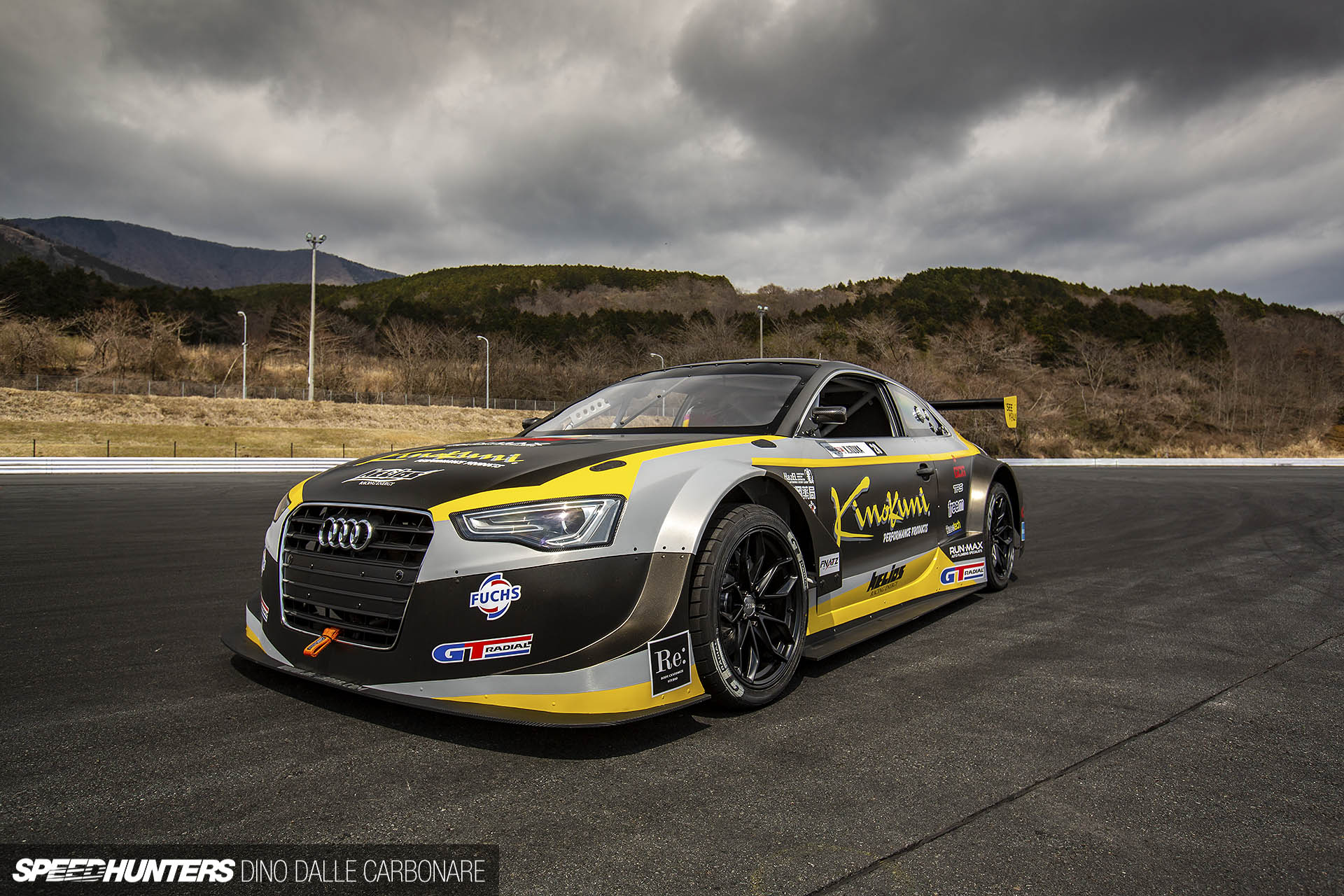
If you don’t know what you are looking at, you will definitely be asking yourself what German motorsport series this car comes from.

The fact that it runs low profile radial tires would be the only give away…
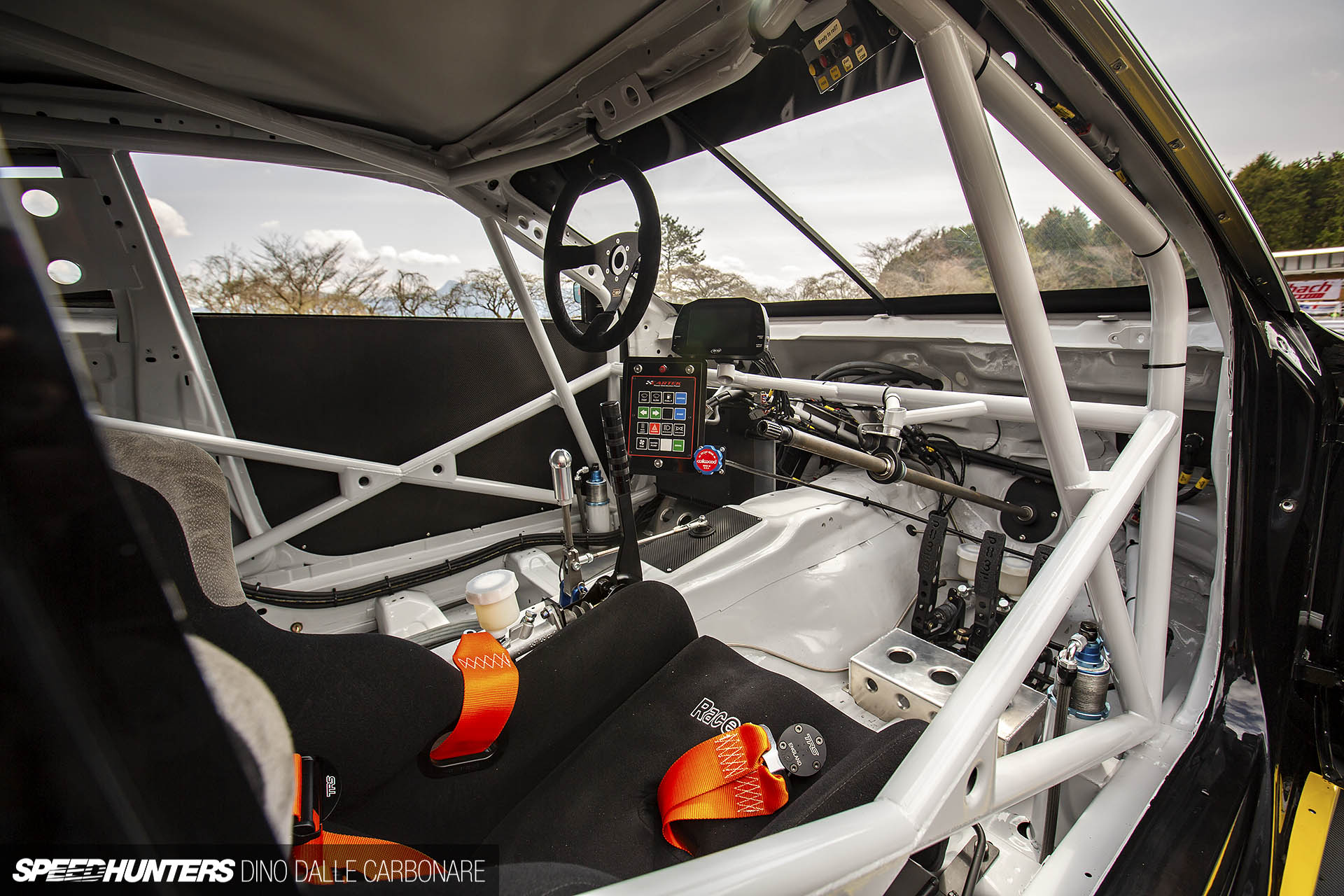
…unless you took a look in the cabin and noticed the e-brake lever.

With the A5 chassis stripped down to bare metal, it allowed the Helios team to do things properly, and it’s so nice to see Japanese builds getting proper roll cages in them now.
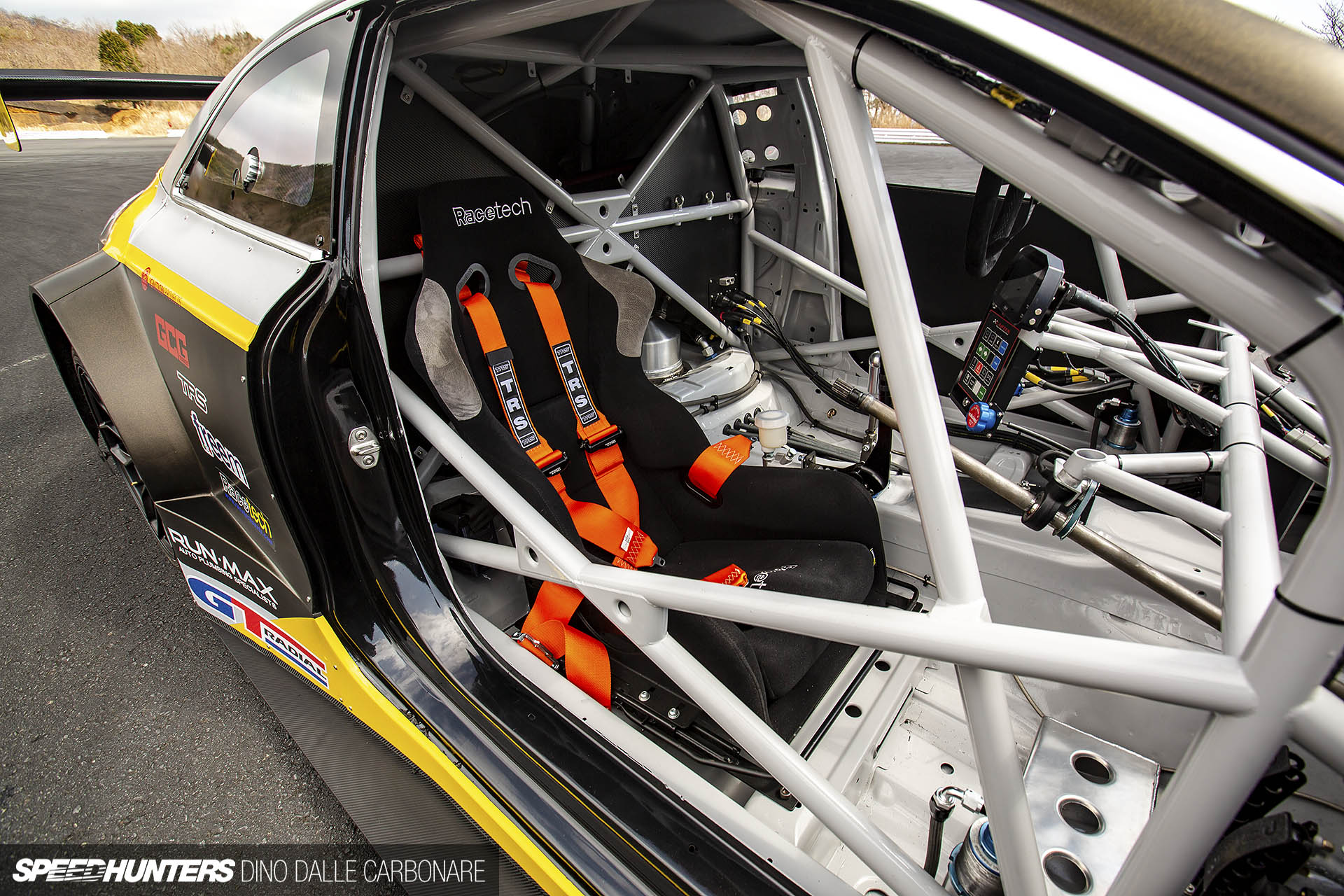
I can now show you these beautiful creations without expecting the usual negative comments about how sketchy JDM roll cages are, and how someone will get hurt one of these days. Yeah, nothing to fault here.
With the driving position pushed pretty much in line with the B-pillar, the rear portion of the cabin has been separated and closed off.
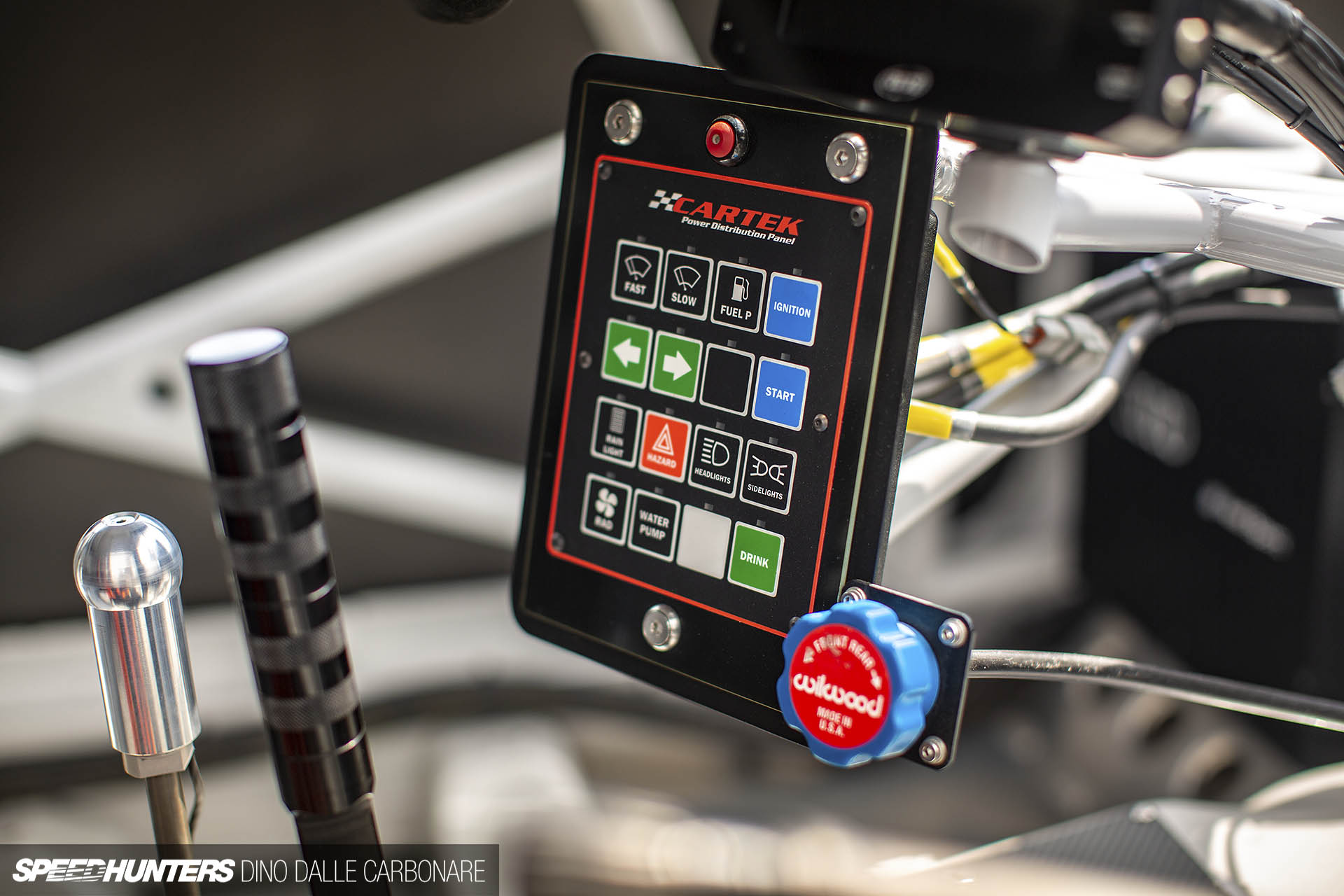
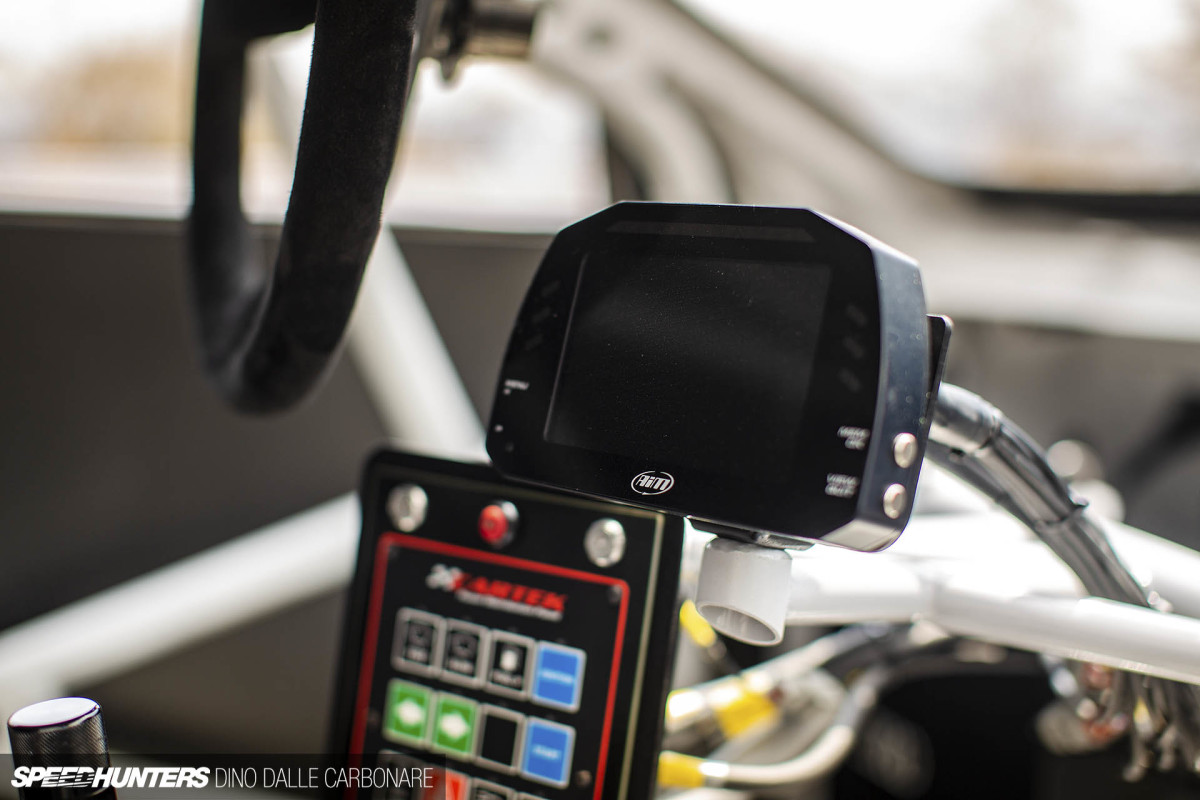
The only bit of instrumentation that Iikuta has to rely on is the AiM digital display which will give him as much feedback on any parameter he would need.
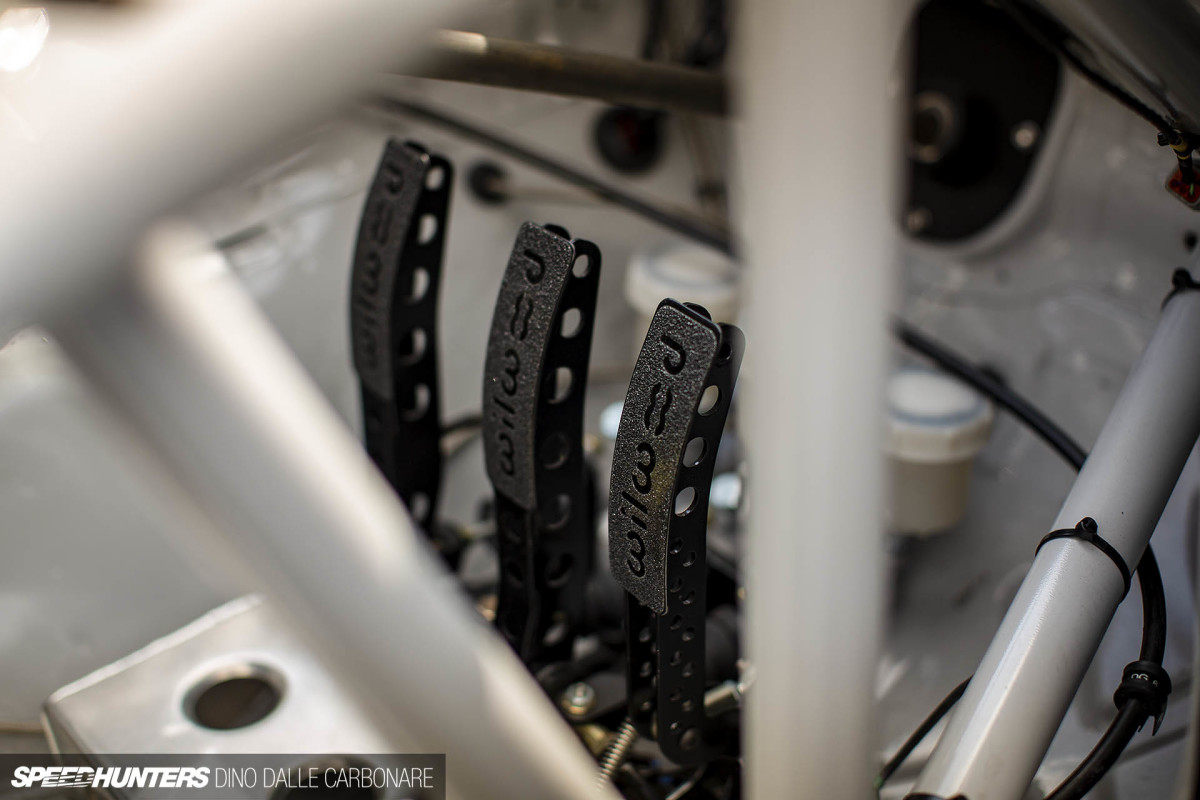
A Cartek power distribution module keeps all these switches within reach, and the Wilwood pedal box was the final piece of the puzzle to get a perfect driving position.
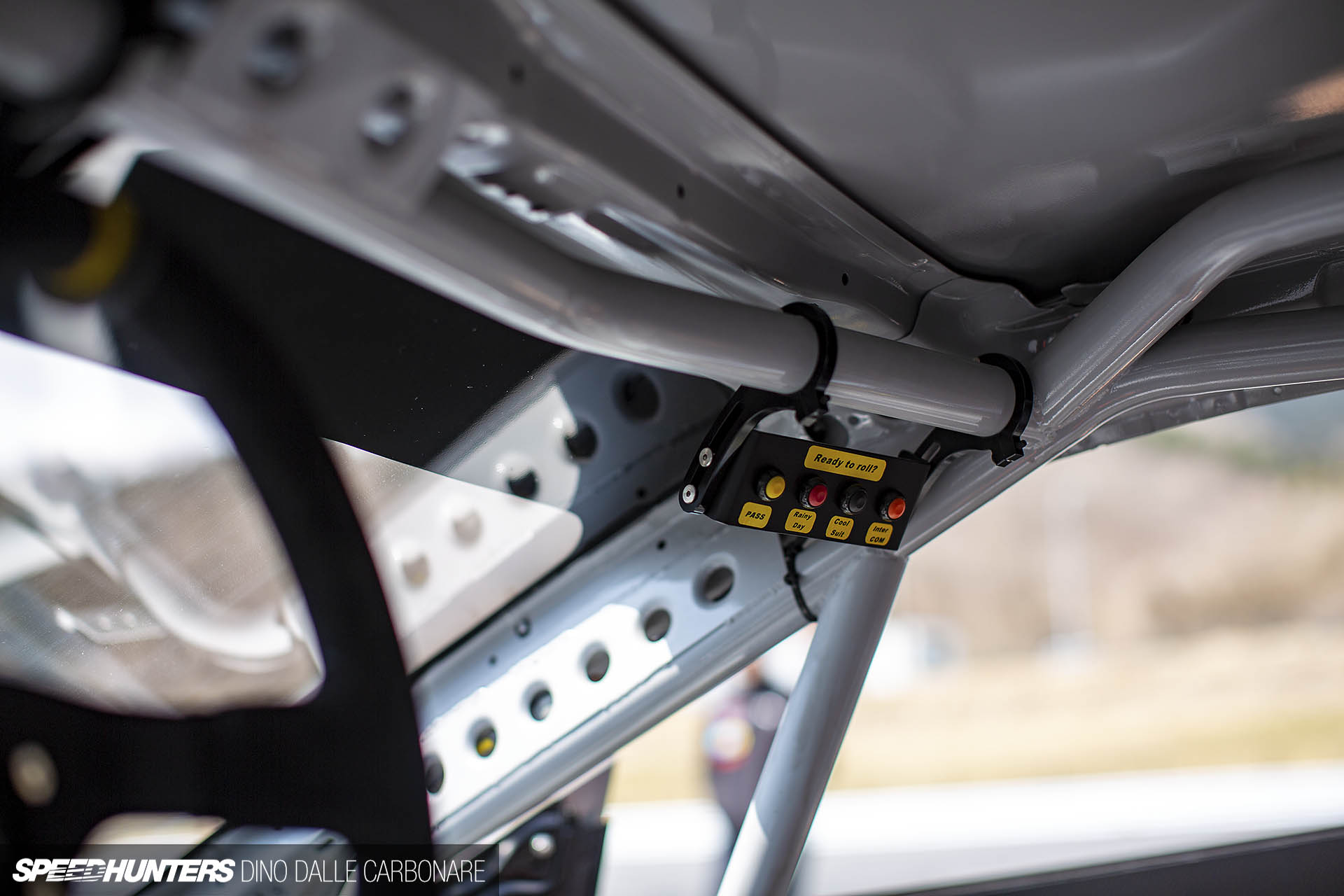
There are a few more switches located high up on the corner of the roll cage.
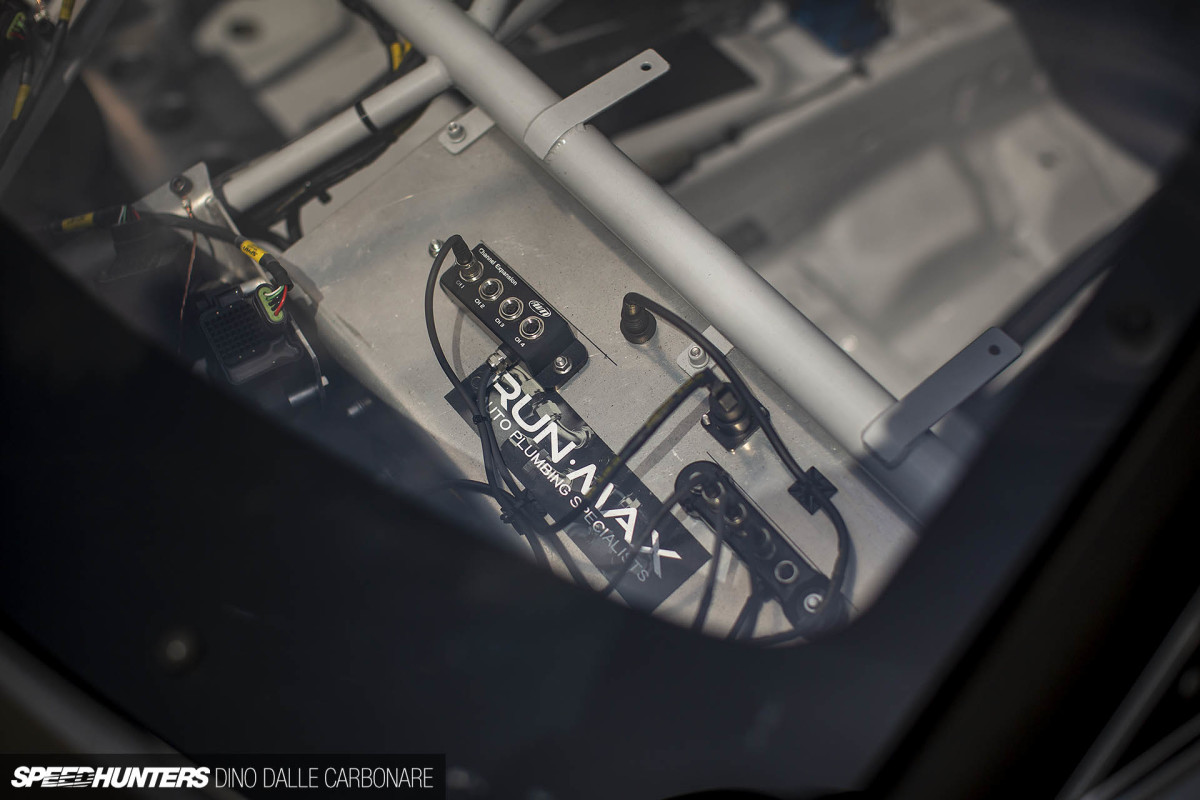
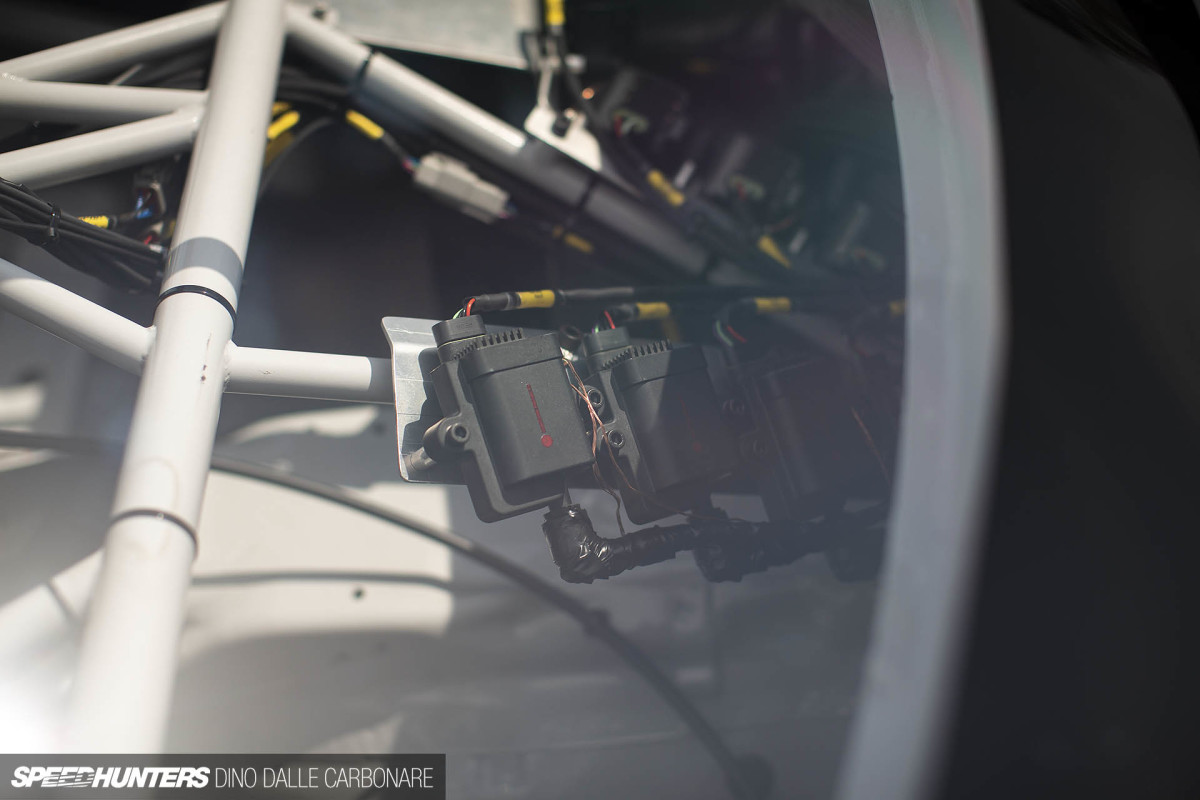
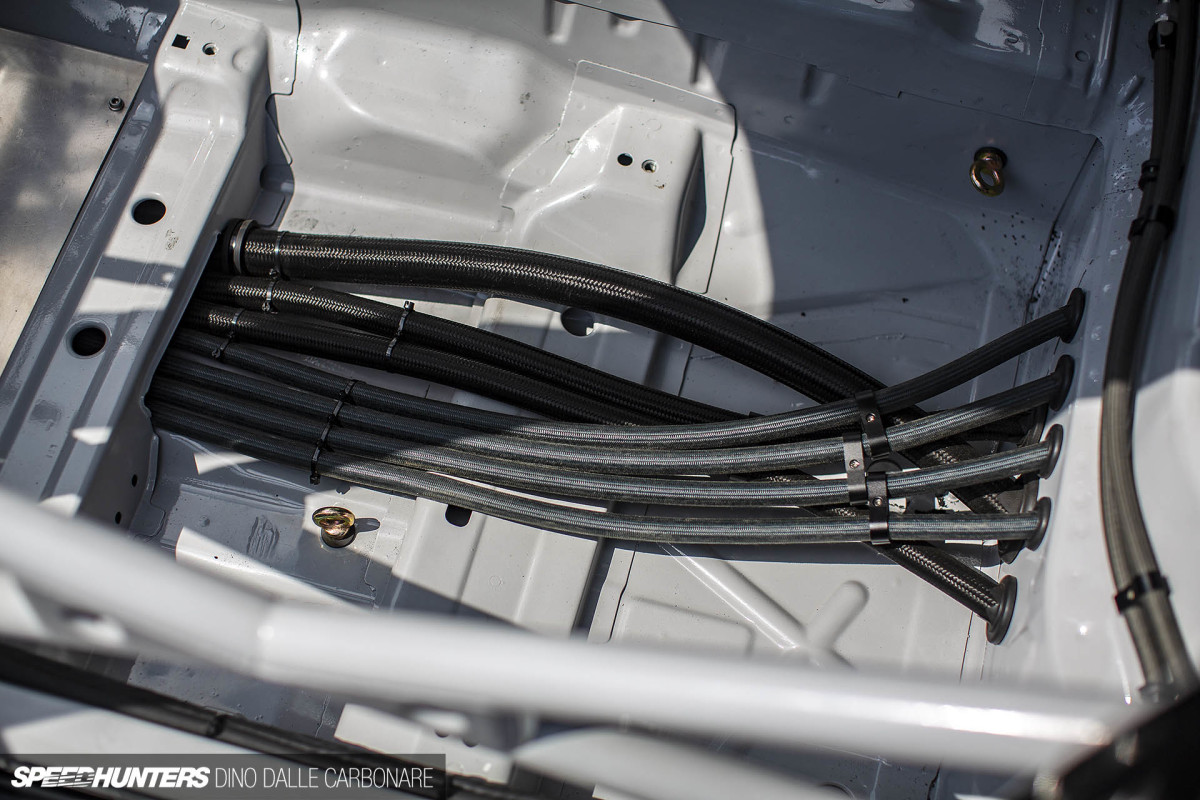
More examples of their attention to detail? Here you go, from the way the Ignition Projects coils have been positioned in-cabin to the oil and water plumbing that pass along the passenger side of the floor.
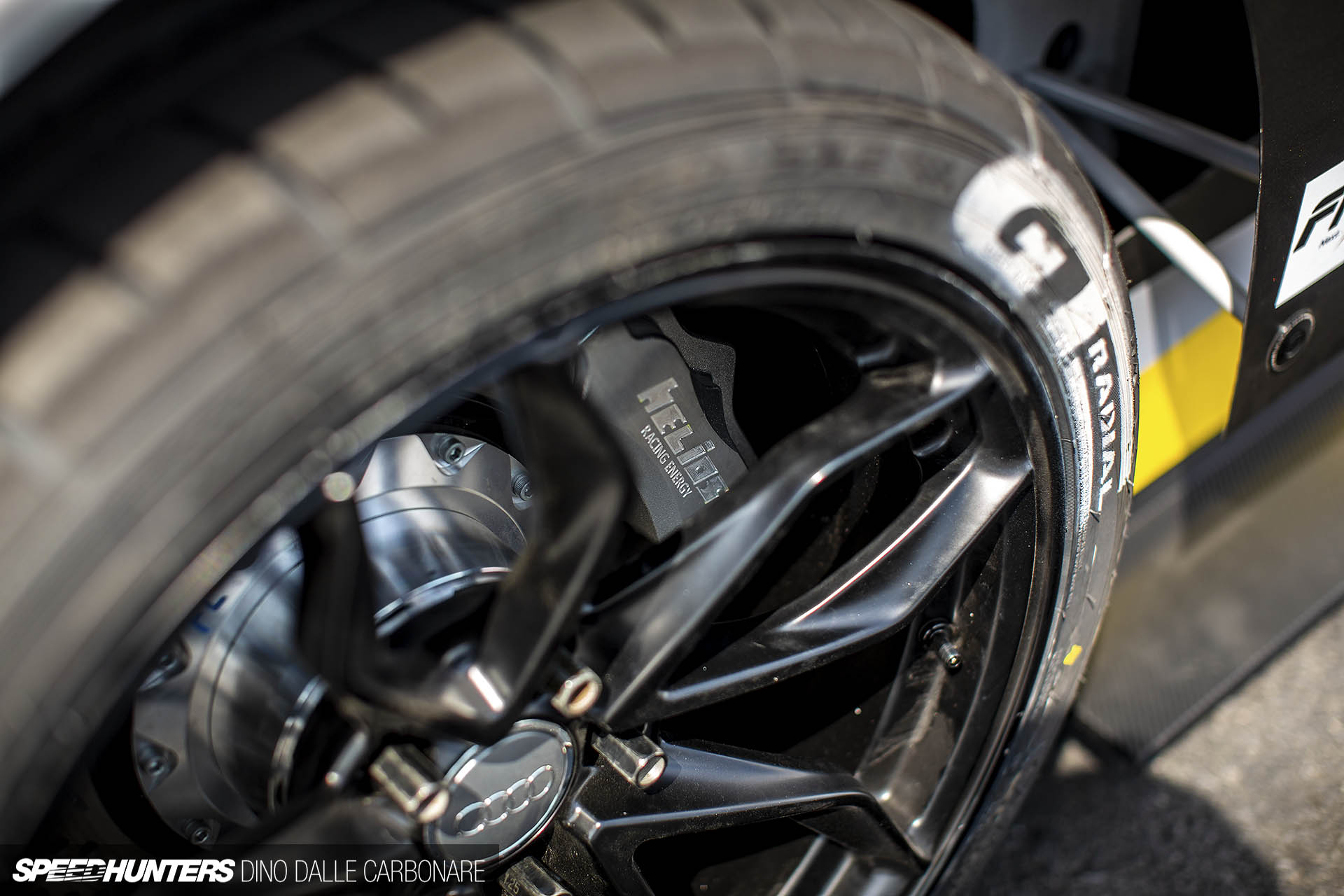
Helios’ own brake setup is used at each corner, and for the test at least, the car was running on stock Audi wheels.
After executing what was possibly the fastest shoot I’ve ever done on a car, it was time to let Iikuta get back to his track time.
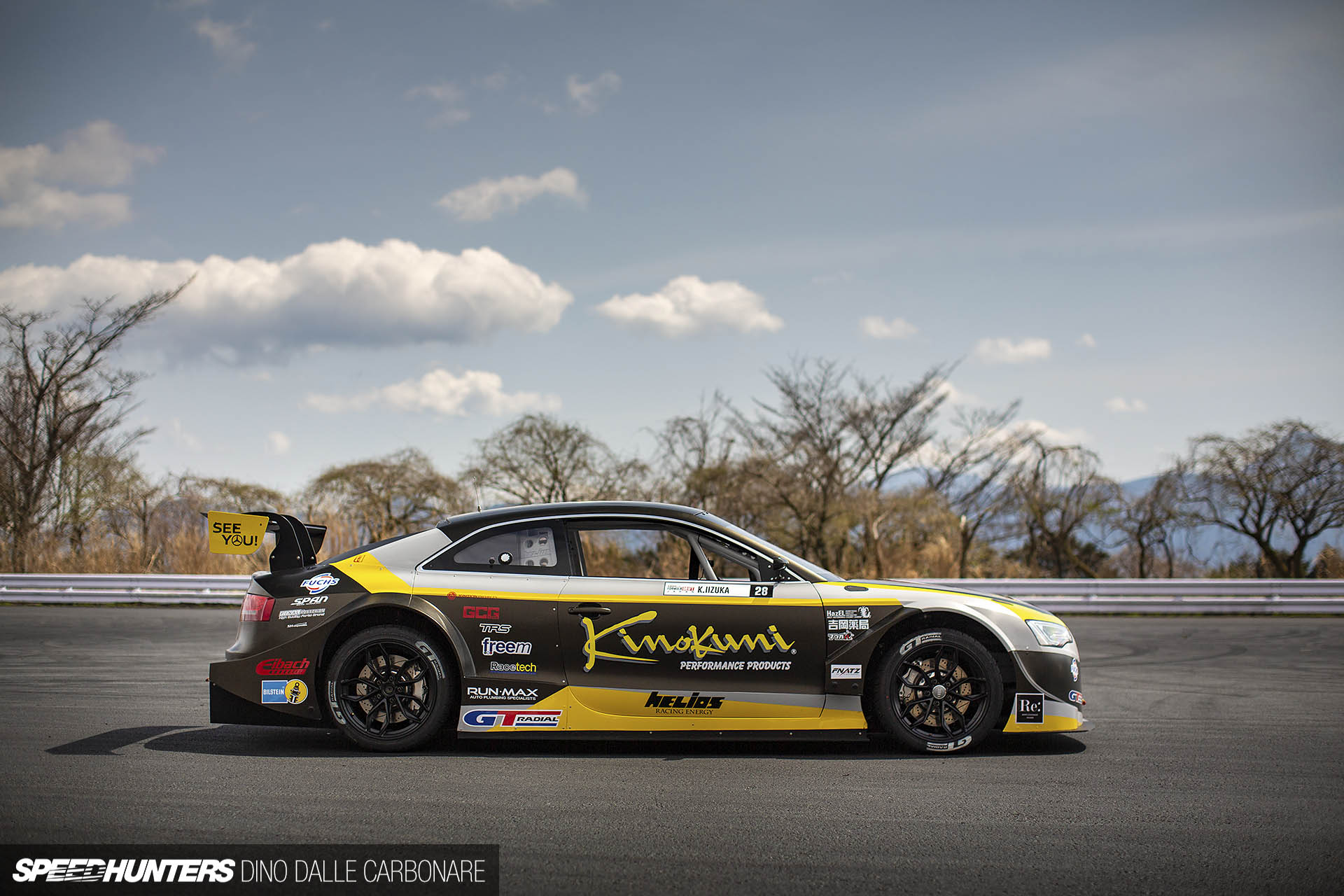
I got a final profile shot and noticed how the car already wears GCG Turbos stickers on the rear doors. Despite how brutally potent it seemed with only 800 naturally aspirated horses, 1600 blown ones will be beautifully outrageous.
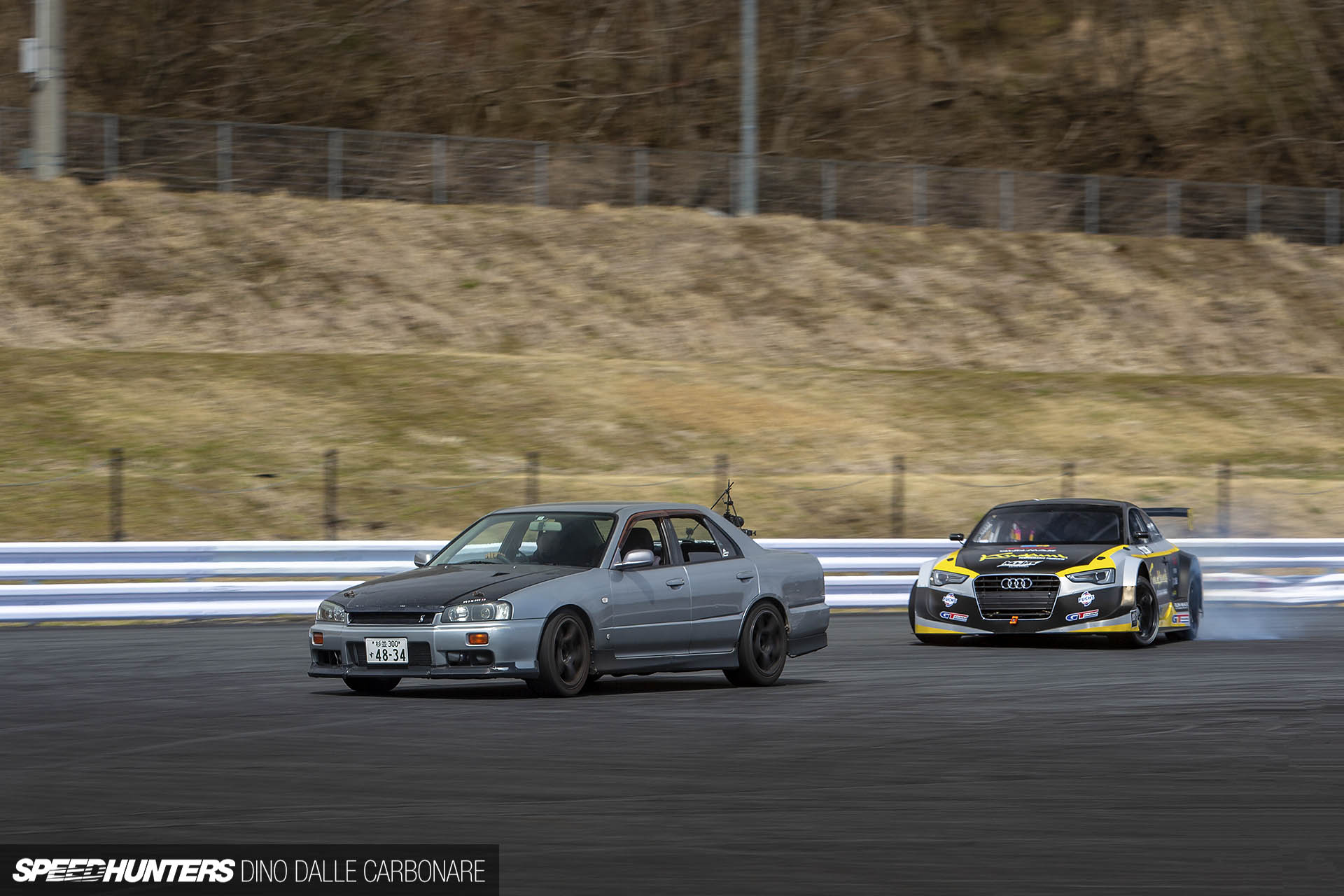
While I was doing my thing with the camera, Ron was laying out his video gear and getting ready for what must have been the most exciting tracking shots he’d ever done.


Despite this being his third short outing in the car that morning, he had no problem keeping super close to Ron’s Project Rough.
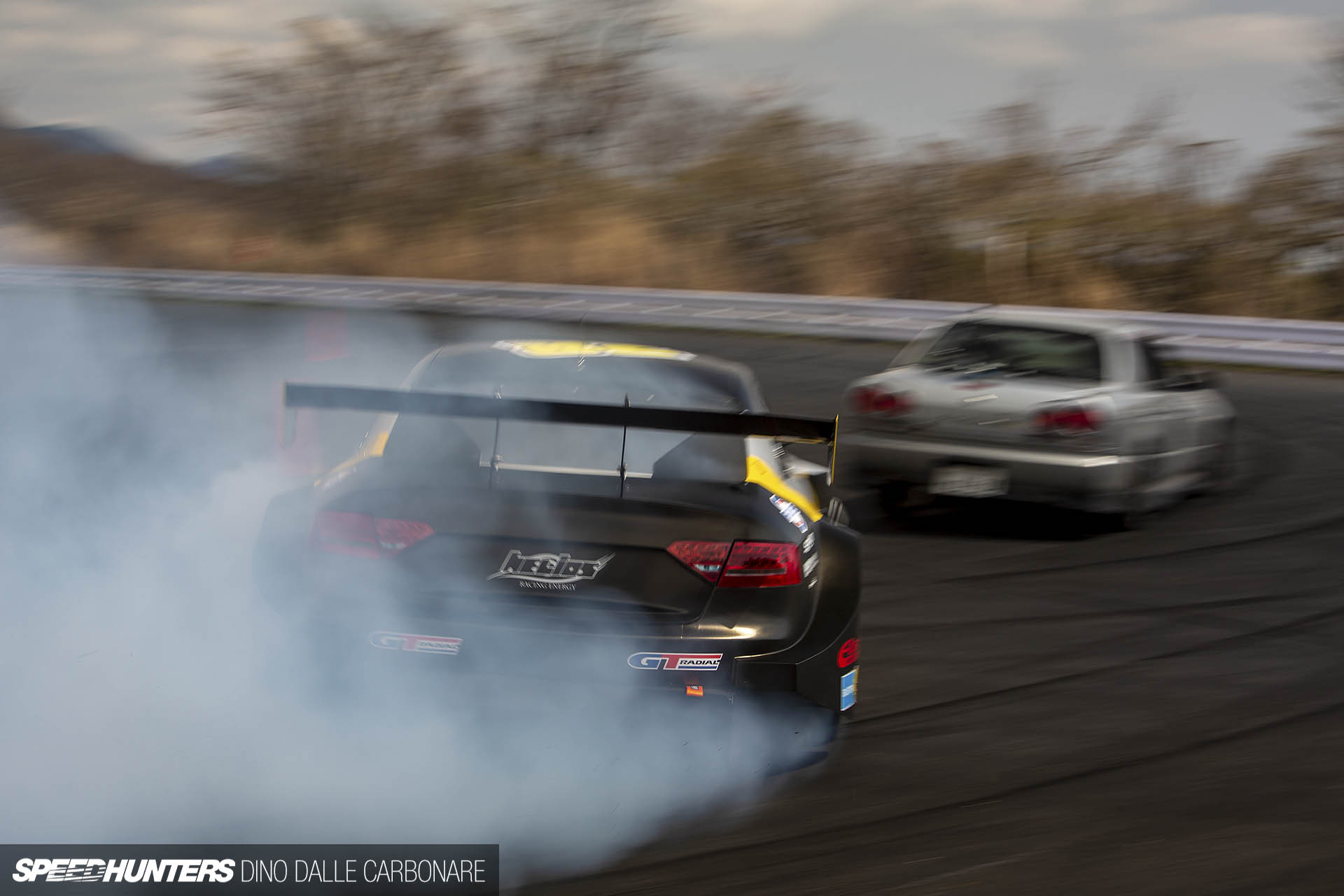
Ron will have a cool video of the day coming up where you can hear the LSX 454R in all its fury, as words can simply not get close to describing that wall of sound it generates.
It will be cool to see how Iikuta fares against this year’s Formula D Japan field, and needless to say, we wish him the best of luck.
Dino Dalle Carbonare
Instagram: speedhunters_dino
dino@speedhunters.com