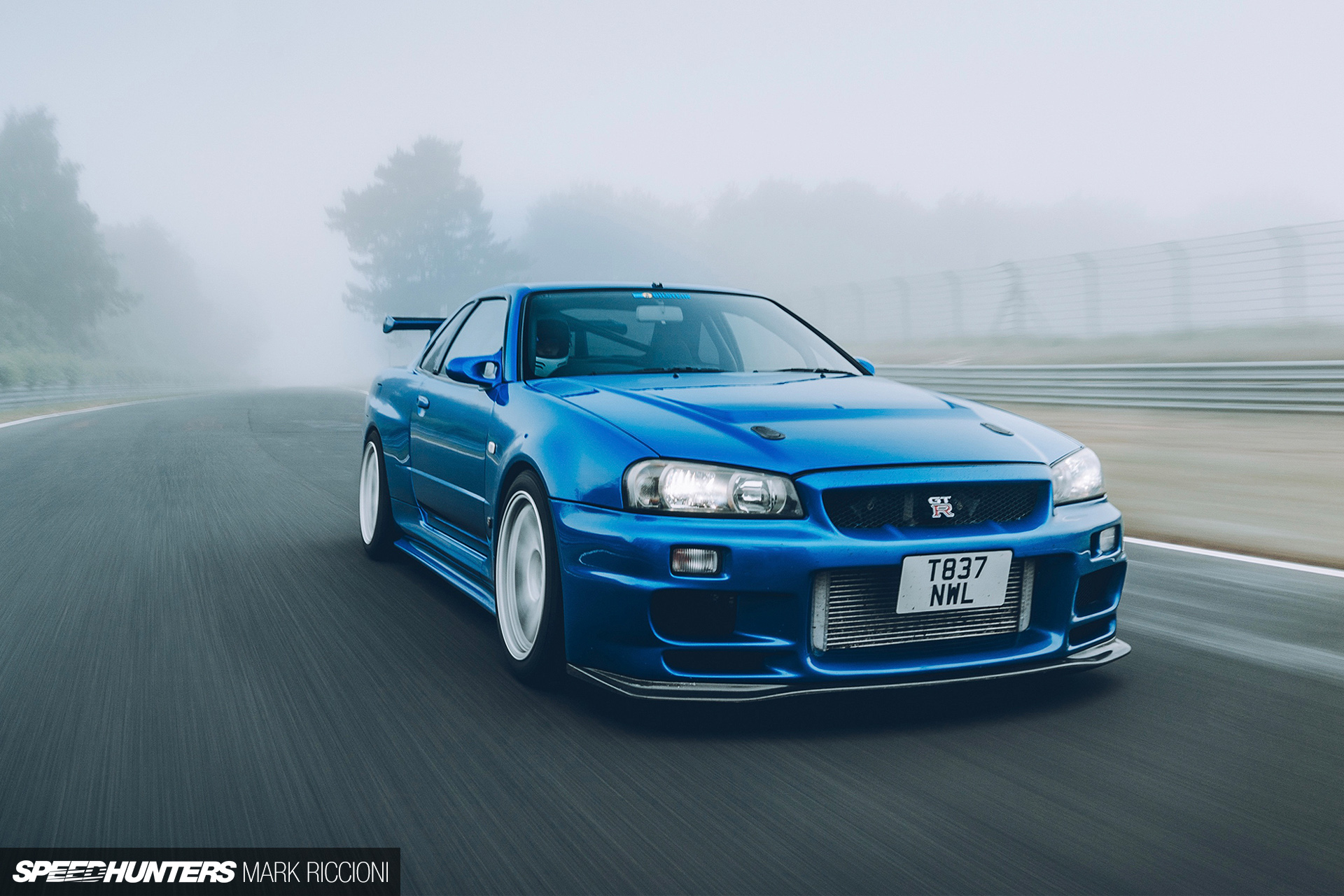
1999 was a bit of a strange year.
The world was braced for complete chaos as the Millennium bug ripped through computers faster than an itchy rash at Coachella. US President Bill Clinton was finally acquitted from having his stars & stripes rearranged by a White House intern, and the phrase ‘hashtag’ would’ve seen you arrested on conspiracy to sell weed.
Hell, a meme was just a foreign-sounding name.
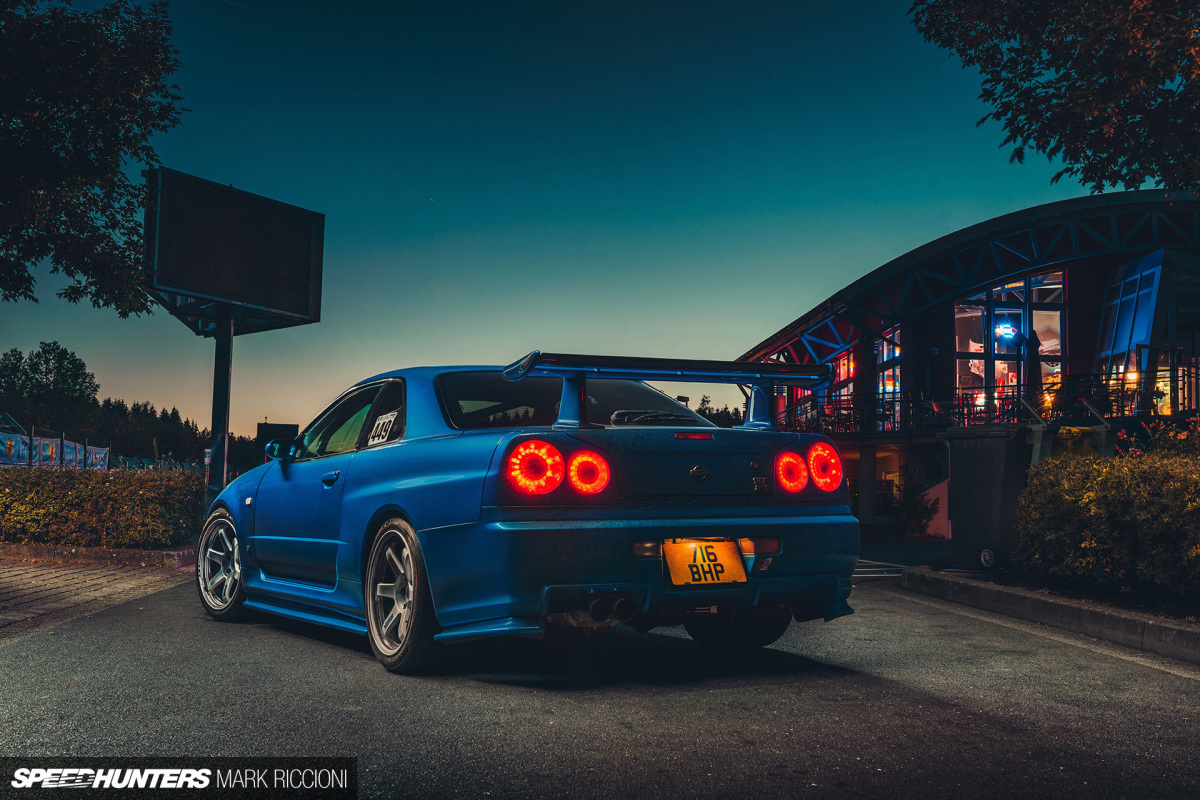
But in between the weird was a bit of good. 1999 gave us arguably one of the best supercars of all time, the Mercedes CLK GTR. And for $1,499,950 less you could buy Gran Turismo 2, one of the best racing games of all time.
Seeing as Speedhunters is powered by Need for Speed those words should be muttered quietly, but I’ve been assured that for this one time only I’ve got a free pass. That, and I know Paddy loves a bash around the digital Nürburgring.
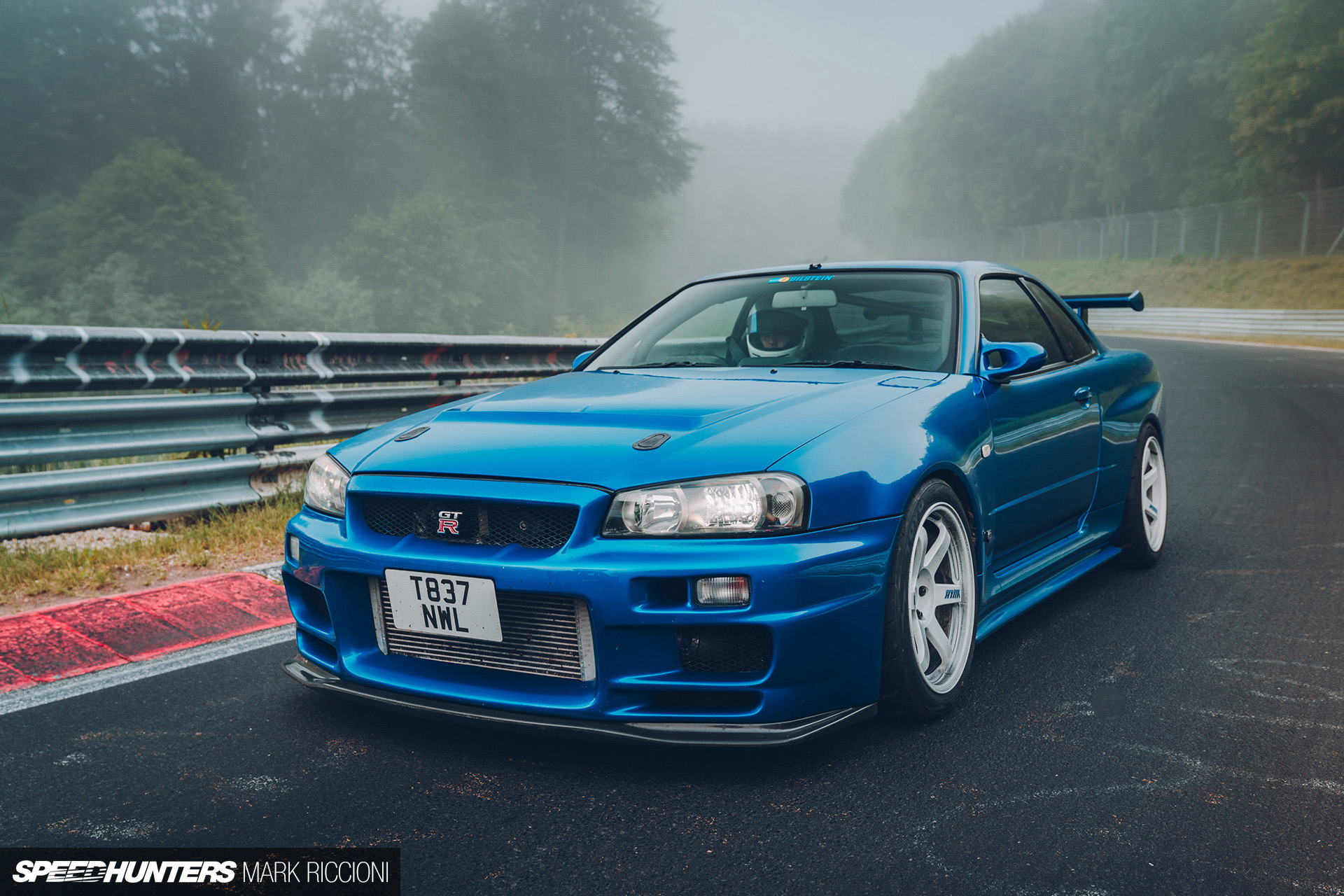
Not only did Gran Turismo revolutionise driving simulators on a mainstream scale, it changed my outlook on car culture forever.
While you could argue the series has lost its way a bit in recent years (it’s not much of a debate, it has) the first four games from 1997 through to 2004 remain some of the best racing games of all time.
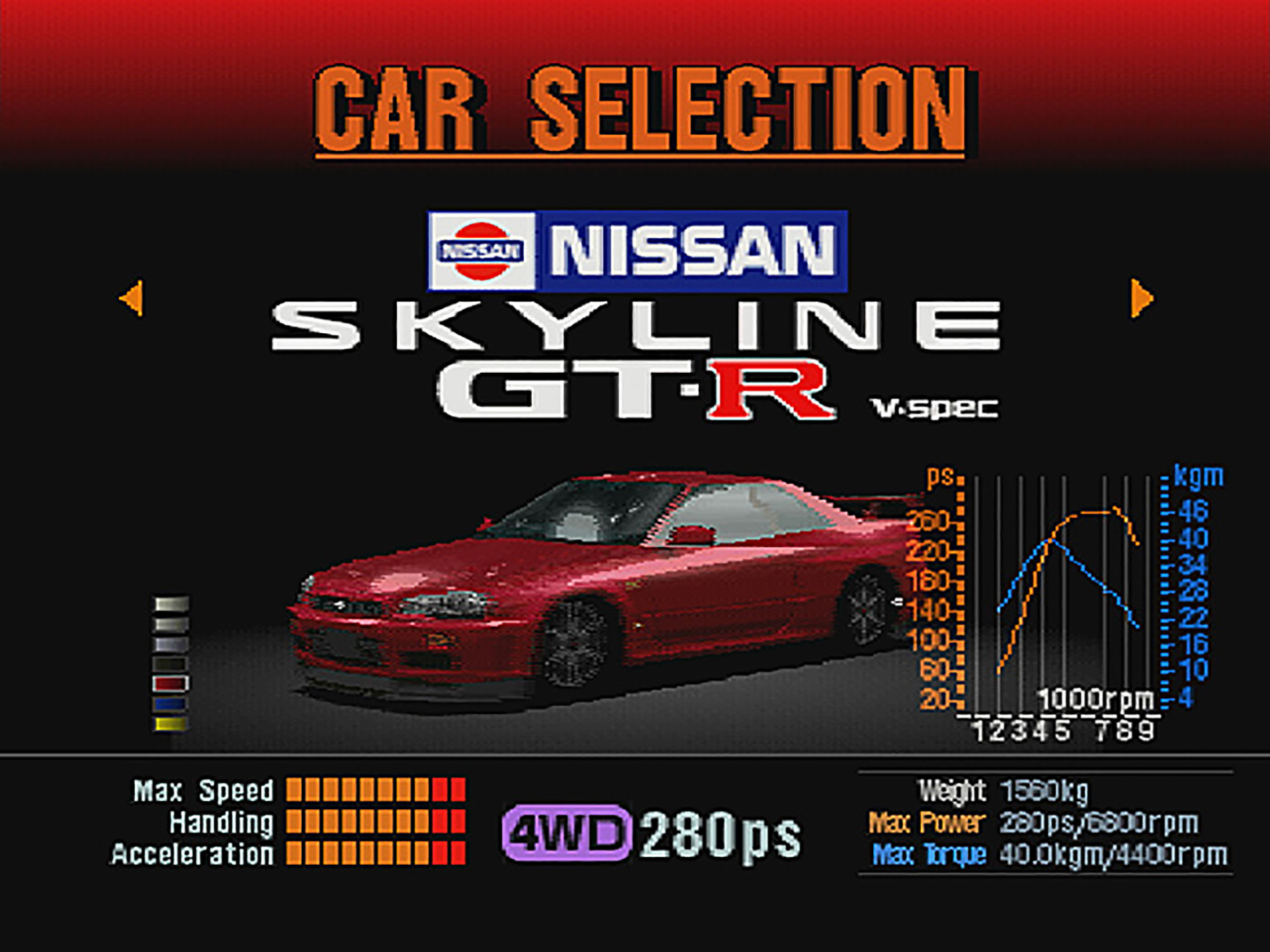
Back then, I was 11-years-old and like most 11-year-old boys I’d developed a bit of an obsession for cars, thanks mainly to ‘old’ Top Gear during Clarkson’s merkin-for-hair era.
Put simply, if it was Italian with many vents or a swooping race car which shot fire, you had my 11-year-old attention. Then, along comes Gran Turismo – with all 45,000 variations of a Suzuki Alto Works – and suddenly my brain was poisoned forevermore.
What even is a Suzuki Alto Works? Why do I need so many versions? And why does an oil change almost double its horsepower?
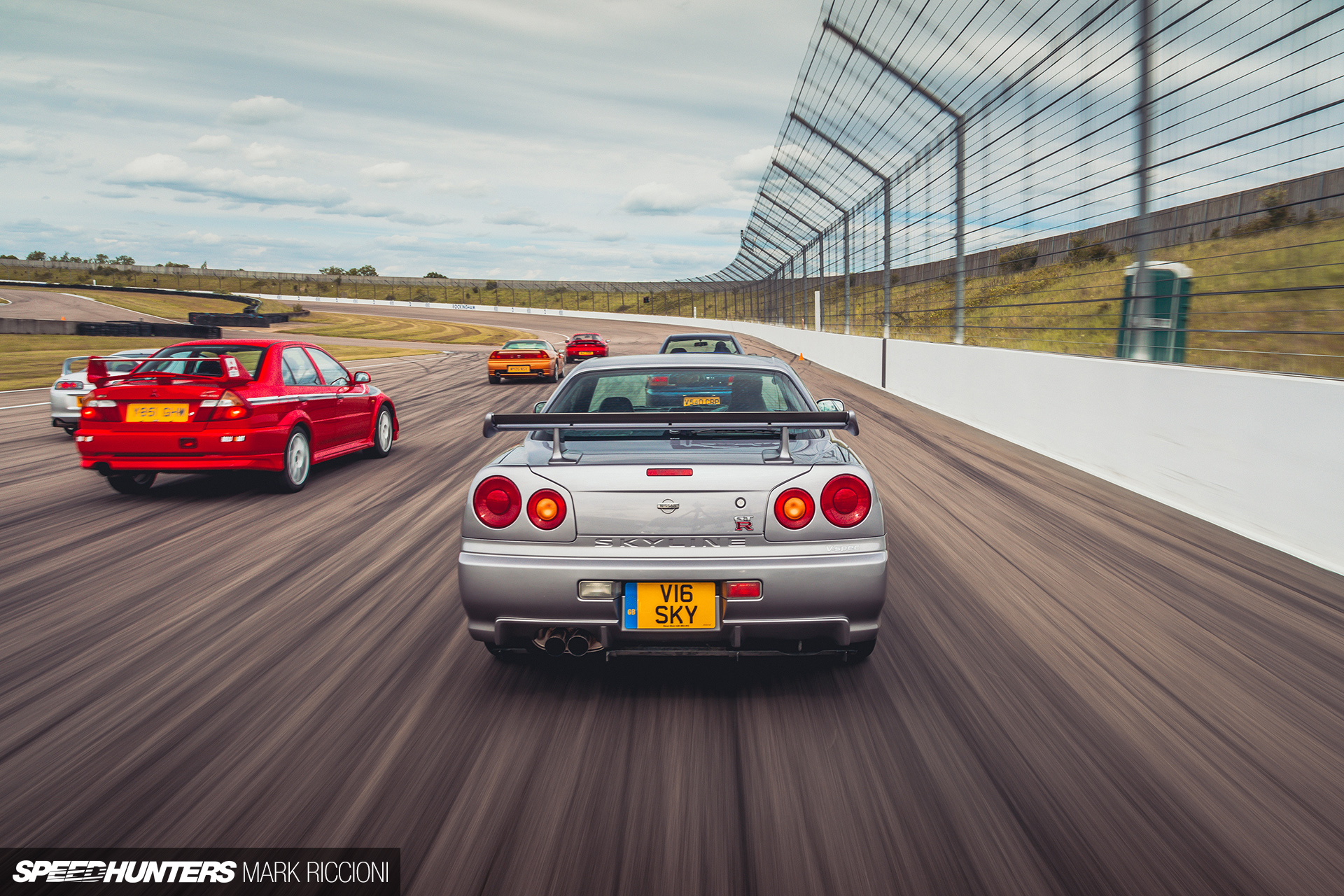
In reality, none of that mattered because it had already opened the door into Japanese car culture. A culture I’ve borderline obsessed over (a very Japanese approach ironically) for some 20 years now, and it’s all Gran Turismo’s fault.
That’s not to say other games didn’t try – the very first Need for Speed featured an NSX, RX-7 and Supra – but Gran Turismo did two things the others didn’t: car tuning and Nissan Skylines.

As a young boy obsessed with cars who hadn’t quite discovered the turmoil of females, my next logical obsession was numbers… or rather, Top Trumps.
‘Cus your love for a car could entirely be dictated by its vital stats – horsepower, 0-60mph and the all-important top speed. Throw tuning into the mix and all the standard rules go out the window. Tell an 11-year-old that a wacky-looking Nissan could be tuned to over 1000hp and you’ve created the ultimate Top Trumps top trumper.
The fact the Skyline GT-R looked like it’d crashed through Halfords in the process was just a bonus.

Skylines were iconic; they still are today. In the ’90s, after their initial dominance at Bathurst, tuning launched the Skyline to a stratospheric level – both in the virtual and real world.
Don’t forget this was a few years before The Fast and The Furious brought tuning culture to the mainstream, and connecting to the internet still sounded like R2-D2 was having a stroke.
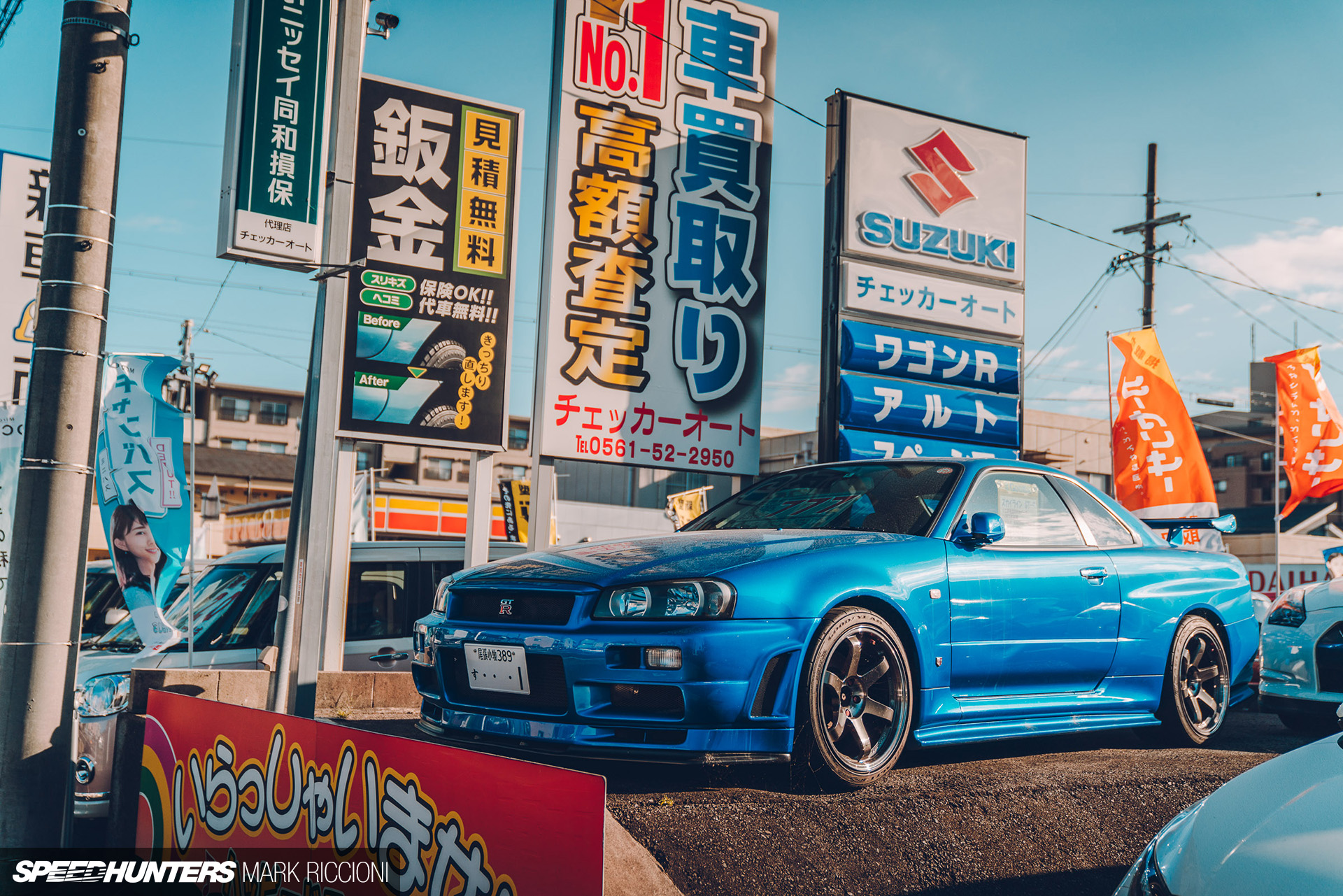
What made GT-R tuning feel unique compared to everything else? The Japanese. If you presented a German man stood next to a Mercedes, suited & booted explaining cylinder head optimisation, 11-year-old me would’ve fallen asleep.
But show me a Japanese man in dungarees working in his garage – complete with some badly-translated subtitles reading ‘it gives great sensation of powerful feeling’ – and that seemed infinitely cooler than anything the western world could offer.
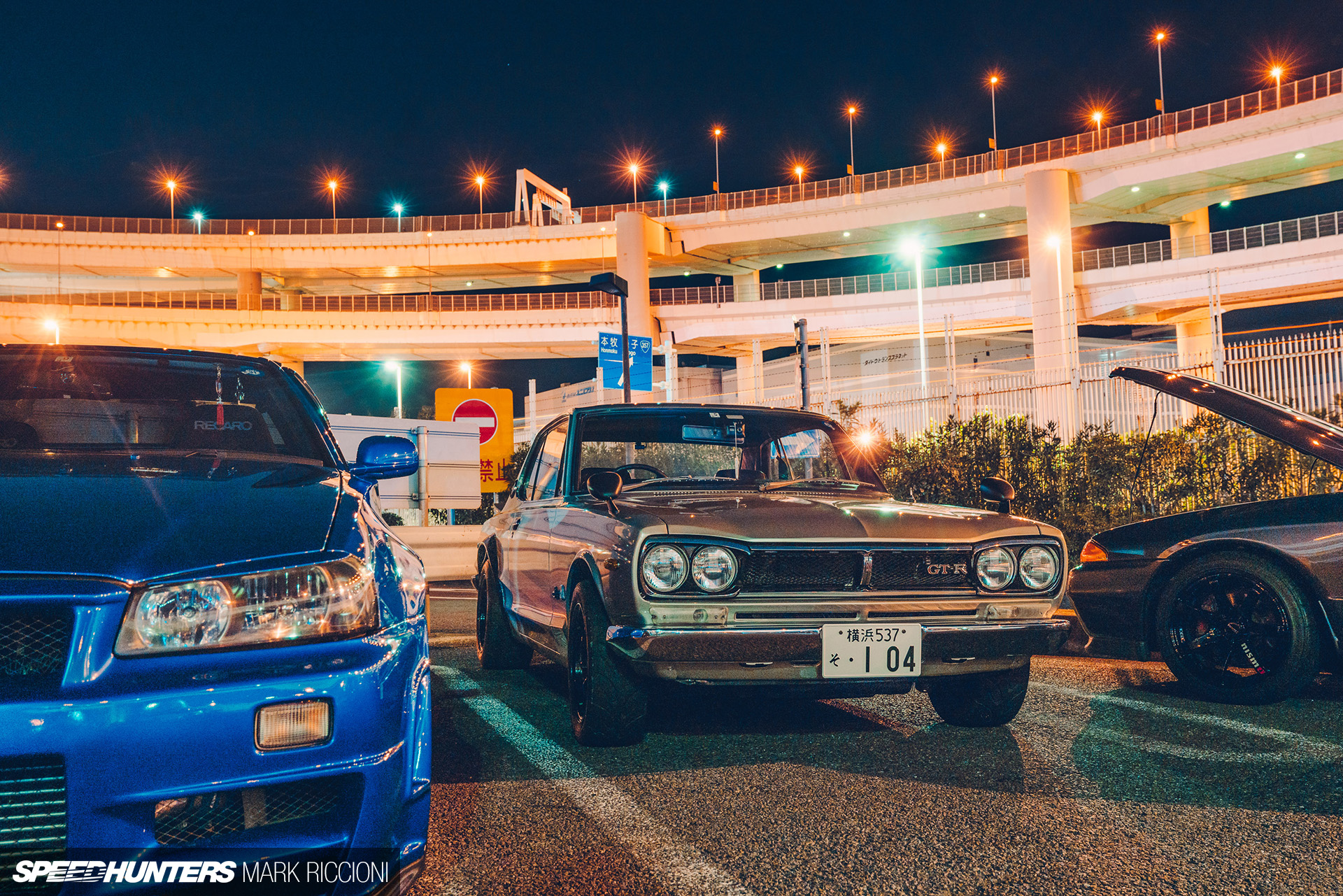
It’d take me a further 18 years to finally visit Japan, and it’s one of the few countries where the reality turned out to be far better than my imagination. Even if the culture of saying ‘yes, no problem’ to something which is actually a problem (and subsequently not possible) gets quite wearing.
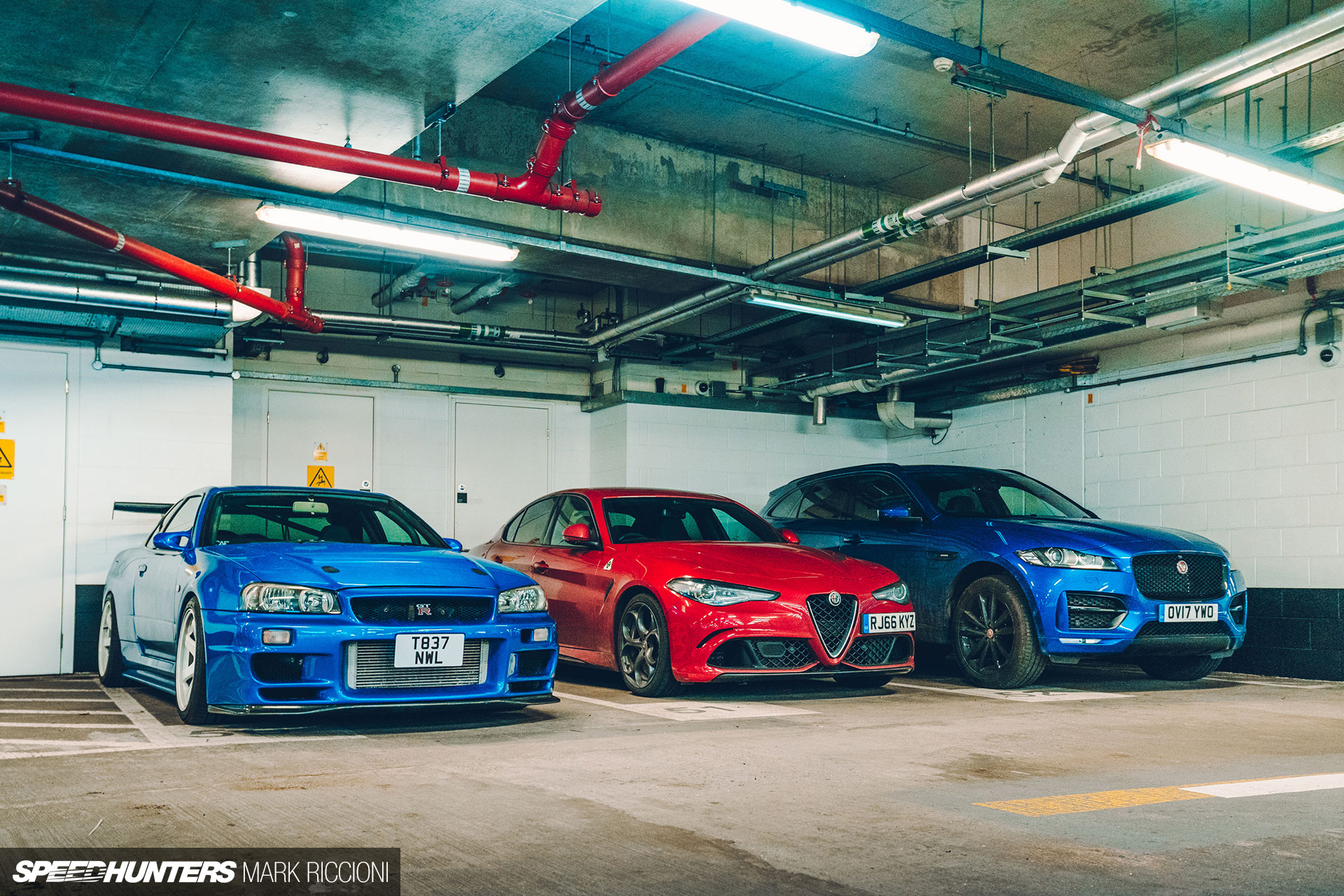
Everyone loves an underdog. The Skyline GT-R shouldn’t be able to mix it with the best; it came at a time when Nissan was on the brink of bankruptcy. It chose turbochargers over displacement, four-wheel-drive over rear-wheel-drive. It stood out from the crowd without being ostentatious.
That attitude appeals much more to me than a traditional supercar; it represents the type of character I am. Happiest flying under the radar without making a fuss unless it’s necessary. Maybe that’s the real reason why Japanese culture stood out so much to me? Hideously introverted in day-to-day life but with a car that serves as an extension to your true character behind closed doors.
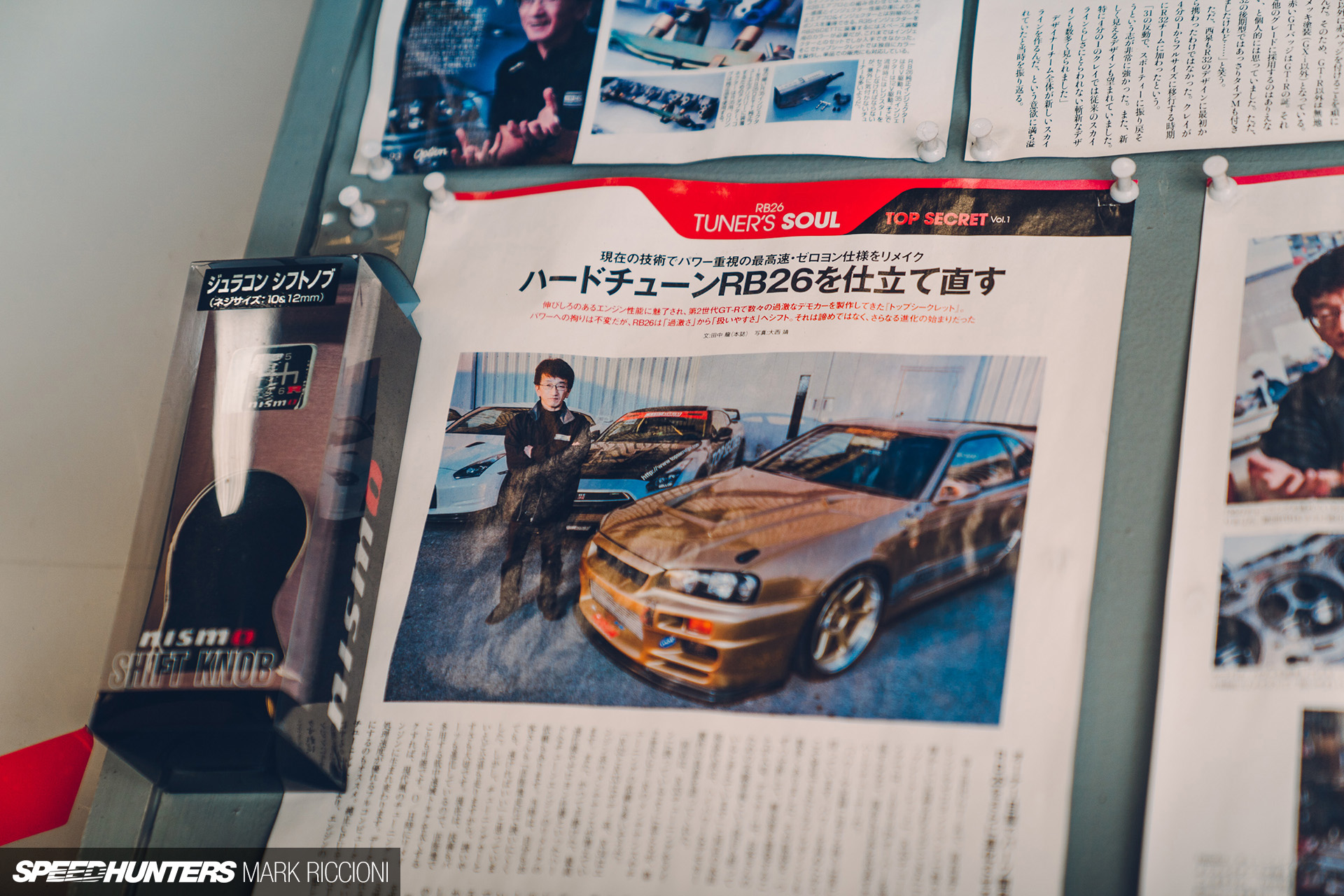
There was no promise that one day I’d own an R34 GT-R, even if my last dying words screamed ‘Smoookeeeyyy Nagaaataaa’ before performing harikari.
I’ve always looked at things in a horrendously logical way – great for accepting that luck and God doesn’t get you results, bad when you realise it’s only hard work and informed decisions which do. Ironic given my typical approach to buying cars.
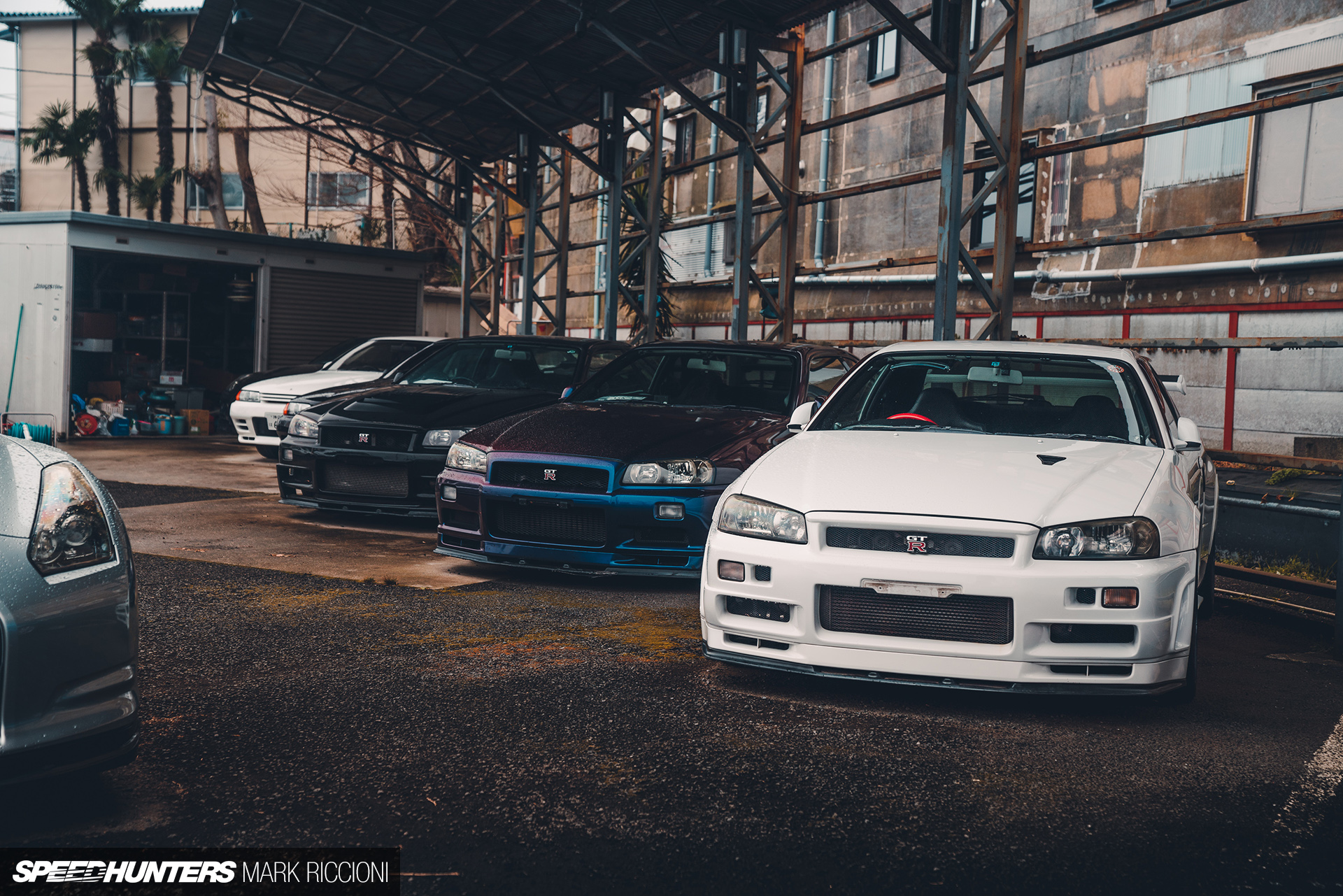
It’s not so much that logic goes out the window, it’s just more that logic doesn’t exist in the first place.
Viewing a car, driving a car, checking its history. Leave that all behind.
If there was a WhatsApp group of car salesmen around the world, I’d be the statue they all pray towards for good luck. First car I bought? Japanese (EK Civic). First car I crashed? Japanese (EK Civic, obviously). First car I bought in the dark without driving? Japanese (RX7). First car I blew up? Japanese (RX7, absolutely blindingly obvious).
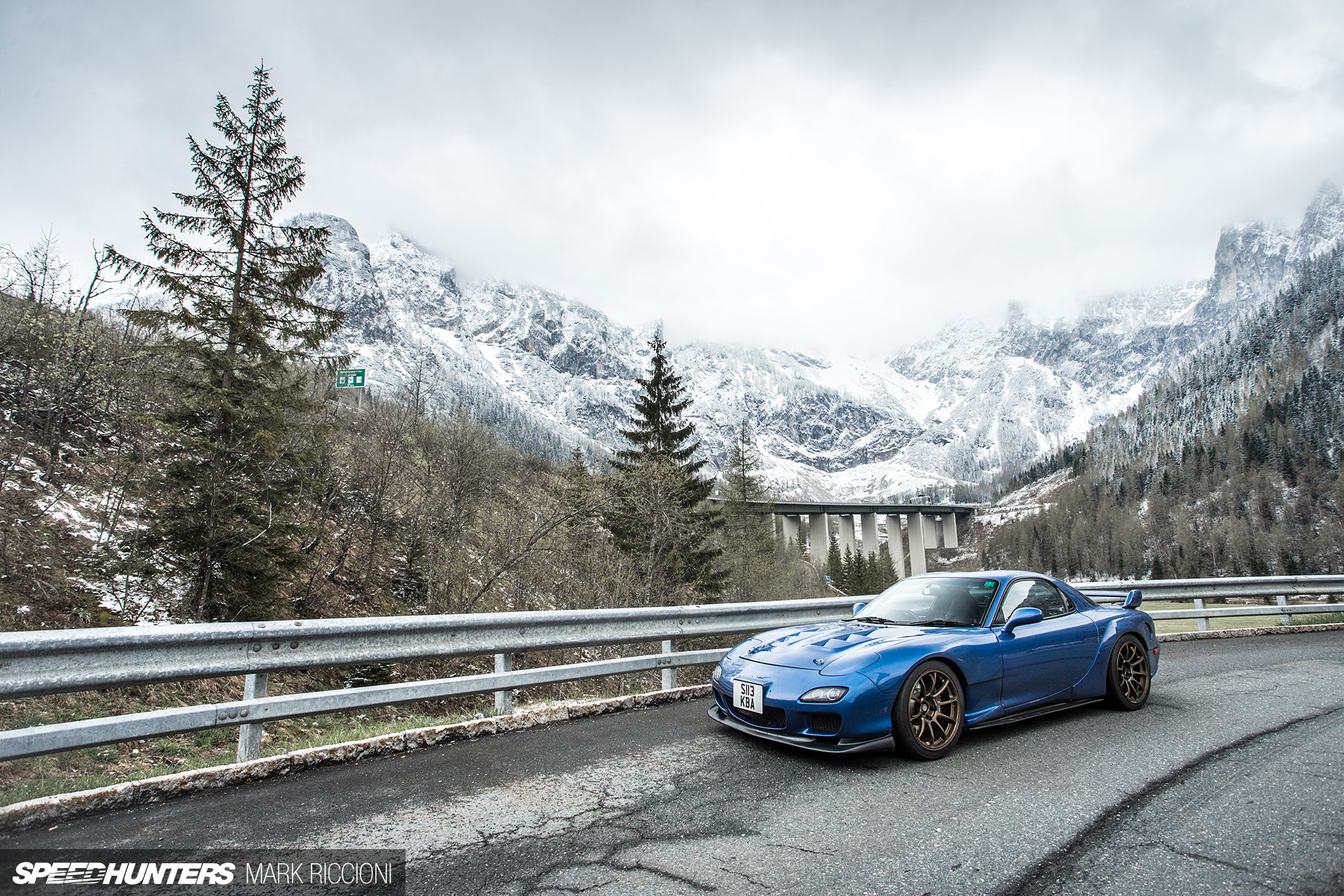
Skip forward a few years and that story repeated itself more times than I should probably admit to. Three RX7s (the most recent of which I still own is pictured above), two Civics, an S14a, Evo X and two Skyline GT-Rs later, I finally found myself in a position to buy an R34 GT-R.
This is the one Japanese car which had always escaped me. I’d use every excuse why – the R33 shares many parts with it, the R32 is the original – but the only reason was that I couldn’t afford it. Simple as that.
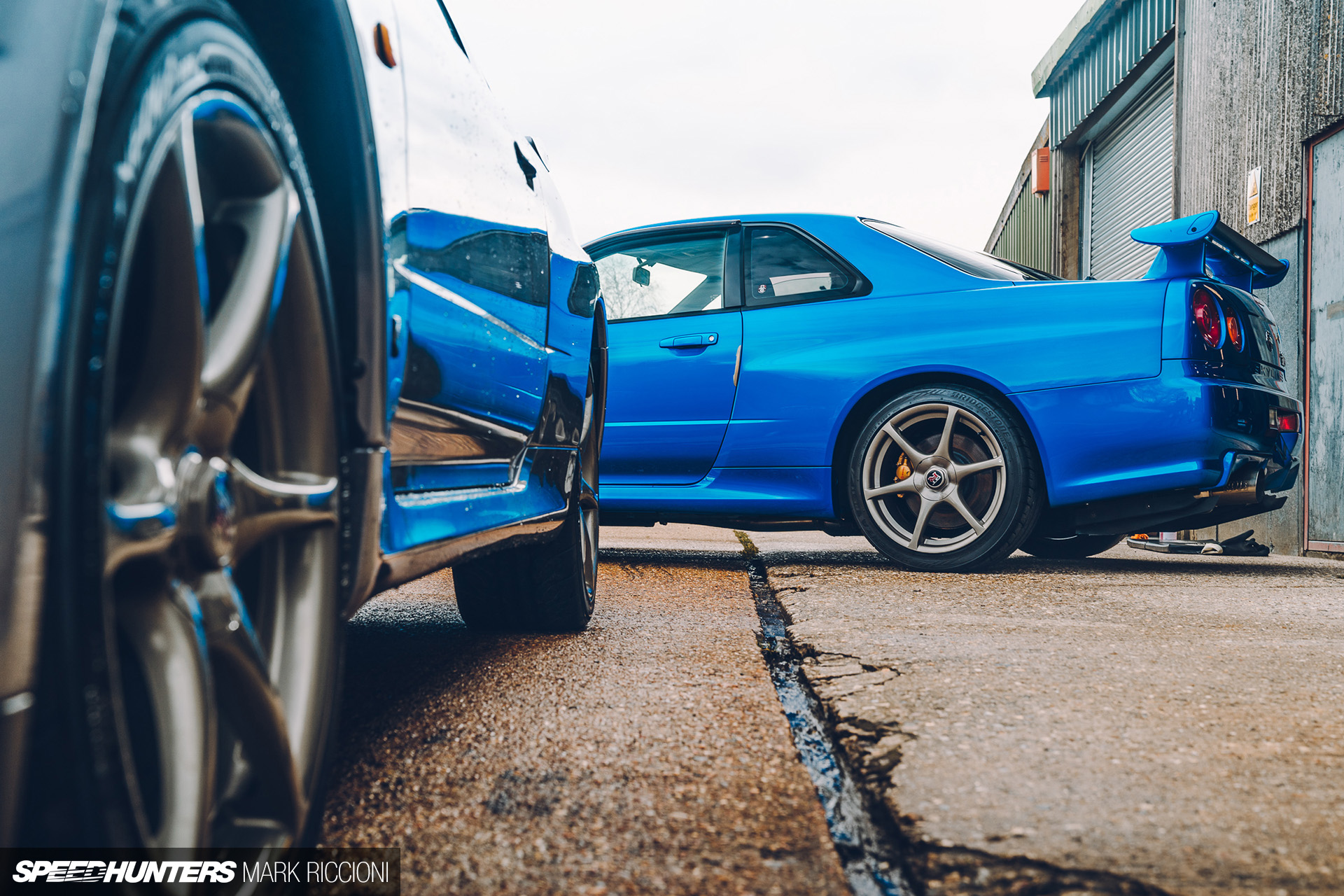
It’s a really odd feeling buying a car you’ve borderline worshipped for so long, one I feel has been watered down by various YouTubers making a fanfare for buying their dream car, inevitably selling it six months later and then buying their ACTUAL dream car all over again. And again. The influencer who cried wolf springs to mind…
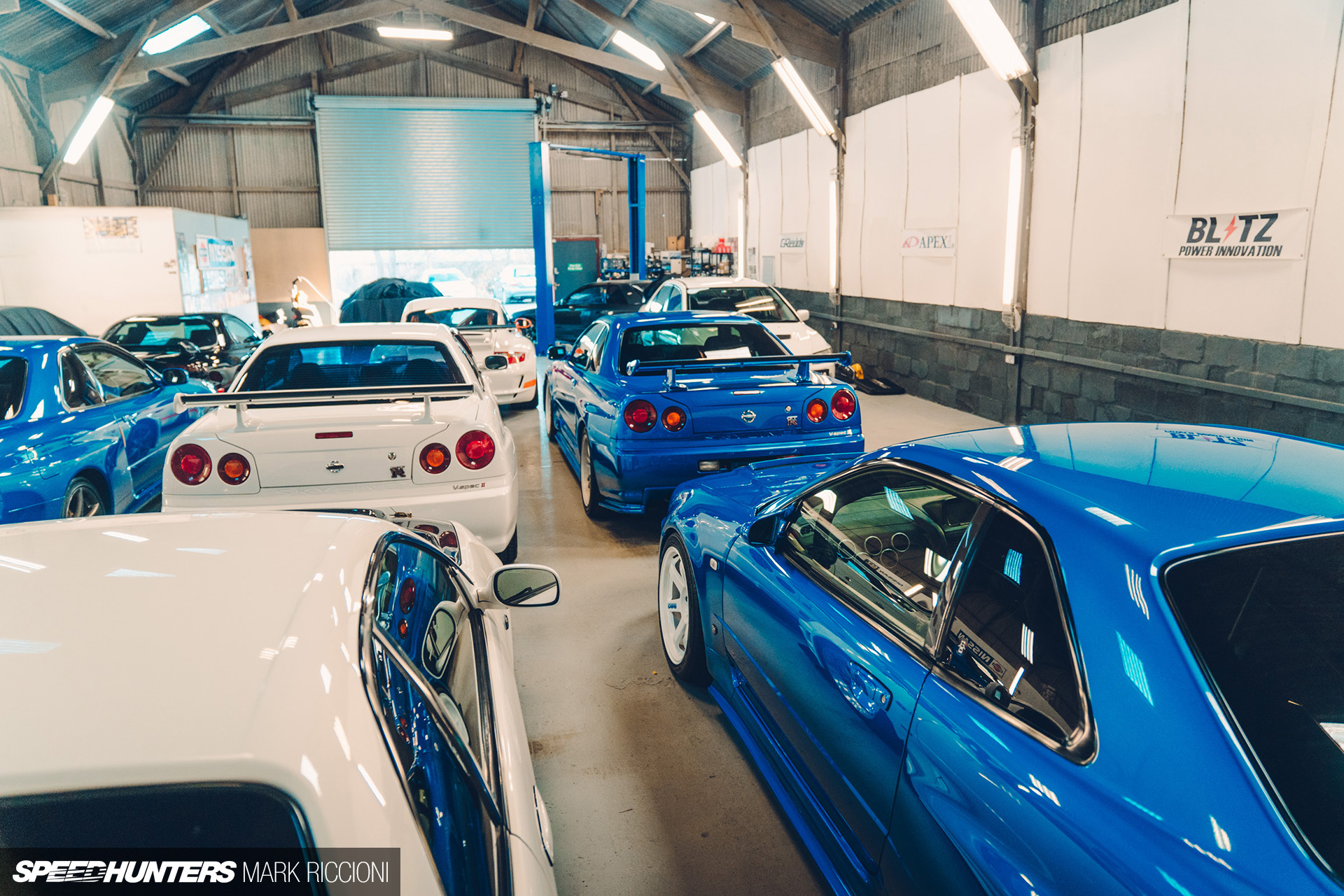
The reality is, there isn’t a big fanfare. There’s equal parts of nervousness mixed with excitement – more in fact – because like the old saying ‘never meet your heroes’ there’s the real possibility your dream car might be a bit naff.
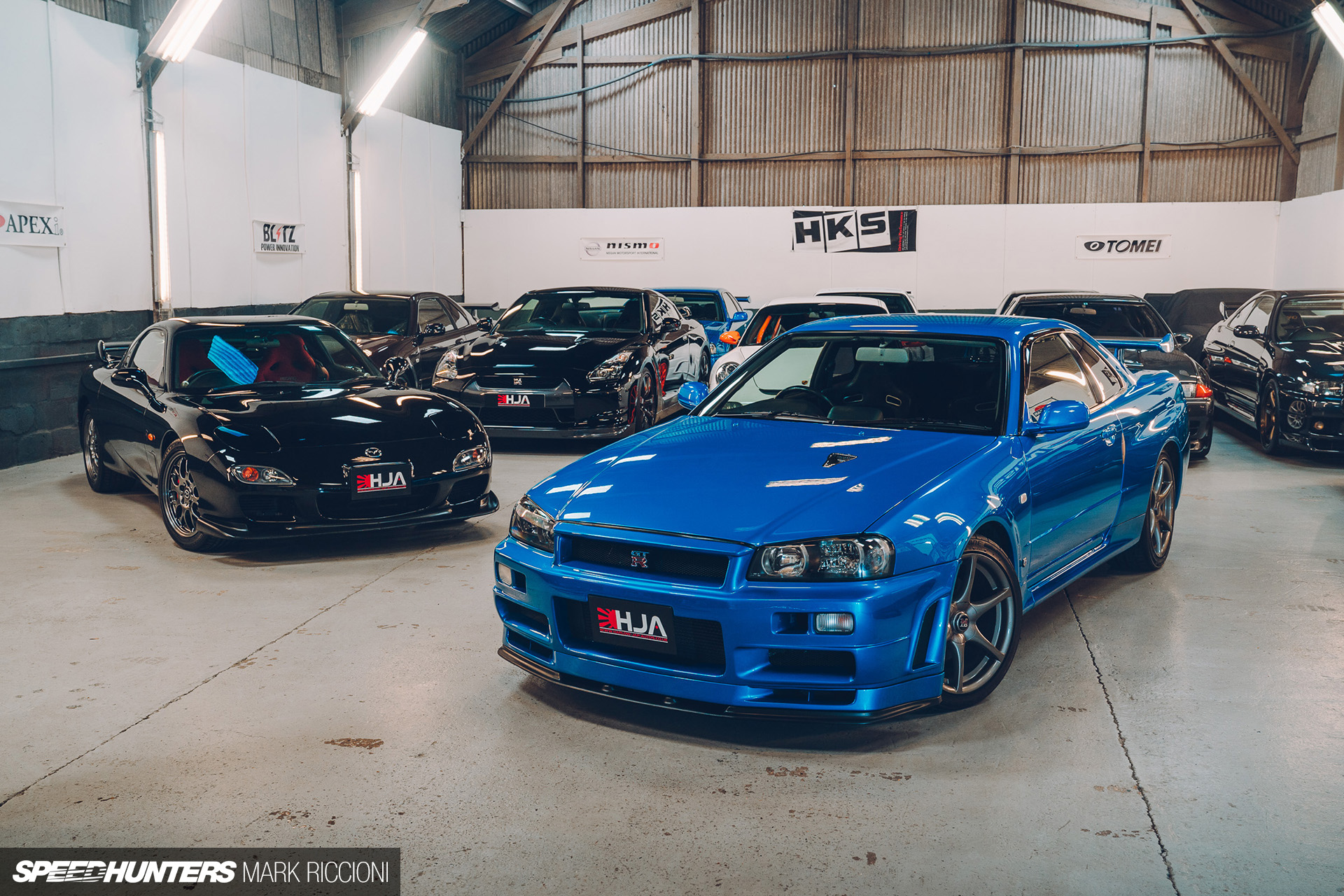
This is why I love the world of tuning so much. It doesn’t matter if it starts off a bit crap; you’ve got the freedom to refine it into your actual dream car. A dream which doesn’t require asking subscribers what colour you should wrap your own car – it’s your choice and spec no matter how wild or farfetched it seems.
That’s not a deliberate dig at any YouTube influencers, but rather the culture that manifests itself by taking a privileged experience and monetizing it for views.
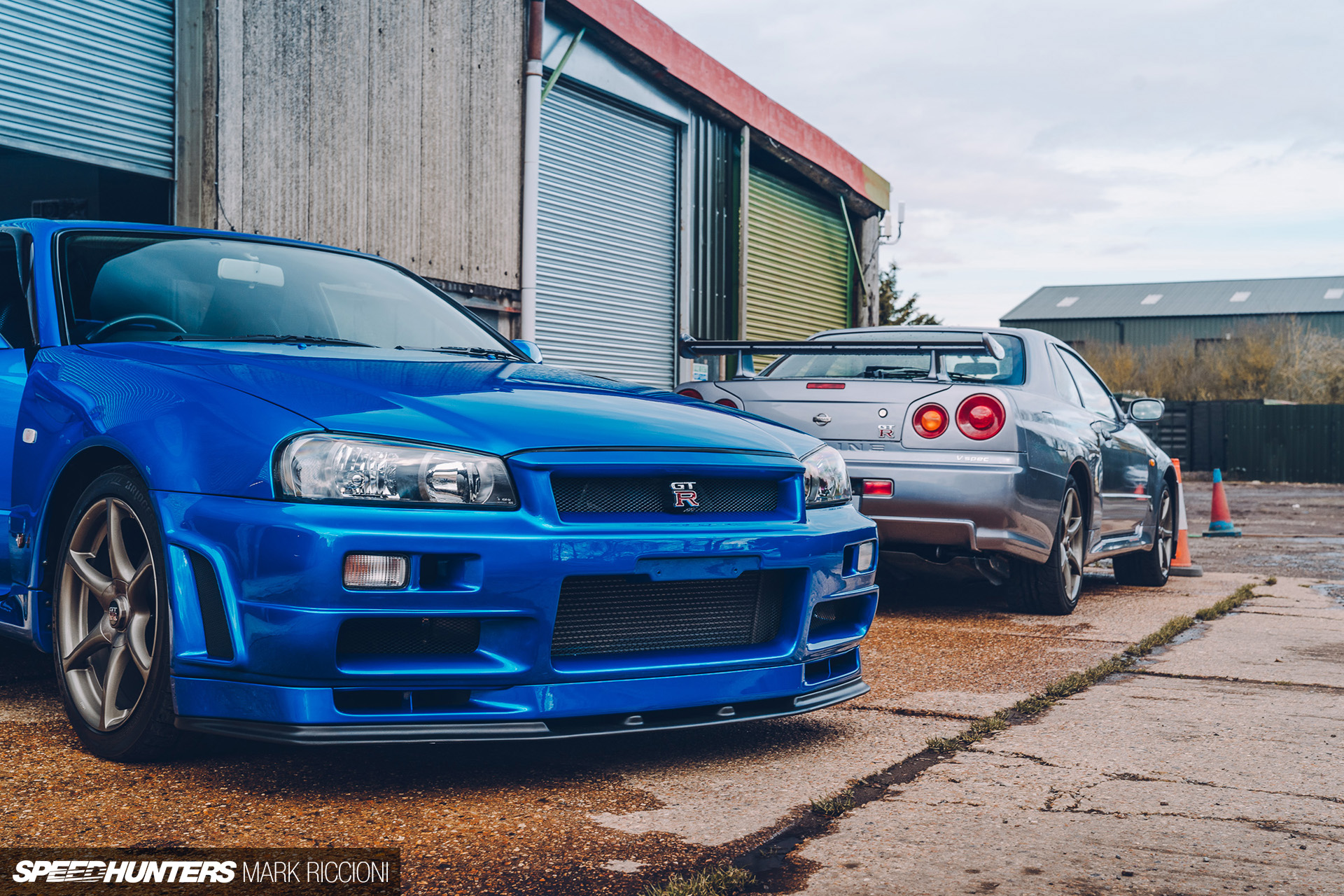
The real problem with buying an R34 GT-R is the market. Not the lack of, the exact opposite in fact. It’s a car which is being crippled by two key words rapidly tainting interesting cars across the globe… ‘investment opportunity’.
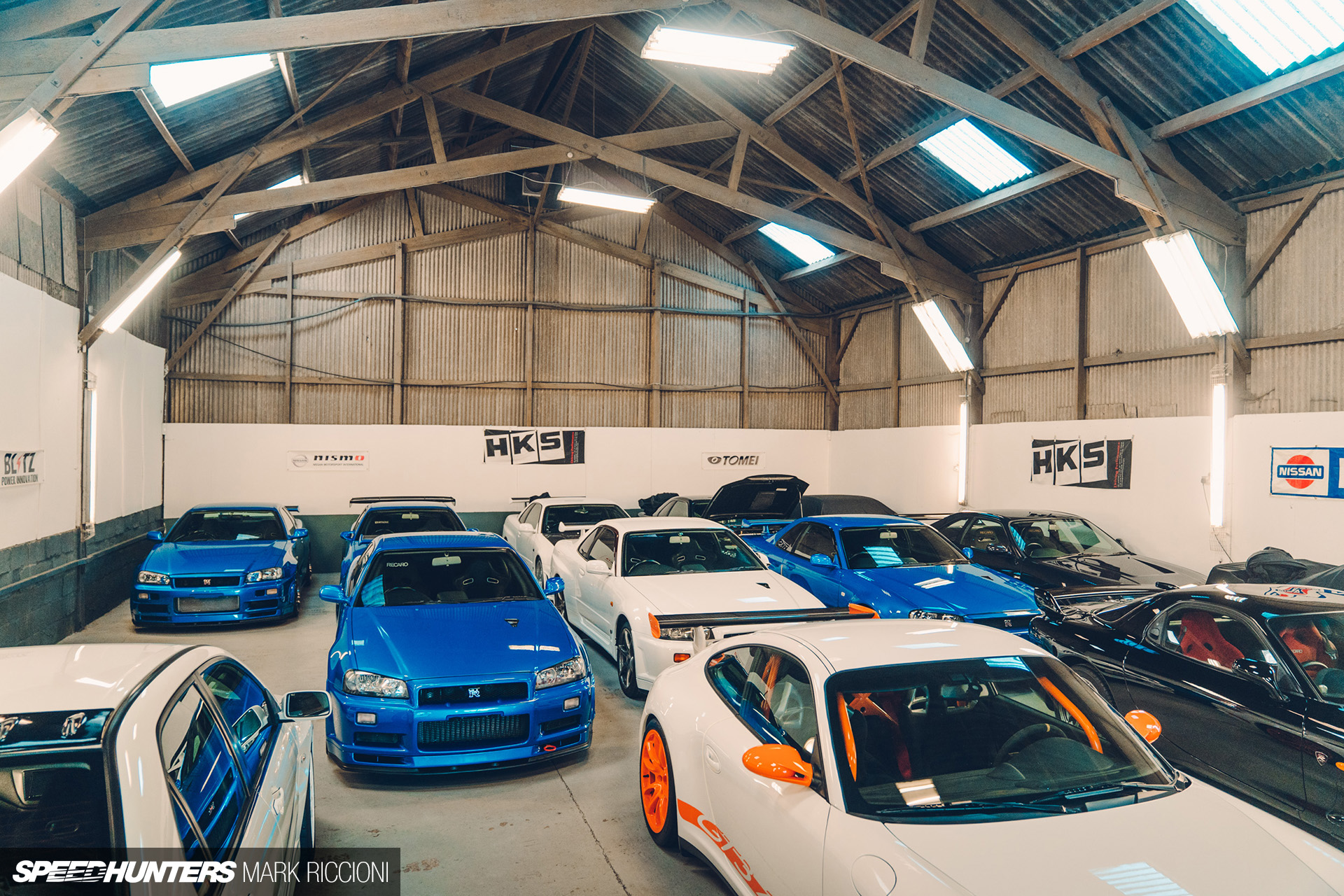
Whatever happened to buying a car for an enjoyment opportunity? It seems the moment a car exceeds 20-years-old it’s immediately looked upon as a future classic. Doesn’t matter how terrible it was first time round, if it’s old and not rusty suddenly it’s a classic.
Now, if you’re blessed with a fat bank account and like the idea of telling people what cars you own rather than actually driving ‘em, fill your boots. But that’s never washed over with me.
The moment you take a car away from what it was designed to do – transport people, go fast around a track, whatever – you’ve gained an expensive paperweight. That’s not to say you shouldn’t look after it, and I get that for some it’s the thrill of the chase which outweighs the ownership aspect.
When Gordon Murray was busy weighing the speakers for the McLaren F1, do you think he did that on the assumption that one day it’d be worth £20 million?
That’s how I view the R34 GT-R.
It doesn’t matter if it’s a Nissan engineer or a tuner in their workshop building performance-enhancing upgrades, those people and that car exists solely on the basis that it gets used.
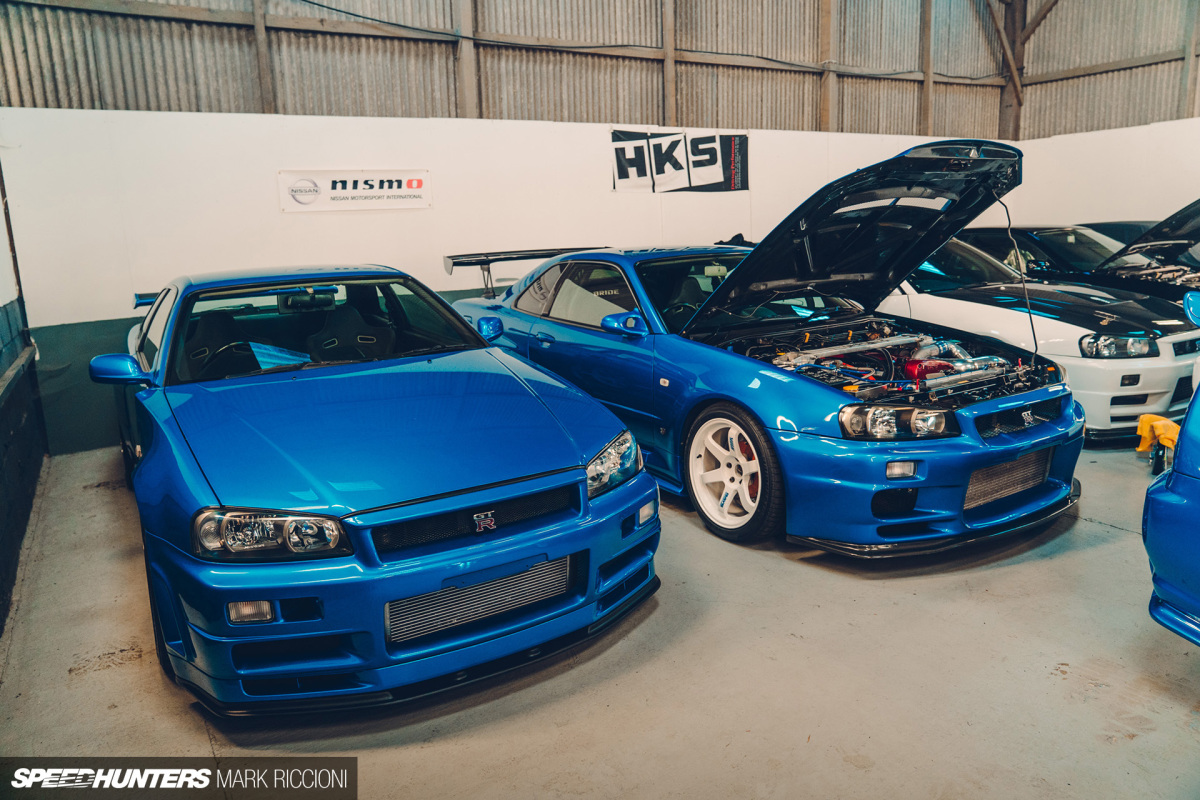
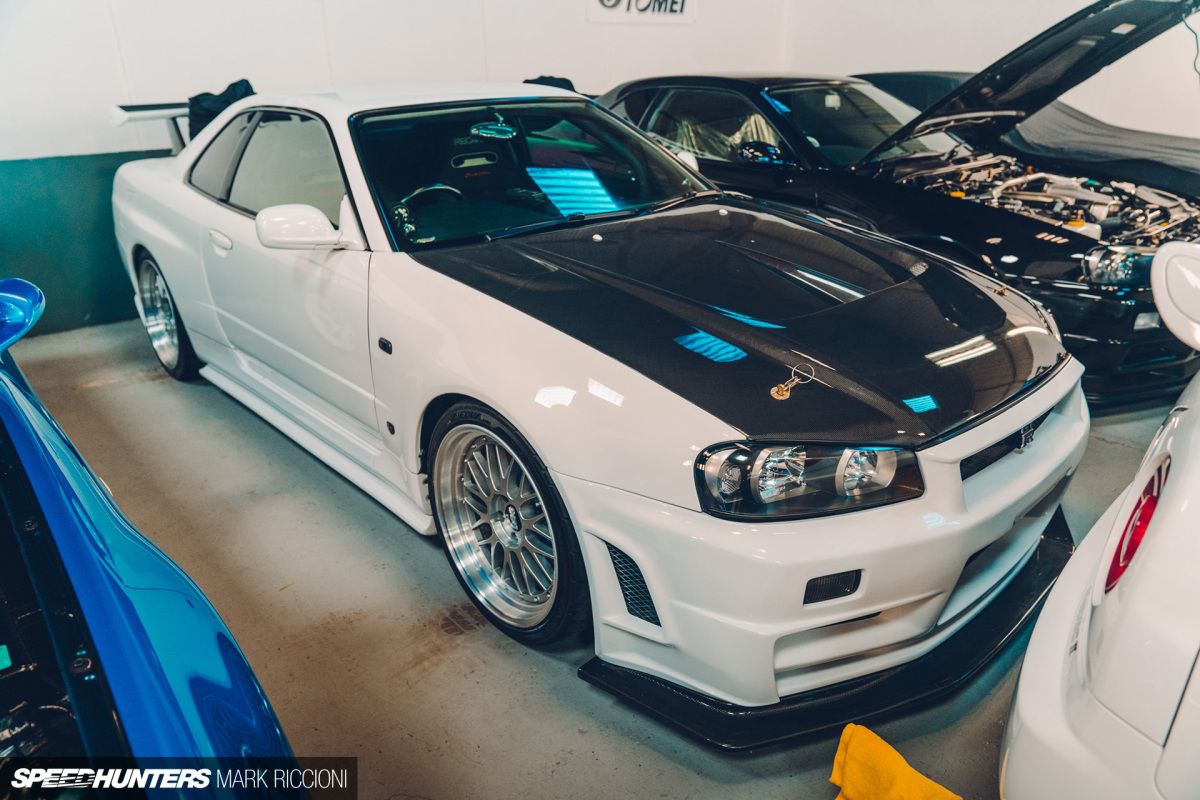
Step forward Harlow Jap Autos.
I’d known about HJA for years already; they differ from your typical used car dealership because they stock equal amounts of tuned cars as they do stock. Seeing as I’d never been in a position to buy one, I’d never given them much of a look. But as soon as ownership looked like a possibility, HJA became the holy grail for terrible-brilliant financial decisions.

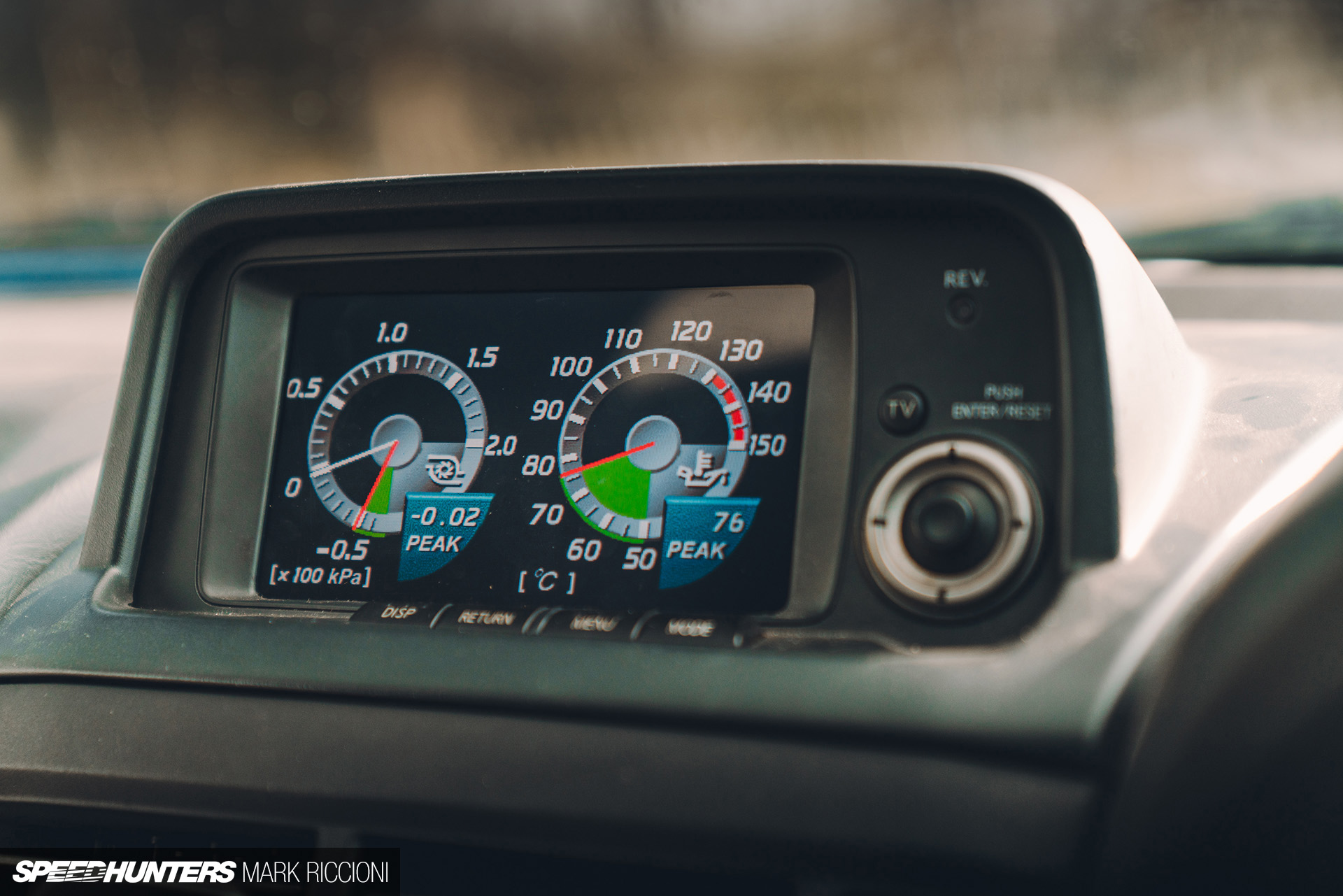
My dream R34 GT-R couldn’t be stock – I wanted the peak ’90s Japanese special. Big silly turbo, Volk Racing TE37s, preferably some odd-positioned gauges and far too much horsepower. Turns out that’s HJA’s bread and butter.
Not only do they bring over über-clean stock models, they’re also responsible for buying some of Japan’s most iconic tuner cars too. Garage Defend, Auto Select, Sunline Racing – these famed demo cars now reside in the UK and beyond, all thanks to Harlow Jap Autos.

‘Genuine beast from the east – Full Stage 650bhp HKS 2.8 R34 GT-R’.
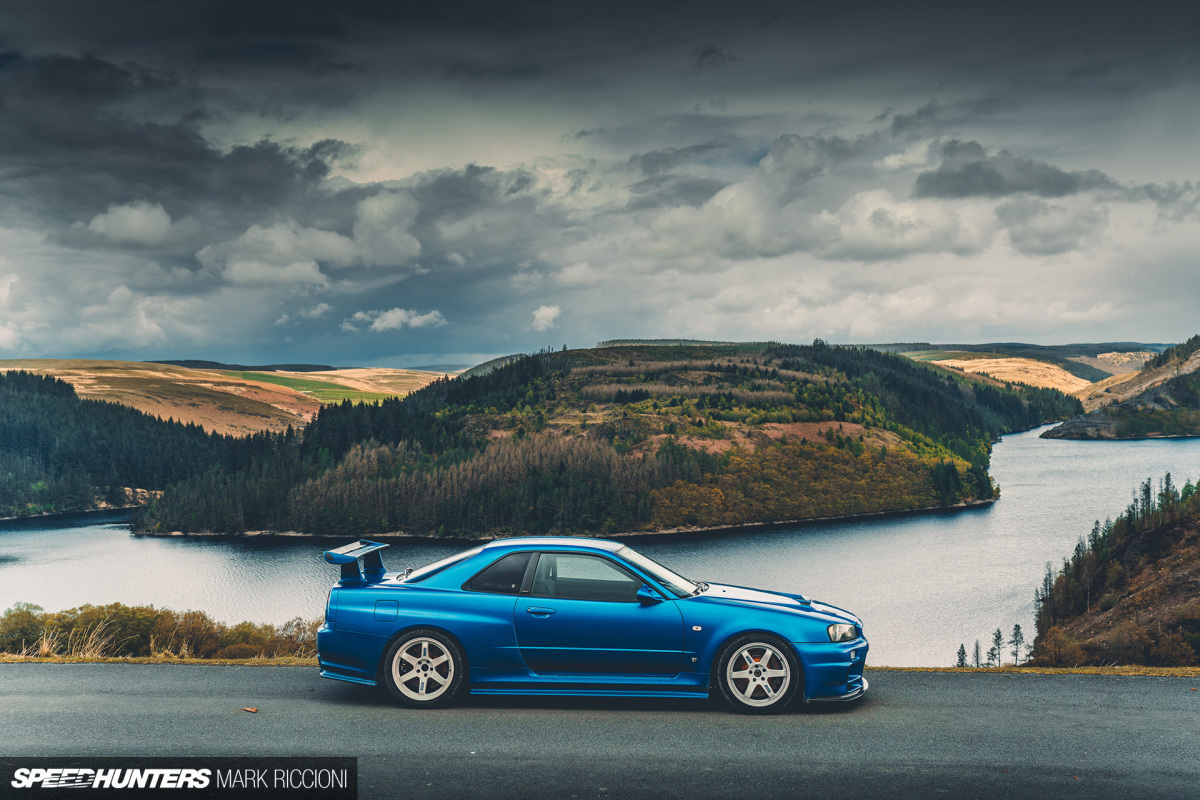
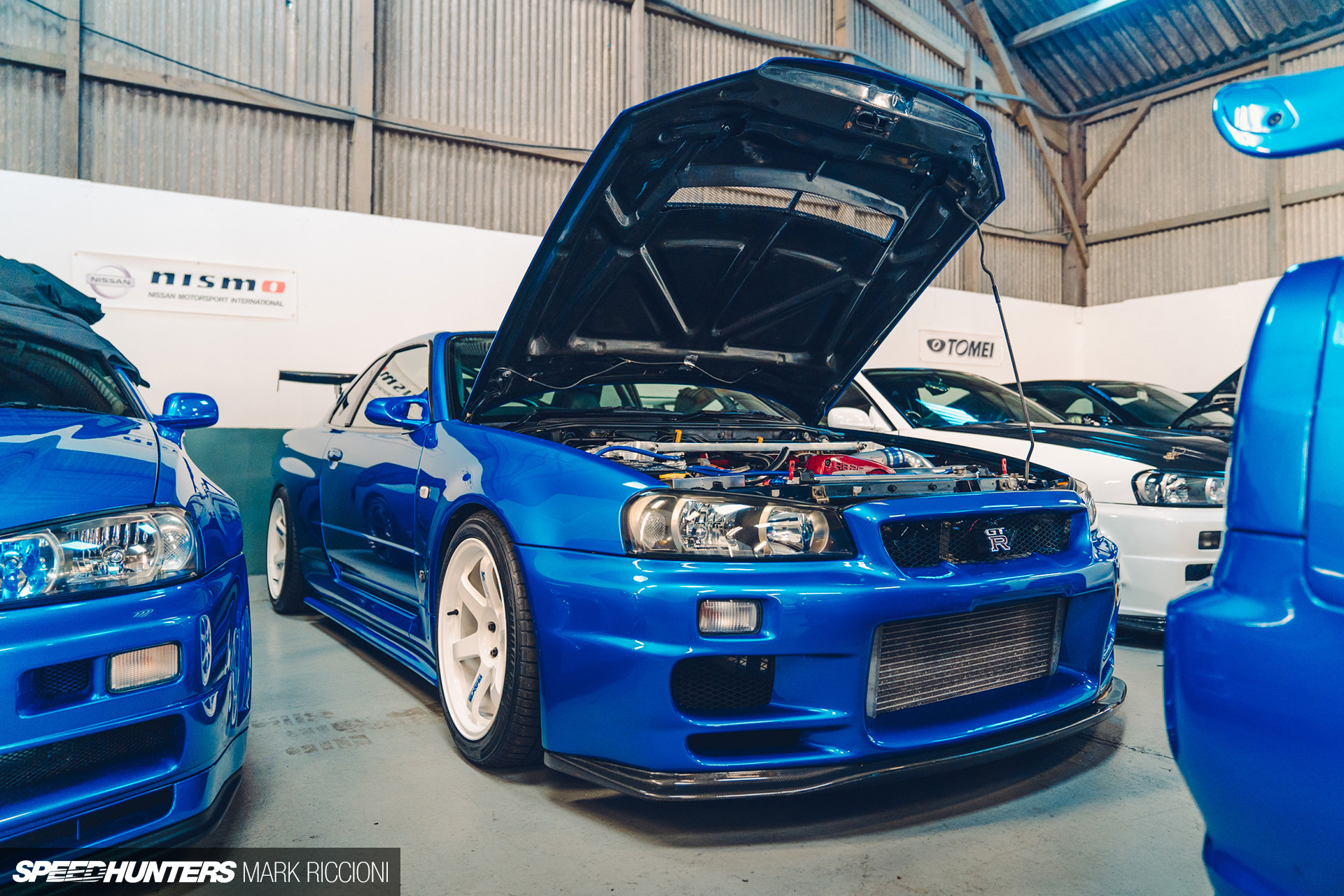
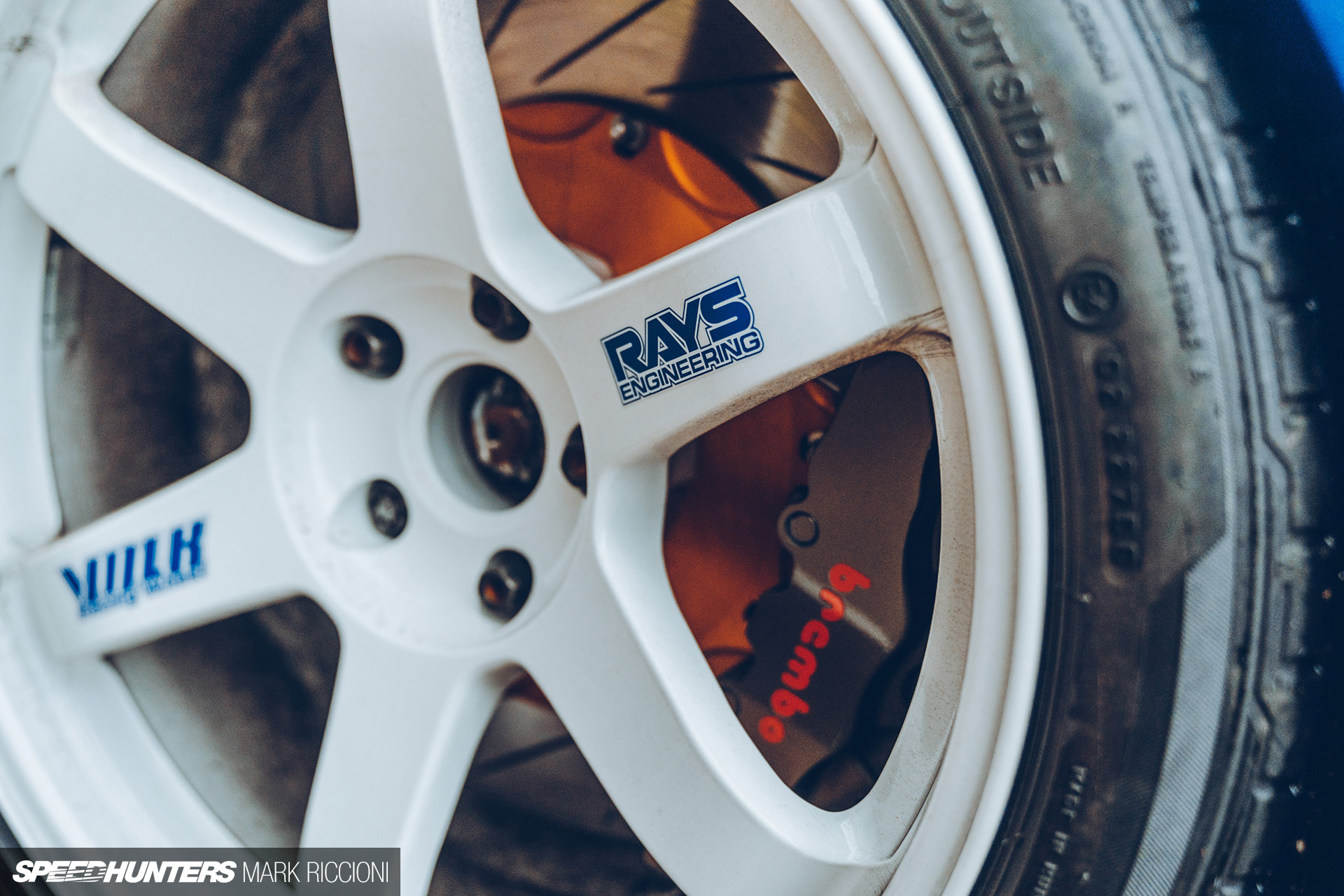
I’m not saying Ozz had been monitoring my internet search history, but that advert title was too much of a coincidence. It looked beyond perfect, 11-year-old me was having a complete crisis at the thought of it. HKS 2.8-litre engine, T04Z single turbo, Volk TE37 wheels and 650bhp.
Aside from a slightly enthusiastic Voltex wing and BRIDE bucket seat which my fat western thighs couldn’t fit in, this R34 was the epitome of my dream R34 GT-R. It even ran a Top Secret front bumper (probably the best aftermarket option after Nismo Z-Tune).
For once I’d actually picked a good one. Of course, I didn’t drive it before buying it. Why change the habit of a lifetime?


In the months following the purchase, I drove the R34 as much as humanly possible – come rain or shine. I had no interest in tucking it away while studying worldwide values; if it had 650bhp, I was going to use 650bhp whether that was going to the shops or heading to the Nürburgring.
Full boost, all the time, here’s a car that’s begging to be used.
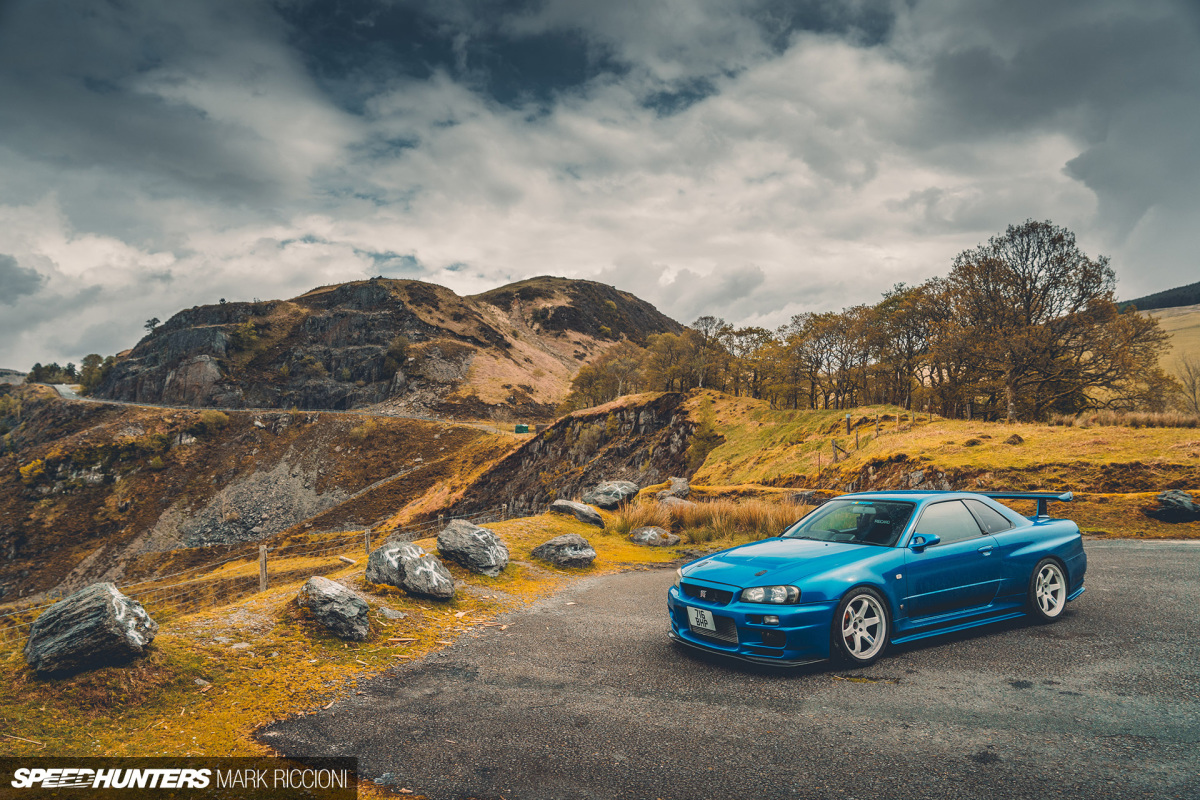

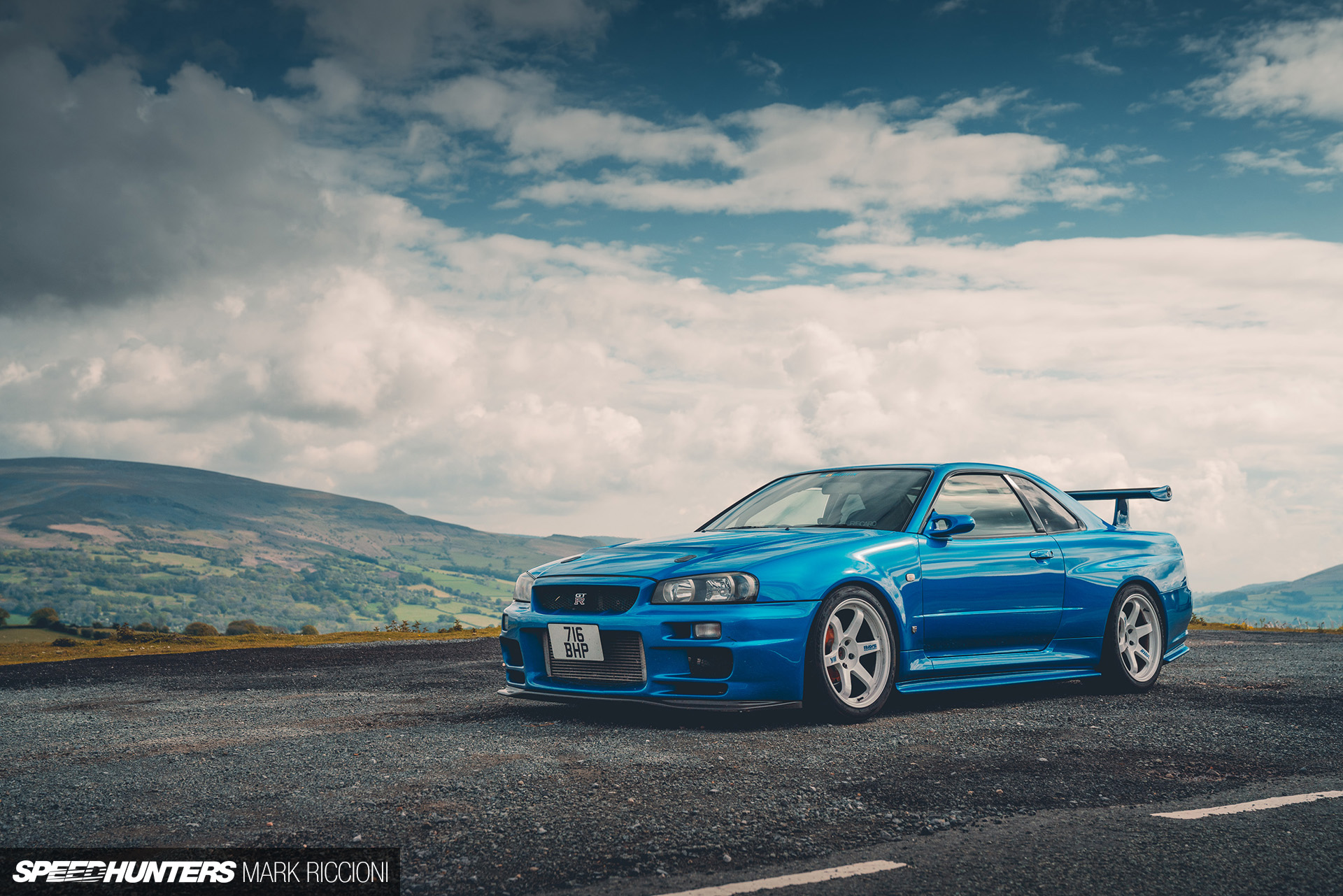
Unfortunately, I should’ve probably ignored this slightly care-free attitude for a few of the 3000+ miles I racked up, as I now find myself in the middle of rebuilding its engine for the second time after a bit of bad luck and a whole lot of enthusiastic driving.
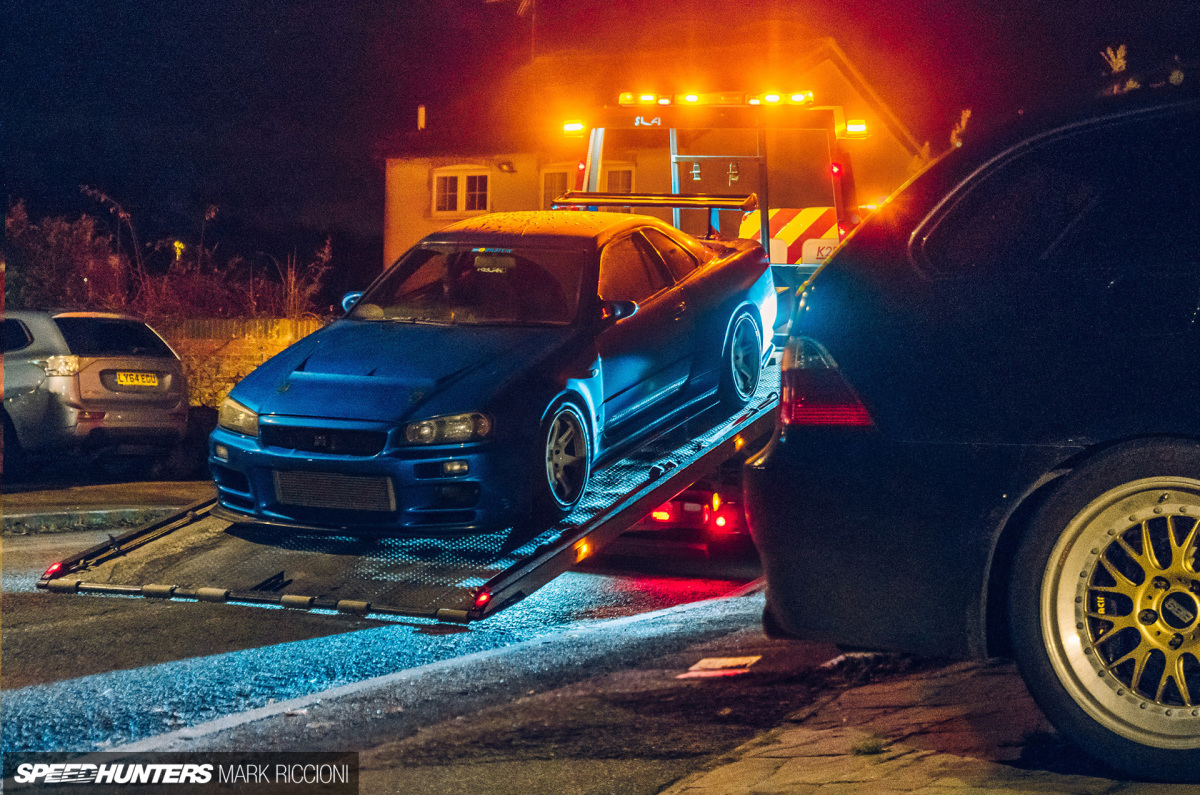
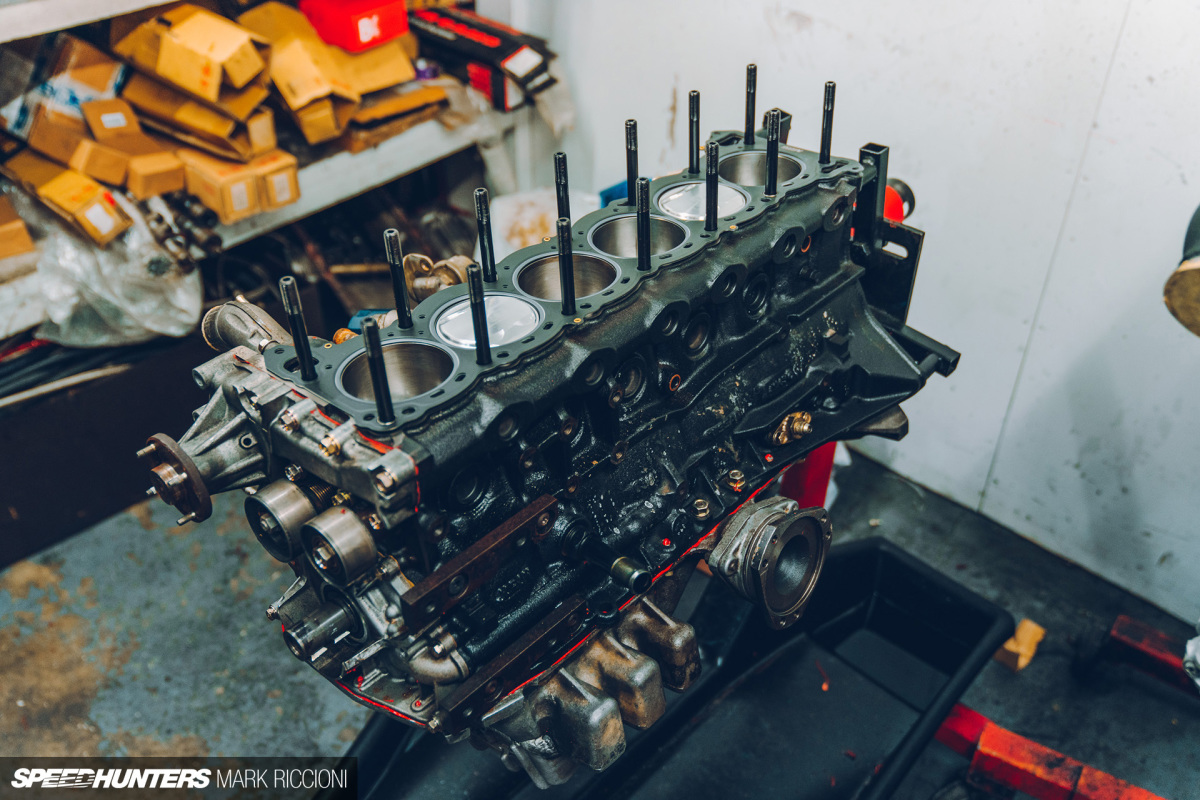
You know what? I’d still choose that approach over a garage queen any day of the week, even if my bank balance screams otherwise.
But we’ll save that story for next time.
Mark Riccioni
Instagram: mark_scenemedia
Twitter: markriccioni
mark@scene-media.com
Project GT-R – Initial spec (from April 2018 purchase)
Engine
HKS 2.8 Step 2 stroker kit, HKS Oil pump, Trust sump extension, HKS crank damper pulley kit, HKS 1.2mm metal head gasket kit, HKS Step 2 cam shafts, HKS valve springs, HKS T04z Single Turbo, HKS manifold, HKS External wastegate, HKS air filter, HKS intake pipe, HKS intercooler piping kit, Nismo Bearings, Early cast iron RB26 block used for build, Dummy head block bored, Full Stage catch tank, Full Stage custom titanium exhaust, Samco radiator hoses, Nismo engine mounts, ARC engine oil cooler kit, Full Stage Aluminium radiator, ARC transmission oil cooler kit, ARC diff cooler, Sard coolant air separator tank, Full Stage swirl pot setup, SARD fuel pressure regulator, Sard 800cc injectors, JUN fuel rail, Nismo twin fuel pumps, HKS F Con vV-Pro Gold, HKS boost controller
Driveline
ATS Carbon rear LSD 1.5way, ATS Carbon front LSD 1.5way, Omega diff oil, ATS carbon twin plate clutch, Omega transmission oil, Brembo 8 pot monoblock brake callipers front, Brembo 4 pot callipers rear, Floating rotors front and rear
Suspension
Crux coilover kit, Ikeya Formula arms, Auto Select front strut brace
Wheels & Tyres
18×10.5in ET15 Volk Racing TE37 alloy, Toyo R888r 275-35-18 track tyres
Exterior
Nismo LED tail lights, carbon bonnet painted body colour, Nismo clear indicators, Ganador wing mirrors, Top Secret front bumper and carbon undertray, Nismo side skirts/spats, carbon R34 GT-R spoiler (with extended wing stands)
Interior
Recaro Pole Position bucket seat, Nismo shift knob, DEFI gauges x 6, Cusco roll cage