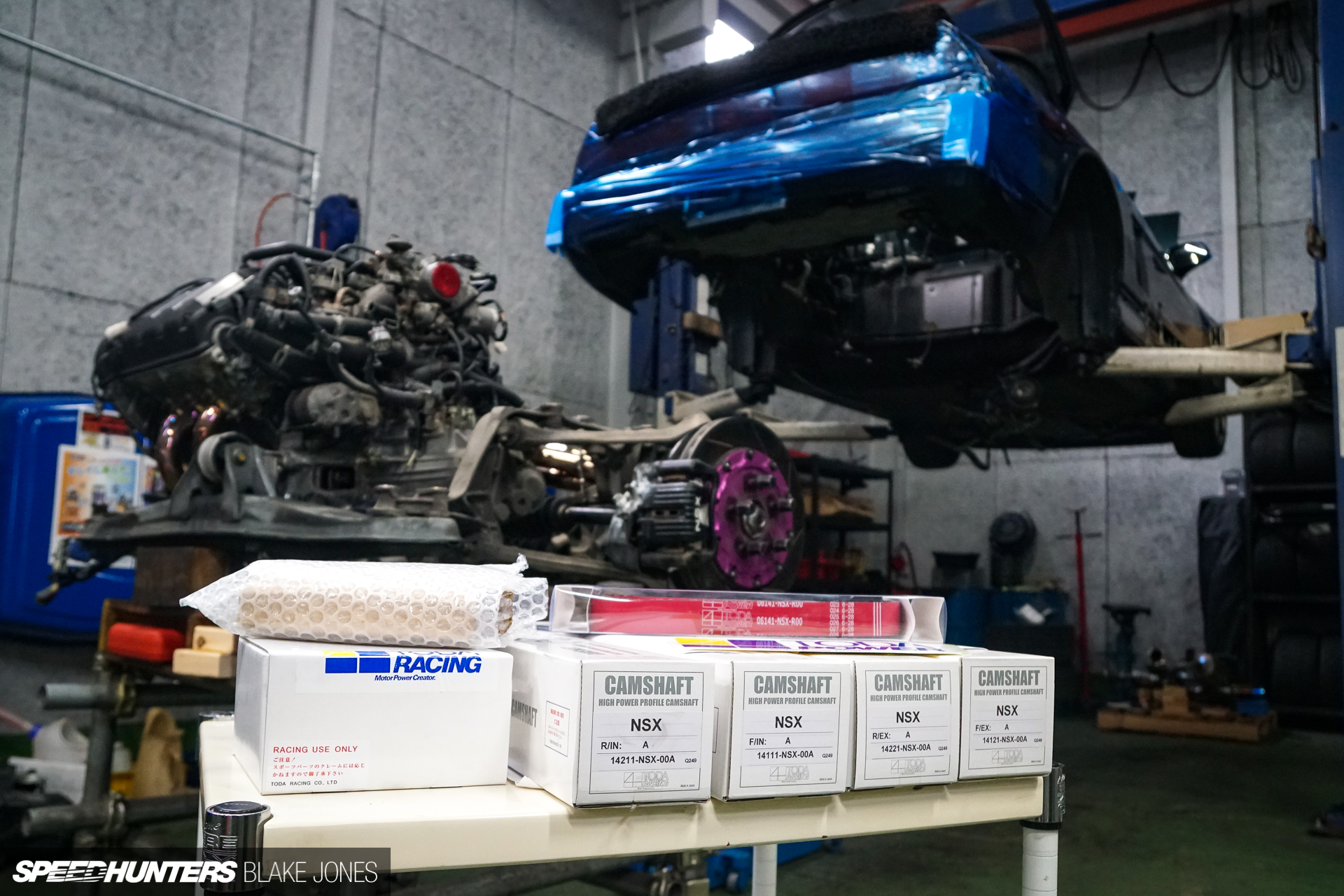
At the end of my last Project NSX update, the car was deregistered at the Saitama Land Transport office and ready to make the journey Down Under to its new garage in Melbourne, Australia.
The car wouldn’t be rolling onto the ship straight away, however. I’d been collecting parts for a final bit of work while we were still on Honda’s home turf.

The guiding principle for Project NSX has been to bring the performance of the car up to modern standards, without compromising the original sporting spirit. More specifically, I’m targeting the power-to-weight ratio of the explosive Porsche 996 GT3 without resorting to forced induction.
For the most part, the decision to abstain from boost is just personal preference – I love boosted cars but the NSX feels so right with a naturally aspirated powerplant.

The Advance workshop down in Yokohama had looked after Project NSX’s upgrades until this point, but their packed schedule meant they wouldn’t have space on a lift for engine-out work for months. As a result, I asked my car buddies if there were any shops recommended for this sort of work, and good friend Masa came to the rescue.
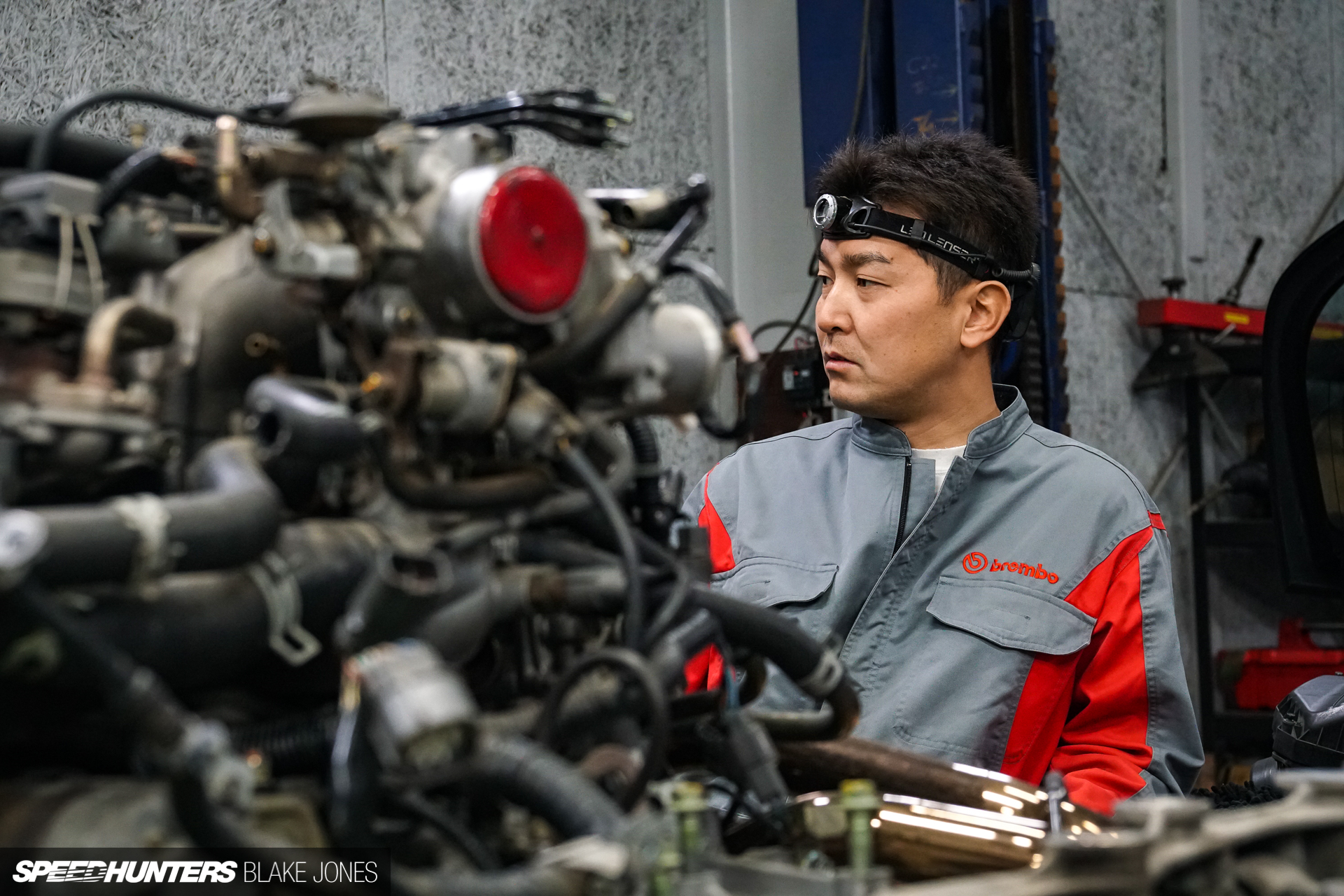
Masa introduced me to Suga-san, who runs the Motor Club workshop just north of Tokyo. Suga-san has a history in factory motorsport teams, but recently opened up his shop to give himself more freedom.
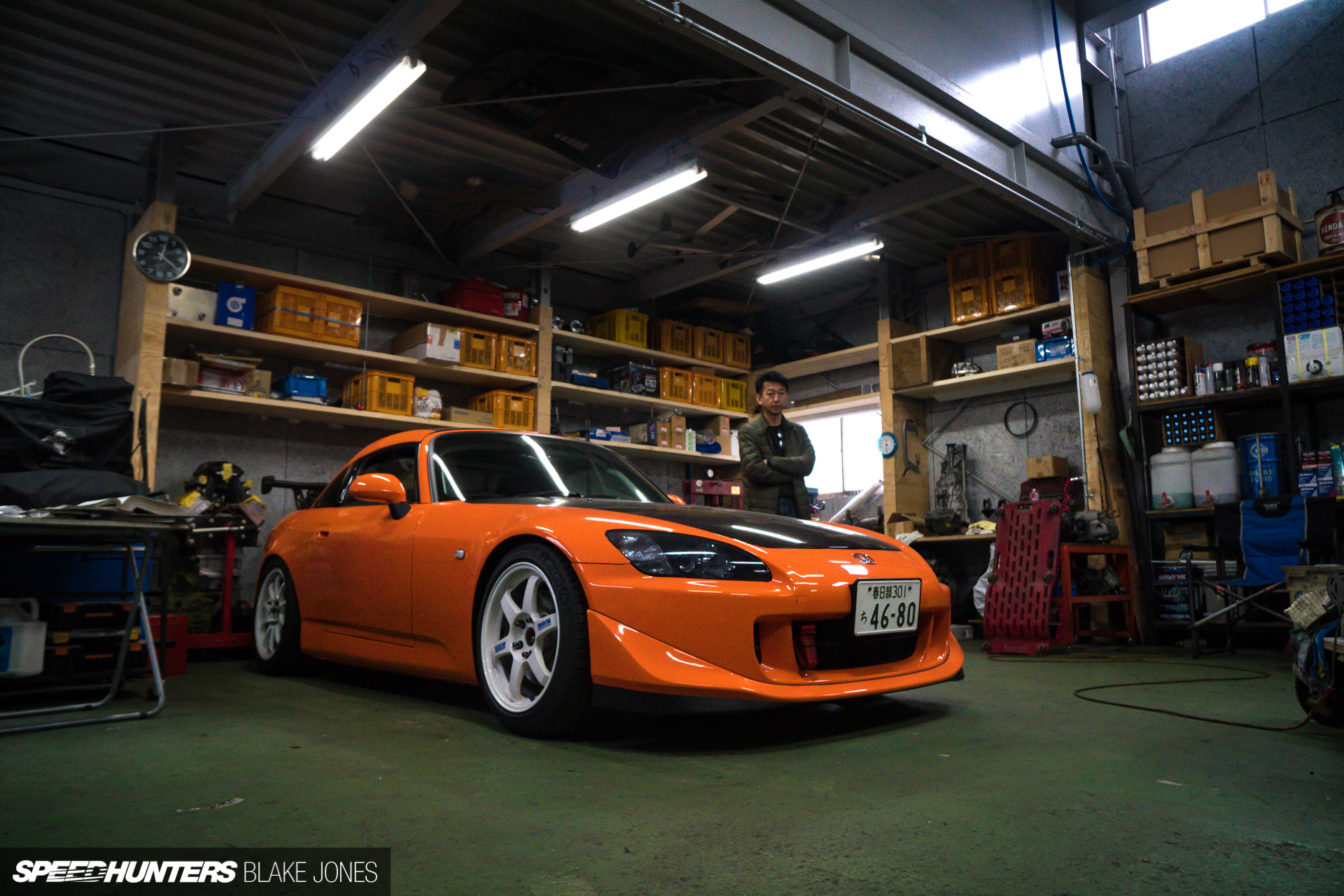
Suga-san and Masa both race Honda S2000s, and Suga-san’s had just received a fresh lick of orange paint prior to our visit. The S2000 and NSX share a surprising amount of DNA beneath the surface, not to mention that completely unfiltered NA driving experience.
The S2000’s F20C famously held the production car record for power output per litre at a zinging 123.5hp/litre. Although groundbreaking at the time, the NSX’s C30A is a bit of a slouch in comparison at 90hp/litre from factory. But let’s see if we can’t close that gap a wee bit.
Pieces Of The Puzzle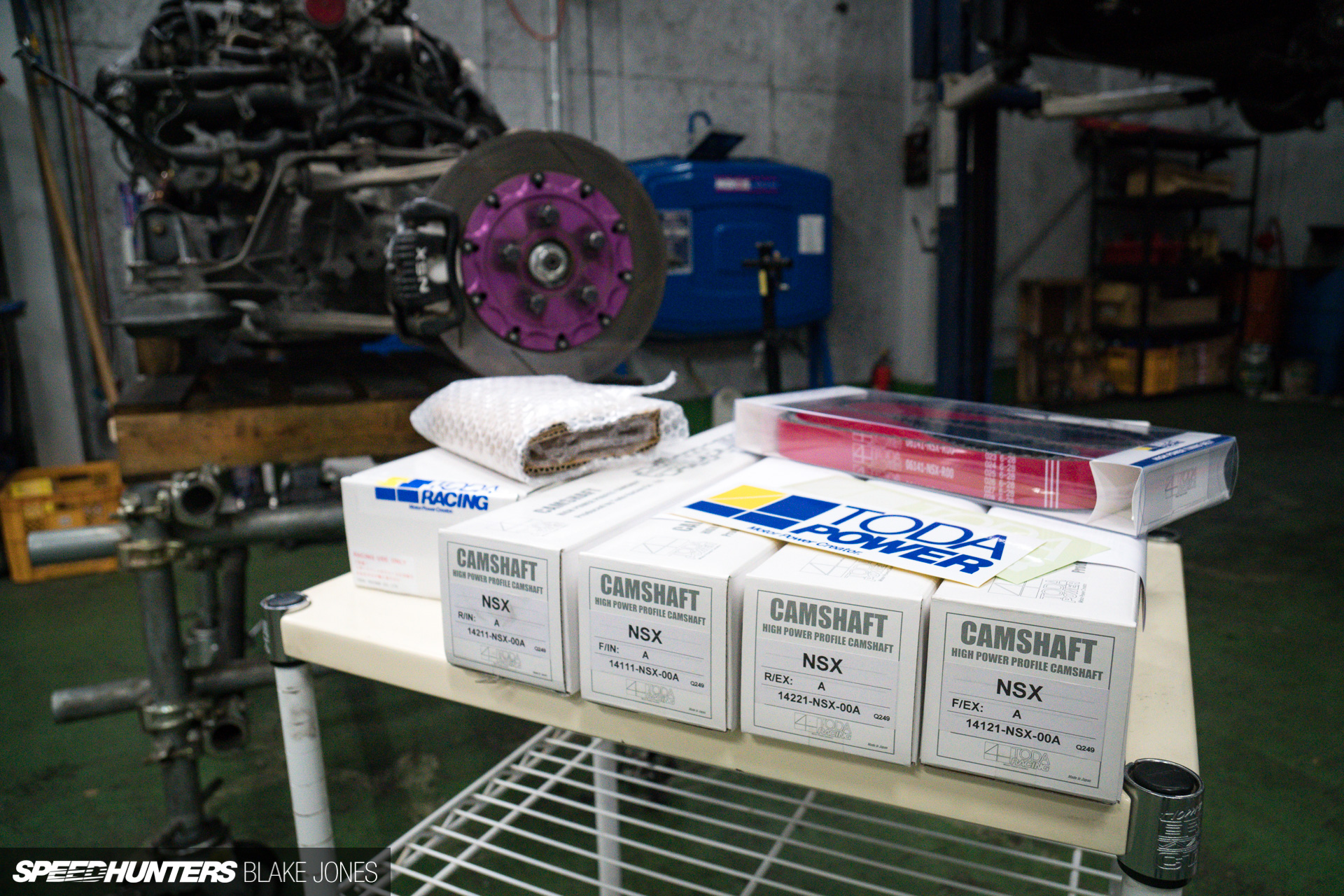
It was time for a little bon voyage gift to 27 – a premature 100,000km service as well as some performance goodies from some of Japan’s stalwart tuning brands.
Nothing beats unwrapping new power parts. Project NSX’s origins as an automatic car will soon be all but forgotten – the ever-so-slightly less powerful AT cams finally banished to the landfill and replaced with some spicier offerings from Toda.

Toda offers three versions of their performance camshaft for the NSX with varying levels of lift and duration, of which I selected the ‘one chilli’ Spec A. I toyed with the idea of running something more aggressive, but making the most of the Spec B or C profiles really requires an expensive bottom end build which is simply out of scope for this project.
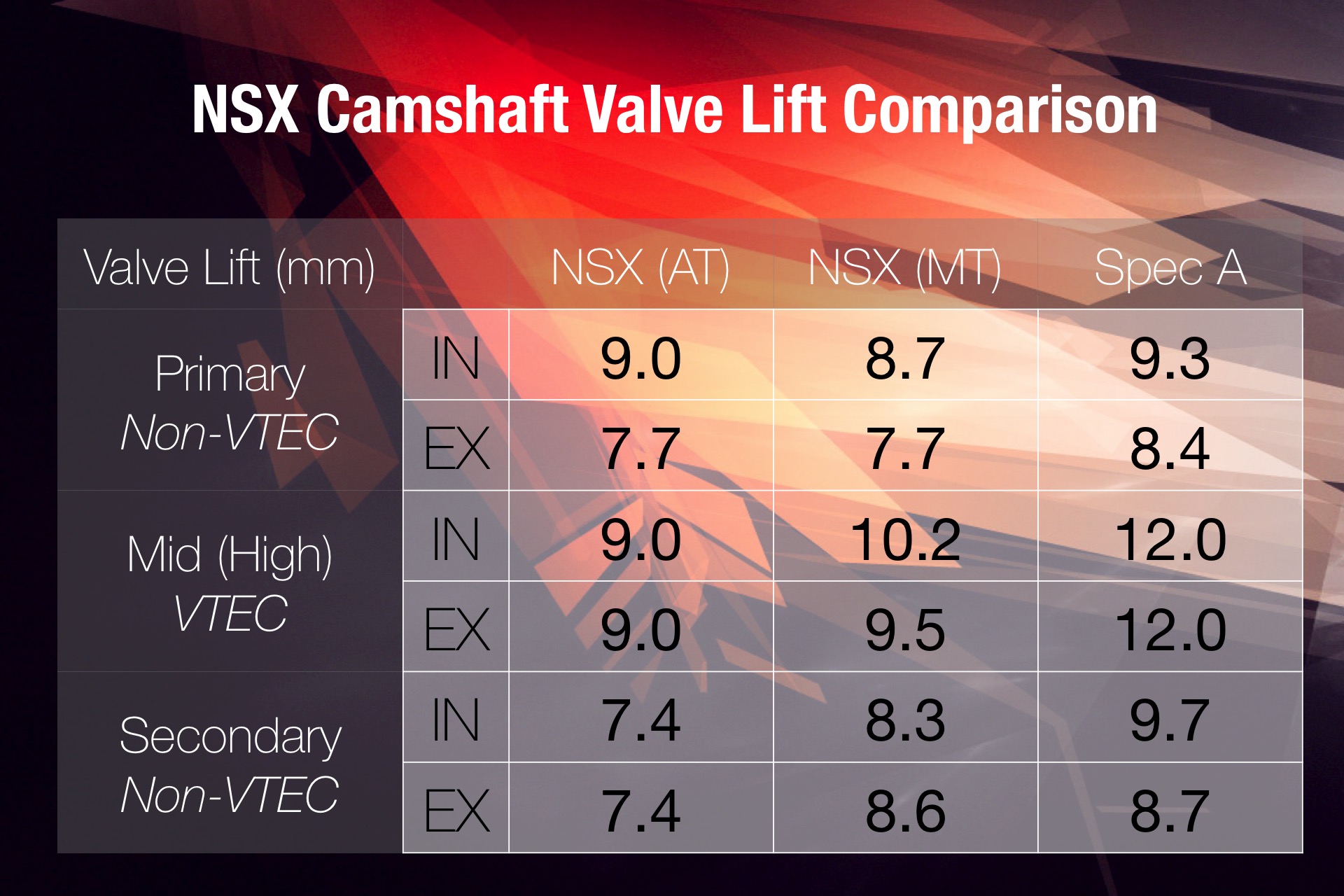
The Spec A camshaft keeps a near-stock cam profile for the non-VTEC lobes but ramps up on VTEC, targeting uncompromised low-speed drivability with improved top-end power. Like an OEM, Toda designs the cams with an asymmetric profile for a quick valve opening and a slightly slower closing to reduce stress on the valvetrain. You can also notice how both Honda and Toda design their camshafts with a different profile on the primary and secondary cam lobes to encourage better swirl and mixture of air/fuel in the combustion chamber.

These parts aren’t cheap, but Toda parts have a strong reputation both in Japan and abroad, and the fact that these are brand new camshafts cut from blanks (as opposed to regrinds) gives me a bit more confidence in drivability and surface durability.
After all, this is the company that built the 500hp engines that powered the NSX to victory in the JGTC.
Complementing the camshafts is a full set of Toda valve springs, which allow the valve more lift while preventing float (when a valve is thrown off the end of a tall cam lobe).
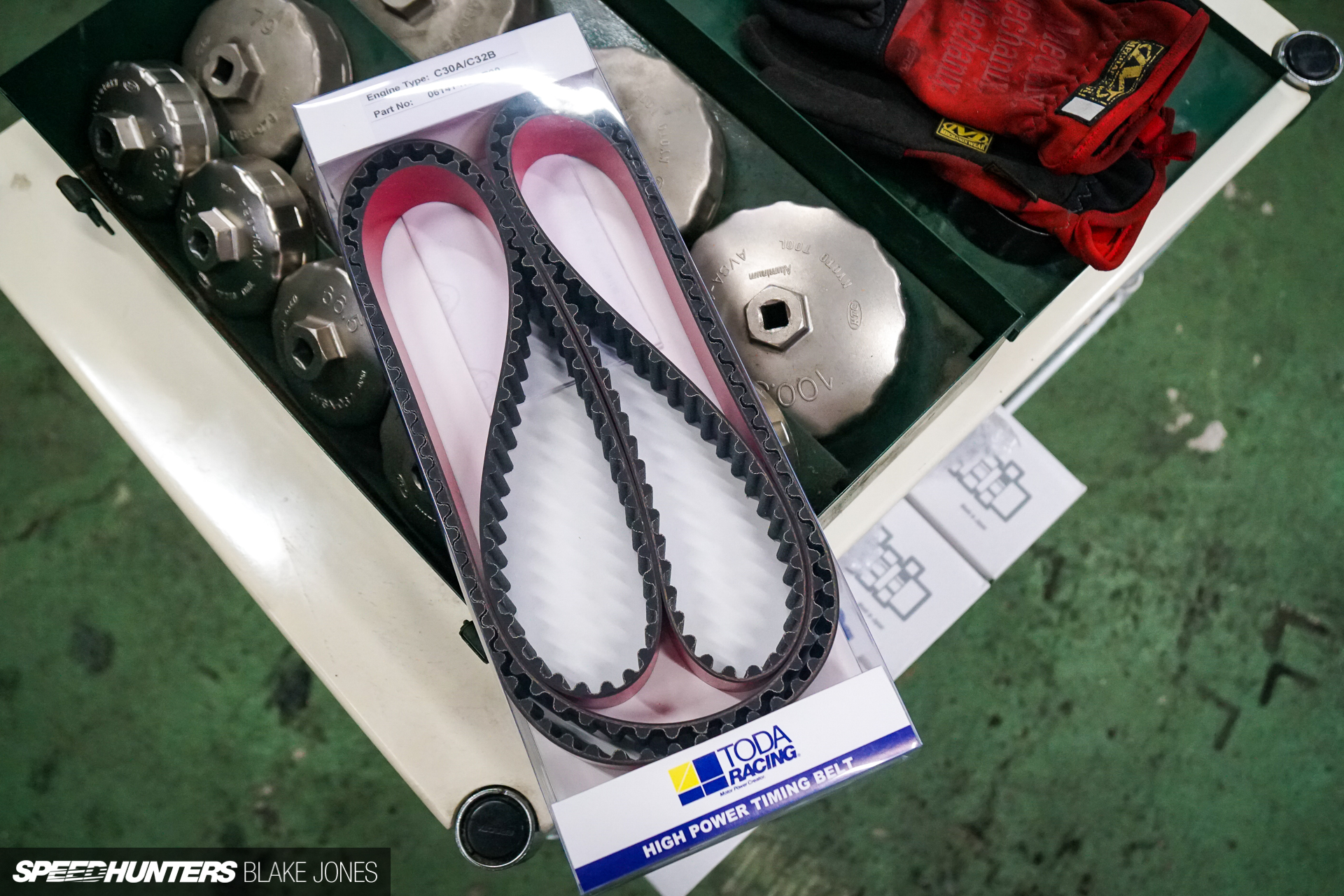
It also seemed sensible to install Toda’s reinforced timing belt, designed to be stronger and more resistant to the additional stresses of a tuned engine.
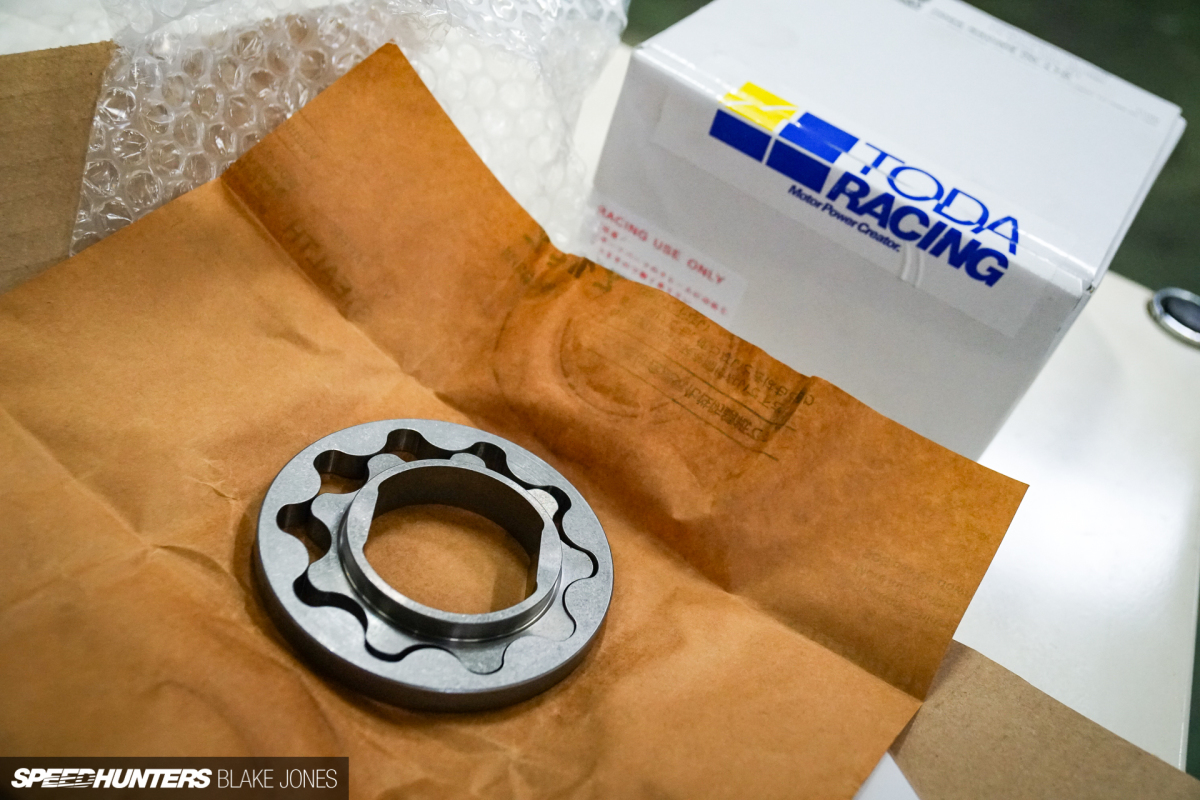
In the spirit of improving reliability, I also placed an order for one of Toda’s upgraded oil pump gears. The stock design is fine but can shatter during an over-rev, which can obviously be catastrophic for the rest of the engine as oil flow is replaced by a shrapnel grenade of metal pieces.
These Toda parts are hardened to resist shattering even in over-rev situations. A 5th to 2nd gear down-change might still bend some valves, but the damage will be contained.
Also on the oiling side I decided to replace the stock pan with something more track appropriate. This is not a ‘must-do’ modification for the C30A, but there have been reports of NSX’s running grippy modern tyres pulling high Gs and starving for oil on right-hand corners, which this baffled pan is designed to prevent.
This Racing Factory Yamamoto unit is cast aluminium, holds 1.3L more oil than the stock oil pan, and features enlarged cooling vanes, which will both assist with keeping the oil cool on track.
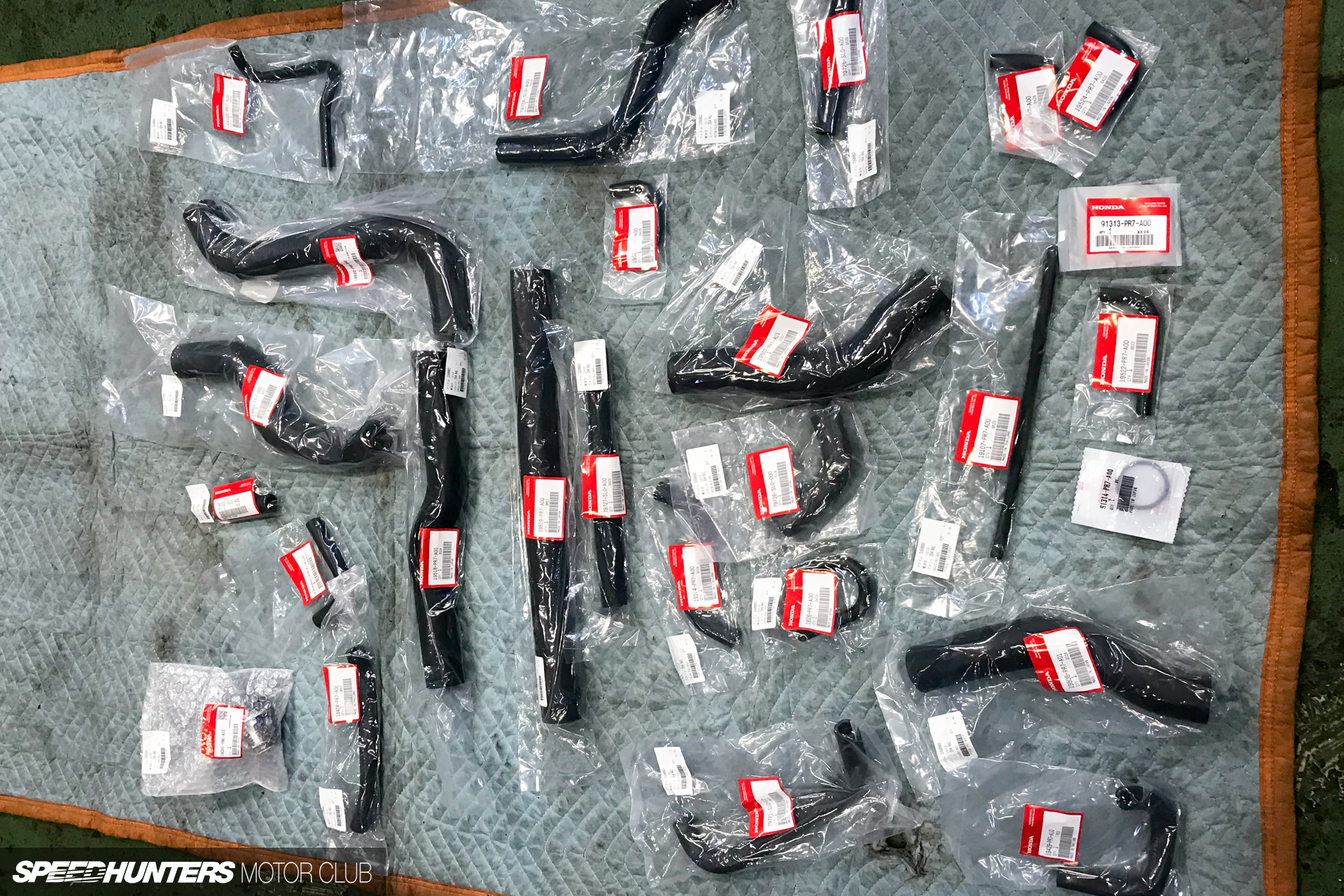
While the engine was out, it made sense to replace the perishables that would usually be tucked into difficult-to-reach corners of the engine bay. Suga-san placed an order with the local Honda dealership for all hoses, rubbers and gaskets.
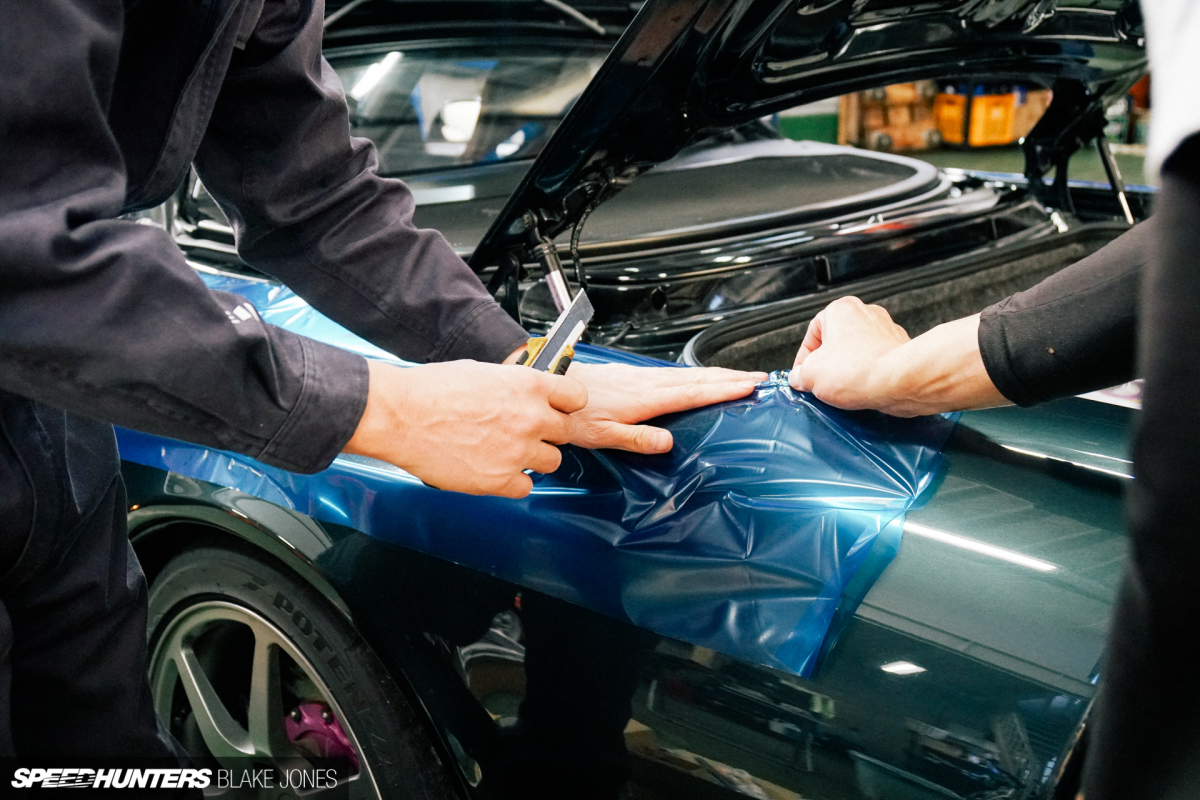
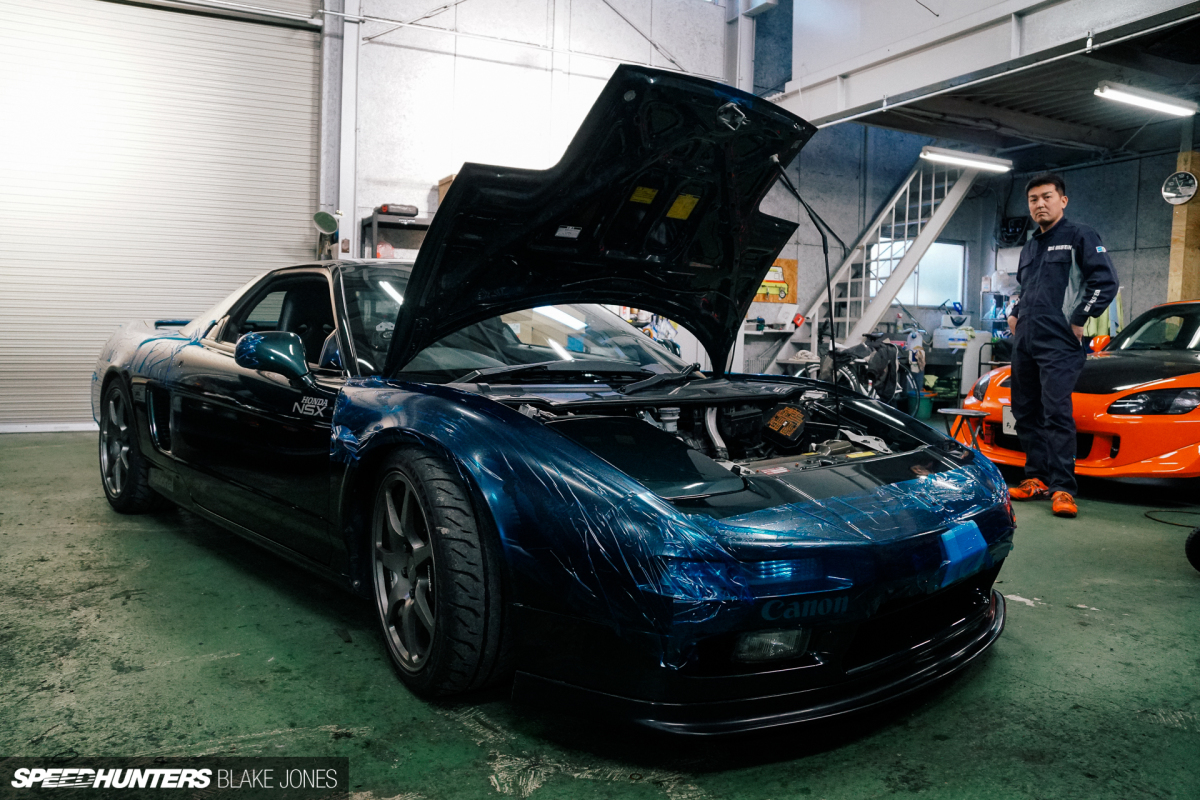
Before work began, we applied some protective film to the car’s exterior to protect it – not so much for the workshop, but for the international journey ahead.

Removing the NSX engine’s is undoubtedly a big job, but with the right workshop space it’s not as complicated nor time consuming as you might think. Once harnesses, fuel and vacuum lines, exhaust and so on are disconnected, the entire rear subframe is lowered out the bottom of the car with the engine still attached. It took Suga-san about four hours.
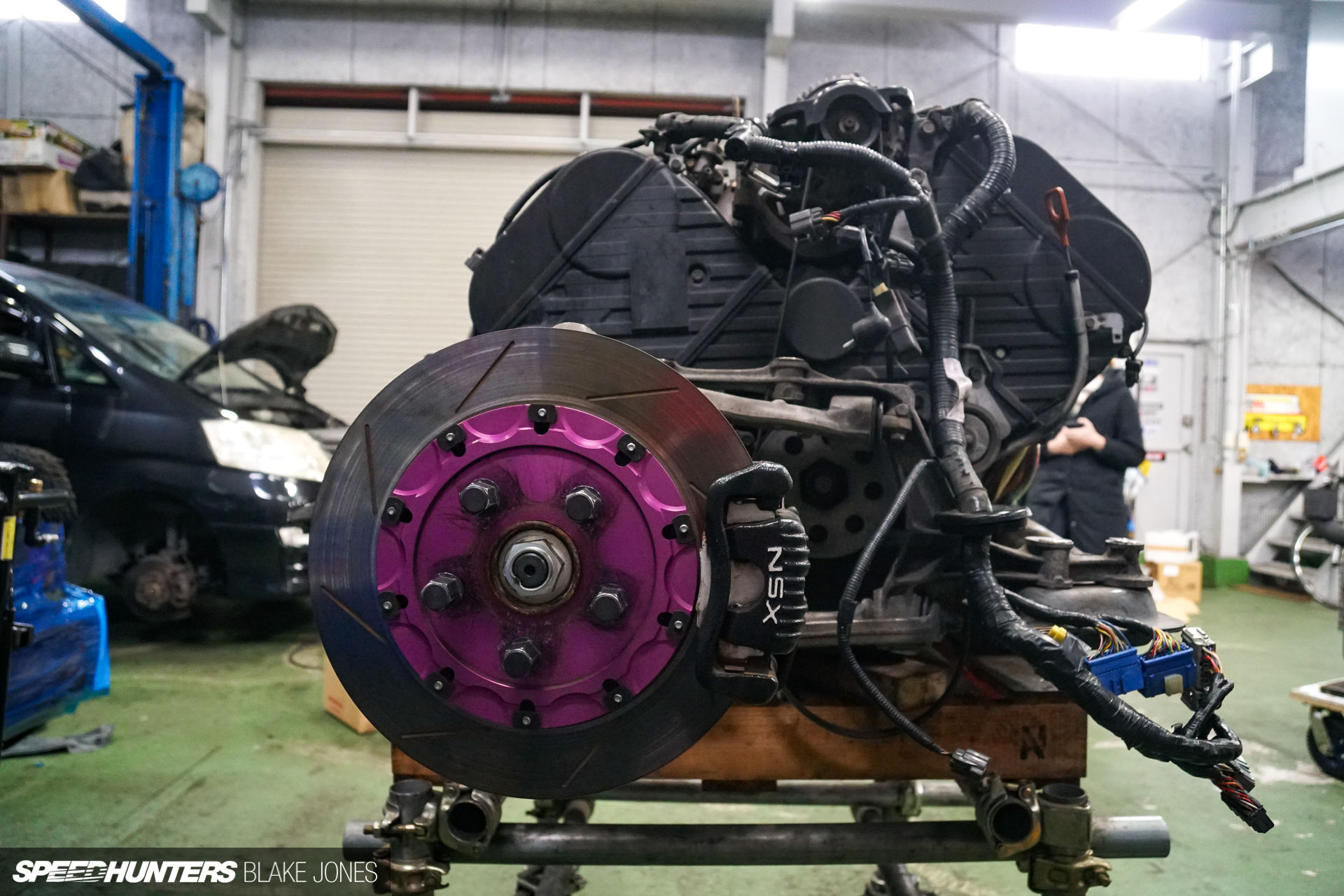
The C30A is a surprisingly large engine once removed from the engine bay – the 90-degree angle between each bank exacerbates the girth of the quad-cam heads. In the car the rear bank sits almost completely out of sight in its hiding spot against the rear firewall.
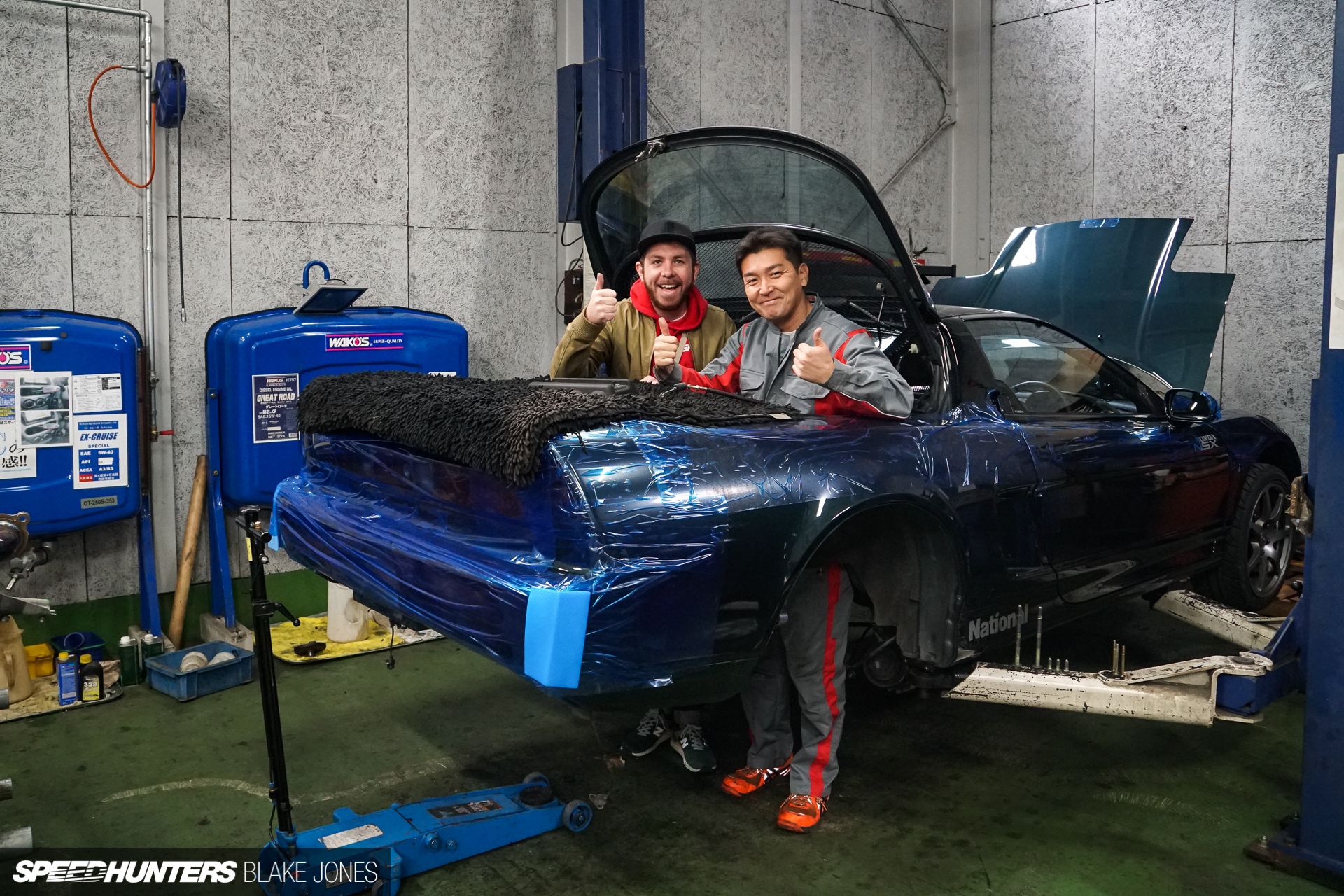
The chance doesn’t come up too often for this photo opportunity, but it took a bit of convincing to get Suga-san in there with me…
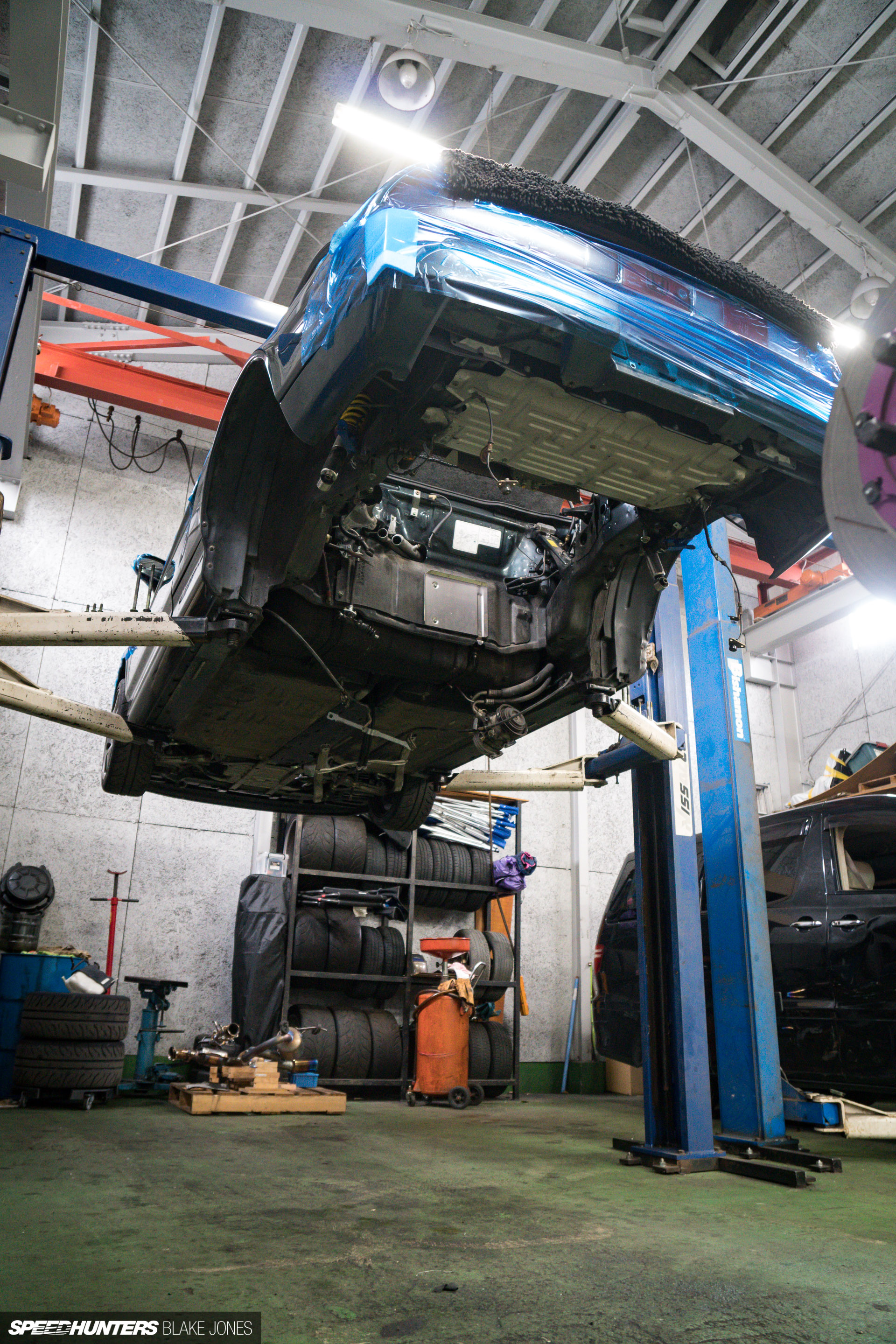
I wasn’t just horsing around – it was a rare chance to see some parts of the NSX that are usually completely hidden.

Like the cast aluminium subframe and wishbones, which have an almost organic H.R.Geiger quality to them.

I’ve been loving the sound and power provided by the Fujitsubo manifold, and it was interesting to see the heat-induced colour change from when they were installed last year.
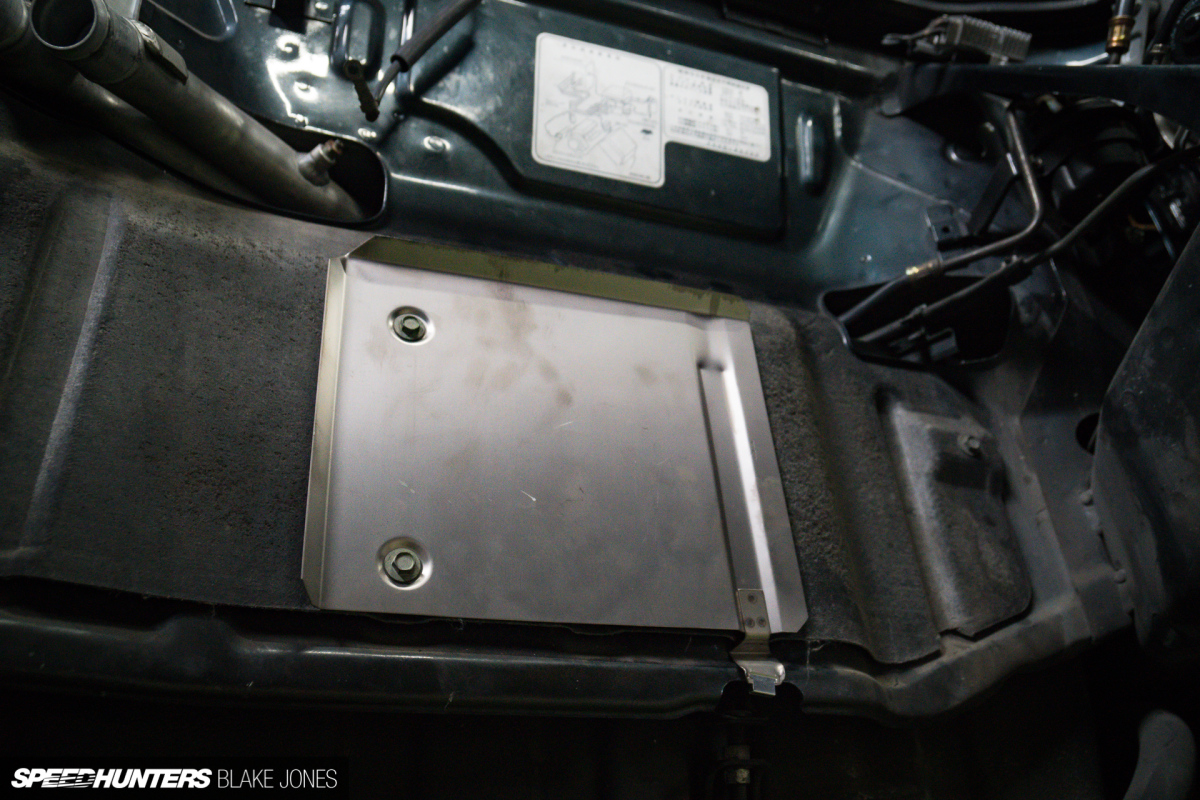
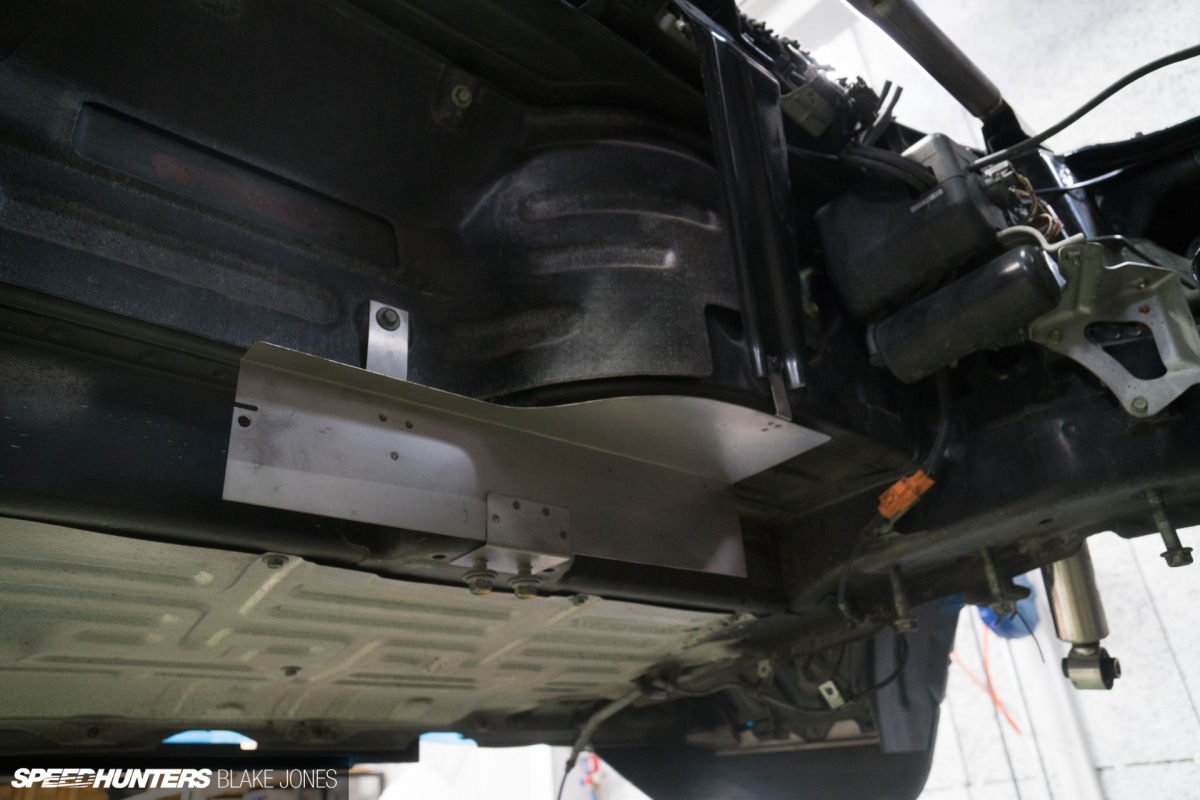
For any NSX owner considering a header upgrade, I really recommend considering the Fujitsubo units. Little details like the titanium heat shields add up to an unrivalled package for the Honda.
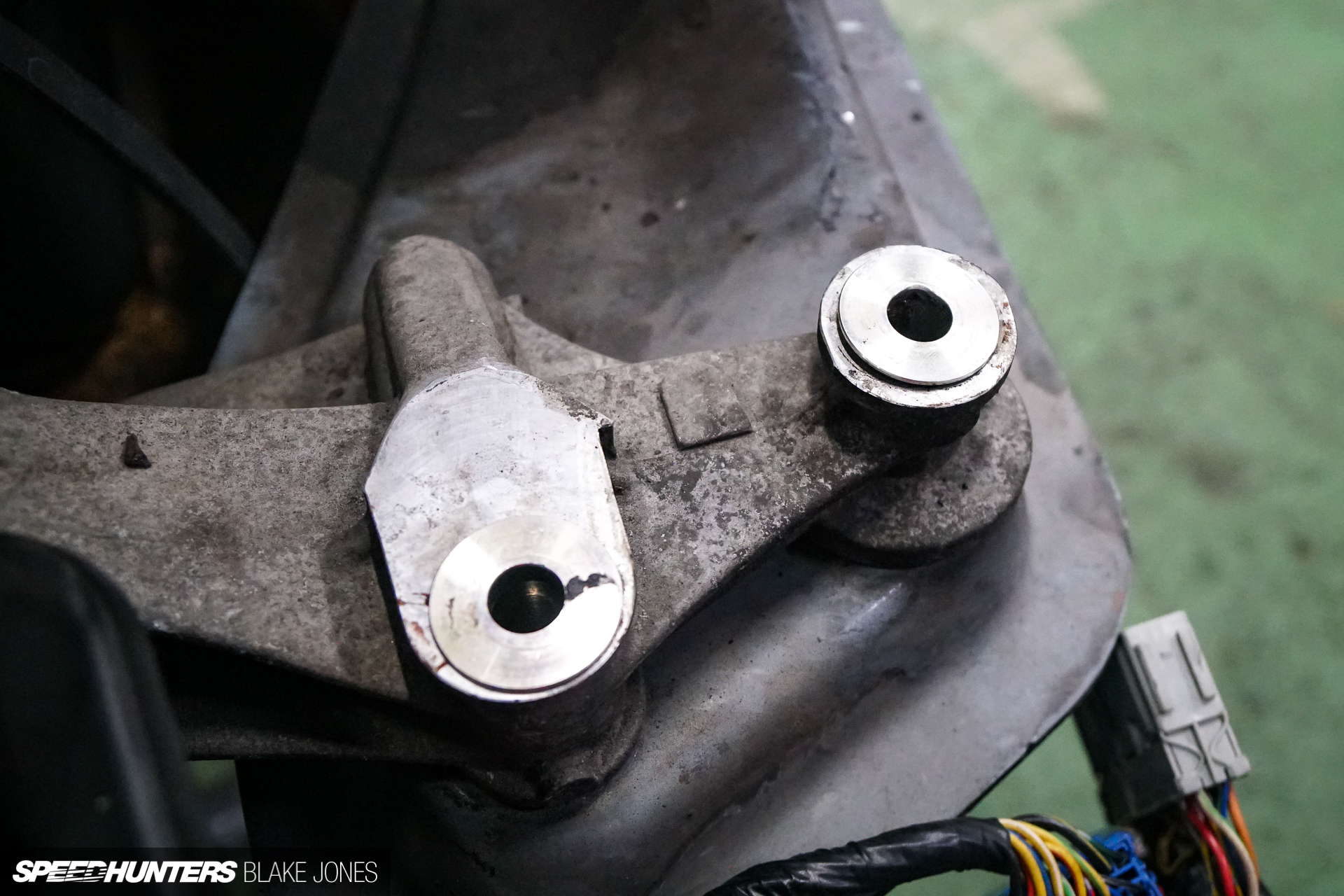
The Spoon Rigid Collars were also visible on the rear subframe. A few were split/damaged during the removal process (this is expected with their design), so will need to be replaced in the future.
Where’s Your Head At?
While I was bouncing back and forth between Tokyo and Melbourne in preparation for my impending move, Suga-san got straight to work tearing into the C30A’s valvetrain. He kindly photographed much of the process so I could share it with you here.
This won’t be the most detailed chronology, but I’ve tried to capture the main points here through the photos from Suga-san.
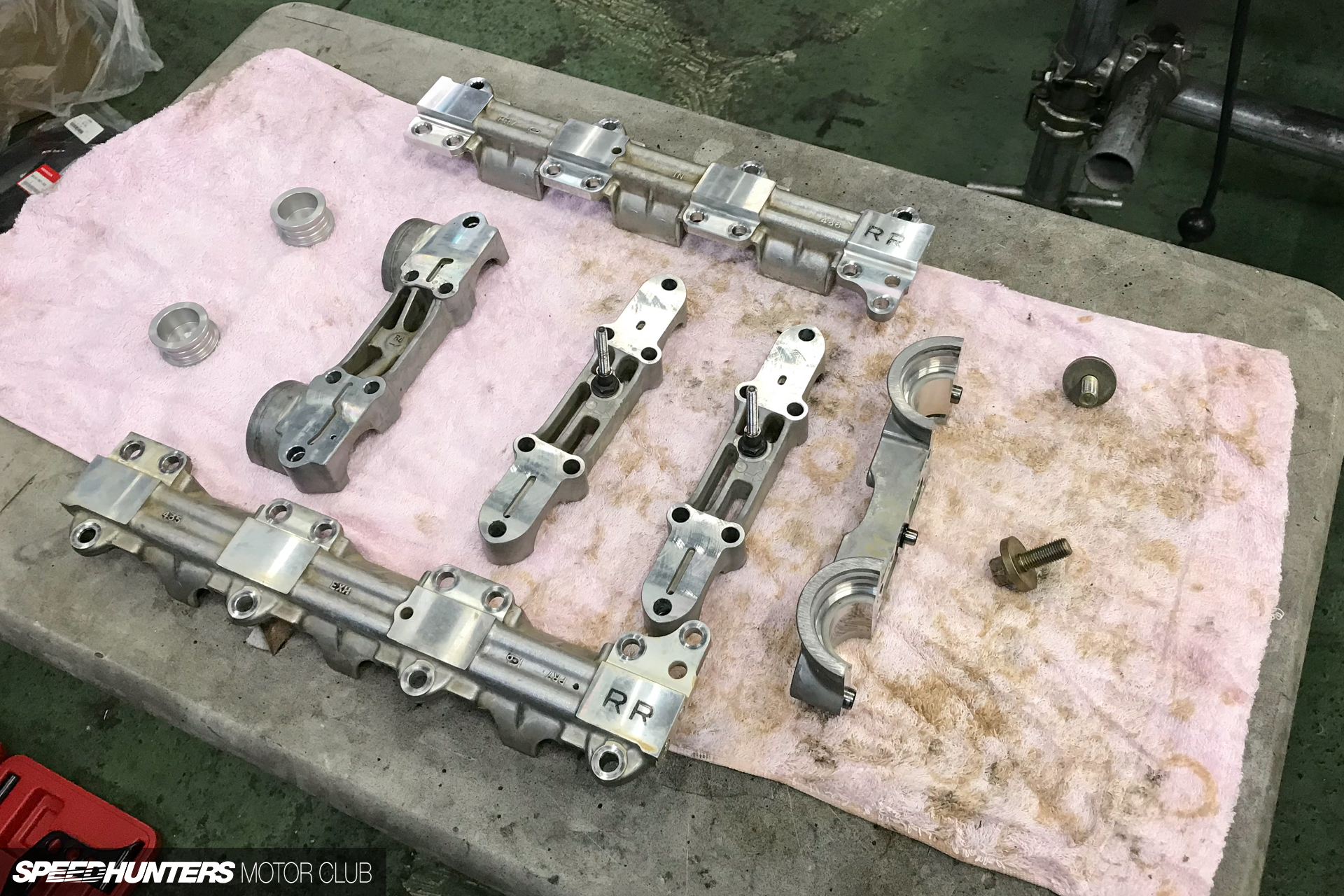
Here’s the disassembled cam holders for one cylinder bank. You can also see the billet cam plugs in the left of frame that we chose to replace the stock rubber units.
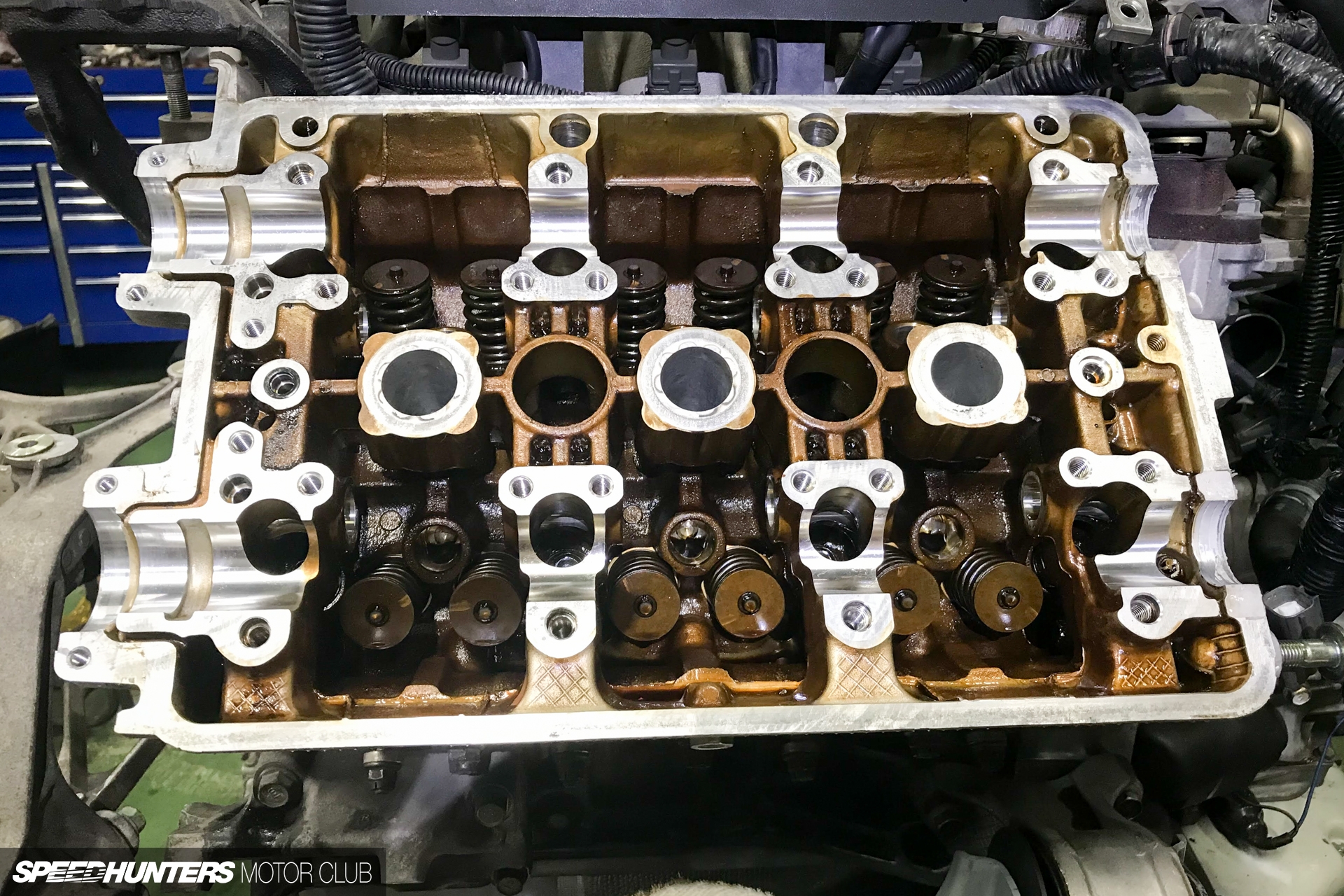
A view inside the head with valve cover, camshafts, rocker arms removed. Everything seemed to be in relatively good condition.


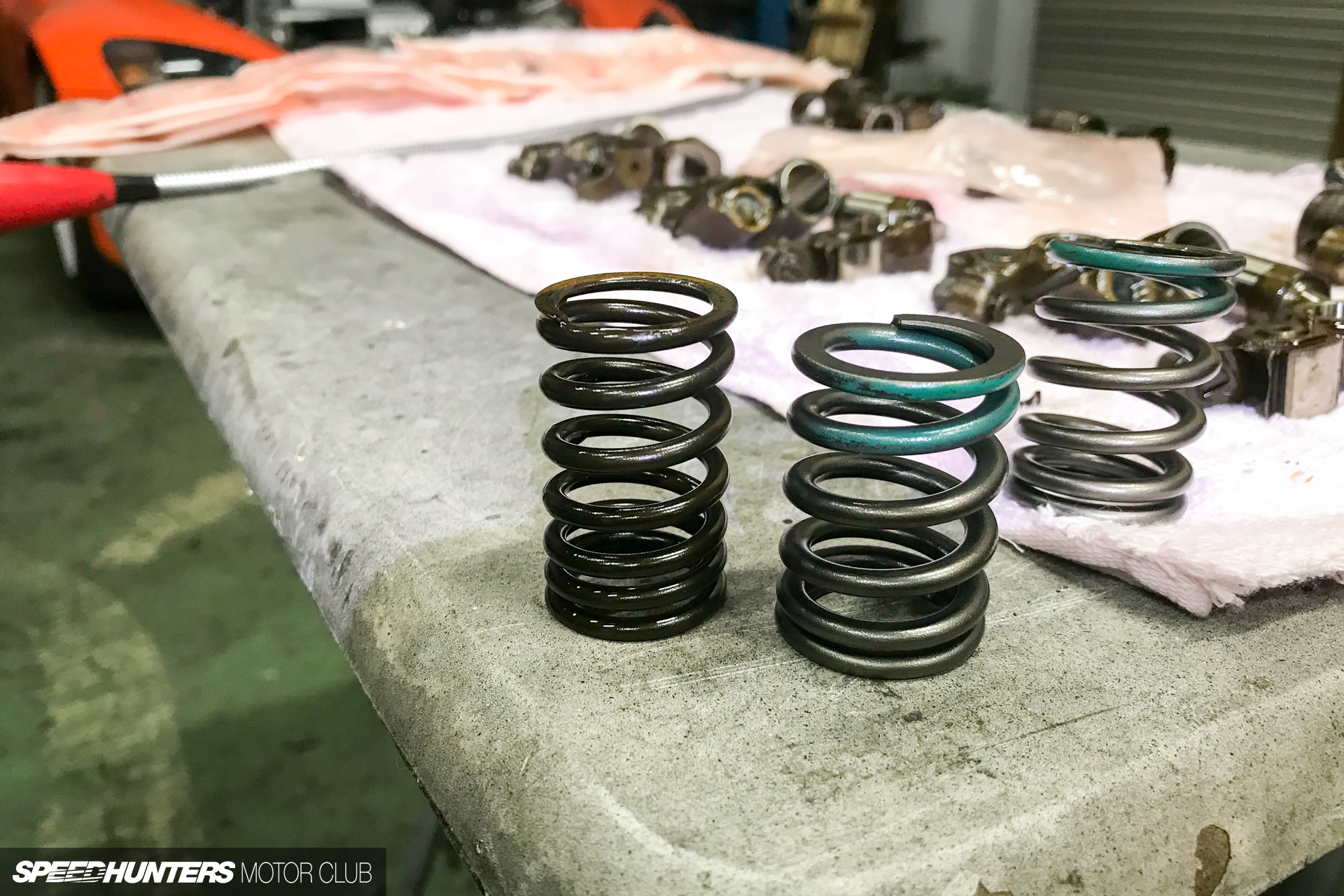
Here you can see the standard valve spring (left) and the stiffer Toda unit (right) which replaced it.
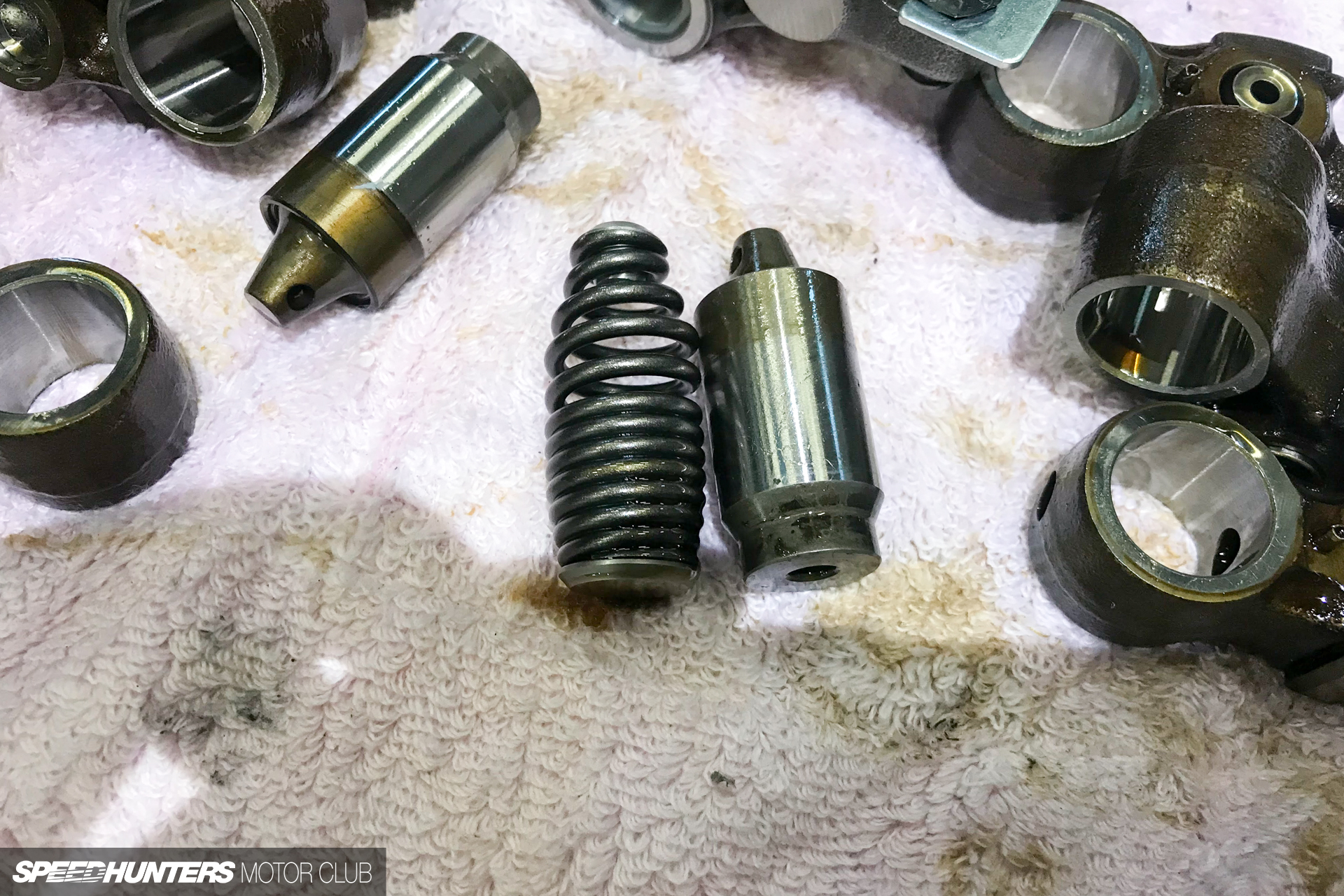
Another small upgrade worth making to the C30A is upgrading the lost motion assembly or LMA. The LMA cradles the large VTEC cam lobe while the car is in non-VTEC range.
The early cartridge design on the right is known to get sticky with age, symptomised by a noisy clicking from the top end of the engine at idle. The simpler spring design was introduced for ’99 and newer NSXs, and Honda later designed an upgraded LMA for the earlier cars, available from their parts department. It’s pretty neat that Honda are still improving a spare part for a car which is out of production.

I found some new VTEC rocker arms that have been slightly lightened and polished, so those went in too. For those unfamiliar with a VTEC head, the two outer arms actuate the intake (and exhaust, on the opposite side) valves independently. When in VTEC, the centre arm is engaged and locked to the two outer arms. They then operate according to the VTEC cam profile, which has higher lift and longer duration, meaning more power at peak RPM.
Yes, VTEC just kicked in, yo.

Rocker arms go in and valves are adjusted.
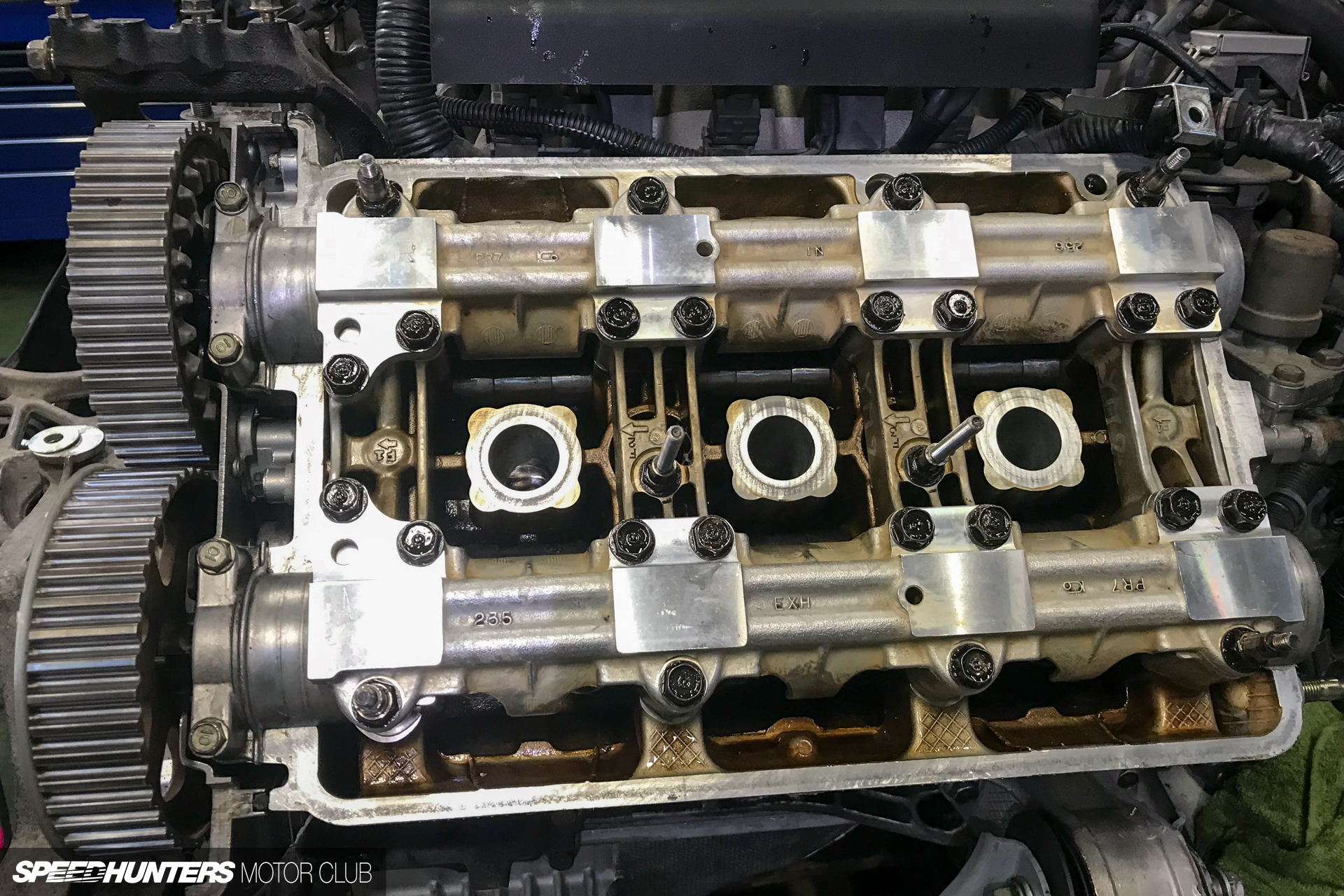
Then the camshafts and holders are reinstalled, and clearances checked to ensure everything is exactly where it is meant to be. We decided not to open the can of worms of degreeing the cams and simply used the same setting as the factory camshafts. Considering that everything else internally is still to factory specifications this won’t cause any problems. In a perfect world I’d have installed adjustable cam sprockets and used an engine dyno to tune for maximum power, but the cost involved would have likely been enough to buy a nice S2000.
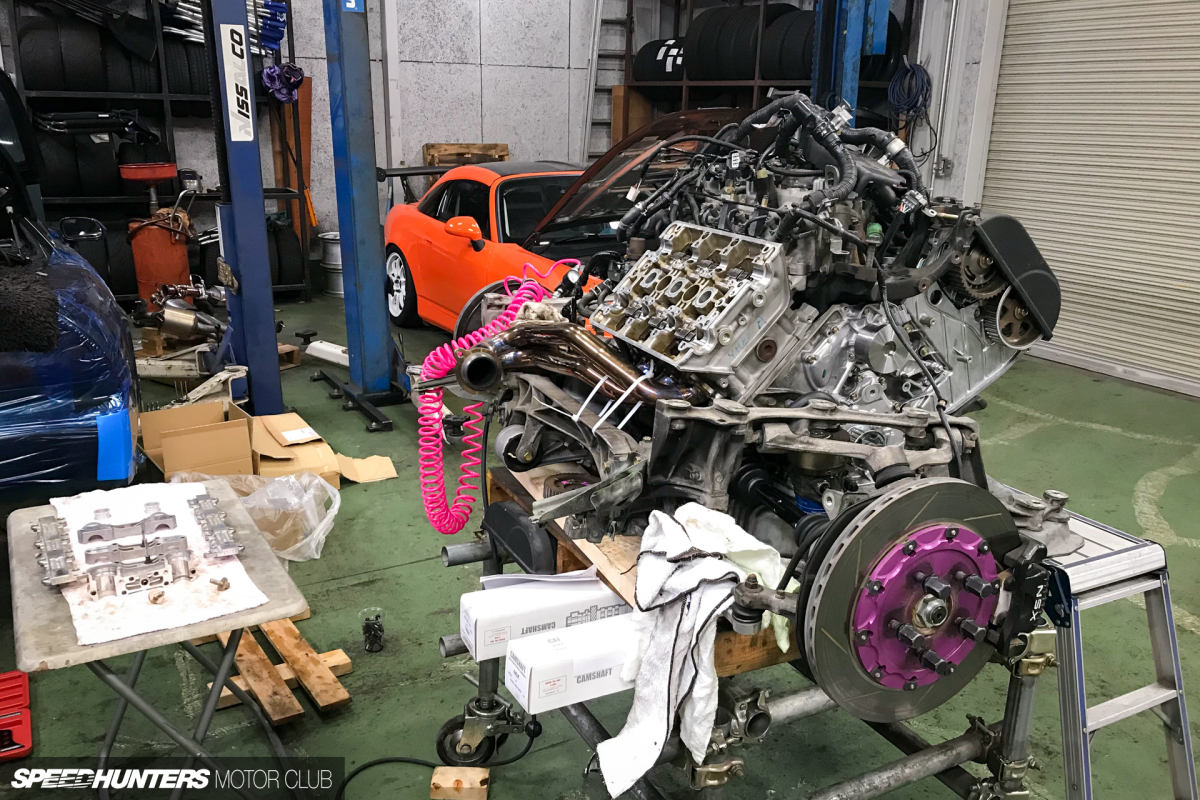
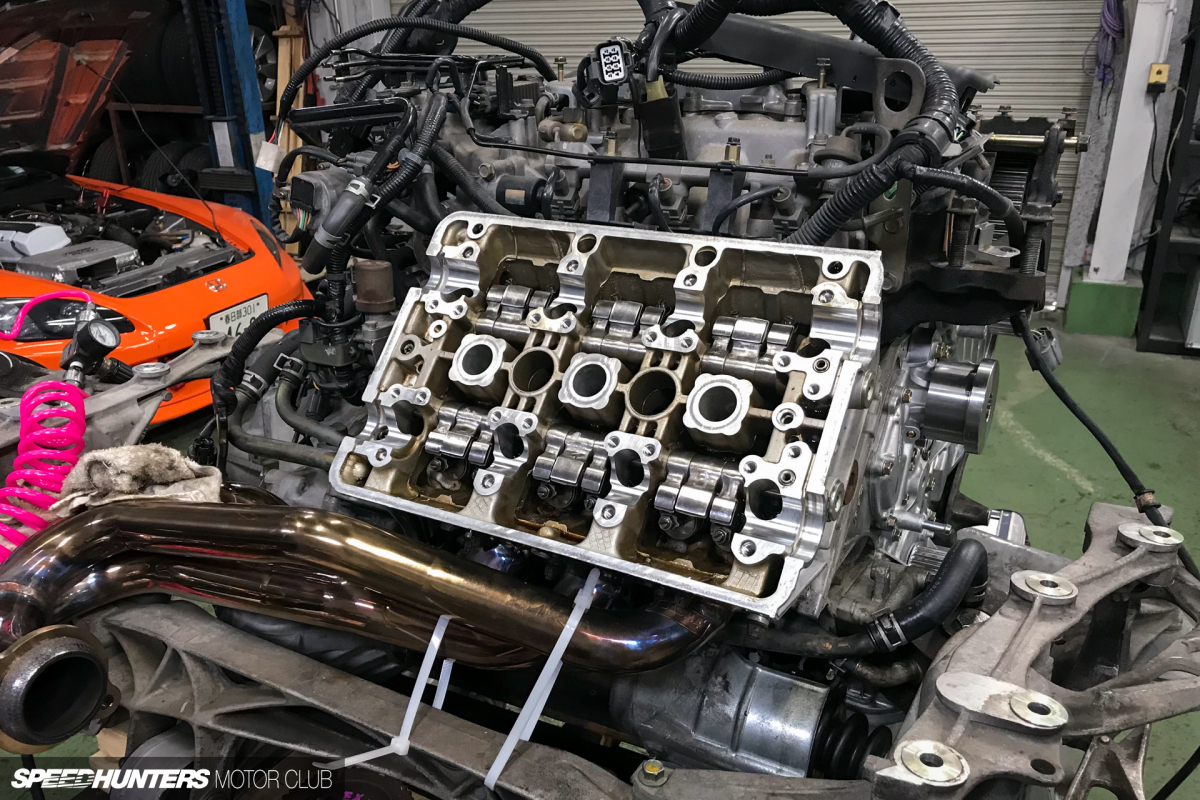
Being a V-configured engine, it means twice as much work for Suga-san as the same process is followed for the other head.
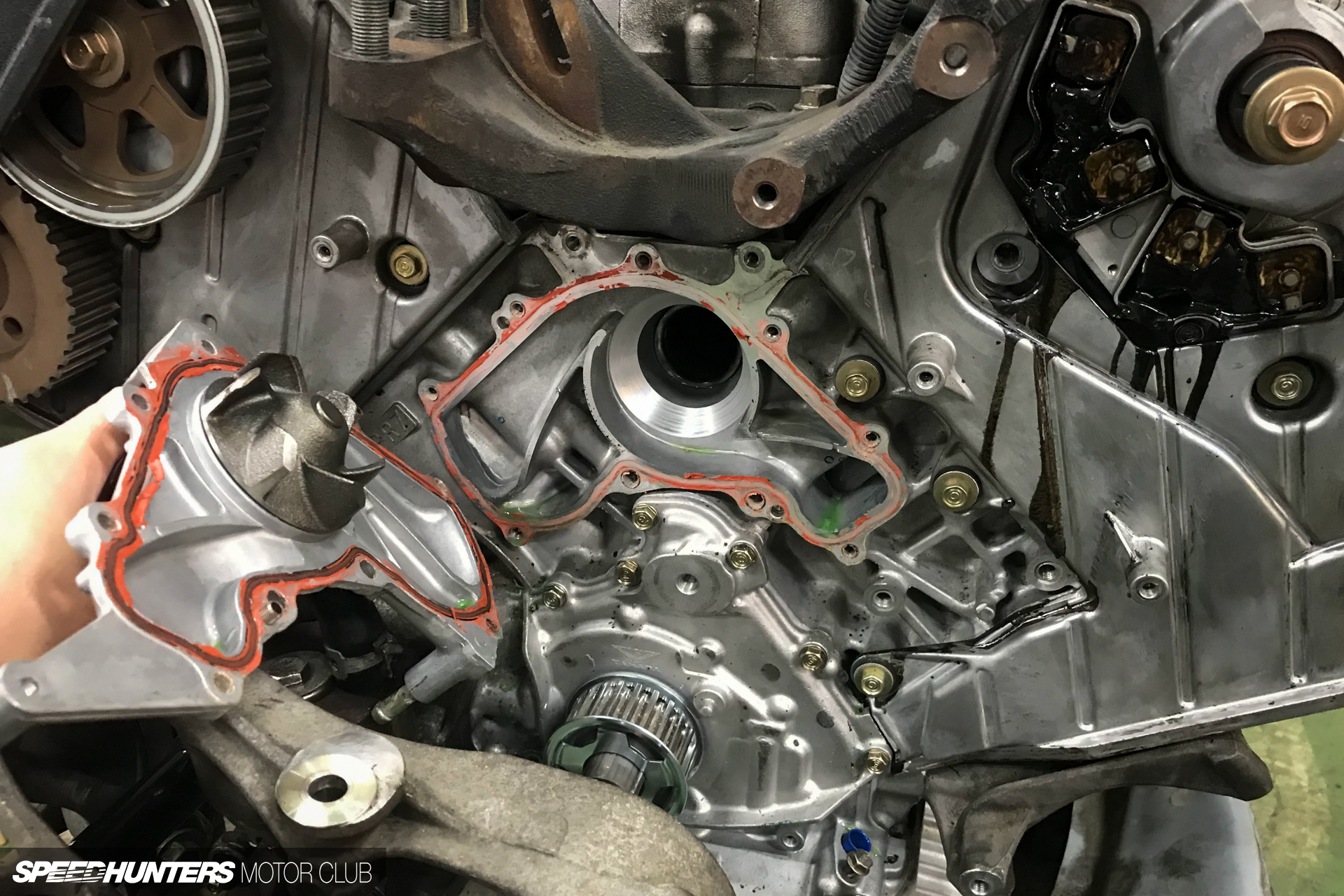
Moving around to the front of the engine…
Water pump bearings degrade over time, so a new one was installed while we had the timing belt off. You can also see a common sight on all NSX engines in the top right corner of this photo – black sludge coming from behind the cam gears.

The culprit is this crankshaft position sensor that inexplicably melts over time but continues to function perfectly. It’s not really a problem, but Suga-san cleaned up the area around the sensor and installed new ones (which will eventually melt).

Now that the camshafts have been changed, the final difference between an auto and manual C30A is the harmonic balancer pulley you see here.
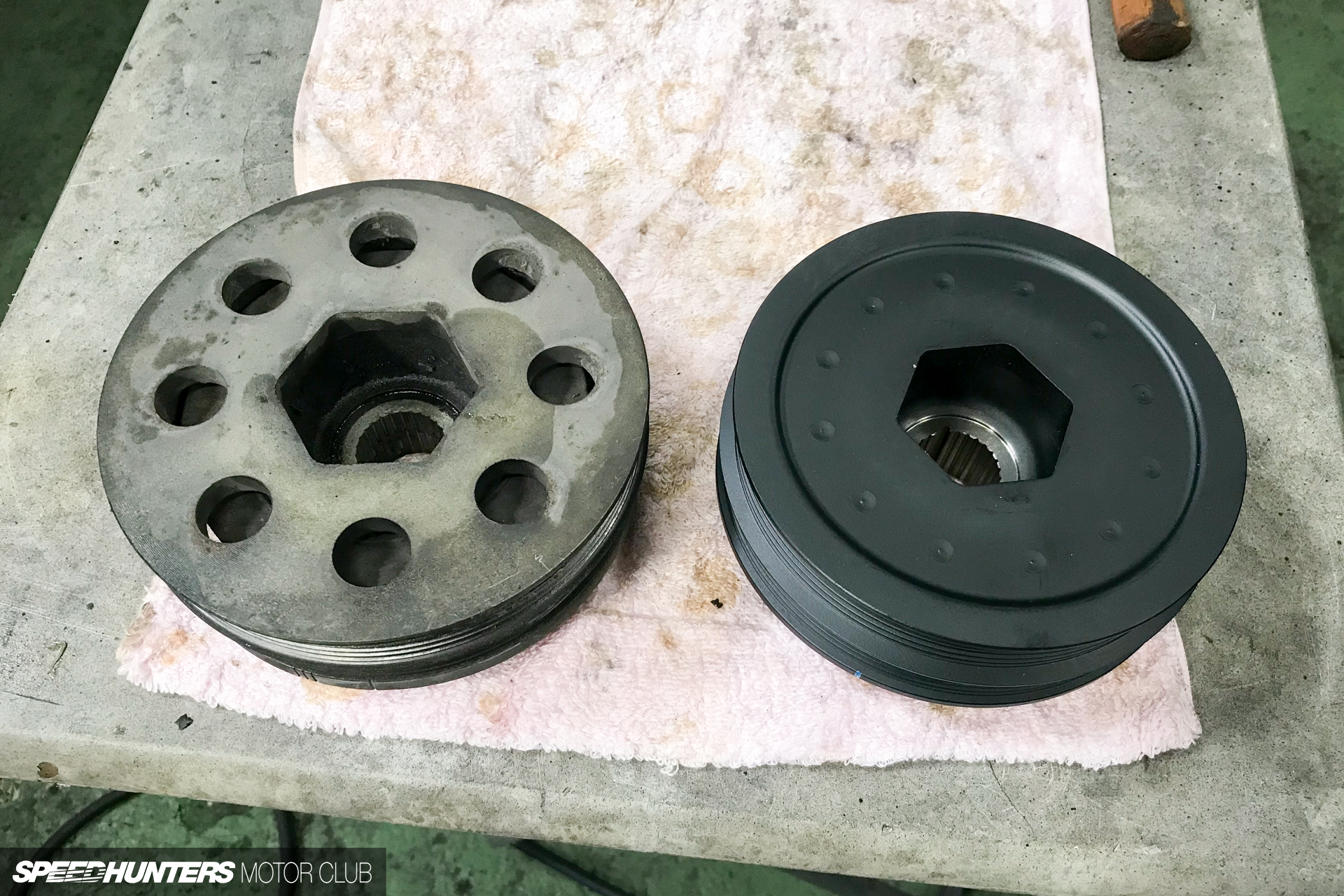
All engines create potentially damaging resonant vibrations by their very nature. Factors like stroke, cylinder pressure, crank-train stiffness and inertia all culminate in what is known as the ‘mass elastic performance’ of the engine. Basically speaking, how much shock runs through the engine during operation. A harmonic damper or torsional vibration damper (TVD) helps to convert the energy associated with the undesirable torsional vibrations into heat. A well designed or matched TVD makes this energy conversion at the resonance point that is most damaging to the engine. The energy is stored in the viscous fluid in a fluid damper, or the rubber element of a rubber type damper.
The mass of the inertia ring, along with the viscosity of the fluid (or stiffness of the rubber) is tuned to the resonance of the cranktrain in order to be most effective. It is a very simple looking part but has a very clever interplay in the engine itself. The automatic pulley (on the left) is actually lighter than the manual variant, presumably due to the flywheel assembly affecting either the stiffness or inertia values of the crank-train, changing the frequency output and retuning the energy required to be ‘buffered’ by the TVD. Installing a lightweight pulley might seem like a good idea to free-up the engine, but could potentially reduce engine life, as the torsional vibrations of the crank-train would be left unchecked.
I was considering an aftermarket fluid-damper replacement, but Suga-san talked me out of it since the OEM unit is tuned to the correct frequency, and as we are not changing any components in the bottom end, the stiffness and masses would remain the same, so the frequency that the TVD is tuned to would remain correct. Something I’ve come to appreciate lately is the amount of design and testing that goes into OEM parts – it’s very rarely something the aftermarket can compete with.

T3 Craft Works, another NSX specialty workshop, makes this aluminium shield that mounts in front of the balancer pulley. If the pulley ever suffers a de-lamination failure it can blast into the timing belt, causing a skipped tooth or worse – and potentially a fatal meeting between piston and valve. Circuit driving increases the chances of this unlikely failure, so it’s nice protection to have.
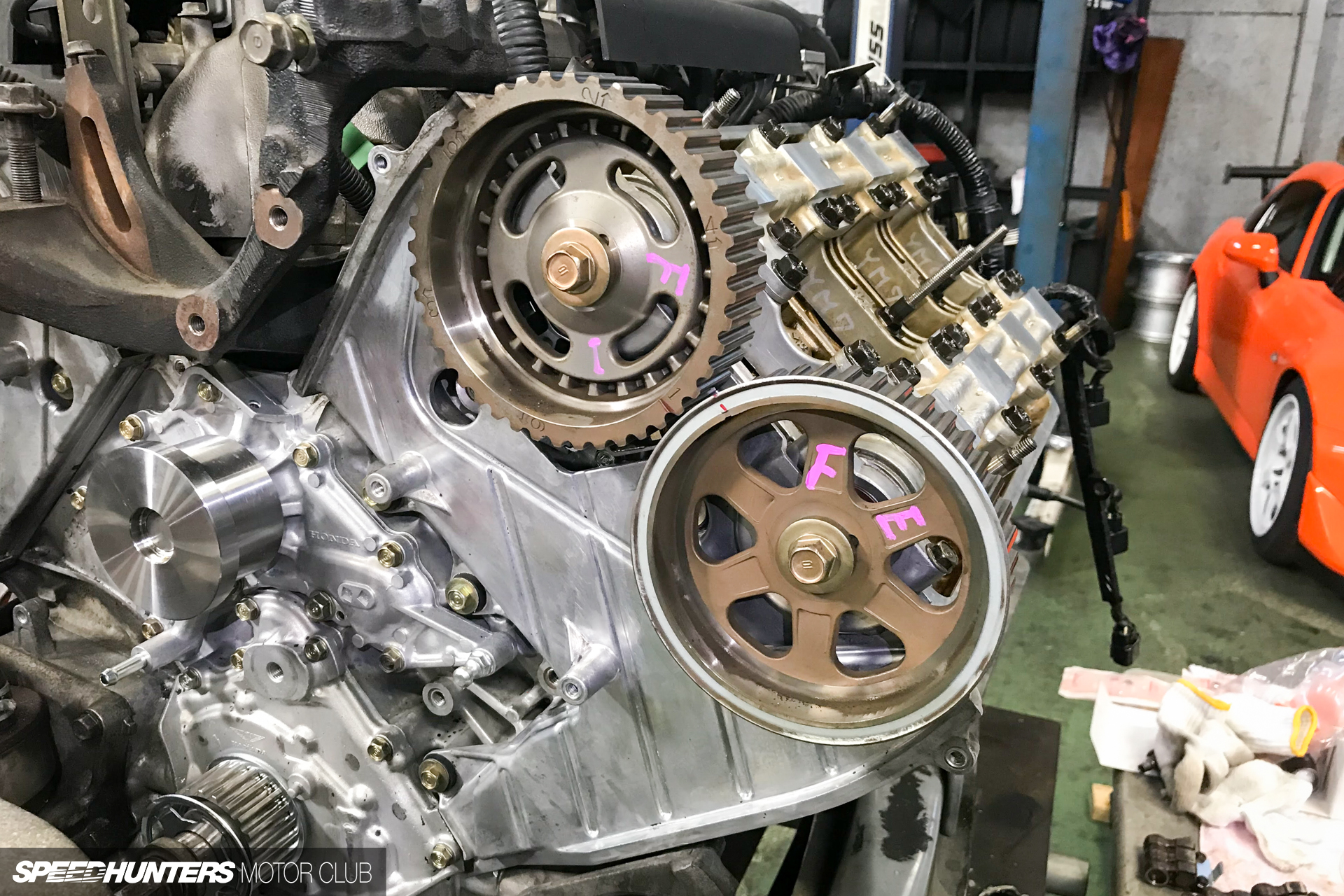
The stock cam gears were reinstalled into their original positions.
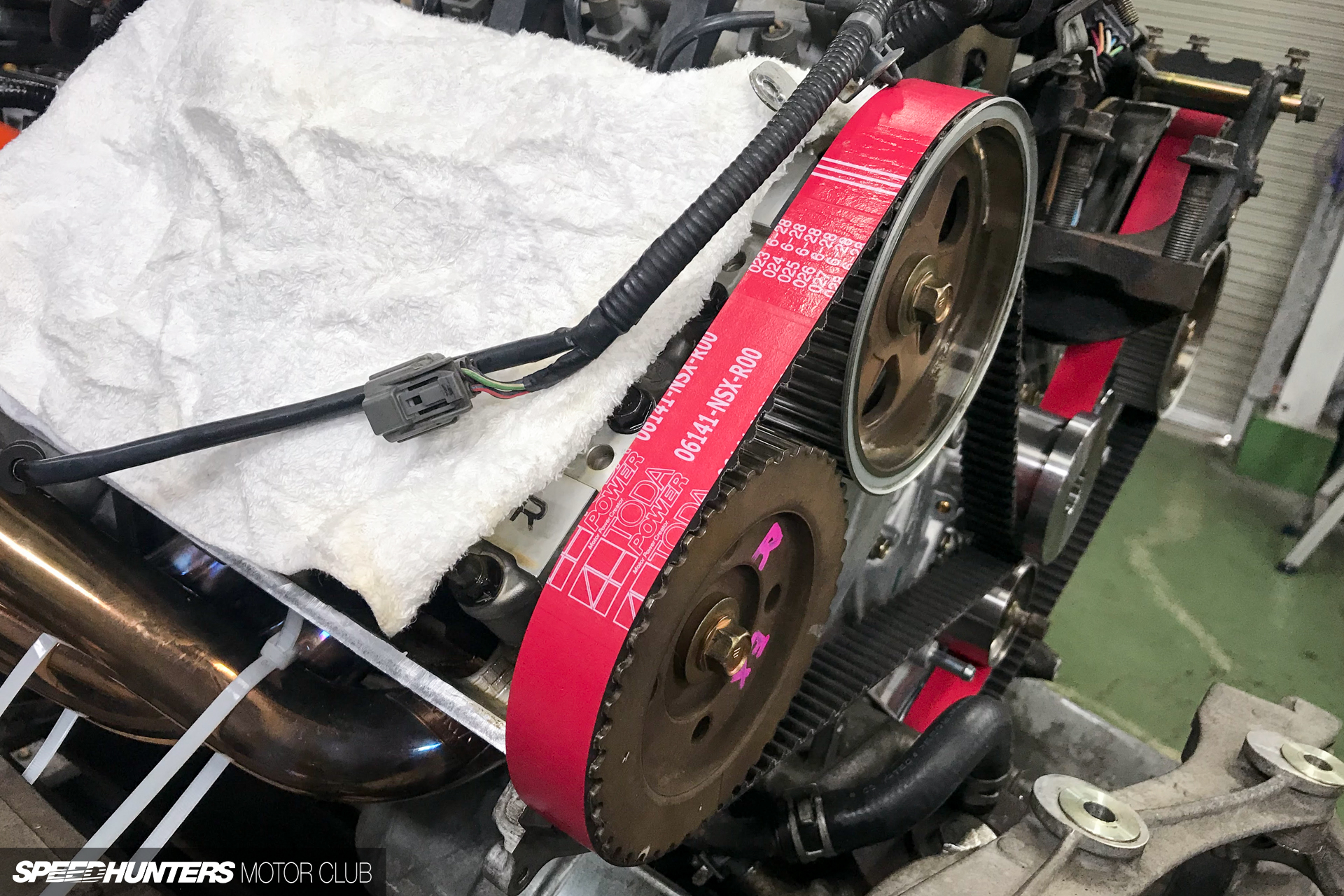
Then it was all tied together with the very red Toda timing belt and tensioned to spec.
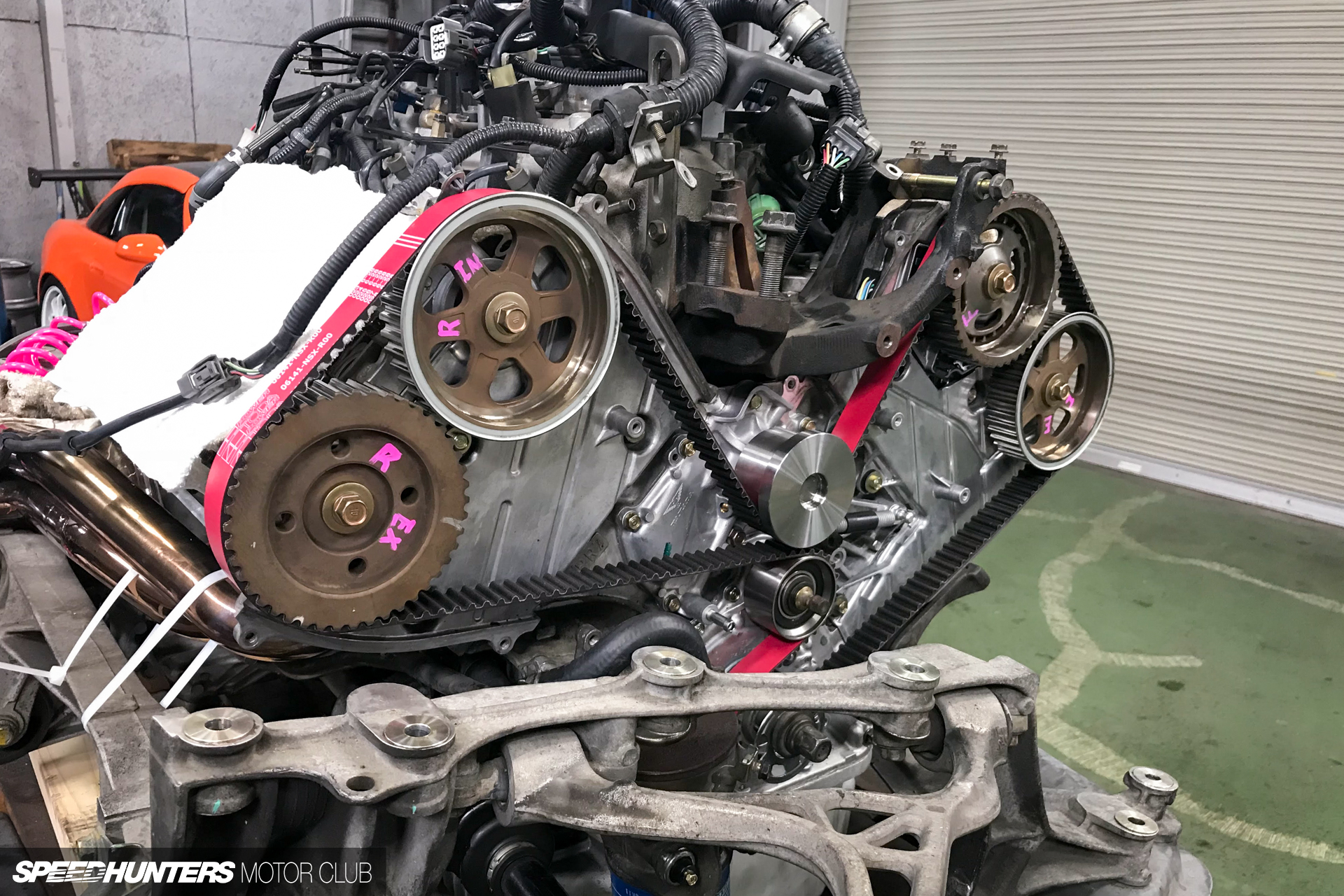
To-da!
Ancillaries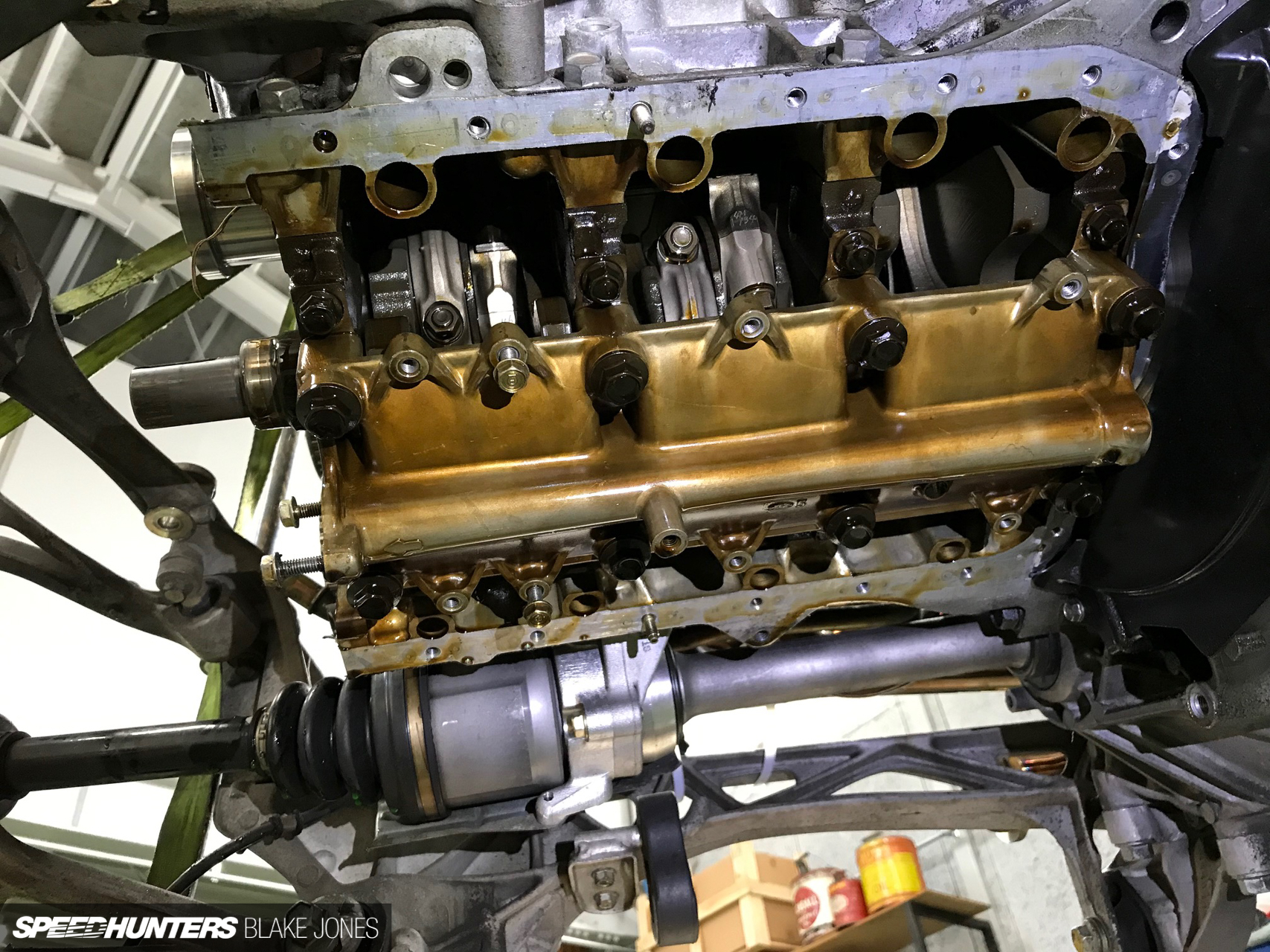
Underneath the engine, the stock oil pan was removed.
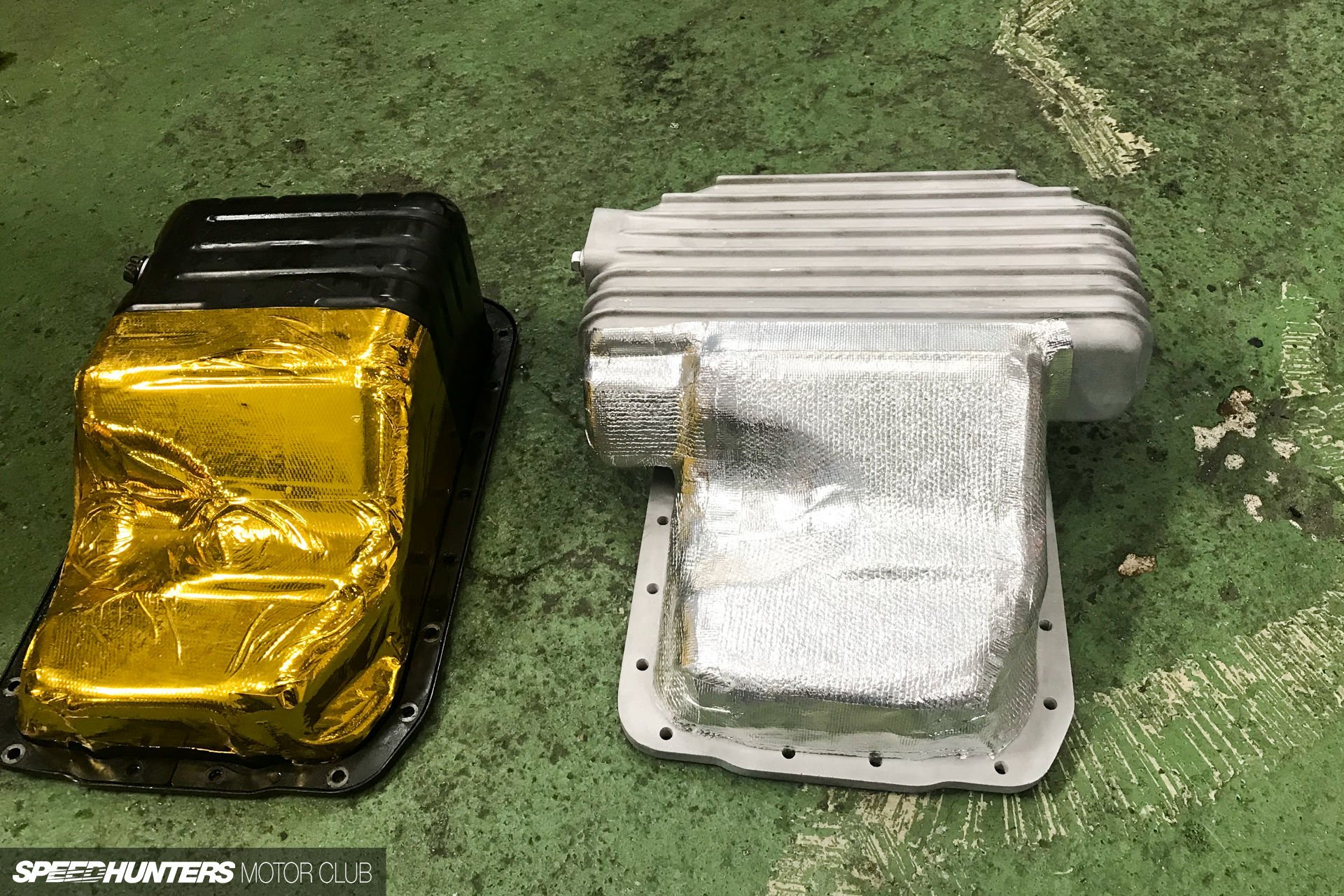
Here you can see the replacement RFY pan (grey) next to the stock pan (black with gold).
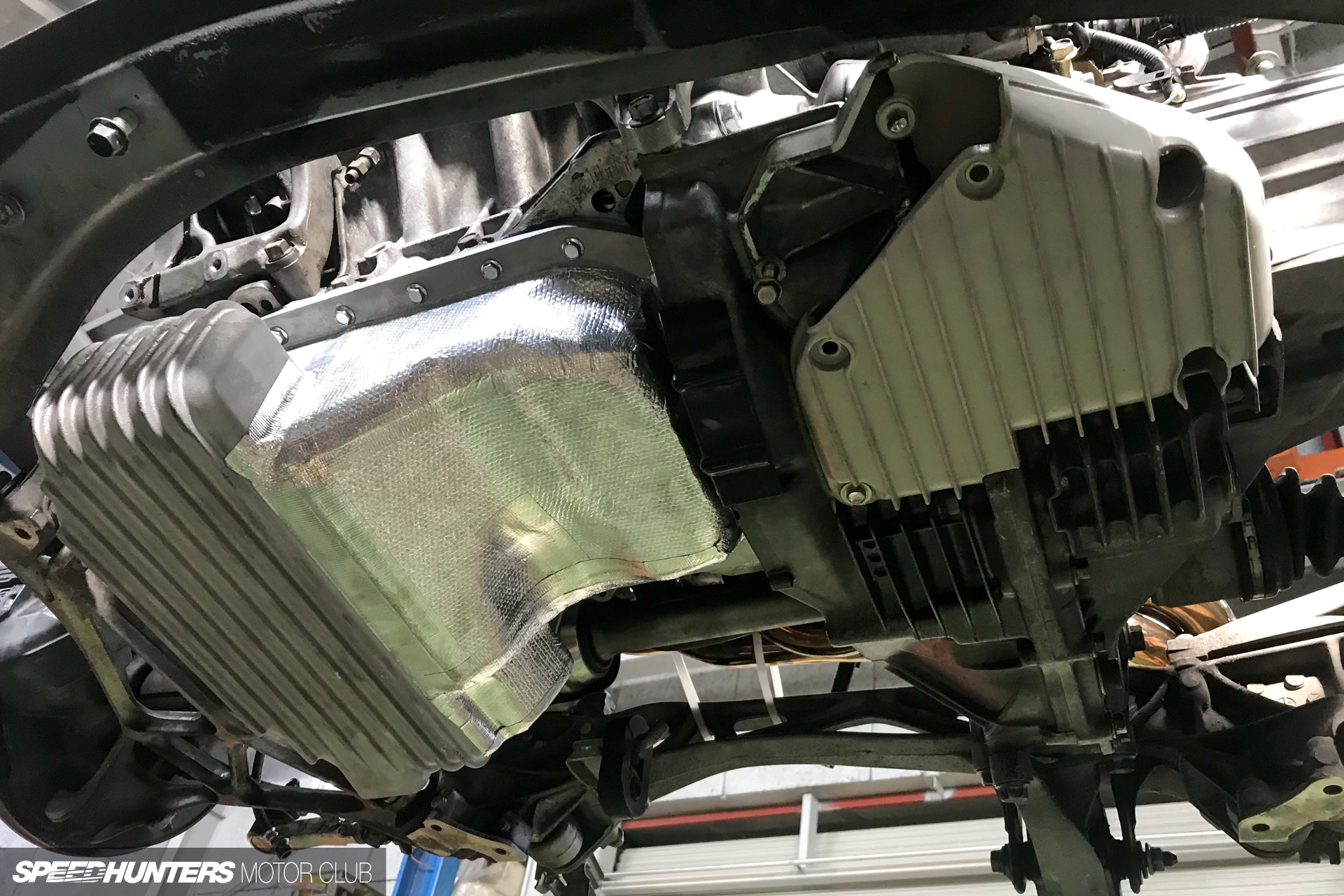
Suga-san attached the sump with liquid gasket and applied heat-reflective material to the raised section of the oil pan under which the front exhaust header runs to minimize heat soak.
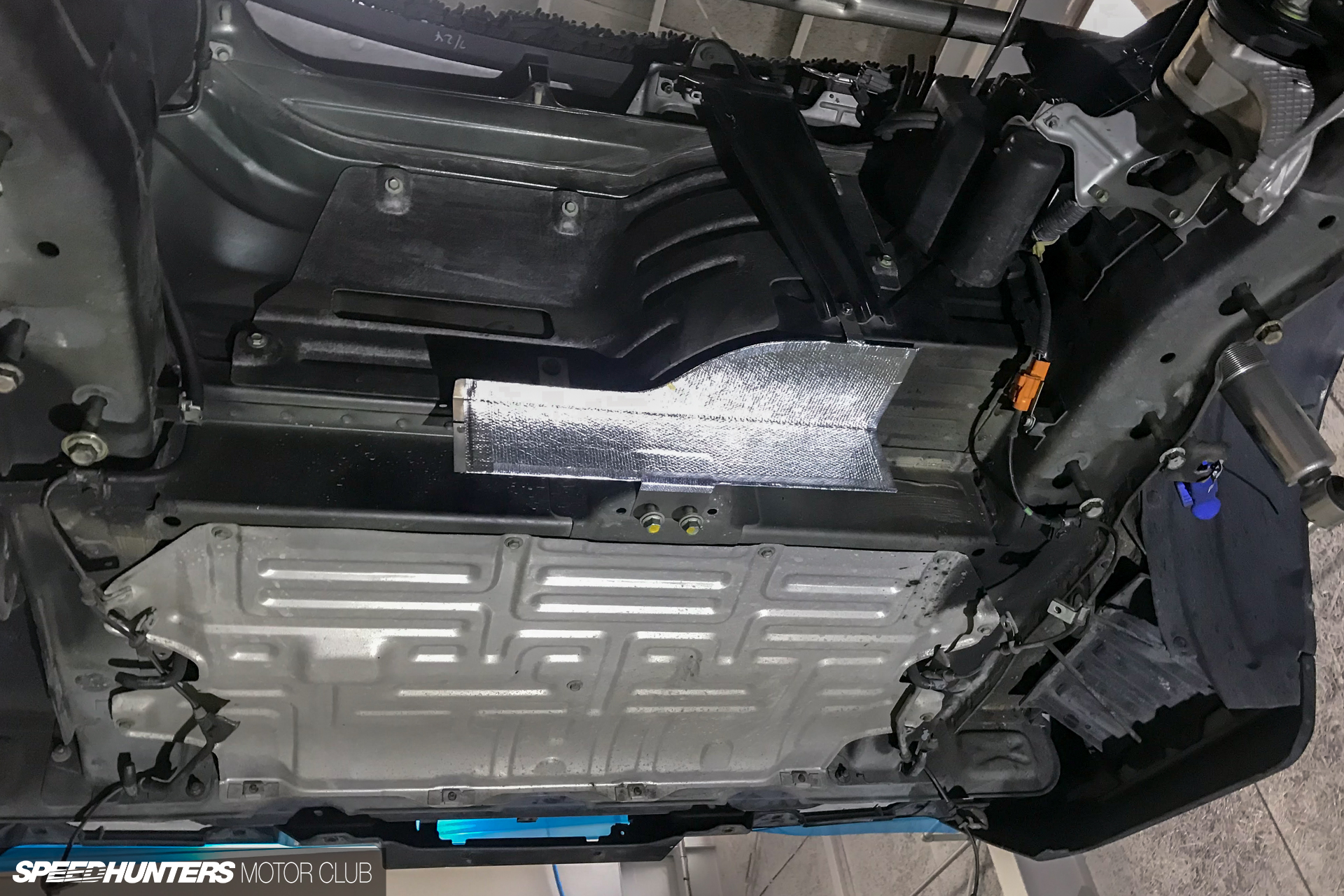
He used more of the same material to add some extra protection to the two titanium Fujitsubo heat shields that protect the rear firewall and trunk, as seen above.

The front firewall shield received the same treatment. You can see the fuel tank just in front of the shield, mounted as low and central to the car as possible to minimise balance changes due to varied fuel loads.
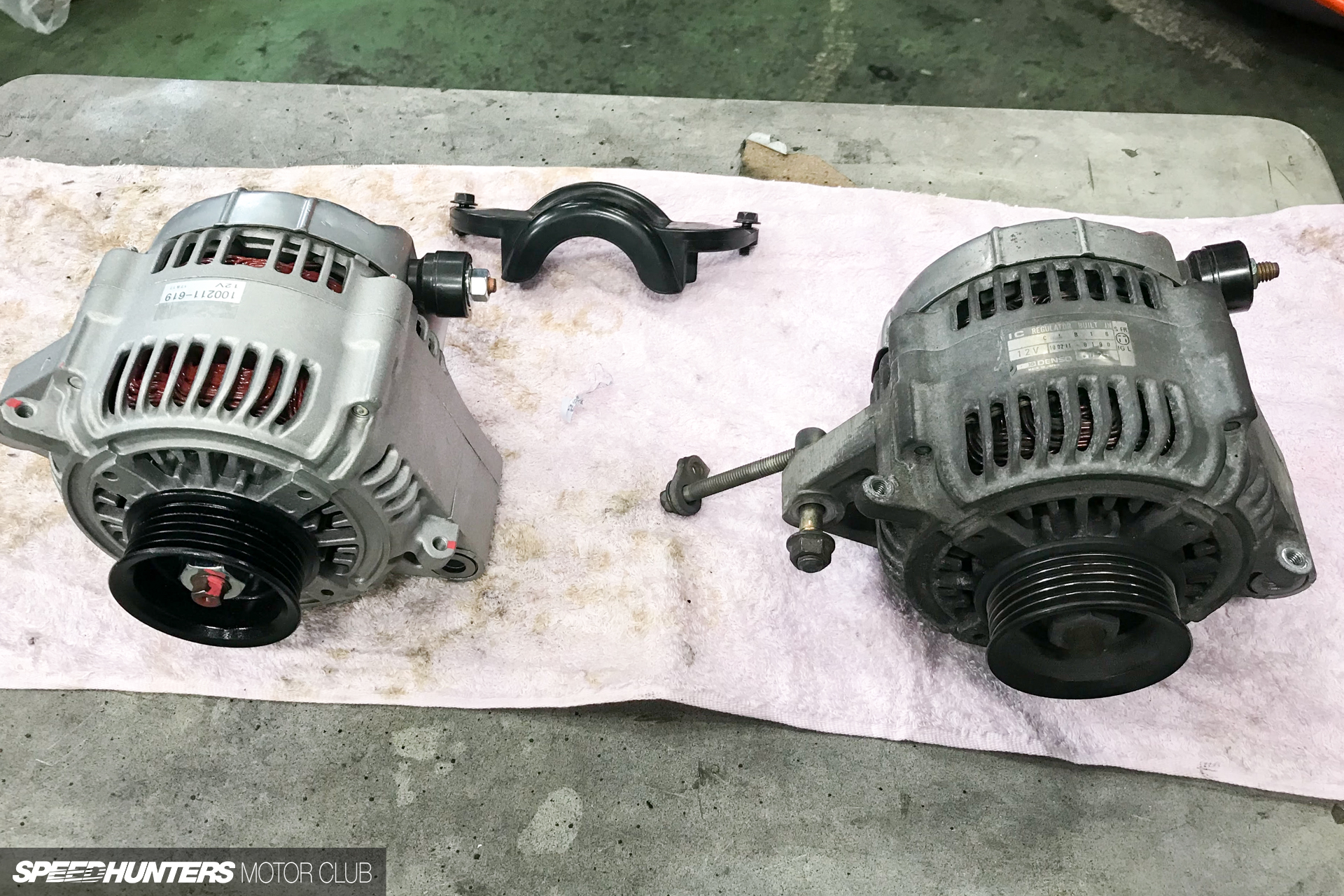
A few finishing touches, replacing the alternator with a new unit…
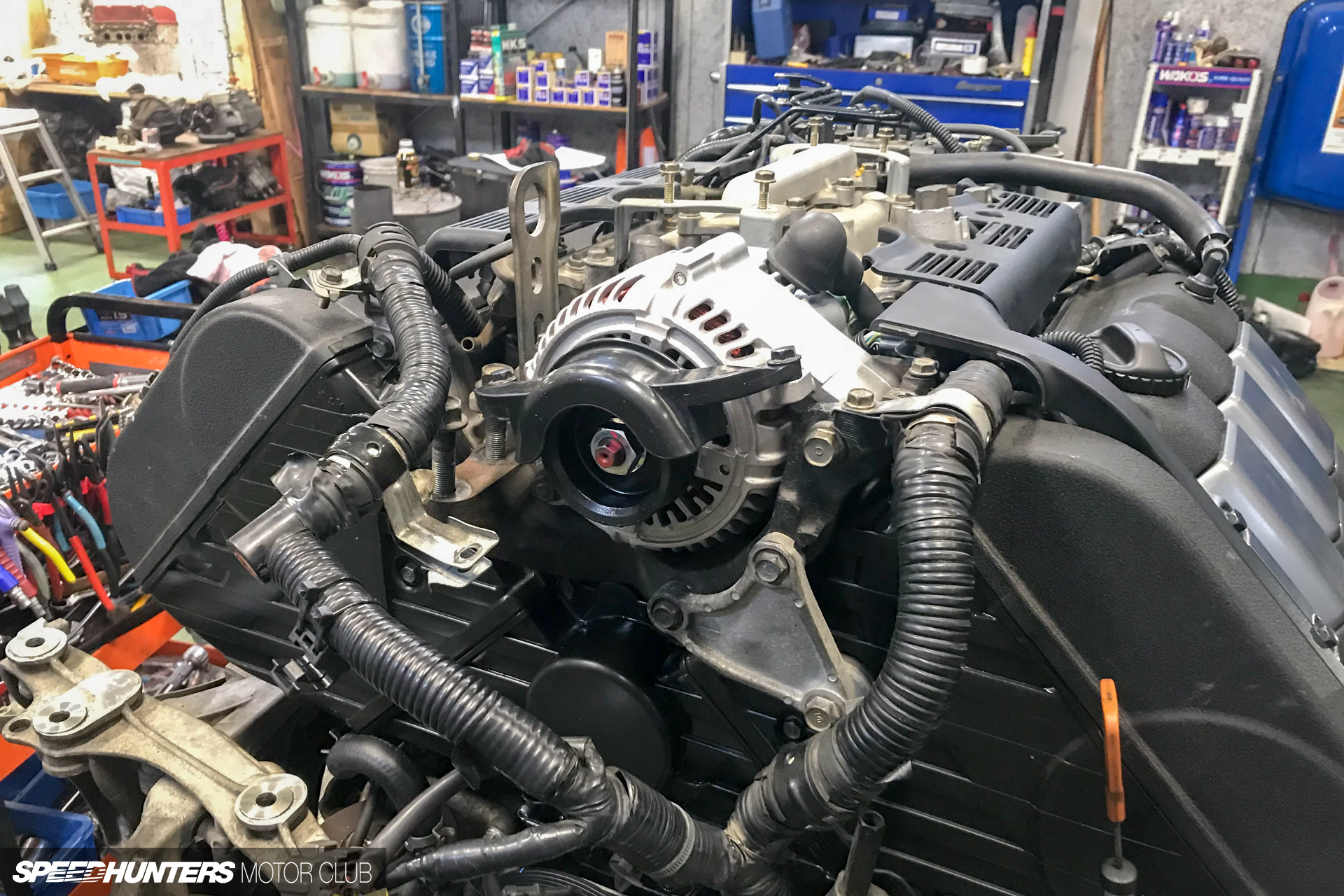
The alternator sits on top of the C30A, so visually it’s nice to have a fresh one.
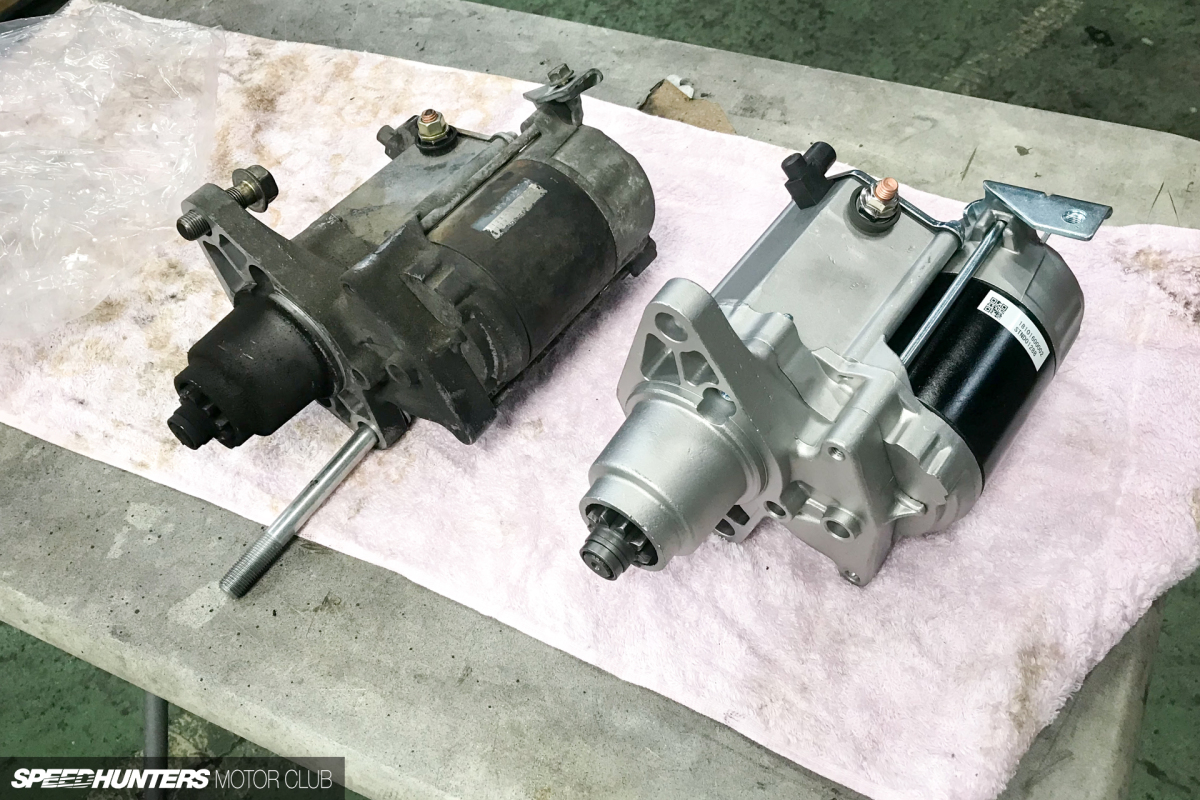
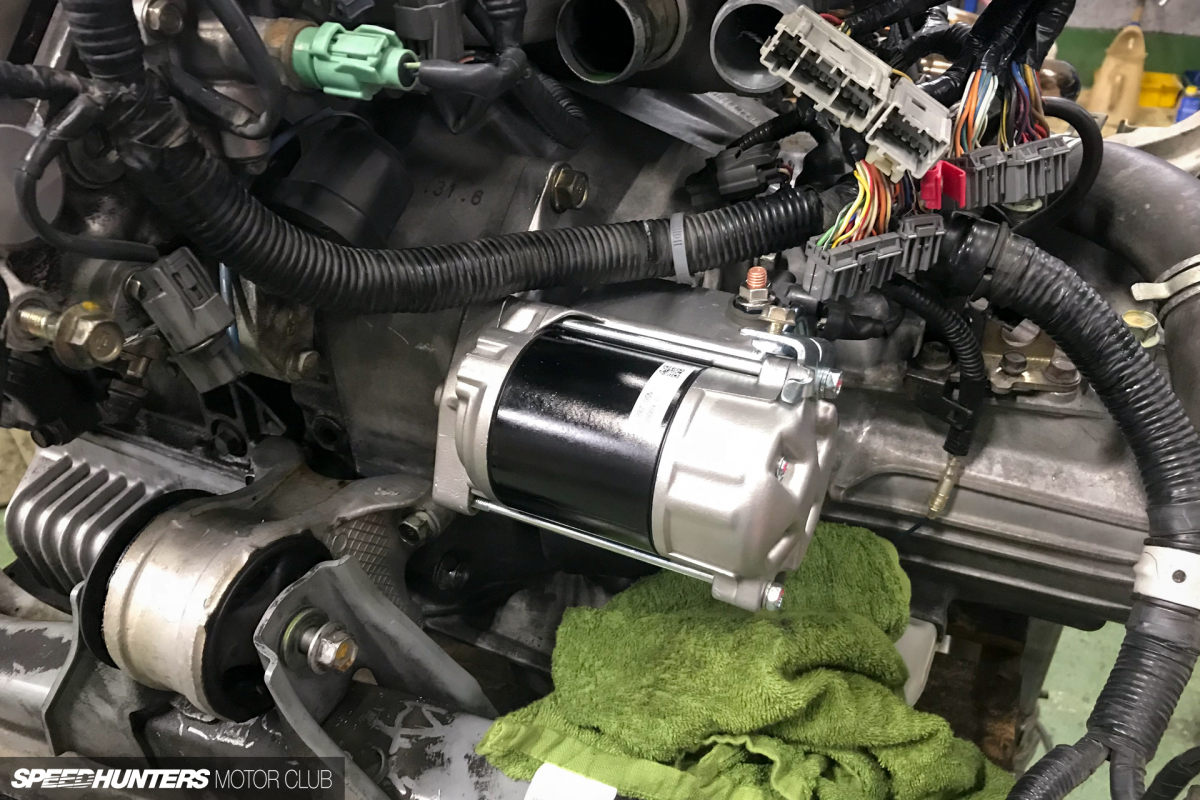
The starter motor was similarly replaced with a fresh OEM component.
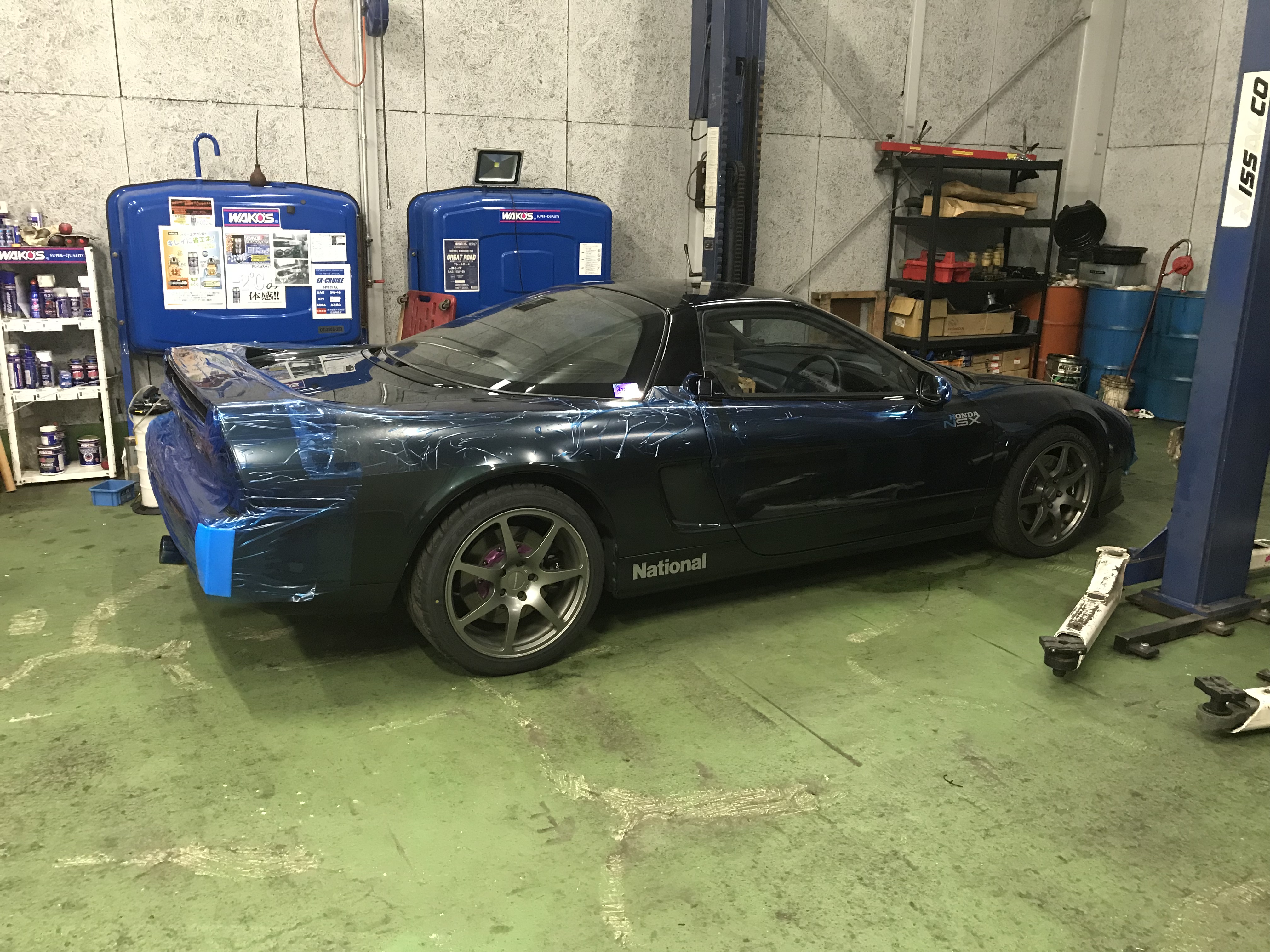
The photos from Suga-san stopped pinging into my email inbox for a few days, and I started to get a bit nervous. Then this: “Project NSX all back together and ready for collection.”
Note the raised suspension; who knows what the approach angle to a 60,000 ton roll-on-roll-off shipping vessel is? I sure don’t.
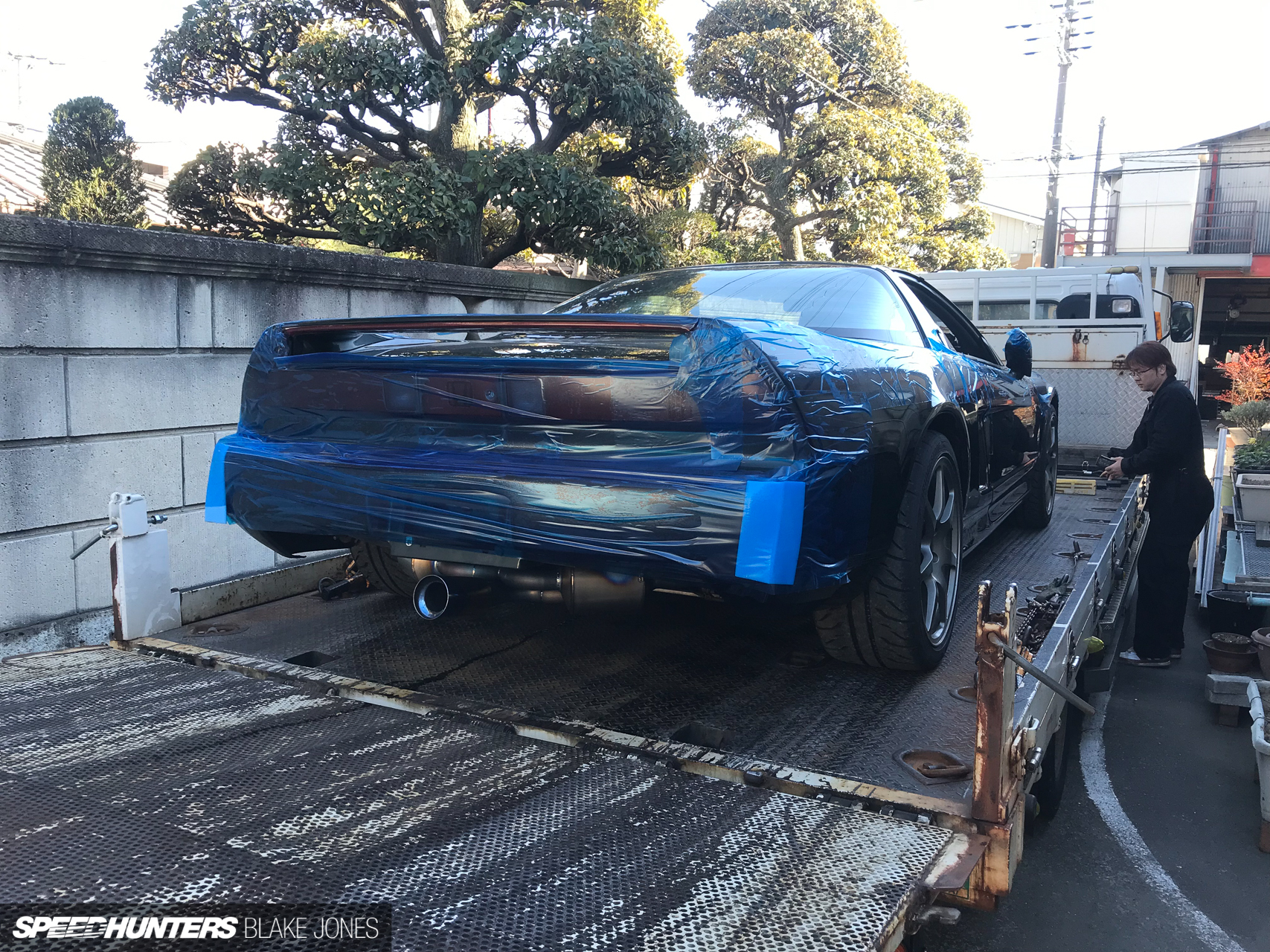
With a clean bill of engine health and a few special parts the car was finally ready to leave the motherland. As the title suggests, this engine work is but the first step of a longer hunt for power, and at the very least the car requires a tune once in Australia to make the most of the new camshafts. Then we can see what progress we’ve made towards hunting down those six-cylinder rivals.
I’ll take bets on final peak flywheel horsepower* in the comments section of the next dyno session. Do you think we will just scrape by and achieve the Stage One 290hp goal, or break the 100hp/litre barrier and go to 300hp+? Closest guess gets a Speedhunters sticker mailed to them.
*measured wheel horsepower x 1.15 (drivetrain loss)
Blake Jones
Instagram: blaketjones
blake@speedhunters.com