I don’t claim to know a lot, and like to treat every day as a school day, but if there’s one thing that I know for sure, it’s that heat is one of the biggest enemies of any performance car.
Heat management is often one of the most overlooked areas when it comes to modifying cars, and in particular modern vehicles which often leave the factory with significant overhead in the performance department. While a new water radiator might not get you the same amount of likes on social media as a big new turbocharger, it could well prove more beneficial in the long run by allowing you to go faster, for longer.

One particular fleet of cars where owners are quick to extract power, but often overlook heat management, are the Volkswagen Group’s MQB platform of performance models, which encompasses the third generation EA888 TSI powered Volkswagen Golf Rs, GTIs, Seat Leon Cupras, Audi TTs, S3s, and Škoda Octavia vRS’ from around 2014 onwards.
Simple software tweaks on these aforementioned models can often see comfortable power gains of up to 30% without hardware changes, and the software tuning industry built around these cars is understandably big business. There is a catch, however…

Even a ‘Stage 1′ tuned car with no hardware upgrades will generate far more heat than a stock car. As the useful energy the engine makes increases, as does the not so useful wasted energy – mostly in heat. Move onto stages two and three and heat management becomes a vital part of the puzzle, but one which I often see being completely disregarded. Why?
Well, for starters, most owners aren’t aware. The water temperature gauges in these cars are notoriously devious and don’t display accurate temperature readings, preferring to sit at a steady 90-celcius (or 195-fahrenheit) despite actual temperatures being much, much higher. This is mostly to stop run-of-the-mill owners flipping a lid when the car registers 100 degrees rather than 90, but it’s not so useful for performance enthusiasts who might recognise that they should chill out as temps increase.
Further to this, the cars are not designed to have adequate oil cooling outside of road use and depend on the water cooling circuit to manage oil and gearbox oil temperatures (in the case of DSG equipped cars) via small heat exchangers that become quickly overwhelmed with enthusiastic driving.

I’m all too familiar with trying to address these issues with my previous generation Golf, Project GTI, as is Ash Stewart at Regal Autosport in the United Kingdom. Ash’s daily-driven track car is a MK7 Golf R – which he kindly loaned me as a courtesy car some years back, where I inadvertently mistook his MPH speedometer for KM/H, but that’s a story for another day – and sees plenty of track time across the UK.
As long as I’ve known Ash and the car, he’s always had to be extra considerate with regards to temperatures on track, which has lead to the development of a new cooling system for the MQB cars with CSF.
“We started to develop this system because of the issues I was having with cooling. For the past couple of years, within three ‘hot laps’ at the track, the oil temperatures would reach 130°C (266°F) and then uncontrollably rise to 145+°C (293+°F). Once hot, I would have to spend the day driving at 4500-5500RPM [the stock MK7 R limit is 6800RPM, with Ash's limiter raised to 7500RPM] to manage oil temperatures, which is hardly exciting!”
“The stock water temperature dial isn’t accurate, it shows 90°C (195°F) but when you log it could be in excess of 110°C (230°F) and I have even heard cars of higher powered cars track running 140+°C (284+°F), the cooling system could be considered a ticking time bomb” Ash said. Personally, I can’t imagine the stress the stock pipework, plastic housings and seals must be under at those temperatures. It’s a wonder they stay in one piece.

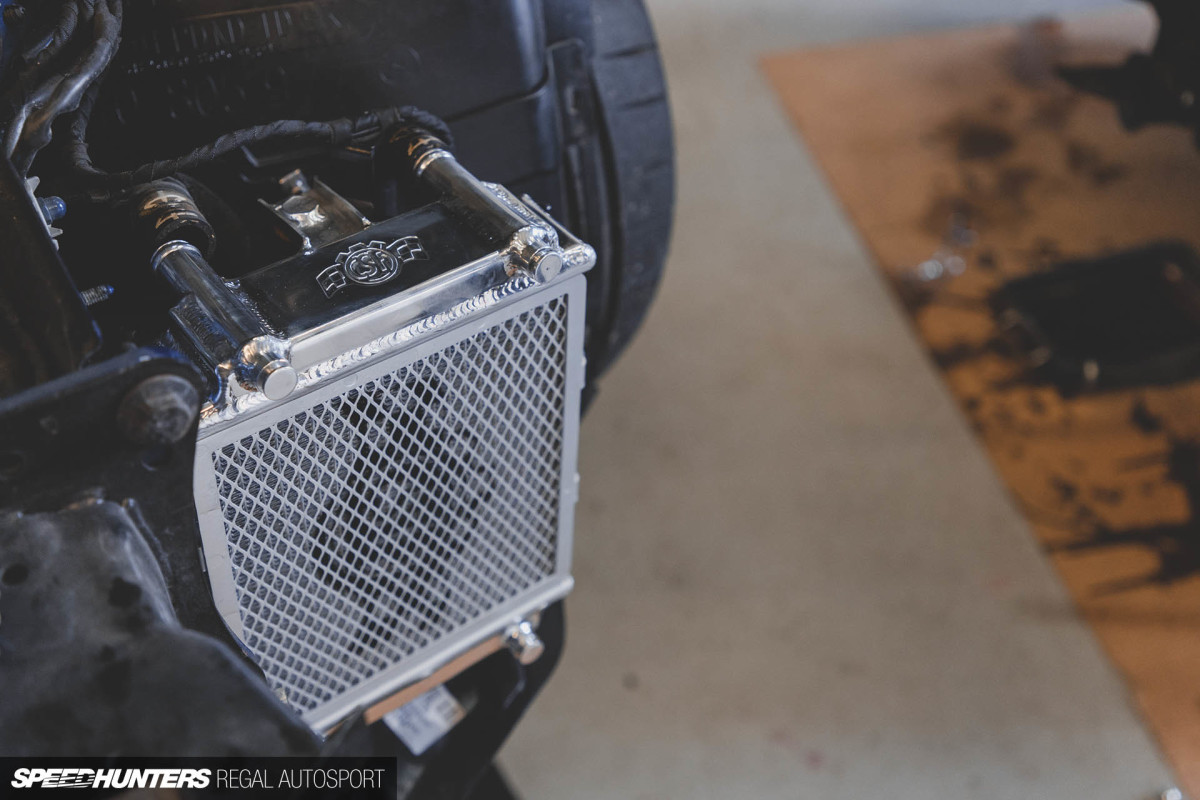
With these issues outlined, Regal Autosport worked with CSF to understand why these cars were running so hot. Ash continued “We noticed that the stock cooling system has a tonne of work to do. The engine water coolant circuit has to cool the engine, the exhaust gasses that come out of the head (as the exhaust manifold is integrated into the head for faster heat up/lower EGTs for emissions) as well as the DSG transmission.”
“It has a lot of work to do, and once you increase thermal load through increasing power output and then improve the car’s handling so that it’s operating at that higher load for longer, you will have a cooling problem.”
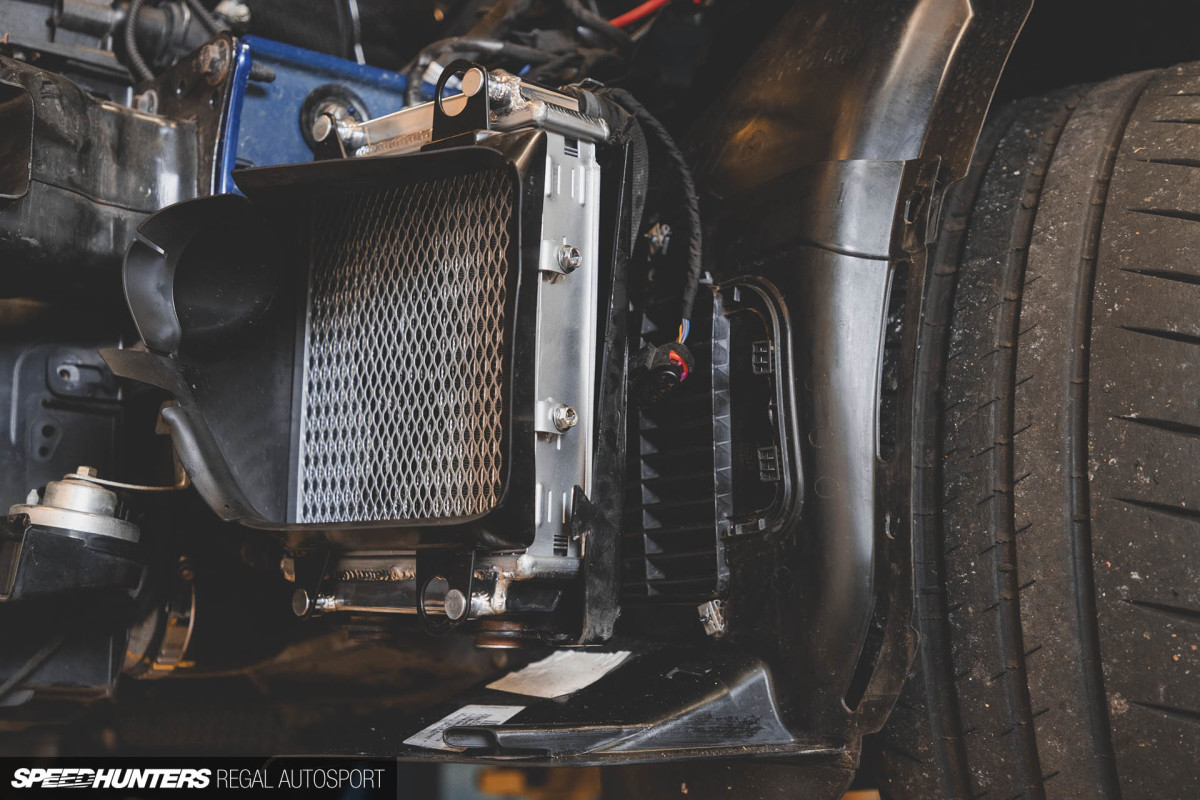
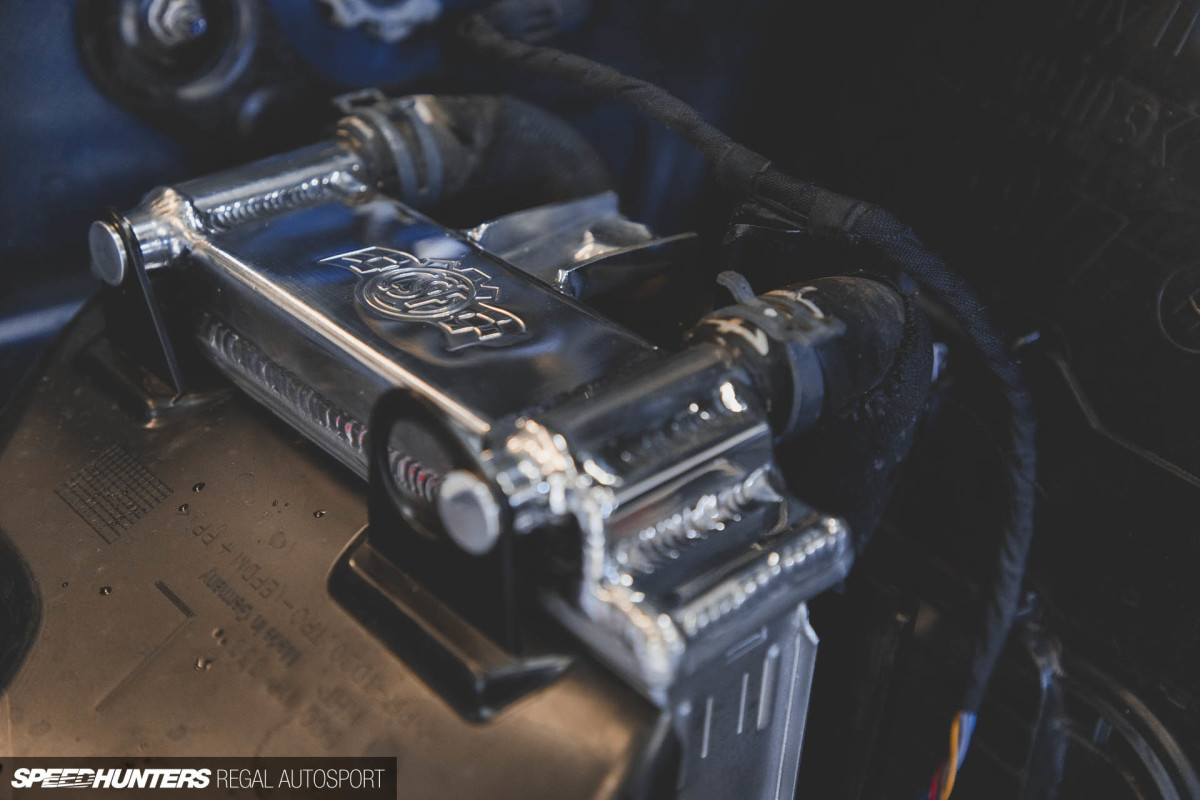
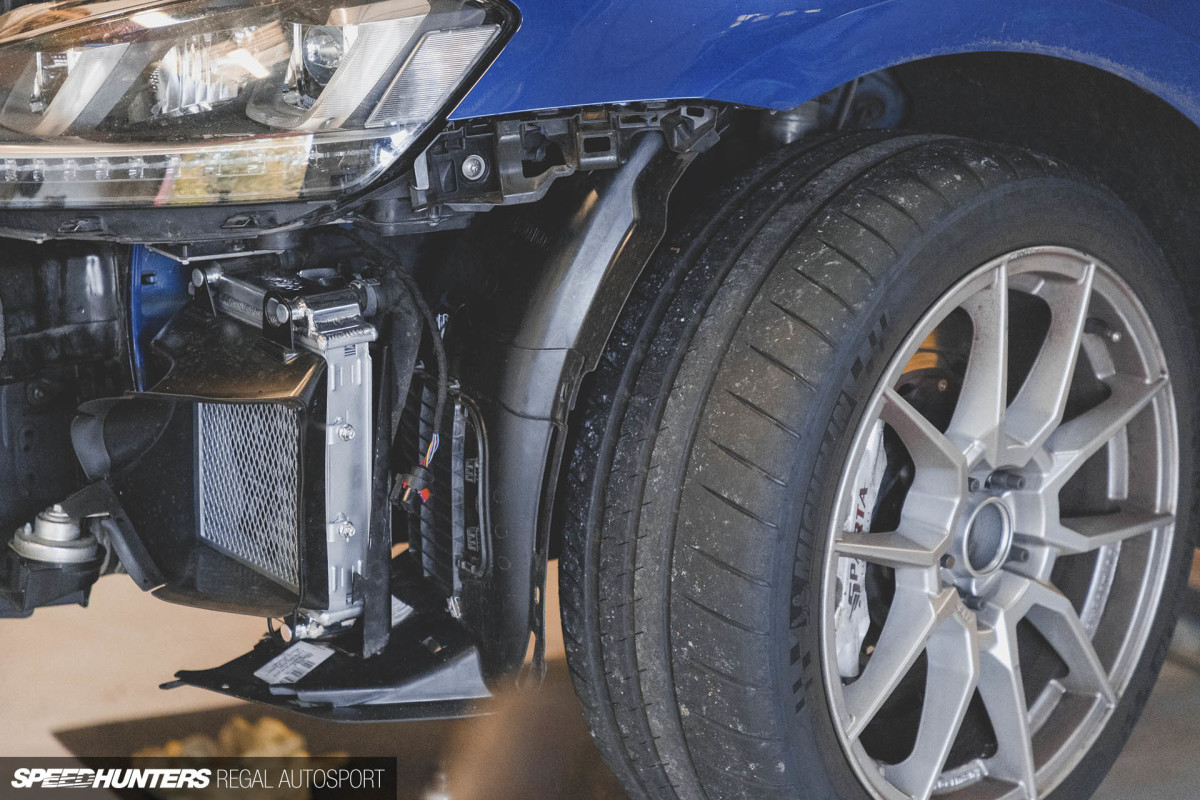
“The solution was to upgrade each radiator the MK7 Golf R has. It has 3 coolers, one main engine water radiator and two auxiliary radiators positioned either side of the bumper. On DSG cars, the RHS (as you sit in it) is an auxiliary engine radiator, while the LHS uses the engine water to cool the DSG (on manual cars it’s another auxiliary engine radiator).”
“This setup is the same for the 8V S3, but the standard MK7 GTI has just one radiator while with Performance Pack/Clubsports, Leon Cupras and TT S models have two coolers with the option to retrofit an additional third cooler using OE parts.”

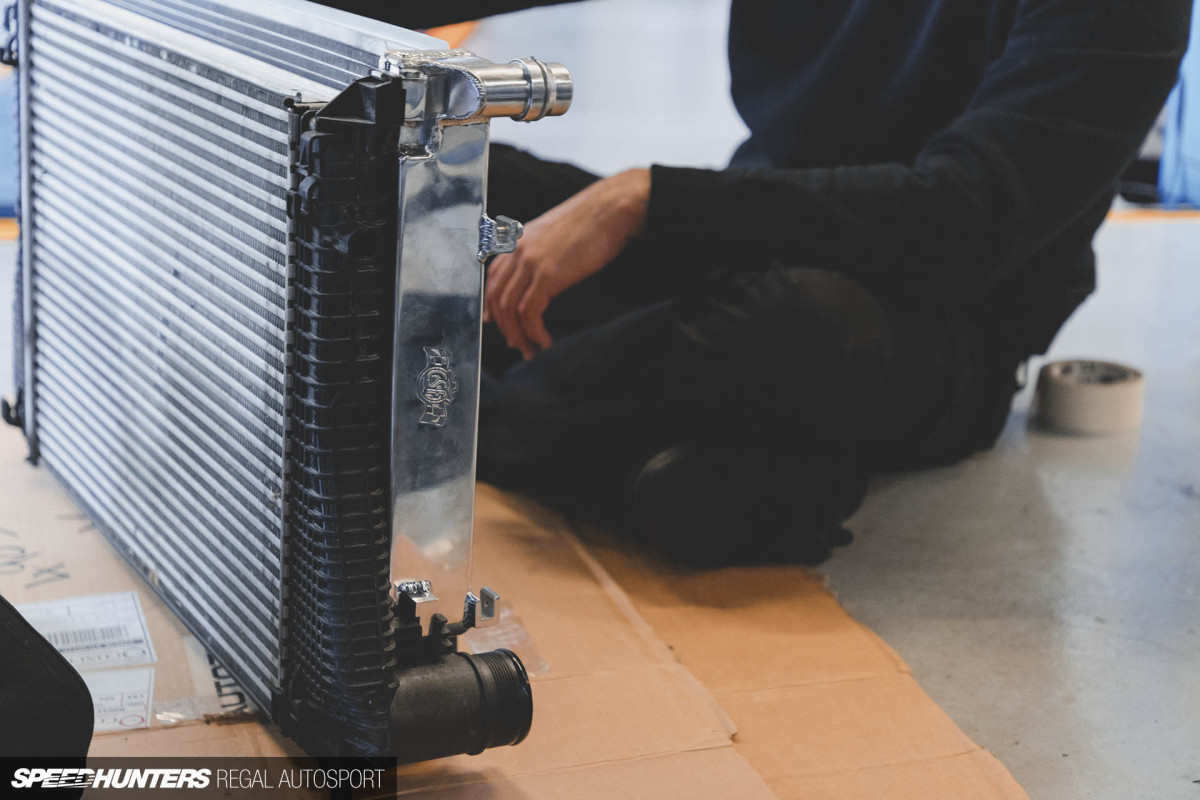
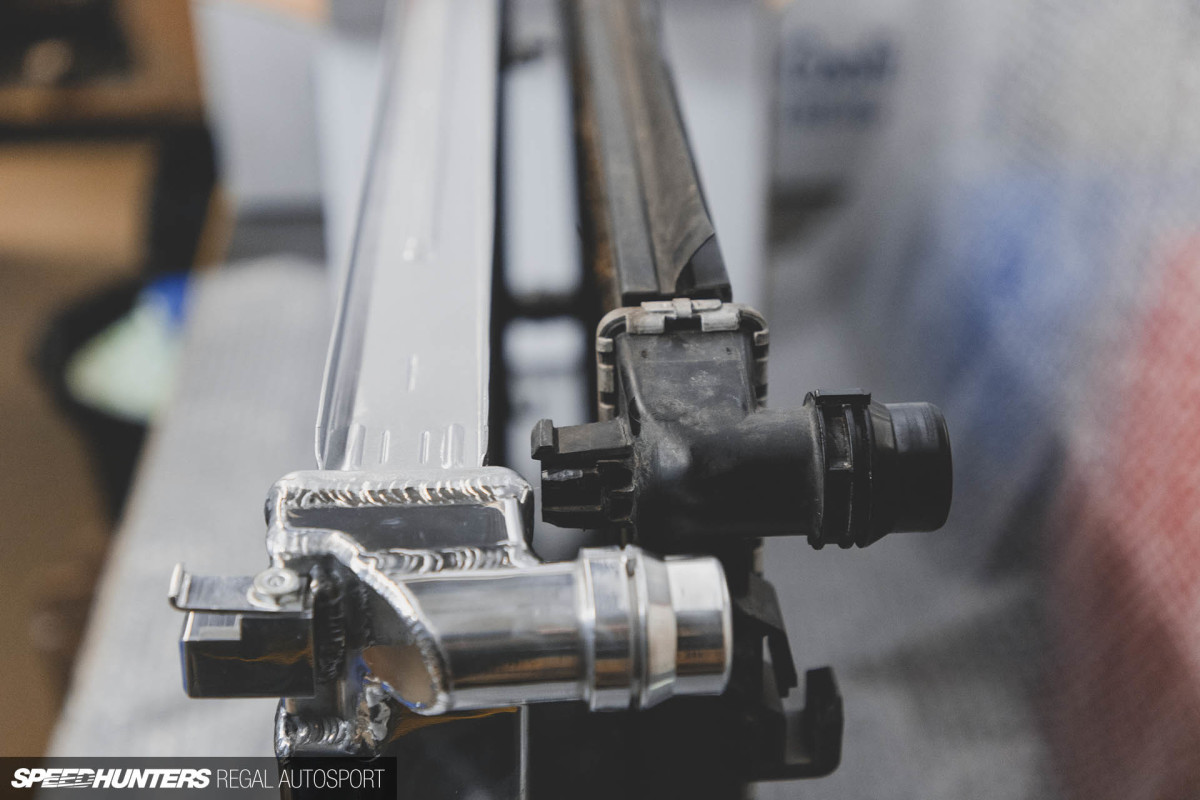
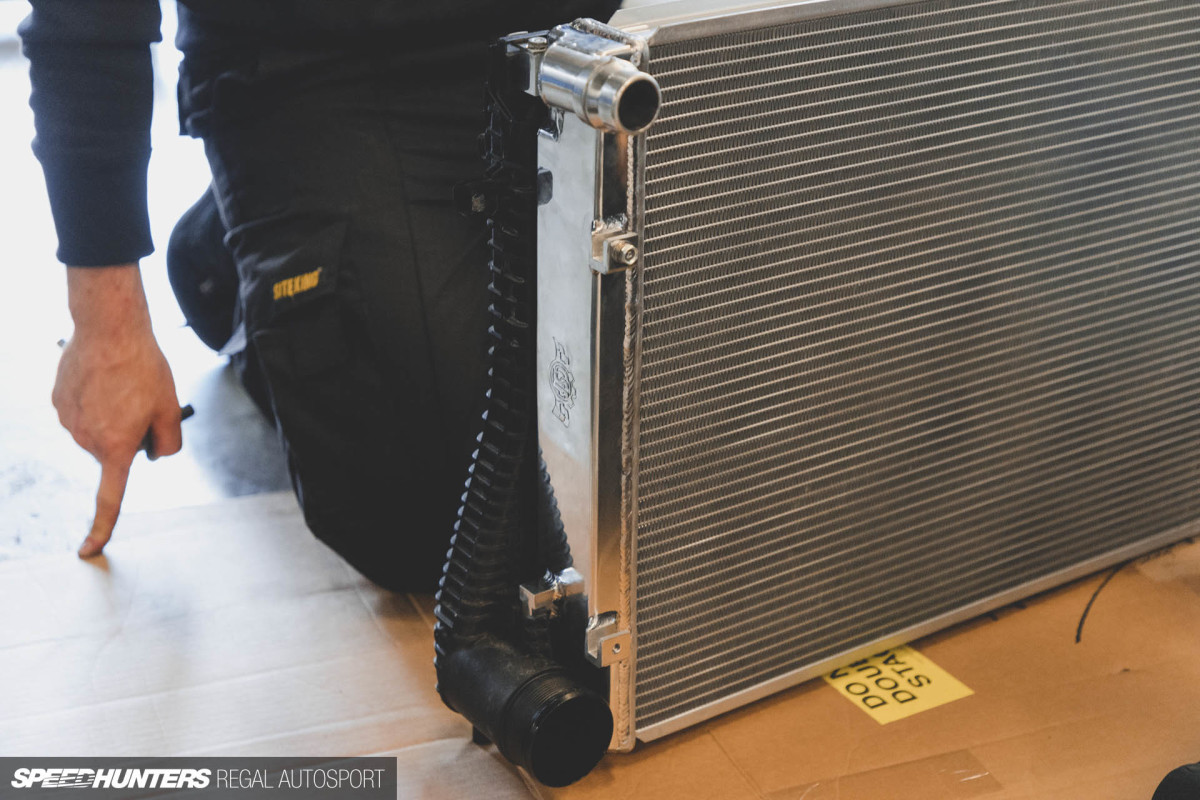
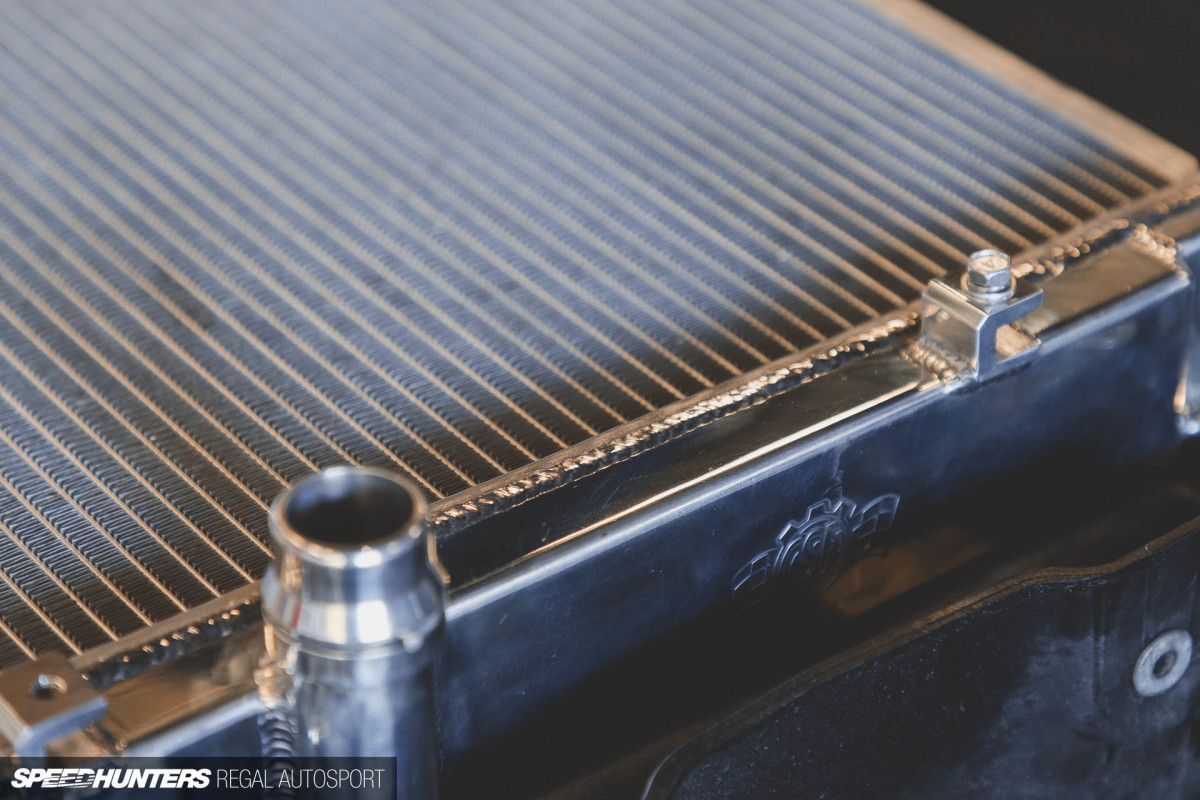
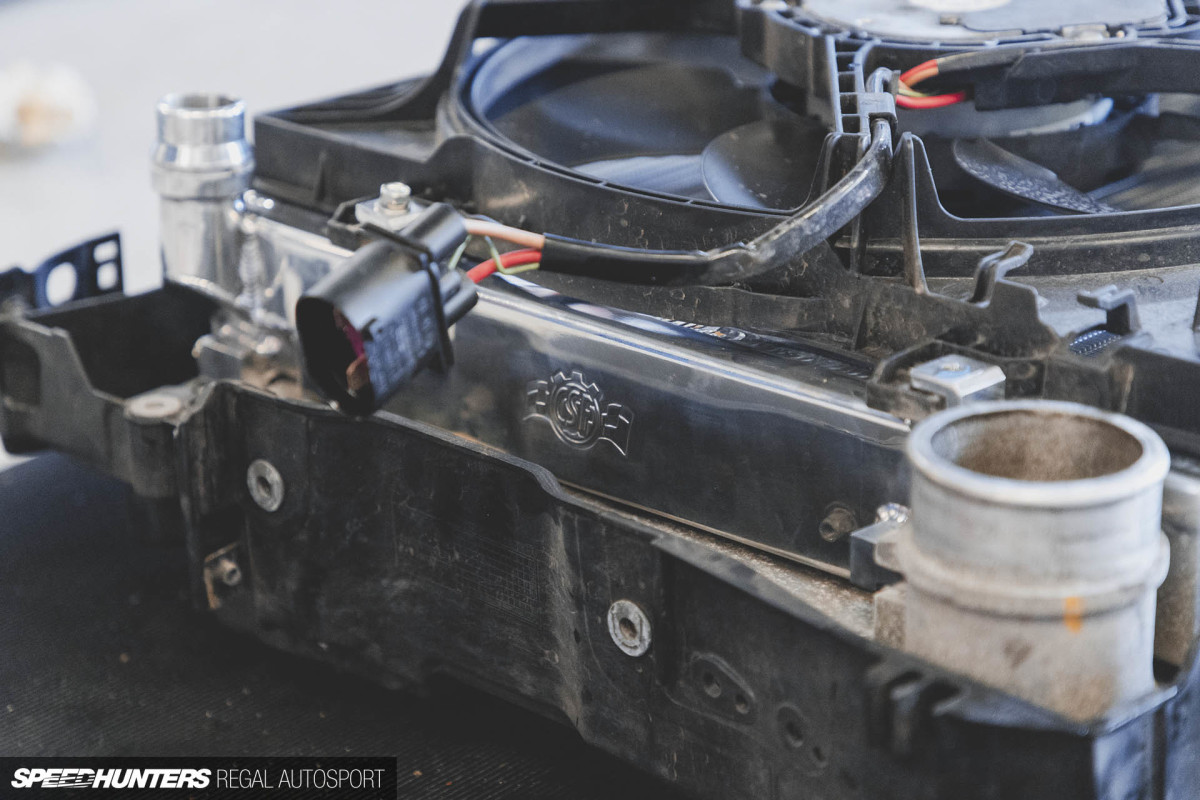
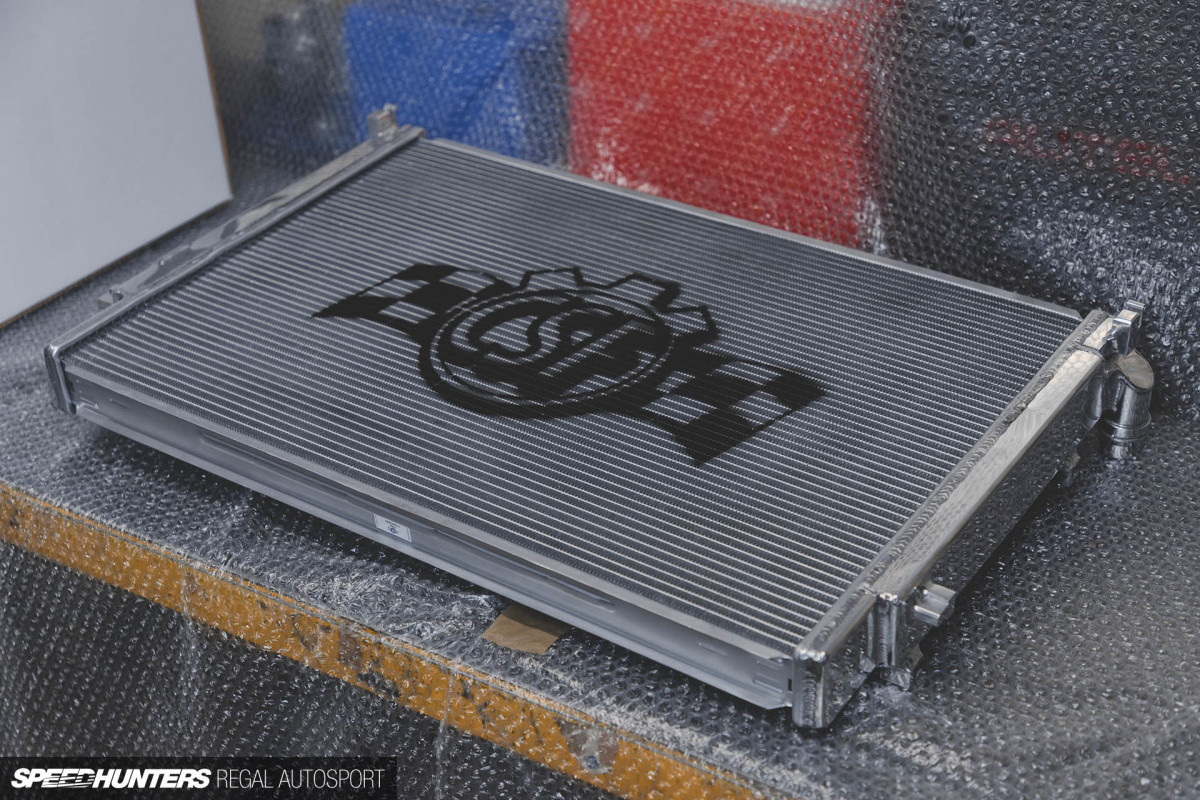
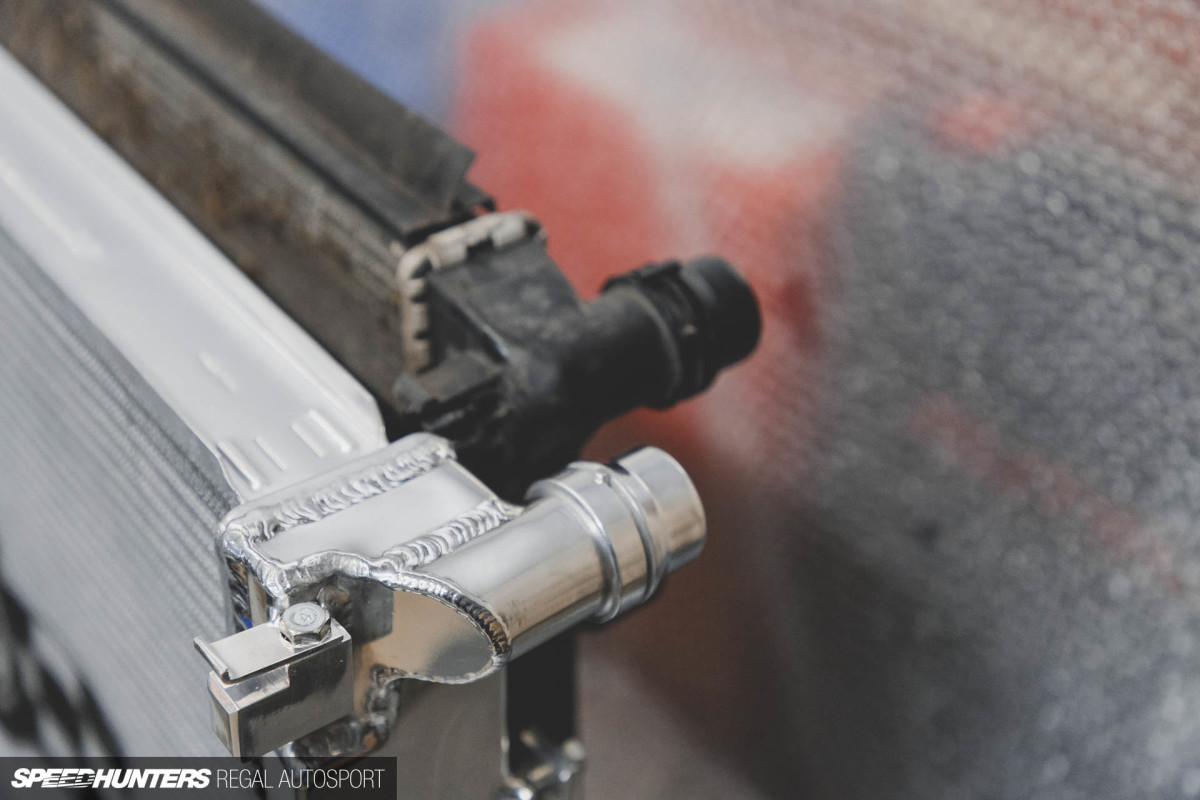
What differentiates the CSF radiators to the factory items, despite being able to fit into the same locations without the need for modification, is their use of multi-pass and B-Tube technology. For example, the factory main engine water radiator is a single-pass, one row 26mm core where the CSF all-aluminium radiator is a triple-pass, two row 42mm B-Tube core. This offers a huge increase in available surface area, despite fitting into the same space as the factory radiator.
‘B-Tube’ is an important point of difference. Rather than using conventional flat tubes, CSF use a tube that has an additional pillar inside, almost making two smaller tubes in the one. It resembles a ‘B’ shape, hence the name. Rather than something to hang a marketing hat on, this ‘B-Tube’ technology means CSF has more surface area and stronger tubes to play with. The tube stiffness and strength is important as it allows them to use thinner tube walls and further increase heat rejection from the core. Couple this with a larger core size, and it’s a win-win situation.
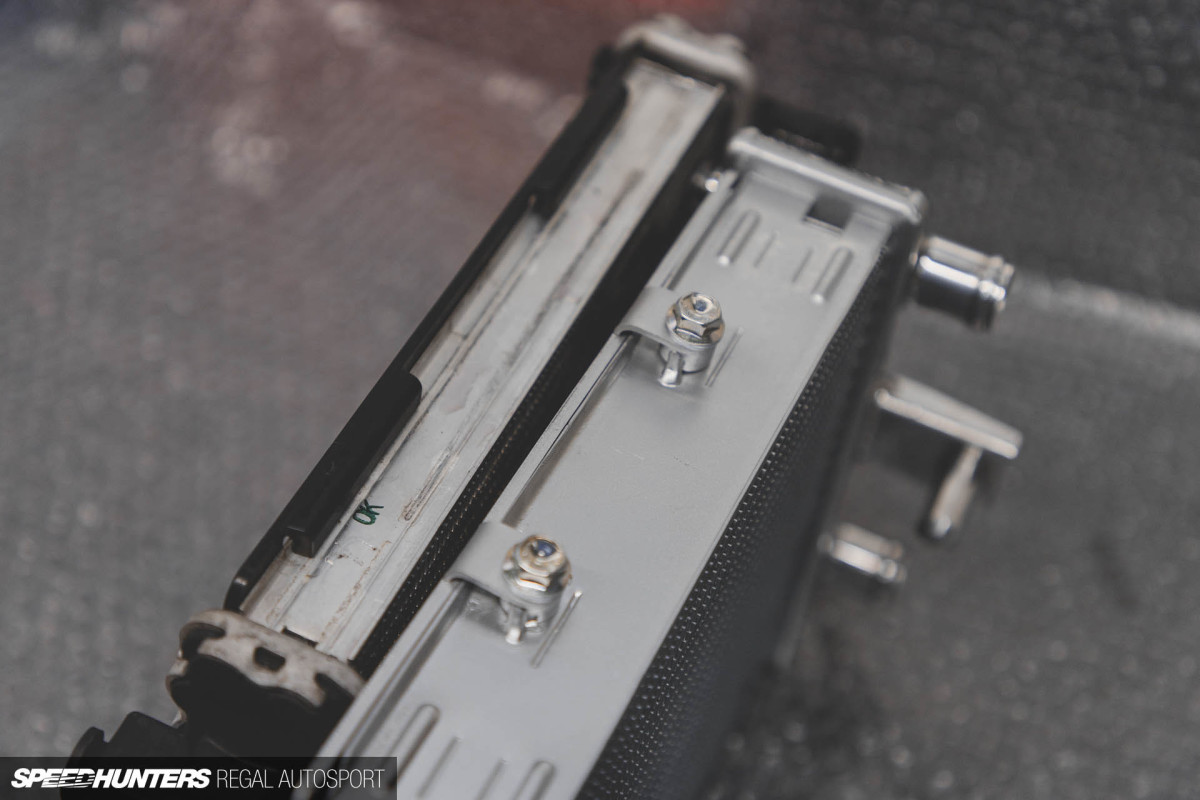
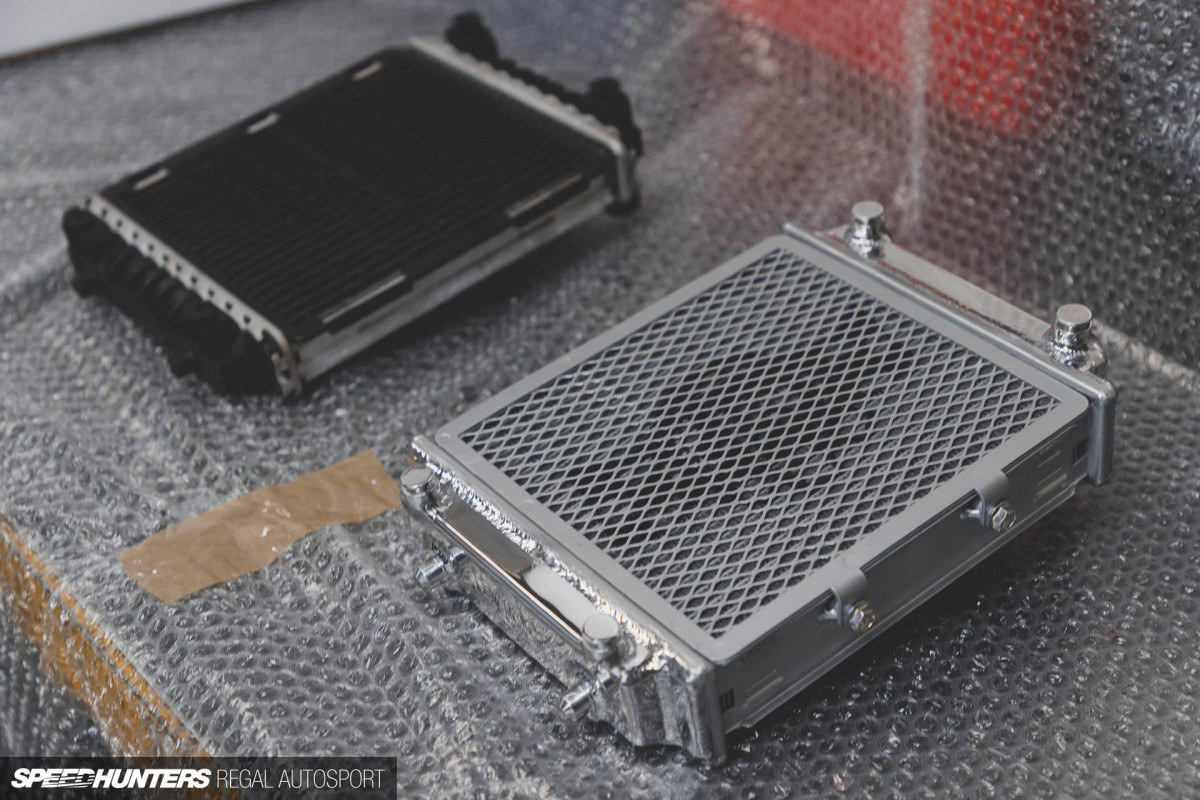
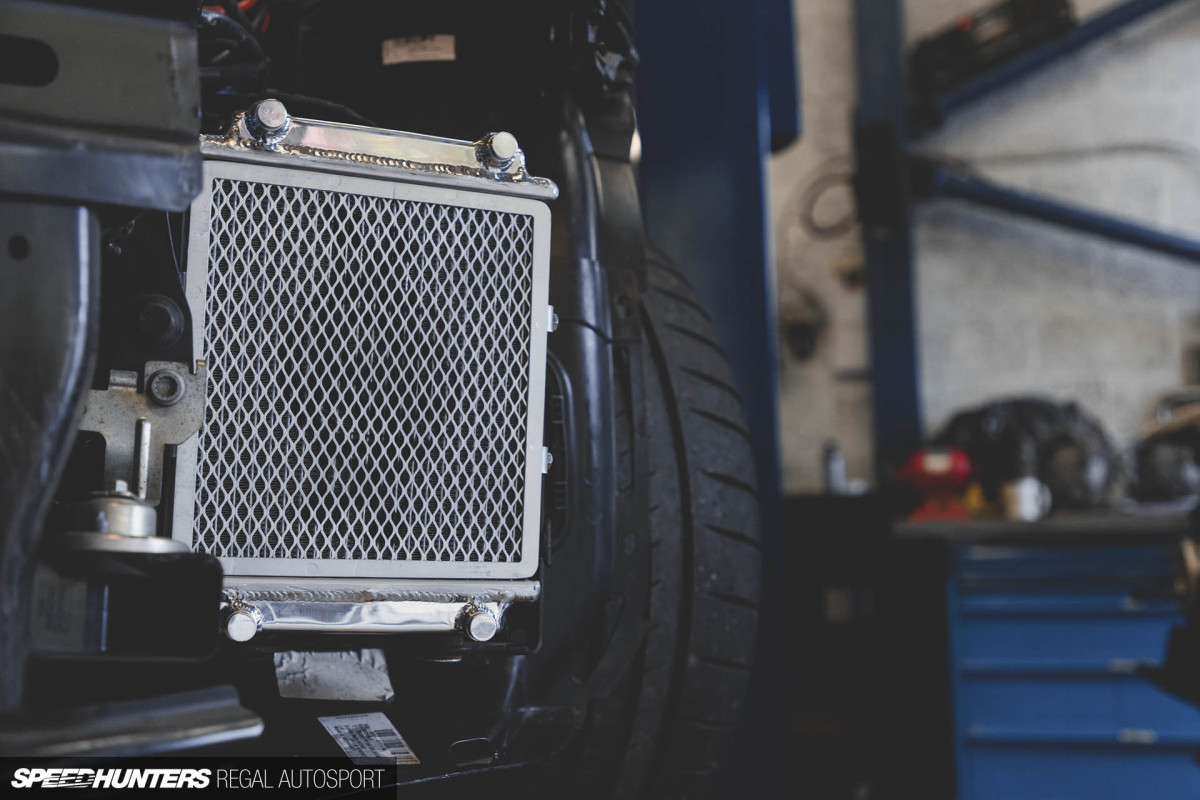
Similarly, the factory DSG / auxiliary engine cooler is a dual-pass 26mm one row core item, versus CSF’s is a quadruple pass, 42mm two row core cooler with B-Tube technology. This results in a 42% increase in flow area and a 36% increase in heat rejection. The CSF cooler can also be used on either side as a DSG or auxiliary engine water cooler.
With the full CSF package installed on his MK7 R, Players Classic at Goodwood was the first major test for the car. It also happened to be one of the hottest days of the year in the UK.
“With the package fitted, water temperatures never rose above 100.5°C (213°F), no matter the ambient or how hard the car was driven. DSG oil temperatures rose and fell in-line with engine water temperatures. Oil temperatures, which were a huge limitation on how hard I could drive the car before, and for how long, were no longer an issue, running stable between 120°C -130°C (248°F-266°F)”.

“The car is fun to drive at the track again as I can use all the revs, all of the time without having to watch temperatures. At Players, we completed around 80 laps of Goodwood Motor Circuit, using three tanks of fuel and with zero cooling problems” Ash concluded.
There’s a lot of satisfaction to be found in identifying a problem, understanding it and then creating a complete solution which neatly resolves things. It’s even more satisfying to be able to use all of the power in your car, all of the time without having to worry about heat issues. This is one instance where improving cooling has actually resulted in not only greater engine safety, but faster lap times.
For more technical details, specifications and compatibility, visit the MQB section on CSFrace.com.
Paddy McGrath
Instagram: pmcgphotos
Twitter: pmcgphotos
paddy@speedhunters.com
This story is brought to you in association with CSF, an official Speedhunters Supplier.
More CSF Technical Stories & Feature Cars on Speedhunters