
The original and first BMW M3 was awesome, but you might be surprised to learn that it’s not the rarest E30. That honour is reserved for the 333i.
The E30 M3 is, without a doubt, one of BMW’s most iconic performance machines. A production car built for homologation purposes so BMW could go racing with it, the E30 M3 featured a lightweight body complete with box-flared arches, powered by a high-revving four cylinder motor. But sadly, a few world markets never received this amazing car, and South Africa was one of them.
Luckily though, South Africa is a car-mad country, so with BMW South Africa feeling a bit cheated, they devised their own plan for a high performance E30 model. It was called the 333i – or Triple Three – and was actually quite a special car – even more special than the E30 M3 in some ways.

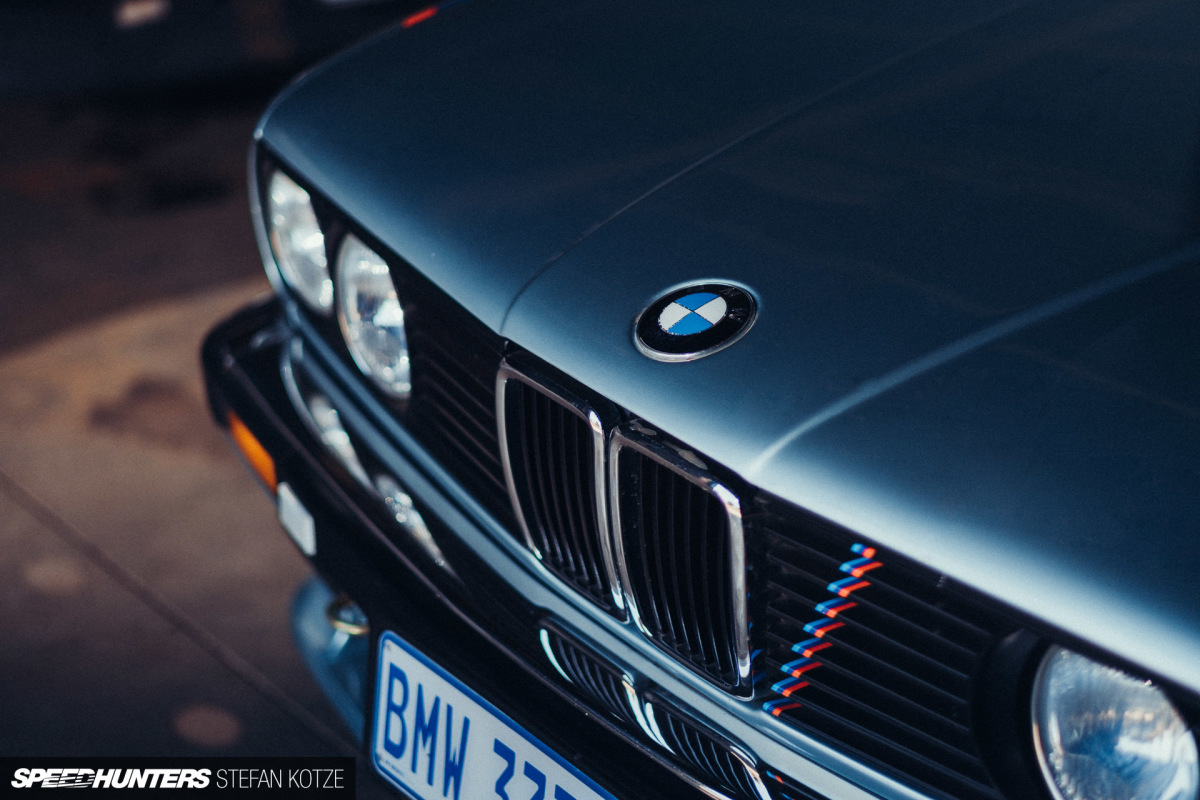
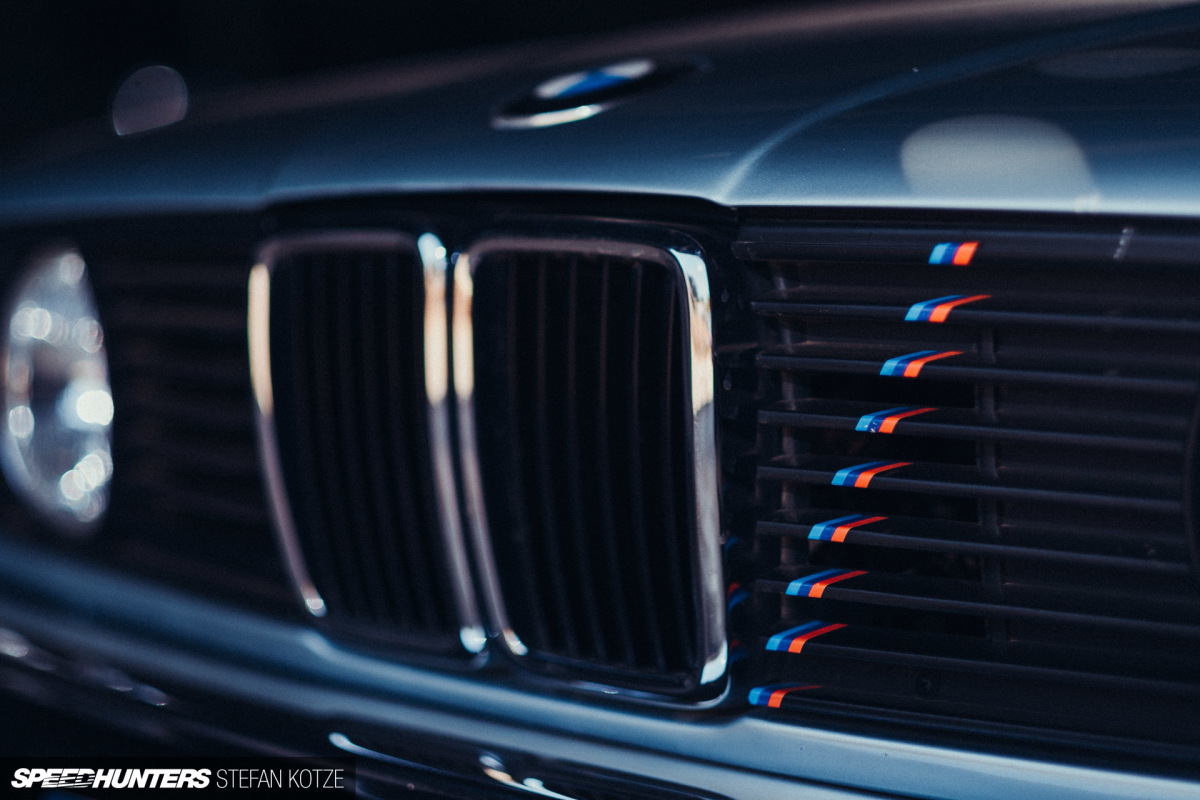
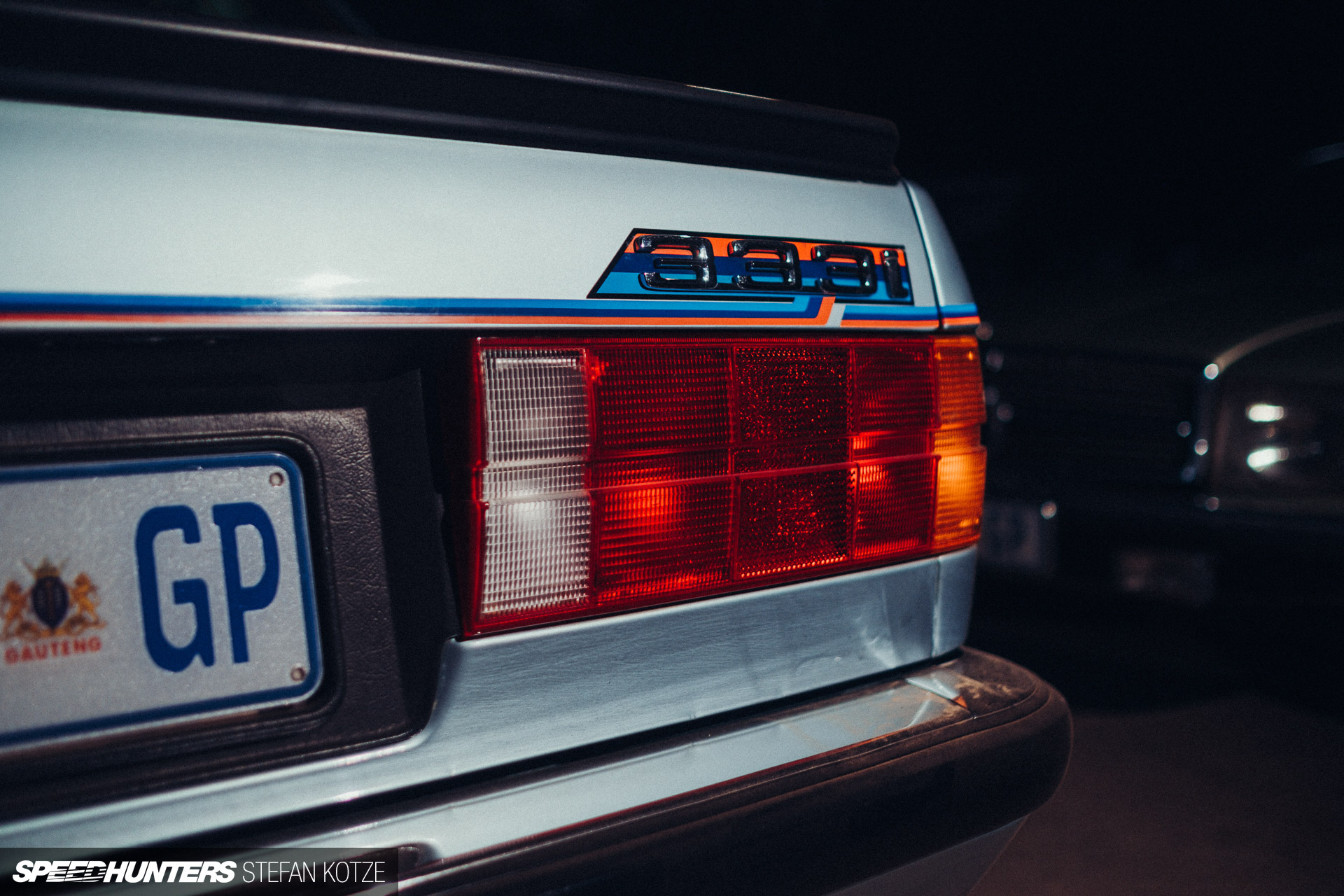
Interestingly enough, the 333i was originally conceived for competition in South African Group 1 racing, where it would have competed against other South Africa-only specials including the Ford Sierra XR8 and Alfa Romeo GTV 3.0. However, when the series was cancelled at the end of 1985, the car was left without a formula.
The 333i was a collaboration between BMW South Africa and Alpina in Germany. It basically started out as a standard E30 325i, but quite a few changes were made, the most important and impressive being the engine.
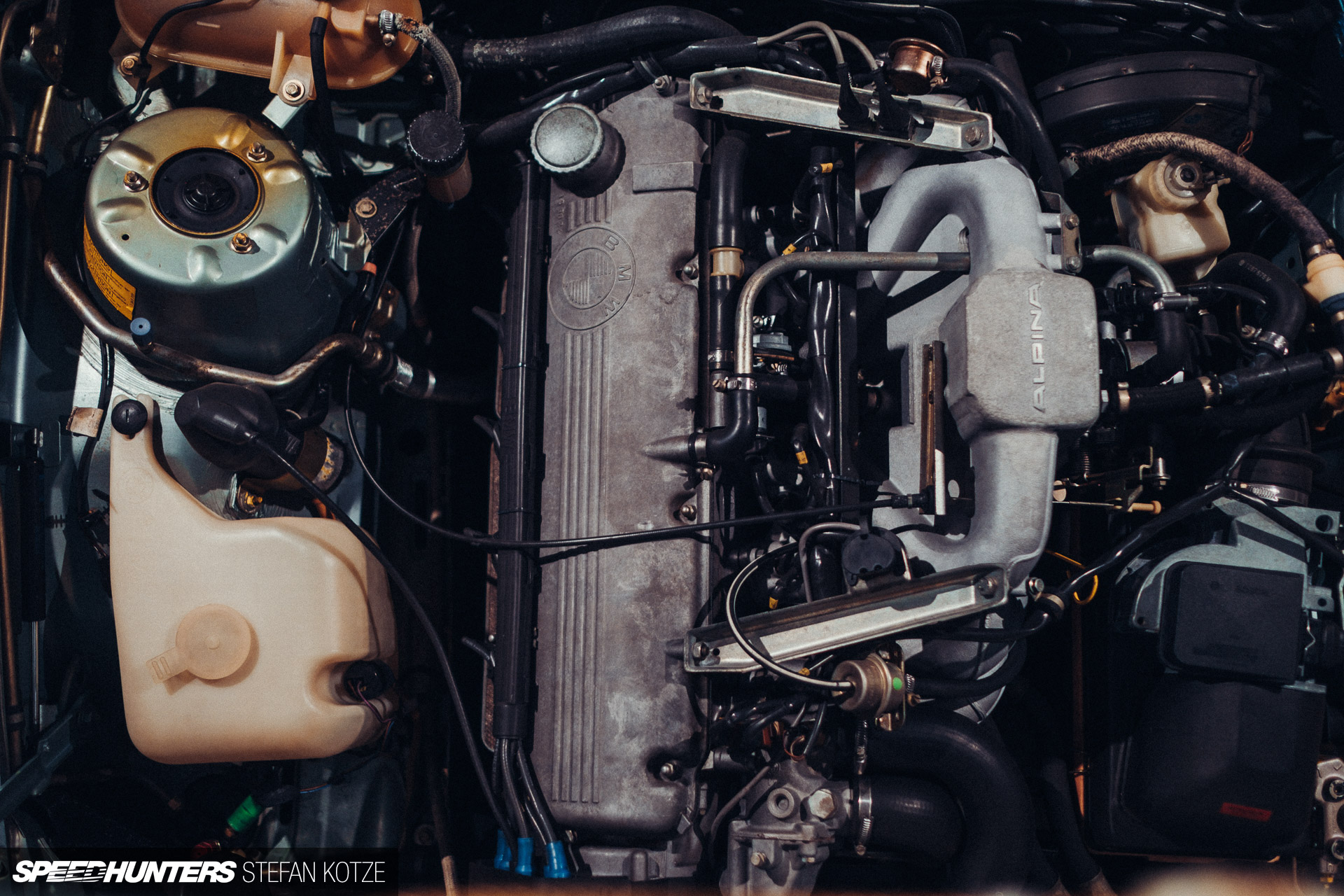
The chosen powerplant for the 333i was the M30B32 engine, which at the time was fitted in the much larger 533i, 633CSi and 733i models. Alpina provided the specially-developed inlet and exhaust manifolds and plenum chamber, heavy-duty copper-cored radiator, and various other cast alloy bits. The Bosch L-Jetronic fuel management system was also modified, with all these upgrades resulting in a substantially altered torque curve that was a lot more potent in the lower rev range. The numbers: 194hp at 5,500rpm and 295Nm of torque at 4,300rpm.

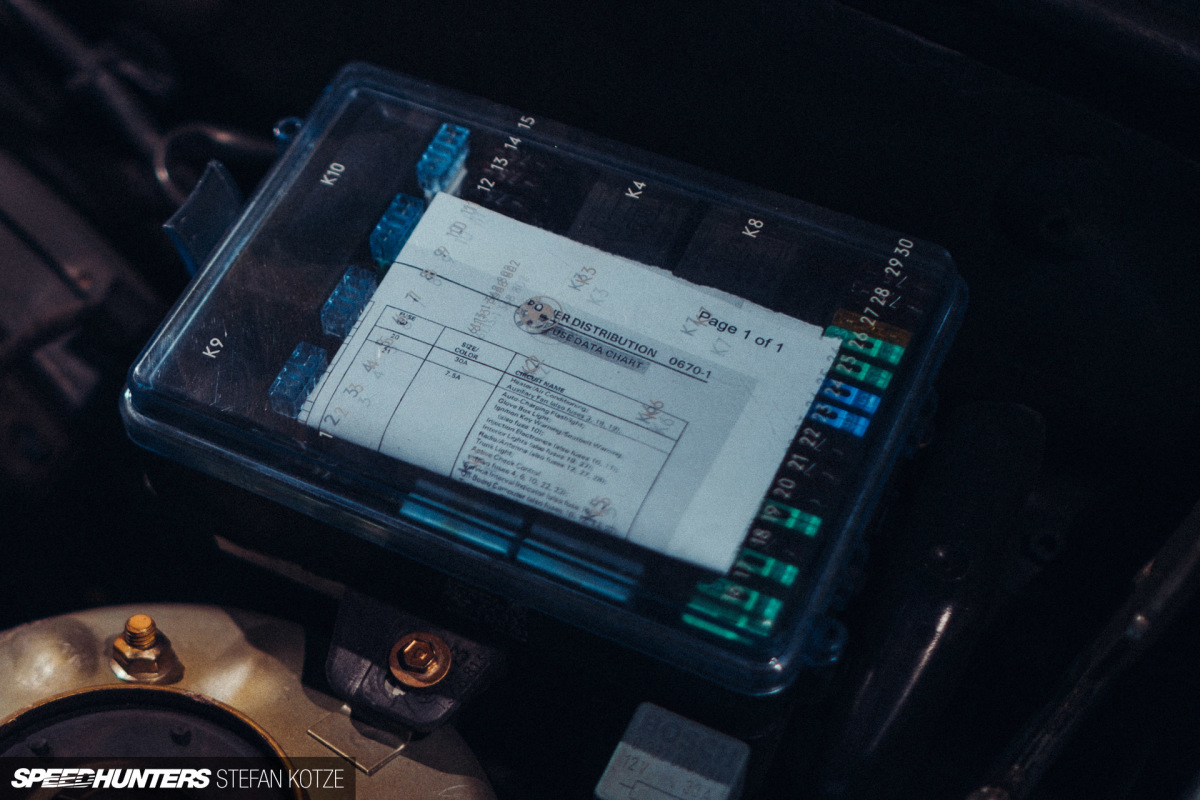
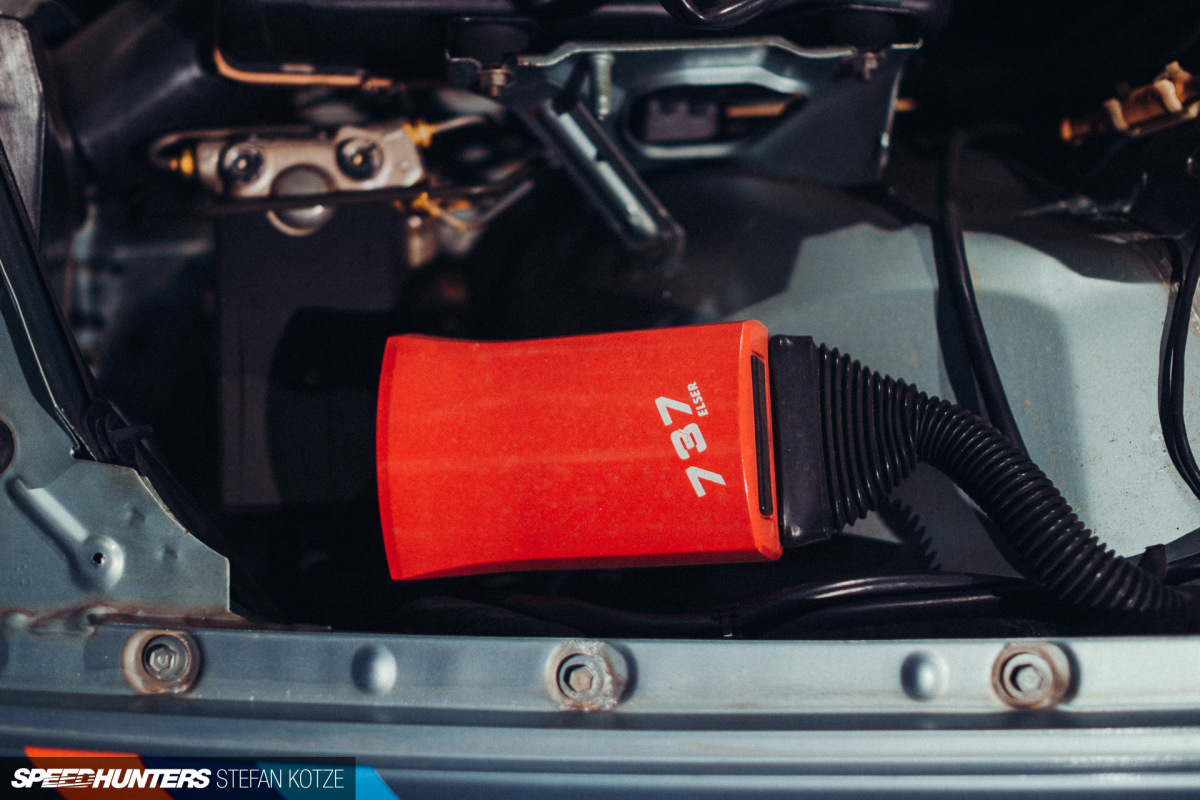
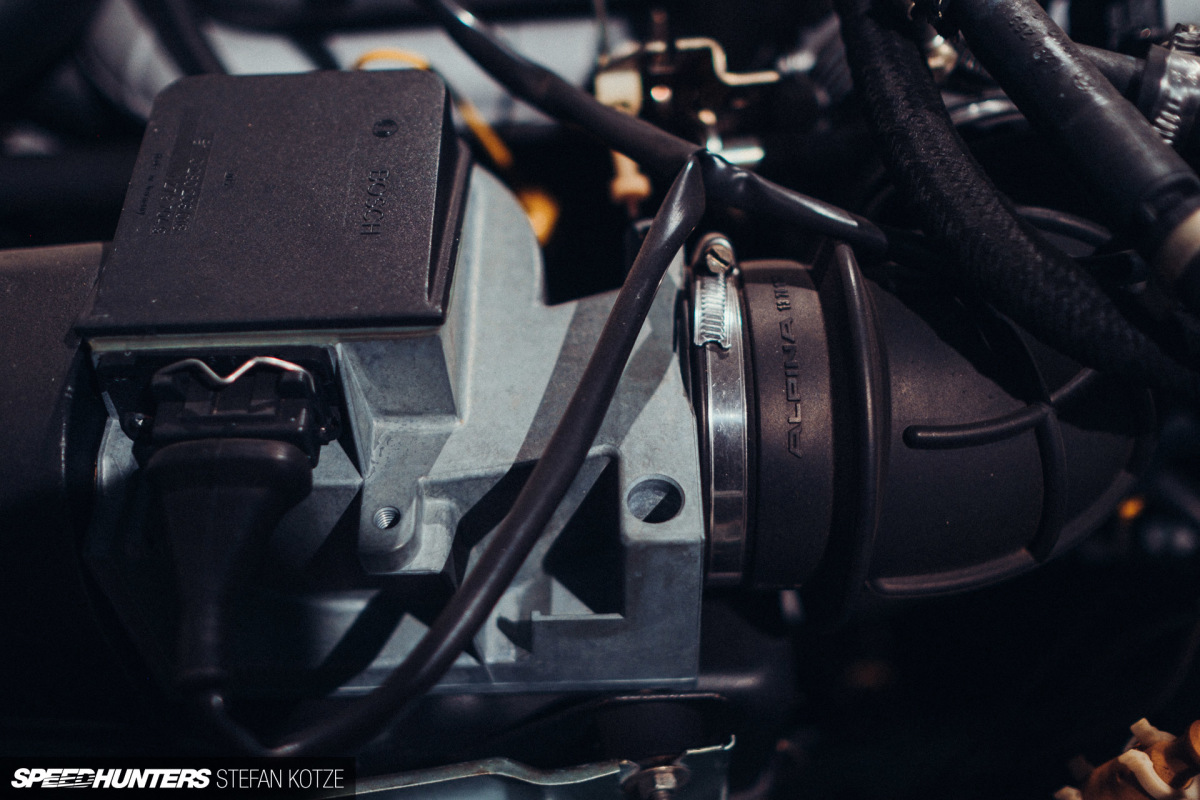
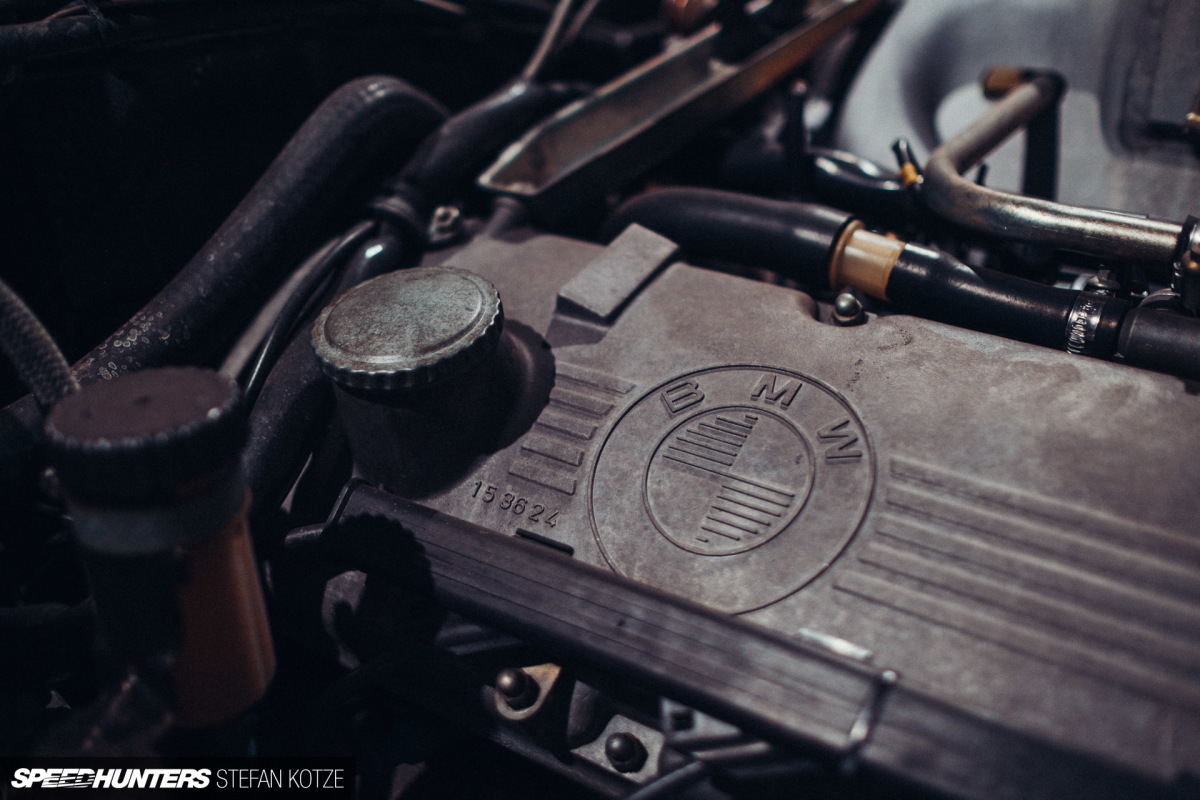
At the time, Alpina were still very much engaged by BMW as external engineering consultants. While BMW’s M Division were busy working away on their own projects, this BMW-sanctioned project was led by Alpina, hence the inclusion of the really cool Alpina hardware. Alpina had already proven that high-capacity E30s worked well with stroked M20 variants, but Alpina believed in the M30 engine so much that they even went so far as to swap the E30 M3’s S14 engine out for an M30 in the Alpina B6S in 1987.
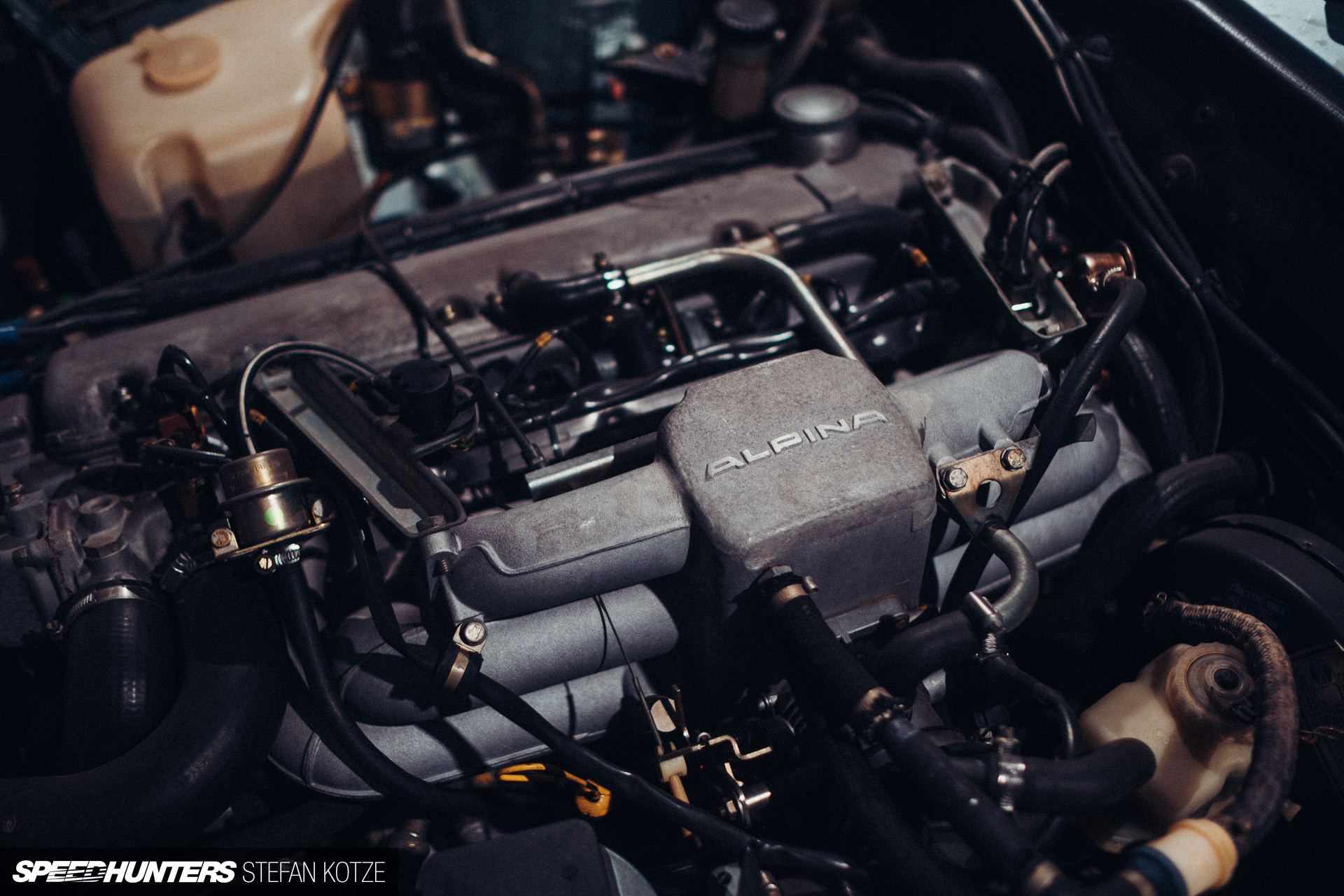
The engine was physically much larger than the usual unit found in these cars, so it took some work to fit it inside the engine bay. It was such a tight fit in fact, that buyers would have one of two options when buying the car. If they wanted the car with air conditioning – which really is a must-have for the South African heat – they would have to sacrifice power steering. If they really wanted power steering, they’d have to forego the air conditioner system. You can actually visually identify which option a car has: a power steering car has driving lights in the front bumper; an air conditioned version just has vented grille-type covers.
A/C and bigger forearms would be the winning combination, in my opinion.
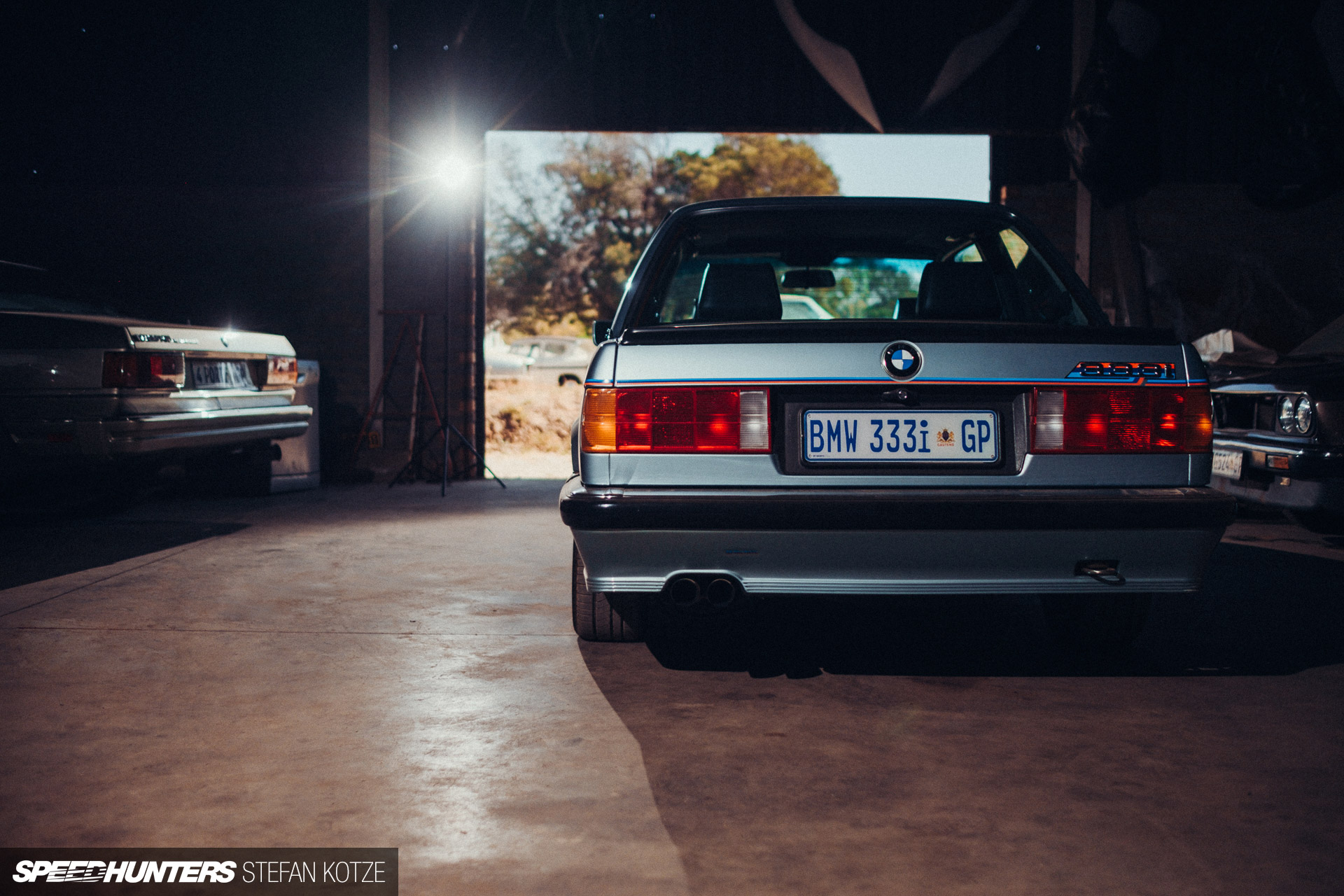
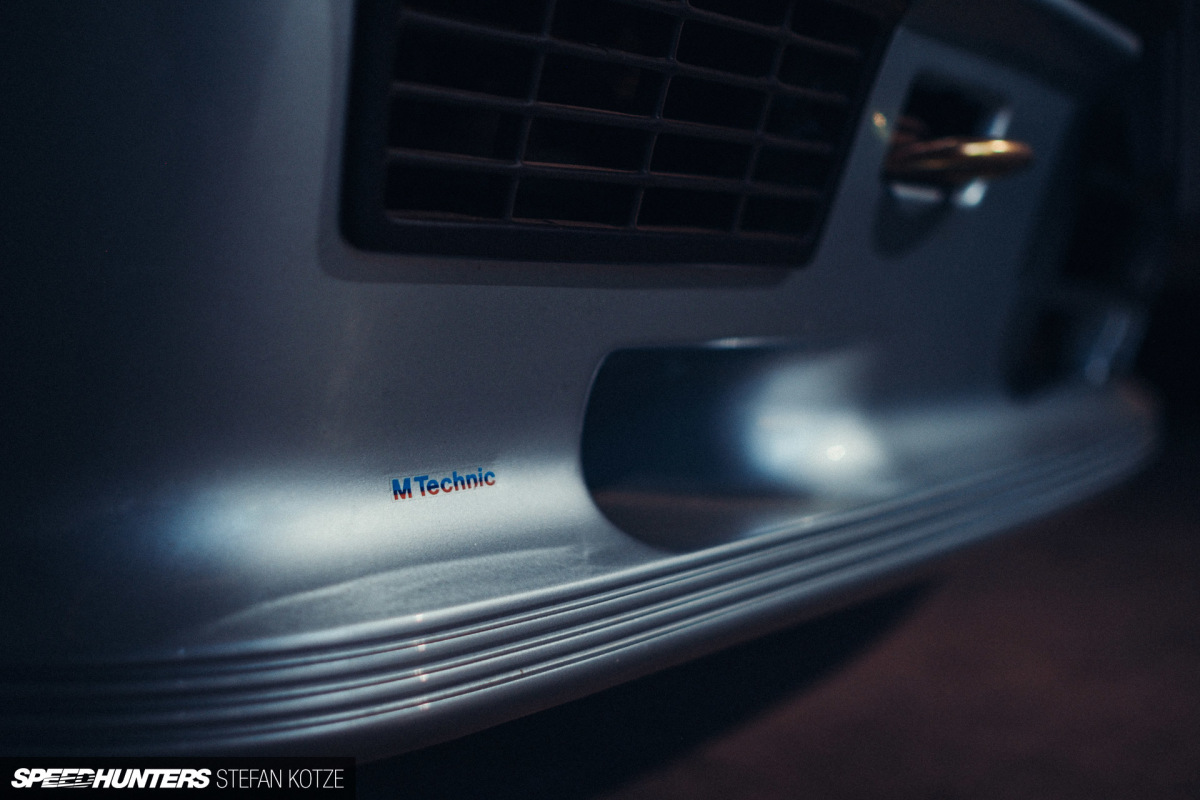
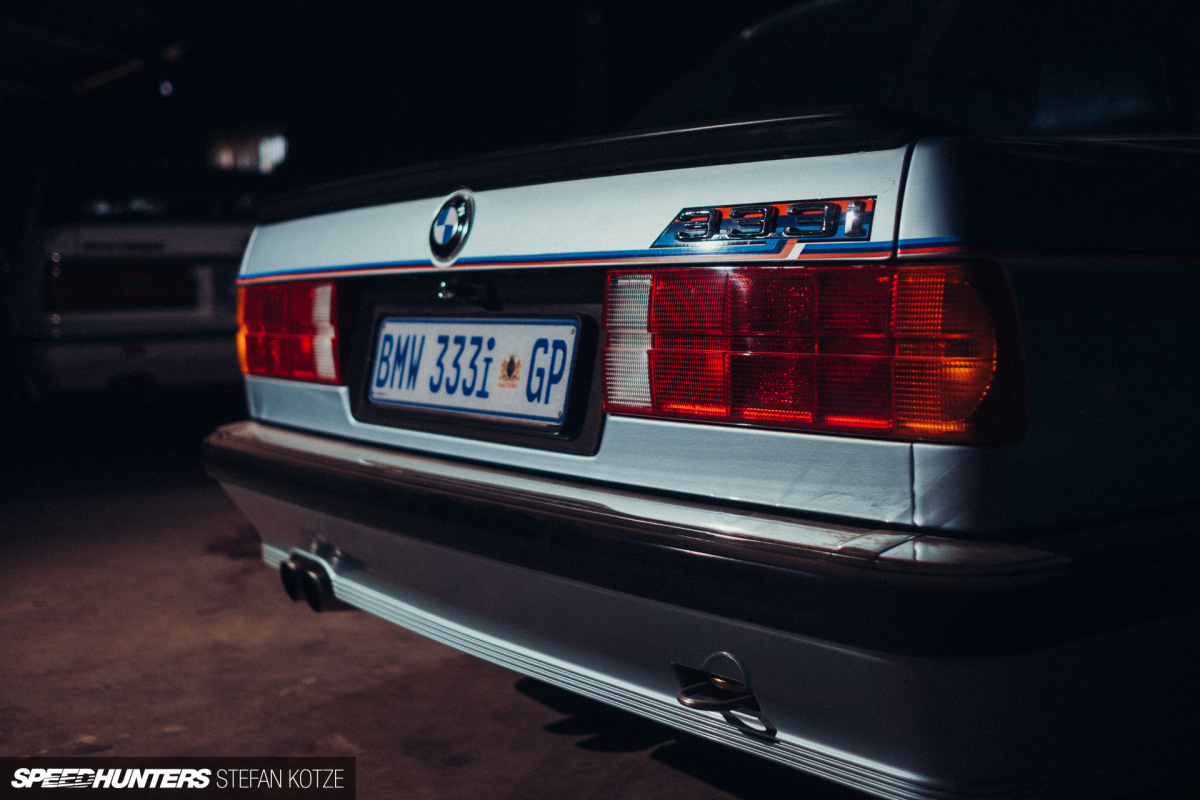
Other changes over the base 325i included a dog-leg close-ratio 5-speed manual gearbox from Getrag, and a limited-slip differential from ZF. Alpina also provided 296mm vented and grooved discs up front.
BMW SA’s official performance claim for these cars were 0-100 km/h (0-62mph) in 7.4 seconds and a top speed of 228km/h (142mph), which isn’t bad.

There were a limited number of exterior colors options for the 333i, Henna Red, Ice White, Diamond Black, and this car’s finish, Aero Silver, which is my favourite.
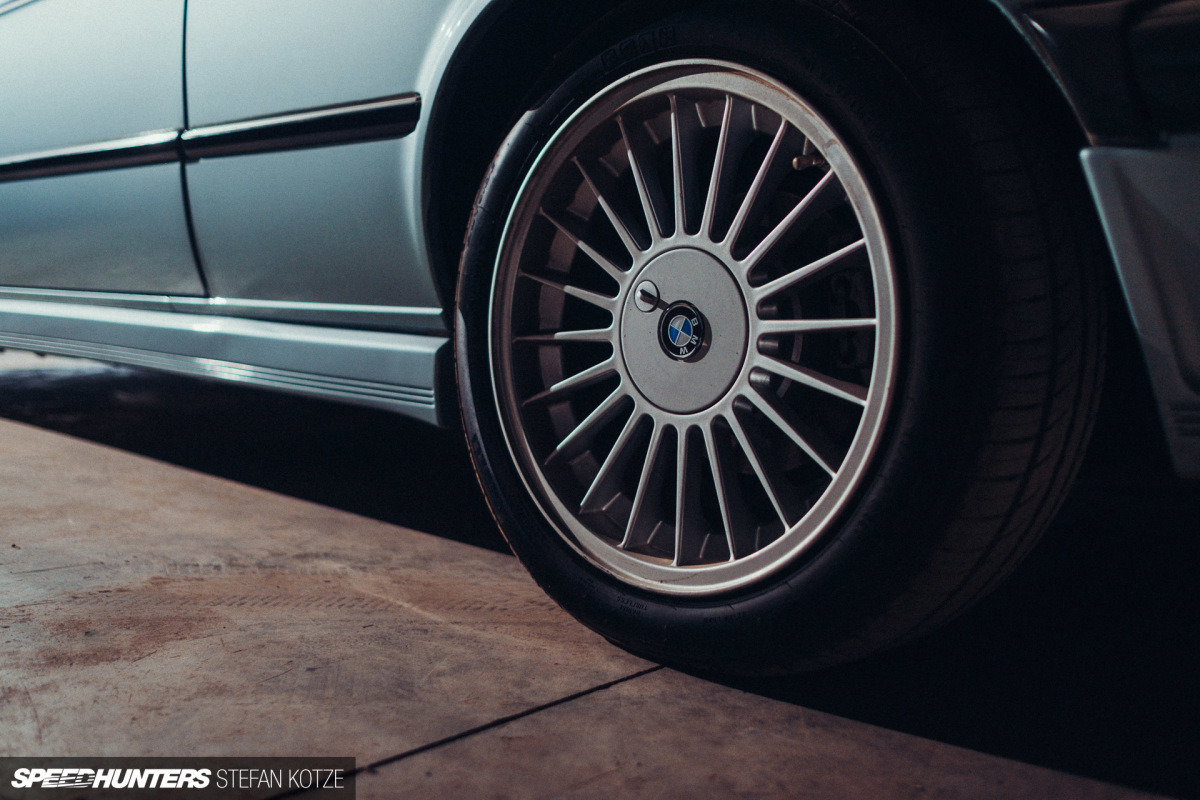
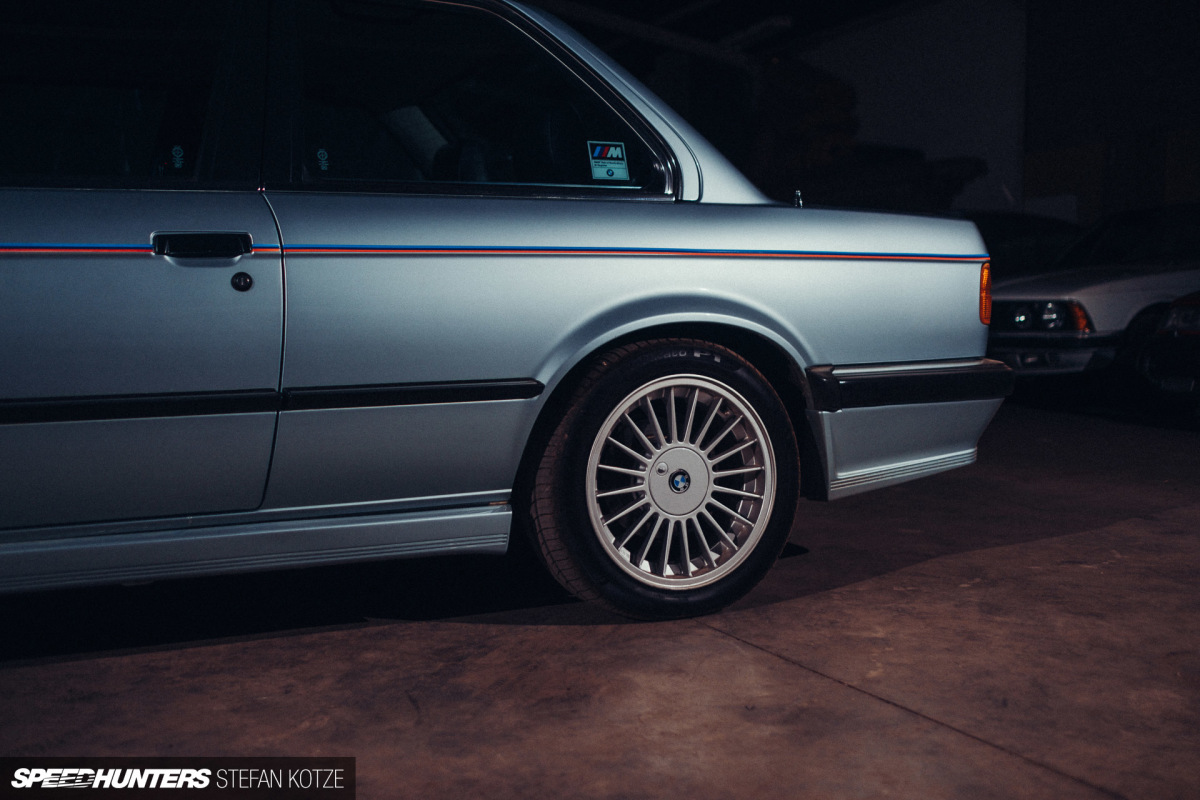
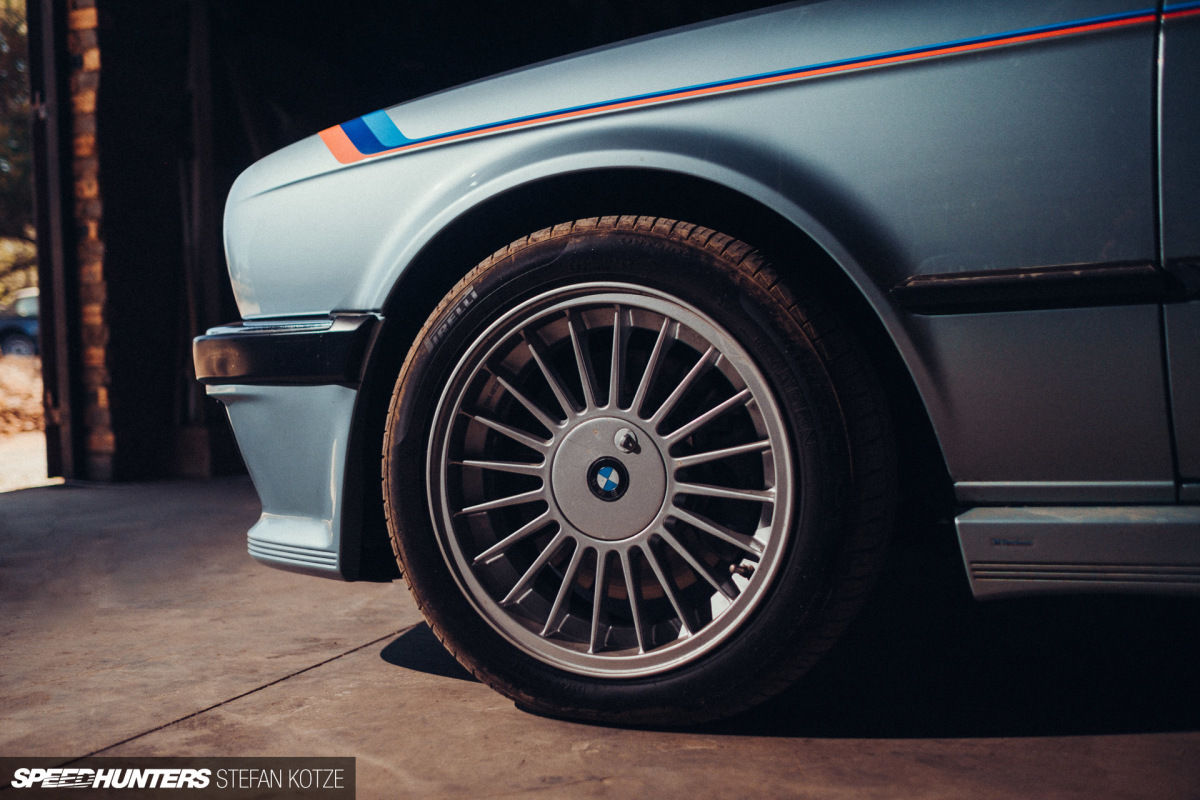
An M-Technic 1 aerodynamics package came as standard, and the cars rolled on 16-inch Alpina wheels wrapped in 195/50R16 Pirellis. BILSTEIN gas dampers with slightly stiffer springs were fitted, while ABS braking was an optional extra, as was a sunroof.
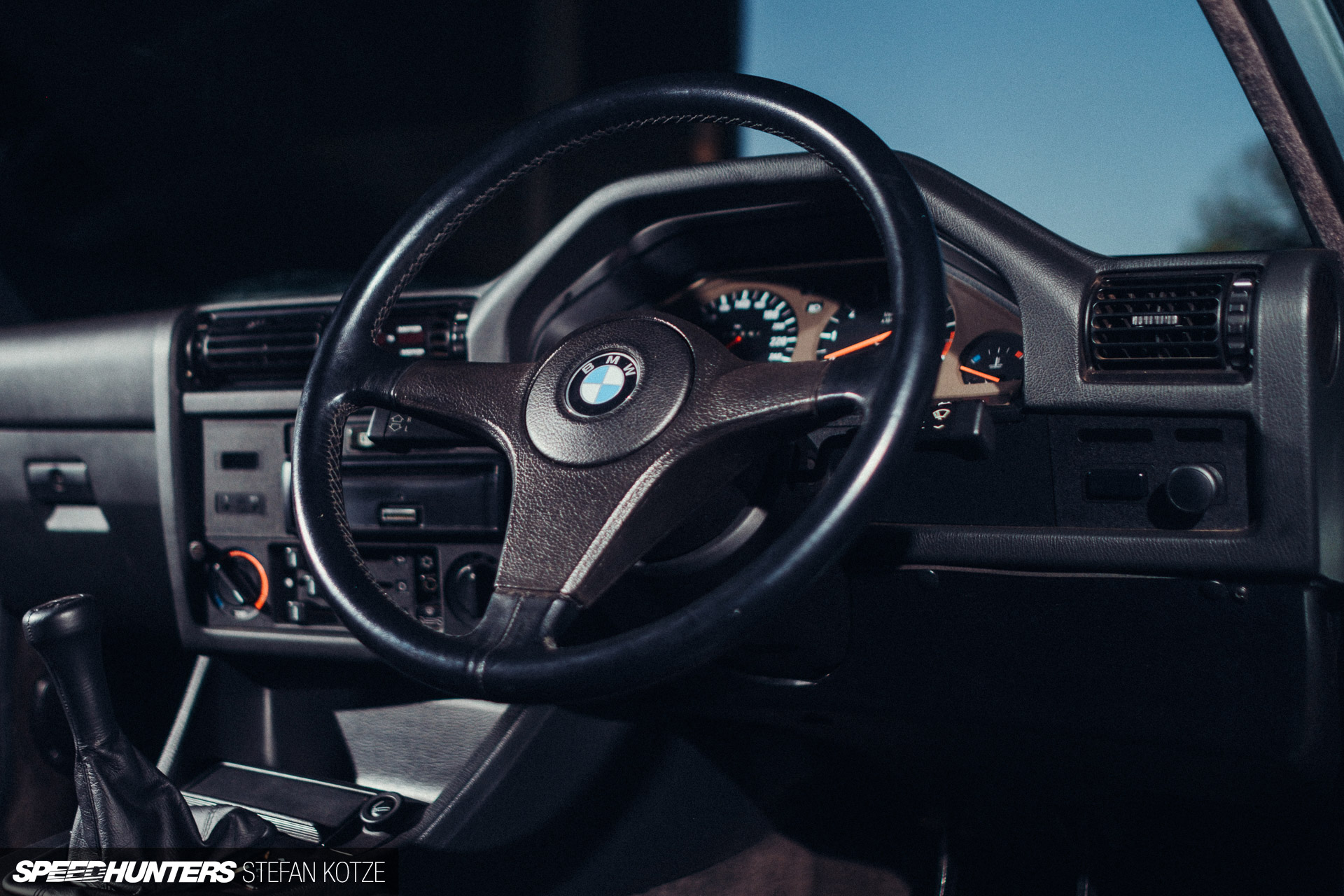
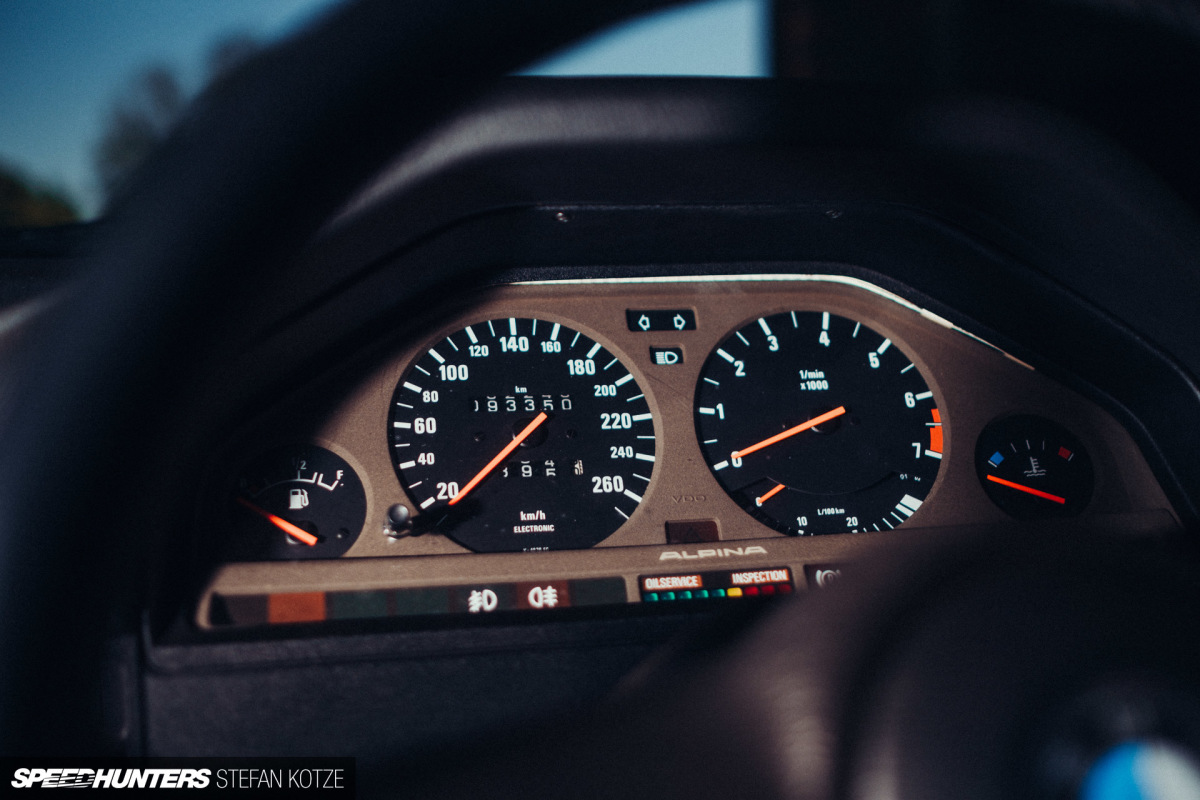
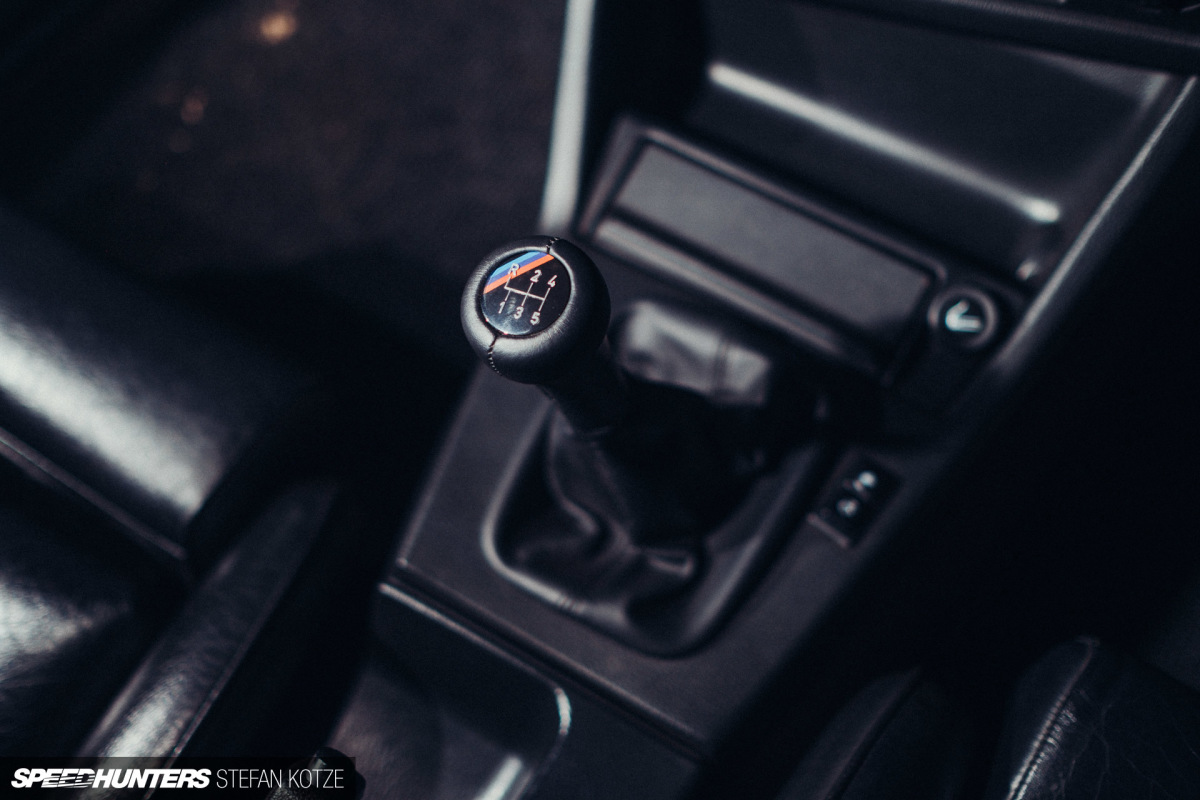
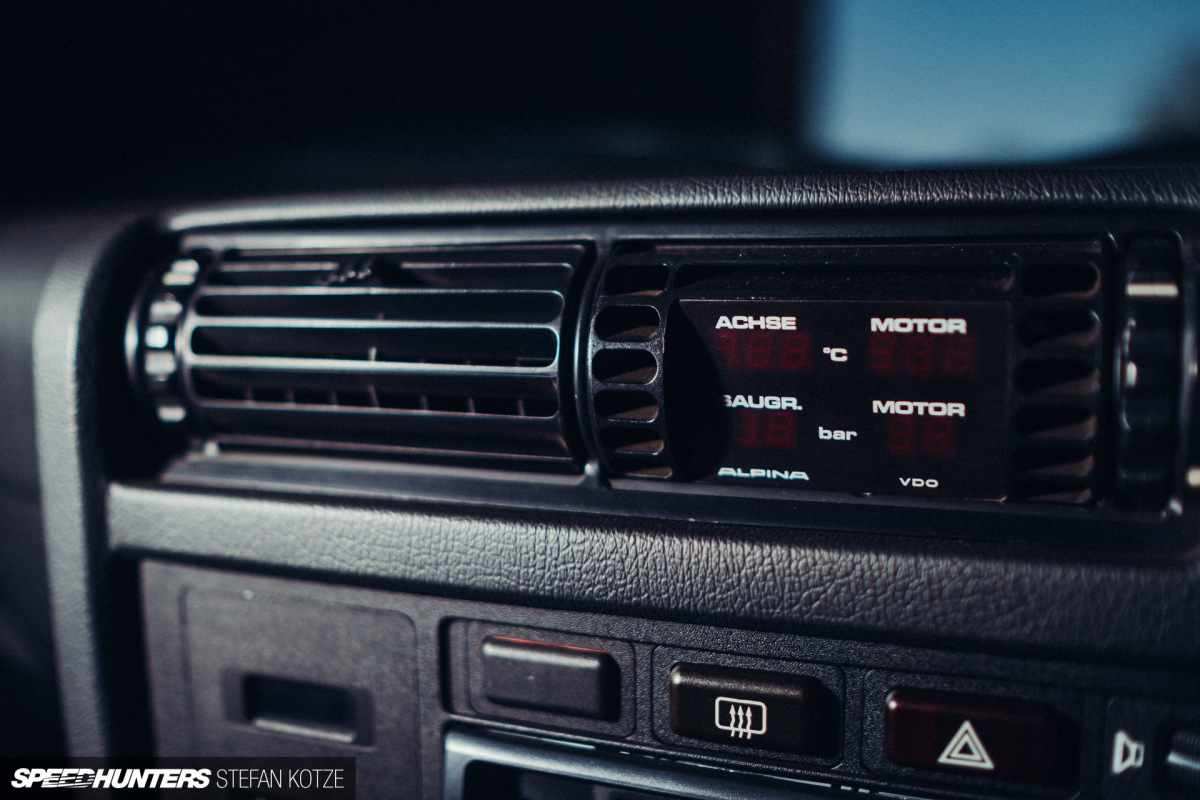
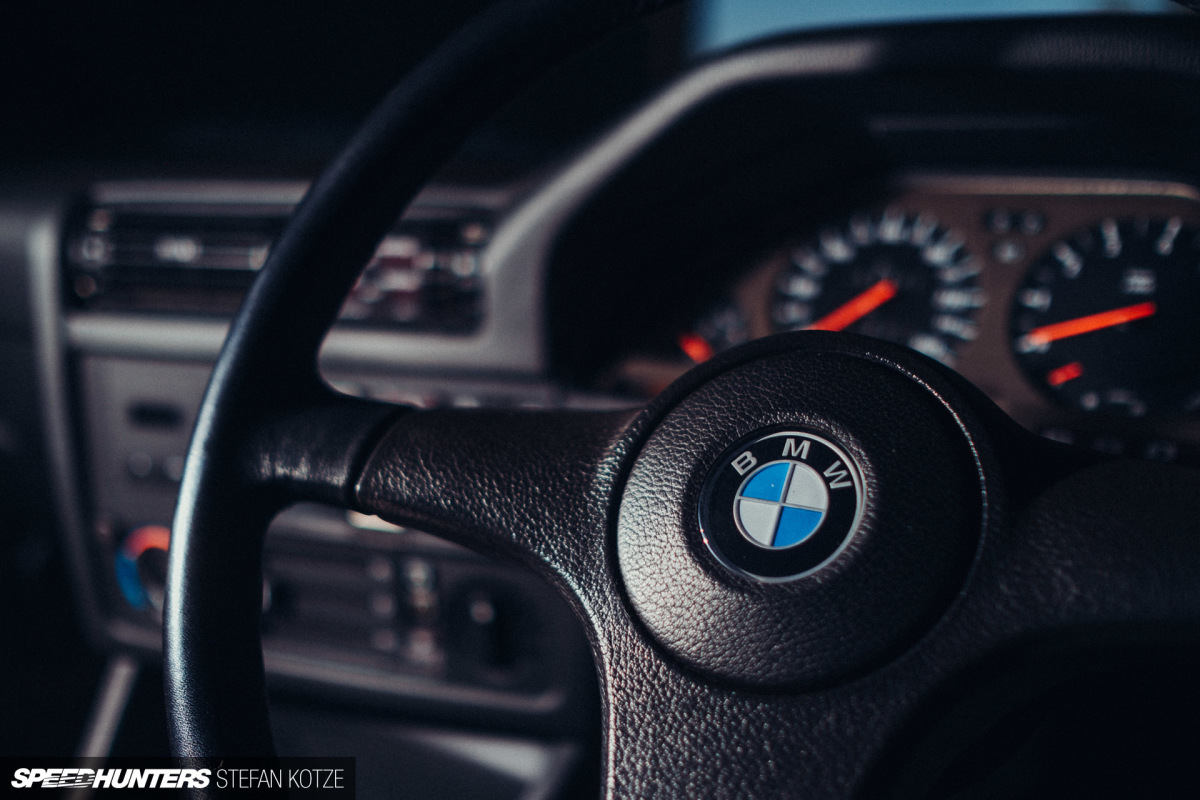
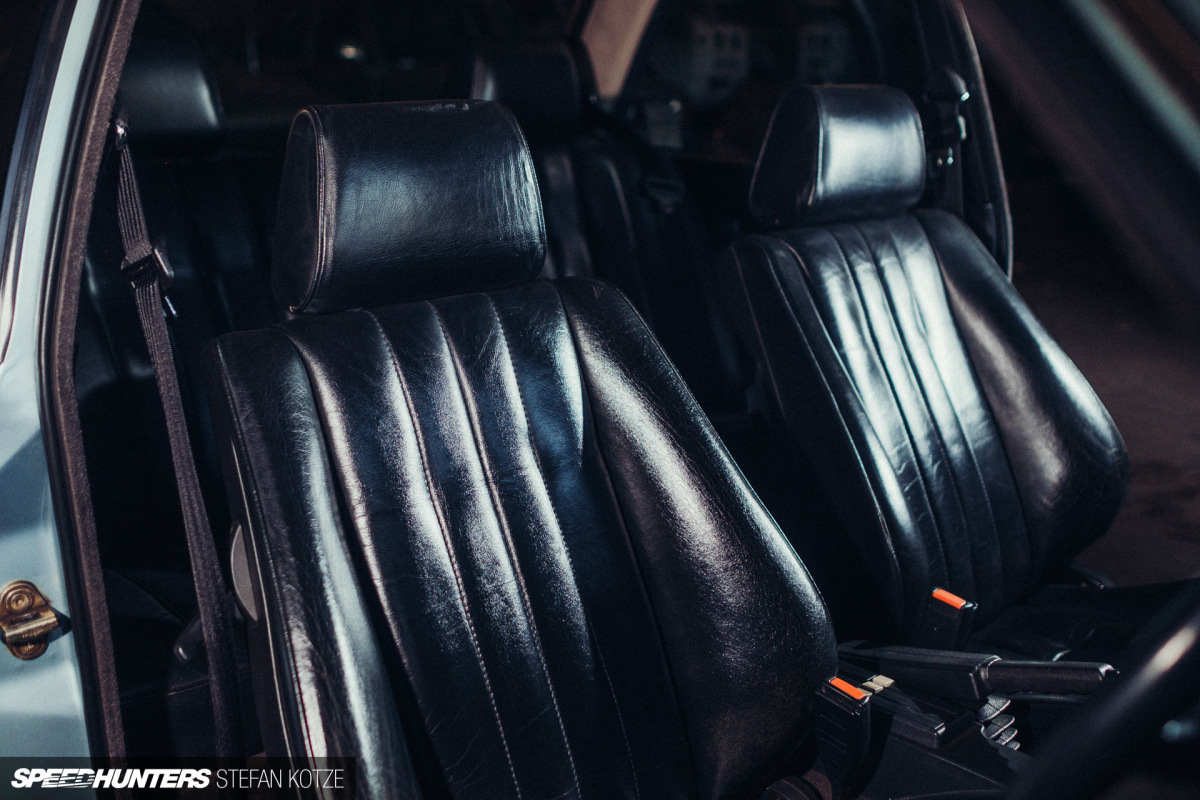
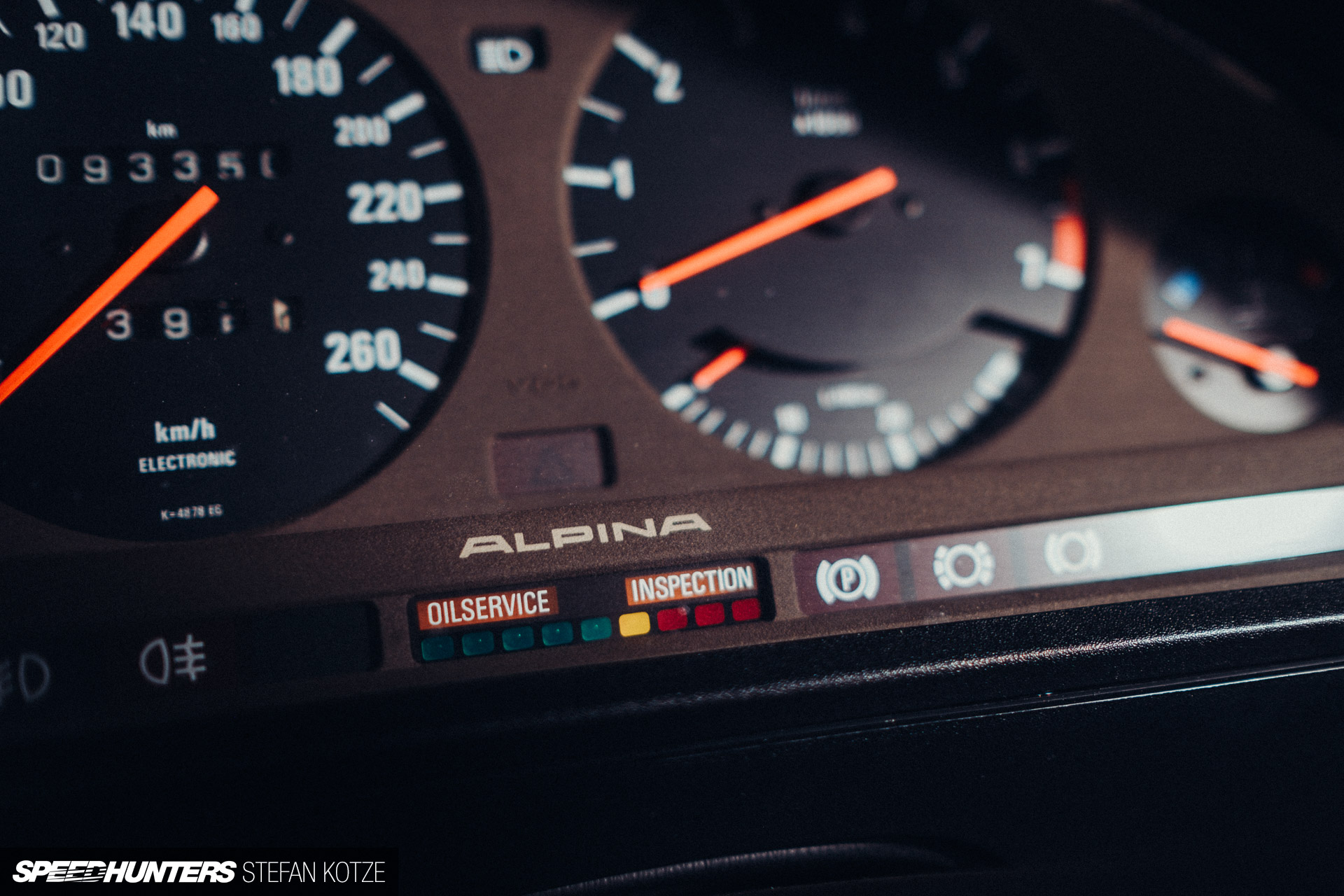
The interior also has some unique attributes. Alpina provided the instrument cluster with red needles, a detail normally only reserved for BMW M-cars. Everything that could be was covered in leather, including the sport seats, steering wheel, and gear knob, which was also adorned with some classic M-stripes.
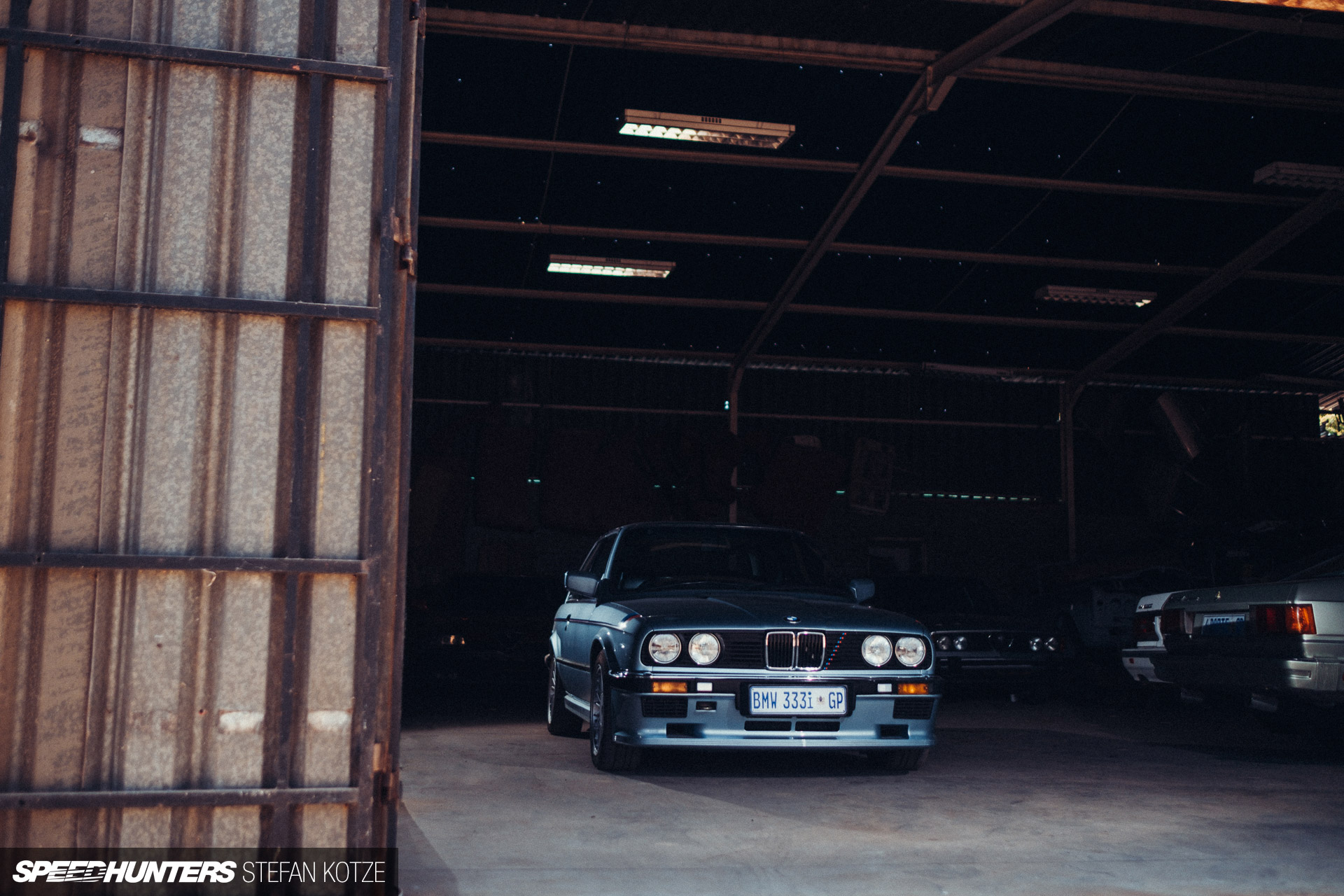
This particular car is in immaculate condition, and has covered just over 90,000km (55,000mi) in its lifetime. It’s #103 of the 204 that were sold in South Africa between 1985 and 1987, with a total of 210 cars produced, including prototypes and test mules.
As for cost, the car was priced at R41,300 (US$2,720) when new in 1985. Adjusting for inflation, that equates to around R564,985 (US$36,940) today.
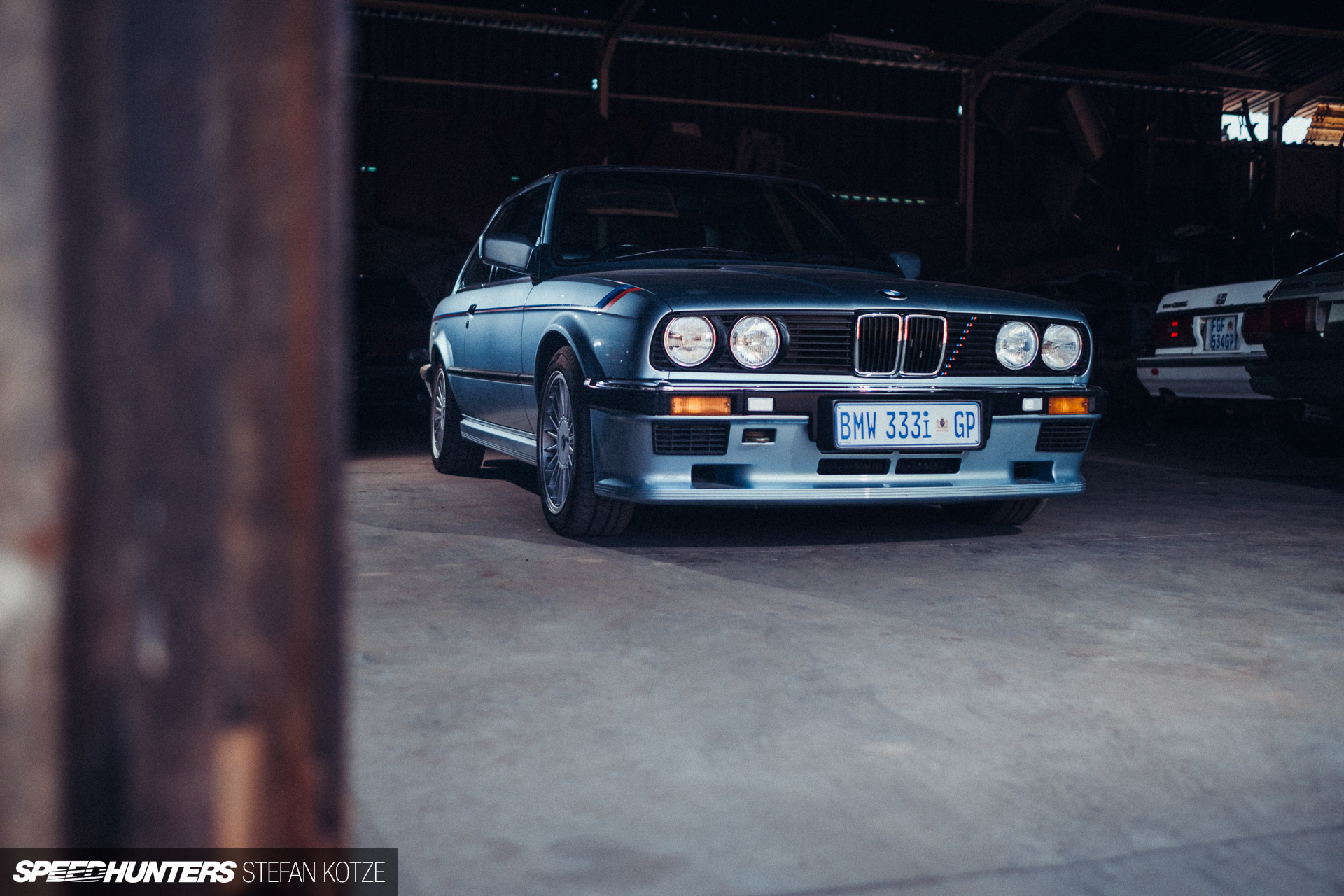
Some might see this as an M3 imposter, but it’s definitely not. The 333i is a special car in its own right, but it has another two special South African siblings – the 2.7 litre 325iS in ‘Evo 1′ and ‘Evo 2′ guise, which were different to the 325iS models sold in other countries.
South Africa has a few more of these SA-only specials that I’ll be having a look at soon.
Stefan Kotzé
info@stefankotze.com
Instagram: stefankotzephoto
www.stefankotze.com