
If you’ve been anywhere near the internet the past couple of days, you’ll likely know that Mazda Motorsports USA has just unveiled their newest factory race car, as built to international TCR (Touring Car Racing) series specifications. But the Mazda3 TCR wasn’t the only special machine on display at Mazda R&D in Irvine, California earlier this week.
Before we take a look at what else was present, we need to talk about the reason for this launch event – Mazda’s new TCR car, which looks amazing.
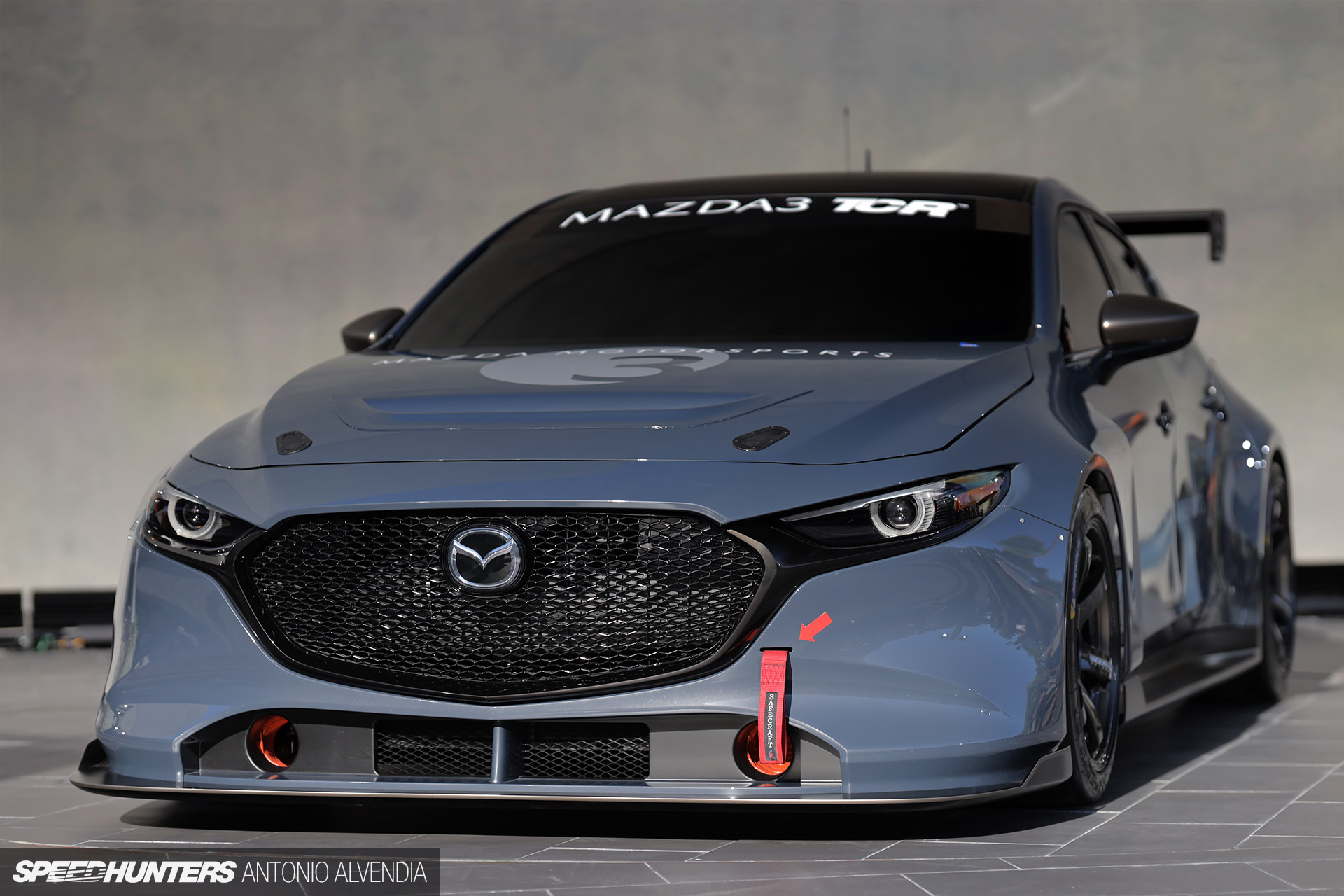
The car on show was a pre-production variant, but Mazda Motorsports promises that they will have their new Mazda3 TCR ready for racetrack competition as they prepare for the 2020 IMSA Michelin Pilot Challenge. The factory team will put the new Mazda3 TCR to the test at the four-hour Endurance Challenge that is part of the 2020 Rolex 24 weekend at Daytona. It’s super exciting to see Mazda join the likes of Volkswagen, Hyundai, Honda, Alfa Romeo, and others set to compete in the 30+ TCR championships around the world next year.
No one was able to get a peek under the hood of the Mazda 3 TCR at the launch event, but Mazda Motorsports has said the car will be powered by a four cylinder turbo engine pushing 350 horsepower and 490Nm torque, backed up by a Sadev paddle-shifted 6-speed sequential transmission.
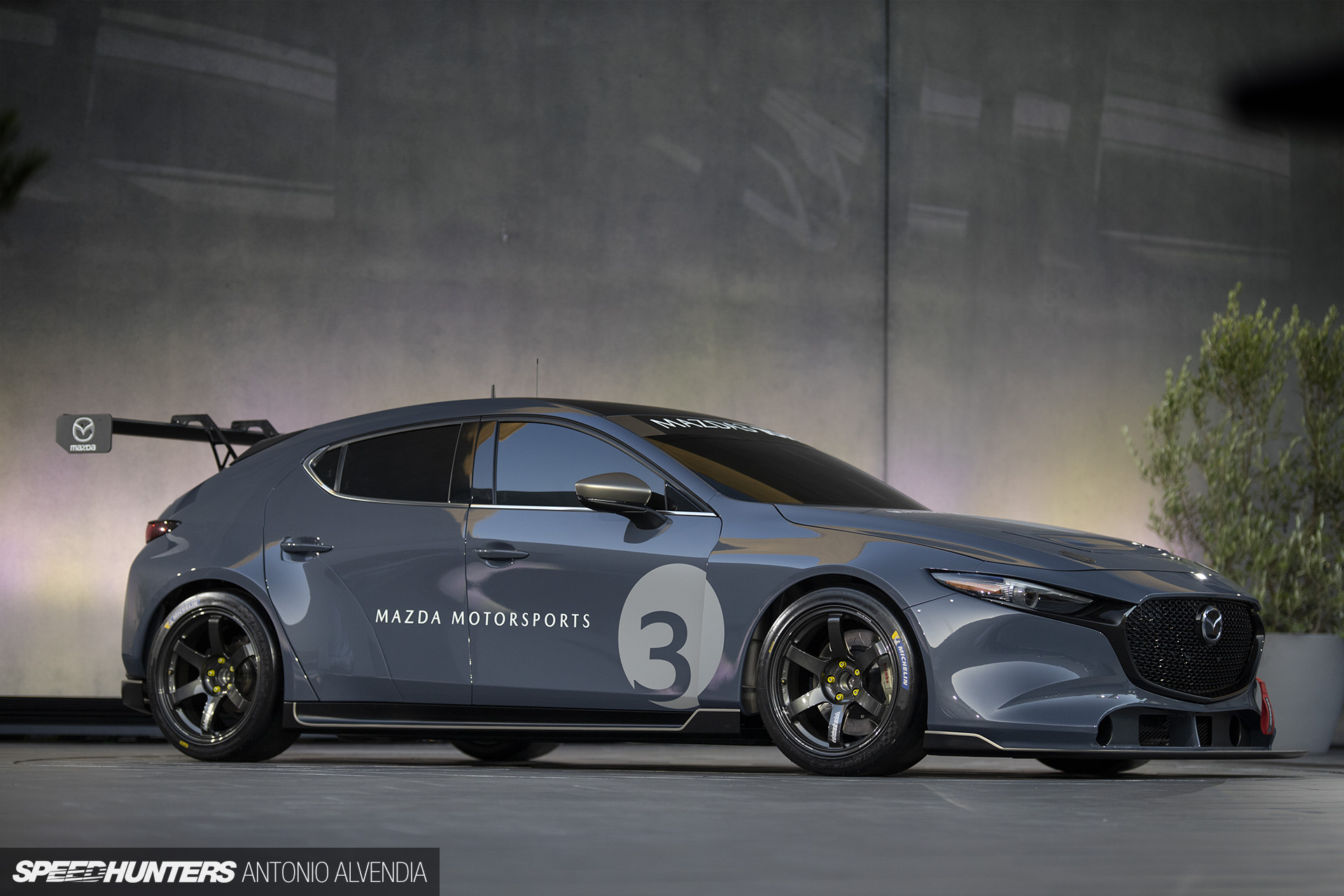
Even without getting to see the insides of the new Mazda3 TCR, I love the way it looks on the outside. Check out those big ducts for brake cooling right in the front bumper, with the super-low chin spoiler. Don’t be fooled into thinking the front lip is just for looks, though. The car’s design team put a lot of work into advanced aerodynamic concepts, reducing the frontal area and drag by modifying the front and rear fender surfaces. This thing means business.
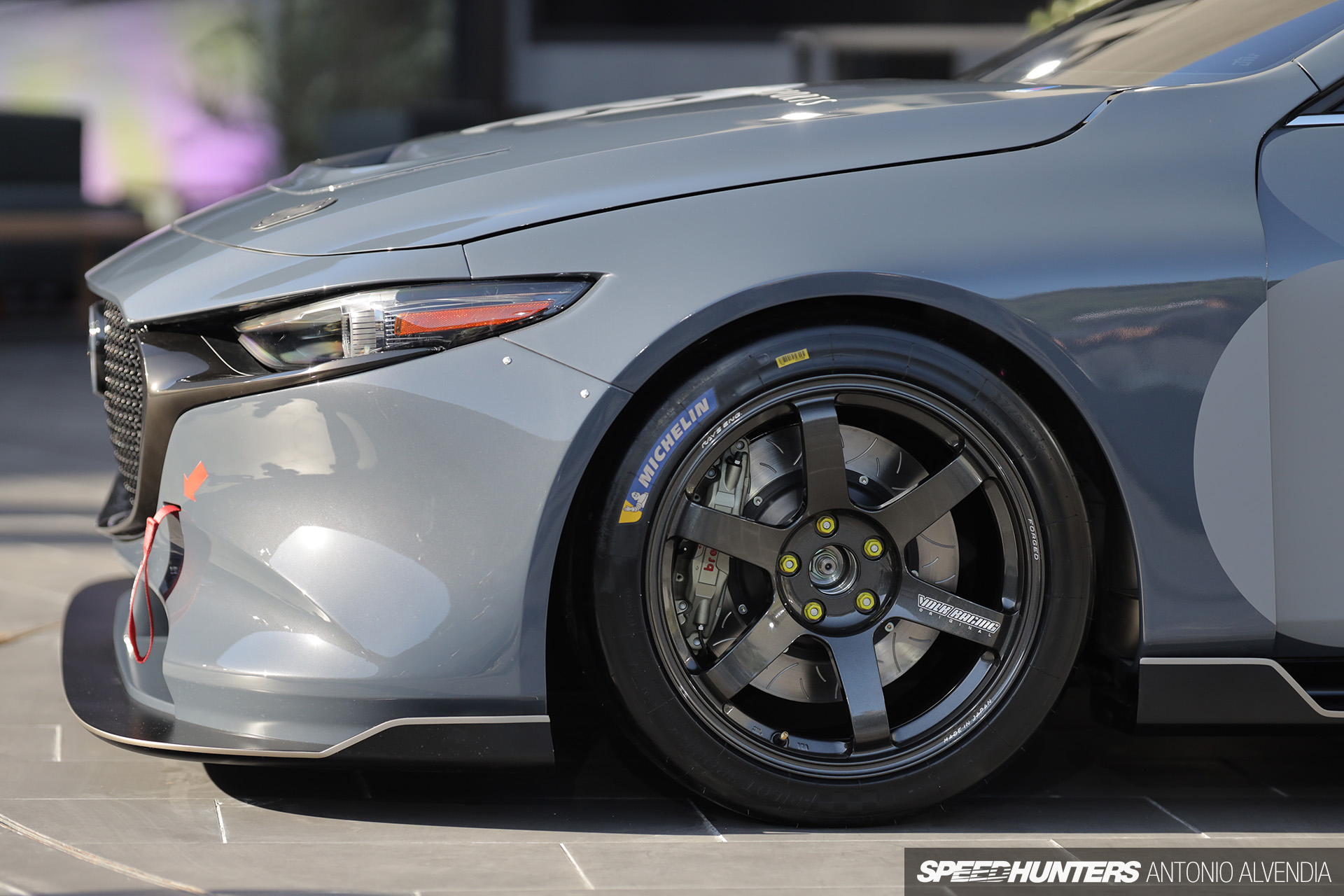
The Mazda3 TCR sits perfectly on 18×10-inch RAYS Volk Racing TE37 Saga wheels wrapped in Michelin Pilot Sport GT 27/65-18 slicks. Behind the Diamond Dark Gunmetal wheels, it’s impossible not to notice the Brembo big brake kit; what you can’t see behind is a BILSTEIN suspension setup.

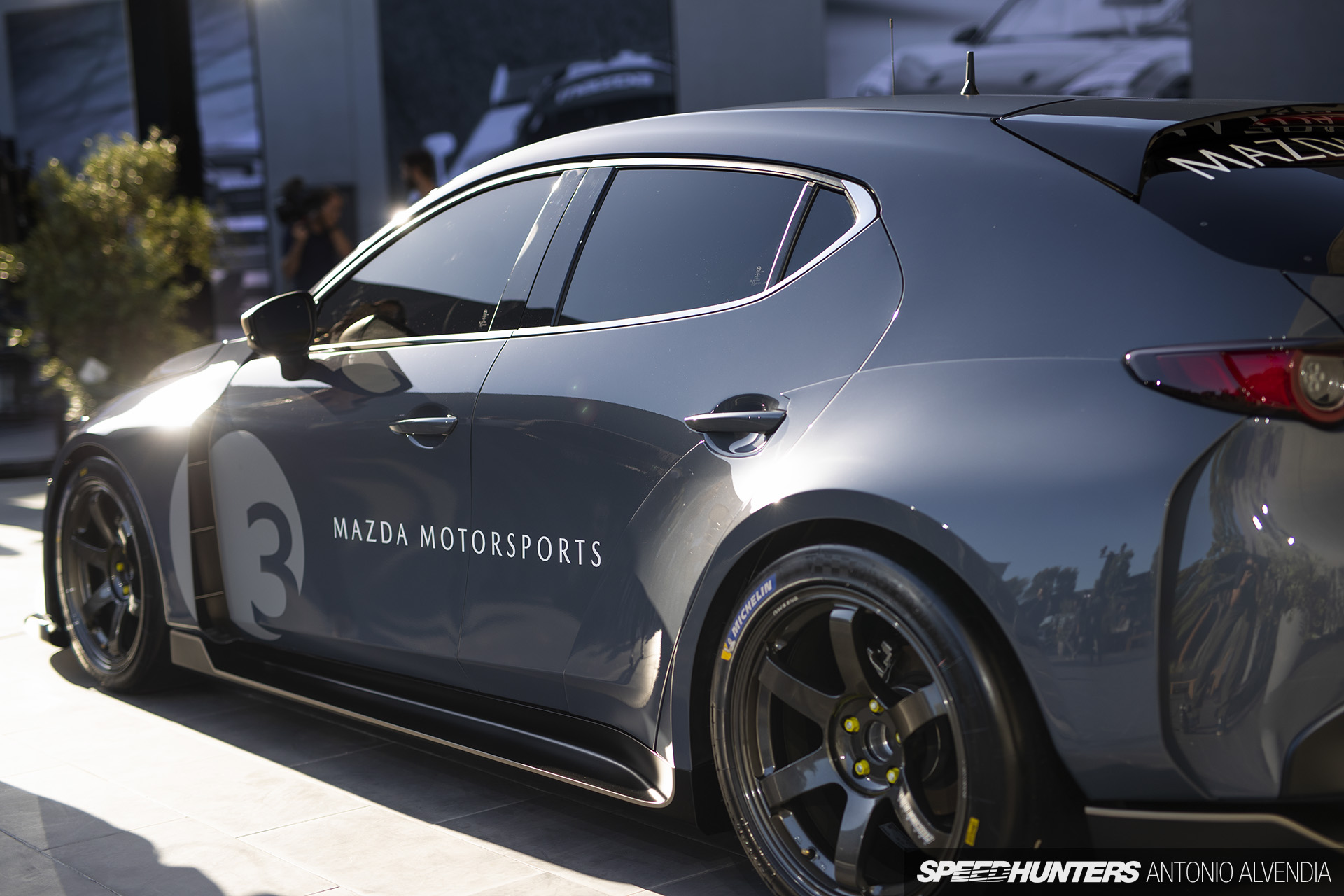
Aside from Mazda’s own designers, the car was developed with Long Road Racing and LDC Aero. The TCR is also 137mm wider than the production Mazda3, thanks to the addition of the widebody fenders. If only these types of aero enhancements were available through Mazda dealers for normal road-going 3s. Wouldn’t that be amazing?
At the reveal event, I spotted a representative from Aria Group, the Orange County-based carbon fiber composites manufacturer that makes body panels for many automotive OEMs and some of the most high-end specialty car builders. In case you haven’t heard of Aria before, they make vacuum-molded carbon fiber body panels for a certain bespoke Porsche builder whose name begins with an ‘S’ and ends with an ‘inger.’ The only reason I know this is because I shot many of the photos for the Singer Vehicle Design hardcover book, One More Than Ten. Check the hashtag ‘OneMoreThanTen’ on Instagram.
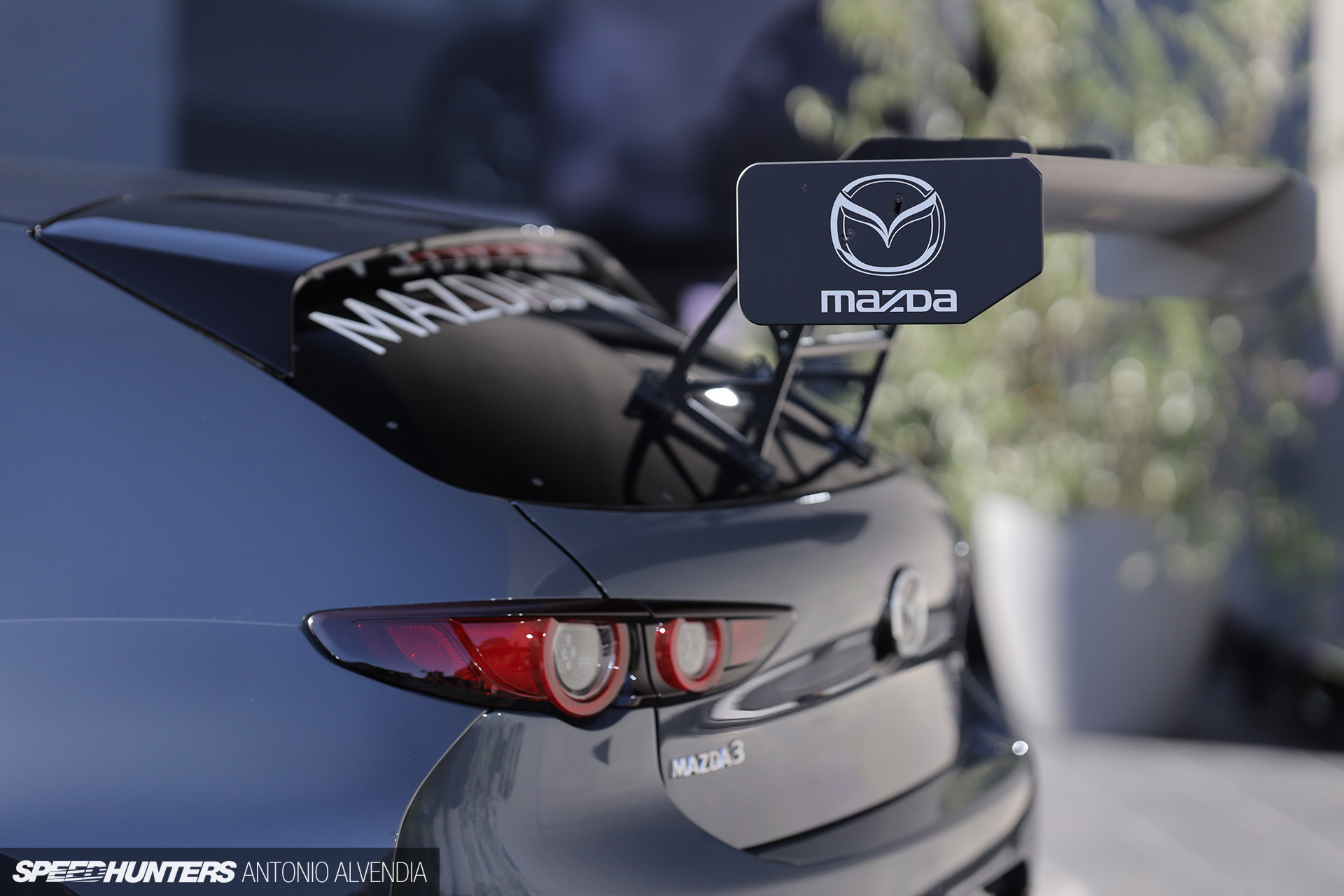
The Mazda3 TCR is set to debut this coming January at the first round of the 2020 IMSA Michelin Pilot Challenge, which runs as a companion series to the IMSA WeatherTech Sportscar Championship where Mazda currently races its prototype Mazda RT24-P.
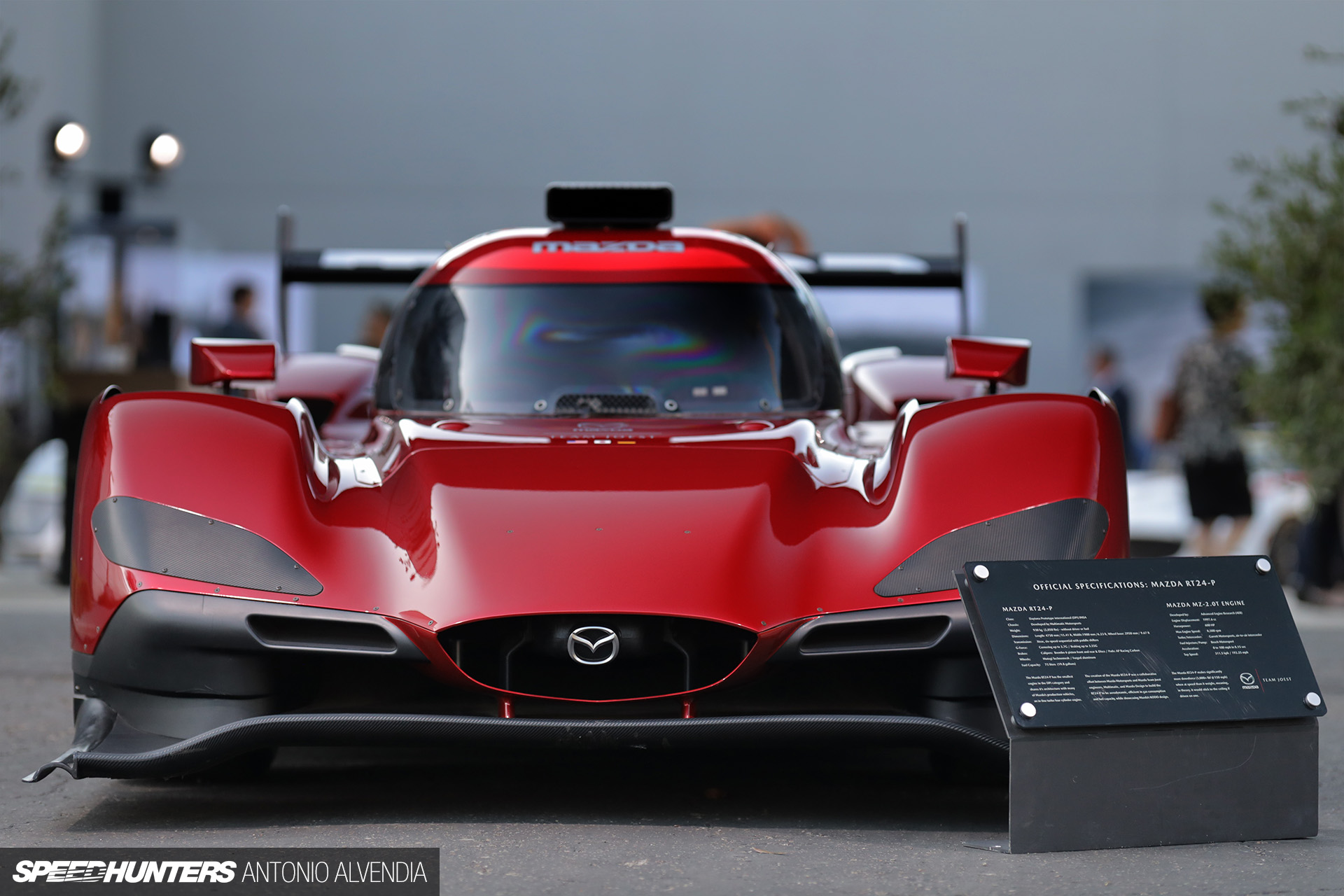
Speaking of the Mazda RT24-P, there was a RT24-P DPi (Daytona Prototype) race car on display in the front entrance of the Mazda R&D facility. It was cool to see it parked there, as you could see it all the way from the street.
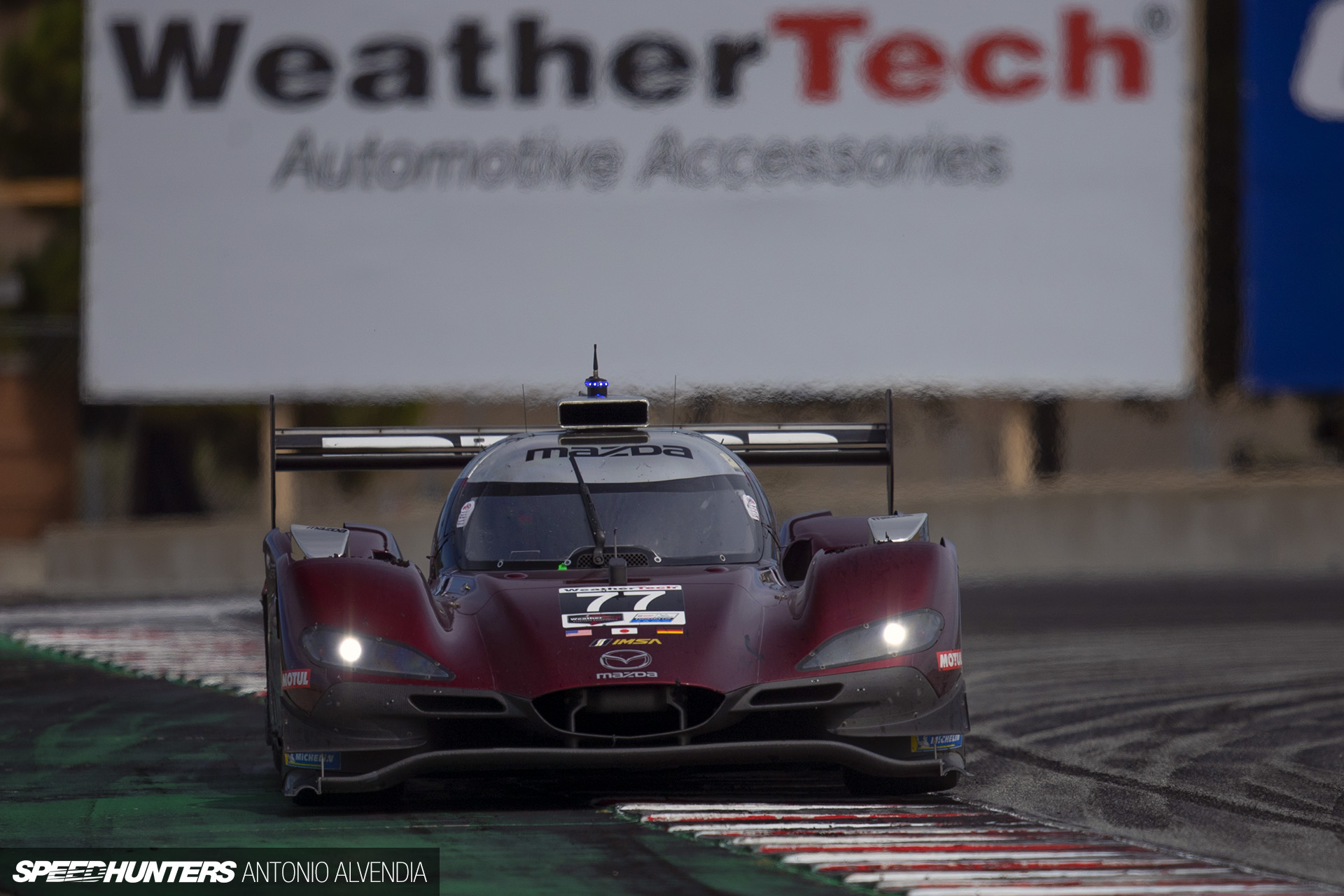
As some of our readers might have seen in my previous story on the IMSA Monterey Grand Prix at Laguna Seca, I recently got to see the RT24-P in action.
One interesting thing about the Mazda RT24-P is the fact that it has the smallest engine in IMSA’s DPi category – a turbocharged inline four cylinder. The eye-catching race car was developed by Mazda Motorsports, Multimatic engineers from Mazda Team Joest, and Mazda Design. Using Mazda’s KODO design language, the RT24-P makes much more downforce at speed than it weighs, which means in theory that if someone built an actual full scale Hot Wheels racetrack with upside down sections of track, the RT24-P could actually stick to the ceiling. Now that is something I’d like to see in person.
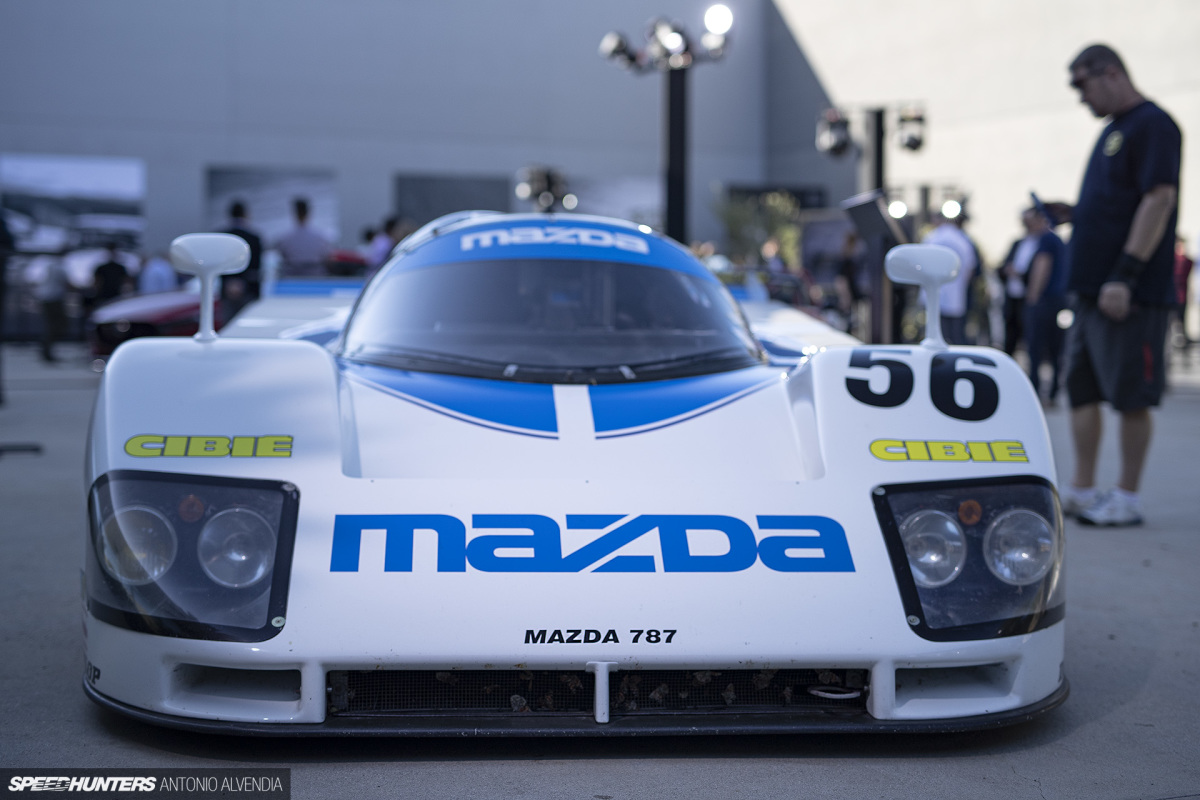
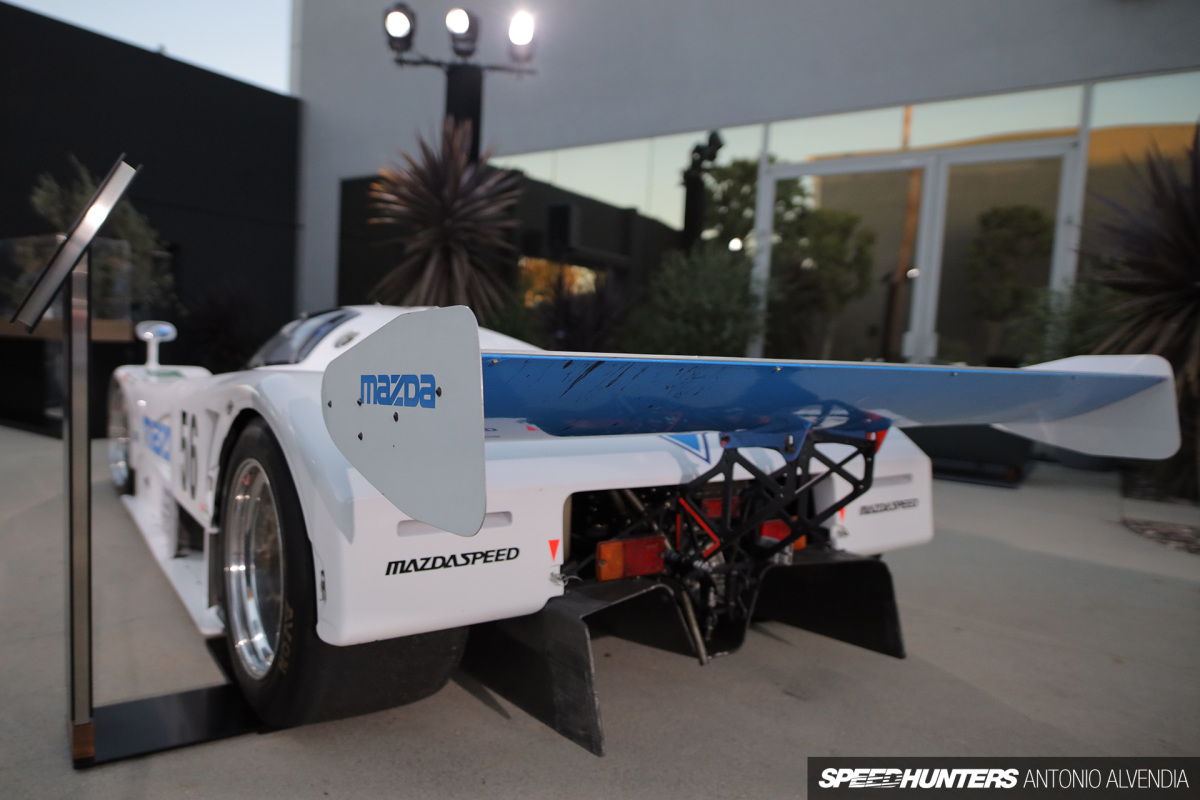
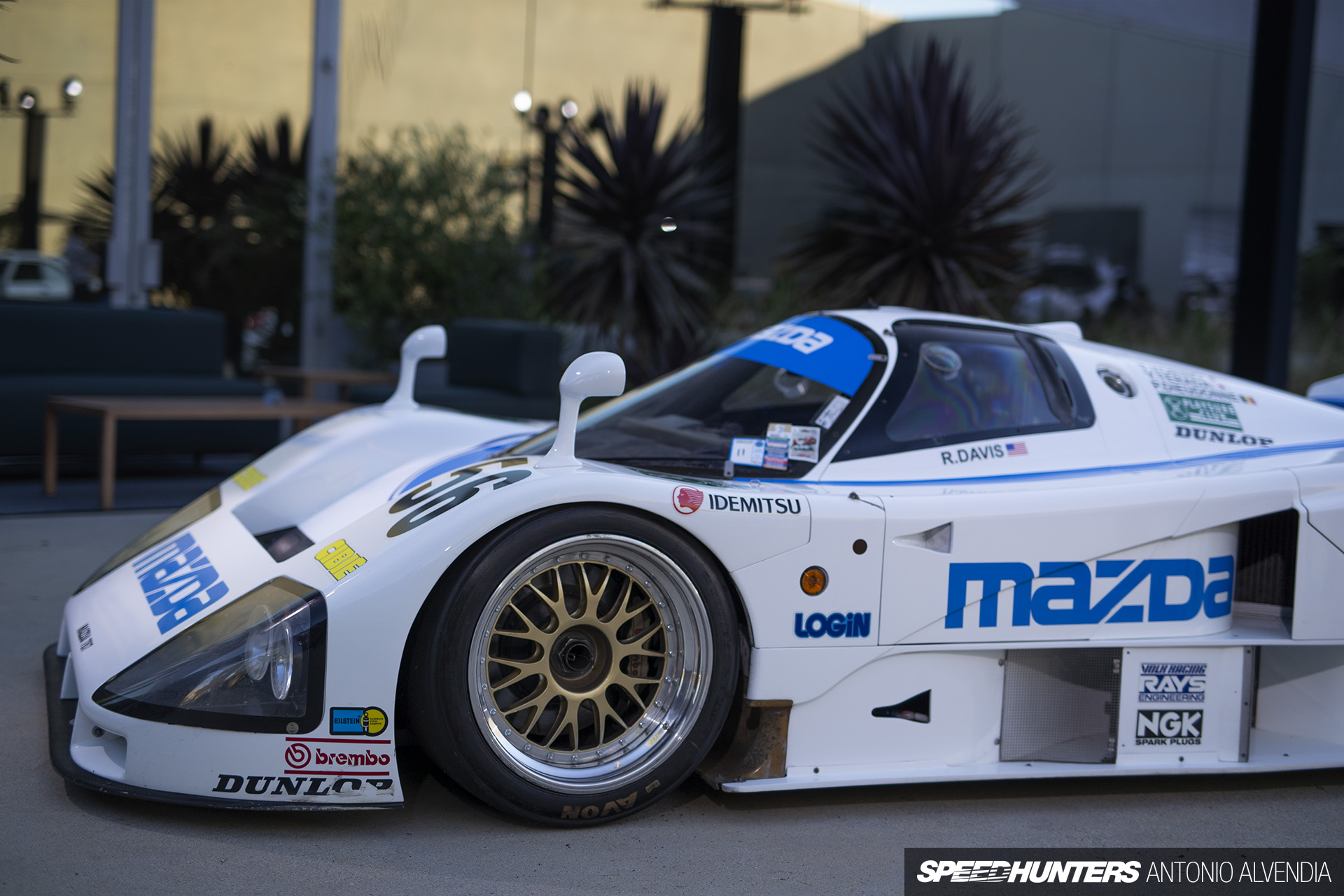
Just a few feet away, the brilliant white and blue livery of the Mazda 787 attracted the attention of all the event-goers. This 787 looks so cool and impressive in person, with its gorgeous, flowing body lines, Cibie headlights and center-lock RAYS wheels.

As a longtime fan and owner of vintage Japanese cars, of course my eyes were drawn to this RX-2. This particular Racing Beat-enhanced coupe has interesting racing history – it was actually one of Mazda’s first race cars that competed in the United States, and was driven by former editors from Car & Driver magazine.
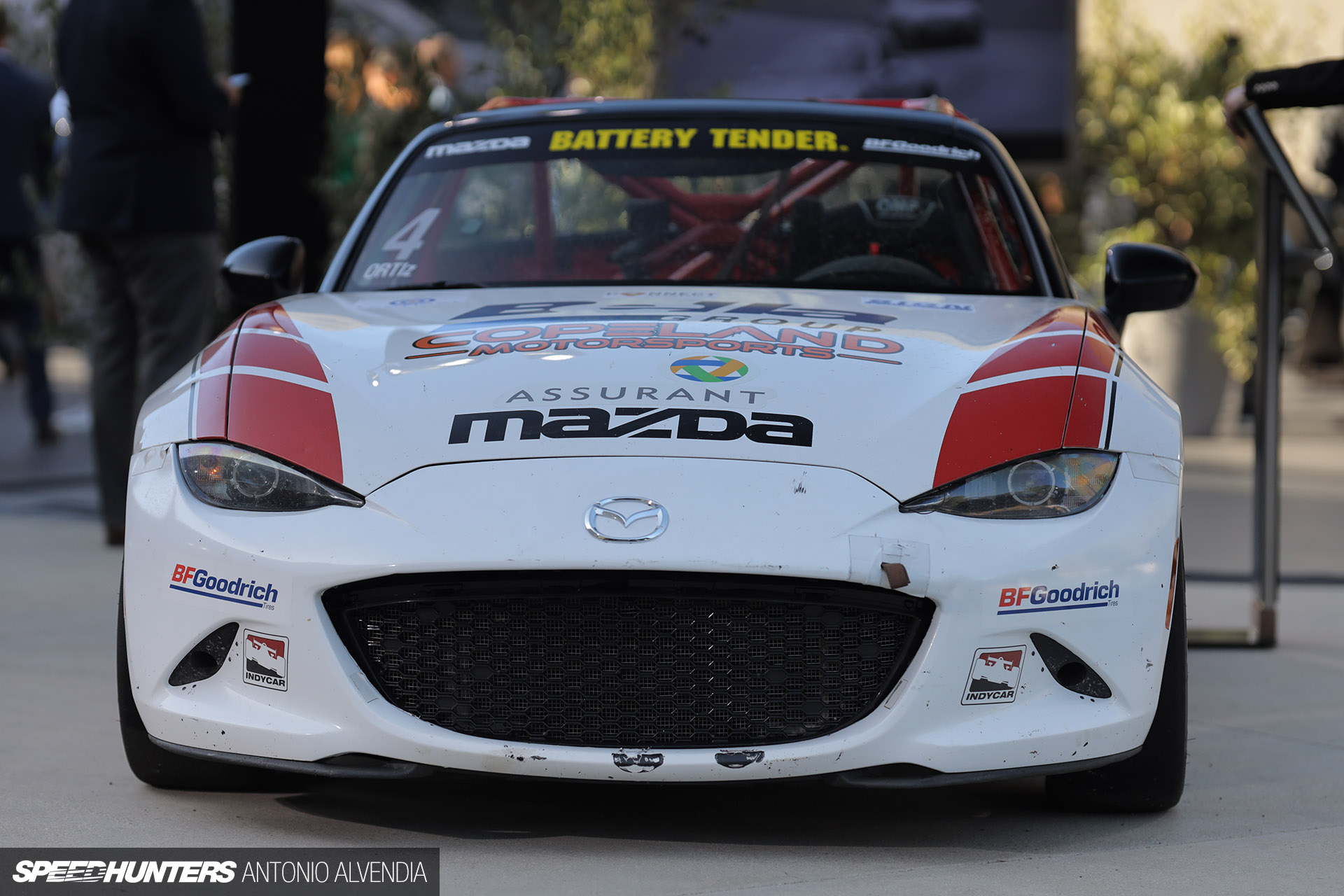
Also on display, the Mazda MX-5 race car driven by Bryan Ortiz, from San Juan, Puerto Rico. Bryan fought his way through 12 tough races to emerge as the champion of the 2019 Battery Tender Global Mazda MX-5 Cup Presented by BFGoodrich, and has become the first driver named to drive the Mazda3 TCR.
It’s widely known that Mazda believes in the power of human potential and inspiring people. Mazda awards a $200,000 scholarship to the season champion of the Global MX-5 Cup to help them reach the next step of their racing career. In only three seasons of competing in the MX-5 Cup, Bryan won the championship and the scholarship as well. Amazing!
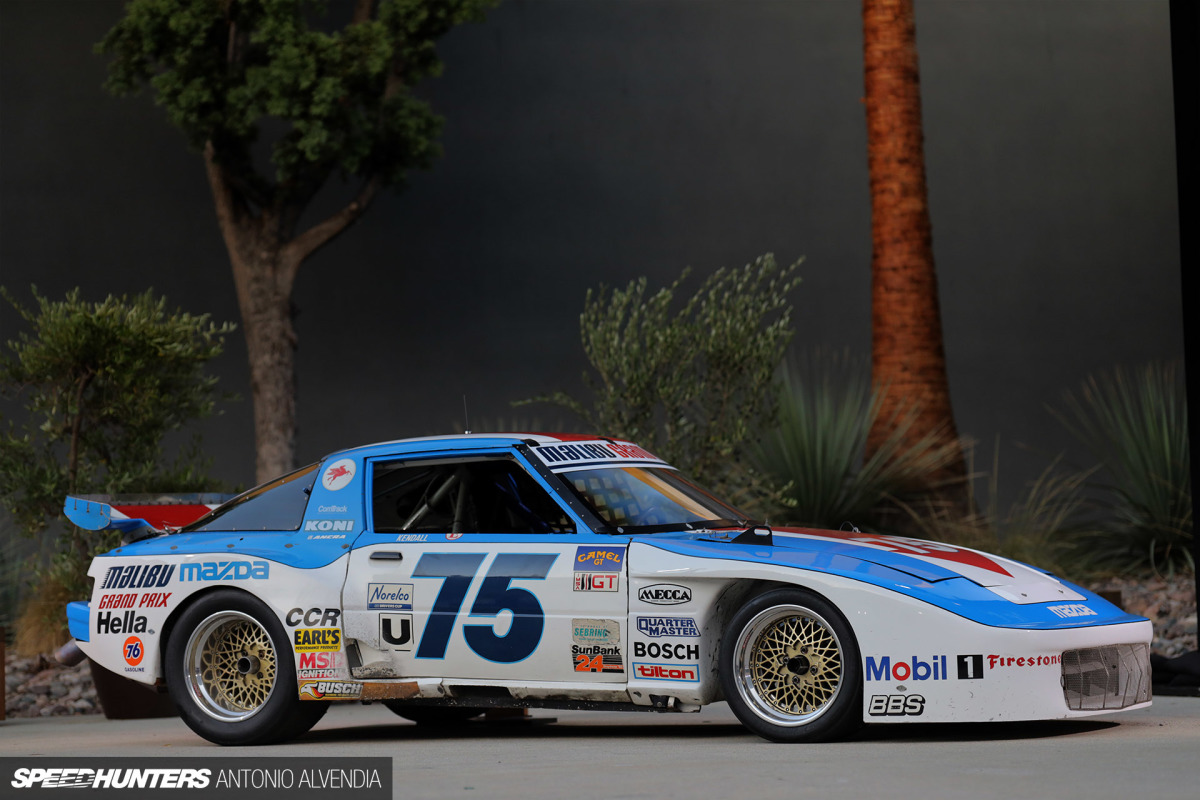
Undoubtedly the car that I spent the most time with at the event, I just couldn’t stop staring at the first generation (FB3S/SA22C) Mazda RX-7 that IMSA Champion Tommy Kendall drove to win his very first IMSA Camel GTU Championship. This RX-7 is still owned by Tommy, and is only on loan to Mazda. It’s so cool that the car is being preserved, as too often, old race cars get neglected and just gather dust in some old barn. I love staring at the details on the car, like the mesh screen in the front bumper and the period BBS wheels.
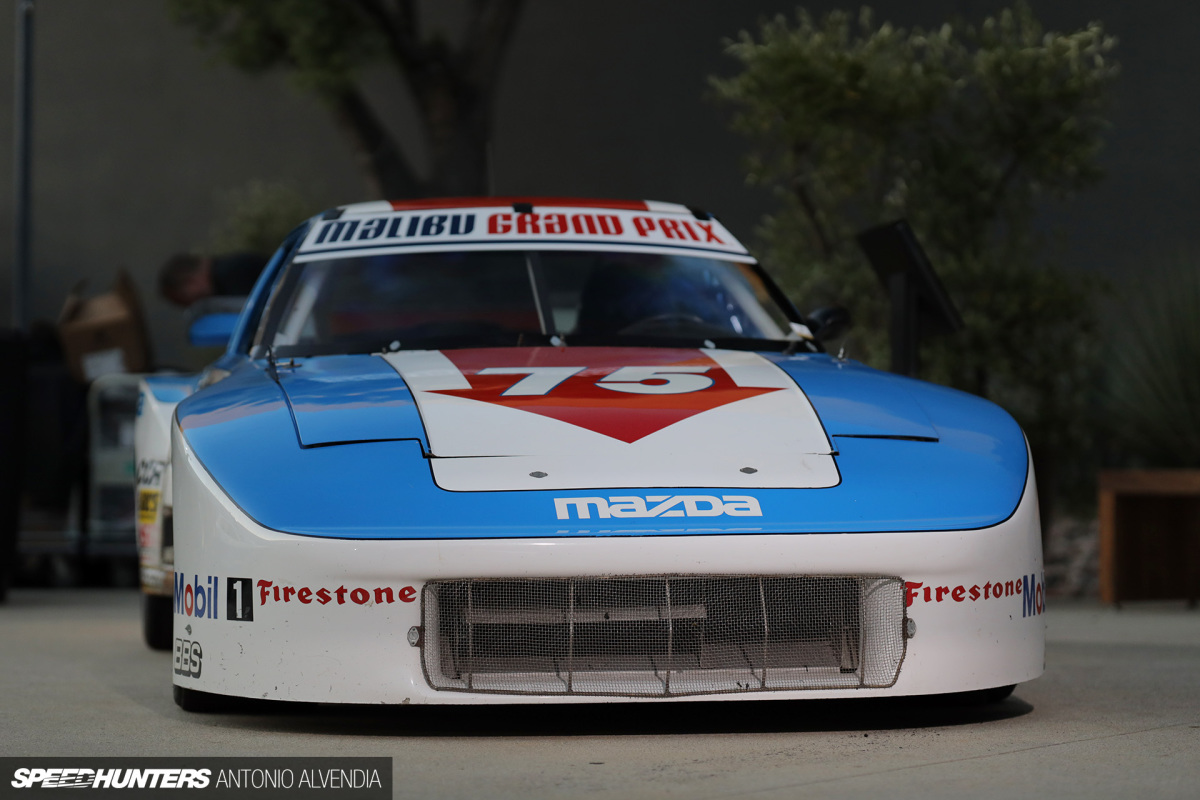

The Hella sticker on the rear quarter panel might refer to the car’s headlights, but it also describes exactly how big the rear muffler is.
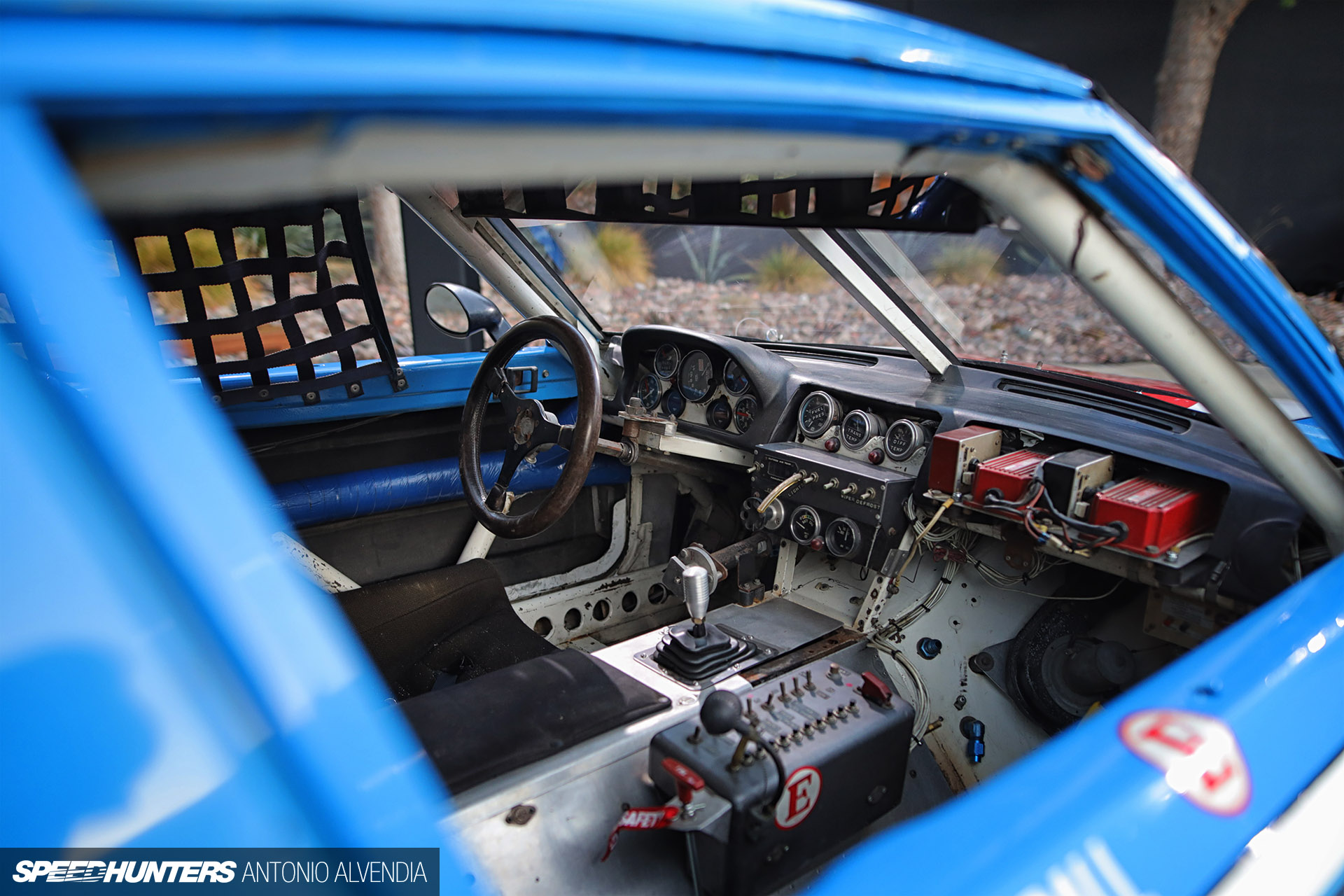


I just love staring into the cockpits of old school race cars. What I love most is the fact that they utilized actual aftermarket parts that normal people can buy and use on their own project cars. Today’s factory homologated race cars are totally different – most modern race teams just buy the cars and add their own graphics. Of course, each team would have their own specs and settings for alignment, suspension, and things like that, but I like how the old days of IMSA racing included car parts that regular civilian consumers could purchase and use on their own project vehicles.
Take this old school Momo steering wheel for example. Most Momo steering wheels of this period were 350mm, but this one – the Cavallino model if I remember correctly – seems like it might be just a bit smaller. However, it might just be the angle of my lens creating this effect. I have one of these wrapped up in a pillowcase in storage in my garage somewhere, but I haven’t looked at it in years, so my knowledge may be a bit rusty – like the Allen bolts on this wheel.
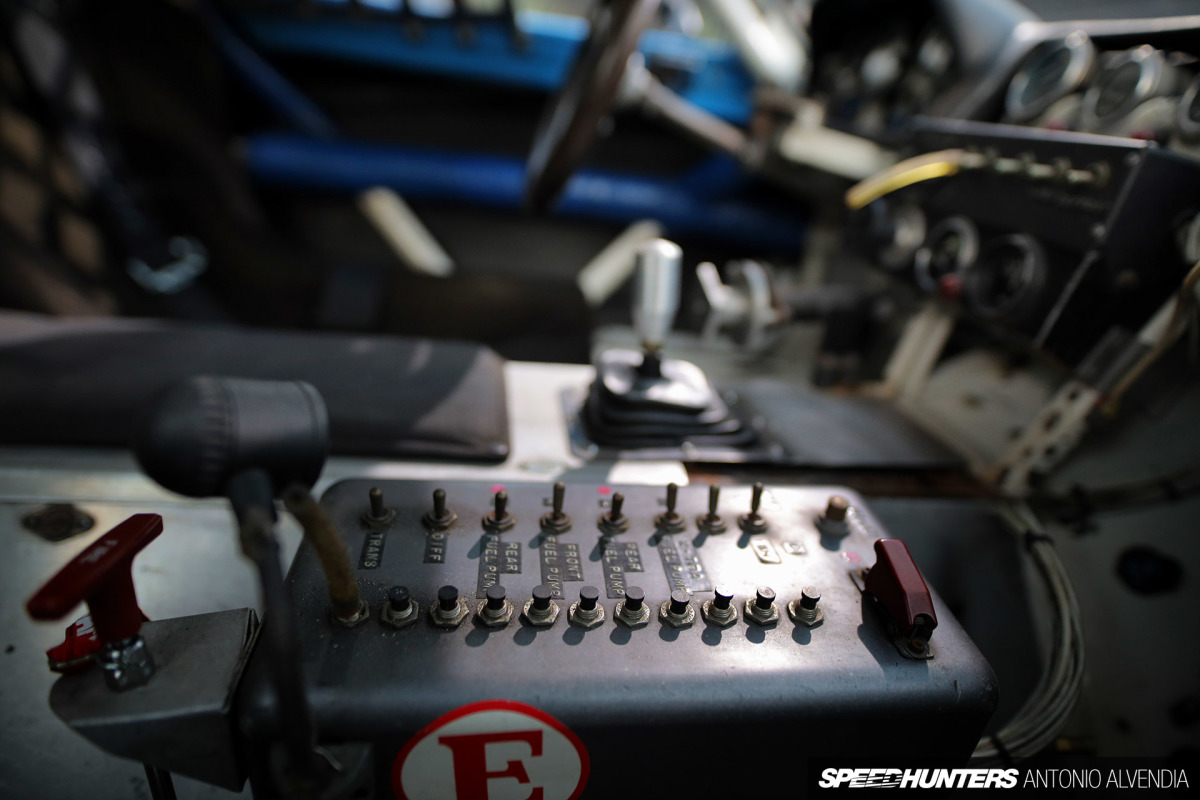

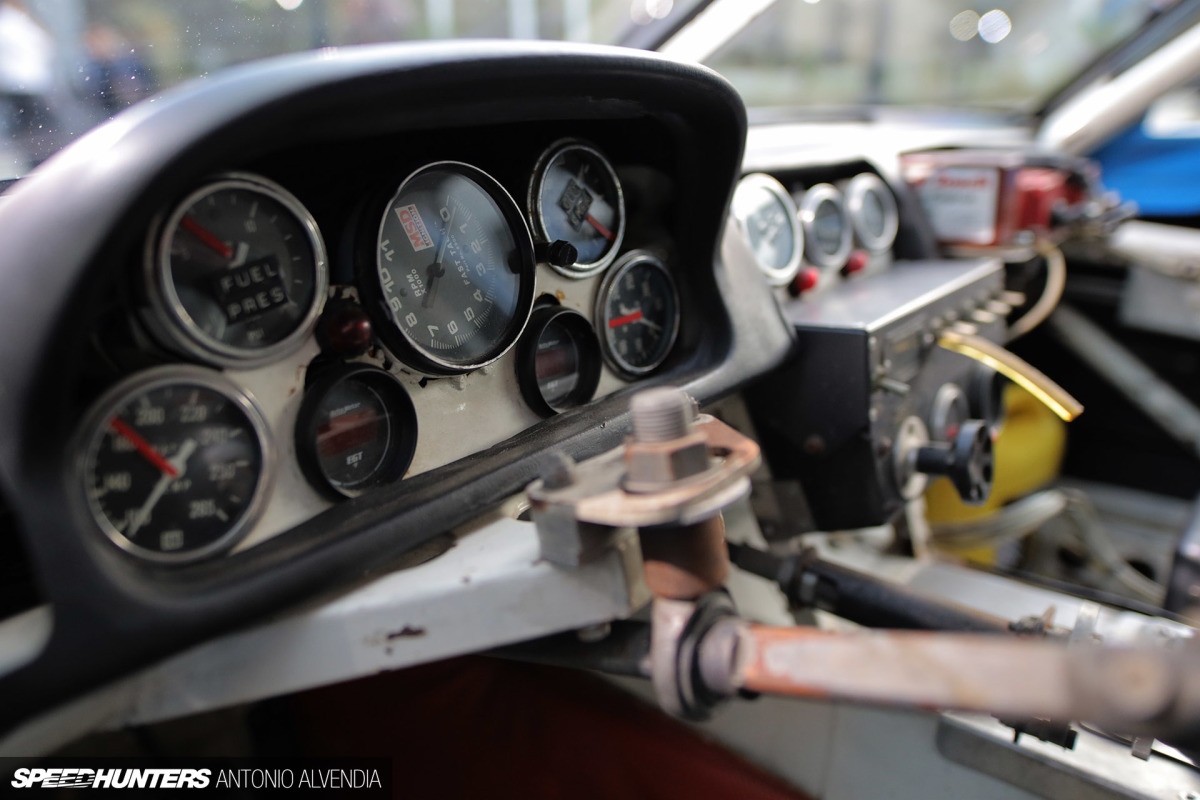
In the dash, you’ll notice an 11,000rpm MSD Fast Tach mixed in with both modern digital and old school mechanical gauges. In what would be the passenger side seating position, Tommy has a set of switches in a cool looking panel. See the last one? It transforms the car into a robot. Mounted to the dash are a bunch of MSD ignition amp boxes that look like they’ve been swapped out a few times given the state of their wiring connectors.

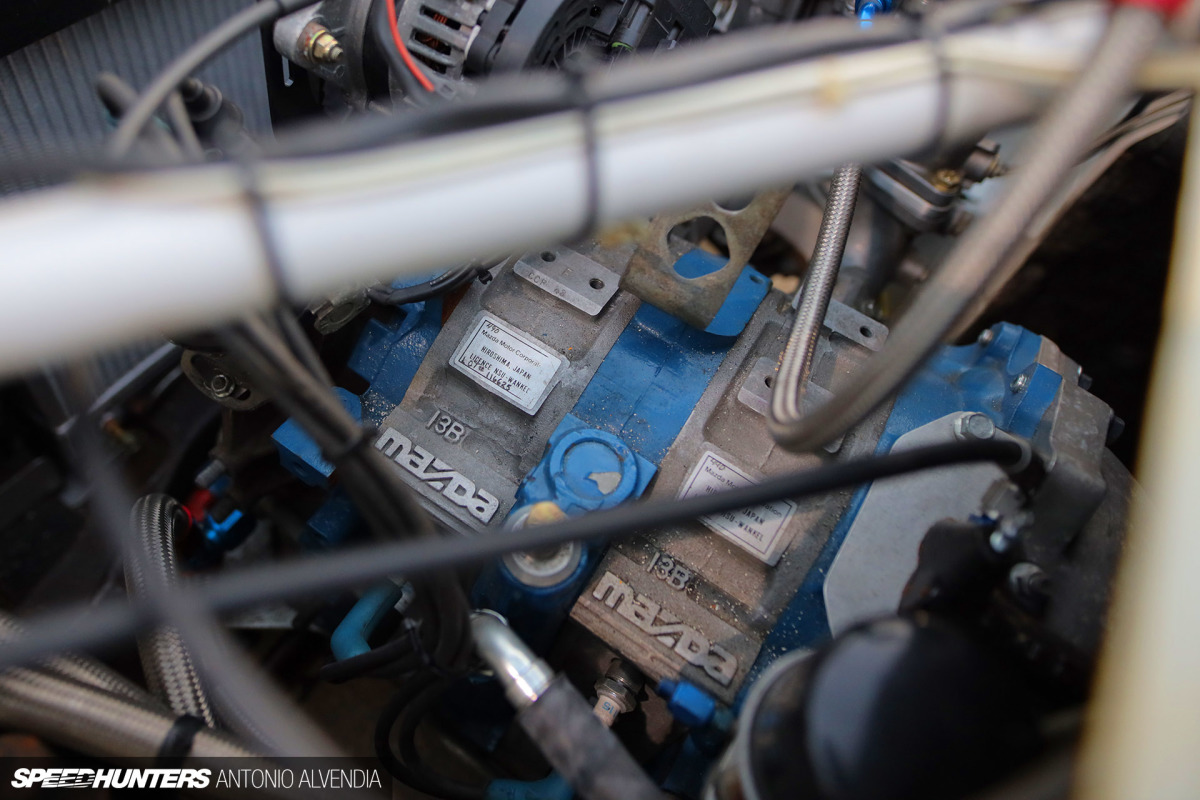
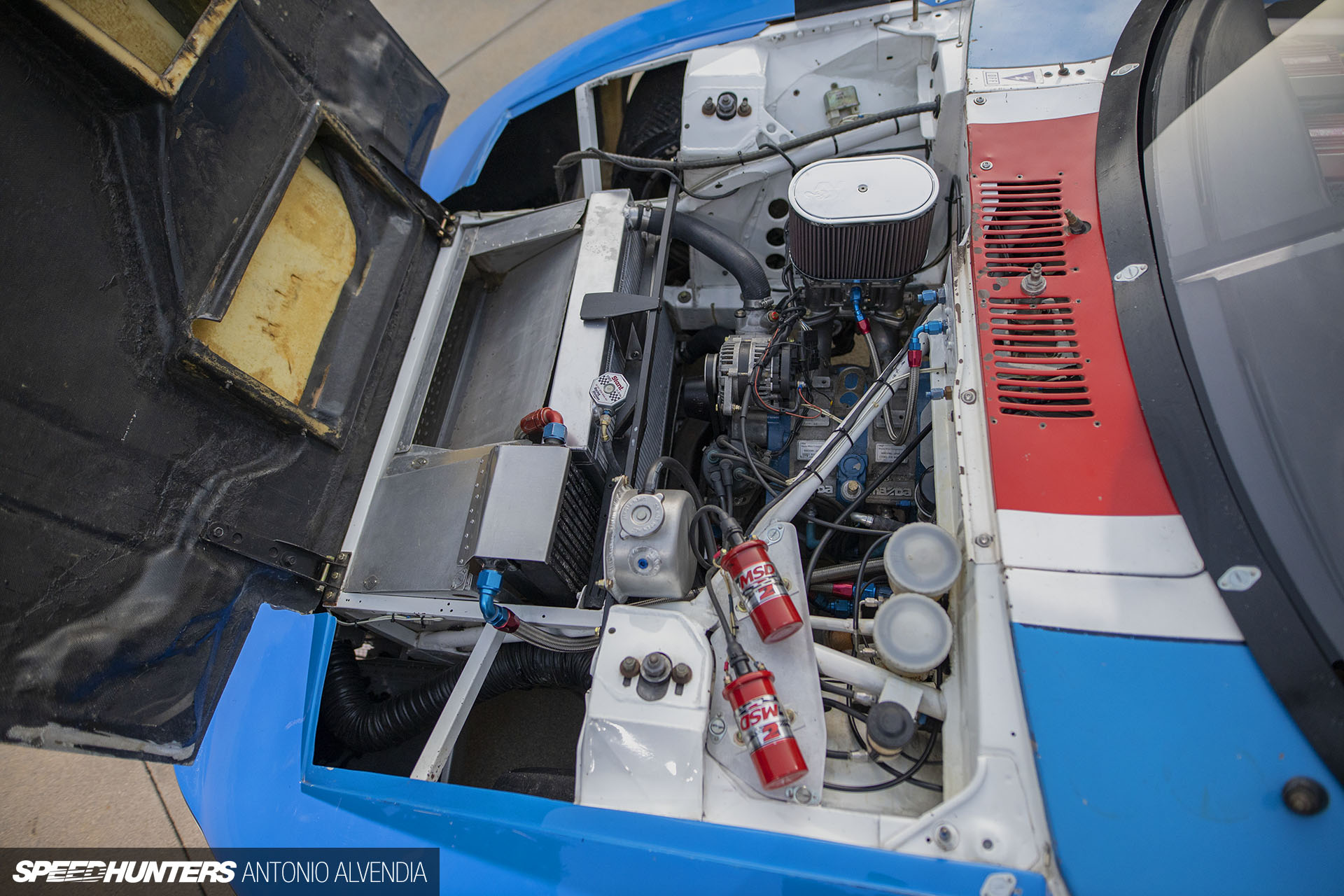
I was able to persuade the nice folks at Mazda to pop the fiberglass hood so I could show you guys a bit more detail of the engine bay, which features a carbureted 13B rotary engine. It’s interesting to see that instead of a bolt-on camber plates, the strut tops were modified to allow for camber adjustment.
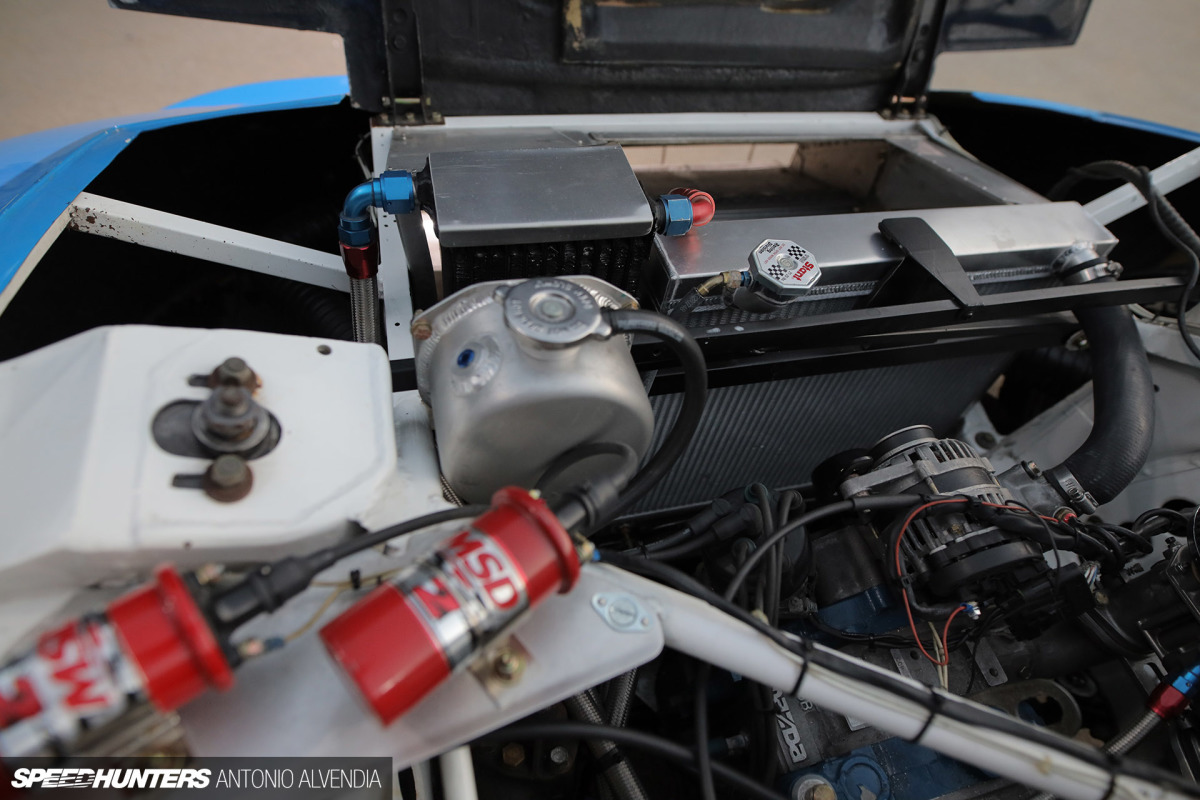

Sitting just in front of the motor, I thought it was really cool how the aluminum radiator and oil cooler were set up. Just in front of the radiator is an scoop that sends air through the channels in the fiberglass hood straight to the carburetor. Pretty awesome. Just in front of the strut towers, the inner fender aprons have been cut out to allow access to the front suspension. This gives us the ability to check out the coilovers and the air hoses going from the front bumper to cool the brakes.
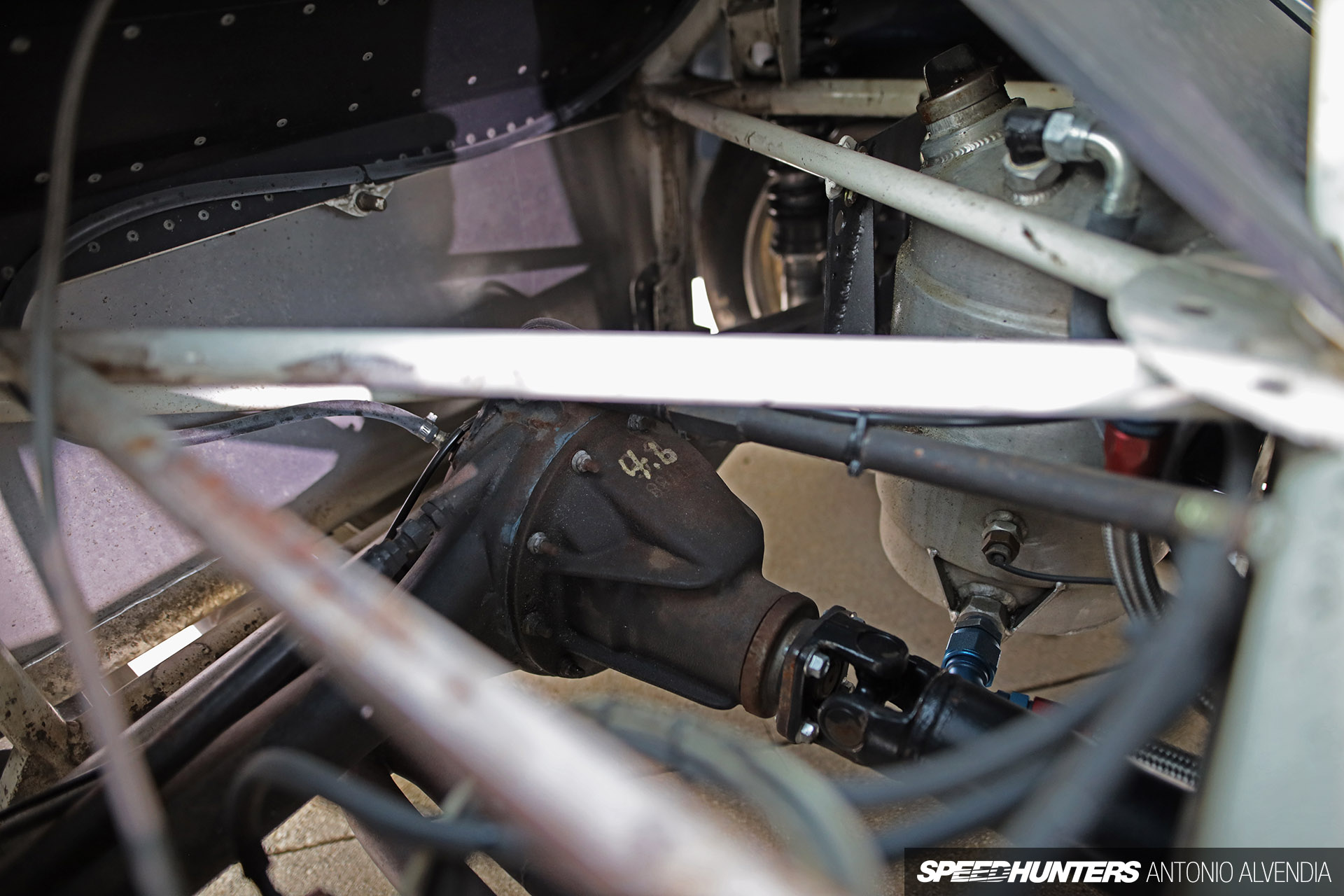
In the area where the back seats would be, the bottom of the car is actually cut out. It’s so interesting to see stuff like this. The differential pumpkin has been labeled, so it most likely has a 4.6:1 ratio ring and pinion gear installed in there. It looks like this car’s setup makes it easy to quickly swap the entire pumpkin out, so that Tommy can use different ring and pinion ratios depending on which track he’s racing at.
I absolutely love looking over vintage race cars, and always imagine what it must have been like to watch them race when they were new. This is one reason why I can’t wait to take a proper look at the Mazda3 TCR, and then see it in competition. Because, one day it too will be a vintage race car, and I think it would be so awesome to tell stories of how I was there at the track, shooting photos, and watching it compete in person.
This brings me to an interesting question… If somehow I were able to make it out to shoot the race at Daytona in January, would any Florida-based Speedhunters readers be interested in meeting up?
Antonio Alvendia
Instagram: antoniosureshot
www.antoniosureshot.com
www.motormavens.com