In Project NSX: Dreams Of Power – Part One we had the Honda’s engine out for some hardware upgrades and a general freshen up to improve power and reliability of the 27-year-old C30A.
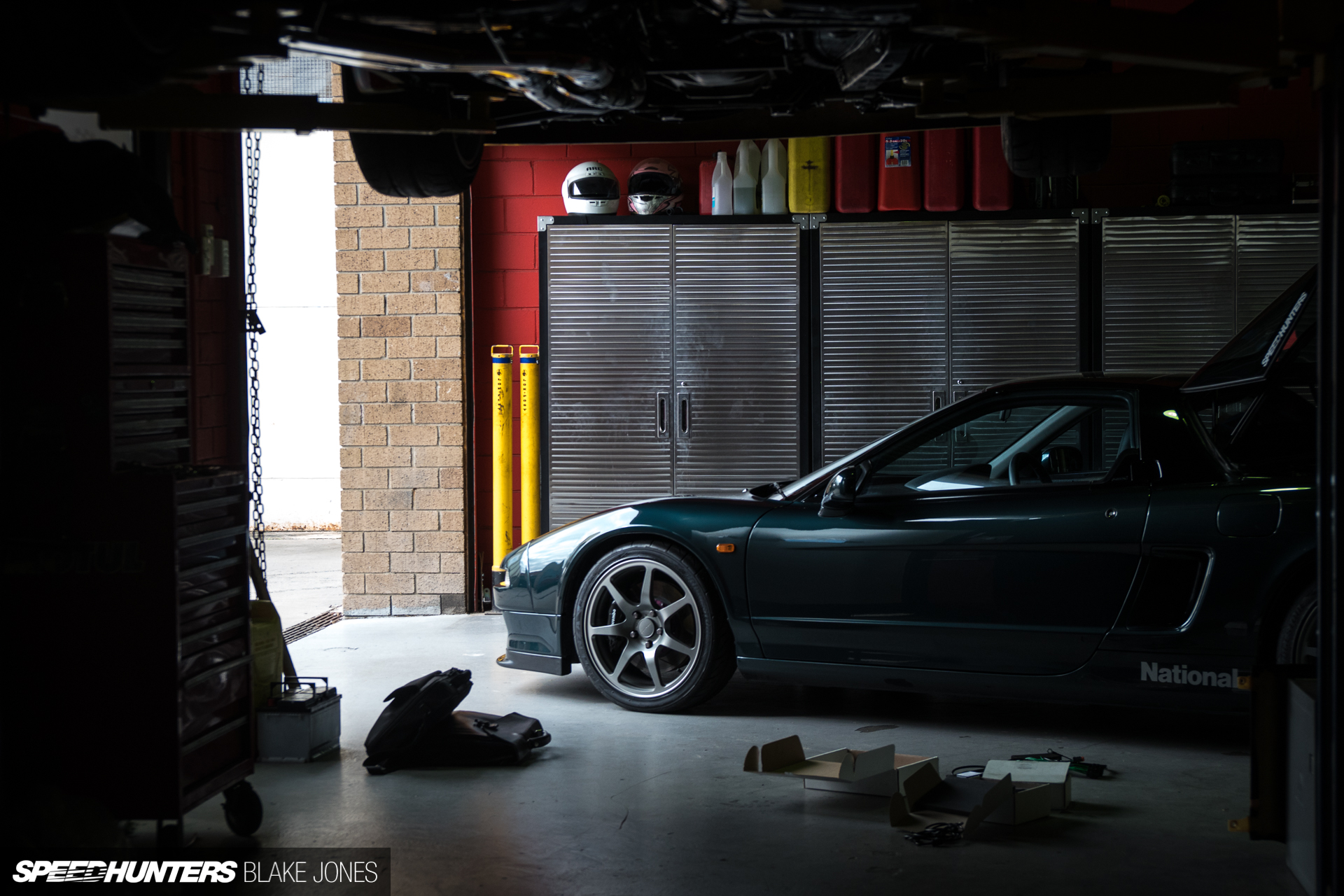
Since then the car has made a long ocean journey south to land in the port city of Melbourne, Australia to join me in the next chapter of this Speedhunting journey.
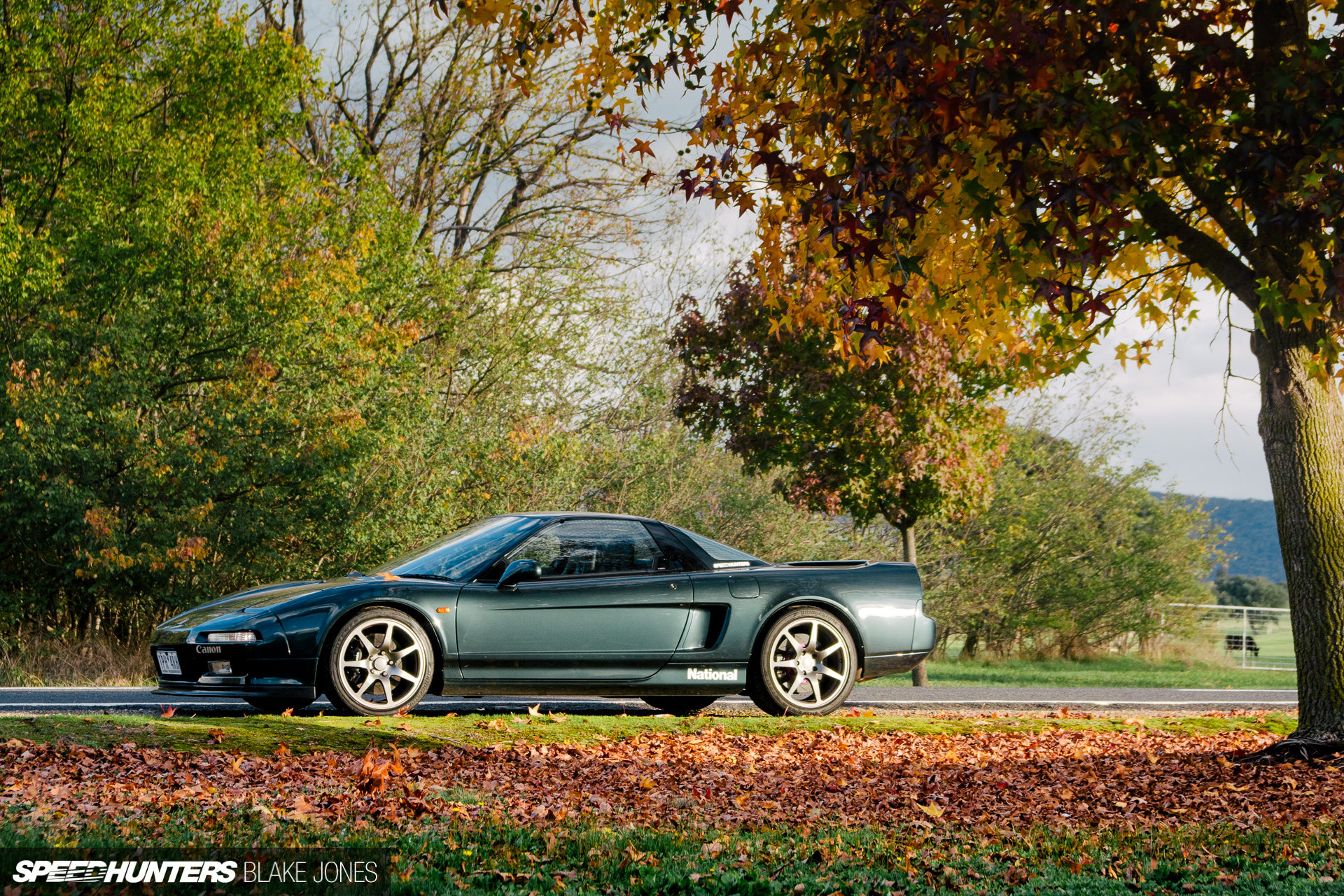
From an engine performance perspective, the NSX responded well to the exhaust-side upgrades made last year (Fujitsubo manifold + high-flow cats + RFY muffler).

Simply speaking an engine is just a big air pump, so by removing some obvious exhaust flow restrictions (plus the benefit of cylinder evacuation from the scavenging effect of a tuned-length primary runner) the engine becomes more efficient and thus more powerful.
Behind the scenes, there’s a little more happening. The engine control unit (ECU) will be making adjustments to the fuel trim, i.e. telling the injectors to open for more or less time depending on whether the O2 sensors are measuring a lean or rich air/fuel ratio (AFR) in the exhaust. The adjustments required for a simple exhaust system upgrade are small, and in most cases well within the capabilities of a stock ECU to keep the engine safe from a potentially damaging lean-out scenario.
But with any stock ECU there will be a limit to what the programming can adapt to. Furthermore, any problems that do arise will be difficult to identify as factory ECU’s are basically a ‘black box’ which don’t allow a tuner to see detailed data (although it must be said that OBD-II standardisation on later cars makes problem identification significantly easier than in non-OBD cars).
Once I’d made the decision to open up the C30A’s heads and install new camshafts, a new ECU was no longer a nice-to-have – it was a mandatory. The larger Toda camshafts would be asking for more air and fuel, and there was no sure way of knowing whether the Honda ECU and fuelling system would be up to the task.
Being a true blue Aussie, I didn’t need to look far for a solution. Although our country and market are puny compared to the US or Japan, our aftermarket punches way above its weight with companies like Sydney-based Haltech developing and manufacturing world-class components with proven track records on the circuit and the street.

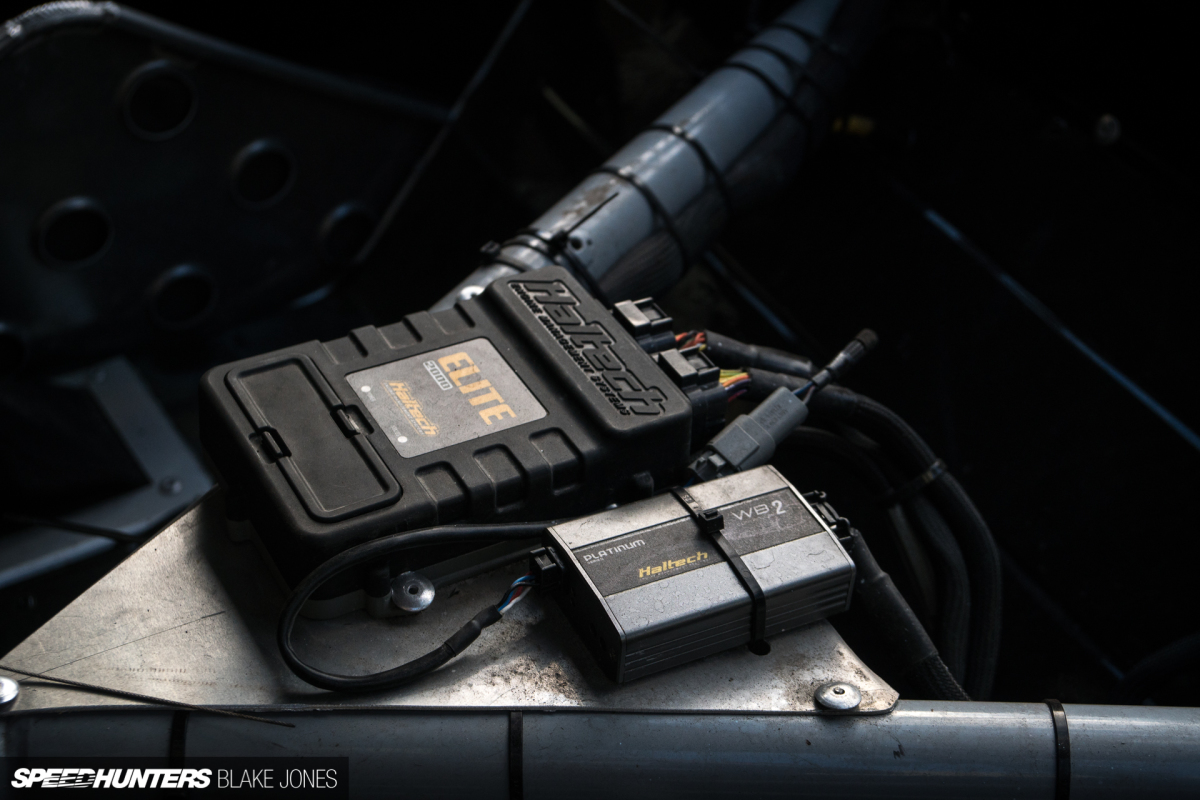
After a bit of research and consultation with Haltech’s own tech gurus, the heart of the new engine management system was on its way to Speedhunters HQ – a Haltech Elite 2500.
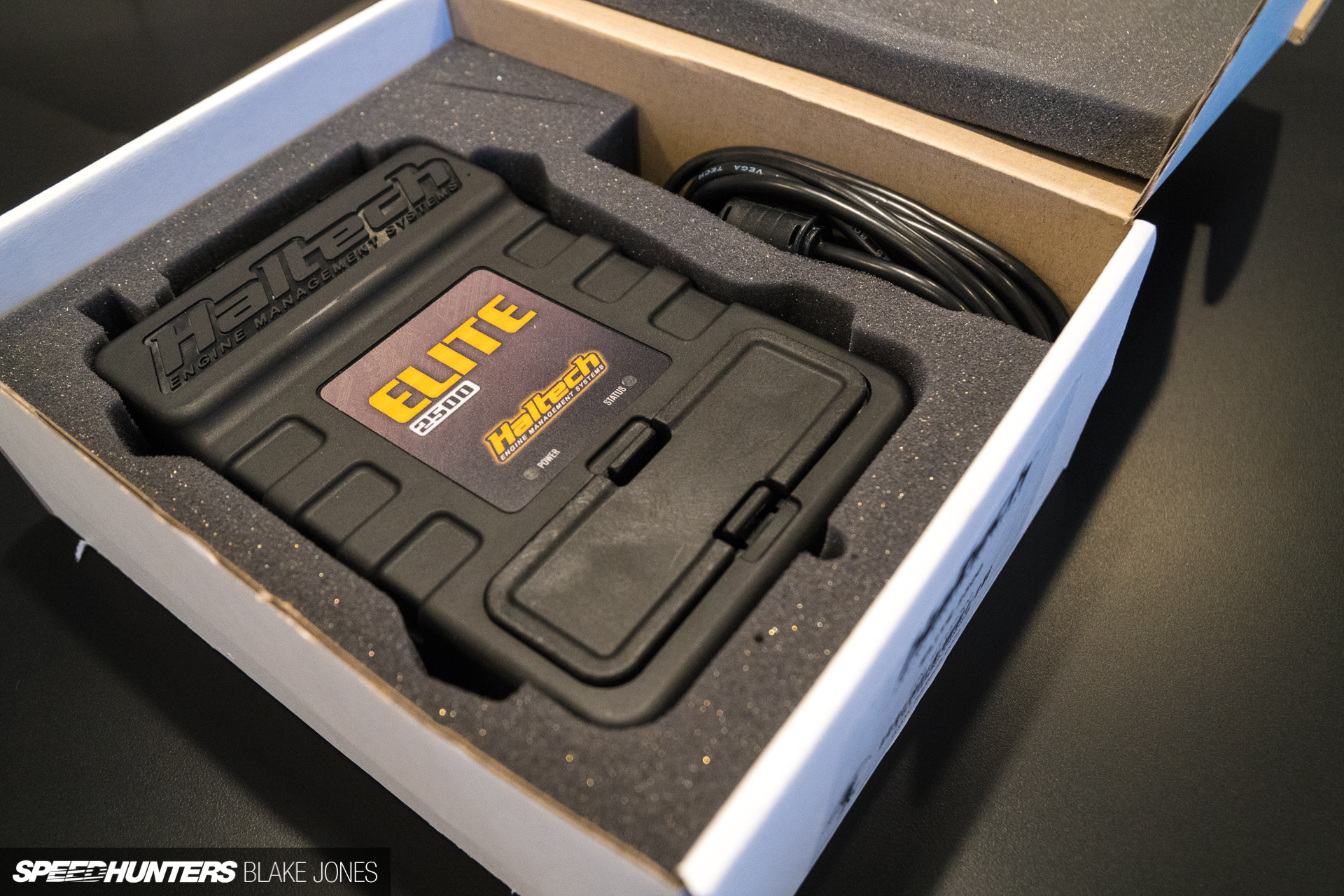
The 2500 sits at the top of the Elite range and allows control of up to 12 cylinders with a long list of features, but most importantly for Project NSX this included high and low impedance injector control, VTEC control, DBW throttle control, and flexibility with display/dash outputs. It’s a pretty smart bit of kit, and has short and long term fuel, ignition and idle control learning out of the box.

The Elite 2500 has a 26 and 34-pin connector for the harness, similar to what you’d see on any aftermarket ECU.
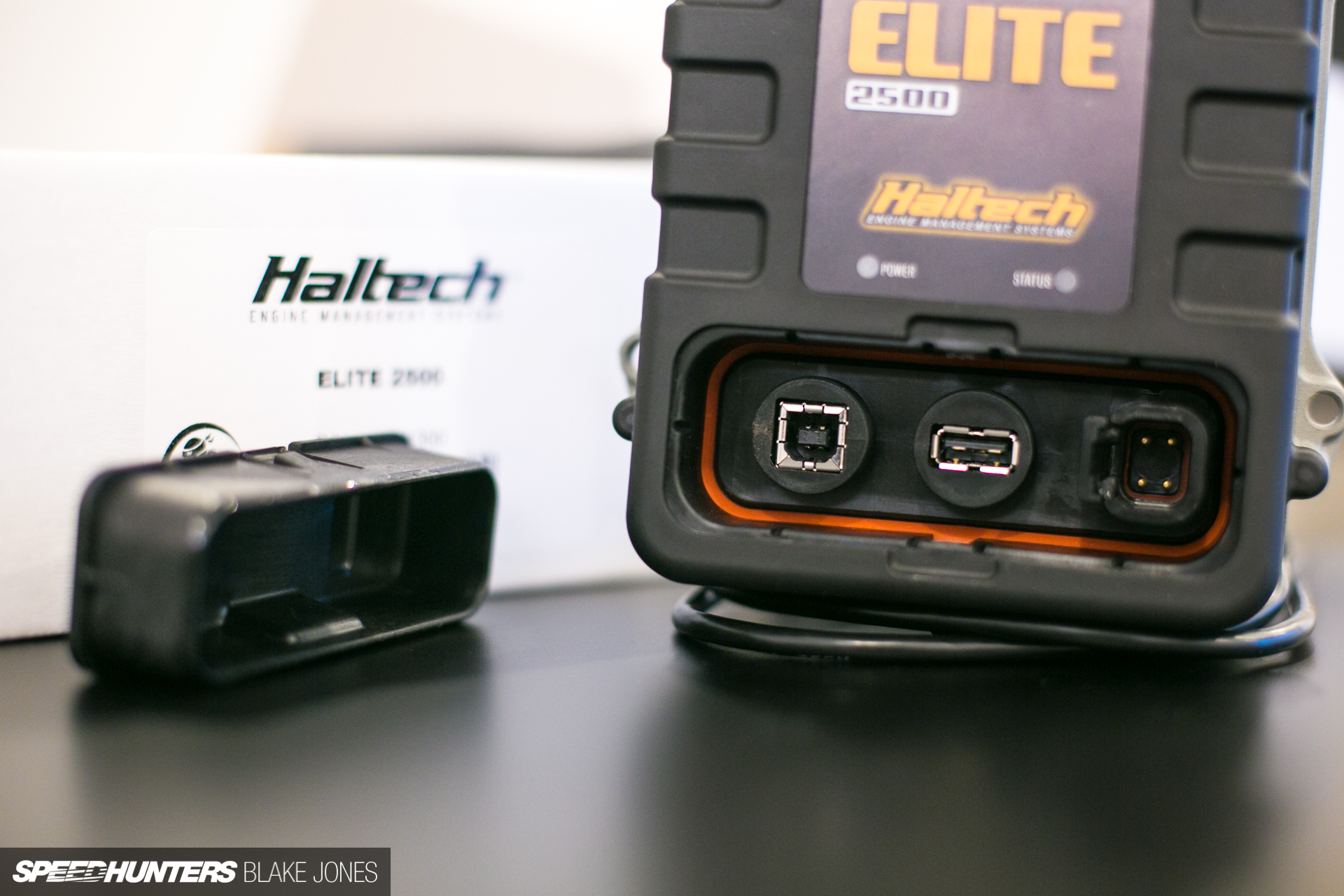
The water-sealed case also has a front opening for the tuning interface connection, auxiliary USB, and Haltech’s CANBUS.
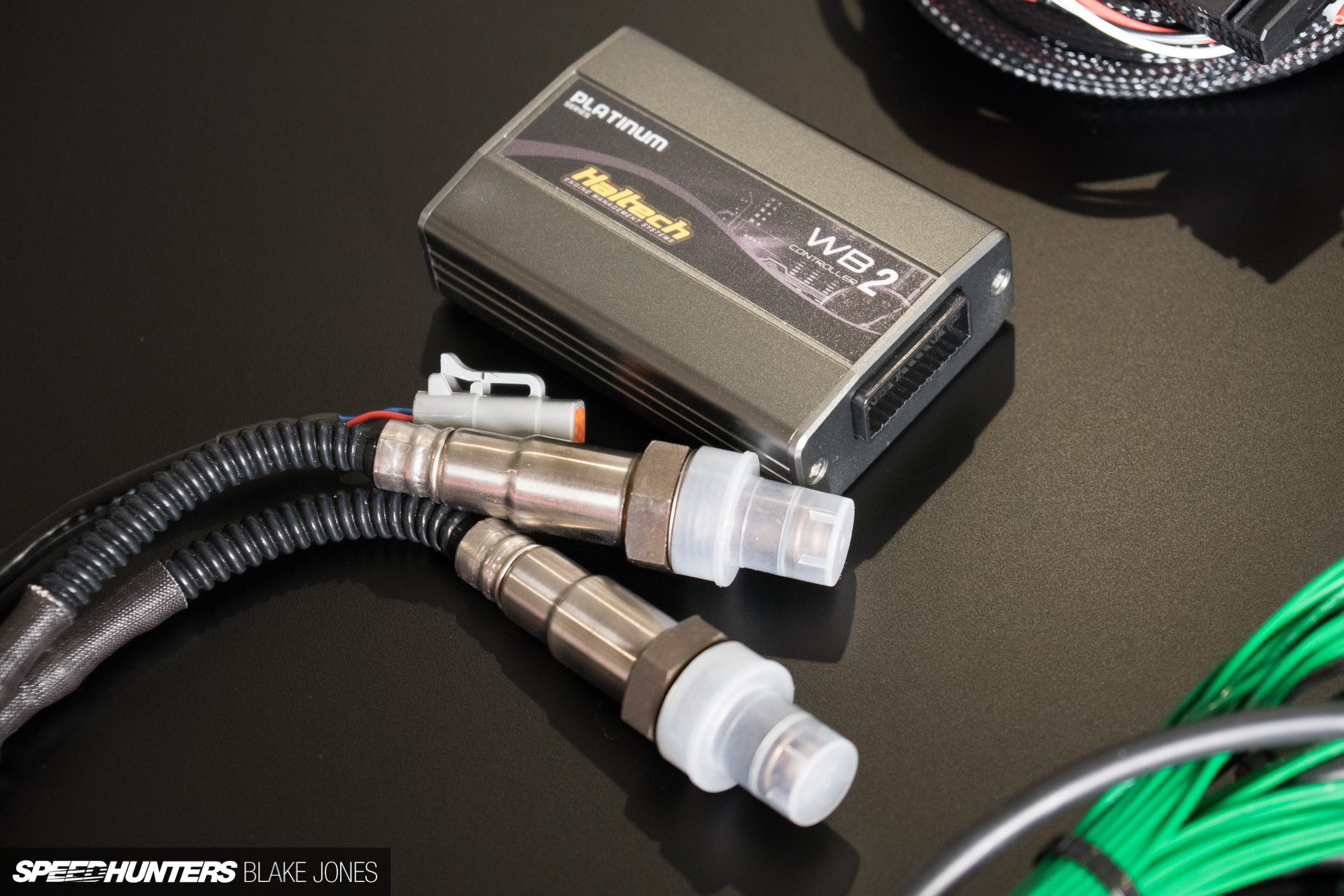
Also from Haltech is one of their Platinum Series WB2 controllers. This allows me to run a wide-band O2 sensor into each bank of the Fujitsubo exhaust manifold and monitor the AFR precisely for each bank of cylinders, and thus improving the accuracy of the engine tune far beyond what a narrow-band sensor is capable of. All a narrow-band sensor communicates is one of three options: rich/stoic (OK)/lean, whereas these units will show an exact ratio (close to 14.7:1 if all goes well).
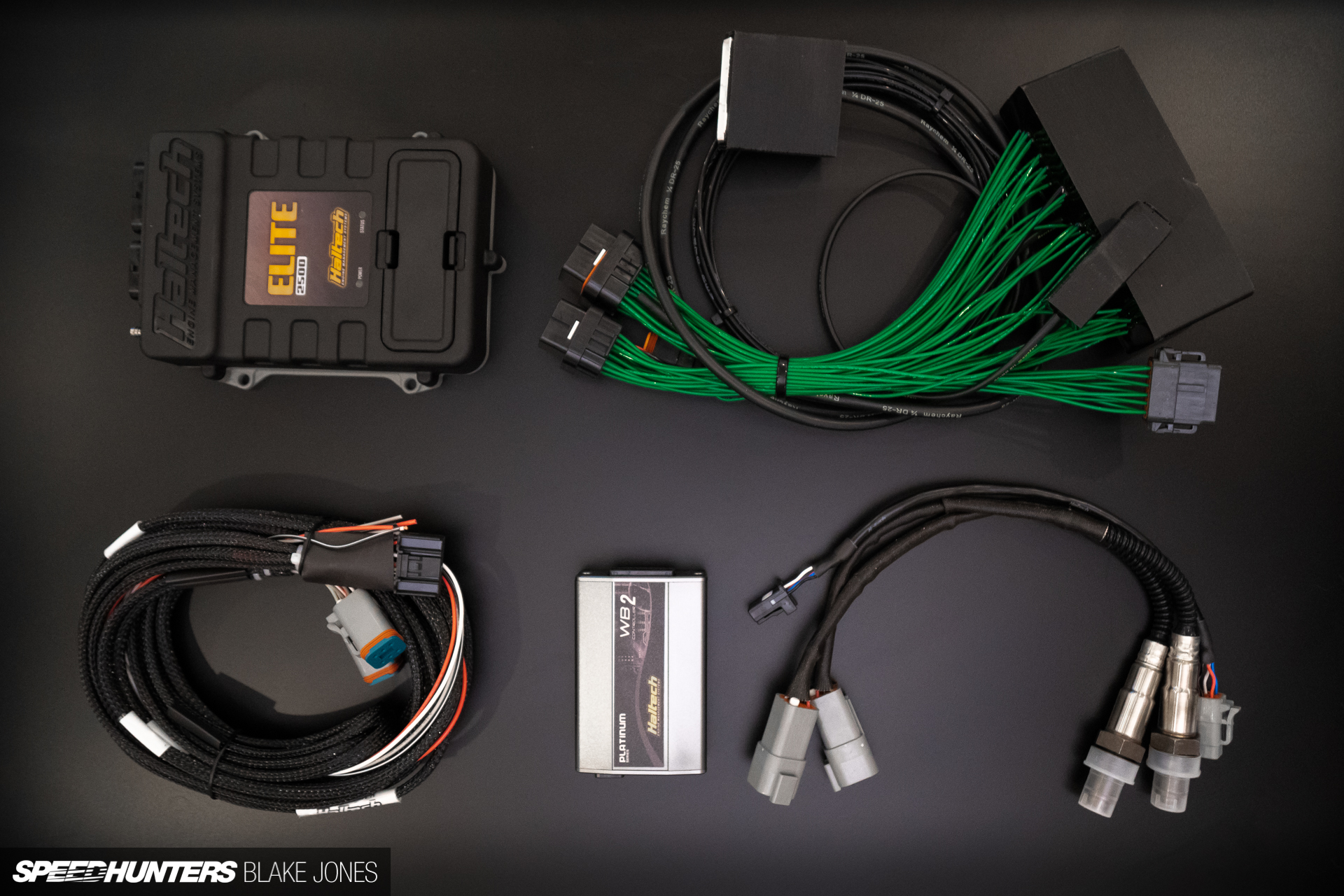
The final piece of the puzzle is the harness. All those inputs and outputs on the Haltech need to interface precisely with the existing systems on the NSX. On the input side you have all kinds of engine sensors, outputs range from the obvious (fuel and spark) to gauge cluster and even cruise control. Project NSX being primarily a road car means no compromise to the regular operation of the car.
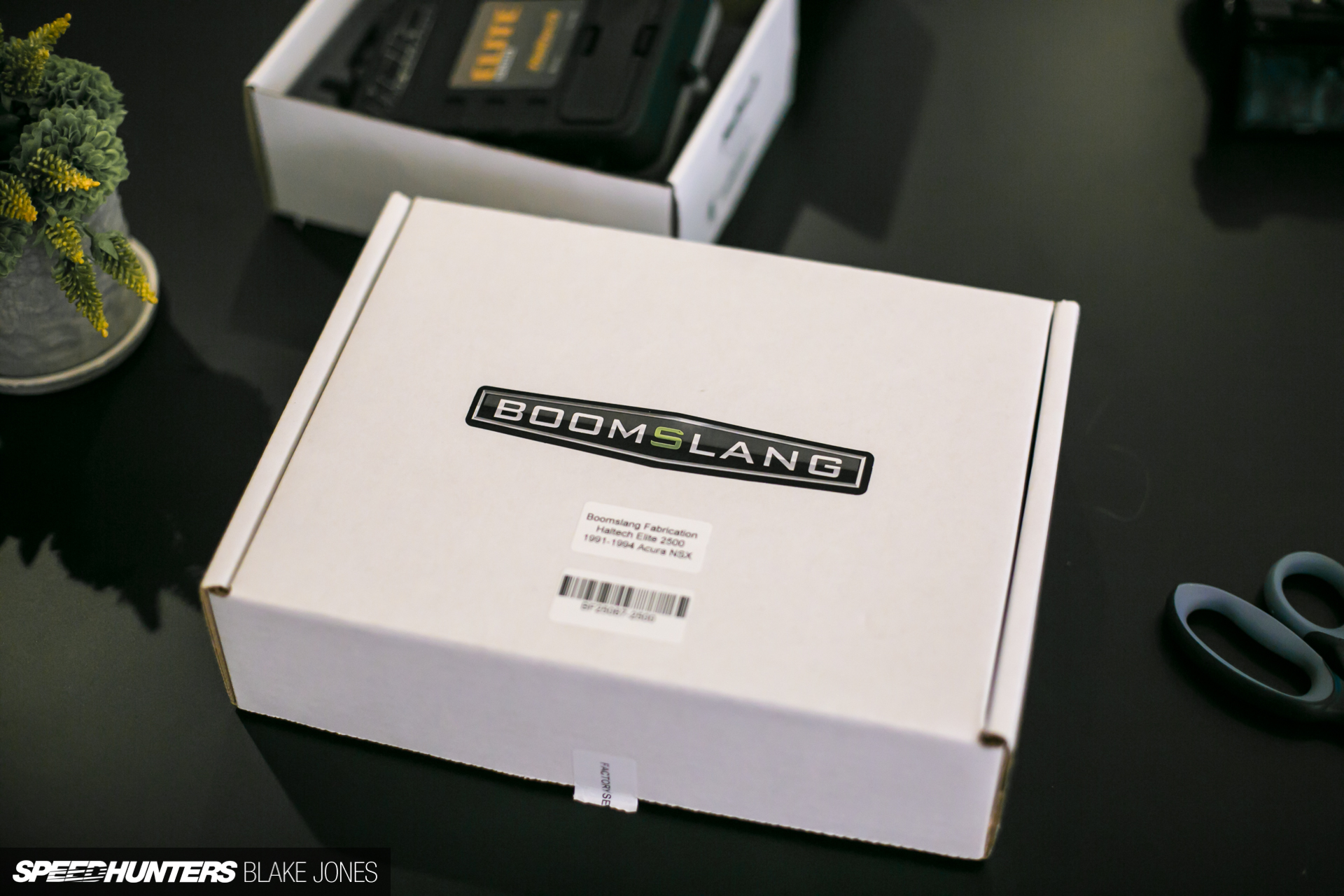
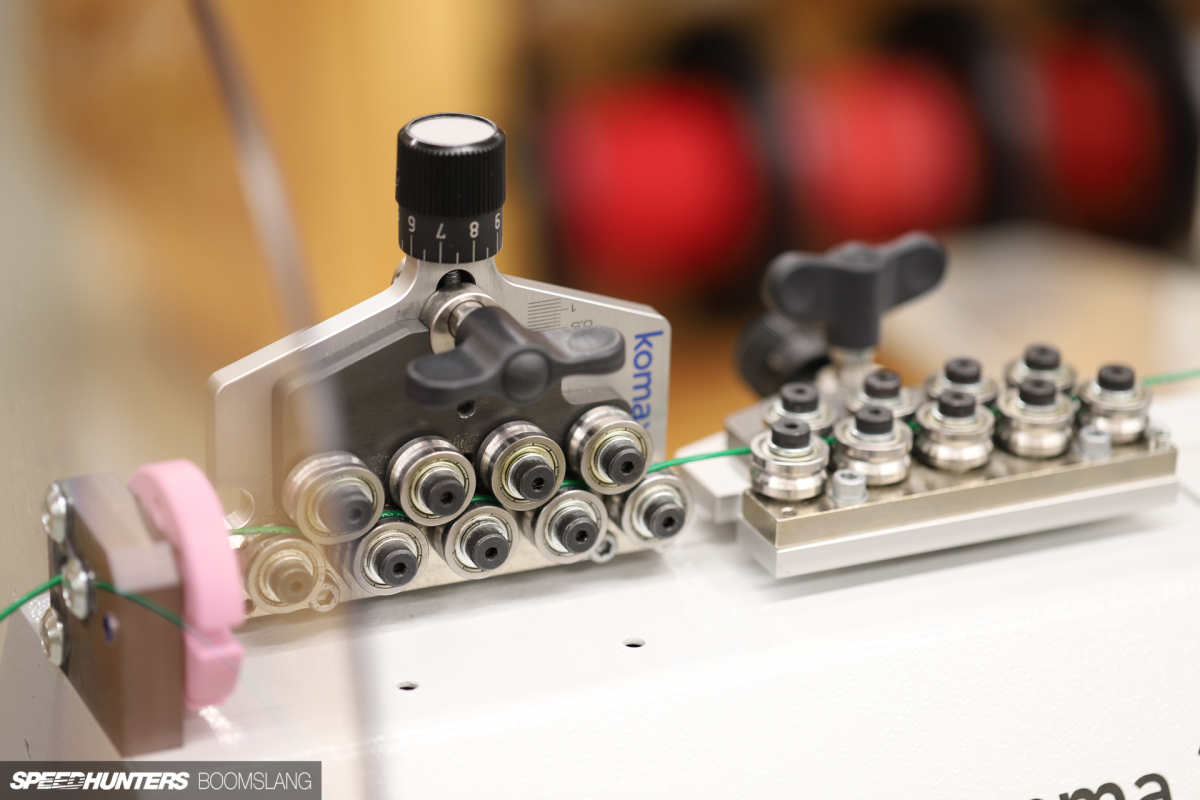
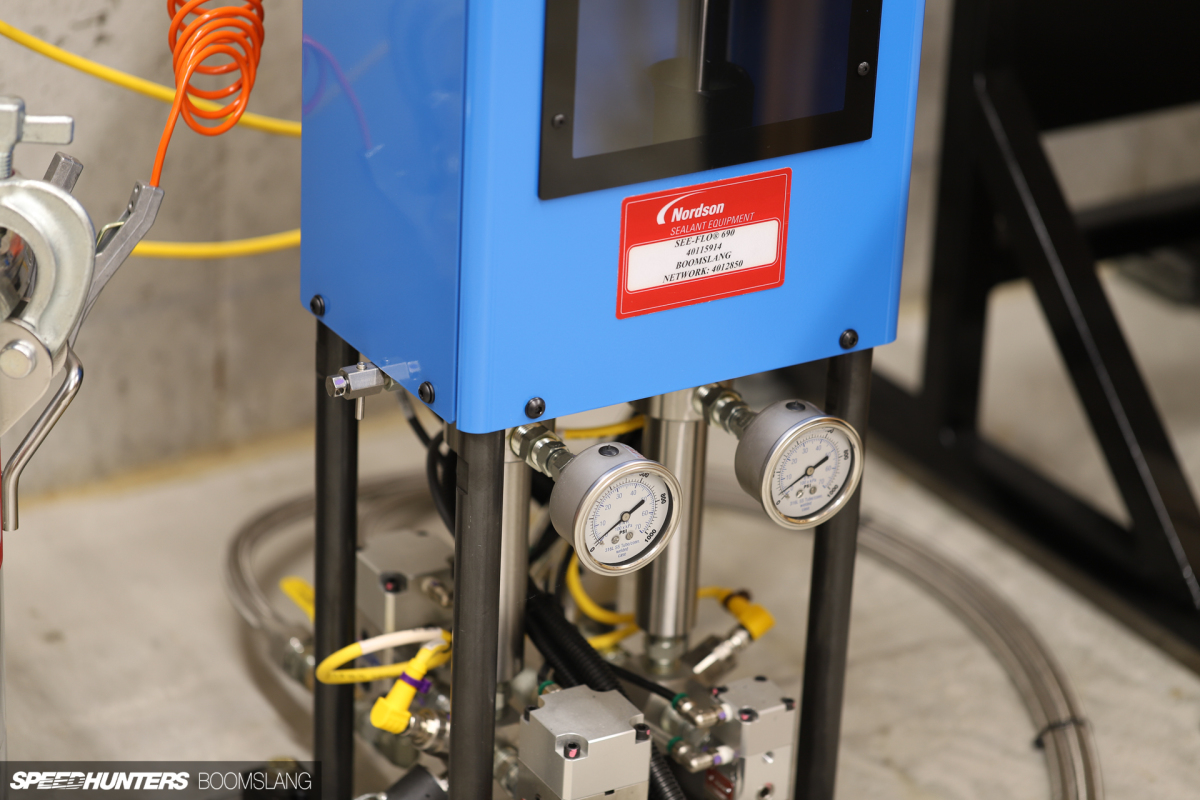
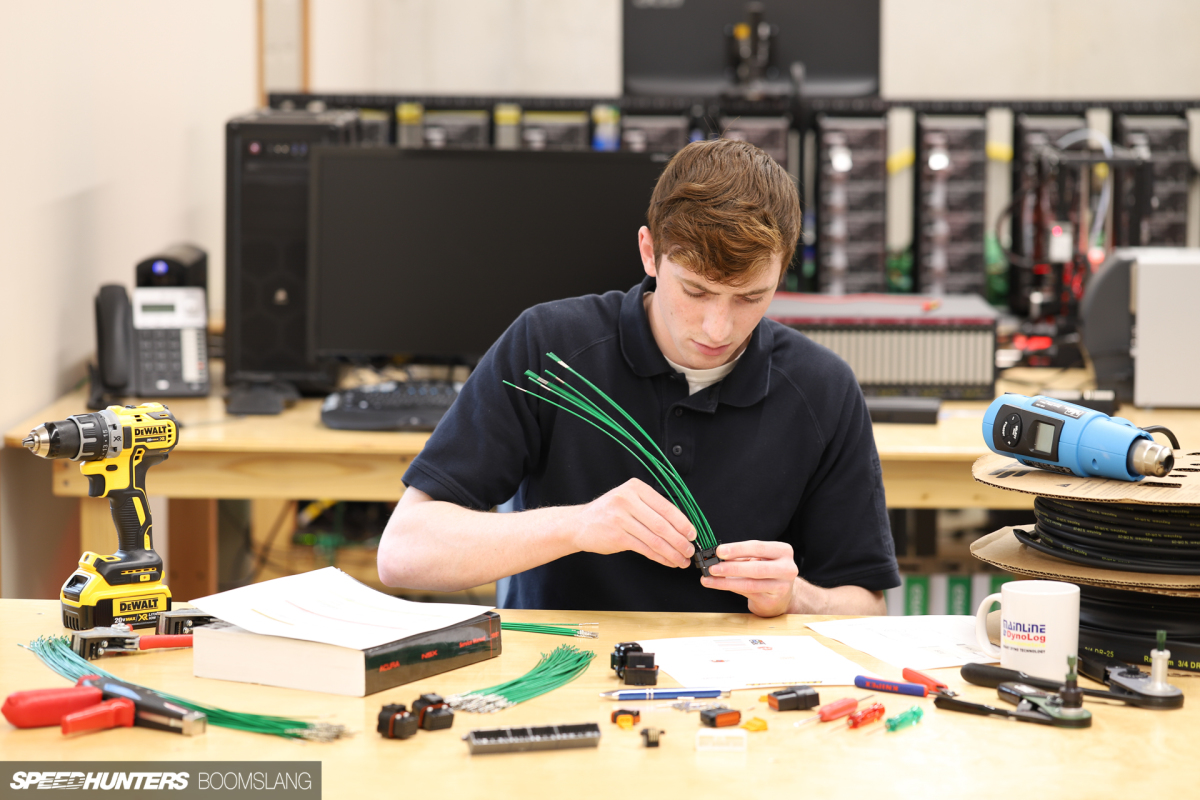
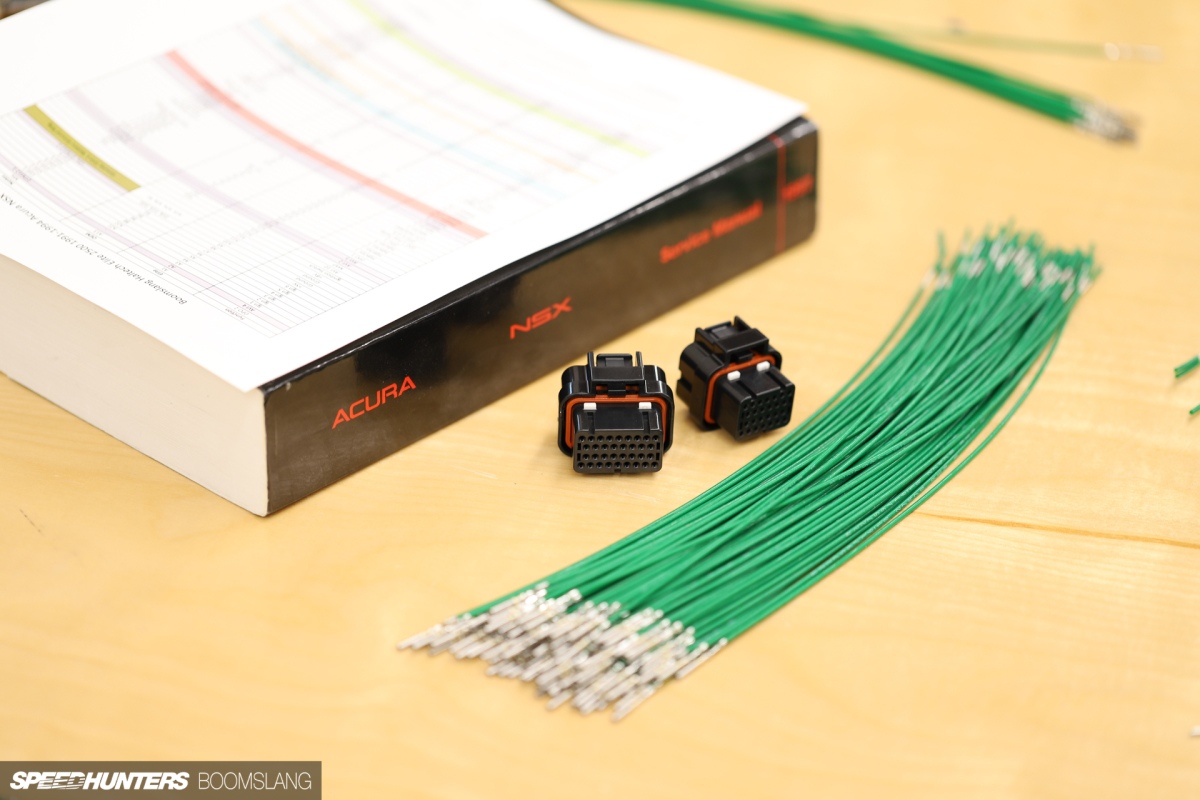
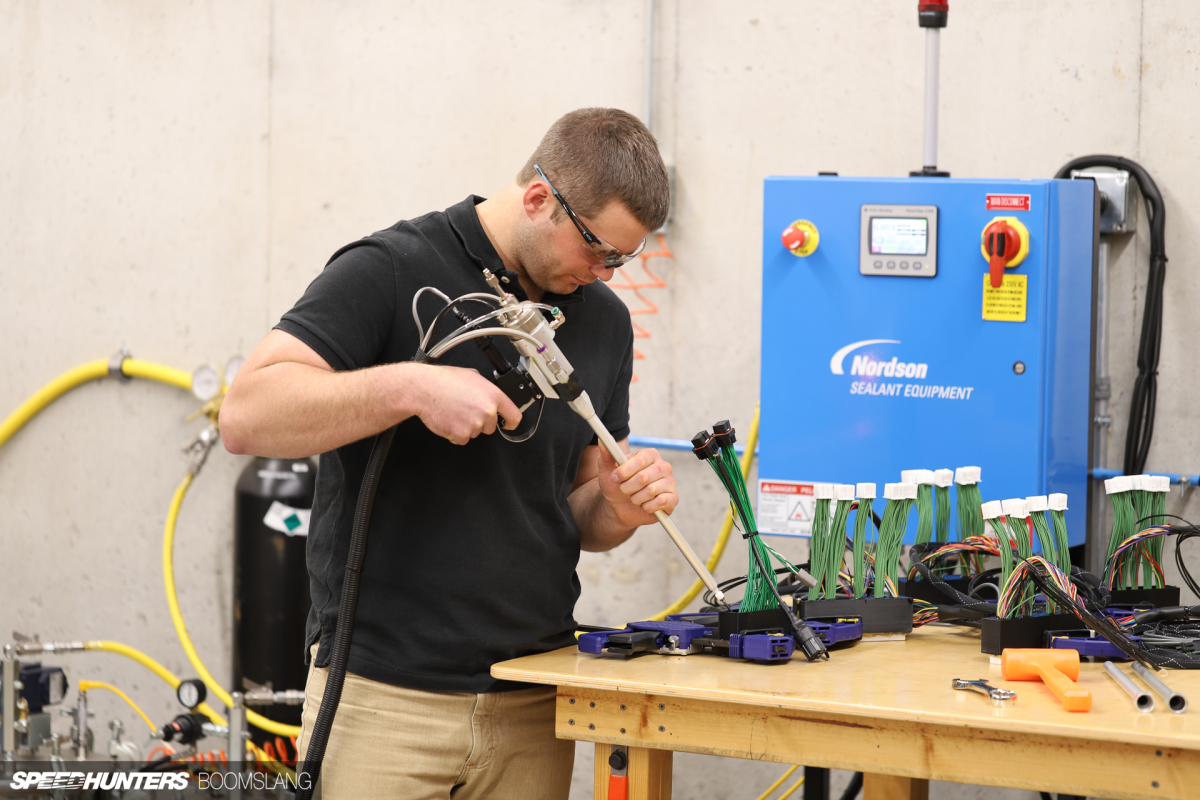
That’s where Boomslang Fabrication comes in. Boomslang is a company based in Missouri, USA which specialises in the design and manufacture of ECU harnesses. They’ve been in the game for years now, and as a result have experience with a wide range of car and ECU combinations.
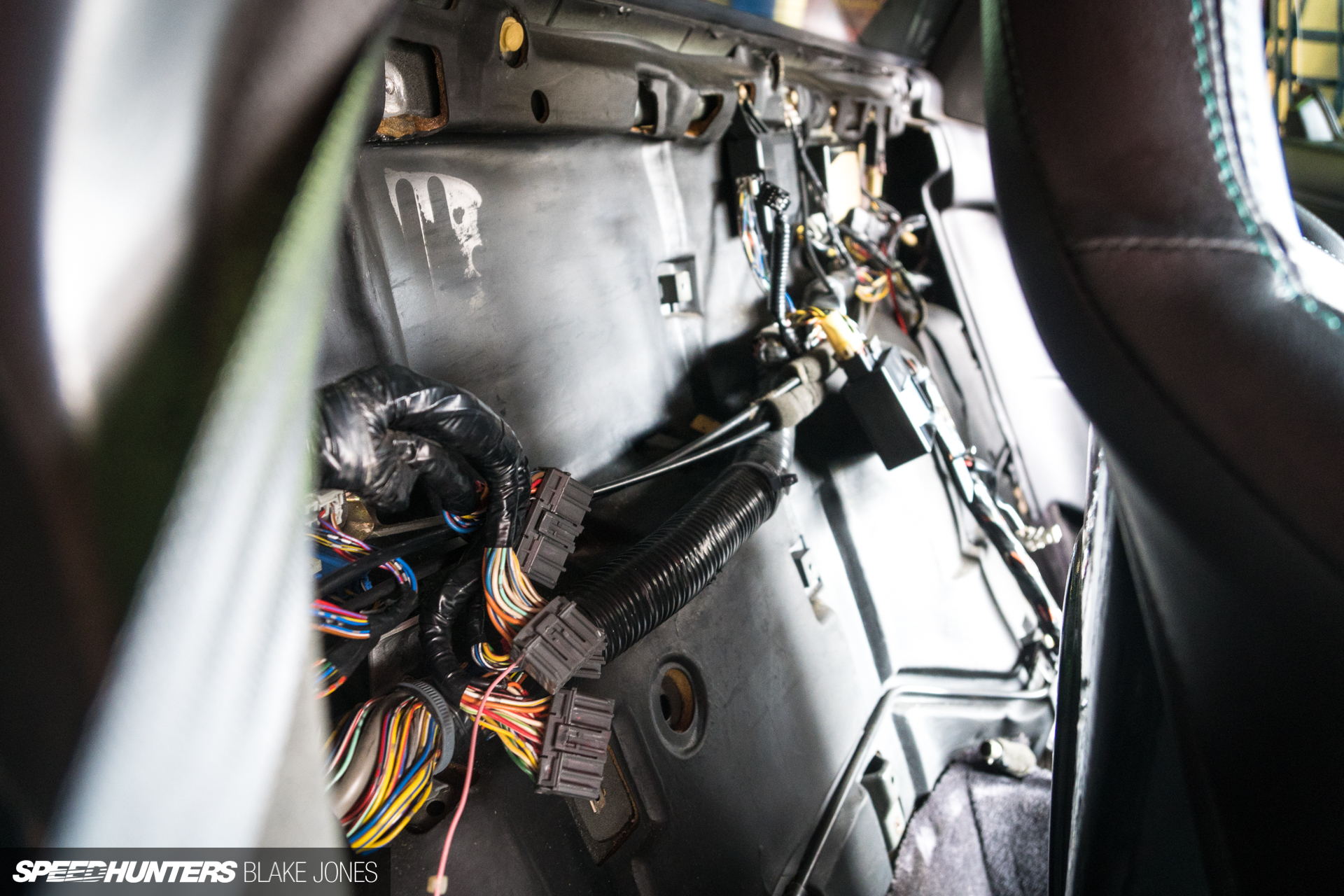
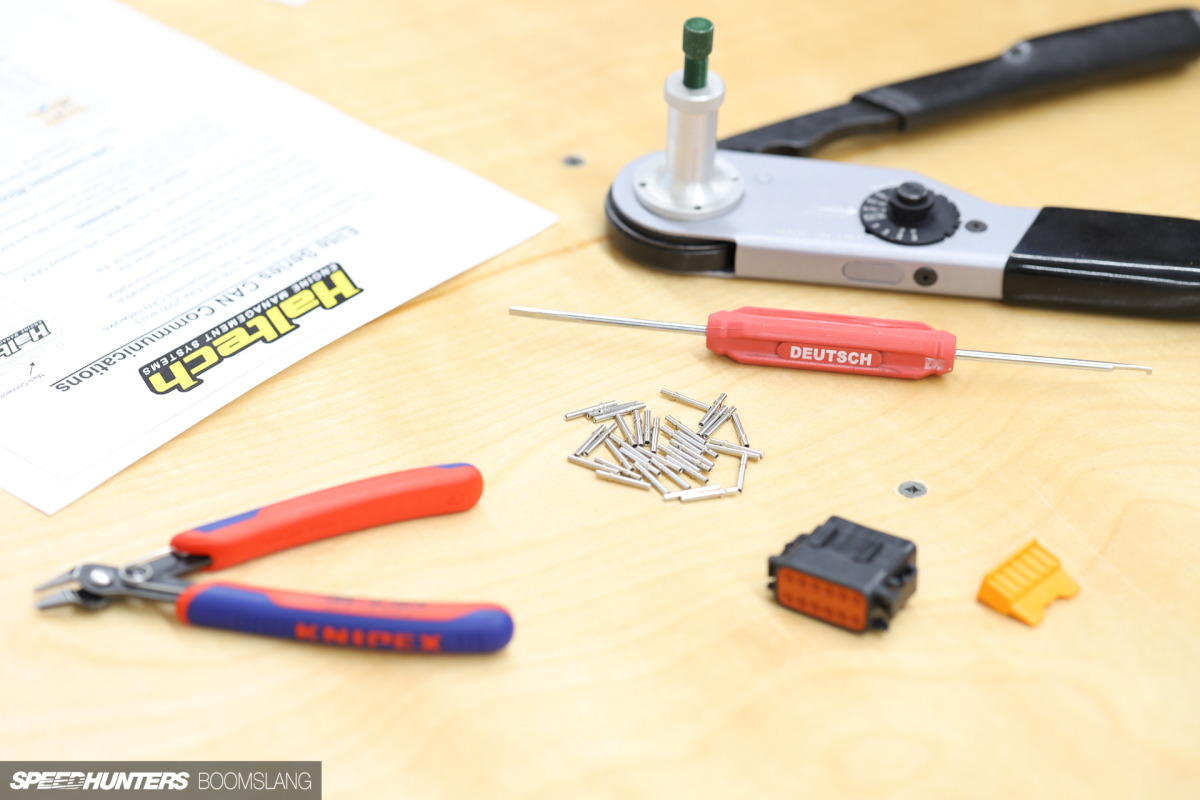
Although it’s unlikely I’ll ever go back to the stock ECU, I was keen to avoid modifying the standard wiring if it could be avoided. Boomslang’s techs custom-made a plug-and-play NSX-to-Haltech harness, which means no cutting, crimping or splicing to get the Haltech talking to the old Honda.

In addition to feeding all my factory inputs and outputs into the Elite 2500, the Boomslang team recommended adding in a couple of spare analogs, digitals, and DPOs in the DTM12X to give me the option to expand the functionality of the Haltech beyond what’s currently available (say for instance for a DBW throttle body or an additional oil temperature sensor).
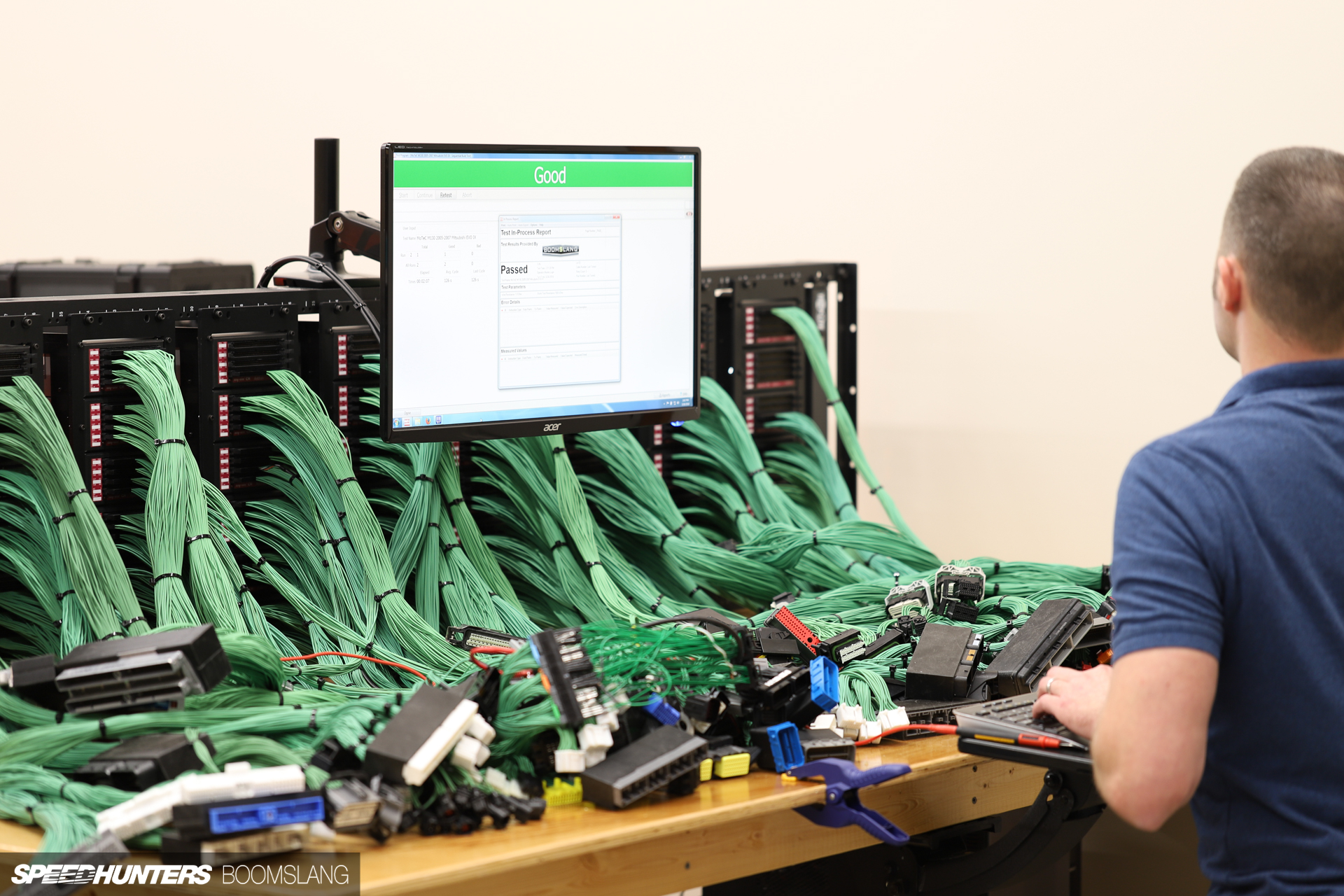
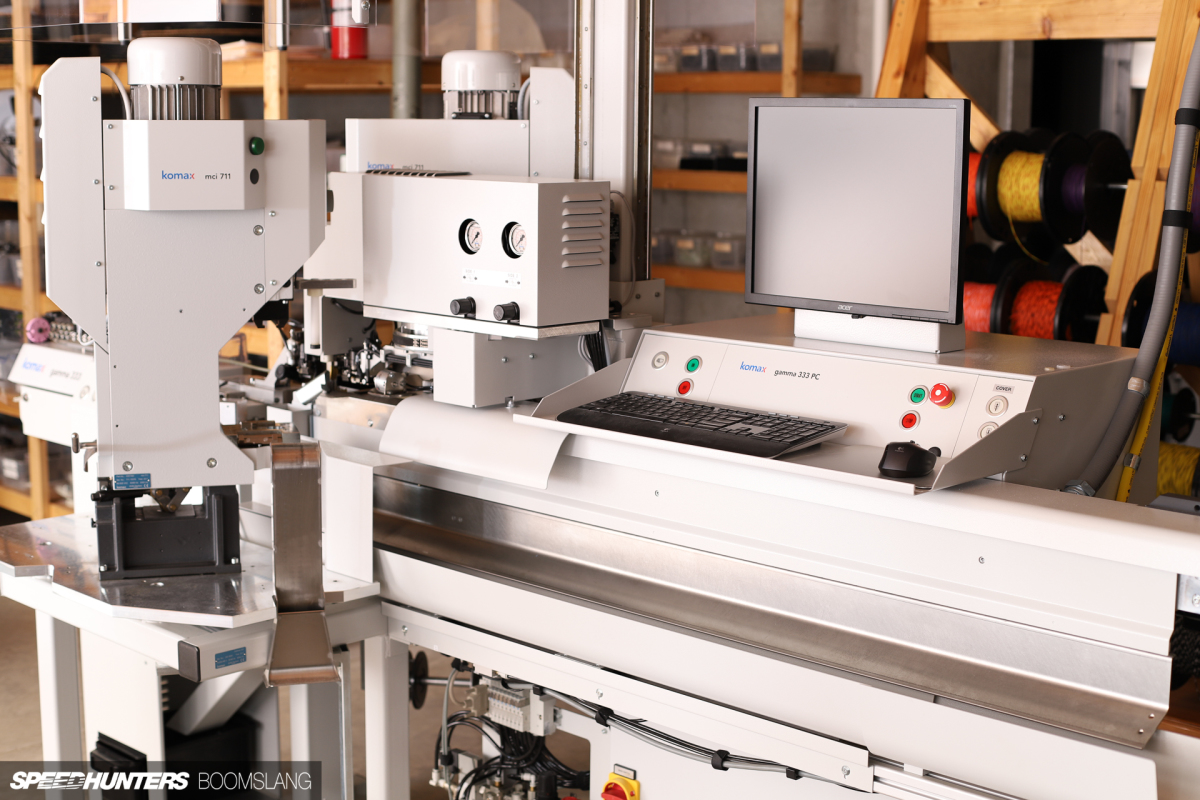
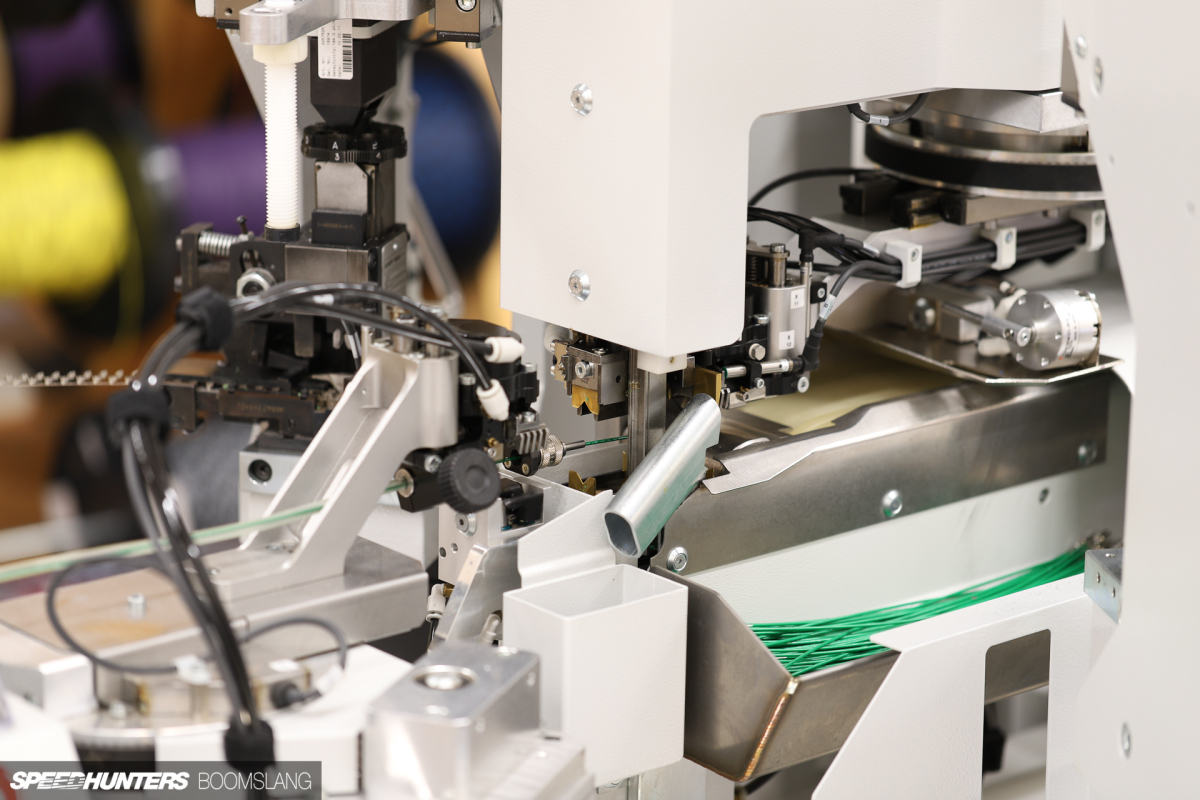
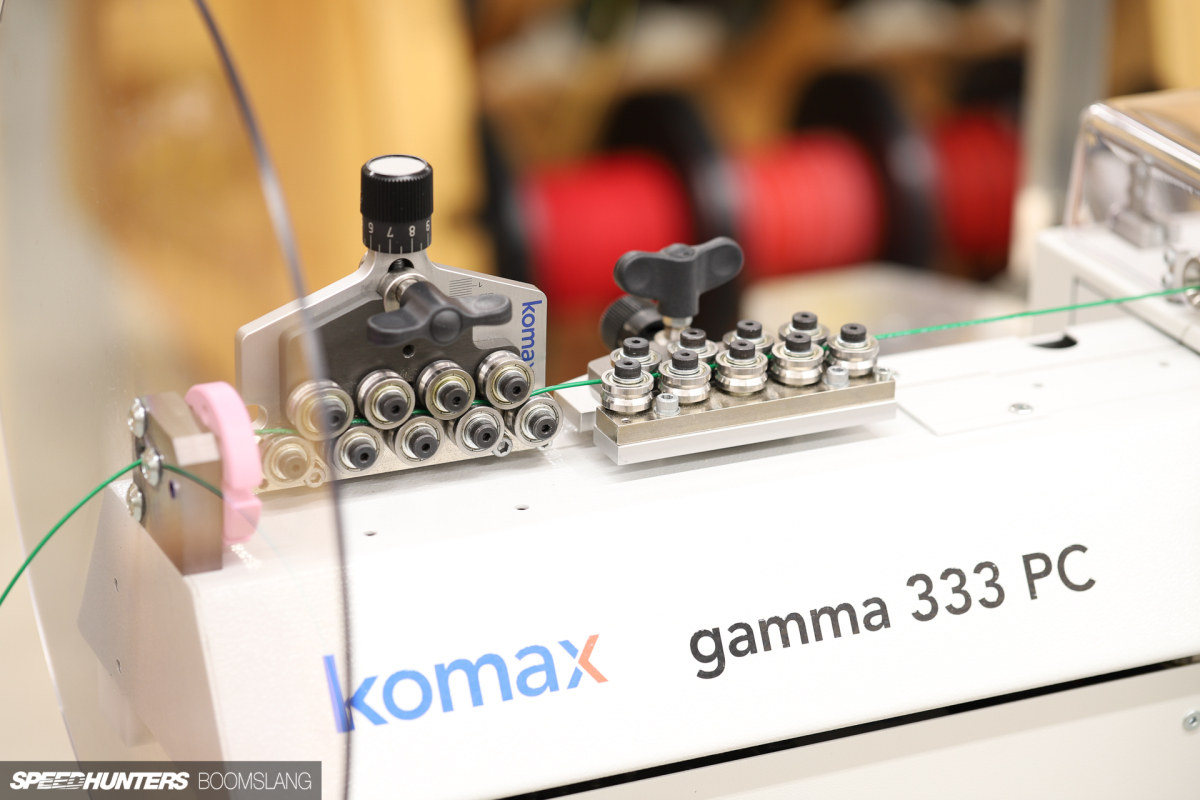
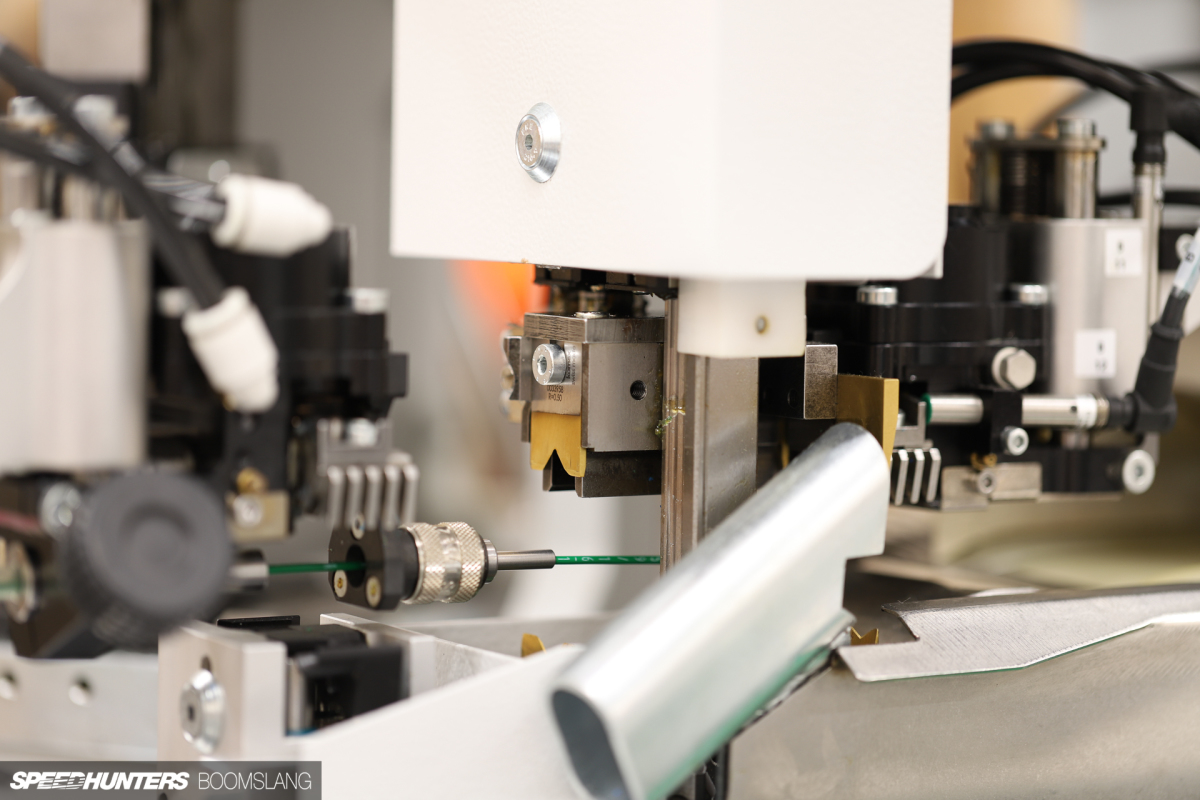
Before shipping, Boomslang’s harnesses are checked via a Cirris Systems CR 13,824 point aircraft cable testing array. This is way beyond my comprehension, but the system lets the team ensure each harness they send out is working as intended. You can check out some photos of the harness manufacture at the end of the article, kindly supplied by the Boomslang team.
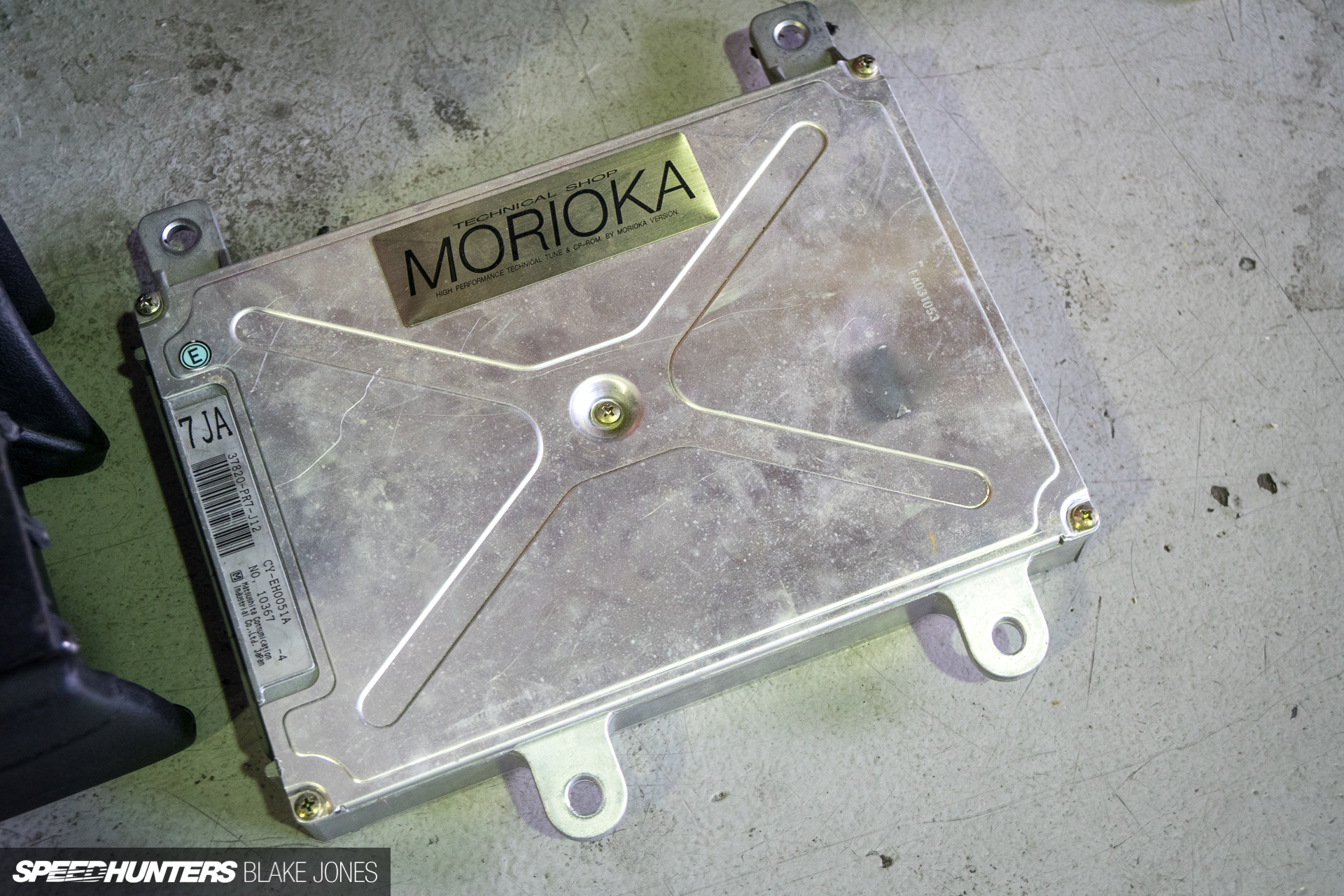
After a local workshop swapped out my stock 02 sensors for the wide-band units, the physical install itself was straightforward:
Step 1: Unplug stock ECU. Step 2: Plug in Boomslang harness. Step 3: Plug in Elite 2500 and WB2 unit. Done!?

Well, not quite. Step 4, tuning, is decidedly complex. For this I’d be enlisting the expertise of Trent Hewitson, owner of Chequered Tuning in Keysborough.
On the Dyno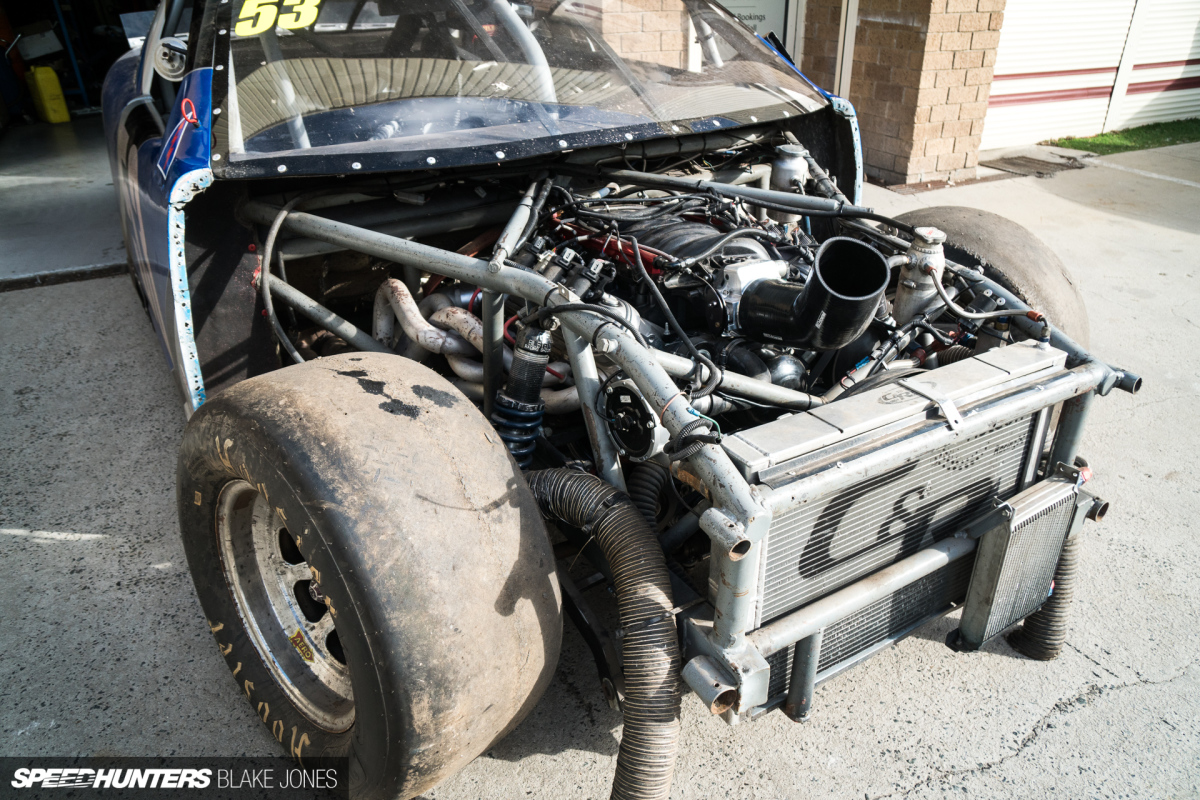
Trent and his drifter wife Cat form a great duo, and these days focus only on tuning, making the most of Trent’s valuable time. He does a lot of high-powered turbo tunes, but it was interesting to see an LS-powered stock car running the same ECU setup as my car being wheeled out as I pulled up at the shop.
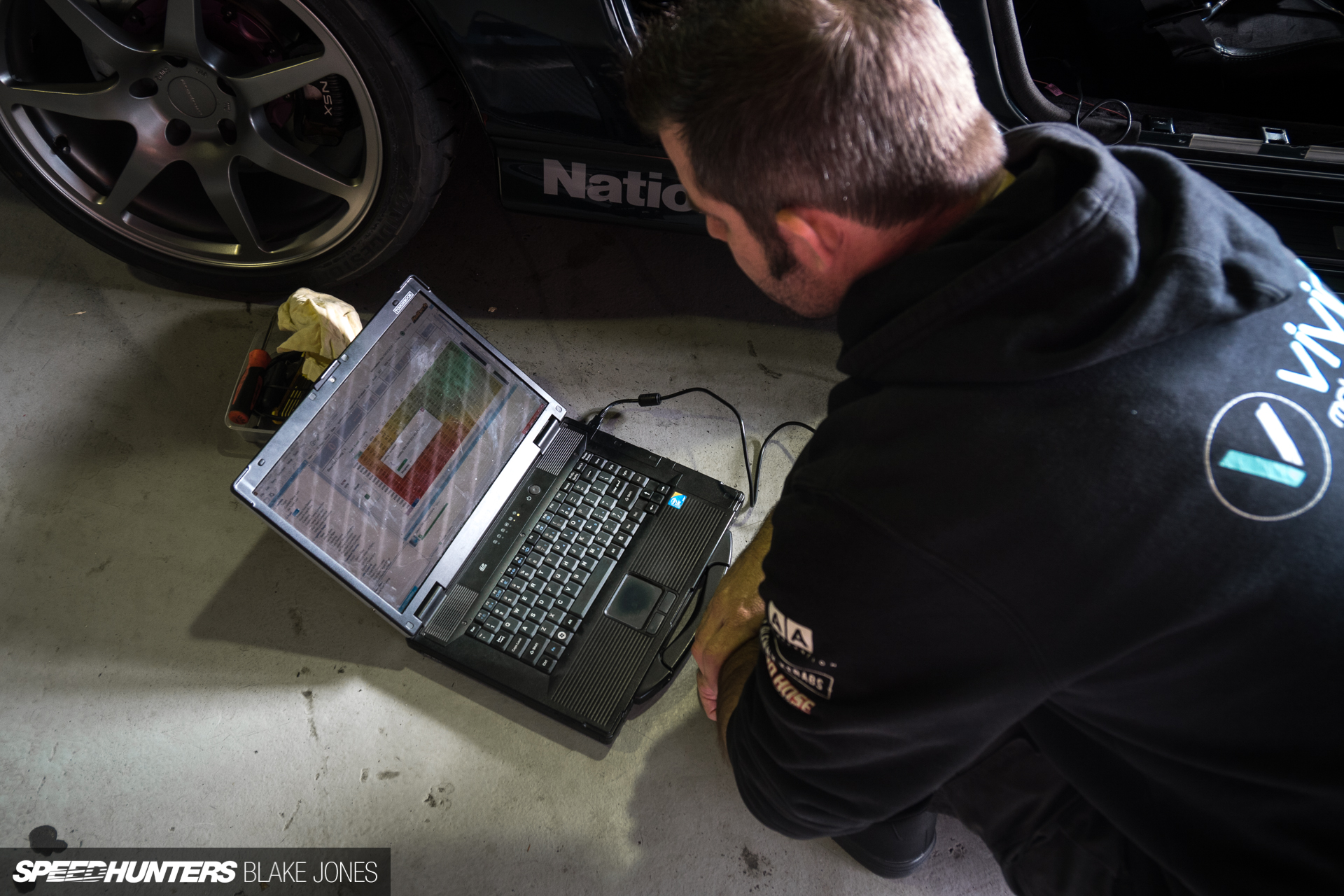
Usually Trent can have an Elite running a car in about five minutes with a ‘base map’ supplied by Haltech. There isn’t one available for the NSX yet, so he started with a K20A base map and started to tweak the settings to suit the C30A.

This involves telling the ECU how many cylinders, the capacity, the firing order, trigger type and a few other details.
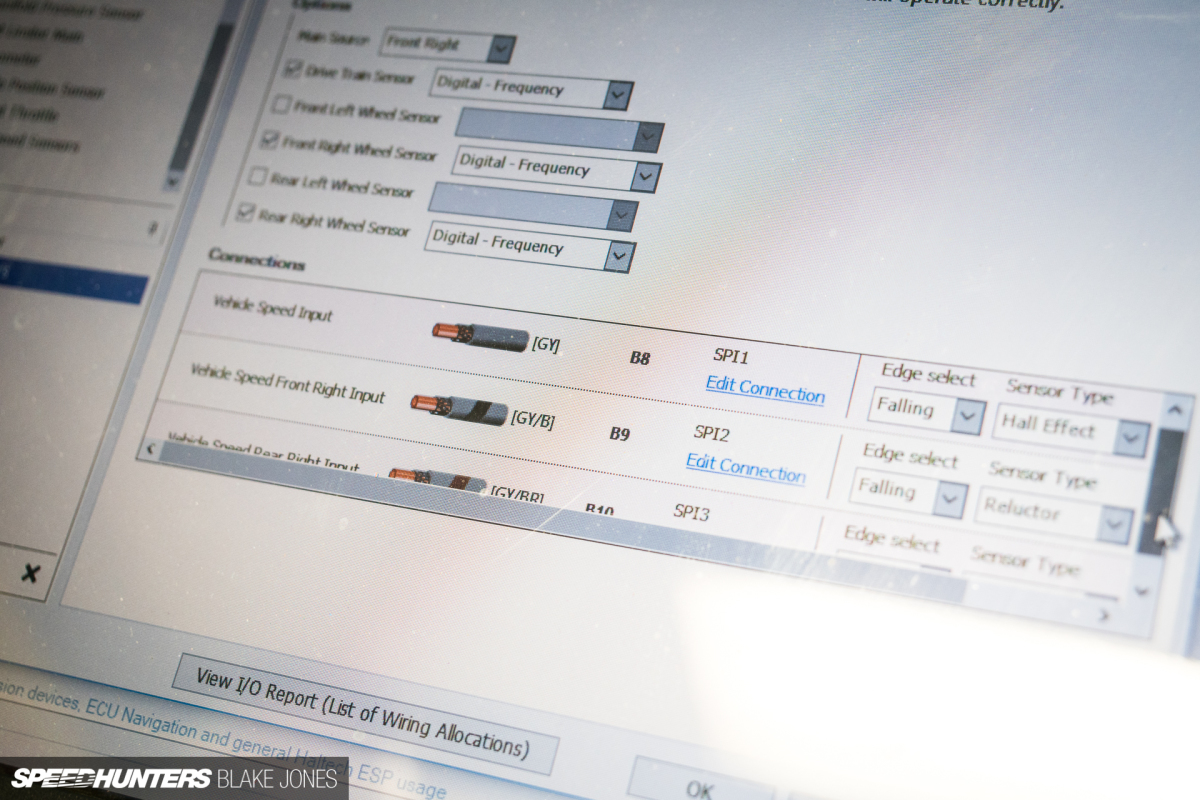
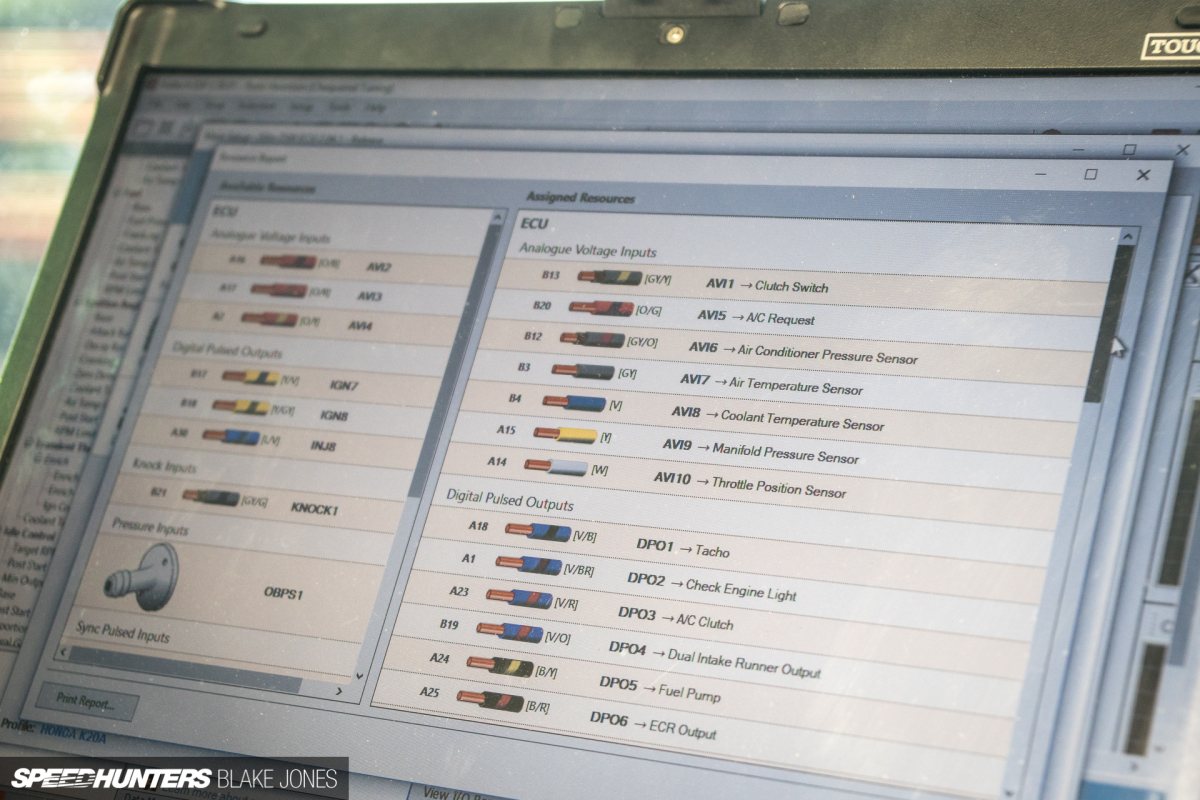
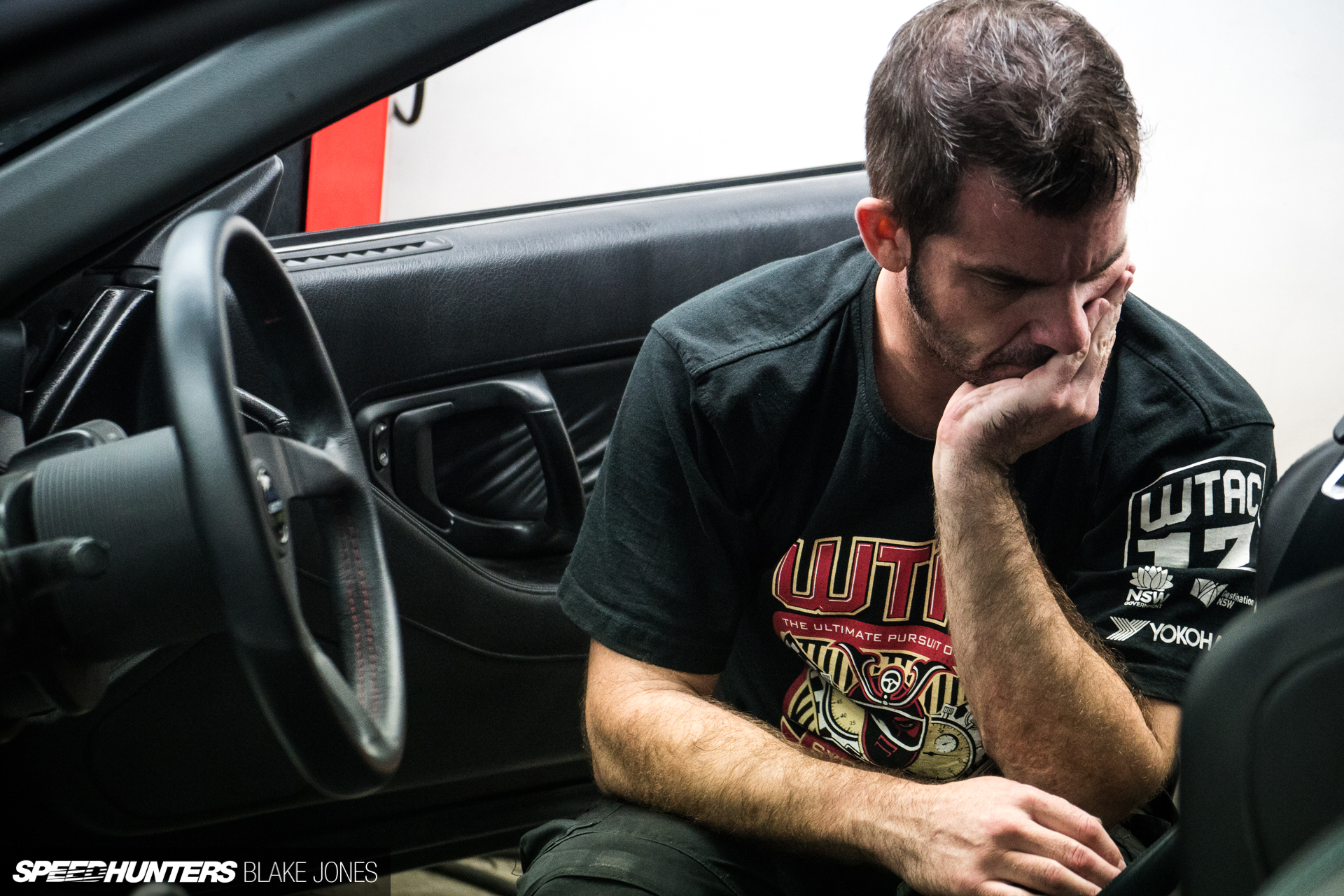
Most of this detail is beyond me, so I silently watched Trent tapping at his boxy Panasonic laptop like some anarchistic hacker in a ’90s action film.
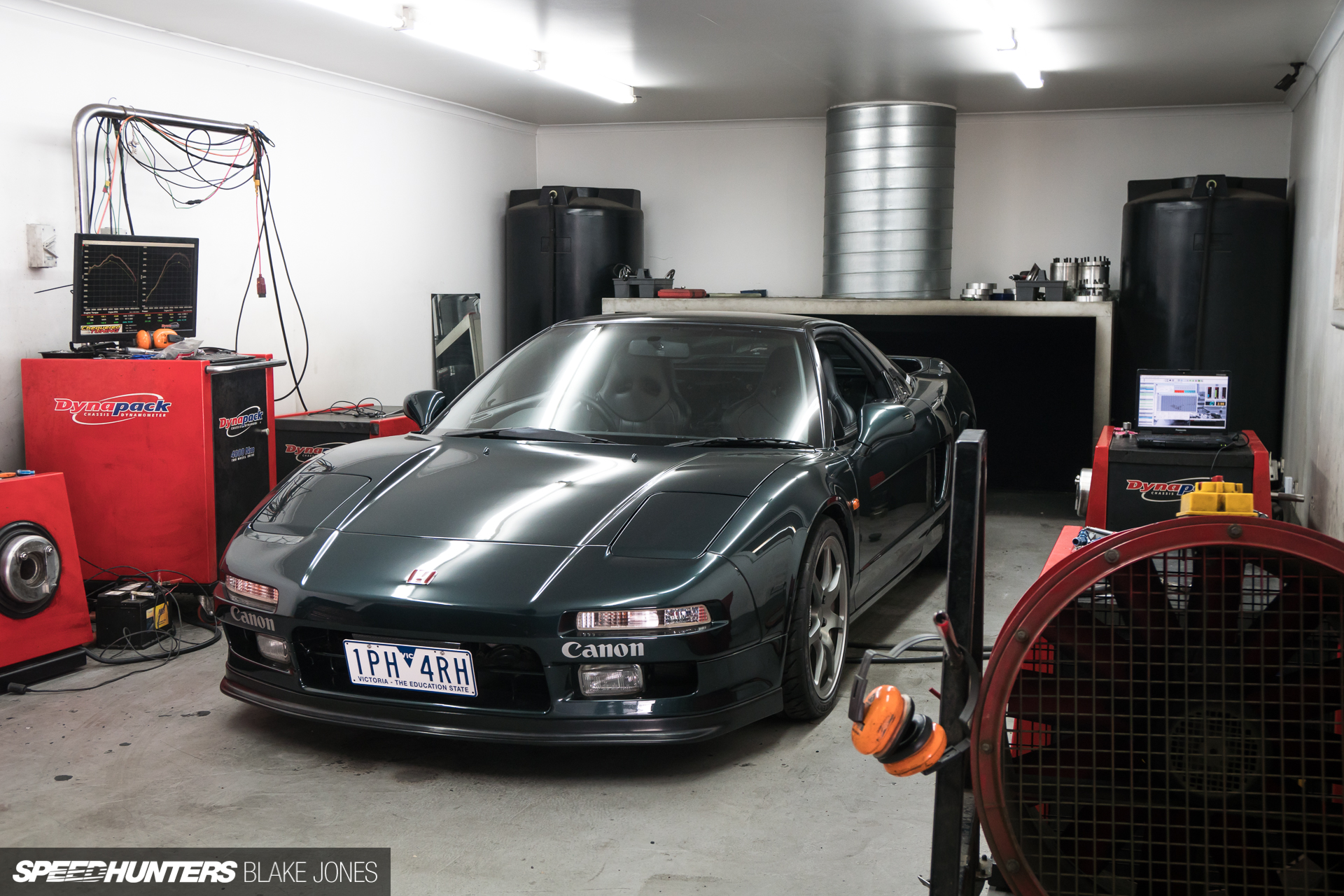
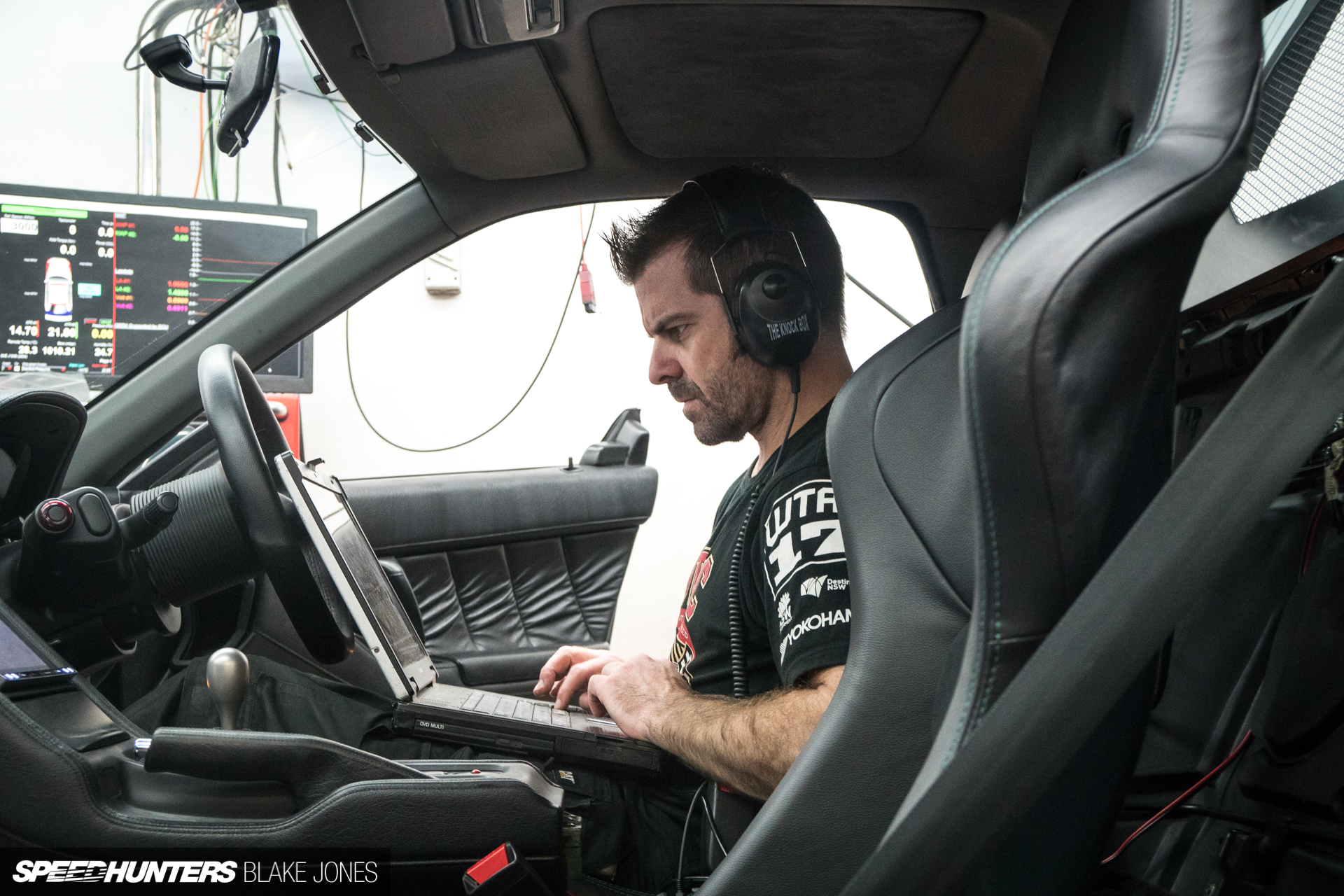
After about an hour the car was idling happily, so we reversed it into Chequered’s soundproof dyno room for the proper tune.
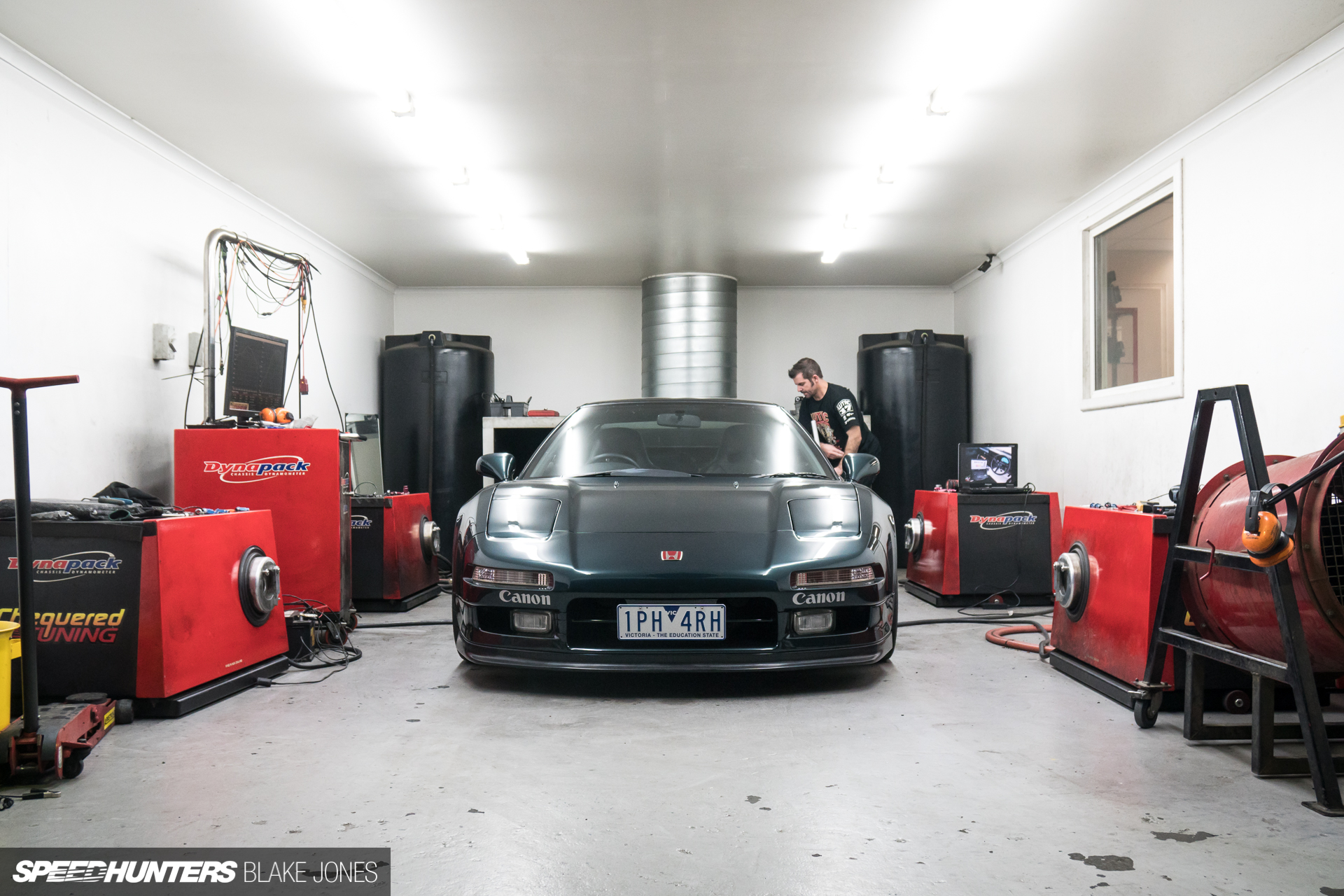
Trent’s system is based around a Dynopack AWD hub dyno, which is rated at some absurd max horsepower figure that we certainly wouldn’t be troubling with the NSX’s single driven axle today.
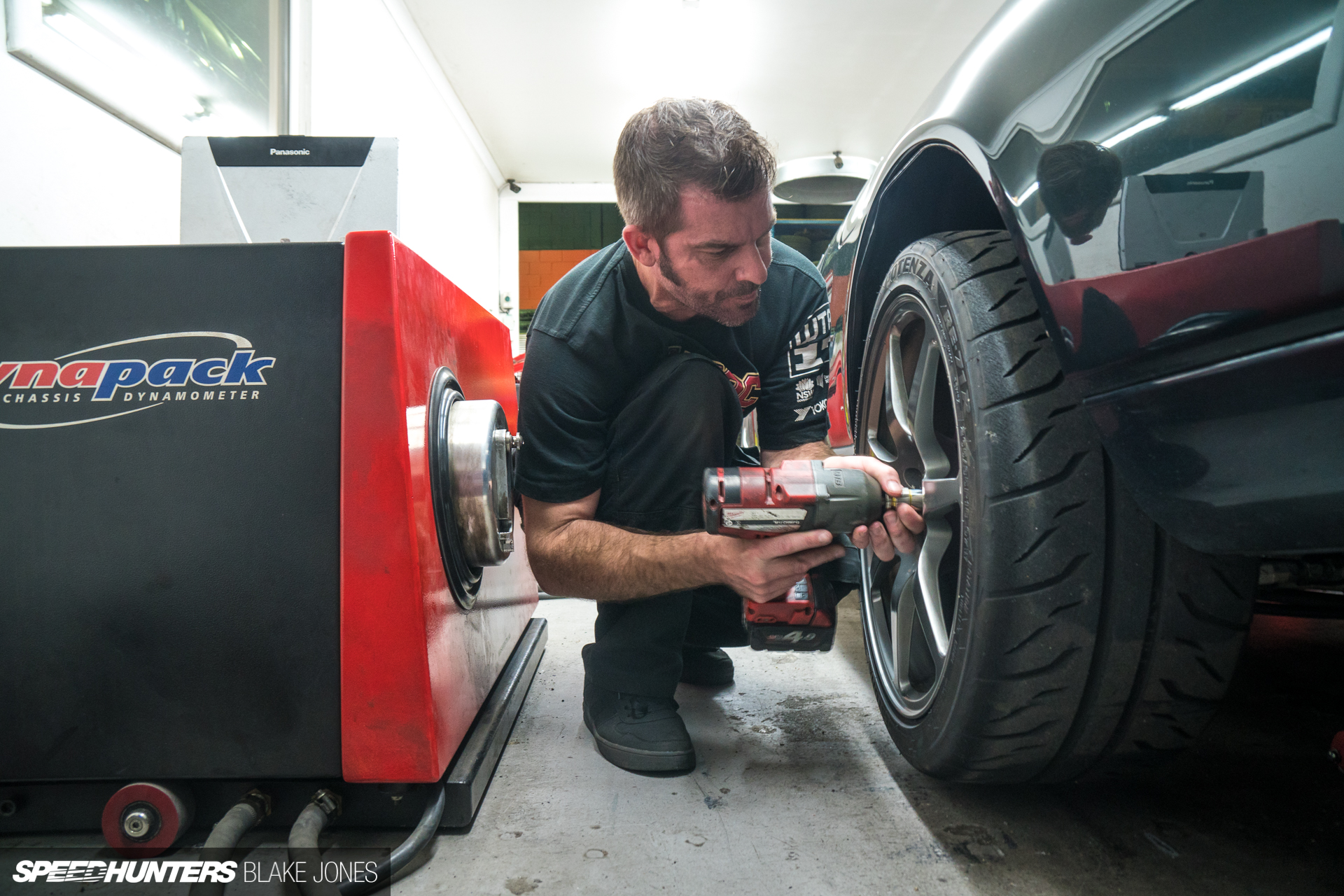
Compared to a traditional roller dyno, the wheels and tyres are eliminated from the equation, removing one more variable in between the engine and the dyno.
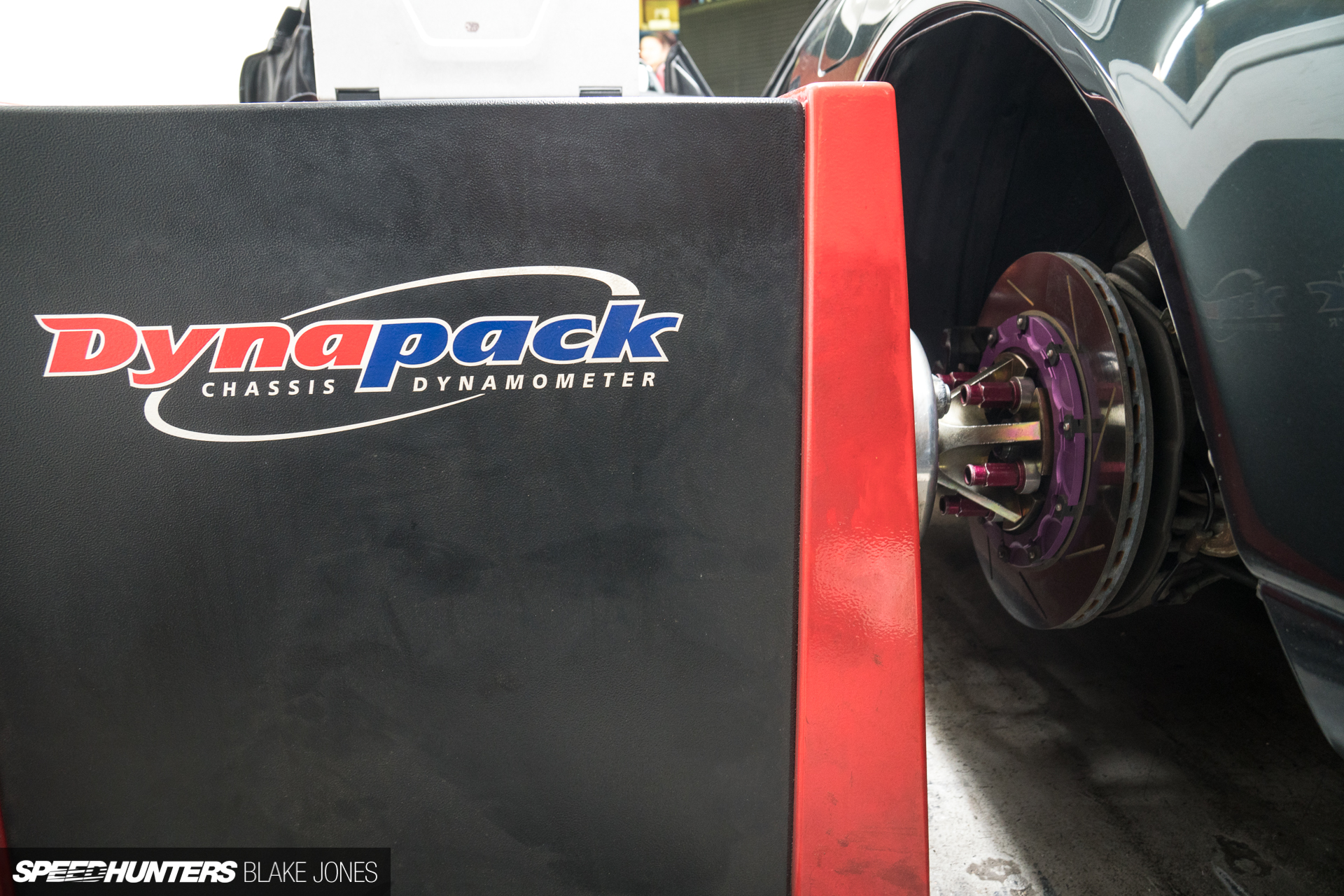
Without the inertia of the heavy steel rollers ‘smoothing’ the output of a car on a traditional dyno, the hub dyno also allows Trent to see finer details in the dyno plots, making his tuning more accurate. Dynapacks aren’t cheap, but they have a reputation for reliability that makes the initial investment worth it for someone who spends as much time on the dyno as Trent does.
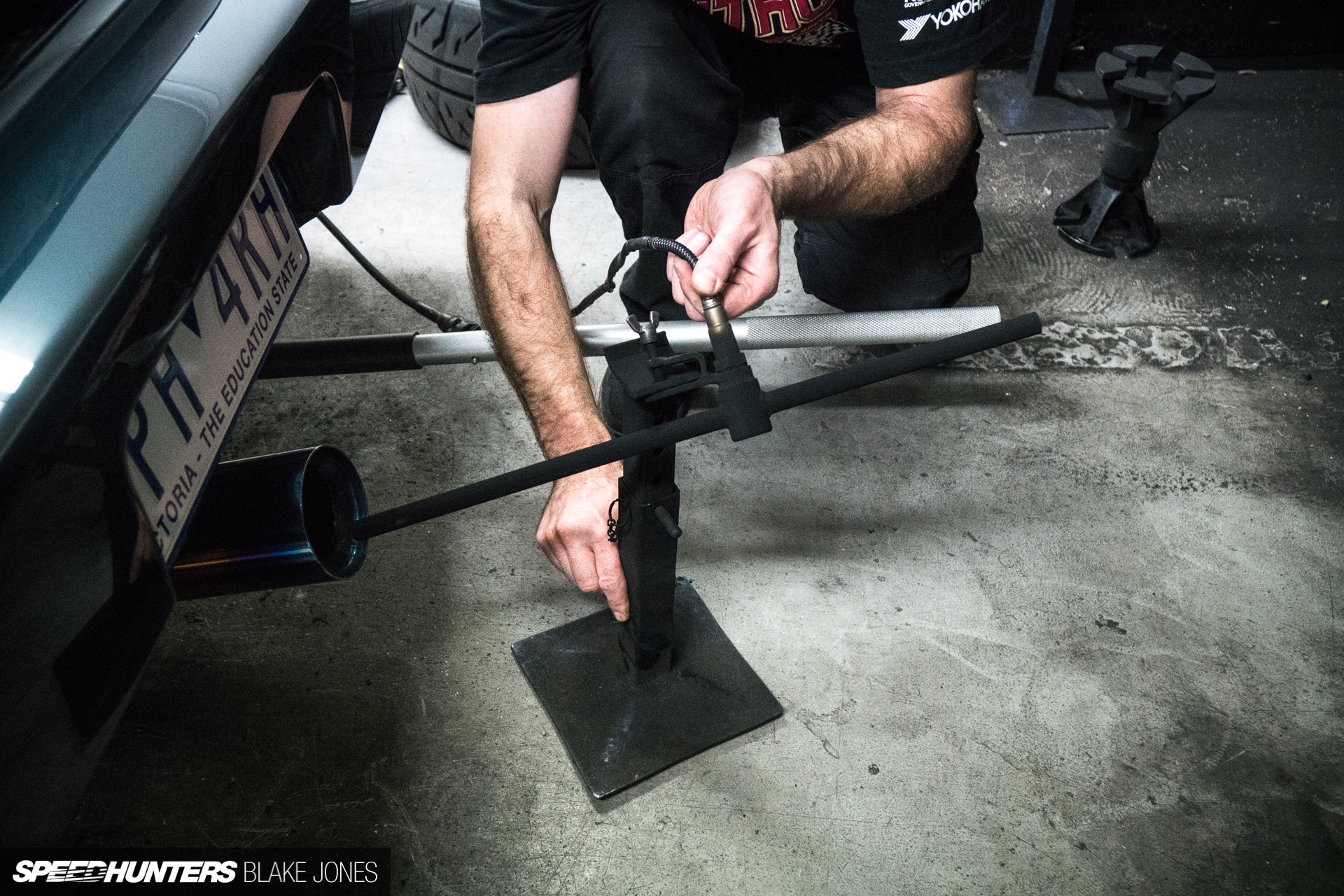
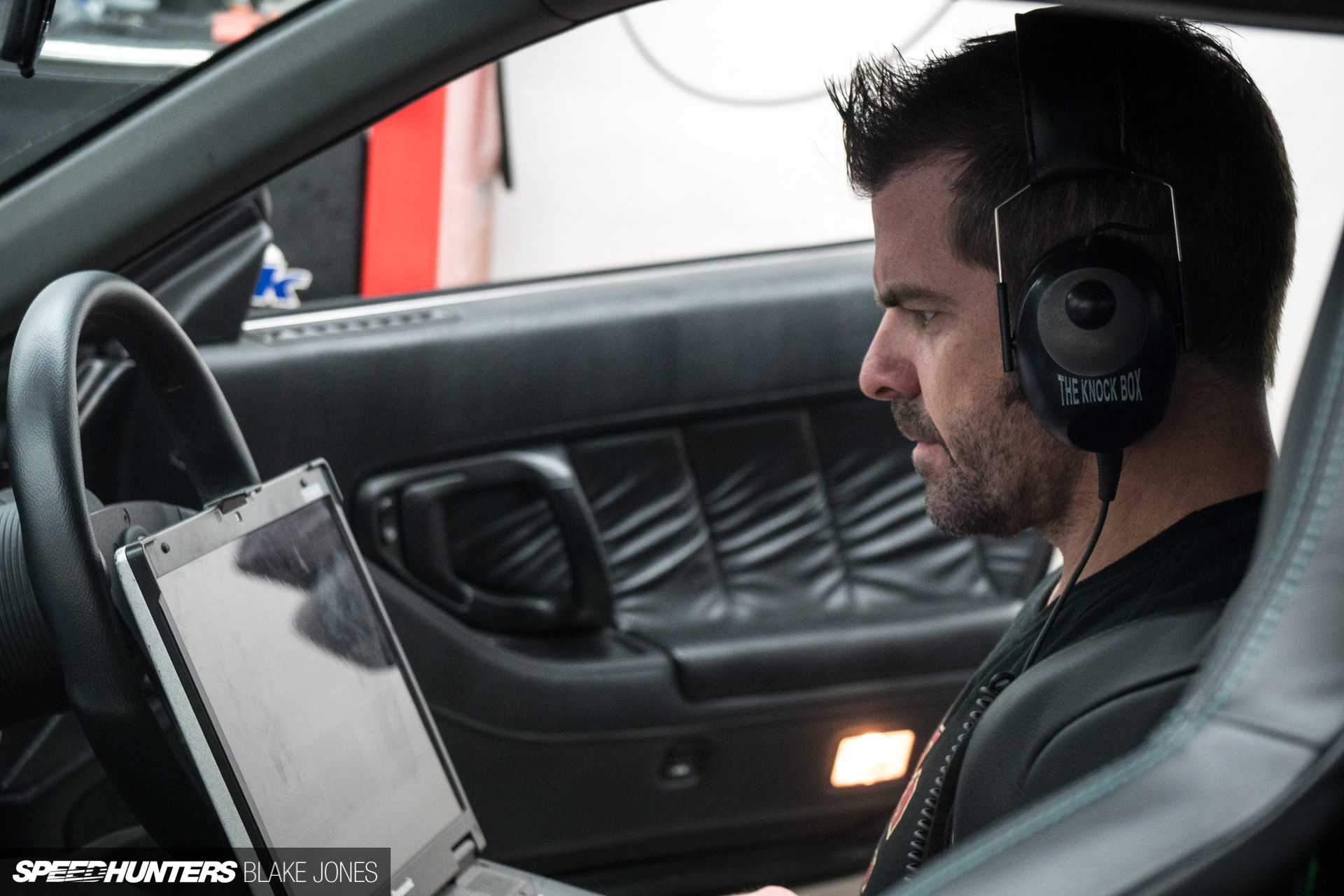
Before the first run, Trent hooked up an external O2 sensor, which feeds directly to his dyno computer and gives him an alarm if the engine starts to lean out – a failsafe in case the dyno or O2 sensors decide not to work for whatever reason.
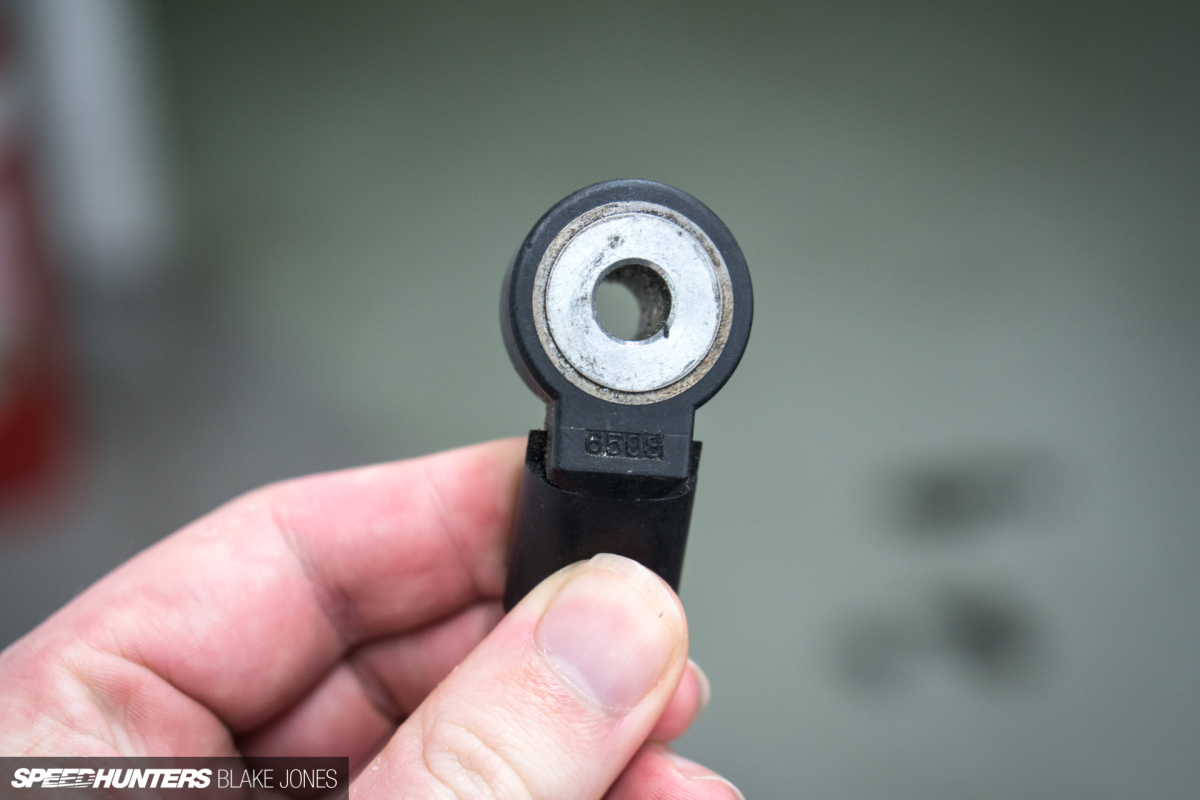
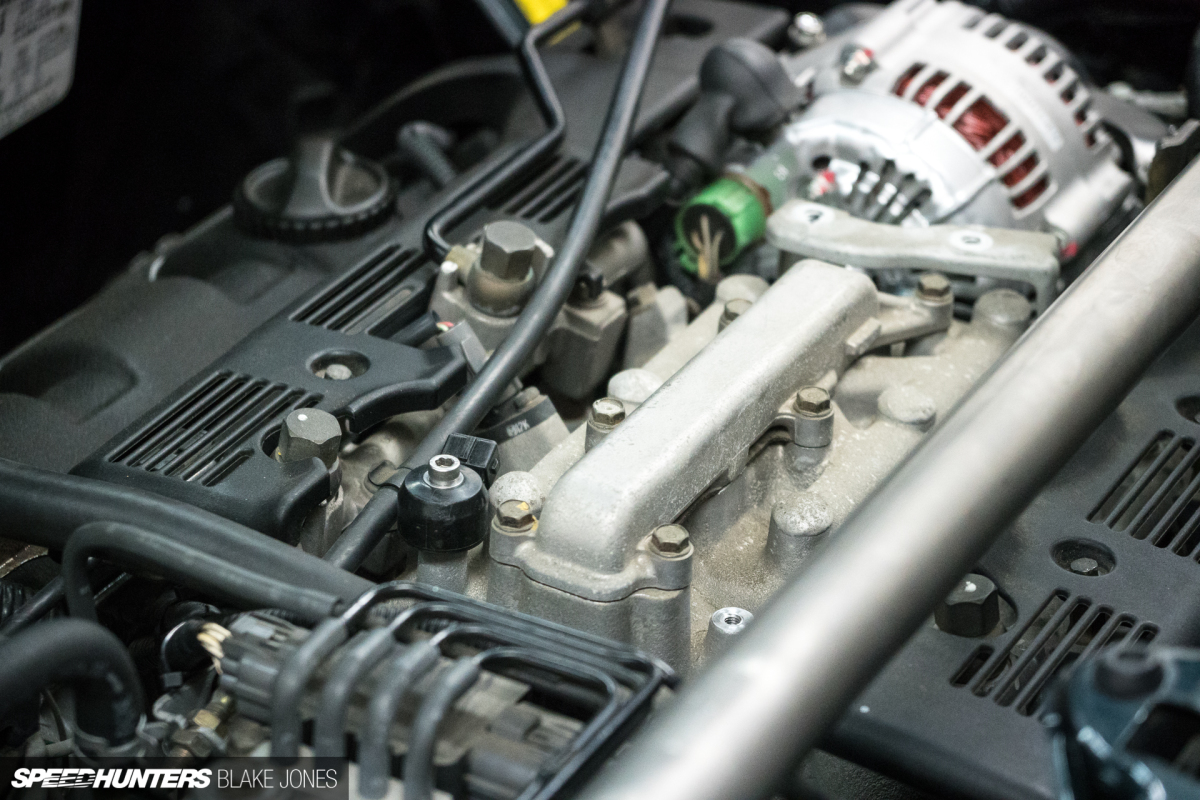
Similarly, an auxiliary knock sensor was installed into an empty thread on top of the manifold, allowing Trent to listen to the engine while he tuned to be sure he wasn’t putting it into a knock condition.

The final task was to check the trigger timing was on the centre mark.
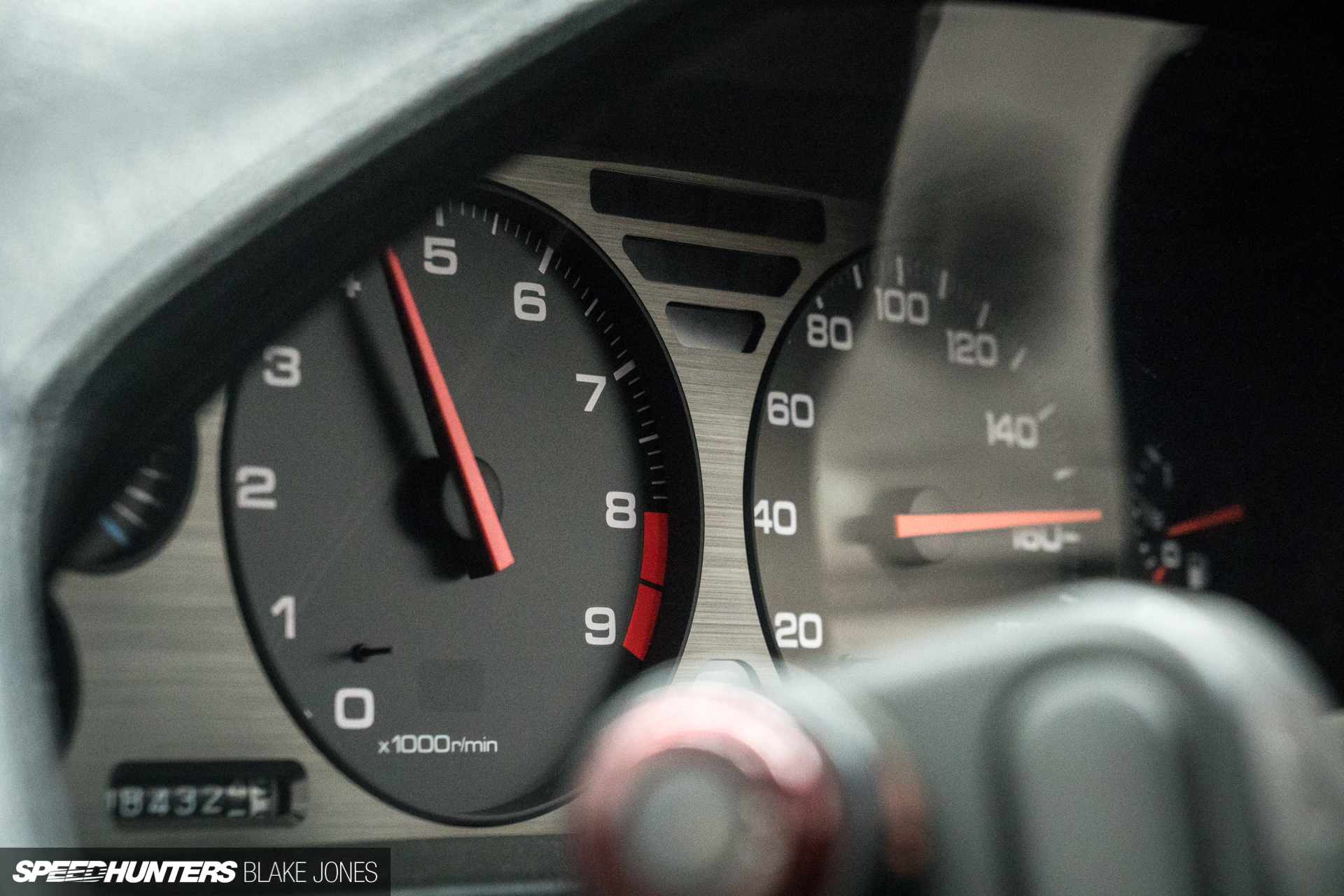
The tuning started without much ignition timing, gradually advancing until peak torque was being produced at a steady RPM.
Next Trent started to tweak two of the C30A’s variable systems – VVIS and VTEC. The former stands for Variable Volume Induction System and was Honda’s attempt to maximise the drivability and torque of the 3.0-litre V6. Like VTEC, VVIS is an RPM-dependent system designed to expand the range of the engine, but simply uses a vacuum switch to open butterfly valves in the intake manifold, giving a long run at low RPM and a short run above 4,800rpm.
VTEC requires two fuel maps (one with VTEC, one without) which are then ‘meshed’ together to handle the actual crossover. This effectively means twice as much work for the tuner, who needs to tune the car with and without VTEC, then experiment with the switching point to see where the most power can be made.
By varying the switch points of VVIS and VTEC Trent could look for any performance improvements, but as it turned out the factory settings were best – VVIS was unchanged and VTEC engagement stayed at 6,800rpm.
Trent built up to the higher RPMs, setting base and target values for the fuel table, something the Elite will continue to adjust over time thanks to that self-learning function I mentioned earlier.
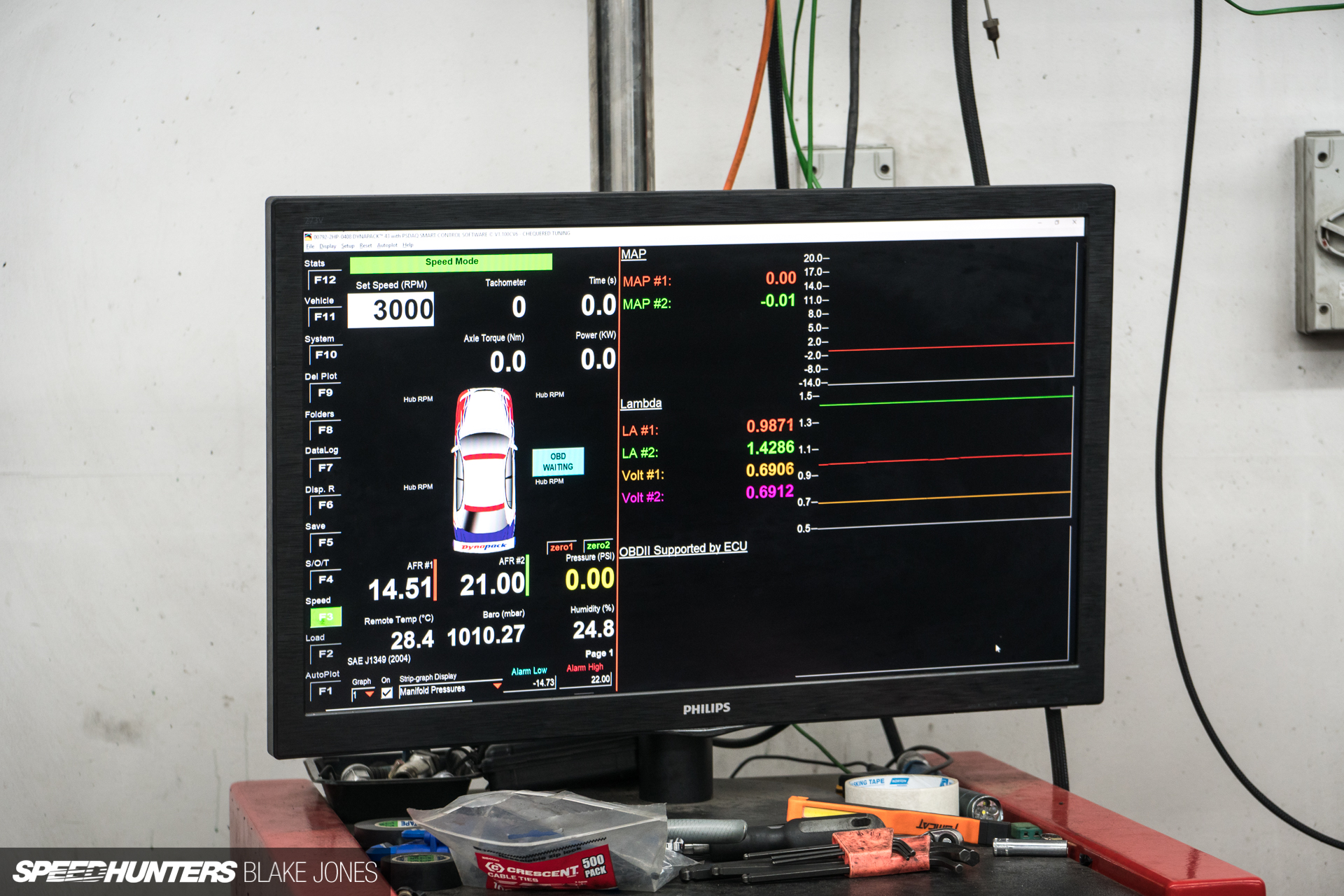
He was happy with the power we were making, all the while keeping the AFR on the safe side of the magic 14.7 number. However, as the cam switched to the VTEC lobe and started to rev above 7,000rpm, the AFR chart made a telltale 45-degree angle kick-up, indicating that the engine was starting to lean out with not enough fuel being supplied.
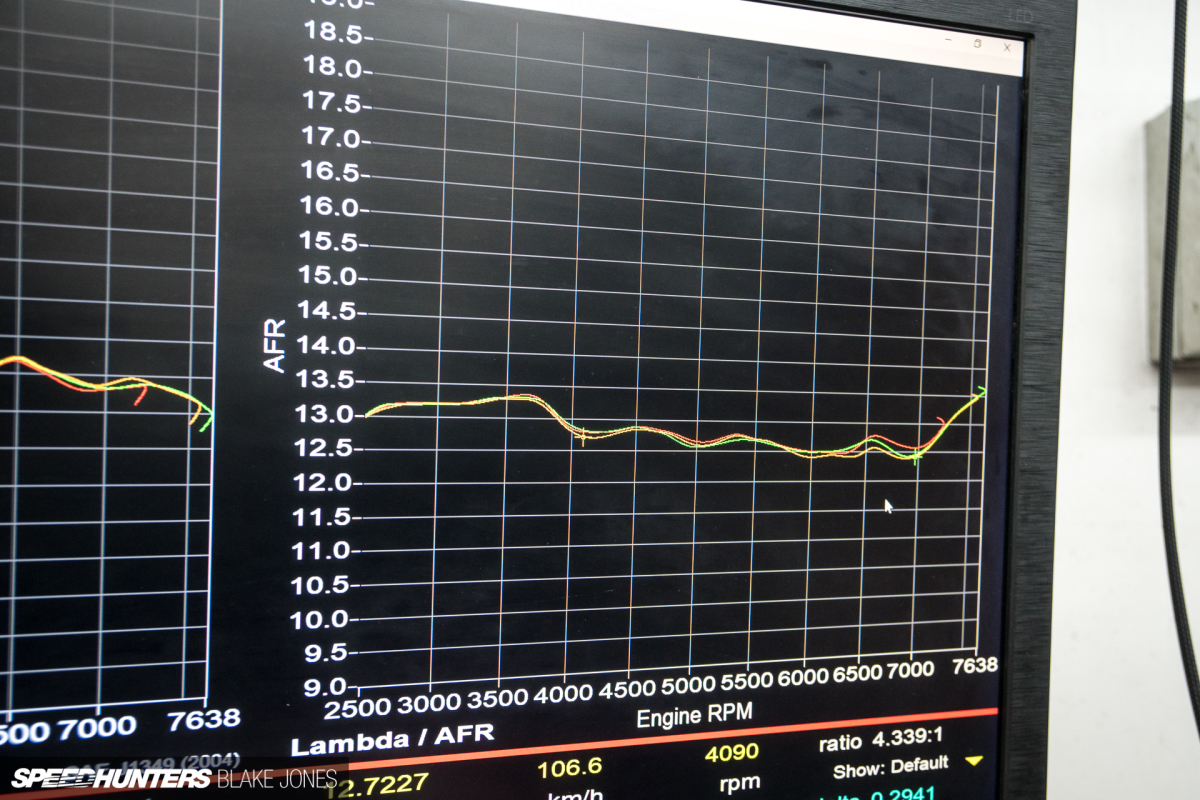
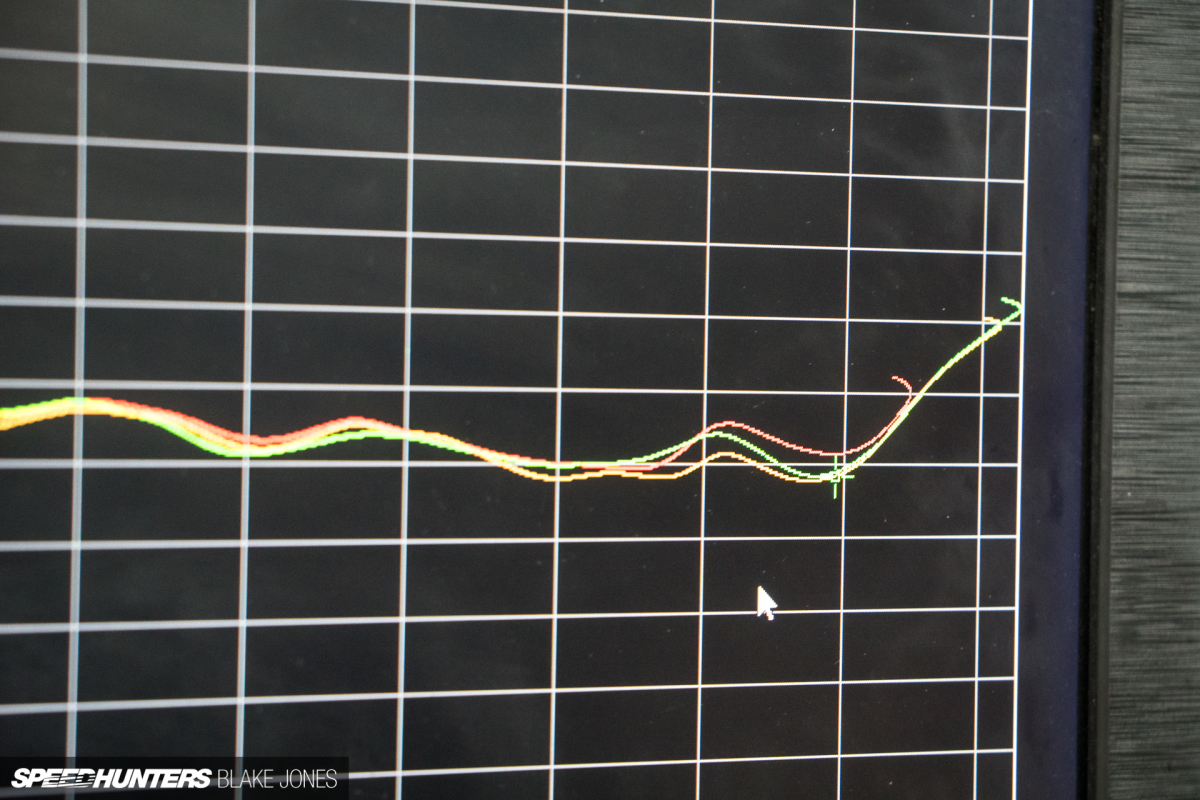
With the injectors maxed out at a little over 7,000rpm, we couldn’t push any further into the rev range without risking damage to the engine. Knowing this, in the final runs where Trent was adjusting timing he brought the rev limit down to 7,300rpm and worked to optimise the power delivery up until that point, leaving the final 1,000rpm until fuelling is sorted.
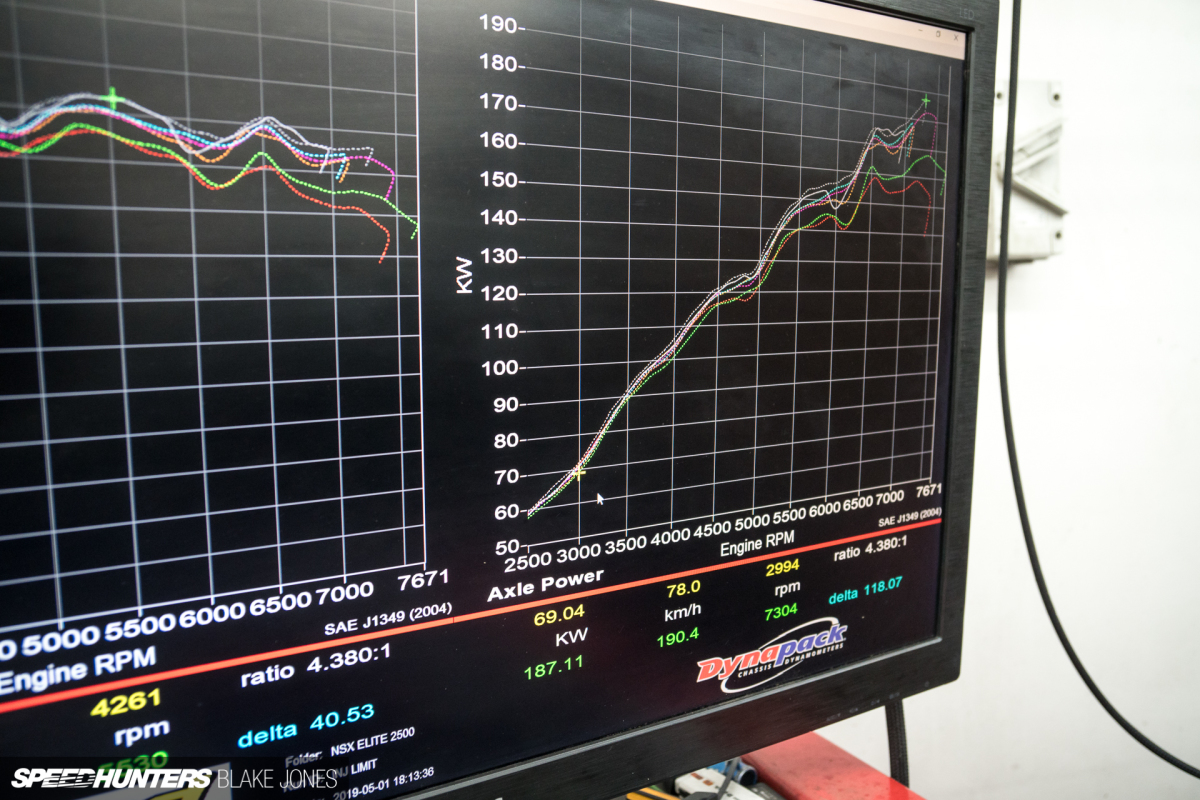
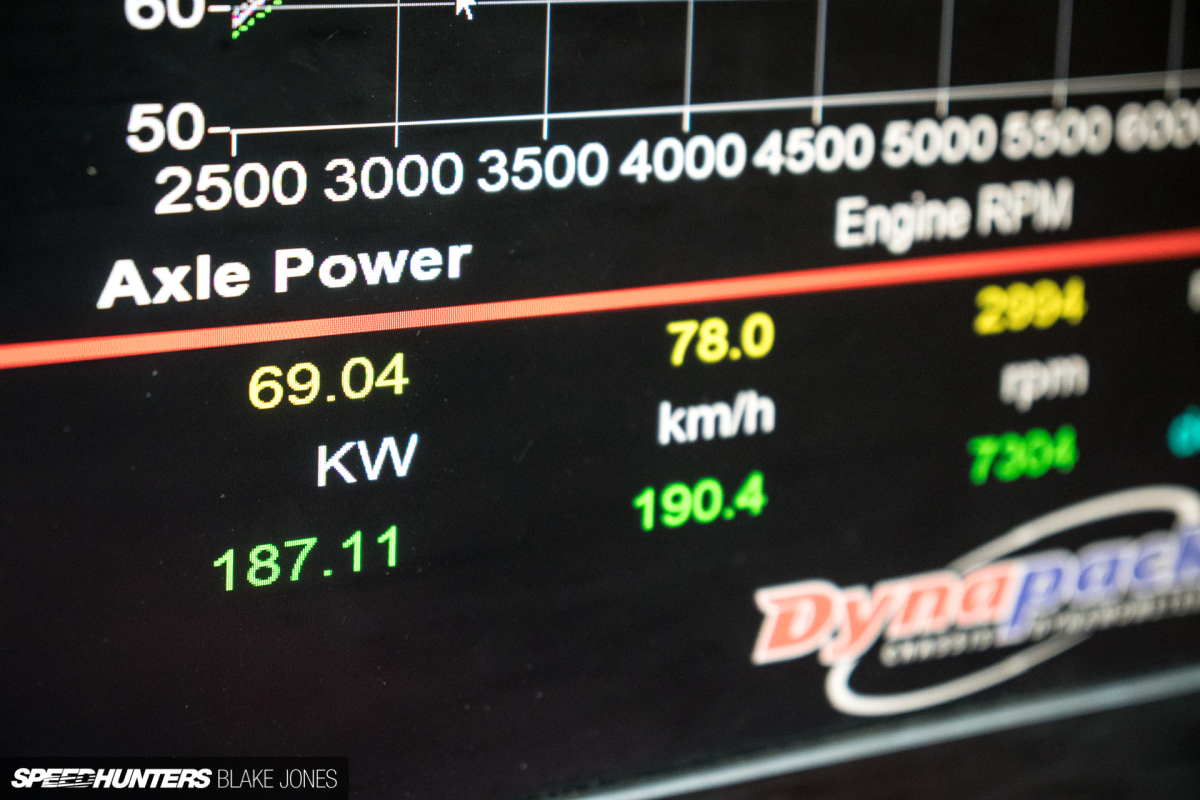
Final result: At 7,300rpm, there was 187kW (251hp) available at the hubs. A previous dyno test revealed drivetrain loss to be 27.3kW (a hair under 15%), which puts engine output at 214.4kW (288hp) – a mere 2hp shy of the Stage One target.
This is ultimately just an interim figure so there’s not too much point getting analytical, but for reference this is approximately 10.4kW (14hp) more than a stock manual NSX peak at 7,100rpm, and 24kW (32hp) more than the initial dyno on the auto cams that Project NSX started its life with.
I’ll be back to visit Trent as soon as I have some larger injectors, and hopefully that last 1,000rpm or so holds the key to hitting 300hp.
Blake Jones
Instagram: blaketjones
blake@speedhunters.com
P.S. A Speedhunters sticker pack will be on its way to commenter ‘Wires’ from the previous Project NSX engine build story for his guess of 288hp. Considering the injector situation, I’ll also award another pack based on the final tune number.
Boomslang Harness Manufacture