There’s a long list of high-value, low-production number Porsches that have had number plates applied.
Depending on your personal vintage, the title might evoke images of 993 GT2s, perhaps the latest 935 or even a Carrera GT. In our current Insta-age this type of car is often bought and digitally paraded for enjoyment; some are driven, some stored, but all are pretty crazy. I urge you to forget all about that for a moment though. This story is about how we ended up shooting the most extreme road-going Porsche ever created, on the road, legally.
Say hello to the GT1 Straßenversion.

Hopefully you’ve already checked out Ben’s story on Porsche Museum’s bonkers overflow parking spot. If you haven’t, stop what you’re doing and head straight there to get a sense of scale. If at any point during this story I sound overly gushing, it’s because of the sensory overload experienced in these few short days.



Beny, along with his boss Alexander E. Klein and the gang at the Porsche Museum, have curated some of the most incredible story-sparking Porsches possible. Walking through the facility is like car-guy spot-the-difference. Nothing is really what it seems. I found myself wandering around pointing at things with a silly grin while Beny explained the intricacies. He’s obviously seen this behaviour before. It’s the sort of place that turns you into an absolute fanboy.
Imagine a place where the innocent-looking orange 914 is actually Ferdinand Piech’s own ‘914S’, a 300bhp, eight-cylinder hot rod. The extra long shooting brake 928? Yeah, that’s got rear suicide doors. But my favourite oddity had to be the 964 Targa with circular holes in the rear quarter panels. “Is this a Turbo Targa?” I asked. I thought that was a pretty reasonable guess; it was around the right time and might not have been viable as a niche production model. Beny simply smiled, calmly opened the door and said: “It’s a Boxster.” An engine sat where the rear seats would ordinarily be in a 911. I was not expecting that.
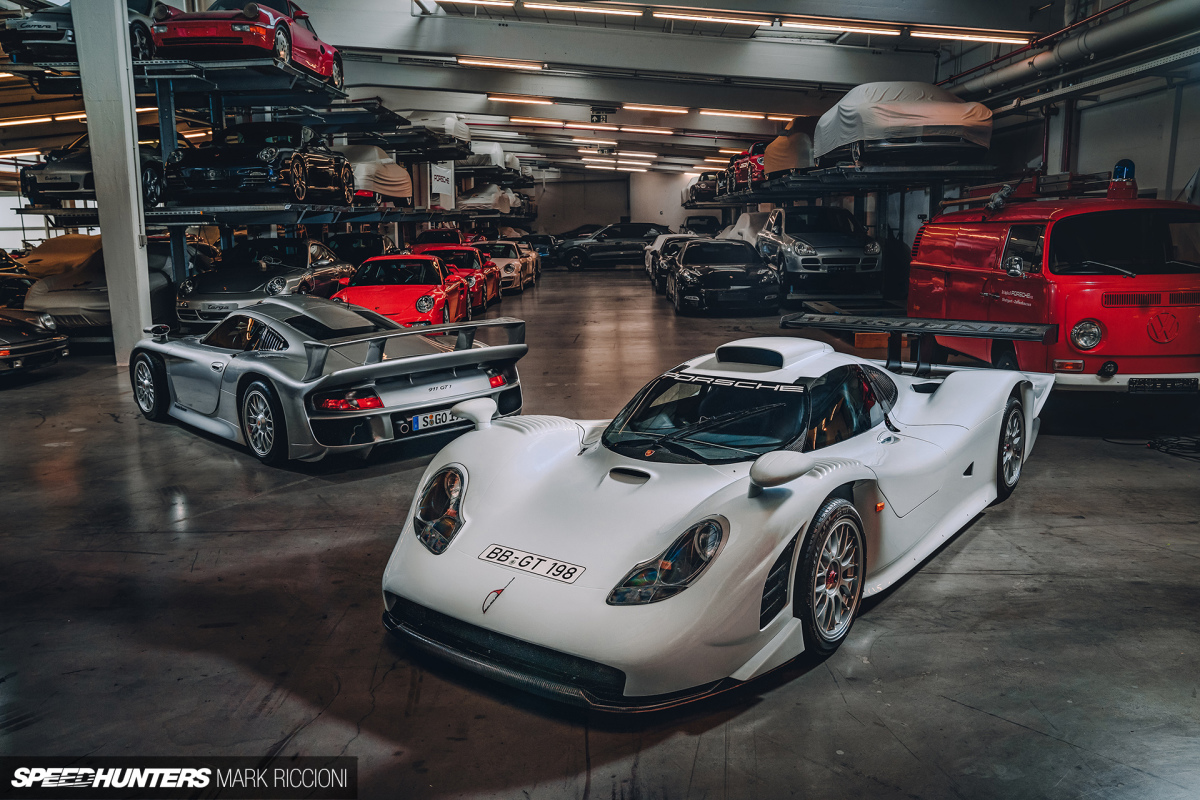
Just across the way from this turning point in Porsche’s history sat another. Actually, there were two more. I knew there would be a couple of heavy-hitting jewels in this collection, but a pair of GT1 Straßenversions were the last thing I expected. You don’t have to be a linguist to guess that ‘Straßenversion’ is German for ‘Streetversion’, but I thought I’d clear that up anyway. The gravitational pull of these cars was so much that it made the 5/6 Carrera GTs opposite look like a line of mid-’90s Mondeos. For a few moments Mark, Ben and I just circled them in silence. Incidentally, this is the first time two Straßenversions have been photographed together in one place; these things are so uncommon and scattered around the earth in the most exclusive collections. Luckily for us, Porsche decided to keep the very first, plus a later revised revision. It is mind-blowing to think this is the only place on earth you can compare the two side by side. What’s even crazier is to think that this – the first road-legal carbon fibre monocoque Porsche – was created when most people were on dial-up internet, I was barely 10 years old, and absolutely nobody was buying cars to flex on Instagram.

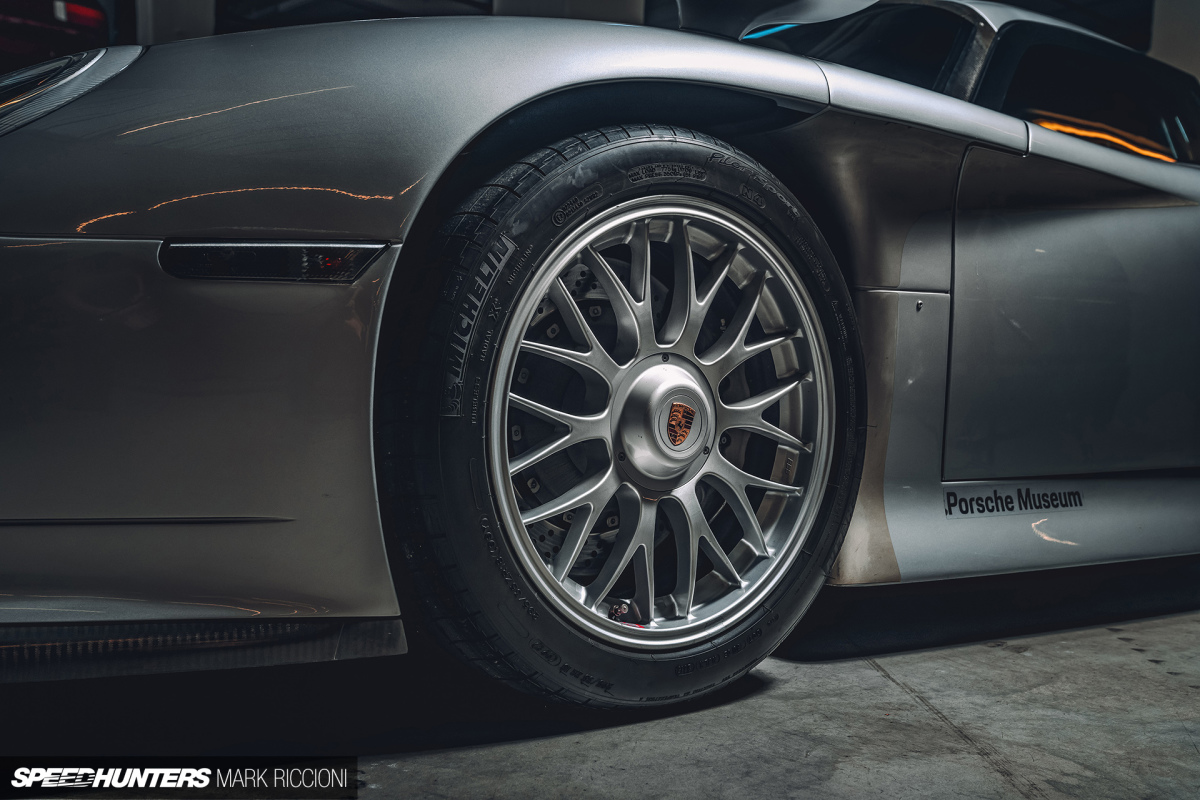
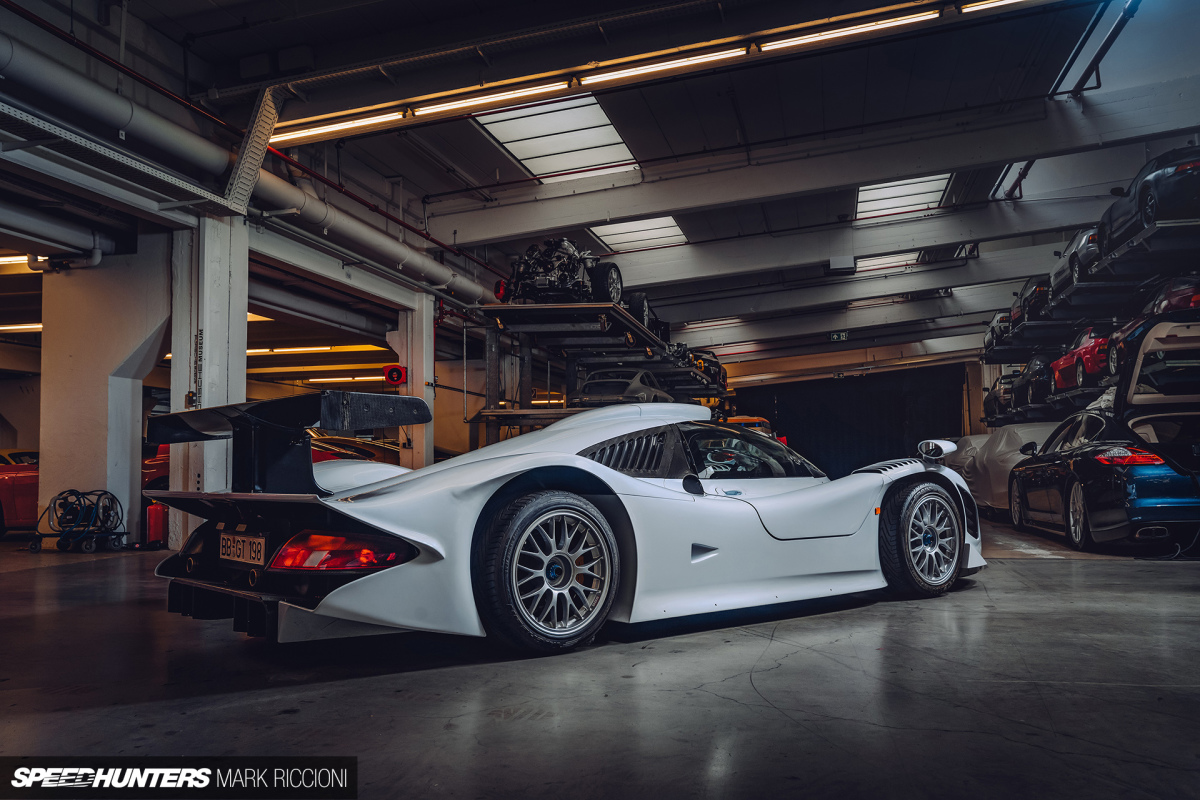
The cars before you are Porsche’s 911 GT1 Straßenversions from 1997 and 1998. The silver car is the ’97 model built for the initial type approval and as such is the most sympathetically road-adapted of the two. The white one was built to homologate the aero changes for the ’98 season and is really a GT1 race car with number plates. Not that this makes it any less special, but it’s easier to understand the lineage on the later car. The two cars were built to facilitate the homologation necessary to enter into the FIA GT Championship. This championship was introduced in 1997 as a development of the BPR Global GT series. Back then sports car motorsport was quite different and the introduction of this ‘new’ GT Championship drew attention from manufacturers as a way to display global engineering prowess on a global stage. This meant things were about to get serious.


The whole idea of motorsport homologation is to ensure manufacturers do not get too carried away. It’s an effort to avoid the deepest pockets from dominating a series. The BPR series that served as the Petri dish for FIA GT allowed race cars based on production sports cars to race over a four-hour race distance. In the same vein, the FIA dictated that race cars entered in the new GT Championship would require homologation by way of limited run road cars. Porsche created 21 GT1 road cars in ‘97 plus one more for the ‘98 season, which is quite a lot when you think just how much these would cost to make. Twenty of the ’97 cars went to lucky customers, while the silver one here stayed with Porsche. Looking at the cars before me, I wondered if the FIA realised just how committed Porsche were to this cause. They are nothing like any other production Porsche I have ever seen.
In typical Porsche fashion they took a totally new approach to the highest performance GT1 class. Rather than follow the conventional format of modifying a production sports car to create a race car they started with a clean sheet. Racing came first; this Straßenversion would be a development of the racer. I’m going to concentrate on the first Straßenversion here as I’m a stickler for OG versions of cars and, more importantly, it’s the car we’d later be taking out on the street. Yes, this car is ready to head out onto the public roads at any opportunity deemed cool enough. Thankfully, Beny and the team thought this was just such an occasion.

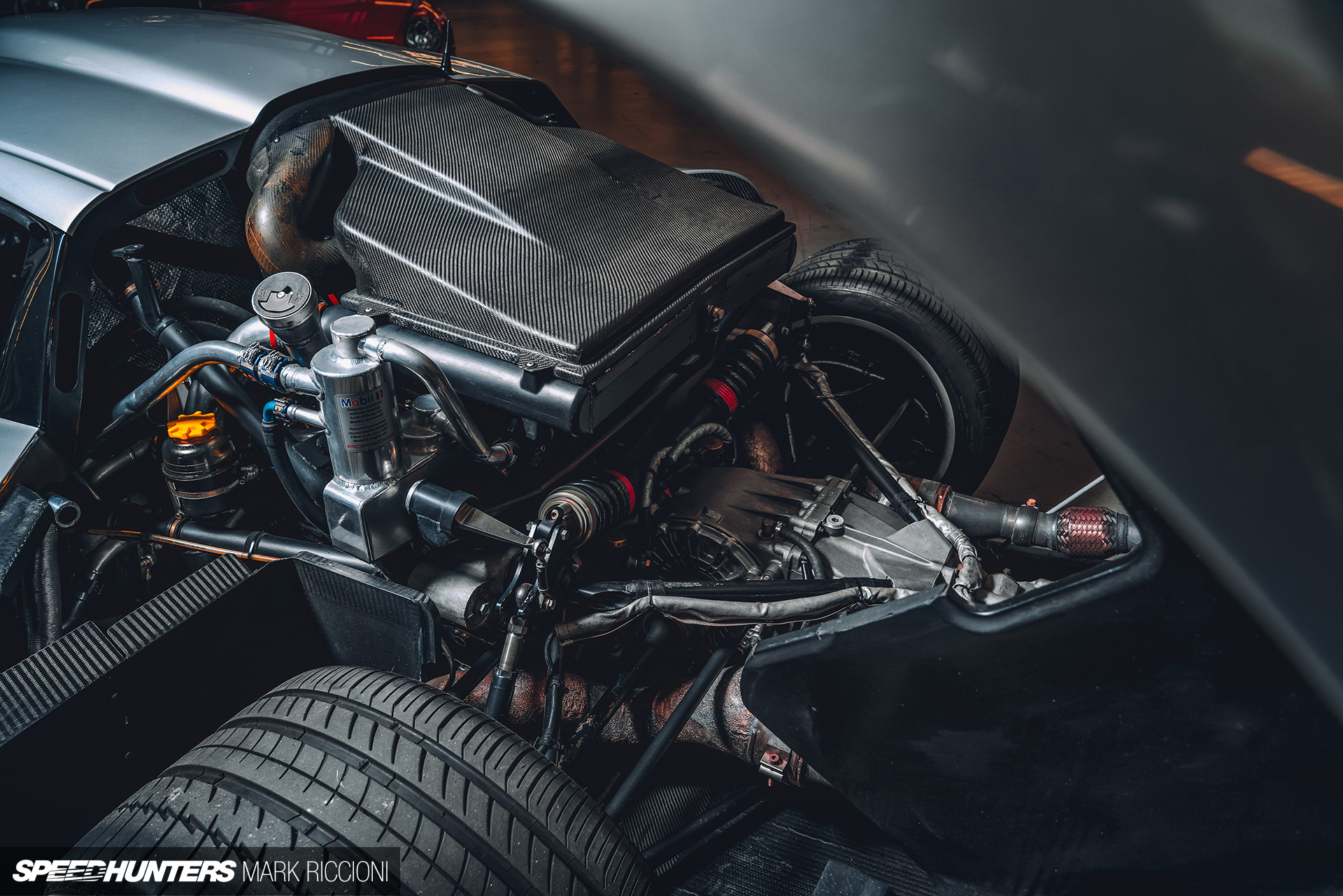
As the Porsche Museum technicians readied the car for start up, we got a unique opportunity to nose around the engine compartment. The 1997 GT1 uses the same Metzger-derived, water-cooled, twin-turbocharged powerplant that went on to be developed for use in the 996 Turbo. If that fact doesn’t get you searching eBay for 996TTs, I don’t know what will. I’m gagging to get one and tell anyone who will listen that it is ‘essentially a GT1 at heart’. A massive carbon fibre clamshell covers the mid-mounted 3.2 engine, but it’s not the engine that is the most striking thing to view. This is a road car – a road car with a bladed sway bar and double wishbone pushrod suspension.
It’s insane to think that Porsche would let people buy these; I can’t imagine the trouble you’d get into on the street with one. Except I can, because that’s what we did.

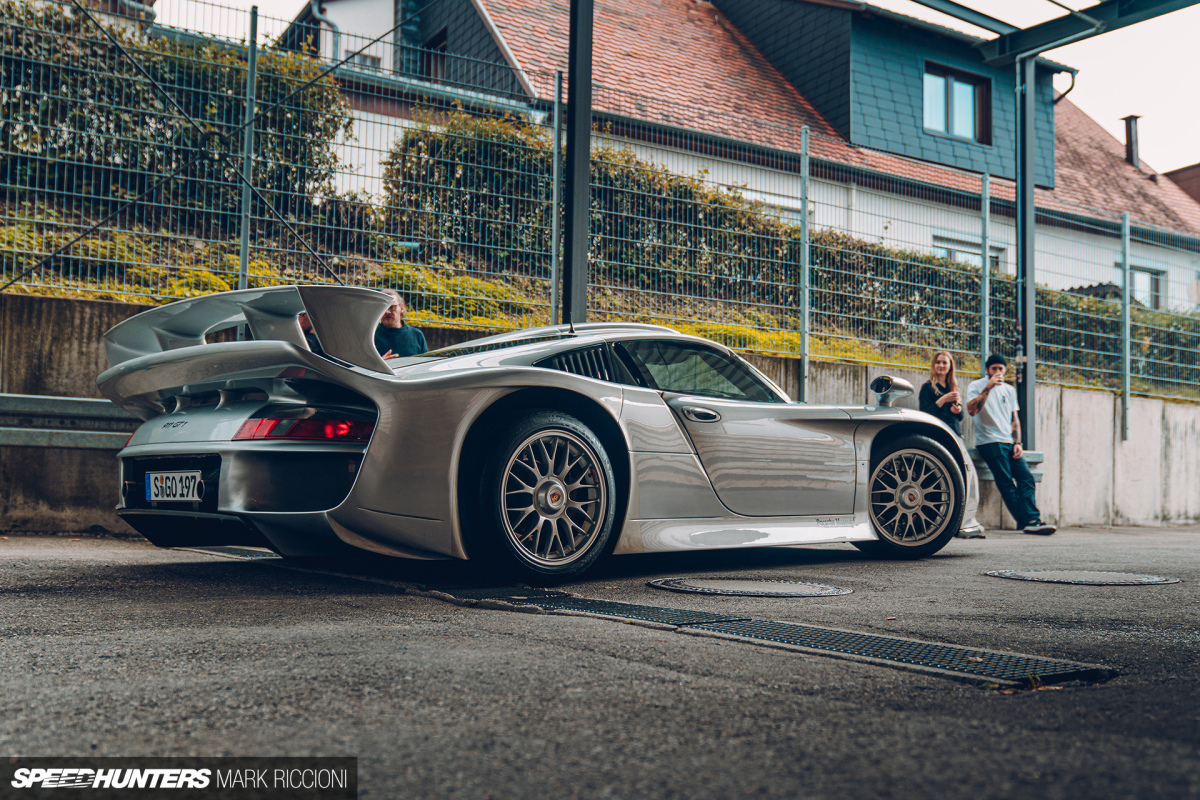
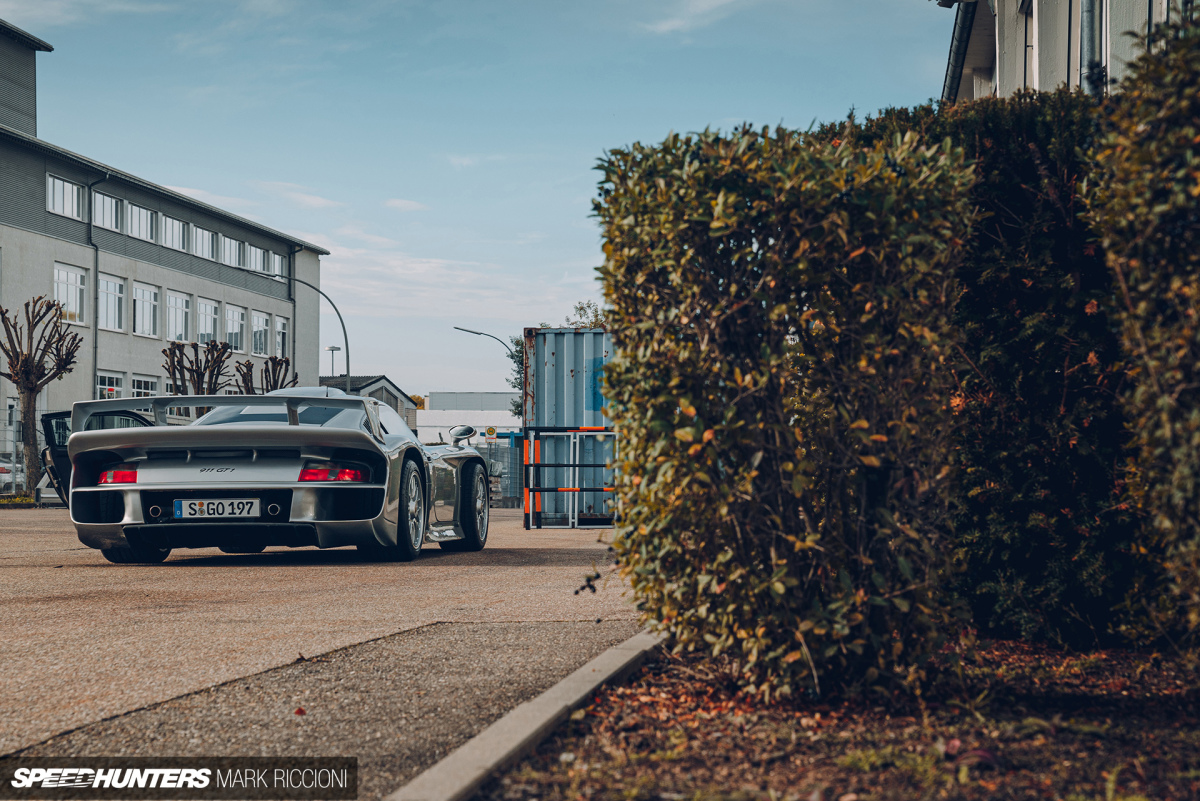
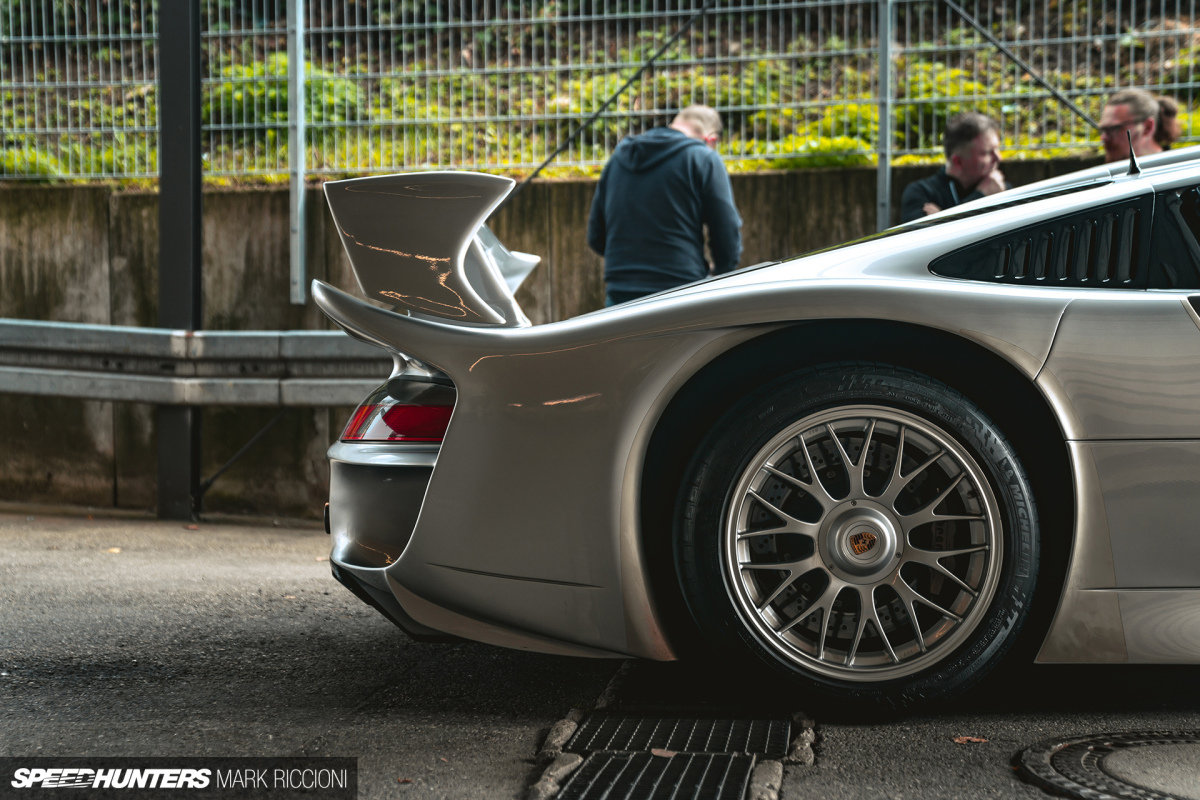
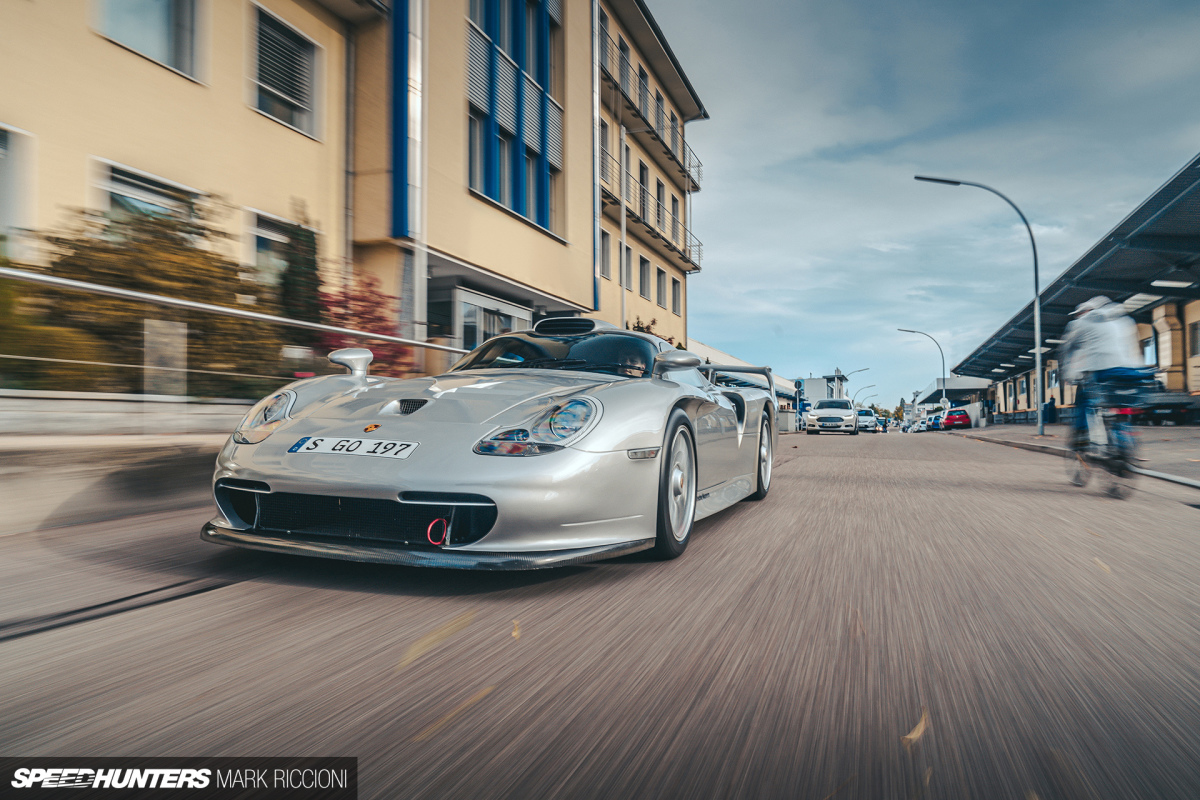
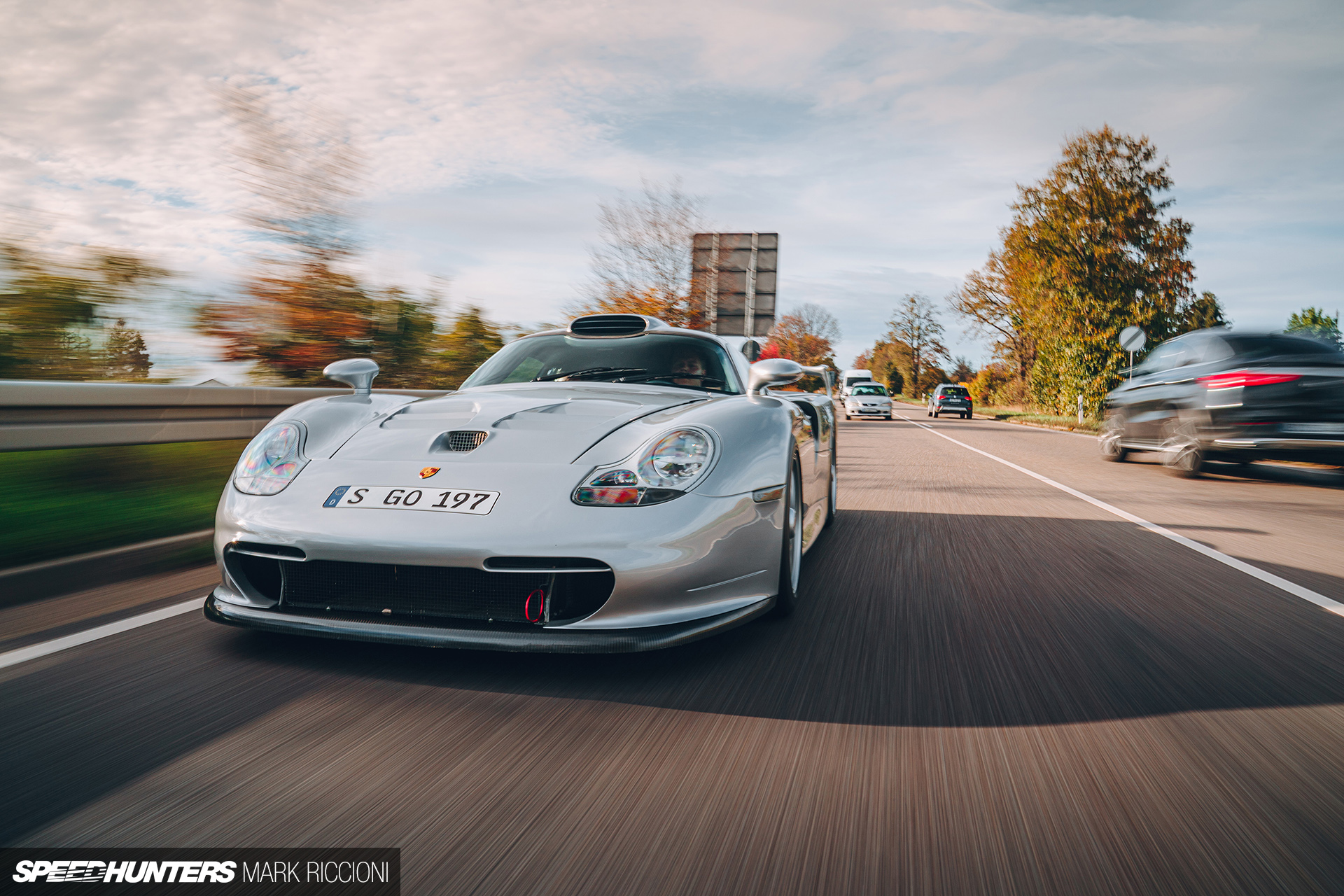
As the car rolled out of the storage facility, the silver GT1 idled with an alarming serenity. There was no ear-splitting, high rest-RPM. The sound didn’t match the visuals. We could all walk around the car and continue to sip coffee and converse. It was absolutely bizarre, but so Porsche. Of course it’s not vulgar or ostentatious, it is a highly engineered German machine. Ben hopped into the leather-bound passenger seat and we headed out to experience it on the road. The reaction from passersby as we cruised through the villages at 20 to 30mph was priceless. One poor lad wobbled on his bike as it swept by; another almost snapped clean in half turning around to catch it. It almost became a sport between Beny and I spotting the maddest reaction to the low-slung silver silhouette tailgating us.

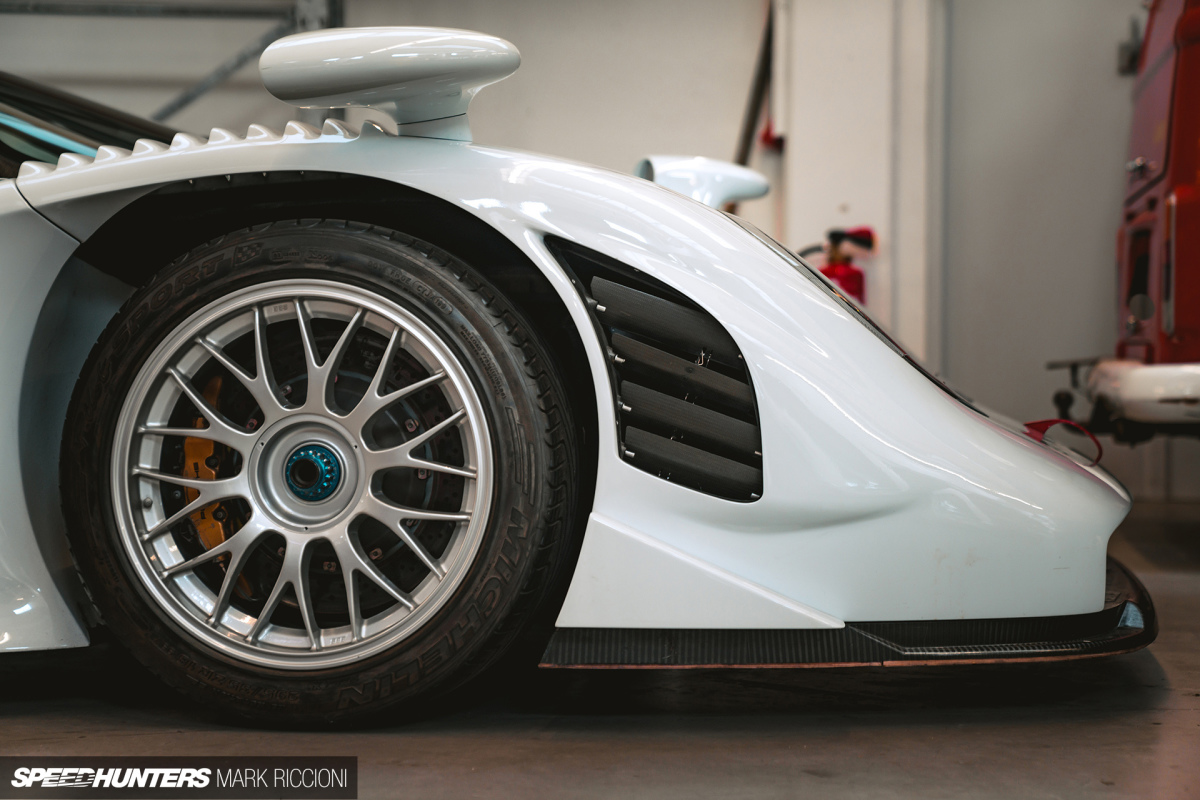
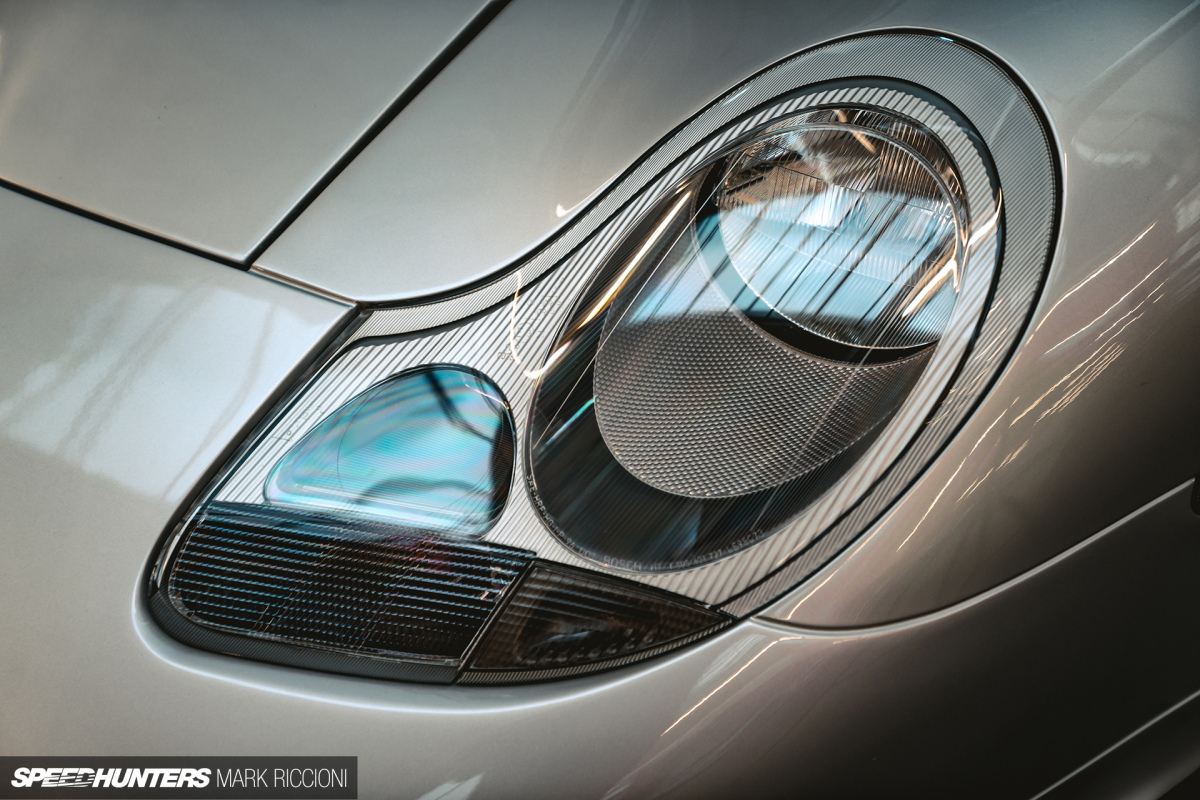
Up to speed you could hear the turbochargers whistle and the exhaust note begin to come alive with that familiar Porsche snarl. It sounds just like a high horsepower 996TT on the move. I think that makes me love it more – this is how the Porsche engineers party. Despite being a completely bespoke design intended for race use there’s something about the GT1 that makes sense on the road. From the front it looks just like a pumped up 996 at a glance. But then you focus in a little harder and you see the length of the overhangs as it turns bends, and the frequency of the suspension as it bobs up and down the country lanes. I’ve not experienced anything quite like it.
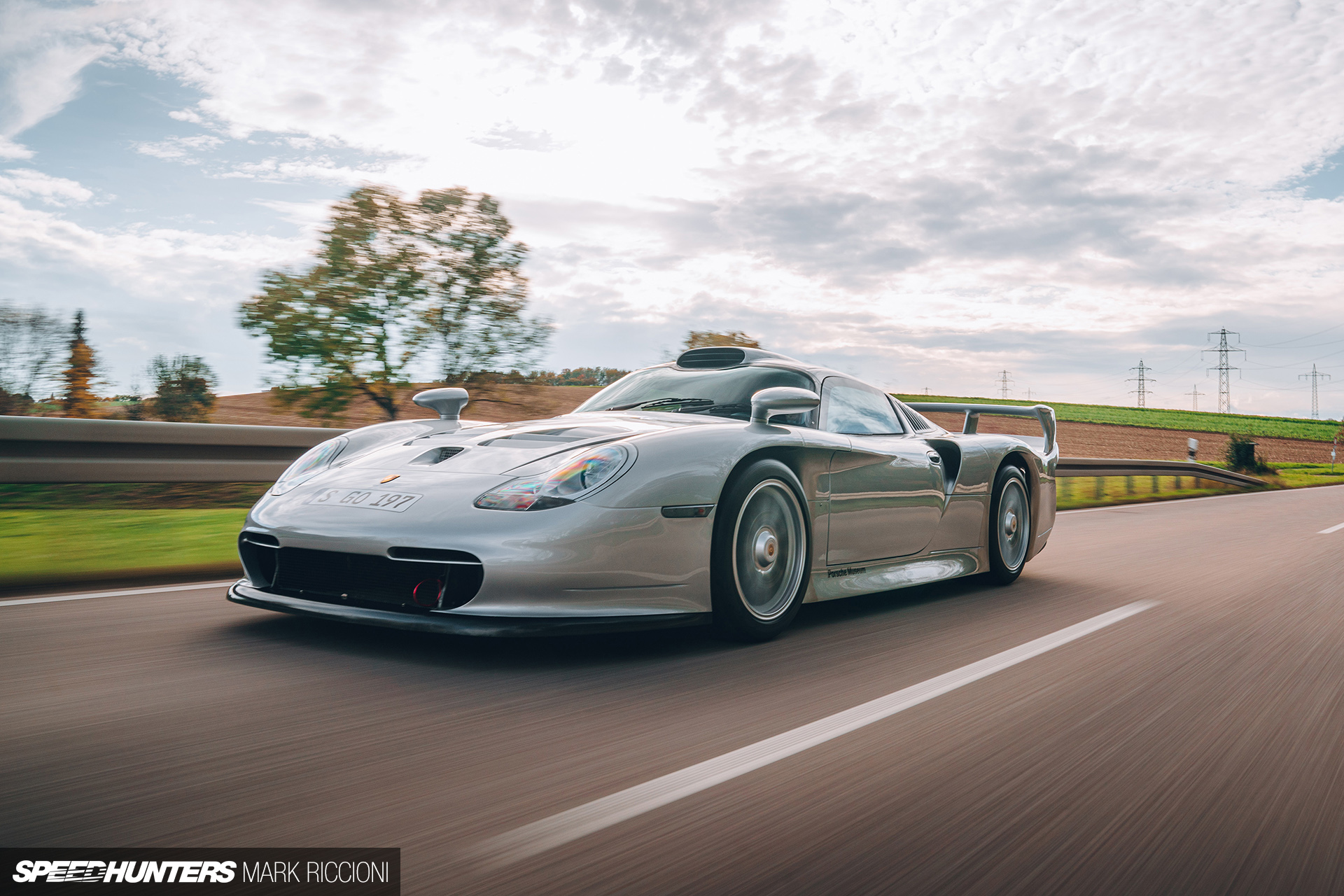
I was looking backwards so much that I failed to notice the traffic lights up ahead beginning to change. We could make it but the GT1 wouldn’t. Rather than slam on the brakes and risk a Riccioni rear seat sandwich, I rolled through the lights and pulled up some 400 to 500m down the road in order for the GT1 to catch up. Except I needn’t have bothered. After a minute or so the GT1 launched from the lights with explosive force, turbos howling. Inside the car all I can see is Ben laughing at the spectacle from the passenger seat. For a moment it felt like we were actually at a FIA GT Championship race.

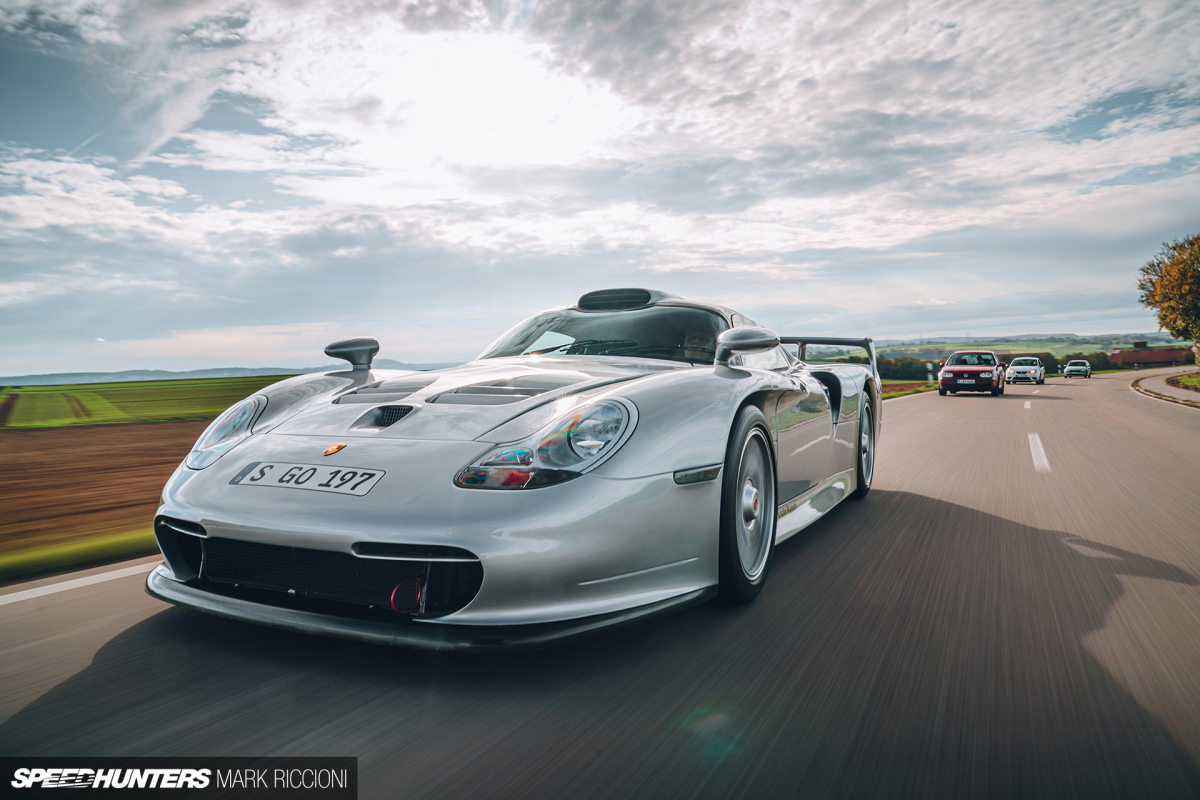
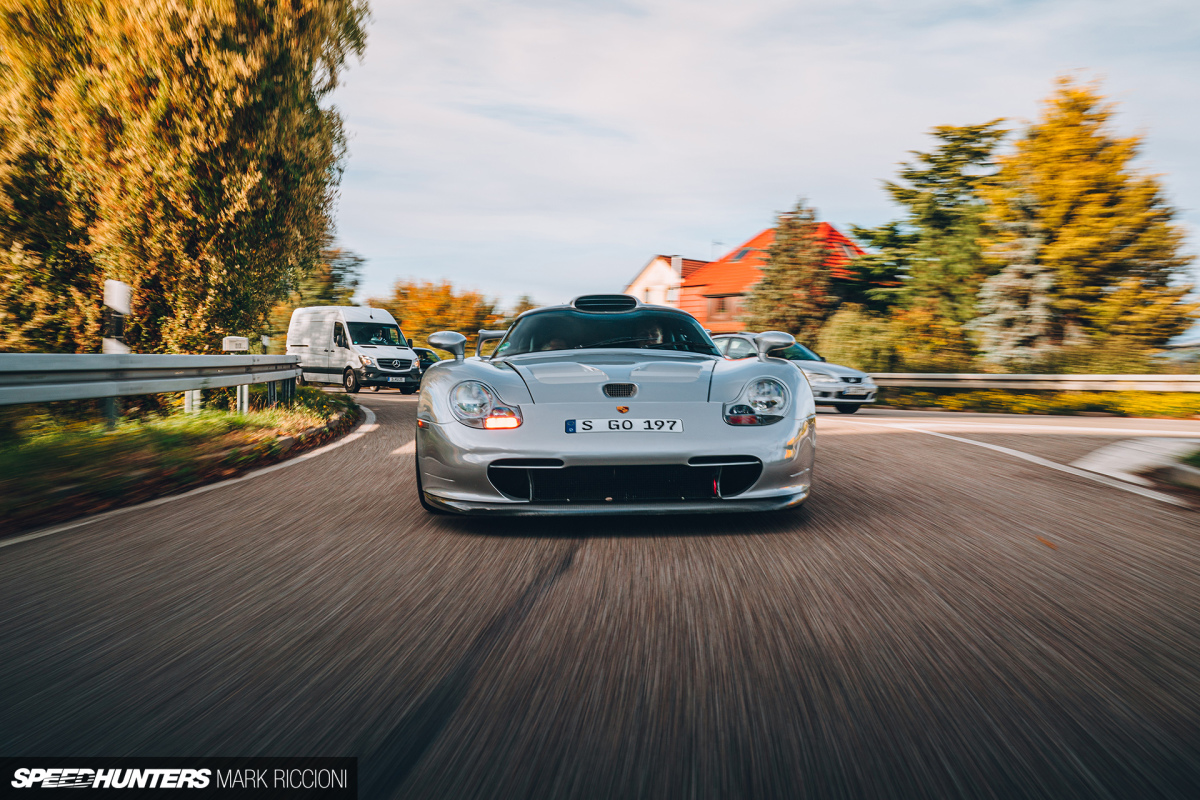
Convoying to and from the shoot location with this car is something I will never forget. Driving the Cayenne tracking vehicle might sound like the short straw, but consider this: How many people this side of Le Mans competitors can say that their rear-view mirror was full of Porsche GT1?
10 Things I Love About The GT1 Strassenversion
1. It’s powered by what is essentially a factory-tuned 996 Turbo engine.
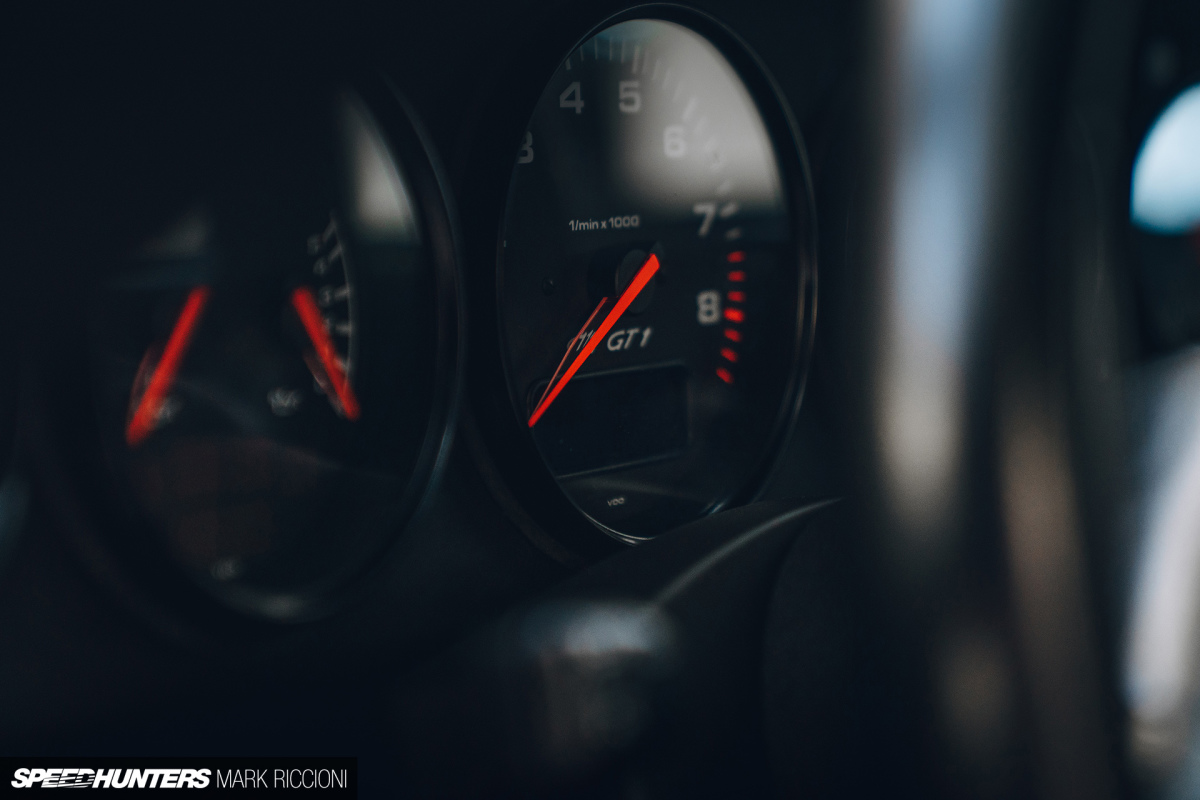
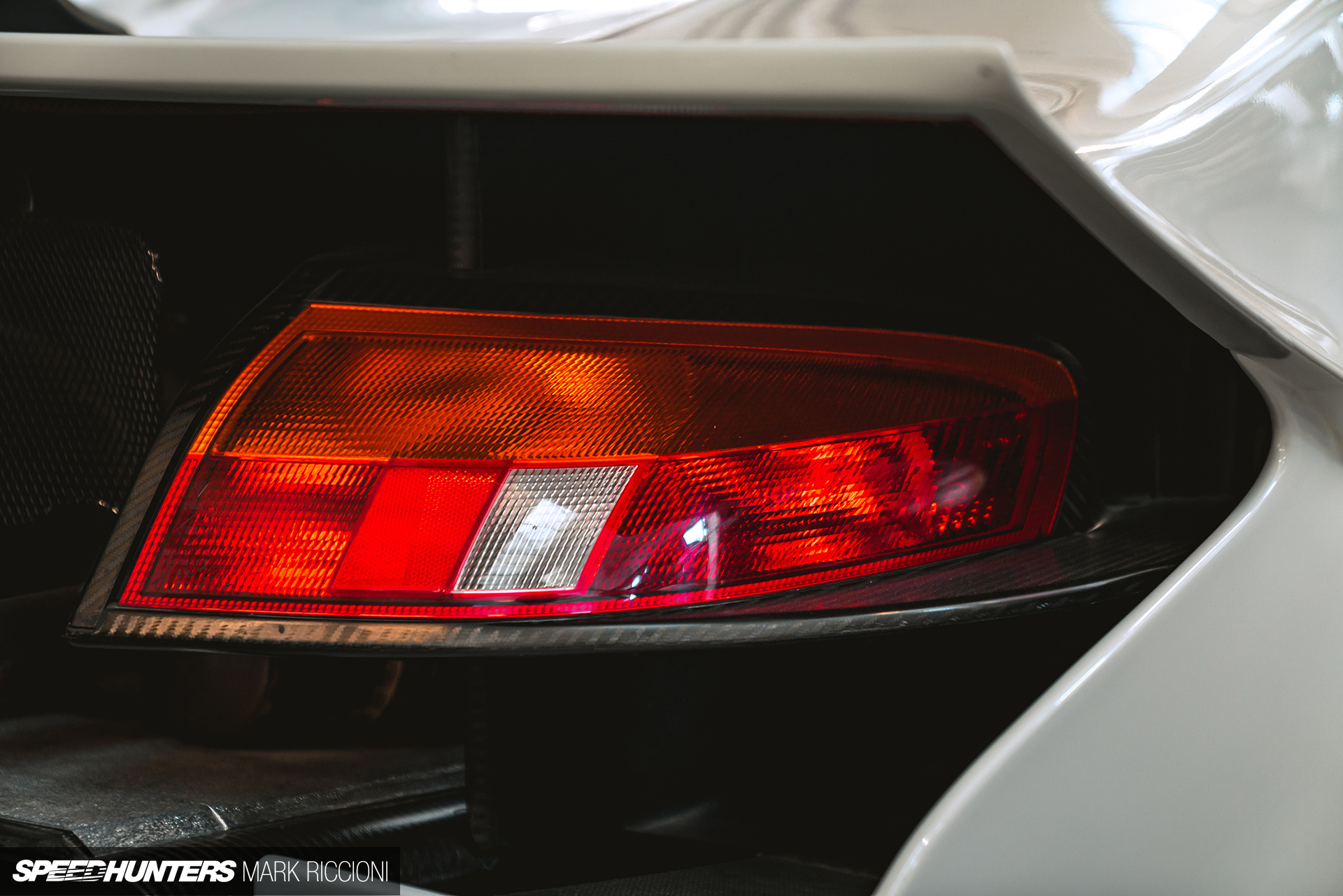
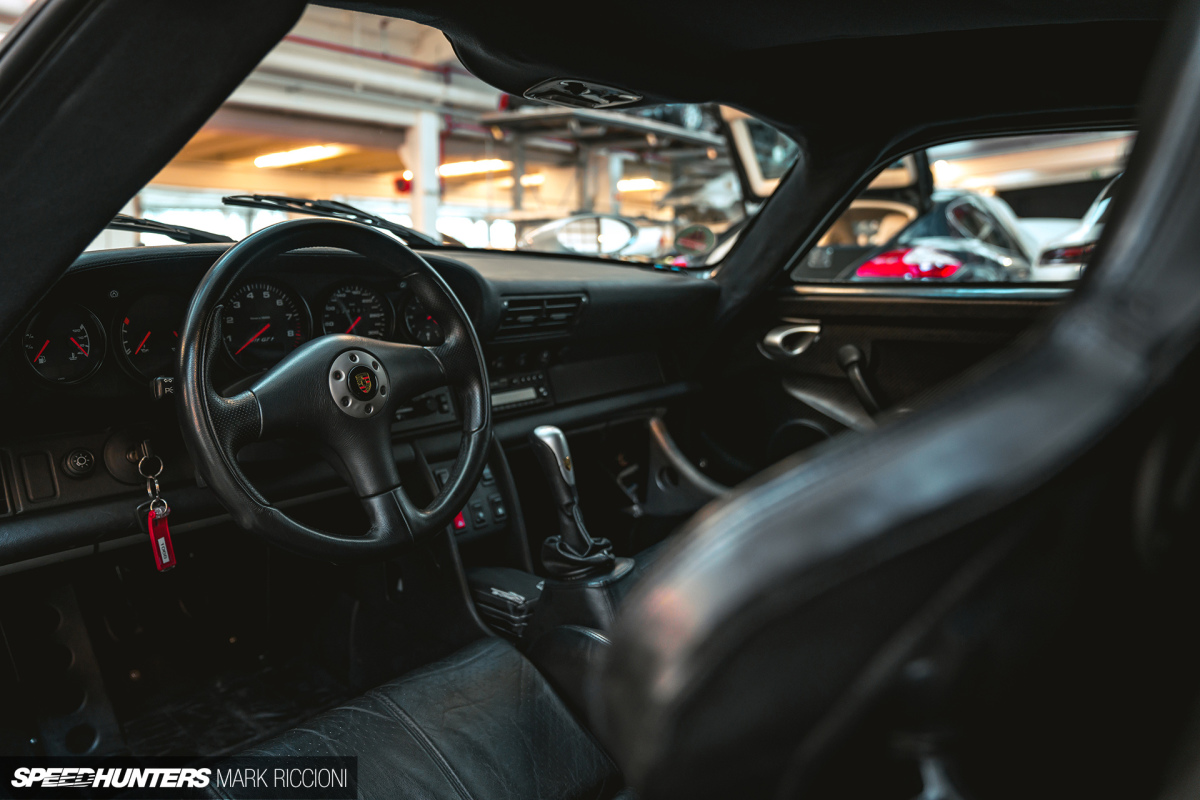
2. Although it had 996 headlights and taillights it uses a 993-based dashboard.
3. The huge central scoop feeds air to the mid-mounted intercooler and both of the turbochargers.
4. It has deep-pile carpets and leather seats.
5. The domed windscreen gives an iconic Mulsanne-straight feel to the local dual carriageway.
6. Bullet-shaped, wing-mounted mirrors are the only way to see rearward, making it impossible to reverse.
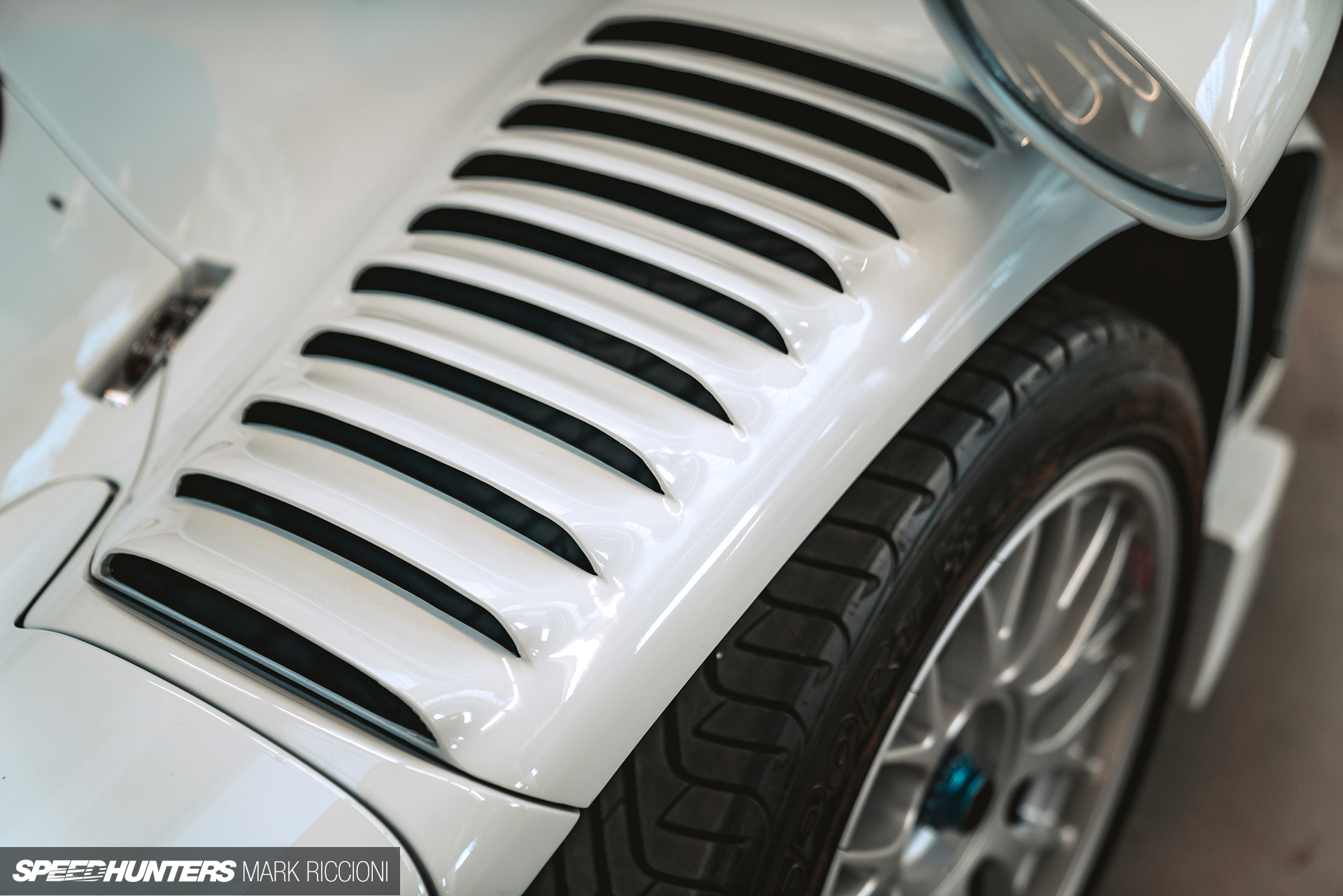
7. It’s genuinely beautifully proportioned. The long sweeping overhangs and integrated vents feel organic and flowing.
8. The huge rear clam opens up to reveal a unique tubular chassis, complete with double wishbone suspension.
9. Porsche wanted these cars to be driven. Street-friendly suspension was installed and the race car’s sequential transmission made way for a more conventional and durable H-pattern shift.
10. Whoever ordered the 10th chassis opted for a yellow exterior with a green interior. I can’t imagine how badass this person must have been.
Ryan Stewart
Instagram: 7.nth
ryan@speedhunters.com
Photos by Mark Riccioni
Instagram: mark_scenemedia
mark@speedhunters.com
Porsche related stories on Speedhunters