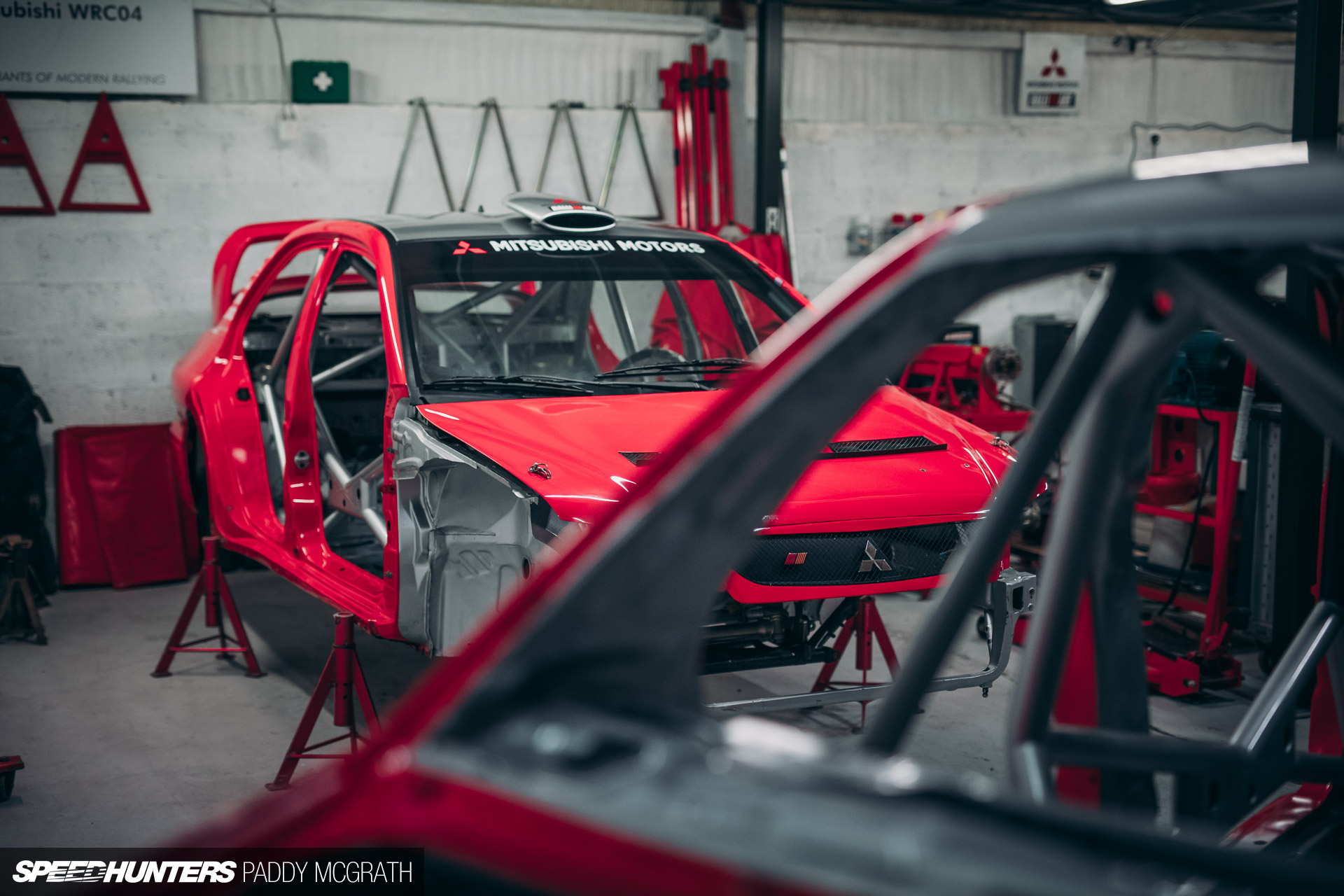
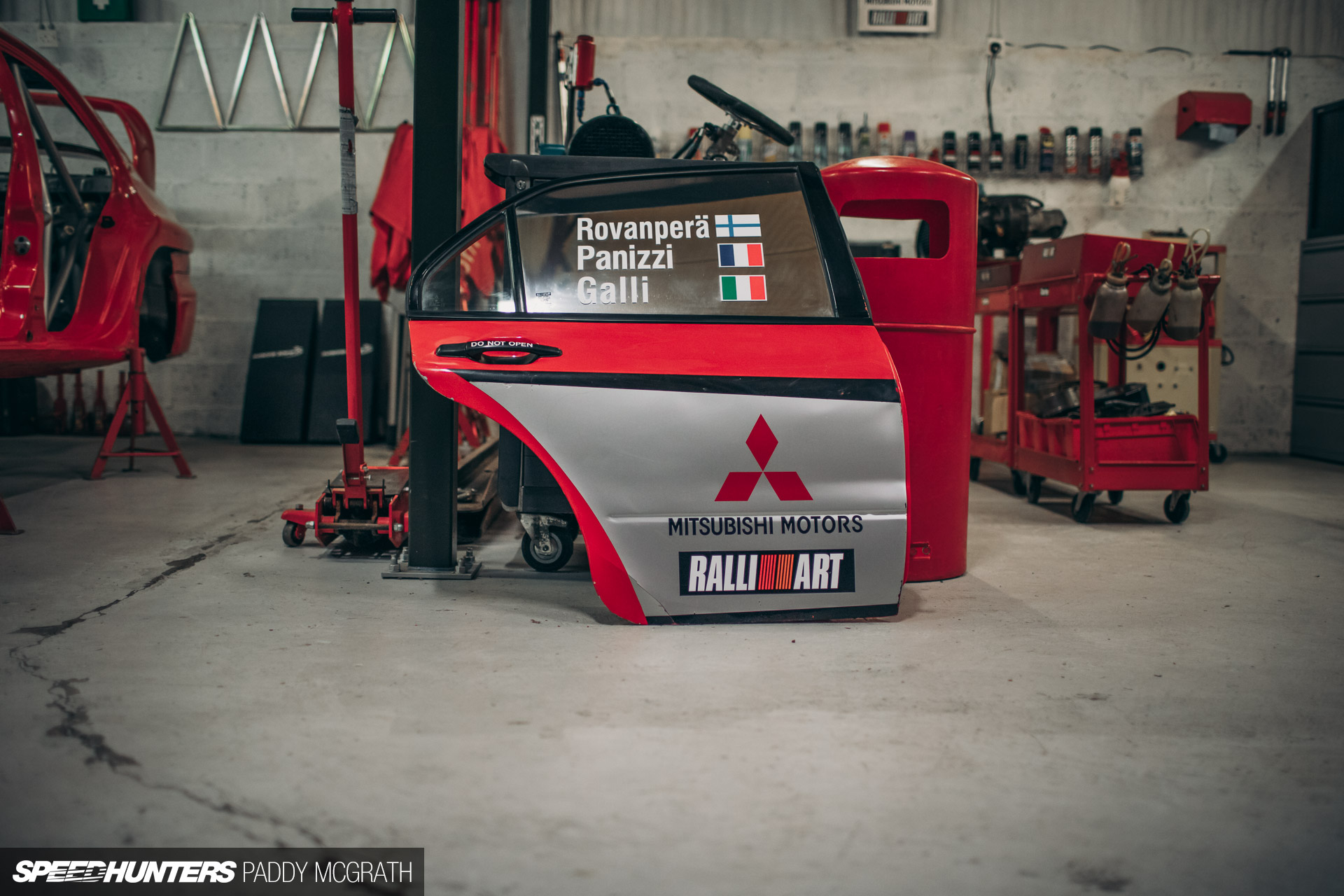
Mäkinen. Burns. Gronholm. Delecour. Panizzi. Galli. Rovanperä.
They’re all names to have graced the rear side window of a Mitsubishi World Rally Car at one point or another, and all names that will undoubtedly go down as legends of the sport. How then did Mitsubishi as four times World Rally Champions vanish from the world’s stages with barely a whimper? What happens to these state-of-the-art, cutting-edge motorsport machines when their time is seemingly up?
The 2004 and 2005 Lancer WRCs aren’t cars I think of very often, not even when ‘Mitsubishi’ and ‘rallying’ are mentioned in the same sentence. For me, Mitsubishi’s rallying history comprises of one car in particular – the Lancer Evolution WRC. It’s hardly surprising considering the third, fourth, fifth and sixth Evolutions were all World Rally Championship winners.

However, it was Mitsubishi’s over reliance on the ageing Group A-based car which saw them fall behind the competition. By the time they introduced the Lancer WRC for its first full season in 2002 they were already struggling to tread water. They had pinned their hopes that the ‘Step2′ car, the successor to the Lancer WRC, introduced during the middle of the 2002 season would turn things around. But while it had a promising start in Finland, it soon proved to be well off the pace.
At the end of 2002, Mitsubishi announced that they would suspend their WRC campaign for 2003 in order to return with a competitive car the following year. Enter the Lancer WRC04…

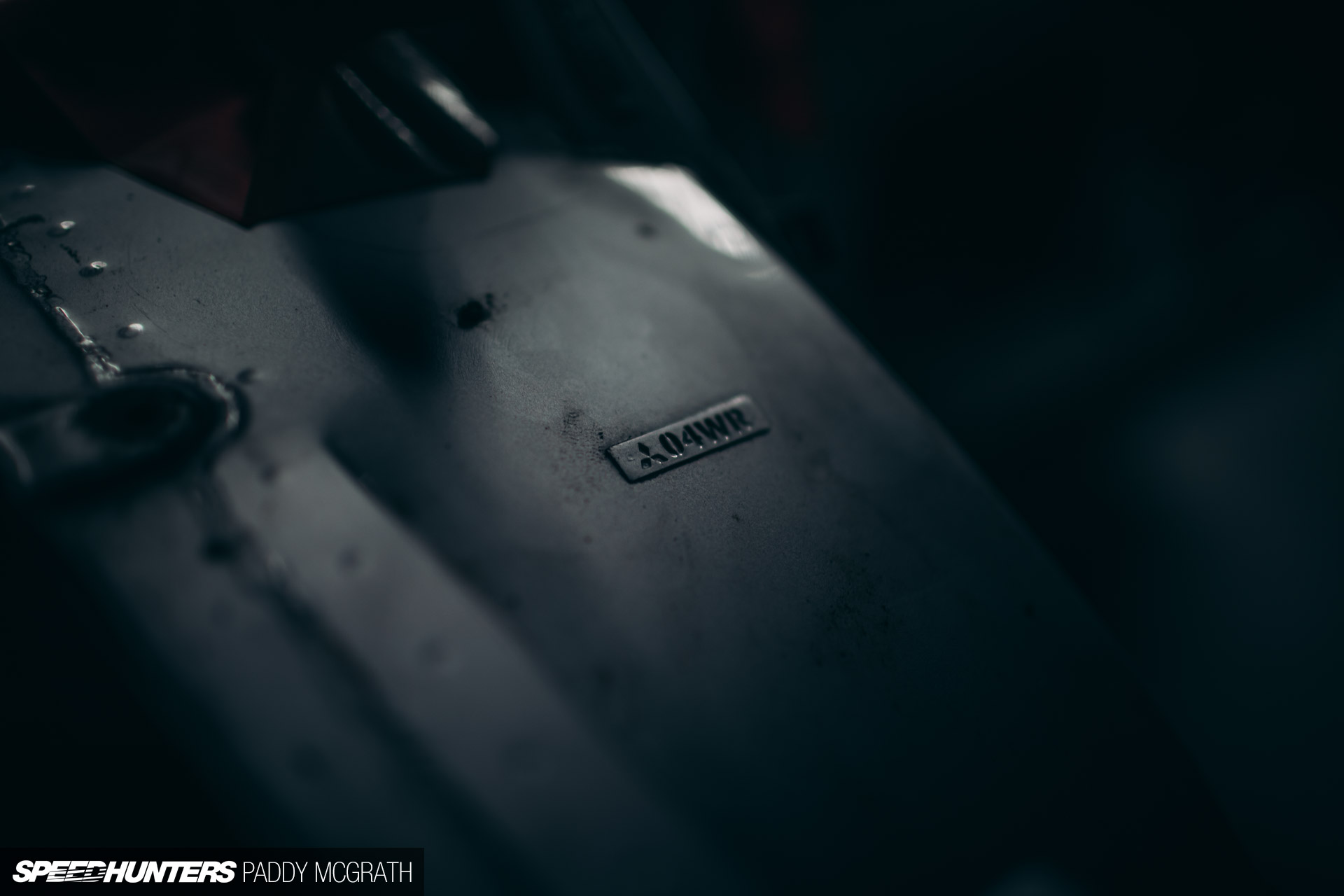
It’s probably one of the best recognised Lancer rally cars, as it’s typically described as ‘the one with the weird spoiler placement’. There is a reason for that, and there’s some fascinating little anecdotes about both the spoiler and the rest of the car, which I’ll bring you in a separate story on this, Gigi Galli’s Rally Japan Lancer WRC05.
There’s a lot of misinformation surrounding this era of Mitsubishi’s WRC history, and it might be one of the most misunderstood cars in rallying history. While it certainly had its demons during 2004, it was essentially a brand new, ground-up World Rally Car. There were over 6,000 changes when compared to the previous Step2, and it’s estimated that nearly 95% of the car was completely bespoke.

Internally, 2004 was seen as a further year of development for the new World Rally Cars and as such, the performance of the cars varied between events. With Mitsubishi opting out of championship events in Japan, Great Britain, Italy, France and Australia, they were never going to be contenders.
However, in 2005, the next iteration of the Lancer WRC, the WRC05, scored a podium at the first round in Monte Carlo, much more consistent finishes and a second place at the last round of the championship in Australia.

Things were finally turning a corner for the team, but on December 14th 2005, Mitsubishi announced that they would again suspend their participation in the WRC in order to revitalise their business. They had hoped to return to the WRC in 2008, but as we all know now, that never happened.
After 16 years in the WRC, Mitsubishi was out.

While Mitsubishi Motorsports Europe (MMSP) ran cars at a number of events in 2006 and 2007, it did so as privateer entries and without the support of the factory.
In 2009, MMSP was bought out by MML Sports who took over the ownership and running of the entire operation as a privateer outfit, offering the original cars for hire or purchase with full support from MML.
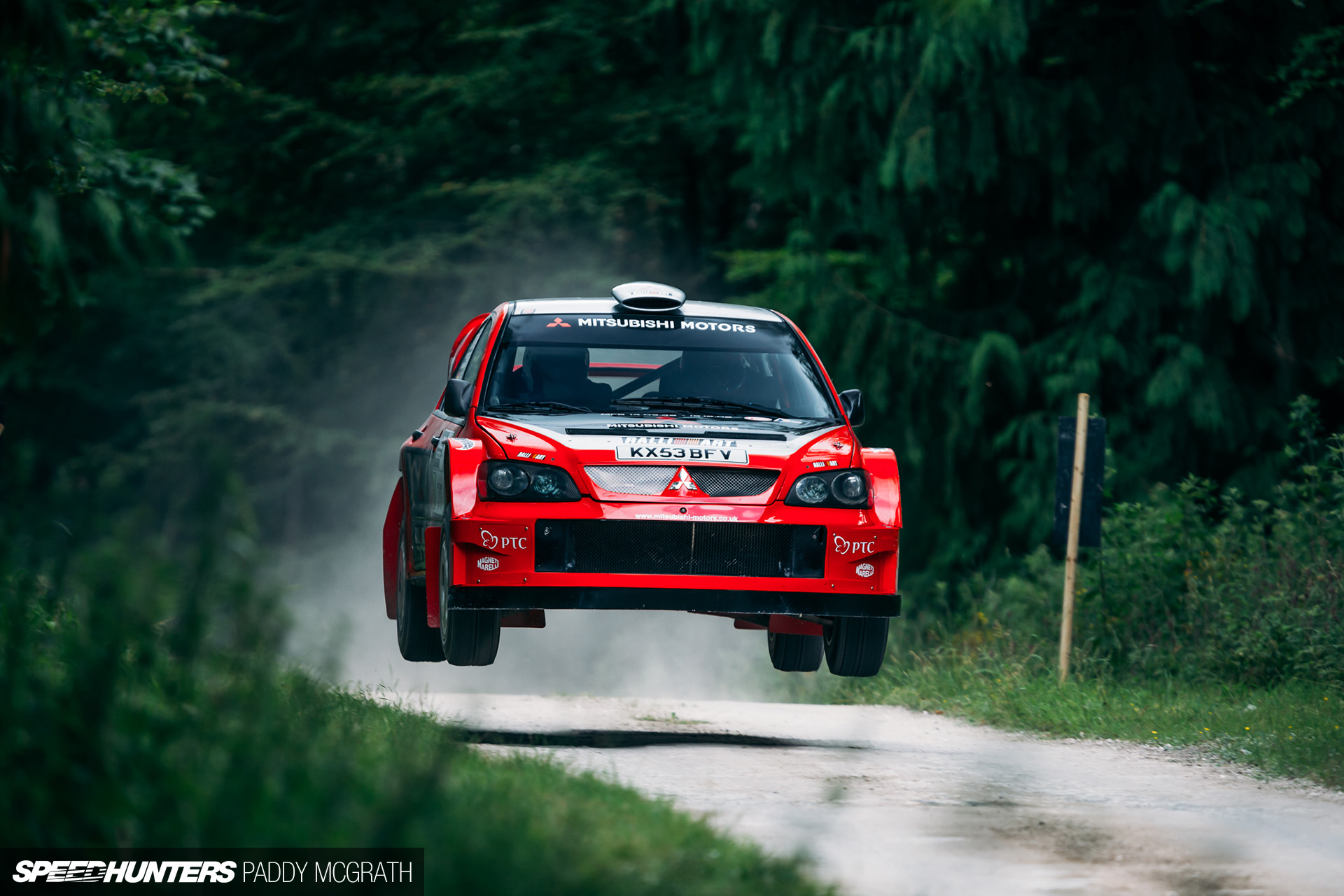
One of MML’s customers was Tristan Bailey, a British rally competitor who enjoyed considerable success in the UK behind the wheel of KX53 BFV, a 2004 specification ex-works Lancer WRC. When MML eventually decided it was time for them move on from these cars, Tristan was concerned that the remaining cars and parts would be split up and would vanish all over the world, which would make it impossible for him to continue driving his car.
So, he did the reasonable thing and bought everything Lancer WRC-related from MML in order to keep the program alive.

This is MMR Rallysport, who single-handedly saved an entire era of Mitsubishi’s WRC history,
The Ultimate Job LotWhat’s perhaps most amusing about all of this, is that Tristan started his rallying life in a Subaru, following on from an Impreza road car he had when younger. “It was blue with gold wheels. I was basically Colin McRae,” he joked.
Competing in the formidable Group N class, he ultimately got tired of being beaten by Lancer Evolutions on the English stages, so figured he might as well jump ship. The rest is history, and he’s never looked back.

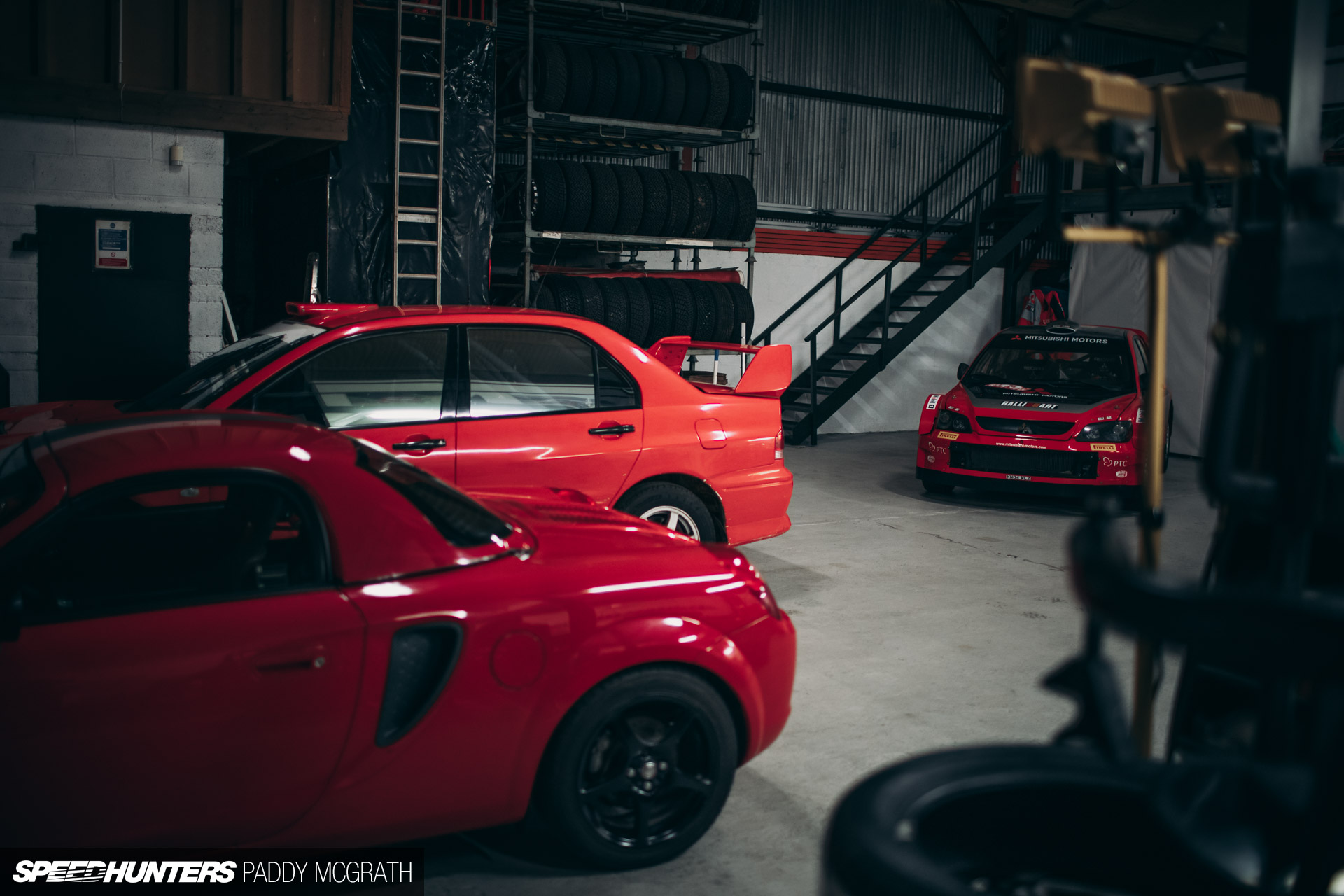
With Tristan’s wife Laura working alongside him, it took two years to move everything into their current workshop. As you can imagine, its location is a well-guarded secret. If you can’t imagine, you’ll surely have figured out why by the end of this story. If you don’t figure it out, well, maybe this isn’t the website for you.
Let’s just say that it’s in Europe, somewhere.

While their original plan of saving these cars and parts would allow them to compete even more, the reality of the situation is that with so much more to take care of (they have customer cars based all around requiring support, and other cars in the process of being restored to exact works specification) it has meant that competitive driving has taken a back seat for the time being.
Regardless, the lack of seat time hasn’t had a single iota of impact on either Tristan’s or Laura’s passion for the cars which surround them.

Their enthusiasm is utterly infectious. I’d only just walked through the door and they were both detailing the history of each of the chassis’ on the workshop floor in incredible detail. I could barely keep up with the amount of knowledge, and was just praying that some of it would stick.

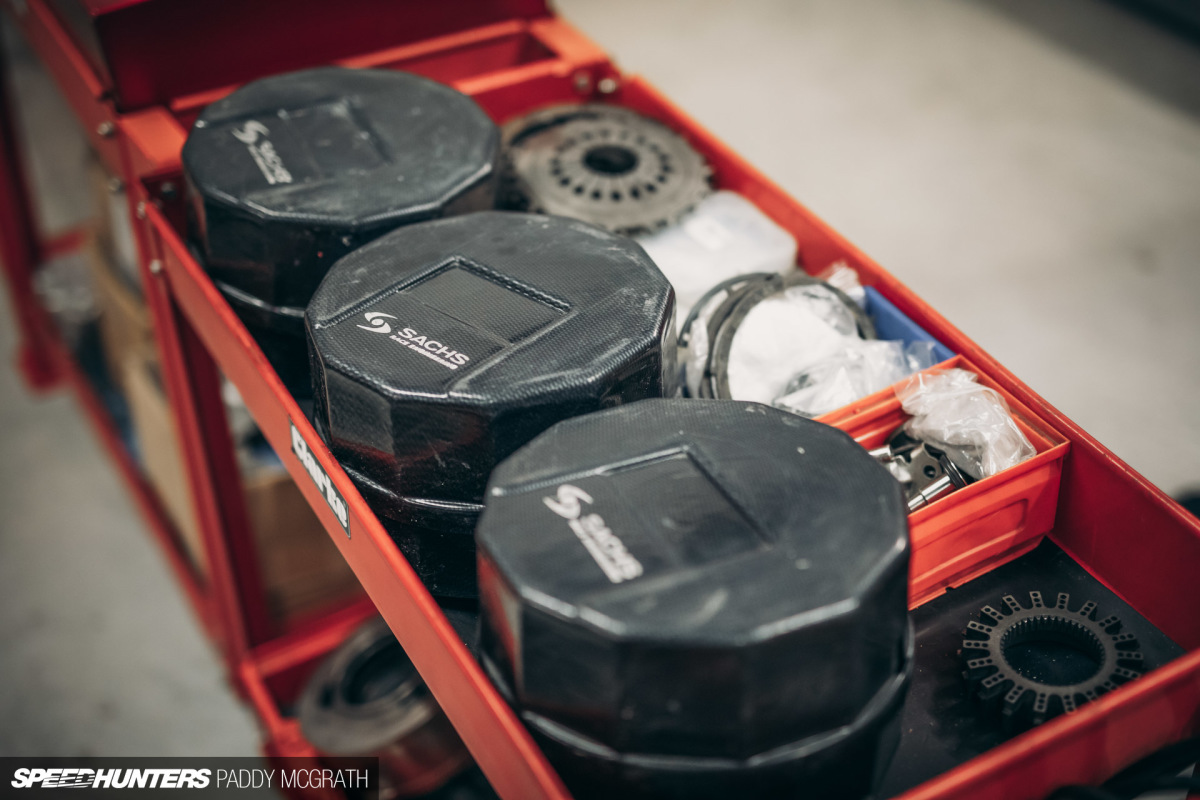
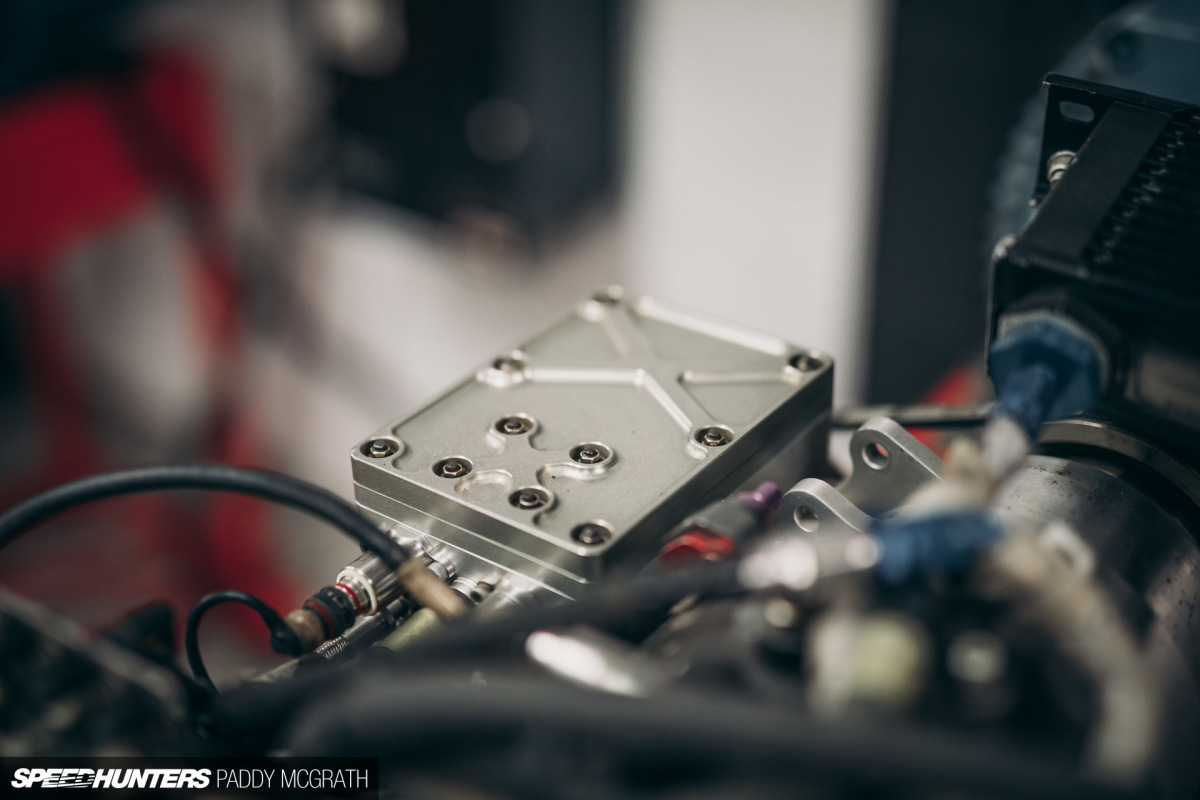
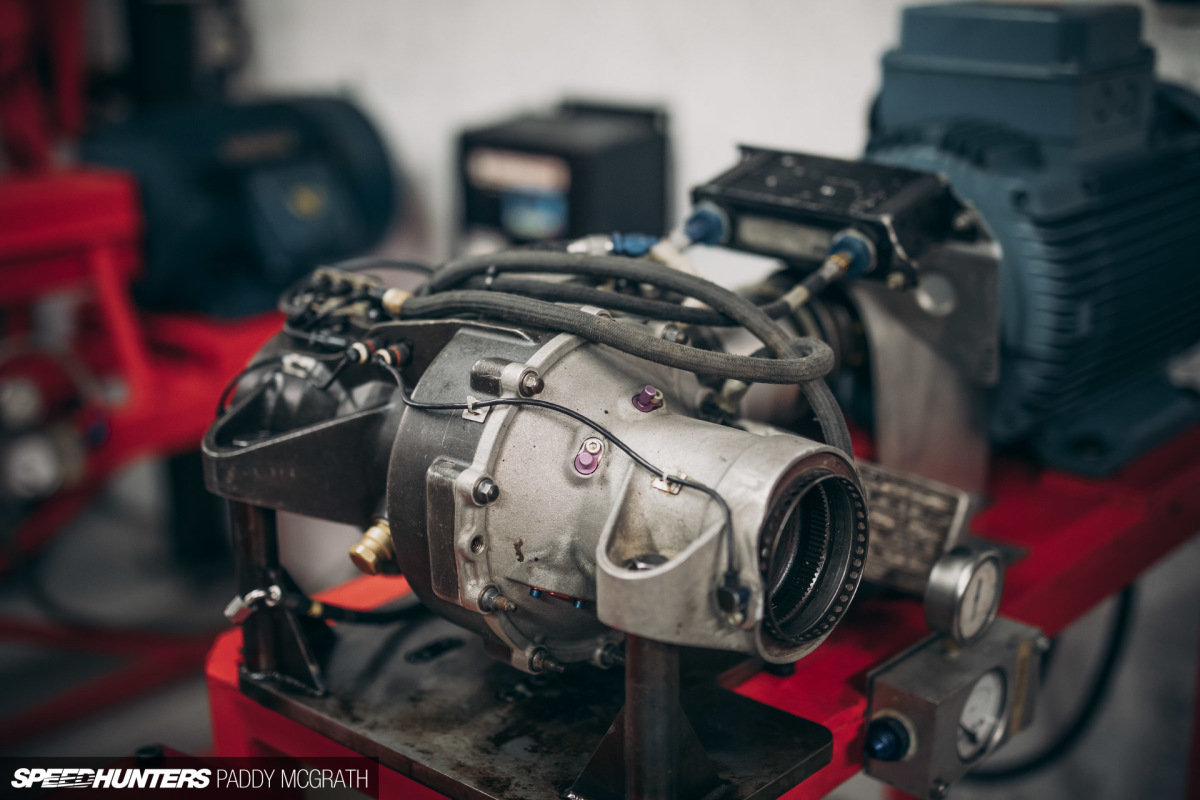
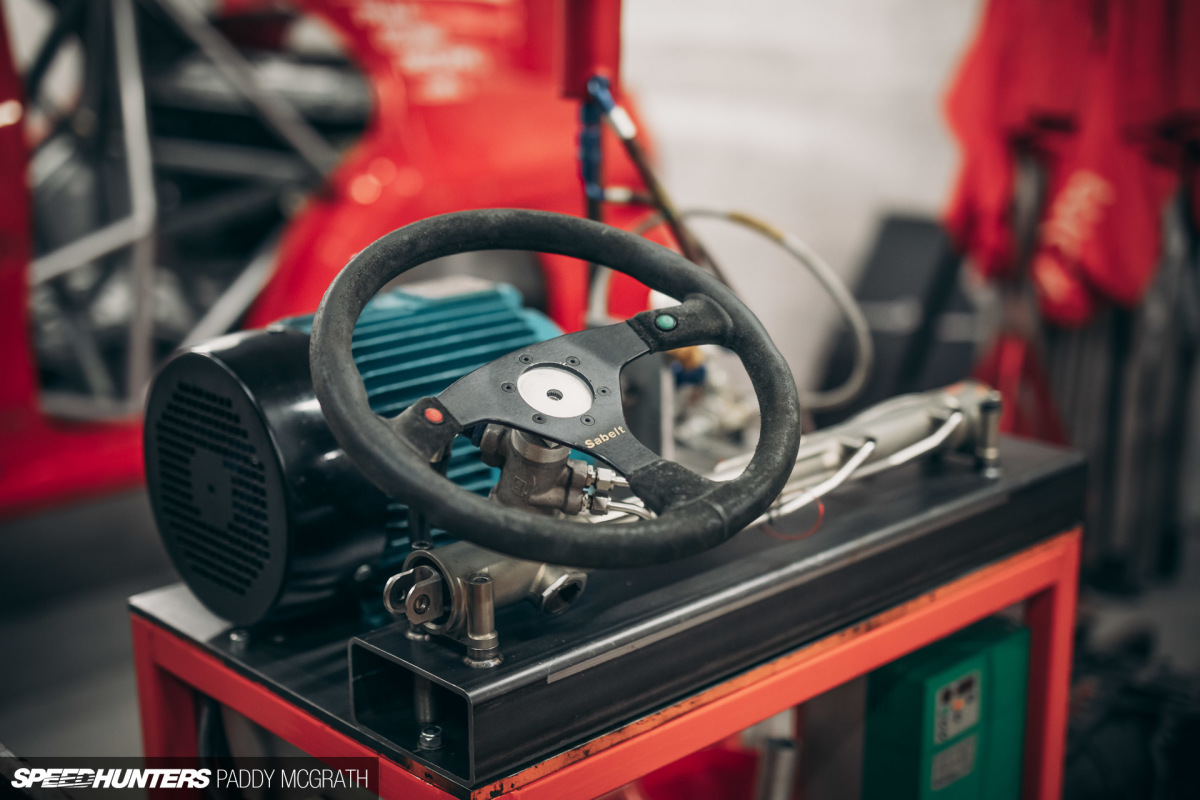
After a few minutes, I’m I became acutely aware that the workshop floor is only about one third of the premises. It is impressive, with custom rigs for testing components such as steering racks, gearboxes and differentials along with carts which contain the required parts and tools for servicing items likes clutches and brakes.

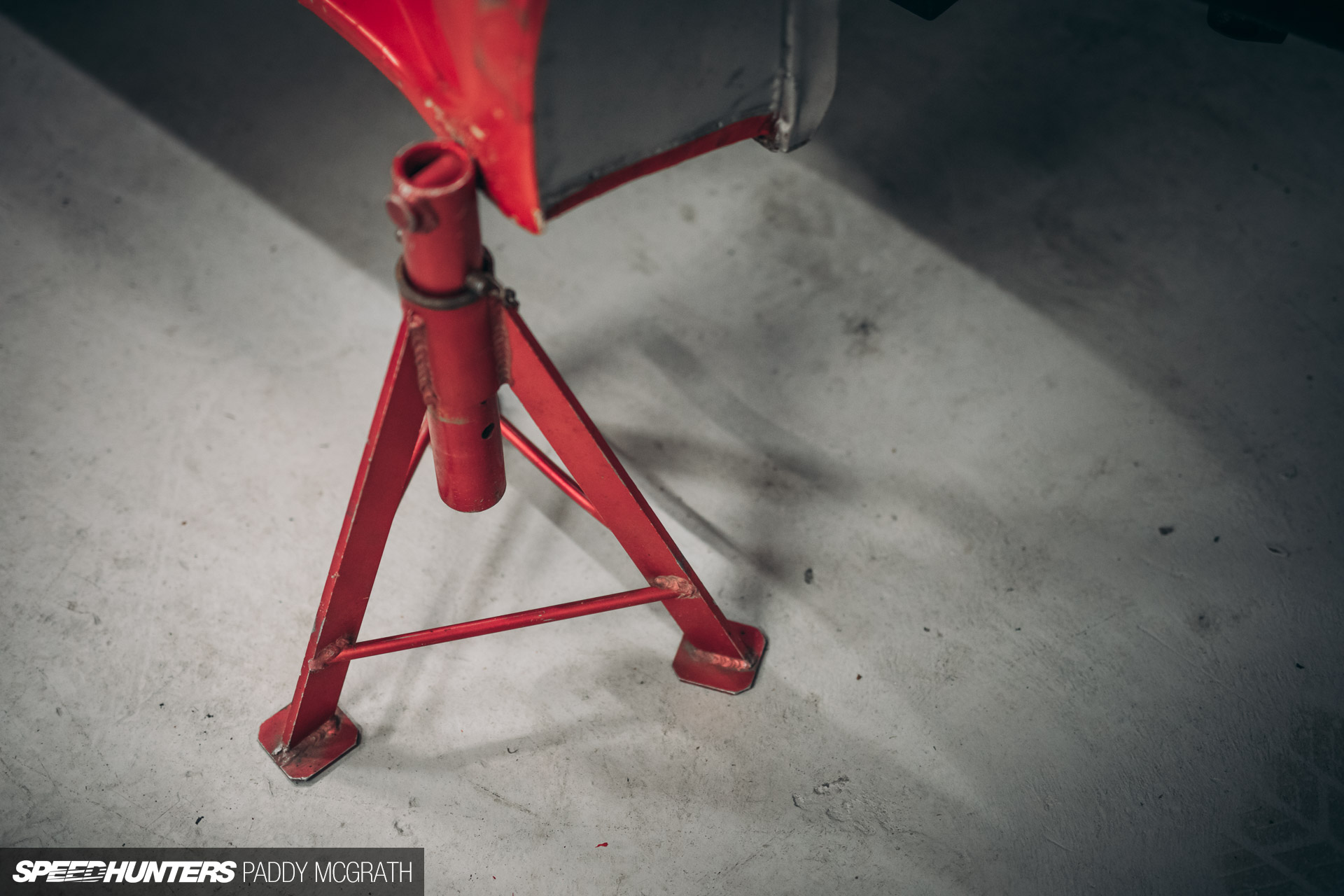
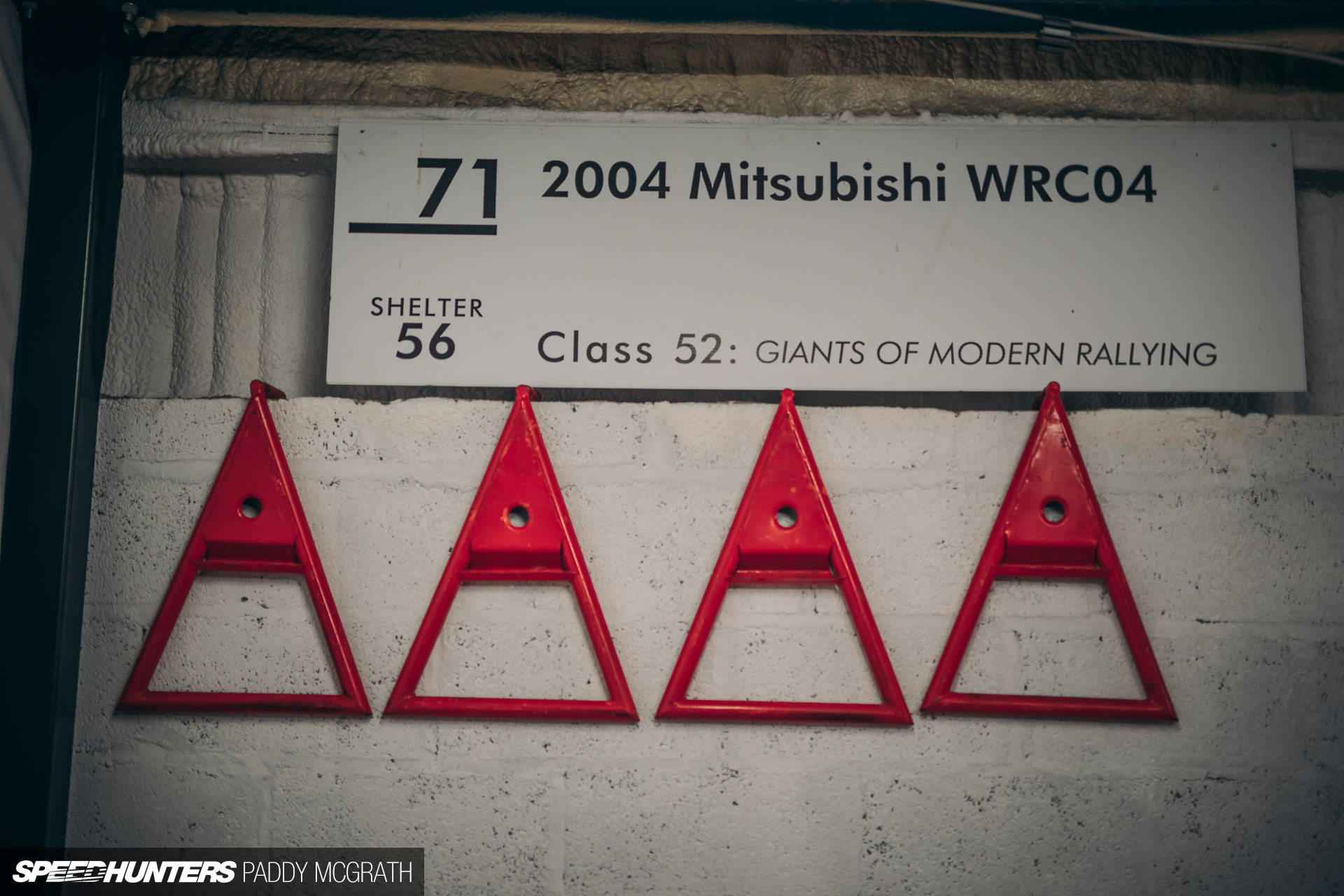
Looking at anodised jack stands, there are two types, one heavy duty type for the workshop, and a lighter type for service at events. Anodised. Jack stands.
It was at this precise moment that I realised I wasn’t looking around a normal workshop, but getting the ultimate sneak peak behind the scenes of a works World Rally team, something I don’t think many people outside of the teams have ever had the pleasure of.

“You’re the first person to ever see any of this here,” Tristan told me afterwards. Which is why I’m now more stumped than ever that when I asked what was behind the white curtains, they pulled them open and let me bring a camera inside.

It’s dark in here, and very tight. Not because the area is small, but because every inch is occupied with some part or another from the Lancer WRC era. While it has taken two years just to move everything (the wheels alone took two truck loads) it’s going to take another little while to organise and unpack things.
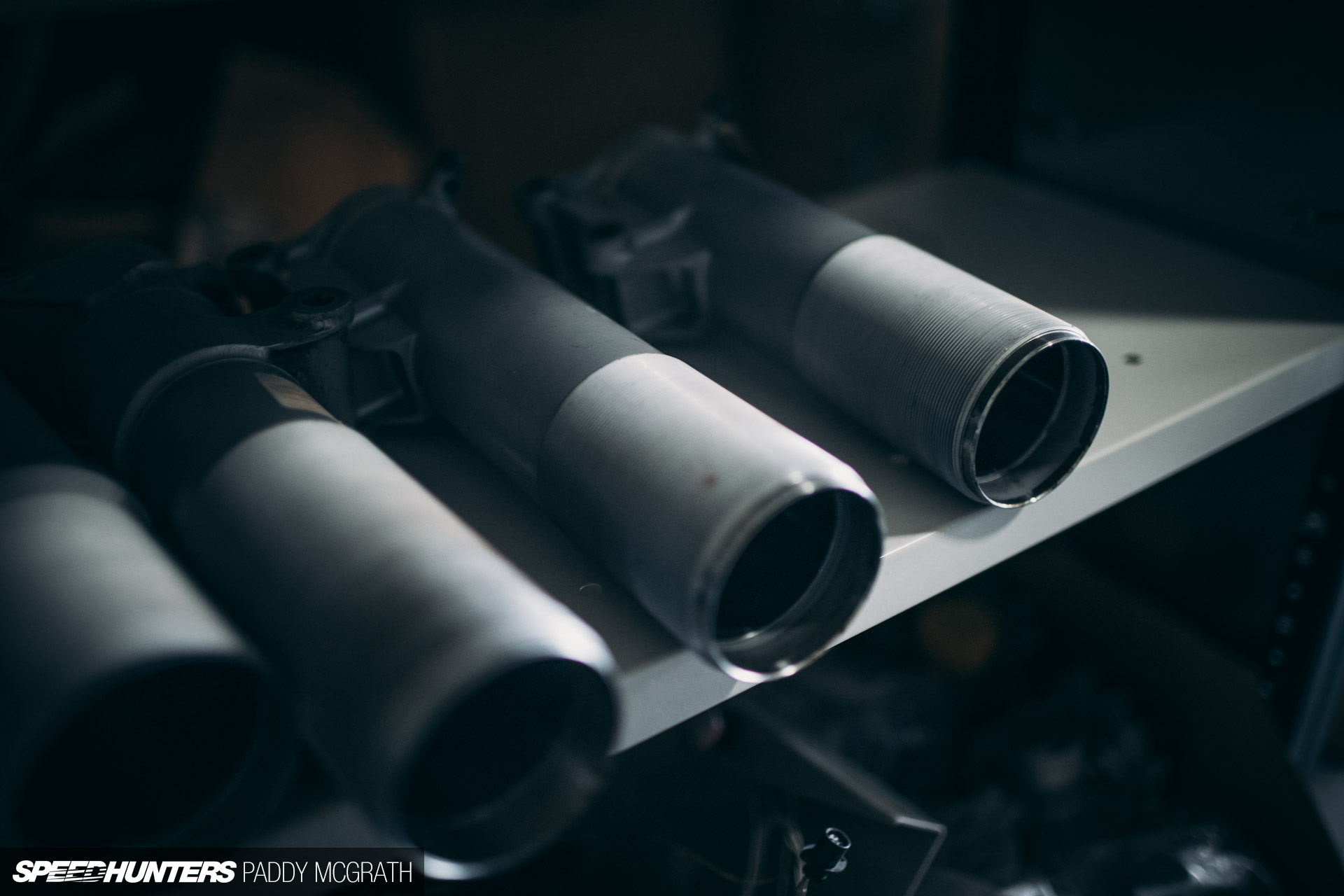
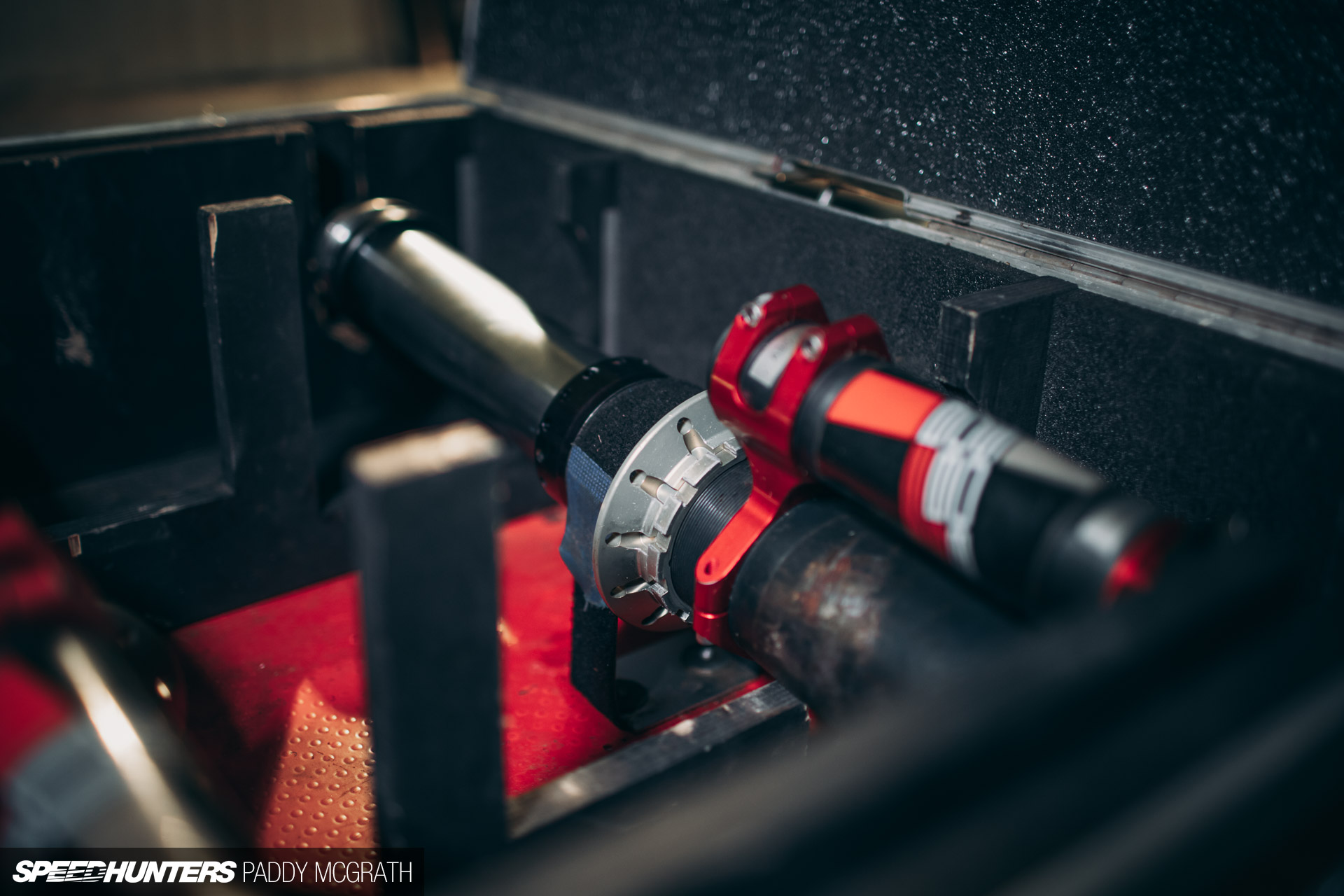
“We know where everything is, it’s just sometimes a little difficult to get to,” the voice behind me said as I stared in disbelief at what I was seeing. Those are complete tarmac specification front suspension assemblies poking out of that box. In the foreground, is a stack of doors wearing light scars. “When the cars were damaged, they would just put on a new part and store the old ones.”
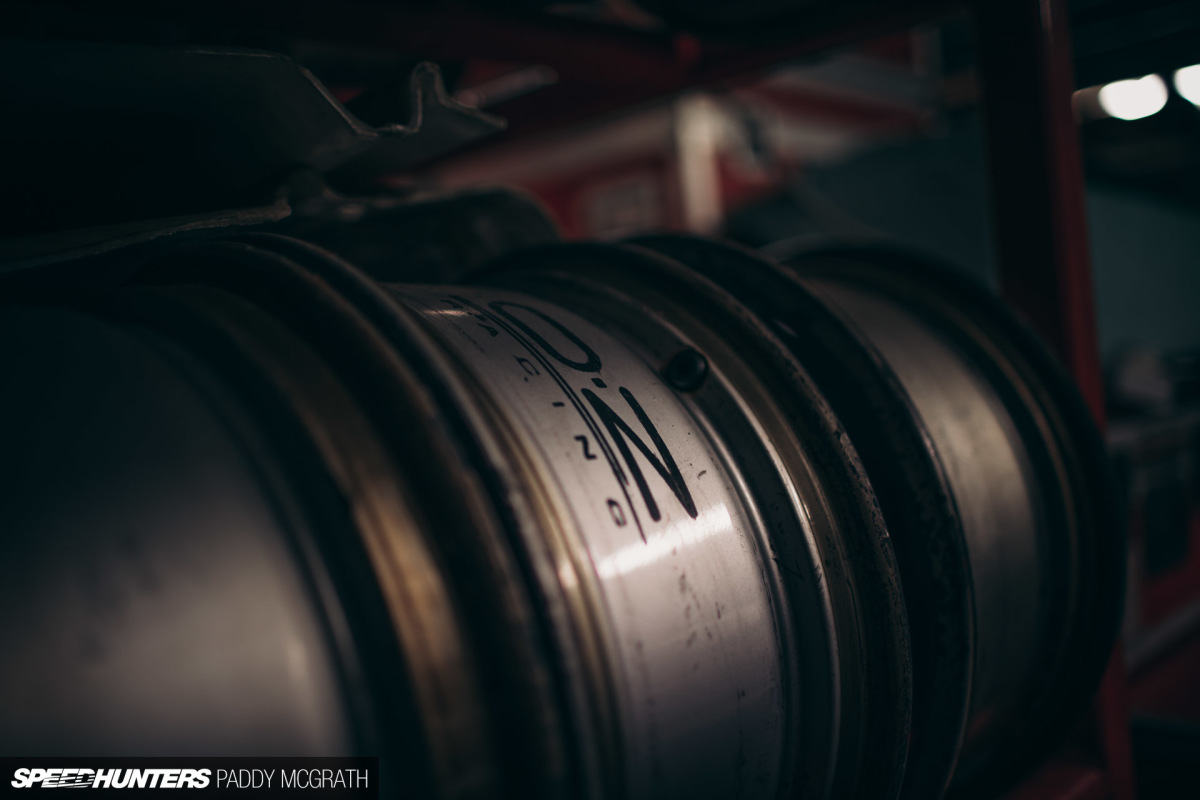
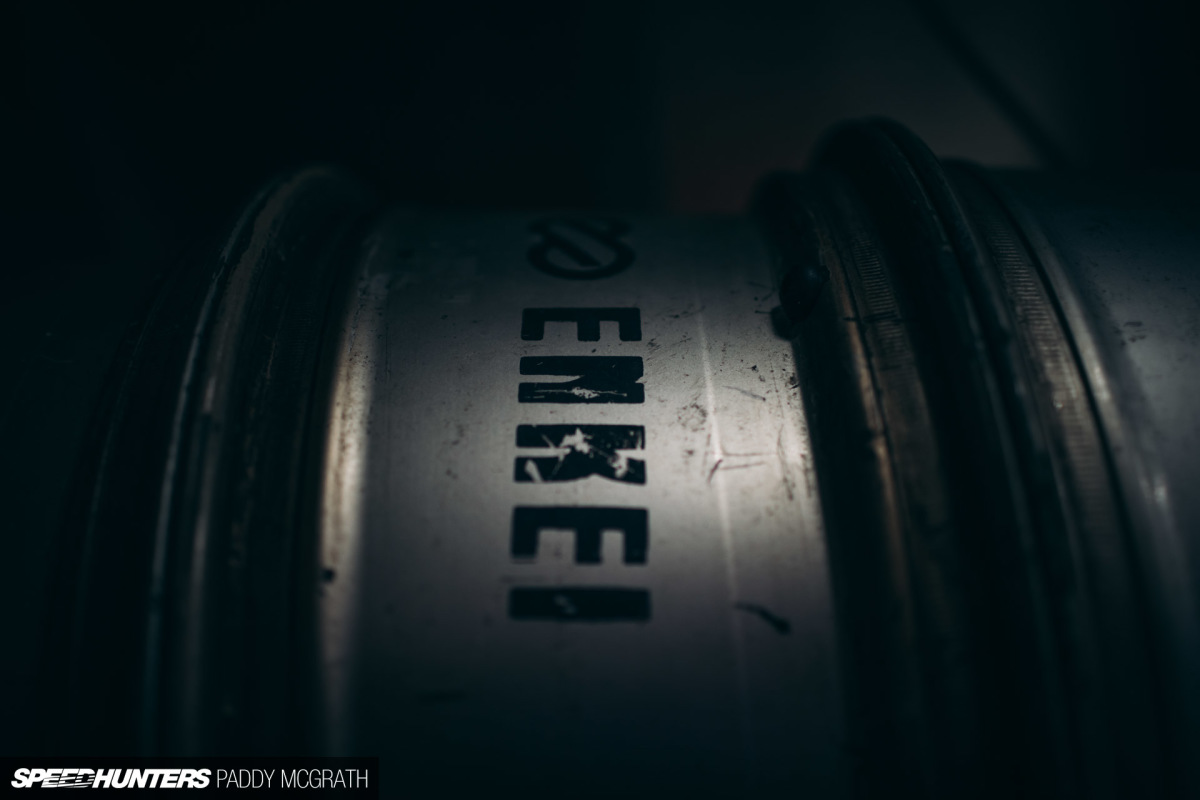
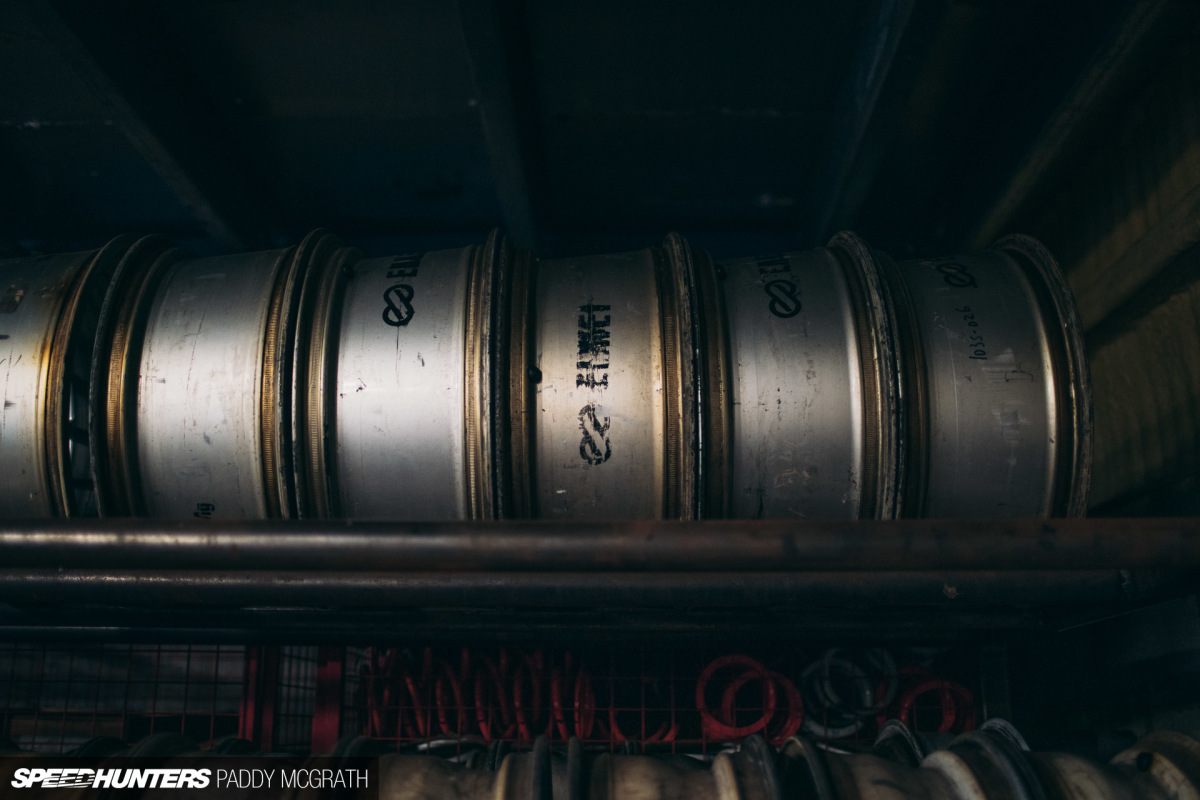
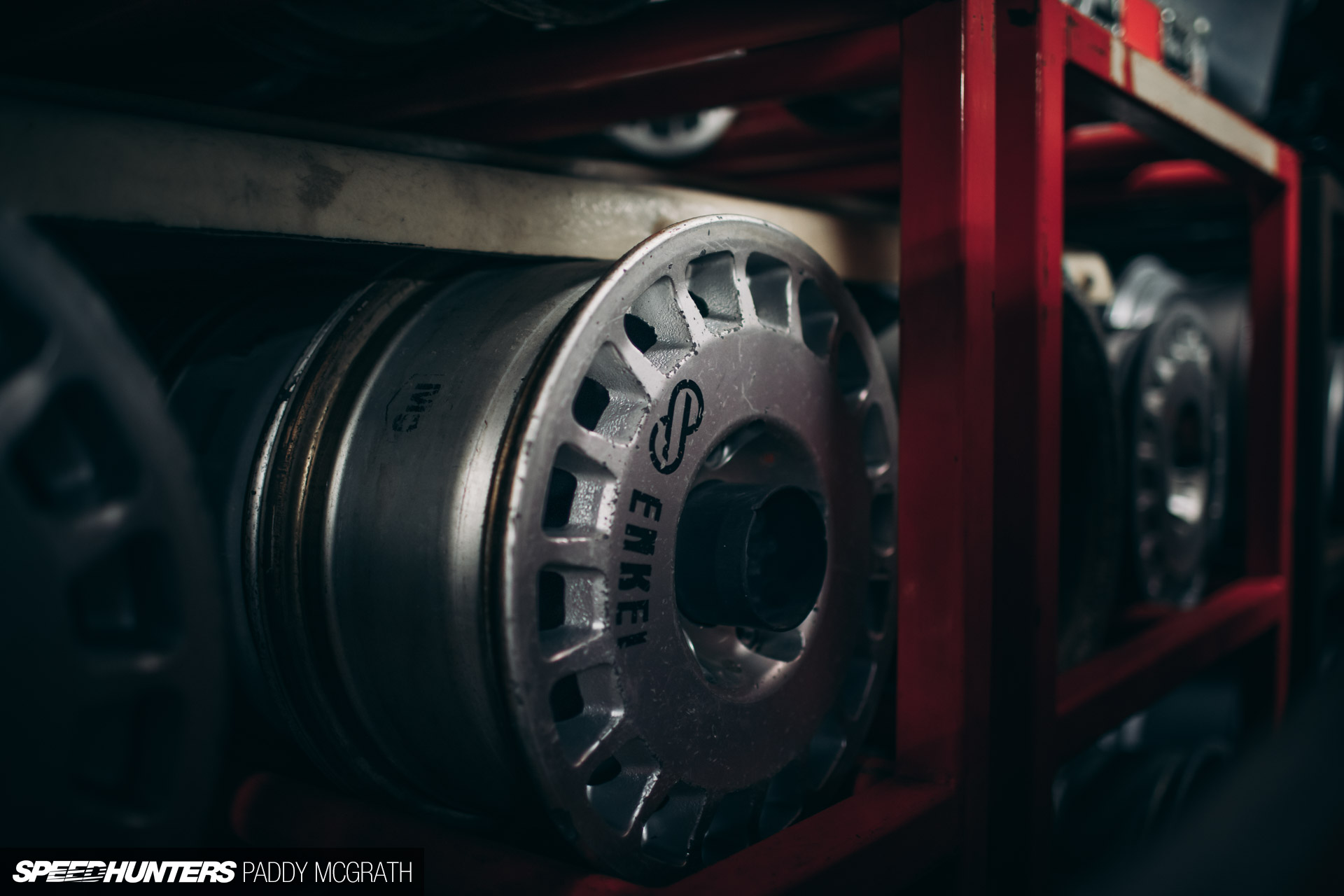
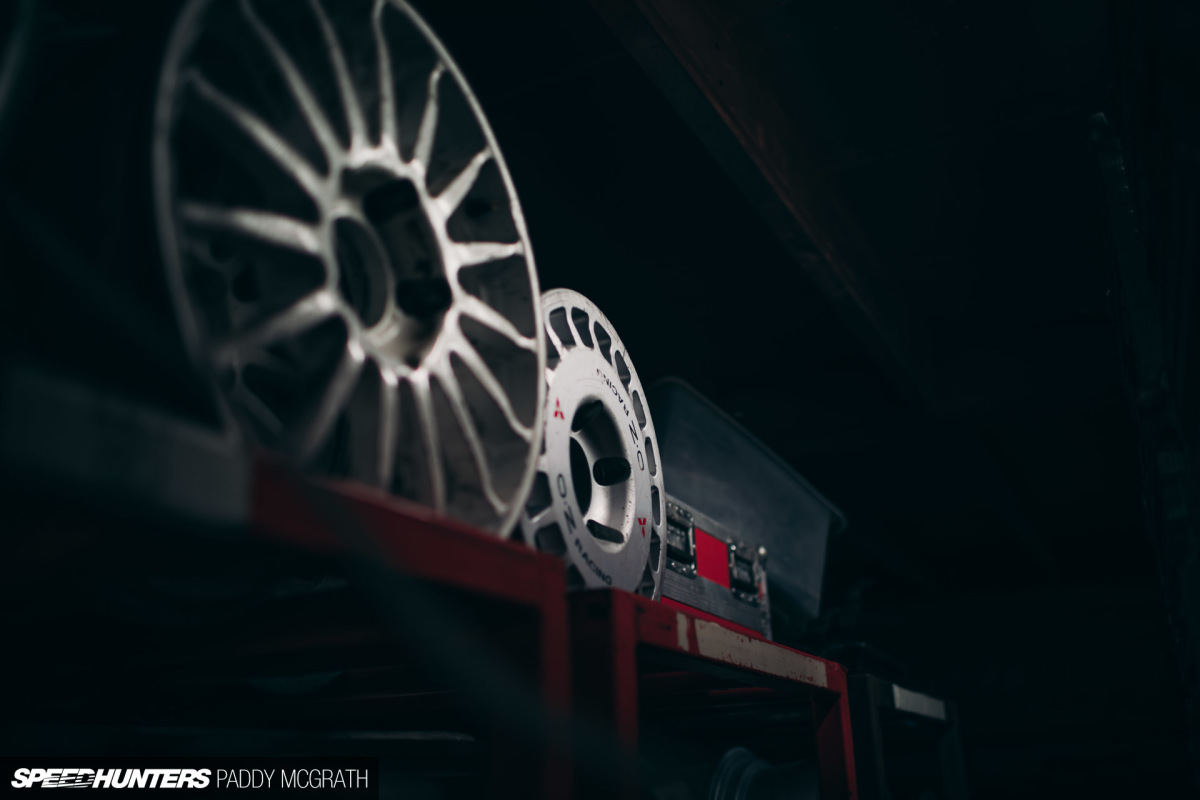
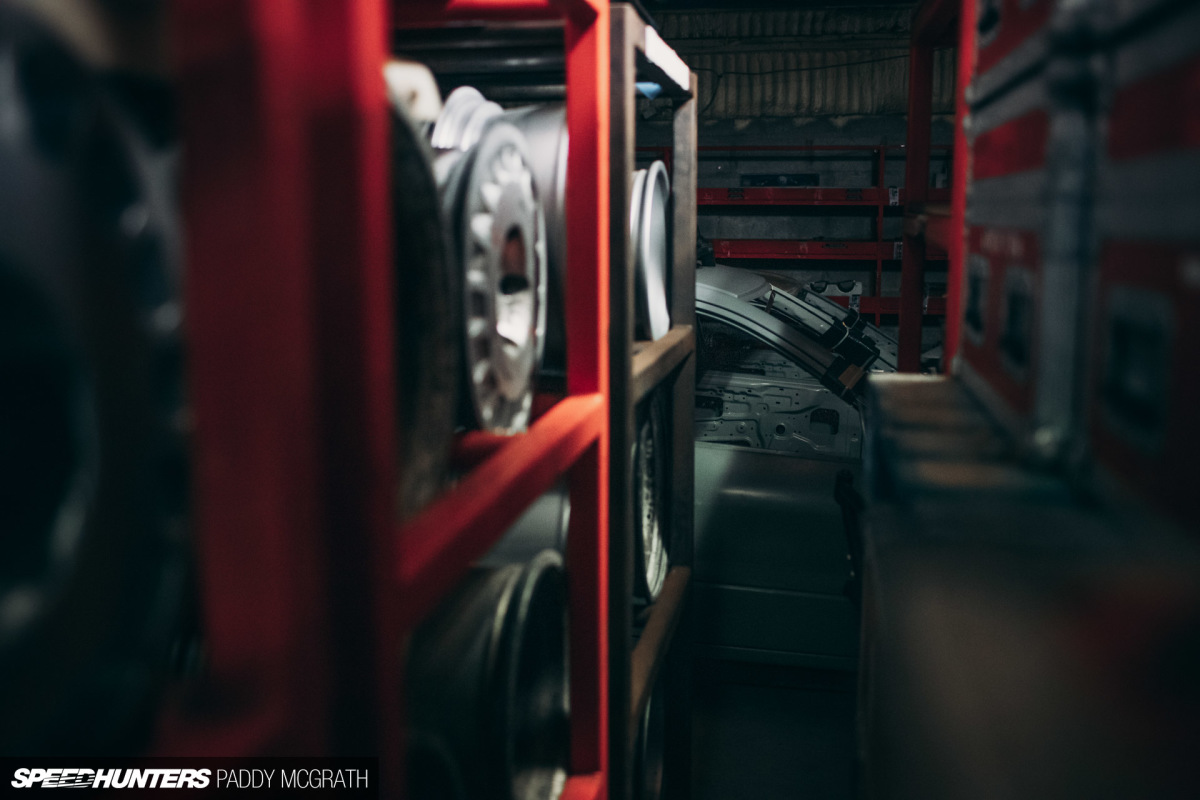
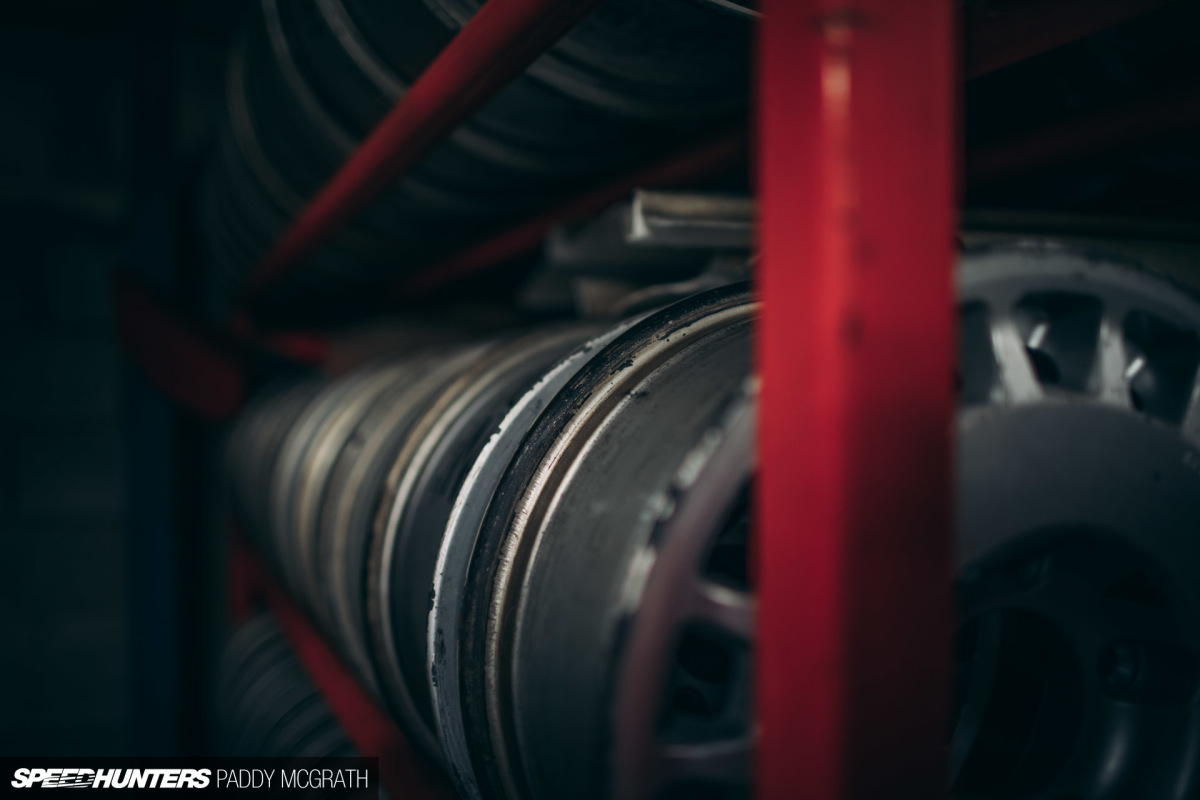
There are countless numbers of used and new Enkei and OZ Racing magnesium wheels, with and without tyres for loose and tarmac surfaces. How incredible is the natural patina of a used WRC wheel?
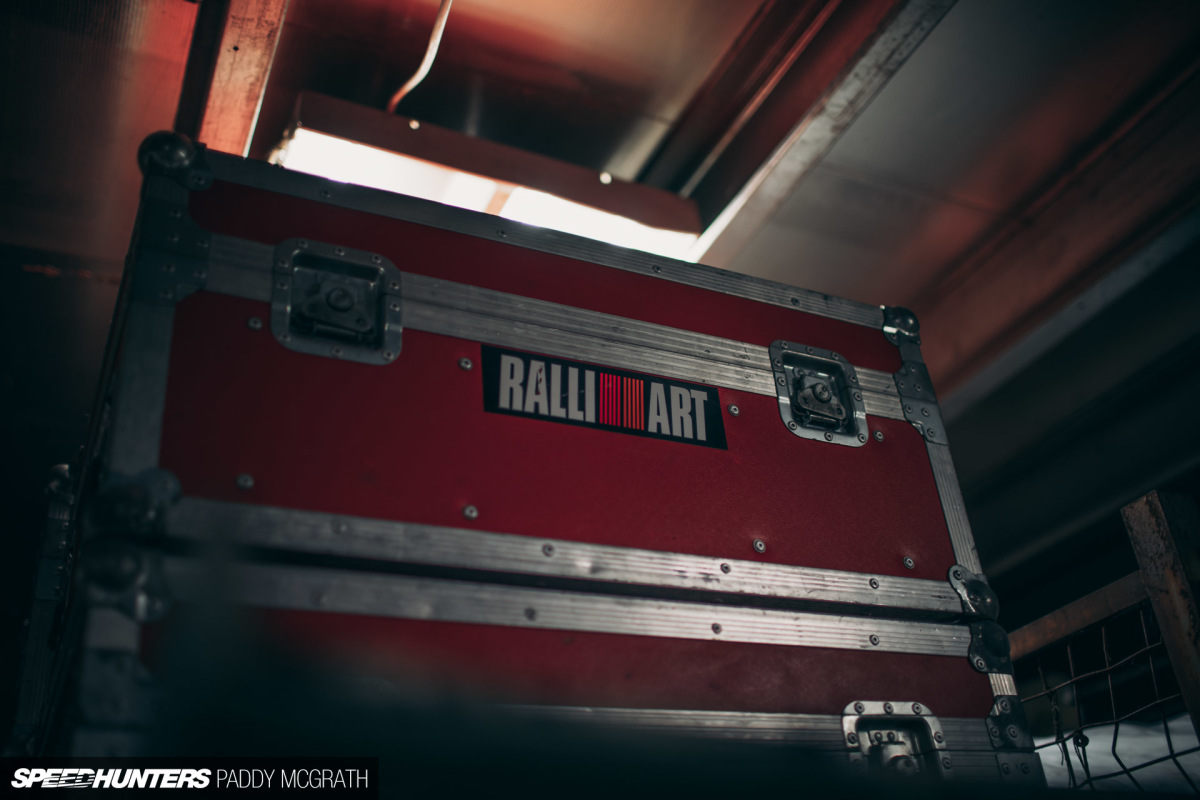
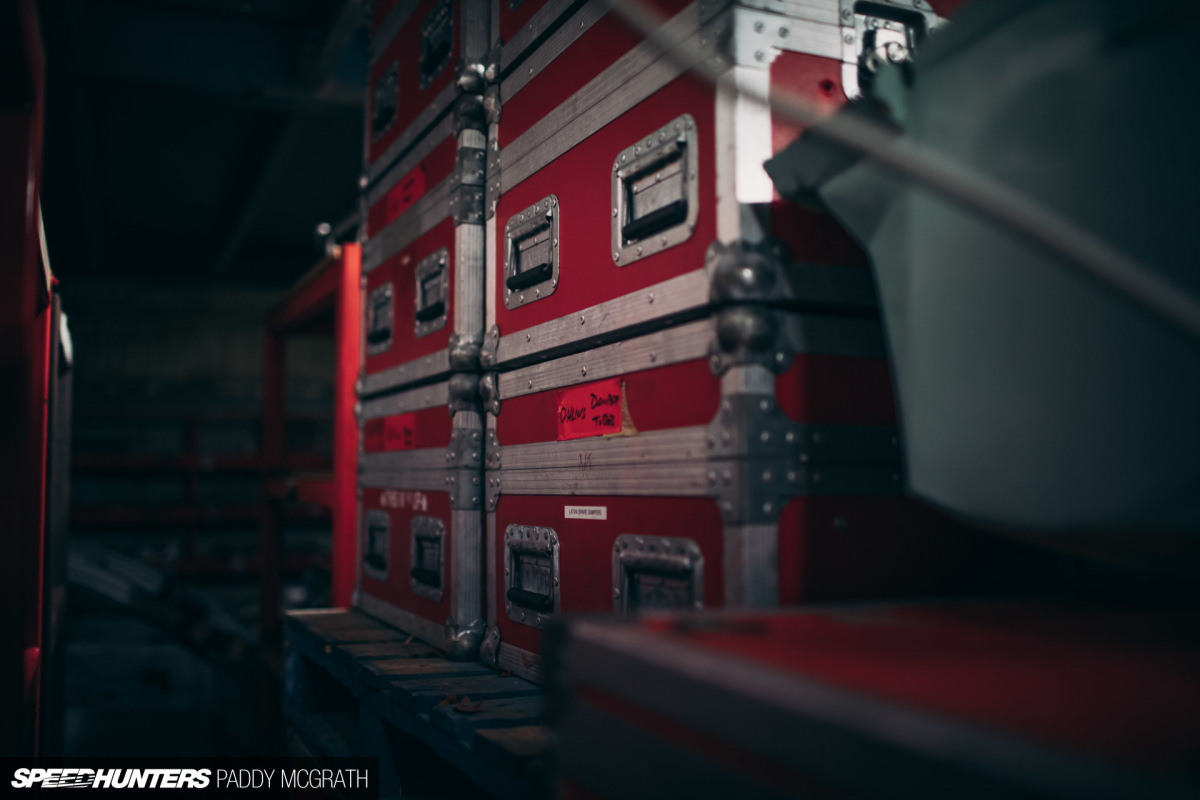
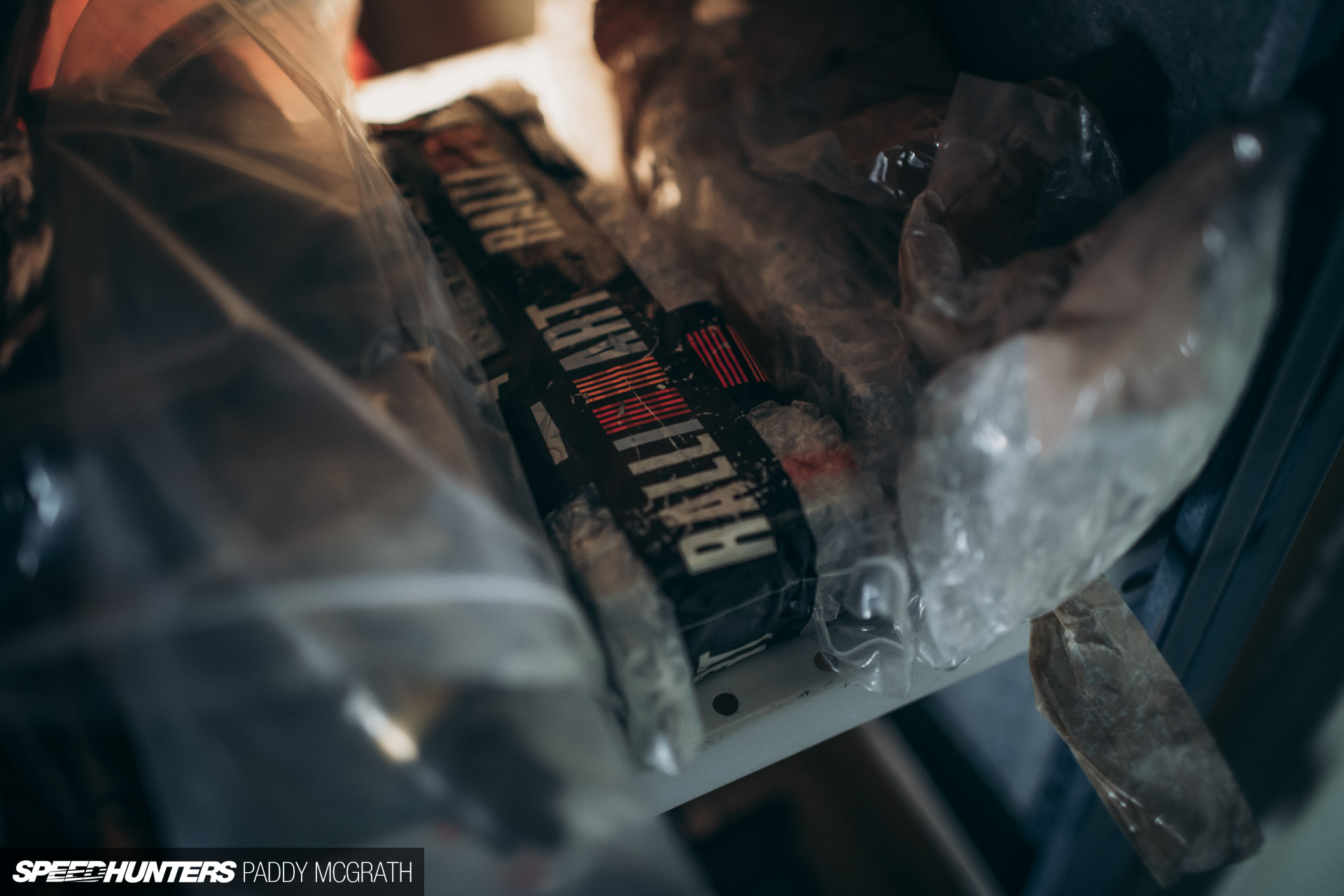
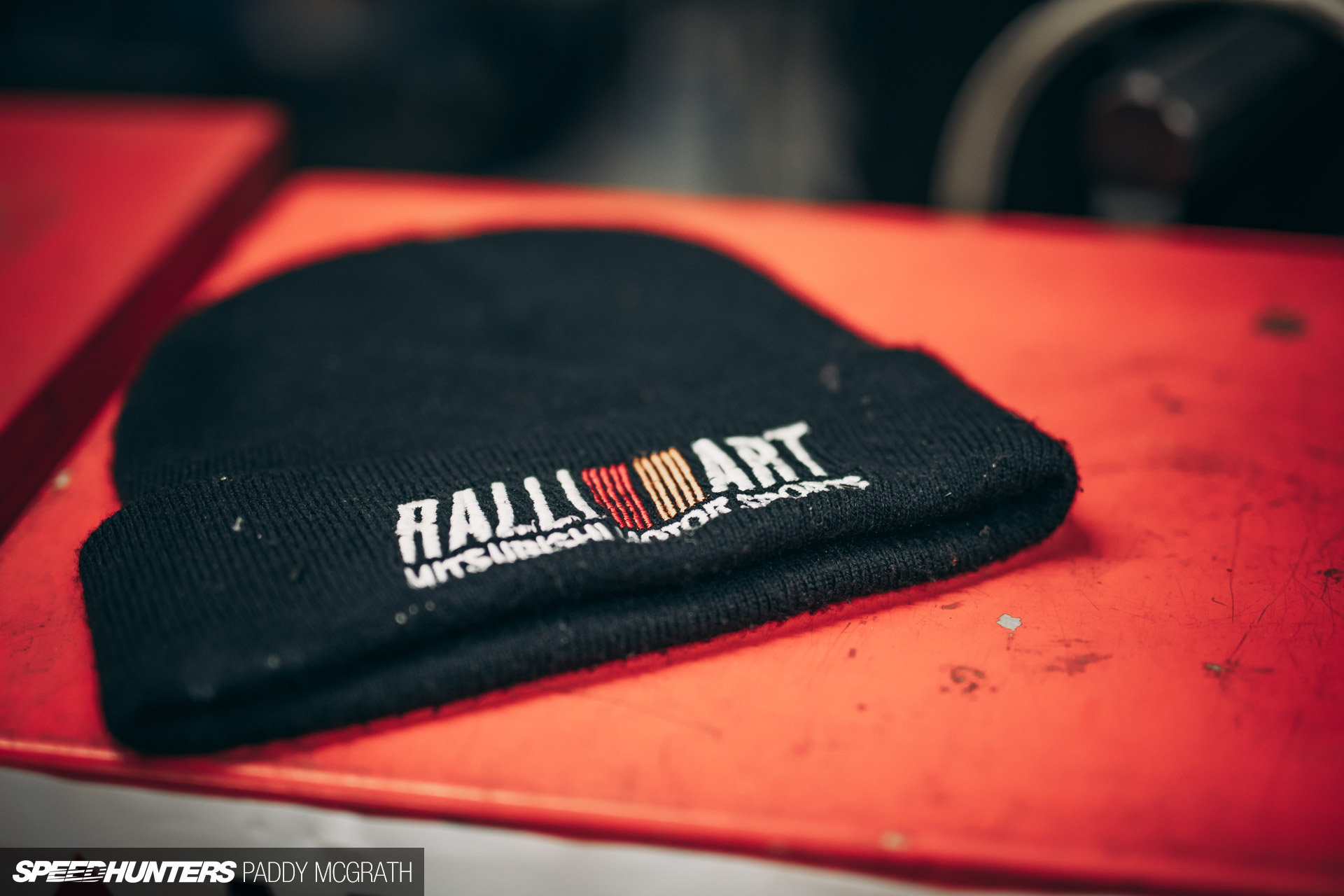
There are Ralliart branded and colour co-ordinated flight cases containing dampers, differentials, gearboxes, engines and other parts.

This is a genuine WRC specification 4G63, which normally resides in one of said cases. It’s ready to be installed and run, as it would have been at the time during an event.

There are hundreds upon hundreds of springs hiding behind a wheel rack, with different colours representing different lengths and rates.
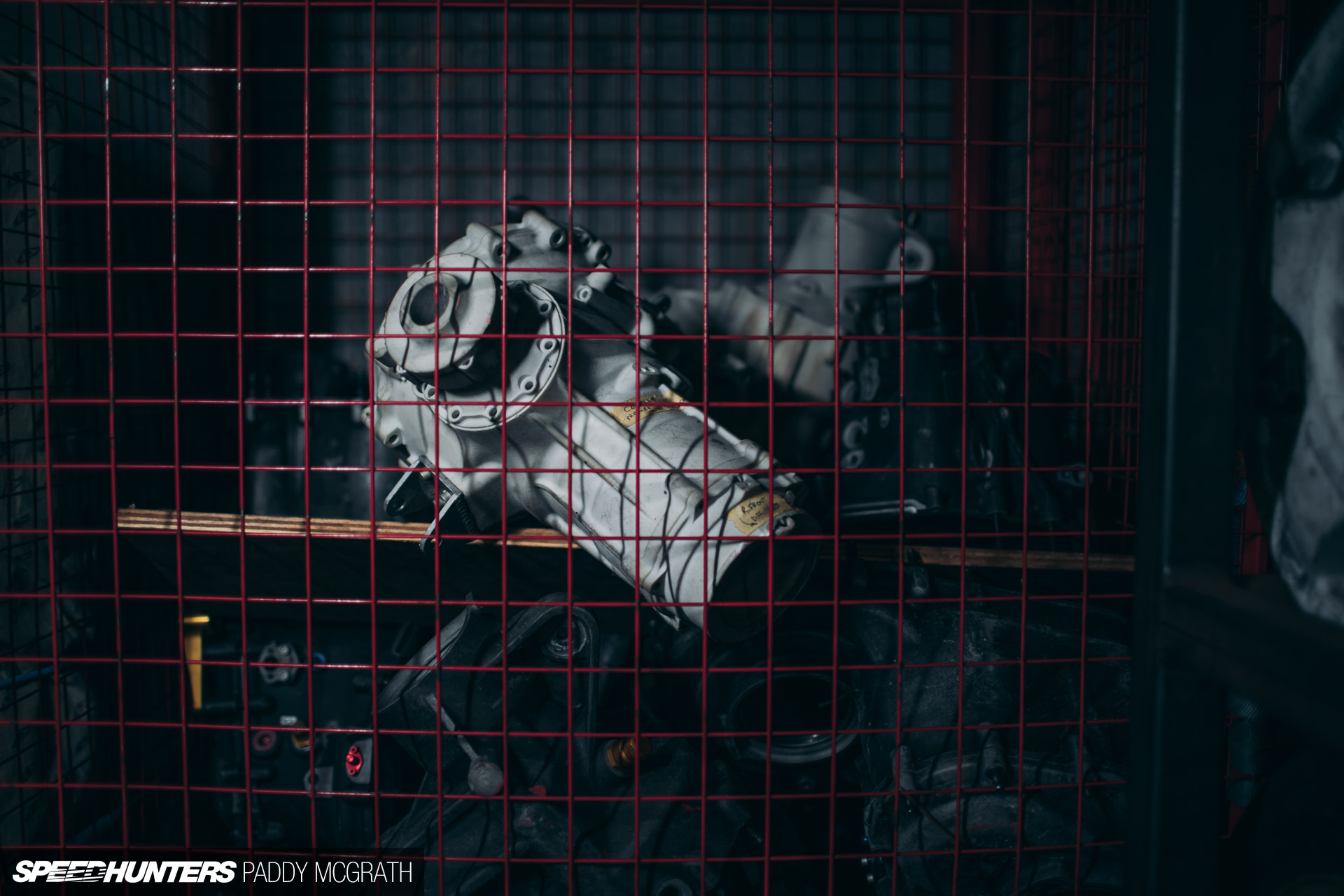
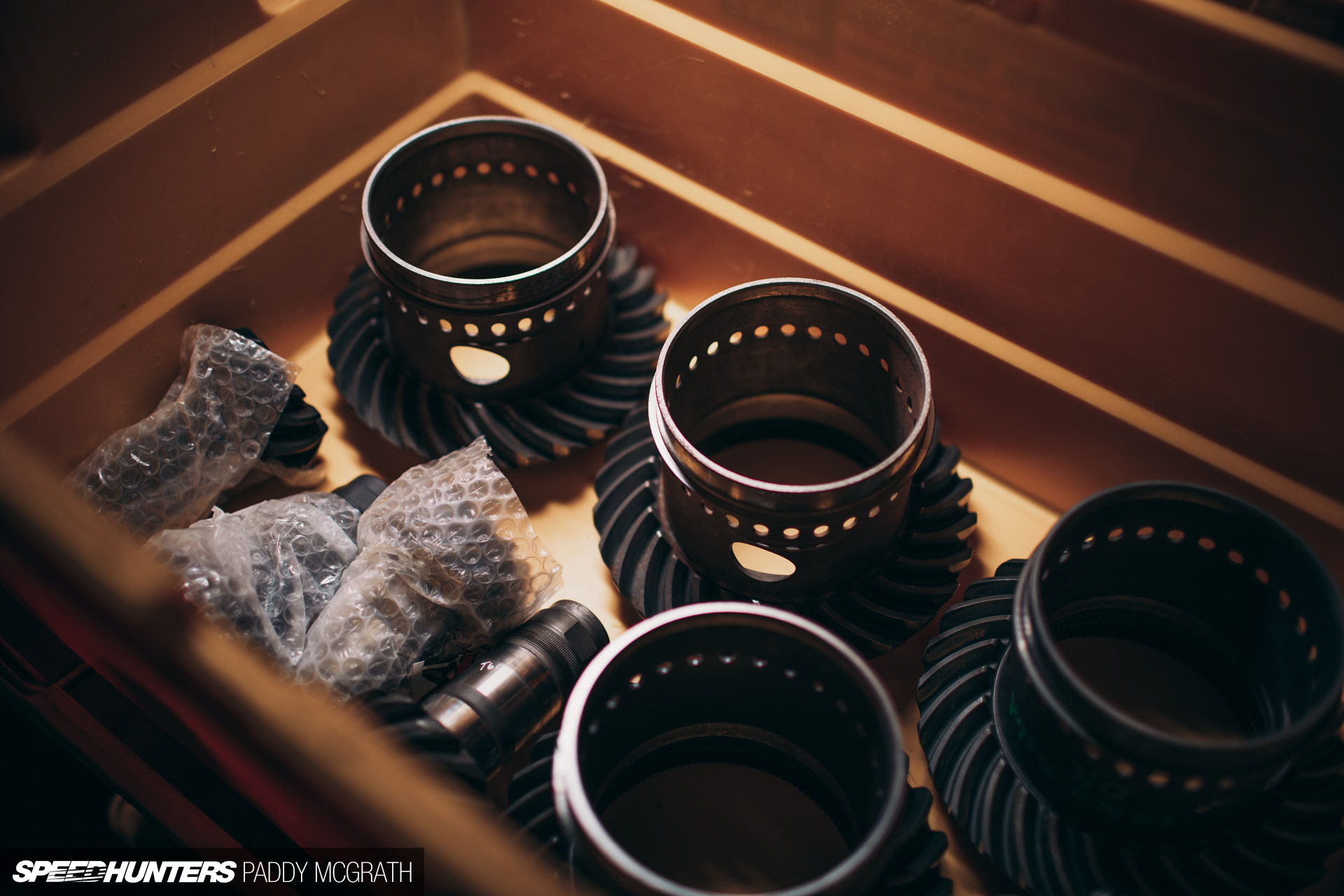
This is a cage full of differentials.
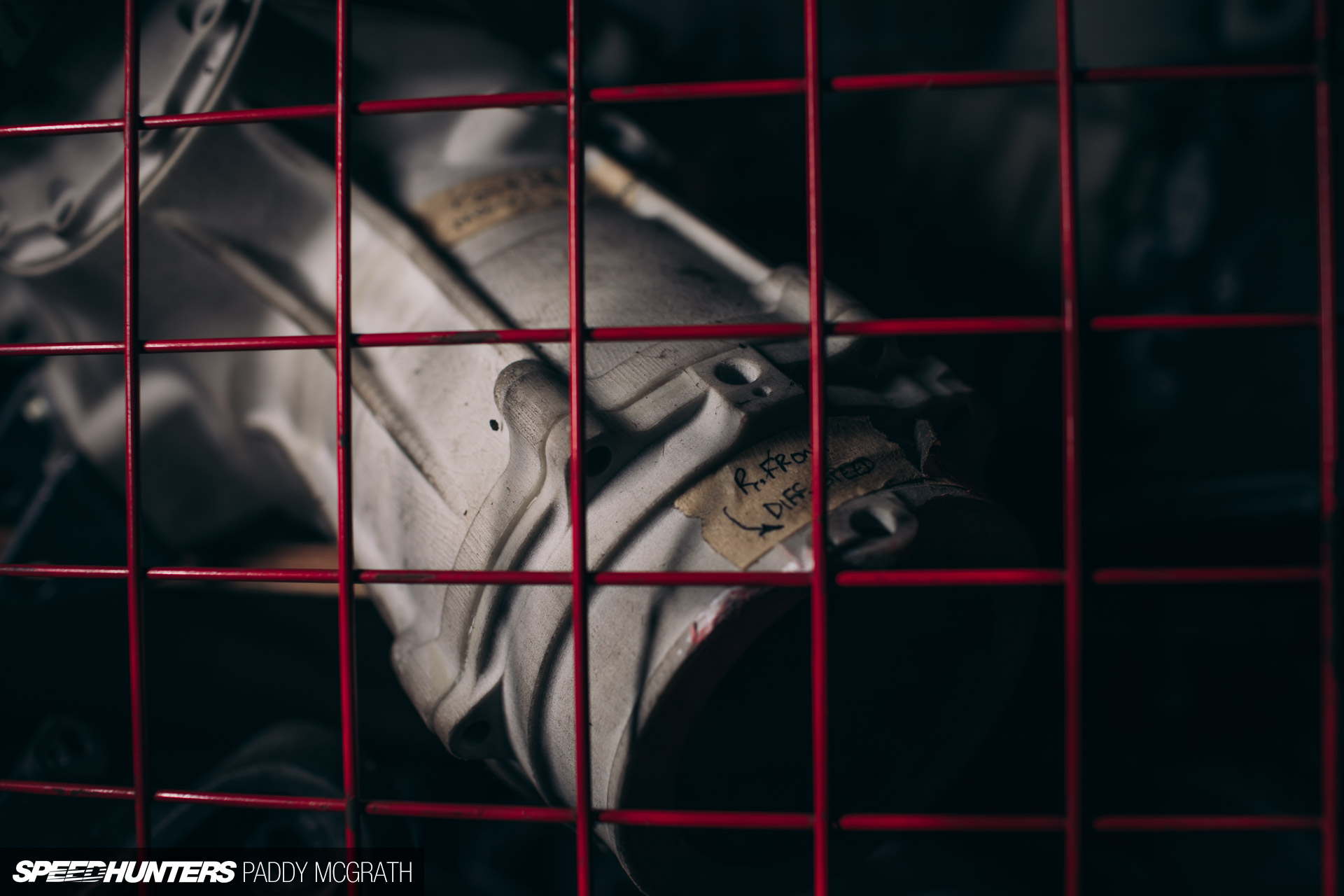
On closer inspection, this one appears to be a plastic prototype, complete with engineer’s notes still on it.
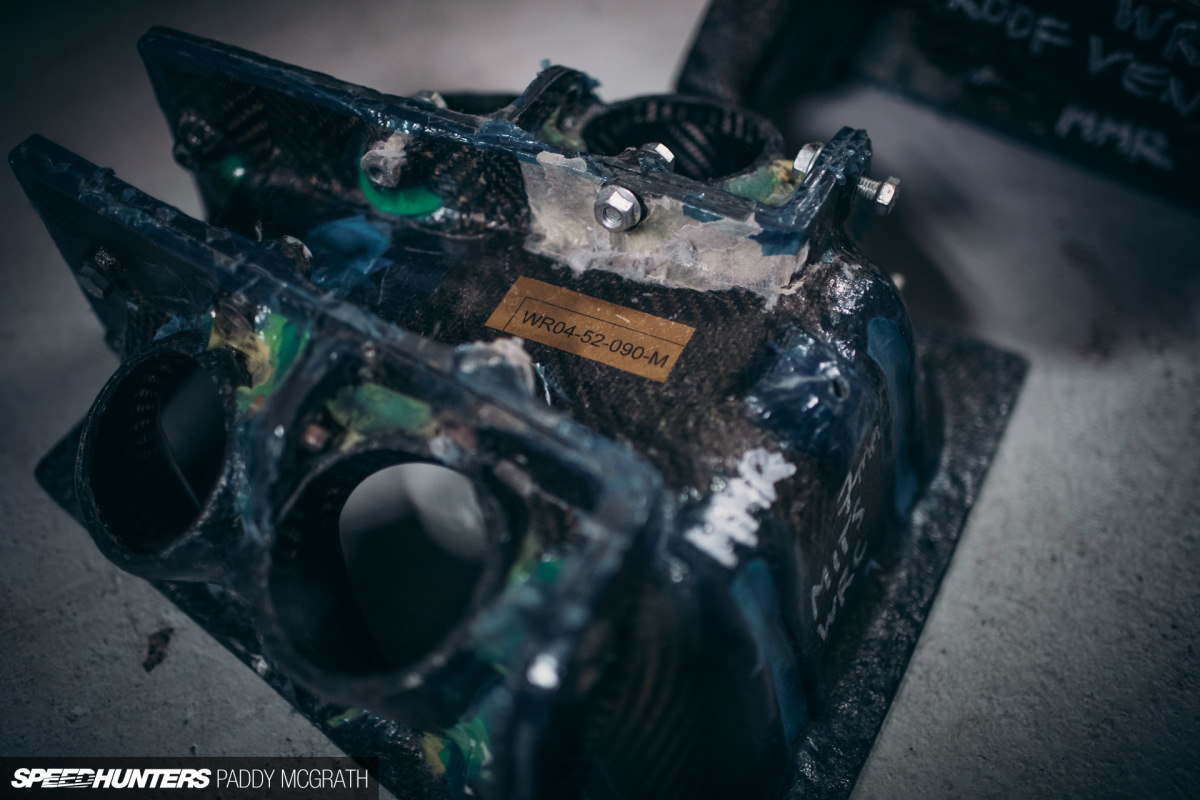
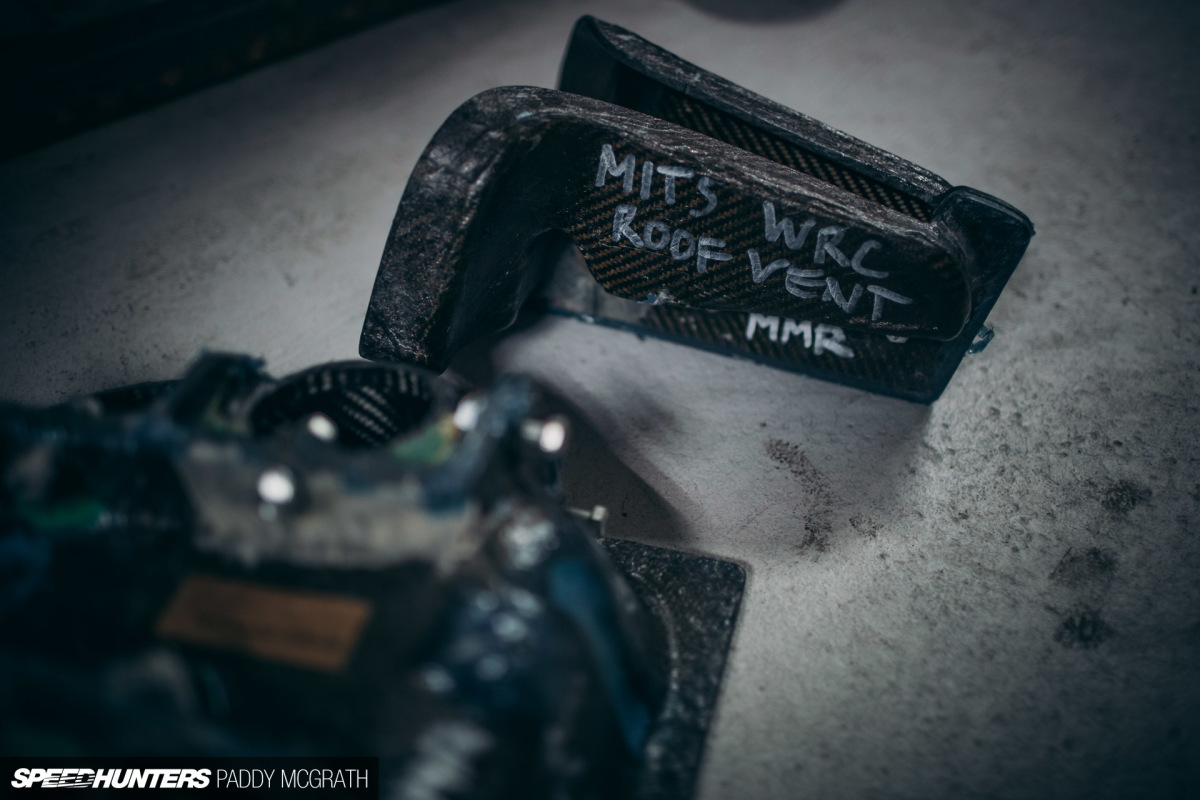
Along with having the parts themselves, there are moulds present for everything which requires a master to be remade. For everything else, there’s CAD and technical drawings. On a car where almost everything is completely unique to the car, every single item required an original part number.
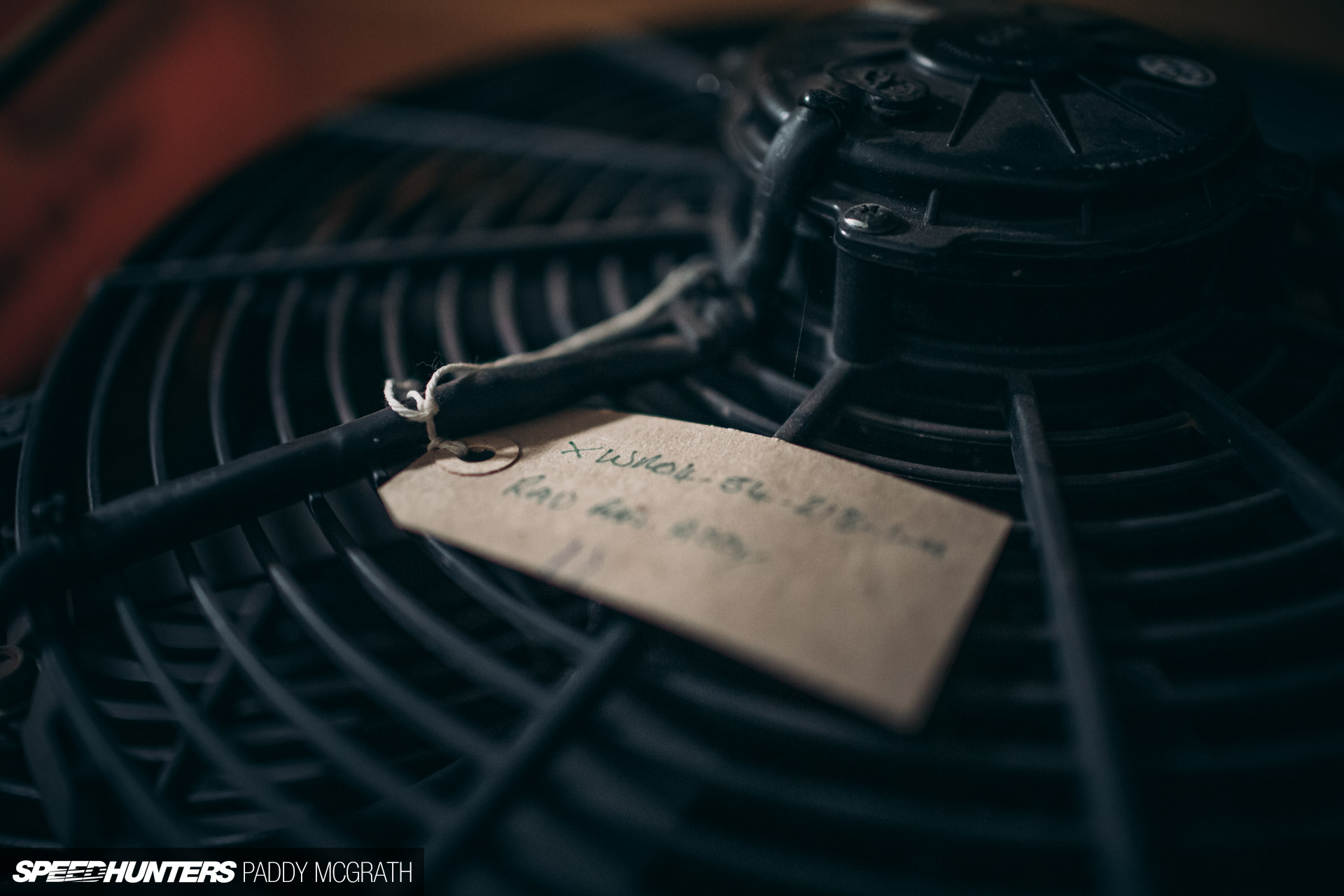
Need for Speed‘s Vehicle Director, Bryn Alban, was working at Ralliart UK/MMSP during this era and was able to decode the part numbers for me. So, something like WR04-XX-YYY-Z would break down as simply as this:
- WR – World Rally Car
- 04 – Year
- XX – Area on the car i.e. engine, interior etc.
- YYY – An incremental number unique for that part
- Z – A suffix to denote either a revision number or another detail i.e. ‘M’ for mould as seen above
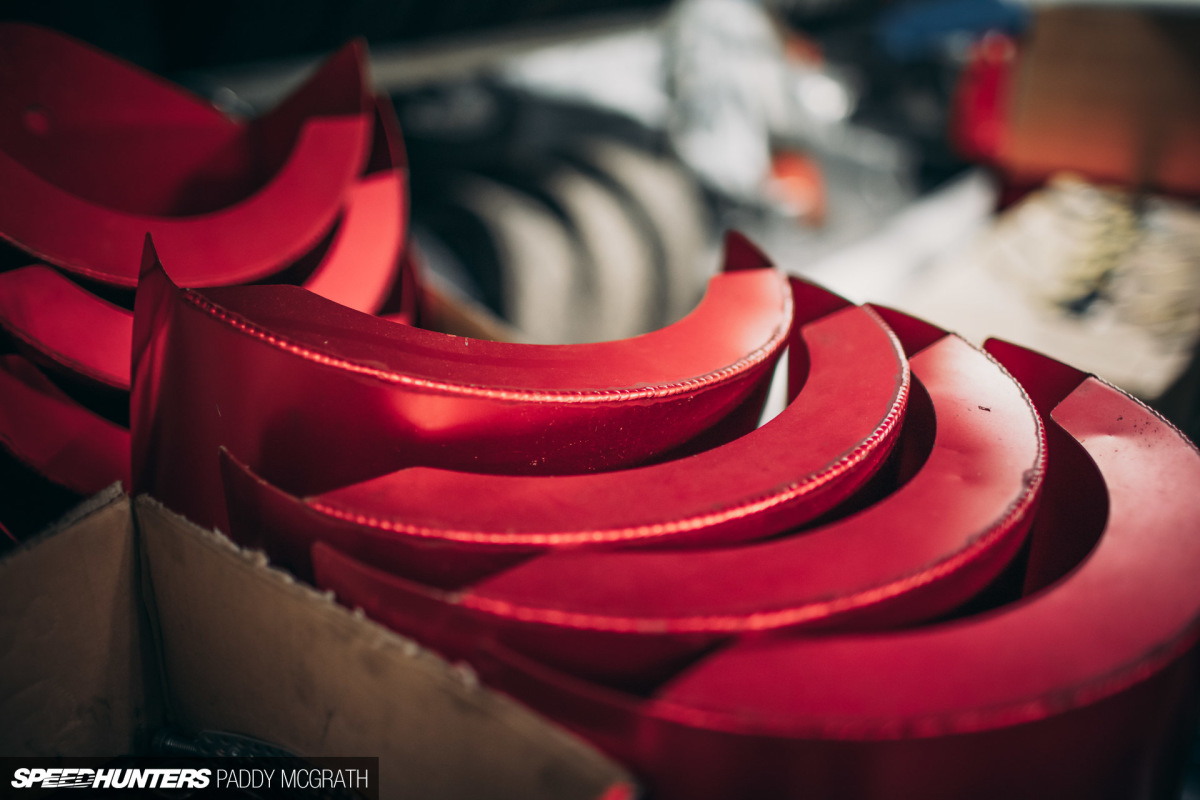
These are anodised brake disc shields, used when the car was running in-gear on stands at service or in the workshop to warm driveline fluids. I’m sure something cheaper and simpler could have sufficed for this job, but it illustrates that how there were no corners cut. Everything was done to be the best it could possibly be.
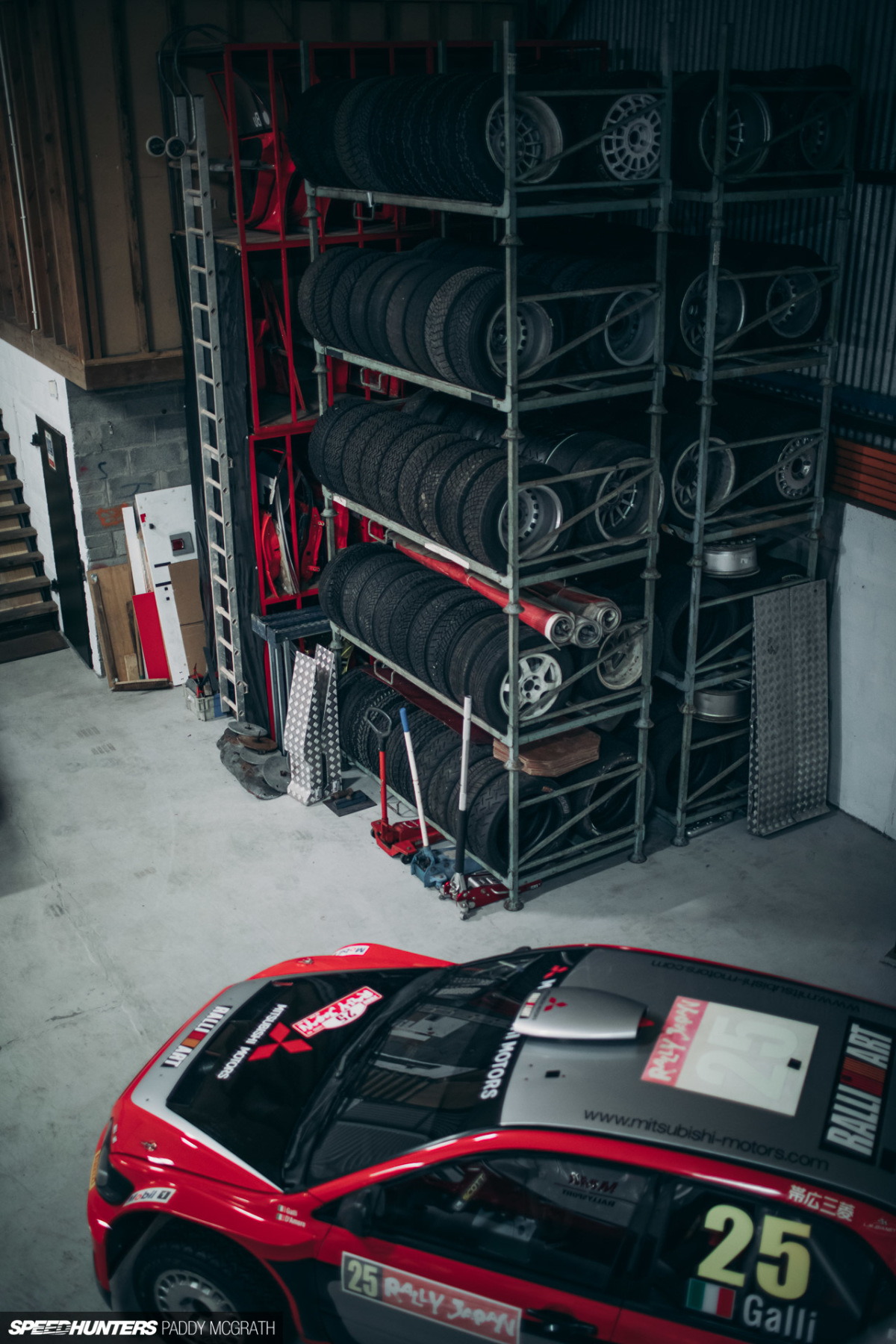
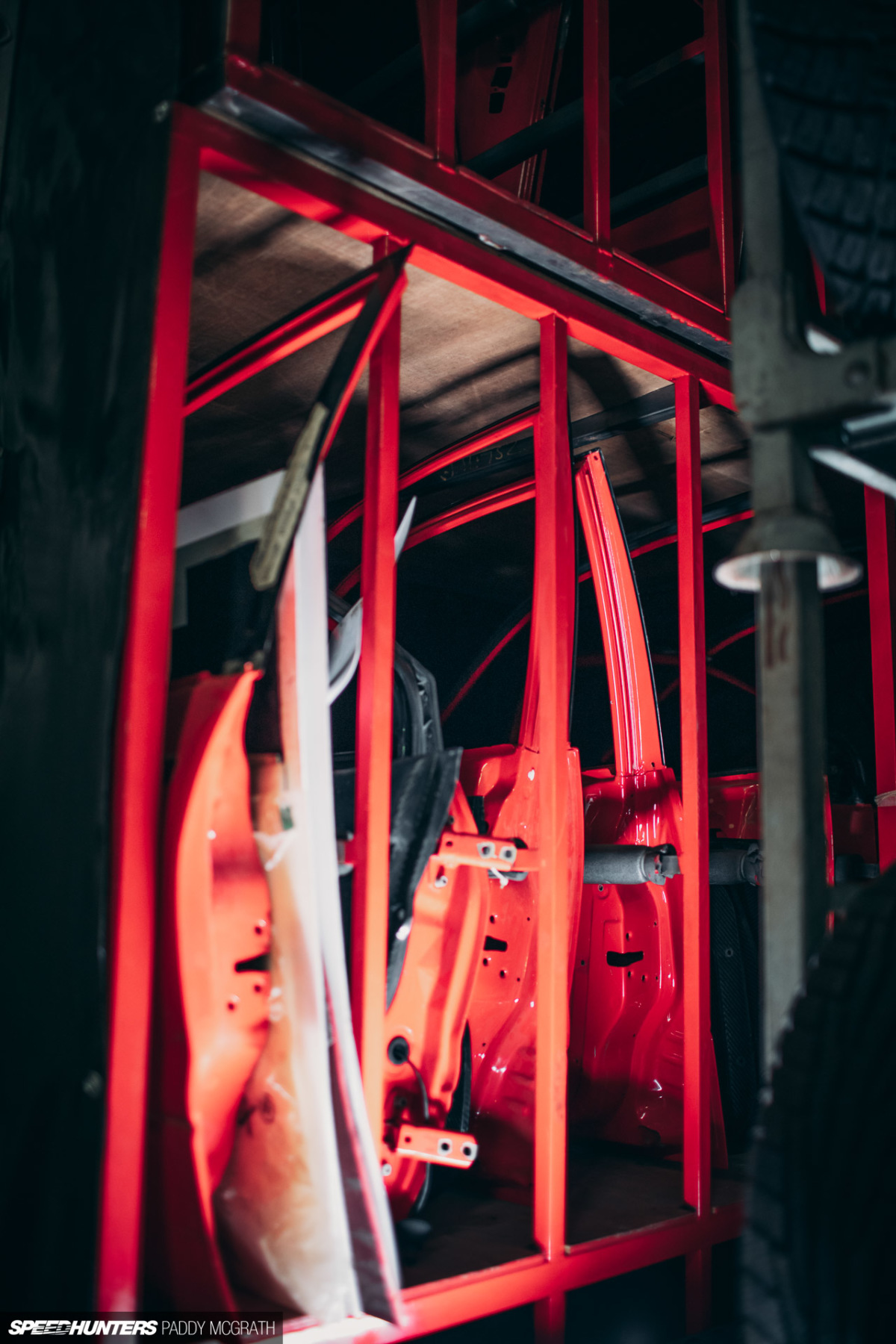
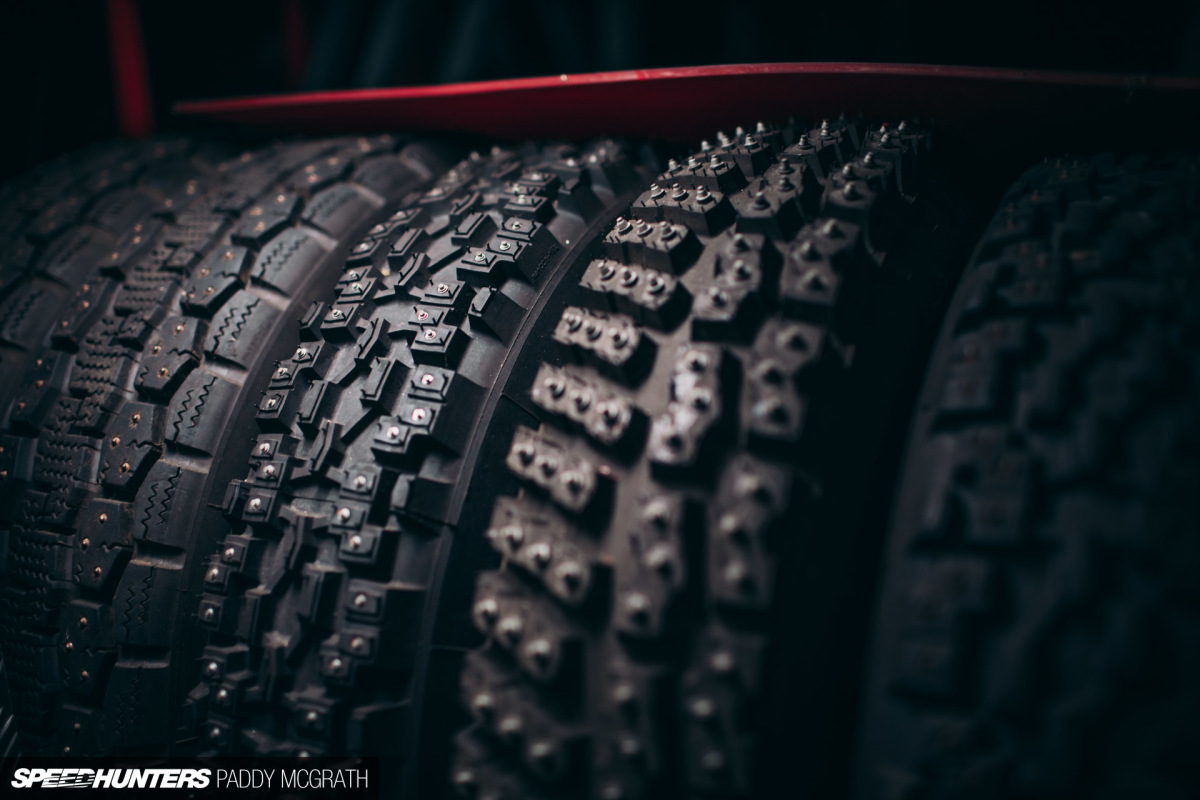
Before we ventured upstairs, I had to try and capture the upright racking containing yet more wheels, tyres and what appeared to be exclusively spare front and rear doors. The scale of this operation, and that of a WRC team of the era is just utterly immense.

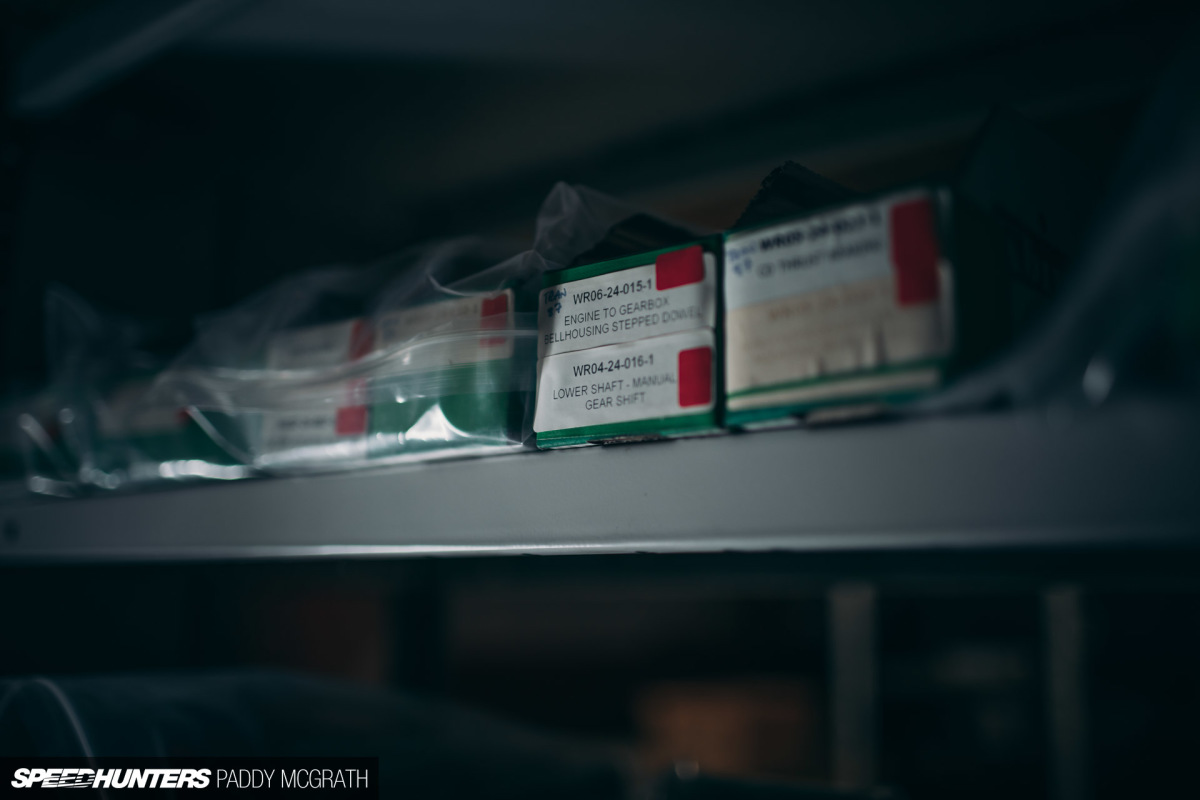
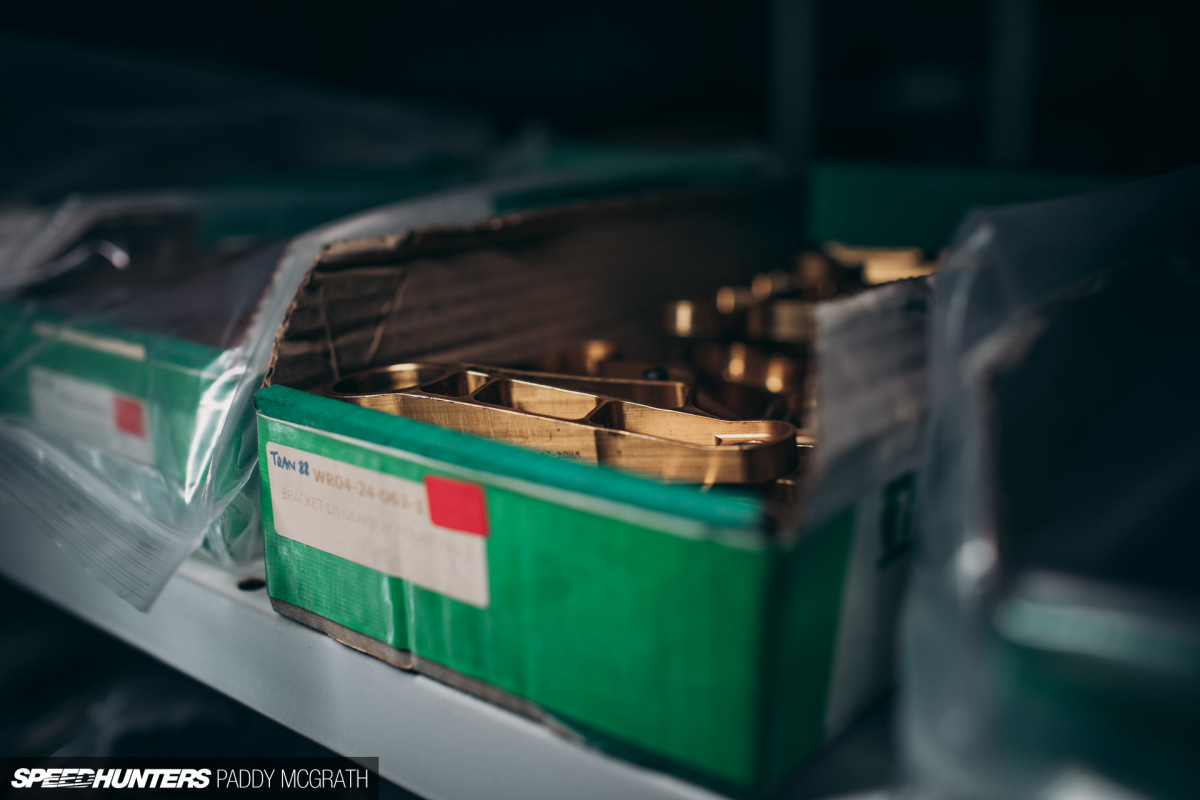
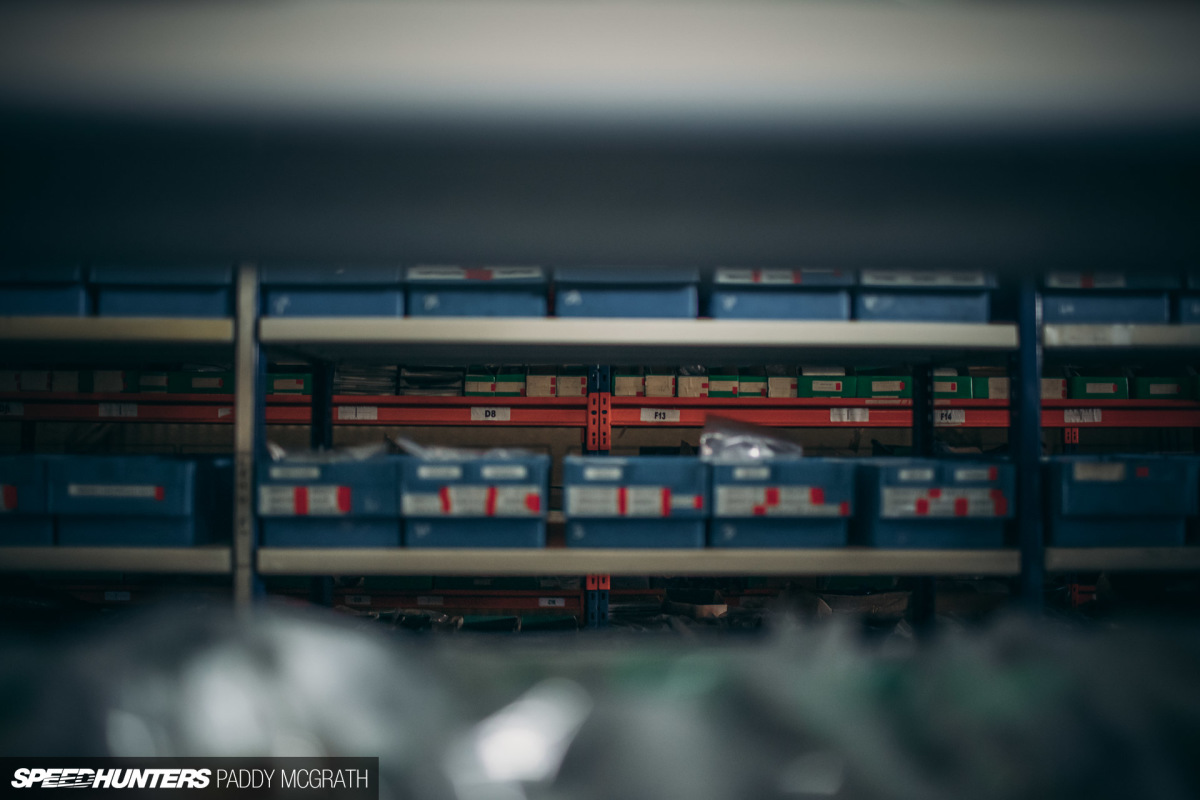
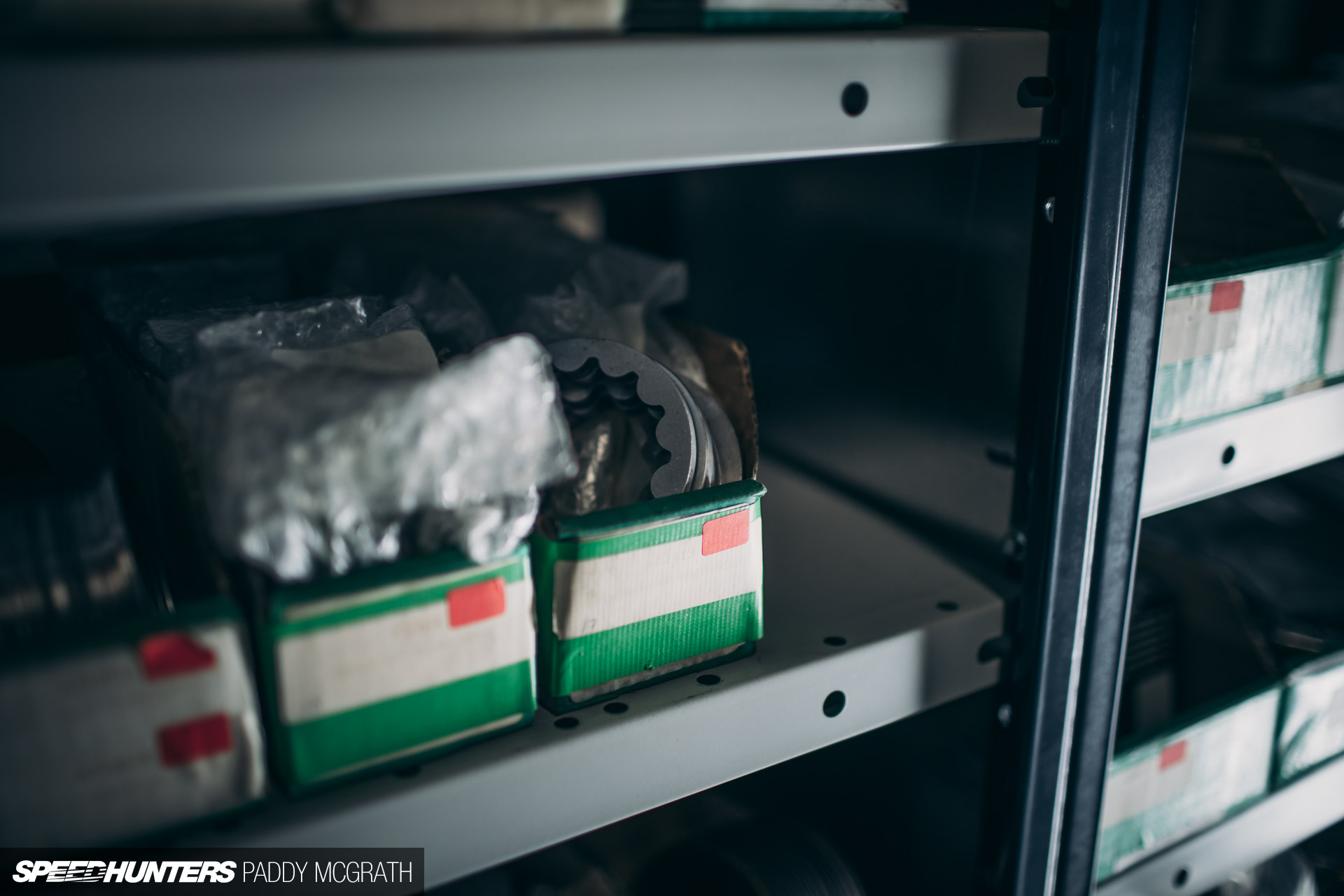
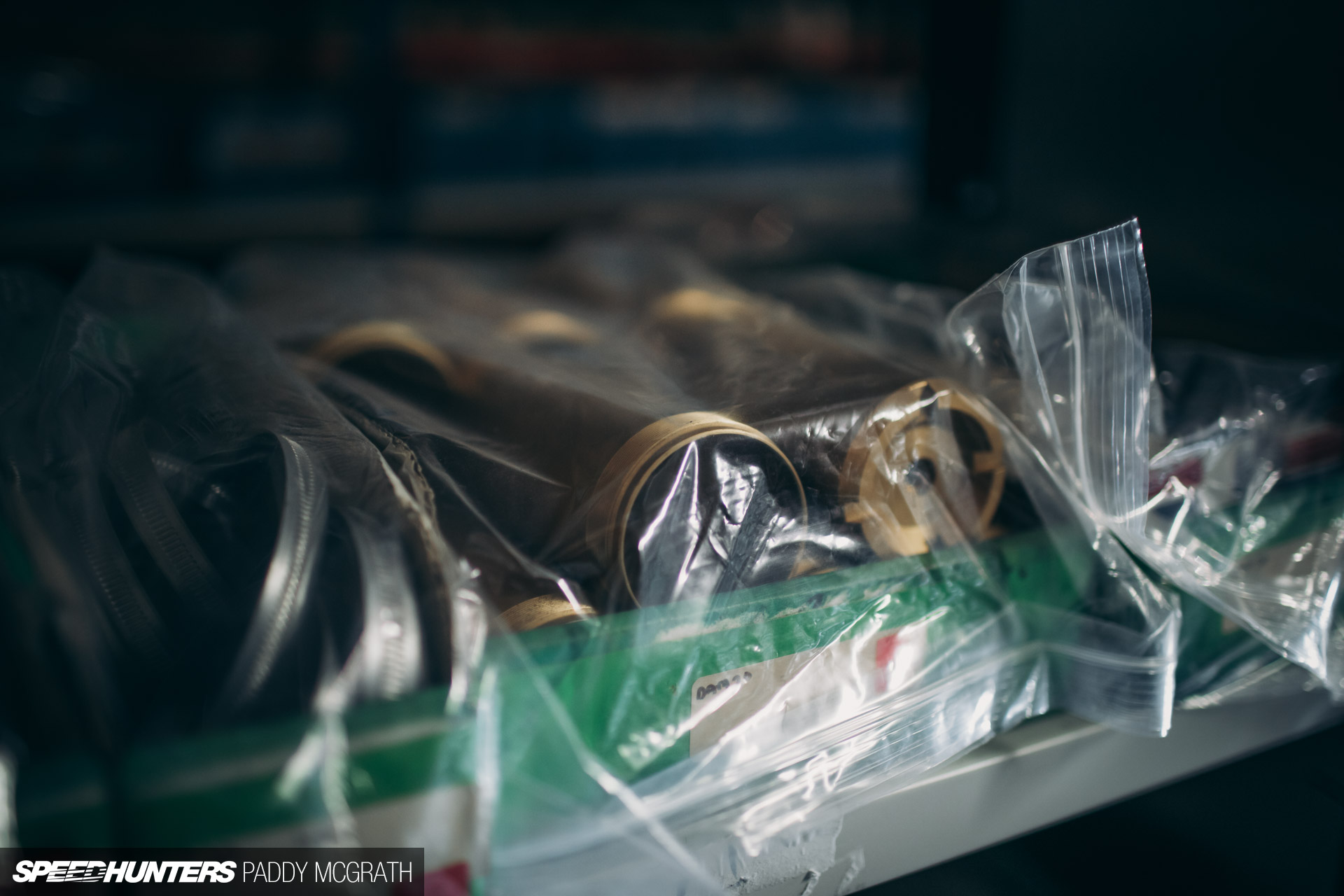
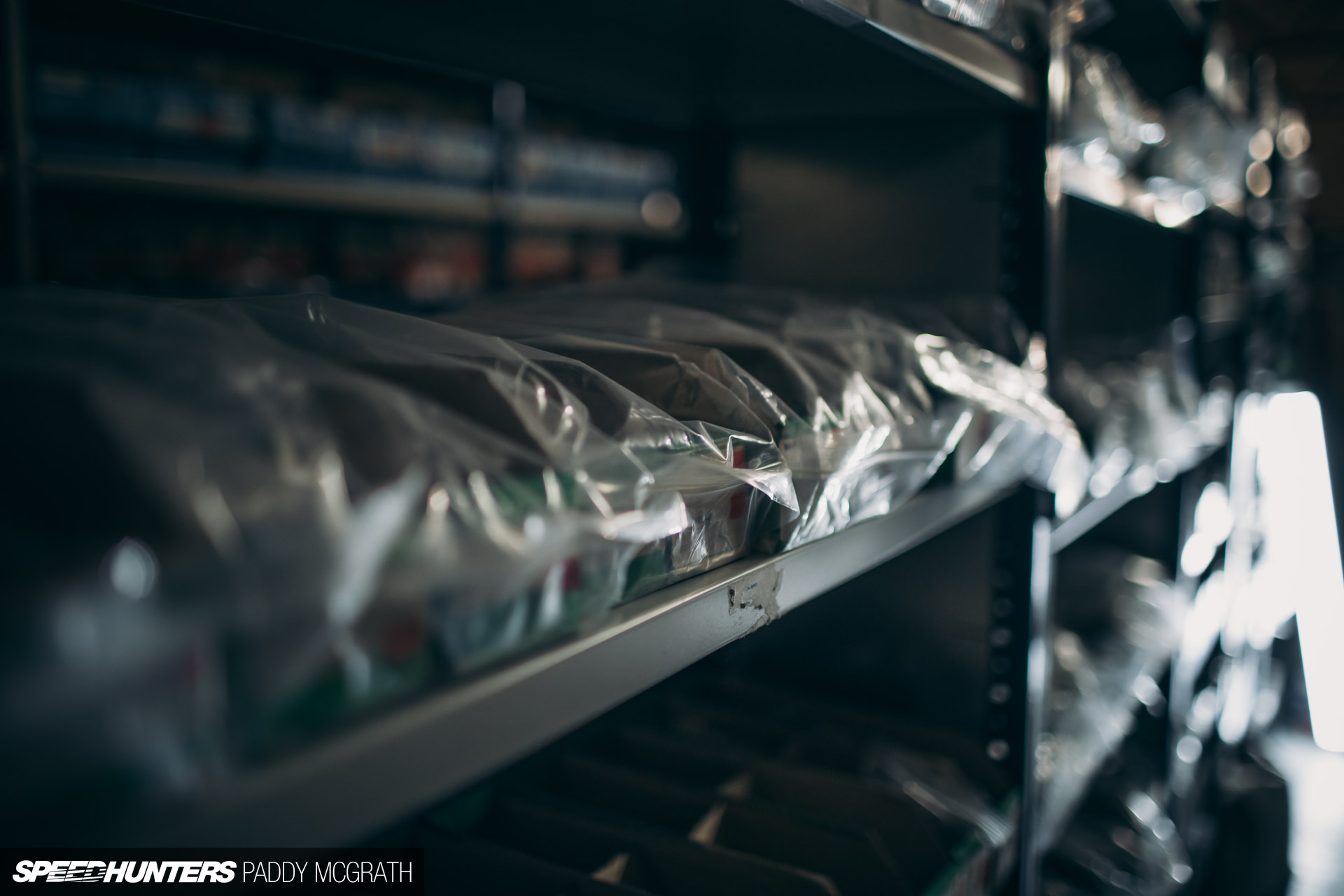
Upstairs is where calm and organisation return, and you get a much better idea of what MMR are in the process of doing. There are rows and rows of shelving with carefully organised boxing for various small, but still incredibly important parts.

Take these for example, completely bespoke gearbox mounts for the 2004 car.

Eight-piston Brembo front brakes for the cars’ tarmac setups. These would normally clamp 370mm (15-inch) discs.
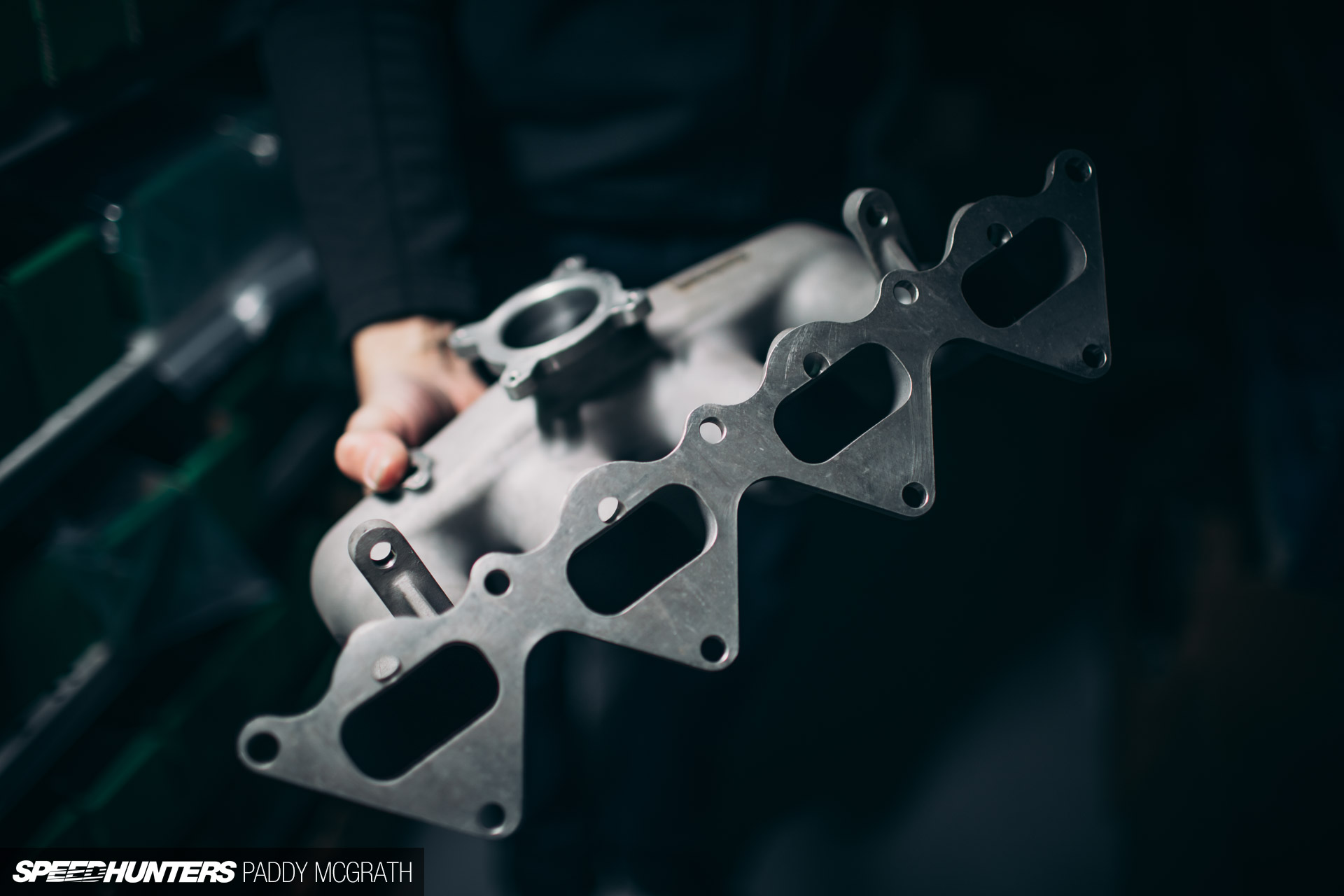
While the vast majority of parts are not compatible with your Evo road car (the base for the Mitsubishi WRC cars from 2004 onwards was the Lancer Cedia) there are a couple of pieces which will fit, and predominantly on the engine side as the car still runs a 4G63.
How does an Inconel intake manifold sound? When heated, Inconel produces a natural barrier to heat which even the best heat wraps or coatings can’t match. It’s also lightweight, and is a single piece.

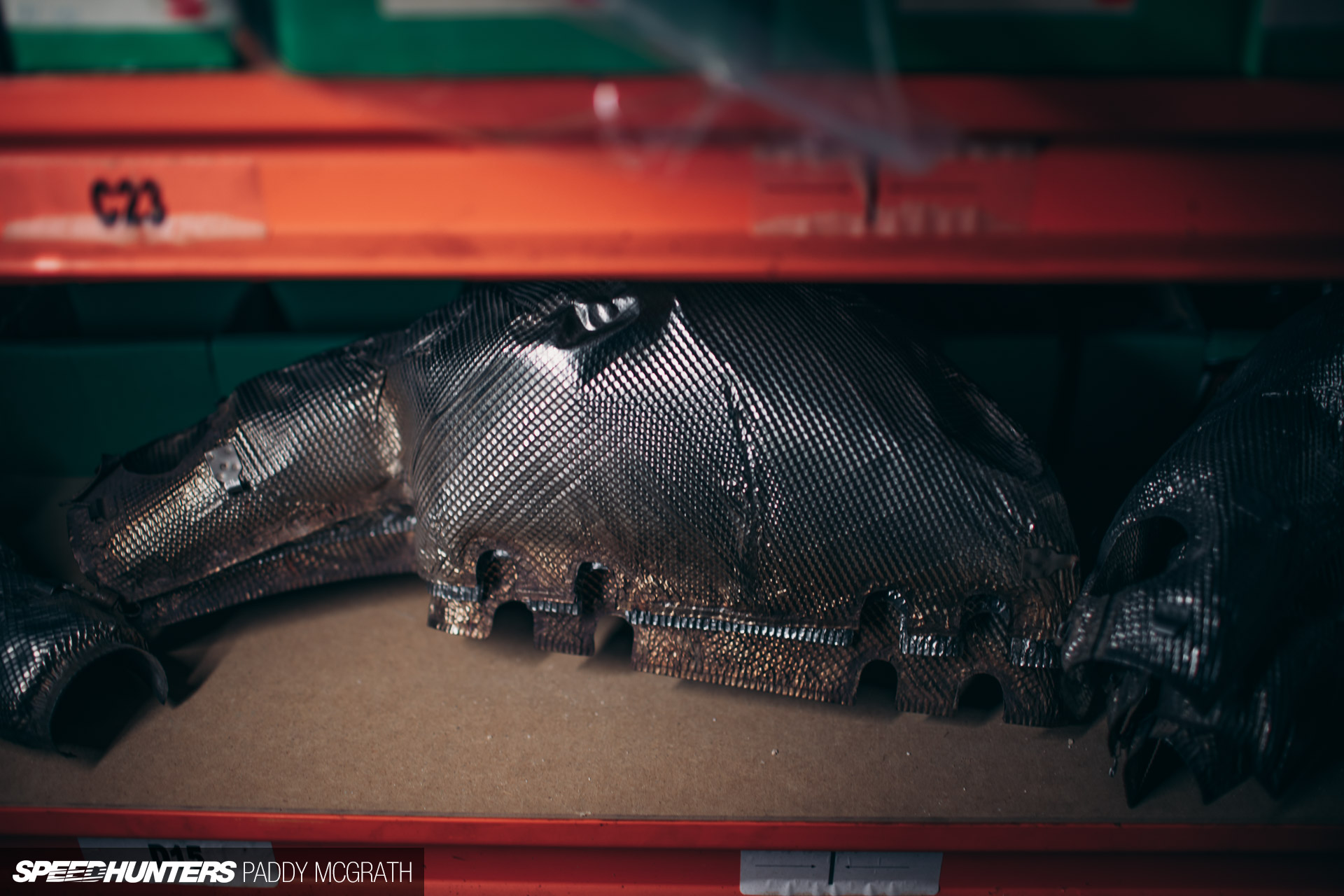
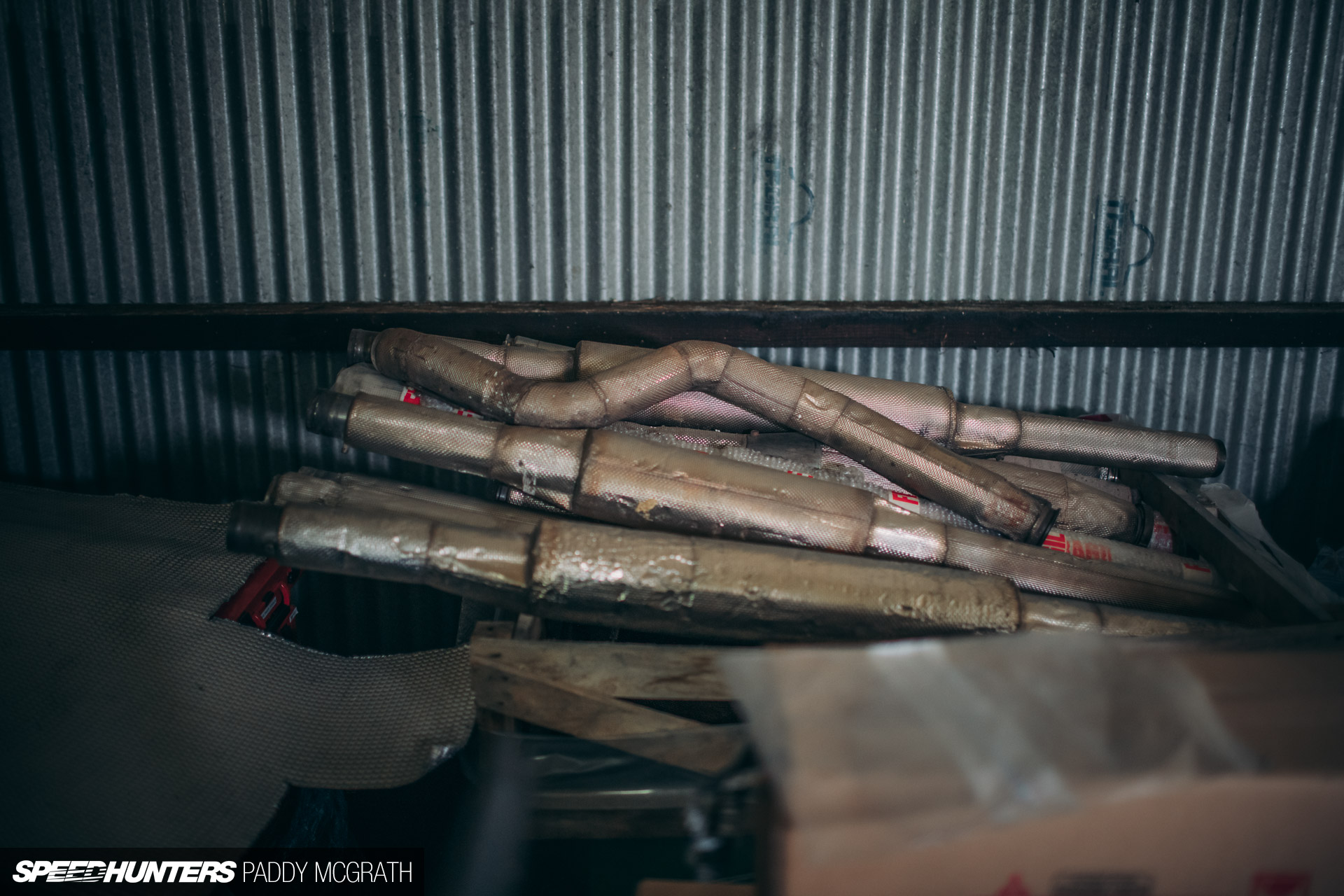
Or perhaps you might prefer a WRC-specification exhaust manifold? I’m sure both would suffice.
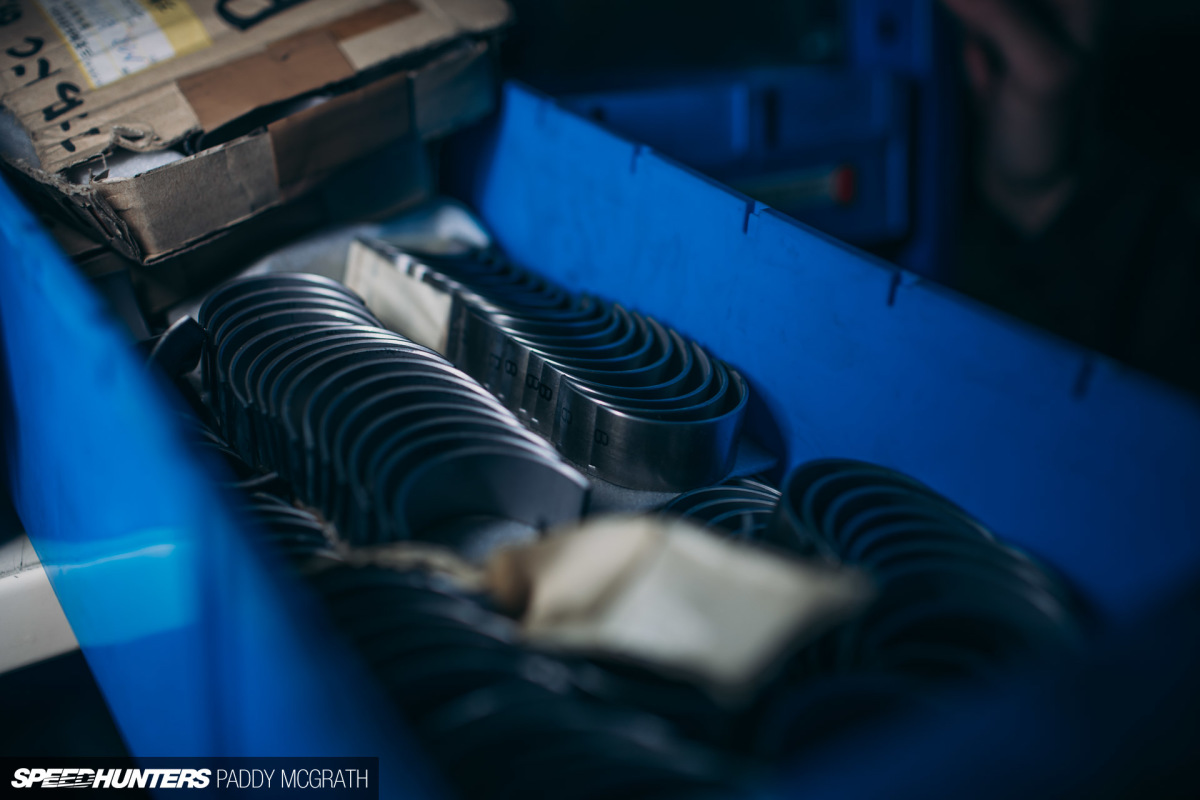
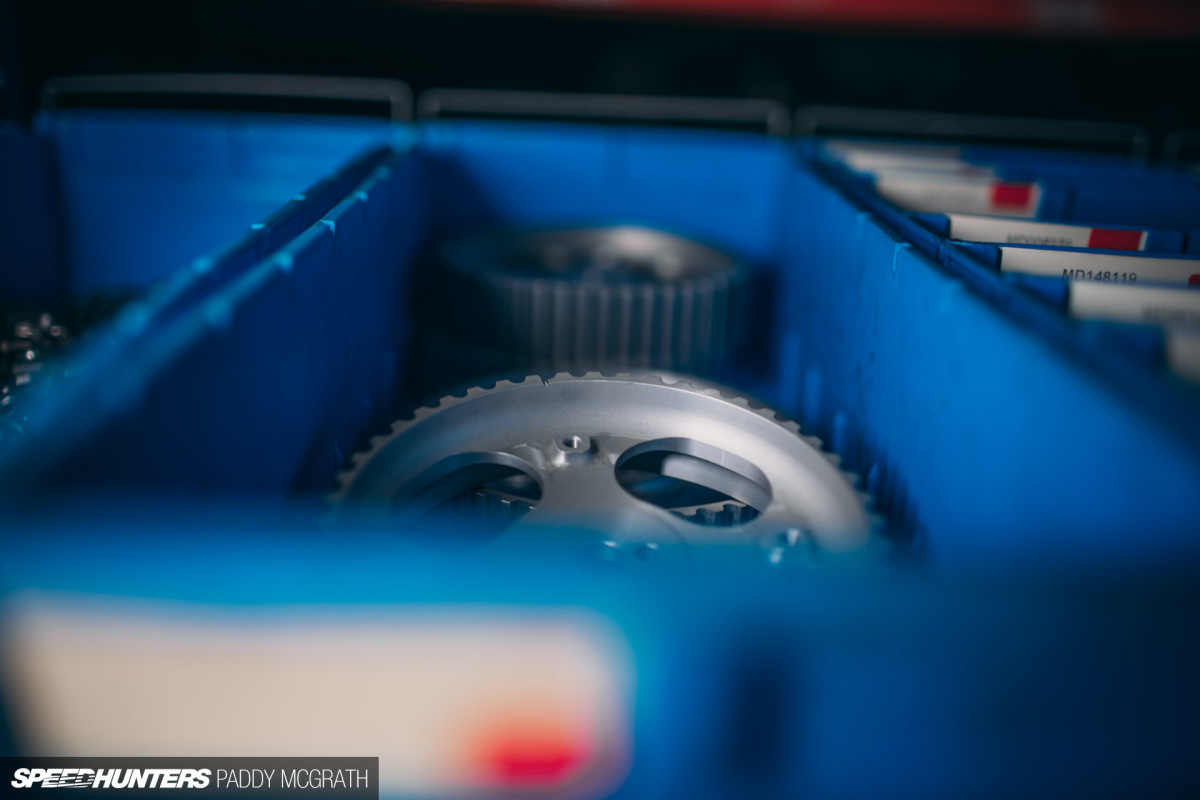
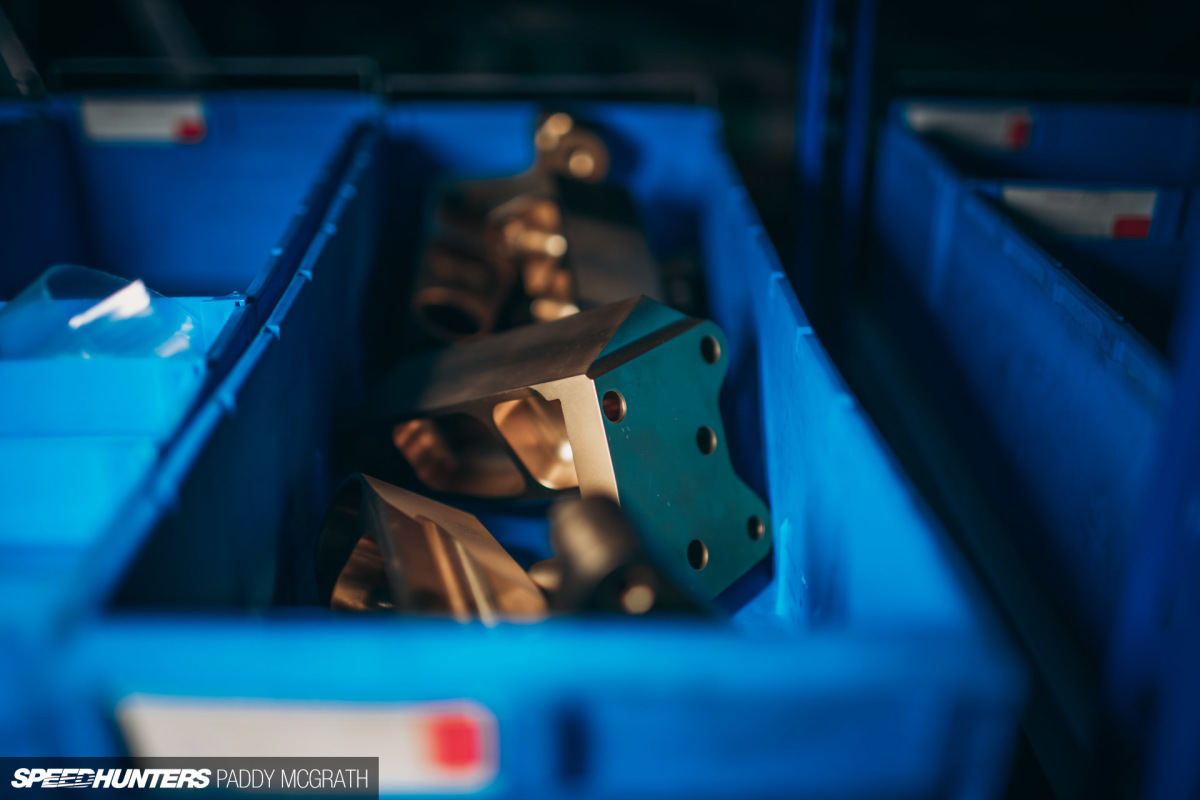
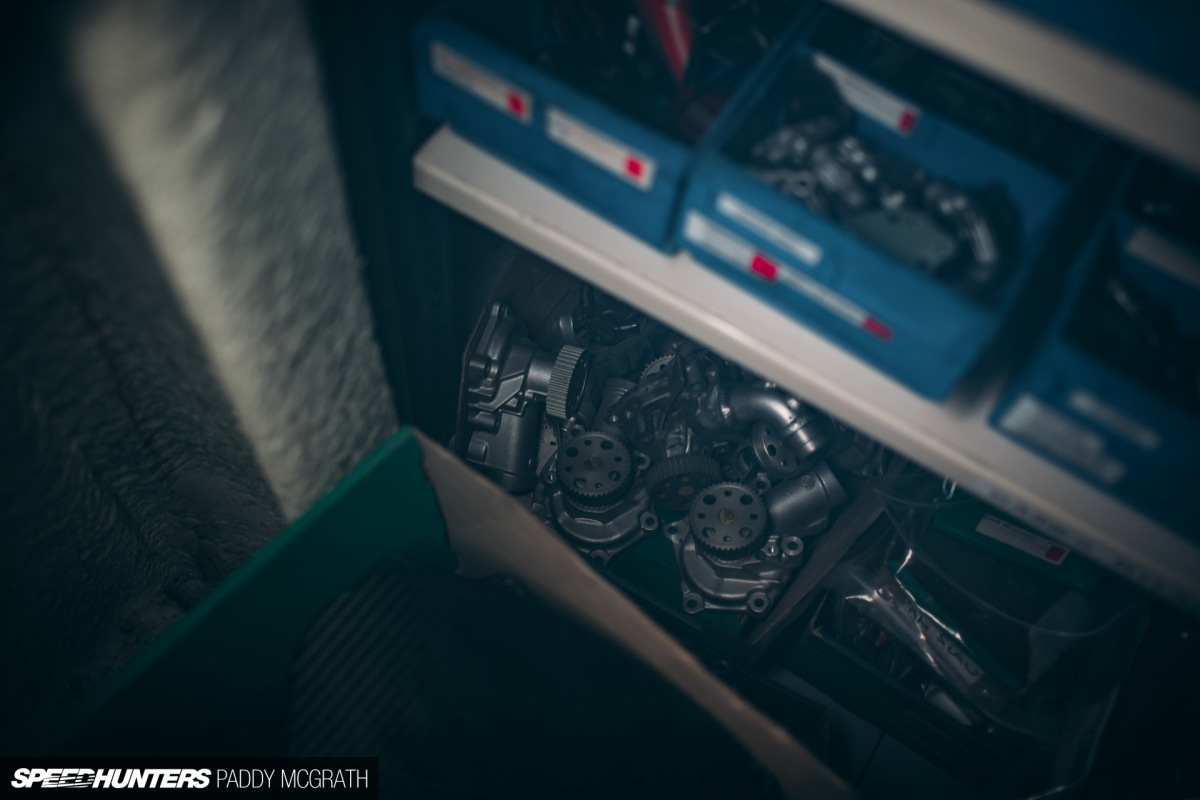

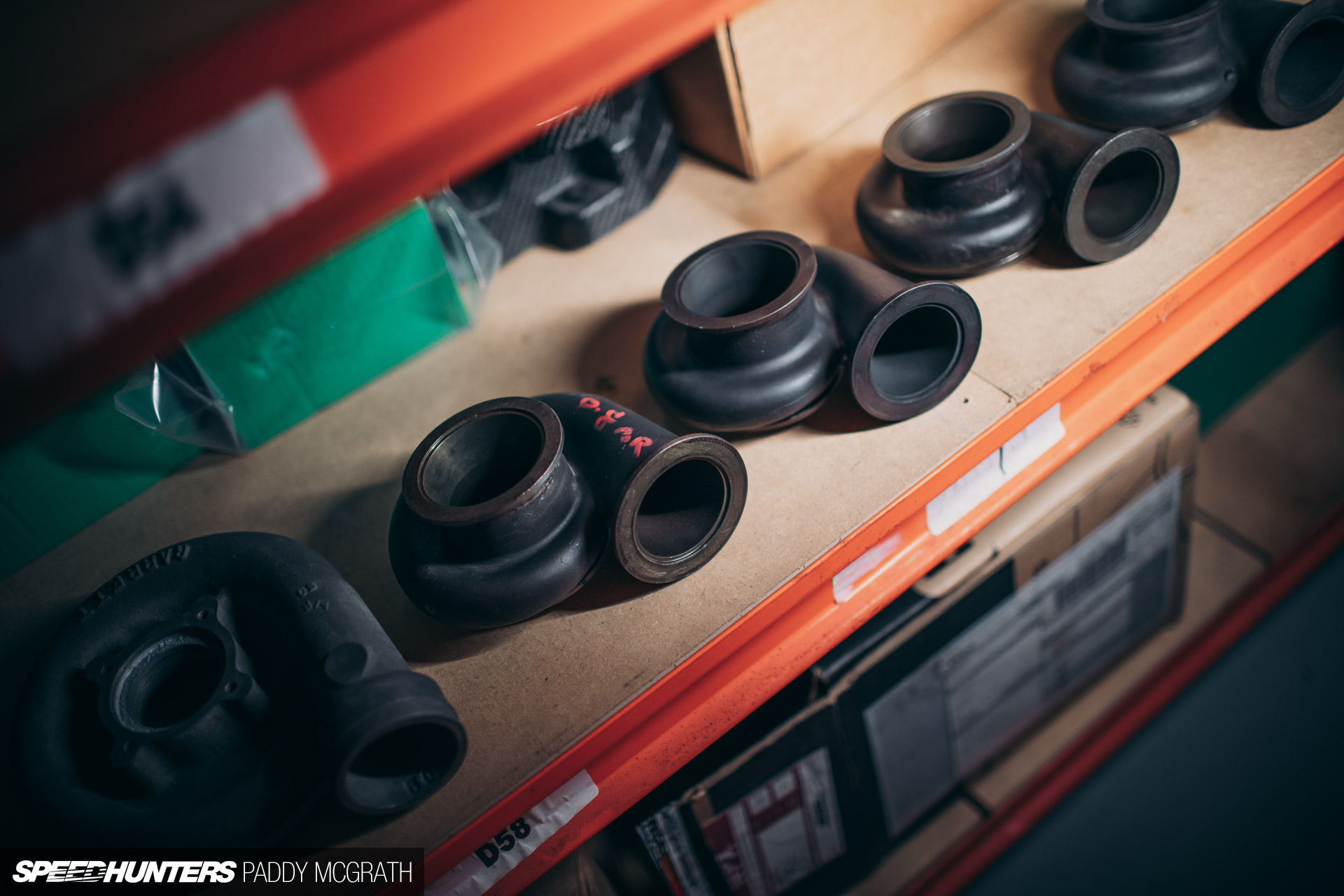
As the outfit now responsible for practically all of these generations of Lancer WRC cars, you can appreciate that any part you can probably think of is on these shelves.
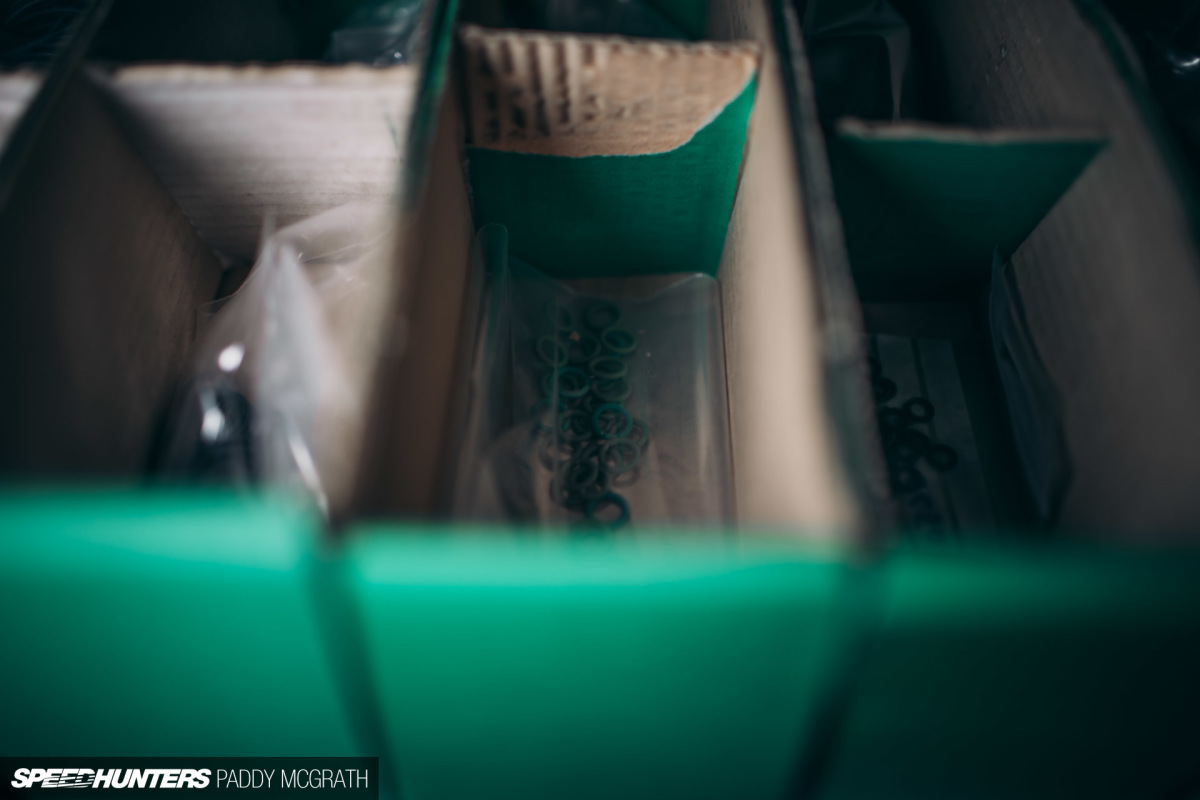
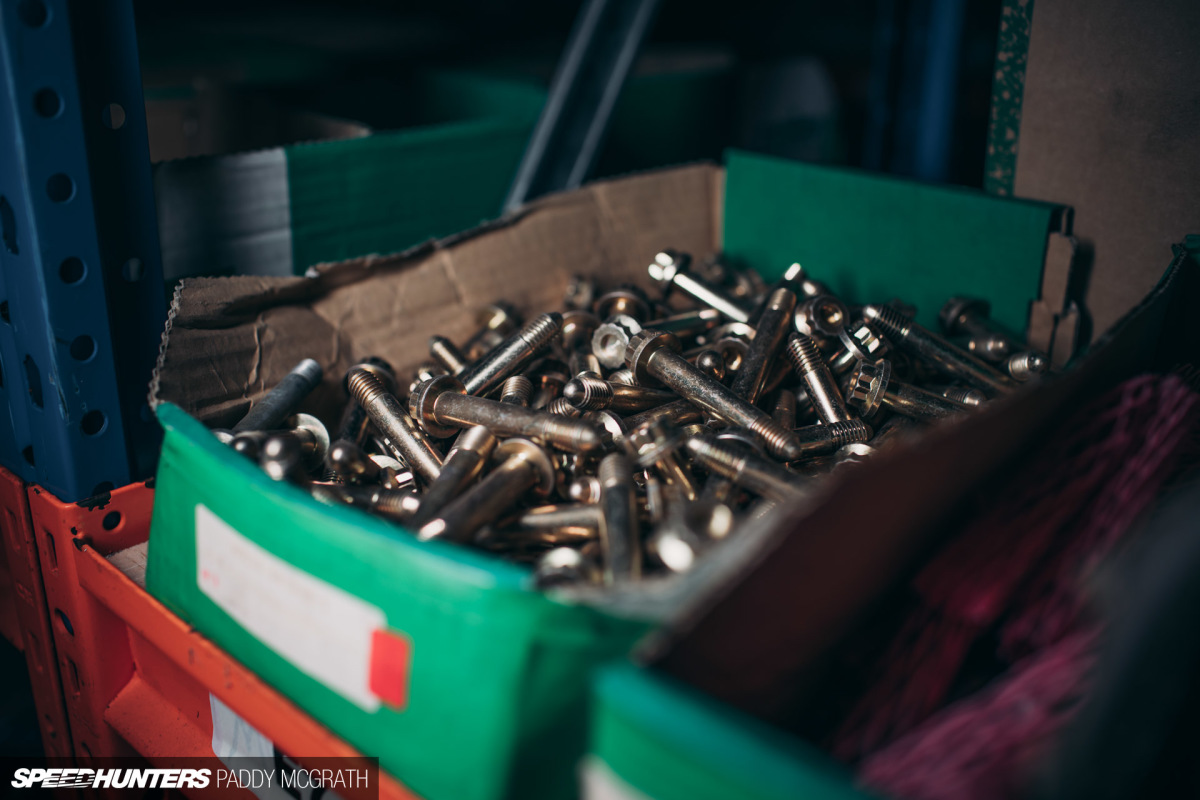
Some of the most important parts are often the smallest. The likes of these rubber o-rings or custom-specification bolts allow much bigger and more expensive parts to function correctly. Without these little things, the cars will not work.
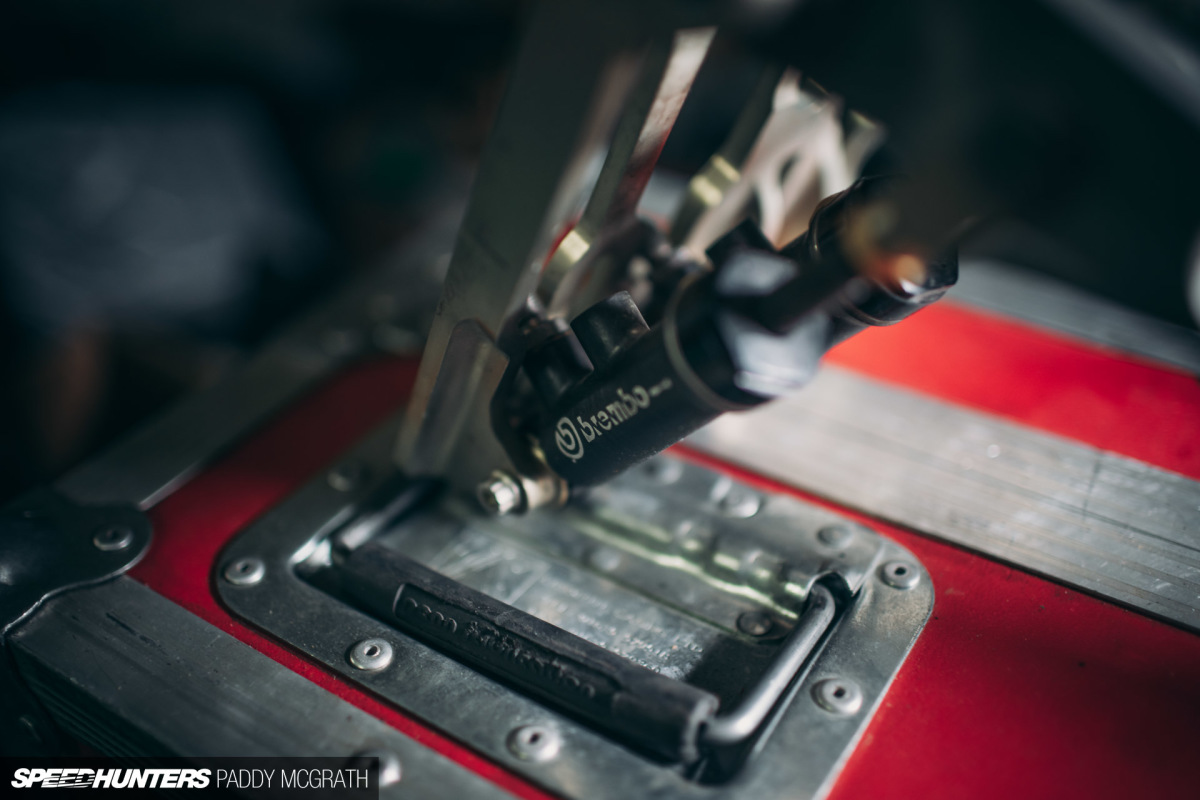
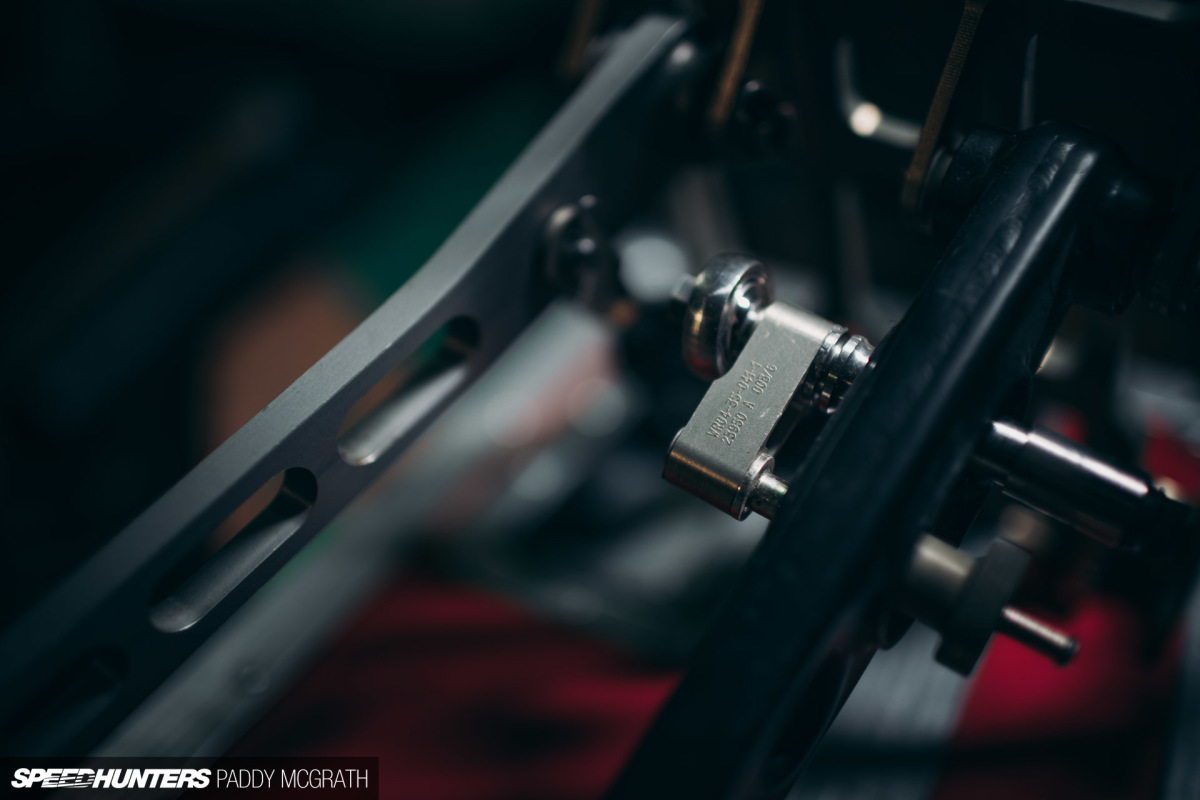

I want you, just for a moment, to appreciate the intricacies of this pedal assembly. Each part has been carefully designed, machined, tested, improved, re-designed, re-machined and re-tested before before being put together as one small part of the overall machine.
Each little piece has its own unique Lancer WRC part number, and isn’t something that was just pulled off the shelf from a hardware store.
It’s mind-boggling how much time, money and passion went into this whole project.

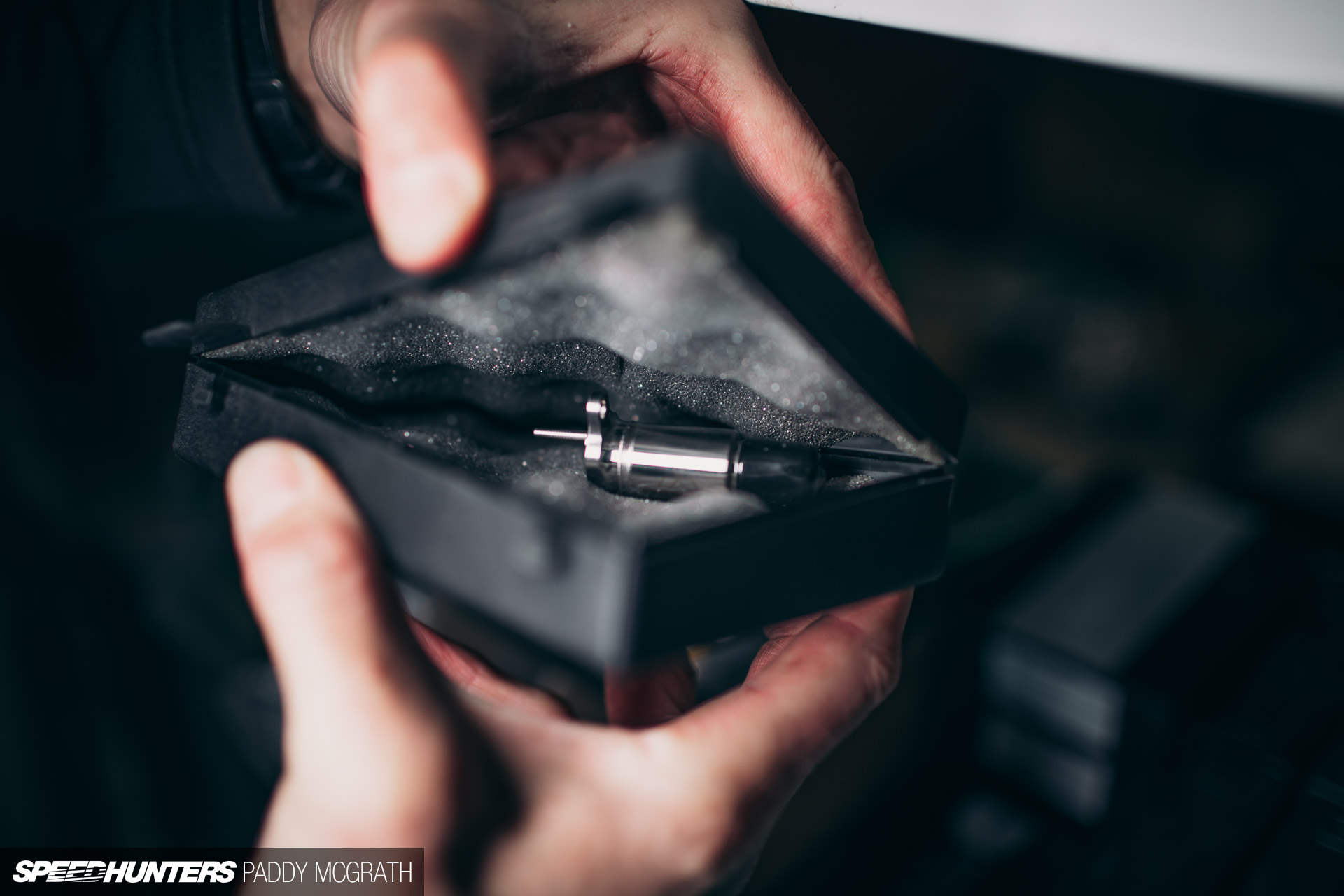
Let me talk you through some more highlights, such as these HID projector lenses which are inserted into the carbon headlight surrounds. The inner ‘lamps’ on the ’04-onwards cars are just stickers.
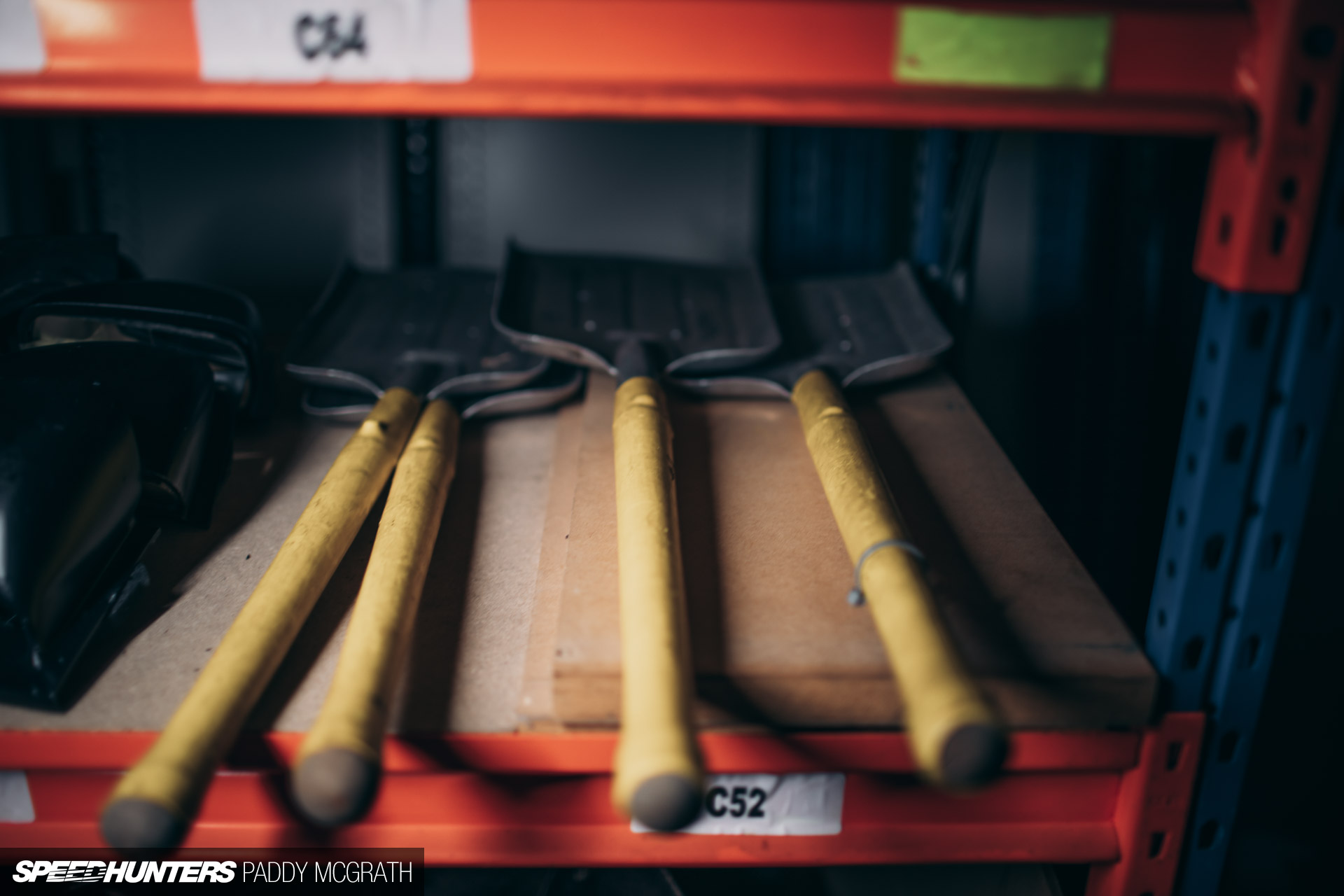
A personal favourite, and something I’m happy that Tristan shared my enthusiasm for, were these snow shovels, made exclusively for the Swedish rally.
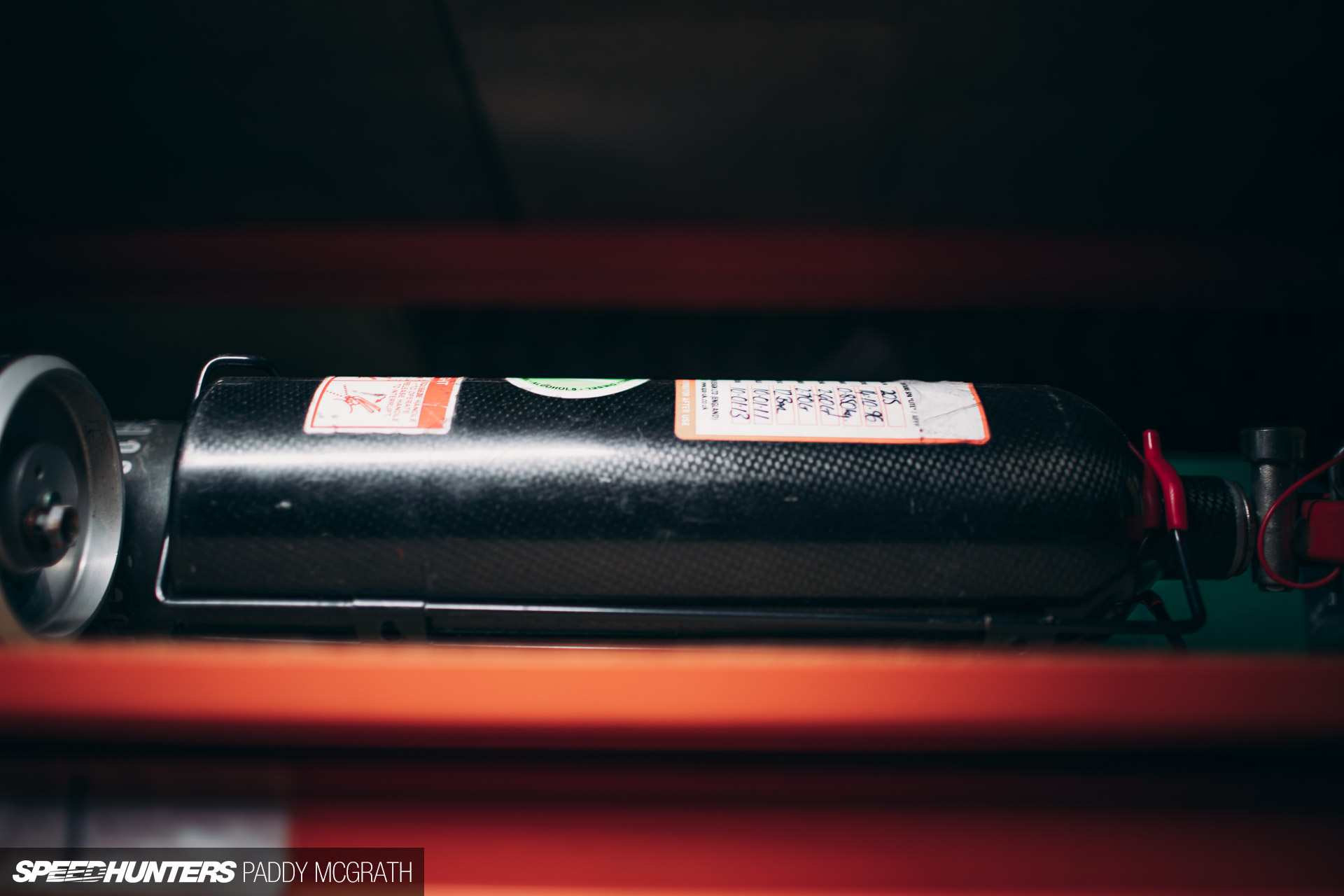
This is the fire extinguisher from Tommi Mäkinen’s earlier Evo WRC. While it’s probably past its best-by date, it’s still a pretty cool thing to have on your shelf.
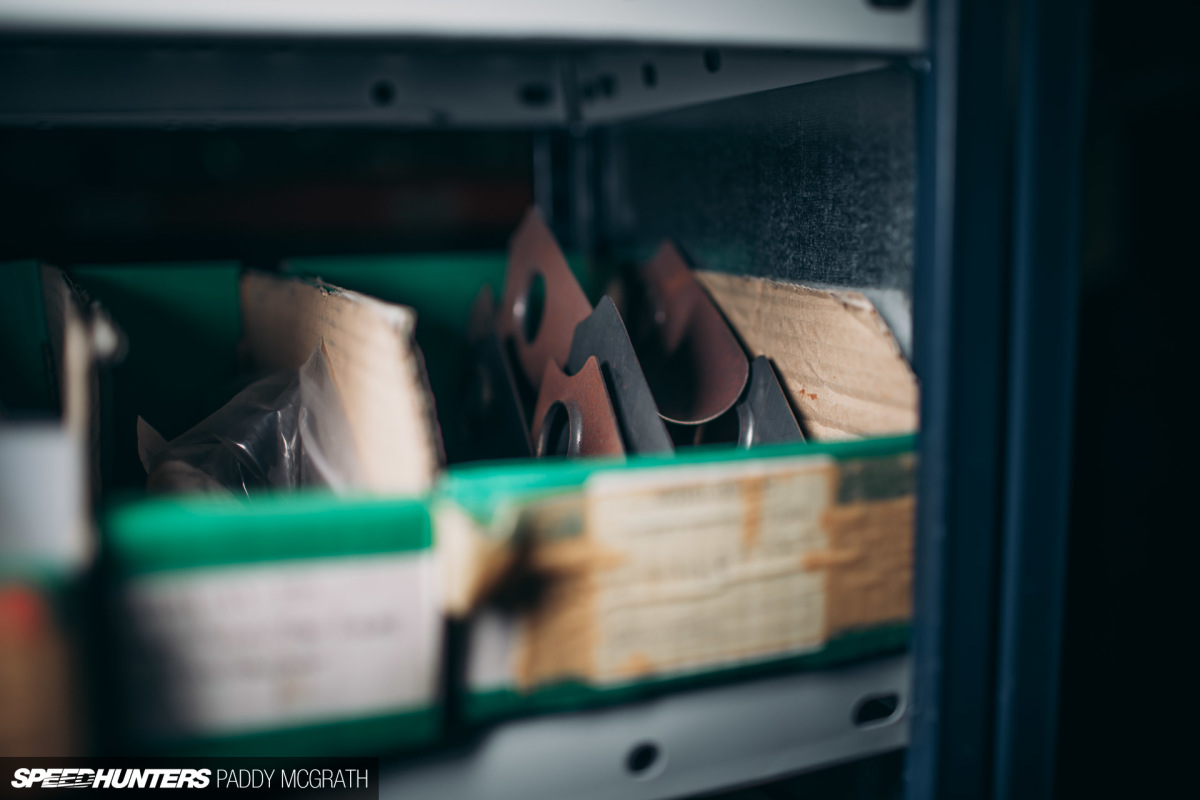
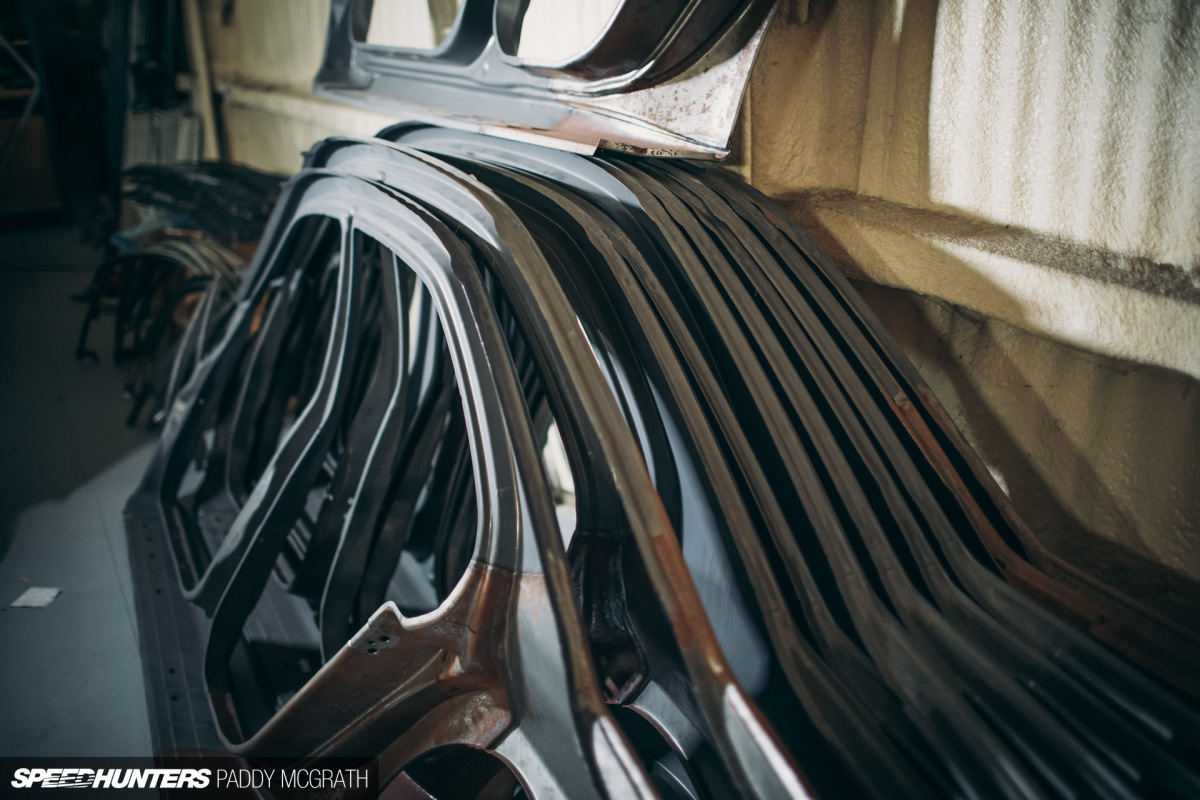
When you think of parts, you would normally think of maintenance, but it goes much further past this. There are individual pre-fabricated metal pieces which are used in the construction of the shells to ensure they meet standards.
Whether it’s a small corner piece, or an entire side and rear-quarter panel, MMR are the only company in the world now which has these or the ability to reproduce. On the walls hung pre-bent roll-cage sections ready to be assembled.
Of course, every one of these parts has its own part number, too. To ensure the cars are all exact, MMR also have ownership of the original WRC chassis jig. There’s nothing required from outside the company to rebuild a car to precise, exact, 100% the same specifications of the original cars. Nothing.
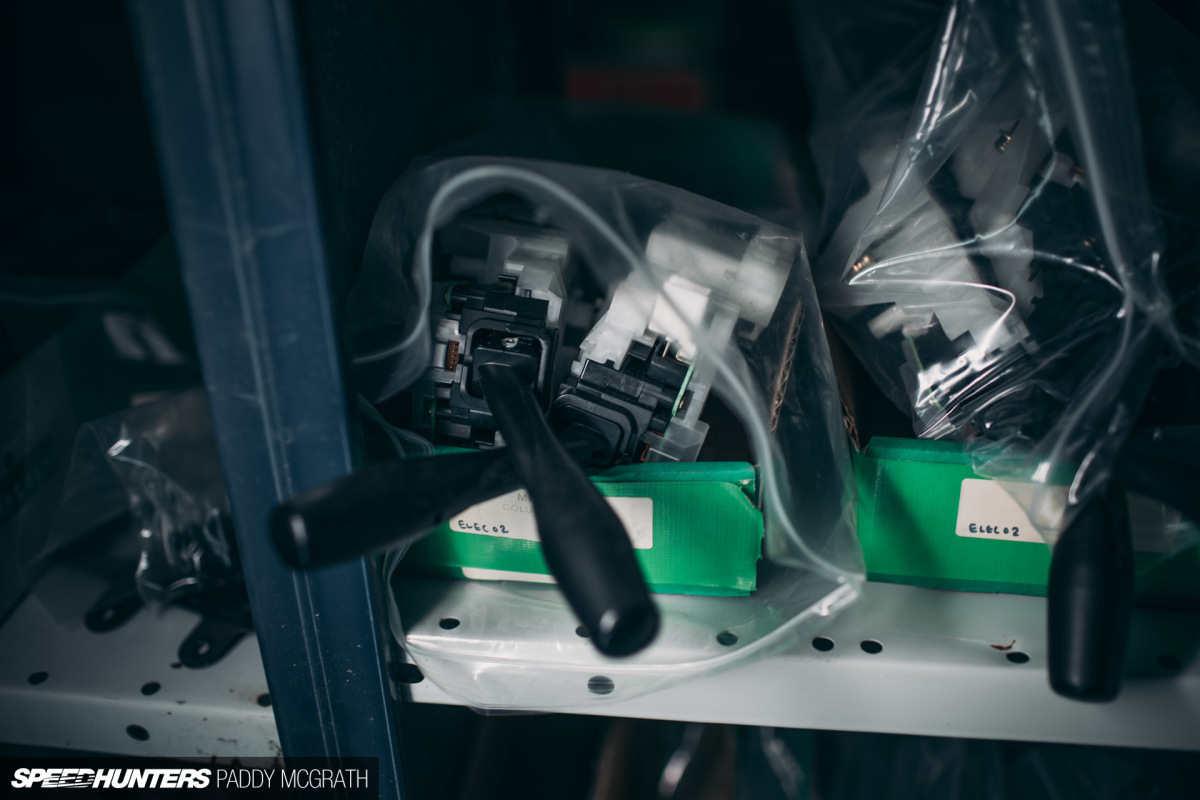
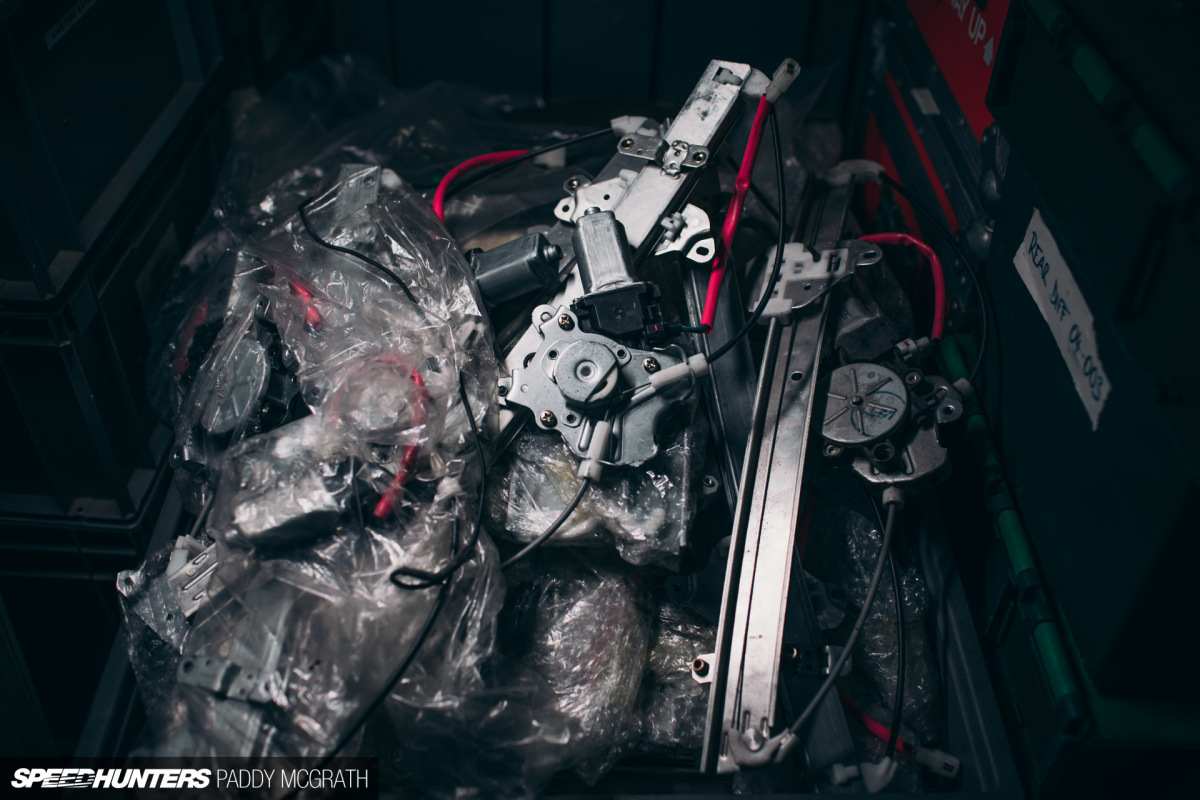
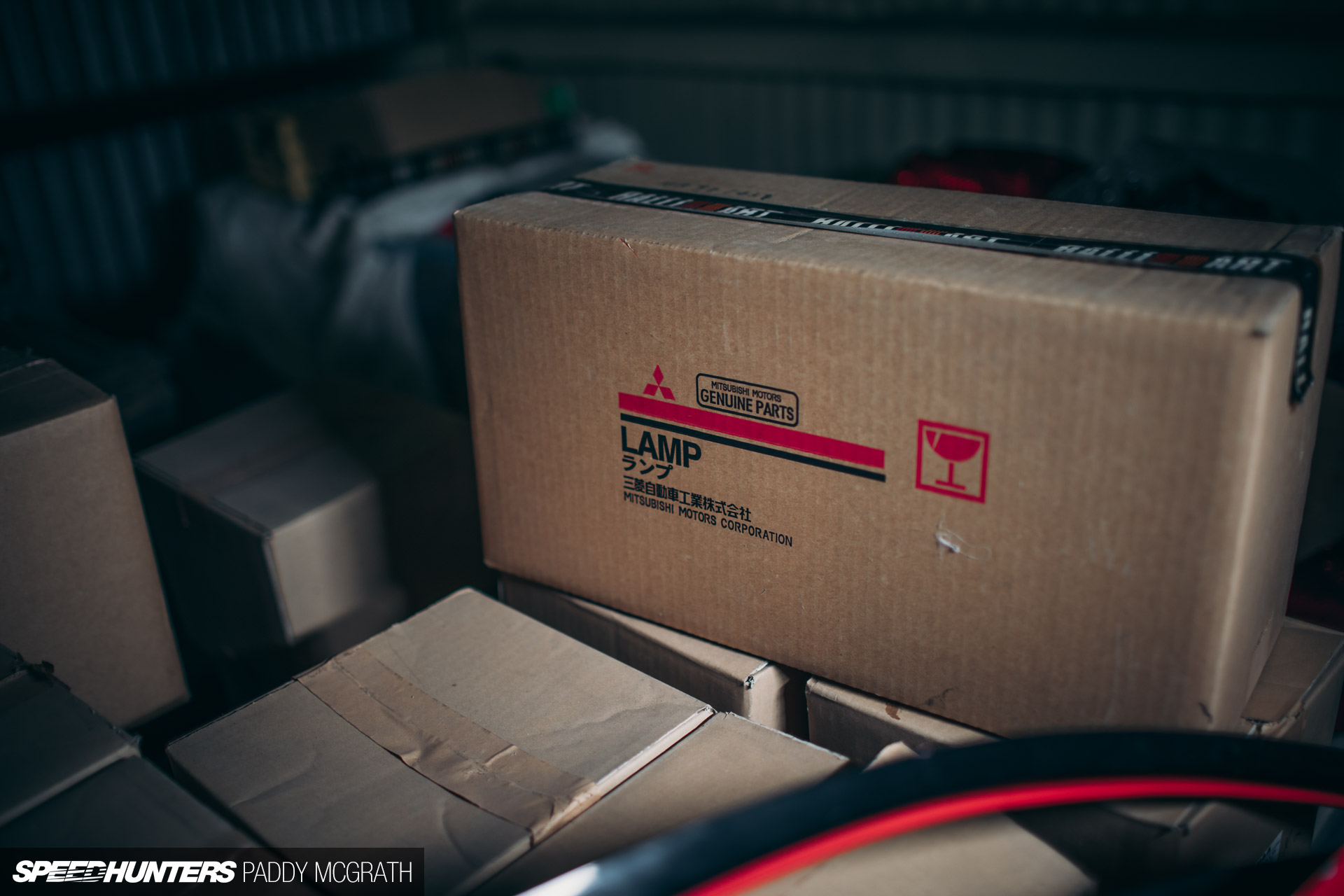
Even in the rare occurrence where Mitsubishi Motors Genuine Parts are used, these are also onsite. The only parts I found were these indicator stalks, window winding mechanisms and rear lamps.
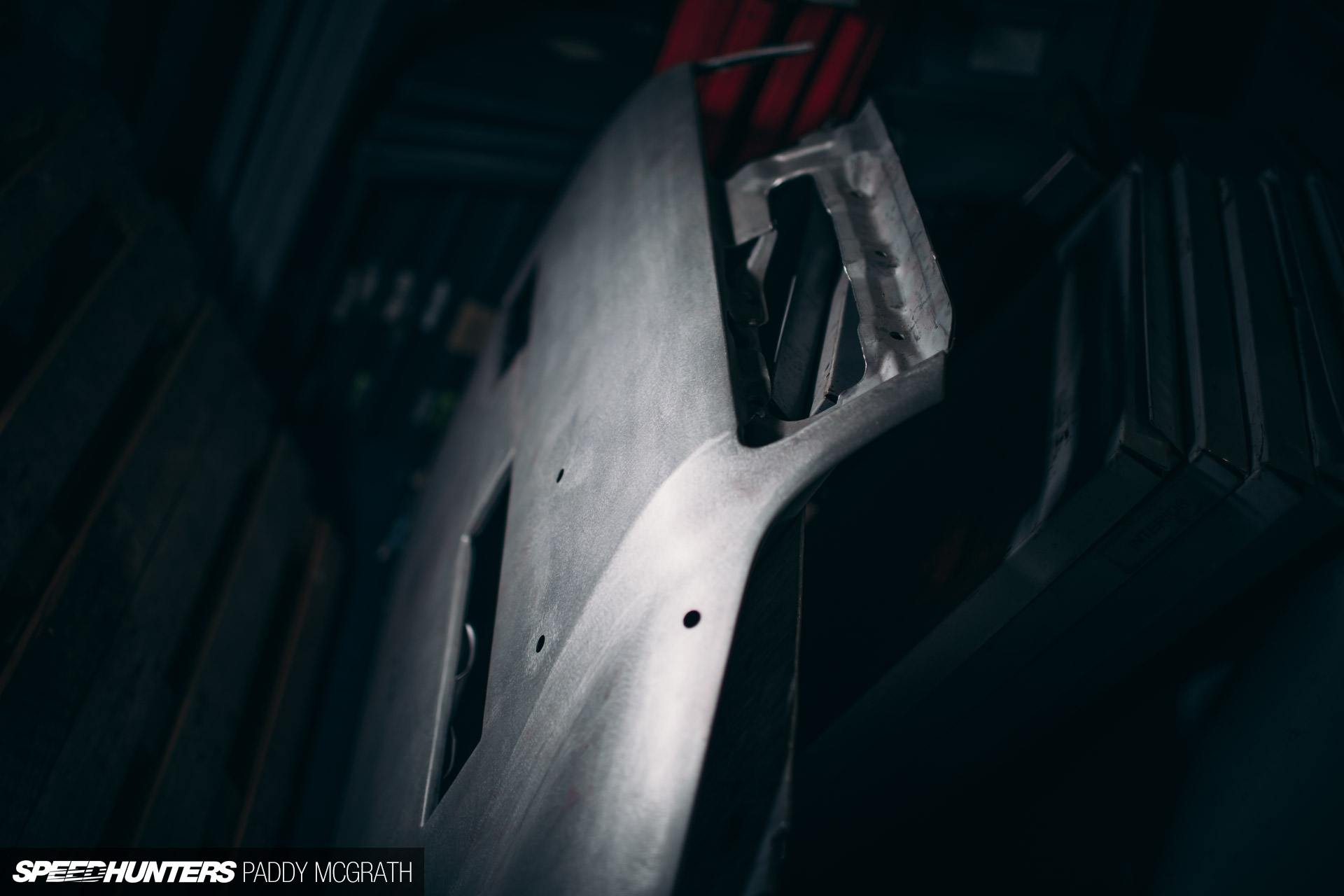
This is an aluminium bonnet for the Lancer WRC. Note: not carbon.
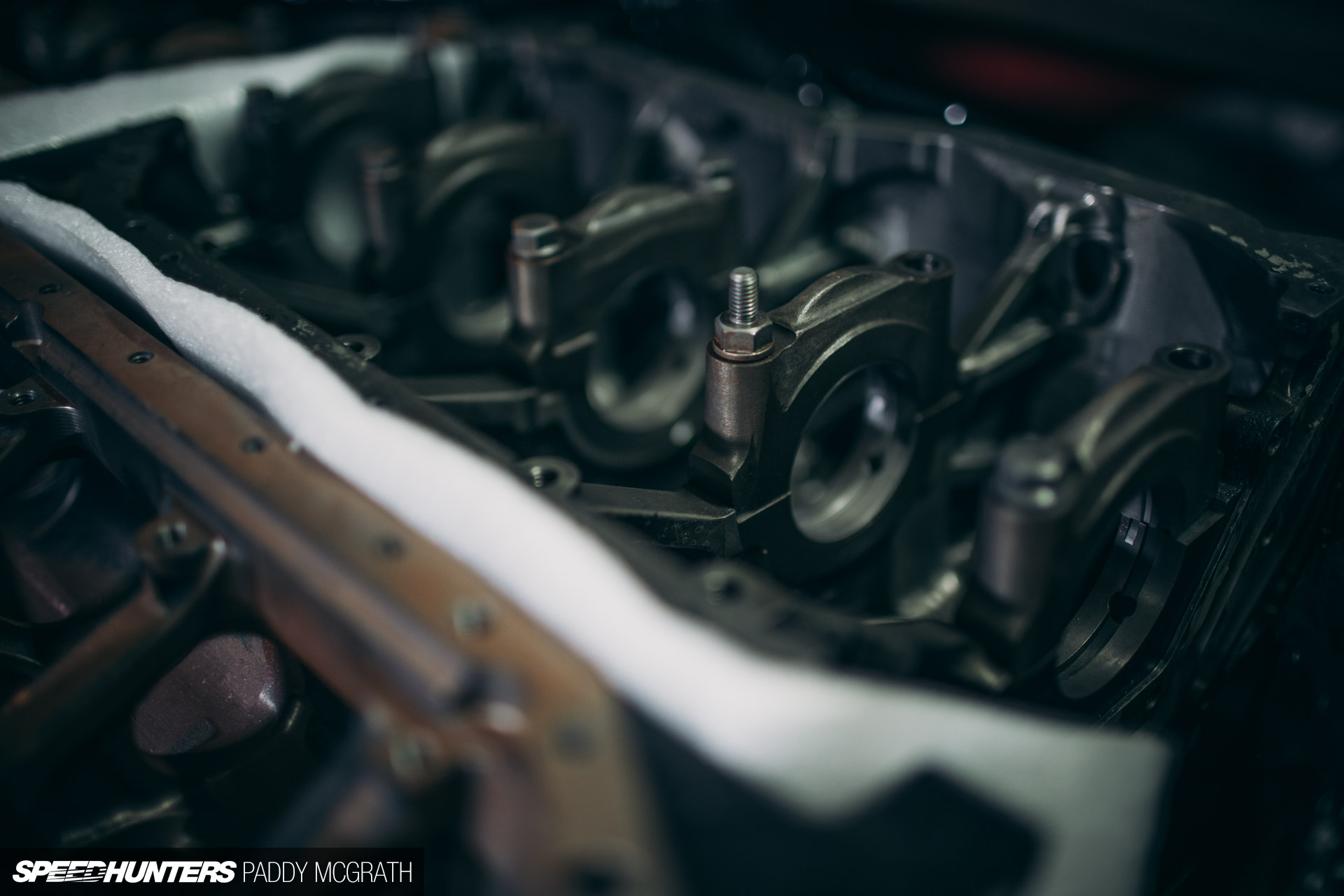
A pre-prepared WRC specification 4G63 engine block with pistons and rods pre-installed.
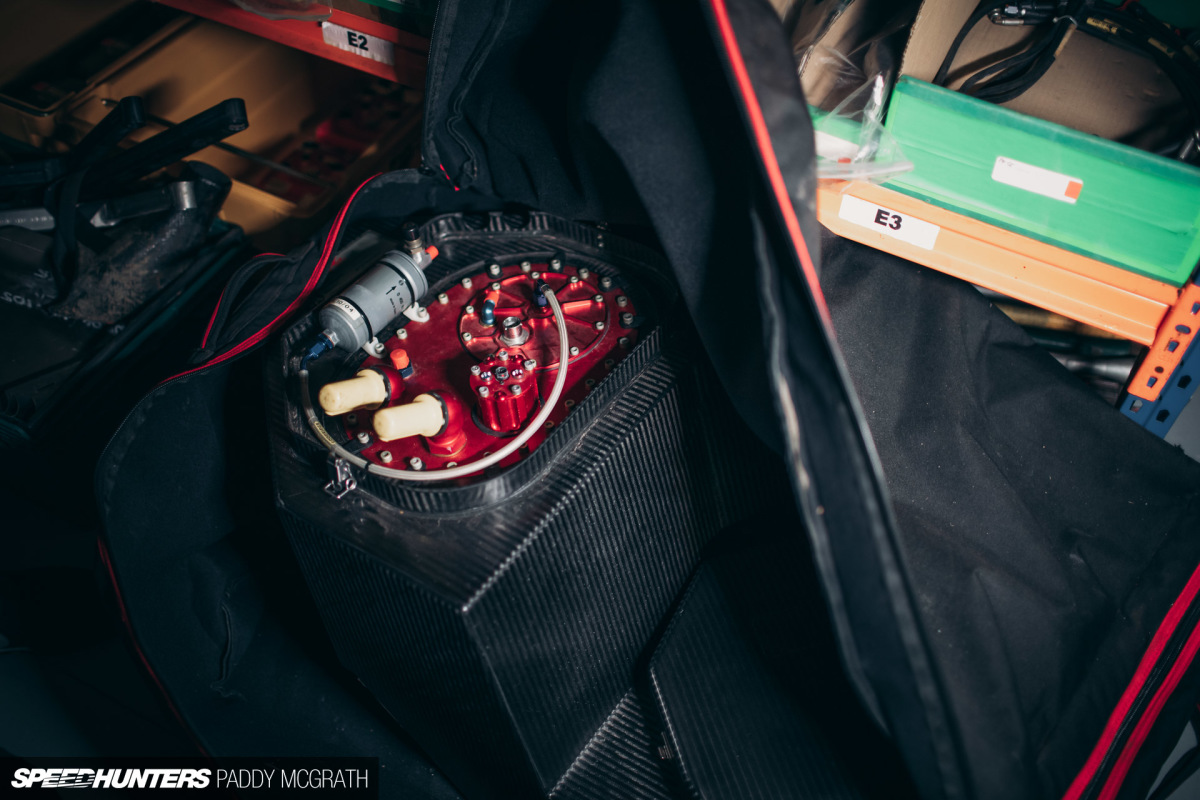
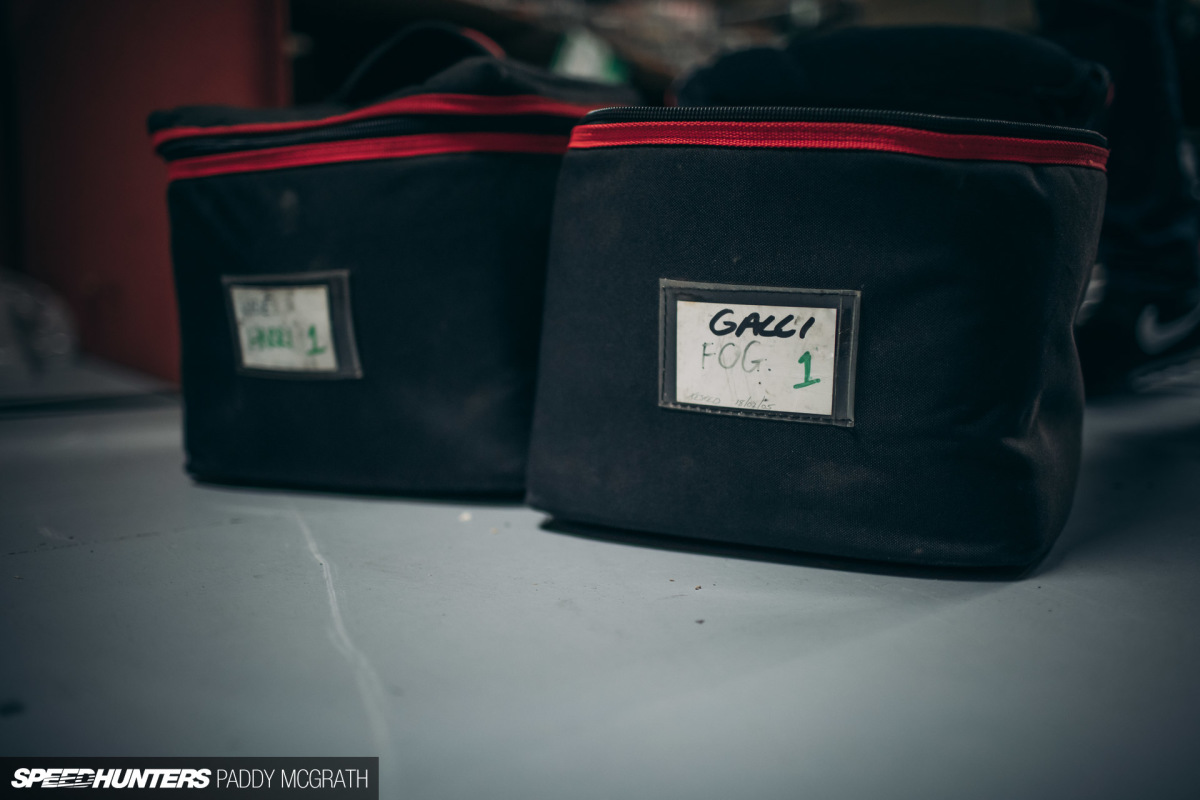
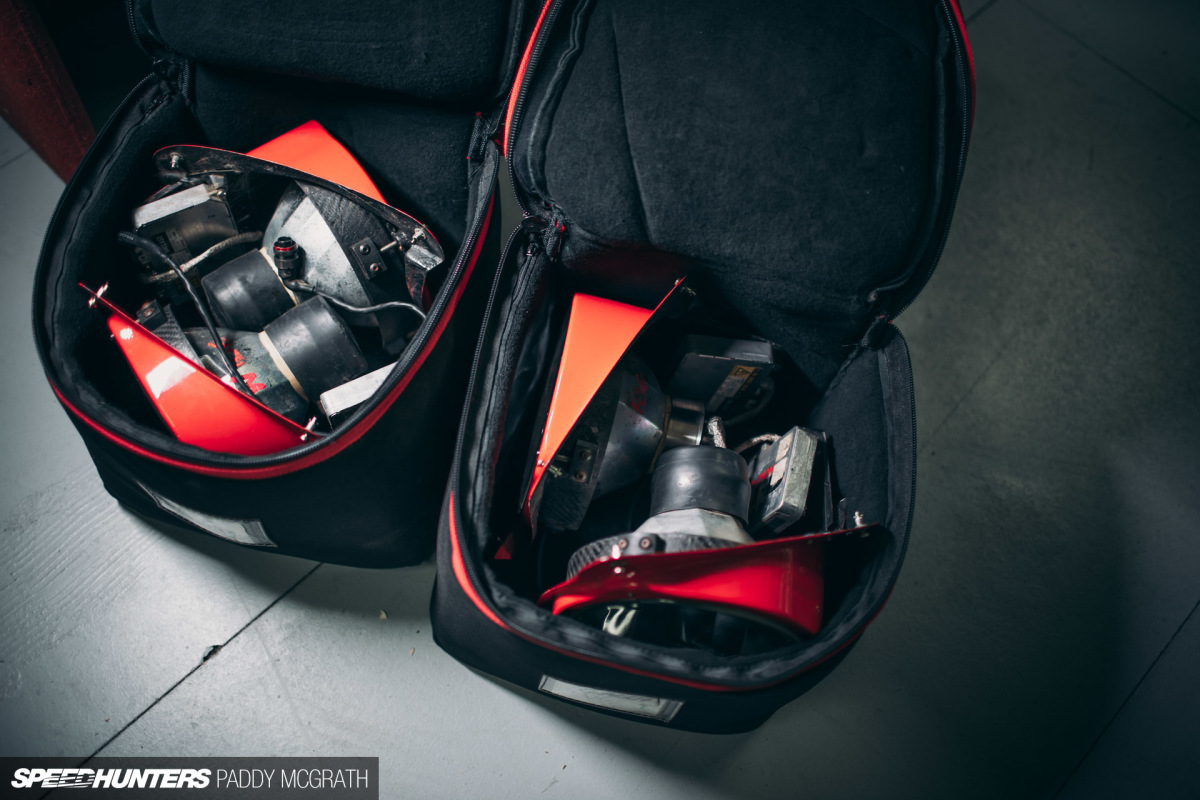
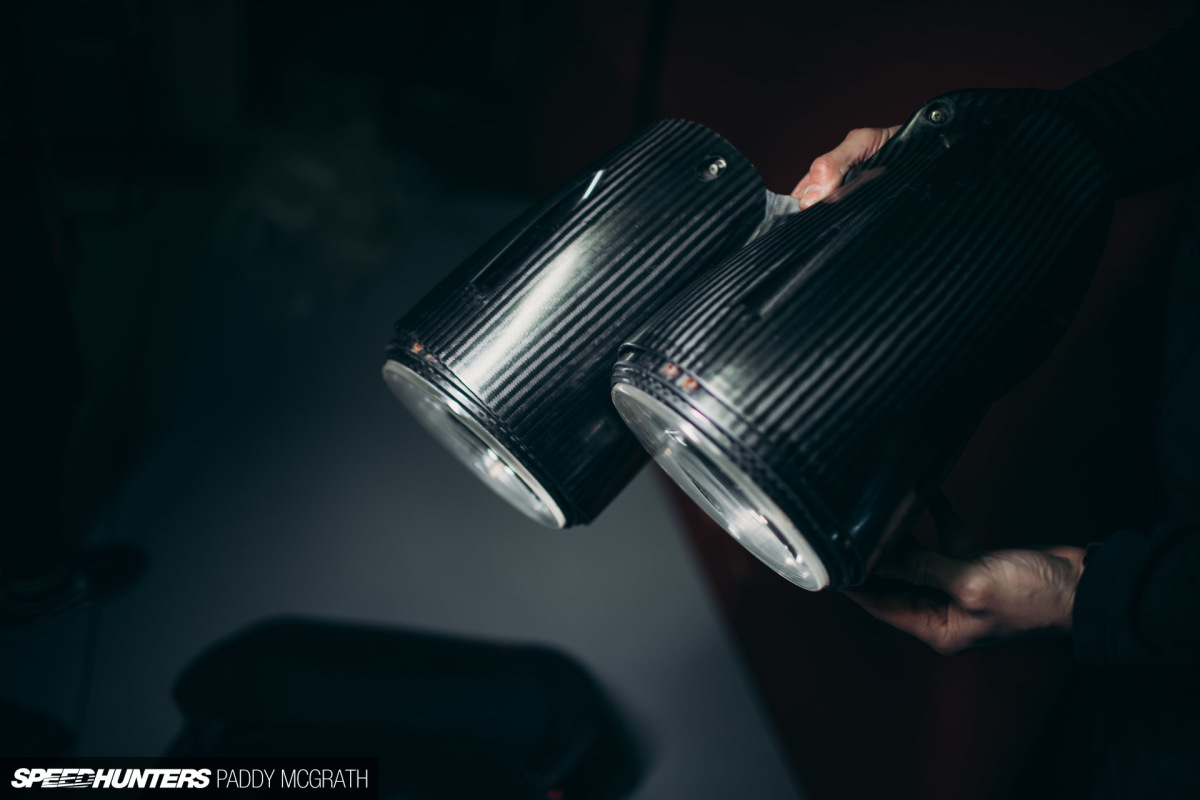
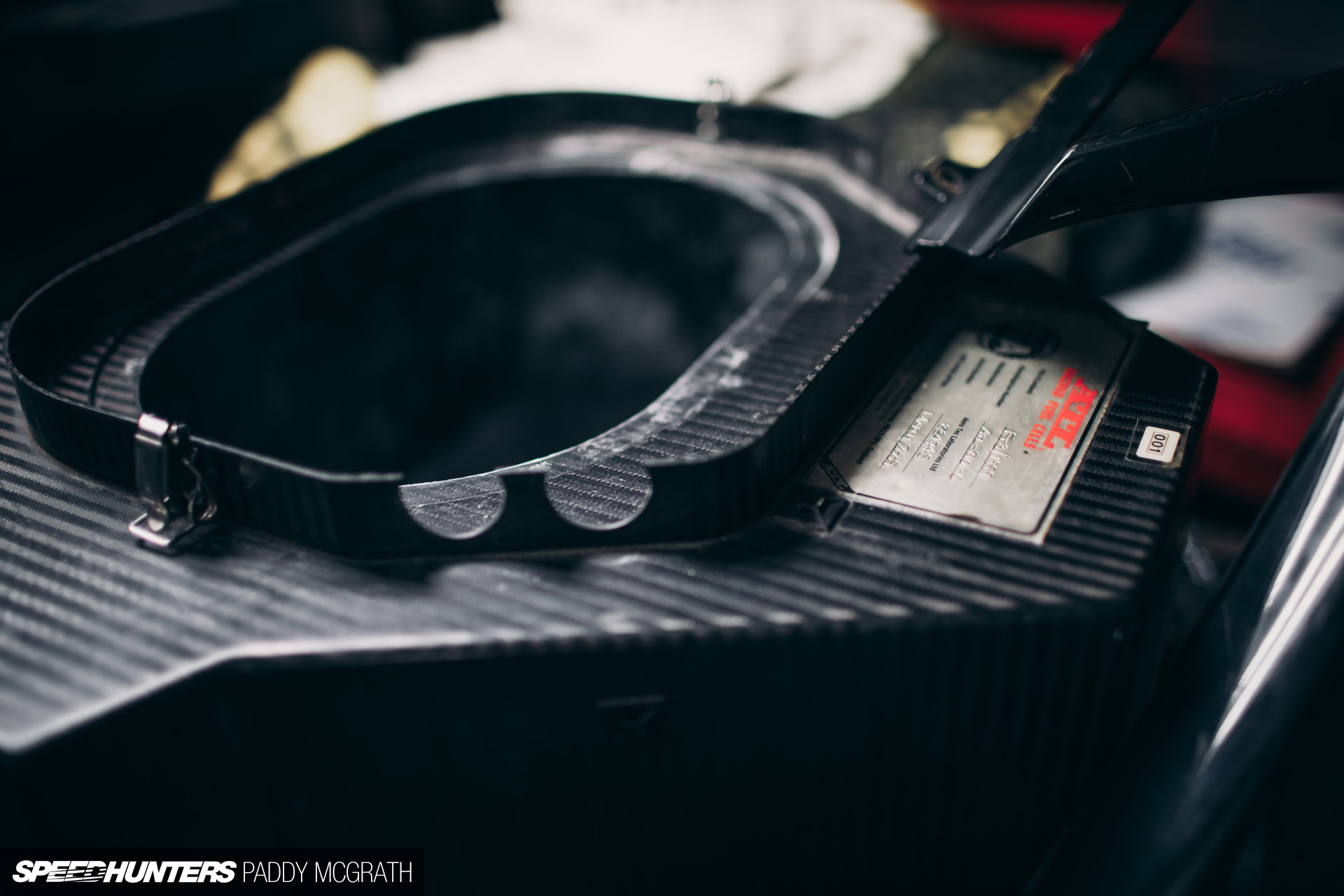
Another unexpected discovery was that there were custom and padded carry-bags made for everything. From body parts, to fuel cells, to front lamp pods. I think I’m only now starting to really and truly appreciate the logistics of a what a WRC team is comprised of.

What was intended as a quick visit was now entering its fifth hour, and I was still finding fascinating parts and details all around the workshop.
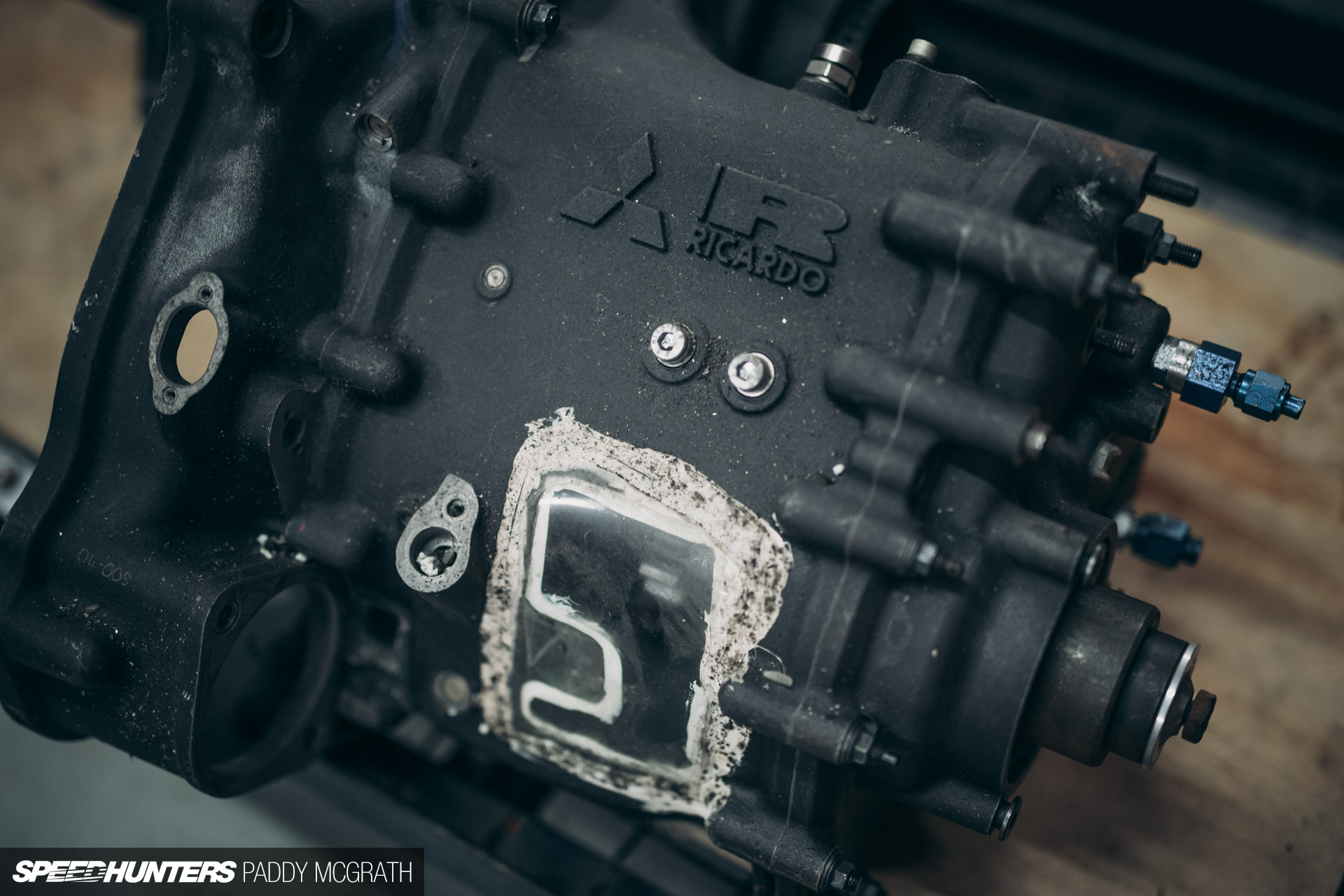
This is a very expensive Ricardo sequential gearbox, which has had its sides cut open and some clear perspex installed. This was so the engineers could observe the splatter pattern of the gear oil.
While some might think this to be ridiculous or even a waste of money, I see it as a team that was willing to do anything to build the best car they possibly could. Not once during this visit did I think to myself ‘that’s a bit ordinary’.
I really don’t think there are enough superlatives or hyperbolic statements to emphasise the significance of this visit.
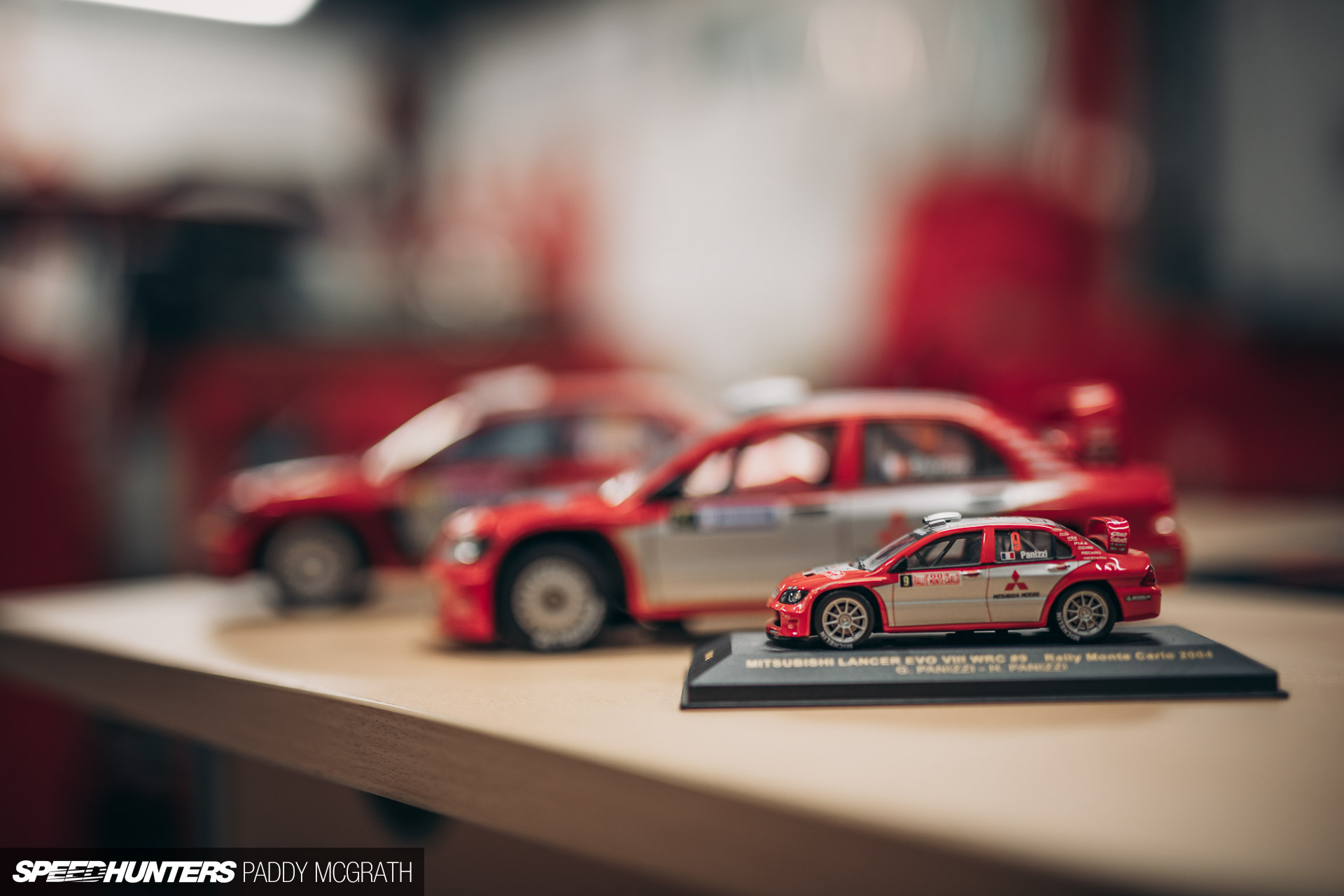
This is something that is never meant to be seen by you or I. It’s a privilege reserved for the rare few who have the honour of designing and working on these incredible machines.
Even today, if I was to walk into M-Sport or Prodrive and ask to see their setup from this era (not even today’s cars), I know for sure that I would be laughed out the door.
What Tristan and Laura are doing with MMR Rallysport is so special. They’re preserving not just the history, but the very existence of these wonderful and fascinating cars. That they were so kind to open their doors and invite a relative stranger inside, just so they can share their passion with a global audience, tells you everything about them.
It seems to be a recurring theme, that anyone involved with the cars at any stage seems to become smitten with them. From the ex-Ralliart technicians and staff at MML, to people still helping with the cars today. The intellectual and technological information and experience these people have retained and continue to share with MMR is absolutely invaluable to ensuring the cars continue to run today, and it’s something MMR are hugely appreciative of.
As a prime example, the chassis jig is only used by the original shell builder from Ralliart, and what he doesn’t know about these isn’t worth knowing.

I can’t wait to show you Galli’s car and to tell you its story. If you’ve made it this far, I guess I can also tell you that I’m going to try and document the rebuild of one of the cars and to show you why these are so incredibly under-appreciated by the rallying community.
That 0.5s per kilometre was found in them in the season after Mitsubishi had bailed out, just shows how much potential these cars really had and how the plug was almost certainly pulled a year too early.
And yes, that’s a collection of bum pads belonging to Hervé Panizzi, Tommi Mäkinen and Gigi Galli. You can’t have one, but aren’t they just fantastic?
Paddy McGrath
Instagram: pmcgphotos
Twitter: pmcgphotos
paddy@speedhunters.com
Behind Closed Doors on Speedhunters
Cutting Room Floor