
It’s not very often you’re allowed to pore over a proper, factory-backed World Rally Car.
It’s usually not possible at all when the cars are current and engaged in competition, for obvious enough reasons. And by the time they age a few years, they’re either forgotten completely or are considered irrelevant. Besides, they often change so much in retirement, that they become a bit ‘Trigger’s Broom'; the brush which has had 17 new heads and 14 new handles.
This then is an utter rarity. While I can’t go into details of how or why this particular car has survived the last 15 years completely untouched, I can show you around it in considerable detail courtesy of MMR Rallysport, who are now the guardians of this survivor.

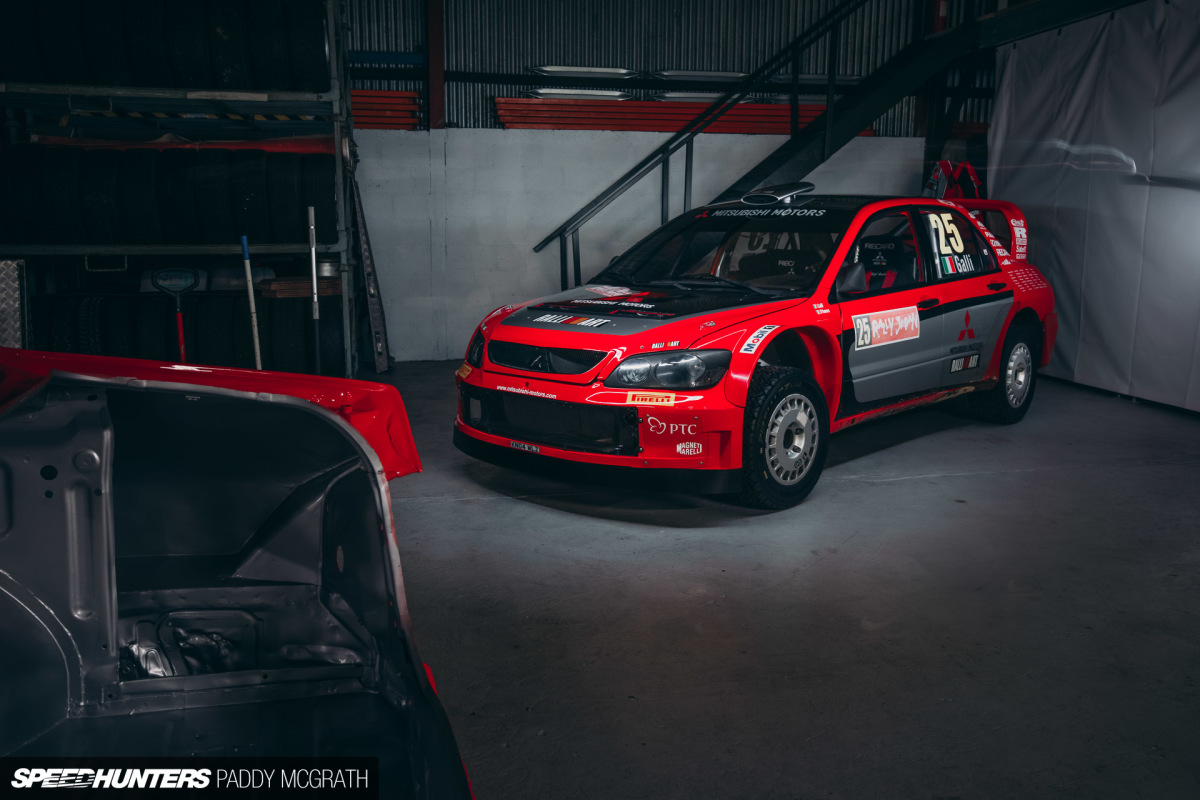
This is KN04 WLZ, the ninth chassis of the 2004/2005 Lancer WRC era. As stated previously, the Lancer WRC04 and WRC05 were the first Lancer WRCs not to be based on the Evolution platform. They were near completely bespoke, and as such were based on the more humble Lancer Cedia, as almost everything would be changed during the build.
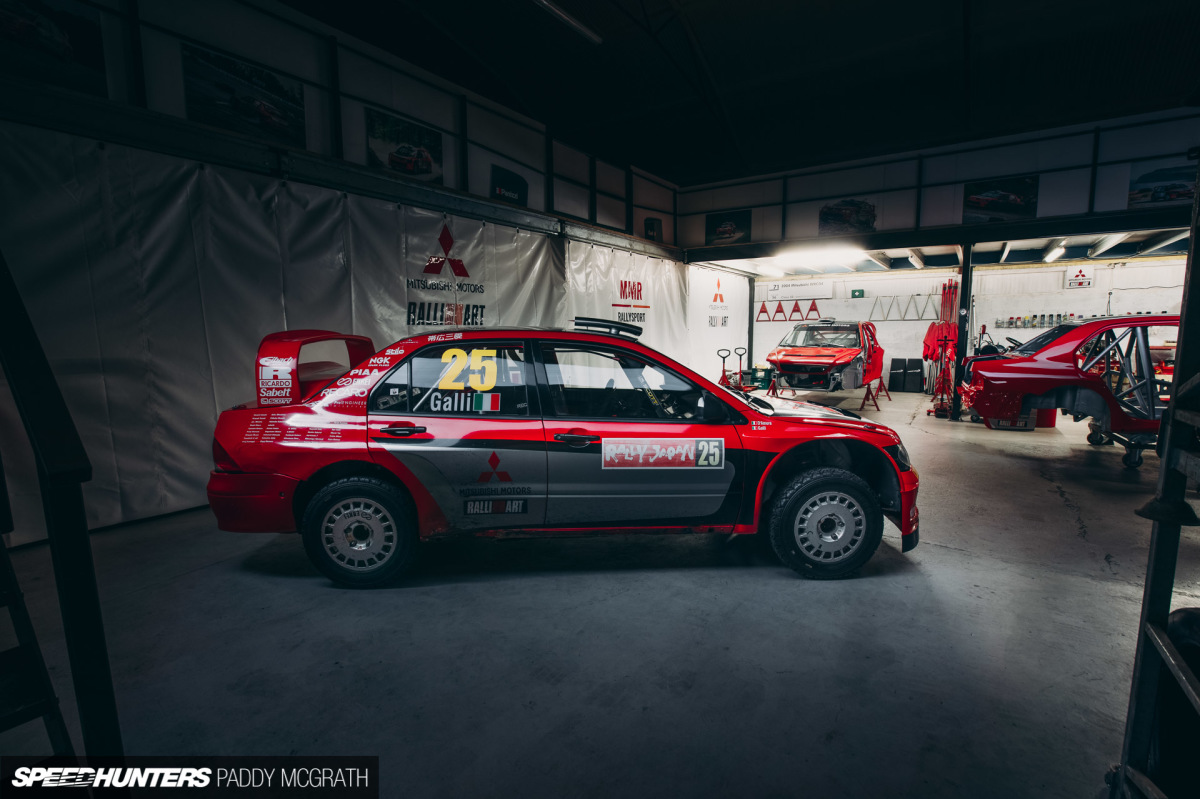
This particular chassis competed two events in 2004, with Giles Panizzi finishing 7th overall in Argentina, and Gigi Galli finishing 7th outright in Spain later the same year. Subtle rule changes in 2005 saw this car evolve from WRC04 to WRC05 specification.
Interestingly, the unchanged panels still bear the ’04WR’ stamp, while the new panels have been branded with ’05WR’. This was standard practice at the time, and even the fresh WRC05 cars still featured the unchanged WRC04 parts.
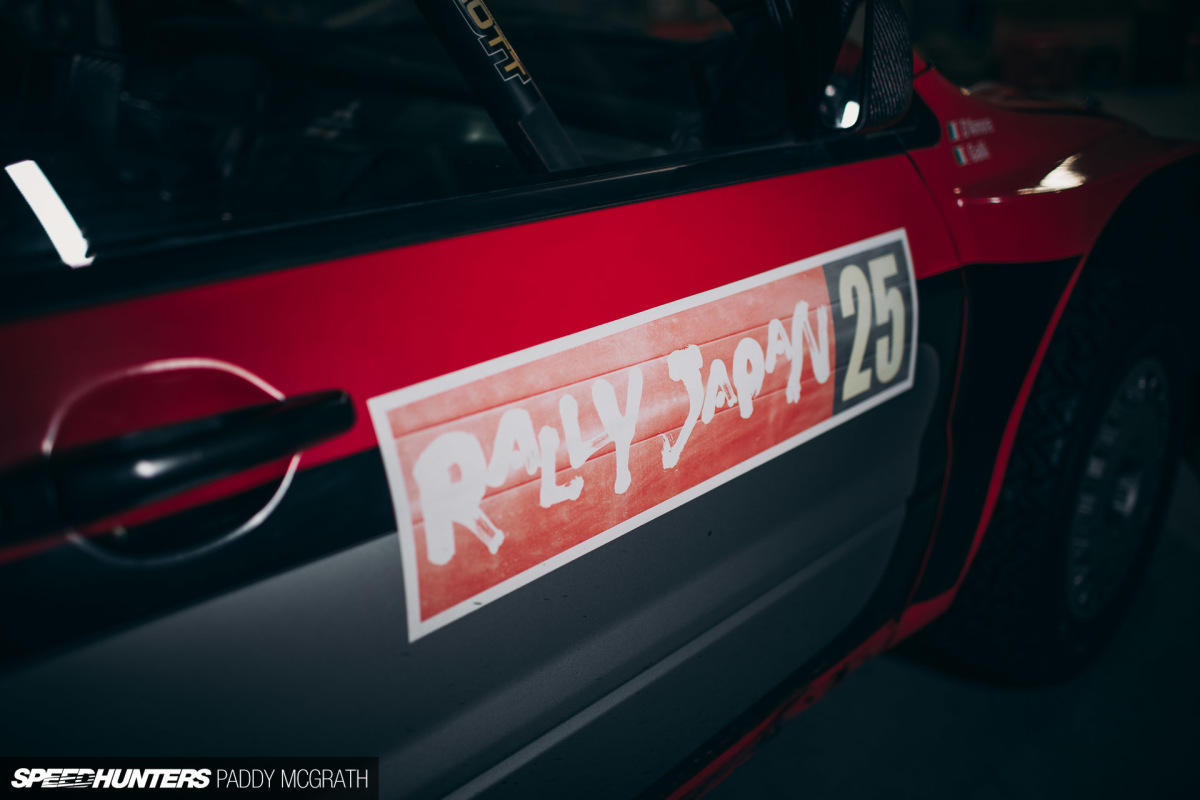
In 2005, the car competed four events with Finnish driver Harri Rovanperä (father of current WRC driver, Kalle) before Gigi Galli took to the wheel for Rally Japan.
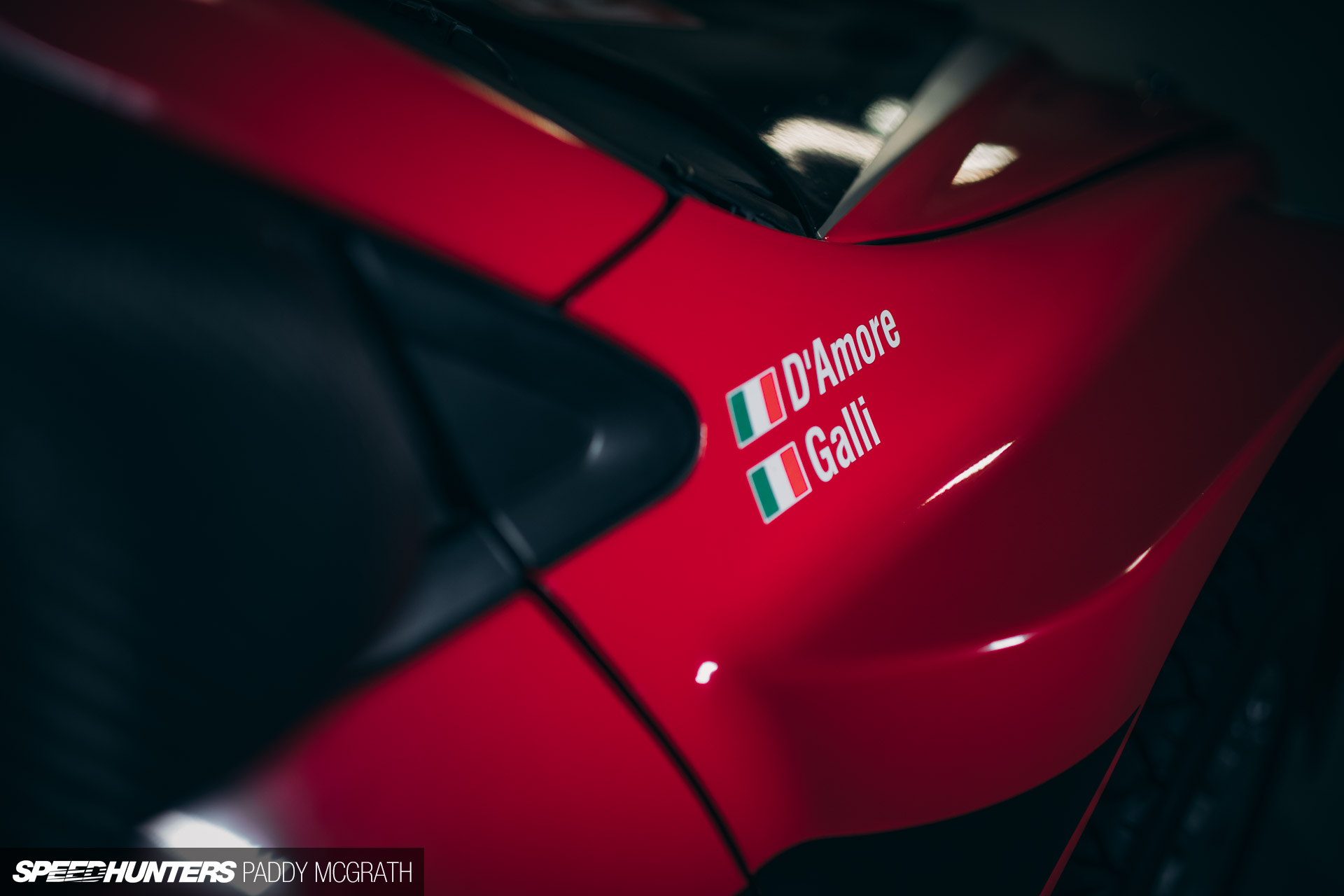
Mitsubishi entered three cars for the event, with Panizzi, Rovanperä and Galli representing the automaker. Galli was in 4th overall, and on course for his best ever WRC finish when he hit a rock on SS23. The damage was relatively minor, but it prevented the Italian from driving on the road section and forced his retirement.
After the event, the car stayed in Japan for a short period of time. The damage was repaired and it featured on Hot Version at the Gunsai Touge, where it faced off against Keiichi Tsuchiya and the J’s Racing Honda S2000. Curiously, the car was left in gravel specification for the head-to-head. You can see part two of the video here.

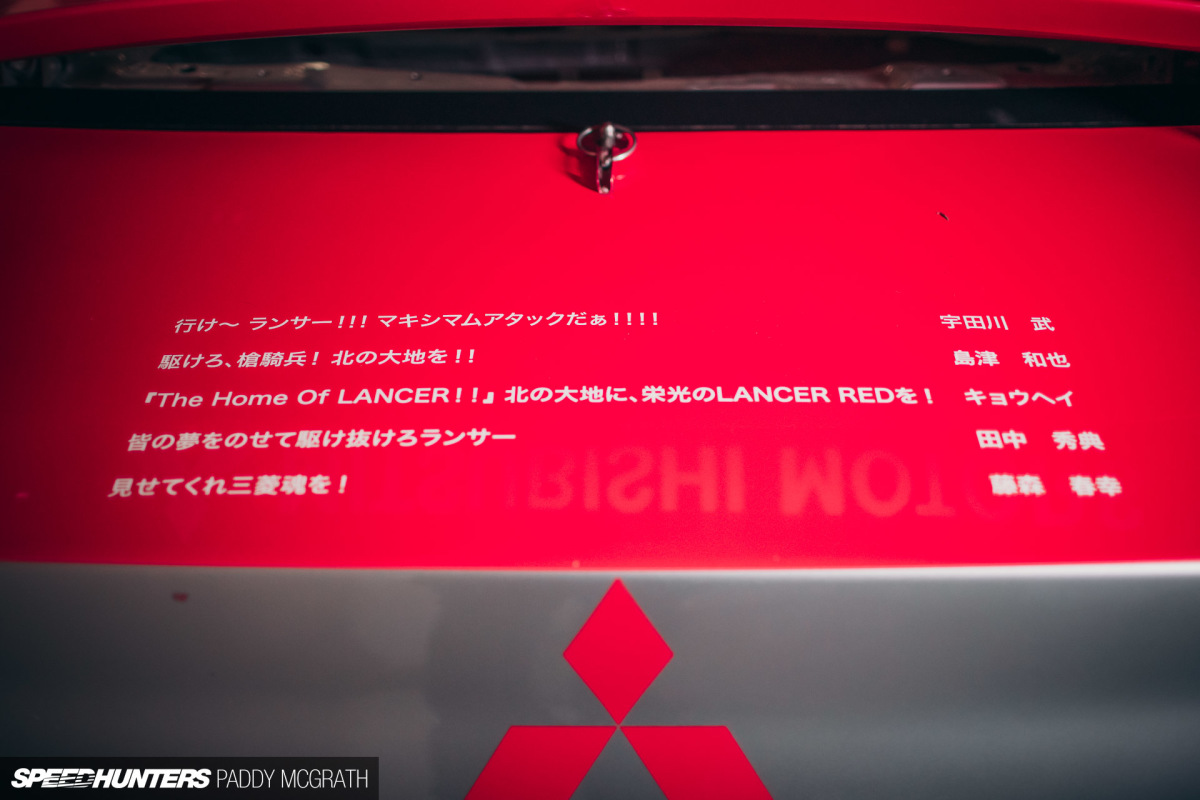
15 years and a considerable gap in its history later, the car is now sat on MMR’s workshop floor almost exactly how it left Japan in 2005. I say ‘almost’, but the signed bonnet (featuring signatures of either fans or Mitsubishi staff) which featured on the car has been removed and replaced with a ‘standard’ WRC bonnet, albeit one complete with the correct event branding

Otherwise, it’s untouched. The road rash from gravel spraying against the sills and sides of the car has been left unrepaired, and from what MMR have told me, it won’t ever be fixed.
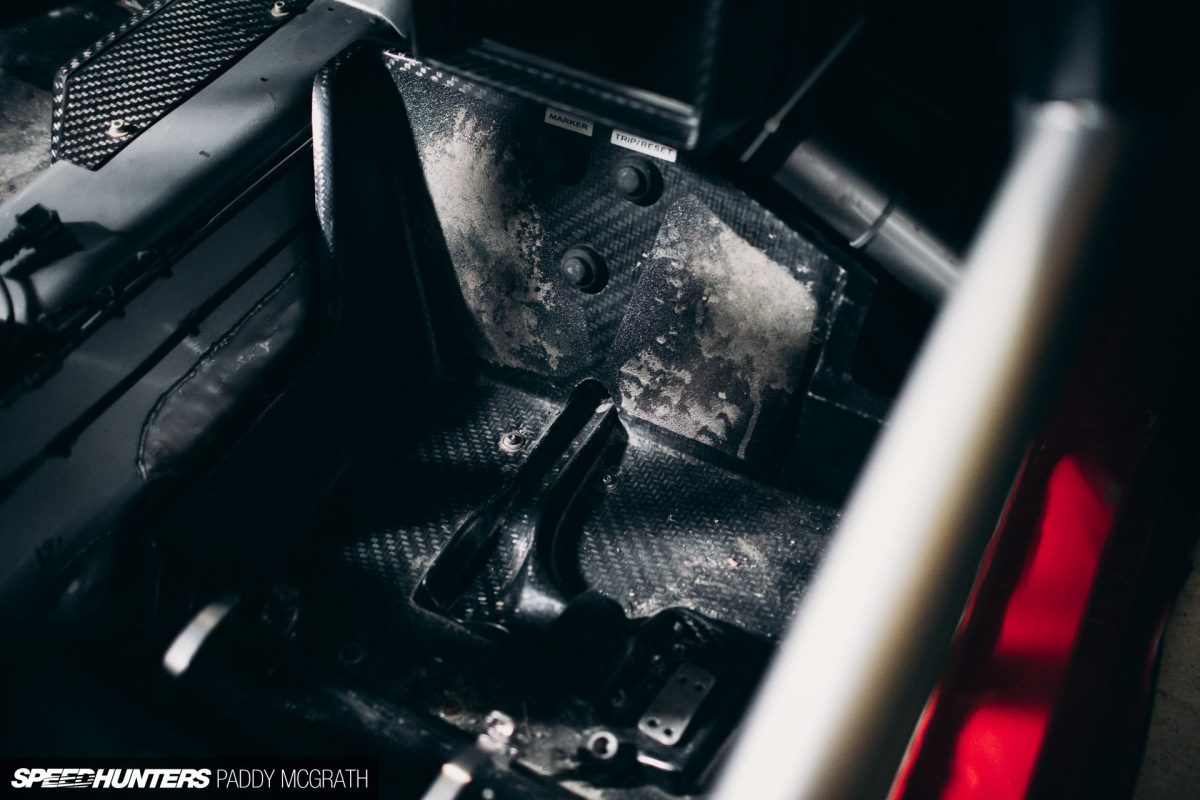
Even the navigator’s foot rest still features Guido D’Amore’s muddy boot prints.

While based on the Lancer Cedia, the Lancer WRC still featured a 2.0-litre turbocharged 4G63 as found in the Evolution, but with a billet head and a host of custom components.
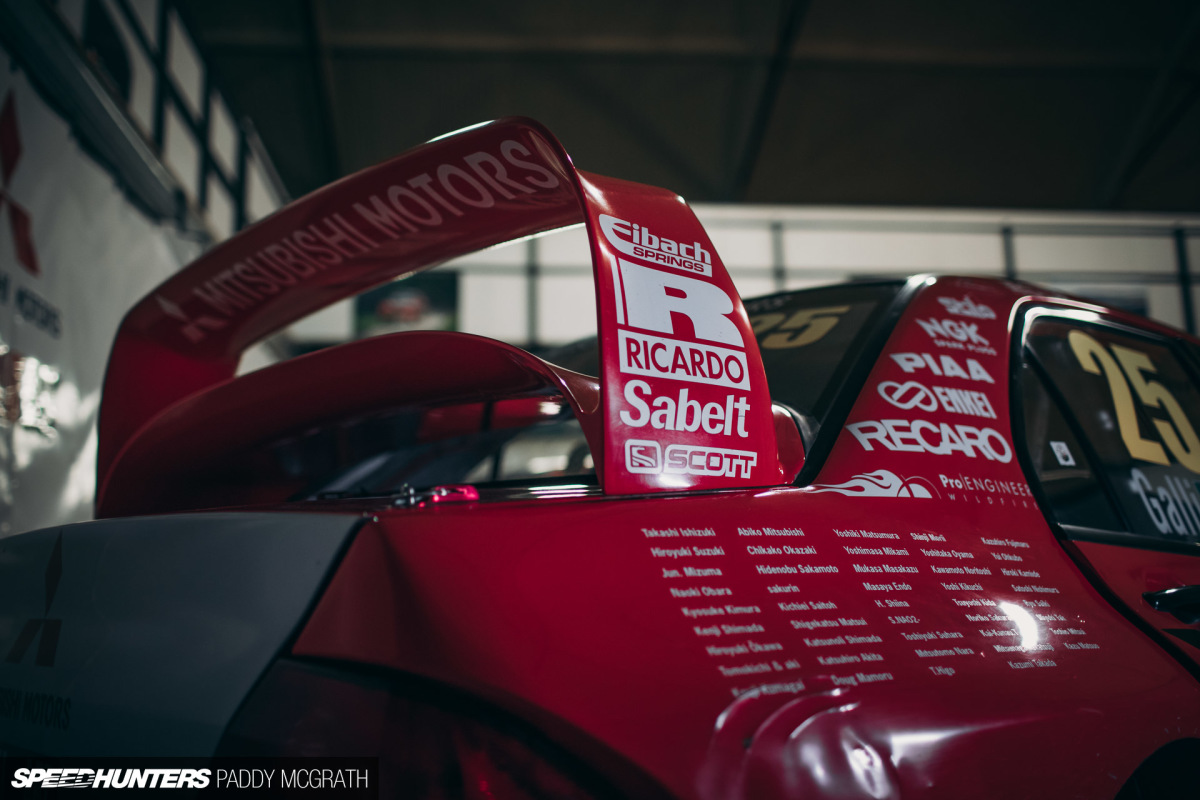

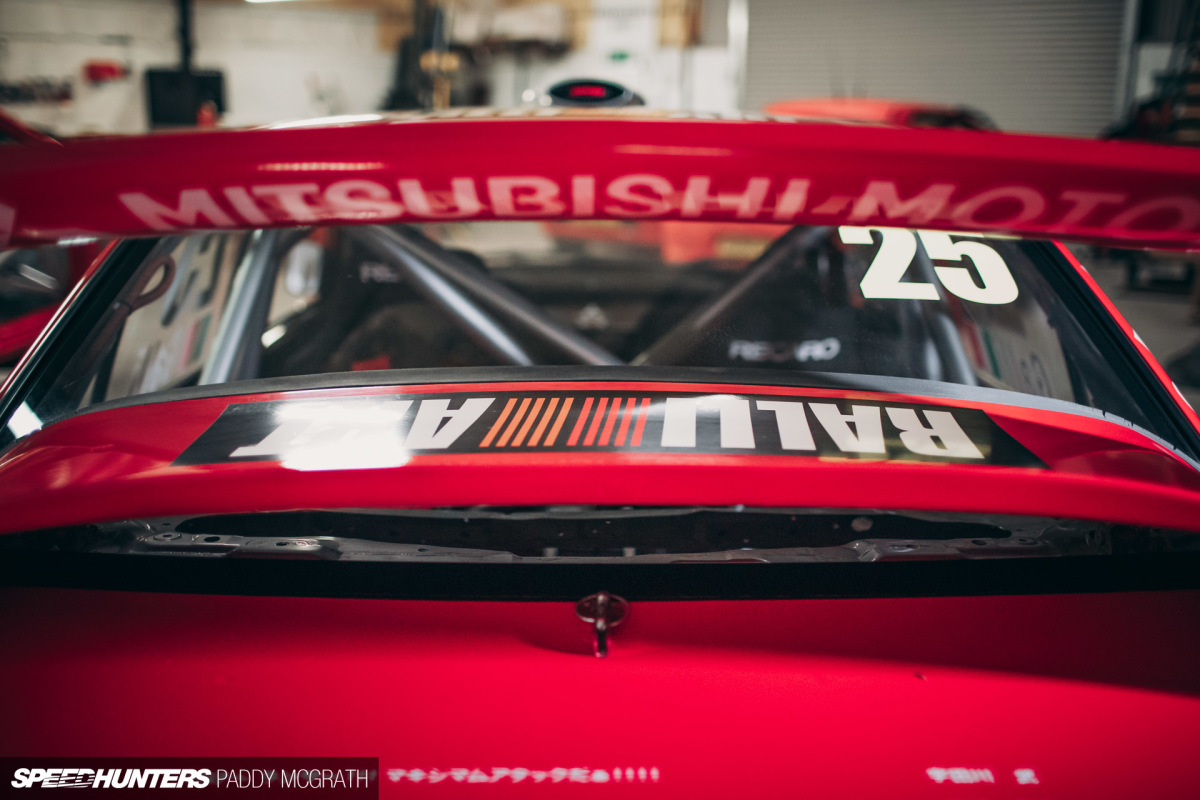
The car’s signature rear wing has a pretty interesting backstory. It wasn’t mounted in this position for fun, but rather through aero testing with Lola Cars in their wind tunnel. Originally, it was proposed that the wing would be mounted to the roof of the car, but the FIA insisted it was moved further rearwards. It slowly moved back down the rear window before the FIA approved its final location.
However, the lower tier of the spoiler was considered to be a second aerofoil (which was prohibited at the time), so Mitsubishi had to seal the wing against the rear glass. Need for Speed’s Bryn Alban has an interesting story about the boot hinge mechanism which he might be so kind to share in the comments below…


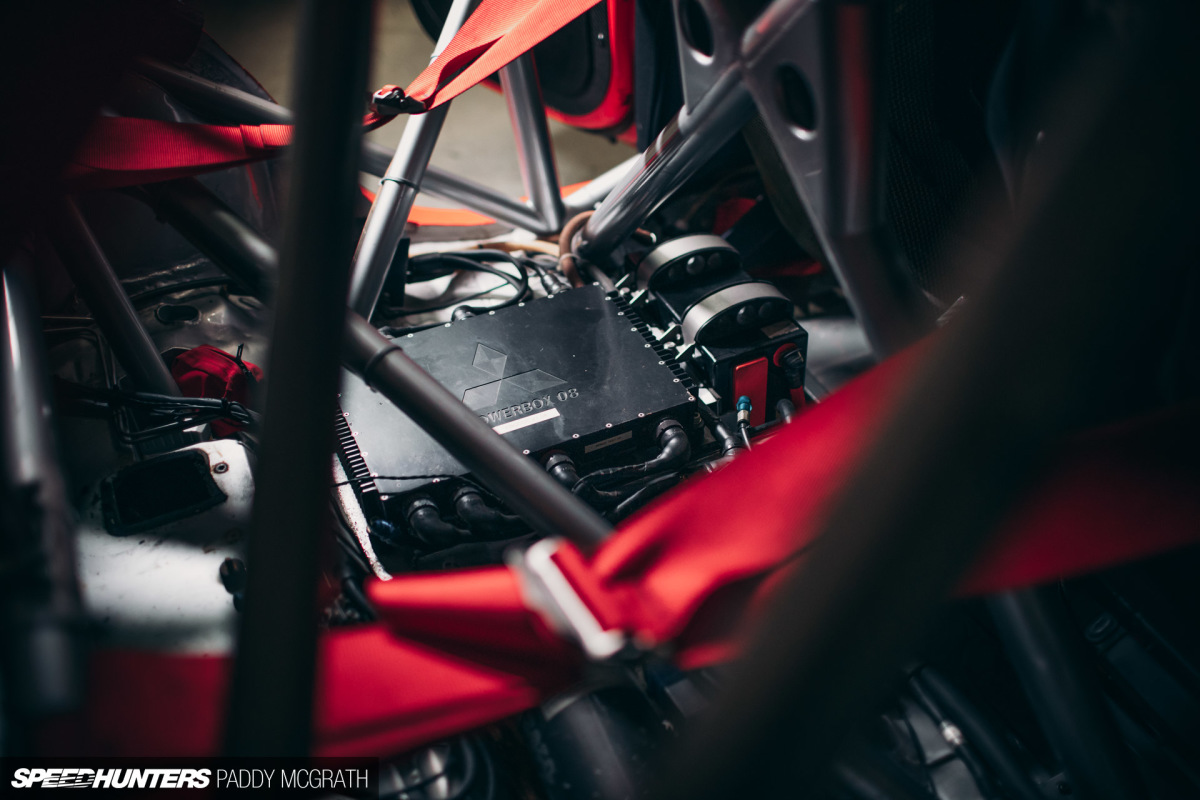

You know what we say about race car interiors, and this is no different, although it’s still a fascinating place to explore. There are lashings of carbon fibre all over the interior in order to keep weight down, along with simple, elegant and comprehensive instrument displays.
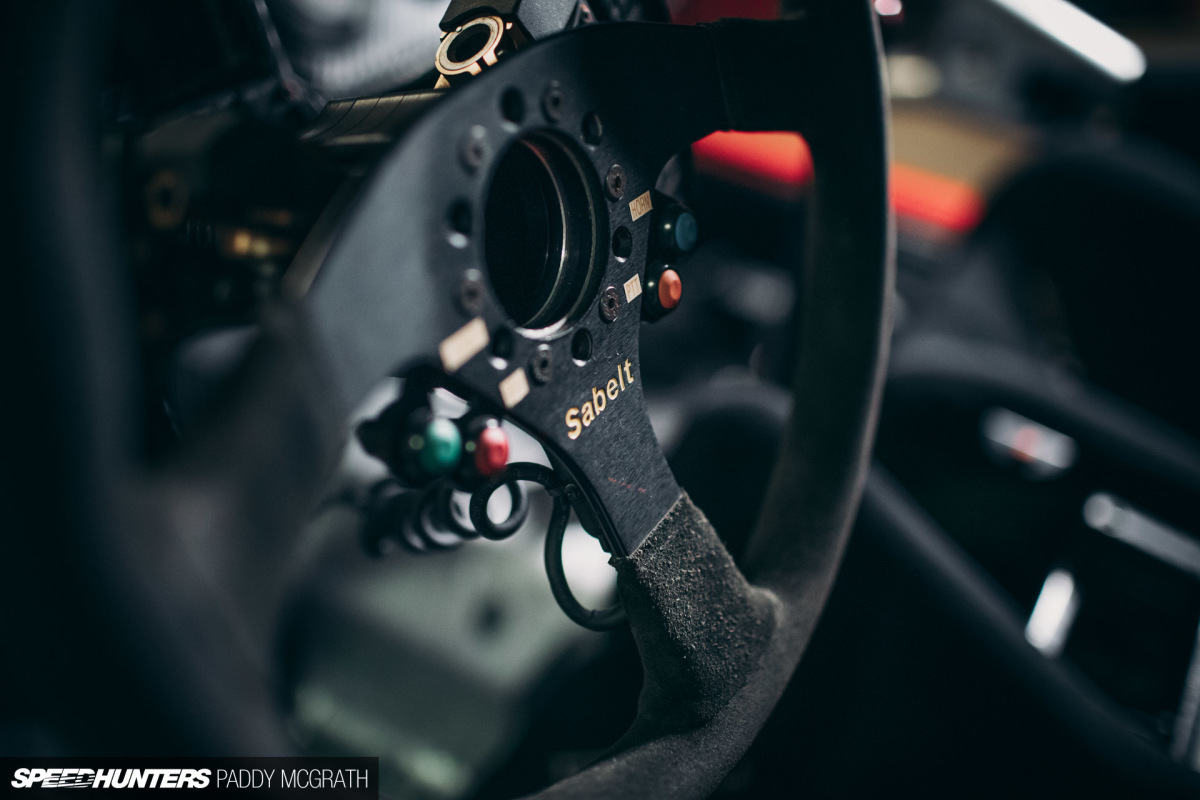
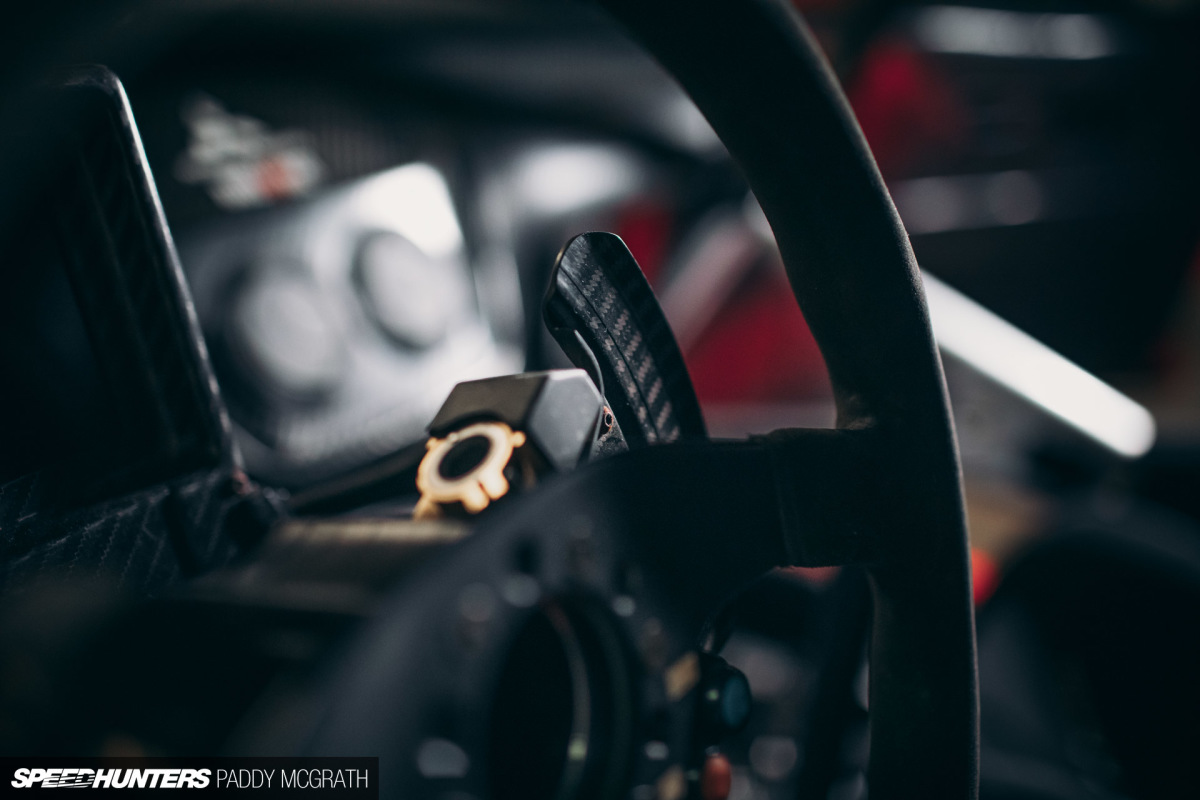
The driver’s controls are straightforward: a Sabelt wheel featuring essential switchgear, carbon fibre shift paddles for the Ricardo sequential gearbox, and an upright hydraulic handbrake lever.

Communications are a hugely important part of a rally car, and the Stilo ST-30 system connects driver and co-driver whether they’re on a road section or special stage. The latter stage setting is louder, obviously.
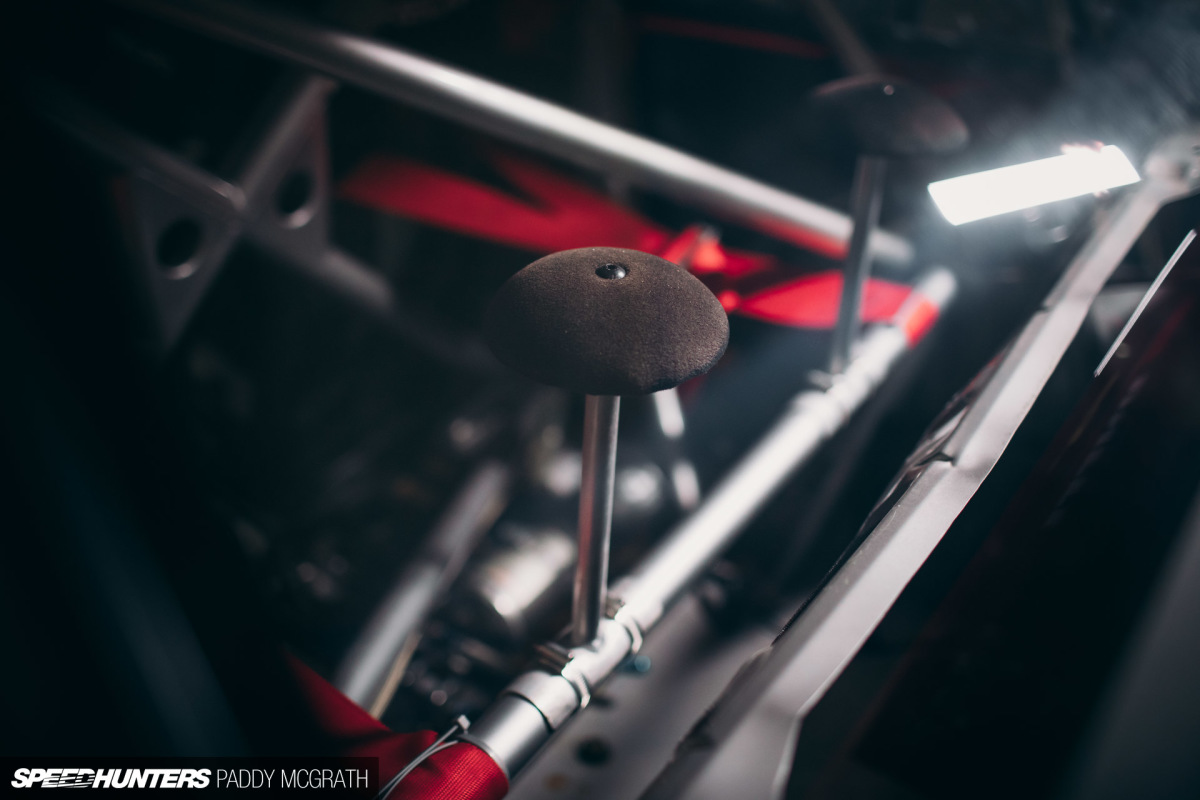
These curious mushroom-shaped foam pads mounted vertically on a rear cross-bar are simple helmet holders.
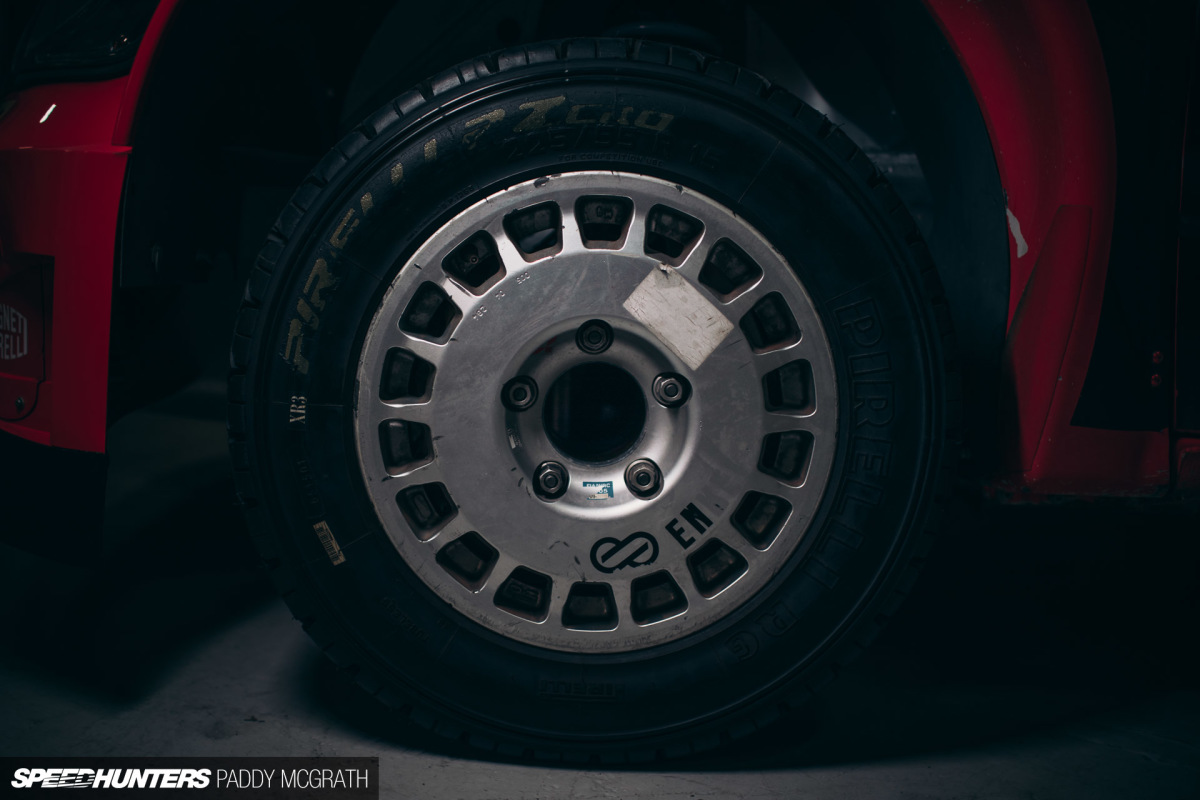

The lightweight magnesium Enkei gravel-spec wheels look like they have been through the ringer. I love the missing branding, the WRC scrutineer stickers, and the unique Lancer WRC part number on the lug nuts.


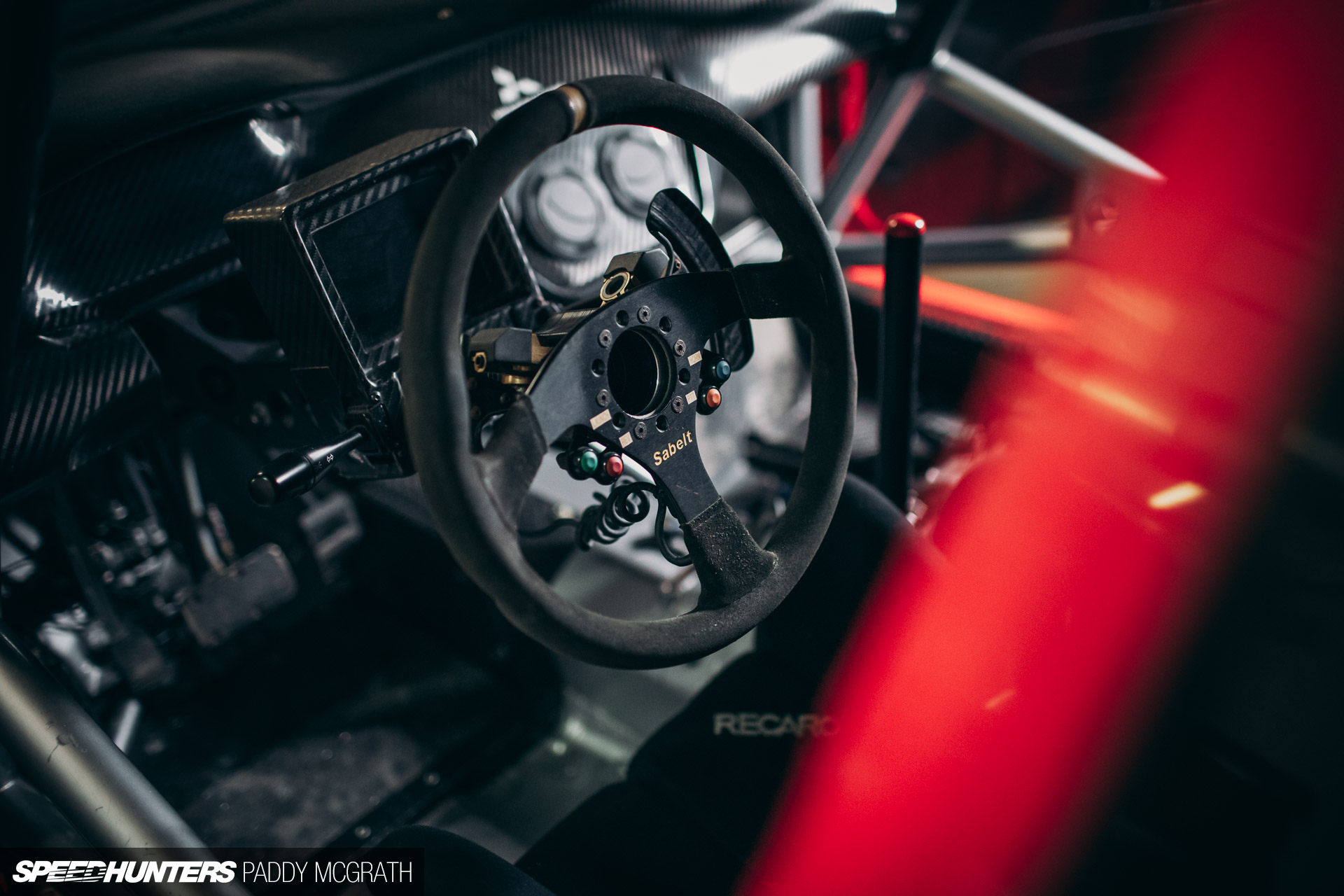
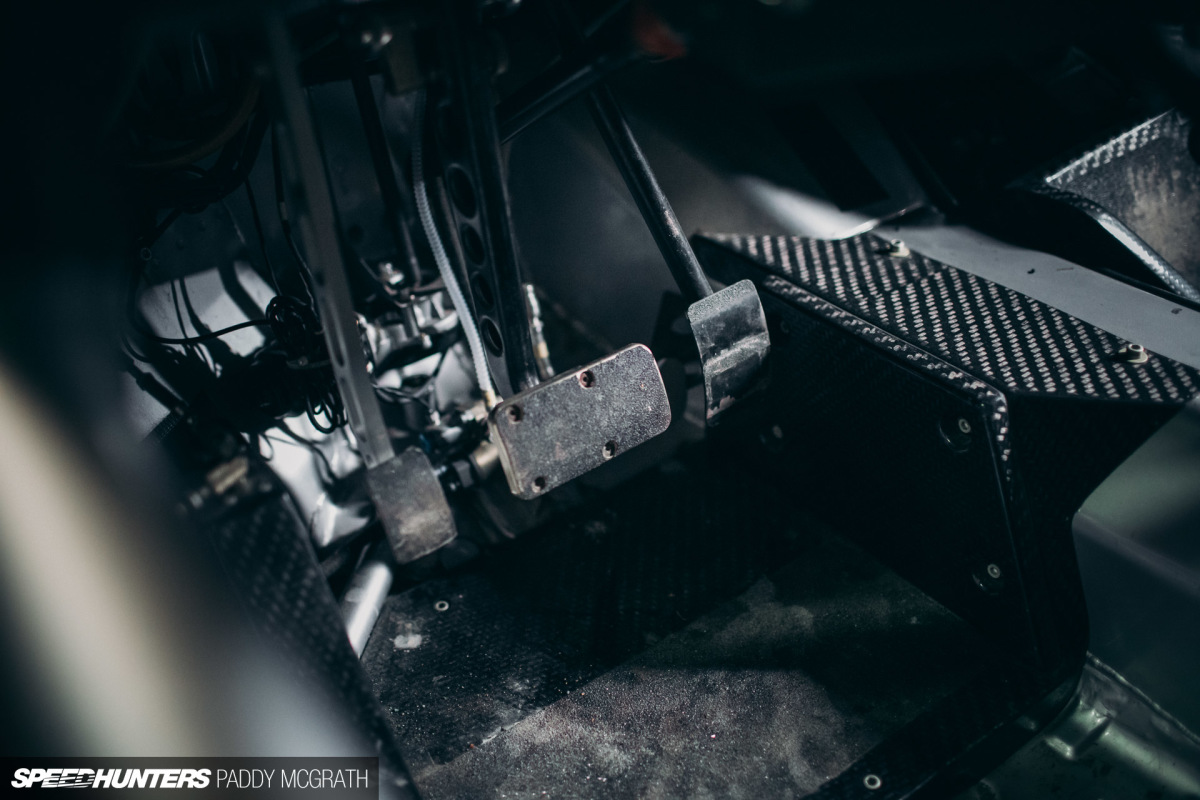
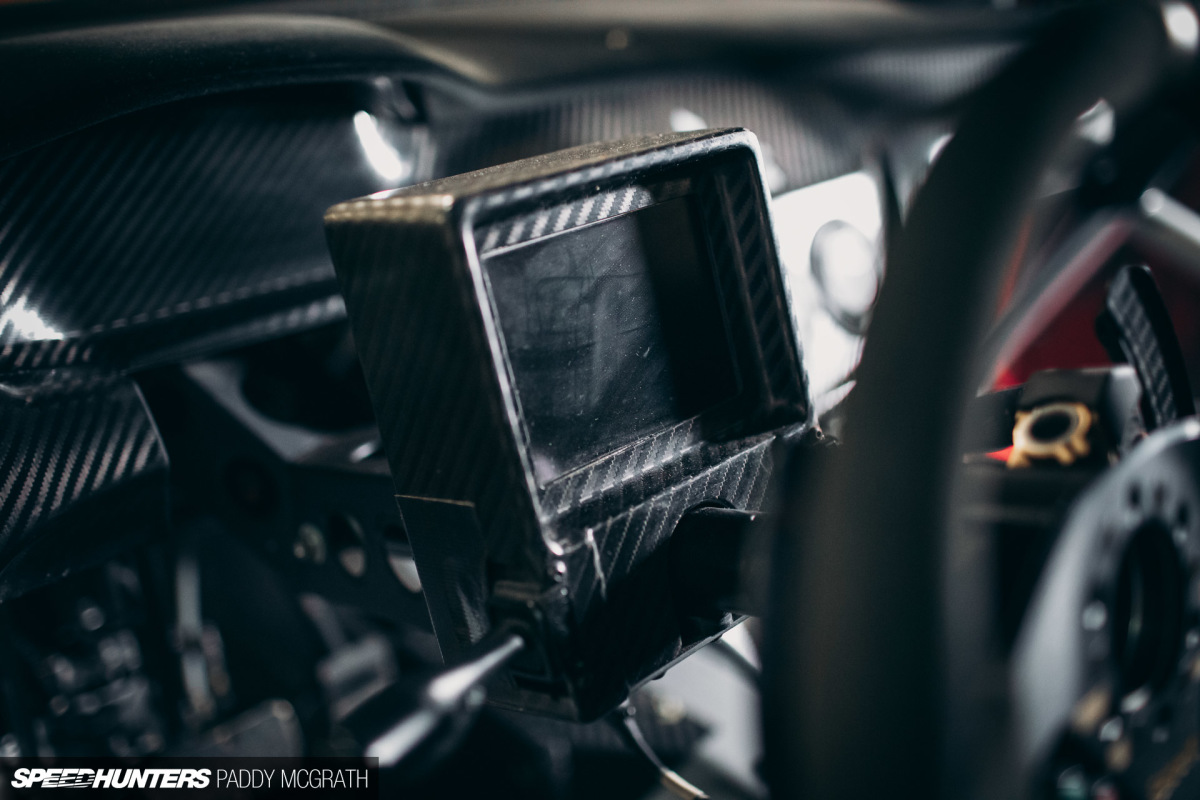

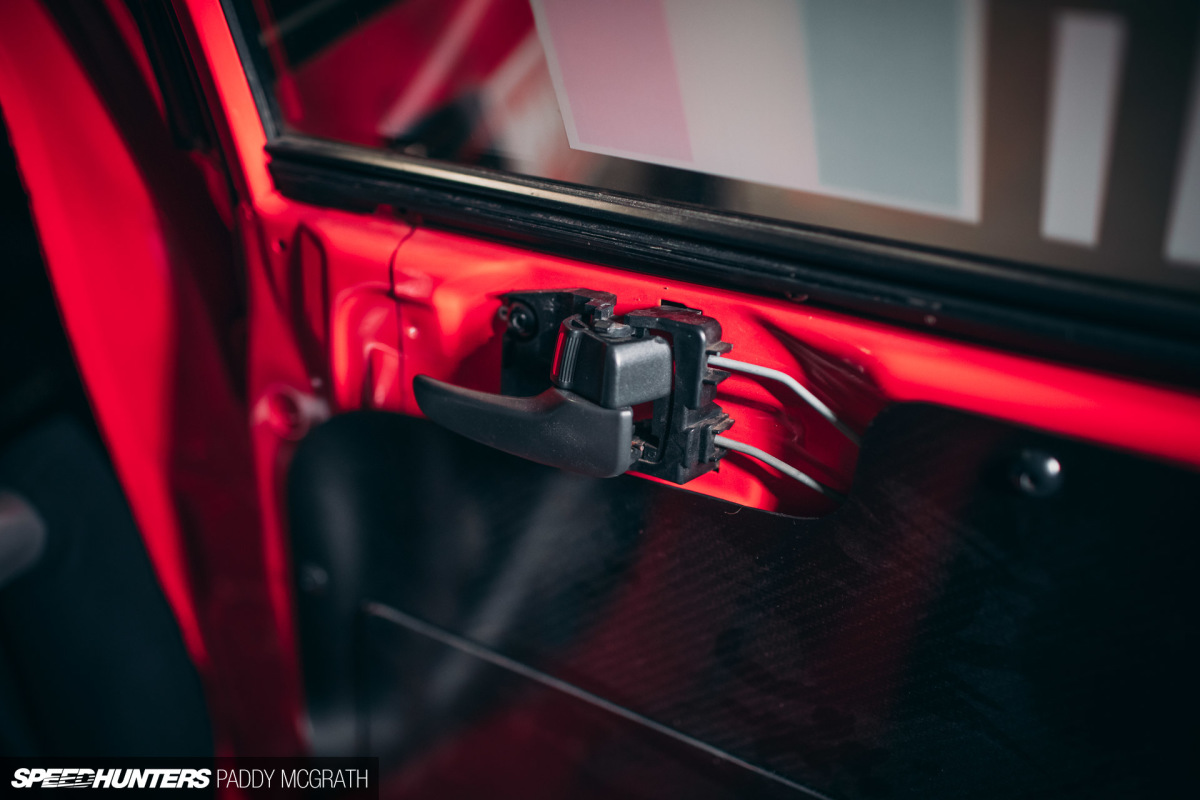


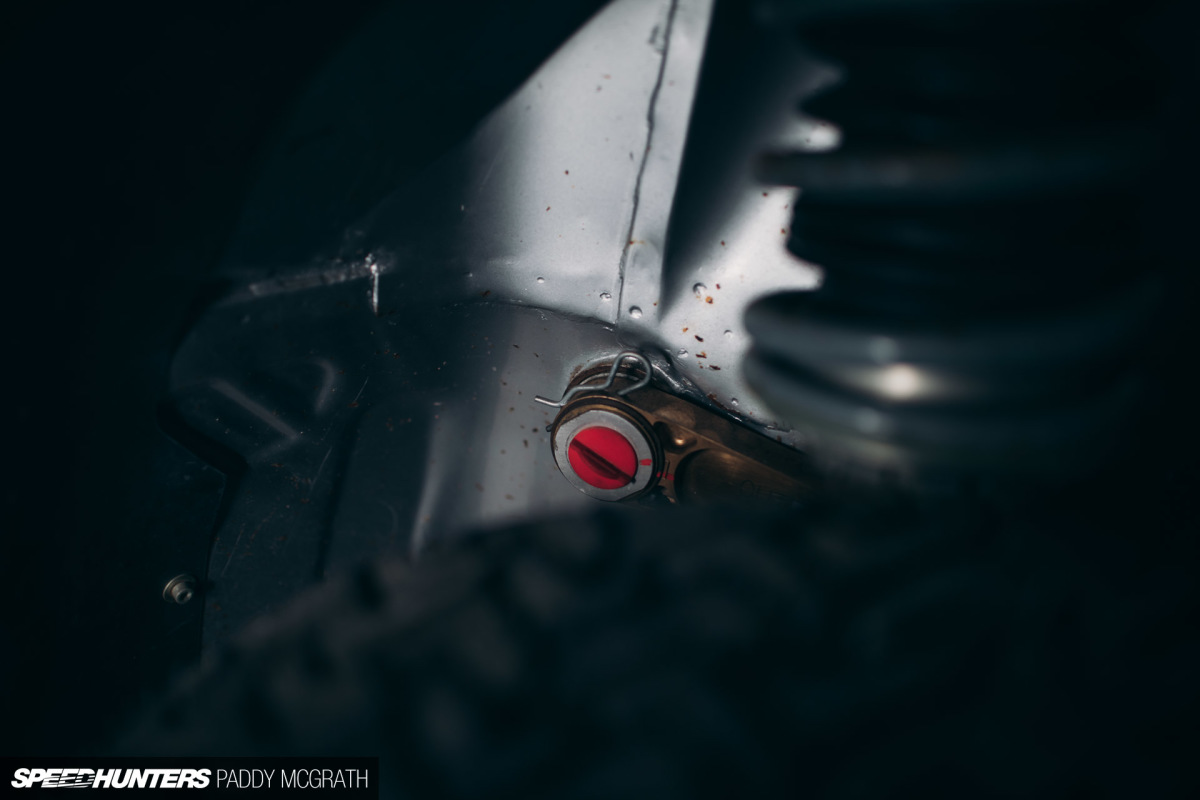
There’s so much detail all over the car, which is all but impossible to show you when the car is fully together. From data collection such as temperature stickers on everything, to subtle things like the rear outside door handles being back-to-front as the handle mechanism is upside down to allow for more storage room inside the rear doors.
Then there’s the overall weight. The car had to be a minimum of 1,230kg (2,712lb), which was easily achieved. So much so in fact that the car was significantly underweight, so the engineer’s were able to add weight back in precisely where they wanted it. But because each chassis was slightly different, they added the weight back in slightly different ways and places on each car.
There’s certainly a lot to these cars, and I don’t think it’s possible to show you everything in a single post. Thankfully, MMR have invited me to document the rebuild of one of the slightly later WRC05s, which we’re already in the midst of doing.
I hope you like Lancer WRCs, because we’re just getting started.
Paddy McGrath
Instagram: pmcgphotos
Twitter: pmcgphotos
paddy@speedhunters.com