
It seems like only yesterday that I decided to quit my job, sell most of my worldly possessions, and move halfway across the world from the USA to Japan. Soon after relocating here, I attended my very first Tokyo Auto Salon and discovered the Nihon Automotive College, otherwise known NATS, an acronym for Nihon Automotive Technology School.
The NATS cars on display at the Makuhari Messe were nothing like those from the big-name Japanese tuners. Sure, from afar everything seemed to be normal (or as normal as things get at TAS), but as I got close to the NATS builds I quickly realized that all was not as it first seemed.
They were either JDM sized (read: small) or various cars put together to make a new one. As if the creativity wasn’t enough to pique my curiosity, I soon discovered that these NATS cars were in fact projects that students had to complete in order to graduate from the technical institute. That sure as hell beats submitting a dissertation.

Ever since that first introduction, I’ve remained in touch with a few of the alumni to see what projects current NATS students are creating for TAS, and this year’s theme of The Fast and the Furious Supra and GT-R absolutely crushed it. But spotlighting the cars on the NATS booth at Tokyo Auto Salon would have done them no justice. They needed to be shot out in the open.

So I made a plan to visit the campus near Narita International Airport in Chiba. There I’d be able to take a look around the place, and also feature the Supra and GT-R once students had finished the final part of their examination – having the cars pass their shaken inspections.
Stay tuned for that story as a follow up to this one.
Class Is In Session
A few weeks ago I made the 100km (62mi) trip to the campus, which really is in the middle of nowhere.

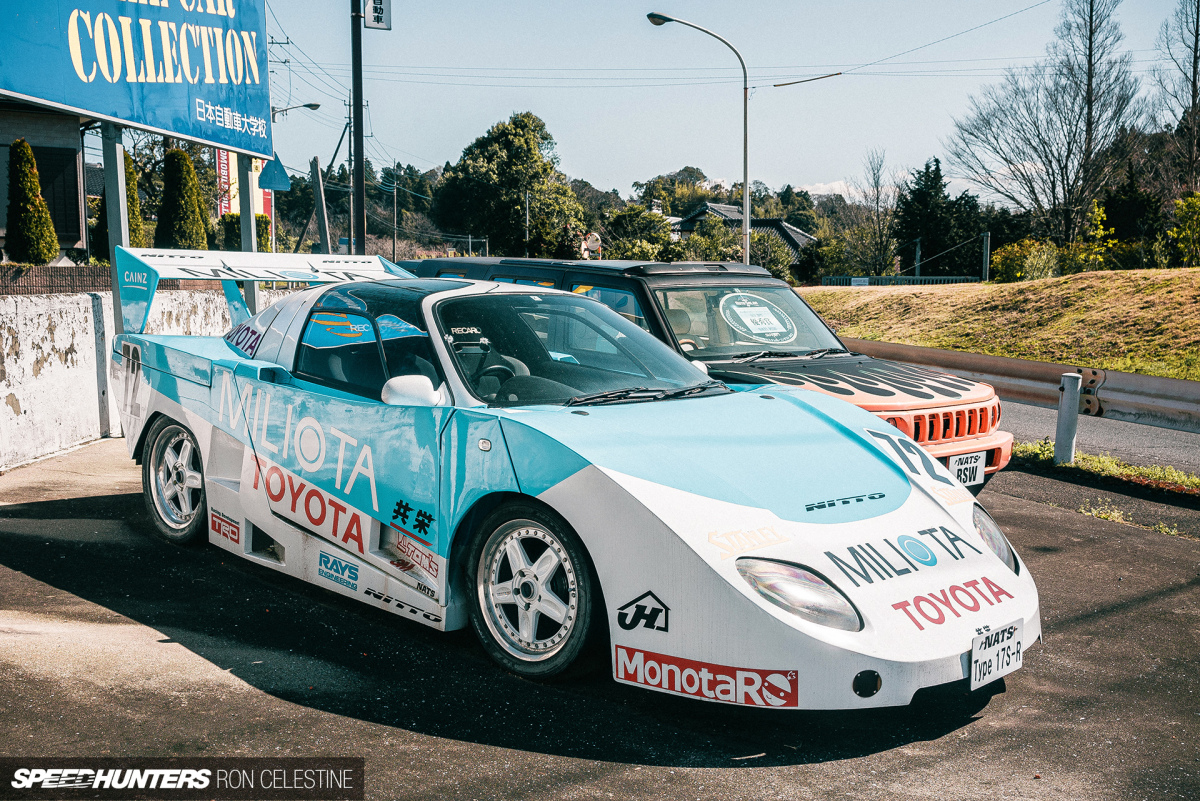
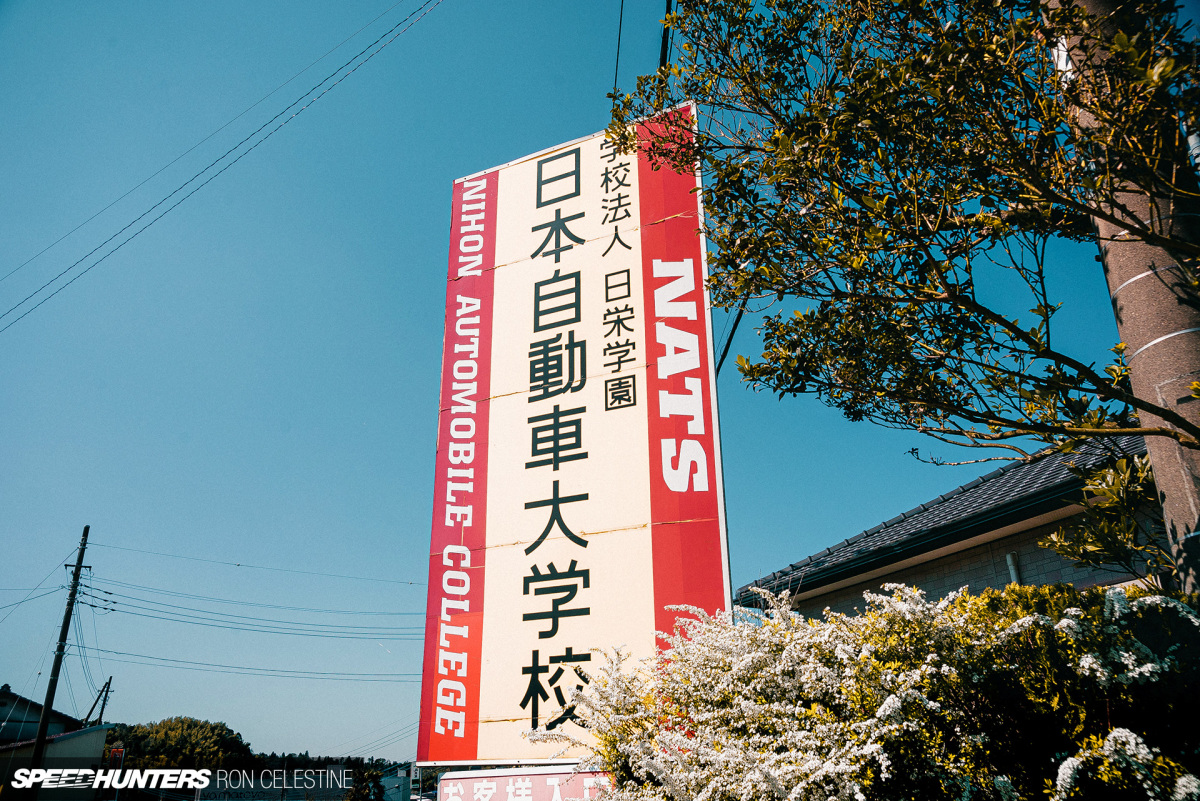

Passing by Narita airport, the scenery quickly turned to rice fields and traditional Japanese minka houses. I was beginning to think my navigation system had gone haywire, but then various projects from previous TAS events began to show themselves. The community might be small, but you can sense the pride it has in the local college.
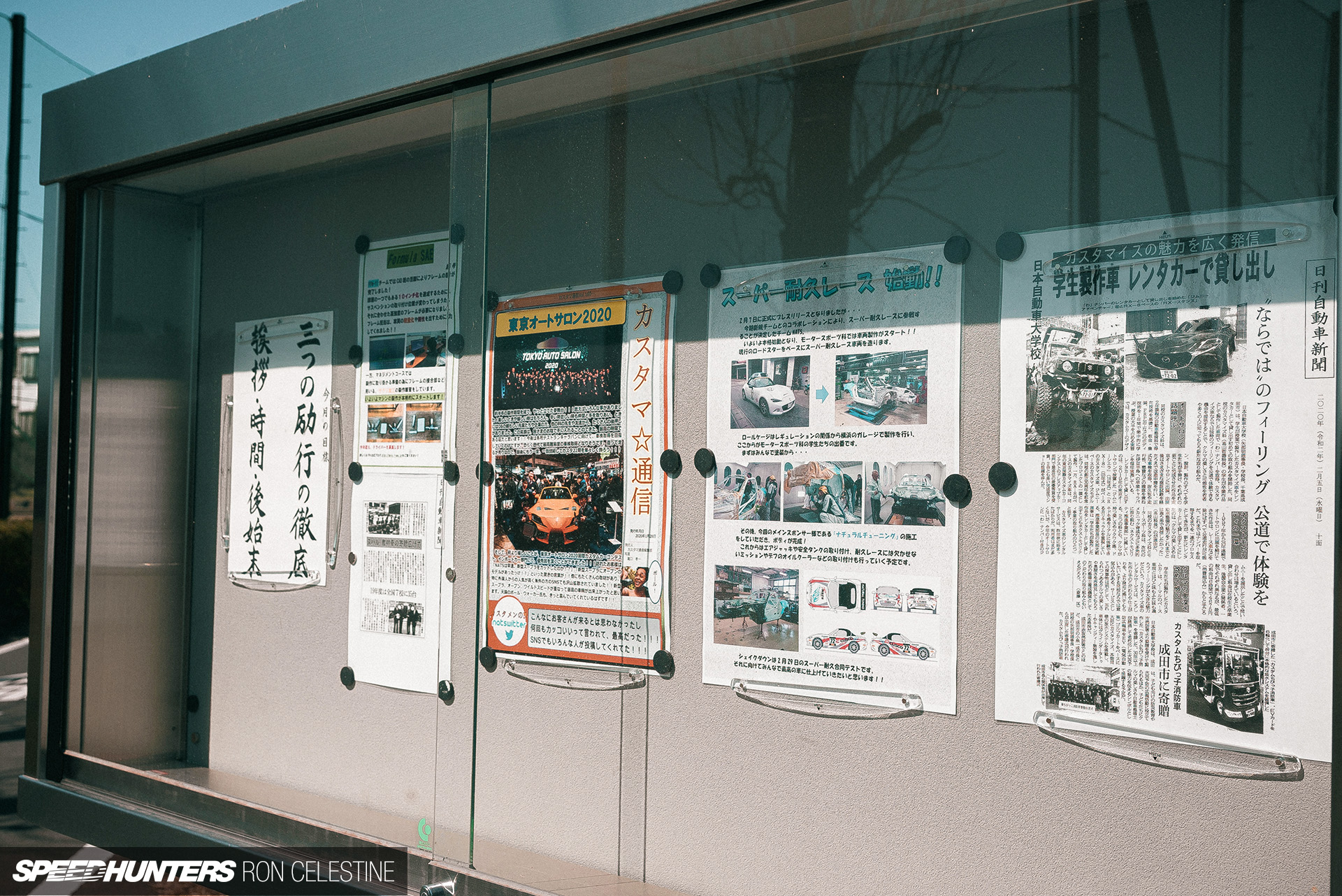



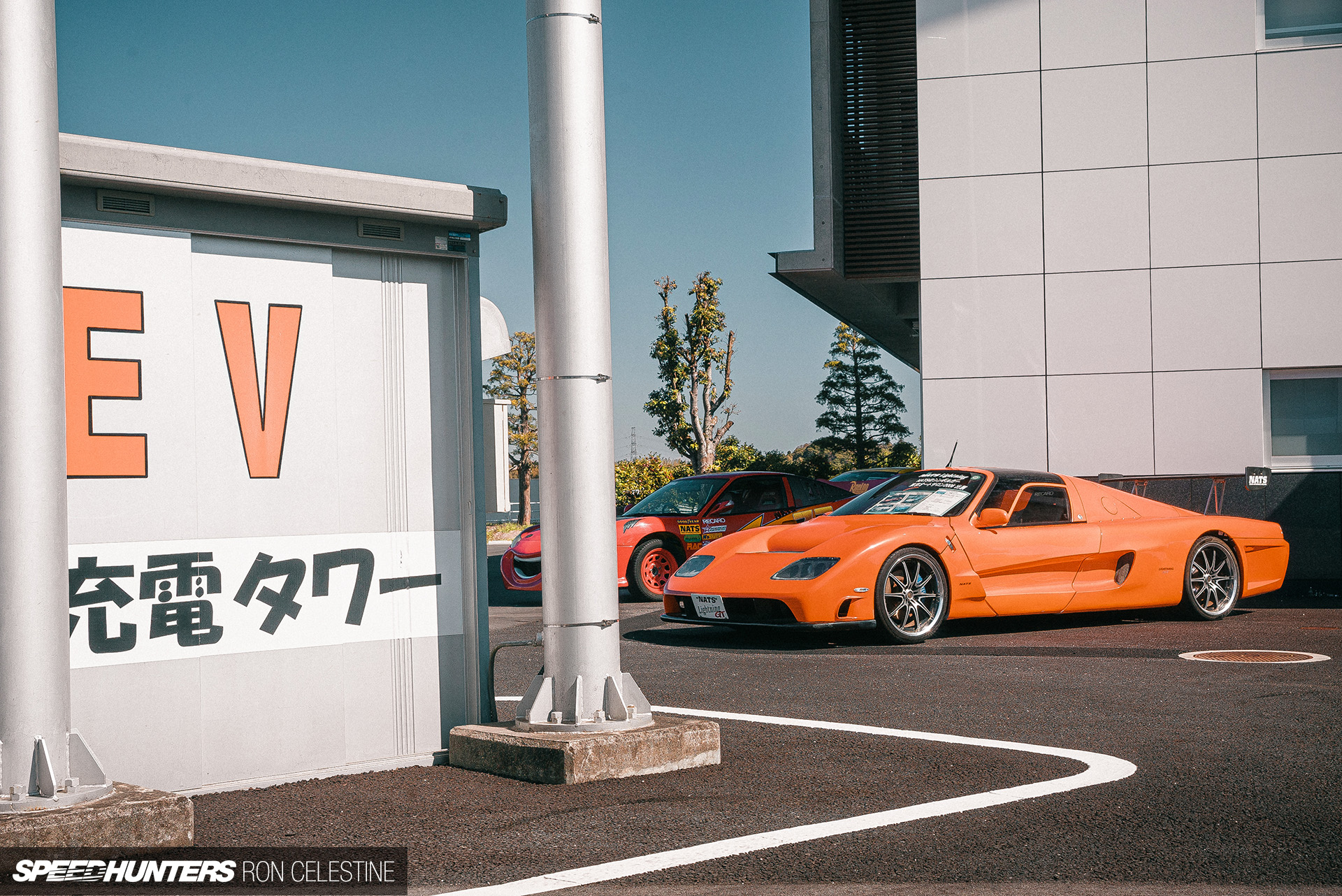
Inside the campus, former projects could be seen everywhere. Besides showcasing creativity from the past, I thought it was a brilliant way to welcome and excite incoming NATS students.
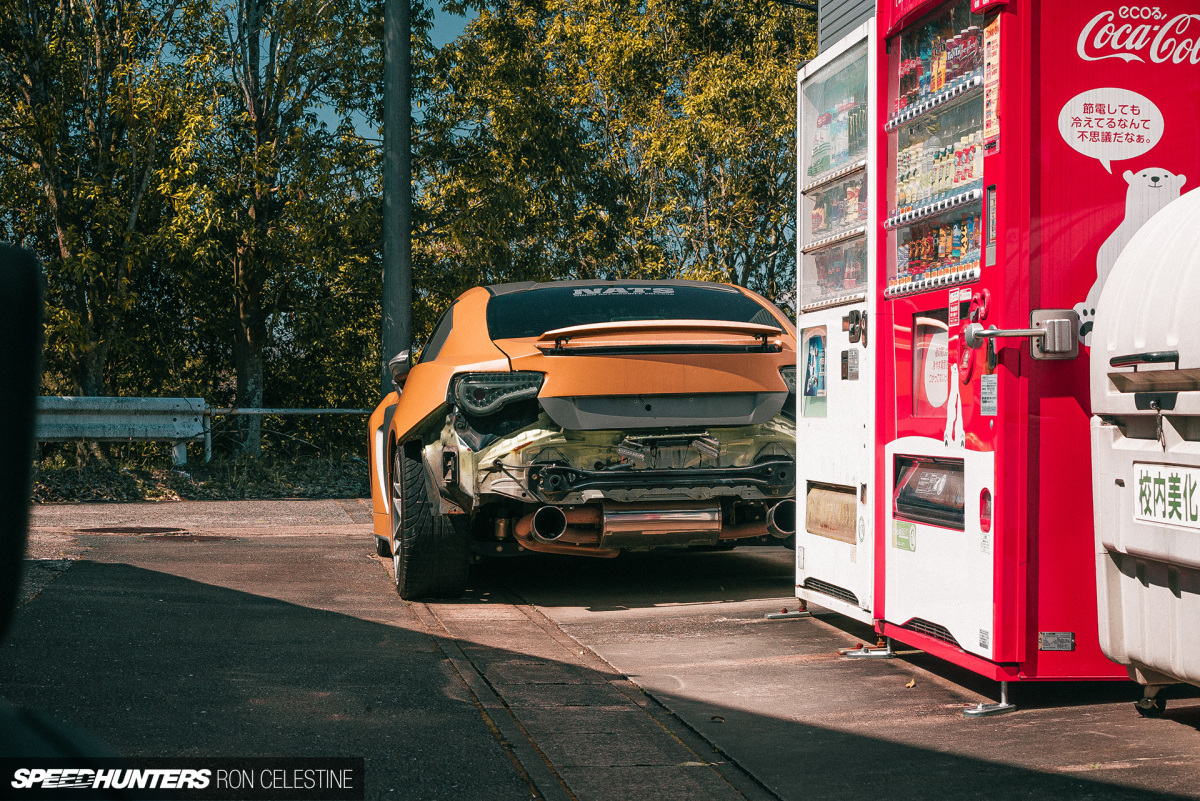

When was the last time you saw a Toyota 86 turned into an Audi R8 parked near your campus vending machine?
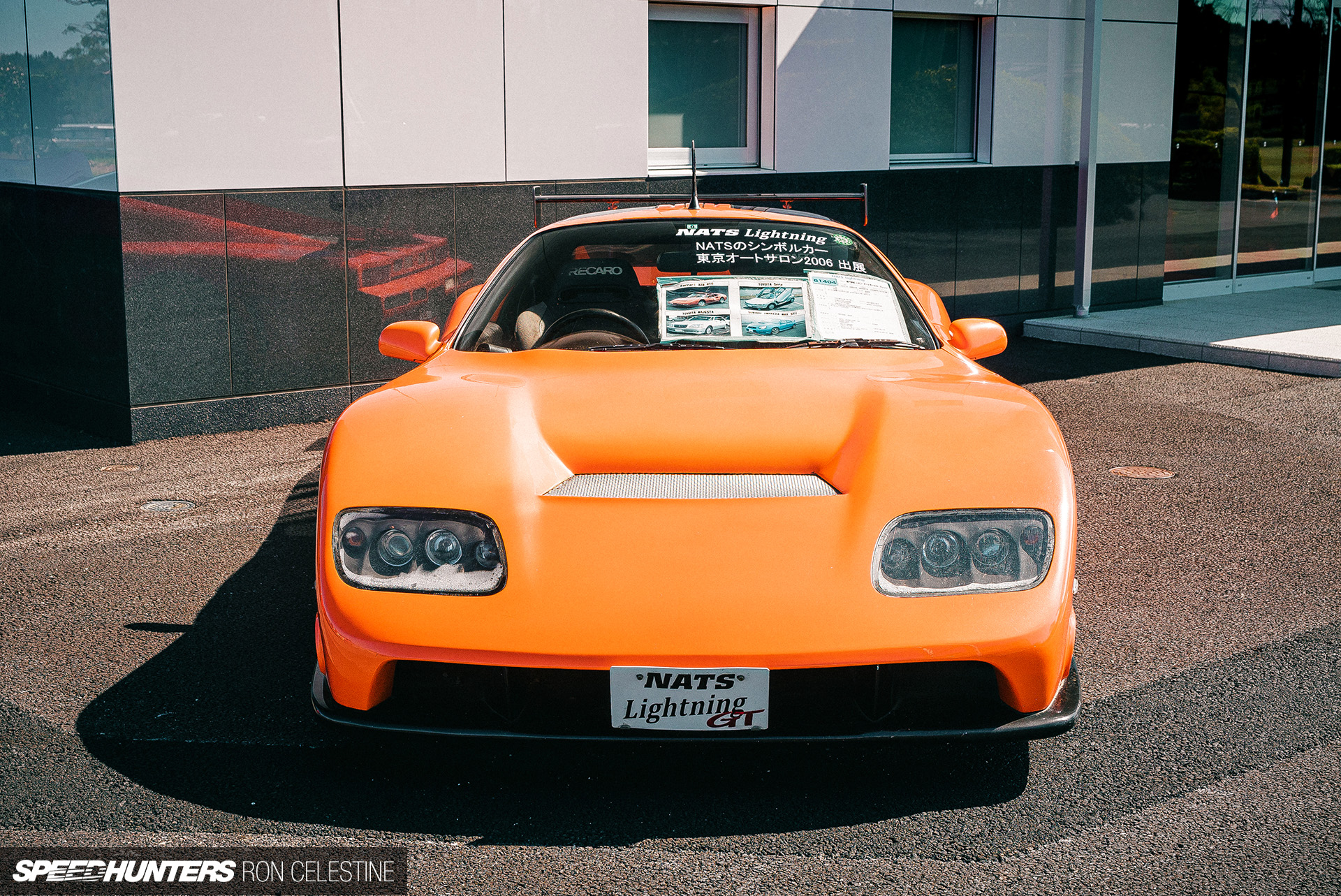


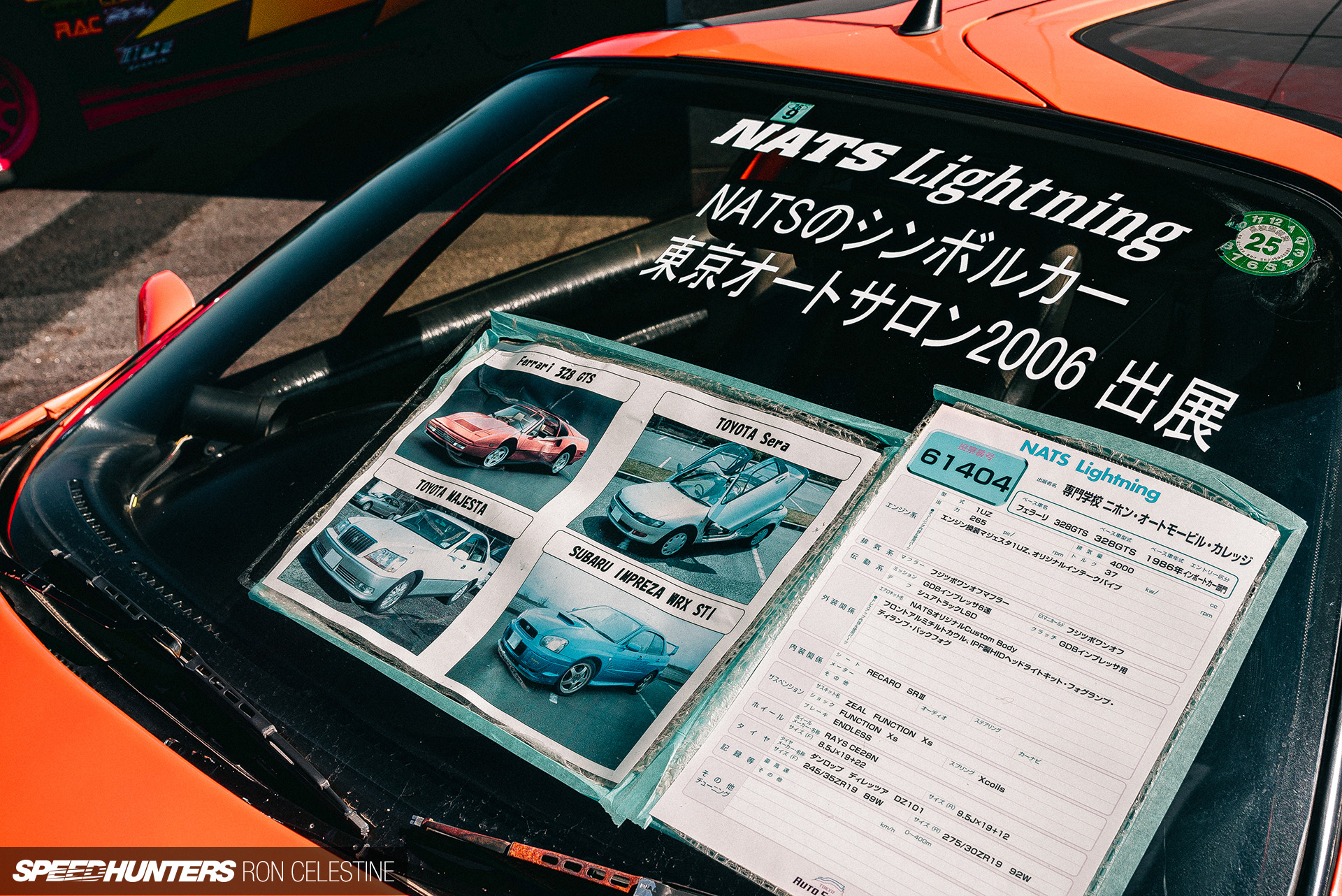
The ‘Lightning’ was one of the more unique cars that I found outside. Based on a 1986 Ferrari 328 GTS, the graduating class of 2006 used the parts from three other cars to create this unique machine. The butterfly doors came from a Toyota Sera, the mid-mounted 1UZ engine from a Toyota Crown Majesta, and the 6-speed transmission along with various other components to get the power to the wheels from a Subaru Impreza WRX STI.

You may remember the Suzuki ‘Jimny Adventure’ from TAS 2019. A few cosmetic changes have been made since then, but I have to say, it looked so much better out in the wild than on the show floor.


For the 2020 event, students went the opposite way and created a lowrider-style Jimny dubbed the ‘Easy Camper’.
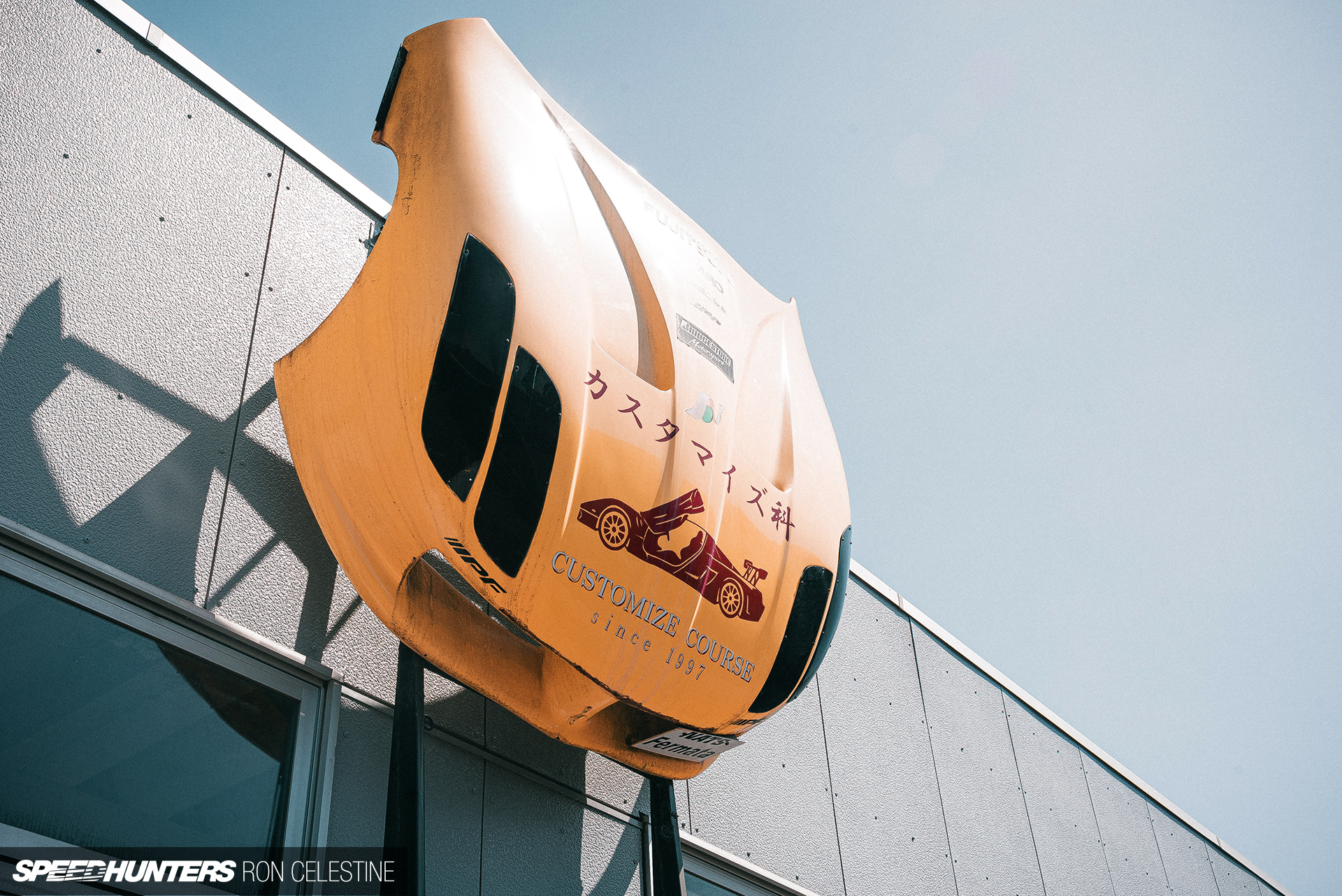
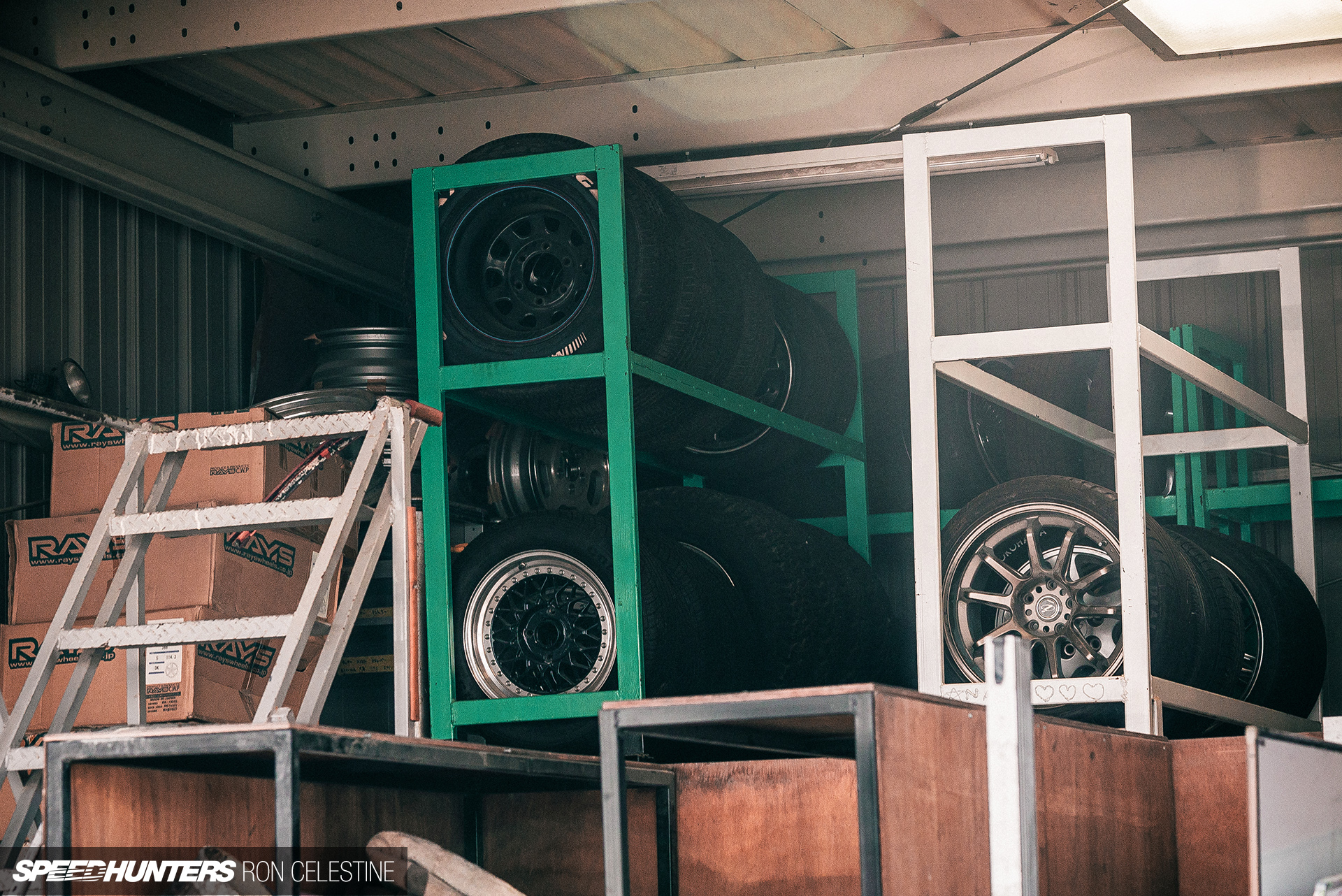
NATS might be well known for its crazy customization, but the school focuses on a lot more than just creating one-off vehicles. It has various courses/majors, which split time between theory in the class and practical learning in the workshop, that students can choose from.
Given the current situation, I wasn’t able to see the institute operating in its normal state as originally planned, but you should still be able to get a good idea of what goes on behind the scenes at NATS.

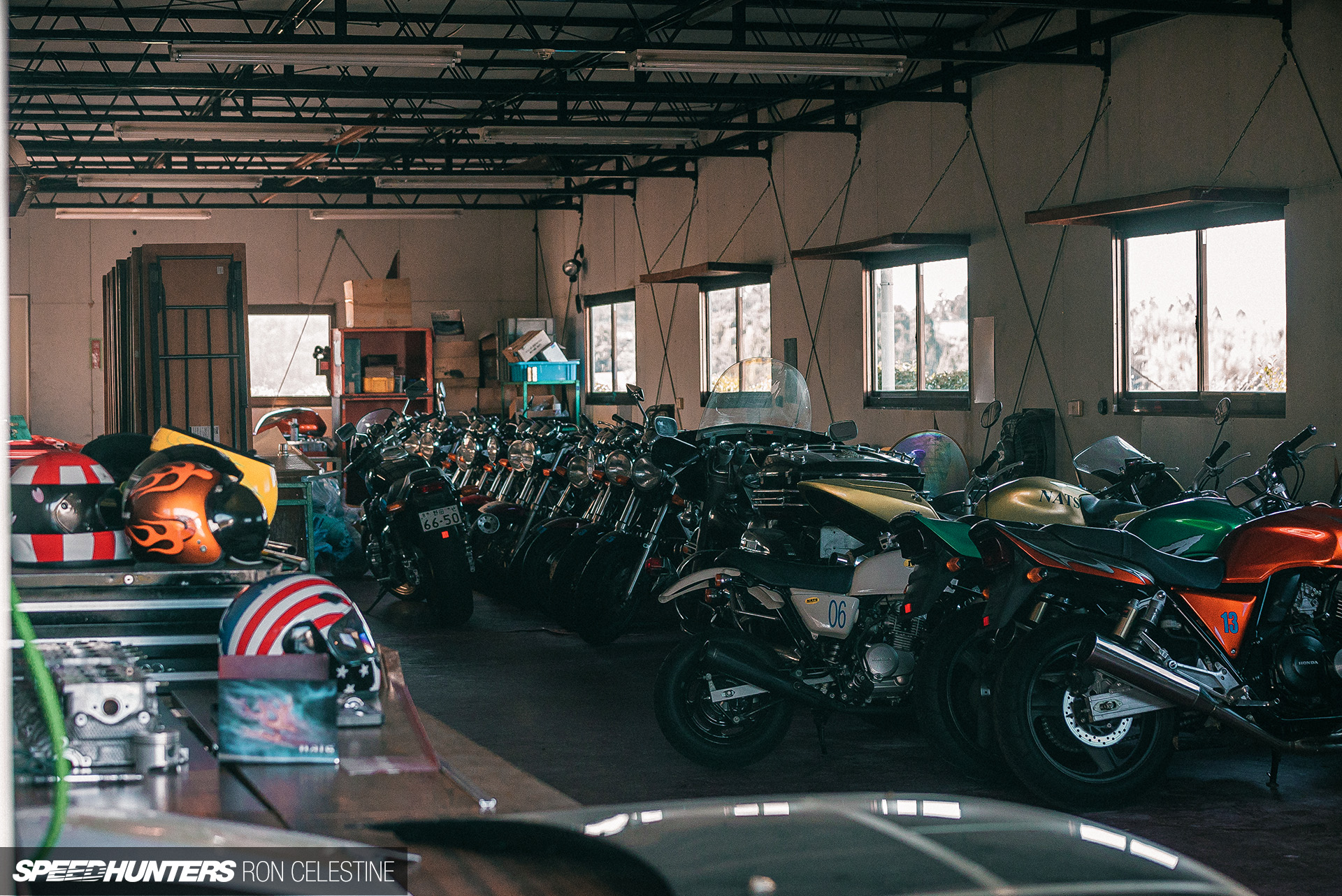
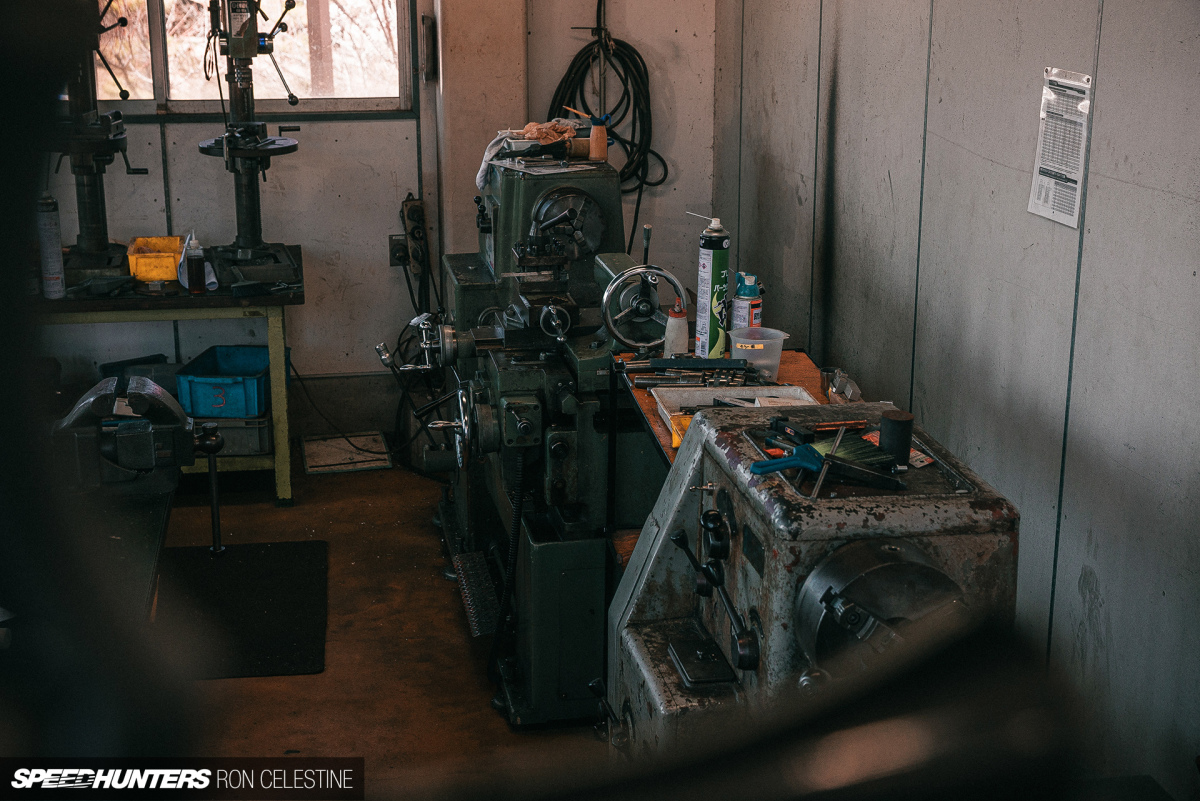
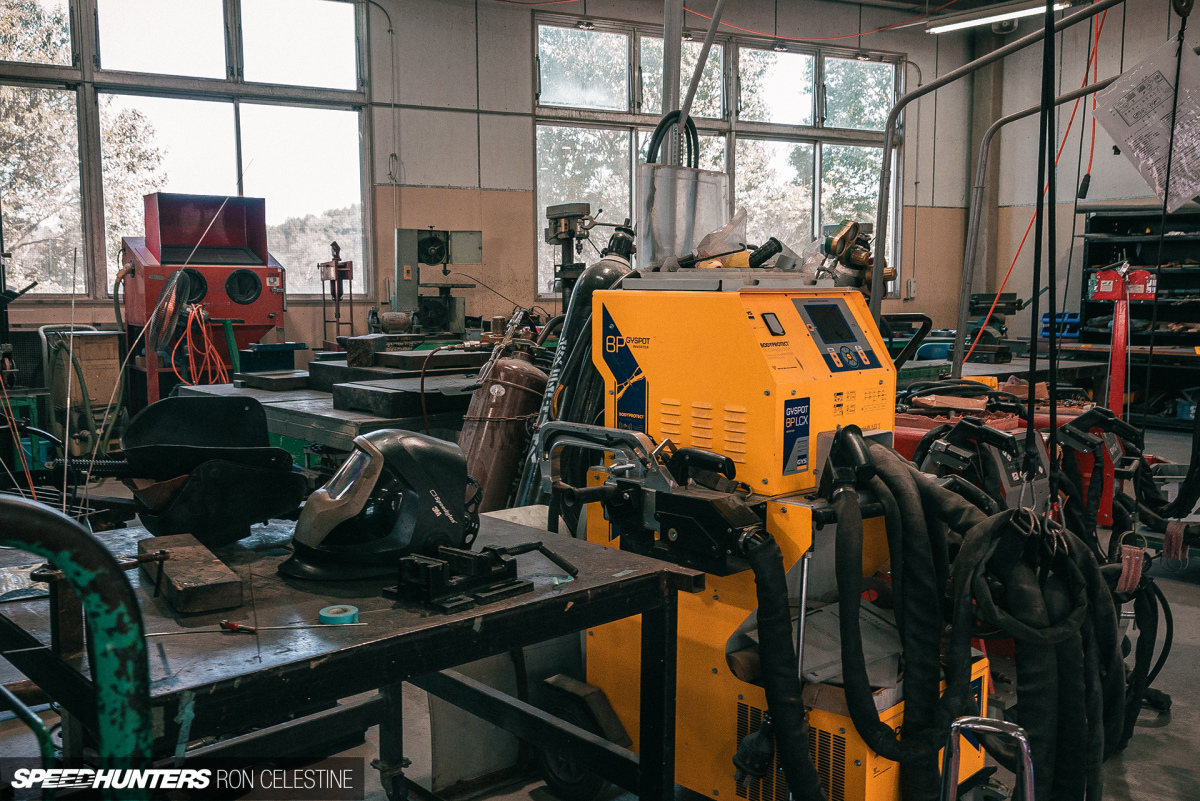
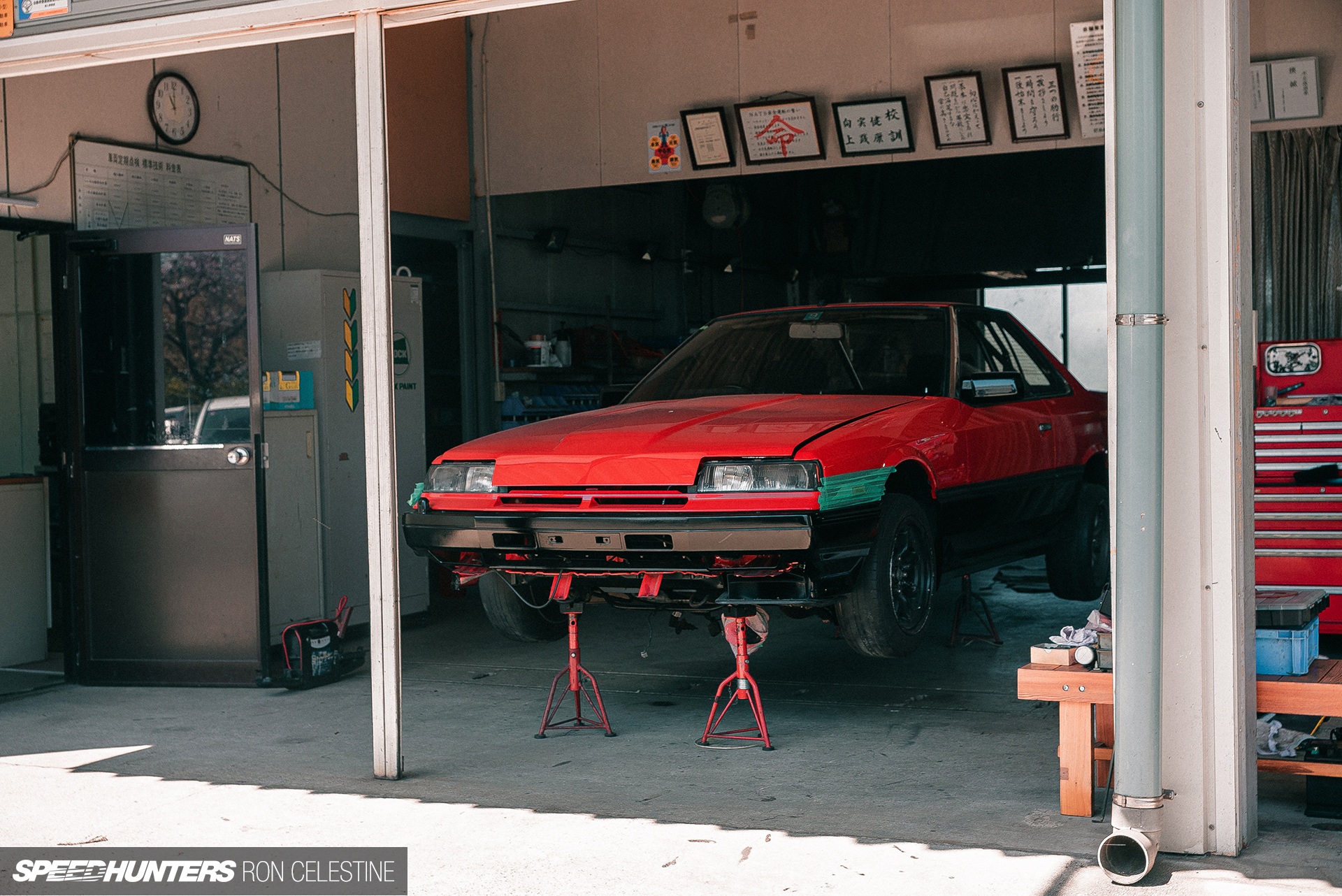
Maintenance courses, ranging from a basic two-year curriculum up to a four-year professional certification level are offered here.
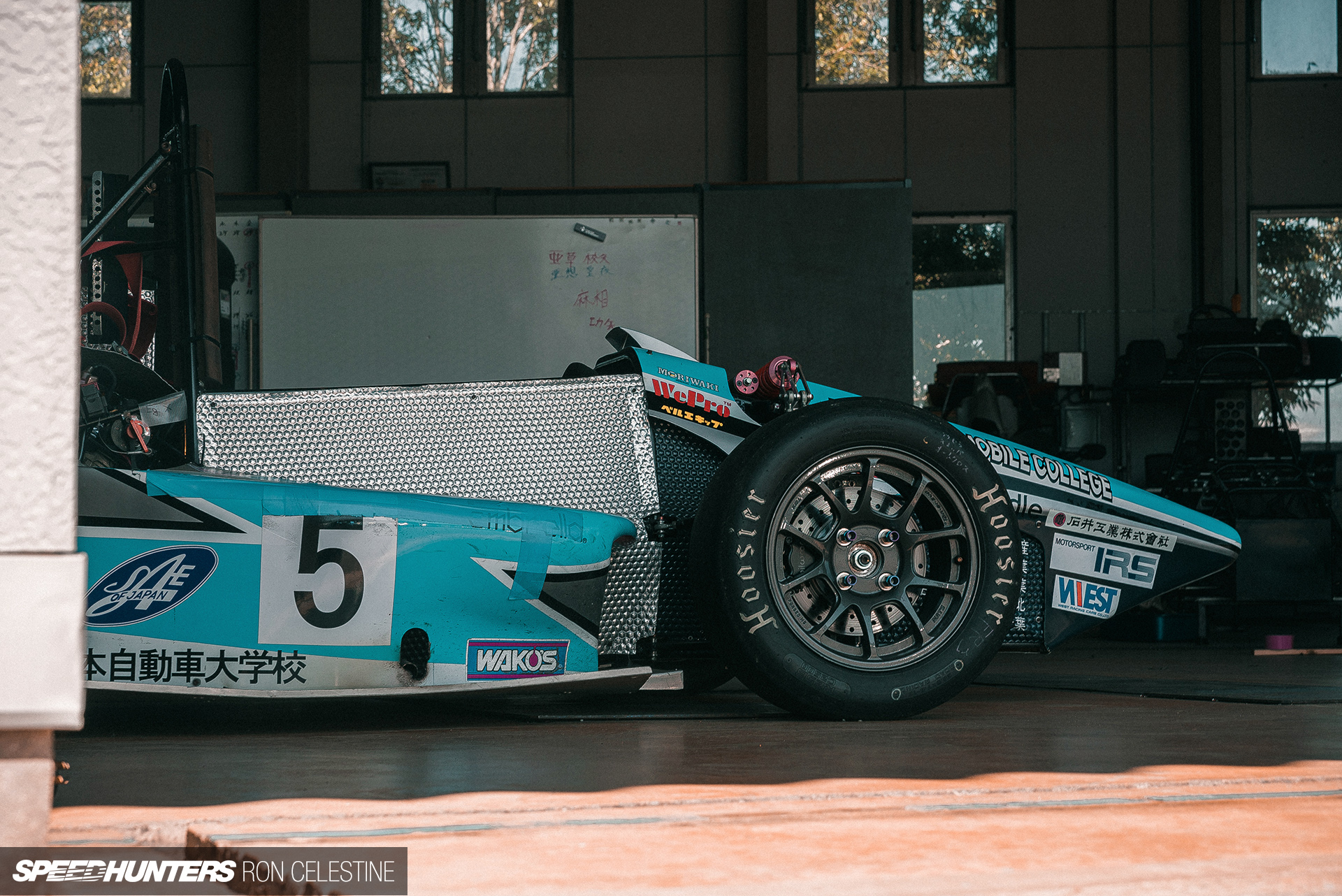
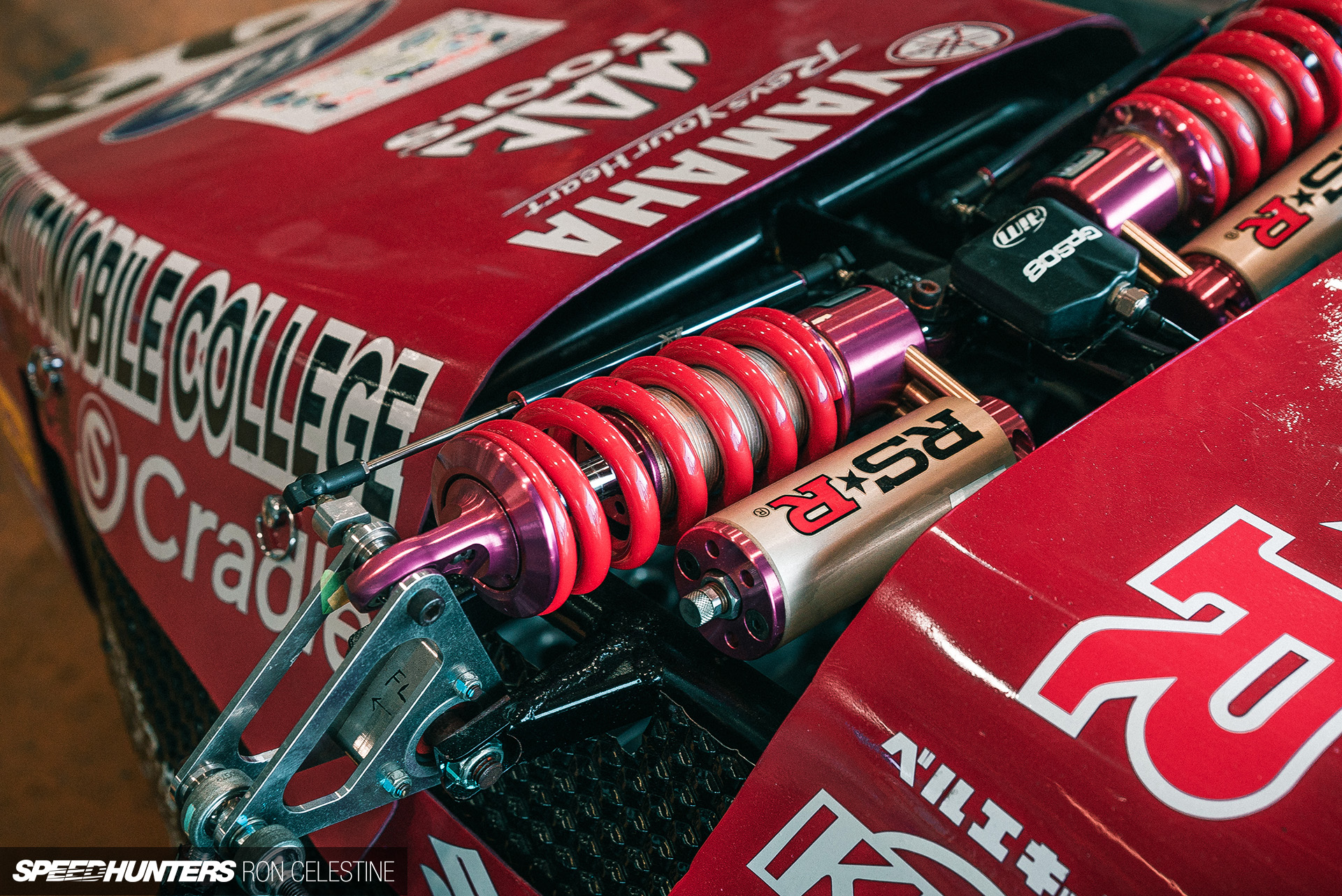
And if your passion lies specifically in motorsports, NATS has students covered there as well.

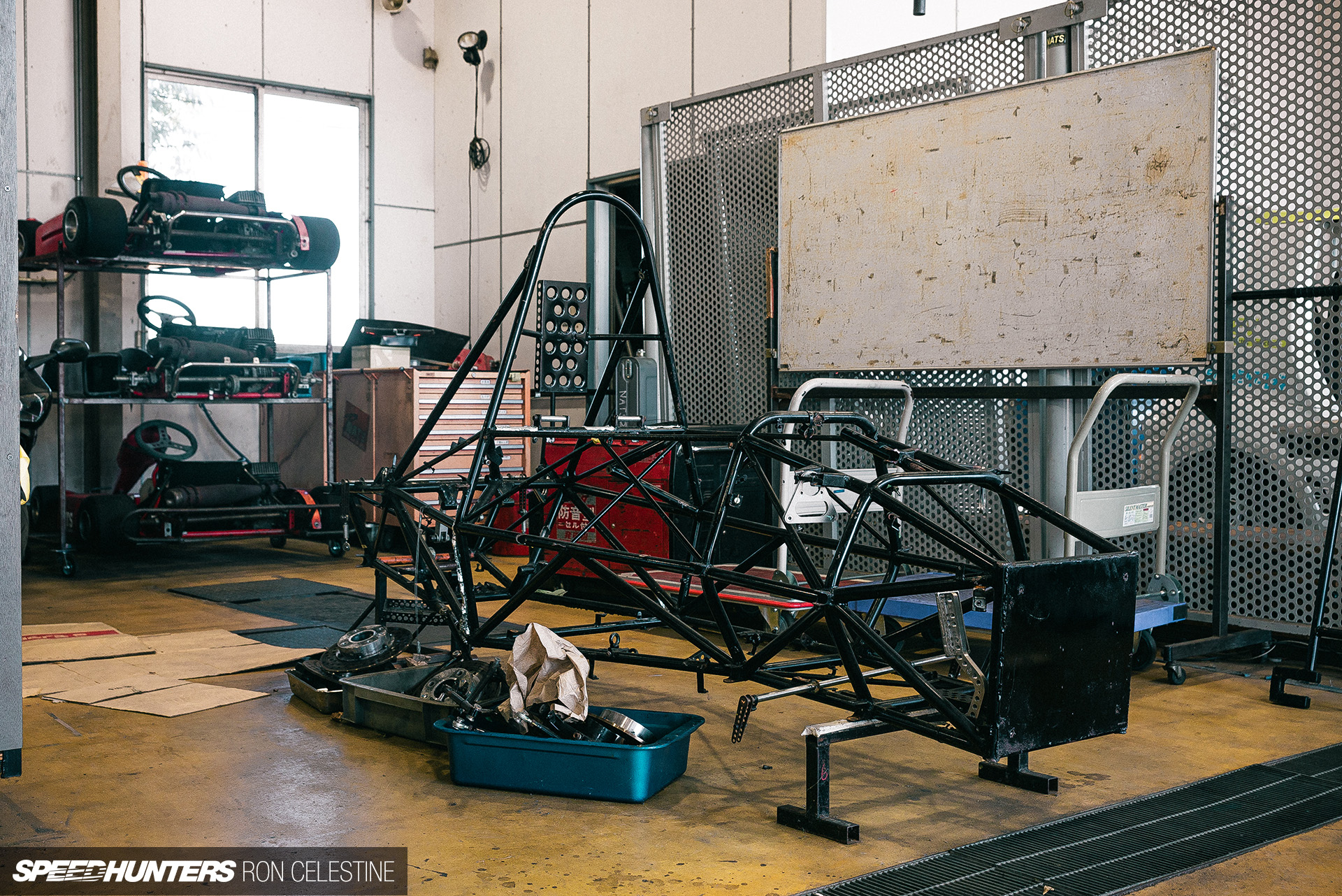
The popular Formula SAE program is a great gateway for this, and NATS has claimed Japan’s number one spot year after year in the automotive college category.
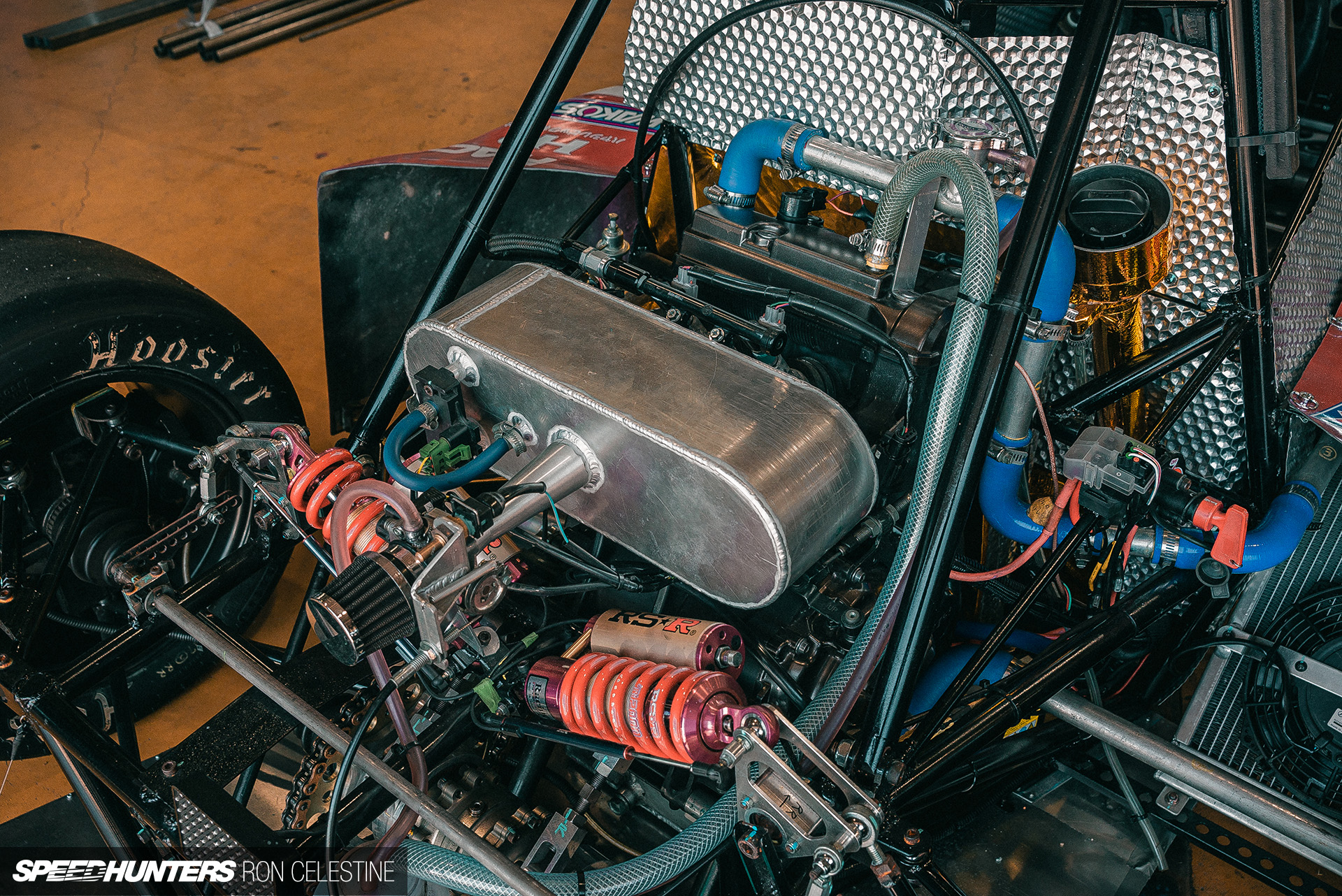
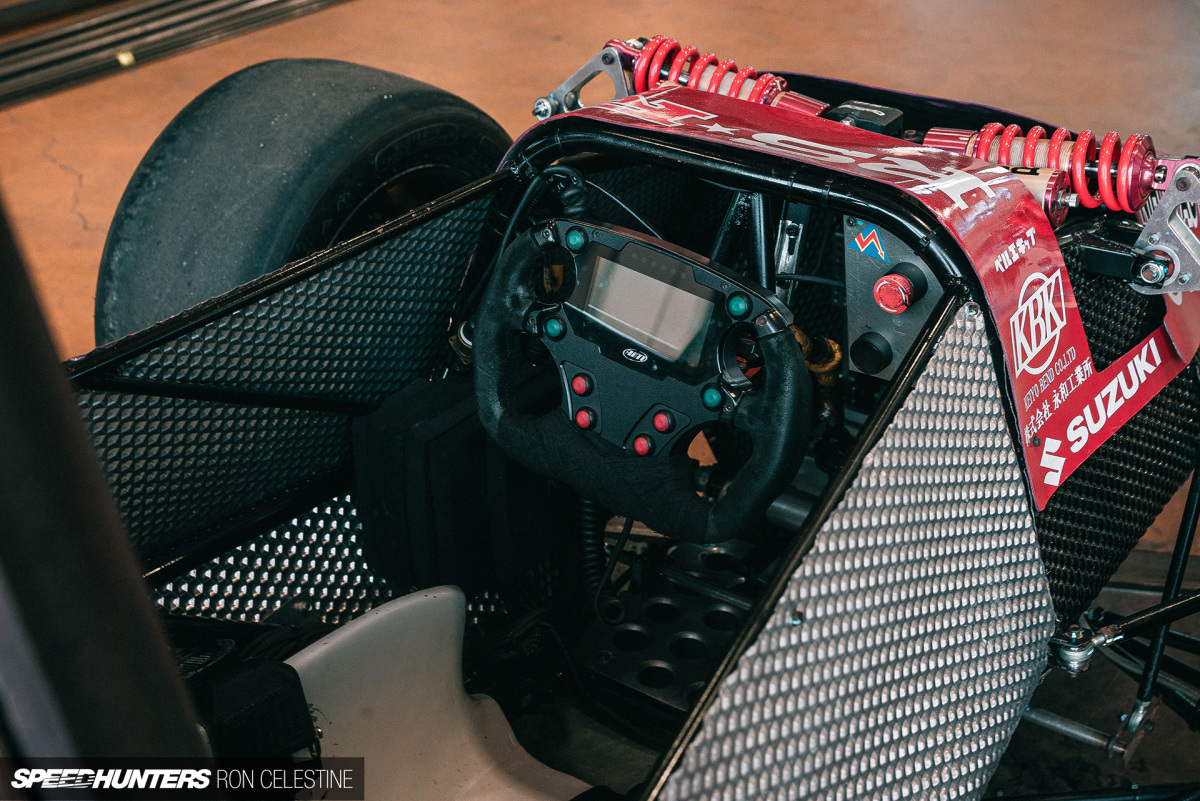

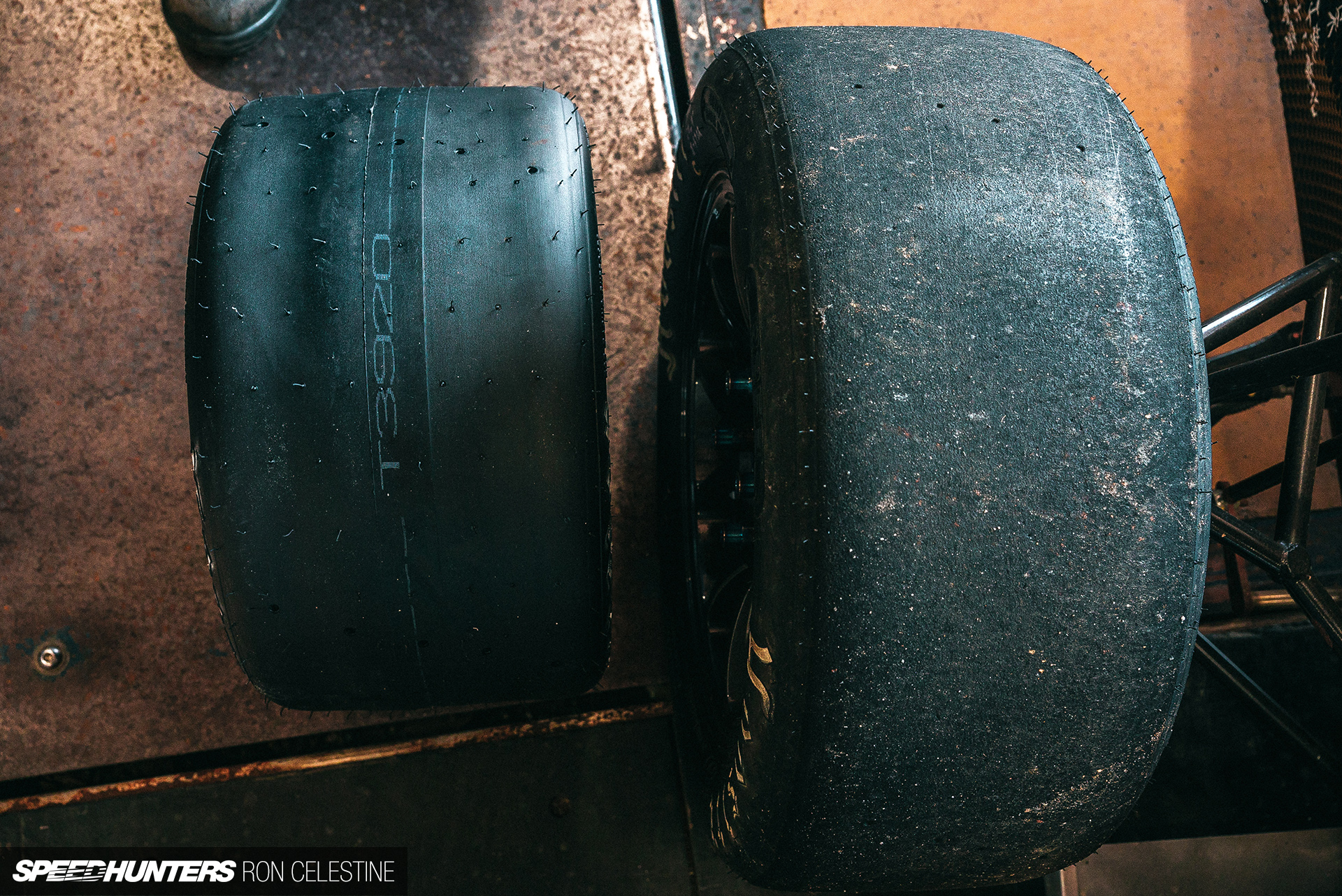
With engine displacement being capped at 710cc and a carbon fiber monocoque chassis currently falling in the too expensive basket, the team has been looking into more creative ways to shed weight. By decreasing the wheel size, a little more than 2kg per corner can be saved. They’re also hoping a switch to smaller brakes will help achieve their goals.
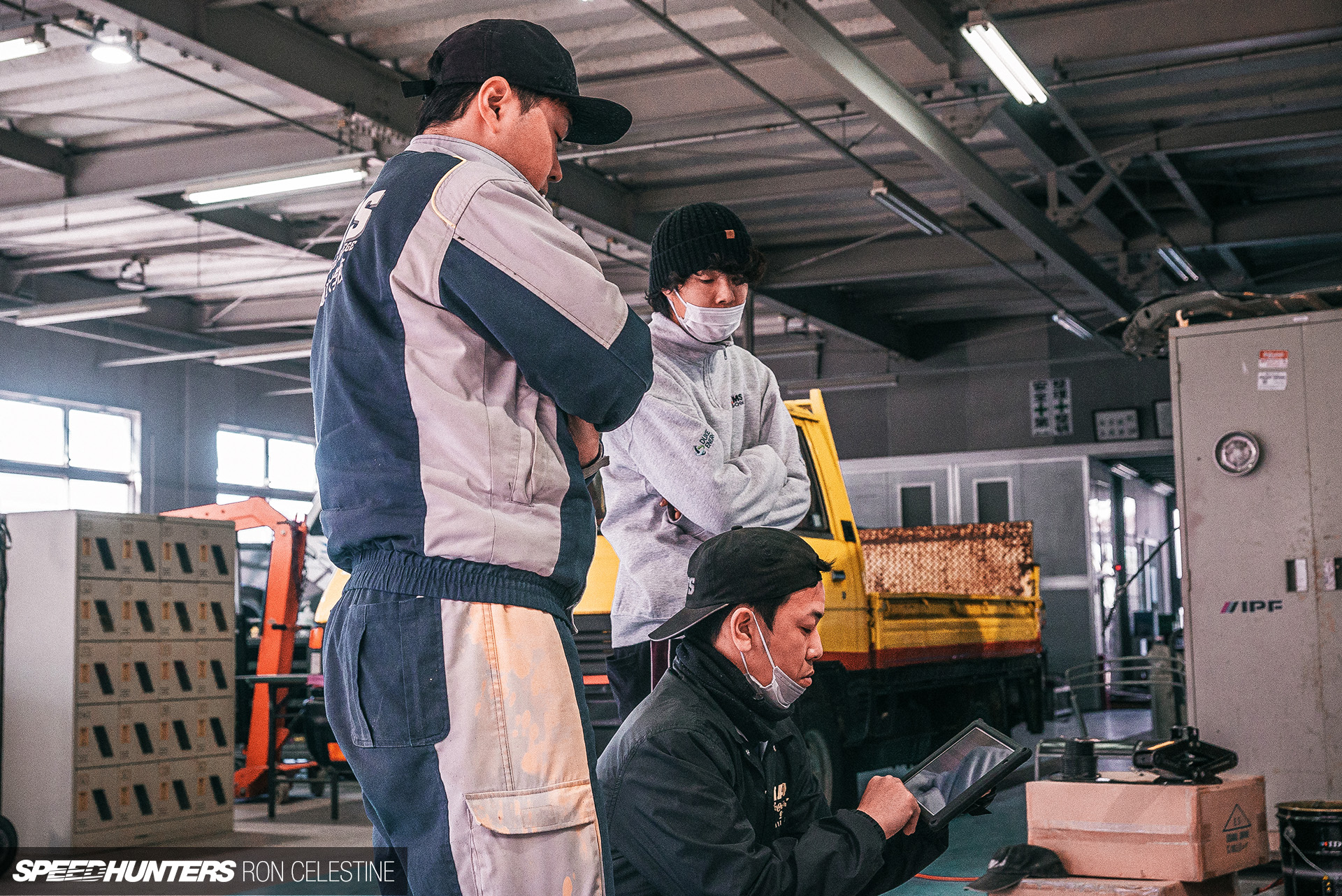
Essentially, when it comes to hands-on automotive technologies, pretty much everything can be learned at NATS, and the nurturing environment has helped foster a lot of talent all throughout Japan. Remember Omomuki’s carbon fiber Porsche 930? The man behind the build at Studio Allica is a NATS graduate.
I wonder if they’ll let me sign up for a few courses?
Ron Celestine
Instagram: celestinephotography