
Toyota has absolutely nailed it with the Gazoo Racing (GR) version of the Yaris
This not just some marketing attempt at making a hot hatch out of a regular production car; this is a side project commissioned from the big boss at Toyota, in which engineers were unleashed to go all-out and create a superb little package for WRC homologation purposes.
The result is something like we haven’t seen in years. The GR Yaris might be based on Toyota’s staple small car, but there are so many changes and additions under the skin that you quickly realize the 25,000 examples Toyota needs to sell to meet those homologation requirements won’t make any money for the company.

It’s usually fun and special cars that end up being unprofitable, but who cares? We aren’t here to talk about finances; we’re here to get behind the wheel and for this I really need to give big thanks to the folks at HKS for making it happen with their own R&D car. This allowed me to drive the GR Yaris long before I could get my hands on one of the cars in Toyota Japan’s press fleet.
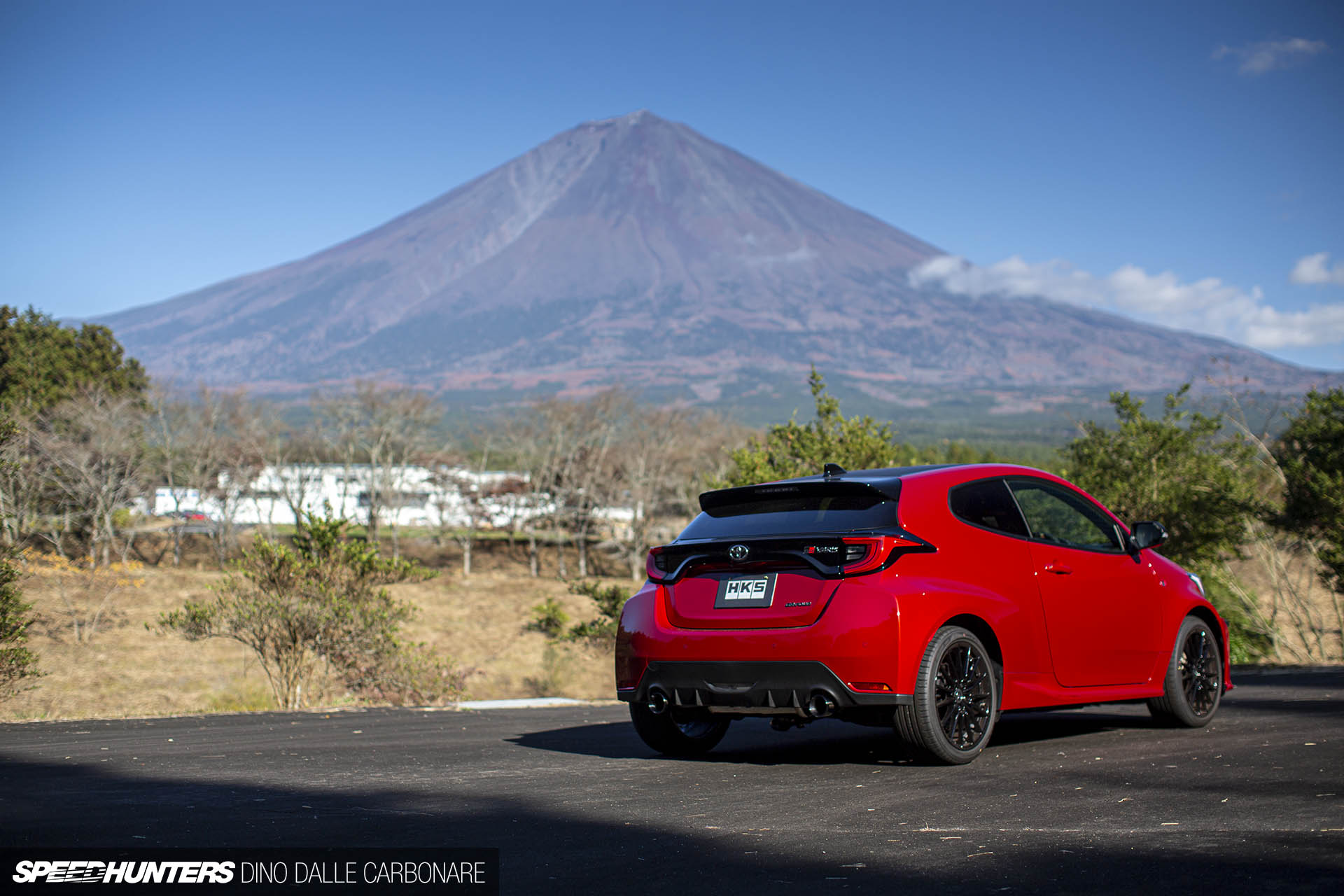
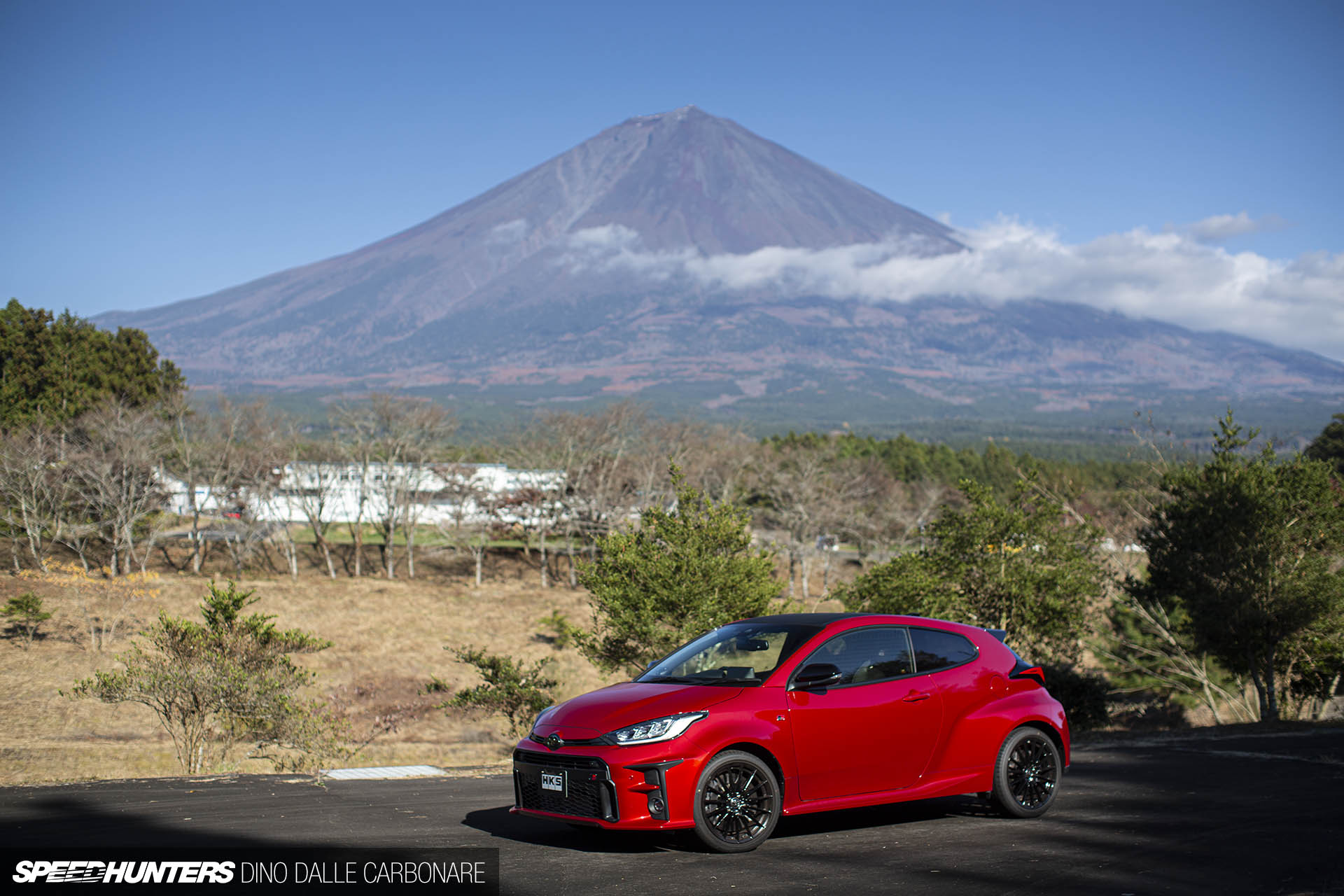
This is also the reason why you’re seeing the 3-door, 3-cylinder, turbo, AWD rocket against the beautiful backdrop of Mt. Fuji. Yes, HKS’s HQ couldn’t be situated in a more iconic Japanese spot.

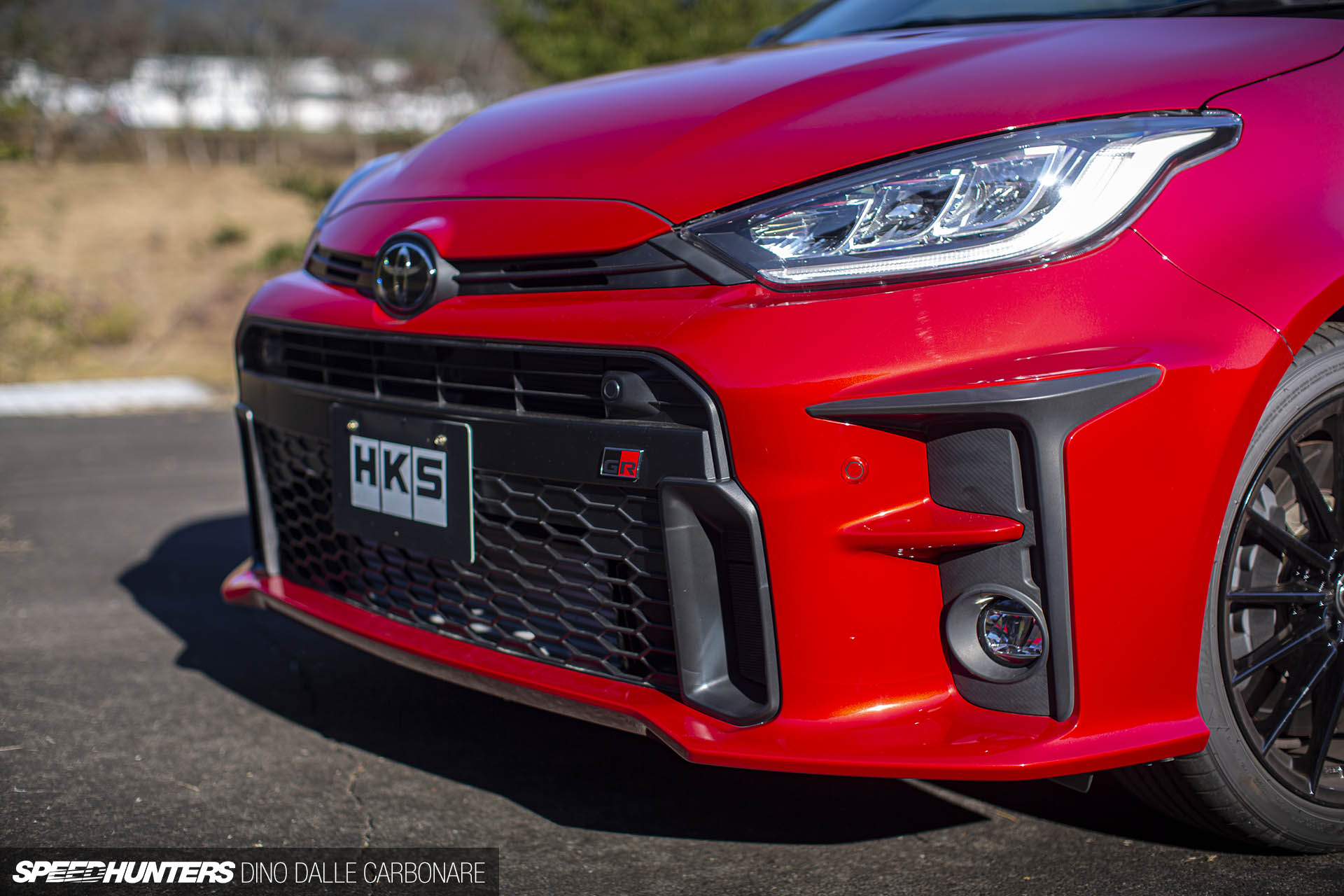
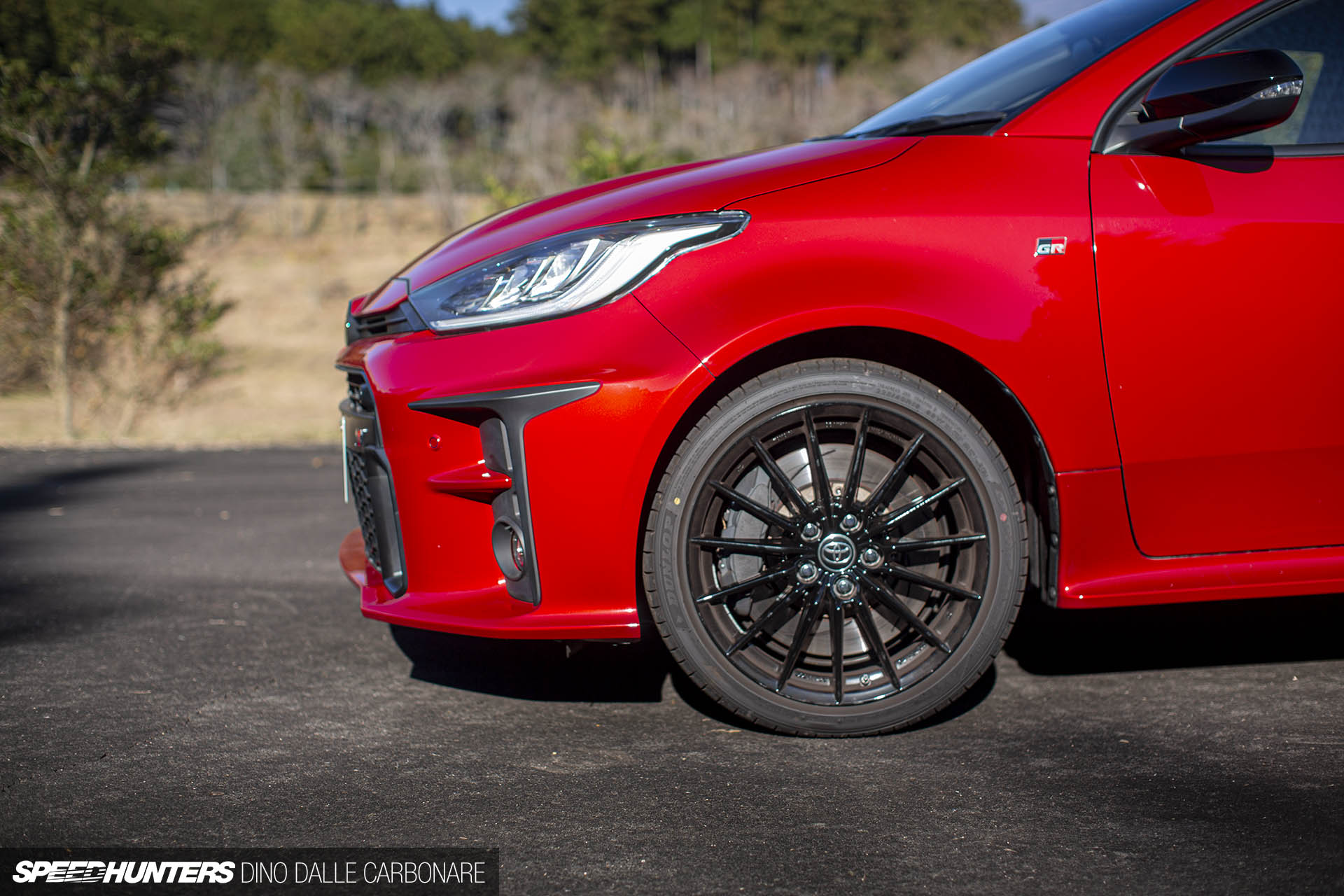
Speaking of 3-doors, this is the first thing you notice about the GR Yaris. The regular Yaris is only available as a 5-door, so you know how serious Gazoo Racing was about creating a true performance machine.
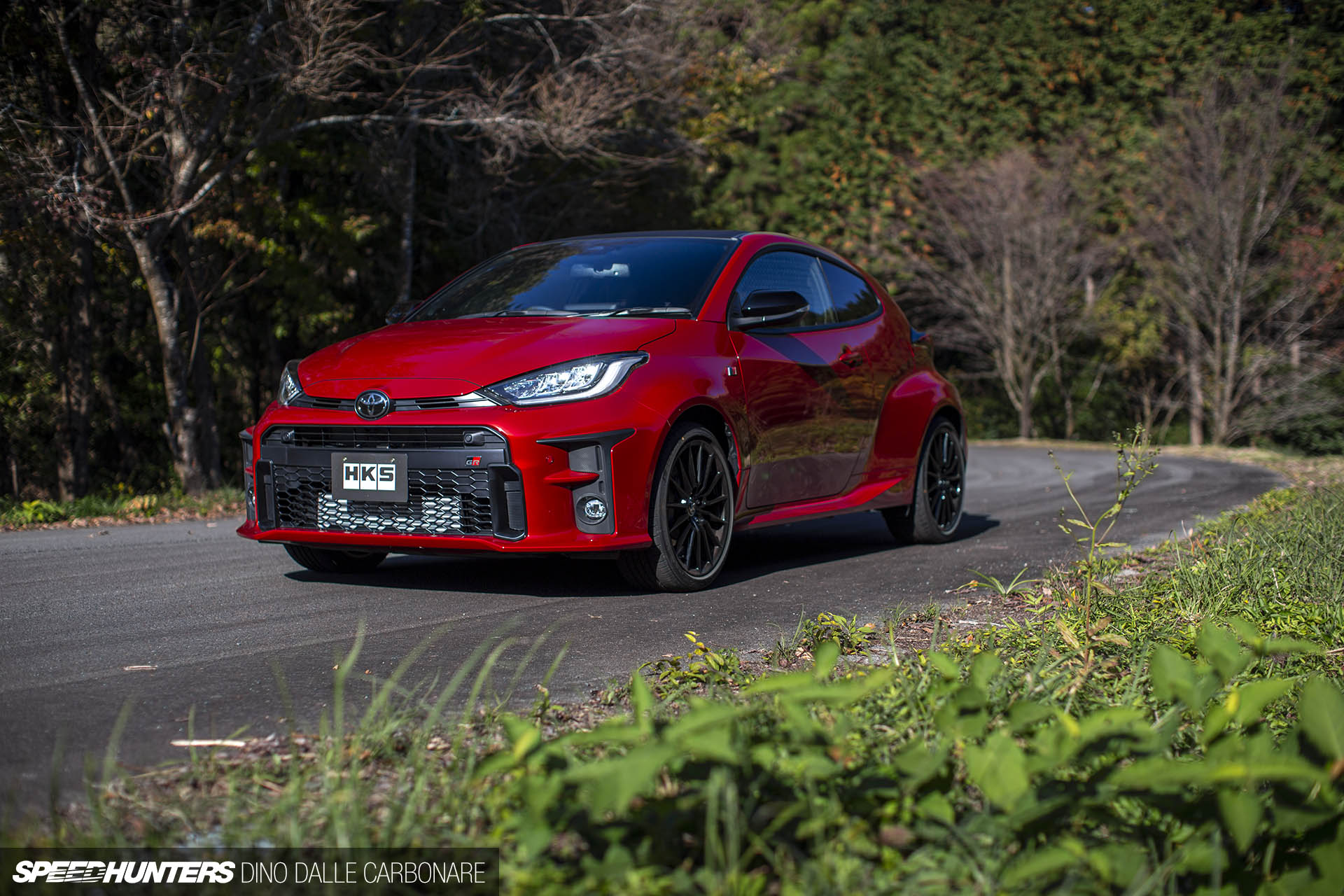
On top of the visibly pumped front and rear wheel arches, the roof was also lowered a little. Think about the cost needed to do that on a modern-day production car…
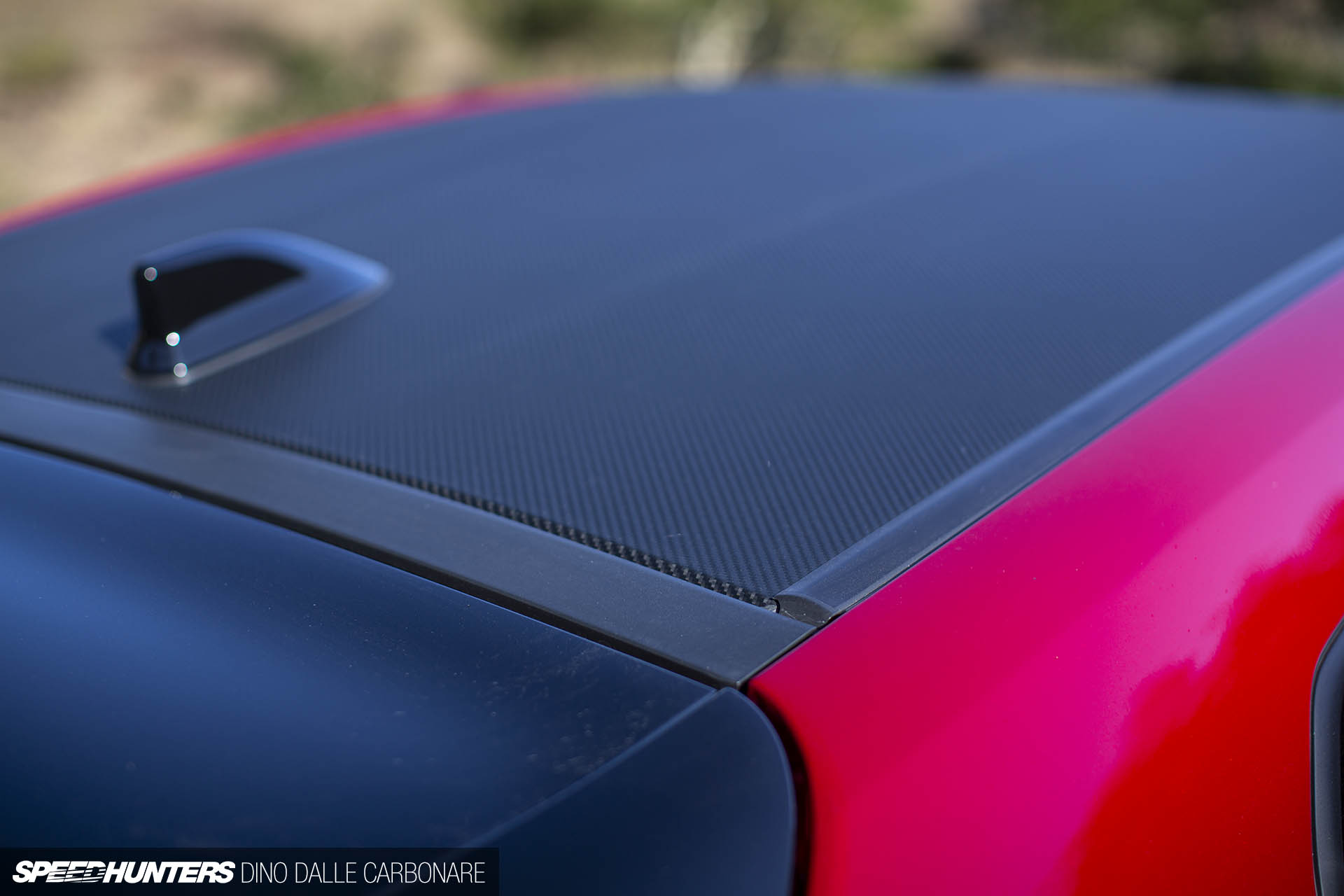
It doesn’t end there, because the roof skin is actually carbon fiber, or rather CFRP made using compounded sheet moulding. For some odd reason though, it’s been covered up with carbon fiber-look vinyl. You’ll be able to see what it really looks like underneath in another feature I have coming up.
Other weight-shedding measures include an aluminum hood, rear hatch and doors, which all combined set the curb weight at 1,280kg. Then there’s the work that has gone into adapting the bespoke chassis around the new GR-Four AWD driveline, and making it all as rigid as possible. For suspension, Toyota refined the base Yaris’s McPherson layout up front, but threw away the entire rear setup for a fully independent double wishbone arrangement.
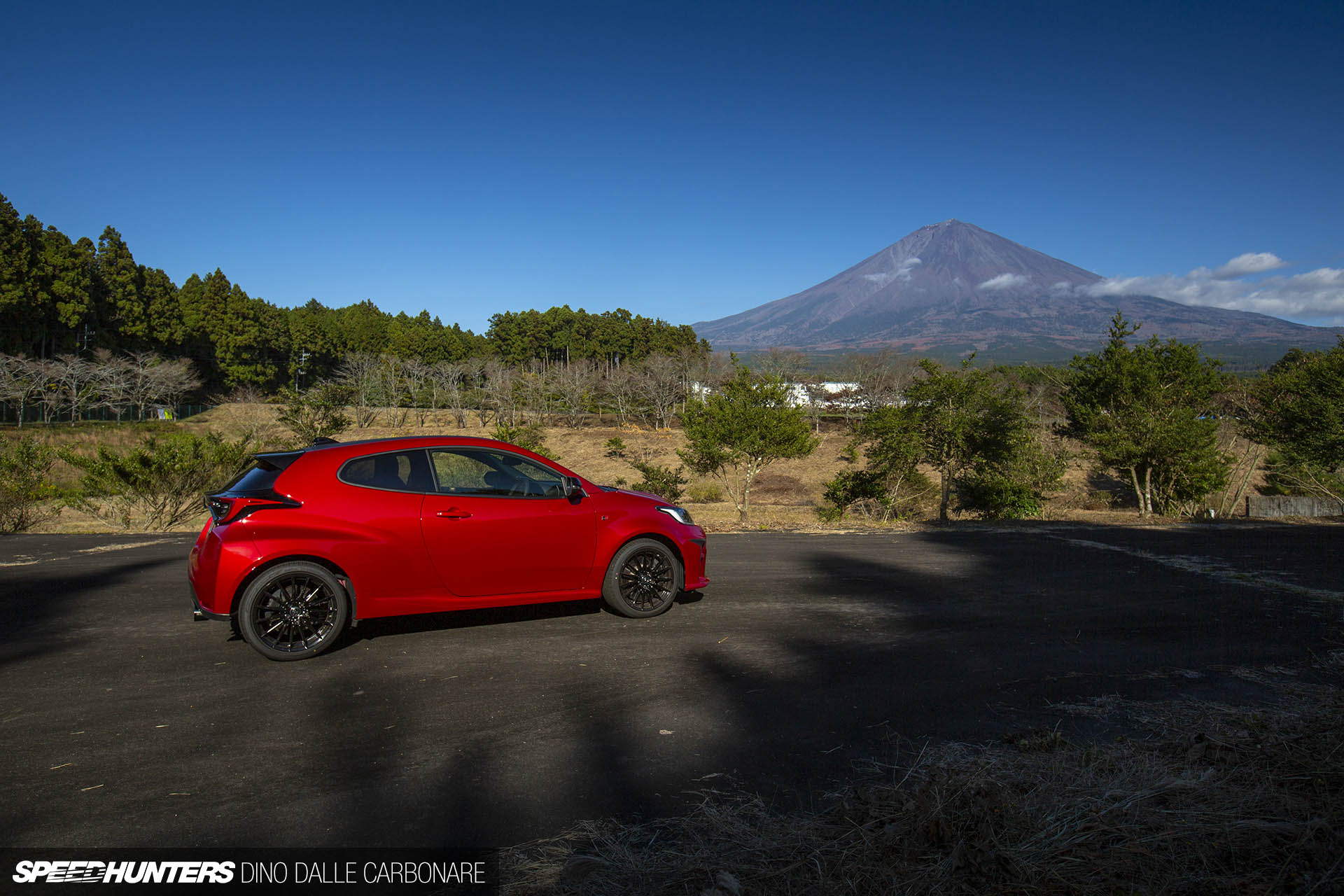
Add in that fact that Toyota developed a new turbocharged engine and manual transmission specifically for the GR Yaris, and it boggles the mind that they went ahead with the car at all.
It really reads like a wish list from some rally enthusiast about what his dream street-going homologation special would be like. This is a car that in 2020 has almost no right existing.
It’s so bonkers to think that Toyota of all companies came up with it too. Up until a decade ago, this was a manufacturer we used to brush off as being overly boring and profit-focused.
And with all automotive narrative these days being around electrification, sustainability, autonomous driving and grilles (wink-wink, BMW), the GR Yaris proves that ‘affordable’ fun cars aren’t going away, or at least they can coexist in this push for a future where all fun on four wheels will end.
So it brings me much pleasure to dive into the amazing G16E-GTS, the world’s most powerful 3-cylinder engine. Thanks to direct port (and normal) fuel injection, a 10.5:1 compression ratio, multi-oil-jet piston cooling, and a single-scroll turbocharger, the little 3-pot develops 200kW (272PS) and 370Nm of torque between 3,000 and 4,600rpm. Those are numbers close to what an RB26DETT in stock form used to put out in its day.

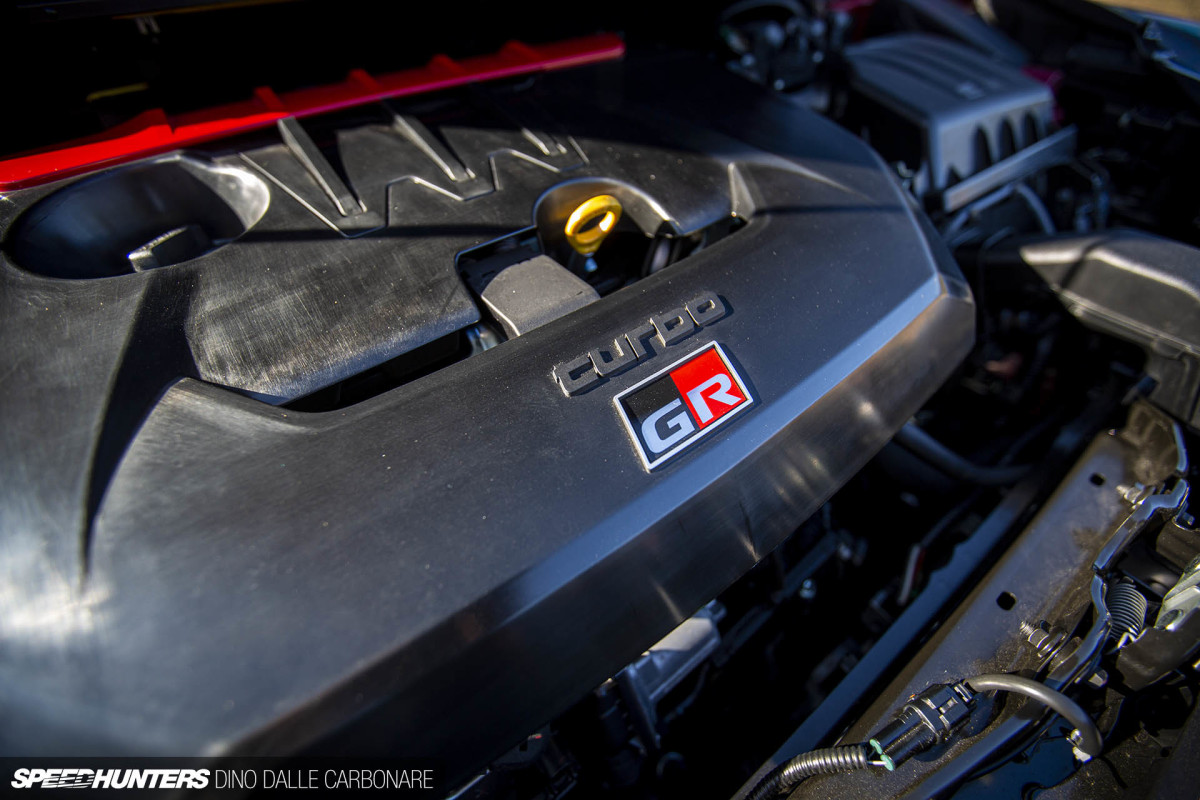
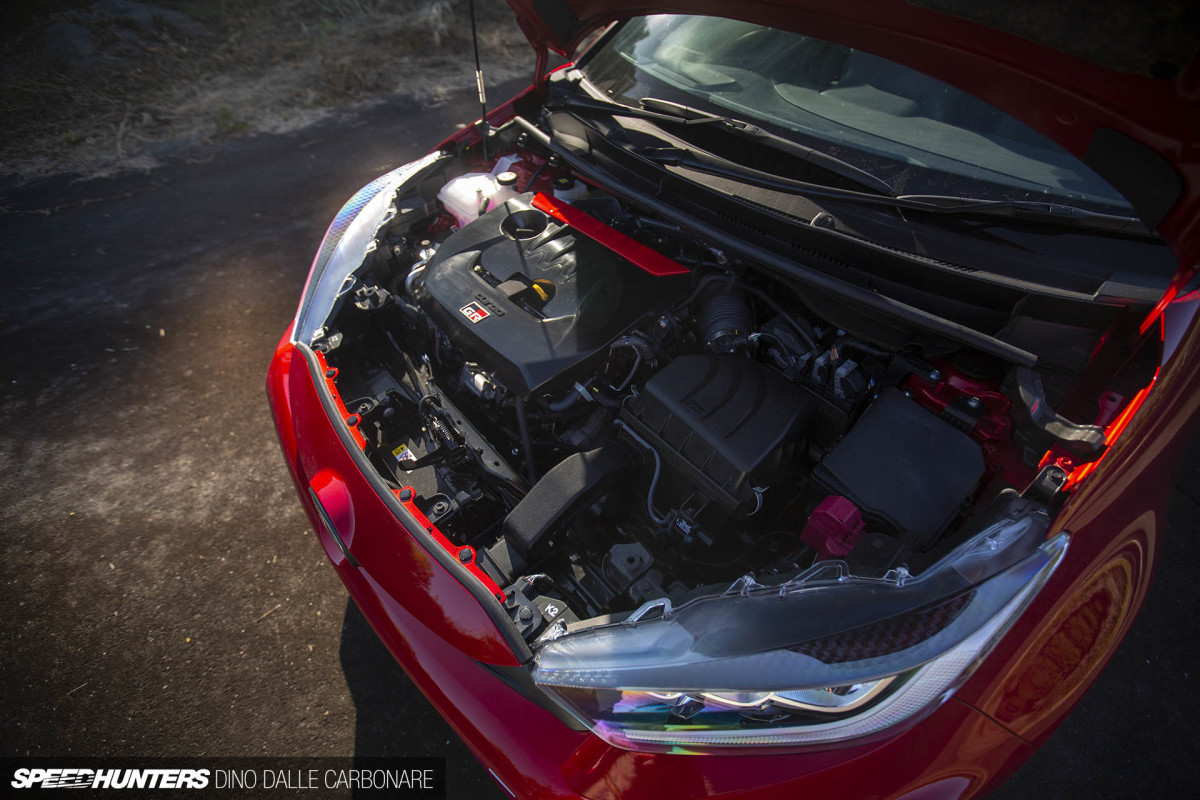
This is mated to a 6-speed manual transmission which sends drive to all four wheels through the GR-Four AWD system, which is the first performance-oriented four-wheel drive system Toyota has developed since the Celica GT-Four. It splits torque front to rear via a multi-clutch pack, which allows the driver to select the actual split via the 3-mode rotary dial in the cabin.
The optional ‘High Performance’ package adds Torsen LSDs front and rear, as well as larger and more potent monoblock brake calipers and floating two-piece rotors. All of this for a price of ¥4.5 million, which is roughly US$43,000.
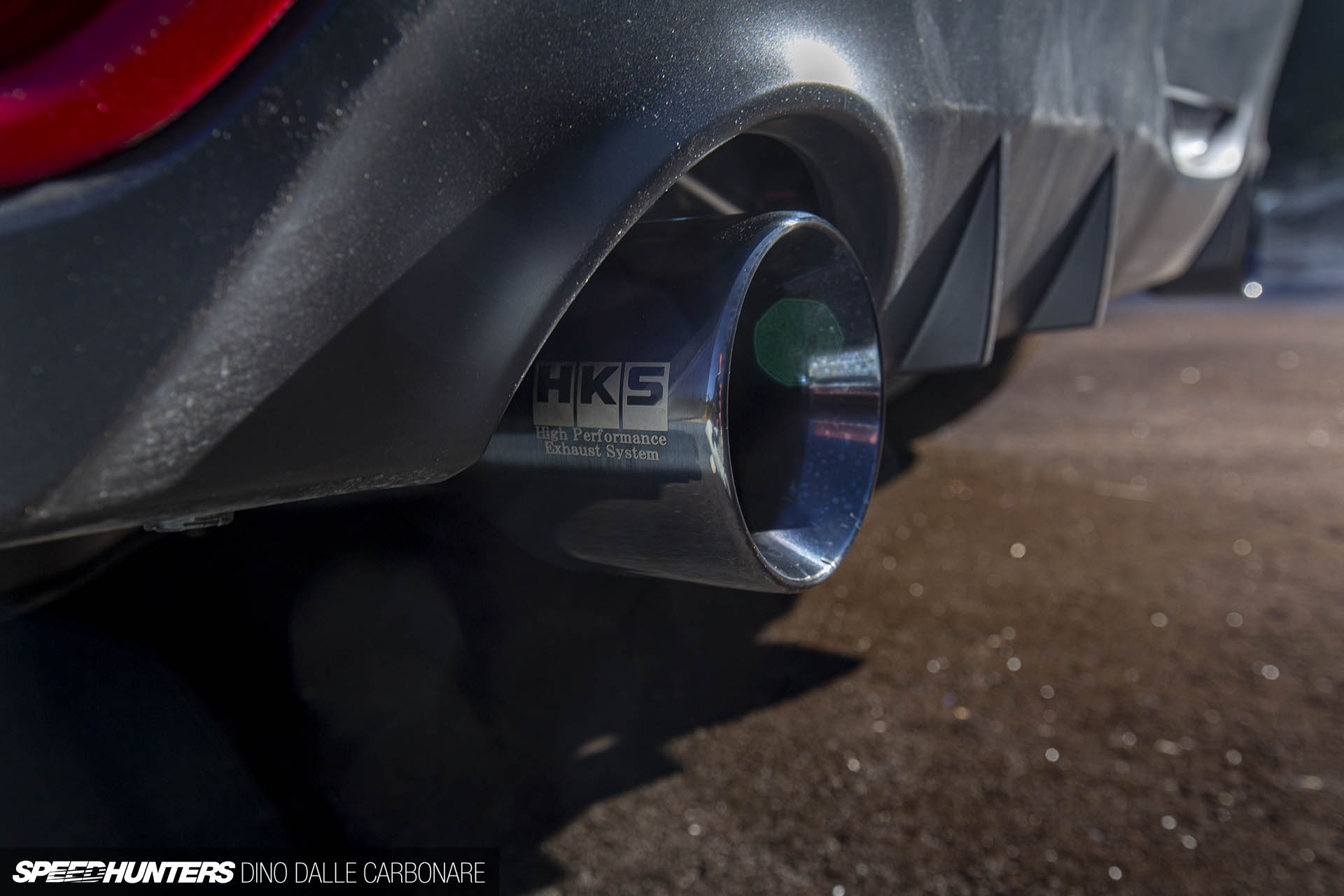
HKS haven’t had the car for much more than a week and they’ve already developed and completed the first cat-back Legamax Premium exhaust, which is designed to emphasize the sound of the stock motor giving it a deeper growl and lesser back pressure. And as the name suggests, it’s all legal for road use here in Japan. There is a more extreme system following up next month.
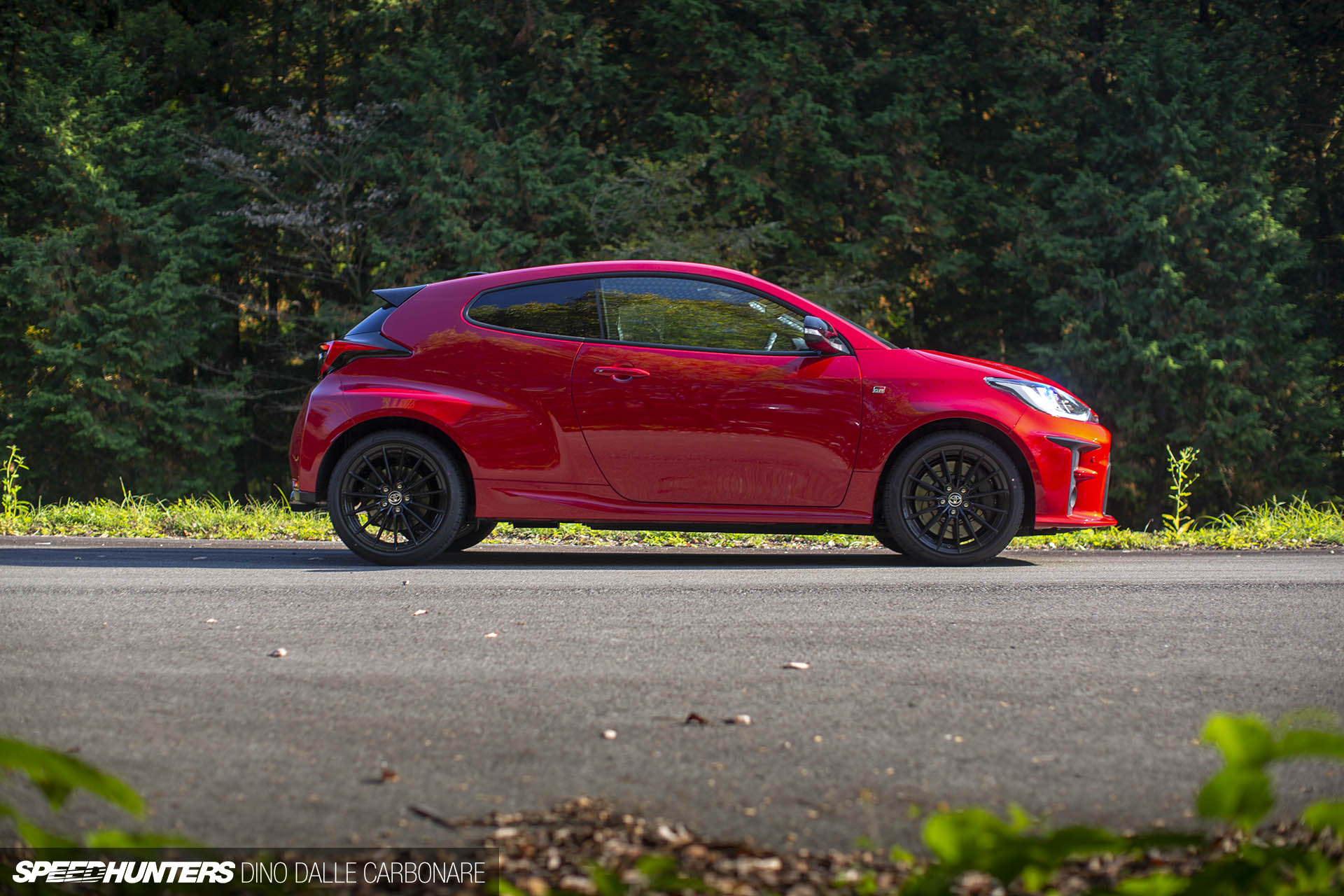
Aside from that, this car remains totally stock with just 500km on the odometer.
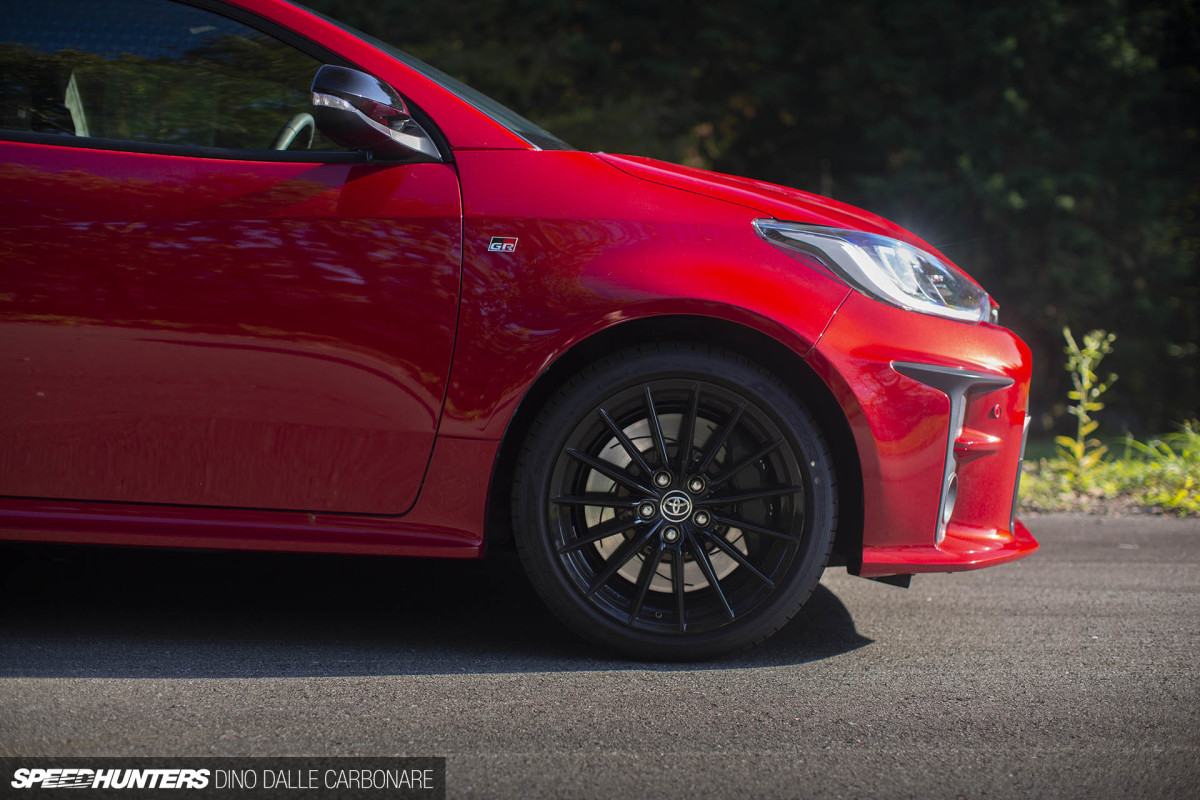
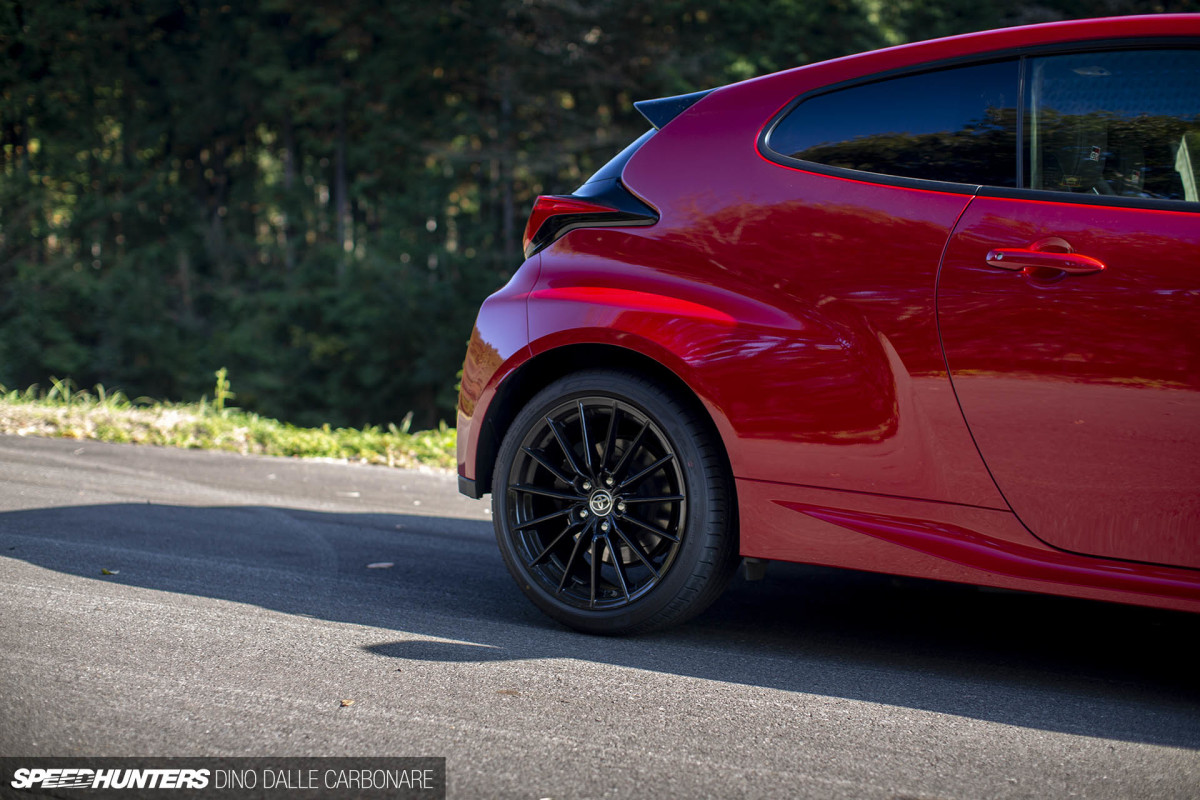
This the RZ version which does away with the Torsen diffs and the GR braking kit of the High Performance package, so it runs open diffs and the slightly less track-focused brakes. HKS chose this as the basis for their street car development package as they will end up putting aftermarket parts on the car anyway.
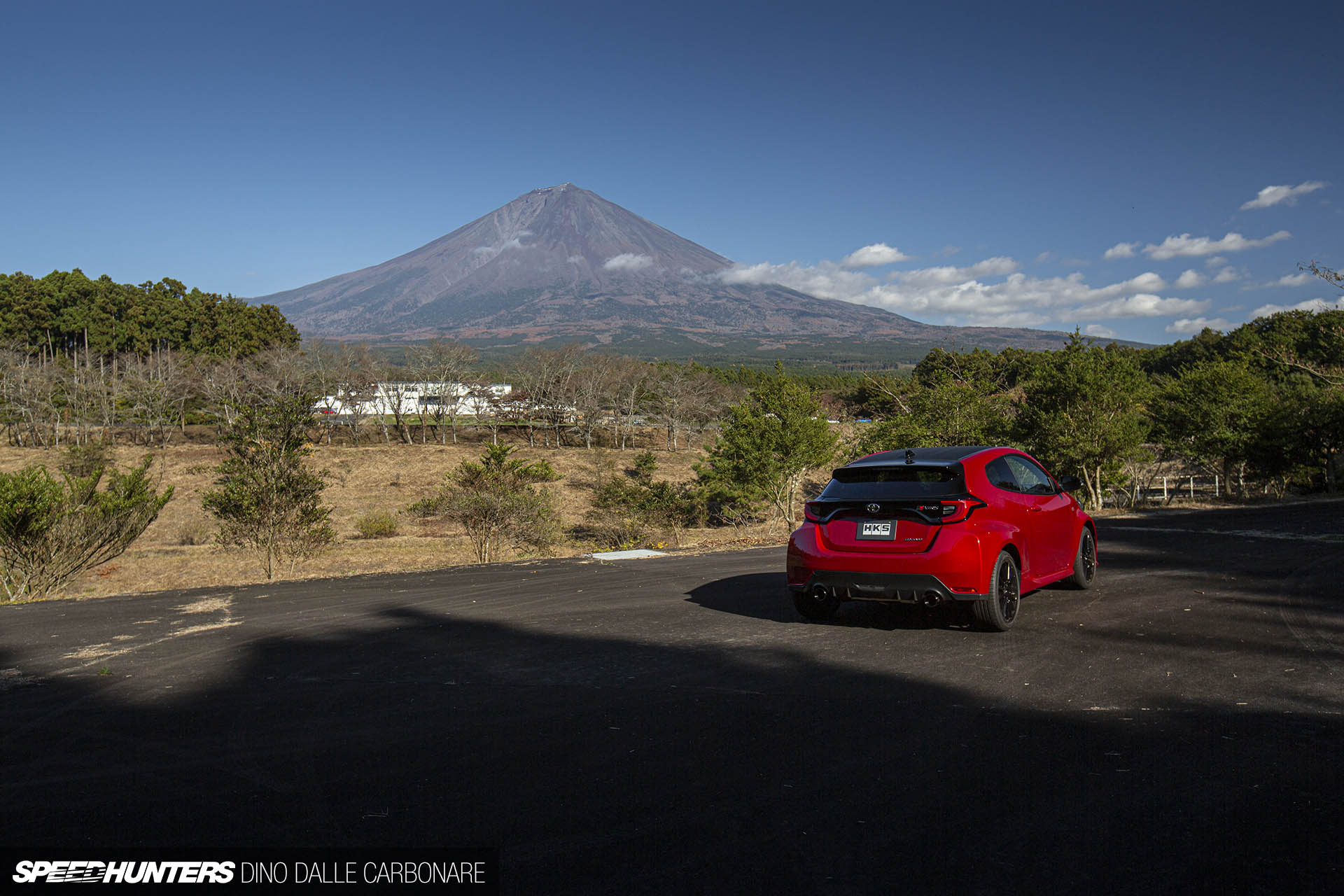
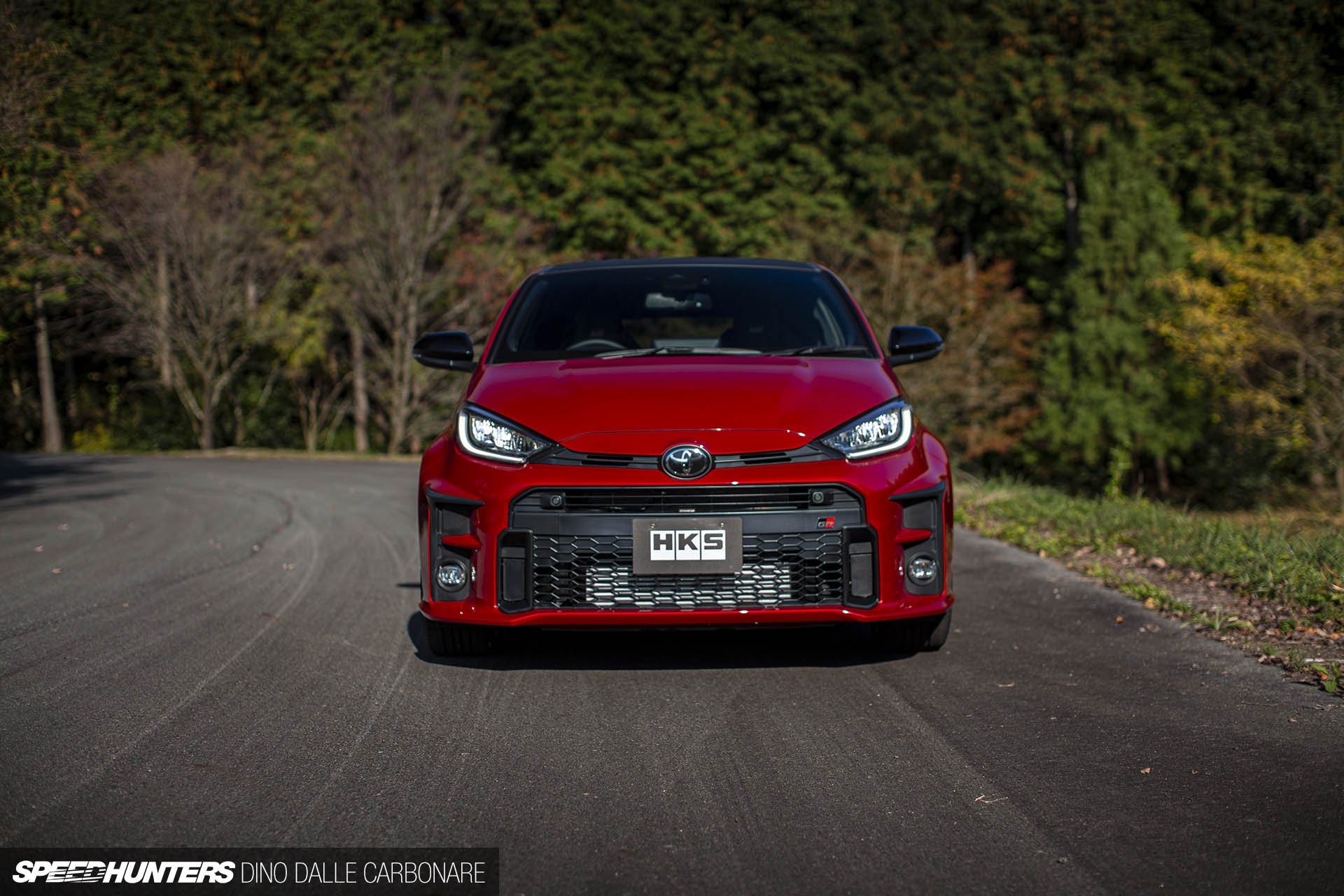
I just can’t express how much I like the compact dimensions of the car and the aggressive stance it has with those wide-set shoulders. Look closely, however, and you will notice that the wheelbase is pretty long. The wheels sit at the extremities of the chassis, resulting in minimal overhangs.
So how is it inside?
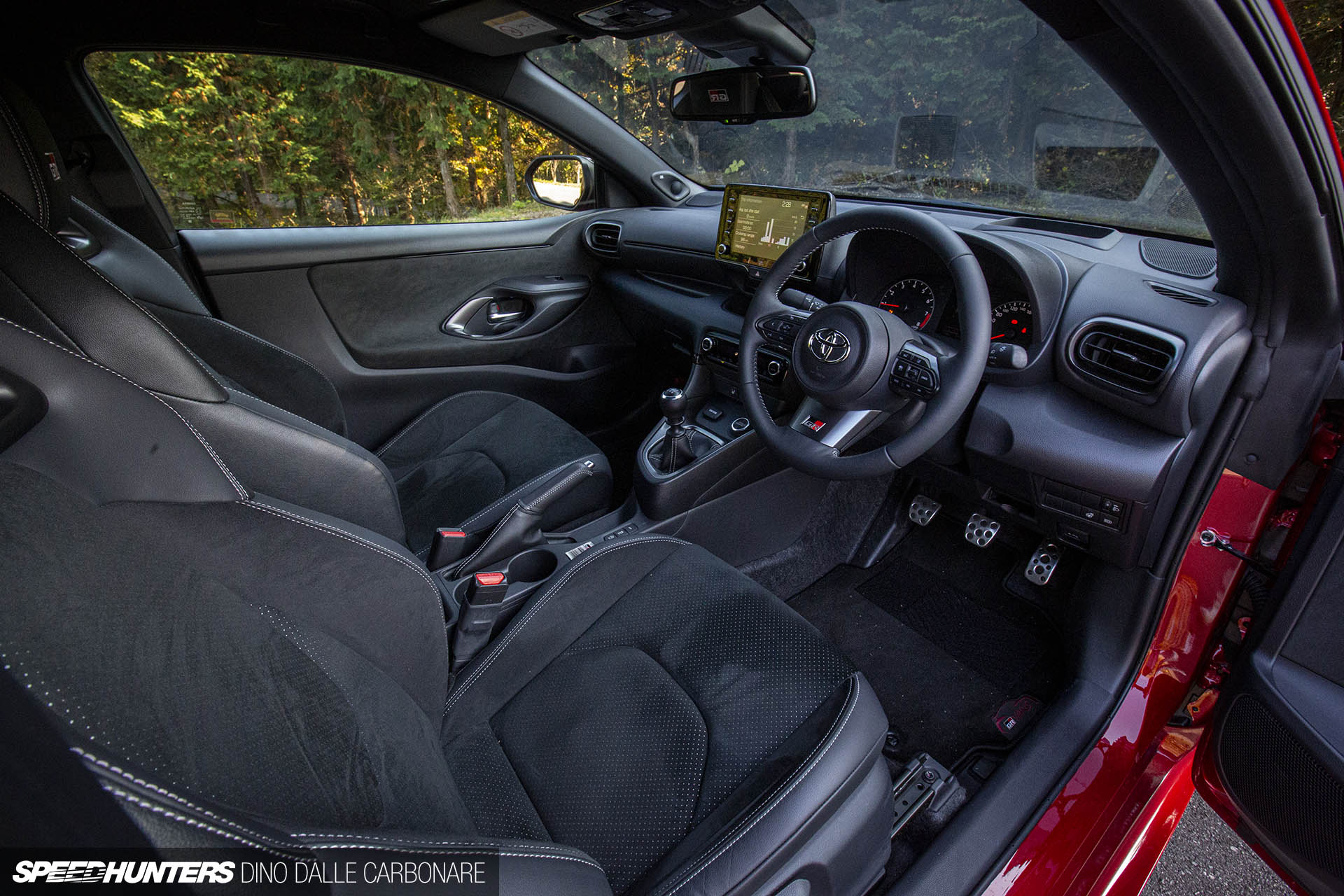
Well, this is where things feel a little bit more normal.
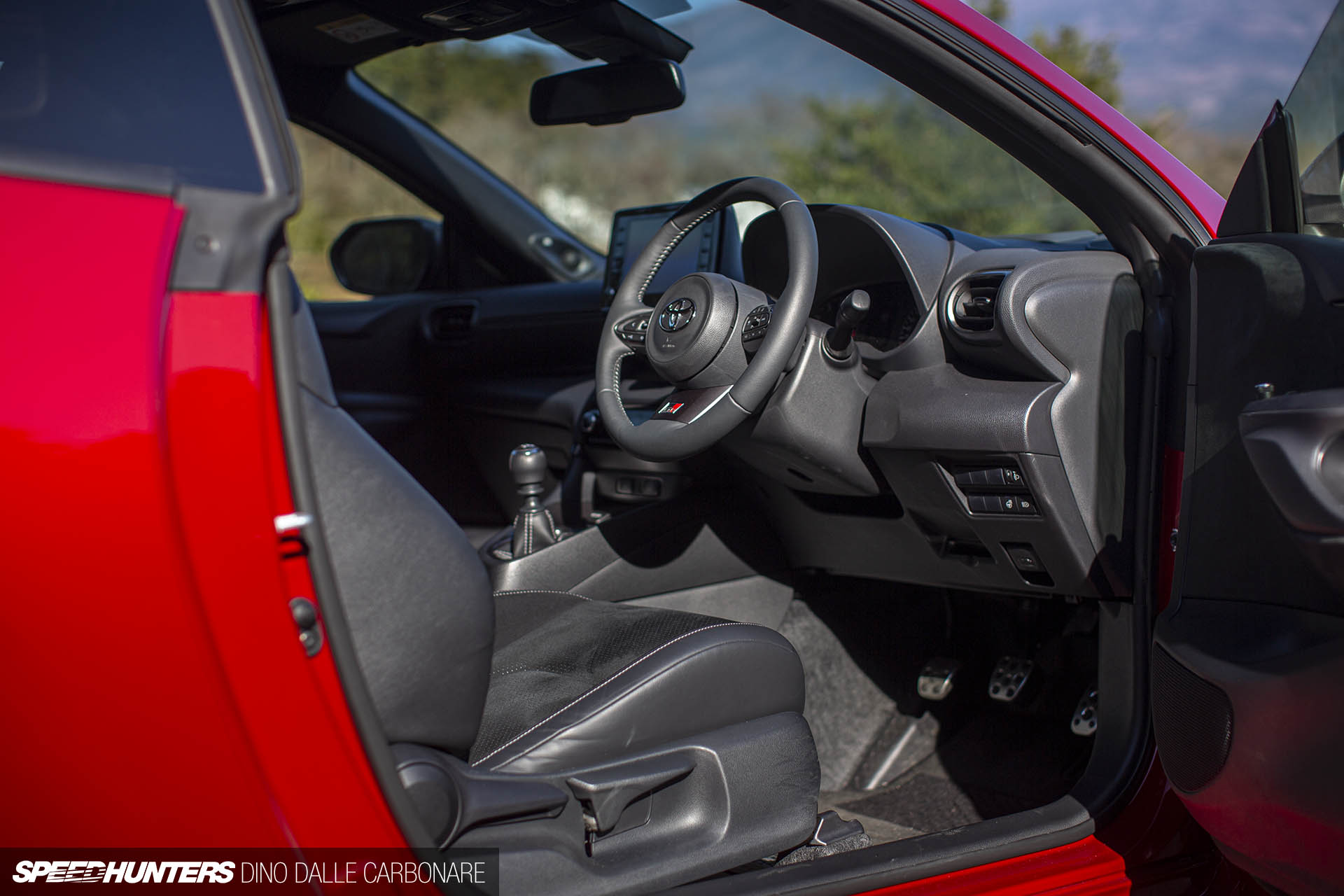
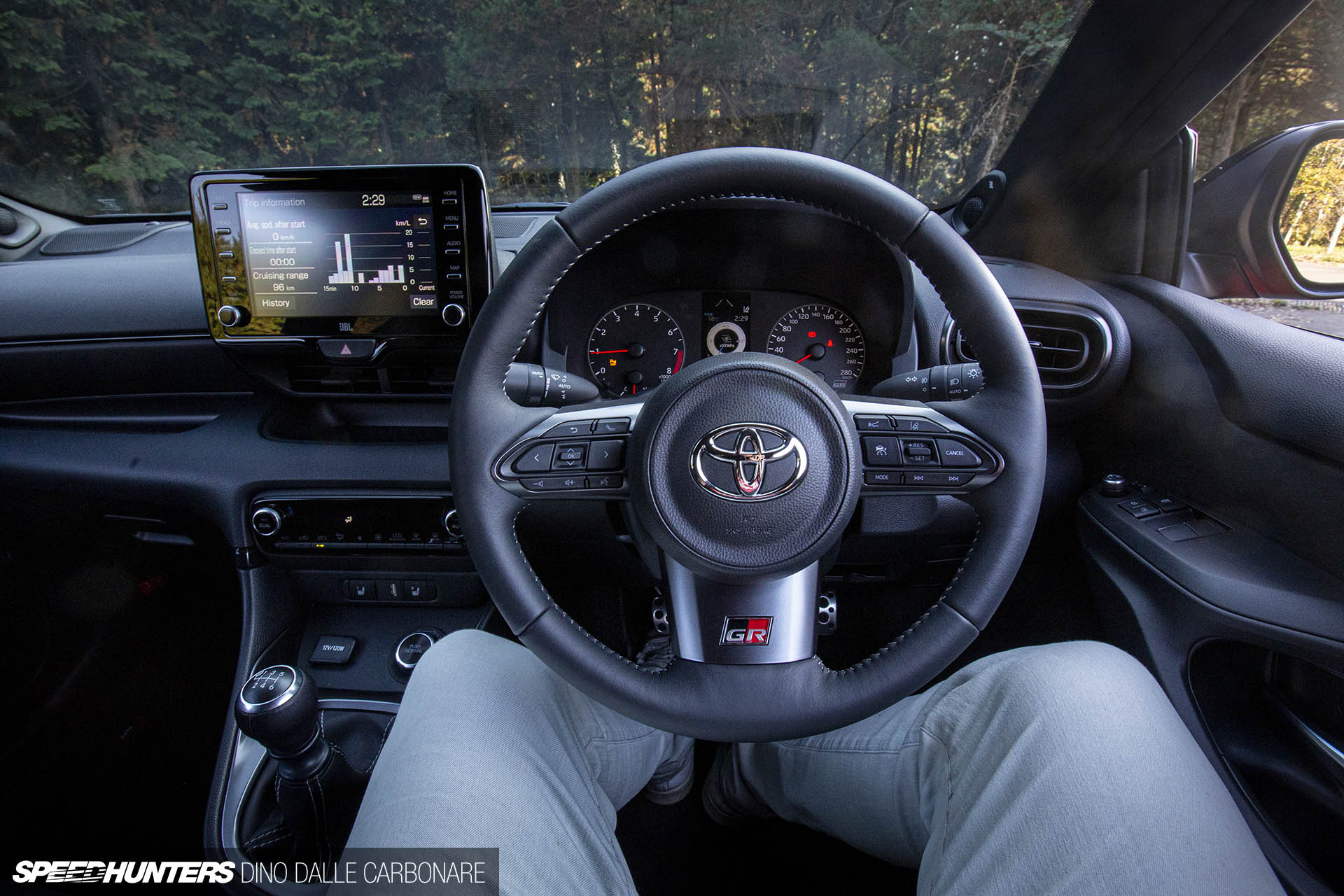
The driving position is far from sporty; you sit high and slightly upright as you would in the normal Yaris. This aspect was never going to differ greatly over the regular model, so don’t feel disappointed if you sit in a GR Yaris and it all feels a tad like a city car. Then again, all modern rally cars seem to have these type of cockpits as they’ve usually been based on run-of-the-mill production models too.
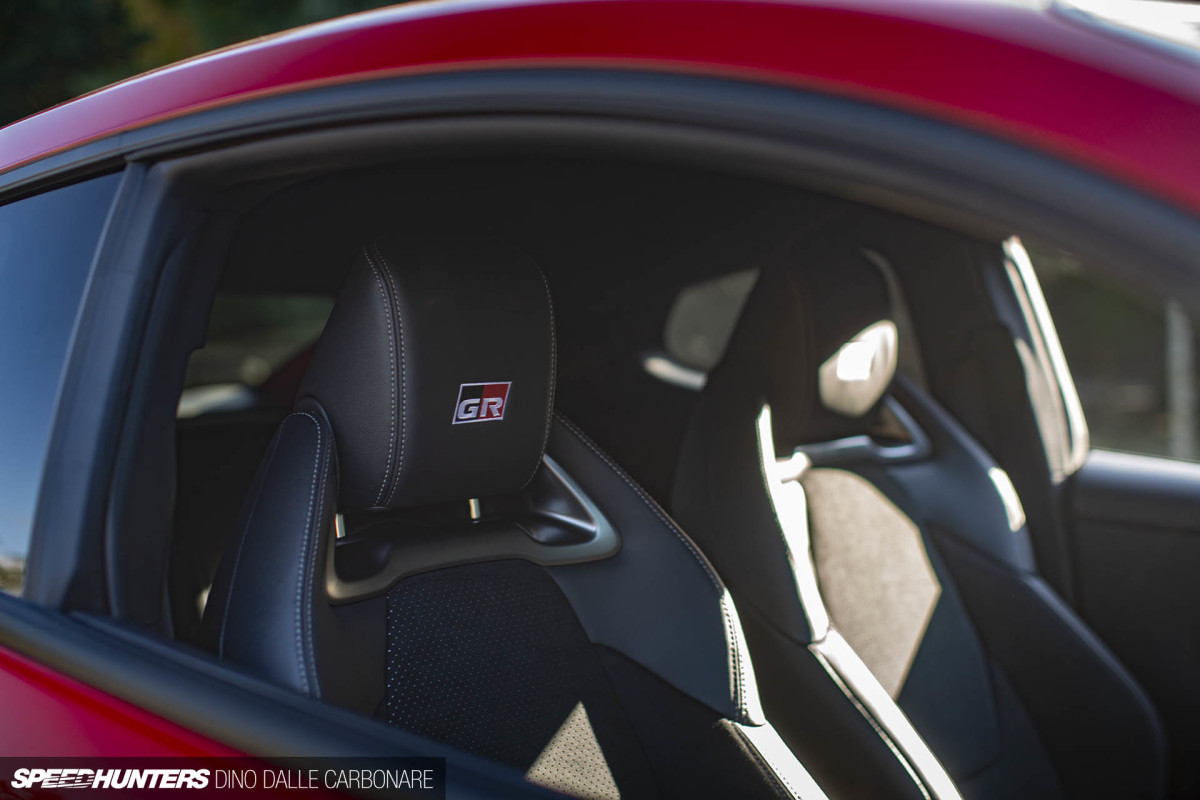
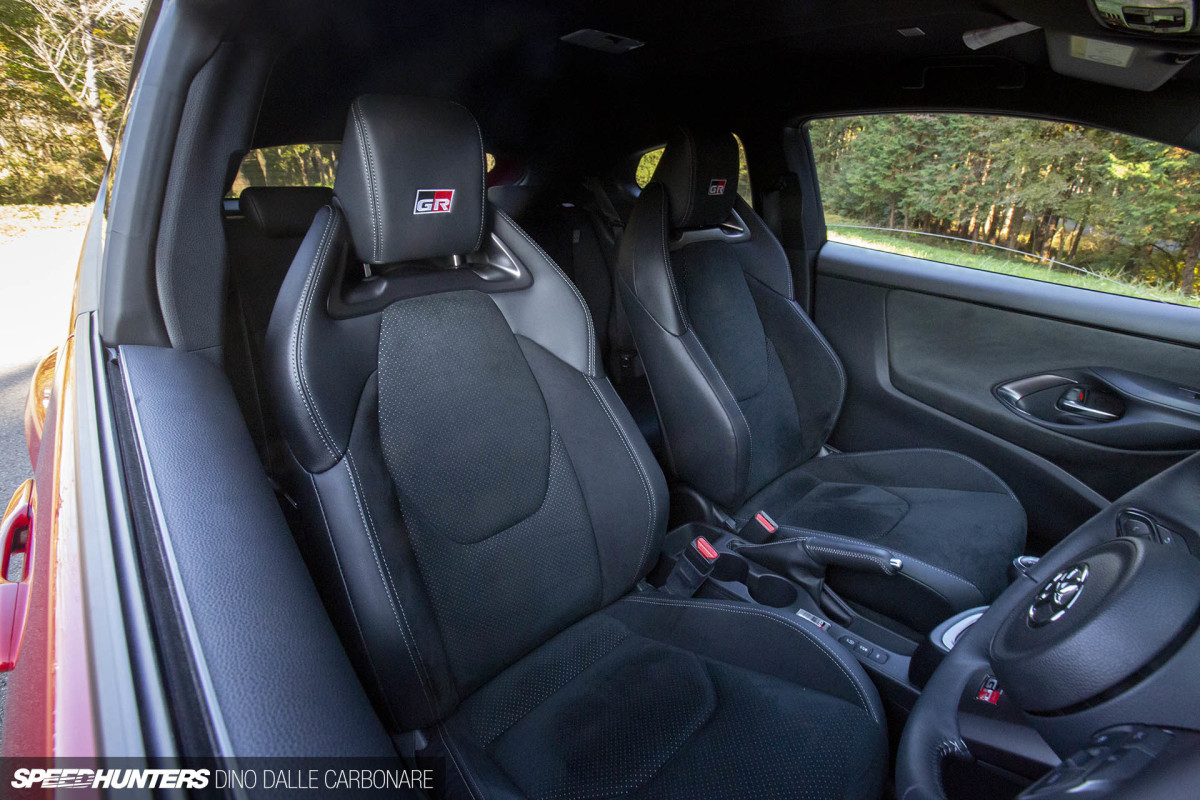
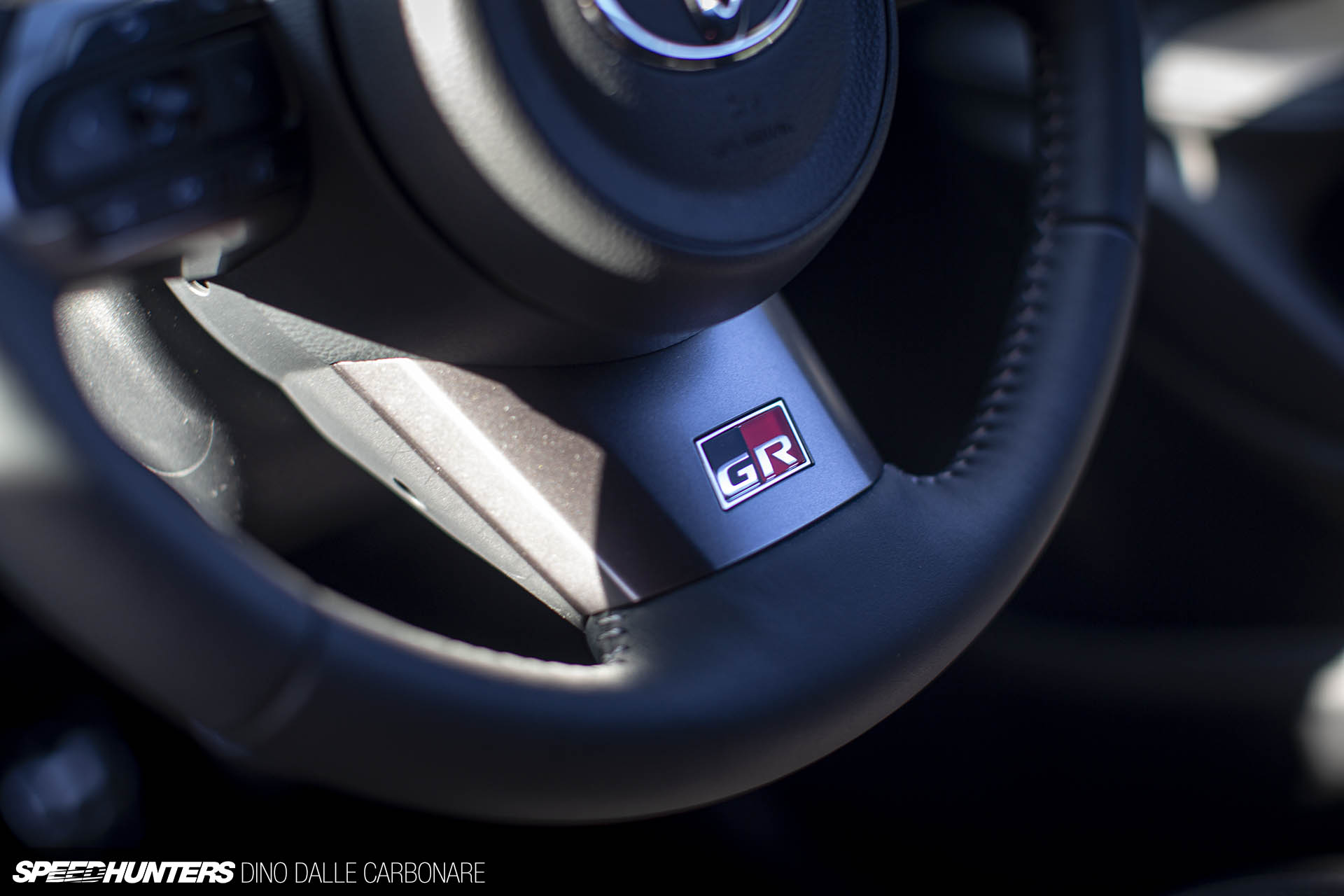
That said, the GR-branded half (faux) leather and half Alcantara (like) seats are nice and supportive, and feel just right in the way they envelop you. Personally, I think the driver’s seat should have had more height adjustment, or rather the ability for it to sit far lower. As it is, it makes taller drivers feel way too high, something that has plagued Japanese cars since the beginning of time.
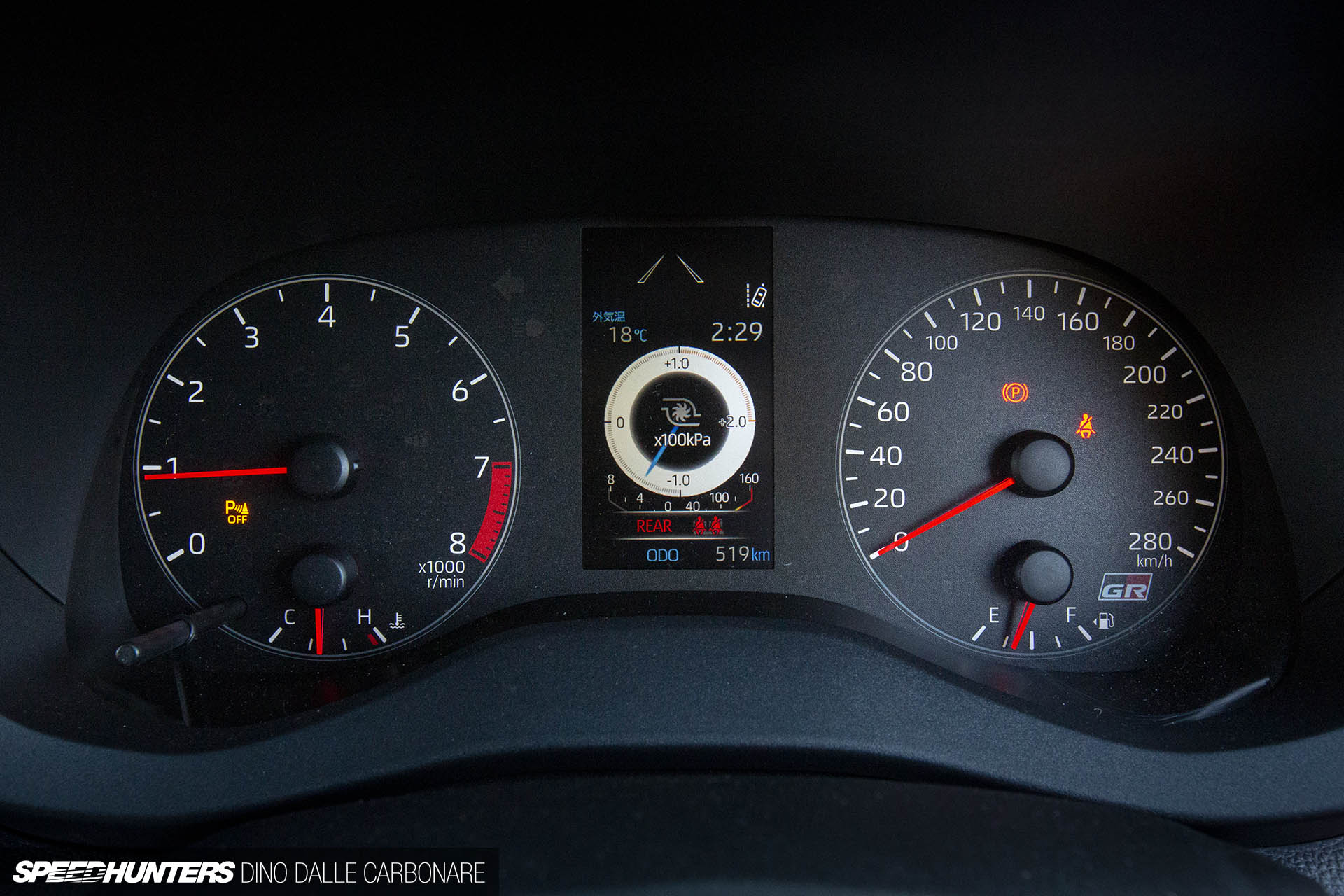
Don’t expect many frills when it comes to equipment and overall gadgetry. The analogue instrumentation is purely functional, but does benefit from a multi-page color digital screen in the center of the cluster which allows you to flick through a few different readouts. I liked this one with the boost gauge.
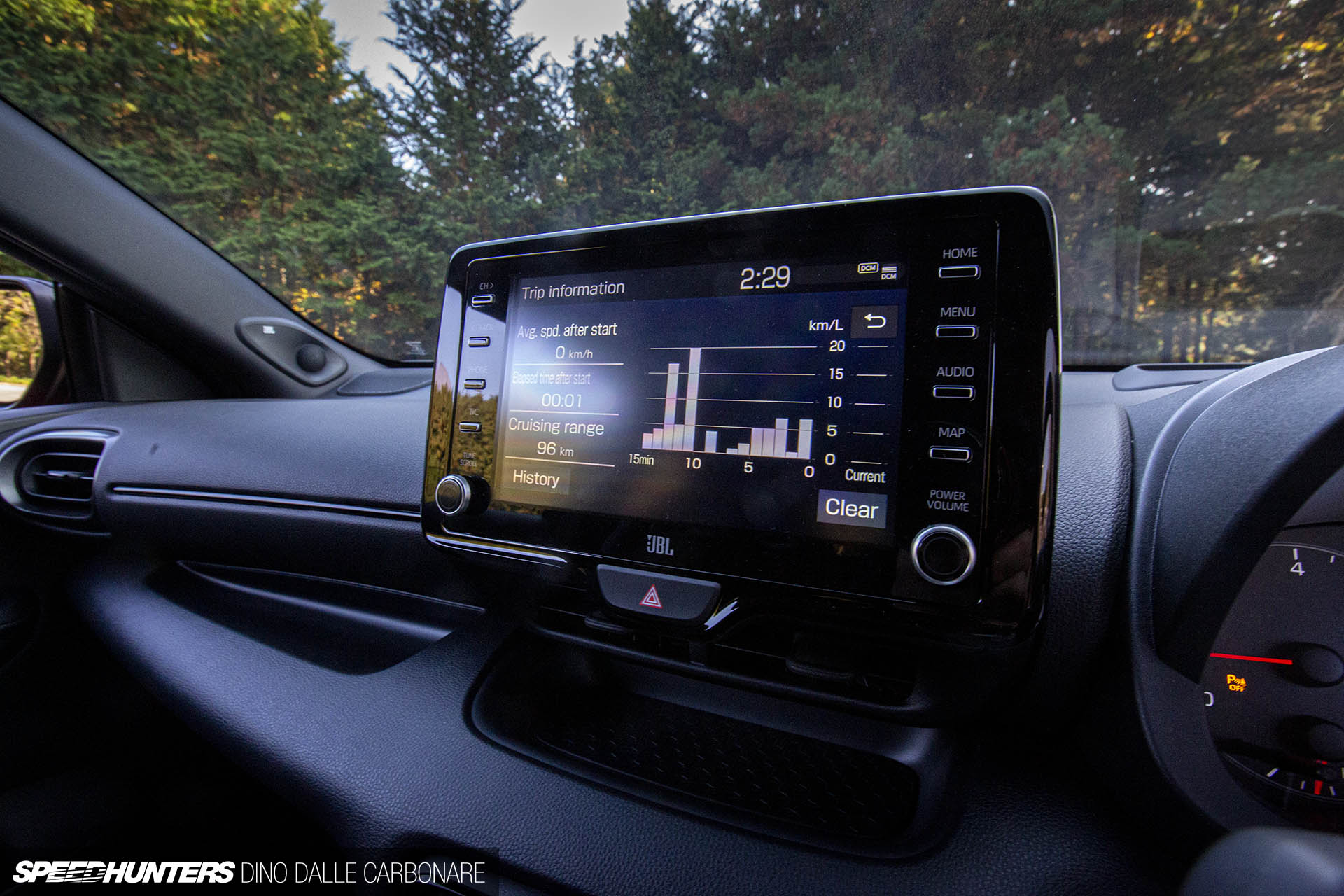
There is a center screen, but after fiddling around with it I can report there is no performance displays or anything like that. Just navigation and infotainment, and a fuel economy graph page which reminded me Toyota hasn’t lost its touch providing us with boring things even on their most exciting cars. So this screen isn’t something you’ll be taking much notice of when throwing the GR Yaris around corners.

Ahead of the 6-speed gear shifter is the torque split selector, which allows you to go from 30% front and 70% rear in ‘Sport’ to a 40% front and 60% rear in ‘Normal’, and finally a 50:50 split for the ‘Track’ setting.
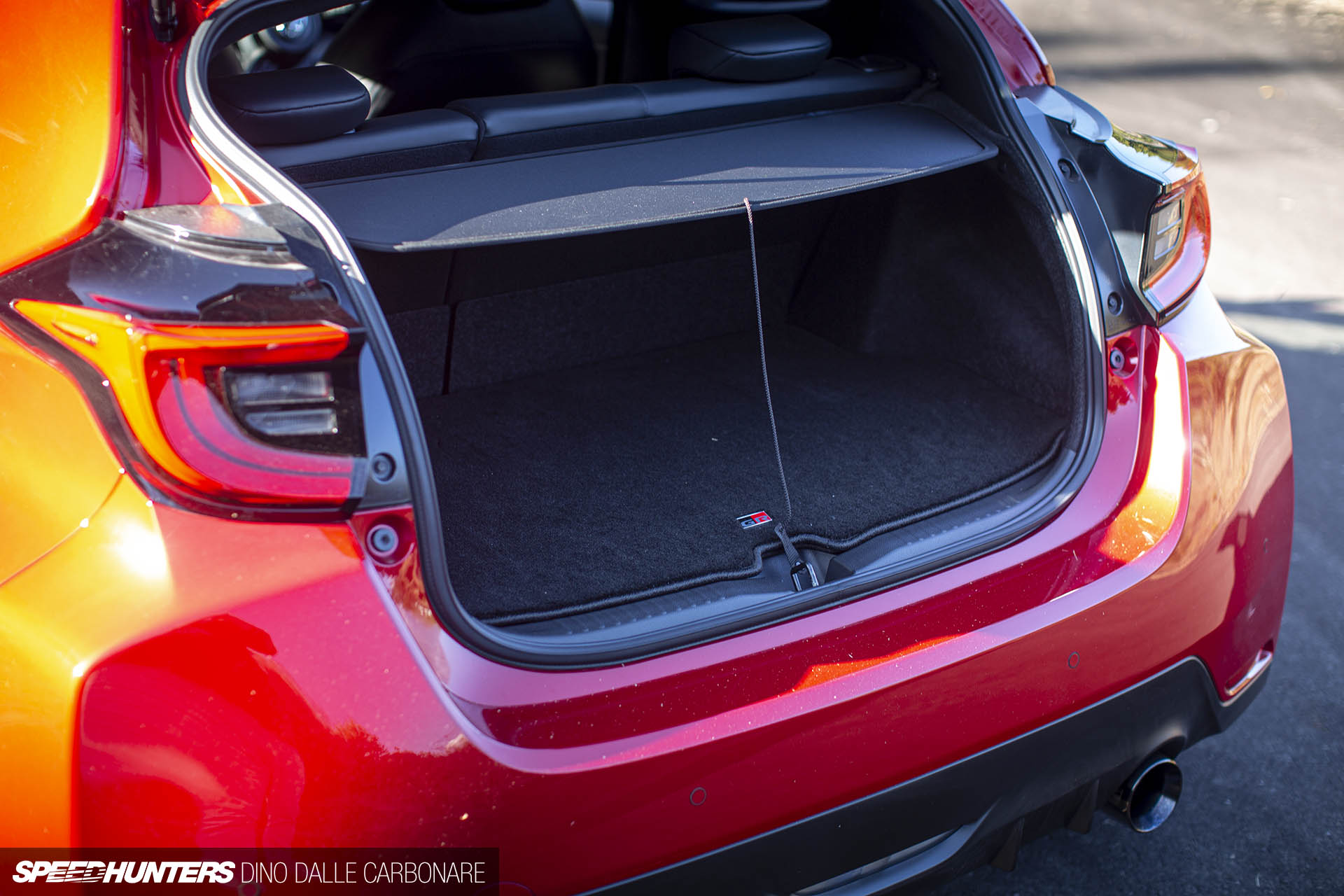
Oh, and there’s a decent trunk at the back too. Fold the rear seats down and you will be able to throw in a couple of spare wheels and some tools for a fun day at the track.
But how is it to drive? Well, once I got the photography side of things wrapped up, HKS allowed me to go for a quick hoon around their private roads.
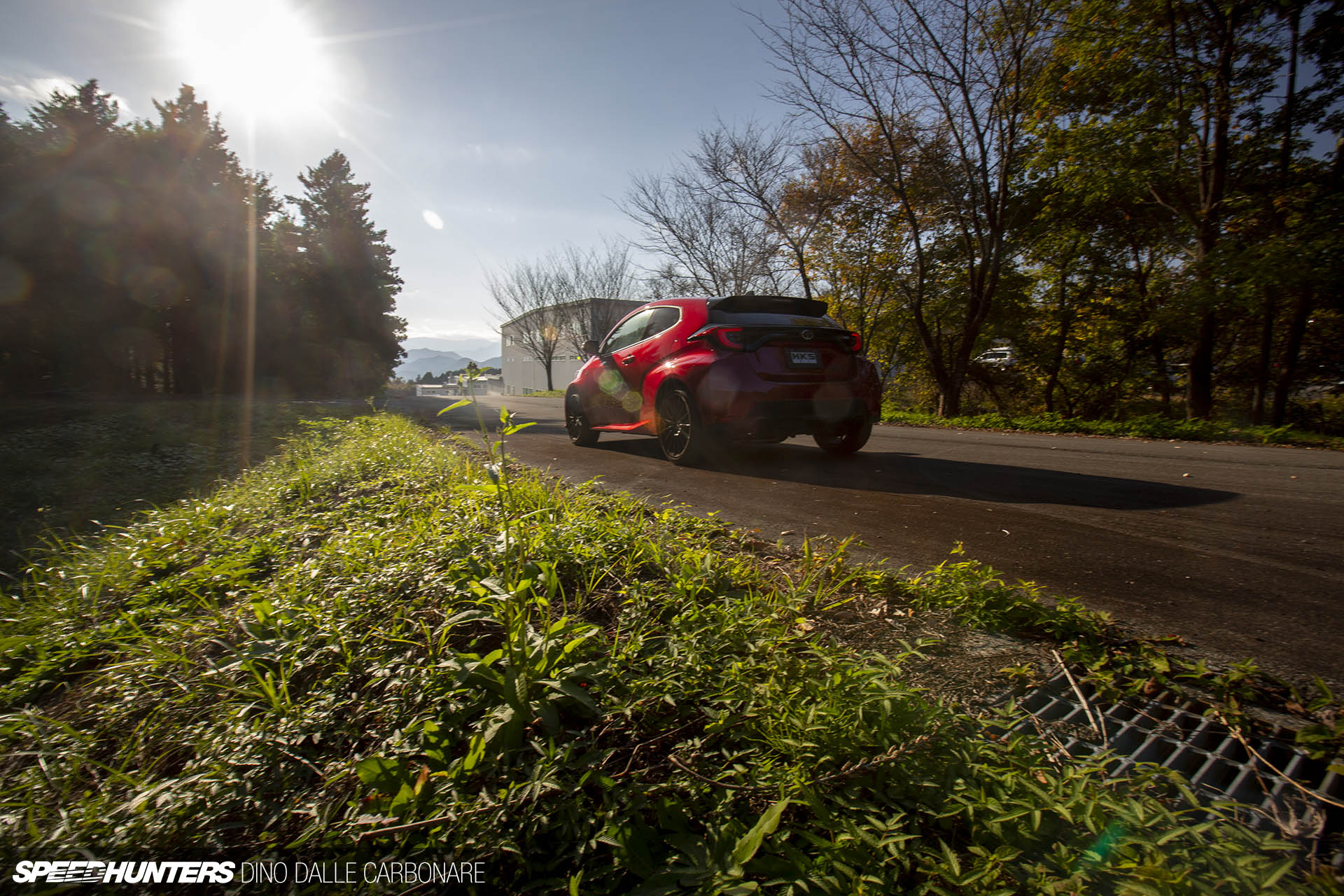
If you didn’t know, HKS has a massive compound with a network of roads perfect for testing cars. I was able to put the little Yaris through some fast second and third gear corners and a nice straight to get all the way up to the top of third gear.
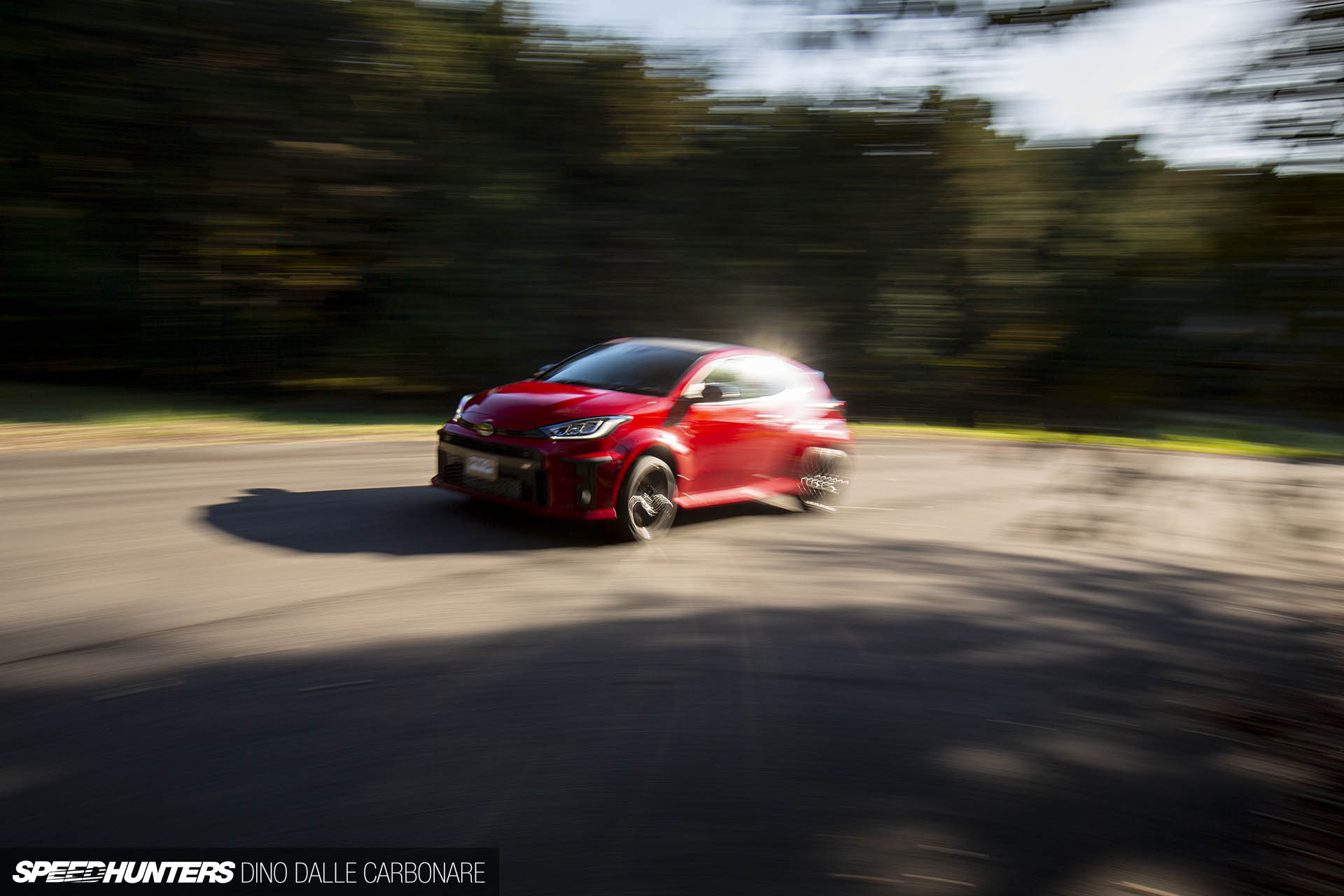
While it may not be a fully-fledged road test, it was more than enough to emphasize just how good this package is. Right from the moment you get on the power, you can’t help but feel connected to the engine and the sweet and perfectly-weighted gear change of the gearbox.

The turn-in is fluid, precise and responsive, and once aggressively thrown into a corner you can get on the power hard and let that rush of torque pull you out into long straights, which it just seems to eat up. The engine doesn’t sound like a 3-cylinder; it’s definitely off-beat but has the aural quality of a 5-cylinder and the low frequencies of a Volkswagen W8. It’s weird but refreshingly so, and in no way does it make you feel short changed.
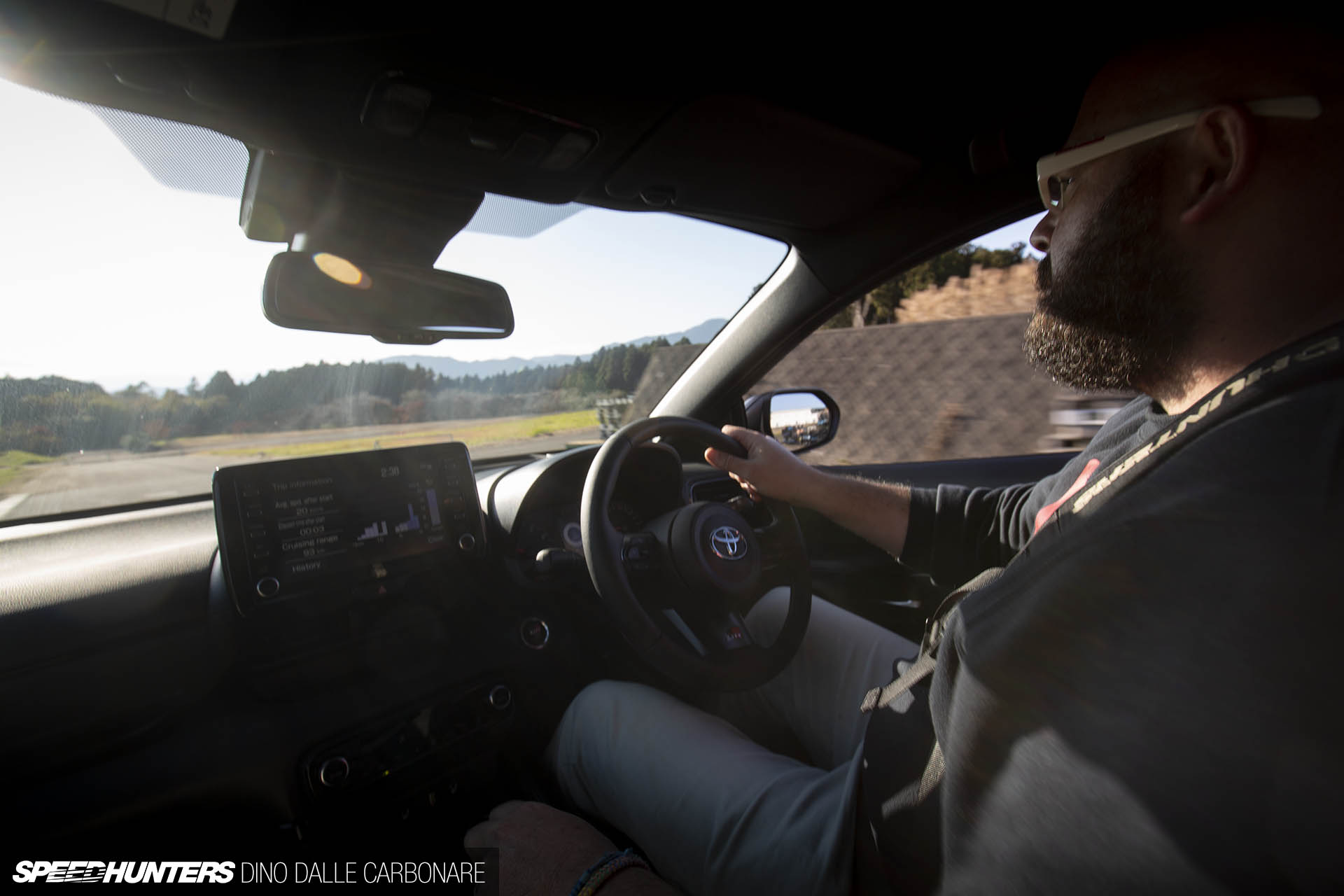
The power and torque is plentiful, and the chassis and handling seem to complement each other beautifully. It’s a sublimely-developed car; it’s fun from the first time you turn the wheel and it makes you reminisce back to an era when a lot of cars felt like this.
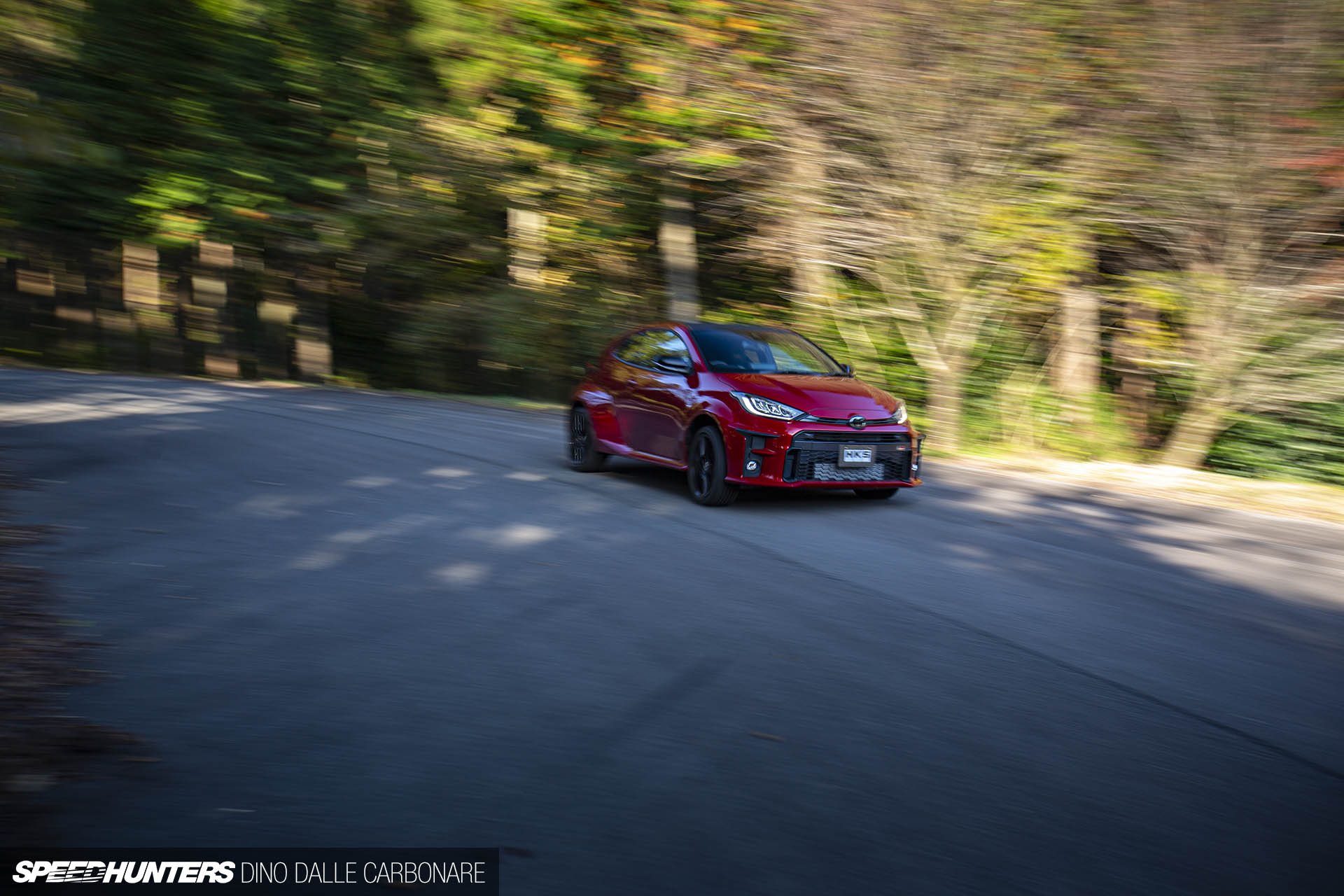
It’s been a very long time since I’ve driven something so satisfying, but this car hits the spot on so many levels that Toyota must really be praised for allowing Gazoo Racing to make it a reality. I really do hope other manufacturers take notice as well, because we need more of this.
The new GR Supra is good, but the GR Yaris is great. So for me, the only single negative aspect here is that I don’t have one in my driveway.
Dino Dalle Carbonare
Instagram: dino_dalle_carbonare
dino@speedhunters.com