
Many people choose to ignore the path of their parents and go their own way into the sweet comfort of success. Others choose to follow in the footsteps of their parents and fit the role with such complete comfort that doing anything else would seem alien. It’s safe to say that Watahiki-san of is firmly part of the latter group.
His parents opened a garage in 1965, and once everything in the shop was up and running, welcomed their baby boy into the world in 1966. At 18, Watahiki-san joined his father in the shop, learning the art of panel beating and mechanical repairs. As you’ll see, the skills he learnt from his dad were put to very good use in the not-too-distant future.
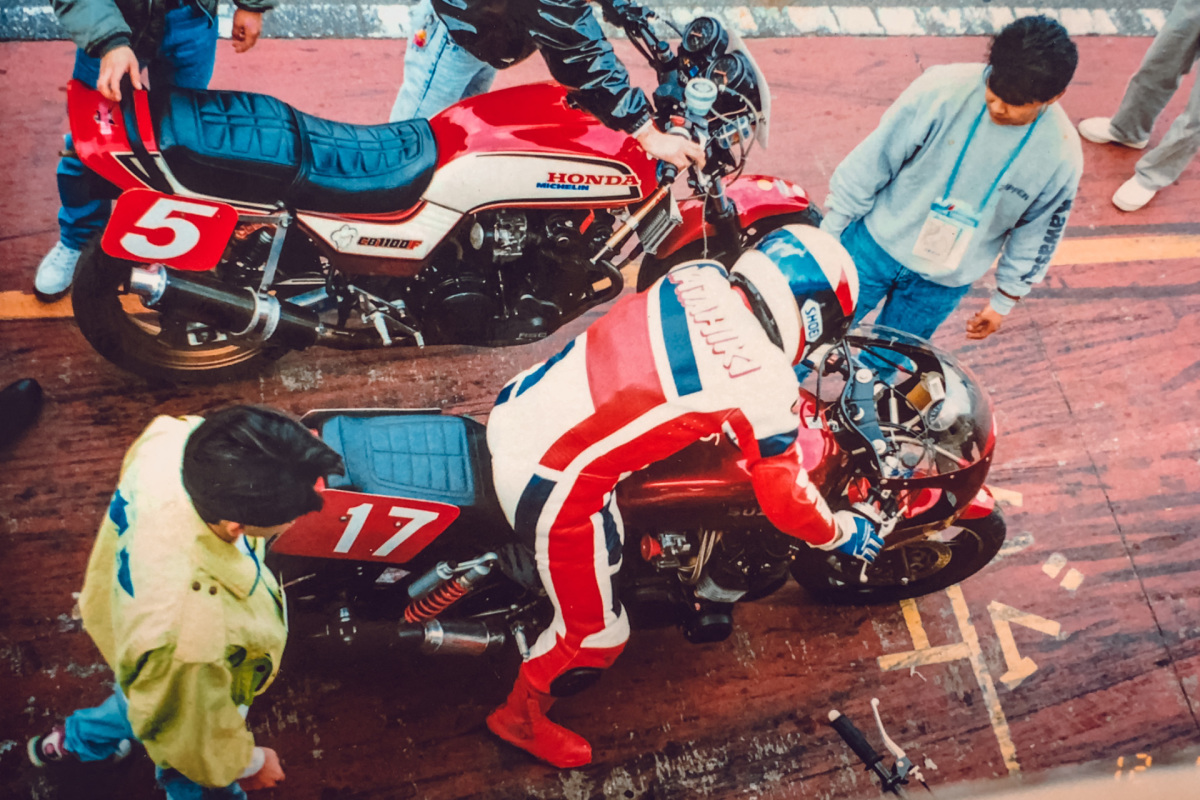
Initially, Watahiki-san’s dream was to be a professional motorcycle racer, and by 27 he was one of the top-ranking riders in the country – his bike of choice a Suzuki GS750. But all that changed when at 28 Watahiki-san bought his first Porsche, a 911 Carrera 3.2.
While attacking some of Japan’s famous touges, Watahiki-san fell in love with the car’s handling, and decided that this is where he wanted to swing his hammer. From the age of 30, Watahiki-san was working exclusively with Porsches, making modifications and repairs at his father’s shop.
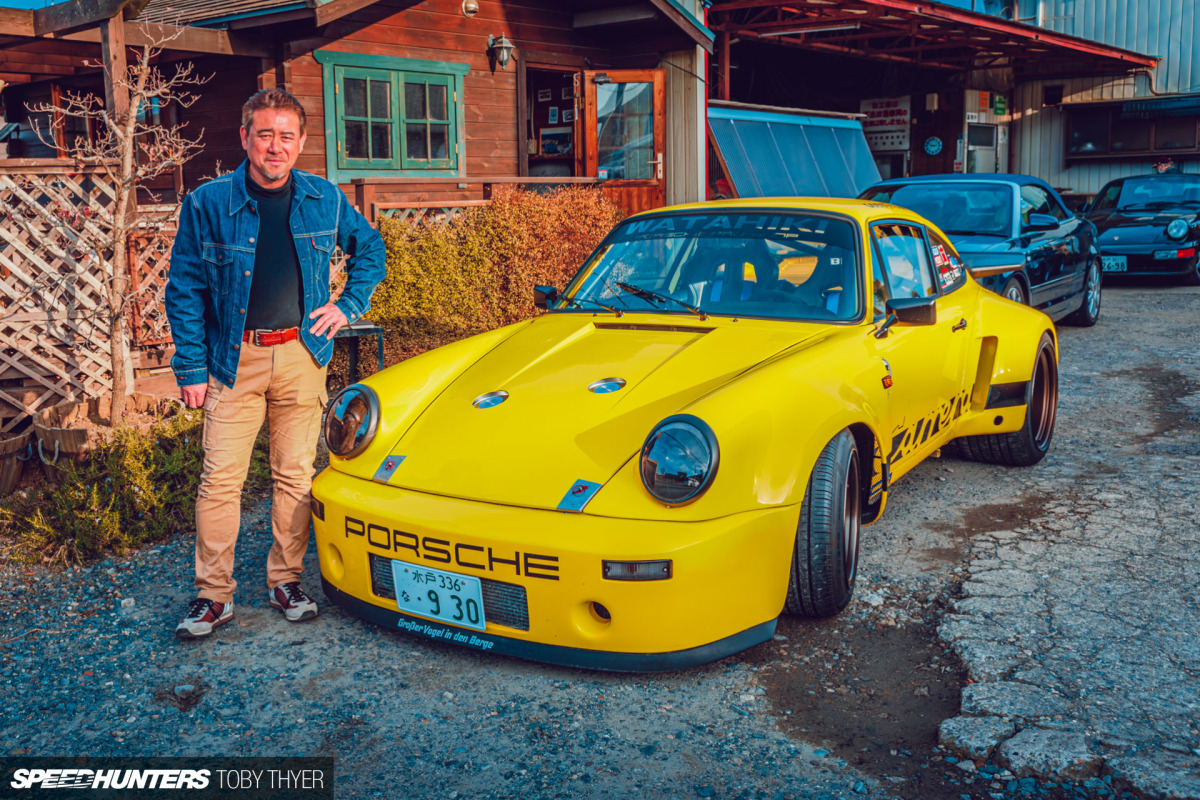
Watahiki-san’s previous cars are a who’s who of desirable classics – a ’58 356A Speedster, ’74 Ferrari Dino 246 GTS, various Porsches, and a ’68 Jaguar E-Type S1 Roadster to name a few.
Fast forward 36 years and here we are at Watahiki Custom Build & Restoration in Mito city.

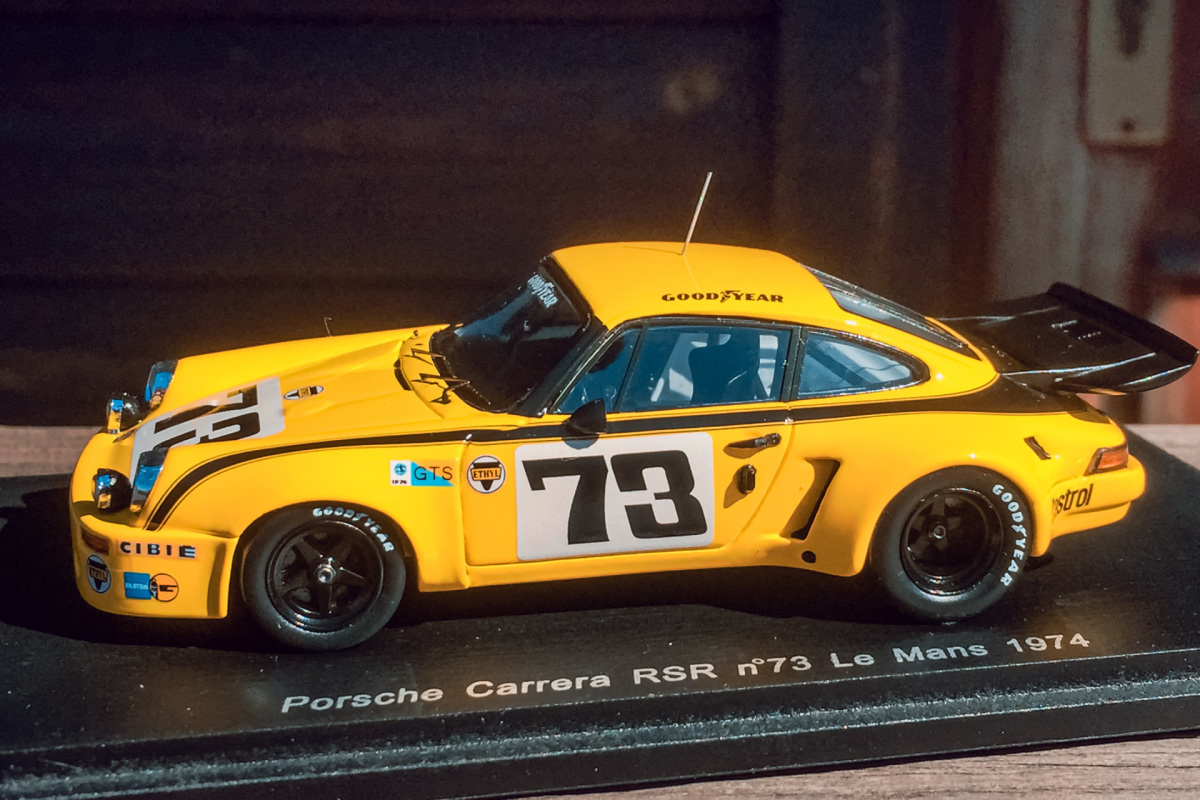
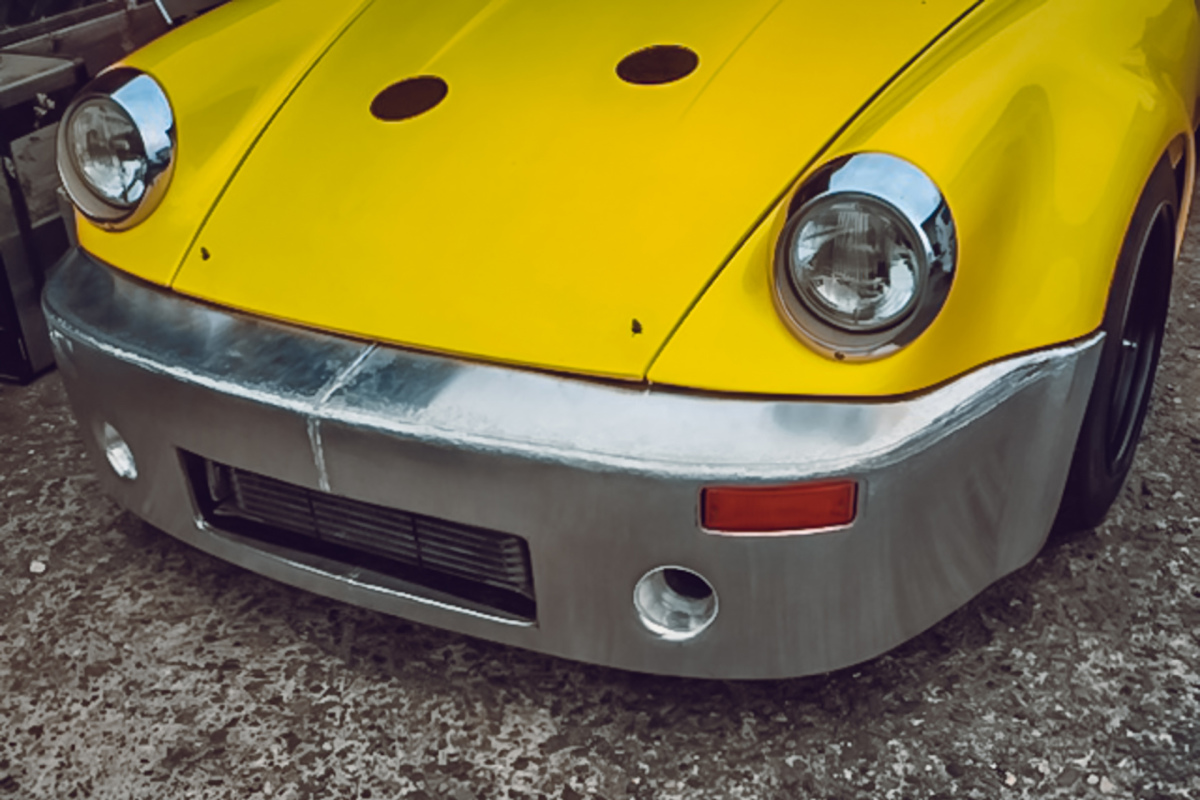
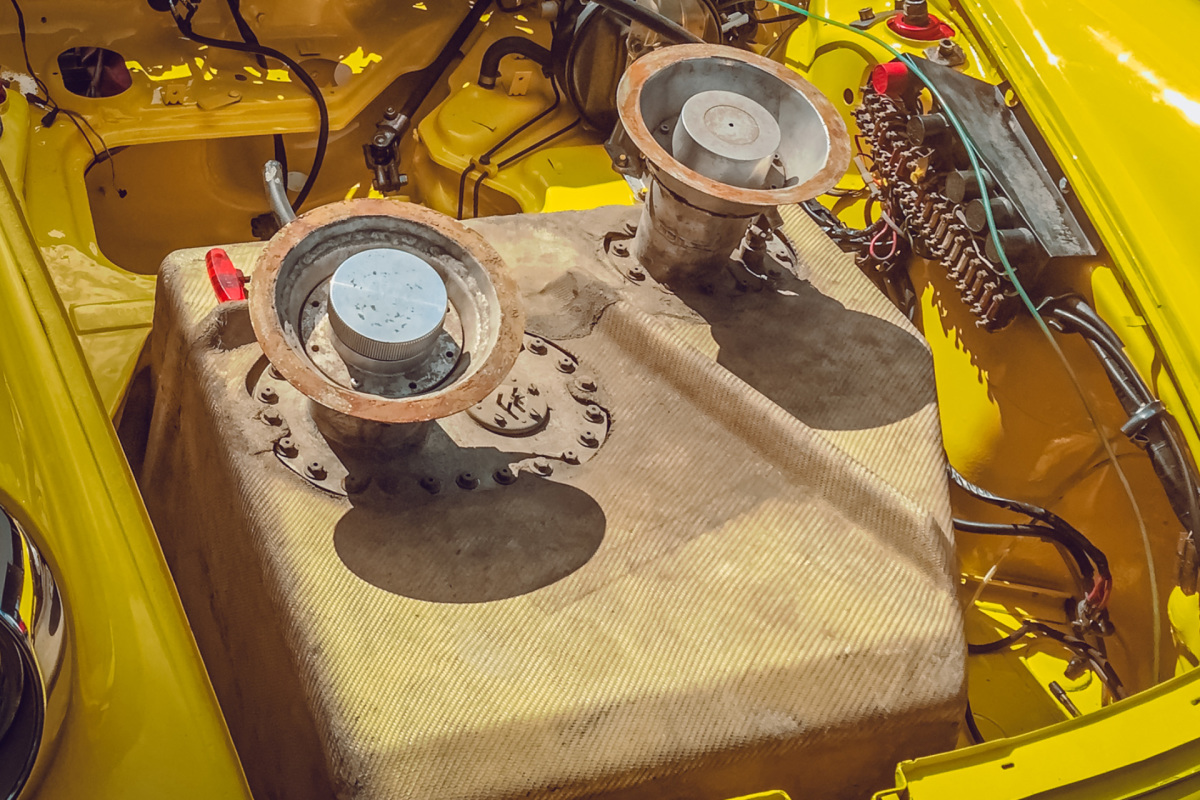
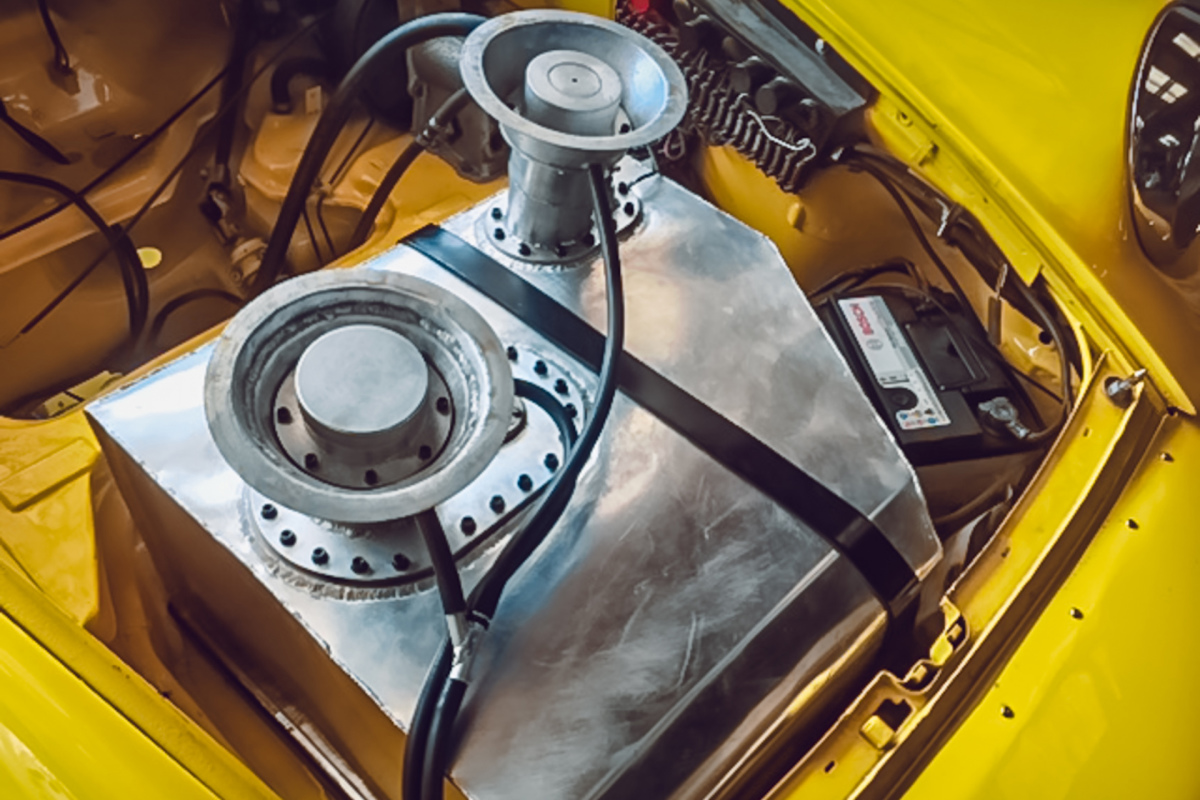
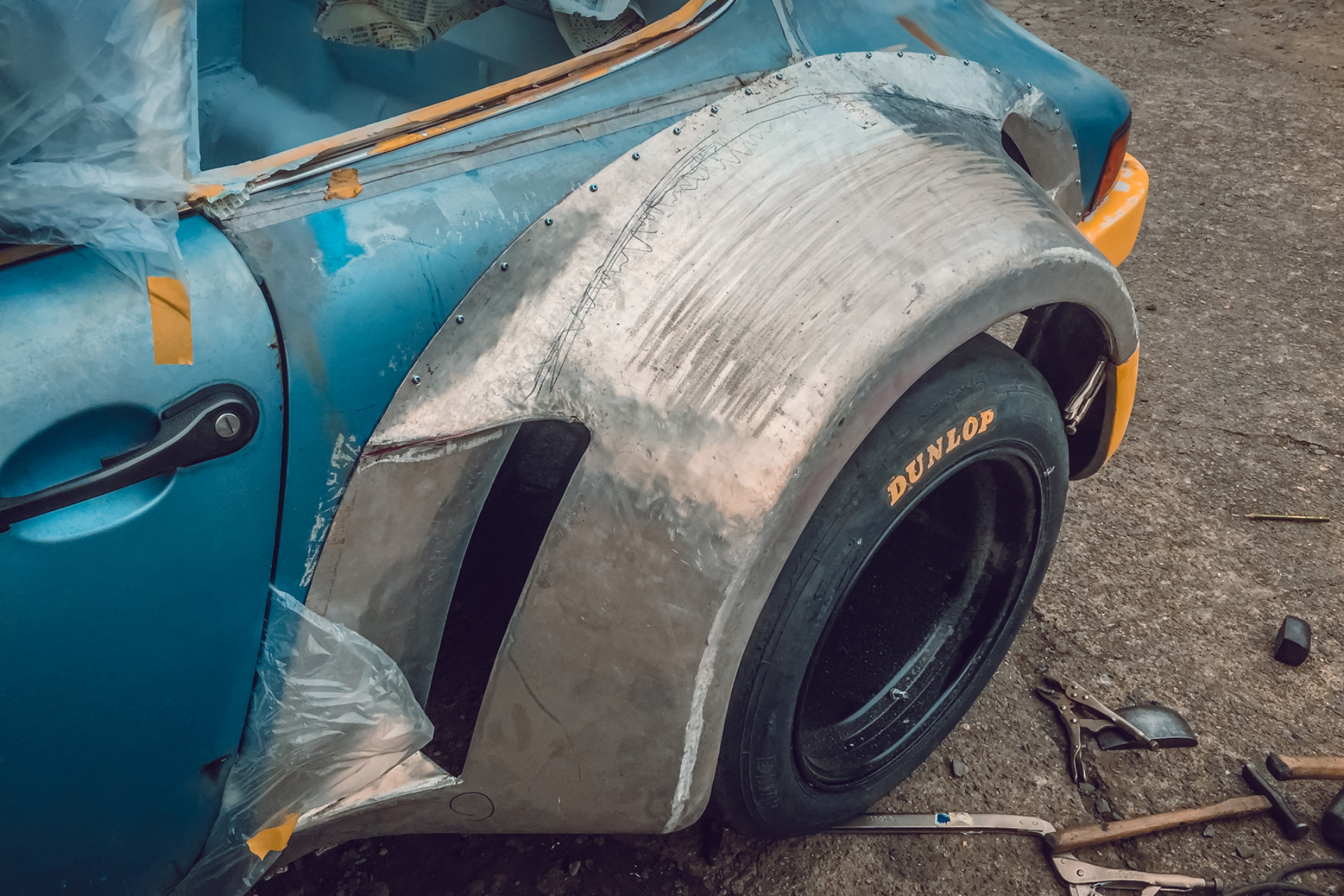
You may remember the tough RSR homage that I featured a week or so back, one of Watahiki-san’s creations. He kindly sent some the build photos above, which show how this monster was stitched together. Here you can see the custom aluminium work, the original RSR fuel cell (deemed too old to use so a new aluminium one was fabricated), and a model of the 1974 Le Mans Group 4-winning RSR, which was the inspiration for the build.
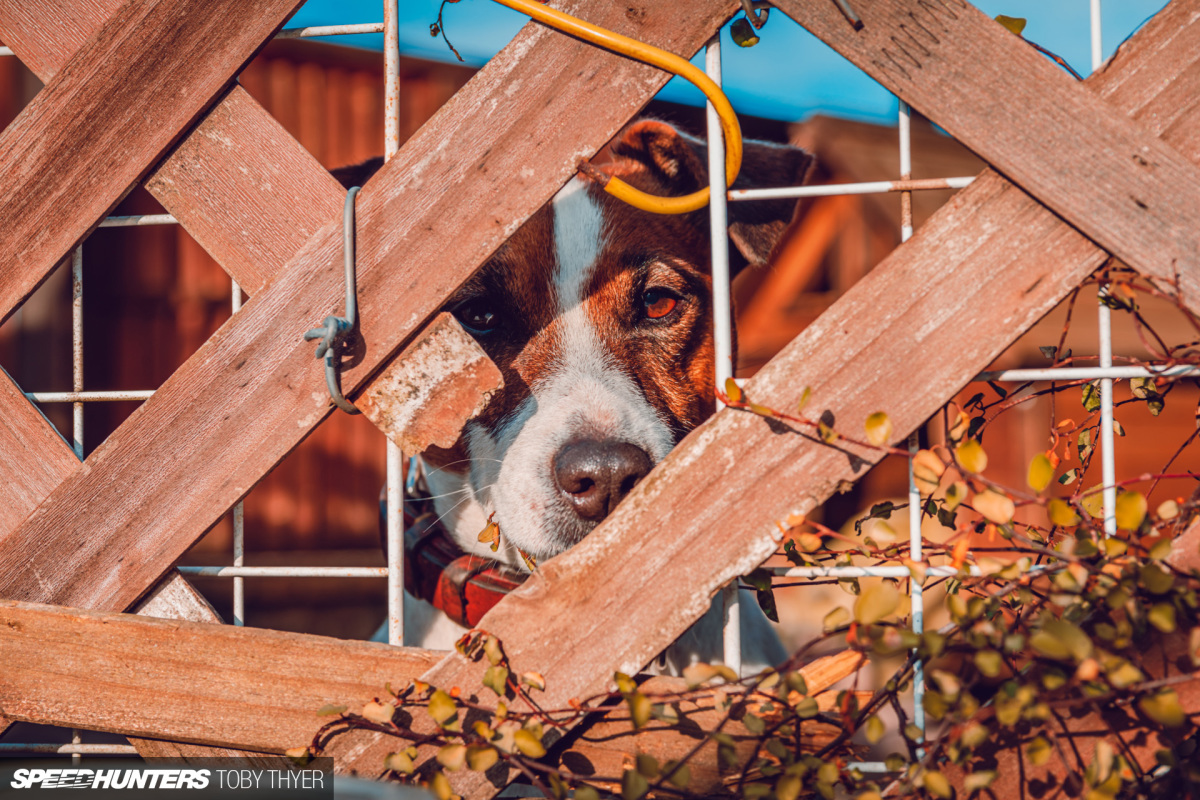
I couldn’t wait to explore the yard and see what else I could find, but first I needed permission from Dino, Watahiki-san’s Jack Russell terrier. A few phrases in Italian seemed to work as the magic password.
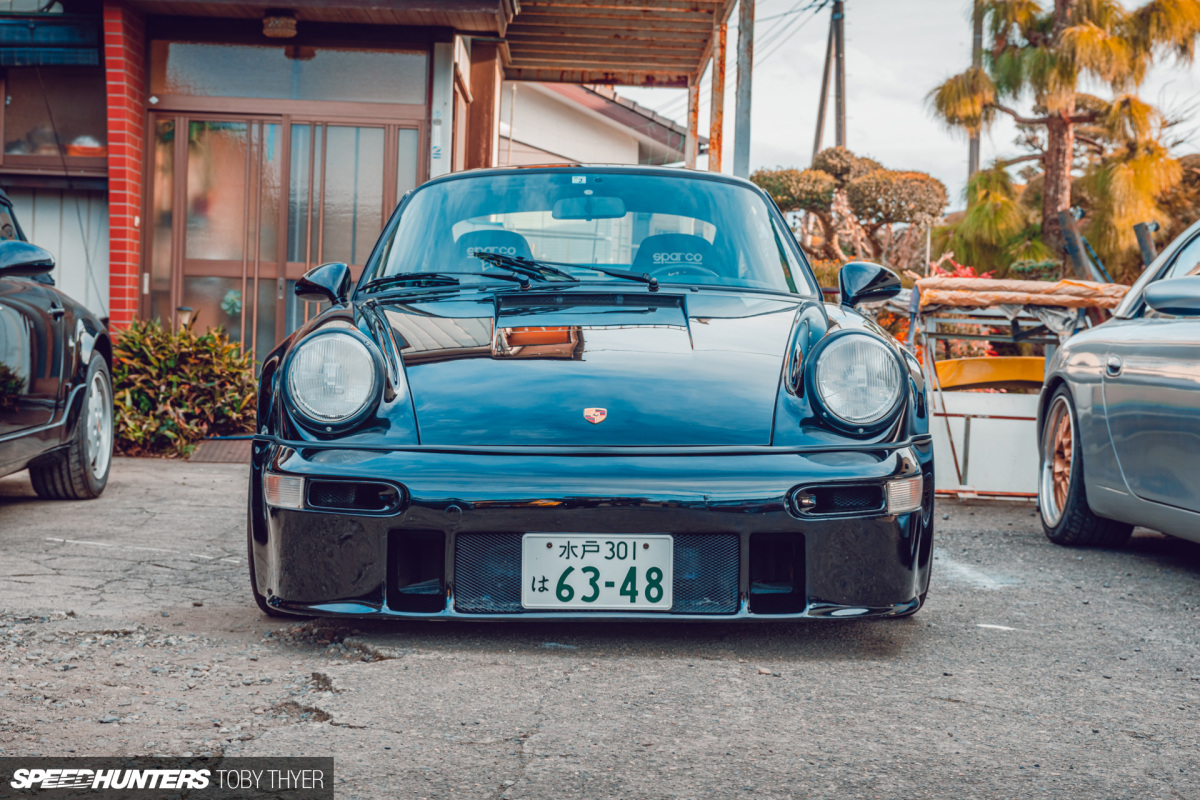
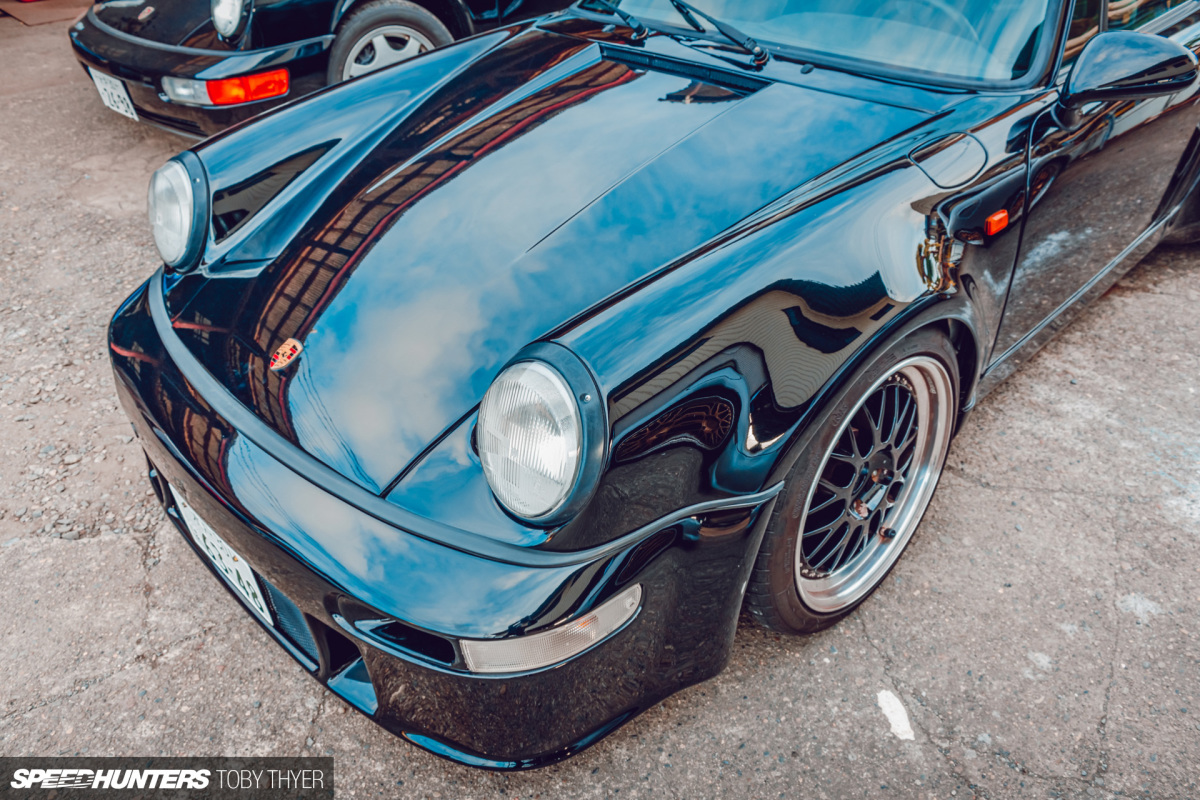
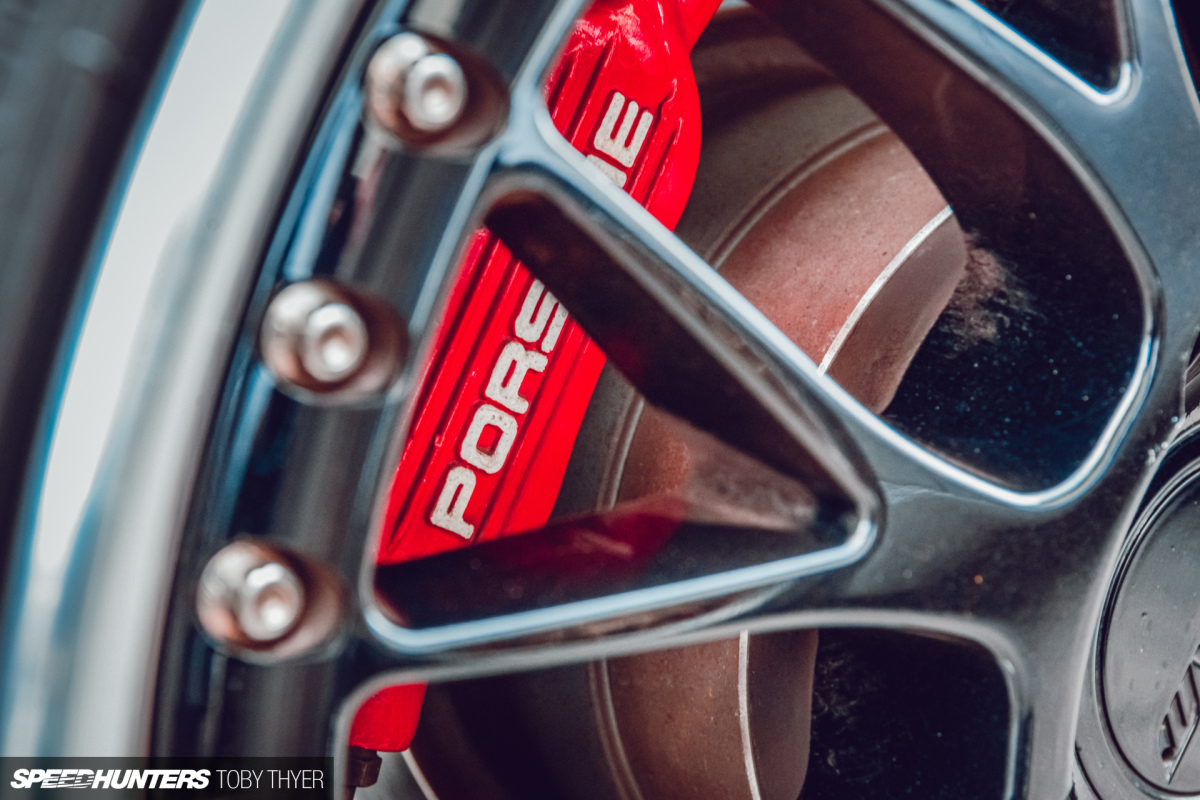
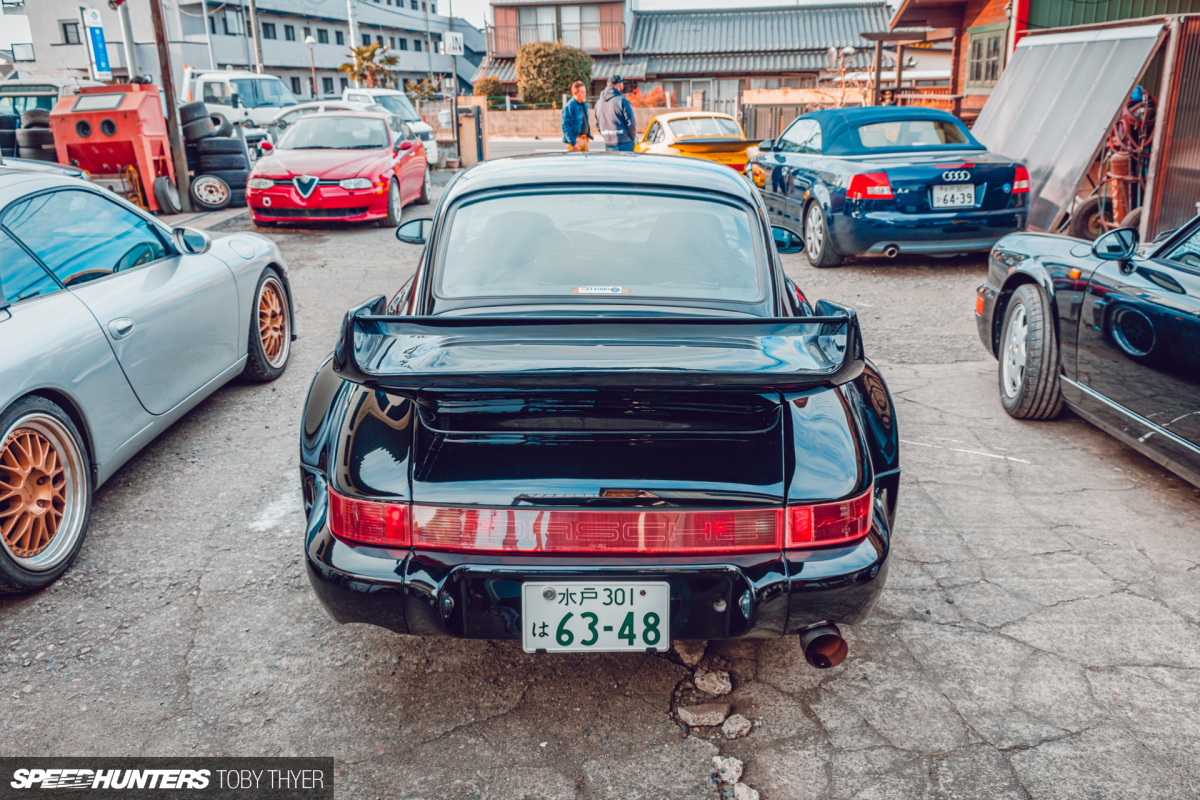
A customer’s black RS instantly drew me in for a closer look.
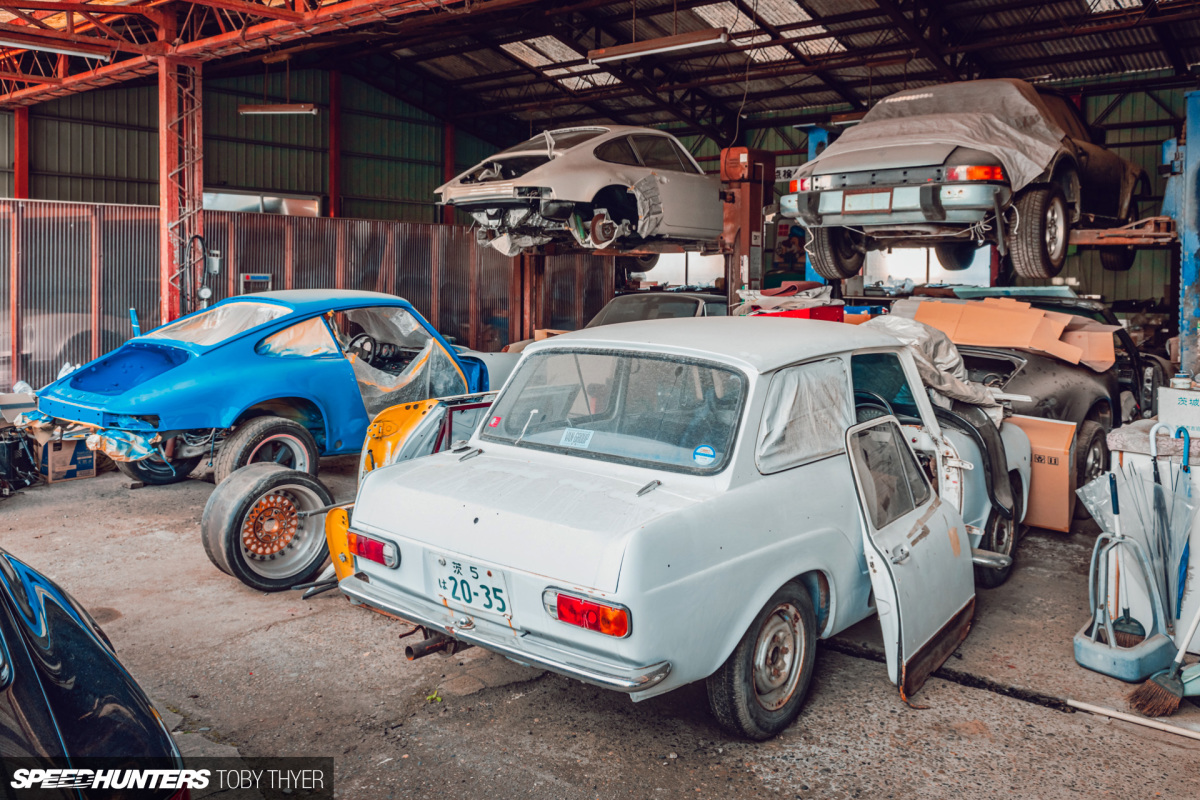
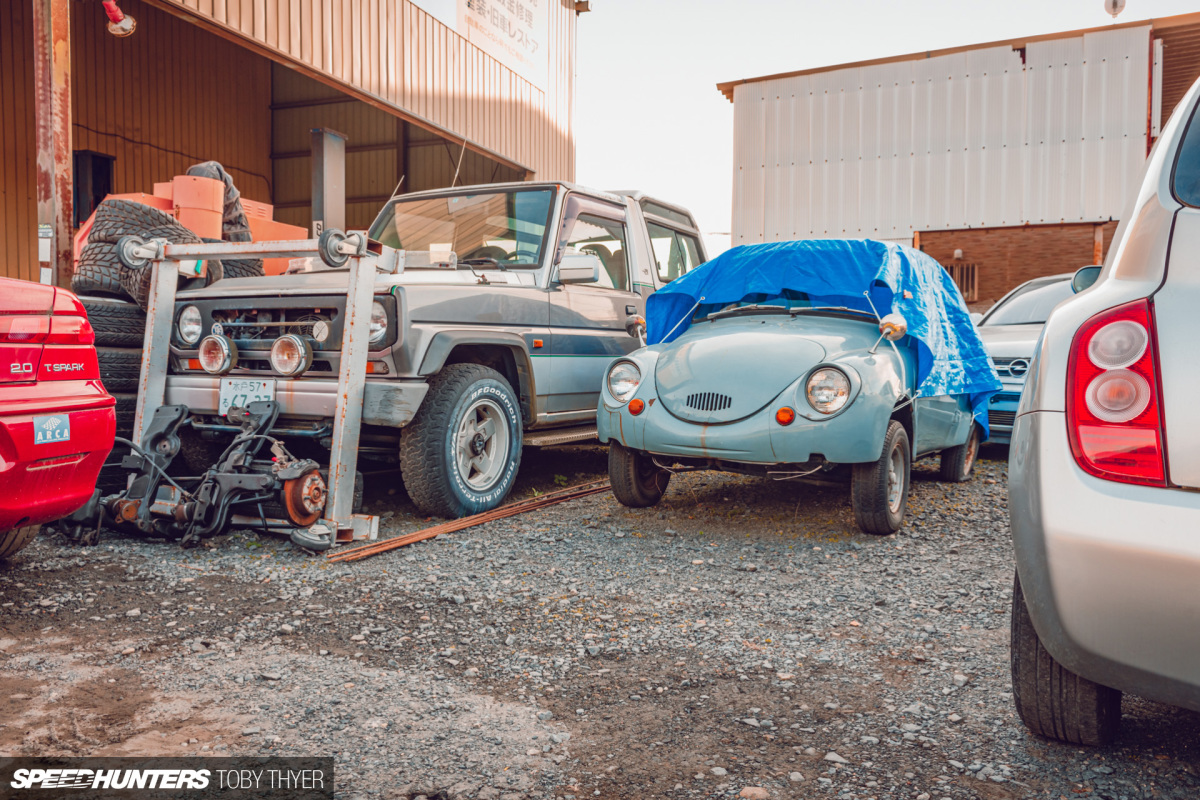
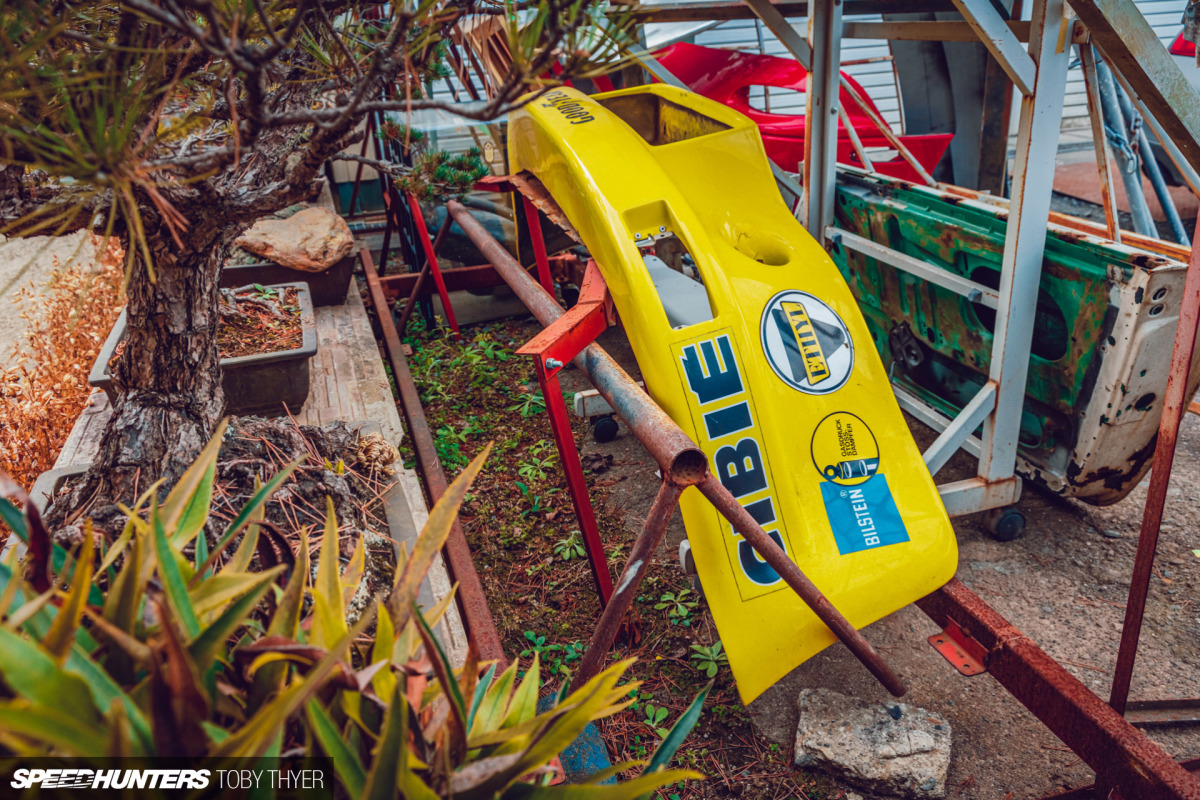
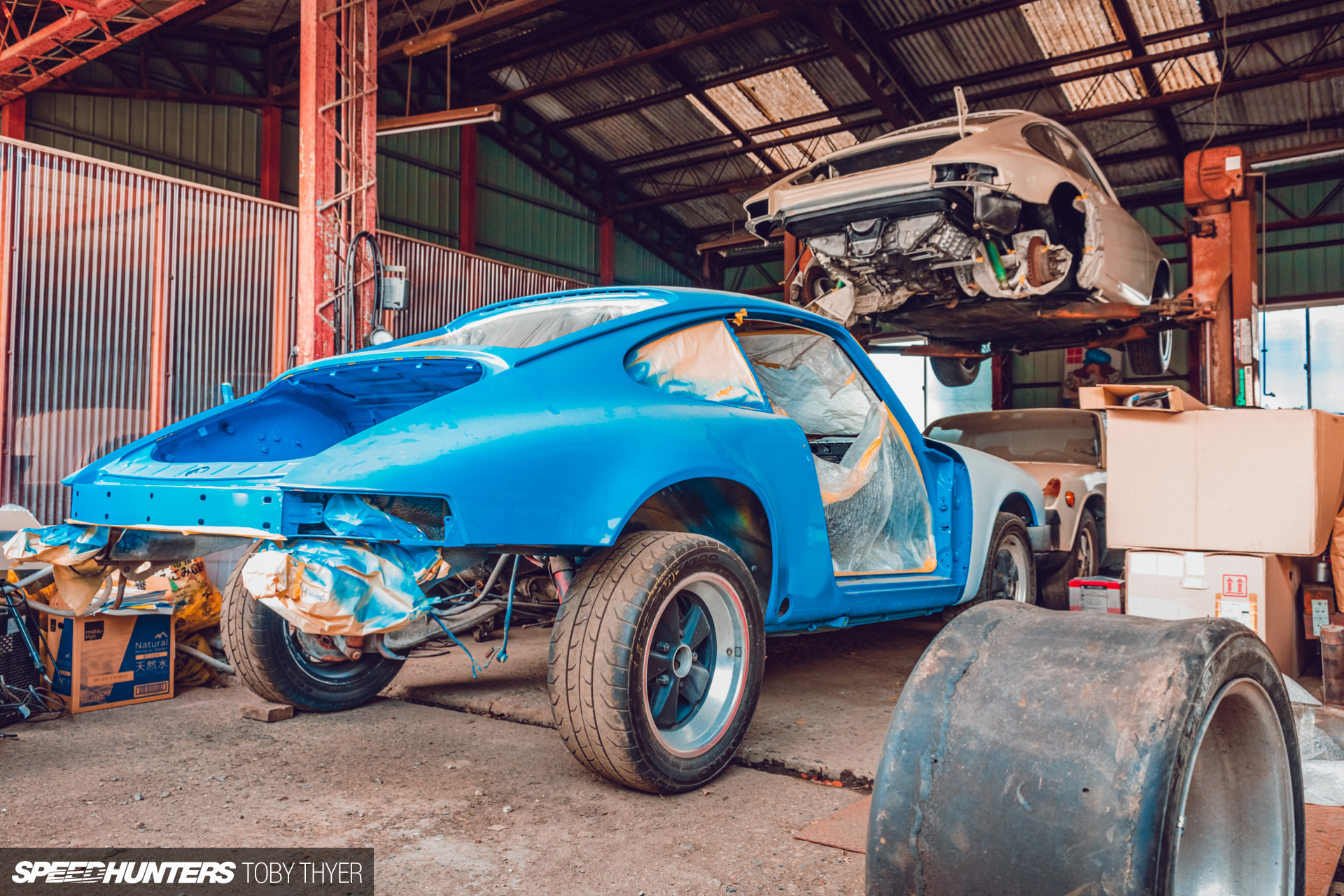
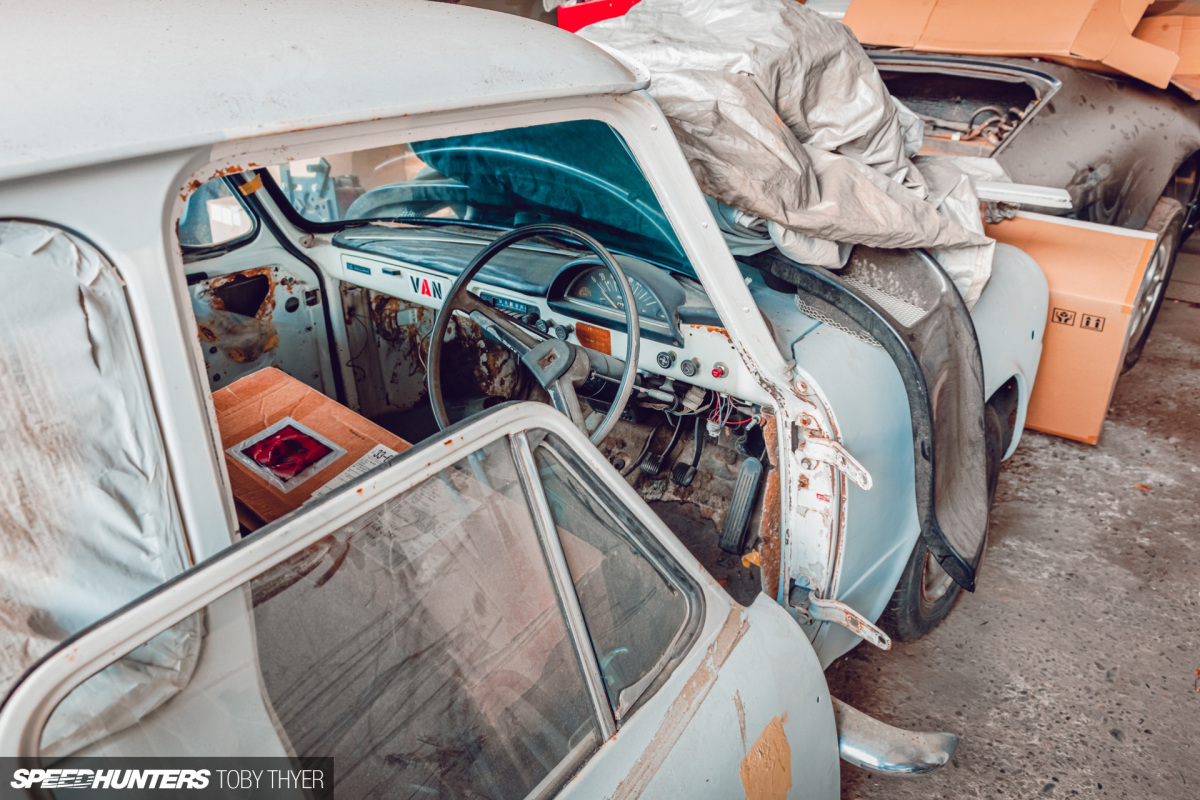
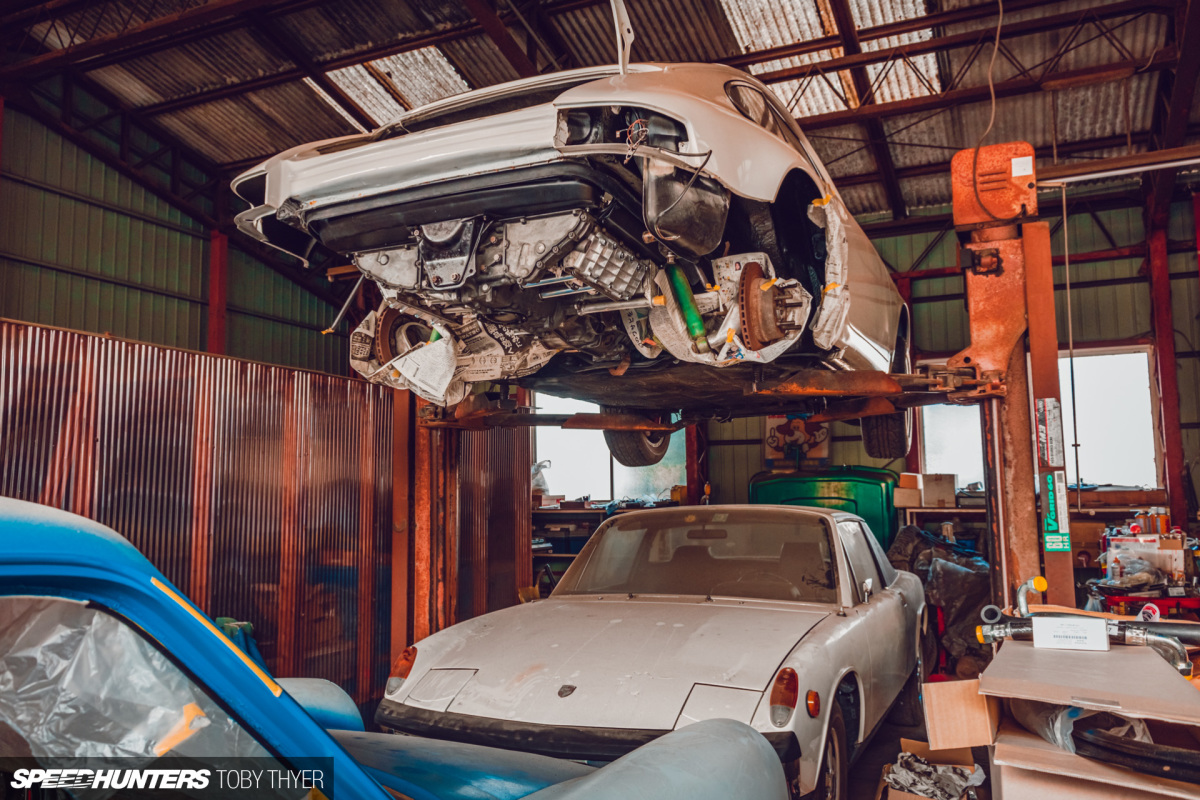
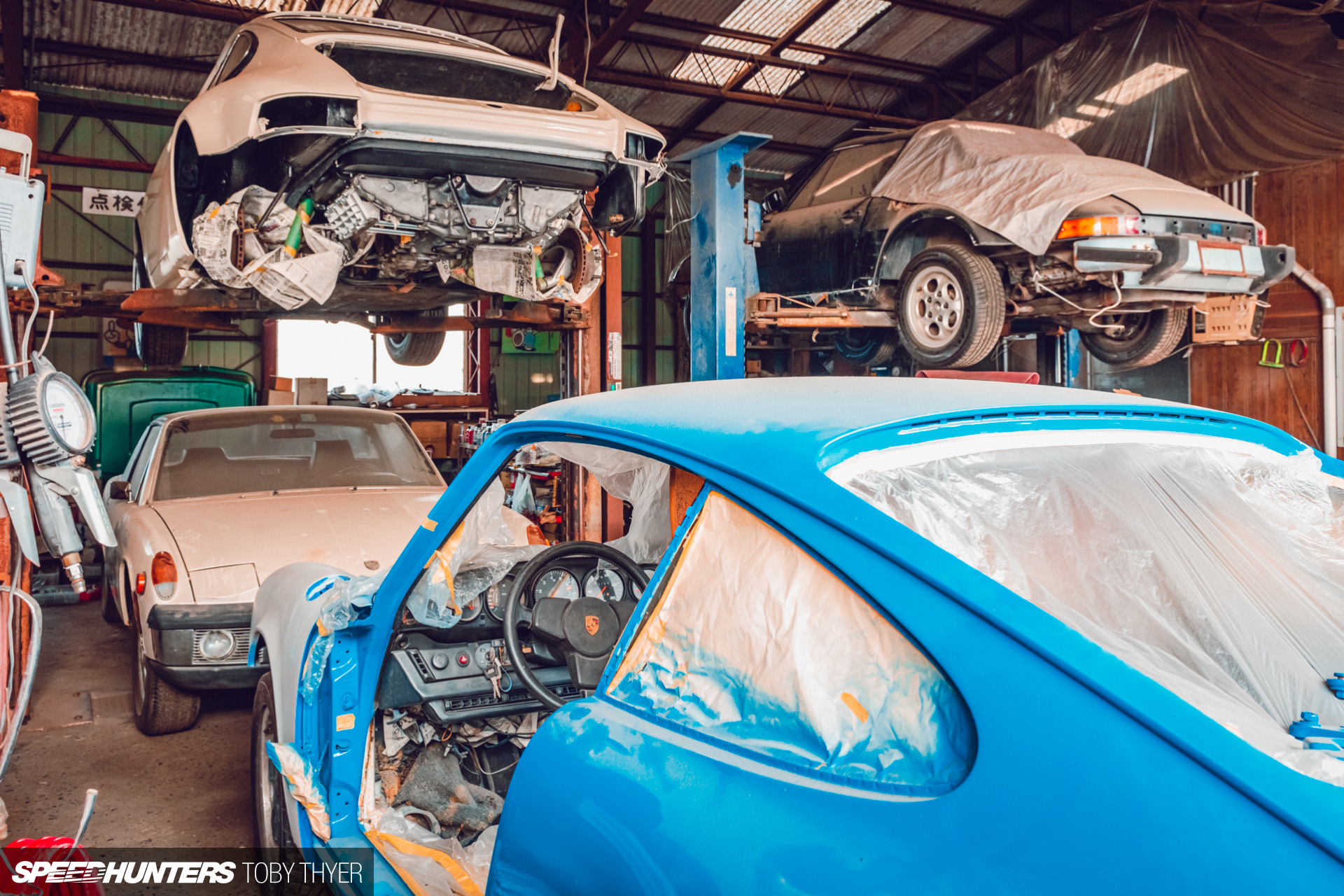
The shed is full of shells awaiting resurrection; a 1970 911, a 1974 US-spec Carrera, a 1973 flat nose Carrera 3.2 Cabriolet, a Triumph Stag, and Toyota Publica with a flat-two engine all currently under Watahiki-san’s knife.
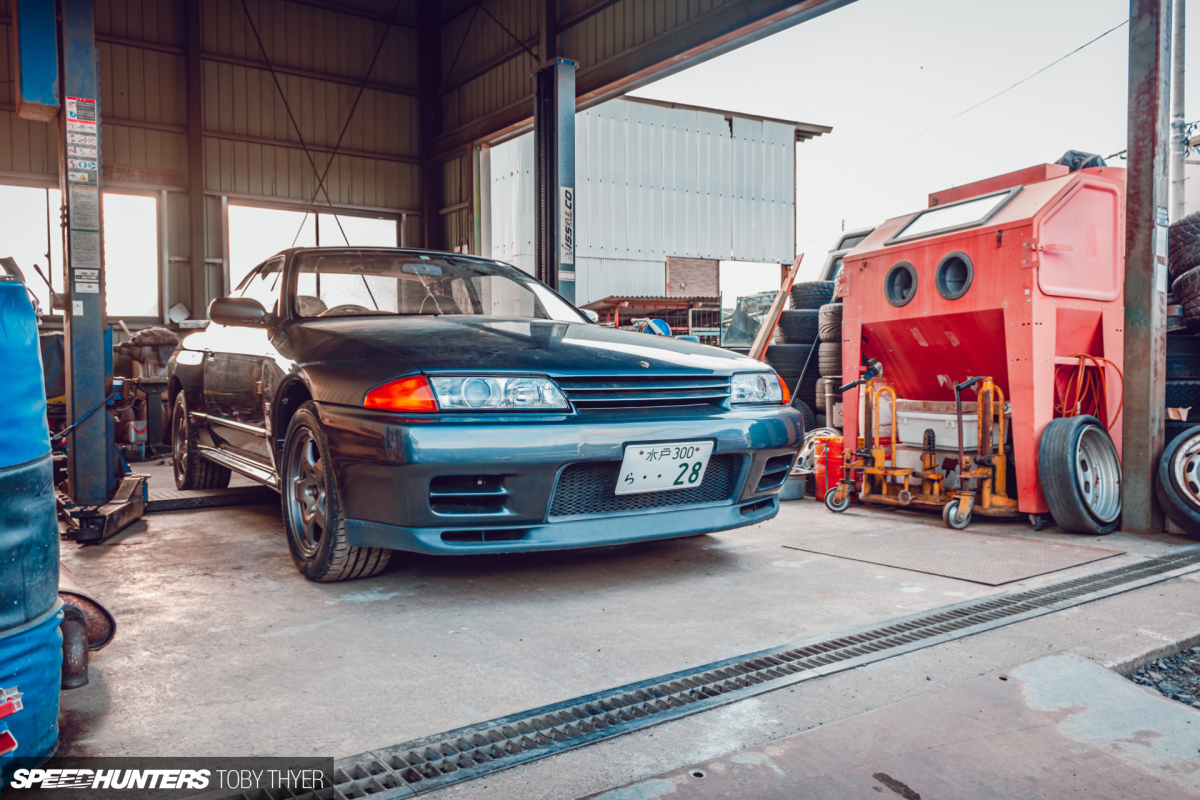
Meanwhile, a BNR32 Skyline GT-R sits quietly next to a parts cleaning machine, awaiting a new interior.

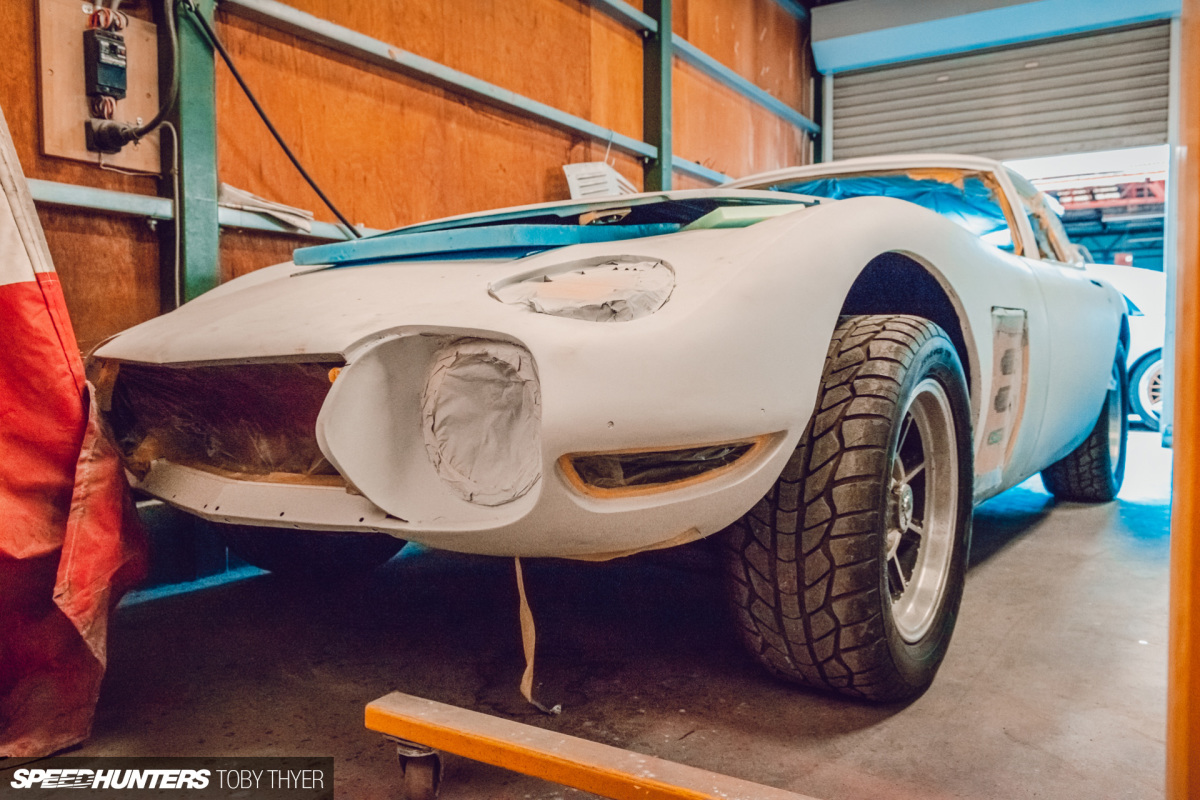
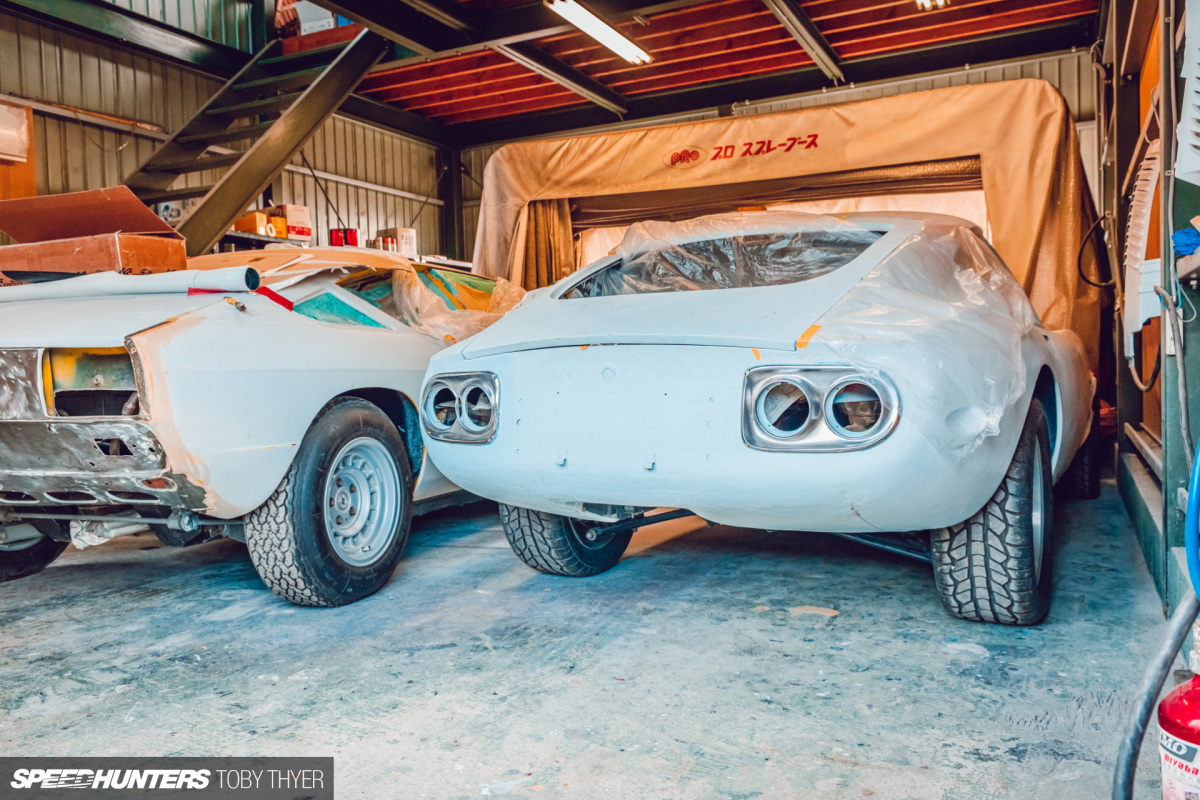
Watahiki-san pulled up the roller doors on one of the garages and revealed two old ladies in their underwear waiting for a dip in the retractable spray booth. Once my eyes adjusted, I realised one was unmistakably a Lamborghini (I’m told it’s an Urraco) and the other was a Toyota 2000GT, one of my all-time favourite Japanese classics.
While I was admittedly drawn towards the beautiful lines of the Yamaha-designed classic, this car has historical prowess by the bucketloads. The 2000GT made the international motoring world change their view of Japanese cars.
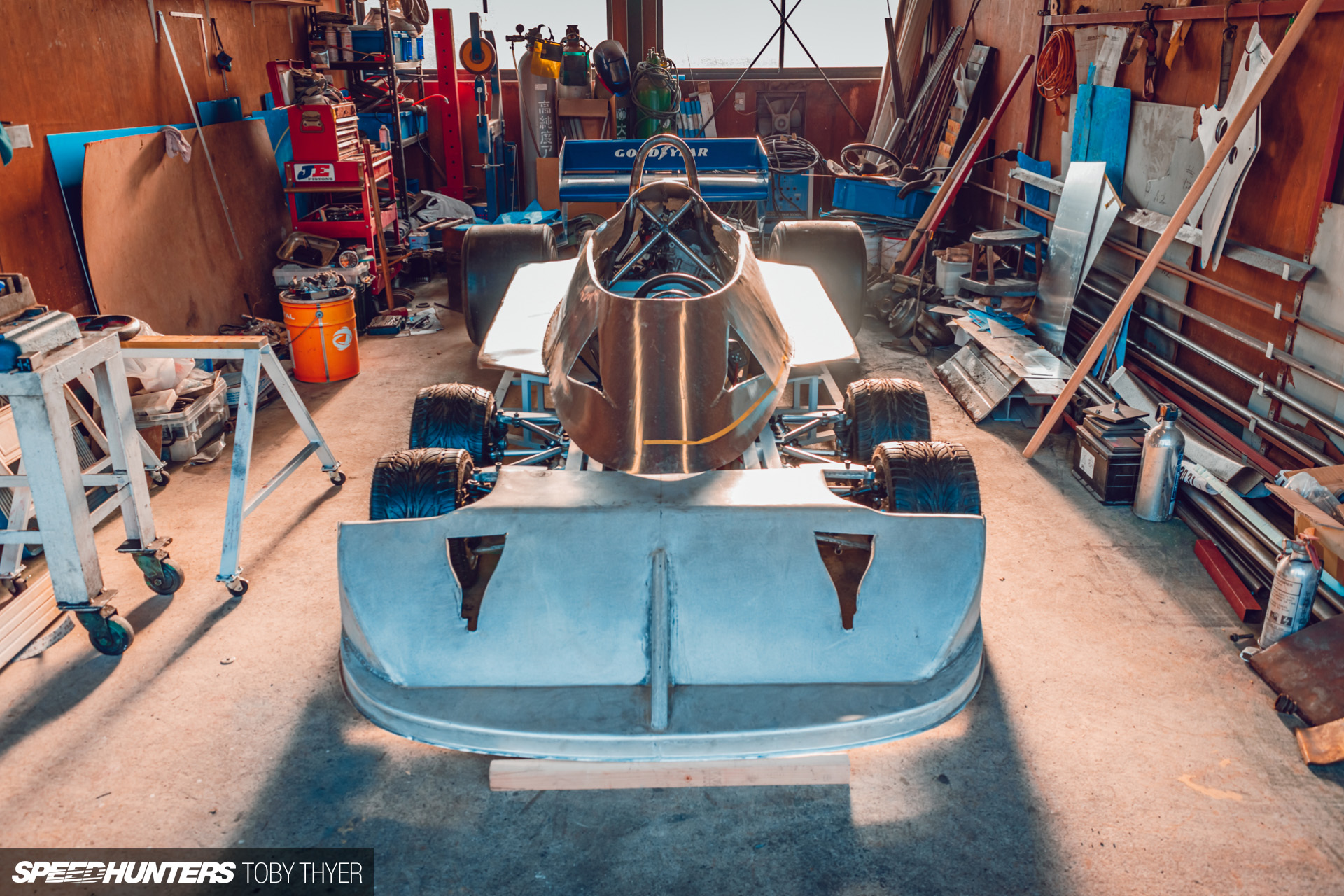
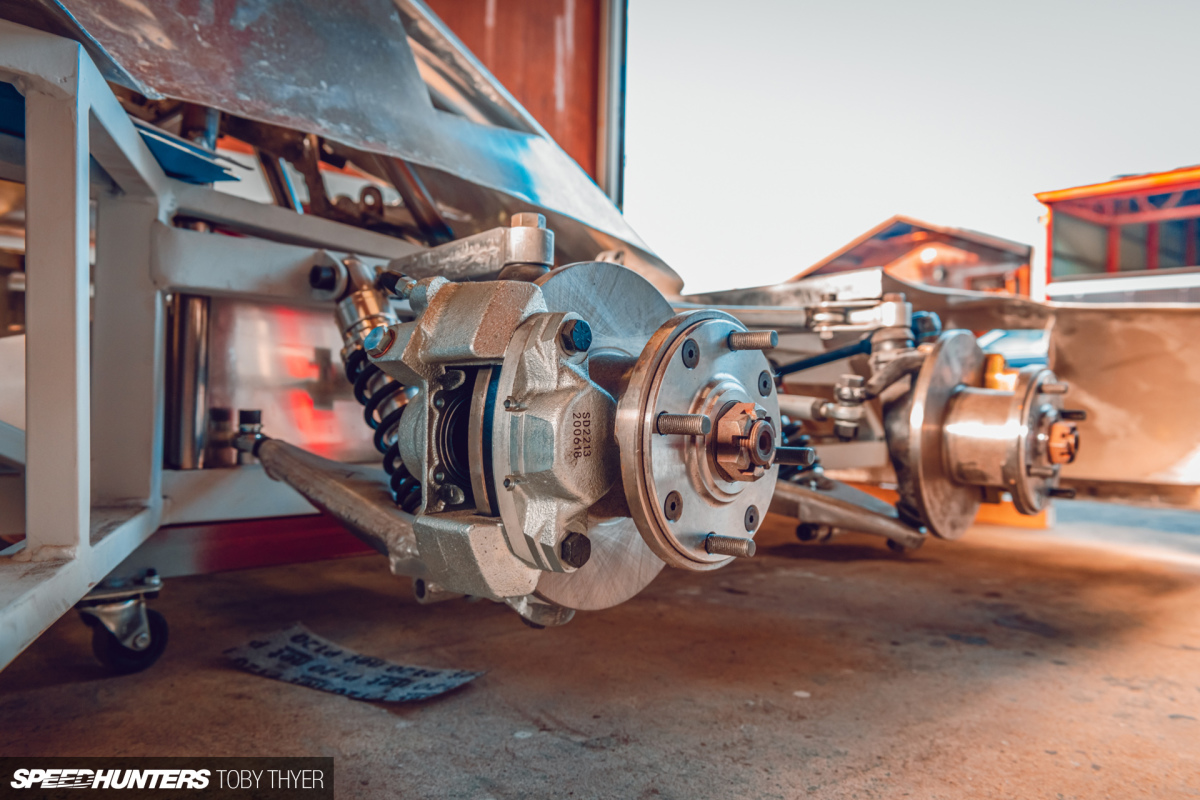
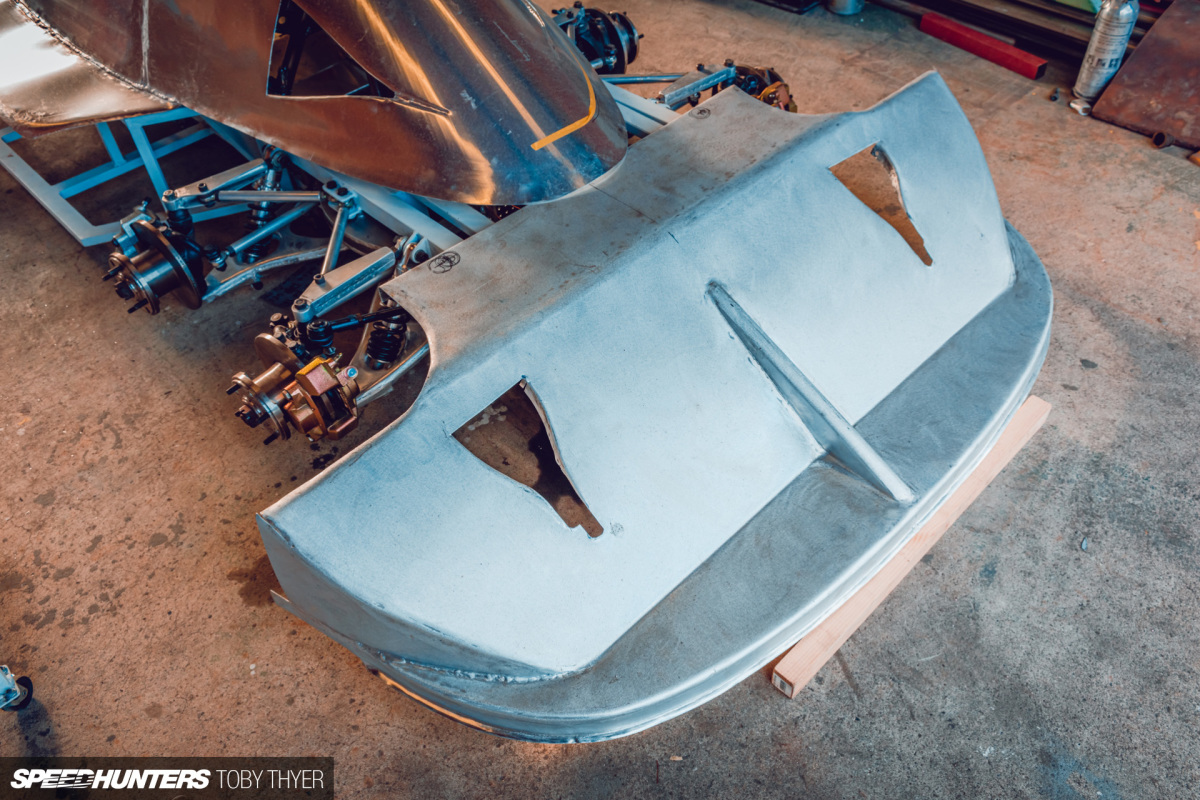
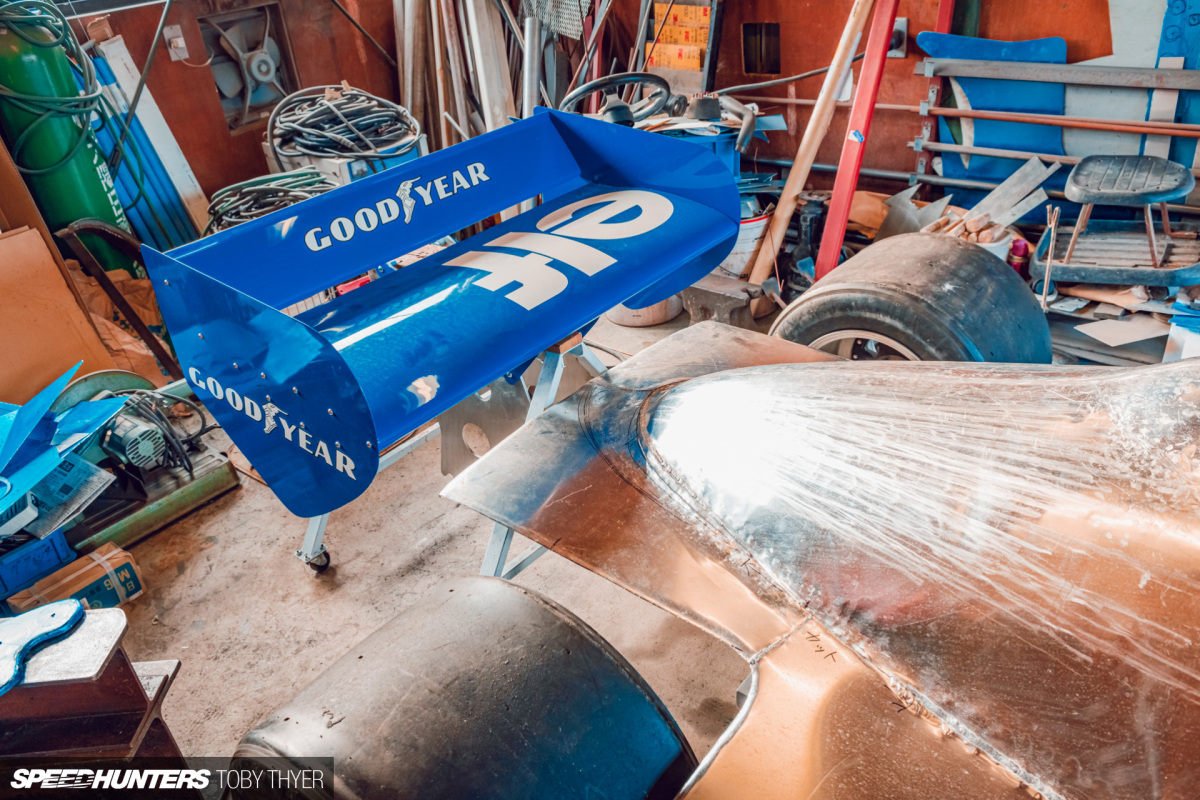
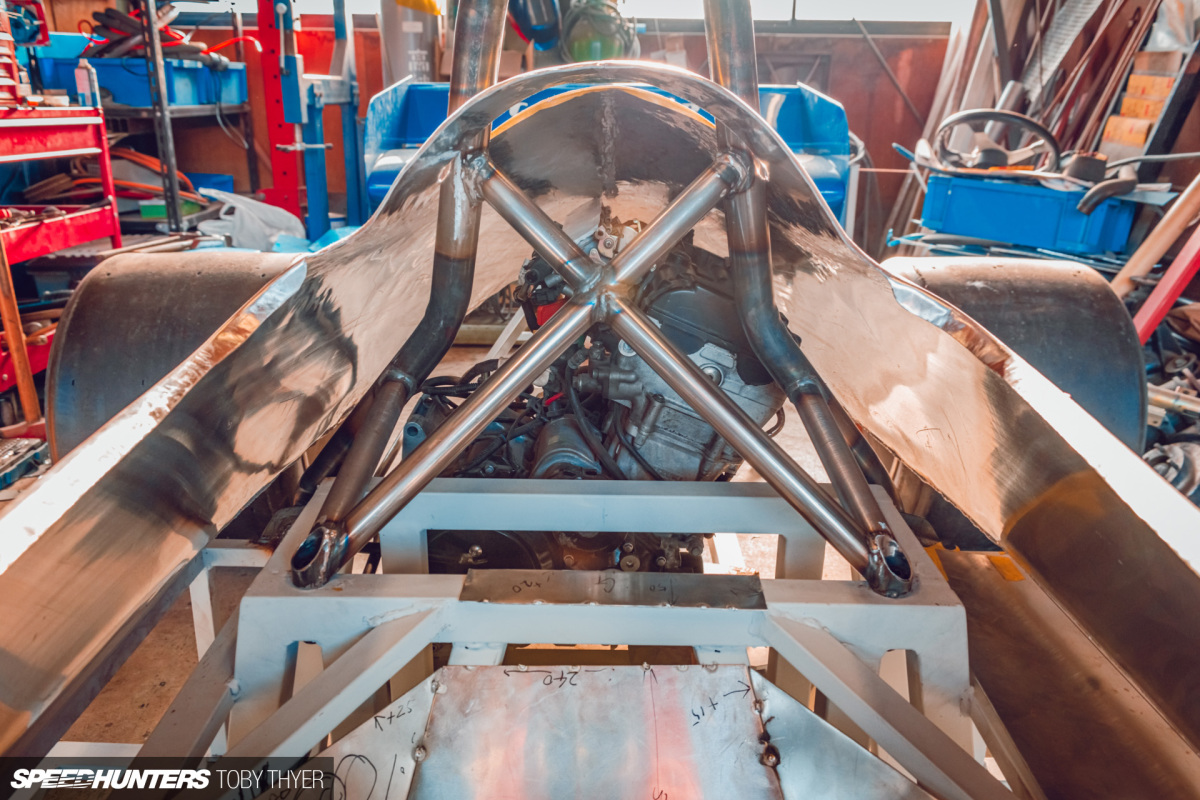
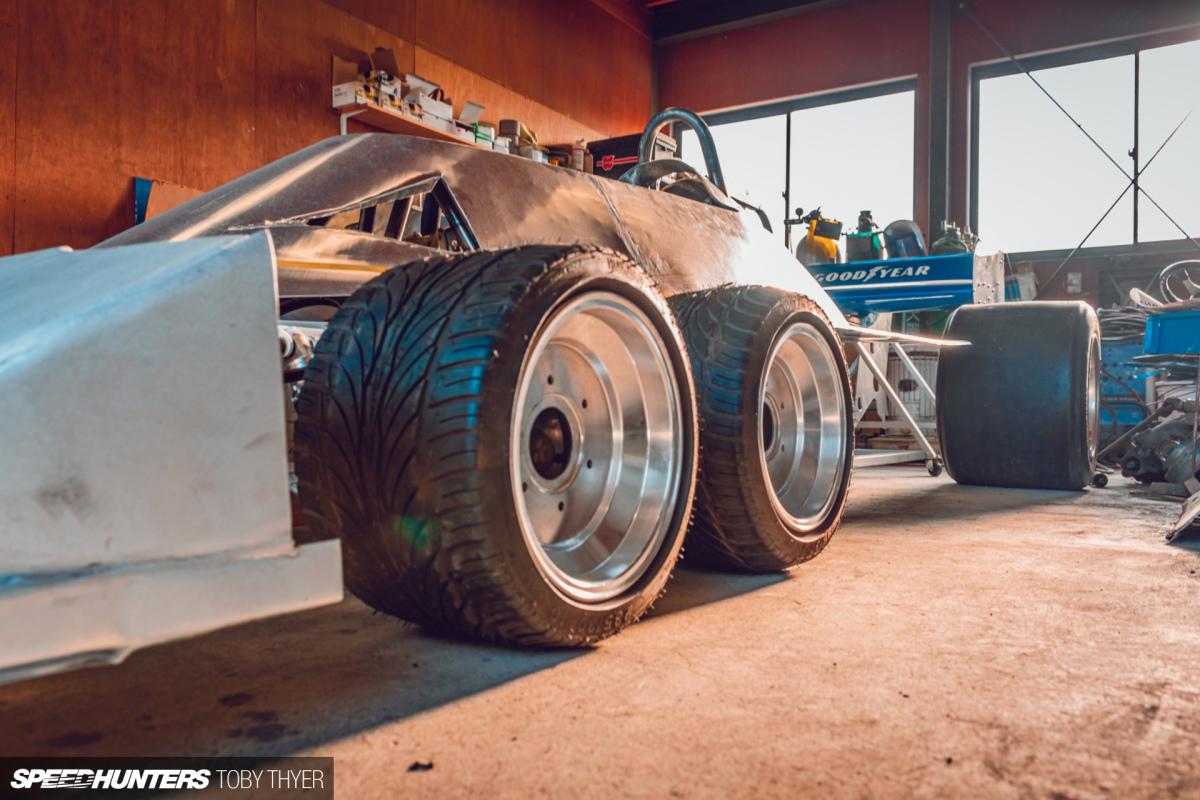
Swiftly moving on – because that’s not the half of it – in the next garage sat something quite strange, even for Japan. This is a hand-built Tyrell six-wheeler weighing 350kg (anticipated) with a 1,300cc Suzuki Hayabusa bike engine in the back. Sound terrifying? Don’t worry, it won’t be competitively raced.
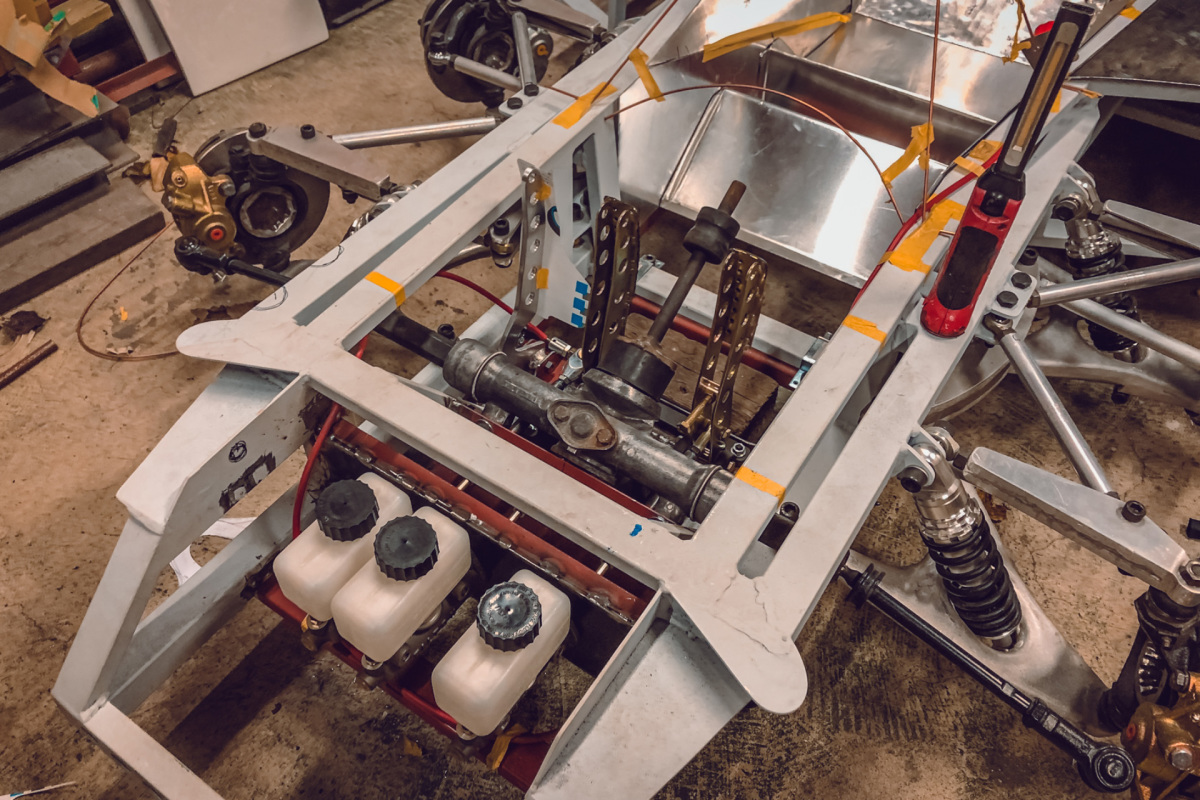
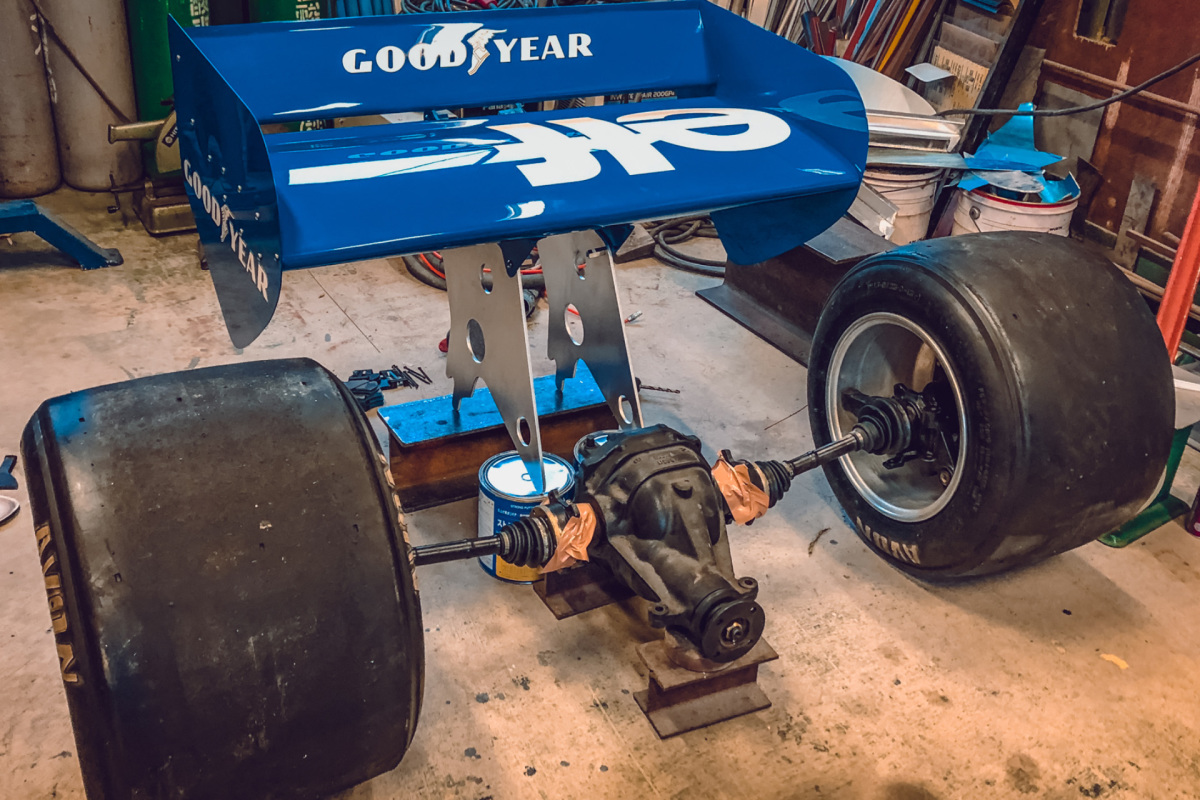
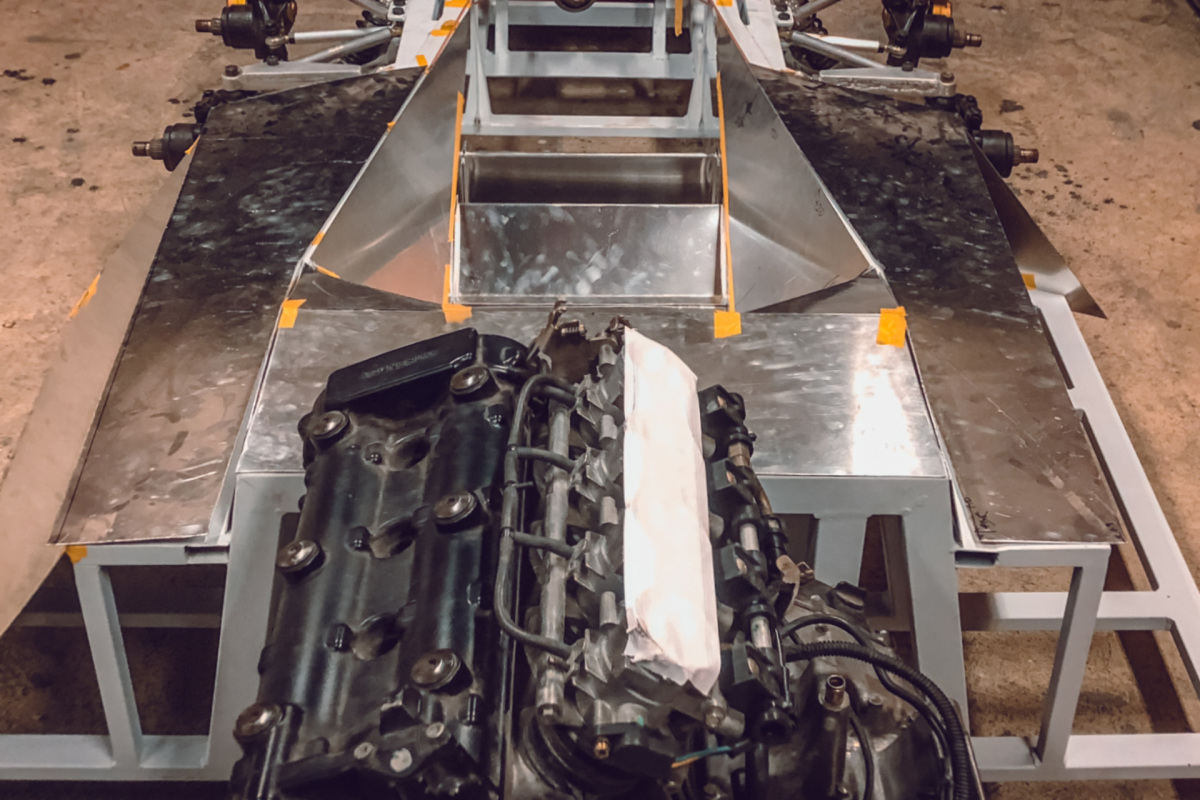
This is where we really start to see the capabilities of a man who was brought up into his trade. “I thought people might like to see the legendary six-wheeler, and I thought I could make it, so I did,” Watahiki-san says. He makes it seem as easy as building sandcastles.
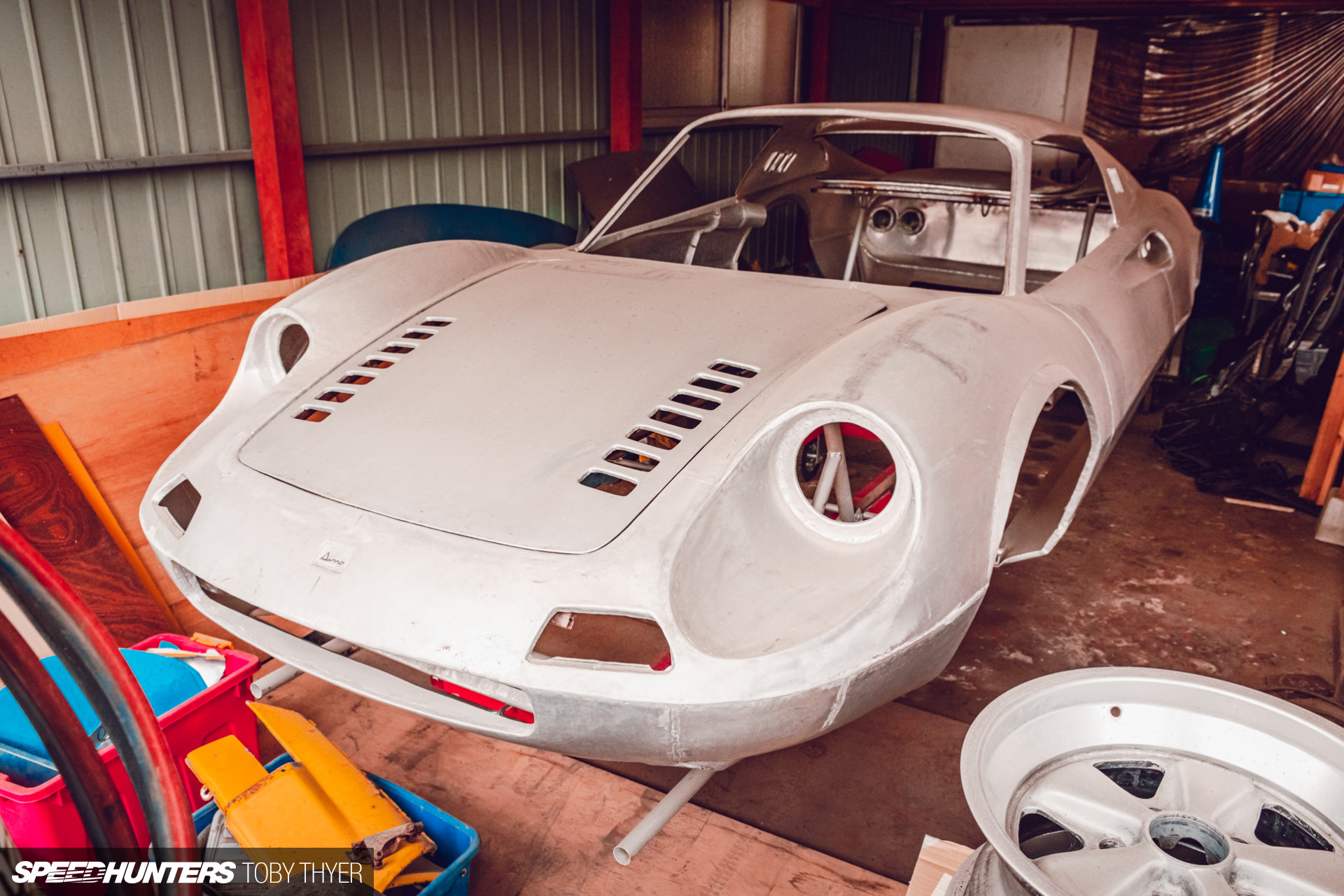
Still slightly confused and grinning madly, I was beckoned over to the final door. “Here is the other Dino,” said Watahiki-san with a smile. Floating elegantly in the small timbe- clad shed is the hand-built aluminium shell of a Ferrari Dino. When I say ‘hand-built’ I mean hand-built by Watahiki-san.
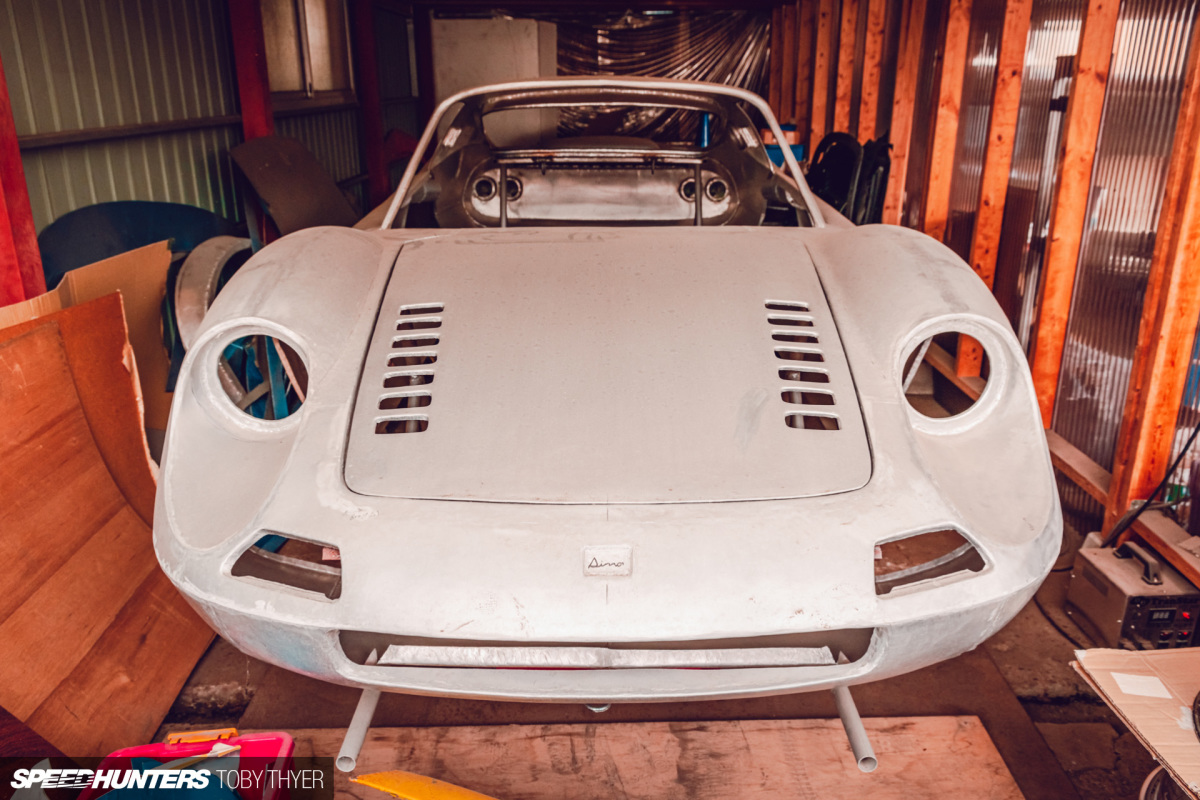
“When I owned the Dino 246 GT I decided to copy it using aluminum,” he said. Just let that sink in for a moment. I was speechless. Needless to say, I’ll be back to visit both Dinos soon.
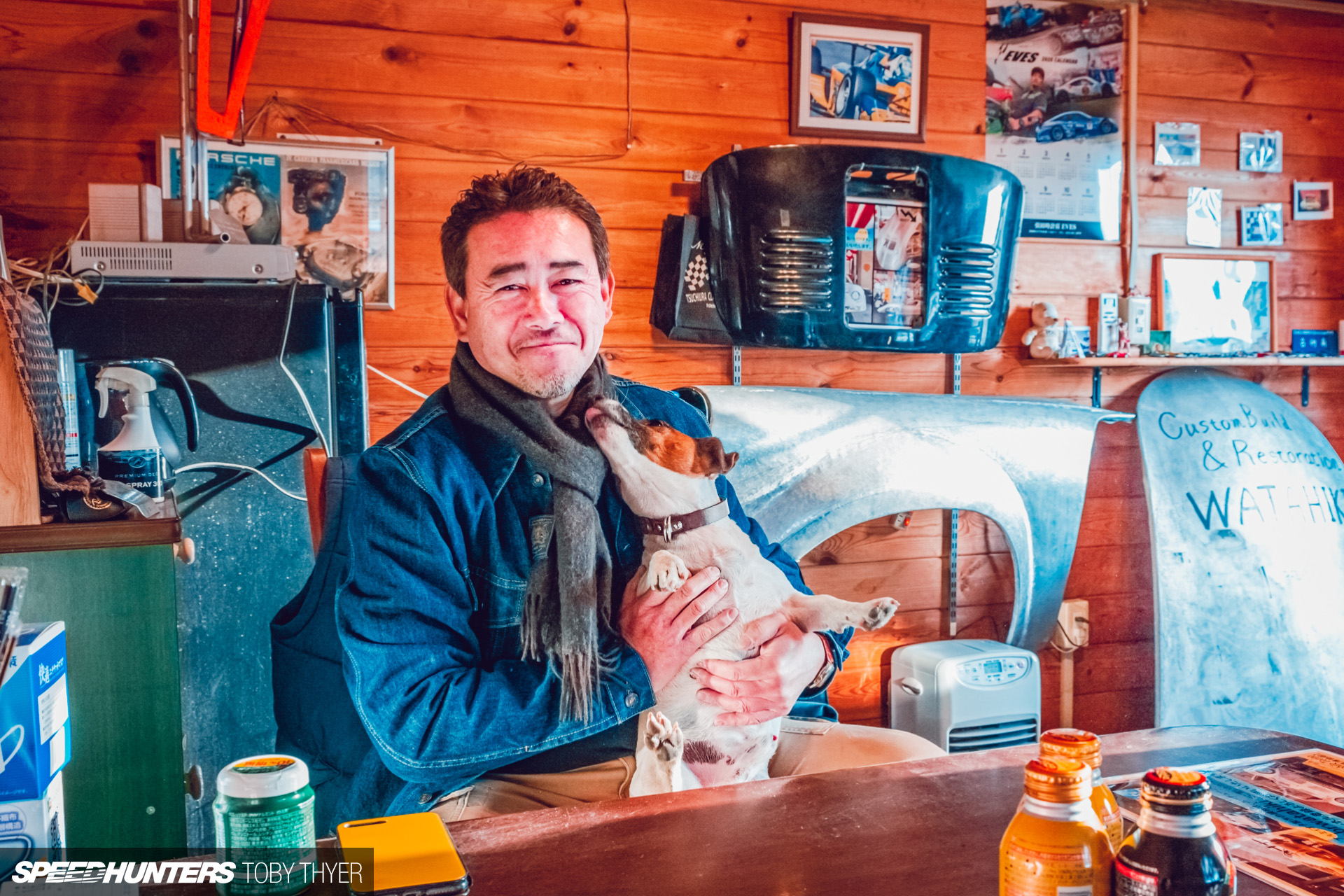
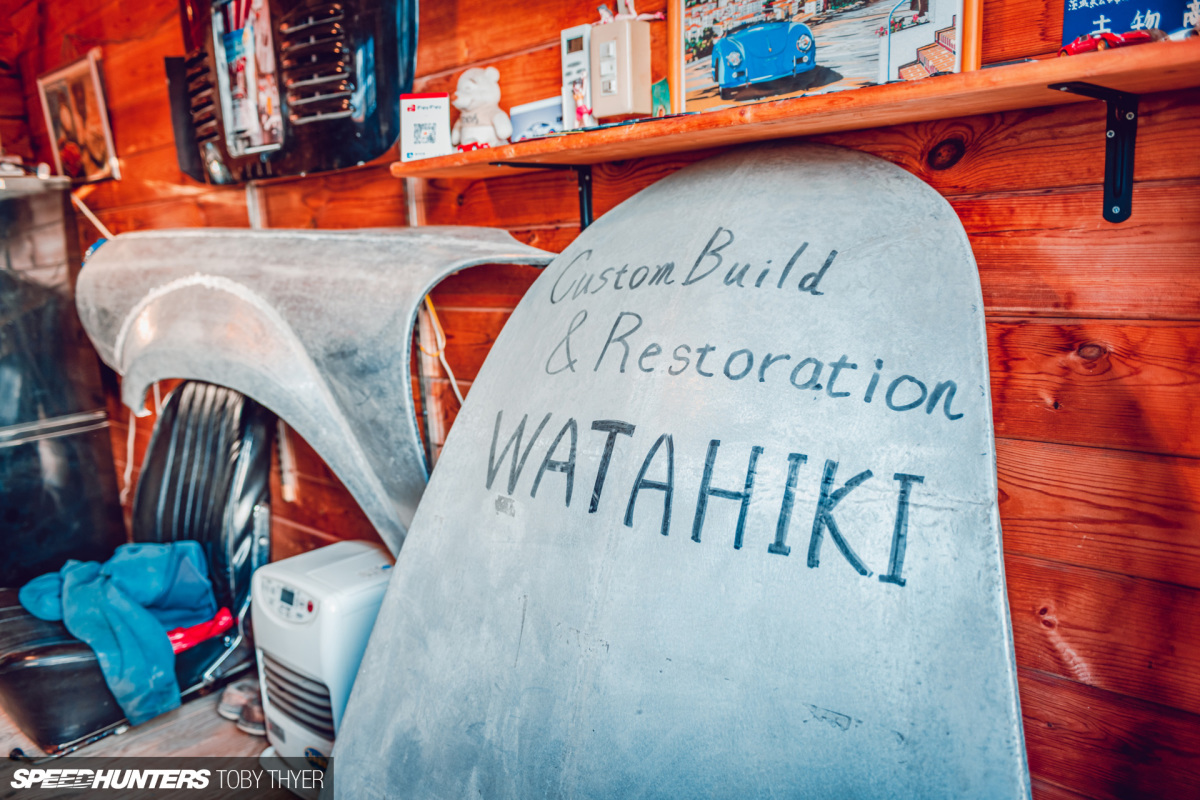
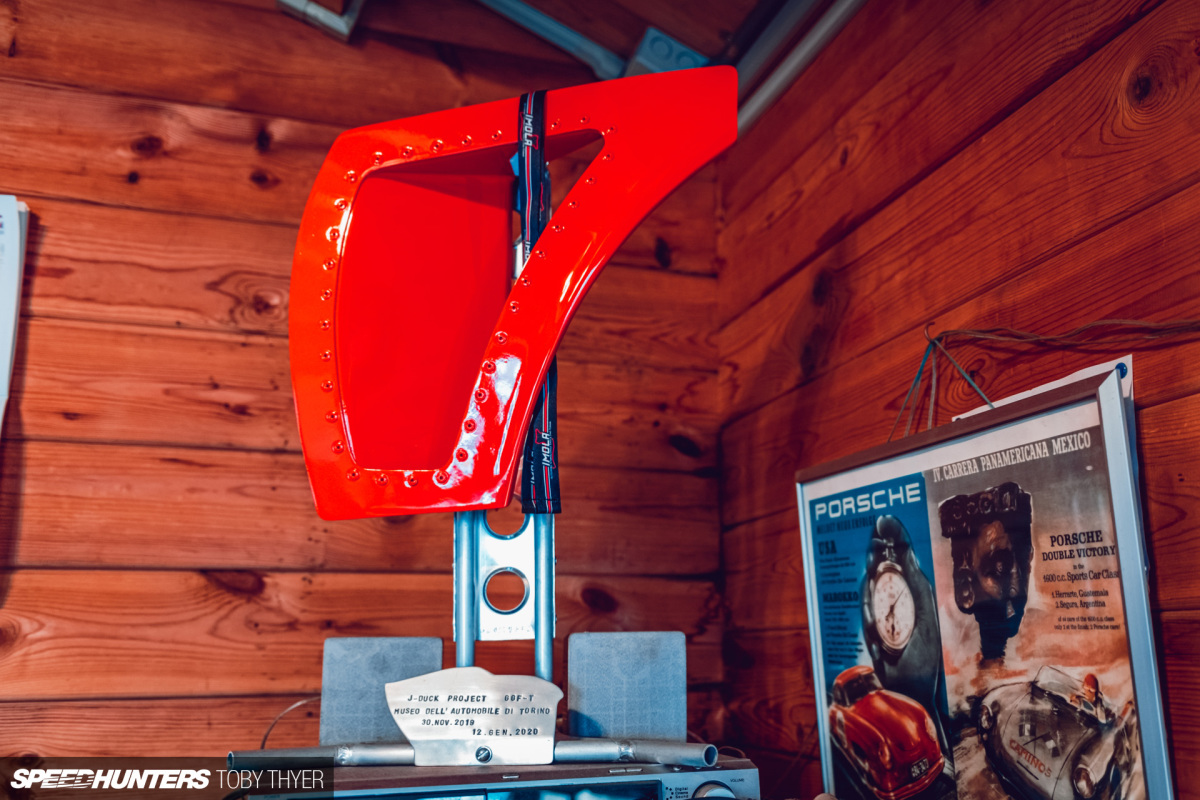
We retired to Watahiki-san’s cozy office which is full of trophies and memorabilia and talked more about cars.
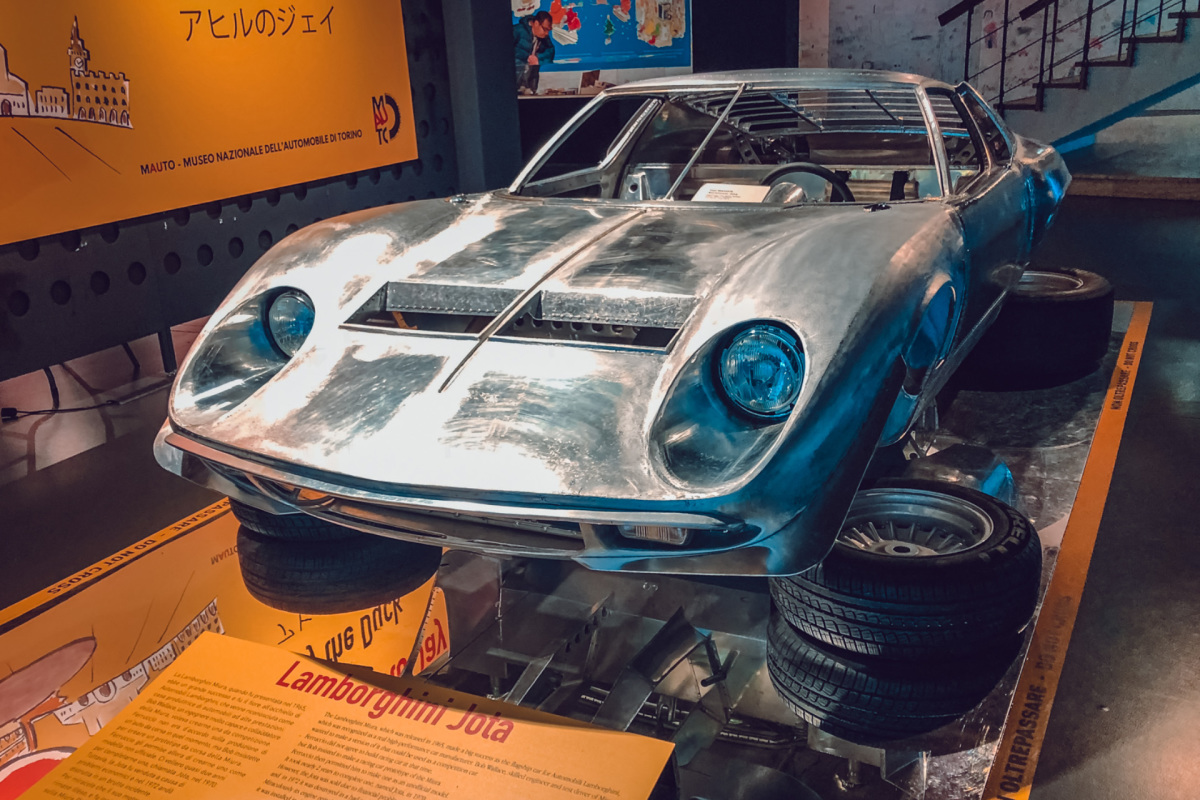
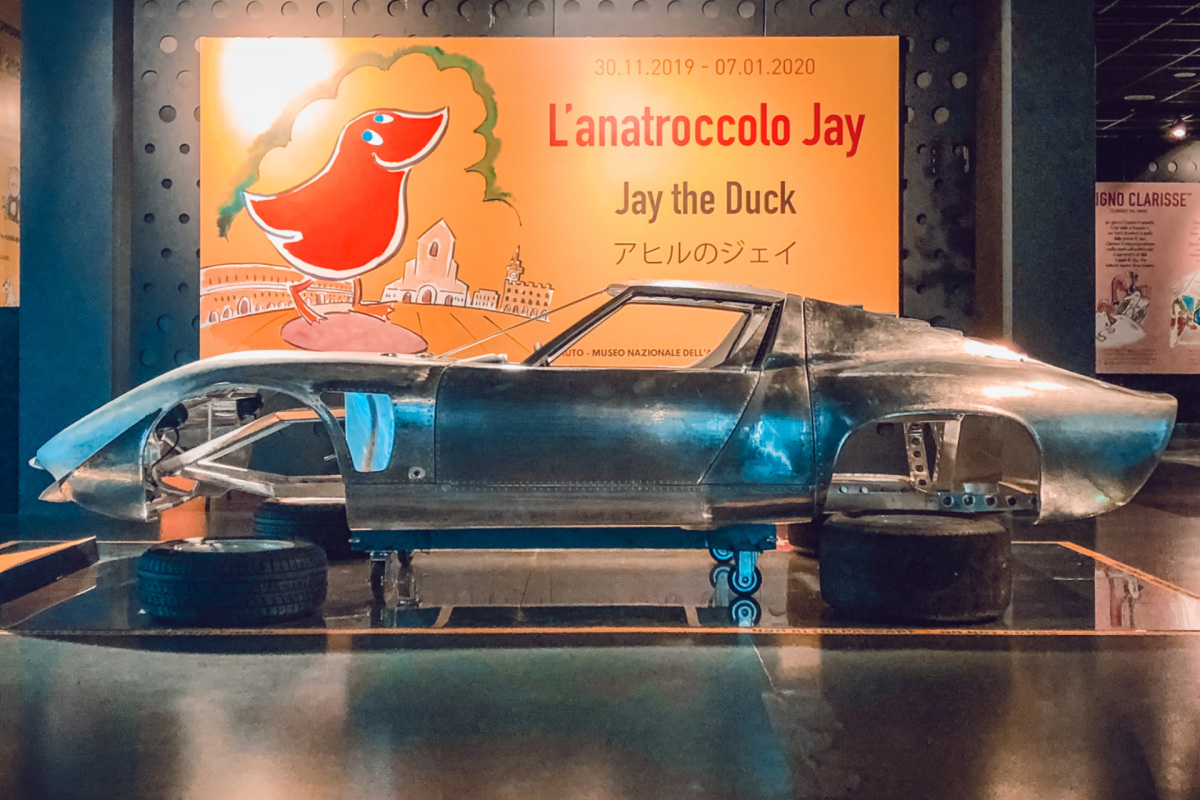
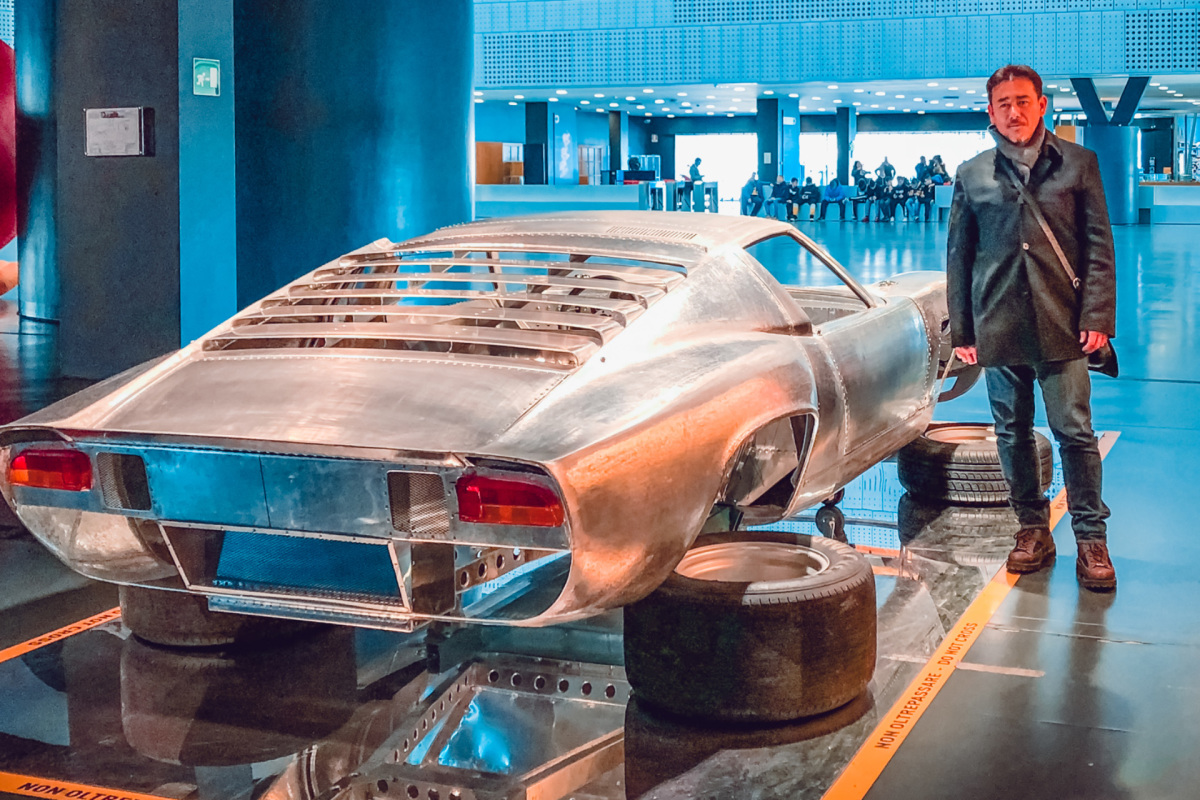
It turns out that the Dino (the car) is not the only Italian classic to be copied. Seeing the Dino replica, a Japanese businessman commissioned Watahiki-san to build a Lamborghini Miura Jota from aluminium, and he did just that.
The Jota he crafted (in just one year) was so impressive that Lamborghini themselves asked to display it at the Feruccio Lamborghini Museum in Italy, and then at the Turin National Automobile Museum, where it is now under COVID quarantine, waiting to return to Japan.
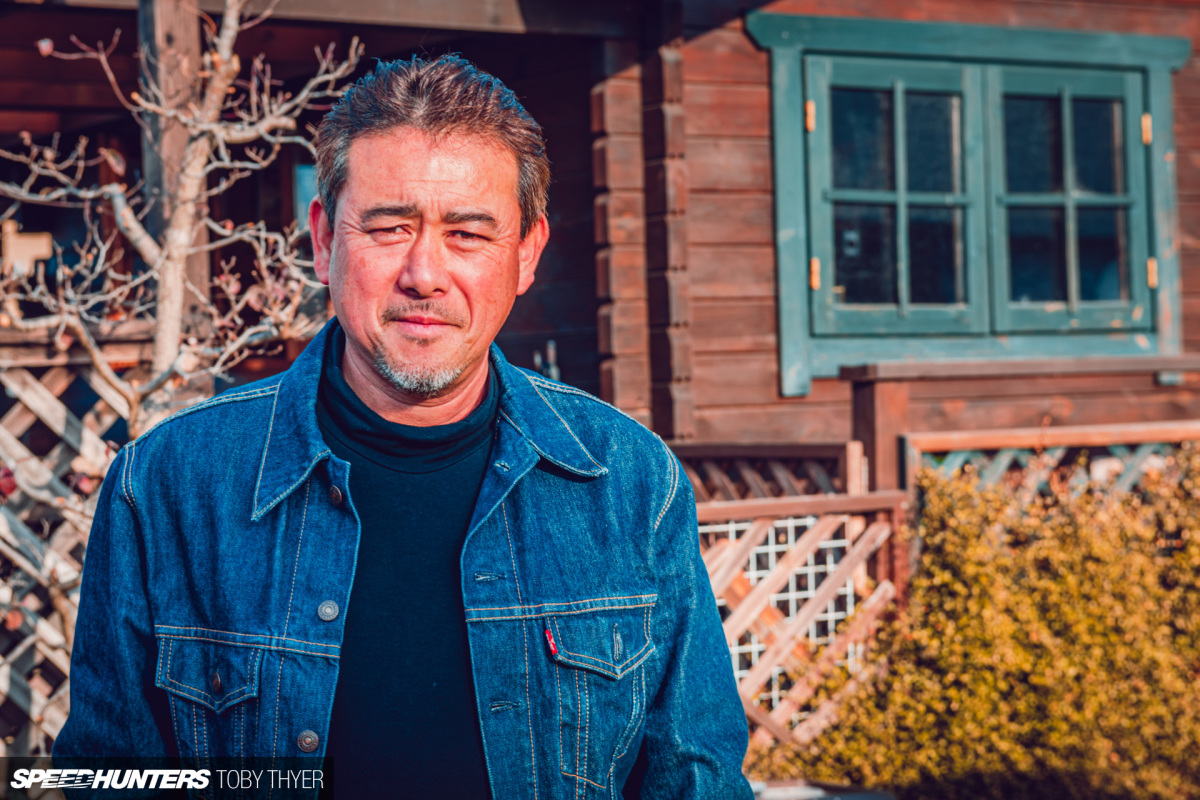
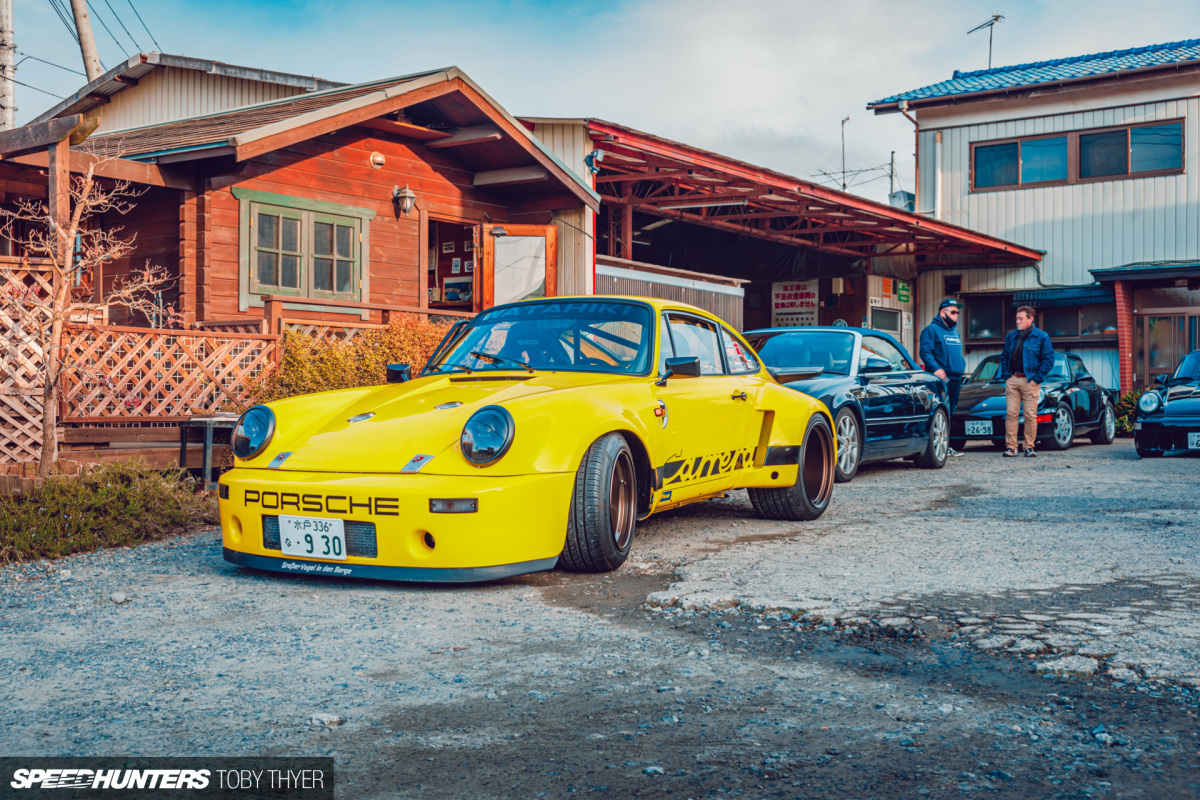
So there it is, the story of a man who followed the family business down the road of success. But it wasn’t just nurture which gave Watahiki-san the skills to fabricate aluminium masterpieces from nothing. I would say the guy is naturally pretty talented too.
If you want to see more of Watahiki-san’s builds, check out Watahiki Custom Body & Restoration’s YouTube channel.
Toby Thyer
Instagram _tobinsta_
tobythyer.co.uk