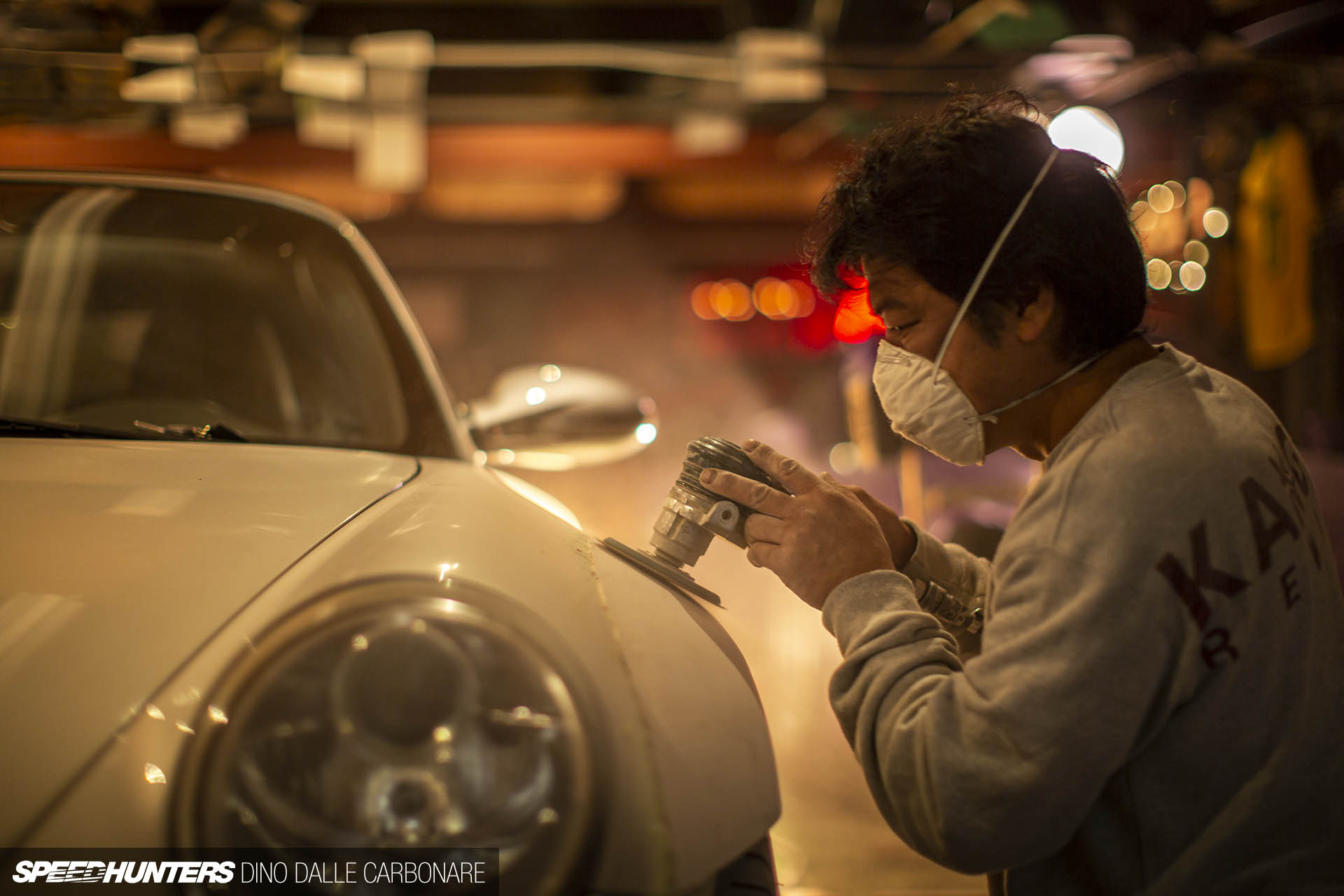
Last week, I brought you a unique behind-the-scenes look at the process Nakai-san follows when he’s starting to create a new wide-body RWB conversion – in this case a first kit for the Porsche 997. In that story, Nakai dipped his fingers into resin and layered strips of glass fiber onto the rear arches.
This follow-up has us fast forwarding a good six months. It was summer 2019, and the 997 project had been put on the back burner as Nakai went about completing customer builds all around the world.
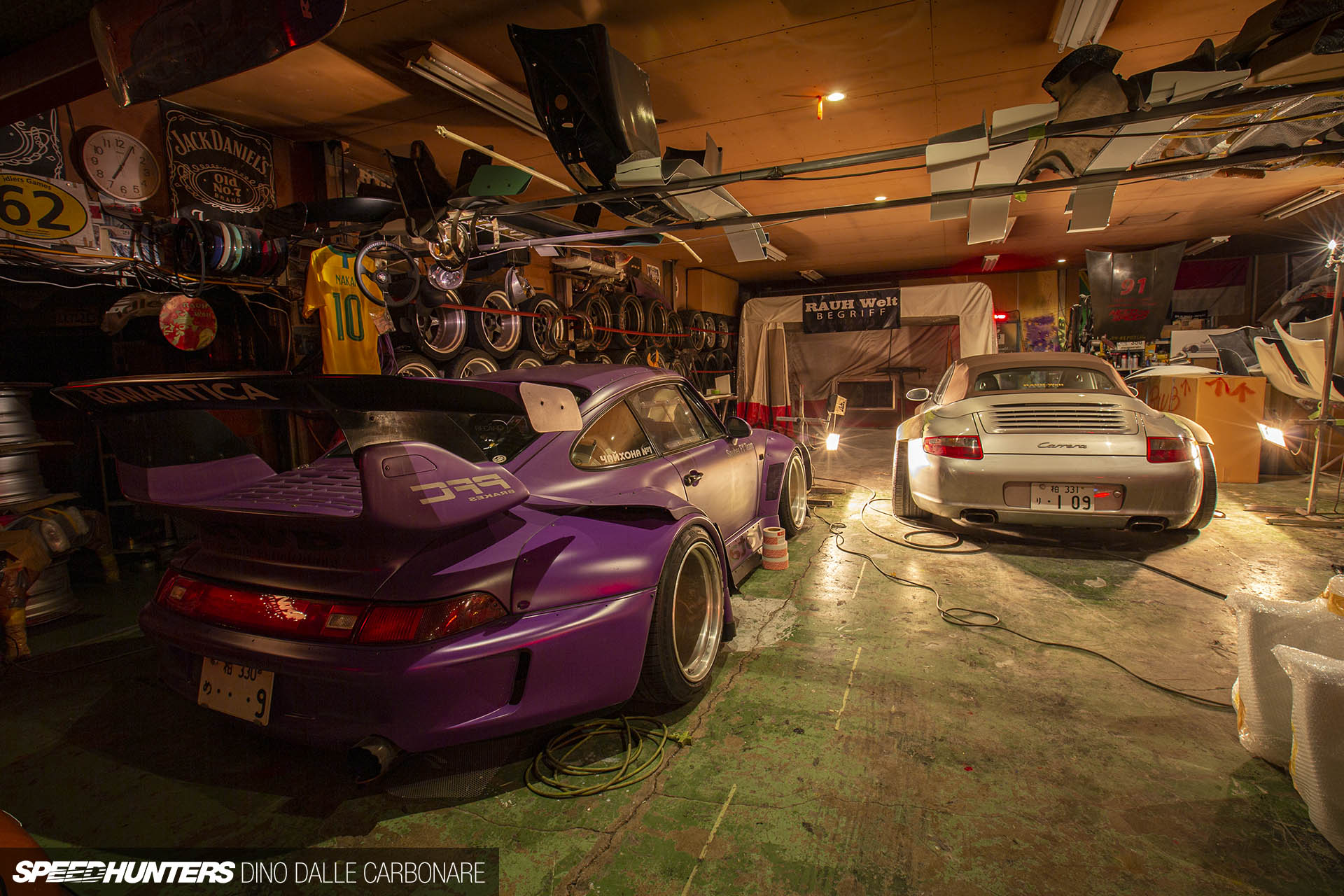
If I remember rightly, that would have been over 60 cars, so you can understand why the 997 kit wasn’t Nakai-san’s first priority.

That said, when I met him next things had really progressed.
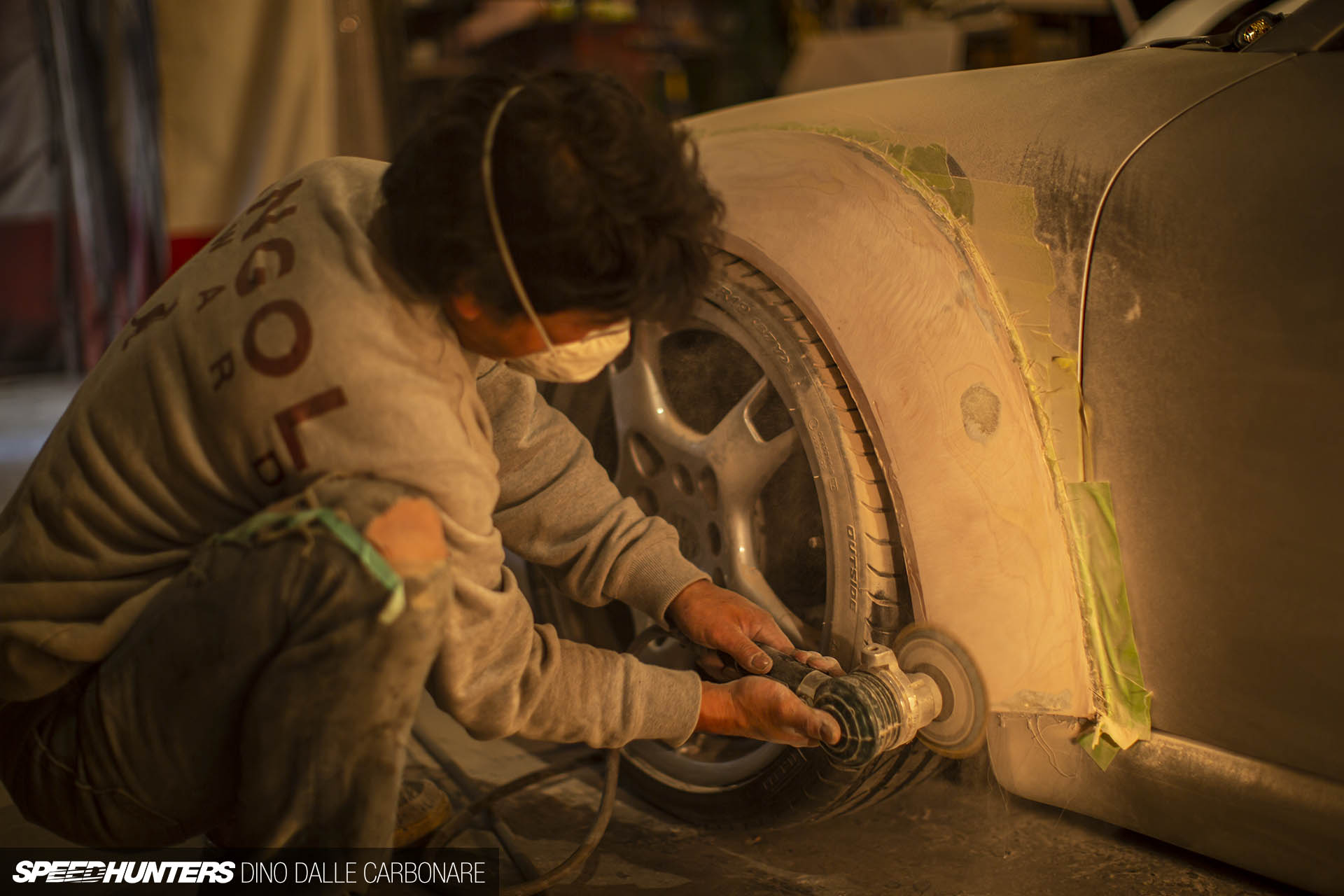
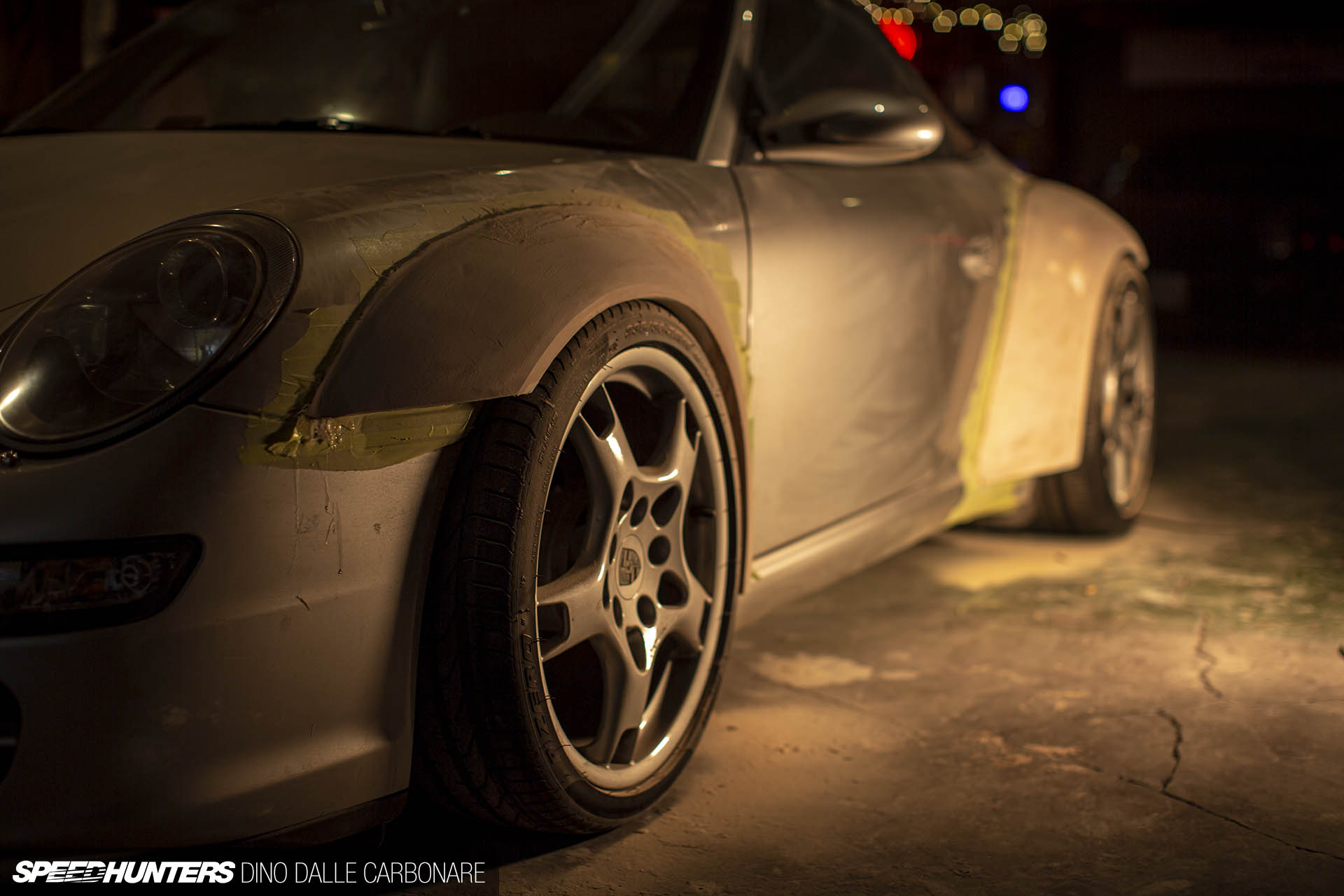
The rear fenders we saw him working on during the first visit had been joined by some fronts. It seems like Nakai-san used his downtime in between international builds well.
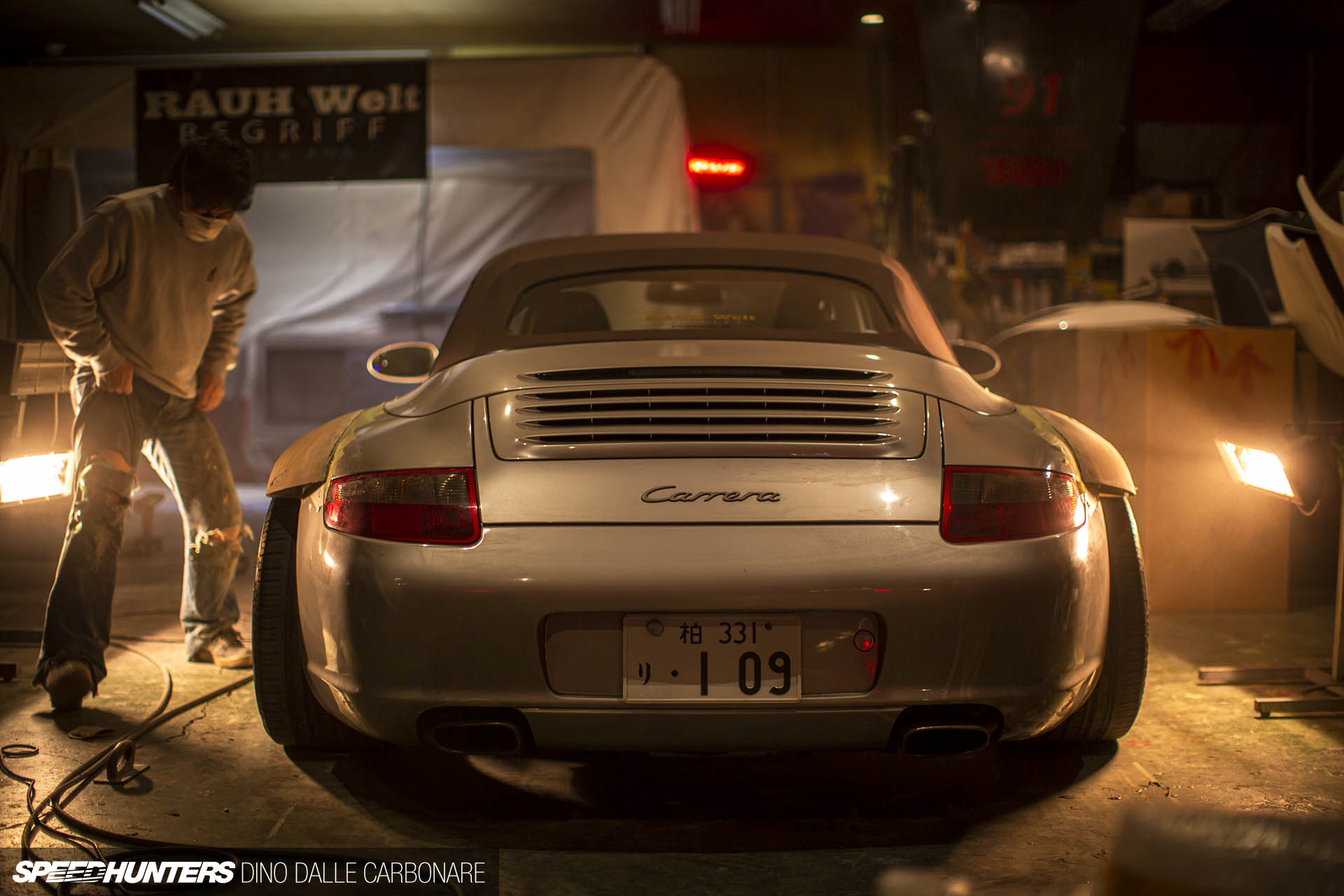
The rear fenders had also visibly grown in size thanks to multiple layers of body filler, which had been applied liberally on top of the FRP flares and the glass fiber we saw Nakai lay down.
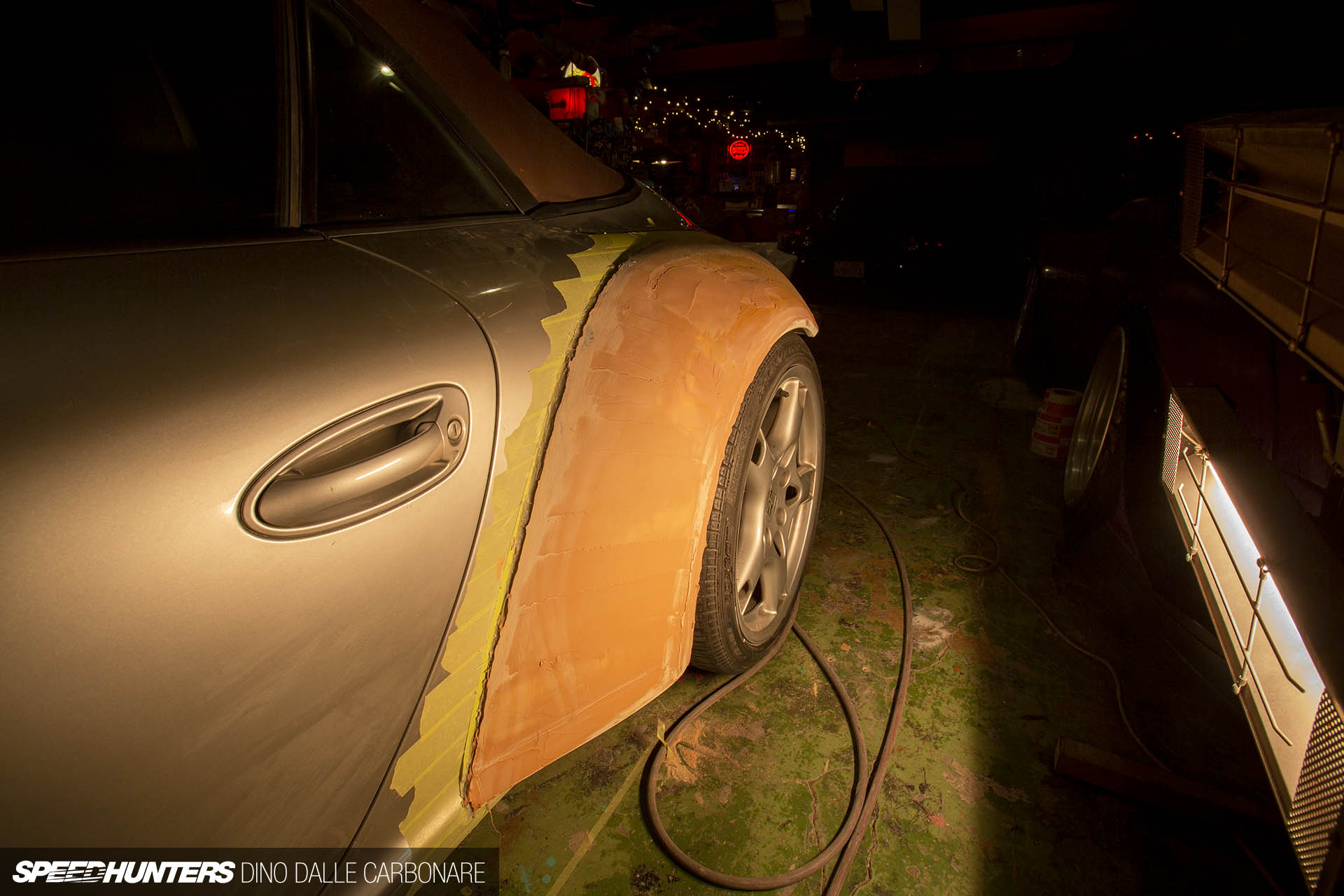

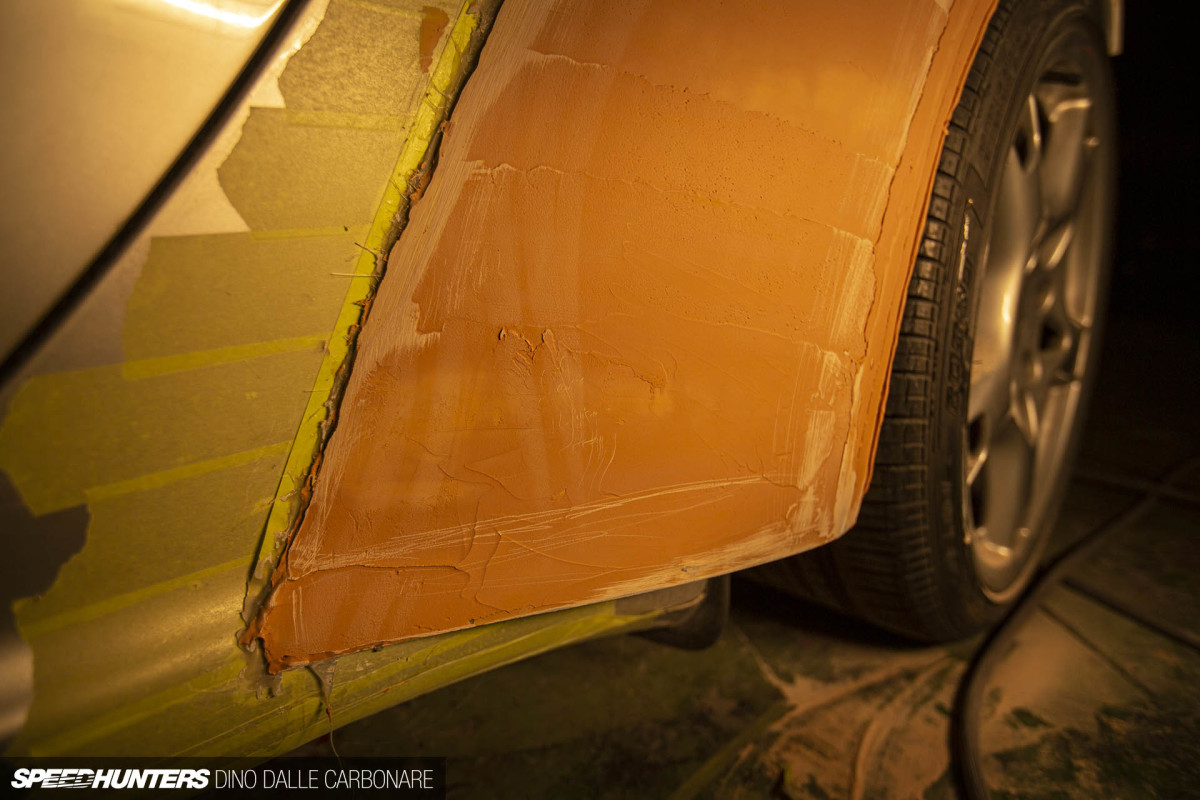
As Nakai put it, what I was about to see was probably going to be the most enjoyable part of the whole process – the actual shaping.

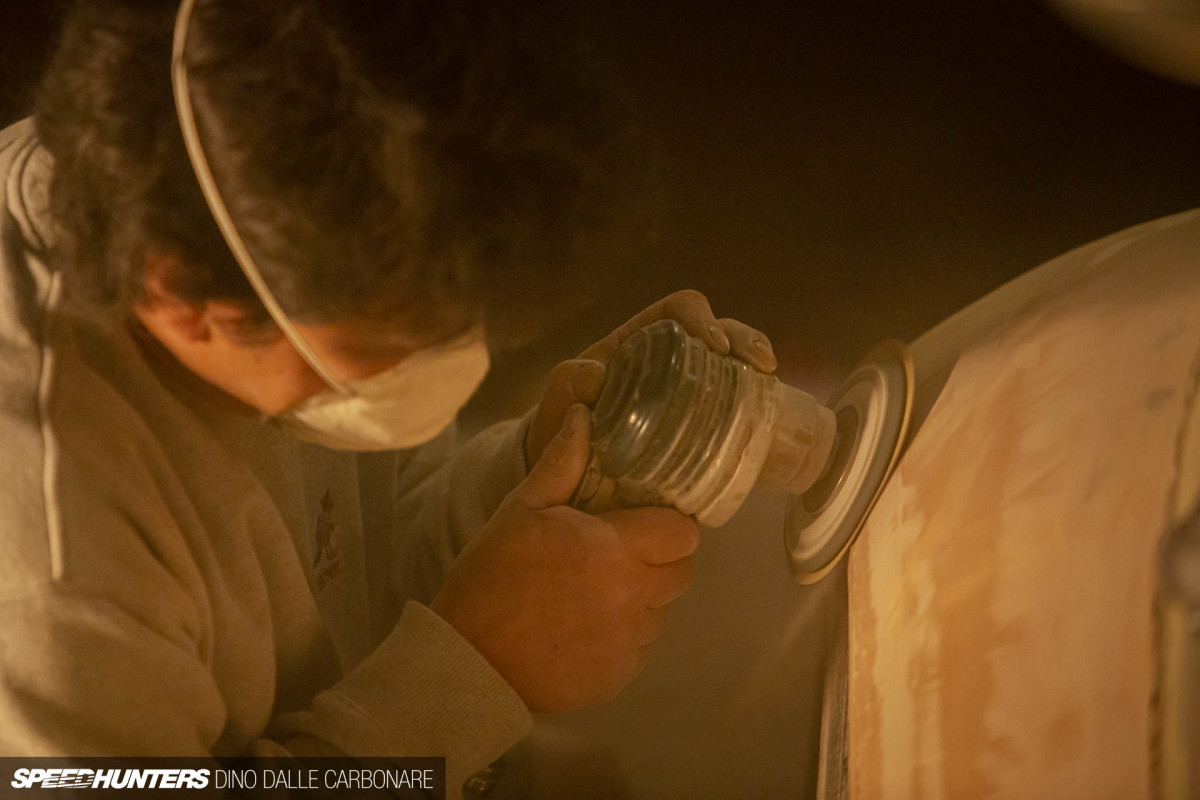

This is where the ideas Nakai-san had been cultivating in his head would come to life in 3D form.
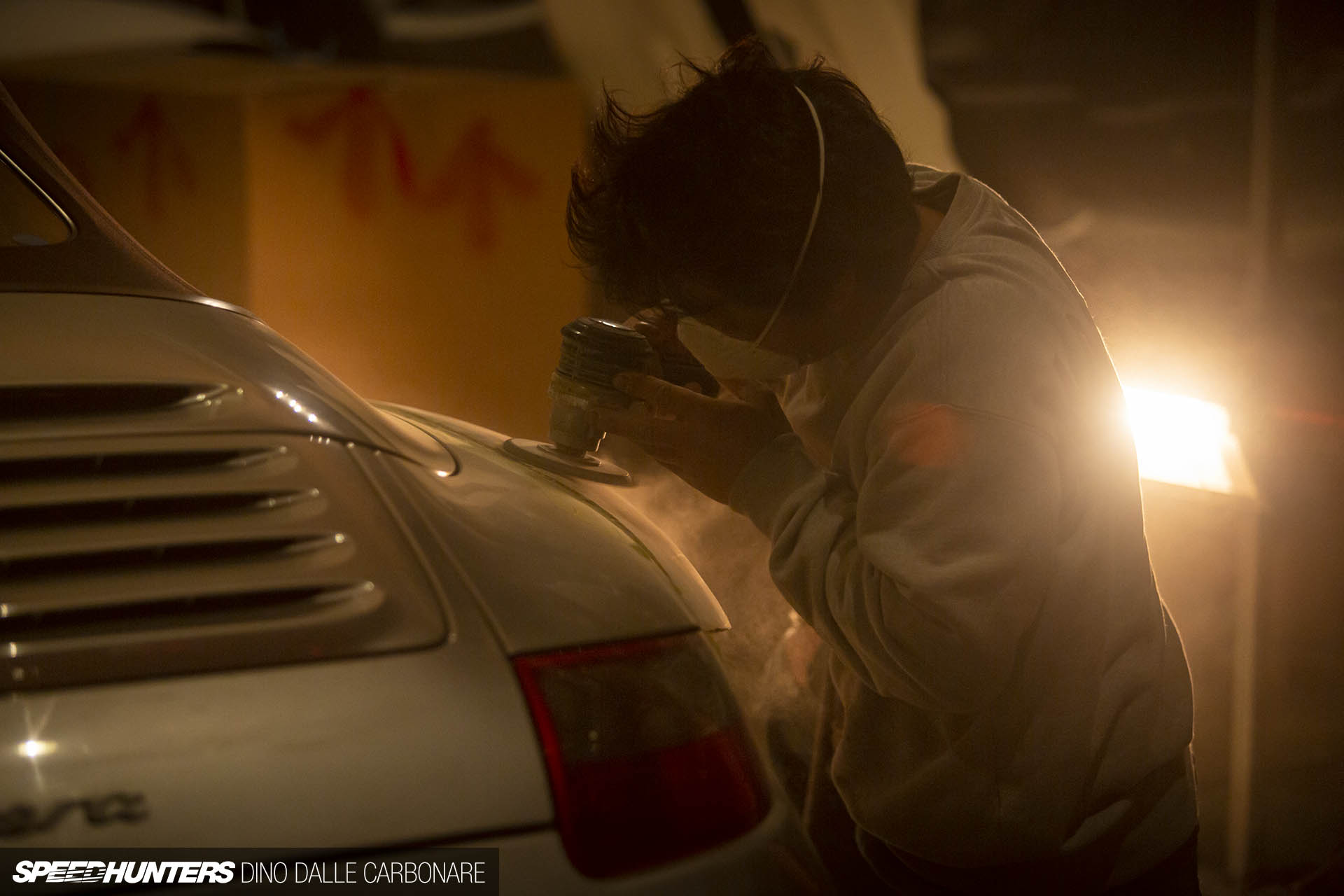
As Nakai attacked each over-fender with an air-powered disc sander and smoothed down the surface, you could slowly see the shape become more refined.

He would do a few passes and then blow all the dust away with an air gun to reveal a smoother and more contoured profile.
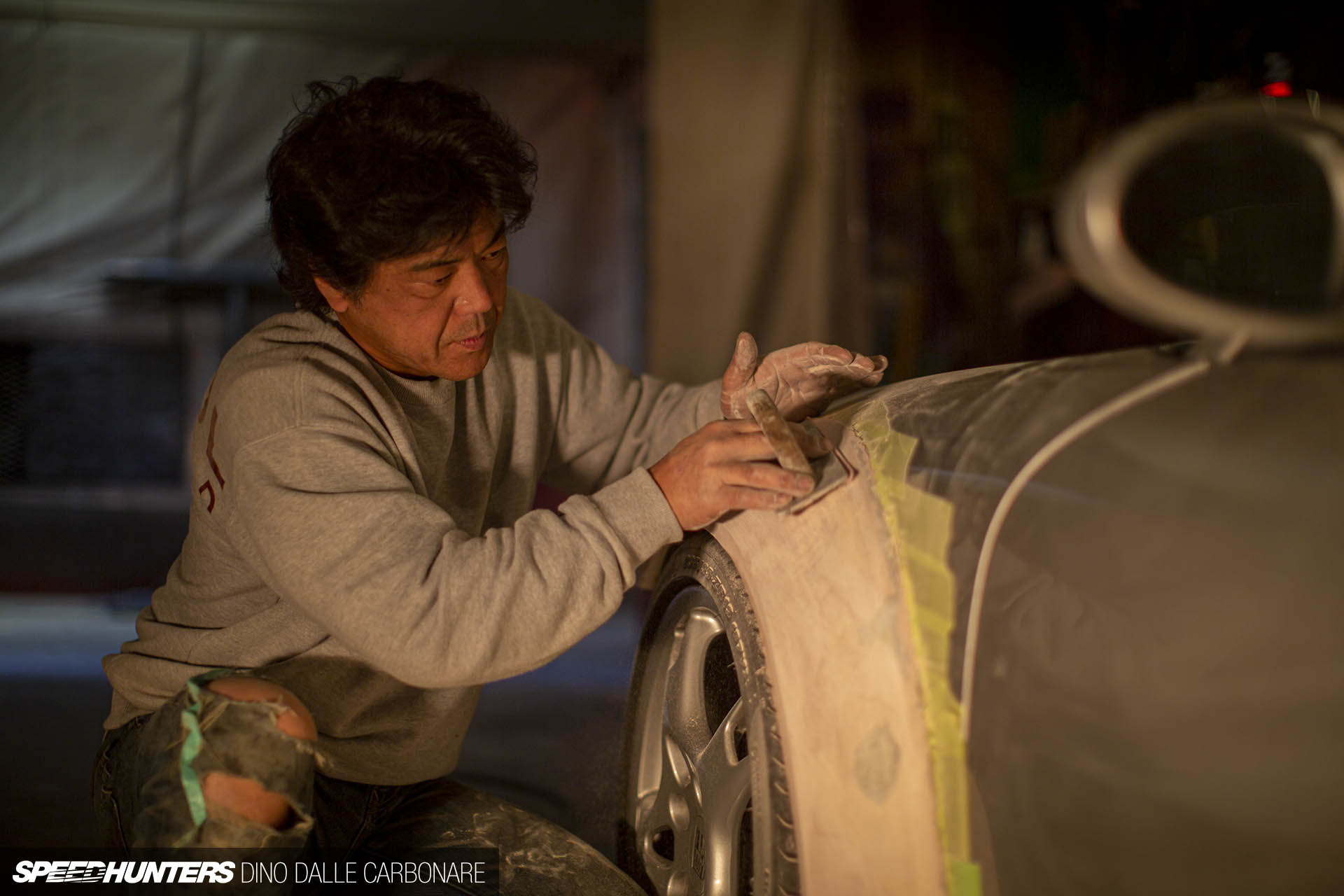
Before hitting the front fenders with the sanding disk, Nakai did a few rough passes with a grater tool to eat away at more of the filler thickness in areas that needed it.

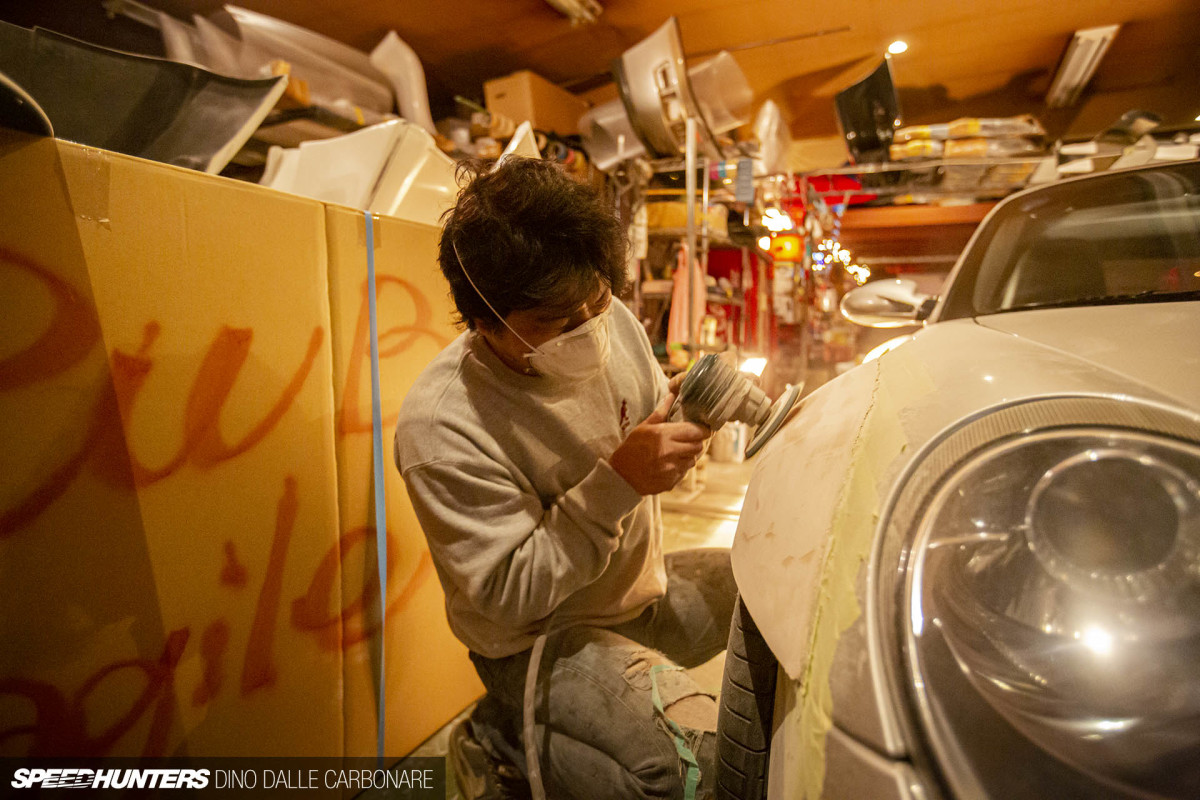
The disc sander was pulled out again.

It was a loud process, so I could only observe and take pictures as Nakai continued.
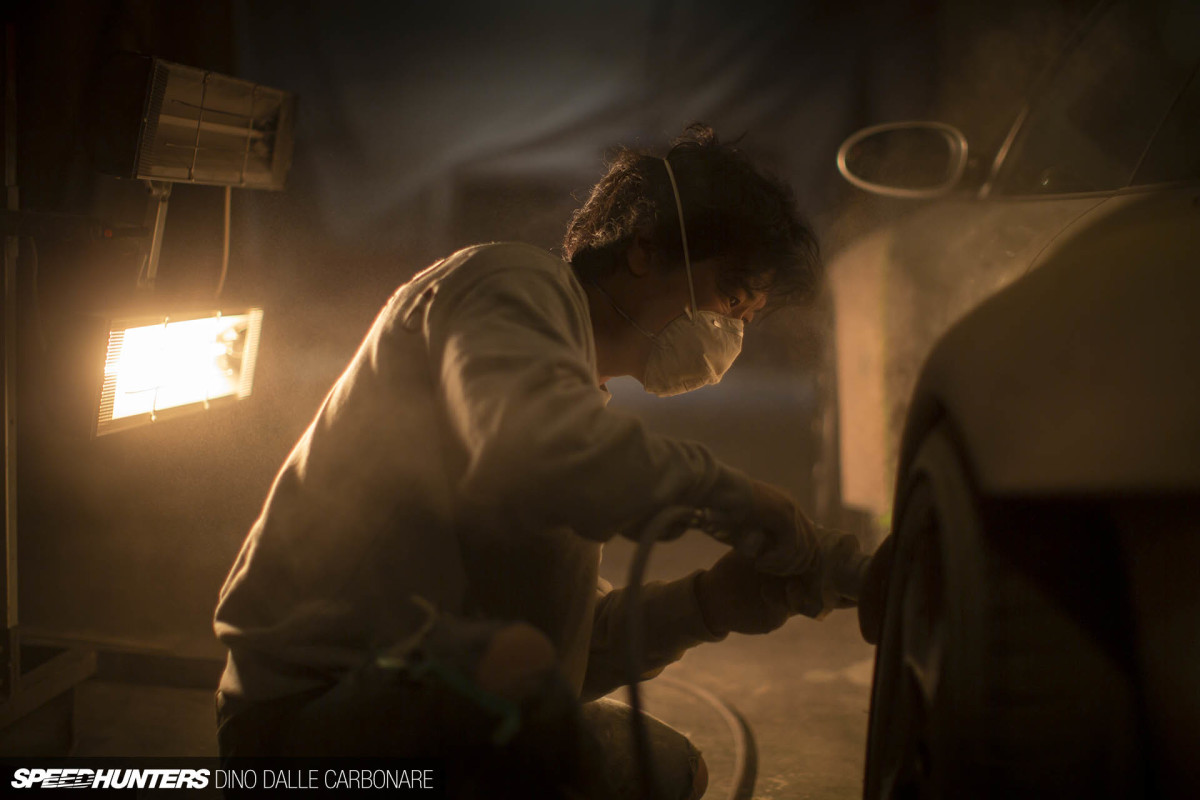
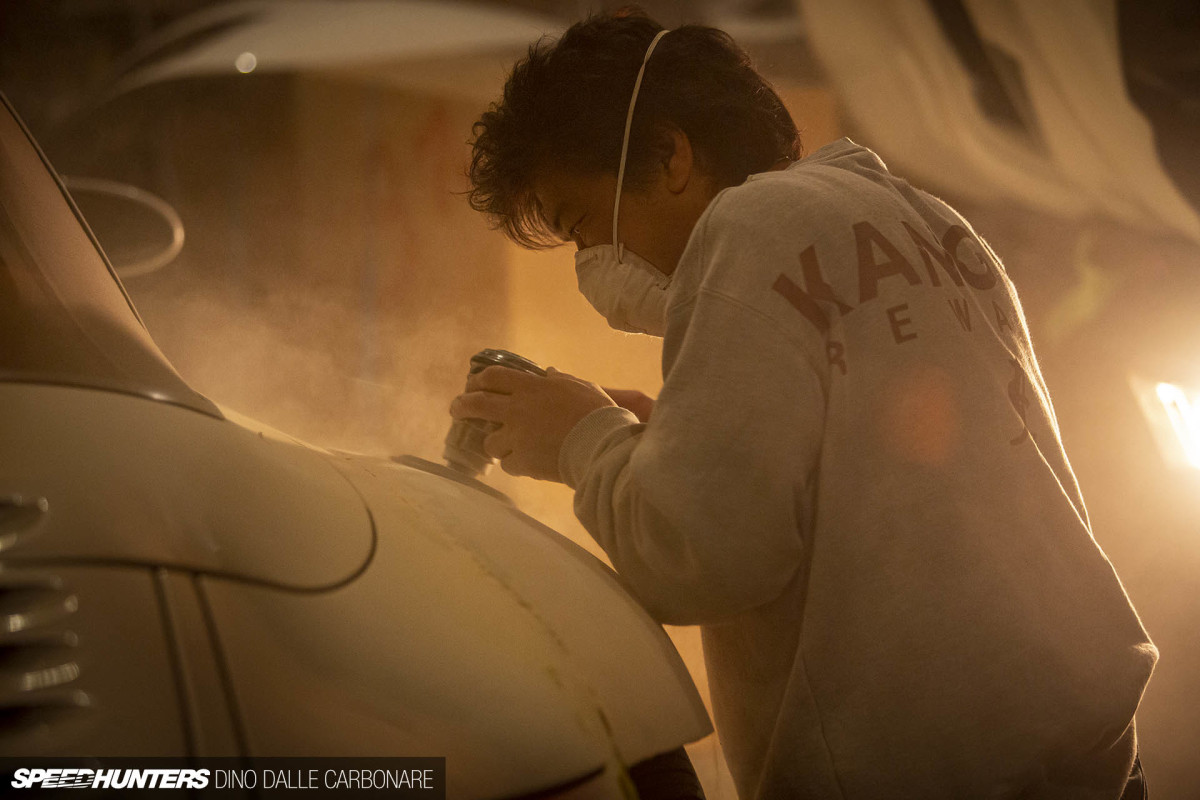
He’d often stop and run his fingertips over the section he had just smoothed and shaped, slowly sculpting the overall curve that he was going for.

I thought it was very cool how tactile this process is. Nakai-san’s creativity was being expressed in a way that I had not seen in person before.

In some areas he took off so much material that the underlying metal structure showed through. He told me that he would continue to layer on body filler where he thought he might need to refine the shape, and then shape some more.
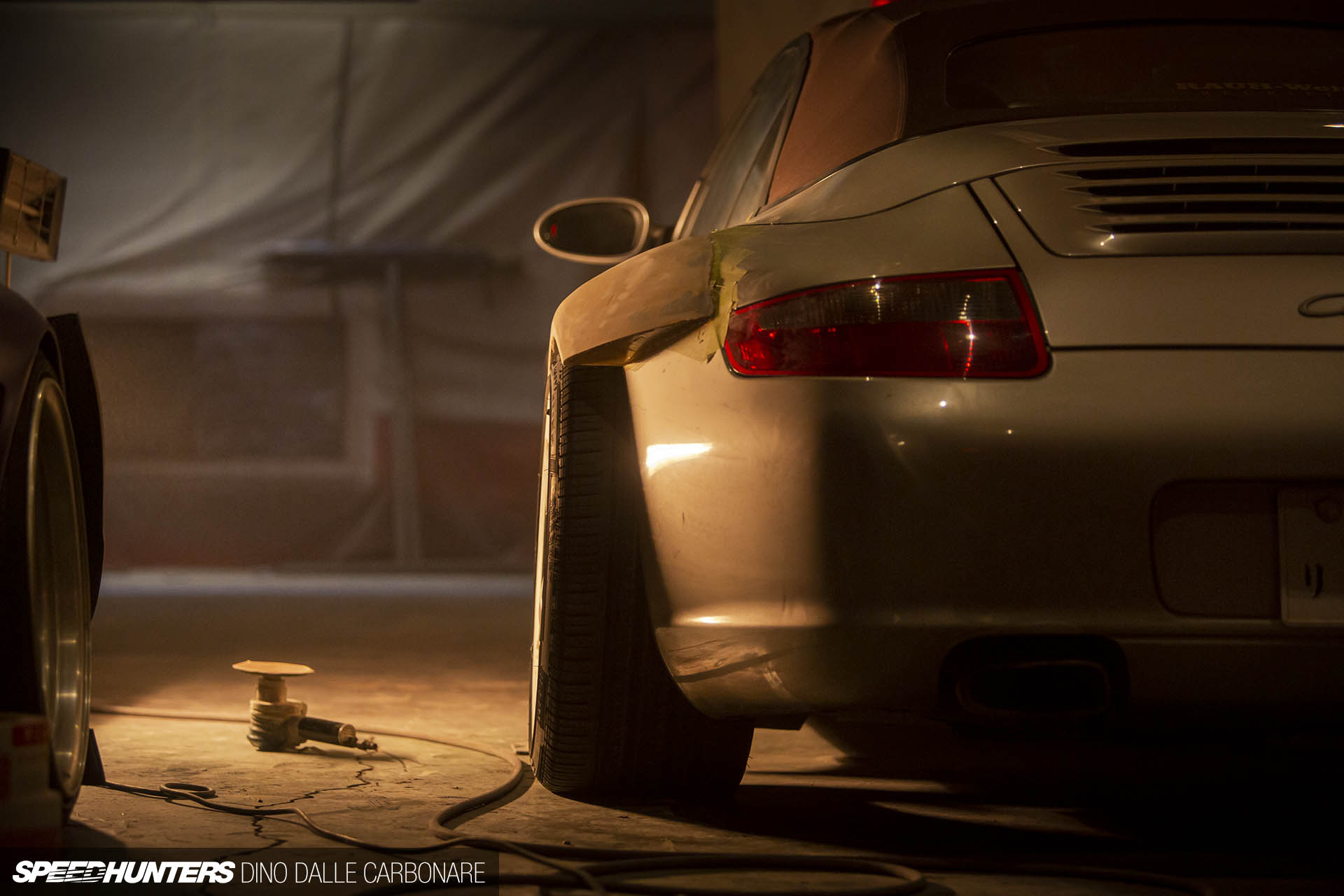
After a few hours of work the rear fenders that looked so out of place months back seemed to naturally flow off the 997’s factory lines.
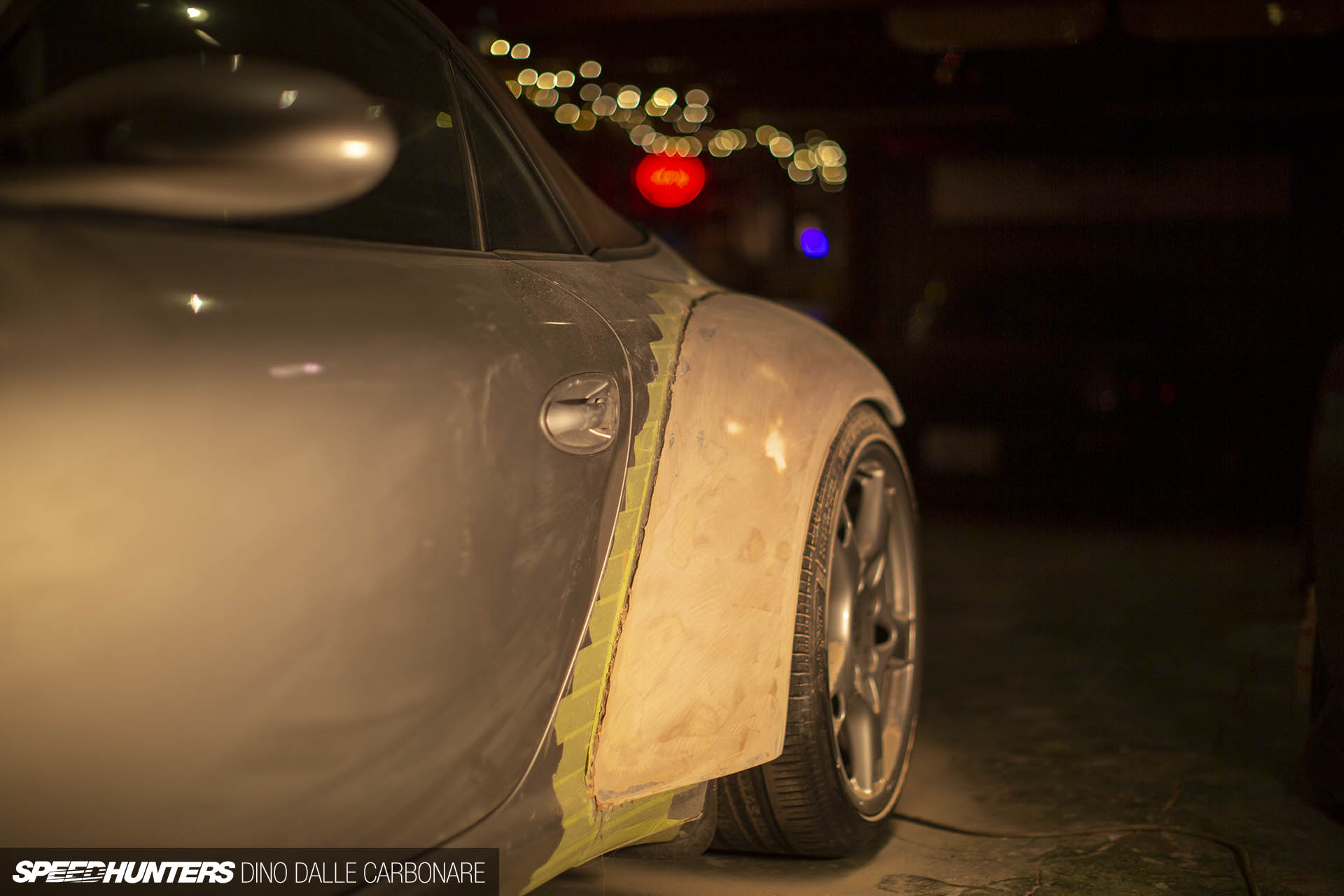
There was now a more defined curvature and a visible edge.
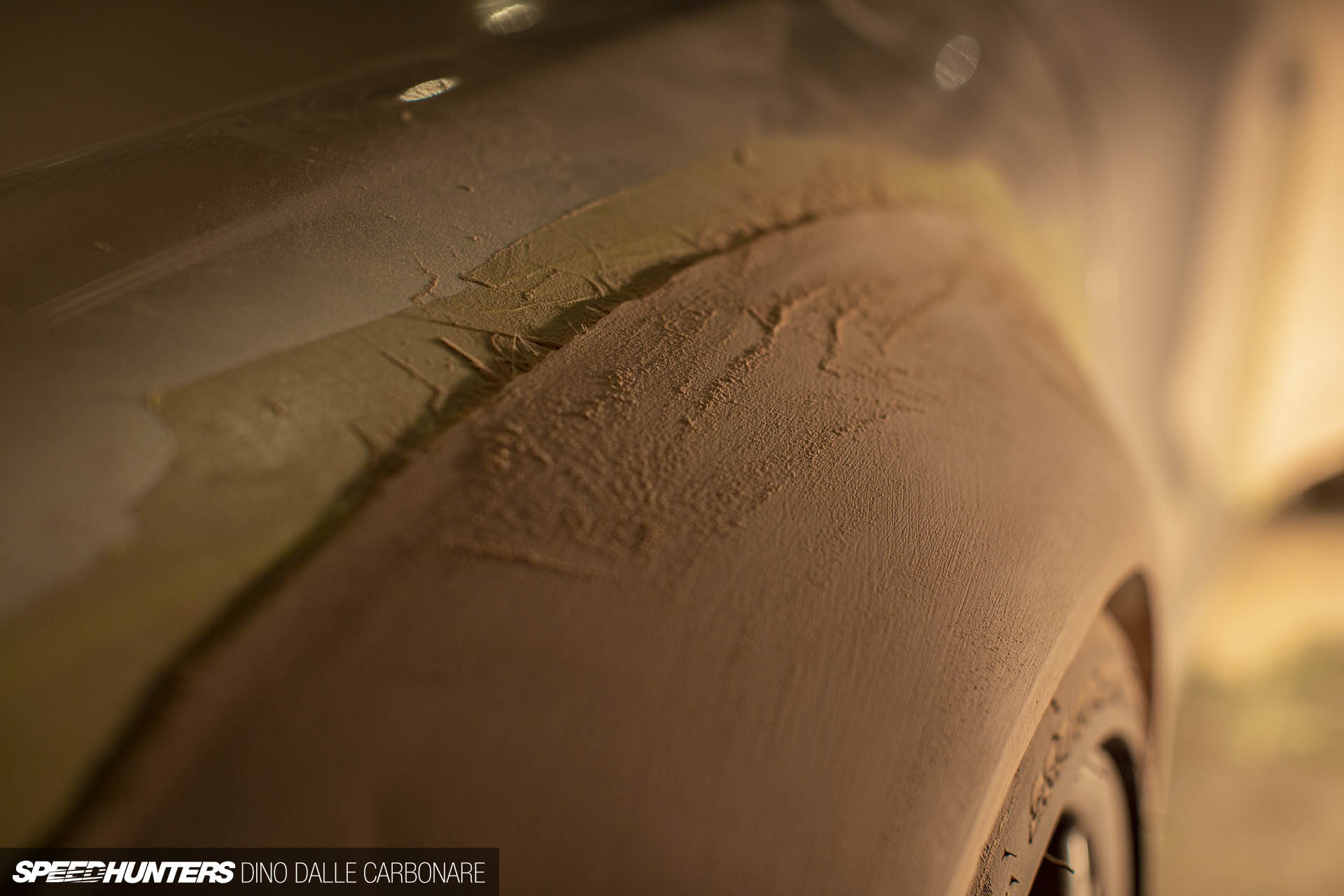
Not that Nakai was done by this point, mind you. It was just a moment in time that I had a chance to drop by and observe another important stage of the process.

It would take many more months of work for Nakai to find a shape he was truly happy with. And even then – as he said – it will continue to evolve. The idea was to begin with one initial 997 wide-body conversion, and then see how he could expand on it. Think wider, wilder and rougher.
It was great to be able to bring you this unique view into a process that no one usually gets to see.
Stay tuned for the third and final instalment, where I’ll show you the finished product(s) and share a few more insights into RWB’s 997 conversion.
Dino Dalle Carbonare
Instagram: dino_dalle_carbonare
dino@speedhunters.com