
When I heard that RE Amemiya was working on a 4-rotor Ferrari Testarossa as their main showpiece for the 2021 Tokyo Auto Salon, my reaction was probably the same as yours reading the headline above – pure shock quickly followed up with big dose of curiosity.
After seeing a few build shots on Option magazine’s website, my curiosity took me all the way to Ama-san’s shop in Chiba last weekend.
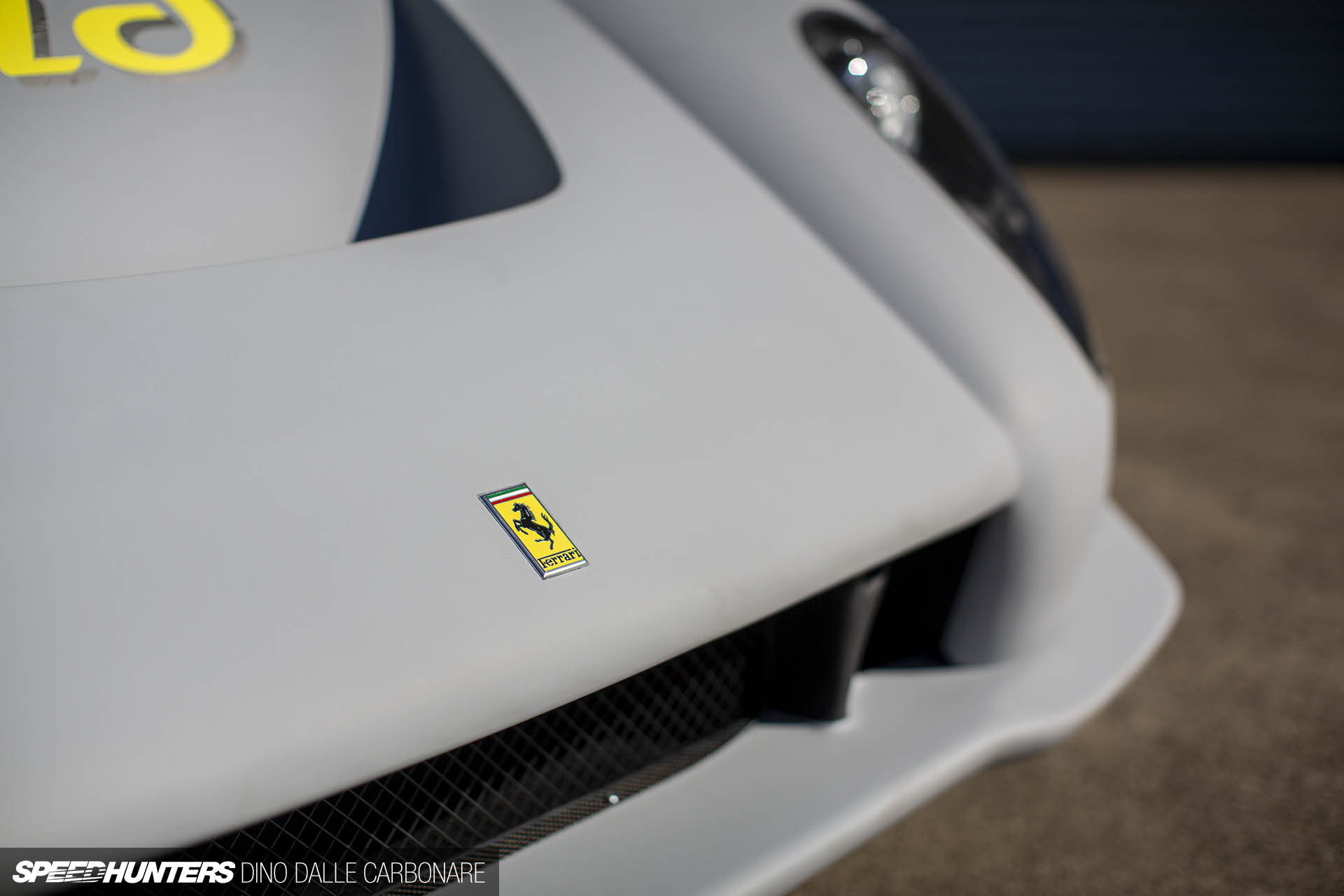
Ken Amemiya, RE Amemiya founder Isami Amemiya’s son, said I was one of the first to photograph the car, but also that it’s only 85% complete and still in prototype guise. This means RE Amemiya still have a few jobs to complete, including getting the engine up and running. Once it’s moving under its own power, the Ferrari-Mazda mash-up will be stripped right back down for paint and then reassembled.
But regardless of its primer gray state and incompleteness, I just had to see this wild creation with my own eyes.

In my head this was way too much of a cool project, but one thing I didn’t count on was the extent to which Ama-san had modified the bodywork. I probably should have though. This was – obviously – never going to be a Testarossa with a surprise engine, but rather a complete RE Amemiya custom build, as we’ve seen many of over the years.


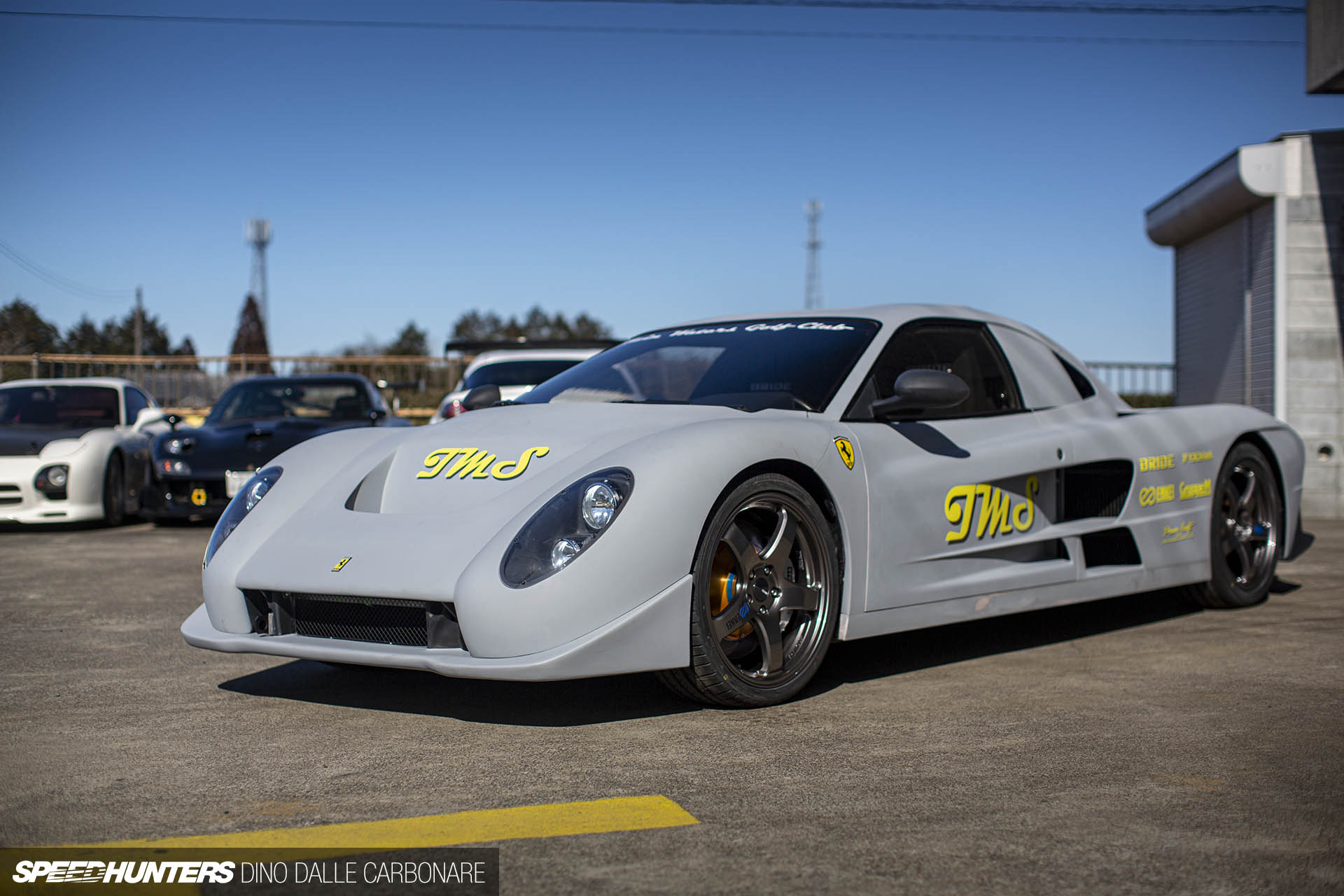
The look of this thing is sure to divide opinion, but I don’t think Ama-san really worries about that sort of thing. This is a project two years in the making so far, as commissioned by a longtime RE Amemiya customer who just so happened to have a Testarossa he was bored with. That’s a car many would consider it sacrilegious to even mildly modify, but the owner of this one would simply rather have a truly one-of-a-kind RE Amemiya creation in his garage.
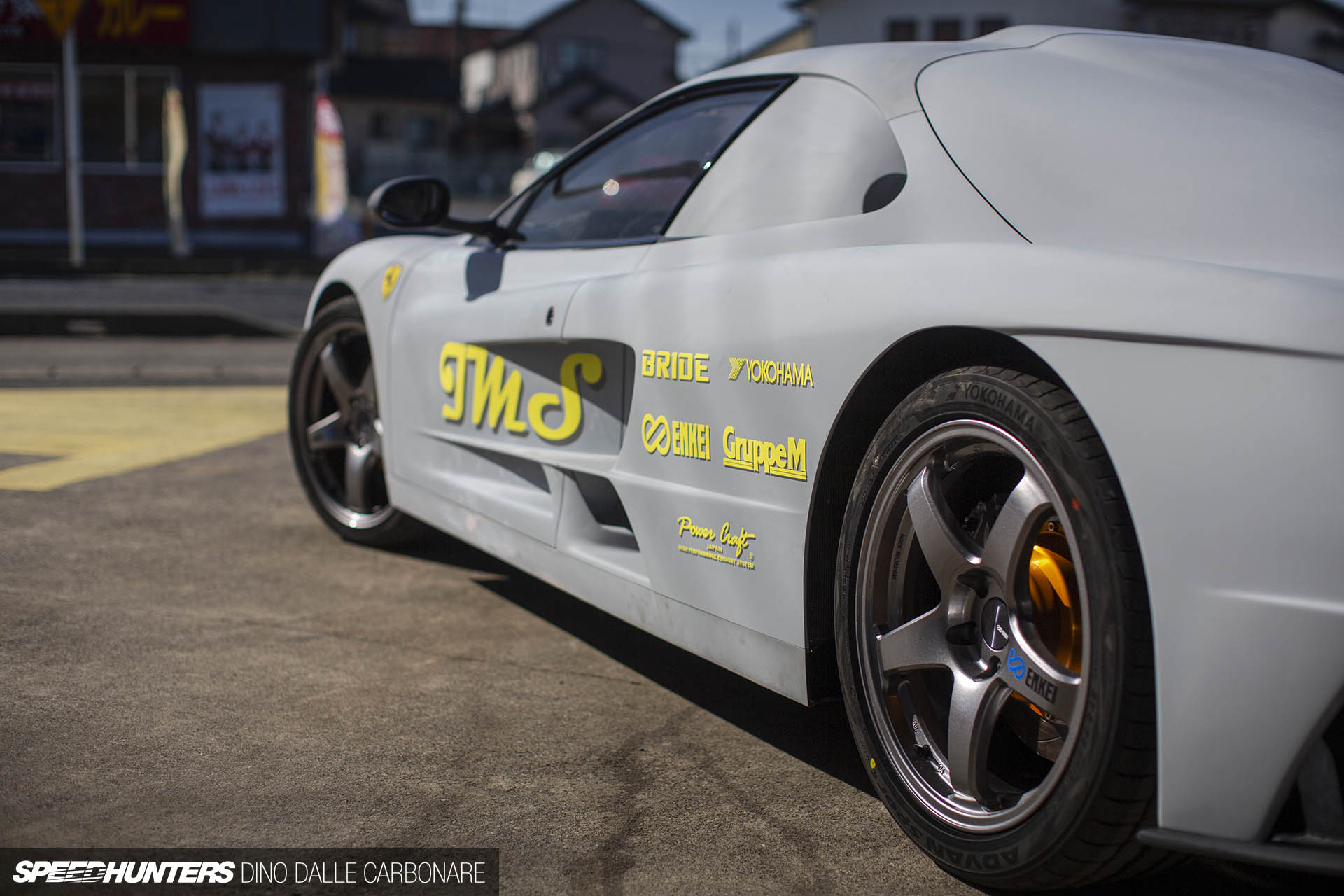
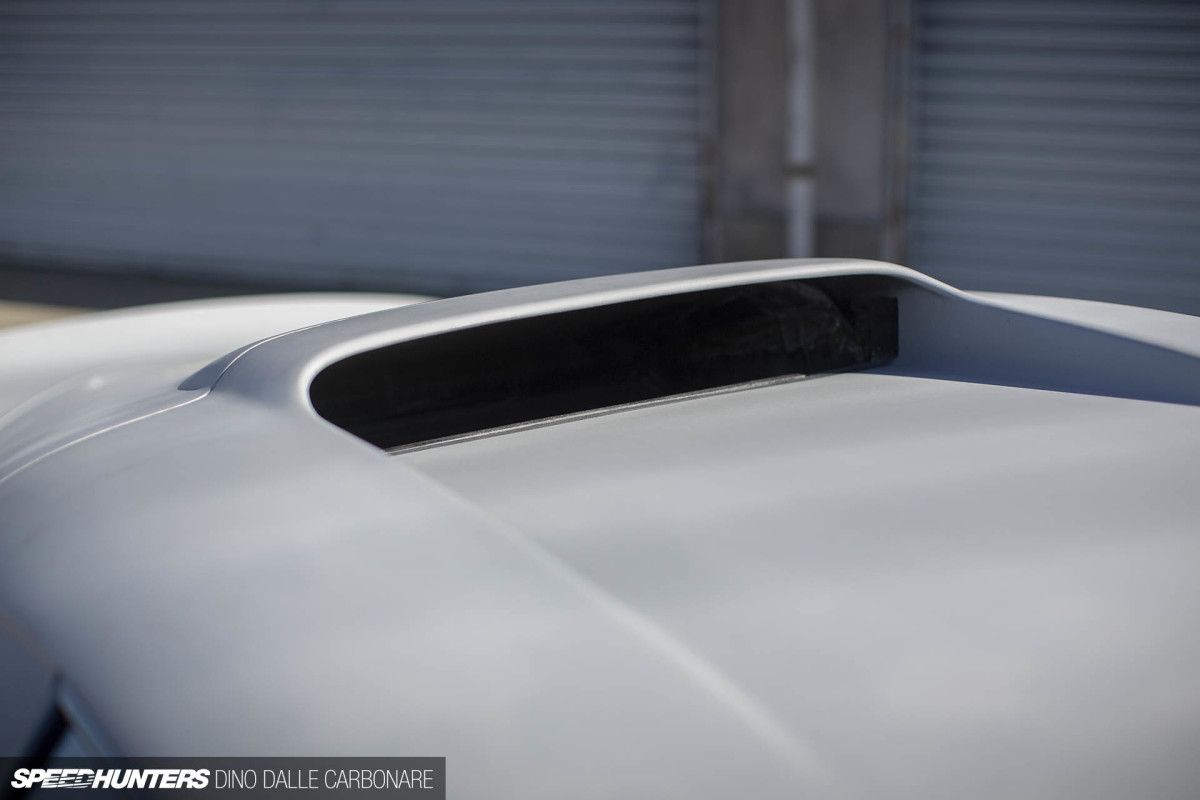
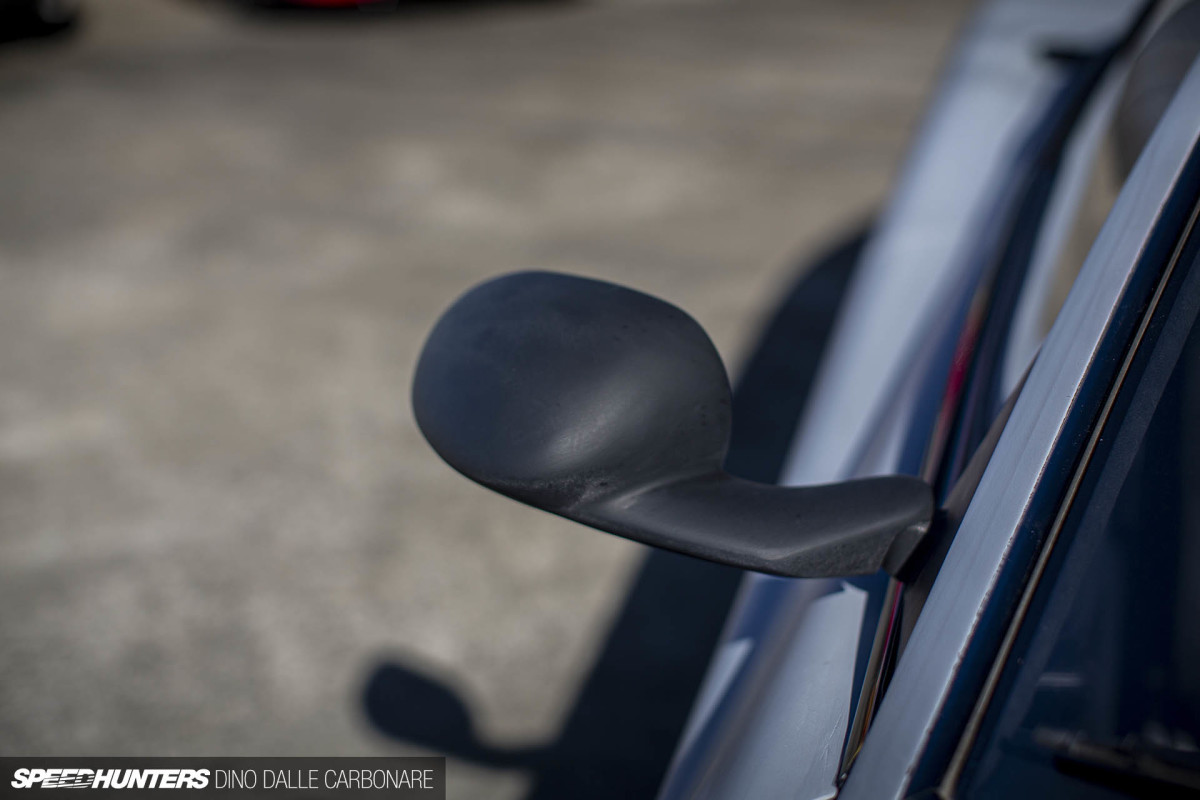
It took me a while to digest the car at face value. It’s a strange-looking machine to say the least, but there are tons of little details and you certainly can’t deny it has presence.

I mean, when was the last time you saw a Testarossa with a roof scoop?
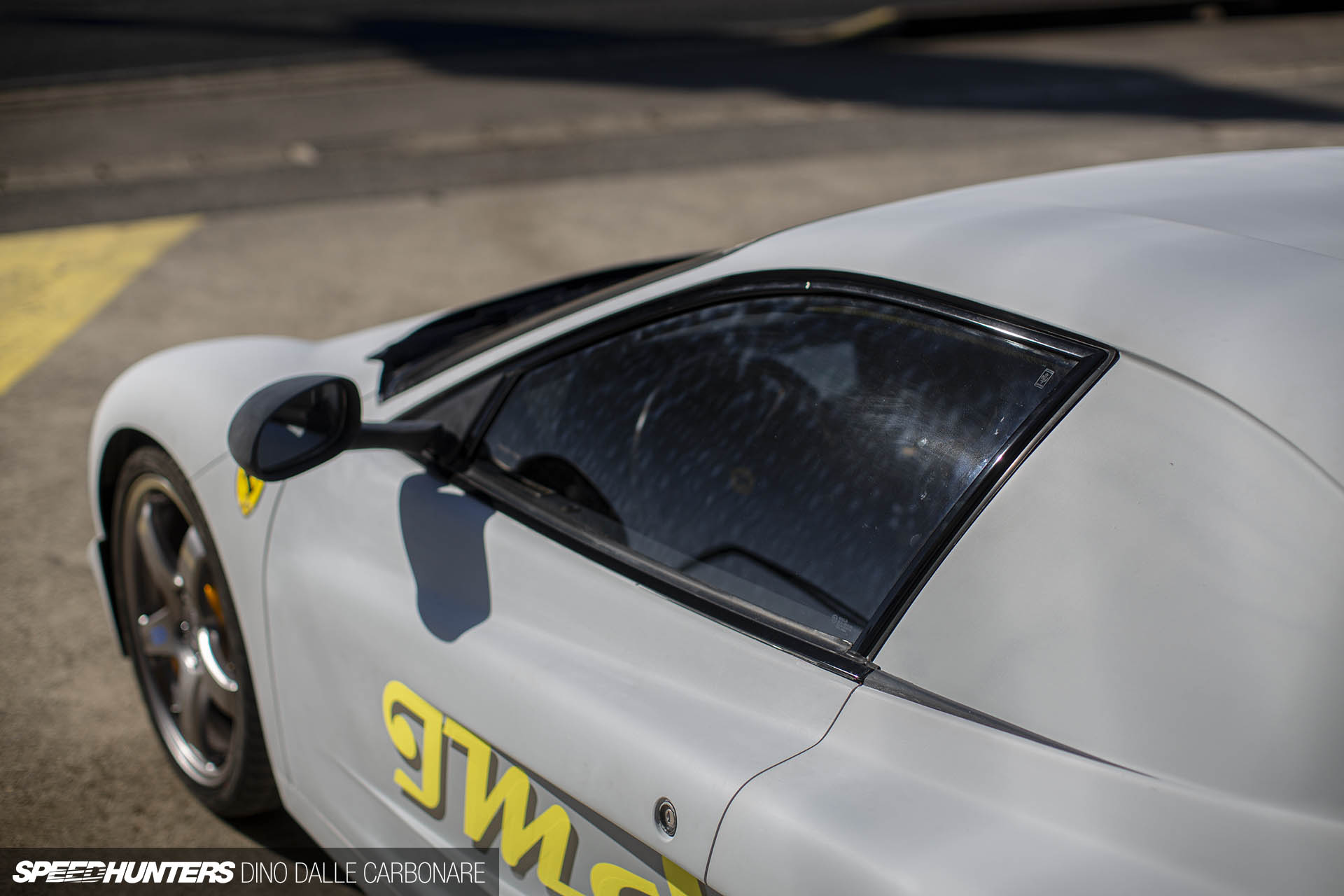
This thing is so far removed from the car it started out life as, that the only visual cue it’s based upon one of Ferrari’s most iconic models is the windscreen and door glass. This shot may emphasize that, but if not, squint a little.
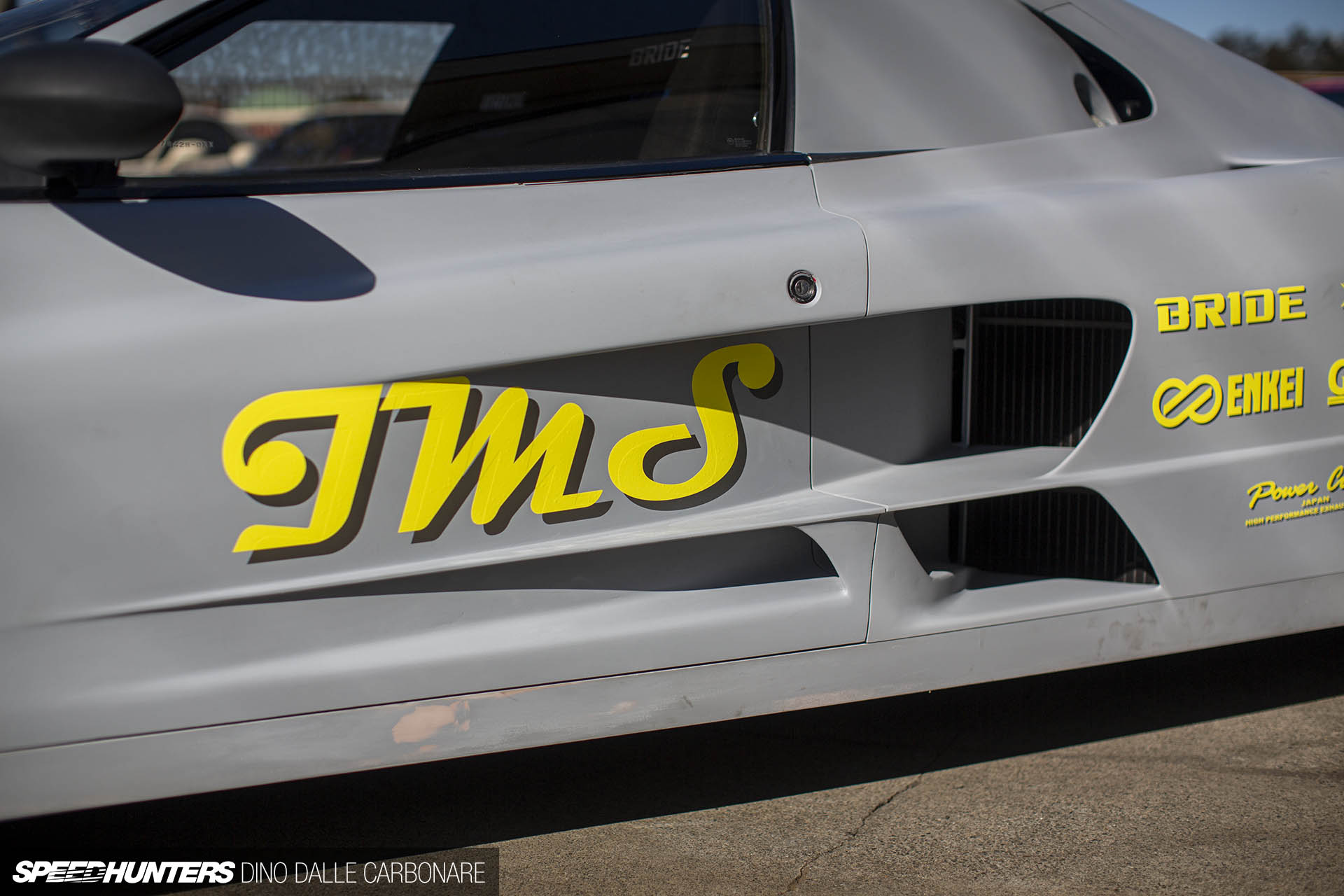
The legendary louvered side intakes have remained in spirit but have been given a totally different look.
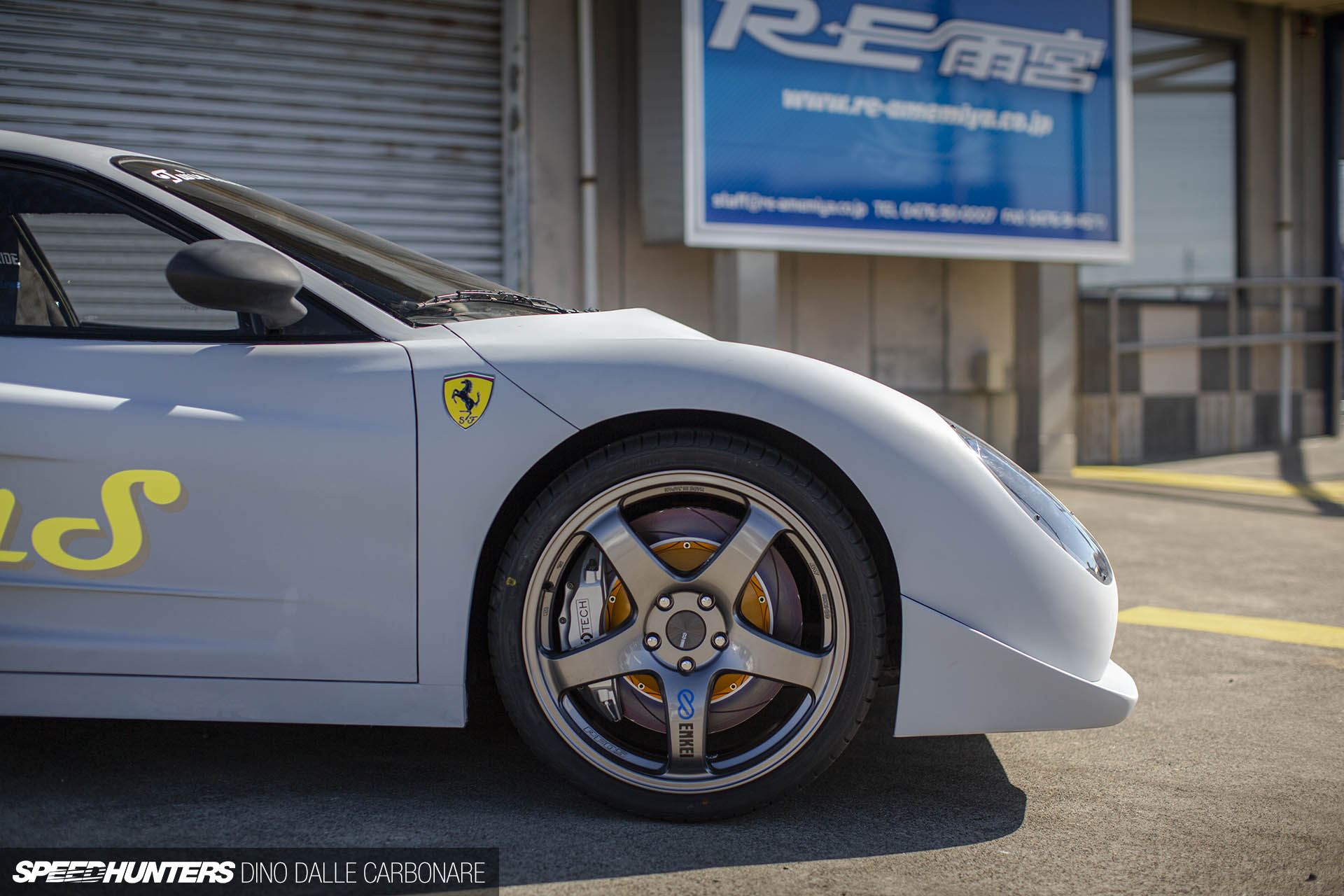
The front however is all new. The entire section ahead of the front struts was removed and replaced with a custom frame to support the cowl and other ancillaries. Compared to a stock Testarossa, the front overhang has been shortened significantly.


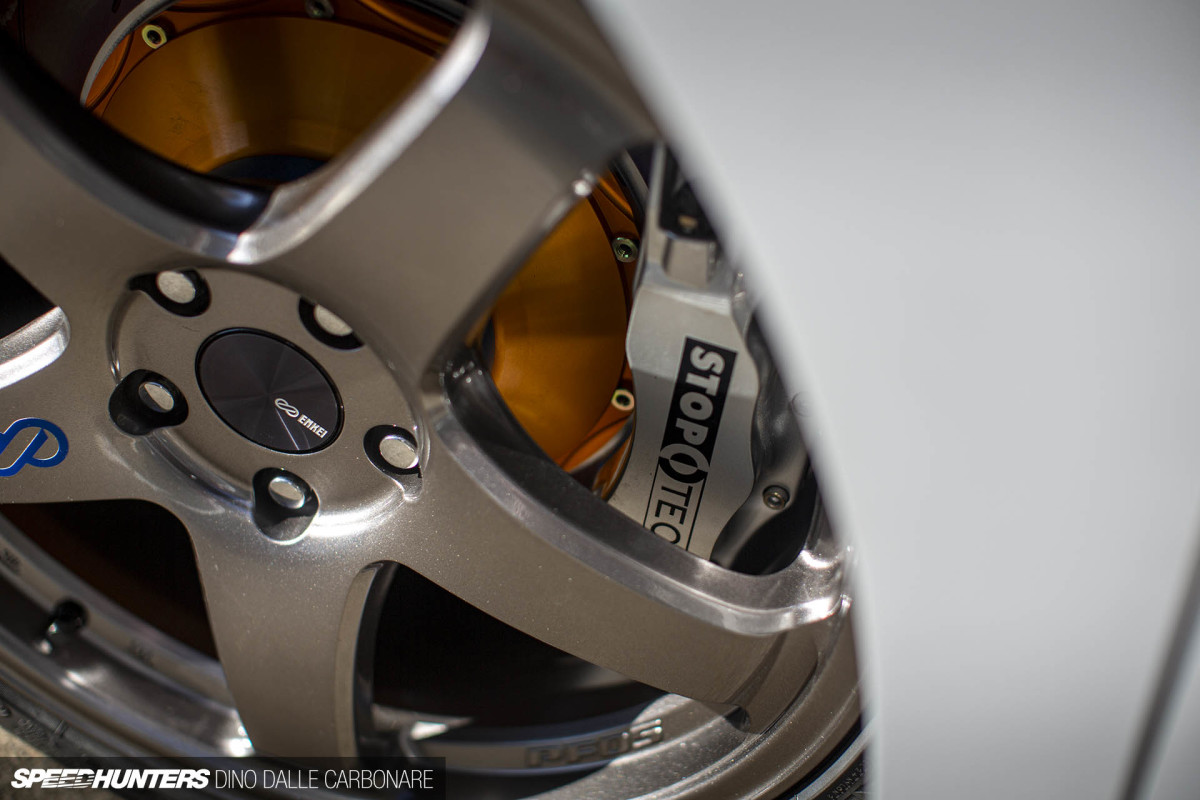
Like all RE Amemiya builds, the car wears a set of Enkei wheels – in this case 19-inch PF05s – wrapped in Yokohama Advan Sport tires. Meanwhile, the brake system now features modern StopTech calipers and 2-piece rotors.


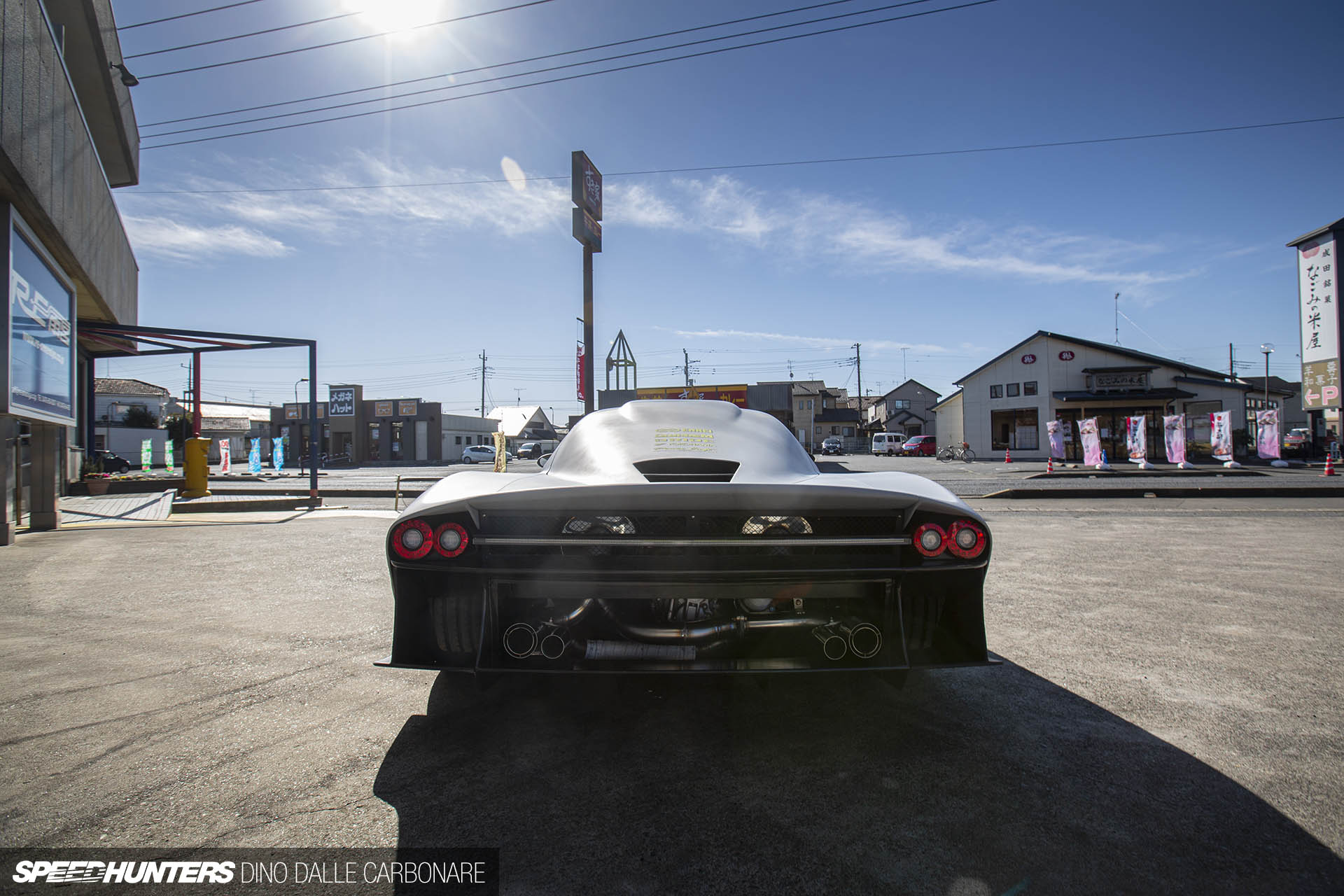
Most of the work has taken place at the rear end, where the chassis was cut at the firewall and a custom section created to support the new engine and gearbox combo. Because of the length of the 4-rotor engine and the transmission behind it, the wheelbase had to be extended, which makes the rear of the car extremely long. It sort has a McLaren Speedtail look about it, and almost a hypercar feel.

The need to stretch the rear becomes obvious once you pop the engine hood.

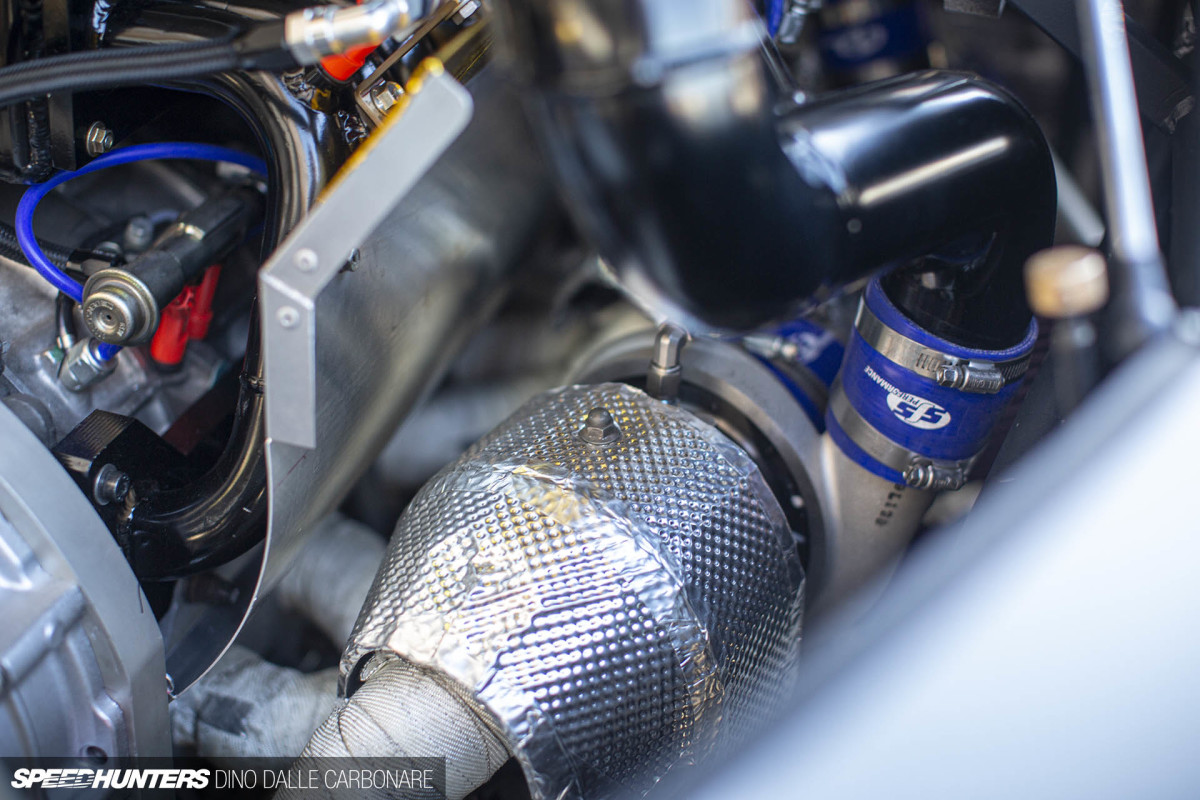
By Mazda rotary standards a four-rotor is a large engine, but in the Testarossa it’s far more compact and much lighter than the bulky flat-12 it replaces. It sits as low as it can go and is straddled by a pair of Trust TD06 externally gated turbos.
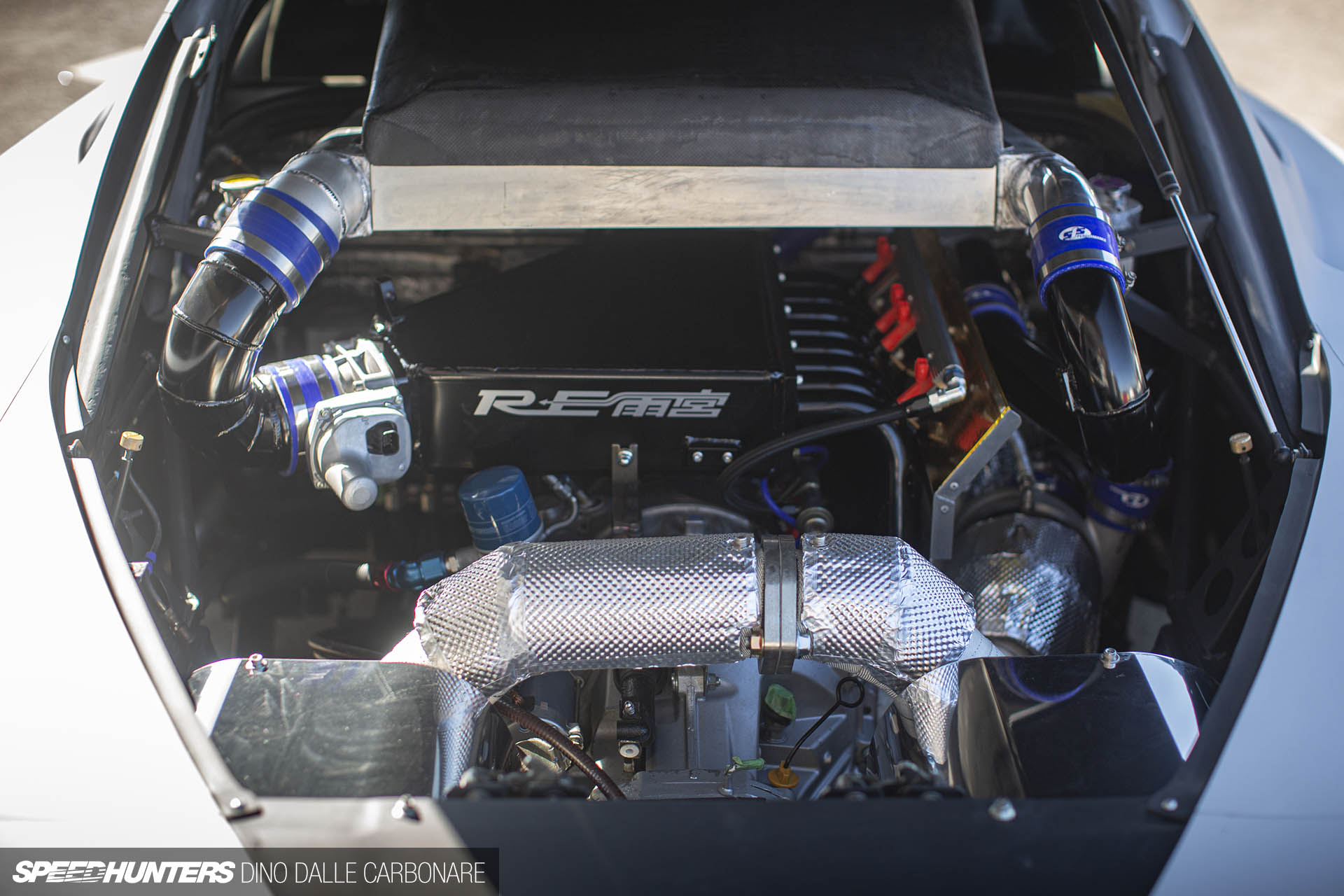
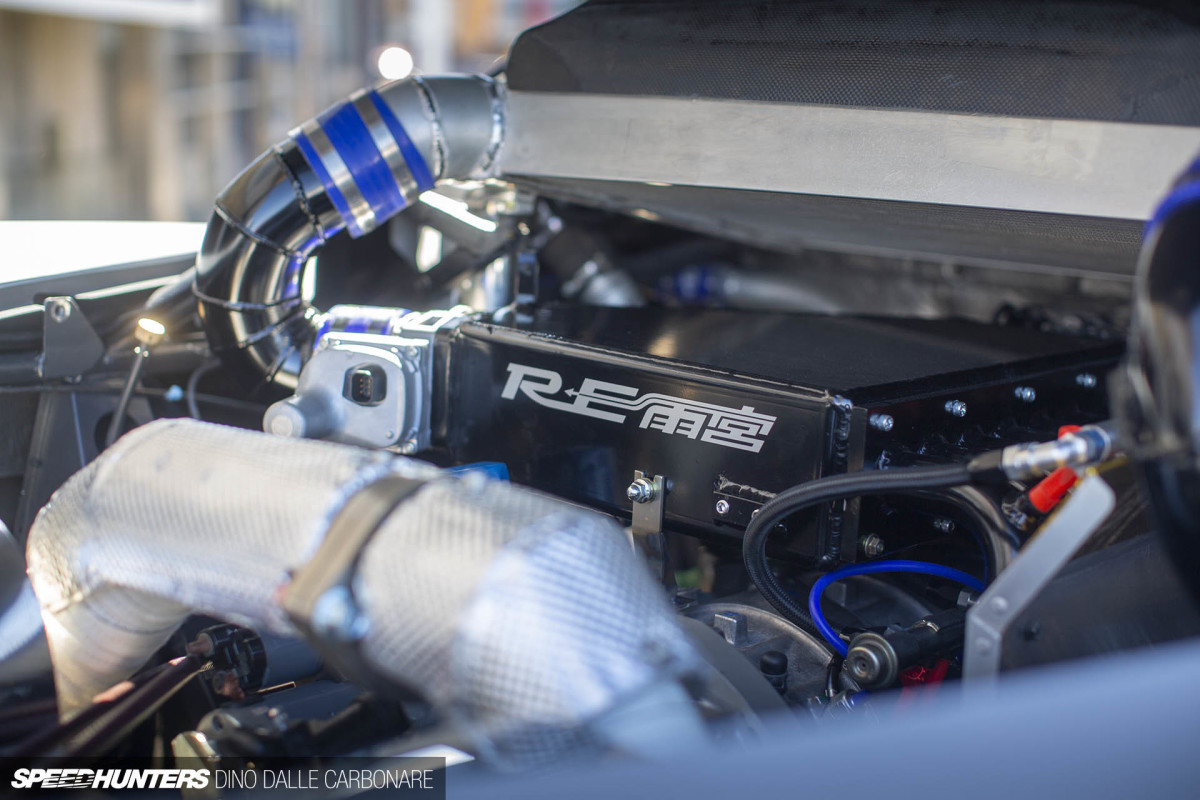
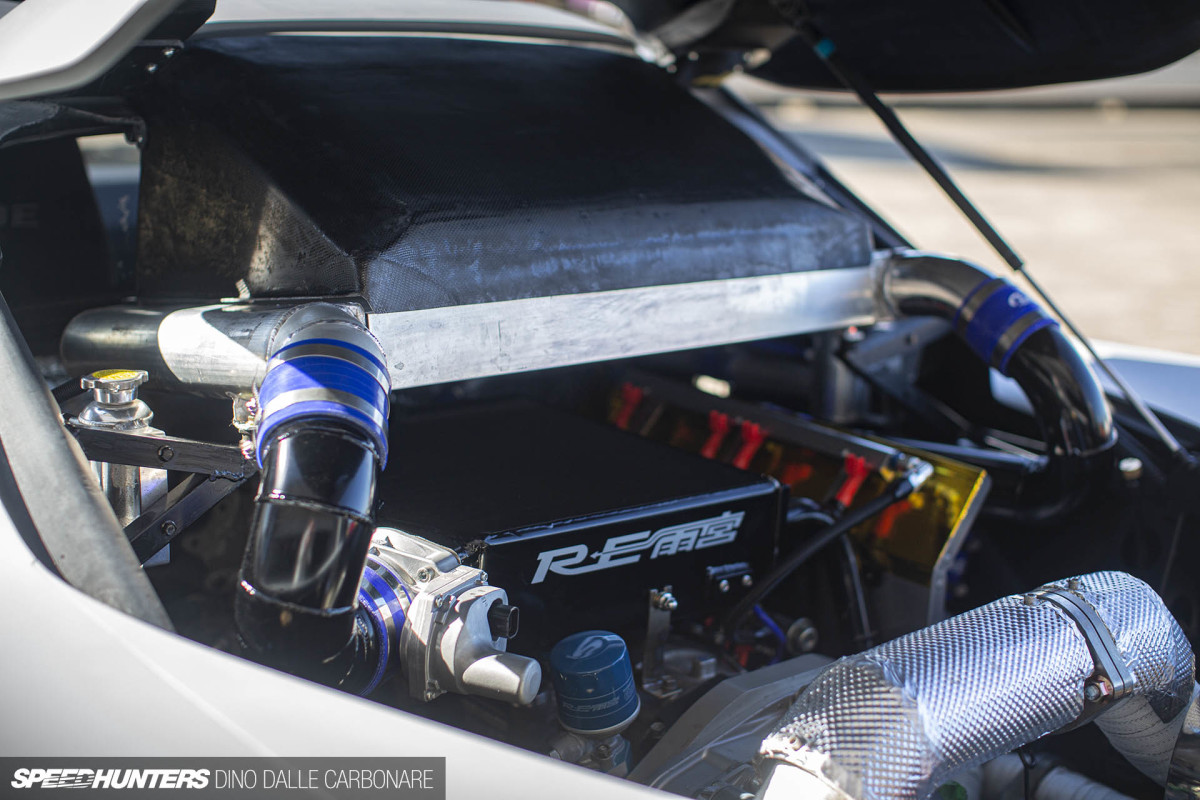
These feed into a custom top-mount intercooler, which is shrouded by and fed air through the roof scoop. The cooled and compressed charge is then distributed to each of the four rotors through a custom-made intake manifold.
In essence, this engine is the same as the unit in RE Amemiya’s D1 FD3S RX-7, but is geared to have a broader spread of torque. Once set up and dialled in through the Link engine management system, the four-rotor should develop 800 to 850hp.

Behind it, and being used as a transaxle to drive the rear wheels, is a beefed-up Subaru 5-speed transmission.
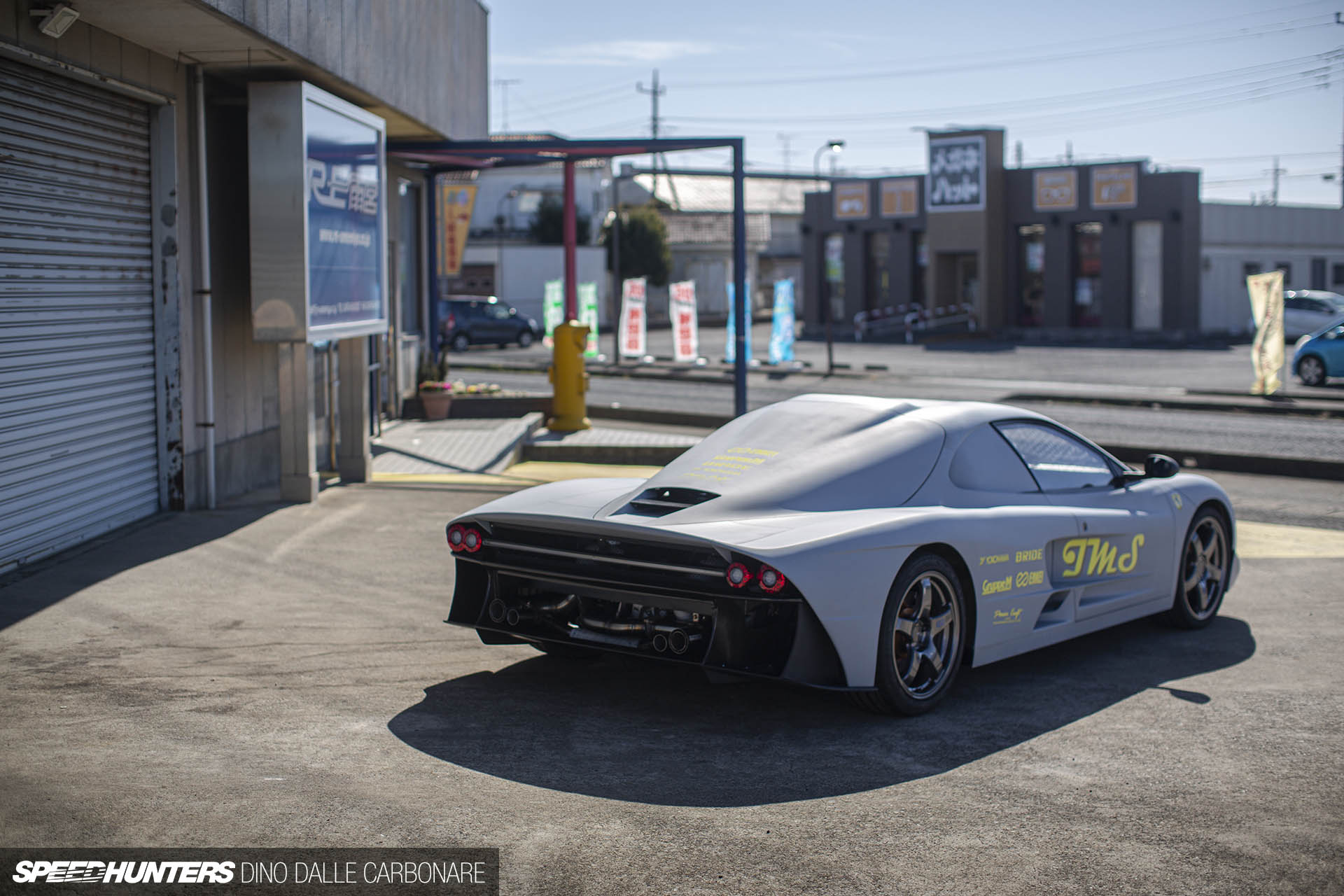
It’s a really nicely laid out driveline which should provided balanced weight distribution. The rear end has a dramatic cut-out feel about it; it kind of looks like an LMP car, proudly showing all its guts through the carbon bodywork and copious use of grilles.

It’s from here that the Power Craft exhaust and screamer pipes sprout.
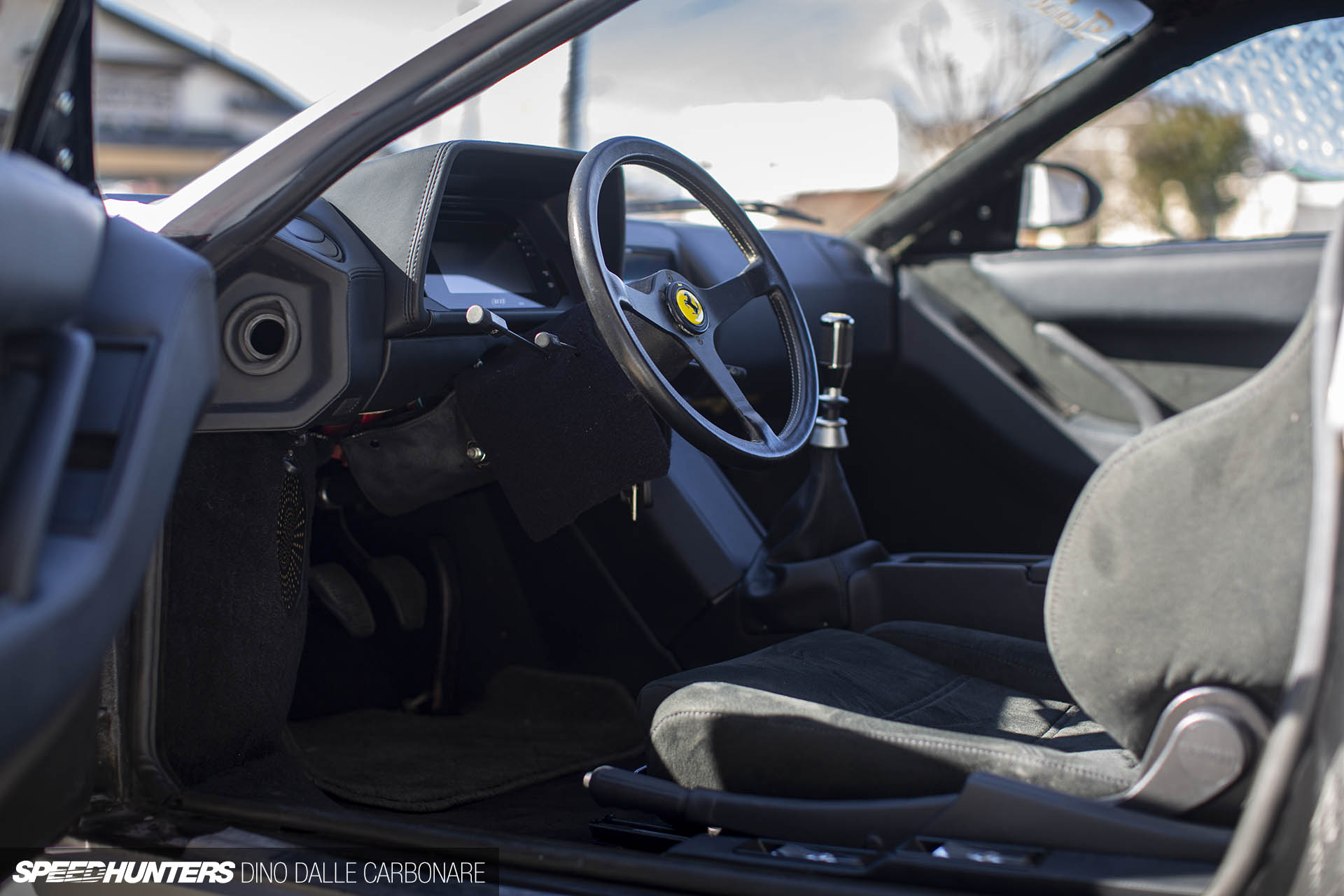
What does this rotary-powered Ferrari look like inside?

Before we get there, you need to check out the Ferrari logo etched onto the door’s glass.
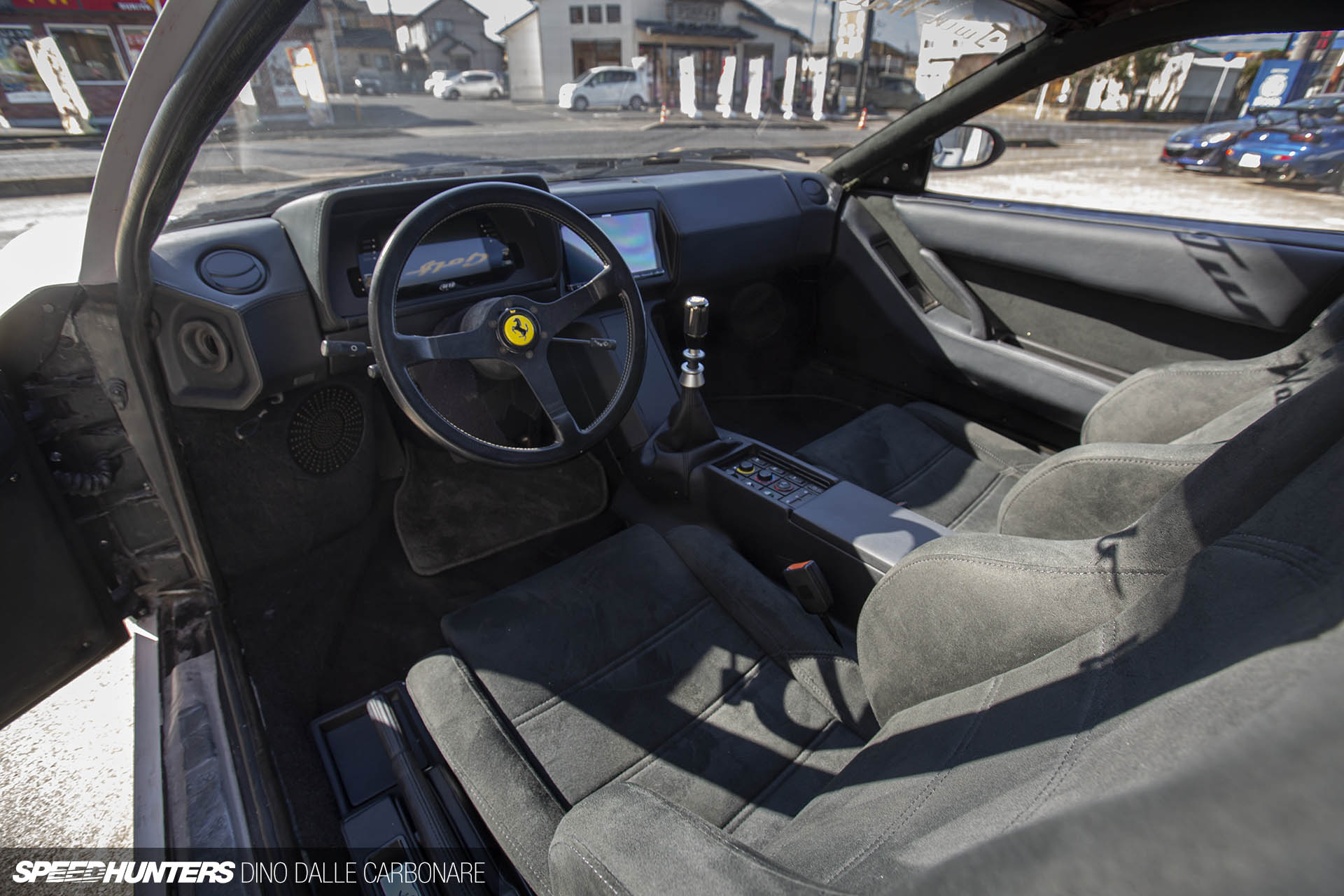
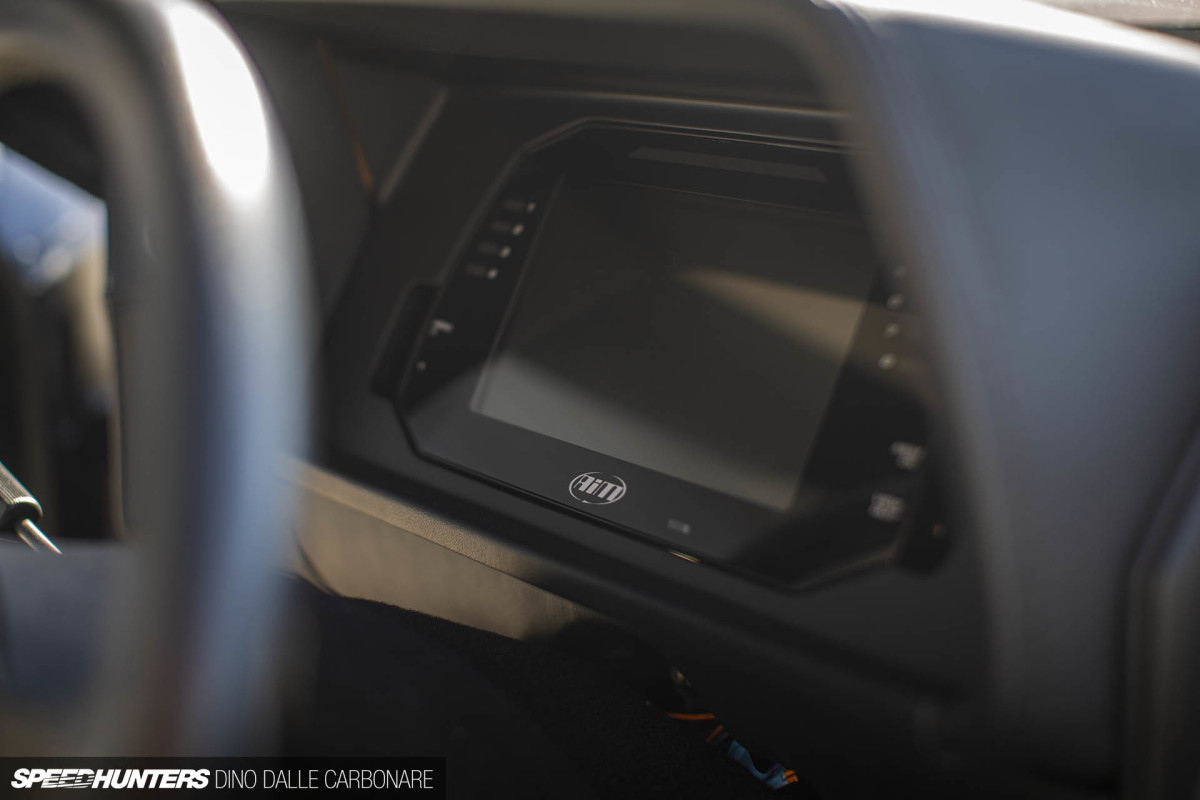
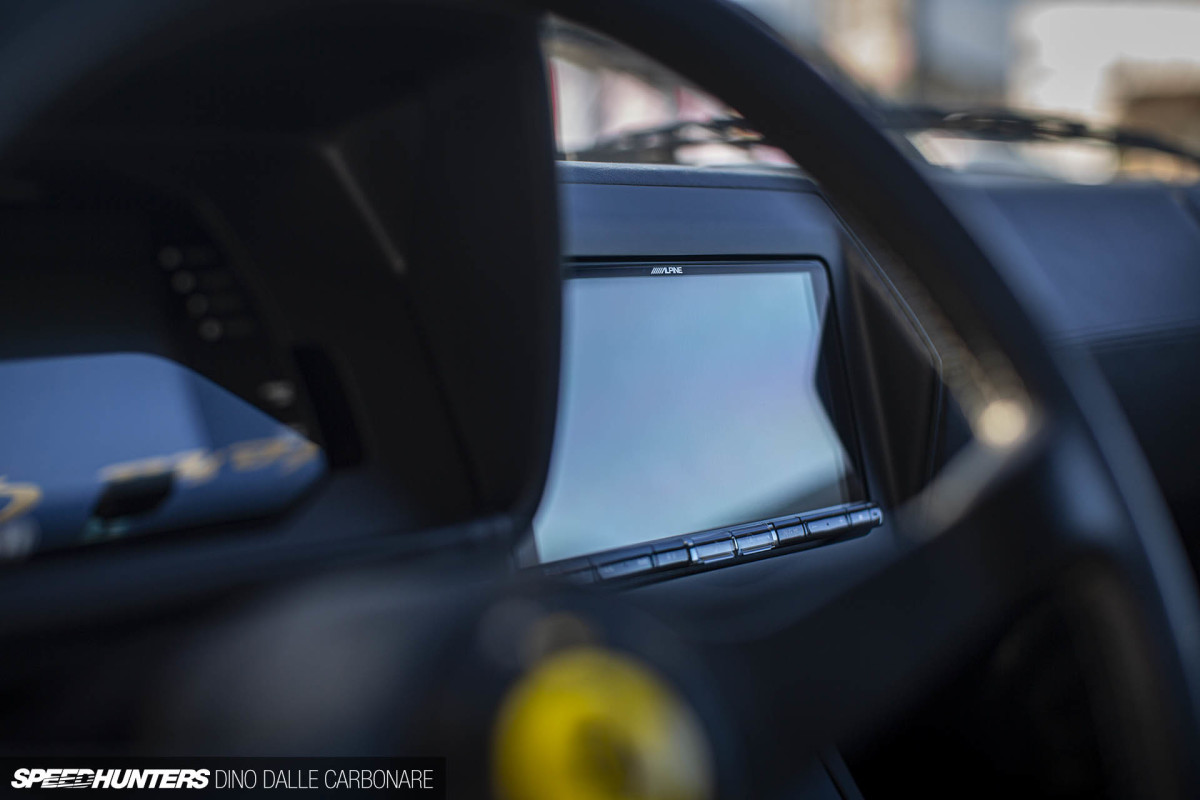

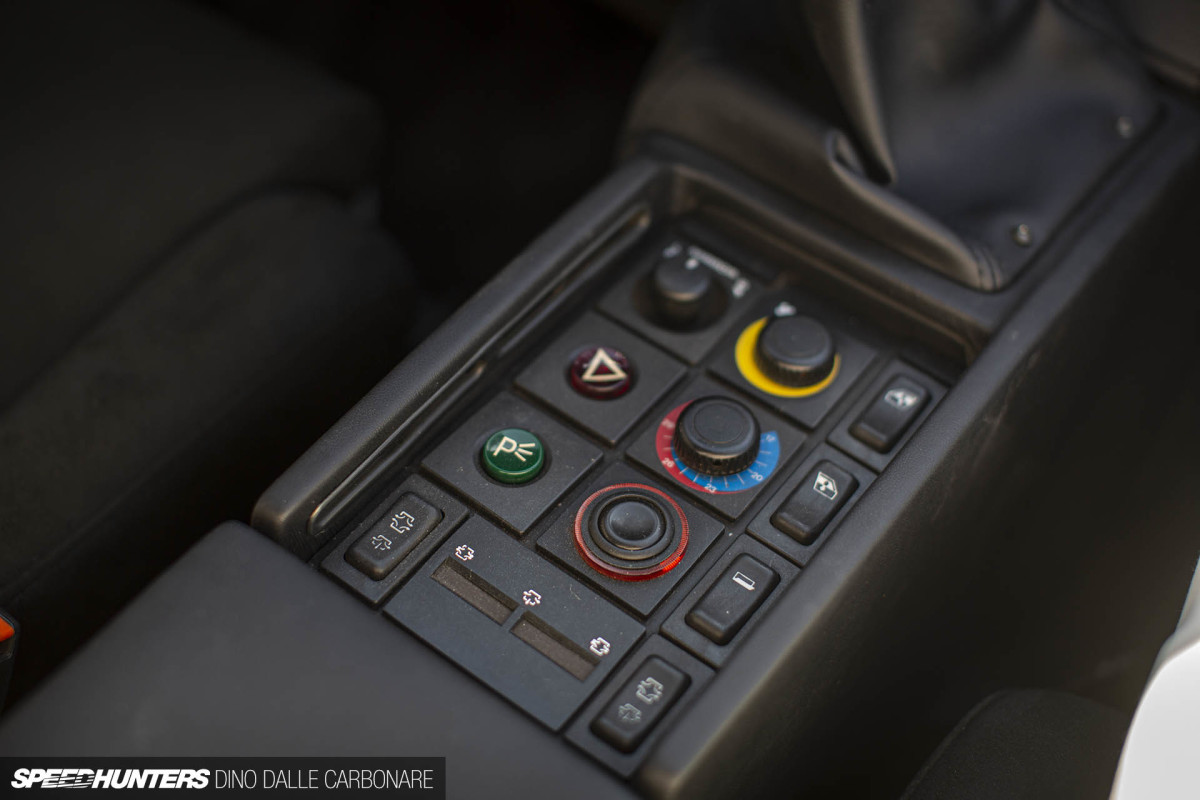
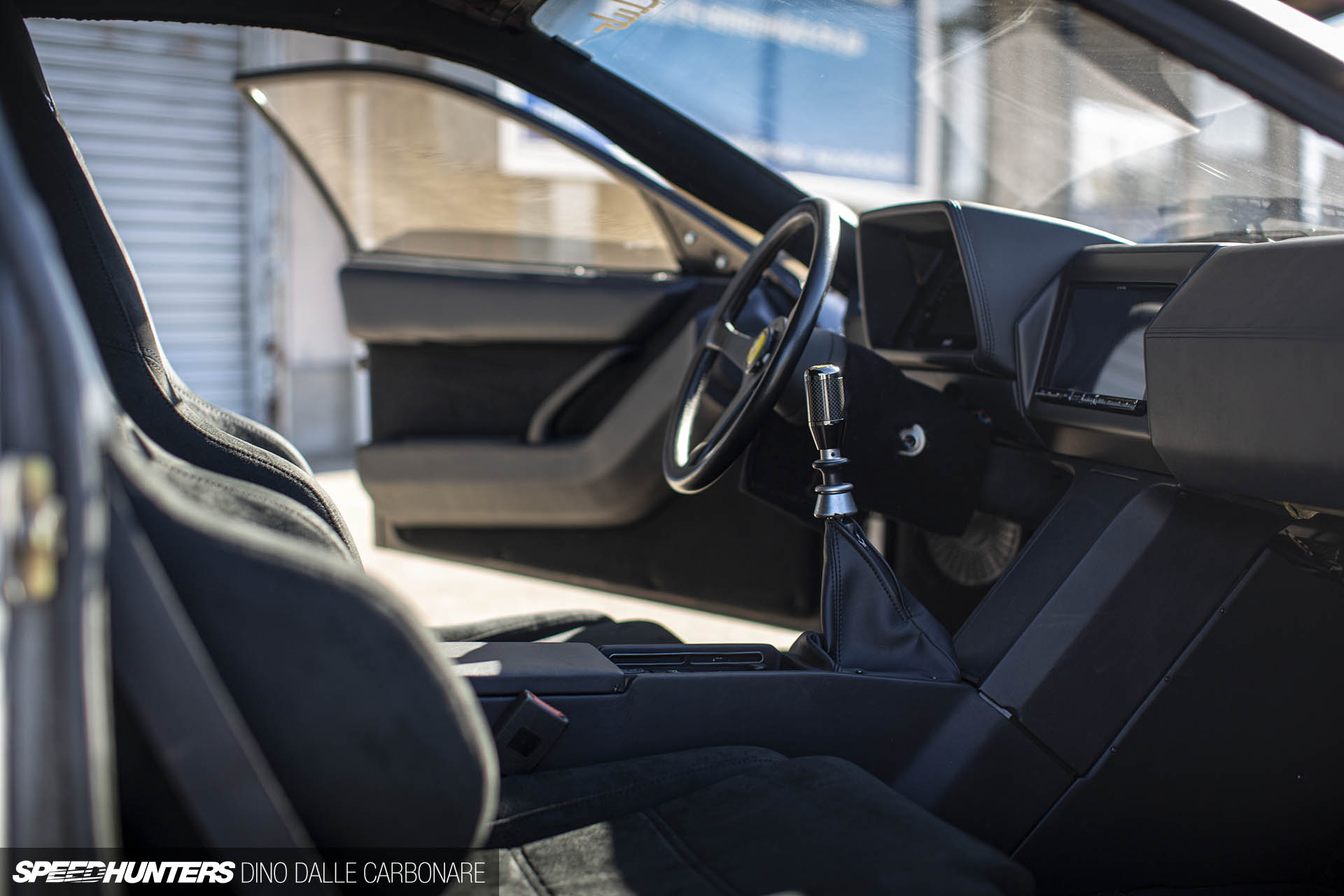
The interior has been modernized through numerous custom touches, starting with an AiM digital display neatly recessed into the instrument binnacle, and the Alpine navigation/multimedia 2DIN unit recessed into the center of the now leather-clad dashboard. In order to mount the screen, two louvered center vents had to be eliminated, meaning that the only in-cabin air will be supplied via the round side air vents.

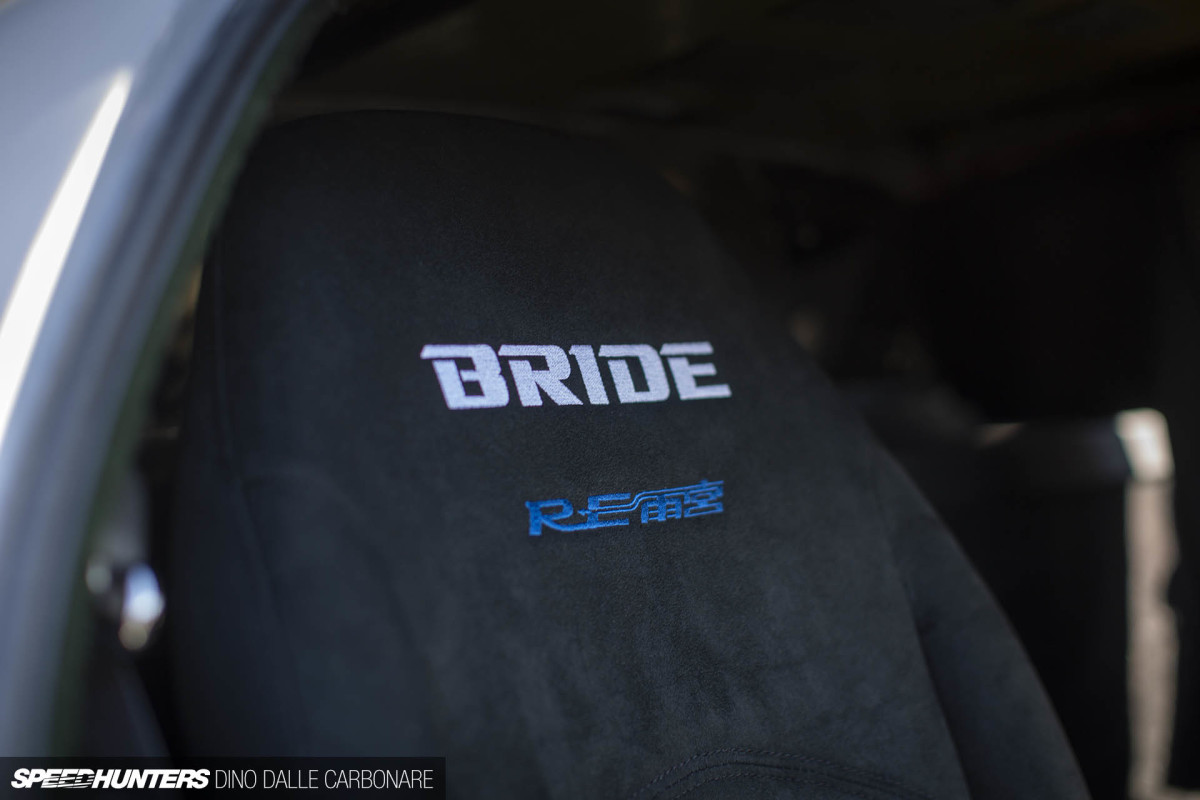
Custom Alcantara-trimmed Bride reclinable seats complete the RE Amemiya conversion.
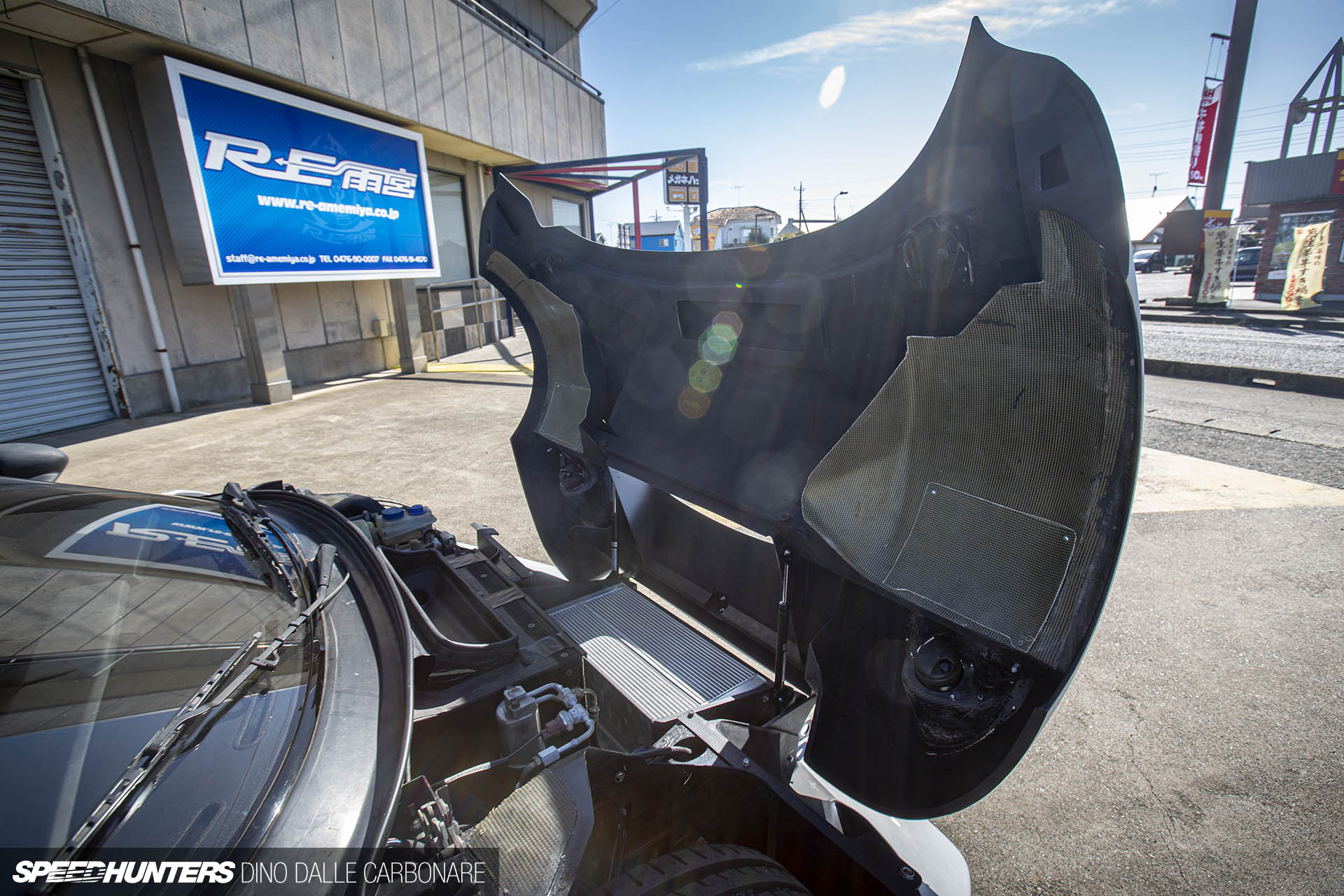
Our final stop is under the single-piece front cowl. Much like the rest of the bodywork, this panel is made from wet carbon fiber, with Kevlar added in high-impact areas.

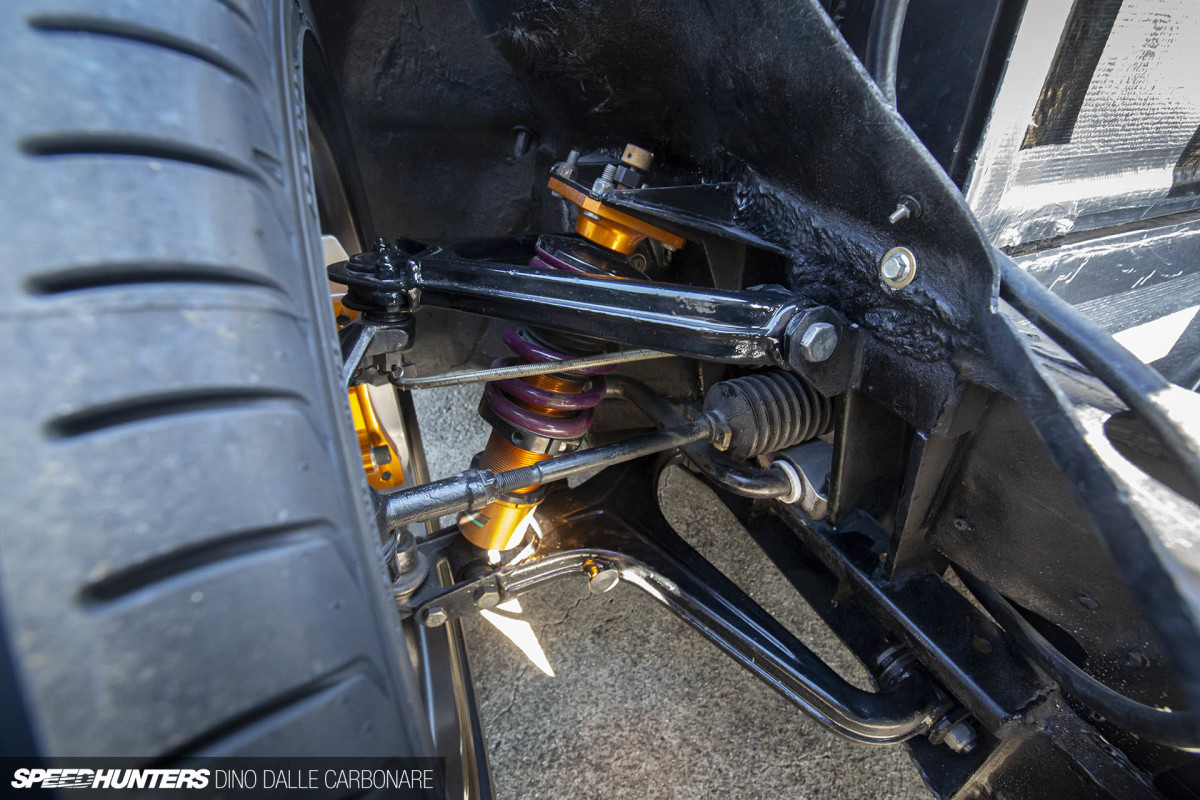
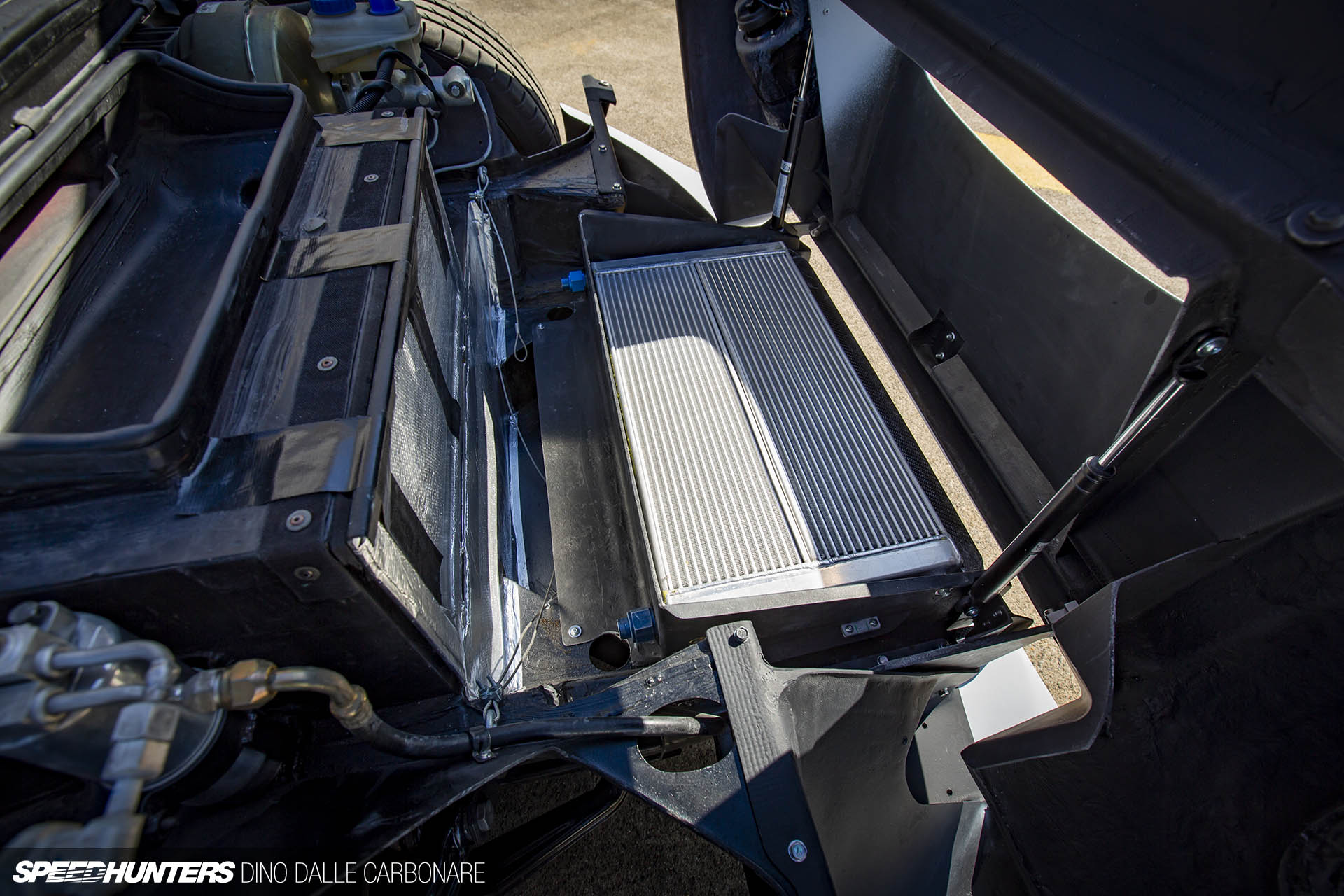
Here’s a view of the custom-made Aragosta dampers with Swift springs, and the yet-to-be-plumbed-up flat-mounted radiator, which will keep the screaming, boosted rotary engine out back cool.


You have to hand it to Ama-san for taking on a project like this, which when completed will be added to a long list of custom vehicles built to coincide with the annual Tokyo Auto Salon. The Testarossa joins non-Mazda-based RE Amemiya builds like his Lotus Europa and the Westfield ‘Furin Kazan’, which I shot 11 years ago now.
Of all his builds though, this one will really have people talking. But despite the base car, Ama-san has approached this build in exactly the same way he’s approached his past projects, with a total aesthetic transformation and some kind of rotary engine swap. If this was his goal, he’s certainly achieved it. It’s the Ferrari Testarossa part that some people may not digest so easily.
I’ve had my say, so now let’s hear your thoughts about this build in the comments section below…
Dino Dalle Carbonare
Instagram: dino_dalle_carbonare
dino@speedhunters.com